Category: National Politics

  • Chris Rabb is trying to be the left’s standard-bearer as he runs for Congress. Will progressives rally around him?

    Chris Rabb is trying to be the left’s standard-bearer as he runs for Congress. Will progressives rally around him?

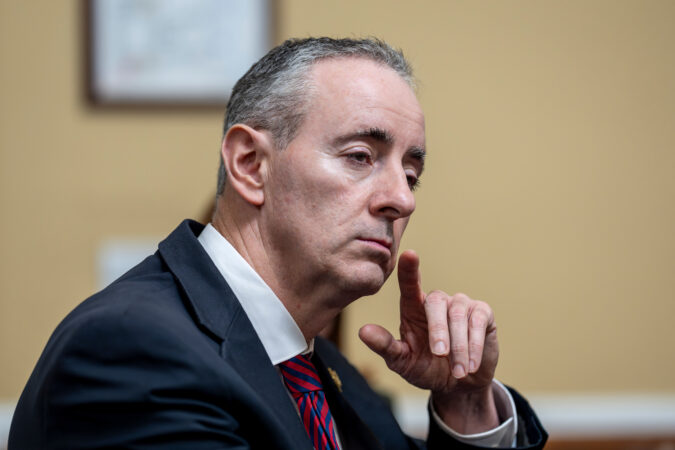
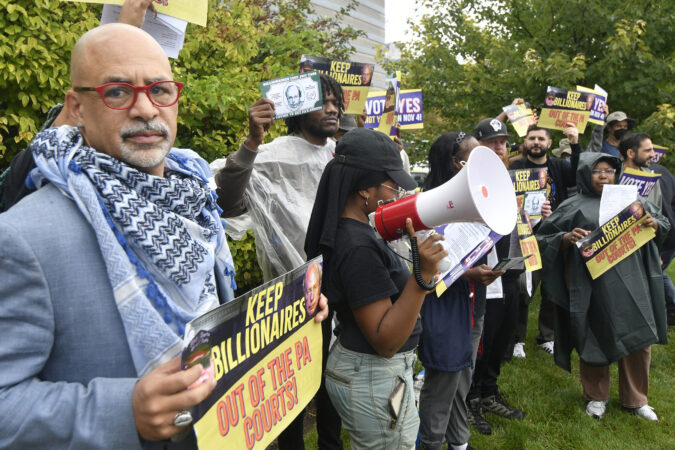
    In the most-watched race for Congress in Philadelphia in more than a decade, State Rep. Chris Rabb has cast himself as the unabashed anti-establishment leftist. He’s refusing donations from corporations, calls the war in Gaza a genocide, and wants to abolish U.S. Immigration and Customs Enforcement.

    But despite announcing his campaign more than six months ago, he had yet to amass support from much of the city’s progressive flank, leading observers to wonder if he would be able to tap into the movement’s network of donors and volunteers.

    It appears they’re coming around.

    Rabb this week has won an endorsement from One PA, a progressive political group that’s aligned with labor and most of the city’s left-leaning elected officials. That comes after the environmental justice group Sunrise Movement said it, too, would back Rabb.

    “This is a moment when democracy is at stake,” said Steve Paul, One PA’s executive director. “If there was any moment for the style of leadership that Chris [Rabb] brings to the table, it’s this moment.”

    Rabb said he’s “energized” by the endorsement and what it means for the campaign.

    “Our movement is growing every single day,” he said.

    The questions now are whether some of the city’s most prominent progressive elected officials will lend their endorsements to Rabb, and if deep-pocketed national organizations will spend money to back him.

    For example, Justice Democrats, a progressive political action committee, said it’s “very closely looking at this district.” And the Working Families Party, the labor-aligned third party that supports progressives across the nation, has endorsed candidates in four other congressional races with competitive primaries — but not yet in Philadelphia’s. The group previously spent millions to boost candidates in the region.

    Rabb, who hails from the voter-rich Northwest Philadelphia, is one of several likely front-runners seeking the Democratic nomination to represent the 3rd Congressional District, which encompasses about half of Philadelphia. U.S. Rep. Dwight Evans is retiring after holding the seat since 2016.

    Progressives and democratic socialists — energized by Mayor Zohran Mamdani’s win last year in New York City — see a major opportunity to install one of their own in the district, which is the most Democratic in the nation.
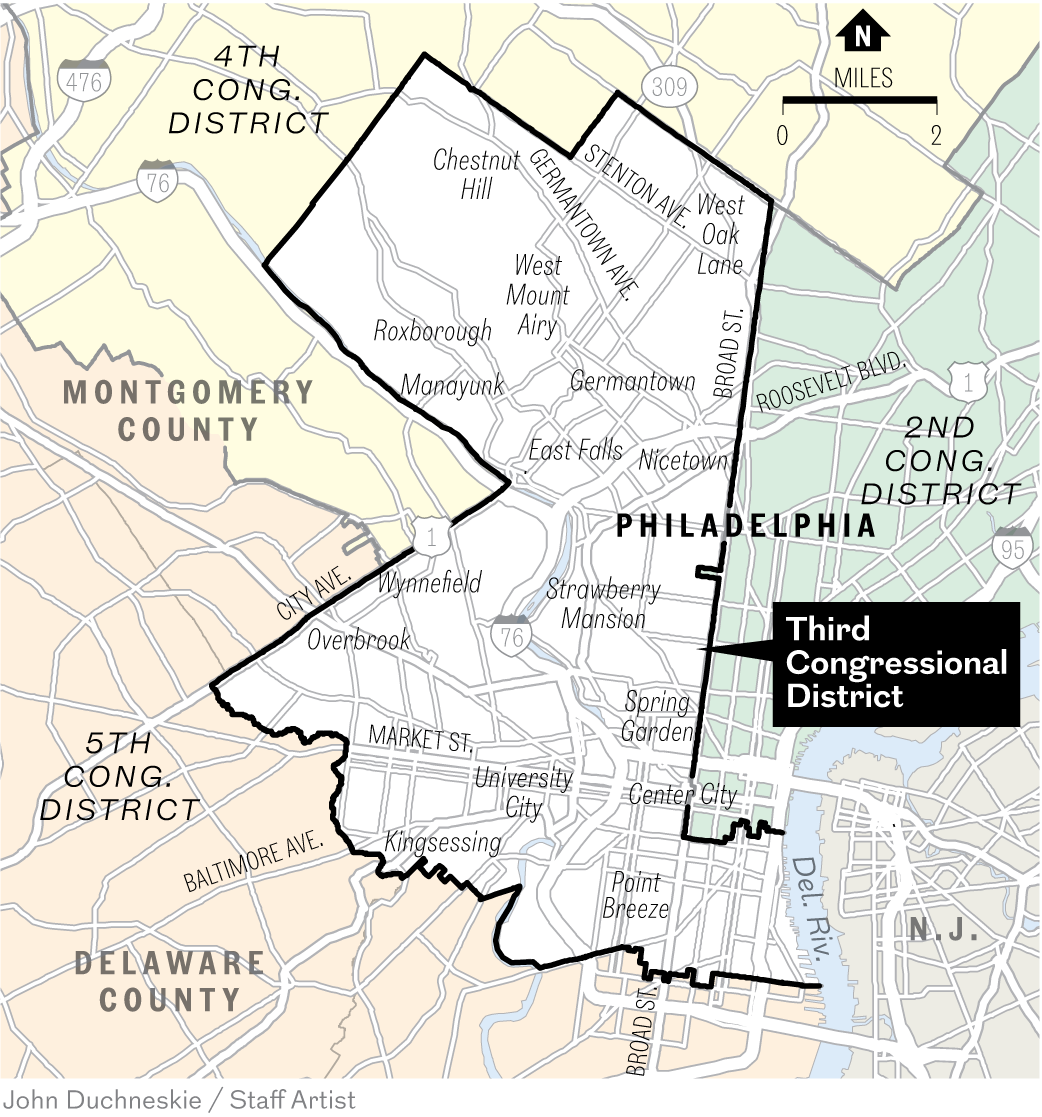
    Map of Pennsylvania’s 3rd Congressional District.

    The primary election — the marquee race in deep-blue Philadelphia — isn’t until May. But some on the left say the movement should have already coalesced around Rabb.

    “We will probably regret it in the end, because this is a seat we should win,” said one leader of a progressive organization in the city who requested anonymity to speak freely about the political dynamic.

    Rabb is seen as something of a lone operator with his own political apparatus. He didn’t come up through the newer progressive organizations that have run their own candidates for office in the city. Rather, he won a seat in the state House for the first time a decade ago when he toppled an establishment-backed Democrat.

    State Rep. Chris Rabb at a forum hosted by the 9th Ward Democratic Committee on Dec. 4, 2025. He is a Democratic candidate running to represent Philadelphia’s Third Congressional District.

    Some of the city’s progressive leaders say they expect to back Rabb but that they were waiting to see how the field shaped up.

    Last year, there were efforts to recruit other left-leaning candidates to run, including City Councilmember Kendra Brooks of the Working Families Party, and State Rep. Rick Krajewski, according to three sources with knowledge of the efforts who spoke on condition of anonymity to preserve relationships. Both decided against running.

    Brooks — who emerged as a face of the Working Families Party six years ago after she became the first third-party candidate to win a seat on Council in 100 years — is likely to back whomever the organization endorses. The group is still in the midst of its endorsement process.

    “We’re confident that we will land on a progressive who will fight for working people, not billionaire donors, big corporations, or special interests,” WFP spokesperson Nick Gavio said.

    Krajewski, who represents parts of West Philadelphia, has also not endorsed a candidate but he said he will. Rabb, according to Krajewski, has the qualities necessary to be a member of Congress during “a pivotal moment for our country.”

    “The question is: Do we allow the fascists and the ruling class to double down on this insanity that they’re pushing? Or do we use this opportunity to agitate and say a different world is possible?” Krajewski said. “That’s what I want from my member of Congress. Chris [Rabb] has demonstrated that he’s clear about that.”
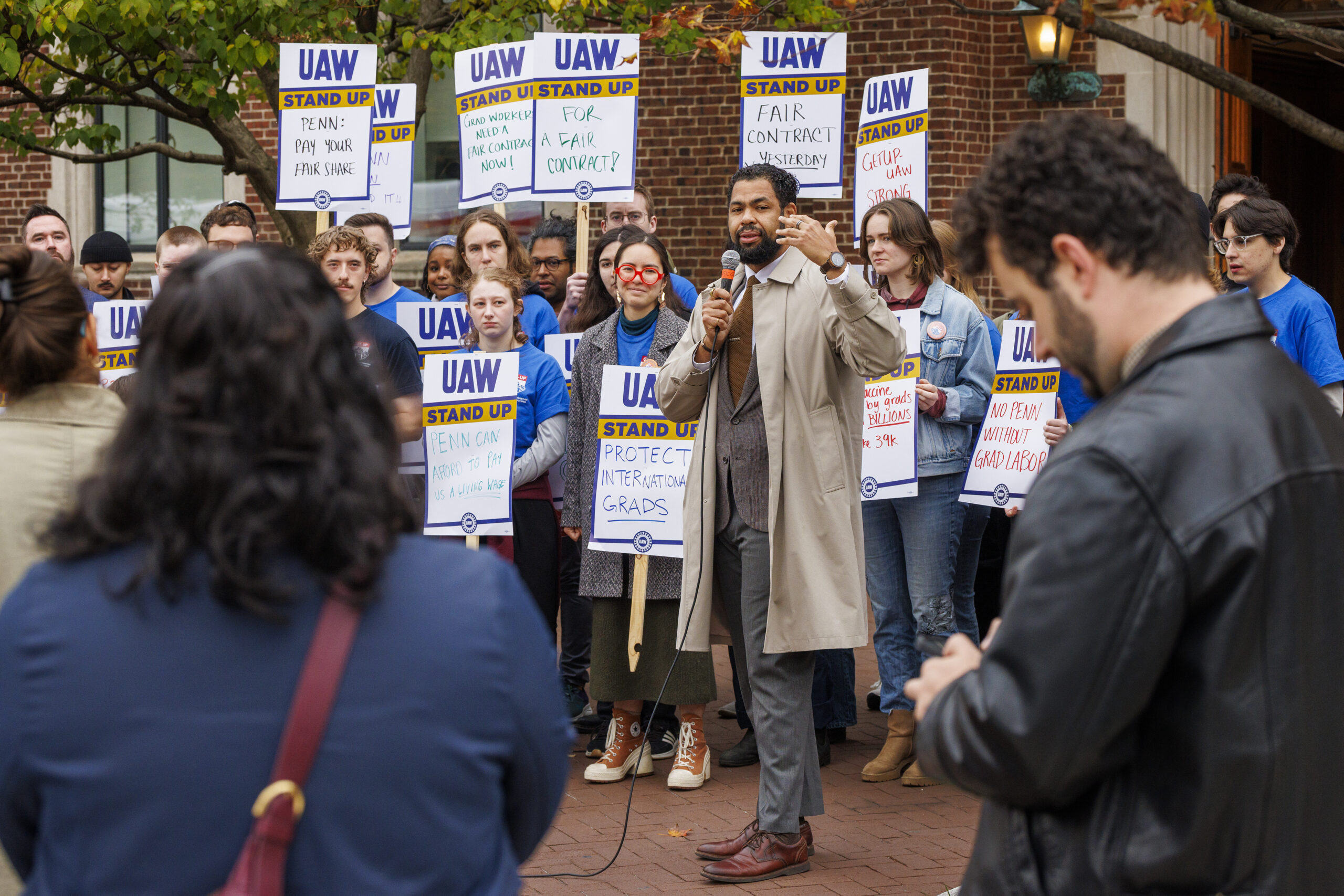
    Pennsylvania State Rep. Rick Krajewski making statements at a news conference and rally by University of Pennsylvania graduate students. Grad students held the event to call for a strike vote against the university at corner of South 34th and Walnut Streets on Nov. 3, 2025.

    Meanwhile, other candidates in the wide-open Democratic primary have tried to pick off progressive support.

    State Sen. Sharif Street, the former chair of the state Democratic Party, is seen as the establishment’s pick for the seat. But he also has alliances with some of the city’s most progressive leaders.

    That includes a decades-long relationship with Councilmember Rue Landau, who often votes with Council’s progressive bloc and is the first openly LGBTQ person ever elected to Council. Two sources familiar with Landau’s thinking said she is strongly considering endorsing Street.

    Street has also worked closely on criminal justice reform matters with District Attorney Larry Krasner, perhaps the city’s most prominent elected progressive. He inherited some of Krasner’s political staff to manage his campaign.

    However, several other candidates in the congressional race could be in the running for backing from Krasner, who recently won his third term in office in landslide fashion. Rabb, Street, and State Rep. Morgan Cephas previously endorsed Krasner for reelection.
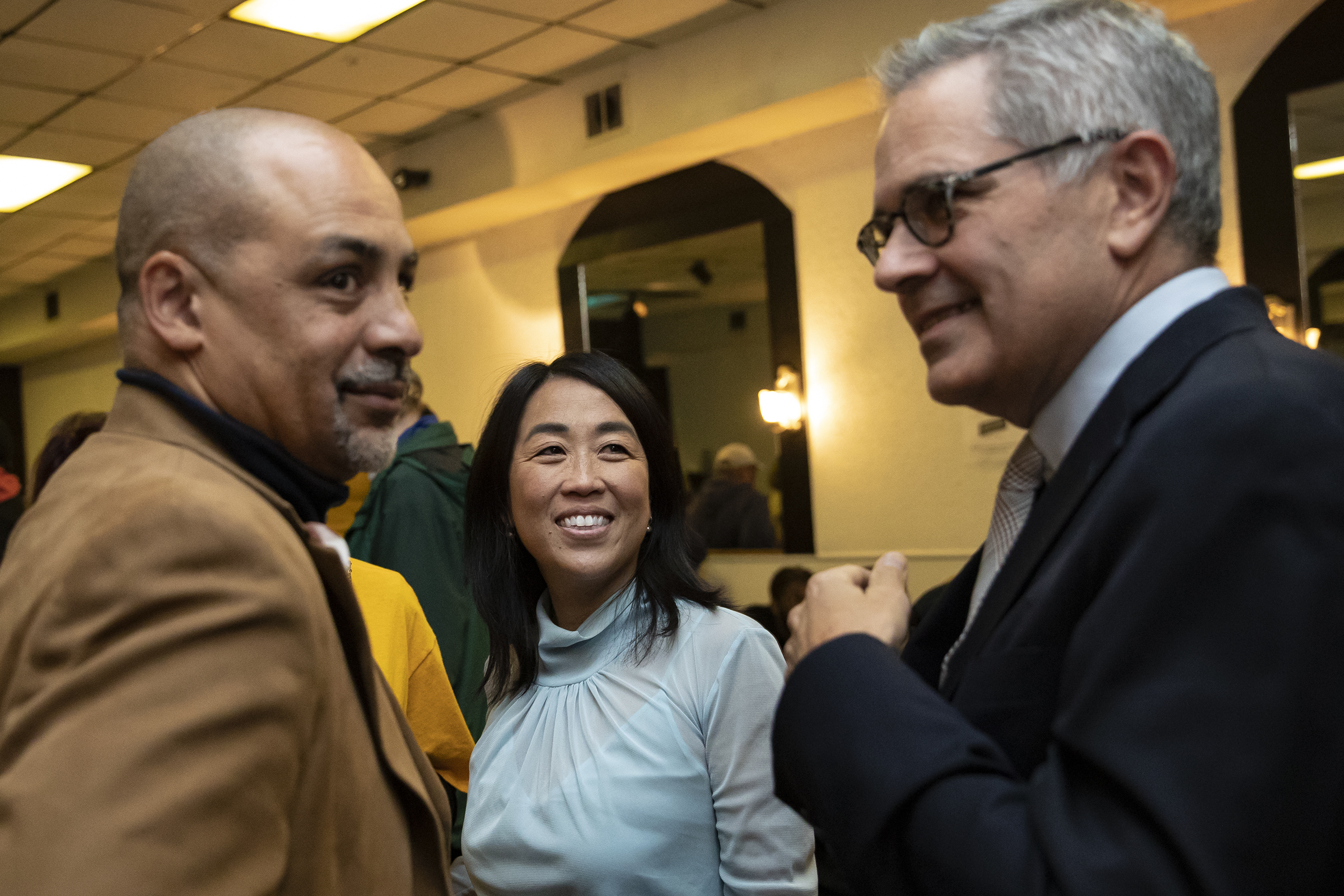
    State Rep. Chris Rabb (left), Helen Gym (center), and District Attorney Larry Krasner attend the election results watch party for Working Families Party candidates Kendra Brooks and Nicolas O’Rourke in North Philadelphia on Nov. 5, 2019.

    The crowded field may also mean that some elected officials choose not to get involved.

    State Rep. Tarik Khan, a Democrat and nurse practitioner who has been backed by progressive organizations, said he has relationships with several leading candidates. That includes his colleagues in Harrisburg, as well as Ala Stanford, a surgeon. She and Khan were both prominent vaccine advocates during the COVID-19 pandemic.

    “There’s a lot of good choices in this race,” Khan said. “I’m probably just going to let the process play out.”
  • In his new book, Gov. Josh Shapiro recalls an ‘offensive’ vetting process to be Kamala Harris’ running mate

    In his new book, Gov. Josh Shapiro recalls an ‘offensive’ vetting process to be Kamala Harris’ running mate

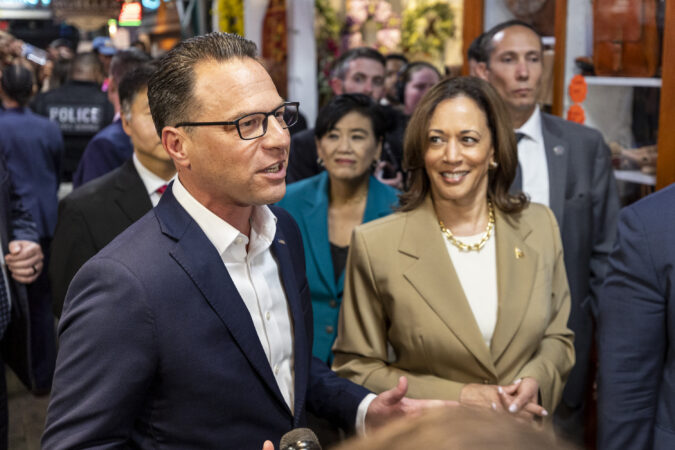
    Pennsylvania Gov. Josh Shapiro questioned whether he was being unfairly scrutinized as the only Jewish person being considered as a finalist to be Vice President Kamala Harris’ running mate — and briefly entertained his own run for the presidency — according to a copy of his upcoming book obtained by The Inquirer.

    In his memoir, Where We Keep the Light, set to debut on Jan. 27, Shapiro wrote that he underwent significant questioning by Harris’ vetting team ahead of the 2024 presidential election about his views on Israel, and his actions supporting the end of pro-Palestinian protests at the University of Pennsylvania — leading him to wonder whether the other contenders for the post had faced the same interrogation.

    Shapiro, a popular Democratic governor long rumored to have future presidential ambitions, even briefly entertained a run shortly after then-President Joe Biden unexpectedly dropped out of the race in July 2024, according to his book. The Abington Township resident is now seen as a top contender for the 2028 Democratic nomination as he seeks reelection in Pennsylvania this year.

    But before Shapiro ended up in the veepstakes for Harris’ running mate, he wrote in his book that there was a moment right after Biden dropped out of the race where he considered whether he should run for president.

    “Well, now what?” Shapiro wrote. “Maybe there would be a process the party would engage in to replace him? Did I want to be part of that?”

    He called his wife, Lori, who at the time was out of the country with their two younger kids. “I don’t think we are ready to do this,” Shapiro recalled his wife saying from a Walmart in Vancouver. “It’s not the right time for our family. And it’s not on our terms.”

    After that call, Shapiro wrote that he quickly decided he didn’t want to run and would back Harris, as Biden also endorsed her for the top of the ticket.

    Once the field cleared for Harris, Shapiro recalled seeing his face on TV as her potential running mate, before he was asked by her campaign manager to be formally vetted.

    In the days that followed, Shapiro contended with increasing national scrutiny as he emerged as a front-runner. Some pro-Palestinian protesters began calling Shapiro “Genocide Josh” online, he wrote. And top Democrats questioned whether a Jewish running mate would deter voters from supporting Harris, as Shapiro had been outspoken against some pro-Palestinian campus protests that year.

    What was unknown: Whether those same questions — and some even more extreme — were circulating within Harris’ camp, Shapiro wrote in his most detailed retelling of his experience vying for the vice presidency to date.

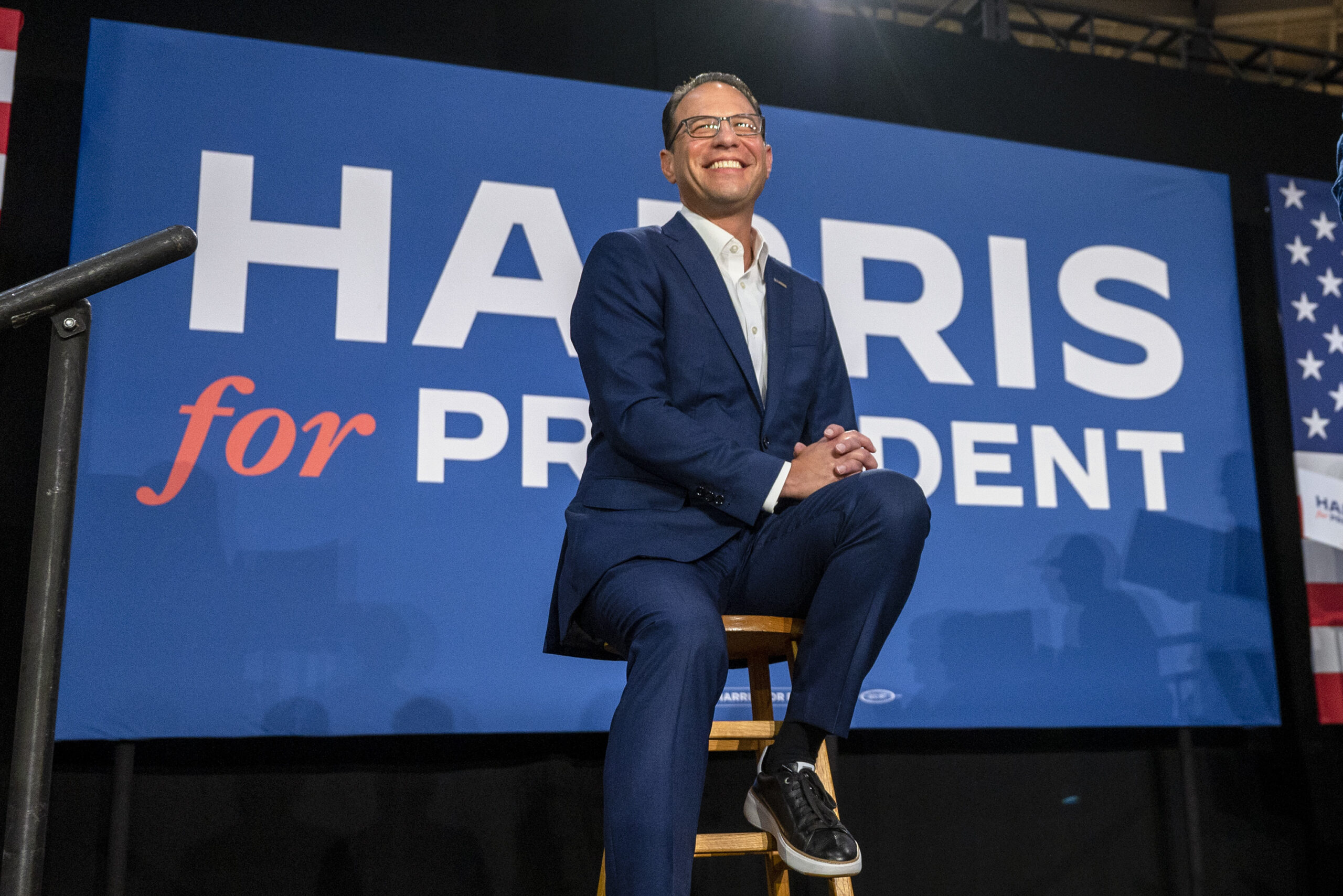
    Gov. Josh Shapiro at a rally for Vice President Kamala Harris at Wissahickon High School in Ambler on July 29, 2024.

    Just before he went to meet with Harris at the vice president’s residence in the summer of 2024, Shapiro received a call from Dana Remus, former White House counsel for Biden who was coleading the vetting process for Harris.

    “Have you ever been an agent of the Israeli government?” Remus asked, according to Shapiro’s memoir.

    “Had I been a double agent for Israel? Was she kidding?” Shapiro wrote in his 257-page book. “I told her how offensive the question was.”

    According to the memoir, Remus then asked if Shapiro had ever communicated with an undercover Israeli agent, which he shot back: “If they were undercover… how the hell would I know?”

    “Remus was just doing her job. I get it. But the fact that she asked, or was told to ask that question by someone else, said a lot about some of the people around the VP,” Shapiro wrote.

    In high school, Shapiro completed a program in Israel that included service projects on a farm, and at a fishery in a kibbutz, as well as at an Israeli army base, which he once described in his college student newspaper as “a past volunteer in the Israeli army.”

    Harris’ office could not be reached for comment Sunday evening. Remus also could not immediately be reached for comment Sunday.

    Shapiro, more broadly, recalled getting the feeling from Harris’ vetting team that she should pick Shapiro — a popular Democratic governor in a critical swing state — but that they had reservations about whether Shapiro’s views would mesh with Harris’.

    In one vetting session with U.S. Sen. Catherine Cortez Masto (D., Nev.), former Labor Secretary Marty Walsh, former associate Attorney General Tony West, and former senior Biden adviser Cedric Richmond, Shapiro wrote that he had been questioned “a lot” about Israel, including why he had been outspoken against the protests at Penn.

    “I wondered whether these questions were being posed to just me — the only Jewish guy in the running — or if everyone who had not held a federal office was being grilled about Israel in the same way,” he wrote. (Illinois Gov. JB Pritzker, who is Jewish, was also vetted to be Harris’ running mate. Harris’ husband, Doug Emhoff, is also Jewish.)

    In his book, Shapiro recalled the whirlwind two weeks as an awe-inspiring window into an opportunity — but ultimately it was one he knew he didn’t want.

    When Shapiro finally sat down with Harris in the dining room at the Naval Observatory, he said it became clear that she had a different vision for the vice presidency than what he wanted. He would work primarily with her staff and couldn’t say whether he would have access to her. In her own experience as vice president, she saw the job as mostly to make sure that you aren’t making any problems for the president, he wrote.

    Shapiro noted his own relationship with his No. 2, Lt. Gov. Austin Davis. The role in itself has few powers, but Shapiro views Davis as a governing partner and is one of few people who can walk into his office unannounced at any time, he wrote. He wanted the same relationship with Harris, he said, noting that he knew he would not be the decision-maker.

    “If we had door A and door B as options, and she was for door A and I was for door B, I just wanted to makes sure that I could make the case for door B,” Shapiro wrote.

    But Harris was “crystal clear” that that wasn’t the kind of president-vice president dynamic she envisioned, he said.

    In her own book released last year, 107 Days, Harris recalled the meeting differently. There, she wrote that Shapiro had “peppered” her with questions and “mused that he would want to be in the room for every decision.” His ambitions, she said, didn’t align with her view that a vice president should be a No. 2 and not a “copresident.”

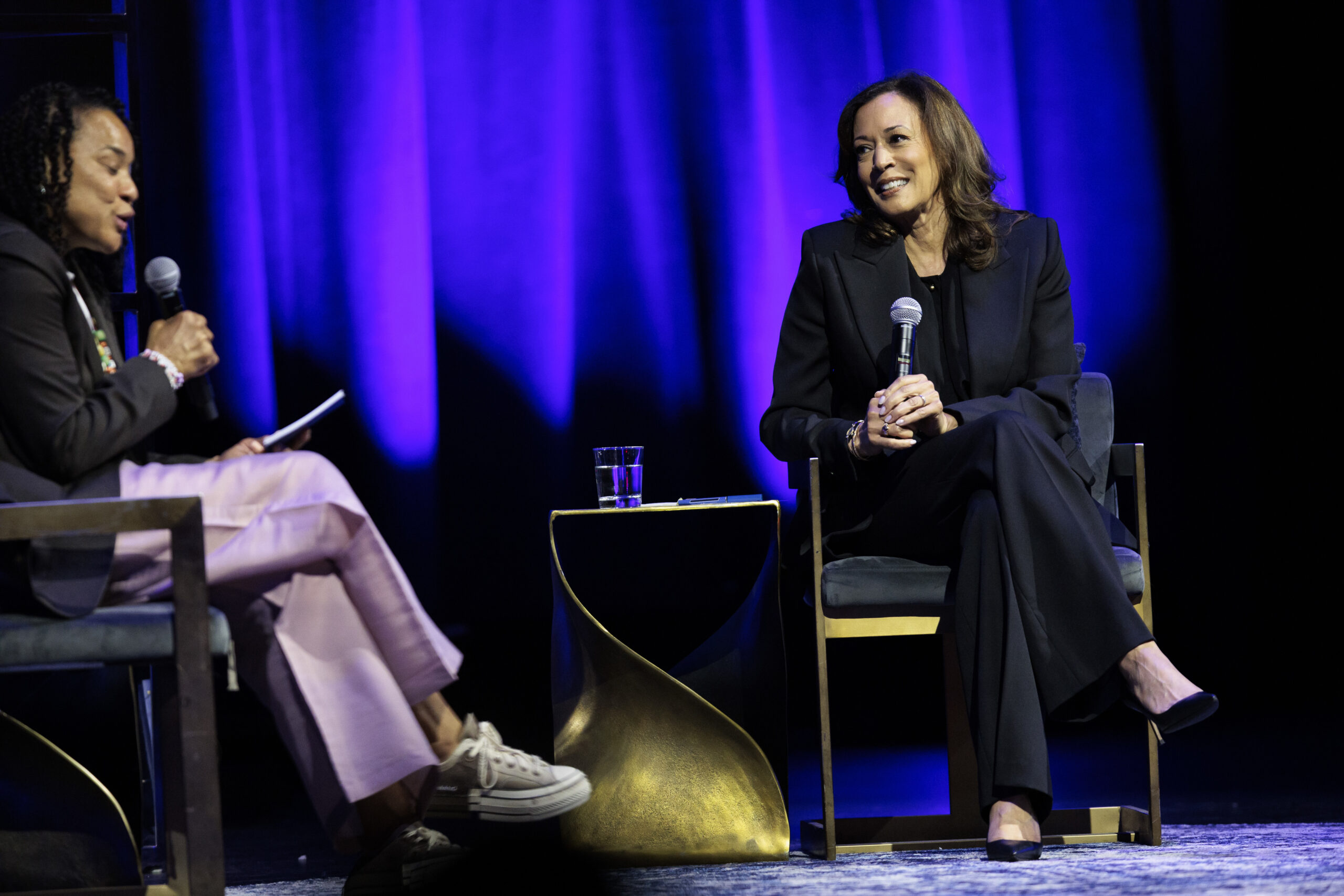
    Former Vice President Kamala Harris speaks with Dawn Staley (left), while promoting her new book “107 Days,” at the Met on Sept. 25 in Philadelphia. The event was held in partnership with Uncle Bobbie’s Coffee & Books.

    As Shapiro tells it, the friction with Harris’ team didn’t stop there.

    Shortly after meeting with Harris, Shapiro in his book recalled another unpleasant conversation with Remus, in which he wrote that she said she “could sense that I didn’t want to do this.”

    According to the book, Remus said it would be hard for Shapiro to move to Washington, it would be a strain financially for his family who “didn’t have a lot of money” by D.C. standards, and that Lori would need to get a whole new wardrobe and pay people to do her hair and makeup.

    It was then that he decided to leave the apartment where he had been asked to wait until Harris could come and talk to him again, he recalled.

    “These comments were unkind to me. They were nasty to Lori,” Shapiro wrote. “I hold no grudge against Remus, who I know was doing the job she had to do, but I needed to leave.”

    Shapiro went home, he said, and went over the day’s events with Lori at the edge of their bed.

    “On one hand, I was still tugged by the prestige of it all. It’s an honor. It’s a big title. But that’s never been enough for me,” he wrote. Still, he struggled with what it would mean to withdraw, concerned about not playing his part in a high-stakes election and letting his supporters down. Ultimately, he decided that it was not his race to win or lose, he wrote.

    “People were going to cast their votes for her, or they weren’t,” he added.

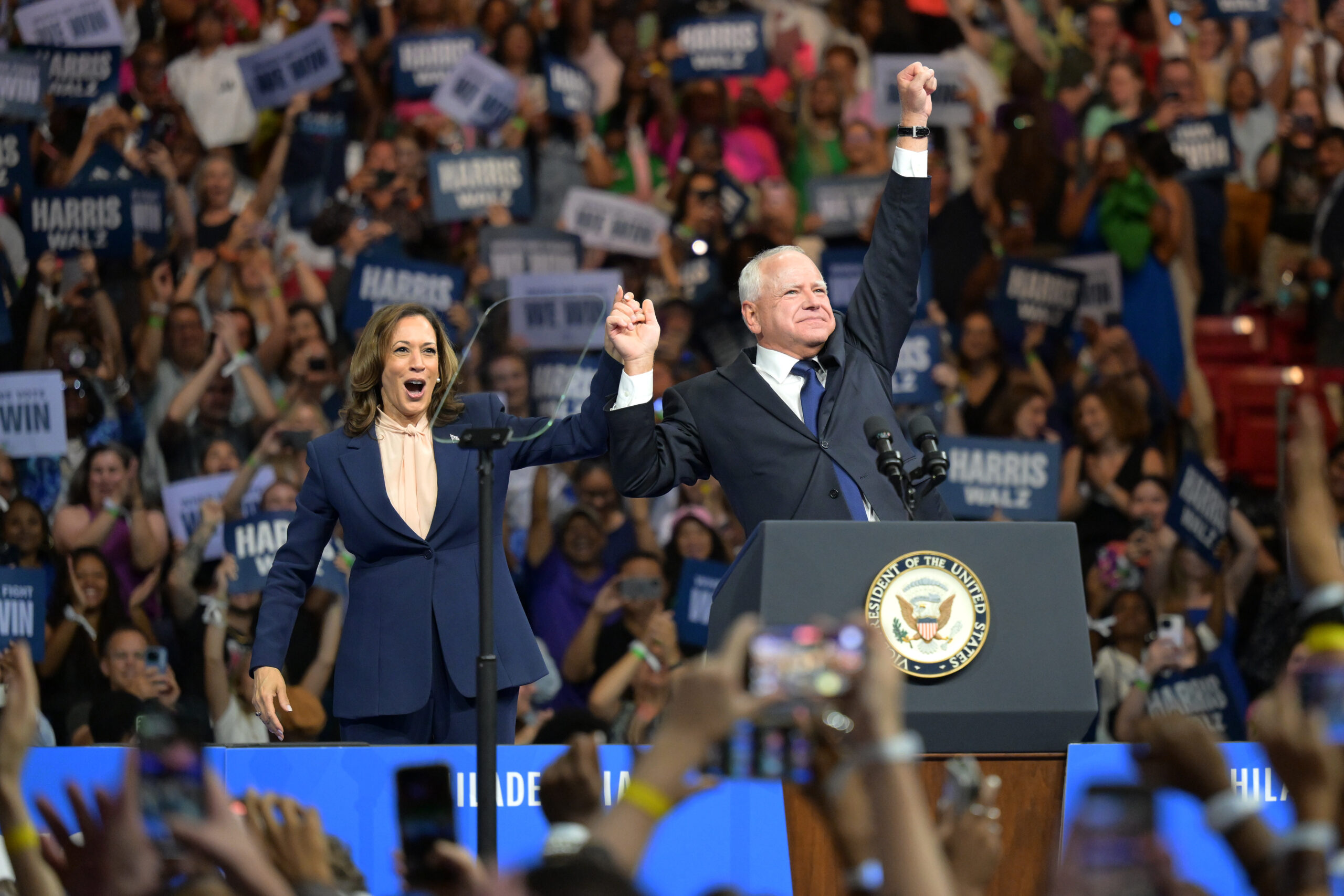
    Vice President Kamala Harris, Democratic nominee for president, and her running mate Minnesota Gov. Tim Walz, address a rally to kick off their campaign at the Liacouras Center in Philadelphia, Pa., on Tuesday, August 6, 2024.

    He decided that day he did not want the job, and toyed with the idea about publicly releasing a statement withdrawing himself from the running. He said he also tried to tell Harris he did not think it would be a good fit, but wasn’t able to reach her.

    Shortly thereafter, Harris announced that she had chosen Minnesota Gov. Tim Walz to be her running mate in an ultimately unsuccessful campaign against President Donald Trump. The two would debut their presidential ticket at a rally at the Liacouras Center in North Philadelphia. Shapiro wrote that he didn’t want to go.

    “I was wrung out. I just wanted to be home with my family, to take a walk with Lori, and just be,” he wrote.

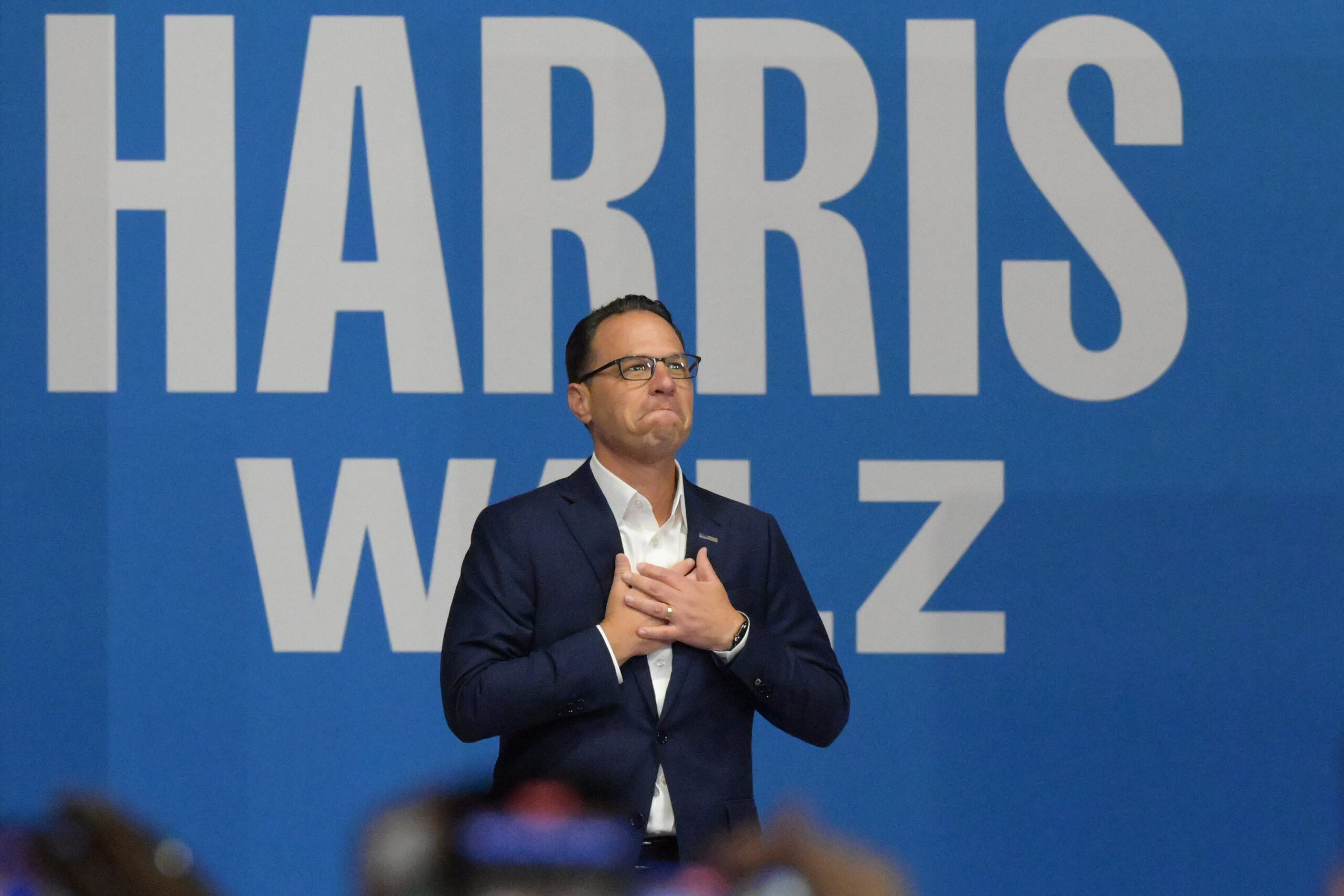
    Gov. Josh Shapiro takes the stage ahead of Vice President Kamala Harris and Gov. Tim Walz at a rally in Philadelphia’s Liacouras Center on August 6, 2024.

    But when it was time for him to take the stage ahead of Walz and Harris, he was long-applauded by his home city and gave a speech “from my heart” about how he took pride in his faith and his support for Walz and Harris.

    Shapiro’s memoir will be released Jan. 27 and is a reflection on his decades as an elected official, including as Pennsylvania attorney general, as well as the firebombing of his home last year. He will tout the book in Philadelphia on Saturday at 3 p.m. at Parkway Central Library. He will also discuss the book at upcoming book tour stops in New York and Washington.

  • Abigail Spanberger becomes Virginia’s 1st female governor in historic inauguration

    Abigail Spanberger becomes Virginia’s 1st female governor in historic inauguration

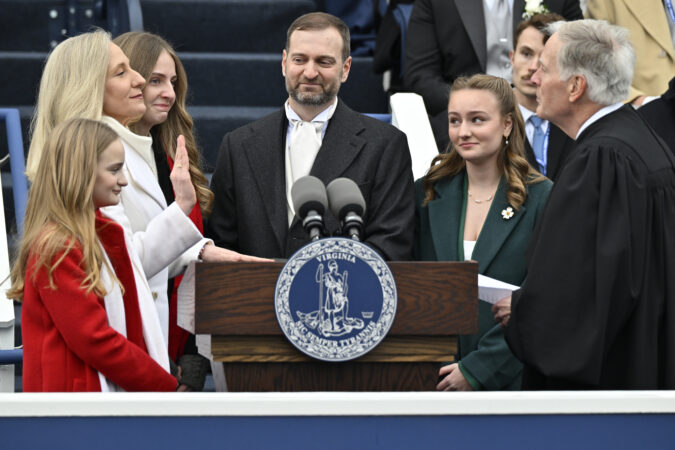
    RICHMOND, Va. — Abigail Davis Spanberger, a former Democratic member of Congress and undercover operative for the CIA, became Virginia’s 75th governor Saturday as the first woman chosen to lead a state that waited until 1952 to ratify the federal amendment giving women the right to vote.

    “We will not agree on everything,” Spanberger said. “But I speak from personal experience when I say we do not have to see eye-to-eye on every issue to stand shoulder-to-shoulder on others.”

    Spanberger, 46, won a 15-point victory last fall after promising to address the rising consumer costs, job insecurity, and lack of access to healthcare that she blamed on policies enacted in Washington and by the Republican administration of President Donald Trump.

    But Spanberger also ran on a record of bipartisanship during her three terms in Congress representing a conservative district, with a reputation for pragmatism that pulled her to the political center at a time of increasing partisan division. Her sweeping win in a swing state drew national attention from Democrats searching for a message that could resonate broadly in the 2026 midterm elections and beyond.

    She set a theme of unity for Saturday’s inauguration, which began at noon on the steps of the State Capitol in Richmond — a spot where suffragists demonstrated for the vote more than a century ago.

    Thousands assembled on risers — many wearing clear plastic rain ponchos handed out by staffers. Spanberger wore a long coat and gloves in suffragette-white.

    The crowd chanted “Abby! Abby!” and “We love you Abigail!” as she took the lectern.

    “The history and the gravity of this moment are not lost on me,” Spanberger told a crowd of several thousand who cheered heavily at a mention of suffrage. “I maintain an abiding sense of gratitude to those who worked generation after generation to ensure women could be among those casting ballots, but who could only dream of a day like today.”

    The chilly, occasionally drizzly day held a series of historic firsts. Former state Sen. Ghazala Hashmi was sworn in as the first Muslim and first person of Indian descent to serve as lieutenant governor, taking the oath of office on the Koran. Former state Del. Jay Jones took office as the first Black person elected Virginia attorney general, holding his young son as he was inaugurated.

    Politically, the group marks a sharp left turn from the Republican executive branch that governed in Virginia over the past four years. Outgoing Gov. Glenn Youngkin (R) gave Spanberger the keys to the Executive Mansion on Saturday morning, and in his final speech to the legislature earlier in the week, he urged Democrats to maintain his business-friendly policies and to establish a relationship with the Trump administration.

    But Virginia Democrats wield the consolidated power to set any agenda they want. A blue “tsunami” in last fall’s elections — as House Speaker Don Scott (D., Portsmouth) put it — gave the party a 64-36 majority in the House of Delegates to go with a 21-19 majority they already hold in the state Senate. Democratic leaders have pledged to govern with restraint and to stay focused on an affordability agenda, and the national party is touting the state — and Spanberger — as a standard-bearer ahead of this fall’s congressional midterms.

    “I know many of you are worried about the recklessness coming out of Washington. You are worried about policies that are hurting our communities,” Spanberger said. She blamed “an administration,” without mentioning Trump, for “gilding buildings” while the social safety net erodes, prices go up and communities live in fear. The crowd grew loud when she said everyday Virginians should drive policy, “not kings or aristocrats or oligarchs.” But she acknowledged that not all Virginians see the same root problems.

    “I know that some who are here today or watching from home may disagree with the litany of challenges and hardships I laid out,” she said. “Your perspective may differ from mine, but that does not preclude from us working together where we may find common cause.”

    Spanberger pledged to work to lower the cost of housing and energy, reduce gun violence, and improve education. Though she mentioned her predecessor — who, by tradition, left before her speech — only to thank him for his service, Spanberger drew one of her sharpest contrasts to Youngkin by invoking immigration. The Republican has played enthusiastic cheerleader for the hardline policies of the Trump administration, and Spanberger drew loud cheers when she spoke directly to immigrants.

    “And in Virginia, our hardworking, law-abiding immigrant neighbors will know that when we say that we will focus on the security and safety of all of our neighbors,’ we mean them too,” Spanberger said.

    She invoked leaders of the past who called for unity in troubled times, such as Patrick Henry — the first governor of Virginia — who warned in 1799: “United we stand, divided we fall. Let us not split into factions which must destroy that union upon which our existence hangs.”

    That, Spanberger said, “is the charge we must answer again today.” Saying Virginians must put aside differences to find solutions for the future, she asked: “What will you do to help us author this next chapter?”

    D.C. Mayor Muriel E. Bowser (D) and Maryland Gov. Wes Moore, another Democrat with a national profile, attended their neighboring governor’s inauguration. “I’m just going to be there to watch history being made,” Moore said in an interview this week. He added that he looks for a “new era of cooperation” between the two states, with shared concerns around issues such as transportation, energy, and “protecting our federal workers.” He leapt to his feet in applause when her speech concluded.

    Prominent national Democrats also attended, including Spanberger’s long-time friend New Jersey Gov.-elect Mikie Sherill (D), House Minority Leader Hakeem Jeffries (D., N.Y.) and Sen. Adam Schiff (D., Calif.).

    Virginia’s incoming leaders were busy even before inauguration day, with Jones on Friday dismissing top lawyers at George Mason University and the Virginia Military Institute — universities where Democrats have accused Youngkin and outgoing Attorney General Jason Miyares of politicizing the boards and kowtowing to efforts by the Trump administration to enforce a conservative ideology.

    Spanberger sought resignations from board members at the University of Virginia and has pledged to make appointments there as soon as she takes office. She was expected to take those actions and sign a series of executive orders kicking off her agenda later Saturday.

    Spanberger has cast her election as a victory for a long line of women who have broken barriers in Virginia — including her Republican opponent last year, Lt. Gov. Winsome Earle-Sears, who in 2021 became the first woman elected to that role. Just as Virginia delayed ratifying the 19th Amendment for 32 years after it passed in 1920, Spanberger’s mother spent years lobbying the state to ratify the Equal Rights Amendment. It did so in 2020 under the leadership of its first female Speaker of the House of Delegates, Eileen Filler-Corn (D., Fairfax).

    As Spanberger told the crowd that her mother put herself through nursing school and “worked a heck of a lot more than just full-time,” her mother blew her a kiss. The governor’s three daughters joined her to take the oath; one helped a group of Girl Scouts lead the Pledge of Allegiance.

    After being sworn in before spectators facing the Capitol, Spanberger was set to watch a traditional parade and attend an inaugural ball in the evening.

  • Brian Fitzpatrick talks Trump’s ‘lack of moral clarity,’ November’s midterms, and his hatred for the two-party system in Philly Mag

    Brian Fitzpatrick talks Trump’s ‘lack of moral clarity,’ November’s midterms, and his hatred for the two-party system in Philly Mag

    U.S. Rep. Brian Fitzpatrick didn’t vote for President Donald Trump in 2024, penciling in former Ambassador Nikki Haley instead.

    In 2020, he voted for Trump. Four years earlier, he wrote in former Vice President Mike Pence’s name instead of Trump.

    Those decisions by the moderate Republican, who represents purple Bucks County and a sliver of Democratic-leaning Montgomery County, underscore Fitzpatrick’s unique relationship with and perspective of the president, Philadelphia Magazine reported Friday.

    There are times when Fitzpatrick is blunt in his opposition, telling Philly Mag that Trump’s placation to Russian President Vladimir Putin is because of a “lack of moral clarity.”

    But in other instances, he couches his words against the Trump administration. Fitzpatrick, a former FBI agent, told the magazine that the state of the FBI under Director Kash Patel is “heartbreaking,” but that “we’ve seen the weaponization of the Justice Department now, I believe, in two administrations.”

    He also called it “unbecoming” for Trump to accuse six Democratic members of Congress — including U.S. Rep. Chrissy Houlahan of Chester County — of committing sedition after they appeared in a video urging service members to refuse illegal orders.

    Trump claimed in a social media post that the lawmakers, all military veterans or former members of the intelligence community, had engaged in behavior that was “punishable by DEATH!”

    Fitzpatrick’s comments came in a Philadelphia Magazine profile that details how the Bucks County Republican — who rarely gives interviews to local media — is grappling with an American political system that he wishes was drastically less partisan.

    “I could talk for hours about this, but the two-party system needs to go away. We need to move to a coalition government and not the way it is now, which is a zero-sum, all-or-nothing game,” Fitzpatrick said, describing his preference for a form of government in which competing political parties govern and work together.

    “In the House, if you get 218 votes on a bill, you get everything. And if you get 217 votes, you get nothing,” he said. “Well, a 218-217 breakdown is representative of a very divided electorate that wants compromise, but they don’t get it. And that’s why we have this great, cavernous divide.”

    The interview comes as the lawmaker’s district has been named a key target for Democrats in the midterms, along with the seats of Republican U.S. Reps. Scott Perry of York County, Ryan Mackenzie of Lehigh County, and Rob Bresnahan of Lackawanna County.

    “I’m going to keep doing this as long as I can,” Fitzpatrick told the magazine.

    Fitzpatrick has strayed from voting with his party (and Trump) on several key issues. But other times, he toes the party line, and Democrats have said that Fitzpatrick votes with his party when it counts.

    Fitzpatrick said that party leadership discourages reaching across the aisle, but that he attempts to do so on certain issues.

    Recently, Fitzpatrick, Bresnahan, and Mackenzie joined Democrats to sign a discharge petition on extending Affordable Care Act subsidies. He also voted against the final version of Trump’s domestic policy package, the One Big Beautiful Bill Act.

    The latter vote earned Trump’s ire. Without using his name, the president said that Fitzpatrick was disloyal after Trump did him “a big personal favor. As big as you can get having to do with death and life.” This was in reference to Fitzpatrick’s family receiving permission from Trump’s acting secretary of veterans affairs to bury Fitzpatrick’s late brother, Mike Fitzpatrick, who held the seat before him, in a national veterans’ cemetery in Washington Crossing, Pa., that Mike Fitzpatrick had proudly established.

    The late representative, a former Navy ROTC enlistee, did not meet the required years of service.

    Fitzpatrick told Philly Mag that he thought Trump’s invocation of his brother crossed a line.

    “I was really upset to hear that,” he said.

    This story has been updated to clarify that Fitzpatrick wrote in Nikki Haley in the 2024 presidential election, following a revision to Philadelphia Magazine’s profile.

  • Mixed signals and mutual suspicions fueled the clash between the Federal Reserve and Trump administration prosecutors

    Mixed signals and mutual suspicions fueled the clash between the Federal Reserve and Trump administration prosecutors

    The battle between the Federal Reserve and Trump administration prosecutors accelerated over the past few weeks amid mixed signals and mutual suspicion, according to interviews with a half-dozen figures with knowledge of both sides of the dispute.

    Late last month, Fed officials grew concerned that the Justice Department was preparing a criminal case against them when they received two casually worded emails from a prosecutor working for Jeanine Pirro, the U.S. attorney for Washington, D.C. The messages sought a meeting or phone call to discuss renovations at the central bank’s headquarters, according to three people familiar with the matter, who like most others interviewed spoke on the condition of anonymity to discuss an open investigation.

    The emails, sent Dec. 19 and Dec. 29, came from Assistant U.S. Attorney Carlton Davis, a political appointee in Pirro’s office whose background includes work for House Oversight Committee Chairman James Comer (R-Kentucky), the people said.

    The messages struck Fed officials as breezy in tone.

    “Happy to hop on a call,” one of the missives read in part.

    The casual approach generated suspicions at the Fed. Chair Jerome H. Powell, who by that point had sustained months of criticism from President Donald Trump and his allies over the central bank’s handling of interest rates, retained outside counsel at the law firm Williams & Connolly. Fed officials opted not to respond to Davis, choosing to avoid informal engagement on a matter that could carry criminal implications, according to a person familiar with the decision.

    That led Pirro, a former Fox News host and longtime personal friend of Trump’s, to conclude that the Fed was stonewalling and had something to hide, according to a Justice Department official familiar with the matter.

    “The claim that, ‘Oh, they didn’t think it was a big deal’ is naive and almost malpractice,” the official said. “We gave them a deadline. We said the first week of January.”

    The investigation centers on the Fed’s first large-scale renovation of its headquarters on the National Mall since it was built in the 1930s and whether proper cost controls are in place. Powell testified to Congress in June about the scope of a project that had ballooned to $2.5 billion in costs, up from about $1.9 billion before the coronavirus pandemic.

    Trump, his aides and some congressional Republicans have sought to cast the renovation as overly luxurious and wildly over budget, claims that Powell has strenuously disputed. Fed officials have said that the economic disruptions following the pandemic triggered a jump in the price of steel, cement and other building materials.

    Powell and the Fed’s defenders say the renovation claims are being used to pressure the independent central bank to lower interest rates, as Trump has called for, and potentially to bully Powell into resigning.

    The emails from Davis to a Federal Reserve lawyer did not indicate the existence of a criminal investigation because prosecutors had not yet opened one, according to two people with knowledge of the matter. There was no FBI involvement when Pirro’s office opened a fact-gathering inquiry in November, and the bureau remains uninvolved, according to two other people familiar with the matter.

    In the emails, Davis asked “to discuss Powell’s testimony in June, the building renovation, and the timing of some of his decisions,” a Justice Department official said. “The letter couldn’t have been nicer,” that official said. “About 10 days after that, we sent another, saying, ‘We just want to have a discussion with you.’ No response through January 8.”

    “We low-keyed it,” the official added. “We didn’t publicize it. We did it quietly.”

    The subpoenas were served the next day. They seek records or live testimony before a grand jury at the end of the month.

    Powell publicly disclosed the probe Sunday evening in a video statement, saying the Fed had received subpoenas “threatening a criminal indictment.”

    “The threat of criminal charges is a consequence of the Federal Reserve setting interest rates based on our best assessment of what will serve the public, rather than following the preferences of the president,” he said.

    In a post on X, Pirro said the outreach had been benign, writing: “The word ‘indictment’ has come out of Mr. Powell’s mouth, no one else’s. None of this would have happened if they had just responded to our outreach.”

    Conducting an investigation without using the FBI is an approach Pirro’s office has used on at least one previous occasion. In August, one of the prosecutors now assigned to the Fed inquiry, Steven Vandervelden, was tasked with reviewing numerous complaints that the D.C. police, under then-Police Chief Pamela A. Smith, had been incorrectly categorizing some crimes to paint a rosier picture than the reality on the ground.

    That inquiry relied on voluntary interviews with more than 50 police officers and other witnesses, as well as cooperation from the mayor’s office and the police department’s internal affairs unit, according to a seven-page report Pirro and Vandervelden issued at its conclusion. The report recommended changes to police practices while saying the classification issues did not rise to the level of criminality. No subpoenas were issued in that probe, according to a person familiar with the matter, and the report does not mention any.

    But Smith announced her resignation shortly before the report was released.

  • Federal immigration agents filmed dragging a woman from her car in Minneapolis

    Federal immigration agents filmed dragging a woman from her car in Minneapolis

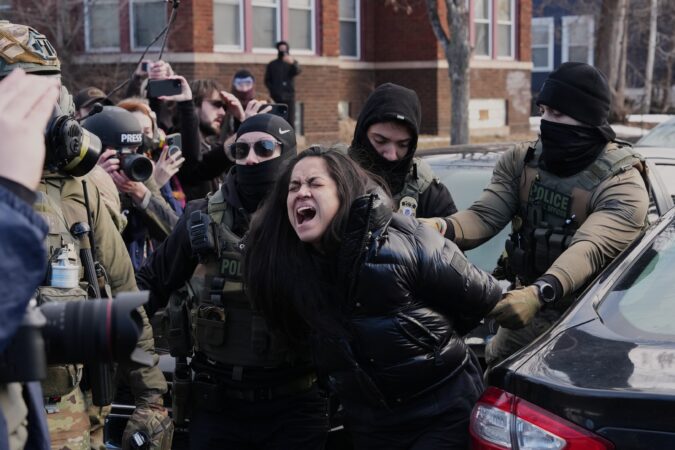
    A U.S. citizen on her way to a medical appointment in Minneapolis was dragged out of her car and detained by immigration officers, according to a statement released by the woman on Thursday, after a video of her arrest drew millions of views on social media.

    Aliya Rahman said she was brought to a detention center where she was denied medical care and lost consciousness. The Department of Homeland Security said she was an agitator who was obstructing ICE agents conducting arrests in the area.

    That video is the latest in a deluge of online content that documents an intensifying immigration crackdown across the midwestern city, as thousands of federal agents execute arrests amid protests in what local officials have likened to a “federal invasion.”

    Dragged from her car

    Rahman said that she was on her way to a routine appointment at the Traumatic Brain Injury Center when she encountered federal immigration agents at an intersection. Video appears to show federal immigration agents shouting commands over a cacophony of whistles, car horns and screams from protesters.

    In the video, one masked agent smashes Rahman’s passenger side window while others cut her seatbelt and drag her out of the car through the driver’s side door. Numerous guards then carried her by her arms and legs towards an ICE vehicle.

    “I’m disabled trying to go to the doctor up there, that’s why I didn’t move,” Rahman said, gesturing down the street as officers pulled her arms behind her back.

    A spokesperson for the Department of Homeland Security disputed that account in an emailed statement on Thursday, saying that Rahman was an agitator who “ignored multiple commands by an officer to move her vehicle away from the scene.” She was arrested along with six other people the department called agitators, one of whom was accused of jumping on an officer’s back.

    The department did not specify if Rahman was charged or respond to questions about her assertion that she was denied medical treatment.

    Barrage of viral videos draw scrutiny

    The video of Rahman’s arrest is one of many that have garnered millions of views in recent days — and been scrutinized amid conflicting accounts from federal officials and civilian eyewitnesses.

    Often, what’s in dispute pertains to what happened just before or just after a given recording. But many contain common themes: Protesters blowing whistles, yelling or honking horns. Immigration officers breaking vehicle windows, using pepper spray on protesters and warning observers not to follow them through public spaces. Immigrants and citizens alike forcibly pulled from cars, stores or homes and detained for hours, days or longer.

    In one video, heavily armed immigration agents used a battering ram to break through the front door of Garrison Gibson’s Minneapolis home, where his wife and 9-year-old child also were inside. The video shot inside the home captures a woman’s voice asking, “Where is the warrant?” and, “Can you put the guns down? There is kids in this house.”

    Another video shows ICE agents, including Border Patrol Cmdr. Gregory Bovino, detain two employees at a Target store in Richfield, Minnesota. Both are U.S. citizens who were later released, according to social media posts from family members.

    Monica Bicking, 40, was leaving the homeless shelter where she works as a nurse when she took a video that appears to show a federal agent kneeing a man at least five times in the face while several other agents pin him facedown on the pavement in south Minneapolis.

    Bicking works full time, so she says she doesn’t intentionally attend organized protests or confrontations with ICE. But she has started to carry a whistle in case she encounters ICE agents on her way to work or while running errands, which she says has become commonplace in recent weeks.

    “We’re hypervigilant every time we leave our houses, looking for ICE, trying to protect our neighbors, trying to support our neighbors, who are now just on lockdown,” Bicking said.

    ‘I thought I was going to die’

    Rahman said in her statement that after her detainment, she felt lucky to be alive.

    “Masked agents dragged me from my car and bound me like an animal, even after I told them that I was disabled,” Rahman said.

    While in custody, Rahman said she repeatedly asked for a doctor, but was instead taken to the detention center.

    “It was not until I lost consciousness in my cell that I was finally taken to a hospital,” Rahman said.

    Rahman was treated for injuries consistent with assault, according to her counsel, and has been released from the hospital.

    She thanked the emergency department staff for their care.

    “They gave me hope when I thought I was going to die.”

  • Senate passes more spending bills, but Homeland Security dispute looms

    Senate passes more spending bills, but Homeland Security dispute looms

    WASHINGTON — Congress is halfway home in approving government funding for the current budget year that began Oct. 1 after the Senate on Thursday overwhelmingly passed a three-bill package.

    Now comes the hard part. Lawmakers still must negotiate a spending bill for the Department of Homeland Security amid soaring tensions on Capitol Hill after the shooting of a Minnesota woman by an Immigration and Customs Enforcement agent.

    Lawmakers are working to complete passage of all 12 annual spending bills before Jan. 30, the deadline set in a funding patch that ended a 43-day government shutdown in November. With the Senate’s action on Thursday, six of those bills have now passed through both chambers of Congress. The measure before the Senate passed by a broadly bipartisan vote of 82-15. It now goes to President Donald Trump to be signed into law.

    That recent success would greatly reduce the impact of a shutdown, in the unlikely event that there is one at the end of January, since lawmakers have now provided full-year funding for such agencies as the Departments of Agriculture, Commerce, Energy, Interior and Justice.

    Lawmakers from both parties are determined to prevent another lapse in funding for the remaining agencies. The House’s approval of a separate two-bill package this week nudges them closer to getting all 12 done in the next two weeks.

    “Our goal, Mr. President is to get all of these bills signed into law. No continuing resolutions that lock in previous priorities and don’t reflect today’s realities,” said Sen. Susan Collins, the Republican chair of the Senate Appropriations Committee. “No more disastrous government shutdowns that are totally unnecessary and so harmful.”

    ICE shooting inflames debate on funding

    The biggest hurdle ahead is the funding bill for the Department of Homeland Security. The plan was to bring that bill before the House this week, but Rep. Tom Cole, the chairman of the House Appropriations Committee, said the decision was made to pull the bill and “buy some time” as lawmakers respond to the Minneapolis shooting.

    Democrats are seeking what Rep. Rosa DeLauro called “guardrails” that would come with funding for ICE.

    “We can’t deal with the lawlessness and terrorizing of communities,” said DeLauro (D., Conn.), the top Democrat on the House Appropriations Committee. “We’re going back and forth with offers, and that’s where we are.”

    Trump’s deportation crackdown, focused on cities in Democratic-leaning states, has incensed many House Democrats who demand a strong legislative response. Last week, an Immigration and Customs Enforcement officer shot and killed Renee Good in a shooting that federal officials said was an act of self-defense but that the mayor described as reckless and unnecessary.

    Some 70 Democrats have signed onto an effort to impeach Homeland Security Secretary Kristi Noem. Others are seeking specific changes to how the agency operates, such as requiring ICE agents to wear body cameras.

    “There are a variety of different things that can be done that we have put on the table and will continue to put on the table to get ICE under control so that they are actually conducting themselves like every other law enforcement agency in the country, as opposed to operating as if they’re above the law, somehow thinking they’ve got absolute immunity,” said Democratic leader Hakeem Jeffries.

    The Congressional Progressive Caucus, which includes nearly 100 Democratic members, formally announced opposition to any funding to immigration enforcement agencies within the Department of Homeland Security “unless there are meaningful and significant reforms to immigration enforcement practices.”

    Looking for a solution

    Cole said any changes to the Homeland Security funding bill would need sign-on from the White House. He said one possible answer would be to let Democrats have a separate vote on the Homeland Security bill. If passed, it would then be combined with some other spending bills for transmittal to the Senate. Republicans used a similar procedural tactic to get a previous spending package over the finish line in the House.

    The options for Democrats on Homeland Security are all rather bleak. If Congress passes a continuing resolution to fund the agency at current levels, that gives the Trump administration more discretion to spend the money as it wants.

    Meanwhile, any vote to eliminate funding for ICE won’t stop massive sums from flowing to the agency because Trump’s tax cut and border security bill, passed last summer, injects roughly $170 billion into immigration enforcement over the next four years.

    Also, any vote to eliminate funding could put some Democrats in tough reelection battles in a difficult position this fall as Republicans accuse them of insufficiently supporting law enforcement.

  • U.S. warns Iran that ‘all options are on the table’ in emergency U.N. meeting

    U.S. warns Iran that ‘all options are on the table’ in emergency U.N. meeting

    UNITED NATIONS — After weeks of escalating tension, U.S. and Iranian officials faced one another Thursday at the U.N. Security Council, where America’s envoy renewed threats against the Islamic Republic despite President Donald Trump’s efforts to lower the temperature between the two adversaries.

    The U.S. was joined by Iranian dissidents in rebuking the government’s bloody crackdown on nationwide protests that activists say have killed at least 2,677 people.

    “Colleagues, let me be clear: President Trump is a man of action, not endless talk like we see at the United Nations,” Mike Waltz, U.S. ambassador to the U.N., told the council. “He has made it clear that all options are on the table to stop the slaughter. And no one should know that better than the leadership of the Iranian regime.”

    Waltz’s remarks came as the prospect of U.S. retaliation for the protesters’ deaths still hung over the region, although Trump signaled a possible de-escalation, saying the killing appeared to be ending. By Thursday, the protests challenging Iran’s theocracy appeared increasingly smothered, but the state-ordered internet and communication blackout remained.

    One diplomat told the Associated Press that top officials from Egypt, Oman, Saudi Arabia, and Qatar spent the last 48 hours raising concerns with Trump that a U.S. military intervention would shake the global economy and destabilize an already volatile region.

    During the meeting, Hossein Darzi, the deputy Iranian ambassador to the U.N., blasted the U.S. for what he claimed was America’s “direct involvement in steering unrest in Iran to violence.”

    “Under the hollow pretext of concern for the Iranian people and claims of support for human rights, the United States is attempting to portray itself as a friend of the Iranian people, while simultaneously laying the groundwork for political destabilization and military intervention under a so-called ′humanitarian′ narrative,” Darzi said.

    The U.S. requested the emergency Security Council meeting and invited two Iranian dissidents, Masih Alinejad and Ahmad Batebi, to describe their experience as targets of the Islamic Republic.

    In a stunning moment, Alinejad addressed the Iranian representative directly.

    “You have tried to kill me three times. I have seen my would-be assassin with my own eyes in front of my garden, in my home in Brooklyn,” she said while the Iranian official looked directly ahead, without acknowledging her.

    In October, two purported Russian mobsters were each sentenced to 25 years behind bars for hiring a hit man to kill Alinejad at her New York home three years ago on behalf of the Iranian government.

    Batebi described the deep cuts the prison guards in Iran would inflict on him before pouring salt on his wounds. “If you do not believe me, I can show you my body right now,” he told the council.

    Both dissidents called on the world body and the council to do more to hold Iran accountable for its human rights abuses. Batebi pleaded with Trump not to “leave” the Iranian people alone.

    “You encouraged people to go into the streets. That was a good thing. But don’t leave them alone,” he said.

    Russia was the only member of the council that defended Iran’s actions while calling for the U.S. to stop intervening.

    Protests appear smothered as death toll rises

    Videos of demonstrations have stopped coming out of Iran, likely signaling the slowdown of their pace under the heavy security force presence in major cities.

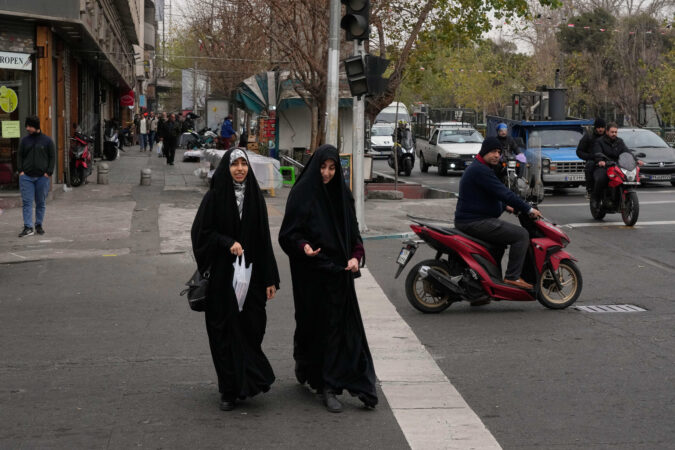
    In Iran’s capital, Tehran, witnesses said recent mornings showed no new signs of bonfires lit the night before or debris in the streets. The sound of gunfire, which had been intense for several nights, has also faded.

    The clampdown on the demonstrations has killed at least 2,677 people, according to the U.S.-based Human Rights Activists News Agency. The figure reported Thursday is an increase of 106 from a day earlier, and the organization says the number will likely continue to climb. The death toll exceeds that of any other round of protest or unrest in Iran in decades and recalls the chaos surrounding the country’s 1979 Islamic Revolution.

    The U.S.-based agency, founded 20 years ago, has been accurate throughout multiple years of demonstrations, relying on a network of activists inside Iran that confirms all reported fatalities.

    With communications greatly limited in Iran, the AP has been unable to independently confirm the group’s toll. The Iranian government has not provided casualty figures.

    New sanctions on senior Iranians

    In other developments Thursday, the U.S. announced new sanctions on Iranian officials accused of suppressing the protests, which began late last month over the country’s faltering economy and the collapse of its currency. The Group of Seven industrialized democracies and the European Union also said they too were looking at new sanctions to ratchet up the pressure on Iran’s theocratic government.

    Among those hit with U.S. sanctions was the secretary of Iran’s Supreme Council for National Security, whom the Treasury Department accuses of being one of the first officials to call for violence against protesters. The Group of Seven, of which the U.S. is a member, also warned they could impose more sanctions if Iran’s crackdown continues.

    European Union chief Ursula von der Leyen said the 27-nation bloc was looking at strengthening sanctions “to push forward that this regime comes to an end and that there is change.

  • European troops arrive in Greenland as talks with U.S. highlight ‘disagreement’ over island’s future

    European troops arrive in Greenland as talks with U.S. highlight ‘disagreement’ over island’s future

    NUUK, Greenland — Troops from several European countries continued to arrive in Greenland on Thursday in a show of support for Denmark as talks among representatives of Denmark, Greenland and the U.S. highlighted “fundamental disagreement” over the future of the Arctic island.

    The disagreement came into starker focus Thursday, with the White House describing plans for more talks with officials from Denmark and Greenland as “technical talks on the acquisition agreement” for the U.S. to acquire Greenland.

    That was a far cry from the way Danish Foreign Minister Lars Løkke Rasmussen described it as a working group that would discuss ways to work through differences between the nations.

    “The group, in our view, should focus on how to address the American security concerns, while at the same time respecting the red lines of the Kingdom of Denmark,” he said Wednesday after the meeting.

    Before the talks began Wednesday, Denmark announced it would increase its military presence in Greenland. Several European partners — including France, Germany, the U.K., Norway, Sweden, and the Netherlands — started to send symbolic numbers of troops or promised to do so in the following days.

    The troop movements were intended to portray unity among Europeans and send a signal to President Donald Trump that an American takeover of Greenland is not necessary as NATO together can safeguard the security of the Arctic region amid rising Russian and Chinese interest.

    The European troops did little to dissuade Trump.

    White House press secretary Karoline Leavitt said Thursday that it had no impact on the president’s decision-making or goal of acquiring Greenland.

    “The president has made his priority quite clear, that he wants the United States to acquire Greenland. He thinks it’s in our best national security to do that,” she said.

    Rasmussen, flanked by his Greenlandic counterpart Vivian Motzfeldt, said Wednesday that a “fundamental disagreement” over Greenland remained after they met at the White House with Vice President JD Vance and Secretary of State Marco Rubio.

    Rasmussen said it remains “clear that the president has this wish of conquering over Greenland” but dialogue with the U.S. would continue at a high level over the following weeks.

    Meanwhile, French President Emmanuel Macron announced Wednesday that “the first French military elements are already en route” and “others will follow,” as French authorities said about 15 soldiers from the mountain infantry unit were already in Nuuk for a military exercise.

    Germany will deploy a reconnaissance team of 13 personnel to Greenland on Thursday, the Defense Ministry said.

    On Thursday, Danish Defense Minister Troels Lund Poulsen said the intention was “to establish a more permanent military presence with a larger Danish contribution,” according to Danish broadcaster DR. He said soldiers from several NATO countries will be in Greenland on a rotation system.

    ‘Greenland does not want to be part of the United States’

    Inhabitants of Greenland and Denmark reacted with anxiety but also some relief that negotiations with the U.S. would go on and European support was becoming visible.

    Greenland’s Prime Minister Jens-Frederik Nielsen welcomed the continuation of “dialogue and diplomacy.”

    “Greenland is not for sale,” he said Thursday. “Greenland does not want to be owned by the United States. Greenland does not want to be governed from the United States. Greenland does not want to be part of the United States.”

    In Greenland’s capital, Nuuk, local residents told The Associated Press they were glad the first meeting between Greenlandic, Danish, and American officials had taken place but suggested it left more questions than answers.

    Several people said they viewed Denmark’s decision to send more troops, and promises of support from other NATO allies, as protection against possible U.S. military action. But European military officials have not suggested the goal is to deter a U.S. move against the island.

    Maya Martinsen, 21, said it was “comforting to know that the Nordic countries are sending reinforcements” because Greenland is a part of Denmark and NATO.

    The dispute, she said, is not about “national security” but rather about “the oils and minerals that we have that are untouched.”

    More troops, more talks

    On Wednesday, Poulsen announced a stepped-up military presence in the Arctic “in close cooperation with our allies,” calling it a necessity in a security environment in which “no one can predict what will happen tomorrow.”

    “This means that from today and in the coming time there will be an increased military presence in and around Greenland of aircraft, ships and soldiers, including from other NATO allies,” Poulsen said.

    Denmark informed NATO that it will be conducting exercises in Greenland, and the alliance’s Supreme Allied Commander Alexus Grynkewich spoke Thursday with Denmark’s chief of defense, Col. Martin O’Donnell, a spokesperson for Grynkewich told the AP.

    He said such dialogue is typical and added that “we all agree the Arctic – including Greenland – is important for transatlantic security.”

    The Danish exercises and deployment of additional troops “bolster our collective defenses there,” O’Donnell said.

    The Russian embassy in Brussels on Thursday lambasted what it called the West’s “bellicose plans” in response to “phantom threats that they generate themselves”. It said the planned military actions were part of an “anti-Russian and anti-Chinese agenda” by NATO.

    “Russia has consistently maintained that the Arctic should remain a territory of peace, dialogue and equal cooperation,” the embassy said.

    Some diplomatic progress

    Commenting on the outcome of the Washington meeting on Thursday, Poulsen said the working group was “better than no working group” and “a step in the right direction.” He added nevertheless that the dialogue with the U.S. did not mean “the danger has passed.”

    The most important thing for Greenlanders is that they were directly represented at the meeting in the White House and that “the diplomatic dialogue has begun now,” Juno Berthelsen, a lawmaker for the pro-independence Naleraq opposition party, told AP.

    A relationship with the U.S. is beneficial for Greenlanders and Americans and is “vital to the security and stability of the Arctic and the Western Alliance,” Berthelsen said. He suggested the U.S. could be involved in the creation of a coast guard for Greenland, providing funding and creating jobs for local people who can help to patrol the Arctic.

    In Washington, Rasmussen and Motzfeldt also met with a bipartisan group of senators at the U.S. Capitol.

    “We really appreciate that we have close friends in the Senate and the House as well,” Rasmussen told reporters, adding that Denmark would work to “accommodate any reasonable American requests” with Greenland.

    There has been significant concern among lawmakers of both political parties that Trump could upend the NATO alliance by insisting on using military force to possess Greenland. Key Republicans lawmakers have pushed back on those plans and suggested that the Trump administration should work with Denmark to enhance mutual security in the Arctic.

    Line McGee, 38, from Copenhagen, told AP that she was glad to see some diplomatic progress. “I don’t think the threat has gone away,” she said. “But I feel slightly better than I did yesterday.”

    Trump, in his Oval Office meeting with reporters, said: “We’ll see how it all works out. I think something will work out.”

  • Prosecutor urges manslaughter verdict for guard who ‘did nothing’ as fellow officers killed inmate

    Prosecutor urges manslaughter verdict for guard who ‘did nothing’ as fellow officers killed inmate

    UTICA, N.Y. — A New York prison guard who failed to intervene as he watched an inmate being beaten to death should be convicted of manslaughter, a prosecutor told a jury Thursday in the final trial of correctional officers whose pummeling, recorded by body-cameras, provoked outrage.

    “For seven minutes — seven gut-churning, nauseating, disgusting minutes — he stood in that room close enough to touch him and he did nothing,” special prosecutor William Fitzpatrick told jurors during closing arguments. The jury began deliberating Thursday afternoon.

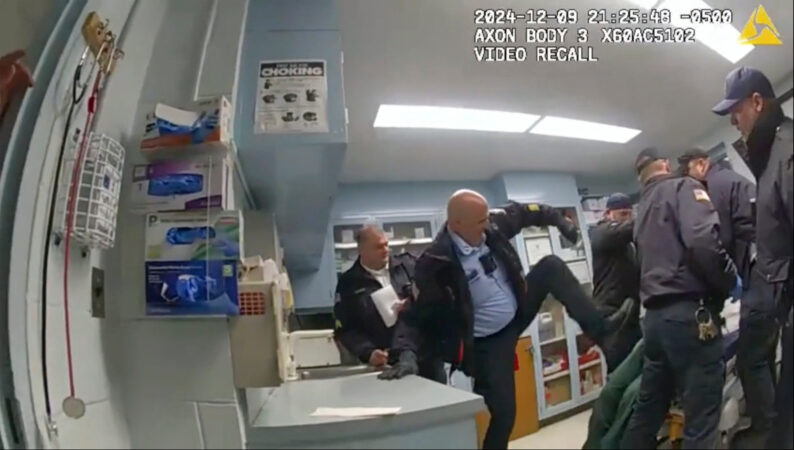
    Former corrections officer Michael Fisher, 55, is charged with second-degree manslaughter in the death of Robert Brooks, who was beaten by guards upon his arrival at Marcy Correctional Facility on the night of Dec. 9, 2024, his agony recorded silently on the guards’ body cameras.

    Fisher’s attorney, Scott Iseman, said his client entered the infirmary after the beating began and could not have known the extent of his injuries.

    Fisher was among 10 guards indicted in February. Three more agreed to plead guilty to reduced charges in return for cooperating with prosecutors. Of the 10 officers indicted in February, six pleaded guilty to manslaughter or lesser charges. Four rejected plea deals. One was convicted of murder, and two were acquitted in the first trial last fall.

    Fisher, standing alone, is the last of the guards to face a jury.

    The trial closes a chapter in a high-profile case led to reforms in New York’s prisons. But advocates say the prisons remain plagued by understaffing and other problems, especially since a wildcat strike by guards last year.

    Officials took action amid outrage over the images of the guards beating the 43-year-old Black man in the prison’s infirmary. Officers could be seen striking Brooks in the chest with a shoe, lifting him by the neck and dropping him.

    Video shown to the jury during closing arguments Thursday indicates Fisher stood by the doorway and didn’t intervene.

    “Did Michael Fisher recklessly cause the death of Robert Brooks? Of course he did. Not by himself. He had plenty of other helpers,” said Fitzpatrick, the Onondaga County district attorney.

    Iseman asked jurors looking at the footage to consider what Fisher could have known at the time “without the benefit of 2020 hindsight.”

    “Michael Fisher did not have a rewind button. He did not have the ability to enhance. He did not have the ability to pause. He did not have the ability to get a different perspective of what was happening in the room,” Iseman said.

    Even before Brooks’ death, critics claimed the prison system was beset by problems that included brutality, overworked staff and inconsistent services. By the time criminal indictments were unsealed in February, the system was reeling from an illegal three-week wildcat strike by corrections officers who were upset over working conditions. Gov. Kathy Hochul deployed National Guard troops to maintain operations. More than 2,000 guards were fired.

    Prison deaths during the strike included Messiah Nantwi on March 1 at Mid-State Correctional Facility, which is across the road from the Marcy prison. 10 other guards were indicted in Nantwi’s death in April, including two charged with murder.

    There are still about 3,000 National Guard members serving the state prison system, according to state officials.

    “The absence of staff in critical positions is affecting literally every aspect of prison operations. And I think the experience for incarcerated people is neglect,” Jennifer Scaife, executive director of the Correctional Association of New York, an independent monitoring group, said on the eve of Fisher’s trial.

    Hochul last month announced a broad reform agreement with lawmakers that includes a requirement that cameras be installed in all facilities and that video recordings related to deaths behind bars be promptly released to state investigators.

    The state also lowered the hiring age for correction officers from 21 to 18 years of age.