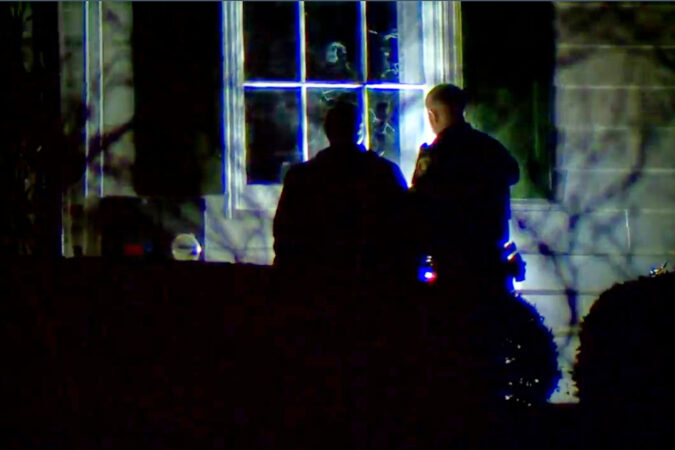
A man who broke windows at Vice President JD Vance’s Ohio home and caused other property damage was detained early Monday, the U.S. Secret Service said.
The man was detained shortly after midnight by Secret Service agents assigned to Vance’s home, east of downtown Cincinnati, agency spokesperson Anthony Guglielmi said in a statement emailed to The Associated Press. He has not been named.
The Secret Service heard a loud noise at the home around midnight and found a person who had broken a window with a hammer and was trying to get into the house, according to two law enforcement officials who were not publicly authorized to discuss the investigation into what happened and spoke on the condition of anonymity. The man had also vandalized a Secret Service vehicle on his way up the home’s driveway, one of the officials said.
The home, in the Walnut Hills neighborhood, on hills overlooking the city, was unoccupied at the time, and Vance and his family were not in Ohio, Guglielmi said.
The Secret Service is coordinating with the Cincinnati Police Department and the U.S. attorney’s office as charging decisions are reviewed, he said.
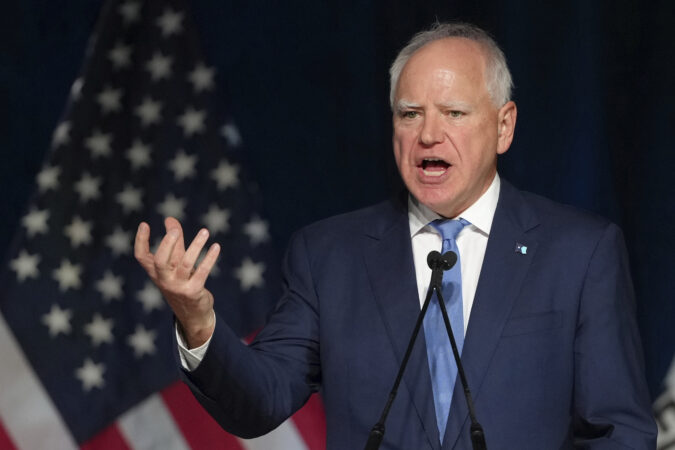
ST PAUL, Minn. — Minnesota Gov. Tim Walz, Democrats’ 2024 candidate for vice president, is ending his bid for a third term as governor amid President Donald Trump’s relentless focus on a fraud investigation into child care programs in the state.
Less than four months after announcing his reelection campaign, Walz said Monday that he could no longer devote the energy necessary to win another term, even as he expressed confidence that he could win.
Walz said in a statement Monday that he “can’t give a political campaign my all” after what he described as an “extraordinarily difficult year for our state.”
“Donald Trump and his allies – in Washington, in St. Paul, and online – want to make our state a colder, meaner place,” Walz said, referring to the Trump administration withholding funds for the programs. “They want to poison our people against each other by attacking our neighbors. And, ultimately, they want to take away much of what makes Minnesota the best place in America to raise a family.”
Democratic Sen. Amy Klobuchar of Minnesota is considering running for governor, according to a person close to her. The person, who wasn’t authorized to speak publicly and spoke on the condition of anonymity, said Klobuchar has not made a final decision.
Around a dozen Republicans are already in the race. They include MyPillow founder and chief executive Mike Lindell, an election denier who is close to Trump. They also include Minnesota House Speaker Lisa Demuth, of Cold Spring; Dr. Scott Jensen, a former state senator from Chaska who was the party’s 2022 candidate; state Rep. Kristin Robbins, of Maple Grove; defense lawyer and former federal prosecutor Chris Madel; former executive Kendall Qualls; and former Minnesota GOP Chair David Hann.
Walz is a military veteran and union supporter who helped enact an ambitious Democratic agenda for his state, including sweeping protections for abortion rights and generous aid to families.
Vice President Kamala Harris picked Walz as her running mate after his attack line against Trump and his running mate, then-Ohio Sen. JD Vance — “These guys are just weird” — spread widely.
Walz had been building up his national profile since his and Harris’ defeat in November. He was a sharp critic of Trump as he toured early caucus and primary states. In May, he called on Democrats in South Carolina to stand up to the Republican president, saying, “Maybe it’s time for us to be a little meaner.”
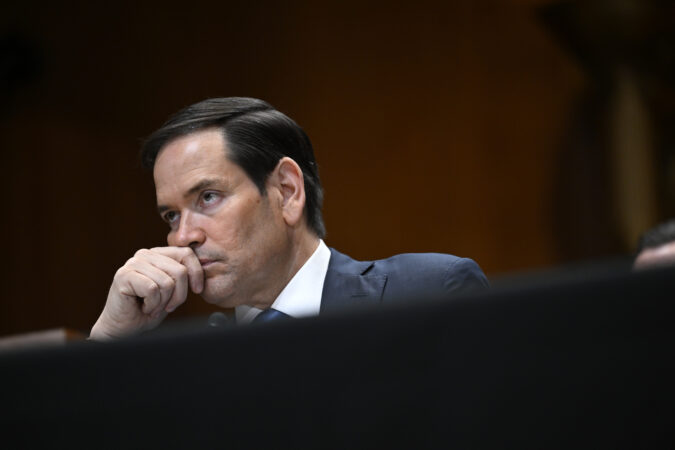
In early November, hours before the Republican-led Senate rejected bipartisan legislation to block the Trump administration from conducting a military attack on Venezuela, Secretary of State Marco Rubio sought to reassure lawmakers it didn’t intend to.
He told them that the U.S. lacked legal authority to invade the South American country and oust its president, Nicolás Maduro, and said that doing so would carry major risks, according to two people who attended the classified briefing.
In the aftermath of Saturday’s raid to capture Maduro and his wife at a fortified military compound in Caracas, top Democrats are accusing Rubio of deliberately misleading Congress.
During a news conference at President Donald Trump’s Mar-a-Lago Club in Florida, Rubio, who also serves as White House national security adviser, told reporters that he and other top officials had planned the Maduro operation for months. The acknowledgment led some on Capitol Hill to conclude that the administration was readying assets for the assault while having told lawmakers that the military buildup in the region was not meant to force a regime change.
“Rubio said that there were not any intentions to invade Venezuela,” Rep. Gregory W. Meeks of New York, the House Foreign Affairs Committee’s top Democrat, told the Washington Post. “He absolutely lied to Congress.”
In an interview with the Post later Saturday, Rubio rejected the assertion. He argued that Maduro is under indictment from a U.S. court, and neither the United States nor the European Union recognized him as the legitimate leader of Venezuela. So rather than an invasion, he cast the attack as a “law enforcement operation” that required military assets to conduct.
Lawmakers previously asked whether the administration “would be invading Venezuela,” Rubio said. “This was not that,” he added.
Democrats were incredulous at the argument.
“It absolutely is one hundred percent regime change,” said Rep. Adam Smith of Washington state, the senior Democrat on the House Armed Services Committee.
Smith said that he had asked Rubio directly whether the administration’s military buildup in the region would result in attacks on Venezuelan territory and that the secretary had said no.
The Trump administration did not notify key members of Congress of the operation until late Saturday morning, sending a short notice that said the president had approved a “military operation in Venezuela to address national security threats posed by the illegitimate Maduro regime.”
The operation, the notice said, came in response to the Justice Department’s warrant against Maduro, who was transported to New York to await trial.
Sen. Mark R. Warner of Virginia, the top Democrat on the Senate Intelligence Committee, said that Rubio tried to reach him after the raid had begun in the early morning hours but that they were unable to connect.
Warner, who has had multiple briefings with Rubio over the past few months, declined to say whether he felt the administration had misled Congress but noted that the timing for the operation — with lawmakers days away from returning to Washington after a holiday break — was not “idle chance.”
“Doing this during a congressional break raises huge questions,” he said in an interview.
Senior Republicans called on the administration to brief lawmakers even while expressing near-unified support for the operation. Senate Majority Leader John Thune (R., S.D.) and House Speaker Mike Johnson (R., La.) said in separate statements that they had spoken with senior officials early Saturday and wanted the administration to brief Congress in the coming week.
Senate Minority Leader Charles E. Schumer (D., N.Y.) and House Minority Leader Hakeem Jeffries (D., N.Y.) demanded far more information.
“We want to know the administration’s objectives, its plans to prevent a humanitarian and geopolitical disaster that plunges us into another endless war — or one that trades one corrupt dictator for another,” Schumer told reporters.
The Senate is set to vote this week on another war powers resolution that, if passed, would block the administration from conducting further military action in Venezuela. Trump said Saturday that the U.S. could carry out a larger “second wave” of attacks but that he did not think doing so would be necessary because Venezuela’s interim leader was cooperating with U.S. demands.
Sen. Tim Kaine (D., Va.) said he hoped the new measurewould get more Republican support. He, too, accused the administration of lying to lawmakers and the public.
At least two of the Republicans who considered supporting the measure that was narrowly defeated in November received calls from Rubio on Saturday, according to their public statements.
“Congress should have been informed about the operation earlier and needs to be involved as this situation evolves,” said Susan Collins (R., Maine), one of the lawmakers who signaled that they might support the last resolution but ultimately opposed it.
Shortly after news of the attack broke Saturday morning, Sen. Mike Lee (R., Utah), a skeptic of expansive U.S. military commitments abroad, posted on social media that he wanted to know “what, if anything, might constitutionally justify this action in the absence of a declaration of war or authorization for the use of military force” from Congress.
Hours later, Lee posted again that he had spoken with Rubio and was satisfied that the attack “likely” was within the president’s authority.
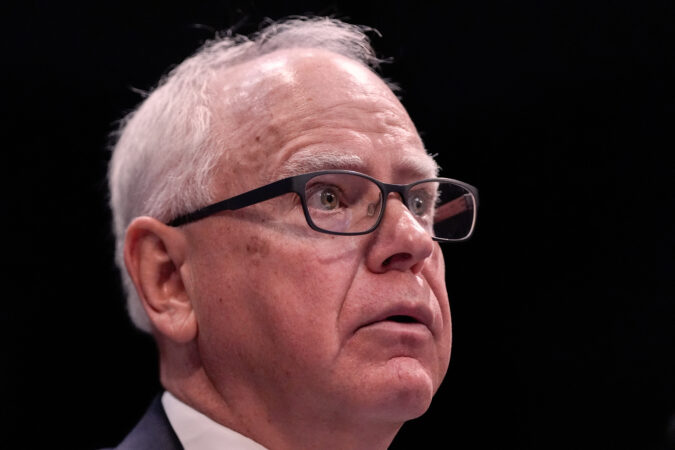
MINNEAPOLIS — Just a few months ago,Larissa Laramee would have encouraged Minnesota Gov. Tim Walz to run for president. She admired the man who helped lead the Democratic presidential ticket in 2024 — and who once taught her social studies.
But Laramee’s feelings have changed as a yearslong welfare fraud probe in Minnesota becomes a national maelstrom. Prosecutors say scammers stole brazenly from safety net programs,taking hundreds of millions of dollars in government funding — potentially billions — for services they never provided while Walz led the state.
“I like him as a person. He’s fantastic,” said Laramee, 40, who works at a Minnesota nonprofit for people with disabilities. Walz, as her high school teacher, helped inspire her career, she said. “But with all of this that’s happened, I’m struggling with seeing a path forward for him.”
Laramee’s doubts show how the sprawling fraud cases in Minnesota now hang over Walz — even as it’s too soon to tell how they will ultimately affect his political future. A year and a half after he vaulted onto the national stage as Kamala Harris’ running mate, Walz is back in the spotlight, this time for acontroversy that Republicans around the country view as political gold.
Republicans are betting the fraud saga will hurt Walz, a staunch liberal and potential 2028 presidential candidate who is seeking a third term as governor this year. GOP officials say it will be one of their top campaign issues in Minnesota as they try to reverse many years of statewide losses and navigate through tough national headwinds in the midterms.
But many of the attacks on Walz are geared just as much toward riling the GOP’s national base, using the issue and Walz’s prominence to validate broader anger within the party over immigration and a social welfare system that President DonaldTrump and others have long argued is out of control.
How much blame Walz should bear forthe state’s response to the fraud is a matter of a debate. He has said that, as state executive, he takes ultimate responsibility. Walz has said officials have “made systematic changes to state government” over the past few years as prosecutions were underway. The governor’s critics say the changes were insufficient and came too late.
Democrats say Republicans are risking a backlash by fixating on the fraudsters’ nationality — most people charged in the schemes are of Somali descent — and by freezing some federal childcare funding in response. Trump has lobbed broad attacks on Somali immigrants that Walz denounced as “racist lies,” and many on the right have called for deportations, even though officials say most of the fraud defendants are U.S. citizens.
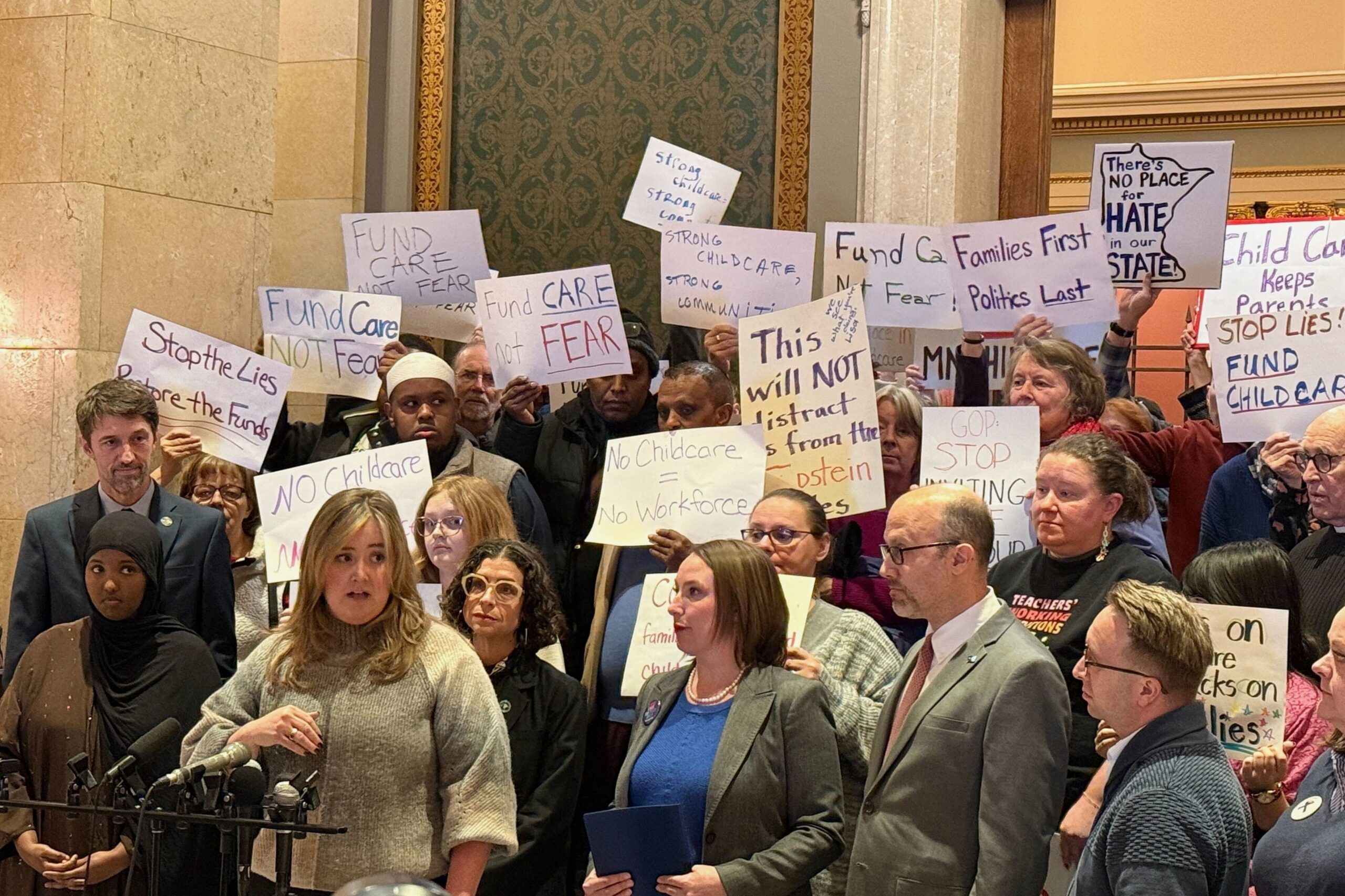
Maria Snider, director of the Rainbow Development Center and vice president of advocacy group Minnesota Child Care Association, speaks as people gather for a news conference at the state Capitol on Wednesday in St. Paul.
Democrats are favored to win the governor’s race in 2026; Republicans have not won a statewide election in Minnesota since 2006. Walz won reelection by about 8 percentage points in 2022, when some of the fraud cases had already surfaced, and it’s not clear that the new attention to the issue has affected his approval in the state. There are no clear recent shifts in available surveys.
Some Democrats remain worried the falloutthreatens to blunt Walz’s attacks on Trump, as well as the economic issues the party has sought to highlight.
“The anti-fraud message is going to be very strong. …I fear that message will dominate or drown out the affordability message,” said Ember Reichgott Junge, a former Minnesota state senator who is now a Democratic political analyst.
Junge said she’s heard many Democrats express concern about Walz’s reelection campaign and noted thathis performance couldaffect lower-profile races on the ballot. Democrats are defending a one-vote majority in the state Senate and trying to retake the House, where Republicans hold a two-seat advantage amid two vacancies.
“He is a riskier candidate than any other Democrat” would have been, she said of Walz, who has not drawn primary challengers so far.
Walz has accused Trump of politicizing the probes. Walz appointed a statewide “director of program integrity” to prevent fraud in mid-December, among other changes, and the state shut down one fraud-plagued housing program this fall.
“We have made significant progress. We have much more to do. And it’s my responsibility to fix it,” Walz wrote in a recent op-ed for the Minnesota Star Tribune.
His office did not make him available for an interview.
Other Democrats dismissed Republicans’ chances in the governor’s race, said the GOP response to the fraud has overreached and accused Trump — who has pardoned people convicted on fraud charges — of hypocrisy. Trump and others on the right have also attacked Walz in highly personal terms that many call cruel; Trump recently called Walz “seriously retarded,” and videos of people yelling “retard” outside Walz’s house have circulated online. (Walz has spoken about his son’s learning disability).
“Republicans are overplaying their hand, and this is what’s going to turn off a lot of voters,” said Abou Amara, a former adviser to Democratic leadership in the state legislature. “They have made this not just about fraud, but they’ve made it about xenophobia.”
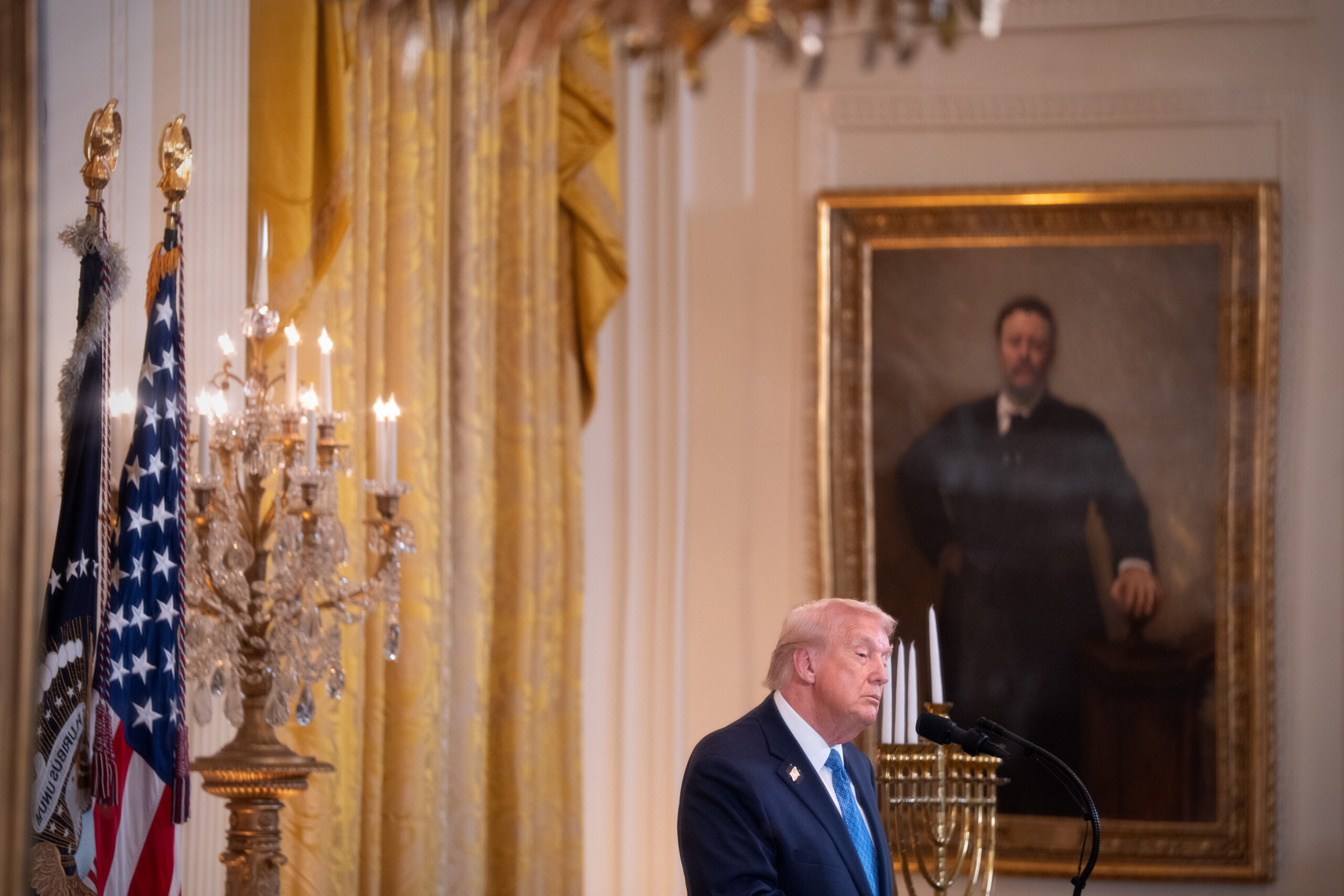
President Donald Trump on Dec. 16 at the White House.
Federal authoritiesin Minnesota have been investigating the sweeping abuse of safety net programs for years and brought many of the charges in 2022, accusing 47 people of misusing $250 million — meant to feed children during the pandemic — on luxury cars and property as far away as Kenya and Turkey.
News reports, a viral video and a flood of criticism from right-wing influencers and politicians have drawn new national attention to the issue in recent weeks. Federal investigators also suggested last month that the problem could be much bigger than previously known.
Joe Thompson, a prosecutor with the U.S. Attorney’s Office in Minnesota, said at a news conference last month that authorities have identified “significant fraud” in14 state Medicaid programs — and said fraud may account for more than half of the $18 billion that went to those programs since 2018.
“Every day we look under a rock and find a new $50 million fraud scheme,” Thompson said.
Republican leaders including Vice President JD Vance and House Speaker Mike Johnson (R., La.) have weighed in this past week, sharing a video posted on social media on Dec. 26 by a 23-year-old YouTuber, Nick Shirley, who joined a roundtable with Trump last year. In the 42-minute video, Shirley claimed daycare centers were not caring for children because he could not see them on-site. Regulators, however, saw children on their visits within the last 10 months, according to officials and records.
Shirley’s video has accumulated more than 130 million views on X and triggered a flood of GOP interest — and criticism of Walz. House Republicans said they would call Walz to testify before Congress next month. Right-leaning billionaire Elon Musk, who owns X, suggested Walz should go to prison.
“Minnesotans are finally much more aware of the extent of the fraud and how deep it is and how it’s gone unchecked, and it is going to play favorably for Republicans on every level of government in the ’26 election,” said state House speaker Lisa Demuth, one of many candidates seeking the GOP nomination to challenge Walz.
Another GOP gubernatorial candidate, Minnesota Rep. Kristin Robbins — who chairs a House committee on fraud — called it the top issue in the race. “We are still, sadly, at the tip of the iceberg,” she said.
A 2024 report from the nonpartisan Minnesota LegislativeAuditor found that the state education department, which administered nutrition programs at the center of many fraud cases, “failed to act on warning signs” and “created opportunities for fraud.”It did not point specifically at Walz.
Michael Brodkorb, a former deputy chair of the Minnesota GOP who has crossed the aisle in the past to vote for Walz, said he isn’t sure how he’ll vote in the coming gubernatorial race, and argued that the Walz administration could have been more responsive. Voters, he said, will have to decide if state officials “have the credibility to be a part of the solution when maybe a lot of Minnesotans think they’re part of the problem.”
But he also warned that Trump’s rhetoric isn’t helping local Republicans. The president railed against Somali immigrants in a cabinet meeting last month, saying “they contribute nothing” and declaring, “Their country stinks, and we don’t want them in our country.”
Some Republicans in Minnesota want to leave race out of the debate — though they argue sensitivities about racism helped enable the fraud. (A nonprofit behind much of the fraud once accused a state agency of racial discrimination while pushing back on skepticism).
“We want to stay focused on the fraud and just the act itself, not on the culture or the people behind it,” Minnesota GOP chair Alex Plechash said in an interview, adding later, “I’m not at all into dividing the people by race or by socioeconomic status or any other way.”
At a Somali mall in Minneapolis, Kadar Abdi, a student at a nearby mosque, said he believes Trump is trying to turn attention away from his own political challenges. “Because of these failures, as a distraction tactic, you want to blame a marginalized group” he said. “It’s as old as American society.”
An hour away in Owatonna, an exurb of the Twin Cities, diners at the Kernel represented the full gamut of opinions. Trump voter Michael Haag, 54, said Walz “should be in prison” and that he plans to leave the state if Walz is reelected.
He “should resign, and I also think he should be charged, because he’s for the Somalis,” Haag said. “He should have been looking out for us, vs. them.”
Another patron wearing a pink Carhartt hat and sipping coffee disagreed.
“I find him honest,” said Joan Trandem, who is retired. “He cares about the small guy.”
Given the drama that’s surrounded Walz, Trandem said she’s surprised he wants to run fora third term. But if he continues with the campaign, she plans to vote for him. In the rural part of Minnesota where Trandem lives, the fraud probe doesn’t get much play anymore, she said. “I’m tired of talking about it.”
Venezuela native Gil Arends was unwinding at his South Philadelphia apartment Saturday when an X notification came through: “There’s no power in Caracas and we are hearing some explosions.” A panoramic video showed smoke rising from the capital city.
“I was immediately scared; even with all the military, I did not think Caracas was going to get bombed,” Arends, 40, said. Then, the news came through: Venezuelan President Nicolás Maduro was in custody.
A U.S.military operation ousted Maduro from power early Saturday, capturing him and his wife, Cilia Flores. The couple were extracted from their home on a military base and taken to New York, where they face prosecution for their alleged participation in a narco-terrorism conspiracy. The dramatic ground offensive capped a monthslong pressure campaign by President Donald Trump against the Venezuelan leader.
Arends, who owns Puyero Venezuelan Flavor with locations in Center City and University City, left Venezuela 15 years ago. He woke up his mother, sister, and wife when he learned the news. No one could believe it.
“Some people just began noticing the bombings in the Caribbean, but we have been living this our entire lives,” Arends said. “No one wants to see their country getting bombed, but they gave us no alternative. I am grateful for the help.”
In the wake of the raid, Trump said the United States would “run Venezuela” until a transition of power could be arranged. Speaking from Mar-a-Lago, Trump offered few details on what American intervention would look like — or how long it could take — but revealed he plans to “fix” the country’s oil infrastructure and sell “large amounts” of oil to other countries.
The military operation and takeover Saturday elicited reactions from Philadelphia’s Venezuelan community and a cohort of area politicians who denounced Trump’s plan to run the country and capitalize off its oil reserves.
Philadelphia Democrat U.S. Rep. Brendan Boyle took to X, writing, “The American people want affordable housing and health care. The last thing they want is another costly forever war.”
U.S. Rep. Brian Fitzpatrick said in a statement that Venezuela’s future “belongs to the Venezuelan people alone.”
“The only country that the United States of America should be ‘running’ is the United States of America,” the Bucks County Republican said.
The legal authority for the raid on Maduro and airstrikes in Caracas were not immediately known, but area lawmakers said Trump did not seek congressional authorization to capture Maduro. Decrying the attack, a spokesperson for U.S. Rep. Dwight Evans of Philadelphia noted that the president’s chief of staff Susie Wiles told Vanity Fair in November that ground operations in Venezuela would require the approval of Congress.
In a social media post, Sen. Andy Kim accused Secretary of State Marco Rubio and Defense Secretary Pete Hegseth of “blatantly” lying when the administration told congressional leaders its objective was not a regime change. Kim — a New Jersey Democrat and former national security official in the Obama administration — argued the raid may further isolate the U.S. from its allies.
“This strike doesn’t represent strength. It’s not sound foreign policy,” Kim wrote. “It puts Americans at risk in Venezuela and the region, and it sends a horrible and disturbing signal to other powerful leaders across the globe that targeting a head of state is an acceptable policy for the U.S. government.”
Delaware Democratic U.S. Sen. Chris Coons echoed Kim in a news release: According to Coons, senior Trump administration officials said in briefings to Congress that they were focused on combating drug trafficking.
“President Trump put American service members in harm’s way to capture Maduro, but the president lacks a clear plan for what comes next,” Coons said. “This raid risks creating more instability in the region, putting U.S. service members and civilians in the hemisphere at risk, and dividing us further from our regional partners.”
While condemning Trump, Sen. Cory Booker, a New Jersey Democrat, also upbraided the Republican-led Congress for its “ongoing abdication of its constitutional duty” and choosing “spineless complicity over its sworn responsibilities.”
“Again and again, the president has exceeded his authority, defied congressional intent, trampled the separation of powers, and broken the law — while Congress looked away in cowardice and submission,” Booker said in a news release. “Congress must act now. It must reassert its constitutional authority, restore the rule of law, and stop this president before further injury is done to our democracy and our republic.”
State Sen. Nikil Saval (D., Philadelphia) called for his federal counterparts to impeach Trump.
“Trump’s attack on Venezuela and abduction of its President are criminal acts of terror. They follow in the darkest traditions of American history: a violent, reckless flex of military power to gain control over foreign resources,” Saval posted on Instagram. “It is incumbent on every American of conscience to rise against these actions.”
Bill Burke-White, an international lawyer and law professor at the University of Pennsylvania Carey Law School, said the United States’ unsanctioned attack on another sovereign state opens the doors for other military superpowers to oust opposing heads of states.
“Many countries in the world are going to look at this and say … that the United States has fundamentally abandoned the basic principles that kept us safe for the last 70 years. We’re going to be reverting to a world that looks more like regional powers that can do whatever they want,” he said, “a world governed, not by law, but by the whims of powerful autocrats in countries with nuclear weapons.”
The U.S. government does not recognize Maduro as a legitimate leader of Venezuela, and Trump repeated rhetoric Saturday that Maduro had effectively exploited the nation for cocaine trafficking and criminal enterprises. American presence in waters off South America has swelled in recent months as the U.S. attacked boats allegedly carrying drugs.
The number of known boat strikes was 35 and the number of people killed at least 115 as of Friday, according to the Trump administration. Trump has said that the U.S. is engaged in an “armed conflict” with drug cartels and has justified the boat strikes as necessary to curb the flow of drugs.
In social media posts, Pennsylvania U.S. Sens. Dave McCormick , a Republican, and Democrat John Fetterman applauded American military personnel who carried out the mission under the cover of darkness.
“For years Maduro’s regime killed our children by flooding America’s streets with poison, threatened our borders, and undermined U.S. national security,” McCormick wrote. “I urge what’s left of the Maduro regime to honor the will of the Venezuelan people and transition peacefully to rightfully elected leadership.”
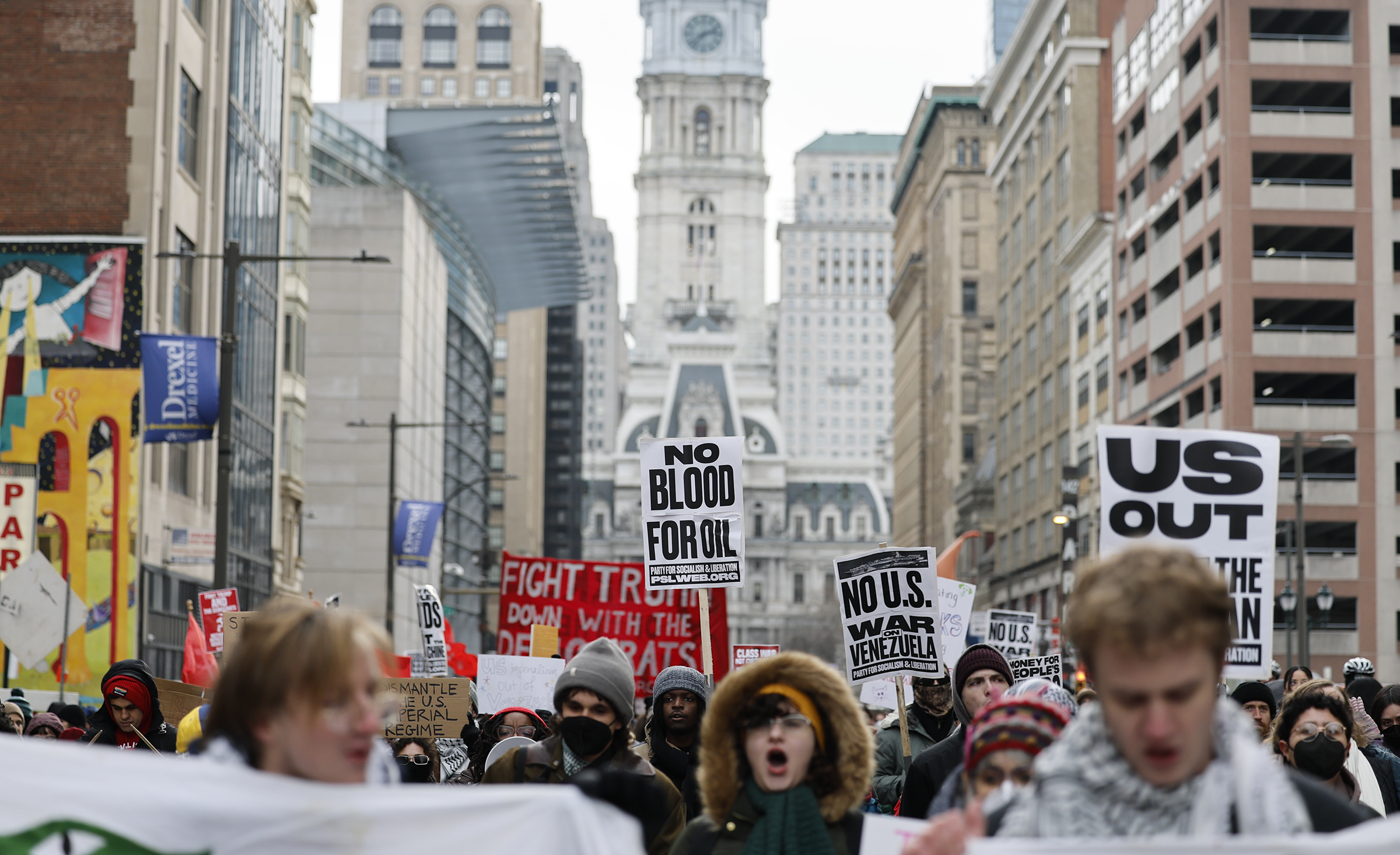
Demonstrators march along North Broad Street reacting to U.S. strikes on Venezuela on Saturday.
There are about 7,000 people of Venezuelan origin in the Philly metro area, according to the latest census data, out of a total metro area Latino population of 681,000. By comparison, there are 135,000 people of Mexican origin, and 74,000 people of Dominican origin in the metro area.
Three local Venezuelan organizations — Casa de Venezuela Philadelphia, Casa de Venezuela Delaware, and Gente de Venezuela Philadelphia — rallied for peace and unity among the diaspora.
“In moments of heightened emotional sensitivity and rapid information circulation, we urge our community in exile to act with serenity, caution, and a sense of collective responsibility,” a joint statement read.
A vigil for Venezuela’s future is scheduled for noon Sunday at the Cathedral Basilica of SS. Peter and Paul.
“We firmly believe that no process of change will be sustainable if built on hatred, confrontation, or suffering,” the statement said.
After the news began to sink in, Arends, the restaurateur, checked in with his employees, asking about their family members in Caracas. Overall everyone was OK, he said, although some were startled and concerned by the bombing sounds.
“There is so much uncertainty in every single level and we have been through so much; we have seen bad things become worse so it’s very difficult to just be happy without fearing what that might lead to,” Arends said. “I’m hopeful but it doesn’t feel like we are at the point where this is over.”
As the first day of a post-Maduro Venezuela came to a close, Venus Lucini, 28, said she felt like there was a difference in the air.
“There are too many emotions, too much uncertainty, but for the first time, there is possibility,” Lucini said, as she held her daughter Sofi’s hand.
For the young mother this is a chance for younger generations to recover a sense of the future.
“I already had to emigrate, but this is her chance to see a new Venezuela,” Lucini said, longing to visit with family members who have never seen her 6-year-old in person.
“Can we go to Venezuela now, Mami?” Sofi asked.
“Not yet, baby, but soon you will get to see all the places Mami grew up in,” Lucini replied.
Graphics editor John Duchneskie and the Associated Press contributed to this article.
NEW YORK — Less than 24 hours after throngs of ecstatic supporters poured into Manhattan for his history-making inauguration, Zohran Mamdani began his first full day of work with a routine familiar to many New Yorkers: trudging to the subway from a cramped apartment.
Bundled against the frigid temperature and seemingly fighting off a cold, he set out Friday morning from the one-bedroom apartment in Queens that he shares with his wife. But unlike most commuters, Mamdani’s trip was documented by a photo and video crew, and periodically interrupted by neighbors wishing him luck.
The 34-year-old democratic socialist, whose victory was hailed as a watershed moment for the progressive movement, has now begun the task of running the nation’s largest city: signing orders, announcing appointments, facing questions from the press — and answering for some of the actions he took in his first hours.
But first, the symbolism-laden Day One commute.
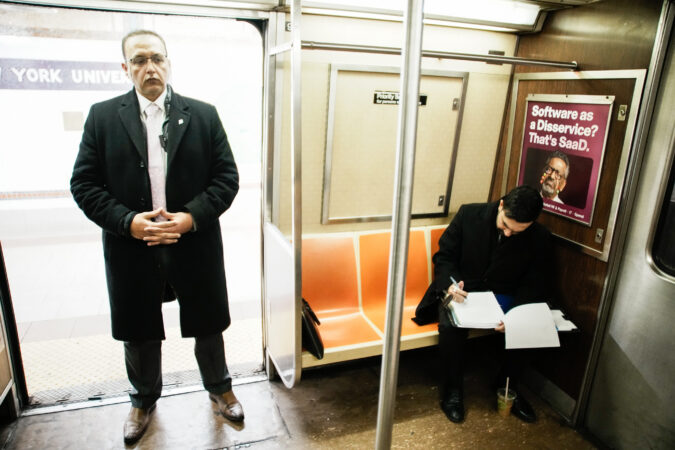
Flanked by security guards and a small clutch of aides on a Manhattan-bound train, he agreed to several selfies with wide-eyed riders, then moved to a corner seat of the train to review his briefing materials.
When a pair of French tourists, confused by the hubbub, approached Mamdani, he introduced himself as “the new mayor of New York.” They seemed doubtful. He held up the morning’s copy of the New York Daily News, featuring his smiling face, as proof.
Mamdani, a Democrat, is hardly alone among city mayors in using the transit system to communicate relatability. His predecessor, Eric Adams, also rode the subway on his first day, and both Bill de Blasio and Michael Bloomberg made a habit out of it, particularly when seeking to make a political point.
Within minutes of Mamdani entering City Hall, the images of him riding public transit had lit up social media.
If the ride served as a well-timed photo-op, it also seemed to reflect Mamdani’s pledge, made in his inaugural speech, to ensure his “government looks and lives like the people it represents.”
His other early actions have also seemed to underscore that priority.
After centering much of his campaign on making rent cheaper for New Yorkers, Mamdani raced from his inauguration ceremony Thursday to a Brooklyn apartment building lobby, drawing boisterous cheers from the tenants union as he pledged that the city would ramp up an ongoing legal fight against the allegedly negligent landlord.
In an effort to give his government a “clean slate,” he revoked a slate of executive orders issued by Adams late in his term, including two related to Israel: one that officially adopted a contentious definition of antisemitism that includes certain criticism of Israel, and another barring city agencies and employees from boycotting or divesting from the country.
The move drew swift backlash from some Jewish groups, including allegations from the Israeli government posted to social media that Mamdani had poured “antisemitic gasoline on an open fire.”
When a journalist on Friday asked about the revoked orders, Mamdani read from prepared remarks, promising his administration would be “relentless in its effort to combat hate and division.” He noted that he had left in place the Mayor’s Office to Combat Antisemitism.
Mamdani also announced the creation of a “mass engagement” office, which he said would continue the work his campaign’s field operation did to bring more New Yorkers into the political fold.
Ringed by supporters and passersby who stood several rows deep, phones in the air, to catch a glimpse of the new mayor, Mamdani then acknowledged the weight of the current moment.
“We have an opportunity where New Yorkers are allowing themselves to believe in the possibility of city government once again,” he said. “That is not a belief that will sustain itself in the absence of action.”
Also on Mamdani’s to-do list: Moving to the mayor’s official residence, a stately mansion in the Upper East Side neighborhood of Manhattan, before the lease on his Queens apartment ends later this month.
WASHINGTON — President Donald Trump defended his energy and health in an interview with the Wall Street Journal and disclosed that he had a CT scan, not an MRI scan, during an October examination about which he and the White House delayed offering details.
Trump, in the interview, said he regretted undergoing the advanced imaging on his heart and abdomen during an October visit to Walter Reed National Military Medical Center because it raised public questions about his health.
His physician said in a memo the White House released in December that he had “advanced imaging” as a preventative screening for men his age.
Trump had initially described it as an MRI but said he didn’t know what part of his body he had scanned. A CT scan is a quicker form of diagnostic imaging than an MRI but offers less detail about differences in tissue.
The president’s doctor, Navy Capt. Sean Barbabella, said in a statement released Thursday by the White House that Trump underwent the exam in October because he planned to be at Walter Reed to meet people working there. Trump had already undergone an annual physical in April.
“President Trump agreed to meet with the staff and soldiers at Walter Reed Medical Hospital in October. In order to make the most of the President’s time at the hospital, we recommended he undergo another routine physical evaluation to ensure continued optimal health,” Barbabella said.
Barbabella said that he asked the president to undergo either a CT scan or MRI “to definitively rule out any cardiovascular issues” and the results were “perfectly normal and revealed absolutely no abnormalities.”
White House press secretary Karoline Leavitt said in a statement Thursday that the president’s doctors and the White House have “always maintained the President received advanced imaging” but said that “additional details on the imaging have been disclosed by the President himself” because he “has nothing to hide.”
“In retrospect, it’s too bad I took it because it gave them a little ammunition,” Trump said in the interview with the Wall Street Journal published Thursday. “I would have been a lot better off if they didn’t, because the fact that I took it said, ‘Oh gee, is something wrong?’ Well, nothing’s wrong.”
Trump, 79, became the oldest person to take the oath of office when he was sworn in as president last year and has been sensitive to questions about his health, particularly as he has repeatedly questioned his predecessor Joe Biden’s fitness for office.
Biden, who turned 82 in the last year of his presidency, was dogged at the end of his tenure and during his abandoned attempt to seek reelection over scrutiny of his age and mental acuity.
But questions have also swirled around Trump’s health this year as he has been seen with bruising on the back of his right hand that has been conspicuous despite a slathering of makeup on top, along with noticeable swelling at his ankles.
The White House this summer said the president had been diagnosed with chronic venous insufficiency, a common condition among older adults. The condition happens when veins in the legs can’t properly carry blood back to the heart and it pools in the lower legs.
In the interview, Trump said he briefly tried wearing compression socks to address the swelling but stopped because he didn’t like them.
The bruising on Trump’s hand, according to Leavitt, is from “frequent handshaking and the use of aspirin,” which Trump takes regularly to reduce the risk of heart attack and stroke.
He said he takes more aspirin than his doctors recommend but said he has resisted taking less because he’s been taking it for 25 years and said he is “a little superstitious.” Trump takes 325 milligrams of aspirin daily, according to Barbabella.
“They say aspirin is good for thinning out the blood, and I don’t want thick blood pouring through my heart,” Trump said. “I want nice, thin blood pouring through my heart. Does that make sense?”
Trump, in the interview, denied that he has fallen asleep during White House meetings when cameras have caught him with his eyes closed, instead insisting that he was resting his eyes or blinking.
“I’ll just close. It’s very relaxing to me,” he said. “Sometimes they’ll take a picture of me blinking, blinking, and they’ll catch me with the blink.”
He said that he’s never slept much at night, a habit he also described during his first term, and said he starts his day early in the White House residence before moving to the Oval Office around 10 a.m. and working until 7 or 8 p.m.
The president dismissed questions about his hearing, saying he struggled to hear only “when there’s a lot of people talking,” and said he has plenty of energy, which he credited to his genes.
“Genetics are very important,” he said. “And I have very good genetics.”
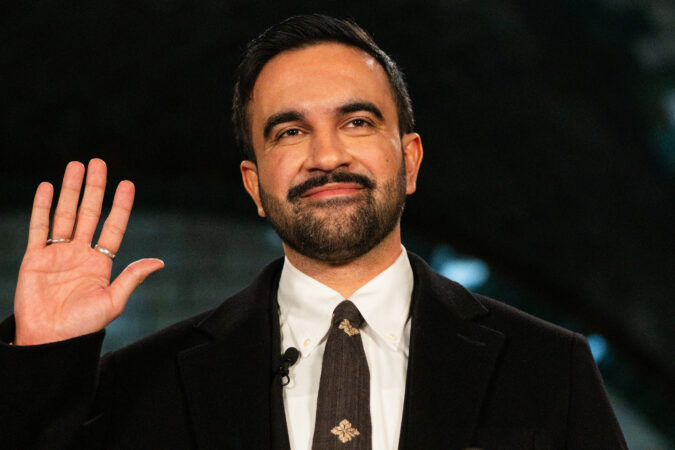
NEW YORK — Incoming Mayor Zohran Mamdani took his midnight oath of office on a centuries-old Quran, marking the first time a mayor of New York City used Islam’s holy text to be sworn in and underscoring a series of historic firsts for the city.
Mamdani, a 34-year-old Democrat, became mayor in a long-closed subway station beneath City Hall, the first Muslim, first South Asian, and first African-born person to hold that position.
These milestones — as well as the historical Quran — reflect the longstanding and vibrant Muslim residents of the nation’s most populous city, according to a scholar who helped Mamdani’s wife, Rama Duwaji, select one of the books.
Most of Mamdani’s predecessors were sworn in on a Bible, although the oath to uphold the federal, state, and city constitutions does not require the use of any religious text.
And while he has focused heavily on the issue of affordability during his campaign, Mamdani was outspoken about his Muslim faith. He frequently appeared at mosques across the five boroughs as he built a base of support that included many first-time South Asian and Muslim voters.
This photo provided by the New York Public Library shows the Schomburg Quran.
A look at the three Qurans that Mamdani used
Two Qurans were to be used during the subway ceremony: his grandfather’s Quran and a pocket-sized version that dates to the late 18th or early 19th century. It is part of the collection at the New York Public Library’s Schomburg Center for Research in Black Culture.
That copy of the Quran symbolizes the diversity and reach of the city’s Muslims, said Hiba Abid, the library’s curator for Middle Eastern and Islamic Studies.
“It’s a small Quran, but it brings together elements of faith and identity in New York City history,” Abid said.
For a subsequent swearing-in ceremony at City Hall on the first day of the year, Mamdani used both his grandfather’s and grandmother’s Qurans. The campaign hasn’t offered more details on those heirlooms.
One Quran’s long journey to Mamdani’s hand
The manuscript was acquired by Arturo Schomburg, a Black Puerto Rican historian whose collection documented the global contributions of people of African descent. While it is unclear how Schomburg came into possession of the Quran, scholars believe it reflected his interest in the historical relationship between Islam and Black cultures in the United States and across Africa.
Unlike ornate religious manuscripts associated with royalty or elites, this copy of the Quran is modest in design. It has a deep red binding with a simple floral medallion and is written in black and red ink. The script is plain and readable, suggesting it was created for everyday use rather than ceremonial display.
Those features indicate the manuscript was intended for ordinary readers, Abid said, a quality she described as central to its meaning.
“The importance of this Quran lies not in luxury, but in accessibility,” she said.
Because the manuscript is undated and unsigned, scholars relied on its binding and script to estimate when it was produced, placing it sometime in the late 18th or early 19th century during the Ottoman period in a region that includes what is now Syria, Lebanon, Israel, the Palestinian territories and Jordan.
Abid said the manuscript’s journey to New York mirrors Mamdani’s own layered background. Mamdani is a South Asian New Yorker who was born in Uganda, and Duwaji is American-Syrian.
Identity and controversy
The meteoric rise of a Muslim democratic socialist also brought a surge of Islamophobic rhetoric, amplified by national attention on the race.
In an emotional speech days before the election, Mamdani said the hostility had only strengthened his resolve to be visible about his faith.
“I will not change who I am, how I eat, or the faith that I’m proud to call my own,” he said. “I will no longer look for myself in the shadows. I will find myself in the light.”
The decision to use a Quran has drawn fresh criticism from some conservatives. U.S. Sen. Tommy Tuberville of Alabama, a Republican, wrote on social media, “The enemy is inside the gates,” in response to a news article about Mamdani’s inauguration. The Council on American-Islamic Relations, a civil-rights group, has designated Tuberville as an anti-Muslim extremist based on past statements.
Such backlash is not new. In 2006, Keith Ellison, a Democrat from Minnesota who was the first Muslim elected to Congress, faced condemnation from conservatives after he chose to use a Quran for his ceremonial oath.
Following the inauguration, the Quran will go on public display at the New York Public Library. Abid said she hopes attention surrounding the ceremony — whether supportive or critical — will prompt more people to explore the library’s collections documenting Islamic life in New York, ranging from early 20th century Armenian and Arabic music recorded in the city to firsthand accounts of Islamophobia after the Sept. 11 attacks.
“This manuscript was meant to be used by ordinary readers when it was produced,” Abid said. “Today it lives in a public library where anyone can encounter it.”
The Social Security Administration — the sprawling federal agency that delivers retirement, disability, and survivor benefits to 74 million Americans — began the second Trump administration with a hostile takeover.
It ended the year in turmoil. A diminished workforce has struggled to respond to up to six million pending cases in its processing centers and 12 million transactions in its field offices — record backlogs that have delayed basic services to millions of customers, according to internal agency documents and dozens of interviews.
Long-strained customer services at Social Security have become worse by many key measures since President Donald Trump began his second term, agency data and interviews show, as thousands of employees were fired or quit and hasty policy changes and reassignments leftinexperienced staff to handle the aftermath.
Exaggerated claims of fraud, for example, have led to new roadblocks for elderly beneficiaries, disabled people, and legal immigrants, who are now required to complete sometransactions in person or online rather than by phone. Even so, the number of calls to the agency for the year hit93 million as of late September — a six-year high, data show.
The troubled disability benefits system is also deteriorating after some improvement, with 66% of disability appointments scheduled within 28 days as of December — down from nearly 90% earlier in the year, data show.
One notable exception is phone service, which improved in the second half of the yearbut is still subpar. Average hold times peaked at about 2½ hours in March, but dropped starting in July as employees were diverted from field office duties to fix what had become a public relations crisis. Average wait times for callbacks remain an hour or longer, however, while new delays have emerged elsewhere in the system, internal data show.
“It was not good before, don’t get me wrong, but the cracks are more than beginning to show,” said John Pfannenstein, a claims specialist outside Seattle and president of Local 3937 of the American Federationof Government Employees, which represents most Social Security employees. “It is a great amount of stress on our employees that remain on the job, who haven’t jumped ship.”
Commissioner Frank Bisignano has authorized millions of dollars in overtime pay to employees in a race to clear the bottlenecks, which worsened dramatically after nearly 7,000 employees — 12% of the workforce — were squeezed out early in the year. The agency said it has made improvements: It reduced the processing center backlog by one million cases this fall, cut pending disability claims by a third and kept the website live 24-7 after a series of outages earlier this year.
The current crisis follows years of disinvestment by Congress and acting leadership, despite a surge in baby boomer retirements. Bisignano promised faster service and a leaner workforce with a digital identity that he says willautomate simple retirement claims and other operations.
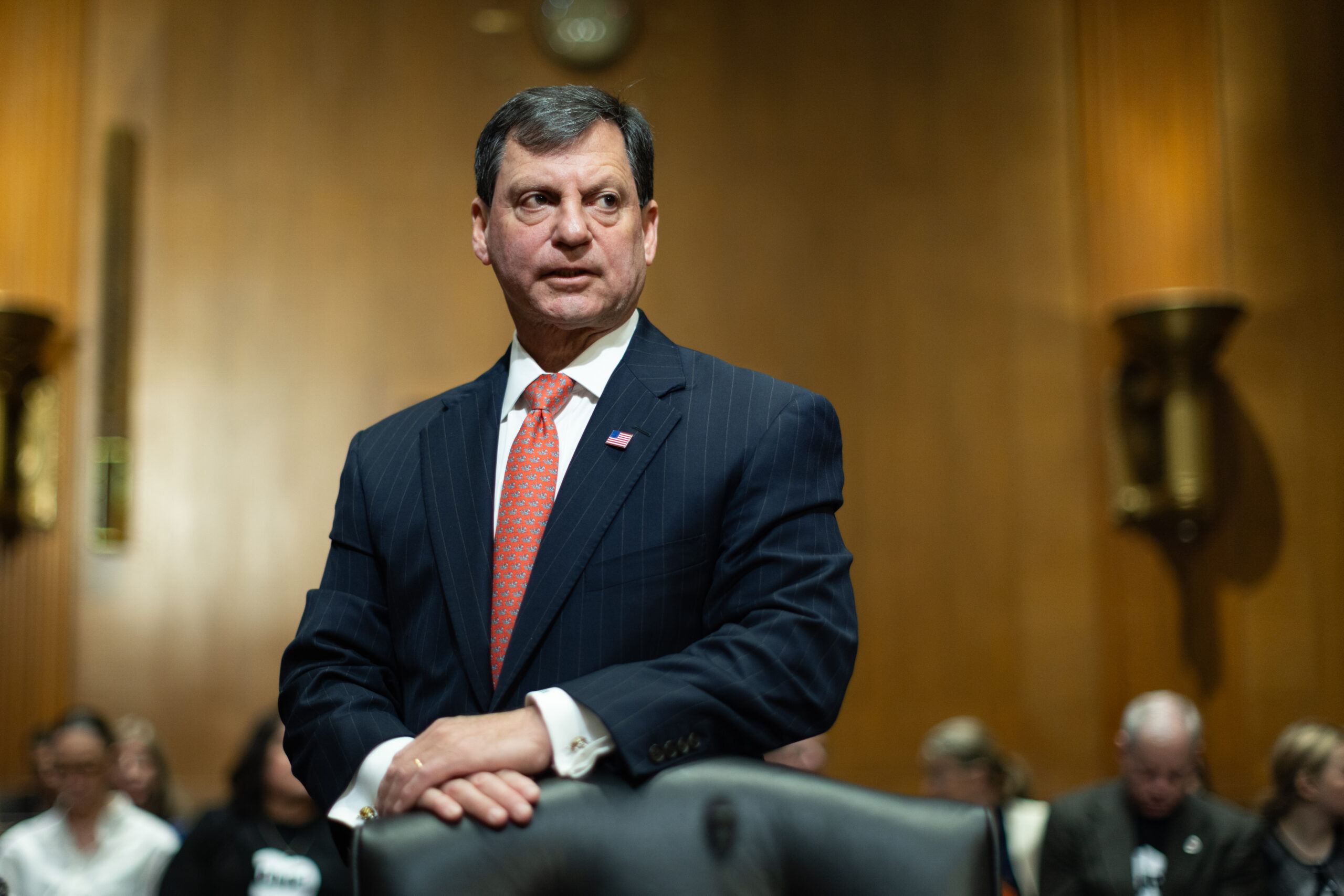
Frank Bisignano, President Donald Trump’s nominee for commissioner of the Social Security Administration, arrives for his confirmation hearing in March.
“In the coming year, we will continue our digital-first approach to further enhance customer service by introducing new service features and functionality across each of our service channels to better meet the needs of the more than 330 million Americans with Social Security numbers,” the commissioner said in a statement to the Washington Post.
But responsiveness and trust in the agency have suffered, according to current and former officials and public polling.
This account of the crisis at Social Security is based on internal documents and interviews with41 current and former employees, advocates and customers, many of whom spoke on the condition of anonymity to speak candidly about their concerns.
Social Security officials declined to make Bisignano available for an interview, though he did respond to written questions.
Three days before Christmas, Brian Morrissey, 65, arrived at the field office in Silver Spring, Md., for an appointment to apply for Medicare. He had tried the “MySSA” website, “but navigating it was just really hard,” he said. Morrissey owns a home improvement business, he said.
“If they can make the process easier online, great, but right now it is not well designed,” he said. So his wife waited 30 minutes on hold to schedule a face-to-face appointment for him.
Aime Ledoux Tchameni, an immigrant from Cameroon, waited in line at the Silver Spring office to get an appointment time to fix his last name from being listed as his first name — a mistake that occurred when he came to the U.S. two years ago. He has a provisional driver’s license from Maryland and needs to clear up his name with Social Security by mid-January, he said. But his appointment is not until Feb. 9.
“This is really going to cause me problems, because I need my driver’s license to get to work,” Tchameni said in French. “I don’t understand why I have to wait so long.”
‘I flipped the switch’
The table was set in February by Elon Musk and his Department of Government Efficiency, or DOGE, which installed a loyal, mid-level data analyst with no management experience to lead the $15.4 billion agency.
That former analyst, Leland Dudek, insists that he saved Social Security from a worse fate under Musk’s cost-cutting team. “I flipped the switch,” he said in a recent interview, referring to his disruptive four-month tenure as acting commissioner. “The casualty of that is a smaller SSA, an SSA that is being, for the first time, subject to the whims of being a political organization, which it was never intended to be.”
Regional offices abruptly disappeared in a rushed reorganization. New policies to fight fraud were rolled out only to be canceled or changed, prompting confused customers to jam the phones and the website, which crashed repeatedly. Daily operations in some respects became an endless game of whack-a-mole as employees were pulled from one department to another.
Along the way, Social Security also became ground zero in the administration’s quest to gather Americans’ personal data — largely in service of its mass deportation campaign.
The chaos quickly became a political cudgel, as Democrats saw an opening to defend one of the country’s most popular entitlement programs. Senate Democrats, led by Sen. Elizabeth Warren of Massachusetts, set up a “war room,” holding rallies with former commissioners in both parties and issuing demands for more resources to keep the Trump administration on the defensive.
“We’ve kept up the pressure and held Donald Trump, Elon Musk and Frank Bisignano accountable for the chaos they’ve caused,” Warren said in an interview.
Many critics note that Bisignano, a Wall Street veteran who became commissioner in May, now wears a second hat as CEO of the Internal Revenue Service —another massive portfolio with a multibillion-dollar budget.
In a statement, Bisignano said his shared leadership of Social Security and the IRS “will drive a better outcome for the American public.” He saidhe envisions “a Social Security Administration that is easier to access, faster to respond, and better prepared to meet the challenges facing Americans.”
Bisignano also said he is working to improve morale and “have the right level of staffing to operate at peak efficiency and deliver best-in-class customer service to the American people.”
‘Work piles up’
By the time Bisignano was confirmed by the Senate, Social Security had been led by three acting commissioners in six months. He pledged to stabilize the upheaval.
But he confronted immediate challenges. Dudek had reassigned 2,000 employees in administrative, analytical and technical roles to jobs dealing with the public. Many accepted the switch under threat of firing if they refused. Some began working the phones. But the national toll-free number was still in crisis, so another 1,000 staffers were assigned to the phones in July. The employees were thrown in with minimal training, multiple employees said — and found themselves unable to answer much beyond basic questions. The phone staff was told to keep calls under seven minutes in what became a push for volume over quality, employees said.
Although officials have publicly claimed that wait times have improved to single digits in some cases, those numbers do not account for the time it takes for customers to be called back, according to internal metrics obtained by the Post.
An audit published by the Social Security Inspector General’s Office on Dec. 22 confirmed that millions of callers requesting callbacks were counted as zero-minute waits by the agency. The review concluded that the metrics themselves were accurate, however, and showed that customer service overall has improved.
Jenn Jones, AARP’s vice president of financial security, said the improved phone service numbers were “encouraging” but that “more work needs to be done.”
“Wait times for callbacks remain over an hour, and more than a quarter of callers are not being served — by getting disconnected or never receiving a callback, for instance,” Jones said in a statement.
Public outcry and pushback from congressional Democrats derailed the planned closure of dozens of field offices that DOGEhad said were no longer needed.
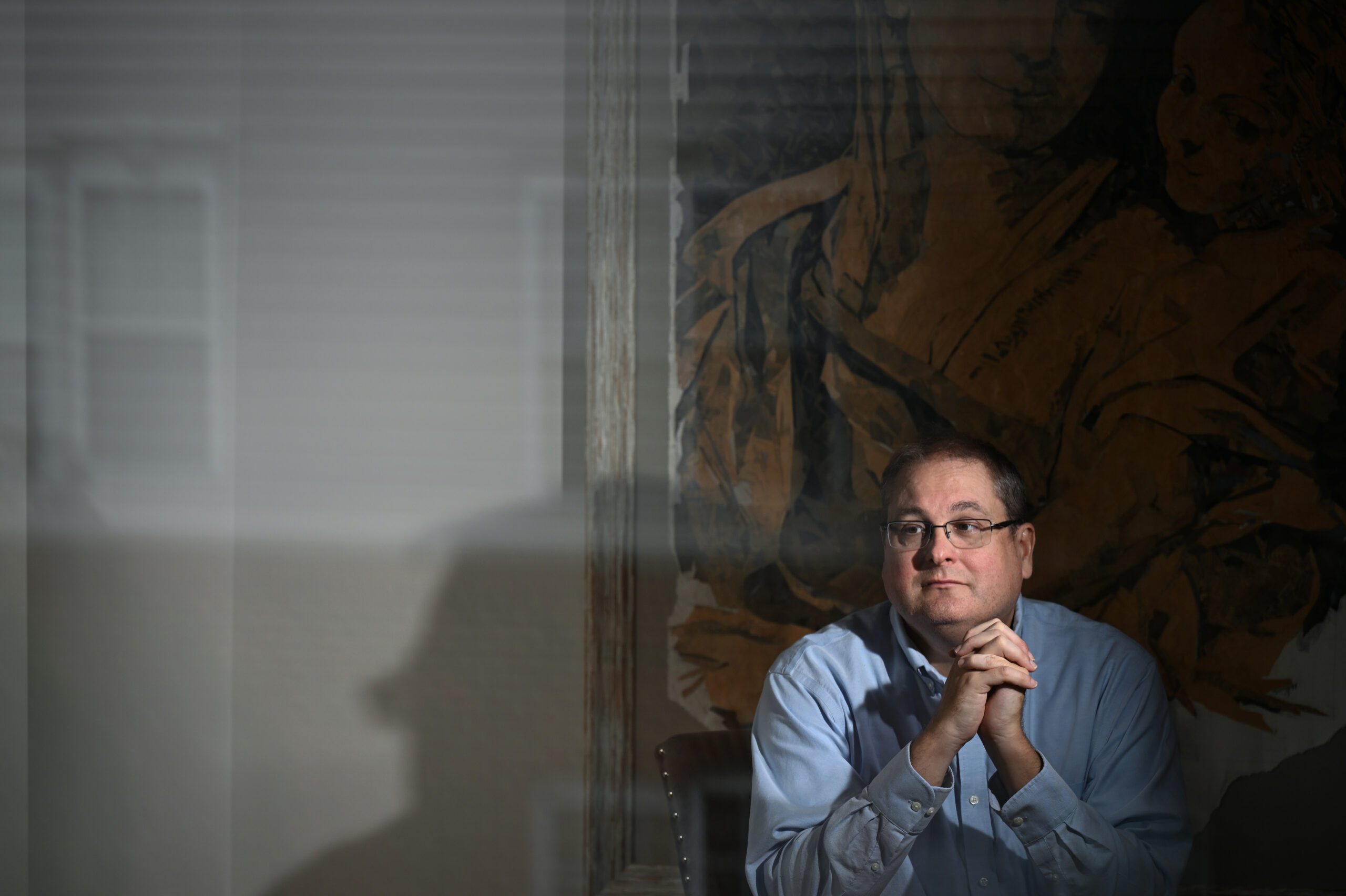
Leland Dudek, former acting commissioner of the Social Security Administration, in November.
Meanwhile, Dudek’s workforce cuts led field offices to shed 9% of their employees by spring due to early retirement and deferred resignation offers. Overtime was restricted and hiring was frozen,even as customer visits continued to climb.
Shortly after taking office, Bisignano’s field operations chief, Andy Sriubas, wrote in an email to the staff that field offices “are, and will always remain, our front line — our face in the community and the primary point of in-person contact.”
In the near term, though, the front line staff were overwhelmed. Attrition was geographically uneven, with some offices losing a quarter of their employees to early retirement offers just as foot traffic grew, according to a staffing analysis by the AFGE’s research partner, the Strategic Organizing Center. The groupcalculated that there were about 4,000 beneficiaries for every field office employee in August of this year.
In several states that ratio is worse, the group found. Wyoming’s field offices, for example, have just 18 employees — or one for every 7,429 beneficiaries.
The shortages have created temporary office closures in many rural areas, some for days or months at a time. The office in Havre, Mont., has been closed for months, with the nearest one almost two hours away in Butte.
Today a majority of Social Security staffers who accepted reassignmentshave not been fully or properly trained, according to several employees with direct knowledge of the initiative. Instruction is often truncated so the staff can respond to customers. Officials said they provide training based on the employee’s level of experience and review the reassigned employees’ work.
“They offered minimal training and basically threw them in to sink or swim,” one veteran employee said of their transferred colleagues.
Training on the phone system and complicated claims and benefit programs lasted four hours for some reassigned workers when it should have taken six months, another employee said. As a result, some customers still can’t get basic questions answered or are given inaccurate information,according to a half-dozen staffers who answer the phones or work closely with employees who do.
The increased workload, hiring freeze and departures have made it harder for the staff to complete their daily tasks, said Jordan Harwell, a Butte, Mont., field office employee who is president of AFGE Local 4012. The staff used to find time between calls to process pay stubs, take in new disability applications and schedule appointments, but now “that work piles up,” he said.
DOGE officials, citing fraud concerns, also required direct deposit changes to be done in person or online — but getting online now calls for new identity verification measures that do not come easily to many elderly or disabled customers. Immigrants approved for green cards to work in the U.S. are now required to get Social Security cards in person under a Trump anti-fraud policy, producing a flood of new field office visits.
In one Indiana field office, one employee said she drags herself to work every day, dreading what will come next. Although she was hired as a claims specialist, she and her colleagues are being told to prioritize answering the phones, which never stop ringing now that her office is taking calls for both Indiana and parts of Illinois due to reorganizations and reductions.
That means she is forced to let other work pile up: calls from people asking about decisions in their cases, claims filed online and anyone who tries to submit forms to Social Security — like proof of marriage — through snail mail.
As the backlogs keep building, she is taking calls from 25 or so people every day, already knowing that she won’t be able to help five or six of them. These are elderly people, often poor or bedridden, who have no way to comply with the change requiring that direct deposit actions take place in person or online. Usually they’re calling because something has happened to their bank accounts and they need to alter their financial information. But they can’t access a computer, the employee said, and driving is out of the question.
She received a call this month from a 75-year-old man who suffered a massive stroke that left him unable to drive. He’d also had to switch banks and, as a result, hadn’t received Social Security checks for the last two or three months.
“I had to sit there on the phone and tell this guy, ‘You have to find someone to come in … or, do you have a relative with a computer who can help you or something like that?’” she recalled. “He was just like, ‘No, no, no.’”
She ended that call by telling the man to call his bank, hoping they might be able to help when her agency, hampered by administration policies, no longer could.
‘Everybody started laughing’
As the staff races to answer the phones, other tasks are backing up, including Medicare applications, disability claims that require initial vetting by field offices and other transactions that cannot be solved in one conversation. Any case falling in that category is redirected to a processing center, where the backlogs have been building all year.
These back-office operations, located across the country, often handle labor-intensive, highly complex cases that do not call for automated resolution. Among the tasks are issuing checks, including for back pay, to disabled people whose denial of benefits was reversed by an administrative law judge.
As Congress kept funding flat for Social Security over many years, the processing operations fell way behind, requiring headquarters employees to help handle the volume. But it was never as bad as it got this fall.
Many disability payments now takethree to six months to process when they used to take weeks, advocates and employees said.
At the start of September, one benefits authorizer in a processing center was called into an all-staff meeting with her colleagues, she said. There, management explained that the backlog at the time — six million cases — was unacceptable and that everyone would have to work overtime in an attempt to drive it down to two million by Christmas.
“When they told us that, everybody started laughing,” she said. “Because there is just absolutely no way to get it down in that short period of time.”
Still, she and her colleagues have been hustling, she said, processing cases as fast as they can, even as they can see their haste sometimes causes errors. No time to fix them, she has decided: Best to just keep moving.
The Social Security Administration has said it expects to pay $367 million less on payroll this fiscal year than the year before.
Meanwhile, another staffer, who answers phones at a national call center, said she has changed what she says to customers when she realizes their claim can’t be finished in one conversation and must be referred to a payment center.
“I’m supposed to reassure people it’s being worked on,” she said. “But now I avoid giving people a firm date they can expect it to be done by.”
Just before Thanksgiving, Bisignano said that starting next year, he hopes to slash field office visits by half. More than 31 millionpeople visited field offices in the last fiscal year — or tried to. Critics say the change will dismantle the fail-safe for those who cannot use computers, no matter how imperfect.
At the same time, in recent weeks, hundreds of employees who transferred to customer service operations have been recalled to the roles they were originally hired to fill. Others have been reassigned to a new “digital engagement” office.
Social Security has told Congress it plans to put more resources toward IT, with an expected increase of $591 million this fiscal year compared to fiscal 2025, according to the agency’s budget justification. The agency also expects to pay $367 million less on payroll than it did the year before.
Social Security also plans to roll out a new program that will allow customers to book phone appointments with field offices throughout the country, no matter where they live, according to two people familiar with the plans.
The goal is to reduce the number of field office visits, though one field office employee said the change will probably lead to a greater workload for staff keeping up with queries from customers outside their area.
“They’ve created problems and now they are trying to fix problems they created,” the worker said.
During Christmas week, the grind continued for most front line staff. After Trump signed an executive order last week closing most federal offices on Christmas Eve and Friday, Bisignano told his staff that field offices, teleservice centers, processing centers and more operations would remain open.
“In order to balance the needs of the public and our workforce, we will solicit interest from employees who would like to work on Wednesday and Friday,” he wrote.
Amid rising concerns about the health of the nation’s democracy, Chief Justice John G. Roberts Jr. expressed faith Wednesday that the nation’s founding charters and key principles are proving resilient.
Quoting President Calvin Coolidge, the Supreme Court’s leader wrote in a year-end report that as the nation approaches its 250th anniversary, the rule of law remains alive and well.
“Amid all the clash of conflicting interests, amid all the welter of partisan politics, every American can turn for solace and consolation to the Declaration of Independence and the Constitution of the United States with the assurance and confidence that those two great charters of freedom and justice remain firm and unshaken,” Roberts quoted Coolidge as saying.
He added in his own words: “True then; true now.”
The comments came in Roberts’s annual report on the state of the judiciary, which largely sidestepped contemporary controversies and events at a moment of political upheaval. Many of those concerns have revolved around President Donald Trump’s push to expand executive authority and wield power that critics say belongs to other branches of the government.
Instead of those issues, Roberts wrote mostly about history — the drafting of the Declaration of Independence and Constitution, the ideas that inspired the documents and the nation’s struggles to fulfill the charters’ ideals.
Roberts urged judges to remain true to that legal bedrock.
“Those of us in the Third Branch must continue to decide the cases before us according to our oath, doing equal right to the poor and to the rich, and performing all of our duties faithfully and impartially under the Constitution and laws of the United States,” Roberts wrote.
Roberts made no mention of topics that have animated others in the judiciary and legal observers over the last year: threats against judges, the Trump administration’s alleged defiance of court orders or critiques by lower-court judges of how the Supreme Court has ruled on its emergency docket.
Roberts did decry threats against judges in last year’s annual report and pushed back on President Donald Trump’s calls to impeach a federal judge who ruled against him. In March,Roberts issued a rare statement saying that “impeachment is not an appropriate response to disagreement concerning a judicial decision.”
In November, Congress boosted funding for security at the Supreme Court, but it did not extend additional money for the protection of lower-court judges.
Threats against federal judges spiked in the months after Trump began his second term in January. Through the current fiscal year, which started Oct. 1, the U.S. Marshals Service has investigated 133 threats against federal judges, according to agency statistics.
Trump and his allies have sharply criticized rulings against the president’s policies and called for the removal of some judges. Dozens of judges who have ruled against Trump have received unsolicited pizza deliveries at their homes. Threats against judges have also come from the left.
Roberts’s report comes as the Supreme Court takes up a series of high-profile cases involving key tests of Trump’s agenda. In November, the justices appeared skeptical that Trump’s sweeping tariffs were legal. Earlier this month, the justices seemed ready to allow Trump greater authority to fire the heads of independent agencies without cause.
Next month, the justices will hear arguments over whether the president can dismiss Federal Reserve governor Lisa Cook, which would allow the president to reshape the Fed and its vast powers over the economy.
Decisions in all three cases are expected by the summer.