Category: National Politics

  • Trump’s library plan: An iconic building in Miami and a ‘fake news wing’

    Trump’s library plan: An iconic building in Miami and a ‘fake news wing’

    Eric Trump sounded triumphant after Florida officials recently approved giving away a prized piece of Miami real estate for his father’s presidential library. “I got the library approved yesterday,” Trump said on a podcast, adding that “we just got the greatest site in Florida and I’m going to be building that.”

    Then, speaking on another program, Trump said he would take the host’s suggestion to create a “fake news wing” — paid for with money from lawsuit settlements with ABC, CBS, and other sources. It would run clips from 60 Minutes and other programs that he said were evidence of the media organizations’ animus against his father.

    These little-noticed statements by the president’s son provide a revealing look into the zeal of President Donald Trump and his family to build a likely high-rise with a museum that they say will be unlike any other presidential library — and which could tell the story of his presidency only as he wants it to be told.

    Much about the process is secretive, with no federal rules requiring disclosure of the donors — some of whom may have interests affected by White House policy — who are expected to provide hundreds of millions of dollars. A recent filing, for example, says the Donald J. Trump Library Foundation raised $50 million this year but doesn’t provide any donor names. It says $6 million has been spent for “program services” but doesn’t provide specifics.

    The White House referred questions to the foundation, which did not respond to an emailed list of queries and has not said whether Trump might use some of the site for a hotel or other development.

    It is also unclear whether the Trump library will function as the name implies — providing a center for research of presidential papers — or whether museum exhibits would be reviewed by government historians. Trump might follow the example of former President Barack Obama, who created a private foundation that is building his Chicago center where the museum exhibits will not be subject to government review.

    Running a center under the Obama model would require huge sums of money, which might be why Trump’s strategy of using money from lawsuits against media companies and many other sources has become a crucial component.

    Trump hasn’t said whether he will follow Obama’s example, but if he does, experts said, he would be free to tell his own version of his presidencies — including his false assertion that the 2020 election was stolen. That would be in contrast, for example, to the library of former President Richard M. Nixon, where the National Archives created an exhibit on Watergate that was vetted by nonpartisan government historians but is decried by some Nixon supporters.

    Tim Naftali, who helped create that Watergate exhibit in his former role as the National Archives-appointed director of the Nixon library, said he is concerned that Trump could create a museum that tells a misleading story about his presidency without oversight.

    “If they are going to have a ‘fake news wing,’ it would be awfully hard for nonpartisan library professionals at the National Archives to swallow,” said Naftali, now a senior research fellow at Columbia University’s School of International and Public Affairs.

    But if Trump follows the Obama model, the National Archives would be powerless to object, he said. The archives would still control the presidential papers, which belong to the federal government and would gradually be made available online after undergoing review for classified material.

    That model will become clearer once the Obama Presidential Center, as it is called, opens in June. Asked how Obama’s center will tell his story, a spokesperson said in a statement that Obama and his foundation consulted with leading independent historians and “take the study of history and the U.S. Constitution seriously, and these values are reflected in the work at the center — and in particular, the Museum.”

    But Curt Smith, a former speechwriter for President George H.W. Bush who wrote a book on presidential libraries, said in an interview that the Obama model “is a terrible example to follow” because it allows a former president to write whatever script they choose. “I would be truly alarmed if the Trump library followed that model,” he said.

    There is no law requiring the construction of a presidential library; with or without it, presidential papers and artifacts are the property of the federal government and controlled by the National Archives. Indeed, after Trump’s first term, he did not establish such a center. When Trump took some classified presidential papers to Mar-a-Largo in Palm Beach, Fla., he was charged with willful retention of national defense secrets. The case was dismissed.

    From the earliest days of his second administration, however, Trump has focused on raising millions of dollars for his center, while Eric Trump focused on gaining land for the project. Once President Trump decided to build his center, he had no choice other than to raise private funds because Congress does not provide taxpayer money for construction.

    The rules say not only that the construction funds be privately raised, but also that an additional 60% of that cost be provided as an endowment if the government maintains the facility. That requirement was enacted because the National Archives is spending $91 million annually to cover expenses of most earlier presidential libraries, almost one-fourth of its congressional budget. As a result, the Archives has been negotiating deals that would transfer much of that cost to foundations.

    “Today, preserving the presidential library system requires acknowledging these facts and addressing mounting expenditures across the system,” Jim Byron, senior adviser to the archivist of the National Archives, said in a statement to the Washington Post.

    If Trump keeps his center private, as is widely expected, his foundation would be responsible for maintenance and would not cede control of the museum to the National Archives — saving taxpayer money while enabling him to write his own story.

    That has led to the current situation in which Trump is raising funds from the settlement of lawsuits against the media and other sources.

    “We gave away very valuable land”

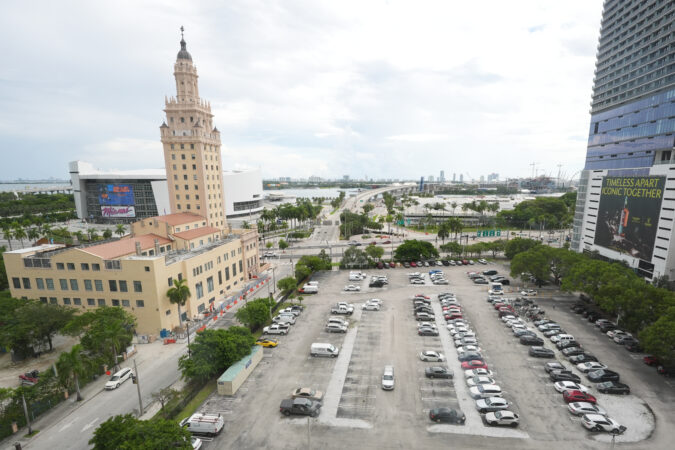
    On Sept. 16, a vague ad appeared in the Miami Herald announcing that Miami Dade College would hold a public hearing to “discuss potential real estate transactions.” There was no indication that a 2.6-acre property in downtown Miami — which is appraised at about $60 million but which real estate brokers have said could be worth $300 million or more — was about to be donated to Trump’s library foundation.

    Seven days later, at 8 a.m. Sept. 23, the meeting of the college board of trustees convened. Chairman Michael Bileca called for approval of Agenda Item A, a proposal to convey an unnamed piece of property to an entity known as the “Internal Trust Fund of the State of Florida.” Again, there was no mention of land being given for a Trump library. Bileca opened the floor for discussion; there was none. The motion was passed unanimously by the seven members. Bileca did not respond to a request for comment.

    At exactly 8:03 a.m., according to board minutes, the meeting adjourned and the deal was done.

    Gov. Ron DeSantis and his cabinet then announced they had agreed to give the land to the Trump library foundation. The only requirement is that construction begins within five years and that it “contains components of a Presidential library, museum, and/or center.”

    The secretive deal took many people by surprise — including at least some members of the college board of trustees — and caused an uproar among critics.

    Roberto Alonso, vice chair of the Miami Dade College board of trustees, said the governor’s office sent a letter to the college asking for the land transfer to the state, without explaining why.

    “When I found out that this was exactly what the state wanted was literally right after we voted,” Alonso said.

    Alonso said because Miami Dade is a state college, the land is owned by the state, so his board had little choice but to do what DeSantis wanted and convey the deed.

    He called the library an “incredible opportunity for our students and our community.” The college did not respond to a request for comment.

    The property is a parking lot on the downtown campus of the college. It’s next to the Freedom Tower, an iconic and recently restored landmark on Biscayne Boulevard often referred to as the “Ellis Island of the South.”

    The plan drew immediate backlash from many in the Cuban community who said Trump’s immigration policies contrast with the treatment their families received under previous administrations.

    The college board’s approval also became the target of a lawsuit filed by Miami historian Marvin Dunn, who said the vague notice about the action violated state government Sunshine Laws. The judge in the case set a trial date for next year, but the trustees held a second vote Dec. 2, this time with input from the public, that ended in the same result — a unanimous vote.

    Dunn’s lawyer, Richard E. Brodsky, said in an interview the lawsuit has succeeded in gaining a temporary injunction that prevents the conveyance of the land pending a further order of the court.

    “It’s not over yet,” Brodsky said.

    Miami mayor-elect Eileen Higgins — the first Democrat to win the office in almost 30 years — said before Tuesday’s election that she had questions about the deal.

    “We gave away very valuable land to a billionaire for free. That doesn’t make sense to me,” she said during a televised debate this month.

    Dunn said Eric Trump’s statement that the library will be an “iconic building” raises the alarming prospect of “a 47-story condominium hotel banquet hall” or other oversize structure.

    “If the argument is that this library is going to bring tourism and economic development to the wider region, that may well be true,” Dunn said in an interview. “Then why doesn’t the foundation pay for the land? Why give that to them for free?”

    DeSantis said in September that “we had worked and negotiated” other possible locations for the library, including at Florida Atlantic University in Boca Raton, which is in Palm Beach County about 30 miles from Mar-a-Lago.

    “But their preference was for this land, next to the Freedom Tower. So you’re going to have a presidential library in the state of Florida, which I think is good for the state of Florida. I think it’s good for the city of Miami,” he said.

    “A possible tool for corruption and bribery”

    While the state filing by Trump’s library foundation doesn’t disclose funding sources, President Trump has spoken often about some of them. The largest projected donation is a gift of a Boeing 747-8 aircraft valued at $400 million from the Qatari royal family — which has many interests in Washington policy — that would replace Air Force One and then be given to his library. It is not clear how or whether the plane could be exhibited at the Trump library as Ronald Reagan’s Air Force One is exhibited at his library in California.

    Other funds for the library stem from payments from media companies — some of which have interests before the government — to settle lawsuits filed against them by Trump. These include: $22 million from Meta Platforms, Facebook’s parent company, part of a settlement to resolve a lawsuit over the company’s suspension of Trump from the platform in the wake of the events of Jan. 6; $16 million from CBS; $15 million from ABC; and an unspecified part of a $10 million settlement with X, formerly known as Twitter, which had banned him from the platform. In addition, millions of dollars raised from private interests left from Trump’s inauguration may be transferred to the library foundation.

    These gifts and payments, and the potential of hundreds of millions more from unknown donors, have led Democrats to introduce the Presidential Library Anti-Corruption Act, which would ban fundraising until after a president leaves office, except from nonprofits. It would require a two-year delay after a president leaves before donations can be accepted from foreign nationals or foreign government, lobbyists, individuals seeking pardons, and federal contractors.

    Sen. Elizabeth Warren (D., Mass.) issued a report in support of the legislation that said Trump “may be using his future presidential library as a possible tool for corruption and bribery while still in office.” The report then listed donations intended for Trump’s library. Warren was unavailable for an interview, an aide said.

    Presidential libraries are seen as a crucial pillar for portraying the history of White House occupants and making their materials widely available. They have proven invaluable to historians and others seeking to piece together the strands of a presidency that often become clearer in hindsight; author Robert Caro used materials at Lyndon B. Johnson’s presidential library in Texas for his prizewinning multivolume biography.

    But in recent years, historians have raised concerns that presidential libraries have focused more on hagiography than clear-eyed biography — particularly as increasingly large sums have come from private donors, including those who have interests before the federal government and who favor a particular storyline about a president.

    Obama’s center, backed by a $1.6 billion fundraising effort, is being built on a 19-acre site that will be run by his foundation. It is not designed to include on-site research materials, which are being digitized with the help of a $5 million payment from the foundation and will be retained by the National Archives, a foundation spokesperson said.

    Former President Joe Biden, meanwhile, is at the beginning of his effort. While he said the library would be in Delaware, he has not provided specifics and has not announced any donation of land. A tax filing says $4 million was raised for Biden’s library in 2024. A Biden spokesperson, who spoke on the condition of anonymity to discuss internal matters, said a board has been named and that a foundation is focused on creating a planning study and a budget for the facility. Biden plans to attend a holiday gathering today at which he will lay out his vision for his library, but it will not be a fundraiser, an associate said.

    Trump and his family, meanwhile, have been aggressive in gathering land and money for his center while he is in office. After the state authorized the land transfer, Eric Trump went on conservative commentator Glenn Beck’s show to say that he was responsible for the approval and would build his father’s facility, while ridiculing the Obama center, which he said looked like a “jailhouse.”

    Then, appearing on a podcast called The Benny Show, Eric Trump said he would take host Benny Johnson’s suggestion to create a “fake news wing of the library” — paid for with money from settlements with ABC, CBS, and other media — which would run clips that he said were evidence of the media’s animus against his father.

    “What we’ll do is, we’ll just roll the 60 Minutes clip over and over of how they doctored Kamala’s interview,” Trump said, referring to his father’s assertion that the newsmagazine show deceptively edited its interview of Democratic presidential candidate Kamala Harris. Trump said creating such a wing “is a phenomenal freaking idea” and vowed, “I will do an entire floor dedicated to the fake news.”

    CBS said in October 2024 that the Harris interview was edited for time but stood by its accuracy. Paramount, the parent company of CBS, which produces 60 Minutes, settled the suit for $16 million in July; that agreement did not include an apology, according to a story posted on the CBS website. The payment was designated for Donald Trump’s library foundation. It came as Paramount was attempting to complete an $8 billion sale to Skydance Media, a deal that required FCC approval.

    Shortly afterward, in July, the agency assented to the deal. A Paramount spokesperson did not respond to a request for comment.


  • ‘Gotta win the Super Bowl again’: Former President Joe Biden at the Linc to see the Eagles take on the Raiders

    ‘Gotta win the Super Bowl again’: Former President Joe Biden at the Linc to see the Eagles take on the Raiders

    The Eagle has landed.

    Former President Joe Biden and former first lady Jill Biden touched down at the Linc for the snowy Sunday matchup between the Philadelphia Eagles (8-5) and the Las Vegas Raiders (2-11). Joe and “that girl from Philly,” Jill, were spotted on the sidelines with Eagles owner Jeffrey Lurie before the 1 p.m. kickoff.

    “Go Birds, man, all the way,” Biden said in a clip posted to NBC10’s John Clark’s Instagram. “Gotta win the Super Bowl again.”

    Jill Biden, who grew up in Willow Grove, is a fervent Eagles fan and has never been shy about her passion for Philly sports. She’s talked about watching the Phillies with her dad, and in 2020, wore an Eagles shirt to a fundraiser with former Dallas Cowboys star Emmitt Smith — as any “good Philly girl” would do.

    Husband Joe, a Delawarean, hasn’t been so forthcoming about his allegiance; ahead of the ill-fated Super Bowl LVII, then-POTUS tweeted, “As your president, I’m not picking favorites. But as Jill Biden’s husband, fly Eagles, fly.”

    Coming off three straight losses and arguably the worst game of Jalen Hurts’ career, the Birds faced the perfect opponent to turn things around in Week 15: The Raiders are tied for the worst record in the league.

    “We got to get ‘em back moving, man,” Joe Biden said.

  • Speaker Johnson unveils healthcare plan as divided Republicans scramble for alternative

    Speaker Johnson unveils healthcare plan as divided Republicans scramble for alternative

    WASHINGTON — The Senate failed to get anywhere on the healthcare issue this week. Now it’s the House’s turn to show what it can do.

    Speaker Mike Johnson unveiled a Republican alternative late Friday, a last-minute sprint as his party refuses to extend the enhanced tax subsidies for those who buy policies through the Affordable Care Act, also called Obamacare, which are expiring at the end of the year. Those subsidies help lower the cost of coverage.

    Johnson (R., La.) huddled behind closed doors in the morning — as he did days earlier this week — working to assemble the package for consideration as the House focuses the final days of its 2025 work on healthcare.

    “House Republicans are tackling the real drivers of health care costs to provide affordable care,” Johnson said in a statement announcing the package. He said it would be voted on next week.

    Later Friday, though, House Democratic Leader Hakeem Jeffries said: “House Republicans have introduced toxic legislation that is completely unserious, hurts hardworking America taxpayers, and is not designed to secure bipartisan support. If the bill reaches the House floor, I will strongly oppose it.”

    Time is running out for Congress to act. Democrats engineered the longest federal government shutdown ever this fall in a failed effort to force Republicans to the negotiating table on healthcare. But after promising votes, the Senate failed this week to advance both a Republican healthcare plan and the Democratic-offered bill to extend the tax credits for three years.

    Now, with just days to go, Congress is about to wrap up its work with no consensus solution in sight.

    What Republicans are proposing

    The House Republicans offered a 100-plus-page package that focuses on long-sought GOP proposals to enhance access to employer-sponsored health insurance plans and clamp down on so-called pharmacy benefit managers.

    Republicans propose expanding access to what’s referred to as association health plans, which would allow more small businesses and self-employed individuals to band together and purchase health coverage.

    Proponents say such plans increase the leverage businesses have to negotiate a lower rate. But critics say the plans provide skimpier coverage than what is required under the Affordable Care Act.

    The Republicans’ proposal would also require more data from pharmacy benefit managers, or PBMs, as a way to help control drug costs. Critics say PBMs have padded their bottom line and made it more difficult for independent pharmacists to survive.

    Additionally, the GOP plan includes mention of cost-sharing reductions for some lower-income people who rely on Obamacare, but those would not take effect until January 2027.

    The emerging package from the House Republicans does not include an extension of an enhanced tax credit for millions of Americans who get insurance coverage through the Affordable Care Act. Put in place during the COVID-19 crisis, that enhanced subsidy expires Dec. 31, leaving most families in the program facing more than double their current out-of-pocket premiums, and in some cases, much more.

    What Trump wants

    President Donald Trump has said he believes Republicans are going to figure out a better plan than Obamacare — something he has promised for years — but offered few details beyond his idea for providing Americans with stipends to help buy insurance.

    “I want to see the billions of dollars go to people, not to the insurance companies,” Trump said late Friday during an event at the White House. “And I want to see the people go out and buy themselves great healthcare.”

    The president did not comment directly on the House’s new plan. He has repeatedly touted his idea of sending money directly to Americans to help offset the costs of healthcare policies, rather than extending the tax credits for those buying policies through Obamacare. It’s unclear how much money Trump envisions. The Senate GOP proposal that failed to advance would have provided payments to new health savings accounts of $1,000 a year for adult enrollees, or $1,500 for those ages 50 to 64.

    It appeared there were no such health savings accounts in the new House GOP plan.

    Political pressure is building for many

    Going Johnson’s route has left vulnerable House Republicans representing key battleground districts in a tough spot.

    Frustrated with the delays, a group of more centrist GOP lawmakers is aligning with Democrats to push their own proposals for continuing the tax credits, for now, so that Americans don’t face rising healthcare costs.

    They are pursuing several paths for passing a temporary ACA subsidy extension, co-sponsoring a handful of bills. They are also signing on to so-called discharge petitions that could force a floor vote if a majority of the House signs on.

    Such petitions are designed to get around the majority’s control and are rarely successful, but this year has proven to be an exception. Lawmakers, for example, were able to use a discharge petition to force a vote on the release of the Jeffrey Epstein files held by the Department of Justice.

    One petition, filed by Rep. Brian Fitzpatrick (R., Pa.), had signatures from 12 Republicans and 12 Democrats as of Friday afternoon. It would force a vote on a bill that includes a two-year subsidy extension and contains provisions designed to combat fraud in the ACA marketplace. There are also restrictions for PBMs, among other things.

    Another petition from Rep. Josh Gottheimer (D., N.J.) has 39 signatures and is broadly bipartisan. It’s a simpler proposal that would force a vote on a one-year ACA enhanced subsidy extension and would include new income caps limiting who qualifies for the enhanced credit.

    Both discharge petitions have enough Republicans’ support that they would likely succeed if Jeffries encouraged his caucus to jump on board. So far, he’s not tipping his hand.

    “We’re actively reviewing those two discharge petitions and we’ll have more to say about it early next week,” Jeffries said.

    Meanwhile, Jeffries is pushing Democrats’ own discharge petition, which has 214 signatures and would provide for a clean three-year subsidy extension. No Republicans have signed on to that one.

    And as Republicans made clear in the Senate this week, a three-year extension without changes to the program has no chance of passing their chamber.

  • Final U.S. pennies sell for millions at auction after mint ends production

    Final U.S. pennies sell for millions at auction after mint ends production

    The last minted pennies sure cost a pretty penny.

    On Thursday, a three-coin set of the final pennies minted for circulation sold at auction for $800,000. Another of the sets sold for $180,000.

    In all, the final pennies sold for a combined nearly $17 million.

    Sold by Stack’s Bowers Galleries, the sets represented the 232 years since the penny was first minted in Philadelphia in 1793. Each included some of the last pennies struck for circulation at the U.S. Mint’s facilities in Philadelphia and Denver, plus a 24-karat gold penny minted in Philadelphia. Each coin bears a unique omega symbol (Ω), marking the end of the penny.

    The Philadelphia U.S. Mint struck the final circulating one-cent coins in November after President Donald Trump ordered the Mint to stop producing new pennies earlier this year. The last small-change coin the government canceled was the half-cent in 1857.

    Costly to produce and displaced by digital payment, the penny had grown almost as irrelevant as the half-cent. Still, pennies aren’t disappearing soon. Americans have hoarded 300 billion pennies, which remain legal tender, officials say. Killing penny production is estimated to save around $56 million a year, experts believe.

    Thursday’s auction had been closely watched by collectors and numismatics, who had expected bidding to be high. None more than for the final lot, which eventually topped out at $800,000. The special lot came with the three origin dies used to strike the coins.

    “This set represents the VERY LAST cents struck in the classic circulating finishing, the true Omega,” read for the listing for the final pennies. “It is impossible to overstate the historic nature of these three pieces, which are likely the most significant coins to emerge from the United States Mint this century.”

  • National Trust sues to stop Trump’s ballroom construction

    National Trust sues to stop Trump’s ballroom construction

    Historic preservationists begged President Donald Trump in October not to rapidly demolish the White House’s East Wing annex for his ballroom project, urging him to wait for federal review panels and allow the public to weigh in. Now a group charged by Congress with helping to preserve historic buildings is asking a judge to block construction until those reviews occur, arguing that the ongoing project is illegal and unconstitutional.

    The lawsuit from the nonprofit National Trust for Historic Preservation, which was filed Friday in the U.S. District Court for the District of Columbia, represents the first major legal challenge to Trump’s planned 90,000-square-foot addition and is poised to test the limits of his power. The organization argues that the administration failed to undergo legally required reviews or receive congressional authorization for the project, which Trump has rushed to launch in hopes of completing it before his term ends in 2029.

    “No president is legally allowed to tear down portions of the White House without any review whatsoever — not President Trump, not President Joe Biden, and not anyone else,” the complaint says.

    The administration in October rapidly demolished the East Wing to make way for the ballroom over the objections of the National Trust and other historic preservationists who urged the White House to pause its demolition, submit its plans to the National Capital Planning Commission, and seek public comment.

    Officials responded by saying they would work with the commission, a board that oversees federal building projects and is now led by Trump allies, “at the appropriate time.” It has yet to do so, even as regular work continues on the former East Wing site.

    The White House did not immediately respond Friday morning to questions about the lawsuit. The administration has maintained that Trump has authority over White House grounds and is working to improve them at no cost to taxpayers, dismissing critics as “unhinged leftists” who seized on the imagery of bulldozers tearing down what has been called “the People’s House” as a metaphor for the opening year of his term.

    “The lawsuit is our last resort,” Carol Quillen, National Trust’s CEO, said in an interview. “We serve the people, and the people are not being served in this process.”

    The National Trust is seeking a temporary restraining order on construction as the court reviews its claims, its lawyers said. One of those lawyers is Greg Craig, a Foley Hoag lawyer who previously served as White House counsel to President Barack Obama, and who is working pro bono on the case. Craig also served as President Bill Clinton’s lawyer during Republicans’ efforts to impeach Clinton in the late 1990s.

    Trump has made the ballroom a focus and frequent talking point in the opening year of his second term, and administration officials have acknowledged that he is involved to the point of micromanagement.

    “In a very short period of time — like about a year and a half — you’re going to have the best ballroom anywhere in the country,” Trump told lawmakers at the White House on Thursday night.

    The president has also maintained that he is not bound by typical building restrictions or the need to seek construction approvals, citing conversations with advisers and experts.

    “They said, ‘Sir, this is the White House. You’re the president of the United States, you can do anything you want,’” Trump said at an October dinner to celebrate the ballroom’s donors.

    Several polls have shown that the ballroom project is broadly unpopular, and Democrats have consistently attacked it, eager to contrast the president’s focus on a luxurious ballroom against many Americans’ concerns about affordability. Some conservatives have also questioned Trump’s plans and pace, asking why the administration did not undergo a formal review process before tearing down part of the symbolic seat of government. The president and his original handpicked architect battled over Trump’s desire to expand the ballroom’s size before Trump replaced him, the Washington Post previously reported.

    The $300 million project is being funded by wealthy individuals and large companies that have contracts with the federal government, including Amazon, Lockheed Martin, and Palantir Technologies. (Amazon founder Jeff Bezos owns the Post.) The administration has released a partial list of contributors but granted some anonymity — eliciting concerns from Democratic lawmakers and others, some of which are reflected in the complaint.

    The National Trust, for example, alleges that the Trump administration violated the Constitution’s property clause, which authorizes Congress to oversee property on federal land.

    The National Trust’s lawsuit names Trump and other administration officials, including at the National Park Service and the General Services Administration, as defendants. The National Trust argues that the ballroom plans are legally required to be reviewed by the NCPC and the Commission on Fine Arts, another federal panel, which is without members after Trump fired them in October. The organization also contends that the White House has failed to fulfill its obligations under the National Environmental Policy Act to conduct and publish an assessment of the environmental impact of tearing down the East Wing and disposing of the debris, particularly given concerns about environmental contamination.

    White House officials have previously dismissed criticism from the National Trust, arguing that its leaders are “loser Democrats and liberal donors” who oppose Trump on political grounds. The National Trust has a decades-long association with Trump: In 1995, he donated easements to the organization that made his Mar-a-Lago resort in Florida a historic property in exchange for tax breaks. National Trust officials have said they subsequently worked with the Trump organization on “collaborative” construction projects at the resort, including its ballroom.

    The White House also has defended the project by drawing a distinction between construction on the White House grounds, which administration officials say is covered by federal review panels, and demolition and site prep, which they maintain is not.

    However, the National Trust says that this is a distinction without a difference. Recent photos have shown that heavy construction machinery and teams of people are working regularly on the site, and Trump has said that pile drivers are operating “all day, all night.”

    The group’s lawsuit also cites the White House’s own public timeline for the project, which includes a section that says “construction commences” and that it “kicked off in September 2025.”

    Quillen said she did not have a “hard objection” to a White House ballroom — so long as its size, materials and design were consistent with the White House and did not overshadow the main building. It is the National Trust’s job, she said, to preserve American history, particularly at the White House, given the building’s iconic status and central role. She noted that the organization has also brought legal challenges to past administrations’ construction projects.

    “Following the process and enabling public input often results in a better project outcome,” Quillen said.

  • Trump seeks to cut restrictions on marijuana through planned order

    Trump seeks to cut restrictions on marijuana through planned order

    President Donald Trump is expected to push the government to dramatically loosen federal restrictions on marijuana, reducing oversight of the plant and its derivatives to the same level as some common prescription painkillers and other drugs, according to six people familiar with the discussions.

    Trump discussed the plan with House Speaker Mike Johnson (R., La.) in a Wednesday phone call from the Oval Office, said four of the people, who, like the others, spoke on the condition of anonymity because they were not authorized to speak publicly. The president is expected to seek to ease access to the drug through an upcoming executive order that directs federal agencies to pursue reclassification, the people said.

    The move would not legalize or decriminalize marijuana, but it would ease barriers to research and boost the bottom lines of legal businesses.

    Trump in August said he was “looking at reclassification.” He would be finishing what started under President Joe Biden’s Justice Department, which followed the recommendation of federal health officials in proposing a rule to reclassify marijuana; that proposal has stalled since Trump took office.

    “We’re looking at it. Some people like it, some people hate it,” Trump said this summer. “Some people hate the whole concept of marijuana because it does bad for the children, it does bad for the people that are older than children.”

    Trump cannot unilaterally reclassify marijuana, said Shane Pennington, a D.C. attorney who represents two pro-rescheduling companies involved in the hearing. But he can direct the Justice Department to forgo the hearing and issue the final rule, Pennington said.

    “This would be the biggest reform in federal cannabis policy since marijuana was made a Schedule I drug in the 1970s,” Pennington said.

    The president was joined on the Wednesday call with Johnson by marijuana industry executives, Health Secretary Robert F. Kennedy Jr., and Centers for Medicare and Medicaid Services chief Mehmet Oz, three of the people said.

    Johnson was skeptical of the idea and gave a list of reasons, including several studies and data, to support his position against reclassifying the drug, two of the people said.

    Trump then turned the phone over to the executives gathered around his desk, who rebutted Johnson’s arguments, the people said.

    Trump ended the call appearing ready to go ahead with loosing restrictions on marijuana, the people said, though they caution the plans were not finalized and Trump could still change his mind.

    A White House official said no final decisions have been made on rescheduling of marijuana.

    The Department of Health and Human Services referred questions to the White House. The Centers for Medicare and Medicaid Services did not immediately respond to a request for comment. A representative from Johnson’s office declined to comment.
    Marijuana is currently classified as a Schedule I substance, the same classification as heroin and LSD. Federal regulations consider those drugs to have a high potential for abuse and no accepted use for medical treatment.

    Trump would move to classify marijuana as a Schedule III substance, which regulators say carry less potential for abuse and are used for certain medical treatments, but can also create risks of physical or psychological dependence.

    Other Schedule III drugs include Tylenol with codeine, as well as certain steroid and hormone treatments.

    Democrats and Republicans alike have been interested in reclassifying marijuana, with some politicians citing its potential benefit as a medical treatment and the political popularity of the widely used drug.

    Marijuana has become easier than ever to obtain, growing into an industry worth billions of dollars in the United States. Dozens of states and Washington, D.C., have legalized medical marijuana programs, and 24 have approved recreational marijuana.

    The Biden administration pursued efforts to ease access to the drug, with health officials recommending reclassification to Schedule III in 2023. But health officials have said that those recommendations were slowed down by the Drug Enforcement Administration, which took months to undergo required administrative reviews and were not completed before the end of Biden’s term.

    The Drug Enforcement Administration was supposed to hold an administrative hearing on the proposal, with a judge hearing from experts on the health benefits and risks of marijuana. But the hearing has been in legal limbo since Trump took office, amid allegations from cannabis companies that the DEA was working to torpedo the measure.

  • Accused Charlie Kirk killer makes 1st in-person court appearance as judge weighs media access

    Accused Charlie Kirk killer makes 1st in-person court appearance as judge weighs media access

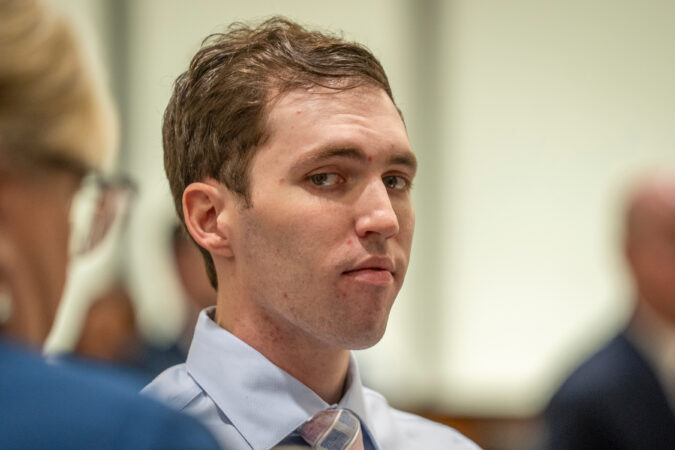
    PROVO, Utah — The Utah man charged with killing Charlie Kirk made his first in-person court appearance Thursday as his attorneys pushed to further limit media access in the high-profile criminal case.

    Prosecutors have charged Tyler Robinson with aggravated murder in the Sept. 10 shooting of the conservative activist on the Utah Valley University campus in Orem, just a few miles north of the Provo courthouse. They plan to seek the death penalty.

    Robinson, 22, arrived amid heavy security, shackled at the waist, wrists and ankles and wearing a dress shirt, tie and slacks.

    He smiled at family members sitting in the front row of the courtroom, where his mother teared up after he entered the court. Next to her were Robinson’s brother and father, who took notes throughout the hearing.

    Early in the proceedings, state District Court Judge Tony Graf briefly stopped livestreaming of the hearing via a media pool and required the camera be moved, after Robinson’s attorneys said the stream showed the defendant’s shackles in violation of a courtroom order.

    Graf said he would terminate future broadcasts if there were further violations of the order issued in October, which bars media from showing images of Robinson in restraints or anywhere in the courtroom except sitting at the defense table.

    “This court takes this very seriously. While the court believes in openness and transparency, it needs to be balanced with the constitutional rights of all parties in this case,” Graf said.

    Graf is weighing the public’s right to know details about Robinson’s case against his attorneys’ concerns that the swarm of media attention could interfere with a fair trial.

    Robinson’s legal team and the Utah County Sheriff’s Office have asked Judge Tony Graf to ban cameras in the courtroom, but he has not yet ruled on the request.

    The defendant had previously appeared before the court via video or audio feed from jail.

    A coalition of national and local news organizations, including The Associated Press, is fighting to preserve media access in the case.

    Graf held a closed hearing on Oct. 24 in which attorneys discussed Robinson’s courtroom attire and security protocols. Under a subsequent ruling by the judge, Robinson is allowed to wear street clothes during pretrial hearings but must be physically restrained due to security concerns.

    Graf also prohibited media from filming or photographing Robinson’s restraints after his attorneys argued widespread images of him shackled and in jail clothing could prejudice future jurors.

    Several university students who witnessed Kirk’s assassination attended Thursday’s hearing.

    Zack Reese, a Utah Valley University student and “big Charlie Kirk fan,” said he had skepticism about Robinson’s arrest and came to the hearing seeking answers. Reese has family in southwestern Utah, where the Robinsons are from, and said he believes they’re a good family.

    Brigham Young University student William Brown, who said he was about 10 feet from Kirk when he was shot, said he felt overwhelmed seeing Robinson walk into the courtroom Thursday.

    “I witnessed a huge event, and my brain is still trying to make sense of it,” Brown said. “I feel like being here helps it feel more real than surreal.”

    Michael Judd, an attorney for the media coalition, has urged Graf to let the news organizations weigh in on any future requests for closed hearings or other limitations.

    The media presence at Utah hearings is already limited, with judges often designating one photographer and one videographer to document a hearing and share their images with other news organizations. Additional journalists can typically attend to listen and take notes, as can members of the public.

    Judd wrote in recent filings that an open court “safeguards the integrity of the fact-finding process” while fostering public confidence in judicial proceedings. Criminal cases in the U.S. have long been open to the public, which he argued is proof that trials can be conducted fairly without restricting reporters as they work to keep the public informed.

    Kirk’s widow, Erika Kirk, has called for full transparency, saying, “We deserve to have cameras in there.” Her husband was an ally of President Donald Trump who worked to steer young voters toward conservatism.

    Robinson’s legal team says his pretrial publicity reaches as far as the White House, with Trump announcing soon after Robinson’s arrest, “With a high degree of certainty, we have him,” and “I hope he gets the death penalty.”

    Defense attorney Kathy Nester has raised concern that digitally altered versions of Robinson’s initial court photo have spread widely, creating misinformation about the case. Some altered images show Robinson crying or having an outburst in court, which did not happen.

  • Winter storm rips through Gaza, exposing failure to deliver enough aid to territory

    Winter storm rips through Gaza, exposing failure to deliver enough aid to territory

    DEIR AL-BALAH, Gaza Strip — Rains drenched Gaza’s tent camps and dropping temperatures chilled Palestinians huddling inside them Thursday as winter storm Byron descended on the war-battered territory, showing how two months of a ceasefire have failed to sufficiently address the spiraling humanitarian crisis there.

    Families found their possessions and food supplies soaked inside their tents. Children’s sandaled feet disappeared under opaque brown water that flooded the camps, running knee deep in some places. Dirt roads turned to mud. Piles of garbage and sewage cascaded like waterfalls.

    “We have been drowned. I don’t have clothes to wear and we have no mattresses left,” said Um Salman Abu Qenas, a displaced mother in a Khan Younis tent camp. She said that her family couldn’t sleep the night before, because of the water in the tent.

    Aid groups say not enough shelter materials are getting into Gaza during the truce. Figures recently released by Israel’s military suggest it hasn’t met the ceasefire stipulation of allowing 600 trucks of aid into Gaza a day, though Israel disputes that finding.

    “Cold, overcrowded, and unsanitary environments heighten the risk of illness and infection,” the U.N. agency for Palestinian refugees, UNRWA, said on X. “This suffering could be prevented by unhindered humanitarian aid, including medical support and proper shelter.”

    Rains wreak havoc

    Sabreen Qudeeh, also in the Khan Younis camp, in a squalid area known as Muwasi, said that her family woke up to rain leaking from their tent’s ceiling and water from the street soaking their mattresses.

    “My little daughters were screaming,” she said.

    Ahmad Abu Taha, also living in the camp, said there wasn’t a tent that escaped the flooding. “Conditions are very bad, we have old people, displaced, and sick people inside this camp,” he said.

    Floods in south-central Israel trapped more than a dozen people in their cars, according to Hebrew media. Israel’s rescue services, MDA, said that two young girls were slightly injured when a tree fell on their school.

    The contrasting scenes with Gaza made clear how profoundly the Israel-Hamas war had damaged the territory, destroying the majority of homes. Gaza’s population of around 2 million is almost entirely displaced, and most people live in vast tent camps stretching along the coast, or set up among the shells of damaged buildings without adequate flooding infrastructure and with cesspits dug near tents as toilets.

    At least three buildings in Gaza City already damaged by Israeli bombardment during the war partially collapsed under the rain, Palestinian Civil Defense said. It warned people not to stay inside damaged buildings, saying they too could fall down on top of them.

    The agency also said that since the storm began, they have received more than 2,500 distress calls from people across Gaza whose tents and shelters were damaged.

    With buckets and mops, Palestinians laboriously scooped water out of their tents.

    Aliaa Bahtiti said her 8-year-old son “was soaked overnight, and in the morning he had turned blue, sleeping on water.” Her tent floor had an inch of water on it “We cannot buy food, covers, towels, or sheets to sleep on.”

    Baraka Bhar was caring for her 3-month-old twins inside her tent as the rain poured outside. One of the twins has hydrocephalus, a build-up of fluids in the brain.

    “Our tents are worn out … and they leak rain water,” she said. “We should not lose our children this winter.”

    Not enough aid

    Aid groups say that Israel isn’t allowing enough aid into Gaza to begin rebuilding the territory after years of war.

    Under the agreement, Israel agreed to comply with aid stipulations from an earlier January truce, which specified that it allow 600 trucks of aid each day into Gaza, It maintains it’s doing so, but The Associated Press found that some of its own figures call that into question.

    The January truce also specified that Israel let in a number of caravans and tents. No caravans have yet entered Gaza during the ceasefire, said Tania Hary, executive director of Gisha, an Israeli group advocating for Palestinians’ right to freedom of movement.

    The Israeli military body in charge of coordinating aid to Gaza, called COGAT, said on Dec. 9 it had “lately” let 260,000 tents and tarpaulins into Gaza and more than 1,500 trucks of blankets and warm clothing.

    Shelter Cluster, an international coalition of aid providers led by the Norwegian Refugee Council, sets the number lower. It says the U.N. and international nongovernmental organizations have gotten 15,590 tents into Gaza since the truce began, and other countries have sent about 48,000. Many of the tents aren’t properly insulated, it says.

    Amjad al-Shawa, Gaza chief of the Palestinian NGO Network, told Al Jazeera on Thursday that only a fraction of the 300,000 tents needed had entered Gaza. He said that Palestinians were in dire need of warmer winter clothes and accused Israel of blocking the entry of water pumps to help clear flooded shelters.

    “All international sides should take the responsibility regarding conditions in Gaza,” he said. “There is real danger for people in Gaza at all levels.”

    Khaled Mashaal, a Hamas leader, said in an interview with Al Jazeera that Gaza needs the rehabilitation of hospitals, the entry of heavy machinery to remove rubble, and the opening of the Rafah crossing — which remains closed after Israel said last week it would shortly open.

    COGAT didn’t immediately respond to a request for comment on the claims that Israel wasn’t allowing water pumps or heavy machinery into Gaza

    Amnesty accuses Hamas of crimes against humanity

    Amnesty International said in a report released Thursday that Hamas and other militant groups committed crimes against humanity in the Oct. 7, 2023, attack on southern Israel that triggered the war in Gaza.

    In the 173-page report, Amnesty pointed to what it found to be widespread and systematic killing of civilians in the attack, as well as torture, hostage-taking and sexual abuse.

    In the attack, Hamas fighters and other militants rampaged through southern Israel, killing some 1,200 people and taking around 250 others hostage. Israel’s campaign in Gaza has since killed more than 70,300 Palestinians, roughly half of them women and children, according to the territory’s Health Ministry, which does not distinguish between militants and civilians in its count. Last year, Amnesty accused Israel of committing genocide in Gaza, a charge Israel denied.

    Amnesty said it conducted interviews with 70 people, including 17 survivors of the attack and family members of some of those killed. It also reviewed hundreds of open-source videos and photos from the day of the attack.

    Contrary to Hamas claims it was targeting the military, it said, the attack was intentionally “directed against a civilian population” and met international law standards for crimes against humanity.

    It said sexual assaults were also committed, although it could not reach a conclusion on their “scope or scale.” It interviewed one man who testified he was raped by armed men at the Nova music festival, as well as a therapist who said she provided intensive treatment to three other survivors of rape.

    Hamas condemned the report, saying it “echoed false claims” by Israel.

    Israeli Foreign Minister spokesperson Oren Marmorstein derided the report in a posting on X, saying it took more than two years for Amnesty to address the attack “and even now its report falls far short of reflecting the full scope of Hamas’ horrific atrocities.”

  • U.S. national park gift shops ordered to purge merchandise promoting DEI

    U.S. national park gift shops ordered to purge merchandise promoting DEI

    The Trump administration is expanding its crackdown on diversity, equity and inclusion by ordering national parks to purge their gift shops of items it deems objectionable.

    The Interior Department said in a memo last month that gift shops, bookstores and concession stands have until Dec. 19 to empty their shelves of retail items that run afoul of President Donald Trump’s agenda.

    The agency said its goal is to create “neutral spaces that serve all visitors.” It’s part of a broader initiative the Trump administration has pursued over the last year to root out policies and programs it says discriminate against people based on race, gender and sexual orientation — an effort that has led some major corporations and prominent universities to roll back diversity programs.

    Conservation groups say the gift shop initiative amounts to censorship and undermines the National Park Service’s educational mission. But conservative think tanks say taxpayer-funded spaces shouldn’t be allowed to advance ideologies they say are divisive.

    Employees of the park service and groups that manage national park gift shops say it’s not clear what items will be banned. They didn’t want to speak on the record for fear of retribution.

    A debate over what’s acceptable for park gift shops

    “Our goal is to keep National Parks focused on their core mission: preserving natural and cultural resources for the benefit of all Americans,” the Interior Department said in a statement. The agency said it wants to ensure parks’ gift shops “do not promote specific viewpoints.”

    Alan Spears, the senior director for cultural resources at the National Parks Conservation Association, said removing history books and other merchandise from gift shops amounts to “silencing science and hiding history,” and does not serve the interests of park visitors.

    Other groups called the review of gift shops a waste of resources at a time of staffing shortages, maintenance backlogs and budget issues.

    Stefan Padfield, a former law professor who now works with a conservative think tank in Washington, said there is no way to defend the government’s promotion of “radical and divisive” ideologies through the sale of books and other items, though he said the challenge for the Trump administration will be in deciding what is acceptable and what isn’t.

    “Now, are there going to be instances of the correction overshooting? Are there going to be difficult line-drawing exercises in gray areas? Absolutely,” said Padfield, the executive director of the Free Enterprise Project at the National Center for Public Policy Research.

    The order is open to interpretation

    All items for sale at parks and online are supposed to be reviewed for neutrality. That includes books, T-shirts, keychains, magnets, patches and even pens.

    But the memo issued by a senior Interior Department official didn’t give any examples of items that could no longer be sold, leaving the order open to interpretation. No training sessions have been offered to park service employees.

    Some parks had already completed their reviews, finding nothing to add to the list.

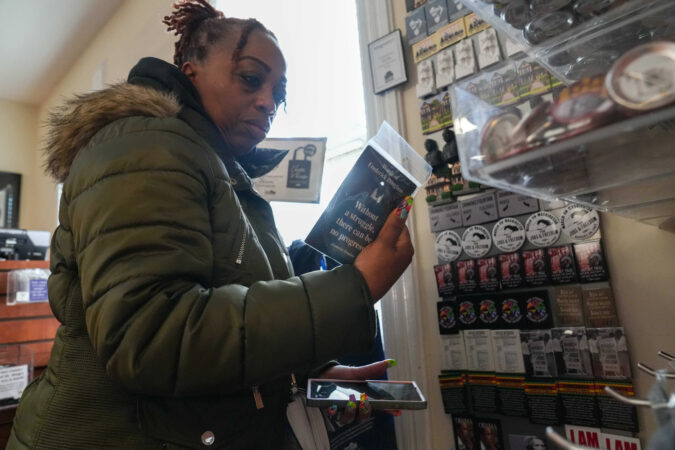
    On display this week at Independence National Historical Park in Philadelphia were items featuring Frederick Douglass. At the Martin Luther King, Jr. National Historical Park store in Atlanta, there were various books on the Civil Rights Movement and a book for children about important Black women in U.S. history. For sale online was a metal token for the Belmont-Paul Women’s Equality National Monument.

    There already is a thorough process for vendors to get merchandise into national park stores. Items are vetted for their educational value and to ensure they align with the themes of the park or historical site.

    National parks in the spotlight

    The park service in recent weeks faced criticism when it stopped offering free admission to visitors on Martin Luther King Jr. Day and Juneteenth, while extending the benefit to U.S. residents on Flag Day, which also happens to be Trump’s birthday next year.

    Earlier this year, the Interior Department’s ordered parks to flag signs, exhibits and other materials it said disparaged Americans. That order sparked debate about books related to Native American history and a photograph at a Georgia park that showed the scars of a formerly enslaved man.

    In one of his executive orders, Trump said the nation’s history was being unfairly recast through a negative lens. Instead, he wants to focus on the positive aspects of America’s achievements, along with the beauty and grandeur of its landscape.

    Mikah Meyer knows that beauty well after a three-year road trip to visit all 419 national park sites. He said part of the mission of his travels, which he shared on social media and in a documentary, was to illustrate that parks are welcoming to the LGBTQ+ community.

    That message aligns with his business, Outside Safe Space, which at its peak was selling stickers and pins featuring a tree with triangle-shaped, rainbow-colored branches to more than 20 associations that operated multiple park stores. His items started to be pulled from some stores after the executive orders were issued earlier this year.

    “How is banning these items supporting freedom of speech?” Meyer said.

  • Homeland Security Secretary Noem defends Trump’s hard-line immigration policies at hearing

    Homeland Security Secretary Noem defends Trump’s hard-line immigration policies at hearing

    Homeland Security Secretary Kristi Noem defiantly defended the Trump administration’s hard-line immigration policies on Thursday during a House committee hearing, portraying migrants as a major threat faced by the nation that justifies a crackdown that has seen widespread arrests, deportations and a dizzying pace of restrictions on foreigners.

    Noem, who heads the agency central to President Donald Trump’s approach to immigration, received backup from Republicans on the panel but faced fierce questioning from Democrats — including many who called for her resignation over the mass deportation agenda.

    The secretary’s testimony was immediately interrupted by protesters shouting for her to stop Immigration and Customs Enforcement raids and “end deportations.” They trailed her down the halls as she left early for another engagement, chanting, “Shame on you!”

    But she vowed she “would not back down.”

    “What keeps me up at night is that we don’t necessarily know all of the people that are in this country, who they are and what their intentions are,” Noem said.

    The hearing was Noem’s first public appearance before Congress in months, testifying at the House Committee on Homeland Security on “Worldwide Threats to the Homeland,” and it quickly grew heated as she emphasized how big a role she believed immigration played in those threats. It focused heavily on the Trump administration’s immigration policies, whereas in years past the hearing has centered on issues such as cybersecurity, terrorism, China and border security.

    Rep. Bennie Thompson, the panel’s ranking Democrat, said Noem has diverted vast taxpayer resources to carry out Trump’s “extreme” immigration agenda and failed to provide basic responses as Congress conducts its oversight.

    “I call on you to resign,” the Mississippi congressman said. “Do a real service to the country.”

    Trump returned to power with what the president says is a mandate to reshape immigration in the U.S. In the months since, the number of people in immigration detention has skyrocketed; the administration has continued to remove migrants to countries they are not from; and, in the wake of an Afghan national being accused of shooting two National Guard troops, Noem’s department has dramatically stepped up checks and screening of immigrants in the U.S.

    Tough questions from Democrats

    Several Democrats repeatedly told Noem flatly that she was “lying” to them and to the public over claims they are focused on violent criminals. They presented cases of U.S. citizens being detained in immigration operations and families of American military veterans being torn apart by deportations of loved ones who have not committed serious crimes or other violations.

    “You lie with impunity,” said Rep. Delia Rodriguez (D., Ill.) who said Noem should resign or be impeached.

    Republicans largely thanked Noem for the work the department is doing to keep the country safe and urged her to carry on.

    “Deport them all,” said Rep. Andy Ogles (R., Tenn).

    Since Noem’s last Congressional appearance in May, immigration enforcement operations, especially in Los Angeles and Chicago, have become increasingly contentious, with federal agents and activists frequently clashing over her department’s tactics.

    Noem did not address the calls to resign, but she tangled with the Democratic lawmakers — interrupting some — and suggested that she and the department she leads weren’t going anywhere.

    “We will never yield. We will never waver,” she said.

    Noem, whose own family, including an infant granddaughter, was in the audience, praised the Trump administration’s efforts when it comes to immigration, saying, “We’re ending illegal immigration, returning sanity to our immigration system.”

    During the hearing, a federal judge ordered the government to free Kilmar Abrego Garcia, whose wrongful deportation to a notorious prison in El Salvador made him a flashpoint in the Trump administration’s immigration enforcement. Noem did not address the judge’s order, nor was she asked about it during the hearing.

    Noem left early, saying she was headed to a meeting of the Federal Emergency Management Agency review council. The meeting, however, was abruptly canceled with no reason given.

    Noem, department under scrutiny

    The worldwide threats hearing, usually held annually, is an opportunity for members of Congress to question the leaders of the Department of Homeland Security, the FBI, and the National Counterterrorism Center.

    FBI Director Kash Patel did not appear, but sent Michael Glasheen, operations director of the national security branch of the FBI.

    Glasheen said the nation faces “serious and evolving” threats, and pointed to so-called antifa, and Trump’s executive order designating the group as a domestic terror organization, as the “most immediate violent threat” facing the country.

    Pressed by Thompson for details — where is antifa headquartered? How many members does it have? — the FBI’s representative appeared unable to provide answers, saying it’s “fluid” and investigations are “ongoing.”

    And, notably, he did not identify immigration as among the most pressing concerns for the homeland.

    Asked about the U.S. seizure of an oil tanker off the Venezuelan coast, Noem linked it to the Trump administration’s antidrug campaign in the region, saying cocaine had been kept from entering the U.S. as a result.

    The hearing offered lawmakers a rare opportunity to hear directly from Noem, but many members of the panel used the bulk of their allotted time to either praise or lambast her handling of immigration enforcement.

    During one sharp exchange, the secretary levied broad criticism for the program through which the man suspected of shooting two National Guard members last month came to the United States.

    “Unfortunate accident?” Noem retorted after Thompson raised the issue. She called it a “terrorist attack.”

    The program, Operation Allies Welcome, was created by then-President Joe Biden’s Democratic administration after the 2021 decision to leave Afghanistan following 20 years of American intervention and billions of dollars in aid. Thompson pointed out that the Trump administration approved the asylum claim of the suspect in the National Guard attack.

    Noem’s department is under particular scrutiny because Congress in July passed legislation giving it roughly $165 billion to carry out its mass deportations agenda and secure the border. The department is getting more money to hire 10,000 more deportation officers, complete the wall between the U.S. and Mexico and increase detention and removal of foreigners from the country.

    The secretary’s appearance also comes as a federal judge is investigating whether she should face a contempt charge over flights carrying migrants to El Salvador.