Category: National Politics

  • Israel reopens Jordan crossing as pressure builds to advance Gaza truce

    Israel reopens Jordan crossing as pressure builds to advance Gaza truce

    Trucks carrying goods from Jordan crossed into the West Bank for the first time in months on Wednesday, after Israel said it would reopen a key land bridge with its neighbor, including for aid and other cargo bound for the Gaza Strip.

    It was unclear whether the first trucks out of the gate were transporting humanitarian supplies or commercial items, but a spokesperson for COGAT, the branch of the Israeli Defense Ministry that controls aid flows to Gaza, confirmed that the crossing, known as Allenby, was open for the passage of aid.

    The move to restore Allenby as a transit point for relief comes as pressure builds on Israel to move a tenuous U.S.-backed ceasefire in Gaza into its second phase, and as the United Nations and other aid organizations have warned that nowhere near enough supplies are being allowed into the enclave to meet the needs of the Palestinian population, the majority of whom are displaced and living in makeshift shelters or tents.

    Under the ceasefire agreement between Israel and Hamas, Israeli authorities are supposed to allow at least 600 trucks of aid to enter Gaza each day. But the United Nations and other aid agencies say they continue to face bottlenecks and other restrictions, including delays and denials of cargo, custom clearance challenges and limited routes inside Gaza for transporting humanitarian goods.

    Israel closed the border in September after a Jordanian truck driver killed two Israeli soldiers at the crossing. An Israeli security official, speaking on the condition of anonymity because they were not authorized to speak to the press, said Jordanian truck drivers would undergo stricter screening processes and that a dedicated security force had been assigned to monitor the terminal.

    The reopening also coincided with a visit to Israel and Jordan by the U.S. ambassador to the U.N., Mike Waltz, who met on Monday with Israeli Prime Minister Benjamin Netanyahu. A statement from the U.S. mission to the U.N. said Waltz “welcomed Israel’s cooperation on expanding border crossings,” including Allenby. Waltz also met with Jordan’s King Abdullah on Sunday.

    In recent days, both Israeli and Hamas officials have said that there will be no discussion of moving to the second phase of President Donald Trump’s ceasefire plan until the first phase has been fully implemented. Both continue to point fingers at the other for not holding up their side of the deal. Israel has blamed Hamas for being slow to return the bodies of hostages, with one remaining in Gaza. Hamas has, in turn, pointed to the continued closure of border crossings for medical evacuations and aid and the daily fire that Israeli troops are carrying out in Gaza.

    But as pressure from the U.S. and other mediators to push the deal into the next phase grows, Netanyahu said Sunday that the transition could happen “very shortly” and announced he will meet with Trump on Dec. 29. A Hamas official also told the Associated Press on Sunday that the group is open to “freezing or storing” its weapons arsenal as part of the ceasefire.

    The second phase, which in theory would involve the disarmament of Hamas, withdrawal of Israeli troops from the territory, and the formation of an international force to maintain security, is likely to be far more complicated to achieve than even the first phase. Any delays in reaching that second phase leaves open the prospect of a status quo being established in Gaza in which Israel continues to occupy half of the enclave.

    One remaining step is the return of the remains of Ran Gvili, a 24-year-old Israeli police officer who was killed in Hamas’s Oct. 7, 2023, attack on Israel.

    “Without Gvili, Israel will not begin the talks over phase two,” said an Israeli official, speaking on the condition of anonymity because they were not authorized to speak to the press.

    U.N. agencies have reported an increase in aid that has been allowed into Gaza since the ceasefire came into effect, but say the levels are still far below what is needed for a population trying to recover from widespread malnutrition, famine and infectious diseases with a decimated health care system.

    Israel has allowed commercial operators and aid groups that bypass the U.N. system to scale up their operations more rapidly than other major relief organizations with long-running histories of assistance in Gaza. In particular, Israel has refused to allow UNRWA, the U.N. Relief and Works Agency for Palestinian refugees, to deliver aid, despite its sprawling infrastructure in Gaza and decades-long presence in the territory.

    “A shockingly high number” of children are still suffering from acute malnutrition, said Tess Ingram, a spokeswoman for UNICEF, the U.N. children’s agency, according to comments reported by Reuters.

    Ingram also told reporters on Tuesday that opening the Rafah crossing in southern Gaza, which links it with Egypt, could help bring down the number of children suffering from malnutrition. “We really need to see all types of aid come in, particularly nutritious food through commercial routes as well,” Ingram said.

    Israel said last week that it would reopen the crossing in the coming days, but only for the exit of Palestinians from Gaza.

    Millions of shelter items have also been stuck in Jordan, Egypt and Israel while awaiting Israeli approval to enter, a consortium of humanitarian organizations focused on providing shelter aid said in November.

    A severe winter storm landing in the region this week threatens 850,000 people sheltering in 761 displacement sites particularly vulnerable to flooding in the Gaza Strip, the U.N. Office for the Coordination of Humanitarian Affairs (OCHA) said. On Wednesday, there were reports of flooding in large parts of Gaza City, particularly low-lying areas.

    “The entire services system is unable able to rescue displaced people due to the heavy rain and flooding,” said Mahmoud Basal, a spokesman for Gaza Civil Defense, in a statement to reporters. “Rainwater has risen to more than one meter in some shelter centers.”

    The storm, dubbed Byron, has already hit Greece and Cyprus and is expected to bring as much as eight inches of rain to Israel and Gaza.

    “Low pressure fronts pose a major danger to displaced people and residents because of the destruction inflicted on the infrastructure,” Gaza municipality spokesman Hosni Mhanna told Al Araby TV on Wednesday.


  • EU enlargement chief: Ukraine’s membership ‘inevitable’

    EU enlargement chief: Ukraine’s membership ‘inevitable’

    KYIV, Ukraine — The European Union’s enlargement chief said Wednesday she is confident Hungary will not derail Ukraine’s path to membership, which she described as “inevitable.”

    “I’m not worried,” Commissioner Marta Kos told reporters while visiting a thermal power plant in Western Ukraine that was badly damaged by Russia’s campaign against civilian infrastructure. “I would be worried if there were real concerns.”

    “On EU membership of Ukraine — which is inevitable — I see this as a political anchor of security guarantees,” she said, noting that “There has never been a war on the territory of the European Union.”

    Ukraine hopes to join the bloc by the end of the decade and remains frustrated that its path to NATO membership looks uncertain.

    Kyiv applied for EU membership in 2022 shortly after Russia’s full-scale invasion. Now, Commissioner Kos is convening an informal meeting of European affairs ministers Thursday to prepare for the next stage of accession talks.

    Kos hinted that the process could move even faster, saying “The quicker the reforms which are needed will be done, the quicker the process can be.”

    Hungarian Prime Minister Viktor Orbán has opposed launching membership talks while the war continues. Yet, Kos dismissed his objections saying “We do not need Orbán to do the reforms which are necessary for Ukraine to become a member of the EU.”

    The Slovenian diplomat toured the heavily damaged power plant, where heavy machinery was blackened, control panels melted and a giant hole gaped in the roof of one of the main buildings.

    Andrii, a turbine operator on duty during a recent attack, described the chaos that followed.

    “The first thing you feel is a huge rush of adrenaline. There’s heavy smoke, loud noise, pressure — you can’t hear your colleagues,” he said. “Damaged equipment means escaping steam and high-temperature feedwater. At first it’s very difficult to orient yourself in the smoke.”

    Company officials asked that the plant’s location and the full names of employees not be published for security reasons.

    The thermal power plant is one of six operated by private utility DTEK that have sustained major damage from relentless Russian drone and missile attacks in recent weeks.

    Kos praised the resilience of power workers and Ukrainians in general.

    “There is no other more resistant nation in the world which I know than the Ukrainians,” she said, recalling Russian President Vladimir Putin’s expectation of a quick victory. “Putin said it would take one week. But here we are and it’s been nearly four years, so you are already the winners.”

  • Ukraine to give revised peace plans to U.S. as Kyiv readies for more talks with its coalition partners

    Ukraine to give revised peace plans to U.S. as Kyiv readies for more talks with its coalition partners

    KYIV, Ukraine — Ukraine is expected to give its latest peace proposals to U.S. negotiators this week, President Volodymyr Zelensky said, ahead of his urgent talks with leaders and officials from about 30 other countries supporting Kyiv’s effort to end the war with Russia on acceptable terms.

    As tension builds around a U.S. push for a settlement, German Chancellor Friedrich Merz, British Prime Minister Keir Starmer and French President Emmanuel Macron spoke to President Donald Trump by phone Wednesday, according to officials.

    Negotiations are at “a critical moment,” the European leaders said in official statements.

    Trump said the men discussed Ukraine “in pretty strong terms.” He also said Zelensky “has to be realistic” about the war and that European leaders would like a meeting this coming weekend with both the U.S. and Ukraine.

    “We’ll make a determination depending on what they come back with,” the president told reporters during a question-and-answer session at the White House.

    Washington’s goal of a swift compromise to stop the fighting that followed Russia’s full-scale invasion in 2022 is reducing Kyiv’s room for maneuvering. Zelensky is walking a tightrope between defending Ukrainian interests and showing Trump he is willing to compromise, even as Moscow shows no public sign of budging from its demands.

    Ukraine’s European allies are backing Zelensky’s effort to ensure that any settlement is fair and deters future Russian attacks, as well as accommodating Europe’s defense interests.

    The French government said Ukraine’s allies — dubbed the “Coalition of the Willing” — will discuss the negotiations Thursday by video. Zelensky said it would include those countries’ leaders.

    “We need to bring together 30 colleagues very quickly. And it’s not easy, but nevertheless we will do it,” he said late Tuesday.

    Zelensky said discussions with the U.S. were scheduled later Wednesday to focus on a document detailing plans for Ukraine’s postwar reconstruction and economic development. Also, Ukraine is finalizing work on a separate, 20-point framework for ending the war. Zelensky said Kyiv expects to submit that document to Washington soon.

    Zelensky says he’s ready for an election

    After Trump called for a presidential election in Ukraine, Zelensky said his country would be ready for such a vote within three months if partners can guarantee safe balloting during wartime and if its electoral law can be altered.

    Zelensky’s openness to an election was a response to comments by Trump in which he questioned Ukraine’s democracy and suggested the Ukrainian leader was using the war as an excuse not to stand before voters. Those comments echo similar remarks often made by Russian President Vladimir Putin.

    Zelensky said late Tuesday he is “ready” for an election but needs help from the U.S. and possibly Europe to ensure its security. He suggested Ukraine could hold balloting in 60 to 90 days if that proviso is met.

    “To hold elections, two issues must be addressed: primarily, security — how to conduct them, how to do it under strikes, under missile attacks; and a question regarding our military — how they would vote,” Zelensky said. “And the second issue is the legislative framework required to ensure the legitimacy of elections.”

    Zelensky pointed out previously that balloting can’t legally happen while martial law — imposed due to Russia’s invasion — is in place. He has also asked how a vote could occur when civilian areas of Ukraine are being bombarded and almost 20% of the country is under Russian occupation.

    Zelensky said he has asked lawmakers from his party to draw up legislative proposals allowing for an election while Ukraine is under martial law.

    Ukrainians have on the whole supported Zelensky’s arguments, and have not clamored for an election. Under the law that is in force, Zelensky’s rule is legitimate.

    Putin has repeatedly complained that Zelensky can’t legitimately negotiate a peace settlement because his five-year term that began in 2019 has expired.

    U.S. seeks closer ties with Russia

    A new U.S. national security strategy released Dec. 5 made clear that Trump wants to improve Washington’s relationship with Moscow and “reestablish strategic stability with Russia.” The document also portrays European allies as weak.

    Russian Foreign Minister Sergey Lavrov praised Trump’s role in the Ukraine peace effort, telling the upper house of parliament that Moscow appreciates his “commitment to dialogue.” Trump, Lavrov said, is “the only Western leader” who shows “an understanding of the reasons that made war in Ukraine inevitable.”

    Trump’s peace efforts have run into sharply conflicting demands from Moscow and Kyiv.

    The initial U.S. proposal was heavily slanted toward Russia’s demands. To counter that, Zelensky has turned to his European supporters.

    Zelensky met this week with the leaders of Britain, Germany, and France in London, the heads of NATO and the European Union in Brussels, and then went to Rome to meet the Italian premier and Pope Leo XIV.

    Military aid for Ukraine declines

    Europe’s support is uneven, however, and that has meant a decrease in military aid since the Trump administration this year cut off supplies to Kyiv unless they were paid for by other NATO countries.

    Foreign military help for Ukraine fell sharply over the summer, and that trend continued through September and October, a German body that tracks international help for Ukraine said Wednesday.

    Average annual aid, mostly provided by the U.S. and Europe, was about 41.6 billion euros ($48.4 billion) between 2022–24. But so far this year Ukraine has received just 32.5 billion euros ($37.8 billion), the Kiel Institute said.

    This year, Denmark, Finland, Norway, and Sweden have substantially increased their help for Ukraine, while Germany nearly tripled its average monthly allocations and France and the U.K. both more than doubled their contributions, the Kiel Institute said.

    On the other hand, it said, Spain recorded no new military aid for Kyiv in 2025 while Italy reduced its low contributions by 15% compared with 2022–2024.

  • WTF? Embracing profanity is one thing both political parties seem to agree on

    WTF? Embracing profanity is one thing both political parties seem to agree on

    WASHINGTON — As he shook President Barack Obama’s hand and pulled him in for what he thought was a private aside, Vice President Joe Biden delivered an explicit message: “This is a big f— deal.” The remark, overheard on live microphones at a 2010 ceremony for the Affordable Care Act, caused a sensation because open profanity from a national leader was unusual at the time.

    More than 15 years later, vulgarity is now in vogue.

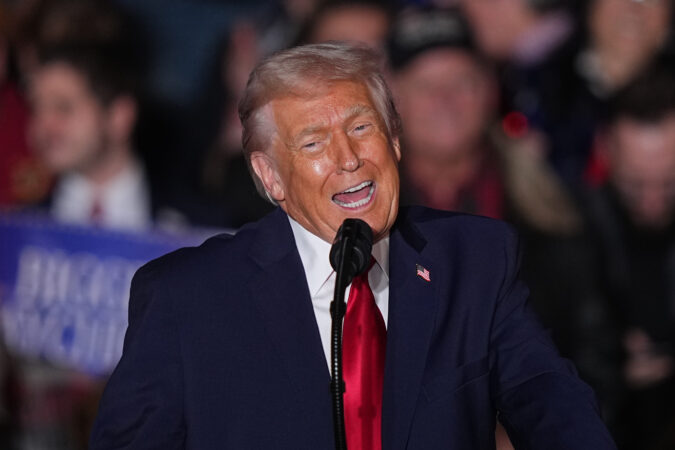
    During a political rally Tuesday night in Pennsylvania that was intended to focus on tackling inflation, President Donald Trump used profanity at least four times. At one point, he even admitted to disparaging Haiti and African nations as “shithole countries” during a private 2018 meeting, a comment he denied at the time. And before a bank of cameras during a lengthy cabinet meeting last week, the Republican president referred to alleged drug smugglers as “sons of bitches.”

    While the Biden incident was accidental, the frequency, sharpness, and public nature of Trump’s comments are intentional. They build on his project to combat what he sees as pervasive political correctness. Leaders in both parties are seemingly in a race now to the verbal gutter.

    Vice President JD Vance called a podcast host a “dips—” in September. In Thanksgiving remarks before troops, Vance joked that anyone who said they liked turkey was “full of s—.” After one National Guard member was killed in a shooting in Washington last month and a second was critically injured, top Trump aide Steven Cheung told a reporter on social media to “shut the f— up” when she wrote that the deployment of troops in the nation’s capital was “for political show.”

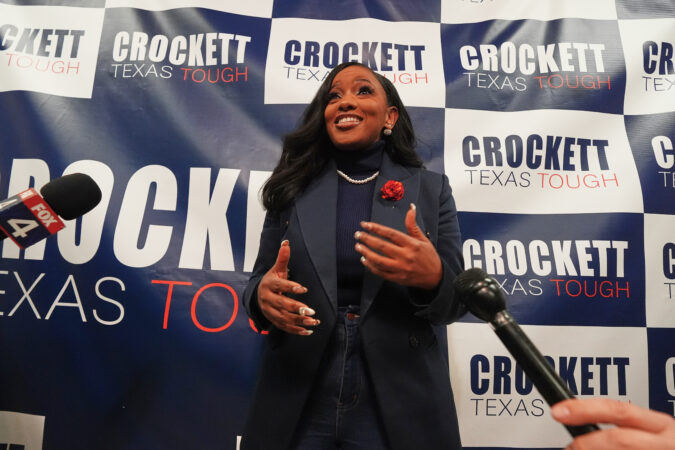
    Among Democrats, former Vice President Kamala Harris earned a roar of approval from her audience in September when she condemned the Trump administration by saying “these motherf— are crazy.” After Trump called for the execution of several Democratic members of Congress last month, Sen. Chris Murphy (D., Conn.) said it was time for people with influence to “pick a f— side.” Senate Democratic leader Chuck Schumer of New York said the administration cannot “f— around” with the release of the Jeffrey Epstein files. Democratic Rep. Jasmine Crockett, who on Monday announced her Senate campaign in Texas, did not hold back earlier this year when asked what she would tell Elon Musk if given the chance: “F— off.”

    The volley of vulgarities underscore an ever-coarsening political environment that often plays out on social media or other digital platforms where the posts or video clips that evoke the strongest emotions are rewarded with the most engagement.

    “If you want to be angry at someone, be angry at the social media companies,” Utah Gov. Spencer Cox, a Republican, said Tuesday night at Washington National Cathedral, where he spoke at an event focused on political civility. “It’s not a fair fight. They’ve hijacked our brains. They understand these dopamine hits. Outrage sells.”

    Cox, whose national profile rose after calling for civility in the wake of conservative activist Charlie Kirk’s assassination in his state, approved an overhaul of social media laws meant to protect children. A federal judge has temporarily blocked the state law.

    Tough political talk is nothing new

    Tough talk is nothing new in politics, but leaders long avoided flaunting it.

    Recordings from Democrat Lyndon B. Johnson’s administration, for instance, revealed a crude, profane side of his personality that was largely kept private. Republican Richard Nixon bemoaned the fact that the foul language he used in the Oval Office was captured on tape. “Since neither I nor most other Presidents had ever used profanity in public, millions were shocked,” Nixon wrote in his book In the Arena.

    “Politicians have always sworn, just behind closed doors,” said Benjamin Bergen, a professor at the University of California-San Diego’s Department of Cognitive Science and the author of What the F: What swearing reveals about our language, our brains, and ourselves. “The big change is in the past 10 years or so, it’s been much more public.”

    As both parties prepare for the 2026 midterm elections and the 2028 presidential campaign, the question is whether this language will become increasingly mainstream. Republicans who simply try to imitate Trump’s brash style do not always succeed with voters. Democrats who turn to vulgarities risk appearing inauthentic if their words feel forced.

    For some, it is just a distraction.

    “It’s not necessary,” said GOP Rep. Don Bacon of Nebraska, who is retiring next year after winning five elections in one of the most competitive House districts. “If that’s what it takes to get your point across, you’re not a good communicator.”

    There are risks of overusing profanity

    There also is a risk that if such language becomes overused, its utility as a way to shock and connect with audiences could be dulled. Comedian Jerry Seinfeld has talked about this problem, noting that he used swear words in his early routines but dropped them as his career progressed because he felt profanity yielded only cheap laughs.

    “I felt like well I just got a laugh because I said f— in there,” he said in a 2020 interview on the WTF podcast with fellow comedian Marc Maron. “You didn’t find the gold.”

    White House spokesperson Liz Huston said Trump “doesn’t care about being politically correct, he cares about making America great again. The American people love how authentic, transparent, and effective the President is.”

    But for Trump, the words that have generated the most controversy are often less centered in traditional profanity than slurs that can be interpreted as hurtful. The final weeks of his 2016 campaign were rocked when a tape emerged of him discussing grabbing women by their genitals, language he minimized as “locker room talk.” His “shithole” remark in 2018 was widely condemned as racist.

    More recently, Trump called Bloomberg reporter Catherine Lucey “piggy,” comments that his press secretary, Karoline Leavitt, defended as evidence of a president who is “very frank and honest.” Trump’s use of a slur about disabled people prompted an Indiana Republican whose child has Down syndrome to come out in opposition to the president’s push to redraw the state’s congressional districts.

    On rare occasions, politicians express contrition for their choice of words. In an interview with The Atlantic published last week, Pennsylvania Gov. Josh Shapiro, a Democrat, dismissed Harris’ depiction of him in her book about last year’s presidential campaign by saying she was “trying to sell books and cover her a—.”

    He seemed to catch himself quickly.

    “I shouldn’t say ‘cover her a—,” he said. “I think that’s not appropriate.”

  • The White House says the midterms are all about Trump. Democrats aren’t so sure

    The White House says the midterms are all about Trump. Democrats aren’t so sure

    WASHINGTON — A Dallas congresswoman opened her Senate campaign by telling voters that she “has gone toe to toe with Donald Trump.” Her Democratic primary opponent insisted that Americans are tired of “politics as a blood sport.”

    The divergent approach highlights how U.S. Rep. Jasmine Crockett and State Rep. James Talarico are navigating a race where Democrats hope to break a three-decade losing streak in Texas. It also reflects a broader divide within the party, with some candidates continuing to focus on Trump while others barely mention his name.

    Figuring out the best approach will be critical for Democrats who are grasping for a path back to power in the 2026 midterm elections that will determine control of Congress and are already maneuvering for the 2028 presidential race.

    Republicans, by contrast, have been crystal clear.

    Susie Wiles, the White House chief of staff, said in a recent podcast interview that the Republican president will campaign aggressively next year and the party will “put him on the ballot.”

    “He is the greatest vote energizer in the history of politics,” said Neil Newhouse, a veteran Republican pollster. “But the challenge is that he does it as much for Democrats as he does for Republicans.”

    Crockett takes on Trump

    In her campaign launch video, Crockett was silent as audio of Trump’s insults played, including multiple times that he has called her a “very low-IQ person.” At the end of the video, she breaks out into a smile.

    On Monday, she addressed the president more directly.

    “Trump, I know you’re watching, so let me tell you directly,” Crockett said. “You’re not entitled to a damn thing in Texas. You better get to work because I’m coming for you.”

    Trump responded the next day, telling reporters aboard Air Force One that her candidacy is “a gift to Republicans” and “I can’t even believe she’s a politician, actually.”

    For nearly a decade, Democrats have used their criticism of Trump to draw attention and fuel fundraising. Governors who are considered potential 2028 presidential contenders, including California’s Gavin Newsom and Illinois’ JB Pritzker, saw their profiles rise as they positioned themselves as staunch Trump opponents.

    U.S. Sen. Mark Kelly (D., Ariz.) recently participated in a video telling service members that they should not follow “illegal orders.” Trump responded by accusing him of “seditious behavior” that’s “punishable by death.”

    Kelly started a national media tour and sent out a flurry of fundraising emails, both for himself and other Democrats. He said Trump has bullied everyone in his career, “but not now, because I won’t let it happen.”

    When it comes to running for office, “Trump is the red meat that drives donors,” said John Anzalone, a longtime Democratic pollster.

    “There are clearly some candidates that are playing towards the donor world that don’t actually make a great argument for winning races. But it’s great for clicks and making money. And money is the first primary that you need to win.”

    Talarico charts a different course

    Talarico has built a following with a less combative style. The former schoolteacher who is working toward a master’s degree in divinity at Austin Presbyterian Theological Seminary gained attention by posting viral social media content challenging Republicans’ claims to Christian values. He has focused less on Trump or other politicians.

    “The biggest divide in our country is not left versus right. It’s top versus bottom,” Talarico said in the video launching his campaign.

    There are echoes of other Democratic successes this year, such as when candidates for governor won in New Jersey and Virginia by focusing on affordability concerns.

    Voters in those states were much likelier to say they were voting to oppose Trump than to support him, according to the AP Voter Poll. For example, 71% of voters for Democrat Mikie Sherrill in New Jersey said their decision in the governor’s race was motivated at least partially by opposition to Trump.

    But Sherrill recently said that it is not enough for Democrats to rely solely on anti-Trump fervor.

    “Trump makes a difference. He’s a forcing mechanism to coalesce the party,” Sherrill said. “But to really turn out the vote in a really strong manner, you have got to run a really sharp campaign.”

    When Democrats talk about Trump, they have to connect his actions to voters’ everyday lives, she said.

    “You can’t just say, oh, I’m so upset that Trump demolished the East Wing of the White House,” she said. “You have to say, look, there’s a tariff regime that is being run that is enriching the president to the tune of $3 billion, and you’re paying more for everything from your cup of coffee in the morning to the groceries that you’re buying to cook your family dinner at night.”

    It is an approach that could have more staying power in the coming years.

    “In the not-too-distant future, Trump will not be on the ballot and that will be a challenge for both parties,” said Austin Cook, a senior aide for Democrat Elissa Slotkin’s successful U.S. Senate campaign in Michigan last year. “He is a starting gun for Democratic enthusiasm. But soon we won’t have him as a foil.”

    Republicans need Trump to turn out voters

    Republicans have little choice but to enlist Trump’s help, considering his enduring support among voters who are less likely to turn out during the midterms.

    “They need to energize Republican voters and the only real way to energize Republican voters and get them out to vote is by enlisting Trump in the campaign,” said Newhouse, who is advising some of the party’s U.S. Senate candidates.

    He warned that Trump’s popularity does not necessarily transfer to candidates he supports, “but there isn’t an alternative.”

    “What they are trying to do here is basically wrap themselves up in him, hope that his approval and the economic numbers improve and get their voters out to the polls to match the Democrats’ intensity,” Newhouse said.

    The White House has said that Trump will be on the road more in the coming months. He hosted his first rally in a while in Pennsylvania on Tuesday evening, where he blamed Democrats for inflation.

    “They gave you high prices,” he said, adding that “we’re bringing those prices down rapidly.”

  • Judge orders Trump to end California National Guard troop deployment in Los Angeles

    Judge orders Trump to end California National Guard troop deployment in Los Angeles

    The Trump administration must stop deploying the California National Guard in Los Angeles and return control of the troops to the state, a federal judge ordered Wednesday in an emphatic ruling.

    U.S. District Judge Charles Breyer in San Francisco granted a preliminary injunction sought by California officials, but also put the decision on hold until Monday, presumably to give the administration a chance to appeal.

    In an extraordinary move, President Donald Trump called up more than 4,000 California National Guard troops in June without Gov. Gavin Newsom’s approval to further the Trump administration’s immigration enforcement efforts. The number had dropped to several hundred by late October, but California remained steadfast in its opposition to Trump’s command of the troops.

    White House spokeswoman Abigail Jackson suggested in a statement that the administration would appeal Breyer’s ruling, saying it looked forward to “ultimate victory on the issue.”

    “President Trump exercised his lawful authority to deploy National Guard troops to support federal officers and assets following violent riots that local leaders like Newscum refused to stop,” she said, using a pejorative moniker Trump has used to refer to the Democratic governor.

    California Attorney General Rob Bonta said the ruling was a victory for democracy and the rule of law, and he accused the administration of playing “political games” with the troops.

    “But the President is not king,” he said in a statement. “And he cannot federalize the National Guard whenever, wherever, and for however long he wants, without justification.”

    Breyer rejected the administration’s arguments that he could not review extensions of a Guard deployment and that it still needed Guard troops in Los Angeles to protect federal personnel and property, saying the first claim was “shocking” and the second one bordered on “misrepresentation.”

    “The Founders designed our government to be a system of checks and balances,” added Breyer, a nominee of President Bill Clinton, a Democrat. “Defendants, however, make clear that the only check they want is a blank one.”

    The 100 or so California troops that remain in Los Angeles are guarding federal buildings or staying at a nearby base and are not on the streets with immigration enforcement officers, according to U.S. Northern Command.

    California argued that conditions in Los Angeles had changed since Trump first deployed the troops following clashes between federal immigration officers and people protesting his stepped-up enforcement of immigration laws. During one demonstration, protesters threw rocks at Border Patrol vehicles. One man later pleaded guilty to throwing a Molotov cocktail.

    The Republican administration has extended the deployment until February while also trying to use California Guard members in Portland, Ore. as part of its effort to send the military into Democratic-run cities over the objections of mayors and governors. It also sent some California National Guard troops to Illinois.

    In his ruling, Breyer accused the Trump administration of “effectively creating a national police force made up of state troops.”

    The idea that risks from demonstrations in the Los Angeles area could not be managed today without the National Guard defied “common sense,” the judge wrote.

    “After all, local law enforcement like the LAPD, the LASD, and the California Highway Patrol (“CHP”) have not only been willing to manage the protests, but have capably done so since June,” he wrote.

    The June call-up was the first time in decades that a state’s national guard was activated without a request from its governor and marked a significant escalation in the administration’s efforts to carry out its mass deportation policy. The troops were stationed outside a federal detention center in downtown Los Angeles where protesters gathered and later sent on the streets to protect immigration officers as they made arrests.

    California sued, arguing that the president was using Guard members as his personal police force in violation of a law limiting the use of the military in domestic affairs. The administration said courts could not second-guess the president’s decision that violence during the protests made it impossible for him to execute U.S. laws with regular forces and reflected a rebellion, or danger of rebellion.

    Breyer said in Wednesday’s decision the suggestion there was danger of rebellion was even more “farfetched” when the administration extended the deployment than it was in June.

    Breyer initally issued a temporary restraining order that required the administration to return control of the Guard members to California, but an appeals court panel put that decision on hold.

    After a trial, Breyer ruled in September that the deployment violated the law.

    Other judges have blocked the administration from deploying National Guard troops to Portland, Oregon, and Chicago.

  • Justice Department can unseal records from Epstein’s 2019 sex trafficking case, judge says

    Justice Department can unseal records from Epstein’s 2019 sex trafficking case, judge says

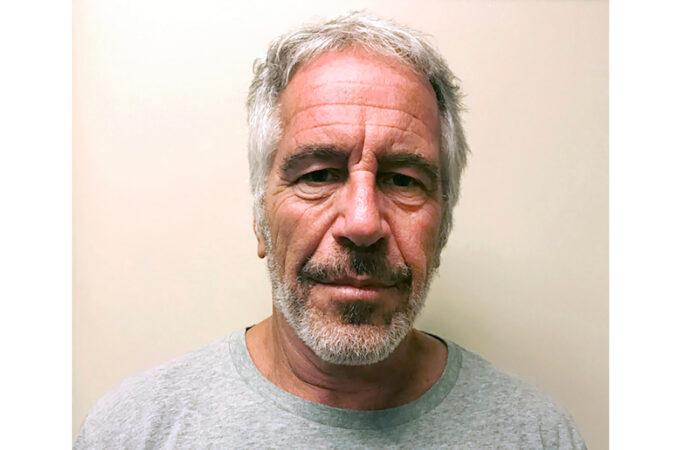
    NEW YORK — Secret grand jury transcripts from Jeffrey Epstein’s 2019 sex trafficking case can be made public, a judge ruled Wednesday, joining two other judges in granting the Justice Department’s requests to unseal material from investigations into the late financier’s sexual abuse.

    U.S. District Judge Richard Berman reversed his earlier decision to keep the material under wraps, citing a new law that requires the government to open its files on Epstein and his longtime confidant Ghislaine Maxwell. The judge previously cautioned that the 70 or so pages of grand jury materials slated for release are hardly revelatory and “merely a hearsay snippet” of Epstein’s conduct.

    On Tuesday, another Manhattan federal judge ordered the release of records from Maxwell’s 2021 sex trafficking case. Last week, a judge in Florida approved the unsealing of transcripts from an abandoned Epstein federal grand jury investigation in the 2000s.

    The Justice Department asked the judges to lift secrecy orders after the Epstein Files Transparency Act, passed by Congress and signed into law by President Donald Trump last month, created a narrow exception to rules that normally keep grand jury proceedings confidential. The law requires that the Justice Department disclose Epstein-related material to the public by Dec. 19.

    The court records cleared for release are just a sliver of the government’s trove — a collection of potentially tens of thousands of pages of documents including FBI notes and reports; transcripts of witness interviews, photographs, videos and other evidence; Epstein’s autopsy report; flight logs and travel records.

    While lawyers for Epstein’s estate told Berman in a letter last week that the estate took no position on the Justice Department’s unsealing request, some Epstein victims backed it.

    “Release to the public of Epstein-related materials is good, so long as the victims are protected in the process,” said Brad Edwards, a lawyer for some victims. “With that said, the grand jury receives only the most basic information, so, relatively speaking, these particular materials are insignificant.”

    Questions about the government’s Epstein files have dominated the first year of Trump’s second term, with pressure on the Republican intensifying after he reneged on a campaign promise to release the files. His administration released some material, most of it already public, disappointing critics and some allies.

    Berman was matter of fact in his ruling Wednesday, writing that the transparency law “unequivocally intends to make public Epstein grand jury materials and discovery materials” that had previously been covered by secrecy orders. The law “supersedes the otherwise secret grand jury materials,” he wrote.

    The judge, who was appointed by President Bill Clinton, a Democrat, implored the Justice Department to carefully follow the law’s privacy provisions to ensure that victims’ names and identifying information are redacted, or blacked out. Victim safety and privacy “are paramount,” he wrote.

    In court filings, the Justice Department informed Berman that the only witness to testify before the Epstein grand jury was an FBI agent who, the judge noted, “had no direct knowledge of the facts of the case and whose testimony was mostly hearsay.”

    The agent testified over two days, on June 18, 2019, and July 2, 2019. The rest of the grand jury presentation consisted of a PowerPoint slideshow and four pages of call logs. The July 2 session ended with grand jurors voting to indict Epstein.

    Epstein, a millionaire money manager known for socializing with celebrities, politicians, billionaires and the academic elite, killed himself in jail a month after his 2019 arrest. Maxwell was convicted in 2021 by a federal jury of sex trafficking for helping recruit some of Epstein’s underage victims and participating in some of the abuse. She is serving a 20-year prison sentence.

    Maxwell’s lawyer told a judge last week that unsealing records from her case “would create undue prejudice” and could spoil her plans to file a habeas petition, a legal filing seeking to overturn her conviction. The Supreme Court in October declined to hear Maxwell’s appeal.

    Maxwell’s grand jury records include testimony from the same FBI agent and a New York Police Department detective.

    Judge Paul A. Engelmayer sought to temper expectations as he approved their release on Tuesday, writing that the materials “do not identify any person other than Epstein and Maxwell as having had sexual contact with a minor.”

    “They do not discuss or identify any client of Epstein’s or Maxwell’s,” wrote Engelmayer, an appointee of President Barack Obama, a Democrat. “They do not reveal any heretofore unknown means or methods of Epstein’s or Maxwell’s crimes.”

  • The Trump administration changed the name on a portrait of former Health Secretary Rachel Levine. She is staying quiet.

    The Trump administration changed the name on a portrait of former Health Secretary Rachel Levine. She is staying quiet.

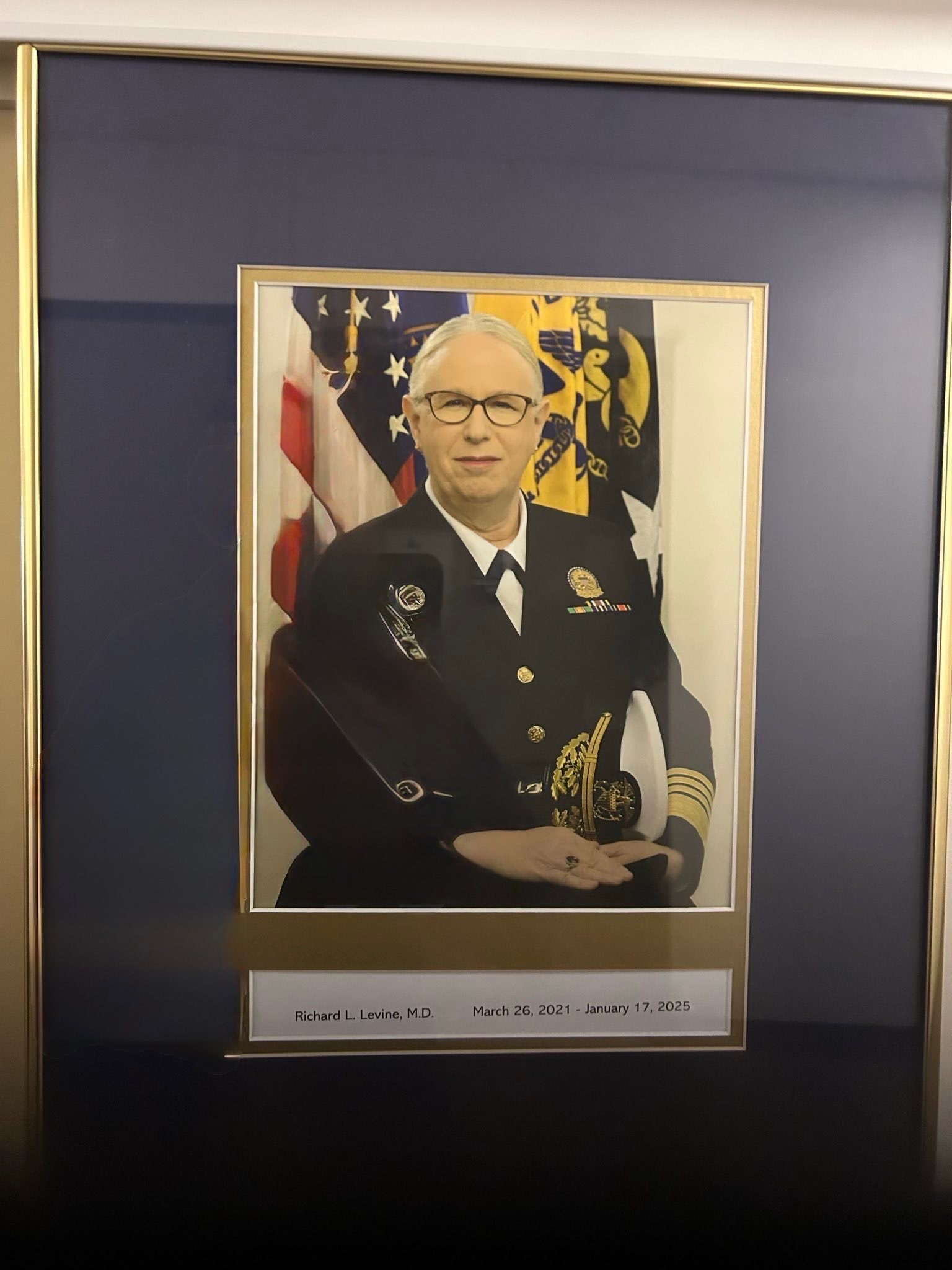
    While the federal government was shut down, the U.S. Department of Health and Human Services altered the name under the official portrait of Admiral Rachel Levine, a Pennsylvania doctor who served as the agency’s assistant secretary under former President Joe Biden, to her birth name or “dead name.”

    Levine, who had previously served as Pennsylvania physician general and secretary of health under Gov. Tom Wolf, was the first openly transgender official confirmed by the U.S. Senate.

    This photograph shows the official portrait of Admiral Rachel Levine, former assistant secretary for health. The portrait hangs in the hallway of the Humphrey Building in Washington, D.C., where Levine served under President Joe Biden at the U.S. Department of Health and Human Services. Someone in the Trump administration changed Levine’s name to her birth name or deadname. The photographer does not want to be identified.

    “Deadnaming” — using a transgender person’s birth name rather than the one they chose — is “a horrible thing to do to vilify a group of people,” said Deja Alvarez a LGBTQ community leader. “It’s beyond reprehensible.”

    Levine has not spoken publicly about the action, which was first reported Friday by National Public Radio. In a brief statement delivered by her former deputy assistant secretary for health policy Adrian Shanker, Levine described the name change as a “petty action” and said she wouldn’t comment. Shanker, a fellow at the Lehigh University College of Health, manages Levine’s public engagements.

    Levine, 68, has received expressions of “sympathy and outrage” since Friday, Shanker said.

    Condemning the alteration of Levine’s portrait, he said, it was “hard to understand that this was a priority under a government shutdown.”

    ”What do you expect from people acting more like high school bullies than federal officials?”

    HHS didn’t respond to requests for comment. Agency officials told NPR in a written statement: “Our priority is ensuring that the information presented internally and externally by HHS reflects gold standard science. We remain committed to reversing harmful policies enacted by Levine and ensuring that biological reality guides our approach to public health.”

    As Pennsylvania’s health secretary, Levine led the state’s response to COIVID-19 and became a familiar figure in 2020, standing at a lectern in Harrisburg, answering questions about the deadly pandemic.

    Prior to the pandemic, Levine led the state’s response to the opioid epidemic. She also helped establish Pennsylvania’s medical marijuana program.

    Under Biden, Levine also worked on issues related to HIV, syphilis, climate change, and long COVID.

    Levine was a pediatrician who worked at Penn State Health Milton S. Hershey Medical Center for 20 years before moving into public life.

    Throughout her career, Levine “earned … recognition through decades of expertise and leadership,” said State Rep. Dan Frankel (D., Allegheny) in a statement Tuesday. HHS’s decision to “strip [her legal] name is an act of political malice.”

    The Trump administration has made numerous efforts to counter civil rights gains transgender and LGBTQ Americans had previously won.

    These include issuing an executive order on Jan. 20 that redefined the word “sex” in federal programs and services to refer only to biological characteristics “at conception” as well as restricting gender-affirming medical care for people under age 19, banning trans Americans from military service and eliminating protections for transgender people.

    Staff writer Gillian McGoldrick contributed to this article.

  • A Democrat won Miami mayor’s race for the first time in nearly 30 years

    A Democrat won Miami mayor’s race for the first time in nearly 30 years

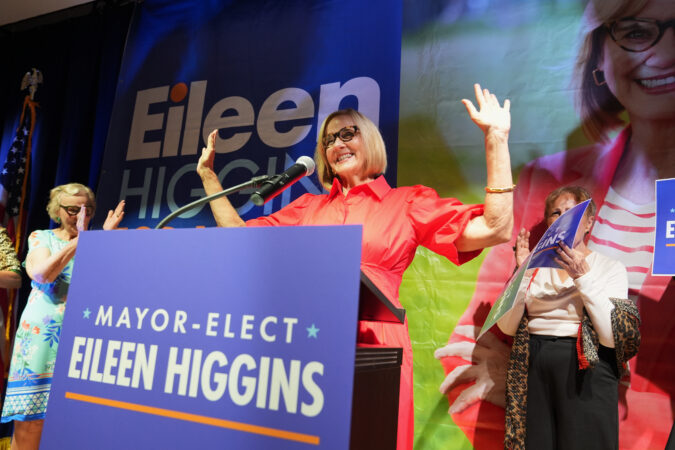
    MIAMI — Democrat Eileen Higgins won the Miami mayor’s race on Tuesday, defeating a Republican endorsed by President Donald Trump to end her party’s nearly three-decade losing streak and give Democrats a boost in one of the last electoral battles ahead of the 2026 midterms.

    Higgins, 61, will be the first woman to lead the city of Miami. She spoke frequently in the Hispanic-majority city about Trump’s immigration crackdown, saying she has heard of many people in Miami who were worried about family members being detained. She campaigned as a proud Democrat despite the race being officially nonpartisan and beat Trump-backed candidate Emilio Gonzalez, a former city manager, who said he called Higgins to congratulate her.

    “We are facing rhetoric from elected officials that is so dehumanizing and cruel, especially against immigrant populations,” Higgins told The Associated Press after her victory speech. “The residents of Miami were ready to be done with that.”

    With nearly all votes counted Tuesday, Higgins led the Republican by about 19 percentage points.

    The local race is not predictive of what may happen at the polls next year. But it drew attention from the two major national political parties and their leaders. The victory provides Democrats with some momentum heading into a high-stakes midterm election when the GOP is looking to keep its grip in Florida, including in a Hispanic-majority district in Miami-Dade County. The area has shifted increasingly rightward politically in recent years, and the city may become the home of Trump’s presidential library.

    “Tonight’s result is yet another warning sign to Republicans that voters are fed up with their out-of-touch agenda that is raising costs,” said Ken Martin, the chair of the Democratic National Committee, in a statement.

    Some nationally recognized Democrats supported Higgins, including former Transportation Secretary Pete Buttigieg. U.S. Sen. Ruben Gallego and former Chicago Mayor Rahm Emanuel traveled to Miami on Sunday and Monday to rally voters for the Democrat who served as a Miami-Dade county commissioner for seven years.

    Higgins, who speaks Spanish, represented a district that leans conservative and includes the Cuban neighborhood of Little Havana. When she first entered politics in 2018, she chose to present herself to voters as “La Gringa,” a term Spanish speakers use for white Americans, because many people did not known how to pronounce her name.

    “It just helps people understand who I am, and you know what? I am a ‘gringa,’ so, what am I going to do, deny it?” she told the AP.

    Republicans’ anxiety grows

    Republicans in Florida have found strong support from voters with heritage from Cuba, Venezuela and Nicaragua, because they likened some members of the Democratic party’s progressive wing with politicians from the governments they fled. Trump and other GOP members have tapped into those sentiments over the past eight years.

    However, some local Republicans are growing increasingly frustrated since November’s elections when Democrats scored wins in New Jersey and Virginia, where both winning gubernatorial candidates performed strongly with nonwhite voters.

    The results from those races were perceived as a reflection of concerns over rising prices and the Trump administration’s aggressive immigration policies.

    U.S. Rep. Maria Elvira Salazar, a Republican whose district is being targeted by Democrats and includes the city of Miami, called the elections elsewhere a “wake-up call.” She said Hispanics also want a secure border and a healthy economy but some relief for “those who have been here for years and do not have a criminal record.”

    “The Hispanic vote is not guaranteed,” Salazar said in a video posted on X last month. “Hispanics married President Trump, but they are only dating the GOP.”

    David Jolly, who is running to represent Democrats in the Florida governor’s race next year, said the mayoral election was good news for Democrats in what used to be a battleground state.

    “Change is here. It’s sweeping the nation, and it’s sweeping Florida,” Jolly said.

    Miami mayor-elect gains national platform

    The mayoral position in Miami is more ceremonial, but Higgins promised to execute it like a full-time job.

    The city is part of Miami-Dade County, which Trump flipped last year, a dramatic improvement from his 30 percentage point loss to Democrat Hillary Clinton in 2016.

    As Florida’s second-largest city, Miami is considered the gateway to Latin America and attracts millions of tourists. Its global prominence gives Higgins a significant stage as mayor.

    Her pitch to voters included finding city-owned land that could be turned into affordable housing and cutting unnecessary spending.

  • Trump strays from script at Poconos rally, calling affordability a ‘hoax’ and Pa. a ‘dumping ground’ for immigrants

    Trump strays from script at Poconos rally, calling affordability a ‘hoax’ and Pa. a ‘dumping ground’ for immigrants

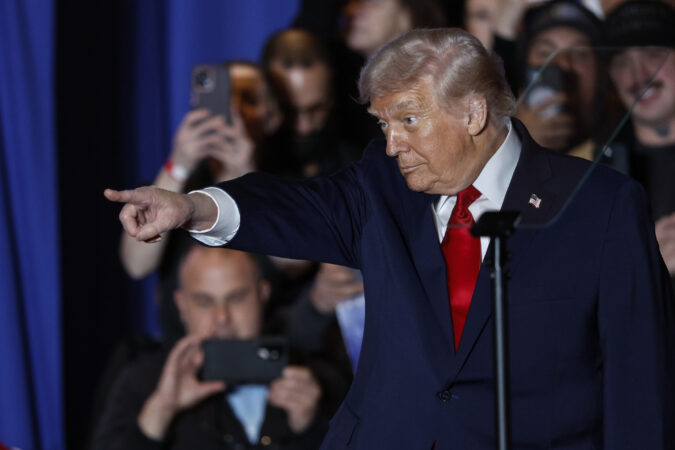
    President Donald Trump’s raucous rally Tuesday night in Pennsylvania was billed as the launch of a national tour focused on easing voters’ economic anxieties that threaten Republicans’ hold in Washington with the 2026 midterms looming.

    But the economy couldn’t maintain the president’s interest for the duration of the speech.

    Instead, he rallied the crowd at the Mount Airy Casino Resort in Mount Pocono by fomenting anger at Democratic U.S. Rep. Ilhan Omar and other Somali immigrants who live in Minnesota and teasing a 2028 run, despite constitutional limits on a third term.

    Employing a method he calls “the weave,” Trump darted back and forth between cost-of-living issues and entirely unrelated material, such as claiming credit for the use of the phrase “Merry Christmas” during the holiday season.

    “If I read what’s on the teleprompter, you’d all be falling asleep right now,” Trump said.

    It was Trump’s third trip to Pennsylvania since he began his second term, following a campaign in which he spent a considerable amount of time in the Keystone State, winning it back in part by promising to cure a beleaguered economy. It’s the president’s first return to Northeast Pennsylvania, where he saw his biggest gains in the region during the last election, and which will be a crucial battleground in next year’s election, when the GOP’s razor-thin House majority is on the line.

    “America is winning again. Pennsylvania is prospering again. And I will not rest until this commonwealth is wealthier and stronger than ever before,” Trump proclaimed at the large casino and hotel complex tucked in between ski resorts in the Pocono Mountains.

    The speech comes as many Americans lament the cost of living, workers have lost power in the job market and with their employers, and people are bracing for Affordable Care Act tax credits to expire at the end of the year.

    The casino stayed open Tuesday and gamblers played slots and card games on the floor upstairs as Trump spoke in the ballroom below.

    Trump, in a speech that stretched over an hour, blamed high prices on his Democratic predecessor, former President Joe Biden. He argued gas prices are down and car prices are dropping thanks to relaxed fuel-efficiency standards. The stock market is up this year and overall growth for the third quarter is strong. Trump also has signed agreements to reduce list prices on prescription drugs.

    While Trump again called concerns about affordability a “hoax,” the event itself was at least an acknowledgment that frustrations with the economy are damaging the Republican brand ahead of the midterms. He spoke in front of a large “lower prices, bigger paychecks,” banner.

    “Democrats talking about affordability is like Bonnie and Clyde preaching about public safety,” he said.

    The most compelling part of the evening came more than an hour in, when the president called up members of the local community, including a waiter and an EMT to share personal stories about how no taxes on tips or overtime would benefit their families when tax returns are filed next year.

    Trump played to the Pennsylvania crowd, noting his connections to the state as a graduate of the University of Pennsylvania’s Wharton School. “I love Philadelphia. It’s gotten a little rougher, but we will take it,” he quipped.

    He then reminisced about hosting the Philadelphia Eagles at the White House earlier this year following their Super Bowl win. He hailed coach Nick Sirianni as a “real leader” and marveled at running back Saquon Barkley’s muscles.

    “It’s like I hit a piece of steel. … He’s so strong,” Trump said about patting the Eagles player on the back.

    But despite these light-hearted moments, Trump repeatedly went after Omar and the Somali immigrant community.

    Trump asked if anyone from the crowd was from Somalia and asked them to raise their hands before tearing into Omar, the progressive Minnesota Democrat who left the African country as a refugee.

    “She comes from a country where, I mean, it’s considered about the worst country in the world, right?”

    Later in the speech, Trump complained about immigration from Somalia, Afghanistan and Haiti — instead of countries like Norway and Denmark — as he recounted and affirmed his use of the phrase “shithole countries” during his first term, something he denied at the time.

    He also accused Democrats of making Pennsylvania a “dumping ground” for immigrants.

    Despite this incendiary rhetoric, Trump also celebrated his performance with Black and Latino voters in the last election. He put up the strongest Republican performance with these demographic groups in decades, though a majority both went for Vice President Kamala Harris.

    “Black people love Trump,” Trump said. “I got the biggest vote with Black people. They know a scam better than anybody. They know what it is to be scammed.”

    ‘Everyone’s paying a lot more’

    Nationwide, prices and inflation have increased this year — with many experts saying that the president’s tariff policies have contributed.

    In his speech, Trump touted his tariffs as bringing in “hundreds of billions of dollars,” and noted his administration would be steering $12 billion to farmers through that revenue. The money is meant to help agriculture producers cope with retaliatory measures taken by China and other trading partners in response to Trump’s tariffs, which Trump did not mention in his remarks.

    “We gave the farmers a little help … and they are so happy.” Trump said.

    Poll after poll shows Americans see rising home prices, groceries, education, and electricity costing more. Gallup’s Economic Confidence Index found a 17-month low in terms of trust in the economy, and the survey found Americans’ views of the job market are at their most negative since the end of Trump’s first term during the height of the pandemic.

    For the average Pennsylvanian, there is a “financial struggle” with higher prices on food, childcare, healthcare, and electricity, among other expenses, said Mark Zandi, chief economist at Moody’s Analytics.

    He attributes it to Trump’s tariffs and immigration policies, including deportation, which he said limits the number of people working and has “hurt growth and raised inflation.”

    “Everyone’s paying a lot more for basic necessities, most everything,” Zandi said.

    Zandi noted Trump’s economic policies include a few positives for workers and employers, including tax breaks for businesses from Trump’s Big Beautiful Bill Act, as well as the tax cuts on tips and overtime.

    “But net, I think the policies have contributed to the financial hardship of the typical Pennsylvanian,” Zandi said.

    Pennsylvania, however, is the only growing economy in the Northeast, according to Moody’s Analytics. The state has secured $31.6 billion in private-sector investments since Democratic Gov. Josh Shapiro took office in 2023, according to his administration.

    Shapiro has been quick to argue the state’s relative fiscal health has come in spite of federal policies he argued are hurting Pennsylvanians. He called Trump “a president who seems to want to blame everybody else, whose economic policies are failing,” in an interview Monday night on MS NOW.

    “I mean, if he comes to Pennsylvania and spews more B.S. … I think what you’re ultimately going to find are people tuning him out,” Shapiro, a potential contender for the presidency in 2028, said ahead of Trump’s visit.

    Sen. John Fetterman (D., Pa.) told MS NOW in a separate interview on Tuesday that polling shows the president, “he’s really kind of losing the plot with a part of his own voters now front and center.”

    A key battleground

    The setting for Trump’s speech is also one of the most closely watched battlegrounds in the state, home to freshman Republican U.S. Rep. Rob Bresnahan’s district, which Democrats are targeting to flip. Bresnahan won by 1.5 percentage points last year.

    Bresnahan was more on message in brief remarks. He said he and Trump have heard the call for relief.

    “The message is the same everywhere we go: Lower the cost, higher-paying jobs, keep our community safe, and listen to the people during the work,” he told the crowd in Mount Pocono.

    He argued policies authored by Trump and passed by the Republican-led Congress, like tax credits for working families and seniors, are already helping people.

    The Democratic Congressional Campaign Committee seized on the visit to blast Bresnahan in ads on the Wilkes-Barre Times Leader website, highlighting his penchant for stock trading. And Scranton Mayor Paige Cognetti, a Democrat running to unseat Bresnahan, took the moment to call him “the exact kind of self-serving politician that Northeastern Pennsylvanians … all agree we need to get rid of.”

    Whether Trump’s message resonates in this part of the country will be telling. Monroe County, home to Mount Pocono, flipped to Trump in the 2024 election after backing Biden in 2020.

    The region is home to a large number of New York City transplants who have moved here seeking more-affordable housing in a region that largely relies on Pocono Mountains tourism as the main source of jobs.

    While views on the economy were mixed on the casino floor, attendees in the ballroom gave the president a warm welcome back to the state. The Secret Service had to turn people away, and many who got in had waited more than four hours outside on an 18-degree day.

    Trump’s ongoing response to affordability woes could have major implications for other vulnerable Republicans hoping to be reelected in the state. In last month’s election, Democrats successfully ran on affordability in the New Jersey and Virginia gubernatorial races — and picked up a slew of local seats in Pennsylvania.

    The DCCC has its sights on the seats of three other Pennsylvania Republicans, along with Bresnahan: U.S. Rep. Brian Fitzpatrick of Bucks County; U.S. Rep. Ryan Mackenzie of Lehigh County; and U.S. Rep. Scott Perry of York County.

    Attendees in the crowd Tuesday night held “Keep the House, Keep the Country,” posters.

    Trump told the crowd he’d be back on the trail for Republicans in the midterms, and reflected, that like his off-the-cuff speech, he enjoys stumping.

    Whether the current state of the economy affects Republicans’ chances in 2026 could depend on how those future appearances go and how willing the party will be to keep acknowledging that many Americans are struggling.

    Marc Stier, executive director of the Pennsylvania Policy Center, who was a leading advocate for the establishment of the ACA, argued that “voters are not fools, particularly when it comes to their pocketbook.”

    “How they talk about it will determine in some ways how badly they get hurt,” Stier said. “If they acknowledge a problem and, say, come up with ideas to deal with it, they will probably be hurt less. If they followed Trump’s line … I think they’re gonna get clobbered.”