Category: Politics

Political news and coverage

  • Penn State asks Pa. Supreme Court to stop the release of internal trustee documents

    Penn State asks Pa. Supreme Court to stop the release of internal trustee documents

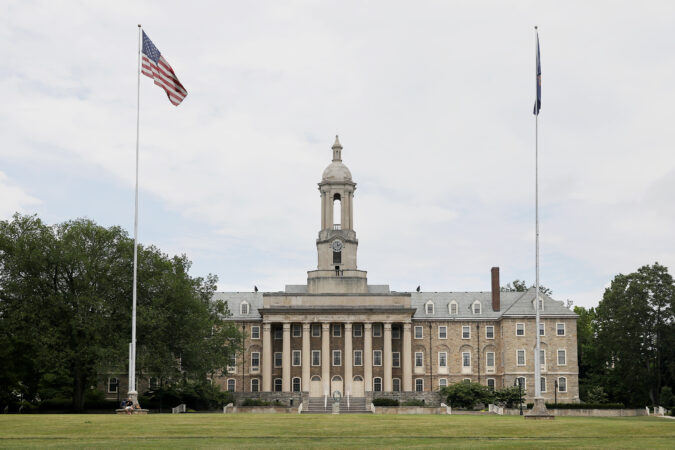
    Pennsylvania State University and the Pennsylvania Department of Education want the state’s highest court to overturn a recent lower court ruling that sided with Spotlight PA and stop the release of internal Board of Trustees documents.

    The case could have major implications in the state for public access to documents stored in cloud-based services.

    Last week, the university and state agency each filed a “petition for allowance of appeal,” asking the Pennsylvania Supreme Court to hear the public records case. There is no timeline for the court to decide whether it will hear the arguments, and the court denied 87% of requests to review a lower court decision in 2024, according to the court’s annual report.

    Spotlight PA is represented pro bono by the Reporters Committee for Freedom of the Press and the Cornell Law School First Amendment Clinic. Paula Knudsen Burke, the Pennsylvania attorney for RCFP, said in a statement: “The Commonwealth Court rightly made clear that Penn State trustees cannot shield certain records from the public simply by storing them in a file-sharing system or alleging they contain proprietary information. We will continue to push for access to these records on behalf of Spotlight PA so that all Pennsylvanians can better understand how a prominent state-related institution — supported with millions of dollars of public money — is operating.”

    A Penn State spokesperson told Spotlight PA in an email that the university does not comment on “pending litigation.” The state education department did not respond to a request for comment.

    In May 2023, Spotlight PA filed public records requests with Pennsylvania’s agriculture and education departments for documents the agencies’ secretaries used while serving on Penn State’s governing board. While the university is largely exempt from the state’s Right-to-Know Law due to a legal carveout, a 2013 court ruling said records that the agencies’ secretaries used as trustees could be accessed by the public.

    The Office of Open Records ruled in 2023 that some of the records the newsroom requested should be made public. Penn State and the education department appealed the decision to Commonwealth Court.

    Penn State, in legal filings and in court in September, argued the state agencies did not possess or control the records Spotlight PA sought because Penn State housed the files on Diligent, a cloud-based file-sharing service. The online system allows the university to control who can access which files and whether the records can be downloaded.

    The court sided with Spotlight PA in its decision last month, ruling that Penn State’s argument was “without merit.” Taking the university’s position, the court said, would contradict the intent of the state’s open records law for transparency and would “perversely incentivize Commonwealth agencies, local agencies, and affected third parties like Penn State to utilize remote servers and/or cloud-based services, in order to ensure that they would no longer need to disclose what would otherwise constitute public records.”

    Penn State was also ordered to unredact portions of a 2022 document given to trustees about the university’s “fiscal challenges” and altering the budget to better align with Penn State’s “priorities and values.”

    In its petition to the state Supreme Court, Penn State said the lower court wrongly determined that the agency secretaries received the records and therefore could provide them to the newsroom. By providing documents to trustees through Diligent, the university controls who can “download, print, forward, or otherwise obtain the document.”

    The file-sharing service, the university wrote, “is the electronic equivalent of a Penn State official holding a physical document in their hand and inviting the Secretaries to look at the document. Importantly, in this analogy, the Penn State official never lets go of the document, and the Secretaries never possess the document.”

    The education department, in its filing, said the lower court’s decision ignores the intent of, and improperly expands, Pennsylvania’s open records law.

    Spotlight PA, through its legal team, will file its response to the petition in the coming days.

    Earlier this year, the Penn State board settled a separate lawsuit that Spotlight PA brought against it over alleged violations of Pennsylvania’s Sunshine Act, the state law mandating transparency from governing bodies.

    As part of the settlement, the board agreed to release more information about its private meetings, including who is leading the gatherings and the topic discussed. The board also participated in a legal training in September on the open meetings law and what governing bodies must do to comply with it. The terms of the settlement will last for five years. Read the full agreement here.

    This story was produced by the State College regional bureau of Spotlight PA, an independent, nonpartisan newsroom dedicated to investigative and public-service journalism for Pennsylvania.

    SUPPORT THIS JOURNALISM and help us reinvigorate local news in north-central Pennsylvania at spotlightpa.org/donate. Spotlight PA is funded by foundations and readers like you who are committed to accountability and public-service journalism that gets results.
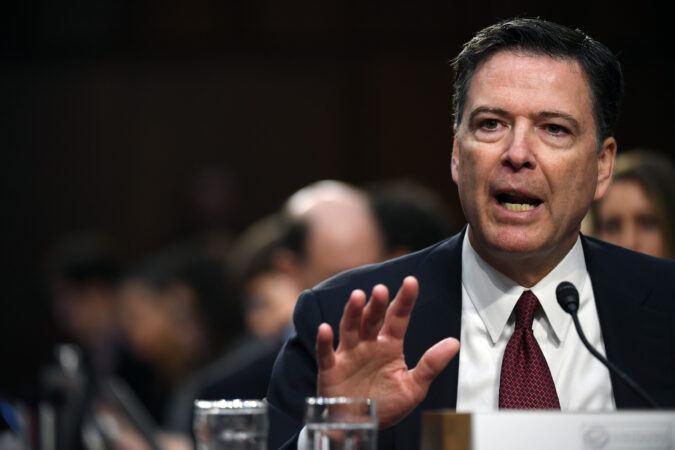
  • U.S. judge tosses cases against ex-FBI chief James Comey, New York Attorney General Letitia James

    U.S. judge tosses cases against ex-FBI chief James Comey, New York Attorney General Letitia James

    WASHINGTON — A federal judge on Monday dismissed criminal charges against two perceived adversaries of President Donald Trump, FBI Director James Comey and New York Attorney General Letitia James, ruling the U.S. attorney he hand picked to prosecute them was unlawfully appointed.

    The ruling throws out two cases Trump had publicly called for as he pressured Justice Department leaders to move against high-profile figures who had criticized him and led investigations into his conduct.

    Lindsey Halligan, a former personal lawyer to Trump, was named interim U.S. Attorney for the Eastern District of Virginia in September to take over both investigations despite having no previous prosecutorial experience. The findings by U.S. District Judge Cameron McGowan Currie came after both Comey and James accused the Trump Justice Department of violating the U.S. Constitution’s Appointments Clause and federal law by appointing Halligan in September.

    New York Attorney General, Letitia James, speaks after pleading not guilty outside the United States District Court in October in Norfolk, Va.

    ‘No legal authority’

    Currie found that Halligan “had no legal authority” to bring indictments against either Comey or James. But Currie dismissed the cases “without prejudice,” giving the Justice Department an opportunity to seek new indictments with a different prosecutor at the helm.

    “All actions flowing from Ms. Halligan’s defective appointment,” Currie wrote, were “unlawful exercises of executive power and are hereby set aside.”

    After the decision, Attorney General Pam Bondi told reporters the Justice Department would “be taking all available legal action, including an immediate appeal to hold Letitia James and James Comey accountable for their unlawful conduct.”

    Bondi said that because Halligan was made a special U.S. attorney, she can continue to prosecute cases.

    “She can fight in court just like she was and we believe we will be successful on appeal,” Bondi said.

    James and Comey separately said they were grateful for the ruling. James’ attorney, Abbe Lowell, said she would “continue to challenge any further politically motivated charges through every lawful means available.”

    In an Instagram video, Comey said the case against him “was a prosecution based on malevolence and incompetence and a reflection of what the Department of Justice has become under Donald Trump.”

    It is unclear if prosecutors could seek to bring a new case against Comey over the same conduct. The five-year statute of limitations on the charges expired on September 30, and Comey’s lawyers have already indicated in court filings that they do not believe prosecutors have more time to refile the charges.

    Both Comey and James have been longtime targets of Trump’s ire. Comey as FBI director oversaw an investigation into alleged ties between Trump’s 2016 election campaign and the Russian government and later called Trump unfit for office.

    James, an elected Democrat, successfully sued Trump and his family real estate company for fraud. Trump ordered Bondi to install Halligan to the post after her predecessor Erik Siebert declined to pursue charges against Comey or James, citing a lack of credible evidence in both cases.

    Halligan moved swiftly

    Shortly after her appointment, Halligan alone secured indictments against Comey and James after other career prosecutors in the office refused to participate. Comey pleaded not guilty to charges of making false statements and obstructing Congress after he was accused of lying about authorizing leaks to the news media. James pleaded not guilty to charges of bank fraud and lying to a financial institution for allegedly misleading on mortgage documents to secure more favorable loan terms.

    Attorneys for Comey and James argued that Halligan’s appointment violated a federal law they said limits the appointment of an interim U.S. attorney to one 120-day stint.

    Repeated interim appointments would bypass the U.S. Senate confirmation process and let a prosecutor serve indefinitely, they said. Siebert previously had been appointed by Bondi for 120 days and was then re-appointed by the U.S. District Court for the Eastern District of Virginia, since the Senate had not yet confirmed him in the role.

    Lawyers for the Justice Department argued the law allows the attorney general to make multiple interim appointments of U.S. Attorneys. Still, Bondi sought to shore up the cases by separately installing Halligan as a special attorney assigned to both prosecutions. In that same document, she also said she ratified the indictments.

    Currie found that Bondi’s attempts to retroactively secure the cases were invalid. Currie, who is based in South Carolina and was appointed by former Democratic President Bill Clinton, was assigned to rule on Halligan’s appointment because federal judges in Virginia had played a role in appointing her predecessor.

    The challenge to Halligan’s appointment was one of several efforts lawyers for Comey and James have made to have the cases against them thrown out before trials. Both also argued that the cases are “vindictive” prosecutions motivated by Trump’s animosity.

    Halligan has come under intense scrutiny by courts, particularly over her handling of the Comey case. A federal magistrate judge found she may have made significant legal errors in presenting evidence and instructing the grand jury that indicted Comey. The trial judge repeatedly questioned whether the full grand jury had seen the final version of the Comey indictment.

  • Mayor Cherelle Parker has appointed nonprofit leader Anton Moore as the city’s director of public engagement and neighborhood affairs

    Mayor Cherelle Parker has appointed nonprofit leader Anton Moore as the city’s director of public engagement and neighborhood affairs

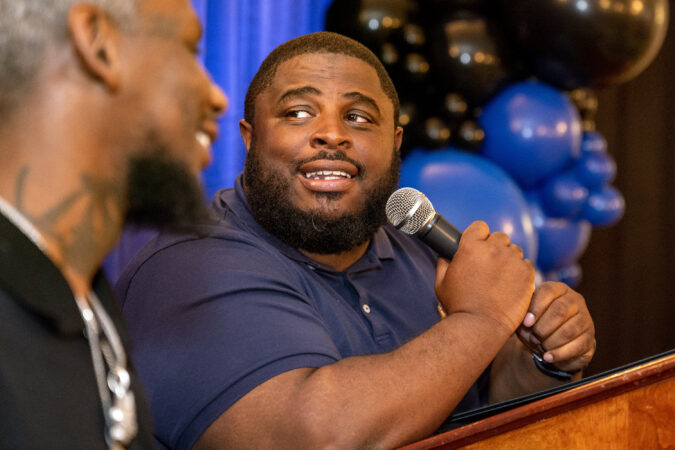
    Mayor Cherelle L. Parker has appointed nonprofit founder and Democratic ward leader Anton K. Moore as the city’s director of public engagement and neighborhood affairs.

    Moore, who founded the South Philadelphia-based group Unity in the Community, effectively replaces Hassan Freeman, who was fired from the Parker administration about two months ago following a verbal altercation outside City Hall with City Councilmember Isaiah Thomas that the lawmaker described as “negative and disturbing.”

    Freeman, who worked under Chief Deputy Mayor Sinceré Harris, was director of neighborhood and community engagement. Parker said she renamed the role to reflect added responsibilities while appointing Moore, whose work will now fall under Chief of Staff Tiffany W. Thurman’s portfolio.

    The Office of Public Engagement and Neighborhood Affairs will manage the city’s 10 Neighborhood Community Action Centers, which are meant to be “neighborhood City Halls” where residents can access services closer to home. The centers are a major part of Parker’s efforts to follow through on her campaign promise to create a city government “residents can see, touch, and feel,” and there is one in each Council district.

    Moore, the Democratic leader of the 48th Ward in South Philadelphia, has strong political connections, and his nonprofit work has been praised by numerous elected officials.

    “This is the piece of the puzzle that we needed,” Parker said Monday at a City Hall news conference, before addressing Moore: “You now have an opportunity to do what you did in South Philly but you’ve got to do it all over the city.”

    Moore’s salary is $195,000, according to the mayor’s office.

    “We’re going to work, we’re going to have fun, and we’re going to deliver the services that the city of Philadelphia deserves,” Moore said.

    Police Commissioner Kevin J. Bethel said he has worked with Moore, 39, on youth employment and engagement efforts and leaned on him as an “adviser of my process to help me understand what is going on in the streets.”

    “There is nobody better connected to our community. There is nobody better trained to take on this task,” said Bethel, who later added he would “go through a wall for this kid.”

    Founded in 2008, Unity in the Community provides a variety of services, including connecting residents with housing aid and students with scholarships, and its parent organization is Soul Food CDC. The group has partnered with 76ers player Joel Embiid to give residents Giant gift certificates and former teammate Ben Simmons, now with the Los Angeles Clippers, to provide Christmas gifts to children.

    The group also received $417,900 from a city anti-violence grant program founded during the surge in shootings and homicides that followed the onset of the coronavirus pandemic.

    In a report about poor oversight of that program, The Inquirer in 2023 reported that Unity in the Community received about 60% more in funds than the $258,000 the group had applied for. The paper also found that a staffer for the Urban Affairs Coalition, which administered the grant program, raised questions about management of Unity in the Community’s project, expanding a youth carpentry training program in South Philadelphia.

    The staffer wrote in a 2022 email he was “very concerned” about accounting issues, including $75,000 in funding for which the organization had not submitted invoices. Moore said in 2023 he would work to fix the paperwork errors and defended the group’s work.

    His application for the anti-violence grant was supported by Thomas and State Sen. Anthony Williams (D., Philadelphia), an indication of Moore’s support among Philadelphia’s political class.

    Council recently named a block in South Philly in his honor. He was appointed by former Gov. Tom Wolf to the Pennsylvania Commission on African American Affairs. At Monday’s news conference, Ryan Boyer, a Parker ally who leads the politically powerful Philadelphia Building & Construction Trades Council, heaped praise on Moore and joked that he “will be a great director of whatever the mayor called it.”

    Parker’s chief of staff, Tiffany W. Thurman, praised Moore as “someone whose heart beats with the rhythm of our streets in every neighborhood.”

    “Your mandate from the mayor is very clear: You are now the direct link between our administration and our neighborhoods,” Thurman said at the news conference.

    Freeman’s dismissal followed a September incident in which he allegedly confronted Thomas at the lawmaker’s parking spot. In an email Thomas sent administration officials that was obtained by The Inquirer, Thomas wrote Freeman “spoke to me in a disrespectful manner, a hostile tone, and addressing me outside my name and title.”

    Freeman did not immediately respond to a request for comment.

    Parker declined to comment on the ordeal, except to say “some personnel adjustments were made.”

    “I’m not looking back on anything associated with yesterday,” Parker said in an interview. “I’m thinking about how we are going to keep moving Philadelphia forward.”

    Staff writer Ryan W. Briggs contributed to this article.

  • Philly moves to ban mobile addiction services from parts of Kensington and most of the Lower Northeast

    Philly moves to ban mobile addiction services from parts of Kensington and most of the Lower Northeast

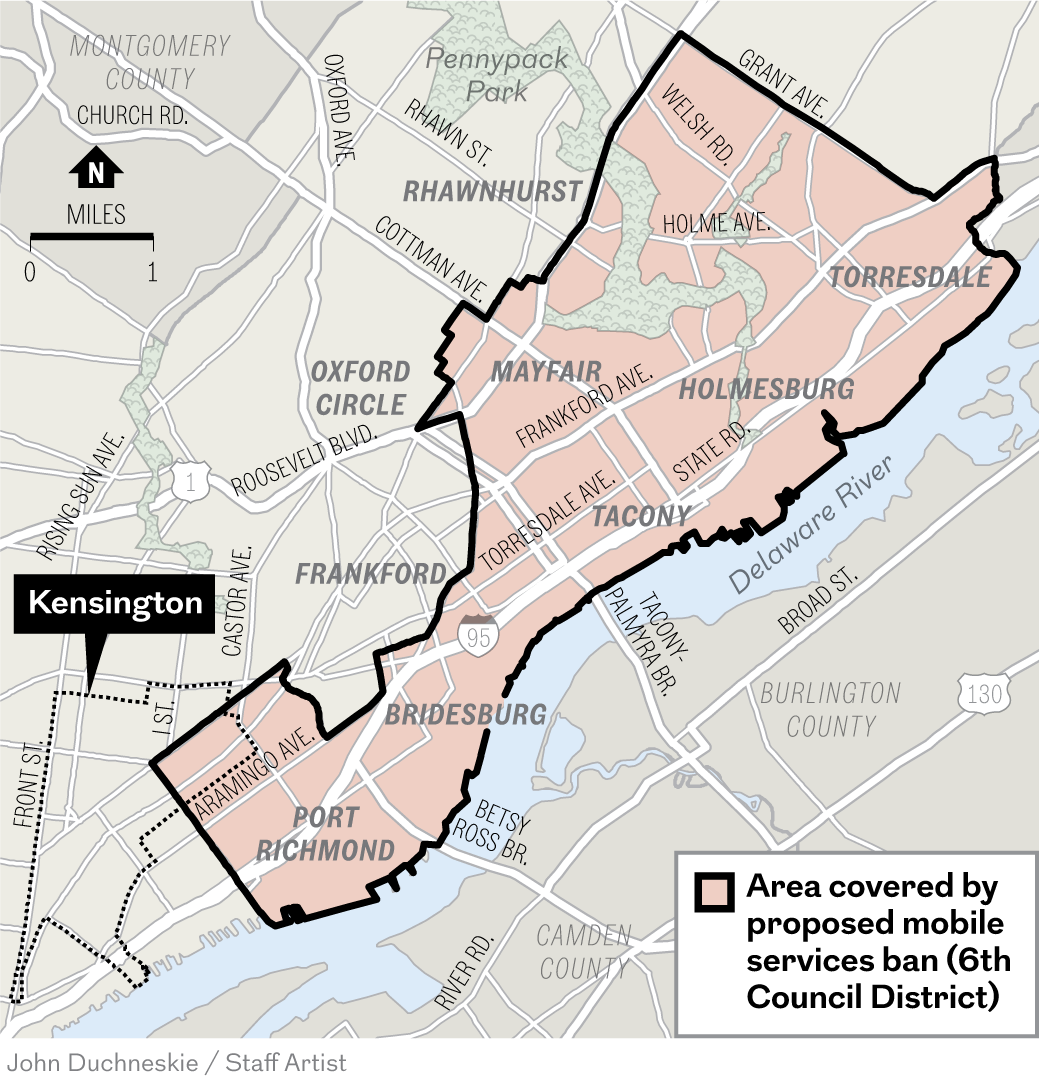
    Philadelphia City Council is escalating its clash with some harm reduction providers, with lawmakers on a key committee voting Monday to ban mobile addiction services from parts of Kensington and its surrounding neighborhoods.

    Members of Council’s Committee on Licenses and Inspections voted, 5-1, to advance the legislation, which covers the Lower Northeast-based 6th District, represented by Councilmember Mike Driscoll, the bill’s sponsor.

    The area stretches from the eastern side of the intersection at Kensington and Allegheny Avenues — long the epicenter of the city’s opioid epidemic — north along the Delaware River and up to Grant Avenue.

    The full Council could vote on the legislation as early as next month.

    Map of the 6th Council District, the target of proposed legislation to ban mobile addiction services.

    Some Kensington residents who have begged lawmakers for years to address the sprawling homelessness and addiction in the neighborhood said they support the legislation because the providers draw people who use drugs into residential areas.

    “I have grandkids who can’t come and see me because of where grandmom lives at,” said Darlene Abner-Burton, a neighborhood advocate. “It’s not fair that we have to endure what we have to endure. No one should live like we do, and no one should go through what we go through.”

    However, a half dozen harm reduction advocates testified that the legislation would not reduce homelessness or addiction, but would instead erect barriers to medical care that vulnerable people rely on and would lead to more overdose deaths.

    “Every member of our community deserves dignity and compassion, not punishment,” said Kelly Flannery, policy director at the Positive Women’s Network, an advocacy organization for people with HIV.

    Flannery called the measure a “cruel ban.”

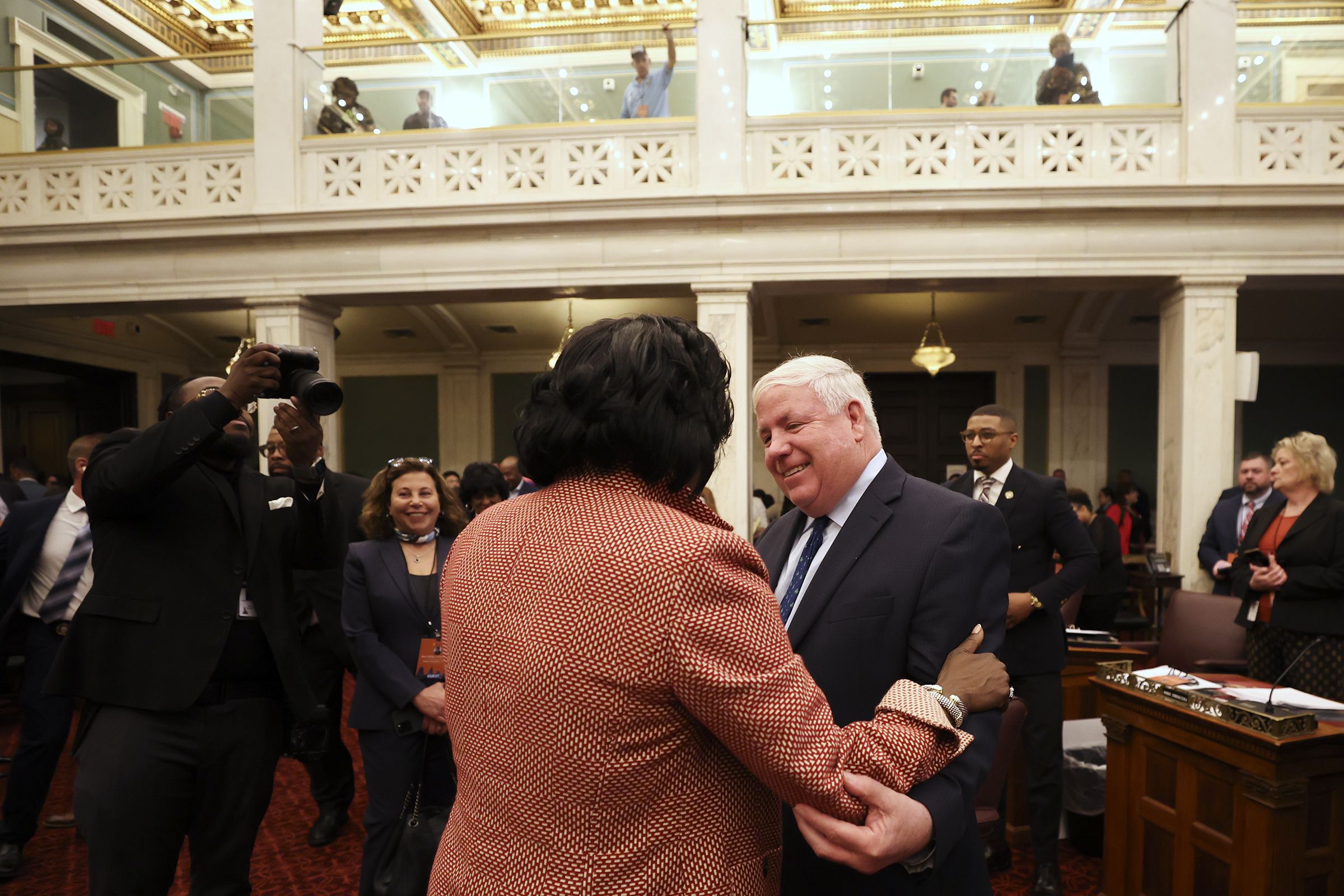
    Councilmember Mike Driscoll, who represents the 6th District and authored the legislation, greets Mayor Cherelle Parker after her first budget address in City Council in March 2024.

    It’s the second time Council appeared poised to pass a bill aimed at restricting mobile service providers, which are groups that operate out of vans or trucks and offer a range of assistance to people in need, including first aid, free food, and overdose reversal medication.

    Earlier this year, Council voted to pass restrictions on the providers operating in the nearby 7th District, which covers the western parts of Kensington.

    But that bill — which passed the full Council 13-3 and was signed by Mayor Cherelle L. Parker — was not a blanket ban.

    That legislation, authored by 7th District Councilmember Quetcy Lozada, requires providers obtain a license, and it limits organizations that provide medical services to specific areas designated by the city. Groups that offer nonmedical services like distributing food are prohibited from parking in one place for more than 45 minutes.

    The city is expected to begin enforcing that law on Dec. 1.

    Driscoll said he introduced his own legislation to ban the services from his district entirely because he was concerned that providers who faced restrictions in the 7th District would migrate into the neighborhoods he represents.

    The only committee member to vote against Driscoll’s legislation Monday was Nicolas O’Rourke, a member of the progressive Working Families Party who represents the city at-large and also opposed the 7th District legislation.

  • A year after Trump’s inroads with Latinos in Pennsylvania, a majority nationwide disapprove of his job performance and policies

    A year after Trump’s inroads with Latinos in Pennsylvania, a majority nationwide disapprove of his job performance and policies

    A majority of Latino adults disapprove of President Donald Trump’s job performance and his policies on immigration and the economy, according to a new Pew Research Center report that offers insight on the shifting opinions of a key voter demographic that Trump made inroads with in 2024.

    The study, published Monday, offers a glimpse into how a majority of Latino adults nationwide have a negative view of Trump’s performance and policies that were important to them during the 2024 election. However, a majority of Latinos who voted for Trump in 2024 remain supportive of the president.

    Pew Research Center based its analysis on two nationwide surveys conducted this fall. The center surveyed almost 5,000 Latino adults from Oct. 6 to Oct. 16 as part of its National Survey of Latinos. A prior survey of U.S. adults, including 629 Hispanic respondents, was conducted from Sept. 22 to 28.

    The report includes the opinions of Latino residents in the United States, including people both eligible and ineligible to vote. A strong majority of Latino voters who supported former Vice President Kamala Harris in 2024 are critical of Trump’s performance, according to the report.

    Among the highlights of the survey, 70% of Latino adults disapprove of Trump’s handling of the presidency, 65% disapprove of the Trump administration’s immigration policies, and 61% say the president’s economic initiatives “have made economic conditions worse,” according to the report.

    Additionally, approximately four in five Latinos say that Trump’s policies “harm Hispanics, a higher share than during his first term.”

    Latinos are among the fastest growing demographic groups in the United States and were a key voting bloc during the 2024 presidential election. Though Trump significantly improved his support among Latino voters in 2024, he did not win the demographic overall. In Pennsylvania, some Latino voters set aside his incendiary rhetoric about their community in favor of his promises to help the economy.

    (function() { var l = function() { new pym.Parent( ‘pew-latino__graphic’, ‘https://media.inquirer.com/storage/inquirer/ai2html/pew-latino/index.html’); }; if(typeof(pym) === ‘undefined’) { var h = document.getElementsByTagName(‘head’)[0], s = document.createElement(‘script’); s.type = ‘text/javascript’; s.src = ‘https://pym.nprapps.org/pym.v1.min.js’; s.onload = l; h.appendChild(s); } else { l(); } })();

    In Philadelphia, Trump won nearly 22% of the vote in majority Latino precincts, compared to more than 6% in 2016 and more than 15% in 2020.

    It remains to be seen how the pessimism with Trump reflected in the report will impact the 2026 midterms, said Luis Noé-Bustamante, a research associate at the Pew Research Center and an author of the report.

    But Latino voters swung back to Democrats during the elections earlier this month, including for Democratic Gov.-elect Mikie Sherrill, whose margins over Republican Jack Ciattarelli ranged from 57 to 71 percentage points in majority Latino municipalities, according to data from Nov. 5.

    Her campaign made efforts to reengage Black and Latino voters, including those who were turned off by Trump’s immigration and economic policies. Sherrill’s campaign was largely focused on affordability and combating Trump.

    “Similar to how the economy and affordability was a top issue among Latinos in the lead up to the 2024 election, it continues to be a priority among them and something in which they continue to have generally pessimistic views,” Noé-Bustamante said. “But that could change. Conditions on the ground could change and of course that could shift opinions of the president and his administration.”

    In the Pew Research Center survey, about two-thirds of Latinos say their situation in the United States is worse today than it was a year ago, the first time in nearly two decades of the Pew Research Center Hispanic surveys.

    Latinos have become increasingly concerned about their belonging in the United States, increasing from 48% in 2019 to 55% in 2025, according to the report. And when it comes to their personal finances, approximately one-in-three Latinos have struggled to pay for groceries, medical care, or their rent or mortgage in the last year. However, half believe their financial situation will improve over the next year and some have had beneficial financial experiences in the last year.

    On immigration, slightly more than half — 52% — of Latino adults say they worry constantly about the prospect that they, or someone they are close to, could be deported amid the Trump administration’s surge of immigration enforcement. About 71% say the administration is “doing too much” when it comes to deporting immigrants who have not legally entered the U.S, according to the report.

    U.S. Immigration and Customs Enforcement has aggressively targeted immigrants in the Philadelphia area, raiding communities and carrying out arrests, which members and allies of the Latino community continue to protest.

    Though a vast majority of Latinos have a critical perspective of Trump, Latinos who voted for Trump in 2024 have largely remained loyal to the president and his ideals, while Latino Republicans who did not vote for him have less favorable views of the president.

    As an example, Trump has an 81% job approval rating among Latinos who voted for him, though this has declined from 93% at the beginning of his term.

    Similarly, a smaller share of Latino Trump voters say their situation has worsened in the United States, that Trump’s policies are harmful to Hispanics, and that they’re worried about their belonging in the U.S.

    That loyalty to Trump has remained among some in places, like Hazleton, the only one of Pennsylvania’s three largest majority-Latino cities to vote for Trump in 2024. Hazleton residents told The Inquirer in August that there was some skepticism around Trump’s economic and immigration policies even as some continued to support him.

    Staff writer Julia Terruso contributed to this article.

  • Pentagon threatens to prosecute Senator Mark Kelly by recalling him to Navy service

    Pentagon threatens to prosecute Senator Mark Kelly by recalling him to Navy service

    WASHINGTON — The Pentagon on Monday threatened to recall Senator Mark Kelly, a retired Navy captain, to active duty status in order to prosecute him after saying it received “serious allegations of misconduct.”

    The statement did not say what charges Kelly could face if it took such a step. But President Donald Trump last week accused Kelly and other Democratic lawmakers of seditious behavior for urging U.S. troops to refuse any illegal orders. Trump, in a social media post, said the crime was “punishable by DEATH!”

    “All servicemembers are reminded that they have a legal obligation under the UCMJ (Uniform Code of Military Justice) to obey lawful orders and that orders are presumed to be lawful. A servicemember’s personal philosophy does not justify or excuse the disobedience of an otherwise lawful order,” the Pentagon said.

  • Trump is changing the way aid goes to cities. Philly stands to lose tens of millions of dollars for housing.

    Trump is changing the way aid goes to cities. Philly stands to lose tens of millions of dollars for housing.

    Philadelphia stands to lose tens of millions of dollars in federal funds intended to fight homelessness under a plan issued by the Trump administration that advocates say could significantly disrupt permanent housing programs and return formerly homeless people to the streets.

    The U.S. Department of Housing and Urban Development released the plan earlier this month, saying it would “restore accountability” and promote “self-sufficiency” in people by addressing the “root causes of homelessness, including illicit drugs and mental illness.”

    Nationwide, advocates say, the HUD plan could displace 170,000 people by cutting two-thirds of the aid designated for permanent housing.

    The number of individuals in Philadelphia at risk of losing stable housing hasn’t been tallied because the city’s Office of Homeless Services (OHS) is still reviewing the plan’s impact, said Cheryl Hill, the agency’s executive director.

    Overall, there are 2,330 units of permanent housing, many of them financed by $47 million the city received from HUD last year, according to city officials.

    The new strategy comes as Mayor Cherelle L. Parker attempts to move ahead with an ambitious plan to increase the supply of affordable housing in the city. Parker declined to comment on the Trump administration’s policy shift.

    A preliminary analysis by HopePHL, a local anti-homelessness nonprofit, estimates around 1,200 housing units with households of various sizes would lose federal aid and no longer be accessible to current residents, all of whom are eligible for the aid because they live with a physical or mental disability.

    HUD plans to funnel most of the funding for permanent housing into short-term housing programs with requirements for work and addiction treatment. The agency also said that it’s increasing overall homelessness funding throughout the United States, from $3.6 billion in 2024 to $3.9 billion.

    “This new plan is disastrous for homelessness in Philadelphia,” said Eric Tars, the senior policy director of the National Homelessness Law Center, who lives and works in Philadelphia. “The biggest immediate harm would be that those who were once homeless but are now successfully living in apartments will be forced out of their homes.”

    Other critics say the policy is based on a failed model that strips away civil liberties and doesn’t address what scholars and people who run anti-homelessness agencies say is the main reason Americans are homeless: the dearth of affordable housing.

    “We have broad concerns about what we’re seeing,” said Candice Player, vice president of Advocacy, Public Policy and Street Outreach for Project HOME, the leading anti-homelessness nonprofit in Philadelphia. “We are all in a very difficult position here.”

    Amal Bass, executive director of the Homeless Advocacy Project, which provides legal services to those experiencing homelessness, agreed, saying the city is “bracing for homelessness to increase in Philadelphia as a result of these policy choices.”

    The need to house thousands of people suddenly made homeless would force cities, counties, and states to spend money they may not have, according to a statement from the National Alliance to End Homelessness.

    Asked for comment, a HUD spokesperson sent a statement saying the agency seeks to reform “failed policies,” and refutes claims that the changes will result in increased homelessness.

    HUD hopes that current permanent housing shift to transitional housing will include “robust wraparound support services for mental health and addiction to promote self-sufficiency.”

    The agency added that it wants to encourage the “12,000 religious organizations in Pennsylvania to apply for funding to help those experiencing homelessness.”

    New restrictions on ‘gender ideology extremism’

    The federal government funds local governments to address homelessness through so-called Continuums of Care (CoC), local planning bodies that coordinate housing and other services. In Philadelphia, the CoC is staffed by the city’s Office of Homeless Services, and governed by an 18-member board, including homeless and housing service providers, and physical and behavioral health entities.

    In its plan, HUD will require the local planning bodies to compete for funding, and will attach ideological preconditions that could affect how much money a community like Philadelphia receives.

    For example, the new HUD plan “cracks down on DEI,” essentially penalizing a local board for following diversity, equity, and inclusion guidelines. HUD would also limit funding to organizations that support “gender ideology extremism“ — programs that “use a definition of sex other than as binary in humans.” And HUD will consider whether the local jurisdiction“prohibits public camping or loitering,” an anti-encampment mandate that advocates such as the Legal Defense Fund say criminalizes homelessness.

    Funding for programs that keep people in permanent housing could be cut off as early as January, according to HUD documents.

    Philly an early adopter of Housing First

    The new HUD policy dovetails with the views of President Donald Trump, who signed an executive order in July that sought to make it easier to confine unhoused people in mental institutions against their will.

    Trump has also said he wants municipalities to make urban camping illegal, helping to clear homeless encampments from streets and parks. He’s expressed a preference for moving people who are homeless from municipalities to “tent cities.”

    Planners in Utah are working toward creating such a facility known as an “accountability center” that would confine people who are experiencing homelessness and force them to be treated for drug addiction or behavioral health issues.

    HUD’s new direction is a repudiation of Housing First, which gives people permanent housing and offers services without making them stay in shelter and mandating treatment for drug abuse or behavioral health issues. Philadelphia was an early adopter and was the first U.S. city to use it specifically for people with opioid disorders, according to Project HOME, which was cofounded by Sister Mary Scullion, an early proponent of Housing First.

    Time and again it’s been proven that “offering, rather than requiring, services to help those who are homeless, has greater effect,” said Michele Mangan, director of Compliance and Evaluation at Bethesda Project, which provides shelter, housing, and case management services to individuals experiencing homelessness in Philadelphia.

    The administration’s move toward transitional housing and required treatment hasn’t worked before, according to Dennis Culhane, a social policy professor at the University of Pennsylvania who’s an expert in homelessness and assisted housing.

    The people most in need of help couldn’t comply with clean and sober requirements and were evicted, he said.

    “It’s a misguided approach that blames the victim and fails to address the lack of affordable housing,” Culhane said. On the other hand, Housing First has had an 85% success rate in helping to lead people out of homelessness, Culhane said.

    He added that he “distrusts the administration’s motivation. It just wants people out of sight and moved into fantastical facilities with tents and alleged care because they’re seen as a nuisance.”

    Ultimately, said Gwen Bailey, HopePHL’s vice president of programs, it’s not clear whether the Trump administration “thinks it’s doing the right thing. I don’t know their data.

    “But in Philadelphia right now, today, I see all kinds of people facing frightening situations.”

    Staff writer Sean Collins Walsh contributed to this article.

  • Trump renews call to jail Democrats, including two from Pa., after calling their video statement ‘punishable by death’

    Trump renews call to jail Democrats, including two from Pa., after calling their video statement ‘punishable by death’

    President Donald Trump doubled down on his call for six Democrats — including two members of Congress representing Pennsylvania — to be jailed over a video directed at U.S. troops.

    Writing on his Truth Social platform Saturday night, Trump once again claimed without evidence the six Democrats were traitors for telling troops to “refuse illegal orders.”

    “IT WAS SEDITION AT THE HIGHEST LEVEL, AND SEDITION IS A MAJOR CRIME,” Trump wrote in all caps. Trump had previously described their actions as being “punishable by DEATH” and shared one post from a supporter who wrote “HANG THEM GEORGE WASHINGTON WOULD !!”

    “To suggest and encourage that active duty service members defy the chain of command is a very dangerous thing for sitting members of Congress to do,” White House press secretary Karoline Leavitt said Thursday. “And they should be held accountable. And that’s what the president wants to see.”

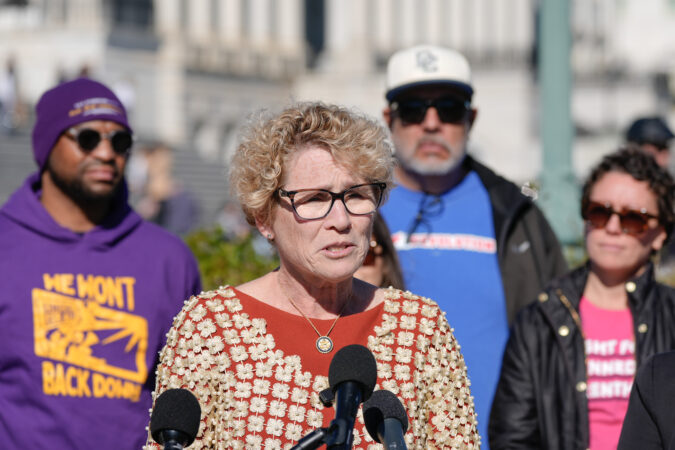
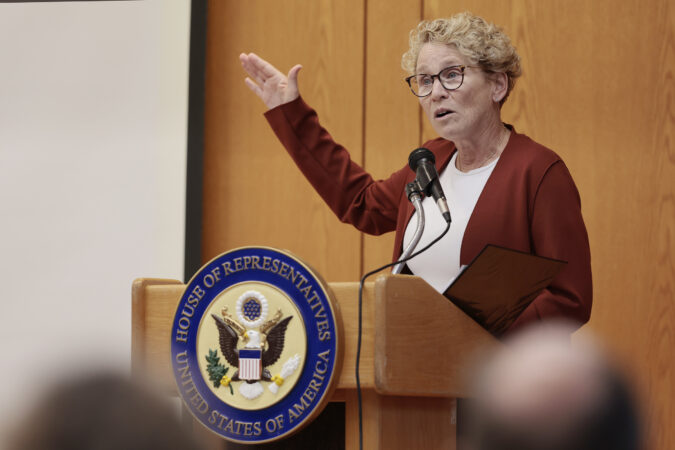
    U.S. Rep. Chrissy Houlahan, who represents Chester County, was among the six Democrats — all military veterans or members of the intelligence community — featured in a video urging service members to uphold their oath to the U.S. Constitution.

    “This administration is pitting our uniformed military and intelligence community professionals against American citizens,” the Democrats said in the video.

    A spokesperson for Houlahan did not immediately respond to a request for comment Sunday.

    After Trump’s initial call for the Democrats to be jailed and face the death penalty, the district offices of Houlahan and U.S. Rep. Chris Deluzio in Western Pennsylvania were targeted with bomb threats Friday, according to spokespersons for the elected officials.

    “Thankfully, the staff there as well as the office in Washington, D.C. are safe. We are grateful for our local law enforcement agencies who reacted quickly and are investigating,” a spokesperson for Houlahan wrote on social media.

    The video also features Sens. Elissa Slotkin of Michigan and Mark Kelly of Arizona, along with Reps. Jason Crow of Colorado and Maggie Goodlander of New Hampshire.

    “Leadership climate is set from the top, and if the president is saying you should be hanged, then we shouldn’t be surprised when folks on the ground are going to follow suit and say even worse,” Slotkin said on MS NOW Thursday.

    During an appearance on CNN Friday, Houlahan said she’s used to facing threats as an elected official, but the four-term member of Congress said this situation is unique.

    “I’m just continually stunned by the fact that I’m worried about [my safety] because the commander in chief, the president of the United States, has called for my death,” Houlahan said Friday morning. “That’s something that should just be chilling for everybody.”

  • Rep. Marjorie Taylor Greene of Georgia, former Trump loyalist, says she is resigning from Congress

    Rep. Marjorie Taylor Greene of Georgia, former Trump loyalist, says she is resigning from Congress

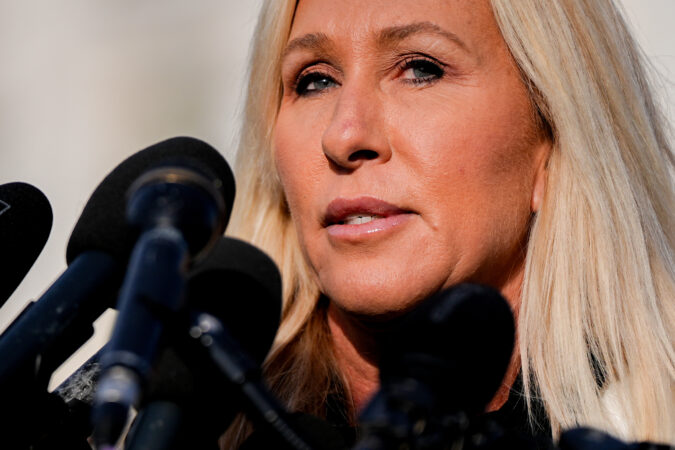
    WASHINGTON — Rep. Marjorie Taylor Greene of Georgia, a loyal supporter-turned-critic of President Donald Trump who faced his political retribution if she sought reelection, said Friday she is resigning from Congress in January.

    Greene, in a more than 10-minute video posted online, explained her decision and said she didn’t want her congressional district “to have to endure a hurtful and hateful primary against me by the president we all fought for,” she said.

    Greene’s resignation followed a public fallout with Trump in recent months, as the congresswoman criticized him for his stance on files related to Jeffrey Epstein, along with foreign policy and health care.

    Trump branded her a “traitor” and “wacky” and said he would endorse a challenger against her when she ran for reelection next year.

    She said her last day would be Jan. 5, 2026.

    The White House did not immediately respond to a message seeking comment Friday night.

    Greene was one of the most vocal and visible supporters of Trump’s Make America Great Again politics, and she embraced some of his unapologetic political style.

    Her break with him was a notable fissure in his grip over conservatives, particularly his most ardent base. But her decision to step down in the face of his opposition put her on the same track as many of the more moderate establishment Republicans before her who went crosswise with Trump.

    The congresswoman, who recorded the video announcing her resignation while sitting in her living room wearing a cross necklace and with a Christmas tree and a peace lily plant behind her, said, “My life is filled with happiness, and my true convictions remain unchanged, because my self-worth is not defined by a man, but instead by God.”

    A crack in the MAGA movement

    Greene had been closely tied to the Republican president since she launched her political career five years ago.

    In her video Friday, she underscored her longtime loyalty to Trump except on a few issues, and said it was “unfair and wrong” that he attacked her for disagreeing.

    “Loyalty should be a two-way street and we should be able to vote our conscience and represent our district’s interest, because our job title is literally ‘representative,’” she said.

    Greene swept to office at the forefront of Trump’s MAGA movement and quickly became a lightning rod on Capitol Hill for her often beyond-mainstream views. In her video Friday, Greene said she had “always been despised in Washington, D.C., and just never fit in.”

    As she embraced the QAnon conspiracy theory and appeared with white supremacists, Greene was initially opposed by party leaders but welcomed by Trump. He called her “a real WINNER!”

    Yet over time she proved a deft legislator, having aligned herself with then-GOP leader Kevin McCarthy, who would go on to become House speaker. She was a trusted voice on the right flank, until McCarthy was ousted in 2023.

    While there has been an onslaught of lawmakers from both parties heading for the exits ahead of next fall’s midterm elections, as the House struggles through an often chaotic session, Greene’s announced retirement will ripple throughout the ranks — and raise questions about her next moves.

    Greene was first elected to the House in 2020. She initially planned to run in a competitive district in northern Atlanta’s suburbs, but relocated to the much more conservative 14th District in Georgia’s northwest corner.

    The opening in her district means Republican Gov. Brian Kemp will have to set a special election date within 10 days of Greene’s resignation. Such a special election would fill out the remainder of Greene’s term through January 2027. Those elections could take place before the party primaries in May for the next two-year term.

    Conspiracy-minded

    Even before her election, Greene showed a penchant for harsh rhetoric and conspiracy theories, suggesting a 2017 mass shooting in Las Vegas was a coordinated attack to spur support for new gun restrictions. In 2018, she endorsed the idea that the U.S. government perpetrated the attacks on Sept. 11, 2001, and mused that a “so-called” plane had hit the Pentagon.

    Greene argued in 2019 that Reps. Ilhan Omar, D-Minn., and Rashida Tlaib, D-Mich., both Muslim women, weren’t “official” members of Congress because they used Qurans rather than Bibles in their swearing-in ceremonies.

    She was once a sympathizer with QAnon, an online network that believes a global cabal of Satan-worshipping cannibals, including U.S. government leaders, operates a child sex trafficking ring. She eventually distanced herself, saying she got “sucked into some of the things I had seen on the internet.”

    During the pandemic, she drew backlash and apologized for comparing the wearing of safety masks to the horrors of the Holocaust.

    She also drew ridicule and condemnation after a conspiracy she speculated about on Facebook in 2018, in which she suggested a California wildfire may have been caused by “lasers or blue beams of light” controlled by a left-wing cabal tied to a prominent Jewish family.

    When Trump was out of power between his first and second terms, Greene was often a surrogate for his views and brash style in Washington.

    While then-President Joe Biden delivered his State of the Union address in 2022, Greene stood up and began chanting “Build the wall,” referring to the U.S.-Mexico border wall that Trump began in his first term.

    Last year, when Biden gave his last State of the Union address, Greene again drew attention as she confronted him over border security and the killing of a nursing student from Georgia, Laken Riley, by an immigrant in the country illegally.

    Greene, wearing a red MAGA hat and a T-shirt about Riley, handed the president a button that said “Say Her Name.” The congresswoman then shouted that at the president midway through his speech.

    Frustration with the GOP

    But this year, her first serving with Trump in the White House, cracks began to appear slowly in her steadfast support — before it broke wide open.

    Greene’s discontent dates back at least to May, when she announced she wouldn’t run for the Senate against Democratic incumbent Jon Ossoff, while attacking GOP donors and consultants who feared she couldn’t win.

    Greene’s restlessness only intensified in July, when she announced she wouldn’t run for Georgia governor, either.

    She was also frustrated with the Republican leadership on Capitol Hill, which worked in lockstep with the president.

    Greene said in her video that “the legislature has been mostly sidelined” since Republicans took unified control of Washington in January and her bills “just sit collecting dust.”

    “That’s how it is for most members of Congress’ bills,” she said. “The speaker never brings them to the floor for a vote.”

    Messages left with House Speaker Mike Johnson’s office were not immediately returned.

    Republicans will likely lose the midterms elections next year, Greene said, and then she’d “be expected to defend the president against impeachment after he hatefully dumped tens of millions of dollars against me and tried to destroy me.”

    “It’s all so absurd and completely unserious,” she said. “I refuse to be a battered wife hoping it all goes away and gets better.”

  • Chrissy Houlahan and another Pa. Democrat report bomb threats at their district offices

    Chrissy Houlahan and another Pa. Democrat report bomb threats at their district offices

    Spokespersons for U.S. Rep. Chrissy Houlahan, a Chester County Democrat, and Rep. Chris Deluzio, a Western Pennsylvania Democrat, reported that the legislators’ district offices had been targeted with bomb threats on Friday.

    The threats came a day after President Donald Trump accused Houlahan, Deluzio, and four other Democratic lawmakers of sedition “punishable by DEATH” after they were featured in a video urging members of the military and intelligence community to “refuse illegal orders.”

    All six are military veterans or members of the intelligence community.

    Early Friday evening, a spokesperson for Houlahan posted on the representative’s X account that her district office in West Chester was the target of a bomb threat.

    “Thankfully, the staff there as well as the office in Washington, D.C. are safe. We are grateful for our local law enforcement agencies who reacted quickly and are investigating,” the post said.

    A spokesperson for Deluzio posted on X late Friday afternoon that the representative’s district offices were targeted with bomb threats.

    In response to the video, Trump went after the six congressional Democrats in a string of posts on Truth Social Thursday.

    Houlahan lamented at a Friday news conference in Washington that “not a single” Republican in Congress “has reached out to me, either publicly or privately” since Trump’s posts.