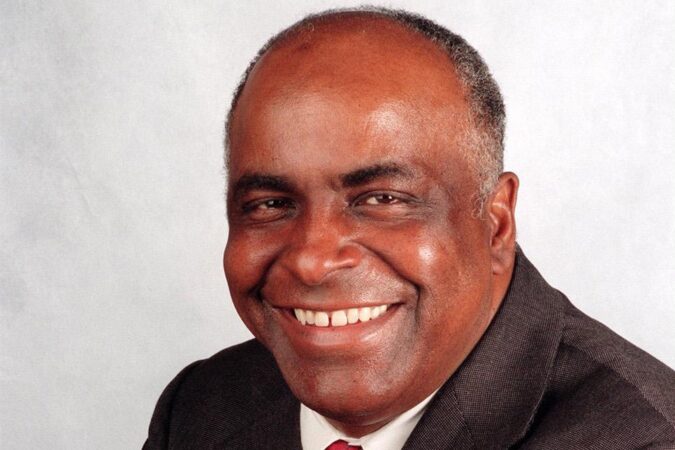
Richard H. Glanton, 79, formerly of Philadelphia, longtime lawyer, onetime executive deputy counsel to former Gov. Dick Thornburgh, business entrepreneur, former Lincoln University trustee, and innovative former president of the Barnes Foundation, died Sunday, June 21, of a heart attack at his home in Princeton.
Born and reared in rural Georgia and one of the first Black graduates of what is now the University of West Georgia, Mr. Glanton went on to become a prominent Philadelphia lawyer, state government policy and administration expert, corporate vice president, and indefatigable president of the Barnes Foundation’s collection of Impressionist, post-Impressionist, and modern art.
He was elected president of the Barnes Foundation in 1990, served until 1998, and championed a series of controversial initiatives to finance extensive gallery renovations and the operation of its art collection and related educational programs. To raise the money, he suggested, among other things, selling 15 of the collection’s hundreds of paintings, charging million-dollar fees for a worldwide lending tour of 83 paintings, extending visiting hours, increasing admission, building a new parking lot, selling a coffee-table catalog, and renting out its art studios.
All of his ideas, several of which did not take place, drew supporters and critics, and Mr. Glanton, also a Barnes trustee, spoke often of his policy discussions with other Barnes officials, art experts around the world, politicians, and neighbors of the foundation building in Lower Merion Township. In 1990, he told The Inquirer. “I never purported to know anything about art. But I can lead.”
His most successful project turned out to be a two-year world lending tour of 83 foundation paintings that raised about $20 million and drew raves from museum leaders in Washington, Paris, Tokyo, Fort Worth, Toronto, and Philadelphia. The exhibition in Paris drew a then-record 1.5 million visitors, and Mr. Glanton was feted at every stop.
“Richard is somebody who started out by wanting to do something good and important and substantial, and persevered to do it despite a great deal of criticism,” Glenn D. Lowry, then director of the Art Gallery of Ontario, told The Inquirer in 1995.
Some critics said Mr. Glanton and others valued the foundation’s commercial success over its original educational role and what The Inquirer’s Edward J. Sozanski called “the Barnes mystique.” When the lending tour ended at the Philadelphia Art Museum in 1995, Mr. Glanton told The Inquirer: “I never realized or understood that it could be controversial to make available to the public a collection that is a public trust.
“But I think if you think something’s right, you should do it, whether or not people disagree, and whether it is popular or not. … You have to think not only in terms of your lifetime, but in 100 years, 1,000 years. And when you do, these little slings and arrows don’t really matter that much.”
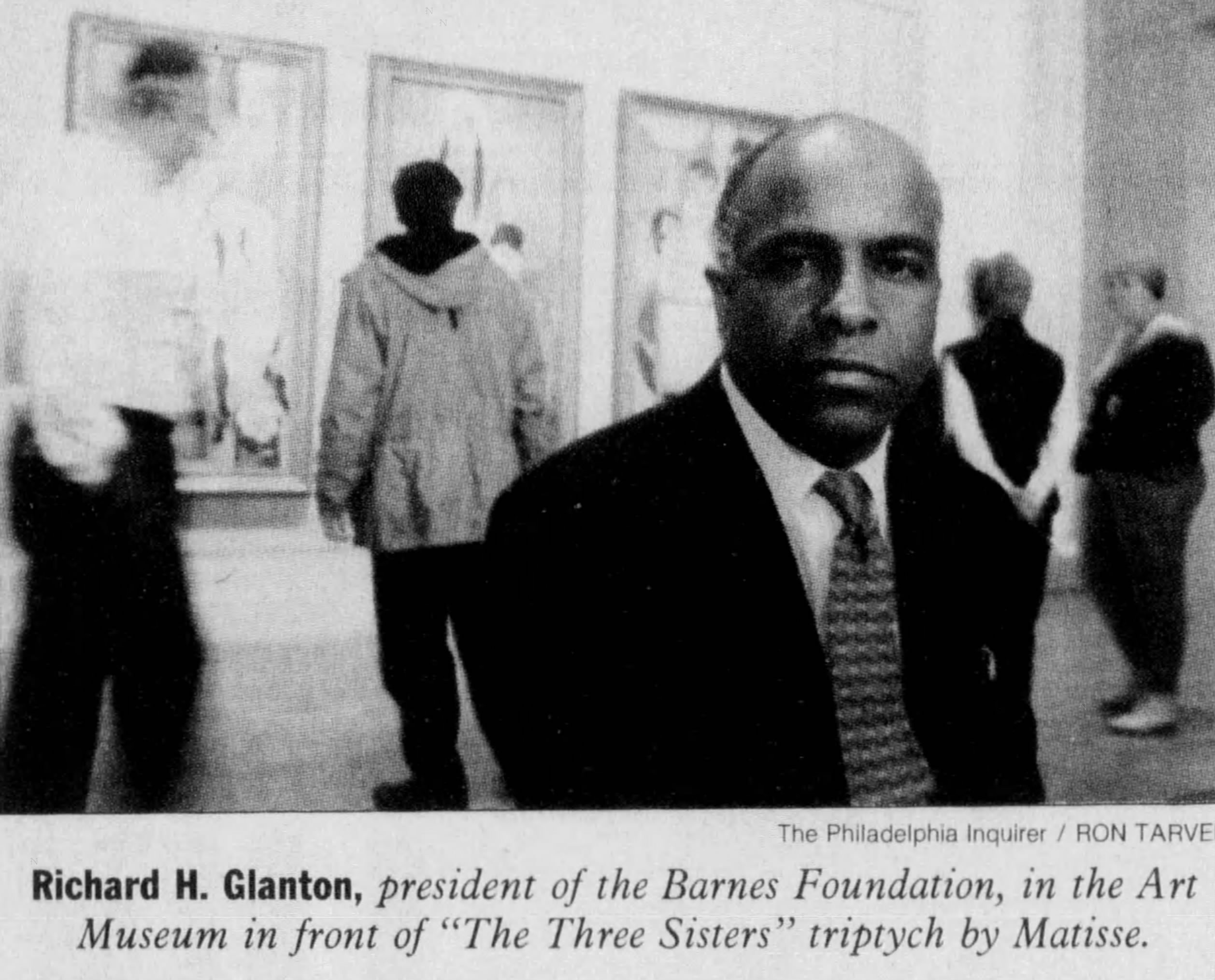
A story and this photo of Mr. Glanton appeared in The Inquirer in 1995.
Mr. Glanton was executive deputy counsel to Gov. Thornburgh from 1979 to 1983, and he met often with constituents and helped fill judicial vacancies. “Richard is a political animal,” Ted Pillsbury, then director of the Kimbell Art Museum in Fort Worth, told The Inquirer in 1995. “He understands politics. He understands what makes politics work, and he understands people. And he does not take certain things personally.”
Mr. Glanton earned his law degree at the University of Virginia School of Law in 1972 and spent several years with the Equal Employment Opportunity Commission, United Airlines, and other companies. In Philadelphia, he represented politicians and other notable clients, and specialized in energy, insurance, and real estate cases for firms known now as WolfBlock, and Reed Smith.
He was also senior vice president of corporate development at Exelon Corp., founder of a local TV station, social media company, and consulting firm, and board member at Aqua America, the Morris Arboretum, Children’s Hospital of Philadelphia, and other groups. He ended a workplace sexual harassment suit with a private settlement in the early 1990s and had public policy spats with local government officials and former Lincoln president Niara Sudarkasa.
He considered running for mayor in 1995. Former Gov. Ed Rendell said: “He was exceptionally bright, courageous, and never afraid to challenge the status quo in pursuit of what he believed was right.”
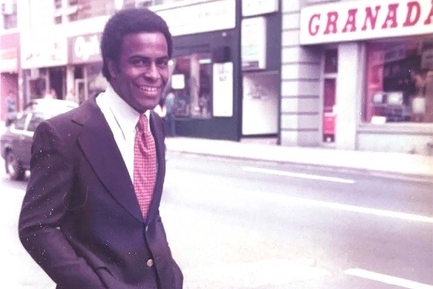
Mr. Glanton was at home in a suit jacket and tie.
One of 11 children, Richard Howard Glanton was born Nov. 21, 1946. He was reared in rural Villa Rica, Ga., didn’t start school until the fourth grade, and he and his siblings worked for years on the family farm.
He earned a bachelor’s degree in English and, in 2005, was awarded an honorary doctorate from West Georgia. He married Scheryl Williams, and they had a daughter, Morgan, and a son, David.
After a divorce, he married Eileen Candia, and they had a daughter, Georgia. They lived in Philadelphia and Chicago, and moved to Princeton in 2009.
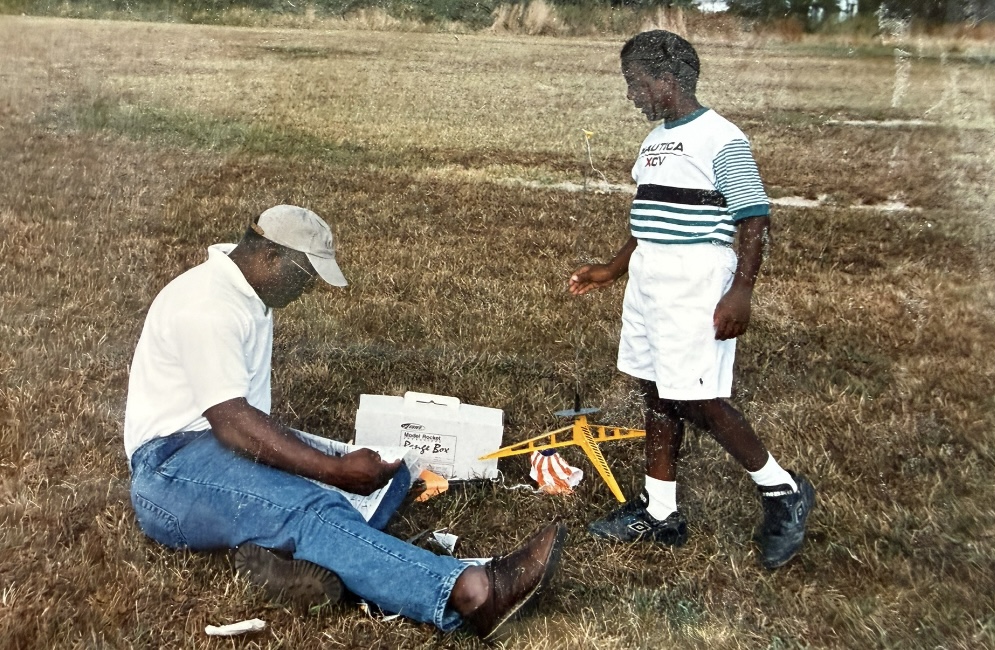
Mr. Glanton was a doting father, his family said. He taught his children to ride bikes and read Shakespeare. “He taught me that there was no room in which I didn’t belong or couldn’t strive to enter,” his daughter Morgan said. “I love him for that.”
Mr. Glanton was an avid reader and golfer.
Nearly everyone he met remembered his laugh and perpetual suit jacket and tie. He played golf, was an avid reader, and would talk politics for hours.
“He was fearless in his conviction to do what he believed was necessary and proper to achieve his goals and provide for his family,” his son said. His wife said: “He was kind and generous. He made everyone he spoke to feel special. He was always bringing you in.”
In addition to his wife, children, and former wife, Mr. Glanton is survived by two sisters, four brothers, and other relatives. One sister and four brothers died earlier.
Memorial services are to be held at noon Saturday, July 18, at Pleasant Hill United Methodist Church, 119 Thomas Dorsey Dr., Villa Rica, Ga. 30180, and at 11 a.m. Friday, Sept. 18, at the Union League, 140 S. Broad St., Philadelphia, Pa. 19102.
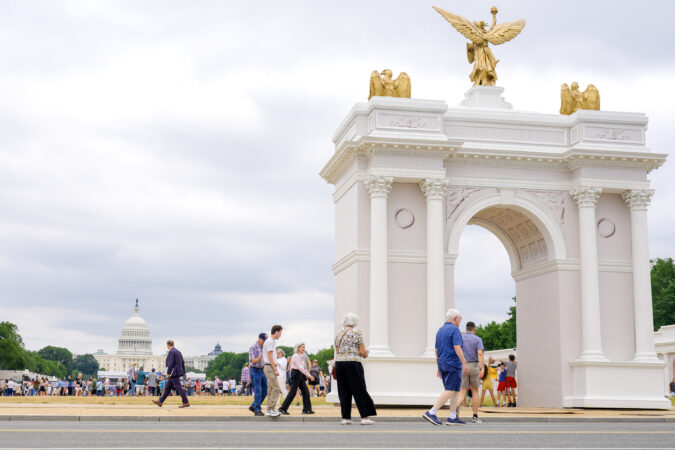
WASHINGTON — President Donald Trump’s plans to build a skyline-altering arch in the nation’s capital is getting another review from the federal commission whose approval he needs, but the agency’s staff says the project should be revised before it gets the go-ahead.
The National Capital Planning Commission is meeting Thursday to give further consideration to the Republican president’s proposed 250-foot arch.
In a report, the agency’s staff recommends that the commission approve the preliminary site and building plans for the arch. But the staff also recommends that the design be tweaked to comply with a federal law that limits building heights in downtown Washington to preserve the city’s famous skyline. The planning commission applies the law during its approval process.
“Staff suggests the Commission request the applicant revise the project design to comply with the Height of Buildings Act and return to NCPC for final approval,” the 185-page report says.
Applying the law “would require design revisions to redistribute the height between the main structure, habitable roof structure and statuary,” the report said. But even with the recommended revisions, the arch, a public observation deck and three gilded topper statues would still reach Trump’s desired 250-foot height, the report said.
The staff is also recommending that commissioners seek additional information about vehicular traffic around the arch, the proposed granite exterior and other aspects of the project before the Interior Department, which oversees the park service, returns for final approval. Trump wants to build the arch on a traffic circle on the Virginia side of the Memorial Bridge from the District of Columbia.
Commissioners heard a summary of the staff report and its recommendations and were hearing from about 40 people who signed up to testify about the project. Many cited the proposed location near the hallowed burial ground of Arlington National Cemetery in their opposition.
The U.S. Commission of Fine Arts, a separate federal agency, approved the design for the arch in May. The National Capital Planning Commission oversees construction on federal land in the city and began reviewing the arch plan in June.
Opponents of the project argue that the arch is too big for the skyline and would disrupt carefully designed views between the Lincoln Memorial and Arlington National Cemetery that were meant to symbolize the reunification of the North and the South after the Civil War.
But the opposition has done little to influence the members of either commission, both of which include some of Trump’s closest allies. Trump appointed Will Scharf, a top White House aide, to lead the planning commission.
A group of veterans and a historian have sued the Trump administration in federal court to block the arch construction over concerns about disruptions to the sightline.
The arch would be more than twice as tall as the Lincoln Memorial, which is 99 feet tall, and close to half the height of the Washington Monument, at about 555 feet tall.
Trump had said last year that the arch could be paid for with unused funds from the hundreds of millions of dollars he said he has raised from corporations, donors and other wealthy people to pay to build a new $400 million ballroom at the White House.
But, as it turns out, some public money will be used for the ballroom project, as well as the arch. The White House has not released a cost estimate for the arch.
The union that represents more than 2,000 Philadelphia firefighters and paramedics says its members will, for the first time in two decades, receive a wage increase lower than police officers did — a contract provision they see as the end of years of pay parity among the city’s first responders.
Mayor Cherelle L. Parker’s administration announced Wednesday that a panel of arbitrators had issued a two-year contract award for Local 22 of the International Association of Fire Fighters after its members had gone more than a year without a contract.
Local 22 was the last of the city’s four major municipal unions to reach a multiyear agreement with the Parker administration. The other unions agreed to their contracts last year.
Parker said in a statement that the contract award recognizes the contributions of the city’s firefighters and emergency medical personnel “while supporting the city’s efforts to remain fiscally responsible.”
The contract award was issued by a three-member arbitration panel, a process governed by state law because emergency workers do not have the right to strike. The deal includes 3% raises annually for the next two years, plus a 1% wage increase in recognition of mandatory physical evaluations that members must receive biannually.
Those raises total a 7% pay increase over two years for union firefighters, paramedics, and emergency medical personnel. In the city’s contract with police inked about a year ago, members of the Fraternal Order of Police Lodge 5 received a 9% wage increase in total over the same time period, plus a $3,000 signing bonus.
Local 22 president Mike Bresnan said Parker’s administration did not adequately advocate for pay parity between police and firefighters. He said he is lobbying members of City Council to consider legislation that would require Council approval for the mayor to appeal firefighters’ contracts in the future.
“Mayor Parker likes to run around putting her one index finger up as ‘we’re all one,’” Bresnan said. “Well, she just put her middle finger up to every firefighter and paramedic in the city.”
He added: “If there’s somebody out there that’s thinking about running for mayor, we’d like to have a conversation with them.”
The firefighters union has historically played a relatively minimal role in city elections compared with more politically active labor groups like those that represent construction workers. The union did not back a candidate in the 2023 mayor’s race, which Parker won.
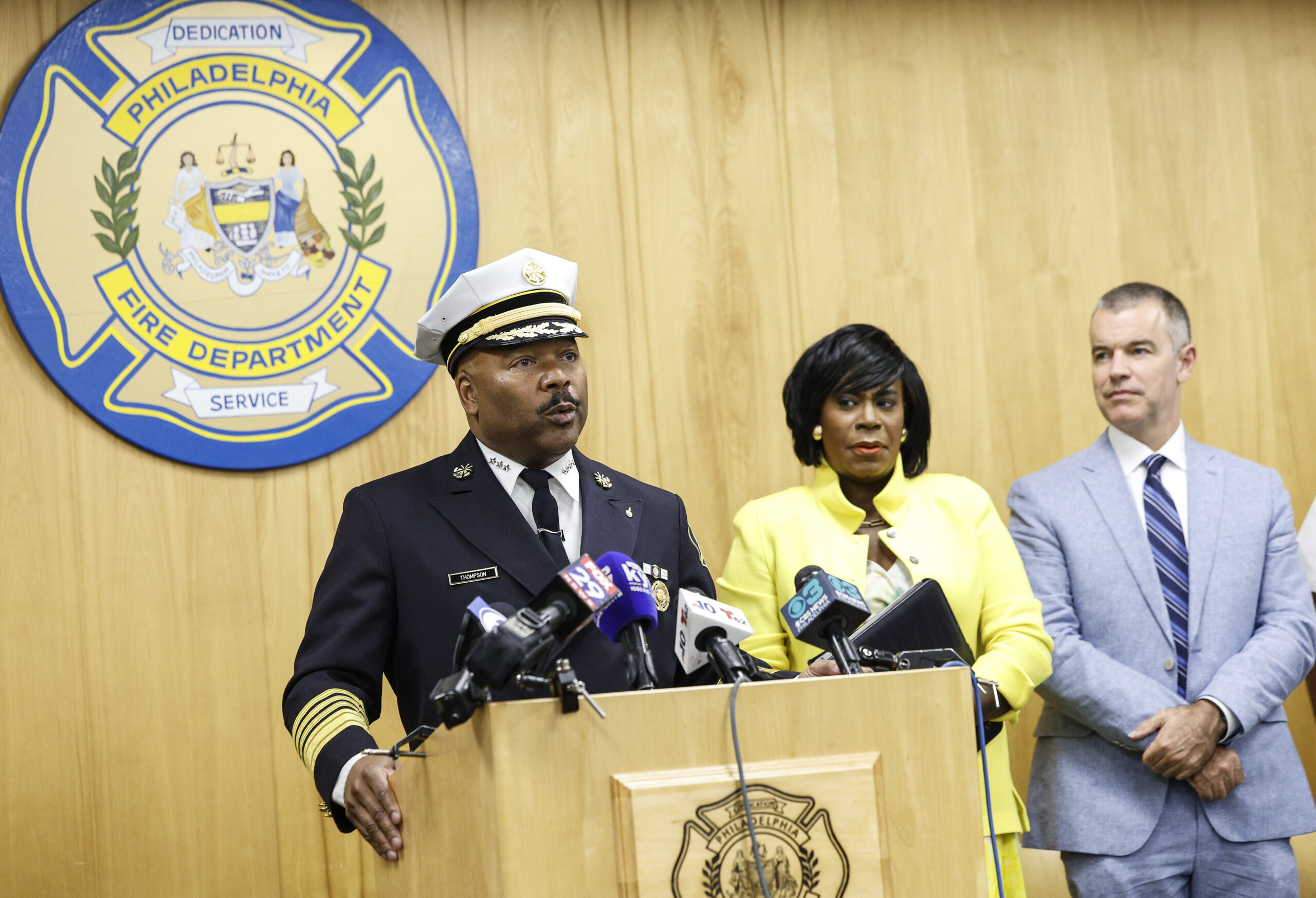
In this 2024 file photo, Fire Commissioner Jeffrey W. Thompson stands, at left, with Mayor Cherelle L. Parker with Managing Director Adam Thiel at the fire administration building in Spring Garden.
The FOP contract, similar to the firefighters’, included 3% annual raises. The difference was that police received an additional 1.5% annual wage increase because their union agreed to a process called “civilianization,” meaning some roles held by uniformed officers would be transitioned to ones held by civilians.
The raise, according to the contract, was in recognition of the “operational flexibility” that the civilianization process would achieve. It did not identify the number of positions that would be civilianized or if the effort would save the city money.
The arbitration panel that drafted the firefighters’ contract is made up of one appointee each from the city and the union, plus a neutral arbitrator. The panel wrote that while there has, in general, been pay parity in raises for police and firefighters, that “has never meant identical awards.”
In this case, the panel reasoned, the civilianization-related raise was unique to the police department and the city did not need to match it for the firefighters.
In this 2022 file photo, Philadelphia firefighters examine the remains of a collapsed building along the 300 block of West Indiana Street in the Fairhill section of Philadelphia as Philadelphia police officers look on.
Marc Gelman, the union’s appointed arbitrator, issued a scathing dissent, writing that the contract award was ultimately a “rubber-stamp to the city’s desired economic wishlist” and provided firefighters with “a dramatically lower wage increase than the police.”
He argued that the city could afford a higher wage increase for firefighters because it is operating from a place of fiscal strength, citing its substantial surplus in this year’s budget.
However, the city will have to tap into reserves or make adjustments to its existing five-year budget plan to cover the firefighters’ contract. That is because the administration already exhausted its $550 million labor reserve to cover contracts with the city’s other major municipal unions.
The Parker administration did not estimate how much money the firefighters’ contract award will cost.
Gelman wrote that the labor reserve was exhausted through the city’s “mismanagement and inability to plan.”
“The city now cries poor,” he wrote, “and expects the members of Local 22 to suffer for its ineptitude.”
Bresnan said pay parity is critical because the police and firefighters unions are unique in that “members can leave for work in the morning and not come home at night to their family.”
“We’re out there shoulder-to-shoulder on these emergencies in the city,” he said. “Every mayor prior recognized this and kept the peace. Now they’ve created a fracture between the first responders in the city.”
In a rare move, Pennsylvania’s two senators have created a joint fundraising committeethat would allow them to split money from donors who want to give to both of their campaigns, despite being members of different parities.
As polls have shown him losing support among Democratic voters, he has also reported raising significantly fewer campaign funds on his own and has not said if he will run for a second term in 2028.
Common Ground PA, which filedpaperwork with the Federal Election CommissionMonday, lists four beneficiaries for the joint fund: Fetterman for PA; Friends of Dave McCormick; Every Vote PAC, which lists Fetterman as the PAC sponsor; and Pennsylvania Honor, which lists McCormick as the leadership PAC sponsor.
A joint fundraising committee, first enabled by the FEC in 1977, allows two or more candidates, PACs, or party committees to coordinate fundraising efforts to share donations and expenses.
A donor can abide by federal contribution limits while still giving one check that can be allocated to multiple campaigns. But since these groups typically involve party committees, it’s rare for these joint ventures to be bipartisan.
Mike DeVanney, a spokesperson for McCormick’s campaign, called the PAC a donor-driven effort.
“This group of donors value the collaboration exhibited by Senators McCormick and Fetterman for Pennsylvania and want to support both of them,” he said in a statement.
The joint fundraising committee was first reported by Politico.
The two senators have spoken often about their cross-aisle friendship since McCormick took office in 2025, and they have repeatedly teamed up in recent months.
They appeared alongside each other last week in Philadelphia to promote Trump Accounts, the new federally backed savings accounts for kids that became law with President Donald Trump’s signature One Big Beautiful Bill Act.
Fetterman has routinely criticized his own party, feuding with progressives on a range of issues, including Israel and immigration enforcement.
In a fundraising email sent in May, McCormick referred to Fetterman as one of his “closest working partners,” a realization that he said surprised even him.
In that drive, which asked donors to support his efforts to “work across the aisle to get results for the people of Pennsylvania,” McCormick praised his Democratic colleague.
“Senator John Fetterman and I couldn’t look more different. We don’t agree on everything. But we both grew up in Pennsylvania. We both know what it means to fight for working families who feel like Washington forgot them. And we both refuse to let politics get in the way of getting things done,” he wrote.
McCormick told reporters in May his friendship with Fetterman is the most frequent topic of conversation he hears, and he gets positive feedback from it.
“We look for ways to work together. I think people want that,” he said.
Individuals could donate to Fetterman or McCormick separately. But joint fundraising committees, which are used widely by both parties, pull in large checks from donors and split the money across multiple committees using a formula that adheres to federal contribution limits, according to an analysis from the watchdog group OpenSecrets.
Typically, though, campaigns joint fundraise with their party.
Common Ground PA is among the few coordinated efforts across the aisle. A former PAC, the Problem Solvers Patriots, fundraised for members of both parties in previous election cycles.
Former U.S. Rep. Conor Lamb, who lost the Senate primary to Fetterman in 2022 and has not ruled out a run in 2028, blasted the move online as “Another betrayal from Fetterman.”
U.S. Rep. Chris Deluzio, a Western Pennsylvania who has received “a lot of encouragement” to run for Fetterman’s seat, also questioned the creation of the PAC.
“Helping the Republicans raise money to spend against Democrats is bad, right?” Deluzio said on X.
However, Fetterman has been notching strong approval from Republicans, and Pennsylvania Republicans along with Trump himself said he could receive GOP support if he switched parties.
Fetterman’s Republican support has also been growing at the bank with contributions from prominent GOP donors, particularly through his other joint fundraising committee and leadership PAC. At the same time, his fundraising has plummeted overall, raising less than half his previous annual totals in 2025.
Staff writers Gillian McGoldrick and Sam Janesch contributed to this story.
Secretary of State Marco Rubio has invited senior ministers from more than 60 countries to a meeting next week about what the Trump administration views as a major peril: the “resurgence of transnational far-left terrorism,” according to documents reviewed by The Washington Post.
The meeting has prompted consternation among career and political U.S. officials, some European allies, and independent analysts who do not see the threat in the same terms. Some U.S. officials told The Post that they worry it is part of a Trump administration effort to use powerful counterterrorism tools to crack down on U.S. activists they view as left-wing extremists.
The administration’s counterterrorism czar, Sebastian Gorka, has had discussions with colleagues about using foreign terrorism labels for antifa to justify going after Americans with links to the movement, a loosely knit association of far-left activists who militantly oppose fascism and right-wing ideologies, three current and former U.S. officials said.
A linkage to foreign terrorist groups “can unlock certain investigative tools,” such as surveillance, said one U.S. counterterrorism official, who like several other officials interviewed for this article spoke on the condition of anonymity to describe internal discussions and to avoid retribution.
Gorka did not respond to a request for comment.
State Department spokesman Tommy Pigott said the event was organized because far-left terrorism is “an old threat re-emerging with strong transnational links and new convergences.”
“Because this threat has not been adequately addressed in the past, each engagement, designation, or security assistance program creates a compounding effect supporting countermeasures at home and abroad,” Pigott said in a statement.
Some Trump administration officials fear that a future Democratic administration could use the tactic against conservative activists, one administration official said.
“The idea is you’re setting a precedent for a future Gavin Newsom administration to turn these authorities on conservatives,” the official said, referring to the California governor who is widely expected to make a 2028 White House run.
The use of these tactics has raised concerns among career and political officials inside the Justice Department and the White House Counsel’s Office, the administration official said, adding that some U.S. officials have decided not to attend the July 16 event at the State Department.
Asked for comment, a White House official said that the characterization of such concerns does “not represent the prevailing feeling in the White House” and accused Democrats of having weaponized national security tools against their conservative political opponents.
The White House official pointed to a passage in the Trump administration’s counterterrorism strategy‚ released in May, which states: “We will not permit the weaponization of America’s unparalleled CT capabilities for partisan purposes.”
That document also states that “our counterterrorism powers will not be used to target our fellow Americans who simply disagree with us.”
Like Gorka, White House Deputy Chief of Staff Stephen Miller is among those who have shown enthusiasm for taking a hard-line approach to left-wing extremists in the United States. During a White House roundtable last fall, he expressed support for designating antifa a foreign terrorist organization.
“It’s true,” Miller said when the president asked for his opinion, “there are extensive foreign ties. I think that would be a very valid step to take.”
But achieving that status for antifa would be a stretch, experts say.
U.S. law requires a group be foreign to be designated. “If it has any significant domestic presence, it cannot be designated,” said Jason Blazakis, who ran the State Department’s designation process for 10 years before leaving in 2018.
Elsewhere in the government, discomfort with the administration’s direction is such that at meetings of national security officials from various agencies, some intelligence analysts have declined to brief on antifa because they do not regard antifa as a serious counterterrorism threat, according to one person familiar with the matter.
Officials from some foreign governments, speaking on the condition of anonymity to avoid being seen as criticizing the administration, expressed dismay about the Rubio invitation, citing what they call its vague aims and the short notice. The invitation, a copy of which was shown to The Post, was issued last week with RSVPs due this Friday, they said. Several told The Post that their country’s foreign minister or interior minister was unlikely to attend, citing the busy diplomatic schedule over summer, which includes an annual security conference next week in Aspen, Colo.
Some said, too, they were unsure why they had been invited. “We don’t have antifa,” said one European diplomat.
“I don’t think we can find any reason why we would be interested in attending such an event,” said another.
“Our law enforcement authorities have not focused on left-wing terrorism because this is not considered a high priority threat in our country,” said a third.
The invitation list, reviewed by The Post, included most European nations, larger Latin American countries and several Asian states, including India, Indonesia, and Singapore. The State Department did not respond to a request seeking to understand how the list of invitees was drawn up.
President Donald Trump has made no secret of his disdain for antifa, going so far as to issue an executive order in the fall branding it a “domestic terrorist organization,” a rhetorical label that experts say carries no legal weight.
Trump issued the order after the killing of conservative activist Charlie Kirk, whose mobilization of the youth vote helped propel Trump back to the White House. Legal proceedings began this week in the case of Kirk’s alleged killer.
The order was followed by the issuance of National Security Presidential Memorandum 7, which directed the Justice Department to “investigate and disrupt networks, entities and organizations that foment political violence.” The document states that Kirk’s alleged killer engraved the bullets used in the killing with “so-called ‘anti-fascist’ rhetoric.”
That led to a criminal investigation that culminated last month in lengthy prison sentences given to several members of what prosecutors called an “antifa cell” — one defendant received 100 years — for their roles last summer in a protest outside an Immigration and Customs Enforcement facility in Texas during which a police officer was shot. The person sentenced to 100 years was convicted of attempted murder. The others received prison terms of 30 to 70 years on charges such as rioting, providing support to terrorists and conspiracy to use and carry explosives.
Defense attorneys called the prosecution politically motivated.
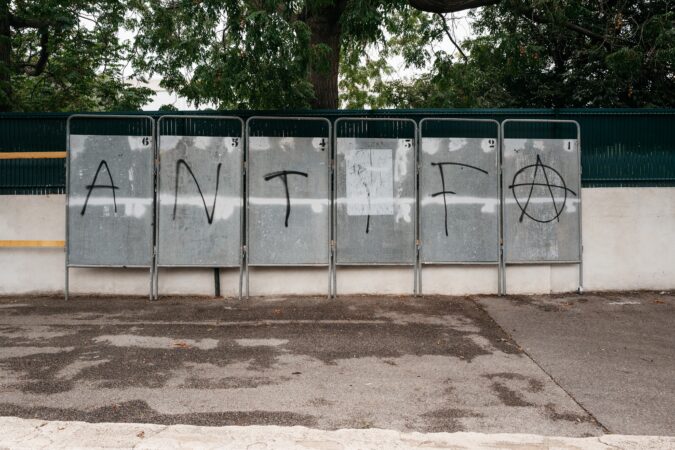
Antifa, short for “anti-fascist,” is a decentralized movement without a clear command structure or leader, reflecting a range of ideologies mostly on the political left, from anarchism to communism and everything in between. Unlike left-wing extremist groups of the 1960s and 1970s, such as Weather Underground, antifa does not issue manifestos or claim responsibility for actions.
Analysts say it can be difficult to categorize left-wing violence. (Is the killing of a healthcare executive over perceived corporate greed — as the suspect Luigi Mangione is alleged to have done — a “left wing” act?) And though there is some upswing of political violence in the United States, “to date left-wing violent extremism has typically been less lethal than other forms of terrorism,” said Bruce Hoffman, senior fellow for counterterrorism at the Council on Foreign Relations.
A “concept note” sent to invitees and U.S. diplomats this week and reviewed by The Post characterizes next week’s event as a ministerial on the “resurgence of political terrorism.” But it makes clear that the focus is on “far-left terrorists” who, the note says, are “increasingly turning to organized, deadly violence to advance their political objectives.”
The ministerial is an opportunity to strengthen cooperation in intelligence-sharing and law enforcement, the note says.
But terrorism experts said that such framing inflates the threat posed by left-wing extremists and underestimates the true scope of the challenge in combating terrorism broadly.
“This is the politicization of intelligence, and it’s dangerous because what they’re doing is basically playing partisan politics with counterterrorism, and only looking at a sliver of the overall threat,” said Colin P. Clarke, executive director of the Soufan Center, who has testified before Congress on numerous occasions as an expert witness on terrorism issues.
Several current and former counterterrorism officials across Republican and Democratic administrations, as well as Europeans themselves, say the Trump administration’s emphasis is misapplied.
“The Europeans were much more concerned about right-wing terrorism than left-wing terrorism” in the first Trump administration and the Biden administration, said one former official who worked in both.
That is still where most Europeans are, according to U.S. and European officials.
In late May, the State Department held a meeting in The Hague on antifa and left-wing terrorism, convening law enforcement and counterterrorism officials from mostly European countries, according to two people familiar with the event. The Dutch declined to co-host, so it took place at the U.S. Embassy there, one person said.
The event, according to these people, fell flat. Many of the invitees’ view was “we don’t see it quite the way you do,” said one of the people.
That was followed in early June by a gathering at the U.S. Institute of Peace to try to convince State Department personnel that “far-left political terrorists” were a growing threat to the country, but that event apparently was also a “dud,” according to Puck News. About an hour into the event, organizers sent out an email blast telling people they could still join, if they wanted, Puck reported.
Undeterred, the State Department in mid-June sent a cable to more than 20 U.S. embassies — from Argentina and Mexico to Italy and Albania — seeking information on far-left extremist groups, according to two people familiar with the matter. Several have responded, but none has indicated they concur with the administration’s assessment of the threat, one person said.
In November, the State Department announced the designations of four European groups as foreign terrorist organizations, including a militant group in Germany that calls itself antifa Ost. Two more were in Greece and one in Italy.
Designation, which is done by the secretary of state, is based on criteria that include the assessment that the group poses a direct threat to U.S. national security interests.
The designations of the four groups were met with skepticism among experts.
“They’re very peculiar,” said Blazakis, who is now a professor at Middlebury Institute and teaches about violent extremism. “Those groups have carried out acts of vandalism. They’ve harmed individuals. But they don’t have a casualty to their name.”
Authorities in Germany also did not see a significant threat. “The security authorities’ assessment is that the potential threat posed by the group has recently decreased significantly,” an Interior Ministry spokesperson told reporters in November, noting that antifa Ost leaders and particularly violent members were either in custody or already convicted.
European governments have largely declined to label antifa as a terrorism organization, despite pressure from far-right parties. In the Netherlands, the center-right government rejected a parliamentary motion to designate antifa, with the country’s justice minister telling parliament in May that it did not meet the legal threshold because there was no evidence it was an organization rather than an amorphous movement.
That month, a State Department official told reporters that the agency had taken “unprecedented steps to dismantle transnational far-left and anarchist terrorism, including antifa-aligned groups,” asserting that the number of incidents involving these groups had increased “sharply” over the past decade in the United States and Europe.
The official, who spoke on the condition of anonymity under rules set by the department, said the administration had heard from foreign partners that they were seeing “different groups starting to converge.”
The administration’s rhetoric is consistent with the language of its counterterrorism strategy, which calls for the “rapid identification and neutralization of violent secular political groups whose ideology is anti-American, radically pro-transgender, and anarchist.”
The strategy directs the use of all tools “constitutionally available to us to map them at home, identify their membership, map their ties to international organizations like Antifa, and use law enforcement tools to cripple them operationally before they can maim or kill the innocent.”
It does not, as did the 2018 counterterrorism strategy issued in Trump’s first term, mention nationalist neo-Nazi groups with “anti-Western views” that have attacked Muslims and left-wing groups.
“We have to be objective about identifying threats, not politically selective,” Hoffman said.
“If I were to rack and stack priorities, left-wing terrorists wouldn’t be in my top three,” Clarke said.
KYIV, Ukraine — Ukrainian drones hit more Russian oil facilities and set two oil tankers ablaze in the Sea of Azov on Thursday, a day after President Donald Trump pledged to grant Kyiv a license to manufacture the Patriot air defense systems to protect its cities.
A top Ukrainian official, meanwhile, cautioned that it could take a year or more for the country to produce Patriot interceptor missiles.
The Kremlin said the license deal reflected what it called Washington’s “ambivalence” but noted it appreciated Trump’s efforts to help broker a peace deal to end the war, which Russia launched over four years ago.
Ukraine’s drone strikes on oil refineries and other infrastructure across Russia have triggered a widespread fuel crisis with gasoline shortages and rationing in multiple regions and motorists waiting for hours to fill their tanks. Moscow has responded by intensifying its bombardment on Kyiv and other cities, exposing Ukraine’s vulnerability to ballistic missile strikes.
Ukrainian President Volodymyr Zelensky described the latest strikes on Russia’s infrastructure as part of Kyiv’s campaign of “long-range sanctions” carried out in response to Moscow’s refusal to halt the fighting.
“We have long proposed that Russia end this war, and every day of delay should bring the feeling of war to where it all began — to Russia,” Zelensky said.
Ukraine hits oil depots in western Russia and tankers at sea
A Ukrainian drone strike triggered a fire at an oil depot in the western Russian city of Tver, according to acting Gov. Vitaly Korolyov.
Oil reservoirs also were set ablaze by drones in Vyazniki, in the southern Stavropol region, said Gov. Vladimir Vladimirov, forcing the evacuation of several apartment buildings near the facility.
In the Sea of Azov, Ukrainian drones set two oil tankers on fire, according to Rostov Gov. Yuri Slusar, who said one of the ships was still burning and its crew evacuated.
The attack was the latest in a series of strikes on oil tankers in the area in recent days, part of Ukraine efforts to cut fuel supplies to the Crimean Peninsula, which Russia illegally annexed in 2014.
In addition to strikes on oil facilities in Stavropol and Tver, Zelensky said Ukrainian forces hit fuel infrastructure deep inside Russia, including one in Ufa, as well as an oil-loading terminal in the Rostov region closer to Ukraine.
Russia’s Defense Ministry said its defenses downed 73 Ukrainian drones from late Wednesday into early Thursday.
Ukraine’s air force said Russia fired 94 long-range strike drones and two ballistic missiles. While 72 drones were jammed or intercepted, 19 drones and both missiles damaged 13 locations, it said.
Ukraine says Patriot production will take months
During Wednesday’s meeting with Zelensky on the sidelines of the NATO summit in Turkey, Trump said the U.S. will meet a longstanding request from Ukraine and give it a license to make the Patriot air defense systems. He also praised Zelenskyy for doing “an amazing job” — a sharp change in tone from past criticisms of the Ukrainian leader.
But setting up domestic production of the mobile, surface-to-air systems will take many months, said Serhii Beskrestnov, an adviser to Ukraine’s defense minister.
A production license would typically come with technical process documentation, training for specialists, supplier contacts and foreign consultants to help launch manufacturing, Beskrestnov wrote on his Telegram messaging app.
The main obstacle would be time, rather than Ukraine’s technical or organizational capacity, he added.
Recent media reports pointed to two likely bottlenecks: the long production cycle for some subcontracted components, which could take 12 to 24 months, and limited global output of key parts, including components supplied by Boeing and L3Harris, Beskrestnov added.
The Pentagon had signed contracts to expand production capacity, he said, but added that the timeline for those contracts to translate into increased output remained unclear.
Germany also has a license to produce Patriot systems, and in 2022, Raytheon and MBDA Deutschland announced they planned to manufacture Patriot GEM-T missiles in the country, according to a news release at the time. The goal was to produce them in a German facility and ultimately provide them to other European allies.
The facility is expected to open in September with its first missiles scheduled to be delivered next year, with Ukraine as the first recipient, according to Defense Express, an online Ukrainian military-oriented publication.
Kremlin: Ukrainian strikes won’t hasten peace
Commenting on Trump’s statement about the Patriot missile licenses, Kremlin spokesman Dmitry Peskov offered a vague response, saying Moscow is aware of the U.S. military support for Ukraine but appreciates Washington’s declared commitment to help achieve peace.
“The U.S. position is somewhat ambivalent,” Peskov said in a call with reporters. “Still, unlike the Europeans, the United States maintains a desire to facilitate a move toward a peace process. They may be misguided or mistaken at times, but we see that desire as sincere. We welcome it, and we hope that once the Americans manage to resolve the situation regarding Iran despite the significant complications involved their efforts on the Ukrainian track will resume.”
Asked about Trump’s comment that Ukrainian attacks deep inside Russia could hasten a peace settlement, Peskov reaffirmed that the more strikes Kyiv launches, the broader “security zone” Moscow will seek to carve out in Ukraine via what the Kremlin calls its “special military operation.”
“It’s a mistake to think that escalation and military pressure could pave the way to a peaceful settlement,” Peskov said. “Further escalation may prolong the special military operation, we can’t say precisely to what extent, but it will force us to create a larger security zone, a larger buffer zone. Therefore, inciting tensions and taking escalatory action will in no way contribute to the peace process.”
Ukraine has urged the U.S. and other allies to provide binding security guarantees as part of any prospective peace deal, including the deployment of NATO forces. Russia has strongly warned against the presence of any NATO troops in Ukraine, saying it would view them as legitimate targets.
Asked Wednesday if he would be ready to enact a no-fly zone over Ukraine as part of security guarantees, Trump responded by saying “if it’s necessary, yeah,” but he argued that it might not be needed if a peace deal is reached.
“When we have a deal, we’re going to have a deal, security guarantee or no security guarantee,” Trump said as he sat next to Zelensky.
Commenting on the issue, Peskov warned that an attempt to establish a no-fly zone would amount to “NATO military forces being active on the territory of Ukraine — exactly what the special military operation is being waged against.”
Peskov said President Vladimir Putin is “open to dialogue” and ready for another phone call with Trump.
HANCOCK, Maine — They told him that he was “the guy.”
Last July, in a small town in coastal Maine, three progressive, self-styled recruiters of economic populists showed up at the blue-shingled house of Graham Platner, a little-known oyster farmer and Marine veteran who lived largely off government benefits.
They knew his name from local labor organizers and activists, and they had watched a video on the internet of him talking about oysters. Struck by his left-leaning ideology, his working-class affect and his gravelly voice, they became convinced that he could win a Senate seat in Maine — and quickly persuaded Platner of the same.
The recruiters — Dan Moraff, Leanne Fan and Morris Katz — told Platner he was “the one,” a “hero of the movement,” “a historical figure” who could be “leading a revolution,” according to half a dozen people with knowledge of their conversations.
But a clutch of people who cared about Platner were telling him something else. They worried about his mental health, amid his ongoing efforts to heal from post-traumatic stress disorder after tours in Iraq and Afghanistan. They feared this trio of out-of-state operatives was a dangerous combination of inexperienced and overconfident. The worst-case scenario, they thought, wasn’t running for Senate and losing — it was destroying the life he worked hard to build.
Until recently, Platner had seemed to prove the worriers wrong. His campaign was pumping out viral videos and broadcasting scenes from crowded town halls. He easily pushed a sitting governor out of the Democratic primary as voters embraced his message of economic populism and overlooked his checkered past. Progressives across the country heralded him as a new left-wing hero and saw him as their best opportunity to defeat Sen. Susan Collins, a Republican, in a race that could decide control of the Senate.
But behind the scenes, his campaign was messy, disorganized and haphazardly run. Platner did not disclose explosive, politically damaging secrets to key members of his team. And he was guarded by an insular and zealously protective inner circle of advisers who did not always seem to grasp the seriousness — or strangeness — of what quickly became a steady drip of scandal, according to party strategists, Democratic officials and former staff members.
Repeatedly, Platner promised there was nothing else damaging from his past to come. And each time, he was wrong.
Platner, said Ronald Holmes III, his former national finance director, was “seriously flawed.” But he faulted Platner’s team for failing to “ask the right questions and get honest answers.”
In a statement, the campaign disputed the idea that there was a lack of planning or infrastructure as “simply false,” and said that the team “built the operation, strategy, and organization needed to create one of the strongest grassroots campaigns Maine has ever seen.”
This report is based on interviews with more than 30 people who interacted with the campaign or Platner, many of whom were granted anonymity to discuss sensitive matters.
In June, as rumors swirled about a damaging story coming from The New York Times featuring several of Platner’s ex-girlfriends, Katz called a top national Democratic strategist, insisting that there were no issues in Platner’s past concerning his treatment of women, according to a person with direct knowledge of the conversation.
Katz said he had asked Platner directly and repeatedly whether anyone had made sexual assault allegations against him and the candidate had said no, according to two people familiar with the discussion who described it on the condition of anonymity.
“It’s been a slow-rolling disaster instead of all happening at once — it’s been really drawn out and painful and difficult to watch,” added Holmes, who resigned last fall after raising concerns about the professionalism of the campaign’s senior leadership. “It’s like we’ve been watching a mile-long train derail at four miles an hour.”
That train finally crashed this week, when a woman who had dated Platner accused him of rape. He denied the allegation, but released a video saying he was taking time to “reflect” on his path forward.
Within roughly 24 hours, Democrats at every level had called for him to withdraw, and the Maine Democratic Party was on a war footing with its own nominee. Ambitious politicians were taking steps to try to succeed him on the ticket. And Democrats across the country wondered how one of their best chances to flip a Senate seat had imploded.
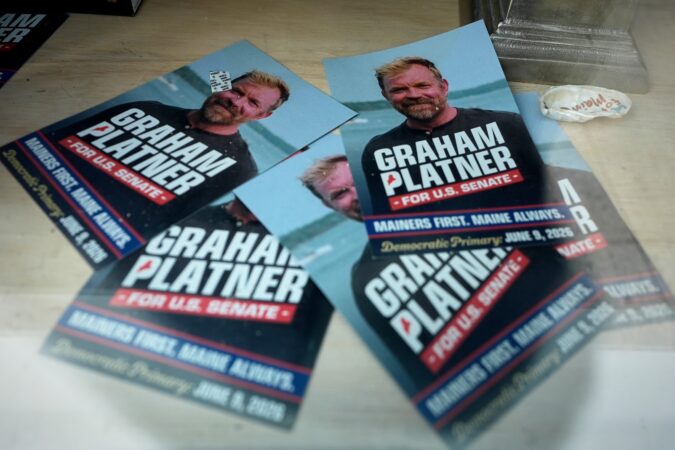
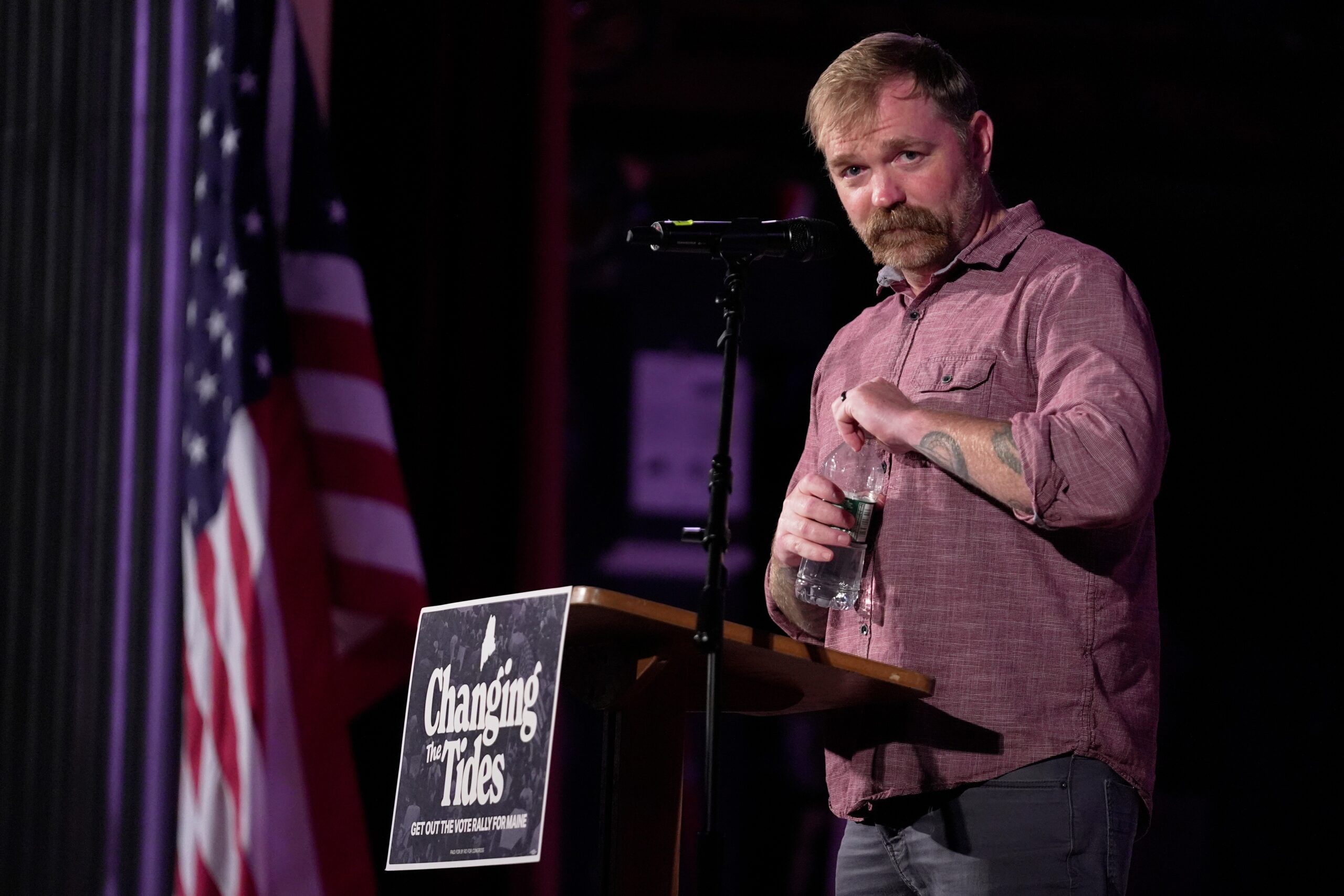
Graham Platner, Democratic candidate for U.S. Senate, speaks at a campaign event Friday, June 5, 2026, in Bar Harbor, Maine.
A ‘Totenkopf’ tattoo
Before Platner became the Democrats’ biggest headache, his most ardent supporters spoke about him in strikingly lofty terms.
As his campaign was getting off the ground, Moraff likened him to Barack Obama in conversations with senior Democratic officials, according to two people with knowledge of the private conversations.
But there were early signs that Platner had serious political liabilities. Less than two weeks after he announced his bid, his wife, Amy Gertner, approached a top campaign aide. She wanted to disclose that Platner had been exchanging sexual messages with multiple women.
Platner was about to hold a campaign event with Sen. Bernie Sanders, his first major endorser and a personal hero. Gertner told Genevieve McDonald, then the campaign’s political director, that she worried Sanders would think less of her husband if he later found out about the exchanges with other women, McDonald recalled.
Was that the extent of the controversy in Platner’s personal life or was there more to worry about? Campaign officials appeared not to know.
A top Platner adviser had promised a national Democratic strategist that they would not launch a campaign without completing a full investigation of Platner’s background. But, according to two people familiar with the campaign’s operations, no extensive effort was undertaken in one of the marquee races of the midterm cycle.
Instead, they conducted an expedited review, resulting in a short risk-assessment memo.
Platner’s campaign said that a research firm produced a vetting memo of nearly 50 pages that included searches of news reports, social media posts and public documents. They did not do exhaustive interviews with Platner.
“I said, ‘None of this will or should stop him from becoming a U.S. senator,’” Moraff told The Wall Street Journal.
But others had access to significantly more damaging information about Platner’s past.
In Northern Virginia, Lyndsey Fifield, a former girlfriend of Platner’s, texted a private group chat of friends last summer about a tattoo on his chest widely recognized as a Nazi symbol. He had gotten it while serving in the military and referred to it, she has said, as “my Totenkopf.”
The “Nazi tattoo on his chest,” Fifield suggested, was going to be a problem.
The existence of the tattoo, however, did not immediately become public. In the meantime, Platner’s campaign began to find an audience. He drew bigger and bigger crowds, crisscrossing the state for events and spending hours gabbing on podcasts.
Yet controversies kept arising. In October, CNN and other news outlets uncovered a trove of incendiary online posts that Platner had written between 2009 and 2021, which included dismissive comments about rape and sexual assault in the military.
Platner apologized, and has urged the public not to judge him for his worst moments on the internet.
The lack of disclosure about his past made McDonald, a former state legislator and lobbyist, uncomfortable. She quit the campaign in October.
Around the same time, photos of Platner’s tattoo from his wife’s Facebook account began leaking to news organizations.
The Platner team, hoping to defuse the potential damage, released video footage of a shirtless Platner with the tattoo visible to Pod Save America, a liberal podcast that supported his bid.
In a friendly interview, Platner dismissed the issue as little more than pearl-clutching by his opponents. “I am not a secret Nazi,” he said. “Lifelong opponent.”
At the time, Platner said in a statement that he did not know that his tattoo resembled a Nazi symbol until it became a campaign issue.
More staffers, including Holmes, left the campaign.
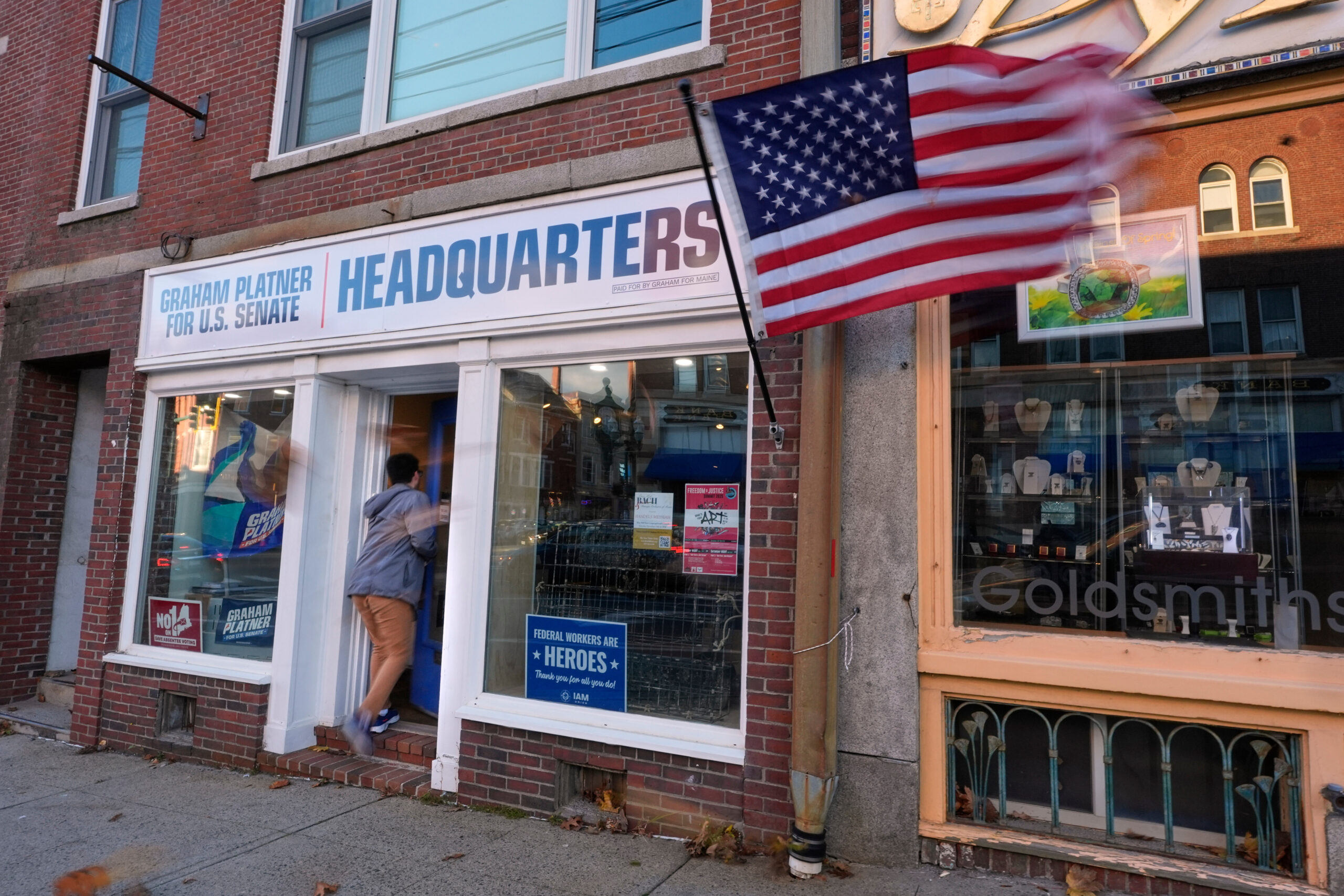
FILE – A worker enters the campaign headquarters for US Senate candidate Graham Platner, Tuesday, Nov. 4, 2025, in Ellsworth, Maine.
‘It’s not that complicated’
For months, there was little indication that any of the controversy was seriously hurting his candidacy.
As Platner’s star rose through the winter and early spring, Katz was privately promoting him as a future presidential candidate for as soon as 2028, if he won his Senate bid.
When Janet Mills, his chief Democratic primary opponent, produced tough ads featuring his comments about women and rape, it did little to change the trajectory of the race. Poll after poll showed Platner leading Mills, a two-term governor who was supported by national Democratic leaders, by double-digits.
Platner built a movement-like following, emerging as one of his party’s most powerful online fundraisers. His campaign constructed an image of a working-class combat veteran who had returned to Maine to rebuild his life, who spoke movingly about the failings of U,S, foreign policy and rallied voters with his promises to take on a political system dominated by corporations and billionaires. Democrats flocked to his town hall meetings.
Publicly, at least, the candidate expressed nothing but bravado.
In an April interview, he dismissed any jitters about going up against Mills — a former prosecutor — in a series of planned public debates.
Platner had debated before, he said, in college classes. His preparations, he said, were “standard run-of-the mill debate prep.”
“Honestly, I’ve seen enough and read enough about politics that it looks and sounds very much like what debate prep usually looks like,” he said.
He added: “Standing up and talking about the things you believe in, it’s not that complicated.”
Platner’s theory about debating would never be tested. The next morning, Mills dropped out the race, saying she lacked the funds to compete.
But by June, Platner was trailing far behind Collins in campaign funds. Platner’s campaign had just $1.3 million in the bank when he exited the race, a fraction of Collins’ $9.7 million war chest as of late May. A person familiar with the campaign’s finances said the amount of cash available to spend was even lower — under $100,000.
The campaign raised nearly $9 million last quarter, said a campaign official, more than doubling the previous quarter’s haul. While the campaign successfully focused on attracting small-dollar donations, it struggled to recruit and retain big-dollar donors.
Campaign aides told top Democratic strategists that donors kept raising concerns about the tattoo and his other controversies. Their requests for help assuaging donors’ concerns were met with silence from the national committee, according to three people familiar with discussions.
Last week, Platner kicked off a call with a new national finance committee — a first, if belated, step to bundle checks from wealthy donors, according to an invitation seen by the Times. And the campaign took its worries about money public, warning on a call with reporters that he was being swamped on the airwaves.
Estimates showed they were set to be outspent by 2-to-1 on advertising by Collins and her allies through Election Day, according to data from the media tracking firm AdImpact.
“I was training with my jujitsu buddies at my kids’ class yesterday,” Ben Chin, Platner’s campaign manager, told reporters. “There were these radio ads that were coming on as we were listening, and people were starting to give me a hard time, like, ‘Oh, where are your radio ads?’”
A campaign in crisis
The campaign’s money troubles were exacerbated by a series of even more damaging revelations about his personal conduct and treatment of women. In May, the Journal and the Times published stories detailing sexual text exchanges with women that had worried McDonald and Gertner nearly 10 months earlier.
In early June, Platner found himself in a private meeting in Washington facing questions from senators about whether more damaging revelations were yet to come. He promised that there was nothing else, according to a person familiar with the discussion.
But it became clear that Platner and his team were in crisis mode. He flew home to Maine, and frantically dialed ex-girlfriends to find people who would testify to his good character.
He called Rep. Ro Khanna, an early supporter from California, to warn him that the Times was going to publish a story that would detail his “toxic relationships.” He was a “terrible boyfriend” and made misogynistic comments, he said, according to someone familiar with the discussion, but nothing worse.
Days later, the Times published accounts from three women who had been in romantic relationships with Platner for years. They said he could be demeaning to women and, in at least one case, even physically threatening.
In the immediate aftermath, many activists and politicians went to their partisan corners.
“There are no saints in the United States Senate,” Sanders said.
But other prominent Democrats started speaking out more bluntly. In private meetings, even strong supporters began raising concerns.
“I look forward to the day where I am not answering every single week a question about bad behavior by another dude,” said an exasperated Sen. Elissa Slotkin, D-Mich., in an interview on MS Now.
By late June, Platner found what he hoped would be a powerful answer to critics: an endorsement by Planned Parenthood Action Fund at a splashy rally, portraying him as a champion of abortion rights.
Planned Parenthood officials knew their endorsement was a political risk, according to someone familiar with internal discussions. But they desperately wanted to defeat Collins.
Before they offered their endorsement, Alexis McGill Johnson, the chief executive of the group’s political arm, had posed to Platner the question that so many others had asked: Was there anything else that would come out about him?
Again, he said no. She responded with an ultimatum. If anything worse were to come out about him, he should not expect the women’s groups to clean up after him.
On Monday evening, as news that he had been accused of rape ricocheted across the country, the group quickly withdrew its support.
By midweek, as Democratic officials pushed for Platner to rapidly exit the race, the besieged candidate and a handful of aides, including Katz, hunkered down in his blue-shingled house and tried to challenge establishment politics one last time. Journalists trailed them to the local convenience store, where “The Graham,” a roast beef and pepper-jack sub, has been a popular deli counter order.
On Wednesday night, his campaign released a video in which Platner suspended his campaign and blamed his loss on the “corporate media system” and “political establishment.”
“We did it the right way,” he said. “And we won and now they are not going to let us have it. Not if it’s me.”
Sen. Mitch McConnell’s current health condition and ongoing absence threatens to complicate the U.S. Senate’s return to business next week.
Congress is returning from recess on Monday and faces a limited number of days left before the Sept. 30 deadline to fund the government for fiscal year 2027. McConnell (R., Ky.) plays a crucial role as a member of the Senate Appropriations Committee.
Republicans and Democrats on the committee have been at a stalemate that began over disagreements about defense funding. If the two sides can’t come to an agreement, Republicans will likely need McConnell’s support to advance any spending bills out of the committee amid Democratic opposition.
The Trump administration has requested Congress provide an additional $87.6 billion in supplemental funding for the Pentagon and other agencies, largely to cover needs related to the war with Iran, which reignited this week.
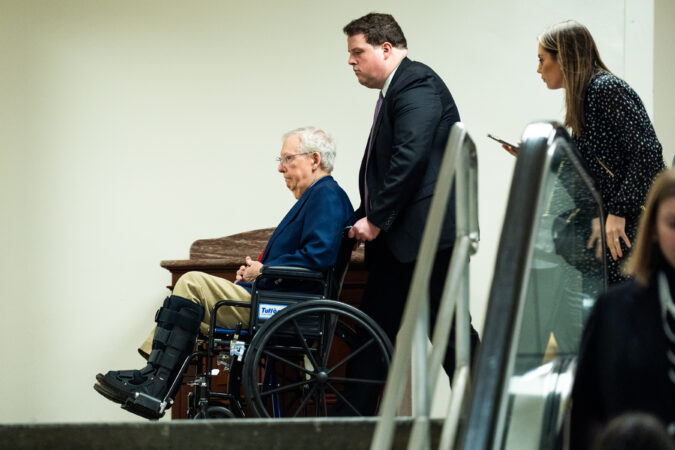
McConnell, 84, leads the Senate Defense Appropriations Subcommittee, which has jurisdiction over that military spending. He has not cast a vote on the Senate floor since June 11. He was admitted to the hospital on June 14. While members of Senate leadership said they have since spoken to him, McConnell’s office has offered limited details about his condition and he has not been seen publicly.
Democrats have refused to support the increase in defense funding Republicans have put forward without a comparable boost for domestic programs. That disagreement is part of the reason the committee, which normally advances these measures on a bipartisan basis, has not yet advanced any legislation for fiscal year 2027.
The Senate Appropriations Committee planned to begin hearings the week of June 22 to review some of the nondefense bills, after previous delays related to the defense spending. But those plans were canceled due to McConnell’s absence, according to a Republican aide, who spoke on the condition of anonymity to share internal deliberations.
A separate Republican congressional aide, who also spoke on the condition of anonymity to share internal deliberations, argued that the delays with the appropriations process “predate” McConnell’s hospitalization and blamed the delays on Senate Democrats.
McConnell’s continued absence could make it harder for the Senate Appropriations Committee to pass budget bills, by eliminating Republicans’ one-seat majority on the panel. Without McConnell, the Appropriations committee is split evenly between Republicans and Democrats, and tied votes tend to sink legislation in committees.
Republicans could move forward with hearings to markup the nondefense bills, but Democrats have indicated they would not support any funding measures without an agreement on overall spending levels.
Lawmakers will have to pass a temporary stopgap funding bill to prevent a government shutdown if they cannot get the fiscal year spending bills done in time.
McConnell’s office declined a request for comment about McConnell’s role in delaying the budget process, referring The Post to the appropriations committee. The appropriations committee pointed to a statement by its chair, Sen. Susan Collins (R., Maine), who has said there would be a hearing on the defense supplemental request.
McConnell’s absence is attracting more concern outside of Washington. Kentucky Gov. Andy Beshear, a Democrat, sent a letter on Wednesday to McConnell’s office asking for an update on his health.
“Over the last several weeks, Kentuckians have grown increasingly concerned about the current state of your health and well-being, and ability to hold office in the United States Senate,” Beshear said in the letter. “As public officeholders, we have made a commitment to our constituents to do our best to represent them and to always be transparent. I believe this requires clear communication about one’s ability to serve.”
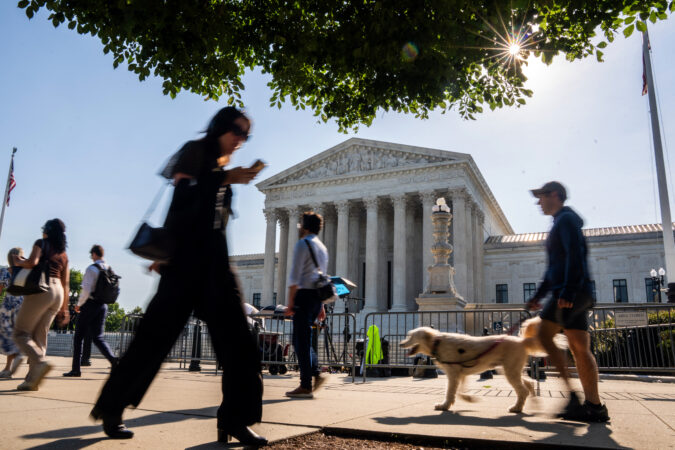
WASHINGTON — President Donald Trump said on Wednesday that he would ask the Supreme Court to reconsider its decision to strike down his executive order that aimed to revoke birthright citizenship, a request that the justices are highly unlikely to take up.
The declaration, made in a social media post, showed the president’s continued frustration with the court’s decision last week, when a majority of justices ruled that the citizenship given to nearly all children born on U.S. soil was enshrined in the Constitution.
Trump claimed that signs and billboards were being placed along the southern border and in Mexico advertising the right, and that citizenship would be granted to “anyone willing to pay.”
The president appeared to be referring to a Fox News report that identified a hospital in Texas that had advertised paying for “Birth Packages in South Texas” on billboards in Mexico. The outlet reported that Gov. Greg Abbott of Texas, a Republican, had ordered an investigation into the hospital, which told Fox News that “marketing materials regarding maternity services are no longer in use due to any unintended misunderstanding.”
“We do not support or facilitate any unlawful activity and work to comply with all applicable federal and state laws and regulations,” the hospital added in a statement to the outlet.
On Wednesday, Trump said that he would ask for a “rehearing” of the case “IMMEDIATELY,” and that the justices would “destroy America if they don’t change their absolutely insane decision.” As of Wednesday evening, administration lawyers had not filed a request with the court.
Under Supreme Court rules, parties can ask the justices to rehear a so-called merits case after it has already been decided. But it is exceptionally rare for the court to grant such requests.
The last time the court granted a rehearing request after it had announced a decision in an argued case was in 1965. The court has only once reversed itself after rehearing a case, according to Stephen I. Vladeck, a professor at Georgetown University Law Center. That reversal happened in a 1956 case examining military tribunal jurisdiction for civilian spouses of service members.
Trump, who attended the oral arguments in the Supreme Court citizenship case, has continued to lash out at the court over its ruling, which was delivered by Chief Justice John Roberts.
“Citizenship, then and now, was the right to have rights — to freely participate in our political community,” Roberts wrote in the decision. “The framers of the 14th Amendment extended that promise to ‘every freeborn person in this land.’”
The 6-3 decision capped a more than decadelong effort by Trump to use the issue as a political tool. In the immediate aftermath, he urged Congress to take up the issue with legislation, incorrectly asserting that “no long and unwieldy Constitutional Amendment is necessary.”
Several days later, the decision received renewed attention after Trump intervened in an officiating decision in the men’s World Cup on behalf of a U.S. player with foreign-born parents.
He called Gianni Infantino, the president of the body overseeing the tournament, to protest a red card that was given to Folarin Balogun, a star player who was born in the United States while his parents, who were born in Nigeria and lived in London, were on a trip.
FIFA, the World Cup governing body, reversed the referee’s decision, which would have prohibited Balogun from playing in a match against Belgium; the United States lost the game, 4-1, on Monday.
Trump said that he had decided to act when he learned of the implications of the red card, saying that “when they take your best player, or just about,” it is “very unfair.”
In late April, Ken Martin, chair of the Democratic National Committee (DNC), visited Philadelphia to assess the possibility of the city hosting the 2028 Democratic National Convention. He toured Xfinity Mobile Arena and met with Mayor Cherelle L. Parker and business leaders, who rolled out a “blue carpet” aimed at charming him.
It seemed natural to see business leaders working with local politicians to try to convince the DNC to choose Philadelphia, as well as helping to raise the funds required for the city to be eligible to host the convention. Democrats dominate the city’s politics, and its elected officials tend to share local business executives’ visions for economic development.
But these groups weren’t always aligned. In 1936, when Philadelphia made a similar push to host the Democratic Convention, the effort aroused skepticism in a city that had been a Republican stronghold for decades. Much of the skepticism was centered in the business community — where many vehemently opposed the policies of President Franklin D. Roosevelt.
It took a push by coalition builders like Albert Greenfield, a powerful business leader, to win over skeptics. Greenfield sold his fellow businessmen by framing the pursuit not as something partisan or political, but as a venture in civic boosterism. This argument proved compelling, and business support helped land the convention for Philadelphia. Today, Greenfield’s efforts provide a model for how to bring diverse interests together to boost a city, even in times of polarization.
Before the 1930s, Philadelphia was firmly a Republican city. In this era, the national party’s platform was dominated by pro-business politics, aligned around policies aimed at enhancing economic growth and competition.
A thoroughly corrupt political machine led by William Vare dictated the city’s politics. Each ward had Republican committee people who purchased individual votes at a going rate of one dollar. Loyal to the Vare machine, they also ensured voters headed to the polls on Election Day. In exchange, many of these committee people were rewarded with spots on the city payroll.
The flow of money linked voters and committee people alike to Vare and the GOP. The machine’s dominance meant that the Republicans won most local elections, and the city gave its votes to their party in federal and state contests, including in every presidential election dating back to 1856. That even included in 1932 when Roosevelt was first elected by a large margin nationally.
The Democratic Party — which, in other cities, drew power from local machines — remained weak and made little headway because Democrats, too, relied upon patronage favors from the dominant Republicans. That made them hesitant to rock the boat or wage an assault on the Vare machine and the status quo.
At the beginning of Roosevelt’s first term, however, the city’s politics began to shift thanks to the new president and his New Deal. Struggling Philadelphians started to feel the tangible effects of New Deal policies at precisely the same moment that changes began to occur in both parties’ leadership locally. The result was a restoration of genuine two-party competition.
The same Depression-era pressures loosening working-class loyalty to the Republican machine also began to pull Greenfield — who had once been a staunch Republican, but had soured on Herbert Hoover — toward the Democratic Party. The businessman benefited from several million dollars in funding from the Reconstruction Finance Corporation, the governmental lender of last resort, to prop up his business enterprises. Experiencing the benefits from New Deal policies firsthand, Greenfield started to express cautious support of Roosevelt.
From his position as chairman of the Philadelphia Chamber of Commerce Convention and Tourist Committee, Greenfield also launched an effort to recruit the Democratic Convention to Philadelphia.
His colleagues in the Chamber of Commerce shared Greenfield’s vision of landing a party convention in 1936 — but they didn’t care which party. Greenfield himself, however, remained focused on the Democrats in part because of his friendship with the liberal newspaper publisher J. David Stern.
In December 1935, he began soliciting donations from the city’s business leaders with the goal of raising $150,000 (more than $3.6 million in 2026 dollars) to help lure the Democrats. He framed the convention not only as an opportunity to increase business activity, but also as a means of enhancing the city’s national reputation.
Greenfield appealed to a wide range of constituencies, at times striking an unrelenting tone in his correspondence with business leaders. In one letter, Greenfield wrote that members of the Chamber, “feel that each individual enterprise has a moral obligation and responsibility with respect to the financial requisites for securing the convention.”
Made By History sponsors. FOR USE ON MADE BY HISTORY STORIES ONLY.
Greenfield’s efforts quickly bore fruit. Ledgers show contributions from both businesses and individual donors in sectors ranging from dentistry to distilling and hospitality. He also sold his fellow businessmen on their contributions being a non-partisan investment that would be “returned manyfold” to those who donated. This framing made it easier for many of his still staunchly Republican peers to support the bid.
In January 1936, after the Chamber formally invited the Democratic National Committee to hold its convention in Philadelphia, news headlines reflected the importance of the incentive package organized by Greenfield. When Philadelphia won the bid — with a financial package that ended up totaling $200,000 — The New York Times characterized the proceedings as an “auction and now a poker game.” The money Greenfield raised ultimately compelled national Democrats to shift their preference from Chicago to Philadelphia as their host city.
Greenfield soon became the chair of the city’s convention planning committee. In that role, he assembled a cohort of other prominent business and financial figures to orchestrate the programming surrounding the convention. He promised them pomp and circumstance — which he delivered.
When the convention finally arrived in Philadelphia in June, flags bearing the names of U.S. states and festive decorations lined Broad Street; ceremonial stamps depicted a triumphant, sun-illuminated city; press photographers documented a ceremony in which city officials registered a donkey that was part of the New York delegation to vote. The city even suspended its blue laws to allow Sunday drinking.
In bringing the convention to Philadelphia, Greenfield constructed his own alliance that worked to replace the system long sustained by Vare and the Republican machine. While he did not offer jobs and cash to individuals in exchange for loyalty like Vare did, he created a mechanism by which the success of the convention became materially valuable to the city’s business establishment.
If members of the city’s business community sought to access the economic benefits of this national political event, they had to do so through Greenfield, further aligning Philadelphia’s commercial interests with an individual who wanted the convention to succeed not only financially but politically as well.
What may have begun as tentative, pragmatic support for hosting the convention evolved into a more explicit embrace of the Democratic Party, with many businesses ultimately associating themselves with Democratic messaging. One newspaper advertisement praised the efforts of Roosevelt as a force behind Philadelphia’s economic revitalization. That message received endorsements from more than a dozen small businesses, whose names were featured alongside the message of support for the president.
At the close of the convention, Greenfield told delegates that their enthusiasm might one day lead historians to view the city as a Democratic stronghold — a prediction that ultimately proved correct. By constructing a new network of support within Philadelphia’s business community, Greenfield helped rally backing for a convention that proved to be far more than an economic boost or mere “convention fireworks.” Instead, the gathering would serve as an engine for a realignment that would hold the city for the Democratic Party through the next two decades.
The day after the 1936 election, the city of Philadelphia awoke to stunning results. Roosevelt had carried 43 of the city’s 50 wards and the city that the Philadelphia Bulletin had confidently described as unlikely to depart from “its long tradition” as a Republican stronghold had broken sharply with it. In 1940, when the city again explored hosting either the Republican or Democratic convention, the same committee which had led fundraising in 1936 initiated both efforts. Reflecting the changes in Philadelphia politics, however, the fundraising effort to attract the Democratic convention was far more successful than efforts to court its GOP counterpart. The business community in a city that had voted reliably Republican just four years earlier now raised three and half times as much money for potentially hosting the Democratic convention as the Republican one.
As business leaders in Philadelphia work to bring the convention back to the city, they are drawing from Greenfield’s playbook 90 years ago that brought together a new alliance of business leaders in support of a convention that proved to be a political inflection point.
Ethan Young is a rising senior at the University of Pennsylvania studying history and political science.
Made by History takes readers beyond the headlines with articles written and edited by professional historians. Opinions expressed do not necessarily reflect the views of The Inquirer.