Category: Politics

Political news and coverage

  • Trump’s Venezuelan drug boats claims obscure reality, officials and locals say

    Trump’s Venezuelan drug boats claims obscure reality, officials and locals say

    MEXICO CITY – The Trump administration’s justification for blowing up suspected drug traffickers off the Venezuelan coast has been clear and consistent: These people aren’t just criminals; they’re “narco-terrorists” smuggling a “deadly weapon poisoning Americans” at the behest of terrorist organizations.

    “We take them out,” Trump told the nation’s three- and four-star generals and admirals last month. “Every boat kills 25,000 on average – some people say more. You see these boats, they’re stacked up with bags of white powder that’s mostly fentanyl and other drugs, too.”

    Claiming the power to summarily kill traffickers as though they’re enemy troops, Trump has authorized the U.S. military to strike at least six speedboats the administration has deemed suspicious, killing dozens of people since the beginning of September. At least half of the strikes and 21 of the killings, locals say, have transpired in the waters between Venezuela and Trinidad and Tobago – nations so close that on clear days they’re within eyesight of each other.

    But records and interviews with 20 people familiar with the route or the strikes, including current and former U.S. and international officials, contradict the administration’s claims. The passage, they said, is not ordinarily used to traffic synthetic opioids such as fentanyl, present in 69 percent of drug overdose deaths last year. Nor are the drugs typically headed for the United States.

    Trinidad and Tobago, a Caribbean nation more than 1,000 miles south and 1,200 miles east of Miami, is both a destination market for marijuana and a transshipment point for South American cocaine bound for West Africa and Europe, according to U.S. officials, Trinidadian police and independent analysts. The fentanyl seized in the United States, in contrast, is typically manufactured in Mexico using precursors from China and smuggled in through the land border, most often by U.S. citizens.

    The military strikes are unlikely, as a result, to cut overdose deaths in the United States, officials say – but it has brought U.S. forces into striking distance of Venezuelan President Nicolás Maduro. Trump has accused the authoritarian socialist, who claimed reelection last year despite ballot audits showing he lost the vote, of leading the Venezuela gang Tren de Aragua to push lethal drugs into America.

    “When I saw [an internal document on the strikes],” a senior U.S. national security official said, “I immediately thought, ‘This isn’t about terrorists. This is about Venezuela and regime change.’ But there was no information about what it was really about.”

    The official, like others quoted in this report, spoke on the condition of anonymity to provide his candid assessment.

    The White House declined to share evidence to support the claims that Trump has used to justify the strikes. A spokeswoman defended the killings as necessary to protect Americans.

    “All of these decisive strikes have been against designated narco-terrorists bringing deadly poison to our shores,” spokeswoman Anna Kelly said. “The president will continue to use every element of American power to stop drugs from flooding into our country and to bring those responsible to justice.”

    Two family members of the 11 men killed in September in the first attack acknowledged by Trump did not deny that the men aboard had been taking marijuana and cocaine from Venezuela to Trinidad. But they said Trump’s allegation in his announcement was inaccurate that they’d worked for the Venezuelan gang Tren de Aragua.

    “I knew them all,” said one of the family members, who spoke on the condition of anonymity for fear of retribution. “None of them had anything to do with Tren de Aragua. They were fishermen who were looking for a better life” by smuggling contraband.

    On Tuesday, Trump said, a new strike had killed “six male narco-terrorists” off the Venezuelan coast. That afternoon, one mother in the Trinidadian community of Las Cuevas received a call from her brother, a fisherman. Her son Chad Joseph, the second of her six children, had been killed in the explosion.

    Speaking by phone Thursday morning, Leonore Burnley was furious. Her son had been deprived a trial. And she’d been deprived of any chance of closure.

    “You can’t get the body to bury it,” she said.

    Joseph had spent the last three months in Venezuela working odd jobs, Burnley said. He had written her recently to say he would be returning home.

    She called Trump’s claim he had been involved in trafficking drugs a lie.

    “They are judging him wrong,” she said. “He was no drug dealer. Chad was a good boy, anything you want, he would help; he was a loving child.”

    “Twenty-six years he have,” she said.

    Claiming the power to summarily kill traffickers as though they’re enemy troops, Trump has authorized the U.S. military to strike at least six speedboats the administration has deemed suspicious, killing dozens of people since the beginning of September.

    How cocaine courses through Venezuela

    In recent years, drug cartels in Colombia and other South American nations have supercharged cocaine production. The rush to bring it to market – largely the United States and Europe, but increasingly West Africa – has transformed the continent’s criminal landscape, fueling the rise of new transnational gangs and threatening weaker national governments with limited power of state.

    Venezuela, too, has been swept into the boom. Economically battered by years of socialist mismanagement and punishing international sanctions, a nation that was once Latin America’s wealthiest has become increasingly involved in the trade. Along its border with Colombia, cocaine is now produced for sale and shipment abroad.

    U.S. federal prosecutors in March 2020 accused senior government officials in the Maduro regime, including Maduro himself, of leading the Cártel de Los Soles – “Cartel of the Suns” – a criminal network that extorts drug trafficking groups and controls routes and product itself.

    Venezuela, U.S. investigators say, is now a narco free-for-all filled with armed groups from throughout Latin America.

    “The Mexicans are there,” one former Drug Enforcement Administration agent said. “The Colombians are there, sometimes on behalf of the Mexicans. Sometimes the Hondurans and Guatemalans have guys there, too.”

    Most of the South American cocaine bound for North America flows through the Pacific, but some does depart Venezuela through the Caribbean, according to U.S. officials and analysts who track drug routes. Much of it courses overland through the western states of Zulia and Falcón before shipping northward to Puerto Rico, the U.S. Virgin Islands and the Dominican Republic. Some travels by air, departing clandestine airstrips in Maracaibo or Apure state for Central America and onward to Mexico and the United States.

    It’s less common, investigators say, to ship U.S.-bound cocaine northeast into the Sucre peninsula and across the narrow Bocas del Dragón channel to Trinidad – the route the administration has targeted. Trinidad is used far more frequently as a gateway to Europe. Spanish authorities seized 1.65 tons of cocaine that had transited through the island, the State Department reported in 2024. Portuguese authorities in June recovered 1.66 tons of cocaine that traversed the same route.

    “When you look at a map, countries like Trinidad and Tobago and Suriname are used as transshipment points of massive amounts of cocaine from Colombia into Venezuela [and then onward] to West Africa and Europe,” a former senior U.S. security official said. He added that routes may change based on pressure.

    One recently retired senior Trinidadian police official, asked whether Sucre traffickers were bringing drugs intended for the United States, chuckled.

    “Why would they use Trinidad and Tobago to transport drugs to the United States, when you have Colombia and Mexico and all of these other places that are closer?”

    The waters between Sucre and Trinidad

    The Sucre peninsula, known for its paradisiacal beaches and green-thatched mountains, has always been poor. But its fortunes turned decidedly for the worse in recent years, as the economy melted down and the state slipped into lawlessness.

    With few opportunities to work, fishermen turned to the smuggling route that has long tethered Sucre to Trinidad, a half-hour boat ride away.

    The former senior Trinidadian police official has investigated the route since 1989. It has historically carried many kinds of contraband: guns, cigarettes, alcohol, honey, exotic animals and people. But in recent years, as more drugs poured into Venezuela, it began to be used as a route to bring over marijuana and cocaine.

    “It’s 80 percent marijuana,” said one Trinidad criminologist who has studied seizure data. “Cocaine is a much, much smaller amount.”

    While Tren de Aragua has had a presence in Sucre, locals and drug trafficking analysts say it doesn’t control the trade. The drugs are instead moved by other local gangs.

    “We have found no links between Tren de Aragua and multinational smugglers,” said Jeremy McDermott, co-founder of Insight Crime, whose team recently visited the region. “There was an attempt by them to penetrate Sucre, but they were ejected by local gangs.”

    “The evidence,” he added, “does not support the claims” by the Trump administration.

    One man who grew up in San Juan de Unare along the Sucre coast, but moved to Caracas after his community plunged into poverty, said his cousin Reibys Gomez was among the first fishermen to take drugs to Trinidad. He said his cousin had a young family to support.

    “People are in need,” he said. “They live off fishing and hunting, and that’s it.”

    Now Reibys is dead, and the man said his family has “deteriorated” in San Juan de Unare – unable to collect his body and haunted by questions over why the U.S. military killed him.

    “They were going to Trinidad,” he said. “They weren’t going to the United States.”

  • ‘Philly crime’ and the specter of Donald Trump are dominating two Bucks County law enforcement races

    ‘Philly crime’ and the specter of Donald Trump are dominating two Bucks County law enforcement races

    Bucks County Republicans are stoking fears about crime in Philadelphia even as violent crime in the city steadily drops from its high during the pandemic.

    Digital ads Republicans have circulated for the county’s sheriff and district attorney races since August tell voters to “keep Philly crime out of Bucks County,” borrowing a tactic from President Donald Trump, who regularly promotes exaggerated visions of crime-ridden liberal cities.

    Republicans in the purple collar county hope the message will boost the GOP incumbents, District Attorney Jen Schorn and Sheriff Fred Harran, as they face off this fall against their respective Democratic challengers, Joe Khan and Danny Ceisler.

    “We’re letting anarchy take over our country in certain places, and that’s not something we want in Bucks,” said Pat Poprik, the chair of the Bucks County Republican Party.

    Meanwhile, Democrats are eager to tie the GOP incumbents to Trump, portraying them as allies of a president whose nationwide approval rate is dropping.

    Khan, a former county solicitor and former federal prosecutor who unsuccessfully ran for attorney general last year, is seeking to portray himself as less politically motivated than Schorn, a veteran prosecutor who is running for a full term as district attorney after being appointed to the position last year.

    Ceisler, an Army veteran and an attorney who worked for Democratic Gov. Josh Shapiro’s administration, has taken a similar approach in his race against Harran, the outspoken Republican sheriff who has sought a controversial partnership with U.S. Immigration and Customs Enforcement.

    “Democrats are far more enthusiastic about voting precisely because they see what’s happening on the national level. They are really infuriated by what Donald Trump is doing,” State Sen. Steve Santarsiero, who chairs the Bucks County Democratic Party, said. “They’re going to make their displeasure heard by coming to the polls.”

    The local races in the key county, which Trump narrowly won last year, will be a temperature check on how swing voters are responding to Trump’s second term and will gauge their enthusiasm ahead of the 2026 midterms, when Shapiro stands for reelection.

    As the Nov. 4 election approaches, early signs indicate Democrats’ message might be working — polling conducted by a Democratic firm in September found their candidates ahead, and three weeks before Election Day, Democrats had requested more than twice as many mail ballots as Republicans.

    “I think the Republican Party has the same problem it always does. … They turn out when Trump’s on the ticket, but when he’s not, there’s less enthusiasm,” said Jim Worthington, who has run pro-Trump organizations in Bucks County. “Truth be told, the Democrats do a hell of a job just turning out their voters.”

    State Treasurer Stacy Garrity, a Republican running for Pa. governor, poses with Bucks County elected officers following her campaign rally Sat the Newtown Sports & Events Center. From left: Bucks County Sheriff Fred Harran; Bucks County District Attorney Jennifer Schorn; Garrity; and Pamela Van Blunk, Bucks County Controller.

    GOP warns of ‘dangerous’ policies

    Republican messaging in the two races focuses on the idea that Bucks County is safe, but its neighbors are not.

    GOP ads, which have run over the course of four months, suggest that Khan and Ceisler would enact “dangerous” policies in Bucks County such as “releasing criminals without bail” and “giving sanctuary to violent gang members.”

    Democrats reject these ads as scare tactics. The ads make implicit comparisons to Philly’s progressive District Attorney Larry Krasner, who is poised to win a third term in the city but remains a controversial figure in the wider region even as violent crime rates have fallen in the city.

    They frame Harran and Schorn in stark contrast to their opponents as lifelong Bucks County law enforcement officers with histories of holding criminals accountable.

    “I think it resonates beyond the Republican base,” said Guy Ciarrocchi, a Republican analyst, who contended frequent news coverage of Krasner makes the message more viable.

    Khan, a former assistant Philly district attorney who unsuccessfully ran against Krasner in the 2017 primary, has noted that he campaigned “very, very vigorously” against Krasner and challenged his ideas on how to serve the city.

    “I accept the reality that I didn’t win that election,” said Khan, whose platform in 2017 included a proposal to stop prosecuting most low-level drug offenses. “Unlike my opponent, who seems to basically enjoy the sport of scoring political points by sparring with the DA of Philadelphia.”

    Schorn, however, is adamant that politics has never played a role in her prosecutorial decisions. Her mission, she said, is “simply to get justice.”

    A lifelong Bucks County resident who has been a prosecutor in the county since 1999, Schorn handled some of the county’s most high-profile cases and spearheaded the formation of a task force for internet crimes against children.

    Bucks County District Attorney Jennifer Schorn speaks at a Republican rally at the Newtown Sports & Events Center in September.

    “This has been my life’s mission, prosecuting cases here in Bucks County, the county where I was raised,” she said. “I didn’t do it for any notoriety. I didn’t do it for self-promotion. I did it because it’s what I went to law school to do.”

    Harran spent decades as Bensalem’s public safety director before first running for sheriff in 2021. He is seeking reelection amid controversy caused by his decision to partner his agency with ICE, a move that a Bucks County judge upheld last week after a legal challenge.

    “Being Bucks County Sheriff isn’t a position you can learn on the job. For 39 years, I’ve woken up every day focused on keeping our communities safe,” Harran said in an email to The Inquirer in which he criticized Ceisler as lacking experience.

    Although Ceisler has never worked directly in law enforcement, he argues the sheriff’s job is one of leadership in public safety. That’s something he says he’s well versed in as a senior public safety official in Shapiro’s administration who previously served on the Pentagon’s COVID-19 crisis management team.

    Harran, who described his opponent as a “political strategist,” criticized “politicians” for bringing “half-baked ideas like ‘no-cash bail’” into law enforcement. The concept, which is repeatedly derided in the GOP ads, sets up a system by which defendants are either released free of charge or held without the opportunity for bail based on their risk to the community and likelihood of returning to court.

    Khan and Ceisler each voiced support for the concept in prior runs for Philadelphia district attorney and Bucks County district attorney, respectively.

    Both say they still support cashless bail. Neither, however, would have the authority to implement the policy if elected, though Khan as district attorney could establish policies preventing county prosecutors from seeking cash bail in certain cases.

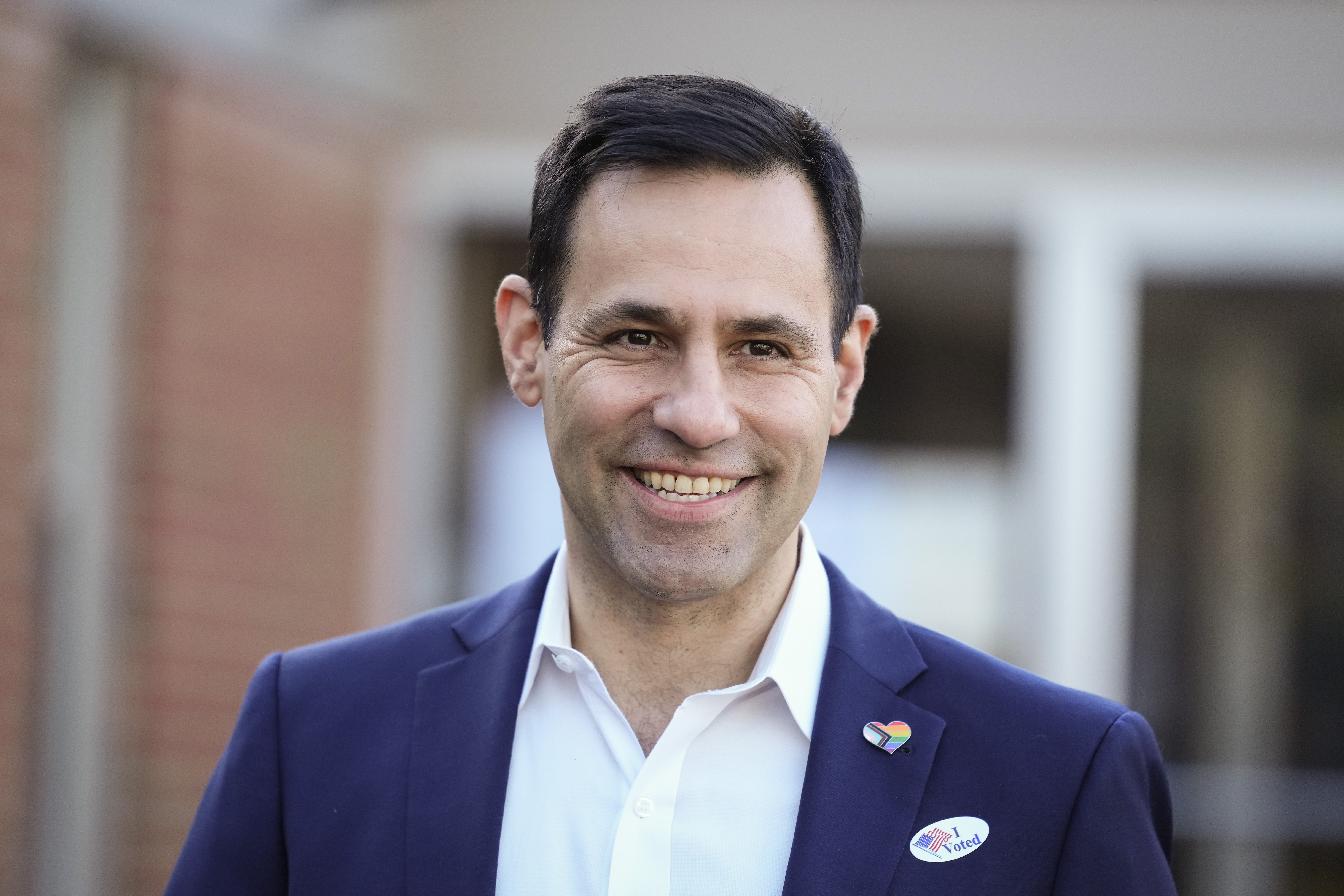
    Joe Khan, a Democratic candidate running for Bucks County DA, walks from his polling place in Doylestown, Pa. in April 2024 when he was running for attorney general.

    “When a defendant is arrested and they come into court, every prosecutor answers this question: Should this person be detained or not?” Khan said. “If the answer is yes, then your position in court is that this person shouldn’t be let out, and it doesn’t matter how much money they have. And if the answer is no, then you need to figure out what conditions you need to make sure they come to court.”

    Democrats claim to ‘keep politics out’

    Even as Democrats view voter anger at Trump as a key piece of their path to victory, they are working to present themselves as apolitical.

    Democratic ads attack Schorn for not investigating a pipeline leak in Upper Makefield and Harran as caring about nothing but himself. Positive ads highlight Ceisler’s military background and Khan’s career as a federal prosecutor.

    Khan and Ceisler, the Democratic Party’s ads argue, will “stop child predators, stand up to corruption, and they’ll keep politics out of public safety.”

    Khan has described Schorn as a political actor running her office “under Trump’s blueprint.” He has focused on her decisions not to prosecute an alleged child abuse case in the Central Bucks School District or investigate the company responsible for a jet fuel leak into Upper Makefield’s drinking water.

    The jet fuel case was turned over to the environmental crimes unit in Pennsylvania Attorney General Dave Sunday’s office. And prosecutorial rules bar Schorn from discussing the alleged abuse.

    “During the last, I don’t know, 13 years when [Khan] has been pursuing politics, I’ve been a public servant,” Schorn said. “For someone accusing me of putting politics first, he seems to be using politics to further his own agenda.”

    But Schorn appears in GOP ads alongside Harran, a figure who has frequently invited political controversy in fights with the Democratic-led Bucks County Board of Commissioners, his effort to partner with federal immigration authorities, and his early endorsement of Trump last year.

    At a September rally in Newtown for Treasurer Stacy Garrity, a Republican running for governor, Harran cracked jokes about former President Joe Biden’s age as he climbed onto the stage and falsely told voters that they will “lose [their] right to vote” if they don’t vote out three Pennsylvania Supreme Court justices standing for retention.

    Harran has long contended that his decision to partner with ICE was not political.

    “I’m a cop who ran to keep being a cop. This isn’t about politics for me — it’s about doing everything I can to keep my community safe,” Harran said.

    Harran’s opponent, Ceisler, paints a different picture as he draws a direct line between the sheriff and the president.

    Danny Ceisler, a Democrat, is running for Bucks County sheriff.

    Trump, Ceisler said, has inserted politics into public safety in his second term, and he contended that Harran has done the same.

    “[Harran] used his bully pulpit to help get the president elected, so to that extent he is linked to the president for better or worse,” Ceisler said in an interview.

    Ceisler has pledged to take politics out of the office and end the department’s partnership with ICE if elected.

    At an event in Warminster last month, voters were quick to ask Ceisler which party he was running with. Ceisler asked them to hear his pitch about how he would run the office first.

    “Don’t hold it against me,” he quipped as he ultimately admitted to one voter he’s a Democrat.

    Staff writer Fallon Roth contributed to this article.

    This suburban content is produced with support from the Leslie Miller and Richard Worley Foundation and The Lenfest Institute for Journalism. Editorial content is created independently of the project donors. Gifts to support The Inquirer’s high-impact journalism can be made at inquirer.com/donate. A list of Lenfest Institute donors can be found at lenfestinstitute.org/supporters.

  • Philadelphia’s immigration court now rejects three in four asylum cases under Trump

    Philadelphia’s immigration court now rejects three in four asylum cases under Trump

    Asylum denials in Philadelphia’s immigration court have spiked through the first seven months of President Donald Trump’s administration, according to an Inquirer analysis of the latest available government data.

    The court has denied 74% of asylum claims in the first seven months of Trump’s second term, compared with a 61% denial rate during the last seven months of the Biden administration, mirroring national trends.

    The data were published by the Transactional Records Access Clearinghouse (TRAC), a data gathering and research organization that regularly acquires and analyzes such data from the Executive Office for Immigration Review (EOIR), the agency responsible for overseeing the nation’s immigration courts system.

    window.addEventListener(“message”,function(a){if(void 0!==a.data[“datawrapper-height”]){var e=document.querySelectorAll(“iframe”);for(var t in a.data[“datawrapper-height”])for(var r,i=0;r=e[i];i++)if(r.contentWindow===a.source){var d=a.data[“datawrapper-height”][t]+”px”;r.style.height=d}}});

    And it’s not just that denials are up: The volume of cases has risen substantially as well. The Philadelphia court heard twice as many cases over Trump’s first seven months, compared with Biden’s final seven: 1,059 vs. 513.

    Local immigration attorneys say that’s no coincidence.

    “Absolutely. They’re pushing cases to go forward,” said Brennan Gian-Grasso, founding partner of Philadelphia’s Gian-Grasso & Tomczak Immigration Law Group, when asked whether the two trends may be connected. “Additionally — and I think this is probably the big difference — prosecutorial discretion.”

    Under the Biden administration, Gian-Grasso said, immigration officials often gave asylum seekers who may not have necessarily qualified for asylum the opportunity to remain in the United States by putting a case on hold or otherwise allowing individuals to continue to stay in the United States so long as they did not have a criminal record or other derogatory characteristics.

    “That’s gone,” said Gian-Grasso. “Every case is going forward now.”

    The administration has been open about its efforts to push cases through the system. Last month, EOIR issued a news release trumpeting a shrinking backlog of immigration court cases — claiming a decrease of 450,000 pending cases since Trump’s inauguration. TRAC data indicate a slight decrease for Philadelphia’s backlog since the start of the current fiscal year last October.

    Emma Tuohy, a partner at Philadelphia’s Landau, Hess, Simon, Choi & Doebley and a recent past president of the American Immigration Lawyers Association’s Philadelphia chapter, suggested the rising number of decisions and denial rates were connected to another recent trend: surging arrests and detentions by Immigration and Customs Enforcement (ICE).

    “Denials in detained settings have always been higher,” Tuohy said, explaining that attorneys face particular obstacles when representing detained clients.

    The Inquirer reported in August that the number of people detained in ICE custody in New Jersey and Pennsylvania was up about 68% in July compared with figures at the start of Trump’s administration.

    Historically, asylum denial rates are vastly higher for those individuals who were in custody at the time a decision was rendered in their cases. Since the start of the 2000 fiscal year, about 99% of detained individuals in Philadelphia’s immigration court were denied asylum, compared with 63% of individuals who were detained at some point but later released and 58% of those who were never detained since the start of fiscal 2000. Similar, though smaller, gaps exist nationally.

    window.addEventListener(“message”,function(a){if(void 0!==a.data[“datawrapper-height”]){var e=document.querySelectorAll(“iframe”);for(var t in a.data[“datawrapper-height”])for(var r,i=0;r=e[i];i++)if(r.contentWindow===a.source){var d=a.data[“datawrapper-height”][t]+”px”;r.style.height=d}}});

    “[Cases] move much, much quicker — within just a couple months — as opposed to non-detained cases which can take a few years. It’s a much shorter timeline to put together extensive documentation and it’s obviously quite a bit harder to work with clients, given they are not as accessible as normal,” said Tuohy. “It’s much harder for individuals in detention to collect documents, to call people they need to speak with, to prepare their statements, to request letters from witnesses. We’re relying mostly on families that are outside and they may not have all the information nor access.”

    Officials at EOIR did not respond to requests for comment.

    A flurry of policy changes have made winning cases tougher

    The substantial increase in denial rates since Trump’s inauguration has been accompanied by a succession of policy changes at EOIR.

    The first came in a February memo issued by Sirce Owen, the Trump-appointed acting director of EOIR. Unlike typical federal judges, immigration court judges are not independent judicial branch officials but executive branch employees within EOIR. The directive rescinded a 2023 memo meant to better ensure that individuals in asylum proceedings are provided with adequate interpretation and translation services.

    Gian-Grasso explained that access to interpretive services can be critical to an asylum seeker’s ability to properly plead their case.

    “Just in my own experience, I’ve had clients who could not speak a word of English — and were illiterate even in their own language — but in translation during testimony could very, very effectively and intelligently articulate their fear of return to their country and their asylum case,” he said.

    Gian-Grasso worried the policy shift would put some asylum seekers at a severe disadvantage.

    “Limiting that kind of access dooms asylum cases because if you can’t tell your story, what does the judge have to go on?” he said.

    Historically, asylum denial rates are significantly higher for those individuals who don’t speak English. In Philadelphia’s immigration court, about 62% of non-English speakers were denied asylum, compared with 51% of English speakers, since the start of fiscal 2000.

    window.addEventListener(“message”,function(a){if(void 0!==a.data[“datawrapper-height”]){var e=document.querySelectorAll(“iframe”);for(var t in a.data[“datawrapper-height”])for(var r,i=0;r=e[i];i++)if(r.contentWindow===a.source){var d=a.data[“datawrapper-height”][t]+”px”;r.style.height=d}}});

    Attorneys have cited a second memo, issued in April, as likely to have an even greater effect on asylees.

    That memo essentially encouraged immigration judges to order an asylum seeker removed before providing them with an opportunity for a full hearing of their case — an action known as pretermission — if a judge believes that an applicant has failed to present sufficient corroborating evidence at the outset of their proceedings.

    Tuohy described the practical effect of the policy as telling judges to throw out cases over paperwork errors.

    “These [cases] are not being pretermitted because there’s not corroborating evidence or there’s not an affidavit or there’s a credibility issue where they don’t believe a person’s story on the merits,” Tuohy said. “This is just because someone has not fully filled out a form.”

    Gian-Grasso said the new memo will likely be particularly difficult on individuals navigating the immigration system without an attorney.

    “Asylum is highly technical. It’s very difficult to put together an asylum case,” Gian-Grasso said. “You can have a valid asylum case, but if you don’t know how to put it together legally — now judges are being told to look to pretermit in these situations.”

    Historically, asylum denial rates are markedly higher for those individuals who don’t have access to an attorney. In Philadelphia’s immigration court, about 82% of asylum applicants without representation were denied asylum, compared with 57% of those who did. An even larger gap exists nationally.

    window.addEventListener(“message”,function(a){if(void 0!==a.data[“datawrapper-height”]){var e=document.querySelectorAll(“iframe”);for(var t in a.data[“datawrapper-height”])for(var r,i=0;r=e[i];i++)if(r.contentWindow===a.source){var d=a.data[“datawrapper-height”][t]+”px”;r.style.height=d}}});

    Denial rates vary by president, and, locally, by judge

    While recent denial rates are the highest on record, increases and decreases in the rate of asylum denials are nothing new.

    While Philadelphia’s recent denial rate marks the highest since data became available a quarter century ago, rates have fluctuated over time, with notable shifts depending on who’s in the White House.

    window.addEventListener(“message”,function(a){if(void 0!==a.data[“datawrapper-height”]){var e=document.querySelectorAll(“iframe”);for(var t in a.data[“datawrapper-height”])for(var r,i=0;r=e[i];i++)if(r.contentWindow===a.source){var d=a.data[“datawrapper-height”][t]+”px”;r.style.height=d}}});

    In addition to notable partisan gaps, the data reveal another factor in success for an asylum speaker: the judge assigned to the case.

    From the 2019 through 2024 fiscal years, the Philadelphia judge with the lowest denial rate denied asylum in 33% of cases, compared with the judge with the highest denial rate, 85%.

    Tuohy expressed frustration over that chasm in case outcomes.

    “There’s just absolutely no way that those judges are being assigned such fundamentally different cases that their grant rates should be so different so unfortunately yes, it makes a huge difference what judge you get assigned to,” Tuohy said.

    Gian-Grasso agreed, arguing it’s one more reason that asylees without an attorney are penalized.

    “You know as an attorney what you’re getting when you go in with these judges and how to structure your case,” said Gian-Grasso. “But, again, that goes back to our [unrepresented asylum seekers]. They have no idea and they’re similarly disadvantaged for having this lack of knowledge at the end of the day.”

  • Thousands turn out in Philly for the ‘No Kings’ protest

    Thousands turn out in Philly for the ‘No Kings’ protest

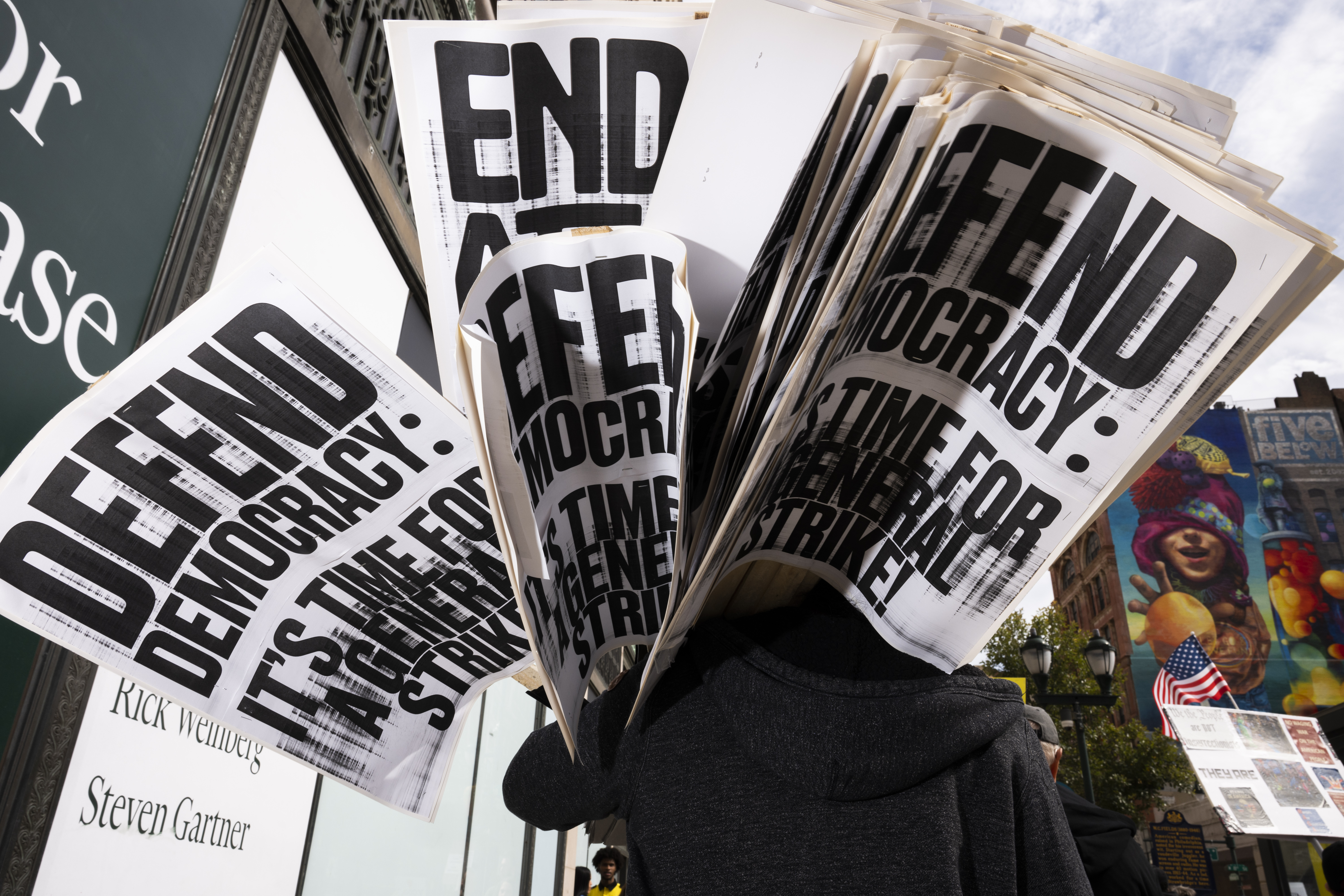
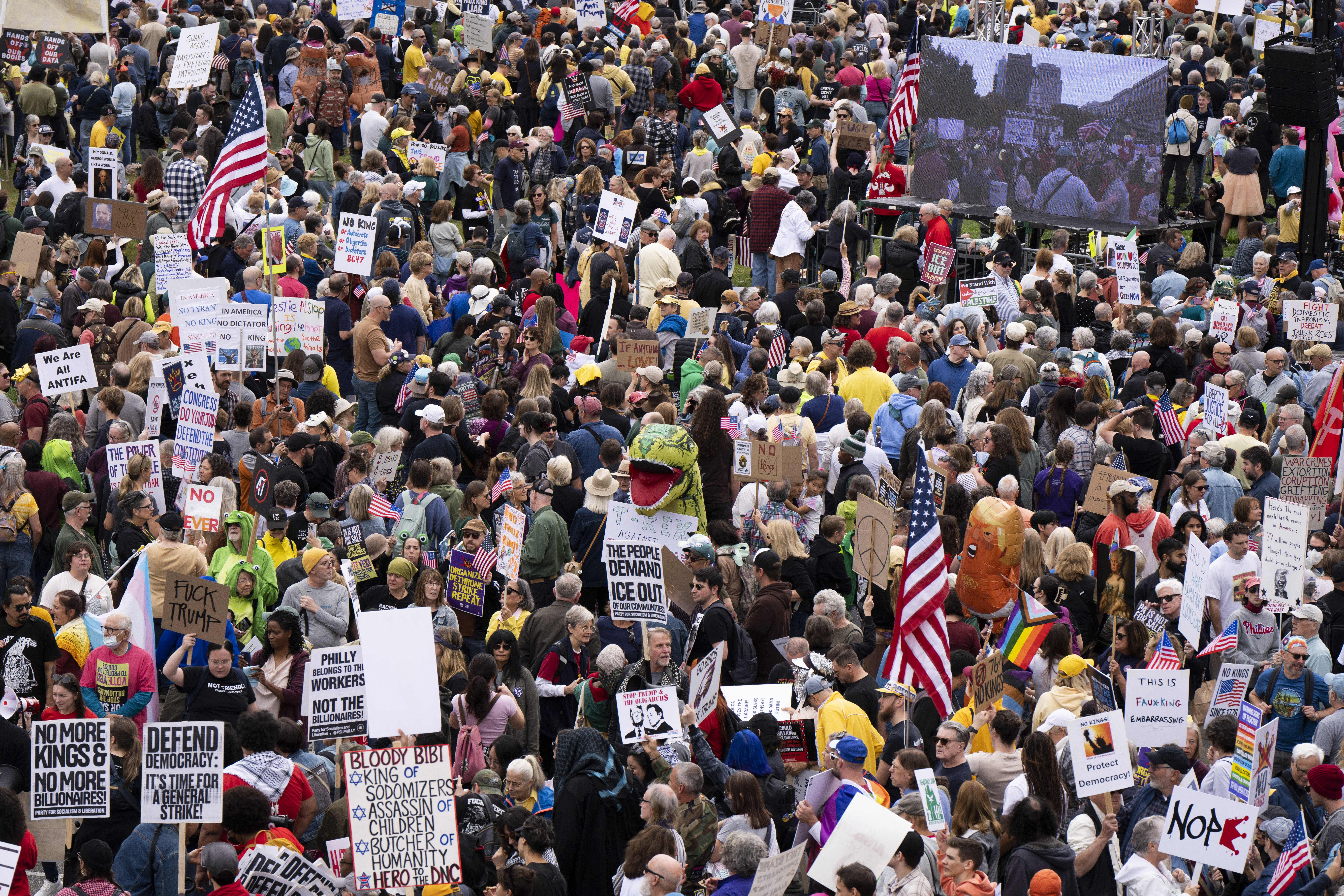
    Joining demonstrators around the country, thousands gathered Saturday in Philadelphia to protest President Donald Trump’s actions that they contend are threatening to undermine 250 years of the nation’s democratic traditions.

    “I think everybody needs to know that we’re not going to just sit back,” said Sherri King, who arrived at the “No Kings” rally in Center City wearing an inflatable chicken costume.

    On a mild October afternoon when the weather was drawing no protests, the event began in a festive atmosphere with the sounds of clanking bells as participants gathered at City Hall — some, like King, wearing pre-Halloween regalia — and marched to Independence Mall.

    Demonstrators gather for a’ No Kings’ rally in Philadelphia on Saturday, Oct. 18, 2025.

    “It’s a very large, orderly crowd,” said Police Capt. Frank Palumbo. The three-hour march and rally, which began at noon, actually ended on time.

    Said Thomas Bacon, a 72-year-old Vietnam veteran from North Philadelphia: “It’s peaceful. No division. Just opposition.”

    Under Trump, he said, “the whole world is turned upside down.”

    In what was the third mass anti-Trump protest this year, several organizers were taking credit, including Indivisible, MoveOn, and the 50501 Movement.

    The demonstrators’ menu of grievances included aggressive raids by Immigration and Customs Enforcement, Trump’s budget and efforts to limit free speech, and the government shutdown that began Oct 1.

    Organizers of the more than 2,500 demonstrations nationwide say the shutdown in particular is a dangerous move toward authoritarianism.

    Trump and congressional Republicans are blaming Democrats for refusing to vote on a reopening.

    For his part, Trump spent the day of what fellow Republicans were calling “Hate America” rallies at his Florida mansion.

    Demonstrators gather for a’ No Kings’ rally in Philadelphia on Saturday, Oct. 18, 2025.

    At the Philadelphia protest, Laura Murphy, a 74-year-old retiree, said she was struggling with the “Hate America” concept. “It’s ridiculous,” she said. “What could be more American than being against kings?”

    Along with demonstrators, Democratic politicians were evident at events in Philly and elsewhere.

    With Democrats hoping to make significant gains in the 2026 election, the presence of party elected officials was evident at rallies in Philly and elsewhere. Among those who showed up in Philadelphia were area U.S. Reps. Mary Gay Scanlon, Madeleine Dean, and Brendan Boyle, along with U.S. Rep. Jamie Raskin of Maryland.

    Rallies were being held all over New Jersey, Pennsylvania, the region, the nation — even Spain, where a few hundred gathered in Madrid. About 5,000 people jammed the streets of West Chester.

    In Philly, Jerry Lopresti, who said he never had attended a protest in his 64 years, said: “There has to be a show of numbers. It’s important to show up.”

    Demonstrators gather for a ’No Kings’ rally in Philadelphia on Saturday, Oct. 18, 2025.

    Among those who showed up conspicuously was Michael Noonan, 48, of Northern Liberties. He was wearing a Tinky-Winky Teletubby costume as he walked off a Market-Frankford Line subway car.

    He said his outfit was a counterpoint to suggestions that the demonstrations might turn violent. “Nobody’s here to fight anyone,” he said, “nobody’s here to kill anyone.”

    Not everyone who showed up had issues with Trump.

    Patrick Ladrie, 20, who lives in Camden County, stood out in his Trump hat and “ultra MAGA” T-shirt that proclaimed “I love our king.”

    He said he crossed the Delaware River to “get a good viewpoint of what the American left is.”

    After engaging in debate with three protesters on matters that included Christianity and conservatism, Ladrie reported that the environment was not so bad.

    In fact, he said, it was one of the “most peaceful” debates he could recall. As one of his adversaries jogged away to meet up with his friends, Ladrie said, “Keep out of trouble.”

    The protest was a decidedly intergenerational affair, with some parents describing the event as a teachable moment, while others said it was their progeny who came up with the idea to attend. Danielle Pisechko, 38, carried her youngest, who wore orange butterfly wings, on her shoulders.

    Their sign read: “The only monarchs we want are butterflies.”

    Demonstrators gather for a’ No Kings’ rally in Philadelphia on Saturday, Oct. 18, 2025.

    The participants included Center City resident Reed Oxman, 66. Although his disability limited his movement, he and his husband sat on a ledge near City Hall as evidence of the diversity of the crowd. “It’s [about] representation and clearing all the lies about who is coming to this,” Oxman said.

    Lana Reckeweg, who lives at a North Philly women’s shelter, said her resources were seriously limited, but that didn’t stop her from finding cardboard and getting markers to make signs to give to other demonstrators.

    She said that over the last several months a handful of undocumented women have found sanctuary in the place she calls home, and seeing their struggles made her want to attend the protest on their behalf.

    “I have done a lot of crying. I see how it’s affecting them every day,” said Reckeweg, trying to keep her handwriting steady on a moving bus.

    “I am here because they can’t be. People need to wake up and realize it’s getting a lot more serious more quickly than expected.”

    As for what effect the rallies might have, “I would tend to doubt that the protests will have any immediate direct impact on the administration’s policies,” said David Redlawsk, chair of the political science and international relations department at the University of Delaware, but “they may work to embolden those who are opposed to Trump’s actions to continue to organize and respond.”

    Sam Daveiga, 15, attended her first protest, the Women’s March, when she was 7 years old. This time, she brought along her father, Ed. “Every voice counts,” the Philly teen said.

    “You can have a small voice, but the second you put it with everyone else who’s come out, it amplifies.”

    Staff writers Emily Bloch, Scott Sturgis, and Rob Tornoe contributed to this article, which contains information from the Associated Press.

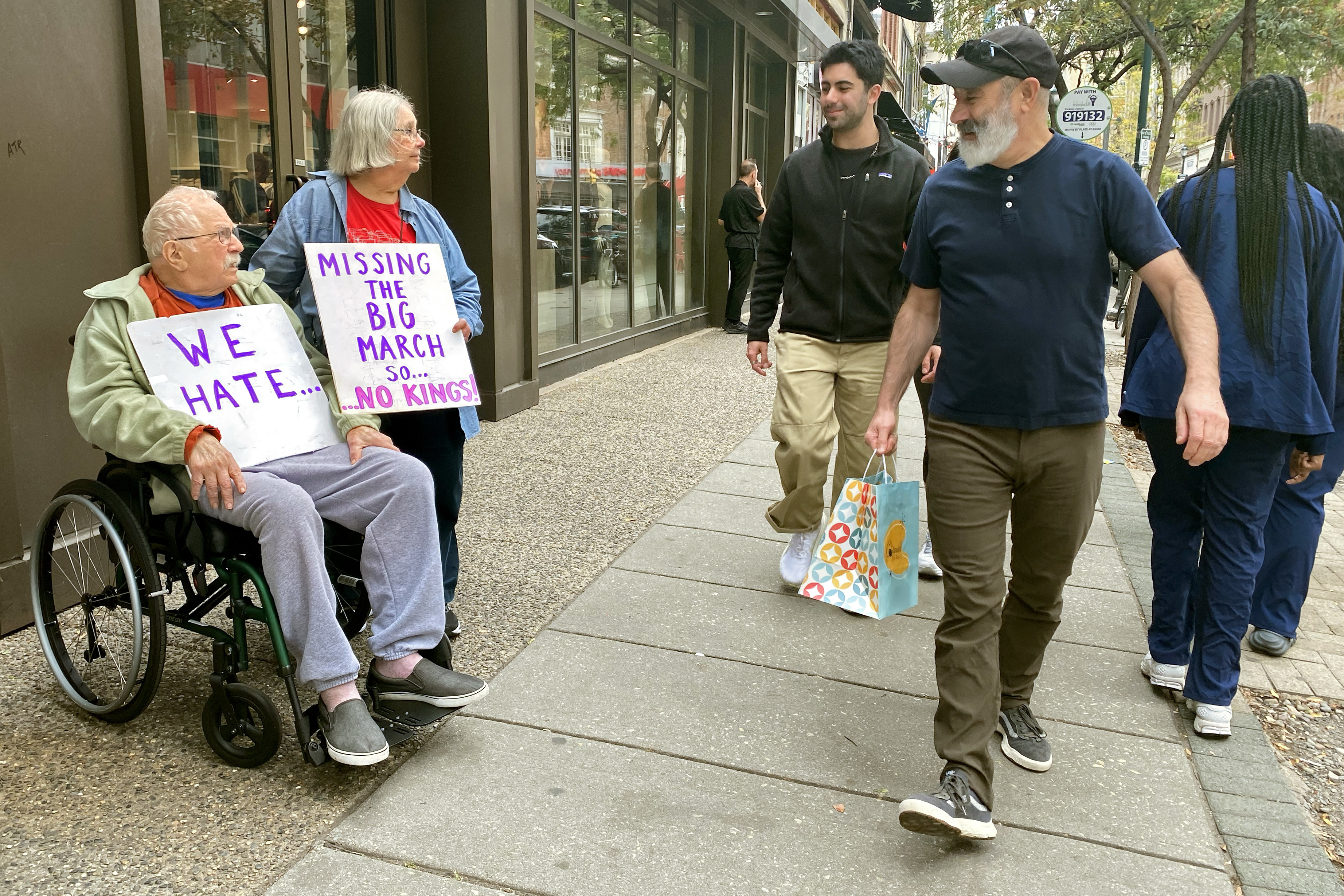
    Fourteen blocks away from the “No Kings” rally on Independence Mall, Bert and Lynne Strieb stand (and sit) in silent protest Saturday, Oct. 18, 2025 outside their apartment building in the 1900 block of Chestnut Street, vicariously joining thousands of others in Philadelphia and in cities across the country in response to Trump’s masked ICE agents and the deployment of troops in American cities. The Striebs, both in their 80s, could not attend the June “No Kings” march as Bert was in the hospital, and Lynne said they “did not want to miss this one.”

  • Dave McCormick joins fellow Senate Republicans urging RFK Jr. to rescind approval for an abortion pill

    Dave McCormick joins fellow Senate Republicans urging RFK Jr. to rescind approval for an abortion pill

    U.S. Sen. Dave McCormick (R., Pa.) has joined fellow Senate Republicans in signing on to a letter urging top health officials in the Trump administration to rescind approval for a drug used in one of the most common methods of abortion.

    In a letter to Health and Human Services Secretary Robert F. Kennedy Jr. and FDA Commissioner Marty Makary earlier this month, the Republican senators recommended, among other things, that officials re-evaluate the safety of mifepristone, one of two pills commonly used in a medication abortion, and suspend the distribution of the drug and its generic versions, saying it should be considered an “imminent hazard” at the federal level.

    “Today, your agencies have all the information they need to bring an end to previous Democrat administrations’ abortion drug regulations while a comprehensive review is conducted,” the Republicans wrote in the letter.

    Only two Senate Republicans, Lisa Murkowski (R., Alaska) and Susan Collins (R., Maine), did not sign the letter.

    Mifepristone is considered safe and effective and is used to terminate early-stage pregnancies and manage miscarriages, according to the American Medical Association. It received initial approval from the Food and Drug Administration in September 2000.

    McCormick’s signature on the letter could signal a change in how the Pennsylvania Republican views abortion regulation. During his campaign last fall, McCormick said during a debate that he wants to leave regulation to individual states, which has been the status quo since the U.S. Supreme Court overturned Roe v. Wade in 2022. His backing of the letter, which encourages sweeping policy decisions at the national level, suggests otherwise.

    “Sen. McCormick has concerns about the adverse effects mifepristone can have on women, as shown in a recent study,” a spokesperson for McCormick said in a statement Friday evening. “This letter addresses those potential impacts on women’s health and encourages HHS and FDA to reevaluate the potential risks and harms associated with mifepristone. Sen. McCormick also issued a statement yesterday applauding the White House’s efforts to lower IVF costs.”

    Eugene DePasquale, chair of the Pennsylvania Democratic Party, accused him of betraying his constituents.

    “Sen. McCormick’s support for an extreme anti-choice policy that could threaten the lives of Pennsylvania women is a shameful betrayal of his constituents,” DePasquale said. “This type of extreme policy coming out of Washington only makes it clearer that everything is on the line when it comes to protecting our freedom — and it is up to us to do it right here at the state level.”

    Last month, Kennedy said the FDA is reviewing the safety of mifepristone.

    “By law, the FDA has very limited discretion in deciding whether to approve a generic drug, and the FDA’s approval of a generic mifepristone is not an endorsement of the product. HHS remains committed to its study of the reported adverse effects of mifepristone,” White House spokesperson Kush Desai said in a statement to The Inquirer.

    Medical abortions, where mifepristone is used as part of a two-drug regimen along with misoprostol, account for more than half of all abortions performed in the U.S., according to the Cleveland Clinic in 2024.

    Should the FDA revoke its approval of mifepristone, medical abortions won’t be eradicated. Medication abortions are possible using just misoprostol, but the method is less effective, according to a 2021 report from the American Family Physician.

    In addition to their safety concerns, Senate Republicans are also urging Kennedy and Makary to suspend approving new generic versions of mifepristone awaiting the results of a safety review of the Risk Evaluation and Mitigation Strategies (REMS) for the drug. REMS are safety programs for certain medications as required by the FDA.

    The Republicans are also urging the federal government to require mifepristone and its generic versions to be distributed in person, not through mail, and not at a pharmacy.

    The letter also claims that the U.S. has an “‘abortion-on-demand’ culture,” referring to the accessibility of mifepristone through mail. But, according to Planned Parenthood, a telehealth call is required before any pill is shipped.

    Staff writer Katie Bernard contributed to this article.

    This story was updated to include a comment from Sen. McCormick.

  • Barack Obama endorses Mikie Sherrill for New Jersey governor

    Barack Obama endorses Mikie Sherrill for New Jersey governor

    Former President Barack Obama endorsed U.S. Rep. Mikie Sherrill, the Democratic nominee for New Jersey governor, who is locked in a tight race with Republican Jack Ciattarelli.

    Obama’s announcement just weeks ahead of the Nov. 4 election came in the form of an ad paid for by Sherrill’s campaign that Sherrill shared on X Friday morning.

    “Mikie is a mom who will drive down costs for New Jersey families,” Obama said in the ad, echoing her campaign’s core message. “As a federal prosecutor and former Navy helicopter pilot, she worked to keep our communities safe.”

    “Mikie’s integrity, grit, and commitment to service are what we need right now in our leaders,” he adds.

    Sherrill maintains a single-digit lead in polls over Ciattarelli, a former Assembly member who also ran for governor in 2017 and 2021 and has the endorsement of President Donald Trump.

    In a statement, Sherrill praised Obama for leading “historic efforts to lower healthcare costs” and criticized Ciattarelli for defending cuts to Medicaid in Trump’s “big beautiful bill.”

    “There’s so much at stake in this election, so President Obama and I are mobilizing New Jerseyans to make a plan to vote on or before November 4,” Sherrill added.

    The race has been tightening, with each candidate solidifying their bases.

    New Jersey is only one of two states with a race for governor this year, along with Virginia, and national money has been flowing into the race.

    Sherrill last week appeared in South Jersey last week with Sens. Cory Booker (D., N.J.) and Amy Klobuchar (D., Minn.) and in her hometown of Montclair with former U.S. Rep. Gabby Giffords, an Arizona Democrat. She will appear in this weekend with Maryland Gov. Wes Moore.

    Ciattarelli appeared on Wednesday with Ohio gubernatorial candidate Vivek Ramaswamy, who co-founded Trump’s DOGE and who appeared at a GOP summit in Atlantic City earlier this year to garner enthusiasm ahead of the gubernatorial primary.

    Trump does not currently have plans to appear in the state with Ciattarelli, Axios reported. While New Jersey shifted more in support of Trump in 2024 he still lost the state by 6 percentage points.

    The president held a tele-rally ahead of the primary after Ciattarelli pocketed his endorsement in May. Trump is planning to host more of these, Axios reported.

    An earlier version of this story misidentified Vivek Ramaswamy’s position. He is a candidate for Ohio governor.

  • State Sen. Sharif Street has early fundraising lead in Philly congressional race, but his competitors are close behind

    State Sen. Sharif Street has early fundraising lead in Philly congressional race, but his competitors are close behind

    State Sen. Sharif Street has an early fundraising lead over his competitors in next year’s Democratic primary for a storied Philadelphia congressional seat, according to new campaign finance reports.

    But the race is in its early stages, and candidates who entered the race after Street still have plenty of time to catch up before the May 2026 primary.

    Street, the son of former Mayor John F. Street, entered the race for Pennsylvania’s 3rd Congressional District in early July, days after U.S. Rep. Dwight Evans (D., Philadelphia) announced he would not seek reelection. Street’s campaign launch coincided with the beginning of the campaign finance reporting period, allowing him three full months to solicit contributions and seek endorsements.

    He took in about $352,000 from July 1 through Sept. 30, according to the Federal Election Commission. His campaign spent $33,000 during that time, and he finished the period with $372,000 in cash on hand, which is also the most of any candidate in the race. (Street’s cash reserves are higher than his fundraising because he carried over money from a previous campaign account.)

    “Our strong fundraising results put us in a commanding position,” Street campaign manager Josh Uretsky said in a statement. “We’re building a strong campaign that will hit every neighborhood in the Third District by leveraging our broad-based coalition.”

    window.addEventListener(“message”,function(a){if(void 0!==a.data[“datawrapper-height”]){var e=document.querySelectorAll(“iframe”);for(var t in a.data[“datawrapper-height”])for(var r,i=0;r=e[i];i++)if(r.contentWindow===a.source){var d=a.data[“datawrapper-height”][t]+”px”;r.style.height=d}}});

    State Rep. Chris Rabb, an anti-establishment progressive, who raised $257,000, also announced his campaign in July.

    Rabb’s haul was notable for a candidate with little support among Philadelphia’s established political organizations, such as the deep-pocketed building trades unions that endorsed Street this week. As he has in past runs, Rabb said he is eschewing contributions from corporate-backed political action committees, and tapping into a national network of progressive small-dollar donors.

    “This is a robust, grassroots campaign that’s fueled and funded by a growing movement of Philadelphians and citizens far & wide who want a bold, independent-minded and accountable Democrat to represent the bluest congressional district in the nation,” Rabb said in a statement.

    His campaign spent $76,000, and carried forward $181,000.

    State Rep. Morgan Cephas, a West Philly Democrat who chairs the Philadelphia delegation to the state House, collected $156,000 in contributions, a respectable sum given that she entered the race about a month before the reporting deadline. Her campaign spent $37,000 and had $119,000 in cash.

    In a statement, Cephas said “the excitement about our campaign is palpable.”

    “I understand the problems of Philadelphia because I’ve lived them for the last 41 years,” Cephas said. “Together we can deliver real results for our community.”

    Political outsiders aim to shake up race

    David Oxman, a physician who lives in South Philadelphia, brought in $107,000, spent $35,000, and had a healthy $332,000 in the bank.

    “Since day one, this campaign has been fueled by healthcare professionals, small business owners, and working families across Philadelphia who are ready to take power back from leaders bought by corporate interests,” Oxman said in a statement.

    David Oxman, an intensive care doctor and medical school professor at Thomas Jefferson University Hospital, is running for Congress. Oxman, 58, of Bella Vista, joins a race that includes State Reps. Sharif Street and Chris Rabb to replace retiring U.S. Rep. Dwight Evans.

    The campaign for Temple University professor Karl Morris raised $28,000, spent $26,000, and had $12,000 in cash on hand.

    “As a scientist, teacher, and a non-politician running an outsider campaign, my focus is on connecting with everyday Philadelphians,” Morris, a computer scientist, said in a statement. “Career politicians and the donor class want politics as usual. I’m prepared to make sure everyone in Philadelphia receives equal benefits and equal protections.”

    One notable candidate, physician Ala Stanford, entered the race after the close of the reporting period and has not yet submitted a campaign finance filing. Stanford was a founder of the Black Doctors COVID-19 Consortium and has been endorsed by Evans.

    “In just a few weeks in the race, Dr. Stanford has generated significant momentum — in contributions, volunteer engagement, and community enthusiasm,” Stanford campaign manager Aaron Carr said in a statement.

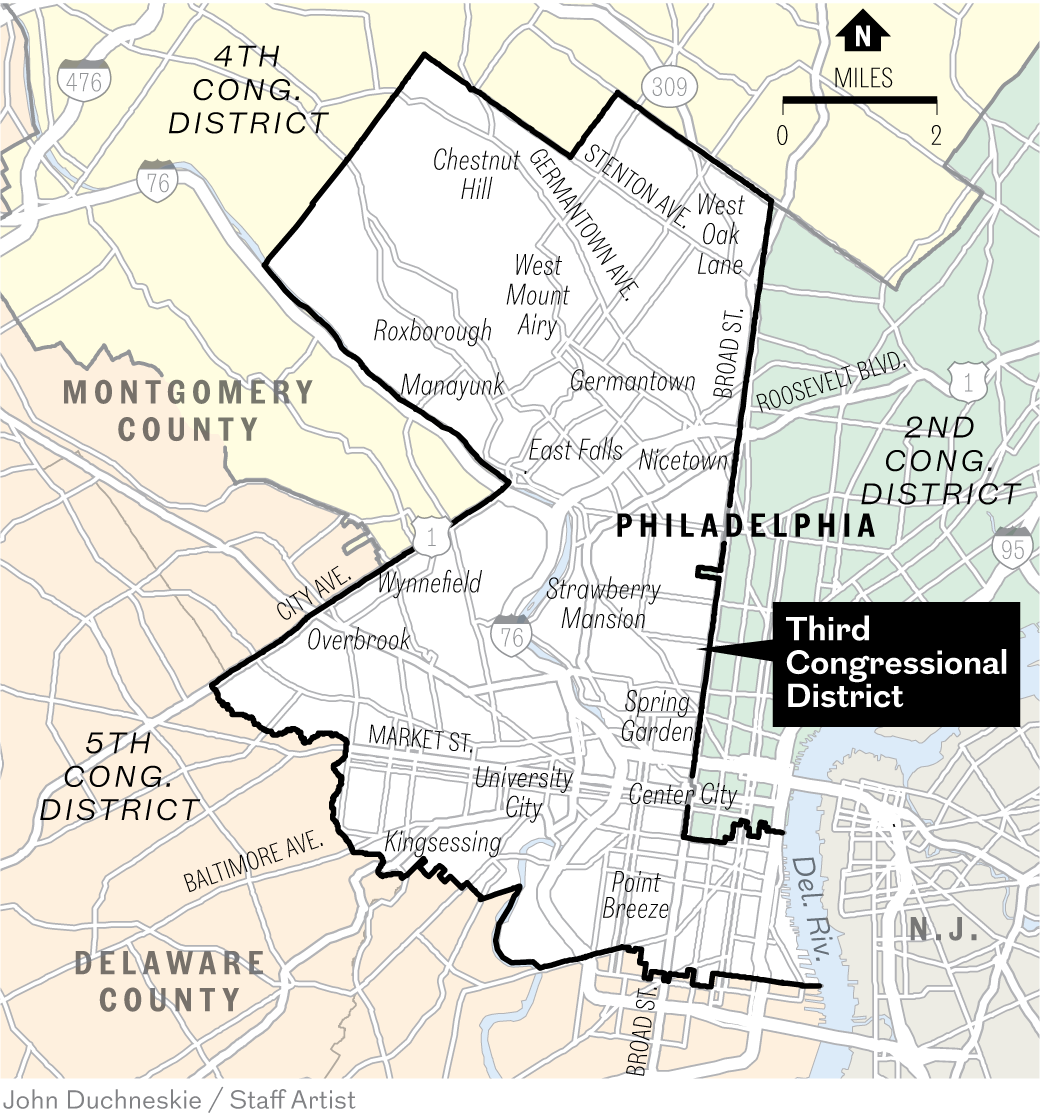
    Pennsylvania’s 3rd Congressional District, which includes parts of North, Northwest, West, and South Philadelphia, is one of the most Democratic seats in the nation. With Evans retiring from the seat he has held for nearly a decade, the field could still be in flux as more Philly politicians eye the potentially once-in-a-generation ticket to Washington.

    Map of Pennsylvania’s Third Congressional District.

    While the race remains competitive, Street’s early fundraising lead will help cement his status as the favorite of the local political establishment. Democratic City Committee chair Bob Brady said this week that party ward leaders will likely vote to endorse Street after this year’s election cycle wraps up next month.

    “We’re fully prepared to take advantage of this early lead,” Uretsky said.

    Brian Fitzpatrick outraises competitors in Bucks County congressional race

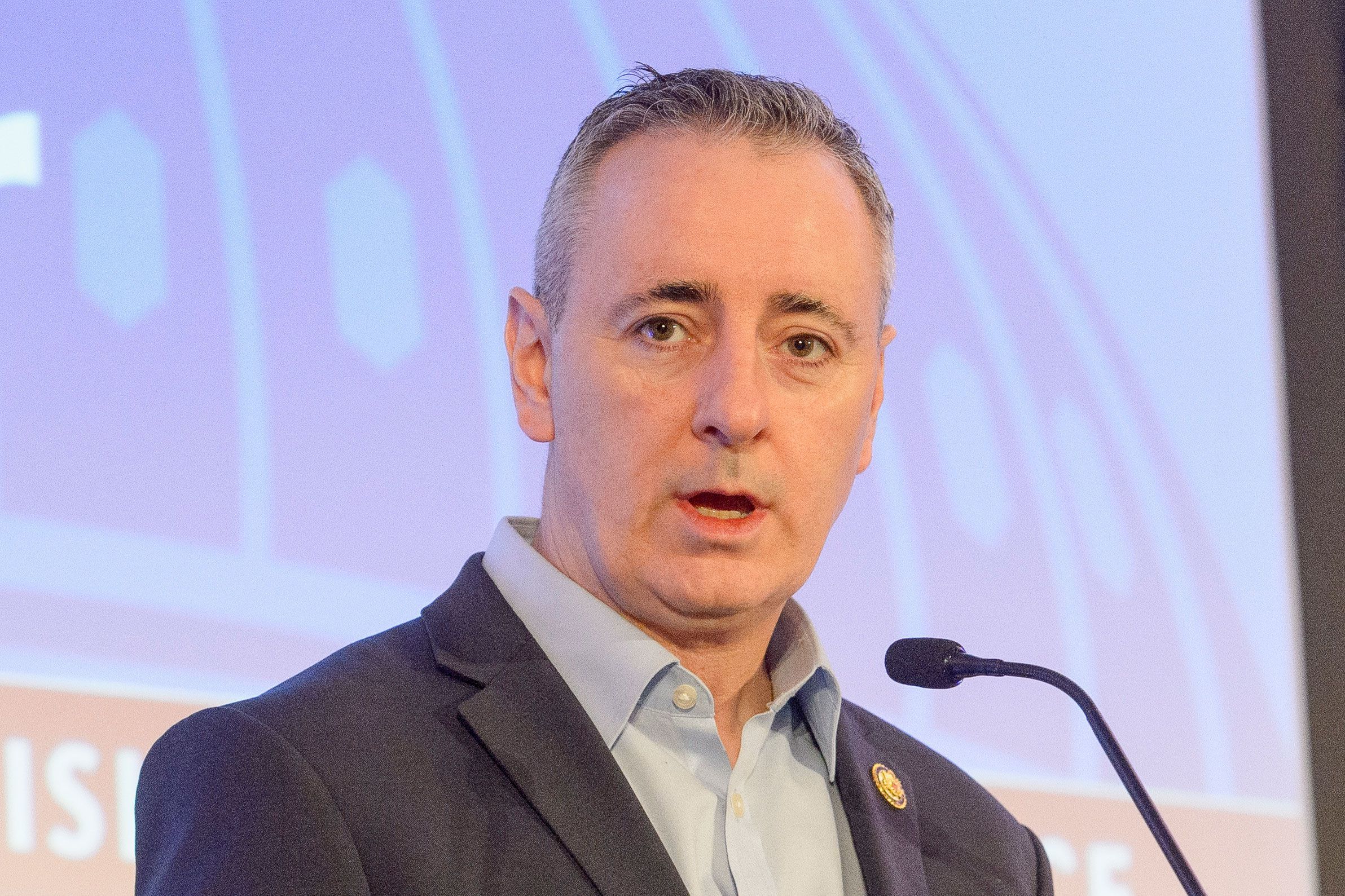
    In Pennsylvania’s 1st Congressional District, where Democrats have made ousting Republican U.S. Rep. Brian Fitzpatrick a top priority, the incumbent outraised his leading Democratic challenger by a nearly 4-1 ratio, bringing in $886,049 this quarter.

    Rep. Brian Fitzpatrick (R., Bucks and Montgomery) speaks during the opening session of the National Treasury Employees Union (NTEU) Legislative Conference in Washington in March.

    Unlike the deep-blue 3rd District, the fate of the 1st District will likely be decided in next year’s general election, and not the primary. The district, which includes all of Bucks County and a part of Montgomery County, is the only Philadelphia-area congressional seat represented by a Republican.

    Democratic County Commissioner Bob Harvie announced plans to challenge Fitzpatrick earlier this year.

    Harvie, viewed as the favorite to win the Democratic nomination, raised $217,745 last quarter. The other Democrat in the race, attorney Tracy Hunt, raised $36,692.

    This suburban content is produced with support from the Leslie Miller and Richard Worley Foundation and The Lenfest Institute for Journalism. Editorial content is created independently of the project donors. Gifts to support The Inquirer’s high-impact journalism can be made at inquirer.com/donate. A list of Lenfest Institute donors can be found at lenfestinstitute.org/supporters.

  • How the 3 Pennsylvania Supreme Court justices on the ballot have ruled in major cases

    How the 3 Pennsylvania Supreme Court justices on the ballot have ruled in major cases

    Three Pennsylvania Supreme Court justices are on the ballot this November, when voters will decide whether to extend each of their tenures for another 10-year term.

    There are currently five justices who were elected as Democrats and two who were elected as Republicans on the bench.

    This year’s retention race has drawn heightened attention, as Republicans have launched a campaign to sink the retention bids of Justices Kevin Dougherty, Christine Donohue, and David Wecht — all elected as Democrats in 2015 — in hopes of flipping the court’s balance.

    Once on the bench, judges are expected to shed their partisan label, which is why Pennsylvania extends judicial terms through retention elections instead of head-to-head races.

    Still, advocacy groups on both sides of the aisle are trying to make the case that control of the judicial seats is critical, if not existential, to their causes.

    The Inquirer reviewed the cases that have come before the Pennsylvania Supreme Court over the last decade, and how Dougherty, Donohue, and Wecht voted.

    Here are some of the most significant cases of their tenure.

    Abortion

    Pennsylvania’s highest court stopped just short of recognizing a constitutional right to abortion access in January 2024.

    The ruling came in a case challenging a state law limiting Medicaid funding for abortions except in cases involving rape, incest, or danger to the life of the mother.

    The 219-page majority opinion included language that strongly endorsed access to abortion as a right derived from the Pennsylvania Constitution, but the judges could not agree on whether they were ready to make the call in this case.

    The majority sent questions about a specific funding limit and broader constitutional protection for abortion access back to a lower court — setting up another round of legal battles that will likely, again, make it before the state Supreme Court.

    How the three justices ruled: Donohue wrote and Wecht joined the majority opinion. The two justices said they believed Pennsylvania’s 1971 Equal Rights Amendment clearly established a right to abortion access. Dougherty wrote a separate opinion saying this case did not call on the court to opine on the right to an abortion. “At least, not yet,” he wrote.

    Voting rights and elections

    The Pennsylvania Supreme Court has ruled on a litany of challenges to Pennsylvania’s election rules, many of them focused on the state’s mail voting law.

    In 2018, the justices threw out the state’s GOP-drawn congressional maps as unconstitutionally gerrymandered.

    In 2020, the court issued a major ruling ahead of the presidential election allowing for ballot drop boxes and allowing local election offices to accept ballots for up to three days after the election as long as those ballots were postmarked by 8 p.m. on Election Day.

    How the three justices ruled: Donohue, Dougherty, and Wecht each joined the majority opinion in the redistricting case. On the 2020 election ruling, Dougherty and Wecht joined the majority opinion. Donohue joined the majority opinion but dissented from the decision to extend the ballot deadline.

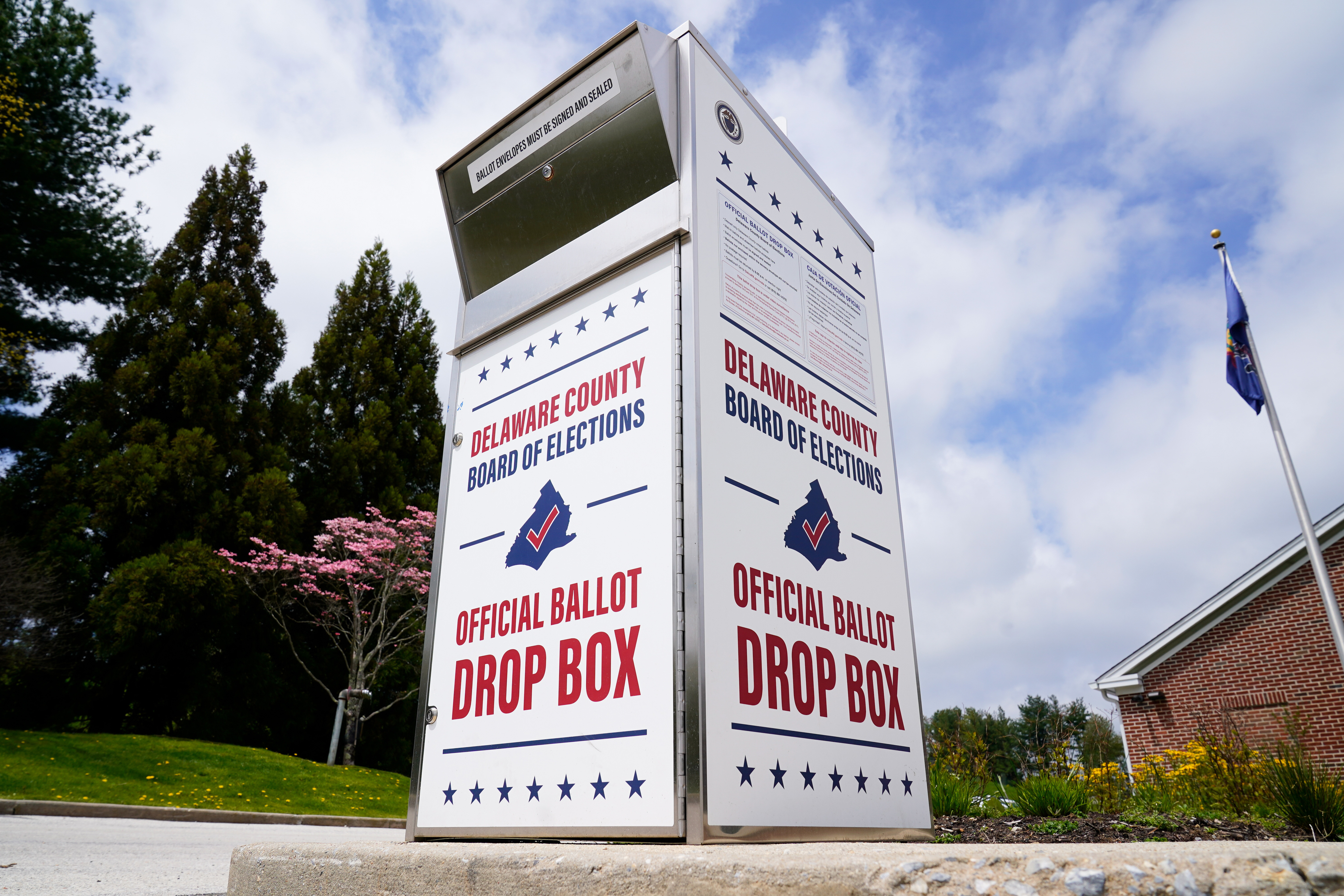
    A Delaware County secured drop box for the return of mail ballots in 2022 in Newtown Square.

    Education

    A Delaware County school district had the right to challenge Pennsylvania’s school-funding system, the Supreme Court ruled in 2017.

    The decision affirmed the role of courts in ensuring that state funding leads to equitable education and sent the case back to Commonwealth Court to proceed with litigation.

    In 2023, Commonwealth Court ruled, as part of the same case, that the state’s funding system for school districts led to disparities that prohibit quality education for all students, rendering it unconstitutional.

    How the three justices ruled: Wecht wrote the majority opinion, which Dougherty and Donohue joined.

    Environment

    Pennsylvania, which partly sits on the natural gas-rich Marcellus Shale, found itself in the midst of the fracking boom of the early 2000s.

    The state sold leases to oil and gas companies to drill wells. The practice raised questions, and legal challenges, as to how the state should use the revenues in the context of the Pennsylvania Constitution’s Environmental Rights Amendment.

    The court ruled in 2017 that it is unconstitutional for the state to use revenue from the royalties of oil and gas leases on public land to pay for anything but conservation and maintenance of the environment.

    How the three justices ruled: Donohue wrote the majority opinion, which Dougherty and Wecht joined.

    Justices David Wecht, Christine Donohue and Kevin Dougherty sit onstage during a fireside chat at Central High School in September. The conversation was moderated by Cherri Gregg, co-host of Studio 2 on WHYY, and presented by the Committee of Seventy, Pennsylvanians for Modern Courts, and the League of Women Voters of Pennsylvania.

    Criminal justice

    Pennsylvania has had the nation’s largest population of juvenile lifers: people sentenced as minors to life in prison without the possibility of parole.

    In 2017, the Supreme Court made it harder to sentence a juvenile to life. The majority opinion says there is a “presumption” against life without parole for juveniles who are found guilty of murder, and prosecutors must show that the offender is “unable to be rehabilitated” when seeking the sentence.

    How the three justices ruled: Donohue wrote the majority opinion, which Dougherty and Wecht joined.

    Second Amendment

    In 2024, for the first time, the Pennsylvania Supreme Court issued an opinion that interpreted the wording in the U.S. Constitution that gives Pennsylvanians the right to bear arms.

    In Stroud Township, a zoning ordinance that prohibited the discharge of a firearm within the township’s borders limited the possible locations for shooting ranges. The ordinance barred a resident from having a personal outdoor shooting range on his property, and he sued the township for violating his Second Amendment rights.

    The court ruled that the ordinance was constitutional.

    How the three justices ruled: Dougherty wrote the majority opinion, which Wecht joined. Donohue wrote her own opinion, reaching the same conclusion as the majority but disagreeing with the analysis.

    Larry Krasner

    Did Republican lawmakers make a procedural error in their 2022 effort to impeach Philadelphia District Attorney Larry Krasner? The Supreme Court in 2024 said they did, effectively ending a campaign in Harrisburg to oust the progressive prosecutor.

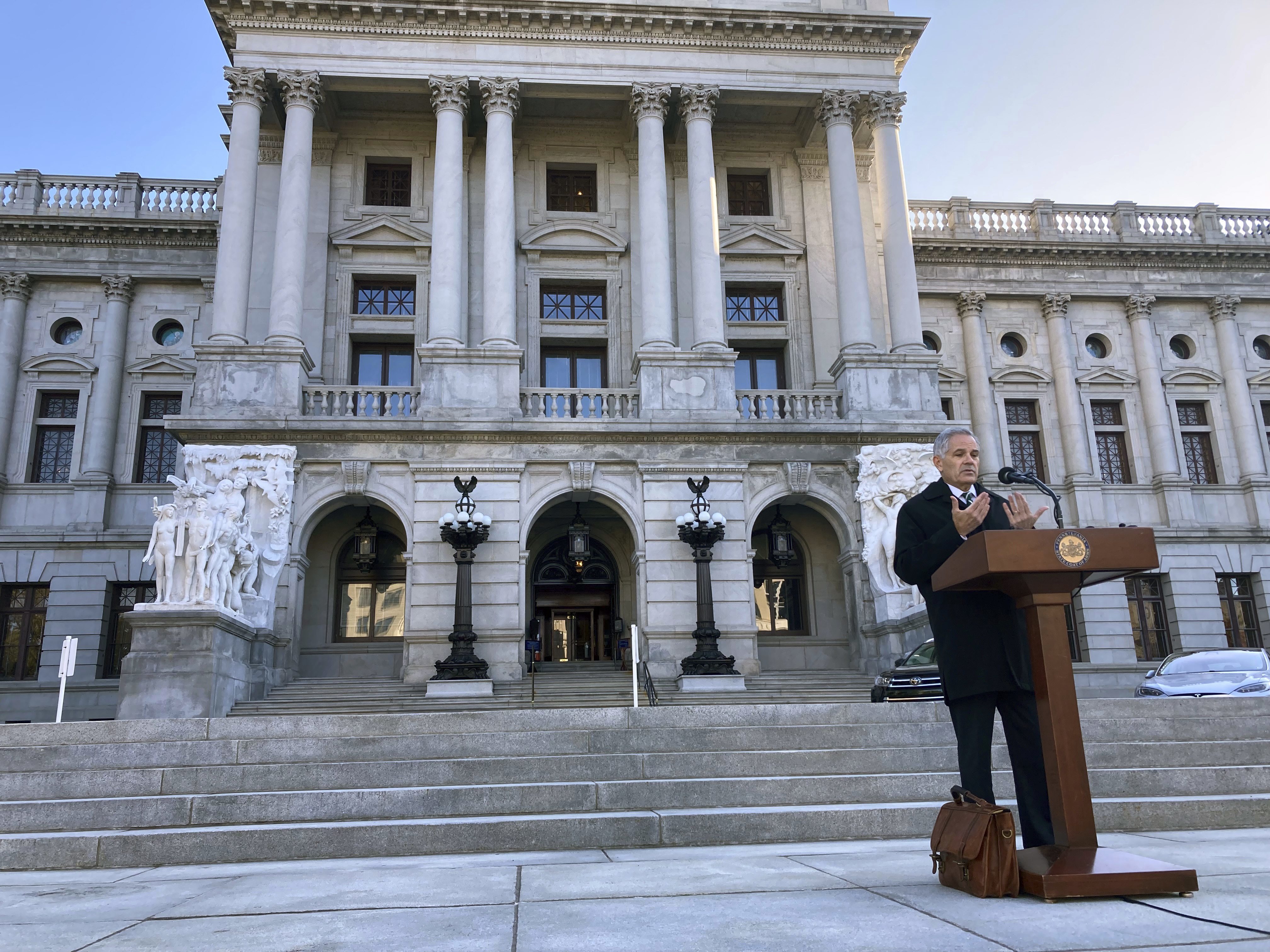
    Philadelphia District Attorney Larry Krasner talks about Republican-led efforts to investigate his record addressing crime and gun violence at the Pennsylvania Capitol in 2022.

    The decision said that the articles of impeachment approved by the state House in late 2022 were “null and void” because they were sent to the Pennsylvania Senate on the last day of that year’s legislative session, and the upper chamber did not complete its work on the matter before the next session began. The attempt to carry the process from one two-year session to the next was unlawful, the court said.

    The majority also agreed with a lower court that none of the articles of impeachment met the required legal standard of “misbehavior in office.”

    How the three justices ruled: Donohue and Wecht joined the majority opinion. Dougherty did not participate in the deliberations.

    Bill Cosby

    Disgraced actor and comedian Bill Cosby walked out of prison a free man in 2021 after the state Supreme Court reversed his sexual assault conviction.

    The court did not weigh in on the facts of the case or whether Cosby was guilty. Instead, it focused on a former Montgomery County prosecutor’s decade-old promise that Cosby would never be charged with drugging and assaulting Andrea Constand if he gave incriminating testimony in a civil case filed by his accuser. The justices found that the testimony was improperly used years later against Cosby at his criminal trial, calling it a “unconstitutional coercive bait-and-switch.”

    How the three justices ruled: Wecht wrote the majority opinion, which Donohue joined. Dougherty wrote a separate opinion, saying he would allow for Cosby to be retried, but would order his testimony from the civil case to be suppressed.

  • A leaked, secret survey reveals what Philly attorneys think about judges up for election

    A leaked, secret survey reveals what Philly attorneys think about judges up for election

    It’s a local tradition as predictable as slow-rolling through a South Philly stop sign or cursing Schuylkill Expressway traffic: Each election season, the Philadelphia Bar Association publishes its carefully considered opinion of the sitting judges up for reelection — then, the voters ignore it and send every incumbent back to the bench.

    That’s because, since 1969, judicial retention elections have been yes-or-no votes for each judge rather than head-to-head competition. In that time, only one Philadelphia Common Pleas Court judge has ever been denied another term — and he was already facing removal for misconduct in a high-profile case. He “had to work damn hard to lose that election,” retired Common Pleas judge Benjamin Lerner said.

    In September, the bar’s Commission on Judicial Selection and Retention issued its advice for the Nov. 4 election, recommending 13 out of the 18 judges seeking reelection to Philadelphia’s Common Pleas and Municipal Courts. Other than noting that three of the five “not recommended” judges had not participated in the review process, the bar — as is typically the case — released no further information about its decisions.

    But this year, The Inquirer obtained the confidential survey responses the association collected from hundreds of lawyers. The attorneys — who practice in Philadelphia’s criminal, civil, and family courts — provided the bar with detailed feedback under the cover of anonymity about the sitting judges. They also answered yes-or-no questions about their confidence in each judge’s integrity, legal ability, temperament, diligence, attentiveness, and general qualification for the job.

    The Inquirer followed up on the issues raised in the survey by interviewing lawyers and judges, watching weeks of court hearings, and reviewing a decade of Superior Court decisions.

    The survey results and The Inquirer’s examination offer voters a rare window into how members of Philadelphia’s legal community view the performance of the judges up for retention next month. It has been at least 40 years since such inside information was made available to the public.

    window.addEventListener(“message”,function(a){if(void 0!==a.data[“datawrapper-height”]){var e=document.querySelectorAll(“iframe”);for(var t in a.data[“datawrapper-height”])for(var r,i=0;r=e[i];i++)if(r.contentWindow===a.source){var d=a.data[“datawrapper-height”][t]+”px”;r.style.height=d}}});

    The survey responses show that, overall, lawyers have confidence in the integrity of the bench, a profound turnaround from an era of chronic judicial corruption scandals that continued well into this century.

    The judges earning the bar association’s recommendation include several on Common Pleas Court with near-unanimous support: Family Court Judges Walter Olszewski, Ourania Papademetriou, and Christopher Mallios; and Judge Ann Butchart, who handles civil cases.

    Olszewski is a “wonderful, caring, intelligent jurist,” one lawyer wrote. “A true public servant.”

    The majority of the judges received the bar’s recommendation despite feedback that was mixed, though generally positive.

    The most polarizing was Judge Tracy Brandeis-Roman, who has faced blistering appeals from the district attorney’s office accusing her of a pro-defendant bias. Two-thirds of lawyers surveyed said Brandeis-Roman is qualified, and some referred to her as a “fair and compassionate” jurist. But others called her biased and “ill-informed on the law.”

    Brandeis-Roman declined to comment.

    The judges who received the harshest criticism — and whom the bar ultimately declined to recommend — were faulted for their demeanor, disciplinary histories, or disregard for legal procedures.

    “She was cruel and condescending to my client,” a lawyer wrote of Common Pleas Court Judge Lyris F. Younge, who faced parent protests in 2018 and was later sanctioned by the state Court of Judicial Discipline.

    “Incapable, even after all of the years of being on the bench, of making an appropriate decision expeditiously,” another said of Common Pleas Court Judge Frank Palumbo.

    Younge and Palumbo did not respond to requests for comment.

    Marc Zucker, who chairs the bar’s Commission on Judicial Selection and Retention, said the anonymous survey has no bearing on the final recommendations. Instead, he described it as a jumping-off point for an extensive process in which more than 100 volunteer investigators interview candidates, other judges, and lawyers. They also scrutinize judges’ written opinions, social media posts, and financial disclosures.

    “We don’t take any criticism at face value,” Zucker said. “We try and look behind it, and hear multiple voices addressing each of those matters.”

    That information is kept private, he said, to encourage candor.

    The bar’s work does seem to have an influence on voters in competitive primaries. In May, only candidates it recommended won primaries for Common Pleas Court judge.

    Retention elections can be confusing for voters and are low-profile by design because sitting judges are limited in how they can campaign, said Lauren Cristella, executive director of the good-government group Committee of Seventy and a Judicial Commission member.

    But the stakes are high. Local judges “make decisions that have a huge impact on our communities,” Cristella said. “Everyone knows someone who’s had a custody hearing, or had to appear in traffic court. People have all kinds of reasons to be before a judge.”

    Here is what voters should know about some of the more notable judges up for retention on Nov. 4:

    (function() { var l = function() { new pym.Parent( ‘retention-palumbo3__graphic’, ‘https://media.inquirer.com/storage/inquirer/ai2html/retention-palumbo3/index.html’); }; if(typeof(pym) === ‘undefined’) { var h = document.getElementsByTagName(‘head’)[0], s = document.createElement(‘script’); s.type = ‘text/javascript’; s.src = ‘https://pym.nprapps.org/pym.v1.min.js’; s.onload = l; h.appendChild(s); } else { l(); } })();

    When Palumbo first ran for judge in 1999, he was best known as the son of a famous Philly power broker and nightclub owner. The bar association declined to recommend him, but Palumbo drew the top ballot position and cruised to victory. Since then, he has been reelected twice without the bar’s support.

    This year, survey participants complained that Palumbo is erratic and indecisive. One lawyer wrote that getting through a daily list of cases “is an immense struggle for him.” Another claimed he “purposefully blows up negotiated pleas in his room so he does not have to take them.”

    The Superior Court has overturned about one-quarter of cases it decided on appeal from Palumbo’s courtroom over the last decade, well above the statewide average of 13%.

    Most days, Palumbo is assigned a modest docket that consists of probation violations.

    A reporter sat in Palumbo’s courtroom on five occasions in August and September. By the time he arrived around 10:30 a.m., most matters had already been resolved by agreement.

    One day, the prosecutor and the public defender informed Palumbo that, in his absence, they had agreed on the outcome of every single case: In minutes, Palumbo’s work on the bench was done.

    But when the lawyers in the matters before him did not reach a complete agreement, as was the case on Aug. 27, Palumbo launched into circuitous legal questioning that stymied what might have been a routine proceeding.

    On that day, Palumbo took the bench at 10:40 a.m. and asked, “Is everything worked out?”

    The lawyers told him there was just one outstanding matter: A man on probation had agreed to plead guilty in a gun case, and they wanted Palumbo to order a presentence investigation and schedule a sentencing for a future date. Instead, Palumbo questioned why the case was in his courtroom, offered to transfer it to another judge, and then aborted the proceeding, saying he could not accept the plea without the man’s probation file in hand.

    After the prosecutor complained, Palumbo offered, twice more, to transfer the case elsewhere. “I can just move it to the trial room,” he said.

    Generally speaking, lawyers on both sides find it difficult to navigate judges who unilaterally delay or derail proceedings, said Dana Bazelon, a former Philadelphia defense lawyer and policy director for the district attorney’s office, who is now a fellow at the Quattrone Center of the University of Pennsylvania Carey Law School.

    “There are judges who really struggle to make decisions who are currently sitting — and that is as basic a tenet of the job as there is,” she said. “You can’t really do the job if you can’t make decisions.”

    (function() { var l = function() { new pym.Parent( ‘retention-roman2__graphic’, ‘https://media.inquirer.com/storage/inquirer/ai2html/retention-roman2/index.html’); }; if(typeof(pym) === ‘undefined’) { var h = document.getElementsByTagName(‘head’)[0], s = document.createElement(‘script’); s.type = ‘text/javascript’; s.src = ‘https://pym.nprapps.org/pym.v1.min.js’; s.onload = l; h.appendChild(s); } else { l(); } })();

    After a jury returned a guilty verdict against Stephen Jones in a child sexual assault case this May, the victim’s family felt a moment’s relief. Then Brandeis-Roman handed down her sentence.

    Rather than the lengthy prison term the prosecutor sought, the judge released the ailing, 80-year-old defendant on short-term house arrest and probation.

    The victim’s family was furious.

    The outcome was not unusual for Brandeis-Roman. Philadelphia’s district attorney’s office has appealed more than two dozen of her rulings, arguing that her sentences are too lenient and that her decisions have a pro-defendant bias. It’s a notable trend given that the office, under D.A. Larry Krasner, is considered one of the most progressive in the country.

    The Superior Court has so far decided 17 of those cases appealed by prosecutors. Sixteen of them were overturned, including a guilty jury verdict Brandeis-Roman had tossed out despite what the Superior Court called “uncontradicted and overwhelming” video evidence tying the defendant to a shooting.

    Krasner’s office is appealing another Brandeis-Roman decision to vacate a jury’s guilty verdict in a sexual assault trial.

    At what was supposed to be the sentencing hearing for that case, the judge instead threw out the verdict, saying that the evidence did not support the jury’s finding and that the defendant might not have known the victim was incapacitated. The prosecutor’s appeal argued that Brandeis-Roman usurped the role of the jury, took a “thoroughly slanted view,” and disregarded testimony that the woman had been so drunk that her friends had to clean up her vomit and put her to bed.

    Marian Braccia, a Temple University law professor and former Philadelphia prosecutor, said it is rare to see a judge overrule a jury in that manner and requires a finding that no reasonable jury could have reached that verdict.

    For that to happen repeatedly, she said, “really undermines the reliability of the whole system.”

    The lawyers responding to the bar’s survey who praised Brandeis-Roman cited her diligence, compassion, and unyielding commitment to justice.

    “Constantly bullied by the [district attorney’s office] and yet still has the self-respect and respect for fairness to be kind and stand up to them. Holds everyone to the same standard,” one lawyer wrote.

    Setting aside the prosecution’s appeals, the appellate court has affirmed more than 90% of her rulings.

    Prosecutors, meanwhile, continue to file motions urging Brandeis-Roman to reconsider what they say are light sentences.

    In one September case, she sentenced Eladio Vega — a 33-year-old man convicted of beating a pregnant woman, causing her to miscarry and breaking her jaw — to a brief jail term, followed by probation and drug treatment.

    The prosecutor had requested five to 10 years in prison for Vega, given previous convictions for domestic incidents that included breaking his mother’s wrist. But Brandeis-Roman, noting that Vega had survived child abuse and mental illness, said state prison “would absolutely be adding to the trauma.”

    She acknowledged that her decision went against state guidelines: “On paper,” she said, giving him a lighter sentence “doesn’t make sense.”

    (function() { var l = function() { new pym.Parent( ‘retention-younge2__graphic’, ‘https://media.inquirer.com/storage/inquirer/ai2html/retention-younge2/index.html’); }; if(typeof(pym) === ‘undefined’) { var h = document.getElementsByTagName(‘head’)[0], s = document.createElement(‘script’); s.type = ‘text/javascript’; s.src = ‘https://pym.nprapps.org/pym.v1.min.js’; s.onload = l; h.appendChild(s); } else { l(); } })();

    In 2018, parents took to the streets calling for action against Younge.

    Then a relatively new Family Court judge hearing child-welfare cases, Younge had come to the bench with deep expertise in child welfare, having worked as a lawyer for the City of Philadelphia and an executive in the Philadelphia Department of Human Services.

    But, among other complaints, the protesting parents said Younge had shut them out of proceedings. One mother who became ill during a hearing stepped out of the room, and Younge would not allow her to return, terminating her parental rights in her absence.

    The Superior Court reversed a spate of the judge’s decisions, finding Younge abused her discretion in throwing a grandmother in jail and handcuffing a mother while her kids were removed.

    One appellate decision cited “example after example of overreaching, failing to be fair and impartial, evidence of a fixed presumptive idea of what took place, and a failure to provide due process to the two parents involved. … The punishment effectuated by [Younge] was, at best, neglectful and, at worst, designed to affect the bond between Parents and [child] so that termination would be the natural outcome of the proceedings.”

    The Court of Judicial Discipline in 2021 suspended Younge for six months, placing her on judicial probation and banning her from Family Court for the duration of her term.

    Instead of child-welfare matters, Younge is now hearing civil cases. Over her tenure, the Superior Court has overturned about 27% of the cases appealed from her courtroom, double the statewide average.

    Younge did not participate in the bar’s process or respond to requests for comment from The Inquirer.

    In the survey, most lawyers brought up concerns with her record in Family Court. Those who had been in her civil courtroom gave mixed feedback.

    “Those patterns and practices are still present in her civil courtrooms,” one lawyer wrote. “No party, on either side, gets a fair trial.”

    (function() { var l = function() { new pym.Parent( ‘retention-diclaudio2__graphic’, ‘https://media.inquirer.com/storage/inquirer/ai2html/retention-diclaudio2/index.html’); }; if(typeof(pym) === ‘undefined’) { var h = document.getElementsByTagName(‘head’)[0], s = document.createElement(‘script’); s.type = ‘text/javascript’; s.src = ‘https://pym.nprapps.org/pym.v1.min.js’; s.onload = l; h.appendChild(s); } else { l(); } })();

    Presiding mostly over post-conviction reviews in criminal court, DiClaudio inherited a docket that included cases pending for a decade or longer, and he said he prided himself on his hard work and efficiency in clearing that backlog. He has noted that his record includes overturning roughly 50 homicide convictions.

    Lawyers surveyed about DiClaudio were divided, with many criticizing his courtroom demeanor even as they said he “knows the law and gets to the right conclusions.” The Superior Court has overturned his rulings in only about 7% of cases.

    But DiClaudio’s decade on the bench has been marked by controversy, including three cases the Judicial Conduct Board brought against him.

    In the first case, from 2019, the board said DiClaudio ignored court orders related to a lawsuit over unpaid membership dues he owed to a sports club. DiClaudio was given a two-week suspension and placed on judicial probation until 2026.

    This year, the board argued that DiClaudio had improperly used his office to promote his wife’s cheesesteak shop and “traded on and abused the prestige of his office for the personal and economic benefit of himself and others.”

    While a final decision on that case was pending, fellow Common Pleas Court Judge Zachary Shaffer alleged that DiClaudio tried to influence his sentencing decision in a gun case by showing Shaffer a piece of paper with the name of a defendant and saying, “I’ve heard you might do the right thing anyway.”

    Court supervisors placed DiClaudio on administrative leave, and the Judicial Conduct Board pushed for his suspension without pay on the grounds that his continued employment as a judge would “erode public confidence in the judiciary.”

    DiClaudio stipulated to various missteps in the 2019 case related to the club debt, but he has denied any wrongdoing in the two pending cases. DiClaudio denied trying to influence Shaffer, and his lawyer insisted that he had not sought to sway the judge but had happened to mention the defendant in passing when Shaffer stopped by his chambers to buy a T-shirt from the cheesesteak shop.

    (function() { var l = function() { new pym.Parent( ‘retention-grey2__graphic’, ‘https://media.inquirer.com/storage/inquirer/ai2html/retention-grey2/index.html’); }; if(typeof(pym) === ‘undefined’) { var h = document.getElementsByTagName(‘head’)[0], s = document.createElement(‘script’); s.type = ‘text/javascript’; s.src = ‘https://pym.nprapps.org/pym.v1.min.js’; s.onload = l; h.appendChild(s); } else { l(); } })();

    Grey, a Family Court judge overseeing child-welfare cases, has drawn harsh criticism from the lawyers participating in the bar’s survey and from Superior Court judges reviewing his decisions.

    A former criminal-defense lawyer, Grey was recommended by the bar when he first ran for judge in 2015.

    Some survey respondents praised him for his commitment to families. But lawyers also raised concerns about his temperament, saying he yells at litigants and interrupts testimony.

    “Judge Grey’s judicial performance is highly dependent on his mood, which varies widely from day to day,” one lawyer wrote. “He is also frequently aggressively impatient with attorneys, social workers and adult parties. Great with kids.”

    An Inquirer review of Superior Court decisions found Grey had the highest reversal rate of any judge in Family Court’s juvenile division. In several opinions, appellate judges said Grey returned children home to dangerous situations — in one case going so far as to say they were “appalled” by Grey’s decision.

    In an interview, Grey acknowledged some errors but said in most cases, his decisions were properly grounded in the available evidence and the law.

    As for occasionally yelling, he said it’s warranted.

    “I’ve yelled at attorneys for not knowing what’s going on or being prepared,” he said.

    Grey said that allowing himself to become emotionally involved is crucial to building connections, and that it is incumbent on him to get involved in asking questions and guiding testimony so that he has all the information he needs to decide cases.

    (function() { var l = function() { new pym.Parent( ‘retention-frazier-lyde2__graphic’, ‘https://media.inquirer.com/storage/inquirer/ai2html/retention-frazier-lyde2/index.html’); }; if(typeof(pym) === ‘undefined’) { var h = document.getElementsByTagName(‘head’)[0], s = document.createElement(‘script’); s.type = ‘text/javascript’; s.src = ‘https://pym.nprapps.org/pym.v1.min.js’; s.onload = l; h.appendChild(s); } else { l(); } })();

    Frazier-Lyde is the only Municipal Court candidate up for retention whom the bar declined to recommend.

    It’s unlikely to affect her chances at the polls. In the last election cycle, she won by the largest margin of any Municipal Court judge.

    The former champion boxer — and daughter of a Philly legend, Smokin’ Joe Frazier — is often responsible for reviewing defendants’ bail terms and handling preliminary hearings, including in domestic violence cases.

    Frazier-Lyde, in an interview, said she is proud of her work on the bench and in the community, and she said she felt blindsided by the bar’s failure to recommend her. She noted the association’s magazine praised her in a feature in its spring 2025 issue as “kind, empathetic and outwardly focused.”

    “I have public interest and public welfare at the forefront of how I look at everything,” Frazier-Lyde said, adding that she had heard no complaints from the legal community or her supervisors, who in recent months have asked her to handle a double caseload.

    But lawyers who responded to the survey said Frazier-Lyde often ignores procedural rules, such as when she questions witnesses after both sides have rested.

    She disagreed with that assessment. “I follow the law. I know the law,” she said.

    Survey respondents also questioned her handling of domestic violence cases, reporting that she had ordered victims and their alleged abusers into couples counseling. Frazier-Lyde said she does not order anyone into counseling but does seek expert evaluations to determine whether counseling is warranted.

    She also frequently imposes mutual stay-away orders on both defendants and complainants — even extending that to unspecified “friends, family, and associates” on both sides, advising that any violation could result in criminal charges.

    Frazier-Lyde said it’s her job to do all she can to keep everyone safe before trial, and such orders help achieve that.

    Bazelon, the Penn Law fellow, said it can become impossible to prosecute domestic violence cases if judges see their role as mediating an interpersonal conflict rather than assessing the evidence in an alleged crime.

    “Many people see domestic violence as not real crime,” she said. “But when judges bring that to the bench, it means they’re not taking victims seriously enough, and it has the potential to put people in danger.

    Staff writers Dylan Purcell and Chris A. Williams contributed to this article.

    Correction: A previous version of this story incorrectly stated the terms of Eladio Vega’s sentence.

    ACKNOWLEDGMENT
    The Inquirer’s journalism is supported in part by The Lenfest Institute for Journalism and readers like you. News and Editorial content is created independently of The Inquirer’s donors. Gifts to support The Inquirer’s high-impact journalism can be made at inquirer.com/donate. A list of Lenfest Institute donors can be found at lenfestinstitute.org/supporters.
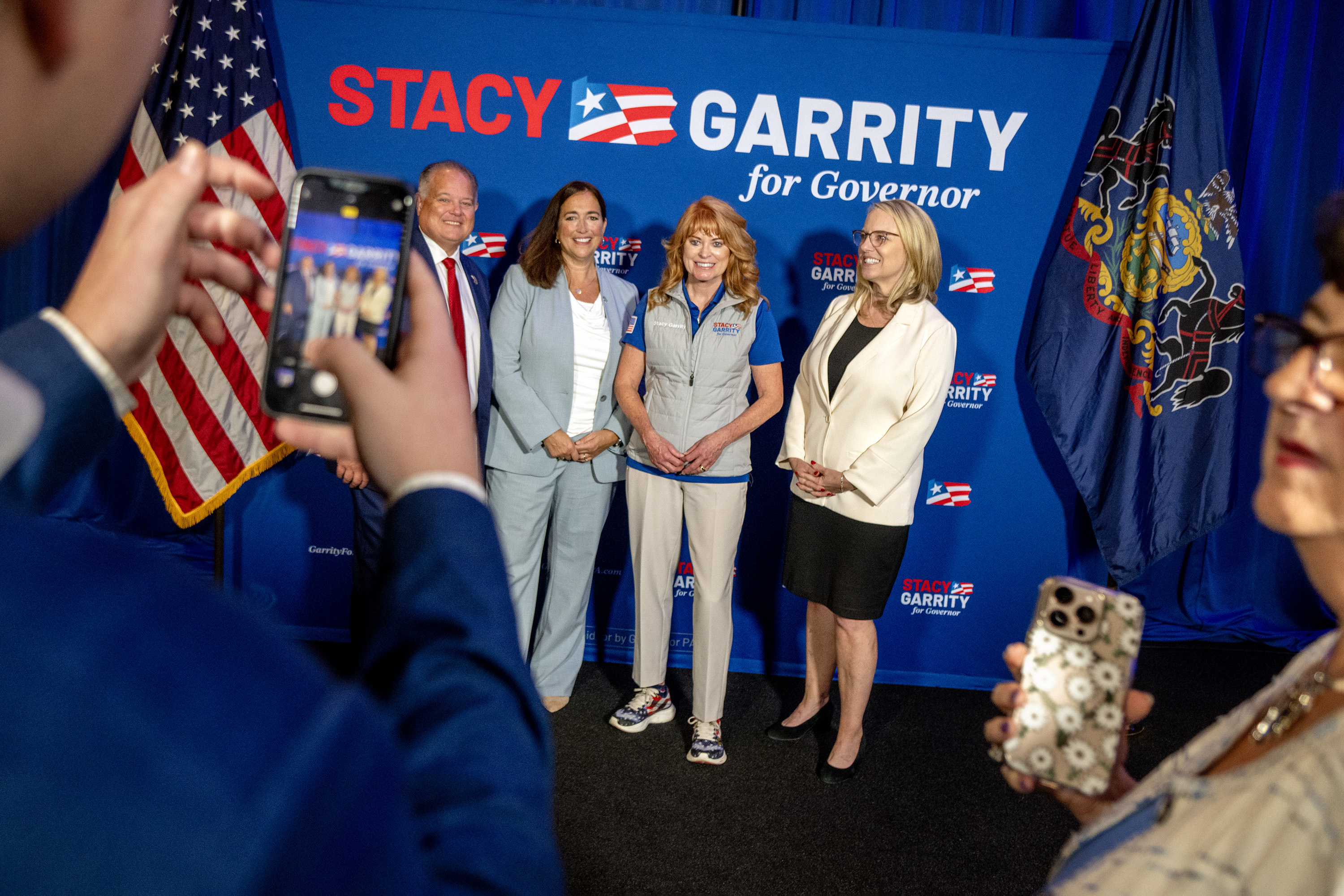
  • Josh Shapiro’s GOP opponent Stacy Garrity steps in to offer counties $500 million in loans as Pa. budget remains at an impasse

    Josh Shapiro’s GOP opponent Stacy Garrity steps in to offer counties $500 million in loans as Pa. budget remains at an impasse

    HARRISBURG — Pennsylvania Treasurer Stacy Garrity stepped in on Wednesday to offer counties and early education programs $500 million in low-interest loans to hold them over until a final state budget deal is complete, sidestepping the General Assembly and Gov. Josh Shapiro as they near the start of a third month at an impasse.

    Garrity, a Republican who last month announced her bid to challenge Shapiro in next year’s gubernatorial election, announced the unprecedented move to allow the state Treasury to offer the loans to county human service departments for the many social services they provide, as well as for early education Head Start programs, at a 4.5% interest rate.

    Counties, schools, and social service providers have pleaded for months with the legislature to finalize a budget so they can begin receiving their expected state payments, which have been on hold since the beginning of the fiscal year on July 1. Some counties have had to secure private loans to hold them over until state payments begin, while others — including those around the Philadelphia region — have relied on their reserves. Other counties have frozen hiring and spending as they await a resolution to the budget stalemate.

    The move would allow counties to access millions of dollars for early education programs serving 35,000 children across the state, as well as for county social services — all of which have been operating for months without their state appropriation, with no end to the budget impasse in sight.

    Garrity’s decision to act unilaterally without the action of the General Assembly allows her to capitalize politically on the ongoing budget crisis over Shapiro, challenging his image as a moderate Democratic governor of a politically “purple” state willing to work across the aisle in a divided legislature. That brand, which he has built nationally as he is rumored to have interest in running for president in 2028, has been tested as he has so far been unable to secure a budget deal or a recurring funding stream for the state’s beleaguered mass transit agencies, including SEPTA.

    Shapiro, for his part, has described his role in budget negotiations as being a go-between for Senate Republicans and House Democrats, who control their respective chambers, and has said that the two caucuses remain “diametrically opposed” on some issues.

    A spokesperson for Shapiro said in a statement Wednesday that the real solution to the budget impasse is for Senate Republicans, whose leaders endorsed Garrity last week, to return to work in Harrisburg to finalize a budget deal with House Democrats. A spokesperson for House Majority Leader Matt Bradford (D., Montgomery) echoed the sentiment, arguing that Senate Republicans “refuse to negotiate on a realistic budget agreement.”

    Gov. Josh Shapiro visits SEPTA headquarters Sunday, Aug. 10, 2025 to discuss funding for the transit agency and to pressure Senate Republicans as planned service cuts are pending because of a budget shortfall. To his right, from left, are state Democratic legislators Sen. Anthony H. Williams; Sen. Nikil Saval; Rep. Ed Neilson; and Rep. Jordan Harris.

    Senate Majority Leader Joe Pittman (R., Indiana), the Senate’s top negotiator, who has met for months in closed-door budget talks with Bradford and Shapiro, said in a statement that it was Democrats who caused the prolonged impasse while demanding they include mass transit funding in the state budget. After mounting pressure as SEPTA enacted major service cuts, Shapiro ultimately sought to fund the agency on his own, and the issue will need to be revisited in two years.

    Garrity, who kicked off her “Help Is on the Way” introductory campaign tour around the state earlier this week, said Wednesday her decision to intervene in the state budget stalemate was not political, despite her burgeoning run against Shapiro. Rather, she said that she had been thinking about a way to do so for months, including ahead of her announcement of her run for governor, and that most Pennsylvanians don’t even realize the state budget is late. She argued that if she wanted to be political, she would not intervene and would “keep the pressure” on Shapiro over the late state budget.

    “I’m standing up here as Pennsylvania’s state treasurer, not as a candidate for governor,” Garrity said from a podium in the Harrisburg building that houses the state Treasury. “I think I have a responsibility to serve Pennsylvanians, that if I have something that I can do to provide some relief, then I should do it.”

    However, that didn’t stop Garrity from inviting Montgomery County Commissioner Tom DiBello — the lone Republican on the board where Shapiro once served — to the podium at the news conference to deliver some direct criticisms of Shapiro and to praise Garrity’s intervention as a “lifeline” for counties, alongside two other GOP county commissioners from south-central Pennsylvania. While Montgomery County remains one of the wealthiest counties in the state, the late budget has required Pennsylvania’s third-most-populous county to spend down its reserves, money that it usually relies upon to continue earning interest as part of its annual revenue, DiBello said.

    Pennsylvania Treasurer Stacy L. Garrity gives her acceptance speech after receiving the PA GOP’s endorsement for her campaign for governor during the Republican Party of Pennsylvania’s 2025 Fall Meeting at the Penn Stater Hotel & Conference Center in State College on Sept. 20.

    “It starts at the top. The governor is responsible,” DiBello said. “He’s got to pull it together. It’s his signature at the end of the day.”

    In response to Garrity’s announcement Wednesday, Montgomery County Commissioners Neil Makhija and Jamila Winder, both Democrats, said in a statement that the county needs a final state budget instead of a short-term loan program, urging Senate Republicans to “do their job.”

    “A short-term loan at 4.5% interest is the state profiting from a problem of their own making, at the expense of the taxpayers,” the two commissioners added.

    DiBello said he did not believe his invitation to Wednesday’s event had political motivations, adding: “I didn’t even think of that.” He also noted that he has come to Harrisburg to advocate on behalf of counties multiple times before.

    Senate President Pro Tempore Kim Ward (R., Westmoreland), who has been one of Shapiro’s biggest critics since his first budget in 2023 and was quick to support Garrity’s candidacy, prodded at Shapiro’s pledge to “get stuff done” while praising Garrity’s leadership.

    “Today, Treasurer Stacy Garrity made a bold move that shows what ‘get stuff done’ actually looks like,” Ward said in a statement. “Treasurer Garrity’s leadership is on display as her solution-driven option is exactly what we need, but has been glaringly missing from the present administration.”

    Garrity said at the news conference Wednesday that she offered the loan program specifically to Head Start programs and county governments’ human service departments because both had asked her to help them get through the budget impasse. The state budget was due by July 1, and Pennsylvania is the only state besides Michigan that has not yet passed its budget. She said she is willing to offer similar loans to schools or other state-subsidized or funded programs as requested.

    The Pennsylvania General Assembly can forgive the interest accrued by counties taking out loans during the budget impasse, Garrity said, adding that she would support legislation that does so.

    This suburban content is produced with support from the Leslie Miller and Richard Worley Foundation and The Lenfest Institute for Journalism. Editorial content is created independently of the project donors. Gifts to support The Inquirer’s high-impact journalism can be made at inquirer.com/donate. A list of Lenfest Institute donors can be found at lenfestinstitute.org/supporters.