Category: Politics

Political news and coverage

  • House passes bill to extend health care subsidies in defiance of GOP leaders

    House passes bill to extend health care subsidies in defiance of GOP leaders

    WASHINGTON — In a remarkable rebuke of Republican leadership, the House passed legislation Thursday, 230-196, that would extend expired healthcare subsidies for those who get coverage through the Affordable Care Act as 17 renegade GOP lawmakers joined every Democrat in voting for the measure.

    Forcing the issue to a vote came about after a handful of Republicans signed on to a so-called “discharge petition” to unlock debate, bypassing objections from House Speaker Mike Johnson. The bill now goes to the Senate, where pressure is building for a bipartisan compromise.

    Together, the rare political coalitions are rushing to resolve the standoff over the enhanced tax credits that were put in place during the COVID-19 crisis but expired late last year after no agreement was reached during the government shutdown.

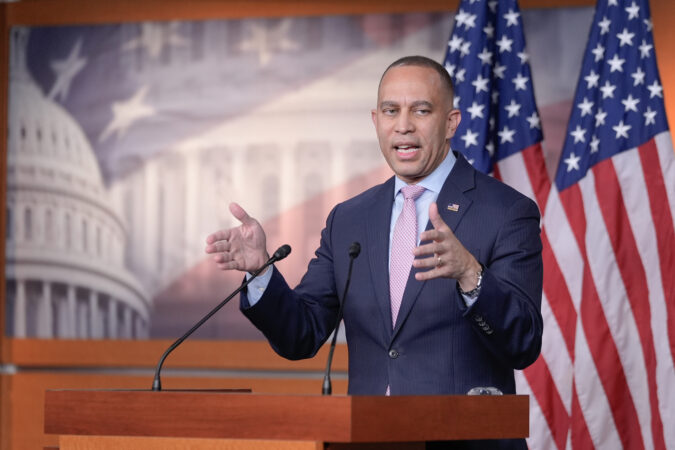
    “The affordability crisis is not a ‘hoax,’ it is very real — despite what Donald Trump has had to say,” said House Democratic Leader Hakeem Jeffries, invoking the president’s remarks.

    “Democrats made clear before the government was shut down that we were in this affordability fight until we win this affordability fight,” he said. “Today we have an opportunity to take a meaningful step forward.”

    Ahead of voting, the nonpartisan Congressional Budget Office estimated that the bill, which would provide a three-year extension of the subsidy, would increase the nation’s deficit by about $80.6 billion over the decade. At the same time, it would increase the number of people with health insurance by 100,000 this year, 3 million in 2027, 4 million in 2028 and 1.1 million in 2029, the CBO said.

    Growing support for extending ACA subsidies

    Johnson (R., La.) worked for months to prevent this situation. His office argued Thursday that the federal healthcare funding from the COVID-19 era is rife with fraud and urged a no vote.

    On the floor, Republicans also argued that the lawmakers should be focused on lowering health insurance costs for the broader population, not just those enrolled in ACA plans.

    “Only 7% of the population relies on Obamacare marketplace plans. This chamber should be about helping 100% of Americans,” said Rep. Jason Smith, the Republican chairman of the House Ways and Means Committee.

    While the momentum from the vote shows the growing support for the tax breaks that have helped some 22 million Americans have access to health insurance, the Senate would be under no requirement to take up the House bill and has already rejected it once before.

    Instead, a small group of senators from both parties has been working on an alternative plan that could find support in both chambers and become law. Senate Majority Leader John Thune, (R., S.D.) said that for any plan to find support in his chamber, it will need to have income limits to ensure that the financial aid is focused on those who most need the help. He and other Republicans also want to ensure that beneficiaries would have to at least pay a nominal amount for their coverage.

    Finally, Thune said there would need to be some expansion of health savings accounts, which allow people to save money and withdraw it tax-free as long as the money is spent on qualified medical expenses.

    Sen. Jeanne Shaheen (D., N.H.), who is part of the negotiations on reforms and subsidies for the Affordable Care Act, said there is agreement on addressing fraud in healthcare.

    “We recognize that we have millions of people in this country who are going to lose — are losing, have lost — their health insurance because they can’t afford the premiums,” Shaheen said. “And so we’re trying to see if we can’t get to some agreement that’s going to help, and the sooner we can do that, the better.”

    Trump has pushed Republicans to send money directly to Americans for health savings accounts so they can bypass the federal government and handle insurance on their own. Democrats largely reject this idea as insufficient for covering the high costs of healthcare.

    Republicans go around their leaders

    The action by Republicans to force a vote has been an affront to Johnson and his leadership team, who essentially lost control of what comes to the House floor as the Republican lawmakers joined Democrats for the workaround.

    After last year’s government shutdown failed to resolve the issue, Johnson had discussed allowing more politically vulnerable GOP lawmakers a chance to vote on another healthcare bill that would temporarily extend the subsidies while also adding changes.

    But after days of discussions, Johnson and the GOP leadership sided with the more conservative wing, which has assailed the subsidies as propping up ACA, which they consider a failed government program. He offered a modest proposal of healthcare reforms that was approved, but has stalled.

    It was then that rank-and-file lawmakers took matters into their own hands, as many of their constituents faced soaring health insurance premiums beginning this month.

    Republican Reps. Brian Fitzpatrick, Robert Bresnahan and Ryan Mackenzie, all from Pennsylvania, and Mike Lawler of New York, signed the Democrats’ petition, pushing it to the magic number of 218 needed to force a House vote. All four represent key swing districts whose races will help determine which party takes charge of the House next year.

    Jeffries said in a celebratory press conference after the vote that Thune should bring the Democratic bill to the Senate floor for an immediate vote.

    “Stop playing procedural games that are jeopardizing the health and safety and well-being of the American people,” Jeffries said.

    Trump encourages GOP to take on healthcare issue

    What started as a long shot effort by Democrats to offer a discharge petition has become a political vindication of the Democrats’ government shutdown strategy as they fought to preserve the healthcare funds.

    Democrats are making clear that the higher health insurance costs many Americans are facing will be a political centerpiece of their efforts to retake the majority in the House and Senate in the fall elections.

    Trump, during a lengthy speech this week to House GOP lawmakers, encouraged his party to take control of the healthcare debate — an issue that has stymied Republicans since he tried, and failed, to repeal Obamacare during his first term.


  • White House says it wasn’t economical to save East Wing during ballroom construction

    White House says it wasn’t economical to save East Wing during ballroom construction

    WASHINGTON — The White House said Thursday that it was not feasible to save the East Wing because of structural issues, past decay and other major concerns as officials shared details of President Donald Trump’s planned ballroom at a public meeting of the commission charged with approving it.

    Josh Fisher, director of the White House Office of Administration, said an unstable colonnade, water leakage, mold contamination and other problems made it more economical to tear down the East Wing to make room for the $400 million ballroom than to renovate it.

    “Because of this and other factors, the cost analysis proved that demolition and reconstruction provided the lowest total cost ownership and most effective long-term strategy,” Fisher told members of the National Capital Planning Commission.

    It was the most comprehensive explanation to date for the dramatic demolition of the East Wing, which caused a public stir when it began in October with little advance notice.

    The commission’s chairman, Will Scharf, who is also a top White House official, said he thought the project would ultimately be approved.

    The project’s architect, Shalom Baranes, joined Fisher to provide a high-level view of the proposal to the commission. Baranes showed the panel renderings of the ballroom and views of the White House complex from the north and south with the addition.

    Baranes said the design could include adding a second story to the West Wing colonnade to help make the White House more uniform with the new ballroom on the east side. But such a step would also dramatically alter the iconic space outside the Oval Office.

    Fisher and Baranes said the project includes more than just a ballroom, and will also streamline visitor access to the White House and make unspecified improvements to Lafayette Park across the street.

    Some of the 12 commissioners raised concerns, most vocally Democrat Phil Mendelson, who asked several questions about the ballroom’s size and location and whether those might change going forward. Baranes said “anything’s possible,” but added that the plans had been thoroughly studied.

    Mendelson, who is also chairman of the D.C. Council, asked if the planned ceiling height of 38 to 40 feet could still be lowered before the final structure is finished and received assurances that the number wasn’t fully set. “It still seems to me it’s overwhelming the existing building,” Mendelson said.

    Baranes said the idea would be to build the ballroom’s height to ensure it matches the rest of the White House. “The heights will match exactly,” he said.

    Scharf listened to those and other questions Mendelson raised. Upon completion, however, the ballroom is expected to be larger than the rest of the existing White House.

    Mendelson also asked why the project hadn’t been presented in its entirety to the commission before the East Wing was demolished. Fisher said some aspects of the ballroom construction were of a “top secret nature” and needed to be dealt with.

    Scharf repeated his past assertions that the planning commission doesn’t usually have jurisdiction over site work and demolition on any project, including at the White House.

    After the meeting, he expressed confidence that the project will receive the go-ahead.

    “I certainly, based on the presentation today, I fully expect that the commission will … approve this project,” Scharf told reporters. “I think you just saw a very positive response to these preliminary drawings.” He acknowledged Mendelson’s concerns and suggested they would be addressed.

    Only commissioners were allowed to ask questions and offer feedback at the meeting. A more formal review, including public testimony and votes, is expected after the White House submits a more detailed proposal. The panel’s next meeting is Feb. 5.

    Before the meeting adjourned, Scharf argued that the White House needed a larger, more elegant space for major functions. He recalled visiting Windsor Castle last year with Trump and said, that when the president likely hosts King Charles III of Great Britain, “more likely than not, he will be hosted in a tent on the South Lawn with porta-potties.”

    Scharf also said after the meeting that the commission is interested in more than whether the ballroom is a good idea. He said their concerns extend to how it affects the White House visitor experience and how the building fits in with others in the area and across the city.

    Plans only recently offered

    The White House in December submitted its ballroom plans to the commission, which is one of two federal panels that review construction on federal land — usually before ground is broken. The National Trust for Historic Preservation has sued to halt construction of the ballroom, accusing the Trump administration of violating federal laws by proceeding before submitting the project for the independent reviews, congressional approval and public comment.

    Carol Quillen, president and CEO of the Trust, said in a statement afterward that the White House presentation was a “good and necessary first step.” She urged the administration to comply with all legally required review and approval processes before starting construction.

    A summary on the commission’s website said the purpose of the “East Wing Modernization Project” is to “establish a permanent, secure event space within the White House grounds” that provides increased capacity for official state functions, eliminates reliance on temporary tents and support facilities, and “protects the historic integrity and cultural landscape of the White House and its grounds.”

    A comprehensive design plan for the White House prepared in 2000 identified the “need for expanded event space to address growing visitor demand and provide a venue suitable for significant events,” the summary said. It added that successive administrations had “recognized this need as an ongoing priority.”

    Ballroom’s size and scope has grown

    Trump, a Republican serving his second term, has been talking about building a White House ballroom for years. Last July, the White House announced a 90,000-square-foot space would be built on the east side of the complex to accommodate 650 seated guests at a then-estimated cost of $200 million. Trump has said it will be paid for with private donations, including from him.

    He later upped the ballroom’s capacity to 999 people and, by October, had demolished the East Wing. In December, he updated the price tag to $400 million — double the original estimate.

    The White House had announced few other details about the project but has said it would be completed before Trump’s term ends in January 2029.

  • Hochul and Mamdani unveil free childcare plan in New York City

    Hochul and Mamdani unveil free childcare plan in New York City

    NEW YORK — New York City parents would have access to free childcare for their 2-year-olds under a plan unveiled Thursday by Gov. Kathy Hochul and Mayor Zohran Mamdani, the first step for the mayor in delivering on a signature campaign promise.

    The two Democrats announced the proposal at a celebratory event in Brooklyn a week after Mamdani was sworn in — marking an early political victory for Mamdani, who has faced questions over whether he will have the state support needed to enact his ambitious affordability-focused agenda.

    “To those who think that the promises of a campaign cannot survive once confronted with the realities of government, today is your answer,” he said.

    Hochul, a moderate who is up for reelection this year, has been aligned with the city’s new progressive mayor on his free childcare plan, though questions remain on precisely how the program will take shape and what it might cost over the long term.

    The proposed program will begin slowly, focusing first on “high-need areas” selected by the city, then expanding gradually over years until it becomes available across the city. The mayor expects it to cover around 2,000 children this fall, though he said it was not yet clear where the first seats would open up.

    The governor said she is committing to funding the first two years of the city’s free childcare program for 2-year-olds, describing it as an expansion of the city’s existing pre-K and 3-K programs.

    She said the initial round of funding would come from the state’s existing revenues, rather than having to raise taxes, a step the governor has opposed. Still, Hochul said it was difficult to forecast costs in future years when the program would be more widely available.

    Additionally, Hochul rolled out a sweeping, longer-term proposal to expand access to universal pre-K statewide, with the goal of having the program available throughout New York by the start of the 2028-2029 school year.

    The governor said she anticipates investing $1.7 billion in the near term for the programs she announced Thursday, bringing her proposed childcare and pre-K spending to $4.5 billion for the coming fiscal year.

    She will include the plans in her annual state of the state address next week and in her executive budget proposal, which will be subject to debate and negotiations with the state’s legislative leaders over the next few months.

    While Hochul has supported the mayor’s childcare plan, she hasn’t publicly backed his entire agenda. After the event, as Hochul and Mamdani spoke to reporters about the proposal, the governor sidestepped a question about Mamdani’s proposal to eliminate fares for city buses, saying “Well, we’re focused on this today.”

    Rebecca Bailin, executive director for the advocacy group New Yorkers United for childcare, called the announcement a “historic moment,” adding: “By bringing together the Governor and Mayor around a shared commitment to childcare, tens of thousands of families could finally get the relief they desperately need.”

  • Judge disqualifies federal prosecutor in investigation into New York Attorney General Letitia James

    Judge disqualifies federal prosecutor in investigation into New York Attorney General Letitia James

    ALBANY, N.Y. — A judge disqualified a Trump administration federal prosecutor from overseeing investigations into New York Attorney General Letitia James, ruling Thursday that he is not lawfully serving as an acting U.S. attorney.

    U.S. District Judge Lorna G. Schofield blocked subpoenas requested by John Sarcone, the acting U.S. attorney for the Northern District of New York. The judge said the Department of Justice did not follow statutory procedure after judges declined to extend Sarcone’s tenure last year.

    Schofield joined several other federal judges across the country who have ruled that actions taken by top federal prosecutors were invalid because of unusual methods that the Trump administration used to get them the jobs. People were given the power of a U.S. attorney outside of the normal U.S. Senate confirmation process or were allowed to serve until federal judges in their district could decide whether they could stay.

    “When the Executive branch of government skirts restraints put in place by Congress and then uses that power to subject political adversaries to criminal investigations, it acts without lawful authority. Subpoenas issued under that authority are invalid. The subpoenas are quashed, and Mr. Sarcone is disqualified from further participation in the underlying investigations,” the judge said in her decision.

    Schofield said Sarcone is not lawfully serving as acting U.S. attorney and that any “of his past or future acts taken in that capacity are void or voidable as they would rest on authority Mr. Sarcone does not lawfully have.”

    James, a Democrat, had challenged Sarcone’s authority after he issued subpoenas seeking information about lawsuits she filed against Republican President Donald Trump, claiming he had committed fraud in his business dealings, and separately against the National Rifle Association and some of its former leaders.

    Justice Department lawyers argued Sarcone was appointed properly and that the subpoenas were valid. James claims the inquiry into her lawsuits is part of a campaign of baseless investigations and prosecutions of Trump’s perceived enemies.

    The department said in a email Thursday it “will continue to fight and defend the President and the Attorney General’s authority to appoint their U.S. Attorneys.”

    James’ office issued a statement calling Thursday’s ruling “an important win for the rule of law.”

    “We will continue to defend our office’s successful litigation from this administration’s political attacks,” the statement said.

    Emails seeking comment were sent to the U.S. Attorney’s Office and the Department of Justice.

    Last month, a panel of judges from the 3rd U.S. Circuit Court of Appeals in Philadelphia sided with a lower-court judge’s ruling disqualifying Alina Habba from serving as New Jersey’s top federal prosecutor.

    In November, a federal judge dismissed criminal cases against former FBI Director James Comey and James after concluding that the hastily installed prosecutor who filed the charges, Lindsey Halligan, was unlawfully appointed to the position of interim U.S. attorney for the Eastern District of Virginia.

    A similar dynamic has played out in Nevada, where a federal judge disqualified the Trump administration’s pick to be U.S. attorney there. And a federal judge in Los Angeles disqualified the acting U.S. attorney in Southern California from several cases after concluding he had stayed in the job longer than allowed.

    In New York, U.S. Attorney General Pam Bondi appointed Sarcone to serve as the interim U.S. attorney in March. When his 120-day term elapsed, judges in the district declined to keep him in the post.

    Bondi then appointed Sarcone as a special attorney and designated him first assistant U.S. attorney for the district, moves that federal officials say allow him to serve as an acting U.S. attorney.

    The judge, who sits in New York City, took issue with the Justice Department’s actions.

    On “the same day that the judges declined to extend Mr. Sarcone’s appointment, the Department took coordinated steps — through personnel moves and shifting titles — to install Mr. Sarcone as Acting U.S. Attorney. Federal law does not permit such a workaround,” she wrote.

    “The people of the Northern District of New York deserve a qualified, independent prosecutor, not a political loyalist,” Senate Democratic leader Chuck Schumer said in a prepared statement.

    Sarcone was part of Trump’s legal team during the 2016 presidential campaign and worked for the U.S. General Services Administration as the regional administrator for the Northeast and Caribbean during Trump’s first term.

    Schofield said the federal government could reissue the subpoenas at the direction of a lawfully authorized attorney.

    Joshua Naftalis, a Manhattan federal prosecutor for 11 years before entering private practice in 2023, said Schofield was agreeing with the other judges who have disputed the authority of designated top prosecutors.

    “It’s always a big deal when judges say that the U.S. attorney doesn’t have the authority,” he said.

    He said subpoenas aren’t typically issued by a single prosecutor so the ruling might not directly affect other investigations brought through the prosecutor’s office.

  • NASA, in a rare move, cuts space station mission short after an astronaut’s medical issue

    NASA, in a rare move, cuts space station mission short after an astronaut’s medical issue

    NEW YORK — In a rare move, NASA is cutting a mission aboard the International Space Station short after an astronaut had a medical issue.

    The space agency said Thursday the U.S.-Japanese-Russian crew of four will return to Earth in the coming days, earlier than planned.

    NASA canceled its first spacewalk of the year because of the health issue. The space agency did not identify the astronaut or the medical issue, citing patient privacy. The crew member is now stable.

    NASA officials stressed that it was not an onboard emergency, but are “erring on the side of caution for the crew member,” said Dr. James Polk, NASA’s chief health and medical officer.

    Polk said this was the NASA’s first medical evacuation from the space station although astronauts have been treated aboard for things like toothaches and ear pain.

    The crew of four returning home arrived at the orbiting lab via SpaceX in August for a stay of at least six months. The crew included NASA’s Zena Cardman and Mike Fincke along with Japan’s Kimiya Yui and Russia’s Oleg Platonov.

    Fincke and Cardman were supposed to carry out the spacewalk to make preparations for a future rollout of solar panels to provide additional power for the space station.

    It was Fincke’s fourth visit to the space station and Yui’s second, according to NASA. This was the first spaceflight for Cardman and Platonov.

    “I’m proud of the swift effort across the agency thus far to ensure the safety of our astronauts,” NASA administrator Jared Isaacman said.

    Three other astronauts are currently living and working aboard the space station including NASA’s Chris Williams and Russia’s Sergei Mikaev and Sergei Kud-Sverchkov, who launched in November aboard a Soyuz rocket for an eight-month stay. They’re due to return home in the summer.

    NASA has tapped SpaceX to eventually bring the space station out of orbit by late 2030 or early 2031. Plans called for a safe reentry over ocean.

  • After delays, the missing Jan. 6 plaque will be displayed at the Capitol

    After delays, the missing Jan. 6 plaque will be displayed at the Capitol

    WASHINGTON — The Senate has agreed to display a plaque honoring the police who defended the Capitol during the Jan. 6, 2021, attack, rebuffing House Speaker Mike Johnson who has said the commemorative memorial does not comply with the law.

    The action happened swiftly, with brief debate, in floor action Thursday. Republican Sen. Thom Tillis of North Carolina had announced during this week’s fifth anniversary of the Capitol siege that he would seek to ensure the plaque is installed, partnering with Democratic Sen. Jeff Merkley of Oregon, who was also working on the situation, and Sen. Alex Padilla of California. No senators objected.

    “A lot of people said it was a dark day for democracy,” Tillis said about Jan. 6, 2021, describing his memory of hearing the thousands of people — “thugs,” he said — lay siege to the Capitol as Congress was tallying the 2020 election results.

    He said that because of the work of the law enforcement officers, it became a great day for democracy. “We came back and completed our constitutional duty to certify the election,” he said. “We owe them eternal gratitude and this nation is stronger because of them.”

    This week, senators stepped up after learning the plaque, which had been approved by Congress more than three years ago, was nowhere to be found at the Capitol. Instead, many House lawmakers have been hanging up replicas outside their office doors.

    The Senate also appeared to be motivated by the shifting narrative from President Donald Trump ‘s White House about what happened Jan. 6, 2021, when his supporters stormed the building after he urged them go to Capitol Hill to confront Congress over Democrat Joe Biden’s 2020 election victory.

    Trump himself shifted blame for the attack during a speech this week in which he said he only intended for his supporters to march peacefully to the Capitol. Moreover, the White House produced a glossy new report also shifting blame for the deadly riot — on Democrats, for Biden’s victory over Trump, and on the police for their response to the mob.

    “It’s so important we be honest with the American people about what happened,” Merkley said, as he called the resolution up for passage.

    “It’s so important we recognize those who defended our democratic republic on that day,” he said, and that “people know we can back, as senators and House members, and finished our work that day, for the peaceful transfer of power.”

    Padilla said part of the context is the White House’s new website that he said is an “attempt to rewrite history.” He said that “dishonors” the officers.

    “The Senate bipartisan commitment to real history is strong,” he said.

    The plaque, according to the law, was intended to be placed at the West front of the Capitol where some of the fiercest fighting took place. It was required to be installed in 2023, a year after the legislation had passed.

    The new resolution directs the Architect of the Capitol to “prominently display” the plaque in a “publicly accessible” location in the Senate wing of the Capitol until it can be placed in its permanent location.

    To display the plaque in its intended location would require agreement with the House.

    The office of Johnson, a Republican who before becoming the House speaker led efforts to object to the 2020 election results, said this week that the plaque, as constructed, does not comply with the law.

    Police have sued to have the plaque put on display, as required, but Trump’s Justice Department is trying to dismiss the lawsuit.

    Tillis said part of the “technical implementation problem” was a concern that the law specified the plaque would honor all the officers involved, but the plaque only lists the various law enforcement agencies that responded to help the Capitol Police that day.

    He said there will be a digital component, presumably a website, that will list all the names. The number of officers runs into the thousands.

    “You’ll see how many people came here,” he said.

  • Tens of thousands flee Aleppo neighborhoods as Syrian government clashes with Kurds intensify

    Tens of thousands flee Aleppo neighborhoods as Syrian government clashes with Kurds intensify

    ALEPPO, Syria — Clashes between government and Kurdish forces in a contested area in Syria’s northern city of Aleppo intensified Thursday after Syrian authorities ordered civilians to evacuate.

    Syrian authorities opened a corridor for civilians to evacuate for a second day and tens of thousands fled.

    The government of Aleppo province gave residents until 1 p.m. local time to evacuate in coordination with the army. State news agency SANA, citing the army, said the military would begin “targeted operations” against the Kurdish-led Syrian Democratic Forces in the neighborhoods of Sheikh Maqsoud, Achrafieh and Bani Zaid half an hour after that deadline.

    The military later issued a series of maps with the areas under evacuation order.

    An Associated Press journalist at the scene heard sporadic sounds of shelling as civilians streamed out of the area Thursday morning. More than 142,000 people have been displaced across the province, according to the Aleppo Central Response Committee.

    “There’s a large percentage of them with difficult medical issues, elderly people, women, and children,” said Mohammad Ali, operations director with the Syrian Civil Defense in Aleppo.

    Kurdish forces said at least 12 civilians were killed in the Kurdish-majority neighborhoods, while government officials reported at least nine civilians have been killed in the surrounding government-controlled areas in the fighting that broke out Tuesday. Dozens more on both sides have been wounded. It was not clear how many fighters were killed on each side.

    Each side has accused the other of deliberately targeting civilian neighborhoods and infrastructure, including ambulance crews and hospitals.

    Clashes intensified in the afternoon, with continuous exchanges of shelling and drone strikes, and tanks could be seen rolling into the contested neighborhoods. The SDF-affiliated Internal Security Forces said they had “destroyed two armored vehicles and inflicted casualties on the attackers” as they advanced.

    Aleppo governor Azzam al-Gharib, meanwhile, said Thursday evening that “a large number” of SDF fighters had defected or fled. Late in the evening, as clashes subsided, government forces began to deploy in largely-abandoned neighborhoods where the fighting had taken place.

    Churches hosting displaced people

    St. Ephrem Syrian Orthodox Church in Aleppo city was hosting about 100 people who had fled the fighting. Parishioners donated mattresses, blankets and food, priest Adai Maher said.

    “As soon as the problems started and we heard the sounds (of clashes), we opened our church as a shelter for people who are fleeing their homes,” he said.

    Among them was Georgette Lulu, who said her family is planning to travel to the city of Hasakeh in SDF-controlled northeast Syria when the security situation allows.

    “There was a lot of bombing and loud noises and a shell landed next to our house,” she said. “I’ve been through these circumstances a lot so I don’t get frightened, but my niece was really afraid so we had to come to the church.”

    Hassan Nader, a representative of the Ministry of Social Affairs in Aleppo said about 4,000 were staying in shelters in the city while tens of thousands had gone to other areas of the province, and the ministry was working with NGOs to supply them with food, medicine and other necessities.

    Political impasse

    The clashes come amid an impasse in political negotiations between the central state and the SDF.

    The leadership in Damascus under interim President Ahmad al-Sharaa signed a deal in March with the SDF, which controls much of the northeast, for it to merge with the Syrian army by the end of 2025. There have been disagreements on how it would happen. In April, scores of SDF fighters left Sheikh Maqsoud and Achrafieh as part of the deal.

    Officials from the central government and SDF met again on Sunday in Damascus, but government officials said that no tangible progress had been made.

    Some of the factions that make up the new Syrian army, formed after the fall of former President Bashar Assad in a rebel offensive in December 2024, were previously Turkey-backed insurgent groups that have a long history of clashing with Kurdish forces.

    In the city of Qamishli in the Kurdish-controlled northeast, thousands of protesters gathered Thursday, chanting, “SDF, we are with you until death.”

    Sawsan Khalil, a protester in Qamishli who was displaced from Afrin in Aleppo province in a 2018 Turkish offensive against Kurdish forces there, called for the international community “to feel for the Syrian people who have been killed for no reason” in Aleppo.

    Izzeddin Gado, co-chair of the Qamishli City Council accused the government forces of “following a foreign and regional agenda from Turkey.”

    International concerns

    The SDF has for years been the main U.S. partner in Syria in fighting against the Islamic State group, but Turkey considers the SDF a terrorist organization because of its association with the Kurdistan Workers’ Party, or PKK, which has waged a long-running insurgency in Turkey. A peace process is now underway.

    Despite the long-running U.S. support for the SDF, the Trump administration in the U.S. has also developed close ties with al-Sharaa’s government and has pushed the Kurds to implement the March deal.

    A U.S. State Department official said in a statement Thursday that U.S. envoy Tom Barrack was trying to facilitate dialogue between the two sides.

    Barrack later posted on X, “Just this past week, we stood on the threshold of successfully concluding the March 10, 2025 integration agreement,” a goal that he said remains “eminently achievable.”

    “Together with our allies and responsible regional partners, we stand ready to facilitate efforts to de-escalate tensions and to afford Syria and its people a renewed opportunity to choose the path of dialogue over division,” he said.

    Turkey’s Ministry of National Defense said Thursday that the “operation is being carried out entirely by the Syrian Army” while Turkey is “closely monitoring.”

    “Syria’s security is our security,” the statement said, adding that “Turkey will provide the necessary support should Syria request it.”

    Turkish Foreign Minister Hakan Fidan described the SDF as the “greatest obstacle for peace in Syria.”

    The United Nations expressed concern at the violence and called for de-escalation.

  • Brian Fitzpatrick criticizes House Speaker Johnson as Pa. swing-district Republicans join Democrats in ACA subsidies vote

    Brian Fitzpatrick criticizes House Speaker Johnson as Pa. swing-district Republicans join Democrats in ACA subsidies vote

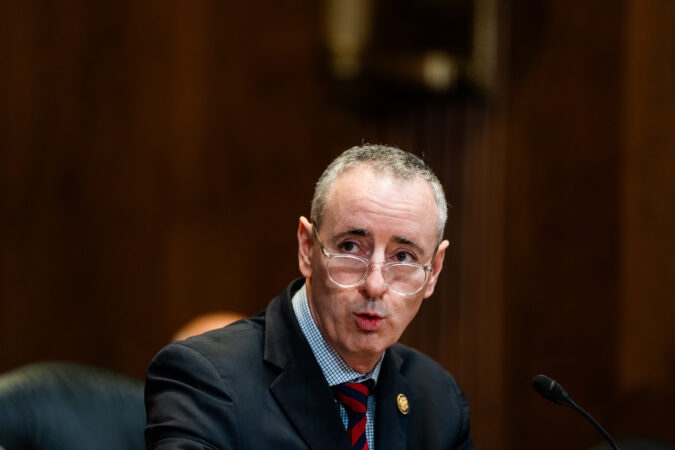
    U.S. Rep. Brian Fitzpatrick accused some of his Republican colleagues of being “intellectually dishonest” about the Affordable Care Act, hours before he and other Republicans broke party lines to pass a bill to restore recently expired healthcare subsidies.

    The Democratic-led bill passed the House by a vote of 230 to 196 after Fitzpatrick and eight other Republicans backed a discharge petition the previous day, in the latest rebuke of Republican House Speaker Mike Johnson.

    The bill now heads to the Senate, where its fate is uncertain.

    Fitzpatrick, a moderate Republican who represents purple Bucks County, was one of 17 Republicans to cross the aisle Thursday to back the legislation that will restore healthcare subsidies after insurance premiums spiked this month, following their expiration at the end of last year. The bill would extend the subsidies, enacted in 2021, for another three years.

    He said some of the pushback “unfortunately, is ideological” as he explained frustration with other members of his party, including Johnson.

    “I’ve made the point to them many times over,” he said. “You are entitled to criticize something, provided that you have a better alternative. … I’ve been hearing a lot of talk out of my colleagues for a long period of time without any concrete plans.”

    He noted that the expiration of the subsidies could lead to a rate increase for everyone if fewer people have coverage as a result, not just the approximately 8-10% who qualify for the subsidy, for whom the credit is “everything,” he said.

    The issue could be an important one in congressional races later this year if lawmakers don’t resolve the matter, which was also one of the main sticking points during last year’s government shutdown.

    Fitzpatrick is one of three swing-district Republicans in Pennsylvania who backed the effort, along with freshman GOP Reps. Ryan Mackenzie and Rob Bresnahan. All three are being targeted by Democrats in the fall election.

    A fourth swing-district Republican in the state, U.S. Rep. Scott Perry, was among the legislation’s detractors.

    Perry shared a video Wednesday to social media of President Donald Trump accusing Democrats of being “owned” by insurance companies.

    “These companies are thriving, not hurting,” Perry said in a post accompanying the video. “Subsidies are direct cash transfers from the Treasury (YOU) to their bank accounts. But they’re worried that their money tree is going to be chopped down, so now they’re threatening to pass off higher costs to consumers to keep their profits high.”

    Janelle Stelson, a Democrat who is seeking a rematch against Perry after narrowly losing to him in 2024, criticized the GOP incumbent’s opposition to the bill.

    “Forcing Pennsylvanians to pay an average of 102% more on insurance premiums is unacceptable,” Stelson said, noting the average increase to plan costs on Pennie, the state’s insurance marketplace. “Some Republicans in Pennsylvania are working across party lines to try to help their constituents, but Congressman Perry is again refusing to do anything.”

    About 90% of people who bought insurance through Pennie for 2025 qualified for some amount of tax credit, but with the expiration of the enhanced tax credits this year the cost of health insurance through Pennie and other ACA marketplaces has skyrocketed.

    About 1,000 people a day are dropping their Pennie health plans, deciding the coverage is too expensive, according to Pennie administrators. A total of about 70,000 people who bought Pennie plans in 2025 have dropped their coverage as of the end of December, said Devon Trolley, Pennie’s executive director.

    Philadelphia area residents are expected to pay, on average, more than twice as much in 2026. Philadelphia’s collar counties are seeing more moderate cost increases, ranging from an average 46% price hike in Chester County to a 70% average increase in Delaware County.

    Fitzpatrick had released his own legislation last month, but he chose to support the Democratic bill after his proposal failed to get traction. He said he expects some of his ideas, including income caps and anti-fraud provisions, to be amended into the legislation in the Senate.

    Fitzpatrick said he met with several Senate Republicans on Thursday who said that the successful discharge petition “really breathed new life into their negotiations” after the upper chamber failed on its own compromise attempts.

    “They just said, short-term, try to rack the number up as high as you can get, because the more crossover votes we can get, the stronger message it’ll send to the Senate majority leader that they need to move something quickly,” he said.

    Fitzpatrick warned that more discharge petitions could be coming in the House if Johnson doesn’t change his leadership approach.

    The healthcare vote comes just weeks after the House voted to discharge and then pass a bill to release files related to Jeffrey Epstein, after Johnson had slow-walked the legislation.

    “It’ll keep happening if bills that have the support of 218 members of the House are not given floor time,” Fitzpatrick said.

  • Trump appears to back away from threats to Colombia’s president

    Trump appears to back away from threats to Colombia’s president

    BOGOTÁ — Two days after publicly weighing an invasion of Colombia, President Donald Trump appeared to call it off on Wednesday night.

    He said he had spoken to an erstwhile nemesis, Colombian President Gustavo Petro. Trump had previously called Petro a “drug leader” who “better watch his ass.” But after the Wednesday night call, Trump wrote on Truth Social: “I appreciated his call and tone.” The two men agreed to meet in Washington.

    It was the most recent jolt to one of the Western Hemisphere’s closest relationships. Days earlier, when Trump said that invading Colombia “sounds good to me,” he was threatening to attack a top recipient of U.S. military assistance.

    On Thursday morning, as tensions appeared to ease, Petro reflected on the call, which he said in an X post was brokered by Sen. Rand Paul (R., Ky.) and lasted for 55 minutes.

    “I know that President Trump doesn’t agree with me, but it’s more convenient to start a dialogue … than to settle it on battlefields,” he wrote.

    No country in Latin America has a closer partnership with the Pentagon. The two countries share intelligence daily; U.S. military liaisons are fixtures in Colombia’s Defense Ministry; and the United States has vetted specialized units within Colombia’s military and police, according to past statements by both governments.

    Yet, as the relationship between Trump and Petro deteriorated, the countries found themselves in the bizarre position of historic partners whose leaders were acting as if preparing for war.

    In the wake of the U.S. seizure of Venezuelan President Nicolás Maduro, analysts and Colombian officials said they couldn’t entirely discount Trump’s threats to Colombia, even though they seemed profoundly unlikely. Trump called Petro a “sick man who likes making cocaine and selling it.”

    In response, Petro said he was preparing his “people” to defend him “from any illegitimate violent act.” A former rebel, he said in a post on X that “for the sake of the fatherland I will take up weapons again.” He sent 30,000 troops to the Venezuela border.

    Colombia’s Foreign Ministry did not respond to requests for comment. On Tuesday, the country’s foreign minister, Rosa Villavicencio, said at a news conference that it would respond militarily to any U.S. “aggression.”

    “For that, we have a very well-trained army,” Villavicencio said.

    The threat of war between the two allies “boggles the mind,” said Adam Isacson, the head of the defense oversight program at the Washington Office on Latin America, a think tank.

    “These two countries have had an intimate relationship going back to the Korean War,” Isacson said. “Colombia modeled its joint military structures after [the] U.S. It’s hard to imagine closer relations.”

    Trump has frequently pointed to Colombia’s failure to crack down on cocaine exports. In 2023, a U.N. report said coca was being cultivated on 253,000 acres in Colombia, a record high. It was more than half of the global coca crop. On the Wednesday night call, Petro said he “laid out my policy against the narcos that spans nearly 20 years.”

    While experts say Petro’s drug policy does bear some responsibility for that growth, there is no evidence that he is complicit in the trafficking of drugs. Still, Trump had appeared to be modeling his accusations against Petro after the drug case the Justice Department built against Maduro, which culminated in a 25-page indictment.

    “He better wise up or he’ll be next,” Trump said of Petro last month, suggesting to target Colombia in a possible expansion of the military buildup and antidrug trafficking operations directed at Venezuela.

    Petro had been seen by some as having gone out of his way to antagonize Trump over the past year. In September, he spoke at a protest in New York City about the immorality of some U.S. military missions.

    “I ask all soldiers in the United States Army not to point their rifles at humanity,” Petro said through a megaphone. “Disobey Trump’s order! Obey the order of humanity!” The U.S. said it later suspended his visa.

    It was the kind of spectacle that many Colombians saw as a political stunt — an effort by Petro to use his vocal opposition to Trump to animate his leftist base. Petro has announced a national demonstration in Bogotá on Wednesday in response to Trump’s comments and “to defend national sovereignty.”

    Petro’s term expires later this year, and Colombia’s constitution does not allow him to seek a second consecutive term — another reason many here had doubted that Trump would attempt to capture him. In his Truth Social post on Wednesday, Trump said the White House meeting between the two men would take place in the “near future.”

    Petro wrote on X: “Now we have to see the consequences of the reestablishment of diplomatic conversation.”

    If that meeting goes poorly — which some experts expect it might — Trump’s threats against Petro could affect the next Colombian election, which will take place in May. Already, opponents of Petro’s coalition are arguing that the next president should be someone who won’t antagonize the U.S., given the political and economic risks.

    “Right and center-leaning candidates are telling voters that Petro has been derelict in managing the country’s most important bilateral relationship,” said Elizabeth Dickinson, the deputy director for Latin America at International Crisis Group.

    Iván Cepeda, the candidate who will represent Petro’s coalition, has rebuffed Trump’s comments about Petro, writing on X that Colombia is not “a colony or a protectorate of the United States.”

    In addition to targeting Maduro, Trump has proved increasingly willing to intervene in Latin American elections to prevent leftist candidates from winning. The candidate he endorsed in Honduras, Nasry Asfura, won the election there by a razor-thin margin after Trump suggested that he would cut aid to the country if Asfura lost.

    On Monday, as if to summarize Trump’s evolving foreign policy in the region, the State Department posted on X a photo of Trump with the words: “THIS IS OUR HEMISPHERE.”

  • Denmark, Greenland envoys meet with White House officials over Trump’s call for a ‘takeover’

    Denmark, Greenland envoys meet with White House officials over Trump’s call for a ‘takeover’

    Denmark and Greenland’s envoys to Washington have begun a vigorous effort to urge U.S. lawmakers as well as key Trump administration officials to step back from President Donald Trump’s call for a “takeover” of the strategic Arctic island.

    Denmark’s ambassador, Jesper Moller Sorensen, and Jacob Isbosethsen, Greenland’s chief representative to Washington, met on Thursday with White House National Security Council officials to discuss a renewed push by Trump to acquire Greenland, perhaps by military force, according to Danish government officials who were not authorized to comment publicly and spoke on the condition of anonymity.

    The White House did not respond to a request for comment about the meeting.

    The envoys have also held a series of meetings this week with American lawmakers as they look to enlist help in persuading Trump to back off his threat.

    Secretary of State Marco Rubio is expected to meet next week with Danish officials.

    Trump, in a New York Times interview published Thursday, said he has to possess the entirety of Greenland instead of just exercising a long-standing treaty that gives the United States wide latitude to use Greenland for military posts.

    “I think that ownership gives you a thing that you can’t do with, you’re talking about a lease or a treaty. Ownership gives you things and elements that you can’t get from just signing a document,” Trump told the newspaper.

    The U.S. is party to a 1951 treaty that gives it broad rights to set up military bases there with the consent of Denmark and Greenland.

    Meanwhile, Vice President JD Vance told reporters that European leaders should “take the president of the United States seriously” as he framed the issue as one of defense.

    “What we’re asking our European friends to do is take the security of that landmass more seriously, because if they’re not, the United States is going to have to do something about it,” Vance said.

    In a floor speech Thursday, Sen. Lisa Murkowski (R., Alaska) warned that the rhetoric from some in the Trump administration is “profoundly troubling.”

    “We’ve got a lot ahead of us in 2026,” Murkowski said. “Greenland — or taking Greenland, or buying Greenland — should not be on that list. It should not be an obsession at the highest levels of this administration.”

    Danish officials were hopeful about the upcoming talks with Rubio in Washington.

    “This is the dialogue that is needed, as requested by the government together with the Greenlandic government,” Danish Defense Minister Troels Lund Poulsen told Danish broadcaster DR.

    The island of Greenland, 80% of which lies above the Arctic Circle, is home to about 56,000 mostly Inuit people.

    Vance criticizes Denmark

    Vance said on Wednesday that Denmark “obviously” had not done a proper job in securing Greenland and that Trump “is willing to go as far as he has to” to defend American interests in the Arctic.

    In an interview with Fox News, Vance repeated Trump’s claim that Greenland is crucial to both the U.S. and the world’s national security because “the entire missile defense infrastructure is partially dependent on Greenland.”

    He said the fact that Denmark has been a faithful military ally of the U.S. during World War II and the more recent “war on terrorism” did not necessarily mean they were doing enough to secure Greenland today.

    “Just because you did something smart 25 years ago doesn’t mean you can’t do something dumb now,” Vance said, adding that Trump “is saying very clearly, ‘you are not doing a good job with respect to Greenland.’”

    Right to self-determination

    Earlier, Rubio told a select group of U.S. lawmakers that it was the Republican administration’s intention to eventually purchase Greenland, as opposed to using military force.

    “Many Greenlanders feel that the remarks made are disrespectful,” Aaja Chemnitz, one of the two Greenlandic politicians in the Danish parliament, told The Associated Press. ”Many also experience that these conversations are being discussed over their heads. We have a firm saying in Greenland, ‘Nothing about Greenland, without Greenland.’”

    She said most Greenlanders “wish for more self-determination, including independence” but also want to “strengthen cooperation with our partners” in security and business development as long as it is based on “mutual respect and recognition of our right to self-determination.”

    Chemnitz denied a claim by Trump that Greenland is “covered with Russian and Chinese ships all over the place.”

    Greenland is “a long-standing ally and partner to the U.S. and we have a shared interest in stability, security, and responsible cooperation in the Arctic,” she said. “There is an agreement with the U.S. that gives them access to have bases in Greenland if needed.”

    France’s President Emmanuel Macron has denounced the “law of the strongest” that is making people “wonder if Greenland will be invaded.”

    In a speech to French ambassadors at the Elysee presidential palace on Thursday, Macron said: “It’s the greatest disorder, the law of the strongest, and everyday people wonder whether Greenland will be invaded, whether Canada will be under the threat of becoming the 51st state (of the United States) or whether Taiwan is to be further circled.”

    He pointed to an “increasingly dysfunctional” world where great powers, including the U.S and China, have “a real temptation to divide the world amongst themselves.”

    The United States is “gradually turning away from some of its allies and freeing itself from the international rules,” Macron said.

    Surveillance operations for the U.S.

    “Greenland belongs to its people,” Antonio Costa, president of the European Council, said on Wednesday. “Nothing can be decided about Denmark and about Greenland without Denmark, or without Greenland. They have the full solid support and solidarity of the European Union.”

    The leaders of Canada, France, Germany, Italy, Poland, Spain and the U.K. joined Denmark’s Prime Minister Mette Frederiksen on Tuesday in defending Greenland’s sovereignty in the wake of Trump’s comments about Greenland, which is part of the NATO military alliance.

    After Vance’s visit to Greenland last year, Danish Foreign Minister Lars Løkke Rasmussen published a video detailing the 1951 defense agreement between Denmark and the U.S.. Since 1945, the American military presence in Greenland has decreased from thousands of soldiers over 17 bases and installations on the island, Rasmussen said, to the remote Pituffik Space Base in the northwest with some 200 soldiers today. The base supports missile warning, missile defense and space surveillance operations for the U.S. and NATO.

    The 1951 agreement “offers ample opportunity for the United States to have a much stronger military presence in Greenland,” Rasmussen said. “If that is what you wish, then let us discuss it.”

    ‘Military defense of Greenland’

    Last year, Denmark’s parliament approved a bill to allow U.S. military bases on Danish soil. The legislation widens a previous military agreement, made in 2023 with the Biden administration, where U.S. troops had broad access to Danish air bases in the Scandinavian country.

    Denmark is moving to strengthen its military presence around Greenland and in the wider North Atlantic.

    Last year, the government announced a 14.6 billion-kroner ($2.3 billion) agreement with parties including the governments of Greenland and the Faroe Islands, another self-governing territory of Denmark, to “improve capabilities for surveillance and maintaining sovereignty in the region.”

    The plan includes three new Arctic naval vessels, two additional long-range surveillance drones and satellite capacity.

    Denmark’s Joint Arctic Command, headquartered in Nuuk, is tasked with the “surveillance, assertion of sovereignty and military defense of Greenland and the Faroe Islands,” according to its website. It has smaller satellite stations across the island.

    The Sirius Dog Sled Patrol, an elite Danish naval unit that conducts long-range reconnaissance and enforces Danish sovereignty in the Arctic wilderness, is also stationed in Greenland.