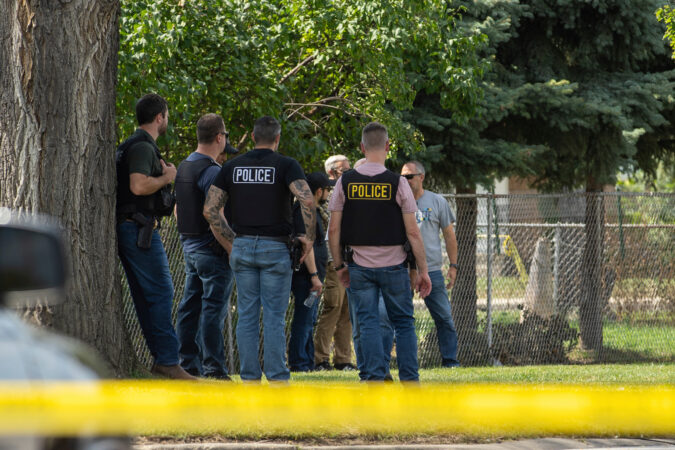
The fatal shooting Wednesday of a woman by an immigration officer in Minneapolis was at least the fifth death to result from the aggressive U.S. immigration crackdown the Trump administration launched last year.
The Department of Homeland Security said the officer fired in self-defense as the woman tried to run down officers with her vehicle. Minneapolis Mayor Jacob Frey said video of the incident showed it was reckless and unnecessary. It occurred as the federal agency escalates immigration enforcement operations in Minnesota by deploying an anticipated 2,000 agents and officers.
Last September, Immigration and Customs Enforcement shot and killed another person outside Chicago. Two people have died after being struck by vehicles while fleeing immigration authorities. And a California farmworker fell from a greenhouse and broke his neck during an ICE raid last July.
No officers or agents have been charged in the deaths.
Cook from Mexico shot during a traffic stop
ICE agents fatally shot Silverio Villegas González during a traffic stop Sept. 12 in suburban Chicago. Relatives said the 38-year-old line cook from Mexico had dropped off one of his children at day care that morning.
At the time, the Department of Homeland Security said federal agents were pursuing a man with a history of reckless driving who entered the country illegally. They alleged Villegas González evaded arrest and dragged an officer with his vehicle.
Homeland Security said the officer opened fire fearing for his life and was hospitalized for “serious injuries.” However, local police body camera videos showed the agent who shot Villegas González walking around afterward and dismissing his own injuries as “nothing major.”
Homeland Security has said the death remains under investigation.
Another shooting, this one nonfatal, occurred in Chicago last fall. Marimar Martinez survived being shot five times by a Border Patrol agent but was charged with a felony after Homeland Security officials accused her of trying to ram agents with her vehicle. The case was dismissed after videos emerged that Martinez’s attorneys said showed an agent steering his vehicle into Martinez’s truck.
Farmworker fell from greenhouse roof during ICE raid
Immigration authorities were rounding up dozens of farmworkers July 10 at Glass House Farms in southern California when Jaime Alanis fell from the roof of a greenhouse and broke his neck. The 57-year-old laborer from Mexico died at a hospital two days later.
Relatives said Alanis had spent a decade working at the farm, a licensed cannabis grower that also produces tomatoes and cucumbers, located in Camarillo about an hour east of Los Angeles. They said he would send his earnings to his wife and daughter in Mexico.
During the raid, Alanis called family to say he was hiding. Officials said he fell about 30 feet from the greenhouse roof.
The Department of Homeland Security said Alanis was never in custody and was not being chased by immigration authorities when he climbed onto the greenhouse.
Man struck on California freeway after running from Home Depot
A man running away from immigration authorities outside a Home Depot store in southern California died after being hit by an SUV while he tried to cross a nearby freeway on Aug. 14.
Police in Monrovia northeast of Los Angeles said ICE agents were conducting enforcement operations when the man fled on foot to Interstate 210. He was running across the freeway’s eastbound lanes when an SUV hit him while traveling 50 or 60 mph. He died at a hospital.
The man killed was later identified by the National Day Laborer Organizing Network as 52-year-old Roberto Carlos Montoya Valdez of Guatemala.
The Department of Homeland Security said Montoya Valdez wasn’t being pursued by immigration authorities when he ran.
Gardener from Honduras killed on Virginia interstate
A pickup truck fatally struck Josué Castro Rivera on a highway in Norfolk, Virginia, as he tried to escape immigration authorities during a traffic stop Oct. 23.
Castro Rivera, 24, of Honduras, was heading to a gardening job with three passengers when ICE officers pulled over his vehicle, according to his brother, Henry Castro.
State and federal authorities said Castro Rivera ran away on foot and was hit by a pickup truck on Interstate 264.
The Department of Homeland Security said Castro Rivera’s vehicle was stopped as part of a “targeted, intelligence-based” operation and that Castro Rivera had “resisted heavily and fled.”
His brother said Castro Rivera came to the U.S. four years earlier and worked to send money to family in Honduras.
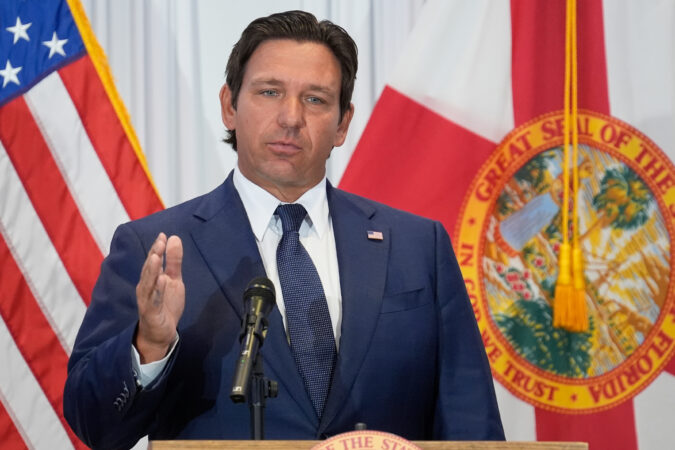
ORLANDO, Fla. — Florida Gov. Ron DeSantis said Wednesday he plans to call a special session in April for the Republican-dominated legislature to draw new congressional districts, joining a redistricting arms race among states that have redrawn districts mid-decade.
Even though Florida’s 2026 legislative session starts next week, DeSantis said he wanted to wait for a possible ruling from the U.S. Supreme Court on a key provision of the Voting Rights Act. The ruling in Louisiana v. Callaiscould determine whether Section 2, a part of the Voting Rights Act that bars discrimination in voting systems, is constitutional. The governor said “at least one or two” districts in Florida could be affected by the high court’s ruling.
“I don’t think it’s a question of if they’re going to rule. It’s a question of what the scope is going to be,” DeSantis said at a news conference in Steinhatchee, Fla. “So, we’re getting out ahead of that.”
Currently, 20 of Florida’s 28 congressional seats are held by Republicans.
Congressional districts in Florida that are redrawn to favor Republicans could carry big consequences for President Donald Trump’s plan to reshape congressional districts in GOP-led states, which could give Republicans a shot at winning additional seats in the midterm elections and retaining control of the closely divided U.S. House.
Nationwide, the unusual mid-decade redistricting battle has so far resulted in a total of nine more seats Republicans believe they can win in Texas, Missouri, North Carolina, and Ohio — and a total of six more seats Democrats expect to win in California and Utah, putting Republicans up by three. But the redrawn districts are being litigated in some states, and if the maps hold for 2026, there is no guarantee the parties will win the seats.
In 2010, more than 60% of Florida voters approved a constitutional amendment prohibiting the drawing of district boundaries to unfairly favor one political party in a process known as gerrymandering. The Florida Supreme Court, however, last July upheld a congressional map pushed by DeSantis that critics said violated the “Fair Districts” amendment.
After that decision, Florida House Speaker Daniel Perez last August announced the creation of a select committee to examine the state’s congressional map.
Florida Senate Democratic Leader Lori Berman said in a statement that what DeSantis wants the Legislature to do is clearly illegal.
“Florida’s Fair Districts Amendment strictly prohibits any maps from being drawn for partisan reasons, and regardless of any bluster from the governor’s office, the only reason we’re having this unprecedented conversation about drawing new maps is because Donald Trump demanded it,” Berman said. “An overwhelming majority of Floridians voted in favor of the Fair Districts Amendment and their voices must be respected. The redistricting process is meant to serve the people, not the politicians.”
In a statement, the Florida Democratic Party called the move by DeSantis “reckless, partisan and opportunistic.”
“This is nothing more than a desperate attempt to rig the system and silence voters before the 2026 election,” the statement said. “Now, after gutting representation for Black Floridians just three years ago, Ron is hoping the decimation of the Voting Rights Act by Trump’s Supreme Court will allow him to further gerrymander and suppress the vote of millions of Floridians.”
Michael McDonald, a political science professor at the University of Florida, said the state already has a fairly strong Republican gerrymander, so it would be difficult for Republicans to pick up additional seats, unless they’re planning to draw “noncompact districts that squiggle all over the place” and then hold the election before a judge can throw out the map. McDonald said DeSantis also could be trying to shore up Republican strongholds to mitigate the losses generally experienced by the party in power during midterm elections.
“Trump’s approval ratings are pretty low,” McDonald said. “And so looking at what we would expect to happen in November, unless something fundamentally changes in the country between now and then, we expect the Democrats to have a very good year.”
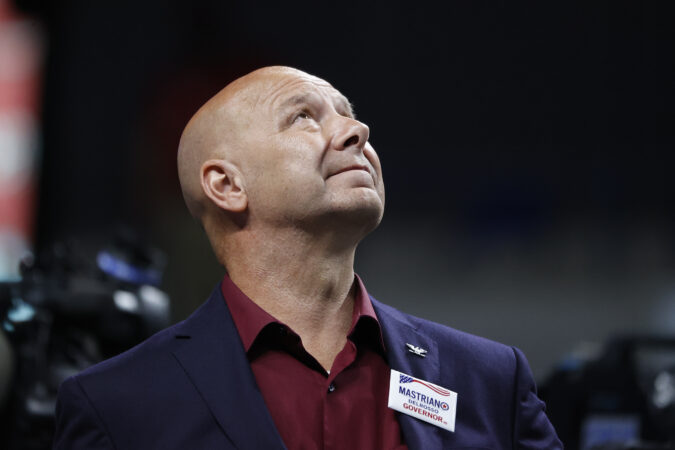
Mastriano’s announcementWednesday now clears the way for State Treasurer Stacy Garrity, who was endorsed by the state GOP last fall as the party’s best pick to challenge Gov. Josh Shapiro this November.
“We believe, with full peace in our hearts, God has not called us to run for governor,” Mastriano said in a Facebook Live video stream alongside his wife, Rebbie.
He did not endorse Garrity as part of his announcement, nor did he mention her by name.
“For you to have a Republican governor here, the grassroots is going to have to back the candidate,” Mastriano said, referring to Garrity.
Republicans chose Garrity early — endorsing her more than a year before the 2026 election — in an effort to avoid a crowded primary like the one that eventually led to Mastriano’s nomination in 2022. They hope that a candidate like Garrity, who has won statewide elections twice and dethroned Shapiro for receiving the most votes of any state-level candidate, will have a better chance at beating Shapiro, or at least, preventing a down-ballot blowout in an election that already is likely to favor Democrats.
Mastriano, a two-term state senator representing Gettysburg and the surrounding area, publicly criticized the state party for endorsing Garrity so early, and has repeatedly said that their endorsement would not deter him from getting in the race.
In a statement, Garrity said she respected Mastriano’s decision not to run, calling him a “strong voice for faith, family and freedom.”
“I look forward to working with him to restore integrity, fiscal responsibility, and common-sense leadership in our commonwealth,” Garrity added.
Mastriano, a former U.S. Army colonel with top-secret clearance, built a grassroots online following during the early days of the COVID-19 pandemic for his resistance to business shutdowns. That support continued to grow after the 2020 presidential election as he promoted President Donald Trump’s false claims that Pennsylvania’s election results were rigged. He has remained a staunch supporter of Trump ever since.
Trump’s advisers, however, feared that Mastriano’s presence on the ticket would hurt Republicans up and down the ticket despite him leading Garrity in private polling by 21 points, Politico reported in July.
Mastriano and his wife spent much of his 20-minute announcement on Wednesday reminiscing on their movement since 2020: their daily virtual fireside chats during COVID-19 closures and their other attempts to reopen the state’s businesses amid the pandemic, their efforts to overturn Pennsylvania’s 2020 election results for Trump, Mastriano’s 2022 gubernatorial run, and the GOP’s electoral successes in 2024.
However, things are different now, the couple said. The grassroots supporters aren’t as unified as they once were, and the state party overstepped in its early endorsement.
“Bottom line is: They don’t have the last say,” said Rebbie Mastriano, in a reminder to their supporters. “You have the last say.”
In the 2022 primary, the state GOP declined to endorse candidates in the gubernatorial or U.S. Senate races. That led to a crowded, nine-candidate GOP primary ballot for governor that was advantageous for Mastriano, who had built name recognition through his anti-lockdown and 2020 election efforts.
The state Democratic Party responded to Mastriano’s announcement with fresh attacks on Garrity, calling her a “far-right, toxic candidate” and noted some of the areas where she and Mastriano agree, including that she denied the 2020 election results and her past opposition to abortion. (She now says she would not support a state abortion ban.)
As of Wednesday, no GOP candidate had announced their candidacy for lieutenant governor. Garrity told The Inquirer last month she was vetting candidates and planned to announce who she’d endorse as her running mate in February, ahead of the next state GOP meeting.
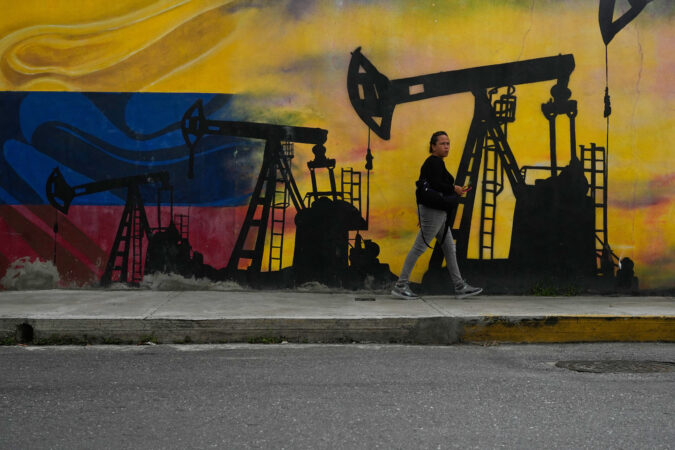
Energy Secretary Chris Wright announced Wednesday that the Trump administration will take control of all existing flows of oil from Venezuela for the foreseeable future as it struggles to persuade U.S. firms to invest in expansive drilling operations there.
Speaking at a Goldman Sachs energy industry event in Miami, Wright said the United States will allow Venezuelan oil under U.S. sanctions to flow again, but only to U.S. refineries. He said the sales will be “done by the U.S. government and deposited into accounts controlled by the U.S. government.”
“From there, those funds can flow back into Venezuela to benefit the Venezuelan people,” Wright said. “We need to leverage and control those oil sales to drive the changes that must happen in Venezuela.”
Wright’s comments followed an announcement from President Donald Trump on Tuesday night that tens of millions of barrels of Venezuelan oil currently blocked by a U.S. embargo will be shipped to refineries in the U.S. The directive enables revenue to start flowing to Venezuela, but even that arrangement could be complicated because those refineries get abundant oil from North America.
On Wednesday, Wright framed the effort as crucial to re-establishing a viable oil industry in Venezuela. He said the revenue generated could be used to help rebuild the badly rotting oil infrastructure in that country and to help lure U.S. firms to invest there. He said the U.S. will control Venezuelan oil flows “indefinitely.”
The unorthodox arrangement puzzled some analysts. The reason oil had not been flowing to the U.S. refineries was that U.S. sanctions prohibit it. If the sanctions were lifted, they say, market forces would already guide most of the Venezuelan oil to the U.S., which has refineries specially equipped to handle the heavy type of crude pumped there.
“So much Venezuelan oil is exported to China, India, and other markets because of sanctions,” said Ben Cahill, an energy markets scholar at the University of Texas at Austin. “If the goal is to redirect it to U.S. refiners, sanctions relief could do that on its own.”
The Venezuelan oil will be flowing at a time forecasts project the U.S. refining market will have more than enough oil.
“I don’t see how this benefits the American people,” said Amos Hochstein, managing partner at the investment holding company TWG Global, who was a senior economic and national security adviser in the Biden White House. “If anything, we may have an oversupply, which is why oil prices are in multiyear lows and declining. Nor do I see how this helps the people of Venezuela.”
An oil tanker is docked at El Palito Port in Puerto Cabello, Venezuela, last month.
The effort is underway as Wright also runs point on the White House effort to coax U.S. oil companies to invest in Venezuela, according to industry officials. As the companies express reticence, the White House is working aggressively to try to lure them.
Trump has started telling reluctant oil company leaders that he might make it worth their while.
Within days after sending Special Operations forces into Venezuela to arrest Nicolás Maduro, Trump suggested that U.S. taxpayers could help foot the bill to drill the vast reserves of the Latin American nation.
“A tremendous amount of money will have to be spent, and the oil companies will spend it, and then they’ll get reimbursed by us or through revenue,” he told NBC on Monday.
Using taxpayer-funded cash subsidies to incentivize oil companies to pump abroad would be unprecedented, industry analysts say. But the White House faces a steep challenge persuading firms to drill in a politically and economically unstable country that has burned them in the past by expropriating assets worth billions and then leaving U.S.-built oil infrastructure to rot.
The firms themselves are still working out what they want to request from the White House, according to a half-dozen individuals close to the companies who spoke on the condition of anonymity to talk speak frankly.
Since Monday, Wright has talked with the CEOs of the three major oil companies that would be positioned to drill there: Chevron, the sole remaining U.S. firm that has operations in Venezuela; ConocoPhillips, which is still owed some $8 billion after its assets were taken when it exited nearly two decades ago; and ExxonMobil, which also previously operated in Venezuela and is owed about $1 billion. The Energy Department said in an email that Wright would meet privately with executives from the firms at the Goldman Sachs event Wednesday.
ConocoPhillips said in a statement that “it would be premature to speculate on any future business activities or investments.” The other companies did not respond to requests for comment.
The White House declined to answer detailed questions.
According to one lobbyist close to the conversations, some company officials have been pondering the possibility of proposing a joint venture with the U.S. government, in which American taxpayers would invest in drilling in return for a stake in any profits.
The conversations are focused on how to make it viable to invest tens of billions of dollars in such a high-risk country at a time when oil prices are low and there are many other safer, more attractive places for them to drill, such as nearby Guyana.
“The companies are scrambling right now,” said a senior oil industry executive who has been involved in conversations with the administration. “I don’t think this was on anybody’s bingo card when they were making their [corporate] budgets for 2026.”
“I have talked to all of the CEOs at companies that could be in a position to engage there,” said the executive. “There were no conversations between the industry and the White House or the president about what would happen. Maybe the president said something to somebody, like ‘be ready’ at some casual conversation. If it happened, it happened months and months ago.”
The executive was also skeptical that companies would want subsidies, because partnering with the U.S. government carries its own risks. The next administration could be hostile to fossil fuels, and the companies would find themselves tied to it financially, as these agreements would pencil out only if they were in place for at least a decade or two. “We are a free-market industry,” the executive said. “We have benefited from not having state control of oil companies.”
Still, the firms, indebted to a White House that has been a relentless booster of the industry, are under considerable pressure to deliver in Venezuela, even as company officials warn privately that Trump’s vows that expanded pumping will begin in as soon as 18 months are out of touch with reality.
Despite other corporate partnerships undertaken by the administration around the world, it’s unclear how serious officials are about providing financial help for oil producers. Involving U.S. taxpayers is politically fraught and would probably confront opposition in Congress, industry analysts said.
“These companies being asked by the Trump administration to dive into Venezuela are confronting enormous risks,” said Bob McNally, president of Rapidan Energy Group, a research firm that serves the industry. “It is like walking into a factory left to rot for 2 1/2 decades, or like asking yourself, ‘How bad is this house we just bought?’ I imagine they would want to mitigate those risks however they can.”
The administration has offered financial incentives elsewhere around the world to entice companies and countries to align with the White House. In Ukraine, it struck a deal to create a Reconstruction Investment Fund, through which companies that invest in that country can tap into a fund generated with the help of natural-resource revenue from Ukraine.
Ted Posner, a partner at Baker Botts, a global law firm that advises major oil companies, said the Trump administration could do something similar for U.S. corporations investing in Venezuela “as a way of demonstrating that the U.S. government has skin in the game. It’s here by your side.”
But the levels of industry investment the White House wants to see in Venezuela — estimated at as much as $100 billion — dwarf what is being considered in Ukraine, and it is unclear if such partnerships would help sway oil company executives and their reluctant shareholders.
“There are carrots available” to entice companies to drill, Posner said. “What I don’t know is if there are enough.”
One oil company executive who has firsthand experience with the challenges in Venezuela warned that the administration’s rosy projections ignore realities on the ground.
Even the firms that are owed billions of dollars, the executive said, will be reluctant to return, because recouping their investments would almost certainly require them to spend billions more.
The reimbursement for seized assets would be the obligation of the Venezuelan state oil company, and it won’t have the funds if Venezuela does not restore its production capacity, which has collapsed after decades of neglect.
“The only way to recoup that funding is through [pumping] crude oil,” the executive said. “But that will not happen overnight. Will you be fully compensated at the end of the day? Maybe. Maybe not.”
“The U.S. government is going to have a hard time making this sales pitch,” this individual said. “Some companies are going to say, ‘We appreciate this, but we have our shareholders to think about and just cannot do it.’ Other companies will make demands to the U.S. that they want to be made whole if something happens. … How can you commit the U.S. Treasury to backstop these issues in Venezuela? Think about all the geopolitics around that. That alone could be tied up with lawyers for a year.”
As oil executives grapple with all of this uncertainty, Trump continues to indicate that he expects all of them to align with his plans.
On Tuesday he told reporters that he will personally be meeting with companies. “You know what that’s about,” he said, alluding to Venezuela. “We got a lot of oil to drill, which is going to bring down oil prices even further.”
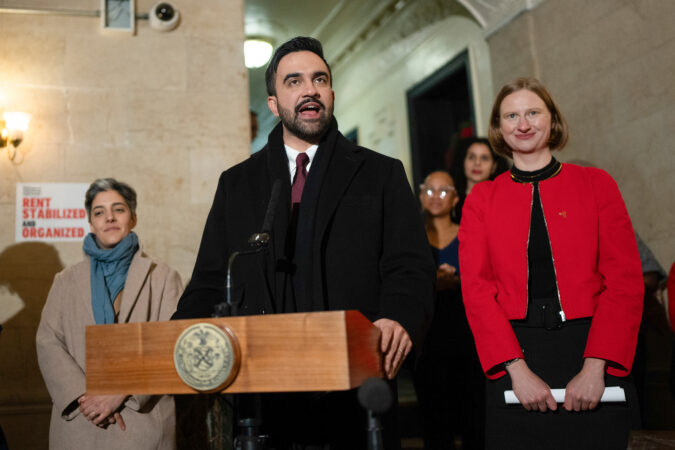
NEW YORK — New York City Mayor Zohran Mamdani is standing behind a newly appointed housing official as she faces backlash for years-old social media posts, including messages that called for the seizure of private property and linked homeownership to white supremacy.
Cea Weaver, a longtime tenant activist, was tapped by the Democrat last week to serve as executive director of the Mayor’s Office to Protect Tenants. The mayor has vowed to expand and empower the office to take “unprecedented” steps against negligent landlords.
The posts, which were circulated on social media in recent days by critics of Mamdani, included calls to treat private property as a “collective good” and to “impoverish the *white* middle class.” A tweet sent in 2017 described homeownership as “a weapon of white supremacy masquerading as ‘wealth building public policy.’”
Eric Adams, the city’s former mayor and a fellow Democrat, said the remarks showed “extreme privilege and total detachment from reality.”
Asked about the controversy on Wednesday, Mamdani did not address the substance of Weaver’s posts but defended her record of “standing up for tenants across the city and state.”
Weaver said in an interview with a local TV station that some of the messages were “regretful” and “not something I would say today.”
“I want to make sure that everybody has a safe and affordable place to live, whether they rent or own, and that is something I’m laser-focused on in this new role,” she added.
The discussion comes after Mamdani last month accepted the resignation of another official, Catherine Almonte Da Costa, after the Anti-Defamation League shared social media posts she made over a decade ago that featured antisemitic tropes.
While Mamdani had said he was unaware of Da Costa’s messages, Weaver’s past social media posts were known to the administration, according to a mayoral spokesperson, Dora Pekec.
Weaver previously led the Housing Justice for All coalition, which was widely credited with helping to convince state lawmakers to pass a sweeping package of tenant protections in 2019.
As leader of the city’s tenant protection office, she would play a key role in achieving one of Mamdani’s most polarizing campaign pledges: identifying negligent landlords and forcing them to negotiate the sale of their properties to the city if they are unable to pay fines for violations.
The “public stewardship” proposal has drawn consternation from landlord groups and skepticism from others in city government.
But the early days of his administration have brought signs that the new mayor is not backing off on the idea.
In a press conference immediately following his inauguration last week, Mamdani said the city would take “precedent-setting” action against the owner of a Brooklyn apartment building that owed the city money and was currently in bankruptcy proceedings.
He then announced Weaver’s appointment, drawing loud cheers from the members of a tenants union gathered in the building’s lobby.
“It is going to be challenging,” Weaver acknowledged. “New York is home to some of the most valuable real estate in the world. Everything about New York politics is about that fact.”
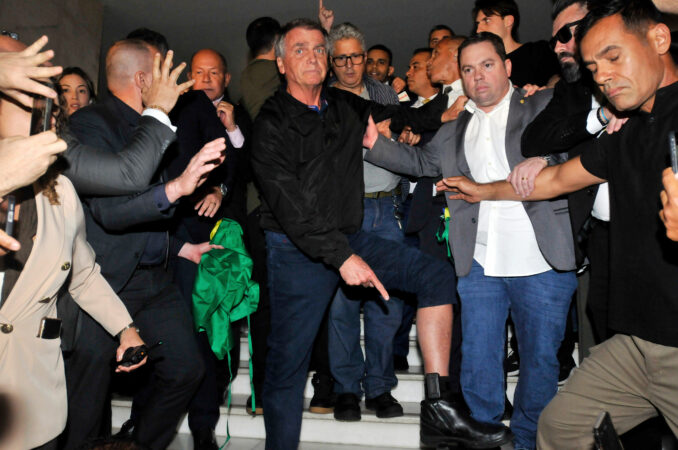
RIO DE JANEIRO — Former President Jair Bolsonaro was granted a brief leave Wednesday from his 27-year prison sentence for a coup attempt so that he could undergo medical tests at a hospital in the capital after he fell from his bed.
Police escorted Bolsonaro, 70, from the federal police’s headquarters in Brasilia to the nearby DF Star hospital where he arrived at around midday for three brain tests.
At about 4:30 p.m. local time, Bolsonaro’s wife, Michelle, said on Instagram that the exams had been carried out and that they were awaiting results. Her husband went back to prison, she said.
Later, DF Star hospital said in a brief statement that the tests showed “mild soft-tissue thickening in the frontal and right temporal regions” due to the trauma, but that no additional treatment was needed.
Bolsonaro fell in his cell overnight from Monday to Tuesday while sleeping. His wife, and Bolsonaro’s son Carlos, said on social media Tuesday that the far-right politician needed medical attention and expressed frustration that Bolsonaro hadn’t been sent to the hospital on Tuesday.
In his decision authorizing the trip to the hospital Wednesday, Supreme Court Justice Alexandre de Moraes cited a health report conducted by the federal police on Tuesday. Bolsonaro reported mild head trauma, according to the report. Upon examination, the former Brazilian leader was found to be conscious and lucid, with a superficial cut to his face.
De Moraes authorized a tomography, brain scan and a brain wave test requested by Bolsonaro’s lawyers. The Supreme Court justice said that his transfer to the hospital should be conducted in a “discreet manner,” and that federal police were responsible for Bolsonaro’s security and his return to prison.
Bolsonaro had previously left the hospital and returned to prison last Thursday, a week after undergoing double hernia surgery.
Bolsonaro has been hospitalized multiple times since being stabbed at a campaign event before the 2018 presidential election.
Bolsonaro and several of his allies were convicted in September by a panel of Supreme Court justices of attempting to overthrow Brazil’s democratic system following his 2022 election defeat.
The plot included plans to kill Lula, Vice President Geraldo Alckmin and de Moraes. There was also a plan to encourage an insurrection in early 2023.
Bolsonaro was also convicted on charges that include leading an armed criminal organization and attempting the violent abolition of the democratic rule of law. He has denied any wrongdoing.
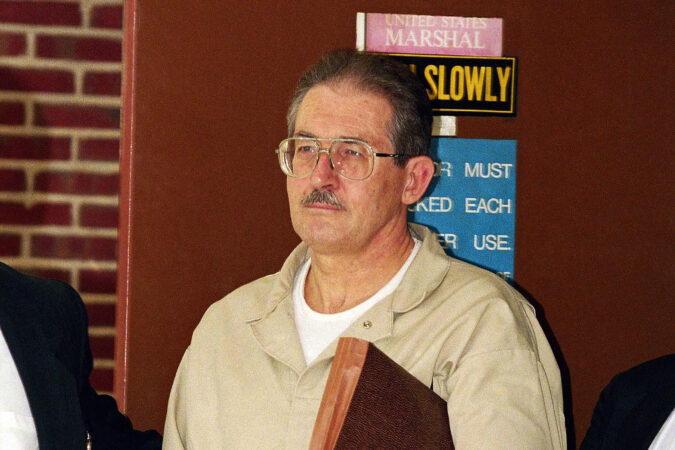
WASHINGTON — CIA turncoat Aldrich Mr. Ames, who betrayed Western intelligence assets to the Soviet Union and Russia in one of the most damaging intelligence breaches in U.S. history, has died in a Maryland prison. He was 84.
A spokesperson for the Bureau of Prisons confirmed Mr. Ames died Monday.
Mr. Ames, a 31-year CIA veteran, admitted being paid $2.5 million by Moscow for U.S. secrets from 1985 until his arrest in 1994. His disclosures included the identities of 10 Russian officials and one Eastern European who were spying for the United States or Great Britain, along with spy satellite operations, eavesdropping and general spy procedures. His betrayals are blamed for the executions of Western agents working behind the Iron Curtain and were a major setback to the CIA during the Cold War.
He pleaded guilty without a trial to espionage and tax evasion and was sentenced to life in prison without parole. Prosecutors said he deprived the United States of valuable intelligence material for years.
He professed “profound shame and guilt” for “this betrayal of trust, done for the basest motives,” money to pay debts. But he downplayed the damage he caused, telling the court he did not believe he had “noticeably damaged” the United States or “noticeably aided” Moscow.
“These spy wars are a sideshow which have had no real impact on our significant security interests over the years,” he told the court, questioning the value that leaders of any country derived from vast networks of human spies around the globe.
In a jailhouse interview with The Washington Post the day before he was sentenced, Mr. Ames said he was motivated to spy by “financial troubles, immediate and continuing.”
Mr. Ames was working in the Soviet/Eastern European division at the CIA’s headquarters in Langley, Va., when he first approached the KGB, according to an FBI history of the case. He continued passing secrets to the Soviets while stationed in Rome for the CIA and after returning to Washington. Meanwhile, the U.S. intelligence community was frantically trying to figure out why so many agents were getting discovered by Moscow.
Mr. Ames’ spying coincided with that of FBI agent Robert Hanssen, who was caught in 2001 and charged with taking $1.4 million in cash and diamonds to sell secrets to Moscow. He died in prison in 2023.
Mr. Ames’ wife, Rosario, pleaded guilty to lesser espionage charges of assisting his spying and was sentenced to 63 months in prison.
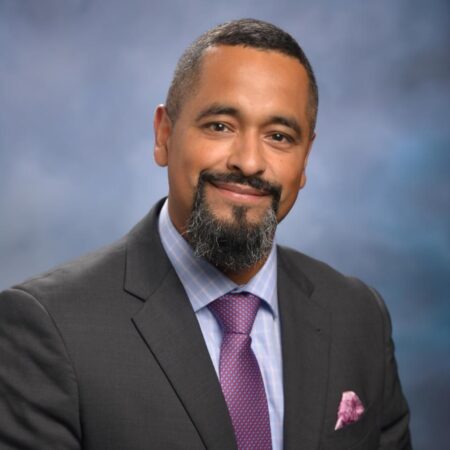
A veteran Vineland educator has been named the state-appointed superintendent to oversee the Camden school system, state Education Commissioner Kevin Dehmer announced Wednesday.
Alfonso Q. Llano Jr. was selected after a national search that began in June. He will begin heading the troubled South Jersey school system starting March 1.
He will be the first Hispanic superintendent to lead the district. Demographics in Camden have shifted in recent years, and 56% of its traditional public school students are now Hispanic, 42% are Black, and 1.2% are white.
Dehmer made the long-awaited announcement at the monthly state Board of Education meeting in Trenton. The board unanimously approved the appointment.
“I’m honored for the opportunity to serve the Camden City School District,” Llano said. “Together, we’re going to work through transparency and tough times. We’re going to achieve great things.”
Llano will receive an annual salary of $260,000 under a three-year contract.
In Vineland, he was the highest-paid superintendent in Cumberland County with an annual base salary of $206,000.
Carstarphen and other officials praised Llano’s appointment in a statement released Wednesday. The mayor lauded the state “for identifying someone who will bring meaningful change for Camden’s students.”
“I am confident he will be an excellent leader who prepares our students for the future and always puts our students’ academic interest first,” Carstarphen said.
N’Namdee Nelson, president of the Camden City Advisory School Board, said: “We want to ensure that every child in the school district has access to a great school.”
Others, like former longtime school board member Jose E. Delgado, wished Llano well but were less optimistic. He said the selection of a Hispanic superintendent was “long overdue.”
“He’s stepping into a very dysfunctional environment that will require a wide array of fiscal, administrative, and educational skills,” Delgado said.
The changing educational landscape in Camden poses the biggest challenge. Thousands of students have left the city’s traditional public schools for Renaissance and charter schools, which are publicly funded but privately run and now lead the district’s enrollment.
Camden is the only district in New Jersey with three school types. Charters enroll 3,236 students, and Renaissance schools have 6,664 students.
Last spring, McCombs cited the declining enrollment in part for a $91 million budget deficit. She cut more than 100 positions and laid off teachers and support staff in a massive restructuring.
Camden Education Association president Pamela Clark, who represents more than 1,000 teachers and support staff, said she hopes to meet with Llano soon to discuss concerns about possible layoffs and school closures.
“I will continue to advocate fiercely to protect my members’ jobs and school closures, and I hope the new superintendent brings fairness, transparency, and unity to our city,” she said.
During a meeting in June, the Vineland board was bitterly divided over whether to renew his contract. The board must give six months’ notice if it plans to terminate a superintendent. The motion to not renew it failed, and it was unclear what direction the board would pursue.
In Vineland,Llano oversaw a diverse district of more than 10,200 students enrolled in 16 schools. About 63% of the students are Hispanic, 14% are Black, and 18% are white. About 17.4% of its students are multilingual learners.
Vineland has some of the same issues as Camden schools — low test scores and chronic absenteeism. The majority of the students in the sprawling 68-square-mile community are economically disadvantaged.
Llano also spent 10 years in the Trenton school system, most recently as the interim schools chief for nearly a year prior to moving to Vineland. He previously was the district’s chief academic officer for six months. He also was an assistant superintendent and principal in Trenton.
According to his LinkedIn profile, Llano also had stints in the Readington Township and Howell Township school districts in a career spanning 27 years.
He is pursuing a doctoral degree in education at Seton Hall University. He holds master’s degrees from New Jersey City University and Kean University, and a bachelor’s degree from Rowan University.
Interim State-appointed Camden school Superintendent Davida Coe-Brockington.
Coe-Brockington said Llano’s reputation precedes him and that she was looking forward to working with him to “focus on the progress we’ve made in the district and focus on creating better outcomes for the students and families of Camden City.”
It was unclear Wednesday whether Coe-Brockington would remain in the central office when Llano takes over or return to Creative Arts High School, where she has been principal since it opened in 1999.
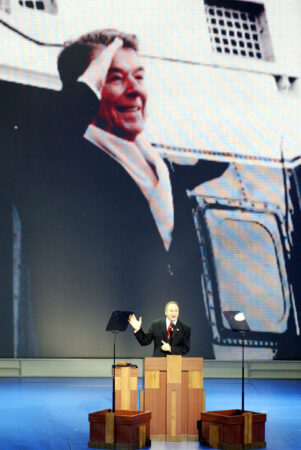
Michael Reagan, a longtime political commentator for radio, TV and print media, and the eldest son of President Ronald Reagan, died Jan. 4 from cancer, a conservative group affiliated with the former president said Tuesday. He was 80.
A longtime Republican like his father, Mr. Reagan espoused conservative opinions, advocating antiabortion views, stressing adherence to Christianity and expressing skepticism about green policies. Like many in his party, he was initially a critic of President Donald Trump, describing him as an “egomaniacal billionaire” and a “political train wreck” who had little chance of winning in 2016. When Trump defied the odds and won, Mr. Reagan embraced him, decrying the “liberal media” that he said hated Trump.
But Mr. Reagan’s political outspokenness and his famous father appeared to overshadow his lifelong struggle with scars suffered during a tumultuous childhood. He first heard at the age of 4 that he had been adopted, and he was sexually molested at the age of 7 by a camp counselor – experiences that molded his political views and prompted him to turn to religion for solace.
Mr. Reagan kept the molestation a secret for decades, partly out offear that revealing it could ruin his dad’s political career. Mr. Reagan finally told his father in 1987, as the president was nearing the end of his second term and when Mr. Reagan was writing a memoir. The book was going to contain the story, so Mr. Reagan felt compelled to tell his father beforehand.
“Now here I am at the ranch. Dad’s standing in front of me with his belt buckle on, and it looks like a brand new pair of cowboy boots. Nancy’s on my left side. Nancy and Dad say, ‘So what’s in the book we don’t know about?’ I had to tell Dad, and I couldn’t look at him,” he recalled in a later interview.
“The hardest thing was telling him the act. It was not enough to tell him, ‘Geez, Dad, I was molested,’ but the act … that was the toughest thing. I got all done. My dad looked at me and said, ‘Where’s this guy? I’ll kick his butt.’ My dad didn’t walk away, didn’t say he hated me. I thought to myself, Why didn’t I do this years ago? But I couldn’t have years ago. God brought me to the right moment in 1987.”
Michael Edward Reagan was born on March 18, 1945, in Los Angeles. Born to unmarried parents John Bourgholtzer, an Army soldier, and Essie Irene Flaugher, his birth name was John Charles Flaugher. The Reagans changed his name after adopting him. Mr. Reagan often joked that he was born German but became Irish at 3 days old, referring to the Reagans’ Irish roots.
Mr. Reagan first learned he was adopted from his 8-year-old sister Maureen. When Mr. Reagan asked their mother, actress Jane Wyman, what the word “adopted” meant, she first gave a stern look to Maureen before telling her son that he had been chosen so he was special. “Let’s not ever talk about it again,” Wyman told her children.
But when Mr. Reagan went to boarding school a few years later and told a classmate that he was special, he was bullied.
“He comes back to me, ‘You were not chosen; you’re illegitimate,’” Mr. Reagan said in a 2008 interview. “So the kids started teasing me in school that I wasn’t a real Reagan. I was the ‘Bastard Reagan,’ the illegitimate Reagan.”
Mr. Reagan didn’t understand what “illegitimate” meant. So he consulted the Bible, and found a verse that said “all the illegitimate children and their children until the 10th generation will never enter the kingdom of Heaven.”
“I closed the Bible. This is like 1951. [I] didn’t reopen the Bible until 1978.”
The pain pushed him toward self-hate and anger. His parents’ subsequent divorce and the crime he suffered at the hands of a child molester exacerbated the negative emotions. As a high school student, he told himself he was condemned and blamed himself for his molestation.
“I thought I was living a lie because no one knew what I had done. I questioned my sexuality, I stole money from my parents to buy prostitutes trying to convince myself I was straight,” he said in 2012. “I just didn’t know … I thought my birth parents gave me away because they knew I would be evil and I thought the Reagans would give me back if they found out.”
He briefly attended Arizona State University and Los Angeles Valley College, and attempted to follow his parents into acting, but ultimately became better known for the radio shows he hosted, starting in the late 1980s in Los Angeles, where he briefly rubbed elbows with conservative talk show star Rush Limbaugh. Mr. Reagan attributed Trump’s rise to his ability to cater to the millions who tuned into conservative radio talk shows.
Mr. Reagan became a frequent presence on television, radio and print as a political commentator, working as an analyst for the right-wing news outlet Newsmax during his final days.
Although Mr. Reagan repeatedly expressed dismay over Trump’s haphazard style of politics earlier in Trump’s political career, Mr. Reagan’s opinions appeared to veer increasingly closer to those of Trump.
Mr. Reagan initially denounced the events at the Capitol on Jan. 6, 2021, calling them “wrong” and saying that they had “soiled [Trump’s] legacy forever.” But a year later, he was describing those arrested for allegedly participating in the events that day as “political prisoners.”
In 2024, he wrote a column titled “Democrats: The Enemy of Democracy.”
“While our streets and campuses are crawling with [left-wing protesters] and pro-Palestine vandals, Democrats are still yammering about the ‘insurrection’ of Jan. 6 and worrying about the existential threat Donald Trump supposedly poses to our democracy,” he said.
That year, Mr. Reagan welcomed Trump’s reelection, praising the president for building a broad coalition that included “blue-collar workers, blacks and Latinos” – those who have not traditionally voted Republican.
“With his historic political comeback and his MAGA movement, Trump has created the Republican Party of the future,” Mr. Reagan wrote in November 2024.
In his private life, Mr. Reagan cherished his relationship with his wife, Colleen, whom he married in 1975 after a short marriage to Pamela Putnam that ended in 1972. Mr. Reagan has publicly thanked his wife for persuading him to turn to religion. Survivors include his wife and two children.
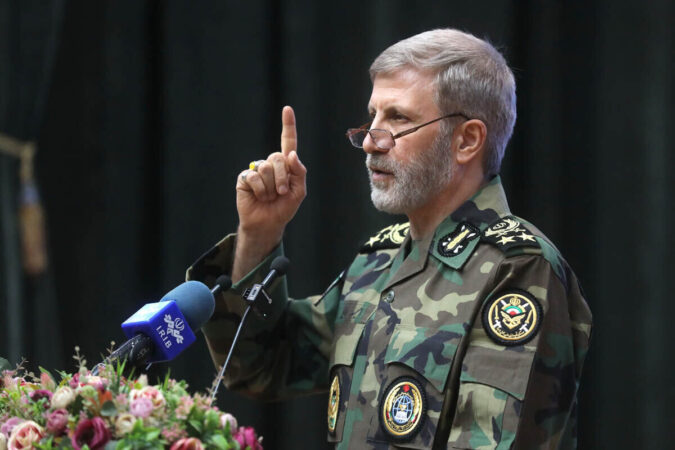
DUBAI, United Arab Emirates — Iran’s army chief threatened preemptive military action Wednesday over the “rhetoric” targeting the Islamic Republic, likely referring to President Donald Trump’s warning that if Tehran “violently kills peaceful protesters,” the United States “will come to their rescue.”
The comments by Maj. Gen. Amir Hatami come as Iran tries to respond to what it sees as a dual threat posed by Israel and the United States, as well as the protests sparked by its economic woes that have grown into a direct challenge to its theocracy.
Seeking to halt the anger, Iran’s government began Wednesday paying the equivalent of $7 a month to subsidize rising costs for dinner table essentials like rice, meat and pastas. Shopkeepers warn prices for items as basic as cooking oil likely will triple under pressure from the collapse of Iran’s rial currency and the end of a preferential subsidized dollar-rial exchange rate for importers and manufacturers — likely fueling further popular anger.
“More than a week of protests in Iran reflects not only worsening economic conditions, but longstanding anger at government repression and regime policies that have led to Iran’s global isolation,” the New York-based Soufan Center think tank said.
Army chief’s threat
Hatami spoke to military academy students. He took over as commander in chief of Iran’s army, known by the Farsi word “Artesh,” after Israel killed a number of the country’s top military commanders in June’s 12-day war. He is the first regular military officer in decades to hold a position long controlled by Iran’s paramilitary Revolutionary Guard.
“The Islamic Republic considers the intensification of such rhetoric against the Iranian nation as a threat and will not leave its continuation without a response,” Hatami said, according to the state-run IRNA news agency.
He added, “I can say with confidence that today the readiness of Iran’s armed forces is far greater than before the war. If the enemy commits an error, it will face a more decisive response, and we will cut off the hand of any aggressor.”
Iranian officials, including Supreme Leader Ayatollah Ali Khamenei, have been responding to Trump’s comments, which took on more significance after the U.S. military raid that seized Venezuelan President Nicolás Maduro, a longtime ally of Tehran, over the weekend. But there’s been no immediate public sign of Iran preparing for an attack in the region.
New subsidy payment begins
Iranian state television reported on the start of a new subsidy of the equivalent of $7, put into the bank accounts of heads of households across the country. More than 71 million people will receive the benefit, which is 10 million Iranian rials, it reported. The rial now trades at more than 1.4 million to $1 and continues to depreciate.
The subsidy is more than double than the 4.5 million rial people previously received. But already, Iranian media report sharp rises in the cost of basic goods, including cooking oil, poultry and cheese, placing additional strain on households already burdened by international sanctions targeting the country and inflation.
Iran’s vice president in charge of executive affairs, Mohammad Jafar Ghaempanah, told reporters on Wednesday that the country was in a “full-fledged economic war.” He called for “economic surgery” to eliminate rentier policies and corruption within the country.
Social media videos purported to show new cities like Bojnourd, Kerman, Rasht, Shiraz, and Tabriz, as well some smaller towns, joining the demonstrations on Wednesday.
The U.S.-based Human Rights Activists News Agency offered the latest death toll of 36 for the demonstrations. It said 30 protesters, four children and two members of Iran’s security forces have been killed. Demonstrations have reached over 310 locations in 28 of Iran’s 31 provinces. More than 2,100 people have been arrested, it said.
The group, which relies on an activist network inside of Iran for its reporting, has been accurate in past unrest.