Category: Politics

Political news and coverage

  • Lower Merion swore in five new commissioners this week. Here’s who they are.

    Lower Merion swore in five new commissioners this week. Here’s who they are.

    Lower Merion swore in five new commissioners on Monday, kicking off the board’s 126th year of governing the Montgomery County township.

    Between rounds of applause and family photos, commissioners outlined the major challenges, and opportunities, the body will face in 2026. Board members highlighted recent accomplishments — creating a process for establishing board priorities, restricting gas-powered leaf blowers and plastic bags, advancing capital projects, hiring a police superintendent, supporting the development of affordable housing, and reversing the post-pandemic decline in police staffing levels.

    Yet they also underscored that much awaits the new board, including negotiating two collective bargaining agreements, overseeing Main Line Health’s redevelopment of the St. Charles Borromeo Seminary property, and addressing a difficult fiscal reality (the board last month authorized an 8% property tax increase, citing the “mistake” of having kept tax rates stagnant for over a decade).

    “We’re solving problems, we’re moving forward, and we’re even having a little fun,” said commissioner V. Scott Zelov, who was sworn in for his sixth term.

    Zelov on Monday night became the eighth commissioner in Lower Merion history to serve for at least 20 years, board President Todd Sinai said.

    Sinai, who was first elected to the board in 2017, was unanimously reelected board president. Incumbent commissioner Sean Whalen called Sinai a “stalwart leader of this board,” praising Sinai’s leadership through economic ups and downs.

    Jeremiah Woodring, also an incumbent commissioner, was unanimously elected vice president. Sinai described Woodring as “thoughtful and inquisitive,” “balanced,” and “diplomatic.”

    Jana Lunger was sworn in as Lower Merion tax collector.

    Here’s a who’s who of the five newly elected Lower Merion commissioners, all of whom replaced outgoing commissioners who chose not to run again in 2025.

    Michael Daly, an attorney and the former president of the Gladwyne Civic Association, was sworn in to represent Ward 2, which includes Gladwyne and Penn Valley. Daly has lived in Lower Merion for around 15 years with his wife and three children, all of whom are products of the Lower Merion School District. In his law practice, he focuses on defending class action lawsuits and complex litigation. In a candidate interview earlier this fall, Daly said he’s focused on quality of life issues, including walkability, public parks, and safe streets. He replaced outgoing commissioner Joshua Grimes.

    Charles Gregory, a longtime township employee, will represent Ward 4, which encompasses Ardmore and Haverford. Gregory, who was born and raised in Ardmore, worked for Lower Merion Township for 23 years until 2024. He’s the former president of the Lower Merion Workers Association and a Boy Scout troop leader. During a candidate forum, Gregory said he believed he could “make a difference from a blue collar aspect.” Gregory replaced outgoing commissioner Anthony Stevenson.

    Christine McGuire is a forensic psychologist and business owner who will serve Rosemont and Villanova in Ward 6. McGuire lived in Gladwyne for nine years before moving to Villanova around three years ago. In a candidate forum, McGuire said she has been active in the Gladwyne Civic Association and in the parent group that studied Lower Merion’s school start time change. As the owner of a psychology practice, she said she understands “what a budget is and that you have to work within the budget and not look at it like a blank check.” She replaced outgoing commissioner Andrew Gavrin.

    Craig Timberlake, an Ardmore resident who was instrumental in the 2025 redevelopment at Schauffele Plaza, will represent Ward 8’s South Wynnewood and East Ardmore. Timberlake moved to Ardmore around 15 years ago from Maine. He says he was drawn to Ardmore’s high-quality schools, walkable neighborhoods, and transit options. He believes the township should incentivize “smaller,” “incremental,” and locally funded development and decrease speed limits to protect pedestrians. Timberlake is a project manager at OnCourse, an education technology platform. He replaced Shawn Kraemer, the board’s outgoing vice president.

    Shelby Sparrow, the former president of the Penn Wynne Civic Association and a longtime community organizer, will represent Penn Wynne and Wynnewood in Ward 14. Sparrow’s priorities include ensuring the community is engaged in Main Line Health’s redevelopment of the St. Charles Borromeo Seminary property; addressing pedestrian safety; and encouraging sustainability and park stewardship. She was previously the director of development for St. Peter’s Independent School in Center City. She replaced outgoing commissioner Rick Churchill.

    Sinai and Zelov, who were reelected in November, were sworn in, and sitting commissioners Woodring, Whalen, Daniel Bernheim, Louis Rossman, Ray Courtney, Maggie Harper Epstein, and Gilda Kramer were welcomed back.

    This suburban content is produced with support from the Leslie Miller and Richard Worley Foundation and The Lenfest Institute for Journalism. Editorial content is created independently of the project donors. Gifts to support The Inquirer’s high-impact journalism can be made at inquirer.com/donate. A list of Lenfest Institute donors can be found at lenfestinstitute.org/supporters.

  • Emails outline potential cuts affecting thousands of FEMA disaster responders

    Emails outline potential cuts affecting thousands of FEMA disaster responders

    The Department of Homeland Security has drafted plans to drastically cut the Federal Emergency Management Agency workforce in 2026, according to documents obtained by the Washington Post that detail potential reductions to thousands of disaster response and recovery roles.

    The terminations are likely to come in waves, according to three people familiar with the plans who, like some others interviewed for this report, spoke on the condition of anonymity for fear of retribution. They said the cuts began on New Year’s Eve with the elimination of about 65 positions that were part of FEMA’s largest workforce, known as the Cadre of On-Call Response and Recovery (CORE) — staffers who are among the first on the ground after a disaster and often stick around for years to help communities recover.

    Independent journalist Marisa Kabas and CNN earlier reported a portion of the New Year’s Eve cuts.

    Emails sent to senior agency leadership in late December include detailed tables identifying roles that can be cut from the agency’s divisions. These tables include a 41% reduction in CORE disaster roles, amounting to more than 4,300 positions. They also list reductions in surge staffing, standby workers who are often the first on the ground when a disaster strikes, by 85%, or nearly 6,500 roles.

    In a statement, FEMA spokesperson Daniel Llargués said the agency has “not issued and is not implementing a percentage-based workforce reduction.”

    “The materials referenced from the leaked documentation stem from a routine, pre-decisional workforce planning exercise conducted in line with OMB and OPM guidance,” Llargués added. “The email outlining that exercise did not direct staffing cuts or establish reduction targets.”

    Homeland Security Secretary Kristi L. Noem has long wanted to cut back on CORE staffing, according to two former senior officials.

    Losing a large number of disaster-specific workers over a short period “would mean greater delays in processing and survivors not being dealt with as quickly as they had been before,” said Cameron Hamilton, who led FEMA as acting administrator in the early months of President Donald Trump’s second term.

    Internal agency emails and documents, as well as people familiar with the plans, suggest Noem is spearheading the drastic reductions, which may impede FEMA’s ability to fulfill its legal obligation to help the nation respond to disasters, according to three FEMA officials.

    Noem, who has exercised a tight grip over FEMA since taking over its parent department, has repeatedly expressed a desire to shrink or eliminate the agency. The Post reported that she previously made recommendations to cut agency staffing by about half.

    Although the documents call the staffing reduction an “exercise” and say “no staffing actions or personnel decisions are being directed or implemented as part of this request,” two officials familiar with the situation said the tables reflect Noem’s targets for the agency.

    An email describes the tables, which list total reduction counts and percentages for most of the agency’s divisions, as a “planning document.”

    Llargués said in FEMA’s statement that the “accompanying spreadsheet was an internal working tool used to collect planning inputs.”

    The emails show that there have been “deliberate” discussions regarding workforce reductions, said a person familiar with them, who added that the documents request “senior leadership to review and ensure that whatever staff is retained is absolutely necessary.”

    DHS has said publicly that it terminated 50 people in early January and that the cuts were “a routine staff adjustment of 50 staff out of 8000.”

    Two officials with knowledge of the process said that number is closer to 65. The officials had been told to expect that hundreds more people would lose their jobs by the end of January. CORE staffers whose jobs were supposed to be renewed this week still have not heard anything about their status, officials said.

    Llargués said the New Year’s Eve cuts were unrelated to the “planning exercise described in the leaked email.”

    The potential for additional cuts come less than a year after a wave of FEMA terminations, including of hundreds of probationary employees. FEMA officials are also awaiting a final draft of a report by a Trump-appointed review council on the agency’s future, which was supposed to be released last month. The Post previously reported that a version of that report recommended making FEMA leaner but also more independent — findings that countered recommendations from Noem, the council’s co-chair.

    Three FEMA officials raised concerns about the rapid and drastic dismantling of the agency workforce.

    Under the Post-Katrina Emergency Management Reform Act, the homeland security secretary is prohibited from taking actions that “substantially or significantly reduce the authorities, responsibilities, or functions” of FEMA.

    “It’s not just unprecedented — it directly contradicts the law,” said a veteran FEMA official who has also worked within DHS.

    Having the head of DHS determine the fate of disaster response roles “strips FEMA leadership of its statutory authority and puts control of the nation’s disaster workforce in the hands of a department that Congress explicitly told to step back after Katrina,” that person added.

    Emergency management historian Scott Robinson said cutting FEMA’s staffing at these levels “would [undo] an act of Congress without an act of Congress.”

    “The president is using a lot of administrative tools to try and do things we would have traditionally expected legislation to do,” Robinson said.

    There are about 17,500 CORE employees spread across the country — the majority of FEMA’s workforce of 22,316, an agency official said. Under the Stafford Act, FEMA hires these staffers for multiyear terms using the disaster relief fund.

    CORE teams partner directly with state and local officials to support ongoing response and recovery after a hurricane strikes or a fire tears through a town. They may move resources from warehouses to hard-hit communities; they process grants and conduct trainings. Some staffers were working on long-term projects related to Hurricanes Sandy, Maria, and Fiona. CORE teams also include lawyers, IT experts, and others who may help oversee nuclear plant operations or help in hazard reduction for earthquakes.

    For example, in a region that includes Texas, Louisiana and more than 60 tribal nations, about 80% of the FEMA staffers deployed in support roles are CORE employees, a former senior official said.

    Ongoing discussions to downsize FEMA also underscore how much autonomy the nation’s emergency management agency has lost since the start of Trump’s second term. FEMA has been without a congressionally appointed leader for nearly a year, cycling through temporary officials who have lacked disaster management experience, which is required by law to lead the agency. After David Richardson resigned in November, DHS tapped its chief of staff at the time, Karen Evans, to act as the agency’s interim administrator.

    An agency official familiar with the discussions said Evans has been part of conversations about the future of this disaster-specific workforce for the past few weeks, including about whether to extend positions for a month or two until the agency has had enough time to review the need for the roles. But the official said it seemed that Noem was making the final decision.

    As documents detailing workforce cuts made rounds within the agency over the past week, FEMA officials were stunned and pointed out that getting rid of nearly half of the nation’s disaster workforce would greatly harm communities in various stages of disaster recovery. States would need much more time to prepare and bolster their own disaster capabilities before the federal government significantly pulled back resources such as CORE employees.

    “The entire framework of a reduction should be built on stronger state partnerships, not knee-jerk reactions from the federal government,” Hamilton said.

    CORE appointments are typically renewed every two to four years. When the end of an employee’s contracted term approaches, their supervisors submit paperwork to renew those roles and send it up the chain. Most of the positions are usually reinstated, according to four current and former FEMA officials, in part because recovery work is long and complex.

    In mid-December, DHS took away FEMA’s authority to independently renew these positions, and it instituted a hiring process that requires Noem to review all CORE positions and help decide whether they should continue to exist, according to emails and a person familiar with a meeting where these new requirements were discussed.

    An email from Dec. 17 described how Noem — often referred to as “S1” in internal DHS and FEMA conversations and documents — created parameters for keeping the CORE employees.

    “To improve DHS review outcomes, each CORE term renewal justification must be written to fit what the S1 verification form is designed to capture,” it said.

    Noem overseeing hiring for disaster-specific employees “is completely outside the norm,” said the veteran FEMA official who also served within DHS. “CORE renewals have always been handled inside FEMA, as Congress intended under the Post-Katrina Emergency Management Reform Act.”

    The new system created year-end confusion as supervisors scrambled to send in detailed letters justifying a variety of positions.

    For example, in one region with 40 CORE employees whose jobs were to be renewed in January, supervisors sent lengthy justification notes for about 35 of those workers. That same day, they were told to trim the letters and send them again.

    They heard nothing in response, until they learned on Dec. 31 that they would lose nine employees “regardless of the recommendations of emergency management experts,” one official familiar with the situation said. The fate of the rest is unknown, a supervisor said. He said he was also told “there was no plan” to extend any other CORE employees whose jobs were supposed to be renewed this month.

    It is unclear whether FEMA or DHS took the justification memos into account.

    In the last weeks of December, the office was inundated with hundreds of these justification memos, including statistics and data meant to explain why specific roles were crucial to FEMA’s mission to help communities recover from disasters.

    Then, on New Year’s Eve, human resources staffers were told to inform people they had lost their jobs, according to a person familiar with the situation and memos obtained by the Post. Some CORE staffers learned they were fired on New Year’s Day while on vacation, and they were asked to send in their equipment by Jan. 2.

    Several agency officials who supervise CORE team members were shocked when they learned that numerous employees had suddenly lost their jobs, emails show.

    “This must be a mistake,” one supervisor wrote to FEMA’s HR services and other officials, explaining that they had approved their employee’s renewal and sent the paperwork through the proper channels.

    Another supervisor overseeing recovery work for Hurricane Helene expressed concern and confusion over losing a staffer, stating in a New Year’s Eve note to human resources that “based on the attached emails and form,” the worker’s “appointment should be renewed.”

    “I would like to resolve this ASAP, as this is a disappointing and confusing email to get right before a holiday,” the supervisor said.

    In response, a top human resources official said the situation was essentially out of their hands.


  • Fifth anniversary of the Jan. 6 attack brings fresh division to the Capitol

    Fifth anniversary of the Jan. 6 attack brings fresh division to the Capitol

    WASHINGTON — Five years ago outside the White House, outgoing President Donald Trump told a crowd of supporters to head to the Capitol — “and I’ll be there with you” — in protest as Congress was affirming the 2020 election victory for Democrat Joe Biden.

    A short time later, the world watched as the seat of U.S. power descended into chaos, and democracy hung in the balance.

    On the fifth anniversary of Jan. 6, 2021, there is no official event to memorialize what happened that day, when the mob made its way down Pennsylvania Avenue, battled police at the Capitol barricades and stormed inside, as lawmakers fled. The political parties refuse to agree to a shared history of the events, which were broadcast around the globe. And the official plaque honoring the police who defended the Capitol has never been hung.

    Instead, the day displayed the divisions that still define Washington, and the country, and the White House itself issued a glossy new report with its own revised history of what happened.

    Trump, during a lengthy morning speech to House Republicans convening away from the Capitol at the rebranded Kennedy Center now carrying his own name, shifted blame for Jan. 6 onto the rioters themselves.

    The president said he had intended only for his supporters to go “peacefully and patriotically” to confront Congress as it certified Biden’s win. He blamed the media for focusing on other parts of his speech that day.

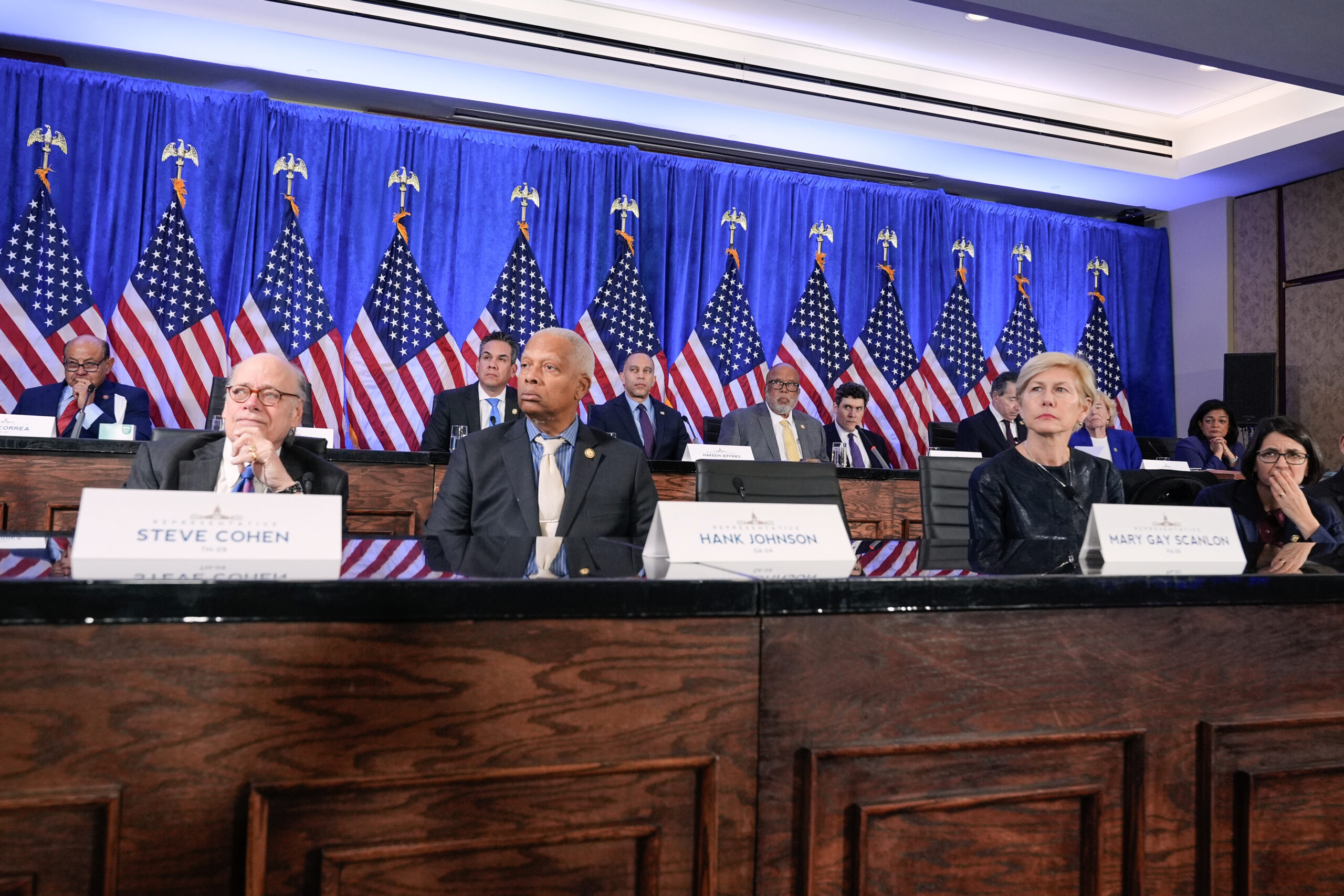
    Rep. Mary Gay Scanlon (second from right, front row), a Pennsylvania Democrat, was among members of Congress watching a video from the Jan. 6 attack during a hearing at the U.S. Capitol.

    At the same time, Democrats held their own morning meeting at the Capitol, reconvening members of the House committee that investigated the Jan. 6, 2021, attack for a panel discussion. Recalling the history of the day is important, they said, in order to prevent what Rep. Jamie Raskin (D., Md.) warned was the GOP’s “Orwellian project of forgetting.”

    And the former leader of the militant Proud Boys, Enrique Tarrio, summoned people for a midday march retracing the rioters’ steps from the White House to the Capitol, this time to honor Trump supporter Ashli Babbitt and others who died in the Jan. 6 siege and its aftermath. More than 100 people gathered, including Babbitt’s mother.

    Tarrio and others are putting pressure on the Trump administration to punish officials who investigated and prosecuted the Jan. 6 rioters. He was sentenced to 22 years in prison for seditious conspiracy for orchestrating the Jan. 6 attack, and he is among more than 1,500 defendants who saw their charges dropped when Trump issued a sweeping pardon on his return to the White House last year.

    “They should be fired and prosecuted,” Tarrio told the crowd before they arrived at the Capitol, confronted along the way by counterprotesters, and sang the national anthem.

    The White House in its new report highlighted the work the president has already done to free those charged and turned the blame on Democrats for certifying Biden’s election victory.

    Echoes of 5 years ago

    This milestone anniversary carried echoes of the differences that erupted that day.

    But it unfolds while attention is focused elsewhere, particularly after the U.S. military’s stunning capture of Venezuela’s president, Nicolás Maduro, and Trump’s plans to take over the country and prop up its vast oil industry, a striking new era of American expansionism.

    “These people in the administration, they want to lecture the world about democracy when they’re undermining the rule of law at home, as we all will be powerfully reminded,” House Democratic leader Hakeem Jeffries of New York said on the eve of the anniversary.

    House Speaker Mike Johnson of Louisiana, responding to requests for comment about the delay in hanging the plaque honoring the police at the Capitol, as required by law, said in a statement on the eve of the anniversary that the statute “is not implementable,” and proposed alternatives “also do not comply with the statute.”

    Democrats revive an old committee, Republicans lead a new one

    At the morning hearing at the Capitol, lawmakers heard from a range of witnesses and others — including former U.S. Capitol Police officer Winston Pingeon, who said as a kid he always dreamed of being a cop. But on that day, he thought he was going to die in the mayhem on the steps of the Capitol.

    “I implore America to not forget what happened,” he said, “I believe the vast majority of Americans have so much more in common than what separates us.”

    Also testifying was Pamela Hemphill, a rioter who refused Trump’s pardon, blamed the president for the violence and silenced the room as she apologized to the officer sitting alongside her at the witness table, stifling tears.

    “I can’t allow them not be recognized, to be lied about,” Hemphill said about the police who she said also saved her life as she fell and was trampled on by the mob. “Until I can see that plaque get up there, I’m not done.”

    Among those testifying were former Rep. Adam Kinzinger of Illinois, who along with former Rep. Liz Cheney of Wyoming were the two Republicans on the panel that investigated Trump’s efforts to overturn Biden’s win. Cheney, who lost her own reelection bid to a Trump-backed challenger, did not appear. Speaker Emerita Nancy Pelosi urged the country to turn away from a culture of lies and violence that she said sends the wrong message about democracy.

    Republican Rep. Barry Loudermilk of Georgia, who has been tapped by Johnson to lead a new committee to probe other theories about what happened on Jan. 6, rejected Tuesday’s session as a “partisan exercise” designed to hurt Trump and his allies.

    Many Republicans reject the narrative that Trump sparked the Jan. 6 attack, and Johnson, before he became the House speaker, had led challenges to the 2020 election. He was among some 130 GOP lawmakers voting that day to reject the presidential results from some states.

    Instead, they have focused on security lapses at the Capitol — from the time it took for the National Guard to arrive on the scene to the failure of the police canine units to discover the pipe bombs found that day outside Republican and Democratic party headquarters. The FBI arrested a Virginia man suspected of placing the pipe bombs, and he told investigators last month he believed someone needed to speak up for those who believed the 2020 election was stolen, authorities say.

    “The Capitol Complex is no more secure today than it was on Jan. 6,” Loudermilk said in a social media post. “My Select Subcommittee remains committed to transparency and accountability and ensuring the security failures that occurred on Jan. 6 and the partisan investigation that followed never happens again.”

    The aftermath of Jan. 6

    At least five people died in the Capitol siege and its aftermath, including Babbitt, who was shot and killed by police while trying to climb through the window of a door near the House chamber, and Capitol Police Officer Brian Sicknick died later after battling the mob. Several law enforcement personnel died later, some by suicide.

    The Justice Department indicted Trump on four counts in a conspiracy to defraud voters with his claims of a rigged election in the run-up to the Jan. 6 attack.

    Former Justice Department special counsel Jack Smith told lawmakers last month that the riot at the Capitol “does not happen” without Trump. He ended up abandoning the case once Trump was reelected president, adhering to department guidelines against prosecuting a sitting president.

    Trump, who never made it to the Capitol that day as he hunkered down at the White House, was impeached by the House on the sole charge of having incited the insurrection. The Senate acquitted him after top GOP senators said they believed the matter was best left to the courts.

    Ahead of the 2024 election, the Supreme Court ruled ex-presidents have broad immunity from prosecution.

  • Gov. Josh Shapiro, Pa. Democratic lawmakers criticize Trump’s Jan. 6 rioter pardons on anniversary of Capitol attack

    Gov. Josh Shapiro, Pa. Democratic lawmakers criticize Trump’s Jan. 6 rioter pardons on anniversary of Capitol attack

    Five years after rioters stormed the U.S. Capitol, Gov. Josh Shapiro and other Pennsylvania Democrats on Tuesday marked the anniversary of the Jan. 6, 2021, attack by sharply criticizing President Donald Trump.

    Trump, who was impeached for inciting the riot in the final days of his first administration, pardoned nearly every Jan. 6 defendant and commuted sentences for a handful of violent offenders as one of his first actions upon returning to office last year.

    “Law enforcement officers literally gave their lives to protect our country and our democracy — yet one of the first things Donald Trump did when he took office was pardon people who were convicted of assaulting police officers,” Shapiro said in a post on X Tuesday morning.

    “The President may not respect our law enforcement officers’ courage and commitment to service — but here in Pennsylvania, we remember the sacrifices they make and will always have their backs.”

    Shapiro played a key role as state attorney general in defending the 2020 election results in Pennsylvania in the weeks leading up to the attack, which took place the same day that Congress was certifying former President Joe Biden’s victory.

    His comments Tuesday came as he’s preparing to announce his reelection bid for governor. As Shapiro has built a national profile as a potential Democratic presidential contender in 2028, he has repeatedly criticized Trump and presented himself as an alternative vision of leadership.

    The president has continued to falsely claim he won Pennsylvania in 2020, including at his rally in Mount Pocono last month, even after he won the White House again in 2024.

    Trump has downplayed the events of Jan. 6, and on Tuesday the White House unveiled a webpage dedicated to the events, falsely describing the riot as a peaceful protest and blaming Capitol Police for the violence that unfolded.

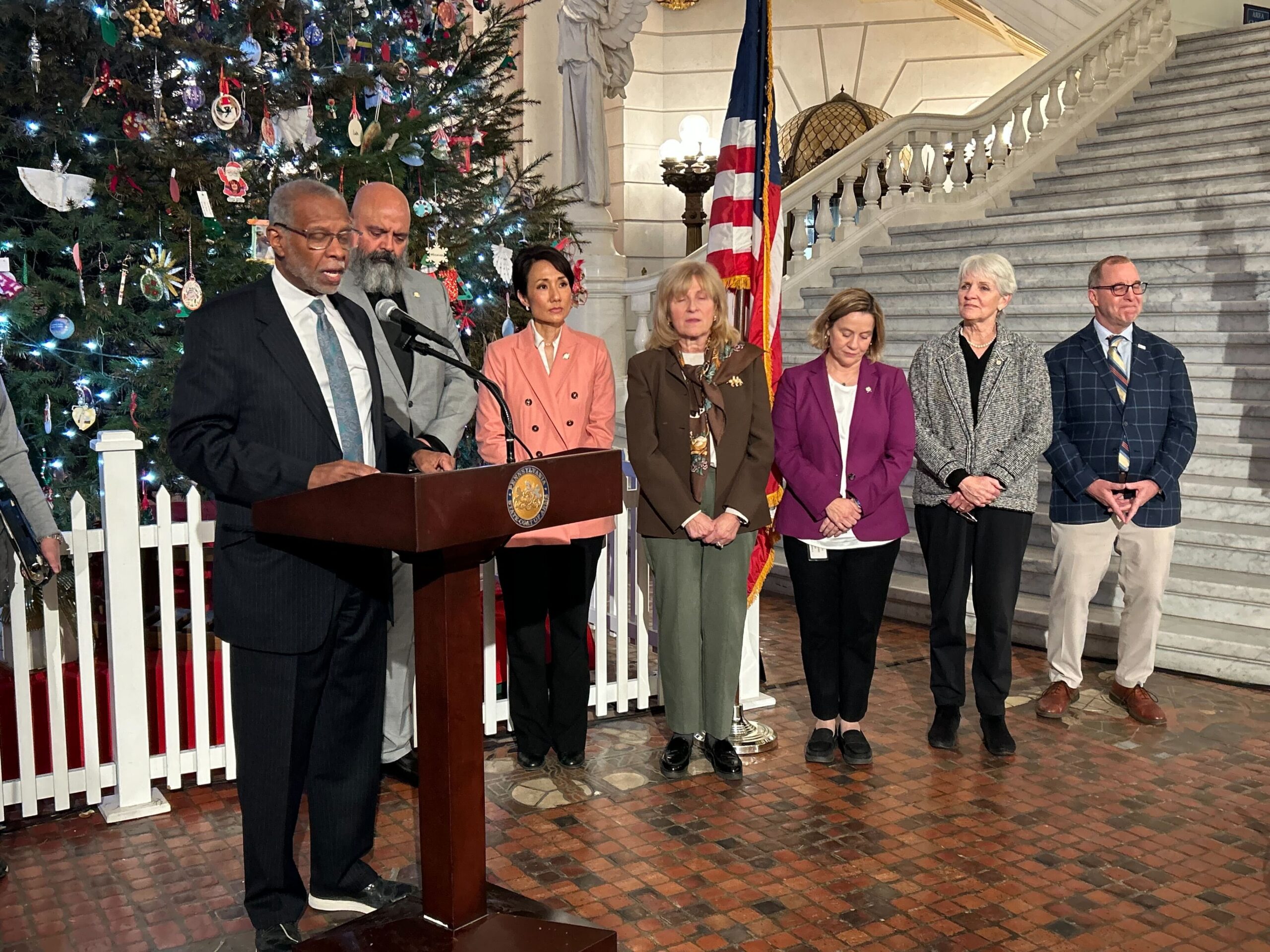
    Pennsylvania Senate Democrats hold an event in the state Capitol Tuesday to commemorate the Jan. 6, 2021, attack on the U.S. Capitol.

    Shapiro was one of several Democrats who marked the anniversary of the attack for the first time since Trump returned to office.

    State Rep. Malcolm Kenyatta, of Philadelphia, introduced a resolution alongside other House Democrats to designate Jan. 6 as the “Democracy Observance Day for Education, Remembrance, and Vigilance.”

    And Pennsylvania Senate Democrats held an event in the state Capitol Tuesday.

    State Sen. Art Haywood, who represents parts of Montgomery County and Philadelphia, described the events of Jan. 6, 2021, as an “attempted coup” orchestrated by Trump.

    He recounted the events in minute-by-minute detail drawing from what has been reported about the day, from Trump’s direction to rally-goers to go to the Capitol to former Vice President Mike Pence’s evacuation from the Senate chambers and rioters’ success breaking into offices.

    State Sen. Jay Costa, of Pittsburgh, said Tuesday’s anniversary event was aimed at drawing attention to the “lawlessness” of the day. Trump’s decision to pardon those involved, he said, was a “slap in the face” to law enforcement.

    Scores of Pennsylvanians were charged with taking part in the Jan. 6 attack, some of whom were convicted of committing acts of violence at the Capitol. In addition to the sweeping pardons eliminating the criminal cases of more than 1,500 people, the president also commuted the sentences of 14 people — including Philadelphia native Zach Rehl, the leader of the local far-right Proud Boys chapter who was convicted of seditious conspiracy and sentenced to 15 years in prison.

    Costa contended that other incidents of political violence in the years that have followed could be traced back to Jan. 6.

    “We cannot pick and choose, as our president has done, when we think about what we’re going to do and say about our law enforcement officers,” he said. “We need to stand with them all the time.”

  • Long under fire, Pemberton mayor resigns after being called uninsurable

    Long under fire, Pemberton mayor resigns after being called uninsurable

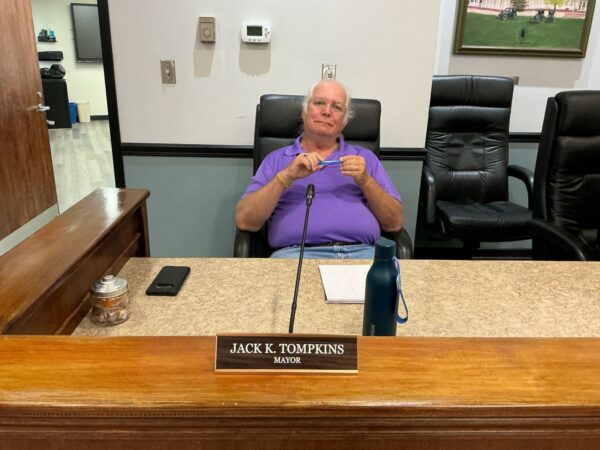
    Former Pemberton Township Mayor Jack Tompkins revealed in a rare interview this week that lawsuits stemming from allegations of misconduct against him made him uninsurable, compelling him to resign to avoid financial ruin.

    The township’s insurance carrier “decided to cancel my insurance,“ said Tompkins, 64, who resigned on Dec. 31. ”They notified me and the township in October. I weighed my options and the smartest thing to do was to resign. Withdrawal of insurance coverage would have financially devastated me.”

    Tompkins, a Republican, was long under fire for alleged sexual harassment and other behavior over the last two years.

    On Wednesday, the five-member township council of the Pine Barrens community in Burlington County — all Republicans — will choose one of three GOP candidates to replace Tompkins. The three candidates were selected by the Republican municipal county committee last week to serve the balance of the year. The committee didn’t release the candidates’ names.

    Tompkins was the subject of a highly critical independent investigation in April 2024 that was commissioned by township officials and conducted by a Hackensack law firm, Pashman Stein Walder Hayden.

    Some of the report’s more serious allegations included inappropriate interactions with female lifeguards under age 18; sexual harassment of the township’s recreation director, who sued Tompkins and the township, winning a $500,000 judgment.

    He was also accused of a pattern of misconduct — such as poking a woman in the head, or discussing rape in township offices — that was sometimes accompanied by obscene language and “retaliatory” outbursts, fostering what the investigators who wrote the report termed a “severe chilling effect” that silenced anyone who felt wronged and allowed Tompkins to continue his aberrant behavior.

    Tompkins said that while he was mayor, he worked in a “toxic environment created by [township] council, and I was walking on eggshells.

    “Things got really ugly and nasty.”

    He added that his time in office left “such a dirty taste in my mouth about politics, I want nothing to do with it anymore.”

    In office since January 2023, Tompkins, 64, a retired Air Force veteran, refused to quit during his tumultuous tenure despite calls from members of both political parties for him to do so, including Gov. Phil Murphy.

    Over time, the township council officially censured Tompkins, whose pay was cut from $13,000 annually to $4,000, to $1.

    Tompkins told The Inquirer on Monday he relented after the Burlington County Municipal Joint Insurance Fund, which covers the township, informed him of their decision to no longer insure him. The fund cited “numerous claims resulting from your interaction with Pemberton Township employees over the past several years.”

    Township officials said last summer that more lawsuits connected to Tompkins were expected.

    In the interview, he said that inappropriate behavior with lifeguards “never happened.” He also said that any alleged misconduct “toward [other] females never happened.” He declined to comment on additional allegations.

    Tompkins said there have been “zero criminal charges” leveled against him. He added, “Everything has been civil allegations, and nothing’s been proven.”

    Asked why these allegations were made in the first place, Tompkins said, “You’re looking for an answer to something I don’t know. I don’t know what they were trying to do.”

    Accused on several occasions of cursing and being harsh to staff, Tompkins explained, “Sometimes when you’re the boss and tell somebody they need to get something done, I guess they wanted me to ask ‘pretty please.’ With my military background, that wouldn’t always happen.”

    Tompkins said he’s survived the experience with the support of friends and family “who knew this was nonsense.”

    Sherry Scull, a former Democratic township council member, has publicly supported Tompkins, and continues to do so. “I’ve never seen signs of him doing what he was accused of,” she said. “I think his resigning is sad.”

    Others contacted this week didn’t agree.

    “This has been a total embarrassment for the town,” said Republican council member Dan Dewey.

    Abby Bargar, Republican municipal chair for Pemberton Township, said, “I always liked Jack, but I think he made some bad decisions. It was the best thing for the party that he stepped down.”

    Throughout town, the reaction to the end of Tompkins’s administration is “overwhelmingly positive,” said Marti Graf Wenger, president of the Browns Mills Improvement Association. Browns Mills is an unincorporated section of Pemberton Township; the association works to improve and promote the area, once a “Gatsby-esque” locale with chic hotels that drew well-off Philadelphians vacationing in the woods, Wenger said.

    She added, “Tompkins treated this town like his dictatorship. There’s just a sense of relief now, a feeling that we can start fresh and hope our leadership will be better.”

    Asked whether lingering resentments will make it difficult to remain in town, Tompkins said he’s not going anywhere.

    “I just want to go into retirement and put this chapter behind me,” he said. “I’ve traveled the world, and I’ve settled here. I once said I’m going to die in this house. So this is where I’ll be.”

  • Congress has four weeks to dodge another shutdown

    Congress has four weeks to dodge another shutdown

    Lawmakers are back in Washington this week for a four-week sprint to finish funding the government before the current spending law runs out on Jan. 30.

    If they fail, they will need to pass another short-term extension or spark another government shutdown just two and a half months after the last one, the longest funding lapse in U.S. history.

    Funding the government usually requires passing 12 individual bills. Lawmakers approved three as part of a deal to end last fall’s shutdown, and they also extended current funding levels for the rest of the government into January. Those levels were last set in March 2024.

    But it will be challenging to finalize the remaining bills, which have not yet been formally negotiated between the House and the Senate or approved by congressional leaders.

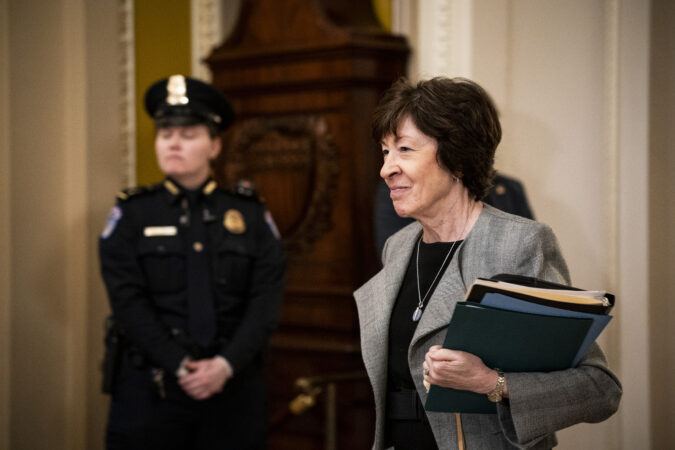
    The two Appropriations Committee chairs, Rep. Tom Cole (R., Okla.) and Sen. Susan Collins (R., Maine), announced in late December that they had finally reached an agreement on the total spending level they’ll shoot for in the remaining bills. They did not reveal the overall cost, but Cole said it is lower than the amount if Congress were to pass another funding extension, known as a continuing resolution.

    “This pathway forward aligns with President [Donald] Trump’s clear direction to rein in runaway, beltway-driven spending,” Cole said in a statement. “We will now begin expeditiously drafting the remaining nine full-year bills to ensure we are ready to complete our work in January.”

    From there, appropriators must navigate political pressures from their right and left: Fiscal hawks, including many in the conservative House Freedom Caucus, insist that funding levels for most agencies should not be higher than the last fiscal year.

    “I believe that we should begin to control our federal deficit and runaway federal debt by keeping this year’s discretionary spending level at or below last year’s level,” said House Freedom Caucus chairman and senior Appropriations Committee member Rep. Andy Harris (R., Md.) in a statement.

    But Democrats must approve any funding agreement, which has to receive at least 60 votes in the Senate to bypass the filibuster. Republicans control the upper chamber 53-47.

    Sen. Patty Murray of Washington, the top Democrat on the Senate Appropriations Committee, slammed the chamber’s newly released Homeland Security spending bill in December, calling it “partisan” and pledging to fight for accountability in Trump’s “out-of-control” DHS.

    The Senate has spent weeks attempting to pass a five-bill appropriations package that had only been negotiated in that chamber. The bill needed consent from all 100 senators to advance, and several conservative senators held up action for weeks over billions of dollars in earmarks tucked into the bills. (The House proposals also include billions in earmarks.)

    Those senators eventually relented, and the chamber was poised to vote on the package right before leaving town for the winter break, but two Democratic senators blocked it — demanding funding be reinstated for the National Center for Atmospheric Research, a Colorado-based research organization that Trump has moved to eliminate.

    The Senate package would tie together two major government funding bills — covering defense, labor, education, and health and human services agencies — with three other bills to fund the departments of Interior, Transportation, Housing and Urban Development, Commerce, Justice, and science-related agencies.

    It would appropriate $1.3 trillion, making up the vast majority of discretionary federal government spending.

    Cole has said that the Senate’s five-bill package would be too big to pass the lower chamber. He suggested passing the remaining nine appropriations bills in three separate three-bill packages in January when lawmakers return, beginning with bills covering the Commerce and Justice Departments, the Interior Department and agencies covering energy and water.

    The political minefield ahead may mean lawmakers once again turn to a funding extension rather than face another shutdown.

    “I don’t want another CR, I don’t think Mr. Cole wants another CR,” said Rep. Rosa DeLauro of Connecticut, the top Democrat on the House Appropriations Committee. “Let’s go. Let’s get the bills done.”

    Congress is supposed to pass all 12 appropriations bills before government funding runs out at the end of each fiscal year on Sept. 30.

    But lawmakers’ inability to adhere to that process is not new: Congress has only passed all its spending bills before the deadline four times in recent decades. Instead, most spending bills in modern history have been approved in one big package known as an “omnibus” right before the holiday break.

    House Speaker Mike Johnson (R., La.) pledged to stop that practice. The political complications of passing all 12 bills separately, however, has made that difficult to achieve. Instead, lawmakers have extended funding levels first approved under President Joe Biden multiple times, and Republicans have passed supplemental spending for their immigration and defense priorities through a party-line tax and spending bill.

  • City Controller Christy Brady promises to examine Mayor Cherelle Parker’s H.O.M.E. plan and Philly’s port in new term

    City Controller Christy Brady promises to examine Mayor Cherelle Parker’s H.O.M.E. plan and Philly’s port in new term

    After being sworn in to her first full four-year term, City Controller Christy Brady on Monday vowed to examine spending related to Mayor Cherelle L. Parker’s signature housing program and to probe whether Philadelphia is maximizing economic opportunities at its waterfront and port.

    “In my next term, I will be expanding my oversight of the mayor’s housing program to ensure every dollar borrowed is used as intended and is properly accounted for,” Brady said of Parker’s Housing Opportunities Made Easy, or H.O.M.E., initiative during a swearing-in ceremony at the Kimmel Center for the Performing Arts.

    “And with our waterfront and ports being one of our strongest economic assets, we will be focusing on efforts to ensure they can deliver the greatest financial impact,” Brady said.

    The Port of Philadelphia, or PhilaPort, recently launched an ambitious expansion plan, but its terminal operator Holt Logistics has faced questions about whether it has prioritized profits over maximizing growth.

    Holt denies that it has engaged in anticompetitive conduct, and a company spokesperson said growth is “vitally important to the future of our business and our region.”

    “Holt Logistics has been a key driver of the Port’s growth over the last decade, as witnessed by the fact that in the last month alone, two new lines of business have chosen to call Philadelphia, largely because of the service they receive,” spokesperson Kevin Feeley said.

    Additionally, Brady promised to help prevent fraud in city spending related to this year’s Semiquincentennial festivities. (Parker has pledged to dole out $100 million, focusing on neighborhood-based programming across the city, for major events in 2026, including the nation’s 250th birthday.)

    And in her capacity as chair of the Philadelphia Gas Commission, Brady said she would “conduct a thorough review of PGW’s operations.”

    Brady also sits on the city Board of Pensions and Retirement and said she would “collaborate with [City] Council to adjust benefit structures.”

    The controller’s office audits city agencies and investigates allegations of fraud, waste, and abuse.

    Brady was appointed by former Mayor Jim Kenney to serve as acting controller in late 2022 when Rebecca Rhynhart resigned to run for mayor. Brady in 2023 won a special election to serve the remaining two years of Rhynhart’s term.

    Seeking her first four-year term, Brady ran unopposed in the May 2024 Democratic primary and easily defeated Republican Ari Patrinos in the November general election. She was sworn in Monday with District Attorney Larry Krasner, who is beginning his third term, and city judges who were on the ballot last year.

    Philadelphia Common Pleas Court Judge Natasha Taylor-Smith introduced Brady and administered her oath of office.

    Many past controllers have had less-than-friendly relationships with the mayors they served alongside, a natural dynamic for an office tasked with investigating the executive branch. The post has also served as a springboard for many politicians with higher aspirations.

    Rhynhart, for instance, repeatedly clashed with Kenney by publishing critical reports on city accounting practices and a lack of accountability in spending on anti-violence groups. She touted those probes to brand herself as a reformer while running in the 2023 mayor‘s race, finishing second behind Parker in the Democratic primary.

    Brady’s background and leadership style are different. She has spent three decades rising through the ranks in the controller’s office and was deputy controller in charge of the audit division before being appointed to the top job. And since becoming controller, she has made a point of working collaboratively with Parker’s administration.

    Dignitaries and elected officers before start of 2026 Inaugural Ceremony at the Kimmel Center Performing Arts on Monday.

    On the campaign trail last year, Brady said she adopted that approach to ensure that her office’s relationship with the administration wouldn’t deteriorate to the point where the city ignored the findings and recommendations included in the controller‘s reports.

    “As promised, I hit the ground running. We’ve achieved far more than many thought was possible,” Brady said. “A key to that success has been collaboration with Mayor Parker and Council President [Kenyatta] Johnson to ensure that our recommendations resulting from the findings in each report, review, and audit that we issue are implemented.”

    Parker acknowledged their collaboration in her remarks during Monday’s ceremony.

    “Controller Brady, thank you for not being wrapped up in politics and staying focused on the work of the controller’s office,” Parker said. “You do it by communicating with our office. No ‘gotcha’ moments.”

    In her relatively short political career, Brady has received strong support from influential groups in local politics, especially the building trades unions and the Democratic City Committee. On Monday, she gave shout-outs to numerous politicos, including former U.S. Rep. Bob Brady, who chairs the city’s Democratic Party and is not related to her.

    “I want to thank the people who have made this possible, including my friends in labor, Congressman Bob Brady, my friends in the Democratic Party, the business community, and all the voters who put their trust in me,” Christy Brady said.

    Her term ends in January 2030.

  • ‘It’s time’: Trump Store in Bucks County closing due to declining sales

    ‘It’s time’: Trump Store in Bucks County closing due to declining sales

    One Trump supporter’s journey from a mall kiosk to a Bucks County strip mall is coming to an end this month.

    The “Trump Store,” a Bensalem spot for merchandise and knickknacks celebrating President Donald Trump, is closing its doors after six years in business. The store’s final day is Jan. 31.

    Mike Domanico, who co-owns the store with his wife, Monica, remains an ardent supporter of the president. But business is business, and Domanico said sales have declined since Trump returned to the White House, forcing the “tough decision” to shut down.

    “Business has slowed down some because there’s not really much action going on with Trump,” Domanico said. “It’s time.”

    There were other factors. The store’s lease is up in February, and Domanico wants to devote more of his time to a booming side business selling gun show merchandise.

    Domanico said Trump’s tariffs on imported goods haven’t impacted his business at all.

    “Any of the stuff I buy is priced the same as it was before all the tariffs took effect,” Domanico said.

    Michael Domanico and his wife, Monica, seen here in 2020 during the grand opening of their Trump Store in Benaslem.

    The store began its closeout sale on Tuesday, Jan. 6, exactly five years to the day when Trump supporters stormed the U.S. Capitol in an unsuccessful attempt to overturn the 2020 election results. Everything’s on sale, from shirts featuring the president as an Eagles player to hats promoting a fictitious 2028 reelection campaign barred by the U.S. Constitution.

    Domanico, who founded his T-shirt business, Sik-Nastee, in 2017, began selling Trump merchandise at a kiosk in the Neshaminy Mall in November 2019.

    After the holidays, Domanico ditched the Biden merchandise he was forced to sell by the mall’s management company and opened his first Trump Store in a strip mall alongside a Hispanic bakery and a travel agent. The store remained open during COVID closures by selling Trump face masks, allowing it to operate as a “life-sustaining business.”

    Domanico opened a sister Trump Store in Chalfont in July 2022, but closed it last year due to issues with the landlord and some vandalism. He has two full-time employees helping him run the store.

    In his six years selling Trump merchandise, Domanico said the only tough year was after the 2020 election. Following his second impeachment, Trump appeared to lose support from most Republicans, and sales at the store slowed.

    “I stuck with it because I knew he was going to run again, and it worked out very well,” Domanico said.

    Trump Store manager Lisa von Deylen, seen here replenishing the store’s inventory in May 2024.

    Sales grew during the final years of Joe Biden’s tenure, fueled by Trump becoming the first former president indicted for a crime. “Free Trump” shirts became a particularly hot seller, and the store saw a spike in sales when the president’s Mar-a-Lago estate in Palm Beach, Fla., was raided by FBI agents.

    The store’s closing comes just a few months after Democrats swept every countywide race in off-year elections in Bucks County. It’s a dramatic political shift compared to just last year, when Trump became the first Republican presidential candidate since 1988 to win the swing county.

    While many Bucks County residents appear to have soured on the president and his policies, Domanico isn’t among them.

    “I think his second term has been great,” Domanico said. “I know the liberal media turns everything around, making it look bad, but he’s doing some great stuff. I love it.”

  • Trump warns of third impeachment if House Republicans lose midterms

    Trump warns of third impeachment if House Republicans lose midterms

    WASHINGTON — President Donald Trump on Tuesday warned that Democrats would “find a reason to impeach me” if the GOP lost control of Congress — using the prediction to pressure lawmakers to unify behind a narrow set of electoral priorities to win the 2026 midterm elections.

    “You got to win the midterms, because if we don’t win the midterms, they’ll find a reason to impeach me,” Trump said. “I’ll get impeached.”

    The remark was a rare acknowledgment of Trump’s political vulnerability as Republicans prepare to face a Democratic Party buoyed by a string of off-year election victories, favorable polling, and voter anxiety over an economy now fully under Trump’s stewardship. The warning framed the midterms not only as a referendum on his agenda, but as a test of his legacy.

    Trump addressed the representatives at the start of an all-day policy forum for House Republicans inside the Kennedy Center, a performing arts building recently renamed in his honor. The setting in the heart of Washington underscored how far Trump has come since Jan. 6, 2021, exactly five years ago, when rioters stormed the Capitol and set off years of criminal prosecution and political isolation.

    In an address meant to energize his party, Trump conceded that his agenda has struggled to break through with voters. He complained that Americans had quickly moved past his record on illegal immigration and that the press had paid little attention to his push to pressure drug companies to cut prices, which has yielded wins, albeit limited, for some consumers.

    He urged House Republicans to focus their messaging on drug prices, transgender athletes in women’s sports and cracking down on violent crime — issues he argued could sharpen contrasts with Democrats and mobilize voters ahead of 2026. And he instructed Republicans to set internal disputes aside and focus on a disciplined message he believes can carry them in November.

    He also used the moment to defend Speaker Mike Johnson (R., La.), who has struggled to manage an ideologically divided conference with a razor-thin majority without Trump’s interference.

    “He’s as tough as anybody in the room actually,” the president said. “But you can’t be tough when you have a majority of three.”

    “You can’t be Trump,” he said, appearing to mock his own confrontational style. “You make 10 enemies, 20 enemies and that’s the end of that.”

    The endorsement came at a critical moment for Johnson, who is trying to unify his unruly conference behind a second legislative package after passing a sweeping tax and immigration effort — dubbed by Trump the One Big Beautiful Bill.

    Trump also urged House Republicans to reclaim healthcare from the Democrats as a political issue and to pass a voting ID law, while urging conservatives to remain “flexible on Hyde” a signal to lawmakers who have stalled negotiations over abortion language.

    “You got to be a little flexible. You got to work something,” Trump said. “We’re all big fans of everything but you got to have flexibility.”

    Since returning to the presidency, Trump has continued to minimize the violence of the riot, calling the insurrection “a day of love” and ultimately fulfilling his promise to pardon participants charged with misdemeanors and felonies. On Tuesday, he again downplayed his role.

    Across town, House Democrats marked the anniversary with a hearing featuring lawmakers, Capitol Police officers and Pamela Hemphill, a rioter who entered the Capitol and later rejected a pardon from Trump.

    “Once I got away from the MAGA cult and started educating myself about January the 6th, I knew what I did was wrong,” she said. “When Donald Trump pardoned us I rejected the pardon. Accepting that pardon would be lying about what happened on January 6. I am guilty.”

    Republicans meanwhile refocused on their agenda Tuesday, which the party is seeking to anchor on Trump’s economic agenda. That effort has been complicated by his decision to deploy U.S. forces to Venezuela and seize control of the country’s oil assets, a move that has resonated with some hawkish Republicans and members of both parties critical of Nicolás Maduro, but concerned others who fear the president’s “America First” base will lose patience with his interventionism.

    Trump argued the action would lower energy costs.

    “Got a lot of oil to drill,” he said.

    Trump’s address lasted for more than an hour and included everything from jokes about FDR’s disability to an aside about first lady Melania Trump’s distaste for his dance moves.

    “I think I gave you something,” he concluded. “It’s just a road map. It’s a road map to victory.”

  • Rep. Doug LaMalfa of California dies, reducing GOP’s narrow control of the House to 218-213

    Rep. Doug LaMalfa of California dies, reducing GOP’s narrow control of the House to 218-213

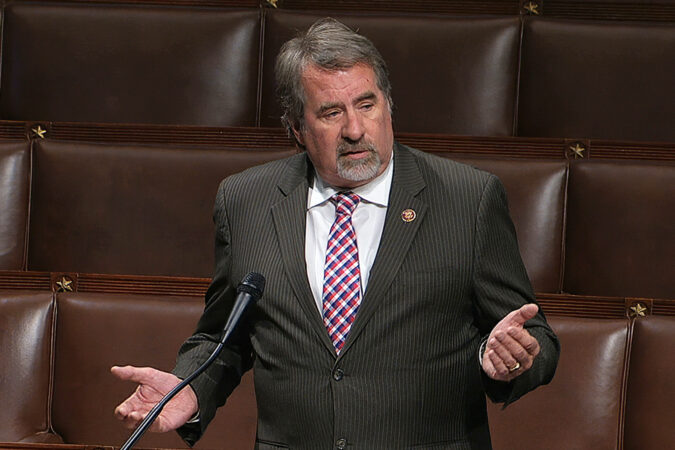
    WASHINGTON — Republican Doug LaMalfa, a seven-term U.S. representative from California and a reliable vote on President Donald Trump’s agenda, has died, reducing the GOP’s narrow control of the House. He was 65.

    A former state lawmaker and rice farmer, LaMalfa had more than a dozen years in Congress, where he regularly helped GOP leaders open the House floor and frequently gave speeches. His death, confirmed by Majority Whip Tom Emmer and National Republican Congressional Committee Chairman Richard Hudson, trims the Republicans’ margin of control of the House to 218 seats to Democrats’ 213.

    “I was really saddened by his passing,” Trump said.

    The president said he considered not giving the speech to honor LaMalfa but decided to go ahead with it “because he would have wanted it that way.”

    Trump said the late congressman “wasn’t a 3 o’clock in the morning person” like other lawmakers he would call in the wee hours to lobby for their votes.

    “He voted with me 100% of the time,” Trump said. “With Doug, I never had to call.”

    Details surrounding LaMalfa’s death were unclear.

    David Reade, a former chief of staff of LaMalfa’s from the state legislature, became emotional remembering LaMalfa, who he said was committed to his district and proud of his family and Christian faith.

    “One of my great memories of Doug is that, you know, he would show up at the smallest events that were important in people’s lives in this district,” Reade said in a phone interview. “Whether it was a birthday, it was, you, know, a family gathering, it was the smallest organization in his district, and he would drive literally hundreds and hundreds of miles to be there.”

    California Gov. Gavin Newsom, a Democrat, must call a special election to replace LaMalfa, his office said. The election could happen as late as June, when California will hold its primary for the 2026 midterm.

    Hudson, the NRCC chairman, called LaMalfa “a principled conservative and a tireless advocate for the people of Northern California.”

    “He was never afraid to fight for rural communities, farmers, and working families,” Hudson said. “Doug brought grit, authenticity, and conviction to everything he did in public service.”

    First elected to Congress in 2012, he was a regular presence on the House floor, helping GOP leadership open the chamber and offer his view local and national affairs.

    C-SPAN in a recent compilation said he gave at least one set of remarks for the record on 81 days in 2025. Only two other lawmakers spoke on the House floor more frequently.