Category: Politics

Political news and coverage

  • After ‘good’ Trump meeting, Zelensky pushes Europe hard to do more

    After ‘good’ Trump meeting, Zelensky pushes Europe hard to do more

    KYIV — Ukrainian President Volodymyr Zelensky aimed a blistering speech at Europe during the World Economic Forum on Thursday after a last-minute meeting with President Donald Trump, which both leaders described as “good,” saying framework documents between the two countries — in hopes of ending the conflict — were nearing the final stages.

    After nearly four years of full-scale war, Zelensky described how life in Ukraine felt like the movie Groundhog Day with ramped-up attacks coming amid a brutally cold winter. All the while Europe is still unequipped to defend itself against Russia, he said, which has not slowed its assault since 2022.

    In the face of European weakness, Zelensky said, “the backstop of Trump is needed” with no security guarantees functioning without the United States. He emphasized that Europe needed to be a united force: “Europe should not be a salad of small and middle powers.”

    “Europe loves to discuss the future but avoids taking action today, action that defines what kind of future we will have,” Zelensky said in his speech in Davos, Switzerland, following the hourlong meeting with Trump. “If [Russian President Vladimir] Putin decides to take Lithuania or strike Poland, who will respond? … Tomorrow you may have to defend your way of life.”

    The speech, which received a standing ovation, didn’t appear to have been originally scheduled. Zelensky scrambled to get to Switzerland after Trump on Wednesday unexpectedly said that he planned to meet with Zelensky that very day, adding that he might even “be in the audience.”

    In fact, Zelensky was still in Kyiv. He had told reporters on Tuesday — as the forum was already underway — that he would likely remain in the capital, “choosing Ukraine, not an economic forum,” as millions of Ukrainians froze in their homes and workers rushed to fix an electrical grid battered by Russian drones and missiles.

    Some had hoped a bilateral meeting might lead to the inking of frameworks for security guarantees and postwar economic recovery, with officials hinting the two countries were close to the finish line. But a senior Ukrainian official on Thursday said that no documents had been prepared for signing in Davos, and a key priority of the meeting was to discuss additional air defense systems.

    In his speech, however, Zelensky did say that the documents to end the war “are nearly ready and that really matters.” He added, however, that more pressure needed to be put on Russia to make it agree to end the war and Ukraine couldn’t be the only country making compromises.

    The meeting in the Swiss Alps was closed to the press and there were no statements at its conclusion. On his way out, however, Trump told reporters that “the meeting was good with President Zelensky, we still have a ways to go” — stepping back from his message on Wednesday, that both sides were “reasonably close” and “at a point now where they can come together and get a deal done. And if they don’t, they’re stupid.”

    He added that the message his envoys would take to Putin Thursday night in Moscow would be “the war needed to end.”

    At a question-and-answer session following his speech Thursday, Zelensky acknowledged that “this last mile is very difficult” and “Russians have to be ready for compromises, not just Ukraine.”

    Despite the optimism expressed by the White House, the two sides still appear to be far apart in negotiations. In a news conference Tuesday, Russian Foreign Minister Sergei Lavrov called into question any deal that allowed the continuing existence of the current Ukrainian government.

    “Any settlement proposal founded on the primary goal of preserving the current Nazi regime in what remains of the Ukrainian state is, naturally, completely unacceptable to us,” he said.

    White House envoy Steve Witkoff and Trump’s son-in-law Jared Kushner — who met with lead Ukrainian negotiator Rustem Umerov on the sidelines of the forum — will meet with Putin late on Thursday. Speaking at the forum’s Ukrainian Breakfast on Thursday morning, Witkoff said that he felt “encouraged” and described the Ukrainian people as “so courageous in this fight … under some real difficult conditions.”

    “I think we’ve got it down to one issue, and we have discussed iterations of that issue,” Witkoff said, appearing to gesture at territorial concessions, one of the most contentious aspects of the negotiations and a red line for Ukraine. “That means it’s solvable. So if both sides want to solve this, we are going to get this solved; that’s my view.”

    Previous meetings between Witkoff and Putin have lasted hours and will likely continue into early Friday morning, though Witkoff said he will not be spending the night and will continue on to Abu Dhabi, capital of the United Arab Emirates, afterward. Two days of trilateral meetings will be held there between Ukraine, the United States and Russia.

    Kremlin spokesman Dmitry Peskov declined to comment on whether the Kremlin shared Witkoff’s optimism that a deal was close. At a news conference, Putin said he would also discuss Russia’s contribution to Trump’s Board of Peace with Witkoff and Kushner.

    As world leaders congregated in Davos, enjoying mountain views, plush lodges and crackling fireplaces, Ukraine’s power grid remained crippled during one of the coldest winters in years. Without electricity, many Ukrainians sought refuge in restaurants and coffee shops, kept running by generators. Outside, inches of ice slicked the streets and sidewalks. The windows of thousands of apartments remained dark.

    Concluding his speech, Zelensky said, “Let’s end this Groundhog Day.”

  • Joseph R. Syrnick, retired chief engineer for the Streets Department and CEO of the Schuylkill River Development Corp., has died at 79

    Joseph R. Syrnick, retired chief engineer for the Streets Department and CEO of the Schuylkill River Development Corp., has died at 79

    Joseph R. Syrnick, 79, of Philadelphia, retired chief engineer and surveyor for the Philadelphia Streets Department, president and chief executive officer of the Schuylkill River Development Corp., vice chair of the Philadelphia City Planning Commission, former adjunct professor, college baseball star at Drexel University, mentor, and “the ultimate girl dad,” died Saturday, Jan. 17, of cancer at his home in Roxborough.

    Reared on Dupont Street in Manayunk and a Roxborough resident for five decades, Mr. Syrnick joined the Streets Department in 1971 after college and spent 34 years, until his retirement in 2005, supervising hundreds of development projects in the city. He became the city’s chief engineer and surveyor in 1986 and oversaw the reconstruction of the Schuylkill Expressway and West River Drive (now Martin Luther King Jr. Drive) in the 1980s, and the addition of new streetlights and trees on South Broad Street and the upgrade of six city golf courses in the 1990s.

    He was an optimist and master negotiator, colleagues said, and he worked well with people and the system. “You have concepts that seem simple,” he told The Inquirer in 1998. “But when you commit them to writing, they raise all kinds of other questions.”

    In 2000, as Republicans gathered in Philadelphia for their national convention, Mr. Syrnick juggled transit improvements on Chestnut Street and problems with the flags on JFK Boulevard. He also helped lower speed limits in Fairmount Park and added pedestrian safety features on Kelly Drive.

    He beautified Penrose Avenue and built a bikeway in Schuylkill River Park. He even moderated impassioned negotiations about where the Rocky statue should be placed.

    Since 2005, as head of the Schuylkill River Development Corp., he deftly partnered with public and private agencies, institutions, and corporations, and oversaw multimillion-dollar projects that built the celebrated Schuylkill River Trail, renovated a dozen bridges, and generally improved the lower eight-mile stretch of the Schuylkill, from the Fairmount Dam to the Delaware River, known as Schuylkill Banks.

    In an online tribute, colleagues at the Schuylkill River Development Corp. praised his “perseverance and commitment to revitalizing the tidal Schuylkill.” They noted his “legacy of ingenuity, optimism, and service.” They said: “Joe was more than an extraordinary leader. He was a great Philadelphian.”

    Dennis Markatos-Soriano, executive director of the East Coast Greenway Alliance, said on Facebook: “He exuded confidence, humility, and unwavering commitment.”

    Mr. Syrnick reviews plans to extend a riverside trail in 2009.

    Mr. Syrnick was a constant presence on riverside trails, other hikers said. He organized regattas and movie nights, hosted riverboat and kayak tours, cleaned up after floods, and repurposed unused piers into prime fishing platforms.

    “Great cities have great rivers,” Mr. Syrnick told The Inquirer in 2005. “Here in Philadelphia, we have Schuylkill Banks.”

    He was a Fairmount Park commissioner for 18 years, was named to the Philadelphia City Planning Commission in 2008, and served as vice chair. He lectured about the Schuylkill often and taught engineering classes and led advisory panels at Drexel. In 2015, he testified before the state Senate in support of a waterfront development tax credit.

    Friends called him “a visionary,” “a true hero,” and “a Philly jewel.” One friend said: “He should be honored by a street naming or something.”

    Mr. Syrnick (fourth from left) and his family pose near a riverboat.

    Paul Steinke, executive director of the Preservation Alliance for Greater Philadelphia, said on Facebook: “He left his native Philadelphia a much better place.”

    Mr. Syrnick was president of the Philadelphia Board of Surveyors and active with the American Society of Civil Engineers, the Engineers’ Club of Philadelphia, and other organizations. At Drexel, he earned a bachelor’s degree in civil engineering in 1969 and a master’s degree in 1971.

    In 2024, Drexel officials awarded him an honorary doctorate for “his visionary leadership in engaging diverse civic partners to revive the promise of a waterfront jewel in Philadelphia.”

    He played second base on the Roman Catholic High School baseball team. He was captain of the 1968 Drexel team and later played against other local standouts in the old Pen-Del semipro league.

    Mr. Syrnick (center in white shirt) had all kinds of way to publicize fun on the Schuylkill. This photo appeared in The Inquirer in 2007.

    Most of all, everyone said, Mr. Syrnick liked building sandcastles on the beach and hosting tea parties with his young daughters and, later, his grandchildren. He grew up with three brothers. Of living with three daughters, his wife, Mary Beth, said: “It was a shock.”

    His daughter Megan said: “It was a learning experience. Whether it was sports or tea parties, he became the ultimate girl dad.”

    Joseph Richard Syrnick was born Dec. 19, 1946, in Philadelphia. He spent many summer days riding bikes with pals on Dupont Street and playing pickup games at the North Light Community Center.

    He knew Mary Beth Stenn from the neighborhood, and their first date came when she was 14 and he was 15. They married in 1970, moved up the hill from Manayunk to Roxborough, and had daughters Genevieve, Amy, and Megan.

    Mr. Syrnick received his honorary doctorate from Drexel in 2024.

    Mr. Syrnick enjoyed baseball, football, and golf. He was active at St. Mary of the Assumption and Holy Family Churches, and he and his wife traveled together across Europe, Africa, the Middle East, and Asia.

    “He was humble,” his daughter Megan said. “He was quiet in leadership. He always said: ‘It’s the team.’”

    In addition to his wife and daughters, Mr. Syrnick is survived by seven grandchildren, his brother Blaise, and other relatives. Two brothers died earlier.

    Visitation with the family is to be from 6 to 8 p.m. Friday, Jan. 23, at Koller Funeral Home, 6835 Ridge Ave., Philadelphia, Pa. 19128, and 9:30 a.m. Saturday, Jan. 24, at Holy Family Church, 234 Hermitage St., Philadelphia, Pa. 19127. A Mass celebrating his life is to follow at 11 a.m.

    Donations in his name may be made to the Basilica Shrine of Our Lady of the Miraculous Medal, 475 E. Chelten Ave., Philadelphia, Pa. 19144; and Holy Family Parish, 234 Hermitage St., Philadelphia, Pa. 19127.

    Mr. Syrnick (left) and his brother, Blaise, enjoyed being around water.
  • Former Uvalde officer acquitted for response to 2022 school shooting

    Former Uvalde officer acquitted for response to 2022 school shooting

    A Texas jury on Wednesday acquitted a former Uvalde school police officer on 29 counts of child endangerment after he remained outside Robb Elementary School instead of immediately confronting the gunman who killed 19 children and two teachers in their classrooms in 2022.

    The verdict is a major setback for prosecutors, who portrayed the case against Adrian Gonzales as a way to deliver justice and accountability for one of the deadliest school shootings in U.S. history.

    Instead, jurors appeared to agree with Gonzales’ lawyers, who described him as unfairly singled out among the hundreds of law enforcement officers who arrived on the scene — a response that investigators said was marked by significant communication failures and poor decision-making.

    Had he been convicted, Gonzales, 52, faced up to two years in prison.

    The former officer of the six-member Uvalde Consolidated Independent School District Police Department was one of the first law enforcement personnel to respond on that sunny May day, when a teenage shooter walked into Robb Elementary through an unlocked door and opened fire inside two adjoining fourth-grade classrooms.

    Prosecutors argued that Gonzales bore particular responsibility for the tragedy. They focused on his initial encounter with a frantic woman fleeing the school, who pointed toward the general location of the shooter as gunfire was heard inside, and his subsequent decision not to immediately rush in, which they said went against his active-shooter training.

    However, defense lawyers noted that four other officers got to the school at almost the same time but also did not enter right away to confront the gunman. Unlike Gonzales, three of them were in a position to see the assailant, his lawyers said. One thought he spotted the shooter outside the school and asked for permission to fire, his superior officer testified.

    Minutes after he arrived, Gonzales did go into the school with several other officers. Gunman Salvador Ramos, armed with an AR-style rifle, shot at them, grazing two, and the group retreated.

    Nearly 400 officers ultimately converged on the school but did not breach the classroom where Ramos was located until more than an hour after he’d entered the building. A tactical unit shot and killed him.

    Emotions ran high during the three-week trial, which featured wrenching testimony from teachers who survived the shooting and parents whose children were among the murdered and wounded.

    The prosecution is “trying to hijack your emotion to circumvent your reason,” defense attorney Nico LaHood told jurors. Gonzales was “easy pickings,” he said. “The man at the bottom of the totem pole.”

    Both of Gonzales’ lawyers repeatedly acknowledged the grief of families and the community. “There’s nothing that’s going to bring these kids back,” Jason Goss said during closing arguments Wednesday. “Nothing is ever going to solve that pain.”

    But, he added, “You do not honor their memory by doing an injustice in their name.”

    Gonzales is one of two former officers to be charged in connection with the mass killing. Pete Arredondo, the former chief of Uvalde’s school district police, is also set to stand trial on charges of child endangerment. Arredondo has pleaded not guilty.

    Wednesday’s verdict marks the second time that a jury has declined to convict a school police officer for failing to stop a school shooting. In 2023, Scot Peterson, a sheriff’s deputy who worked as a security officer at Marjory Stoneman Douglas High School in Parkland, Fla., was acquitted of similar charges. Five years earlier, a gunman had killed 17 students, teachers and staff members at the school.

    Gonzales’ trial took place before Judge Sid Harle in Corpus Christi, more than 200 miles from Uvalde, after the defense argued that a change of venue was necessary to obtain an impartial verdict. Jurors began deliberating early afternoon Wednesday.

    Gonzales, in a blue suit and a tie patterned with crosses, wept and hugged one of his lawyers after the verdict was read. He had not testified in his own defense, but prosecutors played an hour-long video, recorded not long after the shooting, in which he recounted his actions at the school.

    Christina Mitchell, the district attorney for Uvalde County, had told jurors that returning a guilty verdict would send a message to all law enforcement officers about their duties to members of the public and children in particular.

    The children inside Robb Elementary had followed their lockdown training, staying quiet and hidden, she said, while Gonzales did not run to confront the shooter, as his training suggested.

    “We’re not going to continue to teach children to rehearse their own death and not hold [officers] to the training that’s mandated by the law,” Mitchell said. “We cannot let 19 children die in vain.”

    Mothers of several of the children killed in the massacre cried together outside the Nueces County courthouse Wednesday night. Relatives of another victim, 9-year-old Jacklyn Cazares, reacted with fury immediately after the verdict.

    “I’m angry,” said her father, Javier Cazares, in video provided by local television station KSAT. “We had a little hope, but it wasn’t enough.”

  • ICE, housing, and ‘resign to run’: What’s on Philadelphia City Council’s 2026 agenda

    ICE, housing, and ‘resign to run’: What’s on Philadelphia City Council’s 2026 agenda

    Philadelphia City Council’s first meeting of 2026 on Thursday comes as tensions rise over President Donald Trump’s immigration crackdown and as Mayor Cherelle L. Parker continues to sidestep that conversation while focusing on advancing her signature housing initiative.

    During the first half of the year, city lawmakers are expected to have a hand both in shaping the city’s response to Trump and in advancing Parker’s Housing Opportunities Made Easy, or H.O.M.E., initiative.

    They will also tackle the city’s waste-disposal practices, a long-standing law requiring Council members to resign before campaigning for higher office, and the city budget.

    Meanwhile, events largely outside Council’s control, including potential school closings and Philly’s role in the nation’s 250th birthday, are also expected to prompt responses from lawmakers.

    Here’s what you need to know about Council’s 2026 agenda.

    ‘Stop Trashing Our Air’ bill up for vote

    The first meeting of a new Council session rarely features high-profile votes, but this year could be different.

    Council on Thursday is expected to take up a bill by Councilmember Jamie Gauthier that would ban Philadelphia from incinerating its trash.

    Currently, the city government sends about a third of the trash it collects to the Reworld trash incinerator in Chester, with the rest going to landfills. Those waste-disposal contracts expire June 30, and Gauthier is hoping to take incineration off the table when new deals are reached.

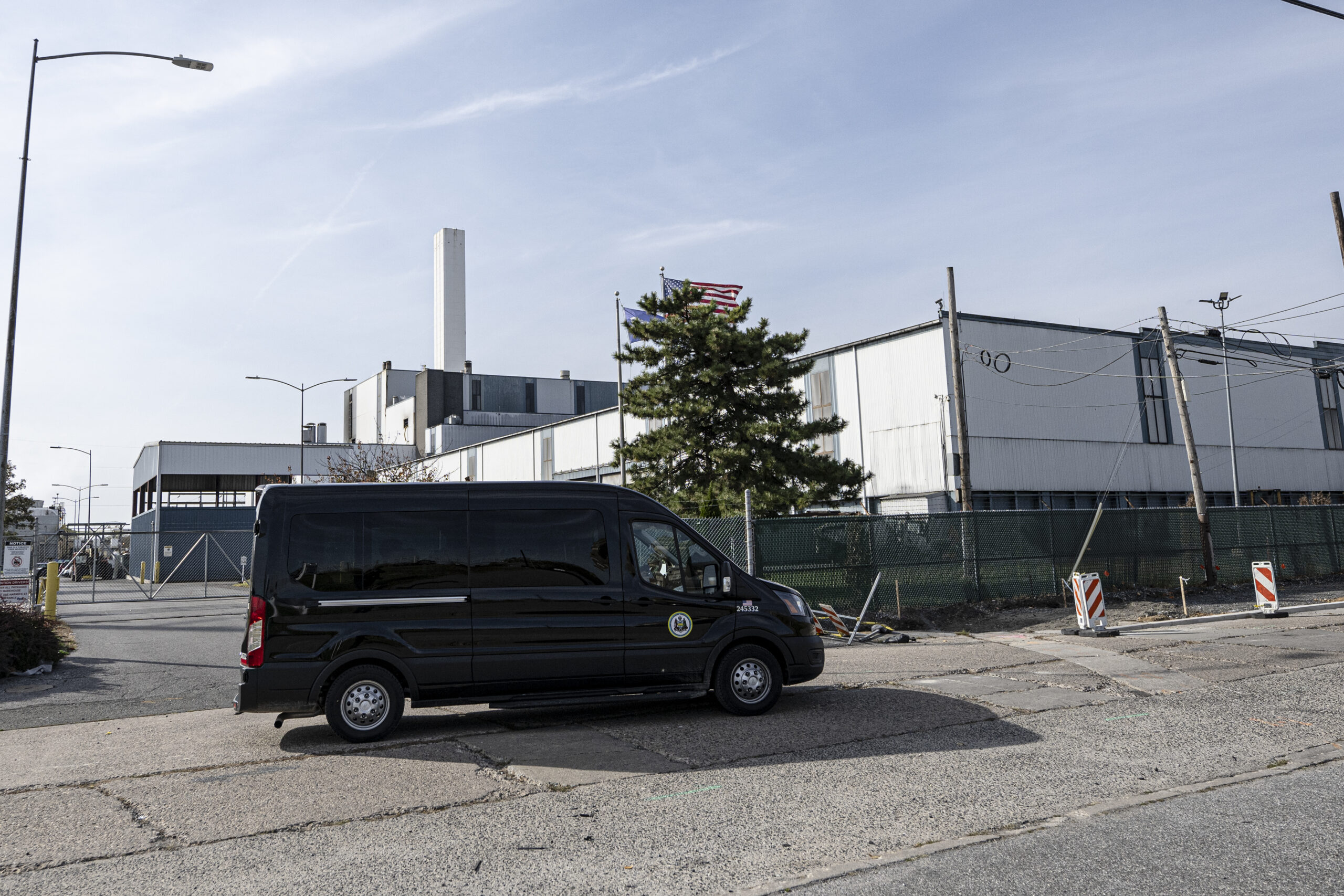
    The Reworld incinerator in Chester, Pa., on Friday, Nov. 7, 2025.

    “Burning Philadelphia’s trash is making Chester, Philadelphia, and other communities around our region sick,” Gauthier has said, pointing to elevated rates of asthma and other ailments and a legacy of “environmental racism” in Chester. The low-income and majority-Black city downriver from Philly has been home to numerous heavy industrial facilities.

    Reworld has said its waste-to-energy facility, which produces some electricity from burning trash, is a “more sustainable alternative to landfilling.”

    At a hearing last year, Parker administration officials said the city is including language in its request for proposals for the next contracts that will allow the city to consider environmental impacts. But they asked lawmakers not to vote for a blanket ban on incineration to allow the city to study the issue further.

    Parker waiting for Council to reapprove $800 million in bonds for her H.O.M.E. plan

    The biggest agenda item left hanging last month when lawmakers adjourned for the winter break was a bill to authorize the Parker administration to issue $800 million in city bonds to fund her H.O.M.E. initiative.

    Parker had hoped to sell the bonds last fall, and Council in June initially authorized the administration to take out new debt. But lawmakers made significant changes to the initiative’s first-year budget, especially by lowering income thresholds for some programs funded by the H.O.M.E. bonds to prioritize the lowest-income residents.

    Mayor Cherelle L. Parker speaks to the crowd at The Church of Christian Compassion in the Cobbs Creek neighborhood of West Philadelphia on Sunday, Dec. 7, 2025. Parker visited 10 churches in Philadelphia on Sunday to share details about her H.O.M.E. housing plan.

    That move, which Parker opposed and which sparked Council’s most significant clash with her administration to date, required a redo of the bond authorization. Lawmakers ran out of time to approve a new version of the measure in December, but Council President Kenyatta Johnson said it could come up for a final vote Thursday.

    “Council members have always been supportive of the H.O.M.E. initiative,” Johnson said. “H.O.M.E. advances City Council’s goals to expand access to affordable homeownership for Philadelphians … and to ensure that city housing investments deliver long-term benefits for families and neighborhoods alike.”

    Council aims to limit ‘resign to run’ … again

    Council is also expected to vote this spring on legislation that would change Philadelphia’s 74-year-old “resign to run” law and allow city officeholders to keep their jobs while campaigning for other offices.

    Currently, Council members and other city employees are required to quit their jobs to run for higher office. Lawmakers have tried several times over the last 20 years to repeal the law, but they have been unsuccessful. Changing the rule requires amending the city’s Home Rule Charter, which a majority of voters would have to approve through a ballot question.

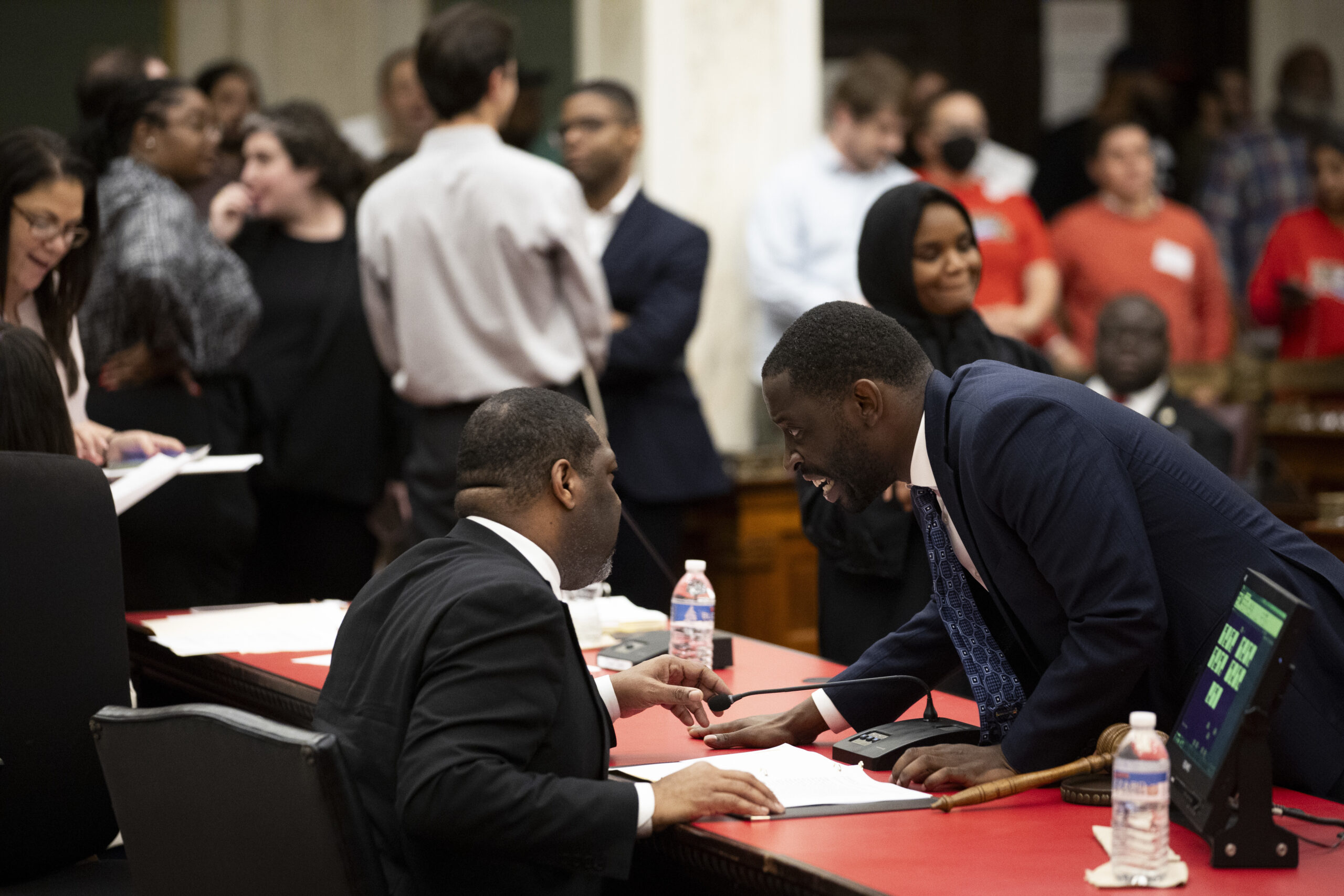
    Council President Kenyatta Johnson talks with Councilmember Isaiah Thomas at City Hall on Wednesday, Dec. 11, 2024 in Philadelphia.

    The latest attempt, spearheaded by Councilmember Isaiah Thomas, would not entirely repeal the resign-to-run law, but instead would narrow it to allow elected officials to keep their seats only if they are seeking state or federal office, such as in Congress or the state General Assembly. Council members who want to run for mayor would still have to resign.

    Thomas, a Democrat who represents the city at-large and is rumored to have ambitions of running for higher office, plans to make minor amendments to the legislation this spring, a spokesperson said, before calling it up for a final vote. The goal, Thomas has said, is to pass the legislation in time for a question to appear on the May primary election ballot.

    Incoming clash over immigration?

    Parker has spent the last year avoiding direct confrontation with the Trump administration, a strategy that supporters say has helped keep Philadelphia out of the president’s crosshairs.

    The mayor, however, cannot control what other local elected officials say about national politics, and Trump’s immigration crackdown appears to be stirring stronger local reaction heading into his second year in office.

    After an Immigration and Customs Enforcement agent fatally shot Renee Good in Minneapolis this month, Sheriff Rochelle Bilal went viral for saying federal agents “will not be able to hide” in Philly. (Bilal, however, does not control the Philadelphia Police Department, which is under Parker’s purview.)

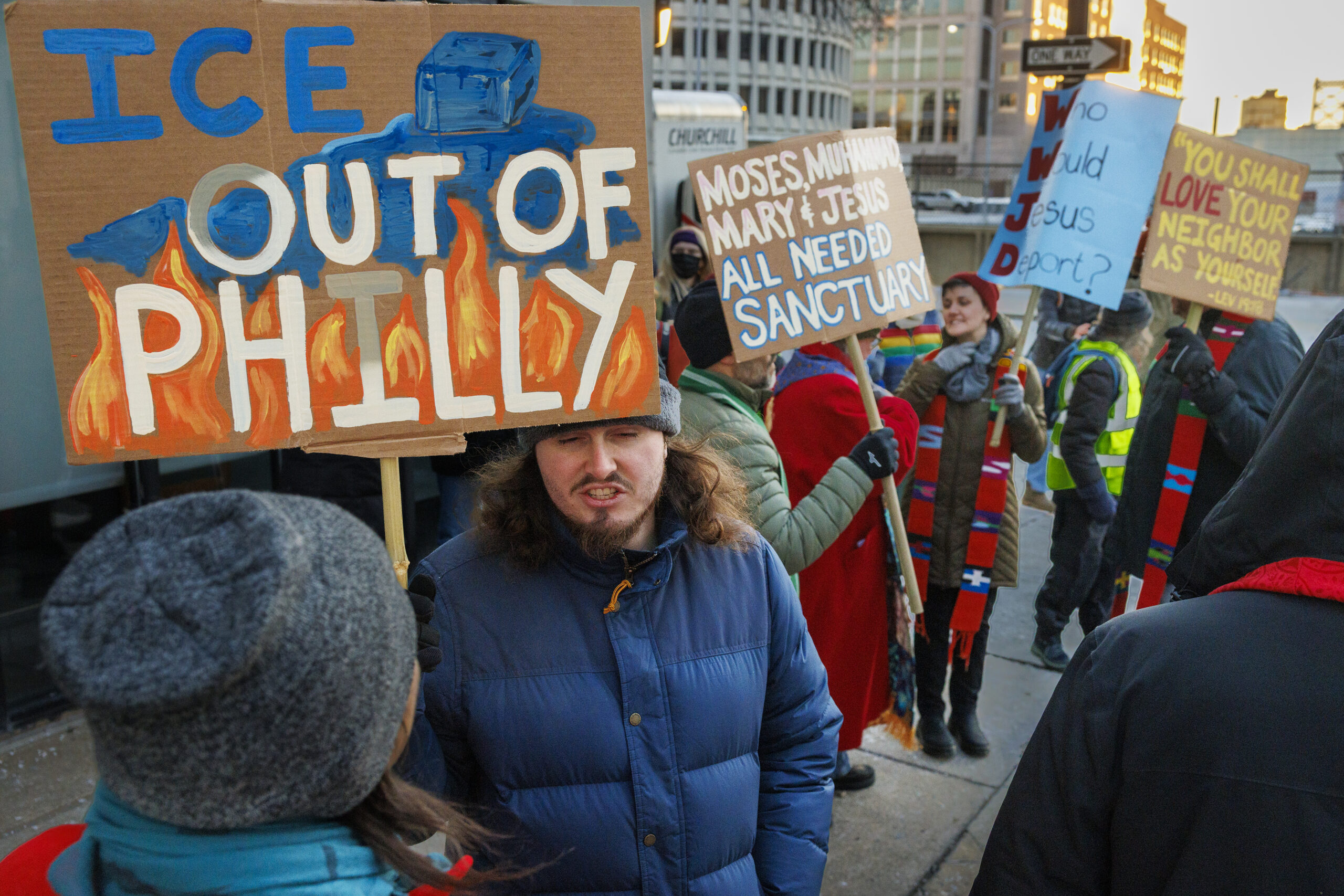
    Meanwhile, progressive Councilmembers Rue Landau and Kendra Brooks this year are expected to introduce legislation aimed at constricting ICE operations in Philadelphia.

    Demonstrators from No ICE Philly gathered to protests outside the U.S. Immigration and Customs Enforcement, office at 8th and Cherry Street, Philadelphia, Tuesday, Jan. 20, 2026.

    It is not yet clear what the lawmakers will propose. But Brooks, who has called on Parker to take a firmer stand against Trump, recently criticized the Philadelphia courts for allowing agents to seize suspects leaving the Criminal Justice Center. She said officials who in her view have failed to stand up to ICE are engaged in “complicity disguised as strategic silence,” and she vowed to force those who “cooperate with ICE in any way” to testify in Council.

    “Cities across the country are stepping up and looking at every available option they have to get ICE out,” Brooks said at a news conference earlier this month. “In the coming days, you will hear about what my office is doing about city policy. These demands must be met or face the consequences in Council.”

    Landau added Philly cannot allow “some masked, unnamed hooligans from out of town [to] come in here and attack Philadelphians.”

    “We are saying, ‘ICE out of Philadelphia,’” she said.

    Parker has said her administration has made no changes to the city’s immigrant-friendly policies, but she continues to be tight-lipped about the issue.

    The Pennsylvania Office of Open Records last week ruled in favor of an Inquirer appeal seeking to force Parker’s administration to disclose a September letter it sent the U.S. Department of Justice regarding local policies related to immigration.

    The administration still has not released the document. It has three more weeks to respond or appeal the decision in court.

    South Philly arena proposal still in the works

    After the 76ers abandoned their plan to build a new arena in Center City a year ago, the team announced it would partner with Comcast Spectacor, which owns the Flyers, to build a new home for both teams in the South Philadelphia stadium complex.

    The teams announced last fall they have selected an architect for the new arena, which is scheduled to replace the Spectacor-owned Xfinity Mobile Arena, formerly the Wells Fargo Center, in 2031.

    If the teams are still planning to open the new arena on their previously announced timeline, legislation to green-light the project could surface as soon as this spring. But so far, there has been no sign of movement on that front.

    “There is currently no timeline for introducing legislation to build a new Sixers arena in South Philadelphia,” said Johnson, whose 2nd District includes the stadium complex. “At the appropriate time, my legislative team and I will actively collaborate with Mayor Cherelle L. Parker’s administration on drafting any legislation related to the Sixers arena before it is introduced in City Council.”

    School closings and 2026 celebrations also on the horizon

    In addition to its legislative agenda, Council this year will likely be drawn into discussions over school closings and the high-profile gatherings expected to bring international attention to Philly this summer.

    The Philadelphia School District is soon expected to release its much-anticipated facilities plan, including which school buildings are proposed for closure, consolidation, or disposition. The always-controversial process is sure to generate buzz in Council.

    “We will do our due diligence on the District’s Facilities Plan,” Johnson said in a statement.

    Additionally, the city is preparing for the nation’s Semiquincentennial, FIFA World Cup games, and the MLB All-Star Game. While the administration is largely responsible for managing those events, some Council members have said ensuring the city is prepared for them is a major priority.

    Johnson said his agenda includes “making sure Philadelphia has a very successful celebration of America’s 250th Birthday that results in short and long-term benefits for Philadelphia.”

    Staff writers Jake Blumgart, Jeff Gammage, and Kristen A. Graham contributed to this article.

  • Meet Conlen Booth, Swarthmore’s fire chief who just stepped into the mayor’s office

    Meet Conlen Booth, Swarthmore’s fire chief who just stepped into the mayor’s office

    Conlen Booth doesn’t typically like to be in the spotlight.

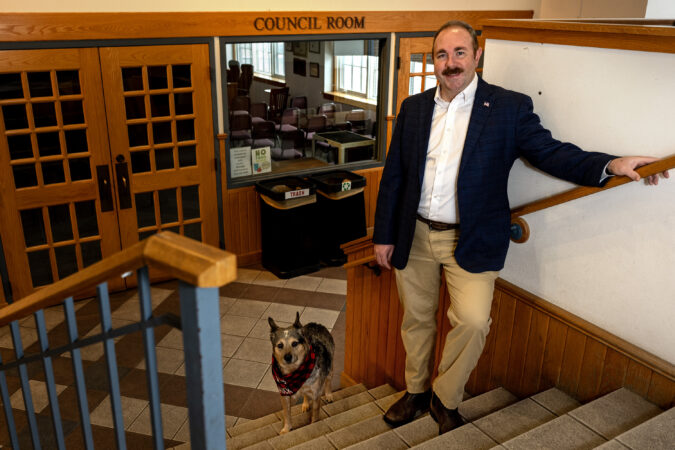
    Booth considers himself a “behind-the-scenes” guy who typically shies away from the limelight. Yet on Jan. 6, surrounded by friends, family, and colleagues, Booth was sworn in as Swarthmore’s mayor.

    Booth, 42, brings more than two decades of emergency management experience to the job, including overseeing emergency services for major hospitals and governments. He’s also spent the past 25 years with Swarthmore’s fire department, most recently as chief. Booth is Delco-bred — a Nether Providence kid, a graduate of Strath Haven High School, and a cheerleader for his home borough of Swarthmore.

    As the borough contends with the fallout of last year’s shuttering of Crozer-Chester Medical Center and Taylor Hospital, budget shortfalls, and potential fire department consolidation, Booth believes his background in emergency services and deep ties to Swarthmore make him the right guy for the job.

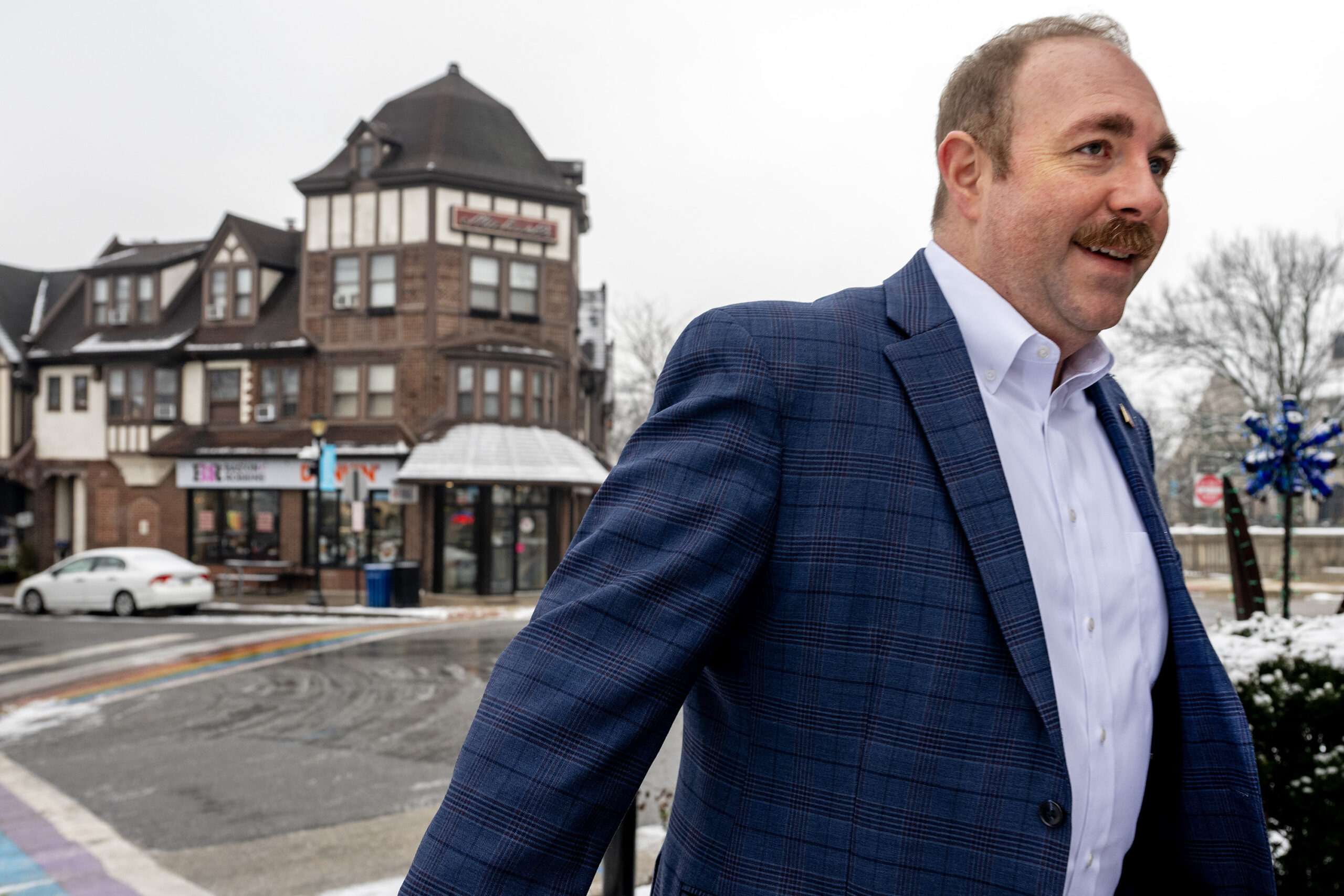
    Mayor Conlen Booth in downtown Swarthmore on Sunday, Jan. 18, 2026.

    ‘If not me, then who?’

    Booth got into local politics the way many do — reluctantly.

    It took nudging from friends and family to step into the mayoral race. But the COVID-19 pandemic revealed a need for municipal leaders who understand emergency management and can govern in a crisis, Booth says.

    An age-old phrase kept circulating in his mind: “If not me, then who?”

    Booth competed against borough council members Kristen Seymore and David Boonin in the Democratic primary. Boonin dropped out of the race in January 2025. In February, the borough’s Democratic committee voted to endorse Booth’s candidacy 15-4, and Seymore dropped out.

    The committee’s endorsement is powerful in Swarthmore. Democratic candidates who do not receive an endorsement are discouraged from running, and in the liberal-leaning town, there are seldom competitive general elections. Booth replaced Marty Spiegel, who had led the borough since 2019.

    Who is Mayor Booth?

    Booth was born in Harrisburg and moved to Delaware County at age 2. He grew up down the street from Nether Providence Elementary School and spent summers down the Shore with his close-knit extended family and collection of family dogs.

    His maternal grandfather, Joseph Labrum, was a longtime judge and attorney in Media. Booth remembers visiting him in his chambers and watching him in the courtroom.

    “I think seeing him in his role as a judge was always something that fascinated me,” he said.

    Booth and his partner, Tracy, met working in healthcare and have been together for around 15 years. They live with Huckleberry, their Australian cattle dog.

    Booth became interested in emergency services in high school. He set his sights on becoming a doctor and spent his teenage years working on an ambulance.

    Four days before he moved into his freshman dorm at the University of Pittsburgh, he watched a good friend die in front of him. The goal changed from enrolling in medical school to just making it through college.

    “It just sort of rattled things,” he said.

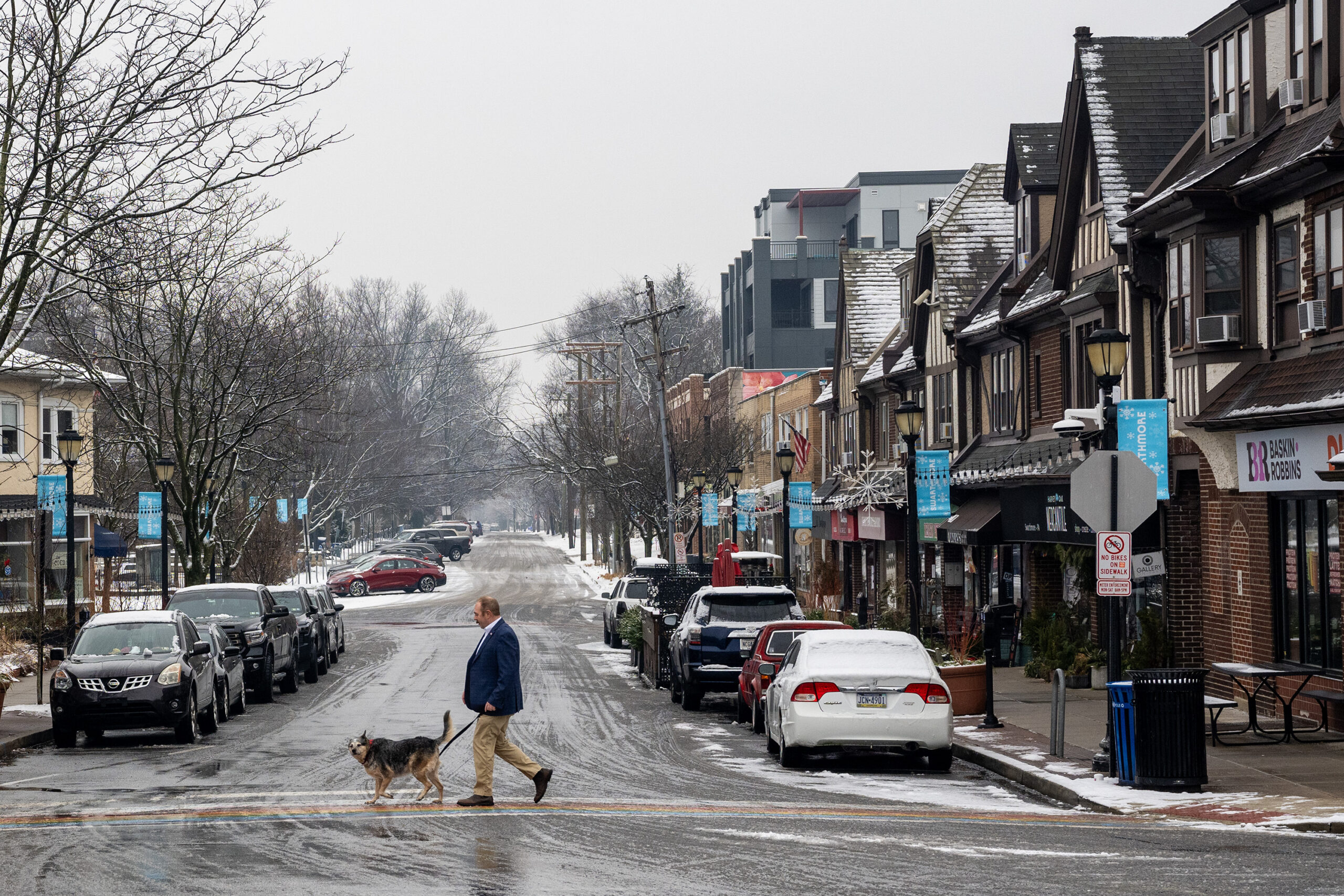
    Mayor Conlen Booth with his dog, Huckleberry, in downtown Swarthmore on Sunday, Jan. 18, 2026.

    Booth graduated from Pitt in 2005 with a bachelor’s degree in emergency medicine, an emerging field at the time. He earned his paramedic certification and learned the business-side of managing emergency medical teams.

    He returned home and took a job with the now-shuttered Delaware County Memorial Hospital, his first role in what would become a long career in emergency medicine. In 2019, he was an emergency response shift supervisor at the Philadelphia Energy Solutions refinery during the massive explosion that left five people hurt and ended up shuttering the facility (Booth describes it as a “pretty insane period” in his life). Booth later spent four years as the senior director of emergency preparedness and emergency medical services at Crozer. He most recently worked as a consultant helping get supplies and meals to recently arrived refugees and asylum-seekers in New York City.

    In tandem with his career in emergency management, Booth has served as a volunteer in Swarthmore’s fire department since 2000, working his way up from rookie firefighter to chief. Last year, he helped develop the Advanced Life Support ambulance partnership with neighboring communities that has filled gaps for residents after the Crozer closures.

    Pat Francher, a longtime Swarthmore resident and community organizer, said Booth has the “awareness and perspective” that comes from a “real in-depth involvement in community welfare.”

    “I’m terrible about saying no to people when they ask me to do something,” Booth joked.

    This summer, Booth suffered a serious, non-work-related injury. He’s been in recovery since, and has come a long way.

    “It could have been so much worse,” Booth said. “I have a lot to be thankful for.”

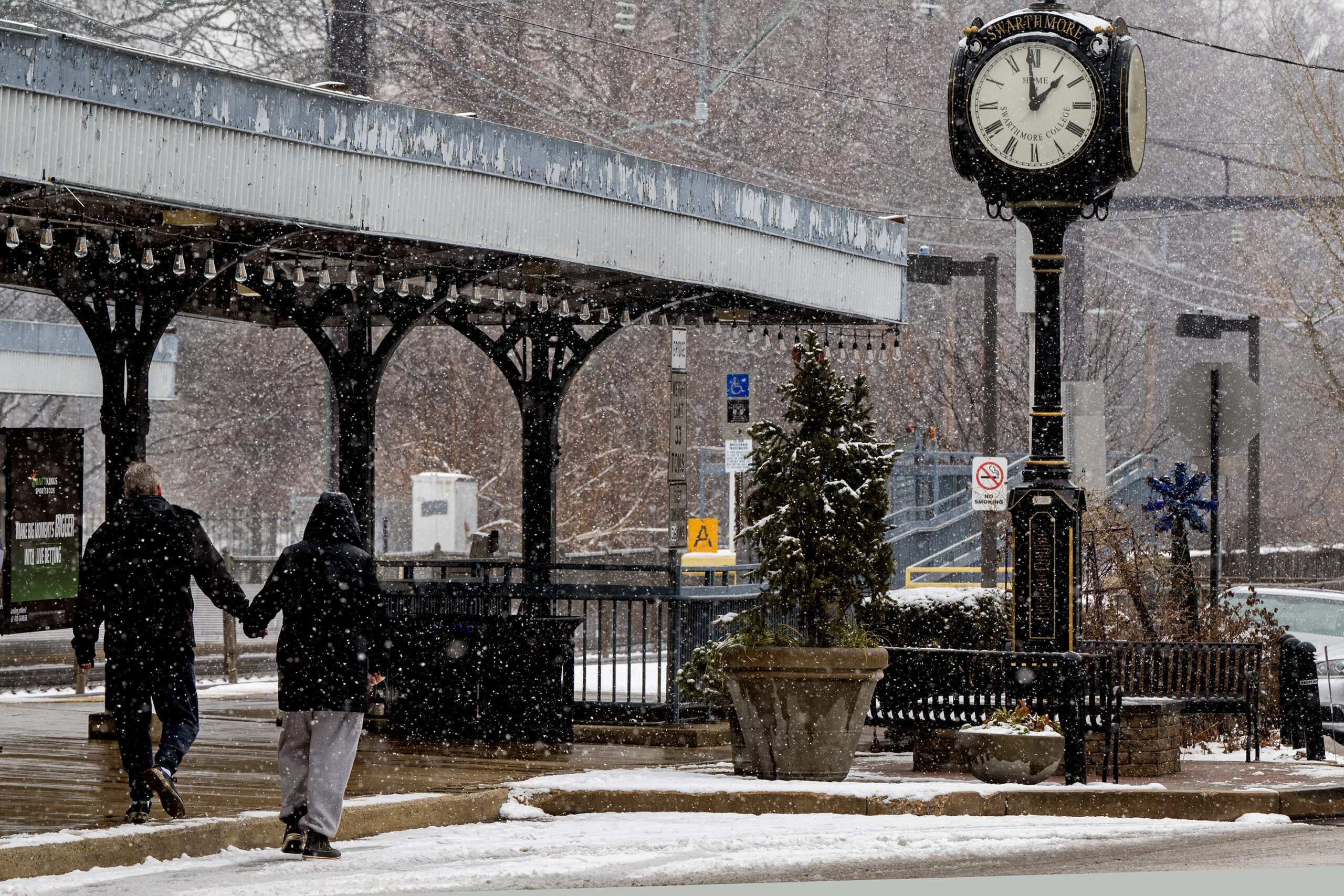
    The SEPTA Regional Rail station in Swarthmore on Sunday, Jan. 18, 2026, during the second snowfall of the weekend. The station is between downtown Swarthmore and Swarthmore College and serves the Media/Wawa Line.

    What’s next for Swarthmore?

    Booth sees educating borough council about the community’s emergency medical needs as a large part of his job as mayor.

    Jill Gaeski, borough council president, called Booth “the perfect guy” to help the 6,200-person borough navigate the challenges that lie ahead.

    The shuttering of Crozer’s hospitals continues to impact access to medical care. At the same time, the Garden City (Nether Providence and Rose Valley), South Media, and Swarthmore fire companies are in discussions about a possible merger.

    “[Booth] can really help us understand the pain points and where the sweet spots are,” Gaeski said.

    Booth says he wants to be a cheerleader for the borough, bringing in tourism and economic growth in a way that maintains Swarthmore’s small-town feel.

    He also hopes to reengage Swarthmore College’s student body, which he says has become less civically involved as the years have passed.

    “I already feel sentimental about this town,” Booth said, citing the people, restaurants, traditions, and community events that make his hometown special.

    “How do we bolster all of these things and how do we engage more people?”

    This suburban content is produced with support from the Leslie Miller and Richard Worley Foundation and The Lenfest Institute for Journalism. Editorial content is created independently of the project donors. Gifts to support The Inquirer’s high-impact journalism can be made at inquirer.com/donate. A list of Lenfest Institute donors can be found at lenfestinstitute.org/supporters.

  • Trump’s strong support in the Lehigh Valley and Northeast Pa. is splintering: ‘He left nothing for the working man’

    Trump’s strong support in the Lehigh Valley and Northeast Pa. is splintering: ‘He left nothing for the working man’

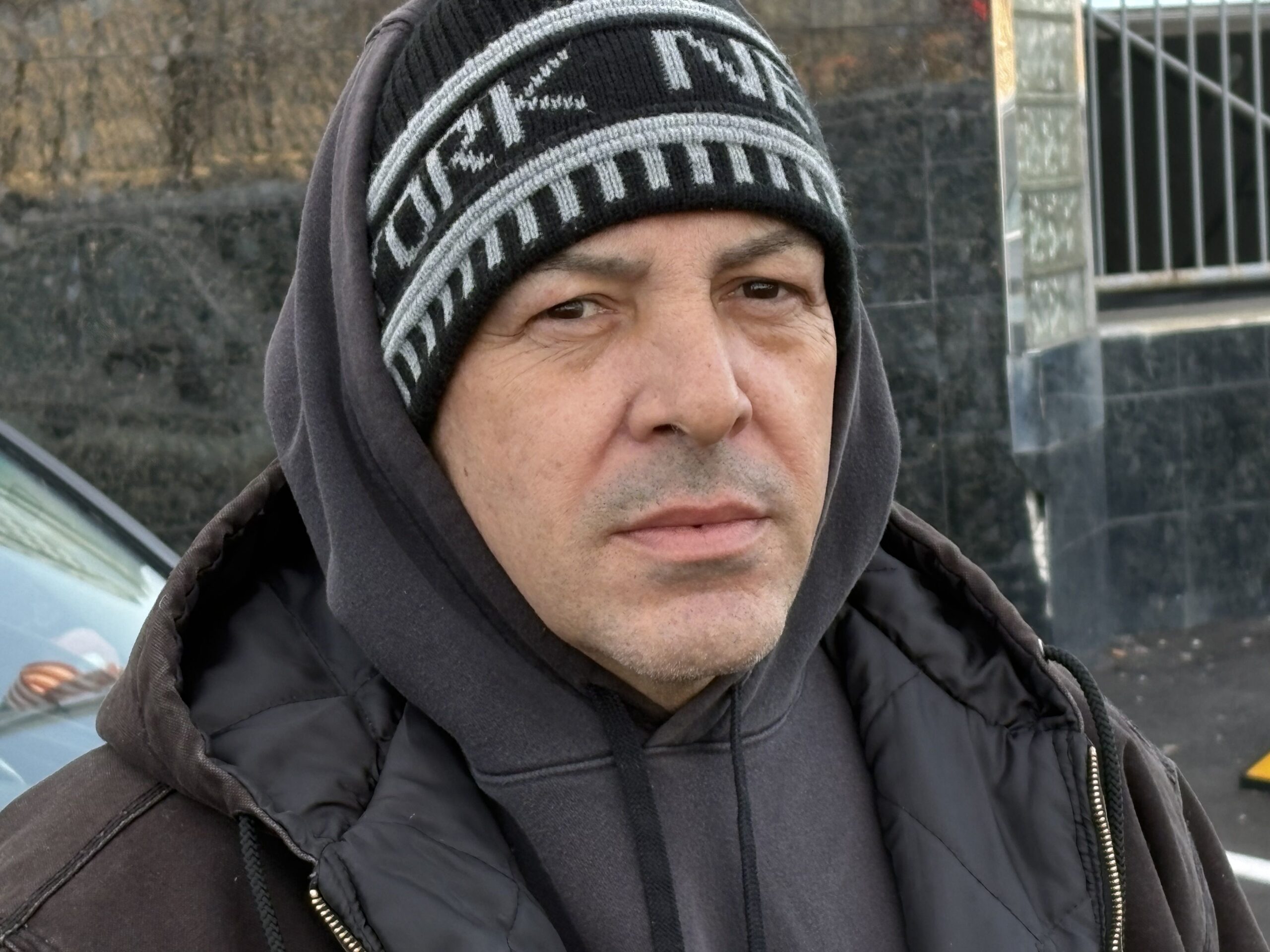
    Scowling under a wool cap and a hood, Robert DeJesus stood in the bitter wind outside the Sunrise Diner in Allentown last week and confessed his “big mistake”: voting for President Donald Trump in 2024.

    “The guy makes ‘cookie promises,’” said DeJesus, 57, a retired construction worker and independent voter from Allentown in Lehigh County. “They’re easy made and easy broken.”

    Trump’s biggest gains in the state in 2024 were concentrated in the Lehigh Valley and in Northeastern Pennsylvania. But a year into his second presidency, there are signs that his winning coalition is splintering. In interviews across five counties in the region, some voters shared their disappointment with rising grocery prices and what they see as Trump’s failure to keep his commitments.

    Even while hailing some of Trump’s policies, several Republicans interviewed said they were put off by his manner as well as his stance on key issues. That disillusionment could spell trouble for Pennsylvania Republicans as they look to hold onto two key swing congressional seats in this region in November.

    Robert DeJesus of Allentown voted for President Donald Trump in 2024, but he now regrets that decision.

    Explaining his problems with Trump, DeJesus said the president pledged “but didn’t deliver” lower grocery prices. And at the same time DeJesus and his family are contending with “insane” supermarket costs, he said, Trump cut taxes for billionaires with the sweeping domestic policy package he signed last year. It has made DeJesus feel overlooked and overwhelmed.

    “He left nothing for the working man,” DeJesus said. “People say it’s good the price of gas went down under Trump. But how we have to live, with high food and high rent, makes no sense.”

    Diana Kird, 58, a Republican who also pulled the lever for Trump, is experiencing buyer’s remorse much like DeJesus.

    “I don’t know what we’re doing in Venezuela,” said the nurse from Lehighton in Carbon County as she stood outside a Giant supermarket in town.

    “We need to stop getting into foreign wars,” a promise Trump made and “ignored,” Kird added.

    Kird said she has not seen Trump come through on his commitments. “He’s wash-rinse-repeat for me,” she said, “saying the same things over again,” such as promising cheaper groceries, “yet doing nothing.”

    Trump’s “refusal to release all the Epstein files” after saying he would was another disappointment that makes her wish she had not supported the president, she added.

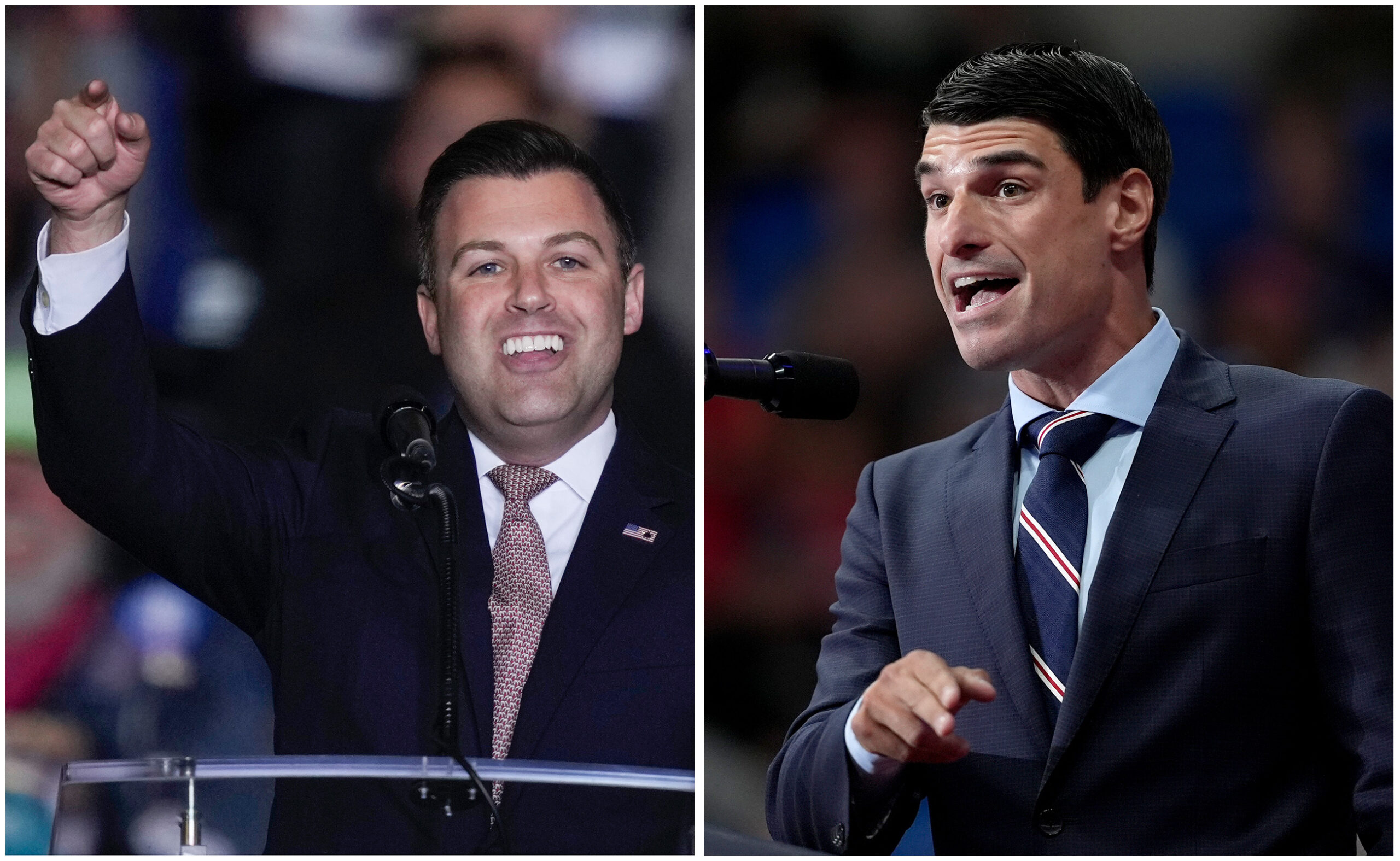
    Republican U.S. Reps. Ryan Mackenzie (left) and Rob Bresnahan (right)

    Trump won’t be on the ballot this year, but Kird plans to take her frustration out on U.S. Rep. Ryan Mackenzie, the freshman Republican who won the Lehigh Valley seat by a single percentage point.

    Mackenzie and fellow freshman U.S. Rep. Rob Bresnahan, a Republican who won his neighboring Northeastern Pennsylvania district by less than a point, are among the top targets for Democrats in November as the party hopes it can win back the House with a focus on affordability.

    In a statement Wednesday, Mackenzie blamed the Biden administration for high prices and described Trump as “a vital partner” in efforts to improve the cost of living.

    “We have made real progress,” he said, “reducing gas prices to their lowest level since COVID, keeping inflation below 3%, and delivering real tax relief for every American.”

    Bresnahan’s office did not respond to a request for comment.

    Both Trump and Vice President JD Vance barnstormed through the region last month, seeking to counteract Democrats’ affordability message, which Trump has bemoaned as a “hoax.”

    But recent moves by Mackenzie and Bresnahan show the two Republicans are giving the issue more weight and seeking to distance themselves from Trump on the high cost of living ahead of tough contests in November.

    Both were among the 17 Republicans who crossed the aisle this month to support a Democratic bill to restore recently expired healthcare subsidies in the wake of a national spike in insurance premiums.

    “The break with the president on healthcare wasn’t surprising. Both men are feeling the heat from constituents,” said Chris Borick, director of the Muhlenberg College Institute of Public Opinion.

    Borick noted that Trump’s 2024 win in the state was due in large part to his gains with voters of color, younger voters, and independents. Those same voters could be crucial to determining how Pennsylvania votes in the next election.

    “But now they’re disappointed.”

    Trump is ‘fearless’ and ‘honest’

    There were warm feelings for Trump at the Coop, a popular diner in Coopersburg, a town just outside Allentown in Lehigh County.

    “Trump’s a confident and honest man who knows business, and made a lot of money. I so admire him. And we need him,” said Tiffany Osmun, 27, who works as a host at the restaurant.

    “He’s fearless, and not afraid of what he has to do,” Osmun said.

    She plans to vote for Mackenzie in November, she said, adding, “I won’t be voting for any Democrat in the midterms.”

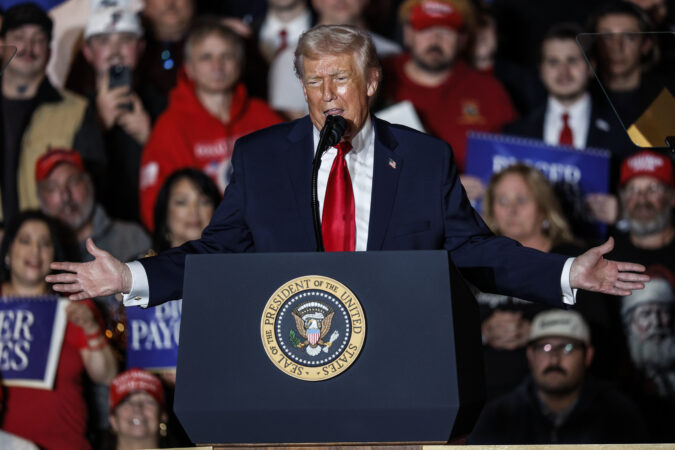
    And if Trump ever popped up in another election, Osmun said, “I’d vote for him again.” In his Pennsylvania speech last month, Trump referenced running for a third term, despite constitutional barriers.

    (function() {
    var l2 = function() {
    new pym.Parent(‘TRUMP_NE_PA.html’,
    ‘https://media.inquirer.com/storage/inquirer/projects/innovation/arcgis_iframe/TRUMP_NE_PA.html’);
    };
    if (typeof(pym) === ‘undefined’) {
    var h = document.getElementsByTagName(‘head’)[0],
    s = document.createElement(‘script’);
    s.type = ‘text/javascript’;
    s.src = ‘https://pym.nprapps.org/pym.v1.min.js’;
    s.onload = l2;
    h.appendChild(s);
    } else {
    l2();
    }
    })();

    Other Trump voters, however, acknowledged frustrations with the first year of his second presidency — even if they are pleased with most of Trump’s policies.

    “I don’t like his personality,” said Bud Hackett, 72, a semiretired construction business owner who lives in Bethlehem.

    Hackett praised Trump’s moves to curtail immigration and shrink the size of the federal workforce, but he bristled at other actions.

    “I’d say over the last year, he’s done maybe 100 things, 70 of which will result in people’s lives being better off. The other 30 have to do with stuff like building a huge ballroom [after tearing down the East Wing of the White House] for his giant, weird ego that I can’t buy into.”

    Trump may have generated a few problems on the home front, conceded soft-drink merchandiser Bobby Remer, a 31-year-old resident of Palmerton in Carbon County. But the president more than compensates by reminding the world just how powerful the United States can be, he said.

    Remer supports the president’s attacks on boats allegedly carrying drugs from Venezuela, as well as Trump’s capture of Venezuelan President Nicolás Maduro and his wife.

    “He’s done great militarily, throwing our swag around,” Remer said. “It’ll show China, which floods America with fentanyl to wipe out our military-aged men with addiction, that we have a hammer that we’ll use against any nation trying to destroy us.”

    But pocketbook issues could matter more in November to other voters — especially after Trump made attacking Democrats on inflation a major theme of his 2024 campaign.

    An October poll from Franklin and Marshall College asked voters in the Lehigh Valley and Northeastern Pennsylvania how they would compare their financial status with a year ago. Around 29% of Republicans said they were better off, while 34% said they were worse off, with 37% saying they were in the same position.

    Among voters listed as independents “or something else” (such as a third party), 14% said they were better off, 32% said they were worse off, and 55% said they remained the same. Nearly half of Democrats said they were worse off, with 9% saying things were better and 43% saying they were the same.

    “Things definitely got bad under Trump. He’s heading us toward dictatorship,” said Malinda Brodt, 65, a Democrat who lives in Saylorsburg in Monroe County, which had the biggest shift to Trump in the state in 2024.

    Several Trump voters who were interviewed heaped praise on the president for lowering prices — despite mixed results — and a few quoted Trump’s speech in Mount Pocono that referred to affordability as a hoax.

    “He’s gotten down the cost of living, that’s for sure,” said Carol Solt, 80, retired from working in a bait-and-tackle shop in Lehighton. “He keeps his promises.”

    While gas and egg prices have decreased in the last year, the cost of food overall rose 3.1% last month compared with December 2024. Increased prices for beef (1%), coffee (1.9%), and fruits and vegetables (0.5%) led the way, according to consumer price index data released earlier this month.

    Ultimately, Kird, the Lehighton voter, concluded before she entered her Giant supermarket that the good times the president assured Americans they would see have yet to materialize.

    “Life is just more expensive under Trump,” she said.

  • Washington Post seeks court order for government to return electronics seized from reporter’s home

    Washington Post seeks court order for government to return electronics seized from reporter’s home

    WASHINGTON — The Washington Post asked a federal court on Wednesday for an order requiring federal authorities to return electronic devices that they seized from a Post reporter’s Virginia home last week, accusing the government of trampling on the reporter’s free speech rights and legal safeguards for journalists.

    A magistrate judge in Alexandria, Va., temporarily barred the government from reviewing any material from the devices seized from Post reporter Hannah Natanson’s home. The judge also scheduled a Feb. 6 hearing on the newspaper’s request.

    Federal agents seized a phone, two laptops, a recorder, a portable hard drive, and a Garmin smart watch when they searched Natanson’s home last Wednesday, according to a court filing. The search was part of an investigation of a Pentagon contractor accused of illegally handling classified information.

    “The outrageous seizure of our reporter’s confidential newsgathering materials chills speech, cripples reporting, and inflicts irreparable harm every day the government keeps its hands on these materials,” the Post said in a statement.

    The seized material spanned years of Natanson’s reporting across hundreds of stories, including communications with confidential sources, the Post said. The newspaper asked the court in Virginia to order the immediate return of all seized materials and to bar the government from using any of it.

    “Anything less would license future newsroom raids and normalize censorship by search warrant,” the Post’s court filing says.

    The Pentagon contractor, Aurelio Luis Perez-Lugones, was arrested earlier this month on a charge of unauthorized removal and retention of classified documents. A warrant said the search of Natanson’s home was related to the investigation of Perez-Lugones, the Post reported.

    Natanson has been covering Republican President Donald Trump’s transformation of the federal government, The Post recently published a piece in which she described gaining hundreds of new sources from the federal workforce, leading one colleague to call her “the federal government whisperer.”

    Attorney General Pam Bondi said that the search was done at the request of the Defense Department and that the journalist was “obtaining and reporting classified and illegally leaked information from a Pentagon contractor.”

    Perez-Lugones, a U.S. Navy veteran who resides in Laurel, Md., has not been charged with sharing classified information or accused in court papers of leaking.

    The Justice Department has internal guidelines governing its response to news media leaks. In April, Bondi issued new guidelines restoring prosecutors’ authority to use subpoenas, court orders and search warrants to hunt for government officials who make “unauthorized disclosures” to journalists.

    The new guidelines rescinded a policy from Democratic President Joe Biden’s administration that protected journalists from having their phone records secretly seized during leak investigations.

    Reporters Committee for Freedom of the Press president Bruce Brown said the unprecedented search of the reporter’s home, “imperils public interest reporting and will have ramifications far beyond this specific case.”

    “It is critical that the court blocks the government from searching through this material until it can address the profound threat to the First Amendment posed by the raid,” Brown said in a statement Wednesday.

  • Immigration officers assert sweeping power to enter homes without a judge’s warrant, memo says

    Immigration officers assert sweeping power to enter homes without a judge’s warrant, memo says

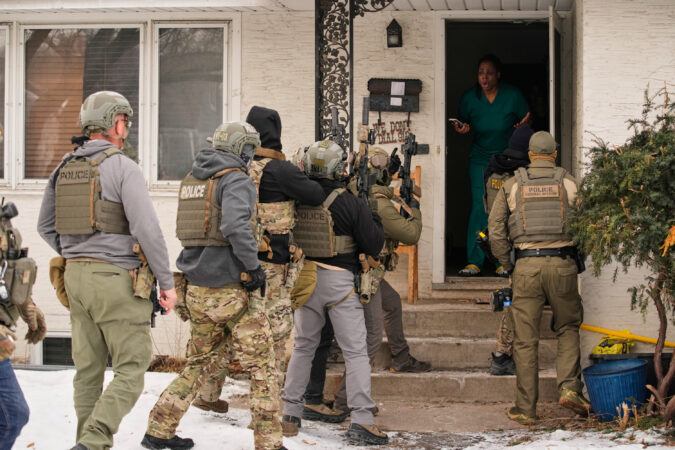
    WASHINGTON — Federal immigration officers are asserting sweeping power to forcibly enter people’s homes without a judge’s warrant, according to an internal Immigration and Customs Enforcement memo obtained by The Associated Press, marking a sharp reversal of longstanding guidance meant to respect constitutional limits on government searches.

    The memo authorizes ICE officers to use force to enter a residence based solely on a more narrow administrative warrant to arrest someone with a final order of removal, a move that advocates say collides with Fourth Amendment protections and upends years of advice given to immigrant communities.

    The shift comes as the Trump administration dramatically expands immigration arrests nationwide, deploying thousands of officers under a mass deportation campaign that is already reshaping enforcement tactics in cities such as Minneapolis.

    For years, immigrant advocates, legal aid groups and local governments have urged people not to open their doors to immigration agents unless they are shown a warrant signed by a judge. That guidance is rooted in Supreme Court rulings that generally prohibit law enforcement from entering a home without judicial approval. The ICE directive directly undercuts that advice at a time when arrests are accelerating under the administration’s immigration crackdown.

    The memo itself has not been widely shared within the agency, according to a whistleblower complaint, but its contents have been used to train new ICE officers who are being deployed into cities and towns to implement the president’s immigration crackdown. New ICE hires and those still in training are being told to follow the memo’s guidance instead of written training materials that actually contradict the memo, according to the whistleblower disclosure.

    It is unclear how broadly the directive has been applied in immigration enforcement operations. The Associated Press witnessed ICE officers ramming through the front door of the home of a Liberian man in Minneapolis on Jan. 11 with only an administrative warrant, wearing heavy tactical gear and with their rifles drawn.

    The change is almost certain to meet legal challenges and stiff criticism from advocacy groups and immigrant-friendly state and local governments that have spent years successfully urging people not to open their doors unless ICE shows them a warrant signed by a judge.

    The Associated Press obtained the memo and whistleblower complaint from an official in Congress, who shared it on condition of anonymity to discuss sensitive documents. The AP verified the authenticity of the accounts in the complaint.

    The memo, signed by the acting director of ICE, Todd Lyons, and dated May 12, 2025, says: “Although the U.S. Department of Homeland Security (DHS) has not historically relied on administrative warrants alone to arrest aliens subject to final orders of removal in their place of residence, the DHS Office of the General Counsel has recently determined that the U.S. Constitution, the Immigration and Nationality Act, and the immigration regulations do not prohibit relying on administrative warrants for this purpose.”

    The memo does not detail how that determination was made nor what its legal repercussions might be.

    When asked about the memo, Homeland Security spokeswoman Tricia McLaughlin said in an emailed statement to the AP that everyone the department serves with an administrative warrant has already had “full due process and a final order of removal.”

    She said the officers issuing those warrants have also found probable cause for the person’s arrest. She said the Supreme Court and Congress have “recognized the propriety of administrative warrants in cases of immigration enforcement,” without elaborating. McLaughlin did not respond to questions about whether ICE officers entered a person’s home since the memo was issued relying solely on an administrative warrant and if so, how often.

    Recent arrests shine a light on tactics

    Whistleblower Aid, a nonprofit legal organization that assists workers exposing wrongdoings, said in the whistleblower complaint obtained by The Associated Press that it represents two anonymous U.S. government officials “disclosing a secretive — and seemingly unconstitutional – policy directive.”

    A wave of recent high-profile arrests, many unfolding at private homes and businesses and captured on video, has shined a spotlight on immigration arrest tactics, including officers’ use of proper warrants.

    Most immigration arrests are carried out under administrative warrants, internal documents issued by immigration authorities that authorize the arrest of a specific individual but do not permit officers to forcibly enter private homes or other non-public spaces without consent. Only warrants signed by judges carry that authority.

    All law enforcement operations — including those conducted by ICE and Customs and Border Protection — are governed by the Fourth Amendment of the Constitution, which protects all people in the country from unreasonable searches and seizures.

    People can legally refuse federal immigration agents entry into private property if the agents only have an administrative warrant, with some limited exceptions.

    Federal agents this month rammed the door of the Minneapolis home of a Liberian man with a deportation order from 2023, who was then arrested. Documents reviewed by The AP revealed that the agents only had an administrative warrant — meaning there was no judge who authorized the raid on private property.

    Memo shown to ‘select’ officials

    The memo says ICE officers can forcibly enter homes and arrest immigrants using just a signed administrative warrant known as an I-205 if they have a final order of removal issued by an immigration judge, the Board of Immigration Appeals or a district judge or magistrate judge.

    The memo says officers must first knock on the door and share who they are and why they’re at the residence. They’re limited in the hours they can go into the home — after 6 a.m. and before 10 p.m. The people inside must be given a “reasonable chance to act lawfully.” But if that doesn’t work, the memo says, they can use force to go in.

    “Should the alien refuse admittance, ICE officers and agents should use only a necessary and reasonable amount of force to enter the alien’s residence, following proper notification of the officer or agent’s authority and intent to enter,” the memo reads.

    The memo is addressed to all ICE personnel. But it has been shown only to “select DHS officials” who then shared it with some employees who were told to read it and return it, Whistleblower Aid wrote in the disclosure.

    One of the two whistleblowers was allowed to view the memo only in the presence of a supervisor and then had to give it back. That person was not allowed to take notes. A whistleblower was able to access the document and lawfully disclose to Congress, Whistleblower Aid said.

    Although the memo was issued in May, David Kligerman, senior vice president and special counsel at Whistleblower Aid, said it took time for its clients to find a “safe and legal path to disclose it to lawmakers and the American people.”

    ICE told to rely on administrative warrants, memo says

    ICE has been rapidly hiring thousands of new deportation officers to carry out the president’s mass deportation agenda. They’re trained at the Federal Law Enforcement Training Center in Brunswick, Georgia.

    During a visit there by The Associated Press in August, ICE officials said repeatedly that new officers were being trained to follow the Fourth Amendment.

    But according to the whistleblowers’ account, newly hired ICE officers are being told they can rely solely on administrative warrants to enter homes to make arrests even though that conflicts with written Homeland Security training materials.

    ICE officers often wait for hours for the person they’re hoping to arrest to come outside so they can make the arrest on the sidewalk or at the person’s work — public places where they are allowed to operate without the risk of infringing on the person’s Fourth Amendment rights.

    Whistleblower Aid called the new policy a “complete break from the law” and said it undercuts the “Fourth Amendment and the rights it protects.”

  • Trump cancels tariff threat over Greenland, says NATO agreed to ‘framework’ of future Arctic deal

    Trump cancels tariff threat over Greenland, says NATO agreed to ‘framework’ of future Arctic deal

    DAVOS, Switzerland — DAVOS, Switzerland — President Donald Trump on Wednesday scrapped the tariffs that he threatened to impose on eight European nations to press for U.S. control over Greenland, pulling a dramatic reversal shortly after insisting he wanted to get the island “including right, title and ownership.”

    In a post on his social media site, Trump said he had agreed with the head of NATO on a “framework of a future deal” on Arctic security, potentially defusing tension that had far-reaching geopolitical implications.

    He said “additional discussions” on Greenland were being held concerning the Golden Dome missile defense program, a multilayered, $175 billion system that for the first time will put U.S. weapons in space.

    Trump offered few details, saying they were still being worked out. But one idea NATO members have discussed as part of a compromise with Trump was that Denmark and the alliance would work with the U.S. to build more U.S. military bases on Greenland.

    That’s according to a European official familiar with the matter but not authorized to comment publicly. The official, who spoke on condition of anonymity, said it was not immediately clear if that idea was included in the framework Trump announced.

    Trump has backed off tariffs before

    The president has threatened tariffs before only to back away. In April, after first saying he would slap massive import levies on nations from around the world, which prompted a sharp negative market reaction, Trump eased off.

    But his change of heart this time came only after he used his speech at the World Economic Forum in the Swiss Alps to focus on Greenland and threatened to upend NATO, an alliance that has been among the globe’s most unshakable since the early days of the Cold War.

    In his address, Trump said he was asking for territory that was “cold and poorly located” and that the U.S. had effectively saved Europe during World War II while declaring of NATO: “It’s a very small ask compared to what we have given them for many, many decades.”

    “We probably won’t get anything unless I decide to use excessive strength and force, where we would be frankly unstoppable. But I won’t do that, OK?” Trump said.

    But Trump has also said repeatedly that, while the U.S. will defend NATO, he wasn’t convinced the alliance will backup Washington, if needed, and suggested that was at least part of the reason for his aggressive stance toward Greenland. That prompted NATO Secretary General Mark Rutte, in a post-speech event with Trump, to say that the alliance would stand with the U.S. if it is attacked.

    “You can be assured, absolutely,” Rutte said. A short time later came Trump’s post canceling the tariffs.

    Danish Foreign Minister Lars Løkke Rasmussen said he welcomed Trump ruling out taking “Greenland by force” and pausing ”the trade war with Europe.”

    “Now, let’s sit down and find out how we can address the American security concerns in the Arctic while respecting the red lines of the Kingdom of Denmark,” he said in a statement.

    President cites national security

    Trump argues that the U.S. needs Greenland for national security and to counter threats from Russia and China in the Arctic region, despite America already having a large military base there. He threatened to impose steep U.S. import taxes on Denmark and seven other allies unless they negotiate a transfer of the semi-autonomous territory.

    The tariffs were to have started at 10% next month and climb to 25% in June.

    Trump often tries to increase pressure on the other side when he believes it can lead to a favorable agreement. His threats at Davos appeared on the verge of rupturing NATO, which was founded by leading European nations, the U.S. and Canada to counter the Soviet Union.

    The alliance’s other members were steadfast in saying Greenland is not for sale and cannot be wrested from Denmark, while angrily rejecting Trump’s promised tariffs.

    A Danish government official told The Associated Press after Trump’s speech that Copenhagen was ready to discuss U.S. security concerns. But the official, who was not authorized to comment publicly and spoke on condition of anonymity, underscored the government’s position that “red lines”— namely Denmark’s sovereignty — must be respected.

    It was not immediately clear how Trump’s canceling of tariffs might change such calculations.

    Greenland tells citizens to prepare

    In the meantime, Greenland’s government responded by telling its citizens to be prepared. It has published a handbook in English and Greenlandic on what to do in a crisis that urges residents to ensure they have sufficient food, water, fuel and supplies at home to survive for five days.

    “We just went to the grocery store and bought the supplies,” said Tony Jakobsen in Greenland’s capital Nuuk said, showing off the contents of bags that included candles, snacks and toilet paper.

    Jakobsen said he thought Trump’s rhetoric toward Greenland was “just threats… but it’s better to be ready than not ready.”

    Before backing down, Trump had urged Denmark and the rest of NATO to stand aside, adding an ominous warning.

    “We want a piece of ice for world protection, and they won’t give it,” Trump said. “You can say yes, and we will be very appreciative. Or you can say no, and we will remember.”

    He also called for opening “immediate negotiations” for the U.S. to acquire Greenland. In subsequent comments to reporters, he declined to name a price that might be paid, saying only, “There’s a bigger price, and that’s the price of safety and security and national security and international security.”

    His arrival in Davos was delayed after a minor electrical problem on Air Force One forced a return to Washington to switch aircraft. As Trump’s motorcade headed down a narrow road to the speech site, onlookers — including some skiers — lined the route, some making obscene gestures.

    Financial markets that had fallen sharply on Trump’s threatened tariffs bounced back Wednesday. Also breathing a sigh of relief were a number of U.S. officials who had also been concerned that Trump’s hard-line stance and bellicose rhetoric toward Greenland, Denmark and other NATO allies could harm other foreign policy goals.

    Trump’s Davos speech was originally supposed to focus on how to lower U.S. housing prices — part of a larger effort to bring down the cost of living. Greenland instead carried the day, though Trump mistakenly referred to it as Iceland four times during his speech.

    “This enormous unsecured island is actually part of North America,” Trump said. “That’s our territory.”

    When he finally did mention housing, Trump suggested he did not support a measure to encourage affordability. He said bringing down rising home prices hurts property values and makes homeowners who once felt wealthy because of the equity in their houses feel poorer.

    ‘Now there’s another threat’

    Before Trump announced that he was abandoning the tariffs and potentially easing international pressure, his speech left people in Nuuk preparing for the worst.

    Resident Johnny Hedemann said it was “insulting” that Trump “talks about the Greenlandic people and the Greenlandic nation as just an ice cube.” He spoke while heading out to buy a camping stove and instant mashed potatoes.

    “Living in this nature, you have to be prepared for almost anything. And now there’s another threat — and that’s Trump,” Hedemann said.

  • Trump to meet with Zelensky as Ukraine endures a bitter winter after Russian attacks

    Trump to meet with Zelensky as Ukraine endures a bitter winter after Russian attacks

    KYIV, Ukraine — About 4,000 buildings in Kyiv remained without heating Wednesday, and nearly 60% of the Ukrainian capital was without power, Ukraine’s President Volodymyr Zelensky said, after days of Russian bombardment of Ukraine’s power grid and as President Donald Trump prepared to hold talks with the Ukrainian leader.

    With temperatures falling as low as minus-4 F in Kyiv, Ukraine is seeing one of the coldest winters in years, deepening the hardship of Ukrainians almost four years after Russia launched a full-scale invasion.

    A yearlong push by the Trump administration to stop the fighting hasn’t yielded any breakthrough, despite the American president issuing a series of deadlines, though efforts were set to continue.

    Trump said at the World Economic Forum in Davos, Switzerland that he would meet Thursday with Zelensky.

    “I want to stop it,” Trump said of the fighting Wednesday. “It’s a horrible war.”

    U.S. special envoy Steve Witkoff told The Associated Press on Wednesday that he plans to discuss peace proposals with Putin as well as hold talks with a Ukrainian delegation.

    “We need a peace,” Witkoff said at Davos.

    Putin confirmed late on Wednesday that Witkoff and Trump’s son-in-law Jared Kushner are expected in Moscow on Thursday for talks. The Russian leader said that Moscow and Washington, among other things, are discussing the possibility of using Russian assets frozen in the U.S. for rebuilding “territories damaged by the hostilities” after a peace agreement is reached.

    But with a dispute over Greenland’s future largely eclipsing other transatlantic issues at Davos, discussions about Ukraine’s defense looked likely to be sidelined.

    Zelensky said last week his envoys would try to finalize with U.S. officials documents for a proposed peace settlement that relate to postwar security guarantees and economic recovery.

    He added that the U.S. and Ukraine could sign the documents in Davos this week, but on Tuesday he said he wouldn’t be traveling to Switzerland and would focus on restoring power in Ukraine.

    Ukraine’s Cabinet of Ministers is allocating 2.56 billion hryvnias (almost $60 million) from a reserve fund to purchase generators, Prime Minister Yuliia Svyrydenko said Wednesday.

    NATO Secretary-General Mark Rutte on Wednesday urged the 32-nation alliance’s military chiefs to press their national governments to supply desperately needed air defense systems to Ukraine, helping it fend off Russia’s aerial attacks.

    “Please use your influence to help your political masters to do even more,” Rutte said in a video message to top brass as they met at NATO’s Brussels headquarters.

    “Look deep into your stockpiles to see what more you can give to Ukraine, particularly air defense interceptors. The time really is now,” he said.

    Russia launched 97 drones and a ballistic missile at Ukraine overnight, the Ukrainian air force said.

    In the central Dnipropetrovsk region, attacks killed a 77-year-old man and a 72-year-old woman, according to Oleksandr Hanzha, head of the regional military administration.

    Russia’s Defense Ministry said that air defenses downed 75 Ukrainian drones over several regions.

    The international airports of Krasnodar, Sochi, Gelendzhik and Saratov briefly suspended flights overnight because of the drones.

    In Adygea, more than 120 miles from the Ukrainian border, a Ukrainian drone caused a fire at an apartment building that injured 11 people, including two children, according to Gov. Murat Kumpilov.