Category: Politics

Political news and coverage

  • Respect and remembrance for Cheney from Bush, Biden and past vice presidents as Trump is excluded

    Respect and remembrance for Cheney from Bush, Biden and past vice presidents as Trump is excluded

    WASHINGTON — They gathered at the Washington National Cathedral on Thursday — former presidents, vice presidents, sworn political foes and newfound friends — in a show of respect and remembrance for Dick Cheney, the consequential and polarizing vice president who became an acidic scold of President Donald Trump.

    Trump, who has been publicly silent about Cheney’s death Nov. 3, was not invited to the memorial service.

    Two ex-presidents came: Republican George W. Bush, who eulogized the man who served him as vice president, and Democrat Joe Biden, who once called Cheney “the most dangerous vice president we’ve had probably in American history” but now honors his commitment to his family and to his values.

    “Solid and rare and reliable,” Bush said at the service of his vice president, praising a man whose “talent and restraint” exceeded his ego. “Smart and polished, without airs.”

    Former President George W. Bush, speaks a tribute during the funeral service for former Vice President Dick Cheney at the Washington National Cathedral on Thursday.

    Bush and others noted the understated demeanor of a man who nevertheless wielded great influence in government. “Above all,” Bush said, “I wanted someone with the ability to step into the presidency without getting distracted by the ambition to seek it.”

    Among the eulogists, Liz Cheney, the eldest daughter, only obliquely addressed what amounted to a father-daughter feud with the president — a man her dad had called a “coward” for trying to overturn his loss in the 2020 election.

    She spoke of her father’s conviction that when confronted with a choice between defending the country and a political party, the country must come first. “Bonds of party must always yield to the single bond we share as Americans,” she said.

    Liz Cheney is a former high-ranking House member whose Republican political career was shredded by a MAGA movement angered by her investigation of the Jan. 6, 2021, riot at the Capitol. Thursday, she chose not to speak directly of Trump.

    She spoke of seeing clouds in the shape of angels just before her father died.

    A Who’s Who of Washington, minus you know who

    Moments before the service began, figures of recent but now receded power mingled: Bush and Biden and their wives sitting in a row together, former Vice Presidents Kamala Harris and Mike Pence chatting side by side in their pew with Al Gore and Dan Quayle together behind them.

    Biden greeted Republican Sen. Mitch McConnell, the former longtime Senate leader, and his wife, former labor and transportation secretary Elaine Chao. Behind them sat Democratic Rep. Nancy Pelosi, who spent time talking with another former House speaker, Republican John Boehner. All gathered among the soaring interior columns of the grand cathedral known as “a spiritual home for the nation.”

    Others delivering tributes at Thursday’s funeral were Cheney’s longtime cardiologist, Dr. Jonathan Reiner; former NBC News correspondent Pete Williams, who was Cheney’s spokesman at the Pentagon; and several of the former vice president’s grandchildren.

    “I’m happy to report that I haven’t given many eulogies,” Reiner said in his remarks. “Nobody wants a doctor who is great at funerals.”

    Reiner recalled doctors telling Cheney decades ago, after the first of multiple heart attacks, that he should abandon his political ambitions then. Yet he kept winning elections as a Wyoming congressman for years after that.

    Cheney, he said, was always the “calmest person in the room.”

    President George W. Bush and Vice President Dick Cheney meet in Washington, D.C., on Sept. 12, 2001, with members of the president’s national security team in the Cabinet room.

    Cheney had lived with heart disease for decades and, after the Bush administration, with a heart transplant. He died at age 84 from complications of pneumonia and cardiac and vascular disease, his family said.

    Trump’s vice president, JD Vance, on stage at another event in the morning, was asked about Cheney and said: “Obviously there’s some political disagreements there but he was a guy who served his country. We certainly wish his family all the best in this moment of grieving.”

    Vance was also not invited to the funeral, according to a person familiar with the details who was not authorized to speak publicly and spoke on condition of anonymity.

    The White House lowered its flags to half-staff after Cheney’s death, as it said the law calls for, but Trump did not issue the presidential proclamation that often accompanies the death of notable figures, nor has he commented publicly on his passing.

    The deeply conservative Cheney’s influence in the Bush administration was legendary and, to his critics, tragic.

    He advocated for the U.S. invasion of Iraq on the basis of what proved to be faulty intelligence and consistently defended the extraordinary tools of surveillance, detention and inquisition employed in response to the Sept. 11, 2001, attacks. Bush credited him with helping to keep the country safe and stable in a perilous time.

    Bad blood between the Cheneys and Trump

    After the 2020 election won by Biden, Liz Cheney served as vice chair of the Democratic-led special House committee that investigated the Jan. 6 Capitol riot. She accused Trump of summoning the violent mob and plunging the nation into “a moment of maximum danger.”

    For that, she was stripped of her Republican leadership position and ultimately defeated in a 2022 Republican primary in Wyoming. In a campaign TV ad made for his daughter, Dick Cheney branded Trump a “coward” who “tried to steal the last election using lies and violence to keep himself in power after the voters had rejected him.”

    Last year, it did not sit well with Trump when Cheney said he would vote for the Democrat, Harris, in the presidential election.

    Trump told Arab and Muslim voters that Dick Cheney’s support for Harris should give them pause, because he “killed more Arabs than any human being on Earth. He pushed Bush, and they went into the Middle East.”

  • People who are self-employed could become exempt from paying a Philly business tax | City Council roundup

    People who are self-employed could become exempt from paying a Philly business tax | City Council roundup

    Philadelphia-based independent contractors and others who are self-employed could soon become exempt from paying certain business taxes as part of a measure aimed at easing tax burdens on small businesses.

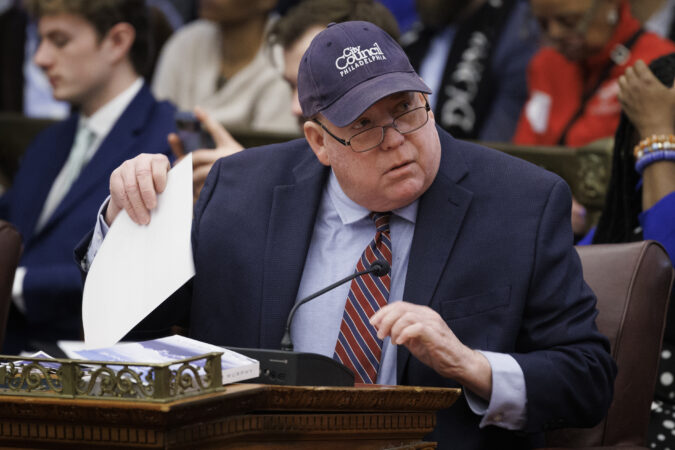
    City Councilmember Mike Driscoll, a Democrat who represents parts of Northeast Philadelphia, introduced legislation Thursday to carve out entrepreneurs, sole proprietorships, and businesses that have only one employee from having to pay the city’s business income and receipts tax, commonly known as BIRT.

    Also on Thursday, members floated legislation to address the rising cost of water bills and introduced a bill to make it easier for restaurants to secure outdoor dining permits.

    What was the meeting’s highlight?

    Relief for the small(est) businesses: The bill is likely to find support in Council, where lawmakers have been searching for ways to provide relief to small businesses after earlier this year eliminating a popular tax break that allowed companies to exclude their first $100,000 in income from business taxes in Philadelphia.

    That exemption effectively meant that thousands of small businesses did not have to pay the tax. However, Mayor Cherelle L. Parker’s administration in June successfully moved to eliminate the exemption, saying the city was likely to lose a court battle over the matter.

    The change came after a medical device manufacturer sued the city, saying the exemption violated state law, which includes a “uniformity” clause that prohibits municipalities from creating different classes of taxpayers.

    Now, thousands of businesses newly have to pay the BIRT beginning with 2025 tax bills that are due in April. If Driscoll’s measure is adopted, it would begin in the 2026 tax year, meaning that eligible business owners would see the exemption when paying taxes due in April 2027.

    He said the legislation addresses concerns from small businesses that the impending tax bills will be financially unsustainable for them.

    “A $50,000 business should not face a $3,200 tax hike,” Driscoll said. “That is not policy. That is displacement.”

    Driscoll said that the city’s law department approved his legislation and that he is confident it does not violate the uniformity clause.

    What else happened this week?

    Making water more affordable: Council will consider a package of legislation to address rising water bills. Councilmember Jamie Gauthier of West Philadelphia introduced three measures:

    • A bill that expands eligibility for payment assistance programs to people who earn up to 300% of the federal poverty level. (This year, the FPL is $32,150 for a family of four.) There is currently a tiered assistance structure for people who earn up to 250%.
    • A bill requiring that the city reduce a resident’s water bill if it rose because of a water meter failure that lasted more than a year.
    • A resolution to hold hearings on whether lawmakers can expand assistance programs to renters. The Philadelphia Water Department does not allow bills to be in renters’ names.

    A spokesperson for Gauthier said the package of legislation has 10 cosponsors — a majority of Council — making it likely to pass.

    Parker opposes incineration ban: A Council committee on Monday advanced a bill to ban the city from incinerating trash, over the objections of Parker’s administration.

    Currently, the city sends about two-thirds of the trash it collects to landfills and one-third to a waste-to-energy incinerator in Chester operated by Reworld, formerly known as Covanta.

    Both of those contracts expire June 30, and Gauthier wants to prohibit the Parker administration from signing a new deal.

    Chester resident Zulene Mayfield, left, Philadelphia Councilmember Jamie Gauthier, right, and Chester Mayor Stefan Roots meet to discuss Gauthier’s “Stop Trashing Our Air Act,” which would ban the city from incinerating waste, during a visit with lawmakers and staff in Chester, Pa., on Friday, Nov. 7, 2025.

    On Monday, Chester officials pleaded with Philly to end its relationship with the facility, saying it contributes to high rates of illness.

    Reworld defended its record, saying it exceeds government regulations.

    Carlton Williams, who leads the Philadelphia Office of Clean and Green Initiatives, asked lawmakers to hold off approving a ban on incineration to allow the city time to study the issue.

    But the committee approved the measure, sending it to the full Council for a vote as early as Dec. 4.

    Dining out: Council is taking another crack at streamlining the city’s drawn-out permitting process for outdoor dining.

    The outdoor dining area at Booker’s Restaurant and Bar at 5021 Baltimore Ave. in 2021.

    Councilmember Rue Landau, who represents the city at-large, said it can take more than a year and a half for restaurants to get licensed if they are not in areas around Center City and a handful of commercial corridors in other neighbors.

    Beyond those locations, restaurants must get their district Council person to sponsor zoning legislation, which can take months.

    Landau introduced legislation Thursday to expand the “by-right” areas where sidewalk cafes can exist without special zoning. Where the areas are expanded to will be up to district Council members.

    Quote of the week

    Danny Garcia trains for an upcoming fight in August 2024.

    All in the family: Council members on Thursday honored boxer Danny Garcia, a North Philly native and an illustrious fighter who is retiring from the sport. He appeared in Council chambers to thank members and tell the city how much he loves it back.

    Staff writers Jake Blumgart and Beatrice Forman contributed to this article.

  • The CROWN Act gets closer to protecting Pennsylvanians from being fired for wearing Afros, braids, or locs

    The CROWN Act gets closer to protecting Pennsylvanians from being fired for wearing Afros, braids, or locs

    After being stuck in committee for four years, the Pennsylvania Senate passed the CROWN Act Wednesday with a vote of 44-3.

    Passage of the act — an acronym for Create a Respectful and Open World for Natural Hair — means employers and school officials can’t bar people from jobs or schools for wearing their hair as it grows out naturally or choosing styles — box braids, twists, locs, or cornrows — that protect it.

    The law applies to all Pennsylvanians, but especially impacts Black people. Black men who opt to wear locs or braids at work and school instead of close cropped Afros are often forced to cut them off.

    In 2018, Buena Vista Regional High School wrestler Andrew Johnson cut his locks after a referee told him he could not compete in a South Jersey wrestling match with them.

    But Black women, who, are often compelled and required to straighten their naturally curly coils in professional and school settings are the most will benefit the most from the new legislation.

    “This law takes discrimination head on,” said Sen. Vincent Hughes (D-Pa.). “Natural hair is beautiful. This law protects Pennsylvanians by abolishing any notion that natural hairstyles are not appropriate in professional, educational, or public settings.”

    Black women use scorching hot metal combs, flat irons, or blow dryers to press their manes into smooth styles. The hair remains straight until it gets wet and then it curls back up.

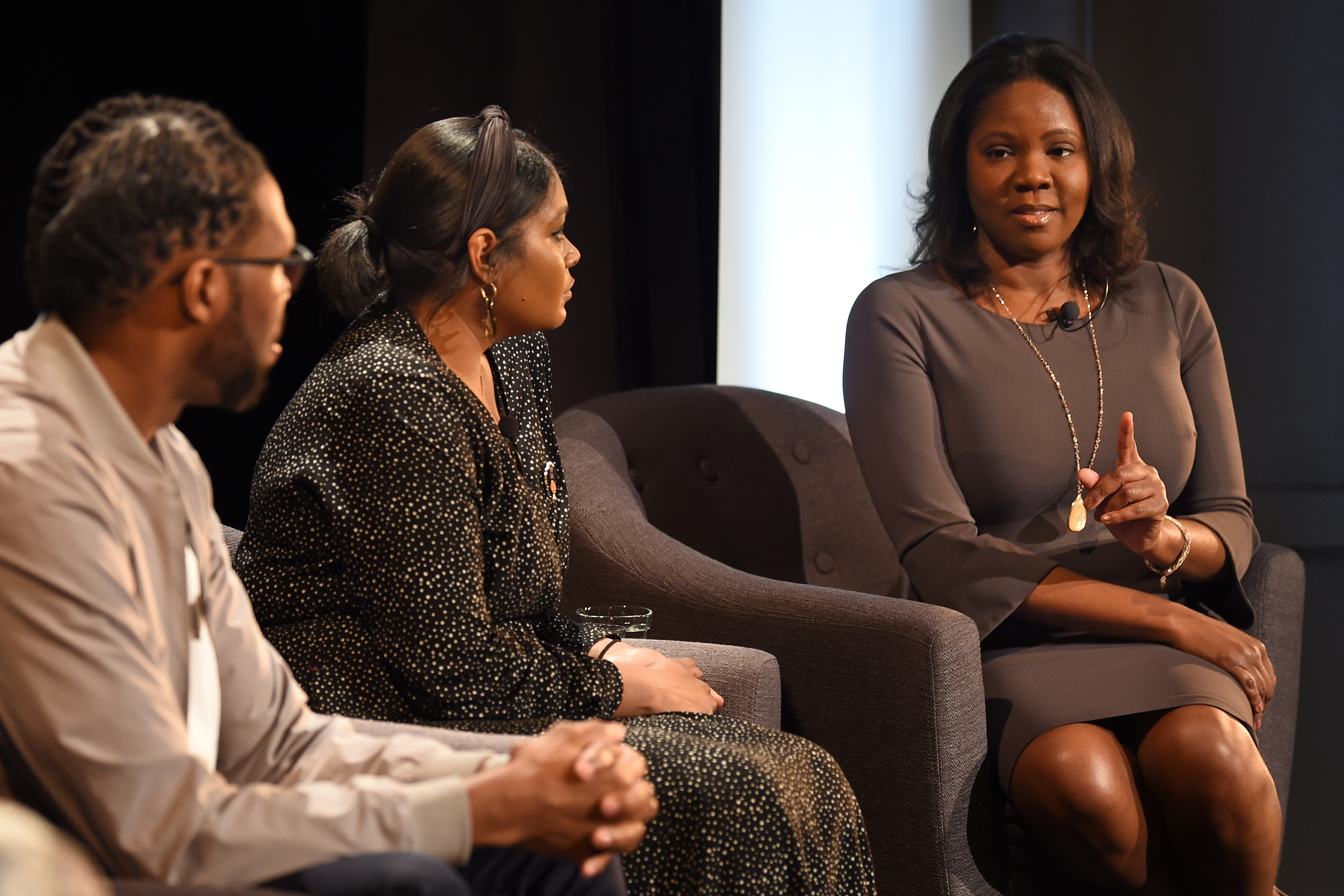
    Political strategist and advocate Adjoa B. Asamoah (right) participates on a panel with the Oscar-winning Hair Love filmmakers at the National Museum of Women and the Arts in Washington, DC Feb. 23, 2020.

    Some use relaxers. Stylists apply chemicals to the scalp to straighten the hair at the root, causing painful burns. This is a more permanent method, but the chemicals must be reapplied every few weeks when natural hair grows out.

    In recent years, there has been growing concerns that frequent applications of chemical straighteners increase the risk of cancers of the reproductive system.

    “That’s just too high of a price for conformity,” said Adjoa B. Asamoah, a Washington, D.C.-based Temple graduate and architect of the CROWN Act.

    Asamoah worked with attorneys to draft legislation, and champions the bill in legislative houses around the country.

    “I shouldn’t have to increase my likelihood of developing cancer to be upwardly mobile. That can’t be the cost,” she said.

    Fed up with hair discrimination, Asamoah began working with lawyers on the CROWN Act in 2018.

    California, New York, and New Jersey were the first states to pass the CROWN Act the following year. The U.S. House of Representatives passed the CROWN Act in 2020, but it got stalled in the Senate.

    Pennsylvania is the 28th state to pass anti-hair discrimination laws joining New York, New Jersey, Delaware, and Maryland. Both Pittsburgh and Philadelphia enacted ordinances banning hair discrimination in 2020, but the Pennsylvania ruling protects people throughout the state.

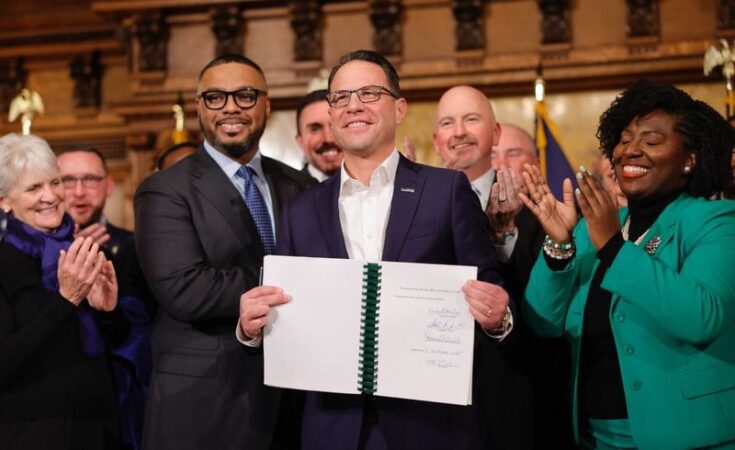
    Gov. Josh Shapiro is expected to sign the bill into law in the coming months.

    The Pennsylvania bill amended the Human Relations Act, clarifying the term of race to include traits such as hair texture and protective hairstyles. The House passed the CROWN Act in 2023 but was later assigned to a Senate committee where it lay buried.

    It passed the State House again in March, with a vote of 194-8, signaling strong bipartisan support. This time House Speaker Joanna McClinton (D., Phila.) a prime sponsor of the bill, refused to leave its fate up to chance. She worked with Republican Senate president pro tempore Kim Ward to move the bill to the Senate as part of the state’s budget negotiations.

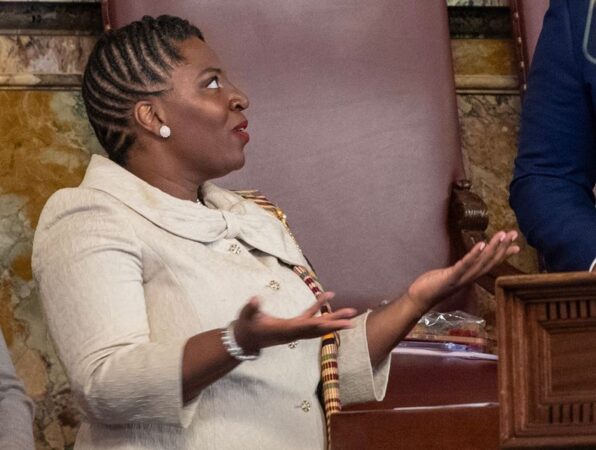
    “I told her the CROWN Act was an important piece of legislation for people in all the communities that we serve,” said McClinton, who wears her hair in natural protective styles. “I’m excited about what the future holds for women in the Commonwealth of Pennsylvania who won’t have to face another barrier to succeeding in the work place.

    Former first Lady Michelle Obama recently reignited the discussion of Black women’s natural hair during interviews about her book The Look.

    Obama didn’t wear braids during Barack Obama’s presidential term because she feared they would be a distraction, she recently told Sherri Shepherd on her daytime talk show.

    However, upon returning to the White House in 2022 to unveil her official portrait, she wore braids gathered into a bun at the nape of her neck.

    “I wanted to make a statement, ‘Y’all get out of our heads,’” Obama said. “I don’t want any man in any HR department making decisions about what is appropriate, how we look, [to be able to determine] our ability to wear wigs, locs, braids and extensions … Don’t hire or fire somebody based on something you know nothing about.”

    Her comments drew ire of Republicans including Megyn Kelly who countered, saying the drama was all in Obama’s head.

    That kind of disconnect, Asamoah said, is why the CROWN Act is needed.

    “People have been discriminating against Black people’s hair for decades, and yes, it’s still happening,” Asamoah said.

    “The important thing is that Black women can no longer be fired, passed over for a promotion, or have a job offer rescinded if we wear our hair in locks, braids, or twists … If someone tells you need to straighten your hair at your job, that’s now a violation.”

  • Trump accuses Democratic vets in Congress of sedition ‘punishable by death,’ including two lawmakers from Pa.

    Trump accuses Democratic vets in Congress of sedition ‘punishable by death,’ including two lawmakers from Pa.

    U.S. Rep. Chrissy Houlahan was in her Washington office when she saw attacks directed at her and other military veteran members of Congress from President Donald Trump, days after they urged members of the military and intelligence community to “refuse illegal orders.”

    Trump called the Democrats “traitors” in a Thursday post on Truth Social and, in a second post, accused them of sedition that he said is “punishable by DEATH.”

    Houlahan, a Chester County Democrat and an Air Force veteran, was one of six Democratic members of Congress who released a video Tuesday contending that Trump’s administration is “pitting” service members and intelligence professionals against American citizens and urging them not to “give up the ship.”

    All six lawmakers are either veterans or members of the intelligence community.

    “The idea that the most powerful man on the planet, who wields the power of the United States military and should be emblematic of all the things we value in this republic, would call for the death and murder of six duly elected members of the House of Representatives and the Senate — I’m speechless and I’m devastated,” Houlahan told The Inquirer on Thursday afternoon.

    Houlahan said she had anticipated there might be a response from the president after Stephen Miller, Trump’s deputy chief of staff and homeland security adviser, spent much of Wednesday railing against the lawmakers in the video. But Trump’s comments went beyond anything Houlahan imagined even from a president known for extreme and sometimes violent rhetoric.

    “I’ve been struggling with the right words for this,” she said. “‘I weep for our nation’ would be an understatement.”

    U.S. Rep. Chris Deluzio, a Navy veteran who was also featured in the video, called Thursday “a dark day in America” in an interview with The Inquirer.

    “It tells me who he is and it tells me exactly why we should be talking about the rule of law and the Constitution,” said Deluzio, an Allegheny County Democrat.

    In the video that set Trump off, the lawmakers, finishing one another’s sentences, reminded service members of their oath to the Constitution and instructed them to refuse to follow any order that would violate it.

    “Right now, the threats to our Constitution aren’t just coming from abroad,” Deluzio says in the video.

    “But from right here at home,” adds U.S. Rep. Jason Crow (D., Colo.) a former paratrooper and Army Ranger.

    The video was shared by U.S. Sen. Elissa Slotkin (D., Mich.), a former CIA officer, and also included U.S. Sen. Mark Kelly (D., Ariz.), a former Navy captain, and U.S. Rep. Maggie Goodlander (D., N.H.) a former intelligence officer.

    Houlahan said she considered the video “innocuous.”

    “It literally talked about the fact that you should follow only lawful orders, an obvious reminder that those of us who served have grown up on,” she said.

    On Thursday morning, Trump shared a Washington Examiner article about the video with the headline “Dem veterans in Congress urge service members to refuse unspecified unlawful orders,” saying their message “is really bad, and Dangerous to our Country.”

    “Their words cannot be allowed to stand. SEDITIOUS BEHAVIOR FROM TRAITORS!!! LOCK THEM UP???” the president wrote on Truth Social, his social media platform.

    About an hour later, Trump added in his second post: “SEDITIOUS BEHAVIOR, punishable by DEATH!”

    Sedition and treason cases in modern U.S. history are very rare.

    Democratic condemnations of Trump’s comments poured in from across the country Thursday. Republicans were more muted. House Speaker Mike Johnson (R., La.) defended Trump’s claim that the Democrats had engaged in “sedition,” describing the video as “wildly inappropriate.”

    “It is very dangerous. You have leading members of Congress telling troops to disobey orders,” he told CNN.

    Sen. Dave McCormick, a Pennsylvania Republican and U.S. Army veteran, who has called out political violence in the past, both after Charlie Kirk’s killing and an arson at Gov. Josh Shapiro’s residence, defended the president’s verbal attacks on the lawmakers. “Not a single unlawful order is cited in this video — because there aren’t any,” he said in a statement.

    “The video is inappropriate and unwarranted, and I didn’t hear any of these calls to defy orders when Democrats were using lawfare against President Trump,” he added, “Giving outlandish pardons, or intimidating tech companies to stop free speech.”

    About an hour later McCormick’s spokesperson sent a second comment from him, adding: “President Trump can speak for himself, but as I’ve said repeatedly, there is no place in either party for violent rhetoric and everyone needs to dial it down a notch.”

    One of the few Republicans to offer any criticism of the president was U.S. Rep. Brian Fitzpatrick, a former FBI agent, who said in a statement that in the FBI he saw “how inflamed rhetoric can stoke tensions and lead to unintended violence.”

    Fitzpatrick, a moderate from Bucks County who has butted heads with Trump in the past, did not name him in the statement but said the “exchange” was “part of a deeper issue of corrosive divisiveness that helps no one and puts our entire nation at risk. Such unnecessary incidents and incendiary rhetoric heighten volatility, erode public trust, and have no place in a constitutional republic, least of all in our great nation.”

    Houlahan and Deluzio respond

    Houlahan served three years on active duty as an Air Force engineer and an additional 13 years as a reserve, and reached the rank of captain. She has been outspoken against the Trump administration on military issues, particularly surrounding women serving in combat roles.

    The lawmakers did not refer to any specific orders from the president in their video, but they had numerous concerns in mind.

    Houlahan said it was sparked, in part, by military troops being deployed to U.S. cities and lethal strikes against suspected drug boats in the Caribbean.

    Trump has suggested that American cities should be “training grounds” for the military, and targeted Los Angeles, Chicago, Washington, and Portland for National Guard deployments. His administration’s boat strikes, which have led to protests in Philadelphia, have come under scrutiny by experts who say they are illegal, per the New York Times, which found Trump’s claims justifying the attacks to be questionable.

    “What we were speaking to is the future, those who are currently serving, and making sure they remember who they serve and what they serve,” Houlahan said.

    She said the lawmakers felt “a responsibility to … make sure people understood there are people in Congress who have your back.”

    Deluzio pointed to reporting about concerns from military personnel who were deployed to U.S. cities. PBS reported this week that people in uniform have been seeking outside legal advice about some of the missions the Trump administration has assigned them.

    “This is a guy who’s been documented in a meeting with the secretary of defense talking about shooting unarmed civilians in the legs,” Deluzio said, citing an account from former Defense Secretary Mark Esper.

    Deluzio said he learned about the oath the first day of boot camp and trained sailors on it when he gained rank.

    “This is something that is fundamental to how our military works and the respect we show our service members,” he said.

    Deluzio served six years in the Navy including three deployments. He cofounded the Democratic Veterans Caucus in June, which was formed in opposition to the Trump administration.

    He said he has heard from people on both sides of the aisle and encouraged Republican colleagues to speak out publicly against the president’s remarks.

    “Republican officials should be stepping up loudly and clearly and saying the calling of death by hanging to members of Congress is out of bounds,” he said.

    James Markley, a spokesperson for the Pennsylvania Republican Party, declined to comment on Trump’s remarks and said in a text that “the woke left continues to attempt to rip apart the fibers of our communities and our country.”

    “Our party will continue focusing on making our country safer, prosperous and more affordable,” he added.

    A spokesperson for Pennsylvania Treasurer Stacy Garrity, an Army veteran who is running for governor next year with the state GOP’s endorsement, did not respond to a request for comment.

    Sen. John Fetterman, a Pennsylvania Democrat who has made a name for himself working across the aisle, said in a post on X that threatening members of Congress is “deeply wrong” without exception, regardless of political party.

    “I strongly reject this dangerous rhetoric,” he said.

    Gov. Josh Shapiro also quickly denounced Trump for calling for violence against Houlahan and Deluzio, describing them in a post on X as “two outstanding members of Congress from Pennsylvania who have fought for our country.”

    “There should be no place for this violent rhetoric from our political leaders, and it shouldn’t be hard to say that,” said Shapiro, who has consistently spoken out against the threat of political violence since a politically motivated arsonist firebombed the governor’s mansion while he and his family slept inside in April.

    Trump’s attack on Houlahan and other Democratic veterans marks the second time in two months Democratic lawmakers who served in the armed forces have been the subject of attacks from across the aisle.

    U.S. Rep. Scott Perry, a Trump ally who represents parts of central Pennsylvania, told a conservative radio station in October that Democrats in Congress “hate the military,” based on their voting records.

    Deluzio and Houlahan, both members of the House Armed Services Committee, also banded together then to push back on Perry’s comments, calling them “garbage.”

  • It can take two years for a restaurant to get approved for outdoor dining. One Philly councilmember is trying to make it easier

    It can take two years for a restaurant to get approved for outdoor dining. One Philly councilmember is trying to make it easier

    Philadelphia City Council is taking yet another crack at streamlining the city’s complex and drawn-out permitting process for outdoor dining.

    At-large Councilmember Rue Landau introduced legislation Thursday to expand the “by-right” areas where sidewalk cafes can exist without a special zoning ordinance. The proposed bill, if approved, could hasten the daunting permitting process and dramatically increase the space available for outdoor dining.

    Currently the law allows sidewalk cafes to be licensed in certain areas that are largely centered on Center City and smaller commercial corridors in East Passyunk, the Italian Market, Manayunk, and other neighborhoods throughout the city. Restaurants outside those corridors must ask their district Council member to get legislation approved to authorize a sidewalk cafe license. The step can add months to a process restaurateurs say is already lengthy, confusing, and costly.

    All restaurants seeking sidewalk cafes must submit copies of plans to Philadelphia’s Streets Department and Department of Licenses and Inspections separately for approval before securing a $1 million insurance policy and paying an annual $227 licensing fee, according to the application’s website. Approvals and disapprovals should be ready within 30 days of applying.

    In reality, restaurant owners said, the process often involves thousands of dollars to keep an architect on retainer, as both departments can take months to review plans. And in the interim, at least one restaurant owner alleged, businesses can be fined for having tables and chairs outside while they wait for a decision.

    The sidewalk cafe at Gleaner’s Cafe at 917 S. 9th Street, one of the addresses covered under current outdoor dining legislation.

    Landau believes the new legislation stands to remove one hurdle from a system that is overall in need of reform.

    “The ordinance process alone takes many months, and is just one part of a lengthy and convoluted process,” Landau said in an interview Wednesday. “Currently, it takes approximately between 18 and 27 months just to put a couple of tables and chairs outside of your business.”

    Sidewalk cafes are different from streeteries, which occupy parking spaces and require a $1,750 licensing fee alongside myriad approvals from different city departments, depending on the structure. Both face similar challenges.

    Sidewalk cafes and streeteries proliferated during the pandemic, allowing many restaurants to keep serving patrons as COVID-19 limited indoor dining. At their peak, there were roughly 800 sidewalk cafes or streeteries operating in Philly. That number fell drastically after 2022, when the city made streeteries permanent and announced a web of since-revised regulations that many restaurants could not keep up with, often requiring businesses to consult engineers and architects to build structures that the city might request to be torn down only months later.

    Restaurant-goers dine at tables and chairs on a sidewalk outside Parc.

    There are just 28 active streetery and 287 active sidewalk cafe licenses in Philly as of November 2025, according to L&I’s business license dashboard.

    “The current outdoor dining licensing process in Philadelphia is characterized by complexity and high cost, which pose significant barriers for businesses seeking to utilize outdoor dining opportunities,” City Controller Christy Brady wrote in an August 2024 report on the licensing systems.

    window.addEventListener(“message”,function(a){if(void 0!==a.data[“datawrapper-height”]){var e=document.querySelectorAll(“iframe”);for(var t in a.data[“datawrapper-height”])for(var r,i=0;r=e[i];i++)if(r.contentWindow===a.source){var d=a.data[“datawrapper-height”][t]+”px”;r.style.height=d}}});

    What would the proposed law change?

    Landau’s proposed legislation would increase the number of streets in Philly where sidewalk cafes are considered “by-right,” which means business owners would not have to call on City Council to preapprove their tables and chairs.

    Landau held more than a dozen listening sessions with community members in eight Council districts, she said, and worked with the Pennsylvania Restaurant and Lodging Association to consult over 100 Philadelphia restaurant owners before drafting the legislation.

    (function() {
    var l2 = function() {
    new pym.Parent(‘sidewalkcafe’,
    ‘https://media.inquirer.com/storage/inquirer/projects/innovation/arcgis_iframe/sidewalkcafe.html’);
    };
    if (typeof(pym) === ‘undefined’) {
    var h = document.getElementsByTagName(‘head’)[0],
    s = document.createElement(‘script’);
    s.type = ‘text/javascript’;
    s.src = ‘https://pym.nprapps.org/pym.v1.min.js’;
    s.onload = l2;
    h.appendChild(s);
    } else {
    l2();
    }
    })();

    The proposed bill still follows the tradition of councilmanic prerogative, allowing each district Council member to select which streets receive the “by-right” designation for sidewalk cafes. Councilmember Jamie Gauthier included the entirety of the 3rd District — encompassing the majority of West Philly — while others carved out several streets. Councilmembers Cindy Bass and Brian O’Neill have yet to designate streets, Landau said.

    The bill will then go to the streets subcommittee for a hearing, Landau said, where blocks can still be added.

    “There’s plenty of time for councilpeople to get some skin in the game,” Landau said. “We don’t want to be exclusive here.”

    Bass, who represents the 8th District — which includes parts of Mount Airy, Germantown, and West Oak Lane — and O’Neill, who represents Northeast Philly in the 10th District, could not be reached for comment.

    The now-dismantled outdoor dining area at Booker’s Restaurant and Bar at 5021 Baltimore Ave., which some once considered to be one of the most beautiful streeteries in Philly.

    How do restaurant owners feel?

    The proposed legislation is cold comfort for Jeremy Page, general manager of the West Philly brunch institution Booker’s. The restaurant’s application for a revamped sidewalk cafe has languished with L&I since he filed in April, Page said.

    While Booker’s sits squarely within Gauthier’s district, the restaurant won’t be spared any red tape. It already secured the necessary ordinance and spent $2,000 on an architect to draw up plans for six outdoor tables.

    “I was very surprised I had to do that. Nobody tells you,” Page said. He said he was heartened by Landau’s legislation. “It feels like someone finally sees what’s going on and is locking in to make a change.”

    Setting up the new outdoor space was bittersweet: Between 2020 and September 2025, Booker’s had a 33-seat sidewalk cafe enclosed with wooden slats that staff would decorate with string lights, flowers, and garlands. It was lauded by some as among the city’s most beautiful outdoor dining arrangements.

    When the city announced its new outdoor dining regulations in 2022, the structure was no longer compliant, Page said. But Booker’s kept the structure up for three years as it searched for a workaround, incurring roughly $10,000 in fines until Page said he finally tore down the covering in September. It has been replaced by simple tables and chairs.

    The change resulted in a loss in business that forced Booker’s to let go of five staff members, Page said.

    El Chingon at 1524 S 10th St. It took two years for the Michelin-award Mexican restaurant to get a sidewalk cafe license.

    “I miss it so much,” Page said. “It’s extremely impactful when you are getting fined for something that was legal at one point and then, all of a sudden, is not legal anymore.”

    Carlos Aparicio recalled a similar experience. The owner of South Philly’s El Chingón, now a Michelin-recognized restaurant, spent two years going back and forth with different city departments until his 12-seat sidewalk cafe was approved in fall 2023.

    During that time, Aparicio told The Inquirer, he was hit by fines and told by an L&I officer that the agency would remove his tables and chairs. After that, he started hiding the furniture at his house during off hours.

    “It was very confusing and upsetting,” Aparicio said. “We’re not doing anything bad. We’re not selling drugs. We’re not trying to do anything but build community.”

    El Chingón is just one block outside East Passyunk Avenue’s by-right area. Aparicio estimated he spent $10,000 after securing his zoning ordinance to retain an architect, an engineer, and a lawyer to help him navigate the permitting process.

    It’s experiences like these that incense Landau, she said.

    “All the restaurants that we spoke to, they all said that the city does not waste any time to fine them or tell them what it’s doing wrong, but it’s not there to help them in a positive way,” Landau said. ”We must cut red tape to make it easier for restaurants to do a very simple thing: put some tables and chairs outside.”

    Staff writer Anna Orso contributed to this article.

  • ACLU slams Mayor Parker for invoking the organization’s name amid ‘DEI rollback’

    ACLU slams Mayor Parker for invoking the organization’s name amid ‘DEI rollback’

    The ACLU’s Pennsylvania chapter slammed Philadelphia Mayor Cherelle L. Parker’s administration for invoking the organization’s name during a news conference this week, saying the group was not involved in what its leaders described as the mayor’s “DEI rollback.”

    In a blistering statement issued late Wednesday, the ACLU-PA said Parker’s use of the organization’s name during a news conference announcing controversial changes to the city’s contracting policies created “the impression that the city’s decisions were vetted by our constitutional experts and aligned with our values.”

    That was not the case, the group said.

    “ACLU-PA was not consulted nor involved,” the statement said. “We welcome genuine collaboration with city leadership on policies that advance justice, liberty, and equity, especially for historically marginalized communities. Until such a partnership occurs, we ask that the administration refrain from using our name as a buzzword seal of approval.”

    The Parker administration pushed back, with City Solicitor Renee Garcia saying Thursday that officials “were clear” that the administration consulted with an attorney who worked for the city’s outside counsel and who later went to work for the ACLU.

    “We didn’t give ‘impressions,’” Garcia said, “we just gave the facts.”

    Still, the civil rights group’s distancing from Parker was the latest criticism the mayor faced over her decision to eliminate a decades-old program that aimed to direct a significant portion of the city’s contracting dollars to firms owned by people of color, women, and people with disabilities.

    Parker and her administration said the decision was made to align city policies with shifting legal precedent that has threatened affirmative action-style government programs. But critics have said the city preemptively conceded to the conservative legal movement that has sought to dismantle diversity, equity, and inclusion programs across the country.

    Parker has said the city’s new system, which will incentivize contracting with businesses considered “small and local,” will ultimately be a more effective and equitable program.

    In announcing her decision to make the city’s procurement policies race- and gender-neutral, Parker did not say that her administration worked directly with the ACLU in crafting its policy shift, nor did she mention the organization’s Pennsylvania chapter.

    But Parker and members of her administration invoked the group’s name during the Tuesday news conference as they described the timeline of events that led up to the city’s decision to quietly change its policies this fall before announcing them publicly.

    Mayor Cherelle L. Parker with city solicitor Renee Garcia (right) at City Hall Feb. 5, 2024.

    Garcia said that the administration consulted in June with constitutional law experts, including Carmen Iguina González, who was at the time a Washington-based attorney at Hecker Fink, a law firm. Iguina González is a former clerk to Supreme Court Justice Sonia Sotomayor, considered one of the most liberal jurists on the high court.

    About three months after the meeting with city officials, Iguina González became the deputy director for immigration detention at the ACLU’s National Prison Project.

    She could not be reached for comment.

    During Tuesday’s news conference, Vanessa Garrett Harley, a deputy mayor and a top aide to Parker, cited the meeting with Iguina González in response to critics who have called the administration’s policy shift “conservative.”

    She said Iguina González counseled the city to strike race- and gender-based diversity goals from its contracting policies.

    “People [are] saying, ‘Oh, it was a conservative move. It was a conservative way of looking at the law,’” Garrett Harley said. “She had clerked for Justice Sotomayor. She’s currently at the ACLU. So this was not somebody who would have had a conservative mindset.”

    Garrett Harley continued: “If we’ve got people on all sides… saying, ‘You have no other choice,’ then we’ve got to pivot and do what we have to do to protect the fiscal responsibility of the City of Philadelphia.”

    Vanessa Garrett Harley, a deputy mayor, speaks during a press conference in June.

    Later in the news conference, Parker also mentioned the ACLU, saying she was glad the city sought outside an outside opinion from Iguina González.

    “I remember that meeting clearly,” Parker said. “And again — although she’s not with the firm, she made the transition and she’s now with the ACLU — I believe in her.”

    This week was not the first time the ACLU has been at odds with Parker, a centrist Democrat who ran for mayor in 2023 on a tough-on-crime platform.

    The group’s state chapter was critical of her while she campaigned and embraced the use of stop-and-frisk as a valuable policing tactic. The ACLU, which has long contended the practice is racially biased and ineffective, monitored the city’s use of stop-and-frisk for more than a decade.

    And once Parker took office last year, Pennsylvania ACLU leaders expressed opposition to parts of her plan to address the open-air drug market in Kensington, including the so-called wellness court, a fast-track court for people accused of minor drug-related offenses.

  • Delco homeless shelters prepare to reopen after state budget impasse stretched limits of regional nonprofits

    Delco homeless shelters prepare to reopen after state budget impasse stretched limits of regional nonprofits

    For the first time in months, the director of the Community Action Agency of Delaware County, which operates three homeless shelters and a rental assistance program, isn’t thinking about service cuts.

    The organization was forced to reduce capacity at one of its shelters to 50% in October and close the other two on Nov. 1 as a result of the state budget impasse. Delaware County, which had been backfilling for missing state dollars, had to cut the funds it delivered to social service organizations in half last month.

    Now, the agency is beginning to reopen its doors and its rental assistance program.

    “[Employees] have been busy kind of preparing for the residents to come back,” said Ed Coleman, the nonprofit’s executive director.

    The Community Action Agency is one of several nonprofit organizations across the region that were stretched and stressed over the last several months as state dollars stopped flowing in the absence of a budget. Since January, they have grappled with uncertainty over federal funds as President Donald Trump’s administration cancels grants and Congress considers major cuts to social service programs.

    The dynamics exposed the vulnerabilities facing philanthropic organizations while threatening the assistance they provide to those they serve.

    Last week the Pennsylvania General Assembly finally passed a budget, ending one source of uncertainty. At the Community Action Agency, this meant employees began swapping out bedding and restocking toiletry bags given to incoming residents this week, undoing significant reductions in service.

    By Wednesday, Wesley House Shelter, a facility for families and single women that Community Action manages, was able to take in a senior citizen whom a church had placed in a hotel amid the budget stalemate. A former resident who had to stay with a relative until the shelter could reopen also returned to the facility.

    The promise of state funds could not have come soon enough.

    Coleman said since Nov. 13, the agency received a little more than 250 rental assistance requests — including almost 80 on Tuesday alone.

    The organization, Coleman said, is now assessing how much it can spend on services as it waits for state dollars to begin flowing again — which is expected to happen in the next 30 to 90 days as state agencies catch up on millions in missed payments to counties, schools, and nonprofits.

    “We really don’t get paid very quickly with most of the contracts we have,” Coleman said.

    The rebuilding mirrors what nonprofits across the Philly region are managing after the state budget impasse. Several nonprofit organizations told The Inquirer they had to freeze hiring and take out lines of debt. Nearly all reported burnout among staff as need increased and uncertainty over funding loomed large.

    The federal government shutdown, which saw a pause in federal food subsidies, only exacerbated the problem.

    “In many ways, it felt similar to the early months of COVID,” said Jennifer King, executive director of the Council of Southeast Pennsylvania.

    The Bucks County Opportunity Council was forced to reduce the number of individuals it could provide rent assistance to.

    And at A Woman’s Place, a domestic violence shelter in Montgomery County, more people were showing up at the shelter door, even if they weren’t domestic violence survivors, asking for help the shelter was not equipped to provide. Often, she said, staff did not even have an answer of where to send people because of the reduction in services across the board.

    “That takes a toll on staff, and they start thinking, ‘Do I really want to do this work?’” said Beth Sturman, the shelter’s executive director.

    Providers worried most about the impact the freeze had on those they served. Jill Whitcomb, president and CEO of Surrey Senior Services in Delaware County, said older adults are facing greater stress and anxiety as a result of state and federal services being rolled back.

    “Our mission is to help people remain at home and independent and engaged as long as they possibly can or want to,” Whitcomb said. “That becomes really hard on a limited income when those incomes are already tenuous, and then they’re living with the anxiety about losing their Social Security.”

    Jeannine Litski, president of Mental Health Partnerships, said the closure of shelters in the region resulted in greater trauma to unhoused people.

    “Imagine you’re just holding on by a thread, and you have at least a place you can lay on a cot for the night and you have a little food, and now that’s taken away,” she said.

    While philanthropic organizations were grateful for the state budget deal, they remained anxious about the possibility of another federal government shutdown at the end of January and questioned how much more they could take.

    “We got through COVID. Let’s see if we can get through this,” Whitcomb said. “It’d be interesting to talk five years from now and see where everybody is.”

    This suburban content is produced with support from the Leslie Miller and Richard Worley Foundation and The Lenfest Institute for Journalism. Editorial content is created independently of the project donors. Gifts to support The Inquirer’s high-impact journalism can be made at inquirer.com/donate. A list of Lenfest Institute donors can be found at lenfestinstitute.org/supporters.

  • What’s next now that Trump has signed bill releasing the Epstein files

    What’s next now that Trump has signed bill releasing the Epstein files

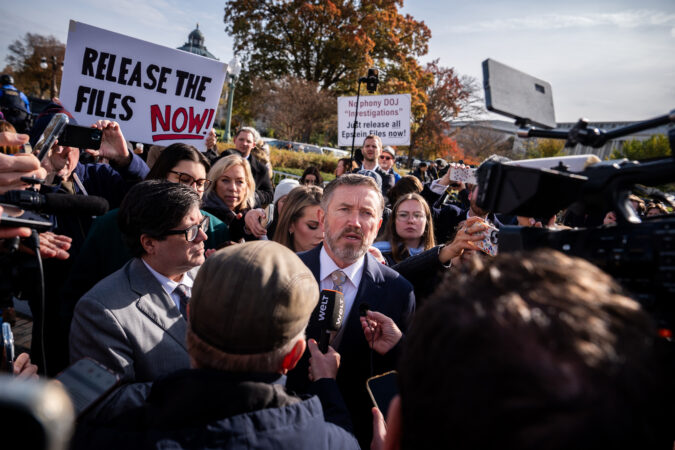
    WASHINGTON — President Donald Trump has signed a bill to compel the Justice Department to make public its case files on the convicted sex offender Jeffrey Epstein, a potentially far-reaching development in a yearslong push by survivors of Epstein’s abuse for a public reckoning.

    Both the House and Senate passed the bill this week with overwhelming margins after Trump reversed course on his monthslong opposition to the bill and indicated he would sign it. Now that the bill has been signed by the president, there’s a 30-day countdown for the Justice Department to produce what’s commonly known as the Epstein files.

    “This bill is a command for the president to be fully transparent, to come fully clean, and to provide full honesty to the American people,” Senate Democratic Leader Chuck Schumer of New York said Wednesday.

    Schumer added that Democrats were ready to push back if they perceive that the president is doing anything but adhering to “full transparency.”

    In a social media post Wednesday as he announced he had signed the bill, Trump wrote, “Democrats have used the ‘Epstein’ issue, which affects them far more than the Republican Party, in order to try and distract from our AMAZING Victories.”

    The swift, bipartisan work in Congress this week was a response to the growing public demand that the Epstein files be released, especially as attention focuses on his connections to global leaders including Trump, former President Bill Clinton, Andrew Mountbatten Windsor, who has already been stripped of his royal title as Prince Andrew over the matter, and many others.

    There is plenty of public anticipation about what more the files could reveal. Yet the bill will most likely trigger a rarely seen baring of a sprawling federal investigation, also creating the potential for unintended consequences.

    What does the bill do?

    The bill compels Attorney General Pam Bondi to release essentially everything the Justice Department has collected over multiple federal investigations into Epstein, as well as his longtime confidante and girlfriend Ghislaine Maxwell, who is serving a 20-year prison sentence for luring teenage girls for the disgraced financier. Those records total around 100,000 pages, according to a federal judge who has reviewed the case.

    It will also compel the Justice Department to produce all its internal communications on Epstein and his associates and his 2019 death in a Manhattan jail cell as he awaited charges for sexually abusing and trafficking dozens of teenage girls.

    The legislation, however, exempts some parts of the case files. The bill’s authors made sure to include that the Justice Department could withhold personally identifiable information of victims, child sexual abuse materials and information deemed by the administration to be classified for national defense or foreign policy.

    “We will continue to follow the law with maximum transparency while protecting victims,” Bondi told a news conference Wednesday when asked about releasing the files.

    The bill also allows the Justice Department to withhold information that would jeopardize active investigations or prosecutions. That’s created some worry among the bill’s proponents that the department would open active investigations into people named in the Epstein files in order to shield that material from public view.

    Rep. Marjorie Taylor Greene, a longtime Trump loyalist who has had a prominent split with Trump over the bill, said Tuesday that she saw the administration’s compliance with the bill as its “real test.”

    “Will the Department of Justice release the files, or will it all remain tied up in investigations?” she asked.

    In July, the FBI said in a memo regarding the Epstein investigation that, “we did not uncover evidence that could predicate an investigation against uncharged third parties.” But Bondi last week complied with Trump’s demands and ordered a federal prosecutor to investigate Epstein’s ties to the president’s political foes, including Clinton.

    Still, Rep. Thomas Massie, a Kentucky Republican who sponsored the bill, said “there’s no way they can have enough investigations to cover” all of the people he believes are implicated in Epstein’s abuse.

    “And if they do, then good,” he added.

    The bill also requires the Justice Department to produce reports on what materials it withheld, as well as redactions made, within 15 days of the release of the files. It stipulates that officials can’t withhold or redact anything “on the basis of embarrassment, reputational harm, or political sensitivity, including to any government official, public figure, or foreign dignitary.”

    Who could be named?

    There’s a widely held expectation that many people could be named in case files for investigations that spanned over a decade — and some concern that just because someone is named, that person would be assumed guilty or complicit.

    Epstein was a luminary who kept company with heads of state, influential political figures, academics and billionaires. The release of his emails and messages by a House Oversight Committee investigation last week has already shown his connections with — and private conversations about — Trump and many other high-powered figures.

    Yet federal prosecutors follow carefully constructed guidelines about what information they produce publicly and at trial, both to protect victims and to uphold the fairness of the legal system. House Speaker Mike Johnson raised objections to the bill on those grounds this week, arguing that it could reveal unwanted information on victims as well as others who were in contact with investigators.

    Still, Johnson did not actually try to make changes to the bill and voted for it on the House floor.

    For the bill’s proponents, a public reckoning over the investigation is precisely the point. Some of the survivors of trafficking from Epstein and Maxwell have sought ways to name people they accuse of being complicit or involved, but fear they will face lawsuits from the men they accuse.

    Massie said that he wants the FBI to release the reports from its interviews with the victims.

    Those reports typically contain unvetted information, but Massie said he is determined to name those who are accused. He and Greene have offered to read the names of those accused on the House floor, which would shield their speech from legal consequences.

    “We need names,” Massie said.

  • A new Pa. tax credit could put up to $805 in your pocket. Here’s what to know.

    A new Pa. tax credit could put up to $805 in your pocket. Here’s what to know.

    Nearly 1 million Pennsylvanians are expected to qualify for a new state tax credit that is meant to ease the burden of making ends meet.

    The new Working Pennsylvanians Tax Credit will allow eligible low- and moderate-income filers to receive a state tax credit that is equal to 10% of what they qualify for through the federal Earned Income Tax Credit (EITC). Like the EITC, the state credit will depend on income and number of children. The highest credit will be $805 and, according to Gov. Josh Shapiro’s office, the average credit will be around $240.

    In Philadelphia alone, 175,393 people are estimated to benefit from the new state tax credit totaling $41.7 million, according to Shapiro’s office. Statewide, it is expected to provide a total of $193 million in tax relief to 940,000 Pennsylvanians.

    The policy had bipartisan support since 2023, and was led by State Rep. Christina Sappey, a Chester County Democrat. Sappey and a team of Democrats sponsored a bill that passed the Democratic-led House in May that would have allowed a 30% credit, but that figure was lowered to 10% as a result of budget negotiations with the Republican-led Senate and Shapiro.

    It’s one of the measures being hailed as a major win for Democrats in the $50.1 billion state budget deal, which was approved last week after a more than four-month impasse.

    Sappey said that she was approached by the United Way of Pennsylvania “several years ago” about the idea.

    “I think of all of the folks who are really just struggling right now to make ends meet — but they’re working,” Sappey told The Inquirer.

    “They get thrown a curveball, like an unexpected healthcare expense, get in a car accident, need a giant car repair, something like that,” she added. “They really get kind of knocked off the rails, and then they kind of spiral.”

    At a news conference on Tuesday, Shapiro listed examples of Pennsylvanians who will qualify for the tax credit.

    “That single mom who’s raising three kids whose making about $25,000 a year as a waitress, she can get $770 back on her state taxes on top of whatever relief she was going to get from the federal government,” Shapiro said.

    “This isn’t some giveaway … we’ve come together on a bipartisan basis to say, ‘If you’re working, if you’re doing everything right by the book, we’re going to put money back in your pockets,’” he added.

    Who is the Working Pennsylvanians Tax Credit for?

    The tax credit is designed for working Pennsylvanians with a total income up to $61,555 if filing alone, and up to $68,675 if filing jointly as a married couple, according to the IRS guidelines for the EITC.

    Eligibility for the state credit is based on the federal EITC, which is meant for low- to moderate-income workers. Workers with kids can qualify for a bigger credit that increases with the number of children up to three or more kids.

    Individuals must be employed and earn income to qualify.

    Households that can benefit from this program may earn too much to qualify for public assistance while not earning enough to be able to handle an unplanned financial emergency, according to the United Way. About 28% of Pennsylvanians fall into this group, according to testimony from the United Way of Pennsylvania president Kristen Rotz.

    How does the tax credit work, and how much is it for?

    Pennsylvania’s state credit will be 10% of the EITC amount a filer qualifies for. Filers will automatically qualify for the state credit.

    “This is probably one of the more easy tasks you’re going to have to deal with as you’re helping people fill out their taxes,” Shapiro told a group of Widener University students Tuesday.

    The program will begin for tax year 2025, so Pennsylvanians can use it this forthcoming tax season. The credit is refundable, so taxpayers will get money back if the credit exceeds how much they owe.

    The credit amount initially increases based on how much money the earner makes and then decreases after it reaches a certain amount, resembling a bell curve, said Montgomery County accountant David Caplan. That “tipping point” differs depending on the tax filer’s status and number of dependents, he said.

    The maximum state credit for filers with no kids is $65, and about 261,739 Pennsylvanians are expected to fall in that tier, according to the Office of state House Speaker Joanna McClinton, a Philadelphia Democrat.

    That maximum raises to $432 for households with one child, $715 for two children, and $805 for households with three or more kids. About 133,641 Pennsylvanians are expected to fall in that maximum credit tier, according to McClinton’s office.

    There were 802,000 claims for the federal EITC in Pennsylvania for the 2023 tax year, totaling $2.086 billion, according to the IRS. The average federal credit amount was $2,600. Under the new state credit, that would amount to $260.

    “While it’s not much, it’s certainly a help, and that’s something that’s tangible,” said State Rep. Tarik Khan, a Democrat who cosponsored the state tax credit bill and represents parts of Philadelphia.

    Do other states have a credit like this?

    According to the National Conference of State Legislatures, 31 states, D.C., Guam, Puerto Rico, and some municipalities have their own version of the EITC.

    Most of those states calculate their credit as a percentage of the federal program, ranging from 4% in Wisconsin to 125% in South Carolina, according to the group.

    Neighboring New Jersey offers a 40% credit and Delaware has 4.5% refundable and 20% nonrefundable credits.

    State Rep. Steve Samuelson, a Northampton County Democrat who chairs the House Finance Committee and cosponsored the tax credit bill, called the credit a “commonsense” measure. He pointed out how existing states have varying political leanings, from the redder Oklahoma, Indiana, and Kansas to bluer states like New York, Hawaii, and California.

    “Better now than never,” Samuelson said.

    Is a 10% tax credit the right amount?

    Sappey and other Democrats see the 10% credit as a starting point. They hope to increase the size of the credit in future years.

    “If this is a program that both sides can agree to, getting a program established is more important than, you know, how big it is at the beginning,” she said in an interview.

    Caplan, who chairs the Pennsylvania Institute of Certified Public Accountants’ Local Tax Thought Leadership Committee, said he believes the 10% tax credit could be higher, but maybe not as high as the 30% initially approved by the House.

    “I don’t think the 10% is outrageously low that it’s kind of chintzy,” he said. “I think it’s just a nice thing to do.”

    Sen. Lynda Schlegel Culver, a Republican from Northumberland County who said she championed the policy, lauded the program for helping taxpayers who work.

    “This credit rewards work, strengthens household stability, and helps those doing everything right, working, paying their bills, and supporting their families,” she said in a statement. “This is a commonsense investment in both our workforce and the future of our Commonwealth.”

    Concerns from other Republicans about the program were related to the cost and its size.

    Sappey said “that’s legitimate” but contends that the program helps people “increase their earning power” and that the hope is, in turn, for them to no longer be eligible for the credit. And when they get it, she argues, “they are spending it in really good ways.”

    “We’re keeping people in the workforce, we’re generating revenue, and we’re keeping them out of social safety net programs,” she said.

    Rotz, of the United Way, said in her testimony that EITC recipients often spend their credit on grocery stores, vehicle and home repairs, paying off debt, and sometimes education.

    Khan lauded House Democratic leaders for holding onto the tax credit in negotiations — and compared their long-delayed negotiations to the Eagles’ season, which has seen the team rack up wins despite offensive struggles.

    “You love them, and then you watch the game, and you’re like, ‘Goddamn it. Why can’t you just play like a normal team?’ But then they win in the end, and you’re like, ‘You know what? That was a tough game, but damn it, I’m so happy right now,’ and so that’s how I feel with this.”

  • Philly-area federal workers are finally getting paid again. But they fear another shutdown.

    Philly-area federal workers are finally getting paid again. But they fear another shutdown.

    The longest ever federal government shutdown is now in the rearview mirror, but not for federal workers.

    With their jobs back to normal, some local federal employees said worries created by the shutdown remain — one said their credit score suffered, others noted their Thanksgiving tables will be less festive. And for many, another shutdown in a matter of weeks is a real concern.

    Federal employees — whether furloughed or required to work during the shutdown — missed paychecks during the 43-day lapse in federal appropriations, the longest ever in United States history. Workers sought out food pantries, delayed payments on bills, and tried to make ends meet for their families ahead of the holidays.

    “I will be paycheck to paycheck for the next couple of months maybe, before I can start accumulating my savings again,” said a Philadelphia Veterans Benefits Administration employee, who was working without a paycheck during the shutdown.

    The Inquirer agreed to withhold the names of federal employees interviewed due to their fear of retaliation for speaking out. Despite workers beginning to receive retroactive paychecks from the shutdown, they spoke of lingering financial damage and worries that yet another lapse in funding could happen in just a couple of months.

    The bill to end the shutdown, signed into law by President Donald Trump on Nov. 12, funds the government through Jan. 30. It includes protections for federal employees such as reversing layoffs that took place during the shutdown, and ensures back pay for all government workers throughout that time, which had been put into question by the Trump administration. And certain government agencies, such as Veterans Affairs, the Department of Agriculture, and the Food and Drug Administration, have been allocated a year’s worth of funding.

    But after Jan. 30, if lawmakers once again fail to agree on keeping the government open, some federal workers could once again face a lapse in their pay.

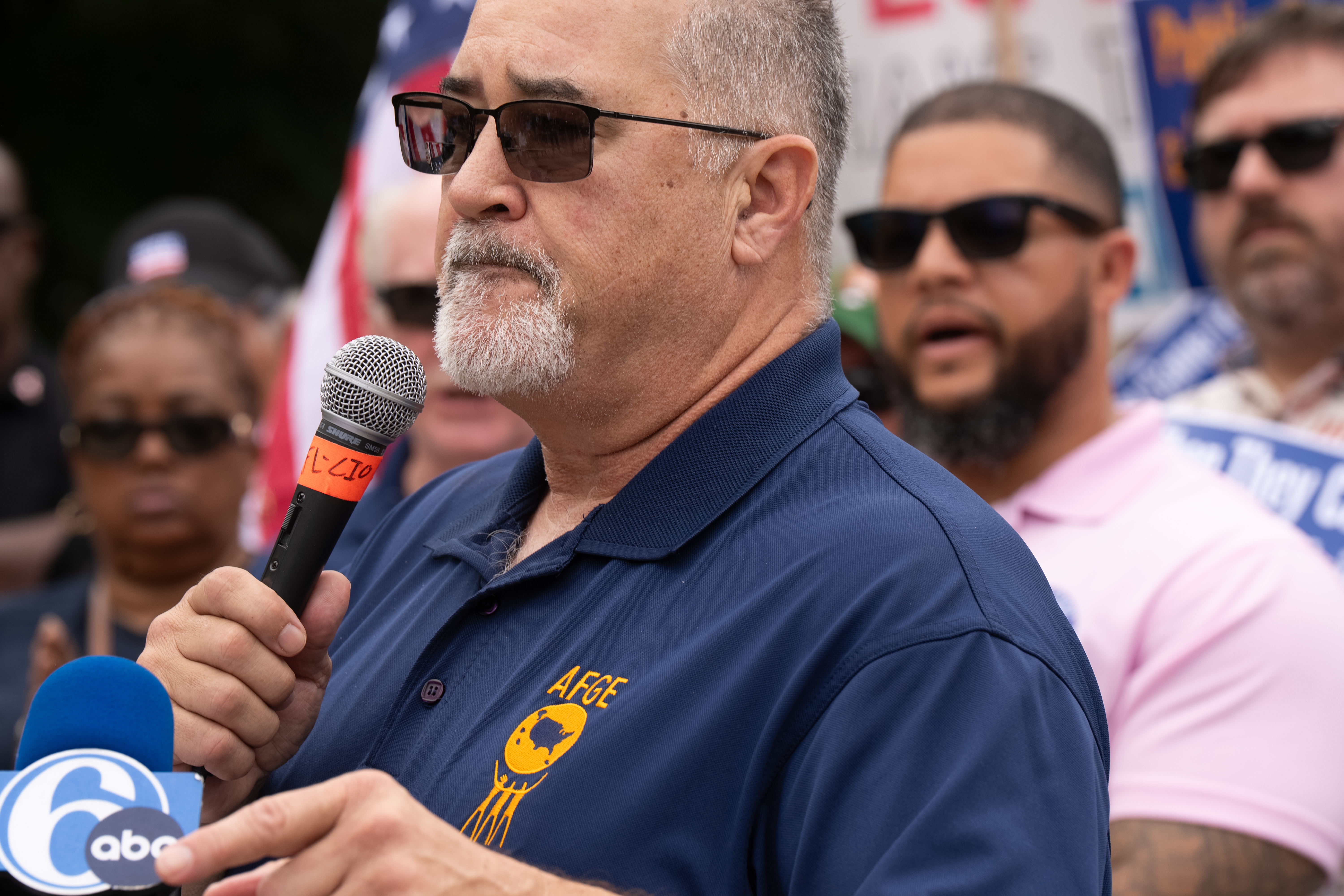
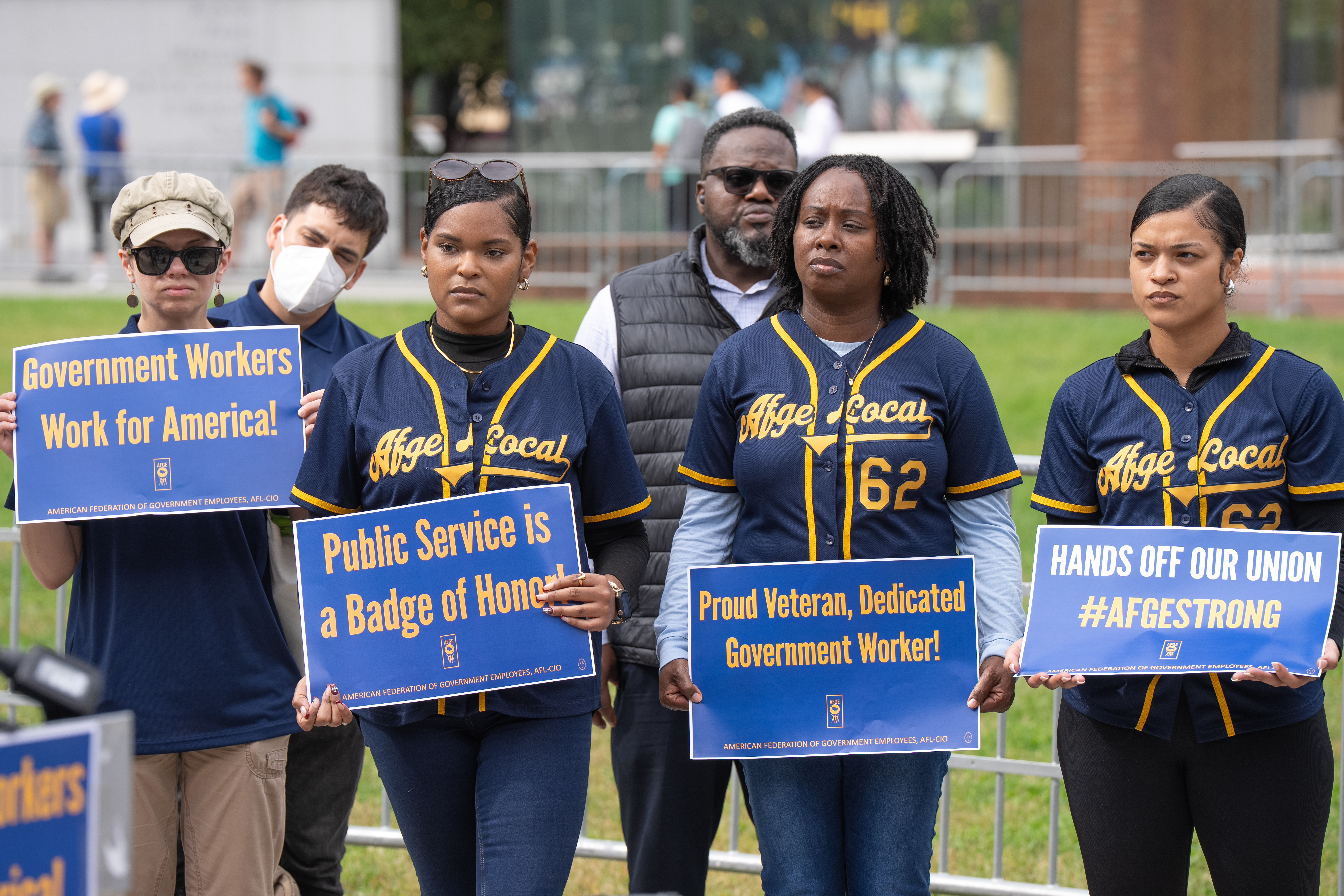
    “We’re bracing for Jan. 30,” said Philip Glover, national vice president of the American Federation of Government Employees District 3, the union that represents federal employees in Pennsylvania.

    The recent shutdown and the possibility of another are among a series of obstacles that government workers have faced this year. The Trump administration’s efforts to shrink and reshape the federal workforce have included layoffs, pushing employees to resign, and the dismantling of collective bargaining agreements. When government funding lapsed in October, the Trump administration used it as an opportunity for more firings.

    Philip Glover, AFGE District 3 national vice president, speaks at a news conference focused on federal workers amid the government shutdown, near the Liberty Bell on Oct. 7.

    Federal workers have been “dealing with a layer cake of trauma,” said Max Stier, founding president and CEO of the Partnership for Public Service, a federal government management organization.

    “This is not simply one incident, but it’s one on top of a bunch of them that this administration has put in their way,” Stier said.

    The financial strain

    At the Social Security Administration in Philadelphia a benefit authorizer said Monday that she and her coworkers had started getting their back pay, but she had already felt the impact of missing checks.

    “We assumed we could just call and everybody would place everything on hold, and that was not the case,” said the Social Security employee.

    The benefit authorizer had put her mortgage and car payments on hold, but some banks and utility companies weren’t as accommodating, and she accumulated overdraft fees from a credit union.

    Her role required her to work through the shutdown without pay. (In Pennsylvania, furloughed workers may apply for unemployment benefits, but those who continue to work, even without pay, may not.) The benefit authorizer looked for additional work, unsure how long the shutdown would last. Some of her colleagues in Philadelphia picked up gigs with Uber, DoorDash, and Instacart, she said.

    Union officials from AFGE gathered on Oct. 7 in front of Independence Hall to protest the government shutdown.

    Another Philadelphia Social Security employee, who has been with the agency for 15 years, noted that some colleagues picked up night shifts at Amazon or work in home healthcare.

    “People living paycheck to paycheck, they needed something to pay those bills that were absolutely essential that they had to pay,” the 15-year Social Security employee said.

    For one federal employee from Central Jersey, 2025 already came with an unexpected career turn when they lost their job at U.S. Housing and Urban Development, as part of a mass layoff of probationary employees. They found a job at the U.S. Department of Commerce, in Virginia, which allowed them to support their mother and three kids back in New Jersey.

    Wary of permanently moving to Virginia during such a volatile time in the federal workforce, the Commerce employee commutes eight hours by Amtrak twice a week and stays in a $200 per night hotel on workdays.

    During the federal shutdown, the Commerce employee had to work without a paycheck. They used up their savings paying for the commute, hotel, and other expenses. Ultimately, they took out a bank loan to cover their expenses.

    The government shutdown exemplifies a lack of stability in the workforce, the Commerce employee said. “To be honest, you feel unsafe all the time, and you feel like you’re not deserving that.”

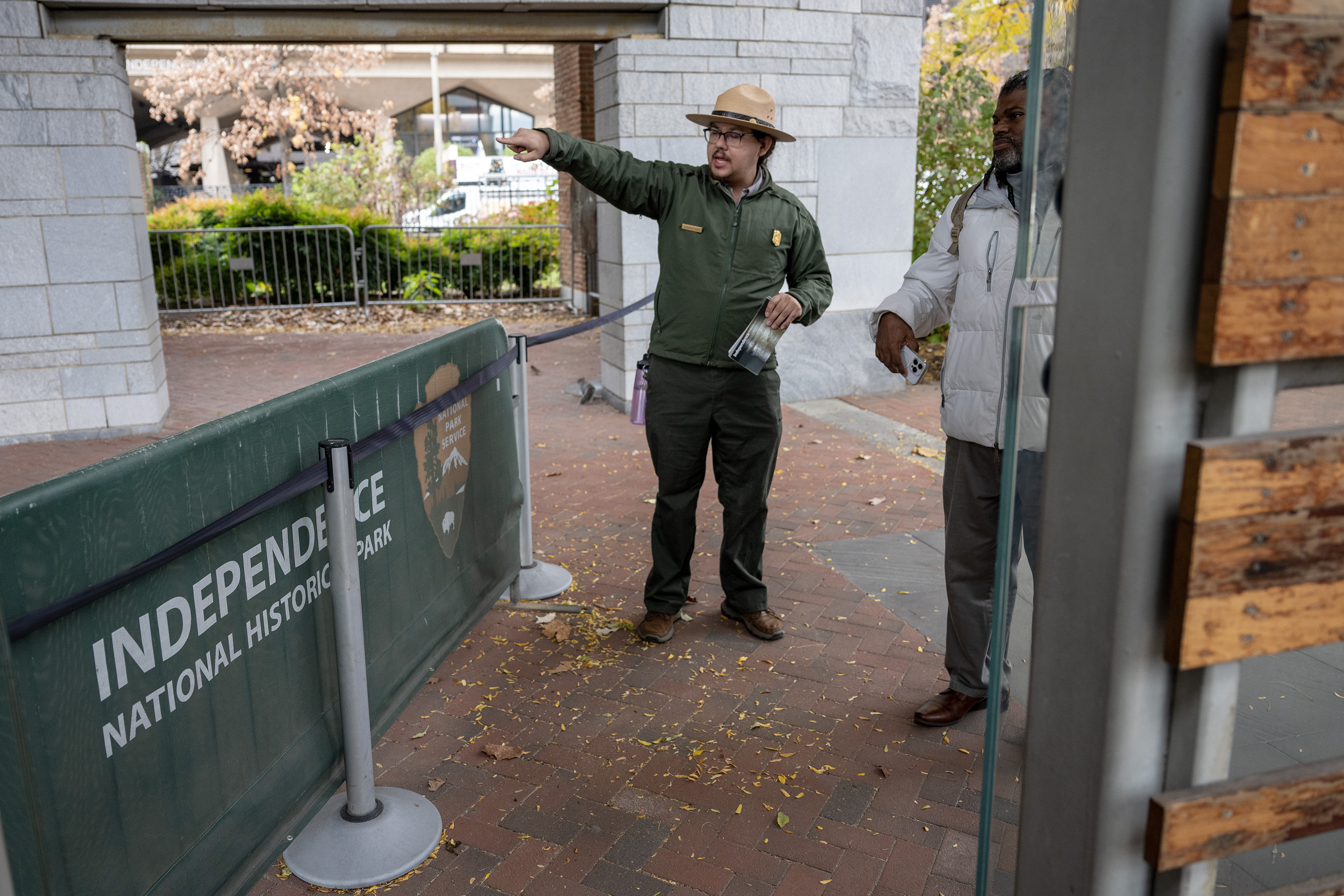
    National Park Service ranger Christopher Acosta talks with tourists outside the Liberty Bell Center on Nov. 13 after returning to work from the shutdown.

    Worries remain ahead of the holiday season

    The Philadelphia VBA employee, who worked without pay during the shutdown, received their back pay Monday. The single parent said they were one more missed paycheck away from turning to food pantries and living off credit cards.

    “Usually I’m the one donating around this time,” the employee said last week. “I usually adopt a family and provide them with the meal and then their gifts and stuff from our local community churches and outreach programs.”

    Thanksgiving is the time they “splurge,” but now the shutdown has made them contemplate their finances. “I haven’t even thought about the process of even having a Thanksgiving dinner on the table because I didn’t want to spend the money,” the VBA employee said. By Christmas, they hope to be caught up on payments.

    It’s a similar story for one Philadelphia VA Medical Center employee who worked without pay through the shutdown. Speaking days before the shutdown’s end, the employee said their credit score had taken a hit. They reached out to creditors and got some of their payments deferred, but relief won’t set in until the employee can catch up on their water, electric, gas, mortgage, and car bills.

    A “big feast” for Thanksgiving is off the table. “You can’t do that now because you don’t have the funds,” they said.

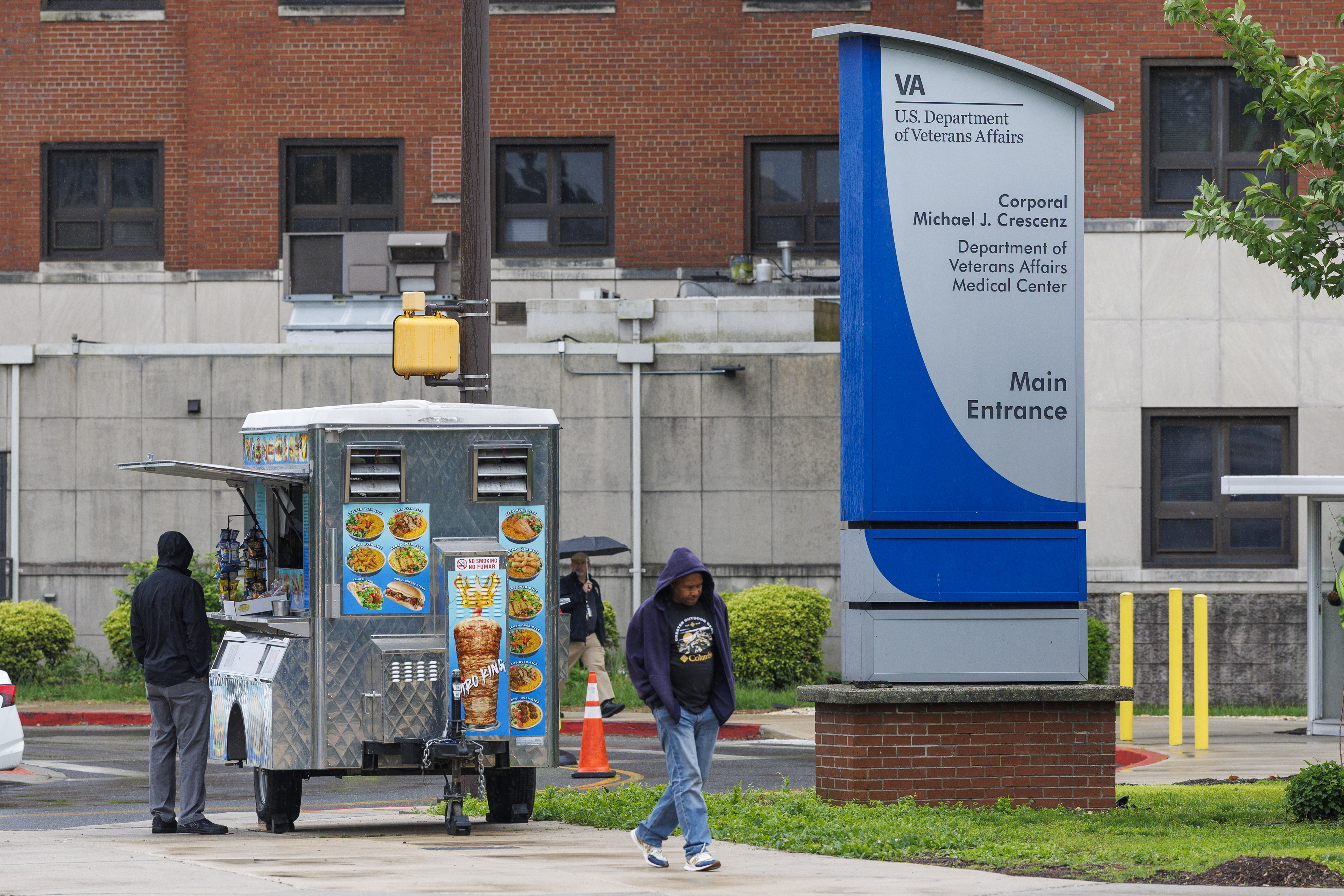
    The Corporal Michael J. Crescenz Department of Veterans Affairs Medical Center in Philadelphia.

    ‘Fear of what’s to come’

    Throughout the funding impasse, Philadelphia’s federal workers turned to each other for assistance.

    At the VBA, supervisors set up a small food pantry several weeks into the shutdown. The VBA employee said that didn’t feel especially helpful. “That was our second paycheck missed, and that was the best that they could come up with,” the employee said.

    “It’s business as usual in the eyes of the VA, and they expect us to work like nothing’s going on in our real lives.”

    At the Social Security Administration, workers banded together to start an impromptu food pantry, the Philadelphia benefit authorizer said.

    “Everything was taken. People needed it. People were really pinching pennies,” she said.

    The national office of AFGE, the largest federal workers’ union, backed the deal to end the government shutdown. “Government shutdowns not only harm federal employees and their families, they also waste taxpayers’ dollars and severely diminish services depended on by the American people,” AFGE national president Everett Kelley said in a statement on Nov. 10.

    But some thought it should have ended differently.

    In the days leading up to the deal, dozens of AFGE Local 3631 members, who are employed at the Environmental Protection Agency, said in a local union survey that they did not want their local to support budget legislation such as what passed. Their concerns were with an expected rise in healthcare expenses across the country.

    The union local had polled members at the end of October, according to local union officer Hannah Sanders. The survey got more than 100 responses, and over 85% said the local should only support a deal if it preserved subsidies for Affordable Care Act healthcare plans and avoided cuts to Medicaid.

    EPA workers and supporters gathered outside their office for a solidarity march around Philadelphia’s City Hall in March.

    In Washington, most Senate Democrats held out, only supporting a vote on an appropriations bill that would extend ACA subsidies. But eight senators, including Sen. John Fetterman (D., Pa.), crossed party lines to back the Republican bill that omitted the subsidies.

    Sanders said there are few changes between the recently passed deal and the bill that could have averted the shutdown back in September. “We would have not had this shutdown, and people wouldn’t have, you know, gone without pay or gone without SNAP benefits and all these things. So it’s super frustrating to see that this is how it all resolved,” said Sanders.

    Now, the benefit authorizer at the Social Security Administration says, people are concerned that another shutdown could be on the horizon come Jan. 30.

    “We are in complete fear of what’s to come,” she said.