Category: Politics

Political news and coverage

  • Files offer details on Epstein’s death in federal custody

    Files offer details on Epstein’s death in federal custody

    Among the tens of thousands of Jeffrey Epstein files released so far by the Justice Department are documents that provide new details on one of the most discussed aspects of the case — his death in federal custody in 2019.

    Epstein, who was indicted in July 2019 on federal sex-trafficking charges, had been locked up in the now-closed Metropolitan Correctional Center in New York for five weeks when, on Aug. 10, at roughly 6:30 a.m., he was found dead in his cell.

    He had been denied bail and, at age 66, was facing a potential 45-year sentence if convicted on all charges. The day before his death, federal judges in a separate civil lawsuit had unsealed 2,000 pages of records containing allegations of his sexual abuse of girls and young women.

    Six days after his death, New York City’s chief medical examiner, Barbara Sampson, whose office had conducted an autopsy of Epstein’s body, issued a finding that he had hanged himself.

    Ever since, a wide range of people, including members of Congress and some prominent supporters of President Donald Trump, have challenged that conclusion, asserting with no evidence that Epstein was killed and proffering theories about who might have done it.

    The documents released so far provide no support for those theories. They do offer additional evidence for the conclusion reached by previous investigations — both by the Justice Department and media organizations — that jail officials failed to properly monitor Epstein even though they had previously put him on suicide watch.

    Two jail staff members were charged after Epstein’s death with failing to watch him. Prosecutors said they slept through part of their shift, whiled away time shopping online and falsified log books to conceal their failure to conduct rounds every 30 minutes. They ultimately reached a deal to avoid trial. Jail officials also left Epstein alone in his cell, despite strict instructions not to do so.

    In the early hours of July 23, 2019, a couple of weeks after Epstein arrived at the jail, workers found him semiconscious on the floor of his cell with a makeshift orange noose around his neck, according to an investigative report from the Federal Bureau of Prisons included in Monday’s batch of documents. That previous apparent suicide attempt had been widely reported, but the newly released documents provide new details.

    The Bureau of Prisons did not respond to questions about Epstein’s confinement and death.

    After struggling to stand him up, staff members put Epstein in hand and leg restraints and carried him out on a gurney, the report said. A medical assessment found redness and abrasions around his neck. Photos in the report, timestamped 1:45 a.m. and labeled “possible suicide attempt,” show a disheveled Epstein in a blue antisuicide smock, his skin faintly red above the collarbone.

    Officials placed Epstein on suicide watch. An observation log from the morning of that apparent suicide attempt was also among the documents the Justice Department released this week. It shows handwritten notes from two staffers, entered at 15-minute intervals.

    A note from 2:15 a.m. says Epstein “states his cellmate tried to kill him.” The investigative report also states that Epstein told an officer that his cellmate had “attempted to kill him and had been harassing him.”

    At the time, Epstein was housed with Nicholas Tartaglione, a former police officer who was later convicted of a quadruple murder and sentenced to life in prison. Tartaglione and Epstein each said later that they did not have problems with each other, according to prison documents. Investigators did not find significant evidence that Tartaglione assaulted Epstein.

    A 2:30 a.m. note in the suicide watch log reads: “inmate sitting on bed trying to remember what happened.” Later notes simply read, “inmate sitting on bed” and “inmate standing at door.”

    Epstein told investigators in a July 31 interview that he hadn’t slept in “approximately 20 days,” according to the investigative report. He said he had woken up on the floor to the sound of snoring that turned out to be his own.

    Tartaglione said he had been asleep on the cell floor when he felt something hit his foot, the report says. He awoke to see Epstein snoring with his eyes open and thought he was having a heart attack, according to the report.

    Epstein appeared to recover quickly from the apparent suicide attempt, according to a Bureau of Prisons medical form filled out that morning. A healthcare provider noted that he was breathing normally, didn’t appear distressed and smiled during the visit. He declined to talk about what led to the incident, the document states, saying only that he “went to drink a little water and [woke] up snorting.”

    A separate document appears to contain notes from an interview with a prison psychologist who observed Epstein over the following two weeks.

    Epstein avoided questions about the incident, according to the notes, and said it was against his religion to kill himself. “E said he doesn’t like pain and didn’t want to hurt himself,” one bullet point read.

    “No signs in logbooks showing suicidality, participating in legal meetings,” read another. Other notes indicate Epstein tried to avoid being transferred back to special housing.

    Another logbook, dated July 24 through July 30, 2019, shows Epstein was allowed basic comforts while under psychological observation, including regular clothes, newspapers and magazines, books, legal mail, and a “safety toothbrush.” He made small talk with staffers about investment strategies and jail life, visited with lawyers, showered and slept, according to the logs.

    The documents also contain correspondence from the same period between a prison associate warden and a Bureau of Prisons regional director who asked for daily updates on Epstein after his apparent suicide attempt.

    A Bureau of Prisons spokesperson did not respond to a message seeking comment about those arrangements or other details in the correspondence.

    Less than 48 hours after the apparent suicide attempt, the associate warden emailed the regional director to say that Epstein could face a disciplinary hearing for violating the prison’s prohibition on “self-mutilation.”

    A doctor had “indicated that most likely he will be found competent because he is not mentally ill,” the email said. “We have supporting memorandums from the responding officers who indicated they observed inmate Epstein with a makeshift noose around his neck.”

    Further emails from senders whose names are redacted appear to show prison officials tracking Epstein’s progress in the days leading up to his death in custody.

    In a July 26 email, the prison’s chief psychologist indicated that a psychologist in the Bureau of Prisons headquarters in Washington “was concerned I stepped him down to psych obs rather than keeping him on SW,” probably referring to suicide watch.

    “I gave my justification and feel it is appropriate, but I just want to make sure I still feel that way when he is interviewed today,” the email read.

    Another exchange suggested that Epstein had spent “about 12 hours” with his attorney and had complained about being dehydrated because of limited bathroom breaks.

    “He also complained about having to go back up to SHU,” the July 27 email read, referring to the special housing unit, which is used for inmates with psychiatric problems and those requiring extra monitoring. The sender added that Epstein was “anxious about it and not being able to sleep there because of the noise of inmates banging and screaming at night.”

    An email dated the following morning read, “Inmate Epstein seems psychologically stable.”

    Prison workers sent Epstein back to special housing on July 30.

    Over the following days, Epstein’s lawyers wrote to prison officials with complaints about his conditions. They said he had no toilet paper, that his CPAP machine, used for sleep apnea, had been disconnected and that he had been allowed only two 15-minute calls on speaker phone with officers present, according to redacted emails.

    On Aug. 10, prison staffers delivering Epstein’s breakfast found him unresponsive in his cell, documents show.
  • Trump suffers several defeats in effort to punish opposing lawyers

    Trump suffers several defeats in effort to punish opposing lawyers

    Since taking office for the second time, President Donald Trump has suffered multiple losses in his efforts to strip security clearances from political opponents and prestigious Washington law firms. With several of those cases working through the courts, the issue could become one of the next Supreme Court fights over presidential power.

    The president’s latest loss came this week, when a federal judge in Washington temporarily blocked Trump’s efforts to strip a security clearance from national security attorney Mark Zaid. In 2019, Zaid represented the government whistleblower who accused Trump of trying to pressure Ukraine for damaging information about his political opponents. The accusations led to Trump’s first impeachment.

    In his Tuesday order, U.S. District Judge Amir Ali found that Zaid was likely to succeed on his claim that revoking Zaid’s security clearance violated the attorney’s constitutional free speech and due process rights. The order notes that Trump has called Zaid a “sleazeball” and said the lawyer should be sued for treason.

    “This case involves the government’s retribution against a lawyer because he represented whistleblowers and other clients who complained about the government,” wrote Ali, who was appointed by President Joe Biden.

    The case should not have been difficult, Zaid said in an interview. “But it’s surrounded by all sorts of constitutional analysis because of the assertion by the Trump administration that it has the power to do anything it wants without any oversight whatsoever.”

    He compared his situation — as well as Trump’s targeting of law firms more generally — to the line from William Shakespeare’s play Henry the VI, Part 2: “The first thing we do, let’s kill all the lawyers.” The line, spoken by one of the play’s villains, is about subverting lawyers “fighting for rule of law,” he said.

    The White House did not immediately respond to a request for comment.

    The case began with a March 22 presidential memorandum in which Trump revoked the security clearances of Zaid and 14 other individuals, saying that he had determined it was “no longer in the national interest” for the people to hold the clearances.

    The individuals included Democrats such as Biden, former vice president Kamala Harris and former secretary of state Antony Blinken. It also included New York Attorney General Letitia James (D), whom Trump’s Justice Department has tried, and so far failed, to indict in a mortgage fraud case. The administration has also revoked clearances of 37 current and former national security officials.

    This spring, Trump moved to summarily suspend the security clearances of several large Washington law firms that regularly do work for the government and have ties to his perceived political opponents. Trump argued that the law firms posed national security dangers to U.S. interests and said the firms’ diversity, equity. and inclusion policies resulted in “unlawful discrimination.”

    Though some law firms cut deals with the administration to keep their clearances, others successfully sued to block the actions.

    This year, federal judges in Washington blocked the administration’s attempts to suspend security clearances from the law firms Jenner & Block, Susman Godfrey, WilmerHale, and Perkins Coie. In each case, the judges found that the orders were retaliatory and violated the firms’ constitutional free speech rights.

    In the case of Jenner & Block, U.S. District Judge John D. Bates wrote that the president was trying “to chill legal representation the administration doesn’t like, thereby insulating the Executive Branch from the judicial check fundamental to the separation of powers.”

    The administration has appealed those cases and, depending on the outcomes in the court of appeals, the issue could be decided by the Supreme Court. The high court has heard a number of cases concerning presidential power this term, and it’s unclear how it would rule.

    Should his case reach the Supreme Court, Zaid said the issue could transcend judicial ideology. No matter which way they lean, the justices “recognize the importance and role that lawyers play in society,” he said. “And what the Trump administration is doing with clearance revocations … is a direct attack on our ability to enforce exactly what judges enforce: the rule of law.”

  • Trump’s farmer bailout caps tough year for loyal constituency

    Trump’s farmer bailout caps tough year for loyal constituency

    Mike Phillips has spent the past year reconciling his vote for Donald Trump with the uncertain future of his farm in central Iowa.

    The 72-year-old has been farming for five decades and tills 2,000 acres of soybeans and corn. Trump’s tough talk on trade has always appealed to Phillips, who thinks China’s relationship with American farmers desperately needs a reset. He voted for Trump in each of the past three presidential elections. He believes in GOP farming policies because “we’ve been burned so bad by the Democrats.”

    But the tariff war Trump started has been eating into Phillips’s bottom line and clouding his decisions about the best path forward. Thirteen months after Trump won a second term with wide support in farm-dependent parts of the country, Phillips wonders what will come first: Trump’s promised farm resurgence or his own retirement.

    “For the most part, farmers — we’ve been willing to kind of go along. But I don’t know about now,” Phillips said. “I know [Trump is] a more practical person. He’s trying to do something. I’m not sure the tariffs were a good idea. I guess I still support him but hope he can get something done.”

    Trump announced this month that he will use $11 billion to bail out farmers from “trade market disruptions and increased production costs that are still impacting farmers.” For farmers, trade groups, and industry advocates, however, the bailout marked a tacit admission that a year’s worth of Trump policies have upended their industry and threatened their livelihoods. Still unclear is whether policies that have hurt farmers will also sour the relationship between the president and one of his most loyal and politically symbolic constituencies.

    Trump won farm-dependent counties with an average of nearly 78% of the vote in 2024, according to Investigate Midwest. Discouraged by rising inflation during Joe Biden’s presidency, farmers hoped a second Trump term would usher in a more favorable climate, said Chad Hart, an agricultural economics professor at Iowa State University.

    But Trump’s far-reaching tariffs on imports — and reciprocal levies against some U.S. products — have blunted those hopes. Tariffs on countries including Canada and China, and on specific goods such as steel and aluminum, translated into rising costs for tractors, combines, and fertilizer. Even more damaging for Phillips and farmers like him was the escalating trade war with China, a country American soybean producers have relied on to import the bulk of their crops. Reciprocal tariffs swelled well into the triple digits.

    At the same time, Chinese leaders have worked to reduce their country’s reliance on American soybeans. China accounted for half — about $12.6 billion — of all U.S. soybean exports in 2024. In September, the country did not import American soybeans at all.

    “For soybean farmers, market losses due to the ongoing trade conflict with China are only exacerbating financial problems,” Caleb Ragland, the president of the American Soybean Association, said during testimony before Congress in October. He pointed to estimates that soybean producers would lose $109 per acre on their crops this year. “It is likely that a quarter of U.S. soy production will need to find new customers.”

    Aaron Lehman, a fifth-generation farmer who grows soybeans, corn, oats, and hay in Iowa’s Polk County and heads the Iowa Farmers Union, said farmers have “a big dissatisfaction with how this has gone.”

    “What we’re seeing right now is we’ve broken all of the trade structures without a real plan to put it back together in the right way,” Lehman said. “Farmers are willing to be a part of the solution, but I don’t think they’re willing just to be a pawn in a trade war that has no path or plan to get to true reform. That’s the disappointing part, because we’re not getting close to a fairer path.”

    For some farmers, the White House aid package may come too late. About 181 farmers filed for bankruptcy protection in the first half of the year, the Washington Post reported in October, a 60% increase from 2024. It was the highest six-month reading since 2020, court records show. And some of the shifts may be permanent, Phillips and other soybean farmers fear. Chinese importers have strengthened relationships with crop competitors like Argentina, Uruguay, Russia, and especially Brazil, the world’s largest exporter of soybeans.

    “The hope for a quick turnaround is now gone,” said Hart, the economics professor. “If you’re holding out hope, that hope is now, at best, looking like it won’t come until a year to three years down the road.”

    Sen. Chuck Grassley (R., Iowa) said farmers in his home state are experiencing a “not-so-perfect storm” of low grain prices, high input costs, industry consolidation and tariff uncertainty that mirrors the tumult of the 1980s, when more than 900 farmers killed themselves across six Midwestern states during what was dubbed the worst agricultural economic crisis since the Great Depression.

    “It kind of crept up on us at that particular time,” he said. “And, Congress didn’t see it coming soon enough. Congress waited too long to act.”

    During a roundtable announcing the package, Trump blamed the agricultural tumult on inflation linked to Biden — an assertion that industry leaders said is true. But Trump also said that “a small portion of the hundreds of billions of dollars we receive in tariffs” is helping to pay for the relief, a statement that many in the industry question.

    Trump did not appear to be concerned about his standing with U.S. farmers.

    “And, as you know, the farmers like me, because you know, based on — based on voting trends, you could call it voting trends or anything else, but they’re great people. They’re the backbone of our country,” Trump said.

    He seemed confident that his supporters in agriculture would blame Biden, not him, for their woes.

    “Biden turned that surplus into a gaping agricultural deficit that continues to this day, but we’re knocking it down,” Trump said. “It’s starting to go very good. In fact, China, as you know, is buying a tremendous amount of soybeans.” Trump did not say that China’s soybean imports have actually fallen.

    The economic policies that have put farmers in dire straits have been bipartisan in nature, said Tom Adam, the president of the Iowa Soybean Association. Inflation ate into crop profits in the latter portion of Biden’s tenure and has continued, he said, but tariffs have tacked on additional harm.

    “Expenses have been very high. Things just keep going up. Everything is getting higher, I don’t care if you’re buying groceries or buying fertilizers, and we just don’t have increasing crop prices,” he said. “We were pretty certain that there would be reciprocal tariffs when this happened. I think farmers support a lot of the things that Trump is doing on tariffs. But at the same time it’s getting pretty painful.”

    Adam said the aid is helpful, but “it’s probably not going to be enough. It’s not going to make a farmer wealthy by any means. And there will be some farms that may not make it through. Everyone’s in a little different financial situation, but you can’t rescue everyone. I’ve heard from many that are saying this could be their last year. Whether it’s bankruptcy or whether they want to just try something else.”

    Modern farms historically have relied on government assistance to stay afloat. The legislation Trump has called the One Big Beautiful Bill locked in more than $65 billion over 10 years in agricultural support programs. And during his first term, Trump released $16 billion in aid to farmers amid Chinese retaliation for tariffs. Corn and soybean advocacy groups have long pushed for policies that would force or encourage ethanol use in gasoline to increase demand for the two products.

    Speaking from his farm on a blustery December day, a few months before another round of difficult decisions about how to eke out the most profit from his land, Phillips said he’s also trying to determine how much of the promised government relief might end up in his pockets — even though he knows it won’t be there for long.

    “That money is not to the farmers. That money is going to go to their bankers or their machinery dealers or their chemical [fertilizer] companies to pay them,” he said.

    He said he understands the infusion is meant as a bridge to a better day, but he would prefer smarter trade policies over a government handout.

  • Two vulnerable senators stand to benefit from intense focus on constituents

    Two vulnerable senators stand to benefit from intense focus on constituents

    Justin Juray didn’t know where to turn. His Maine bowling alley had been the site of a mass killing, and he was struggling — not just to reopen, but to cope with his business’s now notorious place in history.

    John Curry was worried about closing his Georgia coffee shop, scrambling to rebound from the coronavirus pandemic and “drowning” financially as he waited for a $126,000 payment from a federal program for keeping his employees on staff.

    In their low moments, they received help from an unexpected source: their United States senator.

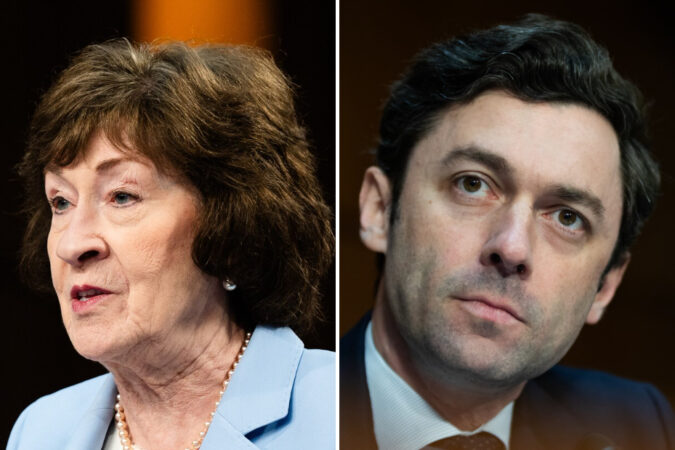
    Sens. Susan Collins (R., Maine) and Jon Ossoff (D., Ga.), two of the most vulnerable members of the Senate facing reelection next year, have little in common politically. But both have reputations for providing strong constituent services, an often overlooked advantage afforded incumbents that could matter on the margins in close races.

    Taking requests for help and working out a solution is one of the most unsung practices in most Senate offices, often overshadowed by committee hearings and Senate floor fights in Washington and by campaign rallies and television ads back home. But no work puts voters in more direct contact with their federal representative.

    Collins’ office helped Juray with tax and insurance issues, as well as securing a disaster relief loan, in the wake of what was Maine’s deadliest mass killing ever, where eight people were killed in 2023 at his Lewiston, Maine, bowling alley.

    Ossoff gave Curry his card after an event at the small business owner’s Augusta, Ga., coffee shop in 2023 and told him to call if he “ever needed anything.” When the business faced serious financial difficulties while waiting for funds to cover a string of bills, he emailed the senator for help.

    “He called me the next day,” said Curry. “It was not long at all before I got an email from the IRS saying that I had a check on the way.”

    In separate interviews with the Washington Post, Collins and Ossoff both said they have worked to create a culture in their offices that prioritizes each interaction with people they represent.

    “I know that I have had an impact,” Collins said when asked to reflect on the constituent service work out of her office. “It’s extremely satisfying … when we’re able to solve a problem for an individual.”

    Ossoff said he wants his constituents “to experience a level of responsiveness and accountability and concern that they have never felt before.”

    Asked why all members of Congress don’t focus as heavily on such services, Ossoff said the current culture in politics is “all about attention.”

    “For a lot of people in Congress, their goal is to become more and more and more famous or infamous, find the cameras, post the viral content,” he said. “That’s just not my approach to the job.”

    Both Collins and Ossoff face competitive reelections next year.

    Collins, who has yet to announce a campaign but has said she intends to run for her sixth Senate term, is the only Republican in the state’s congressional delegation and faces an electorate that has voted for every Democratic presidential nominee since 1992.

    But Collins, a relatively moderate Republican, also faces pressure from her right, with more conservative members of her state bristling at the times she bucks her party and President Donald Trump. Maine Gov. Janet Mills announced a Senate campaign in October. The 77-year-old Democrat faces a primary challenge from a more liberal candidate, Graham Platner, a Marine Corps combat veteran and oyster farmer.

    Ossoff, first elected to the Senate in 2020, faces a similarly competitive election in a state that has only recently been in play statewide for Democrats. Trump won in Georgia by two percentage points in 2024. The Republican primary to face Ossoff is competitive, a sign Republicans view him as vulnerable.

    Collins’ six and Ossoff’s four state offices include case workers whose primary focus is helping constituents solve problems. But other staff in the offices — and in Washington, D.C. — regardless of their primary duties, are also expected to pitch in.

    The work has created scenarios in which people who may disagree with Collins and Ossoff on specific issues are willing to back them for reelection because of the personal level of work their offices have done.

    Juray, the bowling alley owner, offers an example.

    Two people from Collins’ office worked with him following the shooting. Juray said they not only cleared up all the questions with his insurance company and the IRS, but they secured him a disaster relief loan that “helped us get everything put back together” so they could reopen in 2024.

    Juray, a registered Democrat, has voted for Collins in the past. While he hasn’t decided who he will vote for next year, he says he is “leaning” toward the Republican incumbent.

    “Without the senators’ support and without them, I might still be waiting on some of this funding,” Juray said. “It changed the way I saw representation as a whole.”

    Chris Gardner, the head of the port authority in Eastport, Maine, was at a loss after watching the town’s historic decades-old breakwater built to protect the city’s harbor “open up like a zipper” and crumble along the rocky coast early one morning in 2014. The collapse put the livelihoods of countless people at risk.

    Before the sun rose, Gardner recalled, Collins called him and promised to do “whatever it takes” to rebuild the critical infrastructure at the nation’s easternmost port. When the breakwater was rebuilt and reopened in 2017, Collins was there with Gardner, celebrating the achievement and the millions of dollars the senator helped secure for the project.

    Gardner is a registered Republican who at times “hasn’t agreed with some of Senator Collins’ votes.” But he said he tells “anyone who will listen” about the role Collins played in rebuilding the breakwater. “God love her, she is hated by people on both sides of the aisle. … The irony is, she weathers all of that … because she stays focused on doing her job.”

    Collins laughed when asked if she thinks her constituent services work helps temper some of the anger directed at her by people who disagree with her politics. She said that often people come up to her at the grocery store and she can tell that they might not be her typical political supporters.

    “I always find that people come up to me because I’m alone,” she said. “I’m doing exactly what they’re doing. And they will come up to me and thank me for the work that my offices have done.”

    Ossoff, who is far newer to the Senate than Collins, is working to build that kind of reputation.

    Shortly after Ossoff joined the Senate in 2021, he invited an executive from a famed Georgia company — Delta Air Lines — to come speak with his staff on “best practices” for his customer service operation, including suggestions that “maybe are not common in the legislative branch or the federal government.”

    The result? Ossoff calls a handful of people who received assistance from his office each week to check in on their experience. And at the end of every constituent call with his office, Ossoff said the caller is asked whether they would “recommend the service that my office provides for someone else in the same situation as them.”

    For Claven Williams, a retired Navy commander, the answer was yes.

    Williams was exposed to Agent Orange during his service in the Pacific from the 1970s to the 1990s and was diagnosed with non-Hodgkin’s lymphoma. After initially approving his claim for disability in 2024 under the newly passed Pact Act, the Department of Veterans Affairs reduced his disability to 50% in 2025, claiming that he was cured of the ailment. That prompted Williams to contact to Ossoff’s office, which successfully worked with the department to restore his 100% benefit earlier this year.

    “I had dealt with other politicians; they didn’t support you like that, they didn’t go out of your way to help you,” recalled Williams, who voted for Ossoff in 2020.

    The casework provided by Ossoff and Collins has drawn praise from those partisans who have opposed their elections.

    “Their constituent services are second to none,” Brian Robinson, a Republican operative in Georgia, said of Ossoff’s staff during an April radio appearance with the senator, praising him for following in the footsteps of former Republican senator Johnny Isakson.

    Bev Uhlenhake, the former chair of the Maine Democratic Party who opposes Collins’ reelection next year, said the reason Collins has proved difficult to defeat in a blue state is “her relationships throughout the state of Maine.”

    “They are so deep because her staff have helped so many Mainers while in crisis,” Uhlenhake said. “Constituent services in Maine are incredibly important, and she has done it really well.”

  • Public release of Epstein records puts Maxwell under fresh scrutiny amid her claims of innocence

    Public release of Epstein records puts Maxwell under fresh scrutiny amid her claims of innocence

    NEW YORK — Days after Ghislaine Maxwell asked a judge to immediately free her from a 20-year prison sentence, the public release of grand jury transcripts from her sex-trafficking case returned the spotlight to victims whose allegations helped land her behind bars.

    The disclosure of the transcripts as part of the Justice Department’s ongoing release of its investigative files on Maxwell and the late sex offender Jeffrey Epstein exposed how an FBI agent told grand jurors about Maxwell’s critical role in Epstein’s decades-long sexual abuse of girls and young women.

    Maxwell, a British socialite and publishing heir, was convicted of sex trafficking in December 2021 after four women told a federal jury in New York City about how she and Epstein abused them in the 1990s and early 2000s. Epstein never went to trial in that case. He was arrested in July 2019 on sex-trafficking charges and killed himself a month later in his cell at a Manhattan federal jail.

    Two weeks ago, as the Justice Department prepared to begin releasing what are commonly known as the Epstein files, Maxwell filed a habeas petition, asking a federal judge to free her on grounds that “substantial new evidence” has emerged proving that constitutional violations spoiled her trial.

    Maxwell claimed that exonerating information was withheld and that witnesses lied in their testimony. She filed the petition on her own, without the assistance of a lawyer.

    This week, the judge, Paul A. Engelmayer, scolded Maxwell for failing to remove victim names and other identifying information from her court papers. He said future filings must be kept sealed and out of public view until they have been reviewed and redacted to protect victims’ identities.

    Victims fear Maxwell will be pardoned

    Epstein accuser Danielle Bensky said the release of records has only sharpened the focus on Maxwell’s crimes among their victims. Bensky said she has been involved in daily discussions with about two dozen other victims that make clear Maxwell “is a criminal who was 1,000% engaged in sexual acts.”

    “I’ve heard things that would make your blood curdle. I just had a conversation with a survivor last night who said she was the puppeteer,” Bensky said.

    Bensky said she was sexually abused by Epstein two decades ago. She said she was never personally abused by Maxwell.

    Delayed and heavily redacted files

    The transcripts of grand jury proceedings that resulted in Maxwell’s indictment were released this week in accordance with the Epstein Files Transparency Act, a law enacted last month after months of public and political pressure.

    The Justice Department has been posting records periodically after acknowledging it would miss last Friday’s congressionally mandated deadline to release all records. It blamed the delay on the time-consuming process of obscuring victims’ names and other identifying information.

    On Wednesday, the department said it may need a “few more weeks” to release the full trove after suddenly discovering more than a million potentially relevant documents. It was a stunning development after department officials suggested months ago that they had already accounted for the vast universe of Epstein-related materials.

    Some of the Epstein and Maxwell grand jury records were initially released with heavy redactions; a 119-page document marked “Grand Jury-NY” was entirely blacked out. Updated versions were posted over the weekend.

    FBI agent testifies Maxwell manipulated young girl

    An FBI agent’s grand jury testimony, describing interviews conducted with Epstein victims, foreshadowed trial testimony a year later from four women who described Maxwell’s role in their sexual abuse from 1994 to 2004.

    The agent told of a woman who described meeting Maxwell and Epstein as a 14-year-old attending a Michigan summer arts camp in 1994. Flight logs showed Epstein and Maxwell went to the school sponsoring the camp because Epstein was a donor.

    According to the agent, whose name was redacted from the transcript, the girl had a chance encounter with Epstein and Maxwell one day. After learning that the girl was from Palm Beach, Fla., Epstein mentioned that he sometimes gave scholarships to students and they requested her phone number, the agent said.

    Once home, the girl visited Epstein’s estate with her mother for tea and the mother was impressed when Epstein said he provided scholarships, enough so that the mother said Epstein was like a “godfather,” the agent said.

    The agent said the girl began regularly going to the estate as Epstein and Maxwell “groomed” her with gifts and trips to the movies, and Epstein began paying for voice lessons and giving her money that he said she should give to her struggling mother.

    The agent said the girl thought her relationship with Epstein and Maxwell was strange, “but Maxwell normalized it for her. She was like a cool, older sister and made comments like, ‘This is what grownups do.’”

    Eventually, the agent testified, the girl saw Maxwell topless at the pool. After the girl revealed that she hoped to be an actor and a model, Epstein told her that he was best friends with the owner of Victoria’s Secret and that she would have to learn to be comfortable in her underwear and not be a prude, the agent said.

    Then, the agent said, the girl asked Epstein what he meant by that and the financier pulled her into his lap and masturbated. After that, the agent added, the girl’s encounters with Epstein began to include sexual contact, particularly in his massage room.

    Maxwell was sometimes there with other girls, the agent said. One of the girls would begin massaging Epstein and Maxwell would tease the girls, the agent said.

    “She’d grab the girl’s breasts, and she would direct the girls on what to do,” the agent said, relaying the girl’s account. Maxwell’s attitude during the encounters was ”very casual; she acted like this was normal,” the agent said.

    The released testimony appeared to reflect the testimony at Maxwell’s 2021 trial by a woman who testified under the pseudonym “Jane.”

    At trial, Jane said Maxwell also participated in group sessions between multiple females and Epstein that usually began with Epstein or Maxwell leading them all into a bedroom or a massage room at the Palm Beach residence.

  • Wage garnishment for defaulted student loans to resume early next year

    Wage garnishment for defaulted student loans to resume early next year

    The Trump administration will begin seizing the pay of people in default on their student loans early next year, marking the first wave of new wage garnishments since the pandemic, the Education Department confirmed this week.

    Starting the week of Jan. 7, the department told the Washington Post, it will notify about 1,000 defaulted borrowers of plans to withhold a portion of their wages to pay down their past-due debt. After that, the department said, notices will be sent to larger numbers of borrowers each month.

    There were about 5.3 million borrowers who had not made a payment on their federal student loans for at least 360 days as of June 30, according to the latest available data from the Education Department. Many of them were in default before the federal government stopped collecting defaulted loans because of the pandemic nearly six years ago.

    In May, the Trump administration resumed seizing tax refunds and Social Security benefits to recoup past-due student loan debt. At the time, the administration said wage garnishments would restart in the summer.

    While the Education Department started the process over the summer, department spokesperson Ellen Keast said turning on the system after it was dormant for five years took more time than expected. She said the record-long government shutdown further delayed the process.

    There are several steps involved in wage garnishment, including identifying and verifying a borrower’s employer, who is ultimately responsible for withholding the money. By law, the Education Department must notify people in default 30 days before garnishing their wages. During that time, borrowers can request a hearing to challenge the order, pay the balance, or negotiate repayment terms to avoid garnishment.

    The department can withhold up to 15% of a borrower’s disposable, or after-tax, income. The garnishment continues until the defaulted loans are paid off in full or the borrower takes action to get out of default.

    Roughly 6 million people were at least 60 days late on their student loan payments as of August, according to an analysis of credit reporting data by the think tank Urban Institute.

    The rise in delinquencies corresponds with the end of a 12-month grace period, known as the on-ramp, that allowed borrowers to ease their way back into repayment after a pandemic-related pause that lasted more than three years. Since the Biden administration’s policy ended Sept. 30, millions of borrowers have fallen behind on payments. And many of them could wind up in default.

    Student loan borrowers have been spared from the most severe consequences of default since the early days of the pandemic. Back then, President Donald Trump instituted a moratorium on the collection of defaulted student loans that Congress later codified and extended in the 2020 stimulus package.

    President Joe Biden’s administration extended the moratorium several times as part of the broader suspension of student loan payments. Under pressure from liberal lawmakers and student advocates, Biden allowed anyone in default on a federal loan held by the Education Department to rehabilitate the debt through an initiative called Fresh Start. While a portion of borrowers resolved their debt through the initiative, many remained in default.

    Education Secretary Linda McMahon has called Biden’s policies irresponsible and blamed his administration for giving borrowers false hope of loan forgiveness that led to a rise in delinquencies.

    When the Education Department announced the resumption of involuntary collection in April, McMahon said in a statement that “the Biden Administration misled borrowers: the executive branch does not have the constitutional authority to wipe debt away, nor do the loan balances simply disappear.”

    Instead of promoting debt cancellation, McMahon said, the Trump administration will help borrowers return to repayment — “both for the sake of their own financial health and our nation’s economic outlook.”

  • After missing deadline, DOJ says it may need a ‘few more weeks’ to finish release of Epstein files

    After missing deadline, DOJ says it may need a ‘few more weeks’ to finish release of Epstein files

    WASHINGTON — The Justice Department said Wednesday that it may need a “few more weeks” to release all of its records on the late sex offender Jeffrey Epstein after suddenly discovering more than a million potentially relevant documents, further delaying compliance with last Friday’s congressionally mandated deadline.

    The Christmas Eve announcement came hours after a dozen U.S. senators called on the Justice Department’s watchdog to examine its failure to meet the deadline. The group, 11 Democrats and a Republican, told acting Inspector General Don Berthiaume in a letter that victims “deserve full disclosure” and the “peace of mind” of an independent audit.

    The Justice Department said in a social media post that federal prosecutors in Manhattan and the FBI “have uncovered over a million more documents” that could be related to the Epstein case — a stunning 11th hour development after department officials suggested months ago that they had undertaken a comprehensive review that accounted for the vast universe of Epstein-related materials.

    In March, Attorney General Pam Bondi told Fox News that a “truckload of evidence” had been delivered to her after she ordered the Justice Department to “deliver the full and complete Epstein files to my office” — a directive she said she made after learning from an unidentified source that the FBI in New York was “in possession of thousands of pages of documents.”

    In July, the FBI and Justice Department indicated in an unsigned memo that they had undertaken an “exhaustive review” and had determined that no additional evidence should be released — an extraordinary about-face from the Trump administration, which for months had pledged maximum transparency. The memo did not raise the possibility that additional evidence existed that officials were unaware of or had not reviewed.

    Wednesday’s post did not say when the Justice Department was informed of the newly uncovered files.

    In a letter last week, Deputy Attorney General Todd Blanche said Manhattan federal prosecutors already had more than 3.6 million records from sex trafficking investigations into Epstein and his longtime confidant Ghislaine Maxwell, though many were copies of material already turned over by the FBI.

    The Justice Department said its lawyers are “working around the clock” to review the documents and remove victims names and other identifying information as required by the Epstein Files Transparency Act, the law enacted last month that requires the government to open its files on Epstein and Maxwell.

    “We will release the documents as soon as possible,” the department said. “Due to the mass volume of material, this process may take a few more weeks.”

    The announcement came amid increasing scrutiny on the Justice Department’s staggered release of Epstein-related records, including from Epstein victims and members of Congress.

    Republican Rep. Thomas Massie, of Kentucky, one of the chief authors of the law mandating the document release, posted Wednesday on X: “DOJ did break the law by making illegal redactions and by missing the deadline.” Another architect of the law, Rep. Ro Khanna (D., Calif.), said he and Massie will “continue to keep the pressure on” and noted that the Justice Department was releasing more documents after lawmakers threatened contempt.

    “A Christmas Eve news dump of ‘a million more files’ only proves what we already know: Trump is engaged in a massive cover-up,” Senate Minority Leader Chuck Schumer (D., N.Y.) said after DOJ’s announcement. “The question Americans deserve answered is simple: WHAT are they hiding — and WHY?”

    The White House on Wednesday defended the Justice Department’s handling of the Epstein records.

    “President Trump has assembled the greatest cabinet in American history, which includes Attorney General Bondi and her team — like Deputy Attorney General Blanche — who are doing a great job implementing the President’s agenda,” spokeswoman Abigail Jackson said in a statement.

    After releasing an initial wave of records on Friday, the Justice Department posted more batches to its website over the weekend and on Tuesday. The Justice Department has not given any notice when more records might arrive.

    Records that have been released, including photographs, interview transcripts, call logs, court records, and other documents, were either already public or heavily blacked out, and many lacked necessary context. Records that hadn’t been seen before include transcripts of grand jury testimony from FBI agents who described interviews they had with several girls and young women who described being paid to perform sex acts for Epstein.

    Other records made public in recent days include a note from a federal prosecutor from January 2020 that said Trump had flown on the financier’s private plane more often than had been previously known and emails between Maxwell and someone who signs off with the initial “A.” They contain other references that suggest the writer was Britain’s former Prince Andrew. In one, “A” writes: “How’s LA? Have you found me some new inappropriate friends?”

    The senators’ call Wednesday for an inspector general audit comes days after Schumer introduced a resolution that, if passed, would direct the Senate to file or join lawsuits aimed at forcing the Justice Department to comply with the disclosure and deadline requirements. In a statement, he called the staggered, heavily redacted release “a blatant cover-up.”

    Republican Sen. Lisa Murkowski of Alaska joined Sens. Richard Blumenthal (D., Conn.) and Jeff Merkley (D., Ore.) in leading the call for an inspector general audit. Others signing the letter were Democratic Sens. Amy Klobuchar of Minnesota; Adam Schiff of California; Dick Durbin of Illinois; Cory Booker and Andy Kim, both of New Jersey; Gary Peters of Michigan; Chris Van Hollen of Maryland; Mazie Hirono of Hawaii; and Sheldon Whitehouse of Rhode Island.

    “Given the (Trump) Administration’s historic hostility to releasing the files, politicization of the Epstein case more broadly, and failure to comply with the Epstein Files Transparency Act, a neutral assessment of its compliance with the statutory disclosure requirements is essential,” the senators wrote. Full transparency, they said, “is essential in identifying members of our society who enabled and participated in Epstein’s crimes.”

  • 19 states and D.C. sue the U.S. Department of Health and Human Services over a move that could curtail youth gender-affirming care

    19 states and D.C. sue the U.S. Department of Health and Human Services over a move that could curtail youth gender-affirming care

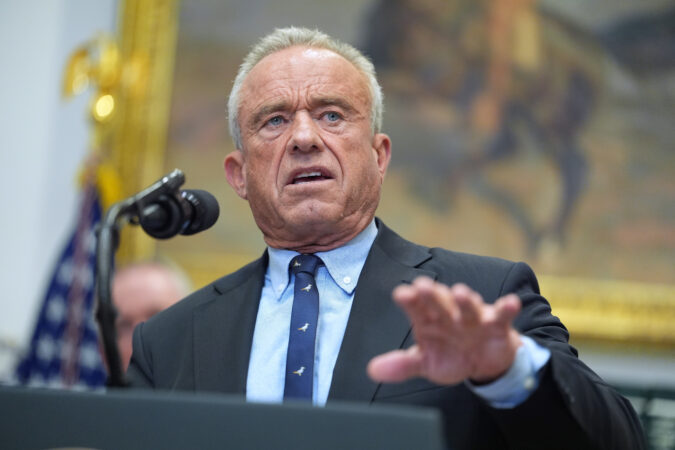
    NEW YORK — Pennsylvania and New Jersey, along with 17 other states and the District of Columbia, on Tuesday sued the U.S. Department of Health and Human Services, its secretary, Robert F. Kennedy Jr., and its inspector general over a declaration that could complicate access to gender-affirming care for young people.

    The declaration issued last Thursday called treatments like puberty blockers, hormone therapy and surgeries unsafe and ineffective for children and adolescents experiencing gender dysphoria, or the distress when someone’s gender expression doesn’t match their sex assigned at birth. It also warned doctors that they could be excluded from federal health programs like Medicare and Medicaid if they provide those types of care.

    The declaration came as HHS also announced proposed rules meant to further curtail gender-affirming care for young people, although the lawsuit doesn’t address those as they are not final.

    Tuesday’s lawsuit, filed in U.S. District Court in Eugene, Ore., alleges that the declaration is inaccurate and unlawful and asks the court to block its enforcement. It’s the latest in a series of clashes between an administration that’s cracking down on transgender healthcare for children, arguing it can be harmful to them, and advocates who say the care is medically necessary and shouldn’t be inhibited.

    “Secretary Kennedy cannot unilaterally change medical standards by posting a document online, and no one should lose access to medically necessary healthcare because their federal government tried to interfere in decisions that belong in doctors’ offices,” New York Attorney General Letitia James, who led the lawsuit, said in a statement Tuesday.

    The lawsuit alleges that HHS’s declaration seeks to coerce providers to stop providing gender-affirming care and circumvent legal requirements for policy changes. It says federal law requires the public to be given notice and an opportunity to comment before substantively changing health policy — neither of which, the suit says, was done before the declaration was issued.

    A spokesperson for HHS declined to comment.

    HHS’s declaration based its conclusions on a peer-reviewed report that the department conducted earlier this year that urged greater reliance on behavioral therapy rather than broad gender-affirming care for youths with gender dysphoria.

    The report questioned standards for the treatment of transgender youth issued by the World Professional Association for Transgender Health and raised concerns that adolescents may be too young to give consent to life-changing treatments that could result in future infertility.

    Major medical groups and those who treat transgender young people have sharply criticized the report as inaccurate, and most major U.S. medical organizations, including the American Medical Association, continue to oppose restrictions on transgender care and services for young people.

    The declaration was announced as part of a multifaceted effort to limit gender-affirming healthcare for children and teenagers — and built on other Trump administration efforts to target the rights of transgender people nationwide.

    HHS on Thursday also unveiled two proposed federal rules — one to cut off federal Medicaid and Medicare funding from hospitals that provide gender-affirming care to children, and another to prohibit federal Medicaid dollars from being used for such procedures.

    The proposals are not yet final or legally binding and must go through a lengthy rulemaking process and public comment before becoming permanent. But they will nonetheless likely further discourage healthcare providers from offering gender-affirming care to children.

    Several major medical providers already have pulled back on gender-affirming care for young patients since Trump returned to office — even in states where the care is legal and protected by state law.

    Medicaid programs in slightly less than half of states currently cover gender-affirming care. At least 27 states have adopted laws restricting or banning the care. The Supreme Court’s recent decision upholding Tennessee’s ban means most other state laws are likely to remain in place.

    Joining James in Tuesday’s lawsuit were Democratic attorneys general from California, Colorado, Connecticut, Delaware, Illinois, Maine, Maryland, Massachusetts, Michigan, Minnesota, New Jersey, New Mexico, Oregon, Rhode Island, Vermont, Wisconsin, Washington and the District of Columbia. Pennsylvania’s Gov. Josh Shapiro also joined.

  • Atlantic City officials, community leaders condemn ‘aggressive’ and ‘appalling’ ICE activity in the area

    Atlantic City officials, community leaders condemn ‘aggressive’ and ‘appalling’ ICE activity in the area

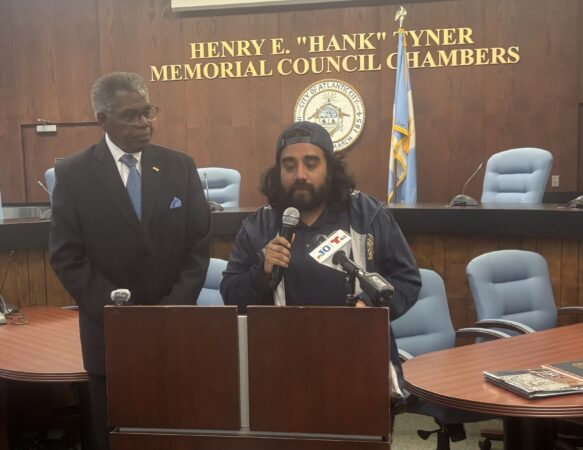
    ATLANTIC CITY — Elected officials, religious leaders, and community activists gathered Tuesday in City Hall to condemn recent “aggressive” and “appalling” U.S. Immigration and Customs Enforcement activity in the resort town.

    “The reason I’m here is because just last week, our community was attacked,” said Alexander Mendoza, a community organizer with advocacy group El Pueblo Unido of Atlantic City. “Fathers, friends, family members, hardworking people were taken away from us by an inhumane system called ICE.”

    El Pueblo has been highlighting recent ICE activity in Atlantic City on its social media, including a car stop on Dec. 12 that led to the detainment of two men, one of whom subsequently missed the birth of his daughter earlier this week after being taken to Delaney Hall. The group called the car stop illegal and said the Mexican Consulate is working to provide the man with legal help.

    “He and his partner had just moved into a new apartment and were ready to begin a new chapter in their lives,” Mendoza said. “That morning changed everything. He was taken by ICE and is now being held at Delaney Hall.”

    Mendoza said this and other recent activity, including ICE agents establishing a base of operations at the city’s Bader Field, the former municipal airport, have left community members fearful and officials alarmed and outraged.

    “There’s a lot of hysteria, a lot of fear in our community, rightly so,” said Cristian Moreno-Rodriguez, executive director of El Pueblo. There were rumors this week that businesses, particularly laundromats, would be targeted this week in Atlantic City and Pleasantville, he said.

    “We strategically placed ourselves throughout different traffic hubs where our community is, our immigrant working-class community,” he said.

    Moreno-Rodriguez said his organization has tracked some of the same ICE vehicles conducting activity in Bridgeton, Cumberland County.

    ICE did not immediately respond to a request for comment regarding activity in the area.

    El Pueblo has been educating community members of their rights and training volunteers to document and respond to reported ICE activity. He said the response time in Pleasantville is about two minutes; in Atlantic City, it’s 4 to 5 minutes.

    Atlantic County is home to about 12,000 undocumented immigrants. Moreno-Rodriguez said the volunteers include non-Hispanic allies and young Latinos, “children who are standing up for their parents and neighbors.”

    City Council Vice President Kaleem Shabazz said the council adopted a resolution last week condemning the ICE activity, which he said had made his constituents wary of leaving their homes without carrying documentation of their citizenship. He said police had not been informed about the raids or the use of Bader Field.

    Moreno-Rodriguez said the city is about 33% Latino or Hispanic, and about 29% immigrant, with most Spanish-speaking immigrants coming from Mexico and the Dominican Republic, and smaller numbers from Honduras, El Salvador, and Guatemala. Nearby Pleasantville is about 50% Hispanic and has a sizable Haitian population, he said.

    Both Moreno-Rodriguez and Shabazz called on businesses, which employ many immigrants, to support their workers. Moreno-Rodriguez said one man who self-deported after being picked up by ICE had worked for one of Atlantic City’s iconic bread bakeries.

    “If you go into any of the small businesses of Atlantic City, they are powered by immigrant labor,” Moreno-Rodriguez said. “And we want to put out a call to action to all the business owners of Atlantic City that if you employ immigrants, please be there for them when they are detained. Please be there for them after they’ve given you hours of labor, years of blood, sweat, and tears to your business.”

    From left, advocacy group El Pueblo Unido of Atlantic City rapid responders Karen Pelaez-Moreno and Christopher Arellano, executive director Cristian Moreno-Rodriguez, Atlantic City Councilman Kaleem Shabazz, and El Pueblo board president Irvin Moreno-Rodriguez, who was recently appointed a Pleasantville School Board member. The group and elected officials held a press conference Dec. 23, 2025 to condemn recent ICE activity.

    Also attending the news conference were the Rev. Collins Days, an Atlantic County commissioner, and religious leaders Imam Amin Muhammad of Atlantic City’s Masjid Muhammad mosque, Cantor Jackie Menaker of Ventnor’s Shirat Hayam synagogue, and the synagogue’s president, Joe Rodgers, a criminal defense attorney.

    “I am appalled at what’s been happening in our community by ICE,” Days said. “We stand together because an attack on one group is an attack on all groups.”

    “When we see the harms of our government, we are obligated to speak out,” Muhammad said. “We need engagement in the political process to make a change.”

    Mendoza said activists believed the targeted raids of last week were “the beginning of a large raid on our community … a major escalation.”

    “When we drove down Iowa Avenue, we saw an ICE agent and a Border Patrol agent questioning a woman, attempting to extract information in order to detain her,” he said. “When the agents noticed us, they allowed the woman to walk away.”

    One of the agents claimed to be looking for a fugitive, he said.

    Activists followed the man to Bader Field, where they saw a transport van and eight other vehicles. “That’s when we knew this wasn’t a small operation,” he said. “As soon as the agents realized they were being watched, they left quickly and quietly. It just took two Latino organizers standing by, holding cameras, for ICE to retreat from Atlantic City. ICE operates in the shadows. When people know their rights and when there is accountability, they scatter.”

  • Supreme Court keeps Trump’s National Guard deployment blocked in the Chicago area, for now

    Supreme Court keeps Trump’s National Guard deployment blocked in the Chicago area, for now

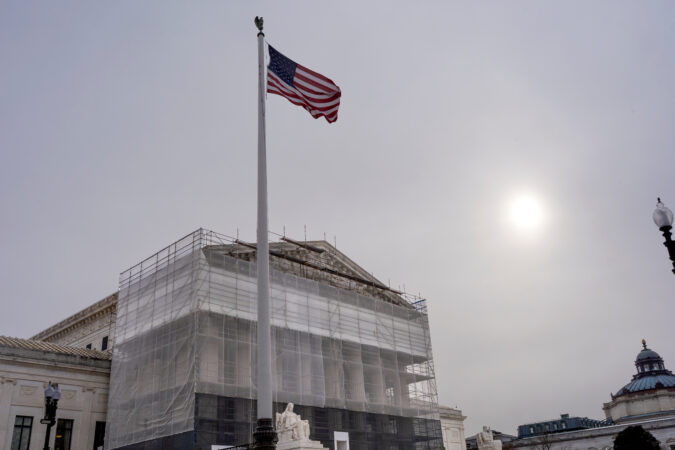
    WASHINGTON — The Supreme Court on Tuesday refused to allow the Trump administration to deploy National Guard troops in the Chicago area to support its immigration crackdown.

    The justices declined the Republican administration’s emergency request to overturn a ruling by U.S. District Judge April Perry that had blocked the deployment of troops. An appeals court also had refused to step in. The Supreme Court took more than two months to act.

    Three justices, Samuel Alito, Clarence Thomas and Neil Gorsuch, publicly dissented.

    The high court order is not a final ruling but it could affect other lawsuits challenging President Donald Trump’s attempts to deploy the military in other Democratic-led cities.

    The outcome is a rare Supreme Court setback for Trump, who had won repeated victories in emergency appeals since he took office again in January. The conservative-dominated court has allowed Trump to ban transgender people from the military, claw back billions of dollars of congressionally approved federal spending, move aggressively against immigrants and fire the Senate-confirmed leaders of independent federal agencies.

    The administration had initially sought the order to allow the deployment of troops from Illinois and Texas, but the Texas contingent of about 200 National Guard troops was later sent home from Chicago.

    The Trump administration has argued that the troops are needed “to protect federal personnel and property from violent resistance against the enforcement of federal immigration laws.”

    But Perry wrote that she found no substantial evidence that a “danger of rebellion” is brewing in Illinois and no reason to believe the protests there had gotten in the way of Trump’s immigration crackdown.

    Perry had initially blocked the deployment for two weeks. But in October, she extended the order indefinitely while the Supreme Court reviewed the case.

    The U.S. Immigration and Customs Enforcement facility in the west Chicago suburb of Broadview has been the site of tense protests, where federal agents have previously used tear gas and other chemical agents on protesters and journalists.

    Last week, authorities arrested 21 protesters and said four officers were injured outside the Broadview facility. Local authorities made the arrests.

    The Illinois case is just one of several legal battles over National Guard deployments.

    District of Columbia Attorney General Brian Schwalb is suing to halt the deployments of more than 2,000 guardsmen in the nation’s capital. Forty-five states have entered filings in federal court in that case, with 23 supporting the administration’s actions and 22 supporting the attorney general’s lawsuit.

    More than 2,200 troops from several Republican-led states remain in Washington, although the crime emergency Trump declared in August ended a month later.

    A federal judge in Oregon has permanently blocked the deployment of National Guard troops there, and all 200 troops from California were being sent home from Oregon, an official said.

    A state court in Tennessee ruled in favor of Democratic officials who sued to stop the ongoing Guard deployment in Memphis, which Trump has called a replica of his crackdown on Washington, D.C.

    In California, a judge in September said deployment in the Los Angeles area was illegal. By that point, just 300 of the thousands of troops sent there remained, and the judge did not order them to leave.

    The Trump administration has appealed the California and Oregon rulings to the 9th U.S. Circuit Court of Appeals.