Category: Politics

Political news and coverage

  • Trump hosts Senate Republicans at renovated White House as the shutdown drags into fourth week

    Trump hosts Senate Republicans at renovated White House as the shutdown drags into fourth week

    WASHINGTON — Head Start programs for preschoolers are scrambling for federal funds. The federal agency tasked with overseeing the U.S. nuclear stockpile has begun furloughing its 1,400 employees. Thousands more federal workers are going without paychecks.

    But as President Donald Trump welcomed Republican senators for lunch in the newly renovated Rose Garden Club — with the boom-boom of construction underway on the new White House ballroom — he portrayed a different vision of America, as a unified GOP refuses to yield to Democratic demands for healthcare funds, and the government shutdown drags on.

    “We have the hottest country anywhere in the world, which tells you about leadership,” Trump said in opening remarks, extolling the renovations underway as senators took their seats in the newly paved over garden-turned-patio.

    It was a festive atmosphere under crisp, but sunny autumn skies as senators settled in for cheeseburgers, fries, and chocolates, and Trump’s favored songs — “YMCA” and “You Can’t Always Get What You Want” — played over the new sound system.

    And while Trump said the shutdown must come to an end — and suggested maybe Smithsonian museums could reopen — he signaled no quick compromise with Democrats over the expiring healthcare funds.

    Later at another White House event, Trump said he’s happy to talk with Democrats about healthcare once the shutdown is over. “The government has to be open,” he said.

    Shutdown drags into record books

    As the government shutdown enters its fourth week — on track to become one of the longest in U.S. history — millions of Americans are bracing for healthcare sticker shock, while others are feeling the financial impact. Economists have warned that the federal closure, with many of the nearly 2.3 million employees working without pay, will shave economic growth by 0.1 to 0.2 percentage points per week.

    The Democratic leaders Sen. Chuck Schumer and Rep. Hakeem Jeffries had outreached to the White House on Tuesday, seeking a meeting with Trump before the president departs for his next overseas trip, to Asia.

    “We said we’ll set up an appointment with him anytime, anyplace before he leaves,” Schumer said.

    With Republicans in control of Congress, the Democrats have few options. They are planning to keep the Senate in session late into the night Wednesday in protest. The House has been closed for weeks.

    The Republican senators, departing the White House lunch with gifts of Trump caps and medallions, said there is nothing to negotiate with Democrats over the healthcare funds until the government reopens.

    “People keep saying ‘negotiate’ — negotiate what?” Senate Majority Leader John Thune said after the hour-long meeting. He said Republicans and the president are willing to consider discussions over healthcare, “but open up the government first.”

    Missed paychecks and programs running out of money

    While Capitol Hill remains at a standstill, the effects of the shutdown are worsening.

    Federal workers are set to miss additional paychecks amid total uncertainty about when they might eventually get paid. Government services like the Special Supplemental Nutrition Program for Women, Infants and Children, known as WIC, and Head Start preschool programs that serve needy families are facing potential cutoffs in funding. On Monday, Energy Secretary Chris Wright said the National Nuclear Security Administration is furloughing its federal workers. The Federal Aviation Administration has reported air traffic controller shortages and flight delays in cities across the United States.

    At the same time, economists, including Goldman Sachs and the nonpartisan CBO, have warned that the federal government’s closure will ripple through the economy. More recently, Oxford Economics said a shutdown reduces economic growth by 0.1 to 0.2 percentage points per week.

    The U.S. Chamber of Commerce noted that the Small Business Administration supports loans totaling about $860 million a week for 1,600 small businesses. Those programs will close to new loans during the shutdown. The shutdown also has halted the issuance and renewal of flood insurance policies, delaying mortgage closings and real estate transactions.

    Rising healthcare costs

    And without action, future health costs are expected to skyrocket for millions of Americans as the enhanced federal subsidies that help people buy private insurance under the Affordable Care Act, come to an end.

    Those subsidies, in the form of tax credits that were bolstered during the COVID-19 crisis, expire Dec. 31, and insurance companies are sending out information ahead of open enrollment periods about the new rates for the coming year.

    Most U.S. adults are worried about healthcare becoming more expensive, according to a new Associated Press-NORC Center for Public Affairs Research poll, as they make decisions about next year’s health coverage.

    Members of both parties acknowledge that time is running out to fix the looming health insurance price hikes, even as talks are quietly underway over possible extensions or changes to the ACA funding.

    Democrats are focused on Nov. 1, when next year’s enrollment period for the ACA coverage begins and millions of people will sign up for their coverage without the expanded subsidy help. Once those sign-ups begin, they say, it would be much harder to restore the subsidies even if they did have a bipartisan compromise.

    What about Trump?

    Tuesday’s White House meeting offered a chance for Republican senators to engage with the president on the shutdown after he had been more involved in foreign policy and other issues.

    But senators left the meeting, some saying it was more of a luncheon than a substantial conversation. They said they could hear, but not see, the ballroom construction nearby.

    Trump had previously indicated early on during the shutdown that he may be willing to discuss the healthcare issue, and Democrats have been counting on turning the president’s attention their way. But the president later clarified that he would only do so once the government reopens.

  • Vance expresses optimism about the ceasefire in Gaza while noting ‘very hard’ work to come

    Vance expresses optimism about the ceasefire in Gaza while noting ‘very hard’ work to come

    KIRYAT GAT, Israel — Vice President JD Vance on Tuesday called progress in Gaza’s fragile ceasefire better than anticipated but acknowledged during an Israel visit the challenges that remain, from disarming Hamas to rebuilding a land devastated by two years of war.

    Vance noted flare-ups of violence in recent days but said the ceasefire between Israel and Hamas that began on Oct. 10 is going “better than I expected.” The Trump administration’s Middle East envoy, Steve Witkoff, added that “we are exceeding where we thought we would be at this time.”

    They visited a new center in Israel for civilian and military cooperation as questions remain over the long-term plan for peace, including when and how an international security force will deploy to Gaza and who will govern the territory after the war.

    Vance tried to downplay any idea that his visit — his first as vice president — was urgently arranged to keep the ceasefire in place. He said he feels “confident that we’re going to be in a place where this peace lasts,” but warned that if Hamas doesn’t cooperate, it will be “obliterated.”

    Jared Kushner, President Donald Trump’s son-in-law and one of the architects of the ceasefire agreement, noted its complexity: “Both sides are transitioning from two years of very intense warfare to now a peacetime posture.”

    Vance is expected to stay in the region until Thursday and meet with Israeli Prime Minister Benjamin Netanyahu and other officials.

    On Tuesday, Netanyahu fired his national security adviser, Tzachi Hanegbi, but gave no reason for the decision. Israeli media said Hanegbi had opposed the renewal of Israel’s Gaza offensive in March, and Israel’s failed attempt to assassinate Hamas’ leadership in an airstrike in Qatar in September. In a statement, Hanegbi noted “times of disagreement” with Netanyahu.

    Hamas hands over remains of 2 more hostages

    Late Tuesday, Israel’s military said the remains of two more Gaza hostages had been returned to Israel, where they would be identified.

    Since the ceasefire began on Oct. 10, the remains of 15 hostages have been returned to Israel. Another 13 still need to be recovered in Gaza and handed over.

    On his visit to Israel Tuesday, Vance urged a “little bit of patience” amid Israeli frustration with Hamas’ pace of returning the hostages.

    “Some of these hostages are buried under thousands of pounds of rubble. Some of the hostages, nobody even knows where they are,” Vance said.

    Israel is releasing 15 Palestinian bodies for the remains of each dead hostage, according to Gaza’s Health Ministry. It said Tuesday that Israel had so far transferred 165 bodies since earlier this month.

    As he faced journalists’ questions over the ceasefire’s next steps, he said “a lot of this work is very hard” and urged flexibility.

    “Once we’ve got to a point where both the Gazans and our Israeli friends can have some measure of security, then we’ll worry about what the long-term governance of Gaza is,” he said. ”Let’s focus on security, rebuilding, giving people some food and medicine.”

    Although some 200 U.S. troops were recently sent to Israel, Vance emphasized that they would not be on the ground in Gaza. But he said officials are beginning to “conceptualize what that international security force would look like” for the territory.

    He mentioned Turkey and Indonesia as countries expected to participate. The flags of Jordan, Germany, Britain, and Denmark were on the stage where he spoke. Britain said late Tuesday it would send a small contingent of military officers to Israel to assist in monitoring the ceasefire.

    While the ceasefire has been tested by fighting and mutual accusations of violations, both Israel and Hamas have said they are committed to the deal.

    Aid into Gaza increases, while prices rise

    International organizations said they were scaling up humanitarian aid entering Gaza, while Hamas-led security forces cracked down against what it called price gouging by private merchants.

    The World Food Program said it had sent more than 530 trucks into Gaza in the past 10 days, enough to feed nearly half a million people for two weeks. That’s well under the 500 to 600 that entered daily before the war.

    The WFP also said it had reinstated 26 distribution points across Gaza and hopes to scale up to its previous 145 points as soon as possible.

    Residents said prices for essential goods soared on Sunday after militants killed two Israeli soldiers and Israel responded with strikes that killed dozens of Palestinians. Israel also threatened to halt humanitarian aid.

    At a market in the central city of Deir al-Balah, a 55-pound package of flour was selling for more than $70 on Sunday, up from about $12 shortly after the ceasefire. By Tuesday, the price was around $30.

    Mohamed al-Faqawi, a Khan Younis resident, accused merchants of taking advantage of the perilous security situation. “They are exploiting us,” he said.

    On Monday, Hamas said its security forces raided shops across Gaza, closing some and forcing merchants to lower prices. Hamas also has allowed aid trucks to move safely and halted looting of deliveries.

    Nahed Sheheiber, head of Gaza’s private truckers’ union, said there was no stealing aid since the ceasefire started.

    But other significant challenges remain as Gaza’s financial system is in tatters. With nearly every bank branch and ATM inoperable, people pay exorbitant commissions to a network of cash brokers to get money for daily expenses.

    On Tuesday, dozens of people in Deir al-Balah spent hours in line at the Bank of Palestine hoping to access their money but were turned away.

    “Without having the bank open and without money, it does not matter that the prices [in the market] have dropped,” said Kamilia Al-Ajez.

    Gaza doctors say bodies returned with signs of torture

    A senior health official in Gaza said some bodies of Palestinians returned by Israel bore “evidence of torture” and called for a United Nations investigation.

    Muneer al-Boursh, the health ministry’s general director, said on social media late Monday that some had evidence of being bound with ropes and metal shackles, and had deep wounds and crushed limbs.

    It was not immediately clear if any of the bodies had been prisoners; they are returned without identification or details on how they died. The bodies could include Palestinian detainees who died in Israeli custody or bodies taken out of Gaza by Israeli troops during the war.

    The Israel Prisons Service denied that prisoners had been mistreated, saying it had followed legal procedures and provided medical care and “adequate living conditions.”

    Israeli hostages released from Gaza have also reported metal shackles and harsh conditions, including frequent beatings and starvation.

    In the 2023 attack on Israel that started the war, Hamas-led militants killed around 1,200 people, mostly civilians, and abducted 251 people as hostages.

    The Israel-Hamas war has killed more than 68,000 Palestinians, according to Gaza’s Health Ministry, which does not distinguish between civilians and combatants in its count. The ministry maintains detailed casualty records that are seen as generally reliable by U.N. agencies and independent experts. Israel has disputed them without providing its own toll.

  • The Shapiro administration has posted messages blaming Republicans for the government shutdown, impacts to SNAP benefits

    The Shapiro administration has posted messages blaming Republicans for the government shutdown, impacts to SNAP benefits

    As nearly 2 million Pennsylvanians brace for the loss of their food assistance next month due to the federal government shutdown, the Pennsylvania Department of Human Services is pinning the blame on Republicans on Capitol Hill.

    States administer the federally funded Supplemental Nutrition Assistance Program, which provides support to low-income people, including families with children. But as the standoff in Congress prevents federal funding from flowing to states, Democratic Gov. Josh Shapiro’s administration entered the messaging battle over the cause of the disruption to benefits.

    “Because Republicans in Washington D.C., failed to pass a federal budget, causing the federal government shutdown, November 2025 SNAP benefits cannot be paid,“ reads a pastel orange banner on the DHS website from Friday, alerting recipients of the Supplemental Nutrition Assistance Program to the impending changes.

    The message reflects the mounting impacts of the government shutdown, which is in its third full week, and the growing political tensions between Republicans and Democrats on the state and national levels after lawmakers failed to pass funding to avert a government shutdown by Oct. 1.

    Shapiro has frequently gone head-to-head with the Trump administration, but the use of a state government website is a notable escalation.

    The governor said in a news release Monday that Congress already had kicked off hundreds of thousands of Pennsylvanians from Medicaid and SNAP when it passed President Donald Trump’s One Big Beautiful Bill Act in July.

    “Now, Republicans are once again threatening vital support for Pennsylvania families and children — it’s time for them to pass a federal budget and end this shutdown.”

    Pennsylvania Human Services Secretary Val Arkoosh added that “Inaction from Republicans in Congress” jeopardizes the well-being of Pennsylvanians.

    A significant impact will be felt next month in Philadelphia, where half a million people will not receive SNAP benefits. The program, which is funded by the U.S. Department of Agriculture, serves households including elderly people, individuals with disabilities, and children.

    Another Democratic-led state, Illinois, also referred to the lapse in funding as the “Republican federal government shutdown” on its benefits webpage. Other Democratic-led states near Pennsylvania, New Jersey and Delaware, have not posted political messages on their states’ SNAP benefits pages.

    Republicans in Pennsylvania criticized the use of the DHS website for a partisan message.

    “Public service isn’t a political weapon and using a government website to fuel your partisan agenda is indefensible,” the Pennsylvania GOP wrote Monday in a post on X.

    However, the Trump administration has also been using its official government websites for partisan rhetoric on the national level, potentially raising red flags related to federal ethics laws.

    The shutdown is “Democrat-led,” says the Trump administration’s State Department website.

    “The Radical Left in Congress shut down the government,” declares a bright red banner on the U.S. Department of Housing and Urban Development homepage.

    The rising political pressure comes as the Trump administration began rolling out highly politicized messaging to the public and federal employees after the government shutdown began earlier this month.

    Last week, Philadelphia International Airport and other airports refused to play a video from Homeland Security Secretary Kristi Noem that inculpates Democratic members of Congress for the shutdown.

    And some federal workers — nonpartisan civil servants who have been coping with plummeting morale and either being furloughed or working without pay during the shutdown — have been on the receiving end of politicized messaging, too.

    A message to federal employees ahead of the Oct. 1 funding deadline proclaims that Trump “opposes a government shutdown.”

    Any lapse in appropriations, the message continues, is “forced by Congressional Democrats.”

  • Joe Biden completes radiation treatment for prostate cancer at Penn

    Joe Biden completes radiation treatment for prostate cancer at Penn

    Former President Joe Biden completed a round of radiation therapy at a Penn Medicine cancer center in Philadelphia Monday as part of his treatment for prostate cancer, according to a family representative.

    Biden, 82, announced in May that he had been diagnosed with an aggressive form of the disease that had spread to his bones.

    A spokesperson for the Bidens, Kelly Scully, said that following his treatment over the course of several weeks, Biden “rang the bell” at Penn, alongside his wife, Jill Biden, his daughter Ashley Biden and grandchildren, Hunter and Finnegan.

    Ringing the bell at Penn typically signifies that a patient has completed cancer treatment, according to the health system.

    But Biden has not yet made a statement on his treatment, and it wasn’t immediately clear if the former president would need additional treatment.

    Ashley Biden posted a story on her Instagram of the bell-ringing moment alongside a woman who Scully confirmed was Biden’s doctor at Penn. Another photo showed the doctor with a bouquet of flowers standing with Biden.

    “Dad has been so damn brave throughout his treatment,” Ashley Biden wrote in her post. “Grateful.”

    A Penn spokesperson directed questions to the Biden family.

    Prostate cancer is among the most common forms of cancer in men. It affects the prostate, a walnut-sized gland located beneath the bladder.

    The prostate naturally grows as the body ages, but when cells begin growing too quickly, a tumor can form.

    Prostate cancer is graded on a scale of six to 10, called a Gleason score.

    A high Gleason score means the cancer is growing quickly and may have already spread to other parts of the body.

    Biden’s cancer was graded a nine on the Gleason scale.

  • The Trump administration’s push to deport pro-Palestinian activist Mahmoud Khalil landed before a Philly-based appeals court

    The Trump administration’s push to deport pro-Palestinian activist Mahmoud Khalil landed before a Philly-based appeals court

    President Donald Trump’s administration on Tuesday asked a federal appeals court in Philadelphia to overturn an order that has, for the moment, blocked authorities from deporting pro-Palestinian activist Mahmoud Khalil — the latest development in a complex legal saga that began when the administration was seeking to crack down on anti-Israeli college campus protests earlier this year.

    During a hearing before a three-judge panel in a Center City courtroom, Deputy Assistant Attorney General Drew Ensign said the earlier order, issued by a federal judge in New Jersey, was “indefensible” for several reasons — including that it was issued in the wrong jurisdiction, and that it was effectively helping Khalil’s lawyers improperly “fragment” the various legal proceedings against him and seek venues that might issue favorable rulings.

    Khalil’s attorneys, however, said the judges should uphold the lower court’s ruling because the government had illegally targeted the 30-year-old for removal over his political views — something they called a clear First Amendment violation and a situation that could have wider implications amid Trump’s push to increase deportations.

    Speaking outside the courthouse after the hearing, Khalil, a legal permanent resident who was born in Syria, told a crowd of supporters he planned to continue his legal fight to remain in the United States.

    “This shows how my case is actually just a test for everyone’s right’s here across the country,” he said. “Not only one place, not only for specific people, for immigrants or documented or undocumented people, it’s for everyone across the country.”

    Eric Hamell, of West Philadelphia, holds up a sign saying Free Mahmoud Khalil during a rally outside the James A. Byrne U.S. Courthouse in Philadelphia on Tuesday.

    The case against Khalil began in March, when he was arrested by immigration authorities at Columbia University, where he had recently completed a master’s degree and had become a prominent figure at pro-Palestinian protests. Authorities detained Khalil and then pushed to deport him, with Secretary of State Marco Rubio citing an obscure legal statute in contending that Khalil’s rhetoric and continued presence in the country could undermine U.S. foreign policy interests.

    Khalil’s lawyers quickly challenged the administration’s actions in court — first in New York, where he lived and was arrested, then in New Jersey, where he was detained in the immediate aftermath of his arrest.

    Within days, however, Khalil was transferred to a detention facility in Louisiana, where he was held for more than three months (he was living there this spring when his wife, an American citizen, gave birth to their son in New York).

    The issue of where Khalil was located was something Ensign, the government attorney, said was important for the appellate judges to consider: Because Khalil was primarily detained in Louisiana, Ensign said, any legal challenge seeking to have him released should have taken place in that jurisdiction.

    And in Ensign’s view, that meant the June ruling by a judge in New Jersey that ordered Khalil released — and temporarily blocked his deportation — should be overturned.

    Several judges appeared skeptical of the jurisdictional aspect of Ensign’s argument. Circuit Judge Stephanos Bibas, a Trump appointee, pointed out that authorities were moving Khalil to various jurisdictions over a weekend — and suggested attorneys couldn’t be forced to wait until the work week to file emergency challenges to what they viewed as wrongful detention.

    “The lawyers didn’t know” where Khalil was, Bibas said. “They had to do their best.”

    The judges seemed more receptive to another of Ensign’s arguments: That Khalil is currently the subject of a complex web of legal cases, with various claims being weighed in various courts.

    In addition to the matter being argued in Philadelphia on Tuesday, his immigration case remains pending in Louisiana because of a separate issue: In September, an immigration judge there ruled that Khalil be removed to Syria or Algeria because he failed to disclose information about his past work with pro-Palestinian groups on his green card application.

    While his attorneys have appealed that ruling, the appellate panel on Tuesday questioned whether it was appropriate for different jurisdictions to be weighing different aspects of his various cases — particularly when many of the legal issues in them are generally similar.

    Circuit Judge Thomas M. Hardiman asked whether doing so would give Khalil a “second bite at the apple” to challenge rulings that don’t go his way.

    It remained unclear Tuesday how or when the judges might rule.

    Khalil, meanwhile, said outside the courthouse afterward: “We are in the fight until the end.”

  • Discovery of Kada Scott’s body at Germantown middle school has reignited debate over the vacant building

    Discovery of Kada Scott’s body at Germantown middle school has reignited debate over the vacant building

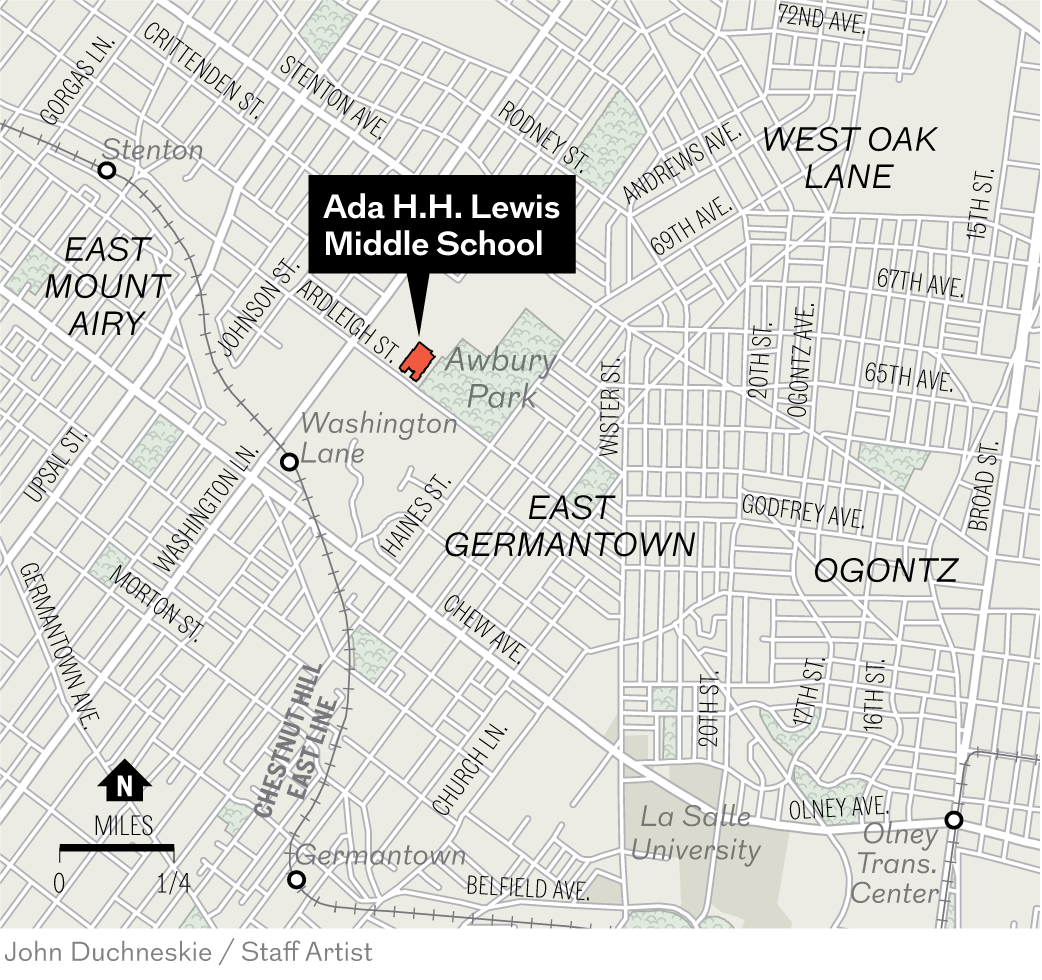
    When it opened in 1973, Ada H.H. Lewis Middle School was a source of deep pride for East Germantown, the kind of state-of-the-art educational facility that only suburban kids had at the time.

    But on Saturday, when police found Kada Scott’s corpse buried in a shallow grave in the woods of the long-ago vacated school grounds, ending a two-week search for the missing 23-year-old Mount Airy woman, the Rev. Chester H. Williams saw only decades of failure.

    “It’s a disgrace,” said Williams, a pastor who runs a neighborhood civic group. “We were very hurt to hear that this happened.”

    Community members gather for a candlelight vigil in memory of Kada Scott on Monday at Ada H.H. Lewis Middle School.

    On top of the shock, Scott’s kidnapping and murder has renewed animus in some quarters about the Philadelphia School District‘s failure to repurpose the blighted property, one of dozens of schools shuttered by the district over the last 20 years.

    Since Lewis closed in 2008, local officials and civic leaders said the sprawling seven-acre campus has become a magnet for squatting, illegal dumping, and other criminal activity. City officials have cited the school district 10 times since 2020 for overgrown weeds, graffiti, and piles of trash that blanketed the property, public records show. And four years ago, the district passed on an opportunity to reverse course on the blight.

    A proposal to redevelop the land into new homes, championed by neighborhood leaders like Williams, sat before the school board for approval. But the district abandoned the plan at the eleventh hour without public explanation, which the developer alleged was due to meddling by City Councilmember Cindy Bass — a contention Bass denies.

    “The school district, for some reason, we don’t know why, they put a block on anything being built there,” Williams said.

    Map of the former Ada H.H. Lewis Middle School in East Germantown

    Philadelphia Superintendent Tony B. Watlington Sr. extended “deepest sympathies” to Scott’s family and friends in a statement, and said the district’s operations and safety departments will review the vacant-property portfolio “to create and maintain safe and healthy spaces in every neighborhood.”

    While some call Lewis “abandoned,” the district is careful to call the building “vacant,” one of 20 such properties in the district’s portfolio. It says maintenance and inspection logs are kept about work on vacant properties; details were not immediately available.

    The debate over Lewis comes at a crucial time for the district: It is preparing to release recommendations about its stock of 300-plus buildings — and likely add to the list of decommissioned schools-turned-vacant public buildings. The district’s master planning process will contain recommendations for school closures and combining schools under one roof, officials have warned.

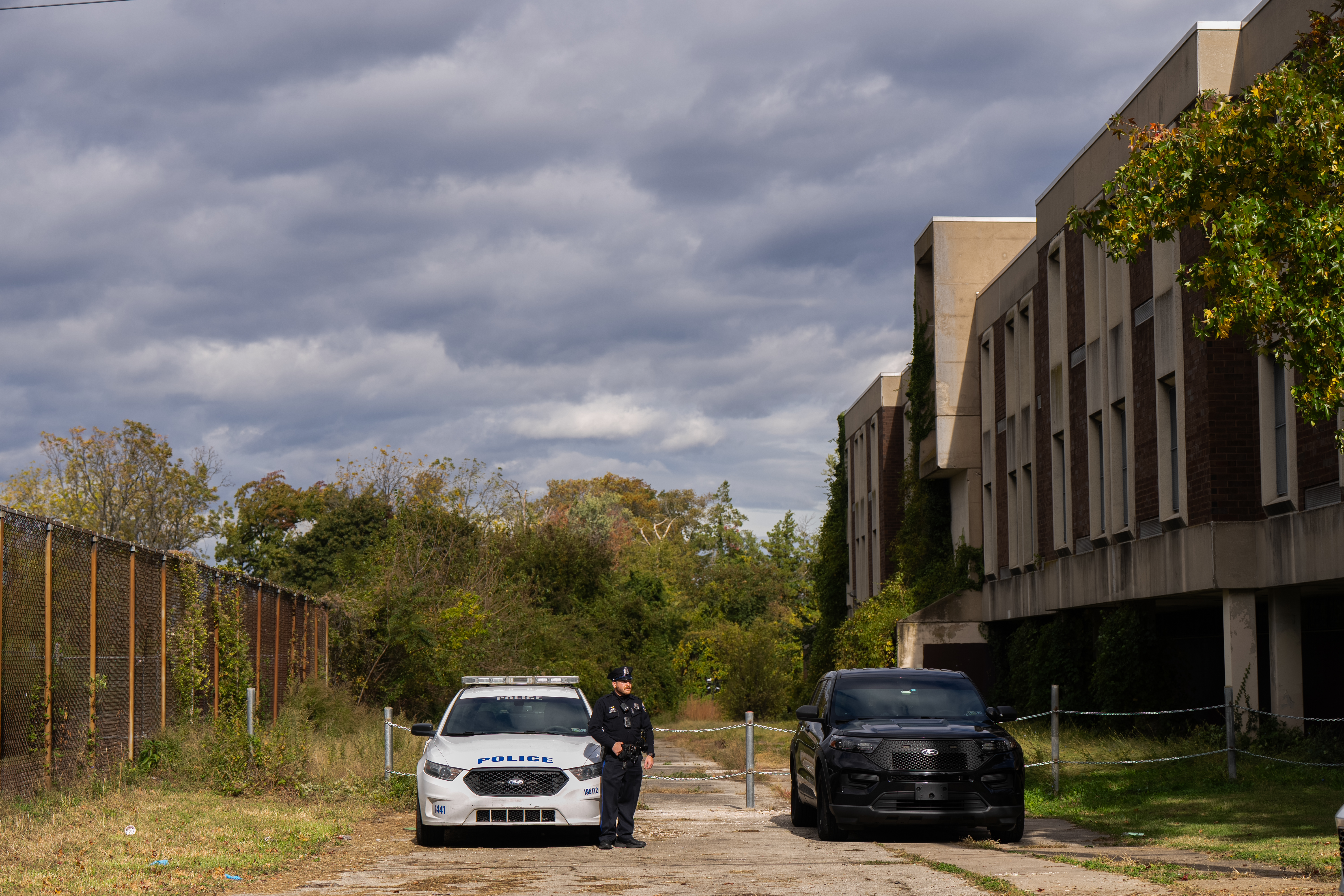
    Police at Ada H.H. Lewis Middle School.

    A fizzled redevelopment

    In 2011, then-City Controller Alan Butkovitz said the district’s vacant buildings were “catastrophes waiting to happen.

    Butkovitz, in a report released that year, said district inaction around such structures was dangerous and noted that the schools were magnets for criminal activity.

    Just before the pandemic hit in 2020, after years of pushback over Ada Lewis, the school district began accepting applications to redevelop the crumbling middle school. Germantown developer Ken Weinstein was one of three developers to place bids. He sought to buy the property for $1.4 million and build 76 new twin homes, at a density that neighbors felt complemented the surrounding area and resolved concerns about density brought by apartment buildings.

    Weinstein said he gathered letters of support from 60 neighborhood residents and elected officials, including U.S. Rep. Dwight Evans and then-State Rep. Stephen Kinsey. The school board seemed eager to move ahead and set a final vote for the proposal in May 2021.

    The vote never happened. The only explanation given that day was that “the Board had concern” about “what the long-term plan is for developing schools for the 21st century,” according to a district spokesperson.

    According to Weinstein, some school board members received calls from Bass asking them to table the vote. Bass has faced criticism for interfering in development projects, including other proposals made by Weinstein, as vacant properties languished for years in her district. Her district includes the Lewis property and parts of North and Northwest Philadelphia, where Weinstein has focused his development work.

    Bass, in an interview Monday, denied meddling in the vote. She acknowledged that she did not support Weinstein’s proposal because of the price of the homes — averaging around $415,000 — which she said would have triggered “immediate gentrification in the neighborhood.” But she said she had no involvement in the board’s reversal.

    “That was up to the school district,” Bass said. “I don’t sit on the school board.”

    While community groups in her district supported Weinstein’s project in 2021, Bass said she objected to market-rate housing as the sole alternative for East Germantown, arguing that it amounted to the district and developers saying “you should just take any old thing just so it’s not vacant.”

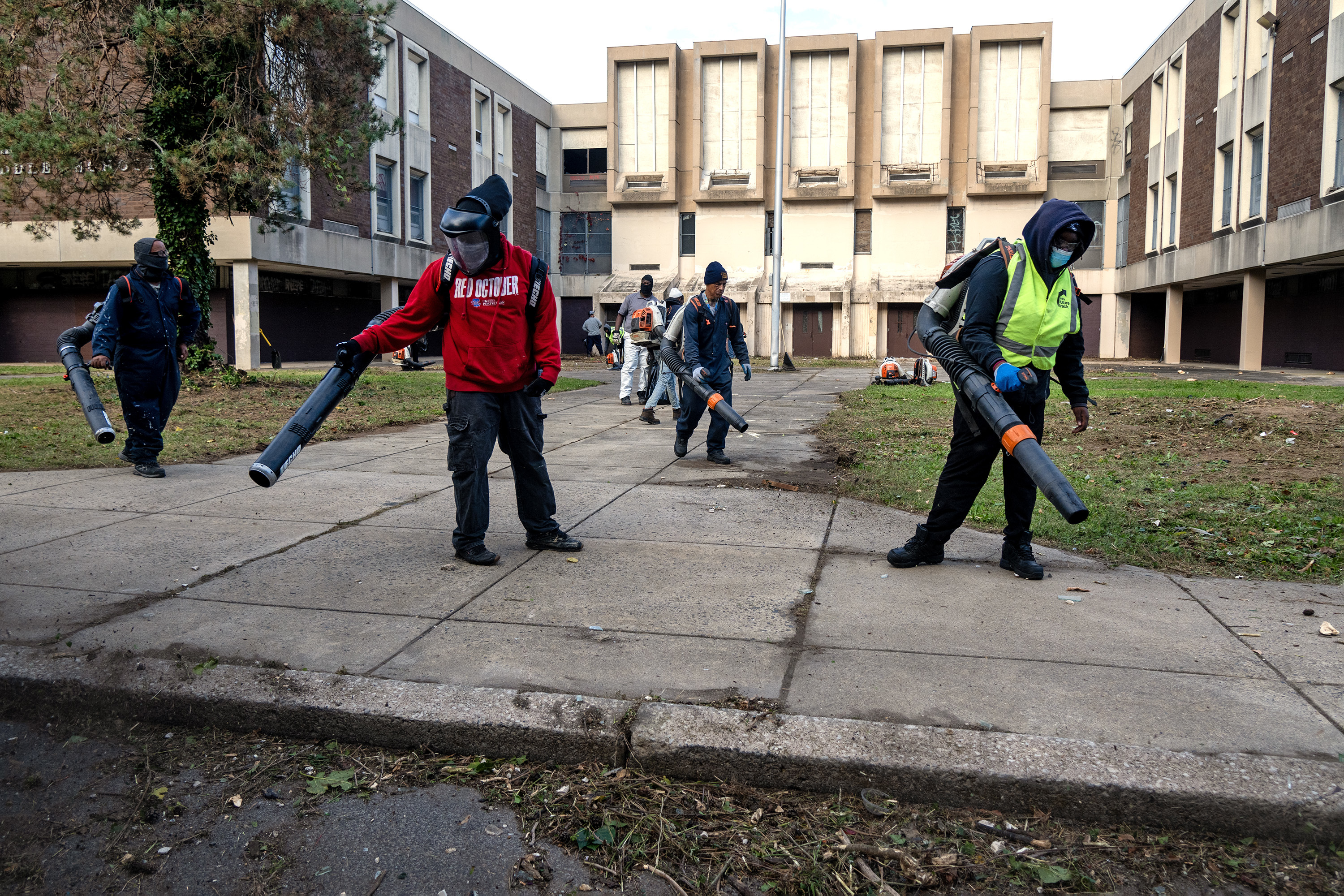
    City workers clean up in front of the vacant Ada H.H. Lewis Middle School Monday, just minutes before the start of a community candlelight vigil in memory of Kada Scott.

    A tragic turn for the property

    In a letter dated Friday, Bass called on the school district to demolish the vacant school, saying she was troubled by the evidence that led investigators to the property during the search for Scott.

    “The continued presence of this unsecured and deteriorating structure is simply unacceptable,” the Council member wrote in a statement, noting the site is now associated with “tragic violence.”

    Cell phone records and tips from the public first led police to the former Ada Lewis school last week, where they found Scott’s pink phone case and debit card, but nothing else. Then, late Friday, police received a new tip saying that they had missed something on their first search of the grounds, and that they should look along the wooden fence that divides the school from the neighboring Awbury Recreation Center. Officers returned to the property Saturday and found Scott’s body, buried in a shallow grave in a wooded area behind the school.

    Prosecutors expect to charge Keon King, 21, with the murder, though police continue searching for others who they believe may have helped dispose of evidence.

    Bass took office in 2012, when the school was already vacant. She said she pushed the school district for several years to take action, as nuisances piled up at the property. She said she still hopes that another “institution” could replace Lewis.

    “I think that having something that the community wants is not hard to figure out,” Bass said. “This is what the community’s interested in — they’re interested in another institution.”

    She said a proposal for a charter school is now in the works, though she said she was unable to provide details.

    Julius Peden, 5, and Jaihanna Williams Peden (right), 14, pause at a memorial for Kada Scott on Monday.

    A glut of vacant schools

    The school district still views Lewis as a potential “swing space” — a building that could be used to house students if another district building is closed due to environmental problems.

    There is precedent: The district has used other school buildings for such purposes, like Anna B. Pratt in North Philadelphia, which was also closed in 2013, to house early-childhood programs, and then students from other North Philadelphia schools whose buildings were undergoing renovation.

    Still, it remains unclear how much it would cost to bring the Lewis building back to an inhabitable state.

    The school system currently has about 70,000 more seats throughout the city than students enrolled. Though officials have said their first preference is to have closed schools reused for community benefit, it’s unlikely that all will be able to serve that purpose. And the timetable will surely be slow.

    City officials at times have expressed frustration with the pace at which the district is making decisions about how to manage its buildings. School leaders have said the wait is necessary given the district’s capacity and the need to make correct choices and not rush the process.

    Weinstein said the tragedy that culminated at Lewis reflected the conventional wisdom that blight breeds crime.

    “There’s always consequences to shutting down a proposal that the community supports,” Weinstein said. “In most cases, nothing bad happens. In this case, something very bad happened.”

    Staff writer Ellie Rushing contributed to this article.

  • Gov. Josh Shapiro will release a memoir in 2026

    Gov. Josh Shapiro will release a memoir in 2026

    Pennsylvania Gov. Josh Shapiro will release a memoir next year detailing his career and personal life, including when a man firebombed the governor’s mansion while Shapiro and his family slept inside and his place on the short list for Kamala Harris’ vice president.

    On Tuesday, Harper — an imprint of HarperCollins Publishing — announced the release of Shapiro’s forthcoming memoir, Where We Keep the Light: Stories From a Life of Service, which will hit shelves on Jan. 27, 2026.

    Shapiro is the latest potential 2028 Democratic presidential contender to announce a book deal, another step in building and defining a national profile.

    Shapiro, 52, has worked in some level of government for his entire career: on Capitol Hill as a staffer, in Montgomery County as a commissioner, and in Harrisburg as a state representative, attorney general, and now governor. He has noted that he has never lost an election, going back to his election as student body president his freshman year at the University of Rochester. Along the way, elected officials have whispered about his talents as a politician, orator, and rumored presidential ambitions.

    The Montgomery County native has become a key player in the national Democratic Party, touting a brand as a governor of a split legislature in the most sought-after swing state. His administration’s motto is “Get Stuff Done,” which he defines as bringing Democrats and Republicans together to accomplish long-delayed reforms, or restarting residents’ trust by improving their interactions with state government. (Pennsylvania still has not finished its state budget, which was due July 1, as legislators from the Democratic-controlled House and GOP-controlled Senate cannot agree on how much they should spend this fiscal year and causing school districts, counties, and nonprofits to take out significant loans to continue offering services during the 113-day budget impasse.)

    Shapiro’s rise through the Democratic Party ranks skyrocketed last year, when he became a front-runner for vice president during Harris’ whirlwind, 107-day presidential campaign, in which she ultimately chose Minnesota Gov. Tim Walz as her running mate. Harris also released a book this year, which includes stories from her interview with Shapiro for the role.

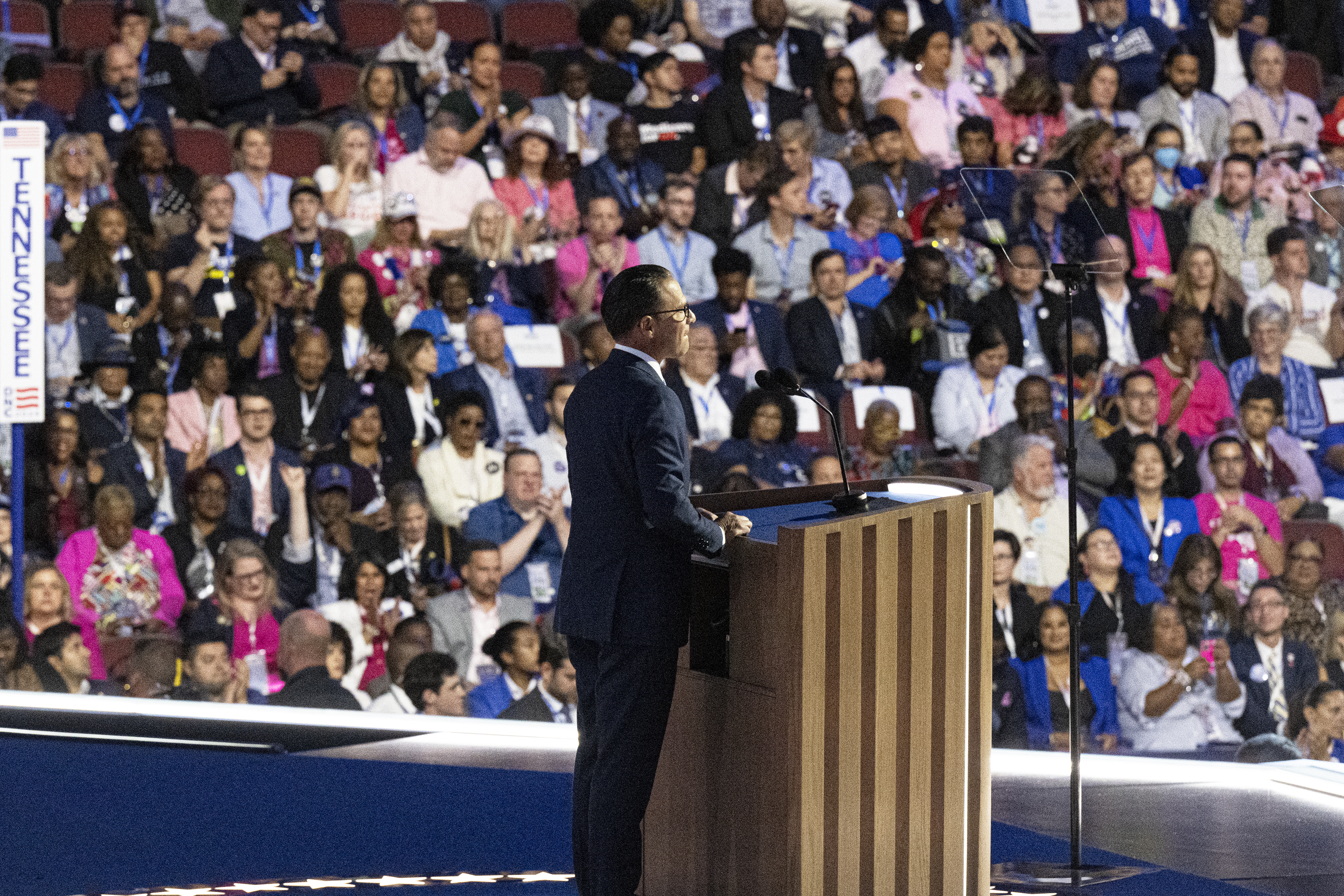
    Pennsylvania Gov. Josh Shapiro speaks during the Democratic National Convention Wednesday, Aug. 21, 2024, in Chicago.

    While book deals are often signifiers for officials hoping to take another step up in government, Shapiro still faces reelection next year. He will likely face Treasurer Stacy Garrity, a Republican who has already captured the state GOP’s endorsement. Garrity is a retired U.S. Army colonel, and has focused some of her criticisms of Shapiro thus far on his presumed eye for higher office. However, Shapiro still maintains a high approval rating in Pennsylvania, a state President Donald Trump won last year.

    Shapiro’s memoir will also detail the arson attack on the governor’s mansion, in which, just hours after Passover earlier this year, Cody Balmer set the home ablaze with incendiary devices. Balmer pleaded guilty last week to attempted murder.

    Shapiro, who was born in Kansas City, Mo., before moving to Montgomery County, has credited his upbringing by his parents — his father a pediatrician, and his mother an educator — as laying the foundation for his life in public service. Shapiro has four children and is married to his high school sweetheart, Lori. He and his family still live in Abington Township and split their time between their family home and the governor’s mansion in Harrisburg.

  • Philly may see a new fee on paper bags — if it can get through City Hall

    Philly may see a new fee on paper bags — if it can get through City Hall

    Philadelphia lawmakers are for the third time trying to pass legislation requiring that stores charge customers a fee for paper bags. And for the third time, it’s facing opposition from the mayor.

    A City Council committee on Monday advanced legislation requiring all grocery stores, convenience shops, and other retailers in the city charge 10 cents per nonreusable bag. The goal is to update the city’s already existing ban on the plastic variety and encourage shoppers to bring their own bags.

    The full Council could vote on the new legislation in the coming weeks. It is cosponsored by a majority of Council members, meaning it is likely to pass the chamber.

    City Councilmember Mark Squilla, the architect of the plastic bag ban that first passed in 2019, said during the hearing Monday that he’s aiming to “change behavior.” The city says the use of paper bags has skyrocketed since the plastic bag ban took effect — studies show that while they are recyclable, unlike plastic, paper bags are still less energy efficient than reusable ones.

    Squilla’s original plastic bag ban legislation included a required 15-cent fee on paper bags, but he stripped it from the bill after opposition from former Mayor Jim Kenney’s administration. In 2023, Council passed legislation to institute it, but Kenney issued a pocket veto, meaning he left office without taking action on the legislation, effectively killing it.

    It wasn’t clear at the time if Mayor Cherelle L. Parker, who was the incoming mayor, would support the legislation if it were reintroduced. She made cleaning and greening the city a top campaign promise, and environmental advocates hoped she’d support efforts to reduce single-use bag reliance.

    But one of Parker’s top officials testified in opposition to the legislation Monday.

    Carlton Williams, the director of Parker’s Office of Clean and Green Initiatives, called Squilla’s effort well-intentioned. But he said charging bag fees could disproportionately impact low-income Philadelphians experiencing high grocery costs, “especially given the current economy.” He also said the fees could push shoppers out of the city and harm mom-and-pop businesses that already operate with low margins.

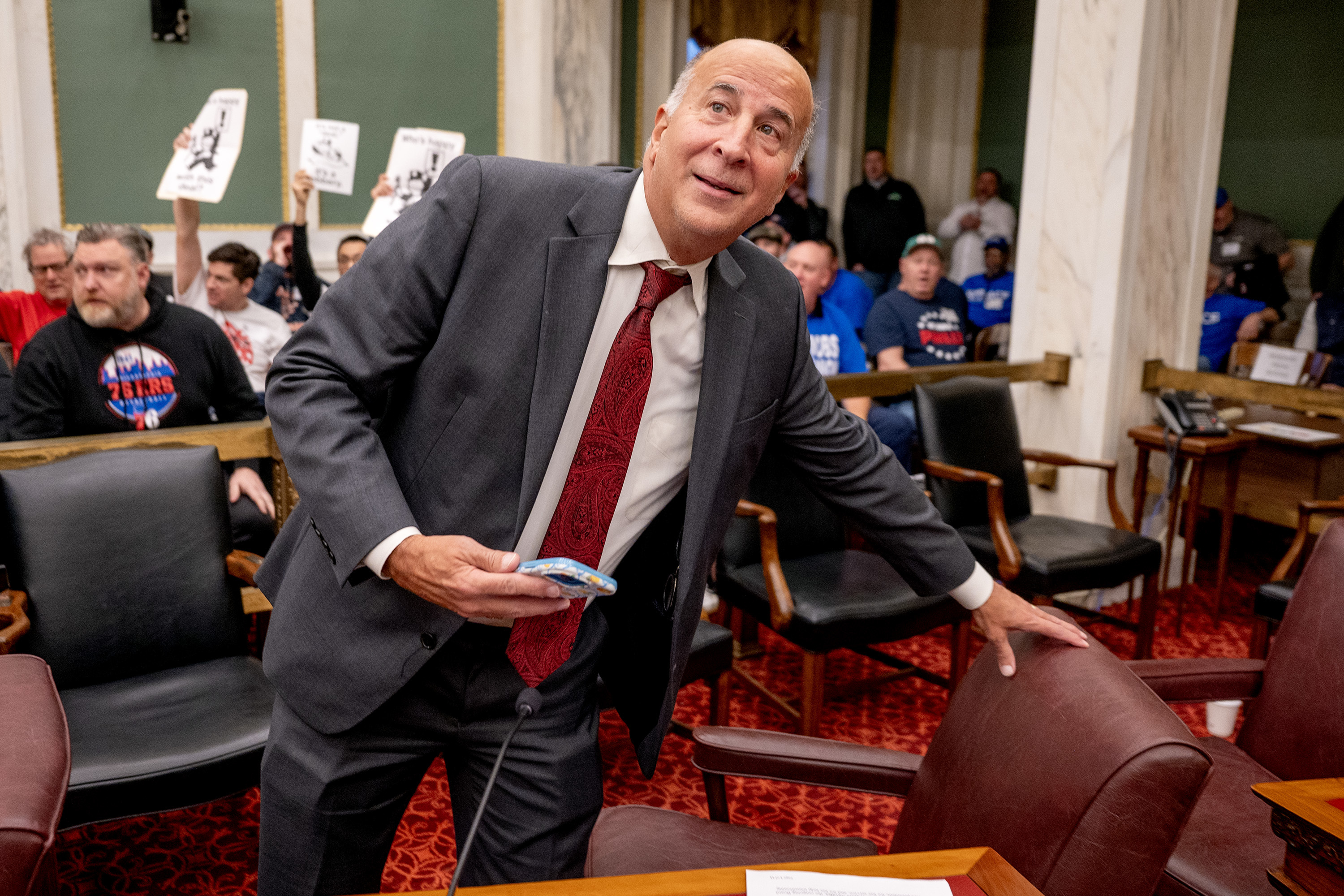
    Councilmember Mark Squilla takes his seat in Council chambers on Wednesday, Dec. 11, 2024, before a scheduled committee vote. Squilla authored legislation requiring stores charge a fee for paper bags.

    If the legislation passes Council, Parker could sign or veto it. She could also let it lapse into law without her signature. If she vetoed the legislation — it would be her first since taking office last year — Council could override her veto with 12 votes out of the 17-member chamber.

    When the paper bag bill was introduced in 2019, members of Kenney’s administration also said at the time that they were concerned that fees on paper bags would hurt the poorest Philadelphians. Former City Councilmember Maria Quiñones Sánchez similarly described it as akin to a regressive tax.

    However, proponents of the legislation said Monday that they don’t think the argument holds up.

    Maurice Sampson, the eastern Pennsylvania director of the environmental group Clean Water Action, said prices on essentials such as food could rise for everyone if stores absorb the costs of paper bags.

    “There is no foundation or basis,” he said, ”in the idea that fees on bags will hurt low-income people.”

  • The White House starts demolishing part of the East Wing to build Trump’s ballroom

    The White House starts demolishing part of the East Wing to build Trump’s ballroom

    WASHINGTON — The White House on Monday started tearing down part of the East Wing, the traditional base of operations for the first lady, to build President Donald Trump’s $250 million ballroom despite lacking approval for construction from the federal agency that oversees such projects.

    Dramatic photos of the demolition work showed construction equipment tearing into the East Wing façade and windows and other building parts in tatters on the ground. Some reporters watched from a park near the Treasury Department, which is next to the East Wing.

    Trump announced the start of construction in a social media post and referenced the work while hosting 2025 college baseball champs Louisiana State University and LSU-Shreveport in the East Room. He noted the work was happening “right behind us.”

    “We have a lot of construction going on, which you might hear periodically,” he said, adding, “It just started today.”

    The White House has moved ahead with the massive construction project despite not yet having sign-off from the National Capital Planning Commission, which approves construction work and major renovations to government buildings in the Washington area.

    Its chairman, Will Scharf, who is also the White House staff secretary and one of Trump’s top aides, said at the commission’s September meeting that agency does not have jurisdiction over demolition or site preparation work for buildings on federal property.

    “What we deal with is essentially construction, vertical build,” Scharf said last month.

    It was unclear whether the White House had submitted the ballroom plans for the agency’s review and approval. The White House did not respond to a request for comment and the commission’s offices are closed because of the government shutdown.

    The Republican president had said in July when the project was announced that the ballroom would not interfere with the mansion itself.

    “It’ll be near it but not touching it and pays total respect to the existing building, which I’m the biggest fan of,” he said of the White House.

    The East Wing houses several offices, including those of the first lady. It was built in 1902 and and has been renovated over the years, with a second story added in 1942, according to the White House.

    Karoline Leavitt, the White House press secretary, said those East Wing offices will be temporarily relocated during construction and that wing of the building will be modernized and renovated.

    “Nothing will be torn down,” Leavitt said when she announced the project in July.

    Trump insists that presidents have desired such a ballroom for 150 years and that he’s adding the massive 90,000-square-foot, glass-walled space because the East Room, which is the largest room in the White House with an approximately 200-person capacity, is too small. He also has said he does not like the idea of hosting kings, queens, presidents and prime ministers in pavilions on the South Lawn.

    Trump said in the social media announcement that the project would be completed “with zero cost to the American Taxpayer! The White House Ballroom is being privately funded by many generous Patriots, Great American Companies, and, yours truly.”

    The ballroom will be the biggest structural change to the Executive Mansion since the addition in 1948 of the Truman Balcony overlooking the South Lawn, even dwarfing the residence itself.

    At a dinner he hosted last week for some of the wealthy business executives who are donating money toward the $250 million construction cost, Trump said the project had grown in size and now will accommodate 999 people. The capacity was 650 seated people at the July announcement.

    The White House has said it will disclose information on who has contributed money to build the ballroom, but has yet to do so.

    Trump also said at last week’s event that the head of Carrier Global Corp., a leading manufacturer of heating, ventilation and air conditioning systems, had offered to donate the air conditioning system for the ballroom.

    Carrier confirmed to The Associated Press on Monday that it had done so. A cost estimate was not immediately available.

    “Carrier is honored to provide the new iconic ballroom at the White House with a world-class, energy-efficient HVAC system, bringing comfort to distinguished guests and dignitaries in this historic setting for years to come,” the company said in an emailed statement.

    The clearing of trees on the south grounds and other site preparation work for the construction started in September. Plans call for the ballroom to be ready before Trump’s term ends in January 2029.

  • U.S. appeals court lets Trump send troops to Portland

    U.S. appeals court lets Trump send troops to Portland

    A divided U.S. appeals court ruled on Monday that Donald Trump can send National Guard troops into Portland, Oregon, despite objections by the leaders of the city and state, giving the Republican president an important legal victory as he dispatches military forces to a growing number of Democratic-led locales.

    A three-judge panel of the 9th U.S. Circuit Court of Appeals granted the Justice Department’s request to put on hold a judge’s order that had blocked the deployment while a legal challenge to Trump’s action plays out.

    The court said that sending in the National Guard was an appropriate response to protesters, who had damaged a federal building and threatened U.S. Immigration and Customs Enforcement officers.

    The unsigned majority opinion was joined by Circuit Judge Bridget Bade and Circuit Judge Ryan Nelson, who were both appointed by Trump in his first term. Nelson also wrote a concurring opinion saying that courts have no ability to even review the president’s decision to send troops.

    Circuit Judge Susan Graber, an appointee of Democratic President Bill Clinton, dissented. She said that allowing troops to be called in response to “merely inconvenient” protests was “not merely absurd” but dangerous, and she said the full 9th Circuit should overturn the ruling before Trump has a chance to send troops.

    White House spokeswoman Abigail Jackson welcomed the ruling, saying Trump had exercised his lawful authority to protect federal assets and personnel from protesters.

    Portland’s city attorney did not immediately respond to a request for comment.

    On October 4, Portland-based U.S. District Judge Karin Immergut, who Trump appointed during his first term as president, ruled that Trump likely acted unlawfully when he ordered troops to Portland. She had blocked Trump from sending any National Guard troops to Portland at least until the end of October, and has scheduled a non-jury trial set to begin on October 29 to determine whether to impose a longer-term block.

    DEMOCRATIC-LED STATES SEEK TO HALT DEPLOYMENTS

    In an extraordinary use of the U.S. armed forces for domestic purposes, Trump has sent National Guard troops into Los Angeles, Washington, D.C., and Memphis, and announced plans for deployments to Portland and Chicago.

    Democratic-led states and cities have filed lawsuits seeking to halt the deployments, and courts have not yet reached a final decision on the legality of Trump’s decisions to send the National Guard to U.S. cities.

    Trump has asked the U.S. Supreme Court to weigh his authority to send troops to Democratic-led cities, after another U.S. appeals court ruled against his decision to send troops to Chicago.

    City and state officials sued the administration in a bid to stop the Portland deployment, arguing that Trump’s action violates several federal laws that govern the use of military forces as well as the state’s rights under the U.S. Constitution’s 10th Amendment.

    The lawsuit accused Trump of exaggerating the severity of protests against his immigration policies to justify illegally seizing control of state National Guard units.

    Trump on September 27 ordered 200 National Guard troops to Portland, continuing his administration’s unprecedented use of military personnel in U.S. cities to suppress protests and bolster domestic immigration enforcement. Trump called the city “War ravaged” and said, “I am also authorizing Full Force, if necessary.”

    Police records provided by the state showed that protests in Portland were “small and sedate,” resulting in only 25 arrests in mid-June and no arrests in the 3-1/2 months since June 19.

    A federal law called the Posse Comitatus Act generally restricts the use of the U.S. military for domestic law enforcement purposes. In ordering troops to California, Oregon and Illinois, Trump has relied on a law – Section 12406 of Title 10 of the U.S. Code – that allows a president to deploy state National Guard to repel an invasion, suppress a rebellion or allow the president to execute the law.

    The National Guard serves as state-based militia forces that answer to state governors except when called into federal service by the president.

    During arguments in the case on October 9, the two Trump-appointed judges suggested that Immergut had focused too closely on protests in the city in September without fully considering more serious protests two months before the troop deployment. Circuit Judge Ryan Nelson said that courts should not engage in a “day by day” review of whether troops were needed at any given time.

    Immergut issued decisions against the administration on October 4 and October 5, first ruling that Trump could not take over Oregon’s National Guard and then ruling that he could not circumvent that decision by calling in National Guard troops from other states.

    The judge said there was no evidence that recent protests in Portland rose to the level of a rebellion or seriously interfered with law enforcement, and she said Trump’s description of the city as war-ravaged was “simply untethered to the facts.”

    Immergut is one of three district court judges who have ruled against Trump’s use of the National Guard, and no district court judge has yet ruled for Trump in the National Guard cases.

    Appeals courts have split over the issue so far, with the 9th Circuit previously backing Trump’s use of troops in California and the 7th Circuit ruling that troops should stay out of Chicago for now.