Category: Politics

Political news and coverage

  • How the 3 Pennsylvania Supreme Court justices on the ballot have ruled in major cases

    How the 3 Pennsylvania Supreme Court justices on the ballot have ruled in major cases

    Three Pennsylvania Supreme Court justices are on the ballot this November, when voters will decide whether to extend each of their tenures for another 10-year term.

    There are currently five justices who were elected as Democrats and two who were elected as Republicans on the bench.

    This year’s retention race has drawn heightened attention, as Republicans have launched a campaign to sink the retention bids of Justices Kevin Dougherty, Christine Donohue, and David Wecht — all elected as Democrats in 2015 — in hopes of flipping the court’s balance.

    Once on the bench, judges are expected to shed their partisan label, which is why Pennsylvania extends judicial terms through retention elections instead of head-to-head races.

    Still, advocacy groups on both sides of the aisle are trying to make the case that control of the judicial seats is critical, if not existential, to their causes.

    The Inquirer reviewed the cases that have come before the Pennsylvania Supreme Court over the last decade, and how Dougherty, Donohue, and Wecht voted.

    Here are some of the most significant cases of their tenure.

    Abortion

    Pennsylvania’s highest court stopped just short of recognizing a constitutional right to abortion access in January 2024.

    The ruling came in a case challenging a state law limiting Medicaid funding for abortions except in cases involving rape, incest, or danger to the life of the mother.

    The 219-page majority opinion included language that strongly endorsed access to abortion as a right derived from the Pennsylvania Constitution, but the judges could not agree on whether they were ready to make the call in this case.

    The majority sent questions about a specific funding limit and broader constitutional protection for abortion access back to a lower court — setting up another round of legal battles that will likely, again, make it before the state Supreme Court.

    How the three justices ruled: Donohue wrote and Wecht joined the majority opinion. The two justices said they believed Pennsylvania’s 1971 Equal Rights Amendment clearly established a right to abortion access. Dougherty wrote a separate opinion saying this case did not call on the court to opine on the right to an abortion. “At least, not yet,” he wrote.

    Voting rights and elections

    The Pennsylvania Supreme Court has ruled on a litany of challenges to Pennsylvania’s election rules, many of them focused on the state’s mail voting law.

    In 2018, the justices threw out the state’s GOP-drawn congressional maps as unconstitutionally gerrymandered.

    In 2020, the court issued a major ruling ahead of the presidential election allowing for ballot drop boxes and allowing local election offices to accept ballots for up to three days after the election as long as those ballots were postmarked by 8 p.m. on Election Day.

    How the three justices ruled: Donohue, Dougherty, and Wecht each joined the majority opinion in the redistricting case. On the 2020 election ruling, Dougherty and Wecht joined the majority opinion. Donohue joined the majority opinion but dissented from the decision to extend the ballot deadline.

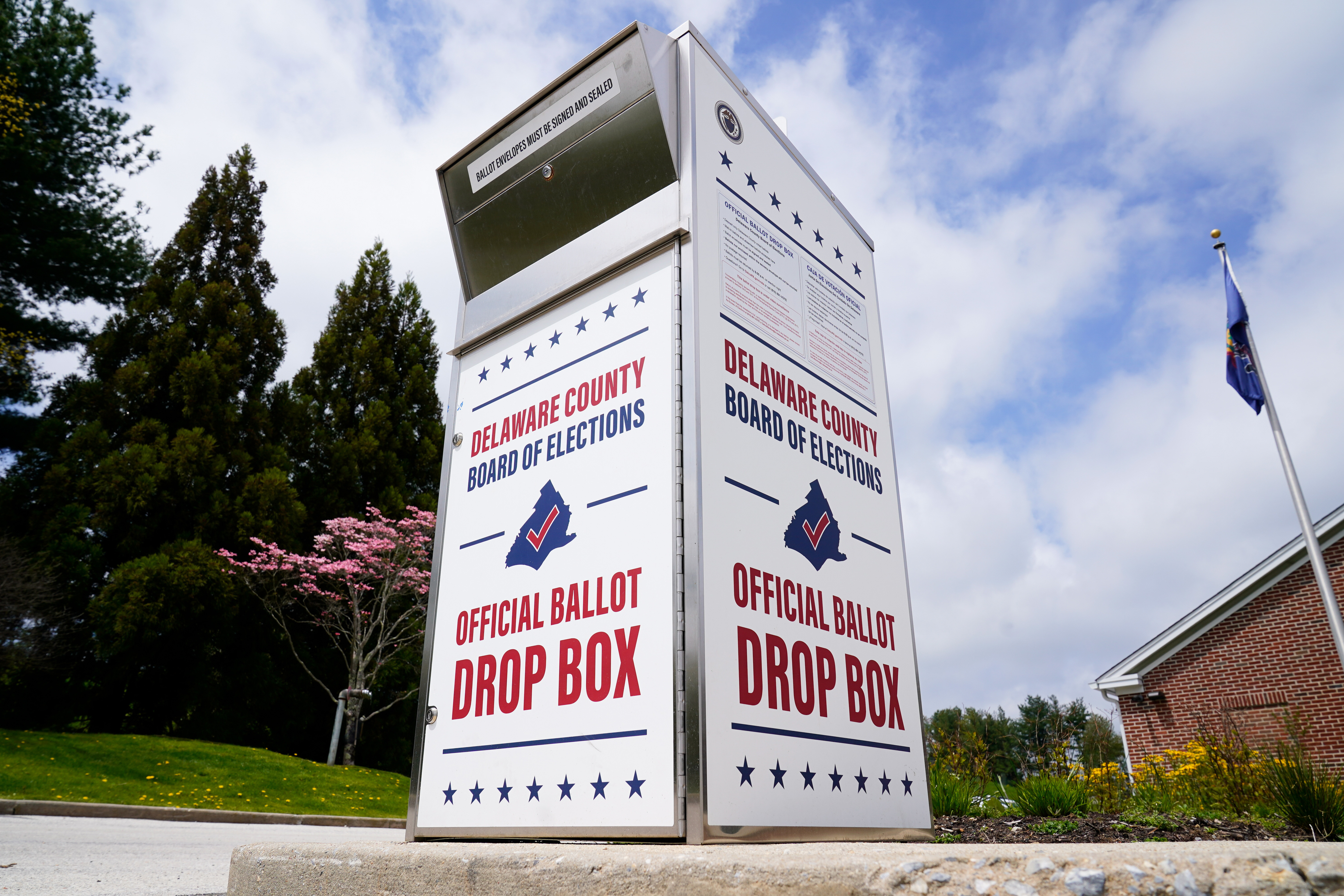
    A Delaware County secured drop box for the return of mail ballots in 2022 in Newtown Square.

    Education

    A Delaware County school district had the right to challenge Pennsylvania’s school-funding system, the Supreme Court ruled in 2017.

    The decision affirmed the role of courts in ensuring that state funding leads to equitable education and sent the case back to Commonwealth Court to proceed with litigation.

    In 2023, Commonwealth Court ruled, as part of the same case, that the state’s funding system for school districts led to disparities that prohibit quality education for all students, rendering it unconstitutional.

    How the three justices ruled: Wecht wrote the majority opinion, which Dougherty and Donohue joined.

    Environment

    Pennsylvania, which partly sits on the natural gas-rich Marcellus Shale, found itself in the midst of the fracking boom of the early 2000s.

    The state sold leases to oil and gas companies to drill wells. The practice raised questions, and legal challenges, as to how the state should use the revenues in the context of the Pennsylvania Constitution’s Environmental Rights Amendment.

    The court ruled in 2017 that it is unconstitutional for the state to use revenue from the royalties of oil and gas leases on public land to pay for anything but conservation and maintenance of the environment.

    How the three justices ruled: Donohue wrote the majority opinion, which Dougherty and Wecht joined.

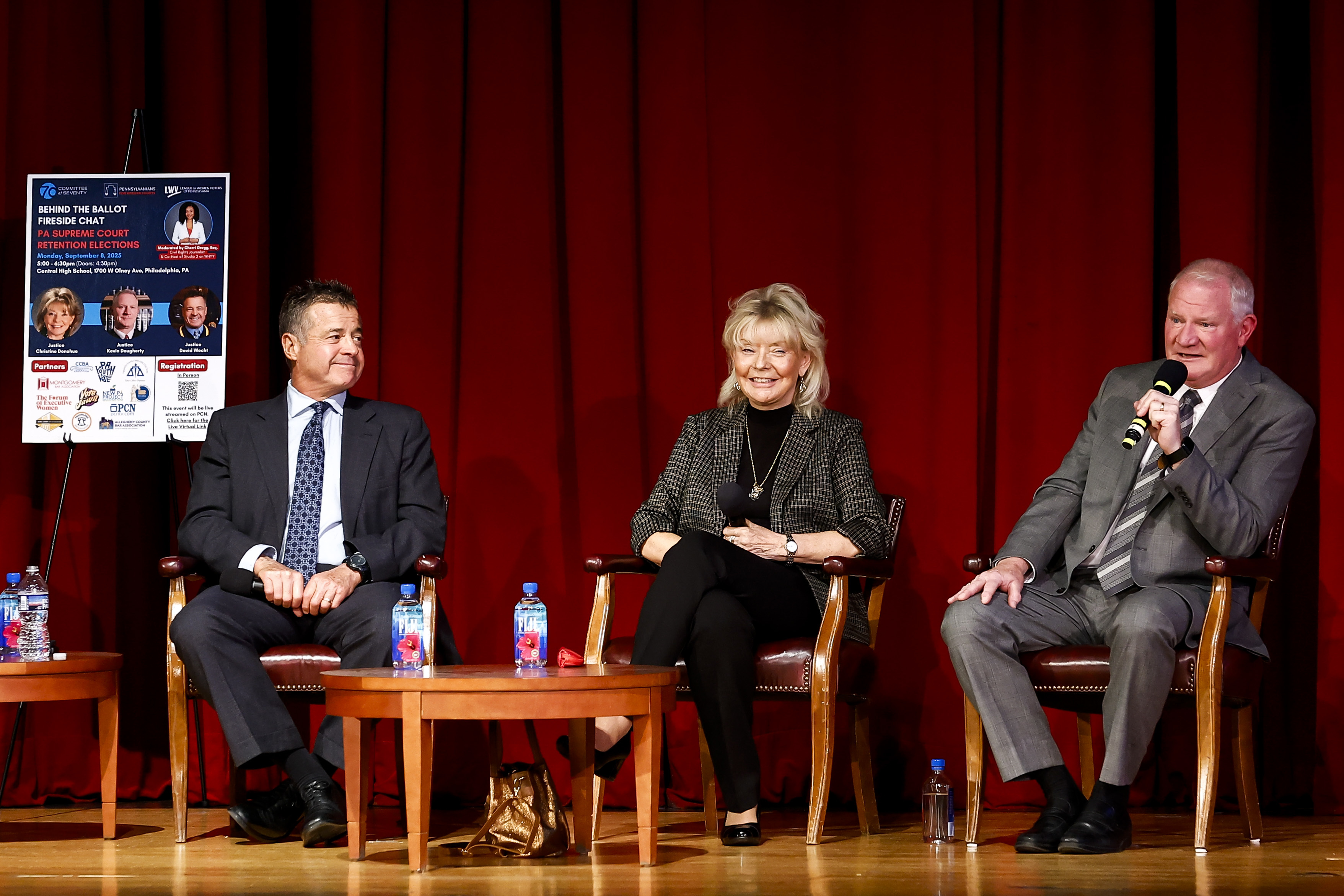
    Justices David Wecht, Christine Donohue and Kevin Dougherty sit onstage during a fireside chat at Central High School in September. The conversation was moderated by Cherri Gregg, co-host of Studio 2 on WHYY, and presented by the Committee of Seventy, Pennsylvanians for Modern Courts, and the League of Women Voters of Pennsylvania.

    Criminal justice

    Pennsylvania has had the nation’s largest population of juvenile lifers: people sentenced as minors to life in prison without the possibility of parole.

    In 2017, the Supreme Court made it harder to sentence a juvenile to life. The majority opinion says there is a “presumption” against life without parole for juveniles who are found guilty of murder, and prosecutors must show that the offender is “unable to be rehabilitated” when seeking the sentence.

    How the three justices ruled: Donohue wrote the majority opinion, which Dougherty and Wecht joined.

    Second Amendment

    In 2024, for the first time, the Pennsylvania Supreme Court issued an opinion that interpreted the wording in the U.S. Constitution that gives Pennsylvanians the right to bear arms.

    In Stroud Township, a zoning ordinance that prohibited the discharge of a firearm within the township’s borders limited the possible locations for shooting ranges. The ordinance barred a resident from having a personal outdoor shooting range on his property, and he sued the township for violating his Second Amendment rights.

    The court ruled that the ordinance was constitutional.

    How the three justices ruled: Dougherty wrote the majority opinion, which Wecht joined. Donohue wrote her own opinion, reaching the same conclusion as the majority but disagreeing with the analysis.

    Larry Krasner

    Did Republican lawmakers make a procedural error in their 2022 effort to impeach Philadelphia District Attorney Larry Krasner? The Supreme Court in 2024 said they did, effectively ending a campaign in Harrisburg to oust the progressive prosecutor.

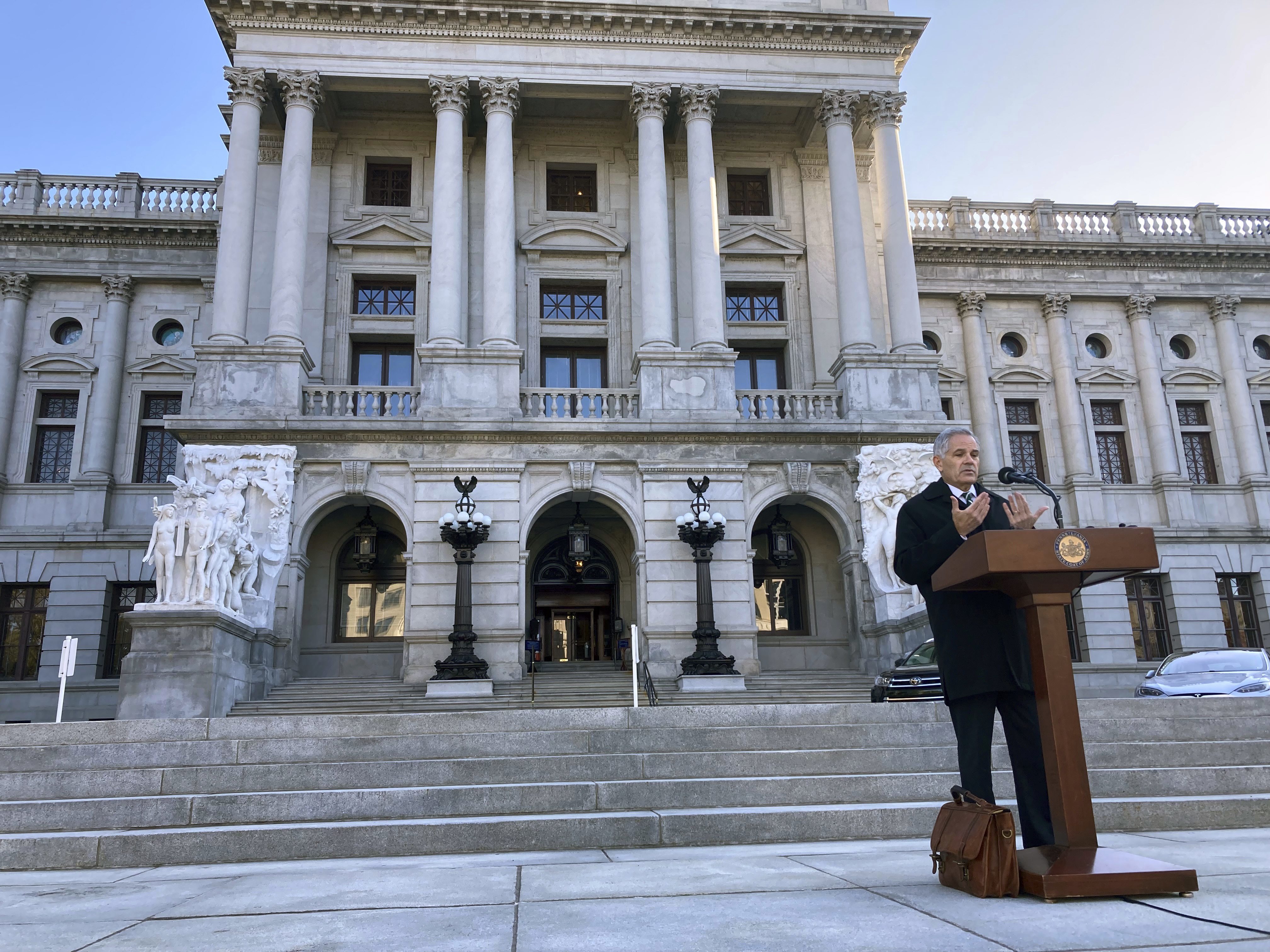
    Philadelphia District Attorney Larry Krasner talks about Republican-led efforts to investigate his record addressing crime and gun violence at the Pennsylvania Capitol in 2022.

    The decision said that the articles of impeachment approved by the state House in late 2022 were “null and void” because they were sent to the Pennsylvania Senate on the last day of that year’s legislative session, and the upper chamber did not complete its work on the matter before the next session began. The attempt to carry the process from one two-year session to the next was unlawful, the court said.

    The majority also agreed with a lower court that none of the articles of impeachment met the required legal standard of “misbehavior in office.”

    How the three justices ruled: Donohue and Wecht joined the majority opinion. Dougherty did not participate in the deliberations.

    Bill Cosby

    Disgraced actor and comedian Bill Cosby walked out of prison a free man in 2021 after the state Supreme Court reversed his sexual assault conviction.

    The court did not weigh in on the facts of the case or whether Cosby was guilty. Instead, it focused on a former Montgomery County prosecutor’s decade-old promise that Cosby would never be charged with drugging and assaulting Andrea Constand if he gave incriminating testimony in a civil case filed by his accuser. The justices found that the testimony was improperly used years later against Cosby at his criminal trial, calling it a “unconstitutional coercive bait-and-switch.”

    How the three justices ruled: Wecht wrote the majority opinion, which Donohue joined. Dougherty wrote a separate opinion, saying he would allow for Cosby to be retried, but would order his testimony from the civil case to be suppressed.

  • A leaked, secret survey reveals what Philly attorneys think about judges up for election

    A leaked, secret survey reveals what Philly attorneys think about judges up for election

    It’s a local tradition as predictable as slow-rolling through a South Philly stop sign or cursing Schuylkill Expressway traffic: Each election season, the Philadelphia Bar Association publishes its carefully considered opinion of the sitting judges up for reelection — then, the voters ignore it and send every incumbent back to the bench.

    That’s because, since 1969, judicial retention elections have been yes-or-no votes for each judge rather than head-to-head competition. In that time, only one Philadelphia Common Pleas Court judge has ever been denied another term — and he was already facing removal for misconduct in a high-profile case. He “had to work damn hard to lose that election,” retired Common Pleas judge Benjamin Lerner said.

    In September, the bar’s Commission on Judicial Selection and Retention issued its advice for the Nov. 4 election, recommending 13 out of the 18 judges seeking reelection to Philadelphia’s Common Pleas and Municipal Courts. Other than noting that three of the five “not recommended” judges had not participated in the review process, the bar — as is typically the case — released no further information about its decisions.

    But this year, The Inquirer obtained the confidential survey responses the association collected from hundreds of lawyers. The attorneys — who practice in Philadelphia’s criminal, civil, and family courts — provided the bar with detailed feedback under the cover of anonymity about the sitting judges. They also answered yes-or-no questions about their confidence in each judge’s integrity, legal ability, temperament, diligence, attentiveness, and general qualification for the job.

    The Inquirer followed up on the issues raised in the survey by interviewing lawyers and judges, watching weeks of court hearings, and reviewing a decade of Superior Court decisions.

    The survey results and The Inquirer’s examination offer voters a rare window into how members of Philadelphia’s legal community view the performance of the judges up for retention next month. It has been at least 40 years since such inside information was made available to the public.

    window.addEventListener(“message”,function(a){if(void 0!==a.data[“datawrapper-height”]){var e=document.querySelectorAll(“iframe”);for(var t in a.data[“datawrapper-height”])for(var r,i=0;r=e[i];i++)if(r.contentWindow===a.source){var d=a.data[“datawrapper-height”][t]+”px”;r.style.height=d}}});

    The survey responses show that, overall, lawyers have confidence in the integrity of the bench, a profound turnaround from an era of chronic judicial corruption scandals that continued well into this century.

    The judges earning the bar association’s recommendation include several on Common Pleas Court with near-unanimous support: Family Court Judges Walter Olszewski, Ourania Papademetriou, and Christopher Mallios; and Judge Ann Butchart, who handles civil cases.

    Olszewski is a “wonderful, caring, intelligent jurist,” one lawyer wrote. “A true public servant.”

    The majority of the judges received the bar’s recommendation despite feedback that was mixed, though generally positive.

    The most polarizing was Judge Tracy Brandeis-Roman, who has faced blistering appeals from the district attorney’s office accusing her of a pro-defendant bias. Two-thirds of lawyers surveyed said Brandeis-Roman is qualified, and some referred to her as a “fair and compassionate” jurist. But others called her biased and “ill-informed on the law.”

    Brandeis-Roman declined to comment.

    The judges who received the harshest criticism — and whom the bar ultimately declined to recommend — were faulted for their demeanor, disciplinary histories, or disregard for legal procedures.

    “She was cruel and condescending to my client,” a lawyer wrote of Common Pleas Court Judge Lyris F. Younge, who faced parent protests in 2018 and was later sanctioned by the state Court of Judicial Discipline.

    “Incapable, even after all of the years of being on the bench, of making an appropriate decision expeditiously,” another said of Common Pleas Court Judge Frank Palumbo.

    Younge and Palumbo did not respond to requests for comment.

    Marc Zucker, who chairs the bar’s Commission on Judicial Selection and Retention, said the anonymous survey has no bearing on the final recommendations. Instead, he described it as a jumping-off point for an extensive process in which more than 100 volunteer investigators interview candidates, other judges, and lawyers. They also scrutinize judges’ written opinions, social media posts, and financial disclosures.

    “We don’t take any criticism at face value,” Zucker said. “We try and look behind it, and hear multiple voices addressing each of those matters.”

    That information is kept private, he said, to encourage candor.

    The bar’s work does seem to have an influence on voters in competitive primaries. In May, only candidates it recommended won primaries for Common Pleas Court judge.

    Retention elections can be confusing for voters and are low-profile by design because sitting judges are limited in how they can campaign, said Lauren Cristella, executive director of the good-government group Committee of Seventy and a Judicial Commission member.

    But the stakes are high. Local judges “make decisions that have a huge impact on our communities,” Cristella said. “Everyone knows someone who’s had a custody hearing, or had to appear in traffic court. People have all kinds of reasons to be before a judge.”

    Here is what voters should know about some of the more notable judges up for retention on Nov. 4:

    (function() { var l = function() { new pym.Parent( ‘retention-palumbo3__graphic’, ‘https://media.inquirer.com/storage/inquirer/ai2html/retention-palumbo3/index.html’); }; if(typeof(pym) === ‘undefined’) { var h = document.getElementsByTagName(‘head’)[0], s = document.createElement(‘script’); s.type = ‘text/javascript’; s.src = ‘https://pym.nprapps.org/pym.v1.min.js’; s.onload = l; h.appendChild(s); } else { l(); } })();

    When Palumbo first ran for judge in 1999, he was best known as the son of a famous Philly power broker and nightclub owner. The bar association declined to recommend him, but Palumbo drew the top ballot position and cruised to victory. Since then, he has been reelected twice without the bar’s support.

    This year, survey participants complained that Palumbo is erratic and indecisive. One lawyer wrote that getting through a daily list of cases “is an immense struggle for him.” Another claimed he “purposefully blows up negotiated pleas in his room so he does not have to take them.”

    The Superior Court has overturned about one-quarter of cases it decided on appeal from Palumbo’s courtroom over the last decade, well above the statewide average of 13%.

    Most days, Palumbo is assigned a modest docket that consists of probation violations.

    A reporter sat in Palumbo’s courtroom on five occasions in August and September. By the time he arrived around 10:30 a.m., most matters had already been resolved by agreement.

    One day, the prosecutor and the public defender informed Palumbo that, in his absence, they had agreed on the outcome of every single case: In minutes, Palumbo’s work on the bench was done.

    But when the lawyers in the matters before him did not reach a complete agreement, as was the case on Aug. 27, Palumbo launched into circuitous legal questioning that stymied what might have been a routine proceeding.

    On that day, Palumbo took the bench at 10:40 a.m. and asked, “Is everything worked out?”

    The lawyers told him there was just one outstanding matter: A man on probation had agreed to plead guilty in a gun case, and they wanted Palumbo to order a presentence investigation and schedule a sentencing for a future date. Instead, Palumbo questioned why the case was in his courtroom, offered to transfer it to another judge, and then aborted the proceeding, saying he could not accept the plea without the man’s probation file in hand.

    After the prosecutor complained, Palumbo offered, twice more, to transfer the case elsewhere. “I can just move it to the trial room,” he said.

    Generally speaking, lawyers on both sides find it difficult to navigate judges who unilaterally delay or derail proceedings, said Dana Bazelon, a former Philadelphia defense lawyer and policy director for the district attorney’s office, who is now a fellow at the Quattrone Center of the University of Pennsylvania Carey Law School.

    “There are judges who really struggle to make decisions who are currently sitting — and that is as basic a tenet of the job as there is,” she said. “You can’t really do the job if you can’t make decisions.”

    (function() { var l = function() { new pym.Parent( ‘retention-roman2__graphic’, ‘https://media.inquirer.com/storage/inquirer/ai2html/retention-roman2/index.html’); }; if(typeof(pym) === ‘undefined’) { var h = document.getElementsByTagName(‘head’)[0], s = document.createElement(‘script’); s.type = ‘text/javascript’; s.src = ‘https://pym.nprapps.org/pym.v1.min.js’; s.onload = l; h.appendChild(s); } else { l(); } })();

    After a jury returned a guilty verdict against Stephen Jones in a child sexual assault case this May, the victim’s family felt a moment’s relief. Then Brandeis-Roman handed down her sentence.

    Rather than the lengthy prison term the prosecutor sought, the judge released the ailing, 80-year-old defendant on short-term house arrest and probation.

    The victim’s family was furious.

    The outcome was not unusual for Brandeis-Roman. Philadelphia’s district attorney’s office has appealed more than two dozen of her rulings, arguing that her sentences are too lenient and that her decisions have a pro-defendant bias. It’s a notable trend given that the office, under D.A. Larry Krasner, is considered one of the most progressive in the country.

    The Superior Court has so far decided 17 of those cases appealed by prosecutors. Sixteen of them were overturned, including a guilty jury verdict Brandeis-Roman had tossed out despite what the Superior Court called “uncontradicted and overwhelming” video evidence tying the defendant to a shooting.

    Krasner’s office is appealing another Brandeis-Roman decision to vacate a jury’s guilty verdict in a sexual assault trial.

    At what was supposed to be the sentencing hearing for that case, the judge instead threw out the verdict, saying that the evidence did not support the jury’s finding and that the defendant might not have known the victim was incapacitated. The prosecutor’s appeal argued that Brandeis-Roman usurped the role of the jury, took a “thoroughly slanted view,” and disregarded testimony that the woman had been so drunk that her friends had to clean up her vomit and put her to bed.

    Marian Braccia, a Temple University law professor and former Philadelphia prosecutor, said it is rare to see a judge overrule a jury in that manner and requires a finding that no reasonable jury could have reached that verdict.

    For that to happen repeatedly, she said, “really undermines the reliability of the whole system.”

    The lawyers responding to the bar’s survey who praised Brandeis-Roman cited her diligence, compassion, and unyielding commitment to justice.

    “Constantly bullied by the [district attorney’s office] and yet still has the self-respect and respect for fairness to be kind and stand up to them. Holds everyone to the same standard,” one lawyer wrote.

    Setting aside the prosecution’s appeals, the appellate court has affirmed more than 90% of her rulings.

    Prosecutors, meanwhile, continue to file motions urging Brandeis-Roman to reconsider what they say are light sentences.

    In one September case, she sentenced Eladio Vega — a 33-year-old man convicted of beating a pregnant woman, causing her to miscarry and breaking her jaw — to a brief jail term, followed by probation and drug treatment.

    The prosecutor had requested five to 10 years in prison for Vega, given previous convictions for domestic incidents that included breaking his mother’s wrist. But Brandeis-Roman, noting that Vega had survived child abuse and mental illness, said state prison “would absolutely be adding to the trauma.”

    She acknowledged that her decision went against state guidelines: “On paper,” she said, giving him a lighter sentence “doesn’t make sense.”

    (function() { var l = function() { new pym.Parent( ‘retention-younge2__graphic’, ‘https://media.inquirer.com/storage/inquirer/ai2html/retention-younge2/index.html’); }; if(typeof(pym) === ‘undefined’) { var h = document.getElementsByTagName(‘head’)[0], s = document.createElement(‘script’); s.type = ‘text/javascript’; s.src = ‘https://pym.nprapps.org/pym.v1.min.js’; s.onload = l; h.appendChild(s); } else { l(); } })();

    In 2018, parents took to the streets calling for action against Younge.

    Then a relatively new Family Court judge hearing child-welfare cases, Younge had come to the bench with deep expertise in child welfare, having worked as a lawyer for the City of Philadelphia and an executive in the Philadelphia Department of Human Services.

    But, among other complaints, the protesting parents said Younge had shut them out of proceedings. One mother who became ill during a hearing stepped out of the room, and Younge would not allow her to return, terminating her parental rights in her absence.

    The Superior Court reversed a spate of the judge’s decisions, finding Younge abused her discretion in throwing a grandmother in jail and handcuffing a mother while her kids were removed.

    One appellate decision cited “example after example of overreaching, failing to be fair and impartial, evidence of a fixed presumptive idea of what took place, and a failure to provide due process to the two parents involved. … The punishment effectuated by [Younge] was, at best, neglectful and, at worst, designed to affect the bond between Parents and [child] so that termination would be the natural outcome of the proceedings.”

    The Court of Judicial Discipline in 2021 suspended Younge for six months, placing her on judicial probation and banning her from Family Court for the duration of her term.

    Instead of child-welfare matters, Younge is now hearing civil cases. Over her tenure, the Superior Court has overturned about 27% of the cases appealed from her courtroom, double the statewide average.

    Younge did not participate in the bar’s process or respond to requests for comment from The Inquirer.

    In the survey, most lawyers brought up concerns with her record in Family Court. Those who had been in her civil courtroom gave mixed feedback.

    “Those patterns and practices are still present in her civil courtrooms,” one lawyer wrote. “No party, on either side, gets a fair trial.”

    (function() { var l = function() { new pym.Parent( ‘retention-diclaudio2__graphic’, ‘https://media.inquirer.com/storage/inquirer/ai2html/retention-diclaudio2/index.html’); }; if(typeof(pym) === ‘undefined’) { var h = document.getElementsByTagName(‘head’)[0], s = document.createElement(‘script’); s.type = ‘text/javascript’; s.src = ‘https://pym.nprapps.org/pym.v1.min.js’; s.onload = l; h.appendChild(s); } else { l(); } })();

    Presiding mostly over post-conviction reviews in criminal court, DiClaudio inherited a docket that included cases pending for a decade or longer, and he said he prided himself on his hard work and efficiency in clearing that backlog. He has noted that his record includes overturning roughly 50 homicide convictions.

    Lawyers surveyed about DiClaudio were divided, with many criticizing his courtroom demeanor even as they said he “knows the law and gets to the right conclusions.” The Superior Court has overturned his rulings in only about 7% of cases.

    But DiClaudio’s decade on the bench has been marked by controversy, including three cases the Judicial Conduct Board brought against him.

    In the first case, from 2019, the board said DiClaudio ignored court orders related to a lawsuit over unpaid membership dues he owed to a sports club. DiClaudio was given a two-week suspension and placed on judicial probation until 2026.

    This year, the board argued that DiClaudio had improperly used his office to promote his wife’s cheesesteak shop and “traded on and abused the prestige of his office for the personal and economic benefit of himself and others.”

    While a final decision on that case was pending, fellow Common Pleas Court Judge Zachary Shaffer alleged that DiClaudio tried to influence his sentencing decision in a gun case by showing Shaffer a piece of paper with the name of a defendant and saying, “I’ve heard you might do the right thing anyway.”

    Court supervisors placed DiClaudio on administrative leave, and the Judicial Conduct Board pushed for his suspension without pay on the grounds that his continued employment as a judge would “erode public confidence in the judiciary.”

    DiClaudio stipulated to various missteps in the 2019 case related to the club debt, but he has denied any wrongdoing in the two pending cases. DiClaudio denied trying to influence Shaffer, and his lawyer insisted that he had not sought to sway the judge but had happened to mention the defendant in passing when Shaffer stopped by his chambers to buy a T-shirt from the cheesesteak shop.

    (function() { var l = function() { new pym.Parent( ‘retention-grey2__graphic’, ‘https://media.inquirer.com/storage/inquirer/ai2html/retention-grey2/index.html’); }; if(typeof(pym) === ‘undefined’) { var h = document.getElementsByTagName(‘head’)[0], s = document.createElement(‘script’); s.type = ‘text/javascript’; s.src = ‘https://pym.nprapps.org/pym.v1.min.js’; s.onload = l; h.appendChild(s); } else { l(); } })();

    Grey, a Family Court judge overseeing child-welfare cases, has drawn harsh criticism from the lawyers participating in the bar’s survey and from Superior Court judges reviewing his decisions.

    A former criminal-defense lawyer, Grey was recommended by the bar when he first ran for judge in 2015.

    Some survey respondents praised him for his commitment to families. But lawyers also raised concerns about his temperament, saying he yells at litigants and interrupts testimony.

    “Judge Grey’s judicial performance is highly dependent on his mood, which varies widely from day to day,” one lawyer wrote. “He is also frequently aggressively impatient with attorneys, social workers and adult parties. Great with kids.”

    An Inquirer review of Superior Court decisions found Grey had the highest reversal rate of any judge in Family Court’s juvenile division. In several opinions, appellate judges said Grey returned children home to dangerous situations — in one case going so far as to say they were “appalled” by Grey’s decision.

    In an interview, Grey acknowledged some errors but said in most cases, his decisions were properly grounded in the available evidence and the law.

    As for occasionally yelling, he said it’s warranted.

    “I’ve yelled at attorneys for not knowing what’s going on or being prepared,” he said.

    Grey said that allowing himself to become emotionally involved is crucial to building connections, and that it is incumbent on him to get involved in asking questions and guiding testimony so that he has all the information he needs to decide cases.

    (function() { var l = function() { new pym.Parent( ‘retention-frazier-lyde2__graphic’, ‘https://media.inquirer.com/storage/inquirer/ai2html/retention-frazier-lyde2/index.html’); }; if(typeof(pym) === ‘undefined’) { var h = document.getElementsByTagName(‘head’)[0], s = document.createElement(‘script’); s.type = ‘text/javascript’; s.src = ‘https://pym.nprapps.org/pym.v1.min.js’; s.onload = l; h.appendChild(s); } else { l(); } })();

    Frazier-Lyde is the only Municipal Court candidate up for retention whom the bar declined to recommend.

    It’s unlikely to affect her chances at the polls. In the last election cycle, she won by the largest margin of any Municipal Court judge.

    The former champion boxer — and daughter of a Philly legend, Smokin’ Joe Frazier — is often responsible for reviewing defendants’ bail terms and handling preliminary hearings, including in domestic violence cases.

    Frazier-Lyde, in an interview, said she is proud of her work on the bench and in the community, and she said she felt blindsided by the bar’s failure to recommend her. She noted the association’s magazine praised her in a feature in its spring 2025 issue as “kind, empathetic and outwardly focused.”

    “I have public interest and public welfare at the forefront of how I look at everything,” Frazier-Lyde said, adding that she had heard no complaints from the legal community or her supervisors, who in recent months have asked her to handle a double caseload.

    But lawyers who responded to the survey said Frazier-Lyde often ignores procedural rules, such as when she questions witnesses after both sides have rested.

    She disagreed with that assessment. “I follow the law. I know the law,” she said.

    Survey respondents also questioned her handling of domestic violence cases, reporting that she had ordered victims and their alleged abusers into couples counseling. Frazier-Lyde said she does not order anyone into counseling but does seek expert evaluations to determine whether counseling is warranted.

    She also frequently imposes mutual stay-away orders on both defendants and complainants — even extending that to unspecified “friends, family, and associates” on both sides, advising that any violation could result in criminal charges.

    Frazier-Lyde said it’s her job to do all she can to keep everyone safe before trial, and such orders help achieve that.

    Bazelon, the Penn Law fellow, said it can become impossible to prosecute domestic violence cases if judges see their role as mediating an interpersonal conflict rather than assessing the evidence in an alleged crime.

    “Many people see domestic violence as not real crime,” she said. “But when judges bring that to the bench, it means they’re not taking victims seriously enough, and it has the potential to put people in danger.

    Staff writers Dylan Purcell and Chris A. Williams contributed to this article.

    Correction: A previous version of this story incorrectly stated the terms of Eladio Vega’s sentence.

    ACKNOWLEDGMENT
    The Inquirer’s journalism is supported in part by The Lenfest Institute for Journalism and readers like you. News and Editorial content is created independently of The Inquirer’s donors. Gifts to support The Inquirer’s high-impact journalism can be made at inquirer.com/donate. A list of Lenfest Institute donors can be found at lenfestinstitute.org/supporters.

  • Josh Shapiro’s GOP opponent Stacy Garrity steps in to offer counties $500 million in loans as Pa. budget remains at an impasse

    Josh Shapiro’s GOP opponent Stacy Garrity steps in to offer counties $500 million in loans as Pa. budget remains at an impasse

    HARRISBURG — Pennsylvania Treasurer Stacy Garrity stepped in on Wednesday to offer counties and early education programs $500 million in low-interest loans to hold them over until a final state budget deal is complete, sidestepping the General Assembly and Gov. Josh Shapiro as they near the start of a third month at an impasse.

    Garrity, a Republican who last month announced her bid to challenge Shapiro in next year’s gubernatorial election, announced the unprecedented move to allow the state Treasury to offer the loans to county human service departments for the many social services they provide, as well as for early education Head Start programs, at a 4.5% interest rate.

    Counties, schools, and social service providers have pleaded for months with the legislature to finalize a budget so they can begin receiving their expected state payments, which have been on hold since the beginning of the fiscal year on July 1. Some counties have had to secure private loans to hold them over until state payments begin, while others — including those around the Philadelphia region — have relied on their reserves. Other counties have frozen hiring and spending as they await a resolution to the budget stalemate.

    The move would allow counties to access millions of dollars for early education programs serving 35,000 children across the state, as well as for county social services — all of which have been operating for months without their state appropriation, with no end to the budget impasse in sight.

    Garrity’s decision to act unilaterally without the action of the General Assembly allows her to capitalize politically on the ongoing budget crisis over Shapiro, challenging his image as a moderate Democratic governor of a politically “purple” state willing to work across the aisle in a divided legislature. That brand, which he has built nationally as he is rumored to have interest in running for president in 2028, has been tested as he has so far been unable to secure a budget deal or a recurring funding stream for the state’s beleaguered mass transit agencies, including SEPTA.

    Shapiro, for his part, has described his role in budget negotiations as being a go-between for Senate Republicans and House Democrats, who control their respective chambers, and has said that the two caucuses remain “diametrically opposed” on some issues.

    A spokesperson for Shapiro said in a statement Wednesday that the real solution to the budget impasse is for Senate Republicans, whose leaders endorsed Garrity last week, to return to work in Harrisburg to finalize a budget deal with House Democrats. A spokesperson for House Majority Leader Matt Bradford (D., Montgomery) echoed the sentiment, arguing that Senate Republicans “refuse to negotiate on a realistic budget agreement.”

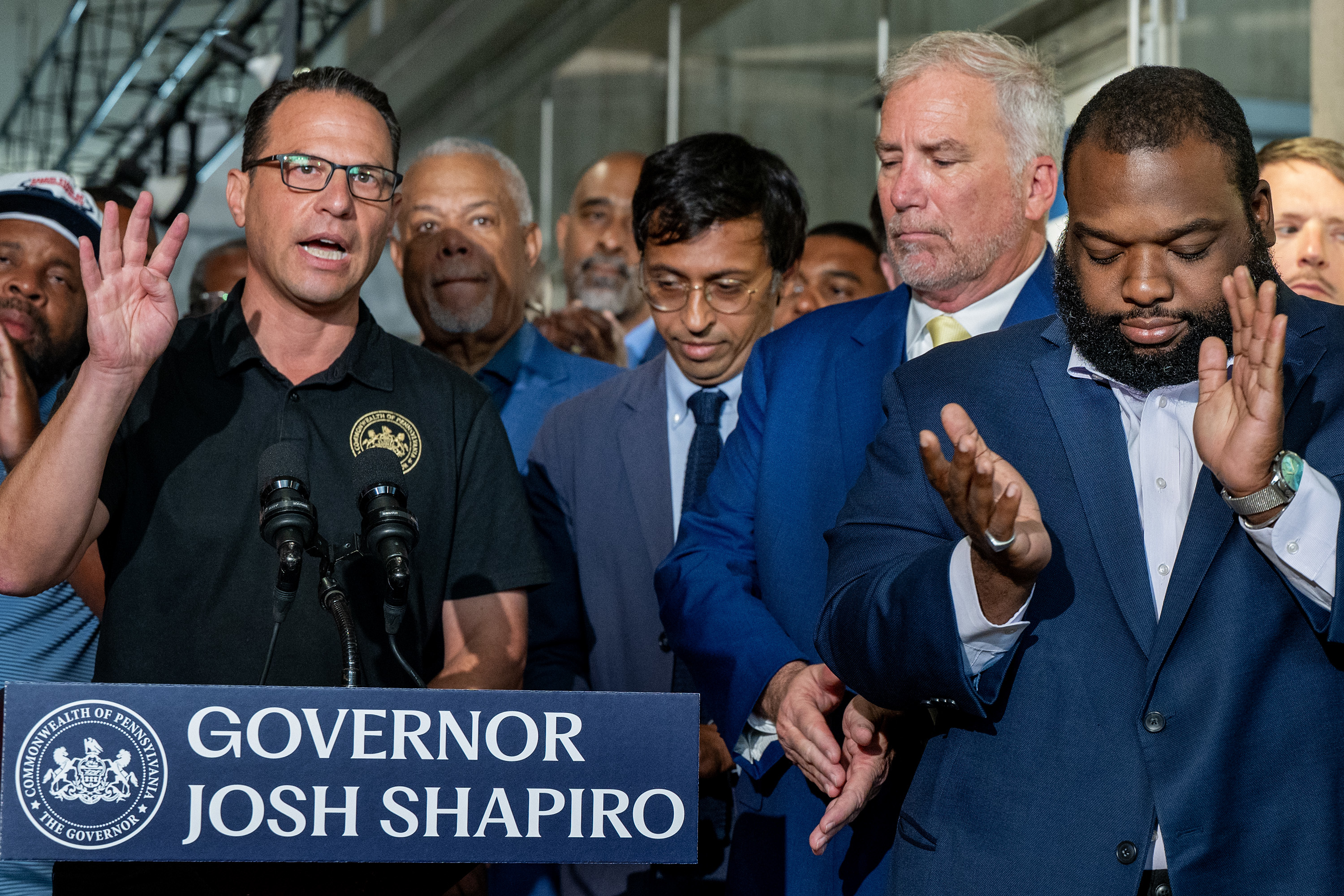
    Gov. Josh Shapiro visits SEPTA headquarters Sunday, Aug. 10, 2025 to discuss funding for the transit agency and to pressure Senate Republicans as planned service cuts are pending because of a budget shortfall. To his right, from left, are state Democratic legislators Sen. Anthony H. Williams; Sen. Nikil Saval; Rep. Ed Neilson; and Rep. Jordan Harris.

    Senate Majority Leader Joe Pittman (R., Indiana), the Senate’s top negotiator, who has met for months in closed-door budget talks with Bradford and Shapiro, said in a statement that it was Democrats who caused the prolonged impasse while demanding they include mass transit funding in the state budget. After mounting pressure as SEPTA enacted major service cuts, Shapiro ultimately sought to fund the agency on his own, and the issue will need to be revisited in two years.

    Garrity, who kicked off her “Help Is on the Way” introductory campaign tour around the state earlier this week, said Wednesday her decision to intervene in the state budget stalemate was not political, despite her burgeoning run against Shapiro. Rather, she said that she had been thinking about a way to do so for months, including ahead of her announcement of her run for governor, and that most Pennsylvanians don’t even realize the state budget is late. She argued that if she wanted to be political, she would not intervene and would “keep the pressure” on Shapiro over the late state budget.

    “I’m standing up here as Pennsylvania’s state treasurer, not as a candidate for governor,” Garrity said from a podium in the Harrisburg building that houses the state Treasury. “I think I have a responsibility to serve Pennsylvanians, that if I have something that I can do to provide some relief, then I should do it.”

    However, that didn’t stop Garrity from inviting Montgomery County Commissioner Tom DiBello — the lone Republican on the board where Shapiro once served — to the podium at the news conference to deliver some direct criticisms of Shapiro and to praise Garrity’s intervention as a “lifeline” for counties, alongside two other GOP county commissioners from south-central Pennsylvania. While Montgomery County remains one of the wealthiest counties in the state, the late budget has required Pennsylvania’s third-most-populous county to spend down its reserves, money that it usually relies upon to continue earning interest as part of its annual revenue, DiBello said.

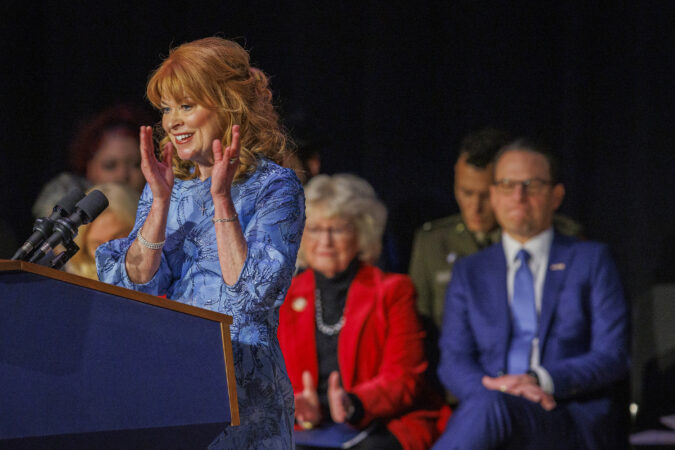
    Pennsylvania Treasurer Stacy L. Garrity gives her acceptance speech after receiving the PA GOP’s endorsement for her campaign for governor during the Republican Party of Pennsylvania’s 2025 Fall Meeting at the Penn Stater Hotel & Conference Center in State College on Sept. 20.

    “It starts at the top. The governor is responsible,” DiBello said. “He’s got to pull it together. It’s his signature at the end of the day.”

    In response to Garrity’s announcement Wednesday, Montgomery County Commissioners Neil Makhija and Jamila Winder, both Democrats, said in a statement that the county needs a final state budget instead of a short-term loan program, urging Senate Republicans to “do their job.”

    “A short-term loan at 4.5% interest is the state profiting from a problem of their own making, at the expense of the taxpayers,” the two commissioners added.

    DiBello said he did not believe his invitation to Wednesday’s event had political motivations, adding: “I didn’t even think of that.” He also noted that he has come to Harrisburg to advocate on behalf of counties multiple times before.

    Senate President Pro Tempore Kim Ward (R., Westmoreland), who has been one of Shapiro’s biggest critics since his first budget in 2023 and was quick to support Garrity’s candidacy, prodded at Shapiro’s pledge to “get stuff done” while praising Garrity’s leadership.

    “Today, Treasurer Stacy Garrity made a bold move that shows what ‘get stuff done’ actually looks like,” Ward said in a statement. “Treasurer Garrity’s leadership is on display as her solution-driven option is exactly what we need, but has been glaringly missing from the present administration.”

    Garrity said at the news conference Wednesday that she offered the loan program specifically to Head Start programs and county governments’ human service departments because both had asked her to help them get through the budget impasse. The state budget was due by July 1, and Pennsylvania is the only state besides Michigan that has not yet passed its budget. She said she is willing to offer similar loans to schools or other state-subsidized or funded programs as requested.

    The Pennsylvania General Assembly can forgive the interest accrued by counties taking out loans during the budget impasse, Garrity said, adding that she would support legislation that does so.

    This suburban content is produced with support from the Leslie Miller and Richard Worley Foundation and The Lenfest Institute for Journalism. Editorial content is created independently of the project donors. Gifts to support The Inquirer’s high-impact journalism can be made at inquirer.com/donate. A list of Lenfest Institute donors can be found at lenfestinstitute.org/supporters.

  • Judge almost shuts down the city’s Kensington wellness court over mounting frustration with Parker administration, sources say

    Judge almost shuts down the city’s Kensington wellness court over mounting frustration with Parker administration, sources say

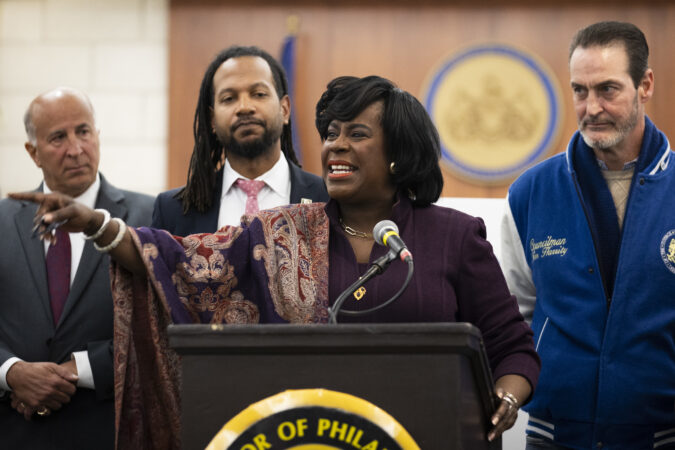
    The city’s new Neighborhood Wellness Court initiative has been placed on hold amid growing concern from the leadership of Philadelphia‘s courts and judges’ mounting frustration with the city officials tasked with overseeing the program.

    Wellness court, which Mayor Cherelle L. Parker’s administration launched in January as a fast-track way to arrest people in Kensington for drug-related offenses and get them into treatment, has not taken any new cases over the last three weeks, city officials said.

    Supervising Municipal Court Judge Karen Simmons was nearly ready to shut the program down over frustration with the lack of coordination and communication from the Parker administration with the courts and other city agencies involved, according to sources with knowledge of conversations about the program.

    Simmons was concerned that the city was treating people arrested in some neighborhoods differently from others, and that there was inconsistency in how the program was tracking its data and determining who should be eligible for treatment, according to the sources, who spoke on the condition of anonymity to discuss private conversations.

    Simmons ultimately gave the city time to fix those issues, asking that officials put together a written manual and streamline the paperwork and intake procedures to ensure fairness, the sources said. The city is expected to make those adjustments so police can resume making arrests and bringing people through the program next week.

    A spokesperson for the courts declined to comment and referred questions to the city.

    Chief Public Safety Director Adam Geer oversees the office that runs Neighborhood Wellness Court in Kensington.

    Chief Public Safety Director Adam Geer, who oversees the city office that runs wellness court, said the delays were related to “administrative protocols” that needed to be resolved but declined to provide specifics.

    Geer said that he expects the program to return to normal operations next week and that the city “is fully committed to successfully implementing and sustaining the Neighborhood Wellness Court model.”

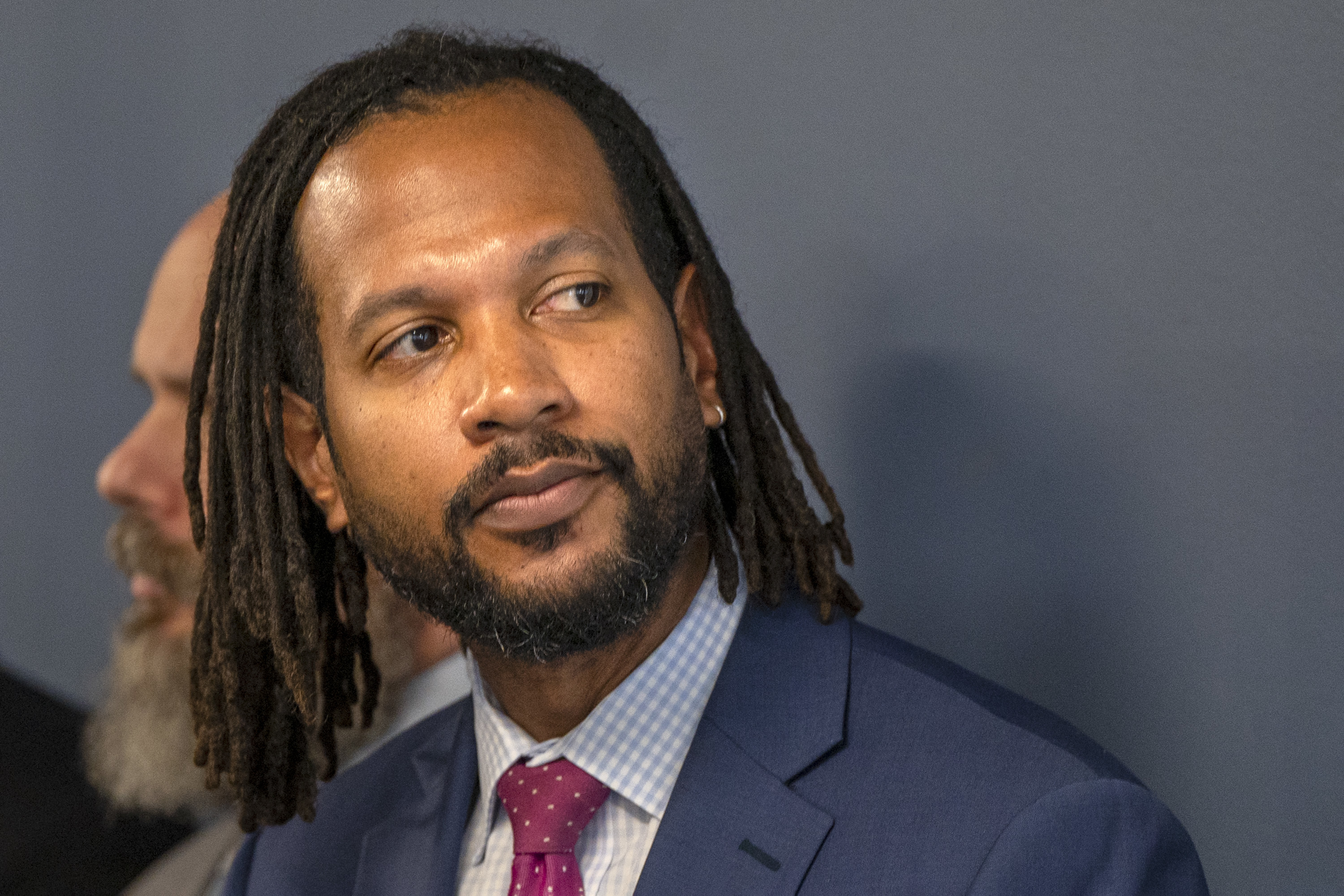
    Joshu Harris, the city’s deputy director of public safety, is no longer overseeing the program‘s operations, the sources said, and Deputy Mayor Vanessa Garrett Harley is now involved.

    “As with all new pilot programs of this kind, adjustments will continually be made to improve operations as time moves forward,” city spokesperson Joe Grace said Thursday.

    The pause comes amid long-simmering tension between the courts and the city over how the program was launched, sources said. Leadership of the Philadelphia District Attorney’s Office, the Defender Association of Philadelphia, and even the judges tasked with overseeing the court were largely excluded from the city’s plans for the program and how it would operate, sources said. They have felt like the Parker administration did not want their input.

    That conflict spilled into open court this month. Municipal Court Judge Henry Lewandowski III, who has presided over most of the wellness court cases so far, said at a hearing in early April that certain politicians in the city think they can “just wave a wand” and fix Kensington’s long-standing drug problems.

    “I care way more than they ever will. They’re fake,” he said, adding that officials are trying to build new programs just so they have something to take credit for.

    “If I said what I wanted to say,” he said, “I’d have to resign.”

    His frustration was clear again Thursday as he oversaw more than 100 summary offense cases, most for fare evasion amid SEPTA‘s new crackdown on turnstile jumping.

    “Who knows what program they’ll start by next week,” he said. “Every Wednesday, there’s new stuff, new programs, new procedures. … I’ve never been more confused, I’ve never been more uncertain what my job is.”

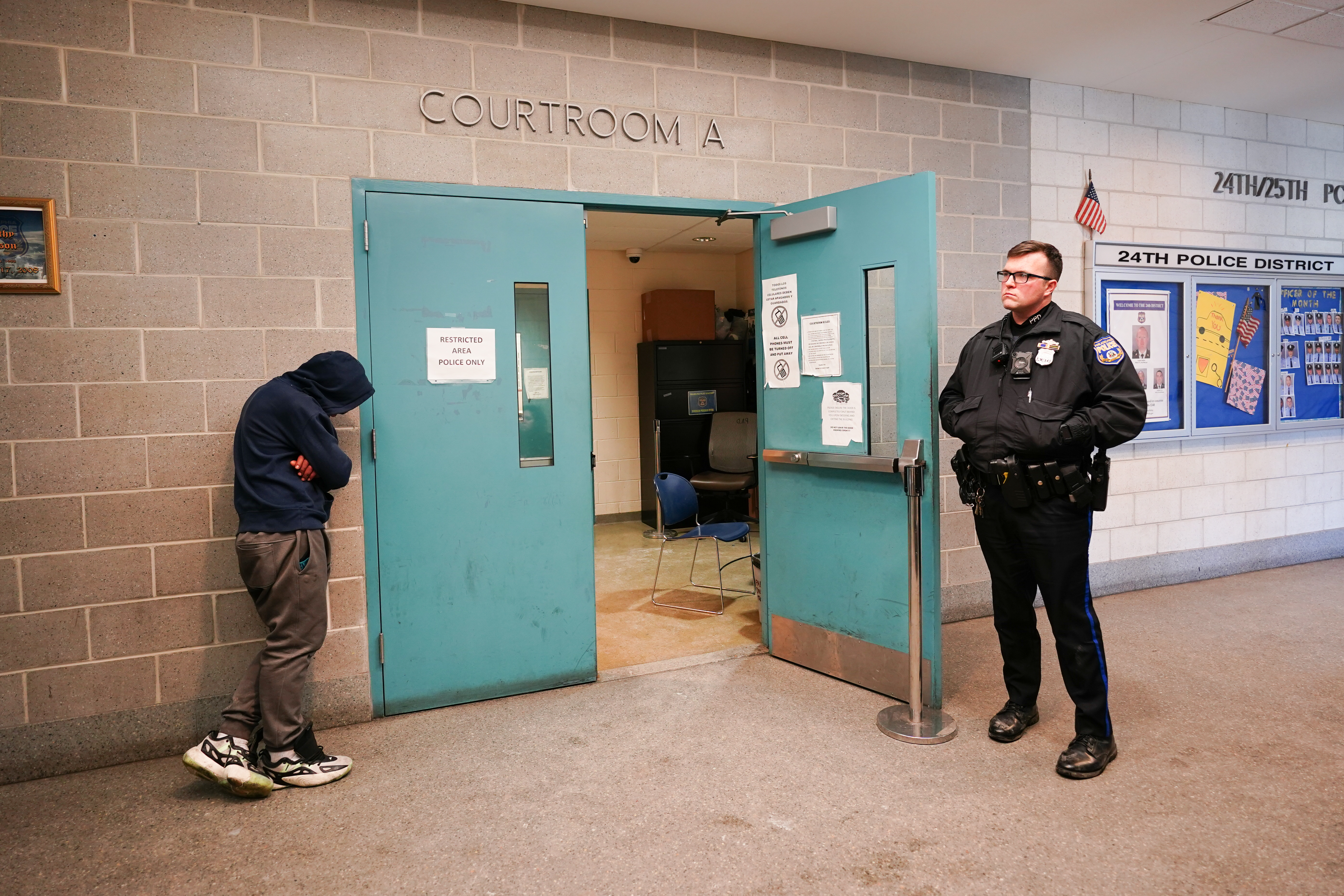
    Wellness court takes place every Wednesday inside a courtroom at the 24th / 25th Police District.

    Wellness court is a signature part of Parker’s plan to shut down Kensington’s notorious open-air drug market and restore quality of life for neighborhood residents.

    The court runs on Wednesday afternoons. First, in the morning, police conduct sweeps of the Kensington area and arrest people in addiction for offenses like sleeping on the sidewalk, gathering around an outdoor fire, or stumbling into the street. They are typically charged with summary offenses like obstructing highways.

    Those arrested are then brought to the Police-Assisted Diversion program building on Lehigh Avenue, where they are evaluated by a nurse and an addiction specialist. Officials also attempt to address any outstanding arrest warrants, and connect them with a court-appointed attorney hired by the city to discuss their rights.

    Finally, they are brought before a judge — Lewandowski has heard most cases so far — inside the nearby police district. They are offered the opportunity to immediately go to rehab or face a summary trial for their alleged crimes. Those who opt to go into treatment and complete the program and terms set by the city will later have their cases dismissed and expunged.

    Few in the program have asked for a same-day trial. Those found guilty have so far been ordered to pay fines and court fees ranging from about $200 to $500.

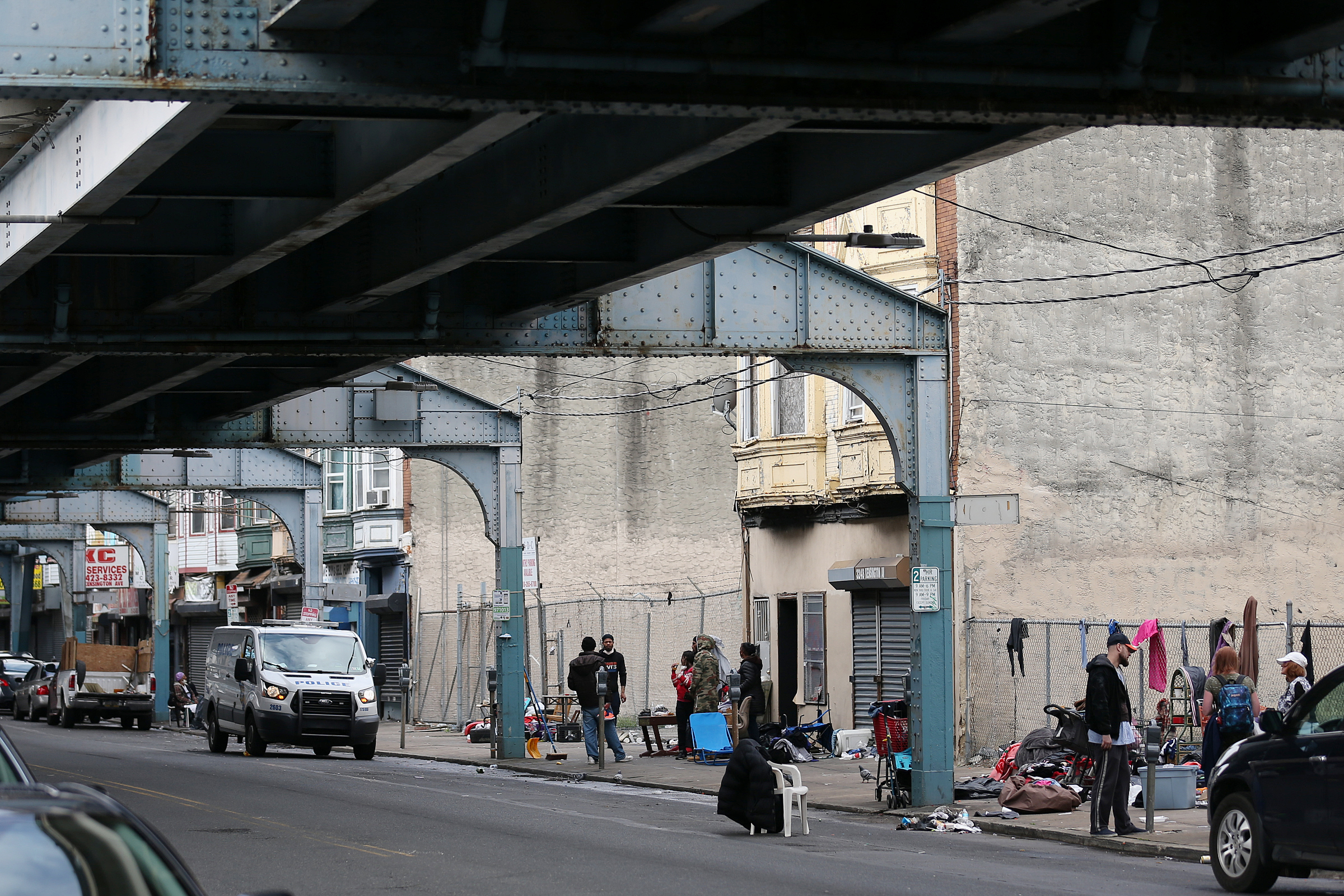
    Homelessness and public drug use is widespread in Kensington, the heart of the city’s open-air drug market.

    Of the more than 50 people who have come before the court so far, only two had successfully completed treatment as of early April, according to data collected by The Inquirer. The vast majority brought through the program almost immediately leave treatment and do not appear at follow-up hearings, the data show.

    The city has declined to share data on wellness court, including with City Council at a recent budget hearing, saying that it is too early to judge the program on numbers alone and that more time is needed to see results.

    But the Parker administration said it wants to expand the court and needs more funding for it to succeed. At a recent budget hearing, Geer asked City Council for an additional $3.7 million to operate the court five days a week and hire additional staffers.

    The goal, Geer said, is to build a system where people suffering on the streets can immediately be connected with treatment and resources, avoid going to jail, and get housing through the city’s new Riverview Wellness Village. Geer has said that the program will never have a 100% success rate, but that every “touch” the program has with people in addiction increases their likelihood to eventually go into treatment.

    But the First Judicial District has said wellness court will not be expanding anytime soon, according to sources.

    Civil rights advocates have raised constitutional concerns over the program. In a letter to the Parker administration, the Pennsylvania chapter of the American Civil Liberties Union said the program could pose a threat to drug users’ rights and questioned whether the city could force people to make consequential legal decisions while potentially under the influence of narcotics.