Category: Pennsylvania Politics

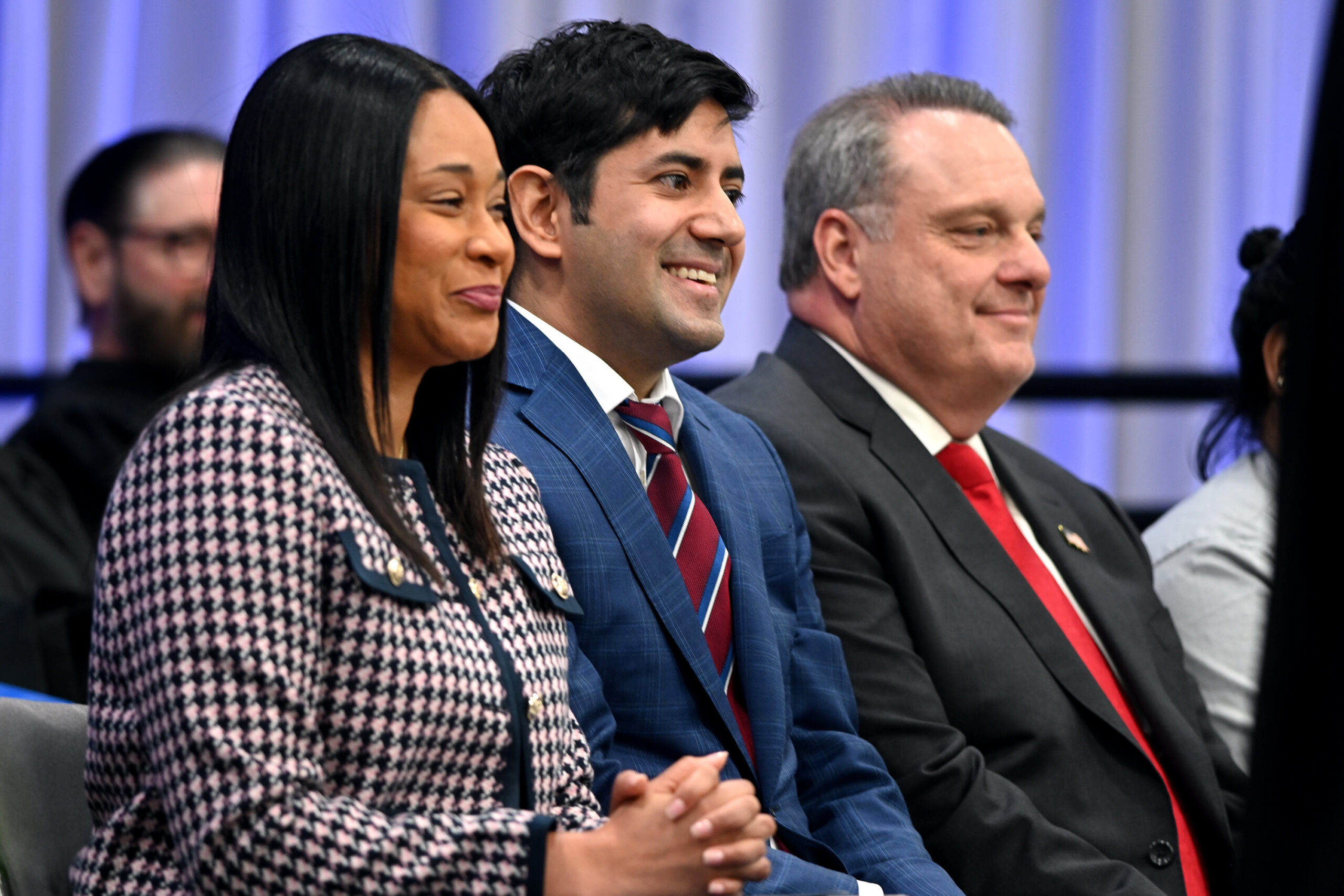
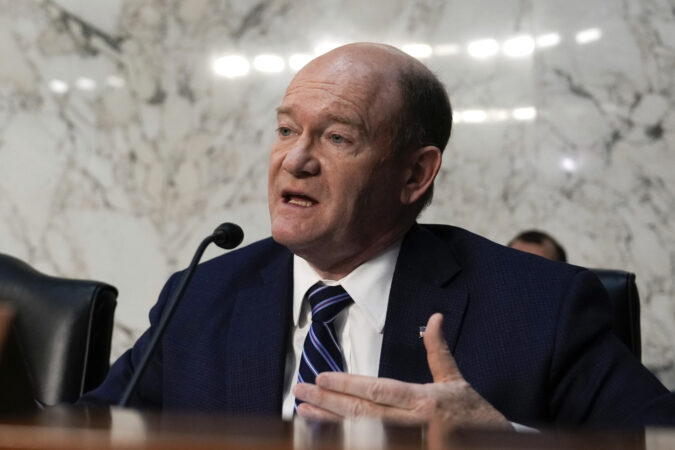
  • Sen. Chris Coons and U.S. Rep. Madeleine Dean are headed to Denmark as Trump pushes to acquire Greenland

    Sen. Chris Coons and U.S. Rep. Madeleine Dean are headed to Denmark as Trump pushes to acquire Greenland

    As President Donald Trump threatens to acquire Greenland, Sen. Chris Coons is boarding a plane to Denmark to push back.

    Coons (D., Del.), who opposes the president’s takeover proposal, is bringing a bipartisan group of House and Senate members on a mission to highlight the longstanding relationship between the U.S. and Denmark, which has control over defense and foreign policy in the semi-autonomous territory, located northeast of Canada.

    Coons said in an interview Wednesday that the delegation will meet with Danish and Greenlandic government and business leaders to discuss issues including Arctic security and strengthening trade relations.

    “Denmark has been a strong close and trusted ally for decades and this is a chance for a bipartisan and bicameral delegation from Congress to go and communicate our respect and appreciation for their close partnership,” he said.

    He said he hopes the visit clarifies “there are folks in Congress who do not support an aggressive engagement.”

    Coons noted Danish soldiers fought alongside Americans in Iraq and Afghanistan and suffered some of the highest casualties per capita. The delegation will lay a wreath to commemorate that sacrifice on their trip.

    Joining Coons will be Democratic U.S. Reps. Sarah McBride of Delaware, Madeleine Dean of Pennsylvania, Gregory Meeks of New York, and Republican Sen. Thom Tillis from North Carolina. The delegation will be in Copenhagen Friday and Saturday. Some members of the delegation will continue on to the World Economic Forum in Davos, Switzerland.

    Trump has threatened to annex Greenland, a self-governing territory of Denmark, into the United States, contending it’s an issue of national security to prevent Russia or China from taking it over.

    Coons called that rationale “puzzling,” given leaders of Greenland and Denmark have assured him on previous visits that they are happy to collaborate with the U.S. to amp up American military presence in the country and work together on arctic security issues or to explore investments in mineral resources.

    “I asked are you aware of any foreign threats, cyber, or other incursions?” Coons said of a previous conversation with Denmark Minister of Foreign Affairs Lars Løkke Rasmussen. “Nope, none.”

    Leaders in Greenland this week said they wanted the territory to remain part of the kingdom of Denmark.

    “Greenland does not want to be owned by the USA,” Greenland’s Premier Jens-Frederik Nielsen said at a news conference Tuesday in Copenhagen. “Greenland does not want to be governed by the USA. Greenland will not be part of the USA. We choose the Greenland we know today, which is part of the Kingdom of Denmark.”

    Denmark officials have warned an attack on Greenland, which is part of Denmark and thus under the protection of the North Atlantic Treaty Organization, would destroy the alliance, which has been a pillar of U.S.-European relations since 1949.

    Trump has been seemingly undeterred by foreign protestations. He said on social media Wednesday that “anything less” than U.S. control of Greenland is “unacceptable,” arguing the United States needs the territory for national security purposes, which could in turn strengthen NATO.

    “NATO becomes far more formidable and effective with Greenland in the hands of the UNITED STATES,” Trump wrote in a Truth Social post. “Anything less than that is unacceptable.”

    Dean, who also went on a trip to Denmark in April, said in an interview she hopes to convey “the president’s notion is wrongheaded, dangerous, inane and not something we support.”

    Dean said if the president wants to boost security in Denmark he might consider increasing the number of U.S. military bases there, which has precipitously declined, rather than trying to take control of the country.

    Dean also encouraged her Republican colleagues to speak out against the president’s comments.

    “If somehow this president unleashes military action against Greenland, against the kingdom of Denmark — it will destroy 80 years of a NATO partnership that has kept the world in a more peaceful place,” she said. “It’s just a sick irony that this is the same president who so wishes he could win the Nobel Peace Prize.”

    Vice President JD Vance and Secretary of State Marco Rubio hosted the foreign ministers of Denmark and Greenland Wednesday, a meeting that ended with plans for a working group but also highlighted the “fundamental disagreements” between the nations.

    Coons and Dean’s trip comes as tensions have risen internationally.

    The government of Greenland and Denmark’s Ministry of Defense said there would be an increased military presence in the territory starting Wednesday due to “security tensions,” CNN reported.

    Elsewhere, European leaders continue to reject Trump’s calls to control the semi-autonomous territory. French President Emmanuel Macron warned Wednesday that the consequences of the US trying to seize Greenland from Denmark would be “unprecedented.”

  • Bucks County sheriff terminates controversial alliance with ICE, prohibits deputies from asking about immigration status

    Bucks County sheriff terminates controversial alliance with ICE, prohibits deputies from asking about immigration status

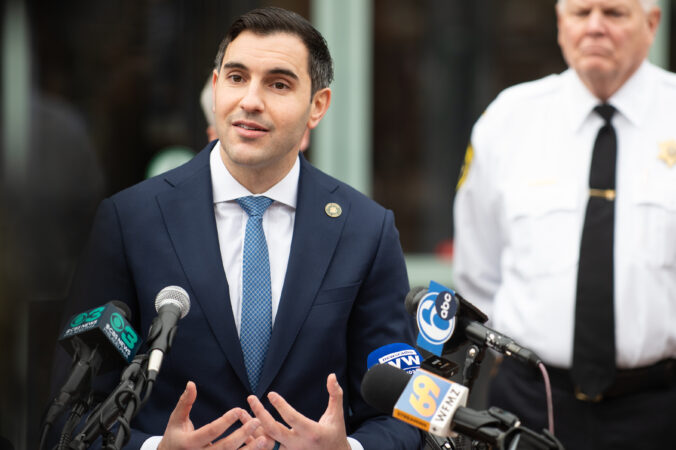
    Bucks County Sheriff Danny Ceisler terminated his office’s controversial partnership with ICE Wednesday, citing negative impacts on public safety and immigrants’ trust of law enforcement.

    The partnership, known as a 287(g) agreement, which enabled 16 sheriff deputies to act as immigration enforcement, was initiated by former Sheriff Fred Harran, the Trump-aligned Republican who Ceisler defeated in November.

    Ceisler said Wednesday that he signed two orders, one revoking the 287(g) partnership, and another that prohibited deputies from asking crime victims, witnesses, and court observers about their immigration status.

    “Bucks County is home to over 50,000 immigrants … those immigrants are our neighbors,” said Ceisler, a Democrat who took office last week, during a news conference outside of the Bucks County Justice Center Wednesday. “They are our friends. They are taxpayers and they deserve the protection of law enforcement in this community.”

    Ceisler’s decision to terminate 287(g) was expected, but his announcement comes amid a nationwide reckoning over federal immigration agents’ deployments to U.S. cities as ordered by the Trump administration. Protests against U.S. Immigration and Customs Enforcement escalated across the country, including in Philadelphia, after an ICE agent shot and killed a woman in Minnesota last week.

    Wednesday’s decision “has nothing to do with what’s going on in Minneapolis,” Ceisler said.

    Other officials in the region have spoken out directly in response to the Minnesota incident. Philadelphia Sheriff Rochelle Bilal’s comments calling ICE “fake, wannabe law enforcement” went viral.

    Ceisler, on Wednesday, called Bilal’s comments “completely counterproductive, and said she was the “wrong messenger for them.”

    The Bucks sheriff was adamant Wednesday that his order does not make Bucks County a so-called sanctuary jurisdiction, which have been increasingly targeted by President Donald Trump.

    The president announced Wednesday morning that on Feb. 1 he would cut off federal funding to states that have cities with sanctuary policies, which prohibit local law enforcement cooperation with ICE. Ceisler’s directive prohibits sheriff deputies from acting as immigration authorities, but does not cut off the county’s cooperation with ICE.

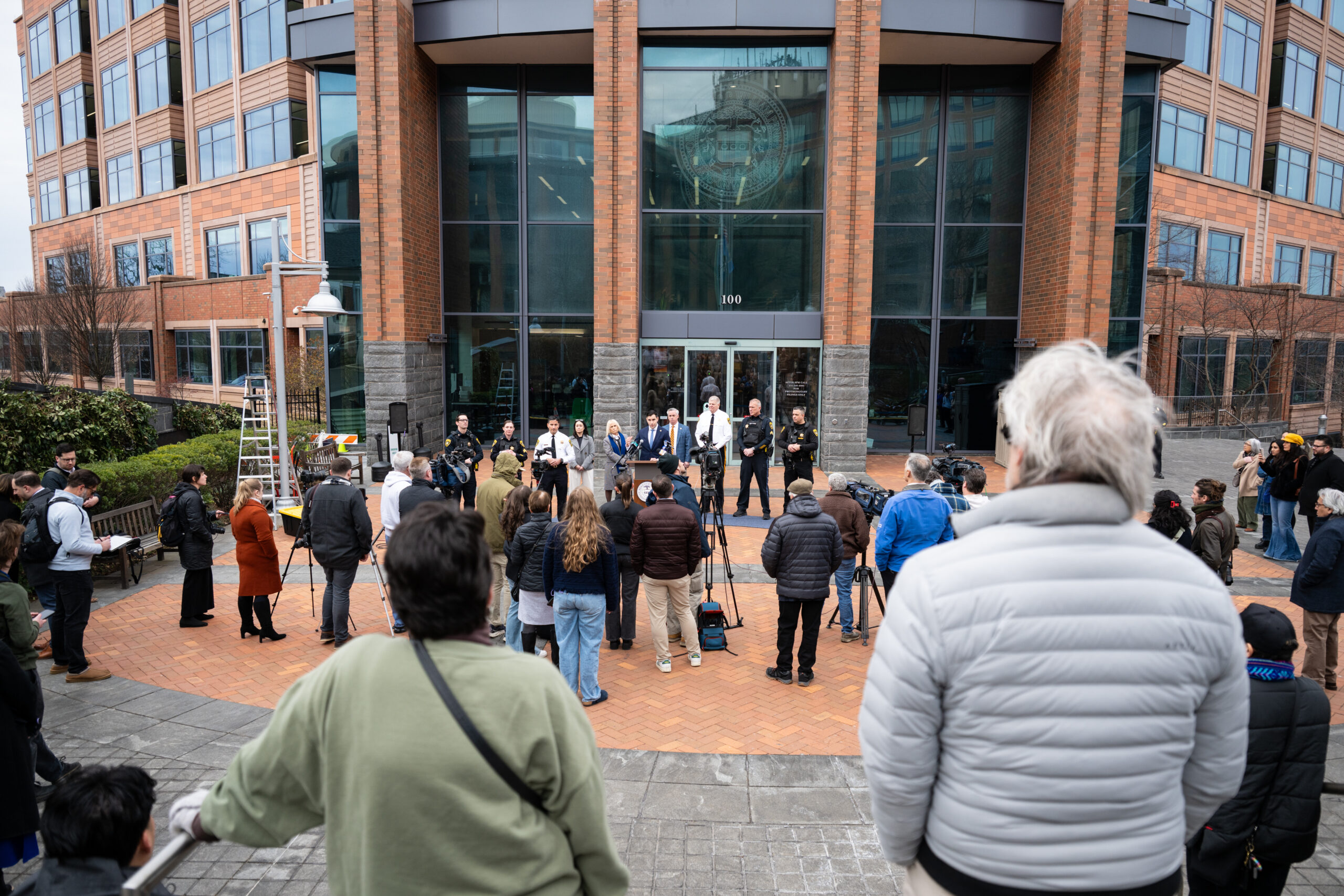
    People and press gather at a press conference announcing the termination of Bucks County’s partnership with ICE.

    “Bucks County has not, has never been, and will never be a so-called sanctuary county,” Ceisler said. “Our county has not severed all ties with ICE, nor precluded future partnership with ICE when it comes to dangerous criminals. Instead, we are returning to a level of partnership we’ve been operating under for decades.”

    Bucks was the only county in the Philadelphia area that wasn’t named as a sanctuary jurisdiction by the Trump administration last year when it rolled out an initial list of state and local governments in danger of losing funding — which was later deleted. Officials from the other collar counties disputed the designation at the time.

    Democratic Gov. Josh Shapiro downplayed concerns about Trump’s Feb. 1 funding threat during a Wednesday appearance at the Pennsylvania Farm Show in Harrisburg.

    “We don’t pay attention to the bluster, we pay attention to what’s written in the directive,“ Shapiro told reporters. ”Pennsylvania’s not a sanctuary state. I would anticipate us not losing funding at the state level unless they wanna be punitive.”

    The sheriff said that the county Department of Corrections will continue to share information with law enforcement agencies, including ICE. Federal immigration agents will also continue to have access to county jails and honor judicial warrants to hold individuals who are incarcerated for immigration enforcement.

    The motivation for the sheriff’s orders Wednesday were in response to “heartbreaking feedback” from Bucks’ immigrant community that they were afraid to report crimes or engage with law enforcement, Ceisler said

    “To the members of our immigrant communities, you are safe to call 911, you are safe to report crime and you are safe to come into this courthouse and testify,” Ceisler said.

    Heidi Roux, an immigration advocate, said her “community is breathing a collective sigh of relief” by ending the 287(g) agreement, but noted that continuing to partner with local law enforcement is crucial to public safety.

    “I believe criminal activity can be addressed while simultaneously supporting the human rights and dignity of our residents,” Roux said.

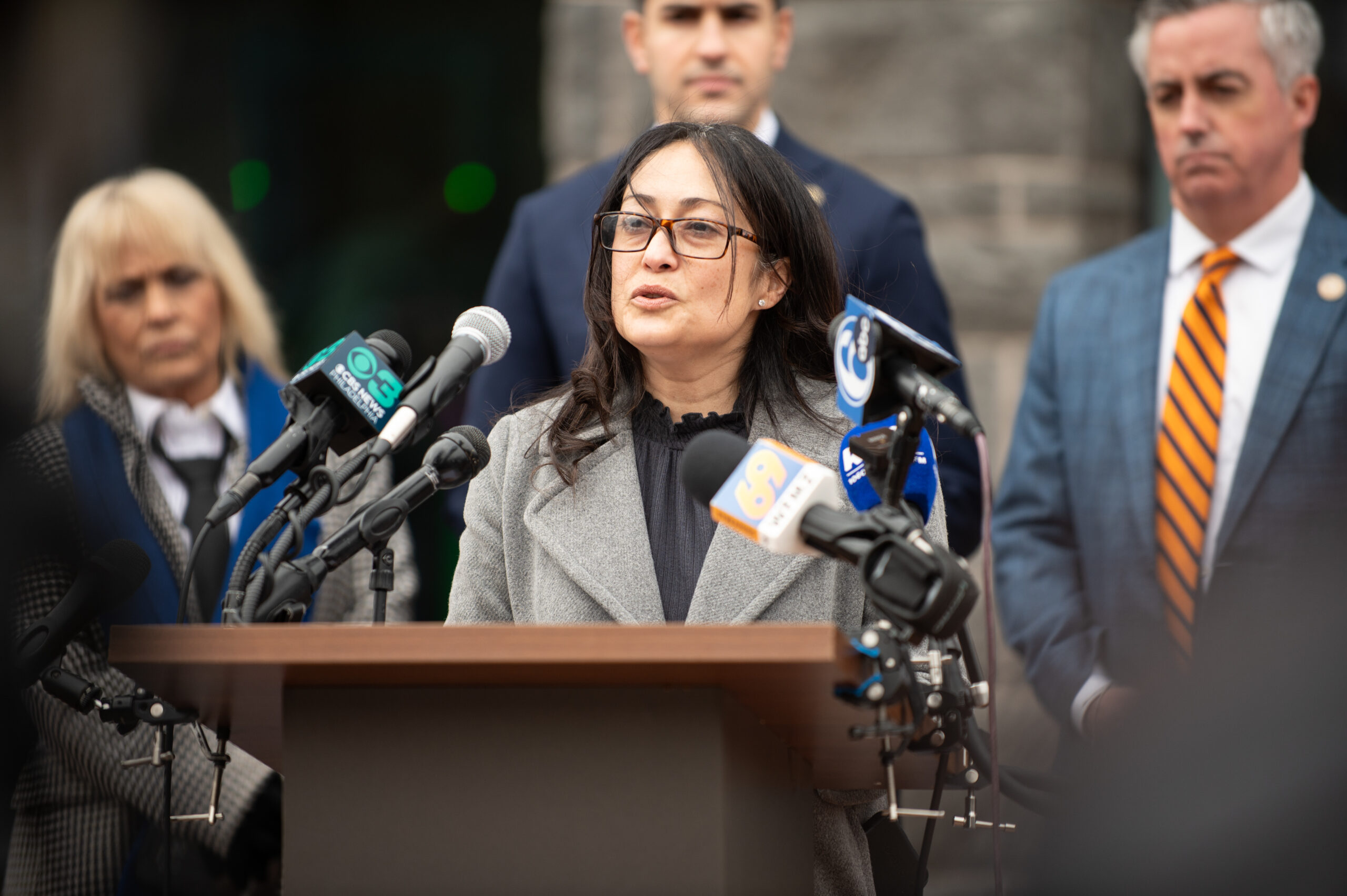
    Heidi Roux, executive director at Immigrant Rights Action, speaks at a press conference about the termination of Bucks County’s partnership with ICE.

    The 287(g) affiliation stirred up controversy when then-Sheriff Harran announced the department’s alliance with ICE in April of last year. The agency had 455 agreements with police authorities in 38 states across the country.

    Since then the number has exploded, to 1,318 in 40 states, with 11 additional agreements pending as of Monday, according to ICE.

    ICE says the program helps protect American communities, a force-multiplier that adds strength to an agency workforce that numbers about 20,000 nationwide. Opponents, however, insist that turning local officers into immigration agents breaks community trust with the police and puts municipal taxpayers at risk of paying big legal settlements.

    In Pennsylvania, the number of participating agencies has grown from 39 in September to 52 today.

    Seven states, including New Jersey and Delaware, bar the agreements by law or policy.

    The growth in Pennsylvania and across the nation has been driven by Trump, who has pumped incentive money into the program as he pursues plans to arrest and deport millions of immigrants.

    On Trump’s first day in office in January, he directed the Department of Homeland Security to authorize local police to “perform the functions of immigration officers” to “the maximum extent permitted by law.”

    In the Philadelphia area, Harran’s decision to collaborate with ICE sparked public protests and a lawsuit – and may have cost him his job in a hard-fought November election.

    No one had yet been detained under that program, but opponents saw Ceisler’s election as the last chance to stop the Sheriff’s Department’s alliance with ICE, and the Democrat said he would act quickly to end the alliance.

    The former sheriff said his only goal was to make the community safer, that the department would not conduct random immigration checks or broad enforcement but “those who commit crimes must face the consequences regardless of immigration status.”

    The Democratic-led Bucks County Board of Commissioners warned county employees that they could be personally liable for helping ICE, passing a resolution that said the alliance was “not an appropriate use of Bucks County taxpayer resources.” Democratic Commissioners Diane Ellis-Marseglia and Bob Harvie were at Wednesday’s news conference but did not speak.

    In October, however, Bucks County Court Judge Jeffrey Trauger ruled that Harran’s cooperation with ICE was “clearly lawful under Pennsylvania jurisprudence,” and both “reasonable and necessary” in fulfilling his lawful duty to keep the citizens of Bucks County safe.

    Ceisler said that terminating the agreement is the first step to regaining trust of the county’s immigrant communities. Next, he said, comes getting out into the communities.

    “It’s about letting people know that they are safe,” he said.

    Staff writer Gillian McGoldrick contributed reporting.

  • Stacy Garrity says she’s ‘talking to a lot of people’ about being her running mate. Only two have stepped up.

    Stacy Garrity says she’s ‘talking to a lot of people’ about being her running mate. Only two have stepped up.

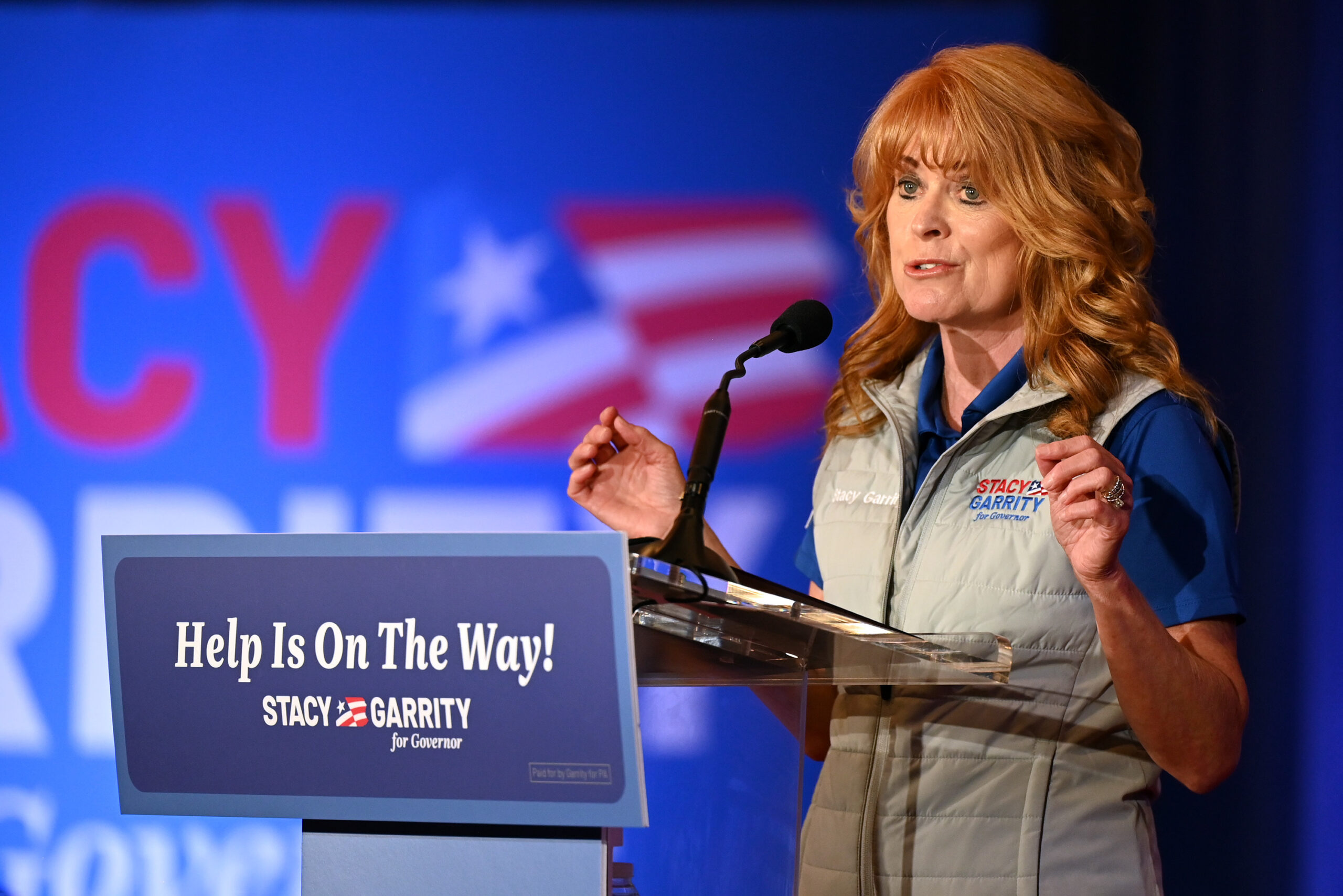
    HARRISBURG — State Treasurer Stacy Garrity has been the Pennsylvania Republican Party’s endorsed candidate for governor since September, but few candidates have stepped up to run alongside her for lieutenant governor.

    Only two candidates have officially thrown their hats in the ring for Republican lieutenant governor, as Garrity faces the uphill battle of running against a popular incumbent in Democratic Gov. Josh Shapiro. And despite amassing unusually early support from the state party, recruiting someone to run as her No. 2 has proven challenging, as some potential candidates have declined to run.

    Garrity said Monday at the Pennsylvania Press Club luncheon she’s in talks with “a lot of people,” and she’s confident she’ll find a running mate “perfect for the ticket.”

    But time is of the essence, as she has less than a month until the state GOP meets for its winter meeting, where the party is expected to endorse a lieutenant governor candidate. Whomever she picks is likely to get the nod.

    “In many respects, it’s up to Stacy Garrity,” said GOP strategist Charlie Gerow. “The lieutenant governor candidate has to not only be a good political fit, but has to be a good personal fit for her. Otherwise, the ticket falls apart before you get to Election Day.”

    So far, the only two GOP candidates to formally announce their campaigns for lieutenant governor are State Sen. Cris Dush (R., Jefferson), who is one of the most conservative members of the Senate GOP caucus, and Bucks County businessman and political newcomer Brian Thomas. Dush said he’d likely pursue the GOP primary nomination even if he isn’t endorsed by the state party, while Thomas announced his candidacy last week in a press release and said he is now reaching out to party leaders seeking their support.

    And more far-right Republicans have publicly floated a run, teeing up a potential battle among some of the state’s most conservative members to run alongside Garrity on the November ballot.

    In Pennsylvania, candidates for lieutenant governor face their own primary races separate from the candidates for governor. After the primary, the winners are joined onto one ticket and run together in the general election.

    Shapiro announced his reelection campaign with his running mate, Lt. Gov. Austin Davis, at two campaign rallies last week. Davis was the nation’s youngest lieutenant governor when he took office in 2023, and the first Black person elected to the state’s executive branch.

    The lieutenant governor’s main duty is to preside over the state Senate and break tied Senate votes on nonlegislative matters, a job that may become more important as Democrats attempt to tie or flip the state Senate in the midterms.

    Former State Rep. Rick Saccone, who previously ran for lieutenant governor and was on U.S. Capitol grounds during the Jan. 6, 2021 riot but did not face criminal charges, has publicly stated his interest in the role. Saccone said he would not enter the race if the state party backed another candidate.

    And State Sen. Doug Mastriano, a far-right Republican who lost to Shapiro in 2022 and last week ruled out a second run for the GOP nomination, later claimed on a local radio station that Garrity would need him as her running mate if she wants to win.

    Few more moderate options have emerged.

    Montgomery County Commissioner Tom DiBello, a Republican from Shapiro’s home county, said in an interview that he had been approached about pursuing the role. DiBello said he received a positive reception when he traveled the state contemplating a run, but he implied Monday that he’d moved on. On Tuesday night DiBello lost his bid to be the next chair of the county party to his former running mate, Liz Ferry.

    “I had a lot of support out there as far as potentially running for lieutenant governor, but I’m right now very dedicated to Montgomery County,” DiBello added.

    A number of other officials are rumored to have withdrawn themselves from consideration or are still in talks with Garrity’s campaign, several Republican insiders said.

    Statewide appeal

    When the state GOP declined to endorse in the 2022 primary in a crowded, nine-person field for governor, Mastriano won the Republican nomination. However, his lieutenant governor pick did not win in a nine-candidate field for the No. 2 role, and he instead ran alongside the voters’ choice, former State Rep. Carrie DelRosso (R., Allegheny). DelRosso was much more moderate compared to Mastriano, and would often sidestep questions about his more extreme views.

    This time around, the sense among Pennsylvania state party members is that Garrity should be given leeway to choose her running mate and party faithful will endorse her choice.

    Many hadn’t even heard who might be in the running. But several Republicans who spoke to The Inquirer said they think Garrity needs to pick someone who will appeal to Democrats and independents who voted for Shapiro four years ago.

    “We’re a purple state, and my sense is a more moderate candidate that appeals to a bigger swath of the electorate would be, if I were selecting, would be a preference here,” said Jason Richey, the chair of the Allegheny County GOP.

    Or, as Val Biancaniello, a Republican state committeewoman from Delaware County, put it, a candidate needs “statewide appeal.”

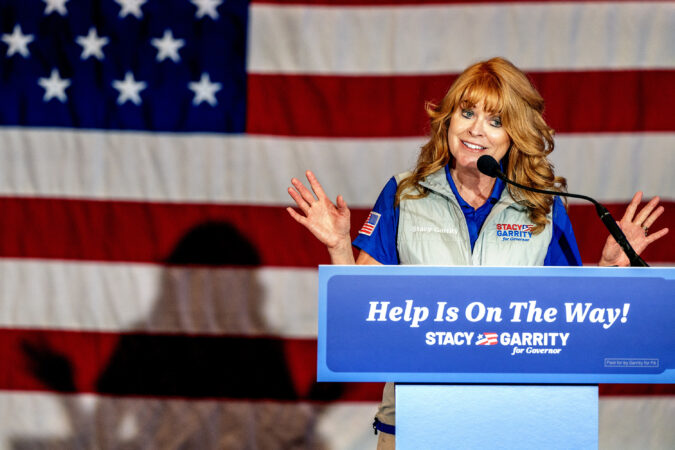
    State Treasurer Stacy Garrity greets supporters following a campaign rally in Bucks County on Sept. 25, 2025. The GOP gubernatorial candidate visited the Newtown Sports & Events Center, in one of Pennsylvania’s top swing counties.

    DiBello argued that Garrity’s running mate needs corporate and government experience, though he refused to name anyone else being considered behind the scenes. Garrity said she believed that DiBello was no longer “in the mix” for the job, but she did not expand further.

    “I’m not putting my finger on the scale,” DiBello said before joking: “I’ve heard this Montgomery County commissioner would be awesome. I’ll put my finger on that scale.”

    Garrity largely declined to comment on the candidates whose names have been circulating for her running mate, except for Mastriano.

    “I didn’t even know he wasn’t running for governor until last week,” Garrity told reporters, noting her friendship with Mastriano. “We’re in discussion with a number of people, and I know that we will have the absolute best partner as lieutenant governor when the time is right.”

    Garrity, who previously denied the 2020 election results and has a history of opposing abortion that she has softened since announcing her run for governor, has sought on the campaign trail to present herself as more mainstream.

    In his campaign launch Thursday, Shapiro tied Garrity to the extremes of her party, asking voters to choose between “getting stuff done” and “chaos.” A far-right running mate will make that message easier for Democrats as they work to secure the governor’s mansion for another four years.

    Despite this, Mastriano was bullish Friday morning speaking on WEEO News Talk 103.7 FM in central Pennsylvania.

    “That’s a possibility,” Mastriano said about a potential lieutenant governor run. “To be honest, that probably [is] the only way to generate some excitement for the Garrity ticket, and we know Garrity being on top of the ticket, that’s probably the only way the party would win if I did that.”

  • A disability rights watchdog group closes investigation into child abuse at Jamison Elementary, citing improvements

    A disability rights watchdog group closes investigation into child abuse at Jamison Elementary, citing improvements

    A disability watchdog group has closed its investigation into child abuse in the autistic support program at a Central Bucks elementary school.

    The group, Disability Rights PA, published an April 2025 report finding that students were abused at Jamison Elementary School and administrators failed to adequately investigate, setting off a firestorm of district investigations, terminations, and lawsuits. The group visited the elementary school in November and noticed improvements to district practices, policies, and personnel, according to a Dec. 19 letter from Andrew Favini, the organization’s staff attorney, to Central Bucks officials. They then closed the investigation.

    In the wake of the initial Disability Rights report, Central Bucks fired former Superintendent Steven Yanni and former Jamison principal David Heineman. Gabrielle McDaniel and Rachel Aussprung, the teacher and education assistant in the classroom who allegedly abused students, have also been terminated, the district said.

    During the November visit, Disability Rights PA found “no new reports of abuse and neglect” after conducting interviews with district staff that teach in or provide support to autistic support classrooms, according to the letter.

    The organization also interviewed new Jamison principal Lauren Dowd and assistant principal Dave Filson, who, according to Favini, appeared “earnest and sincere.” The administrators shared that they spent “significant time” in the autistic support classrooms and that there is new training on mandatory reporting for child abuse and using restraints in classrooms.

    “The changes presented to DRP during the November 21, 2025, visit were substantial and emphasized a focus and dedication to improving the autistic support programs,” Favini wrote in the letter.

    A spokesperson for Central Bucks also said the district’s pupil services program will be audited by the Center for Applied Research and Educational Improvement at the University of Minnesota.

    The evaluation will, among other things, identify areas for improvement and will focus on staffing, student outcomes, and conformity with state regulations, the spokesperson said.

    “The district and school board are committed to continuous improvement and pursuing and implementing multiple strategies to support this effort in all areas,” interim Superintendent Charles Malone said in a statement Monday.

    The April Disability Rights PA report found that McDaniel and Aussprung illegally restrained students in an autistic support classroom and did not report the use of restraints to the Pennsylvania Department of Education. They noted that students also observed or experienced demeaning treatment, nudity, and neglect.

    Room 119, the center of Disability Rights PA’s investigation, is no longer being used as an autistic support classroom at Jamison, Favini wrote in his letter. The class that would typically be in 119 has been relocated to another nearby room that administrators can more directly access.

    While the disability rights watchdog has closed its investigation, Favini noted in the letter that the district must continue to amend necessary policies and “support its staff with heightened awareness of the District’s history.”

    “As always, even though the investigation is closed, DRP will remain vigilant regarding reports of abuse within Central Bucks School District; we anticipate the District will do the same,” Favini wrote.

    Both Yanni and Heineman have appealed their terminations. Alyssa Wright, the district’s former director of pupil services whom Yanni and Heineman pointed fingers at during their public termination hearing in August, has sued the district and eight school board members, alleging that she was a whistleblower who was scapegoated.

    Yanni’s appeal in Bucks County Court of Common Pleas and Wright’s federal lawsuit are still pending, while the state Department of Education has not yet made a decision in Heineman’s appeal.

    Staff writer Abraham Gutman contributed to this report.

  • A Montgomery County office that’s ‘outlived DOGE’ has helped save the suburb $14 million

    A Montgomery County office that’s ‘outlived DOGE’ has helped save the suburb $14 million

    A Montgomery County office — which one county commissioner described as a far less controversial version of Elon Musk’s Department of Government Efficiency — has helped the county find $14 million in savings within the past year and reduce the deficit by half.

    Montgomery County’s Office of Innovation, Strategy, and Performance (OISP), announced in February 2025, spent the last year meeting with department heads to identify areas for cost cutting and streamlining services, such as eliminating almost a dozen vacant positions worth hundreds of thousands of dollars, saving $1.5 million on a prescription benefits provider, and conserving half a million dollars by bringing some county legal services in house.

    In 2026, the office could consider integrating artificial intelligence into county services, with the support of all three commissioners, aimed at cutting red tape for residents and county employees.

    “It’s kind of like DOGE,” said Commissioner Vice Chair Neil Makhija, a Democrat, noting that the office has “outlived” DOGE’s period of high activity when Musk was in charge before he stepped away last spring.

    “We didn’t just take the richest person in the county and tell them to cut, you know, benefits for poor people, which is what the federal DOGE was,” Makhija said.

    Also unlike DOGE — which under Musk’s leadership was responsible for the haphazard slashing of thousands of federal workers’ jobs during the first year of President Donald Trump’s second term — the office does not envision layoffs becoming part of its mission.

    The office’s work comes on the heels of the county’s $632.7 million operating budget and a roughly $25.5 million deficit, resulting in a 4% property tax increase for residents.

    Republicans have made looking for inefficiencies in government part of their brand. But Democratic leaders in Pennsylvania have also started taking on streamlining government. Gov. Josh Shapiro has touted how he’s cut processing time for licenses and accelerated the permitting process for building projects.

    And in blue Montgomery County, a bipartisan group of leaders says that responsible government efficiency should be a pillar of good government, regardless of political party.

    “What happened with DOGE at the federal level was hard to watch and certainly not the approach that we’re going to take in Montgomery County, but, any leader … has to go through this exercise of are we optimizing our resources?
Are we leaving money on the table? Are there opportunities to improve the performance of our people?” said County Commissioner Chair Jamila Winder, a Democrat.


    “Like all of those are just disciplines that are industry agnostic, and so I don’t think it’s a Republican or a Democrat thing,” Winder added.

    Commissioner Tom DiBello, the only Republican on the board, agrees, saying that he has high expectations for the office and its ability to oversee the adequate spending of taxpayer dollars.

    “I mean, that’s our job. It has nothing to do with Republican or Democrat. My feeling, it has to do with taxpayer money,” DiBello said. “We’re supposed to be stewards of taxpayer money.”

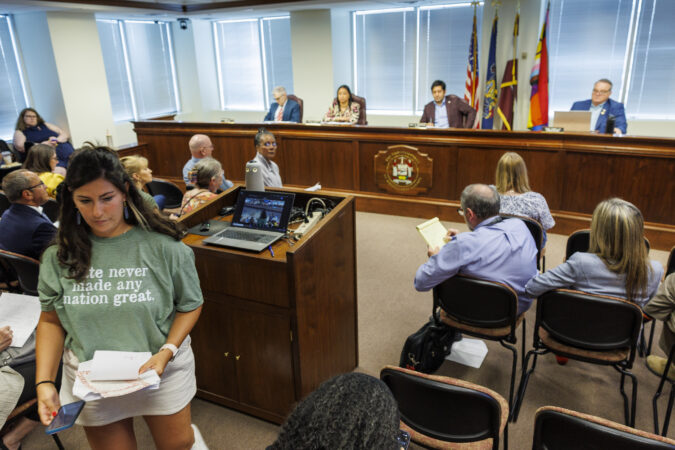
    Jamila H. Winder (from left), Neil Makhija, and Thomas DiBello are seated together on stage at the Montgomery County Community College gymnasium Wednesday, Jan. 3, 2024, during ceremonies before they were sworn in as Montgomery County’s new Board of Commissioners.

    Is artificial intelligence the next step?

    The OISP was launched in February 2025 after the office previously served as the county COVID-19 pandemic “Recovery Office,” ensuring approximately $161 million in funds from the American Rescue Plan Act were being used appropriately.

    When Stephanie Tipton, deputy chief operating officer, was hired in Montgomery County in September 2024 after more than 16 years in leadership in Philadelphia, county officials started discussing how to translate that oversight practice at the “Recovery Office” to every facet of county spending and performance.

    That mentality helped the OISP cut the county deficit in half and focus on ways to reduce it in the long term, such as eliminating longstanding vacant positions around the county, including on the board of assessment, which does real estate evaluations. The office also helped develop performance management standards for departments.

    “What we were really interested in is finding things that we could make repeatable year after year, and that would move forward, whether that was restructuring positions and eliminating vacancies that we don’t carry forward” to doing a trend analysis on spending, said Eli Gilman, project director of the 11-person office. He noted that the team was “kind of building a plane while we were flying.”

    County governments are always trying to be efficient with taxpayer dollars, said Kyle Kopko, executive director of the County Commissioners Association of Pennsylvania, especially in the aftermath of last year’s state budget impasse. But Montgomery County’s decision to have a dedicated office for efficiency is fairly unique, he said.

    “This is something that has become more and more of a focus of counties everywhere just because we’re not sure if we’re going to have the consistency of on-time state funds,” Kopko said.

    The next phase for the office? Cutting red tape for residents. And part of that may be through enlisting artificial intelligence, something the county has been examining through the commissioners’ “Advisory Council on Artificial Intelligence for Public Good” established in April 2025.

    “The goal here is like, how can we leverage this new and emerging technology to help us make it easier for residents to access services,” Tipton said. “Make it easier, reduce the burden on our frontline staff, so they can spend more time in sort of customer-facing, client-facing activities.”

    AI will be something that many counties across Pennsylvania will be grappling with moving forward, Kopko said. Though some counties are wary of using it for sensitive information.

    Everyone has a different idea as to what they would want to see AI used for in Montgomery County.

    Makhija wants to make court documents accessible by chatbot. Winder says she wants to see AI help county employees be more efficient in their roles. And DiBello, who worked in tech software, said as long as accuracy is prioritized, AI could one day be used in situations where residents don’t have to speak directly to someone.

    But first, Tipton said, the county wants to internally test AI tools to “make sure that we have the right sort of governance and guardrails” before launching it to the public.

    When Tipton joined Montgomery County she said she had a “clear mandate from the commissioners” to look at department spending. She also wants it to be a transparent process for residents and the office plans to launch an open data site to the public in the second half of 2026.

    “We want to make sure that moving forward, when we are making investments in the budget we can really understand more clearly how that is impacting service delivery, so we can tie that more directly to work that we’re doing,” Tipton said.

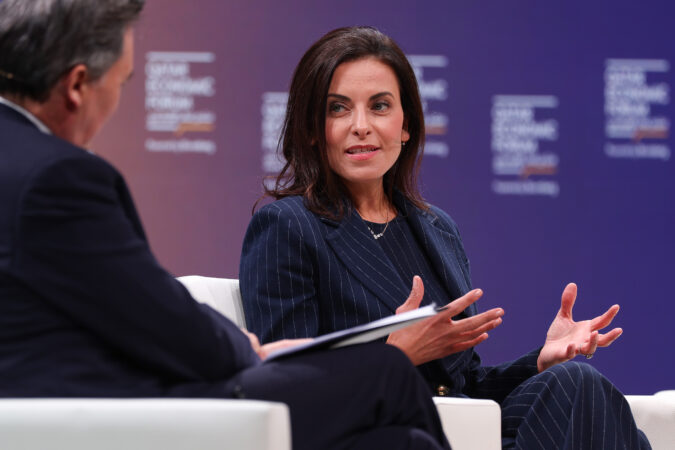
  • Dina Powell McCormick, former Trump official and Dave McCormick’s wife, will be president of Facebook’s parent company

    Dina Powell McCormick, former Trump official and Dave McCormick’s wife, will be president of Facebook’s parent company

    Dina Powell McCormick, a former Trump official and former member of Meta’s board, has been hired as the company’s new president and vice chair, CEO Mark Zuckerberg announced Monday morning.

    “Dina has been a valuable member of our board and will be an even more critical player as she joins our management team,“ Zuckerberg wrote on Threads, one of Meta’s platforms alongside Facebook and Instagram. ”She brings deep experience in finance, economic development, and government.“

    He also noted that she will be involved in all of Meta’s endeavors, but will particularly focused on ”partnering with governments and sovereigns to build, deploy, invest in, and finance Meta’s AI and infrastructure.”

    Powell McCormick has extensive business leadership and government experience. She spent 16 years in different leadership roles at Goldman Sachs, according to her LinkedIn page. Powell McCormick was most recently the vice chair, president, and head of global client services at BDT & MSD Partners, a banking company.

    She worked in the White House and the U.S. Department of State under former President George W. Bush and was deputy national security adviser during President Donald Trump’s first term.

    The move also signifies what appears to be Meta’s intention to create stronger ties with the federal government as it develops artificial intelligence tools. Trump praised Zuckerberg’s decision Monday.

    “A great choice by Mark Z!!! She is a fantastic, and very talented, person, who served the Trump Administration with strength and distinction!” Trump said on Truth Social, his social media platform.

    U.S. Sen. Dave McCormick (R., Pa.), Powell McCormick’s husband, has been heavily involved with AI and tech policy. For instance, he convened an AI summit in Pittsburgh in July 2025 where billions of dollars in planned projects for Pennsylvania were announced.

    The senator is also a member of the Senate Banking Committee and the Subcommittee on Digital Assets, which, among other things, oversees cryptocurrency and stablecoins. Last spring, Fortune reported that Meta could return to the crypto space after scrapping its initial foray, Diem, in 2022.

    McCormick, in a post on X Monday, said he is “incredibly proud” of his wife.

    Asked about how he would mitigate potential conflicts of interest that arose from Powell McCormick’s position, a spokesperson for the senator said: “As he has from day one, Senator McCormick will continue to comply with all U.S. Senate ethics rules and honorably and enthusiastically serve the great citizens of Pennsylvania.”

    Powell McCormick is also the second former Trump official to be hired by Meta in recent weeks, CNBC reported. Earlier this month, Meta said that it had hired Curtis Joseph Mahoney, a former deputy U.S. trade representative, to be its chief legal officer.

  • Gen Z has entered city hall. Meet 4 young Pa. mayors who want to bring new ideas to local government.

    Gen Z has entered city hall. Meet 4 young Pa. mayors who want to bring new ideas to local government.

    This story first appeared in PA Local, a weekly newsletter by Spotlight PA taking a fresh, positive look at the incredible people, beautiful places, and delicious food of Pennsylvania. Sign up for free here.

    Last fall, communities across Pennsylvania elected officials who have yet to turn 30 to one of the most visible local roles: mayor.

    This month, those mayors begin their first terms and their political careers, bringing new perspectives and concerns to local government.

    Spotlight PA spoke to four incoming young mayors — all of them members of Generation Z, by Pew Research Center’s definition (though some noted they feel culturally closer to millennials) — about their ambitions, their platforms, and what drew them to the position.

    While they span the ideological spectrum and have jobs as disparate as coffee roaster and political operative, all want to improve their local governments, and share optimism about the future of their communities.

    Although it’s not unheard of for Pennsylvanians to elect young local leaders, it’s rare. Just 3% of the 866 local elected officials who answered a 2021 Pennsylvania Local Government Commission survey were under 35. The average age of a respondent was about 61.

    Cassandra Coleman, the former mayor of Exeter in Luzerne County who was appointed to her first term at 20, recommended the latest crop make sure they’re “listening and learning” and not coming in too “forceful.”

    “But also,” Coleman added, “I think you have to also weigh that with not being overshadowed and not being kind of pushed to the side because of your age.”

    New perspectives

    Now is an important time to get involved in government and run for office, said Sam Bigham, the new Democratic mayor of Carnegie in Allegheny County.

    “We’re seeing a lot of leaders at different levels not really delivering on their promises or keeping their constituents’ best interest at heart, especially not for young people like me,” he said, pointing to issues like unaffordability and climate change.

    In Pennsylvania, the roles and responsibilities of mayors vary by municipality type. In some cities, the job is powerful and wide-reaching. In boroughs, the mayor’s primary responsibilities are to “preserve order” (i.e., oversee police and respond to emergencies) and enforce local ordinances. They can also break ties among council members.

    It’s often a part-time job, and state law caps salaries based on the size of the borough, though individual municipalities may set pay well below the mandated maximums.

    The mayors who spoke to PA Local all represent boroughs, and acknowledged the limited powers that come with their office. But they hope to lean into the position’s more ceremonial role as a representative of their community — and use it to bring fresh points of view to government.

    Matt Zechman, a Libertarian who was sworn in as mayor of Cleona Borough in Lebanon County this week, said it’s vital for young people to start running for local office and working their way up so they can “change their own future.”

    “It’s a much different time than it was 20, 30, 40, 50 years ago,” he said. “And if we have the same mindset that today’s problems are the same as they were 50 years ago, and we treat them the same way, we’re just going to keep spiraling downward even more.”

    Winning support

    As Bigham went door to door during his campaign, he found “a whole lot of people were actually excited about a young person running for office,” he told PA Local.

    While some were skeptical of his age and experience level, he said he responded by “running a very serious campaign,” listening to people, speaking intelligently about local issues, and making sure all his paperwork was in order.

    Joar F. K. Dahn, the new mayor of the borough of Darby in Delaware County, also said he ran into a “a handful of people that were kind of very against a young person running,” and insisted he “wait his turn.”

    But he stressed that those folks were a vocal minority, and thanked the older adults who’ve guided him and made it “their mission to to mentor the next generation,” which he sees as “contributing to our future.”

    “The young people are going to come, you just got to invite them to the table,” Dahn said. “You got to make them feel like they also belong here, and you got to make sure they understand that their opinions [are] valid.”

    Several of the mayors hope to motivate their peers to run for office or get civically involved in another way.

    “I just want to let everybody know regardless of their background, age, or affiliation, or anything like that, that they do matter,” said Dylan Stevens, a member of the Liberal Party who was elected mayor of the borough of Westover in Clearfield County by a one-vote margin. “If they want to make a difference, just go for it.”

    And it’s “really not as difficult as some people might think” to run for local office, Carnegie’s Bigham pointed out. He collected 10 signatures to secure his place on the ballot, and raised a few thousand dollars — “probably more than what you need in a lot of places,” he said.

    “Obviously, you have to be comfortable putting yourself out there and talking to all different kinds of people,” Bigham said. “I’m a bit more introverted, so sometimes it can get really tiring to have to do that, but it can also be really rewarding.”

    Meet the mayors

    Joar F. K. Dahn of Darby

    Dahn, 28, calls himself Darby’s “biggest cheerleader.” When he was at college, the Bloomsburg University alumnus didn’t tell people he was “from Philly,” like other students from Delaware County would, he told PA Local. He’d say “Darby.”

    Dahn, whose family fled the Liberian Civil War when he was a child, has called Darby home for 20 years. He describes the small borough of 10,749 as a “very close-knit community,” but one that “has its struggles.”

    His dissatisfaction with local leadership motivated him to run for mayor. Working as a political operative for several years, he was inspired by the campaigns he was hired by and felt the officials in Darby weren’t as committed.

    He started looking for someone to throw his support behind — and that person turned out to be himself, Dahn told PA Local. Several residents encouraged him. So he challenged the incumbent mayor in the Democratic primary and ended up winning by 20 points. Dahn ran unopposed in November.

    In his first 100 days, he wants to motivate community members to get more involved in local government and “feel like they’re part of the process.”

    “Sometimes, we’ll have council meetings, and I’m the only resident in the room,” Dahn said. “We have council meetings and there’s literally nobody there. … I want people to understand now that this is a new leadership.”

    Public safety is a big priority for Dahn, who on the campaign trail heard from concerned grandmothers. He hopes to promote a positive relationship between residents and police, and work to reduce gun violence.

    “I need every single grandmom to feel comfortable to walk any single street in Darby,” Dahn said.

    Sam Bigham of Carnegie

    Carnegie’s “old-style” Main Street and strong community connections drew Bigham — a resident since age 10 with deep family roots in the area — back to the borough of about 8,000 after he graduated from Indiana University of Pennsylvania in 2024.

    Now the commonwealth’s youngest active mayor, the 23-year-old had known for years that he wanted to work in government or public service, and his resumé proves it. A former junior councilperson, Bigham also interned for a state representative and a congressman, and worked as a Democratic organizer ahead of last year’s election.

    Early last year, Bigham landed the position of executive director of the Carnegie Community Development Corporation, a nonprofit that aims to support local businesses and boost the area’s attractiveness. He plans to continue in that role alongside his part-time mayoral duties.

    He told PA Local he decided to run after talking with the incumbent, who was planning to step down. A friend from college helped Bigham campaign, and after lots of door-knocking and securing endorsements from several local politicians, he won the Democratic primary with 661 primary votes to his opponent’s 204. (He also won enough write-in Republican votes to be listed under both parties on the November ballot.)

    “I wanted to run on a message of community development and optimism and looking forward to the future,” he told PA Local.

    Bigham’s first-term goals include revitalizing Main Street, improving local infrastructure, updating the borough’s branding, facilitating events between police and residents, and working on sustainability initiatives.

    Matt Zechman of Cleona

    Zechman has worn many hats in his 27 years: volunteer firefighter, EMT, combat medic in Afghanistan, coffee roaster, and father. His latest is mayor of Cleona, a 2,000-person borough he describes as a quiet place with “two traffic lights,” a “really nice playground,” and “a lot of hometown spirit.”

    Although he didn’t see a glaring need for major changes in his community, the lifelong resident ran to bring his skills and a “new perspective” to the role.

    Zechman did much of his campaigning via social media, he told PA Local. Running on the Libertarian ticket, he beat the Republican incumbent by a nearly 2-to-1 margin in the November election.

    As mayor, Zechman wants to implement what he calls “windows-down policing,” a practice he said remembers from his childhood.

    “We would see the police chief and the mayor — they would drive in their vehicle, windows down, going slow, talking to residents, engaging,” Zechman explained. “I knew their names, they knew my name, they knew everyone’s name. And in a town this small, that is very well possible.”

    And even though it’s not part of his job description on paper, he said he also wants to use his bully pulpit to find local business sponsors, seek grant funding, or crowdfund to install flashing pedestrian crossing signs, which he called an “absolute must” for local road safety.

    Dylan Stevens of Westover

    Stevens made a “spontaneous decision” to run for mayor of Westover, a roughly 350-person borough in Clearfield County, just four days before the November election, he told PA Local.

    Raised in a conservative Republican household, Stevens began exploring third parties when he “became disillusioned with the whole political situation” in 2020. He landed on the Liberal Party of Pennsylvania, which was formed as the “Keystone Party” in 2022 by a group of people who believed the Libertarian Party was moving too far right.

    When Stevens, a 26-year-old who’s lived in Westover for 11 years and works at a gas station in another town, realized there wasn’t anyone on the ballot for mayor, he decided to give it a go. He wanted to “do more” in his community and bring more exposure to the Liberal Party, he said.

    Stevens had mostly kept to himself before, so he took a “kids’-lemonade-stand-type-of-approach” to drum up support, he told PA Local. With help from Liberal Party members from out of town, he introduced himself to people outside a general store a few days before the election and did the same on Election Day outside Westover’s polling place. He said reactions ranged from neutral to “OK, well, good luck.”

    Stevens ended up getting 13 write-in votes, a single vote more than the next most popular write-in. According to a Liberal Party news release, his election marked the party’s first mayoral victory in Pennsylvania.

    “Even though I was kind of an unknown, I guess I had the gift of the gab enough to let people know that I wanted to make a difference in my community and I wanted to give it my best effort,” Stevens said. “And for a lot of them, it seemed to be enough.”

    Stevens hopes to work with the borough council to attract businesses and explore alternative water sources. He also wants to poll residents on local issues, revive the borough’s Facebook page, and livestream public meetings to improve access for people who aren’t able to attend in person.
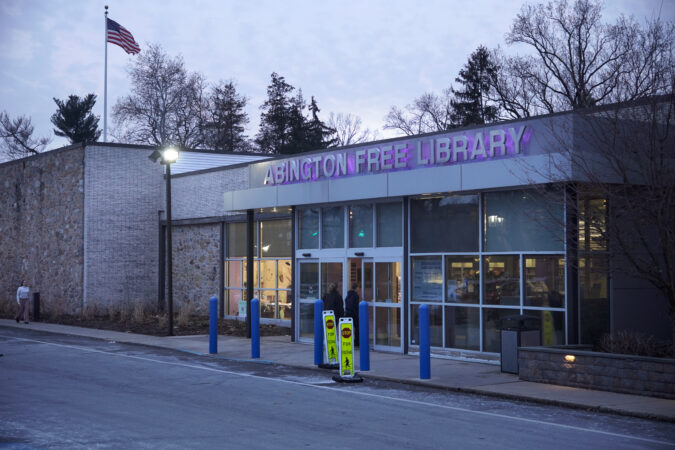
  • Abington Library has offered a safe space for LGBTQ+ kids for years. It’s now the subject of a far-right social media campaign.

    Abington Library has offered a safe space for LGBTQ+ kids for years. It’s now the subject of a far-right social media campaign.

    For more than four years, dozens of LGBTQ+ kids and their families have joined the Abington Township Public Library for Rainbow Connections, a monthly Zoom program, to read children’s books, craft, make new friends, and meet interesting people, such as “Jeopardy!” super champ Amy Schneider.

    But within the past week, the program — the only one of its kind in Montgomery County libraries — has become a target of a right-wing social media campaign that has circulated misinformation and directed threatening language at the program, prompting the library to release a statement Monday setting the record straight, said Library Director Elizabeth Fitzgerald in an interview Tuesday.

    “Rainbow Connections is not a sexual education class. Sexual health, reproduction, puberty, and intimate relationships are not discussed,” the statement said in part.

    Though it’s “not different from any other story time or library program,” Fitzgerald says, Rainbow Connections’ mission is to foster a welcoming and intentional environment for LGBTQ+ kids in grades K-5, including those who may be struggling to make friends at school. Its virtual format has allowed families from around the country to join.

    “Ultimately just a space where the kids could attend a library program and feel safe,” Fitzgerald said.

    Comments attacking the program appeared on the library’s Facebook page early last week. A day later, LibsofTikTok, a controversial far-right social media account founded by Chaya Raichik, as identified by the Washington Post, posted about Rainbow Connections.

    LibsofTikTok, which frequently targets LGBTQ+ people nationwide, spurred misinformed outrage from its millions of followers about the program’s upcoming events.

    The account’s posts have often provoked real-life consequences. In 2024, after posting about the William Way Community Center, an LGBTQ+-focused nonprofit in Philadelphia, Democratic Sen. John Fetterman and former Democratic Sen. Bob Casey signed a letter requesting to withdraw federal funding from a renovation project that would have made the center’s headquarters more accessible and expanded William Way’s programming space.

    “These are difficult times, and I think that the commentary that took off on social media underscores the reason why we need to create spaces where members of the LGBTQ community feel safe,” Fitzgerald said.

    Library staff established the program in November 2021 after a community member reached out and asked if the library would help address a need for a safe space for LGBTQ+ kids.

    According to anonymous comments from families provided by the library to The Inquirer, parents are profoundly grateful for the safe environment that Rainbow Connections has created for their children. Names were withheld by the library to protect families’ safety and privacy.

    “My children live in a two-mom household, so I thought it would be a great program to connect with other kids and possibly see other families that look like ours,” one parent said.

    Another parent said they had “tears in my eyes listening to [the kids] introduce themselves, awed by their bravery and vulnerability.”

    A family who lives in North Carolina said Rainbow Connections helped their child better understand their identity and build community — “Your program brought us light, hope and education when we were feeling isolated, confused and hopeless.”

    The social media ambush against Rainbow Connections comes amid an increasingly hostile environment for the LGBTQ+ community. For instance, President Donald Trump signed an executive order recognizing only two genders, and his administration has proposed a plan to prevent hospitals from offering gender-affirming care to minors.

    In Abington, it’s not the first time that events related to the LGBTQ+ community have been disparaged, said Township Commissioner John Spiegelman, who represents the area where the public library is located. The township’s yearly raising of the Pride flag has provoked a lawsuit against Spiegelman and other members of the board, he said.

    “Is it getting worse here and everywhere? Certainly it is,” Spiegelman said.

    In the aftermath of the social media posts, Fitzgerald said Rainbow Connections will be contacting parents to say the program will continue and that “their safety is ensured.”

    “It is my hope that the children who participate don’t have any idea that this is going on,” Fitzgerald added.

    Since the online backlash, the Montgomery County community has rallied around the library and Rainbow Connections, which has served as a model for other Pennsylvania libraries’ programming for LGBTQ+ youth.

    “More communities should embrace programs like Rainbow Connections,” said Jason Landau Goodman, board chair of the Pennsylvania Youth Congress, an LGBTQ+ advocacy organization, in a statement. “Young students today read books that feature all types of people because diverse stories reflect the real world we live in.”

    “Some students experience bullying or harassment based on who they are — and many still do not get opportunities to see themselves reflected in the stories they learn from,” added Goodman, who is also running for state representative in Montgomery County.

    The Abington Human Relations Commission said in a statement Monday that they stand in “solidarity” with the library and encouraged community members to “seek information directly from reliable sources and to engage in dialogue grounded in respect and understanding.”

    Fitzgerald said that in spite of the derogatory comments snowballing online, the library has been receiving an onslaught of supportive calls and emails.

    “That’s really meant the world to us,” she said. “Just to know that the people who don’t want this program to exist, they’re a vocal, small, nonlocal majority, and that I believe there’s a much larger number of residents who love the library and who care about their neighbors and fellow community members.”

  • The race between Josh Shapiro and Stacy Garrity for Pa. governor has officially begun. Here’s what you need to know.

    The race between Josh Shapiro and Stacy Garrity for Pa. governor has officially begun. Here’s what you need to know.

    Pennsylvania’s race for governor has officially begun. And 10 months before the election, the November matchup already appears to be set.

    Democratic Gov. Josh Shapiro formally announced his reelection campaign Thursday — not that anyone thought he wouldn’t run. And Republicans have rapidly coalesced behind the state party’s endorsed candidate, Pennsylvania Treasurer Stacy Garrity.

    The race will dominate Pennsylvania politics through November, but it could also have a national impact as Democrats hope Shapiro at the top of the state ticket can elevate the party’s chances in several key congressional races.

    Here’s what you need to know about the high-stakes contest.

    The candidates

    Josh Shapiro

    Shapiro is seeking a second term as Pennsylvania’s top executive as he’s rumored to be setting his sights on the presidency in 2028. Just weeks after his campaign launch, Shapiro will head to New York and Washington, D.C., as part of a multicity book tour promoting his memoir.

    Shapiro was first elected to public office in 2004 when he flipped a state House seat to represent parts of Montgomery County. As a freshman lawmaker, he quickly built a reputation of brokering deals across party lines. He went on to win a seat on the Montgomery County Board of Commissioners in 2011, flipping the board blue for the first time in decades.

    Shapiro was elected state attorney general in 2016, a year when Pennsylvania went for Republican Donald Trump in the presidential contest. The position put Shapiro in the national spotlight in 2020 when Trump sought to overturn his loss in the state that year through a series of legal challenges, which Shapiro’s office successfully battled in court.

    He went on to decisively beat Trump-backed Republican State. Sen. Doug Mastriano for the governorship in 2022. Despite an endorsement from Trump, Mastriano lacked the support of much of Pennsylvania’s Republican establishment and spent the election cycle discouraging his supporters from voting by mail.

    Throughout Shapiro’s first term as governor, he has highlighted his bipartisan bona fides and ability to “get stuff done” — his campaign motto — despite contending with a divided legislature. His launch video highlights the quick reconstruction of I-95 following a tanker explosion in 2023.

    In 2024, Shapiro was vetted as a possible running mate for then-Vice President Kamala Harris, who ultimately snubbed the Pennsylvanian in favor of Minnesota Gov. Tim Walz. Harris went on to lose the state to Trump.

    Stacy Garrity

    Garrity is Shapiro’s likely opponent in the general election. She earned an early endorsement from the Pennsylvania Republican Party in September after winning a second term to her current position in 2024 with the highest total of votes in history for a state office, breaking a record previously held by Shapiro.

    She has been quick to go on the attack against the Democratic governor in recent months. Throughout Pennsylvania’s monthslong budget impasse Garrity criticized Shapiro’s leadership style and panned the final agreement he reached with lawmakers as fiscally irresponsible.

    Garrity’s campaign has focused on contrasting her priorities with Shapiro’s, arguing the governor is more interested in higher office than he is in Pennsylvania.

    A strong supporter of Trump, Garrity is one of the only women that has been elected to statewide office in Pennsylvania history. If elected, she would be the first female governor in state history.

    Garrity is a retired U.S. Army colonel who was executive at Global Tungsten & Powders Corp. before she was elected treasurer in 2020. Running a relatively low-key state office, Garrity successfully lobbied Pennsylvania’s General Assembly to allow her to issue checks to residents whose unclaimed property was held by her office, even if they hadn’t filed claims requesting it.

    Anyone else?

    While Shapiro and Garrity are the likely nominees for their parties, candidates have until March to file petitions for the race. That theoretically leaves the possibility of a primary contest open for both candidates, but it appears unlikely at this point.

    Mastriano, who ran against Shapiro in 2022, spent months floating a potential run for governor against Garrity. He announced Wednesday that he would not be seeking the Republican nomination.

    The stakes

    Why this matters for Pennsylvanians

    The outcome of Pennsylvania’s gubernatorial race could hold wide-ranging impacts on transportation funding, election law, and education policy, among other issues.

    The state’s governor has a powerful role in issuing executing actions, setting agendas for the General Assembly, and signing or vetoing new laws. The governor also appoints the secretary of state, the top Pennsylvania election official who will oversee the administration of the next presidential election in the key swing state.

    Throughout the entirety of Shapiro’s first term, he has been forced to work across the aisle because of the split legislature. Throughout that time the balance of power in Harrisburg has tilted toward Democrats who hold the governor’s mansion and the Pennsylvania House. But many of the party’s goals — including expanded funding for SEPTA and other public transit — have been blocked by the Republican-held Senate.

    If Garrity were to win that dynamic would shift, offering Republicans more leverage as they seek to cut state spending and expand school voucher options (while Shapiro has said he supports vouchers, the policy has not made it into any budget deals under him).

    Shapiro’s ambition

    Widely rumored to have his sights set on higher office, Shapiro’s presidential ambitions may rise and fall with his performance in his reelection campaign.

    Shapiro coasted to victory against Mastriano in 2022, winning by 15 points. The 2026 election is expected to be good for Democrats with Trump becoming an increasingly unpopular president.

    But Garrity is viewed as a potentially stronger opponent to take on Shapiro than Mastriano, even though her political views have often aligned with the far-right senator.

    When the midterms conclude, the 2028 presidential cycle will begin. If Shapiro can pull off another decisive win in a state that voted for Trump in 2024, it could go a long way toward aiding his national profile. But if Garrity wins, it could end the governor’s chances of putting up a serious campaign for the presidency in 2028.

    Every other race in Pennsylvania

    The governor’s contest is the marquee race in Pennsylvania in 2026. Garrity and Shapiro have the ability to help or hurt candidates running for Pennsylvania’s statehouse and Congress.

    The momentum of these candidates, and their ability to draw voters to the polls could play a key role in determining whether Democrats can successfully flip four competitive U.S. House districts as they attempt to take back the chamber.

    Democrats also narrowly hold control of the Pennsylvania House and are hoping to flip three seats to regain control of the Pennsylvania Senate for the first time in decades. If Democrats successfully flip the state Senate blue, it would offer Shapiro a Democratic trifecta to push for long-held Democratic goals if he were to win reelection.

    Strong Democratic turnout at the statewide level could drive enthusiasm down-ballot, and vice versa. Similarly, weak turnout could aid Republican incumbents in retaining their seats.

    The dates

    The election is still months away but here are days Pennsylvanians should put on their calendars.

    • May 4: Voter registration deadline for the primary election.
    • May 19: Primary election.
    • Oct. 19: Voter registration deadline for the general election.
    • Nov. 3: General election.
  • Gov. Shapiro asks Pennsylvania voters to choose ‘getting stuff done’ over ‘chaos’ as he kicks off 2026 reelection bid

    Gov. Shapiro asks Pennsylvania voters to choose ‘getting stuff done’ over ‘chaos’ as he kicks off 2026 reelection bid

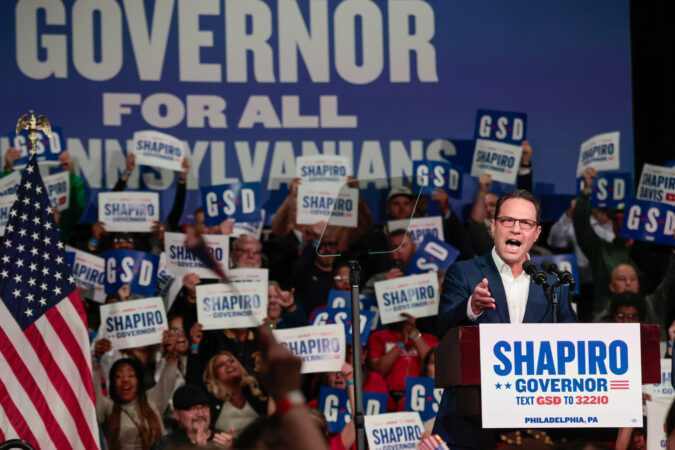
    Pennsylvania Gov. Josh Shapiro officially launched his widely expected bid for reelection Thursday, spending his first day back on the campaign trail in one of the nation’s most politically divided states by touting his achievements for workers, seniors, and schools while contrasting himself against Republicans in President Donald Trump’s Washington.

    The Montgomery County Democrat presented his opening argument to voters Thursday afternoon in a highly produced campaign rally at a Pittsburgh union hall, before appearing Thursday night before Philadelphia voters at the Alan Horwitz “Sixth Man” Center in Nicetown.

    Shapiro, 52, of Abington Township, will pursue his reelection bid by crisscrossing the state, boasting a high approval rating that Republicans hope to damage as talk of his potential 2028 candidacy continues to build.

    Shapiro took the stage in Pittsburgh and Philadelphia following speeches from Lt. Gov. Austin Davis and a parade of public officials, labor leaders, and community advocates who touted his first term accomplishments, all delivering a similar message: Shapiro shows up and delivers for residents across the commonwealth.

    At the Sixth Man Center, supporters and local leaders packed the event space in the youth sports center where Shapiro delivered a speech next to a huge mural of 76ers star Joel Embiid. Shapiro joked about his midrange jumper as he praised the center’s work.

    “I am proud to be here on today to say that Josh Shapiro as governor of the commonwealth has delivered for us in a way that some thought … was impossible,” said Philadelphia Mayor Cherelle L. Parker to an excited crowd.

    The rollout signaled Shapiro’s campaign will be anchored in his administration’s motto, “Get S— Done,” emphasizing that state government should be able to solve residents’ problems effectively.

    “You deserve someone who goes to work every day focused on you and on getting stuff done,” Shapiro said.

    He is not expected to face a primary challenger, just like in 2022, when he later cruised to victory in the general election against far-right State Sen. Doug Mastriano (R., Franklin). Mastriano, who had been teasing another run, announced Wednesday he would not join the race for governor.

    This time, Republicans hope to take a stronger swing at Shapiro by coalescing around one candidate early. The state GOP endorsed State Treasurer Stacy Garrity more than a year in advance of November’s midterm election.

    State Treasurer and Republican candidate for governor Stacy Garrity holds a rally on Sept. 25, 2025 at the Newtown Sports & Events Center in Bucks County.

    State Republican Party Chair Greg Rothman said in a statement Thursday that Pennsylvanians have had “enough of Josh Shapiro’s lack of leadership and broken promises,” noting several of Shapiro’s missteps in his administration such as his reneging on school vouchers, a $295,000 payout over a sexual harassment claim against a former top aide, and failing to send a month’s worth of state agency mail.

    “[Garrity] actually gets stuff done, she doesn’t just talk about it on the campaign trail,” Rothman added.

    Garrity has contended that Shapiro — a former attorney general, county commissioner, and state representative — is more focused on running for president in 2028 than leading the state.

    “Josh Shapiro is more concerned with a promotion to Pennsylvania Avenue than serving hardworking Pennsylvanians,” Garrity said in a statement earlier this week, noting the state fared poorly in U.S. News and World Report rankings on the economy and education.

    But that’s part of the appeal for some of Shapiro’s supporters.

    Fernando Rodriguez, who works at Fox Chase Farm in Philadelphia, was eager to hear Shapiro’s stump speech. The 37-year-old didn’t vote for Shapiro in 2022 and had cast only one ballot for a presidential election, voting for President Barack Obama in 2008.

    But he wanted to see Shapiro win reelection and, more importantly, go on to run for president in 2028.

    “There seems to be some maturity, some presidential qualities to him,” Rodriguez said, noting that is particularly important given the direction of national politics.

    Shapiro has not publicly acknowledged any presidential ambitions and is expected to keep a local focus as he campaigns for reelection. But on Thursday at his rally, he reminded voters that they have the ability to deliver not only a resounding reelection victory for him, but also the chance to flip control of the U.S. House and state Senate as Democrats target four congressional districts in Pennsylvania and other down-ballot offices.

    Shapiro has already raised $30 million to support his reelection, which is likely to boost the entire ticket.

    State Democrats hope Shapiro will be able to leverage his popularity and growing national brand to bring more voters out to the polls, in what is already likely to be an advantageous midterm year for the party.

    “We’ve got a lot of work to do and it’s not just about reelecting the governor,” Eugene DePasquale, the chair of the state Democratic Party, said Thursday in Pittsburgh.

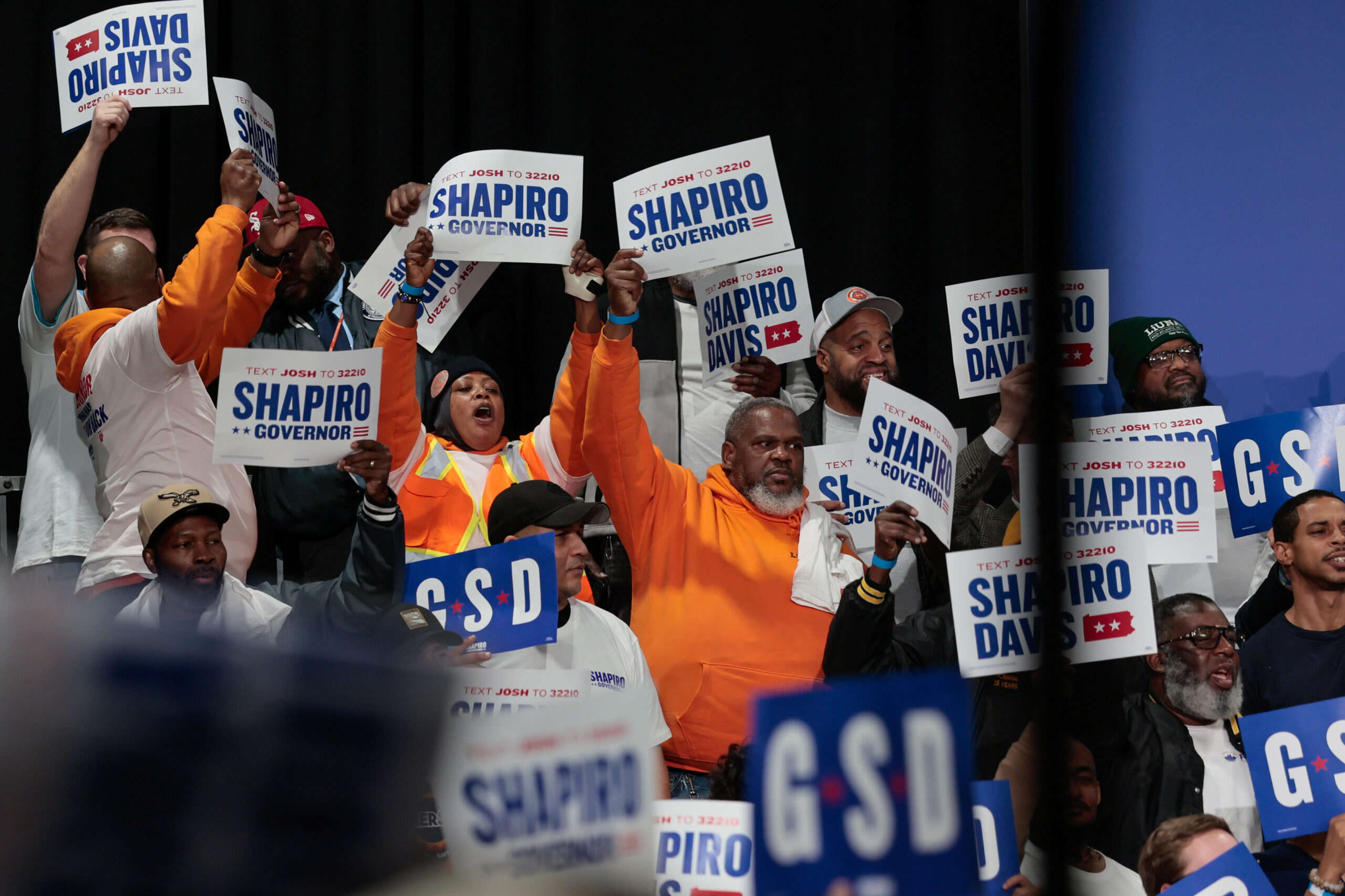
    Gov. Josh Shapiro’s supporters cheer as he makes his way to the stage during a reelection announcement event event at the Alan Horwitz “Sixth Man” Center in Philadelphia on Thursday, Jan. 8, 2026.

    ‘The hard work of bringing people together’

    Offering an opening pitch to voters, Shapiro highlighted key themes he is expected to repeat during the next 10 months on the campaign trail: He’s protected Pennsylvanians’ freedoms and created jobs, with more work to do.

    He noted several bipartisan achievements passed by the state’s divided legislature during his time in office, including a long-sought increase to the state’s rent and property tax rebate, historic funding increases for public education, and more. Pennsylvanians, he argued, have a simple choice in November.

    “Will we continue to do the hard work of bringing people together to get stuff done, or will we descend into the chaos and extremism that has gripped too many other places across our nation?” Shapiro asked in his stump speech in Pittsburgh and Philadelphia.

    In Philly, the crowd gave this question a resounding “No.”

    Shapiro’s launch drew a distinction between his style of leadership and that of Trump — whom Shapiro repeatedly called a danger to democracy prior to his reelection in 2024. Shapiro did not name the president during his announcement, but alluded to Trump — while noting his legal challenges against the Trump administration.

    The move followed Shapiro’s oft-repeated tactic since Trump took office for a second time: Criticize his policies, while not alienating Trump’s supporters in Pennsylvania, as the state swung in favor of Trump in 2024.

    In addition to his two campaign rallies, Shapiro kicked off his reelection bid in a video advertisement posted on social media. He led that off with footage from one of his biggest accomplishments from his first three years in office: rebuilding a collapsed section of I-95 in 12 days, in what was expected to take months.

    The quick rebuild also featured in his speech in Philly, where he heaped praise on organized labor for its role in the reconstruction.

    Rob Buckley with Buckley & Company, Inc., shakes hands with Gov. Josh Shapiro (right) at the end of a 2023 news conference before the reopening of I-95.

    Notably, Shapiro’s video announcement included a focus on several issues important to rural or conservative voters, such as signing a law that ended the ban on Sunday hunting, hiring 2,000 more law enforcement officers, and removing college degree requirements for most state agency jobs. He also highlighted his work in helping to reopen the lone gas pump in Germania, Potter County, following an Inquirer report about its closure.

    During his speech on the glossy basketball court in Nicetown, supporters began chanting “Four more years!”

    “I like the sound of that,” Shapiro said, with a smile.