Category: Pennsylvania Politics

  • Richard H. Glanton, longtime lawyer, business entrepreneur, and innovative former president of the Barnes Foundation, has died at 79

    Richard H. Glanton, longtime lawyer, business entrepreneur, and innovative former president of the Barnes Foundation, has died at 79

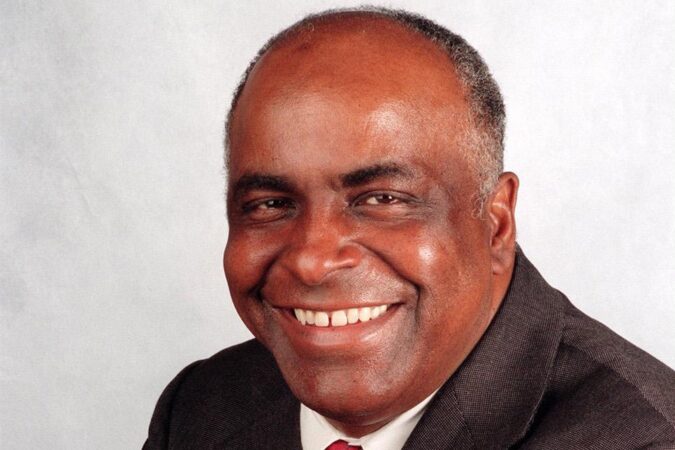
    Richard H. Glanton, 79, formerly of Philadelphia, longtime lawyer, onetime executive deputy counsel to former Gov. Dick Thornburgh, business entrepreneur, former Lincoln University trustee, and innovative former president of the Barnes Foundation, died Sunday, June 21, of a heart attack at his home in Princeton.

    Born and reared in rural Georgia and one of the first Black graduates of what is now the University of West Georgia, Mr. Glanton went on to become a prominent Philadelphia lawyer, state government policy and administration expert, corporate vice president, and indefatigable president of the Barnes Foundation’s collection of Impressionist, post-Impressionist, and modern art.

    He was elected president of the Barnes Foundation in 1990, served until 1998, and championed a series of controversial initiatives to finance extensive gallery renovations and the operation of its art collection and related educational programs. To raise the money, he suggested, among other things, selling 15 of the collection’s hundreds of paintings, charging million-dollar fees for a worldwide lending tour of 83 paintings, extending visiting hours, increasing admission, building a new parking lot, selling a coffee-table catalog, and renting out its art studios.

    All of his ideas, several of which did not take place, drew supporters and critics, and Mr. Glanton, also a Barnes trustee, spoke often of his policy discussions with other Barnes officials, art experts around the world, politicians, and neighbors of the foundation building in Lower Merion Township. In 1990, he told The Inquirer. “I never purported to know anything about art. But I can lead.”

    His most successful project turned out to be a two-year world lending tour of 83 foundation paintings that raised about $20 million and drew raves from museum leaders in Washington, Paris, Tokyo, Fort Worth, Toronto, and Philadelphia. The exhibition in Paris drew a then-record 1.5 million visitors, and Mr. Glanton was feted at every stop.

    “Richard is somebody who started out by wanting to do something good and important and substantial, and persevered to do it despite a great deal of criticism,” Glenn D. Lowry, then director of the Art Gallery of Ontario, told The Inquirer in 1995.

    Some critics said Mr. Glanton and others valued the foundation’s commercial success over its original educational role and what The Inquirer’s Edward J. Sozanski called “the Barnes mystique.” When the lending tour ended at the Philadelphia Art Museum in 1995, Mr. Glanton told The Inquirer: “I never realized or understood that it could be controversial to make available to the public a collection that is a public trust.

    “But I think if you think something’s right, you should do it, whether or not people disagree, and whether it is popular or not. … You have to think not only in terms of your lifetime, but in 100 years, 1,000 years. And when you do, these little slings and arrows don’t really matter that much.”
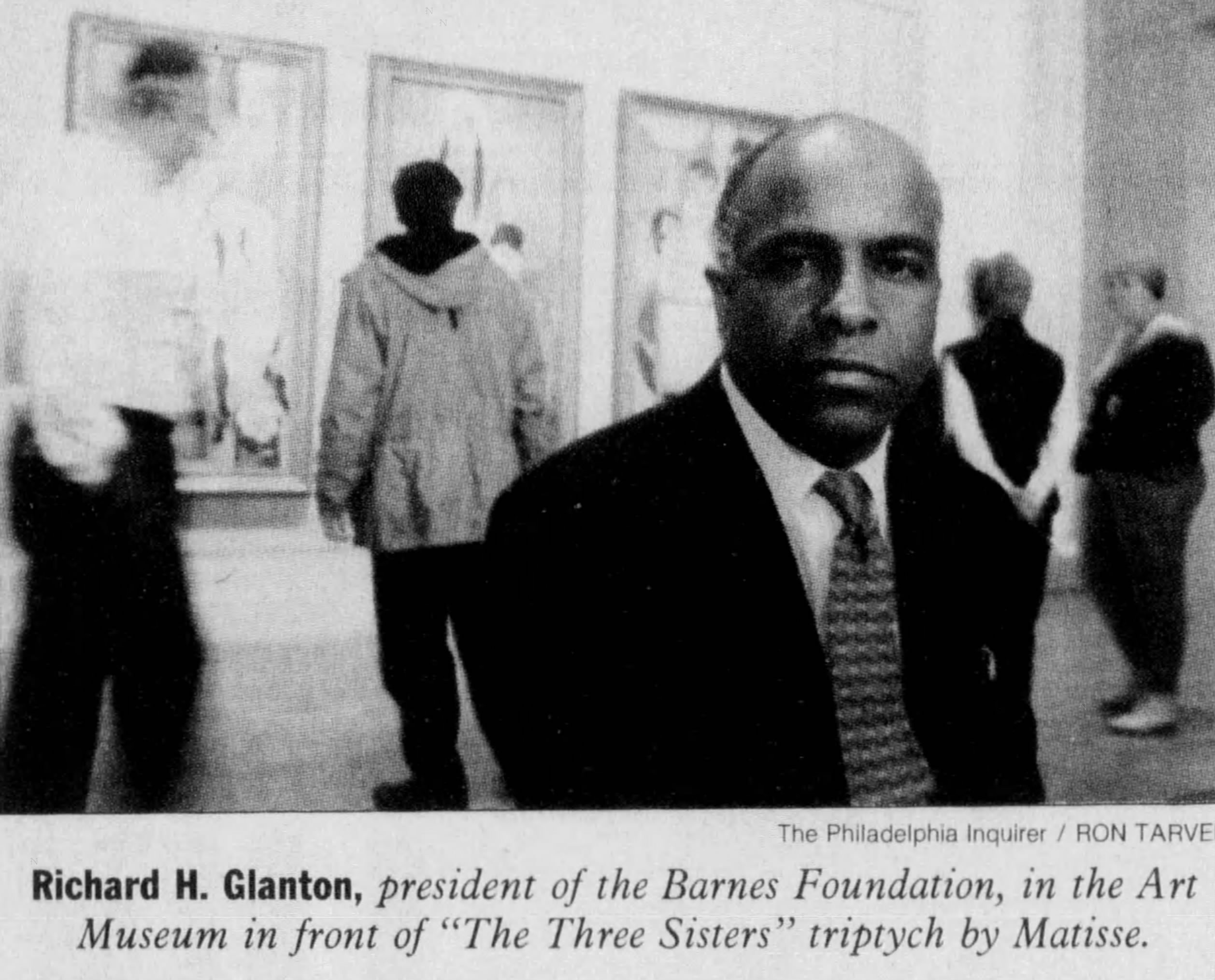
    A story and this photo of Mr. Glanton appeared in The Inquirer in 1995.

    Mr. Glanton was executive deputy counsel to Gov. Thornburgh from 1979 to 1983, and he met often with constituents and helped fill judicial vacancies. “Richard is a political animal,” Ted Pillsbury, then director of the Kimbell Art Museum in Fort Worth, told The Inquirer in 1995. “He understands politics. He understands what makes politics work, and he understands people. And he does not take certain things personally.”

    Mr. Glanton earned his law degree at the University of Virginia School of Law in 1972 and spent several years with the Equal Employment Opportunity Commission, United Airlines, and other companies. In Philadelphia, he represented politicians and other notable clients, and specialized in energy, insurance, and real estate cases for firms known now as WolfBlock, and Reed Smith.

    He was also senior vice president of corporate development at Exelon Corp., founder of a local TV station, social media company, and consulting firm, and board member at Aqua America, the Morris Arboretum, Children’s Hospital of Philadelphia, and other groups. He ended a workplace sexual harassment suit with a private settlement in the early 1990s and had public policy spats with local government officials and former Lincoln president Niara Sudarkasa.

    He considered running for mayor in 1995. Former Gov. Ed Rendell said: “He was exceptionally bright, courageous, and never afraid to challenge the status quo in pursuit of what he believed was right.”
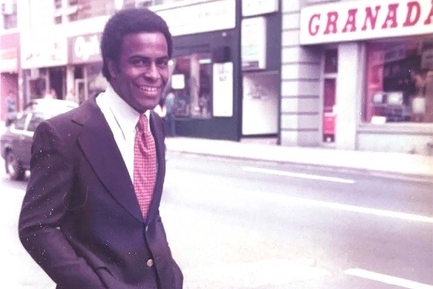
    Mr. Glanton was at home in a suit jacket and tie.

    One of 11 children, Richard Howard Glanton was born Nov. 21, 1946. He was reared in rural Villa Rica, Ga., didn’t start school until the fourth grade, and he and his siblings worked for years on the family farm.

    He earned a bachelor’s degree in English and, in 2005, was awarded an honorary doctorate from West Georgia. He married Scheryl Williams, and they had a daughter, Morgan, and a son, David.

    After a divorce, he married Eileen Candia, and they had a daughter, Georgia. They lived in Philadelphia and Chicago, and moved to Princeton in 2009.

    Mr. Glanton was a doting father, his family said. He taught his children to ride bikes and read Shakespeare. “He taught me that there was no room in which I didn’t belong or couldn’t strive to enter,” his daughter Morgan said. “I love him for that.”

    Mr. Glanton was an avid reader and golfer.

    Nearly everyone he met remembered his laugh and perpetual suit jacket and tie. He played golf, was an avid reader, and would talk politics for hours.

    “He was fearless in his conviction to do what he believed was necessary and proper to achieve his goals and provide for his family,” his son said. His wife said: “He was kind and generous. He made everyone he spoke to feel special. He was always bringing you in.”

    In addition to his wife, children, and former wife, Mr. Glanton is survived by two sisters, four brothers, and other relatives. One sister and four brothers died earlier.

    Memorial services are to be held at noon Saturday, July 18, at Pleasant Hill United Methodist Church, 119 Thomas Dorsey Dr., Villa Rica, Ga. 30180, and at 11 a.m. Friday, Sept. 18, at the Union League, 140 S. Broad St., Philadelphia, Pa. 19102.

    Donations in his name may be made to the University of Virginia Law School Foundation’s Elaine R. Jones Scholarship, 580 Massie Rd., Charlottesville, Va. 22903.
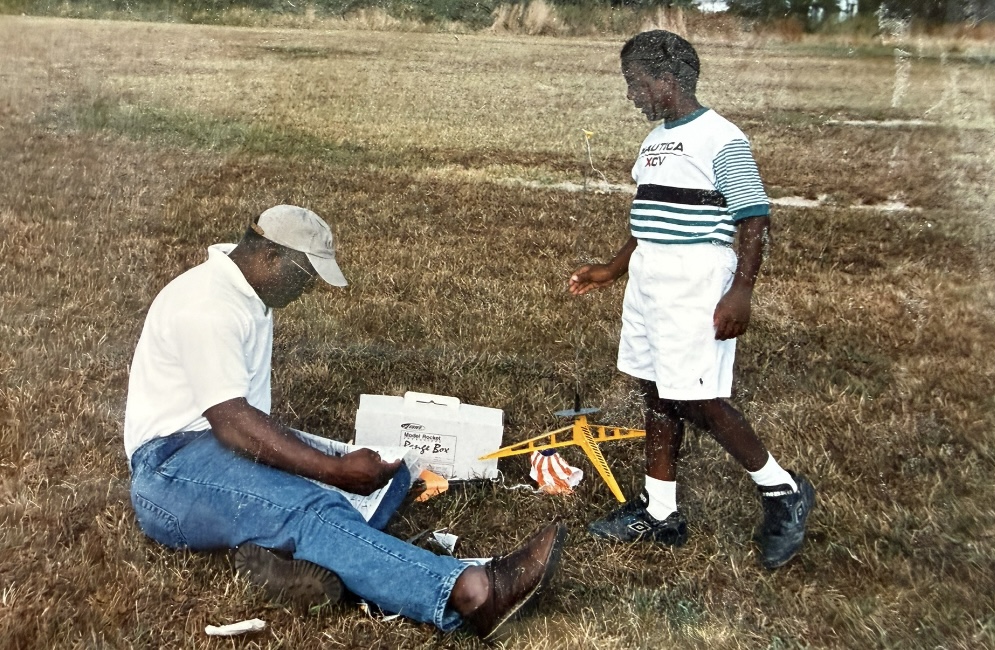

    Mr. Glanton (left) enjoyed working on projects.
  • Democrat John Fetterman launches cross-aisle fundraising committee with Republican Dave McCormick

    Democrat John Fetterman launches cross-aisle fundraising committee with Republican Dave McCormick

    In a rare move, Pennsylvania’s two senators have created a joint fundraising committee that would allow them to split money from donors who want to give to both of their campaigns, despite being members of different parities.

    Democratic Sen. John Fetterman’s decision to join Republican Sen. Dave McCormick in the fundraising collaboration comes as he has repeatedly dismissed speculation that he could switch parties after siding with Republicans on several key votes.

    As polls have shown him losing support among Democratic voters, he has also reported raising significantly fewer campaign funds on his own and has not said if he will run for a second term in 2028.

    Common Ground PA, which filed paperwork with the Federal Election Commission Monday, lists four beneficiaries for the joint fund: Fetterman for PA; Friends of Dave McCormick; Every Vote PAC, which lists Fetterman as the PAC sponsor; and Pennsylvania Honor, which lists McCormick as the leadership PAC sponsor.

    A joint fundraising committee, first enabled by the FEC in 1977, allows two or more candidates, PACs, or party committees to coordinate fundraising efforts to share donations and expenses.

    A donor can abide by federal contribution limits while still giving one check that can be allocated to multiple campaigns. But since these groups typically involve party committees, it’s rare for these joint ventures to be bipartisan.

    Katie Terry, who is listed as the treasurer for Team McCormick, is also the treasurer for Common Ground PA. She did not respond to a request from The Inquirer for comment.

    Mike DeVanney, a spokesperson for McCormick’s campaign, called the PAC a donor-driven effort.

    “This group of donors value the collaboration exhibited by Senators McCormick and Fetterman for Pennsylvania and want to support both of them,” he said in a statement.

    The joint fundraising committee was first reported by Politico.

    The two senators have spoken often about their cross-aisle friendship since McCormick took office in 2025, and they have repeatedly teamed up in recent months.

    They appeared alongside each other last week in Philadelphia to promote Trump Accounts, the new federally backed savings accounts for kids that became law with President Donald Trump’s signature One Big Beautiful Bill Act.

    And they also joined forces to fill Pennsylvania’s empty spot at the Great American State Fair after Gov. Josh Shapiro said state officials could not find a Pennsylvania business to sponsor the state’s booth.

    Fetterman has routinely criticized his own party, feuding with progressives on a range of issues, including Israel and immigration enforcement.

    In a fundraising email sent in May, McCormick referred to Fetterman as one of his “closest working partners,” a realization that he said surprised even him.

    In that drive, which asked donors to support his efforts to “work across the aisle to get results for the people of Pennsylvania,” McCormick praised his Democratic colleague.

    “Senator John Fetterman and I couldn’t look more different. We don’t agree on everything. But we both grew up in Pennsylvania. We both know what it means to fight for working families who feel like Washington forgot them. And we both refuse to let politics get in the way of getting things done,” he wrote.

    McCormick told reporters in May his friendship with Fetterman is the most frequent topic of conversation he hears, and he gets positive feedback from it.

    “We look for ways to work together. I think people want that,” he said.

    Individuals could donate to Fetterman or McCormick separately. But joint fundraising committees, which are used widely by both parties, pull in large checks from donors and split the money across multiple committees using a formula that adheres to federal contribution limits, according to an analysis from the watchdog group OpenSecrets.

    Typically, though, campaigns joint fundraise with their party.

    Common Ground PA is among the few coordinated efforts across the aisle. A former PAC, the Problem Solvers Patriots, fundraised for members of both parties in previous election cycles.

    Fetterman, who polls poorly with Pennsylvania Democrats, is likely to face a primary challenge if he runs for another term.

    Former U.S. Rep. Conor Lamb, who lost the Senate primary to Fetterman in 2022 and has not ruled out a run in 2028, blasted the move online as “Another betrayal from Fetterman.”

    U.S. Rep. Chris Deluzio, a Western Pennsylvania who has received “a lot of encouragement” to run for Fetterman’s seat, also questioned the creation of the PAC.

    “Helping the Republicans raise money to spend against Democrats is bad, right?” Deluzio said on X.

    However, Fetterman has been notching strong approval from Republicans, and Pennsylvania Republicans along with Trump himself said he could receive GOP support if he switched parties.

    Fetterman’s Republican support has also been growing at the bank with contributions from prominent GOP donors, particularly through his other joint fundraising committee and leadership PAC. At the same time, his fundraising has plummeted overall, raising less than half his previous annual totals in 2025.

    Staff writers Gillian McGoldrick and Sam Janesch contributed to this story.

  • Gov. Shapiro can’t be sued by his Abington neighbors over a property dispute, judge rules. But Josh Shapiro, a homeowner, can.

    Gov. Shapiro can’t be sued by his Abington neighbors over a property dispute, judge rules. But Josh Shapiro, a homeowner, can.

    A federal judge had some good news this week for Josh Shapiro, governor of Pennsylvania, but not so much for Josh Shapiro, resident of Montgomery County.

    Shapiro, as governor, cannot be sued in his official capacity in a dispute over a strip of yard between his and his Abington Township neighbors’ adjoining properties, U.S. District Judge Harvey Bartle III ruled Tuesday.

    But Shapiro and his wife, Lori, will still have to face their neighbors in federal court as homeowners, Bartle also determined.

    The conflict came into public view in February, when Jeremy and Simone Mock, whose backyard abuts the Shapiros’ lawn in a tree-lined neighborhood near Pennsylvania State University’s Abington campus, sued Shapiro — both as governor and in his individual capacity — and George Bivens, acting Pennsylvania State Police commissioner. The lawsuit alleged the officials were illegally occupying part of the Mocks’ yard to build an eight-foot security fence last summer in what they claimed was an “outrageous abuse of power” that violated their constitutional rights. Bartle dismissed those claims in his ruling Tuesday, in what Shapiro’s administration called a major win.

    But while Shapiro and Bivens are immune from the federal lawsuit as state officials, Shapiro as an individual and his wife are not, Bartle’s opinion said.

    “We are pleased that the court has dismissed the claims against the office of the governor and the Pennsylvania State Police, and recognize that the allegations against these officials are without merit,” said Rosie Lapowsky, a spokesperson for Shapiro. “The Shapiros are confident that the facts will ultimately show that the Mocks’ remaining claims are meritless and politically motivated and will fail.”

    The dispute in federal court over the 2,900-square-foot strip of land disrupted the otherwise sleepy suburban neighborhood and led to a separate lawsuit in Montgomery County Court filed by the Shapiros, in their personal capacities, against the Mock family. Shapiro’s office has called the Mocks’ legal effort a political stunt, in addition to other efforts by Republican officials to scrutinize the safety measures state police say are needed to keep Shapiro and his family safe.

    The dueling lawsuits came in the wake of the attempted murder of Shapiro in April 2025 at the state-owned governor’s residence in Harrisburg, when a man firebombed the mansion on the first night of Passover while the governor and his extended family slept inside.

    The attack prompted more than $33 million in security upgrades to the state-owned governor’s residence, in addition to $1 million in upgrades and landscaping to Shapiro’s personal home in Abington Township, where he and his family live part-time.

    Shapiro’s safety remains a priority for state police, as one of the nation’s most prominent Jewish elected officials. A Delaware County man was arrested Wednesday for threatening to burn down the governor’s residence, state police said.

    But the Mocks’ attorney, Wally Zimolong, said the lawsuit at hand is about property rights and due process, and called Bartle’s ruling a “strong decision.”

    “Make no mistake about it,” Zimolong said, “a federal court has said that the sitting governor of Pennsylvania can be held liable for damages over constitutional violations.”

    The Delaware County lawyer who has represented high-profile Republican officials and candidates, including President Donald Trump, said it is “nonsense” to call the litigation political. Zimolong added that he hopes the Shapiros reconsider and attempt to resolve the case amicably.

    The conflict’s origins

    The dispute between the Shapiros and Mocks began last summer when, as part of a plan to build a security fence at the Abington house, a surveyor learned that a sliver of yard that the Shapiros had used for over two decades was actually on property belonging to the Mocks.

    After the Mocks rejected the Shapiros’ offer to buy the land, court fillings said, Pennsylvania’s first couple invoked a state law that allows a person to gain ownership of a property they have actively used for at least 21 years. The Shapiros have lived in their Montgomery County home for 23 years.

    “What followed was an outrageous abuse of power by the sitting Governor of Pennsylvania and its former Attorney General,” the Mocks’ February lawsuit said.

    (function() { var l = function() { new pym.Parent( ‘shapiroyard__graphic’, ‘https://media.inquirer.com/storage/inquirer/ai2html/shapiroyard/index.html’); }; if(typeof(pym) === ‘undefined’) { var h = document.getElementsByTagName(‘head’)[0], s = document.createElement(‘script’); s.type = ‘text/javascript’; s.src = ‘https://pym.nprapps.org/pym.v1.min.js’; s.onload = l; h.appendChild(s); } else { l(); } })();

    A security fence was purchased but never installed, SpotlightPA reported. Instead, contractors hired by the state began planting arborvitae-type trees and other plants on the Mocks’ property. State police also flew drones over the Mocks’ property, threatened to remove healthy trees, and chased away contractors, the Mocks alleged in the suit.

    The complaint also accused Shapiro of directing state police to patrol the property, and instructing the Mocks to leave the “security zone.”

    The Shapiros’ countersuit in Montgomery County asks a judge to find that they are the “legal and equitable owners” of the area in dispute, having tended to the land that borders their front yard for 23 years. That suit is pending and a judge is expected to rule on preliminary objections filed by Zimolong.

    Separately, the Shapiros and state attorneys filed motions asking Bartle to dismiss the federal complaint against them.

    This week, the judge partially obliged, finding the state officials to be immune from the lawsuit while allowing the case against the Shapiros to proceed.

    The judge also refused to freeze the federal case while the lawsuit in Montgomery County plays out, determining that the two cases are different enough to proceed.

    “The claims here extend far beyond a disagreement between neighbors over the metes and boundaries of their properties,” Bartle wrote.

  • Delco man arrested after antisemitic tirade and threats against Gov. Josh Shapiro, state police say

    Delco man arrested after antisemitic tirade and threats against Gov. Josh Shapiro, state police say

    A Delaware County man was charged Wednesday after allegedly making threats against Gov. Josh Shapiro during a visit to a state representative’s office, including a threat to “burn down … [Shapiro’s] mansion with him in it,” Pennsylvania State Police said.

    Police said the threats occurred when Richard John Franklin, 65, of Brookhaven, visited State Rep. Leanne Krueger’s legislative office in Brookhaven alongside his brother on Tuesday to dispute and request help with an unanticipated and unpaid tax bill totaling $19, according to the criminal complaint. When a staffer tried to assist Franklin in completing a form to waive the taxes, Franklin “became irate and crumbled up the paper,” police said.

    Franklin then began making threats the staffer believed were “threatening, harassing, and antisemitic in nature,” according to the complaint, including: “I guess I’ll pay that Jew. That Jew needs the money more than me” and “I’d like to burn down his [expletive] mansion with him in it.” Police said Franklin repeatedly referred to Shapiro as a “‘Jew’ multiple times in a negative manner.”

    State law enforcement officers charged Franklin with felony levels of terroristic threats and ethnic intimidation, in addition to lower-level charges of harassment and disorderly conduct.

    Shapiro, a Democrat who is among the most prominent Jewish officials in the country, has faced multiple threats of violence since becoming Pennsylvania’s top executive. In April 2025, a man broke into the state-owned governor’s mansion on the first night of Passover with a hammer and set several firebombs inside while Shapiro and his family were sleeping in a different part of the residence. The man, Cody Balmer, later pleaded guilty to attempted murder and was sentenced to 25 to 50 years in prison.

    Pennsylvania Gov. Josh Shapiro pauses during a news conference at the governor’s official residence discussing the alleged arson that forced him, his family and guests to flee in the middle of the night on the Jewish holiday of Passover, Sunday, Apr. 13, 2025, in Harrisburg, Pa.

    Early Wednesday, investigators from the state police political violence threat unit visited Franklin at his Brookhaven home, where he provided conflicting accounts of what occurred at Krueger’s office before ultimately admitting to “calling the Governor a ‘Jew’ in a negative manner” and added that his “brother told him he should not have made the statement,” according to the criminal complaint. Franklin denied making any threats toward Shapiro, but admitted to referring to the previous arson attempt at the governor’s residence during the outburst, police said.

    State police said they arrested Franklin without incident.

    Franklin’s brother, who witnessed the events at Krueger’s office, disputed the state police account and said his brother never threatened the governor.

    Leroy Franklin, 72, of Chester, said his brother visited the state representative’s office seeking information about a tax bill he had received, despite paying his state taxes through an accountant this year.

    After the brothers spoke to a staffer who did not have answers for them, Richard Franklin became upset and raised his voice, Leroy Franklin said.

    In a phone interview Wednesday, Leroy Franklin recalled his younger brother saying something to the effect of: “I’ve been on disability for 15 years, but I guess the state needs my money more than I do.”

    The two were together at Krueger’s office the entire time, Leroy Franklin said, adding that he did not hear his brother use an antisemitic slur. He also disputed that his brother threatened arson.

    “Anybody who said he did is lying,” Leroy Franklin said.

    Around 2 a.m. Wednesday, Leroy Franklin said, he received a call from his younger brother. Richard Franklin told him that police were at his apartment and he was not sure where they were going to take him, Leroy Franklin recounted.

    When the two spoke on the phone again later that morning, Leroy Franklin said, he learned police were taking his brother to jail.

    “I don’t know what the heck anyone is talking about,” Leroy Franklin said Wednesday. “This is a bit extreme, to put it mildly.”

    Richard Franklin was being held at the Delaware County prison with bail set at $100,000, according to court records. A preliminary hearing is scheduled for July 16, according to court documents. A lawyer for Franklin was not listed on court records.

    Franklin is a registered Democrat, Pennsylvania voting records show. He has no prior convictions in Pennsylvania.

    Shapiro’s office referred requests for comment about the incident to state police.

    In a statement Wednesday, State Police Sgt. Logan Brouse said the agency “takes threats against the lives of public officials seriously,” noting the state police political violence threat unit was created “to address the growing amount of ideologically motivated violence against elected officials.”

    The unit was created in May, after a Lebanon County man allegedly posted a “hit list” to social media targeting 20 state Democratic lawmakers. Adam Berryhill, 42, was arrested on May 6, after he was connected to an X account that posted a potential plan to attack the legislators. Some of the lawmakers named on the list said they had not been alerted to the threats against them, prompting state police leaders to update their communication protocols and create the investigations unit.

    Krueger (D., Delaware) referred a request for comment to a spokesperson for House Democrats.

    Nicole Reigelman, a spokesperson for House Speaker Joanna McClinton (D., Philadelphia), said in a statement that threats of political violence are becoming commonplace, “and every incident must be treated with the seriousness it deserves.”

    “Healthy democracies depend on robust debate and respectful disagreement — not threats, intimidation, or violence,“ Reigelman added. ”Political violence has no place in our communities, and Pennsylvanians must unite in condemning it whenever and wherever it occurs.”

  • Pa. officials mourn the death of former State Sen. Shirley Kitchen, who represented North Philly for 20 years

    Pa. officials mourn the death of former State Sen. Shirley Kitchen, who represented North Philly for 20 years

    Pennsylvania elected officials are mourning the death of former State Sen. Shirley Kitchen, the second Black woman to serve in the state Senate and a champion for progressive issues who represented parts of North Philadelphia for more than two decades. She died Saturday at 79. A cause of death was not immediately clear.

    Kitchen represented the 3rd Senatorial District, composed of parts of North Philadelphia, for 20 years. She is remembered by her former colleagues as a pillar and matriarch of her community who worked tirelessly to improve the lives of low-income people, even after she retired.

    “She did so many things for so many people. Now that I’m old enough to appreciate it, I’m not quite sure how she did it — and she did it with such force,” said State Sen. Anthony H. Williams (D., Philadelphia), who served alongside Kitchen in the Senate and had known her for decades. Kitchen was elected to the state Senate in 1996 and served five terms before retiring in 2016.

    Her former colleagues, some through tears, credited many of Pennsylvania’s recent criminal justice reforms as being born under Kitchen’s leadership, with her early legislative proposals paving the way for their passage years later. For example, Kitchen authored early drafts of what is now known as the Clean Slate Act, which automatically seals some nonviolent convictions after 10 years, hiding them from most employer and landlord background checks. She first introduced similar legislation in Harrisburg years earlier and it failed. In 2018, two years after Kitchen retired, the Clean Slate Act became law in Pennsylvania and was heralded as a first-in-the-nation model for criminal justice reform.

    Elected officials across the city shared their condolences, remembering Kitchen as an advocate who cared deeply for her community.

    Mayor Cherelle L. Parker in a social media post on Sunday recalled Kitchen as “fighting for people who often had no one else to fight for them,” and as a trailblazer for Black women in politics.

    “Shirley Kitchen cared about working people, and she cared about Philadelphia,” said Parker, the city’s first Black female mayor and a former state representative.

    City Council President Kenyatta Johnson said in a statement that Kitchen “never forgot who she was fighting for,” dedicating her life to making people’s lives better.

    State Rep. Joanna McClinton (D., Philadelphia), Pennsylvania’s first Black female speaker of the House, wrote in a social media post that Kitchen was “a mentor and her service in the state House and Senate inspired me greatly.”

    Williams added that Kitchen also sought to elevate other Black politicians, like himself, to elected office — and laid the groundwork for much of the city’s current political progressivism.

    “The reality is that a lot of the infrastructure that helps them, Shirley had everything to do with it, and more,” Williams said, noting her advocacy and experience during the Civil Rights Movement. “I would hope the progressives in this generation would tip their hat to a generation that really created the progressive movement.”

    State Sen. Sharif Street (D., Philadelphia) had known Kitchen since he was a child, and said she helped him see the power a Senate seat has in improving the lives of his neighbors. When she decided to retire, Kitchen encouraged Street, who was on her staff at the time, to run to fill the vacancy in the 3rd District following her fifth and final term in the state Senate.

    Williams and Street recalled Kitchen as a fair but demanding mentor.

    “If she told you to do something, you better do it,” Williams said, with a laugh.

    For Street, Kitchen “didn’t limit her advice. She had opinions about everything in my life, including when my wife was right and I needed to listen to her.”

    Street said he spoke with Kitchen weekly, and Williams said he remained in touch with her as recently as last month. She often had ideas or issues she wanted the senators to take up. Street spoke with her last week about a forthcoming Registered Community Organization meeting that she was leading about a new proposed development nearby, emblematic of her continued involvement in her community.

    Prior to her election to the state Senate, Kitchen was involved in the National Welfare Rights Movement, which was a progressive advocacy group for the dignified treatment of women and children, largely led by Black women, during the 1960s and 1970s, Williams said.

    Kitchen served as the minority chair of the Senate Public Health and Welfare committee, in which she often leaned on her social work experience to inform her legislative proposals.

    A Democrat in a time where Republicans controlled the state legislature, she served her entire tenure in the minority party, but was still able to garner bipartisan support for some of her legislative proposals.

    “This image of her being an urban Black woman from Philadelphia would limit her ability to get stuff done in the Senate just wasn’t true,” Williams added. “She could analyze people and figure out what way to approach them with exceptional skill.”

    Born in 1946 in Augusta, Ga., Kitchen attended the Philadelphia School District and graduated from Antioch University in 1979 with a bachelor’s degree in human services, according to her Senate Library biography. She went on to work for former Philadelphia Mayor John Street, Sharif Street’s father, before she was elected to the state House in a special election in 1987. After she lost reelection to the seat in 1989, Kitchen returned to Harrisburg a decade later after her election to represent the 3rd Senatorial District.

    “She was a transformational figure that loved her community and understood that the purpose of those of us holding elected power is to be able to make a difference in the lives of the people we serve, in a way that they can feel and see,” Sharif Street added.

    Funeral services will be announced in the coming days, he said.

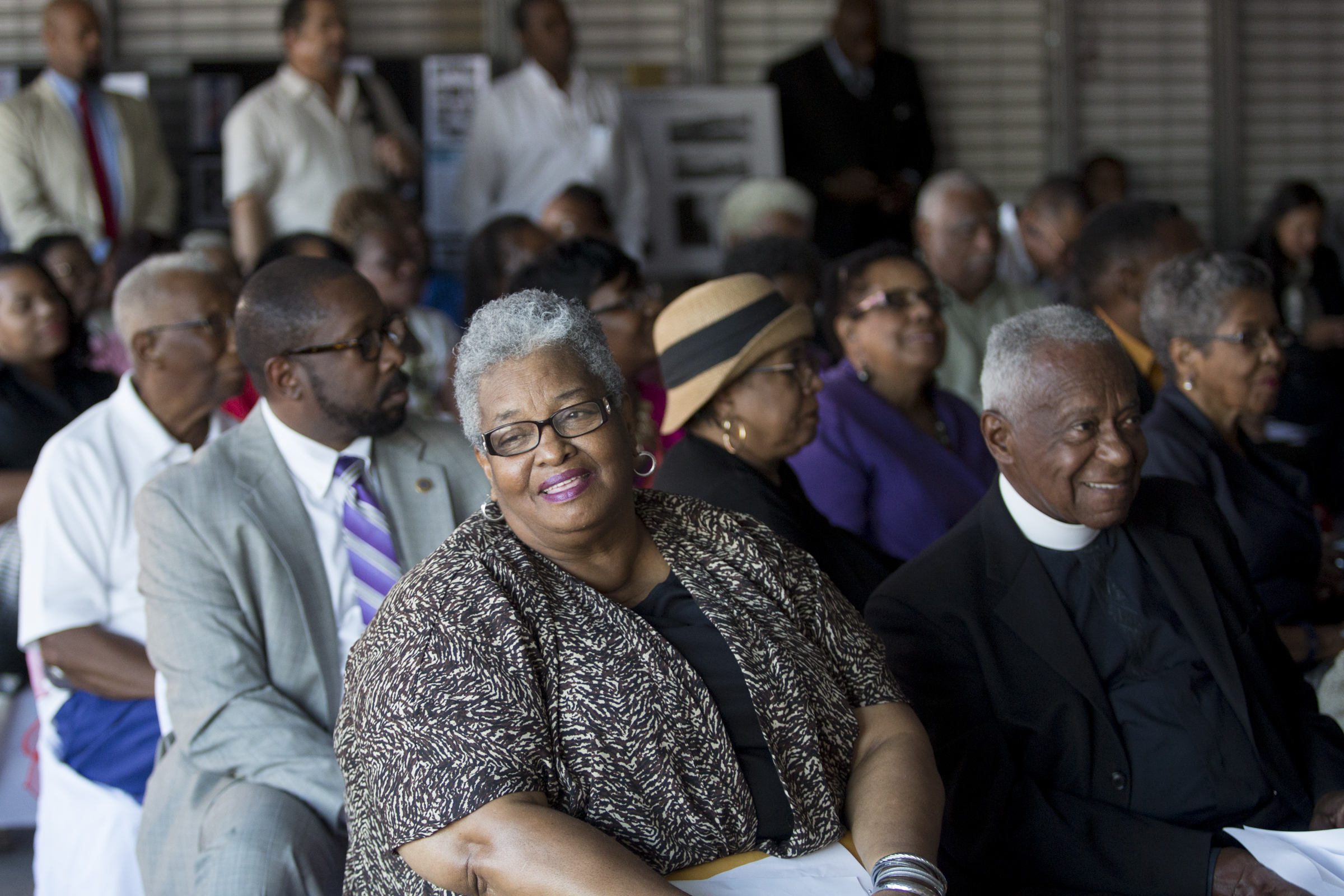
    Senator Shirley Kitchen in the audience during speeches in honor of the historical marker that was unveiled at Sullivan Progress Plaza September 14, 2016. The plaza was the first black-owned and operating shopping center in America. Wednesday, Sept. 14, 2016.
  • Delaware County is investigating a hack of its network systems

    Delaware County is investigating a hack of its network systems

    Delaware County is investigating a hack of its network after “unauthorized activity” interfered with systems in late June, disrupting county services.

    The county government is “in the process of restoring network access,” according to a statement, and internet and phone service has been restored.

    “The County responded to these attempts by taking the proactive but necessary step of shutting down our network to continue to protect sensitive information and critical systems while following industry best practices in response to the intrusion attempts,” the county said.

    The infringement comes almost six years after Delaware County was hit by a ransomware attack via a phishing email in November 2020. At that time, hackers stole sensitive data and the county eventually had to pay $25,000 to resolve the issue.

    The scale of the latest hack remains unclear, but the county said in its statement that since the 2020 incident, it has “established critical protections and followed industry recommendations about how to best secure its network assets, and those protections have proven valuable in recent days.”

    The public first became aware of disruptions last Friday, when Delaware County Council posted on social media that there was a “network outage” at the Government Center Complex in Media.

    Delco also said it plans to reestablish network access, services, and work with cybersecurity experts.

    “All our offices remain open and ready to continue serving our residents, and we appreciate the efforts of our staff and departments to find alternate ways to perform their duties throughout this period of network interruption,” the county said.

    The delays and detours in services have become frustrating for residents who may have to reschedule appointments with departments like the Register of Wills or at the courthouse.

    6ABC reported earlier this week that residents were not able to complete routine procedures at the courthouse, like filing a motion, and that cases were being taken out of order.

  • As Congress comes to Philadelphia, Josh Shapiro takes center stage in America 250 celebrations

    As Congress comes to Philadelphia, Josh Shapiro takes center stage in America 250 celebrations

    Pennsylvania Gov. Josh Shapiro has a message for members of Congress when they convene at Independence Hall in Philadelphia on Thursday:

    This is the birthplace of democracy, and with it, comes the responsibilities that America’s founders left behind.

    “The founders made clear that we have a real responsibility to do the work to constantly perfect our union,” Shapiro said in an interview this week, ahead of his speech before the ceremonial meeting of Congress, marking 250 years since the Declaration of Independence was signed in that same building. “And that the Congress of the United States has a unique responsibility in that to be a check on the executive branch.”

    Those words come at a critical inflection point in America’s history, amid a tumultuous presidency, and as Shapiro is rumored to have aspirations of a White House bid in 2028. The first-term Democratic governor will appear before approximately 40 bipartisan members of Congress in Old City at the event convened by U.S. Rep. Brendan Boyle (D., Pa.), speaking to the lawmakers from across the country about their collective duty to the public. Shapiro will attend numerous other 250th celebrations across Philadelphia in the coming days, during which he said he plans to share his optimism for America’s future and deep concerns that President Donald Trump has led the nation astray from its founders’ design.

    “I don’t think patriotism belongs to one party. I don’t think it should ever be partisan,” Shapiro said. “Unfortunately, Donald Trump routinely divides us, routinely injects partisanship into his definition of patriotism, and his actions, in many ways, are the opposite of patriotism.”

    Assembly Room in Independence Hall (Pennsylvania State House) Monday, June 15, 2026. This is the exact space where the Second Continental Congress met and the Declaration of Independence was adopted.

    As Trump plans to spend America’s 250th birthday hosting a political rally on the National Mall — with no plans to visit Philadelphia, the city where the nation was founded — Shapiro sees his own role as a unifier, and in direct contrast to Trump. As attention shifts to Philadelphia this weekend, he’ll appear on the national stage from sunup to sundown at events and on frequent TV hits — all with a home-turf advantage for his 2028 presidential prospects, as the governor of the nation’s quintessential swing state and also most important to the country’s founding.

    “[Celebrating the 250th] allow the spotlight to shine on Shapiro, even though it’s not entirely about him,” said Alison Dagnes, a political-science professor at Shippensburg University. “Do I think that helps his ambitions? Sure.”

    ‘Direct contrast’

    Sitting with Shapiro in his Harrisburg office earlier this week, it’s undeniable that he’s a history nerd — another reason why he was built for the moment.

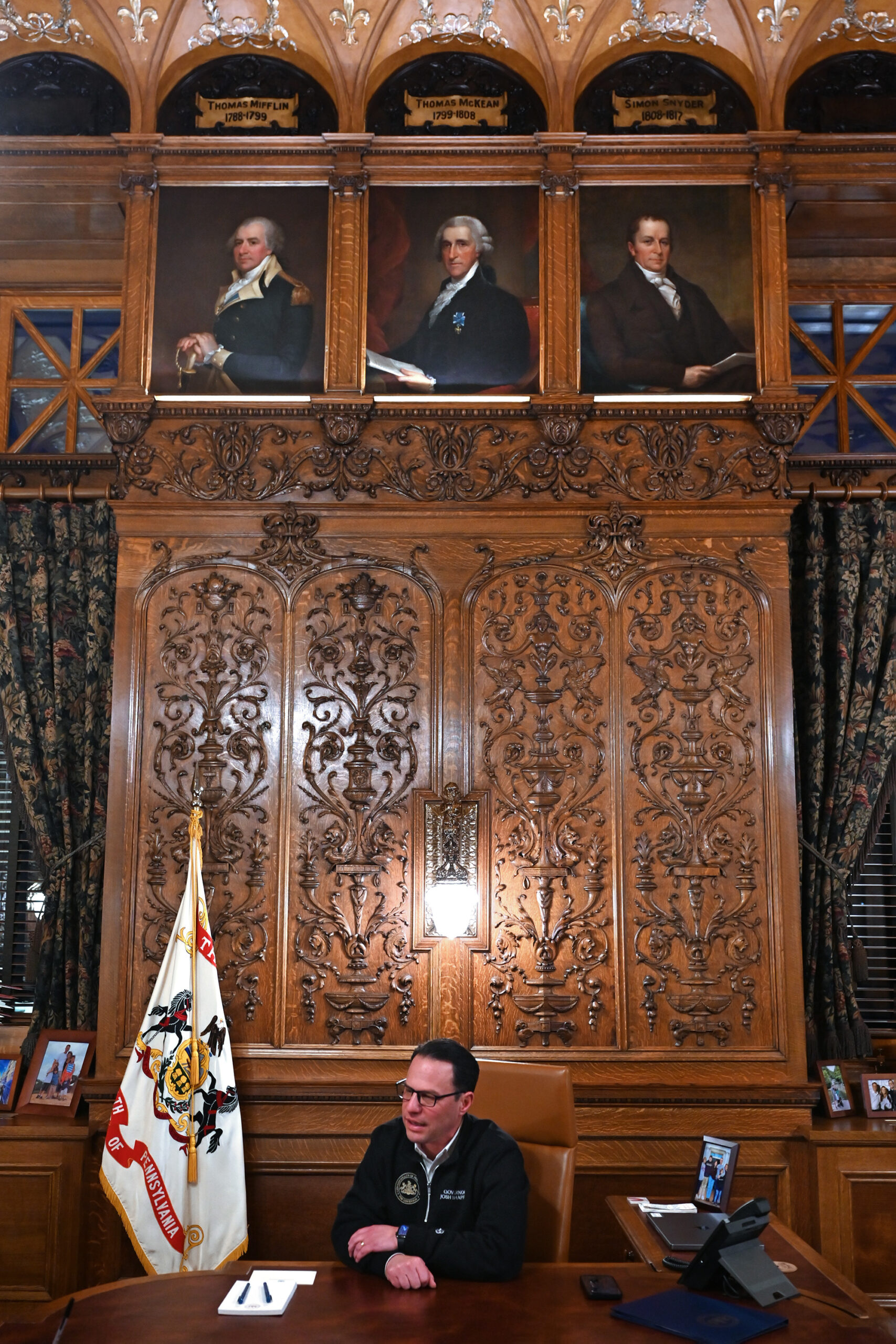
    He casually quotes segments of The Federalist Papers, and references his favorite story about Benjamin Franklin‘s fixation on a half-sun on the back of George Washington’s chair during the 1787 Constitutional Convention, which Franklin remarked during the U.S. Constitution signing that “it is a rising and not setting sun.” Without having to look for its location, he points to his right to a portrait of Franklin, one of his predecessors as governor of Pennsylvania, hanging on his office wall. He notes lesser-known Pennsylvanians who played an important role in the nation’s founding whom he plans to highlight over the coming days.

    “You know, I hate to quote a guy not from Pennsylvania,” Shapiro said, returning to The Federalist Papers to recite James Madison’s concerns about giving an executive too much power.

    Gov. Josh Shapiro in the Capitol in Harrisburg Feb. 21, 2023.

    “If Madison were here today, he’d be really concerned about how one man has accumulated so much power and is wielding it in really dangerous ways, and I hope that at this 250-year mark we find our way back to that balance and back to the constraints on the people who lead our government,” he said.

    Shapiro sees his leadership style as a “direct contrast” to Trump’s, especially at this moment.

    “[Trump] restricts peoples’ freedom and liberties,” the governor added. “He whitewashes our history. That doesn’t further a sense of community, that doesn’t further patriotism. All that does is divide us, and I refuse to participate in that.”

    But for the next few days, Shapiro said his approach to the 250th celebrations is to: “Celebrate America, find ways to bring people together, and to have some fun in the process.”

    Fair games

    Despite his overtures of political unity, Shapiro has faced accusations from Republicans in recent days for playing partisan games over Pennsylvania’s participation in Trump’s 16-day Great American State Fair. Shapiro, in addition to several other Democratic governors last week, announced that Pennsylvania would not take part in the fair due to his administration being unable to secure any state businesses to sponsor the exhibit. Staffing and sponsoring the exhibit on the state’s dime would have cost $700,000 that would be better spent on in-state 250th events, he said this week.

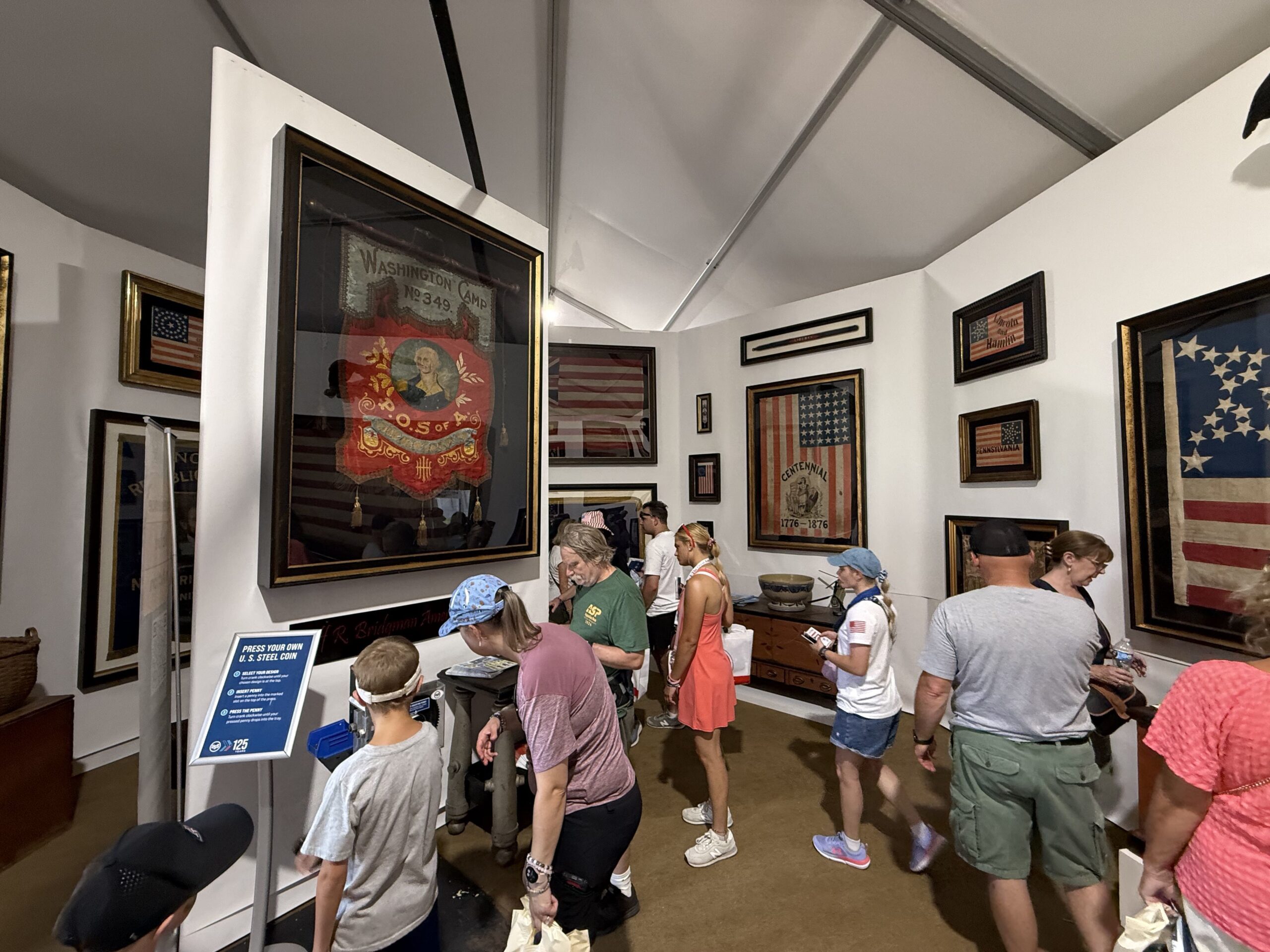
    In the weekend that followed, Pennsylvania’s U.S. senators, Republican Dave McCormick and Democrat John Fetterman, made a push to fill the state’s empty exhibit. By Tuesday, it was filled with antique flags lent by a York County man, bags of potato chips from Snyder County, and a Christmas tree display from Fayette County, among other Pennsylvania-centric items.

    Pennsylvania’s pavilion showcases state history and memorabilia at the Great American State Fair on June 30, 2026, in Washington, D.C.

    Some of the businesses originally told Shapiro’s office they didn’t have enough time to participate. But when McCormick and Fetterman approached them with the idea to fill the empty pavilion, they joined in.

    “They obviously had a change of heart at the last minute. That’s fine,” Shapiro said about the revived Pennsylvania pavilion.

    State Treasurer Stacy Garrity — Shapiro’s Republican challenger for governor, who has aligned herself with Trump — in a statement called Shapiro the “only career politician who has politicized America 250.”

    “Josh Shapiro put his political ambitions above his commonwealth and his nation when he pulled Pennsylvania out of the national celebration of our 250th birthday in a pitiful attempt to score cheap political points with the liberal wing of his party,” Garrity said.

    Beyond the 250th

    Shapiro’s strength as a politician has always been his ability to appear “harmonizing” and bringing people together, dating back to his days as a Montgomery County commissioner, Dagnes said.

    A careful politician, Shapiro is known to stick to his message and has faced criticism from some fellow Democrats for his well-rehearsed statements.

    When Shapiro delivers his messages of unity and freedom to a broader audience in the coming days, voters are likely to view them as authentic — one of the most important qualities to any presidential hopeful, she added.

    “If [California Gov.] Gavin Newsom is the guy who’s gonna punch Trump in the face, then Shapiro is going to be the guy who’s like, ‘No, let me offer you an alternative,’” Dagnes said.

    “It’s what he should be doing right now, because this is what America is about,” she added.

  • Philadelphia’s historic sites draw tourists from around the world. They’re getting an incomplete version of the President’s House.

    Philadelphia’s historic sites draw tourists from around the world. They’re getting an incomplete version of the President’s House.

    On a sweltering and humid summer afternoon — as tourists and historical reenactors milled about Old City ahead of 250th anniversary celebrations — Cristian Marín guided his family through the President’s House.

    Loyal soccer fans, Marín’s family had traveled from Colombia to visit their son in Philadelphia, attend the World Cup matches, and see the Revolutionary Era sites.

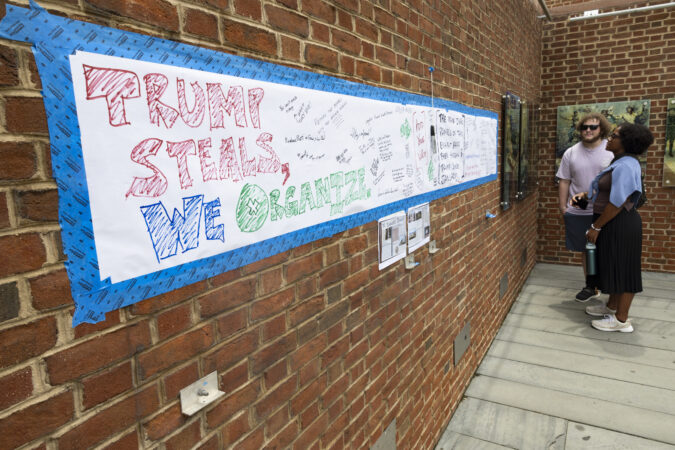
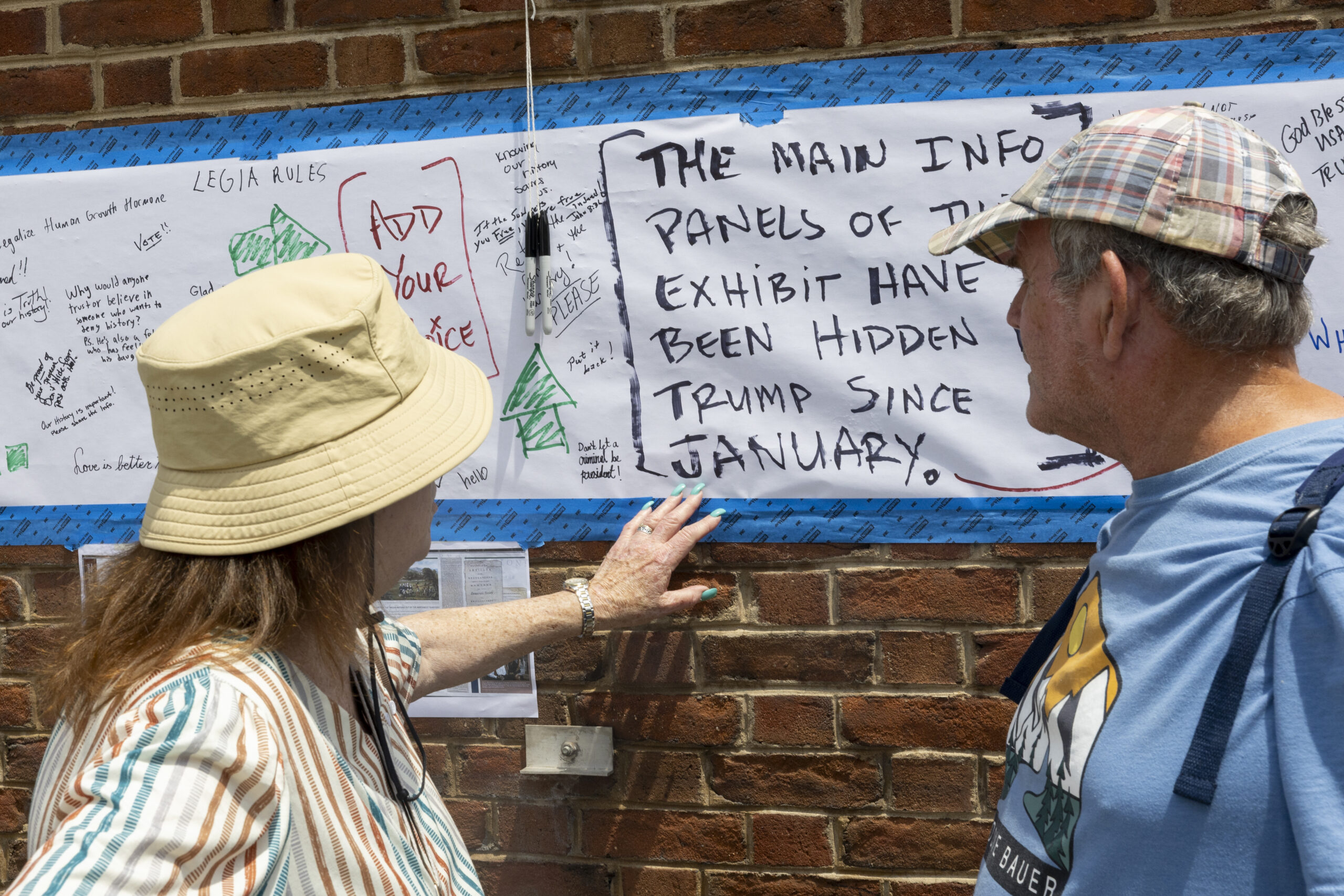
    But it was up to Marín, 37, to play tour guide last Friday and explain to his family why large gaps of brick wall were covered by paper adorned with handwritten messages expressing their indignation with President Donald Trump after his administration removed exhibits about slavery at George Washington’s former home in Independence National Historical Park.

    Marín’s family started laughing from pure disbelief about the “craziness of the situation,” he said.

    Marín’s relatives are among an influx of tourists visiting Philadelphia in the lead up to the city’s Semiquincentennial festivities only to find themselves confronted with evidence of the largely partisan battle playing out over how to tell the complicated story of America’s founding.

    “For me, it’s shocking to see a country trying to erase that history,” said Marín, a freelance journalist. “I think it’s important to remember our past in order to just not repeat those kinds of things.”

    Cristian Marín, 37, tours the President’s House in Independence National Historical Park last week.

    Ahead of the 250th, both Philadelphians who have been engaged in the fight to protect historical exhibits and tourists who have wandered through the President’s House for the first time, have lamented the Trump administration’s changes to the exhibit, which was largely dismantled by the administration earlier this year.

    They told The Inquirer that the missing panels, such as those that discuss the brutality of slavery, do a significant disservice to understanding the full picture — even the ugly parts — of U.S. history.

    “History is going to be out there, and the more we share history, the better for everybody,” said Hector Vargas, 40, from New York. “For the new generation, and even ourselves, because this is something from the past and we need to understand better — what happened and how this great country basically became the great country it is.”

    The Philadelphia Convention and Visitors Bureau estimates that from 250th-related events alone the city will welcome over 1.5 million overnight visitors in 2026.

    But the turmoil facing the President’s House is hanging over the celebrations, as the site’s stakeholders and the Trump administration battle over which version of history residents and visitors will see as they celebrate on Independence Mall.

    Judges presiding over lawsuits related to the President’s House or other threats by the Trump administration to change historical content at national parks have viewed the Fourth of July as a deadline to set the record straight as to whether the federal government has the authority to rewrite history.

    Some advocates believe the Trump administration saw it that way, too.

    Visitors read unofficial signage put up to protest the Trump administration’s changes to the President’s House site, which memorializes the nine people enslaved by George Washington in Philadelphia.

    The Inquirer reported that the federal government also quietly removed mentions of slavery from Independence Hall and a panel under Thomas Jefferson’s portrait at the Second Bank — sending a new wave of outrage among historians and advocates ahead of this weekend.

    “In the 250th anniversary of the founding of the Declaration of Independence, there’s probably increased impetus and motivation to get these changes installed before the dawn of the Fourth,” said Paul Steinke, executive director of the Preservation Alliance for Greater Philadelphia.

    ‘They want to make us believe that slavery did not happen’

    Perched on folding chairs bordered by patriotic banners that flapped in the wind, dozens of Philadelphians spent their Friday night at the People’s Plaza, a concrete gathering space just steps away from the President’s House eight days before the 250th anniversary.

    A truck displaying a digital screen with the name of the event, “Trump Fascism: Historical Erasure and the Battle Over the Truth,” parked across the street.

    With Independence Hall towering behind them, state Rep. Chris Rabb, attorney and advocate Michael Coard, civil rights organizer Masaru Edmund Nakawatase, and visual artist Dread Scott railed against the federal government’s changes to history at an event hosted by Refuse Fascism, an anti-Trump organization.

    The gathering is one of many events opponents to the Trump administration’s actions are holding in the days surrounding the 250th. Coard’s group, Avenging the Ancestors Coalition, is hosting its annual Black Independence Day on July Fourth at the President’s House.

    “We have so much power and it scares these people. If it didn’t scare them, why would they be worried about this exhibit right here?” Rabb (D., Philadelphia) declared, pointing at the President’s House.

    Rabb, who will represent parts of Philadelphia in Congress after winning the Democratic primary for the Third District in May, has often spoken of how he is a descendant of both a signer of the Declaration of Independence who enslaved people and of Black abolitionists.

    The Trump administration had spent a year eyeing the President’s House and other exhibits before they abruptly dismantled the site in January, just weeks into the nation’s 250th year. Last year, the president had issued an executive order directing parks to conduct a content review of materials that could “inappropriately disparage Americans past or living.”

    Subsequent legal battles have allowed some — but not all — of original panels to be reinstalled, though the administration can now install its own spin on history at the President’s House, the Third Circuit Court of Appeals in Philadelphia has ruled.

    But the struggle to confront the full scope of U.S. history is baffling to some visitors, like Camila Ordenana, 24, from Ecuador. Ordenana, who ventured from Guayaquil to Philadelphia to attend a World Cup game, said she has never seen this kind of censorship in her other travels.

    “It is weird, because we have been to several places, several historical cities, like, I can remember going to the U.K. or going to Germany, and you can learn about the experience in a very neutral and respectful way,” Ordenana said.

    Katrie White, 53, from Illinois, traveled to Philadelphia specifically for sightseeing to learn more about African American history. She said she was disturbed by the removal of the signs.

    “They want to make us believe that slavery did not happen,” White said. “And that’s how it affected African Americans, that it wasn’t a big deal, that it made us better. But of course, we all know that it didn’t, and it really did affect us. It was a trauma that is still carried on to this day.”

    Many Philadelphians appear to agree.

    A recent Suffolk University / Inquirer poll found that a quarter of city residents see preserving historic sites as Philadelphia’s top responsibility to the nation ahead of the 250th.

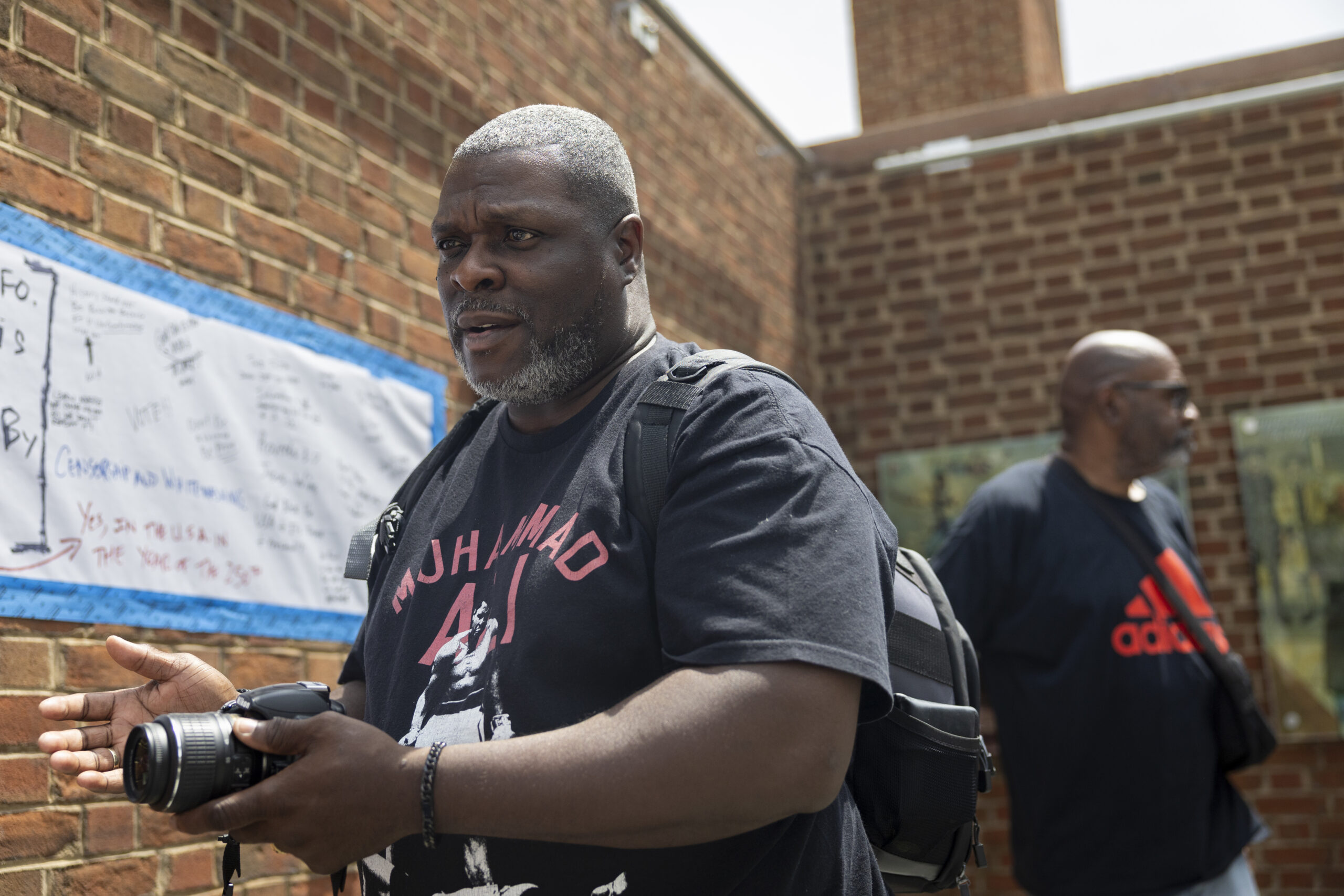
    Richard Porter (left), 52, of Michigan, at the President’s House last week.

    Gathered by the Market Street entrance of the President’s House last Friday, looking at the colorful illustration panels that remained, Richard Porter grappled with the impact of the removals, saying that without the educational information, “We’ll repeat it over and over again.”

    The Michigan resident said that the country is at a point where it needs to move forward but that the changes to the President’s House are sowing further divisions.

    “This is an everyday battle. It’s not just today or for the 250; this is all the time,” Porter said.

  • Bucks County Commissioners approve first paid parental leave policy for county employees

    Bucks County Commissioners approve first paid parental leave policy for county employees

    Bucks County government’s first-ever paid parental leave policy is now on the books.

    The county commissioners unanimously approved a human resources policy during their public meeting Wednesday that allows full-time county employees with at least one year of service to take up to eight weeks of parental leave.

    The eight weeks must be taken consecutively within 12 months of the birth of a child, the adoption of a child, or a child’s foster care placement with the employee, according to a policy document.

    The new guidelines signify a win for county employees and the local unions that represent them after they’ve spent years vying for a policy shift on parental leave in local government. The change could also aid in attracting more people to work for the county, which is Bucks’ third largest employer.

    “Eight weeks is better than zero,” said Steve Catanese, president of SEIU Local 668, which represents about 500 county government employees in Bucks.

    “We’re glad for whatever reason that the county is ready to move for it,” Catanese added. “We would hope our advocacy was part of it, but we’re glad that they’ve actually made movement on this ground.”

    Parents who work for local governments have had to navigate inconsistencies on paid leave throughout the Philadelphia suburbs. For instance, Montgomery County expanded from six to 12 weeks of paid parental leave in 2024. Delaware County has six weeks of parental leave.

    Chester County didn’t immediately comment on its parental leave policy.

    In Pennsylvania, state employees are offered eight weeks of parental leave, which Bucks modeled its policy on.

    County Commissioner Bob Harvie said during the meeting Wednesday that the policy was “certainly overdue.”

    “When you’re an employer, anything you can do to benefit your employees, especially at a time like now, when things are so expensive, and the cost of living is where it is, and things are difficult enough, this is something I’m proud that we’ve done,” said Harvie, a Democrat who is running for Congress, in an interview.

    Harvie said Bucks’ delay in implementing the policy came down to taking the time to develop provisions that did not interfere with any laws or collective bargaining agreements.

    Harvie said he’s hopeful that, at some point, Bucks could also increase its policy to 12 weeks.

    “Bucks has never done anything like this before, and so it’s something we don’t know the impact,” Harvie said. “We think we know how it’s going to work in terms of staffing and how our offices are going to work with this, but we have to make sure first. We still have to deliver services to the people of the county.”

    Parental leave has become a key issue across the state, with lawmakers in Harrisburg recently mulling paid leave legislation for anyone employed in the state of Pennsylvania.

    Fourteen states and Washington D.C. have implemented mandatory systems for paid family leave, according to the Bipartisan Policy Center.

    On the federal level, government employees are eligible for paid parental leave, but a bill — reintroduced last month by U.S. Reps. Don Breyer (D., Va.), Chrissy Houlahan (D., Chester), and Brian Fitzpatrick (R., Bucks) — would expand that leave to 12 weeks for family and medical reasons.

    Harvie and Fitzpatrick will face off in the November election to represent the 1st Congressional District, which covers all of Bucks County and a sliver of Montgomery County.

    Other provisions in Bucks County’s policy include providing 30-days notice (or as soon as possible due to unforeseen circumstances) to the employer and employees being compensated at their base pay rate. And if both parents are employed by Bucks County, they are each entitled to their own eight weeks of leave.

    Harvie said the impact of paid parental leave in Bucks became apparent to him as soon as the new policy was passed Wednesday.

    An employee at Parks and Rec, the department head said, was having her baby today.

    “They have the chance to sort of take these eight weeks and just focus on being a parent,” Harvie said.

  • Pennsylvania’s state budget is late — again

    Pennsylvania’s state budget is late — again

    HARRISBURG — Pennsylvania enters the new fiscal year on Wednesday without a state budget in place for a fifth consecutive year, while top leaders in the politically split legislature publicly disagreed over whether a deal was near.

    Lawmakers in the Republican-controlled Senate and the Democratic-led House have known for months that Pennsylvania faces fiscal straits, as the state is on a path to spend more than it brings in in revenue in fiscal 2027. Top negotiators have spent weeks meeting behind closed doors about how the state should spend more than $50 billion in taxpayer dollars, in hopes of avoiding another drawn-out budget impasse.

    Under first-term Democratic Gov. Josh Shapiro’s proposed $53.2 billion budget, Pennsylvania would spend $4.8 billion more than its $48.6 billion in projected revenue and would require lawmakers to create new revenue streams, cut spending, or raise taxes — or dip into the state’s reserves.

    Senate Republicans on Tuesday recessed until legislators have a final budget deal to vote on, with Senate Majority Leader Joe Pittman (R., Indiana) saying that there is “no reason we cannot conclude our work early next week” and that lawmakers “have a very good trajectory in front of us.”

    Pittman — a top negotiator in the closed-door talks — made those remarks just one day after a Senate committee voted to gut the main spending bill in Shapiro’s budget proposal, which was approved by the House in April, from $53.1 billion to $25 million.

    State Senate Majority Leader Joe Pittman (R., Indiana) during a press conference at the Capitol in Harrisburg in February.

    In a news conference Tuesday, House and Senate Democratic leaders offered a different picture: Despite lawmakers traditionally staying in Harrisburg in the days leading up to July Fourth in hopes of hashing out a deal, Senate Republicans are already packing up for the holiday weekend, the Democrats said, and are politically motivated to hold up the state budget. (House Democrats later canceled their scheduled legislative session on Thursday.)

    “[Senate Republicans are] going to tell you that progress is being made, and that it’s important that we allow time for members to go home for the weekend. And by the way, it’s Tuesday,” said Senate Minority Leader Jay Costa (D., Allegheny).

    “The bottom line is they’re not serious about getting a budget done, they’re slow-walking this process for weeks and weeks, and we’re calling them on it,” Costa said.

    Shapiro echoed the same frustration with Senate Republicans in an interview Tuesday, adding that the Senate “decided to go home on vacation” when lawmakers are due to deliver a budget bill to him for his signature.

    “I think it’s disrespectful to the people of Pennsylvania,” Shapiro said, noting that Pennsylvania has a revenue surplus. “They should be here, and they should be working. And instead, they ran away.”

    Speaker of the House Joanna McClinton (left) and Lt. Gov. Austin Davis are seated behind Gov. Josh Shapiro as he delivers his third budget address to a joint session of the state House and Senate at the state Capitol on Feb. 4.

    Senate GOP leaders, in a statement following their recess Tuesday, said they believe they are “well on our way to effectuating a full budget agreement in the days.”

    House Minority Leader Jesse Topper (R., Bedford) told reporters that legislative leaders have been constantly in contact “over the past month” no matter if members are in the building.

    “At the end of the day, the talks continue,” Topper said. “This kind of stunt feels a lot like politics.”

    Top legislative leaders have been tight-lipped about what the remaining sticking points are in budget talks.

    Pennsylvania is constitutionally required to deliver a balanced budget by the start of the new fiscal year on July 1, releasing state funds which are then sent to school districts, county governments, and nonprofit organizations that offer critical services to residents.

    The true impact of the missed deadline won’t be felt by local governments and schools for weeks. However, these entities are often required by law to submit their own budgets despite inaction by the state, often leaving them unable to predict how much state money to budget. State employees and lawmakers continue to receive pay during a state budget impasse.

    Last year, a nearly five-month budget impasse required schools, counties, and service providers to cut jobs, take out high-interest loans, or stop services altogether. The School District of Philadelphia, the state’s largest school district, borrowed $1.5 billion to pay its bills, resulting in $30 million in interest and borrowing costs that weren’t repaid when the state approved its annual spending plan.

    Lawmakers were at a bitter standstill about whether to allocate a new, reliable funding stream for public transit, reviving the state’s long-held rural-urban divide. Members also couldn’t agree on how much to spend, until ultimately reaching a $50.1 billion budget deal in November 2025.

    This year, both chambers have slim margins for budget votes: House Democrats hold a one-seat majority, while Senate Republicans have a three-seat majority with several conservative members who rarely support spending increases. This often means legislative leaders must work with the minority parties to come to a final deal.

    On Monday, Senate Republicans leaders did not show up to a scheduled meeting with Shapiro and Democratic leaders, Costa said, signaling potential discord.

    Legislators still need to reach agreements on a number of issues, including whether to tax and regulate so-called skill games differently from slot machines and whether the state should overhaul existing school choice programs.

    Democrats have wholly backed Shapiro’s budget proposal, which included legalizing recreational marijuana and raising the state minimum wage. Republicans have emphasized a need to slow down spending, citing the state’s structural deficit.

    The leaders will also trade a number of legislative priorities in closed-door meetings unrelated to state spending as part of an overall deal, such as data center oversight proposals.

    In Pennsylvania, the state budget topped $50 billion for the first time last year. It had increased by 25% — about $10 billion — over a five-year period.