After months of varying reports about the future of the William Way LGBT Community Center’s headquarters in Philadelphia, a firm plan is finally emerging.
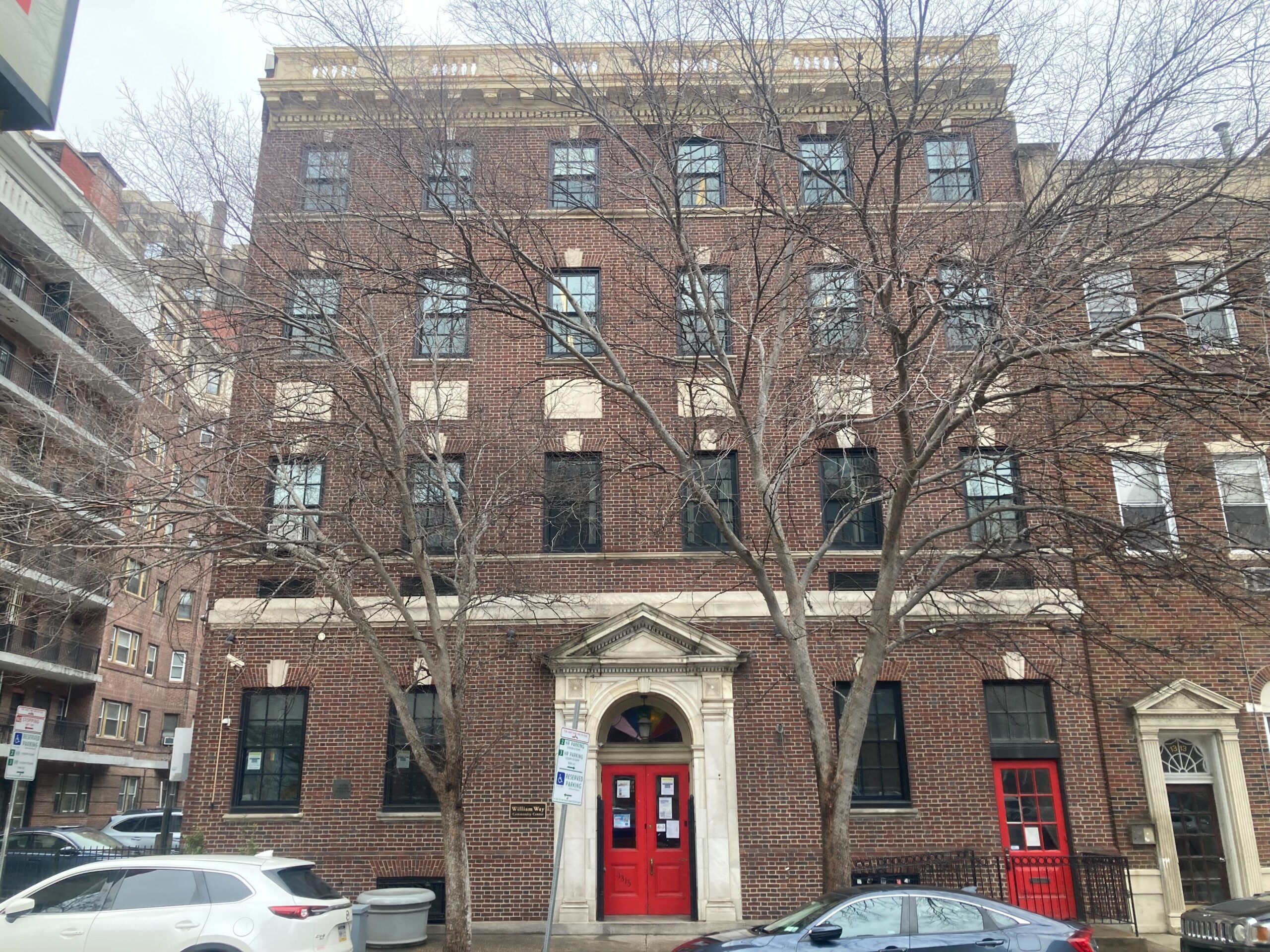
The 176-year-old building at 1315 Spruce St. will be torn down and replaced with a new headquarters, which will include up to 42 new affordable apartments for seniors, according to the development team.
The existing four-story, 14,000-square-foot building is expected to be replaced by a six-story structure. The apartments would be on the top four floors and William Way’s community center on the bottom two.
The idea is to give the storied organization more space, while providing housing for people who might not otherwise be able to live in Philadelphia’s historic Gayborhood.
“We want to make sure that people are given the opportunity to live in all areas of the city, including areas like Washington Square West that have a lot of higher income folks,” said Dan Anders, a vice chair of Dr. Magnus Hirschfeld Fund (DMH Fund), a group that also developed the celebrated John C. Anderson apartments,half a block away.
The DMH Fund is partnering with HELPDevCo, an affordable-housing builder. William Way Center referred all questions about the proposed building to those two groups.
The William Way Center is not likely to demolish the building in the immediate future, as the project will need funding from the federal Low Income Housing Tax Credit, which will not disperse funds again until late this year. The community center is currently still open.
The property is within the recently designated Washington Square West historic district, which was overturned in court last week. The timing of the announcement was coincidental, however. Plans have been in the works for months.
The facade of the William Way LGBT Community Center, located at 1315 Spruce St.
William Way purchased 1315 Spruce St. in 1996, and over the last 10 years, the LGBTQ community has been trying to raise money to stabilize and redevelop the historic headquarters.
Last June, the group announced that even after a fundraising drive, $3.5 million was still required for “immediate repairs.”
Swathes of the building are currentlyunusable, although the structure is not imminently dangerous. There are holes in the floor of some rooms, roof leaks, and standing water often fills the basement.
“It sounds like a really good plan,” said Councilmember Mark Squilla, who represents the area. “The building is in really, really bad shape. It’s been hard to maintain. The reason why it hasn’t been fixed is because the cost to fix it has been astronomical.”
In late November, William Way announced that it would shutter the building and disperse its operation to other locations, raising concerns about clients maintaining access to services.
But a week later, the community center said it planned to rehabilitate the historic building and would return to the existing structure.
“We know that there are questions regarding the future of the building and acknowledge that messaging has been confusing,” William Way board chairs Laura Ryan and Dave Huting said in a January email to supporters. “We understand the frustration and will be sharing more information soon.
Last week Philadelphia Gay News reported that William Way would be demolishing its building and moving forward with a comprehensive redevelopment.
The announcement occurred at a gala for the publication’s 50th anniversary, with Gov. Josh Shapiro and Mayor Cherelle L. Parker in attendance and expressing support for the proposal.
“I strongly support the restoration of the William Way Community Center, as an essential part of the LGBTQ+ community in Philadelphia,” said Mayor Parker in a statement, “and will commit resources through our H.O.M.E. initiative to support this vital project.”
Historic preservation advocates have expressed concern and sadness over the proposed demolition.
“We are alarmed by the news that the historic William Way building would be demolished in the recently announced plans for the future of the real estate,” said Paul Steinke, head of the Preservation Alliance. “We hope they will be willing to incorporate historic preservation into their plans.”
Steinke served on William Way’s board for six years and helped lead a pre-pandemic fundraising drive to replace the windows and HVAC system and conduct other repairs. (In the end, that plan did not move forward.)
Steinke said he has reached out to William Way for more information on its proposal. He also hopes that the city will appeal the ruling against the Washington Square West historic district.
“I understand the frustration of some folks that the building will be demolished, but it’s in such a state that it’s not feasible to renovate it,” Anders said.
“It is a sad reality, but that’s where we are. We will honor the tradition of that location and the William Way Center and build a building that celebrates our community and that everyone can be proud of,” he said.
The Washington Square West Civic Association declined to comment on William Way’s plans.
The property is in one of Philadelphia’s most flexible zoning categories, so land use regulations will not pose a barrier to the community center’s proposal.
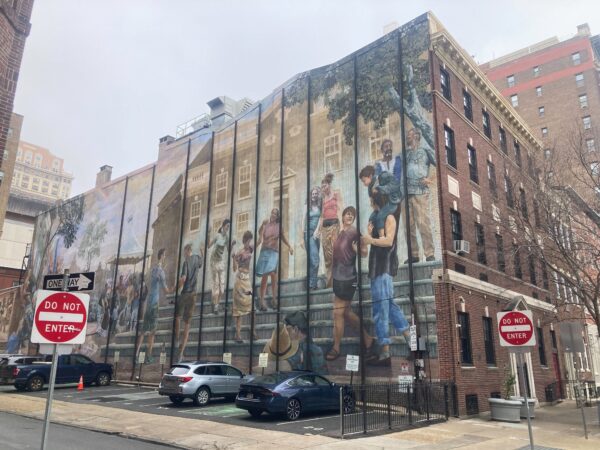
The prominent mural on the side of William Way’s building is crumbling. Anders said the new structure would be designed to advertise the community center’s mission.
“The artist herself acknowledged that the mural was never intended to be permanent,” Anders said. “What we want to do when we’re designing the building is very clearly communicate with passersby and the community itself that something LGBT is going on inside, and to celebrate that.”
Mayor Cherelle L. Parker’s administration sent City Council a bill on Thursday to encourage more apartment construction around SEPTA stations, in hopes of boosting ridership.
The proposal expands an existing law. Currently, if a SEPTA station is made a “transit-oriented development” district — a designation City Council must adopt — then most properties within a 500-foot radius receive a variety of benefits that allows developers to build more housing with less parking than otherwise allowed.
The legislation sent to Council by the Parker administration would expand that radius to 1,320 feet, or a quarter of a mile.
“Zoning is how we turn housing ambition into housing reality,” said Angela D. Brooks, chief housing and urban development officer. “These bills help us put more homes where our infrastructure can support them, near transit, near jobs, and near opportunity, while respecting the character of the neighborhoods Philadelphians already love.”
The hope is that SEPTA will benefit from a ridership boost if more housing is built close to transit, and more people will be able to afford to live near public transportation — which, in some areas, is in more expensive and sought-after neighborhoods.
The zoning overlay grants different types of development benefits depending on the existing zoning around transit stations.
In a bid to avoid controversies that have undermined similar laws in other cities, land zoned for single-family housing would not be given any development advantage under the law.
But properties already zoned for dense housing would be allowed to build many more units, with additional benefits given if they provide affordable housing or environmentally friendly design.
“This package will also increase ridership, reduce costly trips to the [zoning board], and allow more investment in transit stations,” Brooks said. “Zoning may sound technical to some, but investments in transit are something residents can see, touch, and feel every day.”
Projects that have benefited from the existing transit-oriented development overlay include The Noble, with 360 units, near the Spring Garden stop on the Market-Frankford Line, and a proposal for a 134-unit mixed-income development at the Frankford Transportation Center.
Land zoned for more modest density would be allowed to build 50% more units. That means if developers could build four units under normal conditions, in a transit-oriented development district, they could build six.
The overlay requires that the ground floor of commercially zoned buildings have active uses. Curb cuts, parking garages, and one-story buildings are not allowed.
Parker’s bill further eases some parking requirements, although the requirement for developers building in such areas is already less than under normal zoning rules.
The bill was circulated to City Council on Wednesday. Members wanted more time to review it before it was formally introduced.
“In general, I’ve been a proponent of the basic concept of increasing density around our transit stops,” said Councilmember Jamie Gauthier, who chairs City Council’s housing committee.
“It makes our neighborhoods more lively, more livable,” Gauthier said. “We have a great transit system, and we should be trying to help it be as successful as possible.”
Because City Council must pass legislation to include transit stations in the zoning overlay, district Council members are given effective control over how many stations will be included in the law’s benefits.
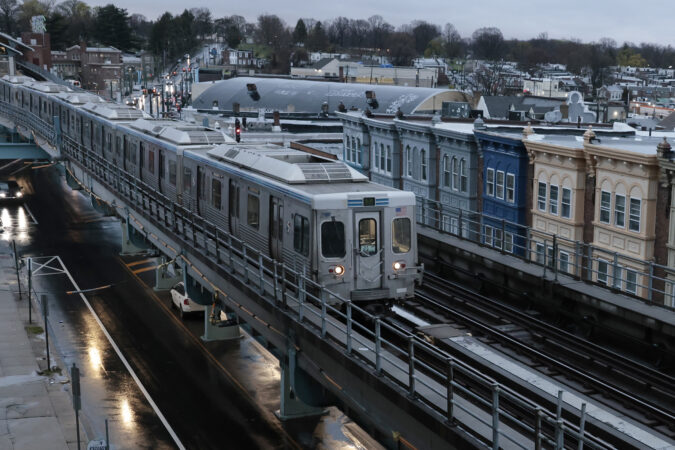
Both the Broad Street and Market-Frankford Lines run between Council districts, which means half of many stations are under one Council member’s purview while the other half are in another’s control.
Transit advocates have long hoped for legislation that would automatically apply to all major transit stations, but that idea could prove difficult to get through City Council.
Gauthier is one of the few Council members who have embraced transit-oriented development. All of the Market-Frankford Line stations in her district are covered by the overlay.
No stations on the Broad Street Line are included so far.
“I don’t want to speak about areas of the city that are not mine,” Gauthier said. But in her transit-rich West Philadelphia district, “I do think we can consider expanding that radius more. We know that less people are driving nowadays.”
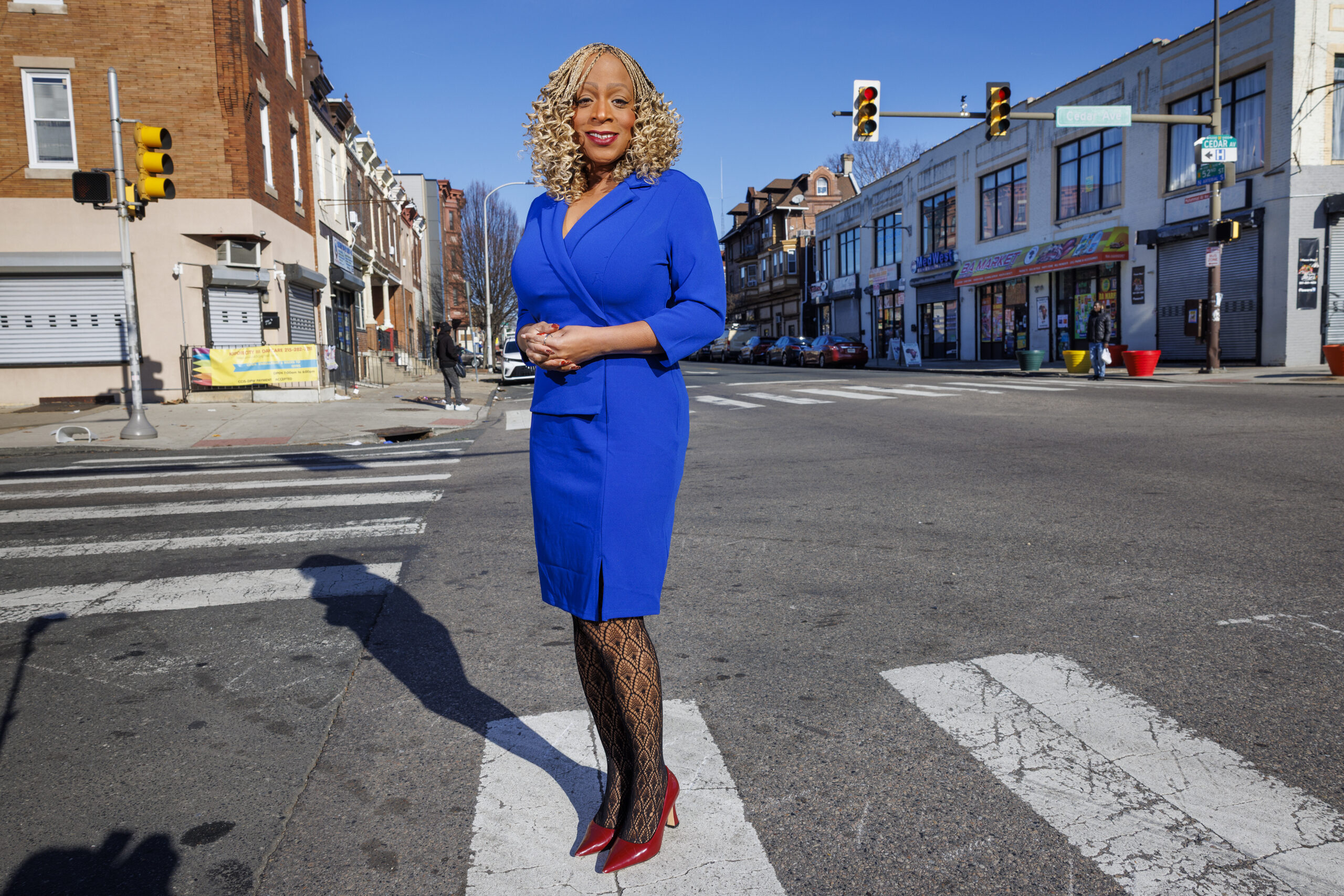
City Councilmember Jamie Gauthier is one of the most enthusiastic proponents of transit-oriented development on City Council.
The urbanist advocacy group 5th Square says that Parker’s bill should be broader.
The group called for the elimination of parking minimums near transit, an even larger coverage radius, and for multifamily housing to be allowed on land zoned for single-family homes near stations.
“These bills are a welcome step toward more housing near transit, but their scope doesn’t quite address our massive housing shortage,” said Fae Ehsan, board member with 5th Square Advocacy.
The other housing-related billParker sent to Council includes legislation that would make it easier to build more apartments above commercial buildings on the ends of some rowhouse blocks, which are currently allowed to have only one unit above ground-floor retail.
The bill would allow owners to convert the ground floor to residential uses if they cannot fill the storefront. The administration believes 7,000 to 12,000 more housing units could be allowed under the change.
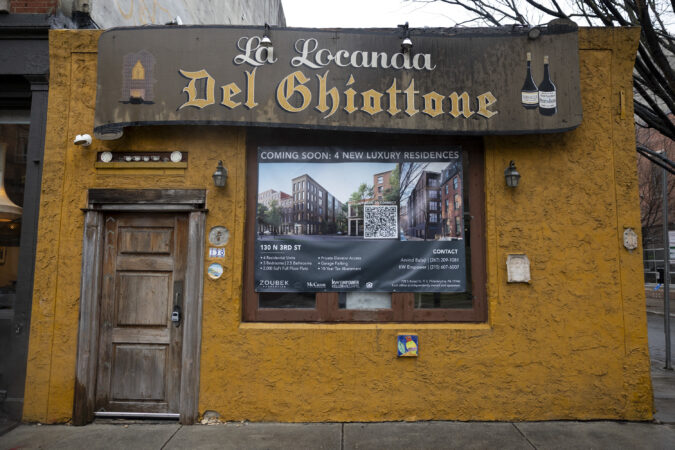
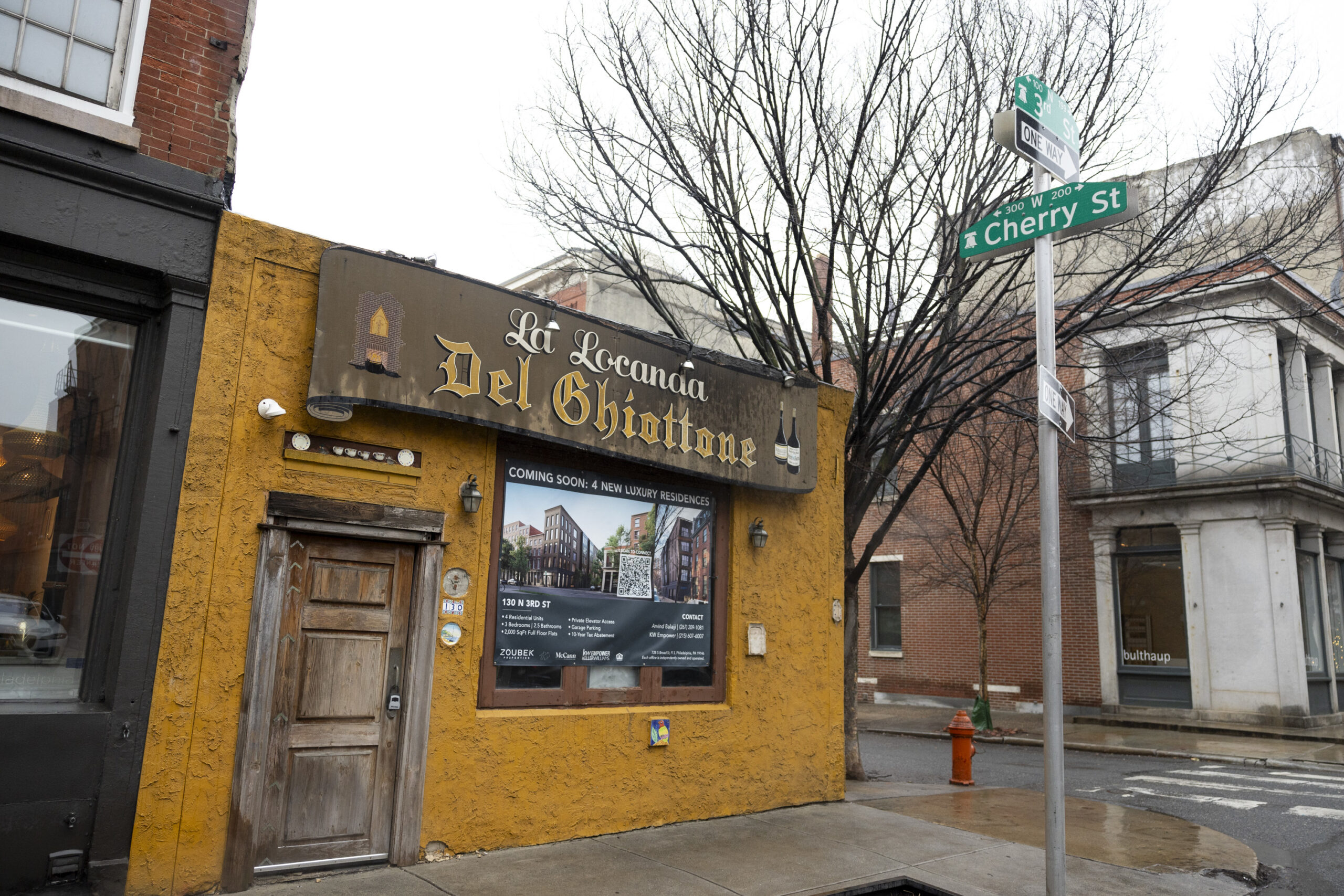
The quaint mustard yellow former home of La Locanda Del Ghiottone, a former Italian restaurant in Old City, is slated for demolition, according to city records.
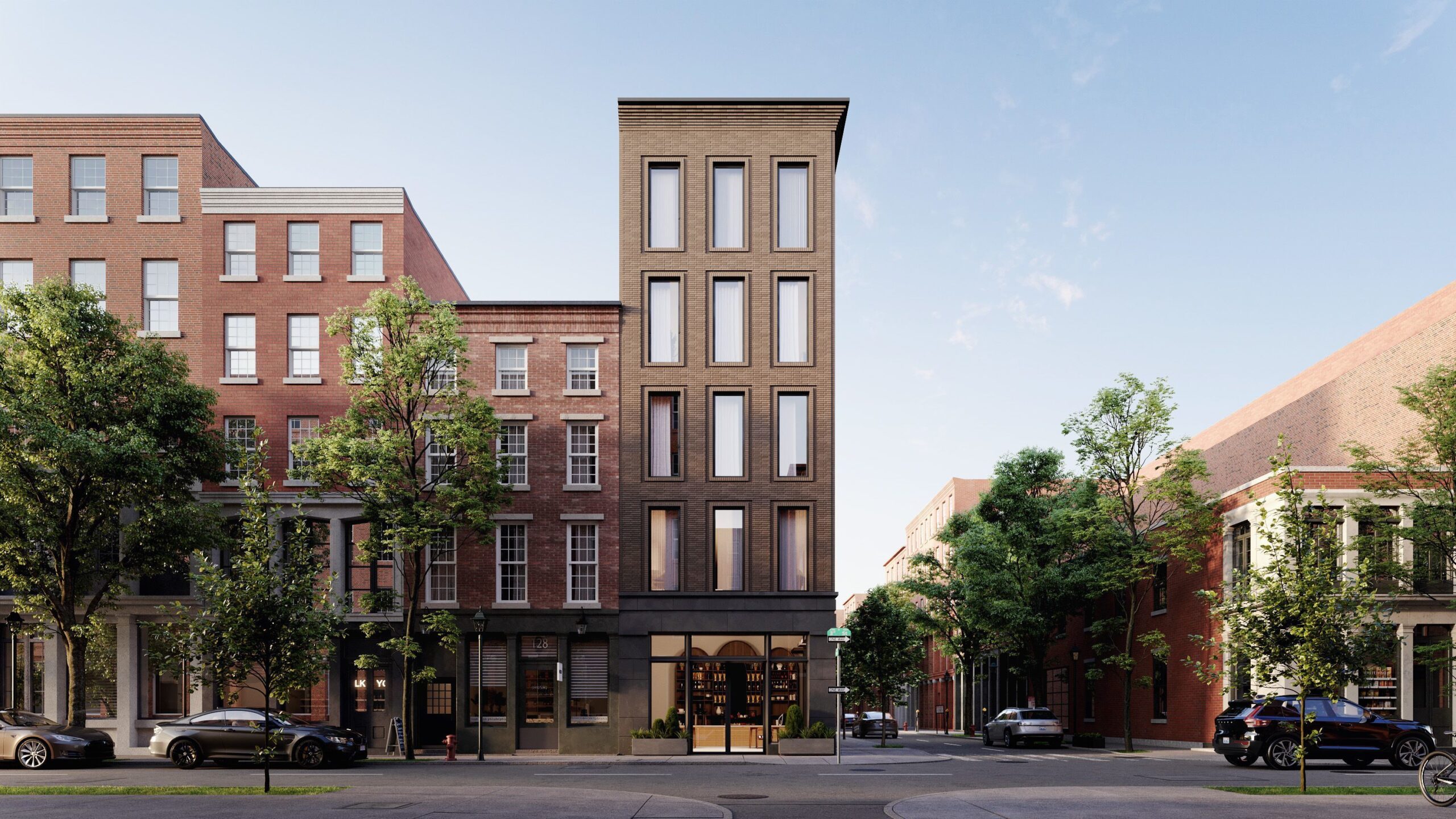
Brian Zoubek, the developer behind the hotel down the block, Sosuite at the Loxley, plans to turn the lot into luxury condos.
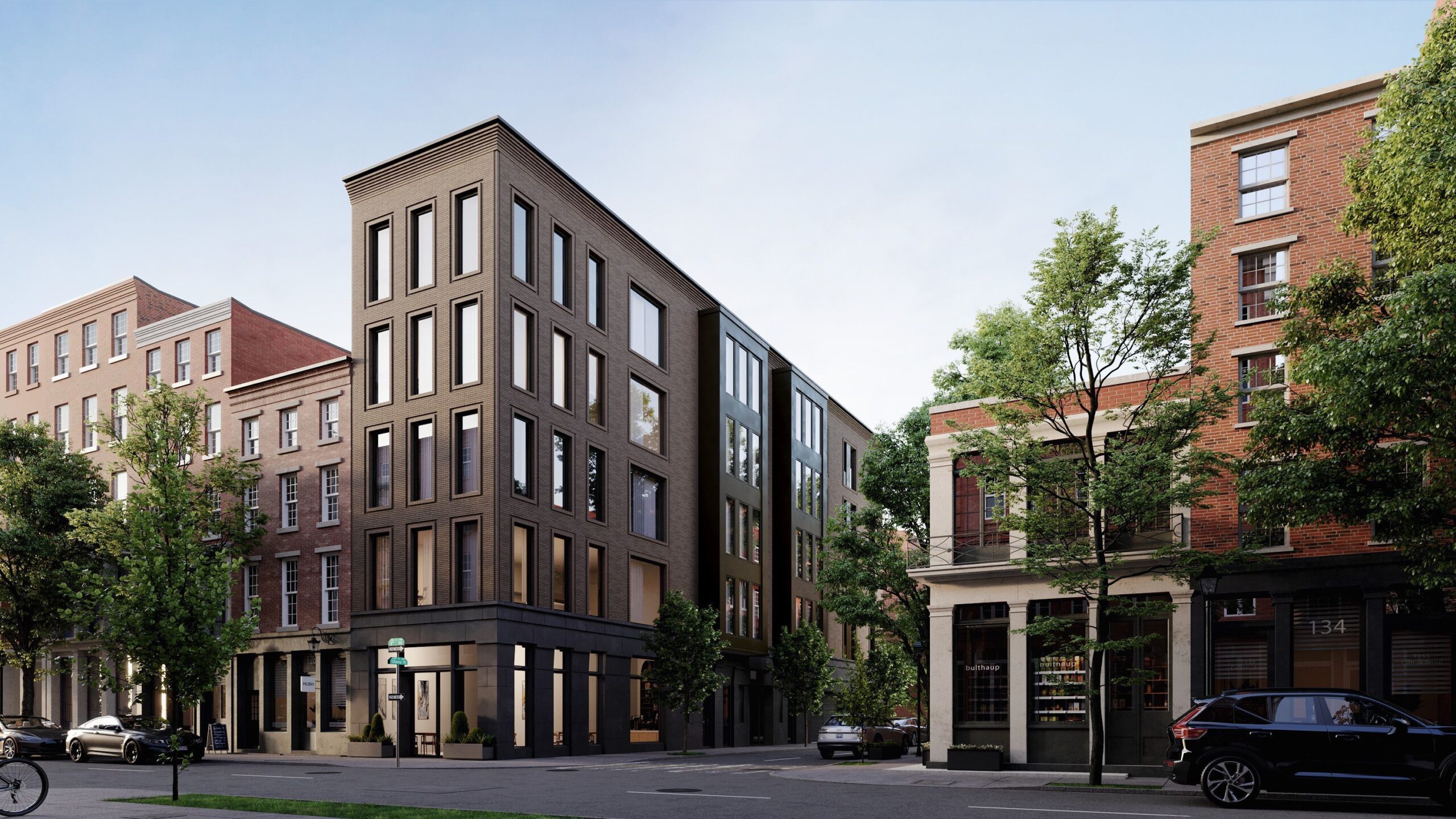
The property will take on a new character, Zoubek said. Gone will be the vibrant, squat structure decorated in colorful plates. In its place will stand a sleek, narrow five-story mixed-use building. The bottom floor will be retail and the four floors above will each feature one condo. Prices will range from around $1.6 million to about $1.95 million per unit, he said.
A rendering of a new five-story building coming to the corner of Third and Cherry Streets in Old City.
Zoubek said he’s expecting demolition to start this month and construction to take about 12 to 14 months. He’s hoping the condos will open next summer. He purchased the building in 2022, according to city property records.
To align the new building with the historic aesthetic of that block, he said the building will be covered in brick with a stone facade on the first floor.
A rendering of a new five-story building coming to the corner of Third and Cherry Streets in Old City.
Residential use is a change for the property anchoring the southwest corner of Third and Cherry Streets. It hit the market in 2020 when La Locanda Del Ghiottone relocated to Port Richmond.
The restaurant’s history at the property dates back to 1989, when Giuseppe Rosselli, an immigrant from northern Italy, took over the building at 130 N. Third St.
Rosselli, a character who used to post screeds outside the restaurant, originally named the 35-seater Trattoria Dell’Artista. In 1992, Rosselli opened L’Osteria dell’Artista down the block at 114 N. Third St., and a year later, renamed his original restaurant Ristorante der Ghiottone (”the glutton”). He later tweaked the name to La Locanda Del Ghiottone. Rosselli died at age 51 in 2000.
Ghiottone was a favorite of Inquirer critic Jim Quinn, who raved about the “rough and ready cuisine moded on the bargain-price restaurants of Italy. Portions are huge, prices extremely low, and all food is rushed directly from the stove to you.”
La Locanda Del Ghiottone’s building, seen on March 3, 2026, will be demolished and replaced with luxury condos.
Reporter Michael Klein contributed to this article.
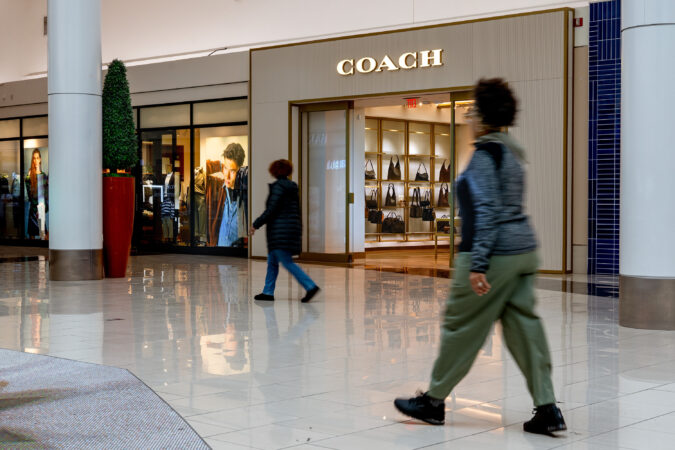
When Coach opened a store at the Cherry Hill Mall in November, mall executives were ecstatic — even though it’s been 85 years since the high-end retailer was founded.
Coach is as hot as ever. And its new shop in Cherry Hill is just another sign of the South Jersey mall’s success, according to leaders with Pennsylvania Real Estate Investment Trust (PREIT), which owns the complex.
“Cherry Hill is clearly a dominant fashion property,” Paula Charles, PREIT’S first vice president of leasing, said in a recent interview.
In the competitive Philadelphia market, “the better retailers have gravitated toward the better assets,” including Cherry Hill, added Joe Aristone, PREIT’s chief revenue officer.
They noted that top-tier retailers increasingly include legacy brands — long-established companies like Coach, Zara, and Levi’s, that are making a nostalgic, social media-fueled comeback with younger consumers.
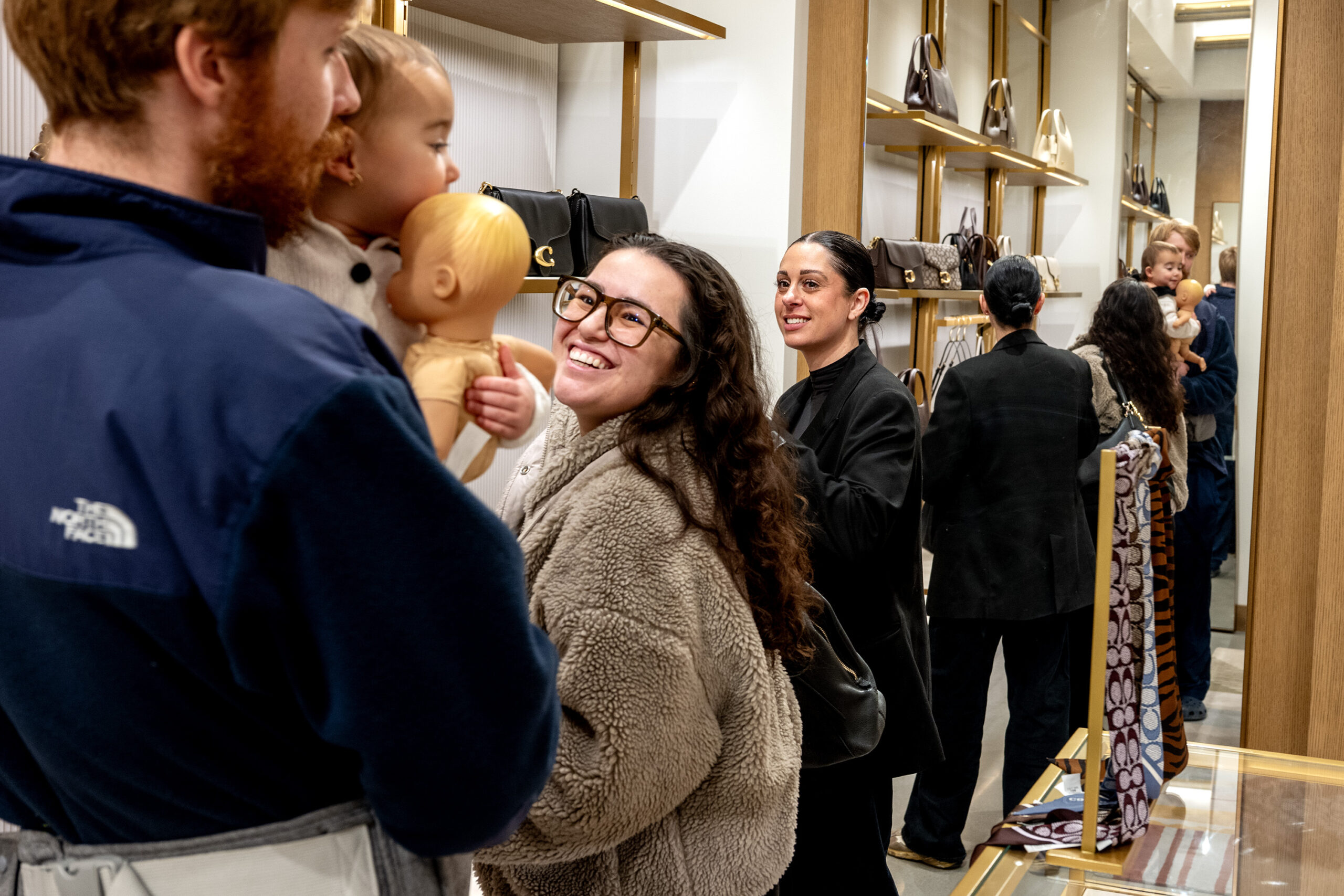
Employee Alex Costa (right) assists Alessandra Bruno as she shops for purses with husband, Luke Baur, and their 20-month-old daughter, Rosalina, at the Coach store at the Cherry Hill Mall.
In the Philadelphia area, these retailers have maintained a presence along shopping corridors in Center City and at higher-performing malls like Cherry Hill and King of Prussia, which is owned by Simon Property Group.
Prior to the Cherry Hill opening, Coach operated shops in King of Prussia and Marlton, as well as off-price locations at the Philadelphia Premium Outlets near Pottstown, the Gloucester Premium Outlets in Blackwood, and the Tanger Outlets in Atlantic City. The brand also has an outpost at the Philadelphia International Airport.
Coach spokespeople did not return requests for comment about their investment in the region.
PREIT executives declined to comment on sales so far at their new Coach store, but said brand and mall executives are pleased with how the store is doing — and what that means going forward.
“Coach has had a strategy to make sure that they capture Gen Z,” a demographic that PREIT executives also want to attract and retain as they age, Charles said.
Why Gen Z and millennials love Coach
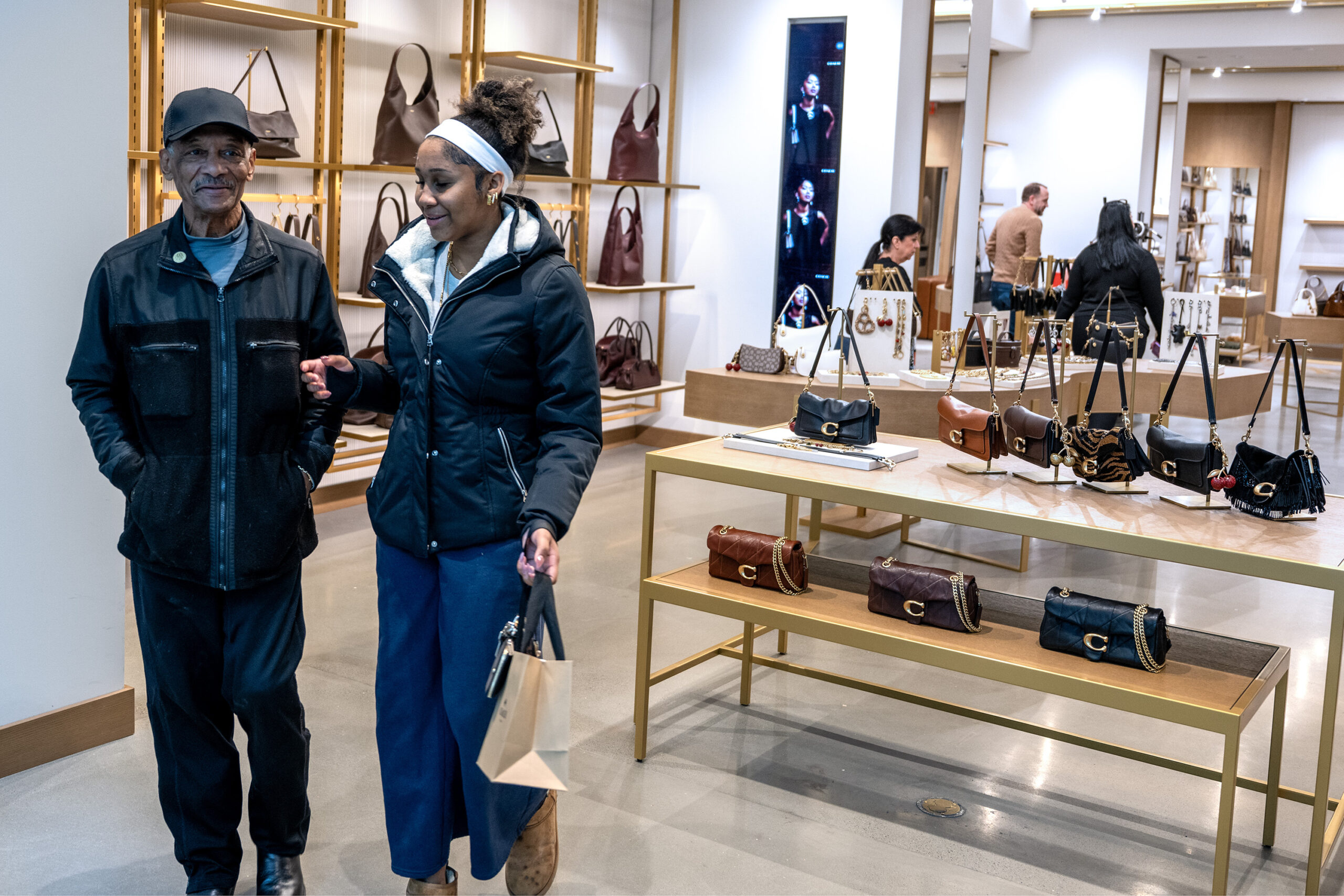
Joe Williams, of Magnolia, N.J., buys a handbag for his daughter, Samantha Williams, at the Coach store at the Cherry Hill Mall.
About two years ago, Breana Stringer, now 26, noticed that many of her friends were going out with Coach bags. And when she’d open TikTok, she said, the platform’s algorithm showed her videos of other users’ Coach collections.
Up until that point, the Fishtown resident had been an accessory minimalist: “I was very much an ‘if it doesn’t fit in my pocket, I’m not bringing it’” type of person.
But Stringer said she was influenced by her friends and TikTok to start buying Coach bags, mostly secondhand (though she has received new Coach bags as gifts). She has come to enjoy styling them with her outfits.
To Stringer, Coach’s appeal to Gen Z consumers is simple, she said: “They’re affordable in terms of a luxury name brand, and they’re vintage styles.”
New Coach bags start at $95 for a short shoulder bag, while larger purses can cost $500 or more. At outlet stores and secondhand shops, prices are lower.
In South Philly, Stephanie Gonzalez, 33, has restored and resold dozens of vintage Coach bags, mostly to Gen Z and millennial women.
She said these women see the Coach brand as “timeless.”
For Gen Z, “what is happening is they are really into Y2K, late-’90s, early-’90s nostalgia,” Gonzalez said. “TikTok has been a big hub for people” to share their love of Coach and brands that were popular in those years.
As for other legacy brands, Stringer said some of her Gen Z friends have also started wearing Cartier rings, which have been around since the mid-1800s and can cost more than $1,000. It’s a trend Stringer has yet to get behind, she said, because she has a tendency to lose small accessories: “I’m less likely to lose a bag.”
How legacy brands are boosting Philly-area malls
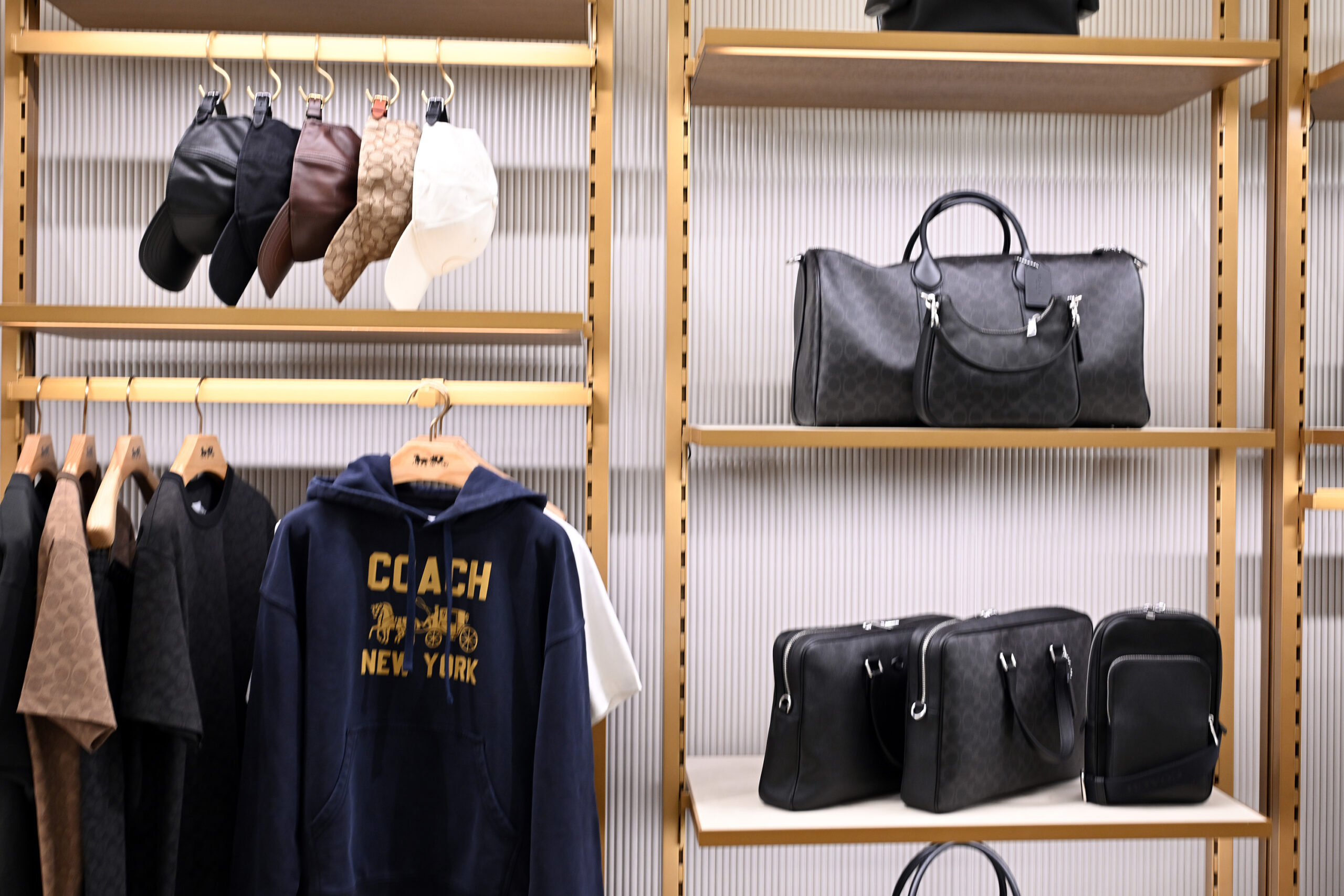
Products are displayed at the Coach store at the Cherry Hill Mall.
Cherry Hill Mall isn’t the only local shopping center to have welcomed new legacy retailers recently.
In the past six months, Abercrombie & Fitch, Columbia Sportswear, Lacoste, and New Balance have opened new stores at the King of Prussia Mall, and an Adidas outpost is also set to open there soon.
At the Philadelphia Premium Outlets, Hugo Boss, Marc Jacobs, and New Balance have opened stores in the past year, while the Gloucester Premium Outlets in Blackwood have added New Balance and Columbia locations. Like the King of Prussia Mall, both outlet malls are owned by Simon Property Group.
Typically, these re-energized brands are attracted to places where other similar companies have already set up shop, say the PREIT executives who help shape the tenant mix at the Cherry Hill Mall.
And they said this cyclical effect further cements the region’s dominant retail centers as shopping destinations.
“There is so much media out there as it relates to closed malls,” said Aristone, the chief revenue officer. Many of the surviving malls, however, are thriving, he said, thanks in part to these legacy brands.
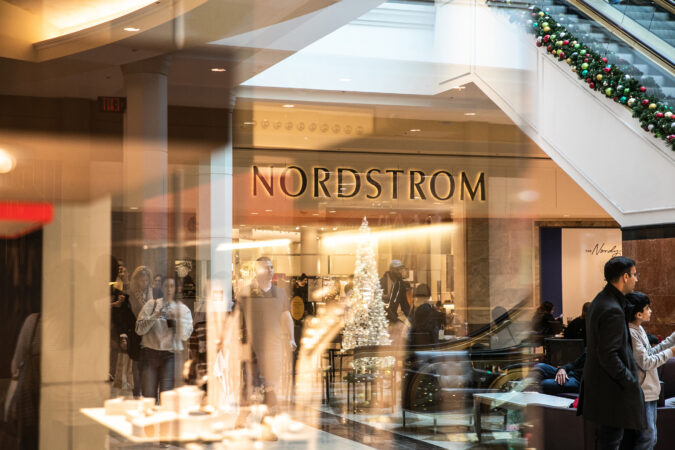
Delaware’s only Nordstrom store is set to close its doors next month.
The Christiana Mall location will shutter on April 30, the company confirmed in an email on Monday. The closure was reported over the weekend by the Delaware News Journal.
“We believe we’ll be best able to serve customers in the area by leveraging our surrounding stores and through our digital channels,” Nordstrom said in a statement.
The two-story, 123,000-square-foot department store opened in the Newark mall 15 years ago. The high-end retailer is one of four anchors alongside J.C. Penney, Macy’s, and Target.
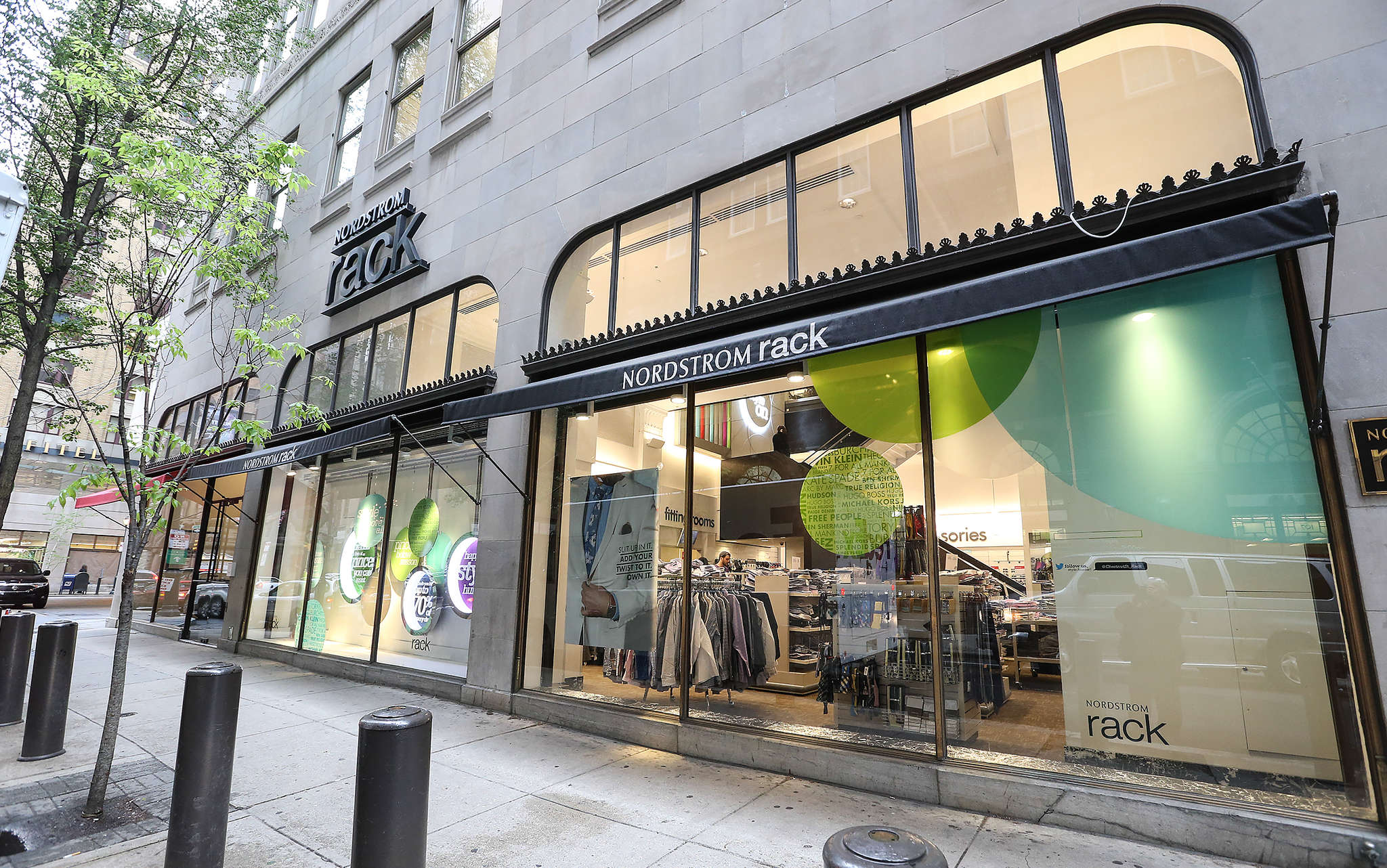
Once Nordstrom closes, the nearest full-price location will be more than 30 miles away at the King of Prussia Mall. The company’s discount counterpart, Nordstrom Rack, operates a store nearby at the Christiana Fashion Center complex in Newark.
Nordstrom Rack in Center City is shown in 2018. Recently, the retailer has been expanding its off-price footprint.
The retailer has announced plans to open more than a dozen additional locations this year. They include Nordstrom Rack stores in the Main Street at Exton shopping center and at the Promenade at Granite Run in Media.
At the Christiana Mall, Nordstrom said it is “committed to taking care of our employees through this transition, including supporting those who are interested in finding another role within Nordstrom.” It did not say how many people would lose their jobs.
A search of Delaware’s online database of WARN Act notices, which are required in advance of closures and mass layoffs, did not yield any results.
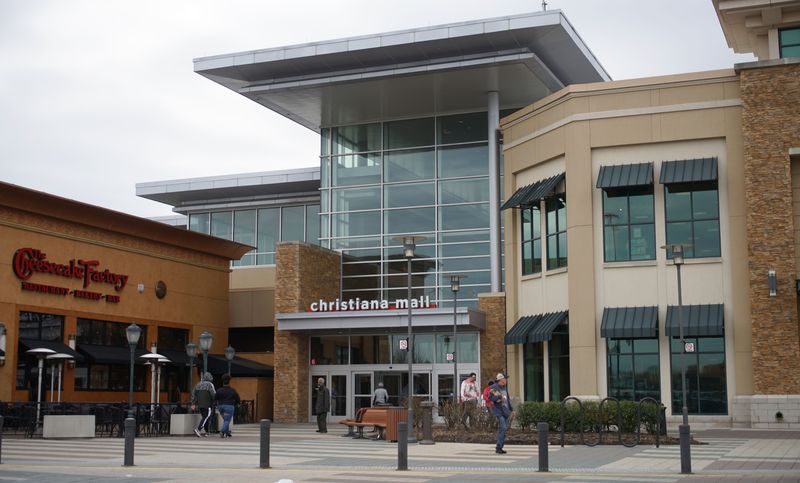
Christiana Mall is billed by its owner, General Growth Properties (GGP), formerly Brookfield Property Partners, as “one of the most productive retail centers in the country.” The developers say that each year 10 million people visit the 1.2-million-square foot “tax-free shopping destination” that is home to more than 140 stores. Delaware has no state or local sales tax.
The Christiana Mall is shown in 2018. Its owners say 10 million people visit the Newark shopping destination each year.
A GGP spokesperson declined to comment on Nordstrom’s departure and said it was too soon to discuss what’s next for the space.
The news of the closure comes amid an uncertain time for the retail industry.
After decades in business, Saks Fifth Avenue in Bala Cynwyd is set to close next month after its parent company filed for Chapter 11 bankruptcy. In another segment of the retail industry, West Chester-based home shopping network QVC Group, according to a Bloomberg report, is considering filing for Chapter 11 bankruptcy to reorganize billions in debt.
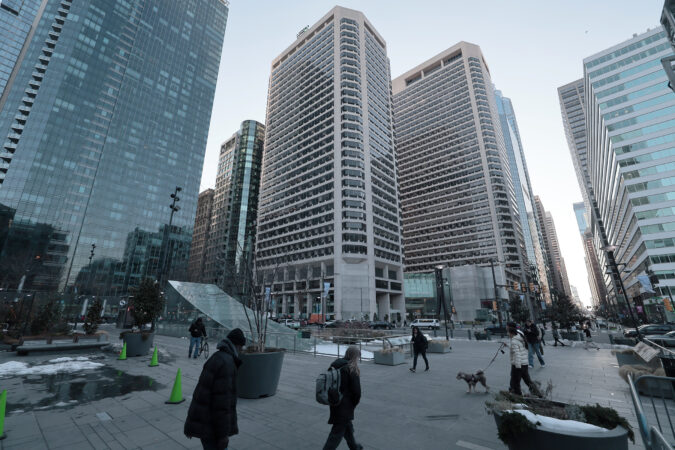
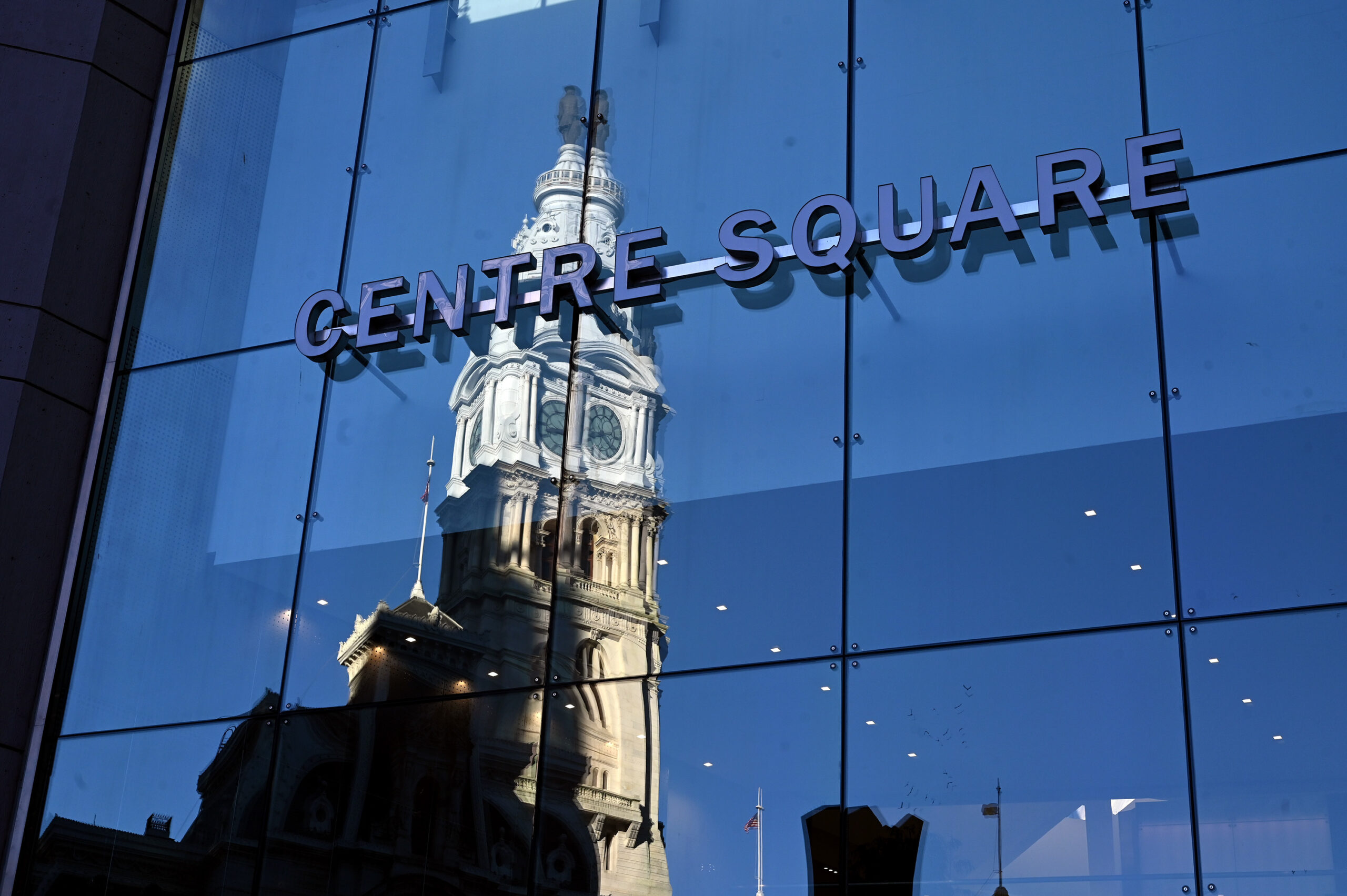
When it opened in 1974, the connected concrete towers of Centre Square boasted the most office space in Philadelphia, at over 1.7 million square feet.
Over 51 years later, the Brutalist behemoth still holds that title.
Butprobably not for much longer.
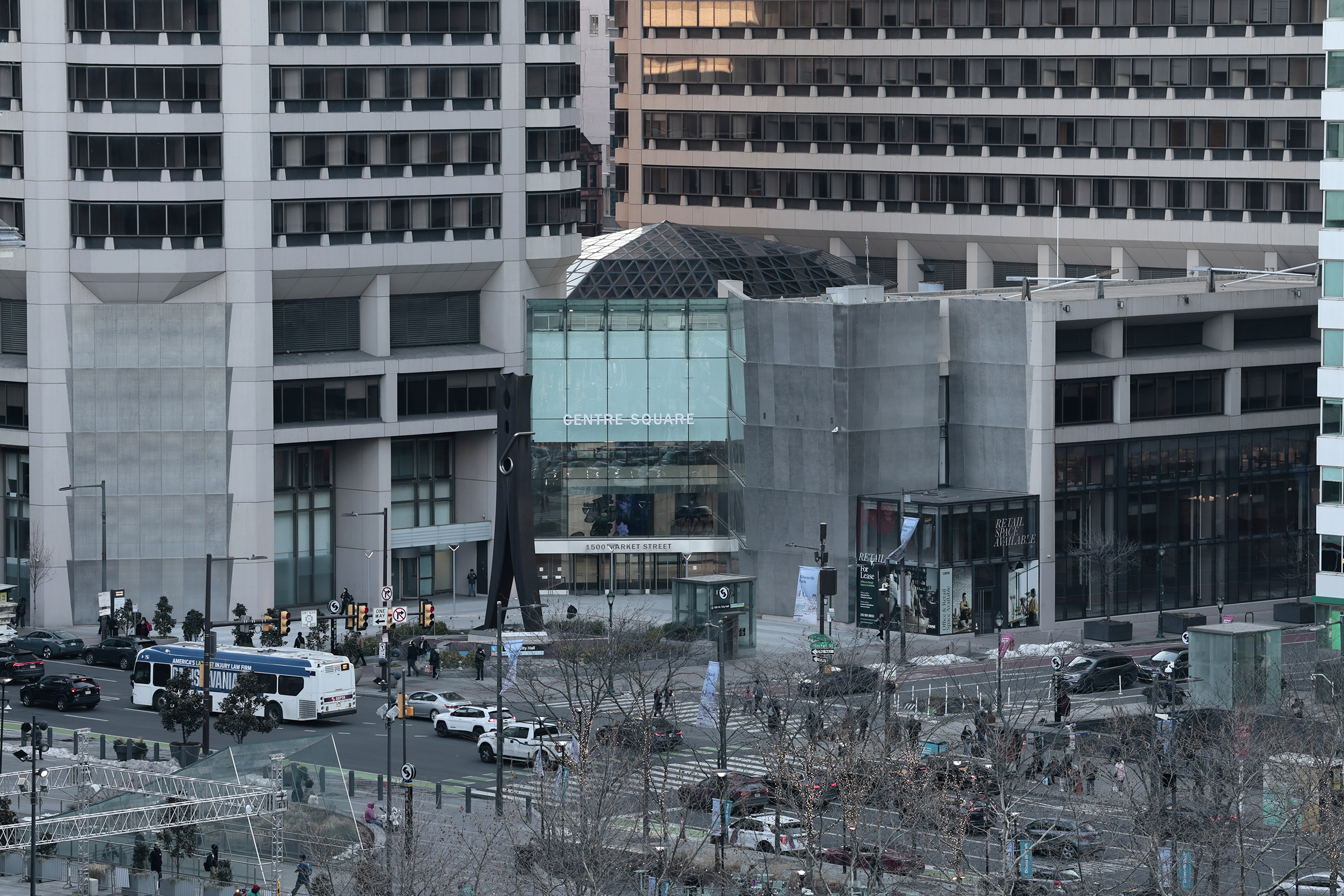
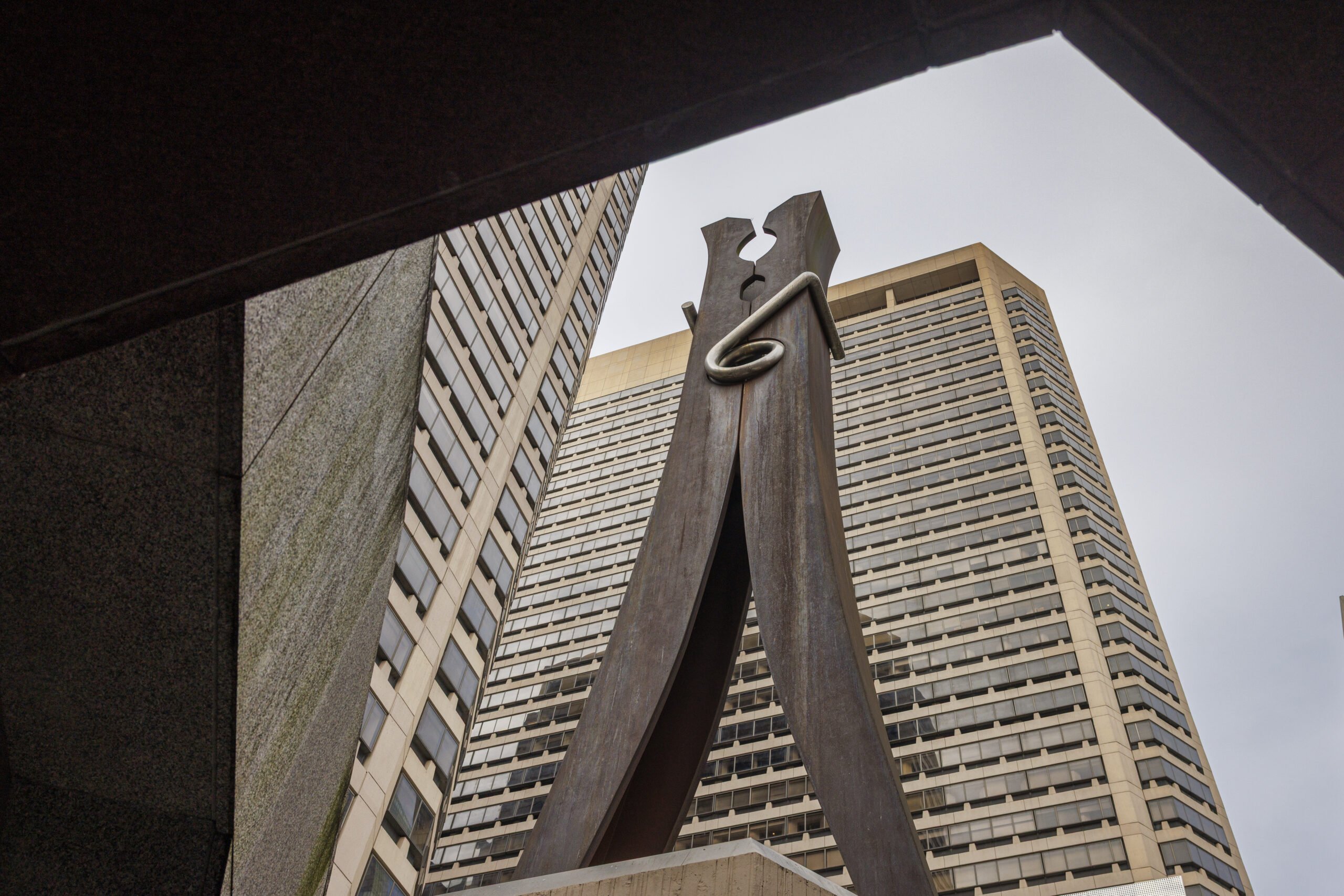
Centre Square — also known as the “Clothespin building” for its four-story pop art sculpture — is slated for mixed-use redevelopment by PMC Property Group and investor and developer Dean Adler, with much of the complex being devoted to hotel rooms and apartments.
“That corner of West Market is the best corner in the city,” Adler said. “You get …all the visibility going around the circle. When you look at City Hall, it may not be so nice inside, but outside, it’s a 1904 Beaux Arts building.”
Centre Square’s fortunes sank when COVID-19 struck and have never recovered. At the end of 2025, occupancy stood at 37.6%, giving it the highest vacancy rate in Center City,according to Morningstar Credit.
In 2017, when Centre Square last sold, it went for $328 million. Last July, the complex was appraised at $104.4 million and is now under agreement of sale to PMC and Adler for less than $94 million, according to Adler.
He says the plan is to retain 500,000 square feet of office space, enough to house the remaining tenants. Then there will be between 250 and 500 apartments spread between thebuilding’s two towers. Three hundred luxury hotel rooms will be built on the upper floors of the east tower, facing City Hall.
“William Penn is in your bedroom,” Adler said of the hotel.
Centre Square is located across from City Hall on what investor Dean Adler calls “the best corner in the city.”
On the lower levels of Centre Square, Adler says there will also be a spa and a 50-meter pool — amenities that he says the building previously had.
The acquisition of Centre Square is part of a wave of high-profile redevelopments between Adler and PMC, led byits president, Ron Caplan.
In recent years, the partners have purchased and redeveloped the Bellevue on South Broad Street, the Battery on the Delaware River, and the Bourse on Independence Mall.
“In today’s environment, there’s a real estate crisis, and we are buying these buildings for 20 cents on the dollar,” Adler said. “We …are rejuvenating architectural gems that are functionally obsolete.”
PMC declined to comment. News of Centre Square’s acquisition was first reported by the Philadelphia Business Journal.
Centre Square (center) at 1500 Market Street in Philadelphia on Friday, Feb. 27, 2026
More than ‘an office district’
The new Centre Square is part of a trend in which struggling office buildings have sold for less than half their previous prices with plans to convert the spaces into homes.
Centre Square’s discount was even deeper: The reported sale price is almost half what it sold for in 2002, not even adjusting for inflation.
The Wanamaker Building, which had over 1.4 million square feet of office space, is another example. Previously one of Philadelphia’s largest office buildings, it is being turned into apartments by TF Cornerstone and Alterra Property Group. Only a small number of offices will be preserved.
“The office district isn’t only an office district anymore,” said Prema Katari Gupta, president of the Center City District.
“There’s hospitality; there’s increasing residential. What makes a city great is when you have these layered neighborhoods with a lot of different types of demand drivers,” Gupta said.
The partners in Centre Square’s redevelopment haveworked together for decades, including on the new Aramark headquarters on the Schuylkill and 2040 Market St.
Adler‘s longtime business partner, Ira Lubert, with whom he founded real estate investment group Lubert-Adler, is not involved in the project. Instead, the Centre Square project partnership with PMC is being done under the auspices of a new venture, Adler & Co.
Philadelphia’s No. 1 business address
Centre Square spans two towers because it dates to an era when developers would not build taller than the William Penn statue atop City Hall, an unofficial agreement with the city that lasted until the 1980s when the Liberty Place skyscrapers were erected.
Planning for Centre Square began in the mid-1960s, signaling a shift, along with the construction of Penn Center, for Philadelphia’s office district from the Art Deco South Broad Street to West Market Street.
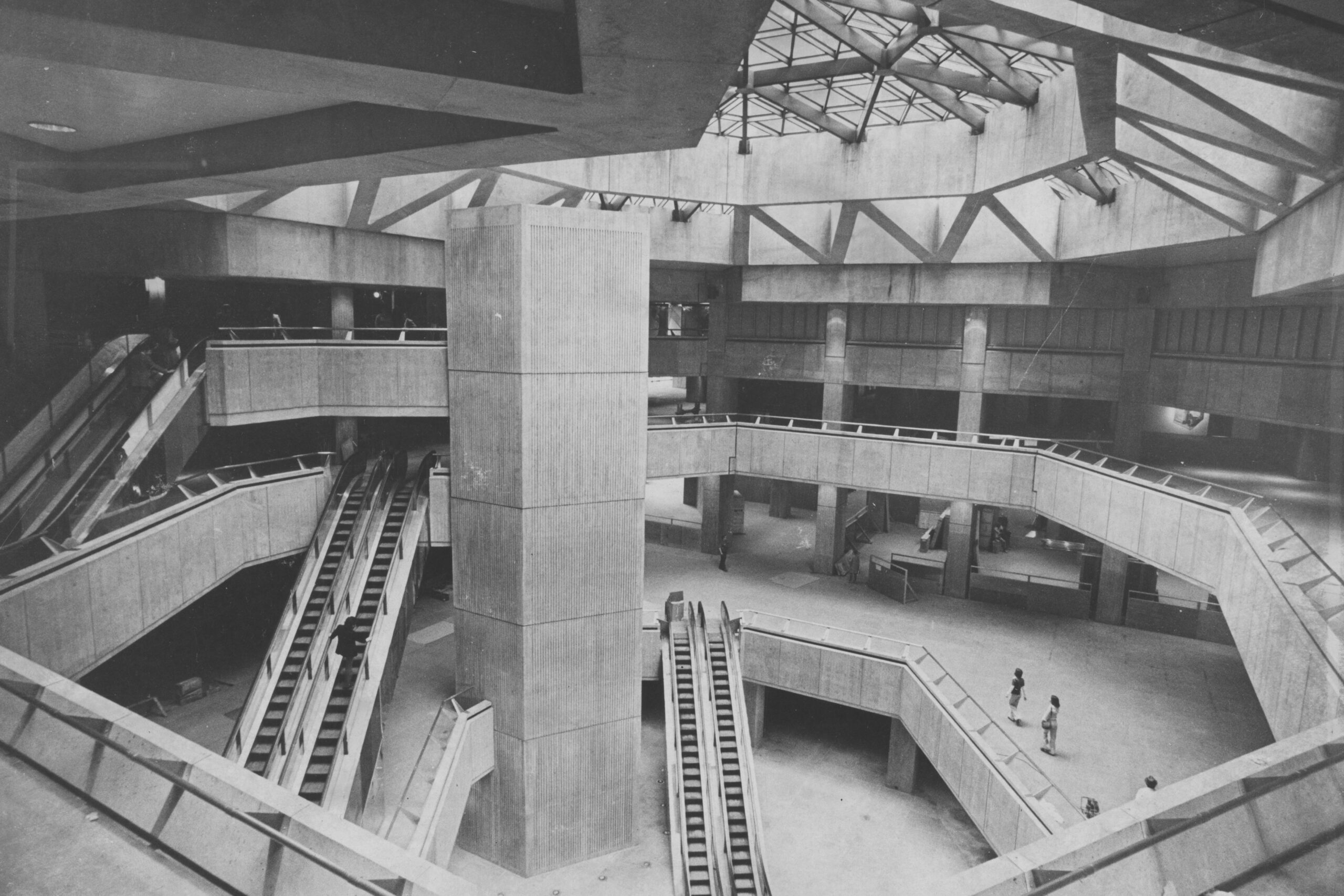
Centre Square’s atrium and retail space in in 1974.
“Those buildings created the momentum,” said Bill Hankowsky, former CEO of Liberty Property Trust, which developed neighboring office skyscrapers like Liberty Place and the Comcast towers. “It was the biggest single project that said we’re going down Market West.”
Designed by architect Vincent Kling and developer Jack Wolgin, it was seen as a revolutionary project and hailed as Philadelphia’sNo. 1 business address in ads in The Inquirer.
Centre Square also bears the architectural hallmarks of the 1960s, like its poured concrete building materials that — along with its respect for the old height limit — set it apart from the steel skyscrapers built farther down West Market later in the decade.
The building’s Brutalist architecture — often a polarizing style — has bedeviled many of its subsequent owners, who pumped millions of dollars into Centre Square nearly every decade since the 1970s to keep it competitive.
“It is structurally built differently than other buildings on Market West,” Hankowsky said. “It’s a substantial building, but also it is a tougher building to deal with. The walls are thick, the floors are thick. It’s a big challenge.”
That’s part of what deterred many other developers who considered buying the building.
The sheer scale is a challenge, too. Some interested parties were put off by the percentage of the building that would have to remain office, as a full residential conversion is unlikely.
“The buildings don’t particularly lend themselves to a complete conversion to apartments,” said John Grady, who used to lead the Philadelphia Industrial Development Corp. and studied the building for its prior ownership. “They’re too big, and the floor plates don’t work as well as other buildings.”
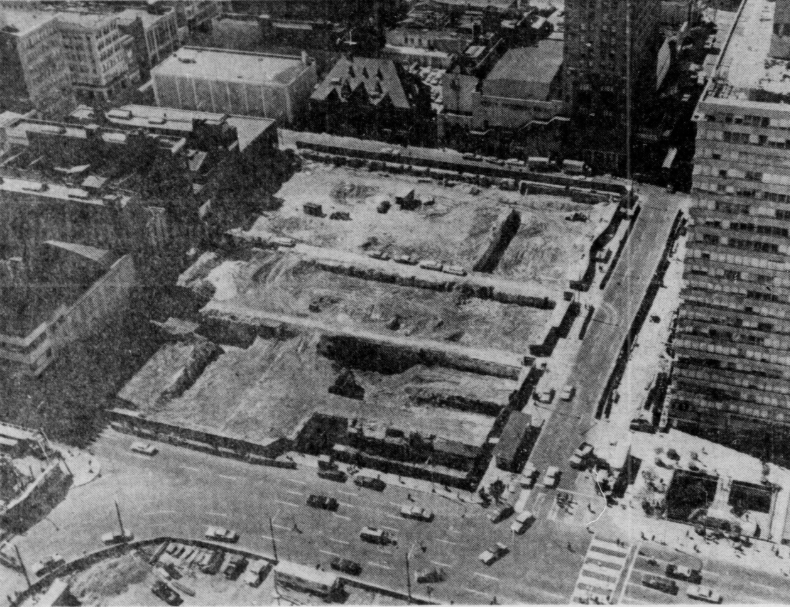
A photo of the long vacant lot while Centre Square went through its fiscal and legal trials during construction.
Born in drama, consideredfor Comcast HQ
Centre Square’s birth was not easy. Its planning and construction took almost 10 years, with legal and financial delays that included an investigation of the project by then-District Attorney Arlen Specter. (Wolgin told reporters that the Republican politician was “out to get” him.)
The delays left a yawning vacant lot just west of City Hall, which led Mayor James Tate to describe Centre Square as “doomed” in 1969.
When Wolgin eventually began construction, he then faced blowback from powerful critics of Claes Oldenburg’s Clothespin sculpture that he wanted to place in front of his towers.
“It was a disaster!” Jack Wolgin told The Inquirer in 2001. “They said, ‘How can you take something like this pop art and put it in front of City Hall? It’s a monstrosity! It’s a disgrace!’”
Despite the building’s polarizing beginnings, it became a mainstay of the office market, attracting one-time corporate giants like CoreStates bank and Towers Perrin consultants.
Claes Oldenburg’s pop art Clothespin sculpture stands in front of Centre Square.
It snagged Comcast as a tenant in the early 1990s, after the company was forced out of its first urban home by the fire that destroyed One Meridian Plaza.
Comcast studied the building as a possible headquarters for the company before eventually turning to Liberty Property Trust to build their skyline-defining towers.
Still, many of its 1960s-era flourishes proved difficult to adapt to the modern era. By the 1980s, the atrium that connects the two towers and houses its inward-facing retail received its first renovation.
Centre Square’s atrium has undergone renovations almost every decade since.
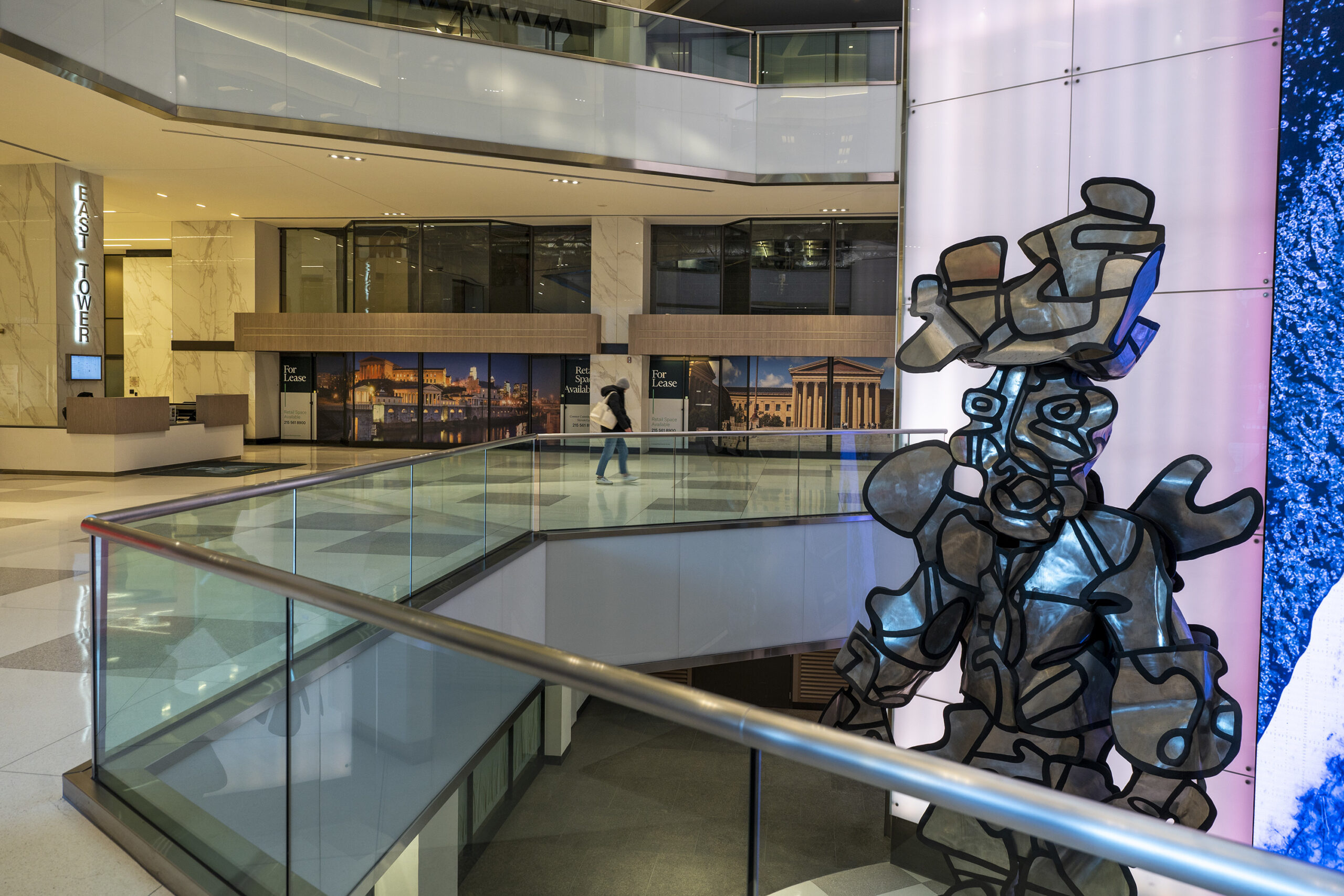
The lobby of Centre Square in 2024.
Looking ahead
Inquirer architecture critic Inga Saffron wrote about Centre Square‘s latest update in January 2020.
“Fortunately for Philadelphia, the city’s biggest, baddest Brutalist complex, Centre Square, has always been too big to fail,” she wrote just before COVID-19 struck and emptied office towers around the country.
Now, six years later, Adler and PMC Property Group believe they can bring it back as something new.
But six years later, some sprawling campuses in suburbs like Horsham, Plymouth Meeting, and Wayne have soaring vacancies — andthere are only a couple suburban conversions underway.
Developers agree that the primary challenge is the buildings themselves, which have more difficult floor plans for residential development than their urban counterparts, making demolition easier than conversion in many cases.
“Transforming an office building tucked inside a suburban office park is a completely different equation than converting a building on Walnut Street steps from Rittenhouse Square,” said Sarah Maginnis, executive director of the Philadelphia chapter of the Commercial Real Estate Development Association. “Location, context, and building design all matter a lot.”
The lack of suburban office redevelopment is partly due to the fact that many of the highest-vacancy buildings are in remote, less desirable corners of the region. The patchwork quilt of hyperlocal zoning regulations across dozens of municipalities is a challenge, too, as builders have to negotiate with officials on almost every project.
“A lot of townships are fighting residential development because it comes with burdens on the school systems. Office buildings don’t do that,” said Glenn Blumenfeld, principal with Tactix Real Estate Advisors. “Zoning is more liberal in the cities [which is why residential conversion] has not come to the suburbs.”
Architectural challenges of conversion
Most suburban office buildings date to an era when office and residential structures began to look very different from each other.
When office work began to move into undeveloped land surrounding cities in the mid-20th century, developers generally built out instead of up, taking advantage of the abundant space. Almost everyone commuted by car, so vast parking lots were required.
Suburban office buildings often have a lot of dark interior space. The windows that do exist mostly cannot be opened because of ubiquitous air-conditioning. The parking lots that wreath the buildings make for unsightly and dull vistas.
In large rectangular glass buildings, residential conversion would entail what longtime suburban developer Eli Kahn calls “bowling-alley-shaped apartments … that just don’t work.”
“In the city, a 30-story office tower doesn’t look a whole lot different from an apartment building,” said Kahn, president of E. Kahn Development Corp.
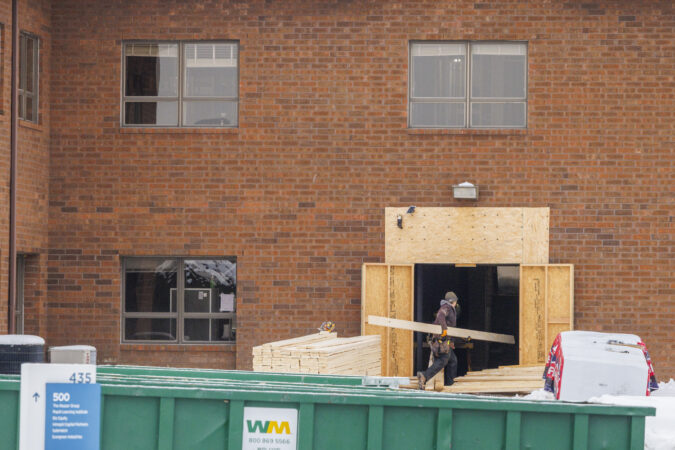
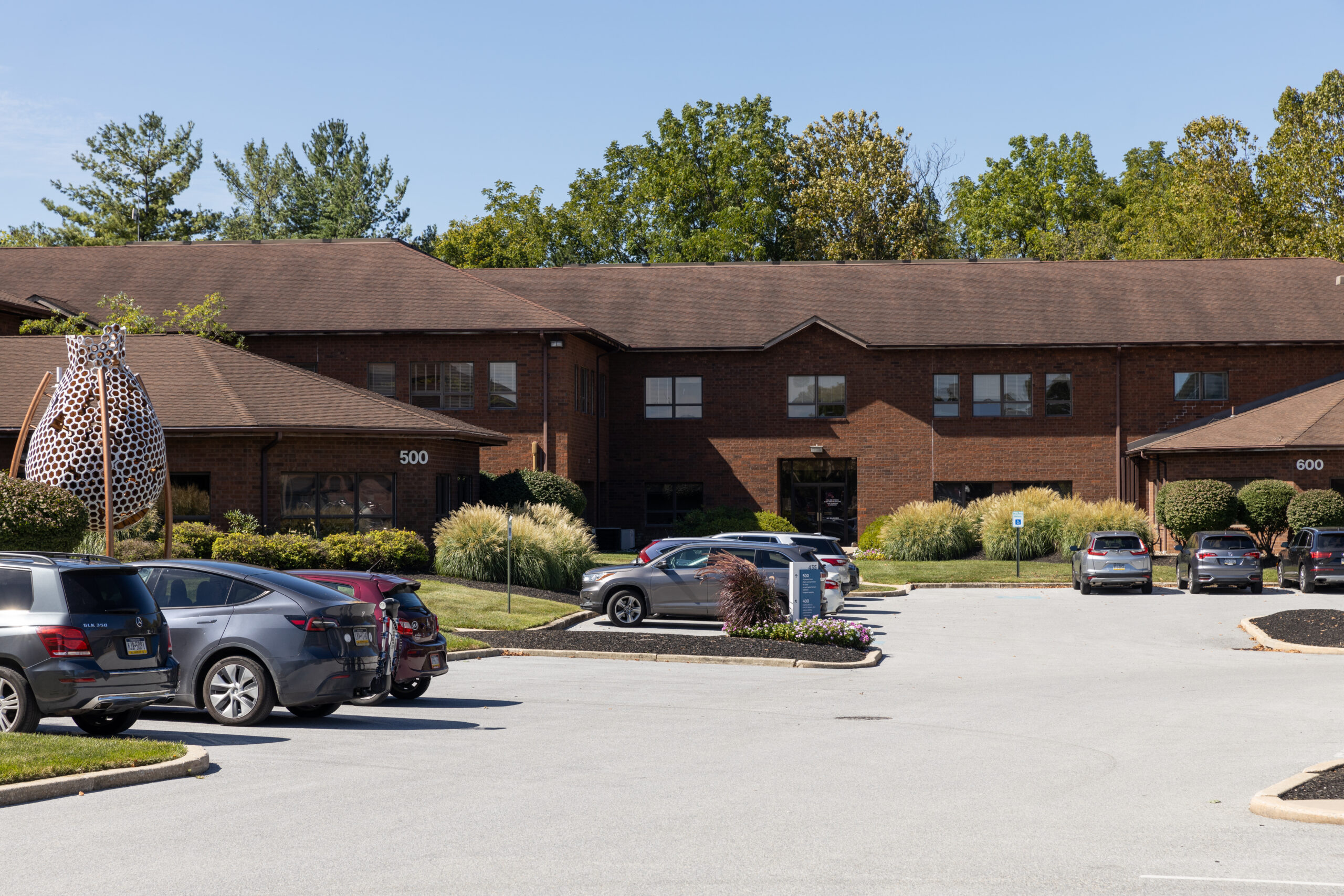
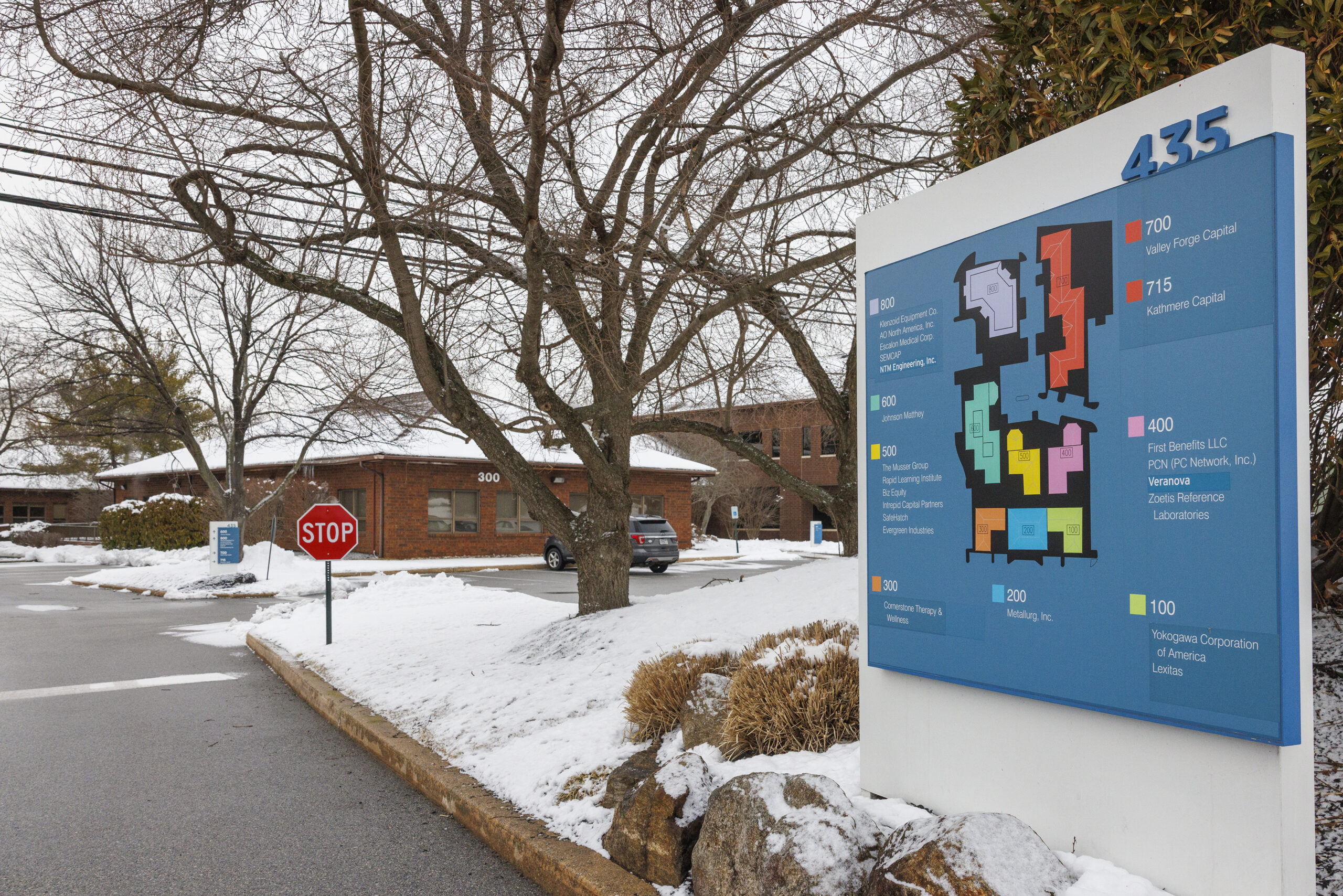
One of the eight two-story buildings at 435 Devon Park Dr. that have been used as offices and are being turned into apartments.
An exceptional suburban conversion
The redevelopment of an eight-building office complex at 435 Devon Park Dr. in Chester County’s Tredyffrin Township is one of the only suburban office-to-residential conversions underway right now.
Notably, none of its former office structures are big glass rectangles.
“This just happened to be perfect for conversion,” said Mark Thomson, founder of Love Communities, which is developing the project in partnership with E. Kahn Development Corp. and Triple Crown Corp.
“It’s going to be the largest garden-style suburban conversion in the whole Northeast, maybe even a bigger area than that,” Thomson said.
Kahn also is part of the team behind the conversion of 435 Devon Dr., and he developed the complex when it was built in the 1980s.
This office park broke from the standard big glass box model of suburban offices and instead offered two-story, L-shaped buildings with brick facades and windowsthat open.
That makes conversion cheaper, too. To make those big box buildings livable, the glass facade would need to be torn off and windows installed that actually open.
“The most expensive part of construction is the windows,” Thomson said. “If we had to do that, it would probably make this not economically feasible.”
The project is also able to move forward because it accords with the goals of local political leadership, who are wary of family-size apartments.
The 162-unit office-to-residential project will be largely composed of studio and one-bedroom apartments in an attempt to appease concerns about strains on the school district and to produce unsubsidized affordable housing in this wealthy township.
Zoning rules everything
In many suburbs, building apartments, townhouses, and other more modestly scaled housing is often not allowed by zoning laws. Office parks are usually zoned to exclude residential development.
That’s a sharp contrast with Philadelphia, which has few barriers to office-to-residential conversion in Center City, and a citywide10-year property tax abatement is available for building renovations. Wilmington also offers a variety of incentives.
In Tredyffrin, officials were opposed to the idea of either very high density apartments — at almost 10 acres, the site could support hundreds of units — or new single-family homes.
So to make 435 Devon Park Dr. work, the developers knew they couldn’t demolish the buildings and construct new homes.
The entrance to 435 Devon Park Dr. with the brick office buildings, which are planned to be converted to residential in the background.
Instead, the developers pitched the conversion not as luxury apartments, but as affordable homes for nurses, teachers, and other middle-income workers in Tredyffrin. They also plan to convert some parking lots into green space for residents.
The units can be priced more affordably because of the relatively small scope of the conversion and because the developers essentially purchased the campus for its land value.
Working in partnership with Triple Crown Corp. also helps because the company has in-house contractors and architects.
The paucity of multi-bedroom units lowers rental costs, too, and assuages fears about overburdening schools.
“None of these communities have made it easy like Philadelphia, because they’re all their own fiefdoms,” Kahn said. “But if you make the right argument and you show them how it’ll benefit them financially, they generally come around.”
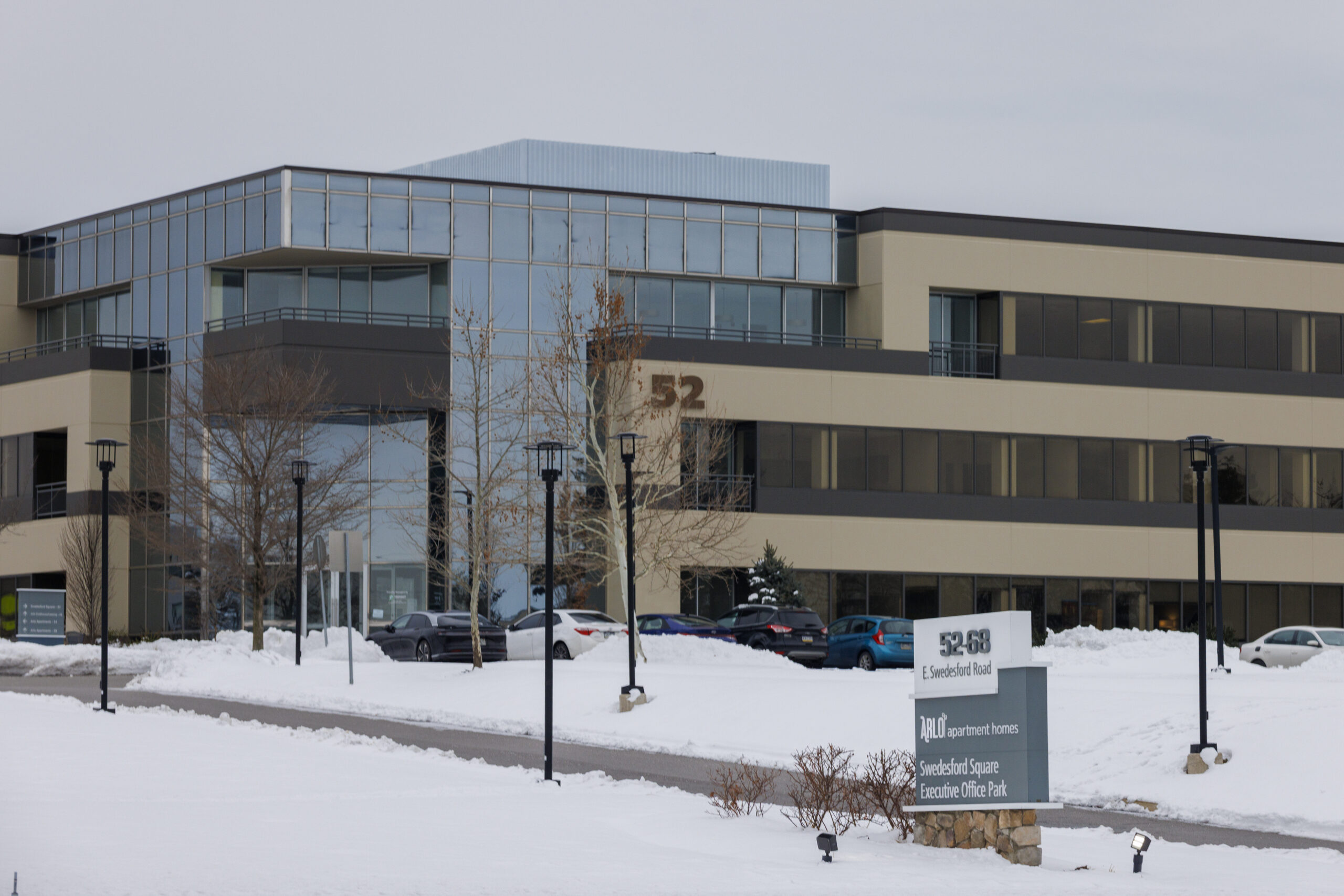
The East Whiteland office building at 52 Swedesford Rd., which is slated by TriPoint Properties for demolition and replacement with apartments.
The future of (some) suburban offices
There are few other conversion projectsunderway in Philadelphia’s suburbs.
Keystone Property Group has a more traditional office-to-apartment tower in the works at the Plymouth Meeting Mall. The Parkview Tower next to the Valley Forge casino was consideredfor conversion last year. The Buccini Pollin Group is weighing a conversion project at BNY Mellon’s old headquarters in Bellevue State Park, north of Wilmington, and is looking at opportunities in the Pennsylvania suburbs.
But it is more common for developers to consider demolishing old office buildings to make way for something new.
In Chester County’s East Whiteland Township, which contains the Great Valley Corporate Center, office-to-residential conversion proposals have met a chilly reception.
“The proposals to rezone large vacant office buildings for direct conversion to apartments were really viewed negatively,” said Scott Lambert, chairman of the East Whiteland Township Board of Supervisors. The plans were seen as “short-term fixes that created long-term challenges.”
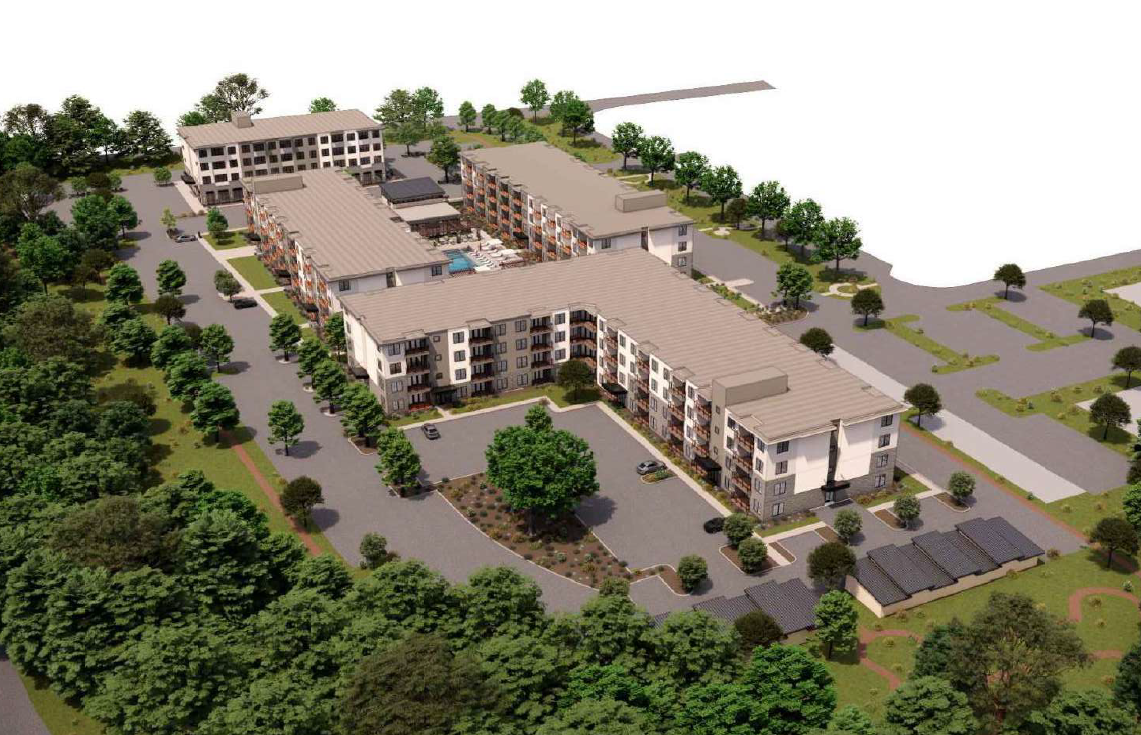
An overhead rendering of the 250-unit apartment project that will replace an old office building at 52 Swedesford Rd.
East Whiteland’s government looked more kindly on Tripoint Properties’ proposal to demolish a standalone office building at 52 Swedesford Rd. — outside the corporate center — and replace it with 250 apartments.
The vacant office building is surrounded by four-lane roadways, which eased congestion concern. Developers also proposed mostly small apartments, with 30 rented for below market rate, which helped earn support from the township.
“On the school side, they were OK with limiting the units to either one- or two-bedroom apartments,” Lambert said. “We would like to be in a position to limit the number of three-bedroom apartments in the township because of the impact it has on schools.”
But some real estate experts say eventually, municipalities will need to replace the tax revenue lost from dead office buildings.
“The centerpiece of tax bases in commercial areas has been office space,” Kahn said. “If the tax base goes down, and they can’t pay for the schools, who gets the burden? A couple years of 30% property tax increases on your constituents, you’re going to get voted out of office real quick.”
A 36-story apartment tower planned for 1341 S. Christopher Columbus Blvd. in South Philadelphia has secured a $150 million senior construction loan, New York-based developer Brevet Capital announcedTuesday.
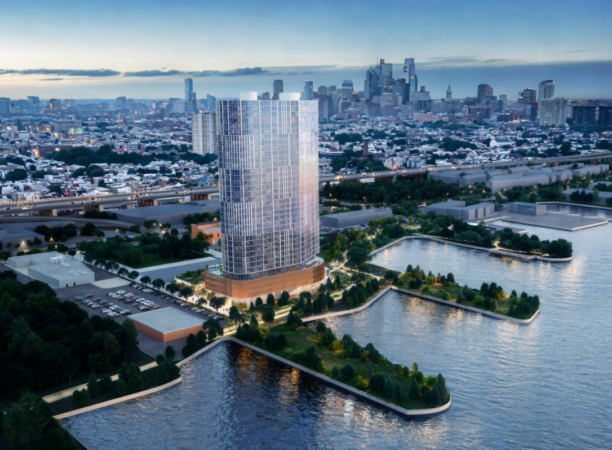
The financing from Mexico City-based Banco Inbursa is an important step for the 620-unit tower project, which is expected to break ground in the first quarter of 2027.
Construction on the project Brevet Capital calls “Wharton Piers” is anticipated to last two years, finishing in the first quarter of 2029.
At a meeting of the Pennsport Civic Association in October, Brevet Capital representatives said that the company hoped to develop two further residential towers on the site, which sits between the Delaware River and the neighborhood. Future high-rises may be taller than the 380-foot tower financed byBanco Inbursa.
“Wharton Piers represents the first phase of a larger master plan that has the potential to support significant additional development over time,” said Mei-Li da Silva Vint, head of Brevet’s real assets group, in a statement.
Brevet declined to comment on what proportion of the project’s total cost would be covered by the loan.
This development site has a long history of ambitiousbut ultimately unrealized proposals, which makes the construction loana noteworthy sign of Brevet’s intent.
In 2023, New York-based Silverstein planned a two-tower project. Before theCOVID-19 pandemic, Maryland-based developer Jeffery Kozero’s K4 Associates presented a 2,000-unit project spanning 10towers. The K4 plan, in particular, was met with skepticism by neighborhood groups and urban planners.
“We’re happy to see a meaningful development of this property in a way that seems to respect the collective vision for the waterfront,” Patrick Fitzmaurice, president of the Pennsport Civic Association, said of the Brevet Capital project.
In exchange for building taller and denser than the land’s zoning allows, Brevet will pay into the city’s housing trust fund — which supports affordable development — and will repair and maintain the Delaware River Trail down to Reed Street.
Conditions along the bike and pedestrian trail have deteriorated below Washington Avenue, with cracked pavement and unkempt weeds. People have also been camping along the path, and moving between the patchwork of properties owned by different entities to avoid sweeps by the city.
“Our focus is on executing this initial phase to a high standard while creating a vibrant, publicly accessible waterfront,” da Silva Vint’s statement reads.
Most of the current tower proposal’s apartments will be on the smaller side, with half of them one-bedroom units and a further 35% being studios.
For parking, 187 spaces will be locatedon the third through fifth floors, with space for a further 100 vehicles on a neighboring surface lot.
A rendering that includes the other two towers Brevet has also proposed for the site.
When the project was presented to the Pennsport Civic Association in October, neighbors called for more parking. But the developer’s representatives noted that many new apartment towers don’t have full garages.
The project will also include 15,000 square feet of amenity space on the fifth floor, including a pool, and a mix of commercial and office space on the ground floor.
A neighboring one-story building will be built with the project, featuring an additional 20,650 square feet of retail space. Brevet representatives told the civic association that the smaller building would serve as a “place holder” for a future tower.
“Closing this financing is an important milestone for the development of Wharton Piers and reflects continued momentum behind a project that we believe will be transformational for Philadelphia’s waterfront,” said Douglas Monticciolo, CEO and founder of Brevet Capital, in a statement.
Brevet Capital has built real estate projects in major markets of Florida, Texas, and California. Wharton Piers would be its firstdevelopment in Philadelphia.
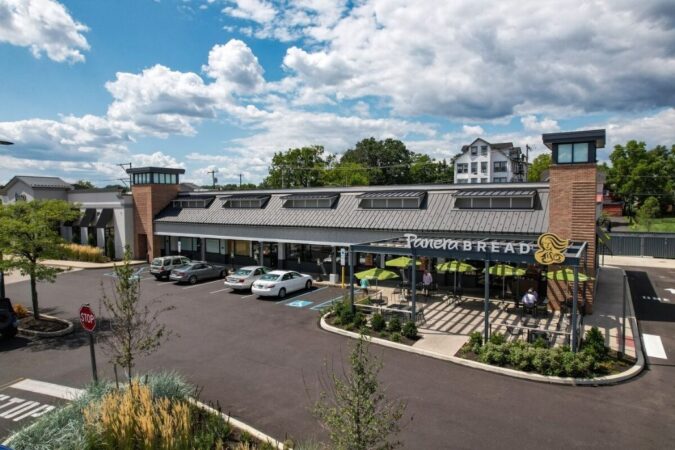
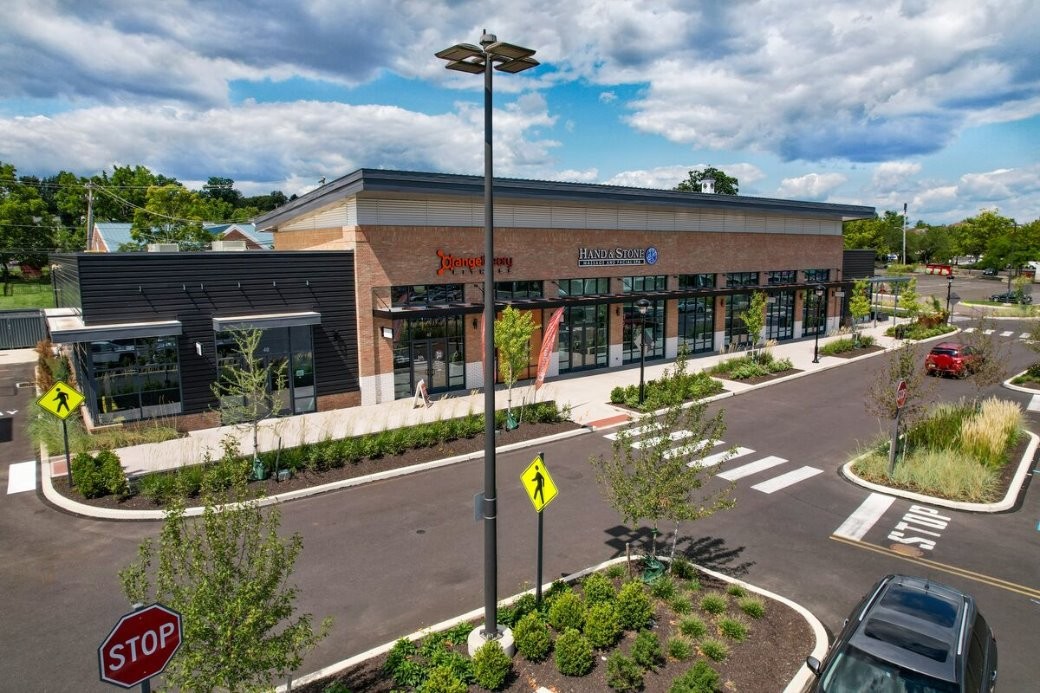
A shopping center in the shadow of Willow Grove Park Mall will soon undergo a $105-million “transformation” with new apartments and shops, says the developer behind the project.
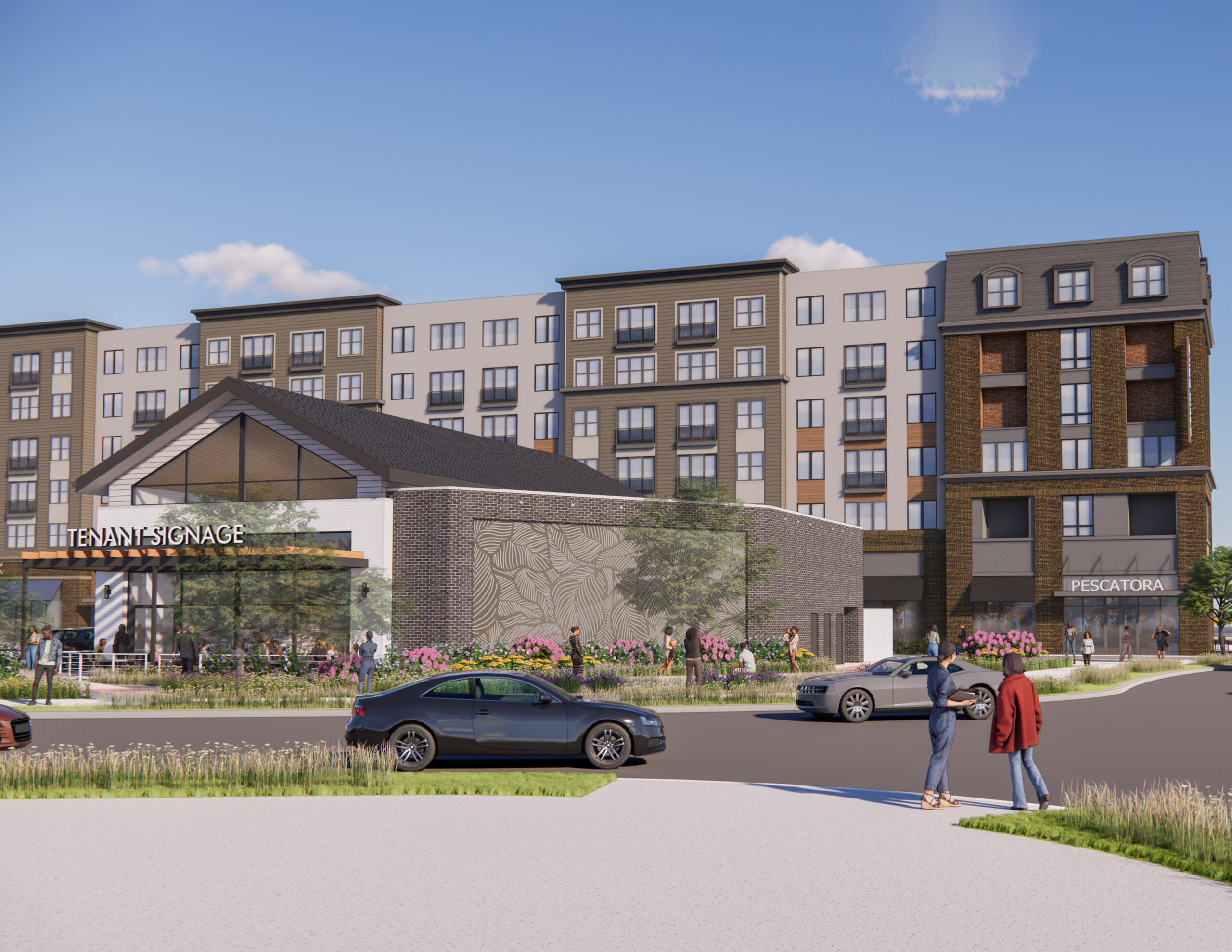
Starting this summer, about 130,000 square feet of the Willow Grove Shopping Center will be demolished to build a mixed-used complex with 261 residential units and 35,000 square feet of new retail space, said Mark Brennan, vice president of regional development for Federal Realty Investment Trust.
It will mark the latest stage in a multiphase redevelopment of the outdoor center, which is located across the street from the mall.
A rendering of what Federal Realty Investment Trust plans to build at the Willow Grove Shopping Center.
Across the Philadelphia region, similar mixed-use complexes have increasingly been built around thriving shopping destinations, such as King of Prussia, where thousands of new apartments have risen in recent years.
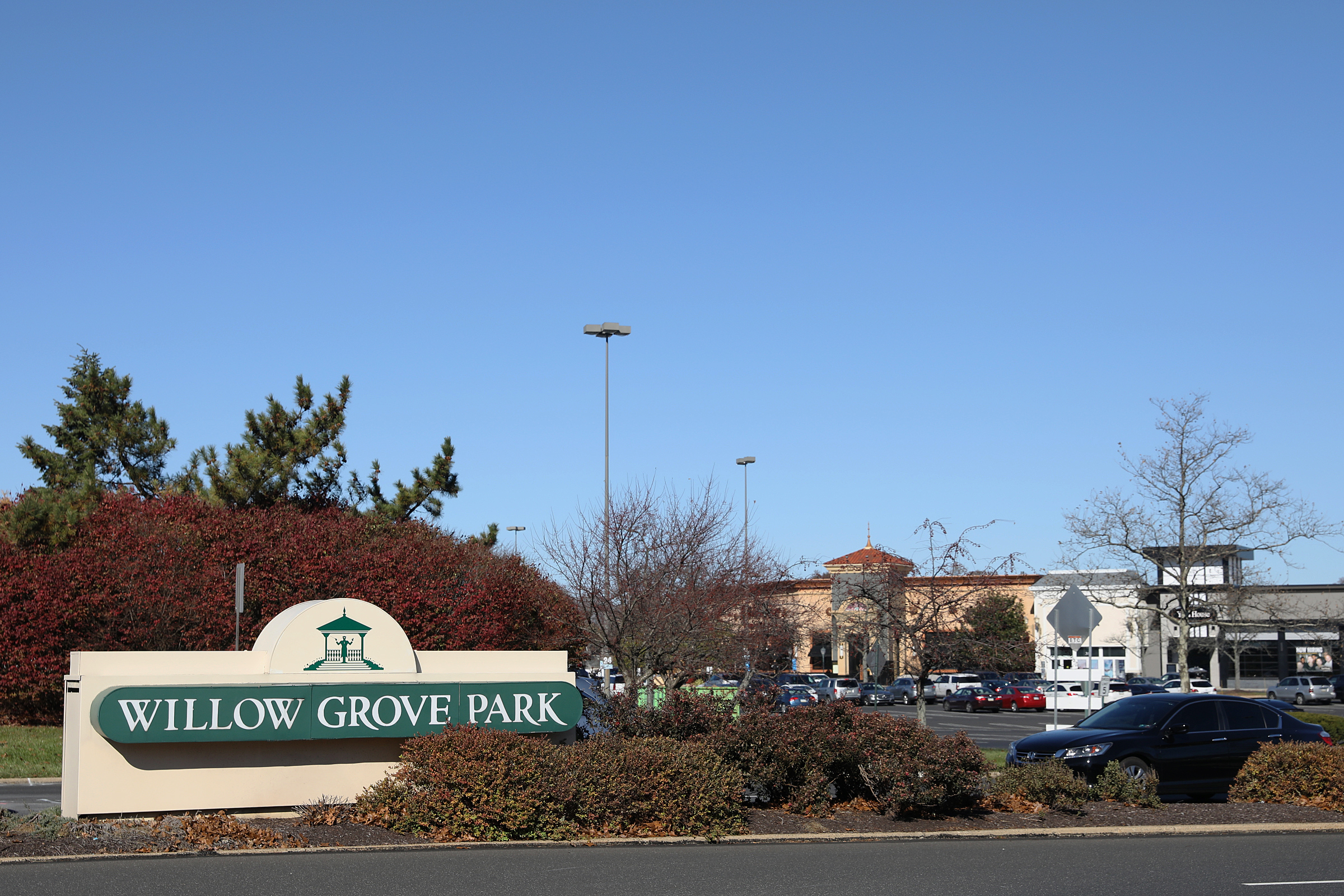
A spokesperson for PREIT, which owns Willow Grove Park Mall, did not return a request for comment. In a 2022 shareholders’ report, PREIT executives called the complex “one of our leading suburban Philadelphia assets,“ with an occupancy rate of more than 96%.
The Willow Grove Park Mall is pictured in 2019.
Across Moreland Road, Brennan is confident his shopping-center redevelopment will be met with high demand.
Since the pandemic, the Montgomery County community has “really come alive,” due in part to its proximity to the city and to suburban employment centers, said Brennan, who is based in Wynnewood. And people who are moving out of the city or looking to downsize are particularly interested in moving to mixed-use developments, he said.
The center’s proximity to SEPTA’s Willow Grove train station, and major highways, including the Pennsylvania Turnpike, will make it particularly appealing, as will its mix of “highly curated” shops, Brennan said.
Across the street from the mall, the Willow Grove Shopping Center is set to undergo a $105-million transformation with apartments and new retail.
The center’s existing tenants, which include Marshalls and Five Below, will remain open during construction, Brennan said.
He expects the project to be complete sometime in 2028.
“These sort of multifaceted, multiphased development projects do take quite a bit of time and planning,” Brennan said. “We’re really excited to get to the next phase of this transformation.”
The Philadelphia Housing Authority embarked on a strategy last year unlike anything it has done before.
The agency is known as the largest affordable housing provider in the city. But in 2025, under the leadership of CEO Kelvin Jeremiah, it began buying struggling private-sector apartment buildings all over the city to expand the affordable housing supply.
Over the last 14 months, the Philadelphia Housing Authority (PHA) has spent $280.6 million to acquire 17 multifamily properties, totaling 1,515 units. Some have been student apartments or largely empty new buildings. But most have been full of tenants paying market-rate rents, ranging from $1,106 to $2,323.
That’s a new demographic for PHA, whose renter base often makes less than $30,000 a year.
PHA plans to fillthese buildings with Section 8 voucher holders, who often have a difficult time finding rentals in higher income areas.
“It’s part of the strategy … to give residents the broadest possible options in terms of their housing choice and one that is not limited to particular neighborhoods,” Jeremiah said.
In an innovation, the agency intends to keep renting some units in the newly acquired buildings at the market rate, using the income to support operating expenses.
The first PHA purchase in 2025 was The Dane, a 233-unit building in Wynnefield. It now houses some tenants paying market-rate rents and others using government subsidies.
Last year, several tenants contacted The Inquirer with concerns about what they described asa rocky transition to PHA ownership. Since then, interviews with 18 tenants at The Dane have laid out challenges within PHA’s new model — and the potential difficulty of retaining renters with options elsewhere.
Eighty-six people have moved out of The Dane over the last year. That’s about half the original occupants as the building was only 75% occupied when purchased.
The overwhelming majority of tenants interviewed by The Inquirer said PHA is a better landlord than the previous owner, Cross Properties. But most have moved out or are planning to.
“The management staff that are there now are better than what we had, but they’re still pretty mediocre,” said one resident, who, like many of the tenants, asked that their name be withheld to preserve relations in the building.
“Everybody’s very polite; everybody’s very cordial, but it’s only maybe one or two maintenance people,” this multiyear resident said. “The trash pileup is very bad right now … I plan to move elsewhere.”
Jeremiah noted that most of the properties PHA acquired have not experienced the kind of turnover that The Dane has seen. The building is now almost completely occupied with both market-rate and subsidized tenants, said a PHA spokesperson.
He said some tenants moved out after the agency began collecting rent again. Many had been withholding payments to Cross, which lacked a rental license at the end of its tenure.
It’s possible that the turnover at The Dane is largely the result of a difficult property transfer from a troubled previous owner. (Cross Properties is no longer in business.) In that case, the tenant exodus may not be a predictor for PHA’s larger ambitions.
But given the skepticism PHA faces in many neighborhoods, outside observers say, the agency’s new expansion strategy faces high expectations to get everything right.
“PHA is under a tremendous amount of pressure,” said Akira Rodriguez, a professor of housing policy at the University of Pennsylvania. “There’s going to be experiences that are uneven for tenants as they navigate this new model of housing provision … [and The Dane] is a really high visibility example.”
A long troubled apartment building
In November 2024, residents of The Dane were fed up. Their hot water wasn’t working — again — in apartments where many households paid over $2,000 a month in rent.
“The owner [Cross Properties] was not the best,” said Akeesha Washington, who has lived in The Dane since 2020. “He just didn’t maintain the building. Over the years, you saw the amenities dwindle.”
Cross Properties acquired the building in 2016 when it was the Penn Wynn House and converted the rent-subsidized building into market-rate apartments.
When Washington moved in, she was impressed. The staff were kind to her in 2020 when she contracted COVID-19. They coordinated care with Washington’s mother so she had access to medication without infecting anyone.
“It was a really nice community. It’s luxury in the 19131 section, where not everyone feels like they can afford it,” said Washington, who loves the diversity of the tenants, which included university students, working-class residents, and doctors and lawyers.
“You had so many layers of people living and coexisting in this building,” Washington recalled. Rents ranged from $1,100 for a studio to $2,200 for a two-bedroom unit with two bathrooms.
But by 2024, most tenants said, building management had fallen off. Trash wasn’t picked up regularly; lawns went unmowed and snow unshoveled, and basic amenities like the parking garage door often didn’t work.
Shortly after another hot water outage, tenants got news in late 2024 that Cross Properties was out.
“When residents heard it was being acquired, we were excited because we won’t have to deal with not having hot water, especially during the holidays,” Washington said.
Akeesha Washington in the lobby of her apartment building in the Wynnefield neighborhood in December. She was living in the market-rate building before the Philadelphia Housing Authority (PHA) purchased it to expand the city’s affordable housing supply.
New management, new problems
When PHA purchased The Dane, the building had many unresolved issues, said Tonya Looney, who worked for Cross Properties as the building’s manager. And she said there was scarce planning for the details of the transfer.
“To be fair, this is something new and I understand from a real estate professional’s perspective that there’s going to be hiccups,” said Looney, who stopped working at The Dane last May, although she still manages 15 apartments for long-term corporate stays in the building.
Looney is in a legal dispute with PHA, which says she owes substantial back rent. “We do not intend to renew the leases that she has in her name,” Jeremiah said. “I do not think she is a good arbiter of the facts in this case.”
Both Jeremiah and Looney say that after the sale closed, Cross Properties shut down the operating software, cutting off tenants’ ability to pay rent online, see their rental histories, and submit maintenance requests.
“We had 200 people with no way to log in to pay their rent, no way to submit a maintenance ticket, no idea who to talk to about any issues at the building unless they came downstairs to see what’s going on,” Looney said. “Needless to say, it was chaotic.”
For much of 2025, residents had to pay with checks, which sometimes went uncashed, according to Washington and Looney.
Jeremiah says that Cross Properties’ owner asked PHA to pay to access the former tenant managementsystem, although PHA eventually figured out how to get the records.
Despite the chaotic transition, many tenants said PHA’s ownership brought improvements from previous conditions, especially after Maryland-based HH Redstone was brought in to operate The Dane in August. (That’s when online payments, for example, started working again.)
“HH Redstone is doing what they can, and I’ve re-signed my lease for one year because I am willing to see what change they can continue to make,” said another tenant who asked not to be named.
Why tenants are leaving, even with improved conditions
Other tenants say property services continue to suffer.
Trash pickup is still persistently late, several tenants said. Pest outbreaks such as bedbug, mouse, and cockroach infestations flare up, which is new in the building, according to Washington and two other tenants. The dog washing station and the dog run are often messy. The garage door continues to break down. This winter, a rash of burglaries spooked residents.
Jeremiah said PHA is addressing these concerns, and in some cases — such as the dirty dog run — residents are expected to clean up after themselves. He also noted that the agency installed 24-hour security.
“The idea that this is a new phenomenon to that building, given where it’s located, is just nonsense,” Jeremiah said of the security concerns. “We have a very robust set of layered access control systems in place [and] CCTVs.”
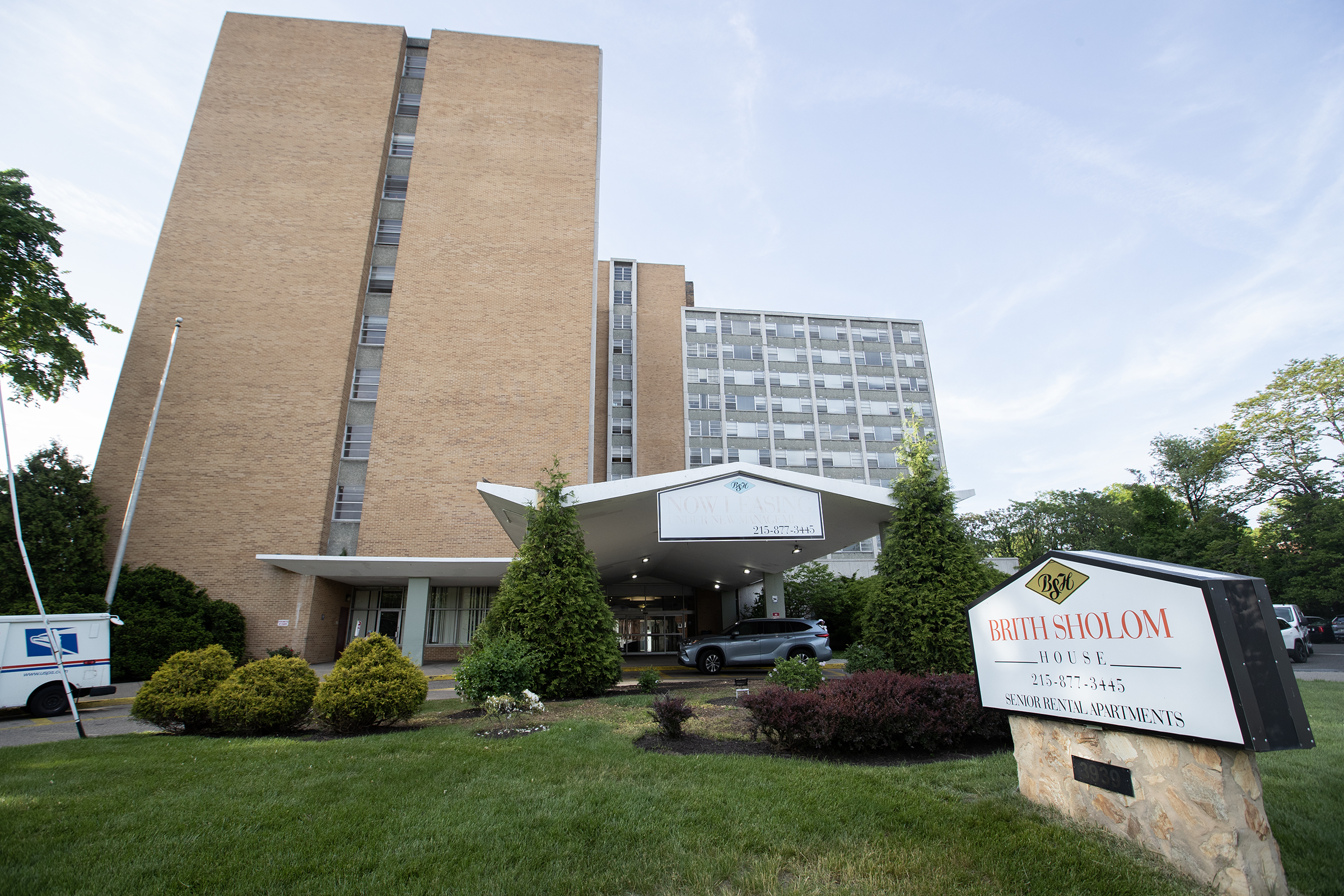
The exterior of Brith Sholom House on May 8, 2023.
When they first arrived at The Dane, some elderly residents were not getting the care they need, Washington said.
One man she ran into frequently often smelled of urine and would walk around with visibly wet pants. She said building management addressed the issues by spraying Febreze on benches the tenant used after he left an area. He has since died.
Another man screamed for help from his balcony and has since been moved out of the building.
“We are very used to all kinds of things happening here, from the students being wild to elderly being wild, but not to the level of being unable to take care of themselves,” Washington said.
Jeremiah says that PHA keeps tabs on the rehoused Brith Shalom residents — who previously were living with no oversight, although there are limits to what it can do. He encouraged tenants to report anyone who needs aid.
“We provide a robust set of social services to residents we inherited at Brith Shalom,” Jeremiah said. “PHA is not a healthcare provider. We are a housing provider, though we provide access to opportunities for residents who are interested in aging in place.”
A former Brith Shalom resident had no complaints with The Dane and praised PHA for the improvements in his life.
“I have no problem with them. I’m happy,” said Barry Brahn, who is blind and has AIDS. “They’re slow at getting things fixed, but they can only do so much and they’ll eventually get on it.”
What comes next?
Some aspects of the rocky transition from Cross Properties to PHA have eased. Since October, tenants were able to pay their rent online and submit maintenance requests. Washington says she does not see obviously distressed elderly residents any longer.
But tensions remain.
“The transition to PHA has been challenging, and their communication has been sorely lacking,” said Lanese Rogers, who has lived in The Dane for two years.“As someone who pays unsubsidized rent, they deal with us in a condescending manner.”
Kelvin Jeremiah, PHA president and chief executive officer, at PHA headquarters, in Philadelphia.
Jeremiah says he believes some of the pushback against PHA is due to class prejudice and bias against subsidized tenants.
“I don’t believe that there is anywhere any Philadelphian, whether or not they’re high income, middle income, low income, shouldn’t be permitted to live,” Jeremiah said.
He is committed to providing accessibility and affordability throughout the city, he said, and he hopes to retain mixed-income residency innewly acquired buildings with existing tenants.
So far at The Dane, many of the market-rate tenants are leaving.
“If I could pick up my apartment and move it to another location, I would,” Rogers said. “The building is changing, and I don’t like the direction it’s moving in.”