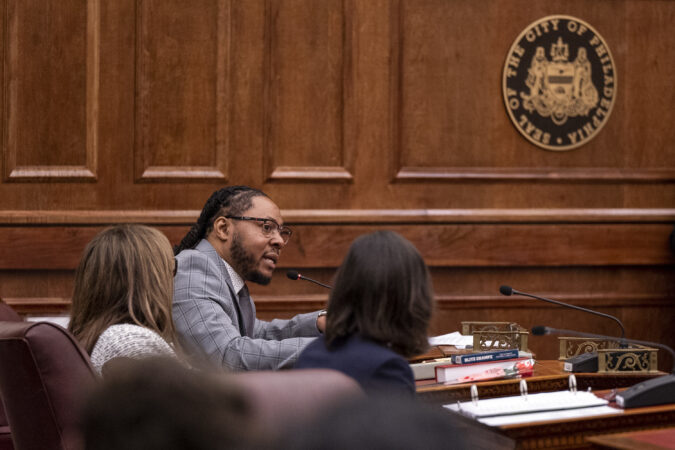
Councilmember Jeffery Young pushed pause Tuesday on his highly controversial housing ban for the former Hahnemann hospital campus.
Young has proposed a “Vine Street Expressway” zoning overlay that would cover the shuttered medical center and its surroundings and block residential development from its largely empty buildings and lots.
However, an apartment development is proposed in the former Hahnemann patient towers by New York-based developer Dwight City Group — which is why most observers were stunned when Young introduced his last-minute bill banning all housing development from the area.
Then in a sudden reversal at a City Council hearing Tuesday, Young said he was not advancing the bill.
“We’re holding it so we can further [communicate] with all the community stakeholders that are involved,” Young said in an interview after the hearing. “We want to make sure that this project represents the best interest of the city of Philadelphia, and by continuing dialogue, we’ll achieve that goal.”
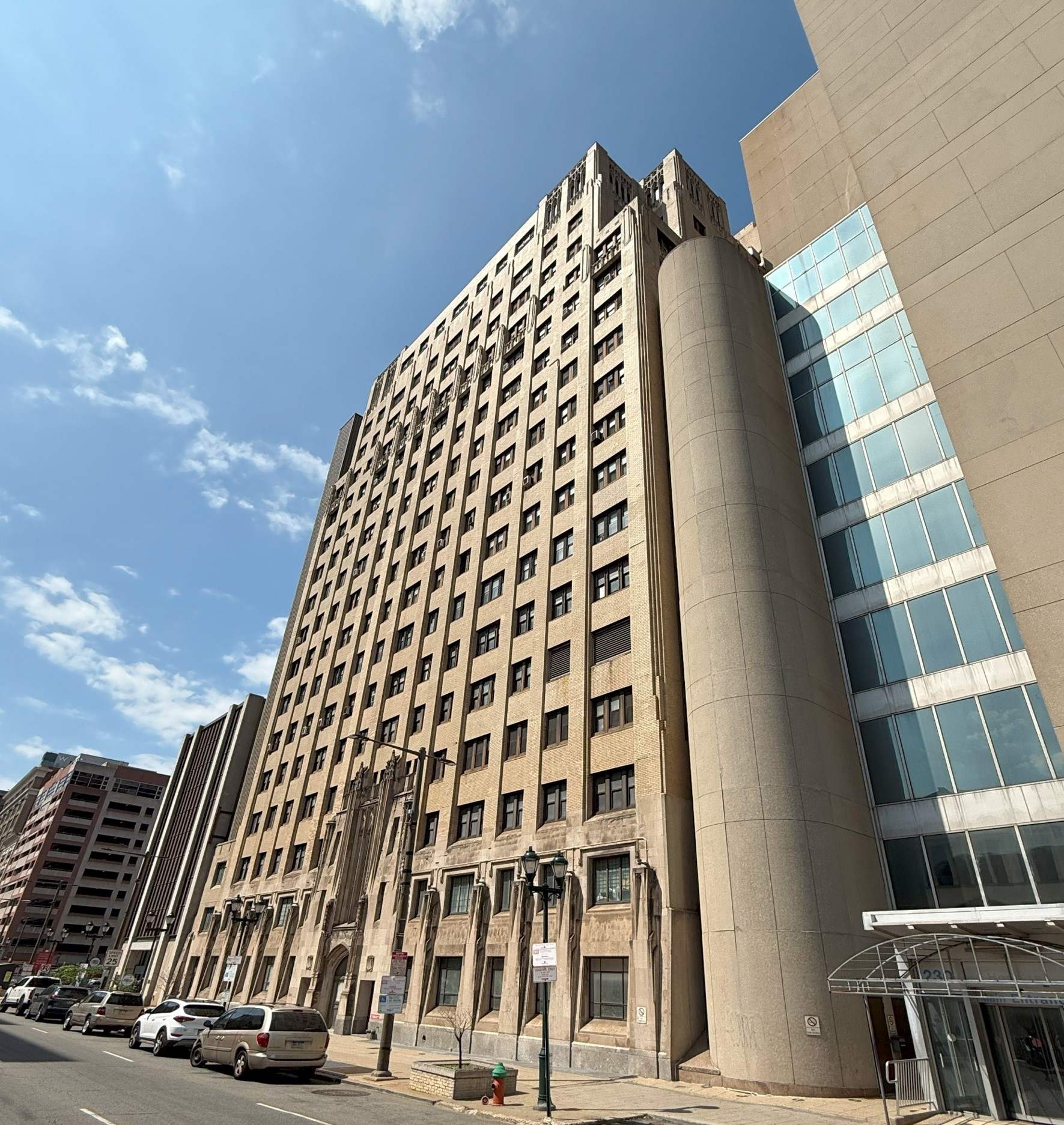
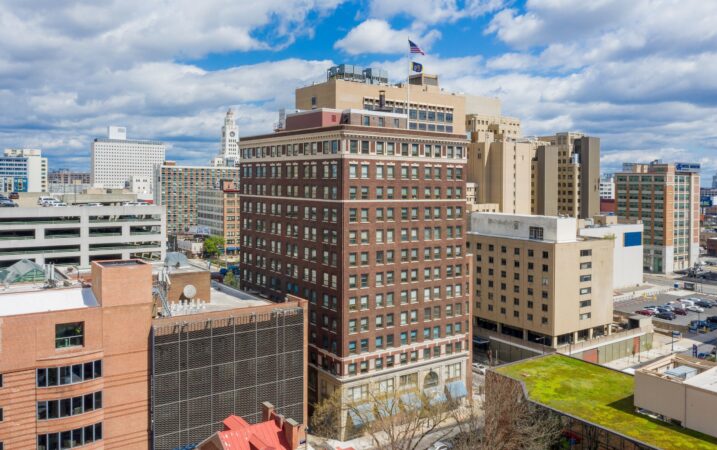
The art-deco style South Tower of the former for Hahnemann hospital complex, which is almost 100 years old.
No interest groups have officially come out in favor of the legislation. Pro-housing groups, the Logan Square Neighborhood Association, and the building trades unions have all expressed concerns about it.
Property owners who would be affected include influential local institutions including Brandywine Realty Trust and Drexel University. Mayor Cherelle L. Parker’s administration was also concerned, especially as the administration pushes to get 30,000 units of housing built or repaired during her term through the Housing Opportunities Made Easy (H.O.M.E.) plan.
“This bill conflicts with the goals of the comprehensive plan and the goals of the H.O.M.E. plan to support residential development,” said testimony prepared for Paula Brumbelow Burns of the City Planning Commission.
Ironically, as a result of Young’s anti-housing legislation, permits have been secured for 824 units of housing on the former hospital site, as property owners rushed to secure the right to develop apartments before the feared ban would be enacted.
With the exception of Dwight City Group’s proposal, it is not clear that many of those permits will quickly result in housing.
The application for 300 units at Martinelli Park and 163 units at the Brandywine-owned Bellet building do not appear to signify new projects in the immediate future, but instead an effort to preserve value and flexibility of use.
Young argued that the legislation has been successful in that it compelled property owners to talk with his office about their plans.
“People need to understand what’s happening when you have large properties where potentially thousands of units will be developed there,” Young said. “We have properties that as a former hospital that’s filled with asbestos and other types of issues, no one knows what’s going on.”
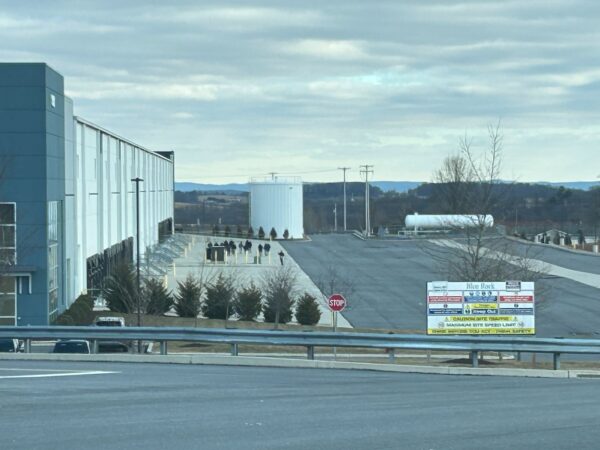
UPPER BERN, Pa. — The Trump administration has quietly purchased a nearly 520,000-square-foot warehouse in Berks County as it plans to convert such facilities into immigration detention centers across the U.S.
The warehouse, located at 3501 Mountain Rd. in Upper Bern Township, was sold to the U.S. government on behalf of the Department of Homeland Security and Immigration and Customs Enforcement for $87.4 million, deed records show. The purchase was recorded on Feb. 2.
Spotlight PA visited the warehouse, which is located about a mile from I-78, on Jan. 15 and witnessed about two dozen individuals touring the exterior of the building. One man who arrived early to the site that day identified himself to a reporter as ICE.
The property was most recently called the Hamburg Logistics Center, and before that was the site of the Mountain Springs Arena, a county landmark known for rodeos and demolition derbies. It neighbors an Amazon warehouse and the Mountain Springs Camping Resort.
The building is one of at least 23 that ICE plans to convert into immigration detention facilities, Bloomberg reports. The Berks County warehouse could house up to 1,500 beds.
ICE also finalized the purchase of a warehouse in nearby Tremont Township, in Schuylkill County, on Monday, according to a deed. The Tremont property is located less than 300 yards from a daycare center and has already faced fierce resident opposition.
A spokesperson for ICE did not answer any questions about the Berks County warehouse purchase and instead lauded the agency’s targeting of “vicious criminals.”
“Thanks to the One Big Beautiful Bill, ICE has new funding to expand detention space to keep these criminals off American streets before they are removed for good from our communities,” the spokesperson said.
Upper Bern Township’s solicitor said in an emailed statement that community leaders learned about the sale on Monday. They declined to answer questions.
“The township was not involved in this transfer and has not received any applications from either the prior or new owners regarding the future use of the property,” the statement reads. “The township has no further comment on this matter at this time.”
State Sen. Chris Gebhard and State Rep. Jamie Barton, Republicans who represent the area, said they have reached out to federal contacts to gather more information on how the Department of Homeland Security plans to use the warehouse.
“Our immediate concerns include the potential loss of property tax revenue for the host municipality, county, and school district, as well as security and perimeter considerations,” the lawmakers said in a joint statement. “We look forward to engaging directly with the appropriate federal officials to address these issues. Once additional information is available, we will provide an update.”
The property is assessed at $22 million and currently pays $198,286 annually in county property taxes under the current tax rate of 9.013 mills. Combined with Hamburg Area School District and township taxes, the loss of tax revenue from the federal government’s purchase would be about $624,000.
State Sen. Judy Schwank (D., Berks) declined to comment on the warehouse purchase on Monday. In an earlier interview with Spotlight PA, she called the then-potential sale “deeply concerning,” especially given the reports of mistreatment of people detained in ICE facilities. She released a statement about “ICE’s action in Minneapolis” on Jan. 27, shortly after federal agents killed Alex Pretti.
“My concern is, knowing the track record of some of these other facilities located throughout the country, it’s not good,” she said. “I don’t necessarily want to see something like that being housed in our county.”
The deed finalized on Monday shows the property was sold to ICE by an LLC connected to PCCP, a national commercial real estate equity firm. The firm purchased the warehouse in 2024 for $57.5 million, deed records show.
Reached by phone Monday afternoon, PCCP partner Greg Eberhardt — who is the authorized signatory for 3501 Mountain Road Owner LLC on the latest deed — denied knowledge of the property and its sale, and refused to comment further.
“I have no idea what you’re talking about,” Eberhardt said before hanging up on a Spotlight PA reporter. “I’m not making company comments.”
Upper Bern Township is situated on the edge of Berks and Schuylkill Counties, with a population of roughly 1,600 people. The community is mostly white, with only 2.8% of residents identifying as another race, according to the 2020 Census.
Bridget Cambria, an attorney with Aldea, a nonprofit that provides pro bono immigration legal services, said the detention center would have a “disruptive” and “chilling” impact on Berks County’s immigrant community.
“If there are people that live freely and at peace knowing that they do the right thing, they can do their immigration process or stay with their family or figure out a way to legalize their status, they’re going to be more afraid to do that with a giant detention center in their backyard,” Cambria said.
A 2022 study by the Detention Watch Center and the Immigrant Legal Resource Center found that immigrants were more likely to be arrested by ICE in counties with more detention bed space.
BEFORE YOU GO … If you learned something from this article, pay it forward and contribute to Spotlight PA at spotlightpa.org/donate. Spotlight PA is funded by foundations and readers like you who are committed to accountability journalism that gets results.
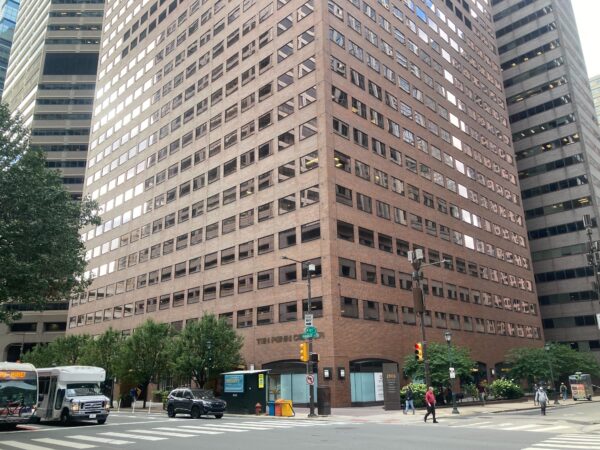
Ten floors of the 27-story Ten Penn Center at 1801 Market St. will be converted from office space to 273 apartments, according to a zoning permit issued Tuesday.
The building was purchased by PMC Property Group last summer for $30 million, less than half the price it was the last time it changed hands in 2006. At that time, it sold for $75 million, or roughly $144 million in today’s dollars, according to the Bureau of Labor Standards’ inflation calculator.
PMC is one of Philadelphia’s largest apartment developers and has distinguished itself in the post-pandemic push to convert underused office space into apartments. PMC previously converted half of the 20-story Three Parkway building at 1601 Cherry St. In that case, the lower levels were turned into 143 apartments.
According to Ten Penn Center’s sales listing last summer, 65% of the offices in the building wereoccupied with much of the vacancy being concentrated in the upper levels. The building is effectively divided in half by the 16th floor, which is largely mechanical.
The downtown residential market has remained robust during the societal and economic turmoil over the last six years, with 3,500 new apartments opening between Pine and Vine Streets and the rivers since 2023 alone, according to Center City District.
“The apartment market remains really healthy, across the entire city, but in Center City specifically,” said Clint Randall, vice president of economic development at Center City District.
Despite fears of an apartment glut, especially along the Delaware River and in Northern Liberties, demand for multifamily living has remained resilient in much of Philadelphia. (Occupancy rates in Center City are at 92%.)
The pipeline of office-to-residential conversions has been relatively robust as well, despite the fact that so many of Philadelphia’s older industrial and commercial buildings had already been turned to multifamily use pre-pandemic.
In Center City, 673 apartments have been created in former office space since the COVID-19 pandemic, according to the Center City District.
“There was an assumption that it would take longer to to eat up all of the supply, but it’s not taking as long as anybody thought,” Randall said. “Because of that, you’re able to move forward and get financing for new deals because you can prove that when there are good products available, it leases.”
PMC Property Group did not respond to a request for comment.
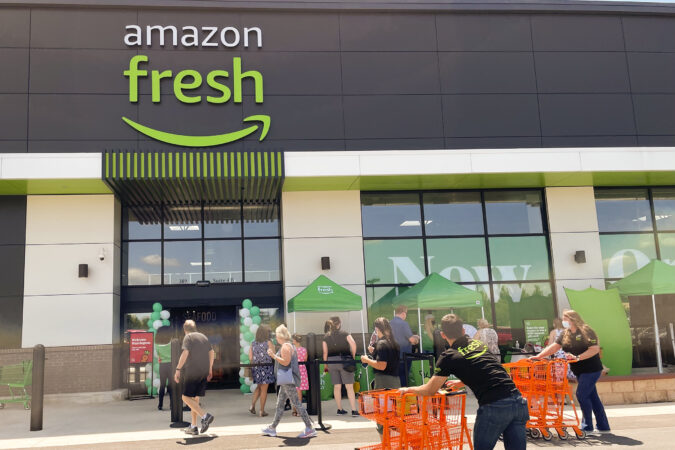
Amazon will be closing all its physical Amazon Fresh stores, including six in the Philadelphia region, as it expands its Whole Foods footprint and grocery delivery services.
“While we’ve seen encouraging signals in our Amazon-branded physical grocery stores, we haven’t yet created a truly distinctive customer experience with the right economic model needed for large-scale expansion,” the company said.
People shop inside the Amazon Fresh in Warrington in August 2021. The store and all other Amazon-branded grocers are closing.
The statement did not specify which Amazon Fresh stores would become Whole Foods, and company spokespeople did not answer questions about whether any Philadelphia-area locations would be converted.
Amazon Fresh has stores in Broomall, Bensalem, Langhorne, Northern Liberties, Warrington, and Willow Grove. The Northern Liberties location on Sixth and Spring Garden Streets opened this summer after years of construction.
Two more potential Amazon Fresh stores seemed to be in the works in Havertown and Northeast Philadelphia as of the summer, according to PhillyVoice.
Customers use the Amazon Dash Cart at the Amazon Fresh grocery store in Warrington in 2021.
As the company winds down its Amazon-branded physical stores, it says it will “double down” on online grocery delivery, including by expanding its same-day services to more communities.
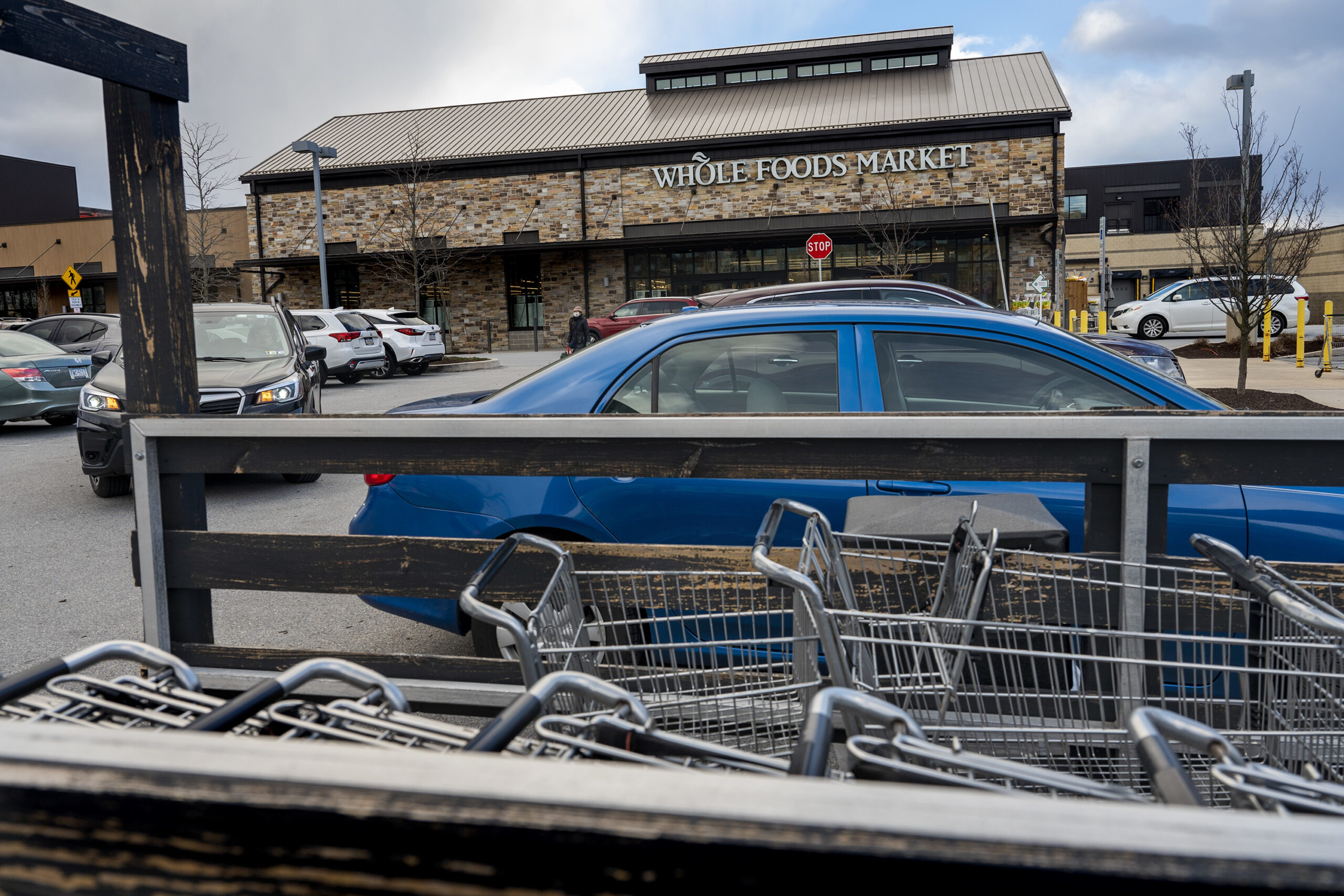
Whole Foods has 550 locations nationwide, including more than a dozen in the Philadelphia area. Amazon spokespeople did not answer questions about whether more Whole Foods stores were in the works in the Philly region.
Amazon also expects to open at least five more smaller-format Whole Foods Market Daily Shop stores by the end of the year. The company said that decision was based on “strong performance” at the five existing shops in the New York City area and Arlington, Va.
The Center City Whole Foods Market as pictured in February 2025.
The online retailer said it plans to continue to experiment with new ways of shopping at its physical stores.
In its statement, Amazon gave a shout-out to one such test in the Philadelphia area: “The store within a store” experience at the Whole Foods in Plymouth Meeting.
Since November, customers at that store have been able to browse the physical aisles of Whole Foods, while digitally ordering unique products from Amazon and Whole Foods. The orders are then packaged in minutes in an automated micro-fulfillment center within the grocer’s back-of-house area.
In the month since Philadelphia Councilmember Jeffery Young introduced a bill banning residential development around the former Hahnemann University Hospital, 824 apartments have been permitted in the area.
The latest zoning permits include 163 units at 1501-11 Race St., which were issued Monday. Brandywine Realty Trust purchased the former Bellet Building office tower in 2021 for $9.7 million.
Brandywine did not immediately respond to a request for comment. It is not clear whether Brandywine is seeking to develop the apartments or to just secure permits to preserve the option for a future buyer.
Last week, zoning permits were issued for 300 units at 300-304 N. Broad St., known as Martinelli Park, the last piece of the former Hahnemann Hospital site that has yet to be sold. The last bid for the site came from the HOW Group, which offered $5.5 million and planned multifamily housing there. But the sale did not go through.
Attempts to reach Hahnemann’s representatives were unsuccessful. It is likely the permits are being secured to preserve the property’s value.
A City Council Rules Committee hearing on Young’s bill is scheduled for Feb. 3.
The rush for permits began on Dec. 24, two weeks after Young introduced his bill, when the Dwight City Group received a zoning permit for 222-48 N. Broad St. to builda 361-unit apartment building.
When “an overlay is placed like this … even though we have our zoning permit already from one of the buildings, the message that it sends is that this area is closed for business,” Judah Angster, CEO of Dwight City Group, said at a January meeting of the Philadelphia Planning Commission.
He said the project now includes 90,000 square feet for commercial use, which would be dedicated to local small businesses.
Why does Young want to ban housing?
Young’s bill would create a new zoning overlay covering the area “bounded by the north side of Race Street, the east side of North 16th Street, the south side of Callowhill Street, and the west side of North Broad Street.”
This covers the former Hahnemann campus, which included seven medical buildings, a parking garage, and some surface lots. The hospital dated to the 19th century and had been operating from this location for 90 years before its bankruptcy.
A handful of other buildings are in the proposed overlay as well, including a PHA apartment building and a homeless shelter.
What once was the Hahnemann campus sprawls over nearly six acres, centered on Broad Street along the Vine Street Expressway, comprising seven medical buildings, a parking garage, and surface lots.
Young said that he wanted to ban new homes from the site to preserve job opportunities in the city, hopefully prompting the reuse of the site for office, medical, or educational use.
At the Planning Commission meeting, the bill was largely discussed as Young’s effort to force developers to meet with him over their plans. The Hahnemann site is zoned with Philadelphia’s most flexible land use rules, which means that under normal circumstances, residential conversions would not require neighborhood meetings or political approvals.
“I look forward to continuing dialogue that brings community stakeholders to the table for this important section of Center City,” Young said in an email Tuesday.
Dwight Group has said that it is having productive conversations with Young.
The legislation is considered by some legal experts as a blatant use of spot zoning, when a change in land use rules is targeted to a limited geography. Such legislation is often introduced to help or hurt a particular project.
“In my time as a zoning lawyer for 27 years, I don’t think I’ve seen a greater example of illegal spot zoning,” Matt McClure, head of law firm Ballard Spahr’s land use practice and a lawyer for developer Dwight City, said the January meeting. “It is targeted at a particular property, targeted around a certain transaction that was talked about. It’s just illegal.”
Hahnemann University Hospital has been closed for more than six years, and attempts to preserve medical and educational uses in its former buildings so far have faltered. Most are still vacant.
Four months after the chain closed nearly 20 locations and filed for bankruptcy, a federal judge has approved the acquisition of Iron Hill’s trademark and intellectual property in conjunction with the transfer of five restaurant leases, including one in Philadelphia, according to court documents filed over the weekend.
The shuttered brewpubs in Center City, Huntingdon Valley, Hershey, Lancaster, and Wilmington are set to be taken over by new tenants, each of which is referred to as “IHB” in the documents. Earlier this month, these tenants registered as business corporations under “IHB” and the name of each location, according to state records in Pennsylvania and Delaware.
Judge Jerrold N. Poslusny Jr. also approved a written agreement that allowed for “Rightlane LLC” to assume Iron Hill Brewery’s trademark and intellectual property, according to the same filing in U.S. Bankruptcy Court in New Jersey.
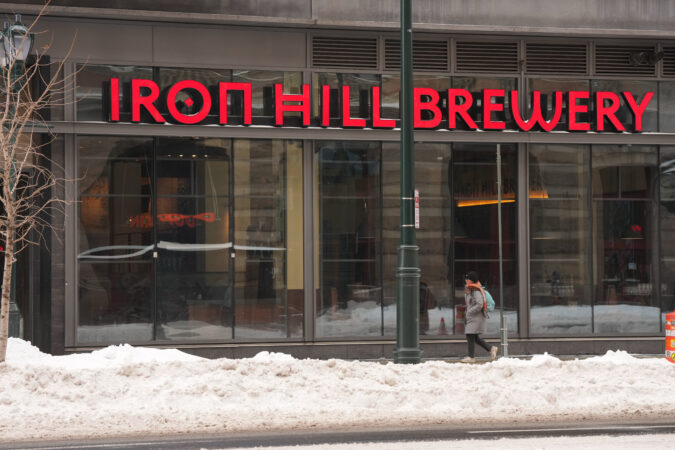
A view from the outside looking in on a closed Iron Hill Brewery.
On Monday, Crivello confirmed that the assets of his five remaining Iron Hills, along with the brand’s trademark and intellectual property, had been acquired by a buyer called Right Lane.
There are several companies that go by the name Rightlane or Right Lane. Attempts to reach representatives of the Right Lane that was involved in the Iron Hill deal were unsuccessful.
Iron Hill Brewery, which was founded in Newark, Del., developed a loyal following over its nearly 30 years in business. Fellow business owners and brewers considered it a pioneer in the local craft beer scene and a restaurant that helped put suburban downtowns like West Chester and Media on the map. Customers said they loved its family-friendly atmosphere.
Since then, massive shells of former breweries have sat vacant throughout the region. As the case made its way through bankruptcy court, landlords were delayed in their searches for new tenants.
Many locations still remain empty, with no word on what might fill the spaces. But in some spots, there are signs of life.
The company that owns P.J. Whelihan’s may be moving into the former Iron Hill in Newtown, Bucks County.
Last month, PJW Opco LLC, which is registered at the headquarters of PJW Restaurant Group, was approved to take over a lease for an 8,000-square-foot closed Iron Hill in the Village at Newtown shopping center.
A split Pennsylvania Game Commission has voted in favor of a developer’s land swap widely opposed by Limerick Township residents who fear it could pave the way for a large data center.
The commission voted 6-3 on Saturday in favor of a contract with developerLimerick Town Center LLC that would yield the state 559 new acres across three counties. The swap would include what would become Delaware County’s first state game land.
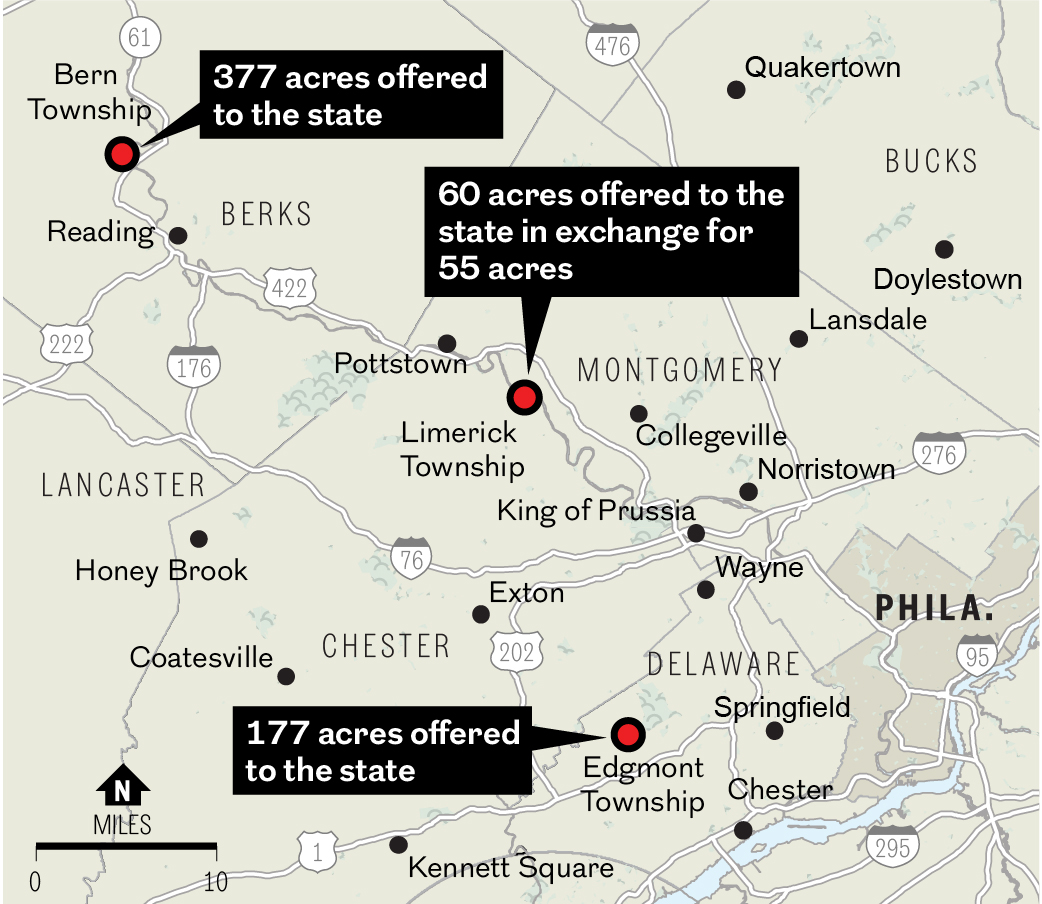
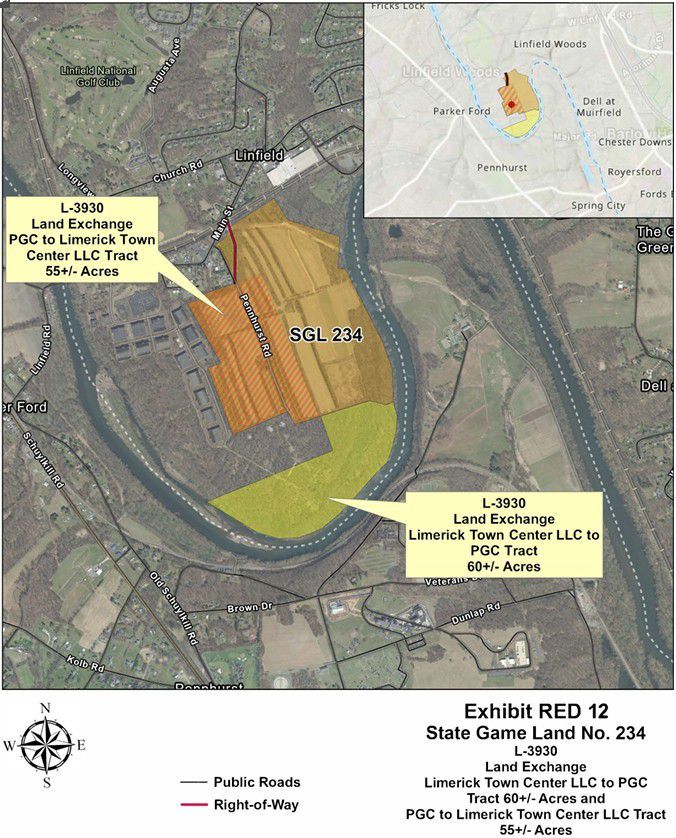
As part of the land trade, Limerick Town Center LLC would get 55 acres of state Game Land 234 in Limerick, Montgomery County. The land is adjacent to an industrial site the developer already owns and that’s currently proposed for warehousing.
Limerick Town Center LLC has not said what it plans for the new land. A representative of the company could not be reached for comment.
In return, however, Limerick Town Center LLC would give the state 60 acres in Limerick it owns immediately to the south of the existing game land, next to the Schuylkill.
Steve Hacker, who lives near Game Land 234 and opposes the swap, called it “a great deal for other townships who will gain all that land … but it comes with a pretty heavy price.”
Commissioners made their decision after listening to the public, who werealso split over the deal.
Revised land swap map new
For and against the swap
In general, residents who live in or near Limerick mostly opposed the swap, saying it would destroy a game land teeming with wildlifeand a popular spot for hunting.
Many are wary of what Limerick Town Center LLC wantsto dowith the 55 acres it would gain, fearing it’s part of a broader plan for a large data center. Although the developer has not proposed building a data center, the idea has been widely circulated on social media, including in posts by State Sen. Katie Muth. Data centers are used to handle the massive amounts of computing needed for artificial intelligence.
The land they’ll be getting in return, residents said, is in a flood plain and has been clear-cut. In addition, those opposing the contract believes it sets a precedent of letting developers use leverage to get what they want.
Limerick officials sent a letter to the commission last week in opposition to the swap.
But hunters who live outside of Montgomery County, as well as some commissioners, spoke in favor of the deal. They said it would provide the state hundreds of acres of new hunting grounds at no cost.
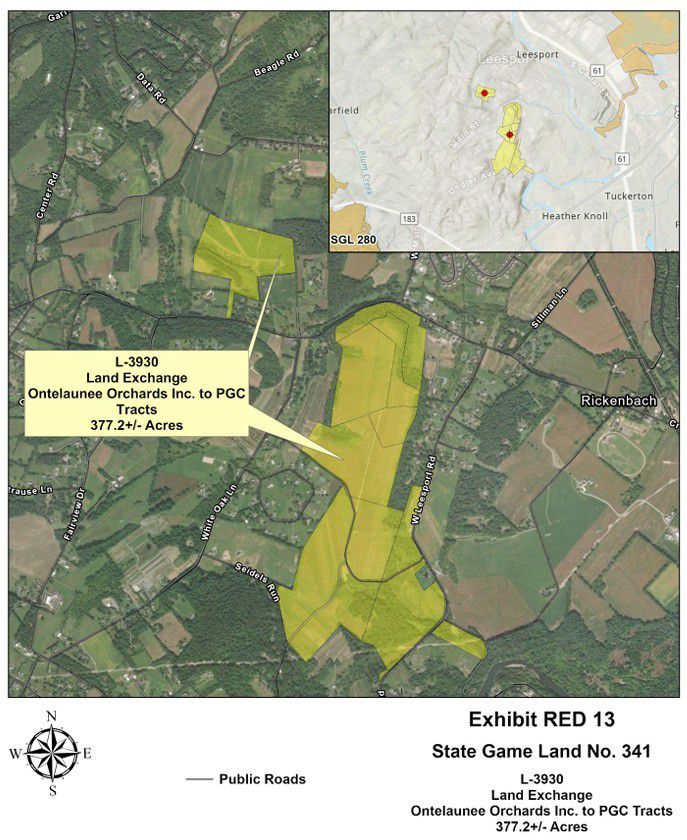
As part of the deal, Limerick Town Center LLC will give 377 acres in Bern Township, Berks County, to the state. And the company would give the state 177 acres in Edgmont Township in what would become the first state game land in Delaware County.
The commissioners
Stanley Knick, president of the Game Commission, who is from Northeastern Pennsylvania, voted against the contract, as did Commissioner Robert Schwalm of Bethlehem.
Commissioner Todd Pride, of Cochranville, Chester County, voted in favor of the contract. Pride said there is, “a lot of information being passed around that was not correct.”
He said Limerick Town Center LLC’s current proposal was “clearly going to have an impact on our existing game lands if we do nothing.”
Now, he said, the commission, “would be swapping 55 acres to get 60″ acres in Limerick while “protecting that area along the Schuylkill.”
“So we’re not losing,” Pride said.
He estimated the overall gain of acreage to the state at $20 million.
‘Simply irreplaceable’
However, Fred Ebert, owner of Ebert Engineering in Montgomery County, speaking as a member of the public, said the current location of state Game Land 234 “is simply irreplaceable.”
He said the new land the state would get in Limerick is surrounded by a railroad and consists mainly of wetlands. The only access, he said, is existing farmland.
“This exchange places a target on all in all game lands for development,” Ebert said. “It provides developers with a game plan and a path to seek out desirable land.”
One East Vincent Township, Chester County, woman who did not identify herself, told the commission she lives across the Schuylkill from the Limerick swap site.
She said so many residents have come forward with stories about how they walk the game land with their children, “showing them what wildlife is still around.”
“If this heavy industry gets to switch out this property, that’s not going to be there for them any longer,” she said.
But Steve Tricarico, a member of the Bern Township planning commission, sees the 377 acres of conserved space his municipality is gaining as a win given the development pressure in Berks County.
“This land would offer new opportunities for outdoor activities and public enjoyment,” Tricarico said.
The developer behind a massive mixed-use project in South Jersey has filed a lawsuit accusing a “rogue” employee of derailing municipal approvals and plotting to steer the property to Rowan University and a rival firm.
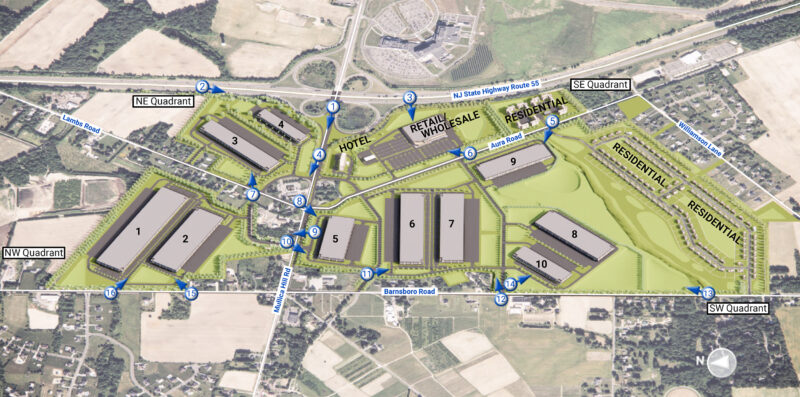
For more than two years, Seth Gerszberg and his Englewood, N.J.-based firm Active Acquisitions have been pursuing a development at the intersection of Route 322 and Route 55 in Gloucester County including proposals for 10 warehouses, a wholesale retail club, a hotel, and 117 single-family homes.
An affiliate of Gerszberg’s firm agreed to buy the property — totaling 429 acres, about 29 times the footprint of Lincoln Financial Field — in May 2023 for $23 million from Madison Richwood Village LLC, the suit says.
But the government approval process hit a snag in recent months, the suit alleges, as Gerszberg’s project manager, Sean Earlen — a land-use consultant, former mayor of Lumberton, and chair of the Burlington County GOP — “leveraged his close personal relationship” with Harrison Township’s mayor, Republican Adam Wingate, “to sow doubt within the township” about the viability of the development.
Yearslong saga
It’s the latest twist in a development saga that dates to 2008, when plans for a walkable town center in Harrison’s Richwood section were unveiled, including talk of a new elementary school and liquor licenses for restaurants in what had been a dry town.
According to the suit, Earlen has been pushing the current property owner, Madison Richwood, to do a deal with Rowan and Ohio-based Fairmount Properties LLC, which has been pursuing a “wellness district” at the university featuring proposals for a headquarters for Inspira Health, a hotel, as well as shops and restaurants.
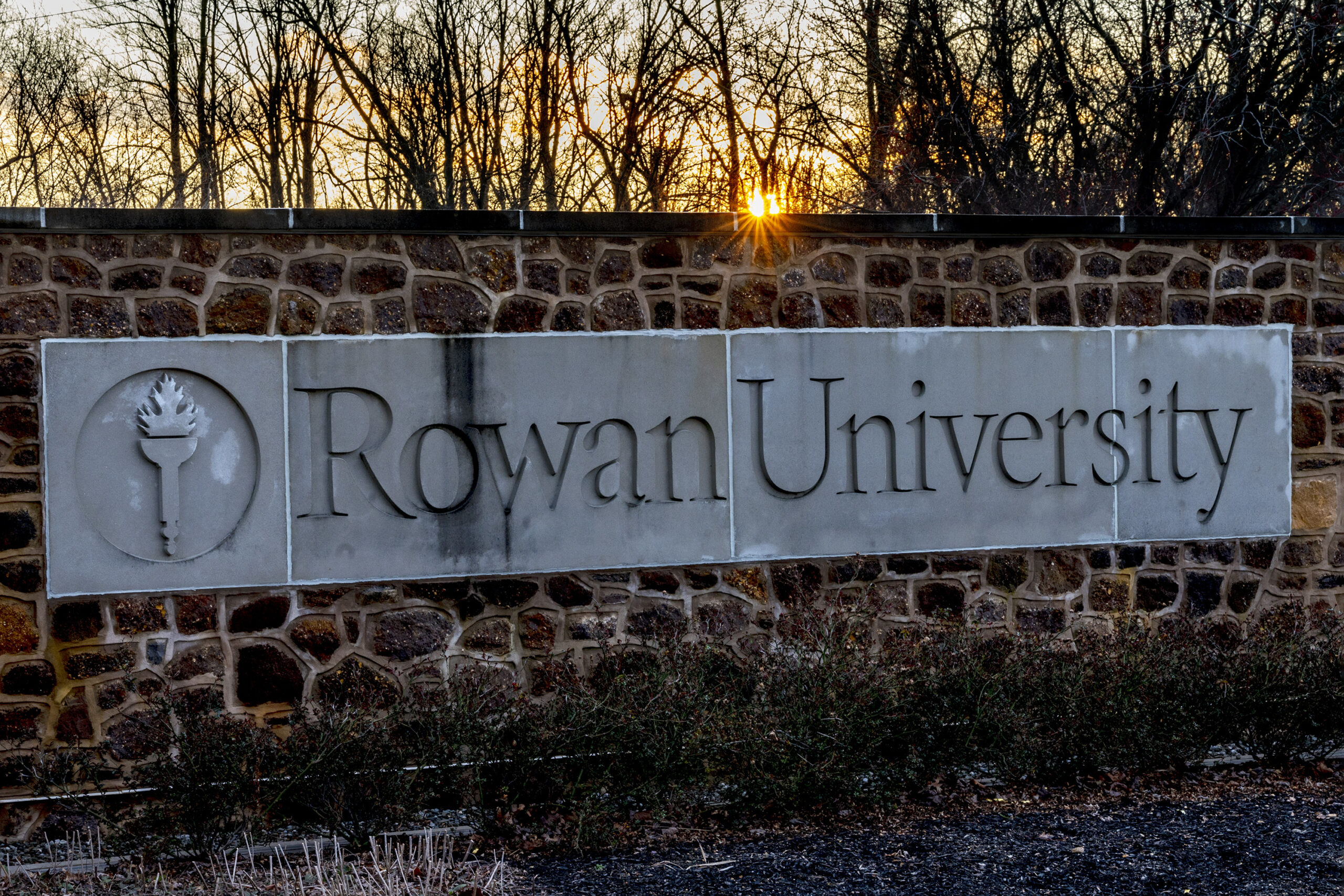
Rowan University in Glassboro.
At some point last year Rowan negotiated a deal with Madison Richwood to buy the property for $31 million, plus another $10 million in 2026, the complaint says, in an effort to “fulfill the university’s vision for a comprehensive plan at the Route 55/Route 322 interchange.”
As the township’s confidence in the warehouse project has eroded, the suit alleges, a neighboring property owner filed a lawsuit in October challenging Active’s government approvals.
The developer — which has industrial and residential projects across New Jersey — has sunk roughly $4 million to obtain the necessary approvals for the project and $7 million in “consultant and development expenses,” according to court records.
Gerszberg, who before his work in real estate was cofounder and president of hip-hop fashion brand Marc Ecko Enterprises, didn’t respond to requests for comment.
What does Rowan say?
The most recent suit, filed this month in Bergen County Superior Court by Active affiliate ActiveRWHA Property LLC, names Earlen and Fairmount Properties as defendants. It alleges interference with contractual rights, misappropriation of trade secrets, and defamation, among other counts.
Representatives for Fairmount and Rowan — a public research institution that isn’t a party to the suit — did not directly answer questions about whether they intend to buy the property. Neither Earlen nor Wingate — who took office as mayor last year — responded to requests for comment.
Randy Ruttenberg, a Fairmount principal, said the suit is “completely without merit” and called it an “ill-advised attempt to disrupt the very straightforward development process we continue to diligently pursue for the benefit of the entire region.”
“Fairmount Properties is focused fiercely on executing their own world-class development, and no matter what obstacle is placed in our path, we will not be distracted, bullied or deterred,” he said in a statement.
Joe Cardona, a spokesperson for Rowan, said it would be inappropriate to comment on pending litigation. “Rowan remains focused on its academic mission and on conducting all institutional planning activities responsibly and in accordance with applicable laws and governance standards,” he said in an email.
Madison Richwood affiliate Madison Marquette — a Washington, D.C.-based real estate investment and operating company — said in court papers that Gerszberg’s concern about a sale to Rowan is “without merit.”
Madison Marquette “will not sell the property, as defined in the [purchase and sale agreement], to Rowan, Fairmount, or any other entity while the PSA is in full force and effect,” firm president and managing principal William Sudow said in a court filing in a related case that has since been resolved.
Another Philadelphia office building has sold for a small fraction of what it last changed hands for, this time in the heart of Center City’s retail district.
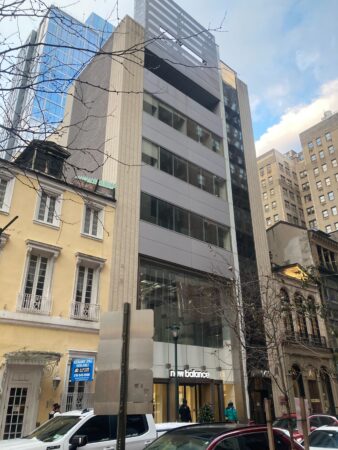
The six-story property at 1619 Walnut St. was purchased by Marc Zollinger, a Swiss investor and CEO of the company MZP AG, which is listed as the purchaser. Zollinger’s LinkedIn profile shows that he formerly worked in Philadelphia for Miller Investment Management.
The property sold for over $5 million, a dramatic decrease from when the seller Nuveen Real Estate purchased it in 2013 for over $19 million, according to a person familiar with the sale.
Neither Nuveen or Zollinger responded to a request for comment.
The office space in 1619 Walnut is wholly vacant, although real estate firm Keller Williams still holds a lease for two floors of now empty office space.
The retail picture at the property is more positive, with shoe seller New Balance occupying nearly 4,000 square feet on the ground floor with a lease that expires in 2035.
The sale price is seen as an unusually good deal for the location. Although the second-tier office space available in the building is the exact kind of product that has been hard hit by the rise of hybrid work since the COVID-19 pandemic, the upper floors of 1619 Walnut are seen as ideal for conversion into apartments.
“The sale price is an anomaly. … [Zollinger] bought it at an astoundingly good price,” said Larry Steinberg, head of the urban retail division for real estate services firm Collier’s Philadelphia office, who was not involved with the deal. “It would make a lovely residential conversion.”
The property’s sale was handled by JLL, a real estate services company, which advertised the building as an ideal office-to-residential conversion. The property enjoys the most flexible zoning in Philadelphia’s code, making such a transition relatively simple.
“With rectangular floorplates measuring approximately 4,900 square feet, the floor plan of the building makes it an ideal candidate for a conversion to boutique residential,” reads JLL’s promotional materials for the sale. “Given the existing layout of each floor, the redevelopment would accommodate a variety of modern open layouts with access to an abundance of natural light.”
JLL estimates that the office floors could accommodate up to 20 residential units, depending on the size of the apartments.
The building was purpose built for KYW radio in 1937 and, later, its television division. The influential Mike Douglas Show was based out of the building for much of its run, employing Roger Ailes, later of Fox News fame, in the late 1960s. In the early 1970s, John Lennon and Yoko Ono guest-hosted the show from the building for a week, interviewing people including Chuck Berry and Ralph Nader.
More recently, between 1997 and 2009, 1619 Walnut was home to the influential French restaurant Brasserie Perrier.
JLL’s Jim Galbally, who led the sales team, told real estate analytics firm CoStar that the purchase represented a “rare opportunity to acquire a retail, mixed-use asset along Walnut Street, Philadelphia’s premier high avenue.”
A warehouse developer’s proposal to trade land with the state in Limerick Township and beyond has blindsided local officials — and ignited fierce opposition from residents who fear the deal could clear the path for a data center.
The state would gain 559 acres across three counties, including what would become Delaware County’s first state game lands,according to the proposal on file with the Pennsylvania Game Commission.
In return, the developer, Limerick Town Center LLC, would secure a 55-acre property in Limerick. That landadjoins an industrial tract the developer already owns, which was formerly the site of the Publicker distillery.
(function() {
var l2 = function() {
new pym.Parent(‘LANDSWAP1-22-26.html’,
‘https://media.inquirer.com/storage/inquirer/projects/innovation/arcgis_iframe/LANDSWAP1_22_26new.html’);
};
if (typeof(pym) === ‘undefined’) {
var h = document.getElementsByTagName(‘head’)[0],
s = document.createElement(‘script’);
s.type = ‘text/javascript’;
s.src = ‘https://pym.nprapps.org/pym.v1.min.js’;
s.onload = l2;
h.appendChild(s);
} else {
l2();
}
})();
Collapse
Residents flooded an hourslong Board of Supervisors meeting Tuesday night to oppose the land swap, prompting officials to open a second room fortheoverflow.
“I’m against the swap,” resident Jeff Schmidt told the board. “It’s a terrible idea, and I need to stop now because a lot of bad words want to come out of my mouth.”
Connie Lawson, board chair, said that ultimately the state controls the land involved in theswap, not the township.
Township manager Daniel Kerr told the crowd that the township had little information and hadjust learned of the proposal last week. But, he said, plans for land involved in the swap would have to go through the township for zoning and planning.
After hours of listening to residents, the board voted to send a “strongly worded” letter of opposition to the Game Commission.
Although the developer has not proposed building a data center, theidea has been widely circulated on social media, including inposts by state Sen. Katie Muth. Sheurged residents who oppose the swap to attend the township meetingTuesday, as well asa state Game Commission meetingonSaturday.
Data centers, whichhouse servers used for artificial intelligence, have become a hot topic in recent months, as residents in multiple towns have voiced concerns over their use of land, energy, and water. Meanwhile, political and labor leaders have embraced them as job creators.
Those twolocations are within two milesof the land Limerick Town Center would acquire in the swap.
“If this swap goes through, we are one step closer to turning our communities into Data Center Alley 2.0,” Muth wrote on Facebook last week. “This land is publicly owned wildlife habitat and forest. It should not be traded away so Big Tech and AI corporations can maximize profits at the expense of our environment and quality of life.”
What’s involved with the land swap?
Limerick Town Center LLCis already proposing to build two warehouses totaling 1.9 million square feet in Limerick’s Linfield section. That would be off Main Street and Longview Road, not far from Constellation Energy’s Limerick Clean Energy Center, a nuclear power plant.
The proposed swap would give Limerick Town Center LLC state-owned landand a 200-foot right-of-way adjoining the warehouse site, in exchange for the company giving the state property inLimerick and other counties.
Overall, the company would give the state a total of 614 acres in return for a 55-acre chunk of Game Land 234.
Included in the 614 acres is a 60-acre parcel it already owns in Limerick that adjoins the southern portion of Game Land 234 near the river.
Map shows a proposal by Limerick Town Center LLC to give the state 60 acres it owns in Limerick Township in return for the state giving the company 55 acres of State Game Land 234.
The company would alsogive 377 acres in Bern Township, Berks County, to be managed by the state.
Map shows part of a land swap being proposed by Limerick Town Center LLC. The company is proposing to give the state 377 acres of Ontelaunee Orchards in Bern Township, Berks County, in return for 55 acres of State Game Land 234 in Limerick Township, Montgomery County.
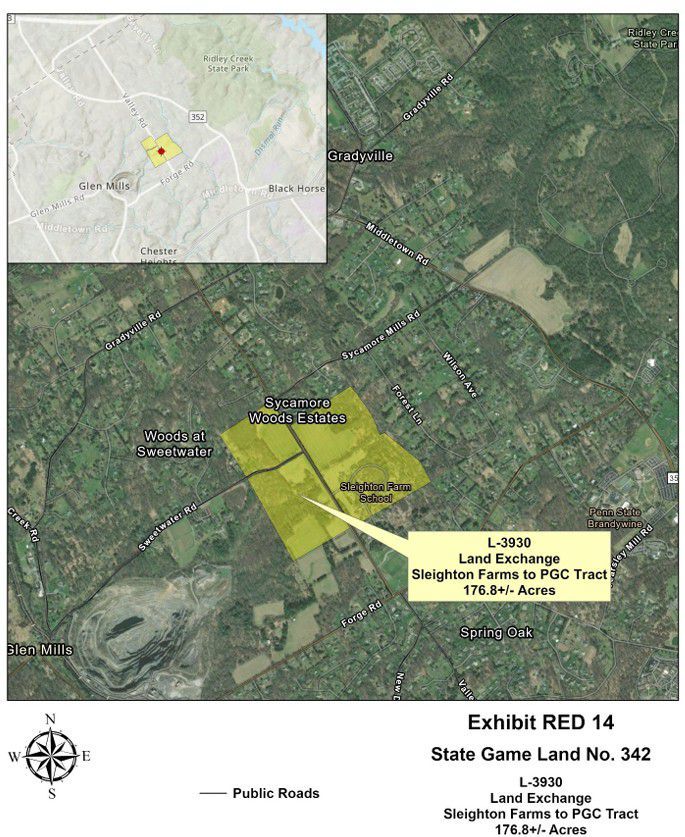
And the company would give the state 177 acres in Edgmont Township that would become the first state game land in Delaware County.
Map shows part of a land swap being proposed by Limerick Town Center LLC to acquire 55 acres of state Game Land 234 in Limerick Township, Montgomery County. In return, Limerick Town Center would give the state hundreds of other acres including 177 acres in Edgmont, Delaware County that could be used for a new state Game Land.
Local concerns
At Tuesday night’s meeting, resident after resident opposed the plan, citing overdevelopment, traffic, a change in the character of the community, and an impact on wildlife and the environment. Only one man from Berks County, who said he was a hunter, supported the swap.
Limerick resident Jennifer Wynne told the board she opposes the swap, saying the public hasn’t been given enough information that it would provide “a clear public benefit.”
“I am also concerned that this transfer may function as a precursor to future high-intensity or industrial development,” she said.
Michael Poust said he moved to Limerick to escape overdevelopment, and he opposes the land swap.
“My land is surrounded by the state game lands,” he said. “I bought it there for a reason.”
Muth, the state senator, lives in neighboring East Vincent and has been part of the fight against a data center proposed for Pennhurst.
“I highly recommend that you review the path forward to change the zoning in that area,” Muth told the board.
A view of the former Publicker Distillery tract now owned by Limerick Town Center LLC, which is proposing to build two warehouses on the land. The company is also proposing a land swap with the state to gain 55 acres of adjoining land.
Edgmont’s response
Meanwhile, Edgmont Township, Delaware County, could gain new state game land near, but not connected to, Ridley Creek State Park.
Pennsylvania Game Lands, supported by hunting and trapping fees, are widely used for hunting, hiking, fishing, and birdwatching.
Ken Kynett, Edgmont Township’s manager, said officials only learned of a land swap on Jan. 16.
“We got an email from the game commission last week saying we’re interested in acquiring property in your township,” Kynett said. “It was as much a surprise to us as anyone else.”
Under the land-swap proposal, Limerick Town Center LLC would give the state a 177-acre portion of the old Sleighton Farm School grounds.
The school, originally set on 300 acres and run by Quakers, was founded to serve “troubled children.” In 1931, it split into two separate schools: the Glen Mills School for boys and the Sleighton Farm School for girls. Eventually, the schoolbecame coed and was called simply Sleighton School.
The school closed in 2001 because of financial difficulties, and the grounds were sold. Elywn, a large nonprofit, owns the land.
Kynett said heassumed Limerick Town Center LLC is working with Elwyn on the deal. Part of the land is zoned for agriculture, and part is zoned residential.
He said that keeping the land as open space could be a positive, but the township doesn’t have enough information to know whether to support or oppose the swap.
“We haven’t really had a chance to discuss it with the board,” Kynett said.
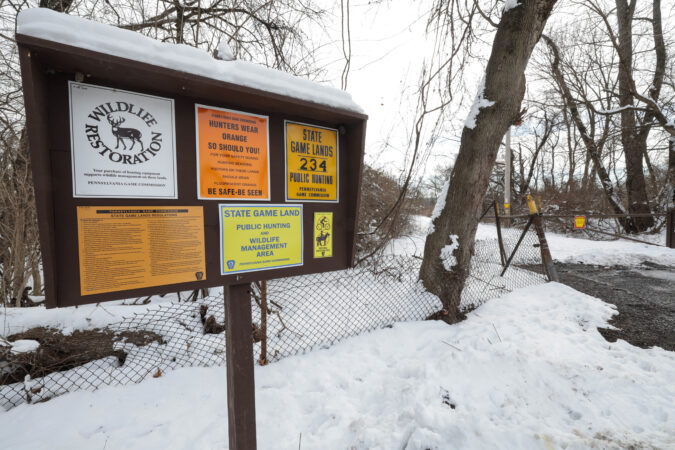
State Game Lands 234, Main Street and Pennhurst Road, Limerick Twp., Montgomery County.
Who’s behind Limerick Town Center LLC?
Limerick Town Center LLChas an address in Madison, Conn., according to Montgomery County land records. The address is linked to a company registered by Christine Pasieka, who is a business partner and the wifeofChris Rahn. The two have made development deals throughout the Philadelphia area for years.
Pasieka could not be reached immediately for comment on Wednesday.
Property records show that Limerick Town Center LLC purchased the 197-acre parcel in 2022 for $17 million.
In 2023, the company applied to build on the Publicker tract, according to county records. The registered agent for Limerick Town Center LLC was Sandra DiNardo, whose family owns a large trucking and cement business.
DiNardo could not be reached immediately for comment.