Hours before leaving office, New Jersey Gov. Phil Murphy on Tuesday signed legislation that could make it easier for commercial real estate projects in Camden to qualify for hundreds of millions of dollars in state tax incentives.
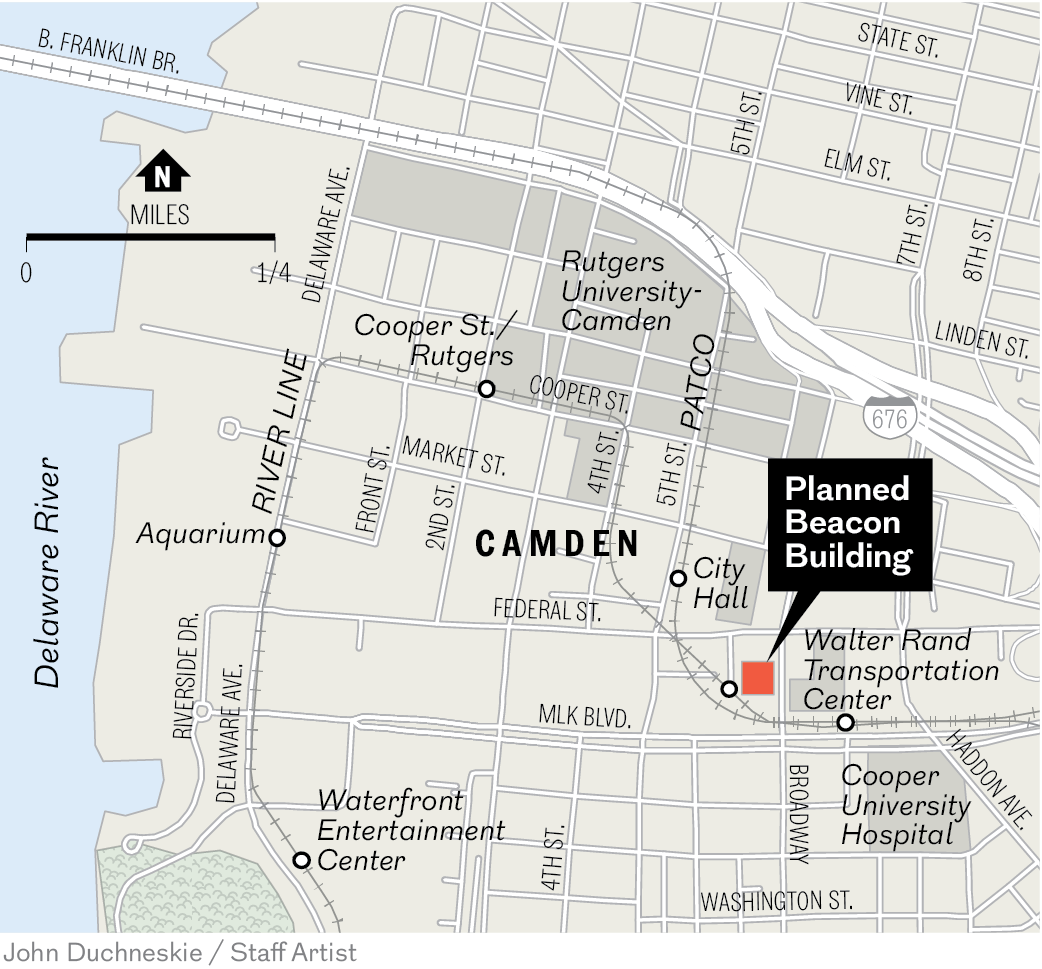
One planned development that could benefit is the Beacon Building, a proposed 25-story office tower downtown on the northwest corner of Broadway and Martin Luther King Boulevard, The Inquirer previously reported.
Murphy approved the bill and dozens of others on the final day of his second term, shortly before fellow Democrat Mikie Sherrill was sworn in as governor. Another newly signed law authorizes up to $300 million in tax breaks to renovate the Prudential Center in Newark, home of the New Jersey Devils. The hockey team is owned by Harris Blitzer Sports & Entertainment, which also owns the Philadelphia 76ers.
The Camden-focused law makes changes to the state’s gap-financing program, known as Aspire, which authorizes up to $400 million in corporate tax credits over 10 years for “transformative” redevelopment projects that have a total cost of $150 million and meet other requirements.
To qualify for the incentives, most commercial projects must generate a net positive benefit to the state, based on the Economic Development Authority’s economic modeling. The new law exempts certain projects from that “net benefit test.”
The law applies to redevelopment projects located in a “government-restricted municipality” — as described in the Aspire program’s statute — “which municipality is also designated as the county seat of a county of the second class.” In addition, the project must be located in “close proximity” to a “multimodal transportation hub,” an institution of higher education, and a licensed healthcare facility that “serves underrepresented populations.”
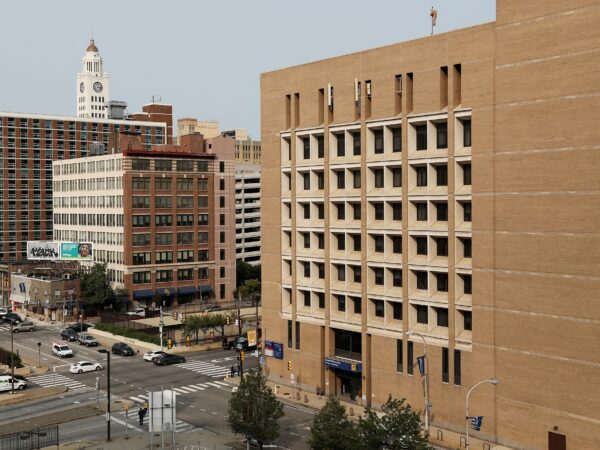
A rendering of the 25-story Beacon Building proposed for the northwest corner of Broadway and Martin Luther King Boulevard in Camden. It would be the tallest building ever constructed in the city.
The site of the proposed Beacon Building is across the street from the Walter Rand Transportation Center and Cooper University Hospital. Rutgers’ Camden campus is also nearby. Lawmakers said projects in New Brunswick and Trenton could also qualify for exemptions under the law.
Development firm Gilbane is leading the project with the Camden County Improvement Authority. Gilbane has yet to announce any commitments from tenants.
Assembly Majority Leader Louis Greenwald (D., Camden), who sponsored the legislation, has said it wasn’t written with a specific project in mind but rather to remove a barrier to investment in South Jersey.
Critics said that the law removes a key safeguard meant to protect taxpayers and that it represented an about-face for Murphy, who earlier in his tenure sought to reform corporate incentive programs.
“Just in terms of the governor signing the bill, this is a massive disappointment,” said Antoinette Miles, state director of the New Jersey Working Families Party.
“Broadly, if there’s a so-called transformative project that can’t pass the net benefit test, maybe it isn’t so transformative,” she said.
Murphy’s office announced the bill signing without commenting on it, though he has previously cheered state investment in Camden. Any Aspire tax incentives must be approved by the state’s Economic Development Authority.
A six-story apartment project at 2001 E. Lehigh Ave. is moving forward with a new owner after years of delay amid a difficult development environment.
Five-lane Lehigh Avenue divides the southern portion of Kensington, which has experienced development more akin to the boom in Fishtown, from the parts of the neighborhood to the north that are at the heart of the city’s opioid crisis.
But along the northern edge of the avenue, next to the Conrail tracks, a series of auto-oriented and light-industrial properties have been redeveloped as housing in recent years.
“That whole corridor has continued developing. It’s even pushing over the tracks further up north, too,” said Brian Corcodilos, CEO of Designblendz, the architect for the project. “We’re confident that … this area continues to rent up.”
The former owner of 2001 E. Lehigh, developer Isaac Singleton, secured zoning approvals for the project in 2023 and 2024. City records then show the property sold for $2.5 million in January 2025.
A demolition permit for the property was issued this week to an address associated with developer Roman Ovrutsky — whose home The Inquirer profiled last year — and Corcodilos said their team expects construction to begin by early spring.
Ovrutsky’s version of the project will feature 146 apartments, a slightly smaller number than Singleton proposed, and a little over 6,000 square feet of commercial space on the ground floor. The project will also have 54 underground parking spaces.
Designblendz has updated the visual palette for the project by adding darker grays and slate-colored hues.
Corcodilos said that changes in federal tax policy in President Donald Trump’s Big Beautiful Bill have enabled clients to begin building again. A lull in recent years was caused by heightened interest rates and an apartment glut that made it hard for developers to charge the rents necessary to pay back the loans on their projects.
The former design for the building included greens and browns. The new vision features slate-colored hues.
Corcodilos said developers have also found that more projects are making sense if they use either the city’s mixed-income housing zoning bonus — which allows taller or denser construction in exchange for an affordability component — or if they base their financing on catering to some tenants who use federal rent voucher subsidies.
“That’s how a lot of these projects are getting done,” Corcodilos said.
It’s illegal in Philadelphia to discriminate against renters using vouchers, but it’s common for landlords to discourage those tenants, and many buildings owners don’t proactively advertise to subsidized tenants.
But in recent years, increasing numbers of landlords have seen the advantage of tapping into a large tenant base with almost guaranteed payments.
Another property just north of Lehigh Avenue at 2200 E. Somerset St. was sold last year to the Philadelphia Housing Authority, after many of its tenants ended up being voucher holders.
“A lot of these big buildings that are going up, the only way they’re penciling is if there’s some sort of an affordability component to it,” Corcodilos said.
Beyond Kensington, Designblendz is seeing an increase in work this year due to developer-friendly changes in the federal tax code, opportunities in affordable housing provision, and an easing of the overall apartment glut, he said.
“I’m not getting a sense at the moment that clients are worried about not filling their units,” Corcodilos said. “Obviously things slowed down a little bit over the last year and a half for the industry. But what we’re seeing right now, it’s busier than ever.”
New Jersey lawmakers on Monday approved a bill that would make it easier for development projects in Camden to qualify for hundreds of millions of dollars in tax credits.
Under current law, most commercial real estate developers must show their projects would generate more dollars in economic activity than they would receive in subsidies in order to qualify for tax credits under New Jersey’s gap-financing program, known as Aspire.
The new legislation — which was introduced late last month and approved by the Democratic-led Legislature days before Democratic Gov. Phil Murphy is to leave office — would exempt certain projects from the program’s so-called net benefit test.
Lawmakers on Monday also passed a bill increasing the cap on the size of the Aspire tax-credit program from $11.5 billion to $14 billion and authorized $300 million in tax breaks to renovate the Prudential Center in Newark, home of the New Jersey Devils hockey franchise. The team is owned by Harris Blitzer Sports & Entertainment, which also owns the Philadelphia 76ers.
‘Competitive market’
Supporters of the Camden bill, A6298/S5025, said it would make South Jersey more competitive in the Philadelphia market, while critics contended it would weaken a provision of a 2020 economic development law signed by Murphy that was intended to ensure fiscal prudence.
The test has impeded big projects in South Jersey, said Assembly Majority Leader Louis Greenwald (D., Camden), a sponsor of the bill. Since the law was signed, the region hasn’t attracted a single “transformative project” — a designation in the Aspire program for developments that have a total cost of $150 million and are eligible for up to $400 million in incentives over 10 years, Greenwald said.
“We started to ask people, what’s the barrier?” he said. “And when you look at the competitive market of what [developers] can get in Philadelphia or Pennsylvania compared to other areas in the state that don’t have to compete with that, that net operating loss test, that net benefits test, is a barrier.”
The legislation was not drafted with a specific project in mind, Greenwald said, but he acknowledged that one that might benefit is Beacon, which would feature 500,000 square feet of office space.
Developer Gilbane is leading the project with the Camden County Improvement Authority at a vacant site on the northwest corner of Broadway and Martin Luther King Boulevard across the street from the Walter Rand Transportation Center and Cooper University Hospital.
Map of the planned Beacon Building in Camden.
“The goal is to attract projects, maybe like Beacon Tower, to capitalize off of the growth that we’ve seen in Camden city,” Greenwald said.
Any project seeking Aspire subsidies must apply to the Economic Development Authority.
Camden County officials have said they expect tenants to include Cooper University Health Care, which has said it needs additional office space to accommodate its $3 billion expansion. They also hope to entice civil courts to relocate there.
County Commissioner Jeff Nash said last year that tenants had yet to commit, in part because the development team was still working on an application for Aspire tax credits.
The incentives will help determine rent, he told the Cherry Hill Sun. The land is owned by the Camden Parking Authority, and Nash has said officials are still trying to determine who will own the site and the building going forward, according to Real Estate NJ.
County spokesperson Dan Keashen said that those talks remain ongoing and that the improvement authority may issue a request for proposals for a new developer. Gilbane, the current master developer, didn’t respond to a request for comment.
Wendy Marano, a spokesperson for Cooper University Health Care, said she didn’t have an immediate answer to a question about whether the hospital network planned to obtain an equity stake in the development.
In 2014 the state awarded $40 million in tax credits to incentivize Cooper Health’s relocation of suburban office jobs to Camden, and Cooper later bought a stake in the development.
The possible new state investment in Camden comes after Murphy’s administration separately allocated $250 million to renovate the state-owned Rand center — which serves two dozen NJ Transit bus lines and the River Line, and includes PATCO’s Broadway station.
Construction on the transit center is expected to begin soon, according to county officials. While that renovation is underway, the Beacon site will serve as a temporary bus shelter, Keashen said, adding that possible construction on an office tower is still years away.
Fast track
Critics of the bill said that it was rushed through the Legislature with minimal public input and outside the normal budget process, and that it appeared to be designed to benefit specific projects. The bill passed the Assembly, 48-25, and the Senate, 24-14. It now heads to Murphy’s desk. The governor’s second term ends on Jan. 20, when he is to be succeeded by fellow Democrat Mikie Sherrill.
The legislation applies to redevelopment projects located in a “government-restricted municipality” — language included in the Aspire program’s statute — “which municipality is also designated as the county seat of a county of the second class.” The project must also be located in “close proximity” to a “multimodal transportation hub,” an institution of higher education, and a licensed healthcare facility that “serves underrepresented populations.”
“I say to you that there’s going to be one project that fits all those criteria,” Assemblyman Jay Webber (R., Morris) said on the floor of the chamber during debate Monday.
“The net benefits test was put in as an accountability measure to make sure these projects were at least by some measure benefiting the taxpayer,” Webber added in an interview.
“And now apparently one or more projects can’t meet that test,” he said. “And so rather than stick to the rules that they agreed to and pull the credits, they’re going to change the rules, lower the bar so that somebody can step over it. It’s wrong.”
Greenwald said the legislation has “nothing to do with [Beacon] in particular,” adding that he hopes it is one of many projects that could benefit. Possible developments in Trenton and New Brunswick could also qualify for incentives under the bill, he said.
Assembly Majority Leader Louis Greenwald in 2019.
The net benefit test
The test relies on economic modeling based on data such as projected jobs and wages. Under current law, most commercial projects seeking Aspire credits must demonstrate a minimum net benefit to New Jersey of 185% of the tax credit award — meaning, for instance, an applicant that receives $100 million in credits must generate $185 million in economic activity.
Projects located in “government-restricted municipalities” — a half-dozen cities, including Camden, selected by the Legislature — already face a lower threshold of 150%, according to the state Economic Development Authority.
Some projects, including residential and certain healthcare centers, are exempt from the net benefit test.
The test was strengthened in the Economic Recovery Act of 2020, signed by Murphy, because “we saw in previous iterations of the tax credit program that if the guardrails weren’t strong enough … then companies could simply not meet the test, or, you know, not follow through on their promises, and nonetheless collect the funds,” said Peter Chen, senior policy analyst at New Jersey Policy Perspective, a liberal-leaning think tank.
The 2020 law changed that, he said. “It’s one of the most important guardrails of the entire corporate tax credit program,” Chen said in an interview last week. “So exempting any project from the net benefit test requires a pretty large, pretty strong reason for doing so, and in this case, no reason was given.”
Criminal case
The renewed push for tax credits in South Jersey comes as a criminal case involving an earlier round of corporate subsidies continues to play out in court.
Democratic power broker George E. Norcross III — founder of a Camden-based insurance brokerage and chairman of Cooper Health — and five codefendants were indicted in 2024 on racketeering charges related to development projects on the city’s waterfront.
A judge dismissed the charges last year, and the state Attorney General’s Office is appealing the decision. Norcross has denied wrongdoing. He and his allies say state incentives have helped revitalize the city.
During his floor speech on Monday, Webber alluded to “incredible allegations of corruption” in the earlier economic development program and noted that Murphy had previously championed reform of the system.
The governor’s spokesperson, Tyler Jones, declined to comment on pending legislation.
New Jersey officials have filed suit against the large scrap metal recycler EMR over a string of hazardous and “especially dangerous” fires at its facilities, especially in Camden.
One four-alarm fire at an EMR scrapyardon Camden’s Front Street nearly a year ago resulted in black, billowing smoke that could be seen for 15 miles and led to the voluntary evacuation of 100 families.
As a result of that Feb. 21, 2025, fire, the U.K.-based metal recycler agreed in August to pay $6.7 million toward improvements to Camden’s Waterfront South neighborhood. The fire occurred when a lithium ion battery embedded in an item ignited while being recycled.
That fire was one of a dozen at the Camden facilities in the last five years, says the suit filed by the state Attorney General Matthew Platkin and the Department of Environmental Protection (DEP). EMR has several facilities in Camden.
“It is outrageous that EMR has failed to correct the dangerous conditions at its facilities in Camden — conditions that have resulted in over a dozen hazardous fires in recent years that threaten the lives and health of Camden residents,“ Platkin said in a statement. ”We’re taking action today to hold EMR accountable for its reprehensible conduct and to protect Camden residents.”
He accused EMR of turning “a quick buck at the expense of their communities.”
Joseph Balzano, CEO of EMR USA, on Monday pointed to the $6.7 million agreement from August. “It appears the current Attorney General is not aware of … EMR’s fire suppression investments,” he said. “We look forward to working with the State of New Jersey to addressing the scourge of lithium ion battery fires plaguing recycling facilities throughout the country.”
‘Severe harm’
The civil suit, filed Monday in New Jersey Superior Court in Camden, alleges that fires at EMR facilities have created an “ongoing public nuisance.”
It alleges that the company’s facilities are unsafe, and that the company has failed to take steps to remedy those conditions.
As a result, EMR has caused “severe harm” to the “health and well-being” of nearby communities.
EMR’s global headquarters is in England. But the company has various subsidiaries in the U.S. EMR USA Holdings Inc. is a Delaware company with its headquarters on North Front Street in Camden. Both EMR Eastern, LLC and Camden Iron & Metal Inc are subsidiaries with Camden addresses.
The lawsuit alleges that fires related to EMR’s scrap metal operations have occurred in multiple locations. The company also has facilities in Bayonne and Newark. The suit notes a fire that broke out in May 2022 on a barge in the Delaware Bay carrying scrap metal between the company’s Newark and Camden locations.
But the suit singles out the Camden location as the worst with some fires occurring within days of each other.
“Over the last five years, at least 12 major fires have occurred in scrap metal piles at Defendants’ facilities in the Camden Waterfront South neighborhood,” the lawsuit states.
The suit states that the fires filled streets with smoke and air pollution, “causing chemical and burning smells to permeate through homes and causing residents to suffer from asthma and other acute respiratory illnesses.”
It alleges the fires have “caused severe harm to the health and well-being of individuals and communities in the vicinity.”
The Feb. 21, 2025, fire occurred at EMR’s waterfront shredder facility. It started in a large pile of scrap metal material waiting to be shredded. It burned for eight hours before Camden firefighters brought it under control, but took 12 hours to fully extinguish.
The burning pile measured 300 feet by 250 feet, according to the suit, and was roughly two stories high. It was destined for a conveyor belt leading to a four-story building.
The pile, conveyor belt, and building all became fully engulfed in the city’s Waterfront South area, which is home to 2,300 people. The suit states that the community already “experiences disproportionate environmental harm and risks due to exposures or cumulative impacts from environmental hazards.”
The scene at EMR Metal Recycling in Camden on Feb. 22, 2025, the morning after a four-alarm fire.
The fires
Among the fires in Camden since 2020, according to allegations in the suit:
Feb. 18, 2020: “Automobile fluff” caught fire at the shredder facilityon Front Street.
Nov. 29, 2020: EMR failed to notify the DEP of this fire at the Kaighns Avenue facility.
Jan. 29, 2021: EMR failed to notify the DEP in a timely manner when a pile of material three stories high and 300 feet by 150 feet ignited at the shredder facility, causing the nearby Sacred Heart School and 30 families to evacuate. Five firefighters were treated for smoke inhalation and one was hospitalized. Two residents were hospitalized for smoke inhalation.
Feb. 27, 2021: Residue caught fire at the shredder facility and could be seen burning from Philadelphia and the Benjamin Franklin Bridge.
Feb. 28, 2022: A pile of shredded material caught fire at the South Sixth Street facility.
July 21, 2022: A fire occurred at the shredder facility.
July 22, 2022: A fire broke out at the South Sixth Street facility, possibly from a lithium ion battery.
Oct. 18, 2022: During a fire at the shredder facility, residents were offered hotel accommodations by EMR if they needed to evacuate.
July 29, 2024: A pile of material caught fire at the South Sixth Street facility.
“Neighbors of EMR should not have to live in fear of the industrial business next door to them, wondering whether the air is safe to breathe and the company values its role in the community as much as its profits,” DEP commissioner Shawn LaTourette said in a statement.
The suit seeks to make EMR take measures that include adding continual surveillance and monitoring, reducing the height of scrap piles, hiring an engineer to evaluate its facilities and issue a report to the DEP, installing a system that can generate real time reports, and immediately notifying the DEP of any issues.
It seeks a maximum allowable penalty of $1,000 under a nuisances law, and any other money a court might award.
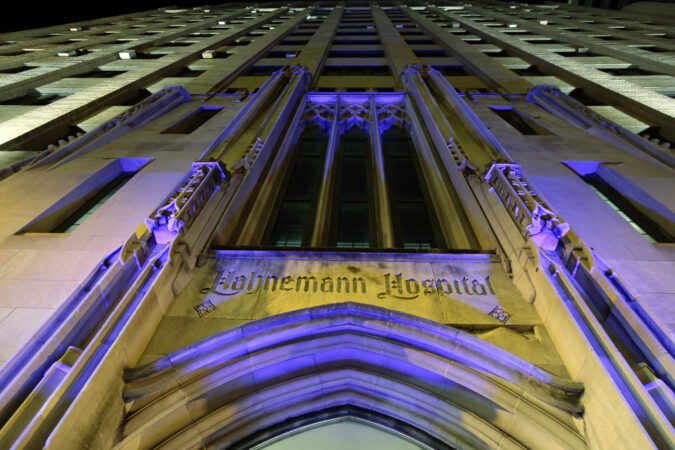
Philadelphia-based Iron Stone Real Estate Partners transferred control of two of their former Hahnemann University Hospital properties in the last two weeks.
The investment group acquired a portfolio of Hahnemann properties in 2021 and began redeveloping them into laboratory and office space.
But in recent weeks Iron Stone disposed of two of these properties.
The company donated the New College Building at 245 N. 15th St. to Drexel University on Dec. 31.
“It’s a charitable donation,” said Jason Friedland, director of operations and investments at Iron Stone. “We felt that that building was best served with Drexel owning it and using it for a long time, long-term, for their research.”
When Iron Stone acquired the New College Building five years ago, Drexel occupied the property’s medical labs and was one of the few remaining tenants in the Hahnemann campus.
Back then the university was considering moving this Center City operation to the suburbs in the short term and to University City in the long term.
“The generous gift will provide the university with flexibility as it continues to consolidate operation of its College of Medicine on its University City campus,” Drexel spokesperson Britt Faulstick said in an email statement. “Plans for the New College Building will be determined in the future.”
On Jan. 6, Iron Stone sold the Broad and Vine Parking Garage at 1416 Wood St. to the Philadelphia Parking Authority for $21.3 million.
The 850-space garage had been exclusively for Hahnemann’s use. Iron Stone renovated the vacant garage after the bankruptcy and hired Metropolis Technologies — the largest parking operator in the United States — to run it.
The acquisition is the first time the Parking Authority has purchased a garage built by someone else, said Rich Lazer, executive director of the Parking Authority.
“Most of our garages, outside of the airport, are Center City-based, so its nice to push out onto North Broad,” Lazer said. “Our garages are lower cost than private garages, so it’ll help us maintain reasonable pricing.”
The authority plans to retain Metropolis Technologies as the operator, Lazer said.
Iron Stone still owns a couple former Hahnemann properties, including the 120,000-square-foot Race Street Laboratories at 1421 Race St. and the 15,000-square-foot building at 231 N. Broad St., which is fully leased by Bayada Home Health Care Inc. with a third of the space and Dynamed Clinical Research with the rest.
Race Street Laboratories was developed to tap into the life sciences and biomedical market, which boomed during the pandemic but has slowed substantially as interest rates spiked. Currently the building has only one tenant, Sbarro Health Research Organization, with 7,500 square feet of space.
Friedland said Iron Stone plans to move its headquarters from University City’s FMC Tower to one of Race Street Lab’s unused floors.
As for the rest of the space, Iron Stone is exploring alternative uses as the life sciences market continues to struggle.
“We’re seeing where the opportunities are in commercial real estate,” Friedland said. “We have a couple things we’re exploring, but we’re not really in a rush.”
Their plans for an apartment building were complicated by a bill introduced in December by Councilmember Jeffery Young to ban housing from the former hospital site.
But on Dec. 24, in advance of City Council action on the legislation, the developer received zoning permits for a 361-unit apartment complex at 222-248 N. Broad St. Dwight Group says they are nonetheless in negotiations with Young to secure his support.
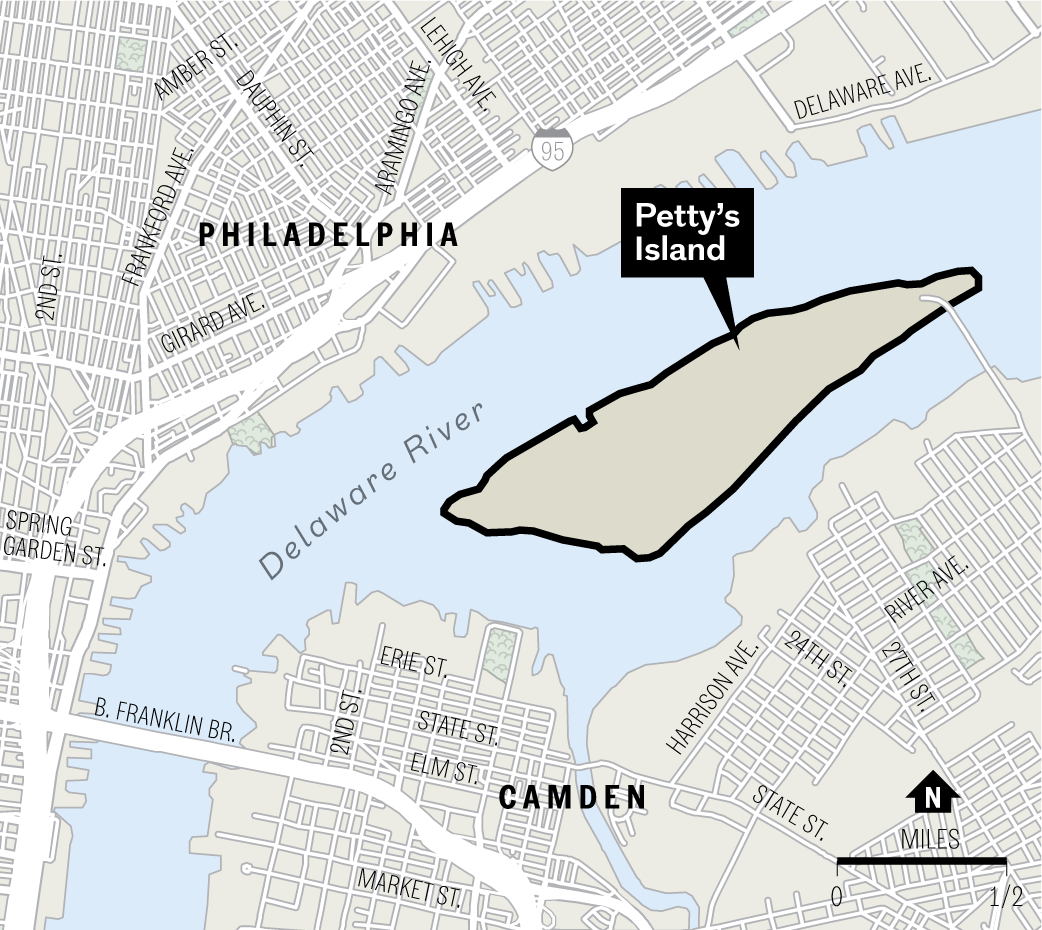
New Jersey has long coveted Petty’s Island, 300 acres in the Delaware River off Pennsauken, as a potential environmental and recreational haven with its grand views of Philadelphia.
Originally the hunting grounds of Native Americans, the island was later farmed by Quakers. Folklore claims pirate landings and an overnight stay by Ben Franklin. In more recent years, redevelopment proposals envisioned a hotel and golf course before the state’s embrace of a nature preserve.
Citgo Petroleum Corp. — the Houston-based refining arm of Venezuela’s national oil company — has owned the island for 110 years, leaving a legacy of pollution from oil storage and distribution.
Now recent international events and a court ruling on Citgo have clouded the island’s immediate future while underscoring the reach of the petroleum industry.
Formerly, it was the site of Fuel storage (center) for the Venezuelan oil company Citco.
Late last year, U.S. District Court Judge Leonard Stark in Delaware approved Amber Energy as buyer of Citgo’s Venezuelan parent company through a sale of shares to settle billions in debts, concluding a process that began in 2017. Amber Energy bid $5.9 billion in a court-organized auction.
Citgo owns a network of petroleum infrastructure that some analysts say could be worth up to $13 billion, according to the Wall Street Journal.
Venezuelan officials immediately denounced the sale as “fraudulent” and appealed the decision. Citgo is a subsidiary of Venezuela’s state-owned oil company, Petróleos de Venezuela (PDVSA).
However, on Jan. 3, the U.S. captured Venezuela President Nicolás Maduro and brought him to the U.S. to face narco-conspiracy charges. He has pleaded not guilty.
It is no longer clear whether Venezuela will continue with an appeal. President Donald Trump has said the U.S. is now running that country and is mapping out a vision for its vast crude oil reserves.
So it’s likely Amber Energy, an affiliate of activist hedge fund Elliott Management, will soon close on the arrangement to own Citgo — and presumably Petty’s Island.
Elliott Management was founded by Paul Singer. He or his firm have contributed tens of millions to political campaigns or groups, including Trump’s 2024 presidential campaign.
Amber Energy, through a spokesperson Braden Reddall, declined to comment this week. Reddall, however, noted in an email that the “transaction involving Citgo has not yet been completed.”
Citgo has long been working to eventually donate the island to the New Jersey Natural Lands Trust, which is overseen by the state Department of Environmental Protection (DEP).
The DEP declined to comment.
Map of Petty’s Island in the Delaware River, north of the Benjamin Franklin Bridge.
Citgo and Petty’s Island
Petty’s Island was originally inhabited by the Indigenous Lenni-Lenape people, and stories abound about its history, according to a DEP website for the trust. The island was once owned by William Penn.
In 1678, then-owner Elizabeth Kinsey, a Quaker, struck a deal to buy it from the Lenni-Lenape and allowed them to continue hunting and fishing — provided they agreed not to kill her hogs or set fire to her hayfields.
There are other tales of Blackbeard the pirate docking there and even Benjamin Franklin spending a night on the island, which was eventually named after John Petty, an 18th-century trader from Philadelphia.
The island had been used for farming, trading, and shipbuilding until Citgo, then an American company, began buying land there in 1916, continuing to do so until it owned the entire island by the 1950s. Venezuela’s PDVSA acquired ownership of Citgo in the 1980s.
In the early 2000s, the oil company sought to donate the island to New Jersey as a nature preserve, aligning with environmental efforts to conserve the land, which includes habitats for bald eagles, kestrels, and herons.
But in 2004, the state’s Natural Lands Trust rejected an offer from Citgo for a conservation easement under political pressure to develop it.
At the time, a development company in Raleigh, N.C., had planned a golf course, a hotel and conference center, and 300 homes for the island, which offers views of Philadelphia and Camden, but that proposal was abandoned.
In 2009, the Natural Lands Trust, created by the New Jersey Legislature to preserve land and protect nature, finally voted to accept the island from Citgo.
Then-Venezuelan President Hugo Chávez heralded the plans at the Summit of the Americas.
An informational sign for Petty’s Island, seen in the distance, at Cramer Hill Waterfront Park in Camden.
What is Elliott Management?
Singer, who leads Amber Energy’s parent company Elliott Management, was the seventh-largest donor in the 2024 election cycle, according to Open Secrets, a research group that tracks money in U.S. politics. That put him in a top 10 list that included Elon Musk, Timothy Melon, and Jeffrey Yass.
Singer contributed $43.2 million, with almost all going to conservative causes, including a $5 million contribution to Make America Great Again Inc., a super PAC that supports Trump. And $2 million went to the Keystone Renewal PAC to support conservative candidates in Pennsylvania.
The order for the sale of Citgo to the arm of Singer’s hedge fund was the last major legal step to wrap claims by up to 15 creditors that began in 2017 for debt defaults.
The deal is expected to close in coming months. Amber Energy plans to retain the Citgo brand.
Petty’s Island (right) as seen by drone, Friday, Jan. 9, 2026. The 292-acre land sits in the Delaware river near the border between Pennsylvania and New Jersey. It is located between the Betsy Ross and Ben Franklin bridges. Formerly it was the site of Fuel storage for the Venezuelan oil company Citco.
What’s happening on the island now?
Currently, the New Jersey Natural Lands Trust holds a conservation easement for the island that prevents any development.
The state’s goal is to turn the island into an urban nature reserve with an environmental center, according to the Center for Aquatic Sciences in Camden, which is partnering with the trust in the endeavor.
Public access to the island is permitted only as part of scheduled programs. The trust has built a main trail along the southern perimeter and added connector trails for a total of two miles. It has installed 13 exhibits and kiosks along the trails.
Transfer of the title of the island ultimately depends on Citgo, which is responsible for removing the petroleum infrastructure and cleaning up contamination.
But before Citgo can turn the title over to the trust, the DEP must certify that the land is cleaned to state standards, according to the most recent information available on the DEP website for the trust.
Last year, Citgo agreed to place $13.3 million in a trust fund to remediate “all hazardous substances, hazardous wastes, and pollutants discharged,” on the island.
If Amber Energy assumes all liabilities of Citgo, it would presumably be responsible for the cleaning and transfer of title under the conservation easement.
Reddall, the spokesperson for Amber Energy, declined to comment on the cleanup.
Philadelphia Councilmember Jeffery “Jay” Young introduced a bill at the last City Council meeting of 2025 to ban residential development from the area around former Hahnemann University Hospital.
The proposal covers properties near Broad and Race Streets with owners that include Drexel University, Iron Stone Real Estate Partners, and Brandywine Realty Trust.
But only one known residential project slated for the area is covered by the bill: Dwight City Group’s proposal to redevelop the Hahnemann Hospital patient towers into hundreds of apartments.
If enacted by City Council, which returns on Jan. 22, the bill could have stopped that redevelopment.
But on Dec. 24, Dwight City Group secured a zoning permit for 222-48 N. Broad St. to builda 361-unit apartment building — far larger than the original plan — with space for commercial use on the first floor.
With that permit secured, the project could move forward regardless of whetherYoung’sbill is enacted.
Dwight City Group, however, says they are concentrating on ongoing conversations with Young.
“We are working along with Councilman Young and the community to ensure that this project meets the needs and goals of the district,” said Judah Angster, CEO of Dwight City Group.
The permits show some changes to the original plan. In interviews last year, the developer said the plan contained 288 units and that ground-floor commercial was unlikely.
Young said the proposed housing ban is about preserving jobs by allowing only commercial development at the former hospital site.
“As the city continues to look for ways to incentivize development, we need to ensure jobs and economic opportunities are at the forefront, with engagement from all stakeholders,” Young said in an email. “We look forward to working [with] all stakeholders as this legislation moves through the process.”
Young’s bill confused and outraged manyobservers as a blatant example of spot zoning, in which legislation is used to help or hurt a particular project.
But the tradition of “councilmanic prerogative” would likely guarantee its passage because other Council members are unlikely to vote against a bill that affects only one district.
Nevertheless, the housing and transit advocacy group 5th Square has begun a campaign against the legislation and issued a petition earlier this week calling for its withdrawal.
“The site on Broad and Race Street lies on top of an express subway stop and benefits from proximity to Center City jobs, shops, and cultural amenities,” the petition reads. “Since the shuttering of Hahnemann in 2019, the site currently provides little value to Philadelphians or tax dollars to the city despite its central location.”
OCEAN CITY, N.J. — Once again, the football was yanked away from would-be Ocean City boardwalk hotel developer Eustace Mita just as he was about to kick it.
Ocean City’s planning board unexpectedly deadlocked Wednesday night on a request to declare the old Wonderland Pier site “in need of rehabilitation,” dealing a significant setback to Mita’s plan to build a luxury hotel on the boardwalk property.
The vote is the second time Ocean City has thwarted Mita’s attempts to move his project forward (though, in loop-the-loop fashion, an earlier no vote by City Council was later reversed.)
Mita, who has proposed turning the property into Icona in Wonderland, called Wednesday’s vote an “incredibly serious roadblock.” He said he indeed felt a bit like Charlie Brown to the city government’s Lucy, and revived thoughts of selling the property.
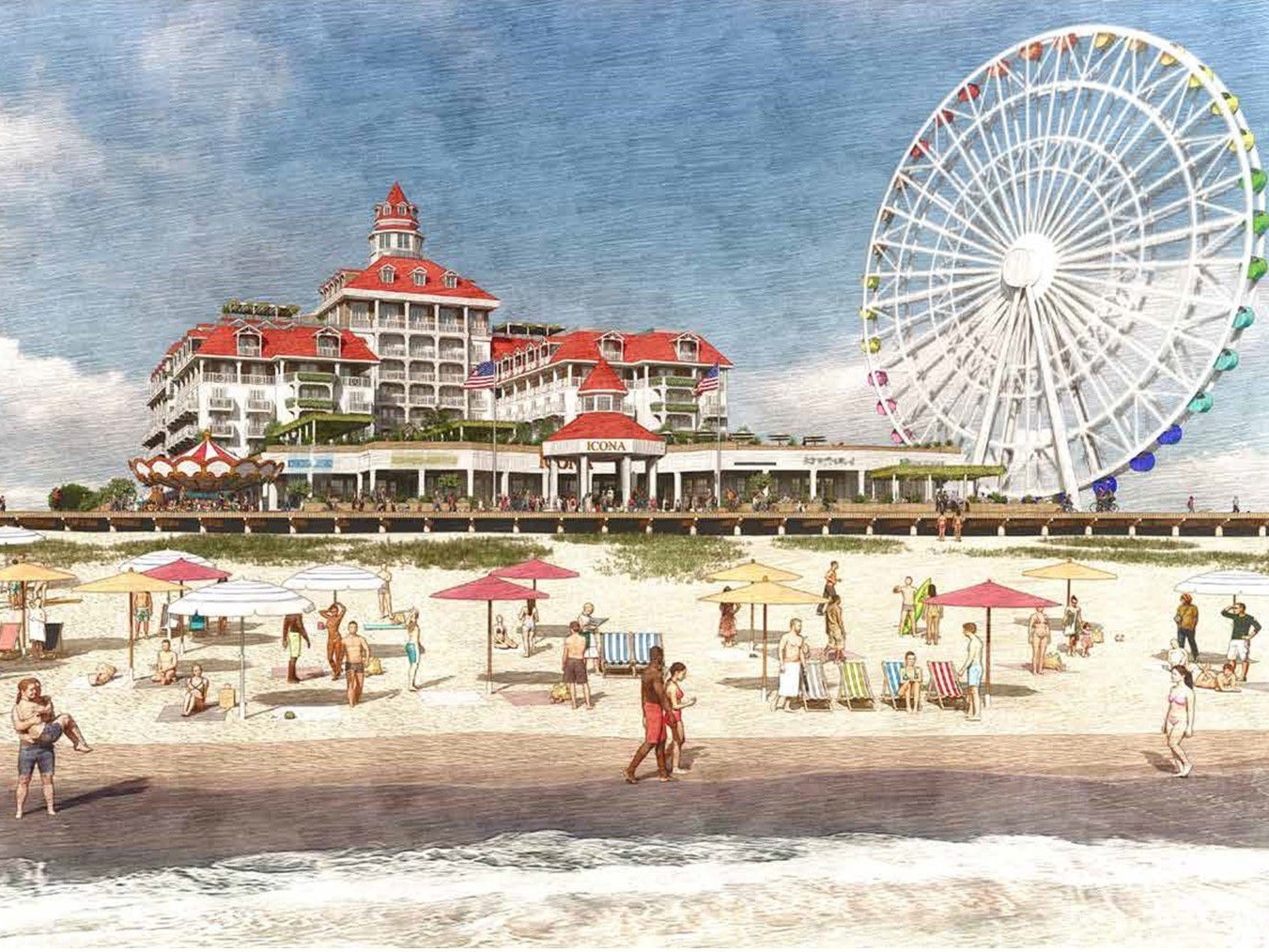
A rendering of the proposed new Icona in Wonderland Resort, to be built on the site of the old Wonderland Pier. The proposal for a 252-room resort includes saving the iconic Ferris wheel and carousel.
The board was split 4-4 with half the members agreeing that the property was significantly deteriorated and underutilized, two legal criteria needed for the designation.
But half the board, including chair John Loeper, said they did not believe the criteria had been met, and noted some businesses were open last summer at the front of the property.
The matter still will go back to City Council for a final vote on the designation, but Mita said if Council waits too long, he will unload the property.
The “in need of rehabilitation” designation has been long sought by Mita, who wants to build a $150 million luxury hotel at 600 Boardwalk.
The designation would allow site-specific zoning changes and possible tax breaks. The site is currently zoned for amusements.
After the meeting, Mita said he was shocked by the failure of the board to recommend the designation. “It’s been deteriorated for decades before I bought it,” he said. “I’m very very disappointed. This is the poster child for rehabilitation. ”
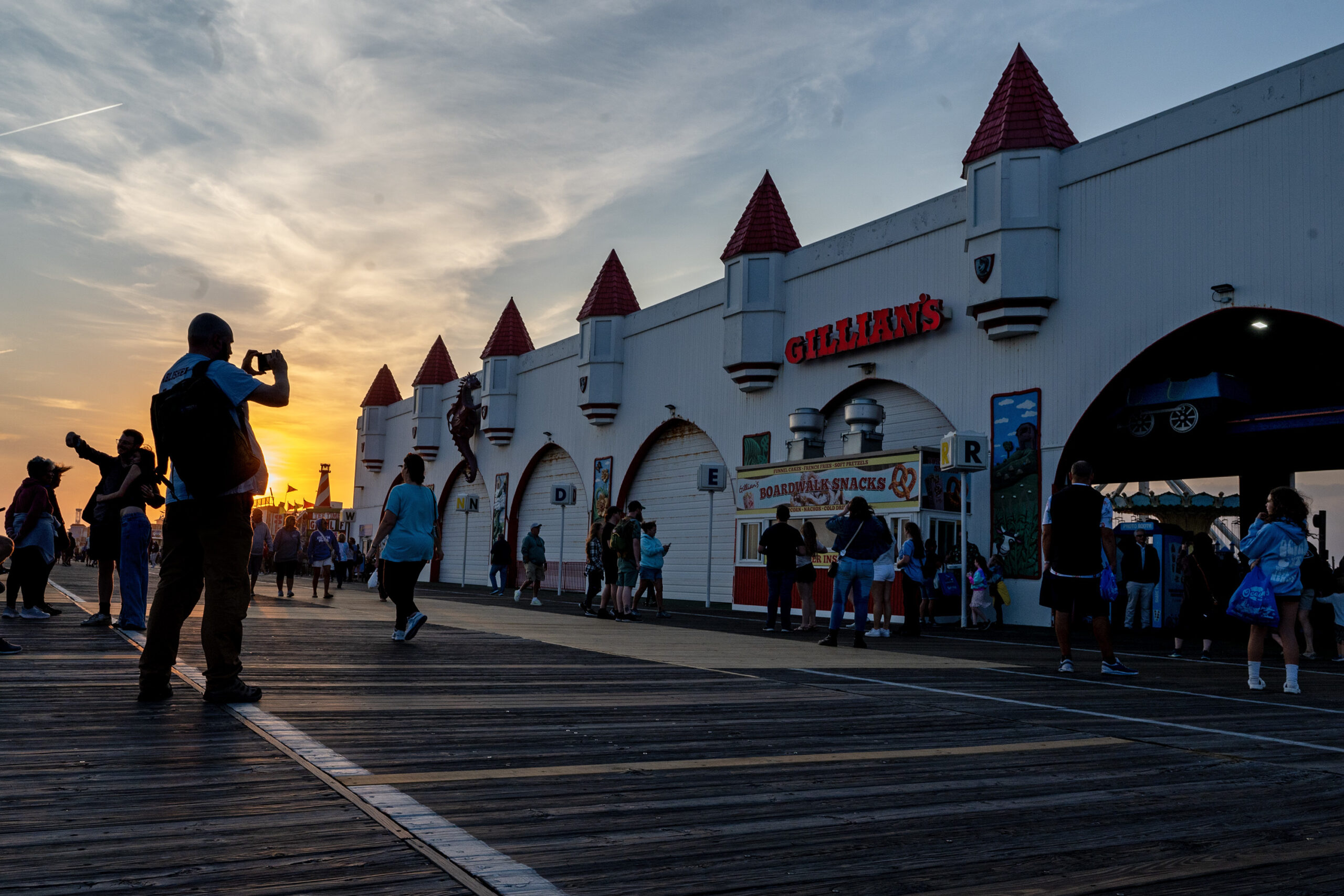
Gillian’s Wonderland Pier closed in October 2024, ending nearly a century of amusement ride ownership by the Gillian family in Ocean City. Mayor Jay Gillian had sold the property to Mita and leased it back from him, but said he could not make the enterprise profitable.
Gillian recently declared Chapter 11 personal bankruptcy, listing nearly $6 million in debt.
Wednesday’s vote brought about 150 people out to another iconic boardwalk structure, the Music Pier, on a pleasantly warm January evening.
About three dozen members of the public spoke, including Mita himself, who said the city would benefit “tenfold” from his development plans. The speakers were evenly divided in their views.
A visit from Will Morey
Will Morey came up from Wildwood to lay bare what many in Ocean City did not want to hear — reviving Wonderland Pier as an amusement park would be next to impossible.
“Starting from the ground up, it is not financially feasible,” Morey, the CEO of Morey’s Piers, told the city’s planning board. “It’s a very challenging lift.”
The board could not agree that the property met the legal criteria for the designation: that it was significantly deteriorated and showed a pattern of vacancy and underutilization.
“It’s an enormous piece of property that’s literally falling apart on the oceanfront,” said board member Dean Adams.
But Loeper, the chair, called the abandonment “self-inflicted” and said he would need more proof of the deterioration.
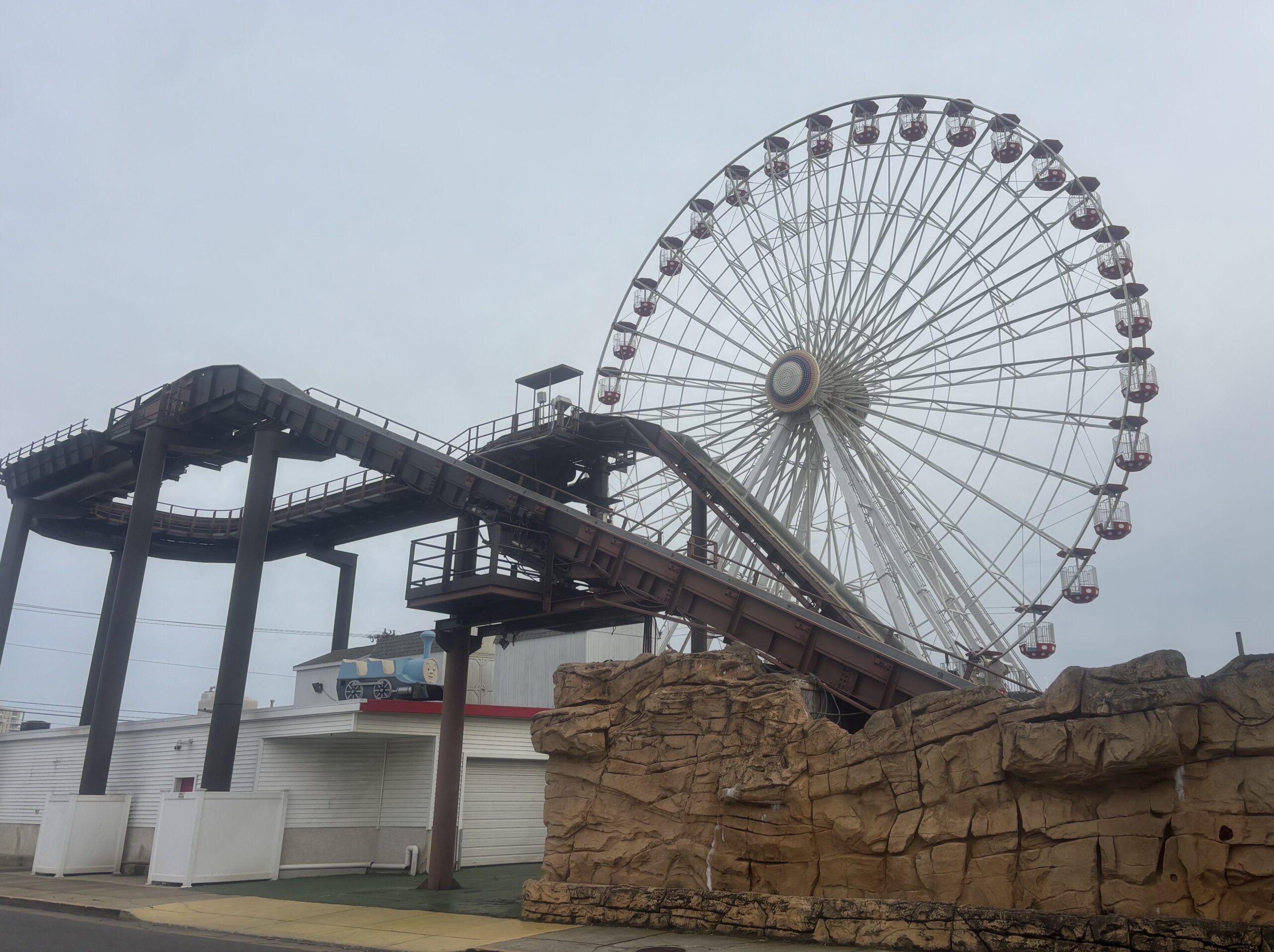
Engineering and other studies put the cost of repairing the carousel, Ferris wheel, and log flume at $6.5 million, and the cost of fixing the site’s concrete foundation and pilings at $3.9 million.
The matter will still go back to Ocean City’s City Council, which is also awaiting a report from a boardwalk subcommittee.
Eustace Mita arriving at the Ocean City Music Pier for a city planning board meeting on Wednesday. He was seeking a recommendation that the old Wonderland Pier site he owns be declared “in need of rehabilitation,” which he described as “Step 2” in his plan to build a luxury hotel.
‘The boardwalk is not thriving.’
Opponents asked board members to deny the “in need of rehabilitation” designation. They scoffed when Jody Arena, a construction expert who testified about the property’s deteriorated state, acknowledged that Mita was a partner in his firm, Caritas Construction.
They surmised that similar photos of deterioration could be taken of the Music Pier, where the meeting was held. One resident, Jim Tweed, said the designation would threaten “decades of restraint.”
Business owners, including the owners of Manco’s, George’s Candies, Cousin’s Restaurant, Barefoot Trading, and Ocean City Bikes, asked the board to approve the designation to avoid further closures of businesses. They described a devastating impact from the closure of Wonderland Pier.
Boardwalk property owner Mark Raab said three of his tenants had decided to close their shops. “People don’t know what’s been going on,” he told the board. “The boardwalk is not thriving. It’s going down piece by piece.”
“We are a city based on tourism,” said Cousin’s Restaurant owner Bill McGinnity. “We’d appreciate a vote of ‘yes’ tonight so that we can move forward quickly,”
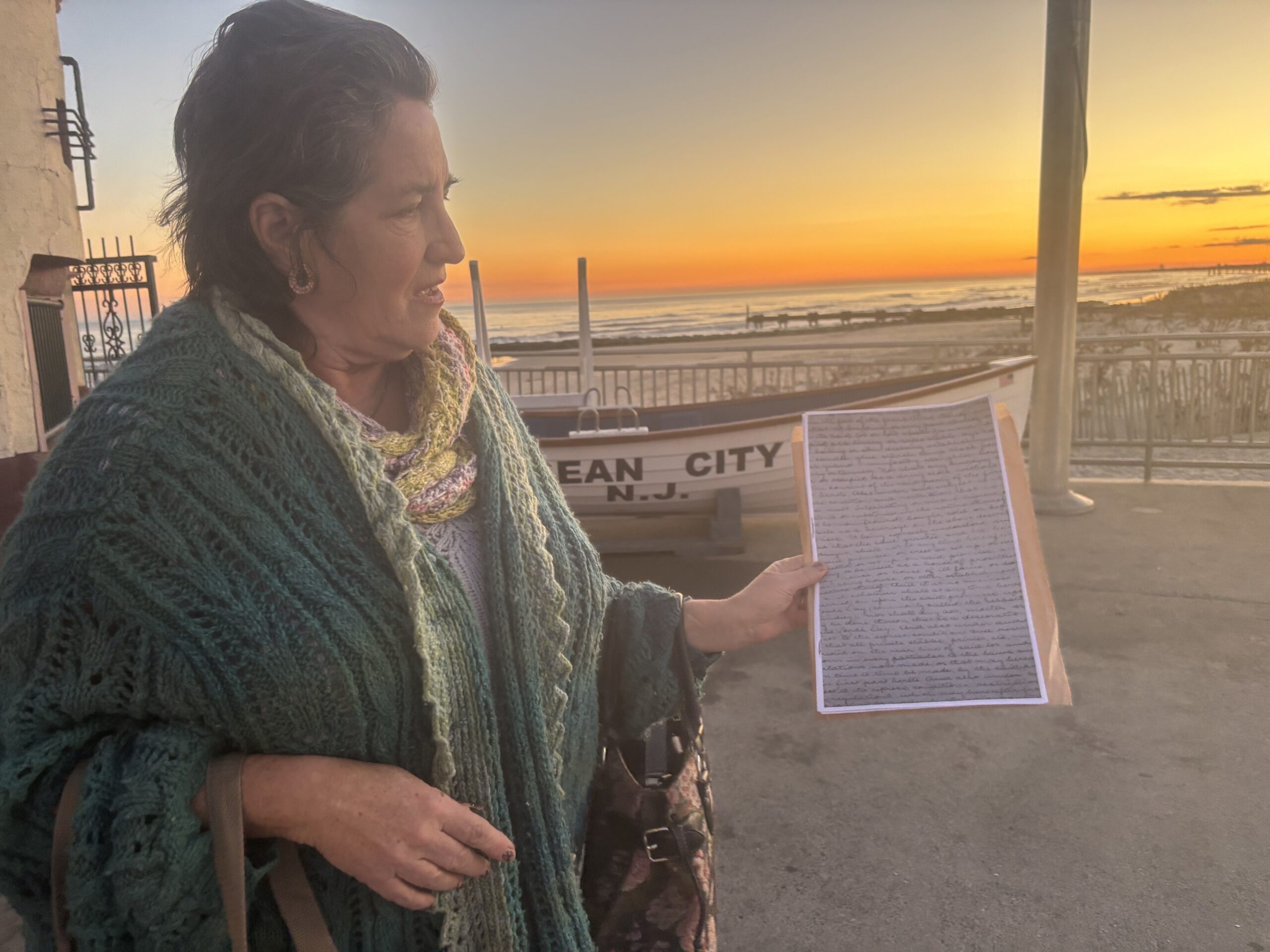
Others resisted any fast-tracking of development. Donna Saber, owner of Here Comes the Bride shop, brought along a copy of the original 1881 deed that she said sought to preserve its original intent as a place for child amusements.
“It was deeded as an amusement park,” she said.
Donna Saber, owner of Here Comes the Bride bridal shop in Ocean City, holds a copy of the original 1881 deed to the property that was the Wonderland Pier. She’s opposed to a plan to build a luxury hotel.
Marie Hayes, a full-time resident for 22 years, worried the designation would set a “dangerous precedent,” that would result in the town resembling Ocean City, Md., with high-rises along its oceanfront.
The planning board was given reports submitted by Mita back in August, when council stunned some, especially Mita, by voting not to ask the board to study the site’s future. Mita immediately said he would sell the property.
John Loeper, chair of Ocean City’s planning board, on stage at the Ocean City Music Pier. The planning board was set to vote on whether to recommend that the old Wonderland Pier site be declared in need of rehabilitation, a designation that could lead to a luxury hotel on the site.
Sean Barnes, the city councilman liaison to the planning board, questioned Wednesday whether the rides should even be considered part of the property.
“Amusement rides are not structures,” said Helen Struckmann, a resident who has opposed the hotel idea and vowed to save Wonderland Pier. She said the historic carousel was in better shape than the reports stated. “They don’t justify the need for rehabilitation designation for the property. Different amusement rides have been swapped out.”
She and others questioned why Mita had not addressed deterioration of the property since purchasing it in 2021. Mita is “now requesting a benefit from his purposeful underutilization of the property,” said resident Bob Duffy.
But Mita said he’d waived rent on the property so that Jay Gillian could try to make a go of the amusement pier. He said he’d put in $500,000 last summer to open the front portion of the property as an arcade, coffee and pizza shop, and bike shop.
Engineer Matt Mowrer told the planning board the property was “heavily deteriorated,” with “concrete spalling” — chunks of concrete breaking off from the foundation. He said corrosion from salt air would get only worse.
Board planner Randall Scheule told the board Wednesday he believed the structural deterioration of the property itself and the underutilization of the property met the standards. There was some debate as to whether the rides themselves should be included in any analysis.
The board looked at whether the site met the legal criteria needed for the designation, which will allow City Council to rezone the site for a hotel and grant tax abatements.
Will Morey, president and CEO of Wildwood’s Morey’s Piers, testifies in Ocean City at a planning board meeting to determine the future of the old Wonderland Pier.
The board did not discuss Mita’s specific hotel plans, which have included the carousel and Ferris wheel and some kiddie rides.
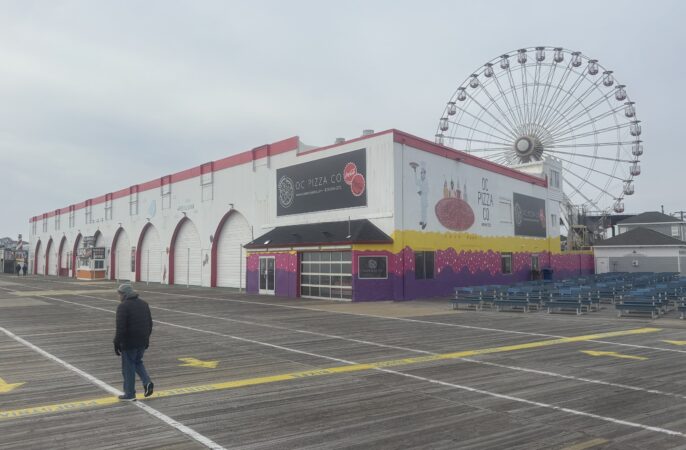
The old Wonderland Pier site on the boardwalk in Ocean City, N.J., as seen from Wayne Avenue on Jan. 6. The beloved amusement pier shut down in October 2024. A developer wants to build a luxury hotel. A report put the cost of repairing the Ferris wheel, carousel, and log flume at as much as $6.5 million.Five minutes before the 6 p.m. scheduled closing all but one of the gates are shut on the Boardwalk, on the final day for the beloved Wonderland Pier in Ocean City Sunday, Oct. 13, 2024.
Last summer, four businesses operated on the site: Ocean City Pizza Company, Dead End Bakehouse, Wonderland Pier Arcade, and OC Bikes and Rentals. Mita entertained several offers to sell, including one from the Norcross brothers, who envisioned residential development.
Planner Tiffany Morrissey told the planning board that showed the property was underutilized.
The property is assessed at $15.8 million, which translates to an estimated market value of about $29 million.
Saving the site as an amusement park has been the focus of much despair among community members and others with generations of memories at Wonderland Pier.
But the reports lay out the deterioration of the pier’s marquee attractions.
The report states that the carousel, which dates to the 1920s, would require as much as $1.5 million in repairs, including a new electrical system and repair or replacement of the telescopes, the poles that support the horses.
The Ferris wheel is also in need of substantial repair, costing as much as $2.5 million, including replacing or repairing the lights, and rebuilding the spokes and “spreader bars,” which connect the spokes and form the arc.
The Log Flume Ride, built in 1992, would need substantial repairs estimated at between $2.5 and $4 million, including rebuilding the upper troughs.
No company has stepped forward with a plan to keep the site solely an amusement park.
The Radnor Township Board of Commissioners is moving to use eminent domain to take 14 acres owned by the Valley Forge Military Academy, which has said it will close this year.
A motion Monday by the board authorized township solicitor John Rice to draw up legal paperwork to useeminent domain — a process that allows municipalities to take a property from owners, whether they want to sell or not — by paying an appraised valuefor the land.
The Board expects to introduce an eminent domain ordinance at its Jan. 24 meeting. The ordinance would have to be approved after a second hearing and public reading. No date is set for that.
It’s likely the township would use the land to build a new recreation center and park.
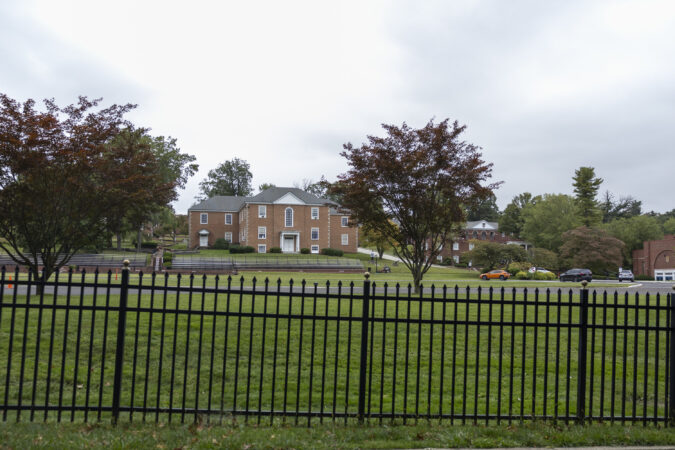
Valley Forge Military Academy spans about 70 acres in Waynein Delaware County. The board said its goal is to prevent more development in the area around North Wayne.
Commissioner Jack Larkin cited a number of developments in recent years that have raised concern about overdevelopment and increased traffic.
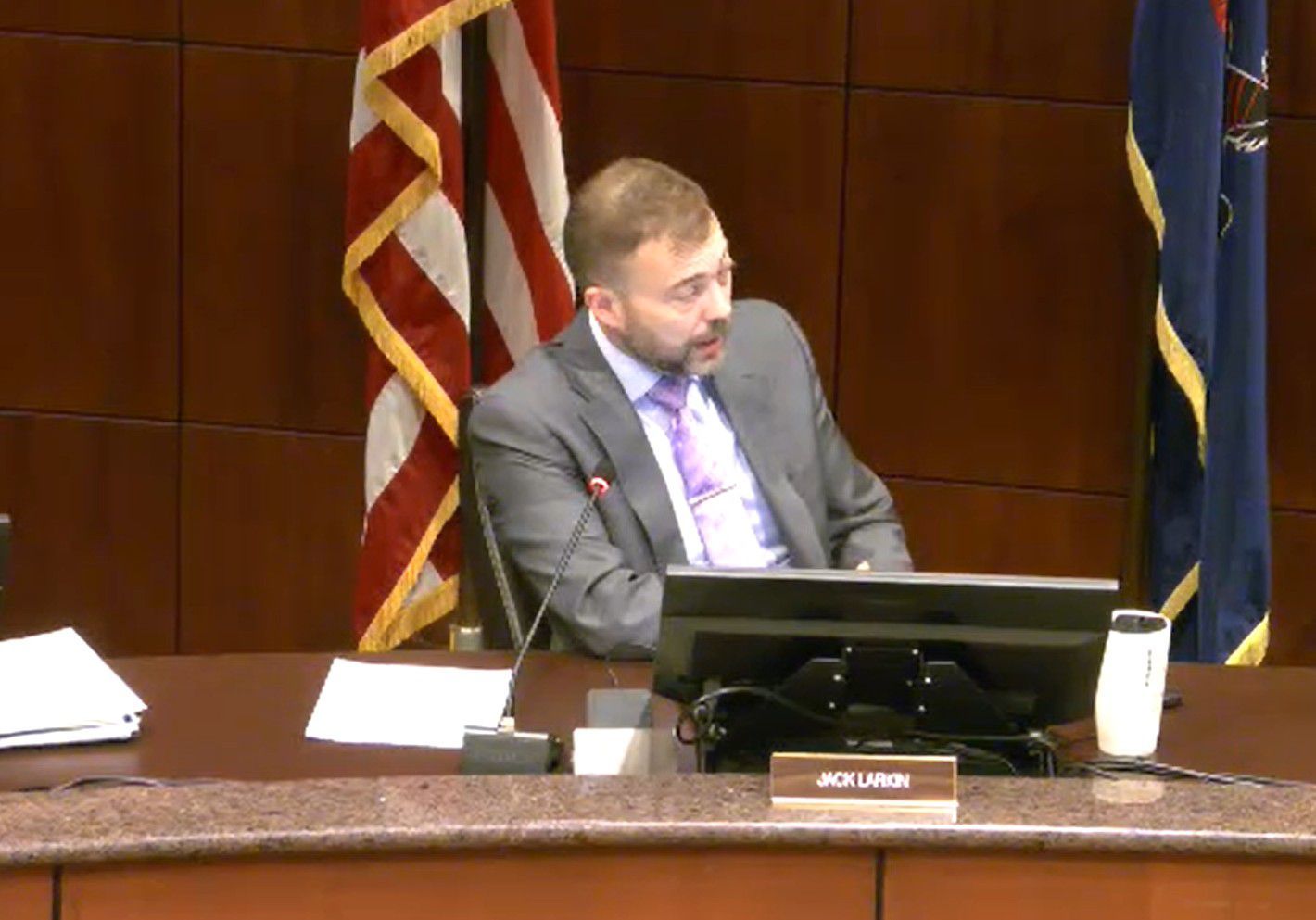
A video still of Radnor Commissioner Jack Larkin speaking at a Jan. 5, 2026, township meeting regarding the possible taking of 14 acres of Valley Forge Military Academy through eminent domain.
He said the township has reached out to academy officials but have not heard back.
“We would need to get this started, to ideally negotiate in good faith, a friendly arrangement, which we started to do,” Larkin said. “And we just haven’t really heard anything back from the school.”
He said the school has not turned down a deal or set a price.
“They just kind of went radio silent,” Larkin said at the meeting, and added that, as a result, the township decided to move ahead with a plan that would allow it to use eminent domain.
However, a representative of the Valley Forge Military Foundation said said Thursday the school was unaware the township planned to move so fast.
Plans for the 14 acres
Larkin said in a separate interview Wednesday that the township is eyeing the land as a solution to the township-run Sulkisio Gym on Wayne Avenue.
The gym needs major repairs, and its lease will be up in coming years. So the township needs to consider whether it’s worth putting more money into the facility, given that it might not remain a tenant when the lease expires.
As a result, the township is considering a new gym and park for the 14 acres, which are bounded by Eagle Road to the south, the Oak Hill development to the east, and the buildings of the academy’s main buildings to the west.
“We’re on the hunt for another alternative,” Larkin said. “This would be the place we would hope to build a replacement rec center. But that’s not going to take the entire 14 acres. So we would favor the balance would have some flavor of a park.”
Larkin said whether the park has trails, a playground, or a community garden will be subject to public input.
He said the township knows the value of real estate in the area and has a ballpark price per acre it’s willing to pay, but he would not disclose a total figure.
“My real hope,” he said, “is that we end up negotiating a deal and this is not an exciting process. They want to sell, and we want to buy.”
Larkin did not believe the 14 acres would conflict with land being eyed for a charter school.
Currently, a group seeking to openValley Forge Public Service Academy Charter School on land at the closing military school is already equipped with a leadership team and board, but it cannot open as a publicly funded charter school without approval from the local school board.
Radnor school board officials are now considering the plan for a charter school that could open in the fall.
What can eventually be built on the land is restricted by the current institutional zoning to educational, medical, religious, and museum uses, although zoning variances can always be sought.
Valley Forge Military Foundation’s responds
John English, board chair of the Valley Forge Military Foundation, said Thursday that the academy was aware Radnor had expressed interest in buying some of the property.
“We were not aware that the Township believes it needs to proceed as quickly as it is,” English said in an email statement. “While Valley Forge Military Academy is closing, the Valley Forge Military College is still very much active and thriving on our campus as it continues its national security mission of training and commissioning future officers for the United States Army.”
English said the trustees are, “undergoing a thorough analysis and evaluation of the future needs of the Foundation and the College.”
Once they establish a path forward, English said, they would be “pleased to share those plans with Radnor Township.”
What happened to Valley Forge Military Academy
The rush to buy the land stems from the school’s imminent closure.
The academy announced in September that it planned to close at the end of the 2025-26 academic year amid declining enrollment, financial challenges, and lawsuits over alleged cadet abuse. Its college would continue to operate on the main campus.
In December, Eastern University entered an agreement to buy nearly half the Valley Forge Military Academy property, which is less than a mile from the Christian university’s St. David’s campus in Delaware County.
The planned purchase by Eastern includes 33.3 acres encompassing the football stadium, track, and athletic field house, as well as multiple apartment buildings that will be used to house students.
In the academy’s closing announcement, school leaders cited declining enrollment and rising insurance premiums, in part tied to the school’s extensive legal battles.
The Inquirer has reported that even with the school’s finances in a tailspin, board members in recent years personally lent $2 million to cover operating costs, financial disclosure records show.
They tried other methods to drum up revenue, including franchising the academy’sbrand to an Islamic private school in Qatar and unsuccessfully attempting to open a charter school on campus.
They leased out their buildings for private events and authorized the sale of nearly one-third of the campus to luxury home developers, according to federal filings and emails obtained by The Inquirer.
Even so, enrollment in 2025 fell to 88 cadets, down from more than 300 a decade ago, the school said.
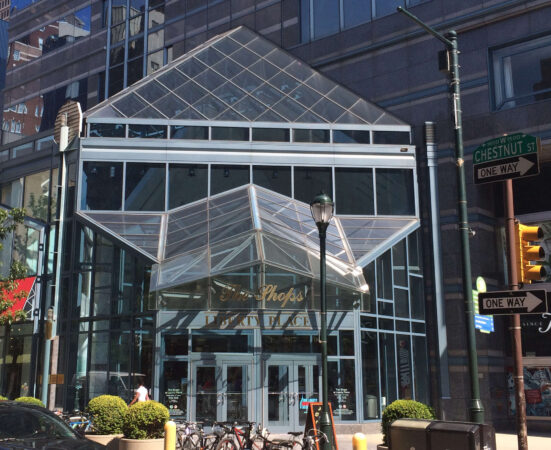
The 147,201-square-foot mall between the Liberty Place towers, two of Philadelphia’s most iconic skyscrapers, is up for sale.
Chicago-based Metropolis Investment Holdings sees a sale of the Shops at Liberty Place as a way to put the property in the hands of a company that specializes in retail.
“With the property established as a leading retail destination in Center City, we believe it is at a natural point for a new owner to build on this foundation with additional investment and fresh ideas,” Tom Dempsey, head of asset management for Metropolis, said in an email.
Metropolis is focused on office real estate and owns the 61-story One Liberty Place. The company purchased both properties in 1999.
The sale of the Shops at Liberty Place is not an indication that Metropolis is planning to sell the skyscraper, too.
“We are focused on our office portfolio, and One Liberty Place will continue to be a cornerstone asset for Metropolis,” Dempsey said. “It has demonstrated strong and consistent performance, benefits from a loyal tenant base, and remains one of Philadelphia’s most iconic and competitive office buildings.”
There is no listed price, but a source familiar with Metropolis’ thinking says they are hoping to sell the Shops for $20 million.
The shops at 1625 Chestnut St. are 77.7% occupied and include tenants like Jos. A. Bank, Victoria’s Secret, and Bloomingdale’s. The food court proved especially popular and has long been a draw for office workers.
In 2024 indoor minigolf facility Puttshack opened as part of a wave of experiential retail in Center City.
“The venue is particularly strong in group sales, hosting corporate events, social gatherings, and celebrations, which reinforces its role as a destination — its mix of entertainment, dining, and social interaction helps drive consistent foot traffic and contributes to the overall vibrancy of The Shops,” Dempsey said.
Real estate brokerage Jones Lang LaSalle (JLL) is handling the sale of the Shops at Liberty Place.
The company’s listing for the Shops at Liberty Place describes it as an “established in-fill urban location with significant population density and economic demand drivers” and boasts its “irreplaceable location along highly trafficked Chestnut Street within Philadelphia’s premier shopping district.”
JLL says that it attracts 5.1 million visitors a year.
An aerial view of One Liberty Place, the Shops at Liberty Place, and Two Liberty Place taken during 1990.
The Shops at Liberty Place opened in 1990, three years after One Liberty, which famously broke the gentleman’s agreement that no building in Philadelphia be taller than William Penn’s hat atop City Hall. Two Liberty Place also opened in 1990.
The Shops at Liberty Place proved a bright spot on Chestnut Street, which has long been overshadowed by Walnut Street as Center City’s premier shopping destination.
The Inquirer’s architecture critic, Inga Saffron, praised the design of the building’s entrance, which seeks to echo its sister skyscrapers that soar above.
“The glass structure sits a generous distance back from the hectic corner, providing plenty of elbow room for harried pedestrians,” she wrote in 2016. “The best detail is the batwing canopy over the doors. … The canopy’s angles recall the tiered chevrons that distinguish the crowns on Liberty Place’s towers.”
The Shops at Liberty Place’s occupancy suffered a blow following the COVID-19 pandemic, but its general neighborhood is looking healthy. Both the Liberty Place skyscrapers have strong occupancy, and Center City’s residential population is climbing.
“We’ve managed the asset carefully through challenging times,” Dempsey said. “Today, the property is well-positioned with a diverse mix of tenants, including strong experiential and destination offerings, and continues to attract interest from retailers and visitors alike. We see solid potential for continued growth and momentum under new ownership.”