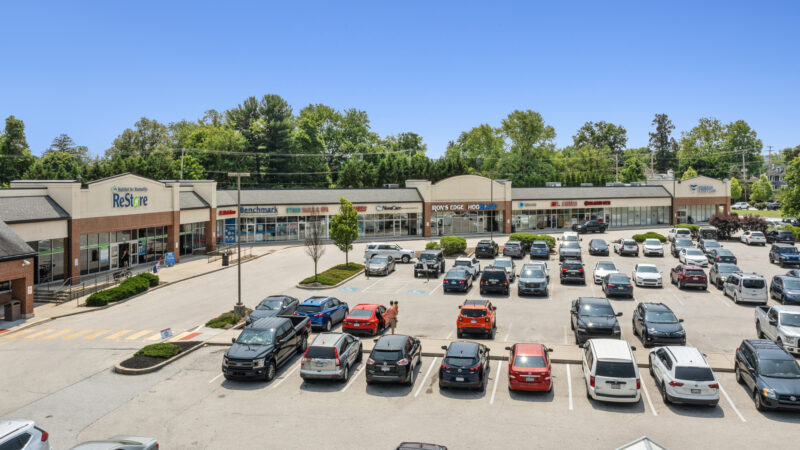
A fully occupied shopping center near downtown Phoenixville recently sold for nearly $7.4 million.
Chester County property records show that the 33,000-square-foot complex was sold in late November by one private investor based in Malvern to another based in Glen Mills, with both registered as limited liability companies. The sale was first reported Thursday by the Philadelphia Business Journal.
Located at 785 Starr St., the center is about a mile down the road from Phoenixville’s main drag. It is shadow-anchored by a corporately owned Acme, according to Marcus & Millichap, the firm that represented the seller. The Acme is connected to the rest of the shopping center — and drives traffic to other stores — but was not included in the sale.
The center’s other tenants include Benchmark Federal Credit Union, Habitat for Humanity ReStore thrift store, Fresenius Kidney Care, Labcorp, NovaCare Rehabilitation, and State Farm. It also has a martial arts gym, a dry cleaner, and several quick-service restaurants.
“This closing highlights the strength of essential-service tenants, 100% occupancy, and strong tenant performance,” Scott Woodard, senior director of investments for Marcus & Millichap, said in a statement. “Phoenixville’s expected population growth and proximity to major anchors, such as Acme, made this center a standout asset with long-term stability.”
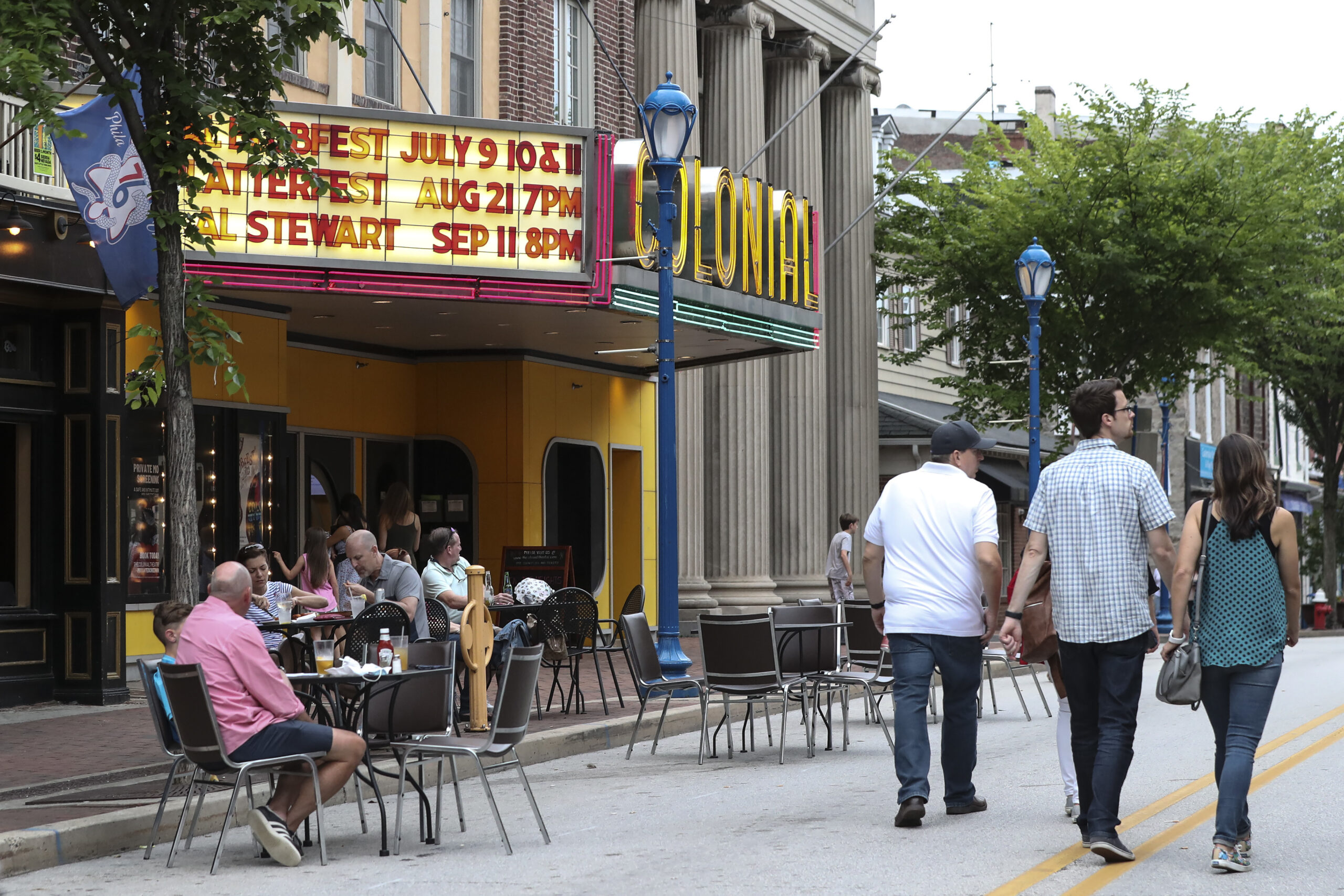
People walk along Bridge Street by the historic Colonial Theatre in Phoenixville in this June 2021 file photo.
Woodard represented the seller alongside Derrick Dougherty, senior managing director of investments.
The shopping center sits on 3.7 acres, near the corner of Nutt Road and Starr Street, and was built in 2007. According to Chester County property records, it previously sold for $6.35 million in 2018.
Prior to that, the property had last changed hands in 2006, when the land was purchased for $325,000, according to the records.
Its restaurant and bar scene has flourished, and Bridge Street is bustling, especially on the weekends. Luxury apartment complexes have attracted both millennials and empty nesters to the quaint 3.8-square-mile borough.
Since the pandemic, Phoenixville has continued to grow: Its population increased 9% between 2020 and 2024, according to census data.
In 2010, it was home to roughly 16,000 people. Today, that number is estimated to be more than 20,000.
The Acme shopping center sits just inside the bounds of Phoenixville, near its border with Schuylkill Township and not far from Valley Forge National Historic Park.
By the end of thisyear, Montgomery County will have three emergency short-term shelters with beds for 190 people in Pottstown, Lansdale, and Norristown.
In late 2024, it had zero full-time shelters, even as homelessness soared to new heightsin the county — Pennsylvania’ssecond wealthiest.
The three-member board of commissioners is currently composed of two Democrats and one Republican, but in the past year they have operated with an unusual degree of cohesion on both the challenge of homelessness and on a county budget that included a small property tax increase.
“We came in with similar goals around addressing the homeless problem throughout the county,” said Tom DiBello, the Republican commissioner. “We all heard it when we were campaigning [in 2023] and when we got elected, we felt that we needed to do something. We can’t continue doing it the way it’s always been done in the past, where people just kept talking about it.”
Although the Montgomery County commissioners have formed a united front on many issues last year, housing policy issues are more likely to divide them in 2026.
But the Democrat commissioners, Neil Makhija and Jamila Winder, have ideas about how to get around those limitations to directly fund more affordable housing and encourage local governments to allow more building.
DiBello is not excited about many of the proposals being considered by the two Democrats. He opposes creating new county-level taxes and says zoning powers should be left to localities.
Still, DiBello has further housing policy goals he would like to pursue — such asdeveloping more affordable homes for senior citizens.
As the county releases its 2026 housing blueprint, expected early this year, the first round of these debates will begin in earnest. This planning document, created by county government staff with commissioner feedback, lays out goals for the county based on a comprehensive housing policy — the first its seen in recent memory, Makhija says.
“It’s going to be the first time that the entire board has had a voice and a view on what our role is to address a crisis in the cost of housing,” said Makhija. “There are things we can do to help people.”
How the shelters got built
Making policy to address homelessness is difficult because many municipalities and community groups fight against having shelters placed in their neighborhoods.
The number of people in Montgomery County experiencing homelessnesshas grown with the cost of housing. In 2024, there were 435 people living without a roof over their heads. In 2025, the number grew to 534.
Meanwhile, Montgomery County’s last full-service homeless shelter closed in 2022.
Opposition to new shelters or affordable housing bloomed in Norristown, where officials said the rowhouse-dominated municipality was already asked to shoulder too many social services, and in Lower Providence where the local government denied a shelter application (the legal fallout is ongoing).
The county commissioners decided to get involved by courting local governments and personally attending zoning hearings about potential placements. DiBello attended meetings in Pottstown, near where he lives. Winder went to hearings in Norristown, including one that stretched past midnight, then stuck around to discuss neighbors’ concerns.
A homeless encampment near the Schuylkill River Trail and Norristown in Montgomery County.
In some parts of the county, efforts to address the issue overcame opposition.
Communities like East Norriton have established more code blue shelters, which only operate during freezing weather, and inwealthy Lower Merion, a new affordable housing complex for seniors and people with disabilities, called Ardmore House II, is under construction.
“It takes political courage in these moments,” Winder said,referring to local officials who have embraced shelters and affordable housing. “Sometimes you have loud voices in the room and just have to say, well, this is the right thing to do.”
The commissioners provided $5.3 million in county funding for the shelters. The county also provided a quarter of Ardmore House II’s $20 million budget. And as federal funding cuts loom under President Donald Trump’s administration, the commissioners have also been engaging with philanthropists and foundations.
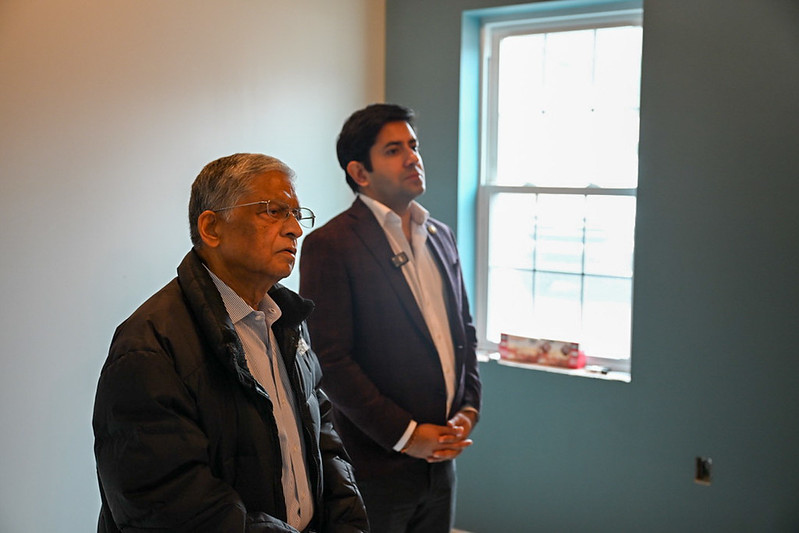
Earlier this month, Nand Todi, president of Montgomery County-based Penn Manufacturing Industries, announced a $1 million donation to the Lansdale shelter.
Nand Todi, president of Montgomery County-based Penn Manufacturing Industries, and County Commissioner Neil Makhija at a walk-through of the completed Lansdale shelter.
Winder hopes this example of generosity is just the beginning.
“I come from the private sector, so I believe in public-private partnerships,” said Winder. “We’re home to some of the largest corporations in the southeast area. We know that companies have social responsibility goals. So how do we partner with corporations?”
What can a county government do?
Thisyear, the commissioners want to continue to tackle housing issues.
But county-level politicians do not have large budgets at their command, and unlike their municipal-level counterparts, they do not set zoning policy.
Makhija and Winder wantto push those limits.
For example, the county dispenses infrastructure grants, and Makhija says the rules around that funding could be rewritten to incentivize municipalities to reform their zoning codes, perhaps using model ordinances established by the county.
Such ordinances could, for example, allow more transit-oriented development. Or they could legalize accessory dwelling units — small living spaces such as a garage apartment or in-law suite that can be rented out.
“If you have a grant program and it says these are the requirements, then people are going to prioritize getting those things done,” said Makhija, though, he said, he still has to make the case to his colleagues.
He also noted that county planning staff can help implement new municipality policies.
DiBello is skeptical of the county getting involved in local zoning policy.
“The governing structure in Pennsylvania is that municipalities are autonomous to county and state when it comes to zoning,” said DiBello. “It’s up to the communities.”
The Democrats would also like to find revenue sources to pay for more housing projects without increasing the property tax, which would cut against their goal of affordability.
“There are opportunities for us to advocate to the state legislature, to give counties like ours other means to generate revenue,” said Winder. “It’s not sustainable to continue to burden taxpayers by increasing property taxes, and we can’t fund these programs unless we have the money to do so.”
DiBello is also opposed to creating new taxes (if Harrisburg allows it), and doesn’t want to see more property tax increases either. But he still wants to see proactive housing investments by county government.
These debates will unfold next year as the housing blueprint dominates the commissioners’ agenda.
“We’re the second wealthiest county in Pennsylvania, and people struggling to find housing can be quite invisible in these communities,” said Winder. “We’ve got an embarrassment of riches, but there are people that are struggling and so we’re trying to be on the ground helping to solve these issues.”
New Jersey lawmakers passed a bill to prohibit households from being denied housing because they use public assistance.
The legislation, which lawmakers passed on Dec. 18, makes explicit that the state’s anti-discrimination law includes protections for residents based on their source of income for housing payments, including government vouchers, child support payments, and assistance from nonprofits. And the bill affirms that protections apply both to people paying rent and those paying mortgages.
State Sen. Angela V. McKnight (D., Hudson County), one of the bill’s sponsors, said the legislation will protect the rights of homeowners and tenants.
“Access to stable housing should never hinge on the source of a person’s legal income, especially for vulnerable populations like single parents, veterans, or those living with disabilities who often rely on assistance to make ends meet,” she said in a statement.
The legislation, which would take effect immediately after Gov. Phil Murphy signs it, is part of local and national efforts to prevent people from being denied housing because they use public assistance to pay for it. More than 2.3 million families use federal Housing Choice Vouchers, formerly known as Section 8 vouchers.
In September, Democratic U.S. Sen. John Fetterman cosponsored a bill that would create federal protections for these tenants. The Fair Housing Improvement Act of 2025 would prohibit landlords from denying housing to tenants because they pay rent using Housing Choice Vouchers; Social Security benefits; payments from a trust; income from a court order, such as spousal or child support; or other legal sources of income.
It also would expand protections in the Fair Housing Act of 1968 to prohibit discrimination based on source of income or military or veteran status.
“It’s hard enough to find an affordable place to call home,” Fetterman said in a statement. “Every veteran and every family struggling to keep a roof over their head deserve dignity and our support, not discrimination based upon their service or if they use a voucher.”
Chantelle Wilkinson, vice president of strategic partnerships and campaigns at the National Low Income Housing Coalition, said source of income discrimination “is far too often a main barrier for households seeking stable housing.”
“When a landlord denies a voucher holder access to housing despite meeting all other qualifications, that ‘no’ is not just about a home: it’s denial of opportunity, equity, and stability,” she said in a statement.
In Philadelphia, the city’s Fair Practices Ordinance bans rental property owners from discriminating against potential tenants based on the source of the income they will use to pay their rent. That includes housing vouchers and other public assistance.
In June 2024, City Council passed a bill to expand protections under the Fair Practices Ordinance. The legislation explicitly stated that housing providers renting or selling a property cannot advertise or communicate that they do not accept housing vouchers. It also explicitly says that Housing Choice Vouchers are an example of a protected income source.
And it makes fighting this type of housing discrimination easier for renters.
Happy New Year! Start it off by judging other people’s homes.
In the latest installment of my Price Point series, I compare three local homes on the market for about $390,000 — the median sale price in the Philly area in November.
Bucking a trend: Learn about the challenges that help explain why homeownership in Philadelphia fell during the pandemic while rates grew nationally and in other big cities.
Every couple of months, I set out to help homebuyers get a sense of their options by featuring three local properties for sale for about the same price.
This time, I’m answering the question: What can a homebuyer get with a budget of $390,000 in the Philly area?
These homes offer a taste of what’s out there.
🏠 A condo located on what a real estate agent calls Haverford’s “golden mile.”
This unit is one of the larger layouts at Haverford Hunt Club and is close to restaurants, stores, and public transportation.
🏠 A twin that has a private bathroom attached to the primary bedroom, an uncommon feature among older homes in Philly’s Mayfair neighborhood.
The home also has a garage and a finished basement with a bathroom.
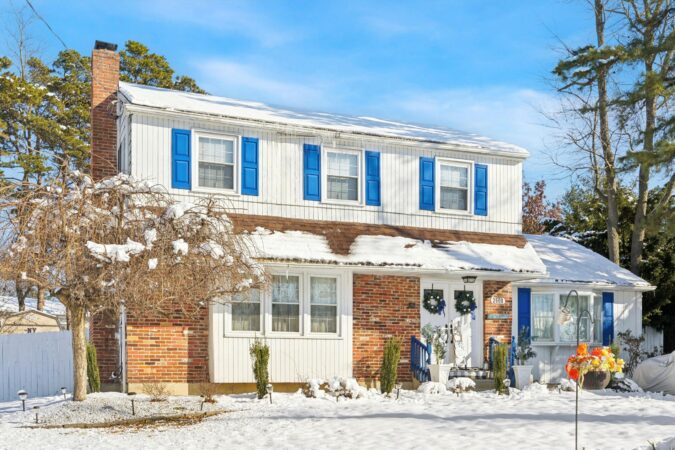
🏠 A Gloucester Township house that has a more open layout than the traditional Colonial.
This house has a deck in the spacious backyard and a bunch of recently updated features.
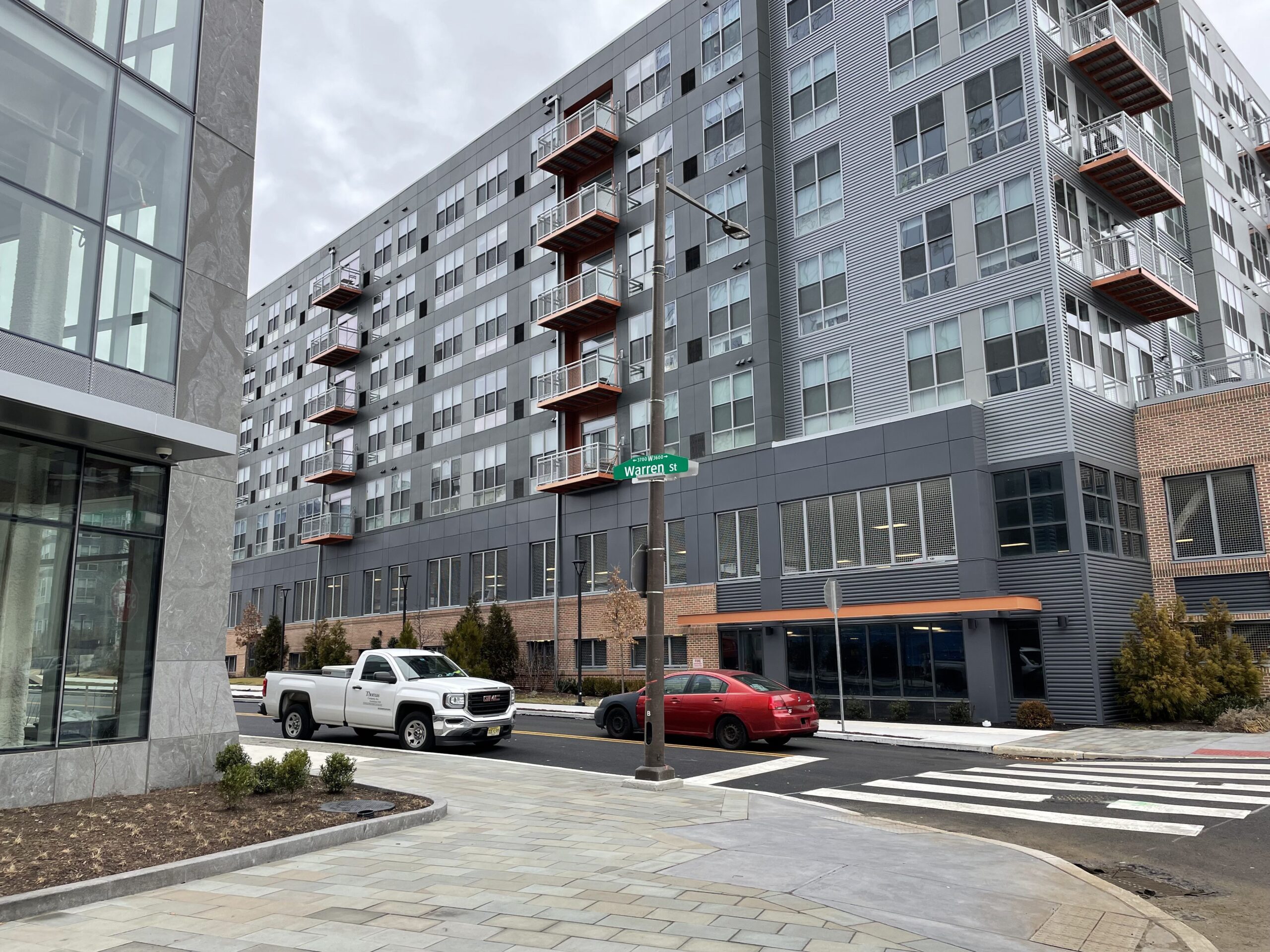
Have you noticed that a lot of the new rowhouses and apartments in Philly look alike? Architecture critic Inga Saffron has, too.
And she’s not shy about sharing her thoughts: “The streets of Fishtown and Graduate Hospital and Spruce Hill are now awash in interchangeable blocky structures, all dressed in the same dreary gray clothing, their aluminum panels shrink-wrapped around the exterior like a sheet of graph paper.”
Saffron says no one likes these buildings, which opponents snarkily refer to as fast-casual architecture, McUrbanism, and developer modern.
But they’re cheap and easy. So they’re everywhere.
Cue the rebellion: The arch is making a comeback. And it’s shaking up the city’s built environment.
Are you looking for some interior design tips in the new year? Jaden Daubert in Old City is @homedecorhomie on TikTok, where he shares his ideas and vintage finds.
But he doesn’t think anyone should blindly follow advice from influencers, him included. He even breaks his own rules.
“My goal is to be authentically unique,” he said. He plays with patterns and textures and describes his apartment’s aesthetic as maximalist and eclectic.
Daubert likes to collect vintage pieces, and he’s a regular at thrift stores. His walnut dining room table was built in the early 1900s. He has two vintage Tiffany lamps.
Art fills his home and even decorates his doors.
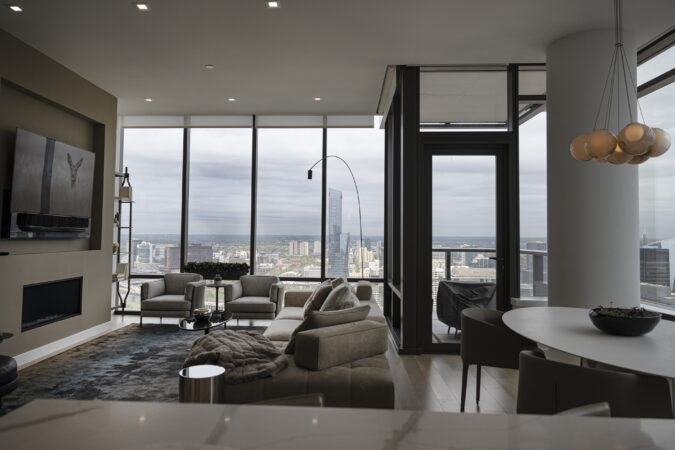
Daubert’s two-bedroom corner apartment spans 1,400 square feet, has 14-foot ceilings, and features two walls of windows that let in sunlight and frame city views.
It’s actually his second stint in the same apartment after he moved out in 2020. Daubert said being back feels “meant to be.”
Realtor.com labeled homes as luxury if their listing price was in the most expensive 10% of listings for their market. The company analyzed markets that had an average of at least 500 million-dollar listings over the 12 months through November.
The country’s fastest-moving luxury markets span regions and price points. The fastest was the San Jose, Calif., metro area, where luxury homes sold in November in a median of 56 days. And of the 10 fastest-selling markets, the Philadelphia metro area had the second-lowest threshold for luxury homes: $898,989.
Nationally, the luxury threshold in November was about $1.2 million. And homes listed at this price and above stayed on the market for a median of 78 days.
window.addEventListener(“message”,function(a){if(void 0!==a.data[“datawrapper-height”]){var e=document.querySelectorAll(“iframe”);for(var t in a.data[“datawrapper-height”])for(var r,i=0;r=e[i];i++)if(r.contentWindow===a.source){var d=a.data[“datawrapper-height”][t]+”px”;r.style.height=d}}});
The slowest-moving metropolitan area in November was Bend, Ore., where luxury homes sold in a median of 146 days. Its luxury market started at $1.85 million.
The Heber, Utah, metropolitan area had the second-slowest market last month. Luxury homes there sold in a median of 136 days.
But this area outside Salt Lake City also had the most expensive luxury market in November. Its luxury threshold was about $6.6 million, which was roughly 10% higher than at the same time last year.
Falling luxury prices
Nationally, the threshold for what constitutes a luxury listing — roughly $1.2 million — was down 2.3% in November from the same time last year.
Luxury prices in November dropped from last year in eight of the 10 most-expensive metro areas.
In the region of Kahului and Wailuku on Hawaii’s Maui island, the luxury price threshold of roughly $3.66 million was down 21% from last year — the steepest price drop of the markets Realtor.com analyzed.
When Hope Coleman and Nathan Fong were looking for a larger East Falls rowhouse for themselves and their two young sons, they settled on a house that combined character and practicality. It had a garage, very rare for a rowhouse in that neighborhood.
The couple — Coleman is a veterinarian and Fong a marketing professor at Rutgers University — moved into the house in 2019 but have now left for a larger house in Bala Cynwyd to accommodate aging parents on both sides.
“The stuff that gave it character was original,” said Coleman, describing the East Falls house.
The five-bedroom, 2½-bathroom home is 2,288 square feet.
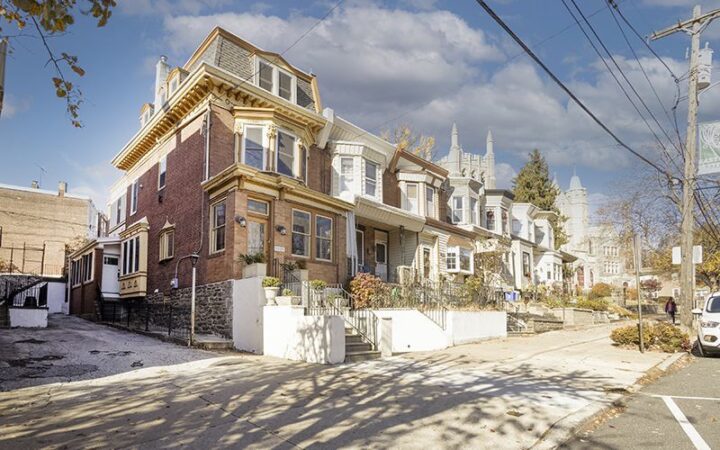
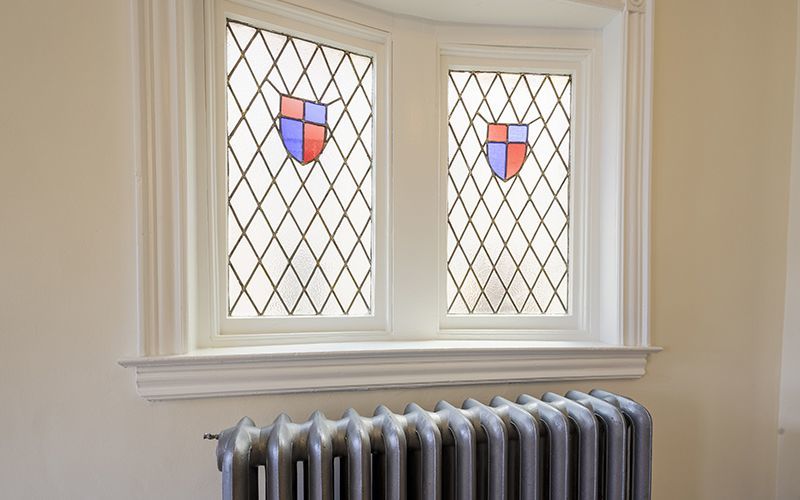
The heated, window-lined front porch provides entrance to the living room with original cathedral glass and stained-glass windows, high ceilings, and hardwood and Second Empire architectural style indicate it is considerably older. Documentation says the house was built in 1925, but Coleman believes that the mansard roof and architectural style indicate an earlier construction date.
The living room features original cathedral glass and stained-glass windows.
The dining room has a butler’s cabinet and a powder room with a pocket door.
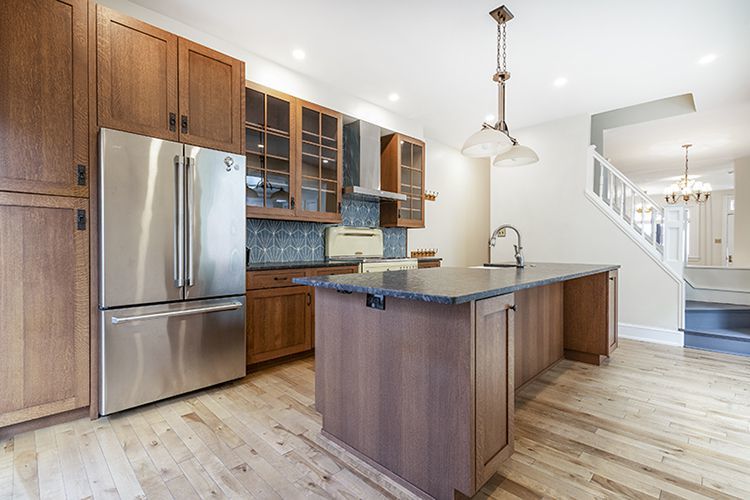
The renovated eat-in kitchen has solid oak cabinetry, granite countertops, a wide island with seating for four, and a beautifully restored Chambers stove complete with built-in warmer and broiler and griddle, vented to the exterior.
The wide kitchen island can accommodate seating for four.
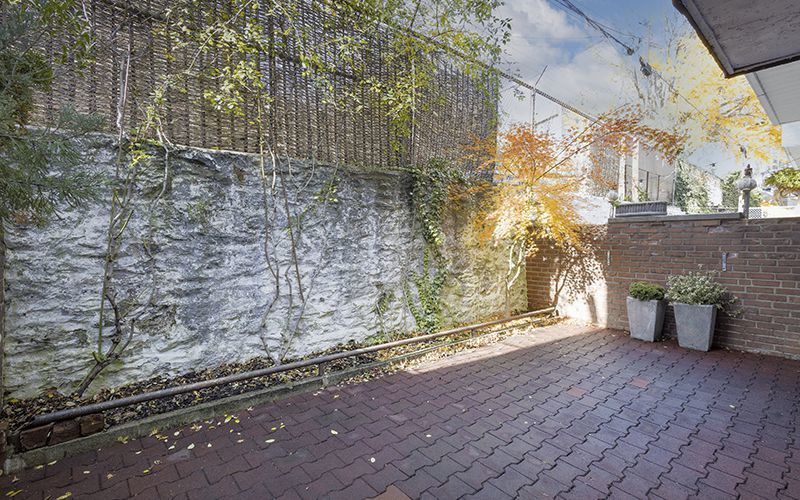
Glass doors open from the kitchen to a private patio. A sunroom, added by the couple and connected to the kitchen, has underfloor heating, two skylights, and additional access to the backyard and side entrance, creating seamless indoor-outdoor flow.
Glass doors open from the kitchen to a private patio.
A back staircase leads directly from the kitchen to the second floor, which has three bedrooms, including a spacious front room that is used as a family room but can also serve as a large second-floor primary.
The hall bath has a stained-glass window and a laundry room, which has built-ins, closet space, and the home’s original porcelain sink hutch.
The third floor has two additional bedrooms and a newly added full bath. The rear bedroom could serve as a walk-in closet, office, private retreat, or a primary suite.
The house is listed by Lisa Denberry of BHHS Fox & Roach Chestnut Hill for $652,000.
This year, home shoppers on Zillow looked to make the most of spaces they could afford instead of looking for bigger and more luxurious homes, according to the company’s analysis of millions of searches.
Zillow shoppers focused less on size than in the past and more on how flexible, comfortable, and livable a home would be, according to Zillow’s most popular search terms of 2025. Affordability likely helped drive this trend as homes have gotten more expensive.
In 2025, Zillow saw fewer searches for mansions, acreage, and other terms tied to luxury living and more searches for smaller and cozy comforts, such as fireplaces, gardens, and fenced yards.
Searches for accessory-dwelling units, guest houses, and in-law suites increased this year, reflecting buyers’ desire for properties that can meet evolving needs, including space for aging parents and potential for rental income.
Zillow also saw more searches for outdoor features such as pools and yards and access to lakes and beaches.
“2025 was the year people stopped searching for more home and started searching for more meaning at home,” Amanda Pendleton, Zillow’s home trends expert, said in a statement. “Across the country, buyers want homes that can flex for family, offer access to nature, and deliver small daily comforts that make life feel easier and more joyful.”
In other words, buyers are looking for homes “that work harder,” Zillow spokesperson Claire Carroll said in a statement.
“That shows up in growing interest in adaptable layouts, multiuse spaces, and lifestyle-driven features that make a home feel more intentional and functional,” she said.
Top local searches
In Pennsylvania, the top-searched word on Zillow was historic. In New Jersey, it was patio.
In addition to historic homes, shoppers looking for Pennsylvania properties in 2025 also most often searched for cabins and farms and properties with a fireplace or lake this year.
Shoppers in the Garden State were focused on the outdoors this year. They most often searched not only for a patio but also for yard, ranch, pool, and waterfront. The number of waterfront searches grew nationally this year.
And they, along with shoppers in New York, were most likely to search for mother-daughter homes, which are single-family properties made for multigenerational living. These homes have separate living areas and often separate kitchens and bathrooms.
The popularity of these homes among Zillow shoppers reflects “growing interest in living arrangements that support aging parents, adult children, or extended family while still allowing for privacy and independence,” Carroll said.
Top home design features for 2026
Zillow anticipates that cozy and personalized homes will continue to be in high demand next year.
Reading nooks are on the rise in Zillow home listings, according to the company’s latest report on home trends. And so are wellness features and spalike bathrooms.
Zillow expects that one of the boldest trends of 2026 will be color drenching. Homeowners cover a space — including walls, ceilings, trims, and doors — with the same color to create spaces that are dramatic and immersive.
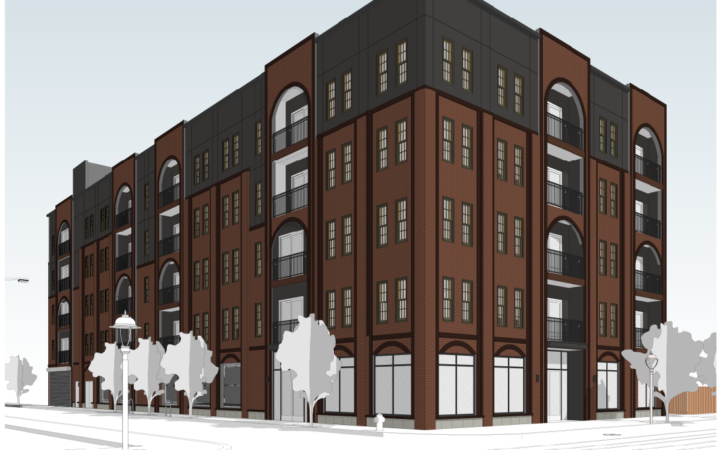
A new 46-unit apartment building is coming to 5322-28 Germantown Ave., from longtime Northwest Philadelphia developer Ken Weinstein.
The five-story building is in Germantown’s Penn Knox area. It also will include over 1,600 square feet of commercial space and 17 parking spaces.
The project comes amid a burst of new multifamily construction in Germantown, a neighborhood that garnered little interest from few developers in the second half of the 20th century.
“The demand for housing in Germantown continues to outpace the supply so more housing, at all income levels, is needed,” Weinstein said.
“Germantown is located near good public transit and Fairmount Park and is viewed as much more affordable than hot city neighborhoods in and around Center City,” he said.
Weinstein said that he will break ground on the building during the first week of January and that funding and contracting is already secured.
The project did not require any relief from the city’s Zoning Board of Adjustment, so Weinstein was not legally required to consult with the neighborhood group, Penn Knox Neighborhood Association.
But he met with the community group anyway to hear concerns they might have with the project.
“This is not an out-of-town developer; this is a developer from the area. He’s part of the community,” said Deneene Brockington, chair of the Penn Knox Neighborhood Association. “So I think there is a level of respect, and I think willingness to do as much as possible [in response to neighborhood concerns] as long as it doesn’t compromise the project.”
Brockington said that the community group’s main concerns were about building materials and lighting and that the developer had addressed both.
Weinstein said parking wasn’t the principal concern he heard from neighbors because the building is in a commercial corridor.
The apartment building’s 17 spaces are not required by the zoning code. Weinstein said he would have liked to include more, but he was constrained by the fact that all the spaces had to be on the ground floor and that the site’s land use rules require that he include commercial space.
“Underground parking is too expensive in middle neighborhoods like Germantown,” Weinstein said. “There will always be a divide between the number of parking spaces developers want to provide and what neighbors want.”
The building will include 28 one-bedroom apartments and 18 two-bedroom units, with rents ranging from $1,450 to $2,200. There will be no subsidized or affordable units set aside.
The project is expected to be completed within 18 months of the groundbreaking next month.
There is no definite tenant for the commercial space, but Weinstein has some ideas.
“With Uncle Bobbie’s moving to a new location, I would love to see a cafe or coffee shop lease the first floor,” Weinstein said. “There would be a lot of demand from students and staff at GFS [Germantown Friends School] and from the community.”
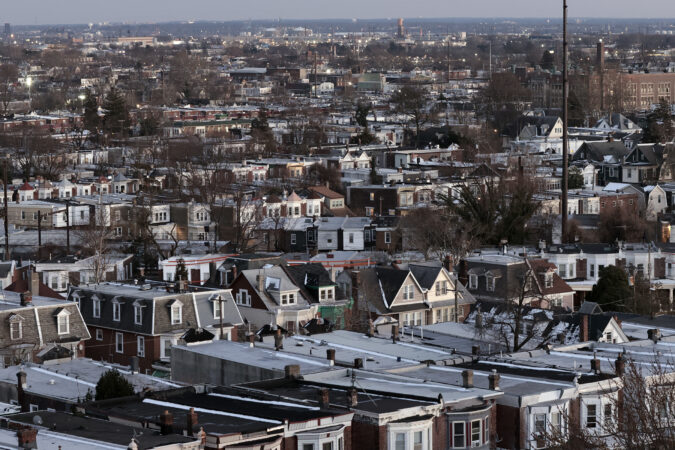
The homeownership rate in Philadelphia fell more than it did nationally and in other major East Coast cities over the last two decades, according to an analysis by researchers at the Federal Reserve Bank of Philadelphia.
Philadelphia’s homeownership rate fell by 5.1 percentage points — from 57.5% in 2005 to 52.4% in 2023, according to the report published this month. Over the same period, the national homeownership rate dropped 1.6 percentage points to 65.3%.
Homeownership rates fell by less than 1 percentage point in Boston and New York and by 2.5 percentage points in Baltimore.
Owning a home is how most U.S. families build wealth. Philadelphia has a relatively high homeownership rate among major U.S. cities and a tradition of homeownership among households with lower incomes.
But affordability challenges in recent years have held Philadelphia back.
The city’s homeownership rate did not rise during the pandemic as it did nationally and among other cities.
The U.S. homeownership rate increased by 1.1 percentage points between 2019 and 2022. Rates in Boston and New York also rose slightly during this period. But the homeownership rate in Philadelphia fell by 1.1 percentage points.
Philadelphia Fed researchers had heard about homeownership rates increasing in many places during the pandemic, “so the big surprise was the extent to which Philadelphia was having a very different experience,” said Theresa Singleton, a coauthor of the report and senior vice president and community affairs officer at the Philadelphia Fed.
“Philadelphia’s had this long history of having affordable homeownership for so much of the population for so long,” she said. “And so seeing these numbers decline was the issue that really brought us to this topic, to revisit what are the factors contributing to this decline.”
Researchers found that owning a home has gotten more expensive, and households are increasingly burdened by debt.
Homeownership has become less affordable
“Homeownership affordability is deteriorating in Philadelphia,” said Sisi Zhang, a coauthor of the report and community development economic adviser at the Philadelphia Fed.
More than 60% of Philadelphia home sales were affordable to households with median incomes a decade ago. Now, fewer than 40% are affordable.
Home affordability varies by race and ethnicity. Philadelphia’s typical white households — those making the median income among white households — can afford up to roughly 60% of home sales. Typical Black households in Philadelphia can afford up to about 26%. And this affordability gap has widened over the last decade.
The gap between how many homes households with two earners can afford and households with fewer than two earners can afford also has widened. Non-dual-earner households used to be able to afford more homes.
In 2013, dual-earner households could afford about 90% of the homes for sale, and non-dual-earner households could afford just over 50%. In 2023, dual-earner households could afford just over 80% of homes for sale, and non-dual-earner households could afford a little more than 30%.
The report considered homeownership to be affordable if a household making the median income spends no more than 28% of that income on a mortgage, property taxes, and home insurance.
All together, these costs have more than doubled in the last decade. In 2014, the annual estimated median cost of owning a home in Philadelphia was about $8,000. That cost grew to about $21,000 in 2024.
Singleton said she was surprised at how significant the cost increases have been.
These affordability challenges exist in cities and towns across the country, but Philadelphia stands out because residents’ incomes are so low compared to other cities of similar size and economic status, Singleton said. That “brings a certain other nuance” to challenges the city faces.
Philadelphians’ debt increasingly is keeping them from buying homes or being able to comfortably afford homes, the Philadelphia Fed report found.
High debt-to-income ratios have become the most common reason that aspiring homebuyers are denied mortgages.
And even buyers who are approved for home loans have higher debt-to-income ratios than they did a few years ago.
Debt and affordability trends highlighted in the report “suggest growing financial pressures on potential and actual homebuyers, particularly low- to moderate-income families,” the authors wrote.
The house: a 1,620-square-foot single-family residence in Germantown with four bedrooms and 1½ bathrooms built in 1900.
The price: listed for $170,000; purchased for $165,000
The agent: Shante Jenkins, Long & Foster Real Estate
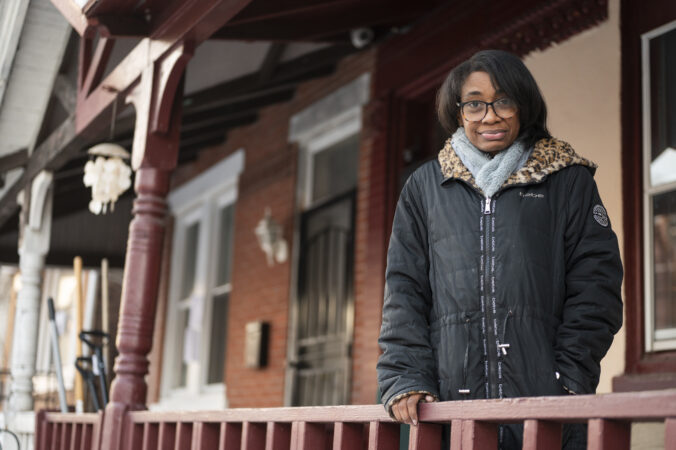
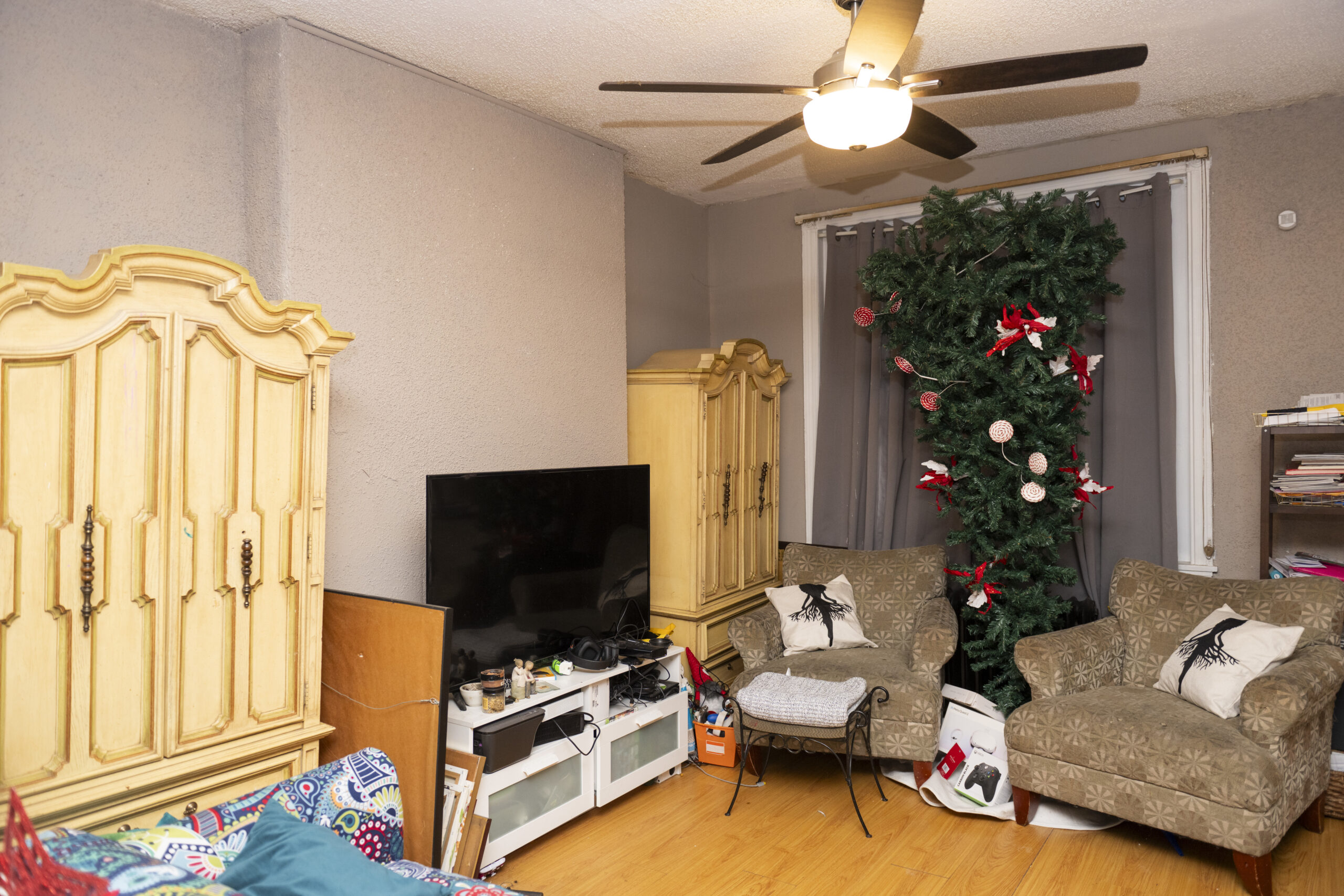
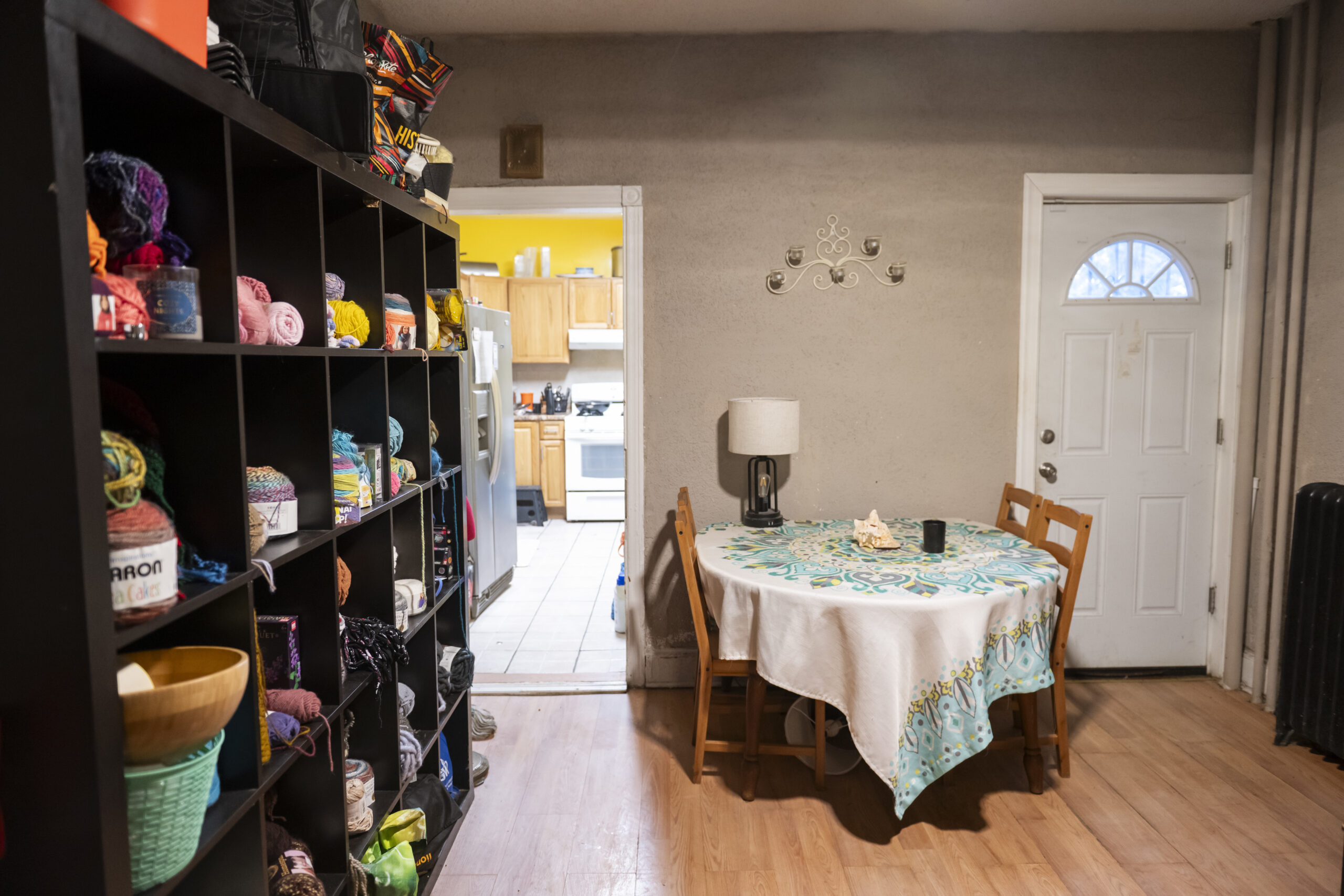
The living room in Kia Wilson’s home in Germantown.
The ask: For years, homeownership was something that Kia Wilsonconsidered in the abstract — something she might get to one day. In 2020, she gave herself a timeline. Within five years, she told herself, she would buy a home. She would save. She would fix her credit. She would do it the “right” way.
Then everything changed.
In 2021, a relationship turned unsafe. Wilson’s then-partner threatened her family, including her children. “I was like, ‘I need to leave now,’” Wilson said. ‘Without the money saved up, without my credit being good. I just needed to move.’”
Wilson’s requirements were practical and shaped by urgency. She needed space for herself, her two children, and eventually her mother. She wanted her teenage daughter to have her own bathroom, and she needed a fenced-in backyard for her dogs. Above all, she needed a mortgage she could afford. She wanted it to be $700 a month — the same she paid in rent.
As for location, “I didn’t care,” she said. “Just not Kensington.” And not near her ex’s parents.
The dining area in Wilson’s home.
The search: Wilson began looking seriously in late 2022, working with a friend and coworker who had just gotten her real estate license. Together, they saw about 15 houses over a few months. Some were impractical. Some were strangely laid out. One was in a flood zone, so Wilson didn’t even bother going inside. Another, she is convinced, was haunted. During the showing, a radio suddenly began playing in the basement. “That radio was loud enough for us to hear it on the third floor,” Wilson said.
That house wasn’t the only one that lingered. Wilson and Jenkins returned to another three separate times just to switch off the lights they’d accidentally left on in the basement and on the porch. That hadn’t happened anywhere else. “I was like, ‘Why does this house keep calling me back?’” Wilson said.
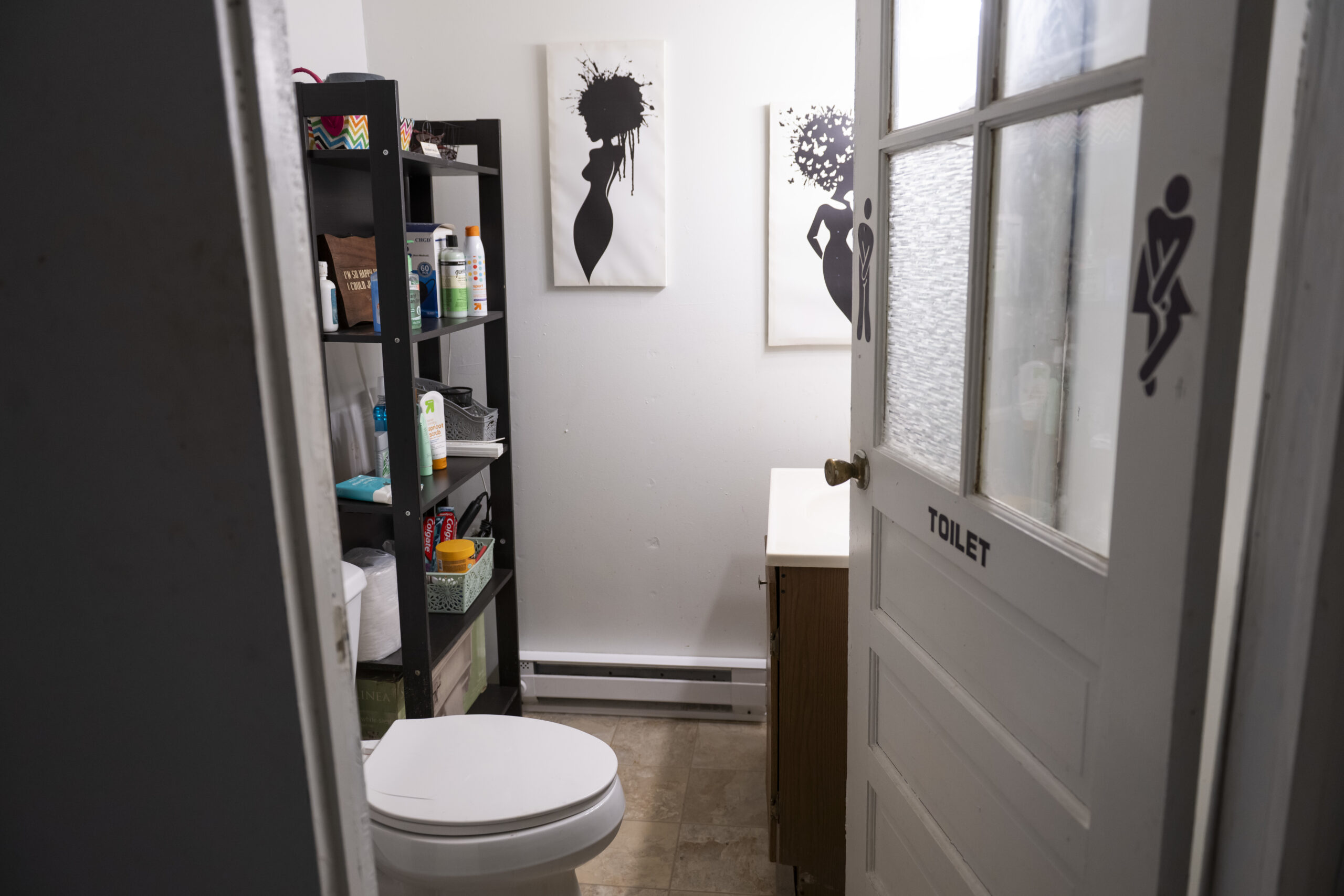
Wilson wanted two bathrooms so that her teenage daughter could have her own.
The appeal: The house Wilson ultimately bought wasn’t perfect, but it checked her most important boxes. It had four nice-sized bedrooms, a small backyard with a full basement, and a semiattached layout that gave the house a little breathing room.
But the feature that sold Wilson was surprisingly specific. “At the very top of the steps is the bathroom,” she said. “If I come in the house from work and I have to pee really bad, I can run straight up the steps to the bathroom.”
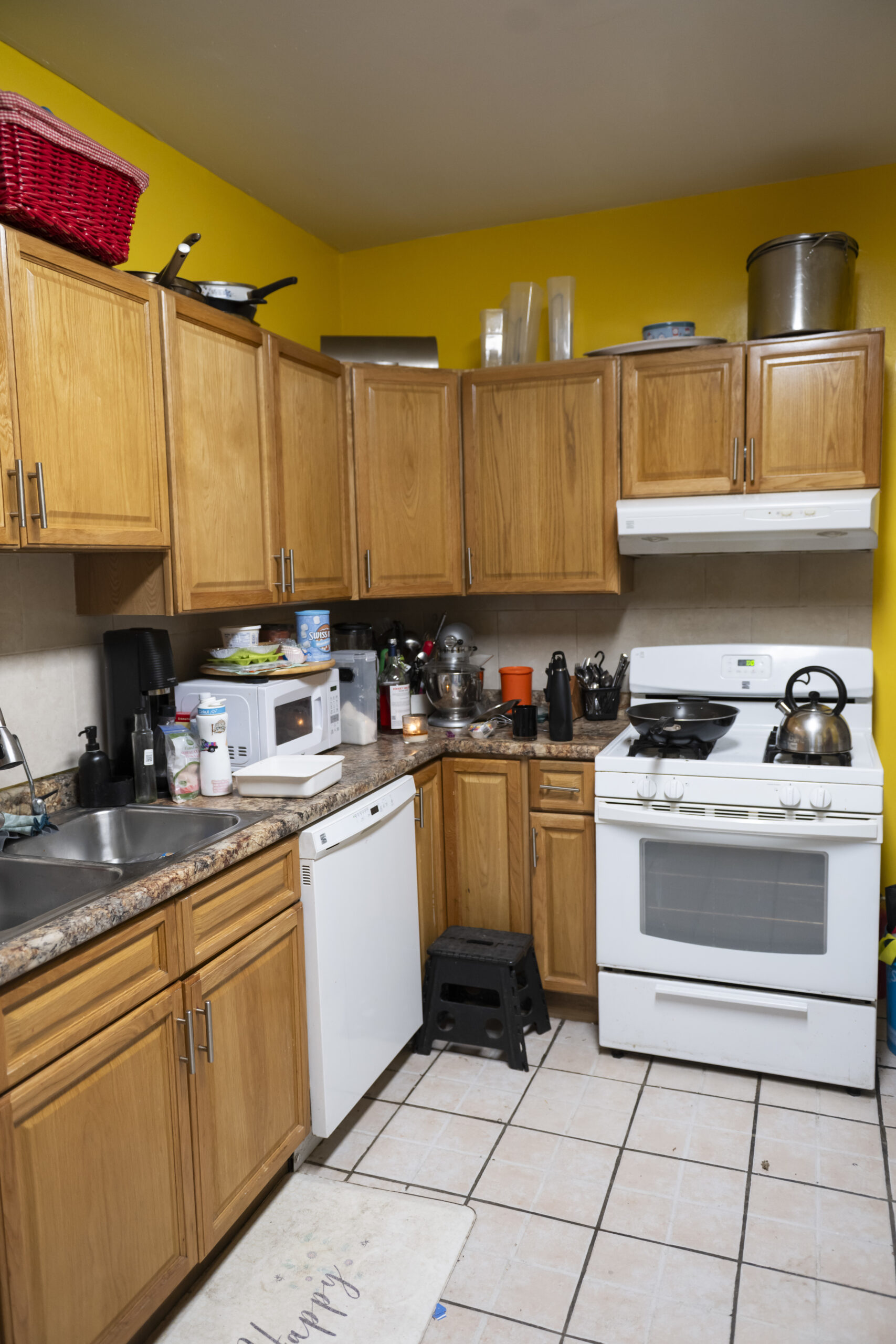
The kitchen was a major upgrade from her previous place, where the kitchen had essentially been an unheated shed. This one was huge and had cabinets. That alone felt luxurious.
The deal: The house was listed at around $170,000. Wilson offered $160,000, expecting a counteroffer. The sellers came back at $165,000, which she accepted.
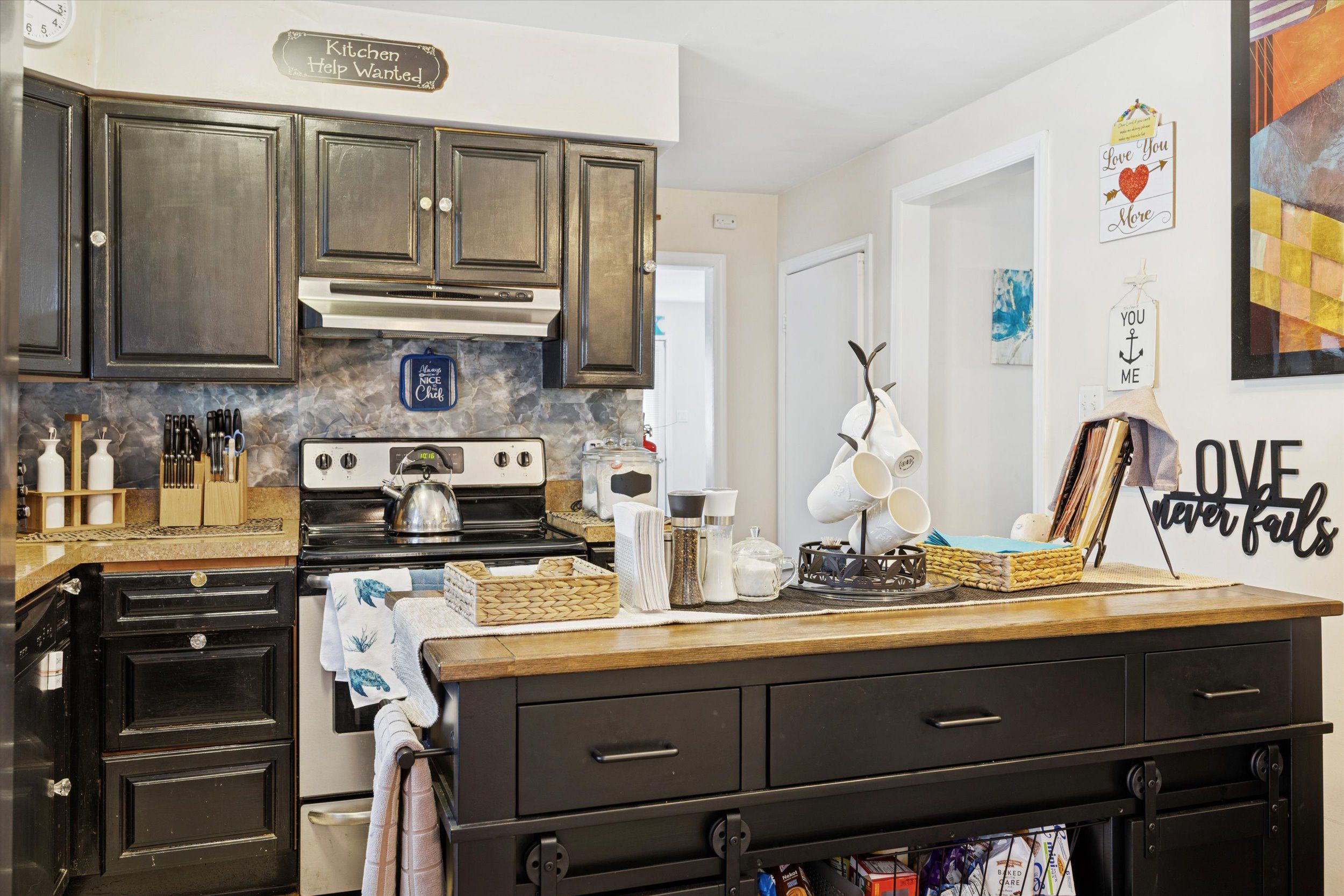
Wilson likes how big and open her kitchen is.
Since the sellers wouldn’t meet her lowest price, Wilson requested that they remove a large oil tank from the basement. They agreed. They also patched flooring gaps in the kitchen and near the front door and removed a mysterious electrical switch that carried power but didn’t control anything.
Flush with the concessions she’d already secured, Wilson made one more request. “I was like, wow, what else can I ask them to do?” she said, laughing. She asked for a sump pump in the basement, but the sellers said no.
The money: Wilson didn’t have savings for a down payment. “People think you have to have this ridiculous amount of money[to buy a house],” she said. “I had nothing.”
What she did have was persistence — and grants. She took first-time homebuyer classes and applied for multiple assistance programs, including funding through the Mount Airy CDC and her employer. In total, she received four grants and roughly $16,000. Her mortgage company told her they’d never seen someone with so many grants. Her mother also contributed $1,000, which served as Wilson’s down payment. All in, she spent $17,000 on her home.
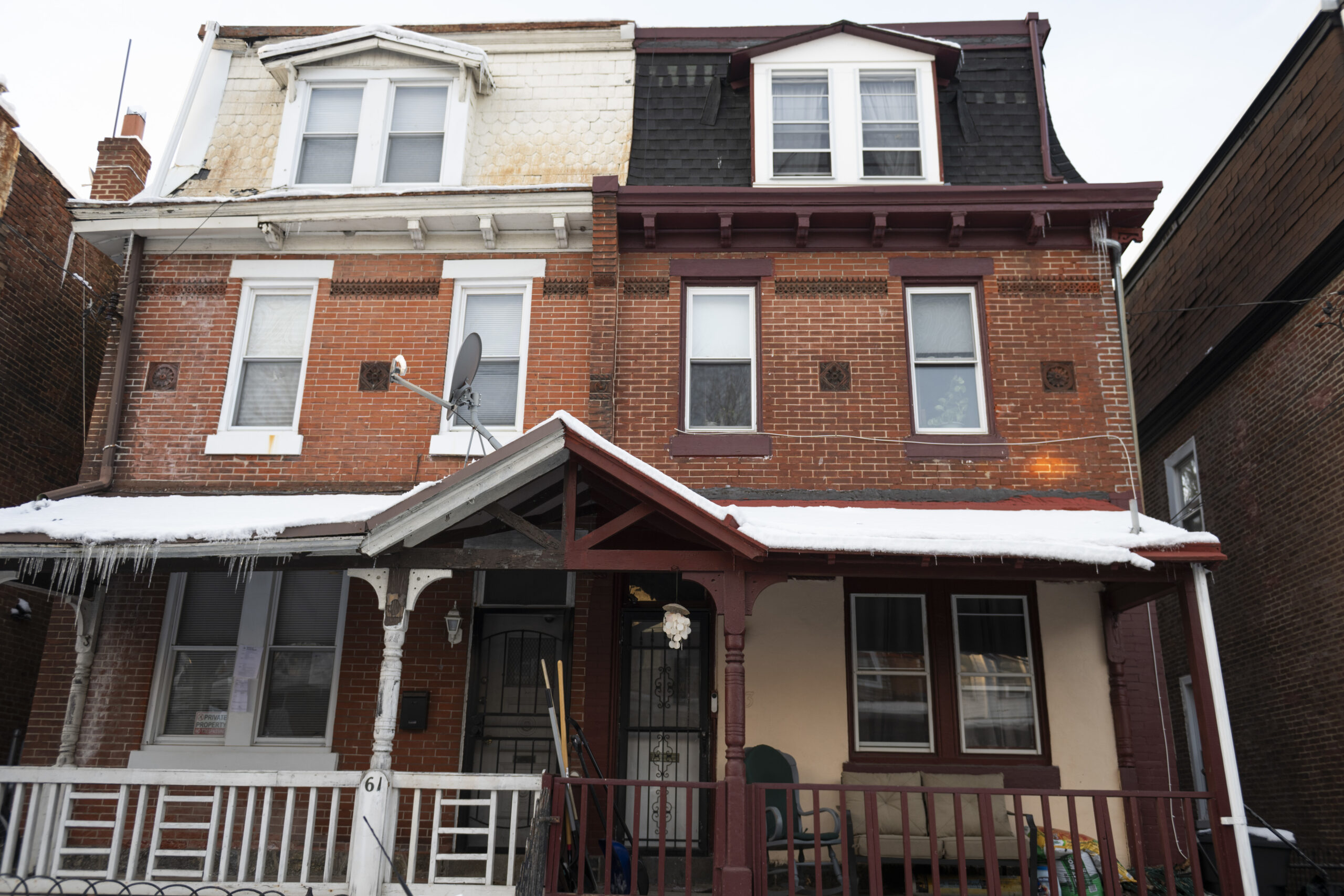
The exterior of Wilson’s home in Germantown.
The move: Wilson closed on March 12, 2023, and moved in one month later. Moving was a “pain in the butt,” she said. “I was trying to do it myself because I didn’t have any money.” The friends who promised to help bailed, and the coworkers who stepped up broke her dresser and her refrigerator. “It was terrible,” Wilson said. “I didn’t have a refrigerator for two weeks.”
Any reservations? Some days, Wilson wishes she never bought the house. It’s old and needs extensive work. “Things are falling apart,” she said.
If she could do it again, she would prioritize a house where the cosmetic work was already done and pay closer attention to small details — like mismatched bathroom tiles. Still, the house has “great bones,” she said.
Life after close: Since moving in, Wilson has taken classes at the West Philly Tool Library, where she learned to patch drywall and tile. The bathroom is now all one color. She’s changed the locks, plans to replace the front door, and has begun slowly making the house her own. This year, she grew a watermelon in the yard.
“It’s really surreal,” Wilson said. “I’ve owned a house for two years. Only 28 more to go.”