A New York-based developer that outbid real estate investor Dean Adler and Philadelphia’s PMC Property Group for control of the huge office complex at Centre Square has decided to walk away from the property.
Centre Square, one of Philadelphia’s largest office buildings, saw soaring vacancy after the COVID-19 pandemic and went into foreclosure in 2023.
In February, Adler announced that in partnership with PMC, he would buy the 1.76 million-square-foot office complex at 1500 Market St. for $70 million and transform it into a mixed-use mecca with hundreds of apartments and hotel space. The previous sale price in 2017 had been $328 million.
Then in May, the Philadelphia Business Journal reported that Manhattan-based CSC Coliving had bid $80 million for the project. CSC, too, planned a mix of residential, hotel, and office space.
“We were kicked out, and we didn’t fight it. We played by the rules,” Adler said. “We accepted when they were going to overbid us.”
On Thursday, the managing partner of CSC said his company had decided against the project.
“We backed out from 1500 Market,” said Salomon Smeke, managing partner and cofounder of CSC. “The tax abatement incentives in Philly were not enough to justify the conversion.”
Smeke said that “it would help” if a 20-year property tax abatement, like the one Mayor Cherelle L. Parker has been considering, were in place.
Asked for his reaction to CSC’s decision, Adler says that while he is still theoretically interested in the property, he will need to take another look to get a sense of why his competition backed out.
“Are we still interested? We are always interested,” Adler said. But he also said he would need to do more research.
“We are going to take our time,” Adler said. “I got to find out if there’s something we missed. Maybe they found something that we didn’t know, so we have to go back to do more homework.”
Philadelphia developer Dean Adler at the Center City District’s State of Center City event in April.
Adler has been on a roll of dramatic and ambitious adaptive reuse projects with his former company Lubert-Adler Real Estate Partners, transforming Philadelphia landmarks into mixed-use campuses, notably at the Bellevue Hotel on South Broad Street and the Battery on the Delaware River.
In these projects, Adler has championed a mix of residential, hotel, office, restaurant, and wellness.
Adler is also locked in a dispute with his former partner Keystone Property Group over the Bourse on Independence Mall, which he hoped to turn into another mixed-use hub.
The Centre Square project would have been CSC’s largest project in Philadelphia. The developer is known in Philadelphia for its purchase of the former International House in University City, rebranded as the Mason. CSC then toyed with the idea of turning the 3701 Chestnut St. tower into a drug and alcohol rehabilitation center.
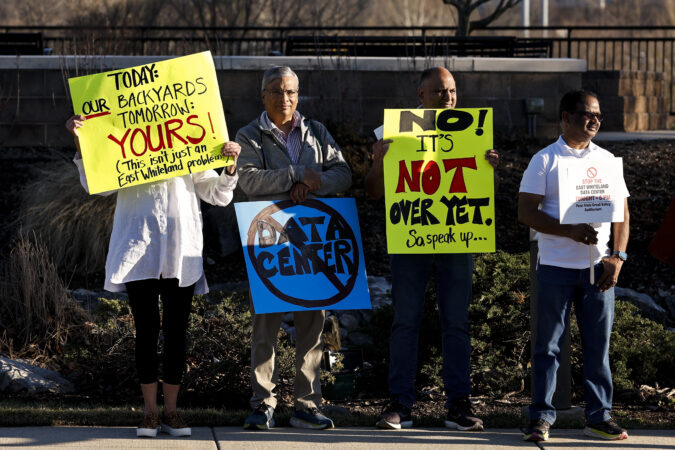
The developer of a 1.5 million-square-foot data center project proposed for an East Whiteland Superfund site has again returned to the township requesting changes to the plan — even as they’ve already started preparing for construction.
But on Wednesday, the developers asked for a “field change,” requesting permission to put into place some of the changes that would have been included in those amended plans.
The changes — which include the ambitions they’ve had since January — would remove the cooling towers, eliminate water cooling for the computer equipment, and install air-chilled units on the building’s roofs. These changes are permitted under the Land Development Agreement, Township Manager Steve Brown told the community at the meeting. But they require the board’s approval.
The request drew ire from community members who have for months been opposed to the project, fearing the data center’s impact on health and the environment. They’ve also raised concerns that it will rest atop the former Foote Mineral Co., a contaminated industrial site that landed on the federal list of hazardous places.
The board voted, 2-1, to table approval of the proposed changes; chairman Scott Lambert and supervisor Clinton Smith said there were still too many questions. Supervisor Peter Fixler cast the dissenting vote.
“What’s been presented to us this week, as I said before, I think is a gift. … What’s in front of me now is a data center that’s a third the size of their original proposal,” Fixler said ahead of the vote. “It would, I feel, be environmentally irresponsible to not approve this plan. I know that doesn’t sound popular.”
The developer said the reason for the change is water conservation, Brown said. The approved plan would use more than 3 million gallons of water a day, vs. the proposed plan, which would use air chillers.
Separately, the developer proposed slashing the size of the buildings, down from a sprawling 1.5 million square feet total build-out — with two data center buildings roughly 772,000 square feet each — down to a total of 536,000 square feet. It would strike a basement in the current plans, and also reduce the height of the building. These changes don’t necessitate board approval, Brown said.
In an email Thursday, Lou Colagreco, the attorney representing the developers, said they would respond to any of the board’s questions “that may still be outstanding.”
“At the end of the day, this is a simple question: Will we use a cooling system that consumes millions of gallons of water a day, as approved, or not?” he said. “We believe this is a very easy decision. We are at a moment in the job where we have no choice but to move forward with whatever path provides us certainty of execution. If the Board wants us to build with evaporative water cooling, we will continue to do so.”
As he discussed his decision, board chairman Lambert told residents that “we could get a call tomorrow from the developer, and he may say, ‘That 536,000 square foot offer we put out there to make it smaller, it’s gone.’”
On Wednesday, the community called for the rejection of the plans, saying that it was too big a transformation to be considered a field change.
“This isn’t moving a pipe from five feet away to have some mud moved on top of it. This is a half-a-million-square-foot change,” resident Tony Gianino said. “This is crazy. This is a completely new project. I’ve been saying this since the beginning. This is a substantial change. If not this, then what counts as substantial?”
Jeff Katz, another resident, said that the plans looked like those initially presented to the township in the spring, which were ultimately withdrawn.
“Bringing substantially the same changes back tonight … looks like an attempt to get through the back door of what could not be brought through the front,” he said.
This suburban content is produced with support from the Leslie Miller and Richard Worley Foundation and The Lenfest Institute for Journalism. Editorial content is created independently of the project donors. Gifts to support The Inquirer’s high-impact journalism can be made at inquirer.com/donate. A list of Lenfest Institute donors can be found at lenfestinstitute.org/supporters.
Michaelle is off this week, so I’m here to talk real estate with you. And we’ve got good stuff to get into this week.
First up: our weird real estate market. That’s not my word choice. It’s what real estate agents told Michaelle when she asked them how things are going.
They told her that market has become much less seasonally predictable than it used to be and they shared what it could mean for homebuyers.
Keep scrolling for that story and more in this week’s edition:
The real estate market used to follow typical seasonal patterns: slower in the summer and winter, busier in the spring and fall. The pandemic shook that up a few years ago and according to some agents, it still hasn’t quite come back.
Weird is the word that two separate real estate agents used to describe the current market. They said Philadelphia homes that sat on the market for months last fall suddenly went under contract in the winter.
There areseveral reasons why this is happening.One is the ripple effect of the “golden handcuffs” created by pandemic-era low interest rates that have left some homeowners hesitant get back into the market.
Short-term pain, long-term gain? That’s the philosophy that programmer Dylan Foglesong took when it came to purchasing his first home.
The 28-year-old renter was paying $2,600 a month for his apartment when he decided he wanted to buy. So he moved into a shared house with friends for $600 a month. Before long, he was ready to live alone again — in a home he owned.
That wouldn’t work for everyone, but Foglesong said it was worth it: “You take that little compromise for a couple of months and all of a sudden you have $11,000 in your bank account.”
📮 Did you recently buy a home in the Philadelphia area or South Jersey? Share the story of how you did it. Email Inquirer real estate reporters at properties@inquirer.com or just reply to this newsletter.
Everything about Caleb Zimmerman’s story makes me anxious. He bought his home off Craigslist for $82,500 in one day. The place needed a full remodel. And he was planning to do it all himself.
But he pulled it off — and the results are impressive.
Zimmerman installed hardwood floors throughout and a custom staircase. He upgraded the bathroom.
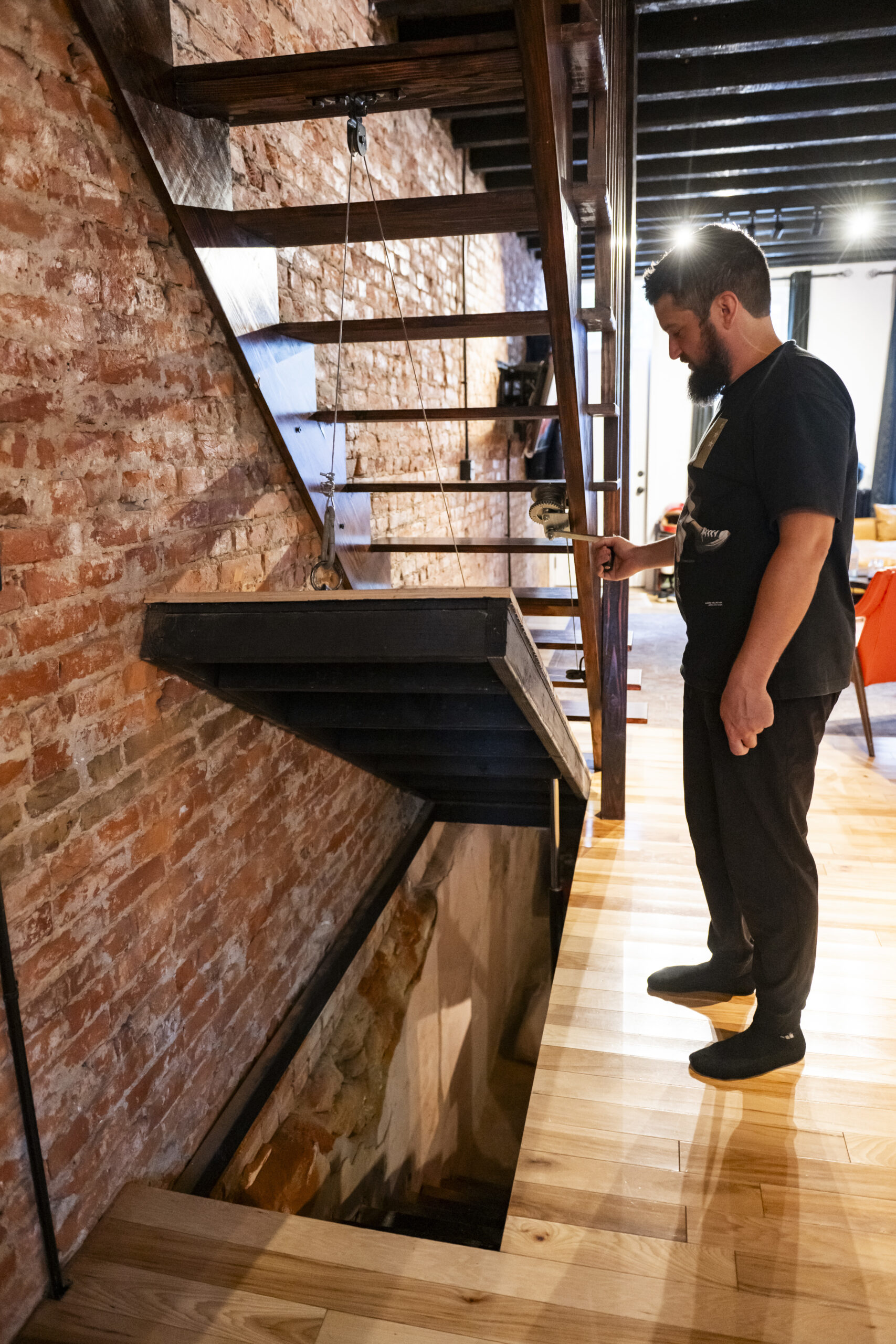
And he added some pizazz: The home’s centerpiece is a trap door that conceals the basement and opens with a pulley system and remote-controlled actuator.
The quiz featured a photo taken at the Olney Transportation Center and reader Chantele A. was the first to correctly get it right.
📹 On the street
Point Breeze Church GIF
The former church at 1800 Tasker St. is on its way to becoming a brewery, an unusual transition for a historic property in Philadelphia. (Though it’s happened before. I love grabbing pizza at the Church Brew Works in Pittsburgh when I visit my Yinzer in-laws.)
A few weeks ago, The Inquirer reported that a South Philly home with an acclaimed Keith Haring mural was available for rent. Now, the mural is up for historic designation, which has some preservationists antsy about the precedent it could set. It’s making me think deep thoughts about what should get protected and why.
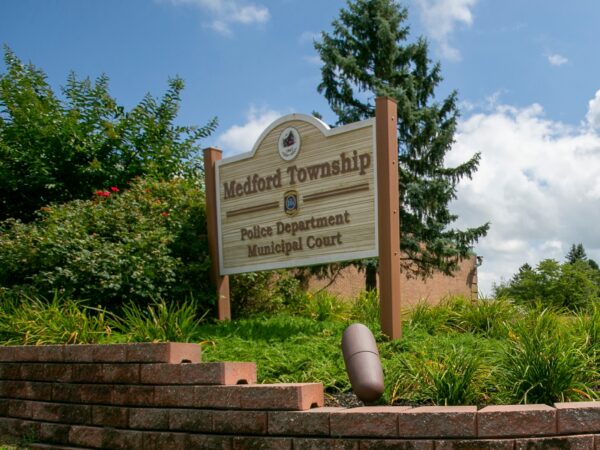
Tackling what local officials called “one of the most significant matters” facing the Medford community, township council approved four redevelopment projects Tuesday night that will bring hundreds of affordable units to the township.
All of the projects are part of Medford’s effort to meet their state-mandated affordable housing requirements. The housing obligations stem from a 1975 New Jersey Supreme Court ruling requiring that all municipalities develop a certain amount of affordable housing.
Every 10 years, each municipality in the state is given a specific quota of affordable units to plan for over the next decade based on considerations that include population, income, and land capacity.
The U.S. Department of Housing and Urban Development generally follows the 30% rule to determine affordability — any dwelling that costs 30% or less of a household’s gross income is deemed affordable.
In New Jersey, affordable housing is restricted to households with earnings that must be at or below 80% of the area median income for the area. In Medford, the median household income is $157,969, according to the most recent data from the U.S. Census Bureau. That would mean any household earning less than roughly $126,375 per year would be eligible for the new affordable units.
The state most recently determined Medford must build a total of 240 affordable units by 2035.
The four development proposals that were approved would collectively add 226 affordable housing units as part of approximately 1,067 total new residential units within the township. All of the projects also plan for some type of on-site recreational amenity like playgrounds, pavilions, or picnic areas.
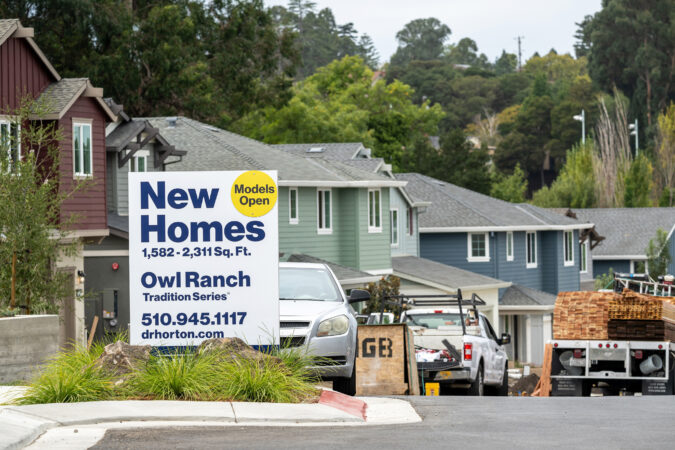
As part of the agreements, builder D.R. Horton will pay the township a $3 million redeveloper’s fee and a $1.7 million recreational and community benefit contribution that will be split between local nonprofits and the Medford Youth Athletic Association.
While the township has enough water infrastructure capacity for the new developments, D.R. Horton has also agreed to construct a water tower through the use of a $5 million special assessment bond with no cost to the township if it’s determined that water pressure is insufficient, Township Solicitor Patrick Varga said.
Large housing developments are often contentious in South Jersey, especially in places like Medford where residents value open space and are concerned more families will overburden an already cash-strapped school district.
In response to resident concerns about overbuilding, Medford Mayor Mike Czyzyk said Tuesday that the only residential communities that the township has approved in recent memory were related to the township’s affordable housing requirements.
“Medford has had a history of not building residential unless it’s required by the state,” Czyzyk told attendees during the meeting. “So as it stands today, there are no large or small-scale residential tracts being developed. There may be parcels being developed for residential use, like on Mill Street and in different areas, but there’s no communities coming to Medford outside of the ones required to be built to satisfy our affordable housing need.”
During Tuesday’s meeting, one resident questioned the township’s need to move forward with all of the projects at once, especially given that it is still so early in the 10-year window. But officials said that the timeline was out of their hands and they had a state deadline to meet.
“Every town in the state of New Jersey was required to adopt and finalize how it was going to comply with its Housing Element and Fair Share Plan for the Fourth Round by March 15,” Varga said. “The Township of Medford was one of a handful of towns that received an extension.”
Now that council has approved the redevelopment agreements, the township will be taking the plans before a judge who will determine if Medford is in compliance with their housing requirements.
Here’s what’s included in each of the redevelopment plans:
The Reserve at Ironbridge
Located on a 64-acre parcel at the intersection of Church and Eayrestown Roads, the Reserve at Ironbridge will include up to 287 total units, 48 of which will be designated as affordable.
Landing at Kirby’s Mill
Not far away, a 61-acre lot at Church and Fostertown Roads will become the 198-unit Landing at Kirby’s Mill. Forty of these units will be affordable.
Trollinger-Stonebridge
The largest of the four projects, the Trollinger-Stonebridge project will total more than 164 acres northeast of Church Road and County Route 541. The project includes up to 48 affordable units out of a total of 300 new residences. This project also includes plans for a bike trail to be constructed and paid for by the builder, pending state approval.
Flying W
Planned for a 114-acre lot on Fostertown Road, Flying W includes the greatest affordable housing contribution among the four projects. With 90 affordable units, 31% of the 282 total units will be set aside for low-income residents. All market-rate units in the development will be age-restricted.
For the past decade, scarcity was the U.S. housing industry’s most powerful marketing tool. The less there was to buy, the greater the urgency to keep bidding, even as prices hit record highs.
Demand was supercharged by record-low pandemic-era mortgage rates that sparked bidding wars and sent prices soaring, crushing affordability. Recent estimates of the national housing shortage have ranged from 1.5 million to 7.3 million units.
But a new era may be dawning, in which a shortage of buyers, not homes, is the defining feature, according to a new white paper from the Mortgage Bankers Association. Starting in 2030, deaths in the U.S. are projected to outnumber births, meaning that without immigration — now being throttled by the Trump administration’s crackdown — the population would begin to shrink, according to the Congressional Budget Office.
“The next decade is likely to be quite different,” said Mike Fratantoni, the MBA’s chief economist and a coauthor of the paper. “We’re moving from a time of rapid household formation to one where there’s a slowdown.”
That outlook is far from certain given all the variables such as a future administration that could decide to expand immigration and a stronger labor market that could boost household incomes.
For now, affordability remains the market’s biggest constraint. Many young adults don’t have the money to buy a home and, in some cities, struggle to rent without roommates or financial help from family.
Affordability has become a rallying cry so loud that it has bridged the political divide. Last month, Republicans and Democrats worked together to pass a bipartisan housing bill designed to address the shortage in affordable housing and lower costs for buyers and renters. The bill’s fate is uncertain after President Donald Trump abruptly canceled its signing.
Still, the forces that fueled the housing market frenzy are now reversing. Mortgage rates, in the mid-6% range, aren’t likely to return anytime soon to the sub-3% levels of late 2020. The country’s fertility rate has fallen to a record low. Baby boomers, the oldest of whom are 80, are poised to start adding to supply as they downsize or die. In addition, immigration is severely restricted and deportations have cut net international migration by half in 2025 and likely even more this year.
Many builders currently have too much inventory, especially in Sun Belt states such as Texas, Arizona, and Florida, where they’ve been most active. Multifamily completions hit a 38-year high in 2024, flooding the market just as demand is cooling. The rental vacancy rate rose to 7.3% in 2025 from 5.6% in 2022, according to the MBA report.
Fratantoni and his coauthors warn that a shrinking population will upend conventional thinking about “housing supply adequacy” and raise doubts that “the supply shortage that defined the post-2010 housing narrative will remain the right framework for the decade ahead.”
National house prices are starting to adjust. After rising 55% from 2020 to 2025, a shrinking pool of potential buyers has the MBA projecting growth of only 1% in 2026 and flat home prices over the next two years.
Even if it’s not a recipe for a broad market crash, continued construction could cause values to drop in some places. For the mortgage industry, oversupply and falling prices would mean fewer loans for new purchases and less demand for refinancing.
Other analysts are seeing similar evidence of changing demand for housing. An assessment released last month by Harvard University’s Joint Center for Housing Studies found that household growth fell to 1.1 million in 2025 from 2 million in 2021, the third straight year of decline as young people double up with roommates or live with family rather than go out on their own.
“The demand slowdown is coming,” said Alexander Hermann, senior research associate at the Joint Center. “That’s a real thing.”
But a weaker appetite for homes overall doesn’t mean everyone can find one. According to the National Low Income Housing Coalition, 11 million extremely low-income renter households are competing for just 3.8 million homes within their reach.
There remains a severe shortage of units for households in the lower- and middle-income brackets, Hermann said. “I don’t think we’ve made any progress on that,” he said. “If anything, that circumstance has only worsened.”
A few months ago, Ali Wolf, chief economist at homebuilding consultancy Zonda, spoke before a gathering of clients and laid out a sobering picture: The country was still adding jobs, but at a slower pace, and the population was still growing, but at one of the slowest rates on record.
A builder asked a question that caught her attention.
“He said, ‘If job growth is slow and if population growth is slow, how do we grow our business?’” Wolf said.
Since then, she’s been marshaling resources to answer it, building an index that ranks nearly 100 metropolitan areas on expectations for long-term demand. Her team is meeting with builders to explain what it means for their regions.
When the immigration crackdown began, builders braced for the obvious blow: the loss of the workers who frame their houses and pour their foundations. But a drop in apartment construction since then has eased that pressure.
“We thought we were going to get hit by labor supply,” Wolf said. “And actually, our biggest concern has been housing demand.”
Caleb Zimmerman needed a new place to crash, fast.
It was August 2019, and the 27-year-old was finishing a remodel with his brother, Micah, on a Strawberry Mansion house. He had purchased the property with plans to rent it out post-renovations and was living there in the meantime.
With the remodel nearing completion, Zimmerman wasn’t seeing any interesting properties to take on as his next project — and next place to live.
In desperation, he turned to Craigslist. And there, listed for $85,000, was the three-bedroom Kensington rowhouse he’s called home ever since.
“I bought it the next day” for $82,500, he said, confirming, no, that’s not hyperbole. “I knew the location was incredible and was just going to keep getting more incredible.”
Even before walking through the two-story house, Zimmerman had an idea of what he wanted this next project to look like. Though the house needed a full gut remodel, he saw that the structure could accommodate his vision of an open floor plan with a floating staircase and basement steps concealed by a trap door on a pulley system. It was, to be sure, a huge project, but Zimmerman knew he could get it done.
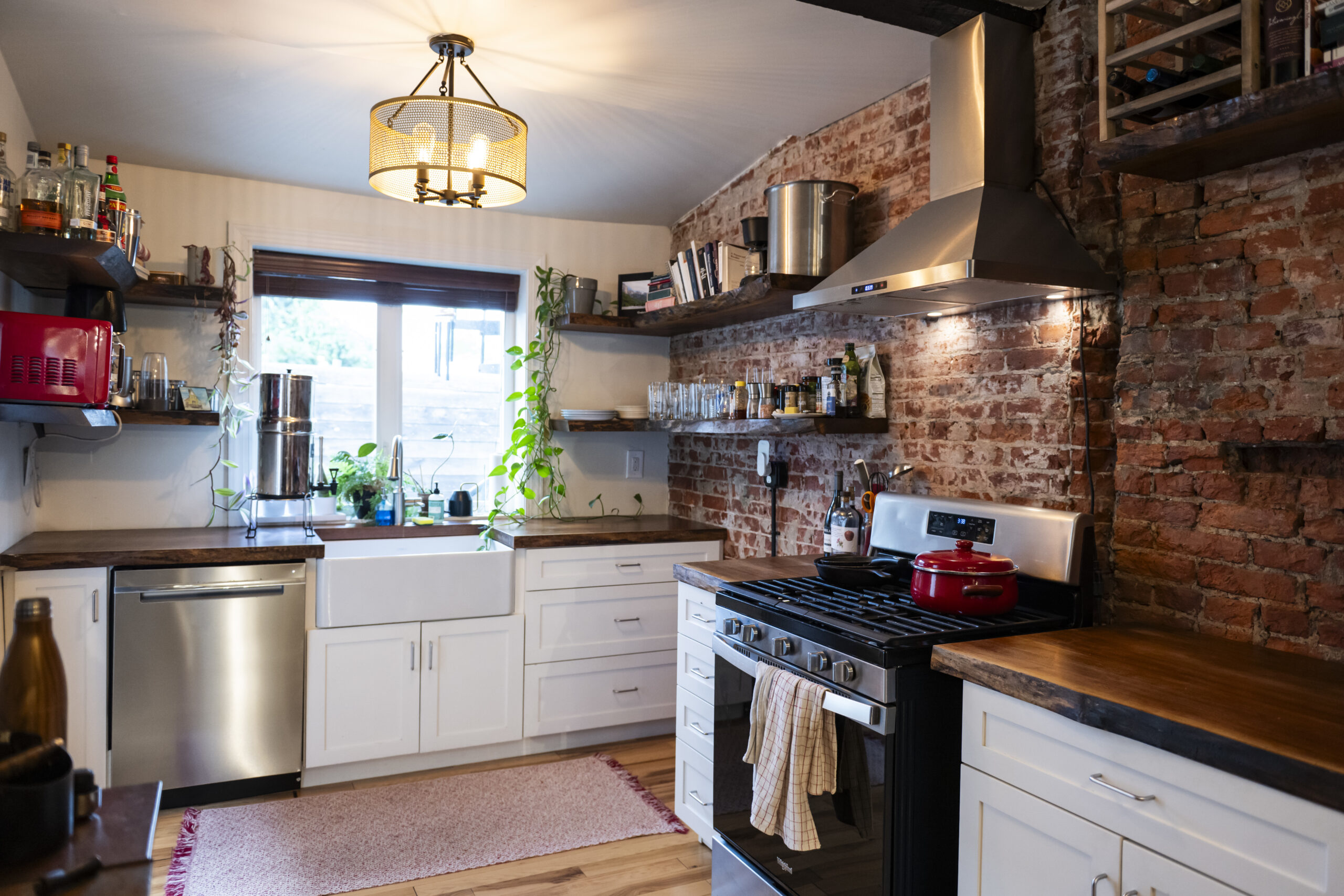
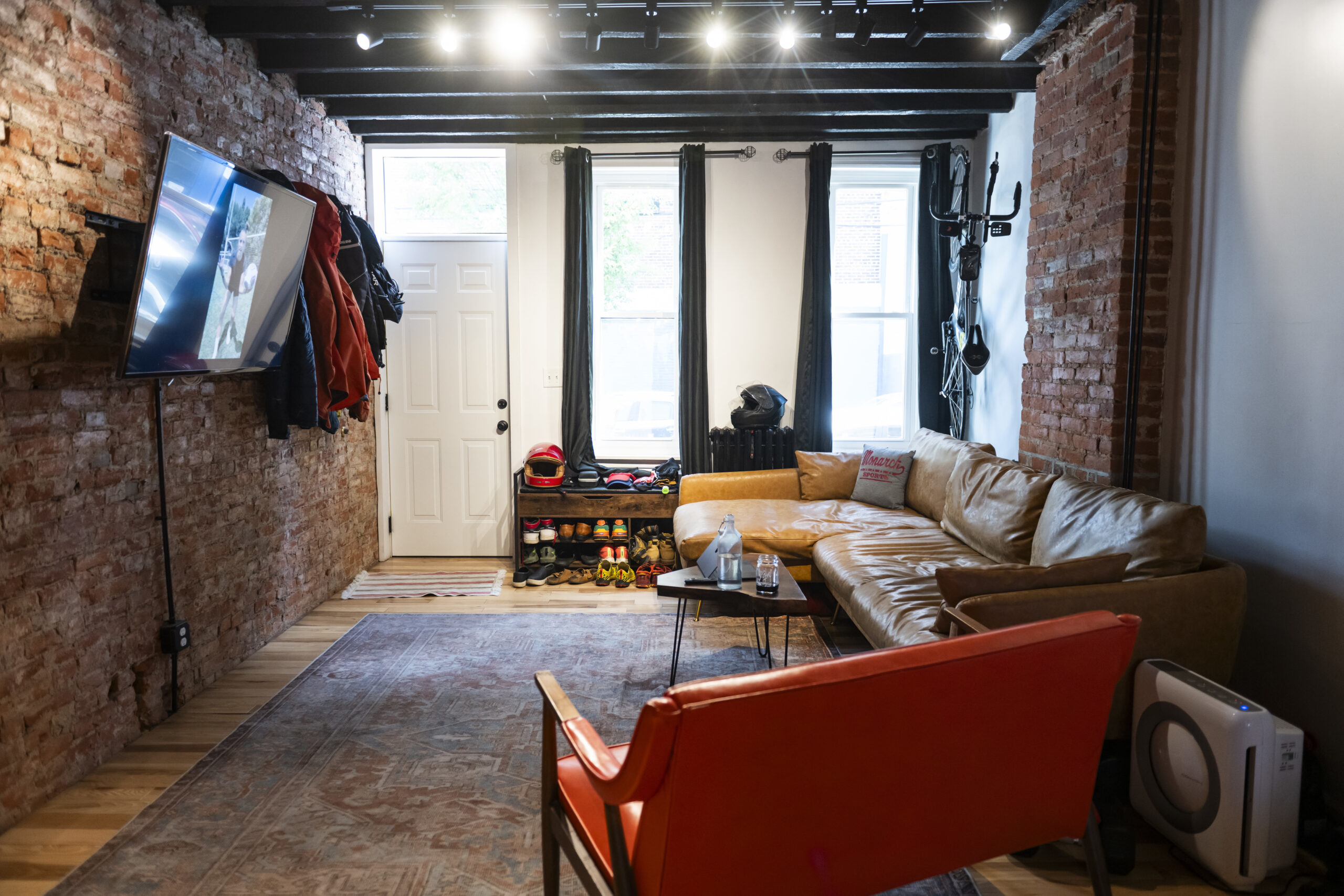
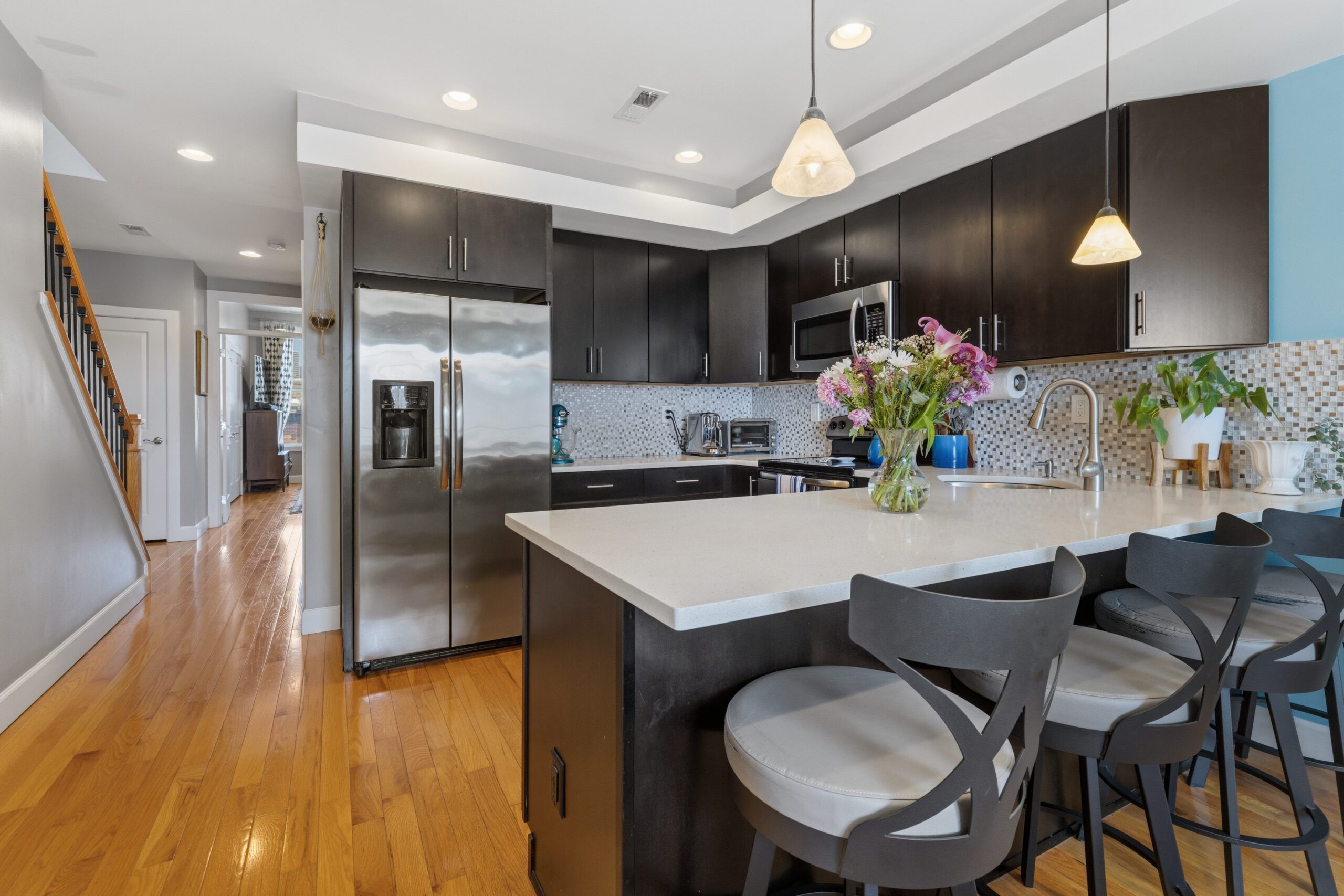
The kitchen, which was built by a family friend, Aden Stoltzfus.The entrance to the home and the living area.
“I feel like the Mennonites have it in their genes,” said Zimmerman, who’s of Mennonite heritage and who just wrapped a stint as an instructor of philosophy at the University of Pennsylvania. “I’m primarily a philosopher, but I wanted to kind of prove my chops, I guess, prove that I can also do things with my hands.”
Zimmerman and his brother moved in that summer and began work the first day of Christmas break. He took a leave of absence for a semester from Temple University, where he was working on his Ph.D. in philosophy, to see the project through.
Everything in the house needed to be replaced, so that meant everything needed to come out.
“The kitchen was an atrocity,” Zimmerman recalled. “There were mice running around.”
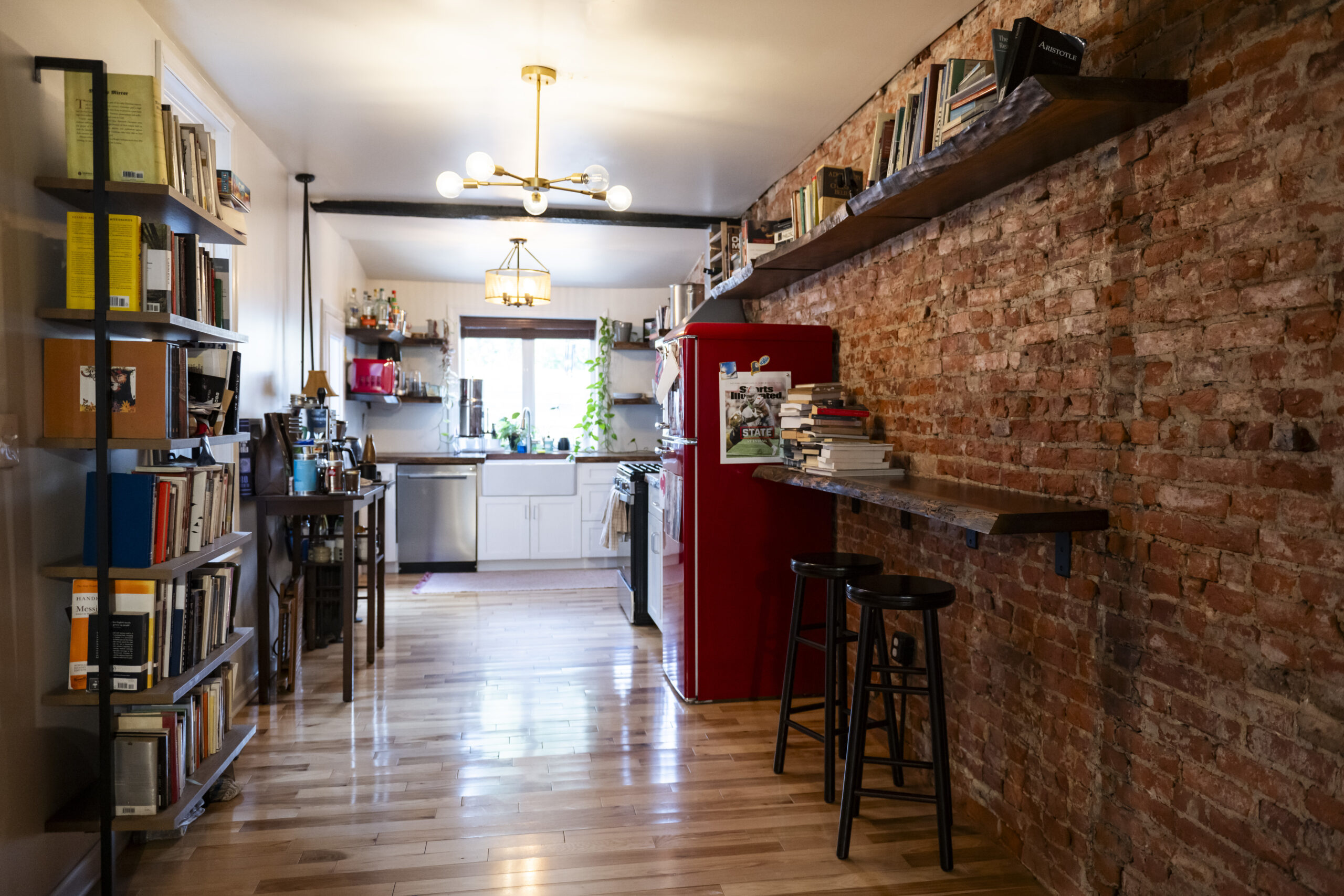
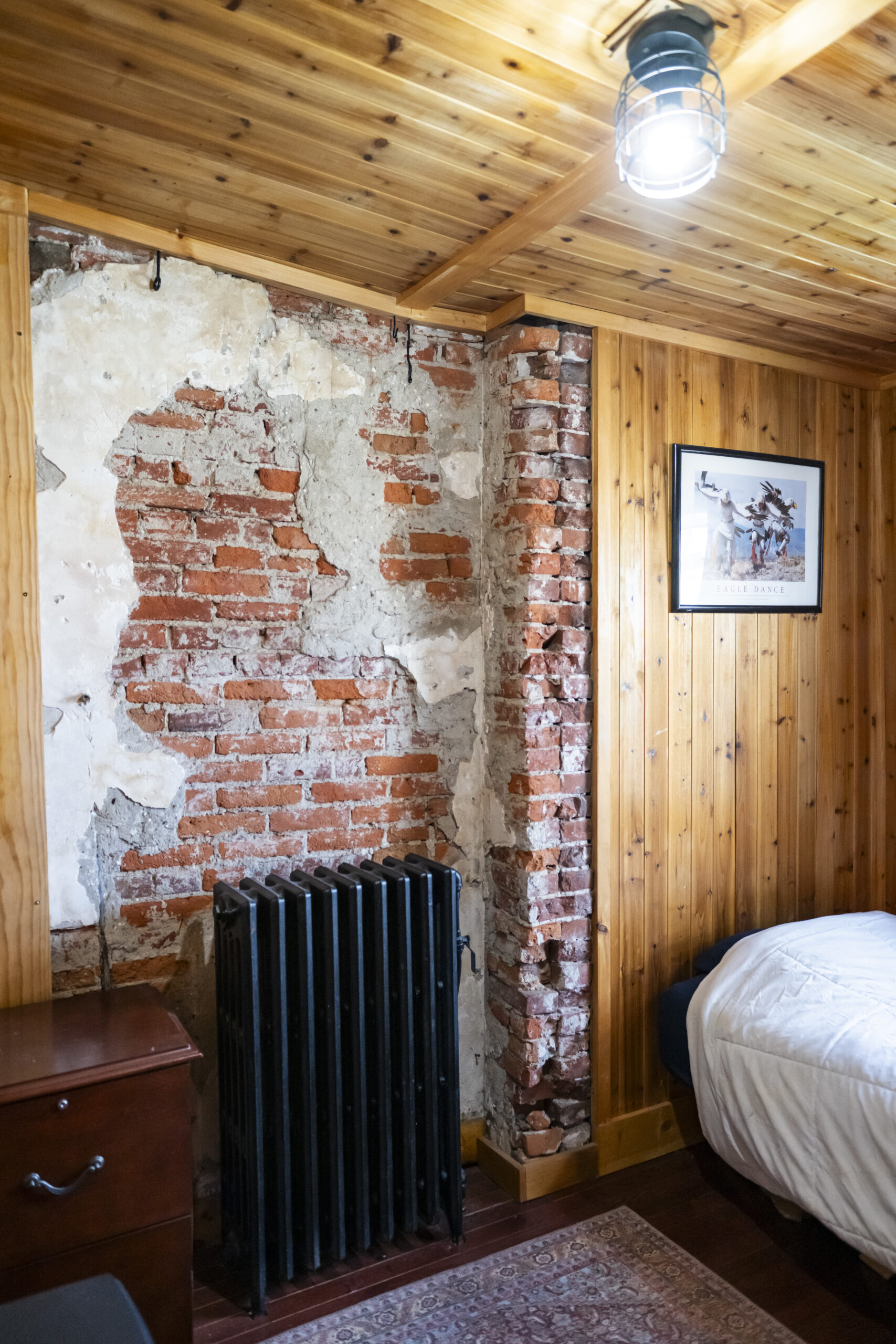
Custom wooden shelving is fastened to an exposed brick wall in the kitchen.
For demolition, which included removing the floors and pulling down the lathe and plaster throughout the house to reveal its underlying brick, guys in the neighborhood would often stop by to see if they could lend a hand for an hourly wage, Zimmerman said. One guy, in particular, “has so much sweat equity in the house that anytime he knocks and needs some help” Zimmerman opens his door to him to this day.
Throughout the project, the Zimmerman brothers lived in two of the three bedrooms upstairs with Micah as Zimmerman’s right-hand helper and renter. The first night he moved in, Zimmerman said, he slept on the floor. It was just the beginning of the long discomfort he’d endure living among the renovation, but it encouraged him to push to get the project done.
For rebuilding, Zimmerman drew on his Mennonite heritage and connections. He and Micah brought in wood from an Amish mill for kitchen beams and the custom staircase. A family friend, Aden Stoltzfus, made the kitchen — his daughter Hadassah Stolzfus recently spoke to The Inquirer about her own home renovation, also featuring a kitchen created by her dad.
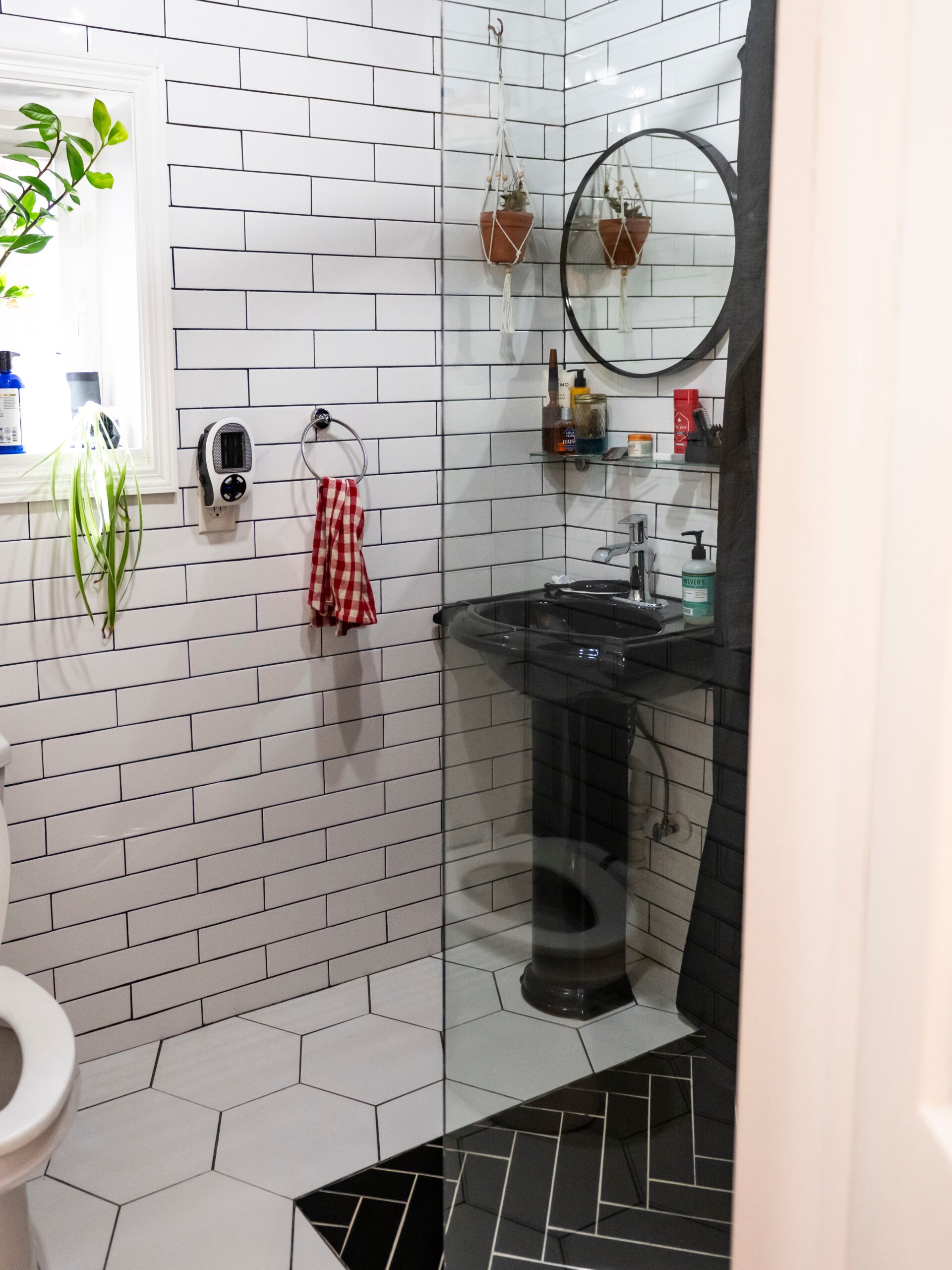
The home’s centerpiece of engineering is a trap door that conceals the basement and opens with a pulley system and remote-controlled actuator. It was built by Gabe Stoltzfus, Hadassah’s cousin. Gabe also handled the bathroom renovation, where Zimmerman planned to remove the tub and install a standing shower with a glass enclosure to make the small room feel larger.
Zimmerman opens the trap door to his basement. He removed a wall with a door to the basement and created more open space by incorporating the trap door.Zimmerman installed a glass-walled shower to make the bathroom feel more spacious.
Zimmerman had some experience laying hardwood floors, so he installed the new wood floors that run throughout the house. A friend, Kevin Bucher, helped install some trim, including, in a feat of patience, a piece that he cut to mirror the topography of the brick wall in what is now Zimmerman’s office.
Zimmerman did bring in some outside help to install drywall, seal the fireplace, and rewire the house. The renovation cost about $80,000 in total.
By the fall of 2020, “it was livable,” Zimmerman said, though he had lived there all along. His brother Micah stayed for a while, too, but moved out in 2022.
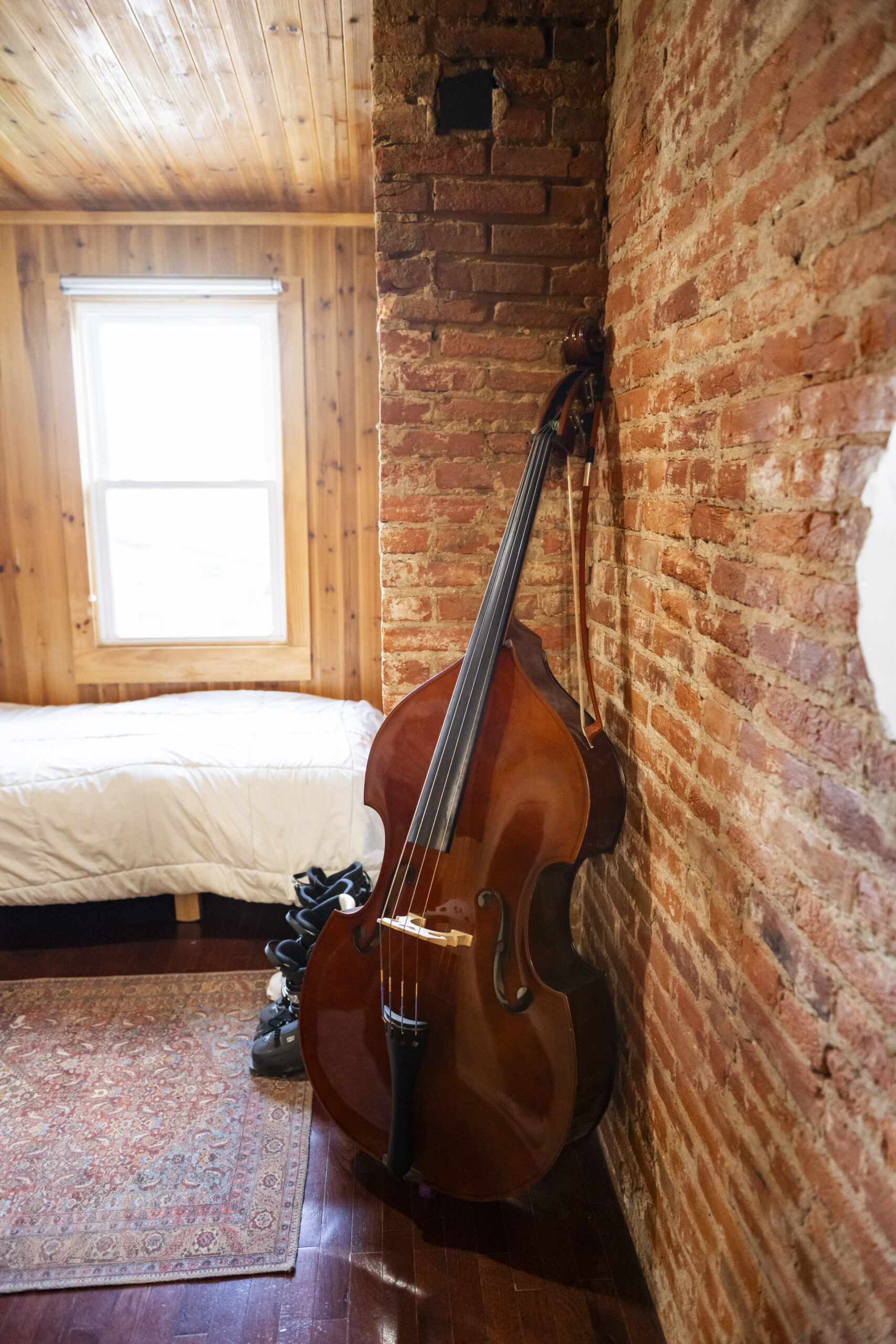
An upright bass is on display in the guest room.Exposed brick and wood paneling on the wall in the guest room.
Now Zimmerman entertains often and said people always say his red refrigerator is their favorite aspect of the house. Knowing how much custom behind-the-scenes work went into every aspect of the property, he receives that comment about a store-bought appliance with some chagrin. It’s only because he knows how much was accomplished before that final, finishing flourish.
Reflecting on the renovation, “I doubt that I will do anything like this again,” he said, “but I wanted to know I could do it.”
Is your house a Haven? Nominate your home by email (and send some digital photographs) at properties@inquirer.com.
Brenda Beiser knows firsthand how difficult buying a home in the Philadelphia area can be. She’s not only a Redfin real estate agent, but she’s also an empty nester who wanted to downsize.
Her six-bedroom house in Mount Airy sold right away when she put it on the market in May. But she decided not to buy a replacement.
“I went for a rental because I didn’t really want to compete with everyone who’s trying to get into a smaller house,” Beiser said. “A lot of people who are in their 60s and would have traditionally downsized into a smaller house just aren’t doing it. They can’t find a place to go.”
Brenda Beiser, a Redfin real estate agent in the Philadelphia area, decided not to buy another home when she sold her Mount Airy house, because she didn’t want to enter the region’s competitive housing market.
The Philadelphia region has a housing supply problem, just like large swaths of the country, and that’s impeding both repeat and first-time buyers. Inventory is particularly low across the Northeastern United States, where construction has not kept up with demand. In the beginning of this year, Zillow predicted that the Philadelphia metropolitan area would be one of the country’s 10 most-competitive housing markets of 2026.
Home supply, however, has also ticked up a bit in the region compared with last year, and homes are staying on the market a bit longer before they sell. For the four weeks ending June 21, the region was in the top five markets with the highest annual increase in new home listings, according to a Redfin analysis of the 50 most-populous metropolitan areas.
“The market’s encouraging,” said Jake Markovitz, president of the board of directors for the Greater Philadelphia Association of Realtors. “It’s certainly more balanced than it has been the last four, five years.”
Erin Thompson, CEO of the Montgomeryville office with Keller Williams and leader of the Erin Thompson Team, agrees. She said buying and selling is “ebbing and flowing but trending toward a more stabilized market.”
“Although I feel like I’ve said that twice in the recent past, and then it’s gone bonkers,” she said.
The region’s market is a mixed bag.
Some homes are sitting for a while, and some owners are at risk of selling properties for less than they bought them for a few years ago. Other homes have inspired five or more buyers to compete against each other, hiking up prices, said Markovitz, an associate broker with the Karrie Gavin Group at Elfant Wissahickon Realtors.
This Graduate Hospital home went under contract last month a few weeks after it was listed for sale.
“As an example, I’m seeing more inventory in Chestnut Hill than I have in a long time, which is giving buyers a little bit of power,” he said. But if the right property hits the market, it will go fast.
He’s seen the same happen in neighborhoods such as Graduate Hospital and Fishtown.
Because of strong demand for homes in the region, “I just don’t think we’ll see any major shift in prices coming down,” he said.
‘Weird’
Markovitz and Thompson both used the same word to describe the recent real estate market: weird.
They said housing activity isn’t always following time-tested rules.
Philadelphia homes that sat on the market for months last fall, typically a busy season, suddenly went under contract in the winter, typically a slow one.
A house that sits on the market for 30 days that a buyer thinks can be theirs at a lower price can suddenly attract two other buyers at the same time. And now they all need to be ready to pay more.
Housing markets have always been hyperlocal, with buyer demand varying from neighborhood to neighborhood and block to block. But now, “it’s almost like a property-by-property basis,” even for comparable homes, Thompson said.
Owners bound by ‘golden handcuffs’
Even with recent upticks in home listings, the region’s housing supply is nowhere near enough to meet demand.
“Most people are anticipating this year will continue to be a little tough,” Thompson said, “and then next year we’ll start to see some more inventory.”
Markovitz said homeowners who bought properties five years ago with 3% or 4% mortgage interest rates are still experiencing “some sticker shock” from current rates, which lately have been averaging about 6.5% for a 30-year, fixed-rate mortgage.
“Those people, even if they’re ready to leave, are kind of bound by their golden handcuffs,” not wanting to sell and then have to buy a home at a higher interest rate, he said.
But for many homeowners, “the reality of the market has set in a little bit,” he said. “Where people were sort of hoping, wishing that rates would come back down, they’re not.” And life events such as births, deaths, and job moves mean that people need to sell their homes.
This recently sold Graduate Hospital home has skyline views from the roof deck.
And buyers show up to purchase them.
Thompson said she was nervous when she listed a Phoenixville home for sale during Memorial Day weekend,when many homebuyers might be traveling. But a lot of people came to see it, and the seller ended up with seven offers and a final price that was well over what they expected.
Buyers, however, aren’t accepting just anything. They are more selective and less likely than in past years to skip home inspections. If sellers want to get the highest price, they have to prepare their properties for sale, agents said.
Homes, and especially kitchens and bathrooms, need to be up-to-date, and central air-conditioning is a plus, said Annette Collier, owner and real estate broker at Able Real Estate, based in West Philadelphia.
“That’s what buyers are looking for, and I don’t think they’re willing to settle,” said Collier, who works in the city and surrounding areas. “I find that less buyers want to do any renovations. Most buyers want a move-in-ready situation.”
Homebuyers want updated kitchens, like this one in a Graduate Hospital home that recently sold.
And sellers need to be realistic about how much they can get for their home.
“If you overprice by even just a little bit,” Thompson said, “you’ll end up sitting.”
Buyers ‘ready to pounce’
Generally speaking, buyers now have more time to make decisions than they did last year, since homes are staying on the market longer.
But, in some submarkets, especially in Philadelphia’s collar counties, “there’s so much demand that certain houses are just going to fly off the shelves,” said Beiser, who works in Philadelphia and surrounding areas.
“I have some buyers in the suburbs, and they‘ve kind of stopped looking because it’s too challenging,” she said.
This home in Upper Merion Township is listed for sale for $699,900 by agent Erin Thompson.
Beiser has been working with a couple with children who live in Philadelphia but want to move to the suburbs. Each spring for the last three years, her clients make a plan to try to find their next home. But every year, they decide that continuing to live in the city is more convenient than facing competitive markets in which they’re expected to skip home inspections to win a property, Beiser said.
Thompson has seen a growing trend of frustrated buyers putting in offers above the asking price even when they’re not facing direct competition. One client recently went under contract on a Fishtown home they had immediately put an offer on.
“They came in aggressive, because they’d just lost out on a house, and they’d been looking for a while,” she said. “You have these buyers who are scarred and tired, so they’re coming in more aggressive.”
Thompson tells buyers to make sure they’re as prepared as possible before starting their home search.
“You have to be ready to pounce the second [a home] comes to the market,” she said.
This home on the market in Upper Merion Township spans more than 2,800 square feet and has three bedrooms.
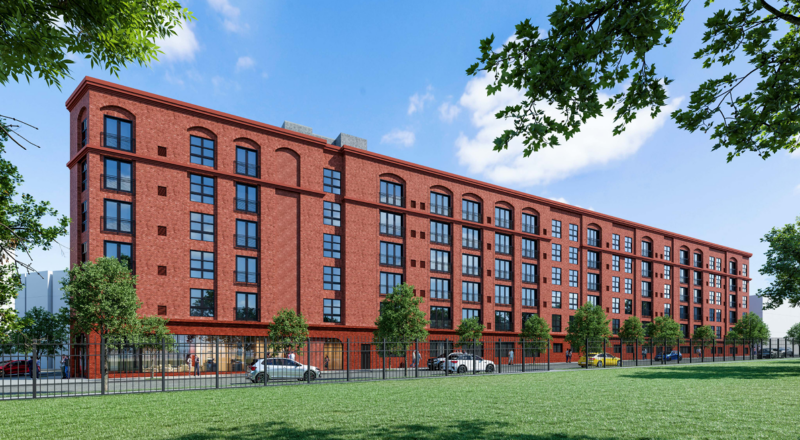
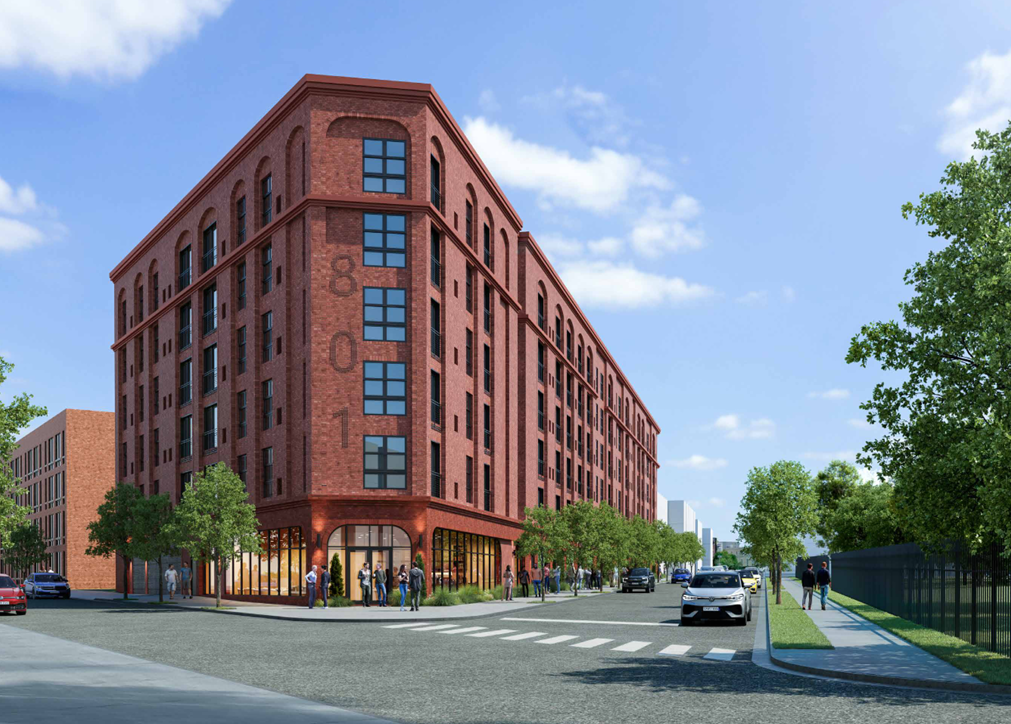
North Philadelphia’s Francisville is getting an apartment building at 801 N. 19th St. after years of delay and a complexchange in ownership.
The six-story project, clad in red brick, will include 110 apartments and 49 underground parking spaces. The foundations are built, and construction is underway.
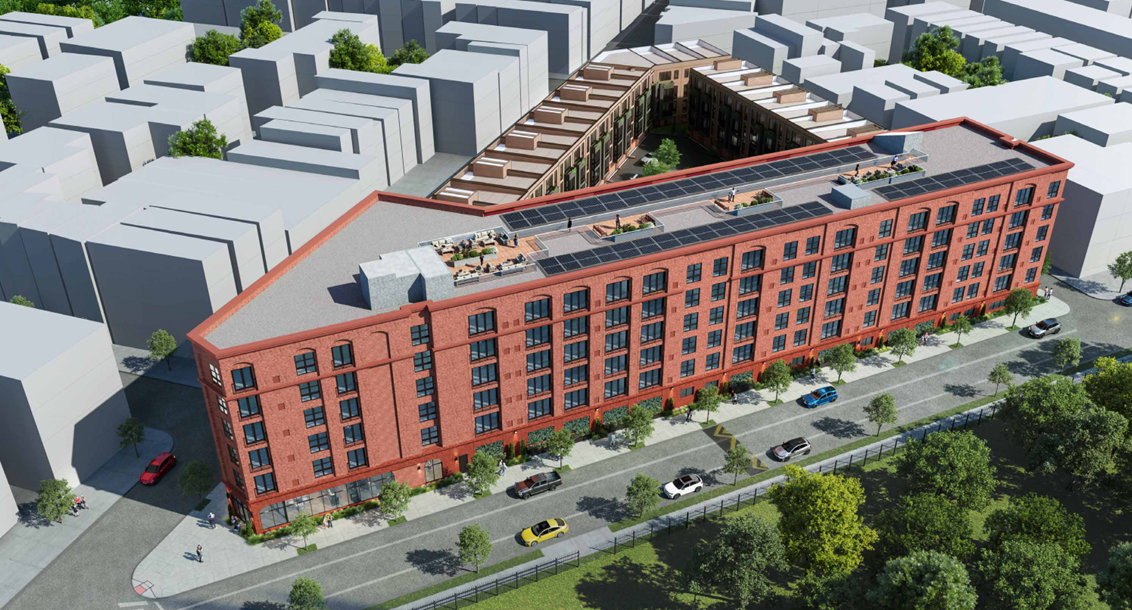
The project sits on an oddly shaped lot between 19th Street, Cameron Street, and Wylie Street, which neighbors call “the triangle lot.”
The property used to be owned by the Exton-based Hankin Group, which secured building permits for a 115-unit apartment building during the pandemic.
Hankin sold the property in 2021. Now two different townhouse projects are being developedon the site, one by West Philadelphia-based Guy Laren.
The apartment project is being built under the name of Cameron Square Partners LLC, which is registered at a West Philadelphia property owned by Laren.
On the Department of Licenses and Inspections website, violations for “walkway not provided” and a failure to post permits are being appealed by the Philadelphia-based developer, contractor, and property manager Vicintas.
Laren did not respond to a request for comment. Vicintas confirmed it is the general contractor and future property manager for the apartment building but did not reply to an interview request.
Hankin’s building permit is old enough that the Philadelphia Planning Commission decided it has to go through an advisory-only Civic Design Review process again, five years after its first go-around.
The new iteration of the project is different from what Hankin proposed, with 110 instead of 115 apartments but larger layouts. It has a new architect, too, with Philadelphia-based Harman Deutsch Ohler Architecture replacing global firm NORR.
“The new owner wanted some bigger units, so we’re down five units, and we increased the height by five feet, and then we redid the entire facade,” said Rustin Ohler, a principal with the firm.
The new plans call for 40 one-bedroom apartments and 35 two-bedroom units, with the remainder mostly being larger studio units known in the industry as “junior one-bedrooms.”
The apartments will have “more square footage, not necessarily more bedrooms,” Ohler said. “The previous design had a lot of studios. This is more ones and twos [bedrooms], and they’re a little larger than your average new construction coming to the market.”
Parking has been reduced from 52 to 48 spaces, although the development team plans to expand the number of spaces by automating the garage.
Such a system would eliminate the need for people to enter the facility, depending on mechanical systems to distribute and receive cars and allowing for a much larger parking capacity.
The latest design for the new apartment building at 801 N. 19th St., with an articulated brick identifier spelling out “801.”
The apartment building contains no retail but will have amenities including a gymnasium and a narrow roof deck, including a dog park, that is set back from the edge so it is not visible from the street.
At a June meeting of the Civic Design Review committee, a representative of the United Francisville Civic Association criticized the amount of parking in the project, the increased height, the roof deck, and the new building materials.
“What was originally approved was a five-story building,” said the representative, whose name was obscured in a recording. “This is now a six-story building, and it really towers above. It just adds a lot more height to the building based on the surroundings.”
At the June and July meetings, however, Ohler noted that the threeprojects on the triangle lot are already under construction and that the apartment project is hemmed in by the bordering townhouse developments.
That restricts what changes could be made to the architecture and layout of the project, despite community concerns.
A new rendering of the apartment building shows the roof deck broken into smaller chunks, to cut down on large crowds making noise and separated from the edges of the building by newly proposed solar panels.
The development team increased “the garage ceiling height in order to accommodate future stacked mechanical parking, which would potentially double our number of cars that we could have,” Ohler said.
Since the June meeting, the development team also added darker brick spelling out “801,″ as an identifier on the building’s south-facing facade and entrance.
Ohler noted that the roof deck has been broken up into four separate pockets to prevent large groups of residents from congregating. It also was pushed back from the street to accommodate neighbor concerns.
“The roof decks have been designed to be centered into the building, so that nobody can get near the edge,” Ohler said. “And we did add the solar panels, there’s no way for anybody to get near the edge, so that would address their concerns of sound from the roof deck.”
The biggest jump in Philadelphia’s property assessments this year occurred in Kensington, a measure that means many homeowners in the long-struggling neighborhood are likely to see higher taxes amid a concerted effort by the city to clean up the area.
That is according to an Inquirer analysis of recently released property assessments of single-family homes, which found that, citywide, there was a 3% median change in valuations from the 2025 tax year, the last time there was a mass reassessment.
That increase is far more modest than the widespread jump in valuations that homeowners saw two years ago, which captured multiple years of real estate growth and the volatile post-pandemic market.
What remains the same: who will be most affected.
The Inquirer’s analysis of this year’s property assessment data shows that low-income neighborhoods near gentrifying areas saw the sharpest jumps in valuations compared with the rest of the city.
The four areas that saw the largest percentage increases in median assessments — Kensington, Mantua, Grays Ferry, and Kingsessing — all border more gentrified neighborhoods like Fishtown, University City, and Point Breeze. The results of the analysis are a further sign that market pressures in higher-income areas are pushing into pockets of the city that have long been primarily home to Black and brown working-class residents.
Of the eight neighborhoods that saw the largest increases between the 2025 and 2027 tax years, five have median annual household incomes around $40,000 or less, according to an analysis of U.S. Census data. The federal poverty level is $33,000 for a family of four.
(function(){function e(){window.addEventListener(`message`,function(e){if(e.data[`datawrapper-height`]!==void 0){var t=document.querySelectorAll(`iframe`);for(var n in e.data[`datawrapper-height`])for(var r=0,i;i=t[r];r++)if(i.contentWindow===e.source){var a=e.data[`datawrapper-height`][n]+`px`;i.style.height=a}}})}e()})();
In a statement, officials with Mayor Cherelle L. Parker’s administration noted that many homeowners in those five neighborhoods are benefiting from a popular city tax break. The city said that the median 2027 value in those five neighborhoods is $123,600, so for many homeowners in those areas, the median taxable assessed value is just $23,600.
That is because of the homestead exemption, a tax break for homeowners who live in their house as their primary residence that exempts the first $100,000 in home value from property taxes. Homeowners must sign up to be included in the free program.
At least 60% of homeowners in those neighborhoods have signed up for property tax relief programs, according to the city.
James Aros Jr., the chief assessor of the Philadelphia Office of Property Assessment, and Revenue Commissioner Kathleen McColgan said enrollment rates in property tax relief, including the homestead exemption and multiple tax freeze programs, are “encouraging.”
They said the city will “build on this progress through extensive targeted outreach, community partnerships, and efforts to make enrollment as simple and accessible as possible.”
The current property tax rate is 1.3998% of assessed value, which has not changed for nearly a decade. The revenue is split between the city and the Philadelphia School District.
Rising home values in Kensington
Citywide, the steepest increase in valuations was in Kensington, where the median property value jumped 15.3%, from $115,700 in the 2025 tax year to $133,400 now. That median increase would translate to a roughly $250 annual property tax hike.
That comes after Parker’s administration in 2024 launched a multipronged effort to address the long-entrenched open-air drug market in Kensington, which is the epicenter of the city’s opioid crisis and a site of sprawling homelessness.
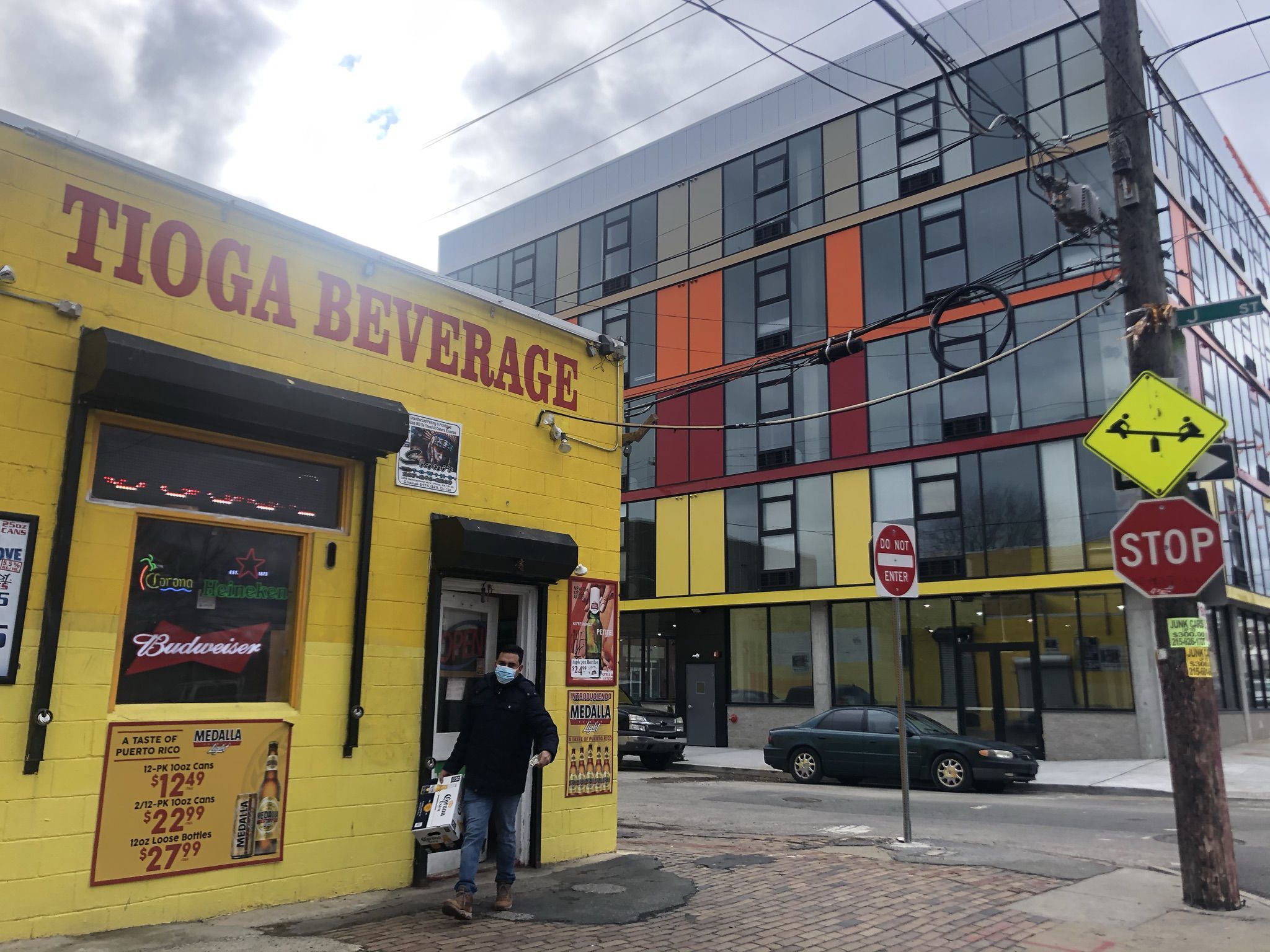
In this 2021 file photo, a glass building at J and Tioga sits near a beer store in Kensington.
Some neighborhood leaders have watched with anxiety as luxury housing developers and out-of-town investors gobbled up properties in the neighborhood, fearing that poorer residents and middle-class homebuyers may be priced out.
City Councilmember Quetcy Lozada, a Democrat who represents the 7th Council District, which includes parts of Kensington, said she knew speculators from outside the area would want to make it “the next gentrified neighborhood” once the city changed its strategy to more aggressively clean up trash and improve public safety.
But Lozada said there are not enough programs specific to Kensington aimed at preventing displacement as a result of rising property values, especially as the city is investing millions of dollars a year to improve the neighborhood. She said her office is exploring additional tax relief measures.
“I’m going to do whatever I have to do to make sure that residents who have lived in that community can stay there, can raise their families there,” Lozada said. “We have witnessed what has happened on the southern end of the district, where there has been rapid gentrification.”
In this March file photo, City Councilmember Quetcy Lozada stands in Council chambers during Mayor Cherelle L. Parker’s budget address.
Lozada also said rising property values in Kensington are part of why she has been “so careful with projects presented to me” and has prioritized what she sees as equitable development in the neighborhood — at times to the chagrin of developers who think she has been too restrictive.
“I’m all about people making a return,” she said, “but you can’t continue to do it on the backs of poor people.”
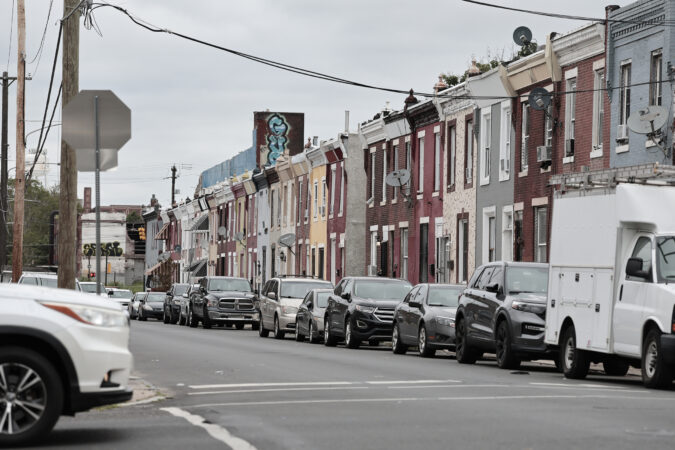
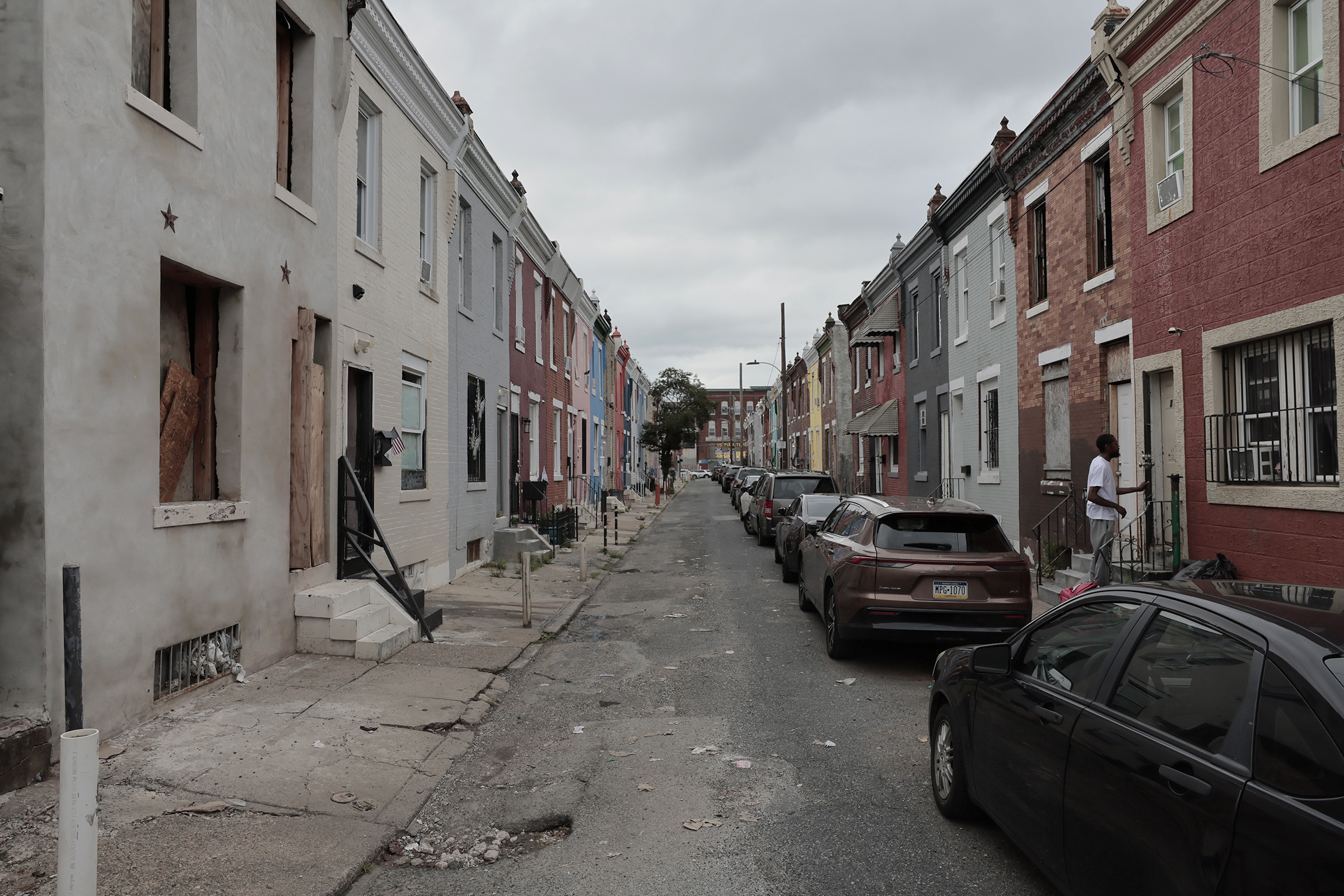
The 3100 block of Arbor Street in Philadelphia on Tuesday, July 7, 2026.
Continuing change in pockets of West Philly
There were also significant property value increases in parts of West Philadelphia.
The median increase in Mantua, the neighborhood north of University City, was the second highest in the city, at 15%, according to The Inquirer’s analysis. The median increase was 12% in Kingsessing, the neighborhood south of University City that in 2025 saw the largest jump of any neighborhood in Philadelphia.
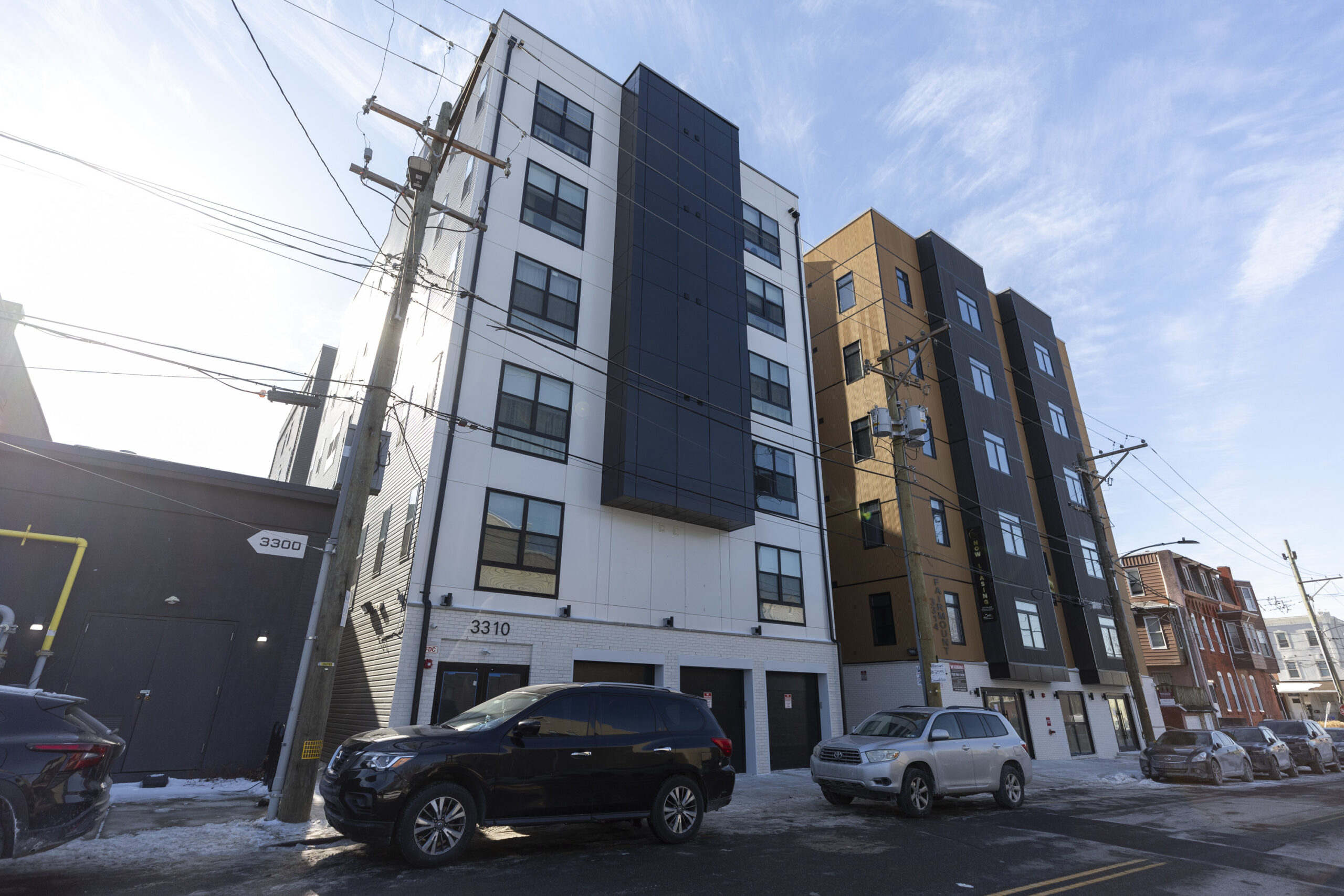
Newly developed buildings along Fairmount Avenue in the neighborhood of Mantua in Philadelphia, Pa., on Thursday, Jan. 23, 2025.
Councilmember Jamie Gauthier, a Democrat who represents West Philadelphia and has made preventing displacement a key initiative, said that there has long been racial bias in the city’s property assessments and that the city must “get serious” about protecting low-income homeowners by revamping its system.
“There has to be a higher level of urgency in making sure that the city doesn’t have a hand in pushing out all of these homeowners that make Philadelphia what it is,” Gauthier said. “It’s unconscionable for us to destabilize our neighborhoods and the longtime homeowners who live there because we didn’t take enough care to make sure that our process was fair and equitable.”
For too long, she said, city officials have said they intended to examine the property assessment practices and identify improvements. In 2024, Parker convened a task force to study the process.
Aros told Council in April that the task force’s report was “being finalized.” He said OPA would look to implement recommendations from the report, including conducting more regular reassessments and improving property-level data such as property condition.
The city is also planning to hire an outside consultant to examine its mass appraisal practices, according to city records. The analyst will be responsible for drafting a report by the end of this year.
Deputy creative director John Duchneskie contributed to this article.
Philadelphia Common Pleas Judge James Crumlish III ordered California-based Tutor Perini Building Corp. to pay $42.4 million in damages to the subcontractor retained to install the building’s exterior, the Chicago-based Ventana DBS LLC.
“Throughout the project, Ventana was forced to navigate numerous obstructions and obstacles, stemming from Tutor Perini’s pervasive material breaches of contract,” Crumlish’s ruling read last week.
A Tutor Perini spokesperson said in April that the firm disagreed with the decision and intended to appeal it.
The contractor declined to comment on the new developments.
“This ruling is an important affirmation of the facts and of the principles that govern successful project delivery,” said Bob Clark, executive chairman of Clayco, a real estate development company that is Ventana’s parent company.
“We are pleased that the Court awarded Ventana $42 million in damages and recognized that Tutor Perini failed to properly coordinate its subcontractors while acting in bad faith by concealing its knowledge of significant concrete defects,” said Clark.
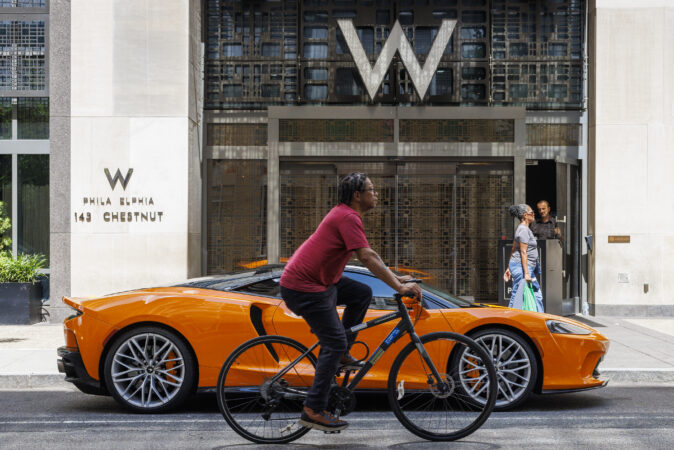
The judgment is the latest in the fallout from a construction project that Crumlish has said in an earlier ruling went “off the rails” because of Tutor Perini. Five years after the W hotel opened, the litigation is ongoing.
Tutor Perini was in court again Tuesday for the start of a new trial, this time for the judge to assess how much a concrete subcontractor, Thomas P. Carney Inc. Construction, owes Tutor for botching the job.
The proceeding had a tense opening as attorneys for Tutor Perini and Carney spent the morning arguing over motions.
Crumlish, who has previously chastised the parties for their animosity and turning the litigation into a “challenging behemoth,” expressed frustrations at times and ordered everyone to stop talking.
“I’m getting cranky, I will admit it,” the judge said at one point.
Disruptive and costly delays
Tutor Perini retained Ventana in 2015 for $14 million to assist in the design and installation of the building’ exterior and window-wall systems for floors nine to 50.
But when Ventana moved to install the hotel’s wall-window systems, they immediately noticed a “big problem,” according to the judge’s October memo. In many places, the concrete was not level or did not meet the elevation requirements in the design.
Tutor Perini denied there was a problem, while quietly attempting to grind the edges of the concrete slabs to address the issue.
By failing to supervise the concrete pours, Crumlish wrote in the recent ruling, Tutor Perini caused the “inefficient, obstructed, and impaired installation” of the window-wall systems.
“Ventana repeatedly encountered disruptive and costly delays due to Tutor’s lack of coordination while attempting to install its window wall systems,” the judge’s memo said.
Tutor Perini, for example, didn’t clear debris left by other subcontractors, the judge said, to allow the Ventana team to transport the window-wall components.
And while Tutor’s consultants confirmed the problem was the concrete pour, the company rejected Ventana’s delay notices and stopped paying the contractor.
Crumlish ordered Tutor to pay Ventana the $7.5 million unpaid subcontractor balance, $7.3 million in labor inefficiency costs, and $2.4 million unpaid change order requests, and $18 million in other costs.
The company is also on the hook for $7.1 million in attorney’s fees, expert witness fees, and litigation costs, bringing the total judgment to $42.4 million.
The W hotel opened in 2021 at 15th and Chestnut Streets, three years after its intended opening date, and it still cannot be fully occupied because some window vents are inoperable.
The project was developed by Brook Lenfest, son of former Inquirer owner H.F. “Gerry” Lenfest, whose foundation continues to own the newspaper.
Editor’s note: This article has been updated with a statement from the subcontractor Ventana’s parent company.