Category: Real Estate

  • Iron Hill Brewery in West Chester is officially seeking a new tenant

    Iron Hill Brewery in West Chester is officially seeking a new tenant

    The search is on for a new restaurateur to take over the shuttered Iron Hill Brewery in West Chester, after the building’s owner bought the assets from the former CEO of Famous Dave’s BBQ.

    John Barry, a Massachusetts-based real estate investor who owns the building, and Jeff Crivello, the ex-CEO of Famous Dave’s, said Friday that Barry purchased the liquor license and all assets inside the former West Chester Iron Hill, one of 16 locations that closed abruptly this fall when the regional chain filed for bankruptcy.

    In November, Crivello had said he intended to revive the West Chester Iron Hill, under the same name or as a new concept, after a bankruptcy judge approved his offer to buy the assets of the location and nine others in Pennsylvania, Delaware, and South Carolina.
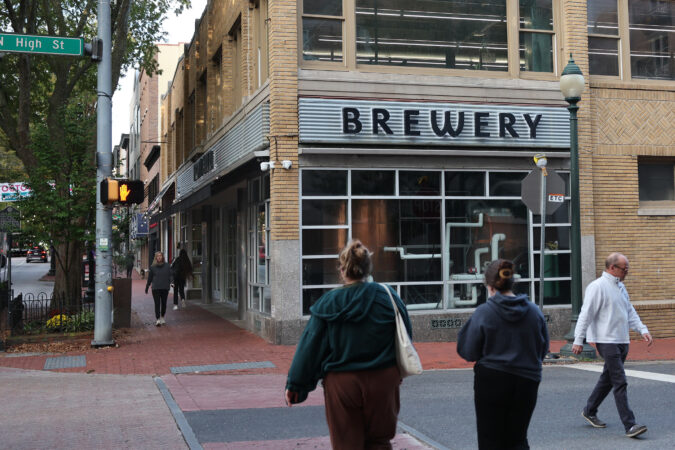
    A view from the outside looking in of the closed Iron Hill Brewery in West Chester in October.

    Both Barry and Crivello declined to disclose financial details of the West Chester deal, which was finalized on Christmas Eve. It was first reported Wednesday by Hello, West Chester, a local news website.

    “As a landlord, I was hoping to have a chance to purchase the assets,” Barry said Friday in an interview. “I wanted to buy and keep the liquor license with the building. It allows me to get a better tenant in there that is probably going to pay a little bit more in rent.”

    Iron Hill had anchored the old Woolworth’s building since 1998, when the brewery founders opened their second location there. Many local business owners credit Iron Hill with sparking a restaurant renaissance in the borough, as the brewery did in other Philadelphia suburbs.

    Situated at West Chester’s central corner of High and Gay Streets, Iron Hill had a 30-year lease, with a 15-year extension, Barry said.

    Barry, a West Chester native who now lives outside Boston, purchased the nearly 30,000-square-foot building for $8.25 million in 2022, according to Chester County property records.

    Barry said the next anchor tenant would take over a new lease for the now-vacant 10,000-square-foot space that can seat 300 people. He declined to specify what the lease terms might be.

    “It will not be reopening as Iron Hill Brewery,” said Barry, who didn’t buy the rights to the name. “My goal would be to find something similar,” though not necessarily a brewery.

    In buying the assets, Barry said the restaurant is essentially turnkey, with all the furniture and kitchen and brewing equipment still inside. A new tenant, however, may want to redesign, he said, or the space could even be subdivided for a restaurant and a retail space.
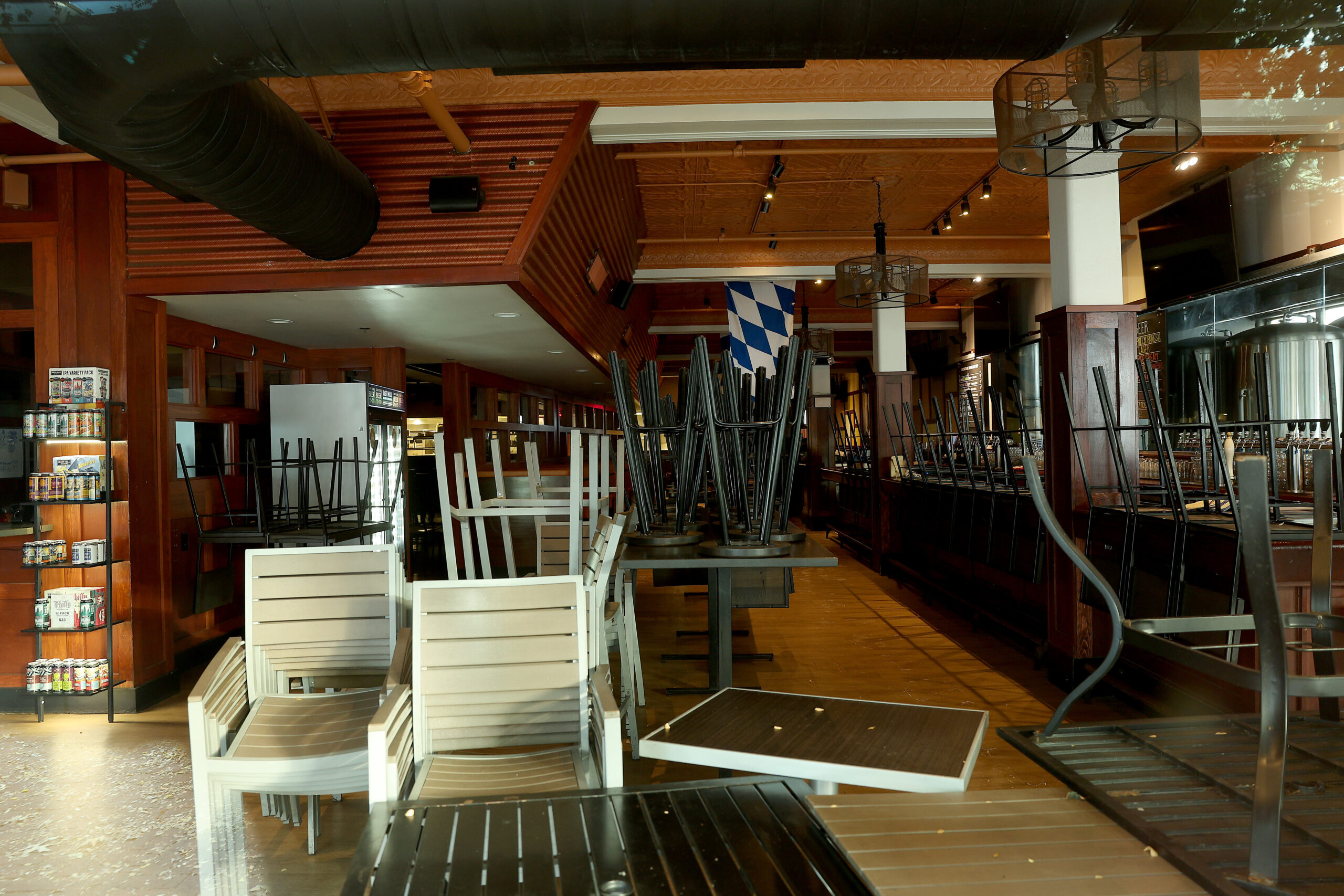
    A view from the outside looking in the now closed Iron Hill Brewery in West Chester in October.

    “It’s really important to me that we find the right tenant for the West Chester community,” Barry said. “It’ll take a little bit of time.”

    But, he added, “my hope is we get somebody in there and operating by the summer.”

    Elsewhere, Crivello said there is still hope that the Iron Hill brand could get another life.

    “We’re working with a couple buyers that want to reopen [closed breweries] as Iron Hill,” Crivello said. He declined to say which locations could be resurrected.

    In November, Crivello got the OK to acquire the assets of former Iron Hill brewpubs in Center City, Huntingdon Valley, Newtown, Wilmington, Lancaster, Hershey, and Rehoboth Beach, as well as West Chester and the two locations in South Carolina.

    Crivello said Friday that he has since sold the assets of the former Iron Hills in Columbia and Greenville, S.C., to Virginia-based Three Notch’d Brewing Co. He said plans for the other locations were still in the works.
  • Why a California company decided to manufacture 3 billion canned beverages a year in Philadelphia

    Why a California company decided to manufacture 3 billion canned beverages a year in Philadelphia

    As California-based canned beverage manufacturer DrinkPAK eyed an East Coast expansion, Pennsylvania was always at the top of their list of potential sites.

    But in the end Philadelphia’s Bellwether District — the sprawling site of the former South Philadelphia oil refinery — won out not only over other states like New Jersey, but other possible Pennsylvania destinations like Scranton and the Lehigh Valley as well.

    “We looked at other geographies, but ultimately we’d like to be where the people are, where the jobs are,” said Jon Ballas, president of DrinkPAK. “We’re not scared of building in large city centers. It just provides an energy that doesn’t exist out in the more general manufacturing landscapes.”

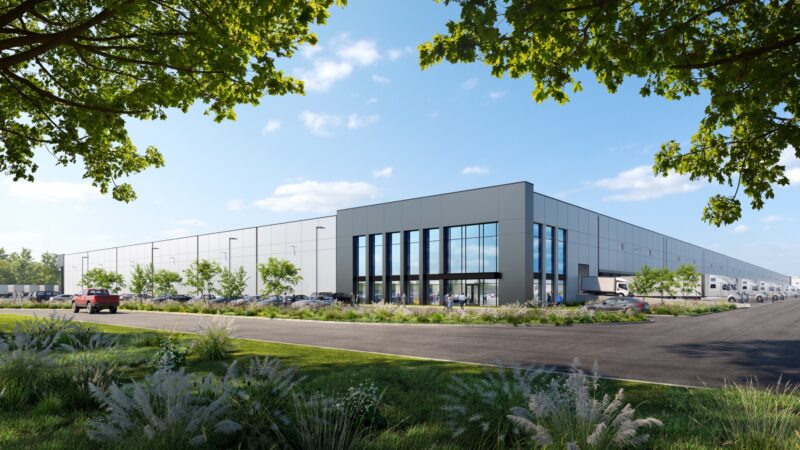
    The 1.4 million-square-foot factory will be the first tenant for the 1,300-acre Bellwether District, which developer HRP Group (formerly known as Hilco Redevelopment Partners) hopes to turn into a new industrial and life sciences hub in the city.

    Contractors broke ground on the manufacturing facility earlier this month, and the building’s shell should be complete by this time next year. Then construction on the internal mechanics will begin, with plans to complete it by April 1, 2027.

    Once it’s operational, DrinkPAK’s manufacturing facility will operate 24 hours a day, seven days a week, cranking out 3 billion cans a year.

    The factory will employ 174 people, largely on site because DrinkPAK doesn’t employ a lot of truck drivers. The workers will be operating the production line and managing machinery.

    “We’re committed to hiring the best in the industry, [offering] competitive wages, some of the best benefit programs out there,” said Ballas. “These are very attractive jobs, high-paying jobs.”

    DrinkPAK doesn’t work with the major soda or beer companies. Instead it manufactures cans for a variety of smaller, specialty beverage brands including alcoholic seltzer, energy drinks, and lower-calorie soda products.

    “We’re not making your typical Coke and Pepsi,” said Ballas. “We’re making a lot of this innovative, better-for-you-type products.”

    DrinkPAK was founded in 2020 and already has factories of similar capacity to its future Philadelphia facility in Southern California and in Texas.

    There is some regional variation (more canned wine in California, and more health drinks on the coasts), but its production line’s output is largely determined by broad trends in the industry.

    “Beverage is very cyclical,” said Ballas, and the facility needs to be designed with flexibility to make what’s most in demand. Right now, he noted protein drinks are “the hottest trend.”

    “It takes a specific type of liquid handling equipment to handle all the protein hydration, to get that into solution in order to carbonate it into a can,” he said.

    DrinkPAK’s facility is in the portion of the Bellwether District slated for industrial use, with the idea that warehouses and factories would be the tenants.

    The HRP Group already built a 326,000-square-foot warehouse and second 727,000-square-foot warehouse, which were both built on spec — meaning without a prospective tenant in mind.

    But the 3 billion-can production facility is the first official tenant.

    “We’re looking forward to delivering this building for DrinkPAK and playing a small role in their company’s incredible growth trajectory,” said Andrew Chused, chief investment officer for HRP Group.

    “DrinkPAK’s decision to build its flagship East Coast facility here is the first big step in turning this site into the dynamic commercial ecosystem we always envisioned,” said Chused.

  • See what homebuyers can get for $390,000 in Lower Merion, Northeast Philly, and Camden County | The Price Point

    See what homebuyers can get for $390,000 in Lower Merion, Northeast Philly, and Camden County | The Price Point

    The Price Point compares homes listed for similar sale prices across the region to help readers set expectations about house hunting.

    Looking for a new home for the new year? You’ve got options if you have the region’s typical homebuying budget.

    Across the Philadelphia metropolitan area, homes sold for a median of $390,000 last month, according to the multiple listing service Bright MLS. That typical sale price is up more than 3% from last year.

    Here’s what a home shopper could get with a budget like this in three different neighborhoods in the region.

    Lower Merion condo in star location

    Wolverton & Co., a Montgomery County-based real estate company, sells and manages a lot of condos in the area of West Montgomery Avenue in the Haverford section of Lower Merion Township.

    “I call that stretch the golden mile of Haverford as it relates to condominiums,” said Will Wolverton, owner and broker of record at Wolverton & Co. “It’s a very desirable area.”

    There are restaurants and national and local stores, including at the nearby Haverford Square and Suburban Square shopping centers. Condo residents can walk to SEPTA’s Haverford station to catch Regional Rail trains. The Merion Cricket Club offers sports facilities and hosts dinners and galas.

    One condo currently for sale in the area is a two-bedroom, two-bathroom unit at Haverford Hunt Club, a building with 16 units on four floors. Condos there include both one-bedroom and two-bedroom units.

    The building is about 45 years old but has been “thoughtfully updated” in both looks and critical infrastructure, such as the elevator and the roof, Wolverton said.

    The condo for sale gets a lot of natural light, he said. And it’s on the top floor, so buyers won’t have upstairs neighbors. It also has a private balcony and a reserved space in the property’s parking lot.

    The last several serious buyers have been most interested in the neighborhood, Wolverton said.

    “It’s a very good property,” he said, “and a great location.”

    The condo was listed for sale for $385,000 on Oct. 20.

    An unusual Mayfair twin

    This home in the Mayfair neighborhood of Northeast Philadelphia stands out in a few ways, said listing agent Xiao Zhen Zhao, who works throughout this section of the city, as well as Fishtown and Northern Liberties.

    The open kitchen is “very unique” for the area and includes bar seating, said Zhao, an agent with Legacy Landmark Realty.

    The primary bedroom has a private bathroom, which isn’t common in older homes in Northeast Philadelphia, she said. A lot of houses have only one full bathroom, she said. One of the bathrooms features a skylight and pink tiles on the walls.

    And the home is “a bigger twin,” she said. It spans 1,868 square feet.

    The home has a backyard and a walk-out finished basement, which has a half bathroom. It also has a garage and driveway.

    The twin is in an area of the city where houses are more affordable and parking is easy. It’s within walking distance of schools. It’s minutes from stores and restaurants along Cottman Avenue, and it’s right off Pennypack Park.

    Potential buyers have liked the layout of the home and also the look of it, Zhao said.

    “A lot of people like the brick,” she said.

    The twin was listed for sale for $389,000 on Nov. 21.

    A Colonial charmer in Gloucester

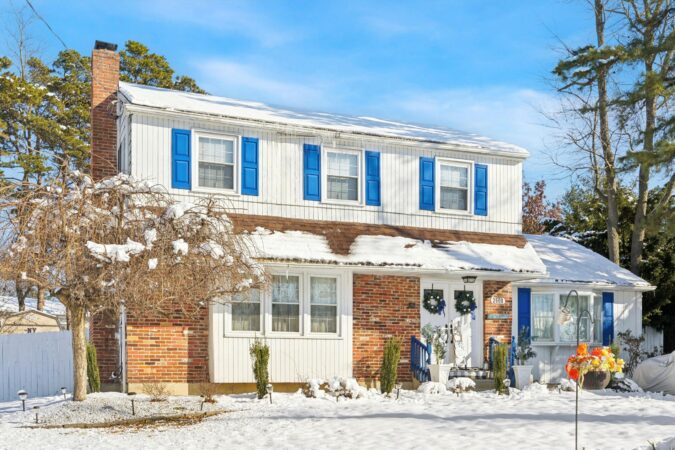
    Potential buyers touring this Colonial in Camden County have fallen for its charm, said real estate agent Evangeline Gambardella. “Because it is a very charming space.”

    The living room features a brick fireplace and a large window that lets in natural light and frames views of the front yard.

    The layout is more open than in a traditional Colonial, especially in this area of Gloucester Township, said Gambardella, a real estate agent with the Mike McCann Team, which is an affiliate of Keller Williams.

    The owners have recently updated the property. The home has new landscaping, a roof that is about 4 years old, a new fence, and a new heating, cooling, and ventilation system.

    Gambardella said this work makes the property ideal for first-time homebuyers, people who are downsizing, or anyone who doesn’t want to undertake large projects.

    “It presents a really lovely value for its price point,” she said.

    The home’s kitchen includes an island with seating. And a door in the formal dining room opens to the deck, which has a retractable awning.

    Home shoppers who have visited the property like its spacious backyard and its location. It is minutes from the Gloucester Premium Outlets and the Deptford Mall, has easy access to major highways, and is close to parks and restaurants.

    The home’s unfinished basement also is a “huge selling point for a lot of people” who want to decide what to do with the space, Gambardella said.

    The house was listed for sale for $389,000 on Dec. 20.

  • Home for the holidays in Haddon Heights

    Home for the holidays in Haddon Heights

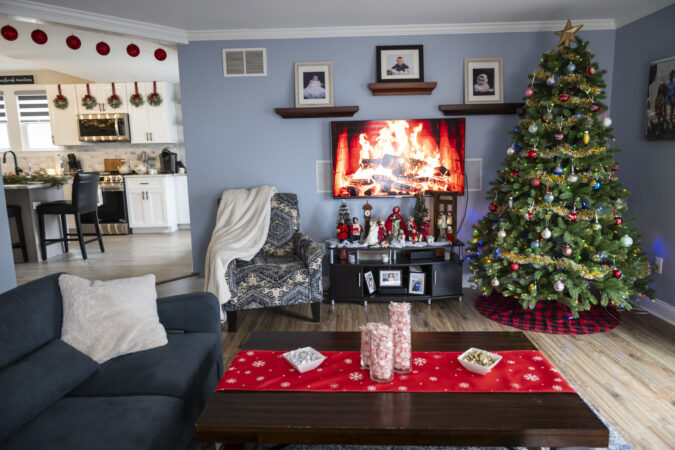
    The tree in the corner of the family room in the Haddon Heights home is decorated simply with lights and balls.

    Gold letters spelling Krissy and dated 1978 festoon a red ball hung in the middle of the tree. On a lower branch, white glitter on a blue ball spells Mom, 2012.

    Other colored balls are scripted with various dates and the names Sophia, Nick, and Emily.

    Kristin Corson-Ricci is both Krissy and Mom. Emily, now 20; Sophia, 18; and Nick, 14, are her children.

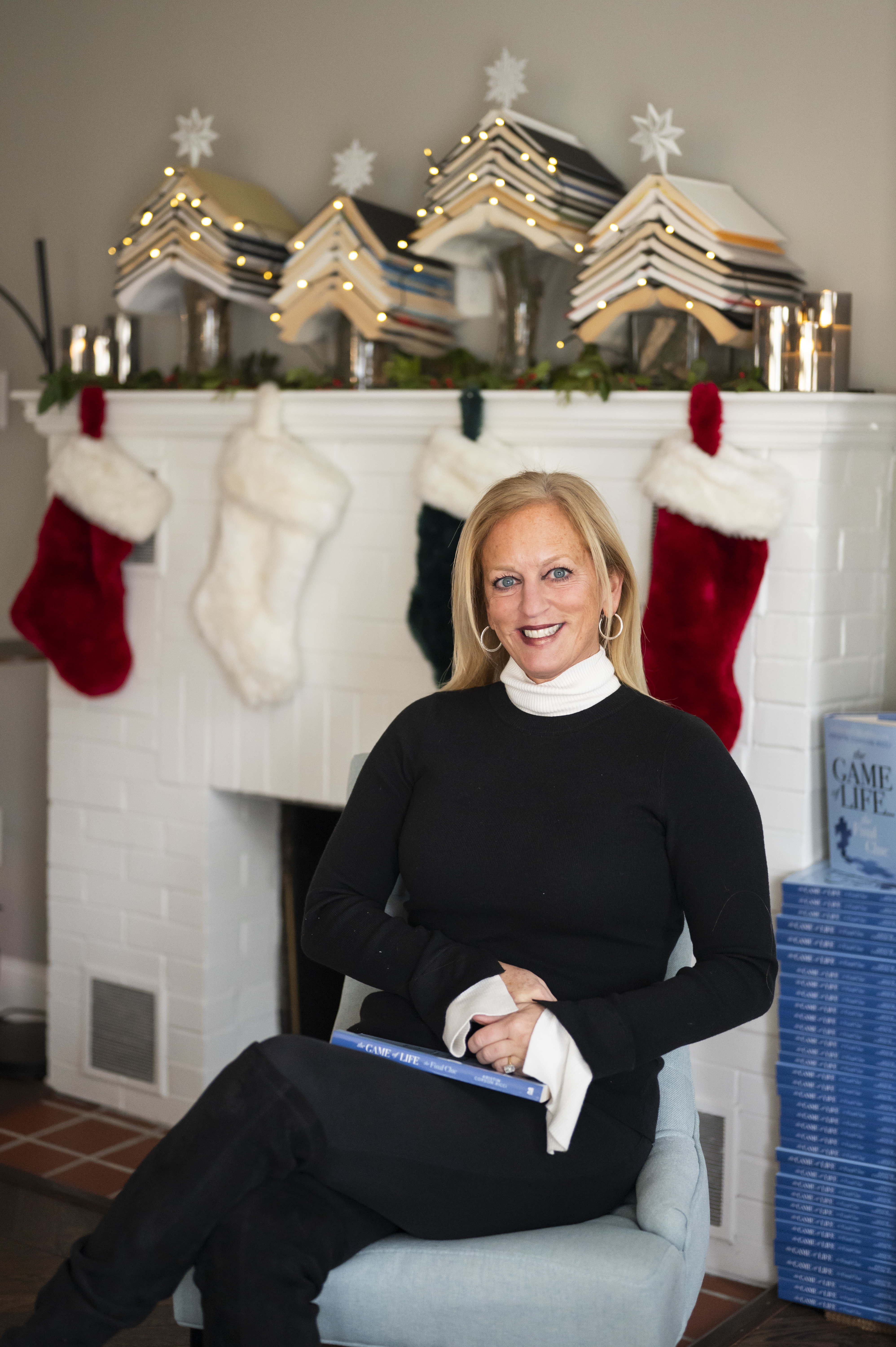
    Kristin Corson-Ricci sits in front of her hearth, where stockings hang for Christmas, holding a copy of her new book.
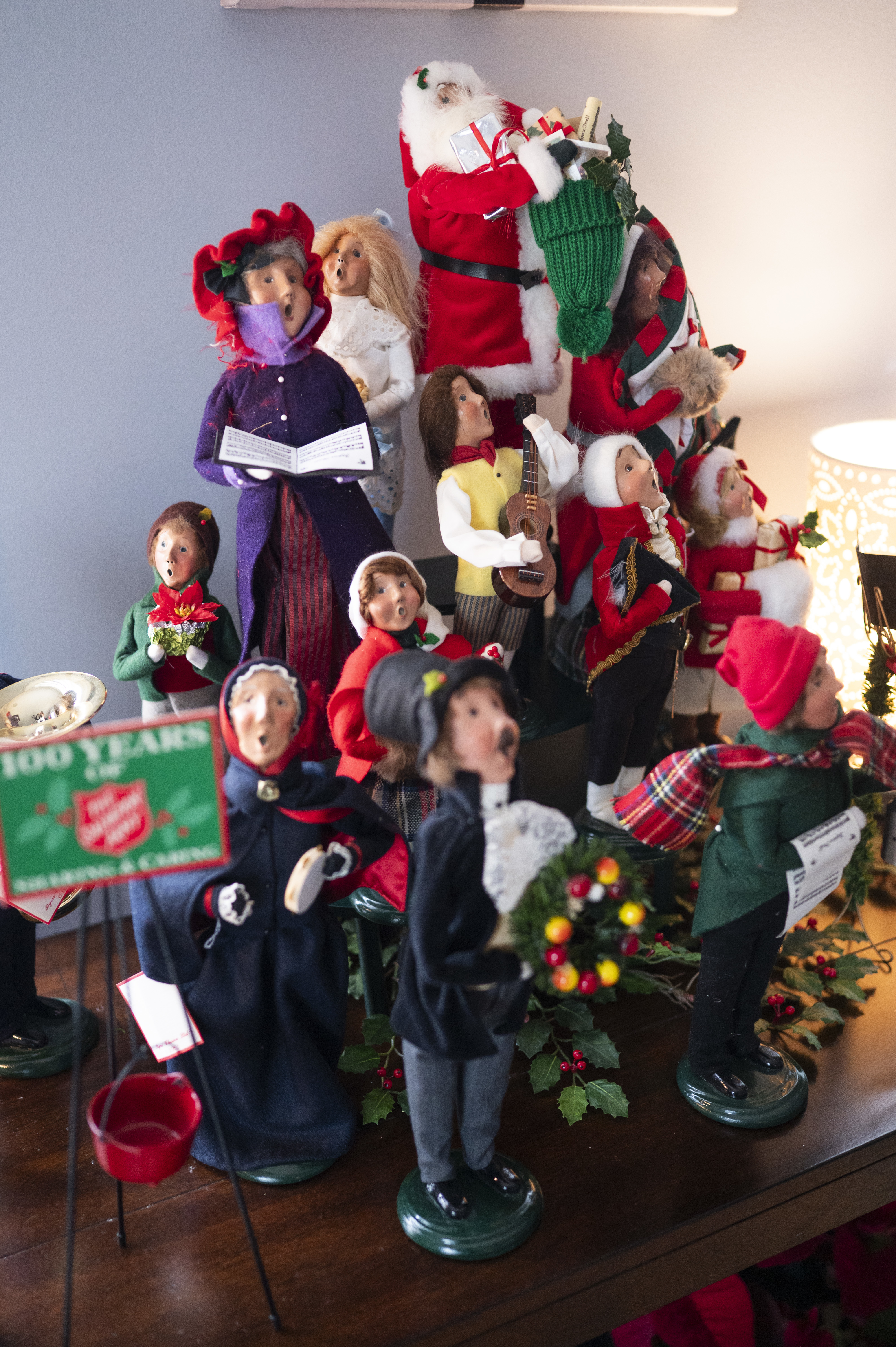
    A table is decorated with Byers’ Choice caroler dolls.
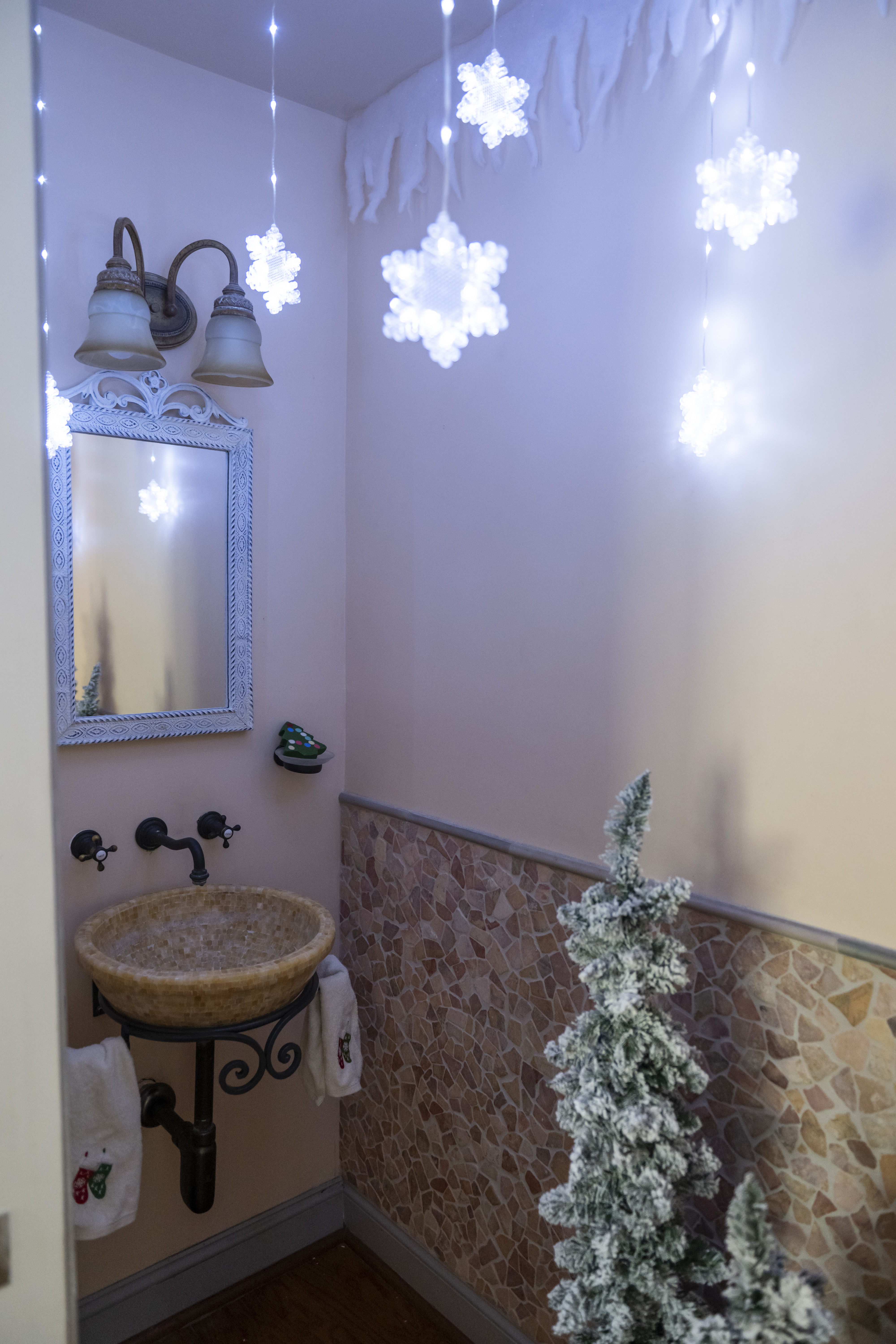
    Even the powder room is decorated for the holiday, with snowflakes and flocked trees.
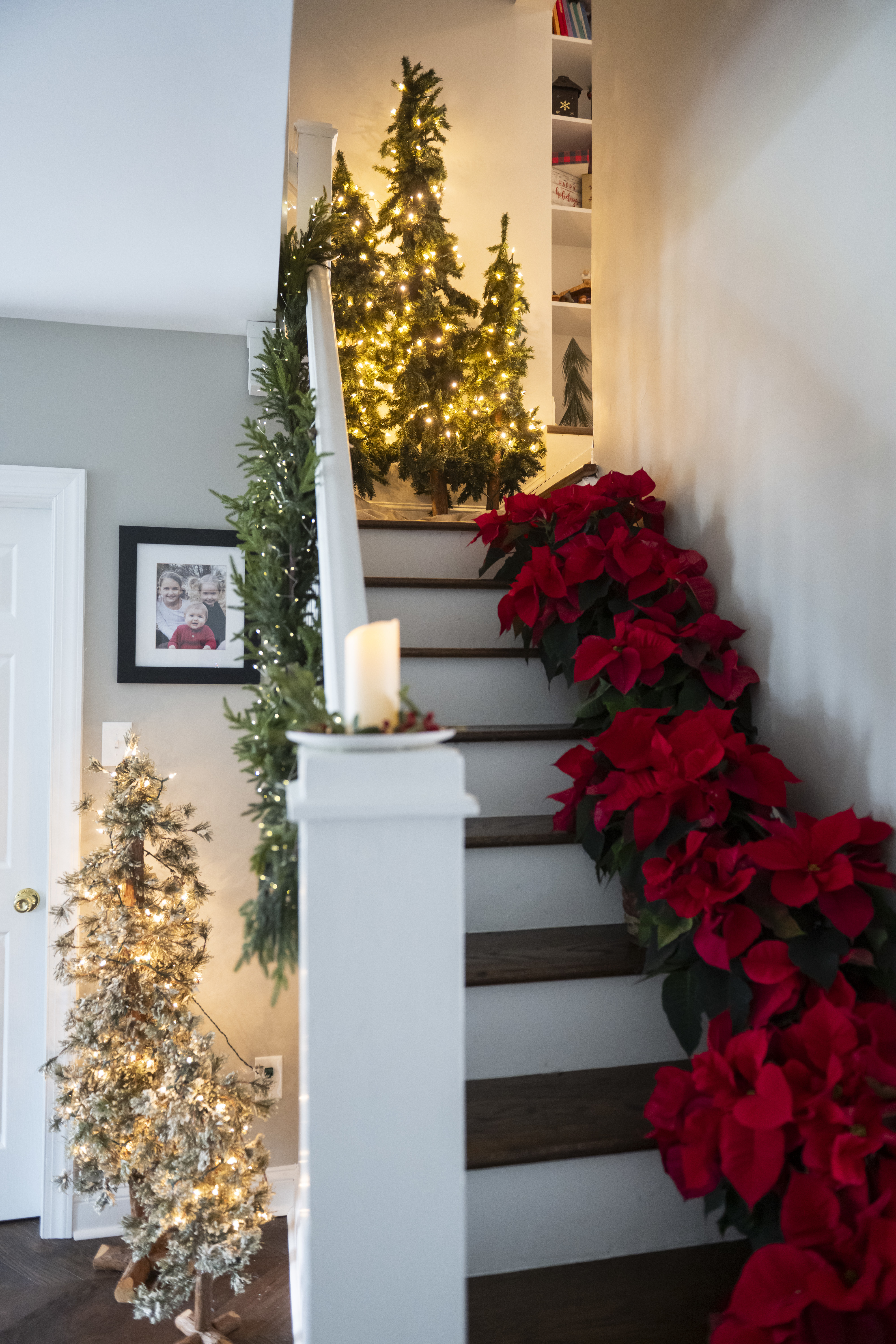
    The stairs are decorated with poinsettias and Christmas trees.

    Corson-Ricci grew up in the two-story home where she now raises her family.

    The balls were purchased over the years at the holiday bazaar at St. Rose, a Catholic elementary school in Haddon Heights. Corson-Ricci, now a physician liaison, and her children attended the school.

    Corson-Ricci purchased the three-bedroom home from her parents, Phyllis and Rodger Corson, in 2002 when she was engaged.

    She and her husband added a family room and powder room to the first floor and a primary bedroom with a beamed ceiling and bath on the second floor. The screened porch was enclosed for an office. The couple later divorced, and she kept the house.

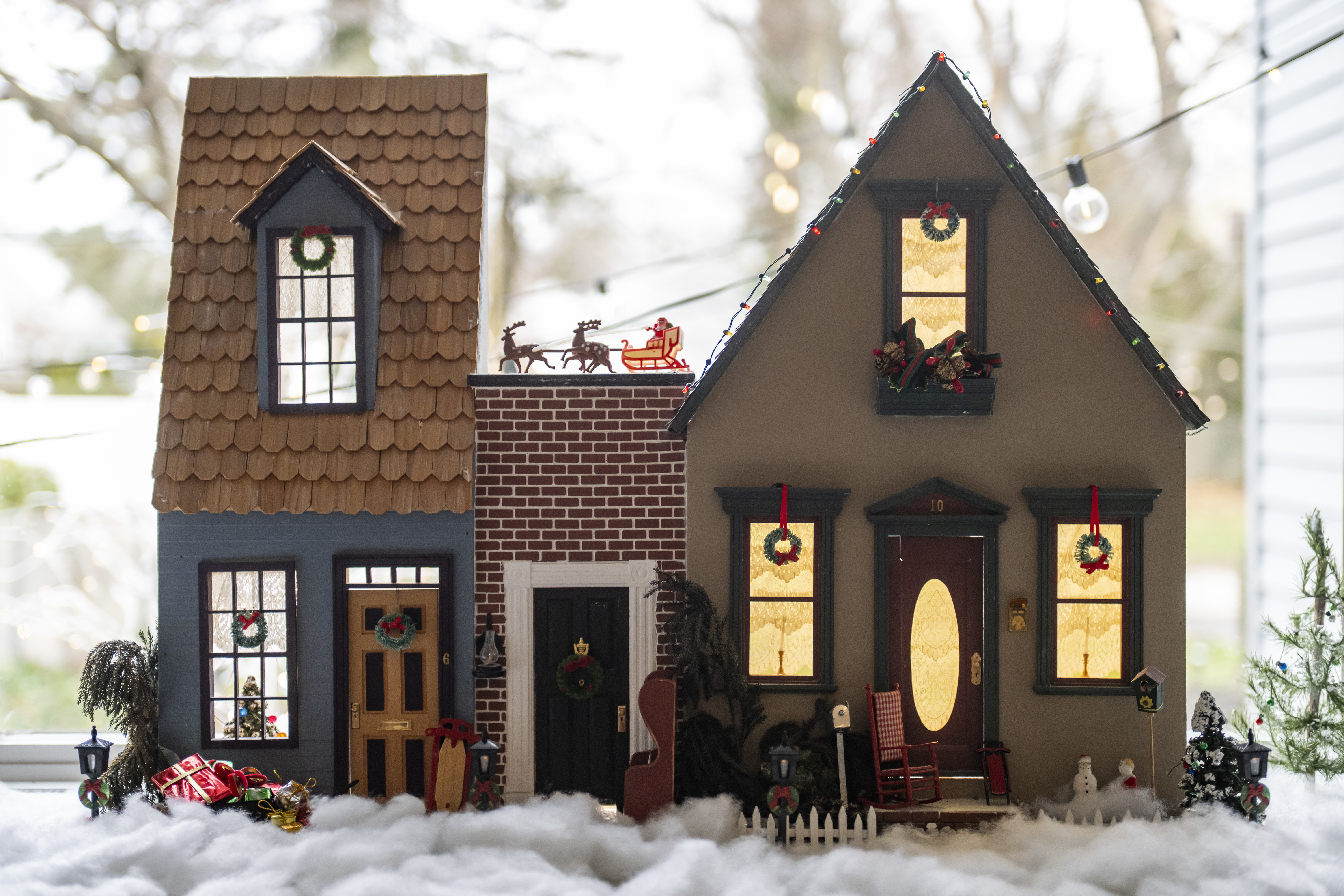
    A row of miniature wooden homes is on display in Corson-Ricci’s home.
    The Christmas tree is completely decorated with ornaments made at St. Rose elementary school. Corson-Ricci and her children were all students at the school.

    Corson-Ricci retained the traditional decor of the 95-year-old home, painting the breakfast nook bright yellow. Kitchen cabinets and backsplash were green. “It was warm and homey,” she said.

    Calamity came in 2022. Corson-Ricci returned to the house after four days at the Shore to find it flooded. Workers repairing the heating system had left water running.

    The oak floors inlaid with mahogany were soaked, as were walls, ceilings, and furnishings. Fortunately, photo albums and books were stacked on shelves that did not get wet. And the family’s collections of Christmas balls, 47 Byers’ Choice caroler dolls, and seven nutcrackers were stored in the dry attic.

    For over a year, Corsin-Ricci and her kids camped out in hotels and then in a rented condo. Professionals told her it would make more sense to tear the house down, but she said, “No. I wanted my home back,” she recalls.

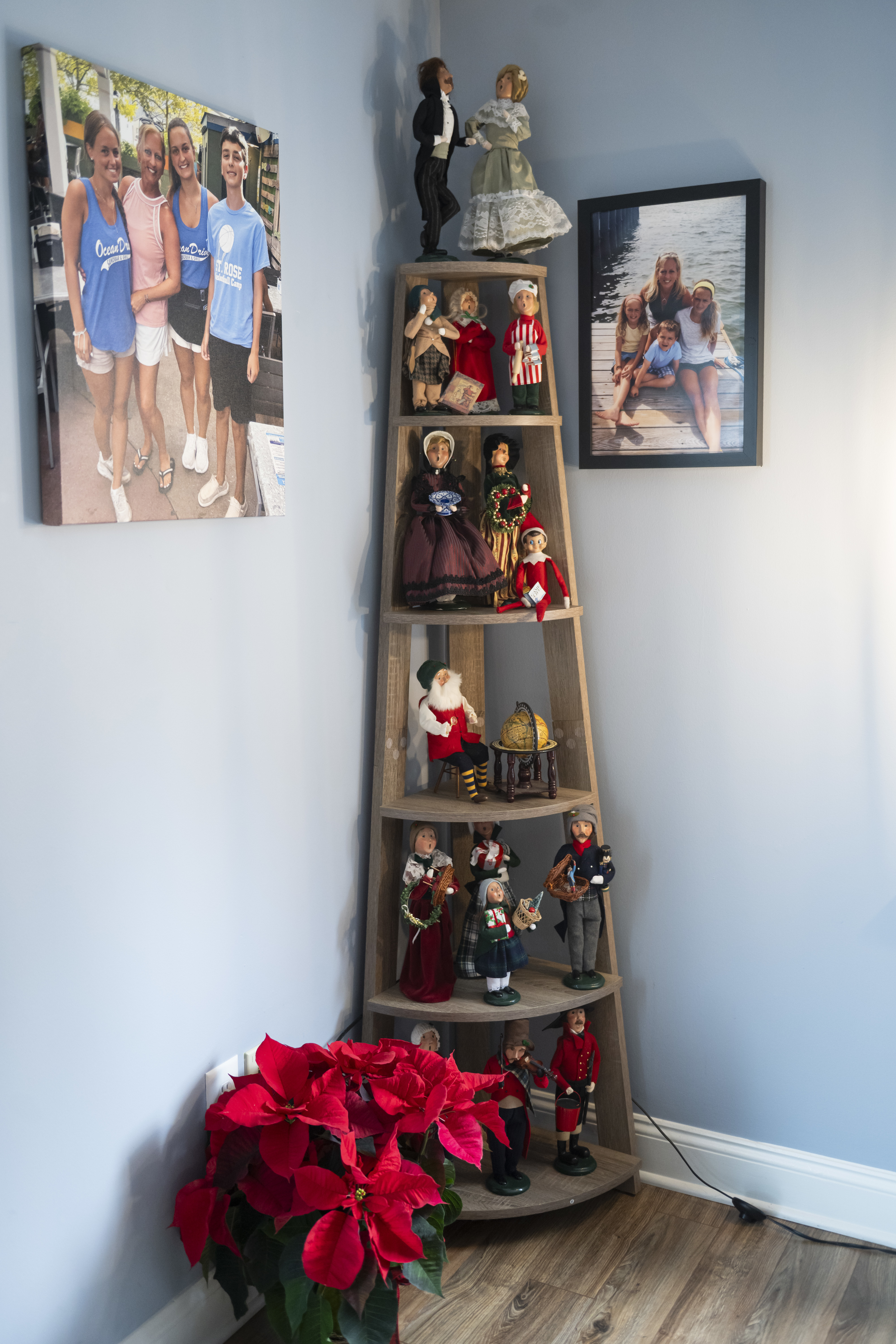
    A corner shelf is decorated with Byers’ Choice caroler dolls.
    The dining table is decorated with holiday-printed china and florals.

    With the help of Reliance Contracting in Medford, Corson-Ricci rebuilt.

    The project gave her an opportunity to open up the first floor, removing walls between the dining room, kitchen, and breakfast nook.

    Now there are sleek black chairs, a white dining table, and white kitchen cabinets, which store contents of the buffet and china cabinet that were ruined in the flooding. Walls are heather gray in the dining area, kitchen, and living room with its original fireplace. The pale-blue family room is furnished with a blue couch and blue-patterned chair.

    The new layout is “great for entertaining,” Corson-Ricci said, and her more “monotone” decor is a good backdrop for Christmas decorations she and her parents have acquired.

    On Dec. 5 she hung a giant lighted wreath on the gray siding over her front door and opened her home to over 400 people attending the annual Haddon Heights Library Holiday House Tour.

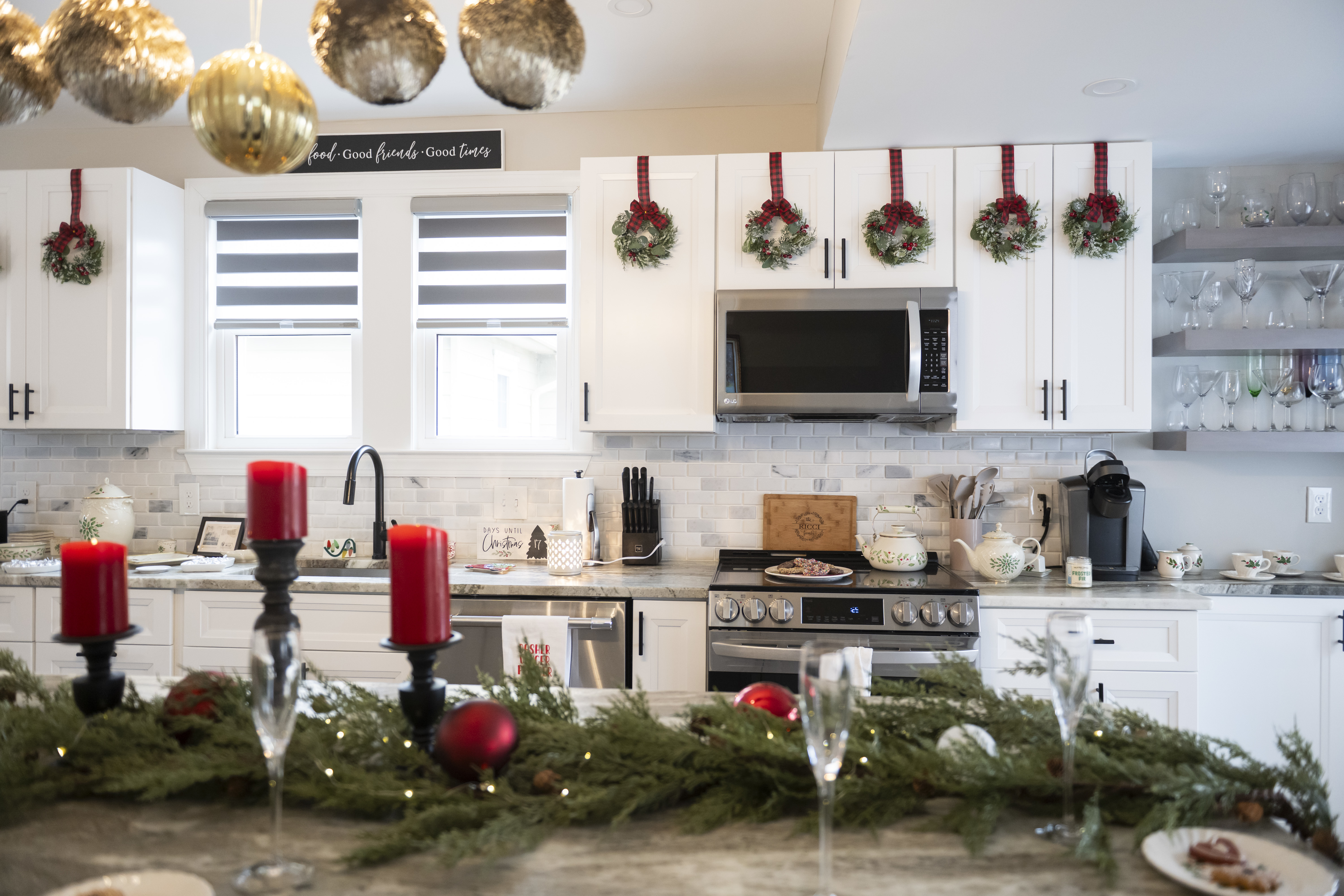
    The kitchen counters, light fixtures, and cabinets are adorned with festive candles, garland, ornaments, and wreaths.

    Visitors admired the holly-patterned white china plates and cookie jar Phyllis Corson purchased in the 1970s.

    A Byers’ Choice dancing couple Corson-Ricci bought her parents tops a corner etagere. On the shelf below is a singing baker she and Rodger bought for Phyllis the month before he died in 2015.

    Nutcrackers in red and green velvet stand at attention on the wine cooler.

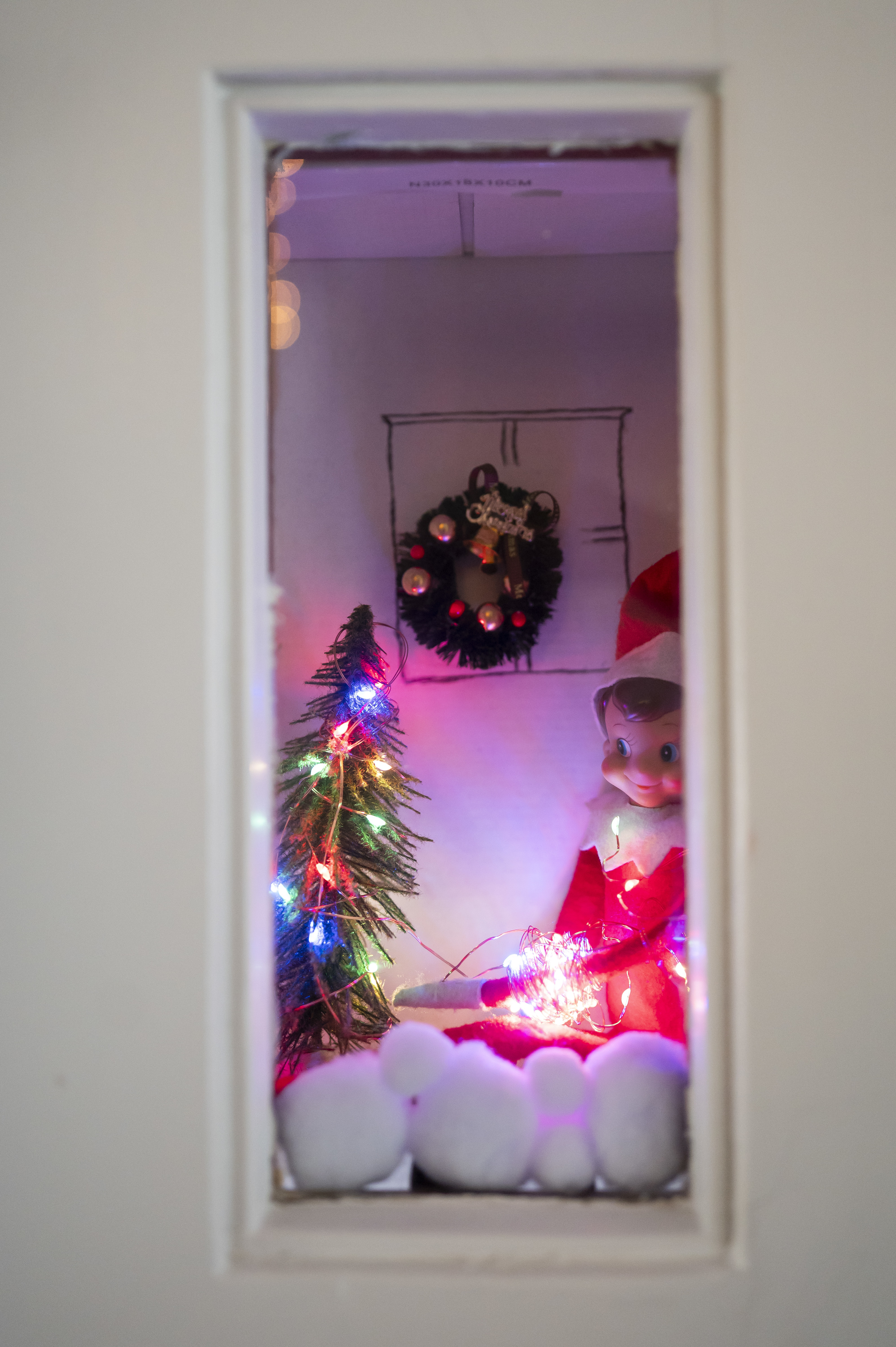
    To entertain children on the tour, Corson-Ricci hid a miniature elf in the refrigerator and another behind the window of a closet door.

    The third elf was seated on the etagere reading a tiny version of her mystery novel, published last month. Copies of The Game of Life … The Final Clue, Corson-Ricci’s first novel, were discreetly stacked nearby. Several tour-goers bought them.

    An Elf on the Shelf is holding a miniature version of Ricci’s new book.
    A cozy-looking Elf on the Shelf is on display behind the window of a closet door.

    Besides displaying family treasures, including her mother’s dollhouse decorated for the holidays, Corson-Ricci crafted Christmas trees out of stacked books and purchased snowflakes to hang in the powder room.

    The day before the tour she decided the pendant lights above the kitchen island needed embellishing. Gold balls ordered from Amazon arrived on time.

    Sometimes you want something new to go with the old.

    Is your house a Haven? Nominate your home by email (and send some digital photographs) at properties@inquirer.com.

  • House of the week: A three-bedroom house near Temple University for $225,000

    House of the week: A three-bedroom house near Temple University for $225,000

    When Beverly Allen bought the three-bedroom, one-bathroom house near Temple University at a sheriff’s sale in 1987, her son Devon recalls that he and his three siblings were not impressed by the neighborhood. They didn’t think the house was a promising investment.

    But “she had the vision and we didn’t,” Devon Allen said as he prepared to sell the house where his late mother, head disciplinarian and assistant director of the ROTC program at Benjamin Franklin High School, lived until her death in 2020.

    She did a considerable renovation of the house, and in her will, she left it to her four children with the provision that they divide the sale proceeds. It remained mostly vacant for three years — another son lived there during the COVID-19 pandemic — until Devon started further renovating it in 2023. Now, he said, he is convinced that the neighborhood is on the upswing and will prove that his mother’s instincts were correct.

    “With the new construction going on around it, it’s very promising,” Devon said.

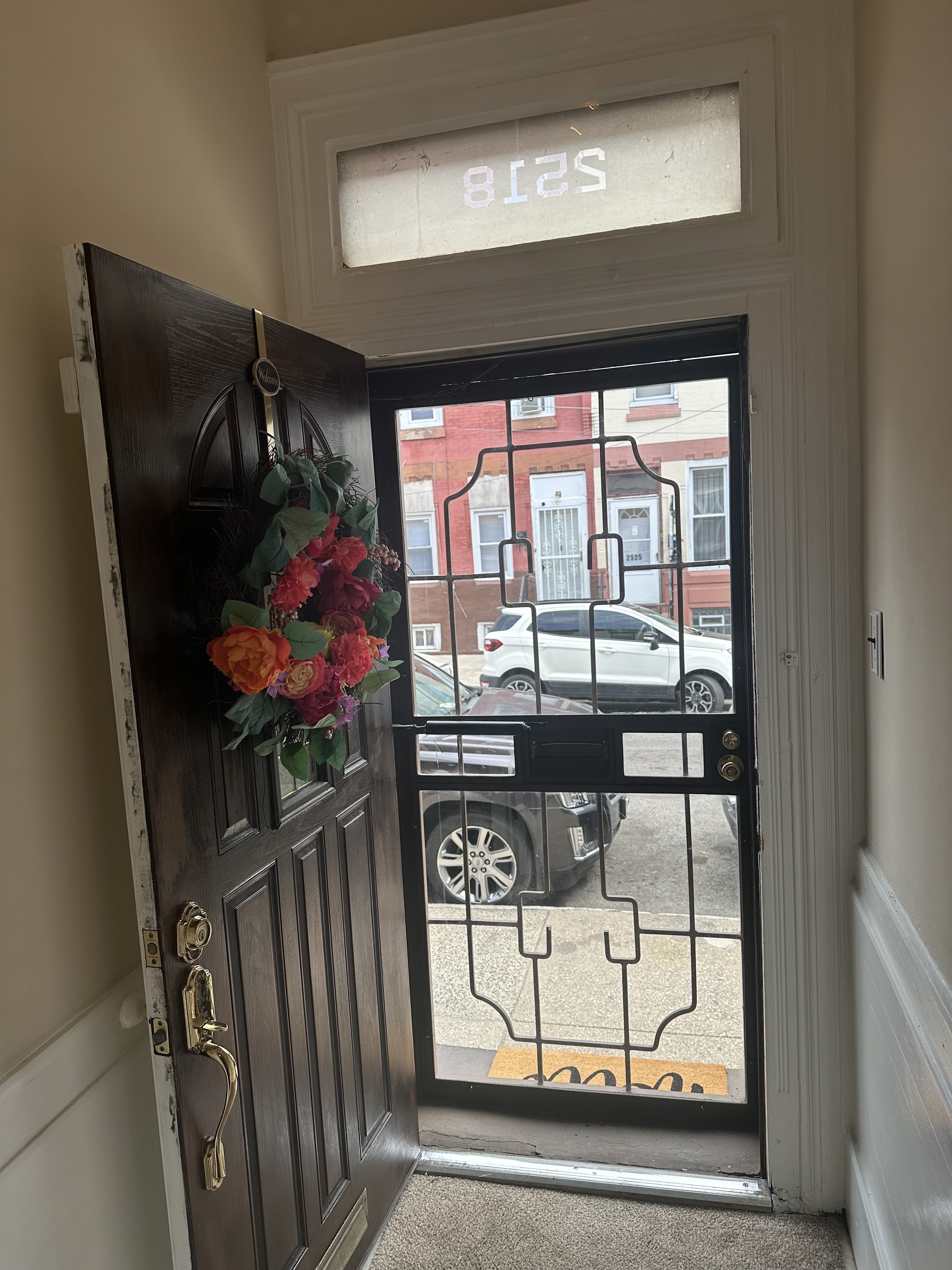
    Vestibule of the rowhouse.

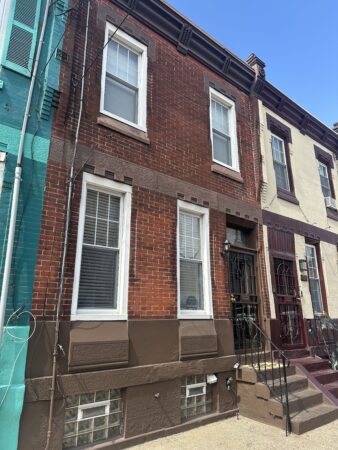
    The 1,600-square-foot rowhouse in the Hartranft neighborhood is four blocks from the university and Temple University Hospital. It comprises two stories plus an unfinished storage basement with washer and dryer.

    The interior has been totally repainted.

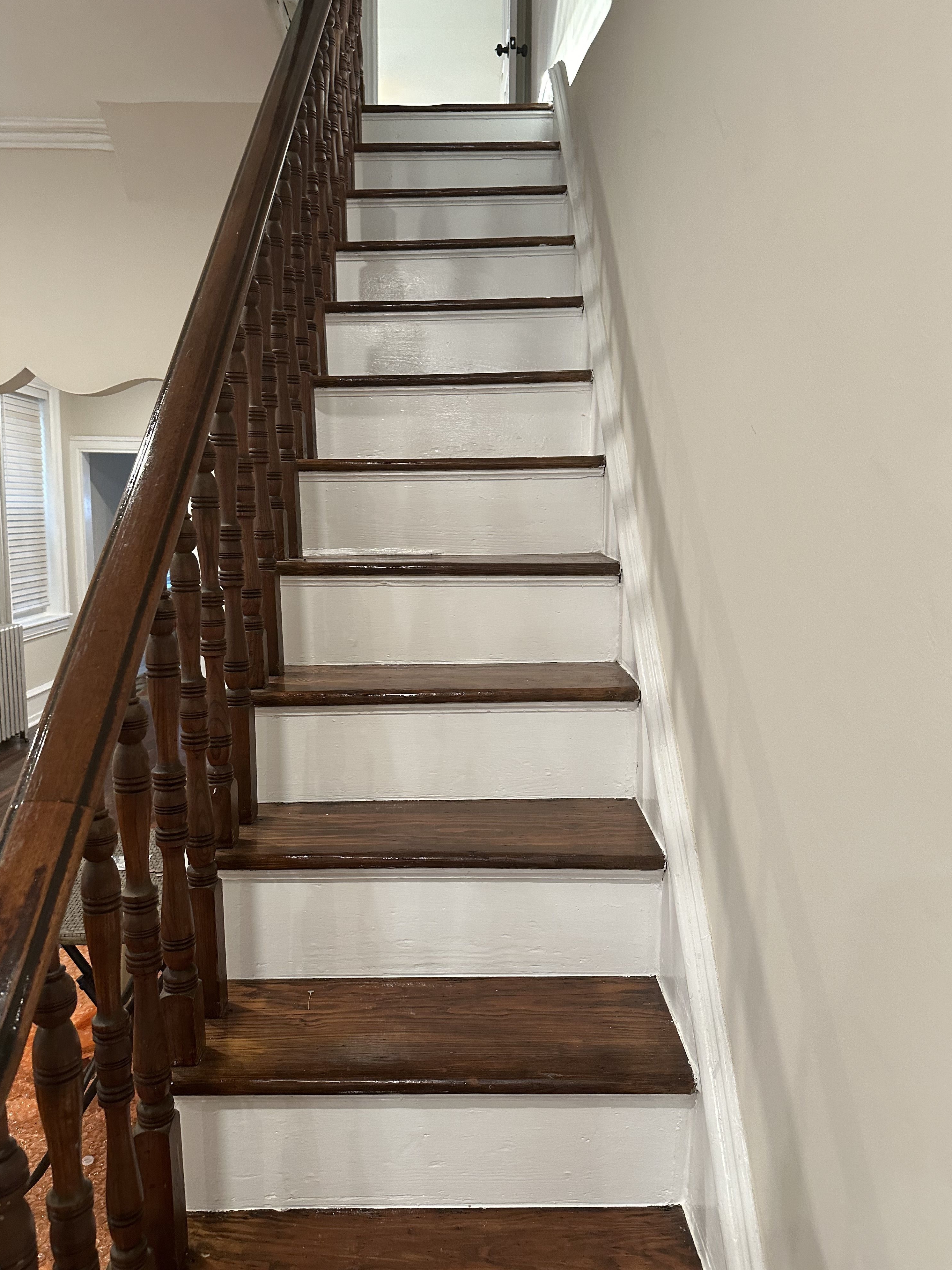
    The house has high ceilings, a large eat-in kitchen, and hardwood floors. The lower level has an open-concept living and dining area, and all three bedrooms are on the next level. And there is a paved backyard.

    Stairs of the home, which has hardwood floors.

    The kitchen has granite countertops, white cabinetry, and ceramic flooring. The bedrooms all have ceiling fans.

    The house is near the North Broad Regional Rail station, Fotterall Square park, athletic fields, and a dog park.

    It is listed by Brian Wilson of BHHS Fox & Roach Center City for $225,000.

  • Many renters say they’ll never buy a home, according to a national survey

    Many renters say they’ll never buy a home, according to a national survey

    This year, renters were burdened by housing costs, pessimistic about the economy, and less likely to say homeownership is part of the American dream, according to a survey by the national rental listing platform Zumper.

    Zumper surveyed more than 6,000 renters across the country as part of its annual report about the state of renting. The report gets at renters’ feelings and behaviors and evolving trends.

    Affordability remains a challenge for renters, even as more apartments flooded markets in recent years, giving renters more options and negotiating power and cooling rent growth. In Philadelphia, the median asking rent in December for a one-bedroom home — $1,490 — was down about 2% from the same time last year, according to Zumper.

    The report also gives insights into what renters want. Almost one in five renters who were surveyed said access to outdoor space is a top-three priority when choosing a home. About one in four renters said eco-friendly features were important.

    And almost half of renters — 45% — said they have pets, from cats and dogs to lizards and iguanas. In an analysis published last year, Zillow found that landlords who allow pets rent their homes faster.

    Here are three takeaways from Zumper’s report on the state of renting in 2025.

    Renters are struggling

    Roughly three in five surveyed renters are cost burdened. That means they spend more than 30% of their income on rent. But the average renter said they spend 40%.

    Renters don’t feel great about the economy. Four in five said they are uncertain or not confident about it, and about two-thirds said they think the country is in a recession.

    One in five renters said they moved to lower their cost of living.

    Almost three in four renters said they save 15% of their income or less every month. About one in four have student loans, and almost half have credit card debt. That all makes it difficult to cover emergencies or save for future plans, such as homeownership.

    Three in four renters said 2025 was not a good time to buy a home.

    Fewer renters dream of homeownership

    In 2021, 27% of surveyed renters said homeownership was not part of the American dream. That share has grown to 34% this year.

    And now 60% of renters say the new American dream means being “untethered” from homeownership, Zumper’s report said. And 30% of renters said they do not ever plan to buy a home.

    These shifts “reflect both economic pressures and changing cultural values,” according to Zumper’s report.

    The older that surveyed renters were, the less likely they were to say they would ever buy a home. Baby boomers also were the generation least likely to say that homeownership is part of the American dream.

    People aged 65 and older are the fastest-growing population of renters in the Philadelphia region, according to Point2Homes, a national rental home listing portal.

    These rental destinations were popular

    The top five cities that renters said they were moving to include one in the Northeast and two in California.

    The most popular city for a move was Los Angeles. Zumper cited the city’s climate and residents’ lifestyles.

    Next on the list was Atlanta, followed by New York City, San Francisco, and Charlotte, N.C.

    The report said Atlanta and Charlotte offer growing job markets and affordability compared to other coastal cities. It said New York’s high rents were probably why the city wasn’t higher on renters’ list.

    And renters were attracted to San Francisco in part because of its tech scene.

    After a shift to remote work during the pandemic, more workers now need to go into an office at least some of the time. In 2021, Zumper’s survey found that about 25% of renters only worked from home. That share is down to 12%.

    So it’s not a surprise that renters said they were moving to cities that are major job centers. A commute was the third-most-cited deciding factor for renters’ locations.

  • Good luck affording an apartment in Philly if you earn minimum wage

    Good luck affording an apartment in Philly if you earn minimum wage

    Out of the 50 largest metropolitan areas, the Philadelphia region is where minimum-wage earners must work the most hours to afford rent.

    Two workers who make Pennsylvania’s $7.25 minimum hourly wage would each have to work 96 hours per week to afford the Philadelphia metropolitan area’s median asking rent of $1,739 in November, according to an analysis by Realtor.com.

    Only five of the top 50 metros have rents that are affordable without overtime for a household in which two workers make the minimum wage. In all five metros, the minimum wage is above the federal floor of $7.25, and the median rent is lower than the median across the 50 metros.

    The most affordable metro is Buffalo, N.Y., where two workers making the state’s minimum wage of $15.50 would need to work only 30 hours per week each to afford the region’s median asking rent of $1,176 in November.

    For Pennsylvanians in the Philadelphia region, the state and federal minimum wages are the same, and the median rent is above the $1,693 median rent for the 50 metros.

    Joel Berner, senior economist at Realtor.com, noted that demand for workers often pushes the lowest actual starting wages above mandated minimums. But in areas with high costs of living, even wages driven higher by market forces or increases to the state minimum don’t close “the affordability gap.”

    “It’s a clear signal that housing costs continue to pose a massive hurdle for those at the bottom of the pay scale,” Berner said in a statement.

    Rents were considered affordable if they were no more than 30% of renters’ income.

    window.addEventListener(“message”,function(a){if(void 0!==a.data[“datawrapper-height”]){var e=document.querySelectorAll(“iframe”);for(var t in a.data[“datawrapper-height”])for(var r,i=0;r=e[i];i++)if(r.contentWindow===a.source){var d=a.data[“datawrapper-height”][t]+”px”;r.style.height=d}}});

    Nationwide, rents have moderated in recent years. But in November, the median rent across the top 50 metros was still 17% higher than just before the pandemic in November 2019.

    Danielle Hale, chief economist at Realtor.com, pointed out that some states’ minimum wages are scheduled to increase in the new year, which “will help to improve affordability for the most burdened households.”

    “While the challenge remains immense, particularly in high-cost areas, the number of metros where two minimum-wage earners can afford a typical rental without working overtime will grow in 2026, a positive sign,” she said in a statement.

    Two metros are set to join these ranks next year: Detroit, where the minimum wage is scheduled to increase from $10.56 to $13.73; and Jacksonville, Fla., where the minimum wage will increase from $13 to $15.

    The number of hours people need to work will drop most in Florida metros. Two minimum-wage workers living together in Tampa would each need to work 45 hours per week in 2026 to afford the median asking rent. That’s down seven hours from this year.

  • A seller backed out after verbally accepting their offer. It led to their dream home in Point Breeze. | How I Bought This House

    A seller backed out after verbally accepting their offer. It led to their dream home in Point Breeze. | How I Bought This House

    The buyers: Casie Girvin, 30, performer and voice teacher; Steve Crino, 32, musician

    The house: A 984-square-foot rowhouse in Point Breeze with three bedrooms and one bath, built in 1923.

    The price: Listed and purchased for $305,000

    The agent: Benjamin Camp, Elfant Wissahickon

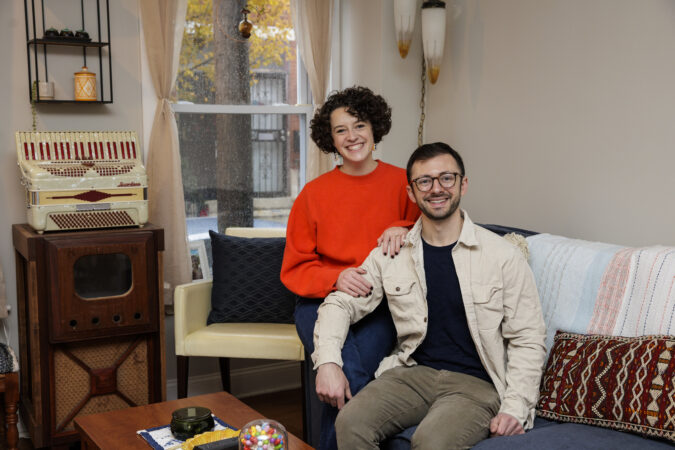
    The ask: For Casey Girvin and Steve Crino, the home-buying journey began long before they opened Zillow. “We always knew that we wanted to be homeowners,” said Girvin. “It’s something we were saving for a long time.”

    Both musicians, they spent years learning what did and did not work for their lifestyles. They started in a one-bedroom, which didn’t work because their practice sessions often overlapped, creating a cacophony of noise. Eventually, they moved into a bi-level apartment where they had room to work.

    That experience shaped their home-buying wish list. That meant they needed at least three bedrooms — one for sleeping and two for music studios — and a layout that let two musicians practice without driving each other mad. “We needed it to be either like a bi-level space, or we needed a buffer room between the two of us,” Girvin said.

    They also wanted a backyard. “We learned during COVID that having an outdoor space was really important to us,” she added. So was being close to the Broad Street SEPTA line. Fixer-uppers were a nonstarter.

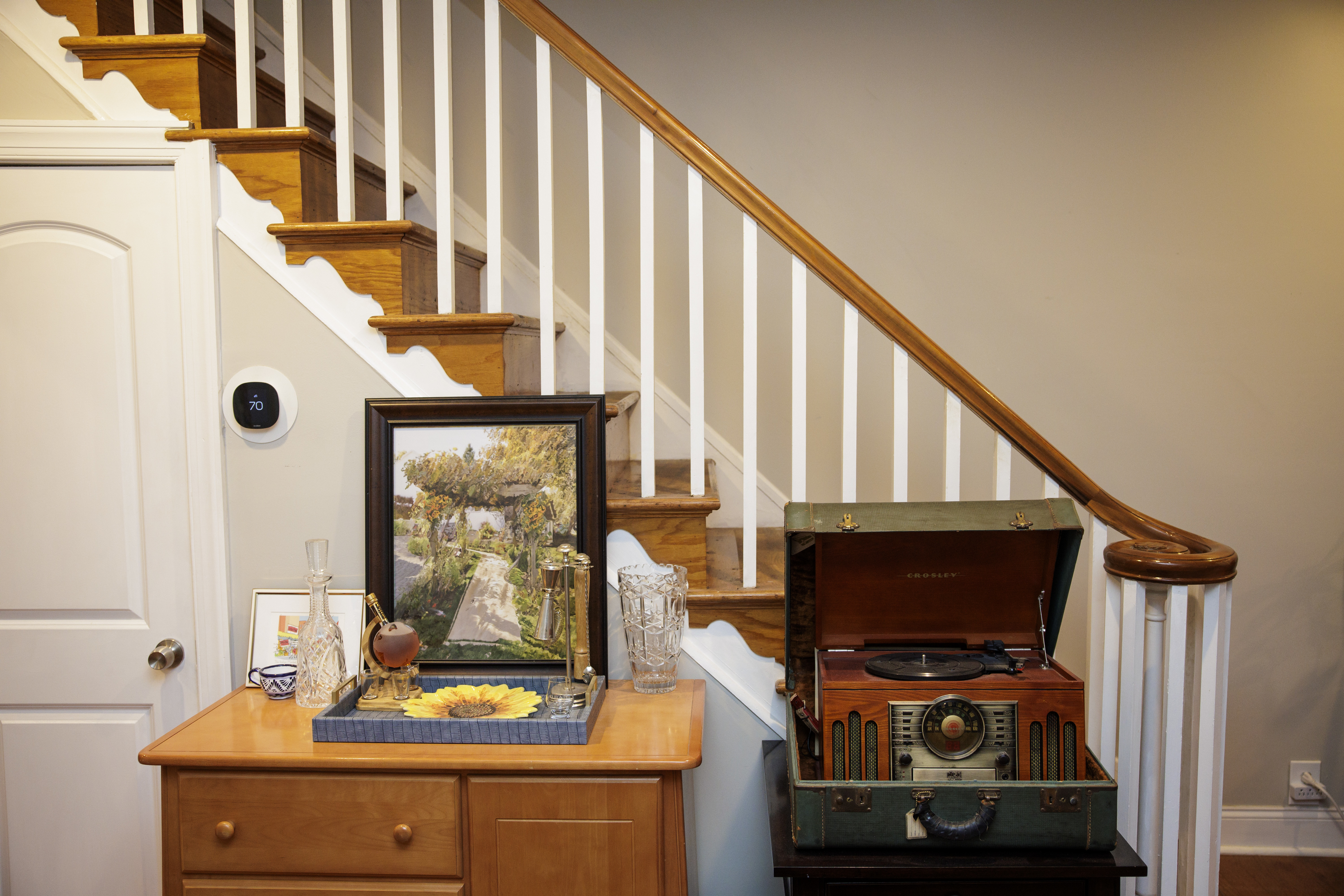
    Upon entering the house, the couple immediately fell in love with the staircase, especially its architectural detailing.

    The search: The couple intentionally waited until winter to search, hoping for lower prices. They saw 21 houses in Point Breeze and liked a lot of what they saw, but tried to be ruthless when it came to making an offer. “That was a very informative part of the process, Crino said, “because when you’re contemplating actually putting an offer down, your preferences emerge.”

    They ended up making only one other offer on a house they nicknamed “the Grandma house” because of its funky carpeting and wallpaper. The seller verbally accepted it but eventually pulled it from the market.

    “Ultimately, we’re happy with what happened,” said Girvin.

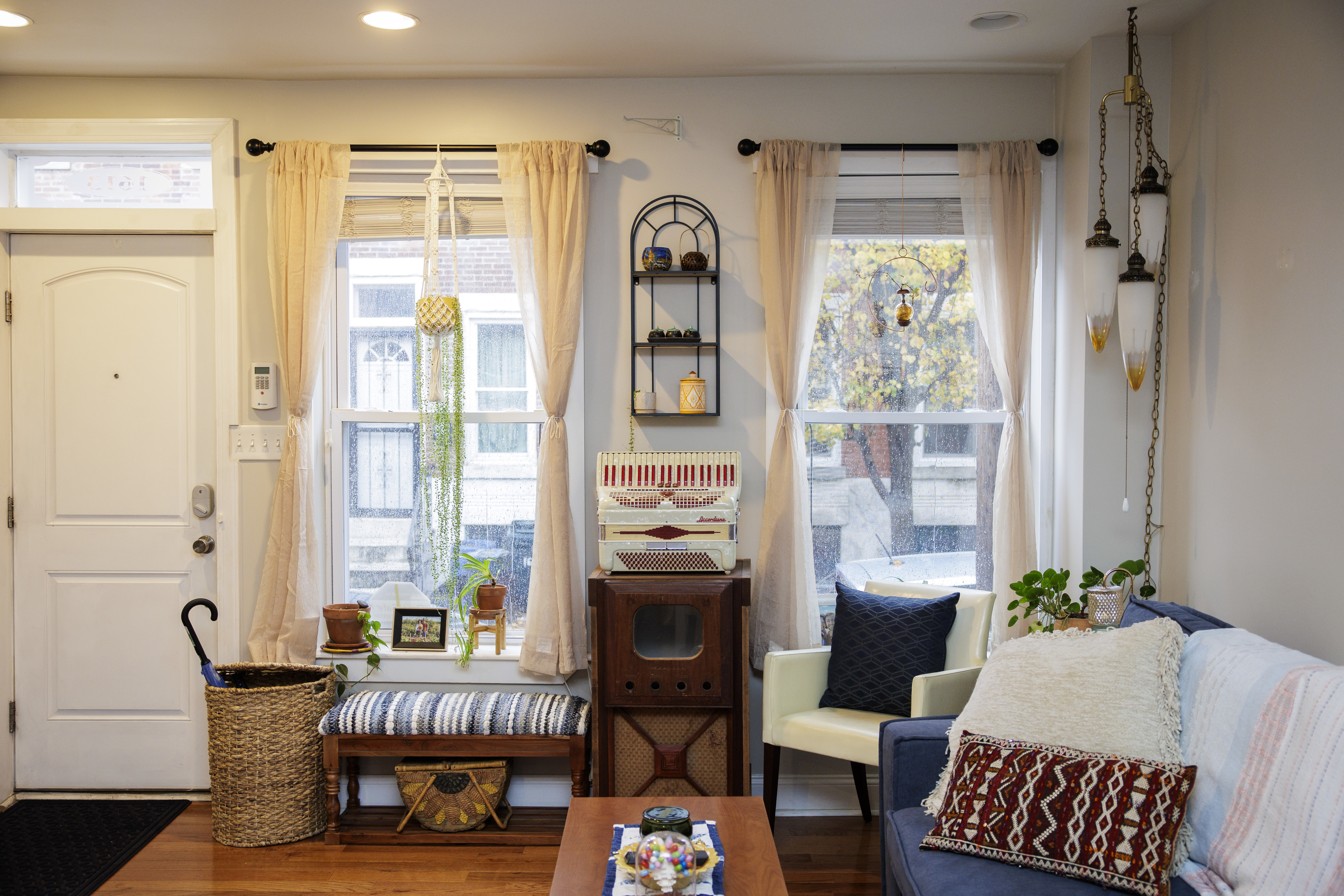
    Girvin and Crino love all the natural light pouring through the living room windows.

    The appeal: Girvin had a good feeling about the house when she saw it online. “I was like, ‘Wow, that looks exactly like where we want to be, at a price point that was quite exciting,’” she said. Even better, it had central air, beautiful hardwood floors, and matched the couple’s aesthetic. But the couple panicked when they saw an open house the next day. They called their agent and secured a same-day viewing.

    Inside, the house aligned almost perfectly with what they had been searching for. What they weren’t expecting, though, were interesting artistic details, like the sunflower etched into the banister and the mural in the backyard. They loved the staircase, the amount of natural light pouring through the living room windows, and the view from their bedroom window of a church they admired. “The house is on a nice, little, cute side street,” Cirsi said. And crucially: “It’s so close to the subway.”

    The second floor sealed the deal. The layout was perfect: a bathroom between the two smaller bedrooms. A built-in sound buffer for their future studios. “Most Philly rowhomes, you go up the stairs, it’s like a bathroom right at the top, and then the three bedrooms in a row,” Girvin explained. “But this one has bedroom, bathroom, bedroom, bedroom. That was ultimately one of the main reasons we bought the house.”

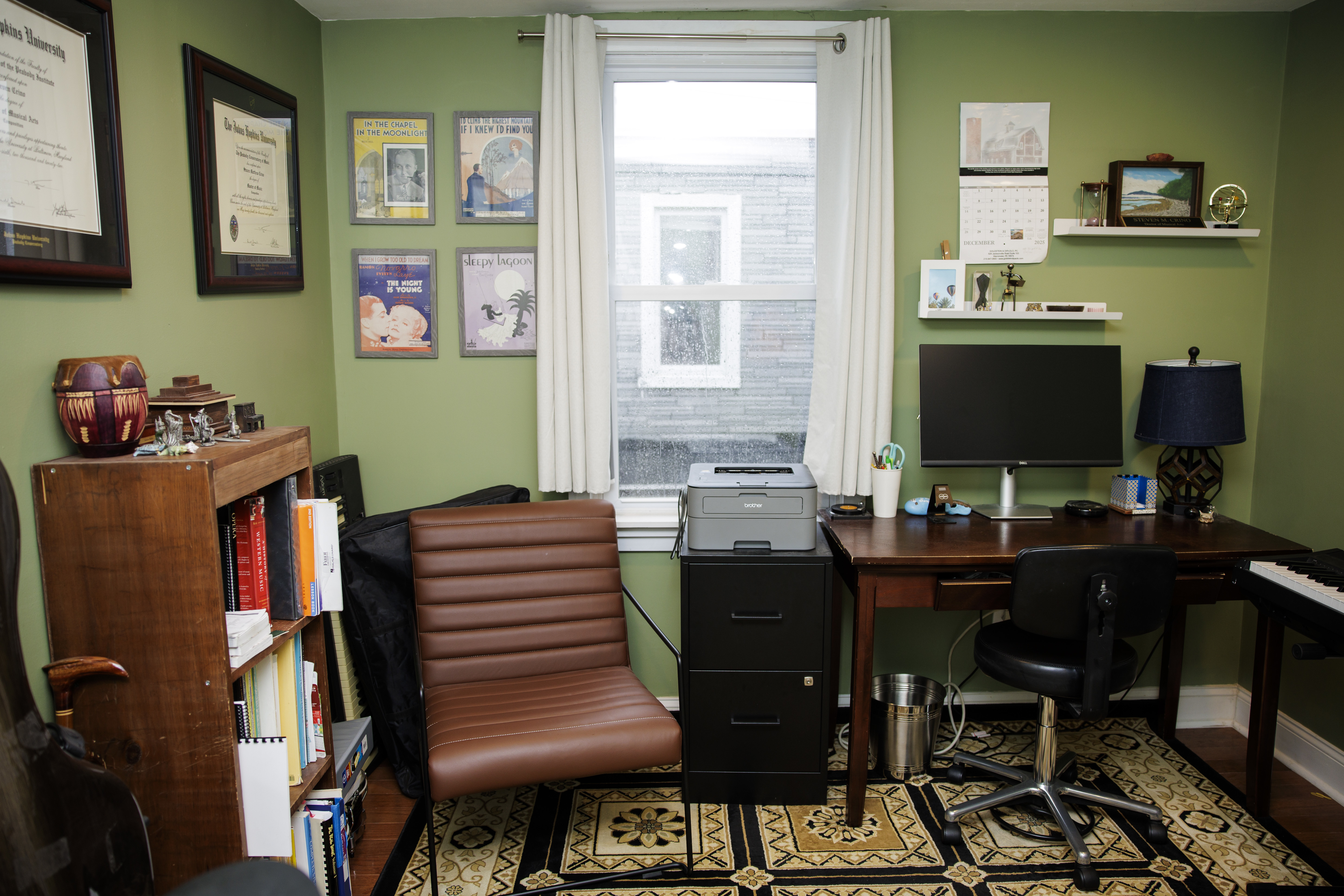
    Crino’s studio is separated from Girvin’s by a bathroom, allowing the couple to practice music at the same time without disrupting each other.

    The deal: The couple made an offer that evening. They offered the listing price — $305,000. “We felt that the house was worth what it was asking,” Girvin said. The sellers accepted right away.

    The inspection revealed two issues. First, the oven needed to be replaced. The sellers issued the couple a credit to buy a new one.

    The bigger issue was the HVAC system. The breaker tripped during the inspection. “We watched it go boop,” Crino said. The fix required electrical work, and they insisted it be completed and certified before closing. “That was the right decision because it definitely was pricier than they thought it was going to be,” Crino said.

    The money: Girvin and Crino had been saving for almost a decade. Every month, they set aside a portion of their earnings in a separate account. They also had money saved for a wedding that they decided to put toward their house instead. “At one point we thought about having a really big wedding,” Girvin said, “but we decided to do the whole micro wedding, DIY backyard thing.”

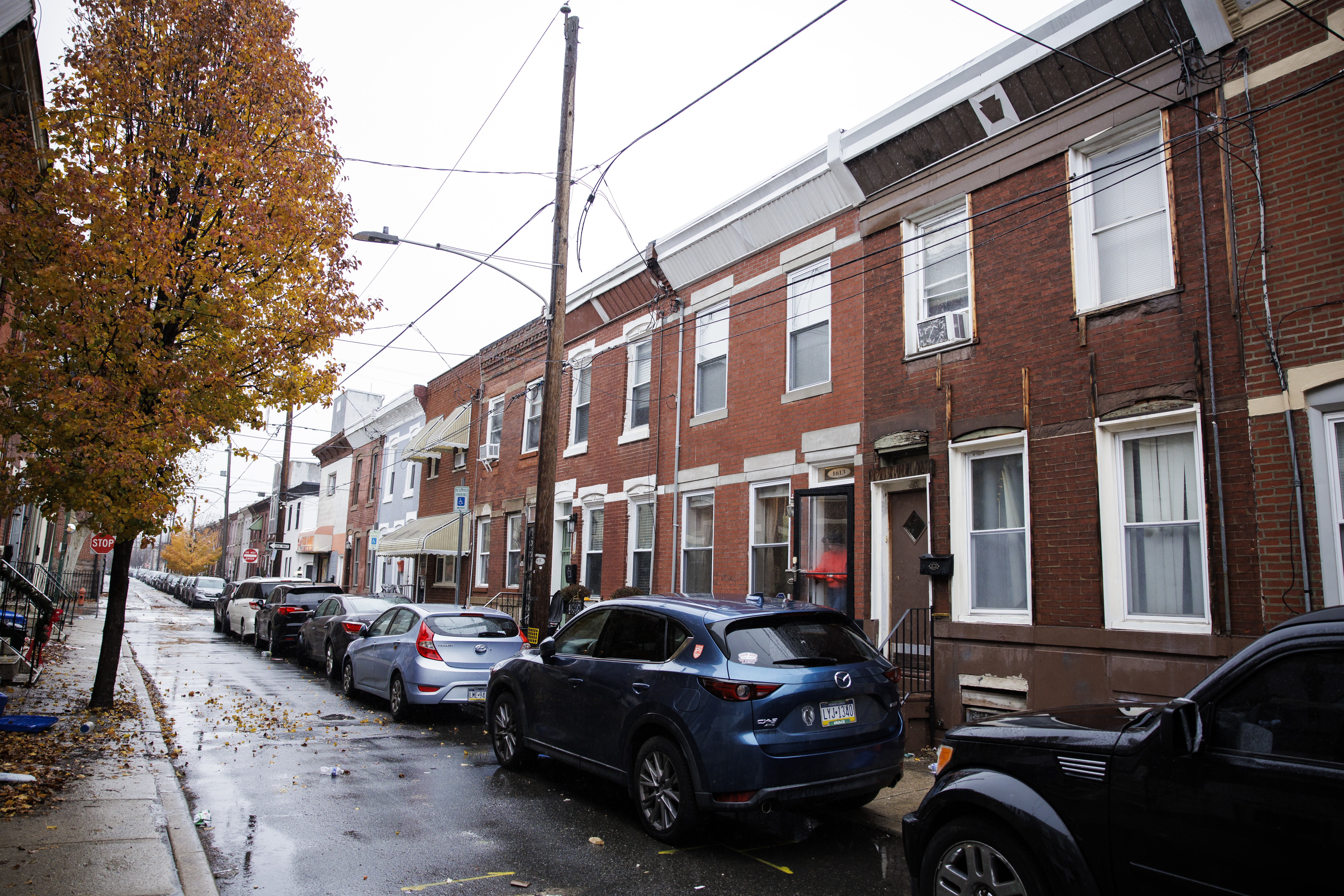
    The small side street the couple lives on was no sweat for their movers, Old City Moving Co.

    Between their life savings and the wedding savings, plus generous gifts from wedding guests, Girvin and Crino had “$80,000-ish” to spend. They put 20% down, which was $61,000, and spent the rest on closing costs, which were $27,000. “That was the $80K right there,” Girvin said. Their mortgage is a little less than $1,800, which is exactly what they had been paying in rent.

    The move: The couple moved in mid-March, one month after they closed. “Moving was relatively painless,” Girvin said. “We hired Old City Moving Co., and they were really great.” They navigated getting a giant moving truck down a tiny side street like pros, backing in so that they could get out more easily.

    Any reservations? None worth mentioning. The only thing they’d add is a second bathroom — another half bath someday, maybe in the basement. But that feels like a future luxury, not a present problem. “Most days we’re like, I love this house,” Girvin said.

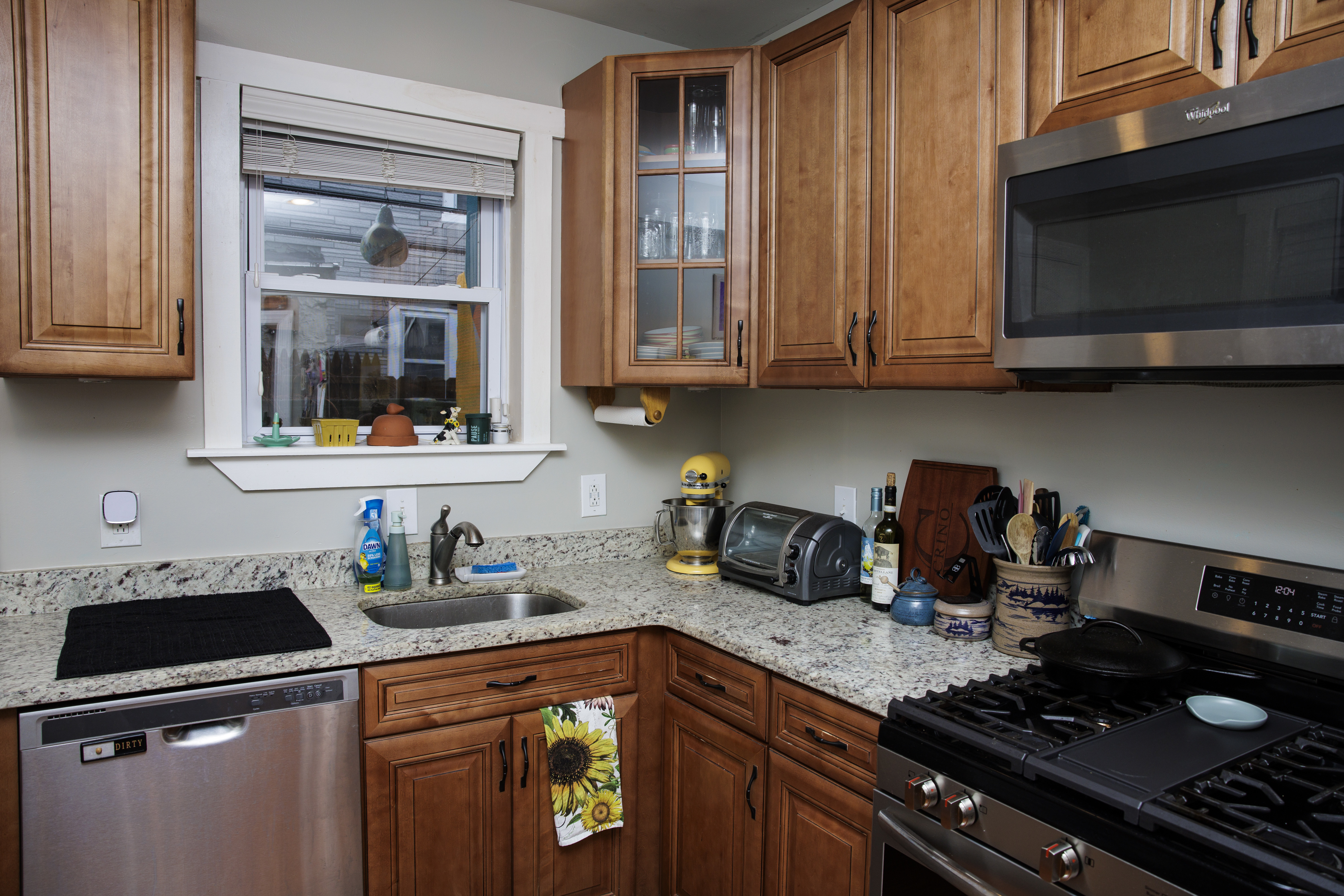
    Girvin and Crino purchased a new oven with help from a seller’s credit.

    Life after close: Their first major purchase was a new oven. “When people come to the house, I’m like, ‘You know, we bought that oven,’” Crino said, laughing. Decorating has been slow and thoughtful. The most sentimental change is the three-teardrop lamp from Steve’s grandmother, now hanging from their ceiling — something they never would have installed in a rental. The backyard is next.

    Did you recently buy a home? We want to hear about it. Email acovington@inquirer.com.

  • After decade of delay, Philadelphia Housing Authority will bring affordable housing to Center City

    After decade of delay, Philadelphia Housing Authority will bring affordable housing to Center City

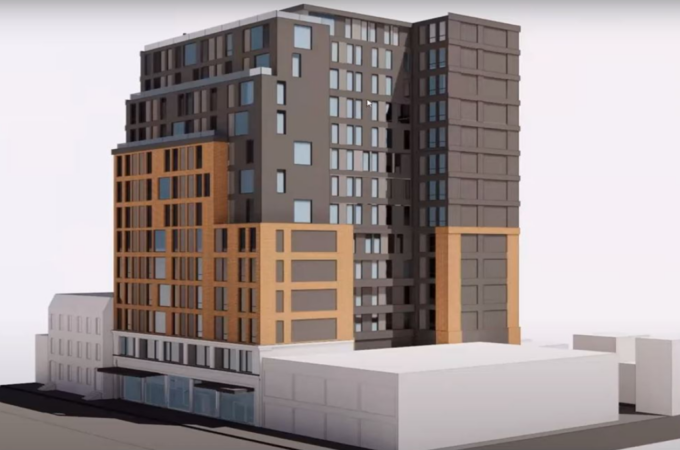
    Almost 20 years after the Philadelphia Housing Authority (PHA) moved out of its Center City headquarters, a long-promised mixed-income tower will finally begin construction early next year.

    The 14-story building is being built by Philadelphia developer Alterra Property Group, which may also manage the site after it opens. PHA will hold a 99-year ground lease on the property at 2012 Chestnut St., which will be its only affordable building in Center City.

    “It’s a multifamily, mixed-use, mixed-income building in a high opportunity neighborhood,” said Kelvin Jeremiah, president and CEO of PHA.

    It “would afford residents a huge opportunity to live in an area that has access to transportation, employment opportunities, and a whole host of amenities literally right outside of their building entrance,” he said.

    The tower will have 121 apartments, 40% of which will be rented at market rate with the rest targeted at tenants below 80% of area median income (or almost $83,000 for a three-person household). It will have 28 studios, 63 one-bedroom, and 30 two-bedroom units.

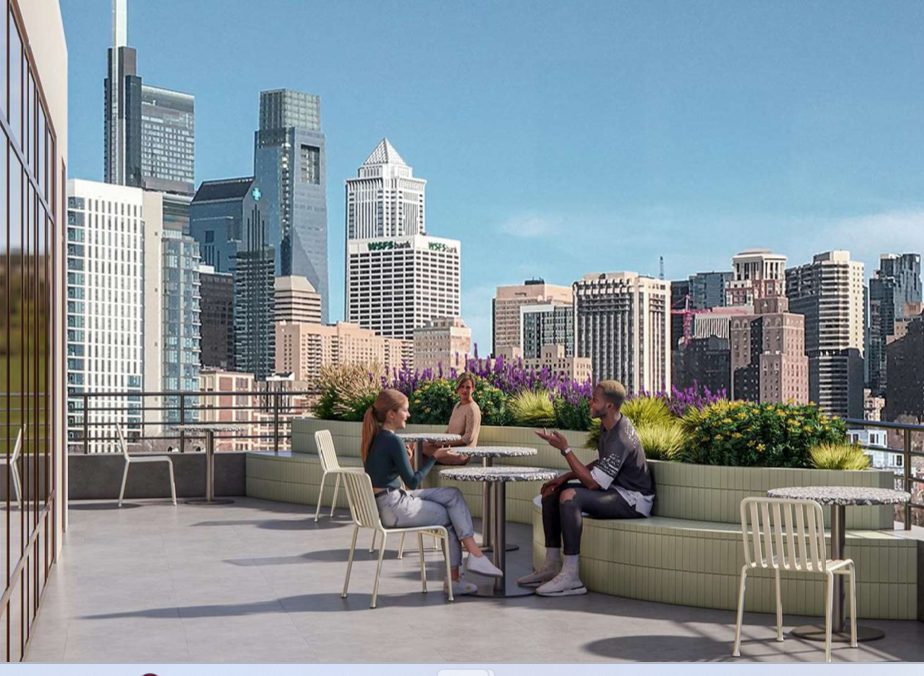
    It also will have 2,000 square feet of commercial space, parking available off-site, and amenities that include a roof deck. The project was designed by JKRP Architects.

    “I’m looking to break ground in Q1 of next year,” said Mark Cartella, Alterra’s senior vice president of development and construction. “It’s been a long time coming, so we’re excited to finally be going vertical here.”

    What took so long?

    PHA moved out of its Chestnut Street headquarters in January 2008, leaving a four-story husk. The agency cycled through numerous plans for the property, including a new headquarters and selling the land to a private developer.

    The partnership with Alterra began in 2016. At that time, the project would have had 200 units, a majority of them market rate, and the developer would have held the 99-year ground lease on the property.

    But neighborhood pushback and the resulting negotiations delayed the proposal until 2020. Then the pandemic caused more chaos, followed by a spike in construction costs and elevated interest rates that killed the original financing plan.

    That led to a new strategy in which PHA issued bonds backed by the future rents of the market-rate units to help pay for the project, along with additional funds from federal housing programs, and a $2 million boost promised by Council President Kenyatta Johnson from funds available through Mayor Cherelle L. Parker’s Housing Opportunities Made Easy (H.O.M.E.) initiative.

    “By adding high-quality, affordable apartments alongside retail space in the area, this project helps ensure that our downtown remains vibrant, diverse, and accessible to working families and individuals,” Johnson said in a statement.

    “The PHA project will also help deliver a more inclusive Center City that reflects the full spectrum and diversity of Philadelphia’s residents,” he said.

    A rendering of the roof deck planned for the new mixed-income building proposed by PHA and Alterra.

    The 95-year-old headquarters was demolished in early 2024, but groundbreaking has been delayed in the current unpredictable national economic and political environment.

    “You can probably sum that all up with it’s just general uncertainty with the change of [presidential] administration, as well as just getting through the design development process with a lot of folks having input,” said Cartella of Alterra.

    “This is a little bit beyond the [usual] design development process with Alterra,” he said. “It’s more stringent than what we typically have to go through.”

    Jeremiah has repeatedly expressed concerns about how long the development process can take in Philadelphia, especially in combination with federal guidelines and requirements.

    But as this process nears its end — 18 years after the move, 10 years since bringing on Alterra, and two since demolition — he is feeling optimistic.

    “It is the first PHA built development in Center City,” said Jeremiah. “That’s going to be a signature project for me, for the city, for affordable housing.”

  • City Council bill would ban housing from former Hahnemann University Hospital area

    City Council bill would ban housing from former Hahnemann University Hospital area

    Philadelphia Councilmember Jeffery “Jay” Young introduced legislation at the last City Council meeting of 2025 that would ban residential development from the area that once housed Hahnemann University Hospital.

    The bill would create a new zoning overlay — a hyperlocal patch on the code — covering the area “bounded by the north side of Race Street, the east side of North 16th Street, the south side of Callowhill Street, and the west side of North Broad Street.”

    That covers the area where developer Dwight City Group plans to convert two former Hahnemann University Hospital patient towers into 288 apartments, and other related properties including those owned by Drexel University and Iron Stone Real Estate Partners.

    The project does not yet have building or zoning permits. The legislation would make the project impossible unless the developer could convince the Zoning Board of Adjustment to make an exception, if the law is passed.

    Young pitched the bill as an employment-generating measure in the long term.

    “It is for commercial preservation in that part of our district,” Young said last week. “We want to make sure that area keeps producing jobs for our city.”

    Dwight City Group declined to comment on the legislation.

    The developer is known for redeveloping old and underutilized buildings into moderately priced apartments.

    In an interview earlier this year, the company’s CEO Judah Angster said the apartments planned for the Hahnemann University Hospital patient towers would be moderately priced one- to two-bedroom units.

    “We stick with middle-market apartments, not super high-end,” Angster said at the time. “We like to believe that there’s a lot of space for affordable luxury product in the area. That’s the only thing we do.”

    But he also cautioned that the redevelopment would take a while, saying the buildings might not be leased up until 2030.

    City Council returns on Jan. 22. The earliest Young’s bill could be enacted is February. If Young proceeds with the bill, the tradition of “councilmanic prerogative” would likely guarantee its passage because other Council members are usually unlikely to vote against a district member’s bills that only affect their territory.

    Developers, good government groups, and housing advocates frequently decry City Council’s use of zoning overlays to create custom land use tweaks to specific corners of City Council districts, especially when they seem designed to help or hurt a particular project.

    “Choking housing supply isn’t the direction that our city should take,” said Mohamed “Mo” Rushdy, who is managing partner of the Riverwards Group and chair of the Philadelphia Housing Development Corp.

    “Overlays that prohibits housing units is generally a bad idea,” Rushdy said. “Overlays that target a ‘specific’ project is, let me be politically correct here, is simply unwise and not right.”

    Young said his bill is simply meant to preserve the possibility of jobs, especially as a new 20-year tax abatement is considered next year for the redevelopment of old commercial, industrial, and public buildings into housing.

    “Next year, we’re going to be facing, potentially, a bill that will allow abatements for underutilized commercial properties,” Young said. “We want to make sure that those benefits that the property owners can reap, that Philadelphians see those benefits with the creation of jobs in those locations.”