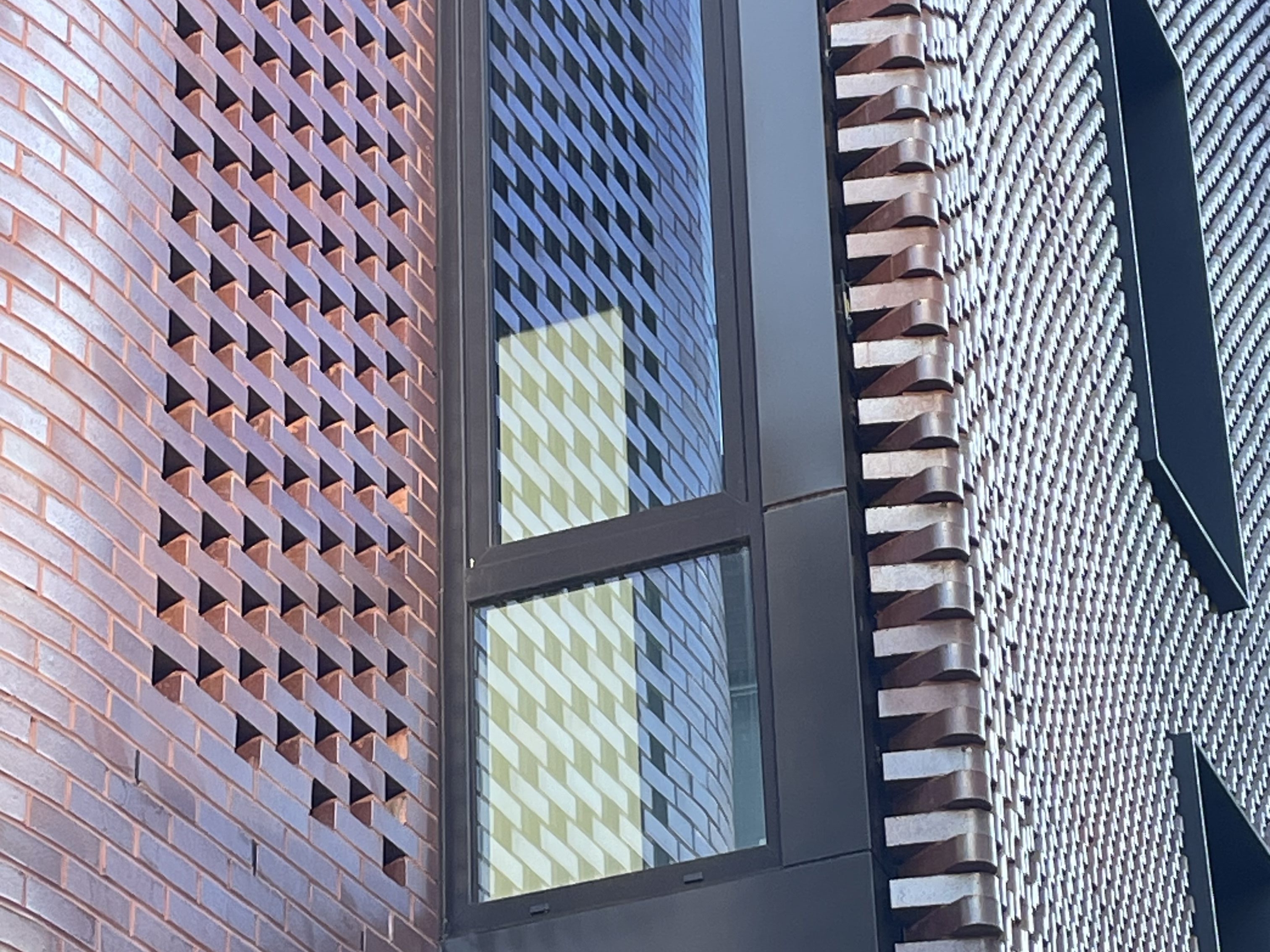
It’s one of the paradoxes of Philadelphia’s 21st-century residential building boom. The more rowhouses and apartments that get built here, the more they look alike.
The streets of Fishtown and Graduate Hospital and Spruce Hill are now awash in interchangeable blocky structures, all dressed in the same dreary gray clothing, their aluminum panels shrink-wrapped around the exterior like a sheet of graph paper.
Instead of providing the kind of fine details that enlivened earlier generations of buildings, their architects try to distract us with patches of color and cheap trim.
The look is derisively known as fast-casual architecture, McUrbanism, or developer modern. No one likes these buildings, not even, I suspect, the architects who stamp the drawings. But because they are cheap and easy to build, the no-frills grids have emerged as a developer standard across America.
As bad as they might look in newer cities, their flat, lifeless facades are especially jarring in Philadelphia, where even humble rowhouses are animated by varied textures of brick and recessed windows.
While there’s little chance that developers will start building them like they used to, a few Philadelphia architects have thrown a curve into the works. The arch, which traces its origins to Roman times, is making a comeback.
Once you start looking around the city, you can’t help but see contemporary arches and rounded corners everywhere: on metal-clad rowhouses and brick-faced apartment buildings, in restaurant dining rooms and hotel lobbies.
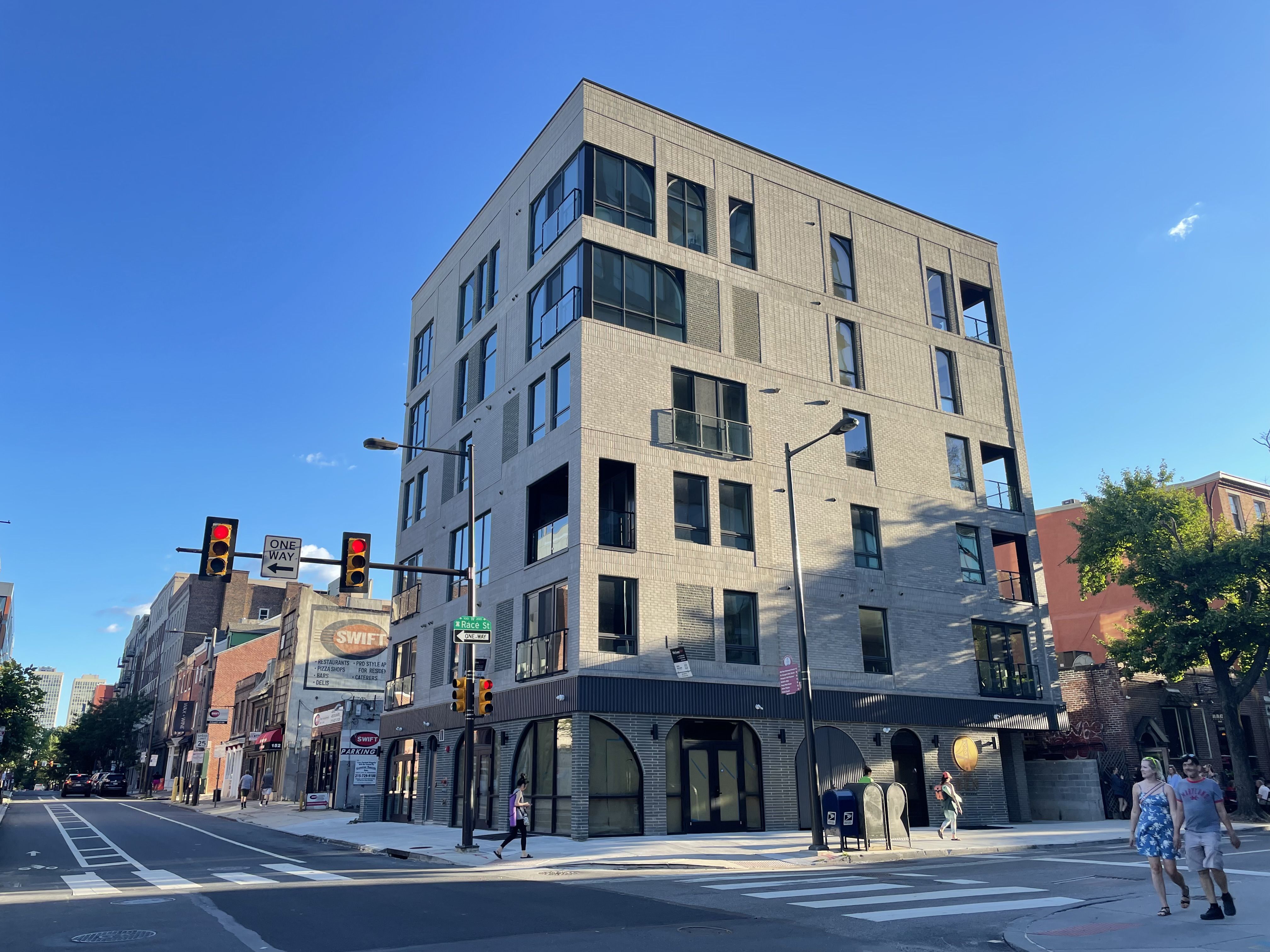
This small apartment building at Second and Race Streets in Old City breaks up the usual grid with arched windows on the ground floor and irregularly spaced windows. Morrissey Design created the facade.
The rise of the arch
To be clear, today’s arches bear only a faint familial resemblance to their brawny predecessors, which come in all sizes and architectural styles, and typically have a large keystone at the apex. Those old masonry arches were workhorses that helped buildings stand up.
But as construction methods advanced in the early 20th century, arches ceased to have a structural purpose. The changes coincided with the rise of modernism, which largely eschewed the form in favor of straight lines, at least until the 1960s, when architects such as Louis Kahn and Robert Venturi — both Philadelphians — began sneaking them back into architecture.
Arches started reappearing on Philadelphia buildings about a decade ago, after Bright Common’s Jeremy Avellino marked the entrance to his Kensington Yards project with an exaggerated arc that seems to be descended from the famous Chestnut Hill house that Venturi designed for his mother. Even though the gesture was also a nod to the arched windows on the 19th-century townhouse next door, Avellino intentionally emphasized his building’s contemporary look by cladding it in metal. He considers his arches as nothing more than a “geometric memory.”
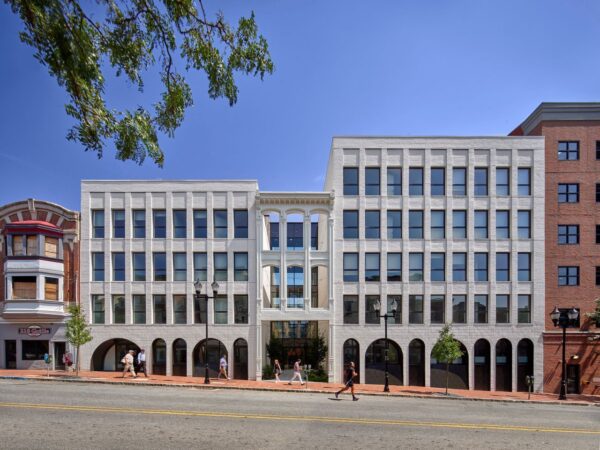
The new-wave arches come from a different place. Although they certainly help architects break free from the oppressive grid, arches help their contemporary designs blend in better with their neighbors.
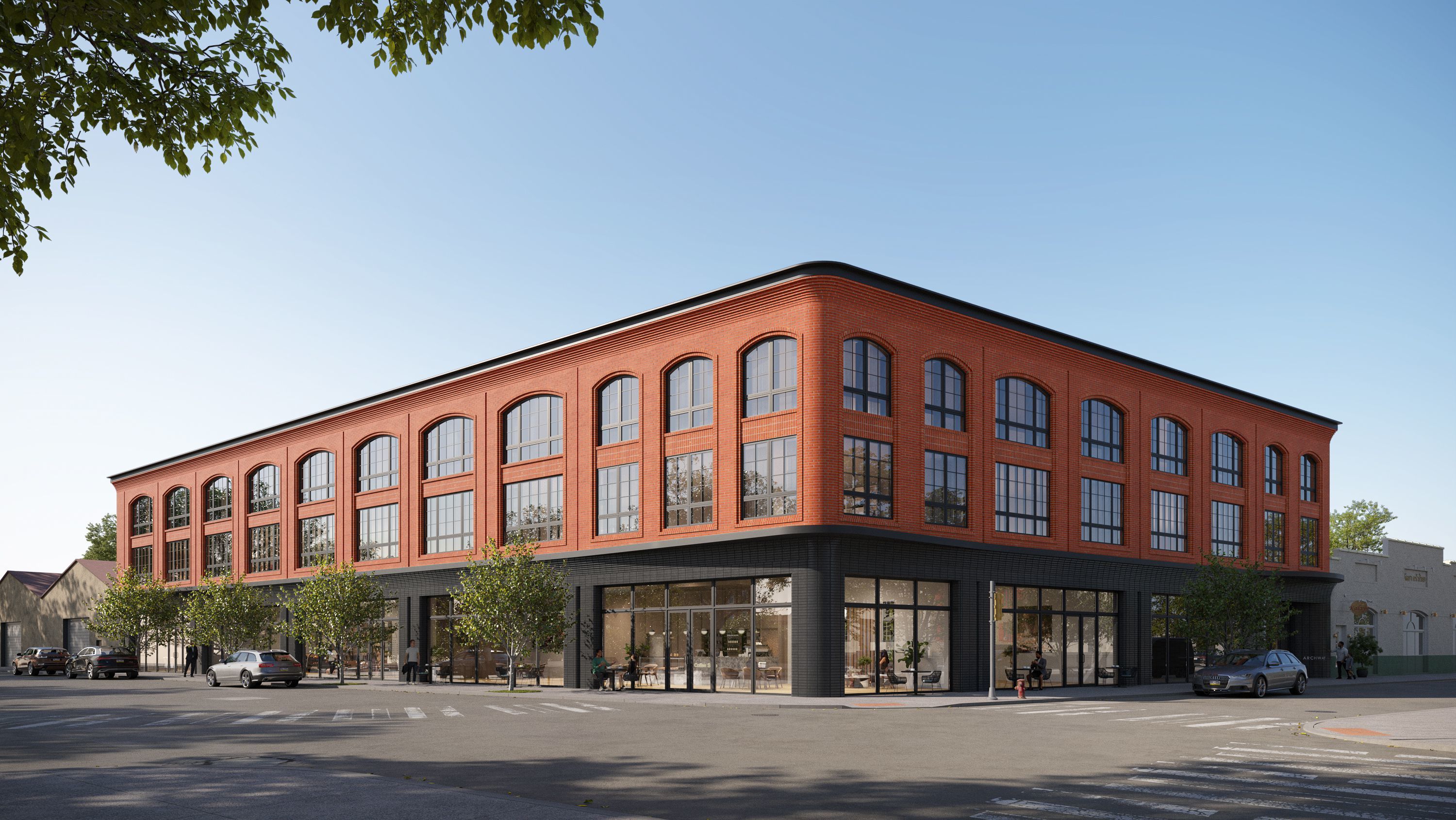
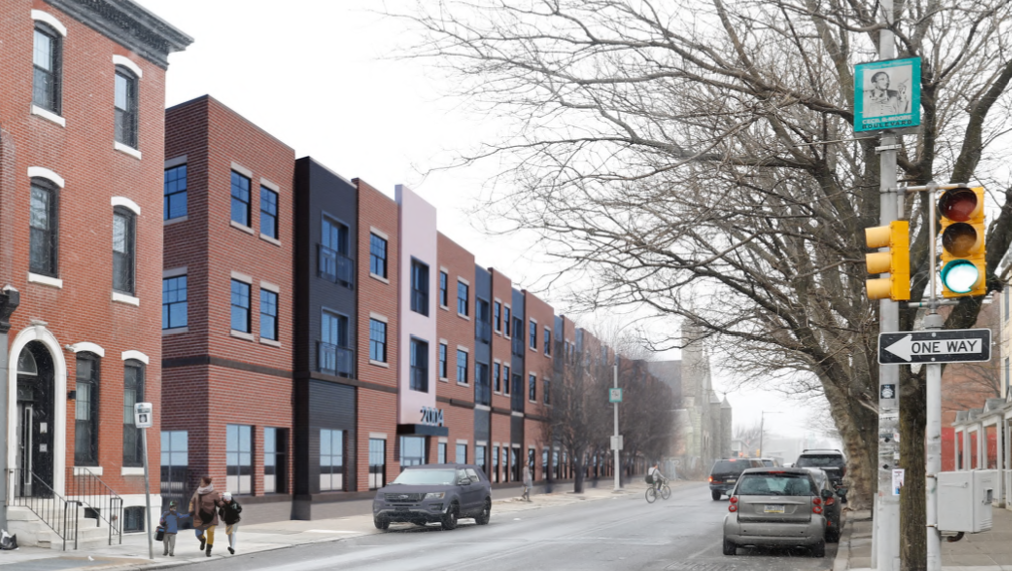
The design for this three-story apartment building at 1716 Frankford Ave. uses shallow, industrial-style arches to enliven the facade. The project, which was designed by Gnome Architects for developer Roland Kassis, was expected to break ground in December.
Eschewing look-alikes
It’s no accident that arches began to proliferate just as brick was enjoying a revival as a building material in Philadelphia. Roland Kassis, a Fishtown developer who is responsible for several buildings with arches on Frankford Avenue and Front Street, says he first began using brick for building facades as a reaction against the poor quality of fast casual architecture.
Even though brick took more time and expertise to install, and ultimately cost slightly more than other materials, he felt it was worth it because it set his projects apart from the competition and signaled quality to potential renters. Later, he added arches.
Most of Kassis’ buildings that feature arches have been designed by Gnome Architects. They include a new mid-rise apartment building and a small hotel that are now under construction on Frankford Avenue.
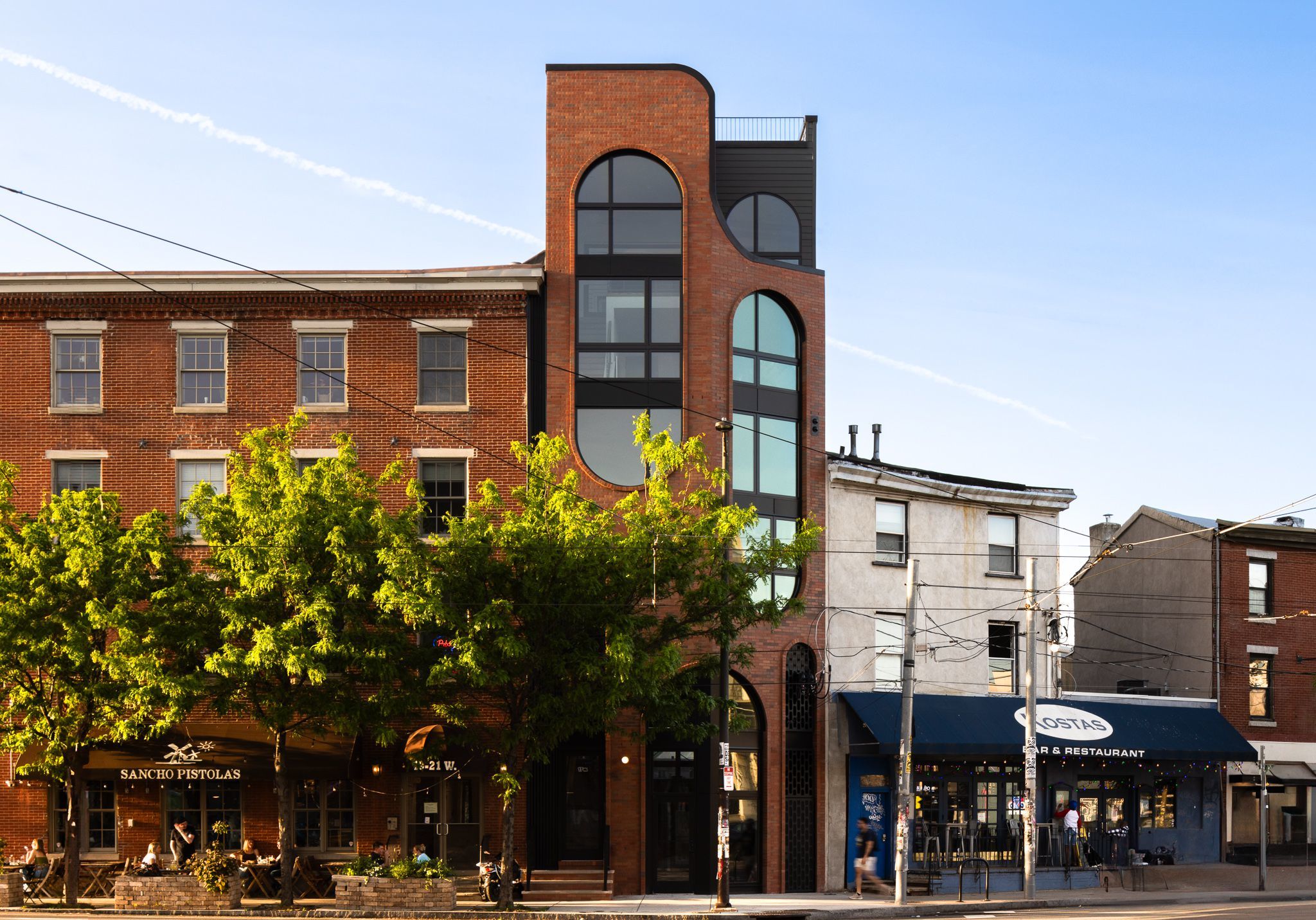
While Gnome’s use of the arches is a way of paying homage to Fishtown’s industrial past, the firm’s most interesting design is less referential. Located at 17 Girard Ave., the skinny, mixed-used building features brick-framed oval windows that float up the facade like elongated soap bubbles. It functions as a sort of urban lighthouse at the entrance to Fishtown.
Gnome’s new three-unit apartment building at 17 Girard Ave. in Fishtown is an exuberant counterpoint to the straight lines of Philadelphia’s traditional brick facades.
Several other Philadelphia architects have embraced arches in their work for developers, including Digsau, KJO Architecture, and Morrissey Design. What unites their aesthetic is a strong interest in craft. They’re not just pasting factory-made brick panels onto facades; they’re hiring skilled workers from Philadelphia’sbricklayers unionto lay the blocks on site, one at a time.
That kind of craftwork isn’t something architects usually learn in school. To ensure that he gets the arches right, Gnome’s Gabriel Deck signed up for the International Masonry Institute’s training camp, where he tried his hand at using a trowel and spreading mortar. Digsau’s Mark Sanderson, who used a variety of arch types for Wilmington’s Cooper apartments, jokes that “we have the institute on speed dial.”
The institute’s regional director, Casey Weisdock, says she’s noticed an uptick in both the use of brick and modern interpretations of the arch. She attributes brick’s newfound popularity to the Biophilic design movement, which believes natural construction materials are better for people’s health and can improve their moods.
“A brick has a human quality,” she says. “A block fits right into your hand.”
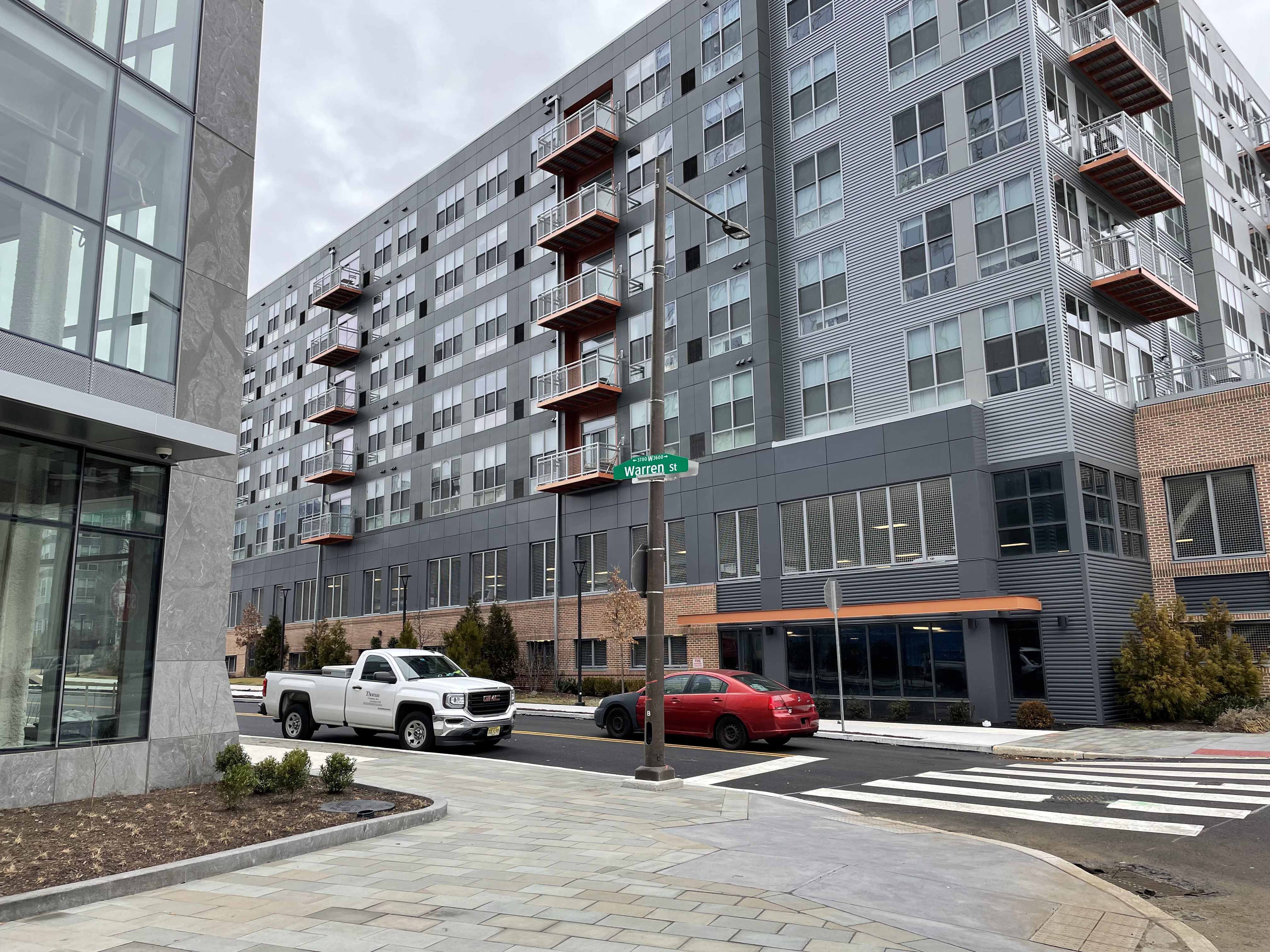
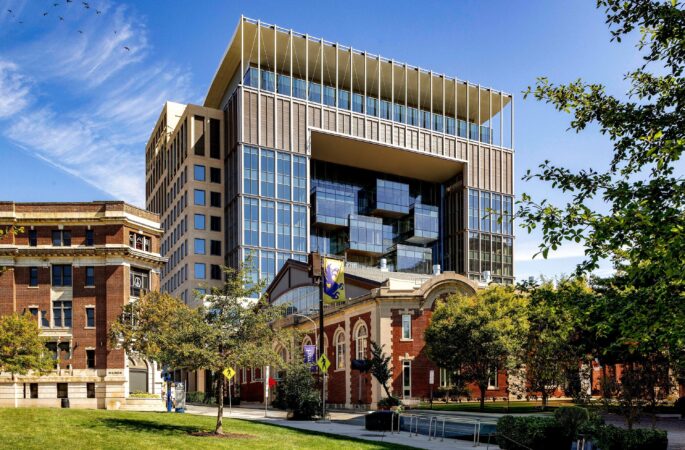
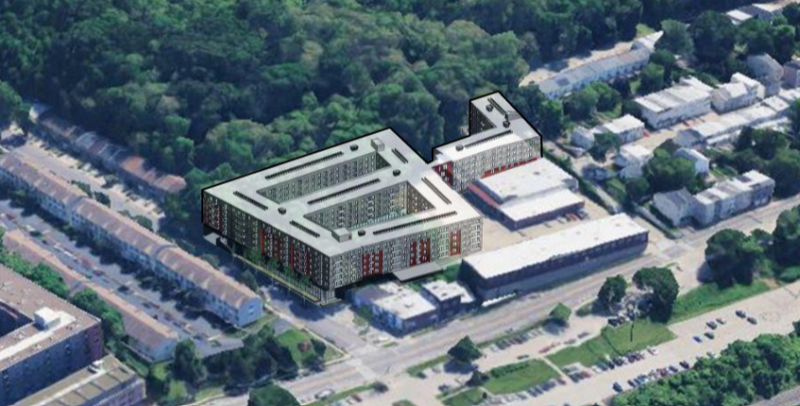
This massive apartment building on Lancaster Avenue, ANOVA uCity Square, typifies the plodding, graph paper-inspired architecture that is sweeping America. It was designed by Lessard Design on the site of the former University City High School, which is now home to life science complex called uCity.
Digsau has a long history of incorporating wood and brick into its projects, yet the firm started adding arches into the mix only a few years ago. Like other architects, Sanderson, one of Digsau’s founders, says he was frustrated that design is increasingly dictated by financial models that result in the mass production of look-alike apartment buildings. Arches were a way of breaking out of that rut.
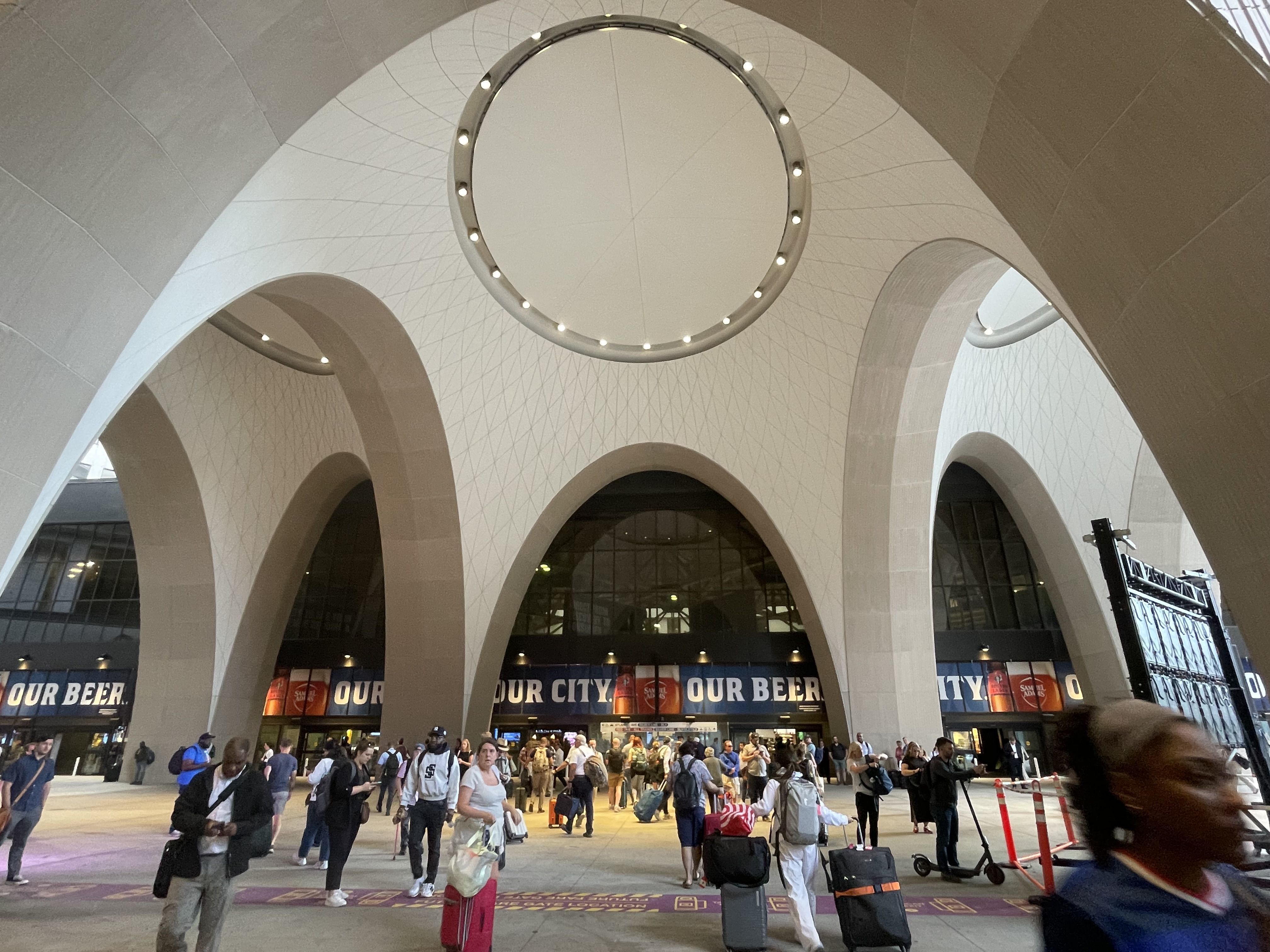
The rebellion against straight lines and slick facades has spread to other big cities, and now even big corporate architects who specialize in skyscrapers are playing with bricks and arches. Pelli Clarke Pelli, which is responsible for designing many of the crystalline towers along the Schuylkill, just dropped a ring of soaring arches into Boston’s newly renovated South Station. (Of course, staying true to type, the firm’s tower, located on top of the station, is still a blue glass ice sculpture.)
Pelli Clarke Pelli inserted these almost parabolic arches into Boston’s newly refurbished South Station.
The urge for curves extends into interior design. Furniture showrooms overflow with tub chairs and sofas with curved backs. Virtually every surface at Enswell, an upscale Center City cocktail lounge designed by Stokes Architecture & Design, bends and flows in some way. The firm is responsible for several rounded counters in Philadelphia’s cafes and was part of the team that created Borromini’s interior arches.
“You hear the words ‘comfy and cozy’ used a lot these days,” and the arch is one way to achieve that, says architect Brian Phillips, the founding principal at ISA. Interestingly, it’s hard to find arches in any of the firm’s work, which relies on textured materials, strategic cutaways, and complex geometry to animate its work. ISA did, however, introduce an arch and some curves for the Frankie’s Summer Club pop-up at the former University of the Arts building.
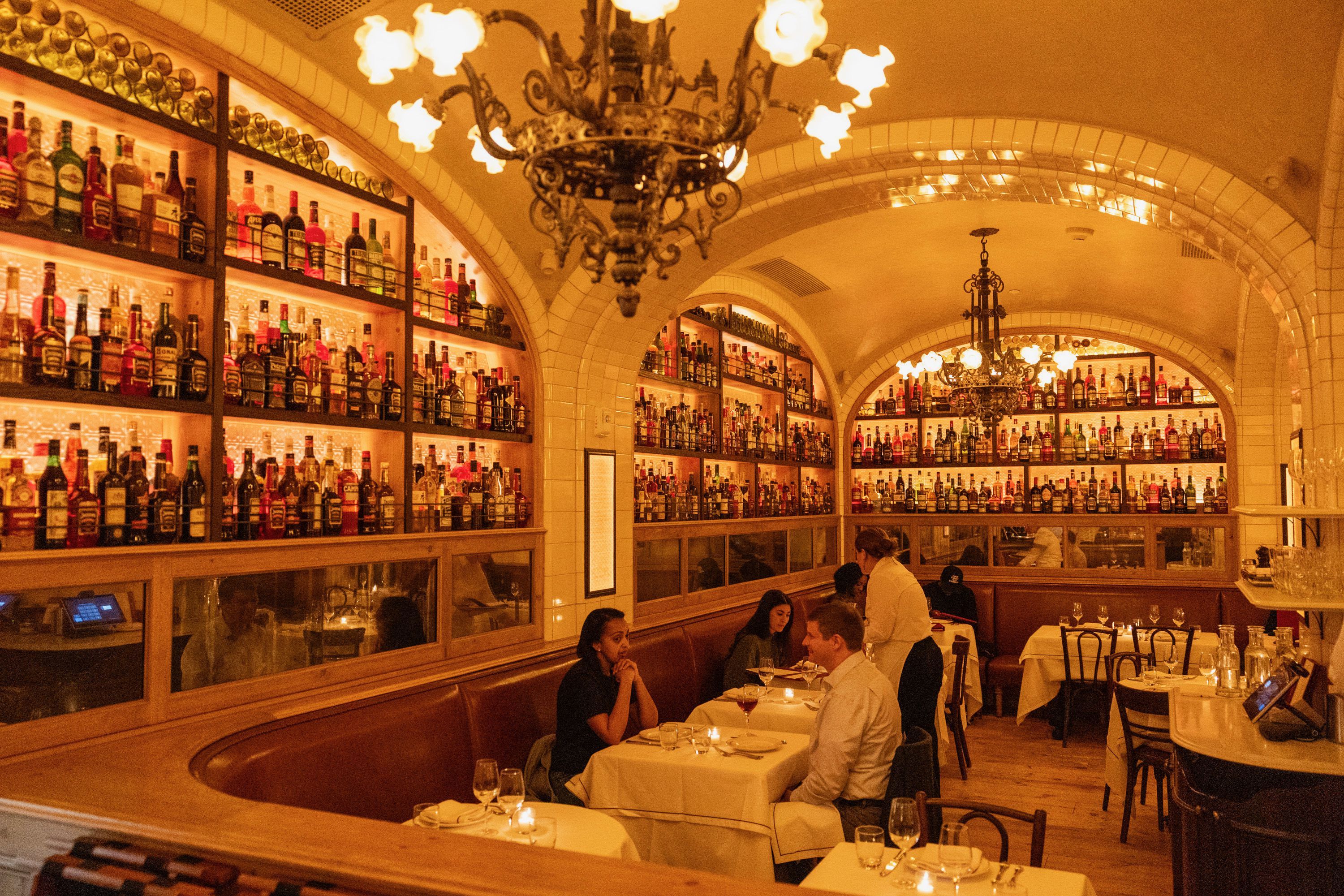
The fashion for arches and curves has also spread to interior design. Stephen Starr’s new Borromini restaurant on Rittenhouse Square — collaboratively designed by Keith McNally, Ian McPheely, and Stokes Architecture & Design — includes a curved banquette and dramatic, tiled arches in the main dining room.
While the arches have allowed architects to fight back against the deadening sameness of Developer Modern, the new style risks becoming its own cliche.
So far, those Philadelphia architects who include arches in their work haven’t embraced the literal historicism of Robert Stern, but neither have they come up with anything as groundbreaking as the exaggerated and ironic forms introduced by Venturi and his partner, Denise Scott Brown. In some cases, the use of arches seems arbitrary — merely decorative, to use the modernist critique. And arches aren’t always well integrated into the composition.
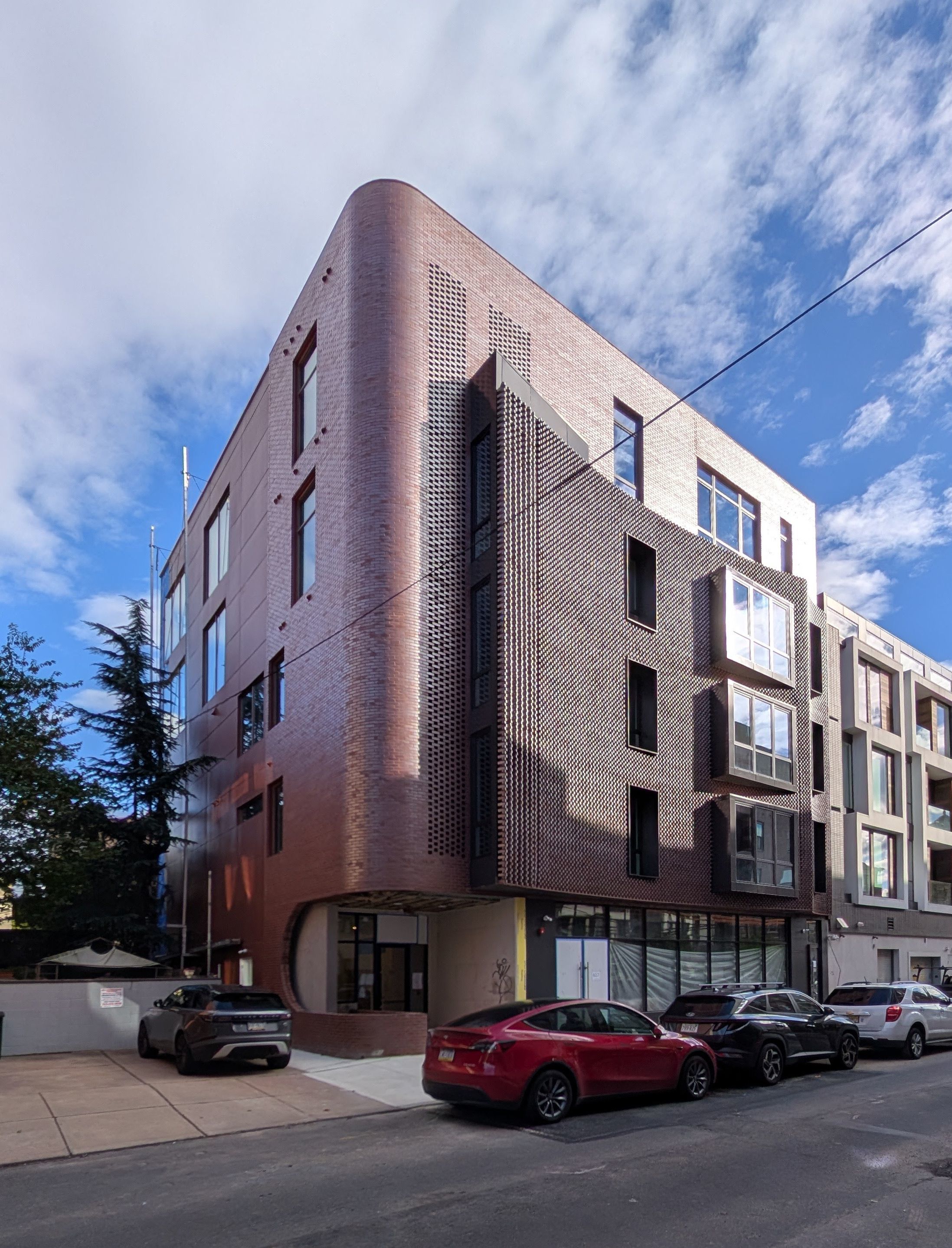
The most satisfying of Philadelphia’s new-wave brick buildings has plenty of curves, but no arches. Bloc24, a small condo building on 24th Street between South and Bainbridge, is a bravura essay in different styles of brickwork.
A curving screen made from bull-nose bricks, laid on the diagonal, sweeps across the facade. Because it protrudes several feet from the surface, it functions as a giant bay window. While it’s a stretch, you could consider the stylish, curved cut-out at the entrance a sideways arch.
While Bloc24, by Moto Designshop, has no arches, it is a bravura essay in brick styles and features plenty of curves. The new condo building is located on 24th Street, between South and Bainbridge.The brickwork on Moto Designshop’s Bloc 24, at 24th and South, is anything but flat.
Bloc24 was designed by Moto Designshop, the firm responsible for the intricate brick chapel at St. Joseph’s University. Moto has made intricate brickwork its signature, and, unlike those designs that use brick as a veneer, every detail of Bloc24 is integrated into the overall concept.
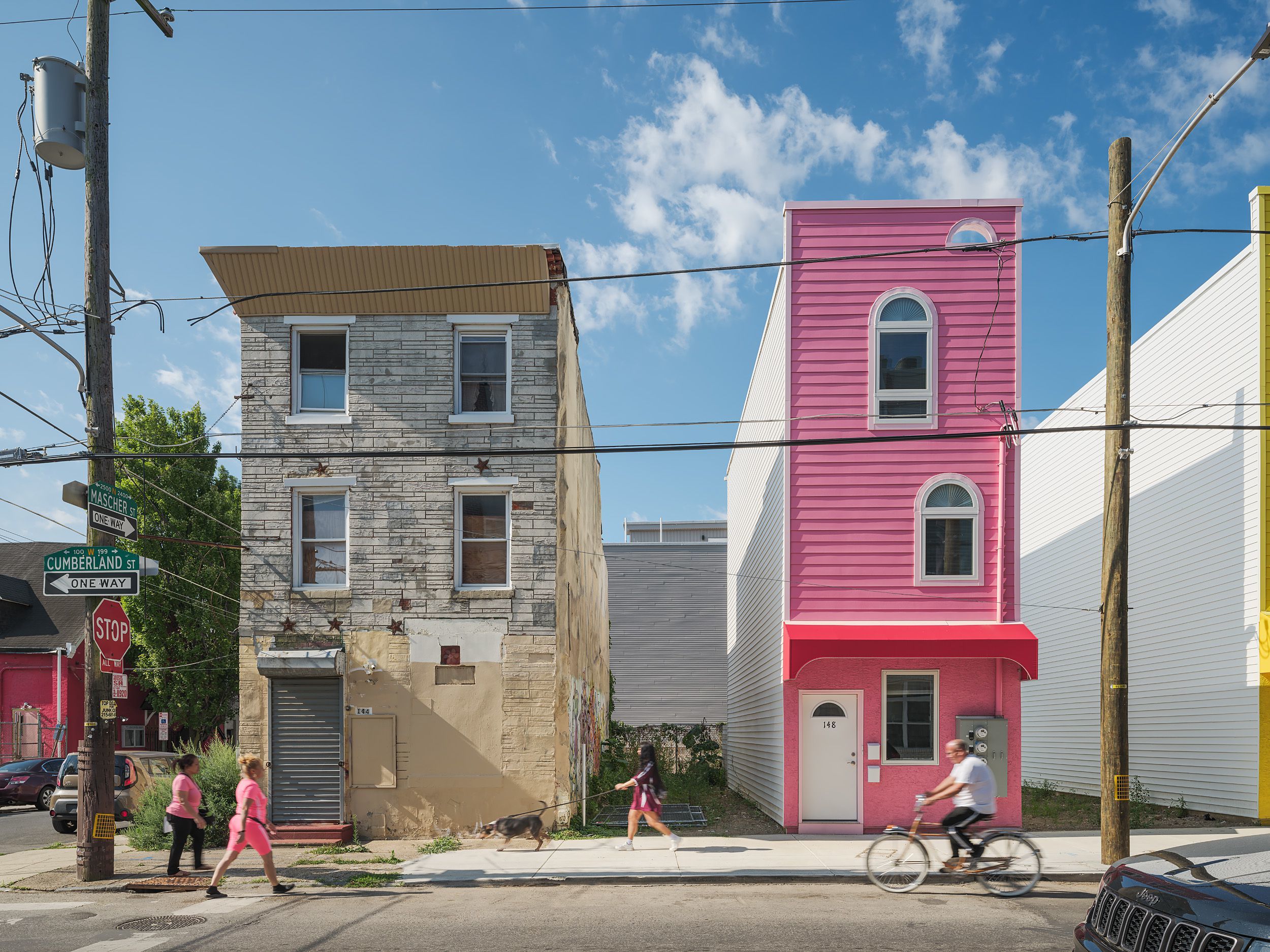
Perhaps the most out-of-the-box use of the arch can be found at Avellino’s Mi Casa houses, a group of rowhouses in tropical colors that he designed as affordable housing for Xiente (formerly the Norris Square Community Alliance). Because the sites are scattered around the neighborhood, often on very narrow lots, he was unable to replicate the standard, double window pattern found on most Philadelphia rowhouses. Instead, he used single arched windows, placed asymmetrically to energize the facades.
There isn’t a single brick in sight, evidence that the arch has come full circle.
Arched windows define this tropical pink house, part of group of affordable houses built on infill sites in the Norris Square neighborhood. Bright Common’s Jeremy Avellino used the arches to energize the narrow facades.
Zillow’s list of the most popular real estate markets of 2025 is dominated by midsize cities in the Midwest. But one large city ranked in the top 20: Philadelphia.
The main driver of popularity is housing affordability, which helped push Philadelphia up the list.
The city also remains popular because of its central location on the East Coast between major job hubs such as New York and Washington. And Philadelphia is a place people want to be for its culture, restaurants, and music and arts scenes, said Orphe Divounguy, senior economist at Zillow.
But “that affordability can’t be overstated,” he said.
“Relatively more affordable markets are really seeing more rapid home value appreciation and more traffic on Zillow,” he said. The company considered these factors, as well as the number of days properties took to sell this year, to rank the popularity of cities.
In many of the top 10 most popular markets, the median home value in November was less than $350,000. These markets are near growing job markets or sit along key commuter routes and are small enough to offer a sense of community, according to Zillow.
Homes in the most popular markets tend to go under contract in days instead of weeks. And they’re growing in value.
Most of the cities on the top 20 most popular list — with the exception of No. 19 Philadelphia — range in population from about 100,000 to 300,000 people.
In Philadelphia, the median home value in November — about $230,000 — was up almost 3% from last year, and homes for sale took a median of 20 days to go under contract this year. And more searches for Philadelphia listings on Zillow are coming from outside the region, which shows broad interest.
Allentown was the only city in Pennsylvania to make Zillow’s top-10 list of popular markets this year.
window.addEventListener(“message”,function(a){if(void 0!==a.data[“datawrapper-height”]){var e=document.querySelectorAll(“iframe”);for(var t in a.data[“datawrapper-height”])for(var r,i=0;r=e[i];i++)if(r.contentWindow===a.source){var d=a.data[“datawrapper-height”][t]+”px”;r.style.height=d}}});
Lessons from the list
A lot of the smaller cities on Zillow’s most popular list arenear big, more expensive cities.
For example, the most popular market this year — and the second most popular last year — is Rockford, Ill., which is 90 miles outside Chicago. Residents can access a large job center without paying big-city home prices.
Rockford is popular with out-of-town home shoppers, and homes went under contract within just five days this year. It was one of the fastest-moving markets on Zillow’s list.
Divounguy expects buyers will continue to be attracted to more affordable markets that have homes available to buy and will move away from expensive marketswhere fewer homes are built.
“Philadelphia, because it’s so attractive, needs to continue to build housing,” he said. “It needs to keep up with the interest people have to live in the area.”
Albany, N.Y., is the third most popular city on Zillow’s 2025 list and the most popular in the Northeast.
The most popular small town on the list — defined as a place with no more than 20,000 people — is Lake Forest, Ill., which is 30 minutes outside Chicago. Zillow said the town’s proximity to a big city, historic charm, and position along Lake Michigan make this market attractive for homebuyers.
Among cities with more than 250,000 residents, Toledo, Ohio, is most popular. The median home value is an affordable $126,000, and it’s on the tip of Lake Erie.
For the second year in a row, Portland, Maine, is Zillow’s most popular vacation town. The company said Portland’s historic architecture, food, and arts scene attract homebuyers.
Bullhead City, Ariz., is the most popular retirement town and draws residents with warm temperatures and outdoor recreation along the Colorado River, Zillow said.
And Normal, Ill., the site of Illinois State University, is the most popular college town. Zillow cited its revitalized shopping and dining district. State College, home to Penn State, is a runner-up.
Drexel University has signed a lease that will enable it to consolidate its College of Medicine research labs in University City, Drexel and the developers of a new building at 3201 Cuthbert St. said Thursday.
Drexel’s space in the $500 million building, a joint project from Gattuso Development Partners and Vigilant Holdings, is slated for completion in 2027. Drexel researchers moving from sites in Center City and East Falls are expected to fill four floors of the structure.
“By bringing our research spaces together in University City, we will create an environment that fosters greater interdisciplinary collaboration, accelerates innovation, and strengthens our collective capacity for discovery,” Drexel president Antonio Merlo said in a message to the school community.
Drexel will occupy 150,741 square feet of the 11-story, 520,000-square-foot building. The developers’ goal is to fill the rest of the building with life sciences tenants, though that could be harder than it was in 2022, when the building was announced as a partnership between Drexel and Gattuso Development.
The move of research labs to University City is part of a long-term plan to centralize the Drexel College of Medicine, which includes the combined operations of the former Hahnemann Medical College in Center City and the former Medical College of Pennsylvania in East Falls.
In Philadelphia, developers who want to build big development projects need to submit their plans for public input.
A board made up of architects, planners, and other experts give their two cents about projects that can change the look and feel of neighborhoods.
The group is advisory only. But meetings of the Civic Design Review committee give neighbors a chance to voice their opinions and require developers to publicly answer questions.
And the process offers a look at what’s coming down the pipeline.
Goodbye, Bride: Catch up on the yearslong saga around an Old City landmark as the mosaic-covered former Painted Bride Art Center building gets demolished for apartments.
Fatal eviction attempt: A Philly landlord was sentenced to prison after a scheme to illegally evict tenants left two people dead.
This year, Philly’s Civic Design Review committee considered 18 projects that developers want to build across the city. Plans call for new homes, garages, a self-storage facility, and a hotel.
We looked at the projects and laid out what’s coming where and from which developers. So when someone asks you what’s being built on some corner near you, you have an answer.
Below is a taste of what’s to come.
Senior housing in Sharswood
This development of 65 apartments is one of the last pieces of the Philadelphia Housing Authority’s 10-year plan to redevelop the North Philly neighborhood.
Mount Airy apartment building
This five-story building will have 81 apartments and space for retail. The developer plans to offer all the homes for below-market-rate rents.
Largest apartment building in recent memory in Roxborough
This building will have 384 apartments and almost as many parking spots.
Keep reading to learn more about these and other projects and where they all stand.
Owners of rental properties around Temple University have been struggling. A bunch of apartments were built for students, but then enrollment dropped. Vacancies are up, and rents are down.
In spite of this rough real estate environment, some properties in the area have sold for about double their original listing price.
And these sales are tied to one local real estate agent.
In one example, an eight-bedroom rowhouse that was listed for $475,000 — $40,000 less than the owner paid for it two years before — sat on the market for a year.
After Patrick C. Fay got involved as the buyer’s agent, the rowhouse was re-listed for $875,000 this April and went under contract the same day.
My colleagues Ryan W. Briggs and William Bender looked at almost three dozen other sales that Fay handled over the last year and found a similar pattern.
A small group of repeat buyers are involved in transactions. And some of them have been linked to a mortgage fraud scheme from the 2000s.
Demolition has started at the former Painted Bride Art Center building, a mosaic-covered landmark in Old City for more than 25 years. This is how we got here.
A Philly landlord’s scheme to terrorize his tenants into moving out left two people dead. He was just sentenced to prison.
Ginny Chappell owns a century-old house on an Ocean City road known as Dollhouse Row.
She’d been dreaming of owning a home on the road for years, but her real estate agent gave her a reality check: the properties stay within families and almost never sell.
But five years after Chappell settled for another home in Ocean City, she got the call that a Dollhouse Row house was going on the market.
Her home is now one of the stops on a holiday tour of houses in the city. Earlier this month, folks came through to see her blue and white decorations.
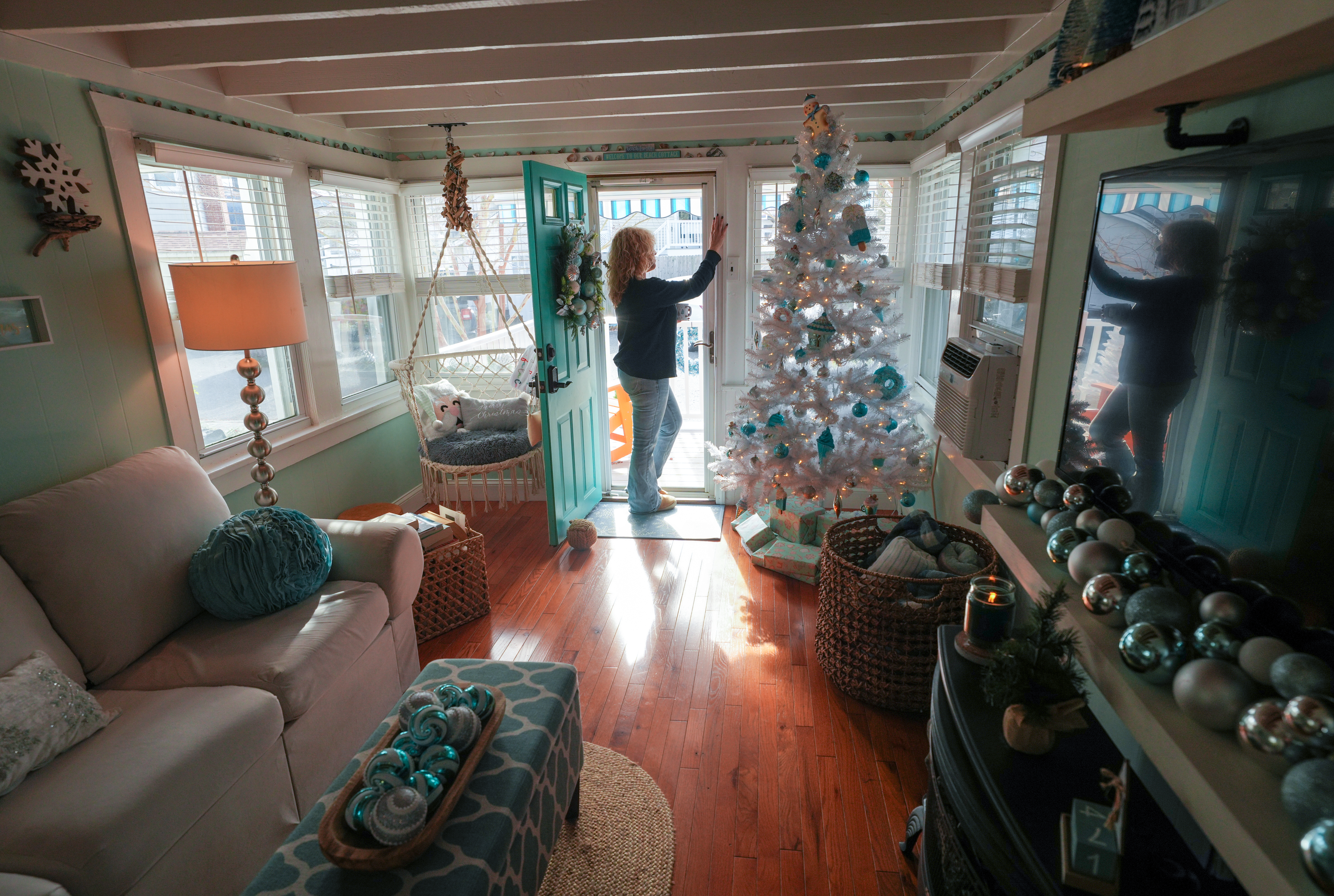
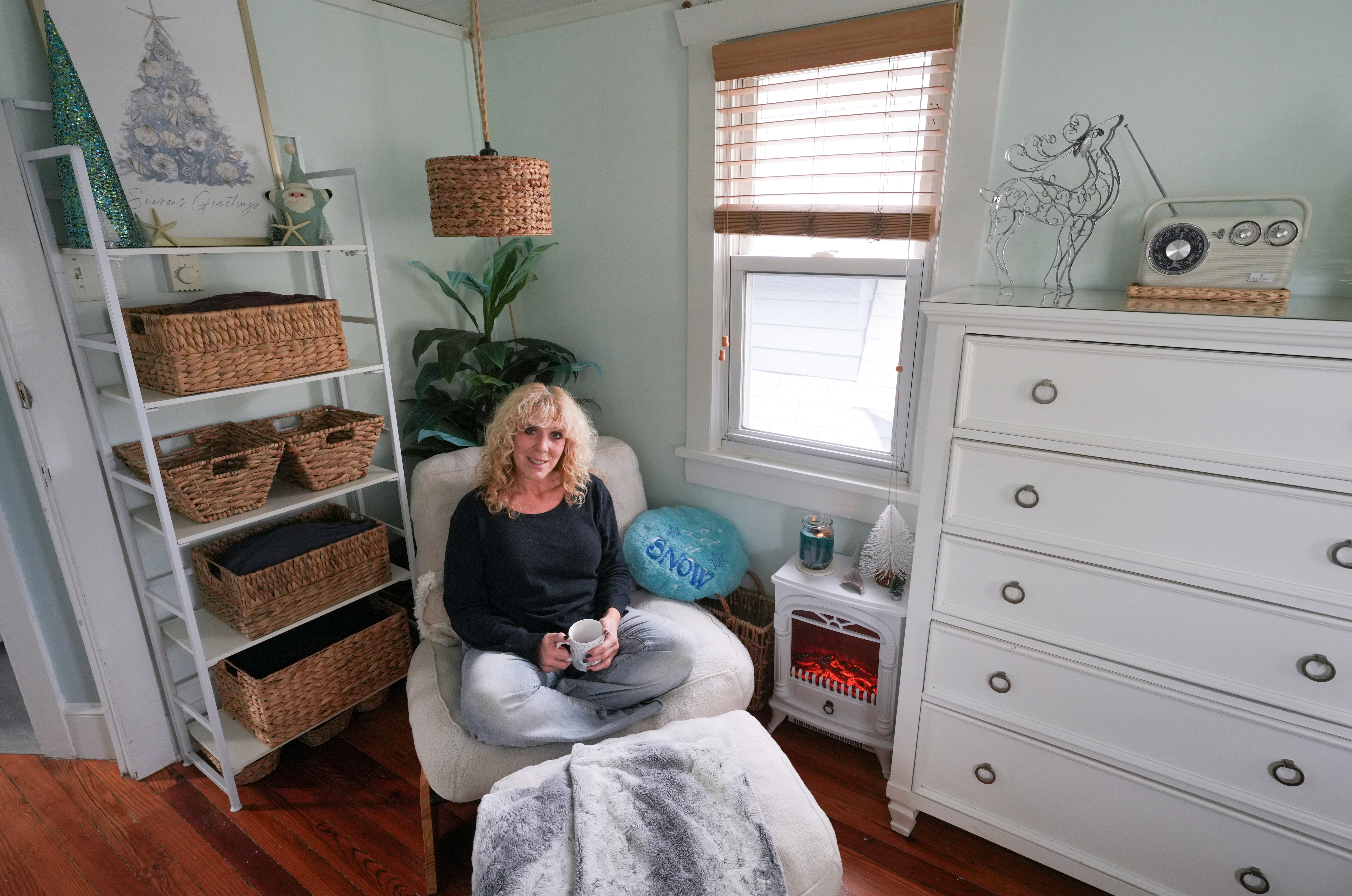
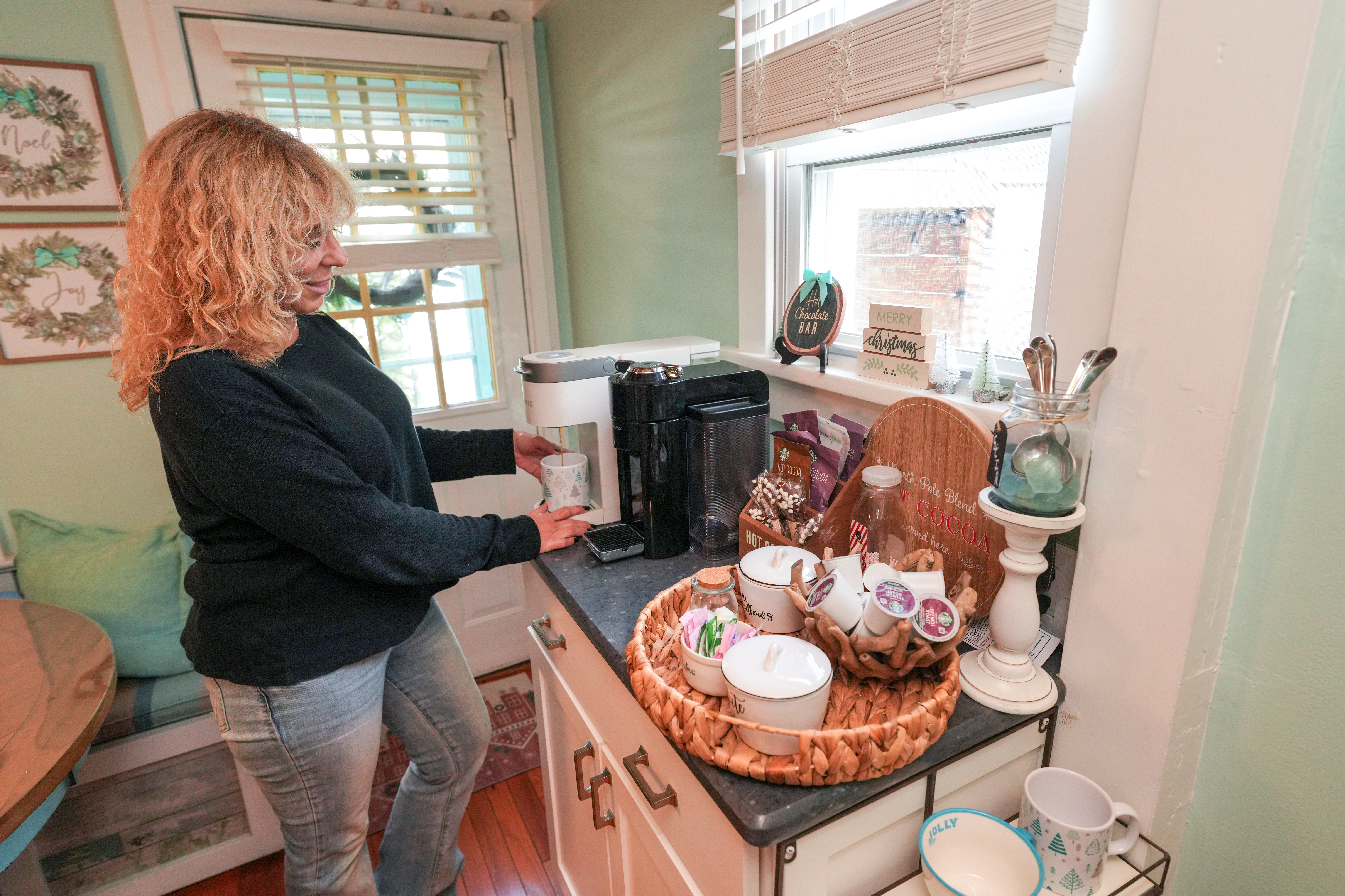
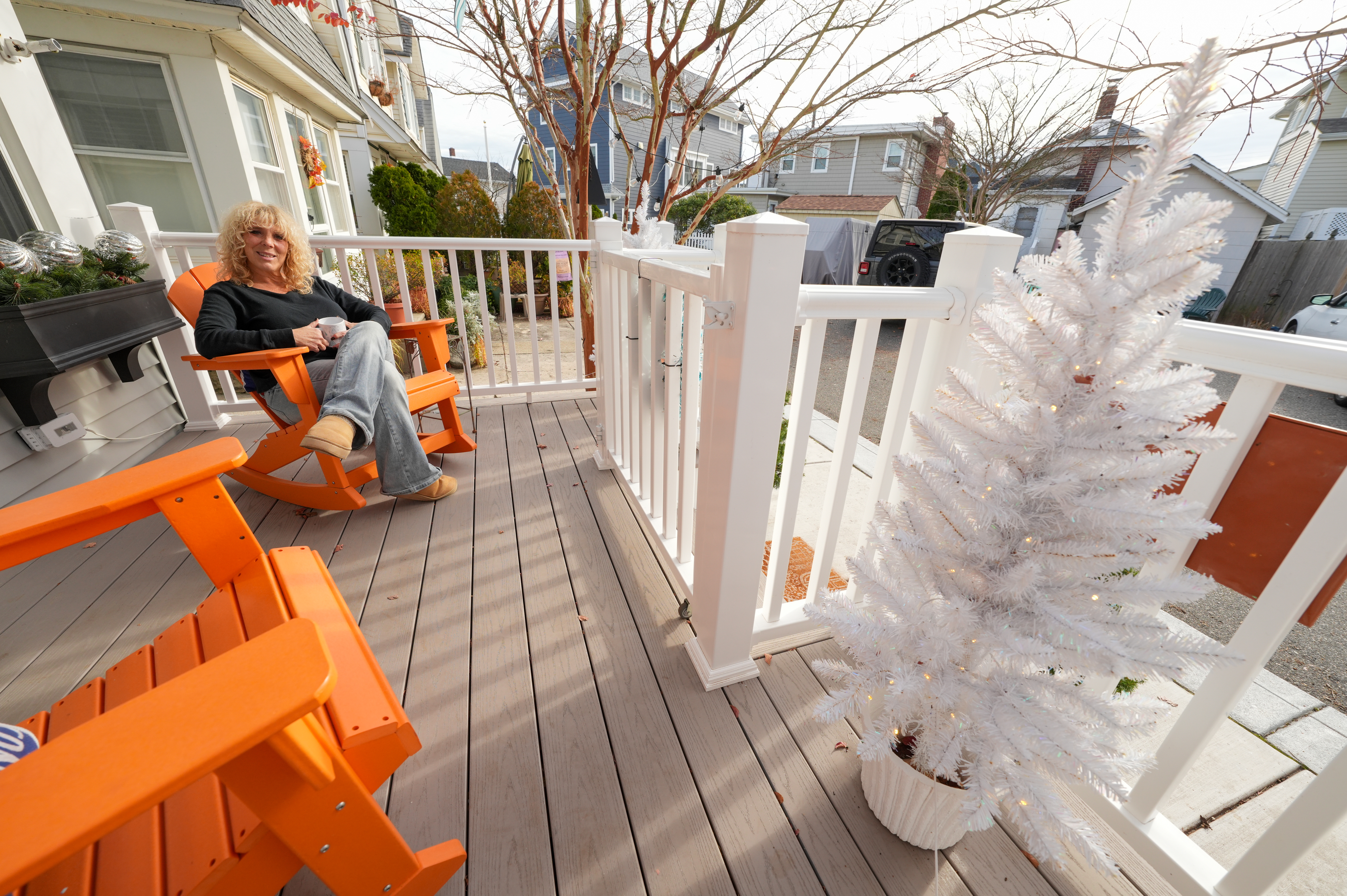
Chappell has a white, pre-lit artificial tree in her front window and two mini versions on her front porch. She’s got a coffee and hot chocolate station with Christmas-themed mugs. Ornaments and little Christmas trees of blue, white, silver, and gray fill shelves above her fireplace.
📮Did you set your sights on a home or neighborhood that you thought you couldn’t have but ended up being able to live in? Give your fellow newsletter readers some hope by emailing me.
Philly’s biggest development projects could bring more than 2,500 new homes and apartments; 1,800 parking spaces; and 118,000 square feet of storage space.
A rendering of the 380-foot tower proposed near Pennsport by a New York capital management firm.Perkins Eastman
Some developers still have big plans though, and if they want to build more than 50 new homes, or any project of over 50,000 square feet, they need to submit their plans to the Planning Commission for public input via the Civic Design Review committee.
story continues after advertisement
This year, 18 projects across Philadelphia went before the committee. These projects are large enough to remake neighborhood commercial corridors and create new hyperlocal landmarks, for better or worse. Most will be breaking ground in the new year.
Here’s your guide to what the committee considered this year.
What is Civic Design Review?
The Civic Design Review committee isan advisory-only board of architects, planners, and other experts who provide feedback on developments that will have an outsized impact on the cityscape.
“CDR gives communities a meaningful opportunity to make their voices heard, educates the public on principles of good design and use of shared spaces, requires developers to respond to questions in a public forum,” says Jessie Lawrence, the city’s director of Planning and Development.
But just because a project goes through Civic Design Review doesn’t always mean it will get built. The 76ers proposed Center City arenawent through the process, and famouslycame to naught earlier this year.
Nonetheless, Civic Design Review is still a rough proxy for what Philadelphians can expect to see in the near future. Here’s your guide to what the committee considered this year.
275 apartment units for Southwest Center City
1601 Washington Ave. | Ori Feibush of OCF Realty
Atrium Design Group
The former site ofHoa Binh Plaza has seen multiple redevelopment efforts since the popular Vietnamese shopping mall’s pre-pandemic closure. This latest isthe third from Feibush, who is offering a scaled-down version of an earlier 400-unit plan, with 10% of the units slated for affordable housing and 200 underground parking spaces.
Status: Ground breaking is slated for the second half of 2026.
84 apartments in Southwest Center City
914 S. Broad St. | Carl Dranoff of Dranoff Properties
JKRP Architects
Dranoff has been developing residential buildings on this stretch of South Broad Street for two decades. He has planned a new apartment building on this propertyfor years. He saw the drive-through McDonald’s that formerly occupied the site and closed in 2021, as a poor fit for one of Center City’s major thoroughfares.
Status: Ground breaking is projected for autumn 2026.
372-car garage for Fishtown and Northern Liberties
53-67 E. Laurel St. | Bridge One Management
Designblendz
As apartments have sprouted along this stretch of the Delaware River in recent years, new parking spaces have not kept apace. Investors hired Bridge One Management tobrainstorm new uses for this property, and the company thinks demand for parking is high enough for a new garage. The project also has 14,000 square feet of commercial space on the ground floor and another 16,000 on the roof.
Status: Permits have not yet been filed.
59-room hotel for Fishtown
1224 Frankford Ave. | Roland Kassis of Kassis & Co.
Gnome Architects
The developer who most helped remake Fishtown into the ultrahip neighborhood it is today haslong wanted to build a hotel on this vacant lot on the commercial corridor. An earlier, taller version of the project was approved before the COVID-19 pandemic, but those permits lapsed.
Status: Ground breaking is slated for the second half of 2026.
75 apartments in Kensington
3408 B St. | Dwight City Group
Raymond F. Rola
Far from the parts of Kensington where development is booming,this apartment project is meant to be priced to attract people who already live in the neighborhood. The developer, known for adaptive reuse, plans to revive the two-story remnants of a derelict warehouse as a base for the six-story apartment building.
Status: The project awaits a zoning board hearing in January.
162 units for rent and purchase in Port Richmond
2620 and 2650 Castor Ave. | Tim Ajvazi
Ambit Architecture
These two neighboring projects are thework of the same developer and were considered by the Civic Design Review in tandem. At 2650 Castor Ave., 68 homes are planned across eight triplexes and 22 duplexes. At 2620 Castor Ave., there is a proposal for a four-story apartment building of mostly one-bedroom units, which the zoning board approved earlier.
Status:: The zoning board approved the project on 1650 Castor Ave. on Wednesday.
232 new homes in North Philadelphia
2200 N. Eighth St. | Andre Herszaft
Harman Deutsch Ohler Architecture
This project has beenin the works for two years, and to gain community support before the zoning board the New Jersey-based developer has more than halved the number of planned units. Instead of apartments, the old trolley barn at this location will be replaced by dozens of duplexes and triplexes, assuming it wins permission from the ZBA.
Status: Neither zoning nor demolition permits have been filed yet.
384 apartments in Roxborough
4889 Umbria St. | Genesis Properties and GMH Communities
Oombra Architects
Thisapartment building is the largest in recent memory for the Northwest Philadelphia neighborhood of Roxborough, and while community groups were unhappy, they had few means to push back against it. The developer plans almost one-for-one parking at the site, but no commercial development, although a few existing businesses on site will remain, including furniture retailer Love City Vintage and Javies beer distributor.
Status: Ground breaking is slated for next year.
167 apartments in Manayunk
4045-61 Main St. | Urban Conversions
CBP Architects
This seven-story project from architect CBP Architects required thedemolition of a historic textile mill to move forward. Its proximity to the Schuylkill presented another challenge, which developers solved by proposing 160 parking spaces on its first two floors to lift the project out of the flood zone.
The project also required permission from the zoning board, where a height reduction was mandated. But the developer successfully argued the project was impossible with fewer stories and the ZBA reconsidered and will now allow its original size.
Status: Permitted, but ground has not been broken yet.
45 units for East Germantown
6225 Germantown Ave. | MGMT Residential
Ingram/Sageser
This deserted warehouse, tucked off Germantown Avenue, is slated for a small,four-story apartment building with a floor of parking. The developer still needs to demolish the old building.
Status: A demolition permit was issued in July, but the building still stands.
81-unit apartment building for Mt. Airy
6903-15 Germantown Ave. | Tierview Development
Barton Partners
Thisfive-story building includes space for retail, 11 parking spots in the rear, and plenty of greenery and brick detailing to fit in with its surroundings. Seven of the units are priced to be accessible to lower-income families, but all of the units are targeted to below-market-rate prices.
Status: Ground breaking slated for the first half of 2026.
495-car garage in University City
17 N. 41st St.. | University City Associates
ISA
This garage is called University Place 5.0 and is meant to accompany the developer’s earlier life-sciences-oriented University Place 3.0 next door. It is meant to provide vehicle storage for the developer’s existing holdings, and especiallyfor the city’s criminal forensics laboratory, which will have reserved use for a fifth of the space. Councilmember Jamie Gauthier fought for the crime lab in her district, and she had to change the property’s zoning to enable the garage.
Status: Ground breaking is slated for early next year.
This West Philadelphia developer isexpanding to a new part of the city with a project that redevelops the former St. Divine Mercy School into a 35-unit apartment building along with two new buildings to house the rest of the units. Sixteen will be slated for lower-income residents.
Status: Leasing for the former school begins in January; the two new buildings have yet to break ground.
204 apartments in North Philly
1322 West Clearfield St.| J Paul Inc.
Canno Design
This building, from architects CANNODesign,stirred controversy in its corner of North Philadelphia over what neighbors saw as a lack of adequate parking (although there were 82 underground spaces in the plans). The project needed a variance from the Zoning Board of Adjustment (ZBA), and was granted permission to move forward in December.
Status: Approved by the zoning board, but hasn’t broken ground yet.
65 affordable apartments in Sharswood
2006 Cecil B. Moore Ave. | PHA and the Frankel Enterprises
Blackney Hayes
This senior housing development is one of the last pieces of the Philadelphia Housing Authority’s 10-year redevelopment of North Philadelphia’s Sharswood neighborhood. (Itmoved its headquarters there from Center City.) This piece of the project is being orchestrated in partnership with the Frankel brothers, who are known for affordable housing projects across the city.
Status: Ground breaking is slated for autumn 2026.
620 apartments for Pennsport
1341 S. Christopher Columbus Blvd. | Brevet Capital Management
Perkins Eastman
This property to the east of Pennsport has seen many mega-project proposals come and go. The latest from a New York capital management firm promiseshundreds of new units, and more towers if the first round goes well.
Status: Permits have been filed but a ground-breaking date remains unknown.
1,005-car garage in Grays Ferry
3000 Greys Ferry Ave. | Children’s Hospital of Philadelphia
THA Consulting Inc.
CHOP is in the midst of a big expansion, and wants more employee parking. The site is about a mile from the hospital complex, and CHOP plans shuttles for the last leg of commutes. The projectstirred controversy for its location in a low-income neighborhood with already elevated asthma levels, which advocates say will be exacerbated by more cars.
Status: Under construction.
118,000 square feet of storage space in Fox Chase
7801 Oxford Ave. | BG Capital
Vissi Architecture
The developer reduced the planned size of its self-storage space to stave off community opposition to the project, which won approvals from the ZBA this summer. But BG Capitalnever intended to build the project itself, and instead is seeking to sell the permitted property to a developer with more experience in the self-storage industry.
Status: Permitted, unbuilt, and for sale.
Staff Contributors
Reporting: Jake Blumgart
Graphics: John Duchneskie
Editing and Digital Production: Erica Palan
Copy Editing: Lidija Dorjkhand
Subscribe to The Philadelphia Inquirer
Our reporting is directly supported by reader subscriptions. If you want more journalism like this story, please subscribe today
Executives at Happy Bear, which has sold coffee online for the past two years, said they recently signed a lease for a 3,000-square-foot space on the ground floor of 1201 Normandy Place, a mixed-use lab building optimized for life-science tenants, including those who do gene and cell therapy research and development.
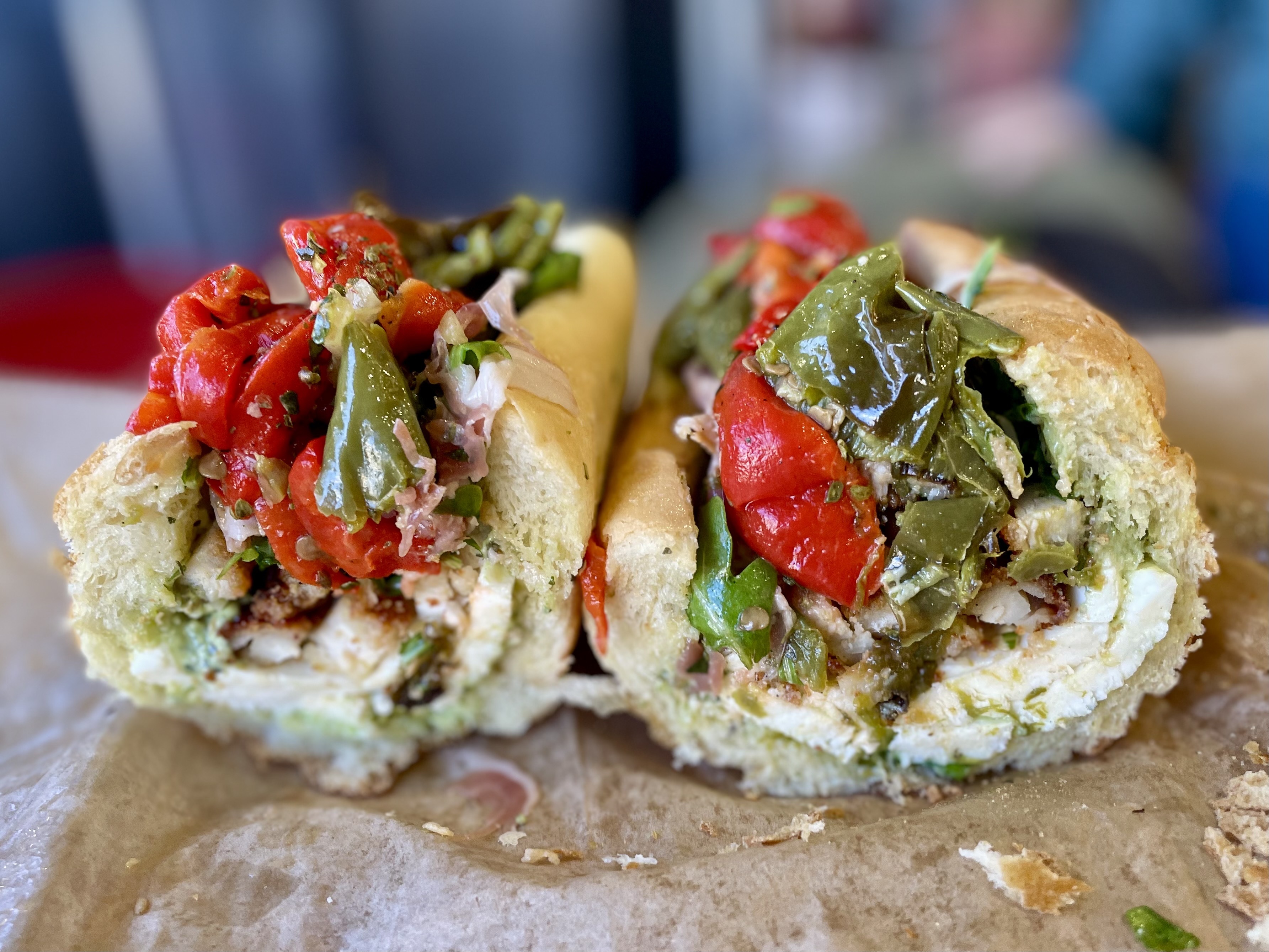
The Happy Bear cafe is set to serve coffee, wine, and grab-and-go food, including sandwiches, breakfast items, soups, salads, flatbreads, and tomato pie made in partnership with Carlino’s, the Ardmore-based specialty-food purveyor.
A Saquon hoagie special at Carlino’s Market in Ardmore. The specialty-food purveyor’s food will be available at the the Happy Bear Coffee Company’s first physical store at the Navy Yard.
The cafe will have indoor and outdoor seating overlooking the five-acre Central Green Park, and provide “a versatile setting for morning coffee, a quick lunch, or an evening glass of wine,” according to the news release.
“We wanted to create a place that feels like a daily ritual and a small retreat all in one,” Happy Bear cofounder Dan Kredensor said in a statement.
“With Carlino’s expertise as one of our culinary partners, we’re building a cafe that brings together wonderful specialty coffee, great flavors, and a welcoming atmosphere, right in the heart of the Navy Yard’s most exciting new district.”
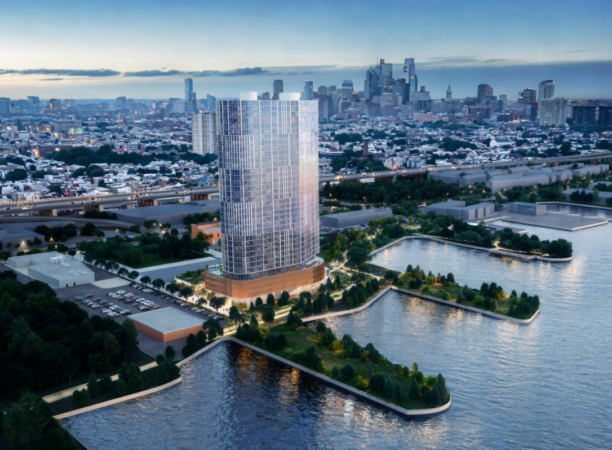
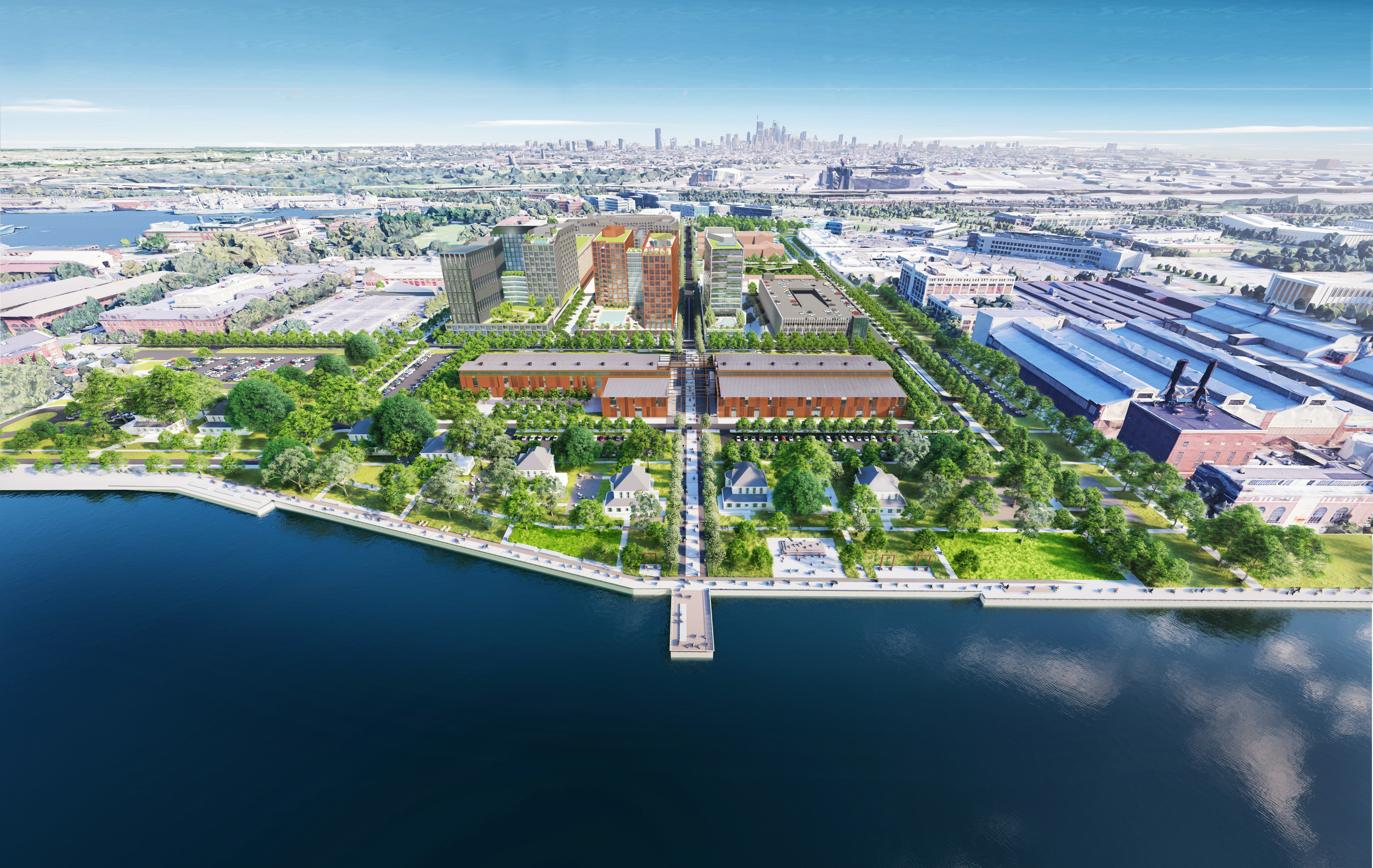
An artist’s rendering shows an aerial view of the proposed development plan for the Navy Yard.
Ensemble Real Estate Investments, of California, and Philly’s Mosaic Development Partners were selected in 2020 to lead an estimated $2.5 billion redevelopment of 109 acres of the former base.
Construction of 1201 Normandy was part of Ensemble/Mosaic’s first phase of redevelopment, which was estimated to cost $400 million.
“Happy Bear represents the type of dynamic, community-focused retail that will define the Navy Yard as it enters its next phase of growth,” said Nelson Way, vice president of leasing and development for Ensemble.
Happy Bear was founded by longtime friends Kredensor and Frank Orman, who bonded by exploring Philly’s coffee shops during their college years.
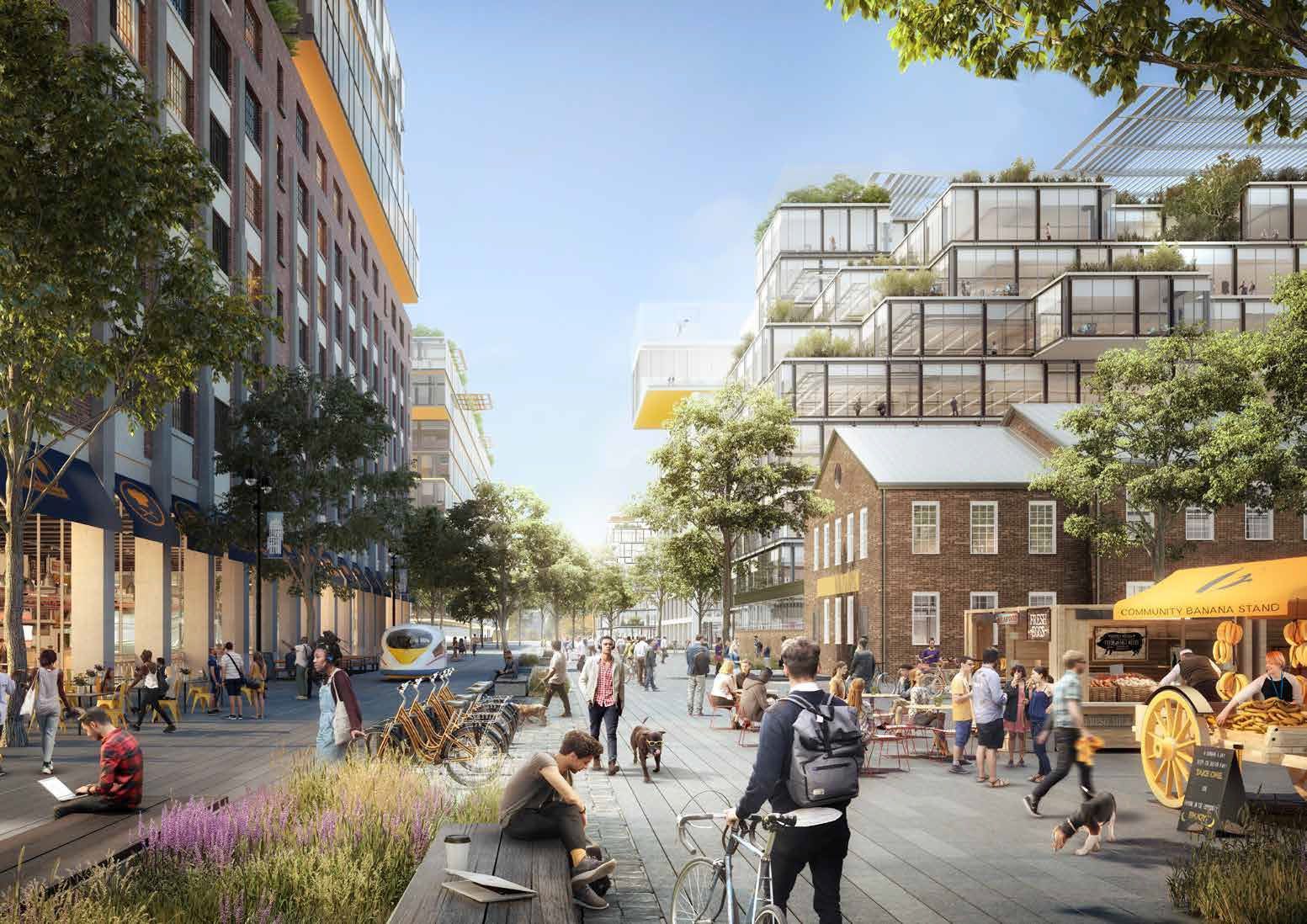
The pair’s first cafe will be near a 12-acre section of the Navy Yard that’s being called the Historic Core District, combining historic buildings with new construction.
An artist’s rendering of PIDC’s vision for the Navy Yard Historic District Core district, which would combine historic buildings and new construction.
In the same area, developers have built more than 600 apartments in a mixed-use community called AVE Navy Yard, which is expected to open next year.
The Philadelphia Industrial Development Corporation (PIDC), an independent nonprofit, manages the Navy Yard on the city’s behalf. It has owned the 1,200-acre site since the U.S. Defense Department decommissioned it as a military base in 2000.
The Navy Yard is home to 150 companies that employ 16,000 people, according to its online directory. Its tenants include Urban Outfitters, which is headquartered at the site, and Jefferson Health.
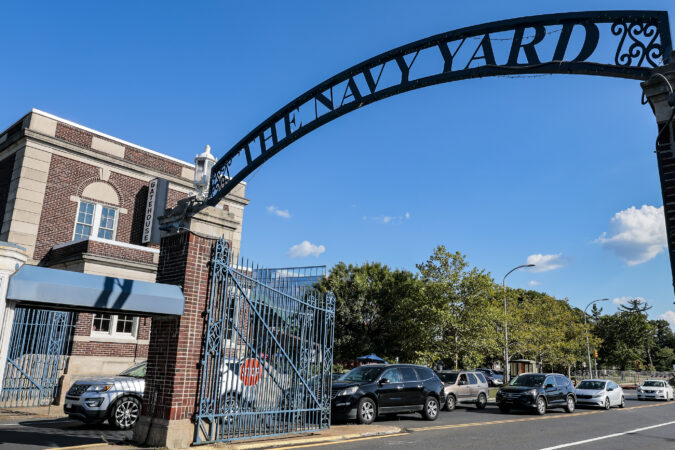
The property also has a Courtyard Marriott, several daytime food options, and a full-service restaurant called the Gatehouse.
Navy Yard stakeholders want the campus to eventually have nearly 4,000 new apartments; 235,000 square feet of retail; and more than 4.2 million square-feet of office, research and development, and manufacturing space, according to its 2022 redevelopment plan. Developers also want to bring another hotel to the site.
Another former religious building is being redeveloped into apartments, with an assist from a law City Council passed in 2019 to preserve large, neighborhood-scale historic buildings like churches.
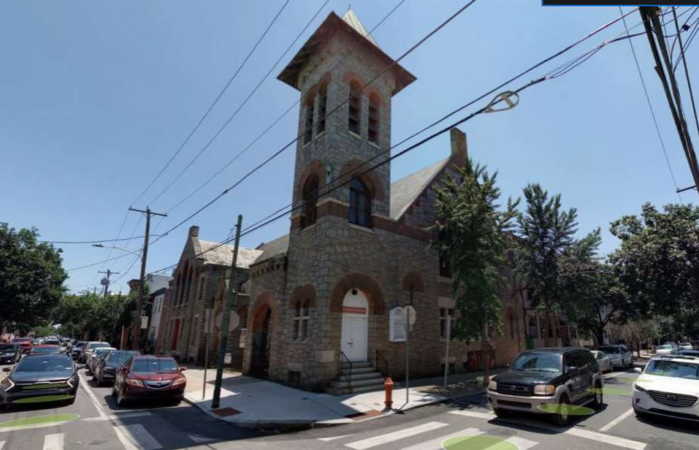
The former St. John’s Baptist Church at 13th and Tasker Streets is slated to house 26 rental units. The church dates to 1892 and is currently vacant.
The developer is Annex Investments II, owned by Drew Palmer, and the design of the remodel is by Philadelphia-based Toner Architects.
The church, which sits at the northeastern corner of the Miracle on 13th Street block, is zoned for single-family residential.
But the 2019 law passed by district Councilmember Mark Squilla makes it easier to convert “special use properties” — such as churches or theaters — to new uses no matter their underlying zoning, if the building is historically protected.
St. John’s Baptist Church was added to the local Register of Historic Places in 2020 after the advocacy group Preservation Alliance of Greater Philadelphia nominated it.
The bill was passed following the St. Laurentius debacle in Fishtown, where a handful of neighbors managed to delay a redevelopment project with lawsuits until the building was in poor enough shape that it had to be razed.
The 2019 law makes such legal warfare more difficult to wage.
These new zoning laws are “facilitating an increasing number of adaptive reuse projects of historically designated properties, preserving them while returning them to productive, taxpaying use and strengthening their surrounding neighborhoods,” said Paul Steinke, who leads the Preservation Alliance.
On Tuesday the project was given a preliminary review by the Architectural Committee, which advises the Historical Commission.
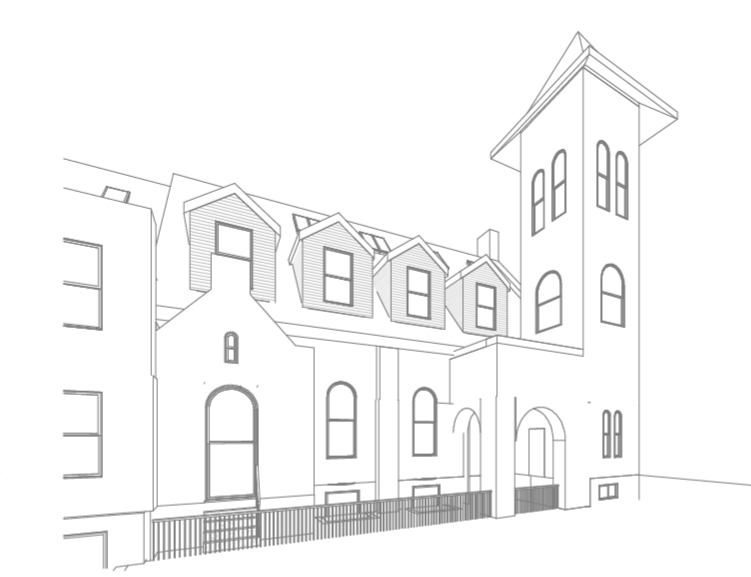
As part of the conversion, the developer wants to insert additional floors to the church building, which is beyond the Historical Commission’s jurisdiction. The plan also includes adding large dormers to the roof to allow more light into the future residences and replacing the dilapidated slate roof with asphalt.
The proposed new dormers can be seen in this rendering, lining the church’s roof.
The Architectural Committee objected to both of those exterior changes.
“The dormers are pretty significant on this, and we’re looking to find a way to make those more subtle,” said Nan Gutterman, who sits on the committee.
Sara Shonk Pochedly of Toner Architects noted the dormers are the same size as those added to other redeveloped churches reviewed by the Architectural Committee, but this building is smaller in size so the new additions look larger.
Because this was a preliminary review meeting, the committee did not indicate how it would vote to advise the larger commission.
“We always appreciate when a church is given another life,” said Justin Detwiler, who sits on the Architectural Committee. “Thank you and your applicant for doing that and being sensitive. These are not easy projects.”
Palmer did not attend the committee meeting and did not immediately respond to a request for comment. Ian Toner of Toner Architects declined an interview request at this early stage in the development process.
Driving up Wovern Place in Ocean City feels like entering a Hallmark movie set.
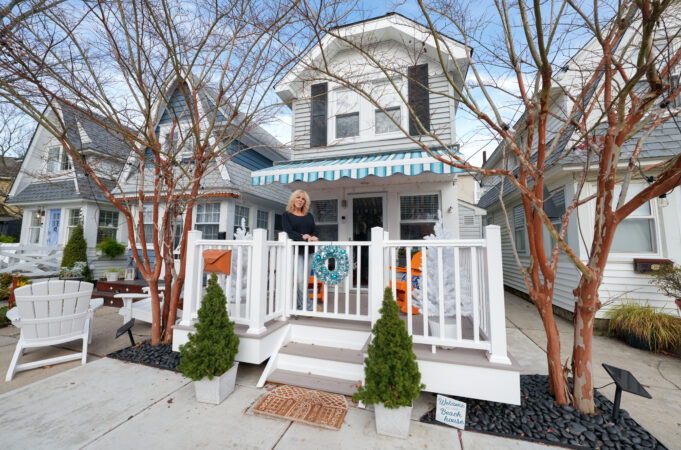
It’s where nine homes — 800 square feet or smaller — stand shoulder to shoulder on a winding road known as Dollhouse Row, all decked out in holiday cheer. Ginny Chappell’s house, decorated in blue and white, combines holiday tradition with a classy beach vibe.
“Christmas has always been my favorite time of year,” said Chappell.
Since randomly discovering Dollhouse Row as a twentysomething visiting the Shore, Chappell dreamed of owning a home on this historic street, where the houses were built in 1927.
Ginny Chappell looks out the front door from the living room of her Ocean City house.
“I was obsessed with the street and followed it ever since,” recalled Chappell, a retired nurse with two part-time jobs in Ocean City. She’s a salesperson at Artisan Body Products and a part-time assistant innkeeper at the historic Coastal Chateau.
In 2015, when she was living in Franklinville and looking to buy a vacation home, there weren’t any houses for sale on Dollhouse Row.
“My Realtor told me to dream on, that they stay in families and almost never sell,” said Chappell, who instead bought an even tinier home — 400 square feet — in the south end of Ocean City.
Five years later, looking for more space, she set out to buy a larger house, but just days before closing, the deal fell through. Chappell was devastated.
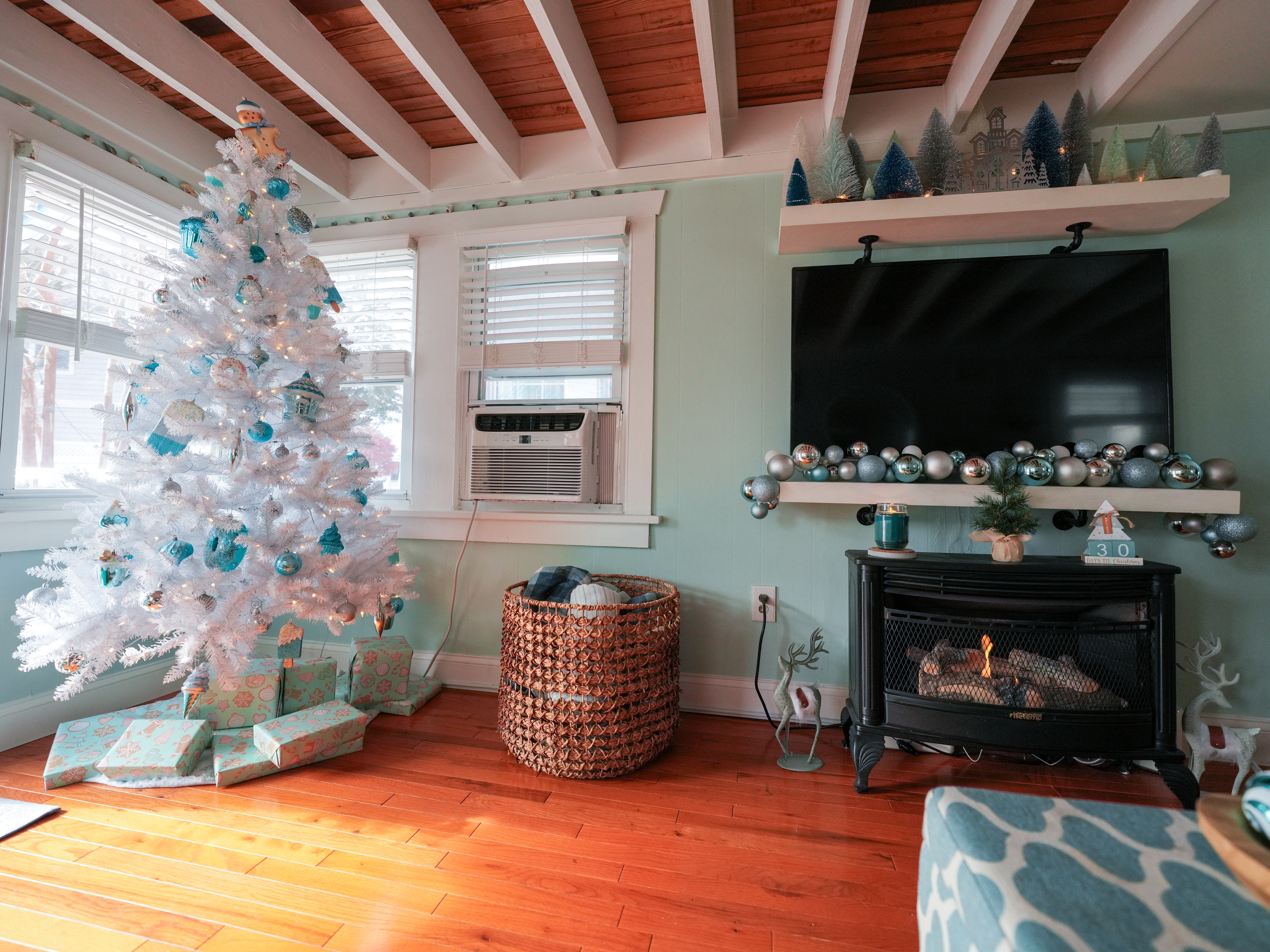
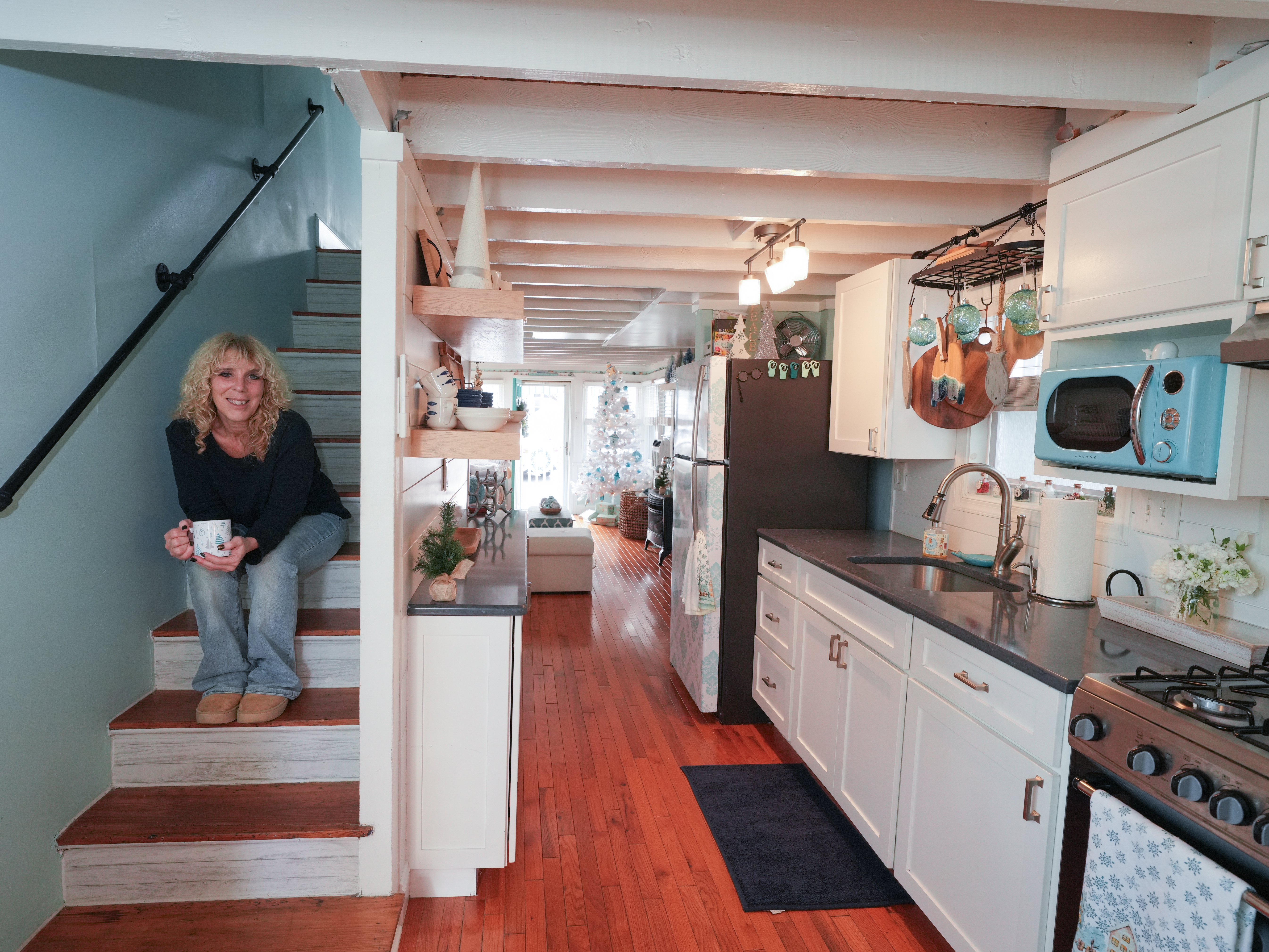
A white and blue Christmas tree, festive ornaments and a toasty fireplace bring holiday cheer to the home.Chappell sits on the steps just off the galley kitchen.
But her luck changed two months later when she got the call she had long dreamed of: an 800-square-foot Dollhouse Row house was about to go on the market.
“I’m someone who very much believes in manifestation,” Chappell said.
She now shares the house, named Grayce by previous owners, with her two long haired mini-Dachshunds, Liliana, 17, and Romeo, 6 months. She has a comfortable primary bedroom and a spare bedroom for visitors, which often include her daughter Kayla, 22.
The first floor is open space with a cozy family room, kitchen, and dining area. Upstairs, a full bathroom sits between the two bedrooms, with a stacked washer and dryer hidden behind a curtain. The primary bedroom includes a small electric fireplace that doubles as a heater.
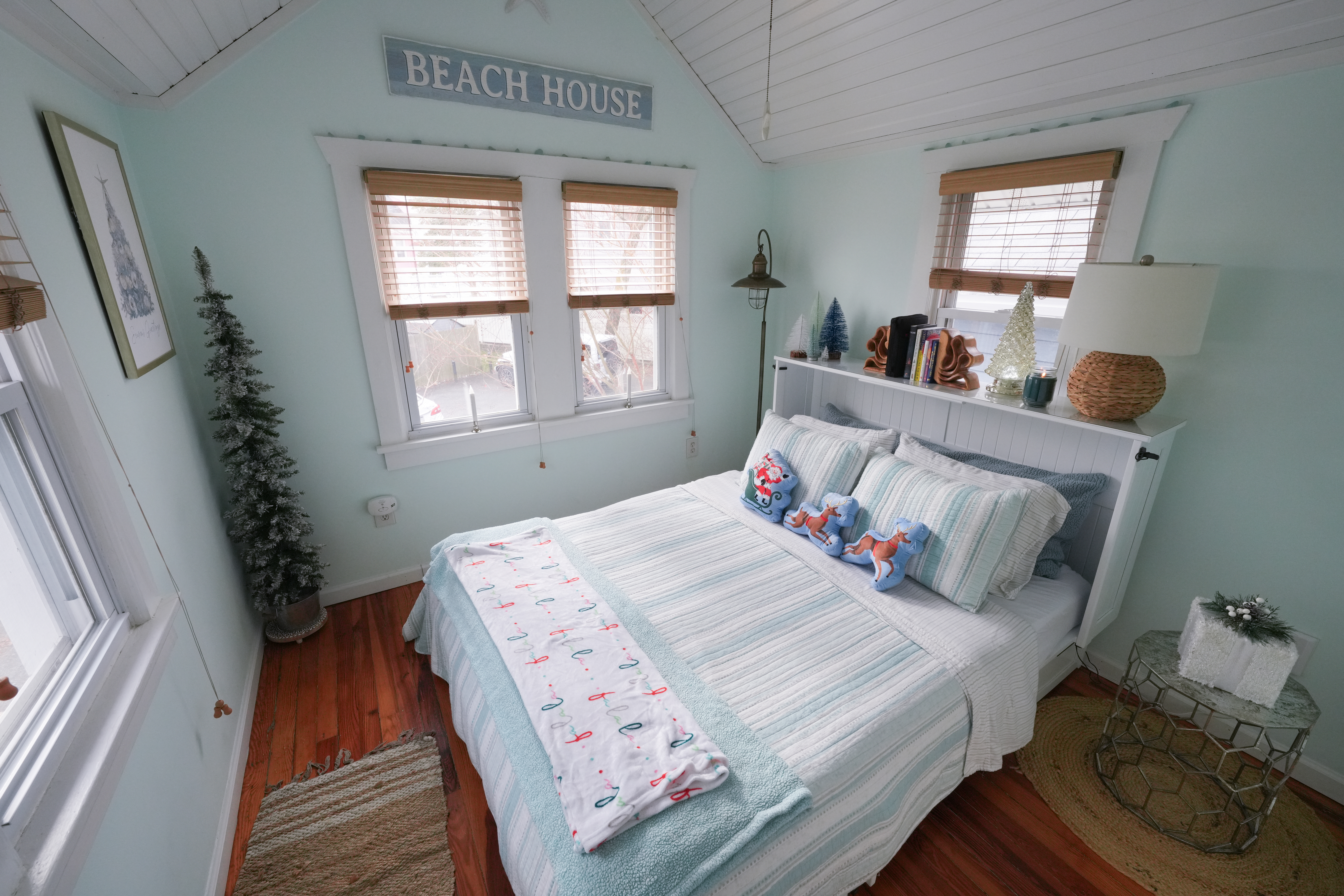
Chappell’s holiday decor, with blue details throughout, doesn’t compete with the beachy theme of her primary bedroom.In a comfortable chair in the primary bedroom, Chappell is surrounded by blue, teal, and silver Christmas and winter accessories.
Despite the small space, Chappell’s home is not cluttered. She has thoughtfully arranged each piece of furniture, artwork, and knickknack, with storage invisibly tucked away. She also rents a storage unit for offseason clothing and other items.
Each year, she envisions her holiday theme, then sets out to perfect it.
For her coffee and hot chocolate station, complete with marshmallows and candy cane sprinkles, she wanted Christmas-themed mugs in blue and white and searched until she found them.
“I spent four days finding these mugs,” she recalled, hitting three Home Goods stores, Hobby Lobby, and Dollar General on her search.
Ginny Chappell makes a warm beverage at her coffee and hot chocolate bar, complete with festive mugs.
It isn’t about what something costs but how it makes her feel, she said. Her pre-lit frosted white tree, adorned with blue and silver ornaments and a Gingerbread Man tree topper, came from Walmart. She also supports local crafters and businesses whenever possible.
For home design details she keeps year-round, she loves to scour the beach for beautiful broken seashells, where the iridescent pinks and beiges can be seen through the cracks in the shells. Shells line each window frame throughout the house.
“If they weren’t broken you would never be able to see just how beautiful they are inside,” she said. “The message is broken is beautiful.”
She also has dozens of small one-of-a-kind driftwood shelves hanging on her walls, and at this time of year each holds a small snowflake, tree, or other decoration. Her mantle is filled with artistic Christmas trees in shades of blue, white, silver, and gray. Vintage Christmas decor, including tin post cards, can be found throughout the cottage.
Given its small size, Chappell’s home can’t host large parties, but it can be shared with friends, neighbors, and even strangers. Her home has been featured in Ocean City’s Holiday House Tour for the last three years, drawing as many as 500 visitors each year.
Ginny Chappell sits on the porch of her 800-square-foot home that is decorated for Christmas.
A house close to 100 years old does come with challenges.
“I’m always fixing things,” Chappell said. “But, people are drawn to its charm and history.”
A small group of friends share the holidays with charcuterie boards, wine, and lots of laughs. Her front porch is the perfect perch for watching visitors stroll down the street, enamored with the tiny houses.
“I believe this street is very special because of its history,” Chappell said. “The people on this street call ourselves the cottage keepers. We want people to restore rather than tear down.”
Is your house a Haven? Nominate your home by email (and send some digital photographs) at properties@inquirer.com.
It’s your city. It’s your (Ritten)house. It’s your Rally House.
The sports apparel store with the earworm of a jingle plans to open its first Center City location in a former Rite Aid near Rittenhouse Square.
The Kansas-based chain has asked the city’s art commission for approval to put up signage outside the nearly 13,000-foot storefront at 17th and Chestnut Streets, according to its application, which is set to be reviewed at a Wednesday meeting. Rally House spokespeople did not return requests for comment Tuesday.
The company’s application was first reported Monday by the Philadelphia Business Journal.
Since the Rittenhouse Rite Aid closed, Spirit Halloween has occupied the storefront in the months leading up to Halloween.
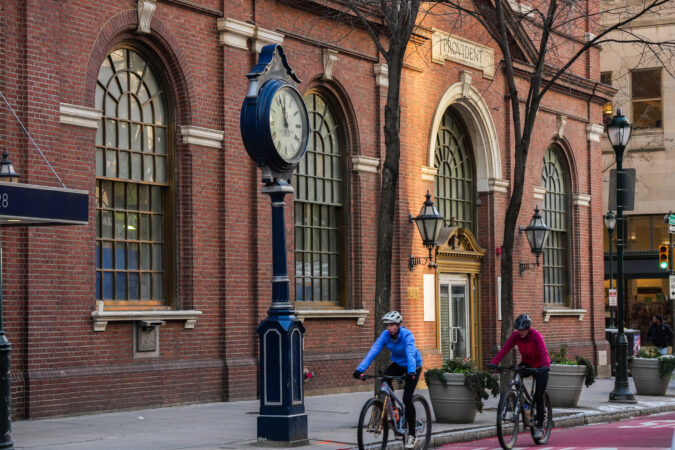
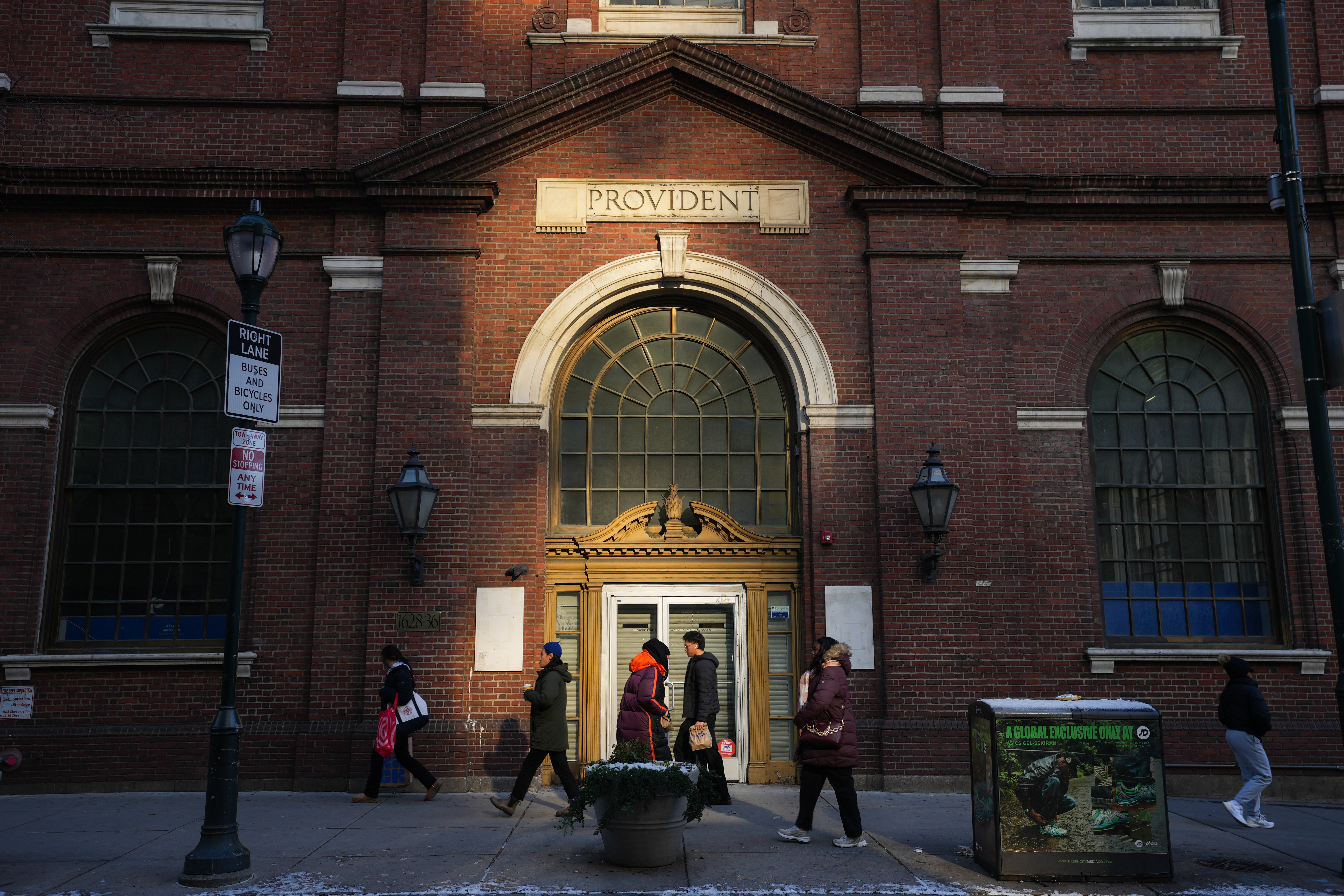
Since Rite Aid closed two years ago, the ground-floor retail space in the Provident Trust Co. building has been occupied seasonally by Spirit Halloween, but is otherwise vacant.
The building is owned by a partnership registered to Philadelphia-based developer Neal Rodin, according to property records. Rodin did not return requests for comment Tuesday.
Rally House already has about two dozen locations in the Philadelphia region, but the vast majority of them are in the suburbs. It has three city locations — on Temple’s campus, in West Philadelphia near Drexel and Penn, and in Roxborough.
If Rally House opens at 17th and Chestnut, it would bring continued momentum to the retail corridor around Rittenhouse Square, which has recently welcomed a slew of new businesses, including the luxury women’s fashion company Aritzia and North America’s first Nike Jordan World of Flight store.
It would also mark the latest example of how zombie Rite Aids can be resurrected.
Over the past three years, more than 170 Rite Aids have shuttered across the Philadelphia region, with dozens of stores closing even before the chain announced it was going out of business.
Like the Rittenhouse space, former Rite Aids are often 8,000 to 16,000 square feet, which is not ideal for many potential tenants, experts say. But some of these pharmacy shells have found new life as small grocers, discount stores, and medical offices.
Soon, sports apparel store may be added to that list.
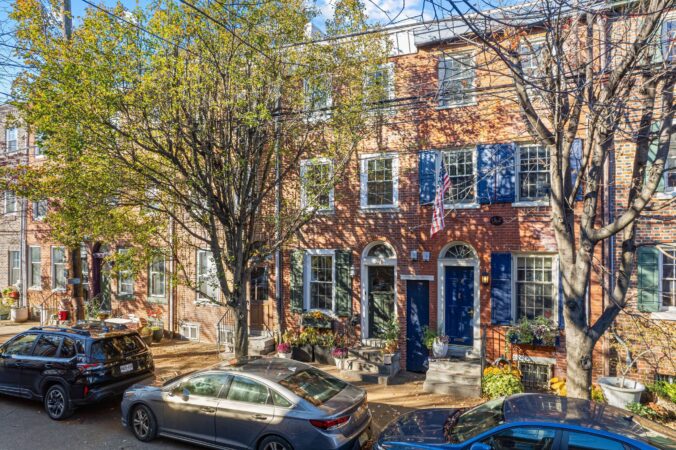
Mark Worker said his two-bedroom, one-bathroom house in Queen Village has “so much character” and is “close to everything,” with “a true neighborhood feel.”
Probably built in the late 1800s as part of a cluster of homes to house workers for an adjacent factory, it was augmented in the early 2000s by an extension in the rear.
Worker, a software account manager, bought it in 2022 when he was single, but he soon married, and now he and his wife are moving to London for his work.
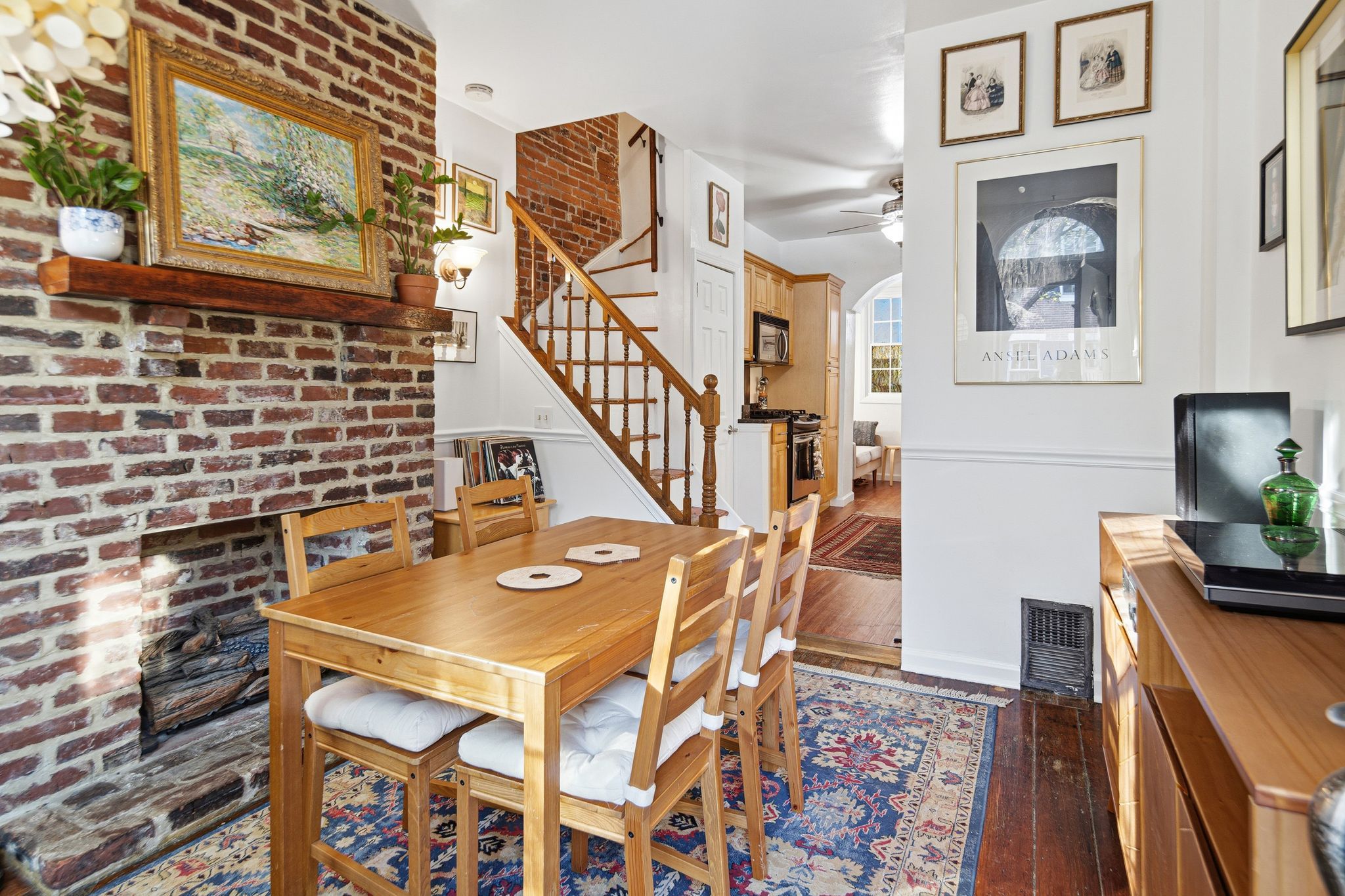
The dining area.
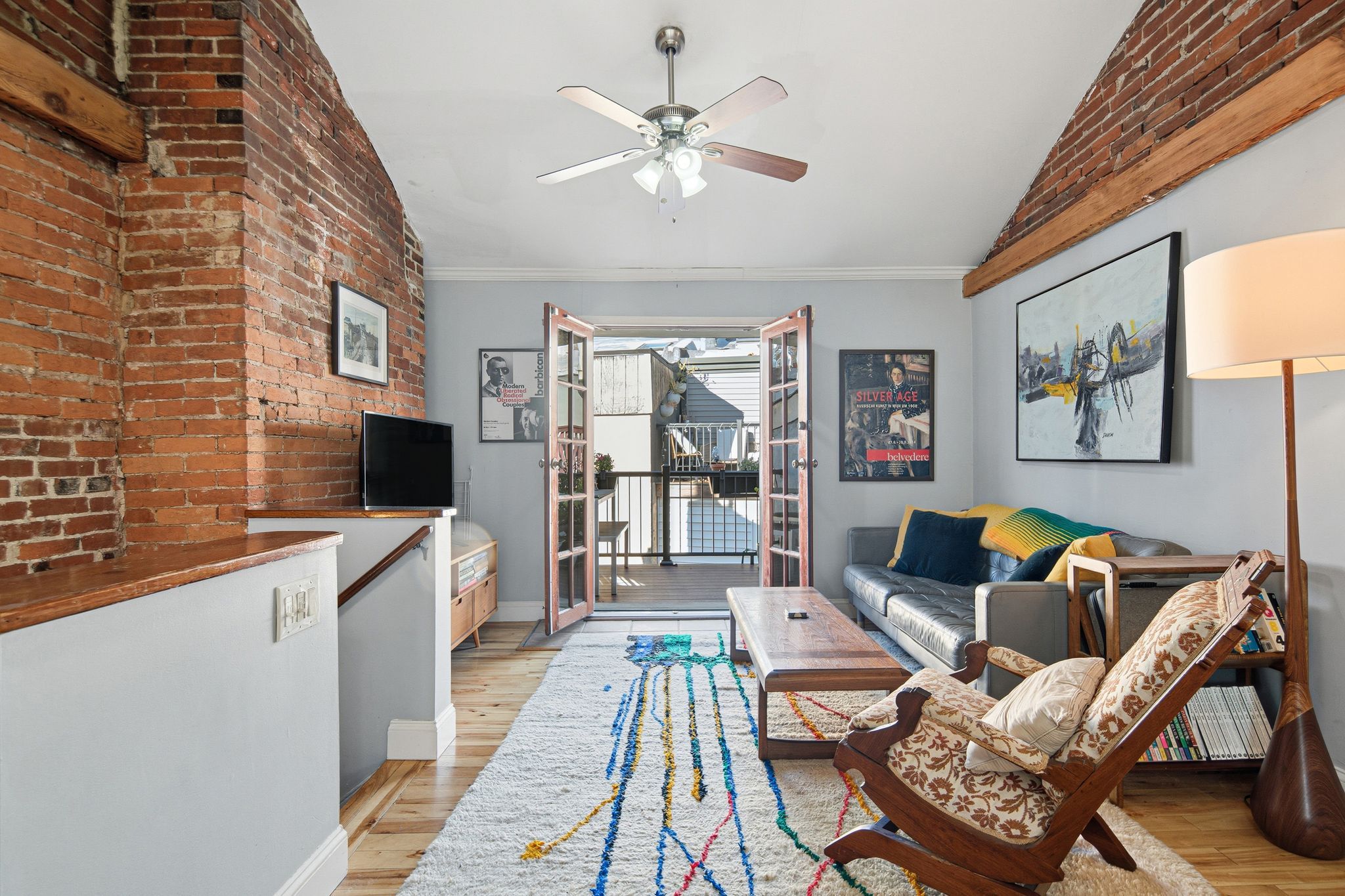
The house is 1,092 square feet and sits on a tree-lined street in the heart of Queen Village.
It has hardwood floors throughout, all new windows, updated plumbing, a new HVAC system, and a new roof.
The interior has been freshly painted and the bedroom windows let in abundant natural light.
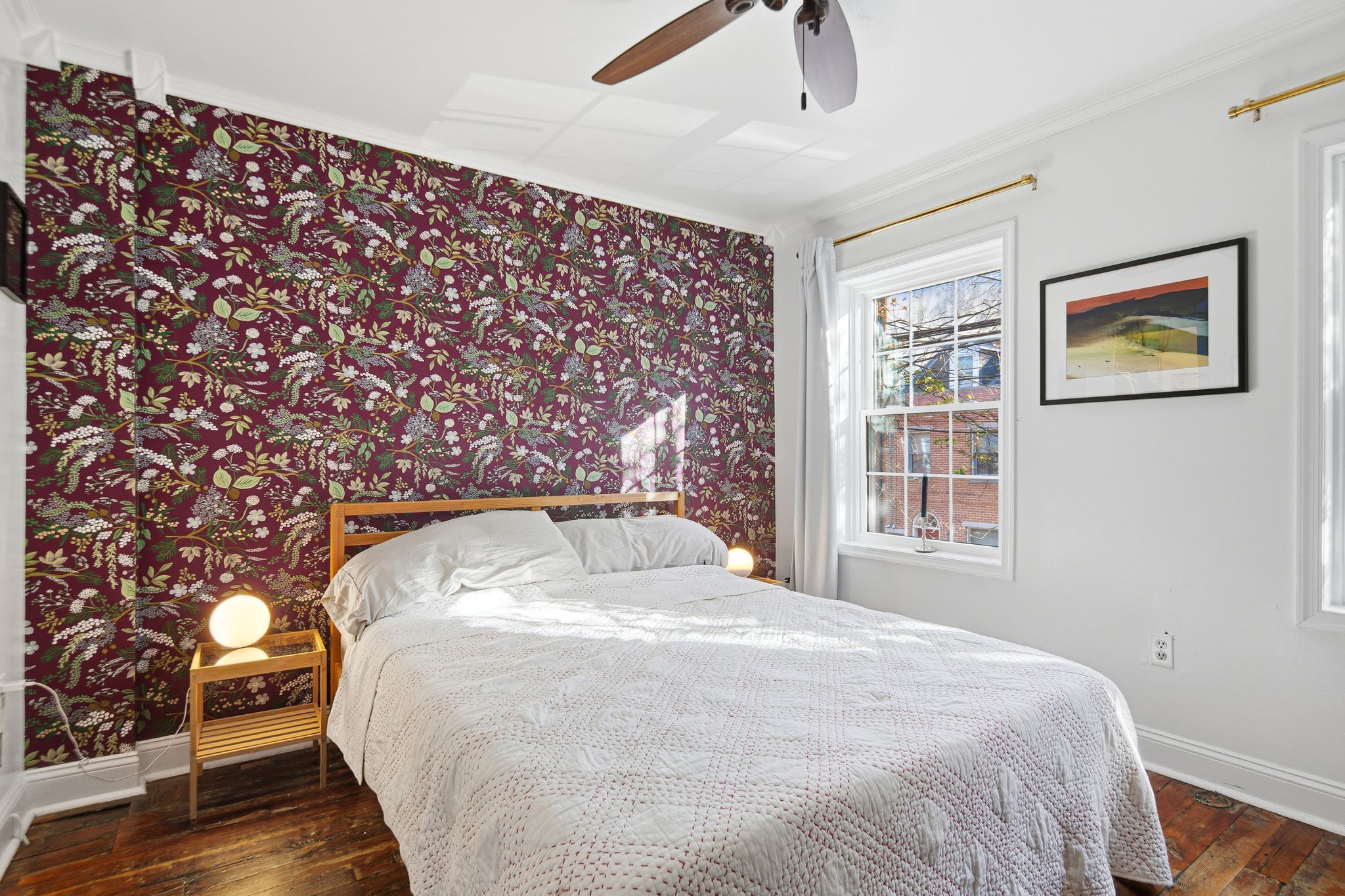
The primary bedroom. The windows let in abundant natural light.
The primary bedroom is on the second floor. A second bedroom, on the third floor, was used as a nursery by previous occupants.
“The third floor is really the best part of the house,” Worker said. It has an open floor plan and is being used as a living room and office, although Worker previously used it as a bedroom.
The third floor is being used as the living room.
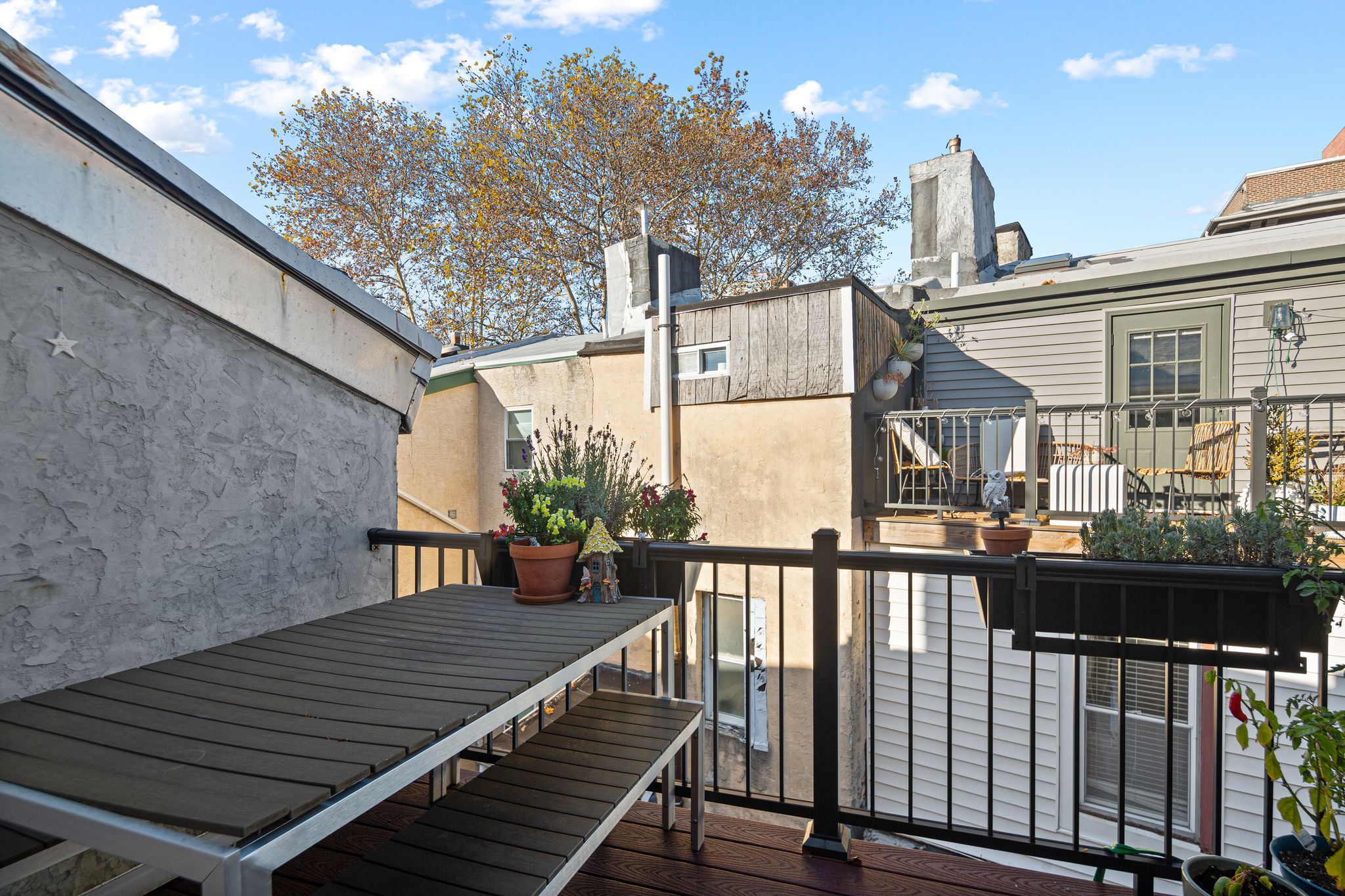
The deck, just off the third-floor room, was carefully landscaped, with a picnic table and a variety of plants.
The home has an unfinished basement for storage, and a dedicated outdoor space in the rear.
The roof deck, which is landscaped with a picnic table and a variety of plants.
Commuting is easy with ready access to public transportation, I-95, and other major highways.
Adjacent landmarks include South Street and Head House Square.
The house is listed by Jay Edwards of OCF Realty for $519,995.