According to the new survey, 38% of all Pennsylvanians support data centers being built in the Commonwealth, while 35% oppose, and 27% are neutral or have no opinion. But when asked about data centers being built in their area, residents’ opposition grows: 34% support, 42% oppose, and 24% are neutral or have no opinion about centers being built in or near their communities.
And opposition to close-to-home data center construction is among the strongest in the southeast part of Pennsylvania, second only to opposition in the northeast, a hot spot for data center construction. In Southeast Pennsylvania, 45% of respondents strongly or somewhat oppose data centers, while 54% strongly or somewhat oppose them in the northeast.
Among Pennsylvanians’ worries about data centers, 70% are concerned about the amount of water data centers use, and 71% are concerned about the amount of electricity data centers use.
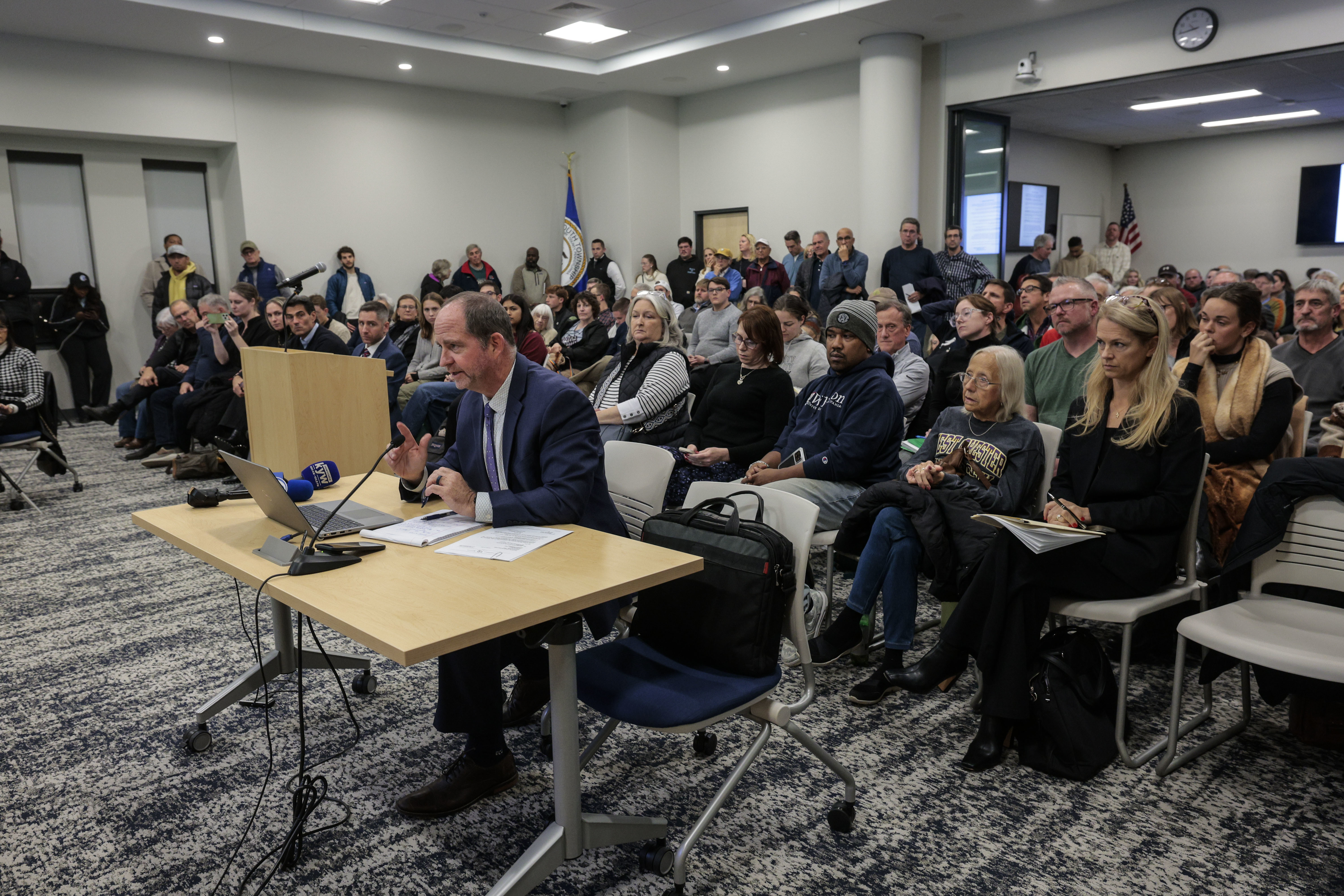
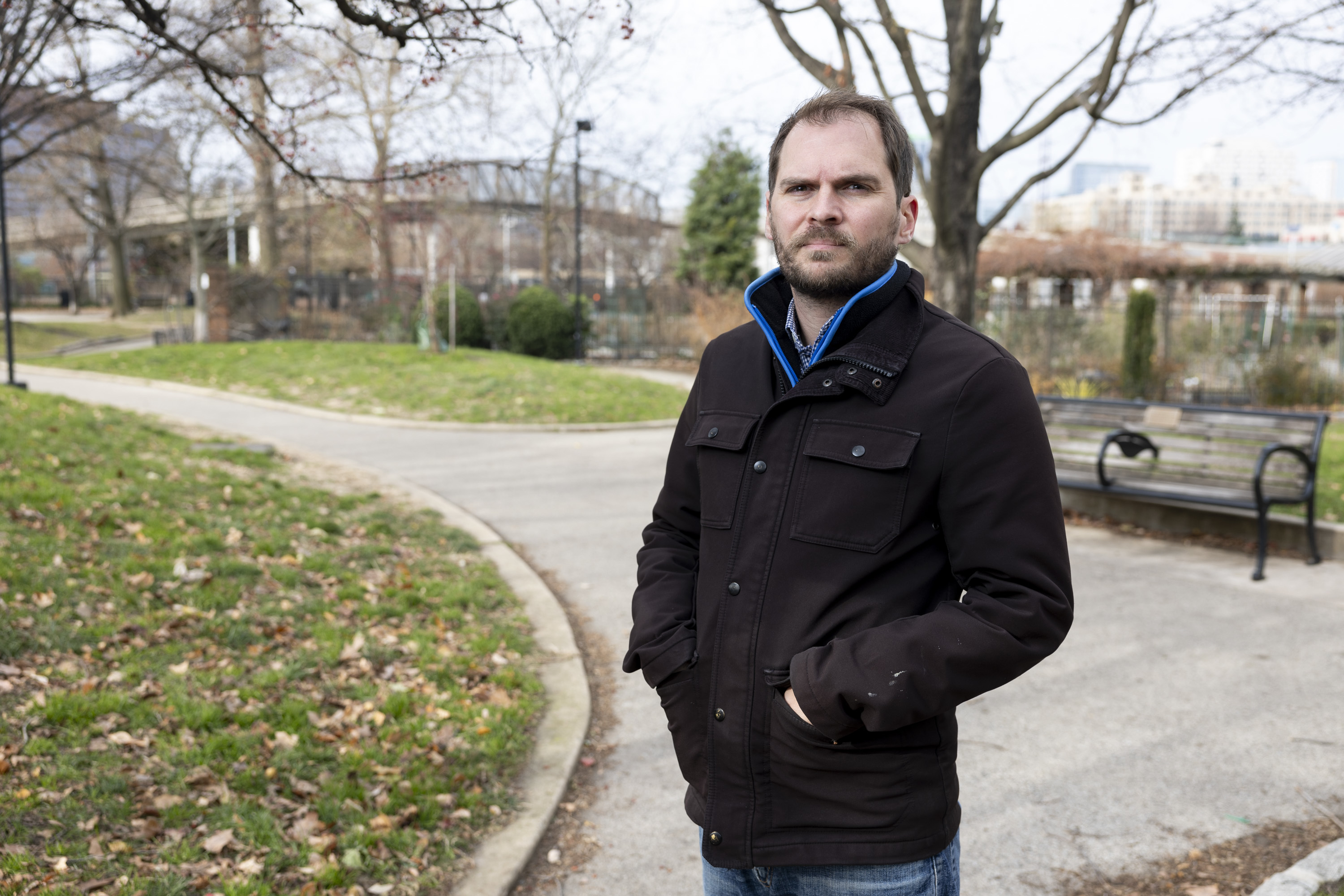
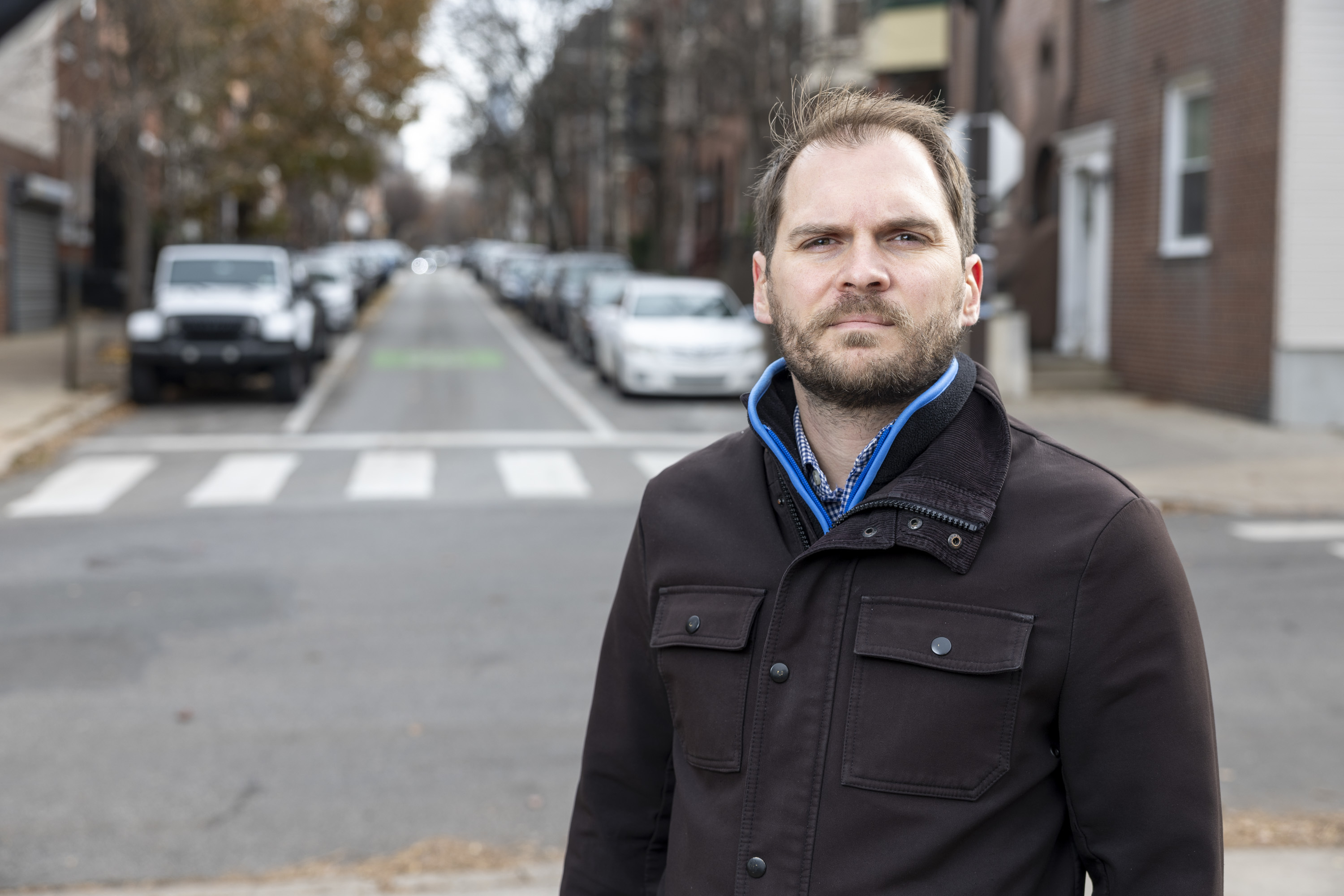
Edmund J. Campbell, attorney for developer Brian O’Neill, spoke to the Plymouth Township zoning board in November before abruptly withdrawing the application for a Conshohocken-area data center over legal issues. Residents, some of whom had rallied against the proposal, packed the room.
Seventy percent of Pennsylvanians strongly or somewhat support requiring data centers to provide their own energy generation, rather than get electricity from the grid.
When it comes to AI more broadly, just over half of Pennsylvanians told pollsters they believe AI will decrease the number of available jobs in their industry, while 16% said they think it will increase the number of jobs (29% said they thought it would have no impact).
Nearly twice as many residents think AI will have a net negative impact on the economy compared to how many think it will have a positive impact (48% said negative, 25% said positive). When respondents were asked about the environment, the results were similar (46% vs. 21%).
The survey of 2,000 Pennsylvania adults was conducted online and via text between Nov. 19 and 23.
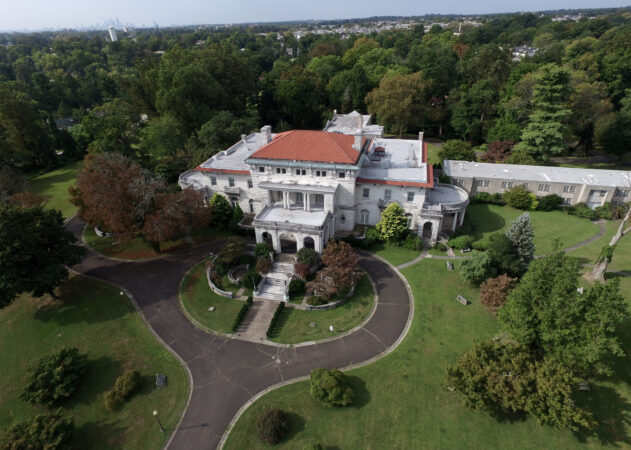
The Elkins Estate, which already hosts weddings in its main mansion, is set to add a boutique event space and a distillery in the new year.
In the fall, the Tudor-style Chelten House will open for smaller gatherings of 100 or fewer people, and include 16 guest rooms, said Jeanne Cretella, cofounder of By Landmark hospitality.
“We’re really looking forward to our next phase,” Cretella said, noting that the Chelten House “will be the perfect setting for those much more intimate events, whether it’s seminars or retreats or business meetings.”
In 2019, Jeanne and Frank Cretella’s company, By Landmark, bought the sprawling Cheltenham property for $6.5 million from the Dominican Sisters of St. Catherine de Ricci, who had used the grounds for religious retreats. At the time, the couple said they intended to spend $20 million to restore six historic buildings on the site.
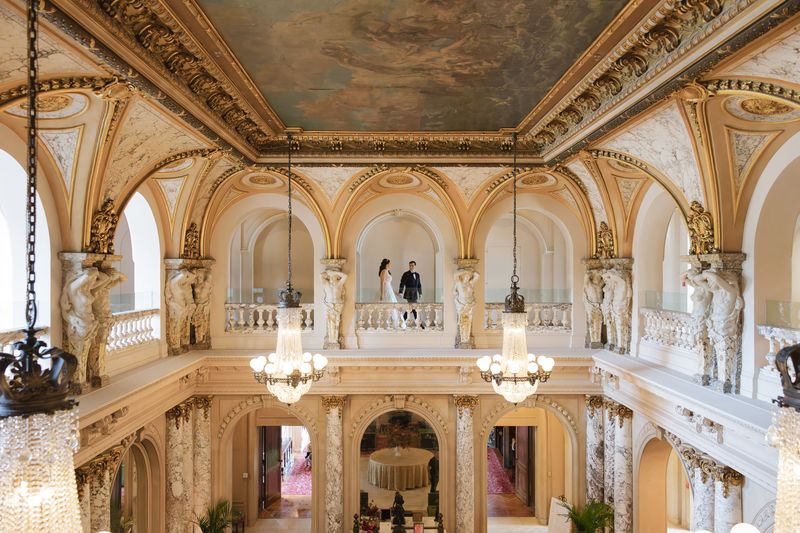
A couple walks through a room in the Elstowe Manor at Elkins Estate.
By Landmark’s final investment numbers were not available Friday, according to a spokesperson, as renovations are ongoing.
The Cretellas initially envisioned a luxury boutique hotel with more than 100 guest rooms, a spa, a restaurant, and other amenities. At one point, they even considered installing a heliport on the site.
Then the pandemic happened, Jeanne Cretella recalled Friday.
Despite the challenges of that time, “we are so proud that we were able to open up Elstowe Manor,” the estate’s 70,000-square-foot centerpiece that required extensive plumbing, electrical, heating, and ADA upgrades to be brought up to code, Cretella said.
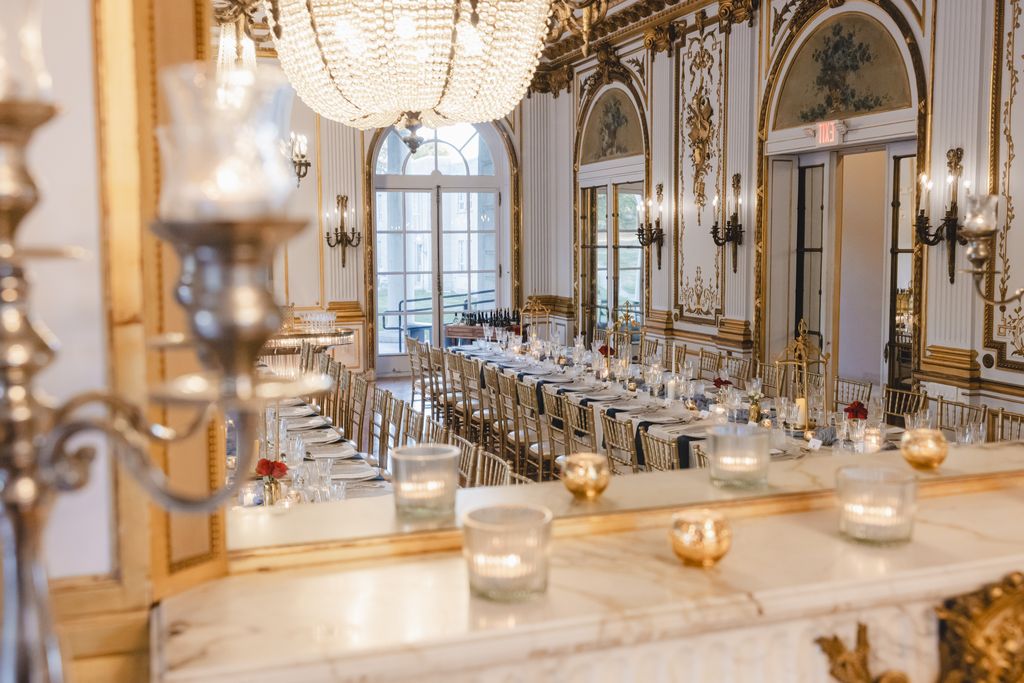
A room at the Elkins Estate’s Elstowe Manor, its main mansion, set up for a wedding reception.
“We made the decision after COVID that it would be best … to have the rooms only open to event guests,” she said.
With 50-foot frescoed ceilings and a grand ballroom with a glass skylight, Elstowe Manor can host 300-person events and includes 69 guest rooms.
More than 100 weddings and events have been held at the manor in the past two years (The venue also hosted weddings in the early 2010s when it was briefly owned by a nonprofit that went bankrupt).
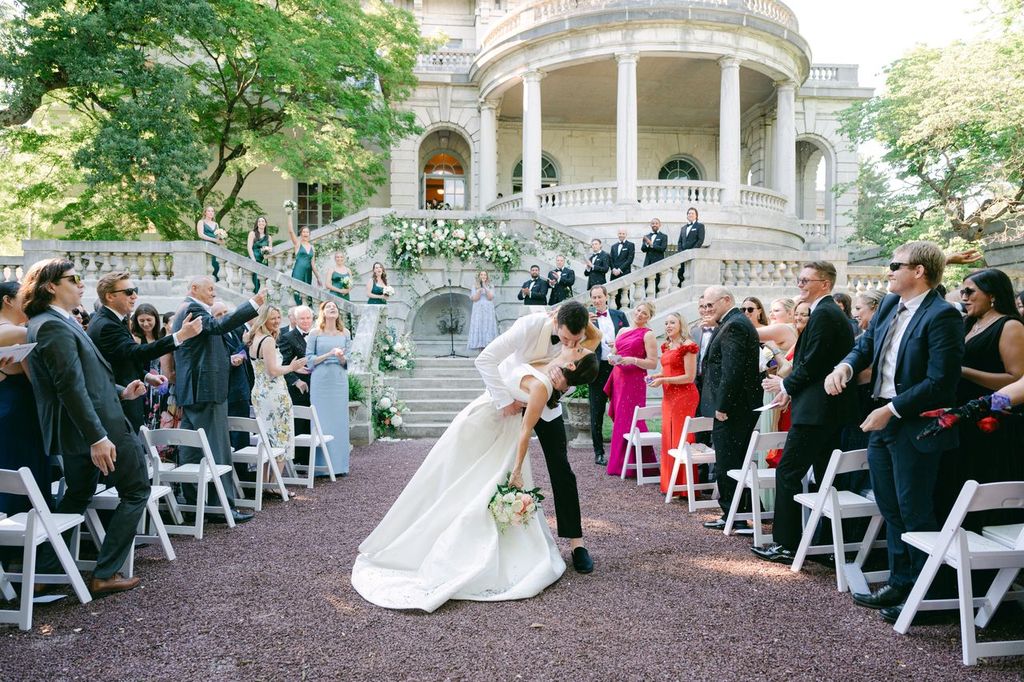
A couple kisses during their wedding ceremony outside the Elkins Estate’s Elstowe Manor.
At the estate these days, couples and their guests feel like they “are somewhere really special, and have the ability to really enjoy utilizing the estate for the whole weekend,” Cretella said.
With its more intimate setting, the Chelten House is meant to complement the Elstowe Manor, Cretella said. The home features Italian Renaissance Revival designs, with terracotta roof tiles, large arched windows, wood-paneled rooms, and marble fireplaces.
While each part of the property is set apart and has its own entrance, Cretella said she foresees the Chelten House being busy during the week (when most corporate retreats occur) and the Elstowe Manor bustling with wedding festivities on the weekends.
Some larger weddings may use both the manor and the Chelten House for their events and accommodations, she said.
Cretella said they don’t foresee adding more amenities to the property in the near future.
“The original plan to have a restaurant was definitely in conjunction with having a hotel that was open to the public,” not just event guests, she said. So “opening up a restaurant is not on the horizon.”
But, she added, “we won’t say never.”
For now, Cretella said they are focused on their events, including opportunities to welcome the public onto the historic site.
Earlier this year, the estate opened a podcast recording studio and demonstration kitchen, which Cretella said they hope local school students can use. They are also looking to bring professional actors and creators into the space.
In November, By Landmark opened the estate up for paid public tours. A tour in early January, which costs $30 a person, is already sold out.
Cretella said the estate plans to host a Valentine’s Day dinner, open to the public, with an optional overnight stay after the meal.
For the Chelten House, booking for small private events will open in the new year, Cretella said.
Based in North Jersey, By Landmark operates nearly 30 venues in Pennsylvania and New Jersey. They include the Hotel du Village and the Logan Inn in New Hope.
In the late 1800s, the Elkins Estate was built as a countryside retreat for railroad magnate William Lukens Elkins, who is credited with helping to form what would eventually become SEPTA and the Philadelphia Gas Works.
The buyer: Lulu Tunis, 39, communication specialist
The house: A 1,060-square-foot rowhouse in Brewerytown, with three bedrooms and one bathroom, built in 1925
The price: Listed for $270,000; purchased for $240,000
The agent: Rachel Shaw, Philly Home Girls
The ask: For Lulu Tunis, it was simply time to buy a house. She had been living in Brewerytown for a decade. Her one-bedroom apartment on Girard Avenue was fine, but she wanted more space. More importantly, she felt financially prepared to buy. “I think I was just ready,” Tunis said.
Her needs included three bedrooms, easy street parking, and a backyard large enough for the dogs she often pet sits. Proximity to Girard Avenue was also important. “I didn’t want to be too far off where I normally hang out,” Tunis said. She was OK with only one bathroom and also a fixer-upper. “I’m pretty handy,” she said.
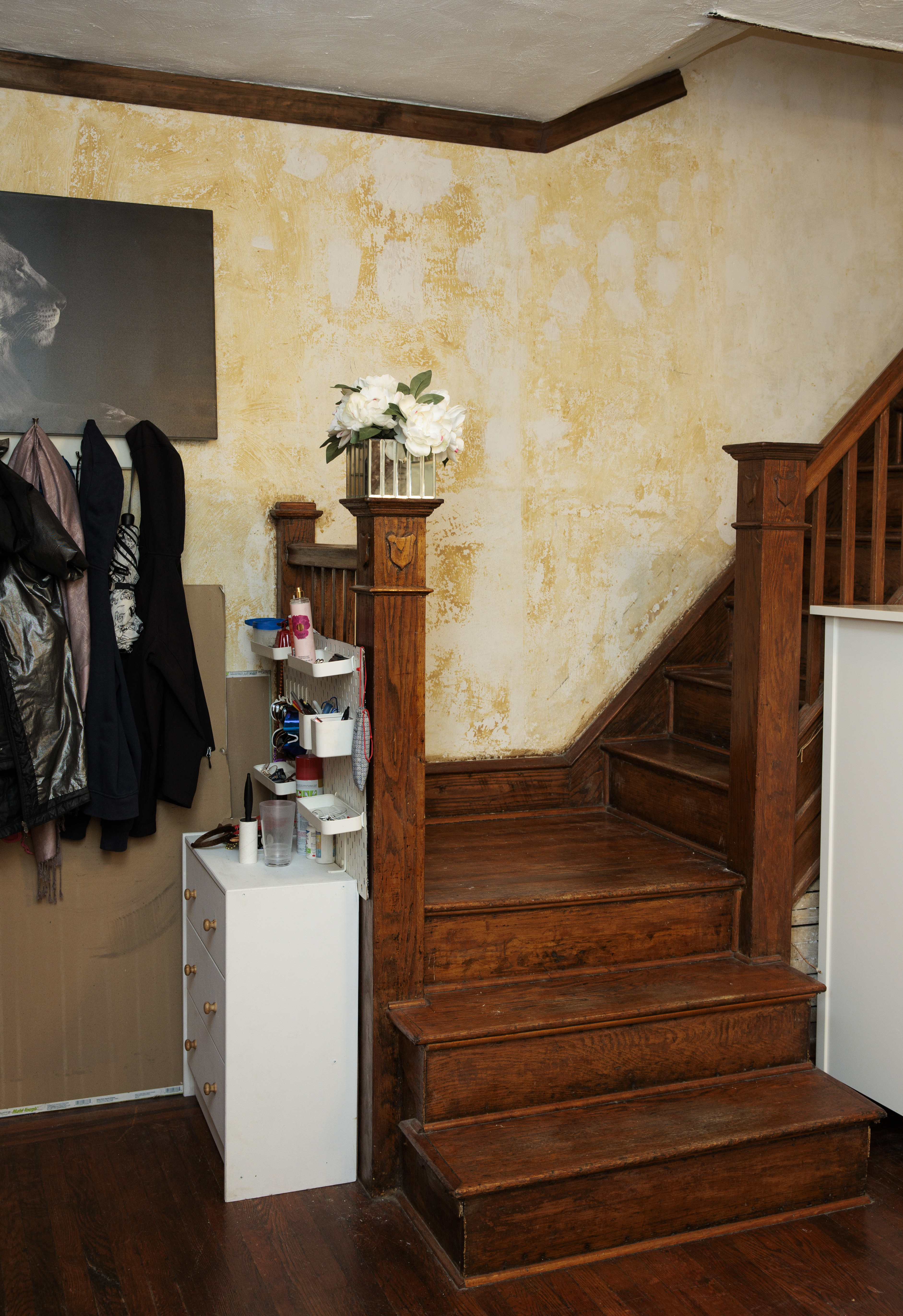
The hardwood staircase leads to three large bedrooms upstairs.
The search: Tunis began looking in April 2024 and narrowed her search to a four-block radius. “There were actually a lot of options,” she said. Her budget was $250,000.
In the 10 homes she saw, she ran into all kinds of strange layouts. Some of the third bedrooms were the size of a closet. Others didn’t have closets. Neither situation would do. Nor would the house with the extra narrow hallways upstairs, or the one that smelled like cat pee. She considered a couple of duplexes in case her family moves in with her down the road, but they needed too much work.
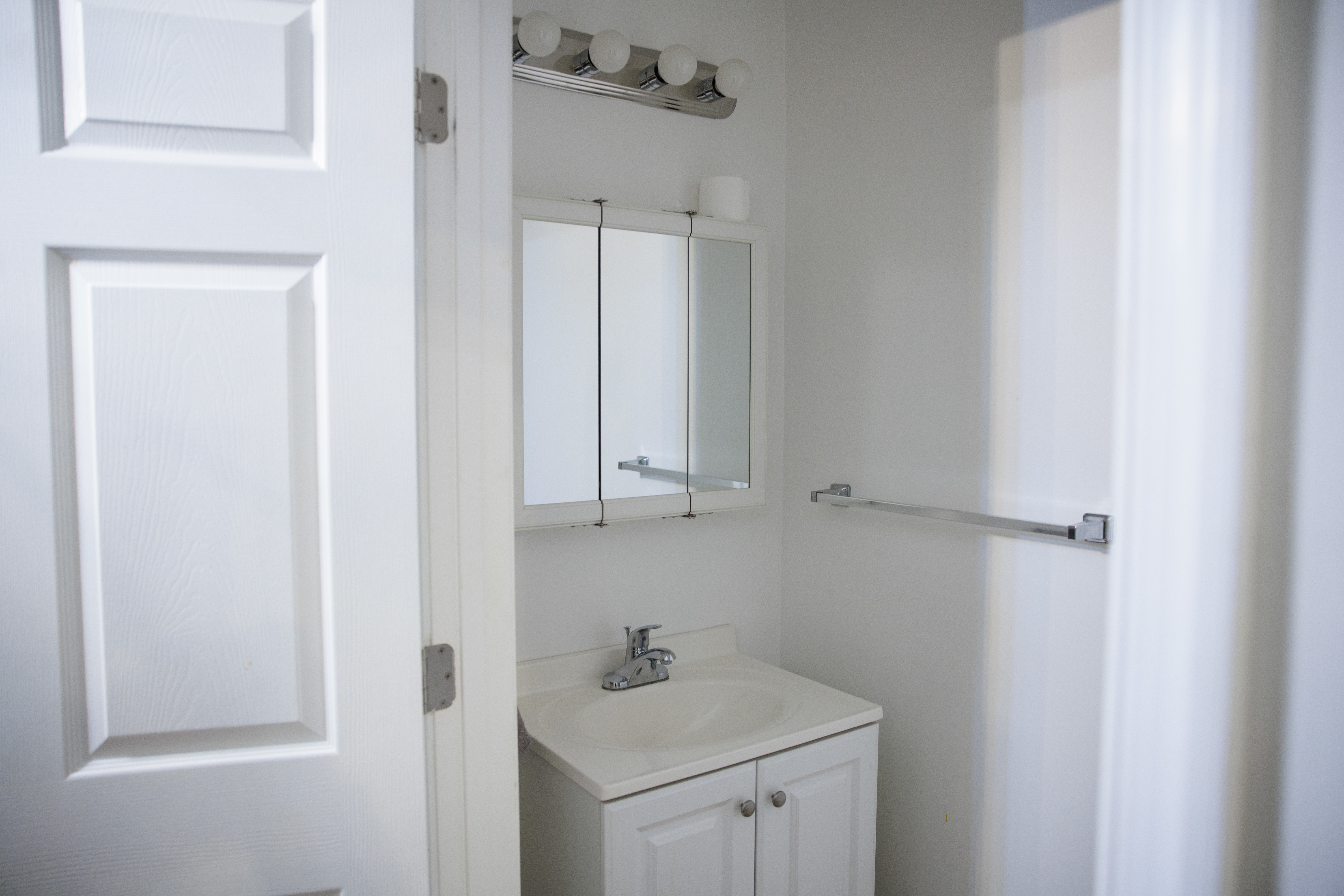
Tunis was OK with just one bathroom but has enjoyed having a remodeled half bath on the first floor.
She fell in love with a house on a corner lot that had great light and tried to make an offer, but someone beat her to it. “I still walk by it all the time,” said Tunis, “and I get a little jealous.”
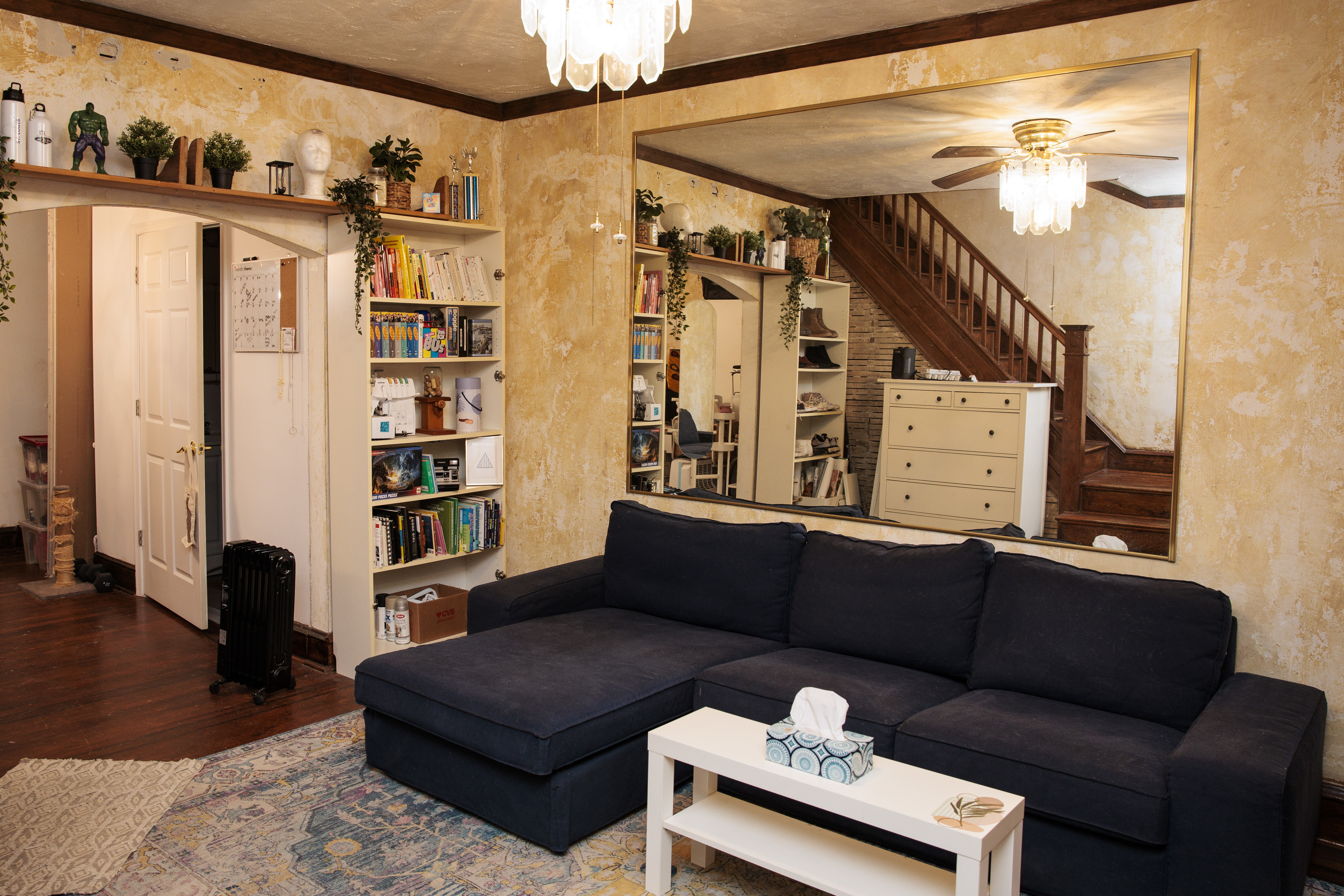
The appeal: The house Tunis bought charmed her immediately. There was a large, golden mirror near the entrance. “It’s great for ‘fit shots,’” Tunis said. She liked how open the downstairs was and that the laundry was right off the kitchen. The unfinished basement needed some work, but it had plenty of room for storage. Upstairs, Tunis was delighted to find three relatively large bedrooms (each one can easily fit a bed and a desk) and recently redone hardwood floors. It also has 1½ bathrooms.
The large gold mirror that Tunis immediately fell in love with when she stepped inside the house for the first time.
The downstairs floors weren’t in great condition, but Tunis liked that they were original to the home. Despite being dated, the house was full of great features. “I could see the potential,” said Tunis.
The deal: The house was above Tunis’ $250,000 budget, but it had been on the market for 80 days, so her real estate agent suggested they submit a bid under the asking price. Tunis offered $240,000 and the seller accepted immediately.
During negotiations, Tunis asked the seller to pay for termite treatment and a home warranty, which covers the cost of repairing or replacing major appliances and systems. The inspector warned Tunis that the heater would probably have to be replaced within the year. Everything else looked good.
The money: Tunis had a little under $5,000 saved for her home purchase. Her aunt gave her another $5,000. She also received a Keys to Equity grant for $20,000 and a Philly First Home grant for $10,000. She used $17,000 for the down payment and shelled out $16,000 for closing costs. With a 6.375% interest rate, her monthly mortgage payment is $1,392.
The move: Tunis officially closed on Nov. 15 but waited until the end of December to move in. She wanted to tear down the wallpaper in the living room. The process took longer than she expected and forced her to abandon her other pre-move-in home-improvement plans. “I just lost motivation,” Tunis said.
The house has plenty of places for Tunis’ cat, Huey, to nap.
Because Tunis’ new house was only a block from her old apartment, she moved gradually at first, carrying small loads on foot. Her family arrived the day after Christmas to help move bigger stuff. They rented a U-Haul and moved everything in two trips. Tunis’ first night in her new house was Dec. 29. She started a new job the next day.
Any reservations? The biggest disappointment in the house has been the lack of natural light. It’s blocked most of the day by a five-story school across the street. “I only get sun first thing in the morning and then around sunset,” Tunis said. Her plants are suffering.
Tunis’ house is in the middle of the block and across the street from a tall building, so it doesn’t a lot of light.
Life after close: So far, Tunis is happy with the way her bedroom looks, and that’s about it. The rest of the house remains a work in progress. “There’s always some half-built furniture somewhere,” she said.
Her next big project will be replacing the drywall in the back room downstairs. She took a class at West Philly Tool Library and plans to do it herself — or at least try. “I’m not ready to pay anyone yet,” she said. Once the walls are complete, she’s going to paint the kitchen, which is currently bright blue. She’d prefer terra-cotta or dark tan.
Tunis says that even though her space is currently a “hot mess,” she likes coming home to it. “Coming to an apartment was fine. But coming to my house? It’s like ‘OK, this is my home.’ I’ve always got little projects to do.”
It’s no secret that times are tough for landlords around Temple University.
An eight-bedroom rowhouse at 1734 N. Gratz St., for example, languished on the real estate market after being listed for sale, like many dormlike apartments left in the wake of a rental boom that fizzled amid declining student enrollment.
The property went up for sale in April 2024 for $475,000 — $40,000 less than the owner had paid two years prior. It sat on the market for one year with no takers.
Then real estate agent Patrick C. Fay got involved.
In April 2025, the Gratz Street rowhouse was re-listed for $875,000. The very same day, it was listed as a pending sale, with Fay representing the buyer, according to real estate data from the Realtors Multiple Listing Service.
An Inquirer review of 33 other sales Fay brokered over the last year showed a similar pattern.
After properties went unsold at lower prices, Fay stepped in as the buyer’s agent and almost immediately arranged a sale for anywhere from $290,000 to nearly $550,000 more than sellers originally asked for.
On average, Fay’s clients have paid about double the original listing.
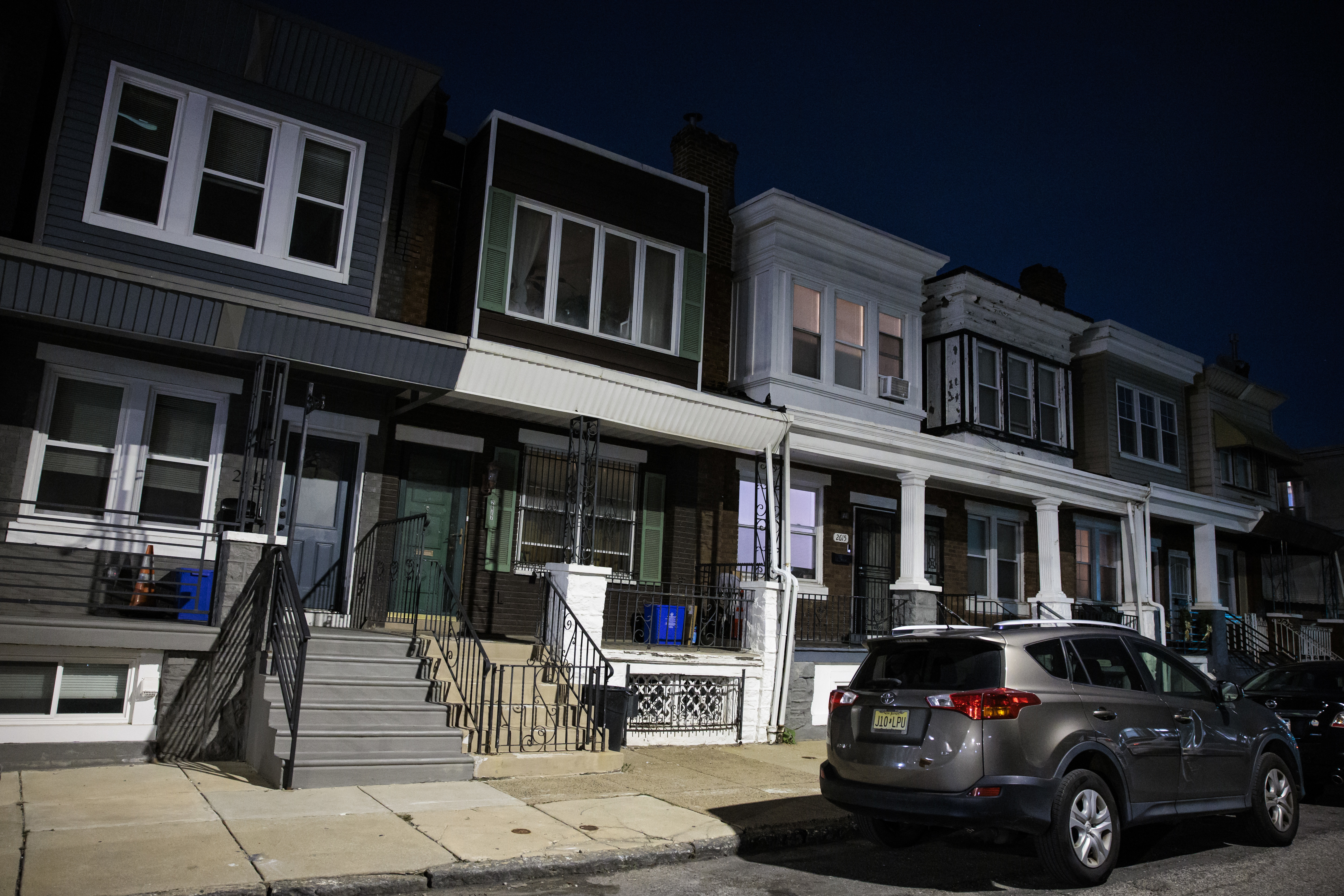
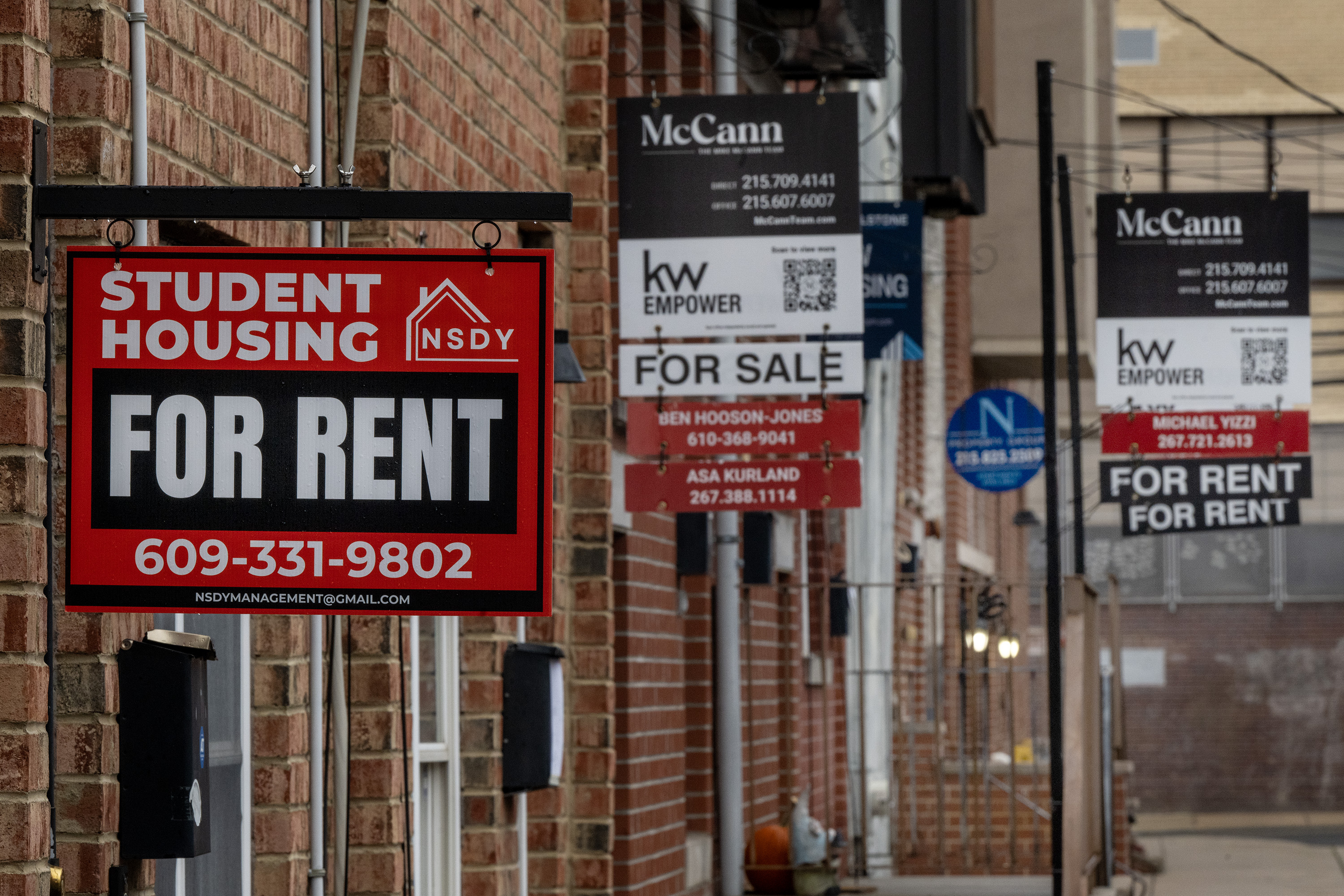
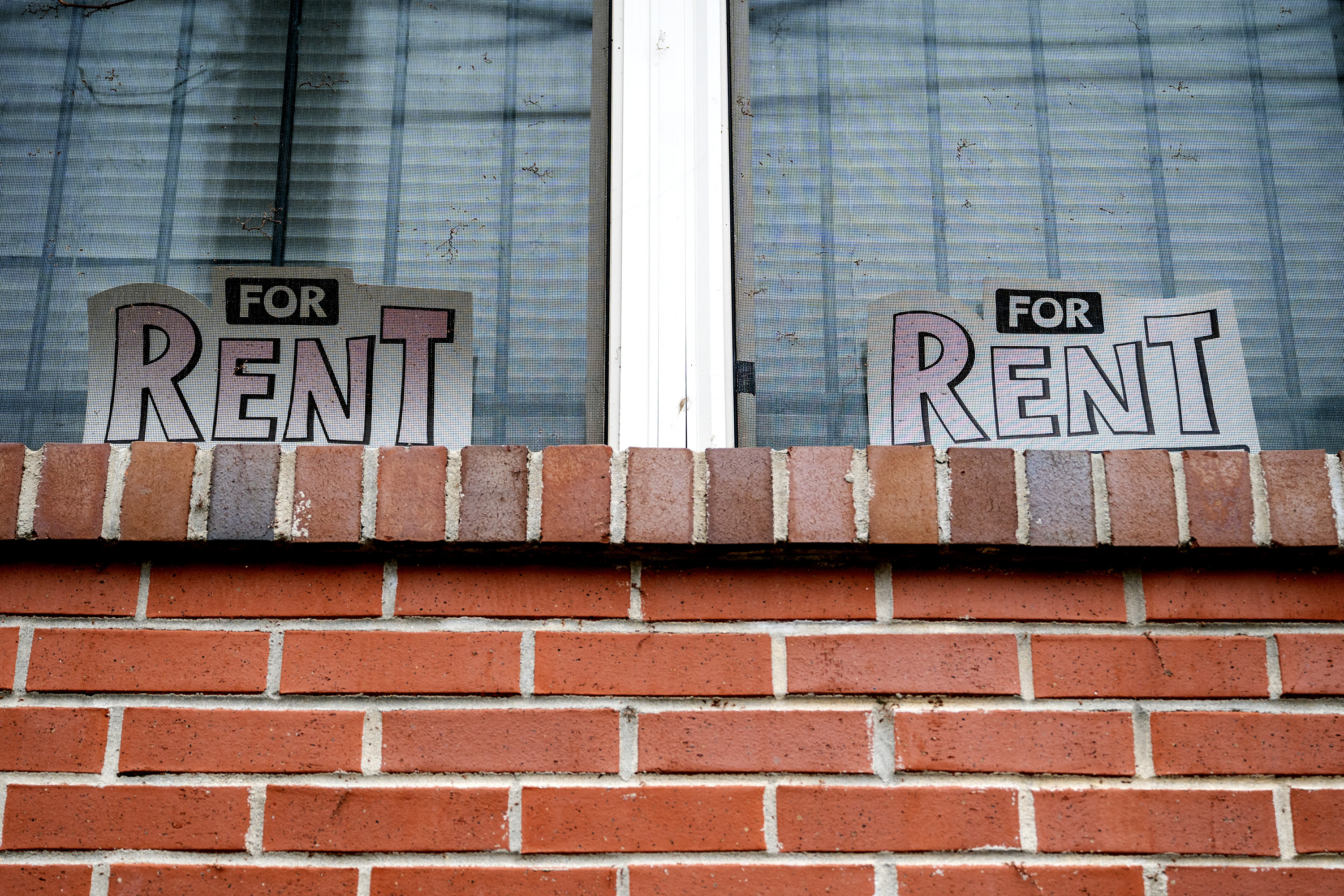
The value of rental properties around Temple has dipped in recent years. Many property owners have sold. Some blocks, like the 1700 block of Arlington St., are lined with for-rent and for-sale signs.
Fay, who worked out of Coldwell Banker’s offices in Old City and Moorestown, Burlington County, has now represented buyers in at least $40 million worth of settled or pending real estate deals involving multifamily properties around Temple.
(After this article published online Friday, the real estate firm cut ties with Fay and his biographical page was removed from its site. “The agent is no longer affiliated with Coldwell Banker Realty,” a company spokesperson said by email.)
Of about a dozen properties in the area that sold for more than $750,000 over the last 90 days, every one listed Fay as the buyer’s agent.
The Inquirer’s examination of the deals found the sales involve a small group of repeat buyers, including two linked to an earlier prosecution over a 2000s-era mortgage fraud scheme. In that case, federal investigators found that the group was involved with purchasing distressed homes using artificially inflated mortgages, pocketing the excess money and allowing the properties to lapse into foreclosure.
Fay, who is one of the top agents in his Coldwell office, said his transactions were all aboveboard. He credited the high sale prices to rebounding demand for student housing in the Temple University area.
“I think it’s a desirable area for sure,” said Fay, who lives in Moorestown. “They just had their biggest enrollment of all time.”
Pat Fay has been one of the top real estate agents this year in Coldwell Banker’s Old City office. His clients have been purchasing properties around Temple University, but at steep markups.
Actually, Temple’s head of admissions resigned last month after the university missed its annual enrollment goal. Its student population remains below 30,000, down from a high eight years ago of more than 40,000.
“This is not a good time for being a property owner around Temple,” said Nick Pizzola, vice president of the Temple Area Property Association, a group that represents many landlords and was formed to “encourage responsible development and property management” in the area.
“Rents are down, vacancies are up,” he said. “It’s a buyer’s market.”
The financing on Fay’s sales is provided by higher-risk private lenders, which grew in popularity as conventional bank lending contracted in the wake of the 2008 real estate crash.
Jon Hornik, head of the National Private Lenders Association, a trade group that represents firms like the ones that lent to Fay’s clients, recently flagged sales around Temple on a watch list the group maintains for suspicious transactions.
He had a simple explanation for these market-defying sales.
“These are bad actors inflating the value of the real estate through the sale structure, and therefore borrowing more money than they really should be able to,” Hornik said in an interview. “There’s real estate there. There’s a borrower there. But the values are off.”
Off-campus housing in North Philadelphia is still popular among some Temple students, but university President John Fry recently announced plans for a new dorm.
Fay, who describes himself on Instagram as a partnerin the upscale Center City Irish bar the Mulberry, has been pursued in New Jersey Superior Court by seven credit card companies or lenders in connection with roughly $57,000 in debts. Most were linked to unpaid credit card bills, and most have ended in default judgments.
Business records show Fay is listed as debtor to an Atlanta-based company called Real Commissions, which lets real estate agents tap into cash based solely on the promise of a forthcoming commission, so long as they have a signed agreement of sale in hand.
In an email Thursday, Fay cited several 2022 student rental sales in the $800,000 to $900,000 range to support his sale prices, insisting that “at no point did either party set or influence those values.” He did not respond to questions about why his clients would pay twice what a seller had initially been asking.
The real estate agent’s narrative of a booming rental market around Temple was also disputed by a recent seller in one of his deals.
The former property owner, who asked not to be named because he feared legal repercussions, acknowledged that he tried to unload his rental property last year but found no takers. He said his real estate agent then brought him Fay’s offer to broker a sale for $875,000, which he said was actually just the amount that would be recorded on the deed.
In reality, he said, he made the sale for only $385,000, or $15,000 less than what it was originally listed for.
The seller said he knew the deal was suspicious, but his agent advised him that he was unlikely to find a better deal.
“I had a mortgage, but I couldn’t get any renters,” the seller explained. “It’s called desperation.”
He took the deal, recording an official sale price that was more than $250,000 higher than any comparable properties recently sold on that block.
Then, anotherproperty across the street sold in June for the exact same price — $875,000 — shortly after being re-listed from $475,000.
The real estate agent on that sale: Pat Fay.
‘Strange stuff’
Historically a commuter school, Temple has long had room for just a fraction of its total student body in traditional dorms. But as Philadelphia’s fortunes improved in the 20th century and more students sought to live on or near campus, the housing shortage intensified.
Private developers stepped in. Blocks that had long served as home to mostly Black working-class residents transformed into rows of student housing units, sometimes prefabricated.
But during the pandemic, the boom in rentals came to a grinding halt. Classes went virtual, driving student renters away. Surging homicide rates — including the 2023 shooting death of a Temple police officer — drove a public-safety crisis for the university.
Recently, Temple president John Fry announced a plan to steer more students back to campus with the university’s first new dorm in years.
Today, even with homicide rates now at historic lows and enrollment creeping up again, many of the blocks once flooded with student housing are underpopulated.
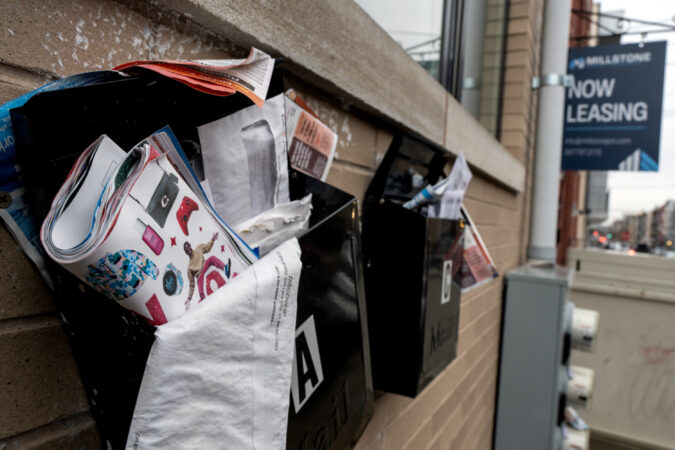
For-rent and for-sale signs line both sides of the 1700 block of Arlington Street. Around the corner, on 18th Street, mailboxes overflow with unopened letters, and the chirps of dying smoke detector batteries in vacant units create an eerie birdsong.
Landlords on the 1900 block of N. 18th St and elsewhere are looking for renters. It is unclear why a small network of buyers is overpaying for nearby properties.
Pizzola said membership is down in the Temple Area Property Association as building owners have looked to get out of the rental business.
“Since COVID hit, it just turned the market upside down,” he said. “If you’re an investor who was buying off-campus housing right before COVID, you got slaughtered.”
Bart Blatstein, a developer who was heavily involved in the mid-2000s Temple-area housing boom, said the recent transactions are highly unusual.
“I’ll give you a commission if you can get twice what my properties are worth,” Blatstein joked.
Officially, more than 40 different corporations have purchased student rental buildings in sales brokered by Fay. But those companies trace back to a handful of purchasers, according to Pennsylvania corporate registries.
Some of these buyers, contacted by The Inquirer, described Fay more as a participant among a loose but unnamed group of “real estate investors,” rather than a mere agent.
Stephen L. Johnson, a Montgomery County resident, was linked to companies involved in six purchases, totaling $5.2 million. Several of the companies were registered to the home of Johnson’s mother, although in an interview she said she was unaware her rowhouse was being used as a nominal corporate headquarters and referred questions to her son.
Reached by phone, Johnson echoed Fay’s enthusiasm for the future of the real estate market around Temple, predicting a surge in values if the university seeks to expand.
“The investment was all about Temple buying up everything and making it better,” Johnson said of his purchases. “In 10 or 20 years, they’ll probably own all of North Philly.”
Johnson could not explainwhy one of his companies, 17th Street Estates LLC, had paid so much for properties like 2113 N. 17th St., which was listed for $475,000 but sold for $900,000.
“I’d have to talk to Patrick about that,” said Johnson, who referred to Fay as “the main guy.”
“It’s like a team,” he added. “We all help each other out.”
Another one of Fay’s clients, Tanjania Powell-Avery of Pottstown, Montgomery County, is a former real estate agent charged in 2010 by the U.S. Attorney’s Office as part of a mortgage fraud ring.
Prosecutors said Powell-Avery aided two men who “purchased distressed properties at low prices, found buyers for the properties at a much higher price, and submitted false documents to the mortgage lender in support of mortgage applications,” according to the federal indictment. She pleaded guilty and was sentenced to five years’ probation and nine months’ house arrest.
Despite this, and a 2012 bankruptcy, companies linked to Powell-Avery appeared in at least two recent sales around Temple, both brokered by Fay. These companies tapped $1.3 million in mortgages to close sales with a combined value of $1.6 million — each for about double its initial listing price.
Powell-Avery did not respond to a request for comment.
Her two codefendants in the 2010 federal indictment, Joseph Tookes and Othniel Tookes, also pleaded guilty. Both men are relatives of Abigail Tookes, a resident of a Norristown apartment complex who was pursued by creditors in 2020 after defaulting on a loan, leading to a $46,067 court judgment against her.
Even so, companies tied to Abigail Tookes were linked to at least $3.4 million in mortgages to finance the acquisition of at least five properties in sales involving Fay. In all five purchases, Tookes’ company recorded sale prices at double the original values.
Reached by phone, Tookes insisted the sales were “totally legitimate transactions.”
“There’s no fraudulent activity. It’s just an investment group,” she said. “There’s no story here. These are real estate transactions between the buyers and sellers. They all agreed to the sale. It doesn’t matter why.”
Other people linked to companies in Fay’s sales — Patrick M. Williams, Miles Fambro, and Angel Rodriguez — did not return calls for comment.
Many of the Temple-area sales featured the same mortgage broker: Viva Capital Group.
Reached by email, Viva president Juan Arguello said his Florida-based company operated “in full accordance with state and federal guidelines, rules, and regulations” and does “not have any contact with the sellers or their agents.”
He also said his company relied on an outside appraisal management company to approve mortgage values. He did not respond to questions about which appraiser had been used to support the Philadelphia sales.
Pizzola, who owns student-rental properties in the area, said these recent sale prices would eventually start driving up neighborhood property assessments, leading to higher tax bills, particularly on blocks where Fay’s clients have purchased multiple properties.
He said he suspects there is fraud involved.
“The fact that you’re seeing multiple sales at twice the average market value, it doesn’t pass the smell test,” he said.
Uncertain future
A prospectus for a property on Cecil B. Moore Avenue, listed for sale at $850,000 in October by several other real estate agents, included a string of Fay’s recent sales as comparable sales to justify the high asking price.
That property has yet to sell.
Over the last three weeks, at least three more properties near Temple have gone under contract — all with Fay as real estate agent.
Fay had been listed as an agent on a large apartment complex on the 1300 block of North Broad Street that was listed for sale at just under $6 million in late October. In November, the property was re-listed for $12 million.
The city has begun placing liens for unpaid water bills on the buildings in some of the earliest deals Fay arranged. Many of the properties have skipped out on biannual commercial trash hauling fees imposed by the city.
Some of the buildings do not appear to be occupied.
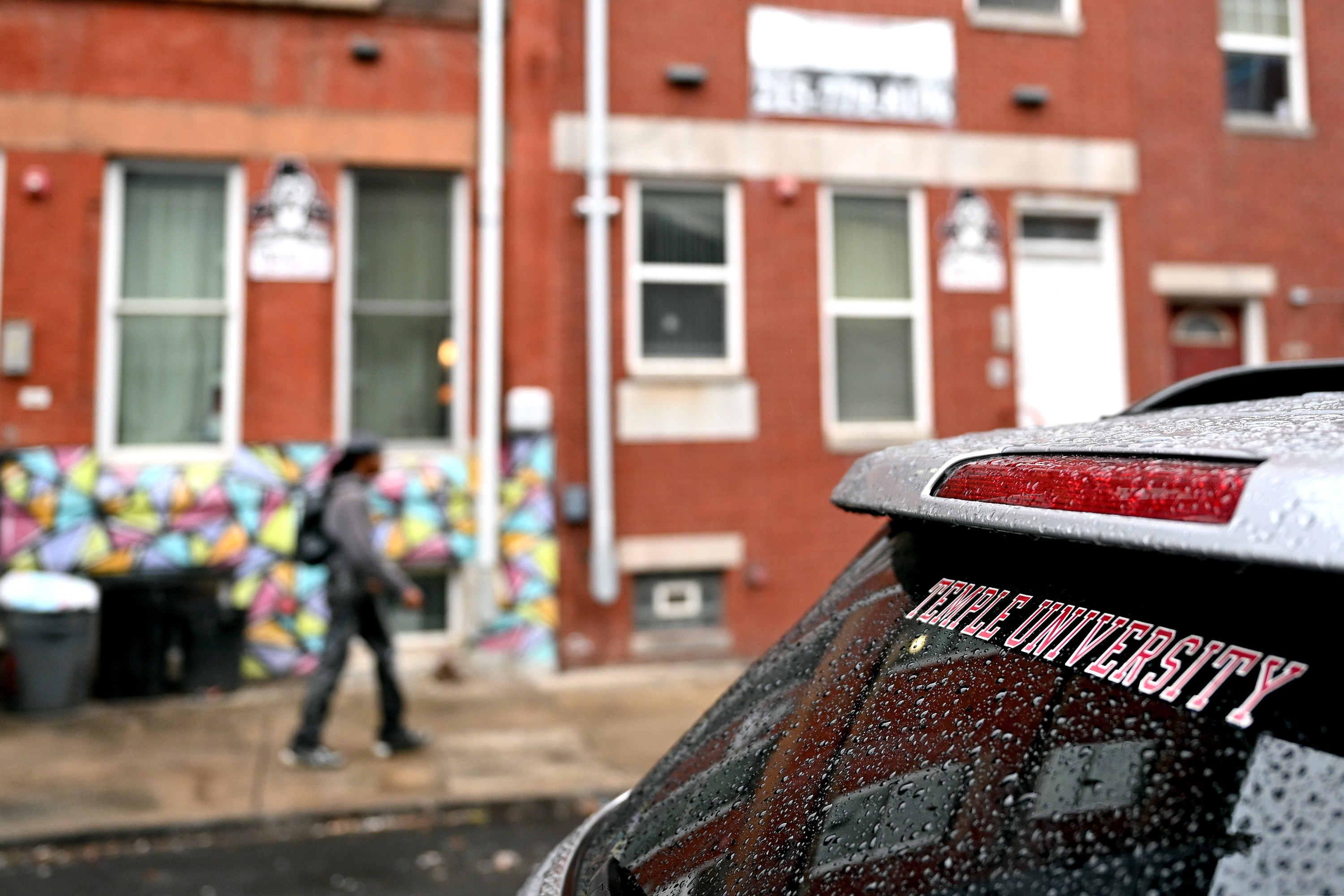
Someone appeared to have busted open a door, which was ajar with broken locks. A Temple sticker was on an upstairs window.
Hornik, from the NPLA, said that unless Fay’s purchasers figure out a way to extract enough rental income from these properties to cover mortgage costs, a mass foreclosure by lenders was likely in North Philadelphia — leaving the ownership of dozens of properties up in the air.
“If the loan goes negative, the lender has to foreclose,” he said, “and they’re not going to recover that money.”
Hundreds of Philadelphians live next to dangerous abandoned buildings.
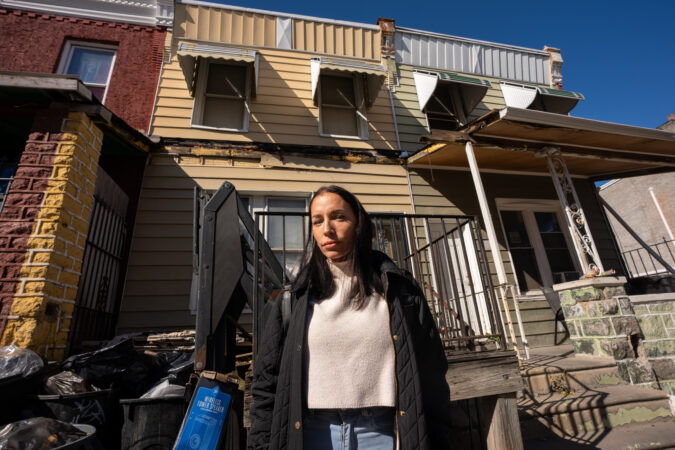
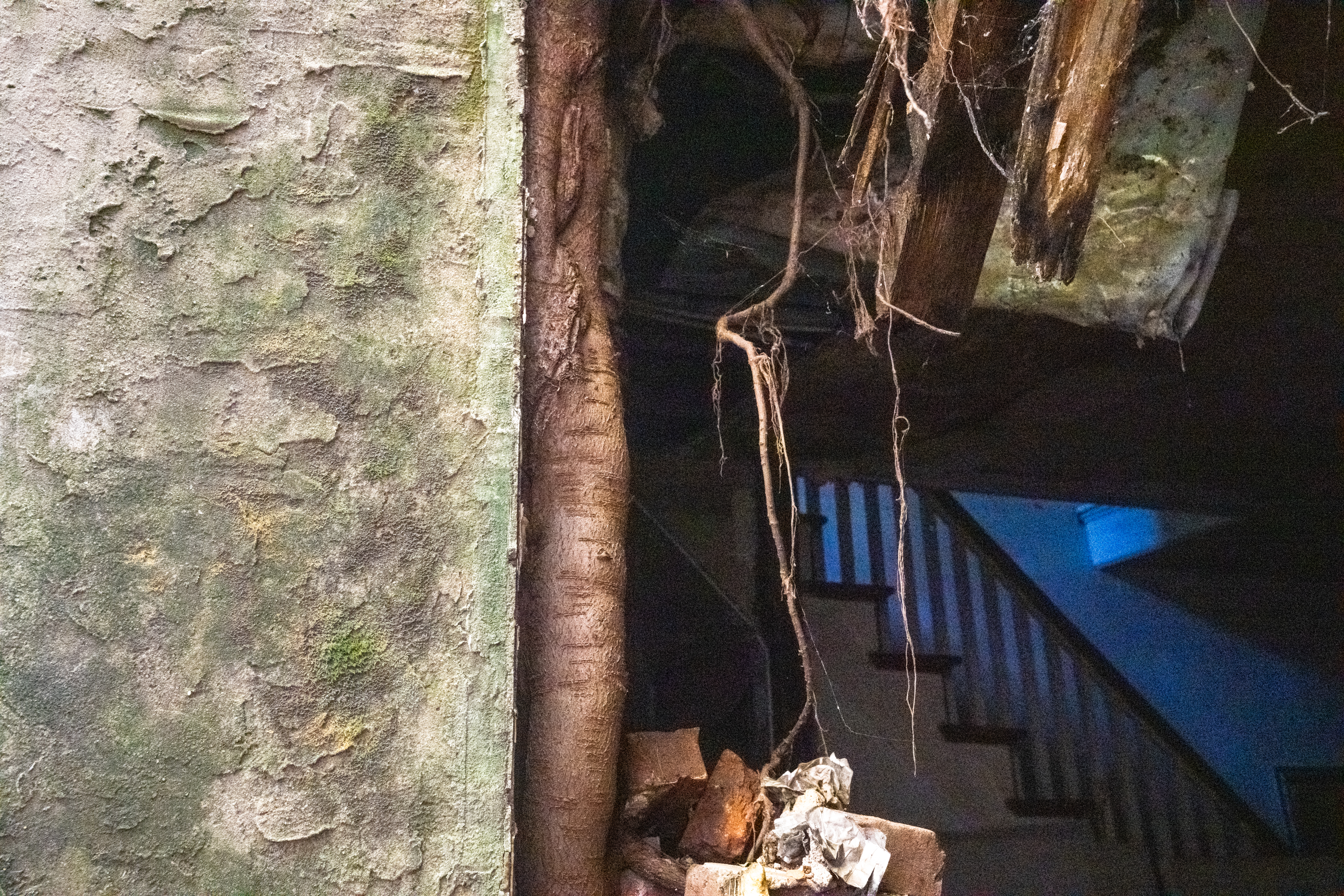
That includes Emily Phillips and her family, whose North Philly rowhouse is attached to a home they didn’t know was vacant when they moved in. The empty house now has a gaping hole in the back of it, and a tree is growing inside.
The city labeled the rowhouse “imminently dangerous” and at risk of collapse.
That was four months ago.
Phillips told me her family is afraid that something as simple as a slammed door could send the rowhouse next door crashing down.
My colleague Joe Yerardi and I investigated how the city tracks and handles vacant properties. We found problems.
Keep scrolling for that story and more in this week’s edition:
Residents rely on the city to keep an eye on vacant properties that are or could become dangerous.
My colleague and I started looking into the link between unsafe buildings and vacancy in April as I was writing about a Sharswood family who lived next to a rowhouse that collapsed.
We had a lot of questions for the city’s Department of Licenses and Inspections. During months of reporting, we found out that L&I stopped using a tool that it once said would make the department more proactive in protecting the public from deteriorating vacant buildings.
We also found that:
predominately Black areas of the city are more likely to have vacant and dangerous rowhouses
nearly eight in 10 vacant and dangerous rowhouses are in the poorest 25% of the city’s zip codes
When people who live next to vacant properties complain to the city, they’re often left in the dark as they worry about their families’ safety.
Keep reading to hear neighbors’ stories, learn about issues with the city’s handling of vacant properties, and see what the city has to say.
And if you’re living next to a vacant property and you’re worried about what could happen, I have some tips on what you should do.
Here’s an eye-popping stat: 3,500 new apartments have opened just in the area between Pine and Vine Streets and between the Schuylkill and the Delaware River since 2023.
You may have asked yourself who’s living in all the pricey pads popping up over the last few years. Philadelphians I’ve talked to have wondered the same.
They’ve suggested that these renters are New York transplants. And some of them are. More New Yorkers and other out-of-towners are looking for apartments in Philly.
Center City’s business improvement district surveyed renters at more than two dozen apartment buildings that have been constructed downtown in the last decade.
Of the people who responded to the survey:
most are between the ages of 25 and 34
they’re paying more in rent than the typical Philadelphia renter
almost a third of them work in one industry in particular
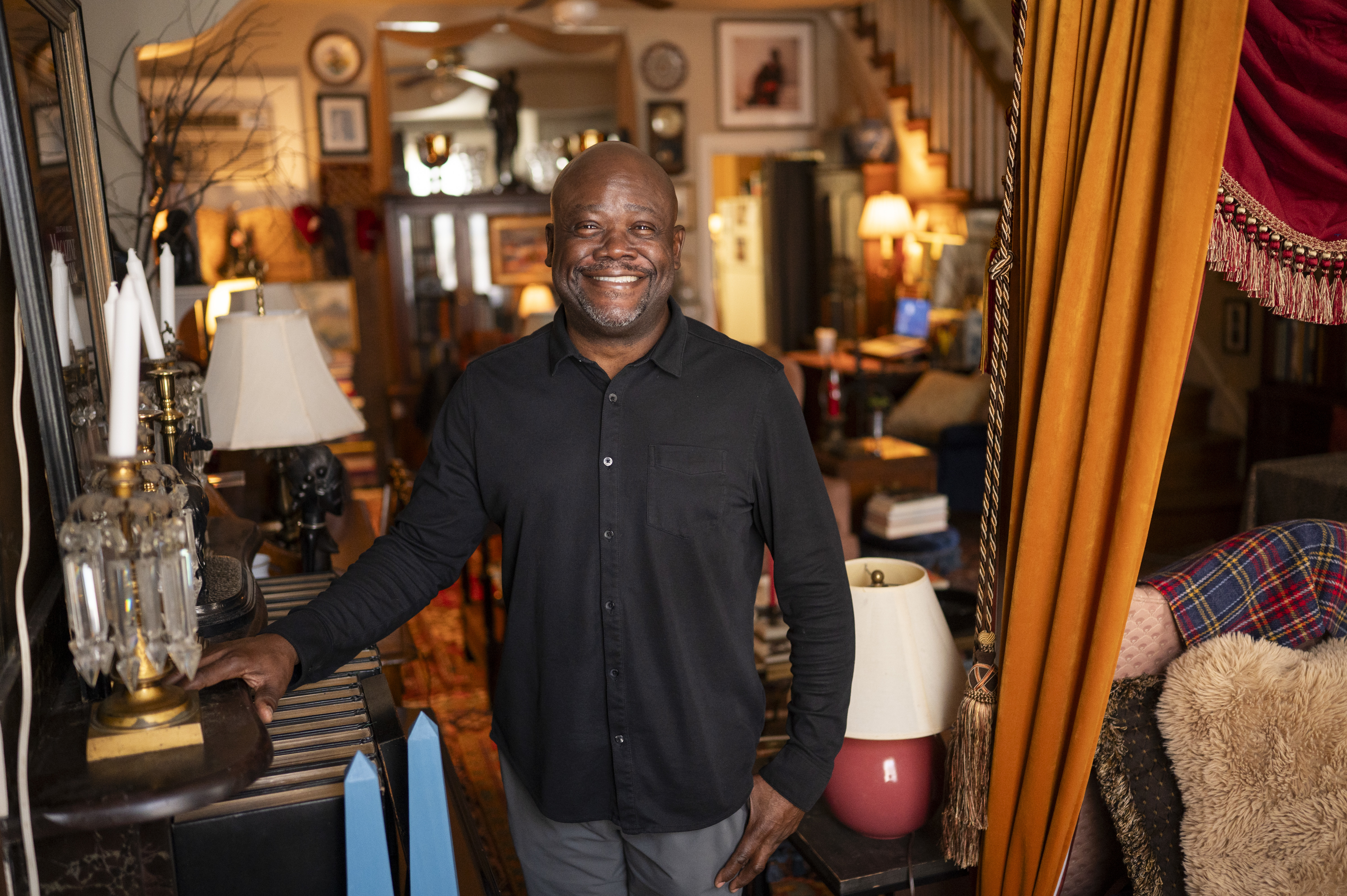
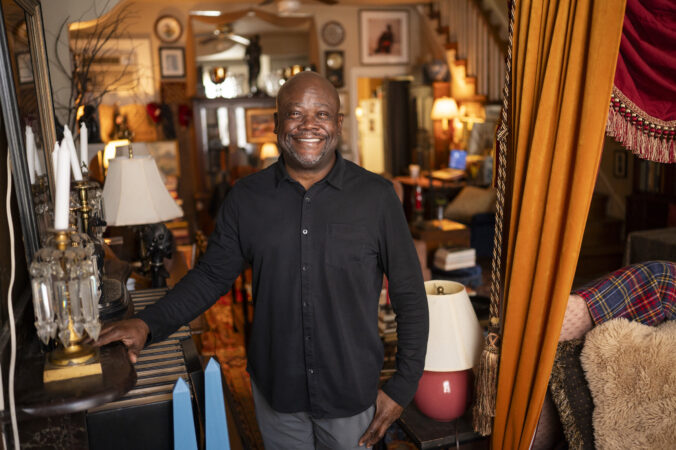
Abel Tootle Jr. calls himself “a maximalist at heart.” And his North Philly rowhouse reflects the title.
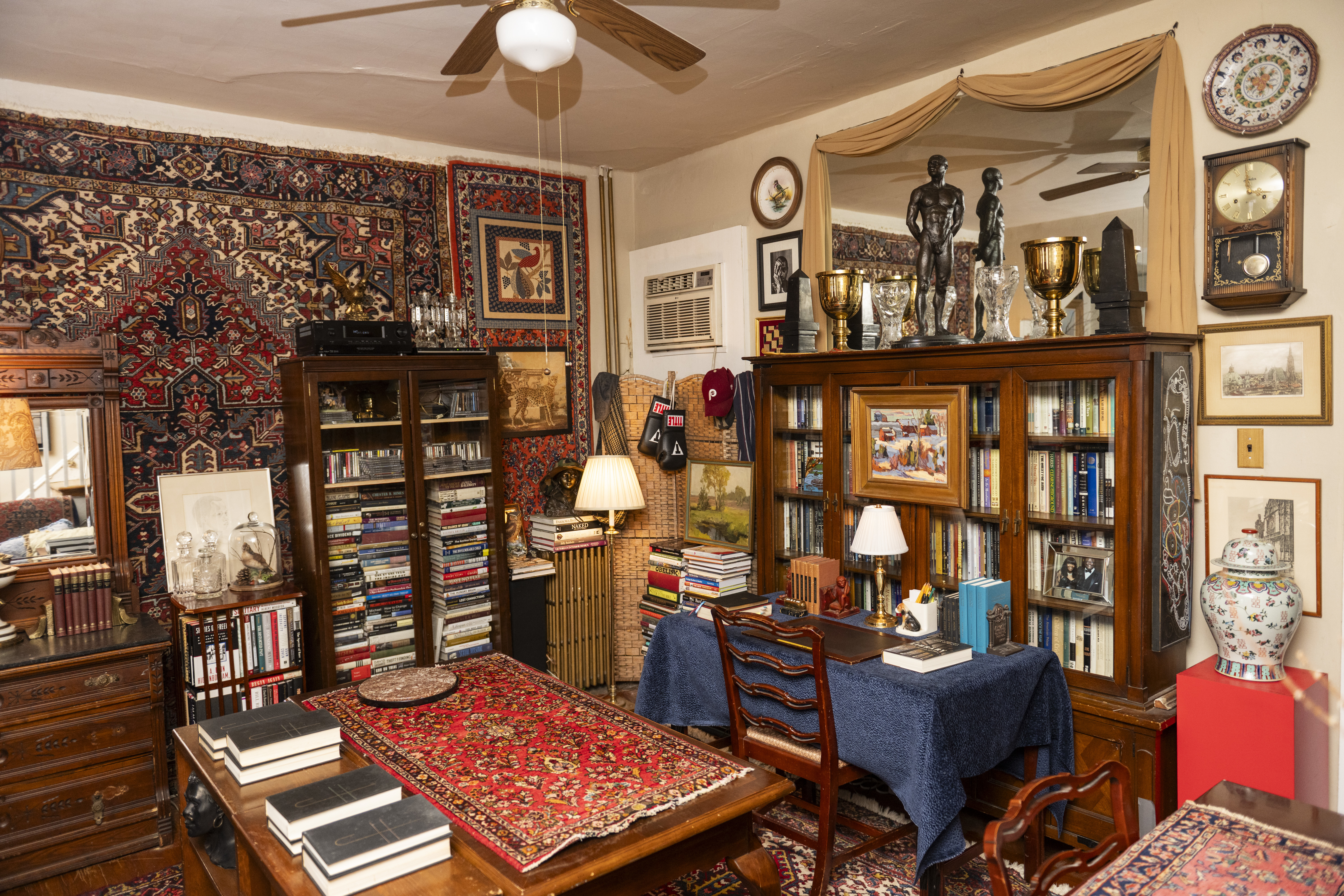
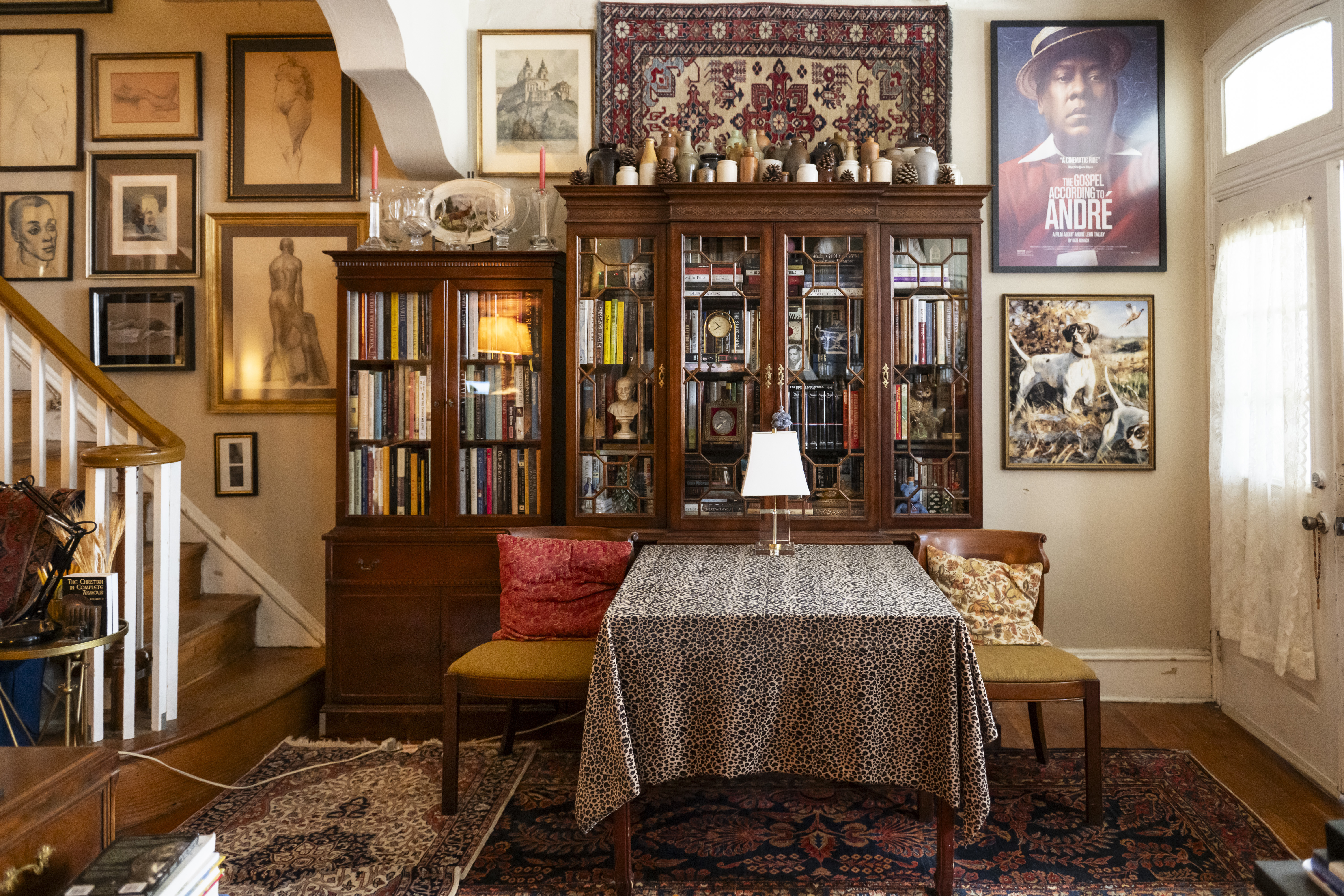
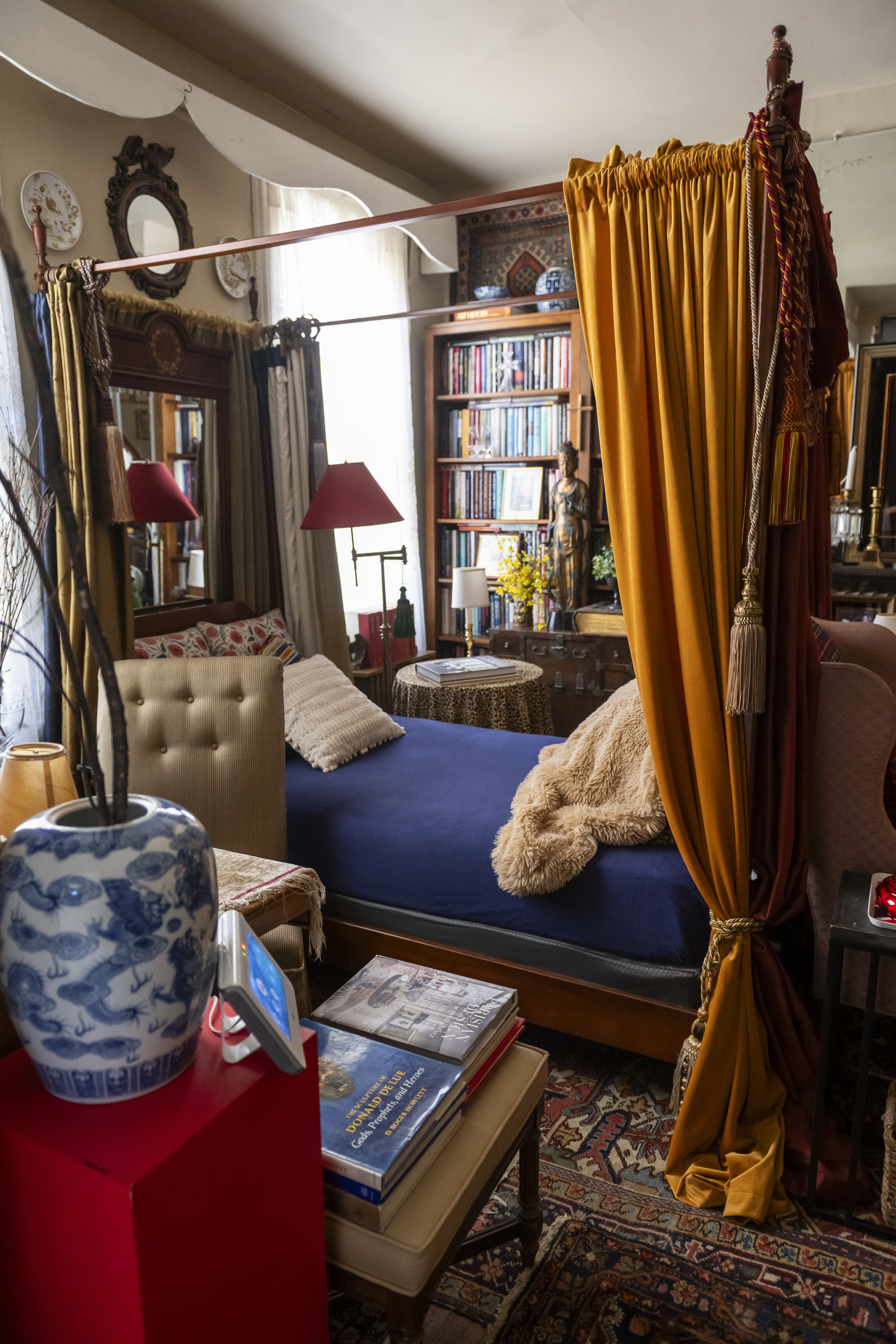
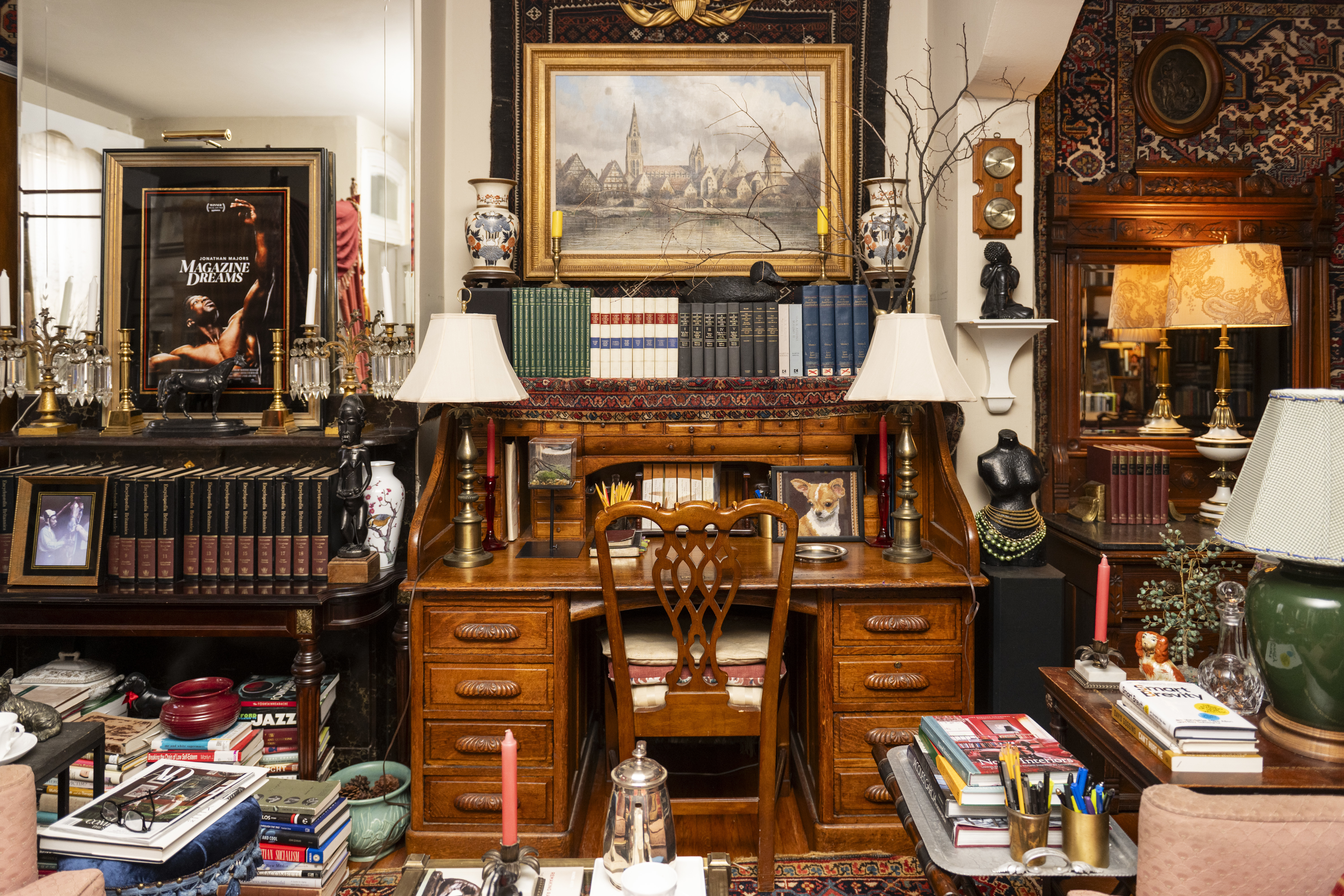
Patterned rugs cover floors, tables, and walls. A canopy bed in the double parlor is framed by velvet and tasseled curtains. Throughout the house, books are displayed on shelves but also thoughtfully arranged on tables and stacked on floors.
Tootle estimates he owns about 3,000 of them — “the culmination of 40-plus years of book collecting, trading, and selling,” he said.
He had rented small apartments before he bought his house. So he took the purchase as the opportunity he’s always wanted to do his thing as an amateur interior designer. He experiments with lighting, colors, and textures.
Across the Mid-Atlantic region and the Philly area, the housing market was kinda meh in November.
In our area, the number of closed home sales was down compared to the same time last year. And properties were taking longer to sell, so home listings piled up.
Lisa Sturtevant, chief economist at the multiple listing service Bright MLS, explained what’s going on.
“Even with somewhat lower mortgage rates, homebuyers and sellers are still very cautious,” she said in a statement. “Economic uncertainty and ongoing affordability challenges remain the biggest constraints on the Mid-Atlantic housing market as we head into the final stretch of 2025.”
In the Philadelphia metro area last month:
🔻There were 4,754 closed sales, down about 4% from the same time last year.
🔺The number of homes actively listed for sale — 11,685 — was up almost 8% from last year.
🔺The median sale price was $390,000, up more than 3% from last year.
📷 Photo quiz
Do you know the location this photo shows?
📮 If you think you do, email me back. You and your memories of visiting this spot might be featured in the newsletter.
I learned that a lot of my readers are fans of the tavern. Shoutout to Ilya S., Evan N., and Don L. — my most enthusiastic respondents.
―
The words “cute” and “construction site” don’t usually go together in our stories.
But my colleague Kristen A. Graham wrote about some adorable second-graders who had a lot of questions for the workers building an addition on a house next to their school. And they got answers when folks from the construction company came to visit.
Story sneak peek: The students guessed that the project used “four thousand million” bricks.
Enjoy the rest of your week.
By submitting your written, visual, and/or audio contributions, you agree to The Inquirer’s Terms of Use, including the grant of rights in Section 10.
After a nearly six-year legal battle between artists, preservationists, and neighbors, the Old City building and its celebrated mosaic were demolished.
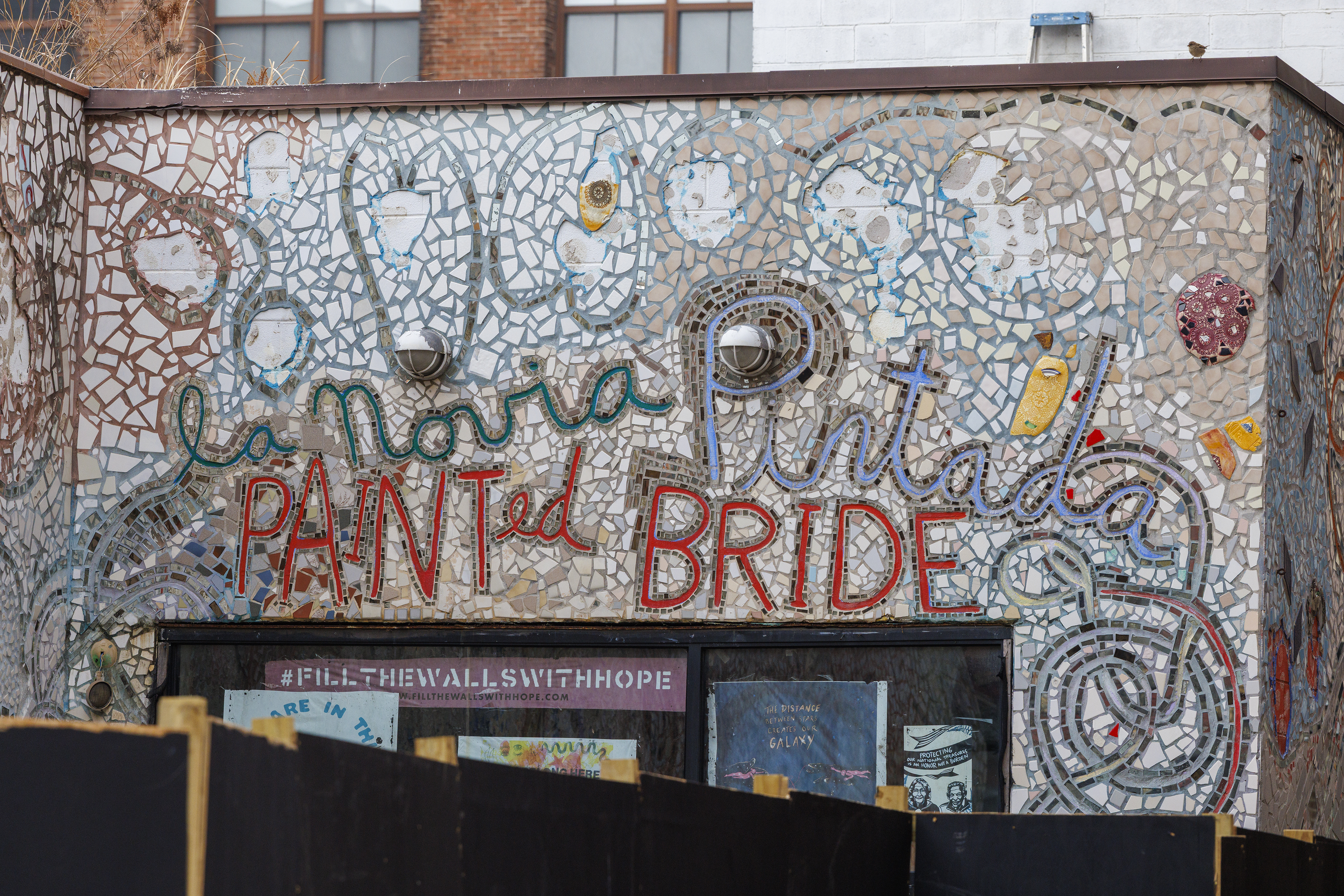
The former Painted Bride Art Center building, once home to world-renowned artist Isaiah Zagar’s 7,000-square-foot mirror-and-tile mosaic, has started to come down.
The demolition equipment and growing dust at 230 Vine St. closes the book on a yearslong saga over the distinctive Old City building’s future.
Founded in 1969 as a gallery on South Street, the Painted Bride helped transform Old City into an artists’ corner of Philadelphia when it moved to the neighborhood in the ‘80s.
story continues after advertisement
Decades later, Zagar’s mosaic, titled Skin of the Bride and wrapped around the exterior of the building, became a point of contention when the organization tried to sell the building in 2017. The debate led to a nearly six-year legal battle involving artists, real estate developers, city government officials, and neighbors.
As demolition of the celebrated building begins, take a look back at the complicated legal battles that led to its razing.
Using grants and donations for a down payment, the Painted Bride moved to 230 Vine St. from its initial digs in South Philadelphia. The former elevator factory in Old City spanned 15,000 square feet and sold for $300,000.
Alley Friends Architects, a local firm, drew up plans for the space, which included a 225-seat performance venue and galleries.
Artist Ruth McCann arrives with her paintings at the new Painted Bride at 230 Vine St. on December 2, 1982..James L. McGarrity / Staff Photographer
"There's never been an Academy of Music for people who weren't famous, and now Philadelphia has one. We've deserved this for many years. New York has a dozen such spaces,” said Keith Mason, the Bride’s program director at the time.
1991
Isaiah Zagar begins installing his mosaics
Zagar worked on the Bride’s distinctive mural for nine years.
“Isaiah woke up at 5 a.m. each morning and drove down to 230 Vine St.,” recalled his wife, Julia Zagar. “He dreamed of it as being his masterpiece and worked 10-12 hours a day until he collapsed with exhaustion.”
Artist Isaiah Zagar working on his giant mosaic at the Painted Bride Art Center on Vine Street in the 1990s.Courtesy of Philadelphia Magic Gardens
story continues after advertisement
November 2017
Vine Street property goes on the market
After 35 years on Vine Street, the Painted Bride announced the building would be sold. Executive director Laurel Raczka said the organization was not in financial distress but chose to ditch the building so the Bride could explore new ways to present the arts.
The following month, Raczka also noted the changing vibes of Old City: "We don't feel like we belong here anymore,” she told The Inquirer.
The entrance to the Painted Bride Art Center, covered in Zagar’s mosaics.Tom Gralish / Staff Photographer
Many in the arts community were perplexed. Performance artist Tim Miller, a founder of artistic spaces in New York City and Santa Monica, Calif., said, "Once [the Painted Bride] is gone, it will never be replaced. To discard it, to me, it feels reckless, unless it's the only way to survive."
March 2018
Painted Bride building is nominated for historic preservation
"The Painted Bride is one of his masterpieces," Smith said. "The building itself is a treasure."
Zagar, photographed for The Inquirer in the fall of 2017.Margo Reed / For The Inquirer
April 2018
Arts leaders beg the Bride to suspend sale plans
More than 30 of the city's most prominent artists, performers, and arts officials cosigned a three-page public letter calling for "a reexamination" of the Bride's situation and community-wide discussion about the organization's future.
Signers included: Joan Myers Brown, founder and executive artistic director of Philadanco; hip-hop dance sensation Rennie Harris; architect Cecil Baker; and Wilma Theater cofounder and director Blanka Zizka. The city’s chief cultural officer offered to facilitate a community conversation between the Bride’s leadership and local artists and art patrons.
The Bride’s leaders rebuffed the offer and said that they would continue to pursue "a sustainable business model."
June 2018
Historical designation passes the first hurdle
A committee of the Philadelphia Historical Commission unanimously agreed the Painted Bride building should be protected.
September 2018
Historical designation is denied
After a three-hour, public debate, Philadelphia’s Historical Commission voted 5-4 to reject designation, a move that opened the door for developers to acquire and demolish the building.
A few days earlier, Lantern Theater Company made a bid of over $2 million for the building, which would have preserved it as an arts space. The offer was rejected.
Lawyers for the Bride said that the law did not require approvals from the court but that the Painted Bride sought them nonetheless.
Architect and developer Shimi Zakin of Atrium Design Group poses with a sign on an interior mosaic in the Painted Bride Art Center building before closing on the sale.Courtesy of Shimi Zakin
The Bride’s petition stated that “given the history” of the building, the Bride “wishes to obtain approval of the sale from both the Pennsylvania Office of the Attorney General and the Philadelphia Orphans’ Court.”
August 2019
City allows townhouses
Philadelphia’s Department of Licenses and Inspections issued a zoning permit to allow Atrium Design Group to build 16 townhouses at the site.
September 2019
Court blocks the sale, citing ‘priceless’ mosaic facade
Philadelphia Orphans’ Court blocked the sale, citing the likely destruction of the Bride’s “priceless” mosaic facade. Judge Matthew D. Carrafiello said the sale would "all but ensure the destruction of what many individuals consider to be a true treasure.”
“It is the sale of its property, including the mosaic, that will result in the liquidity necessary for Painted Bride to continue to fulfill its charitable purpose,” wrote Judge J. Andrew Crompton.
January 2021
Neighborhood group opposes proposal that would save the mosaics
The Zoning Board of Adjustments approved Zakin’s proposal, paving the way for him to move forward with the apartment building.
Shortly after, neighborhood groups appealed the decision.
March 2022
Building officially sold for $3.85 million
Despite the looming appeals hearing, many involved with the Bride and supporters of preserving Zagar’s artwork believed the mural had been saved when the building was sold to Zakin.
A Philadelphia Common Pleas Court judge agreed with some neighbors that the mosaic in Old City could be preserved without allowing the developer to build taller and more densely than local zoning rules allow.
This rendering shows a potential design of the building proposed to replace the Painted Bride Art Center in Old City.Courtesy of Atrium Design Group
Emily Smith, executive director of Philadelphia’s Magic Gardens, which preserves and provides access to Zagar mosaics, said the planned destruction of the Painted Bride mosaic was a case of “NIMBY-ism at its most tragic.”
Over several weeks, the Magic Gardens Preservation Team used chisels, hammers, and small power tools to remove as much as they could from the facade. The mosaic was well-adhered to the brick, and this was a difficult process physically and emotionally. The crew was able to remove approximately 30% of the tiles for reuse in new mosaics.
Magic Gardens’ representatives attempt to save pieces of the iconic Zagar mosaic on all the exterior walls of the former Painted Bride before the building is demolished.Tom Gralish / Staff Photographer
September 2025
Demolition permit granted
Zakin received a demolition permit from the city and told The Inquirer that he plans to start demolition in late October. He said he anticipates that his building will be completed in about 2½ years.
Late November/Early December 2025
Demolition begins
Workers began to take down the interior of the building.
A digger works to demolish the inside of the former Painted Bride building on Dec. 8, 2025.Alejandro A. Alvarez / Staff Photographer
Eight years after the Philadelphia arts community learned it could lose the 7,000-square-foot mosaic that for decades wrapped around an Old City building, the structure’s current owner has started to demolish it.
The fate of the building was the subject of an almost six-year legal battle. Artists and preservationists wanted to save the building. Neighbors opposed a developer’s plans to preserve it.
That developer — architect and building owner Shimi Zakin of Atrium Design Group — had proposed constructing apartments above the mural with a design The Inquirer’s architecture critic called “a terrific work of architecture.”
Zakin received a permit from the city in September to tear down the building. He plans to replace it with 85 apartments and about 6,000 square feet of commercial space. The new building would be six stories and 65 feet tall.
A digger operator walking through inside of the former Painted Bride building, Old City Philadelphia, Monday, December 8, 2025.
Zakin did not respond to a request for comment about the start of demolition at the site. In September, he told The Inquirer: “We are moving forward with an amazing project at an amazing location.”
He estimated that his apartment building would take about 2½ years to complete.
For now, a black wooden fence surrounds the former Painted Bride building while demolition equipment tears out its insides, and the walls await their turn.
When Adam Sawyer and his wife, Marissa Tan, moved to Philadelphia in 2024 from Baltimore, they were attracted to Center City by its proximity towork and mass transit.
The couple figured if they sold their car, they could even afford to rent in one of the thousands of new, high-rise apartments that have been built across Center City over the last 10 years.
Tan had just gotten a new job with the Cooper University Hospital in Camden, and Adam needed access to 30th Street Station for work. They eventually settled on the PMC Property Group’s Riverwalk North at 23rd and Arch Streets and have been impressed by the city, its transit system, and life without a car.
Adam Sawyer and his wife, Marissa Tan, moved to Philadelphia in 2024 from Baltimore.
“One of the things I love about living in a city is that you’ll be walking down the street and there are five different events you didn’t even know about,” Sawyer said. “Festivals, farmers markets, just activity, people doing things. I love that Philadelphia has so much energy.”
In many ways Sawyer and Tan — who are both 35 — are representative of the people who have taken up residence in the new apartment buildings across Center City. Between Pine and Vine Streets, river to river, 3,500 new apartments have opened since 2023.
Center City District (CCD) set out to learn more about who is calling these apartments home, with a survey of more than two dozen buildings constructed since 2015.
Like Sawyer and Tan, the vast majority of respondents to CCD’s survey are under 45 (83%), more than half don’t own a car (55%), and close to half moved from outside the Philadelphia area (44%). Sawyer works remotely like 21% of respondents, and Tan works in healthcare like 32% of them.
window.addEventListener(“message”,function(a){if(void 0!==a.data[“datawrapper-height”]){var e=document.querySelectorAll(“iframe”);for(var t in a.data[“datawrapper-height”])for(var r,i=0;r=e[i];i++)if(r.contentWindow===a.source){var d=a.data[“datawrapper-height”][t]+”px”;r.style.height=d}}});
In a city where a fifth of all residents live in poverty, the respondents aren’t representative of the average Philadelphian in many ways. The buildings surveyed have an average rent of $2,645, well above the median of $1,387.
But the results show that there is a market for the kind of new buildings that are still being proposed. They alsohighlight that many people are attracted to the most central parts of Philadelphia because it offersmore density, walkability, and other urban characteristics that few other American cities can boast.
“People actively choose Philadelphia over other cities and metropolitan areas because we outperform them in some ways,” said Clint Randall, vice president of Economic Development with CCD, which is funded by downtown property owners and provides advocacy and services like additional security and cleaning downtown.
“The city spent so many decades shrinking,” Randall said. “When you see this entire skyline of high-rise apartment buildings emerge, it contradicts what longtime Philadelphians think they know about this place, which is that it does not grow or attract residents.”
Reversing reverse commuting
Center City District’s survey confirmed a longtime finding of the organization’s other research reports: People who live downtown are likely to work there or very close by.
In Philadelphia, reverse commuting is common, a testament to the fact that many private-sector employers have remained outside the city to avoid wage and business taxes. But among survey respondents, only 12% commuted to the suburbs for work compared to almost 40% citywide.
Over half of respondents work in either Center City or University City, and a similar proportion work in either healthcare (32%) or in the jobs more typically associated with office towers: “business, professional, or financial services” (27%). Twenty-one percent work from home.
“A lot of people are in medicine, in healthcare. I see a lot of scrubs,” said Kaz Rivera-Gorski, about her building One Cathedral Squareat 17th and Race Streets.
window.addEventListener(“message”,function(a){if(void 0!==a.data[“datawrapper-height”]){var e=document.querySelectorAll(“iframe”);for(var t in a.data[“datawrapper-height”])for(var r,i=0;r=e[i];i++)if(r.contentWindow===a.source){var d=a.data[“datawrapper-height”][t]+”px”;r.style.height=d}}});
“I would imagine there’s a good amount of people that work remotely, too,” said Rivera-Gorski, who is a management consultant who works from home. “I see people on their laptops in the shared spaces during the day.”
Seventy percentof respondents said their jobs are within walking, biking, or transit distance from their homes, while 80% of them said that owning a car was not necessary to enjoy daily life in Philadelphia.
That’s part of what attracted Sawyer and Tan, even though another part of Philadelphia’s allure was that it was closer to family in central and eastern Pennsylvania (the couple have a Zipcar membership).
“While I do drive, I really, really dislike driving,” Sawyer said. “I’ve lost people. Everybody has, to either accidents or crashes or DUIs. So we were open to selling our car and became more and more convinced it was a good idea.”
window.addEventListener(“message”,function(a){if(void 0!==a.data[“datawrapper-height”]){var e=document.querySelectorAll(“iframe”);for(var t in a.data[“datawrapper-height”])for(var r,i=0;r=e[i];i++)if(r.contentWindow===a.source){var d=a.data[“datawrapper-height”][t]+”px”;r.style.height=d}}});
Retaining out-of-towners
Randall said that he was surprised by the proportion of CCD’s respondents who reported having moved to Philadelphia from outside the region. (A recent Realtor.com report showed that Philadelphia switched from having mostly local interest in rental listings before the pandemic to mostly out-of-towners today.)
The survey also found that the majority of Center City dwellers planned to be living in Philadelphia inthree to five years, with 45% planning to continue renting and 16% hoping to buy.
“You hear about the transience of other places like D.C. or Boston, and it seems like people are here [in Philadelphia] and they intend to stay,” Randall said.
That is certainly the goal of Annika Verma, a student at Temple University who lives in the Logan Lofts in Callowhill.
“I am already calculating: Can I get an entry-level job? What salary would work for the rent in this area?” Verma said. “I would love to stay. The area seems ideal for me in terms of commuting or walking. Anything, everything is a 15-20 minute walk or bus ride away.”
Sawyer and Tan are hoping to stay in Philadelphia, too. They are currently searching Center City for a condo to buy. They may try to stay in their current Logan Square neighborhood for its proximity to the Schuylkill River Trail and 30th Street Station.
“We love it,” said Sawyer, who notes that they’ve lived in three cities in Texas, Cooperstown in New York, and Baltimore before this. “But our favorite place we’ve ever lived is here in Philadelphia.”
During a combative hearing on legislation related to Parker’s signature housing initiative, Council President Kenyatta Johnson on Wednesday afternoon refused to allow a vote on an amendment brought by the Parker administration and instead advanced Council’s version of the proposal over the mayor’s objections.
In a voice vote, Council’s Committee on Fiscal Stability and Intergovernmental Cooperation approved its own changes to the legislation — authorizing the city to take out $800 million in city bonds to fund Parker’s Housing Opportunities Made Easy, or H.O.M.E., initiative — without considering the mayor’s requested tweaks.
Councilmembers Brian O’Neill, Anthony Phillips, and Curtis Jones Jr. signaled their support for Parker’s vision by voting against the measure, which now heads to the Council floor for a final passage vote or further amendments, either of which could come as soon as January.
It is unclear how Johnson’s handling of H.O.M.E. will change the tight working relationship Parker and Johnson have maintained since both took office in January 2024. Wednesday’s vote marked their most contentious public disagreement during their tenures. Both officials still agree on many policy goals and have plenty to gain politically from maintaining their alliance.
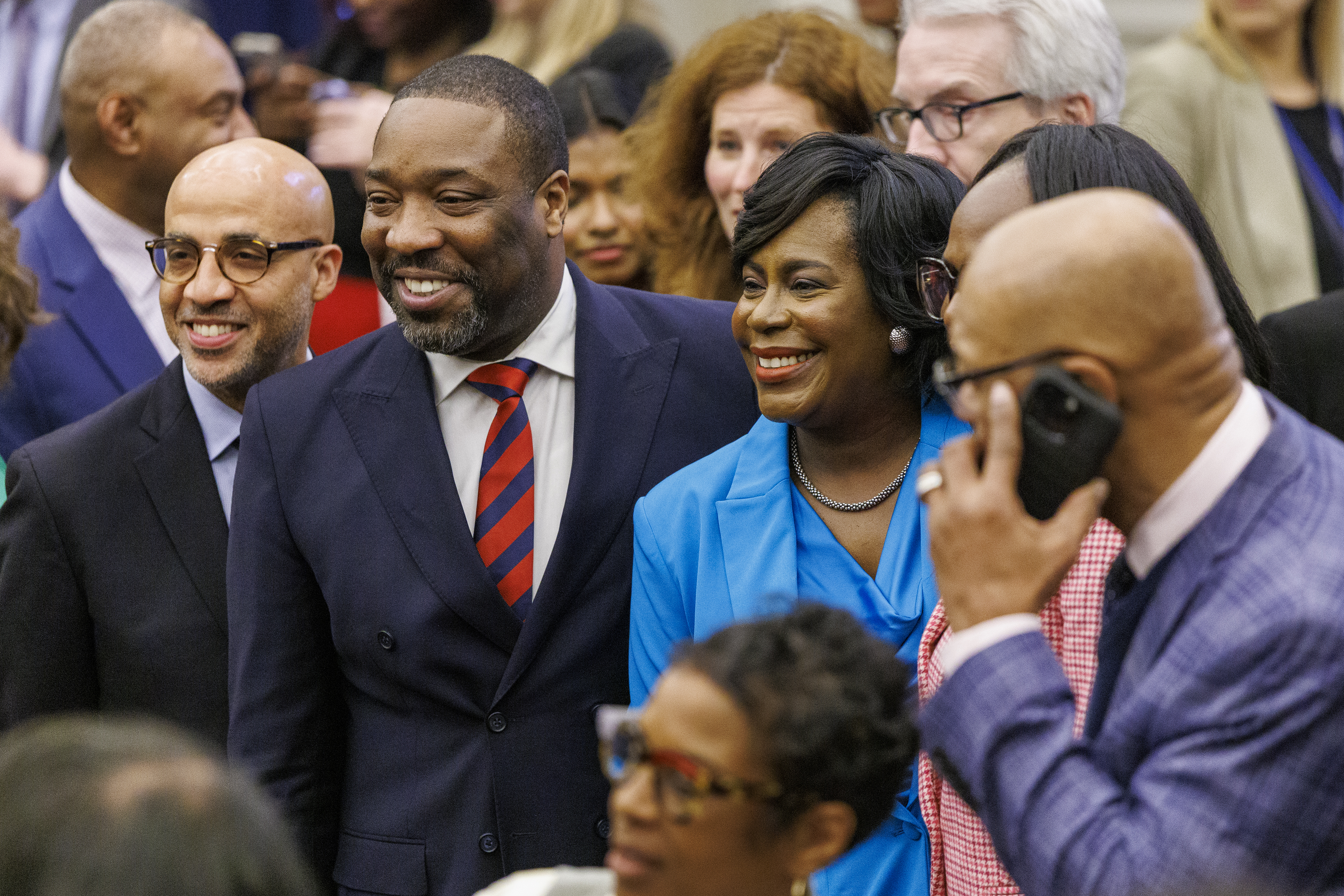
Philadelphia Mayor Cherelle L. Parker stands beside Council President Kenyatta Johnson (left) after finishing her budget address to City Council in Philadelphia City Hall on Thursday, March 13, 2025.
The dispute between Parker and Council centers on income eligibility thresholds for two of the housing programs that will be funded by bond proceeds: the Basic Systems Repair Program (BSRP), which provides funding for needed home improvements to eligible owners who might be displaced by costly repairs, and the Adaptive Modification Program (AMP), which funds projects to improve mobility for permanently disabled renters and homeowners.
“The whole debate over income eligibility limits for BSRP and Adaptive Modifications is to make sure that we leave no working Philadelphian and no qualifying Philly rowhome owner excluded from these vital programs,” Parker said in a statement Wednesday. “If we don’t save Philly rowhomes, we’re going to become a city of used-to-be neighborhoods, blocks that used to be nice but now are showing signs of age and decline. I will not allow that to happen — not on my watch as Mayor of Philadelphia.”
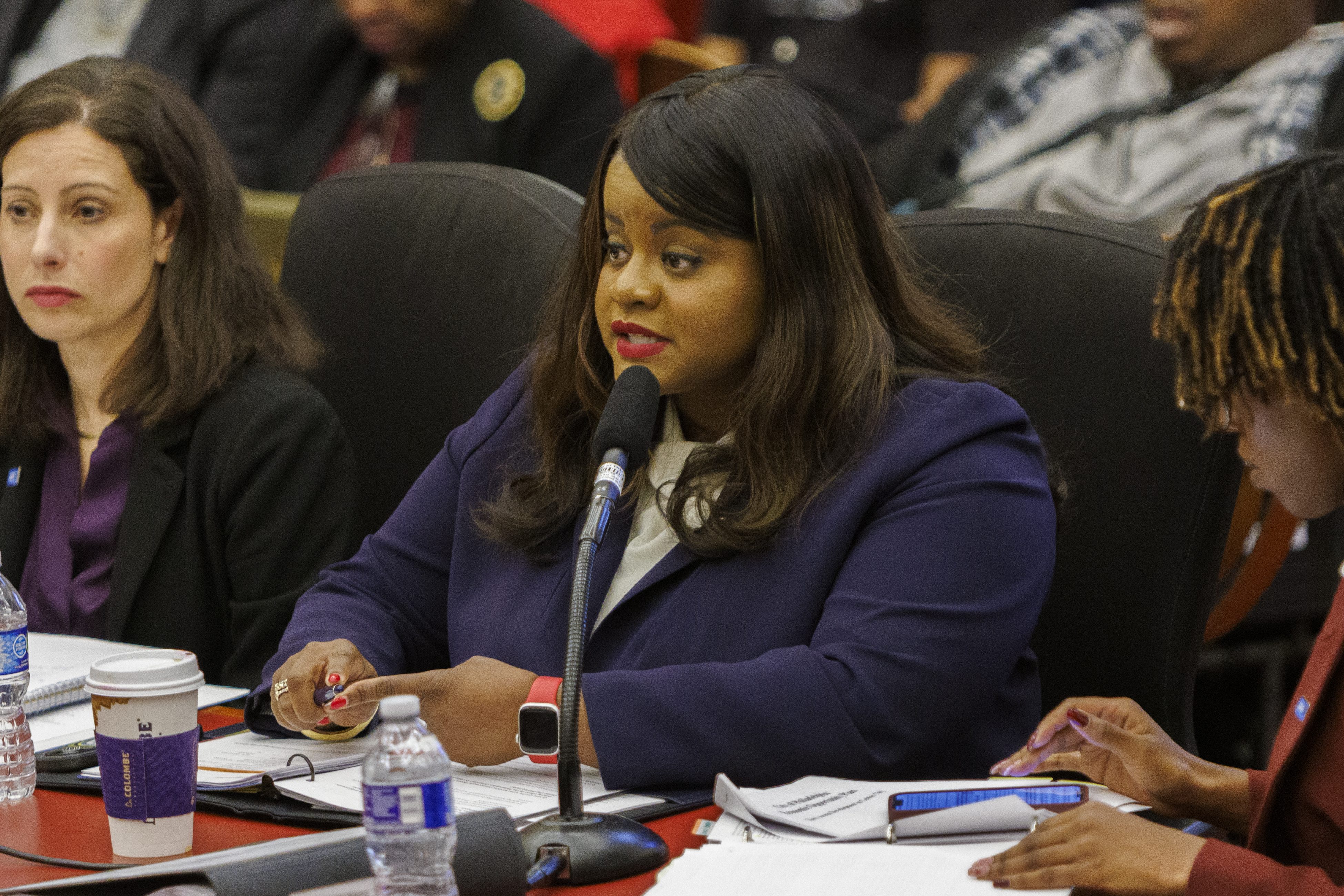
Councilmember Jamie Gauthier, who chairs the Committee on Housing, Neighborhood Development and the Homeless, said Wednesday’s vote sent the message “that Council takes its job seriously as a steward of taxpayer money in the city of Philadelphia, that we are not here to just rubber-stamp in a proposal, that we’re here to work together.”
Change in fortunes for Parker
Wednesday’s vote appears to mark the first instance of Parker’s hard-line negotiating tactics failing her since she took office. Even when she could not get negotiating counterparts to bend to her will in the past, Parker has largely prevailed.
And in July, when the largest union for city workers went on strike to try to squeeze larger raises out of the administration, Parker stuck to her guns amid increasing pressure to fold as trash piled up across the city and 911 wait times grew longer. The union ultimately folded after an eight-day work stoppage with a new contract that closely aligned with Parker’s last offer before the strike began.
But this time, Parker appears to be out of options to prevent Council from getting its way because she cannot veto another key piece of legislation to keep the housing initiative in motion that needs to pass before the city can issue the bonds. That measure — a resolution setting the first-year budget for H.O.M.E. that received preliminary approval in a Council committee last week — could see final approval as soon as Thursday.
“We’ve got to take care of the people who are most in need, but we can’t penalize the people who are going to work every day, pay their taxes, contribute to the city, and they can’t benefit from home improvement programs,” she said.
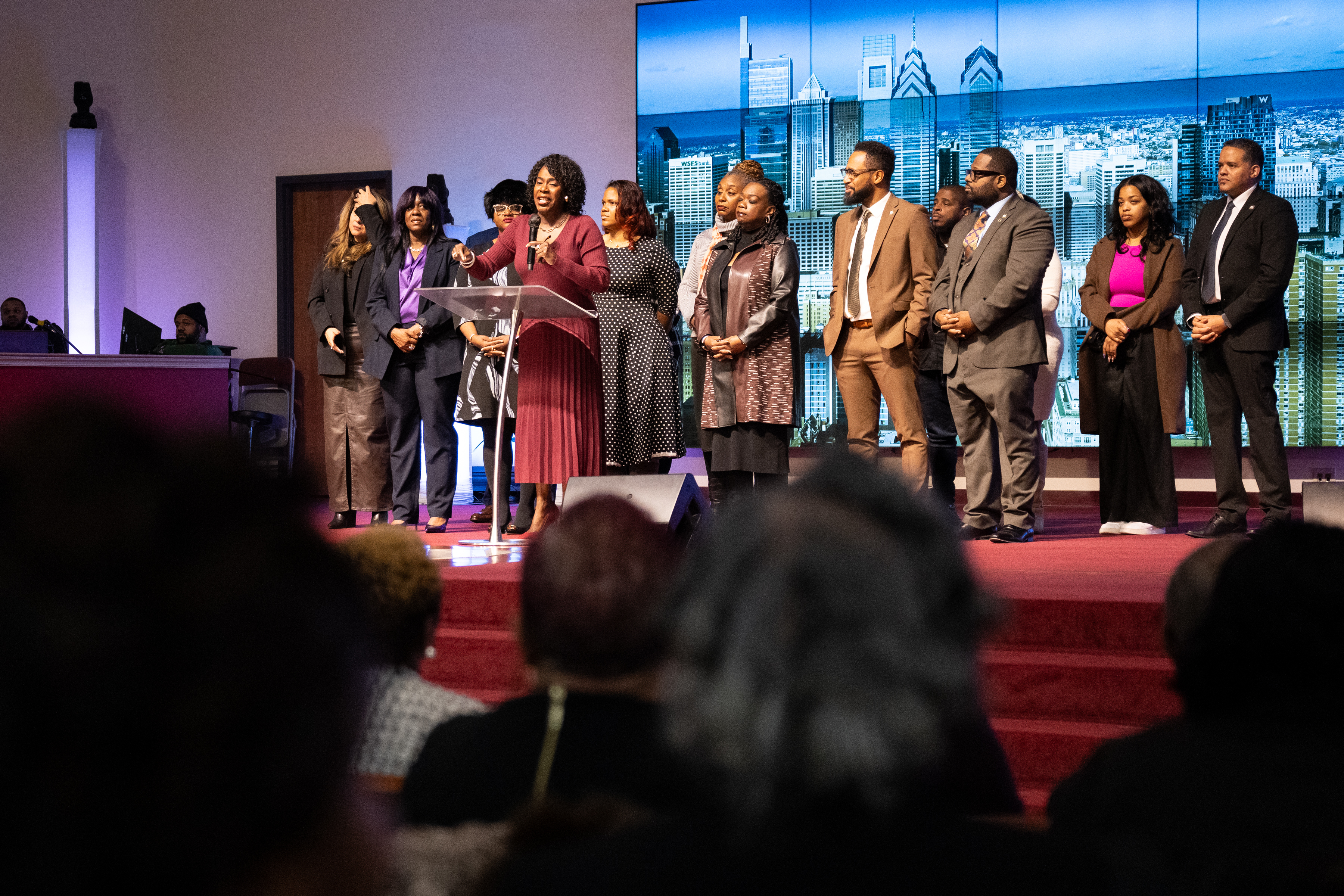
Mayor Cherelle L. Parker speaks to the crowd at The Church of Christian Compassion in the Cobbs Creek neighborhood of West Philadelphia on Sunday, Dec. 7, 2025. Parker visited 10 churches in Philadelphia on Sunday to share details about her H.O.M.E. housing plan.
That maneuver did not appear to go over well with lawmakers, who likely did not appreciate the mayor encouraging their constituents to oppose Council’s version of the plan.
Even before chief of staff Tiffany W. Thurman presented Parker’s amendment at Wednesday’s hearing, lawmakers sounded off, with Gauthier saying the administration was spreading “misinformation” and Councilmember Nicolas O’Rourke calling Parker’s approach “Trumpian.”
“It was in response to misinformation being spread during that tour,” said Gauthier, who, along with fellow progressive Councilmember Rue Landau, led the charge to lower the income eligibility thresholds included in H.O.M.E.
Gauthier noted that Council’s version of the bill still increases those thresholds beyond what is offered in existing programs.
“Obviously, the mayor, all of us, have the right to go and talk to our constituents,” she said, “but we have to be operating from a fact-based perspective, and telling folks that the Council proposal excludes them is not factual.”
No vote on Parker amendment
The legislative process for approving the city bond issuance — the centerpiece of Parker’s H.O.M.E. initiative, which she first proposed in March — has been long and tortured.
Council initially approved the bond authorization in June, but lawmakers at that time inserted a provision requiring the administration to get their approval for annual budget resolutions determining how the proceeds will be spent.
Johnson delayed a vote on the first H.O.M.E. budget resolution for months before allowing it to be approved last week by the Committee of the Whole. But lawmakers made major changes over the mayor’s objections, including granting themselves the right to set income thresholds for the initiative’s programs.
It was the first sign that Council was serious about enacting its own ideas even if Parker was not on board and, in Council’s view, would not negotiate. In a twist, lawmakers took their latest stand Wednesday at a time when the mayor’s team came to the table with a significant, albeit last-minute, counteroffer.
Council’s changes to the eligibility requirements for BSRP and AMP would require 90% of the H.O.M.E. bond proceeds for those programs to be spent on households making 60% of Philadelphia’s area median income, which is about $71,640 for a family of four.
Thurman on Tuesday proposed a compromise in which only 60% of bond money would be set aside for those households. She told lawmakers that Parker, in part, wants to ensure H.O.M.E. helps city workers, who are required to live in Philadelphia but often struggle to make ends meet on municipal salaries. (Parker pointed to the H.O.M.E. plan during the strike as evidence she backed city workers despite opposing higher wages.)
Johnson responded that he hopes “one day our city workers are getting paid enough where they don’t have to sign up” for assistance programs.
“You know as well as I do we agree,” Thurman replied, prompting Johnson to cut her off.
“I’m not acknowledging you yet,” Johnson said, referring to a Council hearing procedure in which the chair must recognize speakers.
Tiffany Thurman, Mayor Parker’s chief of staff, takes questions from Council members in 2024.
Parker’s latest offer, which came months into the standoff over H.O.M.E., appears to have been too little, too late.
Phillips — who voted for the Council budget resolution last week but said he has since changed his mind to support Parker’s vision — wanted to call upthe administration’s amendmentfor a vote, he said in an interview.
“This week I changed my mind because that’s where my mind really has been,” said Phillips, who represents the Northwest Philadelphia-based 9th District that Parker held when she was on Council. “The 9th District neighbors — they’ve made abundantly clear that our housing policy needs to reflect them. … They’re long-term homeowners, residents who are on fixed incomes, multigenerational families.”
Under Council rules, only Johnson can call on members to put forward amendments in committee. But instead he blocked it, prompting Jones, Parker’s most vocal ally on Council, to protest.
“We should do the right thing always, even in spite of its inconvenience and time,” Jones said during Council. “Resolutions and amendments need to be introduced so that they can get the light of day and be heard.”
Johnson said he pushed through Council’s version because the mayor’s administration did not engage with him about its new proposal ahead of the meeting.
“Just for the record … I had not officially seen any official amendment prior to this actual hearing,” Johnson said. “The administration just showed up.”
Despite Wednesday’s vote, the fight over H.O.M.E. may not be over. Councilmember Mike Driscoll, a Parker ally who voted to advance the bond authorization, signaled there may be further changes.
“I wanted to keep the HOME initiative process moving,” Driscoll said in a statement, “but still hope to influence a reasonable solution which includes program support for row home Philadelphians.”
Before moving into his North Philadelphia home 13 years ago, Abel Tootle Jr. had rented small apartments, all under 800 square feet. He decided to make the leap to homeownership to pursue his passion for interior design and create a space that reflects his personal style.
“The timing was perfect,” said Tootle. And so, he moved into his circa-1910, three-bedroom, 1,200-square-foot house. Becoming a homeowner meant full freedom in designing his space — and no more lugging clothes to the laundromat, a feature of which he is most appreciative, he said.
His home’s look has been evolving since.
“I truly believe a home is never done. I was given every opportunity to paint, carpet, and design as I wish; however, I did not make any structural changes at all,” Tootle said. “My focus remains on creating a very English-country-house feel with special attention to my culture and interests.”
He favorite design elements include books — there are dozens and dozens displayed throughout the home, not just on shelves but arranged intentionally on and under tables, and stacked in towers rising from the red-pine-hardwood floors — as well as antiques, colorful area rugs in various sizes, art, lighting, and mirrors.
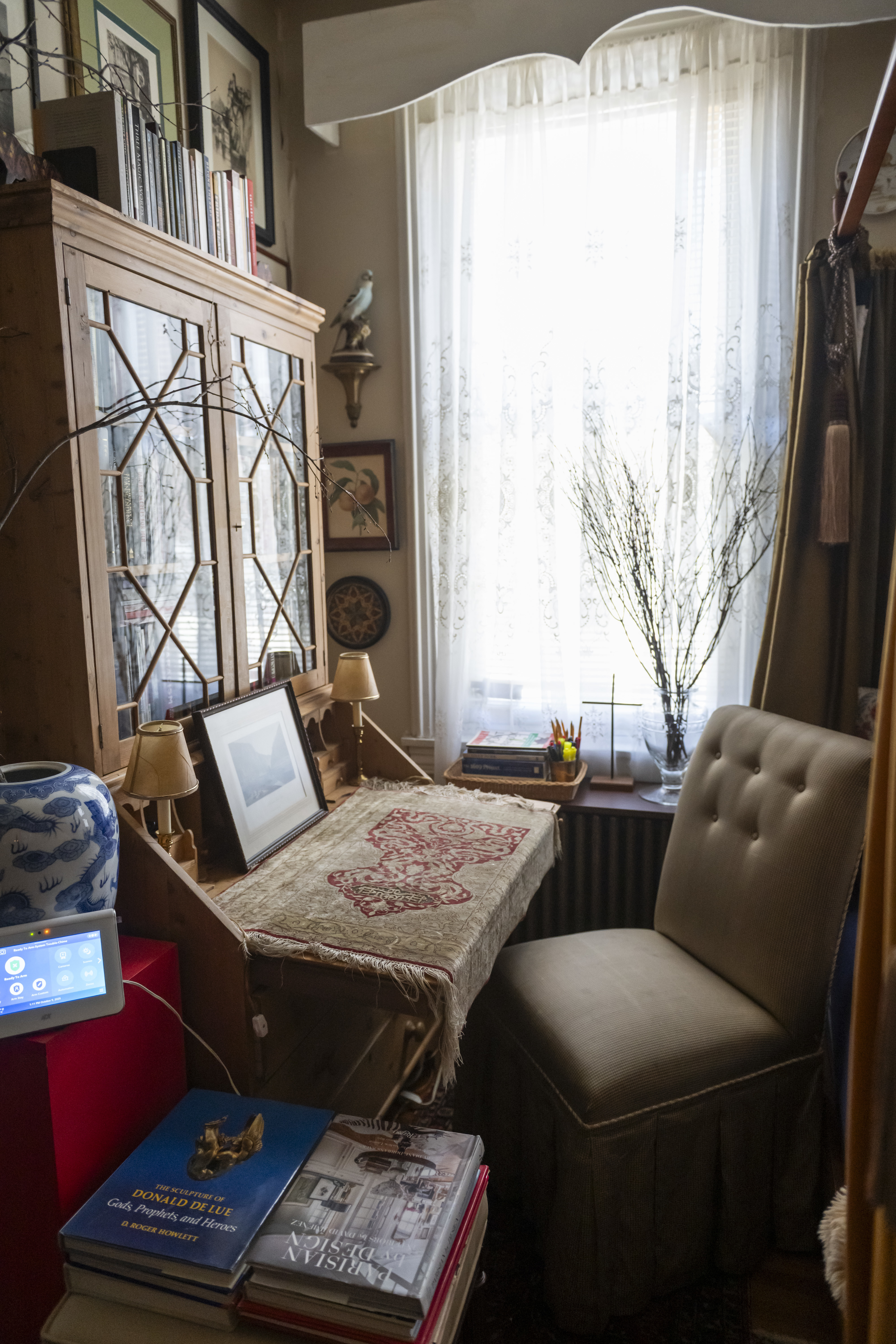
Colorful patterned rugs adorn not just the floors, but tabletops and walls as well. Tootle says his interior designs are “layered.”Books fill a glass-doored cabinet and art covers the wall at the foot of the stairs.A desk is topped with a book-filled cabinet, adjacent to the canopy bed.The canopy bed in Tootle’s double parlor room in his North Philadelphia home.
Tootle was initially attracted to his home’s location because he worked at Girard Medical Center. The commute was 15 minutes by bicycle or a 30-minute walk.
“I was raised not too far from my current address as a teenager; hence, I am very familiar with the neighborhood,” he noted. He also appreciates the sense of community, being minutes from Center City, and the architecture of the neighborhood.
“The classic brick and stone rowhomes, the spacious interiors of the three-story houses, and the rich history of music, art, and civil rights,” Tootle said. “Shopping, arts, and eateries are other reasons I love where I live, and I especially love the many libraries and museums,” added Tootle.
Tootle’s career is in social work and he has experience in psychotherapy, individual and group therapy, trauma counseling, grief counseling, and drug and alcohol counseling. In his spare time, he enjoys reading, antiquing, and going to the gym.
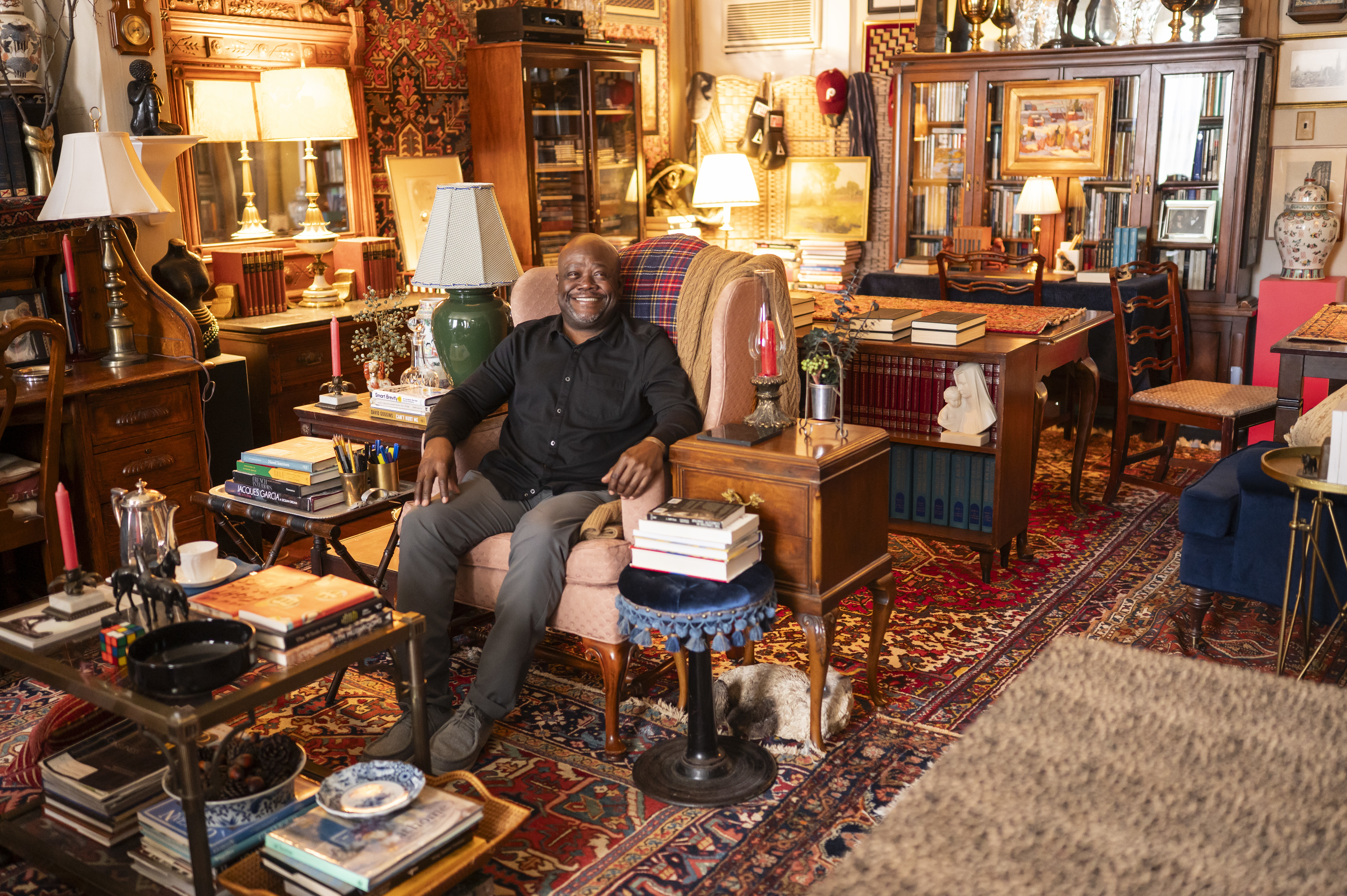
Books are a central focus in his home — he estimates he owns about 3,000.
Tootle sits in his double parlor surrounded by books and antiques.
“My library is the culmination of 40-plus years of book collecting, trading, and selling. I have purchased books from bookstores, auctions, flea markets, libraries, thrift stores — anywhere books were sold,” he said.
The bulk of the collection focuses on psychology, spirituality, history, art, and interior design, but it also includes poetry, fiction, and science. His favorite writers include James Baldwin, Toni Morrison, Peter Gomes, Ellen Langer, Carl Jung, and W.E.B. Du Bois, he said.
“Essentially, I’d like to think my home references the three places I’ve always wanted to live in as a child: a library, a church, and an art gallery or museum — without the pretension,” said Tootle.
Stacks of books overflow from the shelves and tables and onto the floor.Tootle’s S-rolltop desk is one of his most prized antiques.
He’s especially fond of 19th-century antiques.
“I am a sucker for antique lighting and furnishings of this period and have frequently found gems at auctions, estate sales, flea markets, thrift stores, and on the curbs of sidewalks,” he said.
One special acquisition is an antique 60-inch-wide Tiger Oak S-rolltop desk, which he bought from a dealer in Bucks County. It was produced in the late Victorian Era, he said, in the 1890s.
Tootle frequently tries different design layouts by rearranging furniture, changing lighting, and experimenting with colors, patterns, and textures.
“My design ethos is very intentional and, hence, curatorial. I am a maximalist at heart,” continued Tootle. “My interiors are very layered.”
Also, he’s planning on featuring more theatrical elements.
“This includes incorporating more velvets, tassels, deep saturated colors, and sculpture — in the tradition of the late Renzo Mongiardino. Not as a copy, but inspiration,” he said.
In the backyard, he wants to make a mixed-use space.
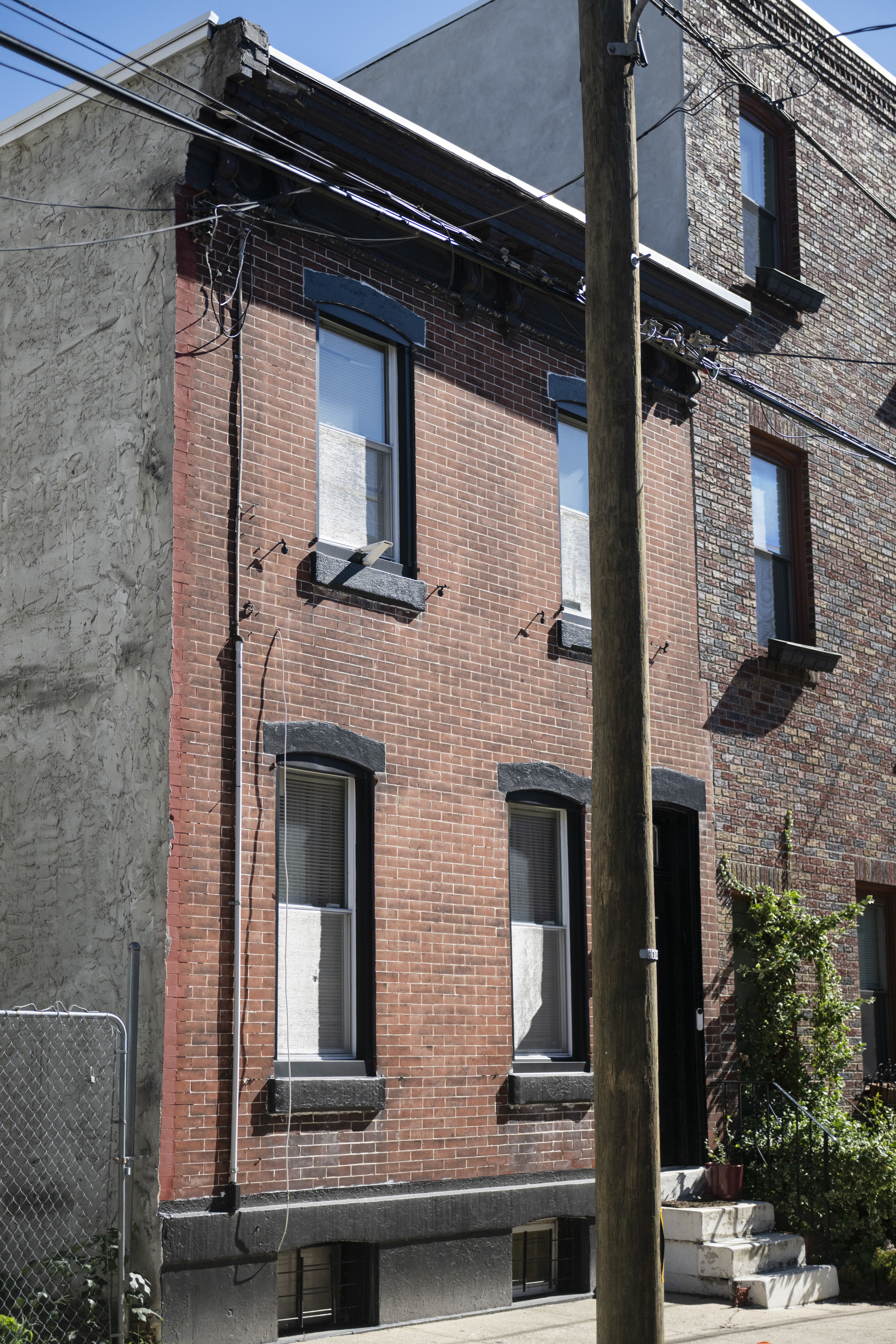
The exterior of Tootle’s home.
“I would like to have the soil paved over and start a container garden with trees, shrubs, herbs, and vegetables with a small round table accommodating two to four people,” said Tootle. “I rarely use it as it currently stands.”
Is your house a Haven? Nominate your home by email (and send some digital photographs) at properties@inquirer.com.