Typical Philadelphia-area retail workers would need to make more than twice their annual wages to afford the region’s median-priced apartment, according to Redfin.
Retail workers in the Philadelphia metropolitan area, which includes Camden and Wilmington, made a median of $35,006 in 2024. But to comfortably afford the median monthly rent for an apartment in the area in October — $1,783 —they would need to make a median of $71,331, according to a report Redfin published last month.
In all 40 of the major areas Redfin analyzed, typical retail workers make less money than they need to afford the median rent for an apartment.
“As the cost of living has increased, so have the sacrifices renters must make to afford a place to live,” Daryl Fairweather, Redfin’s chief economist, said in a statement. “Since most retail workers don’t earn enough to afford the typical apartment, many are opting to share rent with a family member or friend, move far away from their job, or live in a very small space.”
A typical U.S. retail worker would have to work 83 hours per week to afford the typical apartment alone.
Renters struggling
Rents are considered affordable if they are no more than 30% of a renter’s income. A growing number of Philadelphia renters are spending more than 33% of their income and struggling to pay rent, according to Census Bureau data.
In a nationwide survey in May of about 1,600 renters, almost one in four said they regularly or greatly struggle to afford housing costs, Redfin found. Renters said they were diningout less, taking fewer vacations, and borrowing money from family and friends to pay their rent.
In Redfin’s November report, even retail workers with wages in the top 25% earn 44% less than they need to afford the median-priced apartment.
Data on rent affordability for retail workers in the Philadelphia metro area closely mirror national trends.The typical U.S. retail worker made $34,436 in 2024 but would need to make $71,172 to afford the typical apartment, priced at $1,779 in October.
Rents have gotten slightly more affordable for the typical retail worker in the last few years. Prices aren’t rising as much because of all the apartments that have been built in recent years.
window.addEventListener(“message”,function(a){if(void 0!==a.data[“datawrapper-height”]){var e=document.querySelectorAll(“iframe”);for(var t in a.data[“datawrapper-height”])for(var r,i=0;r=e[i];i++)if(r.contentWindow===a.source){var d=a.data[“datawrapper-height”][t]+”px”;r.style.height=d}}});
Bigger gaps in New York
Redfin analyzed wage data from the U.S. Bureau of Labor Statistics, and retail workers fell into three categories: cashiers, retail salespersons, and first-line retail supervisors.
The New York regionhad the biggest gap between what retail workers make and what they need to make to afford an apartment. Workers’ median annual wage was $39,185 in 2024. Workers would need to make $134,896 — almost 3½ times as much. The median apartment rent in October was $3,372.
The affordability gap for retail workers was smallest in Cleveland’s metro area — $31,982 vs. $47,654.
Editor’s note: A previous version of this story misstated the definition of the study’s metro area.
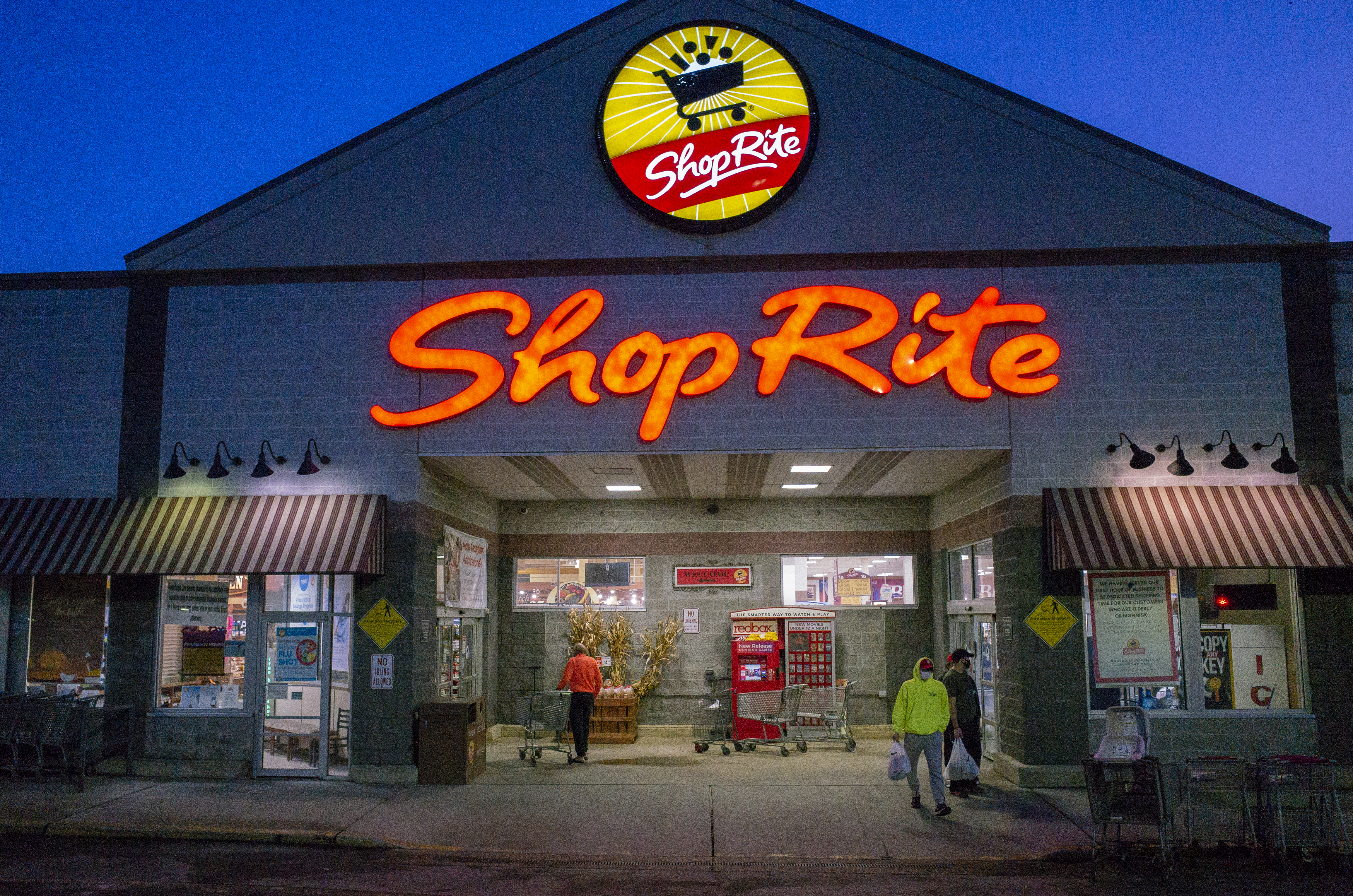
The Brown family, which operates a dozen local ShopRites, recently purchased the Shoppes at Wissinoming for $30.8 million, according to JLL real estate, which represented the seller. The nearly 98,000-square-foot complex in Northeast Philadelphia is anchored by one of Brown’s ShopRites.
“We think it’s important to own the real estate where our supermarkets are located, so we can ensure the long-term healthy food access for the local community and the overall sustainability of our stores,” Brown, executive chairman of Brown’s Super Stores, said in a statement. “We are excited to add the Shoppes at Wissinoming shopping center to our real estate properties.”
Brown said he owns the shopping centers surrounding his ShopRites in Cheltenham, Brooklawn, and Roxborough.
The ShopRite in Roxborough, pictured in 2020, is run by Jeff Brown and located in a complex owned by the longtime grocer.
The family also runs ShopRites in Eastwick, Nicetown, Parkside, Port Richmond, South Philadelphia, Bensalem, Fairless Hills, and Mullica Hill..
The ShopRite at the Shoppes at Wissinoming opened in 2018, and was acquired by Brown earlier this year. The grocery store anchors the center, occupying about 68,000 square feet.
The complex is 98% occupied, according to JLL. Other tenants include Wawa, Popeyes, and AT&T.
“The transaction reflects broader trends in the retail investment market, where investors continue to prioritize grocery-anchored properties with proven tenant performance,” said Jim Galbally, JLL senior managing director. “Shoppes at Wissinoming has an ideal combination of dominant grocery anchor, diverse tenant mix, and strategic location within one of Philadelphia’s most densely populated submarkets.”
Better Box owner Tamekah Bost (left) talks with ShopRite owner Jeff Brown at the Cheltenham ShopRite in 2021. Brown has brought local restaurateurs into his stores.
The Wanamaker Building was built to be an icon of modern retail, a colossal temple of middle-class consumerism in the heart of Philadelphia.
Over 100 years later, the palatial department stores of Wanamaker’s heyday are gone,and the building’s new owners are remaking it for a different age following the closure of Macy’s earlier this year.The building will offer loft-style apartments and, plans filed with the city show, a rooftop pool.
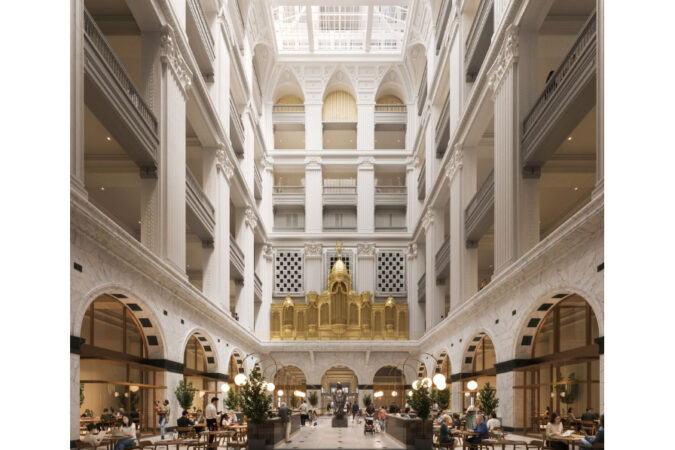
New York-based TF Cornerstone has submitted plans to the Philadelphia Historical Commission that show the changes to the retail space. Both the exterior and parts of the interior — the Grand Court and organ — are protected. The developer is seeking permission to add more entrances and retail space on the ground floor, among other changes.
TF Cornerstone and local partner Alterra Property Group plan to resurrect original aspects of the building’s design, while acknowledging the realities of retail today, which means carving out space on the street and within the building for smaller businesses.
“It’s most likely not going to be one tenant across the entire area. Retail is just different” today, said Mark Faulkner, an architect with New York-based Practice for Architecture and Urbanism (PAU), which is in charge of the design of the building’s retail section.
“We’ve been providing a lobby and an arcade that leads you to that center space but also allows for smaller retail and smaller individual stores around the ground floor and some of the upper floors,” Faulkner said. In the Grand Court itself, “we’ve been focused on a food and beverage offering.”
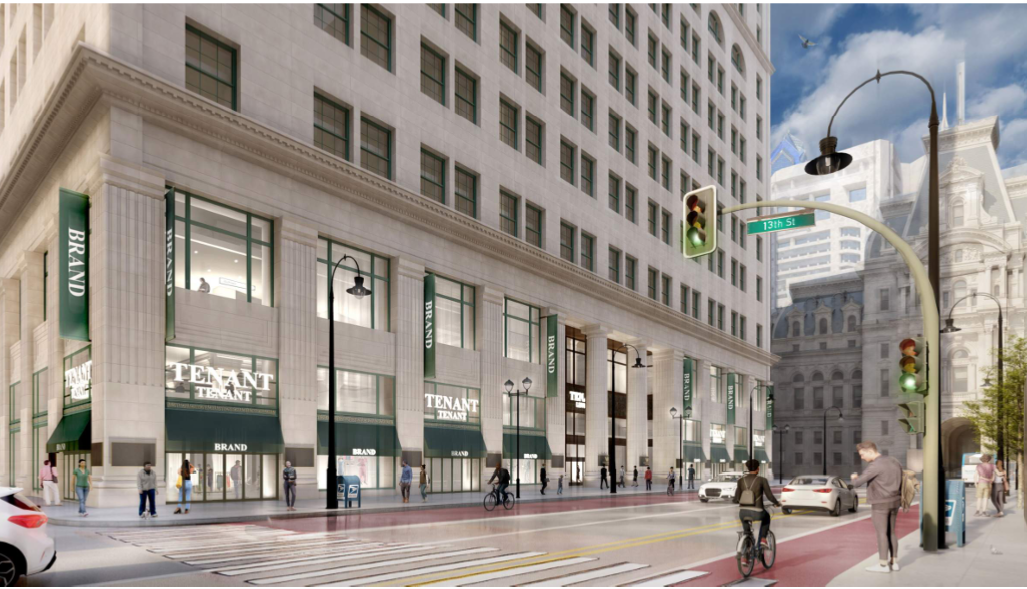
Renderings created by PAU also show two new entrances on Market Street, one on Chestnut, another on 13th and on Juniper. The proposals submitted to the city include options with multicolored or white themed signage.
The signs themselves would be made of bronze with backlit acrylic faces. The colorful sign option could match a prospective tenant’s logo.
A rendering of the Wanamaker Building with multiple new storefronts on Market Street, with white signage (another version offered multi-hued signs).
The Chestnut Street ground floor of the building has already seen some new entryways and retail spaces added, such as the Starbucks at the southeastern corner.
Inside the building, one of the biggest changes will be the removal of a steel platform that covers the huge, historic skylight and blocks the sun from warming the Grand Court, as TF Cornerstone and Alterra previously announced.
But Faulkner emphasized that only the obstructing floor, which is just a couple decades old, will be removed, not any of the building’s original touches.
The platform covering the skylight currently serves as the pre-function space for the Crystal Tea Room, which will remain open during construction. That congregation space will be relocated.
As an accompaniment to that major change, on the ground floor, the architects have also been studying the original detailing and paint schemes of the Wanamaker’s heyday to see if more of that original grandeur can be revived.
“The Grand Court is one of the most amazing parts of this project, and once people see natural light flood into that space, it will be even more amazing,” Faulkner said. The developers also will be “refreshing the finishes in the Grand Court that respond more to the original condition back from when it first opened.”
Philadelphia-based JKRP Architects is leading design of the remainder of the building, including a few floors of renovated office space, the conversion of the rest of the floors to loft-style apartments, and the rooftop.
The plans submitted to the historical commission include some aspects of JKRP’s plans, which showan 18-by-60-foot rooftop pool with a depth of four feet at the northwestern corner of the roof, near the newly operational skylight, as well as a hot tub.
TF Cornerstone plans to begin renovations in February, and the work will last years.
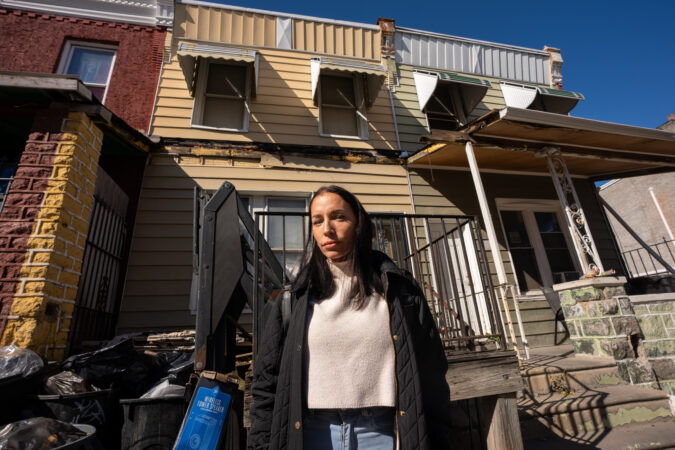
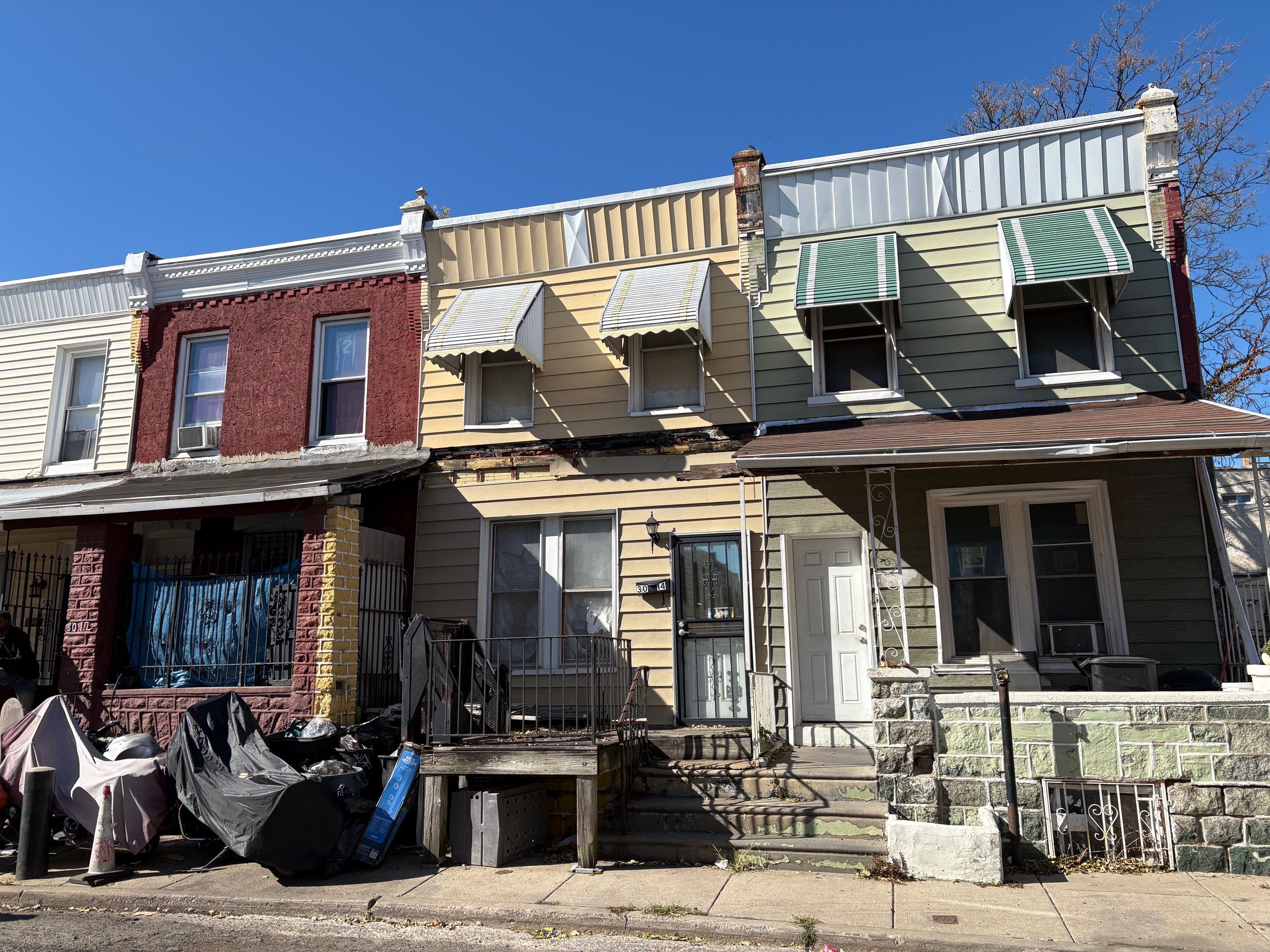
Emily Phillips and her family never slam doors or walk too heavily inside their North Philadelphia rowhouse. They’re afraid of what too much movement could do to the vacant house next door.
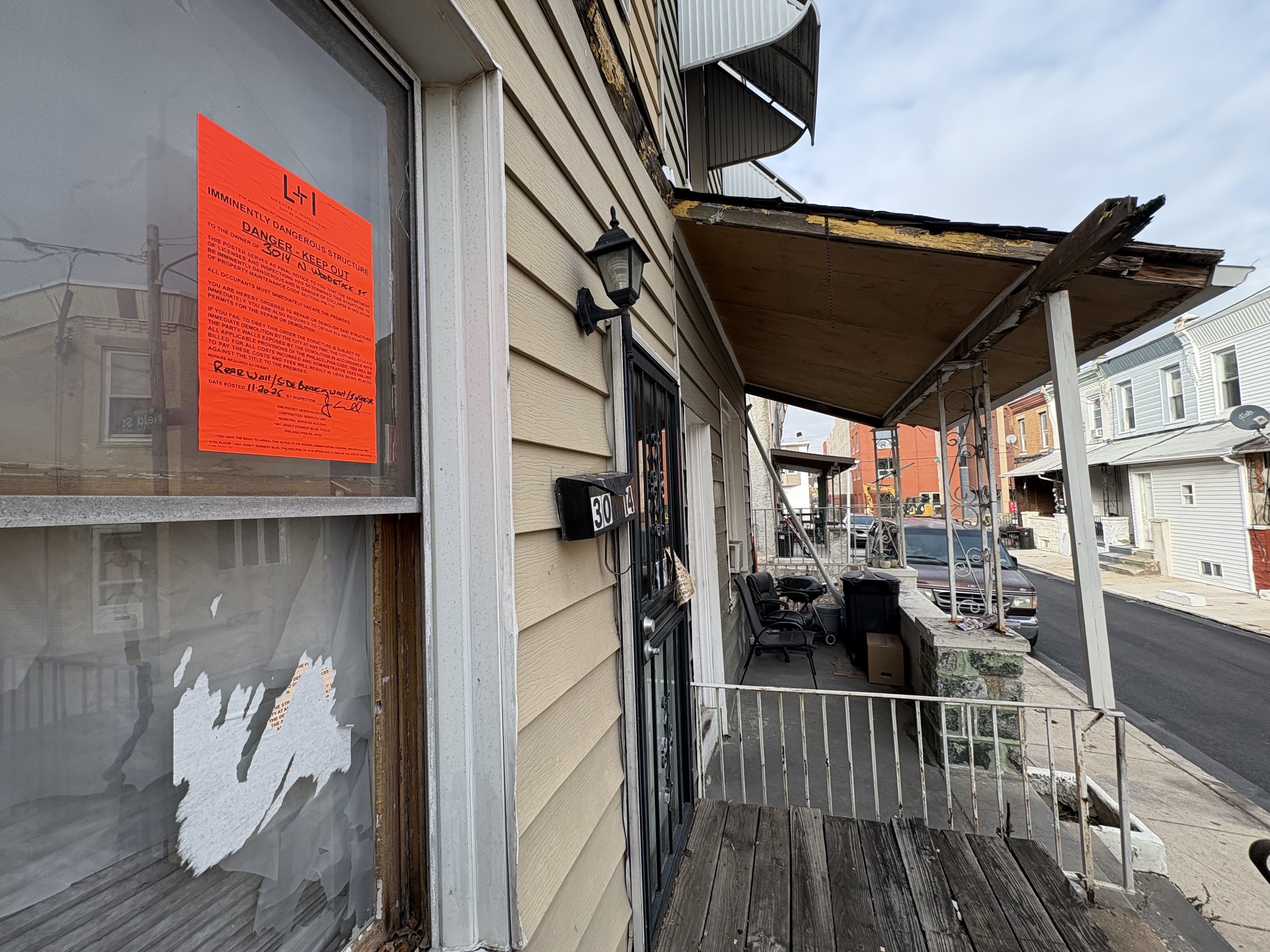
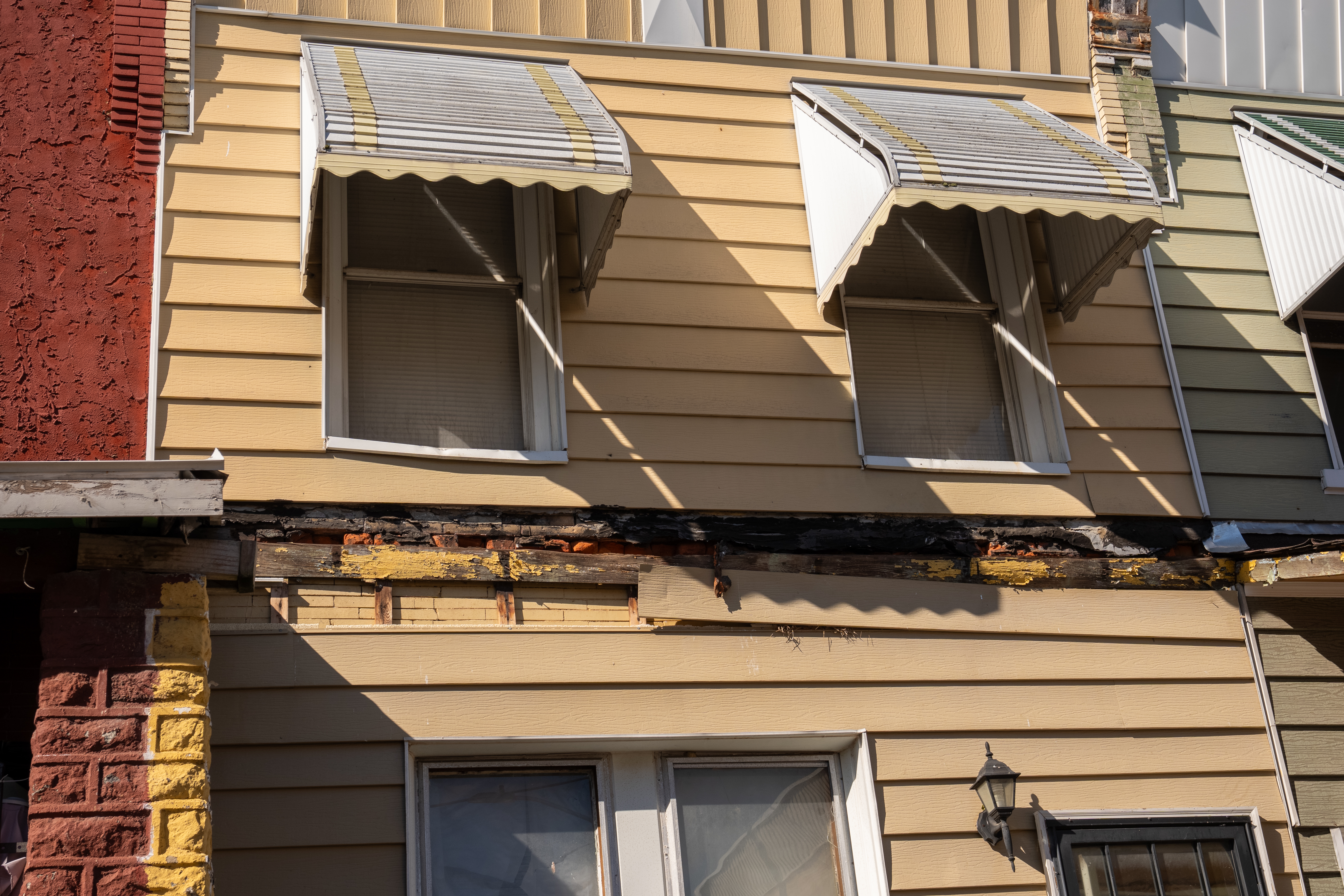
In early August, a back window and part of a wall came crashing down during harsh winds and rain. An inspector for the city’s Department of Licenses and Inspections declared the vacant rowhouse “imminently dangerous,” which means it is at risk of collapsing.
“I never know when something’s going to actually happen,” Phillips said in late October. “We know it’s just a matter of time. … I’m so scared right now.”
Across Philadelphia, families are living in a limbo of anxiety next to buildings that the city has determined are unsafe or imminently dangerous. The buildings at greatest risk of collapse are usually vacant.
Renters Emily Phillips (left) and Dayani Lemmon examine the basement wall that their home shares with the abandoned and dangerous rowhouse next door.
Philadelphians rely on the city to keep an eye on vacant properties that are or could become dangerous. And in 2016, the city rolled out a method for determining which properties were likely to be vacant. L&I’s commissioner at the time said the inventory tool was making the department more proactive in protecting the public from deteriorating vacant buildings.
But L&I officials now say the department no longer uses the tool. They said the department mainly relies on residents’ complaints and its list of vacant property licenses — which L&I admits is a massive undercount — to monitor empty buildings.
(function() {
var l2 = function() {
new pym.Parent(‘imm_dang_map’,
‘https://media.inquirer.com/storage/inquirer/projects/innovation/arcgis_iframe/imm_dang_map.html’);
};
if (typeof(pym) === ‘undefined’) {
var h = document.getElementsByTagName(‘head’)[0],
s = document.createElement(‘script’);
s.type = ‘text/javascript’;
s.src = ‘https://pym.nprapps.org/pym.v1.min.js’;
s.onload = l2;
h.appendChild(s);
} else {
l2();
}
})();
L&I points out that property owners are responsible for securing vacant properties and repairing dangerous buildings, and the department steps in as resources and laws allow.
Around the time Inquirer reporters spoke with Phillips, the city’s spreadsheet of likely vacant properties listed about 8,000 vacant buildings — a potentially serious threat to their neighbors. An Inquirer analysis of the city’s list of imminently dangerous buildings showed that 79% of those also appeared on the list of likely vacant buildings.
Just under half of those vacant and imminently dangerous buildings were rowhouses, which are especially risky to neighbors because of shared walls. This risk is not borne equally by all of Philadelphia’s residents.
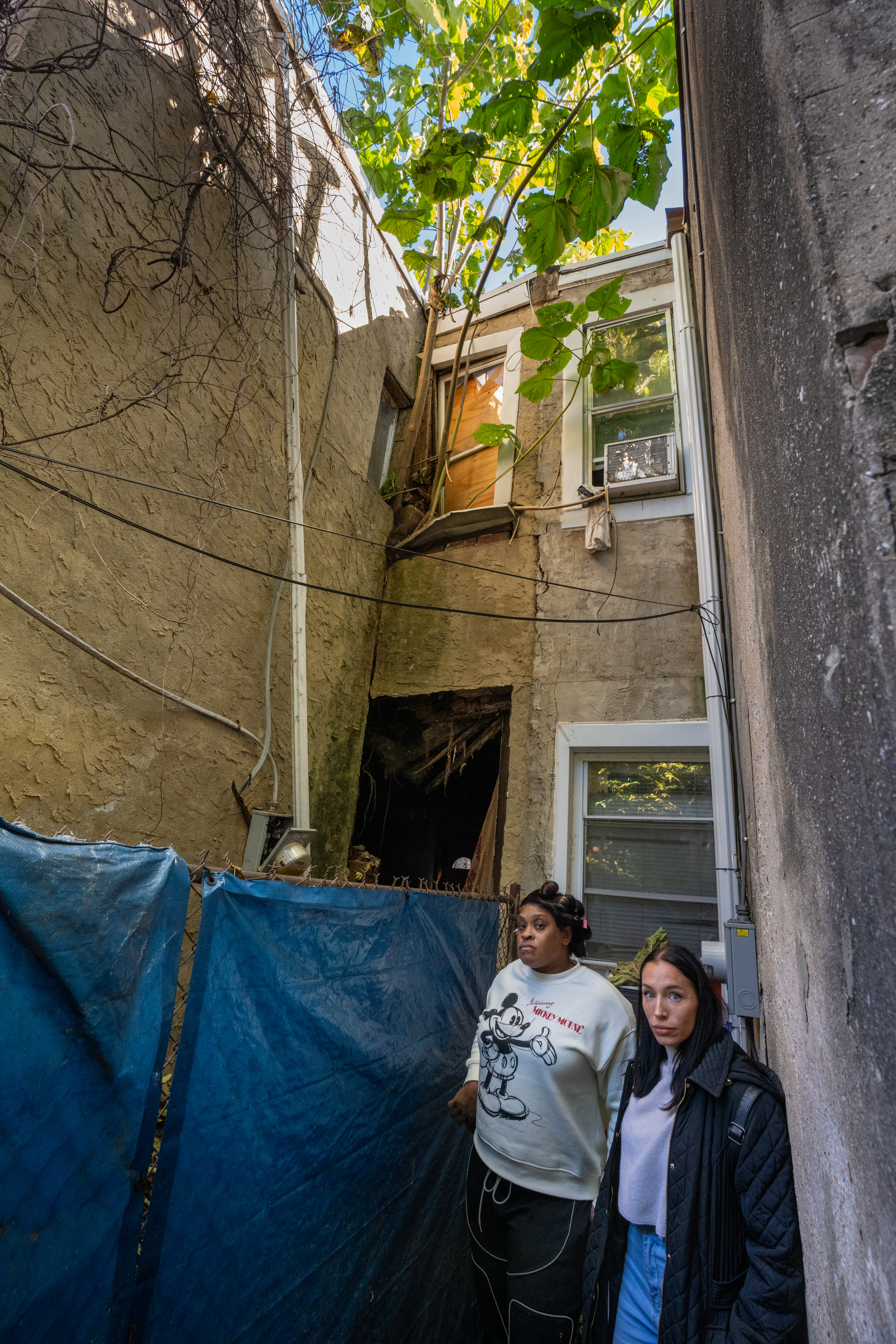
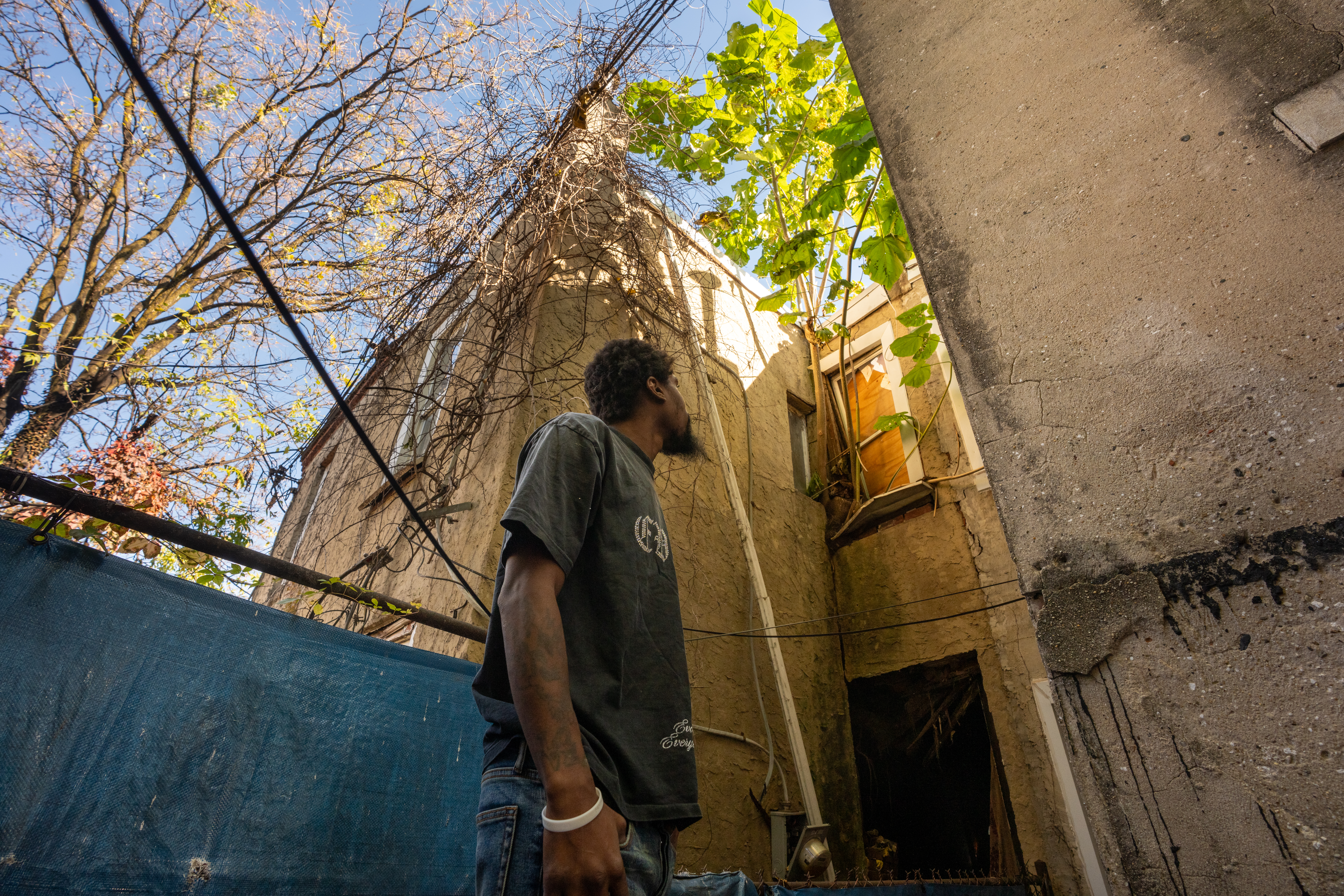
Emily Phillips and her landlord, Samantha Wismann, stand next to a neighboring abandoned rowhouse, where part of a wall collapsed and a tree grows inside.
Nearly eight in 10 of all such rowhouses are in the poorest 25% of the city’s zip codes. The zip code with the most such rowhouses — 19132, where Phillips lives — has a median income of $31,000, according to the latest Census Bureau data. Philadelphia’s median household income is $61,000.
Seven in 10 vacant rowhouses that the city identified as imminently dangerous are in the 34% of the city’s zip codes that are predominantly Black. Roughly nine in 10 residents in 19132 are Black.
Dianna Coleman, a community activist who lives in Southwest Philadelphia, called vacant properties “one of Philadelphia’s most pressing and overlooked crises.”
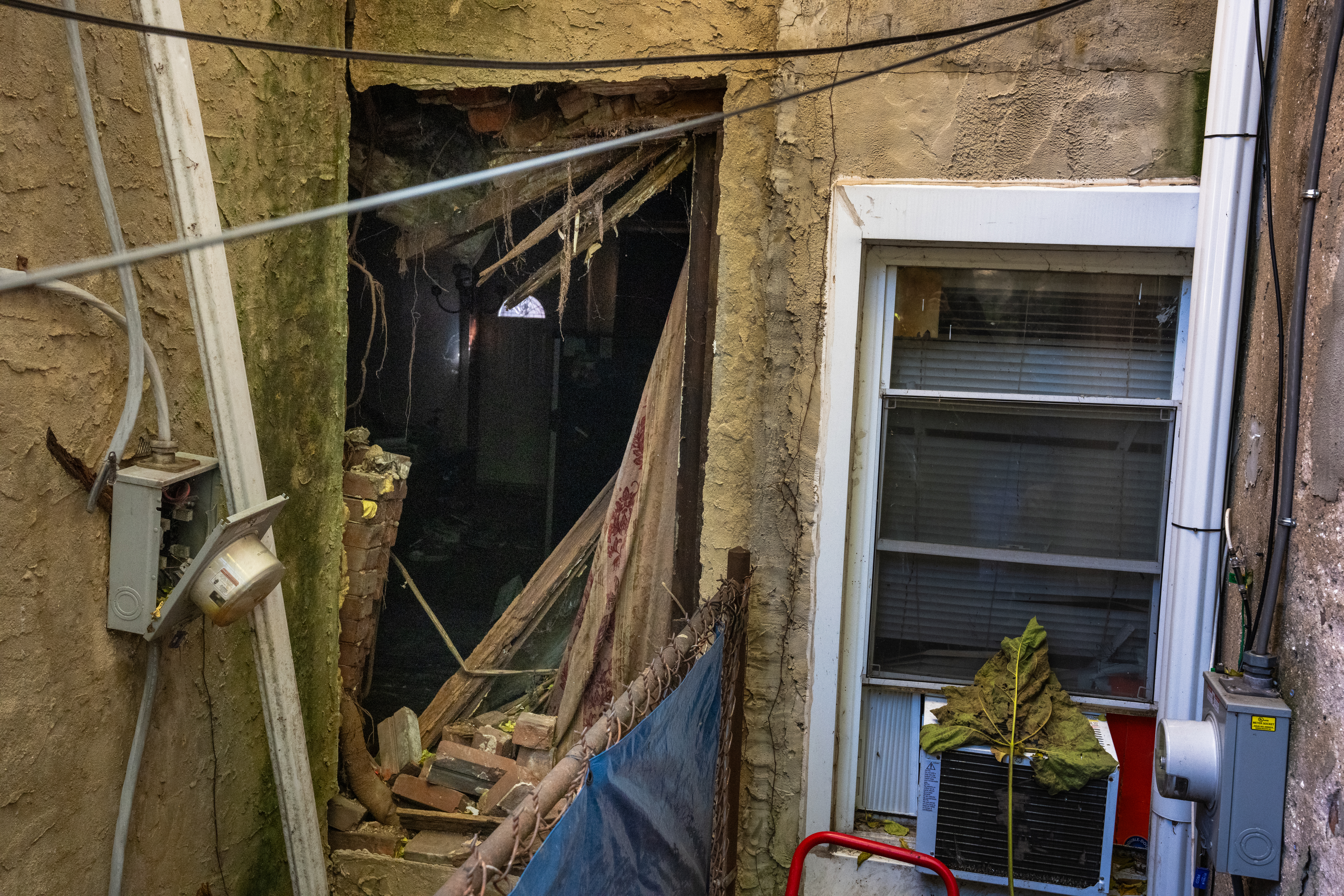
This summer, a hole opened in the back of an abandoned rowhouse that is connected to a North Philadelphia house owned by Samantha Wismann.
When Coleman and a group of residents in Southwest and West Philadelphia came together last summer to organize around quality of life issues, residents’ top concern was fixing vacant properties. They partnered with the grassroots social justice nonprofit OnePA and launched their first campaign — asking the city to deal with abandoned buildings and vacant lots.
“While we recognize that the city has taken steps — demolishing some buildings, addressing some lots — the pace is way too slow, the resources too scarce, and the strategy too weak,” Coleman, cochair of OnePA West/Southwest Rising, said at a news conference this summer. “Unsafe buildings are left standing for years, growing more hazardous, pulling down property values, and pushing people out of their homes.”
The vacant rowhouse next to Emily Phillips’ North Philadelphia home had its collapsing porch roof removed, but the rest of the home remains in disrepair.
The city’s questionable vacancy data
About a decade ago, the city started using an algorithm that takes feeds from a variety of datasets (such as whether a property has had its water cut off) to determine whether a property is likely to be vacant.
City officials celebrated the tool when it launched.
“Protecting the public from deteriorating vacant, abandoned properties as they grow more and more likely to collapse is critical to L&I’s mission,” former L&I Commissioner David Perri said in a 2016 news release announcing the index. “The Vacant Property Model and dataset are making us more proactive and strategic in carrying out that mission.”
But the reliability of the city’s list of likely vacant buildings and lots was recently called into question by individuals who have worked closely with the tool and collaborated with city officials in the past.
For more than three years, Clean & Green Philly, a nonprofit that — until its closure earlier this year — used data to help Philadelphians deal with vacant properties in their neighborhoods, relied on the city’s tool in combination with other data to identify vacant properties in greatest need of addressing.
But last year, founder Nissim Lebovits and the organization’s former executive director, Amanda Soskin, noticed something was wrong.
For years, the city’s list of suspected vacant properties had hovered somewhere around 40,000 records — buildings and land combined. But then, according to Lebovits and Soskin, that number plunged to around 24,000 in June 2024.
“And at first I was like, ‘OK. Something’s probably broken,’ and we looked into it,” Lebovits said. “And we realized that the city’s actual underlying datasets were no longer reporting the same number of vacant properties.”
window.addEventListener(“message”,function(a){if(void 0!==a.data[“datawrapper-height”]){var e=document.querySelectorAll(“iframe”);for(var t in a.data[“datawrapper-height”])for(var r,i=0;r=e[i];i++)if(r.contentWindow===a.source){var d=a.data[“datawrapper-height”][t]+”px”;r.style.height=d}}});
The spreadsheet was showing only about 14,000 records as of this June, according to Lebovits and Soskin.
Then at some point between June and early November, the index grew to about 37,000 total properties.
Inquirer reporters began investigating the connection between vacancy and structural deficiencies in buildings after the April collapse of an abandoned rowhouse in Sharswood. At that time, L&I offered the vacancy index while asserting it could not provide detailed information about the data and referring reporters to CityGeo, the department that developed and maintains the index.
At no point during an hour-long interview with the department’s chief data officer in early June did city officials mention any concerns about the reliability of the data.
Reporters learned about issues with the data when Lebovits and Soskin wrote an article for The Inquirer’s opinion section later that month detailing their concerns. They wrote that city sources told them the process of collecting and publishing vacancy estimates “was quietly discontinued after [Mayor Cherelle L.] Parker took office.”
In an email, a CityGeo spokesperson said the city has not stopped updating the index, asserted that its accuracy depends on continued updates from various departments, and noted that CityGeo pauses updates “every few years” for “a month or so” to ensure the tool continues to work, most recently this past summer.
The spokesperson did not respond to questions about why the index’s size had varied so greatly recently. Lebovits and Soskin told The Inquirer that nobody from the city reached out to them after their article was published.
“My big takeaway here is that the lack of transparency around this dataset is a major liability,” Lebovits wrote in an email. “Having so little accountability regarding data production and quality seriously hampers any community groups trying to use these data and undermines the credibility of the City’s vacancy work.”
The tree inside an abandoned North Philadelphia rowhouse towers above the roofs of the house and its neighbor, owned by Samantha Wismann.
‘Very, very scary’
When Phillips’ landlord, Samantha Wismann, bought the house on North Woodstock Street in 2020, she didn’t know that its neighbor was vacant.
Wismann noticed the house looked a little shabby, but it wasn’t until Phillips moved in the following year that the women saw no one lived there. They didn’t know how long it had been vacant, but they watched it quickly deteriorate.
Most pressing back then was the collapsing porch roof, which was dragging down the roofs of the porches on either side of it.
Someone eventually tore it down. But the rest of the home remains in disrepair.
“It’s very, very scary,” Wismann said in October, “because eventually, if it’s not handled, it’s gonna come down.”
Cracks snake between the homes.
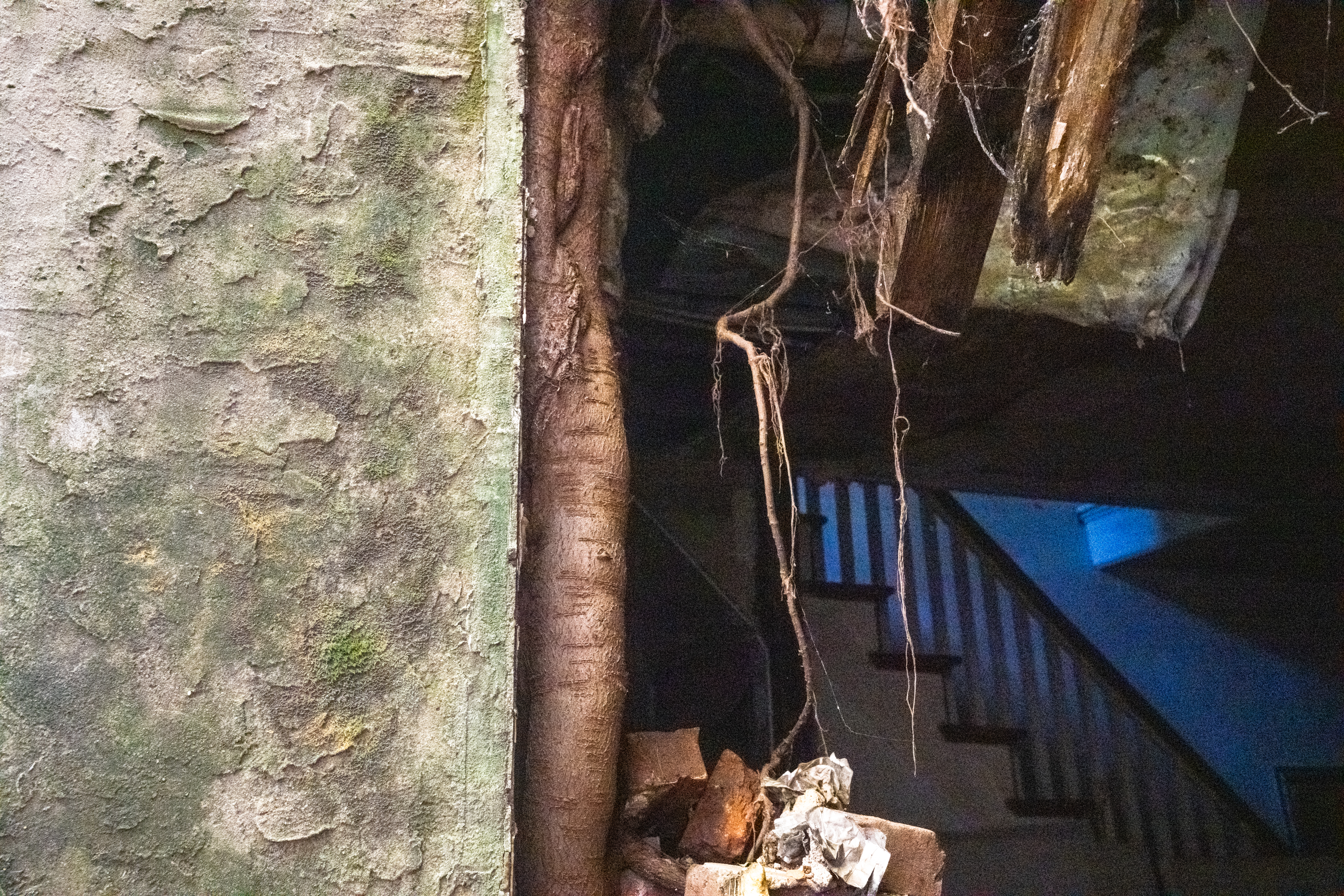
From the women’s backyard, through the door-sized hole in the back of the neighboring house, they can see past splintered beams and an abandoned refrigerator, beyond the staircase that leads to the second floor, and straight through to the front door.
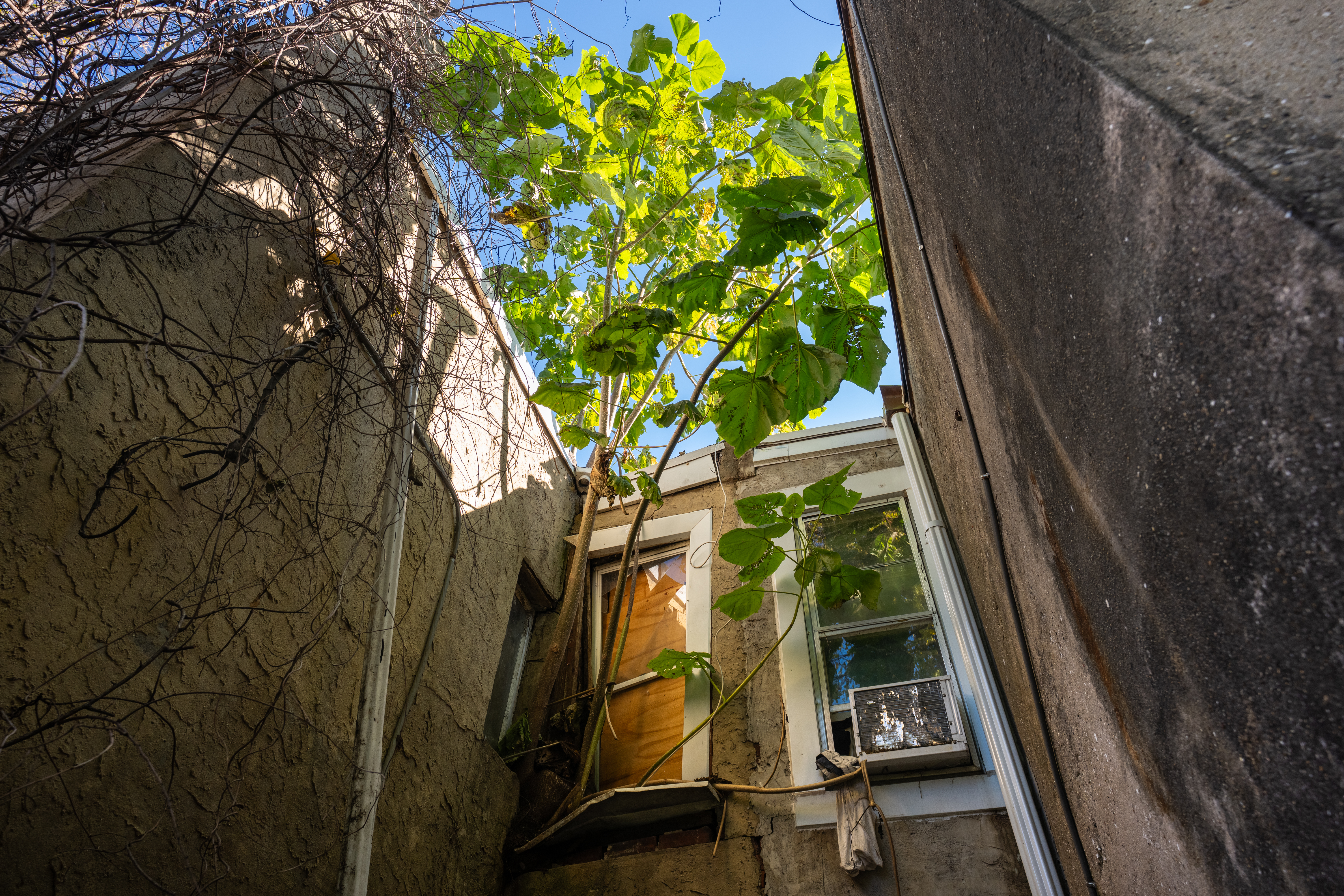
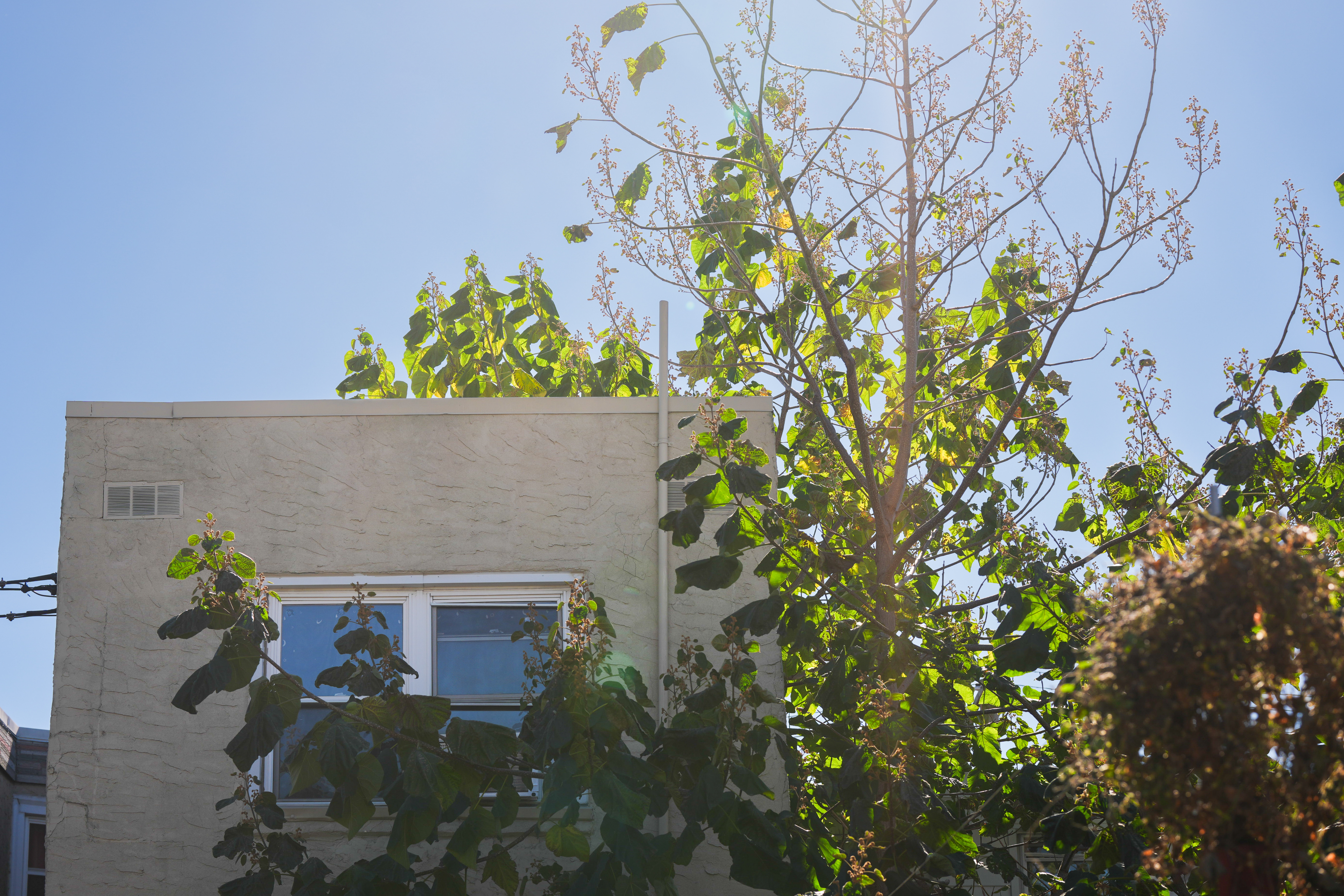
Then there’s the tree that’s growing inside the vacant house. It has pushed outward through bricks and plaster and busted a second-story window. The tree’s branches tower over the homes, and some have reached the window of the bedroom where Phillips’ grandchildren stay.
L&I’s Contractual Services Unit is responsible for inspecting unsafe and imminently dangerous properties and administers the city’s demolition program. The unit has 10 members and openings for two more inspectors, said Basil Merenda, commissioner for L&I’s Inspections, Safety & Compliance division.
“We’re out there doing our job,” he said. “We’re out there making sure that these unsafe and [imminently dangerous] properties are properly addressed through procedures and that public safety is always being maintained.”
Renter Dayani Lemmon looks at the abandoned property located next door to his home in North Philadelphia.
But a 2024 report by the City Controller’s Office said the unit used to have 15 inspectors, which the office said was not enough to keep up with inspections of unsafe and imminently dangerous properties.
Merenda said L&I is “making do with what we have” and mobilizes inspectors in other units when needed.
After L&I declares a property to be unsafe or imminently dangerous, it must issue notices to the property owner, who is responsible for repairs. The department can take unresponsive owners to court and pursue demolition in emergency situations, such as when a property is likely to collapse, is next to an occupied building, and has recent structural failures, Merenda said. The city demolishes imminently dangerous buildings in order of the risk officials determine they pose.
A tree can be seen growing inside the vacant North Philadelphia rowhouse through a hole in the back wall, which partially collapsed this summer.
The city charges owners for tear-down costs and places liens on properties if they do not pay.
L&I was unable to say how many such tear-downs the department has conducted this year and referred questions about the cost of demolitions — and the proportion of those costs recouped from owners — to the city’s Department of Revenue. The revenue department did not provide any figures to The Inquirer.
“In many, many cases, property owners surface at the last minute and request a continuance, request a temporary restraining order from us going in and demolishing the property,” Merenda said. “And you know, that’s the purview of the courts. It’s beyond us.”
In the meantime, people living next to dangerous properties are left in the dark.
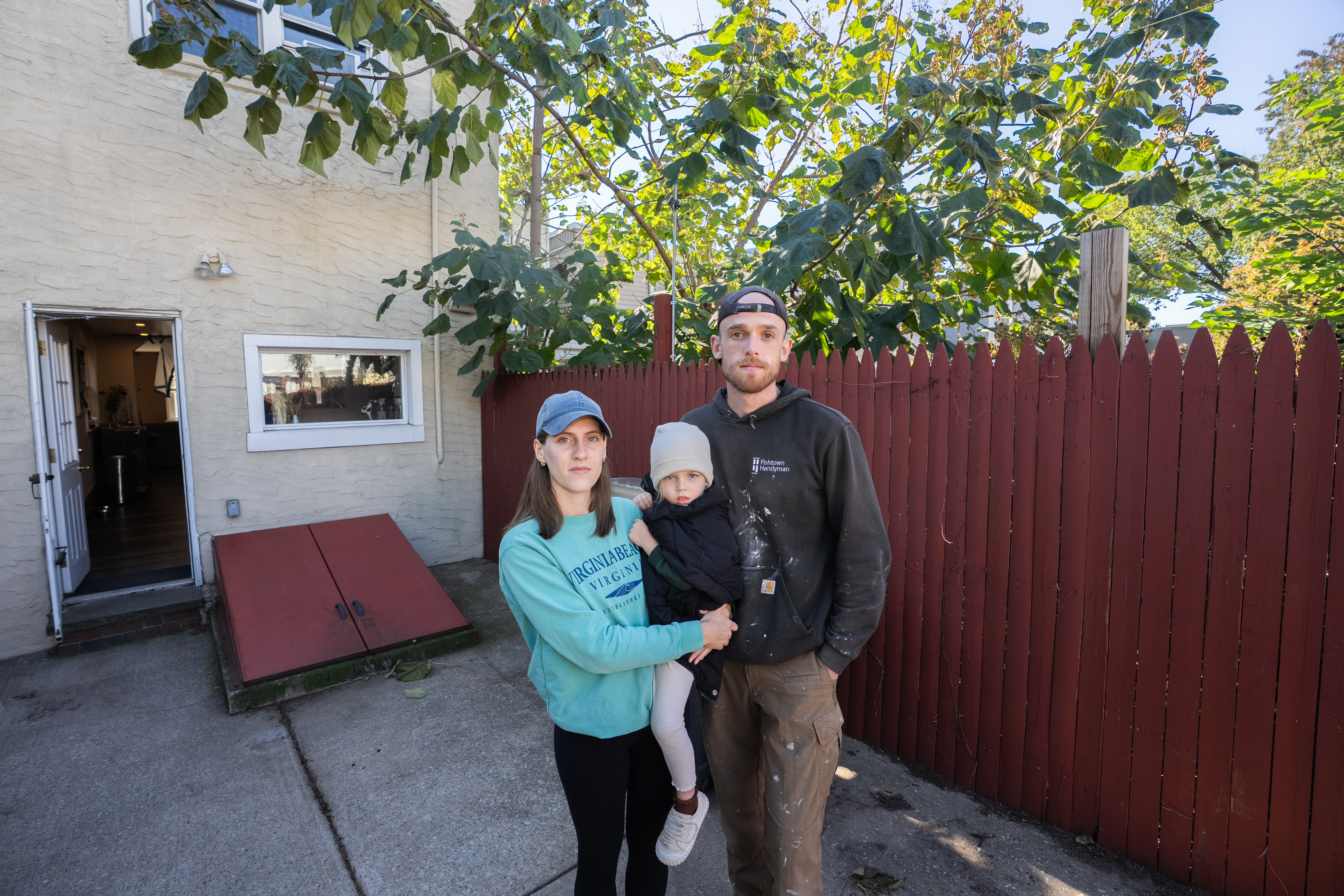
Kate and Dan Thien and their daughter stand in the backyard of their Port Richmond home, the foundation of which is cracking because of weed trees next door.
Frustrated with L&I
After the back of the abandoned rowhouse on North Woodstock Street opened up this summer, Phillips led an L&I inspector through her home so he could see.
“He went in the backyard, he looked over and was like, ‘My god!’” Phillips said. “I said, ‘Yeah, I can see right through their house.’ And he looked up and was like, ‘It’s a tree!’ I said, ‘Yeah, the tree is pushing the house out.’”
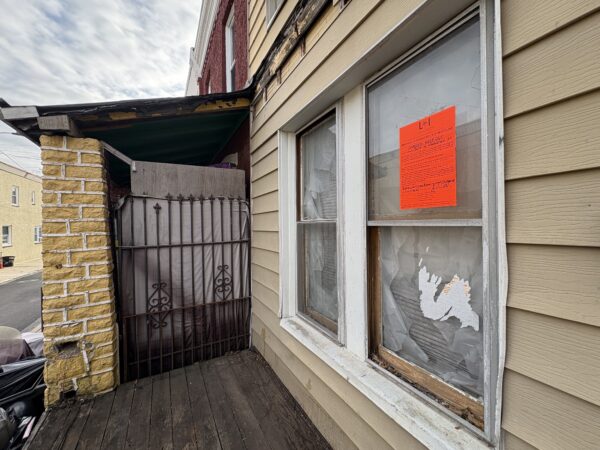
The inspector put an orange “imminently dangerous” notice on a front window, and Phillips and her landlord thought they wouldn’t have to worry much longer. But days after the notice went up, it was ripped down.
Weeds from the neighboring vacant property surround Kate and Dan Thien’s home in Port Richmond.
The property has attracted rats and mice. Water leaked into Phillips’ basement until her landlord reinforced the shared wall with concrete.
For months, her landlord got no response from the city to her calls and emails asking for help.
On Nov. 20 — 3 ½ months after the partial collapse — an L&I inspector visited the vacant rowhouse to post a “final notice” that the owner must repair or demolish the home or else the city will have it demolished.
Kate and Dan Thien are trying to live with the vacant property next to their rowhouse in Port Richmond as they wait for the city to respond to their 311 complaints.
When they bought their house in February 2024, they saw that the neighboring backyard was a mess, but they didn’t know the house was vacant.
Renters who had lived in what is now the Thiens’ home had used and maintained the neighboring backyard. But it quickly became overgrown. Neighbors later told the Thiens that the home had been vacant for more than a decade.
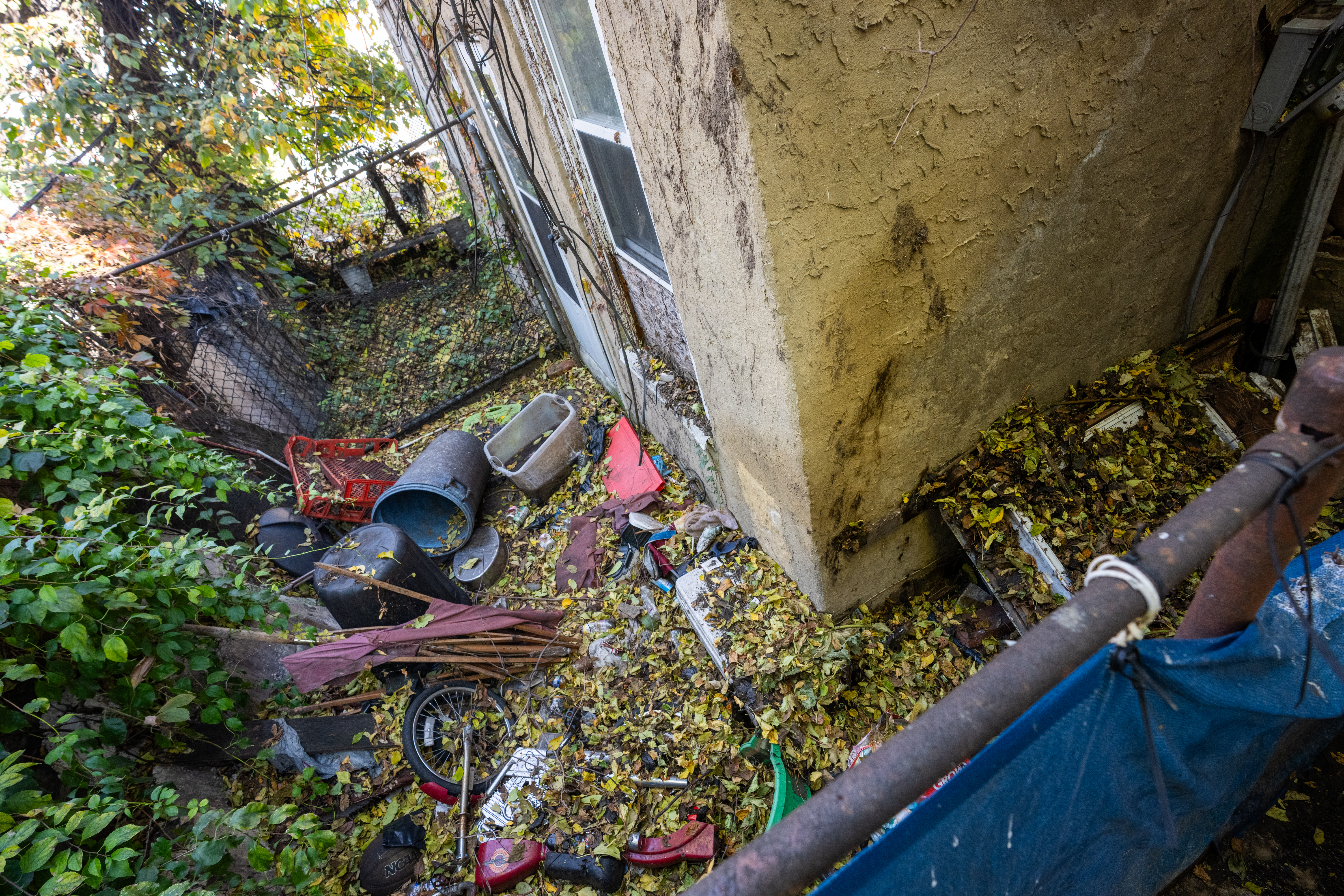
The backyard of the abandoned North Philadelphia rowhouse is full of debris.
“Pretty much the entire neighborhood knows about this house,” Kate Thien said.
She and neighbors on the other side have filed complaints with the city. The property has racked up 19 violations since 2012. Public records show that the city cited the property for “high weeds” last fall and most recently inspected it last December. The property passed inspection.
A year later, a weed tree’s branches stretch above and behind the Thiens’ two-story home. Tree roots are growing into their home’s foundation and cracking the concrete. Trees are “very rapidly growing” as Thien waits for the city to do something, she said. She worries about her home’s property value as the situation worsens.
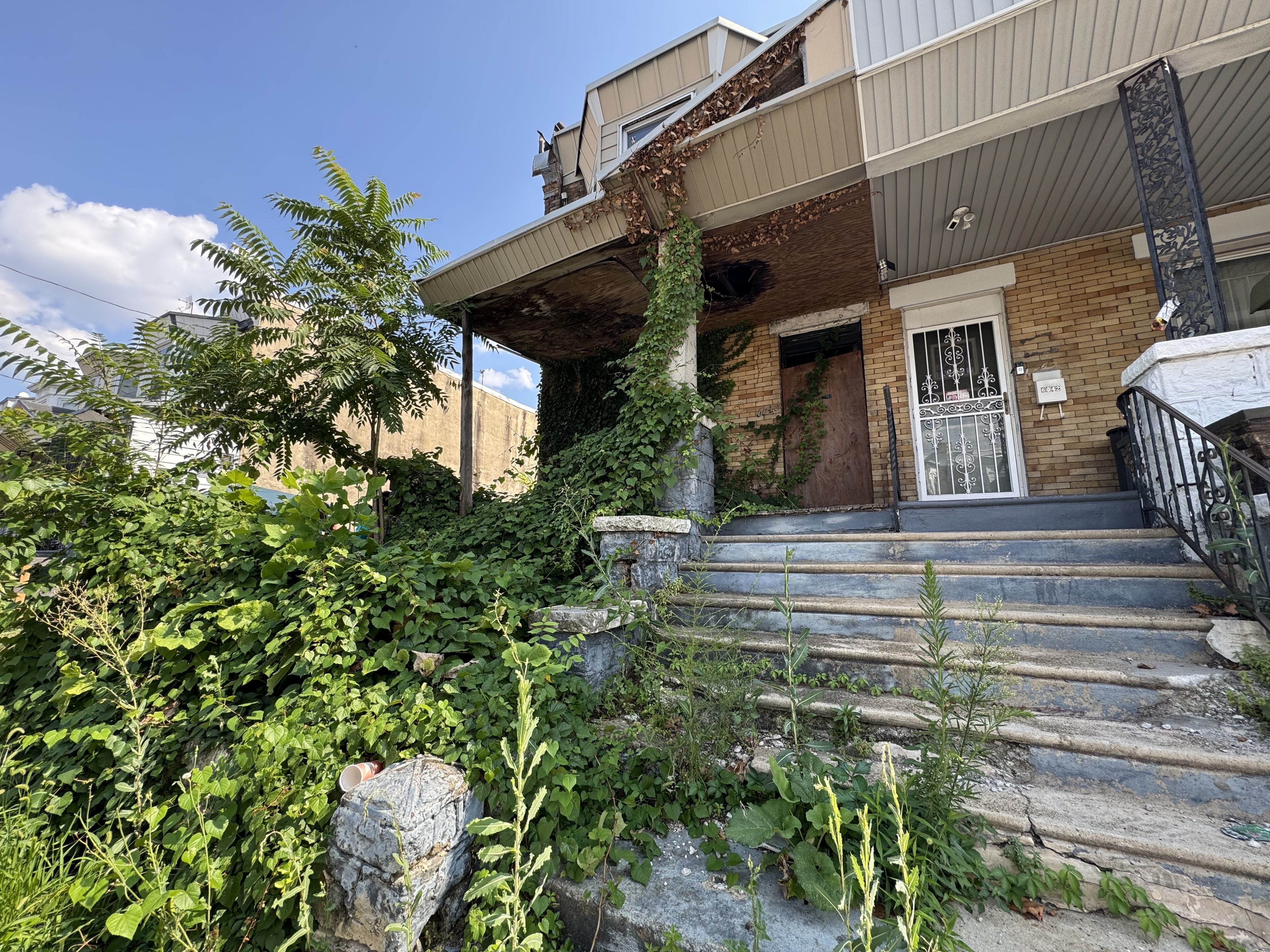
This abandoned property on Spruce Street in West Philadelphia, pictured on July 30, was one of the houses on a list of problem vacant properties compiled by OnePA West/Southwest Rising.
“It’s not going away,” she said.
Annette Randolph and her husband, Dennis, live in a Point Breeze rowhouse next to a home that’s been vacant for more than a decade and that the city classifies as unsafe, a step below imminently dangerous. Four generations of her family have lived in her home. She hopes she’s not the last.
A tree growing inside the vacant house burst through its back roof, next to a tarp-covered hole. Randolph has had to repair her own roof because of damage from next door. Water gets into her basement.
The home’s legal owners are dead. A scheduled sheriff’s sale in 2011 for overdue property taxes gave Randolph hope for a resolution. But right before the sale, someone paid part of the tax bill to stop it.
On Nov. 20, an inspector with Philadelphia’s Department of Licenses and Inspections posted a final notice on the vacant North Philadelphia rowhouse that says owners must repair or demolish the home.
Now, “for sale” signs hang in the front windows, and a contractor showed up last week. Randolph hopes any work on the house won’t damage the one she’s called home for 66 years.
She has lost track of the number of times she’s called 311 about the situation. She’s felt helpless. When she needed new homeowner’s insurance, companies told her they wouldn’t insure her or would charge more because of the attached vacant and unsafe house.
“L&I and the city I blame for allowing this type of stuff to happen,” Randolph said.
Merenda said L&I hears neighbors’ complaints, “and we’re going to try to take action as efficiently and properly as possible.”
“I want to make, during my watch, L&I more accessible, responsive, and accountable to the neighbors, stakeholders, contractors, developers, average citizens, the City Council,” he said.
A collapsing roof was removed but the rest of the vacant rowhouse was left to deteriorate.
Neighbors band together
In September 2024, OnePA West/Southwest Rising launched its campaign to get the city to deal with abandoned properties.
The group created a list of 20 of the worst ones as submitted by neighbors. Among the vacant buildings, some had collapsing porches, one’s basement had flooded and damaged a neighbor’s house, and one’s walls were crumbling. Some had squatters, including a property where human waste was dumped in the backyard.
City Councilmember Jamie Gauthier’s office got the group a meeting with staff at L&I this January.
As a result, this summer, the group celebrated successes: five lots cleaned by the Pennsylvania Horticultural Society, three properties cleaned and sealed by the city, five properties whose owners the city took to court, and three properties that were repaired and returned to use.
The group believes it was able to get L&I to act because it had the weight of a Council member behind it.
“I do think L&I is overwhelmed. I don’t think they have enough staff to really stay on top of this,” said Eric Braxton, project director for OnePA West/Southwest Rising. “But clearly there are people in leadership that care about our communities and are trying to do the right thing.”
Now the group plans to push for systemic change. It wants the city to make small repairs to stabilize vacant buildings and charge the owners.
“There’s a gap in the system when it comes to dealing with unsafe abandoned buildings,” Braxton said. “The result of that is that those buildings just get worse and worse until they are imminently dangerous and have to be demolished.”
Across Philadelphia, people live next to vacant properties that are or could become dangerous.
Drew Miller, a paralegal at the legal aid nonprofit Community Legal Services of Philadelphia, said residents living next to risky vacant buildings can take certain steps right away to protect themselves and their properties.
Take pictures. When they start having concerns, they should immediately take pictures of the inside and outside of their home, especially basements and shared walls, Miller said.
“Having those initial photos is crucial for them to very clearly show that damage happened over this period of time,” he said.
Submit a 311 request. They should submit a 311 service request to the city’s Department of Licenses and Inspections by calling or using the online portal or app. Miller recommends submitting virtual complaints to easily track updates and to upload photos to give inspectors a head start before they arrive at a site.
“They can often see in the photo whether or not the issue is urgent,” he said. “That can be a helpful tool if the resident’s concern is that this is prioritized.”
Make a specific complaint. And if residents are concerned that a building is dangerous, they should make sure they select the right category for their complaint.
Complaints about vacant properties can range from trash or high grass to structural issues that need urgent attention. So “a vacant property complaint might not immediately be taken as seriously,” Miller said.
“In the most extreme circumstances,” if residents are worried that a building may collapse, they should consider filing a “construction complaint,” which clues L&I in that there may be a structural issue, he said.
But if part of a property collapses, a building facade is crumbling, or the situation otherwise seems like an emergency, call 911, said Basil Merenda, commissioner for L&I’s Inspections, Safety & Compliance division.
Contact your Council member. Merenda also encouraged residents to contact their City Council representative if they are concerned about a vacant property that doesn’t constitute an emergency.
The house: a 1,254-square-foot rowhouse in Port Richmond with 3 bedrooms and 2½ bathrooms, built in 1925.
The price: listed for $315,000; purchased for $325,000
The agent: Rachel Shaw, Philly Home Girls
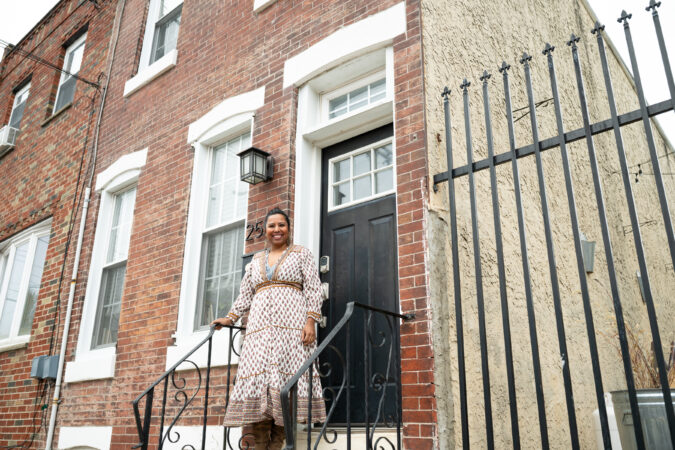
The ask: The first time Sindhu Nair tried to buy a house, the deal collapsed the day of closing. A lender told her last minute that he couldn’t approve the loan after all. The experience left such a sour taste that she stepped away from the market for years. But by 2025, she felt ready to try again, especially after seeing how much money she had sent her landlord on Cash App in the past two years. She was done giving her money to someone else, she said.
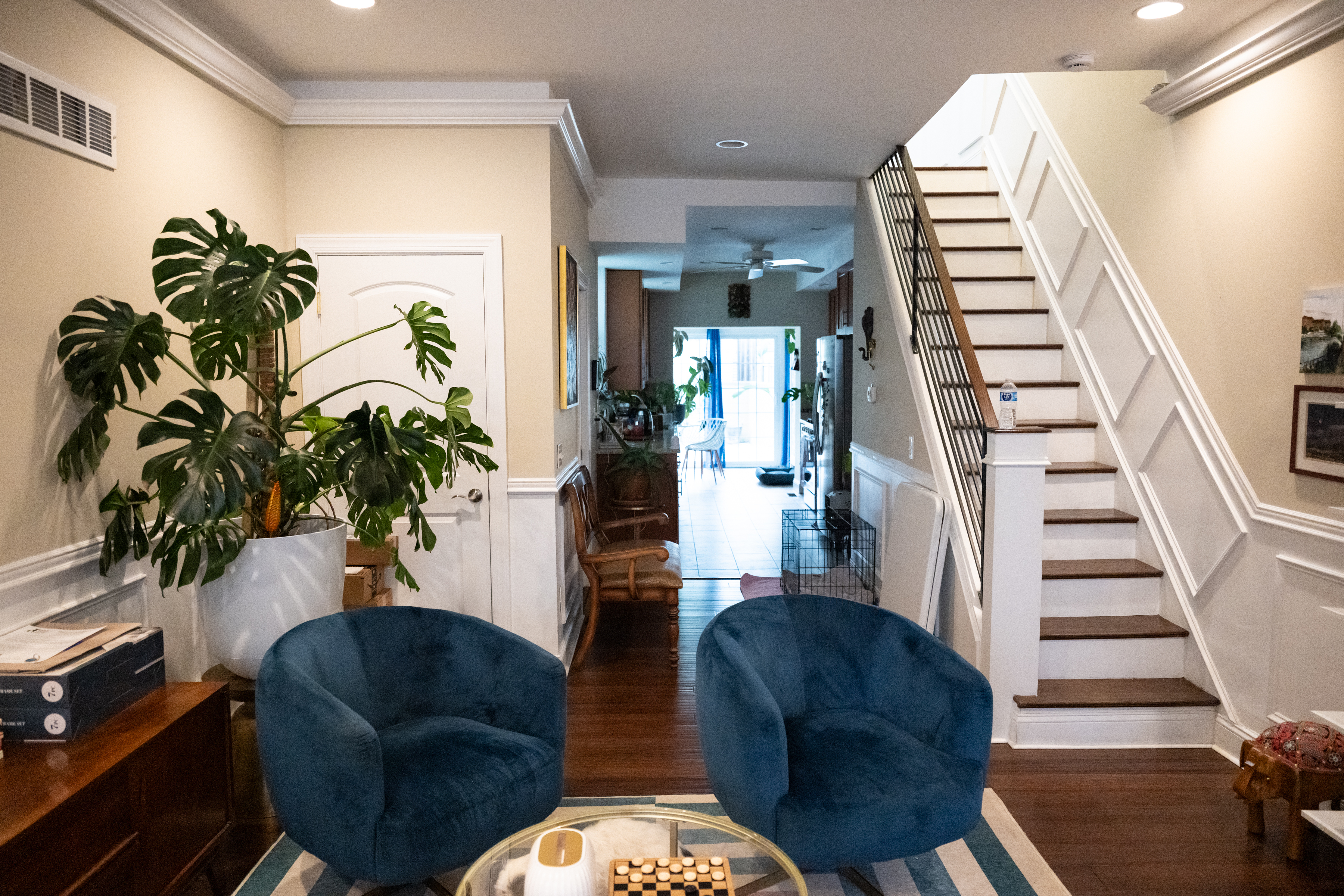
Sindhu Nair loved the light and the “good vibes” in the house’s living room.
Nair had been looking for a house for years and knew what she wanted. “I trusted my gut instincts,” she said. She needed at least two bedrooms and a bathroom on the ground floor. She also wanted a small backyard for her dog and access to easy street parking. She limited her search to the Port Richmond area. “My dog walker lives in this area,” Nair said, “so I’ve been in the neighborhood a lot, and it’s just so cute.” Her budget was $350,000.
The search: Nair began her search in July. The first place she toured had two private parking spaces but needed a gut renovation. “I didn’t want to take on that financial burden,” she said. She visited two other open houses that afternoon. Both appealed to her, and she hoped to make an offer on the less expensive one, but it already had two bids. She would have had to offer well over the $250,000 asking price to be competitive.
Meanwhile, the pricier home — the one she actually preferred — had no competing offers. After running the numbers and realizing the difference in cost was smaller than she expected because of the competing offers, she shifted course. “I decided just to go for the house that I wanted,” Nair said.
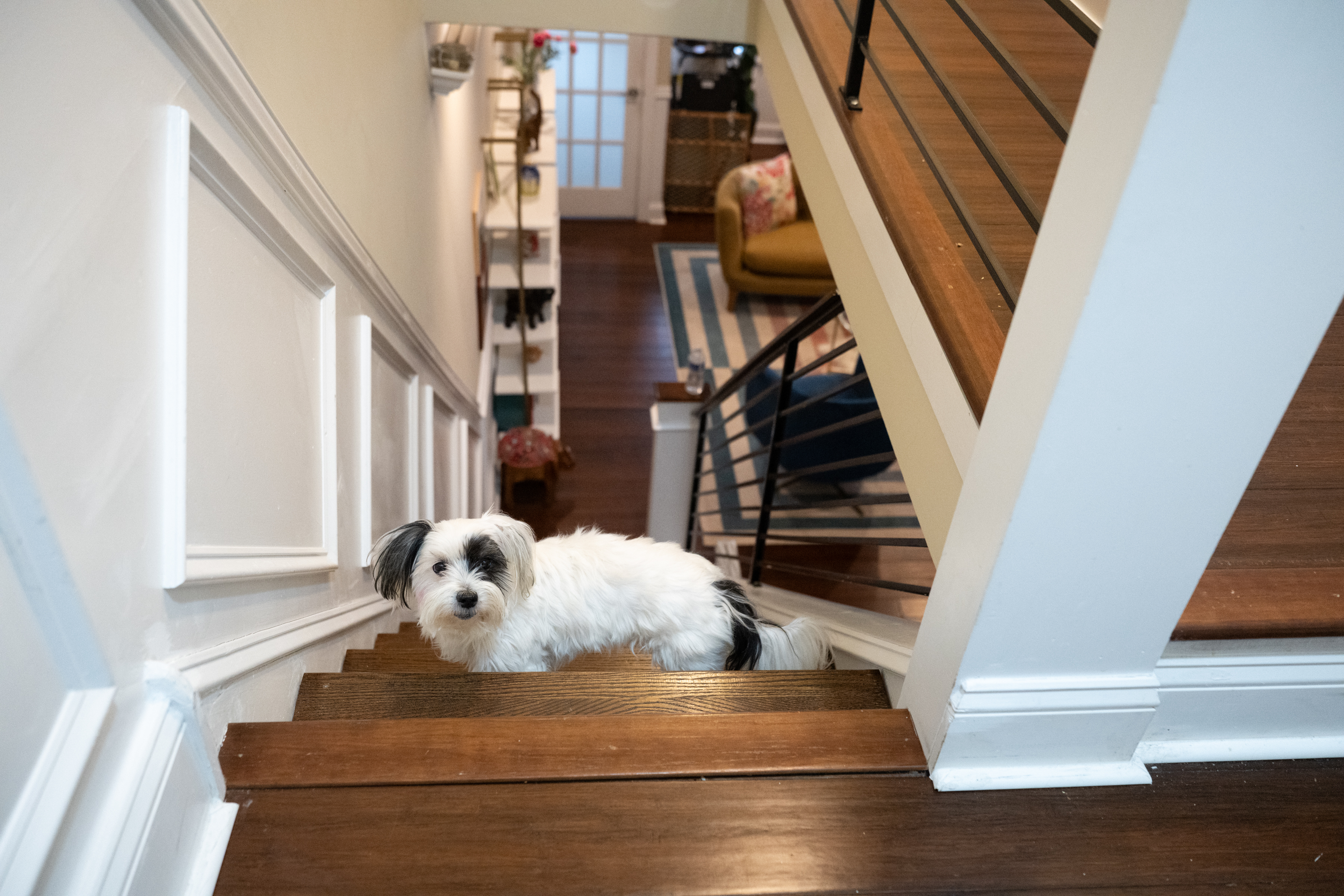
Sindhu Nair’s dog, Scotty, approves of her purchase.
The appeal: Nair says she knew she had found the one as soon as she stepped inside. “I think the universe was ready to provide me with this house,” Nair said. The light looked amazing, the space had a “good vibe,” and the backyard was the perfect size for her dog, Scotty. She loved that it was move-in ready. “Whoever rehabbed it did a beautiful job,” Nair said.
The deal: The seller’s agent told Nair at the open house that the seller was motivated and willing to offer a seller’s assist, which is when the seller agrees to cover a portion of the buyer’s closing costs. Nair and her agent asked for enough to covernearly all of Nair’s closing costs.
In return, Nair offered $325,000 — $10,000 over the asking price — even though there weren’t any other offers. “We wanted to make sure that with the seller’s assist, she was still going to make a profit,” Nair said. She views the seller’s assist as a tool she used to keep more money in her bank account after she purchased the home. “It has nothing to do with financial stability,” Nair said. “It’s a financial tool that people should take advantage of.”
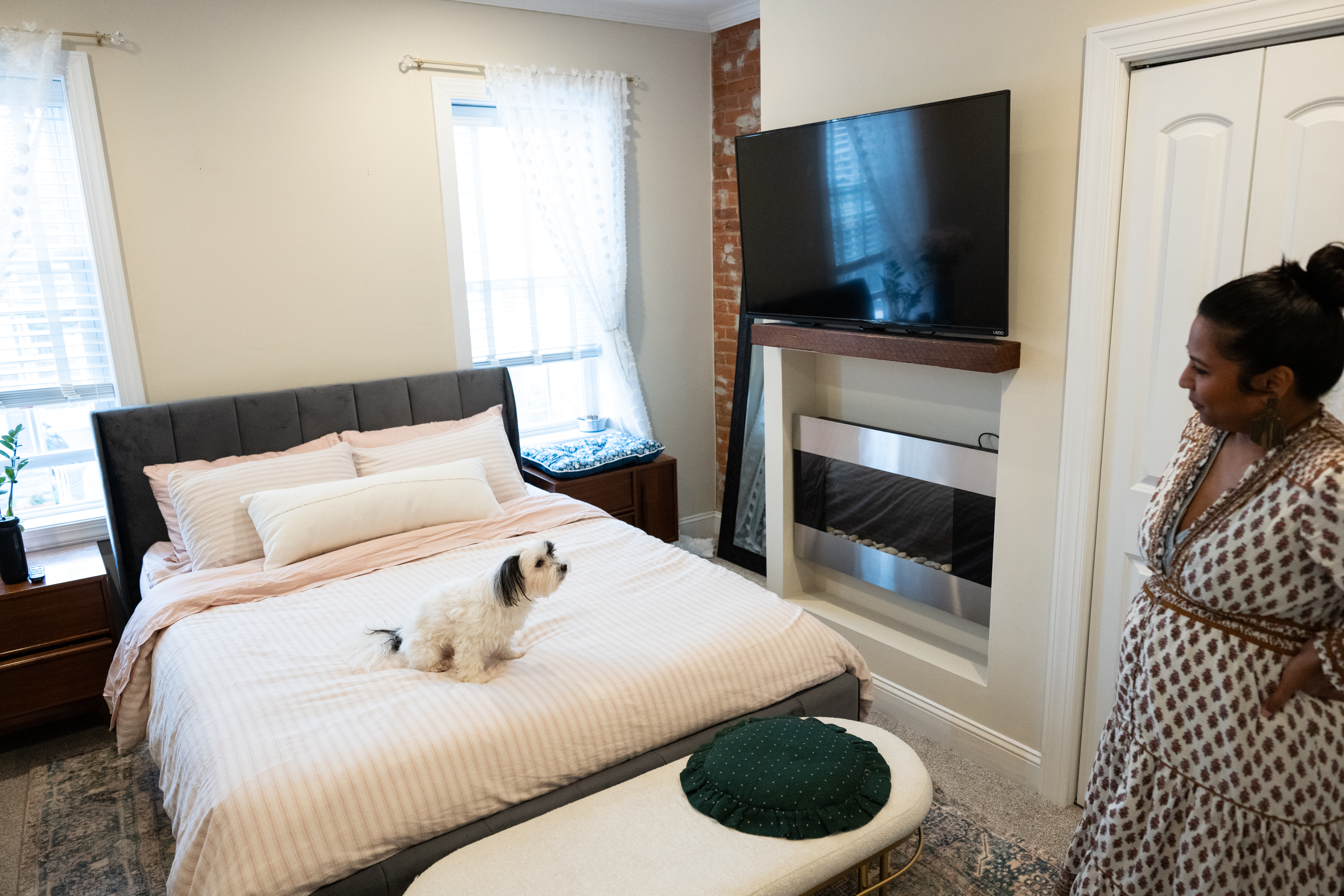
There are three bedrooms in Nair’s home. Scotty sleeps in the bedroom with Nair. Nair’s foster cat has her own room.
The seller accepted Nair’s offer and agreed to the amount for the seller’s assist.
The money: Nair began the year with about $60,000 in savings, but she used roughly half to pay off her private student loans. “They’d been the bane of my existence,” she said. “I imagined being 70 or 80 years old with debt collectors still calling me.” Paying off that balance left her with about $30,000, money she had saved gradually over the years. She didn’t want to use all of it for a down payment, though. “I wanted to have a cushion for anything that came up after I bought the house,” she said.
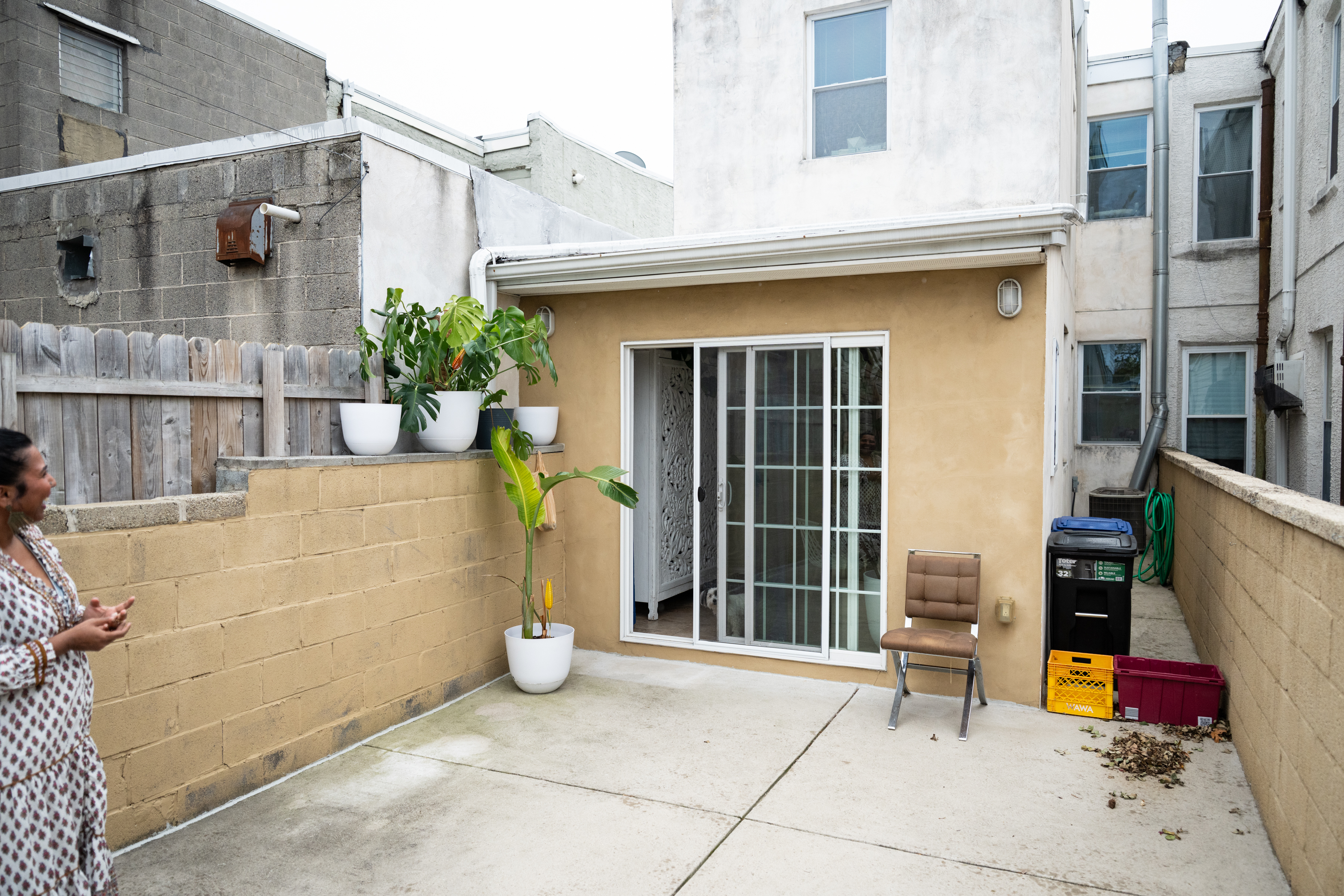
The back patio is the perfect size for Scotty, Nair says.
To keep more cash on hand, she worked with her lender to take out an FHA mortgage, which requires as little as 3.5% down and allows sellers to contribute to closing costs. With a seller’s assist, her out-of-pocket contribution dropped to around $10,000. Without it, she would have paid closer to $20,000. “It’s my first home,” Nair said, “and I’m proud of the strategies I used to get it.”
The move: Nair closed on the house on Aug. 25, a few days earlier than planned. The original closing date was Aug. 28, but she asked to move it up so she could leave her apartment before Sept. 1 and avoid paying another month of rent. She admits she was nervous while she waited for her mortgage to be approved. “I was sweating because of my first experience,” she said. “But my lender kept telling me, ‘Nope, you’re good. I would have told you if there was an issue.’”
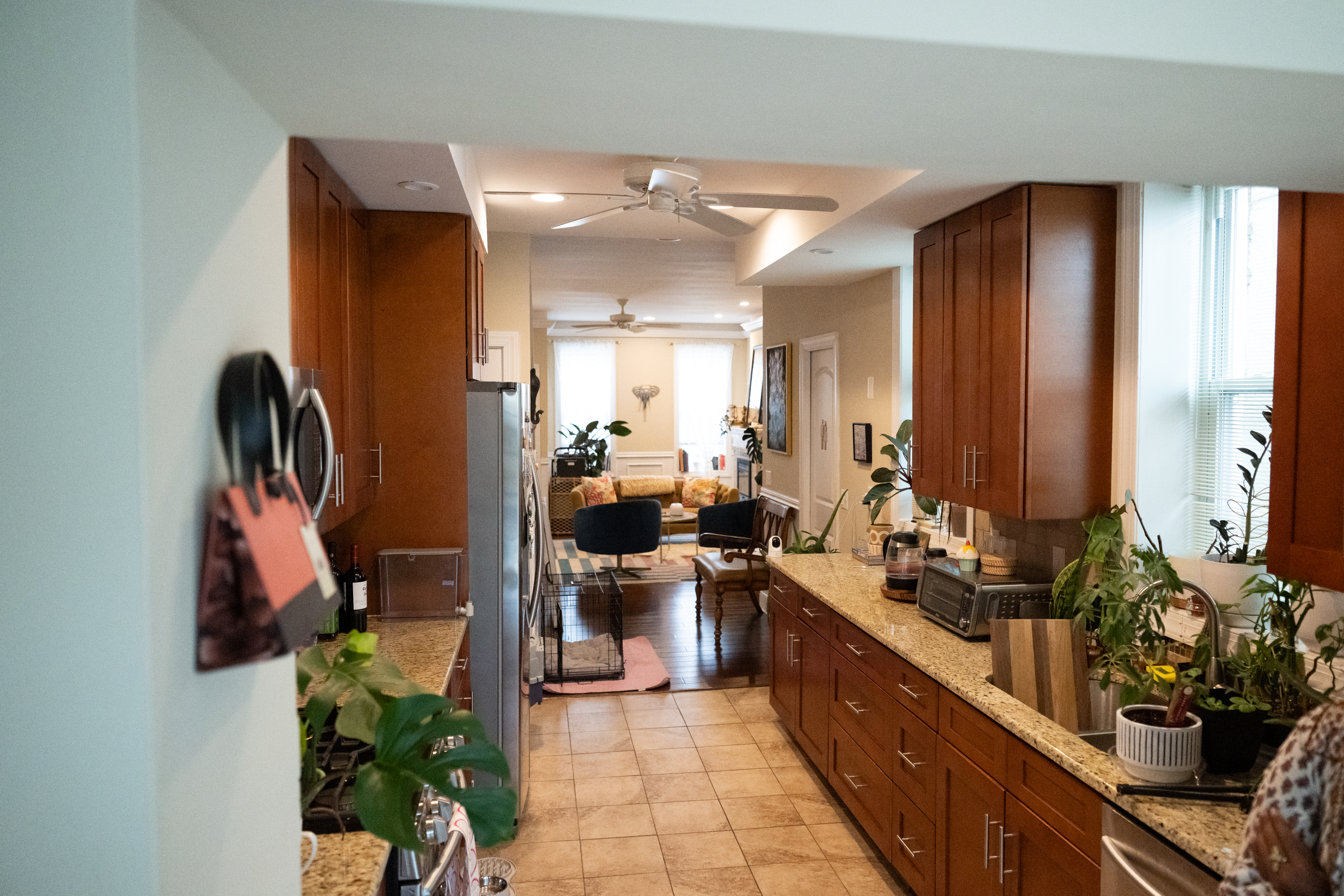
The kitchen and living room in Sindhu Nair’s home.
Once her approval came through, she began lining up help. She hired someone to assist with packing and brought in movers for the actual move, but the two-step arrangement proved more frustrating than she expected. “I realized I didn’t save any money, and I just gave myself a headache,” she said. Next time, she plans to hire a company that handles everything — packing, loading, unloading, and unpacking — in one coordinated sweep.
Any reservations? Nair says she doesn’t have any regrets about the purchase. “I think I got lucky, and I feel very proud of myself for having this accomplishment,” she said. She’s thrilled to have paid off her student loans and bought a home in the same year, and she hopes her experience sends a message to others. “I want people to know, especially single women, that you can do this,” she said. “It’s not easy; it’s very hard, but it’s doable.”
Life after close: A Halloween housewarming party forced Nair to get the main parts of her house unpacked and organized, but there is still work to be done. She just started unpacking her basement and is getting ready to set up her office in the smallest bedroom. She’s not sure what she’ll do with the other bedroom. It currently houses an animal. “I have a cat that I’m fostering,” Nair said, “and that’s her bedroom.”
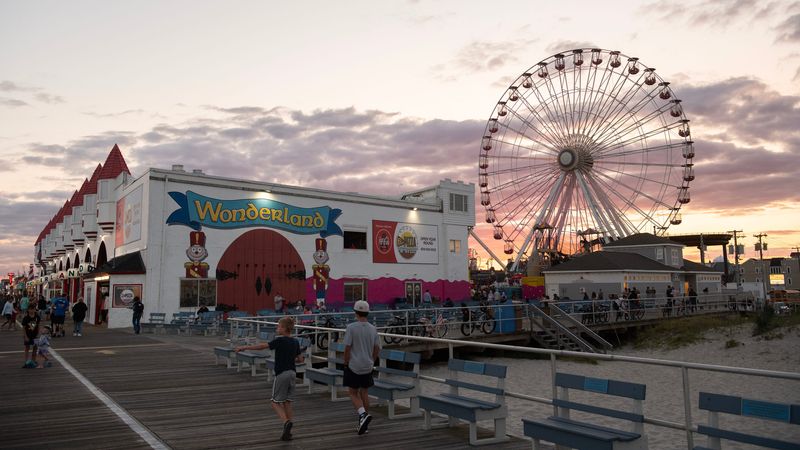
The saga of Gillian’s Wonderland Pier continues as Ocean City Council voted last night to allow the local planning board to take the next steps in the property’s future.
Councilmembers voted 4-3 to refer the 600 Boardwalk Avenue site to the Ocean City Planning Board to evaluate its possible rehabilitation.
“This is basically a first step in what could potentially be an extensive review process, if it were to continue to move forward,” said Doug Bergen, Ocean City’s public information officer.
City Council President Terry Crowley Jr. and council members Jody Levchuk, Tony Polcini, and Pete Madden voted in favor, while Keith Hartzell, Dave Winslow, and Sean Barnes voted against.
This means the council is requesting the planning board to deem the property “an area of rehabilitation,” which kick-starts a wave of inspections, public input, and planning.
In the next 45 days, Bergen said the planning board must assess the site and make a recommendation to City Council on whether the once iconic amusement park property meets the criteria for rehabilitation. If council votes to make that determination, then the site developer and owners can negotiate with City Council to devise a redevelopment plan. “With lots of further review down the road,” Bergen said.
A coalition of various business associations, from restaurants to boardwalk shops, put pressure on City Council Wednesday in a news conference. Both the presidents of the Boardwalk Merchants Association — co-owner of Surf Mall, Wes Kazmarck — and the local restaurants association — owner of Cousin’s, Bill McGinnity — were joined on Wednesday by the Philadelphian property developer Eustace Mita.
Since the nearly century-old boardwalk amusement park closed last year, plans for the site’s redevelopment have been swirling around town. Mita initially proposed a 7-story luxury hotel, the “Icona in Wonderland Resort,” but council members refused to send that proposal to the planning board in August.
A month later, Mita announced that he was considering transforming the site into townhouses, after courting offers from Phillip Norcross (brother of South Jersey power broker George E. Norcross III) and from Virginia-based NVR Inc., to redevelop the site.
Now, the site’s future will be in the hands of the planning board’s assessment, which, for some business owners, is the right call. In a video posted to Facebook earlier this week, Kazmarck urged Ocean City residents to contact their council members and ask them to vote in favor of the planning board review.
“This is about City Council being able to make a better decision on what to do with this property. Everyone’s opinion here is a valuable opinion, but I think now we’re at that point where we should bring in experts,“ Kazmarck said. ”That’s the planning board. The planning board hires experts to evaluate the site to decide if the site should be an area of rehabilitation.”
While it may feel like redevelopment plans are coming swiftly, Kazmarck reassured residents that local business owners have been discussing these next steps since last year, he said in the video.
The cap over I-95 between Walnut and Chestnut Streets, which will host the 12-acre Penn’s Landing Park, is about 30% complete.
After almost six years of engineering, design, and COVID-related delays, construction began in 2023, and now a lattice of steel beams extends over the southbound portion of I-95.
The cap project is anticipated to be completed in 2029, with the park installed the following year.
Construction of the cap itself is the work of the Pennsylvania Department of Transportation. When it is completed, the Delaware River Waterfront Corp. (DRWC) will build the park and its amenities on top.
Plans call for it to include a water feature, skating rink, amphitheater, sprawling playground with custom equipment, and a mass timber building designed by architect Kieran Timberlake.
“The vast majority of the park is open green space, but there is a building we call it right now, the pavilion and cafe,” said Lizzie Woods, senior vice president of planning and development at DRWC.
A rendering of the mass timber building planned for the Penn’s Landing park.
“It’ll be a net zero carbon building … [and it evokes] the natural systems that we know and love along the waterfront and that warm and welcoming spirit that we want the whole park to have,” Woods said at a meeting of the Center City District on Thursday.
Woods said that some of the features planned for the park are influenced by Center City District’s success at Dilworth Park at City Hall, which offers a water feature in the summer and an ice skating rink in the winter.
But when the new Penn’s Landing park is completed, it will be far larger and offer more unplanned space.
“You see those beautiful gardens there, too, with little nooks for gathering and community programming,” Woods said.
“Those nooks actually came out of a lot of our community engagement process where people were looking for spaces that were not the giant amphitheater for programming, but smaller ones that community groups could use and talk with,” Woods said.
The park’s completion is still many years in the future. Next year, in addition to PennDot’s continuing progress on the cap, a new bridge will go up over South Street as part of this project.
It will be built in a parking lot this spring, and then Columbus Boulevard will be closed for one night and it will be swung into place with plans for opening it at the end of next year.
A rendering of the new South Street bridge, which is set to open a year from now.
Over the seven years of the project, PennDot has been doing most of the heavy lifting — spending a year and a half relocating utilities alone— and that will continue to be the case for the near term.
Project costs have shot up since it was originally proposed in 2017, as the first sustained bout of inflation in a generation took hold. Construction costs have soared.
Original cost estimates for Penndot’s portion of the project were $229 million, which increased to $329 million two years ago at the groundbreaking. DRWC’s portion of the project has so far gone up less, and is estimated at $130 million including $20 million for the Delaware River trail.
Planners and political leaders see the project as transformative and project that it will boost investment and valuation along the Delaware Riverfront by at least three times the cost.
“The opportunity of Penn’s Landing is really the proof of a concept that redevelopment of the waterfront, which is an old idea, can be done in such a way that puts the public and the civic resource of the waterfront at the forefront,” Woods said.
“Then that yields the opportunity for high-quality private investment rather than relying on those private areas to set the tone,” Woods said.
Editor’s note: This story has been updated to clarify the total cost of the project.
Fights over historic preservation have been brewing and bubbling over in Philadelphia for decades. Now, a City Council member is provoking more debate.
His bill gives property owners additional notice before the city considers whether to designate their properties as historic — a designation that prevents owners from demolishing buildings or significantly altering their exteriors.
Preservationists say an extra heads-up would give developers more time to tear down potentially significant properties.
City Councilmember Mark Squilla’s latest historic preservation bill comes during a time of heightened debate around preservation in the city.
Preservationists are pushing back against demolitions. Some homeowner groups and organizations that advocate for more development are pushing back against an increase in historically protected properties and neighborhoods.
Squilla’s bill addresses some common frustrations that I hear from property owners.
In Philadelphia, people can nominate properties for historic designation without the permission of the owners. This is a frequent point of friction when the city’s historical commission considers nominations.
Supporters of Squilla’s bill call it a good-government fix that gives more notice and power to property owners. But some opponents of preservation say it doesn’t go far enough to help homeowners.
If you’re buying a home, refinancing a mortgage, or just want to know what your home is worth, you’ll probably want a home appraisal.
Last week, I talked to a professional home appraiser about what exactly an appraisal is and what goes into evaluating a property. He said a lot of people don’t understand the process.
At its most basic, an appraisal is “an opinion of value for a home,” he said.
Banks want them before they let you take out a mortgage or borrow against a home. Families get them when they want to figure out the value of property in a divorce or after a loved one’s death.
In my Q&A with Matthew Sestito, who’s been a licensed appraiser in the Philly area since 2009, we talk about:
factors that go into an appraisal
what homeowners should expect during an inspection
Nicala La Reau bought her 105-year-old home in Fishtown for the neighborhood and the house’s “incredible bones.”
But the home needed a lot of work. She immediately started renovations after her purchase in October 2024.
The home was dated throughout, so she had to update mechanical systems as well as finishes and the floor plan.
She started with five bedrooms and 1½ bathrooms but turned one of the bedrooms into an additional full bathroom. And she expanded the primary bathroom.
La Reau uses one of the bedrooms as a walk-in closet.
Off the third floor, she has a rooftop deck, where she drinks morning coffee and entertains. Her backyard is a “rare luxury for city living,” she said, and fits lots of seating, plants, and a garden.
The house near Rittenhouse Square has made headlines because it’s filled with thousands and thousands of books. Hundreds of the most valuable are now on auction.
And at 2 p.m. today, the house on the 1800 block of Delancey Street will open for the estate sale, which runs through Sunday. Besides books, shoppers can snag artwork, rugs, and other household items.
I’m curious what it’ll be like. Let me know if you go.
Enjoy the rest of your week.
By submitting your written, visual, and/or audio contributions, you agree to The Inquirer’s Terms of Use, including the grant of rights in Section 10.
City officials and housing advocates want Philadelphia to close a loophole in its tax code that allows people who forge deeds and steal homes to get a refund for taxes they paid to commit their crimes.
Thieves commit deed fraud when they illegally transfer a property’s ownership and record a fraudulent deed with the city.
This fraud often occurs after a homeowner dies but remains the legal owner of a property. Thieves use deceptive means, such as posing as fake heirs and forging documents, to take and sell properties, often flipping them to developers for large profits.
To record a deed, property owners — including fraudsters — need to pay a realty transfer tax. If a judge later determines that a sale was fraudulent, the person who paid the tax can request a refund from the city. That includes thieves.
“It’s a nightmare for victims of deed fraud, and while we can’t necessarily improve the situation, we can help to ease some of their financial burden,” Gilmore Richardson said during a Council hearing Wednesday.
Philadelphia’s portion of the realty transfer tax is 3.578% of the value of a home sold. So for a stolen $100,000 home, a victim could receive a refund of about $3,500.
A longstanding issue
Deed fraud is a persistent problem in Philadelphia. The city’s records department received about 130 reports of deed fraud in 2023 and about 110 reports in 2024.
Investigations by The Inquirer have shown that deed theft grew alongside gentrification in Philadelphia, as property values rose in neighborhoods that became more desirable. Victims of deed fraud disproportionately are people of color and seniors.
James Leonard, commissioner of the Philadelphia Department of Records, said the Parker administration supports the Council bill, which “addresses a gap in how we help victims of deed fraud.”
“We see these cases regularly,” he said. “They devastate families, they undermine confidence in our property system, and they impose significant costs on victims, who must fight in court to reclaim what was always rightfully theirs.”
Victims face a long legal battle in which they must prove that a deed is fraudulent and often must pay attorney fees. And they have to keep paying mortgages while they fight to reclaim properties.
“When they finally win, they get their property back. But they’re often financially and emotionally devastated by the process,” Leonard said.
The new Council legislation allows a victim who gets a court order that voids a fraudulent deed to request a refund of the realty transfer taxes that a thief paid. Leonard estimates the city will see at most 25 to 50 cases per year, a “modest” fiscal impact for the city.
And under current law, the city keeps tax payments that it never would have received if not for the deed fraud, he said, so the city has been benefiting from fraudsters’ payments.
“From an equity standpoint, this bill is the right thing to do,” he said.
Vincent Gilliam and his family were victims of deed fraud when his deceased mother’s home in North Philadelphia was stolen. Between the belongings that deed thieves took and the fight to reclaim the home, he estimates that the ordeal cost his family at least $5,000.
He told Council members that getting some money back from the city through a realty transfer tax refund “would be a tremendous help.”
Kate Dugan, a divisional supervising attorney at the legal aid nonprofit Community Legal Services of Philadelphia, said the problem of deed theft “is expensive and complicated to fix.”
“Even when free representation is available, which is normally not the case, victims are stuck paying for costs like repairs, changing locks, filing fees … out of their own pockets,” she said. “It’s rare for a deed fraud victim to collect any meaningful money damages or restitution.”
On Wednesday, Council’s Finance Committee sent the bill to the full Council for consideration.