Category: Real Estate

  • Northeast Philly’s Franklin Mills mall is for sale

    Northeast Philly’s Franklin Mills mall is for sale

    Northeast Philadelphia’s Franklin Mall — better known by its original name, Franklin Mills — is for sale after years of plummeting valuation, occupancy, and visitor numbers.

    A listing on the website of real estate brokerage Jones Lang LaSalle (JLL) includes possible uses a new owner can consider, including industrial and office development. The parcels including Sam’s Club and Walmart are not included in the sale.

    “Franklin Mall presents the opportunity to acquire meaningful control of more than 137 acres … in a densely populated location that may support additional densification and redevelopment,” the listing reads.

    The move comes amid a wave of mall sales and redevelopments in the region, with demolition and residential construction a common fate for many struggling shopping centers.

    Over 68% of Franklin Mall is occupied, which could be an incentive for continued retail operations. But sales and visitor numbers have been falling for years, and JLL reports the average existing lease lasts for only another 1.7 years.

    If a new use is sought, the mile-long, one-story structure would be difficult to repurpose.

    “I think it’s unlikely to be a shopping mall” again, said Jerry Roller, founder of the design firm JKRP and a longtime architect in Philadelphia. “What could it be? Obviously, residential. It might be a warehouse. It’s essentially a large vacant piece of land. It was fairly inexpensive when it was built, so it’s not hard to demolish.”

    The hundred acres of land that Franklin Mills sits on at the edge of Far Northeast Philadelphia is zoned for auto-oriented commercial use.

    JLL’s listing advertises the site’s suitability for industrial redevelopment.

    “The property’s infill location and highway access make it a strong candidate for redevelopment into a modern industrial facility,” the listing reads. The zoning “could provide a basis for an investor to pursue the development of up to 1.4 million square feet of new warehouse space.”

    The residential redevelopment opportunities for the site could be aided by a promised 20-year property tax abatement for the conversion or demolition of outmoded commercial buildings into housing, which Mayor Cherelle L. Parker’s administration promises next year following enabling legislation from Harrisburg.

    But the existing zoning would not allow that, so a residential project would need to win the permission of the city’s Zoning Board of Adjustment or have the land-use rules changed legislatively by Councilmember Brian O’Neill.
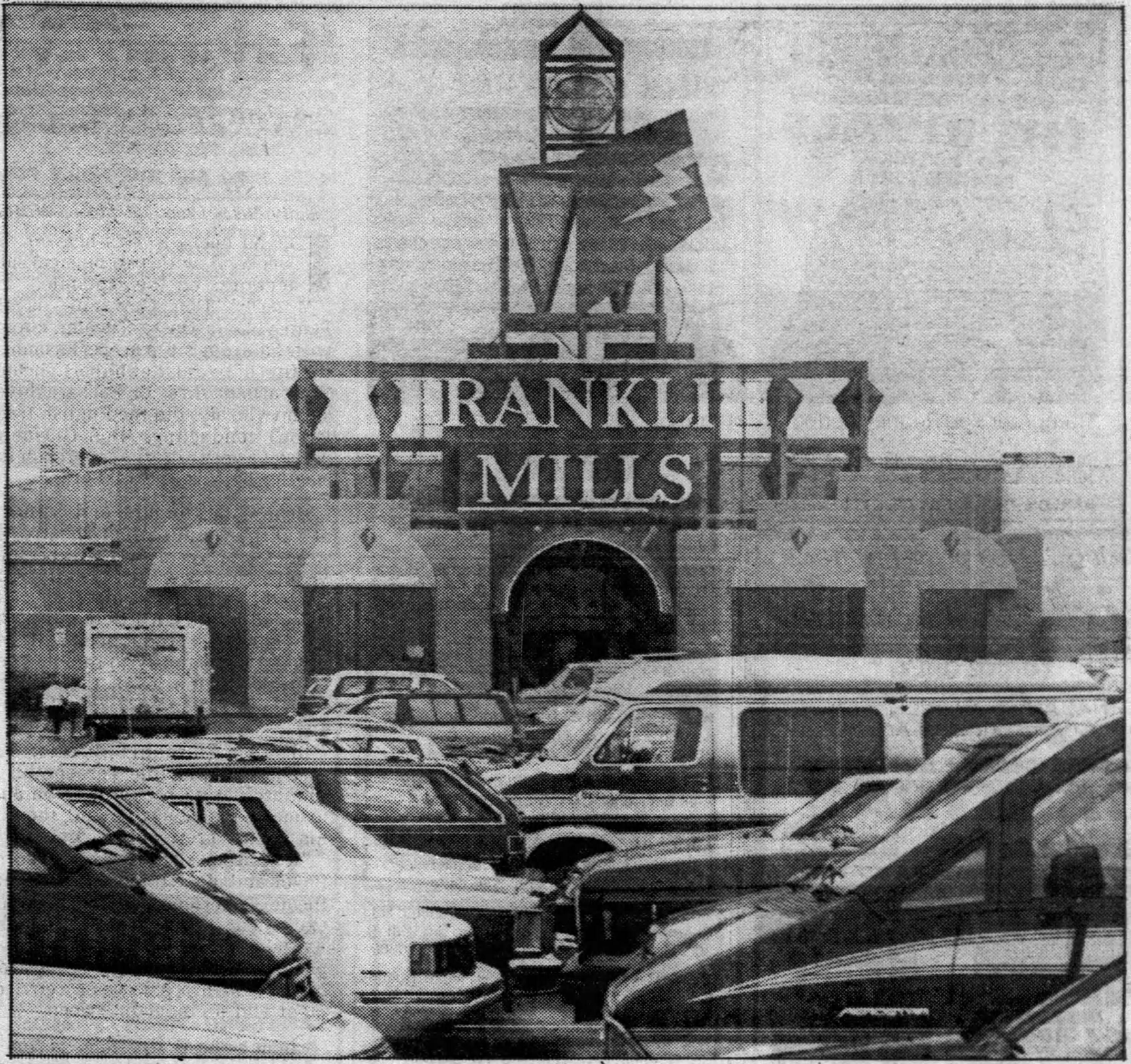
    The mile-long Franklin Mills mall drew Christmas-size crowds at its opening in May of 1989.

    Tribulations of a Northeast Philly icon

    The 36-year-old, 1.8-million-square-foot facility at Knights and Woodhaven Roads is the second largest mall in the Philadelphia area after King of Prussia. But while its larger cousin remains a dominant retail force, Franklin Mall has been struggling for years.

    The mall opened in 1989 to great fanfare as the largest outlet mall ever, with an iconic zigzag-shaped concourse that stretched for 1.2 miles.

    In its 1990s heyday, it attracted 20 million visitors annually. The latest numbers, provided by JLL, are 5.6 million visitors a year.

    In 2007, in retrospect near the end of Franklin Mills’ golden era, the property and the rest of the Mills Corp. was taken over by Simon Property Group, the largest mall owner in the country. The new ownership group rehabbed the property in 2014, although there were already signs Simon was distancing itself by moving Franklin Mills (renamed Philadelphia Mills) into a different balance sheet category than its core properties.

    Simon’s loan on the property had been intermittently distressed since 2012. An April 2024 report from real estate analytics firm Morningstar Credit was headlined “Legacy Philly Mall Back to Special Servicing for the Umpteenth Time.”
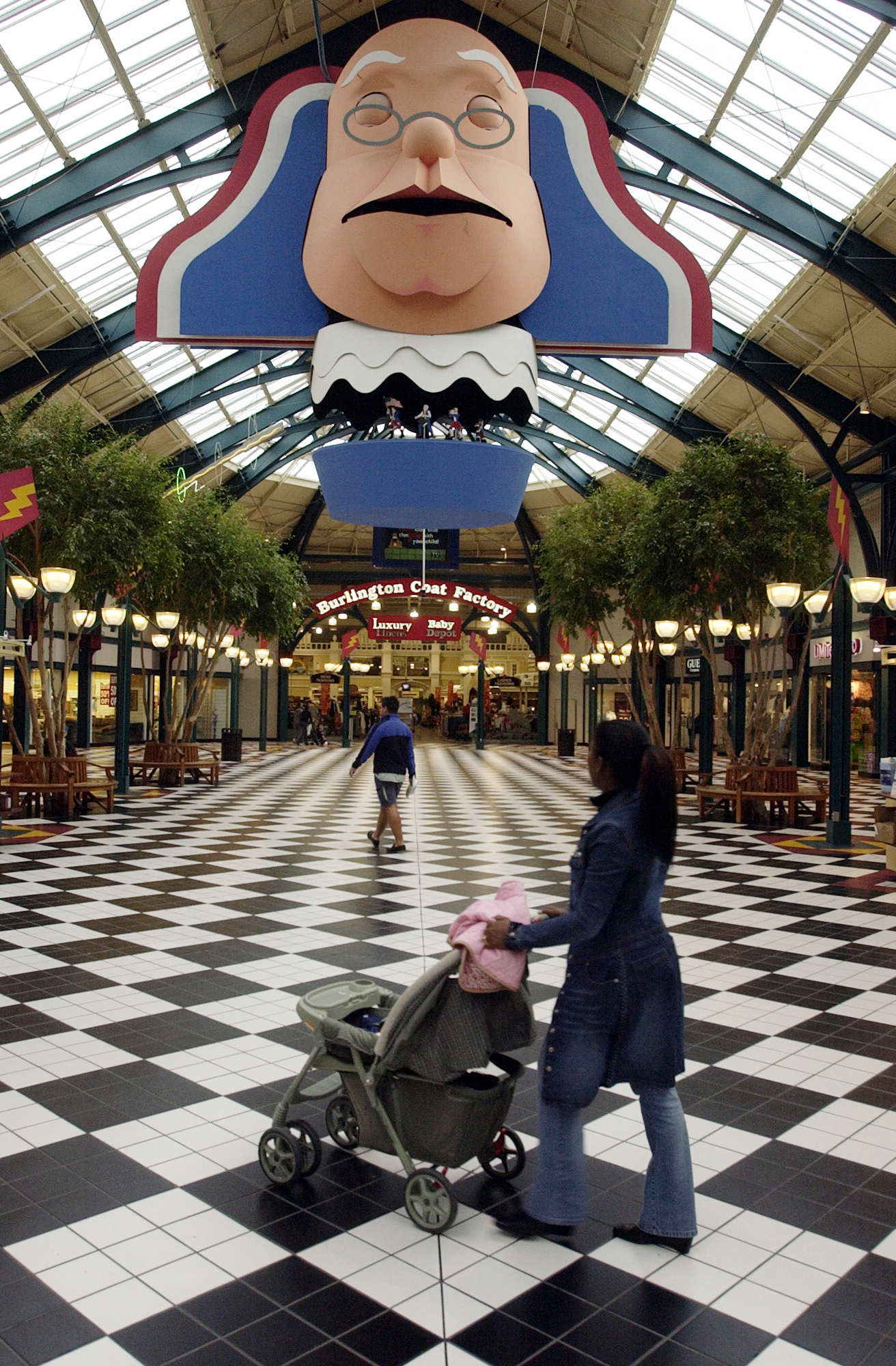
    Shoppers stroll through the Franklin Mills mall in 2014.

    The 2007 loan still had an outstanding balance of almost $250 million when it came to maturity in July 2024. Simon stepped away from the day-to-day operations at that time, with Philadelphia-based OPEX CRE Management appointed as receiver of the distressed property. The name was changed to Franklin Mall because Mills was trademarked by Simon.

    Last year Franklin Mall’s appraised value was $76 million, a precipitous decline from its $201 million valuation in 2012 and $370 million in 2007. According to Morningstar Credit, a new appraisal is likely in the next month.

    Full financials haven’t been publicly updated since last year, but at that time, the cash flow for the property was $9.5 million, the lowest since Simon took over in 2007. That’s down from 2019, when cash flow was $17.5 million, according to Morningstar, and from $11 million in 2022.

    According to Morningstar, the latest reports from the special servicer for the property, Greystone Servicing Co., say cash flow is even lower this year and occupancy has fallen to 65.4%.

    Possible reuses for Franklin Mills

    Franklin Mall’s for-sale status comes as some old-school regional shopping destinations are declining.

    While some of its counterparts like King of Prussia and the Cherry Hill Mall are still thriving, there has been a wave of sales and redevelopments of area malls as the nature of retail evolves.

    Some ailing malls have been purchased on the cheap, allowing their new owners to reinvest and refurbish the property in its previous mold.

    “In terms of using the buildings that are there, it’s a challenge because they are generally big box retail, and they’ve got a center mall, which is completely out of fashion,” Roller said. “Could somebody, if they had the right tenants, recreate the mall? Turn it inside out, open the thing up?”

    “Maybe it’s possible,” Roller said. But “I don’t see a lot of uses for the buildings that are there right now.”
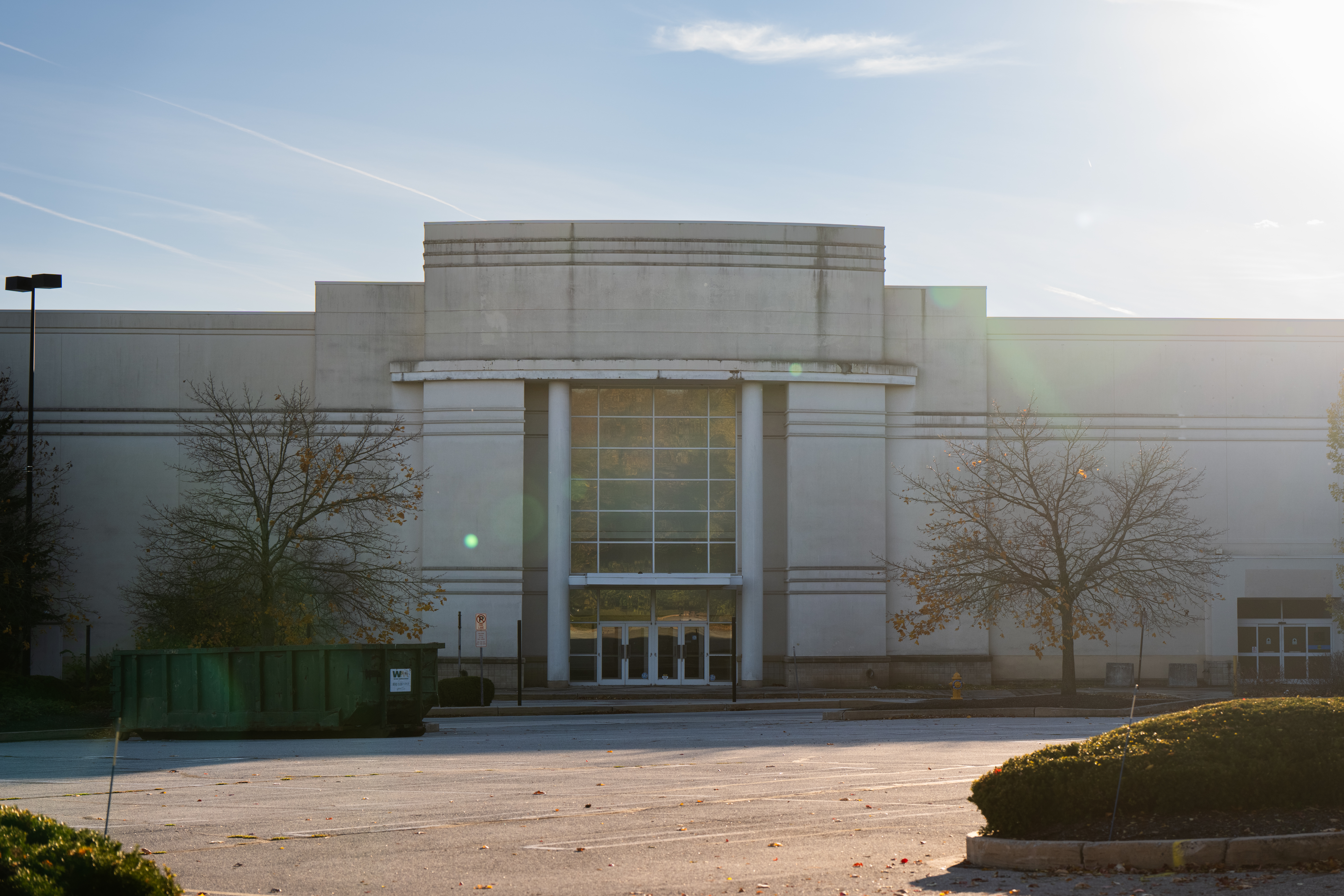
    The redevelopment of Exton Square Mall is in legal limbo.

    When regional malls are redeveloped, more commonly, the retail options are reduced with much of the old structure demolished. Diverse new uses often take a faded shopping center’s place.

    Two weeks ago, the sale of Plymouth Meeting Mall was announced with the new owner planning residential development. The contentious redevelopment of the Exton Square Mall would also see a burst of residential development and expanded healthcare options — if the owner can win a lawsuit against the township.

    In New Jersey, the Echelon, Moorestown, and Burlington Center malls have or are going through a variety of demolition and redevelopment options. The commonality is that residential building is a part of all three plans.

    At Franklin Mall, redevelopment would likely require demolition of the existing building.

    “Ultimately, it may just be a piece of land” for sale, said Roller.

    JLL’s listing, however, pitches the property as either redevelopment or continued mall use.

    “This offering presents prospective purchasers with the opportunity to acquire a strategically positioned super regional shopping center with significant upside potential and/or redevelopment opportunity,” it reads.

    JLL’s managing directors on the sale are John Plower, David Monahan, and Jim Galbally.

  • The Wanamaker Christmas concert took a defeat and turned it into a party, in the most Philly way possible

    The Wanamaker Christmas concert took a defeat and turned it into a party, in the most Philly way possible

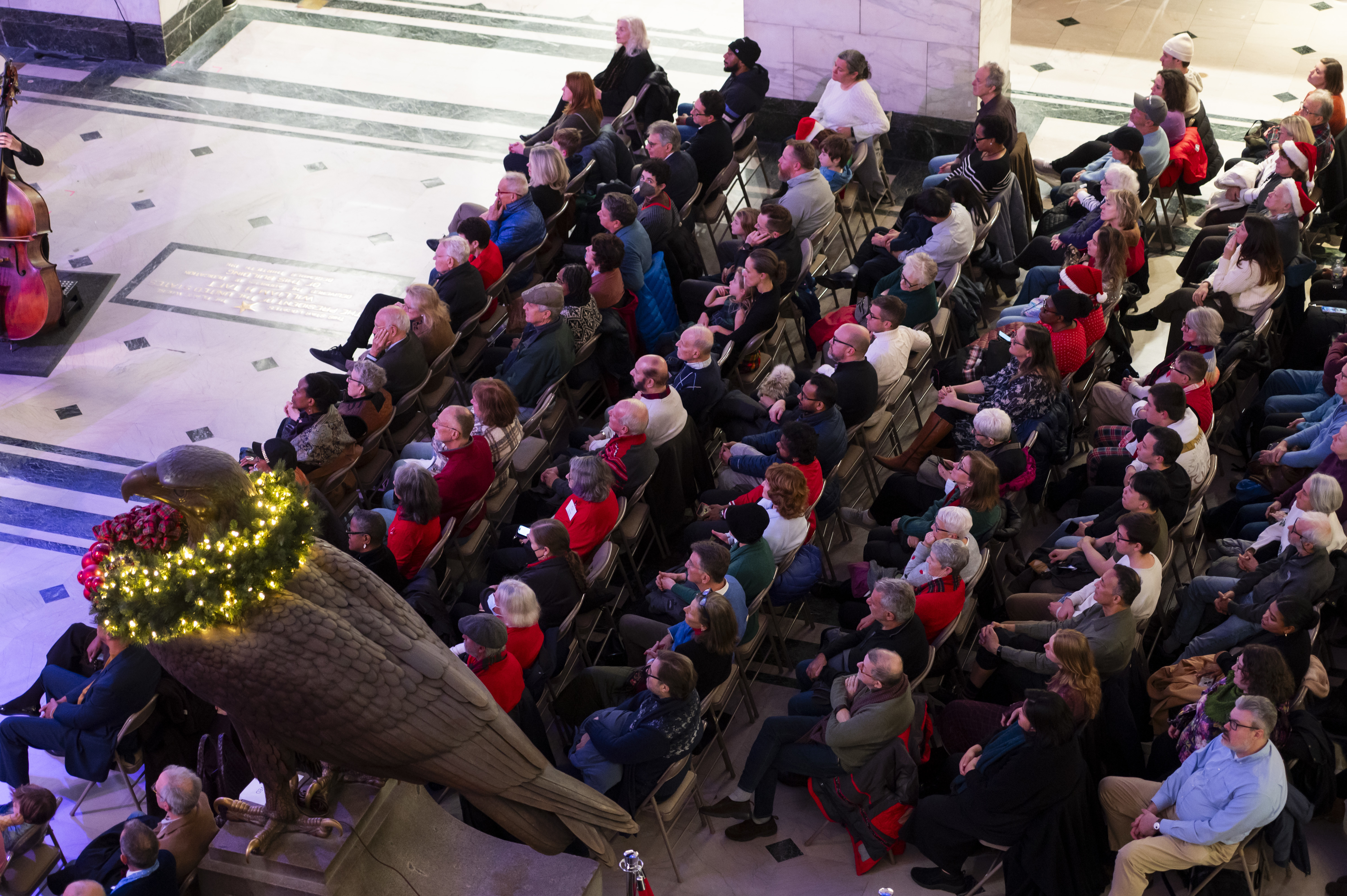
    The Christmas tree was indeed magical and the music, in turns, brilliant and warmly enveloping. Even the Wanamaker Eagle got into the act, crowned for the occasion with a lit Christmas wreath hung around its neck.

    A certain misty, nostalgic conjuring of Christmas past has reached its apotheosis in the Wanamaker Grand Court, and now the bittersweet countdown begins. Tuesday night’s “Home for the Holidays” concert is done, the Bearded Ladies Cabaret checks in next week, the Light Show and Dickens Village attractions run through Christmas Eve, and then the space closes for perhaps a couple of years while the building undergoes renovations.

    The Wanamaker Eagle donned a lighted wreath for Tuesday night’s concert.

    The one-night-only concert in the former Center City Macy’s did exactly what it should have. In the best gritty Philadelphia tradition, it took a defeat — the departure of a major retailer and the imperilment of the beating heart of Christmas in the city — and turned it into a party.

    Opera Philadelphia was the creative director behind the event, which swung from sincere and spiritual (chorus members running their fingers around the wet rims of glasses to produce an ethereal shimmer) to the head-scratching (a couple of dancers in dinosaur suits moving to an excerpt from Philip Glass’s 1000 Airplanes on the Roof).

    Anthony Roth Costanzo (right), countertenor, and Leah Hawkins (left), soprano, perform during “Home for the Holidays” on Tuesday at the Macy’s Center City.

    The forces — orchestra, chorus, dancers, superb soprano Leah Hawkins, and clarion-countertenor (and Opera Philadelphia chief) Anthony Roth Costanzo led by conductor Geoffrey McDonald — delivered a variety-hour-plus celebration a la “Radio City Christmas Spectacular,” if in miniature.

    But the best vibe of the evening came from above via the hands and foot-peddling feet of organist Peter Richard Conte. He showed how a musician, instrument, and their space can seem made for each other, and why the Wanamaker Grand Court Organ is not one instrument, but many. The highly inventive organist called upon fat French horns and muted trumpets in his own arrangement of Victor Herbert’s “March of the Toys.”

    Pure joy.

    The Opera Philadelphia chorus performs in “Home for the Holidays” at the Wanamaker Building’s Grand Court on Tuesday, Dec. 2, 2025.

    Christmas in this space triggers memories unique to each one of us, but it was a nice stroke by 10th Floor Productions to animate the marbled expanses around the courtyard’s arches with projected images of marching bears and soldiers for anyone who remembers the store as the source for holiday toys.

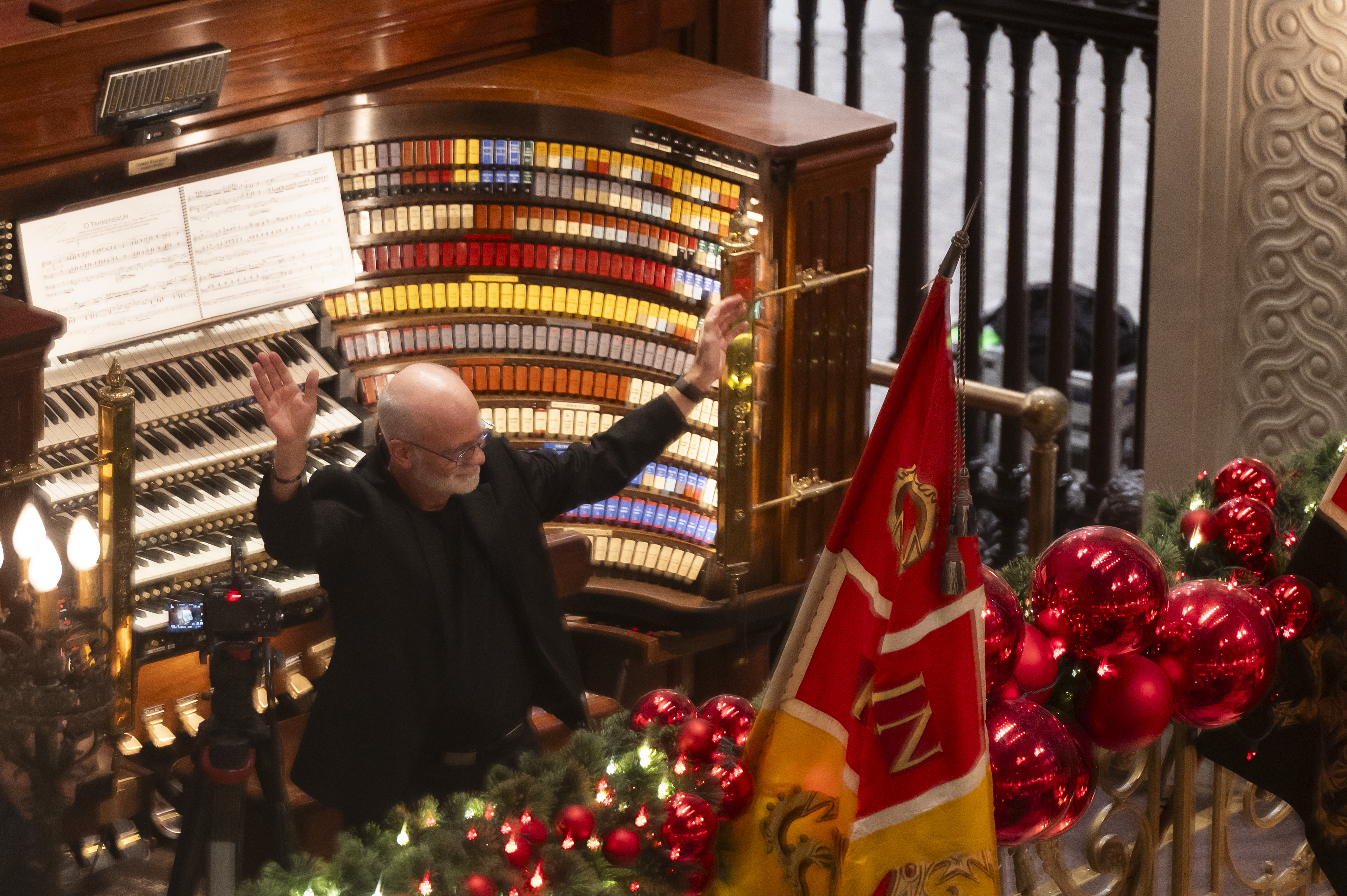
    Frederick R. Haas, philanthropist and organist, waves to the crowd during “Home for the Holidays” in the Wanamaker Grand Court.

    That the organ is still being played in this sliver of a post-Macy’s era is largely due to a $1 million donation from philanthropist Frederick R. Haas for the Pipe Up! series (as well as many previous gifts to the organ).

    Rarely have a donor and his cause been more personally intertwined. Haas is himself a trained organist who could sometimes be heard playing in the space in its department store days. On Tuesday, he played his medley A Christmas Improvisation, tapping into a supply of enormous, overtone-rich bells in “Silent Night” and beautiful, unusual harmonizations in “Carol of the Bells.”

    Conductor Geoffrey McDonald leading the Opera Philadelphia Orchestra in the Wanamaker Grand Court.

    If the evening had a theme beyond Christmas, it was nostalgia.

    Sub rosa, though, this and every event in the Pipe Up! series in the past few months has been about the future — about making the case for the Wanamaker Grand Court as a space that should survive as a public right of way no matter its next life.

    TF Cornerstone, the building owner, has been generous and respectful of preserving public access so far. As the developer renovates and cuts deals with prospective tenants, access and the future of the organ as a daily presence hang in the balance.

    The Opera Philadelphia orchestra, chorus, and vocal soloists in the Wanamaker Grand Court Tuesday night.

    One piece on Tuesday night was a reminder of the special dynamic at risk.

    When Opera Philadelphia flash-mobbed Macy’s with the “Hallelujah Chorus” from Handel’s Messiah in 2010, it packed a punch because of the surprise of it. Music was suddenly in the best place of all: somewhere you’d never expect it. That’s also the secret superpower of the organ.

    It was great to hear the “Hallelujah Chorus” here again. But heard now, it seems like a challenge issued, illustrating what the space once was and might one day be again.

    “Home for the Holidays” will be broadcast Dec. 23, 8 p.m. on WHYY TV12, WHYY radio (90.9 FM), and via whyy.org.

    The Pipe Up! series continues with the Bearded Ladies Cabaret’s “It’s Giving Cabaret” in the Greek Hall at the Wanamaker Building, 13th and Market Sts., Dec. 10-14. operaphila.org.

    The Wanamaker Light Show and Dickens Village run through Christmas Eve. visitphilly.com.

  • Her 105-year-old home near Palmer Cemetery got big updates, while keeping some history

    Her 105-year-old home near Palmer Cemetery got big updates, while keeping some history

    When Nicala La Reau bought a 105-year-old Fishtown home last year, the neighborhood was a major selling point. But she knew it would need “a full gut renovation.”

    “The house had incredible bones, but it was dated both inside and out — everything from the plumbing and electrical systems to the finishes and floor plan needed updating,” she said.

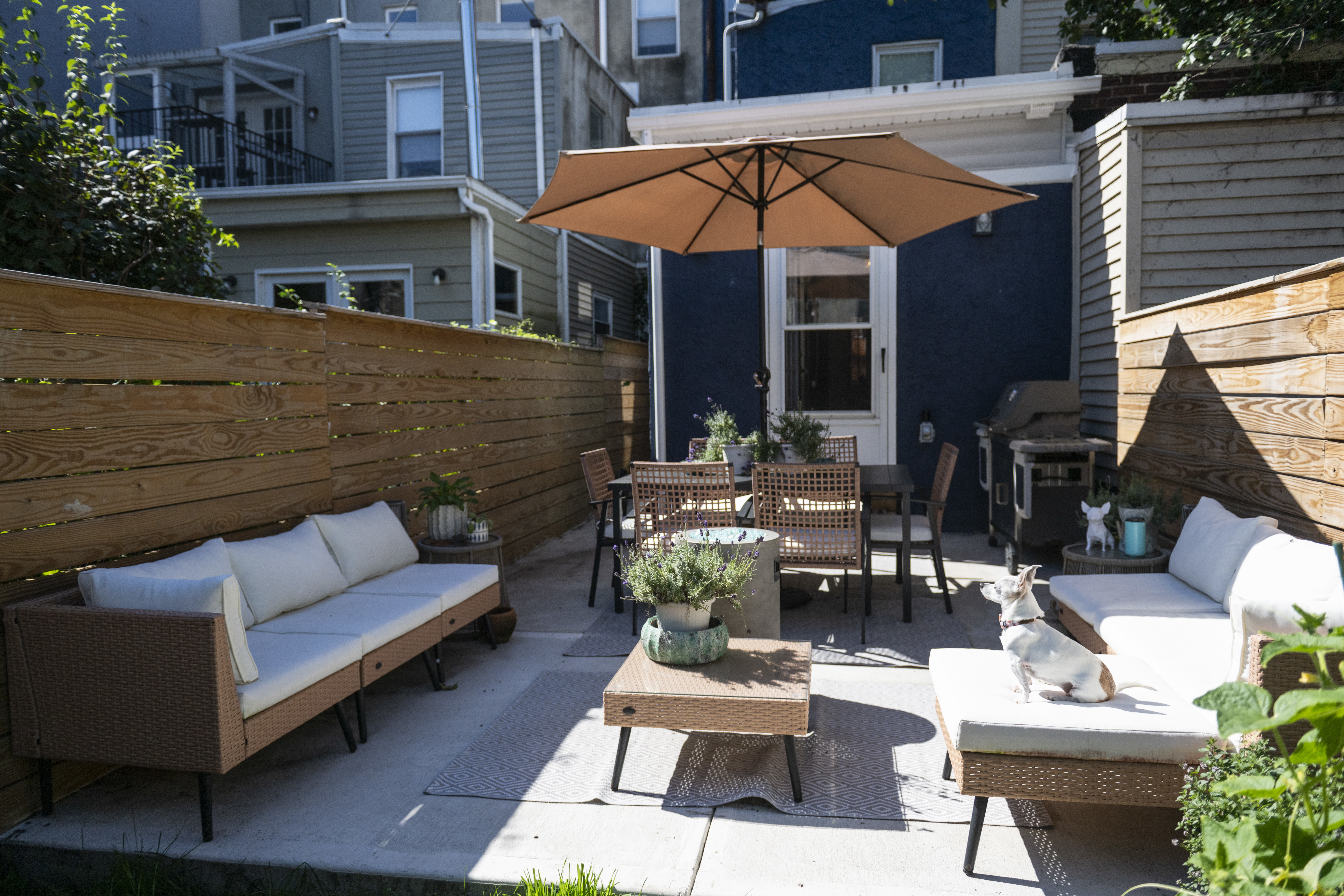
    La Reau appreciates the home’s “rare luxury for city living” with its generously sized backyard. “That’s where my vegetable and herb garden, and my roses all live,” she said.

    Renovations began immediately when she purchased the property in October 2024. It had been a five-bedroom, 1½-bathroom home.

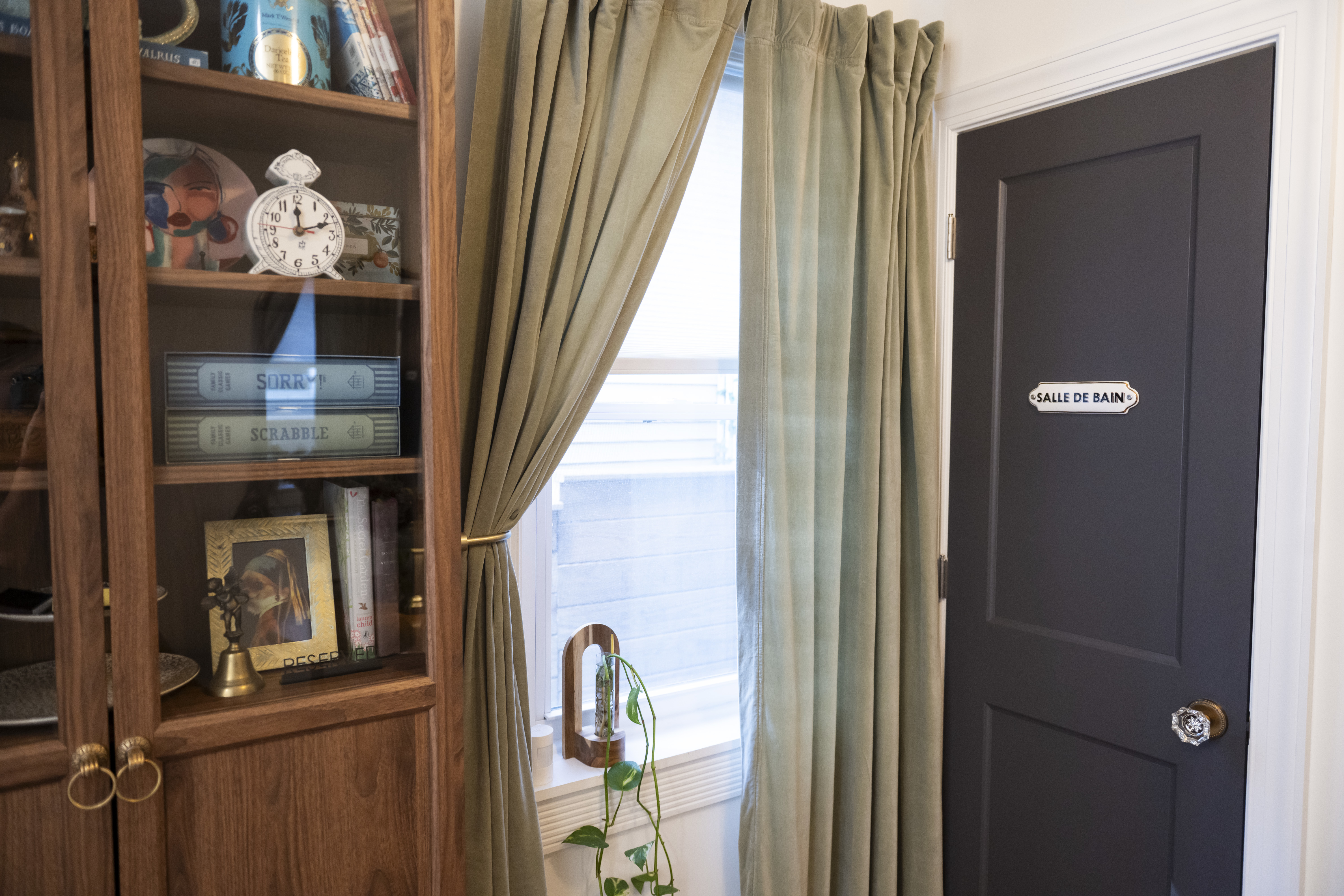
    A half bathroom, so labeled in French, sits off the dining area.
    The backyard, with ample seating and La Reau’s herb garden.
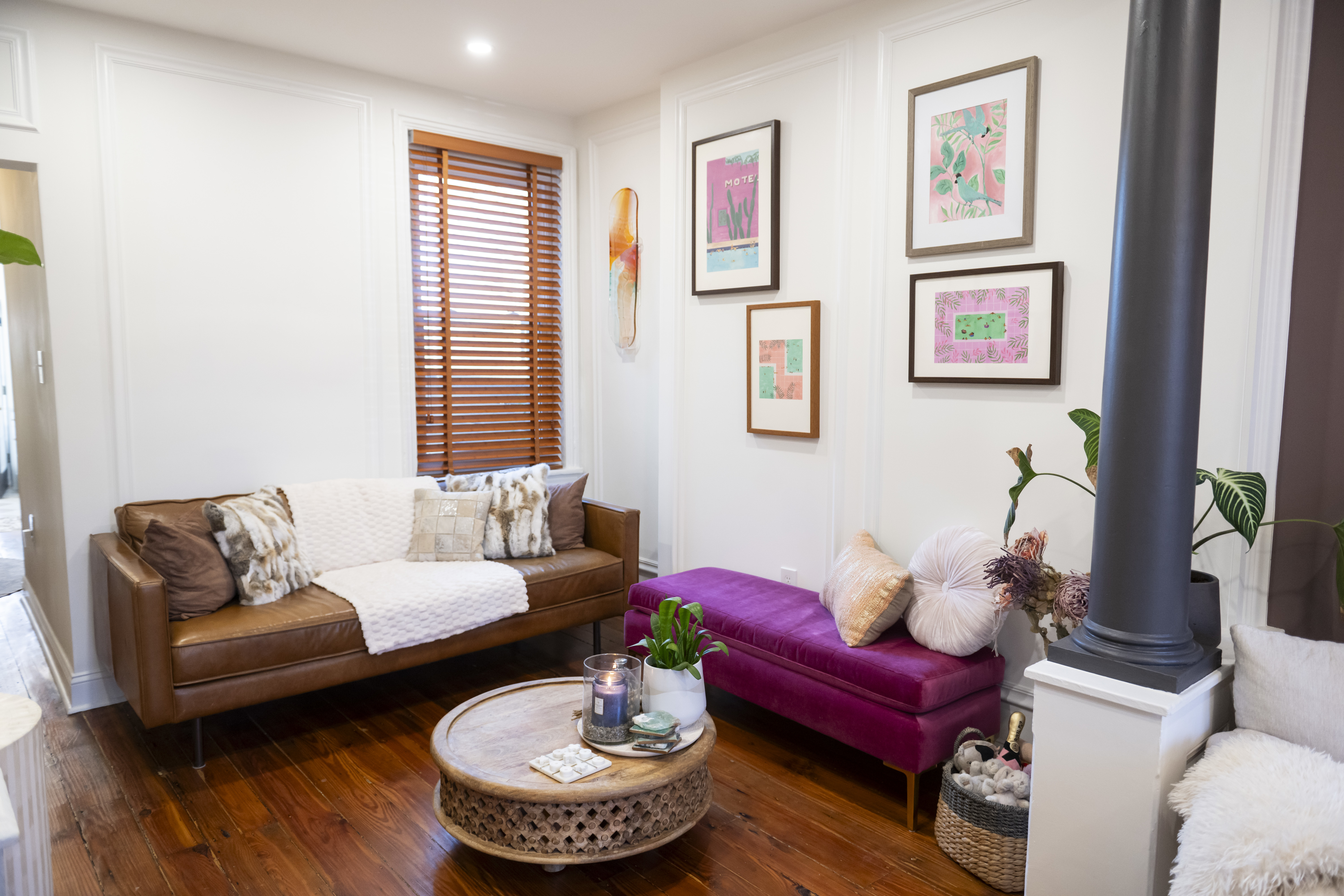
    An extension of the living space, featuring colorful art and a magenta bench.
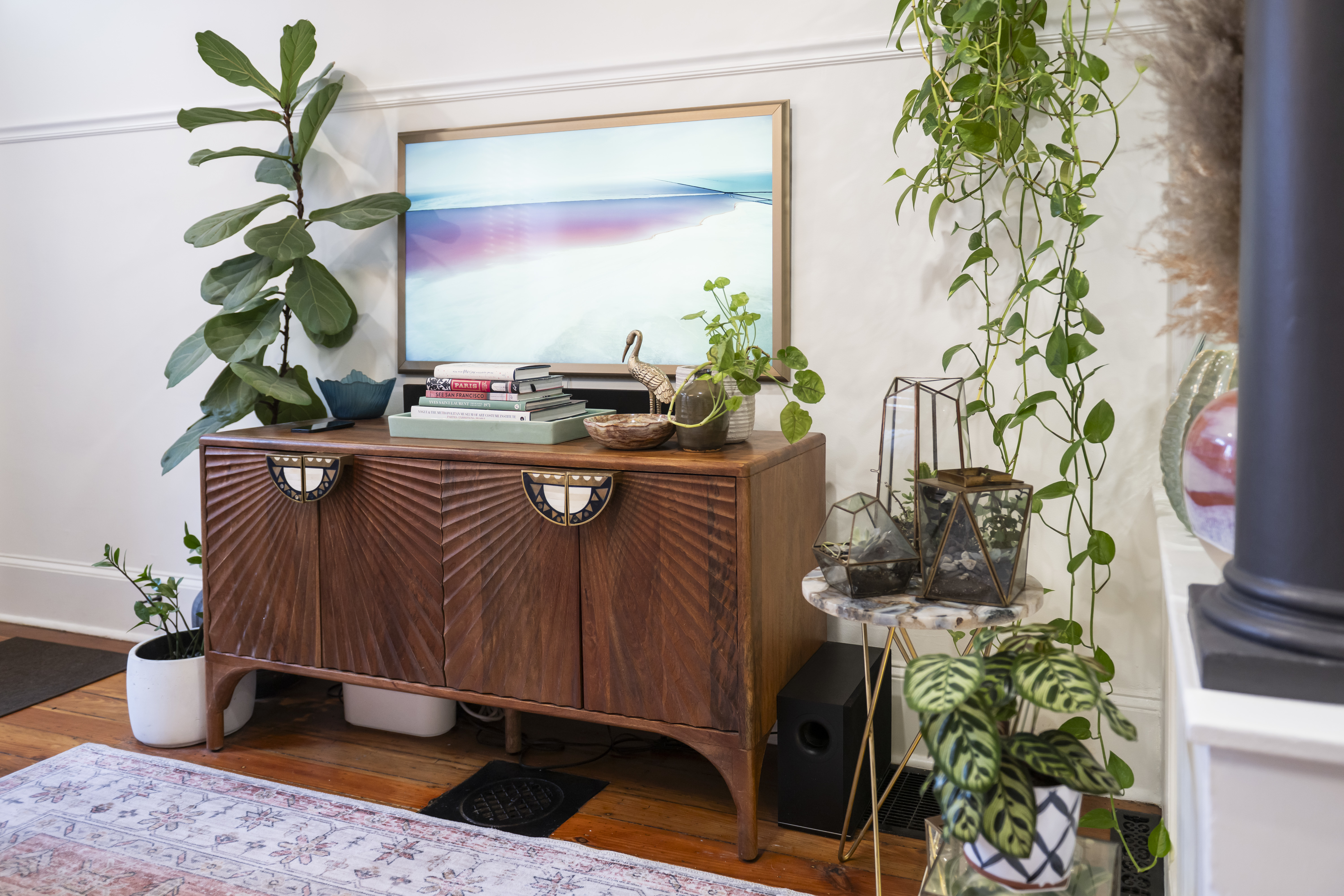
    The television sits above a wood cabinet with intricate details.

    By the time she was done renovating, about six months later, the new floor plan dropped one bedroom, putting an additional full bathroom in its place. She also expanded the primary bathroom.

    Her goal was to reconfigure the layout to create larger, more functional bathrooms and bedrooms.

    The first floor has an open-concept living, dining, and kitchen area that leads to the backyard. The second floor includes the primary suite with a large bathroom, as well as an additional bedroom, which La Reau uses as a walk-in closet. There’s also a guest bath.

    The third floor has another bedroom, an office, and access to the rooftop deck, which she uses for relaxing and entertaining.

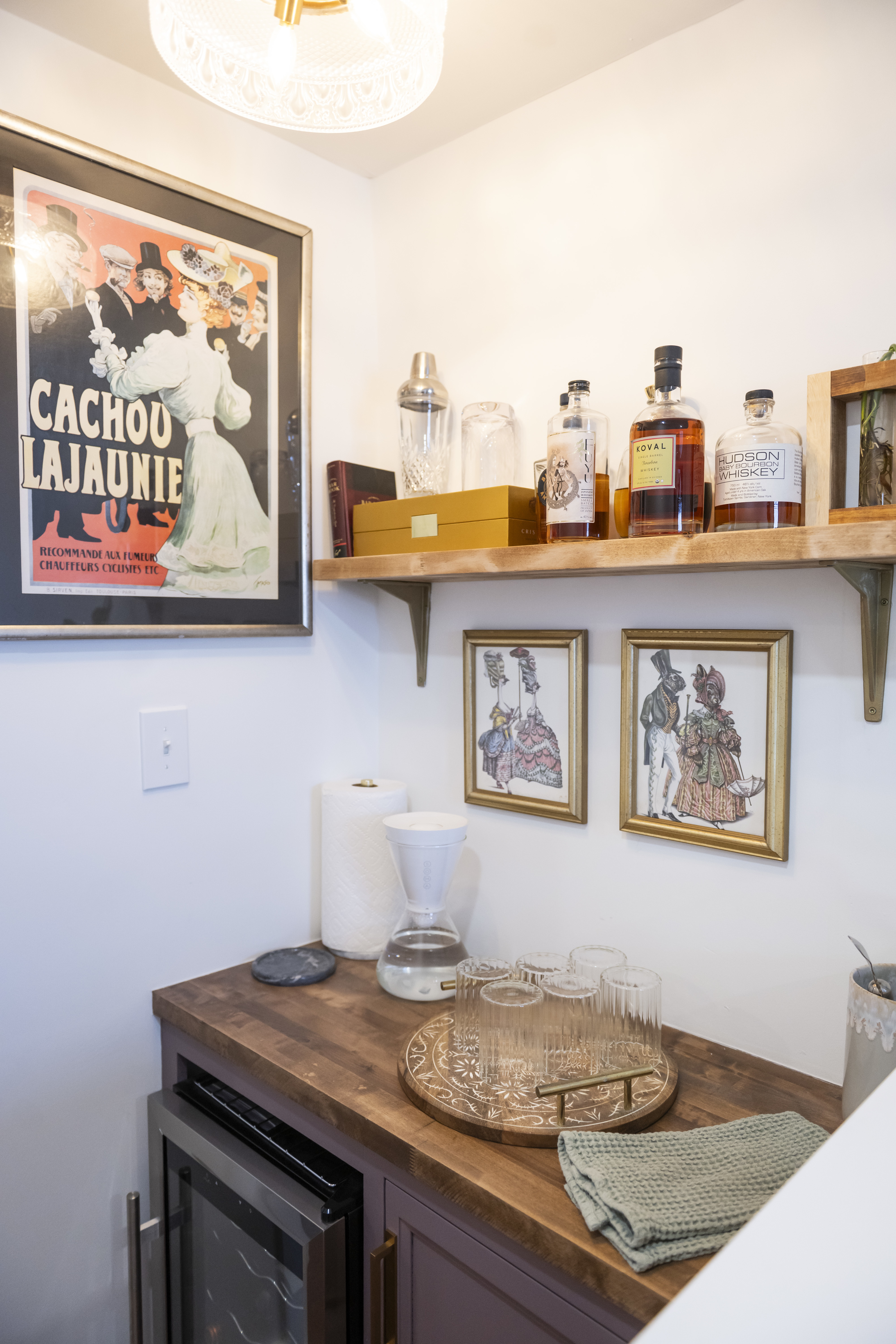
    A wet bar on the third floor, which has access to the rooftop deck.
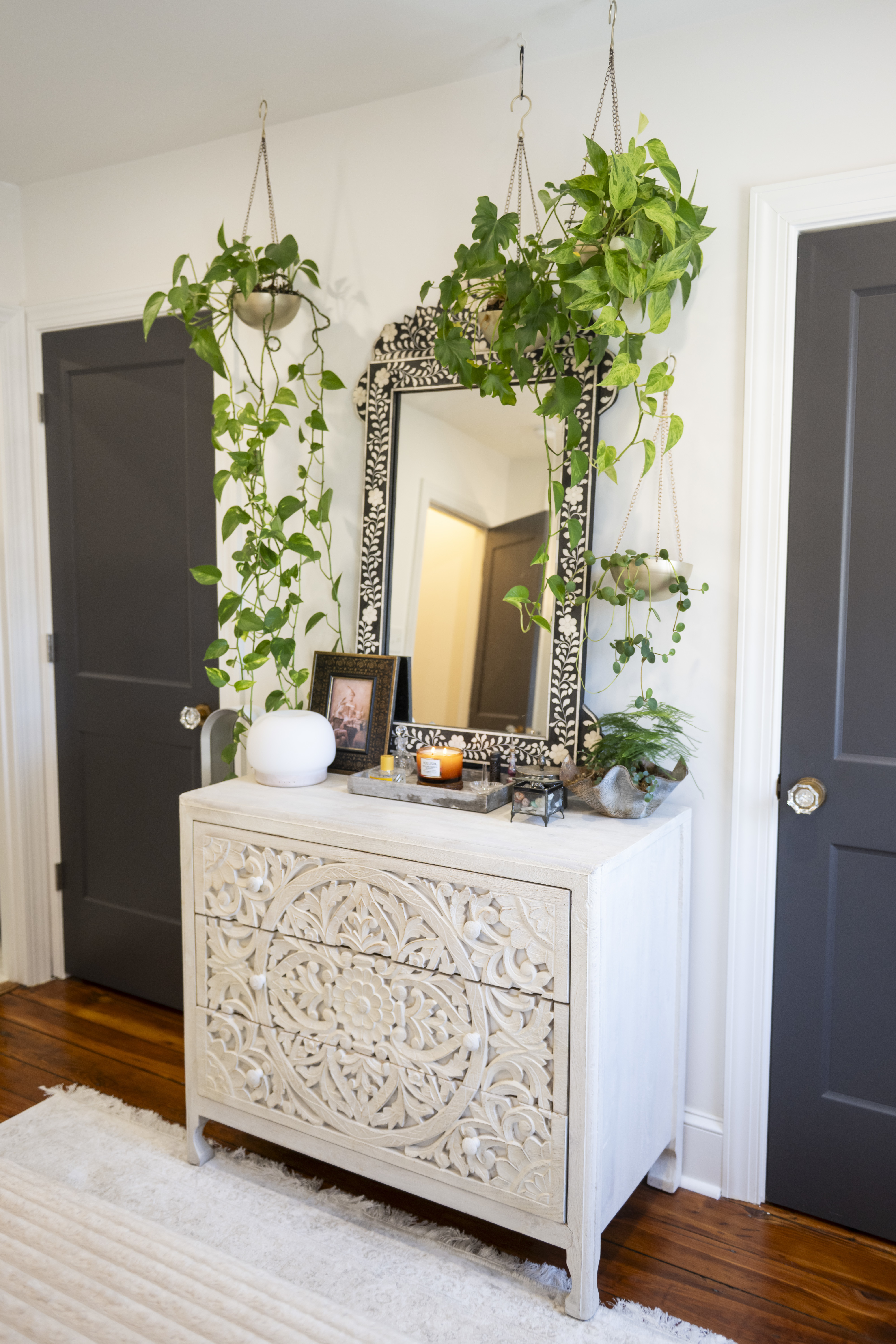
    The bedroom furniture is surrounded by hanging plants.

    “In the warmer months, I use it for everything from morning coffee to evening gatherings and even summer movie nights,” said La Reau.

    The home sits near Palmer Cemetery, a historic location that she believes gives her block “a unique and peaceful character.”

    “What I love most is that the land directly across the street is part of the cemetery, which means there’s a sense of openness and greenery you don’t often get in the city,” La Reau said. “It creates a rare balance of being in an urban neighborhood while still feeling connected to nature.”

    La Reau’s personal style and design flair is evident at every turn in the home. She carefully selected every finish and detail.

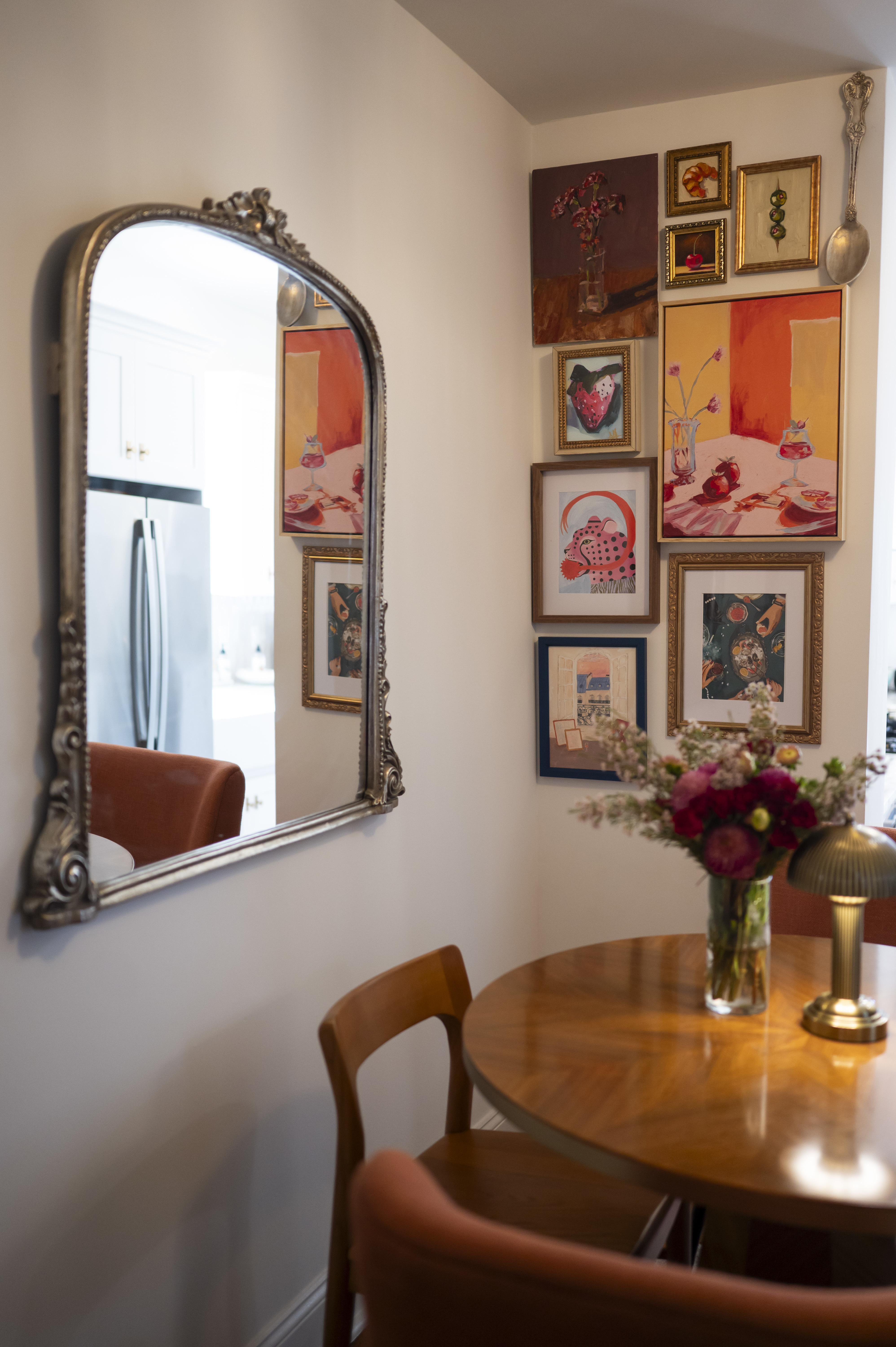
    In the dining area, a collection of art in various shapes and sizes and an intricately framed mirror line the walls.
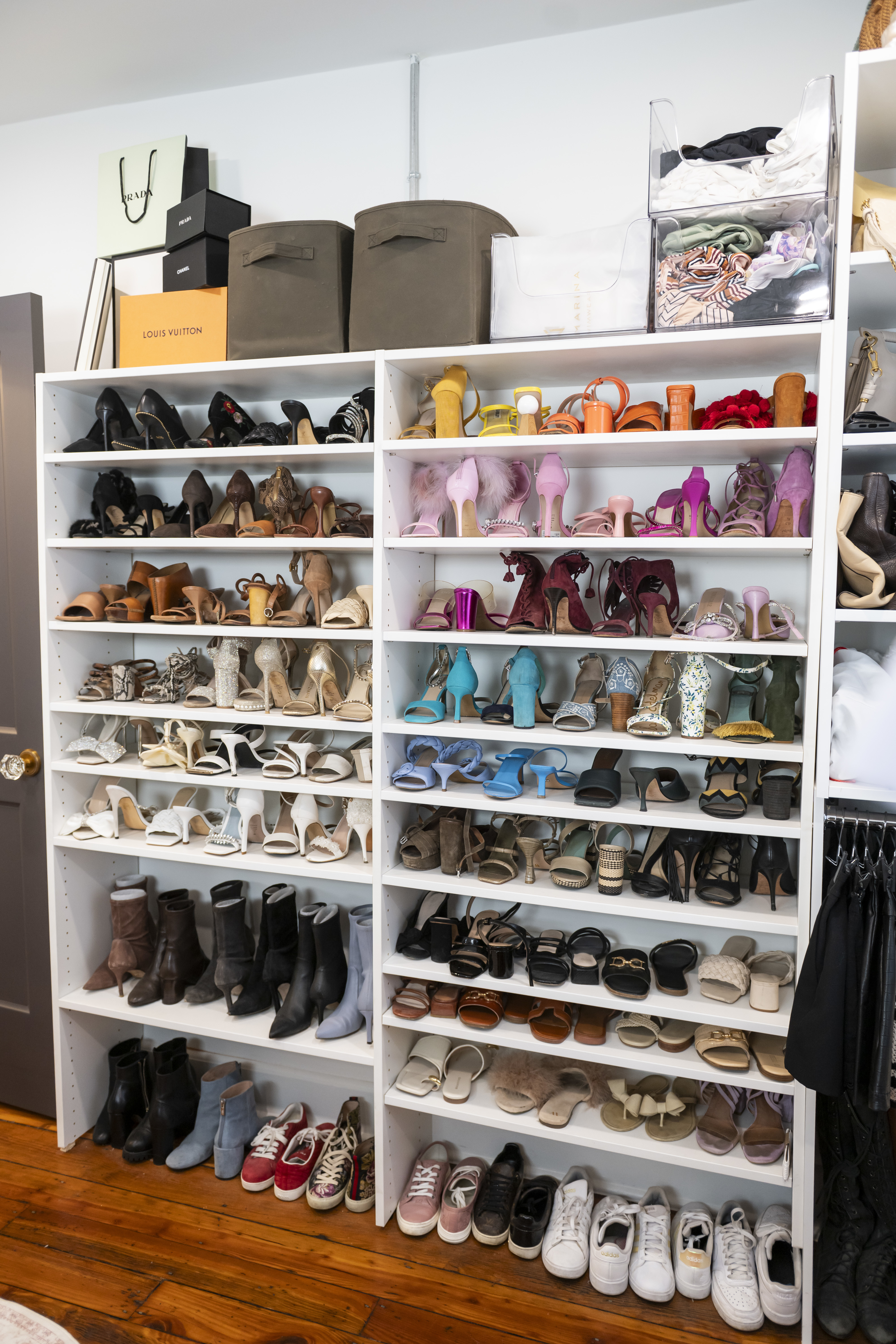
    The shoe wall in La Reau’s closet.

    “The project was extensive. I completely gutted the kitchen and two existing bathrooms, added an additional full bathroom, and restored many of the home’s original features: hardwood floors, columns, stair treads and railings, as well as the marble fireplace,” she explained. And the renovation included upgrading all of the essential systems, including plumbing, electrical, and structural reinforcements.

    Still, she aimed to preserve the historic charm of the home while layering in modern elements that reflected her personal, eclectic style.

    “Much of my inspiration comes from my travels abroad, especially time spent working in Barcelona, and my family,” La Reau said. La Reau is the marketing director for North America for Pronovias, an international wedding dress designer based in Barcelona, Spain. “Parisian and European influences are woven throughout the design,” she said.

    She opted for neutral finishes to create a timeless, classic foundation that will “age gracefully,” while using accents such as glass knobs and crystal lighting fixtures to honor the home’s vintage character.

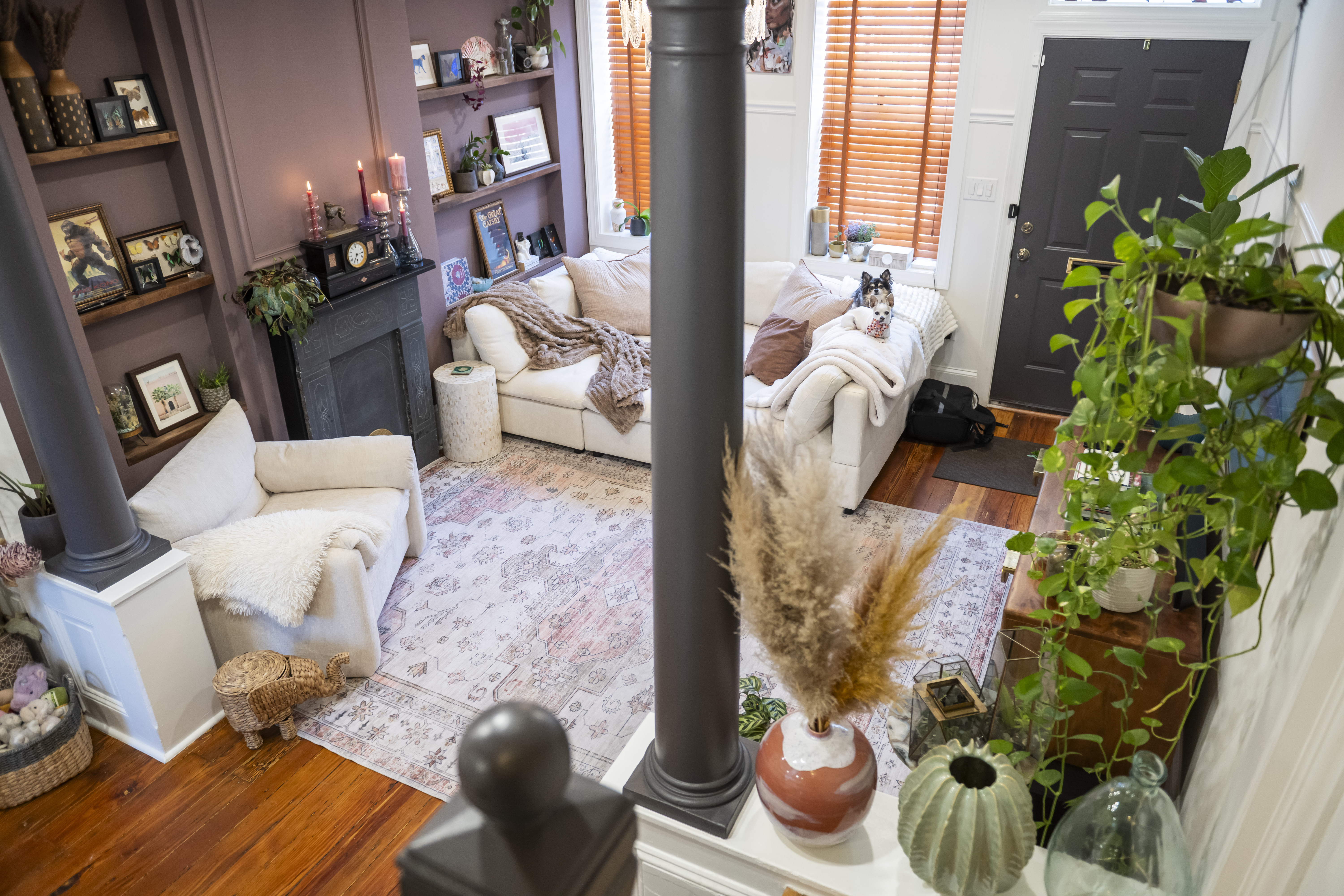
    The living space features a colorful accent wall, purple details, and columns dividing the first-floor spaces.

    In the living room depth and drama were created with a wall in Cinnamon Slate by Benjamin Moore, a balance of heathered plum and velvety brown, framing the restored fireplace and custom-built shelving.

    “I also introduced new molding throughout the primary bedroom and living areas to elevate the architectural character,” she said.

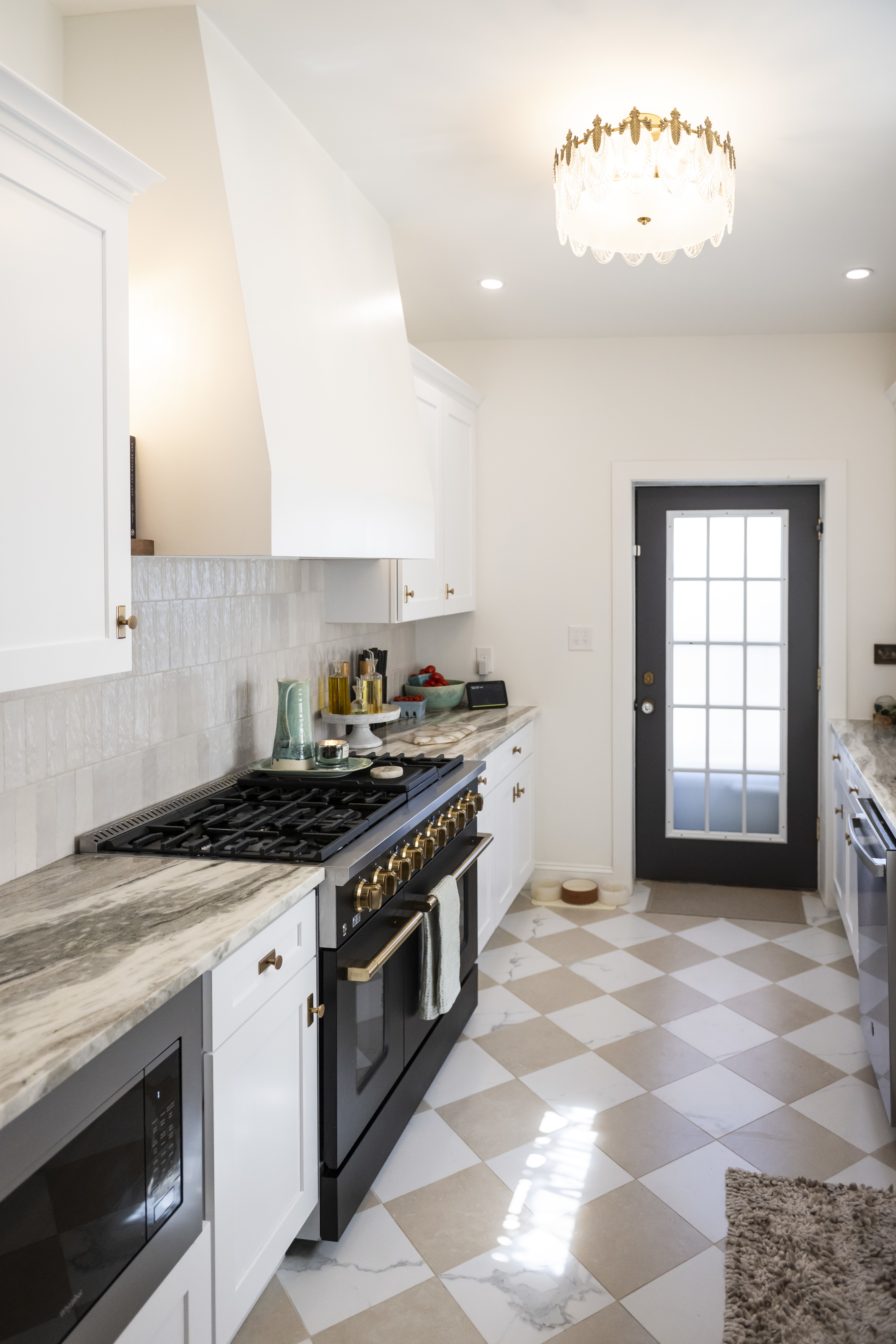
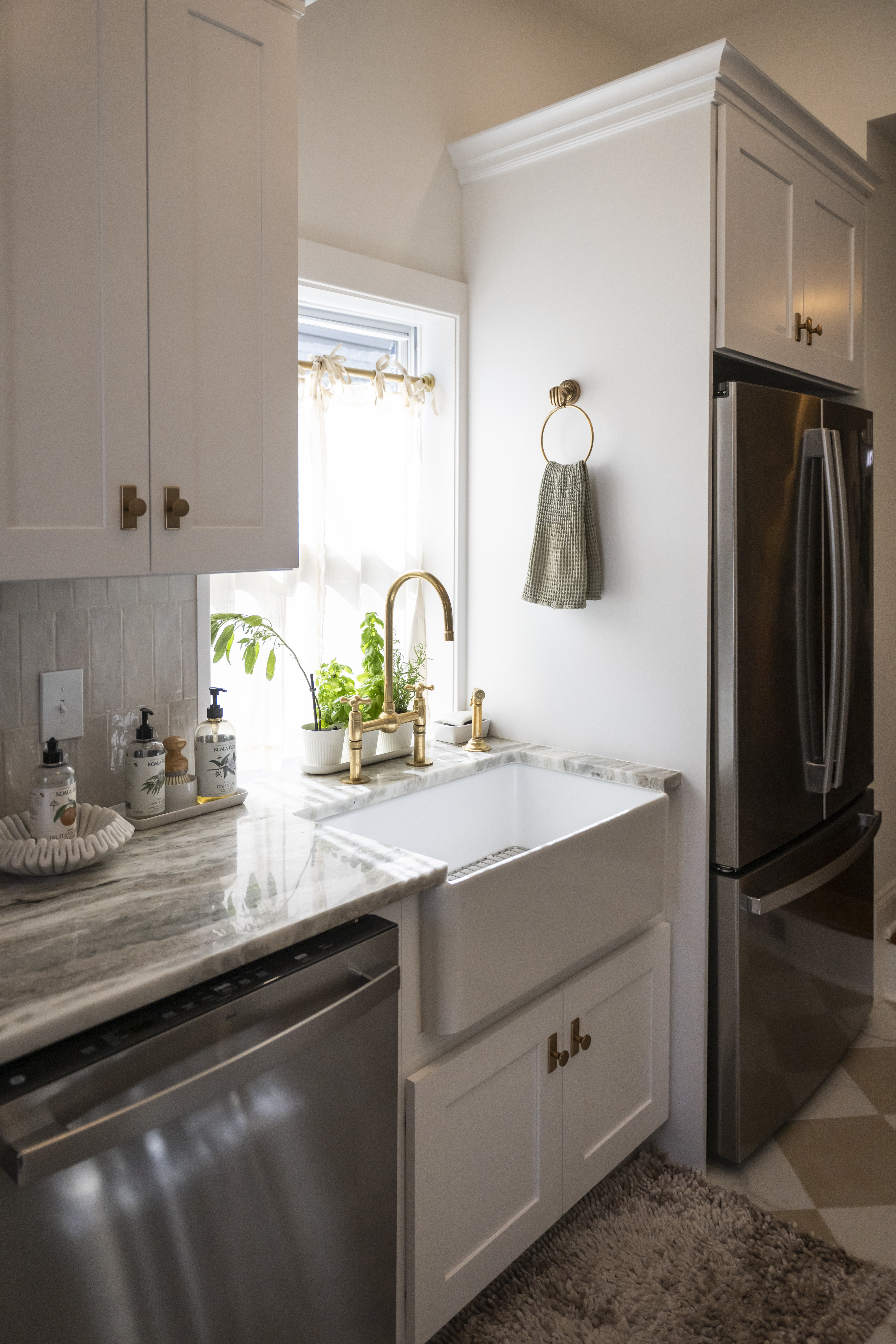
    The kitchen was one of the most important spaces, as La Reau enjoys cooking and baking. The focal point is a Kucht Gemstone KEG Series range in a slate finish with gold accents, featuring an eight-burner, double-oven statement piece that blends luxury and function.

    “To balance its boldness, I selected soft, muted finishes: marble crepe and white flooring rather than a stark black-and-white checkerboard, sandstone backsplash tiles, and granite countertops with subtle gray and brown veining,” she said.

    A Kucht Gemstone KEG Series range is a centerpiece of the kitchen.
    A large sink and gold details in the kitchen, which was an important space as La Reau loves to cook and bake.

    Throughout the home, splashes of bright color against muted fabrics and warm wood furniture create a layered but cohesive atmosphere.

    “Artwork collected from my travels is thoughtfully placed in each room, allowing every space to tell its own story while still flowing together as a whole,” La Reau said.

    She feels right at home in her community.

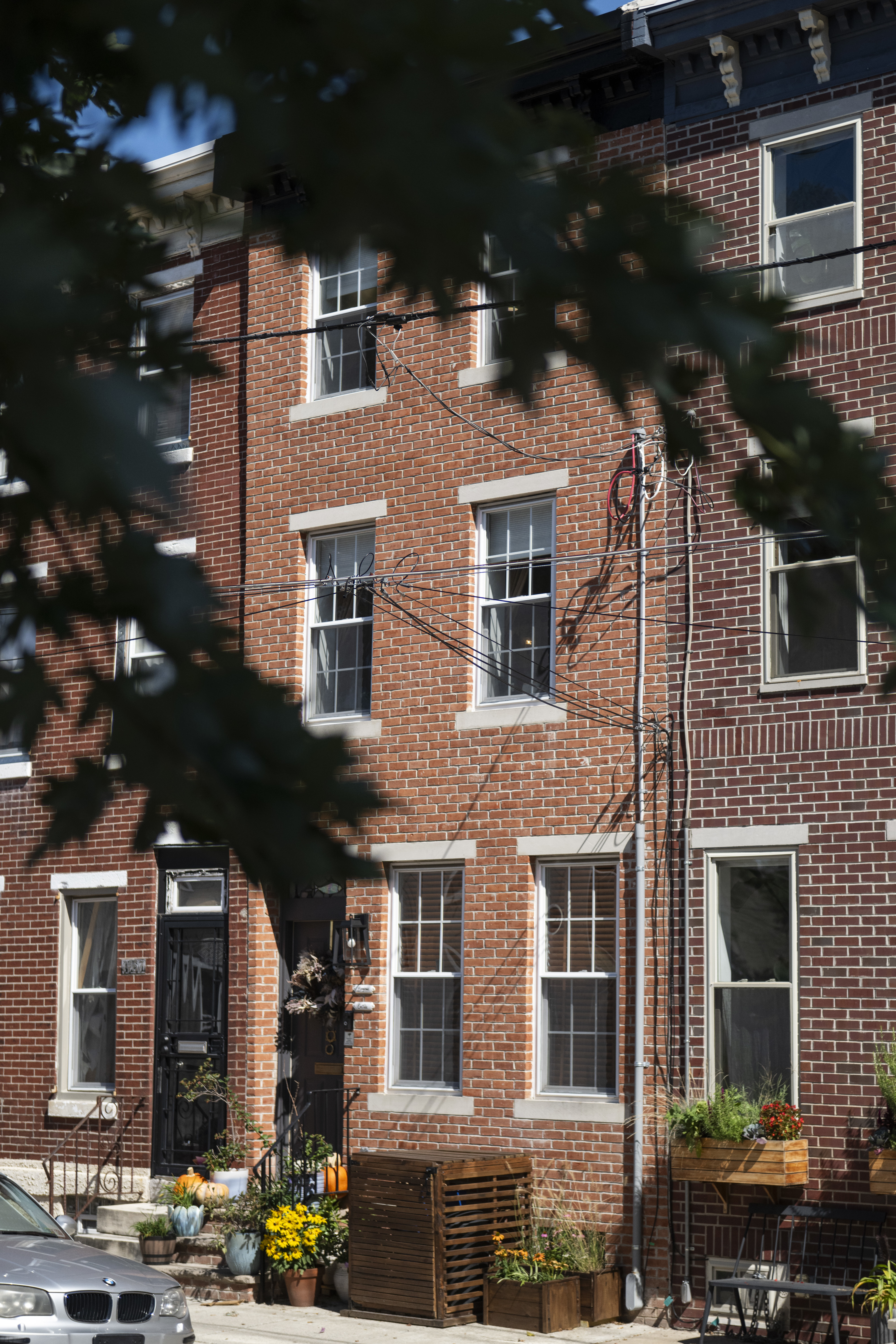
    The exterior of Nicala La Reau’s home.

    “The walkability to Frankford Avenue is unbeatable‚” she said. With its evolving culinary scene, she noted, there seems to always be a new restaurant or bar to check out.

    “But beyond that, there’s a neighborliness here — you see people out walking dogs, saying hello, and looking out for one another,” said La Reau. “Fishtown has a balance of growth and rootedness that feels like somewhere I can grow into long term.”

    Is your house a Haven? Nominate your home by email (and send some digital photographs) at properties@inquirer.com.

  • Good government fix or a demolition derby? Historic preservation bill is provoking debate in Philly.

    Good government fix or a demolition derby? Historic preservation bill is provoking debate in Philly.

    Historic preservation advocates are sounding the alarm about legislation from Councilmember Mark Squilla, which they argue would weaken existing protections in Philadelphia.

    The bill, introduced Nov. 20, would institute changes to the city’s Historical Commission, which regulates properties on the Philadelphia Register of Historic Places and ensures that they cannot be demolished or their exteriors substantially altered.

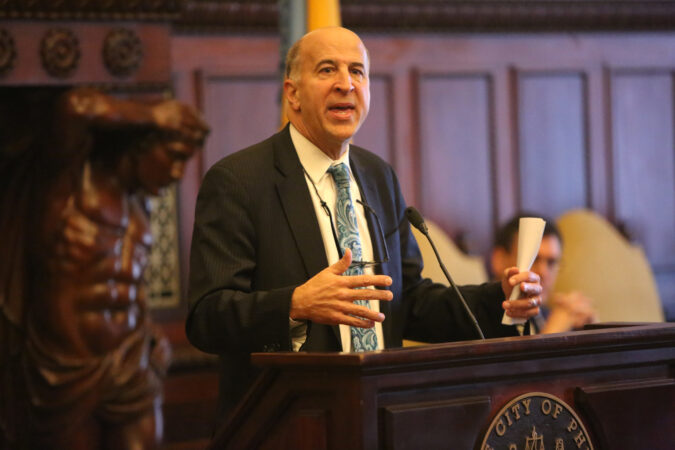
    “This is the first time the [preservation] ordinance has been proposed for amendment in decades,” said Paul Steinke, executive director of the Preservation Alliance for Greater Philadelphia. “This is a developer-driven proposal that does not reflect any of the priorities of the preservation community.”

    Proponents of the bill argue that it is simply meant to give more notice and power to property owners before their buildings are considered by the Historical Commission.

    “The bill does nothing to decrease the power of the Historical Commission to protect important historic resources,” said Matthew McClure, who served as co-chair of the regulatory committee of Mayor Jim Kenney’s preservation task force.

    “It is a modest good government piece of legislation,” said McClure, a prominent zoning attorney with Ballard Spahr. He emphasized that he was not speaking on behalf of a client.

    The bill was introduced too late in this year’s Council session to receive a hearing. Squilla says it will be considered next year.

    Currently, the interest group most supportive of the bill is the development industry. But even some preservation opponents are displeased with Squilla’s effort, arguing that it does too little for homeowners.

    “Everybody’s talking, and I think they all agree to move forward with continued conversations to maybe tweak the language a little bit so everybody feels comfortable with it,” Squilla said.

    At least one more stakeholder meeting will be held in December.

    Tensions over preservation

    Squilla’s proposal comes in the midst of heightened debate around preservation in Philadelphia, where the majority of buildings were constructed before 1960.

    Over the last decade, the number of historically protected properties doubled, although well below 5% of the city’s buildings are covered. Preservationists oppose what they see as a demolition-first approach to development in the United States’ only World Heritage City.

    Recently large new historic districts have been created to cover neighborhoods like Powelton Village, parts of Spruce Hill, and 1,441 properties in Washington Square West.

    These have provoked backlash among some homeowner groups and pro-development advocacy organizations, which see these regulations as increasing housing costs.

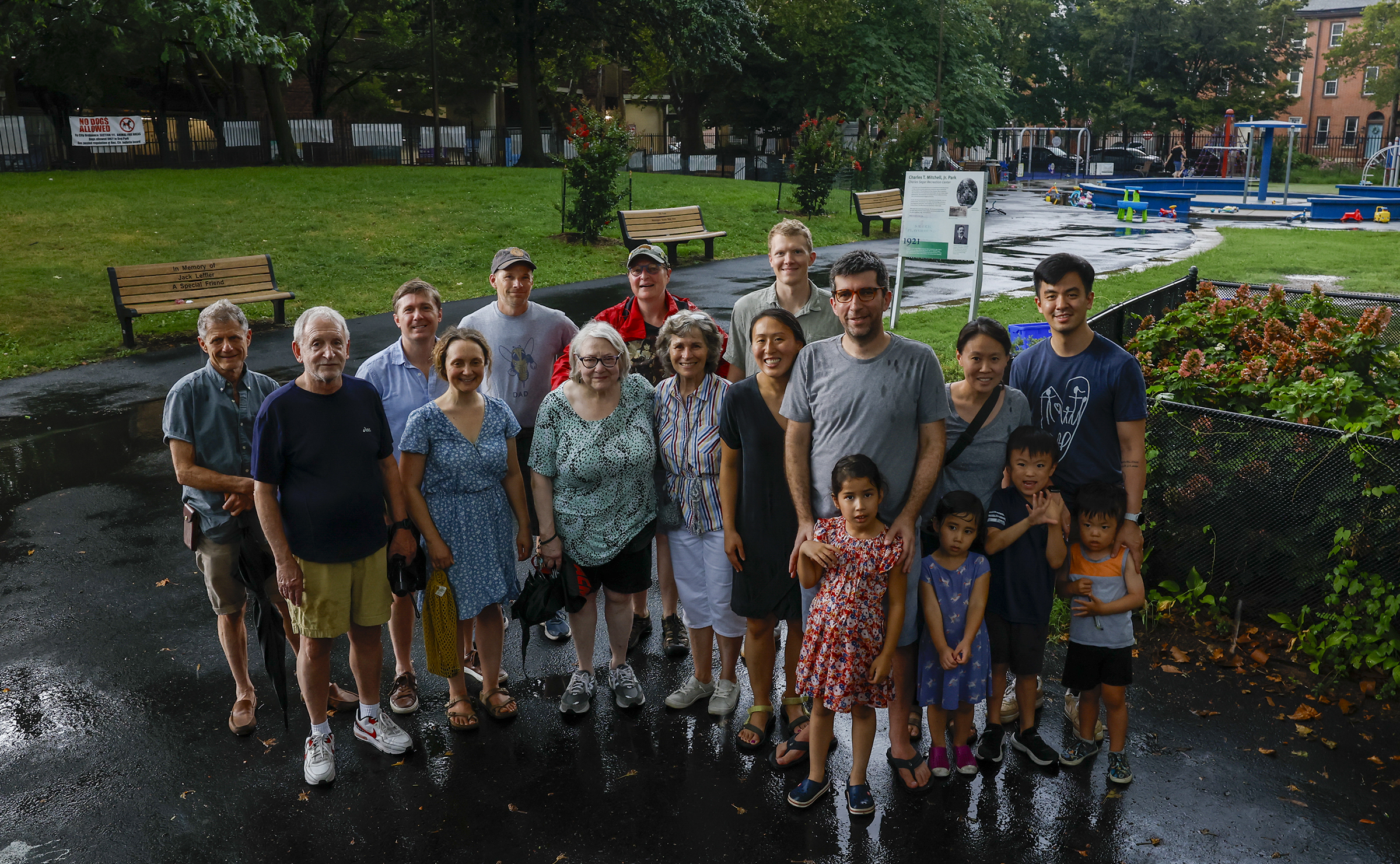
    Members of the Philadelphians for Rational Preservation gathered at Seger Park in the Washington Square West neighborhood on July 27 to talk about their opposition to the Washington Square West Historic District.

    Some property owners have grievances against the way the local nomination process works.

    In Philadelphia, citizens are empowered to nominate buildings to the local register — giving buildings protection from demolition or exterior changes — without input from the property owner until the Historical Commission considers the case.

    This practice persistently causes controversy, especially because there are few local incentives for homeowners whose properties get protected.

    In some localities, preservation protections are promulgated exclusively by planners. In others, owner consent is required.

    “The current historic nomination process is most often dictated by nongovernmental actors who operate without notice to property owners,” McClure said. “The administration’s bill is aimed at increasing transparency and basic fairness during the nomination process.”

    Mayor Cherelle L. Parker’s administration did not respond to a request for comment.

    What’s in the bill

    Squilla’s bill is thick with new provisions to the local historic ordinance. A key aspect of the legislation gives property owners at least 30 days before a pending nomination of their building is considered by the commission and protections kick in.

    While homeowners probably would not have time to radically alter the exterior of their house — and presumably wouldn’t demolish it — preservationists fear that developers will use the extra time to begin razing historic buildings.

    “No one likes the notice provision the way it’s written; that’s freaking people out,” Steinke said. “We made clear why we think that’s a problem, and we were heard. Of course, the development community would love it to be the way it’s currently expressed in the bill.”

    A Victorian home in the Spruce Hill historic district. Recently large new historic districts have been created to cover neighborhoods like Powelton Village, parts of Spruce Hill, and 1,441 properties in Washington Square West.

    The delayed provision particularly worries preservationists in combination with a proposed requirement that the commission approve permits — including demolition or exterior design work — if “material commitments” were made to plans before the attempt to protect the historic building.

    Other provisions include language to make it more difficult to protect land because it may house archaeological remains. It also limits the ability to consider a property for protection due to its relation to a landscape architect (as opposed to, say, a building designer).

    Why some preservation critics dislike the bill

    One critic of Squilla’s bill is a new group of residents angry at the costs of preservation protections to homeowners following the creation of the Washington Square West historic district.

    Despite their animus toward existing preservation rules in the city, groups like 5th Square and Philadelphians for Rational Preservation called the legislation a sop to those who least need help.

    “While this bill is a boon to developers, it doesn’t help ordinary Philadelphians,” said Jonathan Hessney of Philadelphians for Rational Preservation.

    He argues that Squilla isn’t curbing historic districts that burden homeowners, “while at the same time risks allowing genuinely historic properties to be destroyed in the new 30-day race to demolish or deface it creates.”

    A possible reform that some critics of the bill would like to see are flexible, tiered historic districts, where only a select group of buildings would be fully regulated. Demolition protections would still exist for many buildings, but most would not be subjected to oversight for changes like replacing a door or window.

    “That was discussed as something that the preservation community would like to see that was mentioned in the original draft and then stripped out,” Steinke said.

    Squilla said the pushback surprised him, given that negotiations have been held since June. He’s confident a compromise can be reached.

    Beyond the Preservation Alliance — the advocacy group with the most funding and pull in City Hall — the bill has caused alarm among historic activists.

    “It was a blindside to the progress that many stakeholders in the preservation community felt they were reaching with him,” said Arielle Harris, an advocate. “Squilla understands the preservation climate in the city — given that he was on the preservation task force — so this is out of left field.”

  • House of the week: A custom-built four-bedroom house in Bucks County for $799,999

    House of the week: A custom-built four-bedroom house in Bucks County for $799,999

    Joann Spatola and her then-husband were living in a Horsham townhouse in 1990 when builder Nicholas Braccia came to them with a proposition.

    He knew of a vacant piece of land near the Chalfont pizzeria the couple owned that would be the perfect place for a contemporary home they could help design.

    “We’d only been married two years, and we wanted something of our own,” she said. So she and Braccia went over blueprints and basically designed the house together.

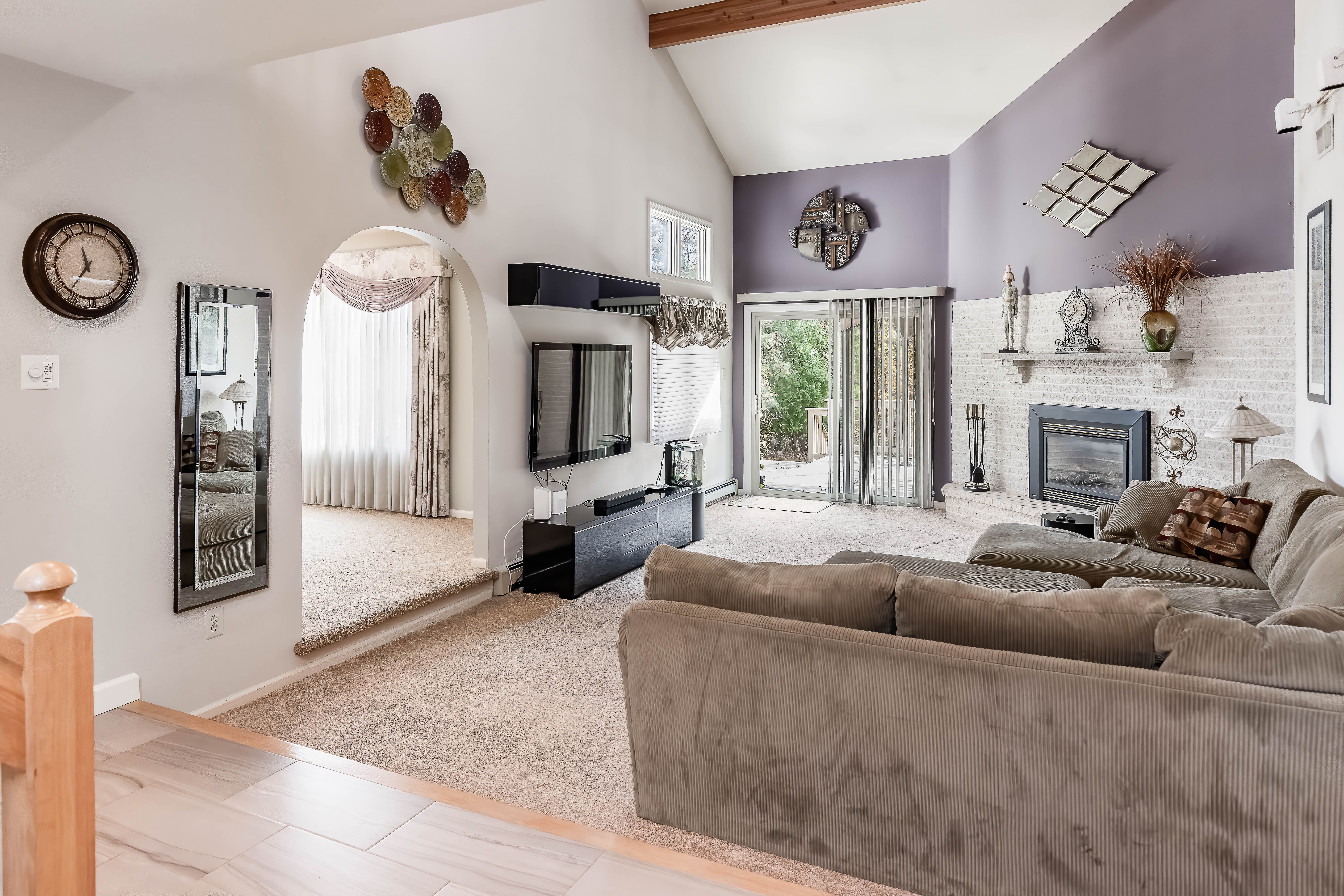
    The great room.

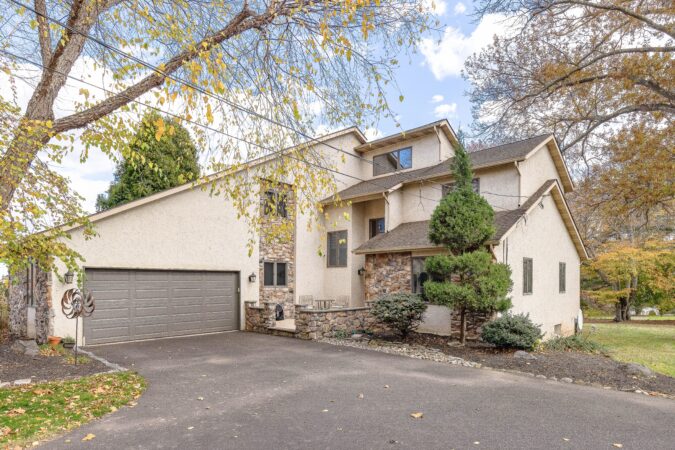
    She has spent 35 years in the four-bedroom, 3½-bathroom home.

    But she is single now, and her kids are grown, so she is ready to downsize to an over-55 community in North Wales.

    The house “has good bones,” she said. “They don’t make them like that any more.”

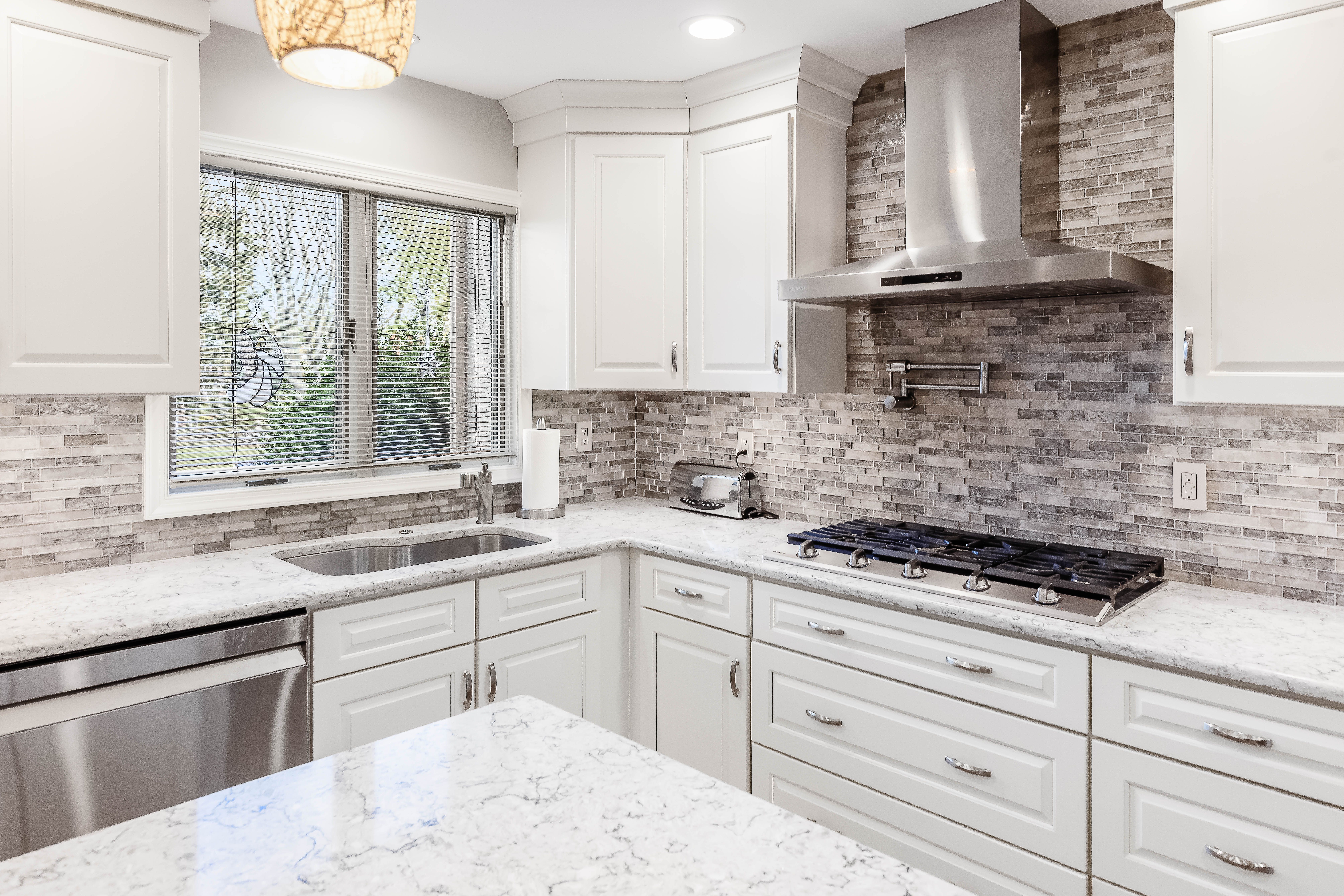
    The kitchen was redesigned five years ago.

    And she is particularly sad to lose the kitchen she helped design five years ago, with its quartz countertops and stainless steel appliances. “But it’s too much upkeep for me,” she said.

    The house has 2,671 square feet and is three stories, including the finished basement, which has been used as a home gym and includes a half bathroom.

    The dining area off the kitchen.

    The first floor has two bedrooms, a great room with a vaulted ceiling, the kitchen and dining room, and a full bathroom.

    The second floor has the primary bedroom and bathroom, with the main closet in the bathroom, as well as a double-bowl vanity and sunken bath tub. There is another bedroom and bathroom on this floor. And there is a walkout attic.

    The deck overlooks a large, landscaped yard with a gazebo.

    Dining room

    All mechanicals have been updated.

    The house is close to parks, schools, and shopping. It is in the Central Bucks West School District.

    It is listed by David Dupell of Coldwell Banker Realty for $799,999.

  • These bills meant to help Philly renters took effect on Tuesday

    These bills meant to help Philly renters took effect on Tuesday

    Philadelphia renters have some more to be thankful for this holiday season.

    City Council bills that cap rental application fees and allow renters to pay security deposits in installments take effect Tuesday.

    “The goal was to address the unaffordability of moving in for so many tenants in Philadelphia,” said City Councilmember Rue Landau, who introduced the legislation. “Rents have gone up tremendously, and people’s incomes have not.”

    Almost half of the city’s residents rent their homes. And the Philadelphia region is one of the least affordable major metros in the country for its apartment renters based on their incomes, according to a January report by the online real estate brokerage Redfin.

    FreshStartPHL, a move-in assistance program the city launched earlier this year to cover the equivalent of three months’ rent and moving expenses for eligible renters, had to stop accepting applications because it didn’t have enough funds to meet demand.

    The city is considering adding money to the program’s budget under Mayor Cherelle L. Parker’s H.O.M.E. initiative to build or preserve 30,000 housing units.

    Parker signed the bills capping renter application fees and allowing for security deposit installments in September.

    Capped application fees

    Starting Tuesday, the city is prohibiting landlords from charging a rental application fee of more than $50 or the cost of running a background and/or credit check, whichever is less, within a 12-month period. Landlords are prohibited from charging application fees unless they are used to cover the cost of these checks.

    Landlords can’t perform a “hard pull” credit check that affects a prospective tenant’s credit score and have to provide tenants with a copy of any credit and/or background check performed.

    And landlords who have more than one unit available can charge a prospective tenant only one application fee if the tenant applies for multiple units. Landau said some renters had been paying $100 or more per application. That adds up when renters have to apply for multiple homes.

    “Historic discrimination of Black and brown, immigrant, LGBTQ, and disabled Philadelphians causes higher barriers for them to overcome in order to secure housing, with increased costs as they pay application fees throughout the city,” Landau said. “As a city, we still need to tackle housing discrimination in a serious way. But in the meantime, this bill will reduce those costs.”

    Payment plans for security deposits

    Also starting Tuesday, some landlords will have to allow renters to pay a portion of their security deposit in installments if the deposit is more than one month’s rent. According to state law, landlords can charge up to two months’ rent for a security deposit, with the charge of the last month’s rent included in the tally.
    Renters can choose to pay the cost beyond one month’s rent in equal installments over three months.

    This ordinance does not apply to landlords with one or two units, a concession Landau made after pushback from other Council members and small landlords.

    Landau said that when renters have to come up with a security deposit of multiple months’ rent, “it creates a barrier that many people can’t overcome,” which leaves people stuck in shelters, unsafe homes, or squeezed into overcrowded homes with family or friends.

    “We’ve seen a national conversation about affordability happening because people are rightly concerned” about the costs of necessities, Landau said. “If they have to move for any reason, the affordability crisis is just exacerbated.”

  • How Chestnut Hill’s main street is staying relevant in the Amazon era

    How Chestnut Hill’s main street is staying relevant in the Amazon era

    At lunchtime on a Thursday, a week before Thanksgiving, Chestnut Hill was buzzing.

    Inside the newly expanded Matines Café, almost every table was full. People sipped warm drinks from large mugs and ate Parisian croissants and quiche. Bottles of prosecco sat on ice by one large table adorned with Happy Birthday balloons.

    McNally’s Tavern was bustling, too, with regulars sitting at the bar and at tables inside the cozy, nearly 125-year-old establishment atop the hill. Multiple generations gathered — a son taking a father out to lunch, a mother with a baby in a stroller, and two sisters, Anne and Meg McNally, running the place.

    Behind the storefronts along Germantown Avenue’s main drag, some people perused the boutiques, while others typed away on laptops in coffee shops.

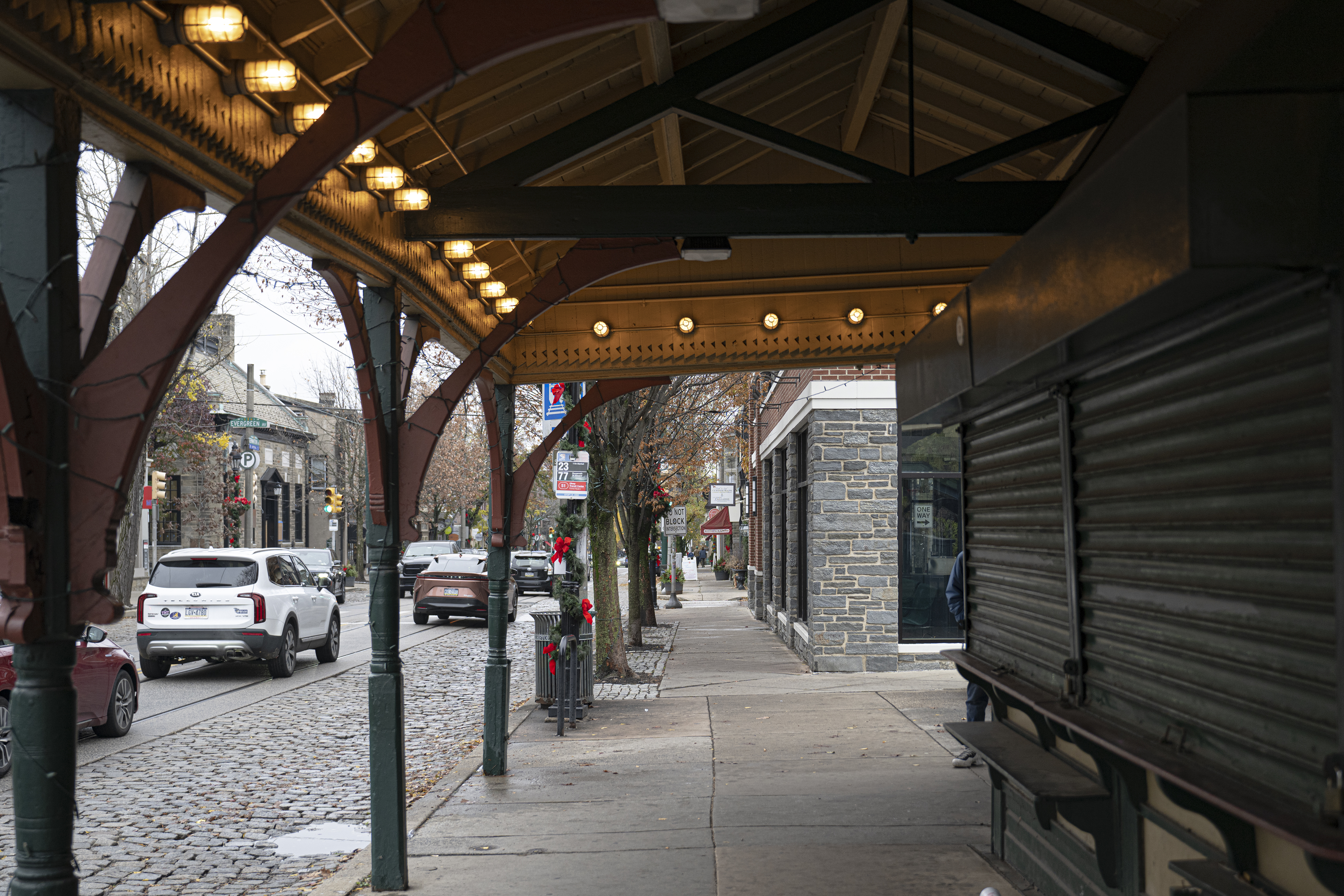
    In the northwest Philadelphia neighborhood known for its wealth and postcard-picturesque aesthetic, the small-town charm of longstanding establishments — four are more than 100 years old — is now complemented by the shine of some newer shops and restaurants. Several Chestnut Hill business owners said the variety has helped both old and new spots succeed despite broader economic challenges, including inflation and tariffs, and the loss of a few restaurants.

    A view down Germantown Avenue from the Chestnut Hill SEPTA Regional Rail station.
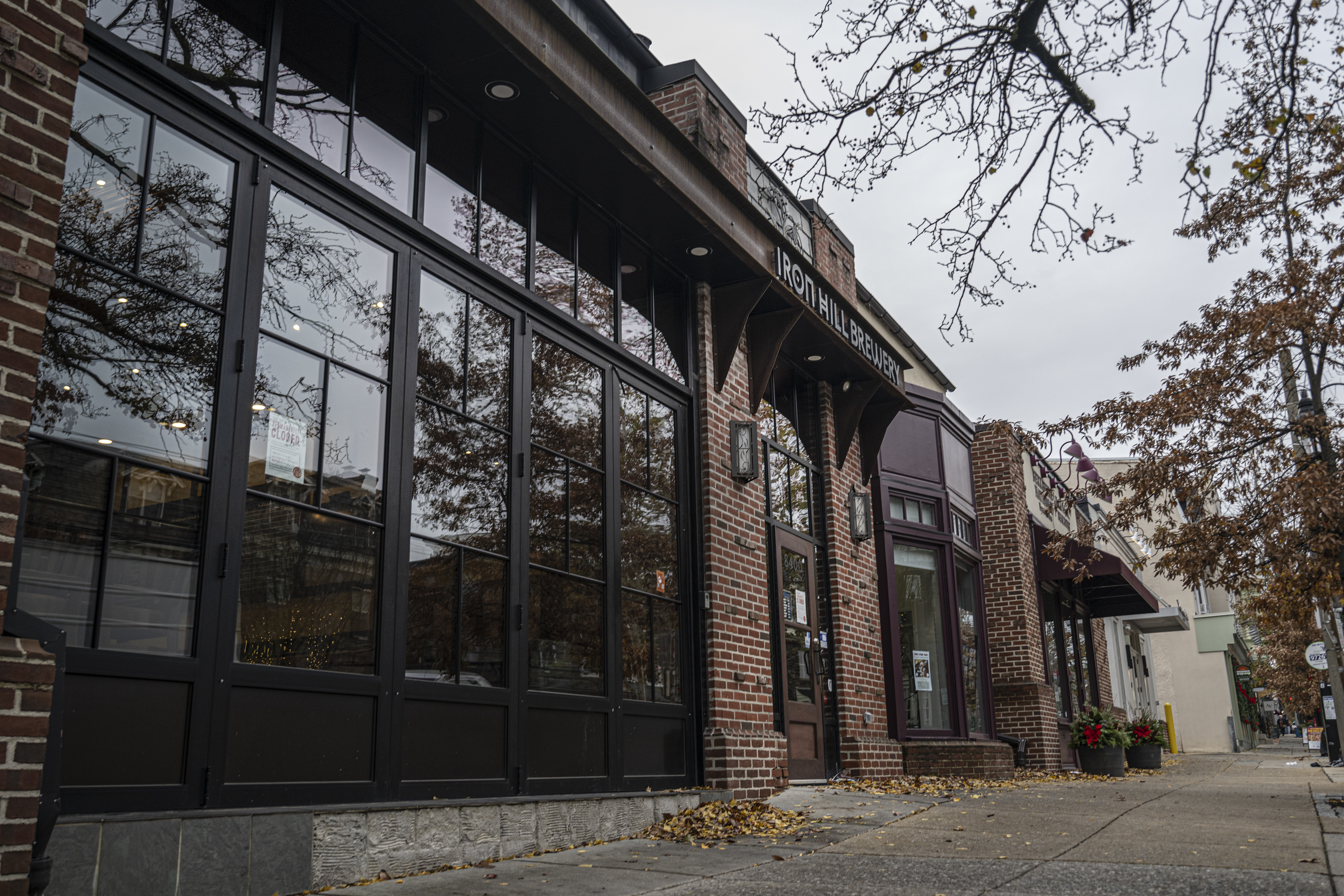
    The closed Iron Hill Brewery is shown in downtown Chestnut Hill on Nov. 19.

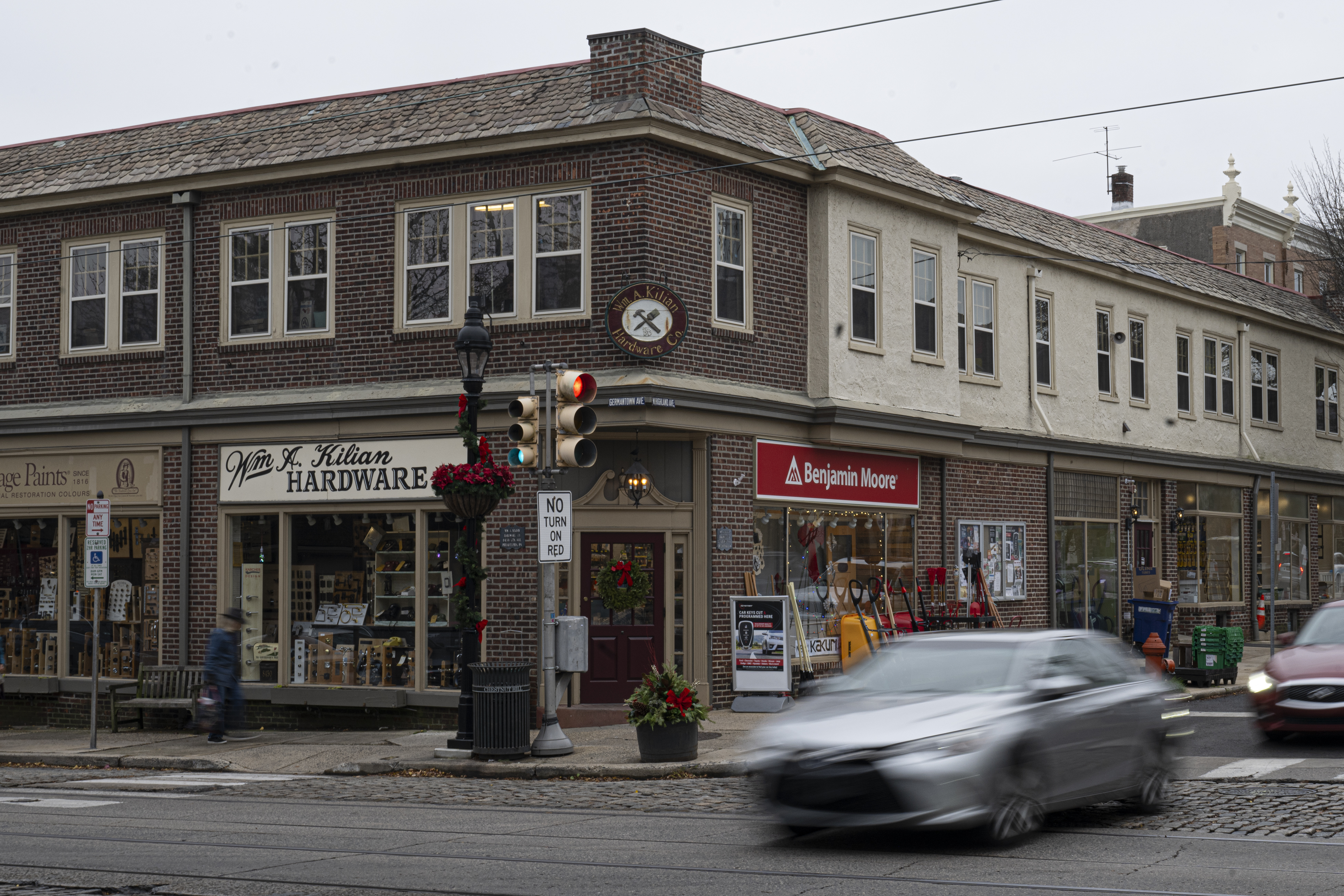
    As the owner of Kilian Hardware, which has been in business for 112 years, Russell Goudy Jr. has watched the avenue change. Fifty years ago, he said it was “basically like a shopping mall,” a one-stop shop for everyday needs.

    In recent years, however, the neighborhood has focused on attracting and retaining unique food and beverage businesses, “quaint, specialty shops,” and service-oriented businesses, which Goudy said offer experiences Amazon and other e-commerce platforms can’t replicate.

    “If you’re not giving people an experience in today’s economy, it’s very tough to compete,” said Nicole Beltz, co-owner of Serendipity Shops, which for a decade has had an expansive store on Germantown Avenue. And providing a memorable experience is never more important than during the lucrative last few months of the year.

    “When you come to Chestnut Hill over the holidays, you get what you came for,” Beltz said. “You get that charming feeling of being somewhere special for the holiday.”

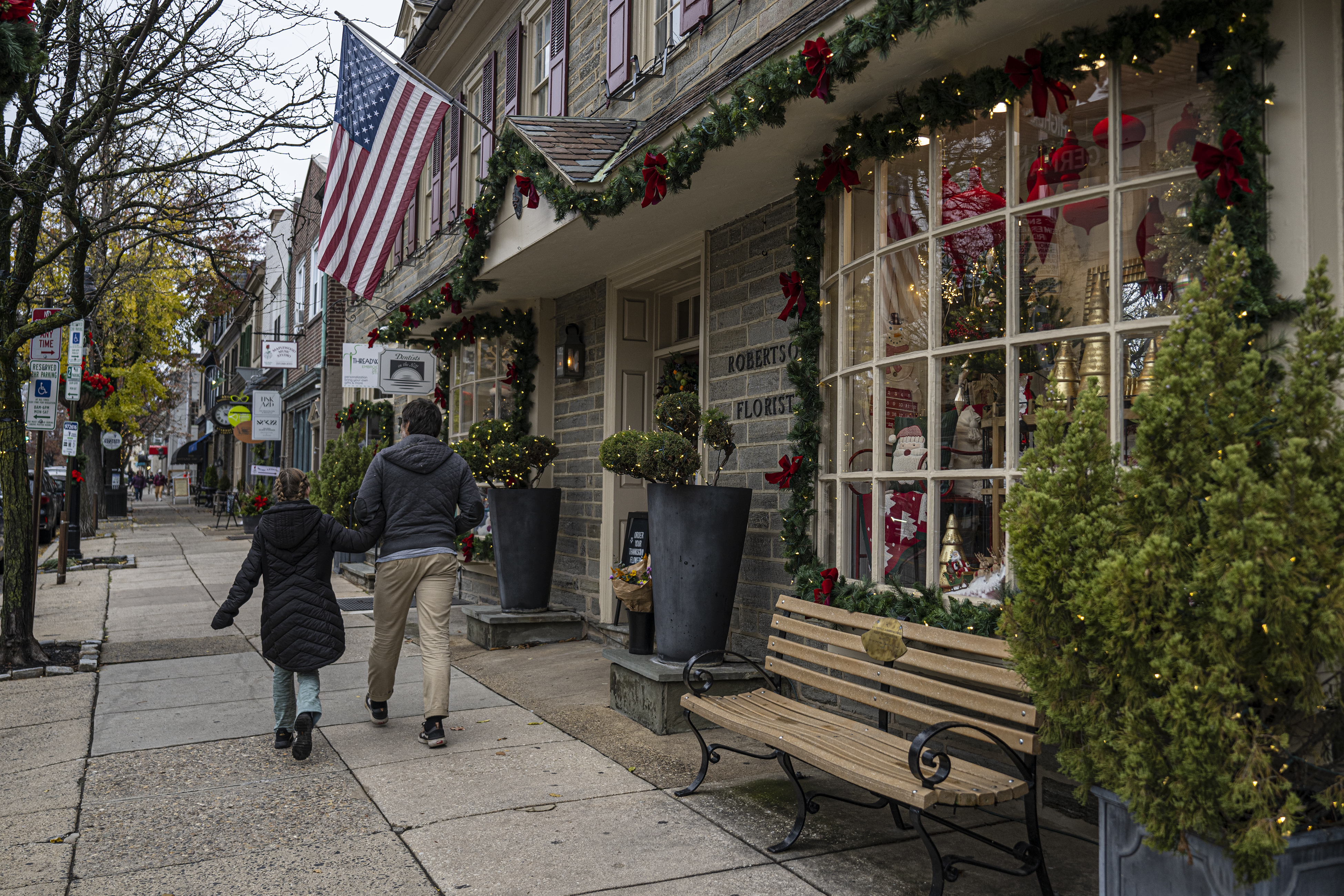
    People walk by holiday decor outside Robertson’s Flowers & Events in Chestnut Hill earlier this month.

    ‘New vitality’ coming to the Chestnut Hill restaurant scene

    During the holidays and all year long, Chestnut Hill business owners said they’re grateful that the neighborhood has held onto its charm despite recent challenges.

    During the pandemic, “it definitely felt a little grim and dark,” said Ann Nevel, retail advocate for the Chestnut Hill Business District. “The impressive thing is the old-timers, the iconic businesses, and some of the newer restaurants … pretty much all were agile enough to tough it out.”

    And a slew of other businesses have moved into the community since then. In the last four years, 20 retail shops, 20 service businesses, and 10 food and beverage spots opened in Chestnut Hill, Nevel said, while several existing establishments expanded.

    Among them was Matines Café, which opened a small spot on Bethlehem Pike in 2022 and expanded this fall to a second, much larger location on Highland Avenue. The café serves 500 people or more on weekdays, according to its owners, and even more on weekends.

    Sitting inside their original location, which is now a cozy children’s café, Paris natives Amanda and Arthur de Bruc recalled that they originally thought they’d open a café in Center City, where they lived at time. Then, they visited Chestnut Hill and fell in love, despite “a lot of empty spots” there around 2022, Amanda de Bruc said.

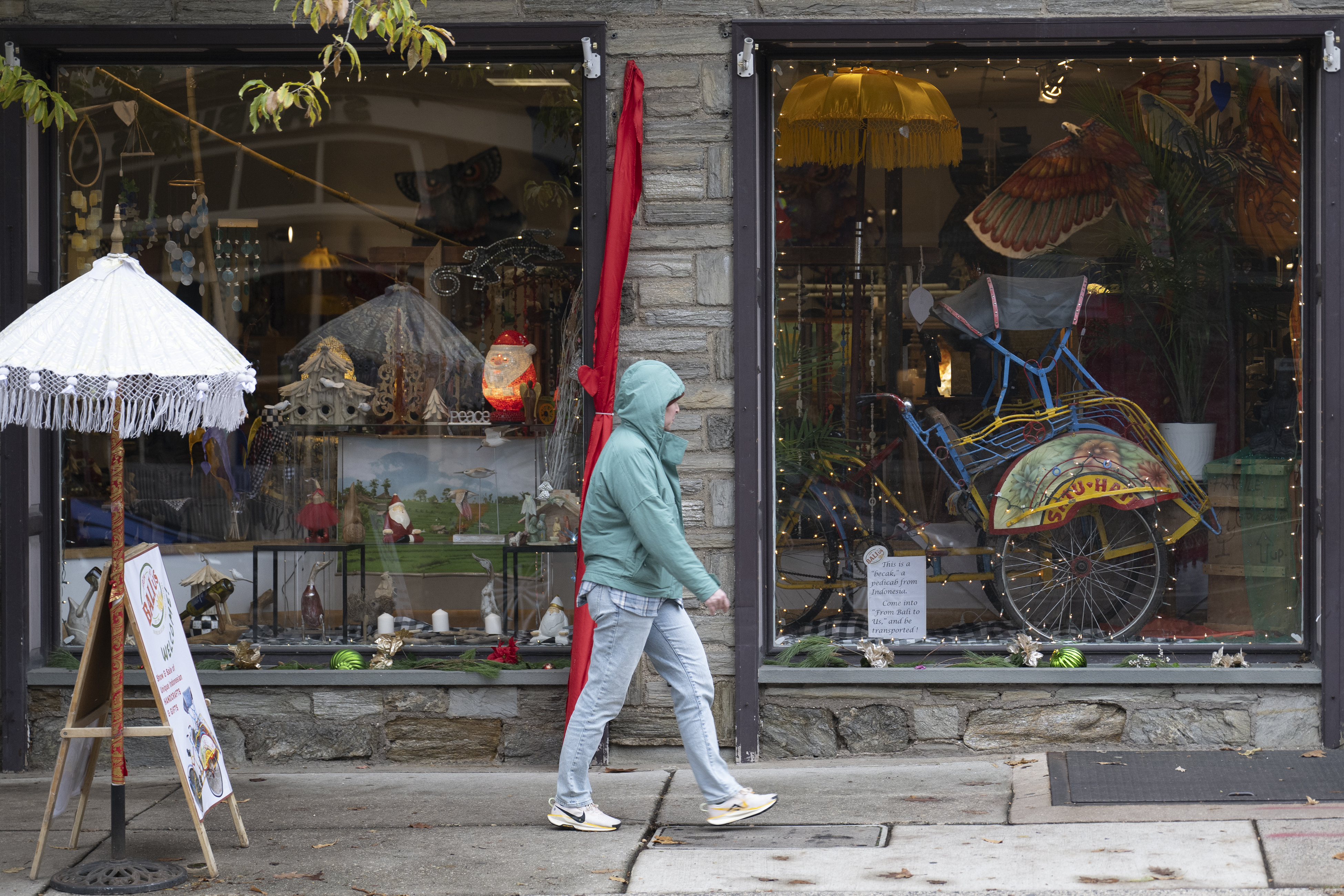
    A colorful storefront along Germantown Avenue in Chestnut Hill.

    “We liked the idea of living in the suburbs, which technically Chestnut Hill is not the suburbs, because it’s still Philly,” she said. But “we were looking for something that we were more used to, like Paris. There are so many boutiques in such a small area,” and everything is walkable.

    The opening of shops and cafés like Matines became a “catalyst for this new vitality, a new, more contemporary energy that has taken hold in Chestnut Hill,” Nevel said. Soon, “we’re going to see that new vitality in the restaurant scene,” including in some long-vacant storefronts.

    In 2026, former Four Seasons sommelier Damien Graef is set to open a wine bar, retail store, and fine-dining spot called Lovat Square off Germantown Avenue, Nevel said. On the avenue, a café-diner-pub concept called the Blue Warbler is under construction and also slated to open sometime next year.

    Kilian Hardware in Chestnut Hill has been in business for 112 years.

    In downtown Chestnut Hill, there are still a few empty spots, including those left by Campbell’s Place, a popular restaurant that closed this summer; Diamond Spa, which closed this fall; Iron Hill Brewery, which closed in September (right before the regional chain filed for bankruptcy); and Fiesta Pizza III, which closed last year.

    Kismet Bagels, a popular local chain, was set to fill one of the spots this summer, but its deal fell through, co-owner Jacob Cohen said in a statement. He said they could “revisit the Chestnut Hill neighborhood” in the future.

    While the future of Iron Hill will be dictated by bankruptcy proceedings — which include an auction of assets set for next month — stakeholders say conversations are ongoing about some of the other vacancies.

    Steve Jeffries, who is selling the Campbell’s building for $1.5 million, said he’s gotten a lot of interest from people who want to revive the nearly 3,000-square-foot space as a neighborhood pub, but one that is “more cutting edge.” Perhaps, he said, one that is not focused on craft beer, which has decreased in popularity, especially among younger generations.

    “The town is just screaming for other opportunities for nightlife and sports bars,” said Jeffries, executive vice president of Equity CRE. “There has been a connotation in the market that Chestnut Hill was kind of older, stuffy, that it wasn’t a nightlife town.”

    But that’s changing, Jeffries said.

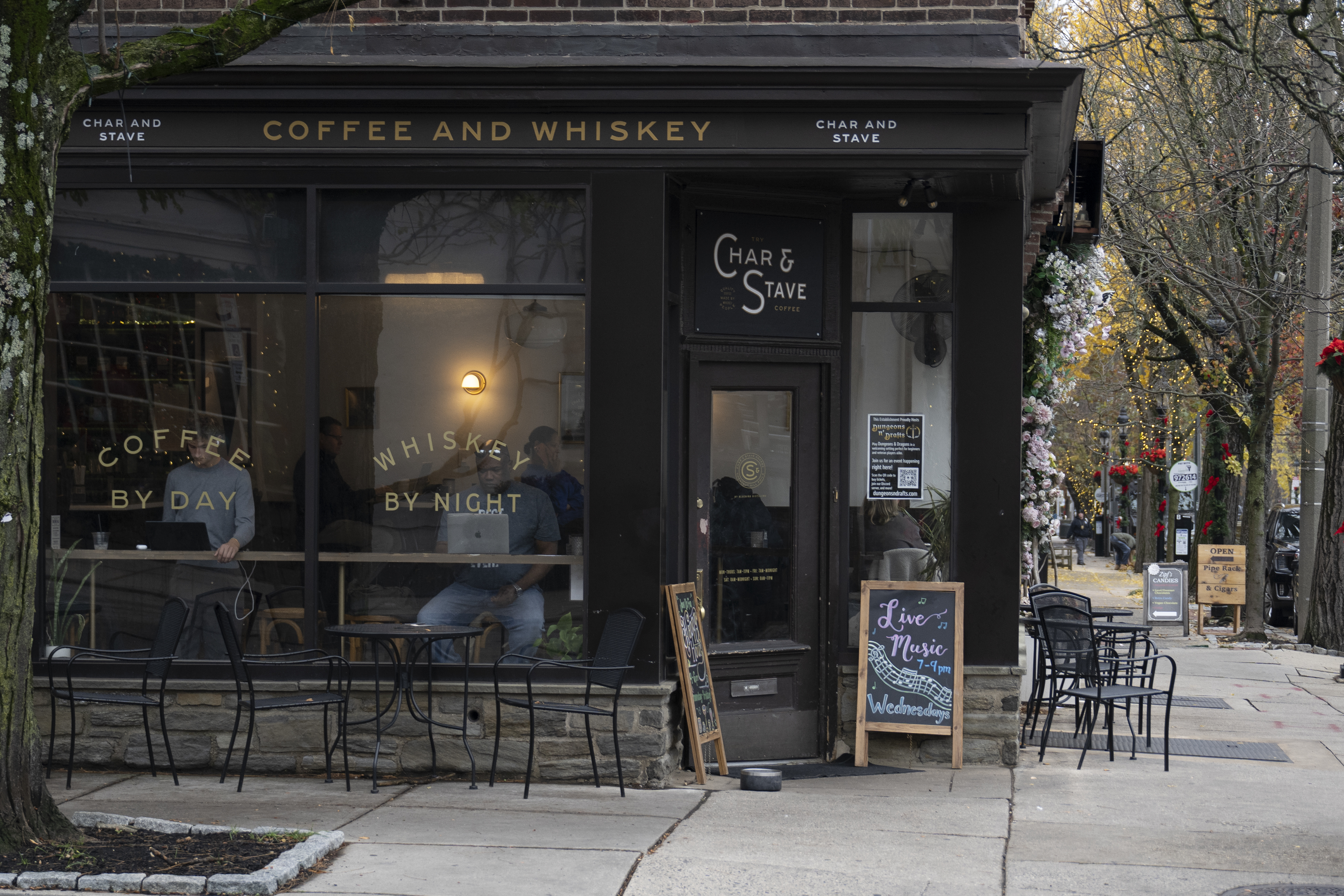
    Char & Stave, an all-day coffee and cocktail bar, has done great business since moving into Chestnut Hill, its owner, Jared Adkins, said.

    Just ask Jared Adkins, owner of Char & Stave, an all-day coffee and cocktail bar at the corner of Germantown and Highland Avenues.

    After Nevel visited Ardmore and saw the success of Adkins’ original Char & Stave, she recruited him to open a Chestnut Hill location. It started as a holiday pop-up in 2022, then became a permanent presence the next year. Since he moved into town, Adkins said, business has been booming.

    “We’re really just busy all day long,” said Adkins. The café is open until 11 p.m. during the week, midnight on the weekends, and it often brings in musicians and hosts events.

    Adkins describes Char & Stave as a place where drinkers and nondrinkers alike can spend time together, and where people can get work done with coffee or a cocktail beside them: “It’s really a gathering place that fills a niche of a nice cocktail place.”

    More changes to come for Chestnut Hill

    Businesses along Germantown Avenue in Chestnut Hill are decorated for the holidays.

    Chestnut Hill business leaders and community members say they’re optimistic about the neighborhood’s continued evolution.

    As Brien Tilley, a longtime resident and community volunteer, ate lunch inside Cosimo’s Pizza Cafe, he said the community is doing well. But, he added, “it could always do better. It’s always in transition.”

    Nevel noted that restaurants require more capital to open than other businesses, so it can take awhile to fill those larger holes downtown.

    “The economy is tough,” said Anne McNally, a fourth-generation owner of McNally’s, as she sat by the tavern’s front window overlooking Germantown Avenue. But in Chestnut Hill, she gets the vibe that the community “wants us to be successful.”

    McNally and Goudy, of Kilian’s, both noted that their families bought their buildings decades ago. That has contributed to their longevity, both said, as has evolving with the customer base.

    For the McNally family, that meant transitioning from a “bar-bar,” with no clock or phone, to a bar-restaurant that closes at 10 p.m. For Goudy, it meant soliciting online orders and walk-in business from out-of-town and even out-of-state customers whose older homes require unique hardware.

    “Everything is changing,” Goudy said. “It’s important to keep changing and not to try to go back to where you were before.”

  • What a professional home appraiser wants you to know

    What a professional home appraiser wants you to know

    If you’re buying a home, refinancing your mortgage, or just want to know how much your home is worth, you’re probably going to need a property appraisal.

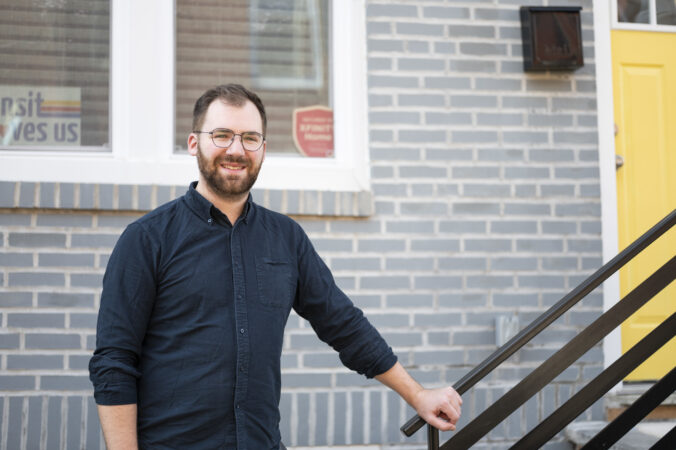
    At its most basic, “an appraisal is an opinion of value for a home,” said Matthew Sestito, a Philadelphia-based appraiser who works throughout the five-county area for the national company Velox Valuations.

    Lenders require borrowers to get them for mortgages and lines of credit against a home. Families get appraisals to assess the value of properties after a divorce or a loved one’s death.

    Costs depend on the scope of work, the type of property, and the borrower’s bank, but appraisals can range from about $300 to thousands of dollars, Sestito said.

    A lot of people don’t understand the appraisal process, he said, and they’re very nervous the first time an appraiser comes to their home.

    “You don’t have to be nervous,” he said. “It’s an easy inspection.”

    The Inquirer talked to Sestito, who has been a licensed appraiser since 2009, about what people should know about home appraisals. This interview has been edited for length and clarity.
    When you do an appraisal, what factors do you take into account?

    The basic number of bedrooms, bathrooms. And then the amenities: decks, patios, garages. And then the overall condition: updated kitchens, updated bathrooms. And so on.
    Location is always the No. 1 thing in real estate. The market dictates what is desired. And then there’s submarkets to each market. And what each market is looking for varies.

    And then there’s different price points. A bathroom in a million-dollar home is different than a bathroom in a $300,000 home.

    What the market is telling us is what we use to determine our opinion of value.

    What should homeowners expect when an appraiser comes to their property?

    The length of an appraisal depends on the size of the home. For example, if I were to do a standard South Philly rowhouse with two stories, three bedrooms, it takes about 15 minutes.

    I’ll take a picture of the front of the house, the street view. And then when I come in the door, it’s a photo of the living room, dining room, kitchen, back of the house, backyard, bathrooms, each bedroom, then the basement.

    Then I’ll take some measurements: the width of the house, the length.

    I’ll talk to the homeowner and ask them anything they’ve done to the house, updates like kitchens, bathrooms, flooring, windows.

    And then I’ll explain to them that I’ll type the report, give it to the lender, and then it’s basically out of my hands after that.

    One of the common questions is: Do I get a copy of the report? The answer is no, from me. I’m not legally allowed to give you a copy of the report if this is for a refinance or a purchase. The bank is the client who orders the report, and legally, whoever orders the appraisal is the owner of the appraisal.

    If they want to release it to you, they will. I don’t think I’ve come across a bank saying, “No, you can’t have a copy of it.”

    What types of property design choices and features matter for an appraisal?

    It goes back to the market. But you can’t go wrong with updated kitchens, updated bathrooms, flooring, windows, roof, driveway.

    Parking, especially in the city, is almost No. 1. If you have a spot to park, that’s like gold.

    And then adding a deck, a roof deck, patio, all those things add value to the house.

    It’s all determined by what the market will be willing to pay.

    How should a homeowner prepare for an appraisal?

    You know, make the house look presentable. You’re showcasing your house.

    I always tell people clutter doesn’t matter. I look through the clutter. So if there are toys on the floor, I don’t even see them. But it’s better to clean up.

    Turn all the lights on. It looks better in the photos.

    Lenders are looking for any safety issues: missing handrails, broken steps, anything that could cause a health or safety issue, any mold. Get them taken care of, because they will call for that repair. Missing handrails in the basement is one of the biggest ones.

    And not having smoke and carbon monoxide detectors. It just started recently within the past couple years that they started asking for those to be in the homes.

    How do you choose and use comps (sales of comparable homes)?

    Lining each comp up and seeing what each home has, how many bedrooms, how many bathrooms, and just comparing each home. If you have a three-bedroom house, I’ll start looking for three-bedroom homes.

    I start out [looking] at [comparable homes that sold within] three months, then six months, then one year if need be.

    Typically, within the city, you try to stay within a quarter mile. I’ll expand to a half a mile sometimes if I need comps. But you typically want to stay within a quarter mile of the home.

    I’ll narrow it down to where I have some matches of the property that I’m trying to appraise. I look at a ton of houses every day.

    What are common misconceptions people have about appraisals?

    There are a lot of checks and balances when we hand in the report. The report runs through a computer software program. There are multiple reviewers. And they’re looking at everything. They’re asking why you didn’t use certain comps or why you did use these comps.

    There are a lot of regulations that we have to follow. It’s not just as simple as taking photos and saying your house is worth this amount.

    What happens if a house appraises differently than you expected?

    There is a formal process. You can file an appeal and then you provide some comparables that you think the appraiser should have used. And there’s a review process.

  • A 29-year-old found his forever home in Point Breeze for less than $400K | How I Bought This House

    A 29-year-old found his forever home in Point Breeze for less than $400K | How I Bought This House

    The buyers: Cameron LaFreniere, 29, software engineer

    The house: a 1,260-square-foot rowhouse in Point Breeze with three bedrooms and 2½ baths, built in 1925.

    The price: originally listed for 350,000; sold for $340,000

    The agent: Rachel Shaw, Philly Home Girls

    The ask: Cameron LaFreniere was looking for a new city to call home and wanted to escape the stress of renting. Originally from Rhode Island, he considered settling down in Providence, but decided on Philadelphia because “the prices are significantly lower,” he said. It’s also easier to get around without a car, which was important to him.

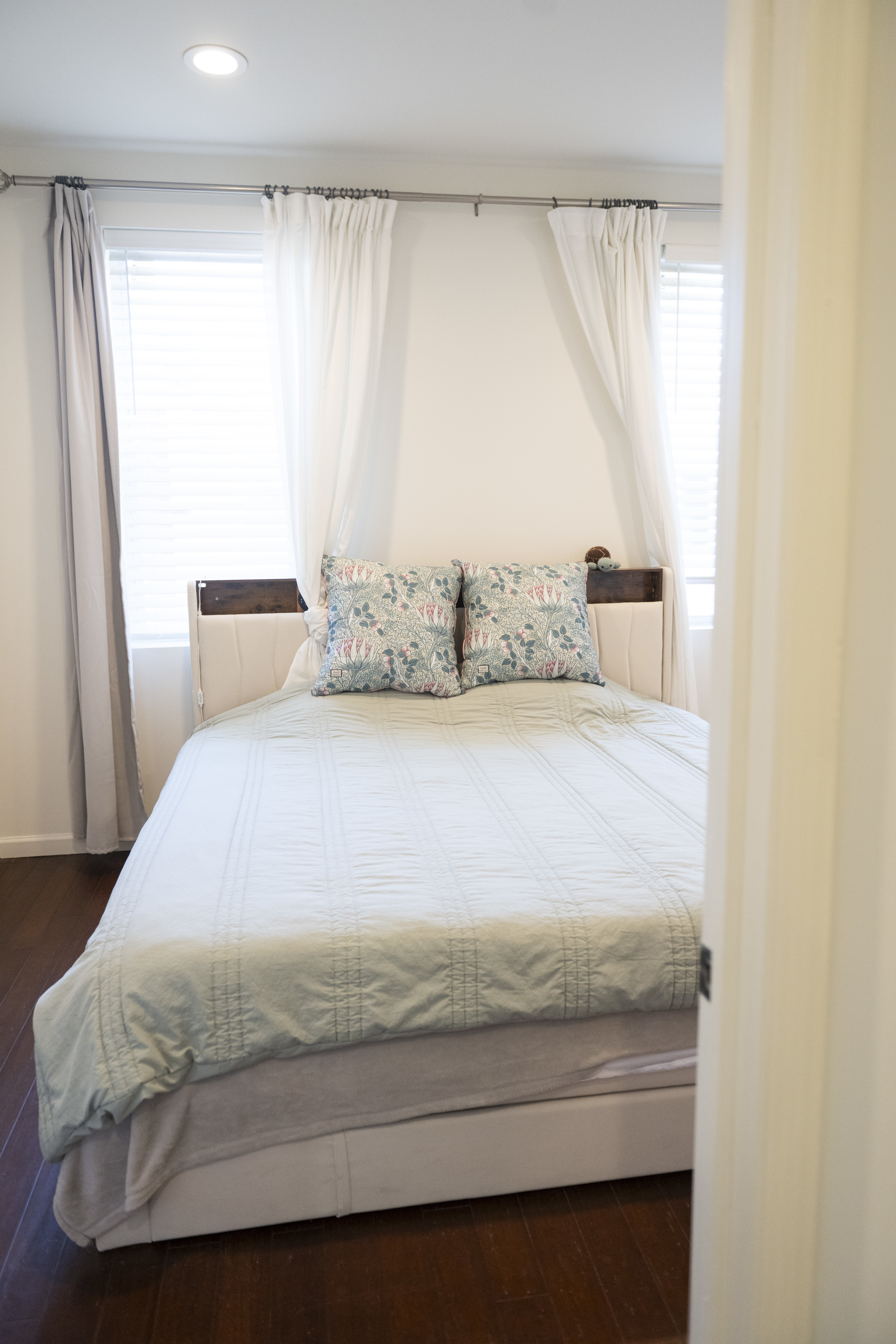
    The primary bedroom at Cameron LaFreniere’s home in Point Breeze.

    He wanted a house that could be big enough for a family one day. “Basically something that could be a forever home if I wanted it to be,” he said. His budget was between $275,000 and $400,000, and he was only interested in historic rowhouses.

    “I would much rather have an old build that’s well taken care of,” said LaFreniere, “because they’re often much more cost-effective in terms of maintenance.” He wanted something recently updated with multiple bathrooms, space for a home office, and within biking distance of Center City.

    The search: LaFreniere began his search in December 2024 and spent months scouring South Philly for the perfect place. “I probably walked at least a third of South Philly,” he said. “I just really wanted to get a feel for the area. It’s one thing to look at something online; it’s another to experience it for yourself.”

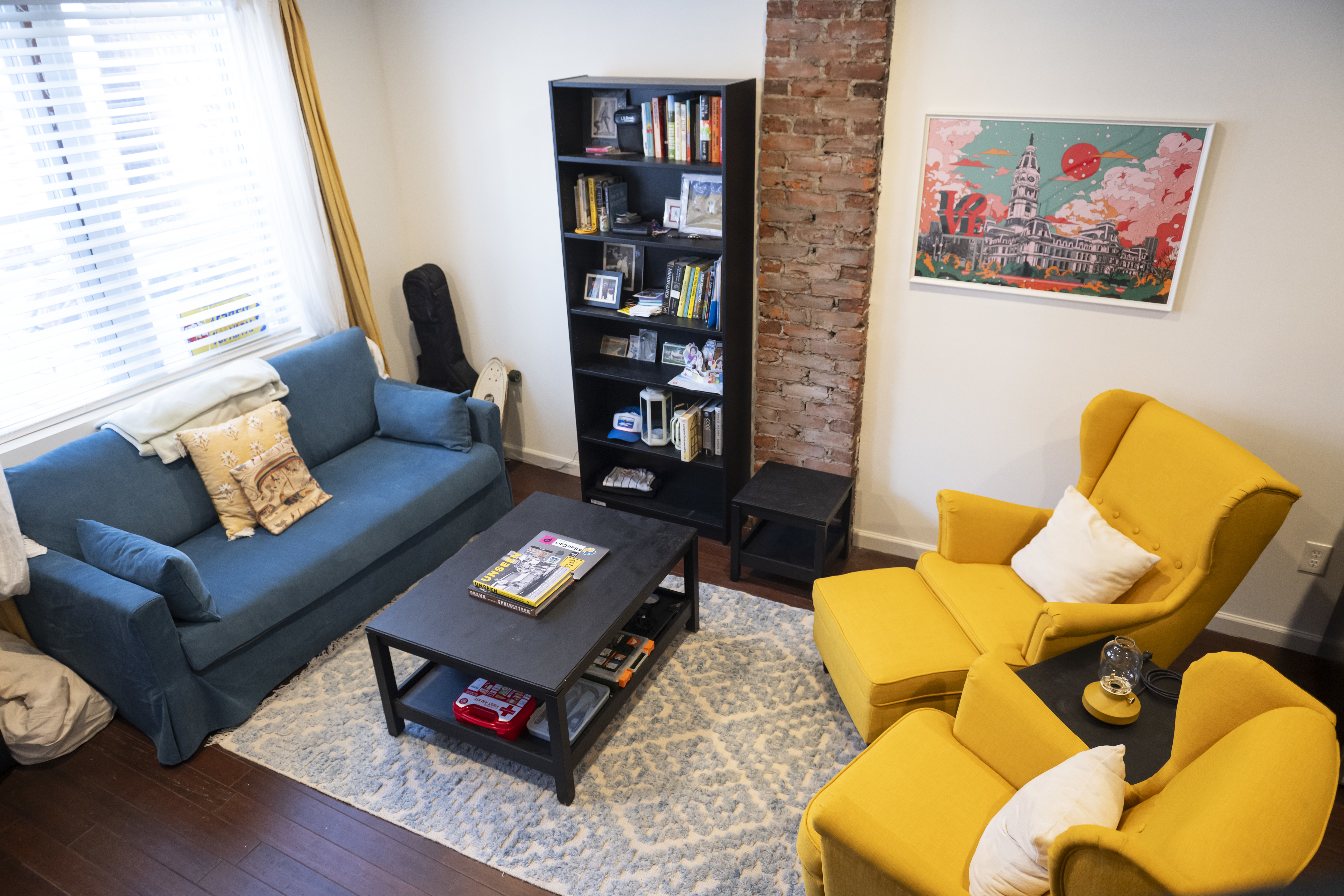
    LaFreniere outfitted the living room with all new furniture.

    Across multiple weekend trips, LaFreniere looked at 25 properties, including eight on the final day of his search. He looked at a few places in Wharton Square and one in Graduate Hospital. He also saw one that was one street over from the house he ultimately bought — it cost $20,000 more. “It had nicer floors and was staged,” he said. As for the house he wanted, “there wasn’t much competition,” LaFreniere said.

    Or it may have something to do with its location. “Point Breeze is a balanced market,” said LaFreniere. “There is a good amount of supply and places being fixed up. It’s a first-time buyer’s ideal situation.”

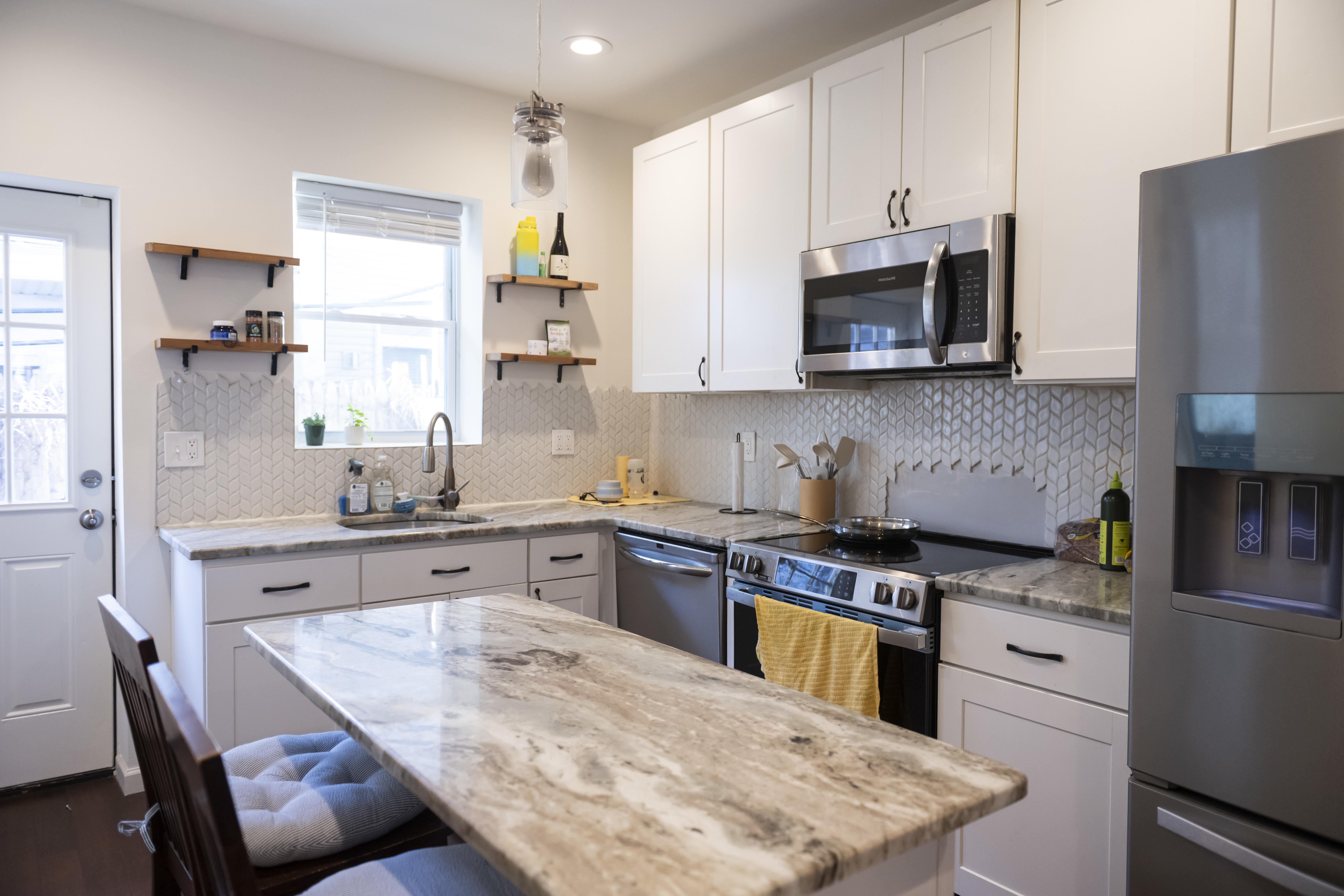
    One of LaFreniere’s favorite rooms in the house is the kitchen, which was updated in 2017.

    The appeal: LaFreniere liked that the house had been updated in 2017. It has central air and heat and the “quality of the kitchen is fantastic,” he said. At the same time, it still has several of its original features, like the staircase. “It’s the best of both worlds,” said LaFreniere.

    The deal: On the afternoon LaFreniere visited, the seller had just dropped the price by $10,000. He decided he wanted it a few hours later and offered the new asking price of $340,000. There weren’t any competing offers, and the seller accepted.

    LaFreniere was concerned about the floors, which he described as “a little beat up,” and asked for money to replace them. The seller said no but agreed to cover $3,000 of whatever issues the inspection turned up.

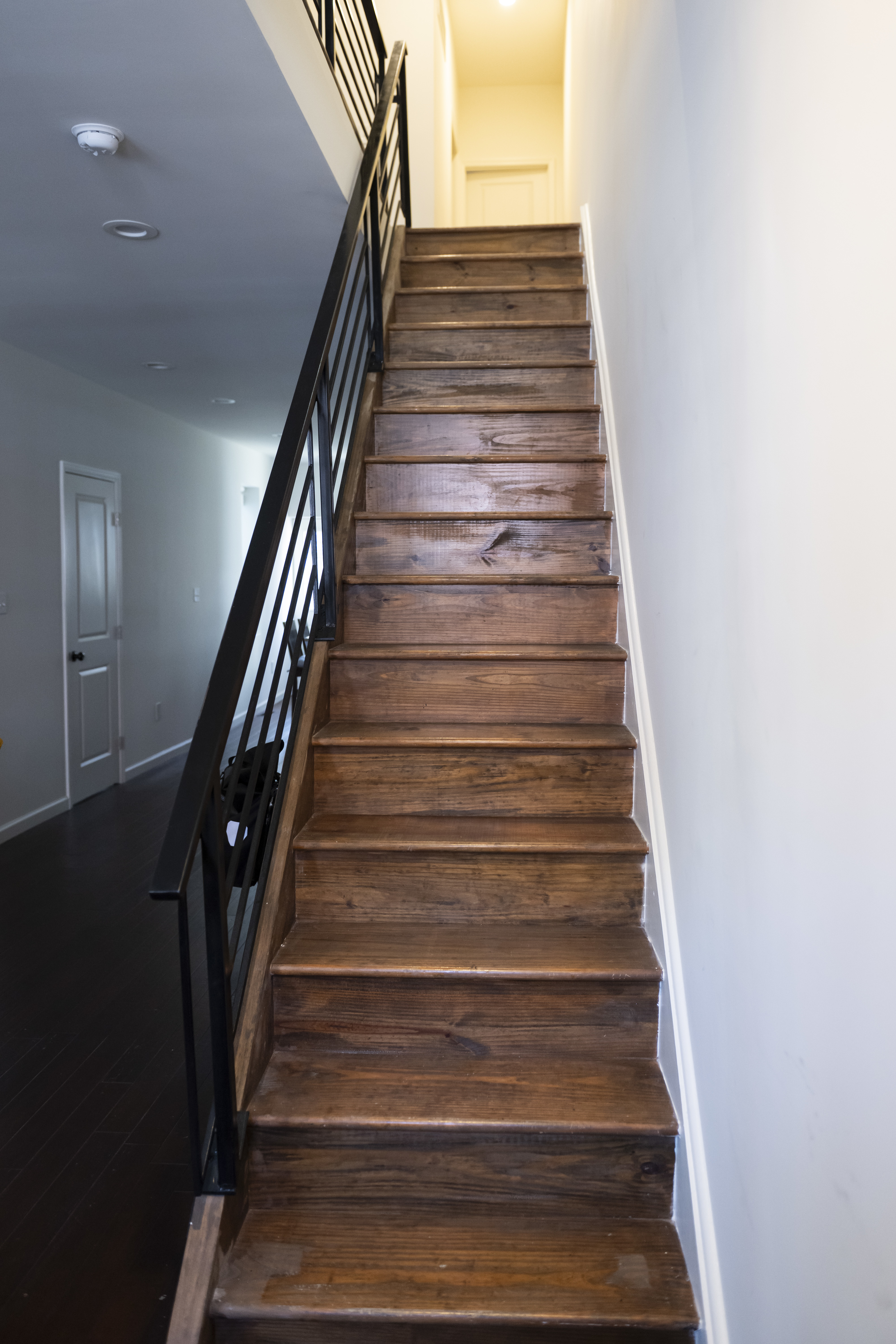
    LaFreniere’s house features original details like the wooden staircase in the living room.

    The money: LaFreniere had $30,000 to spend on the purchase of his home. “I saved this from working in a tech career for the past six years,” he said. It wasn’t always easy. He had significant student loans to pay off as well. To help keep costs down, he lived with roommates.

    Of that $30,000, LaFreniere used $10,200 for a 3% down payment. Because he lived in an eligible census tract, he qualified for community reinvestment financing through OceanFirst’s HelpingHome loan, which allowed him to skip private mortgage insurance and lowered his interest rate from 7% to 6%. It also covered $6,000 of his closing costs.

    The move: LaFreniere didn’t want to lug a bunch of stuff to Philadelphia from Providence, so he donated most of his furniture and half his belongings to local charities and thrift stores. He didn’t hire movers or rent a car. He took the train instead. Come moving day, all he had was a suitcase full of clothes and his bicycle, which he brought with him on the Amtrak. He moved in on June 25.

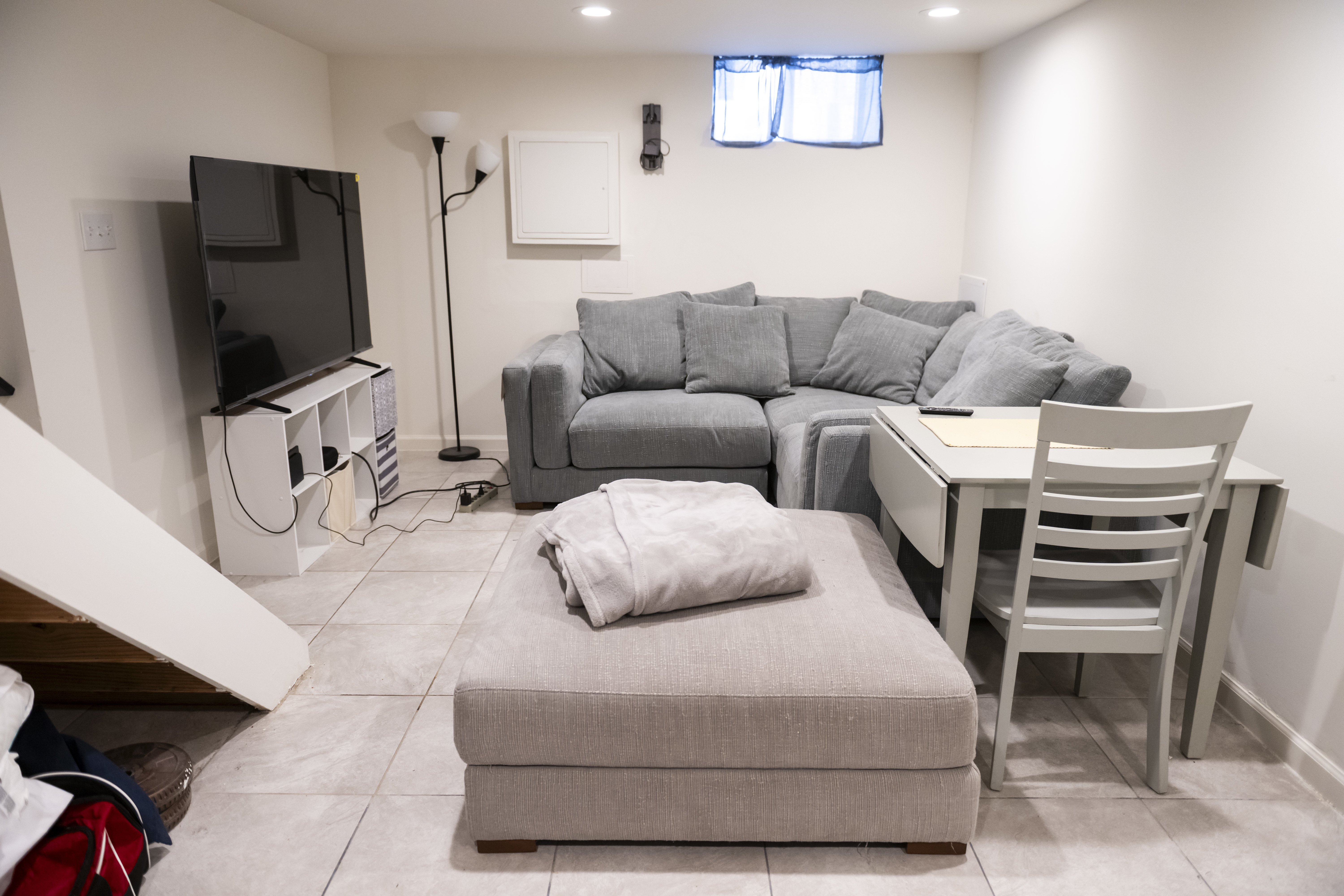
    The basement, also known as the “man cave” at Cameron LaFreniere’s home in Point Breeze.

    Any reservations? LaFreniere says he doesn’t have any regrets. “I knew what I was getting into,” he said. Certain parts of homeownership, like “how to do the trash,” were new to him but didn’t take long to figure out. The only thing he has had to contend with since moving in is cockroaches. But that was just once. “No recurrent pest problems,” he said.

    Life after move: LaFreniere spent the last of his savings, about $10,000, on furniture. “I basically moved with nothing,” he said, “and then bought everything at Ikea.” He thought about redoing the floors but decided against it. The rugs and furniture cover the imperfections.

    Did you recently buy a home? We want to hear about it. Email acovington@inquirer.com.

  • Robert A.M. Stern, renowned architect whose designs included the Comcast Center and the Museum of the American Revolution, has died at 86

    Robert A.M. Stern, renowned architect whose designs included the Comcast Center and the Museum of the American Revolution, has died at 86

    Robert A.M. Stern, 86, a leading architect over the past six decades who left his imprint on Philadelphia by designing the Comcast Center and the Museum of the American Revolution among other notable buildings, died Thursday, Nov. 27, at home in Manhattan after a brief pulmonary illness, his family said.

    Mr. Stern also wrote respected architectural histories, taught at Columbia and Yale universities, and was dean of Yale’s School of Architecture from 1998 to 2016.

    “Bob had a great sensitivity to urbanism in design. You can see that in Philadelphia, where his work certainly sits well where it is placed,” said developer John Gattuso, who worked closely with Mr. Stern on the Comcast Center, completed in 2008, the redevelopment of the Navy Yard, and other projects.

    “He was less concerned with theatrical architecture, the gymnastics, and understood how buildings contribute to a sense of place that resonates with people,” he said. For that reason, Gattuso said, “he tended to be underappreciated.”

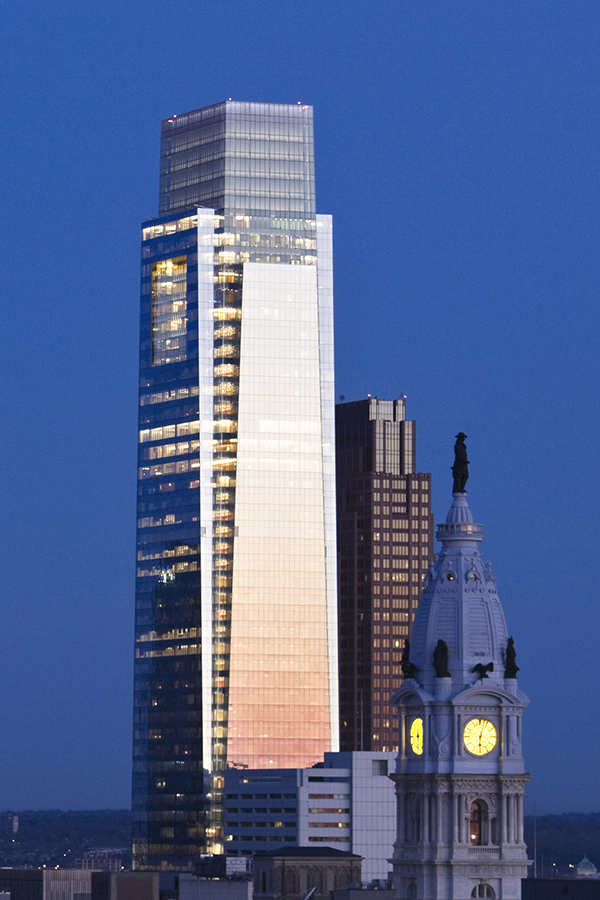
    Stern and his firm designed the 975-foot Comcast Center, the headquarters for the cable and telecommunications giant, completed in 2008.

    The 975-foot-tall shimmering Comcast Center, the company’s original skyscraper on JFK Boulevard, straddles the tracks and concourse of Suburban Station, a commuter gateway to the city. An airy 120-foot glass atrium connects the building to the station, providing for a dramatic arrival from below, and overlooks a public plaza.

    “The Comcast Center may be his finest work in Philadelphia,” said architecture critic Inga Saffron, who writes for The Inquirer. “The scale is right. It’s not fat. It’s tapered.”

    Classical indentations in the 58-story building draw the eye upward, she said. “It’s a good dignified skyscraper … Buildings like this are embedded in the city.”

    Mr. Stern’s firm was also known for luxury apartment towers. In Manhattan they include 15 Central Park West, a limestone-clad condominium at the southwest corner of Central Park that was internationally hailed.

    The firm’s work also includes university buildings, including the Darden School of Business at the University of Virginia; Weill Hall at the University of Michigan; and Miller Hall at the College of William & Mary in Williamsburg, Va., among many others.

    In Philadelphia, Mr. Stern’s firm prepared the master plan for the Navy Yard, and designed buildings on Crescent Drive in that development and the 10 Rittenhouse condominium, as well as the American Water tower on the Camden Waterfront — and the LeBow College of Business at Drexel University.

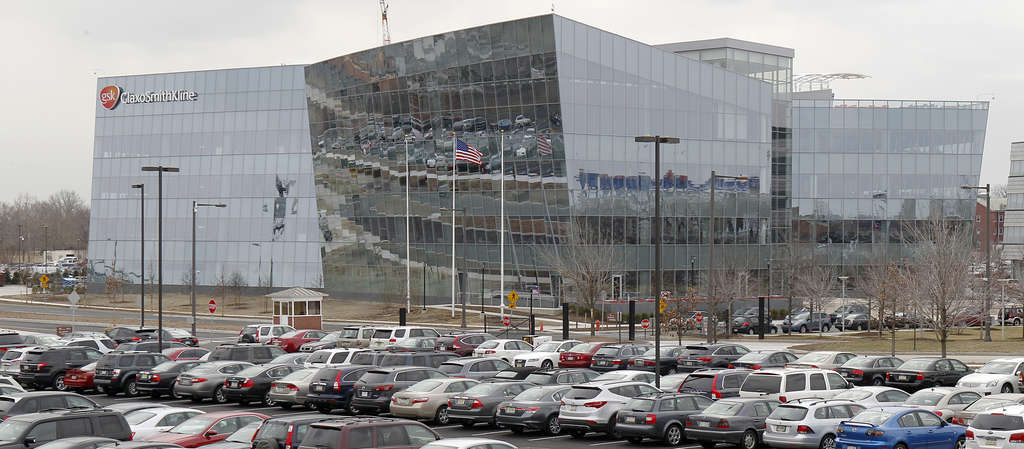
    Robert A.M. Stern designed the former U.S. headquarters for GSK at Five Crescent Drive in the Navy Yard, Philadelphia. He and his associates put together the master plan for the redevelopment of the massive property.

    Mr. Stern was a proponent of post-modernism, a style of architecture that incorporated classical elements. He moved further in that direction as his career went on.

    Philadelphia’s Museum of the American Revolution was built in a Georgian style. But to Saffron, it was perhaps too much, and more out of place to the city.

    “He embraces classicism more and more,” Saffron said. In the case of the museum, “It’s a schlocky classicism,” in contrast to the relatively modest scale of the historic buildings in Old City.

    “It’s like Independence Hall on steroids,” Saffron said.

    The latest Robert A.M. Stern Architects design in Philadelphia is nearing completion, a massive life sciences research building at Drexel University, on Cuthbert Street, by Gattuso Development Partners.

    In an interview with the New York Times when he was 84, Mr. Stern said he still wasn’t using a computer and drew “everything by hand.”

    Born in Brooklyn on May 23, 1939, Mr. Stern earned a bachelor’s degree from Columbia and a master’s in architecture from Yale. In 1966, he married photographer Lynn Gimbel Solinger, a granddaughter of Bernard Gimbel, the department store magnate. They had a son, Nicholas, and later divorced.

    Mr. Stern is survived by his son, three grandchildren, and other relatives.

    The Washington Post contributed to this article.