Category: Real Estate

  • Is a vacant lot better than a decrepit building? Inside Philly’s latest debate over aging buildings

    Is a vacant lot better than a decrepit building? Inside Philly’s latest debate over aging buildings

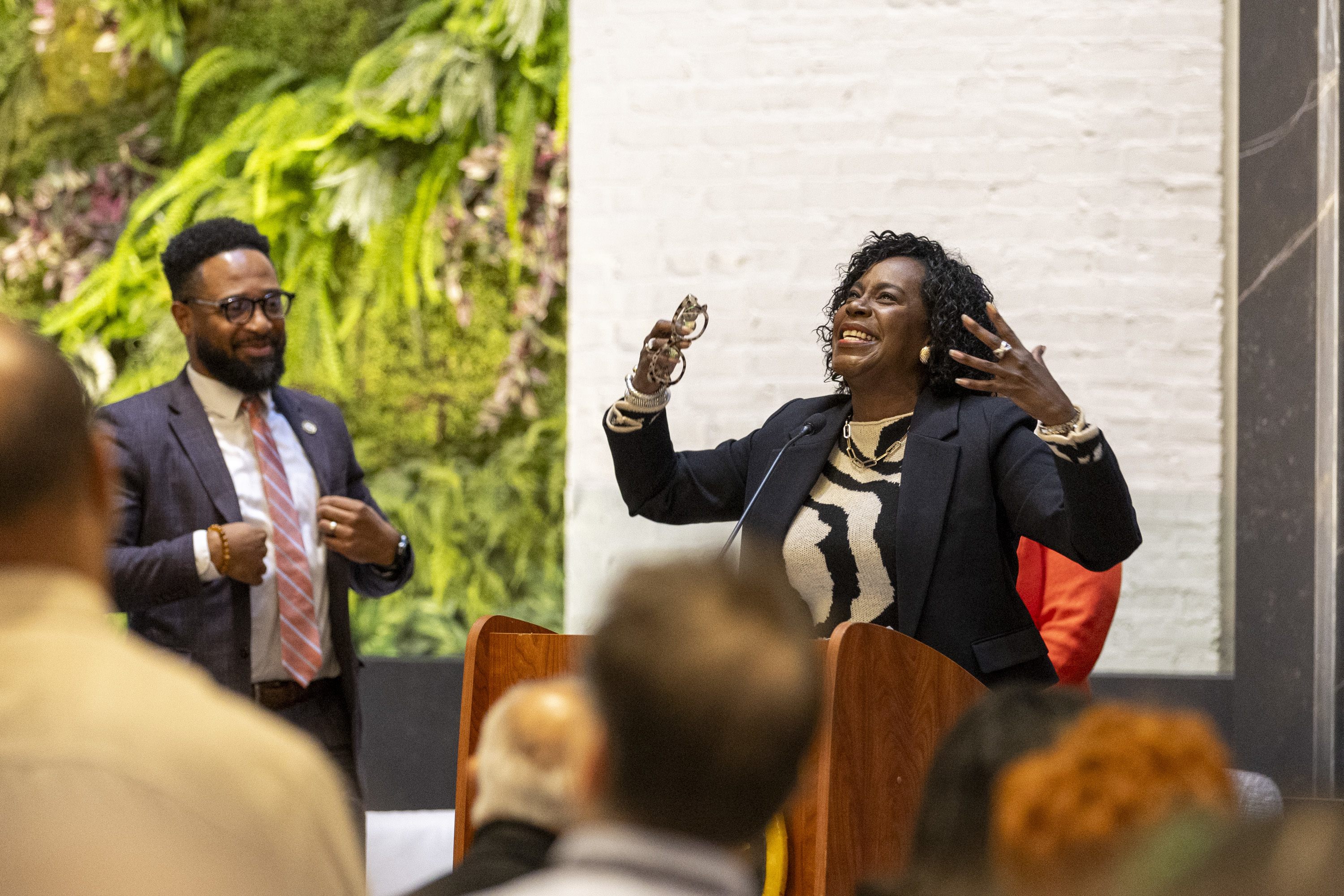
    Mayor Cherelle L. Parker unveiled her planning process for the future of Market East earlier this month to a room packed with many of the city’s top developers, lobbyists, and business leaders.

    Her news conference followed the announcement that the alliance between the Philadelphia 76ers and Comcast had plans to demolish buildings on the 1000 block of Market Street, without saying what they plan to do with the soon-to-be vacant space.

    A Comcast executive’s promise to “turbocharge” development on the beleaguered corridor did not quiet dissent in the packed room from a group of historic preservationists who stood solemnly holding signs reading “No More Holes On Market Street” and “No Plan, No Demo.”

    The moment captured a recurring dynamic in modern Philadelphia, a city where over 70% of buildings reportedly date to before 1960 but only 4.4% of them have a degree of protection from demolition by the Historical Commission.

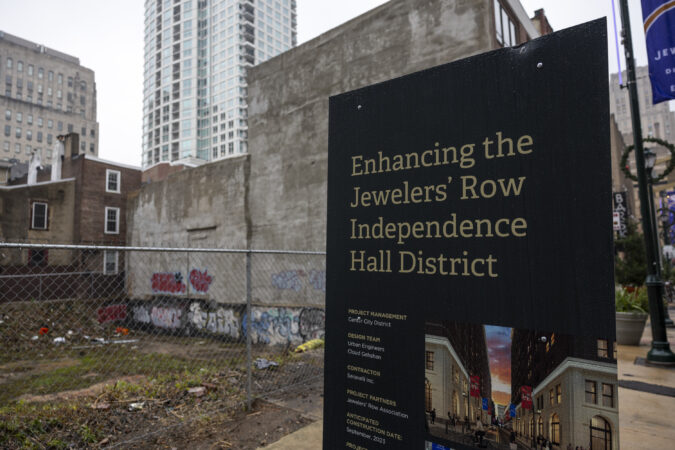
    Preservationists have long called for stronger protections against demolition, and neighborhood groups have condemned developers for leaving vacant lots in their midst when projects fail, as Toll Brothers did on Jewelers Row.

    Now two bills in City Council would require property owners to get a building permit for a new structure before they move forward with demolition.

    “This bill is about putting commonsense guardrails in place,” said Councilmember Jeffery “Jay” Young, who represents much of North Philadelphia and part of Center City.

    His bill, which covers his entire district, requires a building permit before a property owner can demolish a structure, with exceptions for dangerous buildings.

    “It ensures property owners are prepared to move forward responsibly and that residents aren’t stuck living beside another empty lot with no timeline or plan,” Young said in a statement.

    “This isn’t about slowing down development; it’s about preventing speculative demolition that destabilize blocks. This is about preserving communities,” Young said.

    Councilmember Jamie Gauthier’s bill would enact similar rules for parts of University City, where higher education institutions are dominant, as part of a larger package of land-use regulations.

    Builder and developer advocacy groups say the legislation is a potential new burden on a key economic sector that’s been flagging in recent years.

    The Building Industry Association (BIA), the trade association for residential developers, cautioned that new regulations were especially unwelcome in a time of higher interest rates and high construction material prices, especially as Parker makes housing a centerpiece of her agenda.

    “I’m not sure why Council would create more barriers for delivering new homes,” said Sarina Rose, president of the BIA and an executive with the Post Brothers development firm. “It’s a really bad time to do that. Unfortunately, some old buildings simply are not good fits for adaptive reuse.”

    The BIA and its allies are backing legislation that would make it easier to demolish some older buildings for new construction.

    Councilmember Mark Squilla introduced legislation the week before Thanksgiving that would weaken protections for structures nominated to the Philadelphia Register of Historic Places.

    At the same time, Parker promises to pursue legislation in the next year to prompt adaptive reuse or demolition of underused buildings by offering a 20-year property tax abatement.

    Demolition policy in other cities

    In a city as old as Philadelphia, razing buildings is often a fraught process.

    Currently the only safeguards against demolition come with a successful nomination to the Philadelphia Register of Historic Places, and in the handful of neighborhoods protected by conservation zoning overlays, property owners have to get building permits before demolition (a template for Gauthier and Young’s bills).

    But given the city’s economic and demographic doldrums in the second half of the 20th century, municipal government enacted most of the demolitions of unsafe and abandoned buildings, usually in lower-income neighborhoods.

    Mayor John F. Street’s Neighborhood Transformation Initiative, the centerpiece of his administration, spent half its $300 million (in George W. Bush-era dollars) on demolishing thousands of buildings in the early 2000s.

    That dynamic changed in the last decade, as low interest rates and a surge of new residents juiced real estate development to levels not seen in the city for generations. The private sector began to regularly outpace city government in demolition permits, as developers cleared the way for new projects.

    Preservationists pushed back. Under Mayor Jim Kenney’s administration (2016-24), the movement demanded new policies such as a demolition review requirement. Before an applicable building could be razed, municipal authorities reviewed its historic merits and adaptive potential.

    Similar policies of varying strength exist in cities from Santa Monica, Calif., to Chicago. In the latter case, it applies to buildings from before 1940 that were included in a citywide survey of historic places.
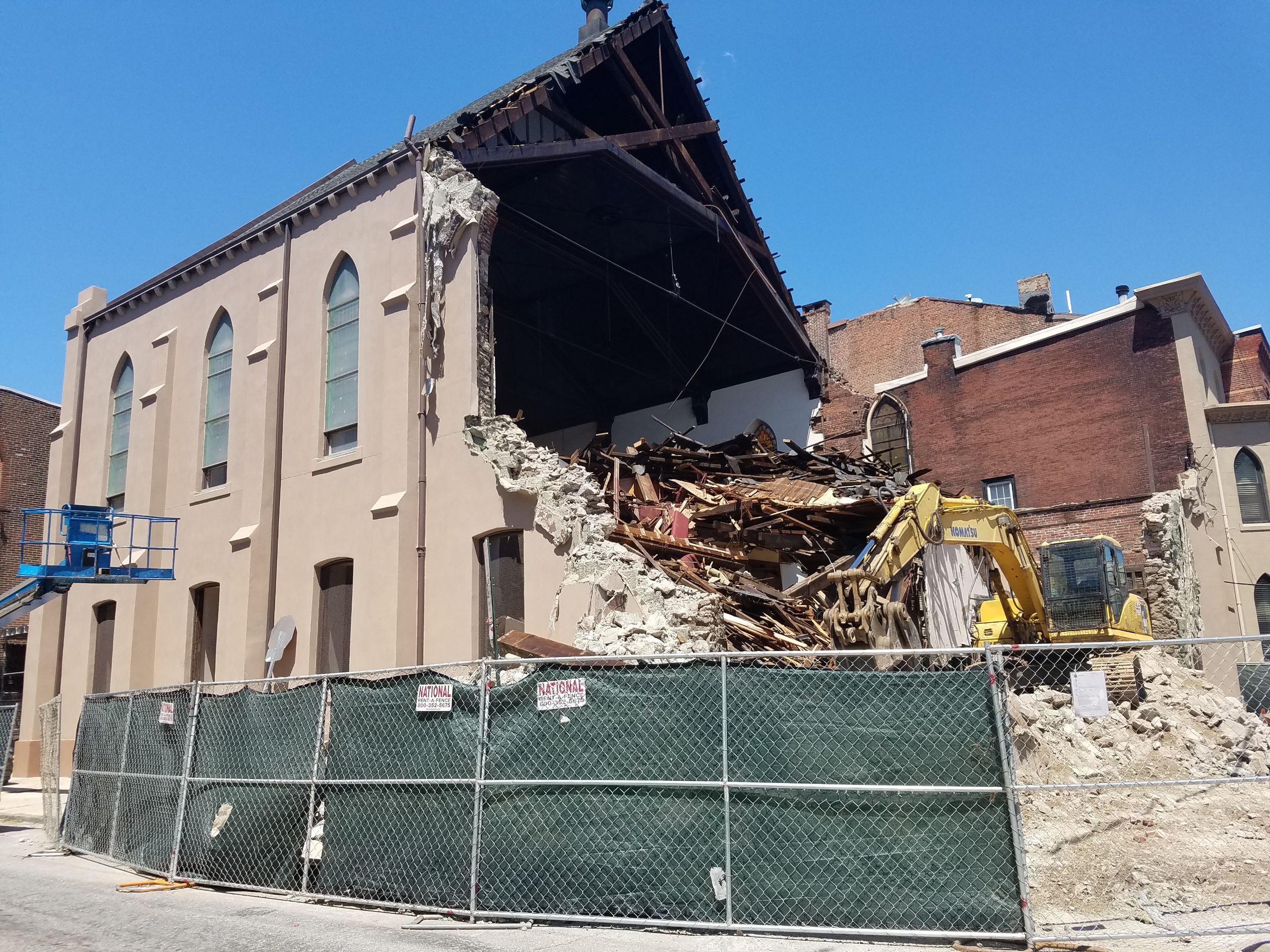
    Demolition of New Light Beulah Baptist Church at 17th and Bainbridge Streets, a block below South Street.

    During Kenney’s administration, a preservation task force called for a survey and demolition delay as in Chicago, but no elected officials championed the ideas.

    Laws like the ones Gauthier and Young are proposing are less common but are used in municipalities like Spokane, Wash., and Pasadena, Calif. Similar regulations exist for properties in Philadelphia’s conservation districts.

    In Spokane, the regulations apply to buildings in the downtown core, those along commercial corridors and buildings on the National Register of Historic Places, which is more of an honorary designation that affords protections.

    “You have to have that building permit in hand, plus you have to show us that you have the financial backing to build that replacement building,” said Megan Duvall, Spokane’s historic preservation officer. “If you also can’t show us that you have the construction loan in hand, we won’t allow you to demolish that building.”

    Why City Council is acting now

    The sudden renewal of interest in demolition policy began when St. Joseph’s University sold much of its West Philadelphia campus, acquired through a merger with University of the Sciences in 2022, to a charter school operator founded by student housing mogul Michael Karp.

    After the sale, Gauthier proposed placing controls on the sprawling higher education footprint in her district.

    As higher education comes under acute financial and demographic pressure, she fears that building sales by struggling universities could result in demolition and resale of newly vacant lots to developers without the wherewithal to complete projects or speculators with no desire to build quickly.

    “The safety and quality-of-life in our neighborhoods should not be disrupted by incomplete or uncertain projects,” Gauthier said in a statement. “I believe requiring responsible development practices is a commonsense approach in today’s uncertain development market.”
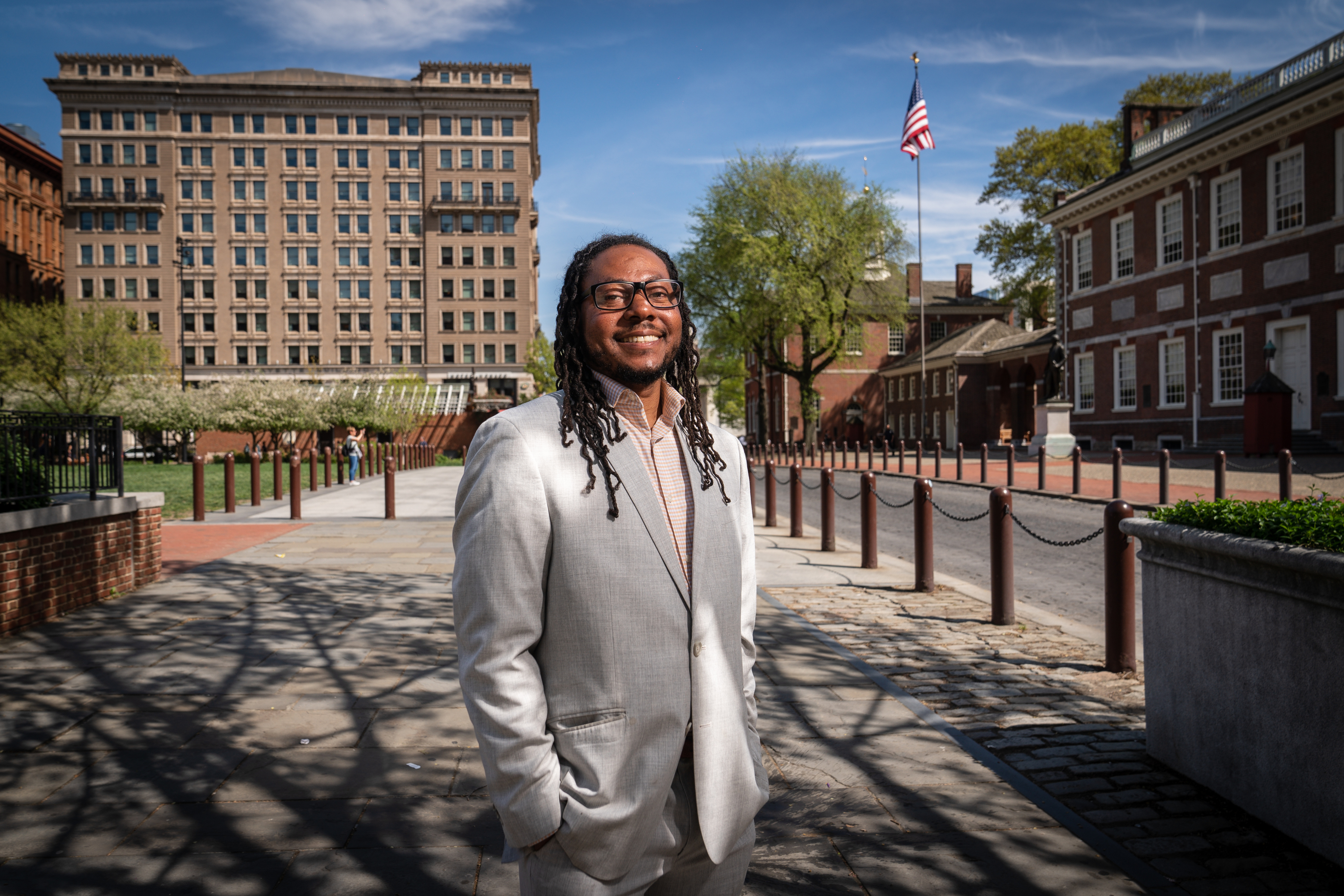
    Jeffery “Jay” Young outside Independence Hall.

    Young’s bill covering much of North Philadelphia and parts of Center City followed the introduction of Gauthier’s legislation. Neither bill has been passed by City Council.

    According to the Philadelphia Planning Commission, from January 2022 through November 2025 approximately 580 demolition permits were issued in Young’s district. The Department of Licenses and Inspections said that with a few tweaks, his proposed bill would be enforceable.

    Young says his legislation was inspired by frequent calls from constituents who hate the vacant lots that dot their neighborhoods and are frustrated with promised development that never comes to fruition. Both bills exempt buildings in poor condition that are considered dangerous.

    While welcoming this spate of demolition regulation, preservationists would prefer citywide policies, not district by district.

    “These bills are important first steps, and this is the moment to build them into a modern, citywide framework consistent with approaches already used in several peer cities,” said RePoint, the preservation advocacy group that protested the mayor’s Market East announcement, in an unsigned statement.

    Real estate industry backlash

    At the same time, Philadelphia’s development industry is embarking on its own campaign to ease existing preservation rules and to push back against these new bills. Both Gauthier’s and Young’s bills have been critiqued by business groups and by the zoning lawyers who often represent developers.

    “This is one-tenth of the city of Philadelphia, just based upon a political subdivision [that] changes every 10 years,” Matthew McClure, a prominent zoning attorney, said in testimony about Young’s bill before the Planning Commission. “It’s the exact opposite of planning.”

    Groups including the Building Industry Association are backing a new bill from Squilla that the Preservation Alliance for Greater Philadelphia fears will stoke more demolitions.

    It would require a new 30- to 60-day window before a building nominated to the local register of historic places could be given protection, which critics believe will incentivize owners to tear down empty buildings quickly.

    The mayor’s proposed 20-year property tax abatement proposal for adaptive reuse projects also allows room for demolition if buildings are considered unadaptable, which preservationists fear will bring back the wrecking ball-forward incentives of the city’s earlier abatement policies.

    In the last week, groups like the Preservation Alliance have pivoted from thinking about new demolition regulations to playing defense.

    “We’re still trying to wrap our heads around it all,” said Paul Steinke, the Preservation Alliance’s executive director. “It’s a lot to take in, and it’s happening after a decade or so of a building boom where we lost a chunk of the historic fabric.”
  • Elfreth’s Alley is getting a park to honor woman who saved it from demolition

    Elfreth’s Alley is getting a park to honor woman who saved it from demolition

    Few Philadelphians may recognize the name Dolly Ottey, yet nearly all know Elfreth’s Alley — the nation’s oldest residential street — which she helped rescue from decline and demolition starting in the 1930s.

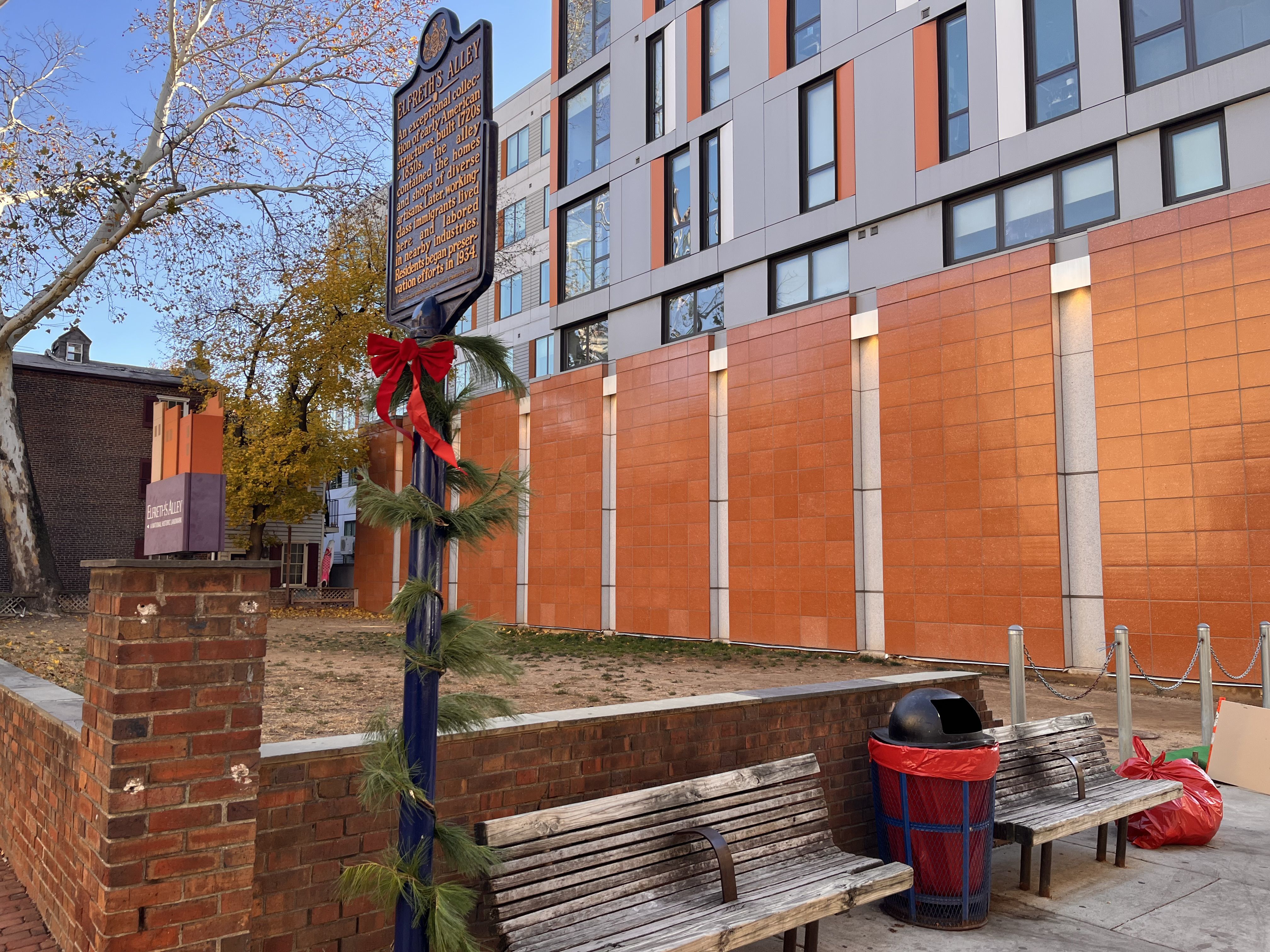
    Now, after years of wrangling, a long-neglected vacant lot that some have derided as an eyesore at the historic location is slated for a transformation in time for the 250th anniversary of the Declaration of Independence.

    Plans call for the lot at North Second Street and Elfreth’s Alley to be reborn as Dolly Ottey Park, honoring the woman who first championed preservation of the narrow cobblestone passage starting in the 1930s.

    window.addEventListener(“message”,function(a){if(void 0!==a.data[“datawrapper-height”]){var e=document.querySelectorAll(“iframe”);for(var t in a.data[“datawrapper-height”])for(var r,i=0;r=e[i];i++)if(r.contentWindow===a.source){var d=a.data[“datawrapper-height”][t]+”px”;r.style.height=d}}});

    Job Itzkowitz, executive director of Old City District, said the project took eight years of sporadic effort to get multiple parties to sign off on an agreement to create the park. Old City District is a nonprofit registered community organization.

    “We want it to be a place where residents, tourists, visitors, employers, and employees can take a bit of a respite,” he said. “It’s going to be a drastic improvement.”

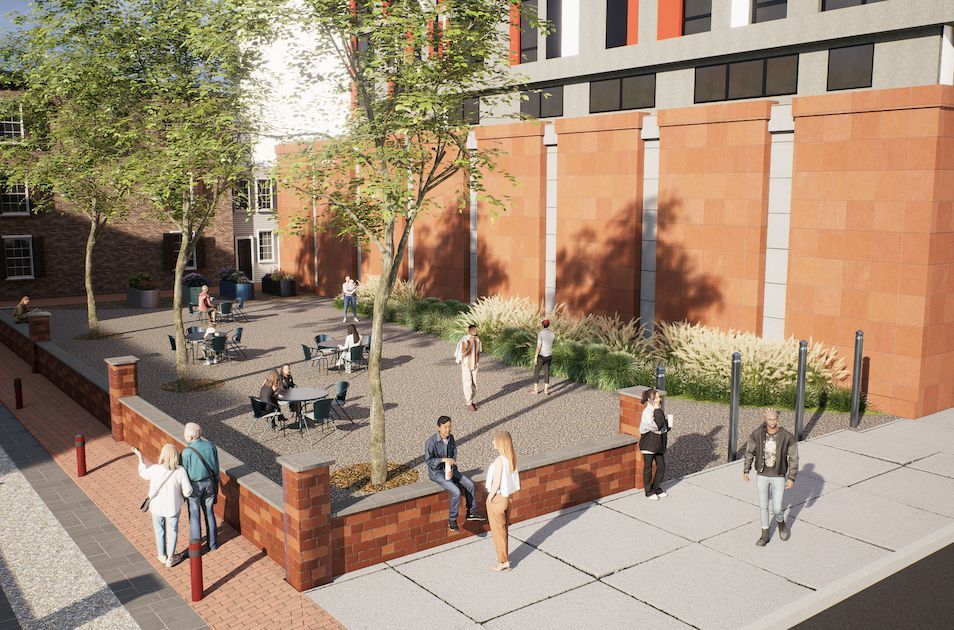
    A conceptual rendering of Dolly Ottey park at Second Street and Elfreth’s Alley in Old City, Philadelphia. Organizers hope to transform the existing vacant space into a park by spring.

    On a recent day, families and couples toured Elfreth’s Alley, taking pictures and discussing the history of the area. But none ventured into the vacant lot. Later, a lone woman could be seen walking her dog there.

    Itzkowitz credited a renewed spirit of collaboration for breaking the stalemate.

    He said changes in leadership at the real estate advisory board for the National Old City Apartments, which abuts the park, and crucial support from the nonprofit Elfreth’s Alley Association paved a path for agreement.

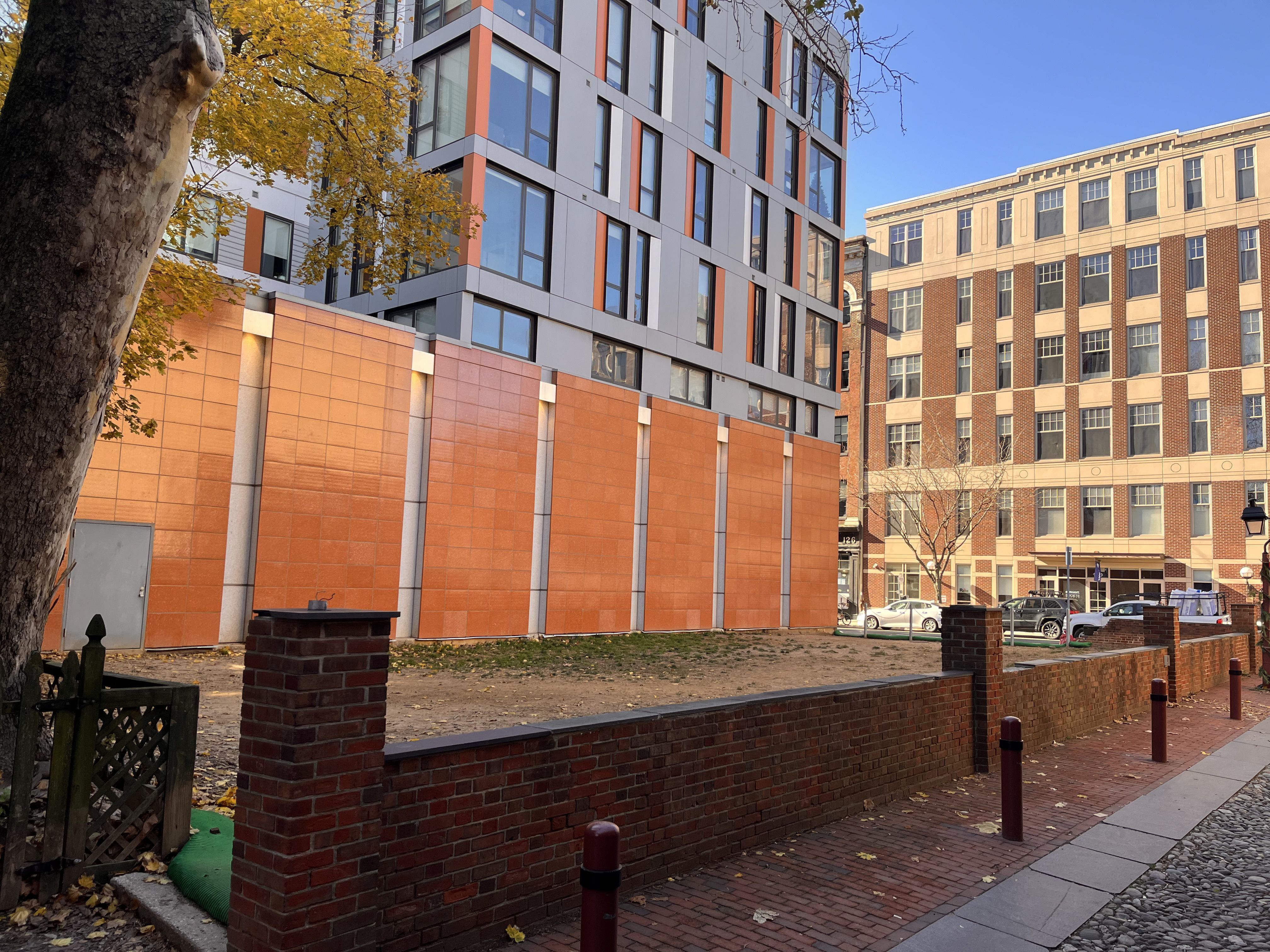
    A view of a vacant lot at Second Street and Elfreth’s Alley in Old City Philadelphia. Plans for creation of Dolly Ottey Park at the location and named after an advocate who helped save Elfreth’s Alley in the early to mid 20th Century.

    The lot is owned by Bit Investment Seventy-Eight LLC, according to city records, and is part of that company’s holdings for National Old City Apartments along North Second Street.

    A usable space by spring

    The pocket park will rise in two phases: an interim stage featuring a crushed stone base, picnic tables, planters, wild grasses, and repairs to a crumbling brick wall, followed by a more permanent design.

    An architect has been hired to craft a cost-effective plan to deliver a usable public space by spring 2026.

    The interim plan design for Dolly Ottey Park carries a modest $60,000 budget, with fundraising to break ground in February and finish by March. Old City District has set up an online link for public contributions.

    Itzkowitz said the timing for the interim phase would ensure the park provides a welcoming experience for visitors during the Semiquincentennial as part of a significant historical landmark.

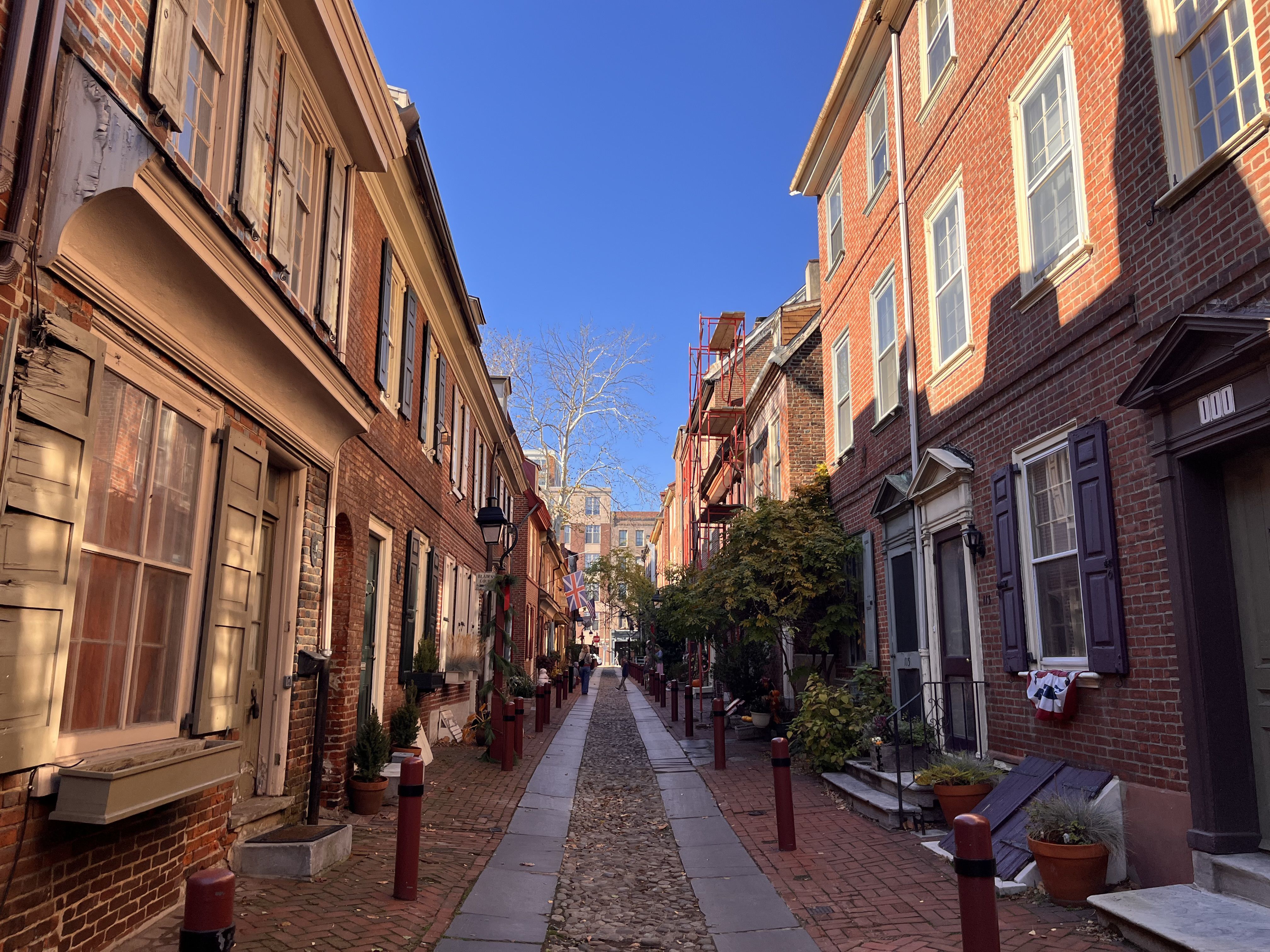
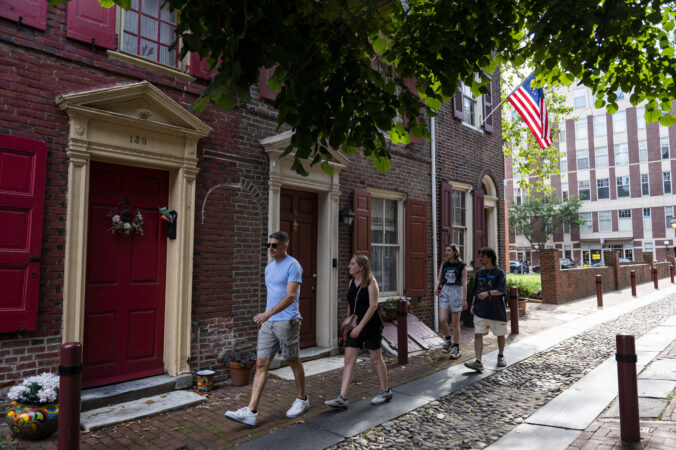
    A view of Elfreth’s Alley.

    Elfreth’s Alley is believed to be America’s oldest continuously inhabited residential street. Its origins trace to the early 1700s, when two landowners combined properties to create a cart path leading to the river. People have been living there since 1713.

    The cobblestone alley, about 400 feet long and lined by 30 brick buildings, was named for Jeremiah Elfreth, an 18th-century blacksmith. It originally housed artisans and merchants, serving as a base for business ventures. Notable figures such as Stephen Girard, who helped finance the War of 1812, are believed to have lived here.

    However, Elfreth’s Alley faced demolition due to neglect and development pressure. From the 1890s to the 1930s, part of the block was rebranded as Cherry Street, leading to the loss of at least one historic home.

    Who is Dolly Ottey?

    Ottey, a resident and owner of the Hearthstone restaurant at 115 Elfreth’s Alley, formed the Elfreth’s Alley Association in 1934 to protect the unique street and save it from destruction.

    A view from Elfreth’s Alley facing a vacant lot at Second Street that will be transformed into Dolly Ottey Park.

    Elfreth’s Alley faced an even bigger existential threat in the 1950s and 1960s when proposed construction of I-95 would have demolished at least half the block.

    The demolition was vehemently opposed by Ottey and the Elfreth’s Alley Association. The community gathered 12,000 signatures for a petition presented at City Hall, successfully pleading for the street to be spared.

    Elfreth’s Alley was protected as a National Historic Landmark in the 1960s as a result and is listed on Philadelphia’s historic register.

    Ottey died in 1996, in South Jersey, at age 85.

    Elfreth’s Alley remains not only a residential area but also a cultural and historical attraction. It holds a museum that educates visitors on its history and the lives of early inhabitants.

  • A ‘1980-esque’ Bryn Mawr home got a big renovation

    A ‘1980-esque’ Bryn Mawr home got a big renovation

    When Steven Peikin and Amy Spicer moved back to the Philadelphia area in late 2023 after spending 2½ years in Florida, there weren’t many houses on the market. So when Peikin discovered a 4,100-square-foot, two-story home in Bryn Mawr on a solo trip, he convinced Spicer that he’d found the perfect home.

    “She saw the pictures online,” recalled Peikin, a gastroenterologist at Cooper University Health Care. “I saw it on a Thursday and was told there could be no contingency or inspection, there were four other bidders, and I had to have our best offer in by Sunday.”

    He took the plunge and bought the house, but when Amy saw it, she wasn’t completely sold. She felt the house was dated and she couldn’t get past the yellow exterior.

    “When I saw the inside of the house, it was very 1980-esque and needed considerable remodeling,” said Amy, a pharmaceutical sales rep for Madrigal and a yoga instructor. “Steve found it very charming, but I saw it as my 97-year-old grandma’s house.”

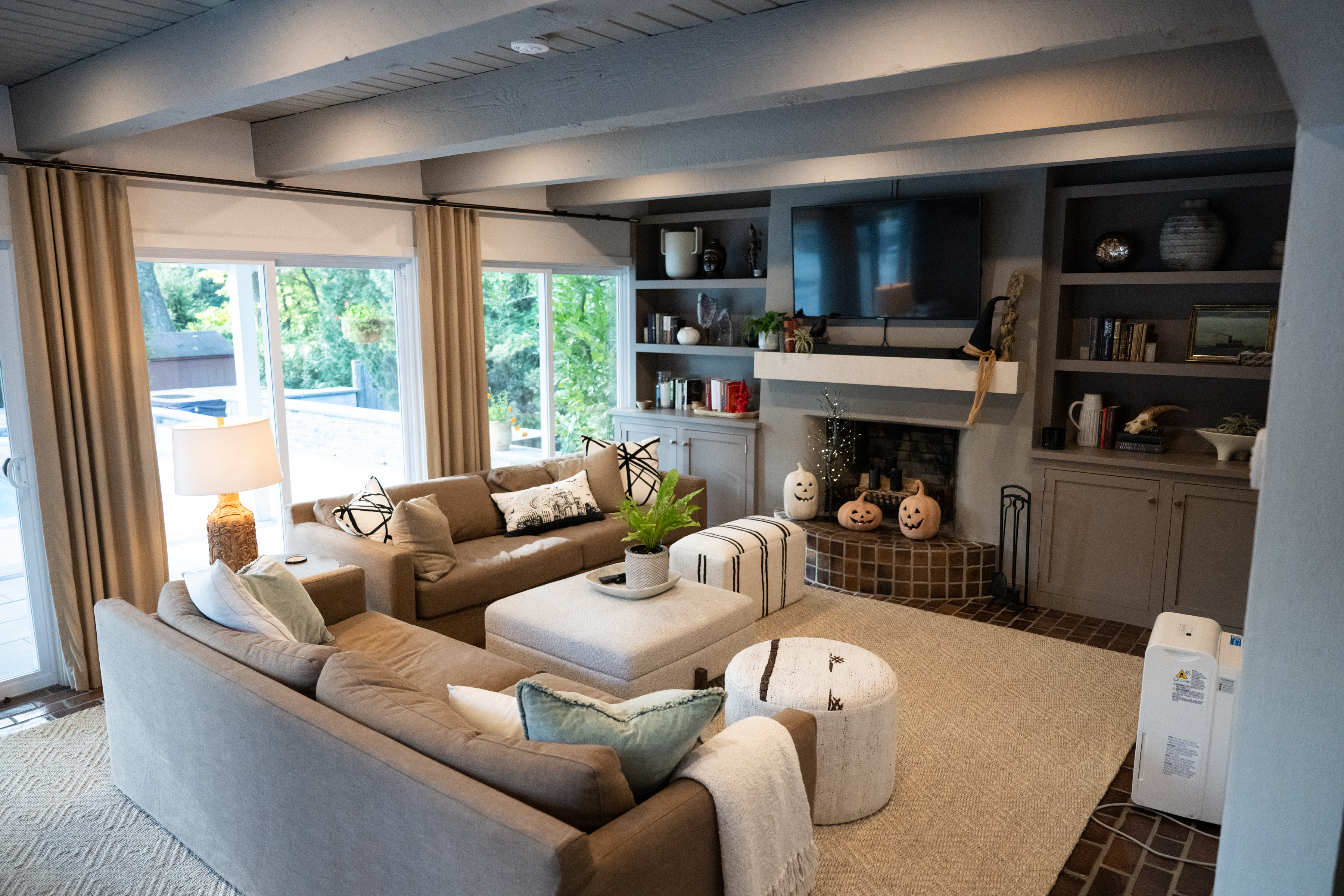
    Steve Peikin and Amy Spicer’s living room was one of the spaces they updated in renovations.
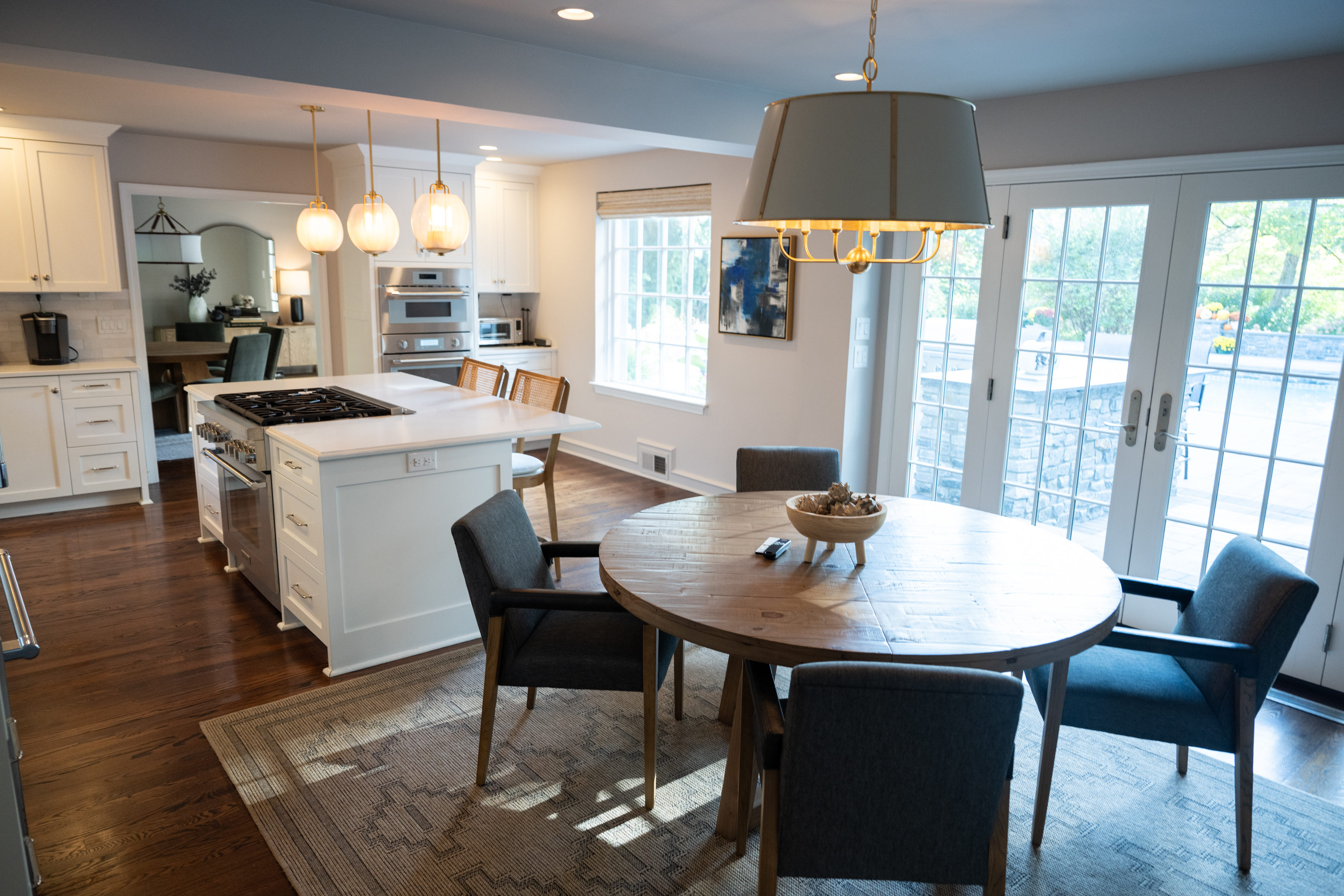
    The kitchen and dining area, which looks out on the backyard.
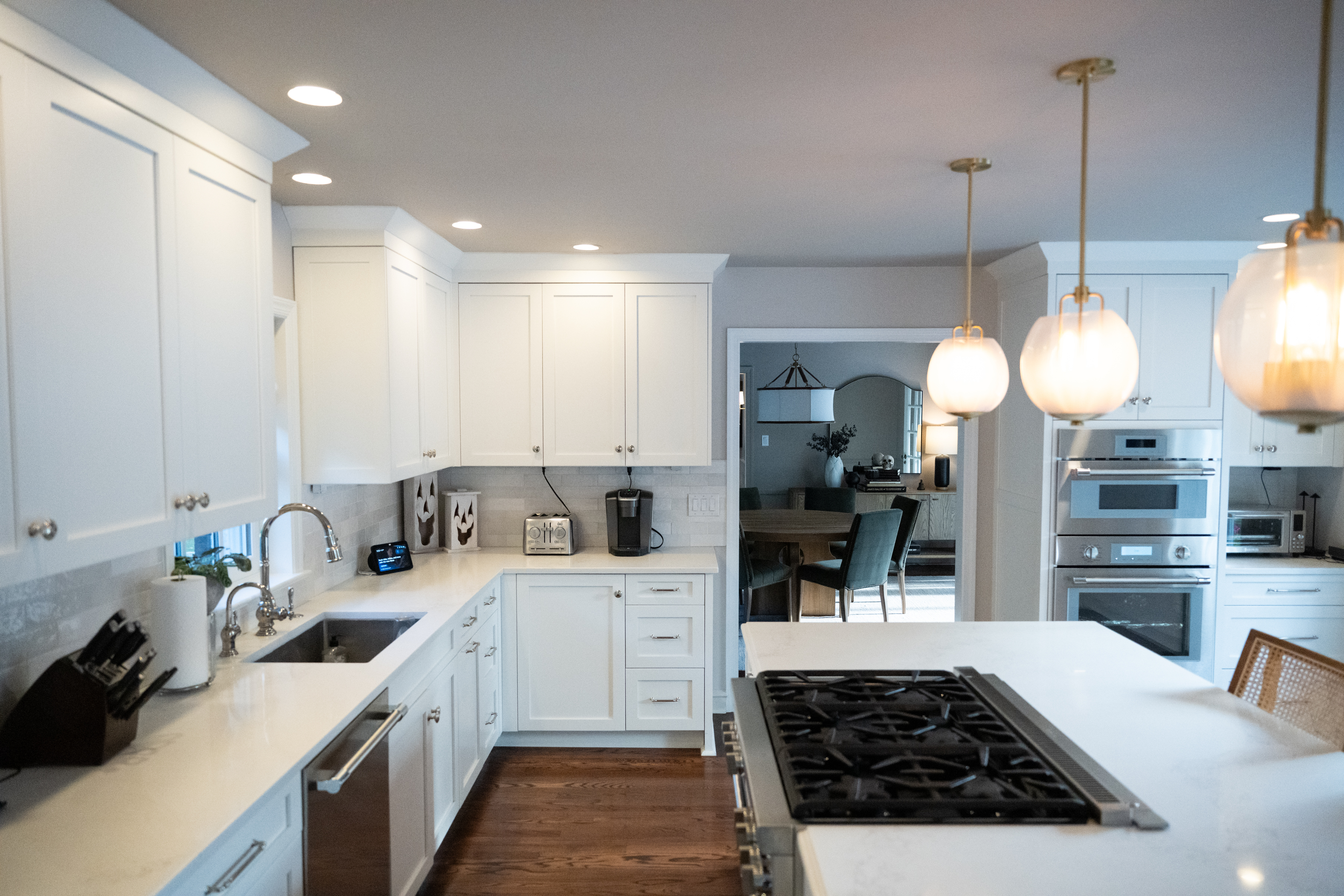
    The renovated kitchen features Thermador appliances and a stone island with a built-in stove.
    Decor in the den.

    The compromise was to make changes that would satisfy them both. The couple stayed in Airbnbs during a four-month renovation, and moved into the home in the spring of 2025.

    With the help of Christina Henck from Manayunk-based Henck Design, they created a cozy, updated English Country style home in warm browns and neutrals.

    “The house was very formal but we created a more natural, laid-back feel,” said Peikin.

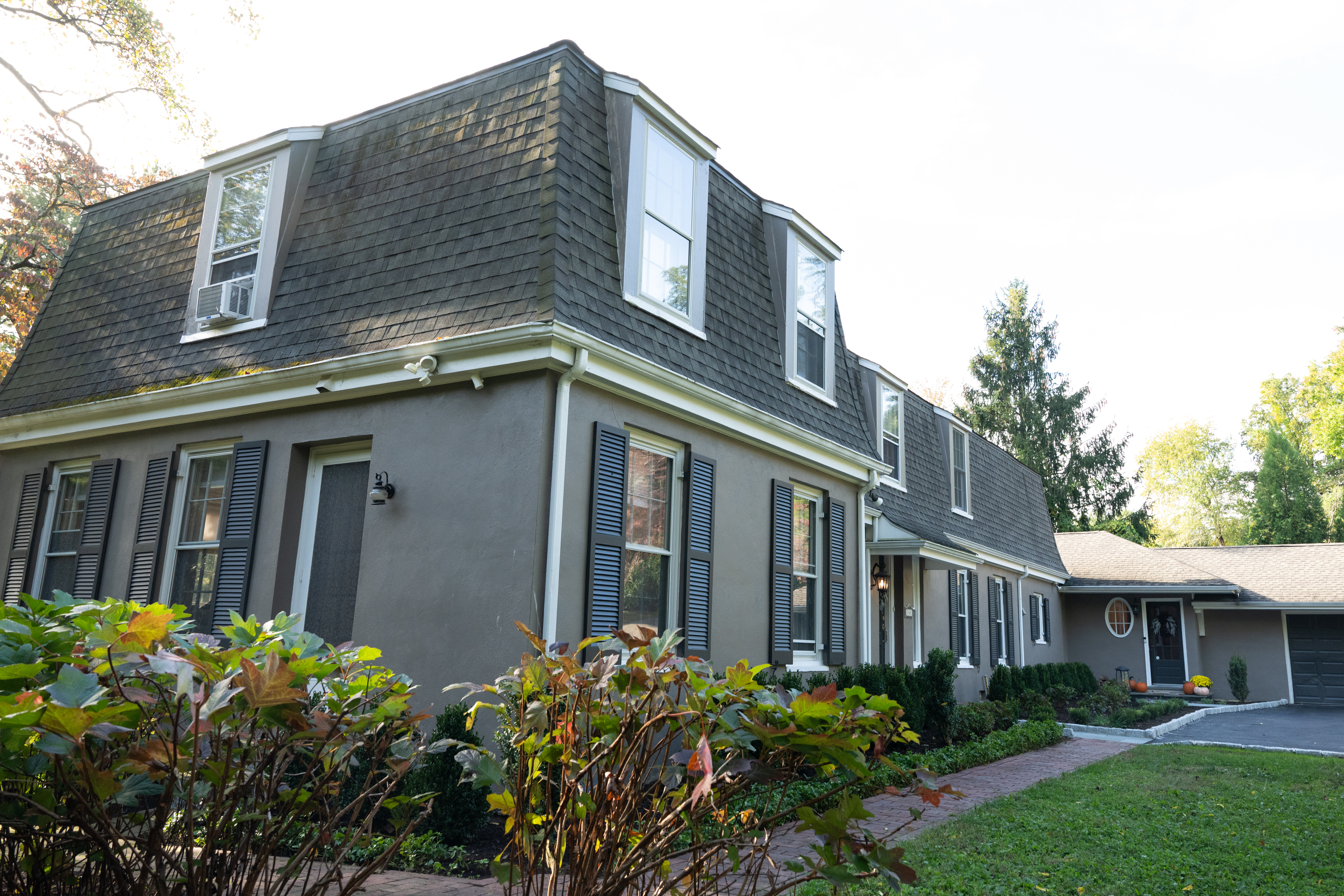
    They painted the exterior brownish gray, updated the bathrooms, created a dedicated laundry room, and added architectural elements to the living room and family room.

    The outside of the home, which was once yellow, was painted after Spicer and Peikin moved in.

    Those included custom bookshelves, a new metal mantle for the wood-burning stove, and extended ceiling beams. They also replaced all of the original lighting with a combination of recessed lighting and fixtures, swapped out the window treatments, updated the HVAC system, and added pavers to the backyard.

    “Steve has a living room and I have a den,” said Spicer. “Mine is very calm and peaceful and his feels refined and sophisticated.”

    Parts of the house had been renovated a couple of years earlier after a tree fell on the house, resulting in a new kitchen, primary suite, and roof.

    Spicer’s son, Austin, 23, is currently living with the couple. He and his mom enjoy cooking together in their spacious kitchen featuring Thermador appliances and a stone island with a built-in stove. A second stove sits under the microwave. When weather permits, Peikin grills outside and they eat on the patio.

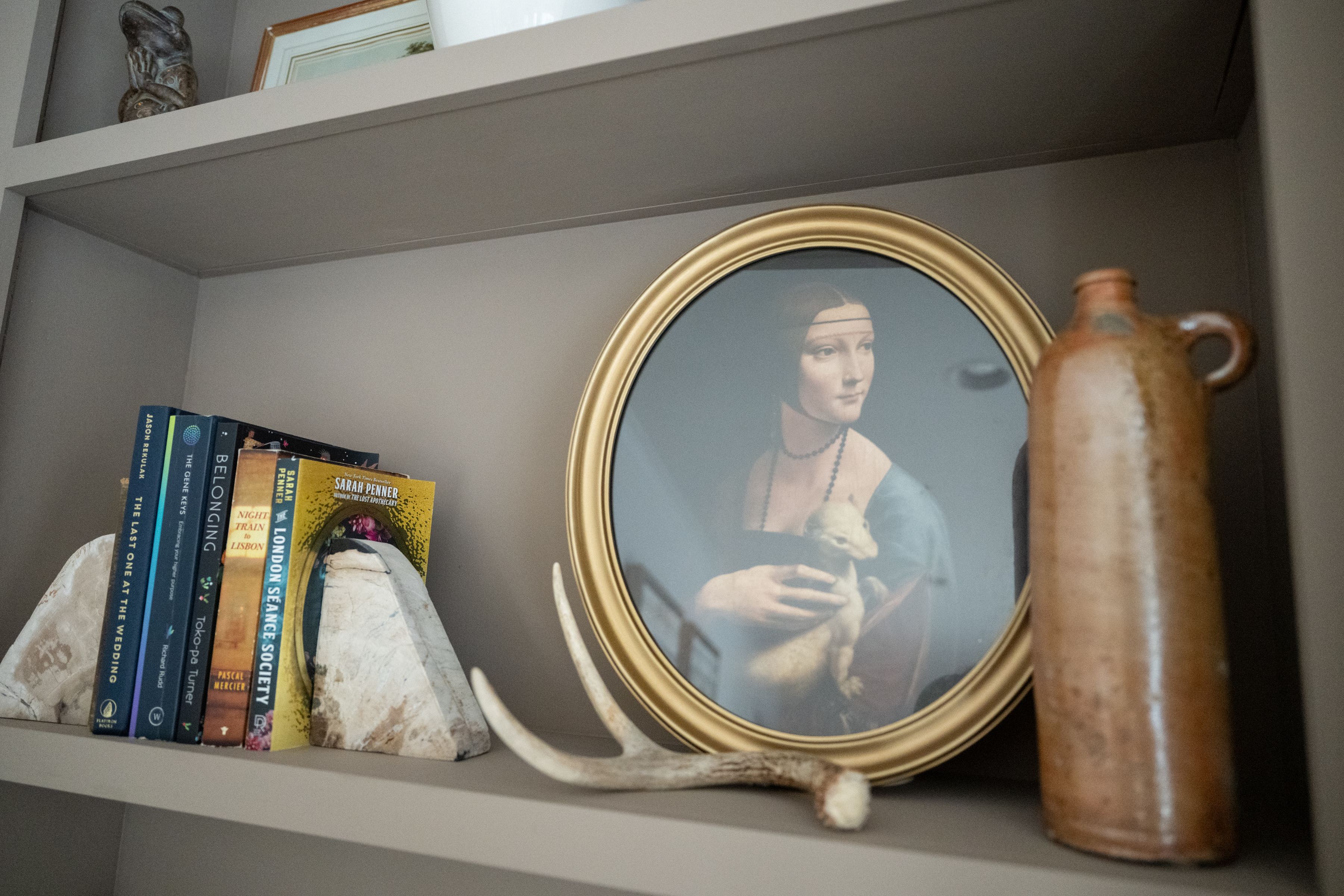
    A reprint of the painting “Lady With an Ermine” by Leonardo da Vinci is pictured on a shelf in the den.
    Metal wall decor hanging on the wall of the den.
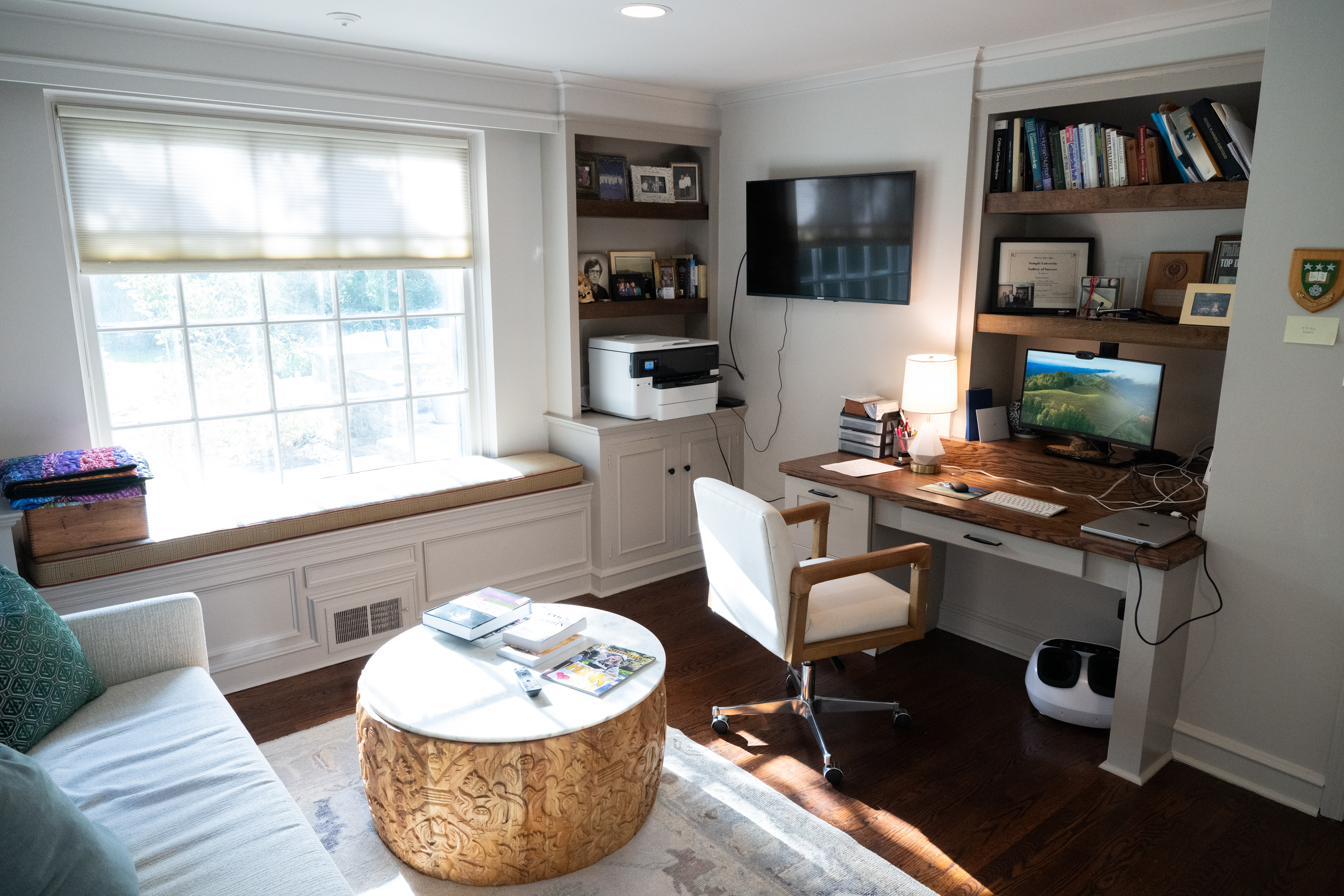
    Steve Peikin’s home office. When they bought the home, the couple wanted space for two home offices.
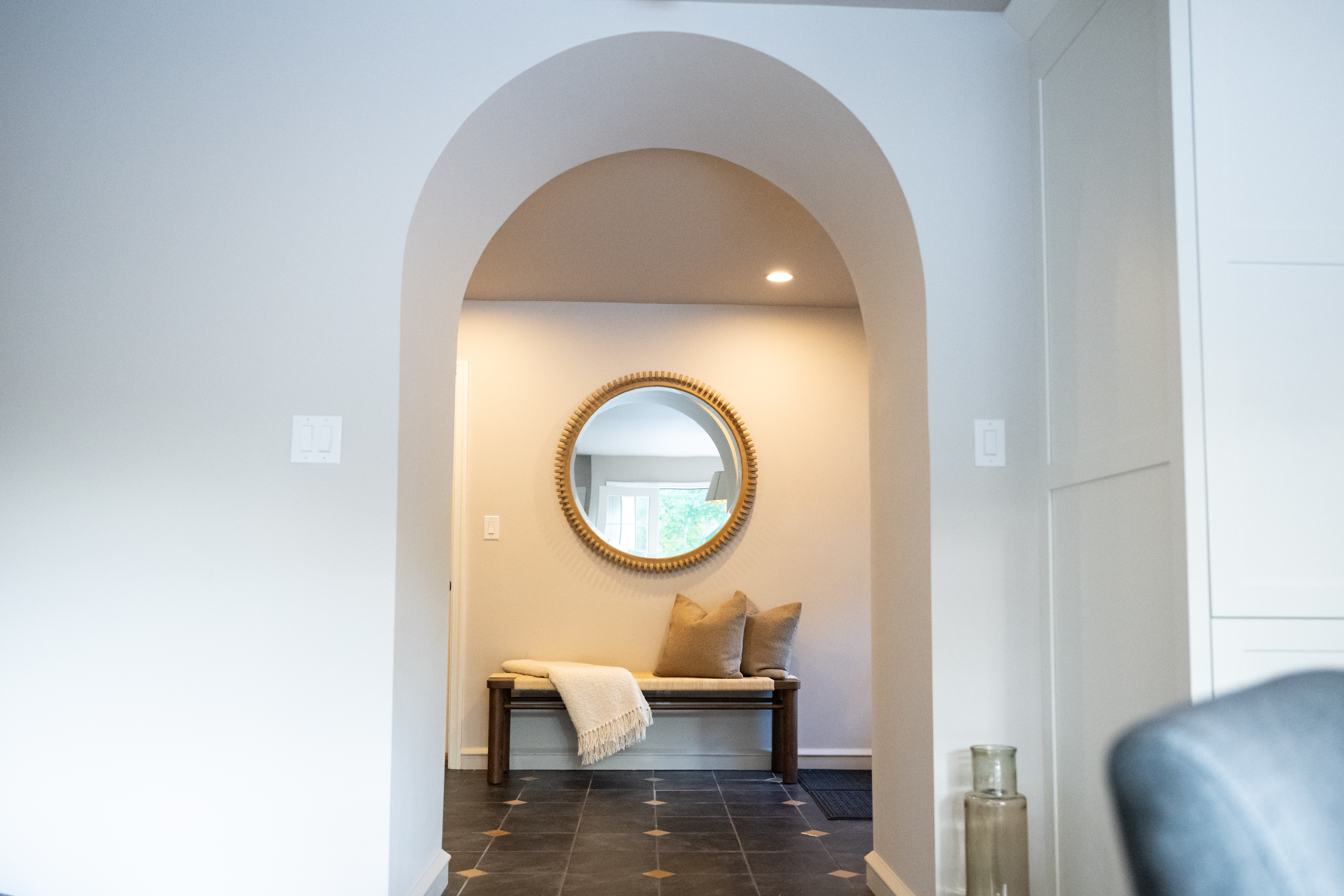
    The mudroom and arched entryway.

    The mudroom off the garage leads to the kitchen through an arched passageway which may have been an addition to the original house built in 1950, Peikin said. The mudroom floor features black and gold tile and a huge inlaid wooden chest that they call the Narnia cabinet — akin to the one in the fantasy novel The Lion, The Witch and The Wardrobe — sits against one wall.

    The primary bedroom suite includes a large window overlooking the tree-lined property.

    “You can watch the deer and other animals in the backyard,” said Spicer. “While our home in Florida was lovely because we stared at water, it was loud. Here it’s quiet and just beautiful.”

    Peikin and Spicer each have dedicated offices. He refers to his first-floor office as his studiolo, which during the Italian Renaissance was a place of study and contemplation. He meets with telemedicine clients there, but it’s also where he watches ballgames and hangs out.

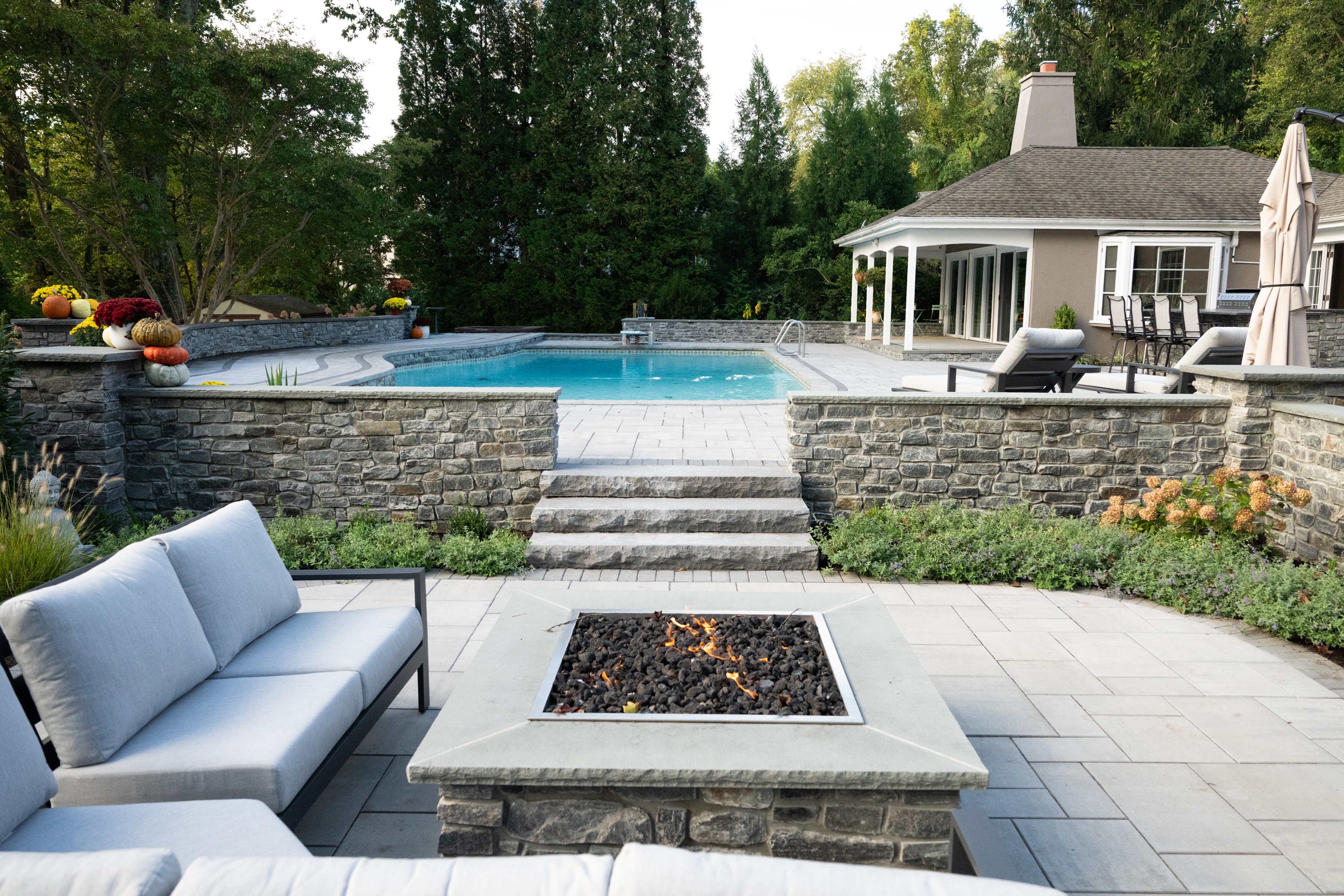
    The backyard, where the couple enjoy swimming, barbecuing, and relaxing.

    Spicer’s office includes an altar featuring a Buddha, a space where she meditates and which she uses as a backdrop for the online yoga classes she teaches.

    The backyard is where the family spends as much time as possible, swimming, hanging in the hot tub, lounging by the pool, warming up at the fire pit, or barbecuing. With help from All Seasons Maintenance & Design, Melady Landscaping, and Bloom Design, they created a cozy, inviting outdoor retreat.

    “The best part of living here is that we are surrounded by a bamboo forest and tall trees, with beautiful crepe myrtle, dogwoods, and magnolias, and we have deer and lots of birds,” said Peikin. “We love the outdoors.”

    Is your house a Haven? Nominate your home by email (and send some digital photographs) at properties@inquirer.com.

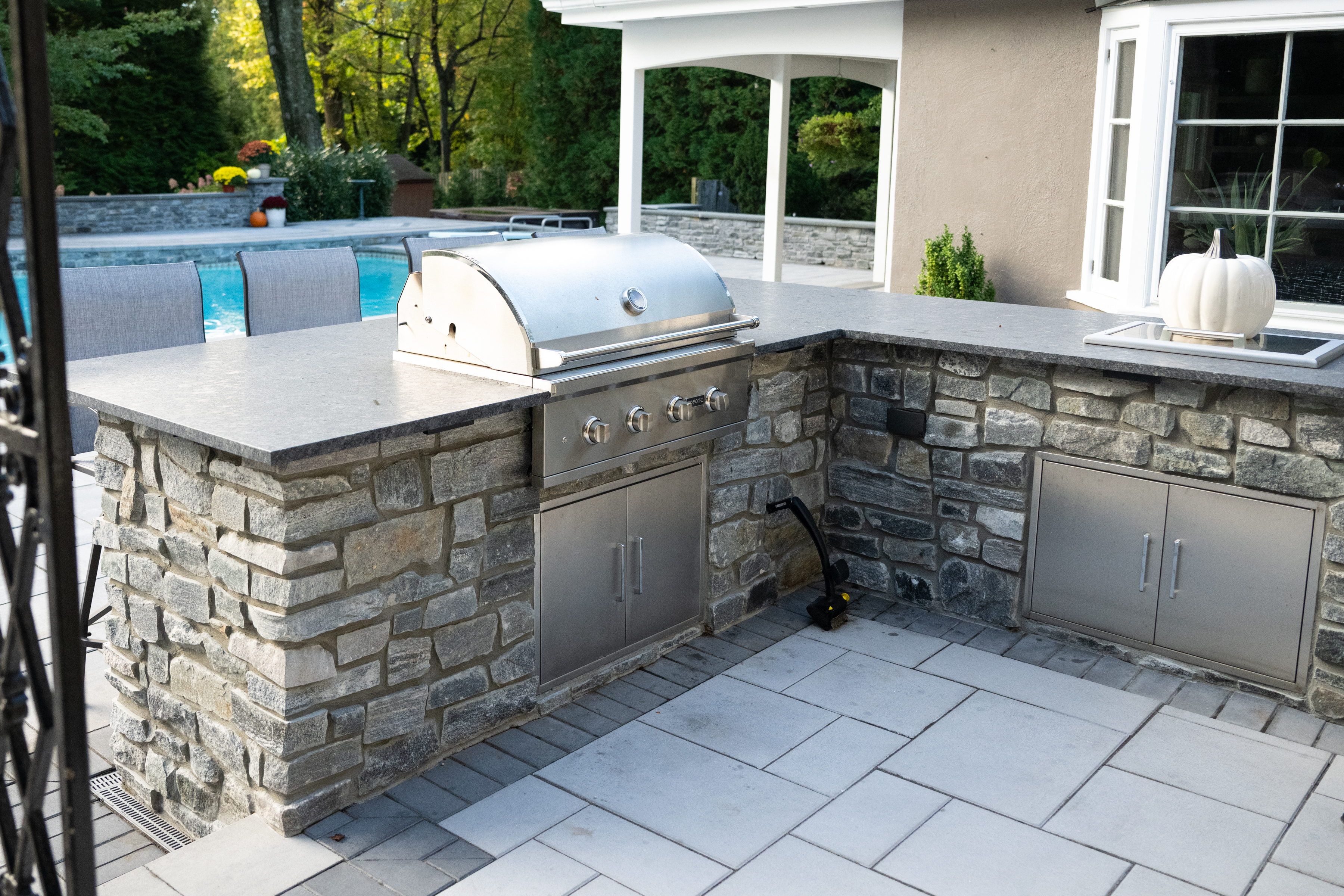
    The outdoor kitchen, where Spicer and Peikin prefer to cook dinner when the weather allows.
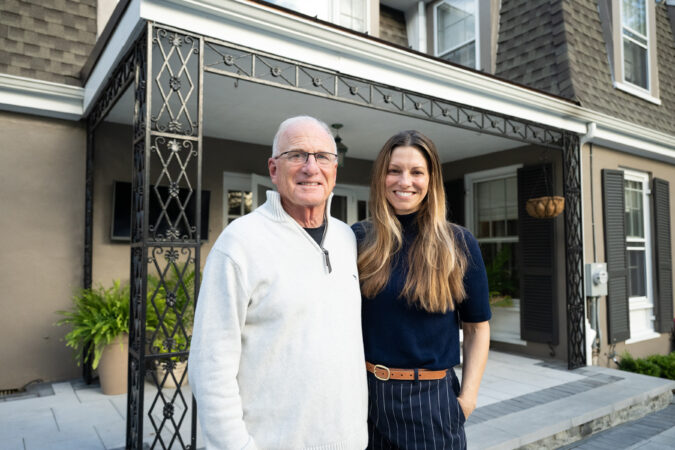
    Steve Peikin and Amy Spicer pose for a portrait in their backyard.
  • House of the Week: a Passyunk Square home with a famous neighbor for $455,000

    House of the Week: a Passyunk Square home with a famous neighbor for $455,000

    Rebecca Procopio was attracted to the walkability of the two-bedroom, 1½-bathroom home to the eateries, “the vibrant energy,” and other attractions of Passyunk Square.

    But after buying it in 2023, she took particular delight in the view from her front porch of the studio of renowned mosaic artist Isaiah Zagar.

    “I’ve always felt drawn to the unique,” said Procopio, referring to both to the neighborhood and the house. The home “felt a lot more open than the other homes I looked at.”

    Her fiancé, Tyler Griffiths, joined her there last year. But the couple is now headed for Chicago where she has a new job in her field of genetic counseling.

    Primary bedroom

    The house is 1,036 square feet and four stories, including the finished basement.

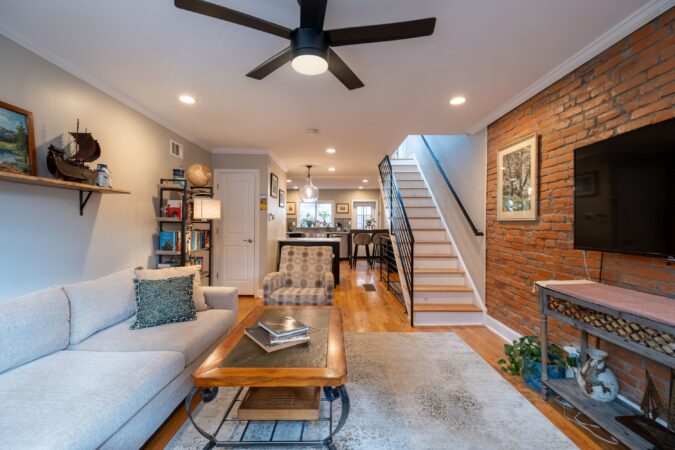
    The main floor is open concept, with hardwood floors in the living room, dining area, kitchen, and half bathroom. The living room also features an exposed brick wall.

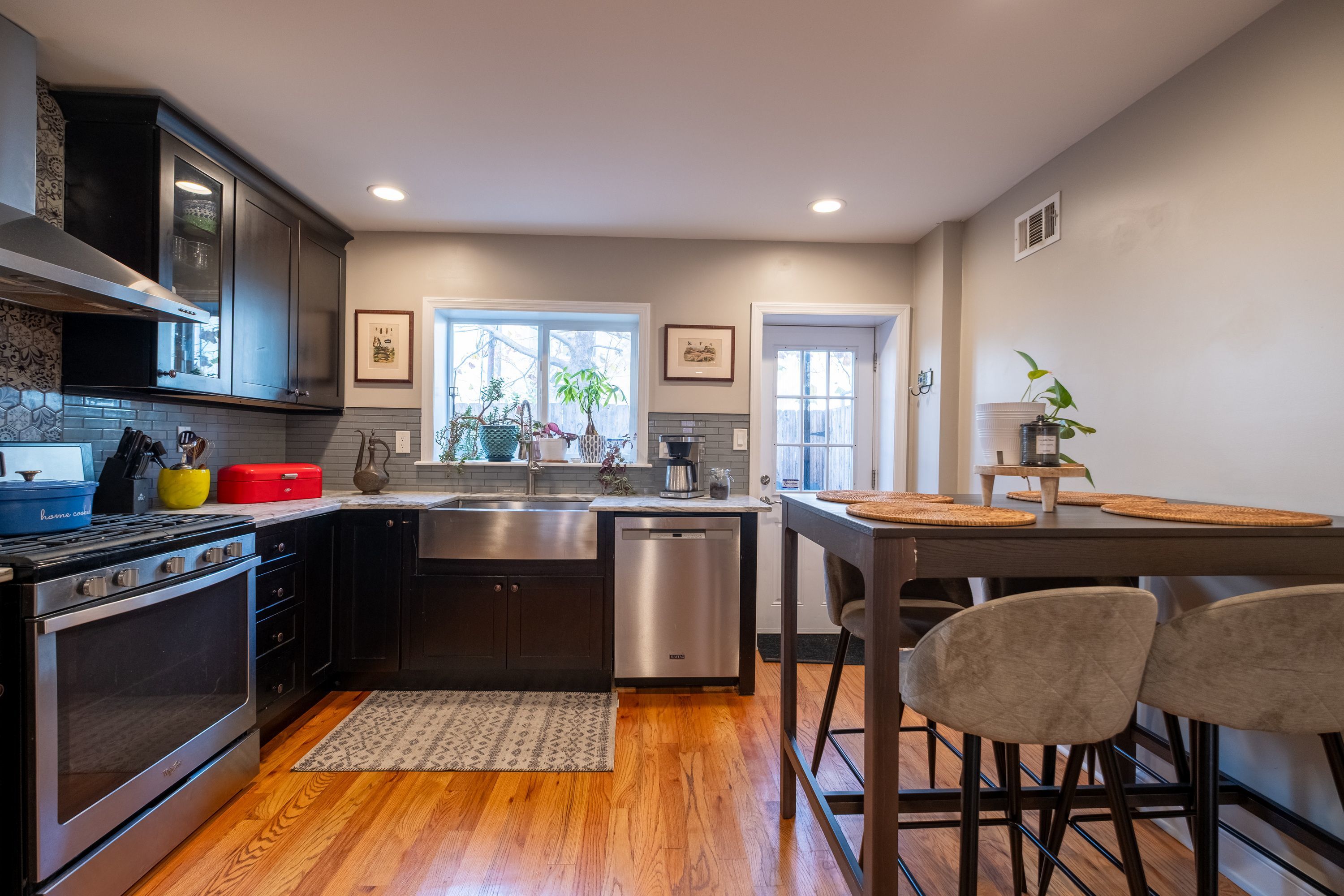
    The kitchen has updated cabinetry, stainless steel appliances, and a marble countertop.

    Kitchen

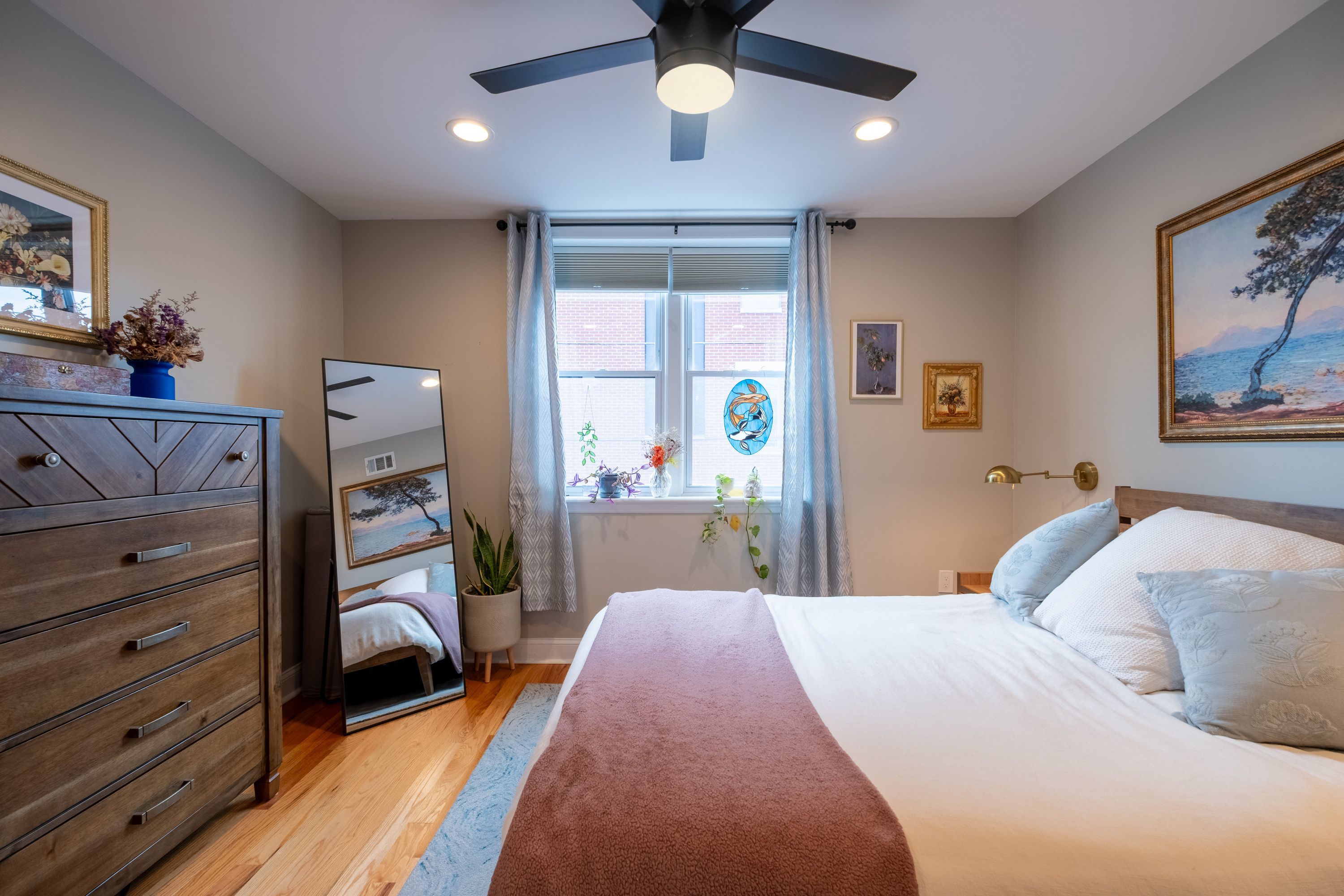
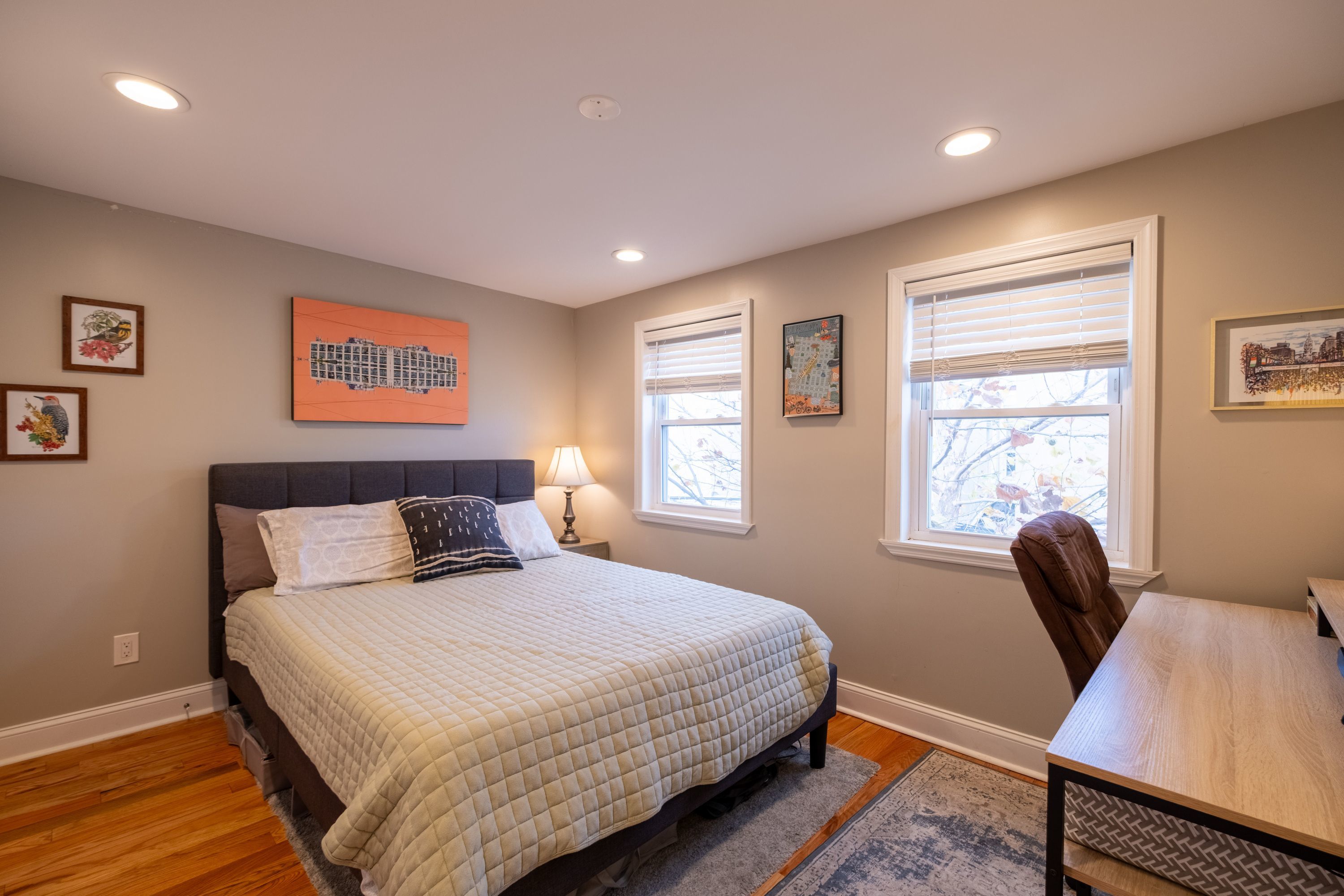
    The two bedrooms have ample closet space and large windows, letting in plentiful natural light.

    The second bedroom has been serving as a combination guest room and home office.

    Guest bedroom/office

    The primary bathroom has a contemporary design, with ceramic tile and a large shower.

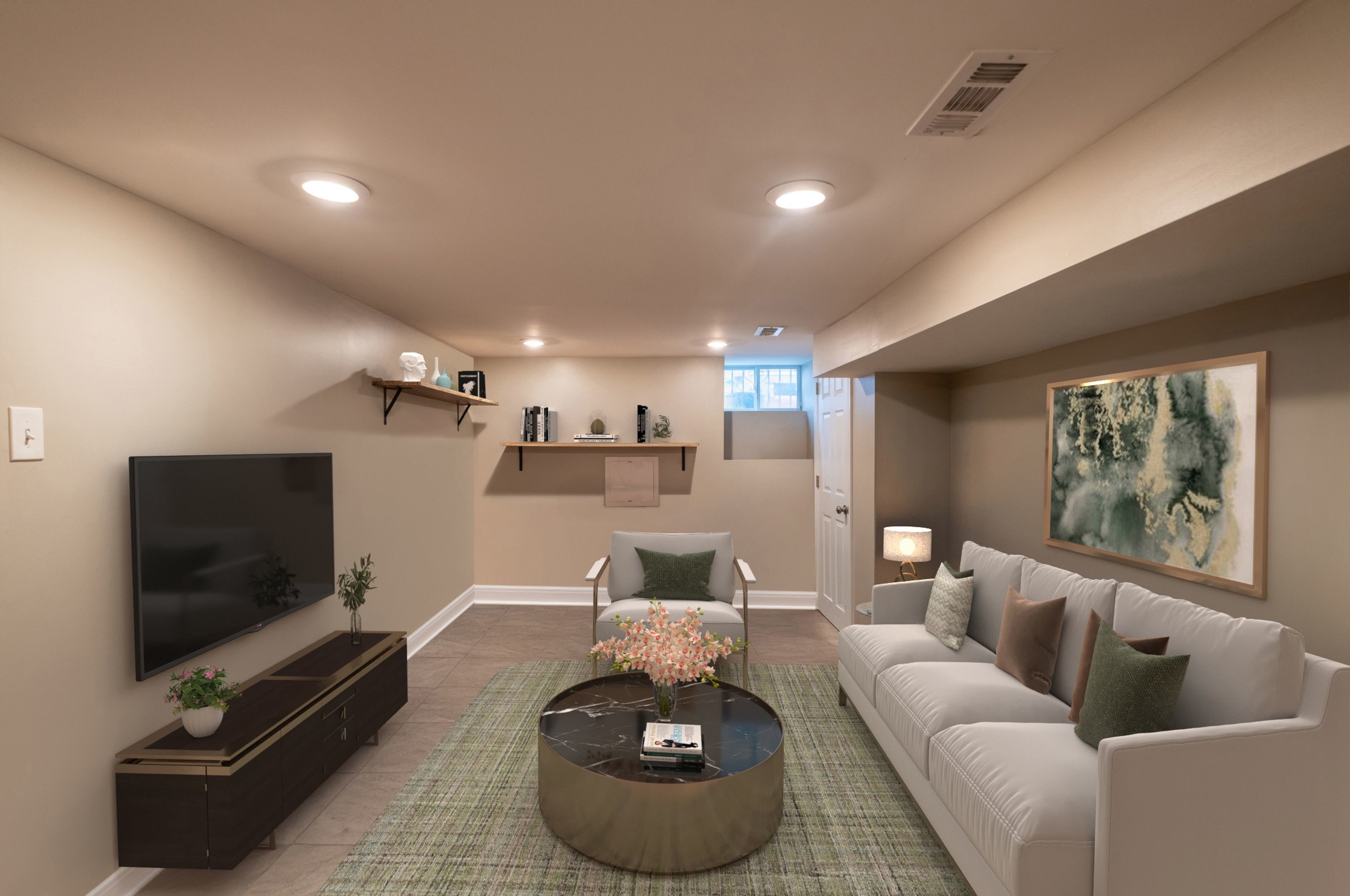
    The basement can be used as a family room, home office, or gym, in addition to storage space and a laundry area with a washer and dryer.

    Basement

    The property has a private outdoor space.

    Public transportation is easily accessible.

    The house is listed by Nancy Alperin of Maxwell Realty Co. for $455,000.

  • How is Center City retail doing? It depends what street you’re on.

    How is Center City retail doing? It depends what street you’re on.

    Center City was resilient this year, reporting slight increases in foot traffic and overall retail occupancy despite high-profile closures along Market Street.

    About 84% of Center City storefronts were occupied as of October, up one percentage point from the same time last year, according to the Center City District’s annual survey of business owners. Occupancy has hovered around that point since at least 2023 and has yet to recover to its pre-pandemic level of 89% in 2019.

    So far in 2025, an average of 343,540 people walked through Center City each day, an increase of more than 3% from last year, the survey found. Each section of Center City, from the beleaguered Market East to the thriving Rittenhouse Square area, saw at least a 1% bump in average daily foot traffic, according to the survey.

    Some retail corridors, however, are looking more vibrant than others.

    window.addEventListener(“message”,function(a){if(void 0!==a.data[“datawrapper-height”]){var e=document.querySelectorAll(“iframe”);for(var t in a.data[“datawrapper-height”])for(var r,i=0;r=e[i];i++)if(r.contentWindow===a.source){var d=a.data[“datawrapper-height”][t]+”px”;r.style.height=d}}});

    Market Street continues to struggle on both sides of Broad Street.

    As of October, the office-centric western side of Market had the lowest occupancy in Center City at 62%.

    Market East, the future of which continues to be debated by city stakeholders, had a 72% occupancy rate. It has been impacted by a slew of recent closures, including Macy’s, Rite Aid, Iron Hill Brewery, and Giant Heirloom supermarket. The Center City District calculates occupancy rates by number of storefronts, not total square footage.

    On Chestnut Street, the eastern and western sections have vastly different occupancies. The eastern side recorded a 71% occupancy rate in October, according to the survey, while 81% of stores on the western side were occupied.

    Walnut Street continues to be the district’s shining star, with 86% occupancy in both the eastern and western sections, according to the survey. In the report, the Center City District highlighted several new additions, including the luxury women’s fashion company Aritzia and North America’s first Nike Jordan World of Flight store.

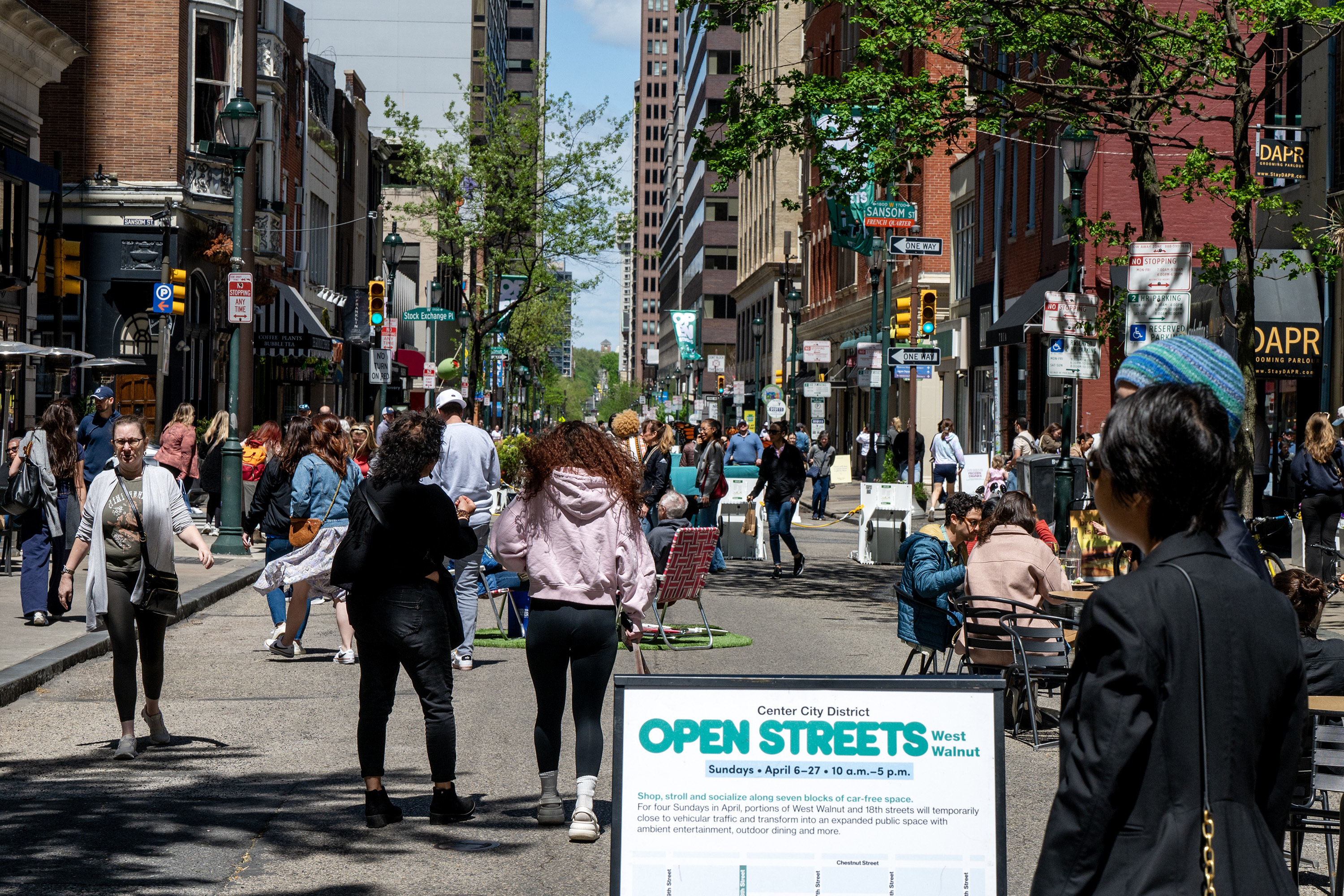
    The report once again highlighted the success of the Open Streets program, during which roads are closed to car traffic and become pedestrian walkways for shopping and dining. There have been 21 Open Streets events since its inception in September 2024, with more planned for December and next year.

    The events bring out more than 10,000 people on average, according to the report, and typically result in a 65% boost in businesses’ foot traffic and a 39% bump in sales volume.

    An Open Streets in April. There have been 21 Open Streets events since its inception in September 2024, with more planned for December and next year.

    Looking to the future, the district surveyed 700 Philadelphia renters to ask what types of retailers they’d like to see more of in Center City.

    “Downtown residents seek convenient access to everyday goods, full-service grocery stores and home furnishing options — all within walking distance,” district executives wrote in the report, noting that these types of businesses could fill vacancies in office buildings or in the concourse around Suburban Station.

    “CCD looks forward to convening office district stakeholders in 2026 to discuss a coordinated retail attraction strategy that could reposition the office district as a place to accommodate many of the retailers Center City is currently missing.”

    Editor’s note: A previous version of this story included an incorrect comparison between 2025 and 2024 for occupancy on Market Street.

  • More New Yorkers want apartments in the Philly area

    More New Yorkers want apartments in the Philly area

    More out-of-towners and fewer locals are searching for rental homes in the Philadelphia region, with New Yorkers leading the way. No word on whether they plan to become Eagles fans.

    In an analysis of the country’s 50 largest metropolitan areas, Philadelphia had the second-largest drop in local rental demand since before the pandemic, as measured by listing views on Realtor.com.

    In fall 2019, about 68% of the Philadelphia metro’s rental traffic on the website came from local residents. By this fall, that share had dropped to about 45%, according to a Realtor.com report published this month.

    Philadelphia was one of 20 metros that switched from having mostly local demand for rental listings before the pandemic to mostly out-of-town demand. Only Detroit had a larger drop than Philadelphia in the share of locals looking online for rentals.

    This fall, most of the Philadelphia metro’s out-of-town rental traffic — 48% — came from the New York metro, which includes some North Jersey cities. The share of listing views coming from the New York metro grew from almost 7% of all traffic before the pandemic to more than 25% this fall.

    window.addEventListener(“message”,function(a){if(void 0!==a.data[“datawrapper-height”]){var e=document.querySelectorAll(“iframe”);for(var t in a.data[“datawrapper-height”])for(var r,i=0;r=e[i];i++)if(r.contentWindow===a.source){var d=a.data[“datawrapper-height”][t]+”px”;r.style.height=d}}});

    In the Philadelphia region, the median asking rent for rentals with zero to two bedrooms was $1,743 in October, according to Realtor.com. The area’s affordability compared to New York and other large nearby metros attracts out-of-town renters. That’s also the case in such metros as San Francisco and Charlotte, N.C.

    But for many renters already living in the Philadelphia area, the region’s relative affordability doesn’t mean much. The region is one of the least affordable major metros in the country for its apartment renters based on their incomes, according to a January report by the online real estate brokerage Redfin.

    “Shifting affordability across regions is reshaping renter behavior, with a growing share of demand coming from outside local markets,” Danielle Hale, chief economist at Realtor.com, said in a statement.

    “Data show that more renters are willing to look farther afield, in some cases to entirely new markets, for homes that better align with their budgets,” Hale said.

    Although New York renters are among those eyeing the Philadelphia region, many are looking to stay put. The New York metro had the highest share of local rental demand this fall. About three in four online views for rentals in that metro came from inside the metro, about the same share as in 2019.

    window.addEventListener(“message”,function(a){if(void 0!==a.data[“datawrapper-height”]){var e=document.querySelectorAll(“iframe”);for(var t in a.data[“datawrapper-height”])for(var r,i=0;r=e[i];i++)if(r.contentWindow===a.source){var d=a.data[“datawrapper-height”][t]+”px”;r.style.height=d}}});

    Nationwide, the rental market has continued to cool, Hale said. From January to October of this year, the median asking rent stayed roughly flat, falling by 0.1%. Over the same period of 2024, the median asking rent increased by 1.1%.

  • Landlord Phil Pulley transferred ownership of West Philly apartments days before suspected arson, records show

    Landlord Phil Pulley transferred ownership of West Philly apartments days before suspected arson, records show

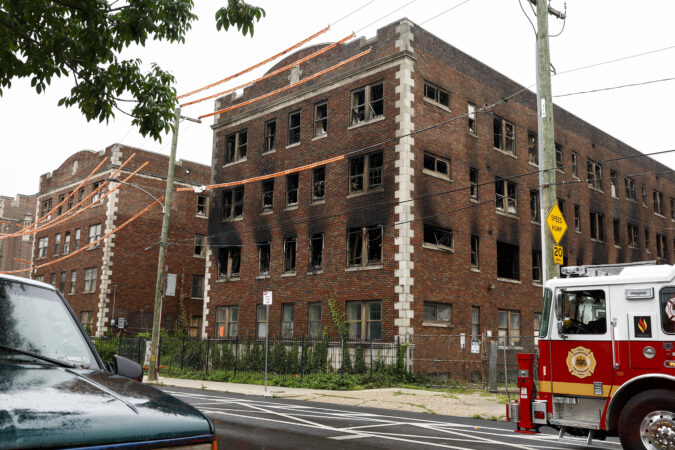
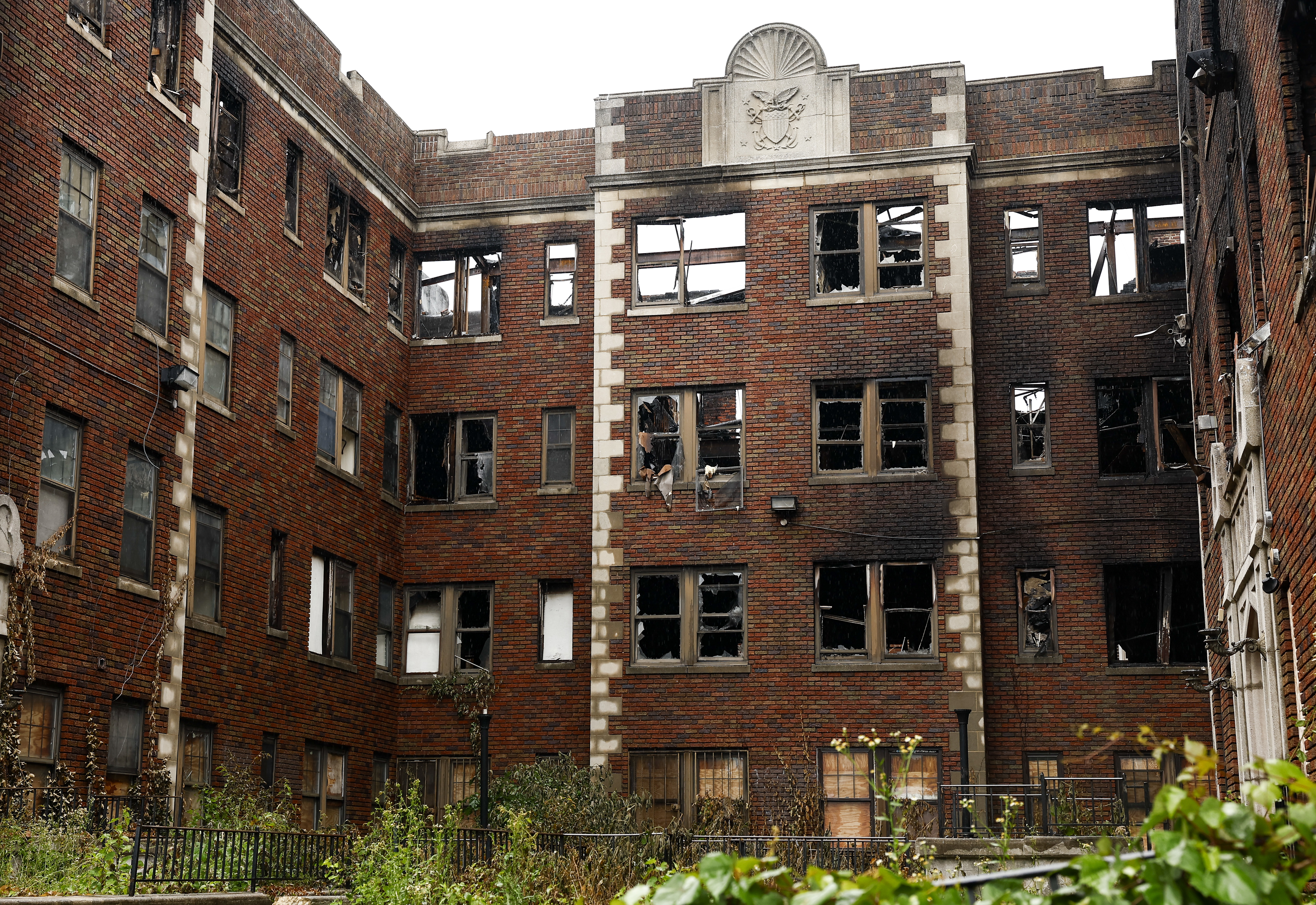
    Two days before an apartment complex once hailed as a shining example of Philadelphia’s urban renewal went up in flames, its owner, embattled city landlord Phil Pulley, transferred the vacant property to a New York investment firm.

    Federal investigators are treating the fire as arson.

    The property’s new owner, Aureus Special Asset Management, which records show is linked to investors in South Korea and Saudi Arabia, is now demolishing the West Philadelphia structure, known as Admiral Court.

    Earlier this year, Pulley faced a $29.4 million foreclosure over unpaid debts linked to a fizzled redevelopment of Admiral Court and an adjacent complex, Dorsett Court. Instead of seeing investors foreclose on the property, he agreed to transfer both apartment complexes to his lenders.

    Pulley signed the deed for that transaction on June 5. Less than 48 hours later, a fire broke out at the vacant building at 48th and Locust Streets, drawing more than 150 firefighters and support personnel to the scene. About 750 neighbors temporarily lost power. No injuries were reported.

    The deed transfer for Admiral Court did not become a public record until late September, when it was sent to the Philadelphia Records Department and finalized.

    West Philadelphia Councilmember Jamie Gauthier, who in June called Pulley a “slumlord” and blamed him for allowing the buildings to rot, on Friday blasted the deal.

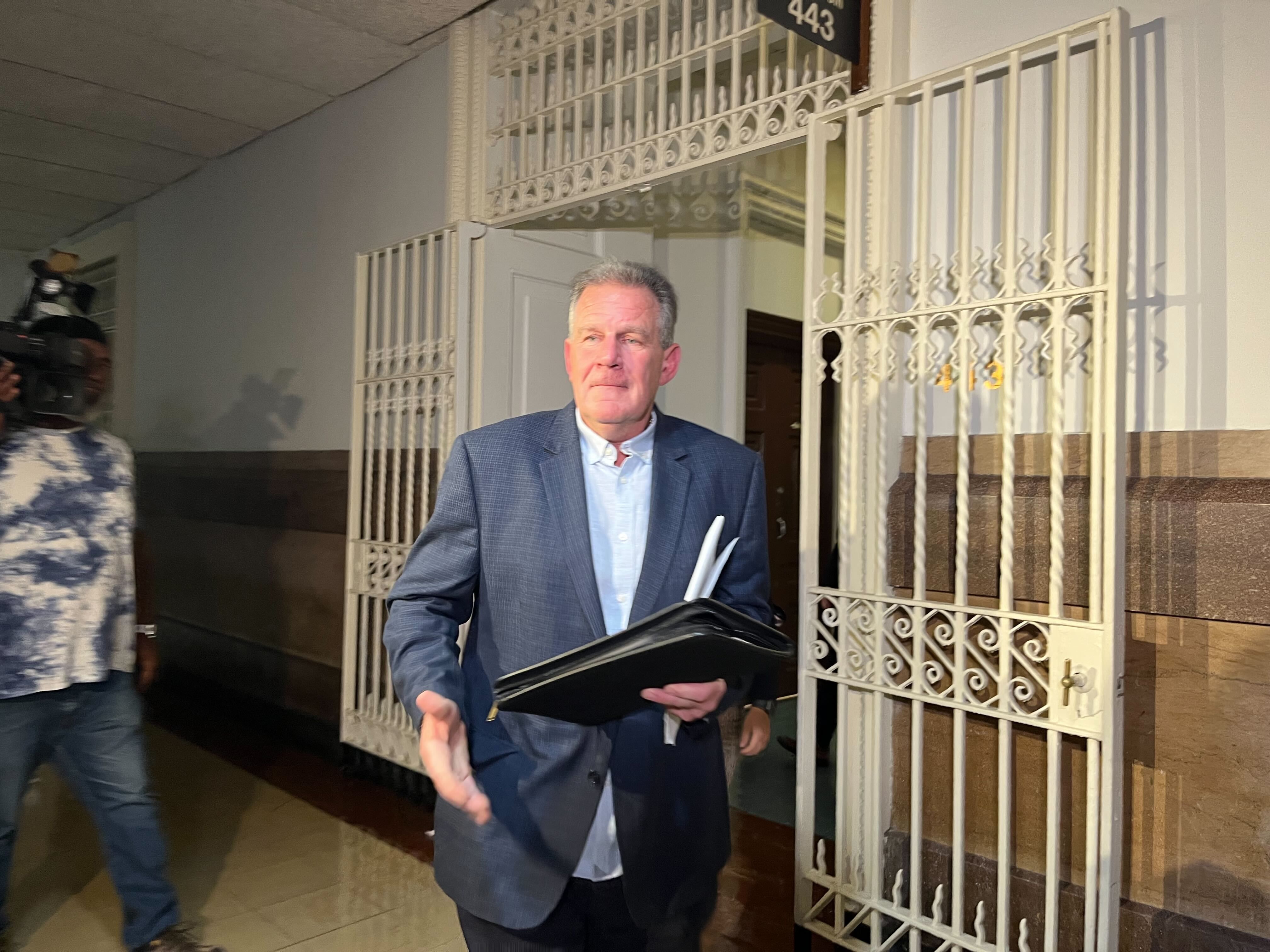
    Phil Pulley outside a courtroom in September 2022 following the partial collapse of one of his buildings, Lindley Towers, in the city’s Logan section.

    “The Admiral and Dorsett Court buildings could have provided affordable housing in one of West Philly’s most desirable neighborhoods. Instead, landlord Phil Pulley ignored repeated safety violations, leading to a devastating four-alarm fire,” Gauthier said in a statement. “The new owner appears to be a shell corporation with little transparency, and I’m deeply concerned that demolishing Admiral Court will create new blight and safety hazards.”

    Crews started tearing down the building last week.

    Pulley’s checkered history includes millions in unpaid taxes, hundreds of building code violations, and voter fraud. Two of his other apartment complexes have partially collapsed in recent years.

    Pulley did not respond to requests for comment about the fire or deed transfer.

    The circumstances of the blaze are now being investigated by the Bureau of Alcohol, Tobacco, Firearms and Explosives, along with Philadelphia police and fire investigators. Ben Benson, a spokesperson for the ATF’s Philadelphia field office, said the agency had “determined that this was an intentionally set incendiary fire, and no accident.” He declined to comment further.

    The aftermath of a large fire at the Admiral Court apartment building at 48th and Locust Streets on Sunday, June 8, 2025 in Philadelphia.

    This month, the new owner of the charred four-story apartment building, Aureus Special Asset Management, obtained a permit to demolish it, according to Philadelphia records.

    Aureus does not have a digital footprint. It shares a Madison Avenue mailing address with the New York City offices of Pacific General, an investment firm specializing in “transactions covering the United States, South Korea, and the Kingdom of Saudi Arabia.”

    Pacific General’s corporate officers also signed documents for Descartes Specialty Finance, a Cayman Islands company that took over the mortgage for the troubled renovation of the West Philadelphia complexes. The company took Pulley to court in 2024 over the $25 million default, adding on millions in fees.

    Reached at an office number for Pacific General, an individual who declined to be identified refused to comment. An attorney for Descartes did not respond to requests for comment.

    Ed Nordskog, a former arson investigator with the Los Angeles County Sheriff’s Department, said uncovering possible fraud connected to an arson is often a painstaking process. It can involve obscure insurance policies, construction loans, or hard-to-trace schemes.

    “If it’s a fraud case, that can take months, if not years, to sort through the paperwork,” Nordskog said. “They are really difficult cases for local investigators.”

    A history of troubled buildings

    In 1989, then-U.S. Sen. John Heinz toured Admiral Court after the crumbling apartment building had been rehabbed with federal affordable-housing tax credits. He hailed the project as a symbol of Philadelphia’s revitalization.

    Roughly 15 years later, Pulley acquired the building and neighboring Dorsett Court, along with a string of other affordable apartment complexes across the city.

    The buildings quickly fell back into decay.

    Both West Philadelphia properties have been vacant since 2018, when Pulley evicted dozens of families — many of them low-income — to make way for a planned renovation and sale.

    While some work was done on Dorsett Court, on Locust Street next to Henry C. Lea Elementary School, progress stopped without explanation.

    Admiral Court alone was cited 33 times by building inspectors since 2018, including several fire code violations in 2022.

    “To watch them just sitting there vacant was heartbreaking for everyone involved,” said Phil Gentry, who has one child attending Lea and another who graduated. “It seems crazy, in the middle of this thriving neighborhood that desperately needs more housing, these nice-looking buildings are falling apart, catching on fire, or sitting vacant.”

    Tenants have long complained about conditions in Pulley’s buildings. Two have partially collapsed in recent years.

    Meanwhile, the city has continued to pursue Pulley in court over other properties.

    In 2022, the facade of another Pulley complex — Lindley Towers, in Logan — collapsed, exposing a large section of the upper floors. The building was rendered uninhabitable, displacing about 100 residents. The city took Pulley to court, seeking millions to cover emergency repairs and other costs. That case is pending.

    In October 2024, the Darrah School Apartments — which was also run by Pulley’s main property management company, SBG Management — partially collapsed, raining debris onto a Francisville side street. No injuries were reported. The building had been cited by city inspectors more than a dozen times.

    This year, the city filed a fresh lien against Pulley’s company, citing $51,000 in unpaid gas bills. The city also launched a petition seeking a court-ordered sequestrator at yet another complex in West Philadelphia owned by Pulley’s company, the Winchester Apartments. That order would empower a third party to collect rent on SBG’s behalf in order to satisfy outstanding tax and utility bills.

    Pulley is also facing an ongoing consumer-protection lawsuit filed in 2023 by the Pennsylvania Attorney General’s Office. It accuses Pulley and a network of affiliated companies of mistreating tenants and a range of other “deplorable conduct.”

    In January, Pulley was sentenced to three years’ probation and 100 hours of community service for casting ballots in several different counties in the 2020 and 2022 elections. He also pleaded guilty in May to voting in both Philadelphia and Montgomery County in 2021 and 2023.

    Staff writers Jake Blumgart and Abraham Gutman contributed to this article.

  • They wanted to buy their friend’s place. They ended up with an East Falls rowhouse instead. | How I Bought This House

    They wanted to buy their friend’s place. They ended up with an East Falls rowhouse instead. | How I Bought This House

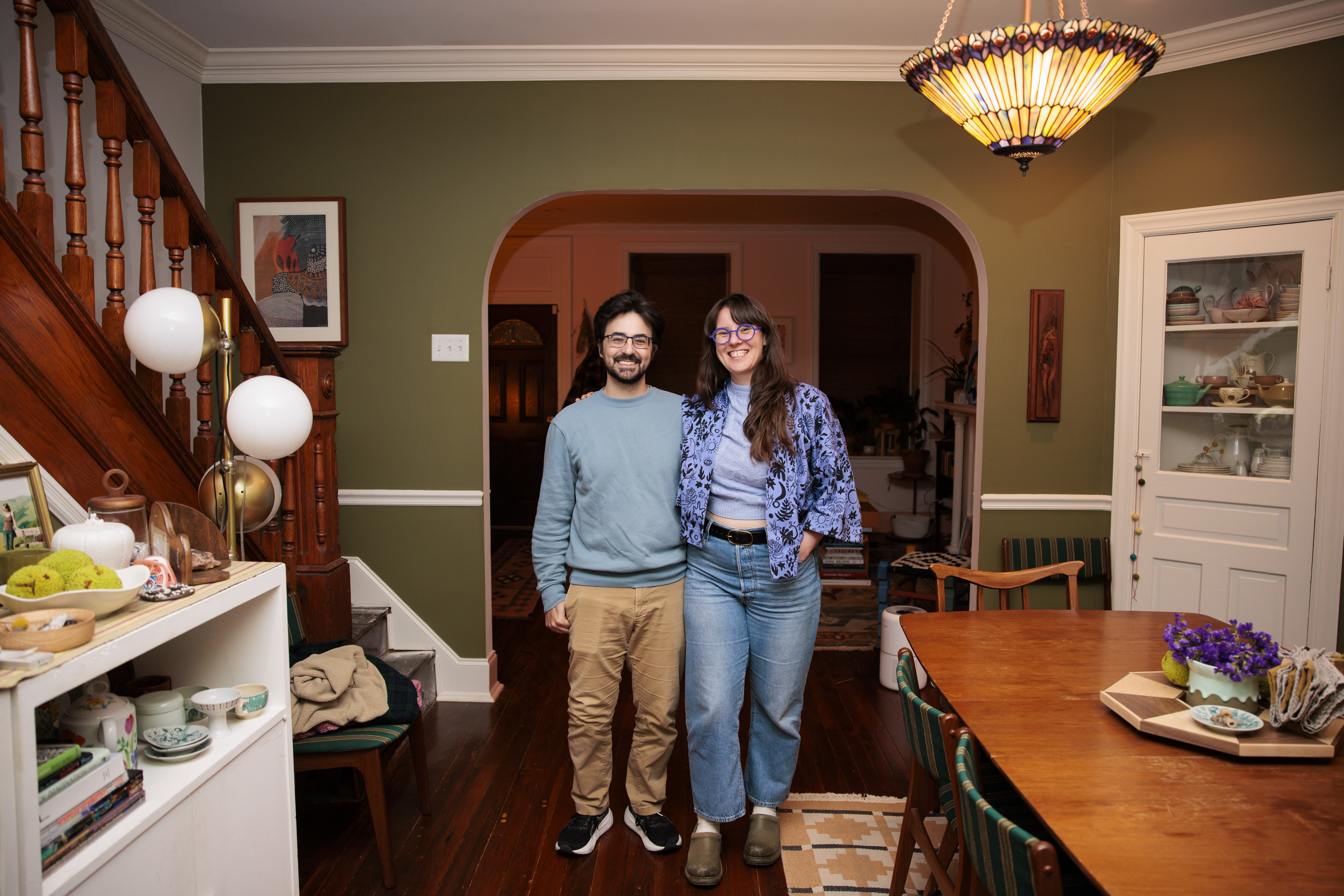
    The buyers: Jessica Lubniewski, 41, museum educator; David Jacobs, 40, electrical engineer

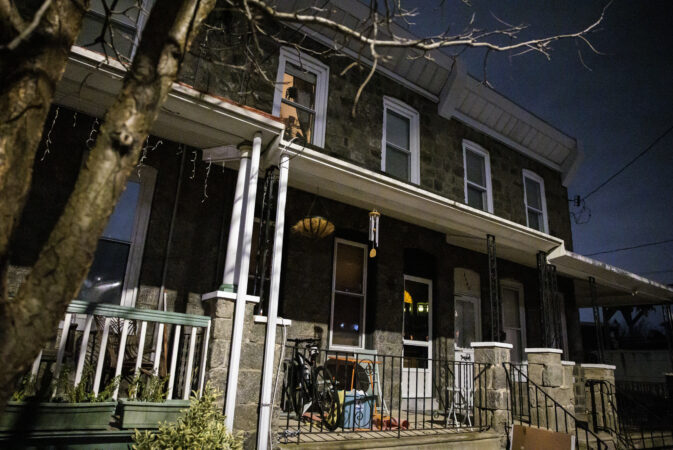
    The house: A 1,300-square-foot rowhouse in East Falls with 3 bedrooms and 1½ baths, built in 1930.

    The price: listed for $325,000; purchased for $327,500

    The agent: Benjamin Camp, Elfant Wissahickon

    The ask: Jessica Lubniewski and David Jacobs didn’t want to buy just any house; they wanted to buy their friend’s house. But when the friend didn’t accept their offer, they had to pivot.

    The couple started looking for houses that cost less than $375,000 in East Falls. They wanted at least three bedrooms, a bathroom on the first floor, and a dining room that was big enough to entertain. “That was a really big thing for me,” said Lubniewski. They also wanted character and original details — not a recently flipped property.

    Lubniewski and Jacobs in their dining room that is big enough to entertain.

    The search: The couple went to a few open houses and spent their evenings browsing Zillow listings, where Lubniewski spied a preview listing for a house that wouldn’t be on the market for a few weeks. “I just kept looking at it and being like, ‘Man, that house looks so cool,’” said Lubniewski. “It was right around the corner from where we were renting our apartment and had all the things we were looking for.” Lubniewski and Jacobs told their agent they wanted to see the house and he worked to get them “the first viewing on the first day that it was on the market,” said Jacobs.

    The appeal: The couple loved the look of the first floor, which includes two fireplaces. “Neither of them are working,” said Lubniewski, but the mantles are “so beautiful.” The one in the living room has its original facade.

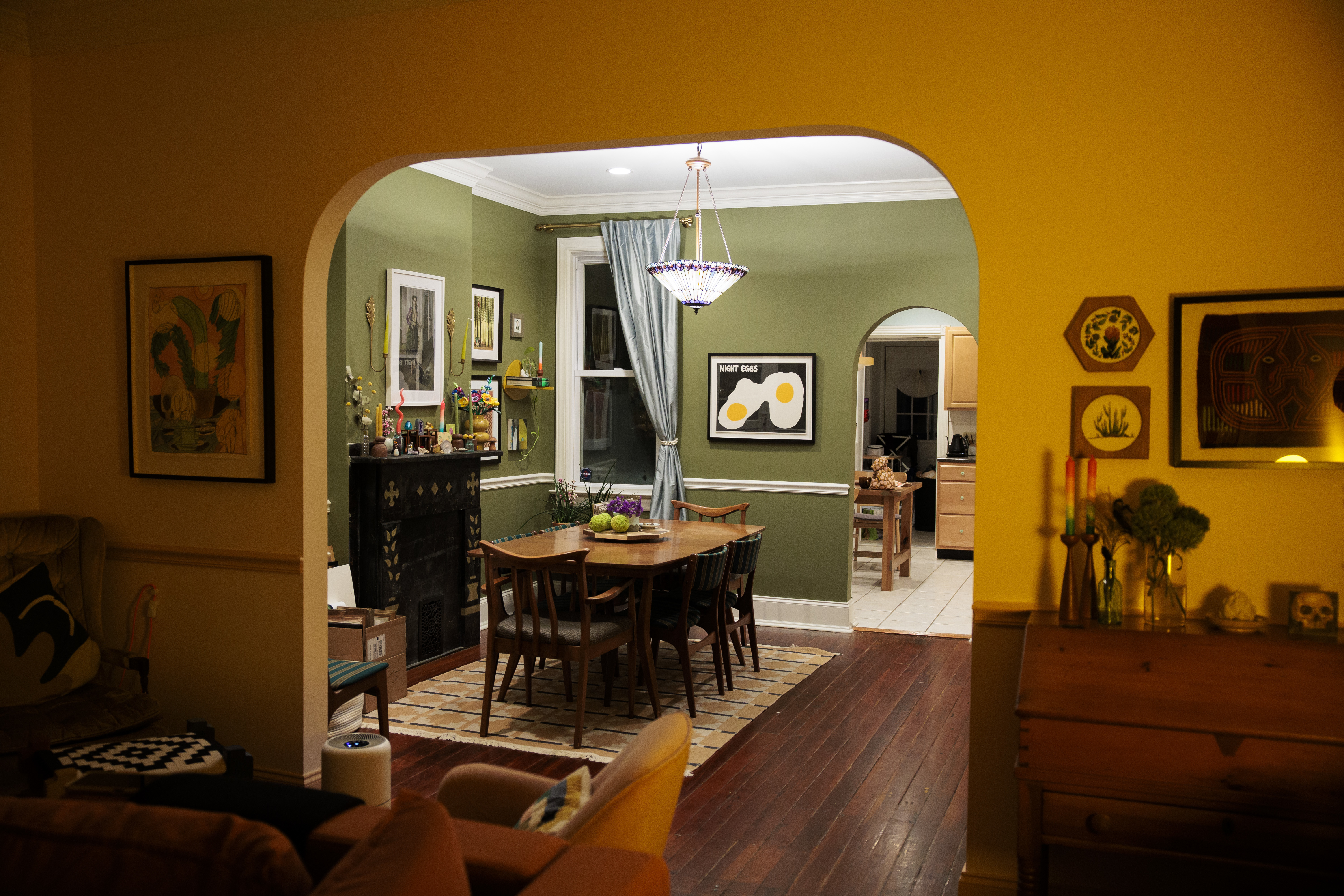
    The arched doorways in between the living room and the dining room and the dining room and the kitchen give “a nice look,” said Lubniewski. Jacobs appreciates the house’s central air system.

    Arched doorways separate the living room from the dining room and the dining room from the kitchen

    The deal: A few hours after visiting the home, the couple put in an offer. Their agent suggested they bid a few thousand dollars over the asking price, so they offered $2,500 more for a total of $327,500. Lubniewski thinks they may have been the only people to see the house.

    The seller accepted their offer and after the inspection, agreed to cover $5,000 of the closing costs. He also threw in the patio furniture and the grill. In exchange, the couple did a 30-day closing.

    “It all happened pretty smoothly and pretty quickly,” said Lubniewski.

    One of the couple’s favorite aspects of the house were the two original fireplace mantels in the living room and the dining room.

    The money: The couple had $90,000 to spend on their home. That included $40,000 of personal savings.

    “We don’t have any kids. We don’t have a lot of expenses,” said Lubniewski regarding how they were able to save. And after Jacobs got his current job as an electrical engineer, they were “able to save a lot quite easily,” she added, a first for both of them.

    They also got $40,000 from Jacobs’ parents, and additional money they inherited from relatives who died earlier in the year.

    They tried to pursue a first-time homebuyer’s mortgage but were about $500 over the income limit, Lubniewski said, so they got a 30-year-mortgage with a 6.45% interest rate instead. They put 20% down, about $65,000.

    The move: Lubniewski and Jacobs made a few changes to the house before they moved in, including ripping out the carpeting upstairs. “It was horrible work, so gross,” said Lubniewski. They hired someone to redo the floors and buff the original hardwood downstairs. They officially moved in at the end of July, said Lubniewski, “on what felt like the hottest day of the summer.”

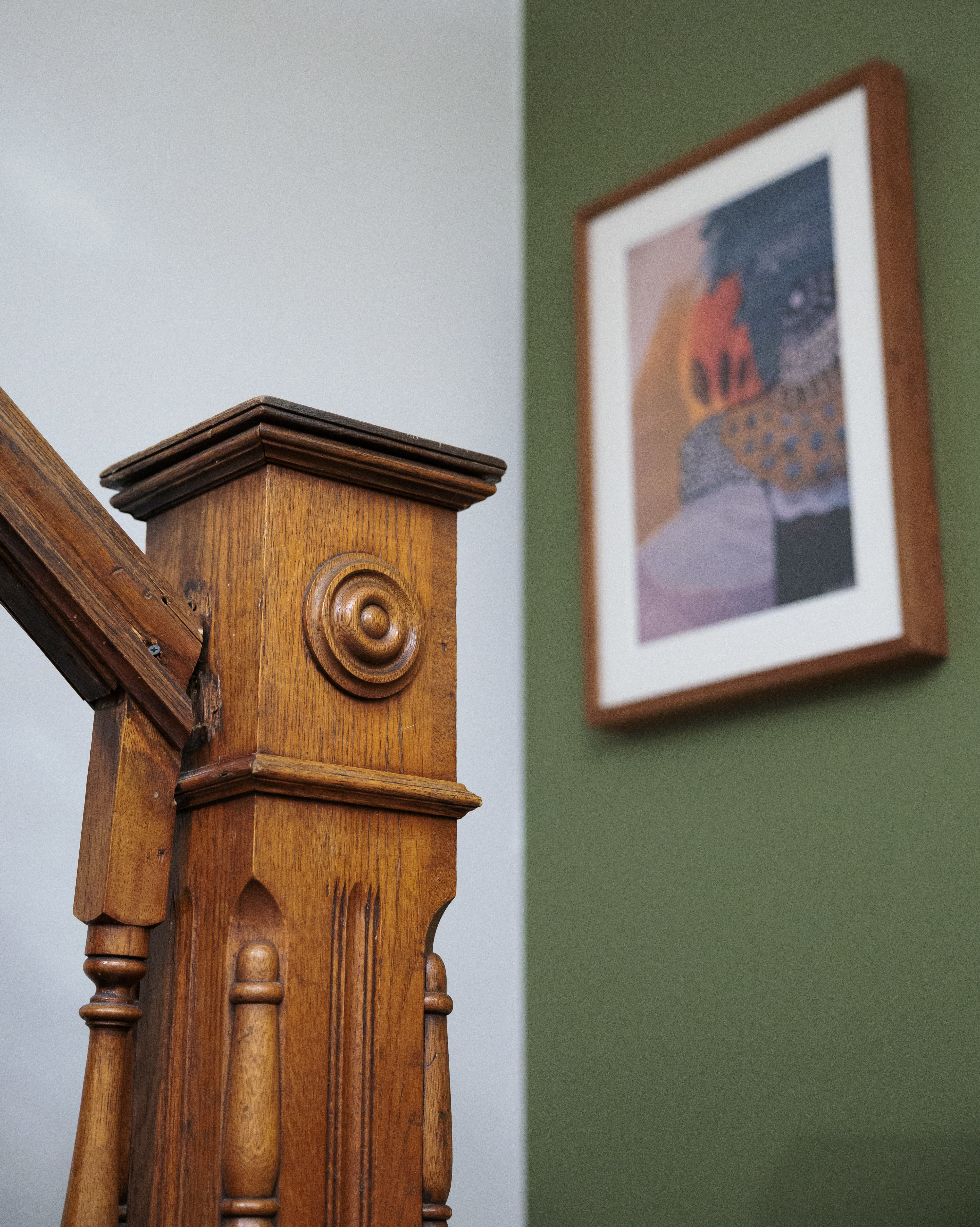
    Original details, like the woodworking on the staircase banister, was important to Jacobs and Lubniewski.

    Any reservations? Jacobs wishes they had time to replace the old electrical wiring they discovered after they moved in. “In the basement the electrical all looked really good, and the inspector didn’t flag anything.” But when they tried to replace a light fixture in the dining room, they encountered old, fabric-wrapped wire, an outdated type of electrical wiring that exists in many old homes. They think there may be more, but they don’t want to bust through the walls right now to find out.

    Life after close: Since moving in, Jacobs and Lubniewski have been busy getting to know their neighbors. In fact, a woman who grew up in the house stopped by on Halloween and asked to peek inside. “She was really excited,” said Lubniewski. She even had her son take a photo in front of the fireplace mantel, the same spot her mother took a photo of her on Halloween in the ‘70s. “It’s always so interesting to know what has changed,” Lubniewski said. Or in the case of the fireplace mantel, what hasn’t.

    Did you recently buy a home? We want to hear about it. Email acovington@inquirer.com.

  • 20-year tax abatement to help turn schools and offices into homes may soon be legal in Philly

    20-year tax abatement to help turn schools and offices into homes may soon be legal in Philly

    Philadelphia developers may soon benefit from a 20-year property tax abatement to convert large, underutilized properties into residences.

    Buried among the litany of provisions in the state budget and fiscal code in Harrisburg, which both passed last week, new language was included that allows Philadelphia to exempt “improvements that convert deteriorated property into residential housing units” from property taxes for up to 20 years.

    If a building is deemed too difficult to convert to housing, the new legal language will allow a developer to demolish a building and still get the abatement.

    The legislation defines “deteriorated property” as “any industrial, commercial or other business property, or property previously used for government purposes, including a school” that is located in what the legislation calls “a deteriorating area.”

    Mayor Cherelle L. Parker’s administration has been eyeing such legislation as a means to incentivize new housing — a key priority for the mayor — and to find new uses for underutilized office and school buildings.

    It is now up to City Council and Parker’s administration to craft a local law within the confines of what the state government newly allows. According to state law, local officials must also define what geographic areas under their purview qualify as “a deteriorating area.” Council President Kenyatta Johnson says he supports the 20-year abatement.

    The abatements would “ensure that there are no vacant office buildings here in the city, and … incentivize the building of affordable housing,” said Parker in an interview. “That’s where I think it’s going to matter the most.”

    Shuttered schools and the Roundhouse

    Currently, the city has a 10-year abatement that applies to all residential properties for renovations — which includes conversions — and a half-strength abatement for new construction that begins with a 100% break on a project’s property taxes and then tapers by 10% annually over a 10-year period.

    Parker said that her administration worked with State Sen. Vincent Hughes (D., Philadelphia), State Rep. Jordan Harris (D., Philadelphia), and State Sen. Joe Picozzi (R., Philadelphia) to get the new language into the contentious Harrisburg budget.

    The administration is now working on crafting legislation to present to Council early next year. She sees it as a crucial incentive in her H.O.M.E. effort to build or preserve 30,000 units of housing.

    Parker emphasized that while the new legislation is meant to help solve the office market crisis in Center City, she is most excited for it to be applied to shuttered public schools and other large, underused buildings in outlying neighborhoods.

    “We have a menu of options, and this tool, this puts our efforts on steroids to build affordable housing in the city of Philadelphia,” Parker said. It is a “public good [that is] underproduced and has to be incentivized, and not just in Center City.”

    Lewis Rosman, the city’s chief deputy solicitor, pointed to the architecturally unique former police headquarters known as the Roundhouse as a property that could possibly benefit from the 20-year abatement as a way to demolish the existing structure and build a new one.

    “If you have a property like the Roundhouse that you can’t directly turn into housing, you got to take it down,” said Rosman, who helped write the state legislation. “It will be a new development, but presumably under enabling legislation from Council that will be implemented, it would be subject to the abatement.”

    Impact on affordable housing?

    Real estate groups in the city hailed the new legislation out of Harrisburg as a tool to fight blight and reactivate historic buildings.

    “For years, [we have] advocated for tools that make it possible to convert blighted, deteriorated properties into vibrant residential communities, and this expanded abatement authority does exactly that,” said Sarah Maginnis, executive director of the Commercial Real Estate Development Association’s (NAIOP) Philadelphia chapter.

    Mayor Parker said she plans to include provisions in the city’s abatement legislation to support affordable homes.

    “This is not a blanket windfall for billionaires,” Parker said.

    Councilmember Jamie Gauthier, who chairs City Council’s housing committee and has been a champion of affordable housing, said she also supported the concept of a 20-year property tax abatement for residential conversion with the proviso that the city require some housing for lower-income residents in exchange for the tax incentive.

    “Construction costs are really high right now, and we need more housing, so I’m not against an abatement that would generate more housing,” said Gauthier. “At the same time, if we’re going to incentivize developers through a vehicle like this, it needs to have an affordability component.”

    Mayor Cherelle L. Parker speaking at a press conference on the future of Market East earlier this month. Jessie Lawrence, Philadelphia director of planning and development, is pictured left.

    But developers with expertise in residential conversions warned against adding additional requirements, saying that the incentive is not generous enough to support below-market-rate rents.

    “A 20-year abatement without any strings attached will make a difference in Philadelphia,” said Leo Addimando, managing partner with Alterra Property Group, which has successfully executed many office-to-residential conversions in the city. “But if you attach any strings to it, you neuter it.”

    Addimando said a 20-year tax abatement could make some conversion projects viable by allowing developers to qualify for better financing, lowering their borrowing costs. But he argues those cost savings are not enough to pay for housing that would be affordable to low-income renters.

    Addimando said the subsidy could probably allow for developers to create lower-priced units for households who earn 120% to 80% of area median income — less than $123,000 to $85,000 for a family of three — but he assumed city policy would want to help lower-income families.

    “In that scenario, a 20-year tax abatement is not enough subsidy to move the needle,” said Addimando, who is a partner in the conversion of the Wanamaker building from offices to residential apartments.

  • Sloomoo Institute, an immersive slime playground, is one of King of Prussia Mall’s new stores this holiday season

    Sloomoo Institute, an immersive slime playground, is one of King of Prussia Mall’s new stores this holiday season

    At the King of Prussia Mall, you can add some slime (the fun kind) to your holiday shopping experience this year.

    Fresh off the opening of the first-ever Netflix House, the Montgomery County mall this week welcomed the Sloomoo Institute’s first Philly-area location. The sensory slime experience’s latest outpost is called a Sloomoo MiniMoo, and it’s a scaled-down, 3,000-square-foot version of its flagship stores.

    For between $24 and $26 a person, King of Prussia Sloomoo customers can design their own slime, choosing from different textures, colors, scents, and charms. They can also smush slime onto the wall, send it flying through the air with a slingshot, go elbow-deep in vats of slime, and take slime-making classes.

    Guests can also browse slime toys and other squishy, sensory gifts at the Sloomoo retail store, no ticket required.

    “King of Prussia is a playground for families,” cofounder Sara Schiller said in a statement, “and we’re bringing a world of slime designed to spark curiosity and pure, unfiltered joy.”

    Customers play with slime at another Sloomoo Institute location. The King of Prussia Mall opened a Sloomoo MiniMoo experience this week.

    Sloomoo Institute was founded by Schiller and her friend Karen Robinovitz, who had rediscovered slime as a way to feel joy again after personal losses and hardships.

    They opened their first location in New York in 2019, went viral on TikTok during the pandemic, and then expanded nationwide, opening outposts in Atlanta, Chicago, Houston, and Los Angeles. A Sloomoo MiniMoo also recently opened in Boston.

    Earlier this year, the founders told CNBC that Sloomoo brings in as much as $4.3 million a month in revenue from ticket sales alone.

    A look inside the King of Prussia Mall’s Sloomoo MiniMoo experience, which opened this week ahead of Black Friday and the holiday shopping season.

    At King of Prussia, Sloomoo MiniMoo welcomed its first customers last weekend, but it will celebrate its grand opening this Saturday, when the first 200 ticketed customers will receive a complimentary hot chocolate and “limited-edition Philly Cheesesteak-themed slime,” according to company officials. The first 100 guests on Saturday will get a bag charm.

    Sloomoo is located next to H&M on the upper level of the Plaza by Eataly, the mall’s new Italian culinary experience.

    Other new stores, restaurants, and experiences at the King of Prussia Mall

    Crowds shopped at the King of Prussia Mall on Black Friday 2022.

    While some other Philly-area malls have struggled or died — and others are trying to reinvent themselves — King of Prussia Mall seems to be thriving.

    Aside from Sloomoo, the mall has welcomed several other new stores, restaurants, and interactive experiences since August. A few retailers, including Lululemon, Abercrombie & Fitch, and Mejuri, have also expanded or relocated.

    As holiday shopping season kicks into high gear, customers can check out the following new additions:

    The “misery-go-round” inside of “Wednesday: Eve of the Outcasts” at the Netflix House, which opened earlier this month at the King of Prussia Mall.

    Stores coming soon to the King of Prussia Mall

    Shoppers sit with their bags at the King of Prussia Mall on Black Friday 2022.

    If you’re doing holiday shopping later in the season, or taking a trip to the mall between Christmas and New Year’s, you might be able to visit the following stores. All of them are set to open their first Philadelphia-area locations this December:

    In early 2026, Adidas and Columbia Sportswear are set to open stores in the King of Prussia Mall. Exact locations for those stores have yet to be announced.

    Looking even further ahead, Level99 is set to open a 46,000-square-foot live social-gaming venue on the ground floor of the former JCPenney in 2027.