Category: Real Estate

  • Philadelphia is at risk of losing more than 7,500 subsidized rental homes during the next decade, report says

    Philadelphia is at risk of losing more than 7,500 subsidized rental homes during the next decade, report says

    Across Philadelphia, low- and moderate-income households rely on federal subsidies that reduce the cost of their rent.

    Federal housing programs directly subsidize at least 476 properties, totaling about 34,350 rental units. But the city is at risk of losing more than one in five of these affordable housing units during the next decade, according to an analysis by the Housing Initiative at Penn published Thursday.

    Between 2026 and 2036, federal contracts or mandates that cap the rents at these properties can expire.

    Owners can decide whether to renew contracts or let them end and then charge higher market-rate rents or sell their properties in potentially lucrative deals as property values in the city continue to rise.

    A property owner’s decision in 2021 not to renew a subsidy contract at the University City Townhomes in West Philadelphia is a recent high-profile example of what’s at stake. The site had grown much more valuable since the subsidized townhomes were built four decades earlier, and the owner decided to sell the property, displacing 69 households.

    “Philadelphia has long relied on a large number of federally subsidized properties to provide affordable housing options that are protected from market forces,” researchers at the Housing Initiative at Penn wrote.

    They said the report can help policymakers, advocates, and others plan how to preserve affordable housing as subsidies reach their expiration dates. The report relies on data from the National Housing Preservation Database developed by the Public and Affordable Housing Research Corp. and the National Low Income Housing Coalition.

    Also helpful, researchers noted, will be the public database of subsidized housing properties and their subsidy expiration dates that the city is creating, as directed by legislation City Council passed in 2023. City officials said they hope to launch the database early next year.

    Here are some takeaways from Penn researchers’ analysis of subsidized properties in Philadelphia.

    These properties are concentrated in certain areas

    Subsidized properties, including those at risk of having their subsidies expire, operate in neighborhoods across the city.

    But they are most concentrated in three City Council districts: the Third in West Philadelphia, the Fifth in North Philadelphia, and the Eighth, which includes the area around Germantown and Mount Airy.

    The report’s total count of federally subsidized properties does not include those added in the last two to three years, due to limitations of the data.

    Subsidies face several risk factors

    Researchers found that where properties are located influences the odds of an owner ending participation in a subsidy program and if they do, how much rents potentially could increase.

    Thirty-eight of the 136 Philadelphia properties whose subsidies will be up for renewal during the next decade are in areas where rents, household incomes, and home values have increased more than in the city as a whole.

    In census tracts that have properties with expiring subsidies, home values increased by 28% in the last decade, compared to 21% citywide.

    In areas with strong housing markets, property owners have more incentive to end subsidy contracts and charge market-rate rents.

    For-profit property owners are less likely than nonprofit owners to renew subsidy contracts. And about six in 10 properties with expiring subsidies are owned by for-profit owners.

    Researchers also noted that any policy change by President Donald Trump’s administration that reduces federal funding for subsidy programs would make properties less affordable for tenants.

    These are the most common subsidies

    The country’s largest source of funding for new and renovated subsidized rental housing is the Low-Income Housing Tax Credit program. It’s also the most common subsidy source in Philadelphia.

    These properties have to keep rents affordable for 30 to 40 years after they are built.

    Of the properties that have subsidies that expire within the next 10 years, 57% use Low-Income Housing Tax Credit subsidies, either alone or in combination with other programs.

    In a 2024 report, Fannie Mae said the credit was “one of the most successful” programs that support affordable housing for “some of the most vulnerable renters in the country.”

    Fannie Mae found that in early 2024, the average asking rent for Low-Income Housing Tax Credit properties in the Philadelphia metropolitan area was about half the average asking rent for a market-rate property.

    For Philadelphia properties, the next largest source of federal housing subsidies is the Section 8 program that ties subsidies to units, not households.

    This program, either alone or in combination with other programs, covers 27% of the city’s subsidized properties that have agreements that expire during the next decade.

    Property owners can choose whether to renew these contracts when they end, which is usually after five to 20 years. Current contracts are all renewals of agreements that date back to before 1983, when Congress ended the program.
  • Plymouth Meeting Mall slated to be sold to Philly developer

    Plymouth Meeting Mall slated to be sold to Philly developer

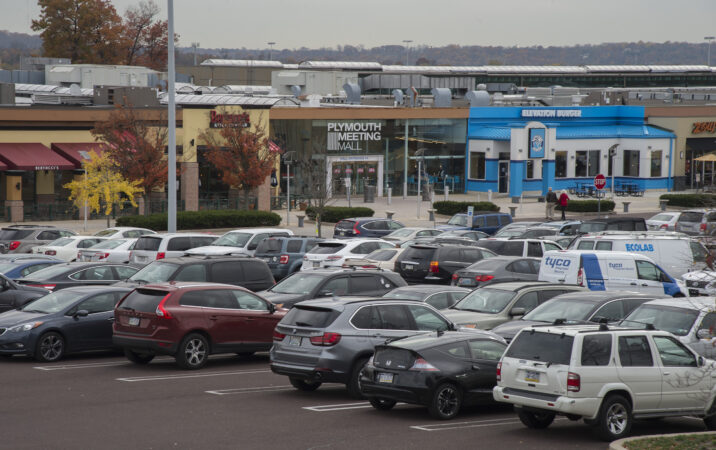
    The Plymouth Meeting Mall may soon change hands.

    The mall’s current owner, PREIT, plans to sell the property to LA Partners, previously known as Lubert Adler Real Estate Funds, PREIT leadership confirmed Thursday, noting that the sale is still pending. PREIT did not disclose the price of the sale.

    PREIT, which is based in Philadelphia, also sold the Exton Square Mall to Abrams Realty & Development in March. PREIT also owns the Cherry Hill and Moorestown Malls.

    LA Partners executive chairman Dean Adler told the Philadelphia Business Journal, which first reported on the pending sale, that he expects to invest over $100 million to redevelop the mall. Early plans include adding residences.

    PREIT CEO Jared Chupaila said in a statement that the sale reflects the company’s “commitment to disciplined balance sheet management and liquidity generation.”

    “We believe LA Partners is uniquely positioned to build on the multipurpose hub we have laid the groundwork for, which has long served as a central part of Plymouth Township and the surrounding communities,” said Chupaila.

    PREIT has faced financial challenges in recent years. The business has filed for bankruptcy twice since 2020, and most recently emerged from bankruptcy as a private company in 2024 helmed by a group of investment firms.

    The Plymouth Meeting Mall, for its part, has tried to undergo a makeover in the last few years, following the 2017 closure of its anchor, a 215,000 square-foot Macy’s. Amid PREIT’s plans to “diversify the tenant mix” at the mall, nearly half the tenants there were either dining or entertainment businesses in 2018.

    Lubert Adler’s other properties include the Bellevue in Center City, which recently underwent extensive renovations, and the Battery, a former power plant in Fishtown redeveloped into a multipurpose complex.

    A spokesperson for LA Partners did not immediately respond to a request for comment Thursday.

    Peter Abrams, managing partner for Elkins Park-based Abrams Realty & Development, said the Plymouth Meeting Mall site “is the best-located large parcel of real estate in the Delaware Valley.”

    “There’s a lot of dead and dying malls in this country, and some of us, like myself and Dean Adler, understand the opportunity and aren’t afraid of the challenges, which are many,” said Abrams, who is behind proposed development plans at the Exton Square Mall.

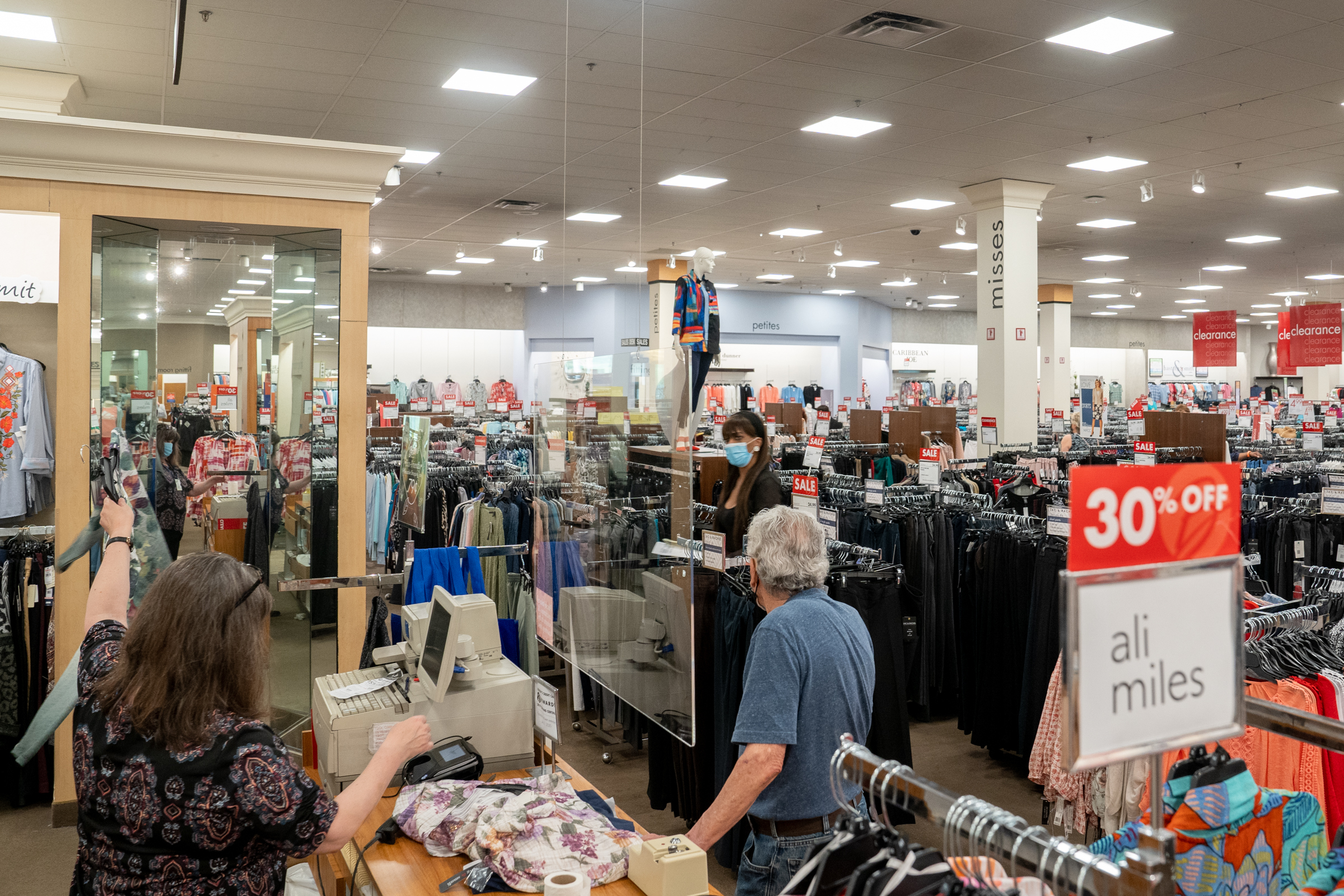
    Boscov’s at Plymouth Meeting Mall on June 6, 2020.

    How did PREIT get here?

    At the time of PREIT’s bankruptcy filing in 2020, the business managed 4.7 million square feet of space in the region as the largest mall owner in the Philadelphia area.

    Consumers had already been shifting toward e-commerce before the pandemic. But as COVID forced nationwide shutdowns in 2020, some of PREIT’s tenants were forced to close, couldn’t pay rent, or didn’t want to, intensifying issues for the mall owner.

    Prior to the pandemic, PREIT sold off malls and tried to transform others by adding supermarkets, movie theaters, and apartments.

    Through the most recent bankruptcy process, PREIT shed $800 million in debt and gave up its stake in the Fashion District in Center City. When it emerged from bankruptcy last year, PREIT owned 13 malls across Pennsylvania, New Jersey, Maryland, and Virginia.

    It’s a time of struggle and transition for many malls across the country, including several in the region that have survived beyond their heyday. In the Philadelphia suburbs, plans are in the works to redevelop mall sites including the Exton Square Mall and the former Echelon Mall in Voorhees.

  • Selling the family Shore house | Real Estate Newsletter

    Selling the family Shore house | Real Estate Newsletter

    The cottage on Asbury Avenue in Ocean City has been in the Smith family for seven decades. Now, it’s most likely at the end of its life.

    The 957-square-foot home two blocks from the beach is under contract with a developer for $1.4 million. And the family knows that the buyer will probably tear it down.

    That’s what happens down the Shore. The cottage sits on a large lot ripe for development and surrounded by larger neighbors.

    Keep scrolling for that story and more in this week’s edition:

    📮What type of nonresidential building would you want to live in if it were converted into a home? Maybe you even have a specific building in mind. Let me know.

    — Michaelle Bond

    P.S. The newsletter will be taking a break for Thanksgiving. So I’ll see you bright and early in your inbox the following Thursday, Dec. 4.

    If someone forwarded you this email, sign up for free here.

    Selling a piece of family history

    Norman and Elizabeth Smith bought the two-bedroom, one-bathroom cottage in 1956 for $13,500. Generations of Smiths spent summers crammed into every corner of the home.

    And they watched over the years as small cottages like theirs were demolished and replaced with larger homes.

    After Norman and Elizabeth died, one of their sons moved in. But when he died in September, the family decided to sell the property that’s unique in the neighborhood for its small house and grass-covered yard.

    The home was listed for sale at the end of October. The family immediately received a bunch of offers, mostly from developers. Now the property is under contract with a developer for $1.4 million.

    My colleagues wrote last year about the owners of tiny Shore homes who refuse to sell their million-dollar properties.

    But that’s not the usual choice. Take a look inside the Smith’s Shore cottage before it’s gone.

    Fuel leak upends a Bucks neighborhood

    “We will never drink the water in this house again,” a Bucks County homeowner said.

    Kristine Wojnovich and her husband don’t bathe in their home either. That’s because they get their water from a well, and that well was one of six that a pipeline leak contaminated with jet fuel.

    The leak has disrupted life in a quiet, suburban neighborhood, which happens to have a 14-inch-wide pipeline running underneath it that carries jet fuel, diesel, or gasoline from Delaware County to Newark, N.J.

    State inspectors discovered the leak in January. But Wojnovich told my colleague that she first knew something was wrong with the water coming from her well in 2023.

    Many residents of the neighborhood won’t drink or cook with their water. They watch as neighbors put their houses up for sale.

    Keep reading to learn more details about the leak and what life is like now for the people who live in the neighborhood.

    The latest news to pay attention to

    Home tour: Church turned apartments

    The four women in their 20s all separately found Christ Reformed Church on Facebook. But they didn’t come to worship. They wanted to live there.

    The Romanesque-style brownstone structure was built in 1860 as a church, but now it’s an apartment building with 17 multilevel units.

    Corwynne Peterson, Riley Sperger, Ashlee Propst, and Magdalena Becker live in one of those units. They moved in at different times over the last 2½ years.

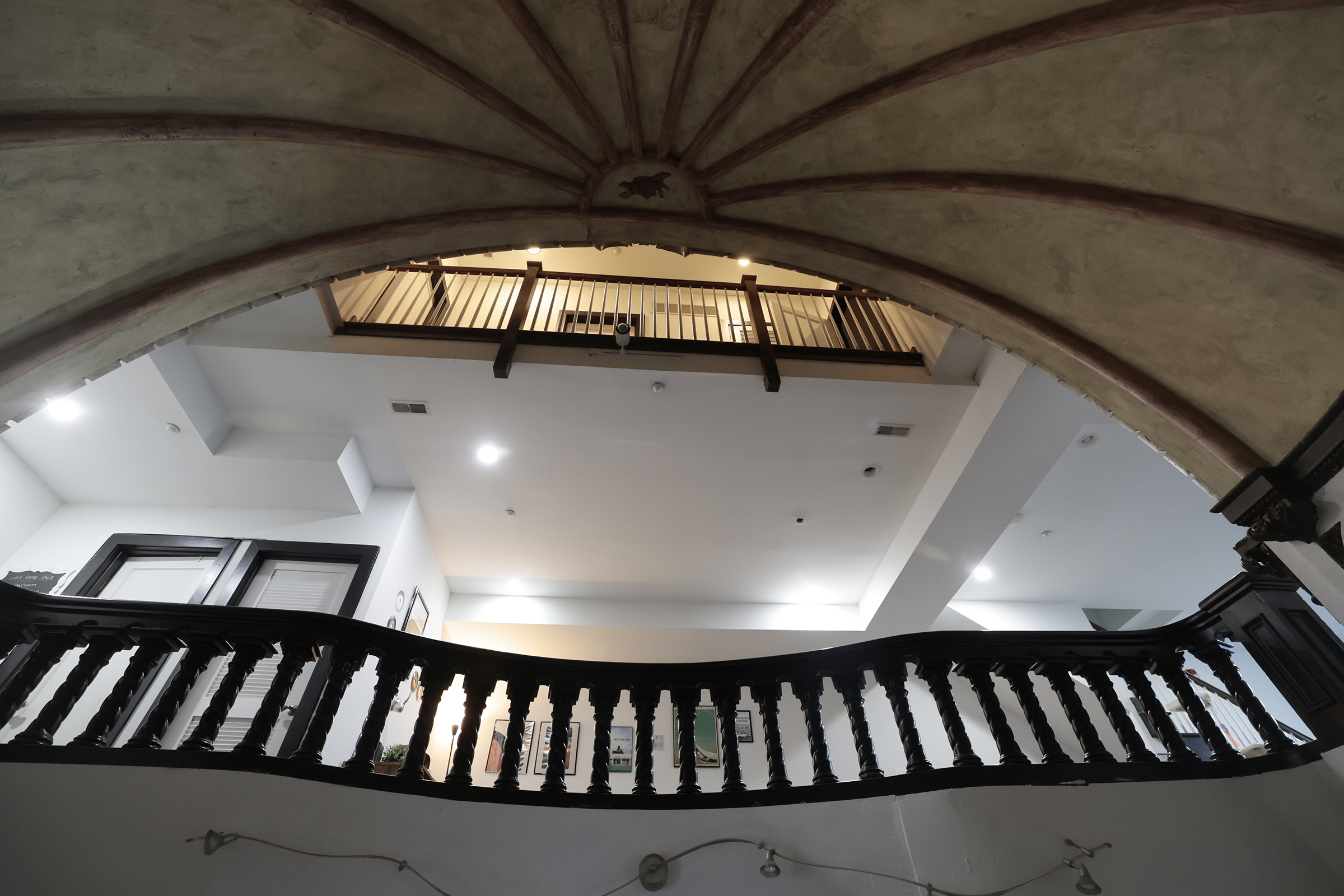
    Their four-level apartment includes soaring ceilings, stained glass, columns, and ornate carvings.

    The women throw parties in the home and screen movies on the dome of what used to be the church’s sanctuary. They call the sanctuary’s raised platform “the stage” and have furnished it with a dining table, chairs, and a rug.

    Peek inside their unique Spring Garden apartment.

    📷 Photo quiz

    Do you know the location this photo shows?

    📮 If you think you do, email me back. You and your memories of visiting this spot might be featured in the newsletter.

    Shout-out to Janet P. and Gary G., the first readers to answer last week’s quiz correctly. That photo featured the statue of activist Octavius V. Catto on the south side of City Hall.

    Enjoy the rest of your week and your Thanksgiving. We’ll meet back here on Dec. 4.

    By submitting your written, visual, and/or audio contributions, you agree to The Inquirer’s Terms of Use, including the grant of rights in Section 10.

  • Selling a piece of family history in a changing Ocean City

    Selling a piece of family history in a changing Ocean City

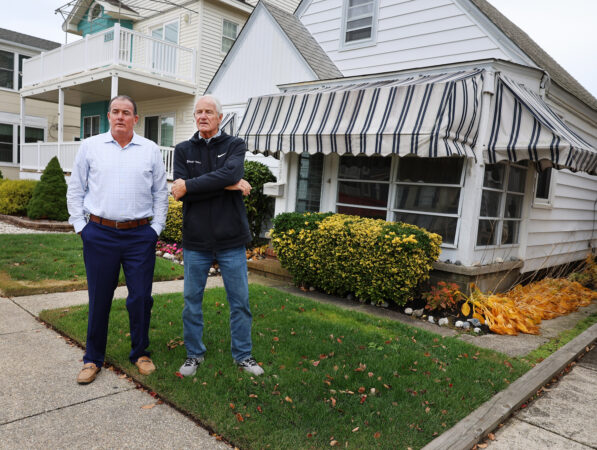
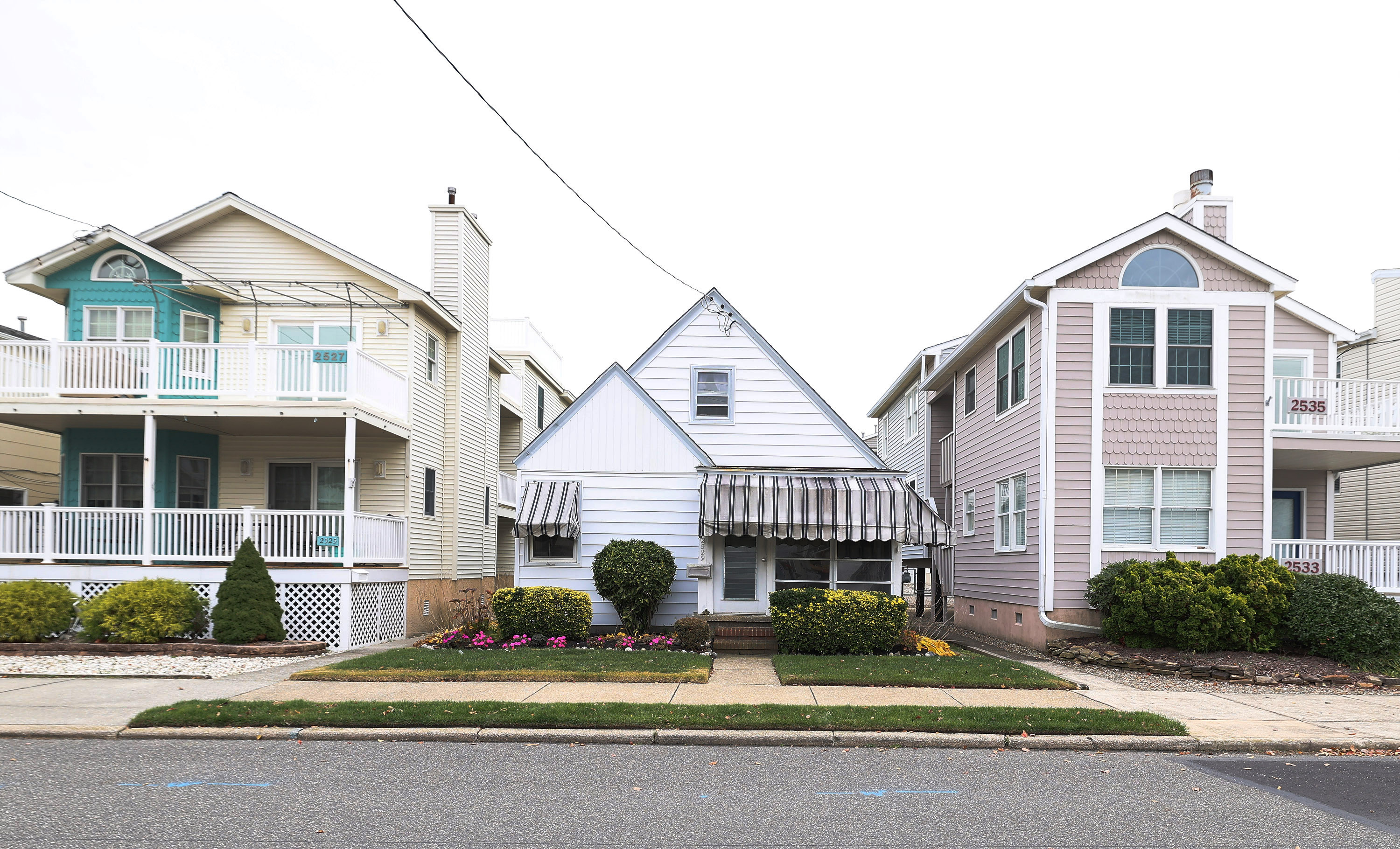
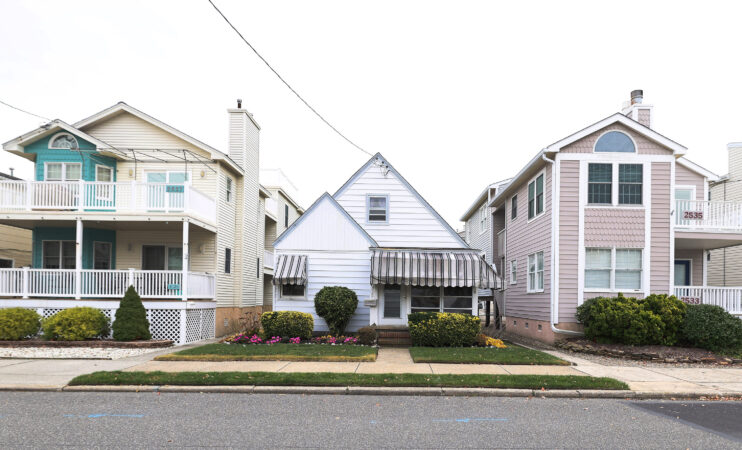
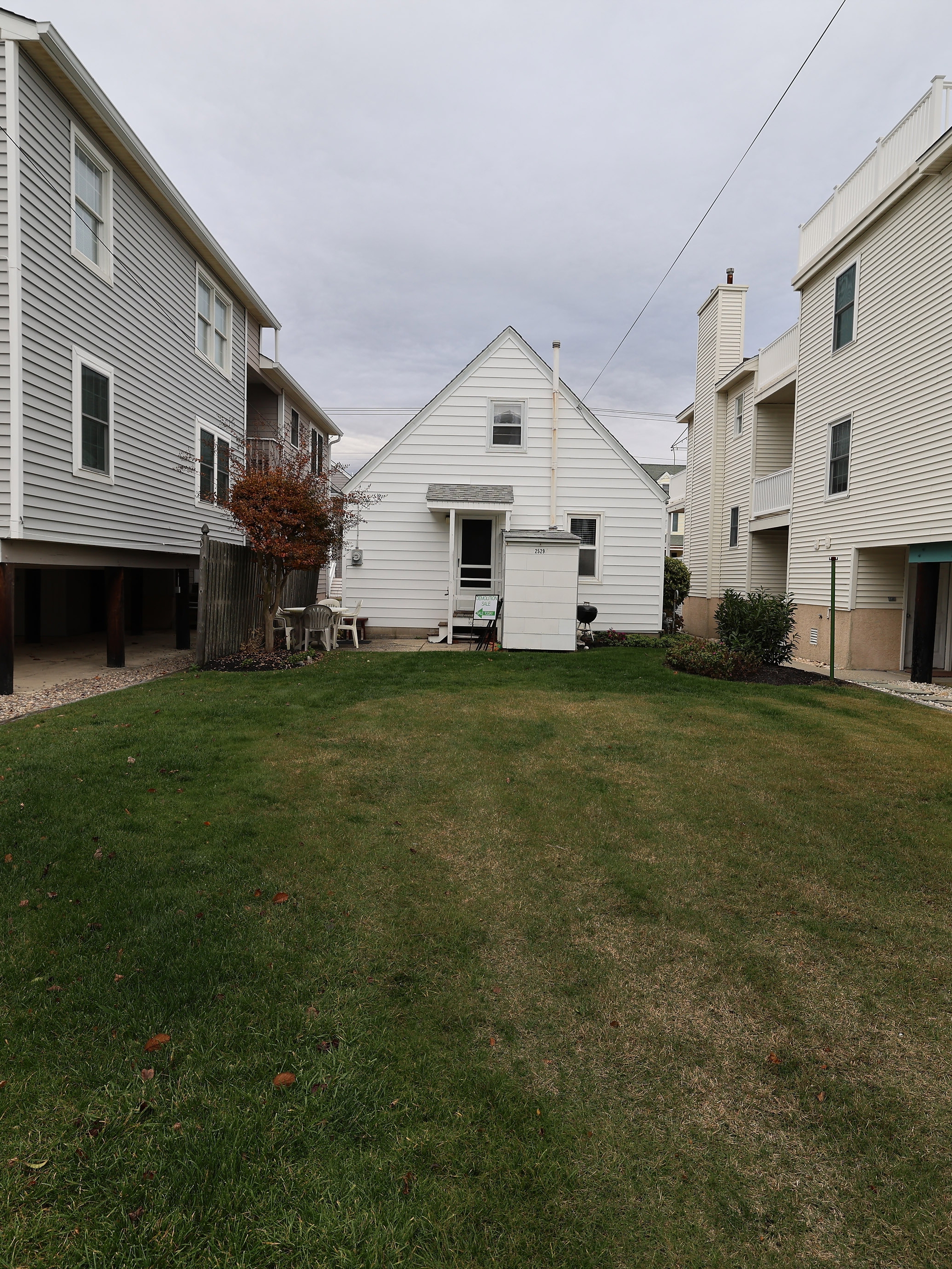
    The wrecking ball is likely coming for 2529 Asbury Ave. in Ocean City, a 957-square-foot, two-bedroom, one-bathroom postwar Cape Cod that’s been in the Smith family for 69 years. The Smiths know demolition is nearly inevitable, but they aren’t happy about it.

    “I’m hopeful somebody would keep it as is, but I think it will probably be torn down,” said David S. Smith, of Summit, N.J., a retired investment banker whose parents bought the house in the 1950s.

    There are currently 1,400 homes over 100 years old in Ocean City, and in 2024, 137 homes were demolished. Though specific details aren’t available about the age or condition of those razed houses, it is fair to say many were older and capable of being restored, said Bill Merritt, president and cofounder of Friends of OCNJ History & Culture, a group dedicated to embracing the rich, historic culture of Ocean City.

    “It’s economic driven, but also regulation driven,” he said. “Ocean City has long been a real estate developer driven place.”

    Over the years, R-2 zoning, which permits a mix of single-family and two-family dwellings, has driven up the number of duplexes.

    “The economics of that are that a single homebuyer wanting to buy an older home and fix it up, absolutely cannot compete against a developer who is going to knock it down and build a duplex,” said Merritt.

    The Smiths’ home went on the market in late October for $1.4 million. They instantly received many offers, mostly from developers.

    A house filled with memories

    Purchased in 1956 by Norman Sr. and Elizabeth Smith — affectionately known as Bole and Lib — for $13,500, the cottage was the summer gathering spot for the whole clan. That included their sons, Norman Jr., John, and David, and eventually four grandchildren and 10 great-grandchildren.

    A family photo of Norman Sr. and Elizabeth Smith and their sons John and David, taken in 1956 in front of 2529 Asbury Ave.
    David Smith and his uncle, David S. Smith, in the Ocean City home that’s been in their family for nearly seven decades.

    After Bole and Lib died in 1994 and 1998 respectively, their son John moved into the home. When John died this past September, the family put the house on the market.

    The house was typical for its time — it had a washing machine but no dryer, an outdoor shower in continuous use because there was only one shower inside the house, a grassy backyard, and an attic crammed with a tangle of sleeping children.

    The cottage was small but the memories loom large.

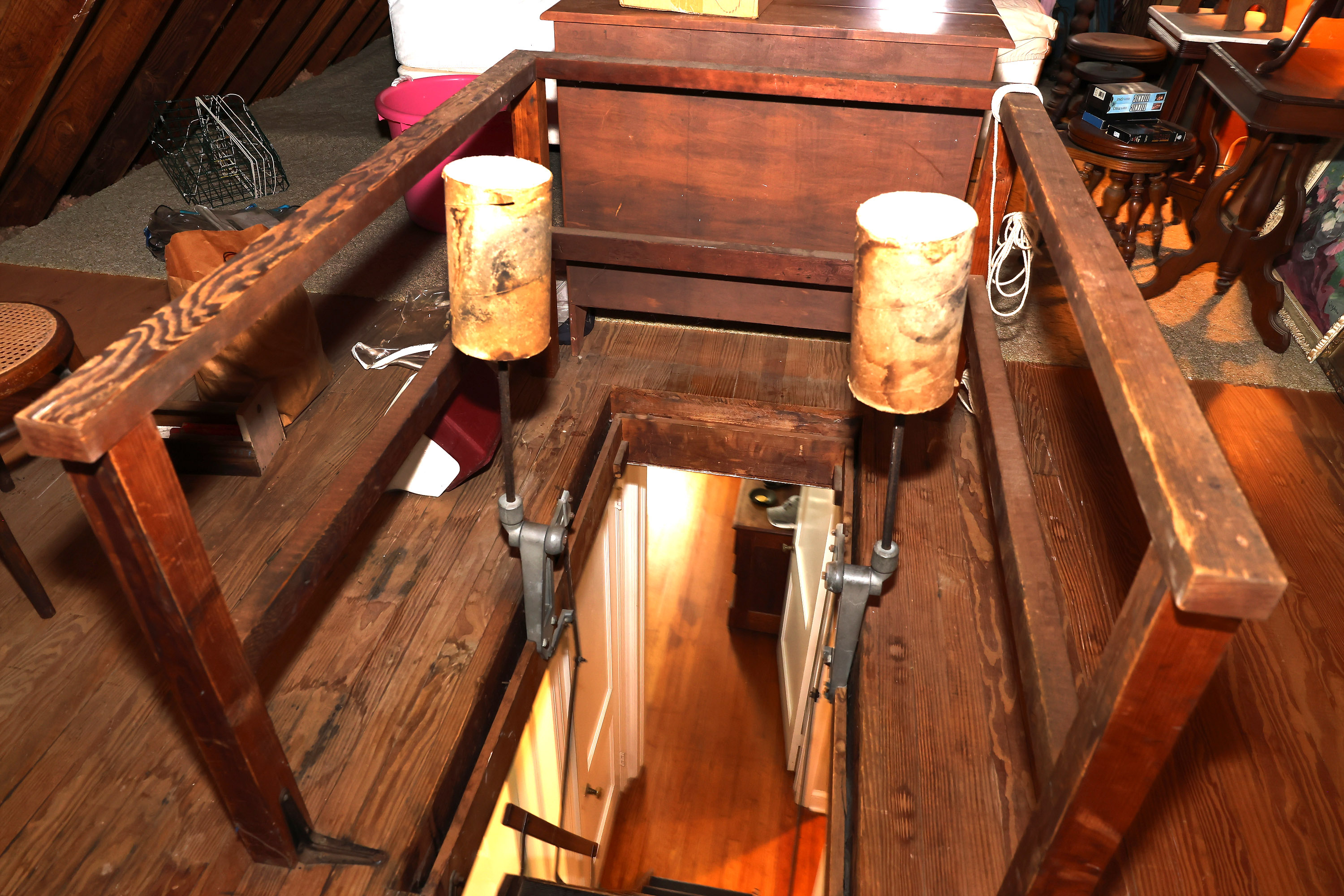
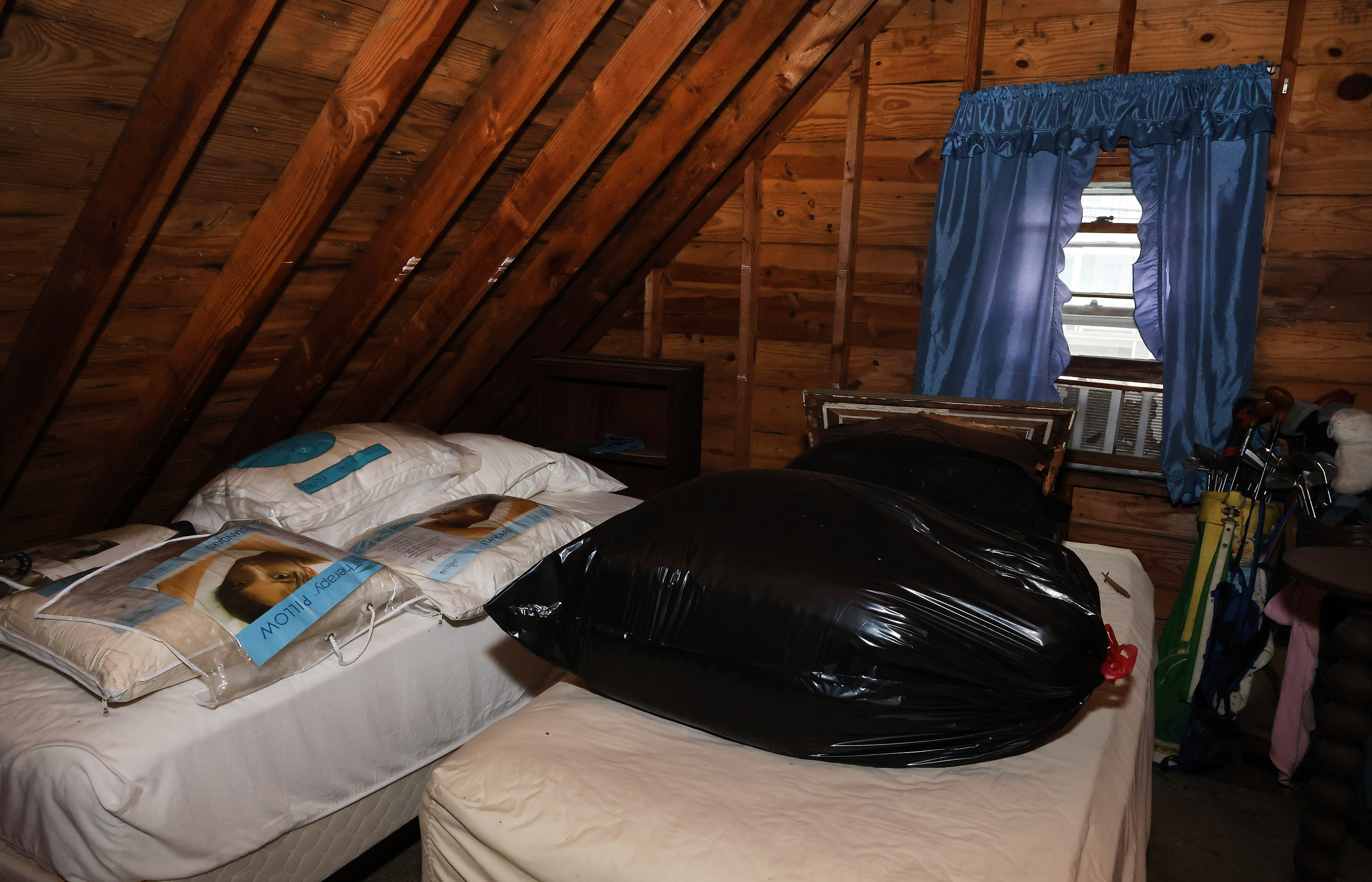
    “The attic had pull-down steps and a window where the breeze came in off the ocean,” recalled David, Bole and Lib’s son. “The oldest would get closest to the window, then the next oldest, and so on, because that’s where you got the most air. There were about four beds lined up and then you had mattresses on the floor.”

    A view from the attic into the main house from the pull-down door.
    Beds sit in the attic, where the children would sleep, sometimes 10 at a time.

    With the whole family together it was not uncommon to have up to 10 people sleeping up there, he said.

    “My parents used to send me down when I was about 8 or 9 on the NJ Transit bus,” said the younger David Smith, one of Lib and Bole’s grandchildren, and nephew of David S. Smith. He’s a Realtor with Coldwell Banker who lives in Wallingford. “I thought riding the bus by myself was the coolest thing!”

    Ocean City is where members of the Smith family formed lifelong friendships and forged their work ethic at their summer jobs. Lib and Boles’ oldest son, Norman Jr., met his wife of 61 years in Ocean City. The younger David Smith is their son.

    All of the family members had typical summer jobs at the Shore, including beach chair rentals, waitressing at the College Grill, manning the ice cream truck, and lifeguarding.

    David S. Smith won the 1968 South Jersey Lifeguard Championships in the doubles rowing event, an annual tradition that continues to this day. He was inducted into the Ocean City Beach Patrol Hall of Fame in 2004.

    He recalls hanging out on the beach with Grace Kelly’s family, who lived nearby. “That whole area was really driven by the connection to the Kelly family and their connection to Ocean City,” he said.

    But David S. Smith himself had connections to Shore royalty of sorts. His wife, Lynn, was elected Miss Ocean City Beach Patrol in 1967 and was on the cover of the book Images of America-Ocean City: 1950-1980 by Fred Miller.

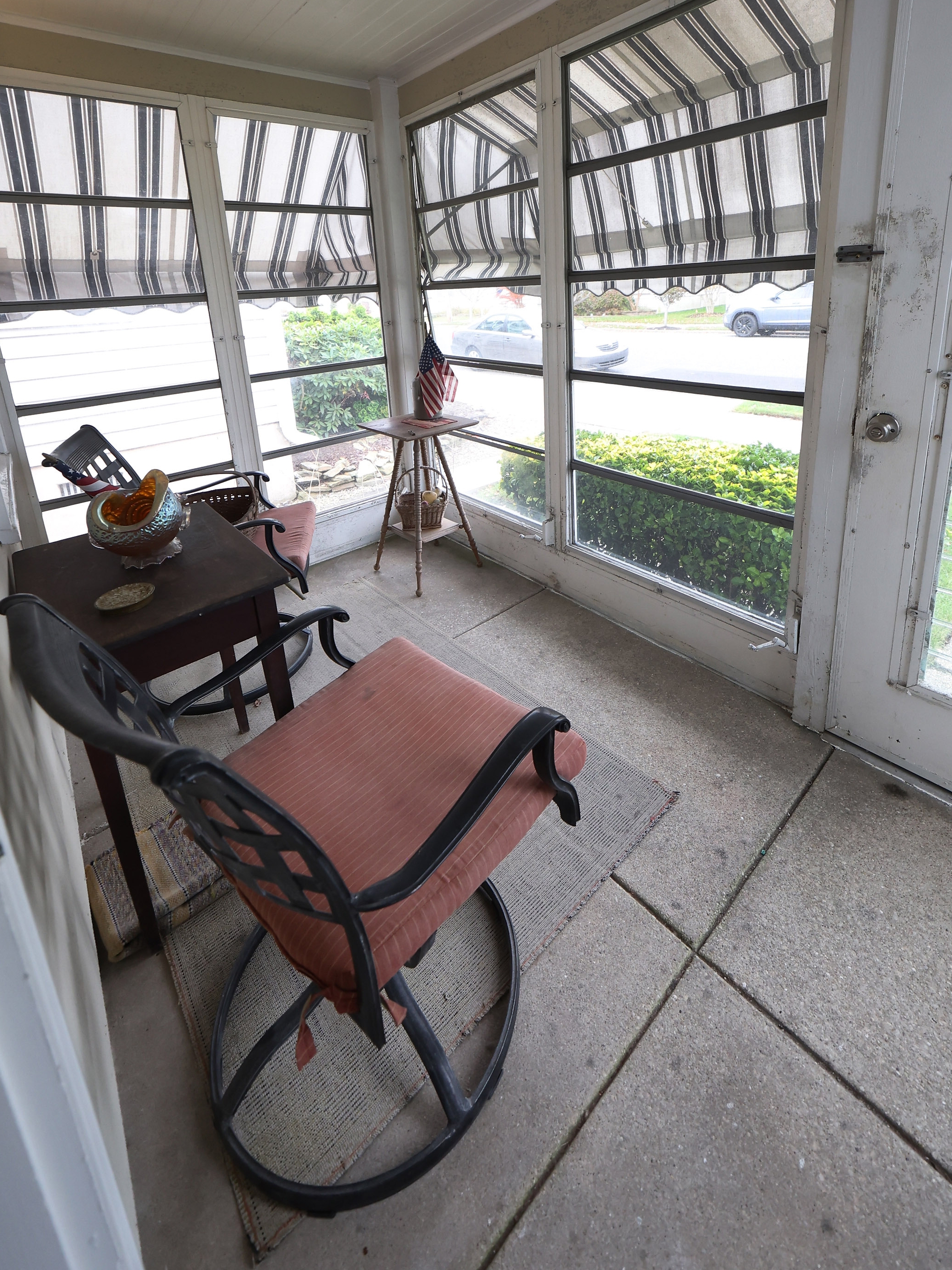
    The covered front porch of the Smiths’ cottage.
    The cottage sits on a large lot, which still is covered in grass unlike many neighbors.

    Over the decades, the home’s backyard was always in use, as the site for cookouts and quoits, a game similar to horseshoes. Family members of every generation competed while dinner was cooking on the charcoal grill.

    “The backyard of 2529 Asbury is still grass,” David S. Smith said. But at most of the nearby houses “the backyards are all stones.”

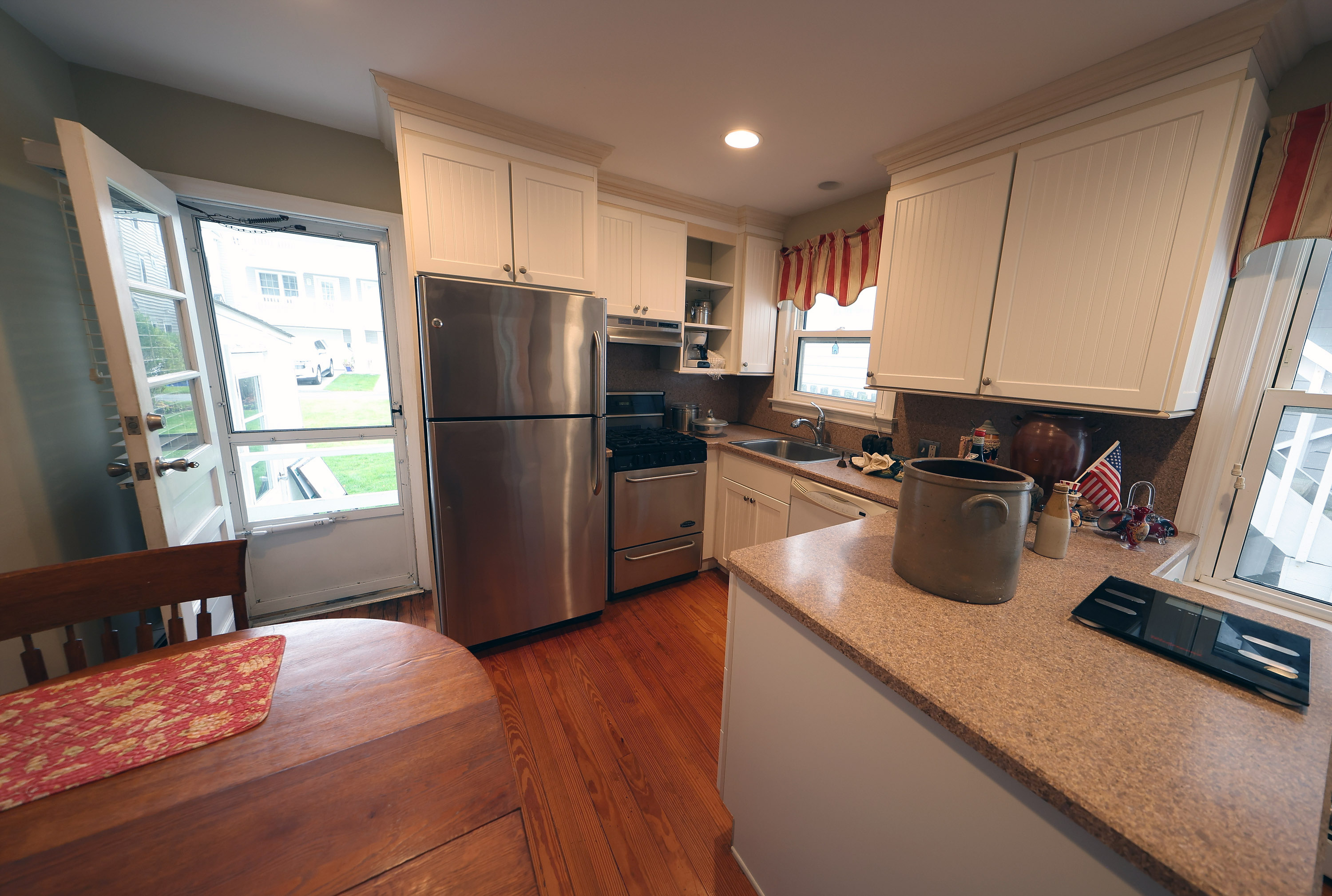
    The smell of frying scrapple was the morning alarm clock — a scent that still brings back a flood of memories for the younger David, Bole and Lib’s grandson.

    The cottage’s kitchen brings back memories of scrapple frying in the morning.
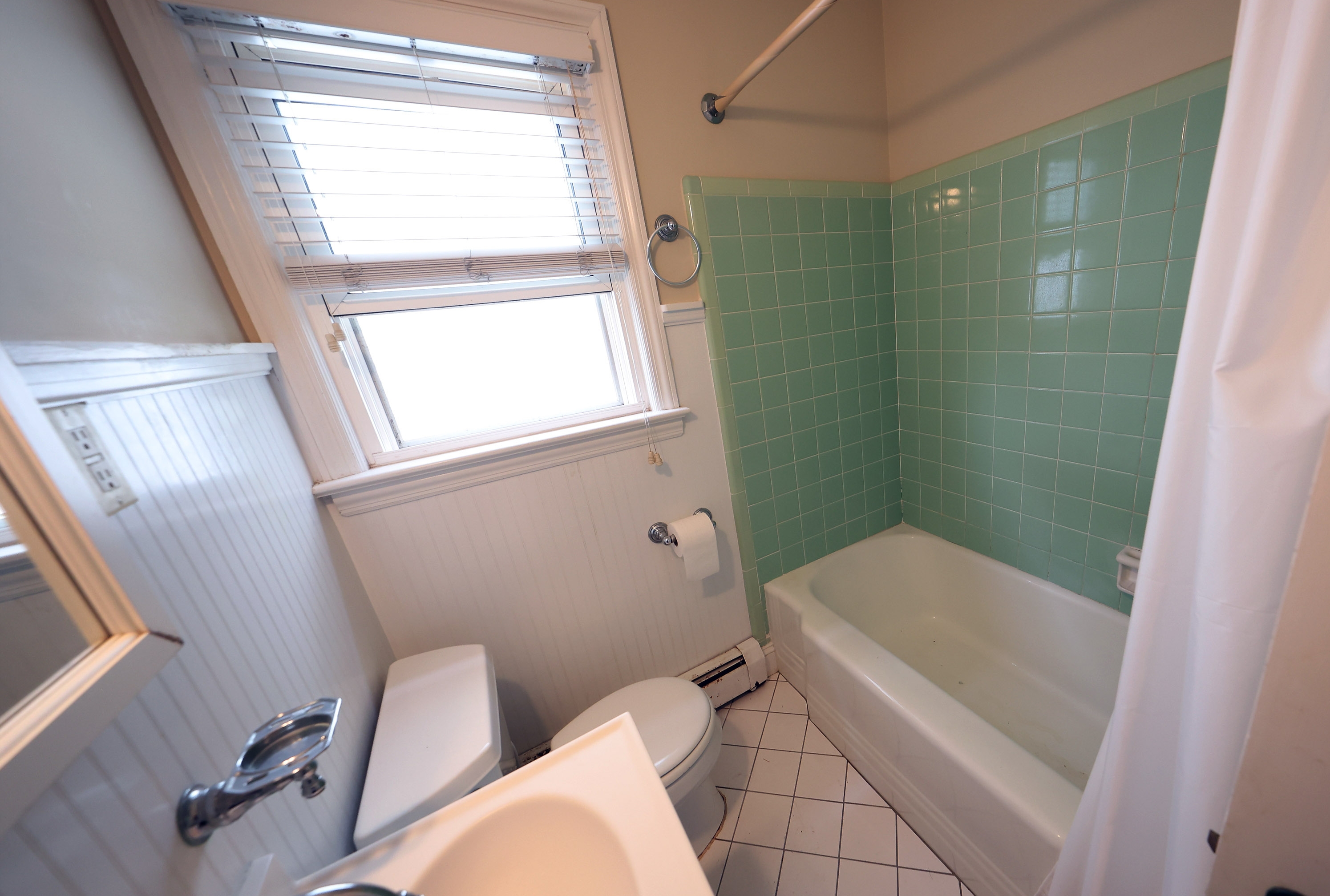
    The house’s one bathroom was used by the whole family, as well as the outdoor shower.

    A different town

    The Smiths witnessed the block transform dramatically over the years. Small cottages were razed and replaced with duplexes.

    “The Jersey Shore has changed so much,” said grandson David. “Now you see all these giant houses.”

    To help protect some of the town’s older homes, the city created a historic district in 1992, primarily between Third and Eighth Streets and Central and Ocean Avenues. That includes many homes with Victorian-era architecture, many built in the late 1800s and early 1900s.

    To maintain the area’s historical integrity, the district is protected by local ordinances that require approval for demolition, new construction, or rehabilitation projects. Merritt’s group hopes to raise awareness of these and other older homes.

    “When you knock down a house, you don’t just lose the house, but you lose the history,” he said.

    David Smith (left) and his uncle, David S. Smith, in the living room of the cottage.

    Merritt’s house, for example, has been rumored to have been owned by the family of Grace Kelly’s boyfriend when they were teens. Merritt was recently greeted at his home by the man’s sister.

    “We had this whole conversation of how her brother took Grace Kelly to the Lifeguard’s Ball, and she showed me the pictures she had,” he recalled. “When you knock these houses down, that connection to the past is severed.”

    Merritt argues that the town loses its identity when these houses disappear.

    While the Smiths have little say in who buys their home, they hope a single-family house will replace it, rather than a duplex, which brings more cars, people, and traffic.

    “It hurts,” David S. Smith said. “We’ve had it for 69 years and there’s a lot of history.”

  • Funding for Mayor Cherelle Parker’s H.O.M.E. initiative will be delayed until next year

    Funding for Mayor Cherelle Parker’s H.O.M.E. initiative will be delayed until next year

    Mayor Cherelle L. Parker promised to build or preserve 30,000 homes in her first term. But much of her plan to reach that goal now won’t get underway until her four-year term is more than halfway over.

    City Council this week again delayed a key piece of legislation that needs to pass before the Parker administration can sell hundreds of millions of dollars in city bonds, the primary source of funds for the myriad housing programs being created or expanded through the mayor’s Housing Opportunities Made Easy initiative, or H.O.M.E.

    The delay comes as lawmakers negotiate to amend the legislation — a resolution setting the first-year budget for H.O.M.E. — to increase spending levels beyond the currently proposed $195 million and to lower income eligibility thresholds for some programs, prioritizing poorer residents.

    The most recent setback came this week, when Council President Kenyatta Johnson canceled a Monday hearing to advance the resolution and declined to reschedule it before Thursday’s regular Council meeting, when the administration said the proposal would need to receive final approval for the first $400 million round of bonds to be sold in 2025. (The city plans to sell a second and final $400 million tranche of bonds in 2027.)

    The administration sent Johnson’s office an initial draft of the resolution in July, but the Council president has repeatedly delayed advancing the measure throughout the fall.

    “It is critically important to get the first-year spending plan right because what is agreed upon in the first year will influence all future spending for the H.O.M.E. program,” Johnson said in a statement explaining the cancellation of Monday’s hearing. “It is also essential that the final legislation include spending priorities important to City Councilmembers.”

    Parker is known as a hard-line negotiator who rarely cedes ground, and Johnson’s delays might be meant to send the signal that if she doesn’t bend on Council’s demands, he won’t meet her timelines.

    The saga marks a rare moment of discord between Parker and Johnson, who have worked hand in glove on most issues since both took office in January 2024 — including the passage of the initial package of legislation related to H.O.M.E. last spring.

    At left is Council president Kenyatta Johnson speaking with Philadelphia Mayor Cherelle L. Parker before start of her press conference regarding her first budget in Philadelphia City Hall on Thursday, June 6, 2024.

    In a hearing last week, Johnson appeared to side with lawmakers, led by Housing Committee Chair Jamie Gauthier, who were pushing for the administration to lower income thresholds for some H.O.M.E. programs, saying the city should prioritize the neediest Philadelphians.

    Parker has proposed expanding income eligibility requirements in some cases so that the programs can also be accessible to middle-class residents, saying she does not want to pit “the have-nots vs. the have-a-littles.”

    ‘Pit one against the other’

    Even with the bonds delayed until next year, the mayor does not appear to have given up the fight to maintain her vision for the housing initiative. At an unrelated Council hearing on the school district on Tuesday, Parker brought up the H.O.M.E. initiative unprompted.

    She then called out four Council members who have middle-class constituencies that are likely to benefit from increased income thresholds for housing programs: Curtis Jones Jr., whose district includes Roxborough and Overbook; Anthony Phillips, who represents East Mount Airy and West Oak Lane; Mike Driscoll, of the Lower Northeast; and Katherine Gilmore Richardson, who represents the city at large but is a Democratic ward leader for Wynnefield.

    “I am unapologetic about making sure that constituents represented by you … should not be left out of any investment that we make in the city of Philadelphia,” Parker said. “Every community can be lifted up with the work that we are doing, so I won’t let us pit one against the other.”

    The remarks, however, effectively pitted members with poorer constituencies against those with middle-class bases. Johnson represents Southwest Philadelphia and the western half of South Philly; Gauthier’s district covers much of West Philadelphia.

    Despite the dustup, it remains unlikely that a lasting fissure has emerged in Parker and Johnson’s relationship, given that they still share many policy priorities and can benefit each other politically.

    “Council President Kenyatta Johnson and I have an amazing working relationship,” Parker, a former Council member, said in an interview Monday. “Council has a right to do its due diligence. If I hadn’t been there, if I wasn’t a former staffer in there, maybe it would be foreign [to me]. No. We’re going through the process, and I have to trust the process.”

    Additionally, Johnson standing up for Council members’ concerns over the H.O.M.E. budget may help shield him from questions about whether he is overly compliant with the mayor’s agenda.

    “Both branches of government remain committed to ensuring the H.O.M.E. program is implemented transparently, equitably, and in a way that maximizes benefits to Philadelphia residents,” Johnson said in his statement. “Taking extra time to finalize these critical elements will result in a stronger, more effective program.”

    Tracking progress

    The administration is not waiting for the H.O.M.E. bonds to be sold to start notching wins for Parker’s 30,000 housing units goal. The city’s Philly Stat 360 website has already begun tallying units built and preserved during her tenure.

    To be sure, some of the mayor’s strategies for the H.O.M.E. initiative do not require bond money. For instance, Parker has led a shake-up of the Land Bank, which she hopes will accelerate the redevelopment of unoccupied city-owned parcels into housing, and she won Council approval last spring for zoning changes meant to streamline building.

    But the potential infusion of $800 million is undoubtedly the centerpiece of the initiative. The money will help launch programs like Parker’s One Philly Mortgage, which aims to provide 30-year fixed-rate loans to qualified homebuyers, and will buttress existing ones like the Basic Systems Repair Program, which has been credited with preventing the displacement of low-income residents who end up moving if they cannot afford needed home repairs.

    “It’s never been done in the history of our city, and we do that together in partnership with each other, and that’s what we’re working to do right now,” Parker said.

    Staff writers Jake Blumgart, Kristen A. Graham, and Anna Orso contributed to this article.

  • Bellwether District could soon announce its first tenants

    Bellwether District could soon announce its first tenants

    Officials for the Bellwether District say they are in “late-stage negotiations” with potential tenants to occupy the first of many buildings planned for the 1,300-acre former refinery site in South and Southwest Philadelphia.

    However, Amelia Chassé Alcivar, a spokesperson for HRP Group, the site’s owner, said during an update on the project Tuesday that she would not comment on potential tenants.

    She was responding to a question from environmental advocate Mitch Chanin about whether a data center is a possible use on the site of the Philadelphia Energy Solutions (PES) refinery that closed in 2019 after an explosion and fire.

    “I want to emphasize that no official announcements have been made at this time, so I cannot confirm … I cannot deny,” she said, adding that, “I would just generally preach caution if you’re reading anything in the press that is not confirmed by us on the record or by the company on the record.”

    Chassé Alcivar said that there are no plans to build a traditional power plant on site.

    A recent BillyPenn article cited a union official who said a cogeneration plant is being discussed for the site. Cogeneration is considered a nontraditional technology that simultaneously, and efficiently, produces heat and electricity on site.

    Chassé Alcivar said solar installations are being planned for at least some of the six million square feet of rooftops the development will have when fully built out over several phases in years to come.

    “I will share with this group that we are in late-stage negotiations with several prospective tenants,” she said.

    What’s the Bellwether District?

    HRP, which was spun off from its parent company, Hilco, is building two massive commercial campuses on the site of the former refinery.

    window.addEventListener(“message”,function(a){if(void 0!==a.data[“datawrapper-height”]){var e=document.querySelectorAll(“iframe”);for(var t in a.data[“datawrapper-height”])for(var r,i=0;r=e[i];i++)if(r.contentWindow===a.source){var d=a.data[“datawrapper-height”][t]+”px”;r.style.height=d}}});

    It plans about 14 buildings for a 750-acre industrial campus with the potential for 10,500 jobs.

    And it plans a series of smaller buildings on a 250-acre innovation campus, originally slated to house mostly life sciences companies, with the potential for 8,500 jobs. The buildings are being designed for uses such as bio-manufacturing, processing, production, and tech.

    In all, HRP plans for about 14 million square feet of buildings across the two campuses.

    The ground of the sprawling site was tainted by 150 years of petroleum-related uses. As a result, it is undergoing a complex environmental remediation.

    In its most recent history, Sunoco sold the refinery to PES in 2012. PES owned it at the time of the explosion and subsequent closure. PES went bankrupt and sold the site to Hilco Redevelopment Partners, now just HRP, in 2020.

    Sunoco is responsible for contamination up to 2012. HRP is responsible for contamination after that. The two companies are coordinating cleanup with the state Department of Environmental Protection.

    Remediation is expected to be ongoing for years. Some of the soil will be capped by buildings and parking lots. Barriers are being installed to prevent vapors from volatile organic compounds in the ground from penetrating work areas in the buildings.

    What’s complete and what’s coming

    HRP says it will invest more than $4 billion into the redevelopment.

    So far, HRP has completed a 326,000-square-foot class A warehouse on its 750-acre industrial campus with poured concrete floors and structural steel column supports off 26th Street.

    It is finishing a second, 727,000-square-foot warehouse adjacent to the first with a planned boulevard leading into the campus for a total of little more than 1 million square feet.

    Last month, Bellwether applied for a permit for a 1.4-million-square-foot building titled DrinkPAK warehouse. California-based DrinkPAK is a large manufacturer of alcoholic and non-alcoholic canned beverages.

    DrinkPAK’s website lists two existing facilities: The first in Santa Clarita, Calif., and a second scheduled to open this year in Fort Worth, Texas. A map shows a third facility projected to open in 2027 in the Northeast with a marker showing an area in Southeastern Pennsylvania.

    Chassé Alcivar did not comment on that project during the meeting.

    Other updates:

    • HRP said it is planning to widen the intersection of 26th Street and Penrose Avenue from three lanes to five. The intersection will have two left turn lanes, one straight lane, and then two dedicated right turn lanes. And a new boulevard entrance at 26th and Hartranft Streets is being created, featuring roughly seven lanes in and out.
    • The company plans to plant 10,000 trees, bring buildings up to LEED standards, and to be solar ready. LEED certification is a system developed by the U.S. Green Building Council (USGBC) to verify a building’s sustainable design, construction, operation, and maintenance.
    • Weekly readings of a benzene monitor are being taken as part of the THRIVEair Community Air Monitoring Project (CAMP) in South and Southwest Philadelphia. THRIVEair is a partnership between Drexel University and Philly Thrive, a local environmental justice organization.
    • HRP has launched a new driver education pilot program for students enrolled in construction and automotive career and technical education programs. Lack of a driver’s license has been cited as a barrier of entry to jobs.
  • West Philly affordable housing project could finally advance, almost 6 years after it was proposed

    West Philly affordable housing project could finally advance, almost 6 years after it was proposed

    An affordable housing project slated for a junkyard in Cedar Park took a step forward Wednesday, when a Philadelphia judge rejected a neighbor’s challenge. The courtroom victory brings the 104-unit, two-building project, which was conceived in 2020, closer to reality.

    Common Pleas Court Judge Idee Fox ruled that the new zoning of a triangular group of parcels on Warrington Avenue, which allows for buildings up to seven stories, was legal.

    Melissa Johanningsmeier, who lives next to the planned development, sued the city to stop the project in 2023, arguing that the building was inconsistent with the city’s goal of preserving single-family homes in Cedar Park.

    Johanningsmeier said in court filings she would be harmed by the parking, traffic, and loss of green space if the project were to proceed.

    The homeowner told Fox during a two-day October bench trial that there was widespread discontent with the project in the neighborhood.

    The judge seemed skeptical, as Johanningsmeier’s attorney didn’t provide witnesses or evidence to support claims of widespread backlash to the project that has been promoted by City Councilmember Jamie Gauthier.

    It was not for her to decide whether the project was the best idea, Fox said, but whether the zoning was constitutional.

    “If the community is unhappy with what’s being done, they have the right to express their concerns to the councilwoman at the ballot box,” Fox said.

    Junkyard controversy

    The project dates to 2020, when New York affordable housing developer Omni formulated plans to add 174 reasonably priced apartments to the West Philadelphia neighborhood.

    But the developer’s plans for the junkyard at 50th and Warrington met opposition due to the proposed buildings’ height — six stories — and parking spaces for less than a third of the units.

    Omni’s plan required permission from the Zoning Board of Adjustment to move forward, which was more likely to succeed with neighborhood support. So they compromised.

    A new design unveiled in 2021 pushed the buildings back to the edge of the site, to avoid putting neighboring homes in shadow. A surface parking lot would offer 100 spaces for the 104 affordable apartments.

    These concessions appeased almost all of the critical neighbors and community groups. Many of them supported Omni before the Zoning Board of Adjustment, which granted the project permission to move forward.

    But Johanningsmeier remained a critic. She lives on the border of the property and challenged the zoning board’s ruling in Common Pleas Court. Judge Anne Marie Coyle ruled in her favor, arguing the new building “would unequivocally tower over the surrounding family homes.”

    In the aftermath, Gauthier passed a bill to allow the project to move forward without permission from the zoning board. Johanningsmeier then sued over that legislation as well.

    Councilmember Jamie Gauthier in City Council in 2024.

    Affordable housing and fruit analogies

    The issue at the heart of the case was whether a zoning change to allow for large multifamily buildings was considered spot zoning on the small parcel, which Johanningsmeier’s lawyer argued was inconsistent with the types on buildings on surrounding properties.

    Just because the “mega apartment buildings” are for residential use doesn’t make the project similar to the surrounding zoning, which mostly allows single-family homes and duplexes, Edward Hayes, a Fox Rothschild attorney representing Johanningsmeier, told Judge Fox on Wednesday.

    “A cranberry and a watermelon are fruit,” Hayes said. “They are not the same.”

    And while affordable housing is a laudable cause, the attorney said, that doesn’t mean that the city should “shove it down the throat of a community” in the form of large buildings that are out of character with the rest of the neighborhood.

    An attorney representing the developer, Evan Lechtman of Blank Rome, told the judge existing buildings of similar height are nearby, across the railroad track in Kingsessing.

    “We are transforming a blighted, dilapidated junkyard into affordable housing,” the developer’s attorney said.

    Johanningsmeier’s lawyer, Hayes, declined to comment after the ruling, which could be appealed.

    Gauthier celebrated the outcome as a victory against gentrification.

    “Lower-income neighbors belong in amenity-rich communities like this one, where they can easily access jobs, healthcare, groceries, and other necessities,” said Gauthier. ”I hope the court’s ruling puts an end to gratuitous delays.”

    Housing advocates note that the years of neighborhood meetings and lawsuits over the project are an example of why housing, and especially affordable units, has become so expensive to build in the United States.

    In the face of determined opposition from even a single foe, projects can incur millions in additional costs.

    “It’s a travesty that one deep-pocketed opponent has been able to block access to housing for over 100 families in my neighborhood for years,” said Will Tung, a neighbor of the project and a volunteer with the urbanist advocacy group 5th Square. “It’s more expensive than ever to rent or buy here, and this project would be a welcome change to its current use as a derelict warehouse.”

  • Contractor caused construction of the W and Element hotels to go ‘off the rails,’ judge finds

    Contractor caused construction of the W and Element hotels to go ‘off the rails,’ judge finds

    When a Marriott representative visited the construction site of the W Philadelphia hotel in Center City in January 2019, months after the project should have been completed, the concrete floors were so uneven that a pen placed on the ground rolled downhill.

    The construction of Philadelphia’s largest hotel, home of the W and the Element, both part of the Marriott umbrella, began in 2015 and had a strict 2018 deadline for completion. Delays led to an avalanche of nearly 30 lawsuits with the site’s owner, construction contractor, and design company pointing fingers at each other.

    The W, which comprises 295 rooms of the 51-story building, eventually opened in 2021, roughly three years late.

    Bringing to a close 25 of the lawsuits, a Philadelphia judge issued a 69-page memo last week laying out the saga and finding the construction company responsible for the project going “off the rails.”

    Common Pleas Court Judge James Crumlish found that the construction contractor, Tutor Perini Building Corp., subcontracted the concrete work to a company that botched the job. And despite knowing about the problems, which were detrimental to the entire project, Tutor denied the issues for months.

    The judge’s finding comes after trial testimonies that took five months as the parties “turned this litigation into a challenging behemoth that made any effort at resolution impossible,” Crumlish wrote.

    A yearslong saga

    The saga began when Chestlen Development LP, the owner of the site, picked Tutor as the construction manager. The agreement capped the cost of construction at $239 million and required completion within 1,017 days after April 2015.

    An attorney for Tutor did not respond to a request for comment.

    From the outset, Tutor suffered “chronic turnover of its personnel,” the judge wrote, resulting in the loss of “institutional knowledge of key decisions.”

    Tutored subcontracted the concrete work to Thomas P. Carney Inc. Construction, a Bucks County company.

    When a different subcontractor, Ventana DBS LLC, began installing the wall-window systems, they immediately noticed a “big problem,” according to the judge’s memo. In many places the concrete wasn’t level or did not meet the elevation requirements in the design.

    Tutor pushed back, denying that there was a problem, while quietly attempting to grind the edges of the concrete slabs to address the issue.

    While denying the problem, Tutor hired outside advisers to evaluate the concrete work. But they confirmed the problem too.

    Finally, in March 2018, Tutor shared the outside reports that acknowledged Carney’s shoddy concrete work with Chestlen’s representative for the project.

    As summer 2018 began, it was clear that the project would not be completed on deadline.

    In September 2018 Tutor asked Chestlen for an extension, which the owner rejected, saying the request came “months if not years after some of the concrete issues started to become apparent,” according to Crumlish’s memo.

    The remediation of the floor began in April 2019 and was completed in October.

    The sidewalk area of W Philadelphia and Element Philadelphia Hotel under construction, looking northwest along the 1400 block of Chestnut Street July 2, 2019.

    The building finally obtained a certificate of occupancy in April 2021. But Marriott couldn’t open the W until August because over a hundred window vents were inoperable because Tutor failed to follow the design.

    “Tutor knew that the floors did not meet specifications but did not timely disclose its knowledge to Chestlen or consult with it,” Crumlish wrote. The judge further found that Tutor refused to work with contractors to remediate the problems in 2017 and 2018, and proceeded to install interiors over the deficient concrete floors.

    The blame game

    Throughout the litigation, the parties all blamed one another for various problems and aspects of the delay.

    Costs and liens piled up.

    Chestlen paid Tutor $239 million for the construction, accrued over $40 million in damages as set in its contract with Tutor, and paid tens of millions to remediate the floors. The property is “clouded with over $155 million in liens,” according to the judge’s memo.

    Crumlish concluded that Tutor breached its contract when it failed to oversee the concrete work and the window-wall installation, and generally didn’t fulfill its obligations.

    “Every delay in the performance and completion of the project is the responsibility of Tutor and Carney,” the judge said. The judge will decide on the amount of damages following hearings scheduled for January.

    Chestlen’s attorney was unavailable to provide comment. Carney did not respond to a request for comment.

    The W hotel is located where One Meridian Plaza used to be, before that building suffered a devastating fire in 1991 and was finally demolished in 1999.

    Filling the vacant lot, a mere block from City Hall, became a top priority for policymakers during Mayor Michael Nutter’s time in office. The hotel proposal eventually received $75 million in taxpayer support across local, state, and federal funding sources in addition to other legislative assistance.

    The project was developed by Brook Lenfest, son of the former Inquirer owner H.F. “Gerry” Lenfest, whose foundation continues to own the newspaper today.

  • Philly Housing Authority plans to lay off almost 300 workers in 2026

    Philly Housing Authority plans to lay off almost 300 workers in 2026

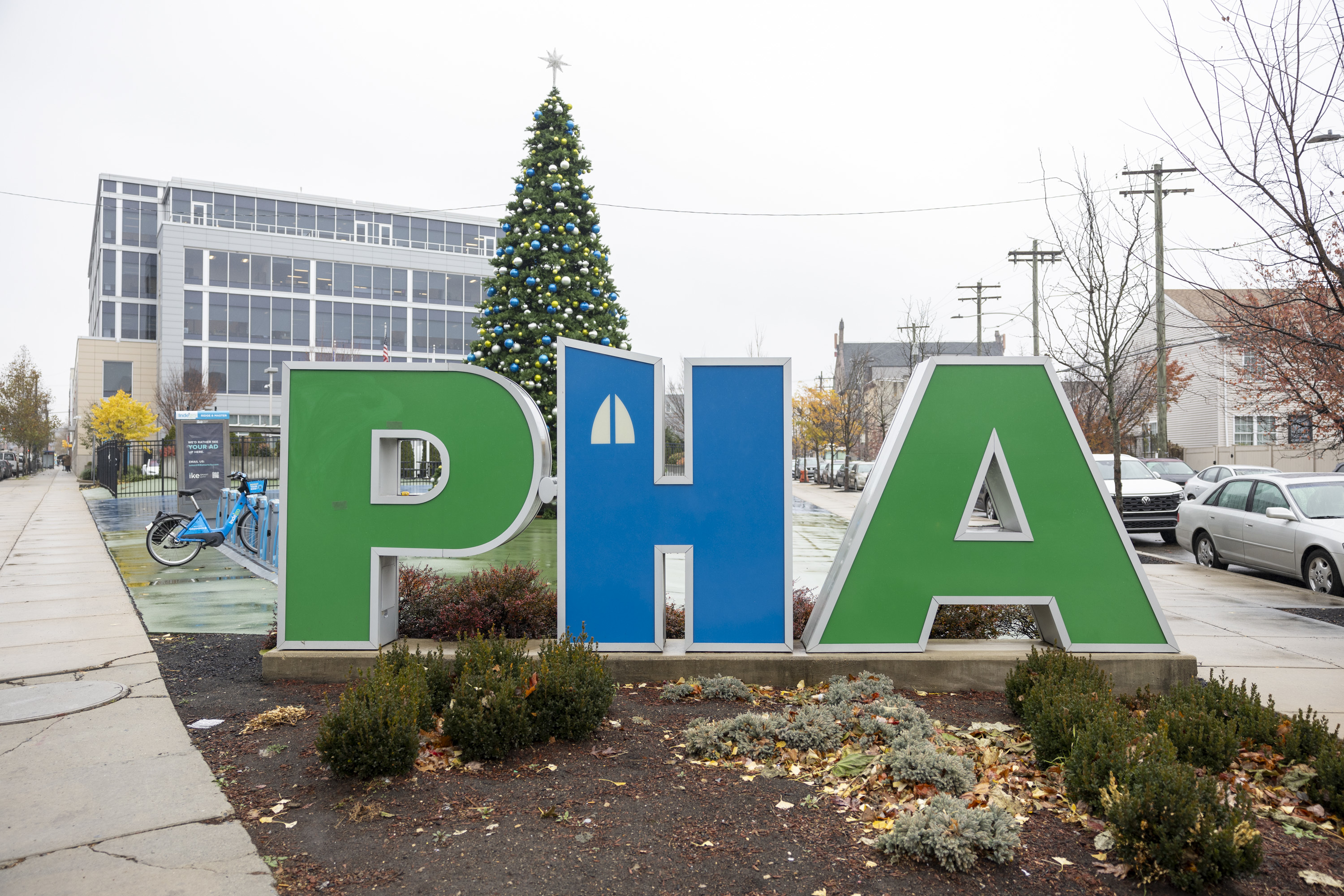
    The Philadelphia Housing Authority (PHA) is planning sweeping layoffs that will affect almost 300 of the agency’s 1,200 employees, beginning in January 2026.

    The cutbacks are the result of dramatic changes in how PHA, which provides affordable housing to thousands of families across the city, does maintenance and repair work. Instead of directly employing union electricians, carpenters, and other workers, beginning next year, the agency will contract out for those jobs as needed.

    “This is a housing program, it is not a jobs program,” said Kelvin Jeremiah, the president and CEO of PHA, in an interview.

    “Do I use the resources that we have to protect residents, to advance the availability of affordable housing to the families that are most in need? Or do I use those limited resources to fund positions that I don’t need?” Jeremiah said.

    There are 620 members of the Philadelphia Building and Construction Trades Council employed full-time by the agency as maintenance staff. Jeremiah estimates that by almost halving that number PHA will see a cost savings of $24 million annually.

    The agency said it currently costs $15,500 to maintain a single unit of traditional public housing annually, due to the agency’s complex work rules, which require many different union workers to make repairs. Most other multifamily providers have dramatically lower per-unit maintenance costs.

    “PHA has engaged the unions throughout this process and can proceed with this policy decision without additional approvals,” an agency spokesperson said in an emailed statement.

    Although in-house building trades workers will constitute the majority of lost jobs, other positions will also be affected, including 33 managerial roles in PHA headquarters. Overall, PHA’s workforce will shrink by about 20%.

    “We are going to talk and try to offer some alternatives, but this is an issue of price sensitivity and we have to understand, given the new environment, that there are less funds to do the same mission with,” said Ryan Boyer, business manager for the Philadelphia Building and Construction Trades Council, whose unions represent many of the affected workers.

    The Philadelphia Housing Authority Headquarters is planning sweeping layoffs that will affect almost 300 of the agency’s 1,200 employees, beginning in January 2026 in Philadelphia, on Wednesday, Nov. 19, 2025.

    More with less?

    The cutbacks come amid an aggressive $6.3 billion plan unveiled earlier this year, through which the agency hopes to expand its housing portfolio by 7,000 units while rehabbing the 13,000 units it already owns.

    Jeremiah said that the staff reduction should not be seen as PHA doing more with less, and that it will not limit the agency’s ability to execute his planned expansion.

    “We will not be doing less than what we’re doing now, but we have been doing too little with too much,” Jeremiah said. He said other market-rate and affordable housing multifamily operators are able to do unit repairs for far less than what PHA pays.

    “My colleagues have all been doing this at substantially less cost,” Jeremiah said. “The only difference between us is that they have an operating model that does not require six different trades to do a single thing.”

    Kelvin A. Jeremiah, PHA President & Chief Executive Officer, at PHA headquarters, in Philadelphia, May 21, 2025.

    Because PHA’s layoffs will affect hundreds of members of Philadelphia’s influential building trades unions, Jeremiah said, he has been negotiating with Boyer on the work-rule changes.

    “My reaction is one of disappointment. However, we remain partners with PHA and we will still build most of the stuff on the capital side,” Boyer said. “I don’t want it to be lost that when they build stuff, they will still be members of the Philadelphia building trades working, and there will still be members doing maintenance work.”

    Boyer is also the business manager for the Laborers’ District Council and a close ally of Mayor Cherelle L. Parker.

    Jeremiah said maintenance technicians, laborers, and painters will be the only trades that remain directly employed with the agency after the work-rule changes go into effect.

    The electricians union, IBEW Local 98, said it is still studying PHA’s new policy.

    PHA will also still work with the trades for discrete repair and maintenance jobs within the agency’s housing portfolio but will no longer directly employ as many workers full-time, Jeremiah said.

    The Trump effect?

    PHA’s layoffs, and its expansion plan, are unfolding during a period of uncertainty nationwide for affordable housing policies and organizations like PHA.

    Some housing experts were surprised to see PHA embark on its ambitious $6.3 billion plan amid President Donald Trump’s skepticism of affordable housing programs and a raft of austerity measures from his administration, which has sought to reduce public support for lower-income Americans.

    Nearly all of PHA’s funding — 93% — comes from the federal government, according to the agency.

    “If Congress and the administration coughs, it impacts us,” Jeremiah said. “If there is a reduction [in funding], it impacts us.”

    Jeremiah said he is seeking to operate within the mandates set by Trump’s administration while continuing to support PHA’s tenant base and plans.

    “Subsidizing employment … is just not the way to go at a time when we’re looking at less funding on the horizon,” Jeremiah said. “Where am I to get the funds not only to do more developments, acquire more, and preserve what we have at the same time [that] we have a workforce that is, quite frankly, I will dare to use the word bloated?”

    Waves of layoffs

    Despite the layoffs, Jeremiah believes the agency will still be a rich source of jobs for the building trades unions as the $6.3 billion plan unfolds. He points to an analysis of PHA’s 10-year plan by economic consulting firm Econsult Solutions, which said it would create 4,900 jobs annually in the city.

    The first round of 260 job losses will hit in mid-January 2026, although Jeremiah says 93 of those workers will be retained in new positions as maintenance aides, laborers, and painters. A further 116-position reduction will occur next summer.

    A vice president of development, Greg Hampson, also recently left PHA, although the agency declined to comment on that case. Jeremiah said that several vice president and director-level positions will be among the coming layoffs.

    The last major round of layoffs at PHA was in 2016, when 14% of the staff was cut. Those positions were mostly administrative roles.

    Editor’s note: A previous version of this story misstated the number of employees impacted.

  • In a church-turned-apartment, four roommates have made a new sanctuary

    In a church-turned-apartment, four roommates have made a new sanctuary

    The four roommates have hosted costumed Halloween parties for more than 80 people in their Spring Garden residence. Last year a guest came as a nun and another came as Jesus. They were, after all, visiting a church.

    Philadelphia Architecture in the 19th Century, described the city’s Spring Garden neighborhood as: “Houses, Quaker in Excelsis with pocket handkerchiefs of terraces and here and there a reticent church where one could sleep comfortably through hour-long sermons.”

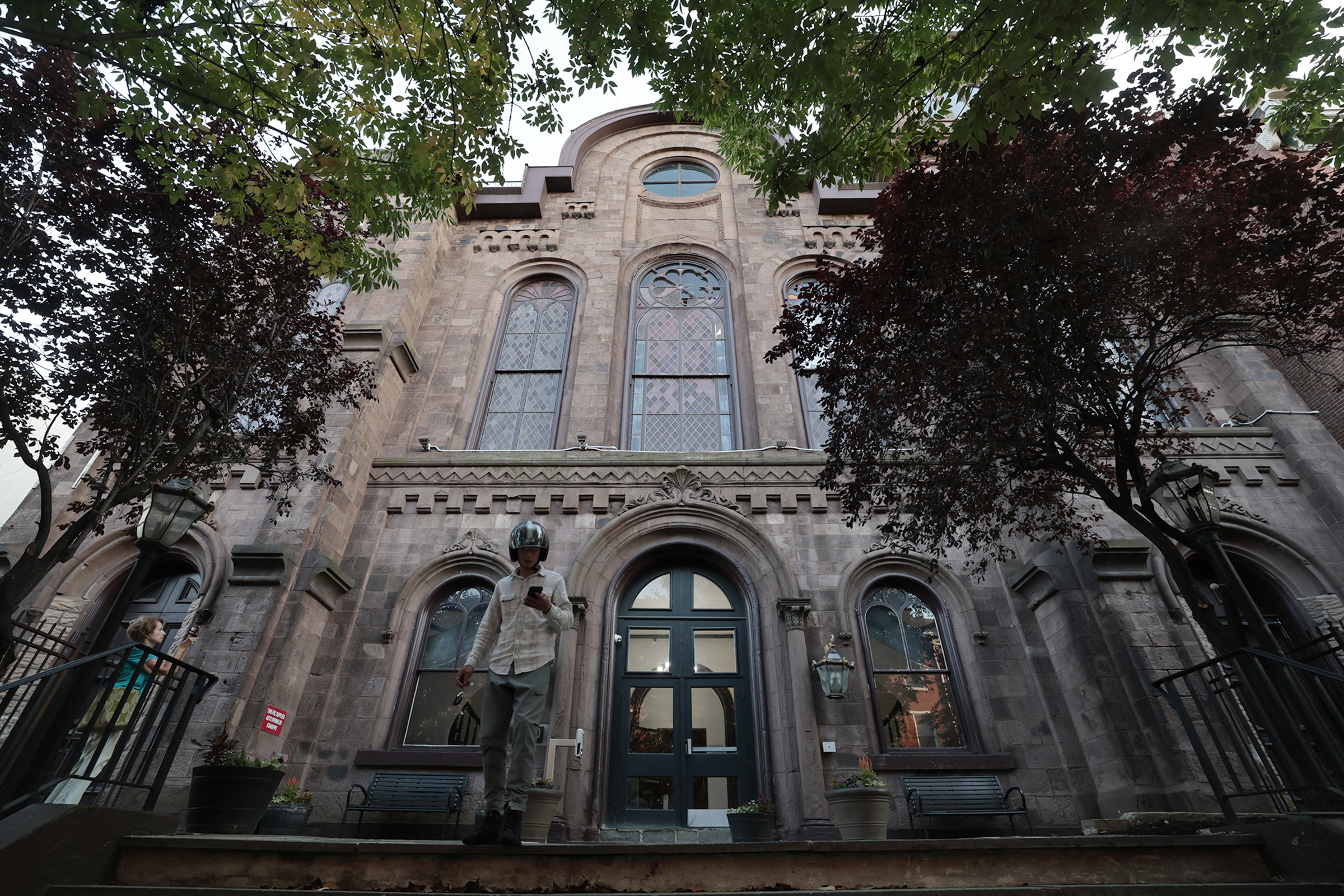
    In that neighborhood, decades later, Corwynne Peterson, Riley Sperger, Ashlee Propst, and Magdalena Becker share a four-level unit in what was once Christ Reformed Church. The Romanesque-style brownstone place of worship was built in 1860 in the middle of a block of terraced houses.

    Times changed, the church’s congregation dwindled. The increasingly deteriorating building was used for several years as a recreation center and for after-school programs. Then in 2003 it was purchased by the Regis Group, a property development company.

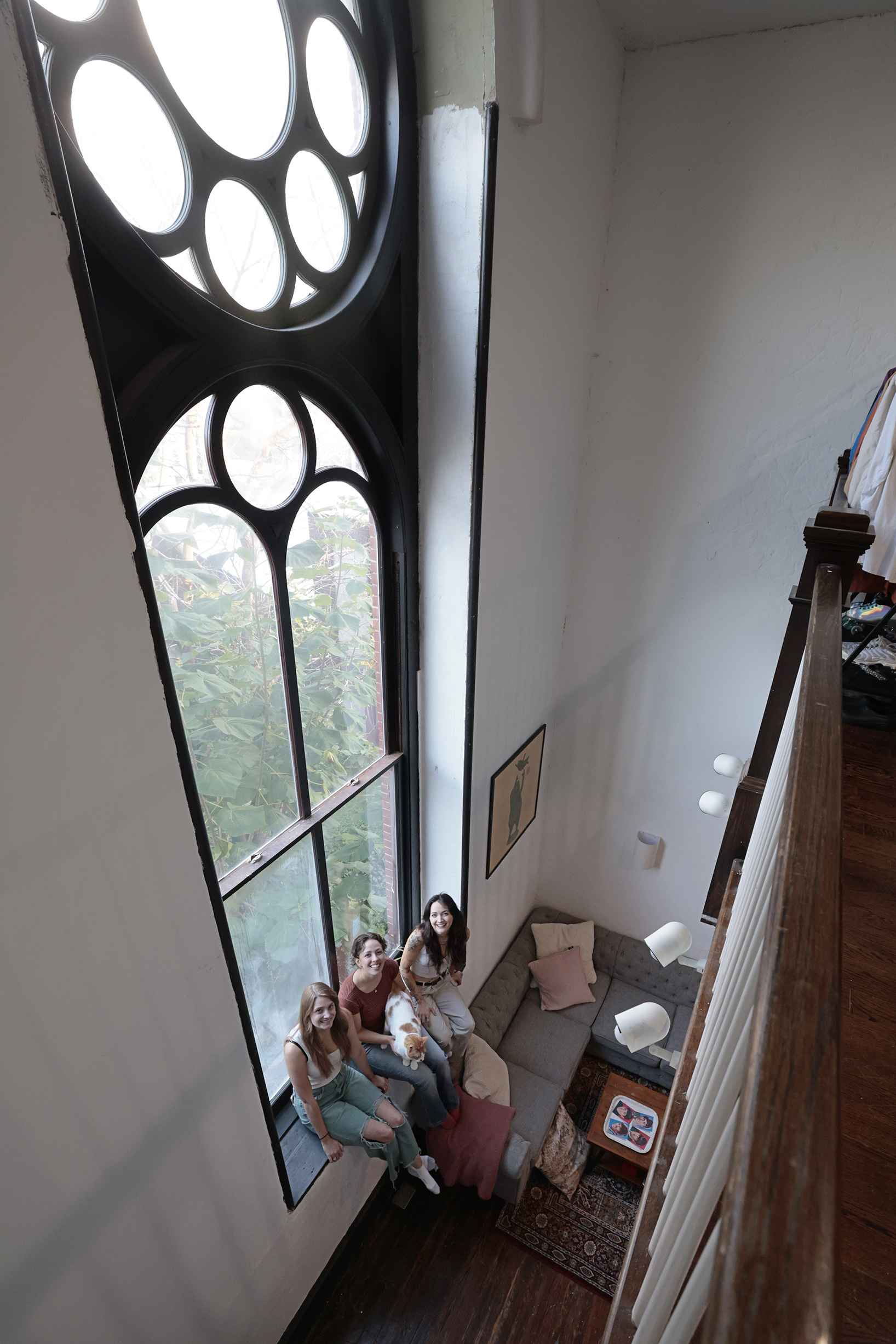
    As seen looking down from the third floor, (from left) Ashlee Propst, Corwynne Peterson, cat Hugo, and Magdalena Becker sit on the window sill in their apartment, formerly a church.
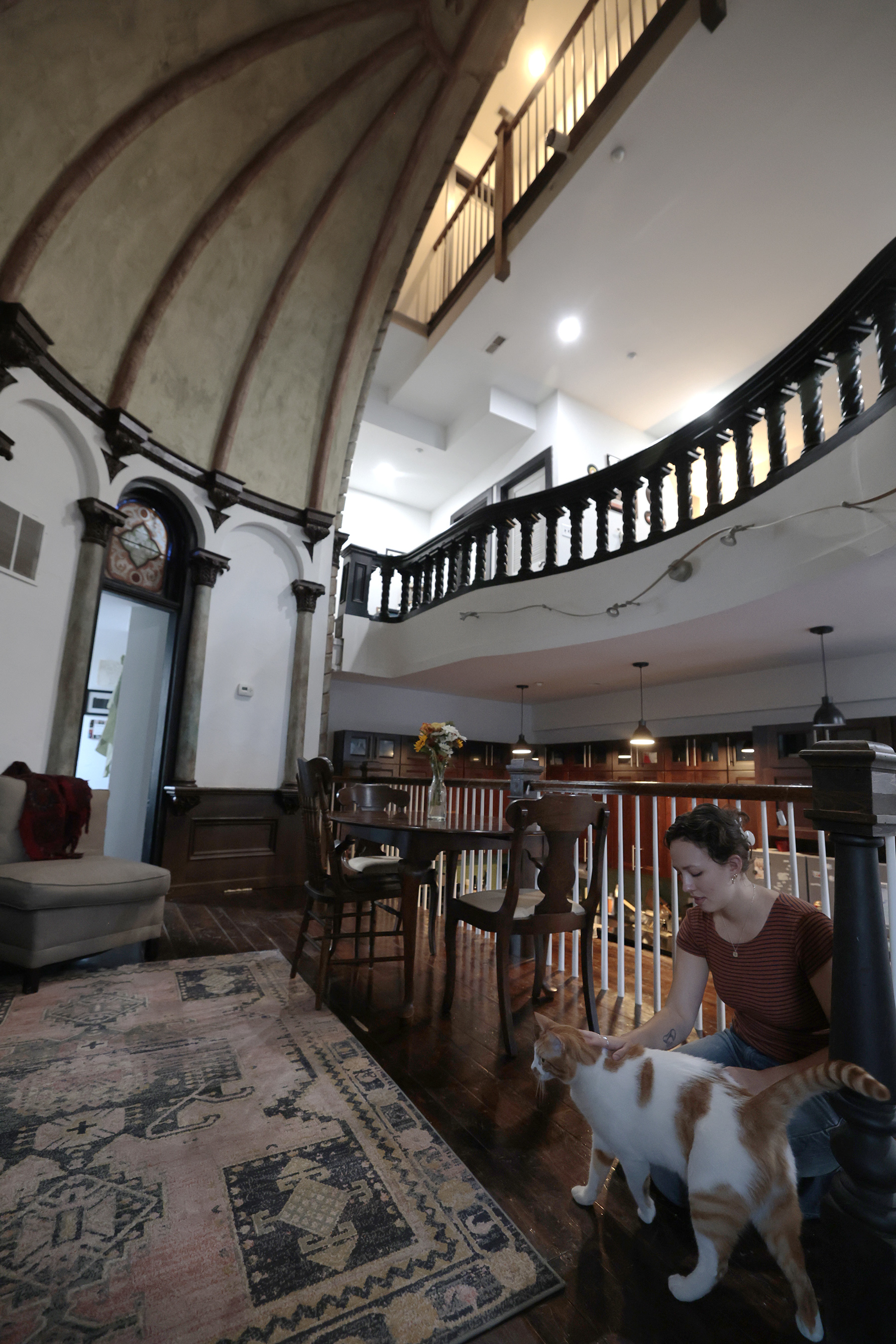
    Peterson shares some affection with her cat, Hugo, on the former church altar.

    Regis converted the church into 17 multilevel rental units, preserving the soaring ceilings, decorative plaster moldings, several leaded glass windows, and pine flooring. The eclectic decor includes whitewashed brick interior walls, new skylights and ceiling fans, exposed pipes and beams. Remnants of ecclesiastical patterned wallpapers still cover the wall near a door leading to the communal courtyard.

    For Halloween the roommates screen It’s the Great Pumpkin, Charlie Brown on the columned dome of what was the church sanctuary. At the top of the dome is a painted gold cross and crown, symbolizing the reward in heaven (crown) after trials on earth (cross).

    Peterson said she and her three roommates, all women in their 20s, call the sanctuary “the stage.”

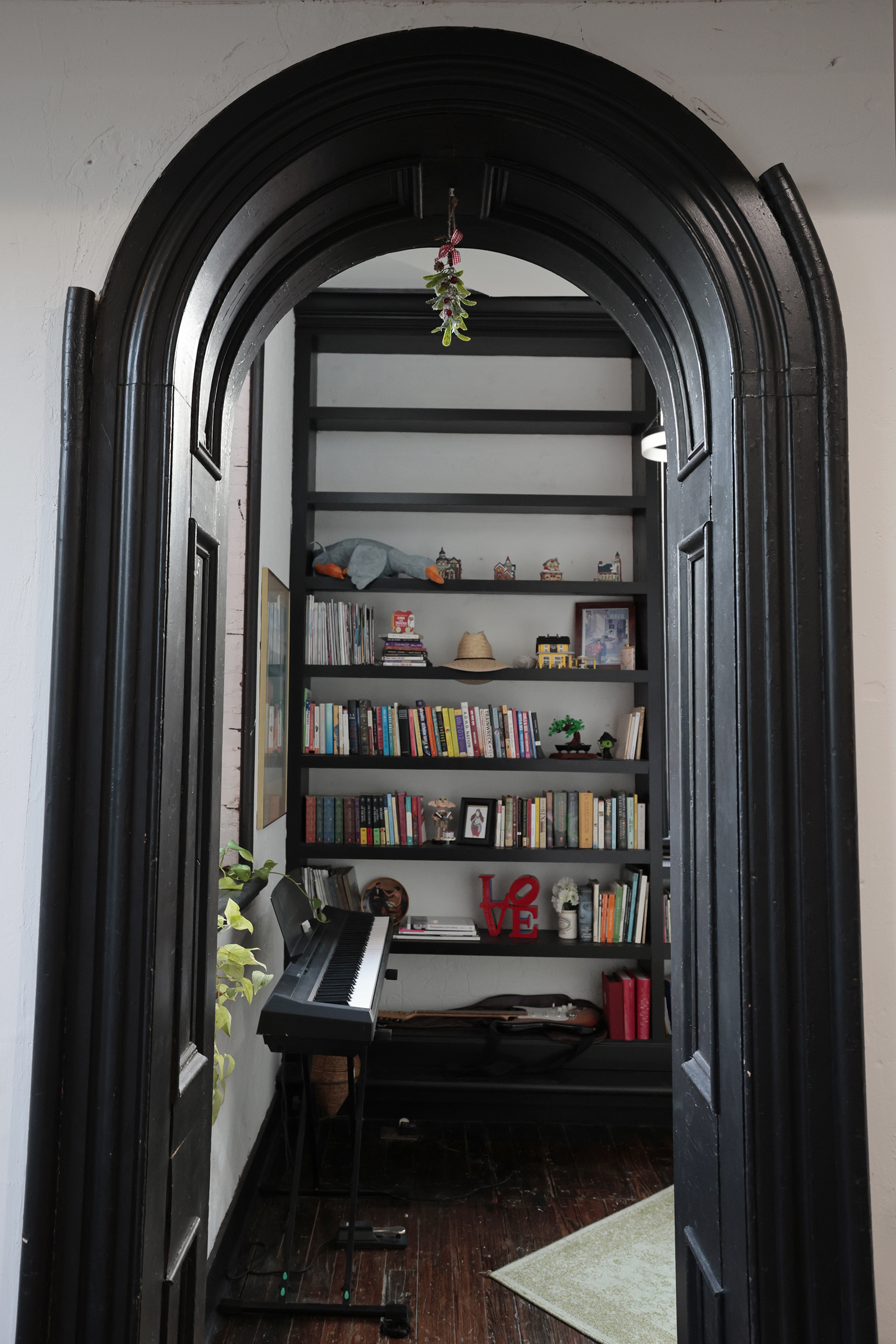
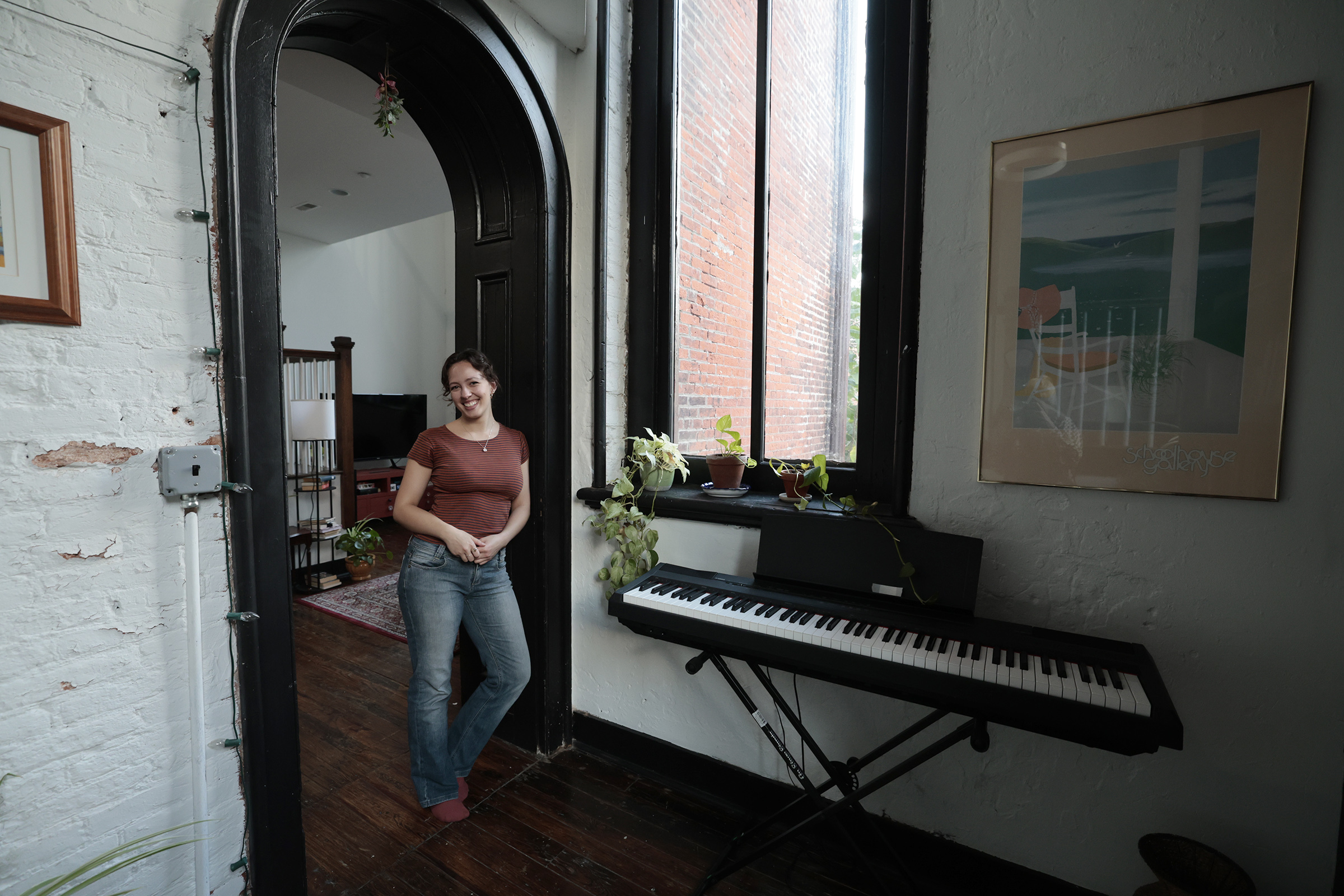
    The sanctuary, furnished with a dining table and chairs, is on a raised platform a few steps above the living room, kitchen, powder room, and “library,” with bookshelves and Peterson’s piano keyboard.

    The exterior of the Homes at Chapel Lofts, built in 1860 as the Christ Reformed Church.
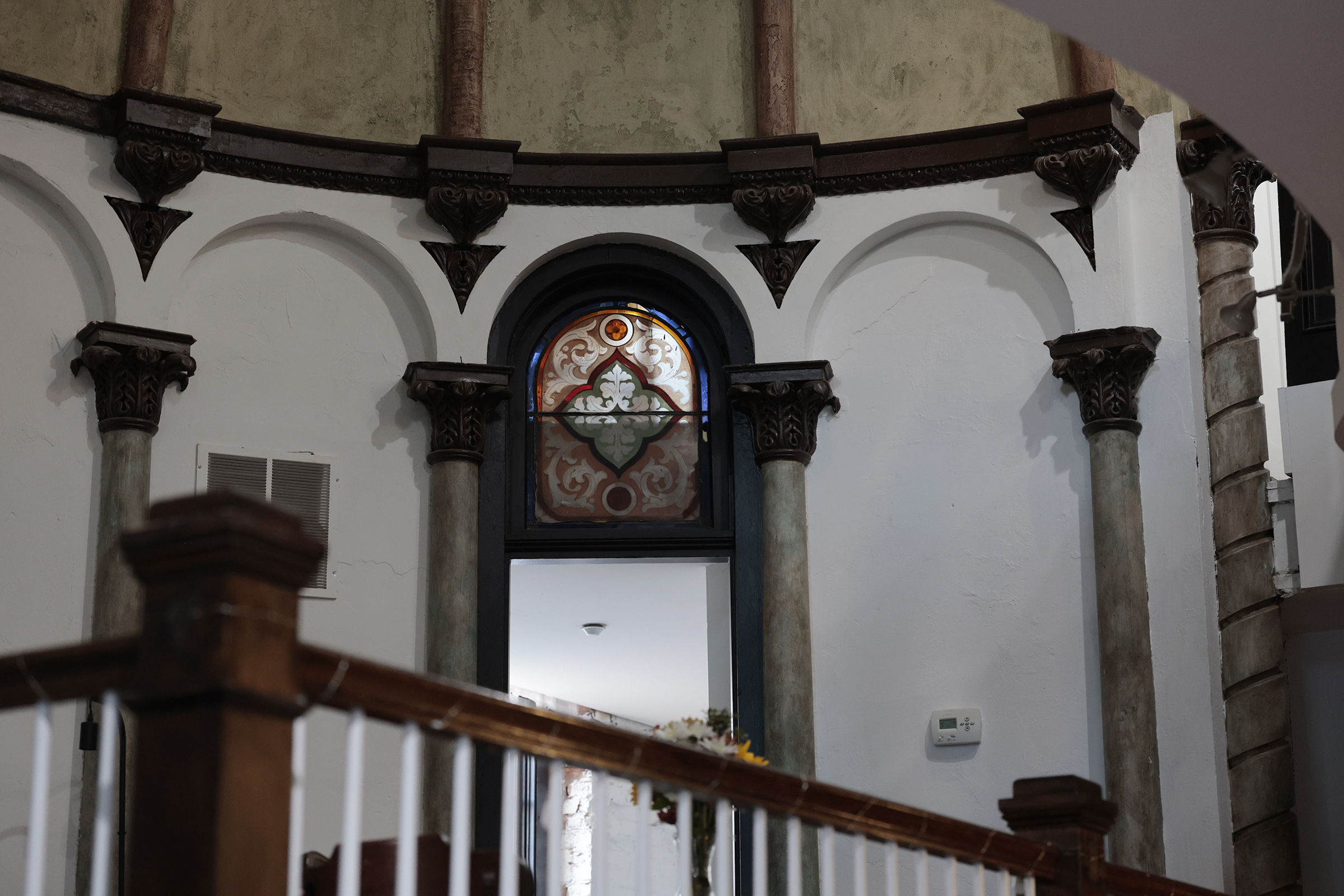
    The remaining original stained-glass window in the apartment.

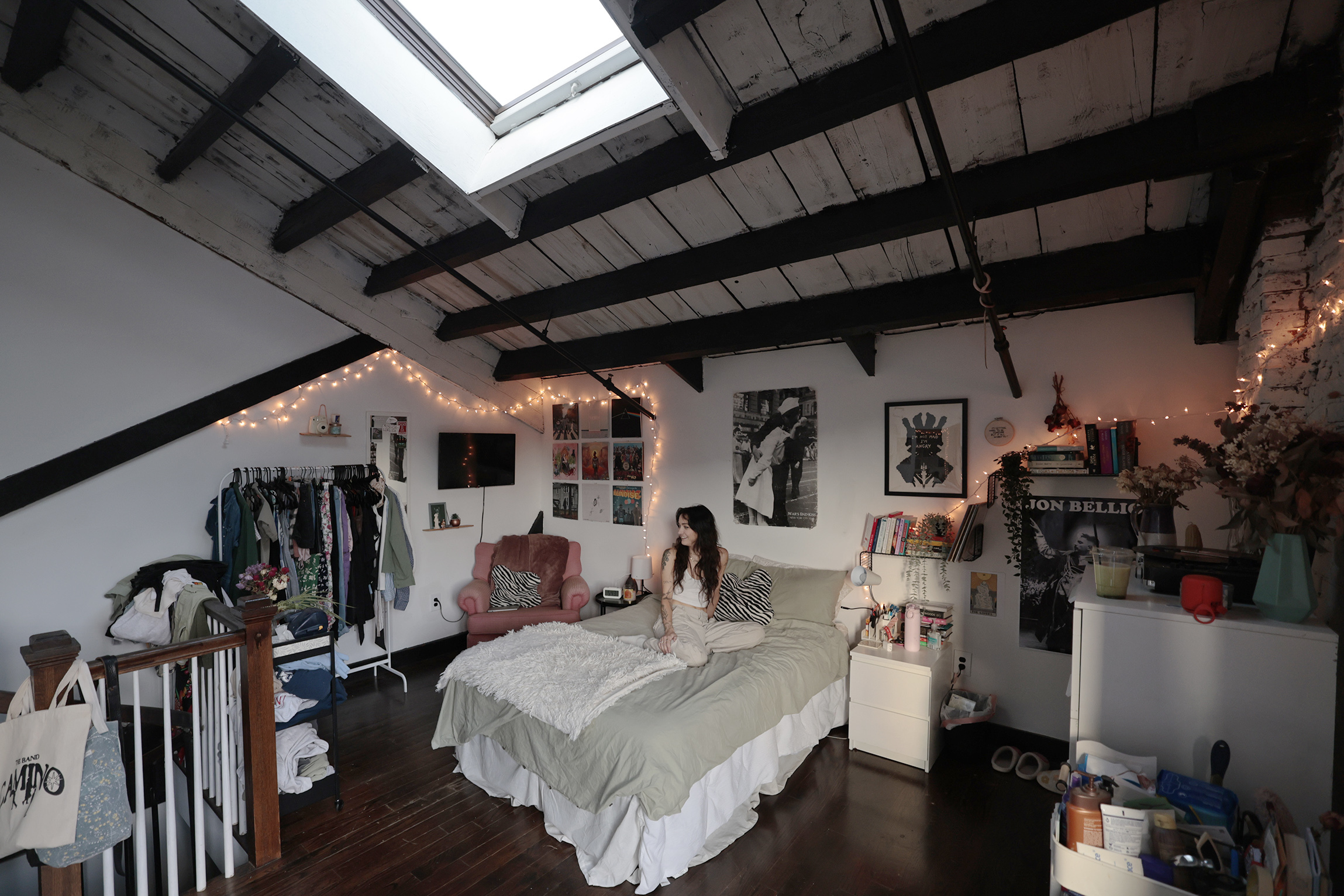
    On the next level are Peterson’s and Sperger’s bedrooms, a bathroom, and a sitting area. Both women work as restaurant servers.

    An ornately carved oak banister between the bedrooms and overlooking the sanctuary might have once been the church’s Communion rail.

    Propst, a research specialist at the University of Pennsylvania’s Perelman School of Medicine, has the largest bedroom and a private bath on the third level, where there is also a washing machine and dryer the women share.

    Up a spiral staircase on the top level is Becker’s bedroom, adjacent to a rooftop deck. She shares a bathroom with Peterson and Sperger two flights down.

    Entranceway to the apartment’s library.

    A pair of silver stiletto-heeled boots decorate a shelf at the bottom of the stairs. Becker is a writer for Static Media and a dancer, “which is why I have a lot of shoes,” she said.

    The roommates separately found the converted church on Facebook, moving in at different times over the last 2½ years. They collaborated on the furnishings, sourcing the gray sectional in the living room, the gray sitting-area sofa and purple ottoman, and other furniture on Facebook Marketplace. Their parents and grandparents contributed oriental rugs.

    The vintage typewriter, which sits on a desk gifted by a neighbor, was a prop from a play in which Peterson performed. The Vanya poster is from an Off-Broadway, one-man show of the same name autographed for Peterson by the star, Andrew Scott.

    Magdalena Becker in her fourth-floor bedroom, with sun beaming through the skylight above.

    Abstract nature prints came from Etsy, and a Vogue magazine cover, old records, and other art displayed on the walls were purchased at thrift stores. The women’s colorful clothes hang on racks.

    Light streams from a tall window comprising various shapes of clear glass, which replaced disintegrating leaded glass. Some of the arched doorways still have stained-glass transoms.

    The roommates admit they don’t do much communal cooking. They each have their own shelves in the fridge and in the chestnut kitchen cabinets.

    Magdalena Becker stands on the south-facing deck just off of her fourth-floor bedroom.
    Corwynne Peterson stands in the doorway of the library with her piano keyboard.

    But they do host parties together. Besides the Halloween festivities there was a birthday party for Sperger in September.

    For Christmas celebrations, the sanctuary sparkles with green and red lights.

    The women also share affection for the only male in residence, Peterson’s orange and white cat, Hugo. And he is fond of all of them.

    Is your house a Haven? Nominate your home by email (and send some digital photographs) at properties@inquirer.com.