South Philadelphia is set to get a new supermarket in early 2026.
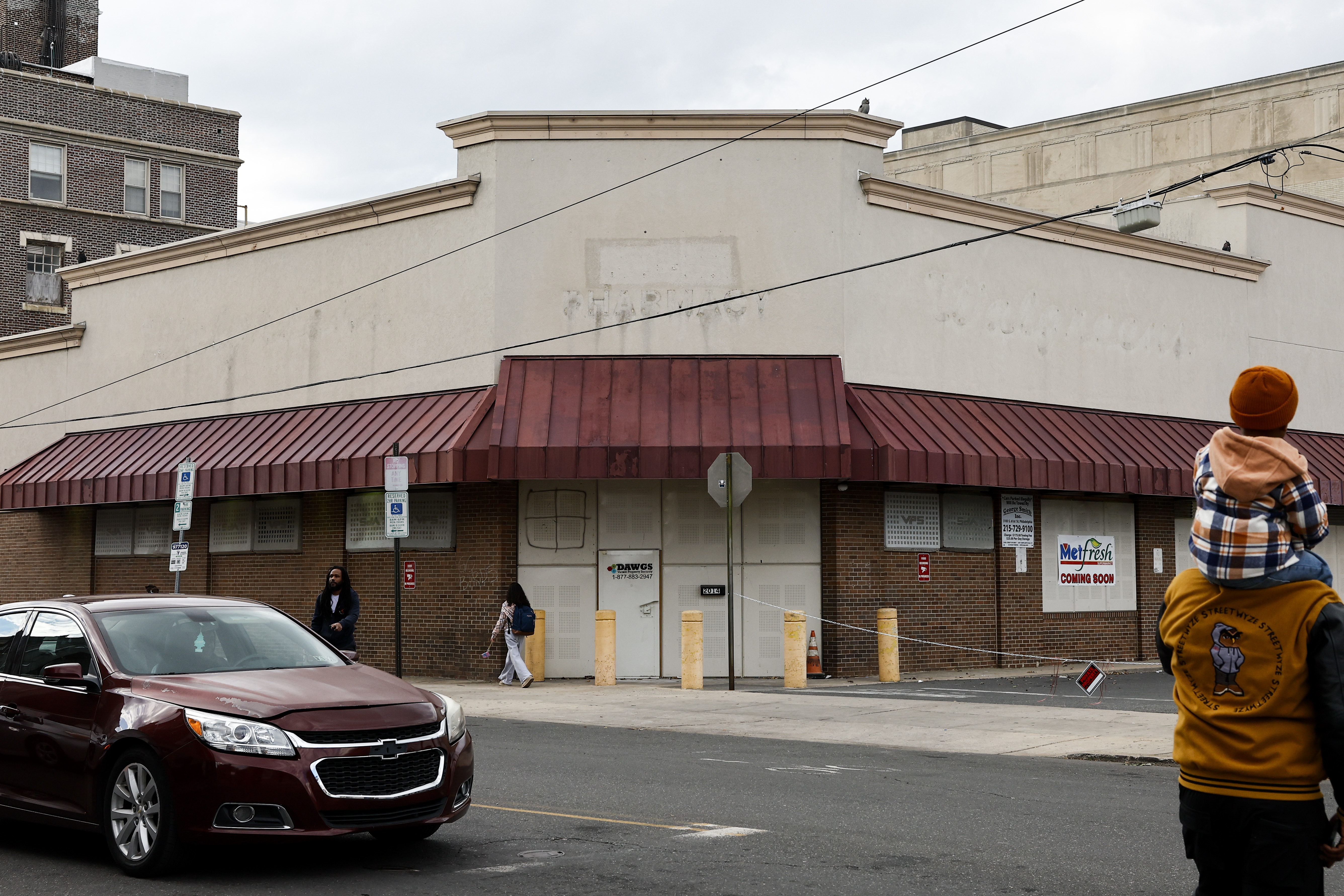
New York-based Met Fresh is on track to open its first Philly location in January inside the former Walgreens at Broad and Snyder Streets, said owner Omar Hamdan.
The 13,000-square-foot supermarket will include a pharmacy, a fresh-cut produce department, and a deli counter, Hamdan said, and will offer free grocery and prescription delivery to area seniors. It is also applying for a license to sell beer and wine.
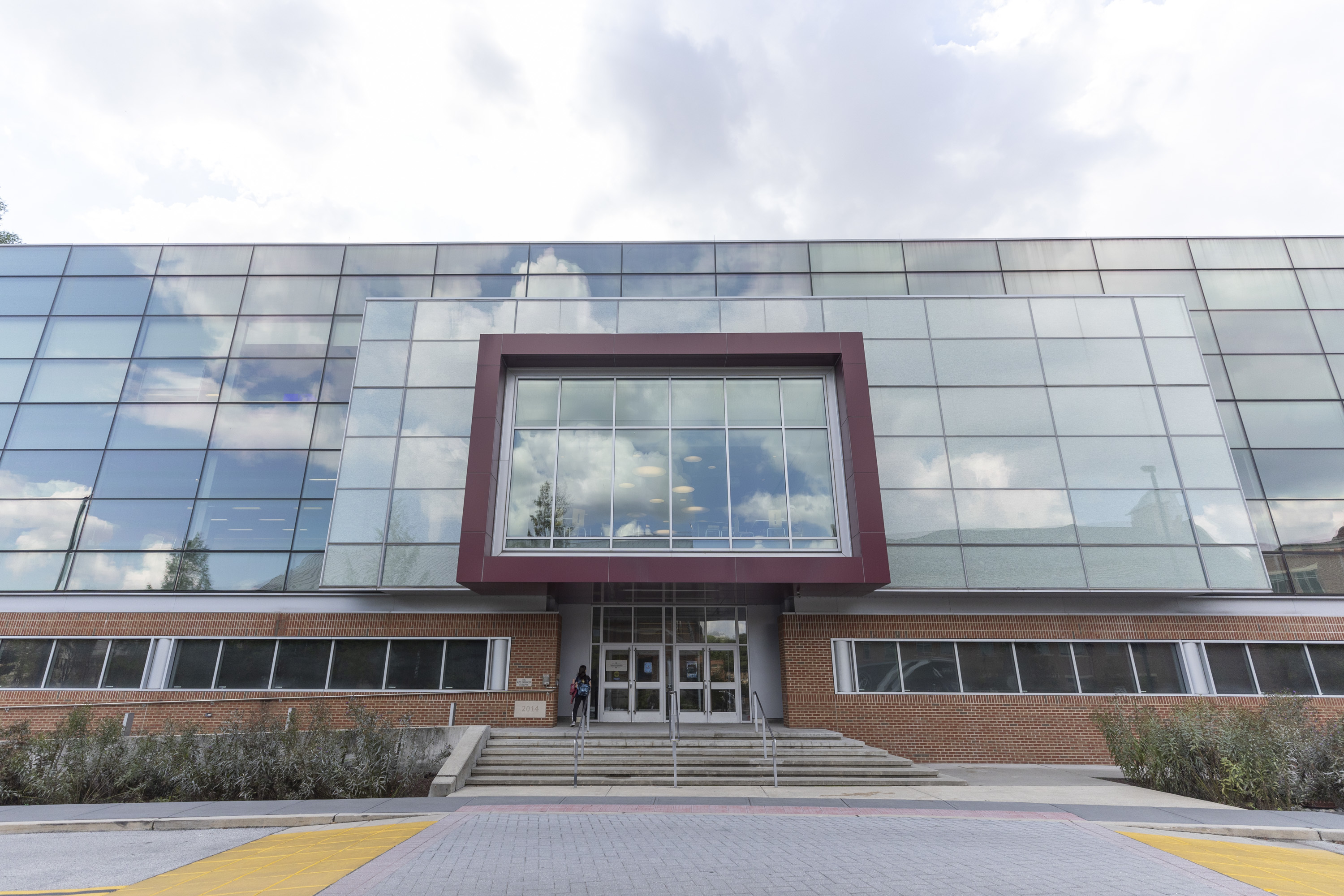
The former Walgreens at 2014 S. Broad St., where Met Fresh’s first Philly location is set to open in early 2026, photographed on Wednesday.
“We try to bring the human factor back into the market,” Hamdan said, adding that the company’s philosophy hearkens back to a simpler time: “That store owner who had the apron and was sweeping outside of his store, who said ‘good morning’ to everyone? That is what we do.”
Met Foods, a family-owned company, has been operating markets in New York City for 15 years, Hamdan said. It currently has locations in the Bronx, Brooklyn, Queens, Staten Island, and northern New Jersey.
When the South Philly grocer opens, it will mark Met Fresh’s first location outside the New York City area, Hamdan said.
Since then, Hamdan said they continued to look for potential Philadelphia locations. The store at 2014 S. Broad Street seemed like “a perfect fit,” he said, due to the area’s walkability, dense population, and a demand for more grocery stores and pharmacies.
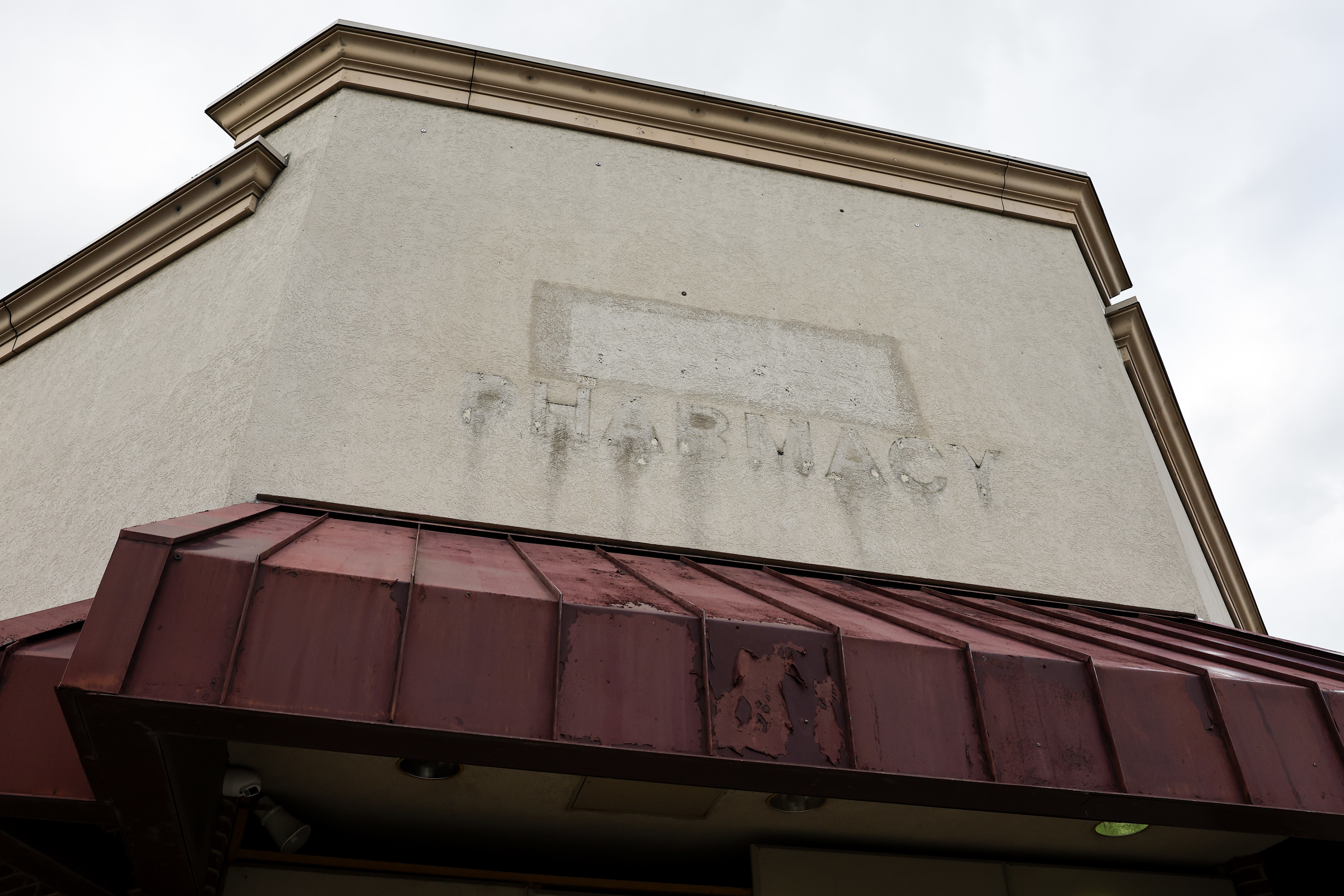
The “pharmacy” lettering is seen on a former Walgreens on South Broad Street, where Met Fresh plans to open a supermarket in early 2026 after “extensive” renovations, its owner said.
From the Broad Street store, the nearest supermarket is seven-tenths of a mile away. As for chain pharmacies, the Walgreens closed last year, and a Rite Aid across the street shuttered this summer as the Philly-based company went out of business. So the nearest large drugstore is a CVS off Passyunk Avenue, also seven-tenths of a mile away.
The Met Fresh will soon start hiring in South Philly, with Hamdan noting that his stores typically need 30 to 40 part- and full-time employees from the surrounding communities. The new location will open after “extensive” renovations, Hamdan said, and once the team gets ahold of refrigeration equipment, which has been impacted by tariffs on steel and aluminum.
Hamdan said he’s excited for Philly consumers to be introduced to Met Fresh, calling the Broad Street spot “a test pilot to see how we do in the Philly market.”
Three large stand-alone parking garages have been proposed in Philadelphia this year, unusual projectsin a city where parking operators have long complained that high taxation makes it difficult to run a business.
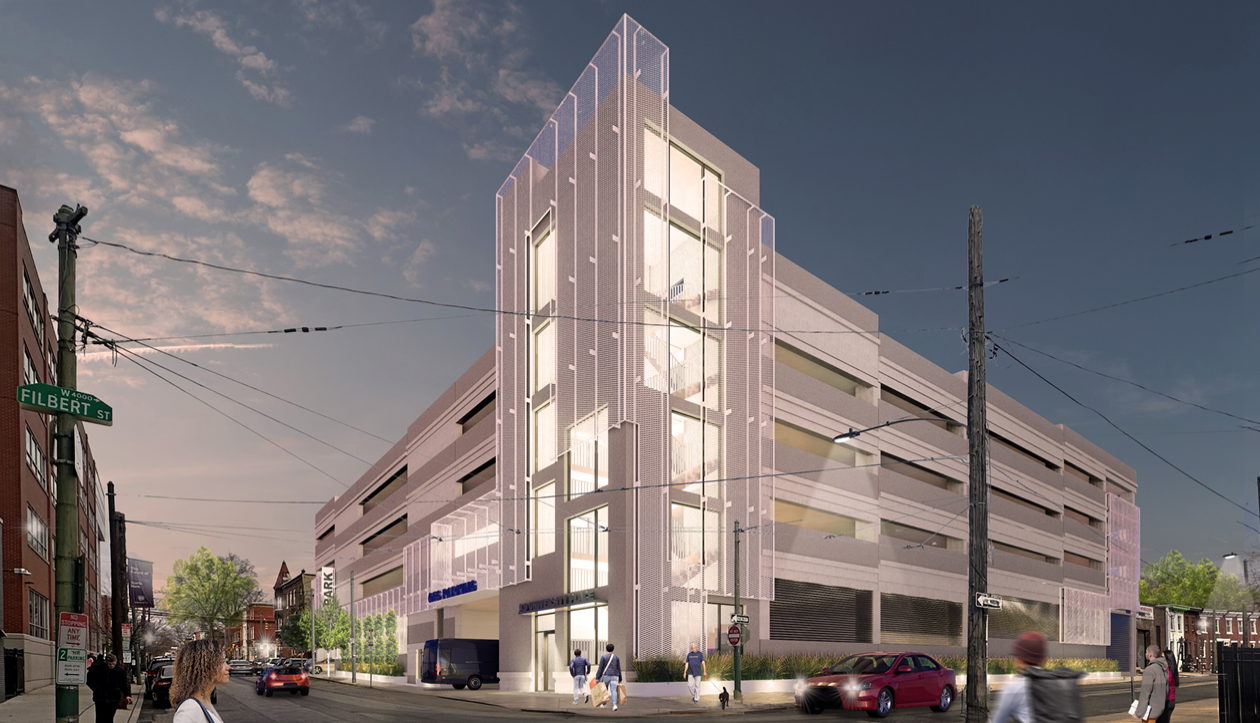
The latest is a 372-unit garage near Fishtown and Northern Liberties at 53-67 E. Laurel St. near the Fillmore concert hall and the Rivers Casino.
“There’s been about 2,500 units that have come online within a 5- to 10-minute walk” of the planned garage, said Aris Kufasimes, director of operations with developer Bridge One Management. “When you’re building those on 7-1 [apartments to parking spaces] ratios, that leaves a massive hole. Where is everybody going to put their vehicles?”
Despite central Philadelphia’s walkability and high levels of transit access, two other developers have made similar calculations this year.
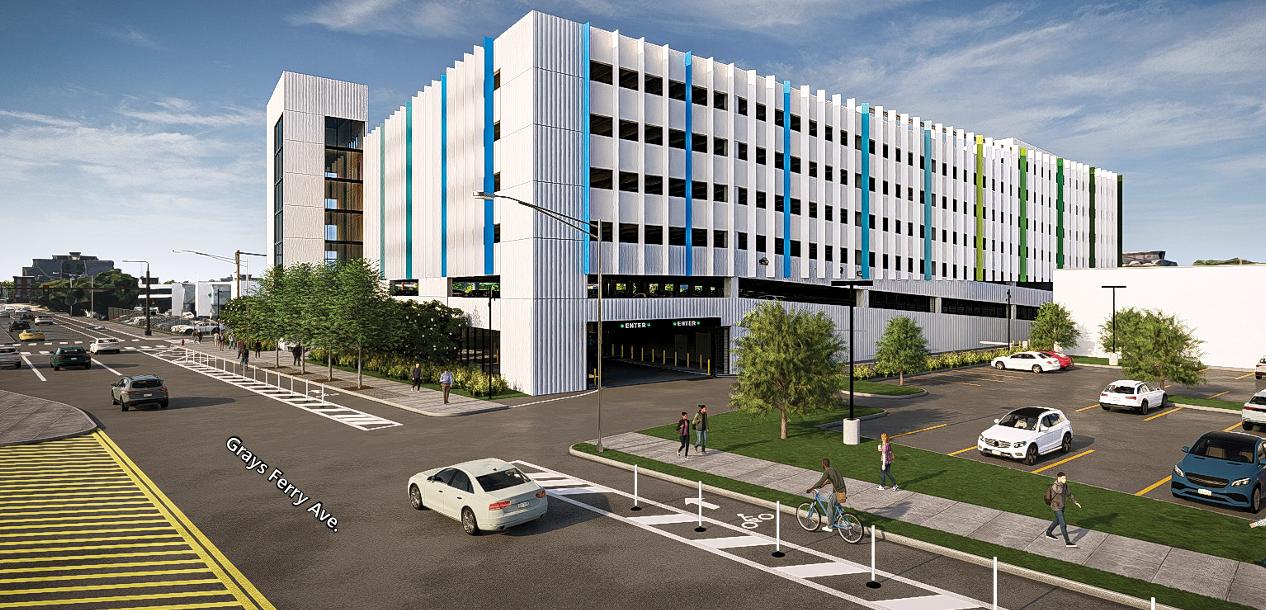
In the spring, Children’s Hospital of Philadelphia (CHOP) revealed plans for a 1,005-space parking garage in Grays Ferry along with a shuttle service to spirit employees to the main campus a mile away.
In August, University Place Associates unveiled plans for a 495-unit garage. About a fourth of it will be reserved for the use of the city’s new forensic lab, but the rest will be open to the public.
All three projects have baffled environmentalists and urbanists, who thought Philadelphia was moving away from car-centric patterns of late 20th-century development.
It’s also surprised parking operators in the city, who say national construction cost trends and high local taxation make it difficult to turn a profit.
Legacy parking companies in Philadelphia like E-Z Park and Parkway Corp. have been selling garages and surface lots for redevelopment as anything other than parking. They say the city has lost 10,000 publicly available spaces in the last 15 years, bringing the total to about 40,000 in Center City.
“I don’t think I’ll ever build another stand-alone parking facility,” said Robert Zuritsky, president of Parkway Corp. and board chair of the National Parking Association. “It doesn’t make any sense.”
Zuritsky and other parking companies have long noted that operators in Philadelphia, who often have unionized workforces, get hit with parking, wage, property, and the Use and Occupancy Tax.
When combined with the soaring cost of building new spaces across the nation, it’s difficult to turn a profit in Philadelphia.
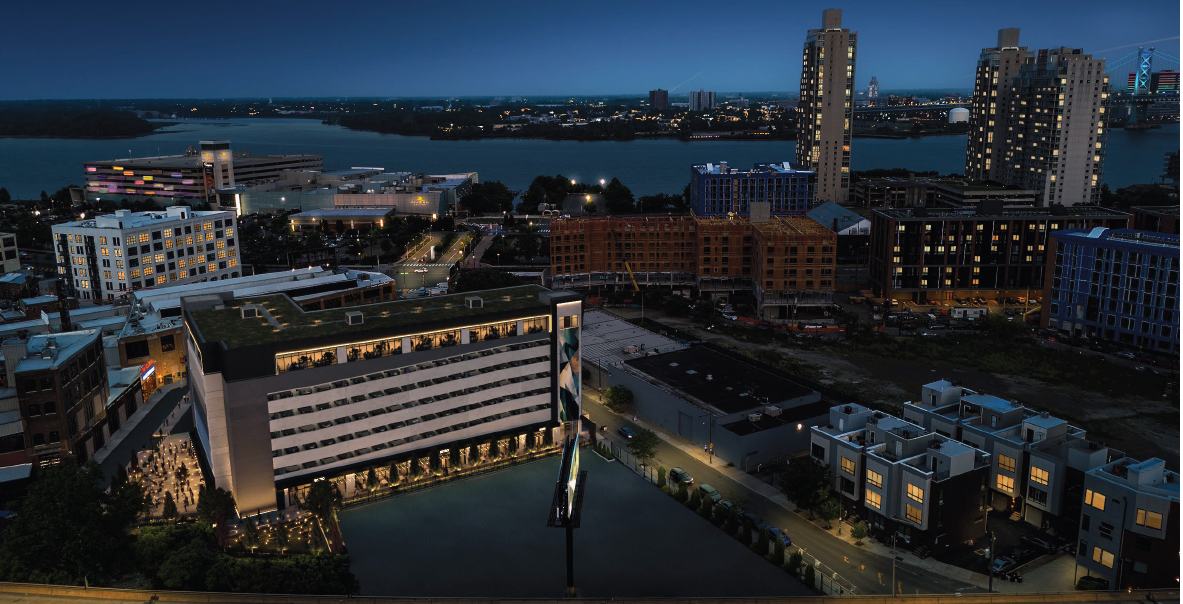
A rendering of the Fishtown garage, looking towards the Delaware River.
Zuritsky says it costs $60,000-$70,000 a space to build an aboveground lot in today’s environment and $100,000 to $150,000 below ground.
“It’s like building a house for a car,” he said.
Depending on hyperlocal peculiarities, Zuritsky says that taxation in Center City can eat up to 60% of the money they bring in and that to profit from new construction, an operator would have to charge $3,000 per space a month.
“I wish people luck, the ones that are moving in,” said Harvey Spear, president of E-Z Park. “Between taxes, insurance, and labor, it comes to, like, 70-some percent of what we take in. We have more equipment now that does away with a lot of labor; we’re trying to compensate with that.”
Urbanist and environmental advocates, meanwhile, have condemned the new garage projects, arguing that they will add to carbon emissions, air pollution, and traffic congestion.
“A massive parking garage less than half a mile from the El [in Fishtown] is the wrong direction for any city that claims to take climate action seriously,” said Ashlei Tracy, deputy executive director with the Pennsylvania Bipartisan Climate Initiative. “SEPTA is already working to get more people out of cars and onto transit, but projects like this one and the one from CHOP only make that harder.”
Here are the parking projects in the pipeline.
Fishtown: 372 spaces
The garage, with architecture by Philadelphia-based Designblendz, doesn’t just contain parking. It includes close to 14,000 square feet of commercial space on the first floor, which the developer hopes to rent to a restaurant — or two — on the edges of one of Philadelphia’s hottest culinary scenes.
Another over 16,000-square-foot restaurant space is planned for the top floor, with views of the skyline and river. Both the top and bottom floors also could be used as event spaces.
Kufasimes says that this aspect of the project could partly offset the kinds of costs that parking veterans warn of.
“Our due diligence team went through those numbers and vetted them pretty thoroughly: The returns are what they needed to be,” Kufasimes said. “It’s got a multifunction of income streams, so we think that that really will help play a larger role.”
Kufasimes also said a parking garage made sense in an area that’s seen more development than almost any other corner of Philadelphia. When investors purchased the land at 53-67 E. Laurel St. and approached his company for ideas, they met with other stakeholders in the neighborhood and determined parking would be appreciated.
“It wasn’t necessarily all about the profit,” Kufasimes said. “A lot of people this day and age, that is their number-one goal. If this is a slightly lower return in the long run but can be better accepted by the community as a whole, we think that actually raises the value of the asset.”
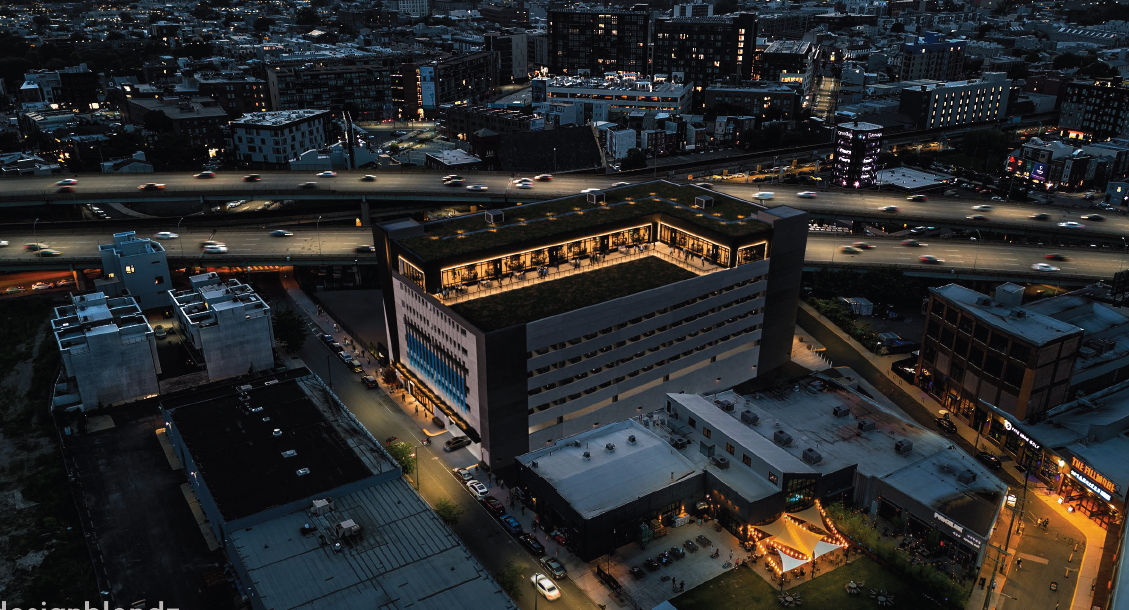
An overhead-perspective rendering of the Fishtown garage.
At an October meeting of the Fishtown Neighbors Association, that argumentappeared to pay off. Unlike most community meetings where a large new development is proposed, there were no adamant opponents of the project. The project also includes a 20,000-square-foot outdoor space, a green roof, and a to-be-decided public art component. All of that helped, too.
“It’s nice seeing a parking garage, of all things, be as pedestrian-friendly and thoughtful as this,” one speaker said during the Zoom meeting.
Dubbed University Place 5.0, it largely exists because of a major expansion of the municipal bureaucracy west of the Schuylkill.
For years the city has sought a new location for its criminal forensics laboratory. The debate became heated in City Hall, with numerous Council members making the case for locations within their districts.
Councilmember Jamie Gauthier pushed for its location in University City Place 3.0, a newly built, state-of-the-art life sciences building that was coming online just as its intended industry was slowing down in the face of higher interest rates.
To get the crime lab, Mayor Cherelle L. Parker’s administration said the police department would need ample parking. That’s where the new garage comes in.
In June, Gauthier passed a zoning overlay that cleared away the regulatory hurdles to the project. Six weeks later, the developers revealed University City Place 5.0, which has 29 parking spaces on the ground floor reserved for official use by forensics vehicles and 100 spaces reserved for city employees.
A rendering of the proposed University City parking garage as seen from 42nd and Filbert Streets.
Designed by Philadelphia-based ISA Architects, the garage is also meant to serve University Place Associate’s other large developments in the area. Akin to the Fishtown garage, they have also sought to make the development pedestrian friendly, with a dog park, green space, and public art.
The local community group, West Powelton Saunders Park RCO, also embraced the proposal.
“The community met regarding this project back in August, and … they were all in support of this project,” Pamela Andrews, president of the West Powelton Saunders Park RCO, said at the city’s September Civic Design Review meeting. “We have a tremendous problem with parking, and the community members felt this was a much needed and welcome addition.”
Grays Ferry: 1,005 parking spaces
CHOP’s thousand-car parking garage by far has been the most controversial of the proposals. But it also makes the most economic sense for the owner. Unlike the other garages — or those owned by Parkway and E-Z Park — it will be owned by a nonprofit and exempted from many of the taxes that make it so expensive to own parking in Philadelphia.
A rendering of the new parking garage CHOP plans for Grays Ferry.
The hospital purchased the property at 3000 Grays Ferry Ave., next to the Donald Finnegan Playground, for almost $25 million last year.
The seven-story development, which, plans show, would have far fewer amenities than its University City and Fishtown counterparts, is meant to serve CHOP’s new research facilities in Fitler Square and the new patient tower set to open in 2028.
“We recently secured permits and have begun construction on the new parking garage at 3000 Grays Ferry Ave.,” a CHOP spokesperson said. “The full construction is expected to go through the fall of 2026. CHOP continues to engage with the community by providing support, timely updates and addressing feedback during construction.”
At the time of its unveiling, CHOP argued that the massive garage was needed as SEPTA threatened to become unreliable due to a political funding crisis in Harrisburg. But detractors appeared almost immediately to denounce the hospital for worsening air quality in a lower-income neighborhood that is already a hot spot for asthma.
There are no regulatory hurdles to the development, but changes in the political or economic landscape could make it difficult to embark on a large capital project. Notably, the University of Pennsylvania proposed an 858-space garage in 2023 for the nearby Pennovation Center and has never broken ground.
For years, the Preservation Alliance for Greater Philadelphia has heard the same arguments: Preservation is a barrier to development. It reduces density. It restricts the housing supply.
“And we knew in our gut that that wasn’t true, but we didn’t have the data to support it,” said Paul Steinke, executive director of the Preservation Alliance, which works to protect historic properties from demolition. “Now, we do.”
In Philadelphia, $4 billion has been invested in historic rehabilitation projects, which have created thousands of jobs each year.
Steinke said the Preservation Alliance commissioned this study now because of current debates about Philadelphia’s growth and affordability, the need to increase the housing supply, and development policy as Mayor Cherelle L. Parker rolls out her Housing Opportunities Made Easy, or H.O.M.E., initiative to build or preserve 30,000 homes.
“We wanted to develop some data to demonstrate preservation’s role in those conversations,” said Steinke, who is on the H.O.M.E. advisory committee. “And the reality is the data show that historic preservation is a powerful engine … for investment, jobs, affordability, and inclusive growth.”
The study was completed by PlaceEconomics, a Washington-based firm that analyzes the economic impacts of historic preservation in cities across the country. The purpose of the analysis in Philadelphia was to understand the economics of the preservation of older properties in general and not only those properties that are historically designated, Steinke said.
Preservation debates
Historic designation is a divisive topic, and preservationists have found themselves clashing not only with developers who want to demolish properties but also with homeowners and pro-housing groups.
Historic designation shields properties from demolition and means owners have some restrictions on what they can do to the outside of their properties. Decisions about doors and windows, for example, are subject to the scrutiny of preservation officials. And owners who fight the designation of their properties argue that regulations can be a burden.
In response to the Preservation Alliance’s study, 5th Square, a Philadelphia-based urbanist political action committee, said it supports efforts to rehabilitate older buildings and that “Philadelphia’s dense, historic neighborhoods are a beloved feature of the city.”
“However, we remain concerned about the proliferation of historical preservation districts across the city,” Brennan Maragh, cochair of the group’s housing committee, said in an emailed statement. “These districts … impose real costs on families, small businesses, and owners attempting to maintain or improve their properties.”
Almost 5% of Philadelphia is historically designated
Almost 5% of the city’s land area is a historic district or is property individually designated as historic outside of historic districts, the study found.
The share of properties historically designated by the city has increased from 2.2% to 4.4% since 2016, when the city started ramping up its historic designations. Philadelphia has caught up with other large cities.
In 2023, about 56,000 residents lived in a local historic district.
Tax credits have created jobs and revenue
Between 2010 and 2024, 295 projects that used state and/or federal historic preservation tax credits were completed in Philadelphia, according to the study. This ranks Philadelphia first in the nation.
Projects that use historic tax credits have created an average of 1,777 direct jobs and 729 indirect jobs each year in Philadelphia over the last 15 years. Each year, they have created an average of about $95 million in direct income and about $47 million in indirect income.
If historic rehabilitation were a single industry, it would be the city’s 25th-largest employer.
Historic tax credit activity also has generated about $8 million in local tax revenue.
Two-thirds of Philadelphia’s residential buildings and half of the city’s housing units were built before 1950, according to the study. This older housing tends to be smaller in size and lower in cost.
So preserving older homes helps preserve housing affordability. The study did not consider the historic designation status of these homes.
“While it is true that Philadelphia’s older housing stock remains affordable compared to new construction,” said Maragh at 5th Square, “historic preservation districts can also have the unintended consequences of excluding low-income residents from large parts of the city, raising lifetime housing costs on owners and creating unnecessary regulations that slow down the process of adaptive reuse.”
The study found that the city’s historic districts have higher shares of high-income households and lower shares of low-income households compared to the rest of the city.
Outsize population growth in historic districts
Donovan Rypkema, principal and CEO at PlaceEconomics, said a “myth” of historic preservation is if “you create those historic districts, you just set neighborhoods in amber and nothing can ever change.”
The firm’s study found that population growth in historic districts outpaced growth in the rest of the city.
In historic districts created before 2010 — so before the recent push for more districts and ones that are more geographically and racially inclusive — the population grew by about 27% between 2010 and 2020. Over the same time, the rest of the city’s population grew by less than 5%.
More than 79% of the homes in historic districts are in buildings with two or more units, compared to 32% in the rest of Philadelphia. Historic districts also offer a wider range of housing types.
The densest areas of the city are in historic districts, according to the study. There are 10,000 more people per square mile in historic districts than in the rest of the city’s residential areas.
These statistics speak to the “inherent attractiveness” of historic districts and also that “they can accommodate that growth,” Rypkema said.
Mayor Cherelle L. Parker is shaking up the board of the Philadelphia Land Bank, which helps control the sale of city-owned land but hasn’t been moving fast enough to advance her housing priorities.
Parker’s first land bank board chair, Herb Wetzel, has been asked to step down as well as board member Majeedah Rashid, who leads the Nicetown Community Development Corp. The board has 13 members.
Angela D. Brooks, who serves as the city’s chief housing officer, will be joining the board. Earlier this year Parker appointed Brooks to lead the mayor’s campaign, Housing Opportunities Made Easy, or H.O.M.E., to build or renovate 30,000 houses over the course of her administration.
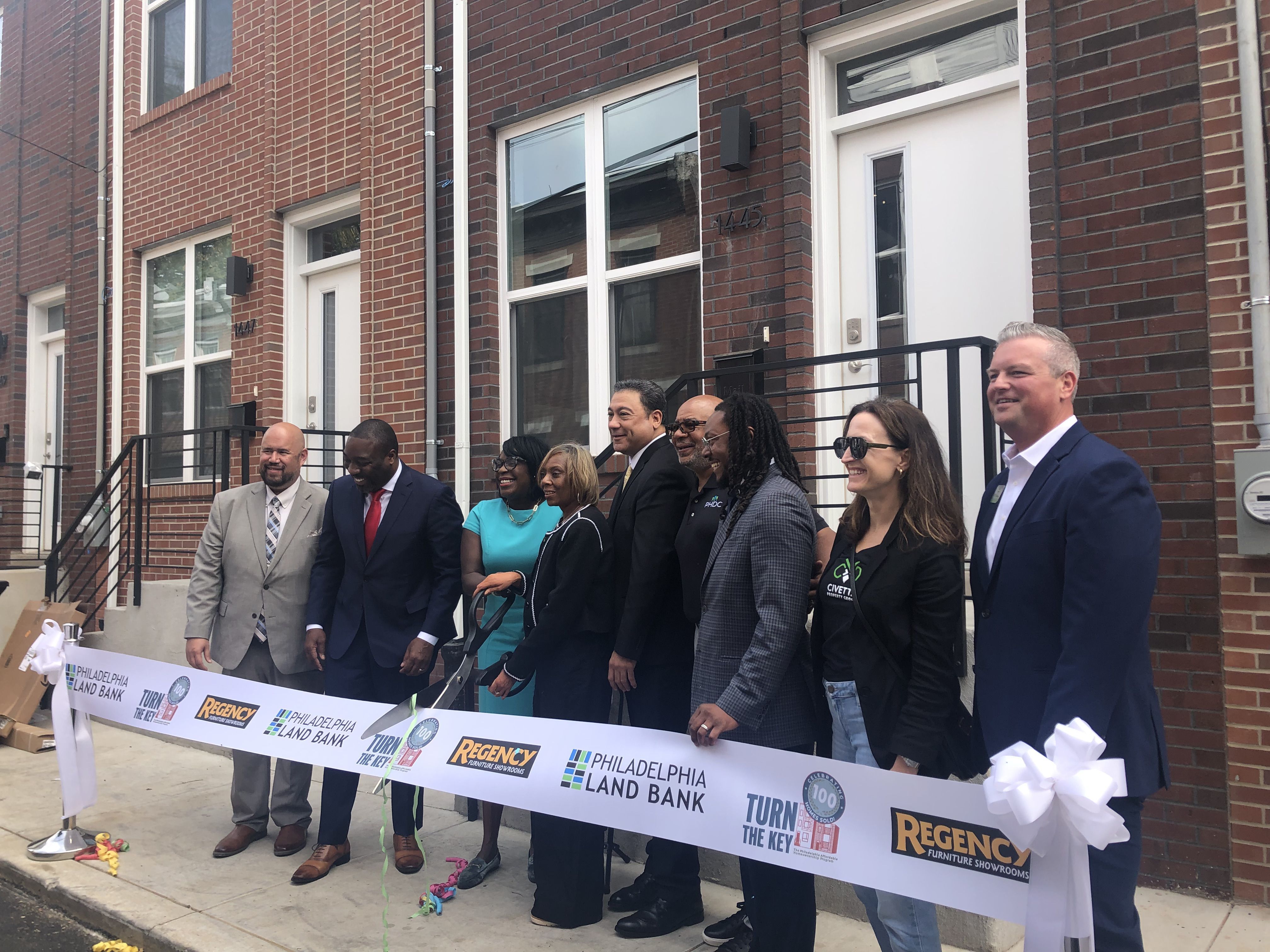
The mayor has long championed the Turn the Key program as part of that plan, a policy that depends on getting inexpensive city-owned land to developers so they can build houses that are affordable to working and middle-class families.
Rashid is being replaced by Alexander Balloon, who formerly served on the Land Bank’s board and is the executive director of the Passyunk Avenue Revitalization Corp.
“It is clear from the Land Bank’s success with its Turn The Key program: A strong and effective Land Bank is essential for reaching the H.O.M.E. initiative’s goal to produce and preserve 30,000 homes,” Parker said in a statement.
Several Turn the Key proposals have been held up by the Land Bank board, which has been riven between factions that are either more or less friendly to private-sector developers.
Rashid and other board members who come from a nonprofit development background have argued that scarce city-owned land should be earmarked for affordable housing, community gardens, and similar projects.
Mayor Cherelle L. Parker and Turn the Key’s 100th homebuyer hold giant scissors as they prepare to cut a ceremonial ribbon.
Although the Turn the Key program produces units that are more affordable than market-rate homes, many of the projects are built by private-sector developers and still unaffordable to Philadelphians with low incomes.
“Majeedah Rashid has worked with me on economic development issues dating to my time in the Pennsylvania General Assembly, and her advice has been invaluable,” Parker said in a statement. “Our city is stronger for Herb’s and Majeedah’s public service.”
Rashid did not respond to a request for comment.
During Balloon’s previous tenure on the board, he was among members who pushed for vacant city-owned land to be put back into productive use as quickly as possible because empty lots attract crime and litter and are a drag on city services.
Private-sector developers often can build more — and faster — than their nonprofit counterparts because they are less reliant on public funds, which are increasingly unreliable from the federal level.
“I’m excited to rejoin the Philadelphia Land Bank and help Mayor Parker deliver on her bold vision to build and preserve 30,000 homes across our city,” Balloon said in an email statement. “This is an inspiring moment for Philadelphia’s growth and the success of the Turn the Key program and other initiatives.”
“Herb Wetzel has been a subject matter expert for me on any housing issue that I’ve worked on throughout my career as an elected official, and I have always relied on his counsel,” Parker said in a statement. “He will continue to be part of my circle of advisers on housing issues, just in a different capacity.”
But according to three City Hall sources, who did not have permission to speak to the media, Parker’s team felt Wetzel sought to play peacemaker between the factions and was not always able to get their favored Turn the Key projects moving. As a recent arrival to the city and leader of the administration’s housing initiative, Brooks is expected to pursue the mayor’s priorities.
Brooks said in an interview that her appointment was no reflection on Wetzel’s performance and that he would continue to serve on the H.O.M.E. advisory board.
“I don’t have any thoughts on what he didn’t do or didn’t other than he’s been a great supporter of both the mayor and me and this housing plan,” Brooks said. “He’ll continue to be a part of that as we move it forward. [It’s just that] historically, we have had a city staff person to sit on the Land Bank board, and since I’m spearheading the H.O.M.E. Initiative, it seemed to be time.”
Frequent stalemates on the board were not the only challenge facing Turn the Key projects. Under the tradition of so-called councilmanic prerogative, the Land Bank requires action from City Council to release property for development even if the mayor backs a particular proposal.
For example, the administration sent over a 50-unitTurn the Key proposal in North Philadelphia to City Council last November, and District Councilmember Jeffery Young simply never introduced it, effectively killing the deal.
Or in Kensington, Councilmember Quetcy Lozada declined to endorse several Turn the Key proposals, leading developers to abandon them.
Parker sought to loosen Council’s grip on some city-owned land during budget negotiations earlier this year, but the campaign was largely unsuccessful. National land bank experts have long argued that land banks like Philadelphia’s are much less effective than counterparts that do not have political veto checkpoints.
During budget hearings this year, Council asked for an organization assessment of the Land Bank, and some members questioned why its staff wasn’t more robust.
Brooks said that an assessment will be released soon from the consultant group Guidehouse and that the Land Bank “is in the process of filling positions.”
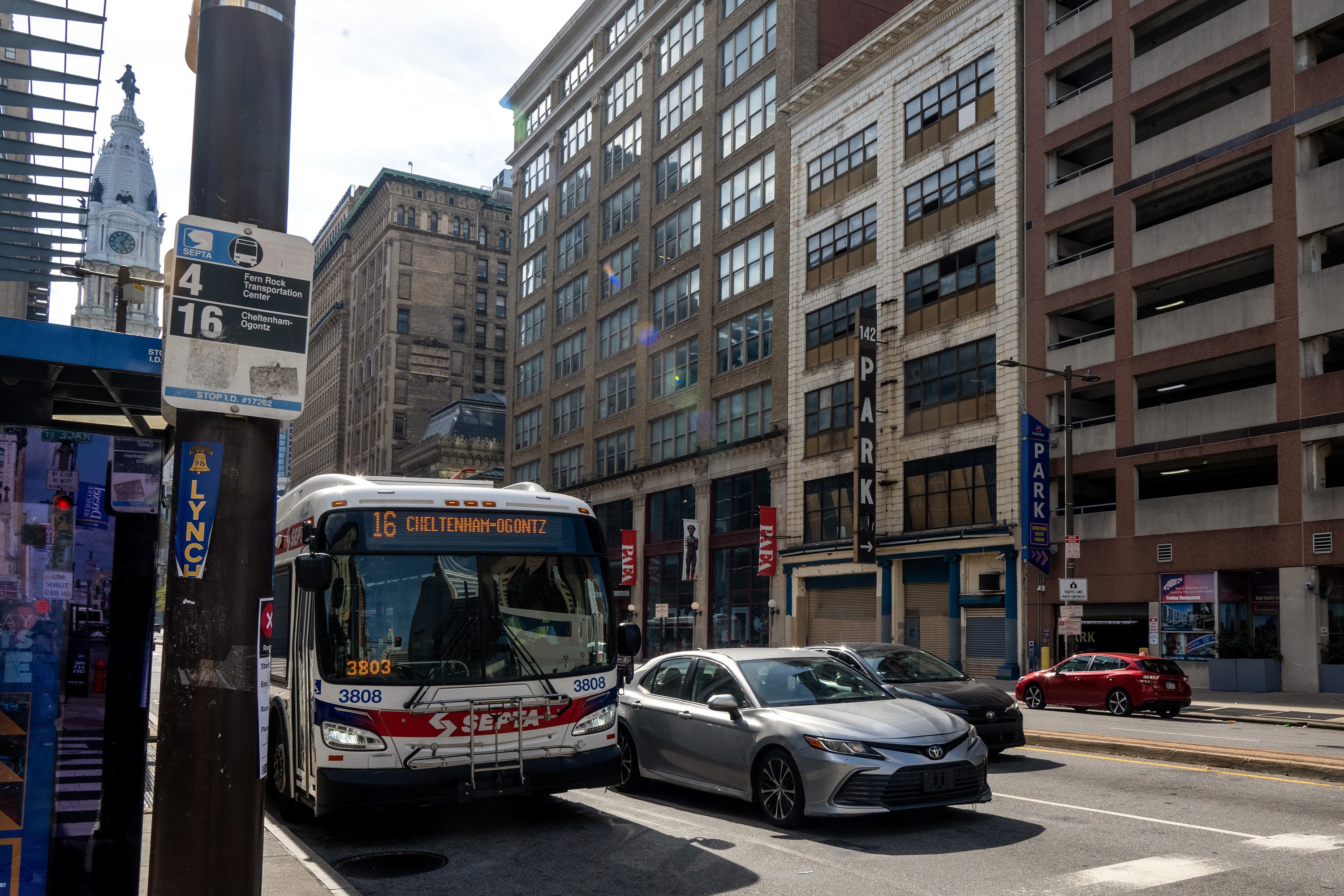
An antiquated industrial building at 142-144 N. Broad St. is being converted to 99 apartments and over 4,000 square feet in restaurant space.
The seven-story building previously served as a car showroom with vehicle elevators and a factory. It has been empty for years.
“It’s gone through a couple of owners,” said Carolina Pena, principal at Parallel Architecture Studio, which is working on the project. “We’re doing an interior renovation. There are no additions proposed. We’re trying to retrofit the existing garage into apartments.”
The building’s previous owner, John Wei, has been selling off property across the Callowhill area in recent years in the face of mounting financial difficulties. He purchased 142-144 N. Broad in 2022 for $7 million.
The property sold in August for $6.2 million to a company called Penn Hall Investment LLC.
In zoning applications filed with the city earlier this month, the owners are listed as Qiaozhen Huang and Yizhou Li with their business address as 300 E. Allegheny Ave. in Kensington.
Philadelphia-based Parallel Architecture Studio, which is designing the project for the latest developers, also served as the architect for an earlier iteration of the property, when Wei sought to use it to house a 115-room hotel.
Pre-pandemic permits show a proposal for an even larger hotel from another developer and architect.
“It’s more stable financially this way,” said Pena, of Parallel Architecture. “It’s harder to get financing for hotels than to get financing for apartments.”
Pena projects a construction timeline of 18 to 24 months. The apartments will be designed for single-person households.
“We have some studios, some one-bedrooms,” Pena said. “They’ll be around 600 square feet.”
A view of 142-44 N. Broad St. (black PARK sign). Zoning permits have been pulled for a conversion of the long-vacant tower to residential and restaurant use.
The current Penn Hall project does not require any action from the zoning board because 142 N. Broad St. is in the most flexible zoning district in the city.
Bicycle parking and four automobile spaces will be available in the tower’s existing small underground parking facility.
In 2017, the city issued an “unsafe structure” violation for the building, but the owners at the time shored it up. No violation of that magnitude has been issued since.
The development along North Broad Street has been advancing at a slow but steady pace since the Great Recession.
Philadelphia developer Eric Blumenfeld’s string of popular projects along the thoroughfare, including The Met and the Divine Lorraine, started the redevelopment trend.
Other developers such as Alterra Property Group have added hundreds of new apartments to the area, and the Philadelphia Ballet’s new building is opening soon. Closer to City Hall at the shuttered Hahnemann University Hospital, Dwight City Group plans 288 apartments.
Last summer, after six years in their home, Danielle and Jonah Abrams decided to upgrade their 1,000-square-foot, two-story rowhouse in East Passyunk. The neighborhood was ideal, Danielle said, but they needed to accommodate their growing family.
“We love our location and have great relationships with our neighbors. We know at least half our block by first name,” she said.
Both are heavily involved in the neighborhood, both politically and civically.
“When we were expecting our daughter, everyone asked us if we were moving to the suburbs,” Danielle said. “Instead, we doubled down on our investment in our home by renovating.”
They contracted with City Living Construction to complete the renovations. The process required staying with Danielle’s parents for three weeks, when she was seven months pregnant, while contractor Christtian Mazza, “transformed our full bath into the respite of our dreams,” Danielle said.
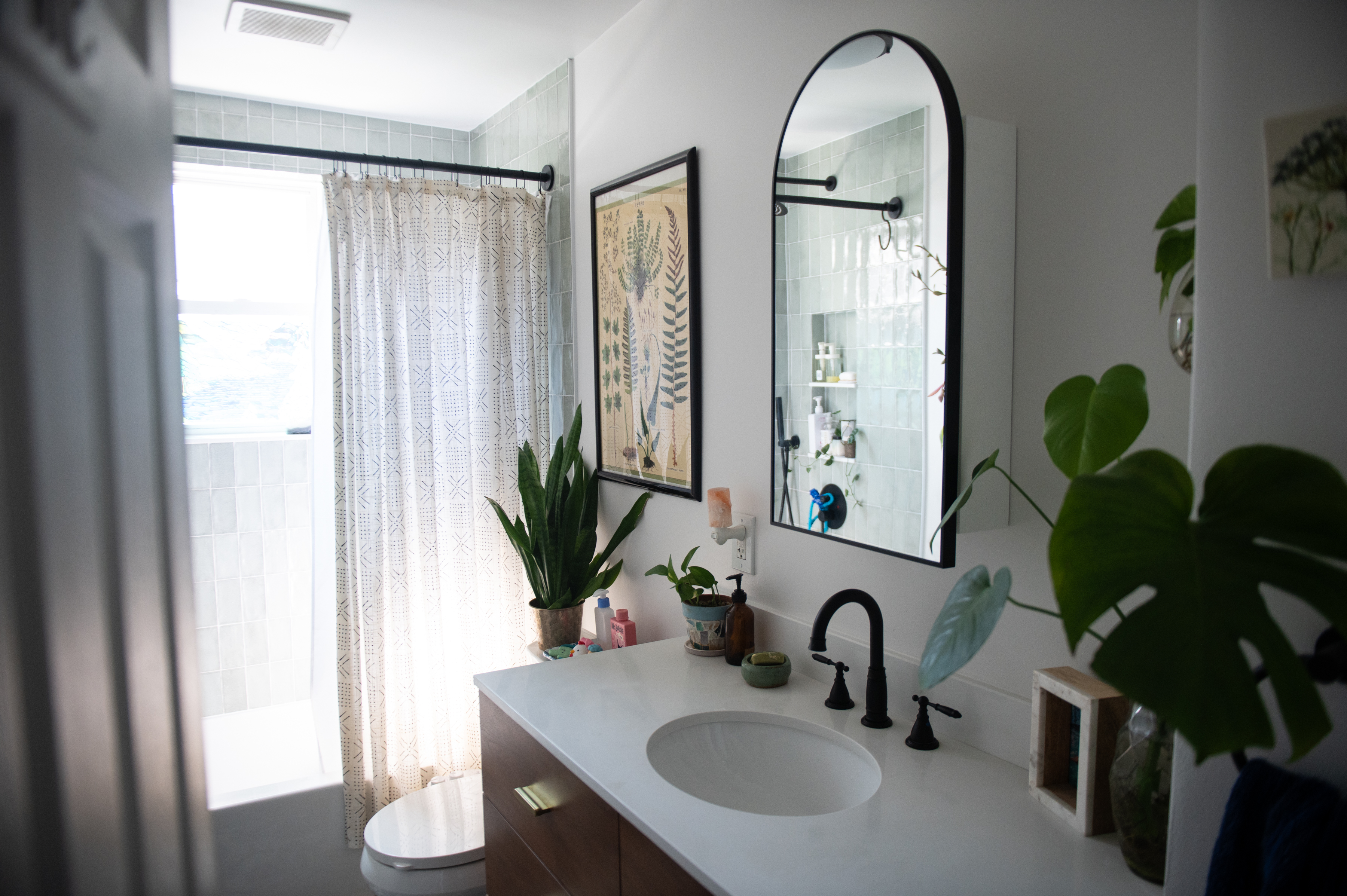
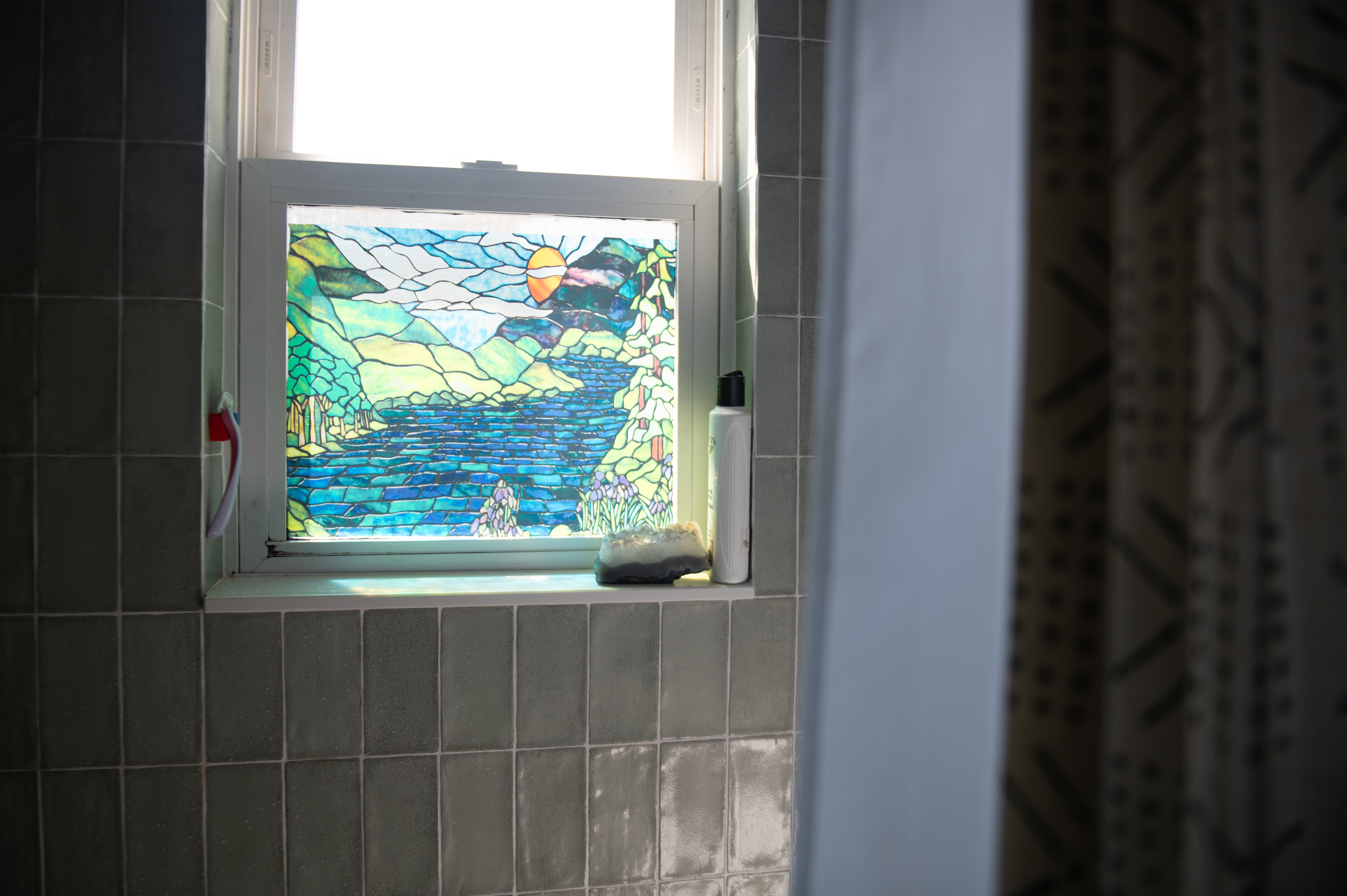
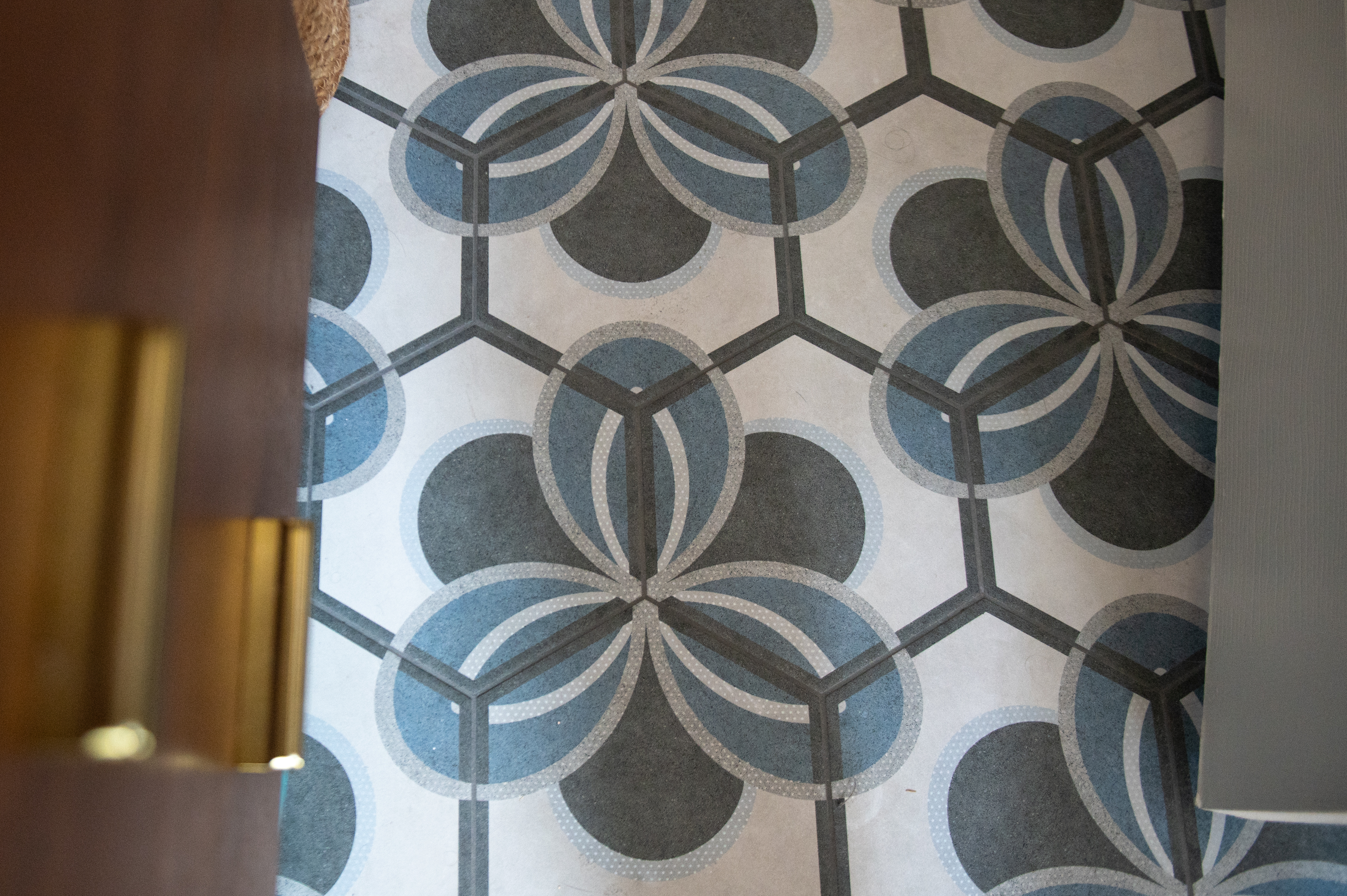
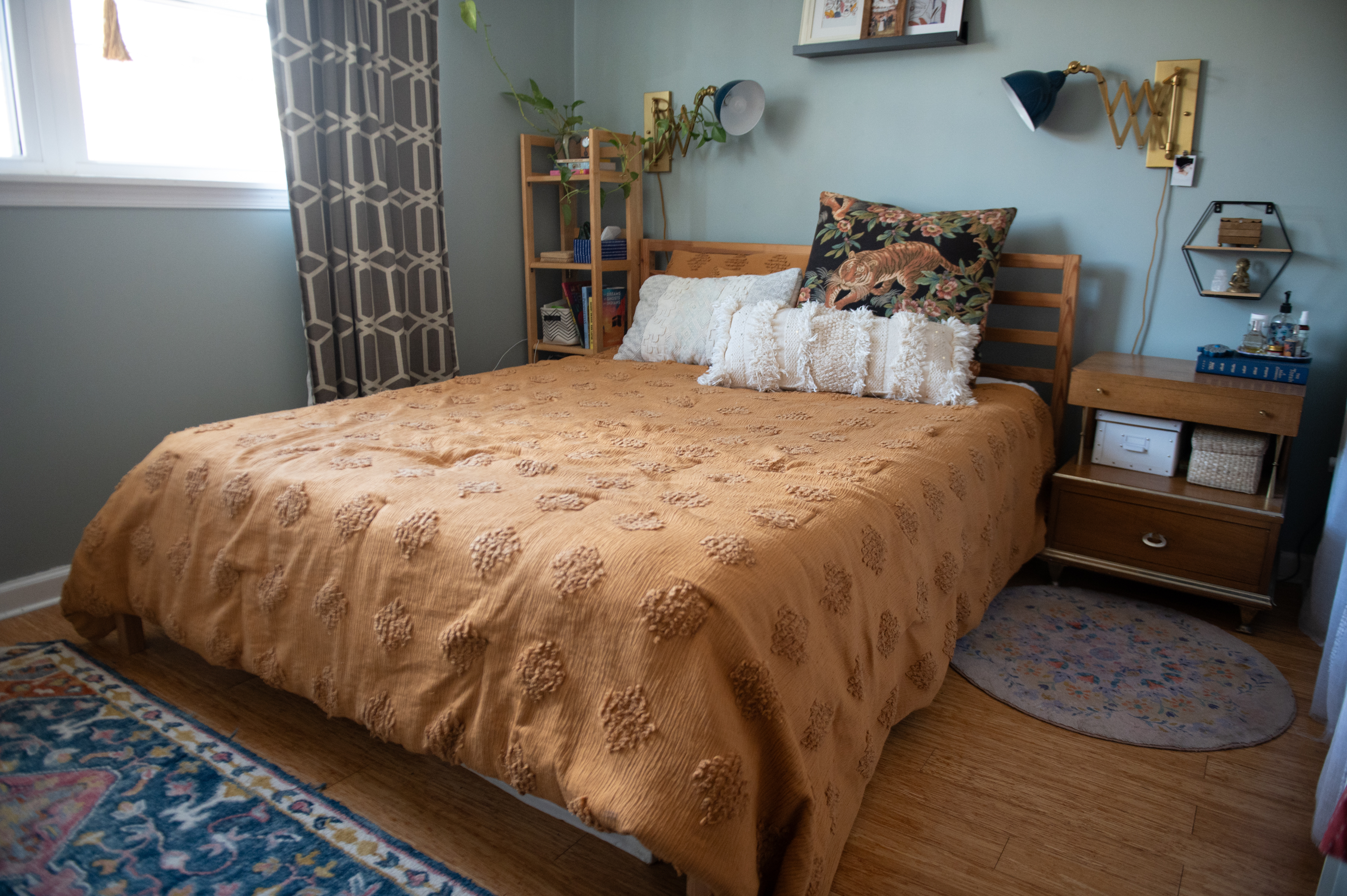
Danielle and Jonah Abrams’ second-floor bathroom, which they renovated before their child was born.A decorative window covering in the second-floor bathroom.Bathroom tiles, which the couple chose at a store in Fishtown.Danielle and Jonah Abrams’ primary bedroom.
“I designed the space by picking the fixtures and making multiple mood boards in PowerPoint showing the different tile, vanity, mirror, and fixture options,” Danielle said. ”We visited a tile store in Fishtown together and chose the flooring and shower tile, which took over an hour of laying different options on the floor of the showroom.”
Most of the home’s furniture was secondhand and sourced from local social media groups, Danielle said.
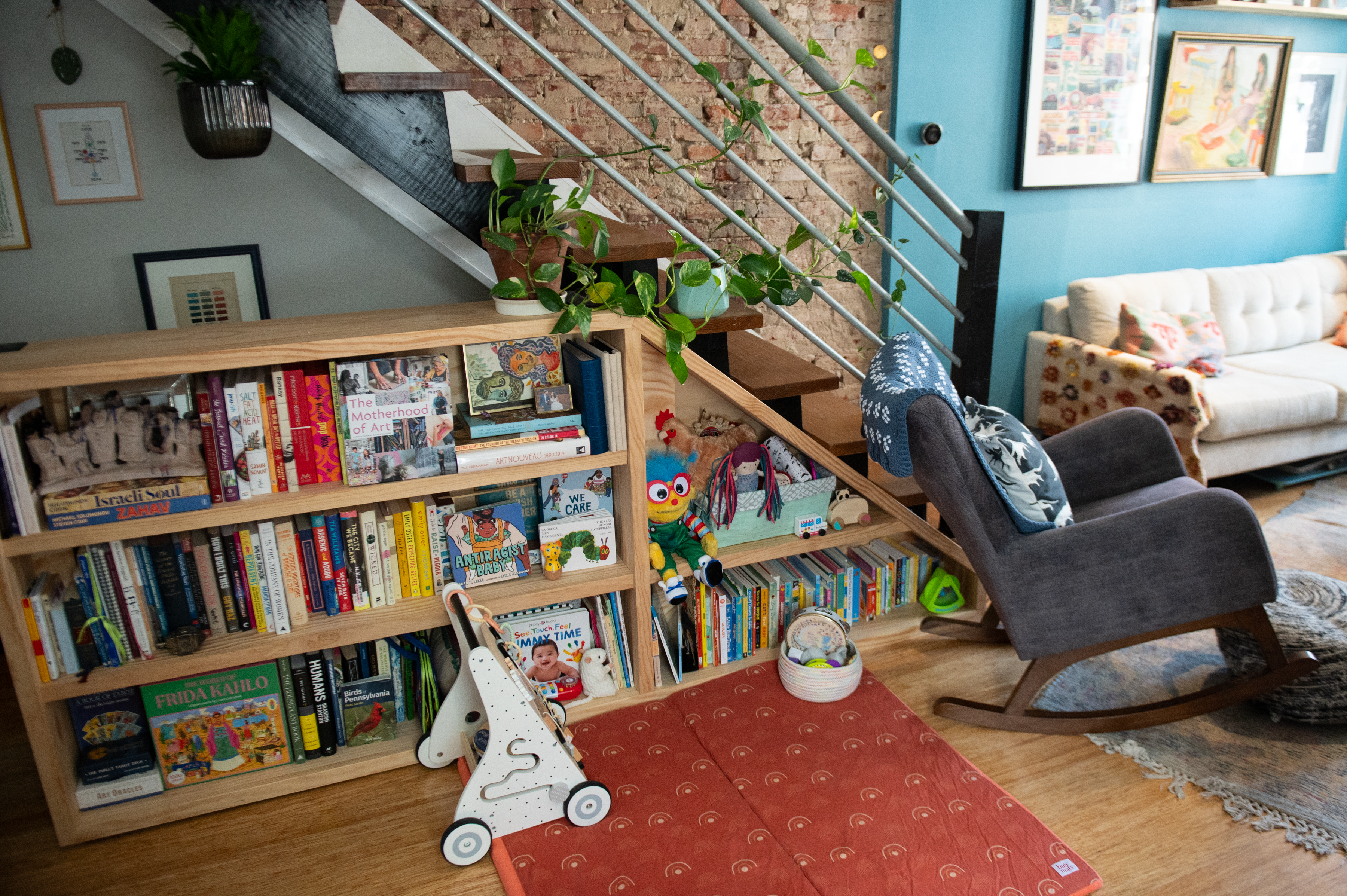
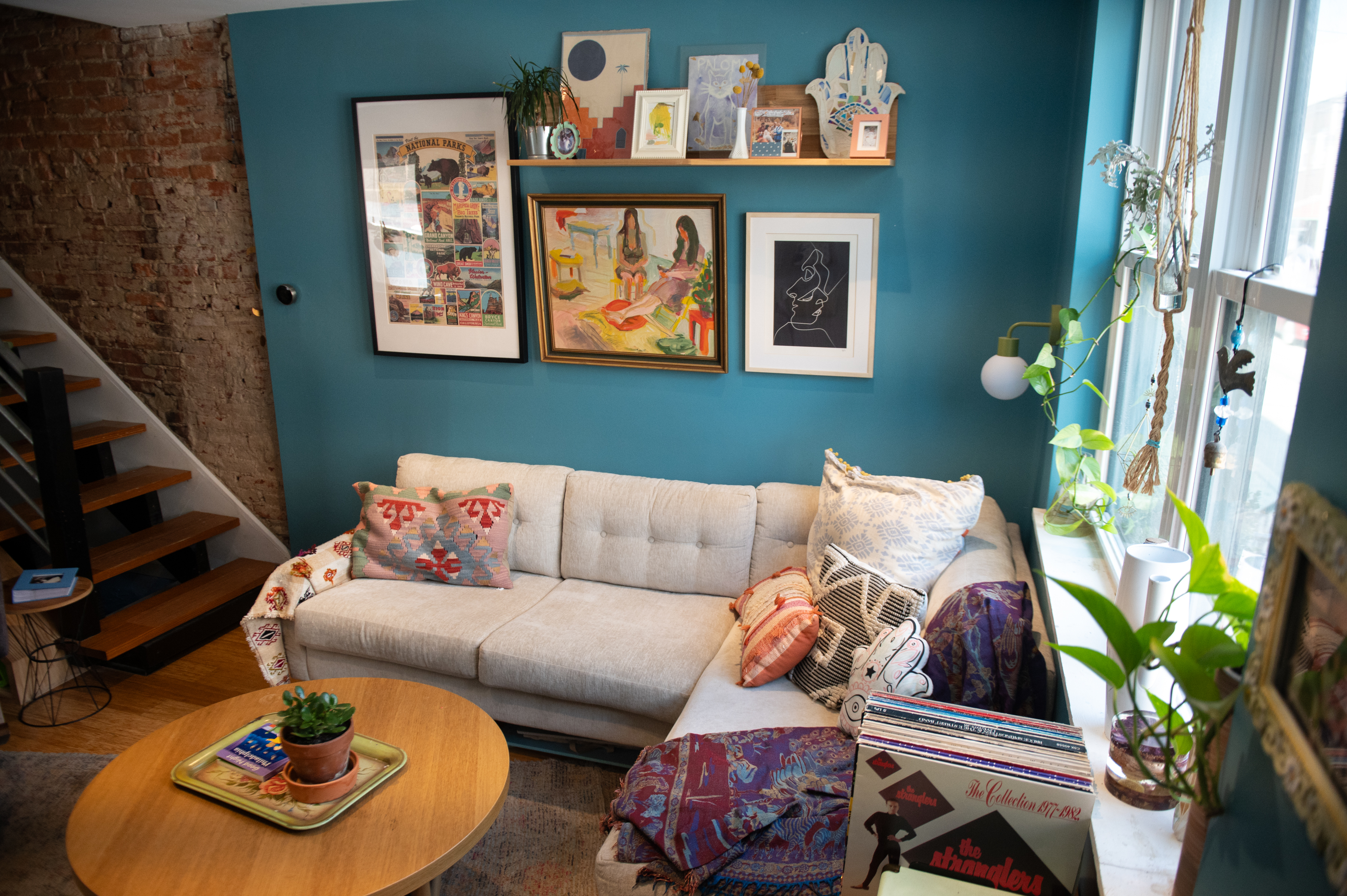
“The one piece we splurged on was our sofa, which is from Joybird,” she said. “We chose the ivory pet-proof fabric to brighten up the space and also to hide cat hair.”
A play area between the living room and kitchen in the Abrams’ home. The bookshelf, which also serves as a railing to the basement, was added while the couple renovated the home.The couch was one splurge item for the couple in their renovations.
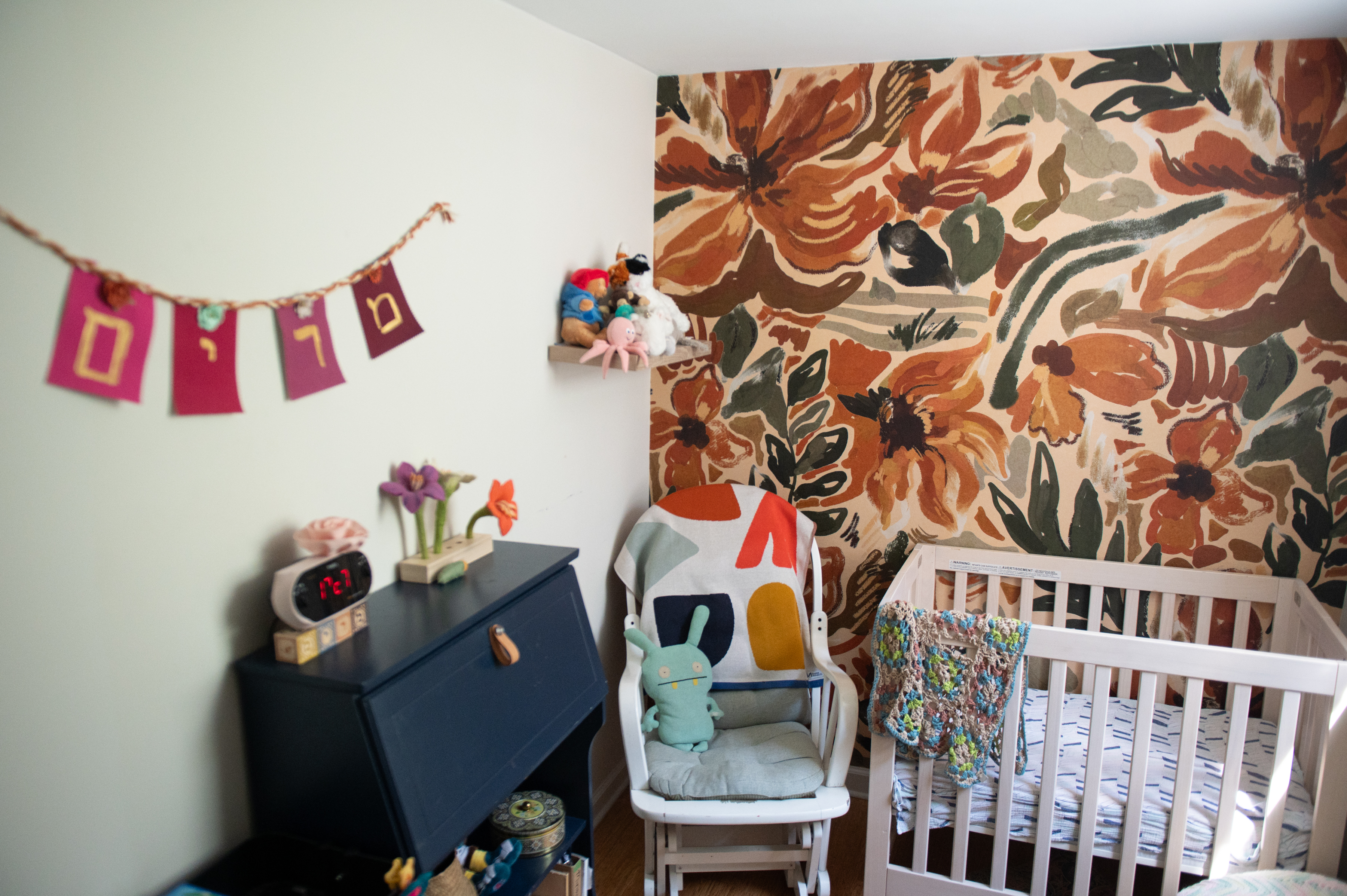
The nursery is the smallest room in the house. Again, the couple’s practical sense took a role.
“We worked with furniture we already had, including the rocking chair from my childhood bedroom,” Danielle said.
They added handmade touches throughout the space, including the felt mobile in the window and the name garland on the wall.
“The only new piece of furniture in the room is the crib,” Danielle said. “We opted to get a mini crib from Babyletto that would better fit the small space.”
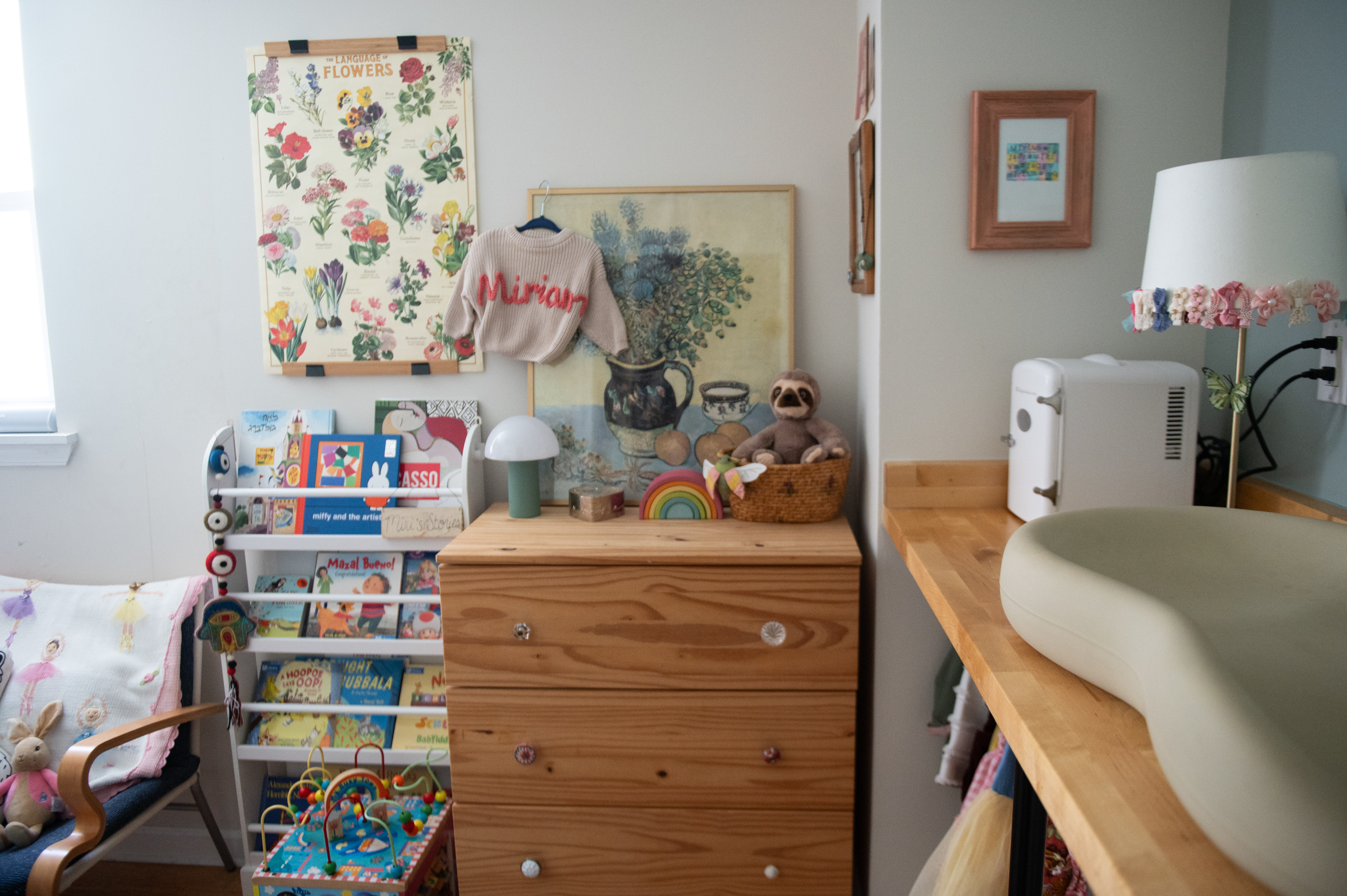
In Miriam’s nursery, the couple purchased a mini crib to better fit the small bedroom space.A homemade felt mobile hangs in the nursery window.Bows line a lampshade in the nursery.Children’s books and decorations in Miriam’s nursery.
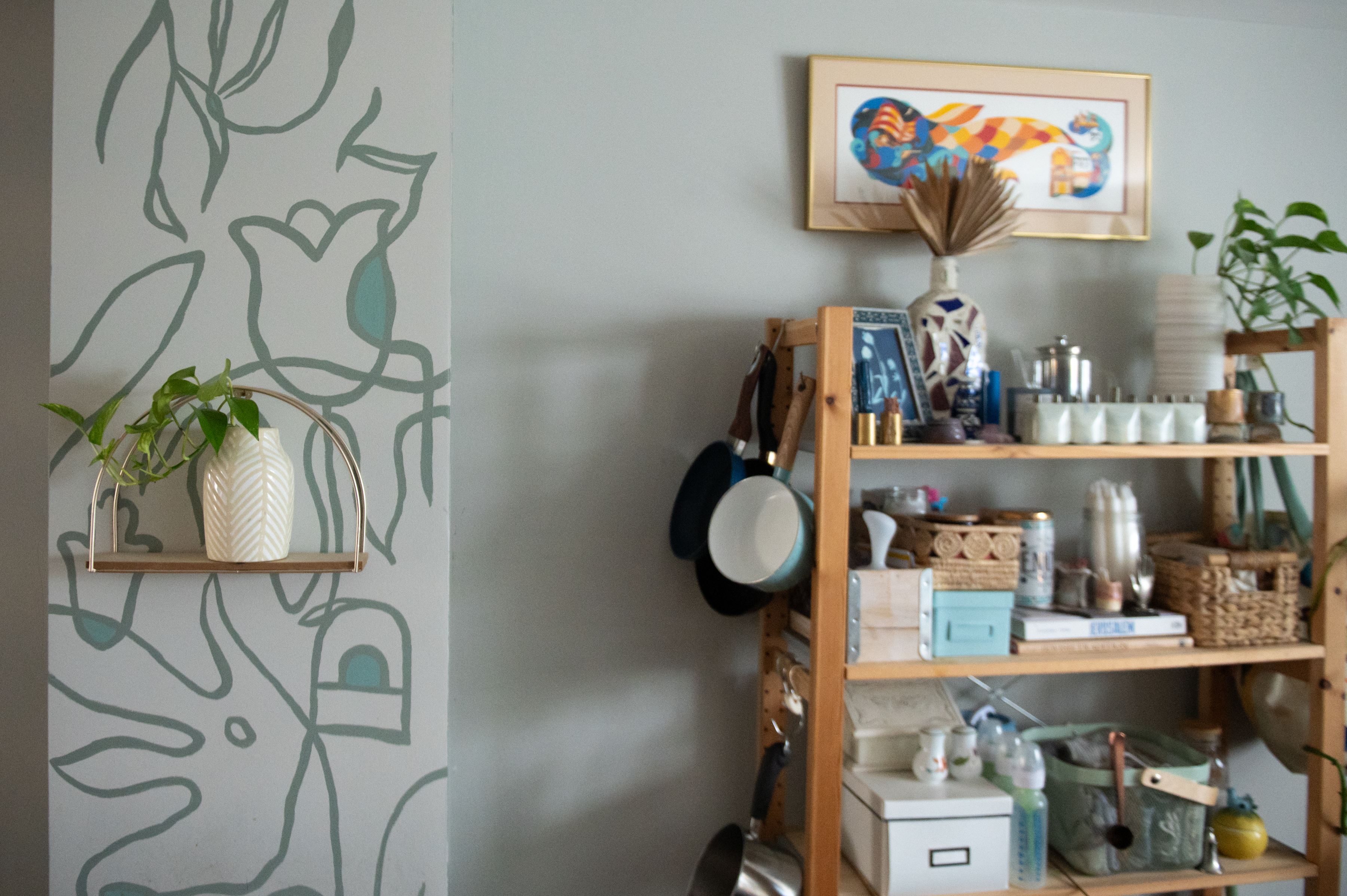
In terms of color, the home showcases blue and sage green throughout. Danielle also added her own personal artwork. She is especially proud of a mural that she painted in the kitchen, a continuous line design that incorporates botanical leaf shapes and the Hebrew letters that spell out Shalom.
The stairwell was the couple’s final project, with a goal to create a space for their daughter’s books and toys.
“Choosing to stay in the city after having a baby makes our home stand out from many of our neighbors’ homes,” Danielle said. It “demonstrates how to be resourceful and creative in your home design rather than moving out to a larger property in the suburbs.”
Decorations and storage for kitchen items on the first floor of the home.
A 15-year retail veteran who has worked at many retailers in the Philadelphia area, including Burlington, Five Below, Anthropologie, and Terrain, she is a graduate of Drexel’s Westphal College of Media Arts & Design. She currently runs her own business, a sustainable Judaica brand called HamsaMade, while also working for a local woman-owned company that sells safety accessories to essential workers.
Jonah is a project manager in the renewable energy field. He’s equally happy to be living in the city.
“Being right by Goldstar Park, Capitolo Park, and Paolone Park is one of our favorite things about where we live,” he said. “Before we moved in together, I was living in Queen Village and Danielle was in Bella Vista so we clearly love South Philly.”
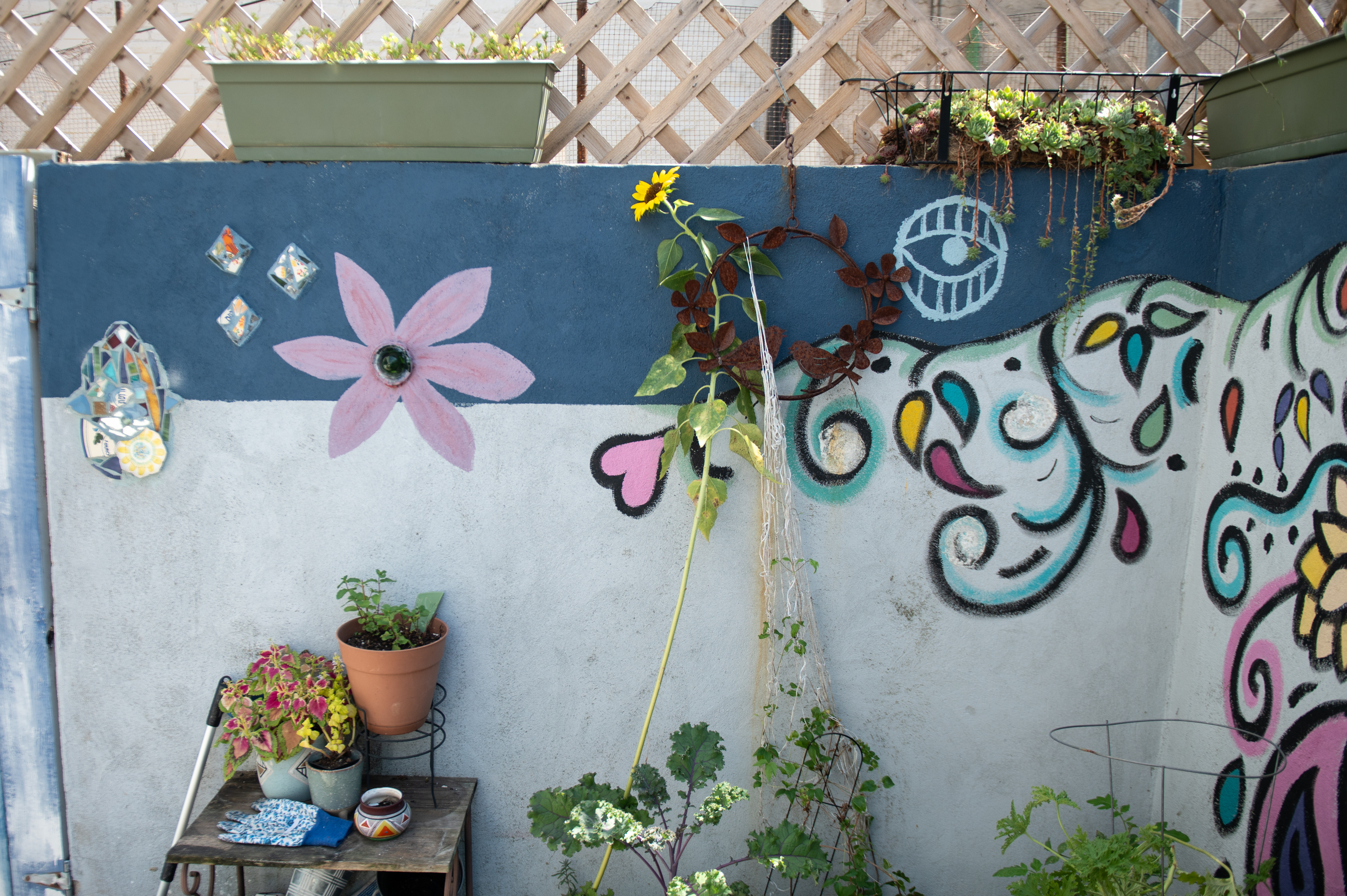
Paintings and mosaics decorating Danielle and Jonah Abrams’ backyard.
Last year’s renovation, Jonah noted, was not the couple’s first home project since they bought the house in 2018, but it was the first “that was not to solve an immediate problem.” He appreciates the surrounding community, and serves as a ward committeeperson. He can sometimes be found traveling the neighborhood by foot, “wearing our baby as I knock the doors of my neighbors, hearing about their challenges and helping them to vote.”
“We love being able to walk to so many of our favorite places and favorite people, and we want our daughter to grow up being able to do the same,” Jonah said. “And we are dedicated to making our neighborhood even better.”
Is your house a Haven? Nominate your home by email (and send some digital photographs) at properties@inquirer.com.
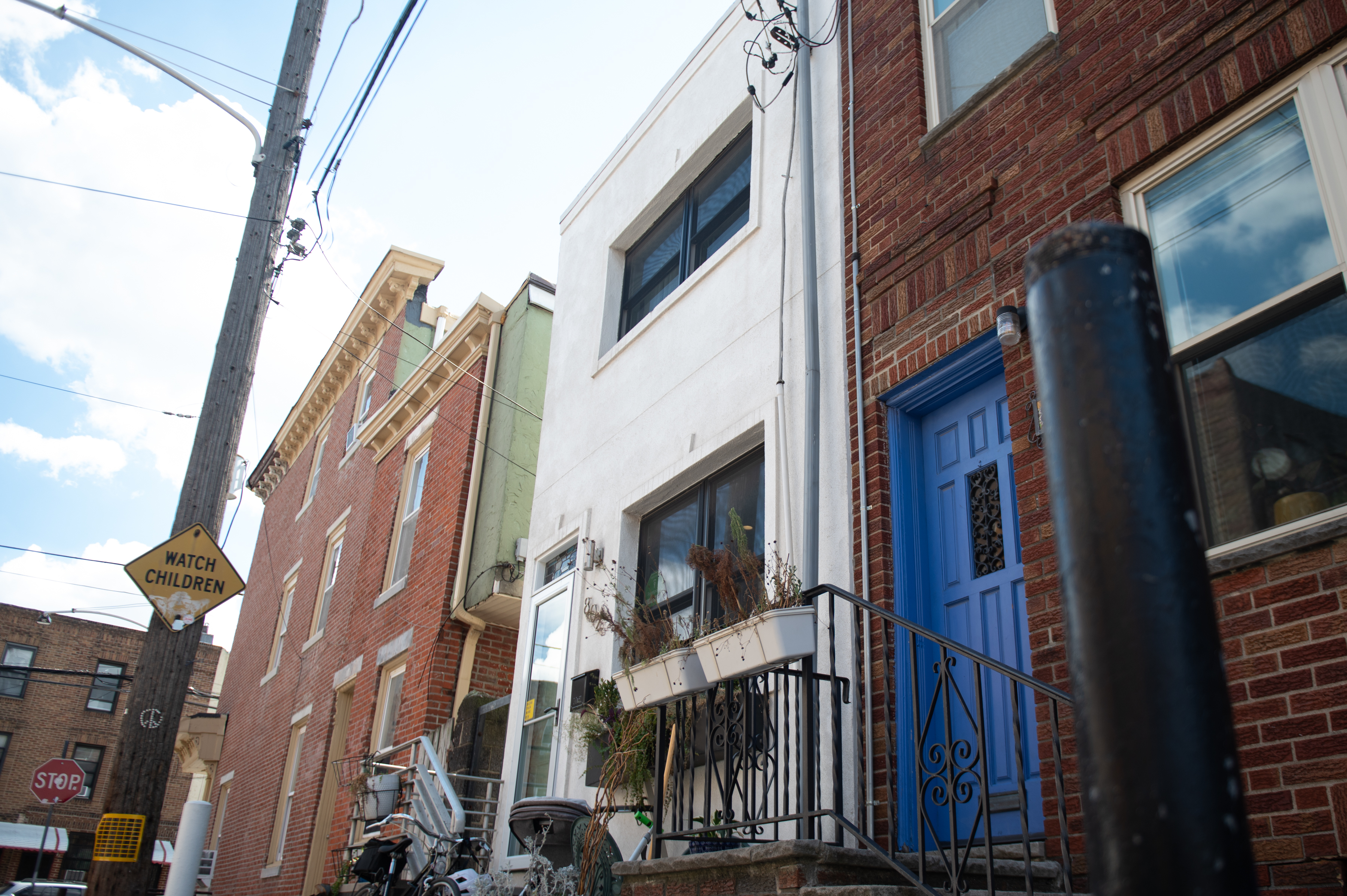
The outside of Jonah and Danielle Abrams’ South Philadelphia home.
In City Council on Tuesday, St. Joe’s confirmed that the sale has closed.
In reaction, Gauthier had authored legislation that sought to require more community oversight when large institutions make significant land sales in University City, which is part of her district. She thinks this sale might not be the last, given the turbulent state of higher education.
Her original legislation was deemed legally dubious by the city’s law department and by most zoning attorneys consulted by The Inquirer.
Gauthier amended the bill and got the new version passed by City Council’s Rules Committee on Tuesday.
“It is an indisputable fact that college campuses significantly impact the communities that surround them,” Gauthier said at the hearing.
“As higher education undergoes its most significant change in our lifetime,” she continued, “we must ensure that land-use decisions are made with their communities in mind, and recent actions by multiple universities prove this will not happen without legislative action.”
The original bill sought to regulate how higher education institutions use their land, which is illegal. Zoning concerns land use generally, not only land use of specific actors.
Gauthier amended the bill so it is triggered not by a change in ownership from a university to a non-higher education buyer, but by a proposed change away from educational use on lots over 5,000 square feet.
So if a university sold land to a housing developer, the law would be triggered. It is not clear it would be triggered by what St. Joe’s did, which was selling land used for university purposes to another educational provider that claims to want to start a teaching college.
The amendments also removed clauses that would have required neighborhood residents to join the Philadelphia City Planning Commission when it reviews land-transfer proposals, as is required by this bill.
Gauthier pushed back against arguments that her bill is an overreach by noting that it simply requires a meeting with neighborhood groups, a review by the planning commission, and a demolition moratorium if there are no permits for new construction.
“This bill doesn’t cripple anyone’s property values,” Gauthier said. “It doesn’t restrict anyone’s use or density rights. It adds more eyes and more transparency to land-use decisions for major properties that change entire neighborhoods. The idea that this could ever be wrong is simply preposterous.”
The IPEX building at St. Joseph’s University in Philadelphia on Sept. 12.
Representatives from a host of West Philadelphia neighborhood groups testified in support of Gauthier’s bill. They detailed their anxieties about living in the shadow of large institutions with expensive real estate portfolios and their frustrations with what they felt had been duplicity by St. Joe’s during a public engagement campaign about the sale.
During neighborhood meetings earlier this year, attendees detailed their desire for a community college, health clinic, parking, or affordable housing on a post-sale St. Joe’s campus.
They said they felt that the university ignored their feedback.
“This thing about community engagement, we feel as though it was false,” said Jacquelyn Owns, a committeeperson in the 27th Ward. “It was just something to keep the community quiet while they did exactly what they wanted to do.”
St. Joe’s representatives argued that Karp’s plans for the site are in keeping with the neighborhood’s broad desires, given that his Belmont organization runs charter schools.
St. Joe’s also noted that it will still retain some property in the area affected by Gauthier’s bill and contended that the legislation would have deleterious effects on higher education institutions in University City.
“It probably would devalue our real estate holdings, which, in turn, would then devalue our balance sheet, which would then restrict our ability to offer financial aid,” said Joseph Kender, senior vice president at St. Joe’s. “It would restrict our ability to start new construction projects. It would restrict our ability to offer new academic programs.”
A lawyer for St. Joe’s, Ballard Spahr zoning attorney Matthew McClure, said that even the amended bill might still be illegal.
Despite the protests by St. Joe’s, Council’s Rules Committee passed the amended bill.
That may be the last movement on the controversial legislation for a while. At its October meeting, the planning commission requested a 45-day hold on the bill to consider its ramifications more thoroughly. That means the full City Council will not be able to consider it until late November.
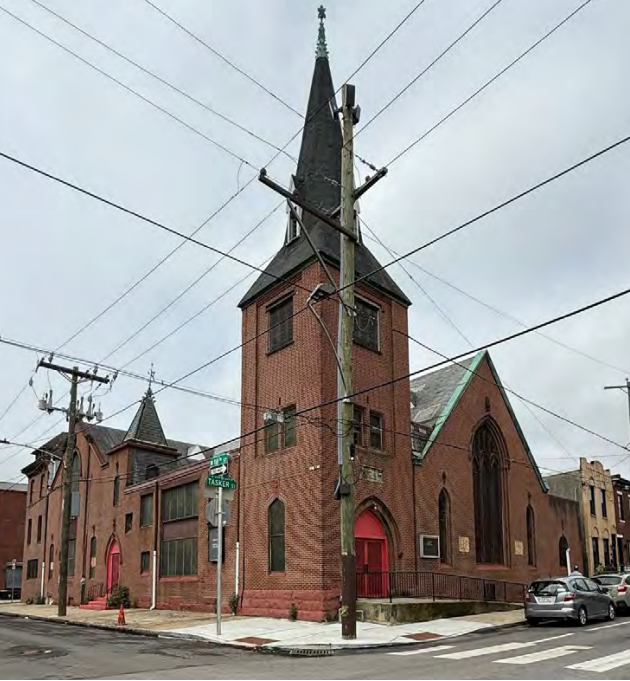
Dane Jensen isn’t a developer by training or profession, but he loves old buildings and he’s got big plans for the church at 1800 Tasker St.
The 138-year-old institution is a fixture in Point Breeze, but Second Nazareth Missionary Church’s shrinking congregation hadn’t been able to keep up with repairs. In 2024, as the church sought to sell, its leadership met with Jensen, who pitched them on his vision of a continuing life for the building as a communal space, if not a sacred one.
“A lot of adaptive reuse is taking these big institutional buildings and turning them into apartments and, to me, that loses some of the intent of the space,” Jensen said. “We are trying to preserve it as something where people can still gather and feel fellowship. Even without religious intent, it can still be a place where people can connect.”
Jensen bought the property in mid-2024 for $1.75 million, and he has begun renovations. He hopes to turn the church into a family-friendly restaurant, brewery, and event space, outfitted with an indoor playground, an idea he successfully pitched to Second Nazareth’s leadership.
“It’s a little scary to put that word out there because some people hear brewery, and they hear bar. They hear place to get drunk,” he said. “We envision it as a community space. During the day you can go grab a cup of coffee and do some work. In the afternoon, you can meet up with friends and have lunch, and, yeah, maybe you can grab a beer.”
Jensen isn’t imagining a traditional brewery, with giant silos and vats. He wants a place he will feel comfortable bringing his children, who are 4 and 7. That’s also why he’s been drawing up plans for play equipment inside the space.
The church is currently zoned for single-family use, like the rowhouses that surround it. But in 2019, City Council created historic preservation incentives to make it easier to repurpose churches that are on the Philadelphia Register of Historic Places.
That means Jensen can move forward, since the church was added to the register earlier this month. He won’t have to go to the Zoning Board of Adjustment or seek a legislative zoning change from Council President Kenyatta Johnson, who represents the area.
However, Jensen said he still plans to meet Johnson and arrange meetings with surrounding neighborhood groups known as Registered Community Organizations (RCOs).
“Needing to talk to your councilmember, needing to talk to your community through the RCOs, is incredibly valuable,” Jensen said. “We want to do that to make sure we’re not just coming in to extract value from the neighborhood. We really want to contribute in a real and meaningful sense. Hiring from the neighborhood feels really important.”
Jensen is applying for a sit-down restaurant and artisan industrial use permit. Other possible uses of the building include a bakery and a coffee roastery.
Whatever the final use, the historic church will require extensive renovation first. Currently, Jensen’s team is putting in steel reinforcements to brace the building. He plans to restore most of the stained glass, fix the leaky roof, and install fire safety and Americans with Disability Act infrastructure.
The church dates to 1886, when it was known as the Presbyterian Church of the Evangel. That denomination was in place for almost 100 years, but as that congregation shrank, the church sought a successor.
In 1978, the Second Nazareth Missionary Church took over the building and remained until 2024. In recent years, that congregation began facing many of the same challenges as their predecessors even as their membership was shrinking and repair costs were growing.
Jensen said he found notes from the waning days of the Presbyterian era that showed the leaking roof was a problem back then — a challenge that decades later, Second Nazareth was facing again.
The church as seen from the north side, in an image included in Dane Jensen’s nomination of the building to Philadelphia’s Register of Historic Places.
When the Historical Commission accepted Jensen’s 48-page argument for the building’s importance earlier this month, that triggered the 2019 law that made it easier to find new uses for historic “special use” properties — like churches or theaters — by granting them more flexible zoning. That means no trip to the zoning board, which can add over half a year to the development process and often more if neighborhood groups or councilmembers contest the board’s ruling in court.
“I’ve really fallen in love with the building throughout this process,” Jensen said. “I’m excited that I am in a position to try to get the building to a point that it can last another 140 years and still have people feeling togetherness in it.”
Nikka Landau and Peter Beaugard‘s townhome in the Graduate Hospital area serves three generations.
They moved there to be closer to both sets of parents, and their kids like the accessibility of the YMCA across the street, and its pool.
“It’s a great block,” Landau said, “lots of kids.”
Kitchen
Landau, who manages communications for a nonprofit, and Beaugard, who is in fashion marketing, aren’t moving far away, just a few houses closer to her parents. Both grew up in the Philadelphia area, and had been living in Connecticut for several years before moving to Graduate Hospital in 2022.
The 1,830-square-foot, three-bedroom, 2½-bathroom house was built in 1920, and at some point was bought by two architects who redesigned it over a period of years.
“There was a lot of sensitivity to the design,” Beaugard said.
Backyard
Entry is through a vestibule, which has space for coats and bags. The first floor is open concept, with a sunken living room with high ceilings and large south-facing windows with built-in shelving.
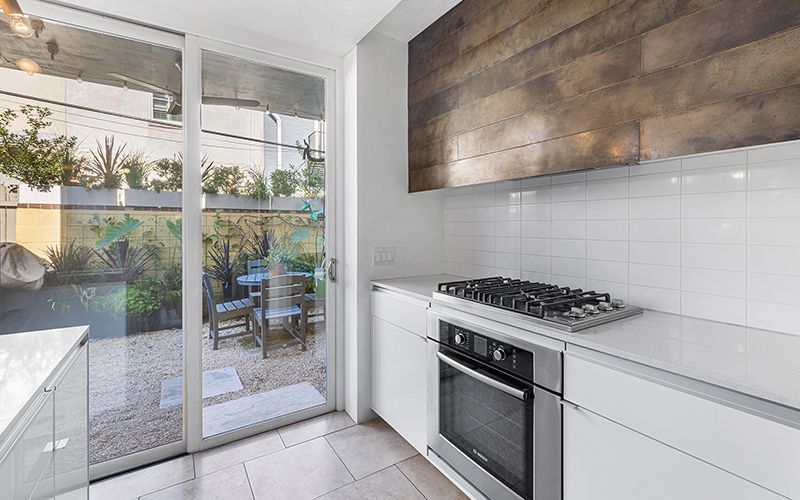
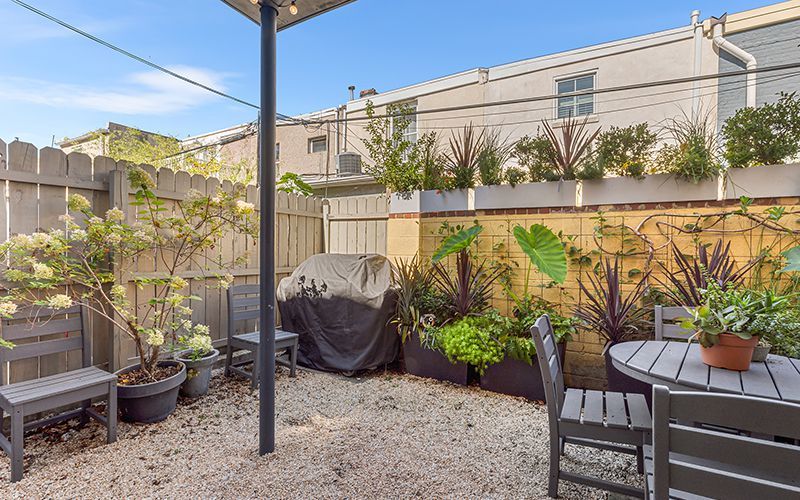
The kitchen has quartz countertops, stone flooring, stainless steel appliances, a Wolf range, and a magnetic blackened steel wall. There is a private garden patio.
The second floor has two bedrooms, a full bath with cast iron tub, and a den. The third floor has the primary suite, and the bathroom has a marble-top vanity and a tiled shower.
Roof deck
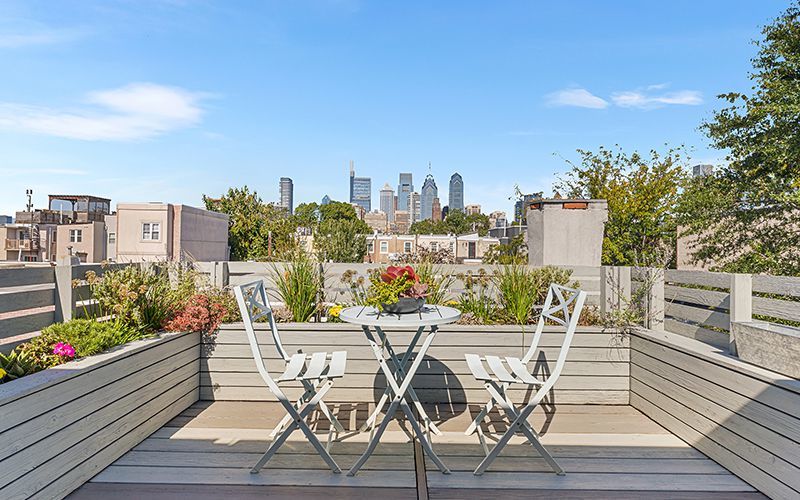
The roof deck has unobstructed skyline views.
The house is in the Edwin M. Stanton School catchment area.
It is listed by Kyle Miller of Compass Realty for $795,000.
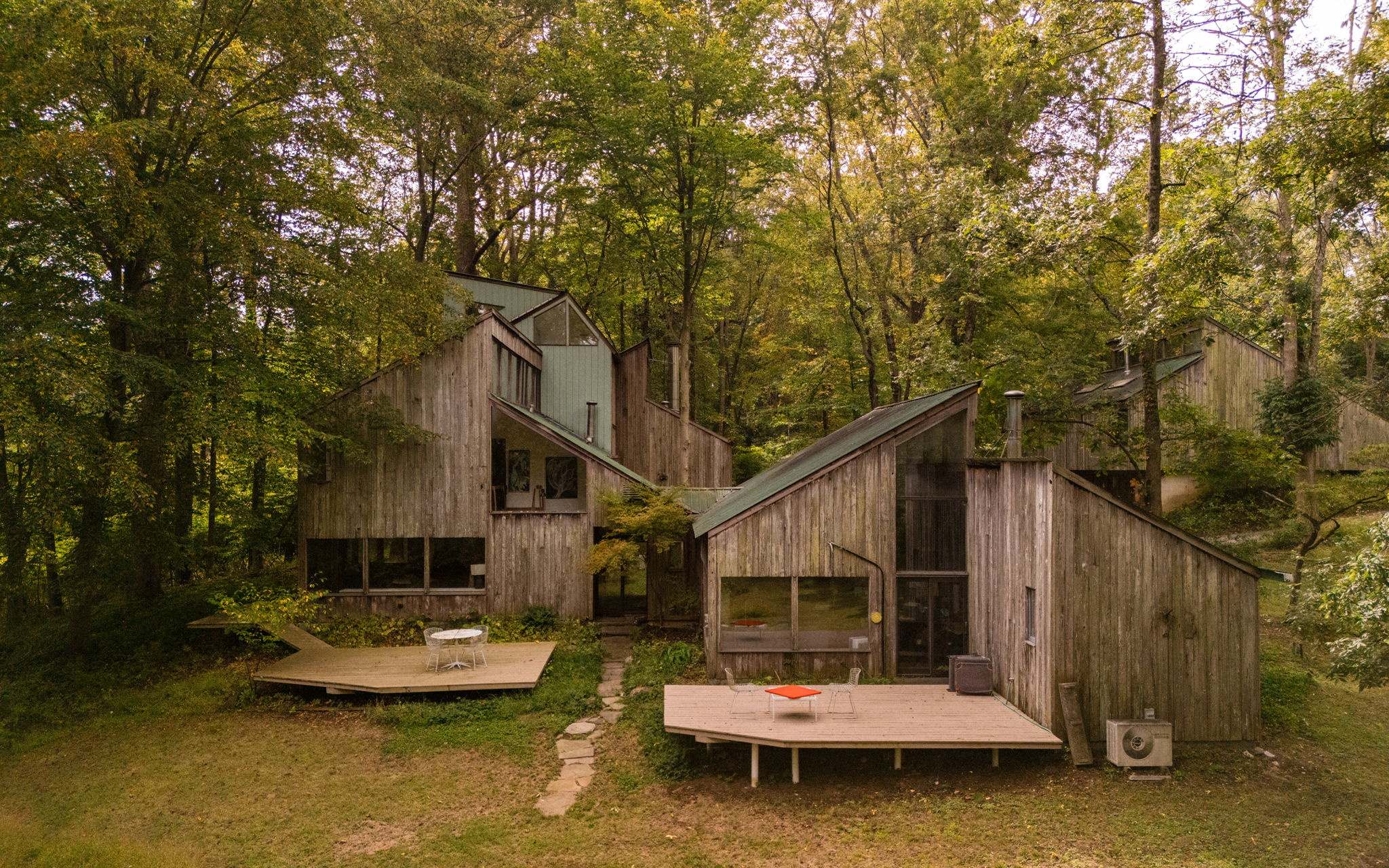
This Willistown Township home, for sale for nearly $2 million, was designed by Robert McElroy and has a wing that was devoted to his wife Annamaria’s art studio.
McElroy, who is credited with building more than 200 homes around the Main Line, designed and built this home for his own family in 1975, according to Marion Dinofa, Compass RE Realtor and modern home specialist.
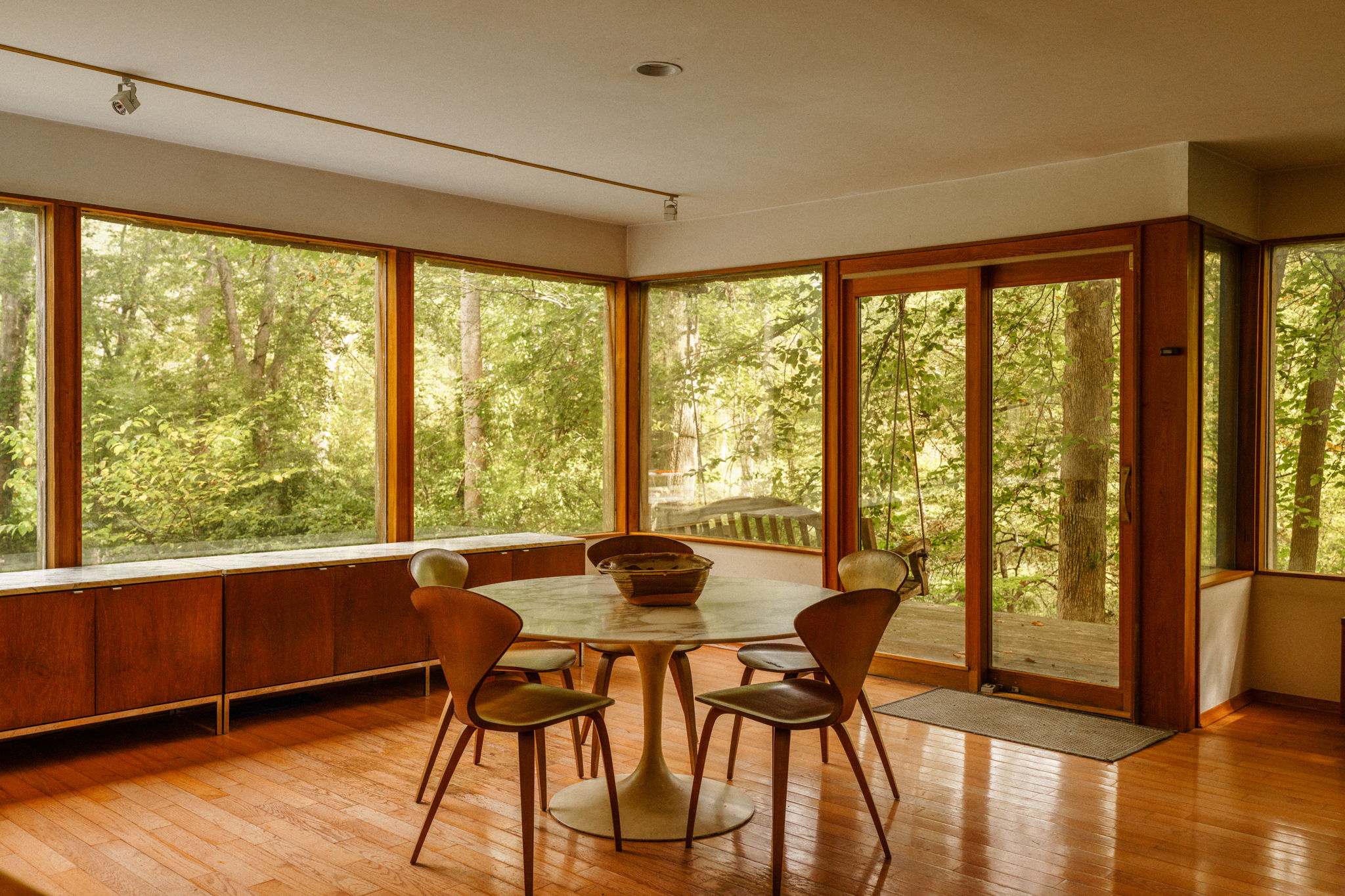
Tucked far off Rabbit Run Road in Willistown Township, McElroy’s three-bedroom, 3½-bath home features a contemporary design and floor-to-ceiling windows that let in abundant natural light.
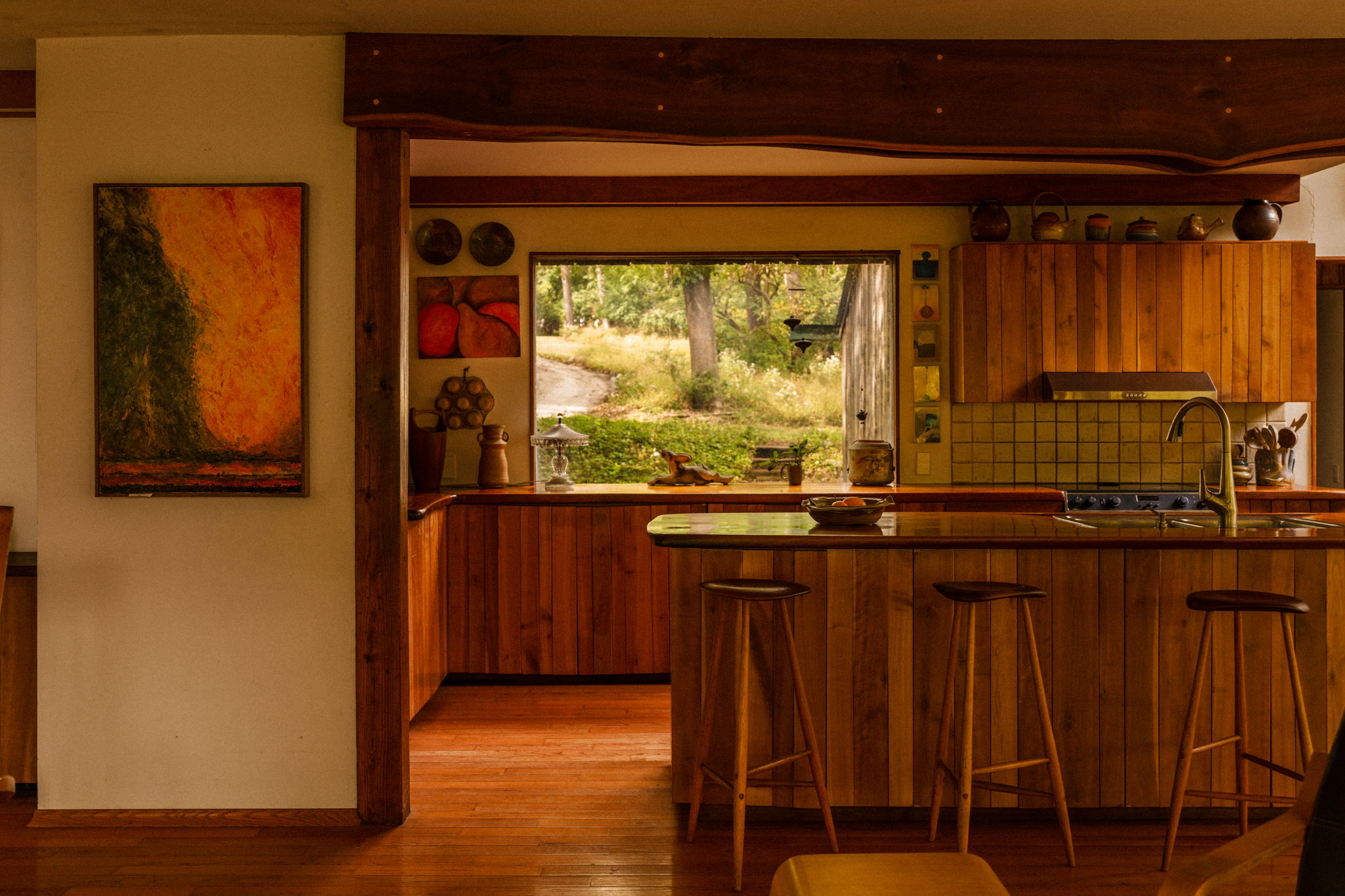
“I see a lot of really cool houses, but this one, almost more than any other house, is truly like you’re living in a work of art, between the craftsmanship of the woodworking, the views through the windows that are ever changing with the seasons, and the design of the home itself,” Dinofa said.
Wooden details make Robert McElroy’s former home in Willistown Township unique, said Realtor Marion Dinofa.
Almost every piece of wood in the home was crafted by Horace Hartshaw, who collaborated with the renowned sculptural furniture maker Wharton Esherick. This includes everything from the wood doors to the custom kitchen cabinets to the staircases, including a spiral one at its center.
McElroy wasn’t the only artist who resided in the home: His wife, Annamaria, a painter and sculptor, also left her mark, showcasing her artwork on the walls and using a wing of the home as her studio.
Dinofa noted that the house also includes a detached two-story garage that could be converted into more creative space.
The secluded home features custom wood features that were crafted by renowned artist Horace Hartshaw and lots of windows.
Between Robert’s vision and Annamaria’s artistic touches, their home “was a labor of love,” Dinofa said. “And it’s really well preserved. You can tell it hasn’t changed much.”
Annamaria and Robert lived at the home into their 90s, Dinofa said. They died in 2023 and 2024, respectively. Dinofa said the home is being sold by their daughter, Loretta.
Dinofa said she could see the property being bought by artists or by adventurous young parents who want to raise their children amid nature.
“It would be such a fun place for kids to play outside,” with a stream in the backyard and plenty of space to run around, Dinofa said. “I can only imagine the wildlife that they have viewed from that house.”