Category: Residential Real Estate

  • 260-apartment project is proposed for long-vacant site on Ridge Avenue in East Falls

    260-apartment project is proposed for long-vacant site on Ridge Avenue in East Falls

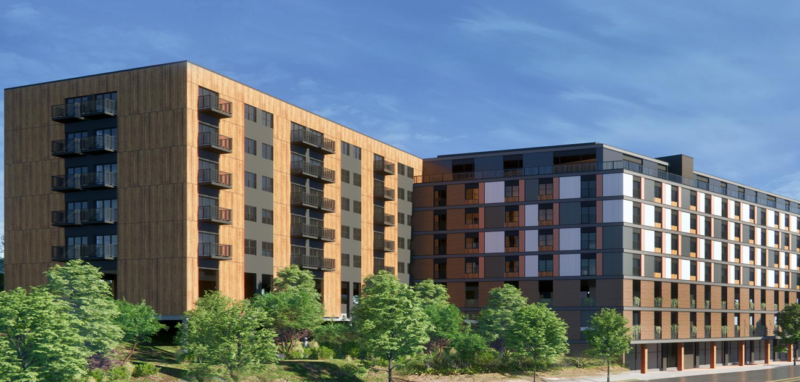
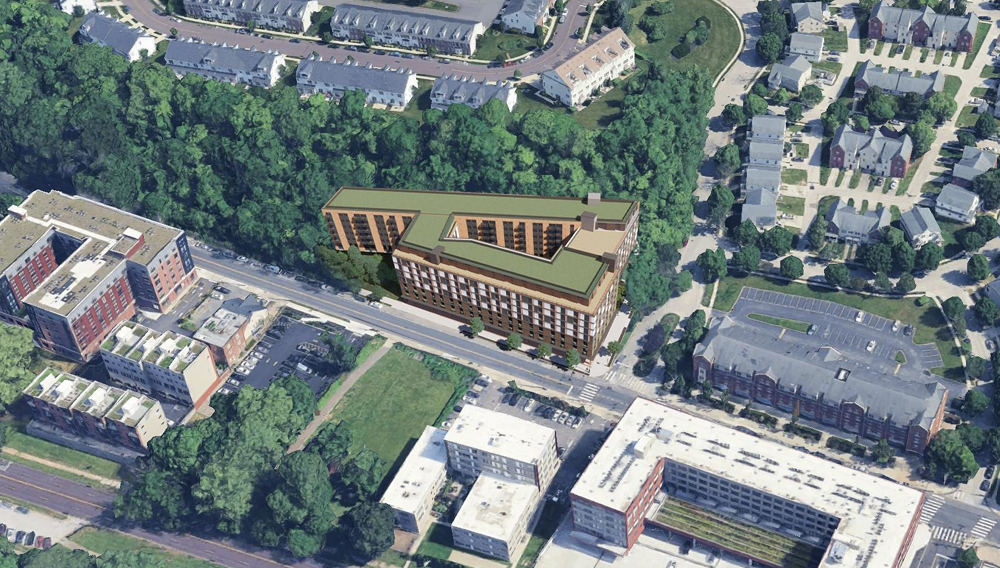
    A 260-apartment development, largely composed of one-bedroom units, is the latest residential project slated for 4401 Ridge Ave. in East Falls.

    The almost two-acre site has been long vacant and is now covered in trees. It is owned by the Philadelphia Housing Authority, which operated a dozen rental homes there until the late 1990s. The property is under an agreement of sale, according to the agency.

    Plans for the project were posted on the Philadelphia Planning Commission’s website Tuesday, showing a six-story building from Stokes Architecture & Design.

    The zoning paperwork in city records is signed by Eric Marshall, who is the principal with MGMT Residential. The company, based in Northwest Philadelphia, owns and manages hundreds of units in neighborhoods including Roxborough and Manayunk.

    MGMT itself is not the developer and will not own the property, according to the project’s zoning lawyer, Richard DeMarco, although the company will manage it once construction is completed.

    The development team declined to comment in advance of a neighborhood meeting Wednesday night.

    The plans show that the apartment building proposed for 4401 Ridge Ave. will offer 217 parking spaces. It will also host at least 8,000 square feet of commercial space, according to the East Falls Community Council, which has been negotiating with the developers.

    The neighborhood group’s zoning chair, Hilary Langer, reports progress at the discussions.

    He says that many neighbor concerns center on traffic, parking, and the preponderance of smaller units — a concern he does not personally share.

    “The … fact is that one-bedroom apartments are in demand and their vacancy rate is [almost] 10%, which is really the same as annual natural turnover,” Langer said in an email.

    Langer said that by his calculations, 115 two-bedroom apartments have been built in his neighborhood since 2021, and a quarter of them are still vacant. But 399 one-bedroom or studios have been constructed in that time frame, and only 12.5% of them are empty.

    An aerial rendering of the 260-unit apartment building proposed for 4401 Ridge Ave.

    The project needs approvals from the city’s Zoning Board of Adjustment to move forward, with a hearing set for March 25. It will appear before the advisory-only Civic Design Review committee on March 3.

    The last proposal for the site came in 2021 from Baltimore-based Atapco Properties. That project included 189 parking spaces for 185 apartments.

    That former proposal’s frontage was pushed back from Ridge Avenue, which the East Falls Community Council feared would make an already pedestrian unfriendly environment even worse.

    The newer development has the apartment building fronting on the sidewalk.

    “You’re not going to get walkability if you just put in plazas and parking lots,” Langer said. “This building, at the very least, it provides the chance of walkability.”

  • Under new leadership, Women’s Community Revitalization Project is developing apartments on public land in Kensington

    Under new leadership, Women’s Community Revitalization Project is developing apartments on public land in Kensington

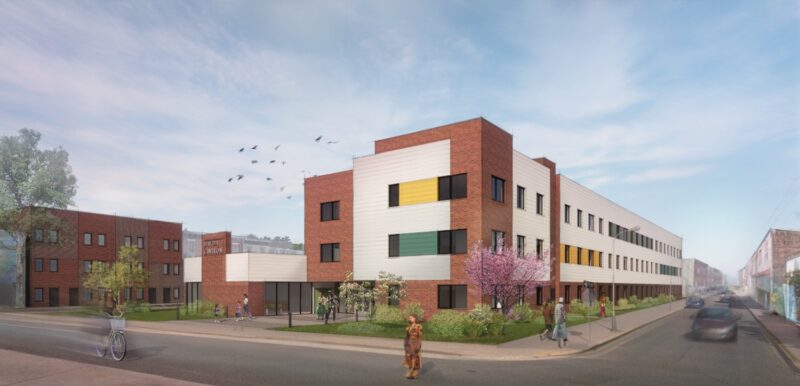
    The Women’s Community Revitalization Project is planning a 34-unit apartment building, flanked by two triplexes, on city-owned land in Kensington.

    All of the units will be available to those below 60% of area median income, or almost $72,000 for a family of four.

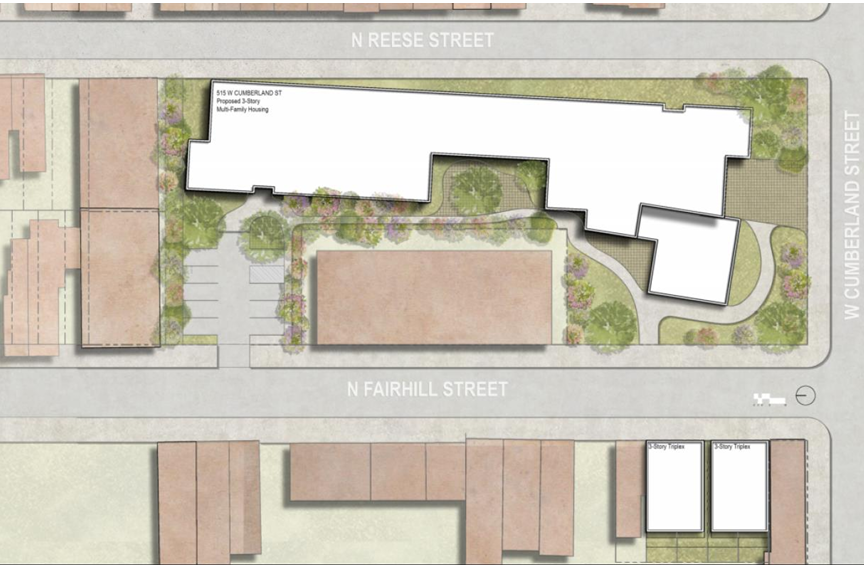
    The apartment building at Cumberland and Reese Streets is designed at an angle slashing across the lot, using only a portion of the city-owned land.

    “Having a solid wall of building directly across [from rowhouses], we just felt wasn’t really contextual to the neighborhood,” said Lorissa Luciani, who has been the executive director of Women’s Community Revitalization Project (WCRP) for the last nine months. “Then there’s height limitations so we couldn’t go any higher.”

    The project is funded through federal Low Income Housing Tax Credits (LIHTC), which the nonprofit group obtained in 2025. The land will be obtained for a nominal cost from the city.

    WCRP has been meeting with local community groups since 2024. Luciani said organizations such as Xiente, APM, and the 19th Ward RCO have been supportive of this project.

    The development, designed by Philadelphia-based CICADA Architecture & Planning, will cost over $26 million and is slated for completion 18 months after the group settles on the land. It will include 10 parking spaces.

    On Tuesday, the Philadelphia Land Bank’s board voted to approve the sale of the property to WCRP. The plan also has the backing of Councilmember Quetcy Lozada, which is essential because she will need to introduce legislation to move the property out of the Land Bank.

    “It’s an amazing project,” Lozada said. “We are in need of partners like the Women’s Community Revitalization Project who understand the need for not just affordable housing, but deeply affordable housing.”

    Without Lozada’s support, the project would be impossible. Final passage of the legislation could come as soon as later this month.

    The three buildings being developed by WCRP can be seen from above, highlighted in white, with the apartment project’s slanted angle readily seen from above.

    Luciani said WCRP would close on the project in the fall.

    This will be Luciani’s first ground-up development with the organization. She joined the nonprofit in 2025 after WCRP’s longstanding executive director and founder Nora Lichtash retired from her leadership role with the group after 35 years. She still works for the group as a consultant.

    WCRP was founded in 1986 to serve Fishtown, Kensington, and other neighborhoods in North Philadelphia east of Broad Street. Since then, it has developed projects in other corners of the city, such as Germantown and Point Breeze.

    “My predecessor has a substantial amount of experience and relationships with many of these organizations” in Kensington, Luciani said.

    “I’m trying to work to have my own relationships with them,” Luciani said. “They’re a really organized, sophisticated community that really understands their needs, and they’ll fight for it as hard as they need to.”

    Luciani previously worked in New Jersey local and state government and planning for decades and has a deep familiarity with subsidized housing policy.

    “I grew up in public housing in North Jersey,” Luciani said. “So it’s been a personal and professional lens that I utilize to try and continue the good work that helped my family in the hopes of helping others.”

  • Philadelphians deserve safe and healthy homes

    Philadelphians deserve safe and healthy homes

    The Department of Licenses and Inspections didn’t mince words when it declared the 144-unit Upsal Gardens complex an “unsafe structure.”

    Foundation separation. Cracked masonry. Failing floor joists. A building so compromised that city officials said it posed “immediate danger” to human life.

    That violation is just the tip of the iceberg. I know this because I have lived it. On Aug. 23, my wife noticed a large crack forming in our living room ceiling. We alerted management through their portal, and I went to their on-site office to report it. Less than 24 hours later, at 12:06 a.m., the entire ceiling collapsed.

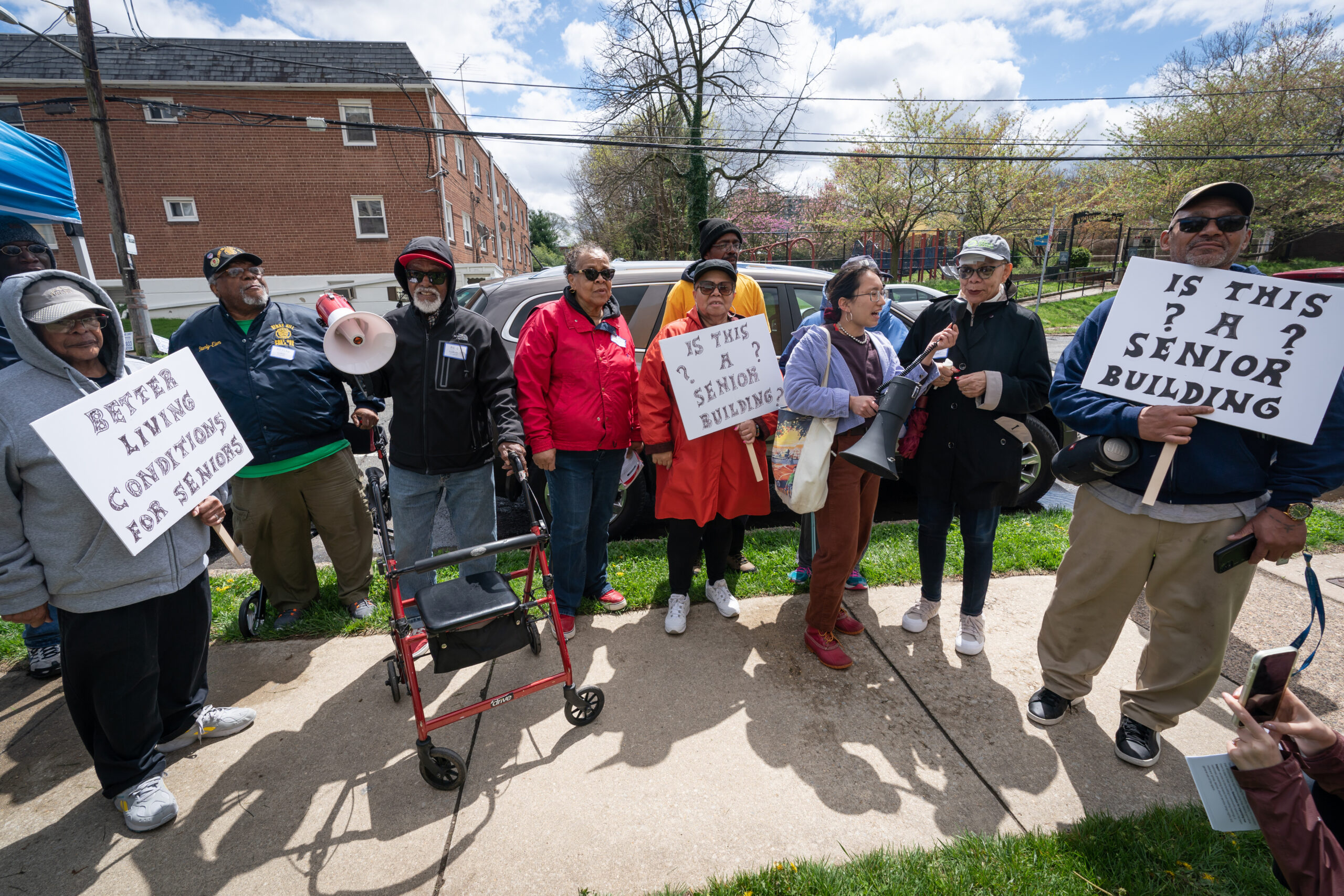
    Residents speak during a demonstration organized to protest against the living conditions at Brith Sholom House apartments in Philadelphia in April 2024.

    Fortunately, we had renters’ insurance. While management took their time deciding what to do, we stayed in the apartment under the exposed ceiling until our insurance finally booked us a hotel. After two days of waiting, we were moved temporarily so repairs could be made. But that displacement came with costs: For eight days, we paid out of pocket for meals and essentials while living in the hotel.

    Nevertheless, when we returned home, a notice was taped to our door: “Overdue rent.”

    Management knew we were displaced because of conditions they failed to address. And still, they badgered us for late rent — as though the collapse was an inconvenience to them, rather than a danger to us.

    A citywide crisis

    Unfortunately, my story isn’t unusual. My neighbors have filed a class-action lawsuit against the owners and managers of the property due to the complex-wide dangerous conditions described in an “unsafe structure” L&I violation. This lawsuit reflects a mounting rental safety crisis across Philadelphia.

    In West Oak Lane, tenants at Bentley Manor filed a similar lawsuit after their building was deemed unsafe while rent was still being collected. Upsal Gardens, Bentley Manor, Brith Sholom, Phillip Pulley and SBG Management, 8500 Lindbergh Blvd., ABC Capital. These are different buildings with different owners, managers, and business models, but nonetheless an all too similar story: Tenants forced to live in deplorable conditions while predatory landlords keep turning a profit.

    Philadelphians deserve safe and healthy homes, tenants deserve roofs and ceilings that are secure, floors that don’t buckle, and air that doesn’t make their children sick. We have laws on the books intended to address these issues.

    But a combination of loopholes, insufficient funding, and lack of enforcement leaves renters without a clear means to enforce those laws, placing many renters between a rock and a hard place: pay for unsafe housing, risk retaliation for withholding rent, or absorb the costs of displacement.

    Renters aren’t completely powerless, though. This year, we’ve seen that when renters come together, they win. This spring, City Council took the first steps toward addressing the city’s rental safety crisis by creating a fund for tenants displaced because of unsafe conditions. But that fund sat empty for months, until a coalition of housing justice advocates successfully lobbied for Mayor Cherelle L. Parker’s H.O.M.E. Plan to fund it.

    Dangerous, uninhabitable

    Still, there is much more work to be done. The vast majority of renters continue to live in units that have never been inspected. Landlords continue to demand rent for rental units with dangerous, uninhabitable conditions. Renters continue to acquiesce to those conditions out of fear of retaliation.

    The Safe Healthy Homes (SHH) campaign, led by OnePA, Renters United Philadelphia, Philly Thrive, and the office of Councilmember Nicolas O’Rourke, provides commonsense answers to these issues: protecting renters who speak up about unsafe conditions from landlord retaliation, authorizing proactive L&I inspections, and requiring proof of code compliance to evict or collect rent. These are all things we would assume are happening already, but this package adds the critical enforcement provisions that have been missing.

    Safe housing is not a perk — it is the bare minimum, and City Council’s Housing Committee had a long-overdue hearing for the SHH package tentatively scheduled for Tuesday.

    I encourage you to let the members of the committee know how you feel about having safe and healthy homes for tenants across our city.

    B. Cincere Wilson is the chief operations officer of Myra’s Kids Inc., a nonprofit serving justice-impacted and high-risk youth. He lives in Philadelphia and works in New York City.

  • You can be Cooper DeJean’s neighbor for $13,000 a month

    You can be Cooper DeJean’s neighbor for $13,000 a month

    For about $13,000 a month, you can rent a three-bedroom Center City penthouse in the same building as Eagles star defensive back Cooper DeJean.

    The high-end, 31-story apartment tower at 210 S. 12th St. has nine penthouses on the top two floors. They have a variety of layouts, including three-bedroom, three-bathroom apartments that range from roughly 1,650 to 1,835 square feet and cost from $12,600 per month to $13,250 per month.

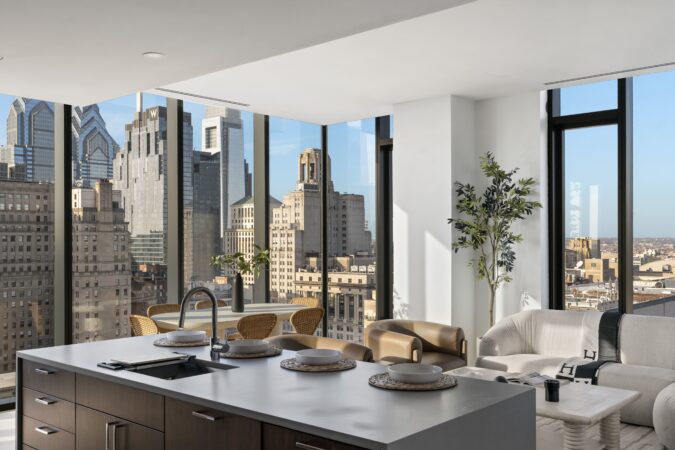
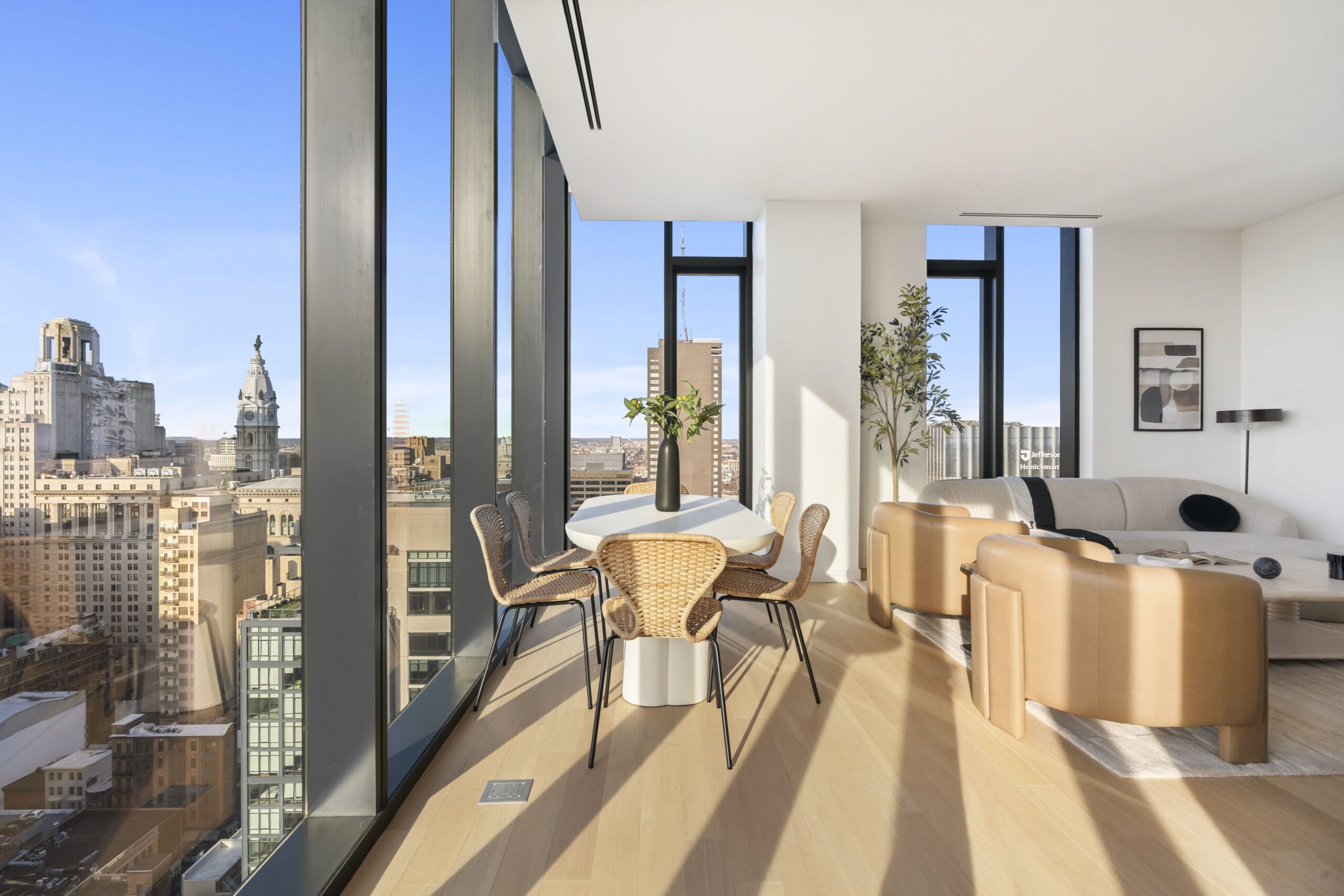
    Penthouses for rent have at least one balcony and floor-to-ceiling windows that offer lots of natural light and panoramic views.

    “You are literally looking at the Philadelphia skyline from the best view possible,” said listing agent Justyna Goldman with SERHANT.

    Tenants can see the City Hall tower from this penthouse at the Center City apartment building.

    The Philadelphia metropolitan area has had a growing number of very wealthy renters in recent years. For people who like the renting lifestyle or “if someone wants to live their best life but is only staying for a short time” in Philadelphia, the penthouses at 210 S. 12th could be for them, Goldman said.

    “We offer an incredible space and incredible square footage for the price,” she said. “We are looking to make someone a very happy renter.”

    Goldman said the building could be attractive to athletes, entrepreneurs, and people working in the medical field, since hospitals are nearby. The building’s Center City location means “you’re surrounded by everything you could possibly need,” she said.

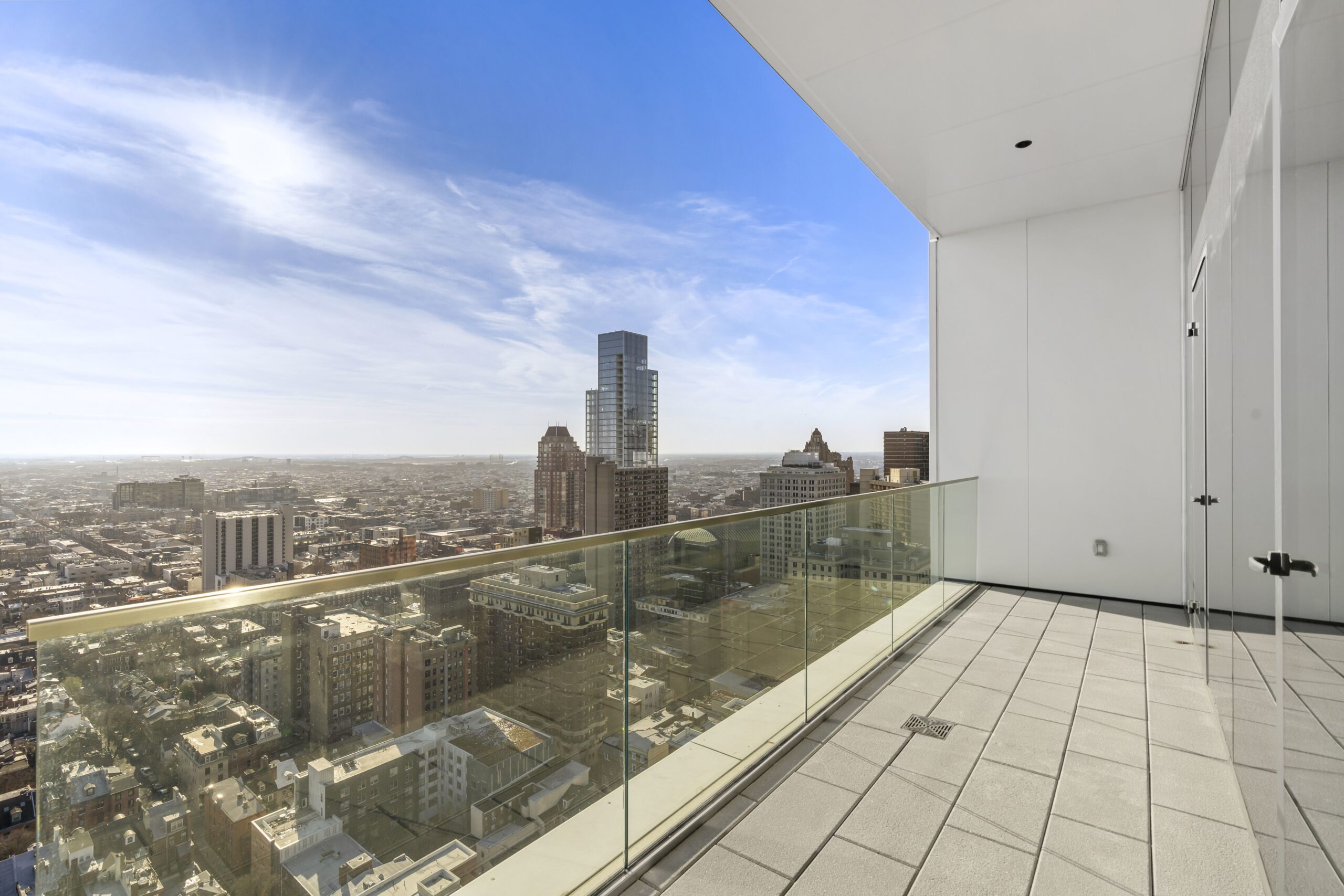
    The nine penthouses at 210 S. 12th are on the 30th and 31st floors and all have at least one balcony.

    The penthouses include walk-in closets and spacious living areas and kitchens.

    Parking spaces are available in an automated underground parking garage with electric vehicle chargers.

    The 376-unit apartment building began leasing in the summer of 2024 and is at the former site of the 12th Street Gym, which was a landmark in the Gayborhood.

    The building’s exterior was designed by the architecture firm RSHP for New York-based developer Midwood Investment & Development.

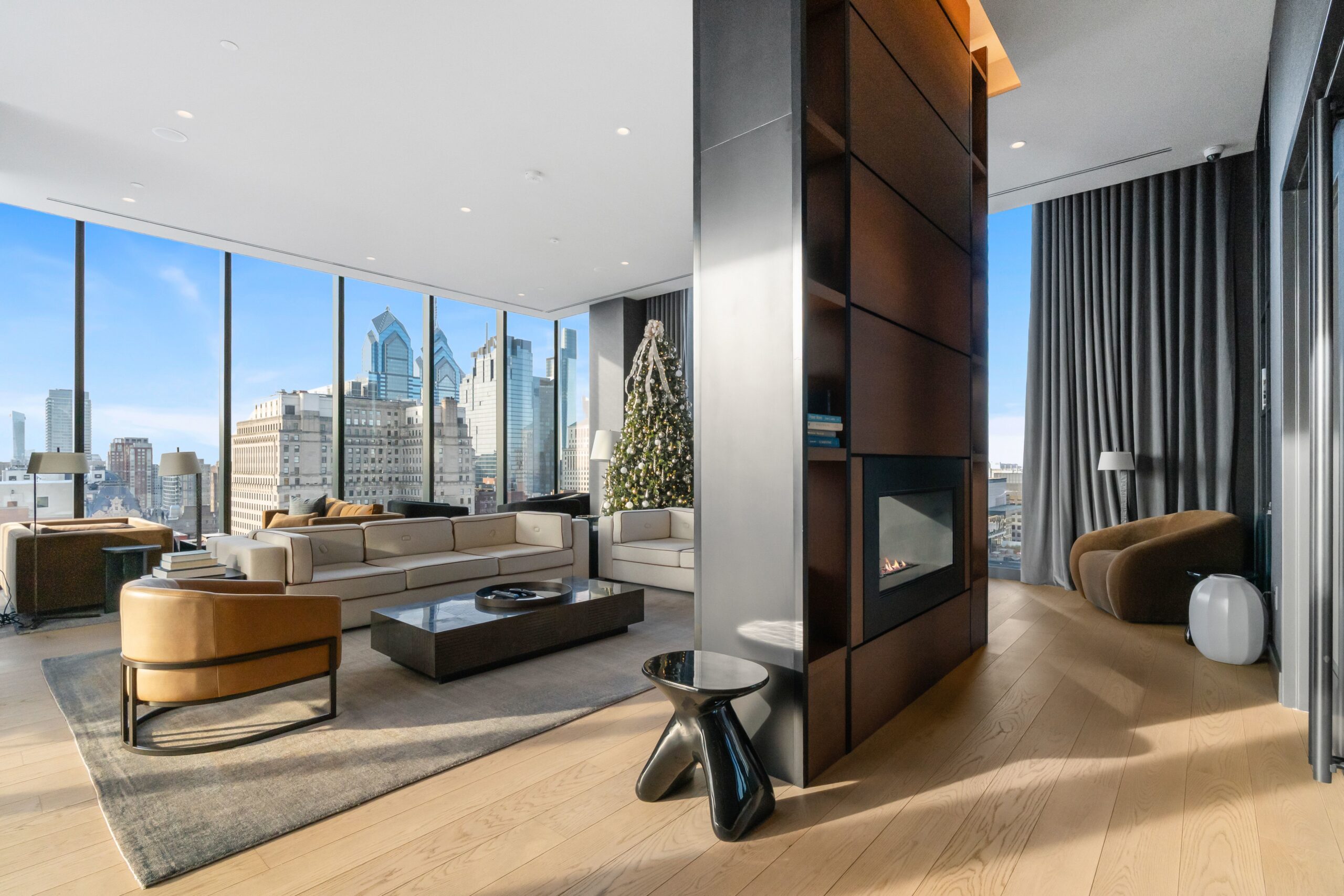
    An amenity lounge on the 30th floor of 210 South 12th includes a fireplace and floor-to-ceiling windows with Philadelphia skyline views.

    Tenants have access to amenities such as an outdoor pool, a fitness center, yoga and wellness studios, a game room, lounges and co-working spaces, outdoor terraces, a pet spa, and a dog park.

    The tower includes studios and one- and two-bedroom apartments. Studios start at $1,968, one-bedroom dens start at $2,300, one-bedroom units start at $2,411, and two-bedroom units start at $3,809.

    The building’s website is currently advertising rent deals. The property is offering 2½ to 3 months free for leases longer than a year.

    Salon Republic, which offers salon suites for rent, is operating in one of the tower’s retail spaces and more retailers are expected to be announced soon.

    The views make the penthouses at 210 S. 12th special, said listing agent Justyna Goldman with SERHANT.
  • Why nobody really knows the scale of the U.S. housing crisis

    Why nobody really knows the scale of the U.S. housing crisis

    America faces a serious housing shortage, one that Moody’s estimates would take more than 2 million new homes to resolve.

    But over at Goldman Sachs, analysts put the number at 3 million. Zillow’s estimate tops 4 million, while Brookings projects 5 million, and McKinsey says 8 million. Meanwhile, congressional Republicans insist the shortfall is closer to 20 million.

    Then there are the economists who contend there’s no shortage at all.

    The disparate projections reflect the challenge of quantifying the nation’s housing needs, a puzzle that rests on assumptions about how much a home should cost, how many people it should hold, and how big a footprint it should have.

    With housing affordability a crucial political issue and increasingly out of reach for many Americans, determining the nation’s needs is not merely an academic exercise but is key to devising policies that will solve the problem.

    Vacancy rates and missing households

    The U.S. has 146 million homes, Census Bureau data show. Of those, 8.1 million are “doubled up” households, meaning people are sharing space with nonrelatives. Zillow’s housing estimate assumes most of those people would prefer having their own place. There also are 3.4 million vacant homes available to rent or buy, the real estate website says. So Zillow economists subtracted the number of available homes from the number of doubled-up households and concluded that the nation needs 4.7 million more homes.

    Several analyses zeroed in on two questions: How many homes should be vacant, and how many consumers have delayed striking out on their own because of the cost.

    Though it might seem counterintuitive, a healthy housing market needs vacancies. An empty property could signal it’s between tenants or buyers, for example, or under renovation. Or it could mean the owner is splitting time between properties; according to the National Association of Home Builders, more than 6 million homes — about 1 in 20 — are secondary residences.

    What constitutes a healthy level of vacancies is harder to define, as experts put it anywhere from 3% to 13%. After home construction cratered following the 2008 housing crash, vacancy rates slumped to the lowest level in nearly two decades, falling to less than 1% of owner-occupied dwellings and 5% of rental units. They have yet to fully recover.

    The optimal home number could be as simple as one for every household, plus a certain number of vacancies. But what if we don’t have an accurate count of households?

    When housing costs are prohibitive, adult children tend to reside with their parents longer; in 2023, 18% of adults 25 to 34 were living in a parent’s home, compared with 8% in the 1970s, according to a Pew Research Center report.

    For many economists, that suggests the equation should be: the number of existing households, plus the number of homes that should be vacant, plus the number of households that would naturally come into being if there was enough inventory to lower prices.

    Yet different researchers using this framework still came up with different answers for the housing shortage.

    Moody’s Analytics and PolicyMap say it would take 800,000 homes to reach the equilibrium of the U.S. housing market between 1985 and 2000. Add 1.2 million “pent up households,” those that haven’t formed yet, and the conclusion is the U.S. needs an additional 2 million homes.

    Brookings’s calculation aims to get back to the 2006 vacancy rate of more than 12%, when it was near its historic peak. It used a complex statistical model to tease out how much of the decline in household formation since then is due to home prices instead of other factors, such as young people having trouble finding jobs or marrying later. As a result, it concluded the U.S. needed 4.9 million more houses.

    Other analyses along these lines include Freddie Mac’s, which calls for 3.7 million more homes. Goldman Sachs analysts tried the “vacancies plus pent-up demand” approach, as well as a mathematical model to determine how many homes it would take to make ownership as affordable relative to income as it was in the 1990s. Both equations worked out to between 3 million and 4 million homes. McKinsey added up new households and vacancies, plus enough housing to address homelessness and replace overcrowded homes with more than one person to a bedroom, to get to 8.2 million.

    Envisioning an unconstrained market

    A 2022 congressional report took a different tack. Most analyses attempt to re-create some semblance of the housing market two, three or four decades ago. But Republicans on the Joint Economic Committee argued that the correct number is equal to the number of homes that developers would build had they had no regulatory constraints — no permitting or zoning rules that prohibit them from building what customers want.

    The Republicans’ estimate relied on the reasoning that the value of the land should be about 20% of the home cost. Anything higher would mean the market is artificially constrained; land becomes pricier when it is harder to build something on it. To bring prices in line with that in every U.S. county, they concluded the home shortage stood at 20 million.

    By their math, North Dakota and West Virginia have almost no housing shortage, while California is short 4.5 million homes. Eliminating zoning and building restrictions across the country’s hundreds of jurisdictions might be unfeasible, but they project that any substantial effort would lower prices. For example, they contend that building an additional 2.7 million homes could reduce prices enough to make ownership economically viable for nearly 5 million more consumers.

    “If we relaxed all regulations that concerned supply in every single market in the United States, this is how many homes you would have … . I do think this is the right way to think about how many homes we should have,” said Kevin Corinth, an economist who co-authored the report while he was a Senate staffer and now works at the American Enterprise Institute, a libertarian think tank. “If you really want to bring down home prices to the point where people can actually afford them, you’re going to have to build a lot more houses than people are suggesting.”

    Per capita spending

    Housing analyst Kevin Erdmann did some eye-popping math recently. Adjusted for inflation, per capita spending on housing construction has been falling as a fraction of personal consumption, dropping 23% since 1990. If such spending held to 1990 levels, he said, the U.S. would have an additional 40 million houses. “Almost all professional estimates of the housing shortage are ridiculously low,” Erdmann, who has written two books about the housing market, wrote on his Substack.

    He said the slowdown in construction spending indicates that people are living in smaller homes than they’d prefer because they had no choice, but he shies away from actually saying the country is 40 million homes short. Instead, based on aggressive assumptions about missing households and necessary vacancies, he says the country needs 15 million to 20 million.

    Maybe there’s no shortage at all

    Urban planning professors Kirk McClure and Alex Schwartz examined 900 U.S. metropolitan areas and found that only 19 had added more population than housing since 2000. Before the 2008 recession, they argued, developers built far too many houses, leaving room for underbuilding in some years since.

    “Yes, we have a shortage of units in the low-income price points, but not overall,” McClure said. He contends it would be far less costly for the government to help poor households rent or buy existing units than to build new ones. “The best housing program right now would be an increase in the minimum wage. You get people up to $20 an hour and suddenly life gets better — we can’t build our way out of this problem.”

    This view of the current housing supply transcends partisan lines, with some of the highest and the lowest estimates of the shortage coming from the right. Economists at the libertarian Cato Institute contend that housing production has kept up with population growth. Just because people want to live in big houses in expensive, densely populated areas, they assert, doesn’t mean there’s a shortage.

    “A shortage is literally people don’t have anywhere to live. That’s not what we have,” Norbert Michel, one of the Cato writers, said in an interview.

    In the end, the dispute doesn’t just come down to the choice of mathematical models, but varying interpretations of what a housing shortage even means.

    “If I have a hard time finding an apartment in the area of Washington, D.C., that I like, I can still move to Maryland and find something,” Michel said. “The idea that I’m just completely shut out of all my options and I can’t find any place to live, that’s what a shortage evokes. And the data doesn’t support that.”

    Erdmann views it differently: “There are 28-year-olds living with their parents that wouldn’t be if there were a house. If that’s not a shortage, I don’t know when you could use the word.”

  • Signs of a frozen housing market in Philadelphia and Delaware County

    Signs of a frozen housing market in Philadelphia and Delaware County

    The ground and your toes aren’t the only things frozen in the Philadelphia region.

    In the city and Delaware County last month, potential home sellers and buyers stayed on the sidelines, and sales were slow, according to a Redfin analysis of the 50 most-populous metropolitan areas for the four weeks ending Jan. 25. Pending home sales were down about 4% from the same time last year.

    “You’re just not seeing a lot of activity happening,” said Chen Zhao, head of economics research at Redfin.

    What has been heating up are prices. The market that Redfin defines as Philadelphia and Delaware County was in the top three areas where sale prices increased the most compared to the same time last year. The median sale price was up just over 10% to $294,125.

    Limited home supply and rising home prices tend to go hand in hand, and that is what is happening in these markets, Zhao said.

    Sales in January’s slow market happened at higher prices because buyers who are still in the market are willing to pay elevated prices.

    The average number of new home listings ticked up slightly from last year, and it should continue to grow as the typically busy spring housing market approaches. So should the number of buyers looking for homes.

    Any changes in affordability, Zhao said, will be “mostly driven by mortgage rates, not so much by prices.”

    The average interest rate on a 30-year, fixed-rate mortgage was almost 7% at the end of January 2025, according to the government-backed mortgage buyer Freddie Mac. This year, it was 6.10% at the end of the month.

    Zhao said she doesn’t expect mortgage rates to go much lower this year.

    But buyers have more power than they think, especially now when sales are slow, Zhao said. They “really should be thinking about negotiating” with sellers.

  • The cost of housing in Pa. is too high. Here’s what Josh Shapiro will need to overcome to fix it.

    The cost of housing in Pa. is too high. Here’s what Josh Shapiro will need to overcome to fix it.

    Spotlight PA is an independent, nonpartisan, and nonprofit newsroom producing investigative and public-service journalism that holds power to account and drives positive change in Pennsylvania. Sign up for our free newsletters.

    HARRISBURG — Rents are soaring, homelessness is rising, and homeownership is out of reach for many families in Pennsylvania. As the state grapples with a serious housing shortage and affordability dominates the national political conversation, Gov. Josh Shapiro is preparing to release a long-awaited plan to tackle the crisis.

    The plan, first announced in late 2024, will draw on months of outreach to advocates, developers, and local officials. Supporters hope it will offer a clear path forward and build momentum around proposals that can win support in Pennsylvania’s politically divided legislature. But significant obstacles stand in the way.

    “The housing crisis has risen to the level such that none of the four caucuses can ignore it,” said Deanna Dyer, director of policy at Regional Housing Legal Services, a nonprofit law firm.

    The housing shortage is a nationwide problem, but Pennsylvania has been particularly slow to build new units. The shortfall leaves families squeezed by rising costs, pushes recent graduates to take jobs in other states, and makes it harder for companies to expand.

    Other states are passing laws to loosen local zoning restrictions and encourage new development — despite often fierce opposition from groups representing local governments.

    Similar efforts in Harrisburg have not yet gained traction, although more lawmakers are exploring solutions, said State Rep. Lindsay Powell, a Democrat representing Pittsburgh who cochairs the House Housing Caucus.

    “Pennsylvania has an opportunity to really push itself forward here.”

    Falling behind

    Underlying Pennsylvania’s housing crunch is the law of supply and demand.

    Between 2017 and 2023, the number of households in Pennsylvania grew by 5%, according to a recent report from Pew Charitable Trusts, a think tank. Over the same period, local governments issued only enough building permits to increase the state’s housing stock by 3.4%.

    That left Pennsylvania ranked 44th out of 50 states on the rate of housing built.

    “The most important driver of affordability is whether there are enough homes for everyone,” said Alex Horowitz, Pew’s director of housing policy.

    High demand for existing units, combined with a lack of new supply, gives landlords more leverage to raise rents and drives up house prices, Horowitz said.

    “The shortage is what is causing housing to get so expensive right now.”

    The problem is not spread evenly across the state. Costs have risen the most in areas with growing populations that have not added enough housing, including the Philadelphia suburbs, Northeastern Pennsylvania, and cities like Harrisburg, York, and Lancaster.

    To keep up with the demand, state officials estimate, Pennsylvania needs to build 450,000 units by 2035 — a 70% increase in new construction.

    In September 2024, Shapiro signed an executive order directing the Pennsylvania Department of Community and Economic Development to create a statewide plan to increase the supply of housing, and to review the effectiveness of existing programs. The executive order also requires the Pennsylvania Department of Human Services to conduct a separate review of policies to address homelessness.

    “We don’t have enough housing, the cost of housing is going up, and the housing we do have is getting older and is in need of more repairs,” Shapiro said, announcing the plan.

    Since then, DCED has received feedback from almost 2,500 people and organizations, and held 15 listening sessions across the state, a spokesperson said.

    A draft was due to be submitted to the governor’s office in September, according to the executive order, but the details have not yet been made public.

    Zoning headaches

    In roundtables and written feedback, state officials heard about problems small and sweeping. One issue came up repeatedly, according to interviews with participants and a review of hundreds of pages of written recommendations obtained through the state Right-to-Know law: To build more housing, Pennsylvania needs to change local zoning rules that stifle new construction.

    There are a number of ways the state could approach this. Many municipalities reserve most of their land zoned residential for single-family homes. Pennsylvania could allow apartment buildings on land currently zoned for commercial use, or near public transit, or legalize accessory dwelling units, like backyard cottages and granny flats.

    Changes like these would require revising the municipal planning code, the state law that gives local governments authority over land-use decisions.

    These changes would also make it easier to address rising demand for smaller units, as the average household size falls and more people live alone.

    Any attempt to change zoning laws, however, will likely face strong opposition from groups representing Pennsylvania’s municipalities. They argue that local governments know their communities best and should retain control over decisions about land use. They also say the focus on zoning overlooks other factors contributing to the housing shortage, like the rising cost of construction materials and supply-chain disruptions.

    Municipal zoning laws are “often scapegoated” as the culprit for a lack of affordable housing, Logan Stover, director of policy and legislative affairs at the Pennsylvania State Association of Boroughs, told Spotlight PA in a statement.

    In October, a senior Shapiro staffer working on the housing plan told a local group in Lancaster the plan would focus on “incentives rather than mandates,” with a points-based system to give communities that adopt pro-housing policies priority for state funding. Communities with policies that restrict new development could be disqualified, he said.

    At least six states — including California, Massachusetts, and New York — have already created incentive programs, which vary in design and enforcement mechanisms.

    These efforts have not proven as effective as broader statewide zoning changes, said Horowitz, the Pew researcher.

    “States that tried that early on didn’t see the supply response,” he said.

    The state plan will also likely focus on how to simplify and speed up local permitting processes, which can delay construction with time-consuming paperwork and unpredictable outcomes. Streamlining state permitting has already been a major focus for Shapiro.

    Focus on preservation

    Pennsylvania doesn’t just need to build more housing — it also needs to help people stay in their current homes, state officials heard.

    Groups that provide free legal services to low-income residents say there has been a dramatic increase in the number of people seeking help with evictions, foreclosures, and similar problems. In 2024, legal aid providers said, housing made up a third of all their cases — the single largest category.

    They also urged state officials to keep pushing to seal eviction records in some cases, which Shapiro has said he supports but would require changing state law.

    Another common thread was the need for a permanent source of funding to help low-income homeowners with repair costs. The state has some of the oldest housing stock in the U.S.; more than 60% of houses were built before 1970.

    Investing in home repairs is broadly popular but has proven politically challenging.

    In 2022, the state legislature agreed to spend $125 million in federal pandemic aid to create a new home repair program.

    Demand was overwhelming: Some counties were able to take applications only for a few days and thousands of homeowners ended up on wait lists. The program was widely praised for its flexibility, which allowed administrators to help homeowners who would not have been able to get help from other programs, although some counties ran into administrative difficulties.

    The program was created with bipartisan support, but efforts to continue it with state funding in 2023 and 2024 were unsuccessful. Last year, Shapiro proposed $50 million for a new, rebranded repair program, but the money didn’t make it into the final budget deal.

    Looking ahead

    Although Shapiro could make some changes through executive action, many of the suggested policy goals would require legislation.

    Housing has proven to be an issue that can cut through political divides in Harrisburg, where Democrats control the state House and the governor’s mansion while Republicans hold a majority in the state Senate.

    In recent years, lawmakers have agreed to a series of funding increases for a grant program to build and repair affordable housing. They also supported Shapiro’s proposal for a major expansion of a program that gives older and disabled residents a partial refund on their rent and property tax payments. The changes, which took effect in 2024, made more Pennsylvanians eligible and boosted the value of the rebates.

    Between July 2024 and June 2025, more than 25 states passed legislation aimed at increasing the supply of housing, according to an analysis by the Mercatus Center, a libertarian think tank. Pennsylvania was not one of them, although lawmakers in both chambers have unsuccessfully introduced bills to loosen zoning requirements.

    More recently, lawmakers from both parties have circulated proposals that echo some of the recommendations floated during the outreach for Shapiro’s housing plan. Republicans who control the state Senate say addressing the housing shortage will be a “key focus” for their caucus this year.

    State Sen. Joe Picozzi (R., Philadelphia), chair of his chamber’s Urban Affairs and Housing Committee, plans to introduce legislation that would offer grants to local governments that work with developers to build housing near centers of employment. “To qualify, communities must show they are committed to smart housing policies — like updating zoning, faster permitting processes, or preparing development-ready land,” according to a legislative memo.

    Picozzi and other Republican senators also want to extend property tax abatements for new development and create a “pre-vetting” system for housing plans to simplify local approvals.

    This year represents a real opportunity to make progress on the housing shortage, said State Rep. Jared Solomon, a Democrat representing Northeast Philadelphi,a who has sponsored several pieces of legislation aimed at adding more housing.

    “We’re all seeing the same thing in our neighborhoods — we all know we have to be proactive about it,” Solomon said.

    BEFORE YOU GO… If you learned something from this article, pay it forward and contribute to Spotlight PA at spotlightpa.org/donate. Spotlight PA is funded by foundations and readers like you who are committed to accountability journalism that gets results.
  • A Gladwyne estate that can be split into three lots is for sale for $8.5 million

    A Gladwyne estate that can be split into three lots is for sale for $8.5 million

    The possibilities are what make a Gladwyne estate for sale on Country Club Road “a significant property,” said listing agent Lisa Yakulis.

    It spans 12.76 “very private” acres, said Yakulis, a broker associate at Kurfiss Sotheby’s International Realty. “It’s hard to find that size of a property in that area.”

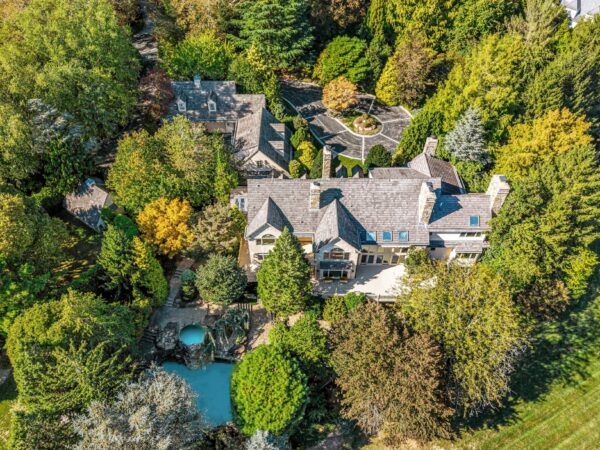
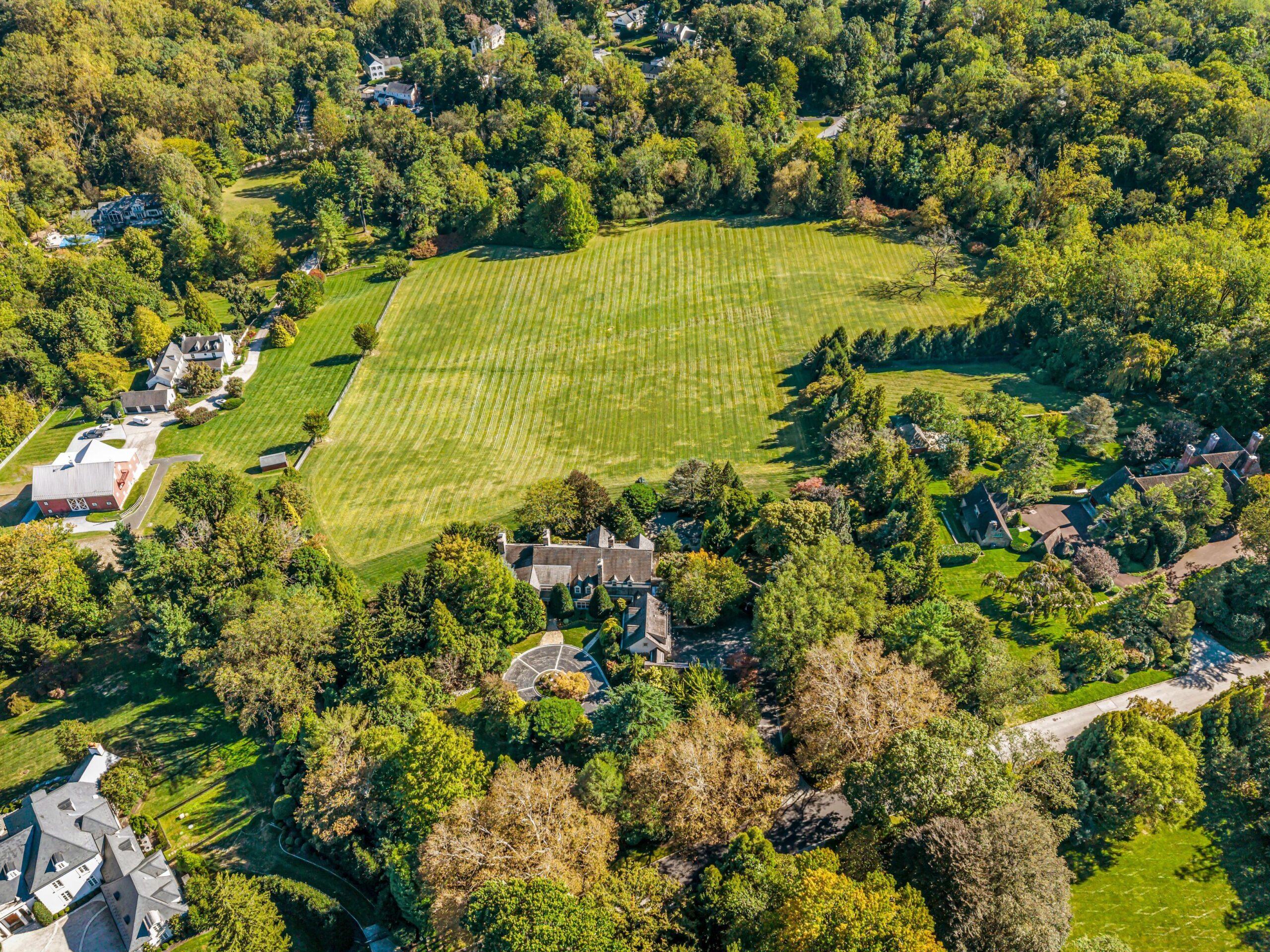
    The 9,166-square-foot home sits on about four acres. A future owner could subdivide the lower part of the property to create two roughly four-acre lots. An existing easement would provide access to the additional lots.

    The property is on the market for $8.5 million.

    The home for sale on Country Club Road in Gladwyne sits on almost 13 acres, which can be broken into separate lots.

    Yakulis said she’s seen that on the Main Line in the years since the pandemic, “desirable building lots with that kind of acreage are, No. 1, very hard to find, and No. 2, there’s a fairly large buyer pool out there that’s looking for land in that location to build exactly what they want to build vs. buying a resale home.”

    The home on the property was custom built in 1993, and its floor plan is more open than homes of that time. It was designed to host the owners’ family and friends, which it has done for the last three decades.

    The house has six bedrooms, eight full bathrooms, and three half bathrooms. Many large windows provide panoramic views of the property. The home has an elevator, six fireplaces, a library, two laundry rooms, and flexible living spaces.

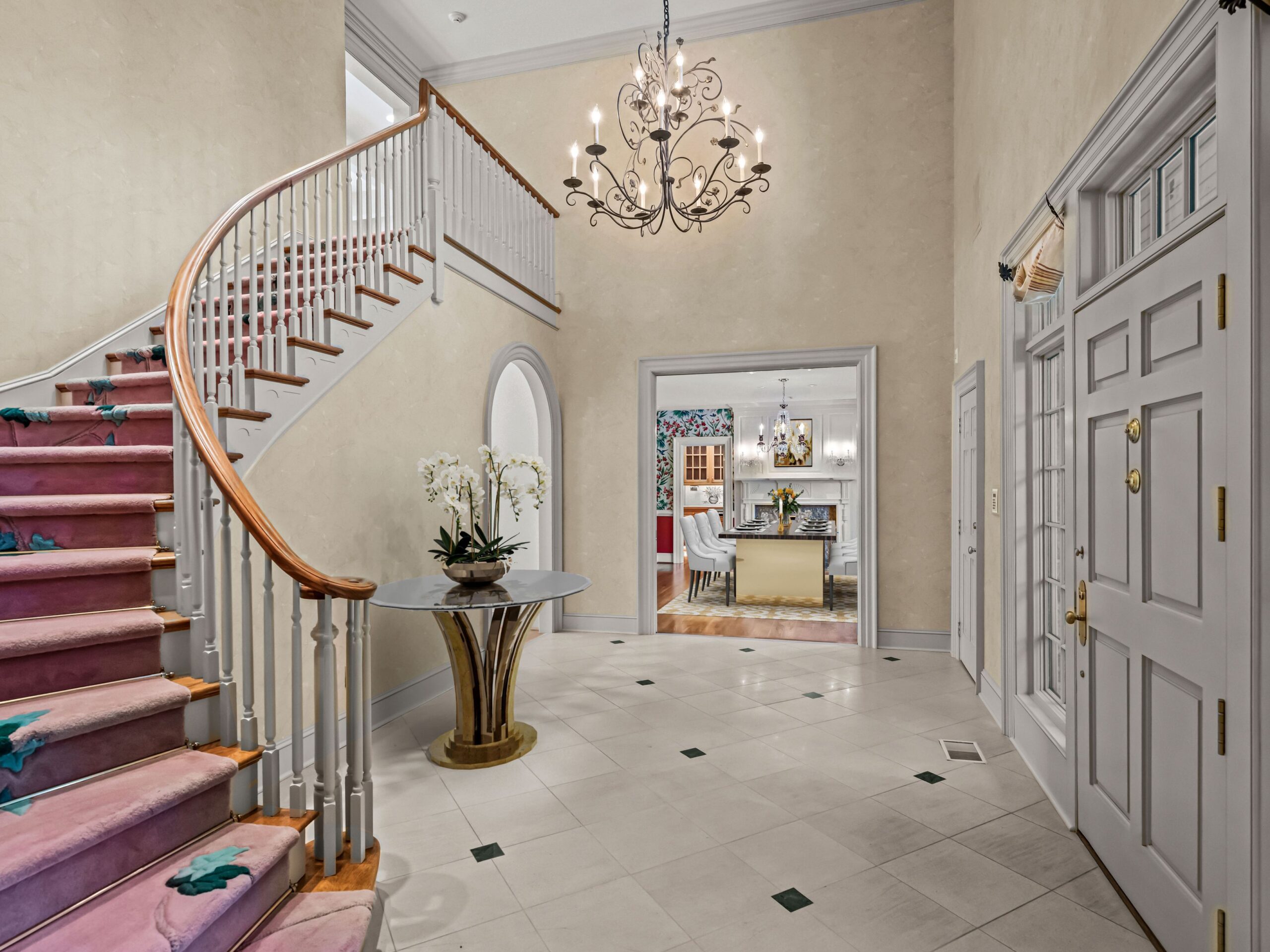
    The front door of the home opens to a chandelier and winding staircase.

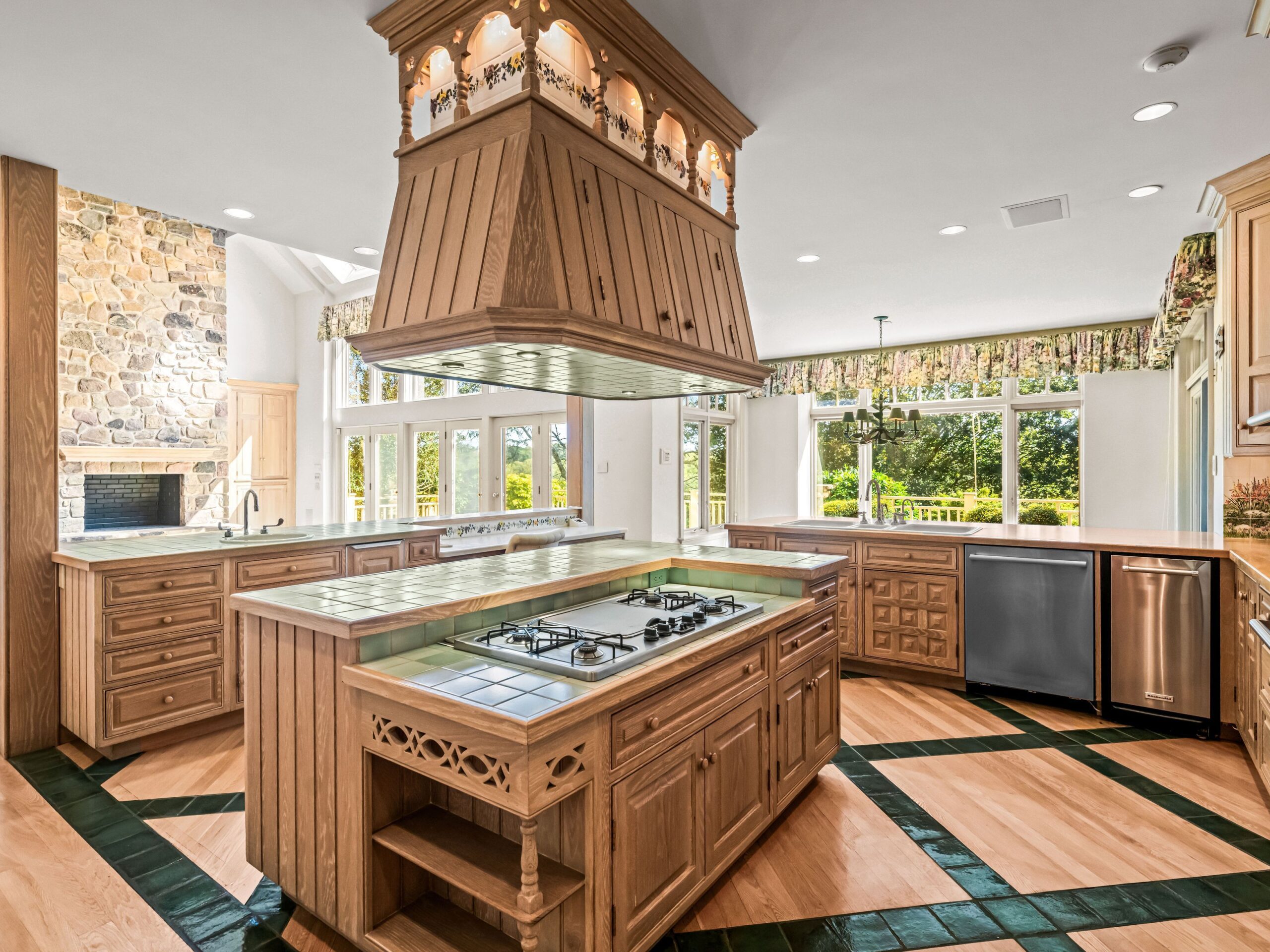
    The primary suite has two separate bathrooms and large dressing rooms. The main kitchen includes two ovens, a large island with a stove, bar seating, and a refrigerator that can be concealed behind sliding wooden panels.

    The property has a total of three guest suites on the lower level, in a private section of the main level, and above one of two oversized two-car garages.

    The home’s lower level includes another large kitchen, a sauna, entertainment space, and a walk-in safe.

    The main kitchen includes three sinks, two ovens, and a large island with a stove.

    The property features stone terraces, a pool, landscaped grounds, and acres of open land. A cottage-like utility building equipped with a half bathroom is where the owners cleaned their dogs. But it also could be used as a gardening shed or workshop.

    Potential buyers who have toured the home said they like the privacy, views, and location. The Main Line property is near preserved open space, the Schuylkill Expressway, and Philadelphia Country Club. Yakulis said the home is on a quiet street with plenty of space between neighbors.

    The property has attracted people of various ages, including empty nesters who like the elevator and the guest suites that offer spaces for visiting children and grandchildren.

    “I get the comment when people come through that it’s a happy house, and it’s true,” Yakulis said. “You walk in there and the light pours in, and you can just tell that it’s a happy house. It has a good vibe.”

    The property was listed for sale in October.

    A gate opens to the circular driveway in front of the home.
  • They own their homes but not the land. In N.J., a new law could help change that.

    They own their homes but not the land. In N.J., a new law could help change that.

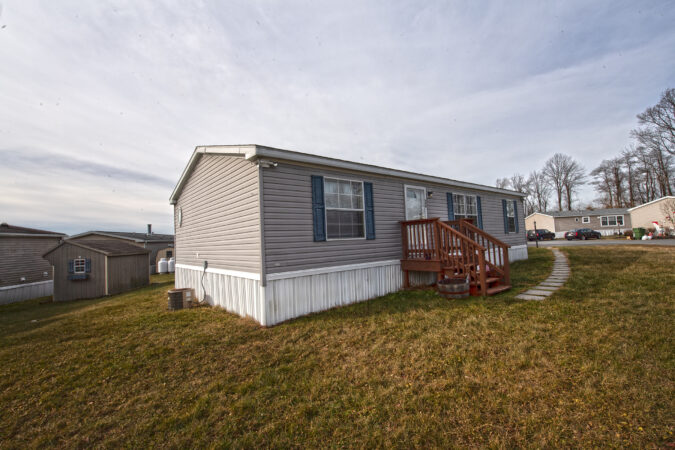
    Manufactured homes — single-family dwellings often built off-site and placed on a lot — are one of the most affordable forms of homeownership. But families who live in these homes are often left vulnerable, because companies that own the land can hike rents for their lots or sell communities for redevelopment.

    This type of unsubsidized affordable housing tends to be more accessible for low-income households than typically built homes.

    A bill that former N.J. Gov. Phil Murphy signed last week makes it easier for manufactured home and mobile home residents to buy their communities when a landowner decides to sell or change the use of the land.

    Landowners who want to sell or redevelop these communities must give notice to residents and local and state leaders. If 51% of residents agree to purchase the community, and they meet the price and conditions of the sale, they have 120 days to buy it. Previously, this action required two-thirds of residents, who had 45 days to sign a contract.

    Lawmakers found that the prior parameters were too high of a bar for residents to meet.

    New Jersey’s new law is based on model legislation from the National Consumer Law Center. There are more than 1,000 resident-owned mobile and manufactured home communities across the country. None are in New Jersey.

    Almost 100,000 New Jersey residents live in 250 manufactured or mobile home communities, many of which are in South Jersey, said State Assembly member David Bailey Jr., a Democrat who sponsored the legislation and represents residents in Gloucester, Salem, and Cumberland Counties.

    Imagine you’ve owned your home for 20 years and “somebody comes and says, ‘We’re selling this land and you either follow these new rules or you gotta move,’” Bailey said. “That would never happen in suburbia. But that’s what could happen to these people. Because they have no choice. They’re stuck.”

    He said that when he took office in 2024, he immediately started getting calls from constituents in Salem County who lived in manufactured home communities. They told him about rising costs to rent the land their homes were on and deteriorating property conditions and infrastructure in their communities.

    Many of the properties had been owned by local families who later sold the land to companies that hiked rents, Bailey said. In 2022, the CEO of the Lincoln Institute of Land Policy said that in the prior eight years, roughly 800,000 home sites in manufactured housing communities were bought by private equity companies and other institutional investors. Rent hikes tended to follow.

    Another recent New Jersey law addresses this reality.

    In July, the state enacted a law that caps annual rent increases at 3.5%. Landlords who want higher increases must ask the state’s Department of Community Affairs for permission.

    After an earlier version of the legislation passed the state Senate this spring, Sen. Paul Moriarty said in a statement that the usual renting setup of mobile and manufactured home communities “often leads to unfair price hikes by landlords, as they know that there is no other option besides moving the home to another site.”

    Moriarty, a Democrat who represents residents in Gloucester, Camden, and Atlantic Counties, noted that moving these homes to different sites can be “incredibly difficult” because of “potential difficulties in financing a move, exclusionary zoning practices, and restrictions on the age and condition of incoming homes.”

    A previous version of this story misstated the number of mobile homes purchased by private equity companies. It is roughly 800,000 manufactured home sites.

  • PHA says former Germantown Settlement properties will be reopened by 2029 — at great cost

    PHA says former Germantown Settlement properties will be reopened by 2029 — at great cost

    For over 15 years, dozens of properties once owned by disgraced nonprofit Germantown Settlement have sat derelict and mostly empty.

    In 2024, the properties were given to the Philadelphia Housing Authority (PHA). This month the agency finally announced its plans: $84 million will be spent to gut and rehabilitate 113 units and build 40 apartments for seniors.

    Most of the properties will be earmarked as rentals for very low-income Philadelphians at 30% of area median income, or roughly $32,000 for a family of three. The former Settlement buildings are a mix of rowhouses, duplexes, and small apartment buildings.

    “I was shocked and dismayed by the conditions,” said Kelvin Jeremiah, CEO of PHA. “It’s going to cost a lot of money to get it back to habitable use.”

    Some critics of the plans say the amount PHA plans to spend beggars belief. Spilt 153 ways, $84 million is almost $550,000 a property.

    Longtime Northwest Philadelphia developer Ken Weinstein says his company could build new units at $284,000 a unit, and small developers who are active in the neighborhood can rehab houses for $152,000 apiece.

    “We have limited government resources, and we have so many people that need subsidies to put a roof over their heads,” Weinstein said. “I don’t know why we wouldn’t stretch our dollars as far as possible.”

    (function() {
    var l2 = function() {
    new pym.Parent(‘GERMANTOWN.html’,
    ‘https://media.inquirer.com/storage/inquirer/projects/innovation/arcgis_iframe/GERMANTOWN.html’);
    };
    if (typeof(pym) === ‘undefined’) {
    var h = document.getElementsByTagName(‘head’)[0],
    s = document.createElement(‘script’);
    s.type = ‘text/javascript’;
    s.src = ‘https://pym.nprapps.org/pym.v1.min.js’;
    s.onload = l2;
    h.appendChild(s);
    } else {
    l2();
    }
    })();

    Weinstein emphasized that he thinks Jeremiah has been a transformative and innovative leader for PHA, but he doesn’t understand why the agency isn’t trying to get the properties back into productive use in a more cost-effective way.

    He noted that PHA has sold scattered site single-family units it owns in the area to small developers for low-cost revitalization, with deed restrictions in place to keep them affordable in the long term.

    Weinstein also points to PHA’s campaign to obtain struggling new apartment buildings as an example of its capacity for flexibility and cost sensitivity. Jeremiah has said the purchases are being made because they cut the agency’s costs in half in contrast to building new.

    “I thought it was brilliant that PHA set out to buy existing apartment buildings at $200,000 a unit. That is a much better way to address the affordability issue in housing,” Weinstein said. “I don’t know why PHA would go out of their way to spend 2½-times that to rehab and newly construct in Germantown.”

    The transfer of the former Germantown Settlement properties from the Redevelopment Authority to PHA was controversial in 2024. Some residents felt a community engagement campaign had been ignored. Many attendees had expressed a desire for more homeownership opportunities.

    Jeremiah says that after a community meeting earlier this month, he is open to using 16 of the properties for affordable homeownership.

    “We heard that they would like to see a more balanced community, and so we’re going to work through what that means,” Jeremiah said. “We are revisiting some of the suggestions that we heard from the community, and we are going to revise our plans.”

    But Jeremiah says that sales to small developers for homeownership units, even with deed restrictions, would not help the poorest Philadelphians.

    When PHA does sell scattered site homes for private redevelopment, the rebuilt houses primarily go to those making 60% of area median income or $64,000 for a family of three.

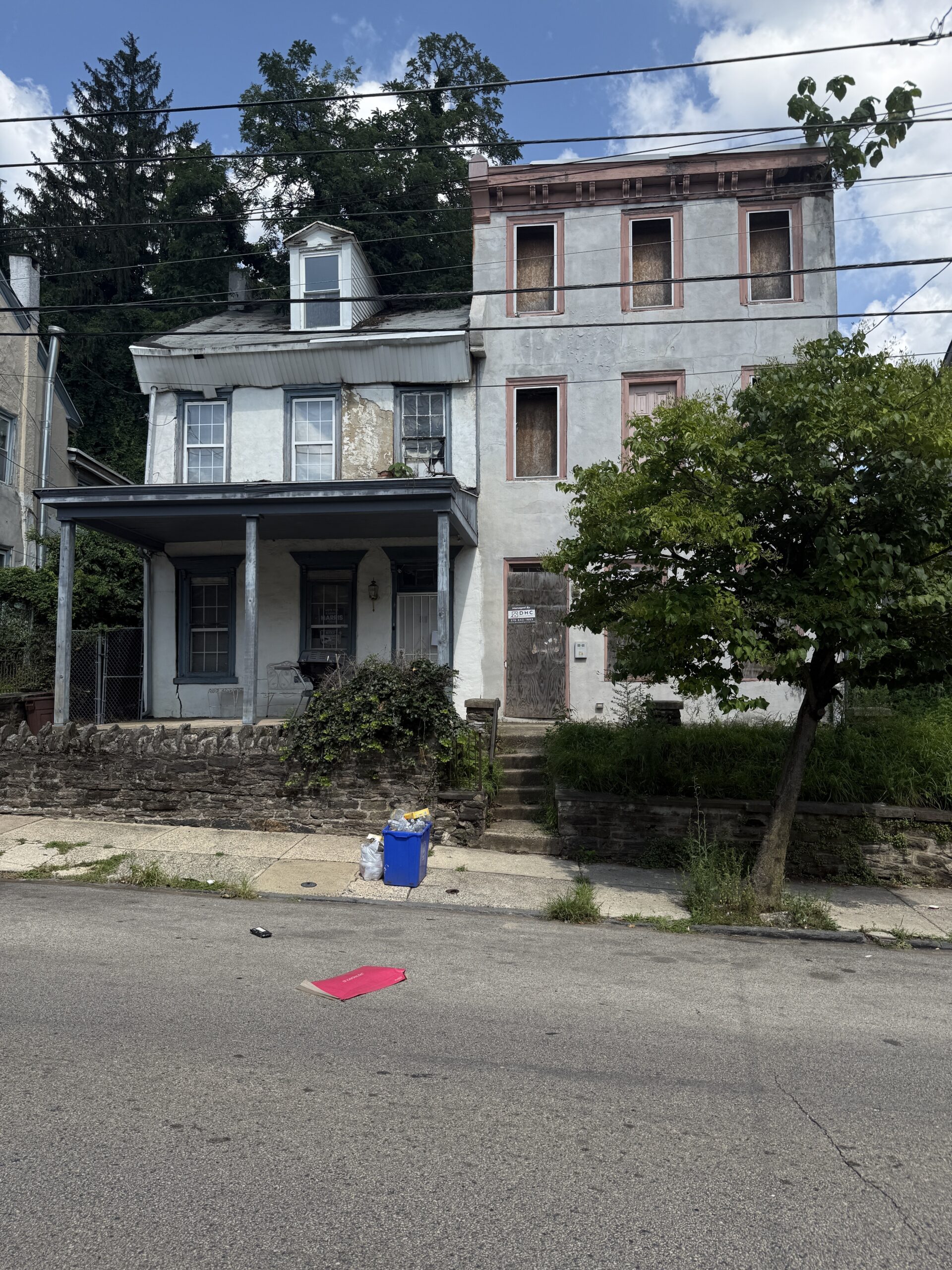
    A former Germantown Settlement property, courtesy of Kelvin Jeremiah.

    The lowest-income residents, who make half that, are the overwhelming majority of PHA’s tenants. They are not in a position to buy a home — even a subsidized and permanently affordable one.

    “A mom and pop [developer] would be hard-pressed to maintain permanent affordability,” Jeremiah said.

    Keeping the former Germantown Settlement properties as PHA-run rentals will guarantee a repository of affordable units no matter how this corner of Northwest Philadelphia evolves, he said.

    “Some of our assets are in communities that are rapidly becoming unaffordable,” Jeremiah said. “Our assets in those communities ensure we are maintaining some level of affordability.”

    Jeremiah himself has often criticized how much it costs PHA to build or gut rehabilitate projects, but he notes that the agency is restricted by a variety of federal regulations.

    “The construction costs are untenable for us, but it’s driven by the regulatory requirements that we must adhere to,” he said. “I have no flexibility.”

    Jeremiah estimates that the rehabilitation work will begin in 2027, after PHA hopefully secures Low Income Housing Tax Credits this year. Once begun, he expects the project to take 15 months, so at earliest the homes will be ready for habitation again in 2028.

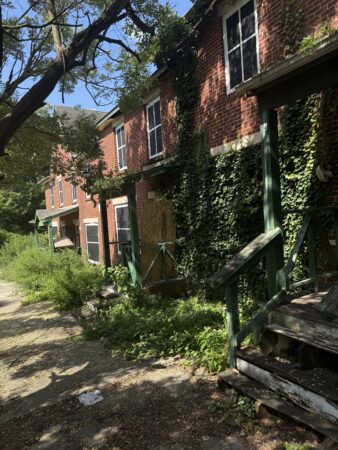
    Many of the former Germantown Settlement properties have fallen into ruin over the last 10 years, with copper wiring stripped out and mold or insect infestations harrowing their interiors.

    The city demolished the Blakemore Apartments because of their poor condition. Its site is where PHA will build a new 40-unit building for seniors. (PHA received 121 of 140 of the expired nonprofit’s units, with the rest going to smaller developers.)

    The former Germantown Settlement properties are heavily concentrated in two sections of East Germantown, creating pockets of dense vacancy near the intersection of Church Lane and Lena Street and on the 40th blocks of Wister and Garfield Streets.

    For Councilmember Cindy Bass, who represents the neighborhood, PHA is the right entity to redevelop these long troubled buildings.

    “It’s very important to preserve affordable housing, and that’s what we’re doing here,” Bass said. “This is not for profit. This is for people.”