Category: Residential Real Estate

  • Mayor Cherelle Parker’s housing plan is back on track after Council again reapproved $800 million in city bonds

    Mayor Cherelle Parker’s housing plan is back on track after Council again reapproved $800 million in city bonds

    Mayor Cherelle L. Parker’s housing initiative is back on track.

    In its first meeting of the year, City Council on Thursday reapproved a bill to authorize the administration to issue $800 million in bonds to fund the Housing Opportunities Made Easy, or H.O.M.E., initiative.

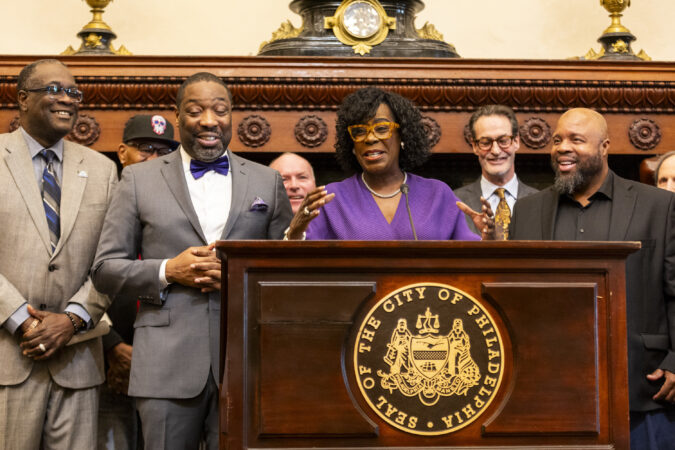
    Parker wasted no time, signing the bill into law at a news conference Thursday afternoon to fast-track the process for the city to sell the first $400 million tranche of bonds in late March or early April. The administration plans to sell the second $400 million in 2027.

    “We are signing into law the largest and most significant investment in housing in the city of Philadelphia’s history, a $2 billion plan that will create and preserve 30,000 units of housing here in the city of Philadelphia,” Parker said, citing a sum for H.O.M.E.’s budget that also includes other funding steams and the value of city-owned land the administration hopes to redevelop into housing through the plan.

    In March 2025, when Parker unveiled her housing plan — with the goal of helping the city build or preserve 30,000 units of housing in her first term — she wanted to issue the bonds that fall. Council initially approved the bond authorization and other legislation related to H.O.M.E. in June.

    But in the fall, lawmakers made significant changes to a related piece of legislation — which details the $277 million first-year budget for spending the bond proceeds — that triggered a redo of the bond bill.

    The most notable changes, championed by progressive Councilmembers Jamie Gauthier and Rue Landau, lowered the income thresholds for some of the programs funded by H.O.M.E. to prioritize lower-income Philadelphians.
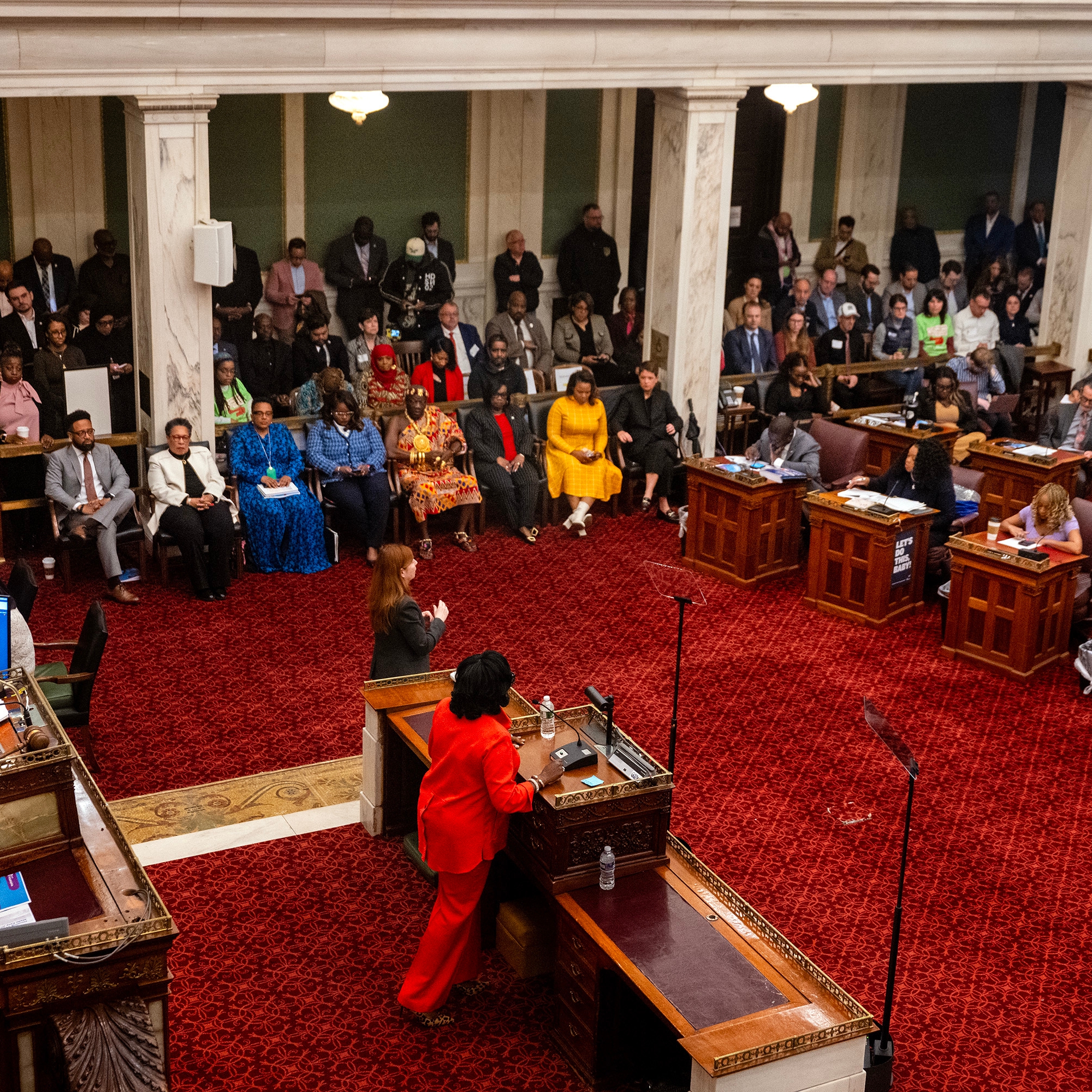
    Mayor Cherelle L. Parker unveils her long-awaited plan to build or preserve 30,000 units of housing during a special session of City Council Monday, Mar. 24, 2025. Council President Kenyatta Johnson is at left.

    Parker opposed the amendment, and administration officials testified that H.O.M.E. was meant to serve residents at a variety of income levels, including middle-class households that are struggling but often make too much to qualify for government support programs.

    But Council members argued that even with the new infusion of funds, Philadelphia’s resources are too limited to help the city’s hundreds of thousands of impoverished residents — let alone aid middle-income residents as well.

    “City Council demonstrated through its actions — not just its words — that it’s serious about putting City Hall to work for communities that have too often been left behind,” Gauthier, Landau, and their allies said in a group statement Thursday.

    The dispute proved to be the most significant public disagreement to date between Parker and Council President Kenyatta Johnson, who sided with Gauthier and Landau.

    The changes required Council to pass an updated bond authorization before moving forward because the previously adopted version no longer aligned with the language in the budget resolution. Lawmakers ran out of time to pass the new bond bill before adjourning for their winter break in December.

    They approved it unanimously on Thursday.

    A couple of hours later, Johnson and Parker profusely praised each other at the bill-signing ceremony, going out of their way to show that their strong working relationship remains intact now that the conflict was behind them.

    “My commitment is to make sure that our 100th, first woman, mayor is successful,” Johnson said.

    The moment of congeniality was a stark contrast to the dynamic between the two late last year.

    Parker at one point said Council’s delay “means homes are not being restored” and “homes are not being built or repaired.” Johnson fired back, “Council’s responsibility is not to rubber-stamp legislation.”
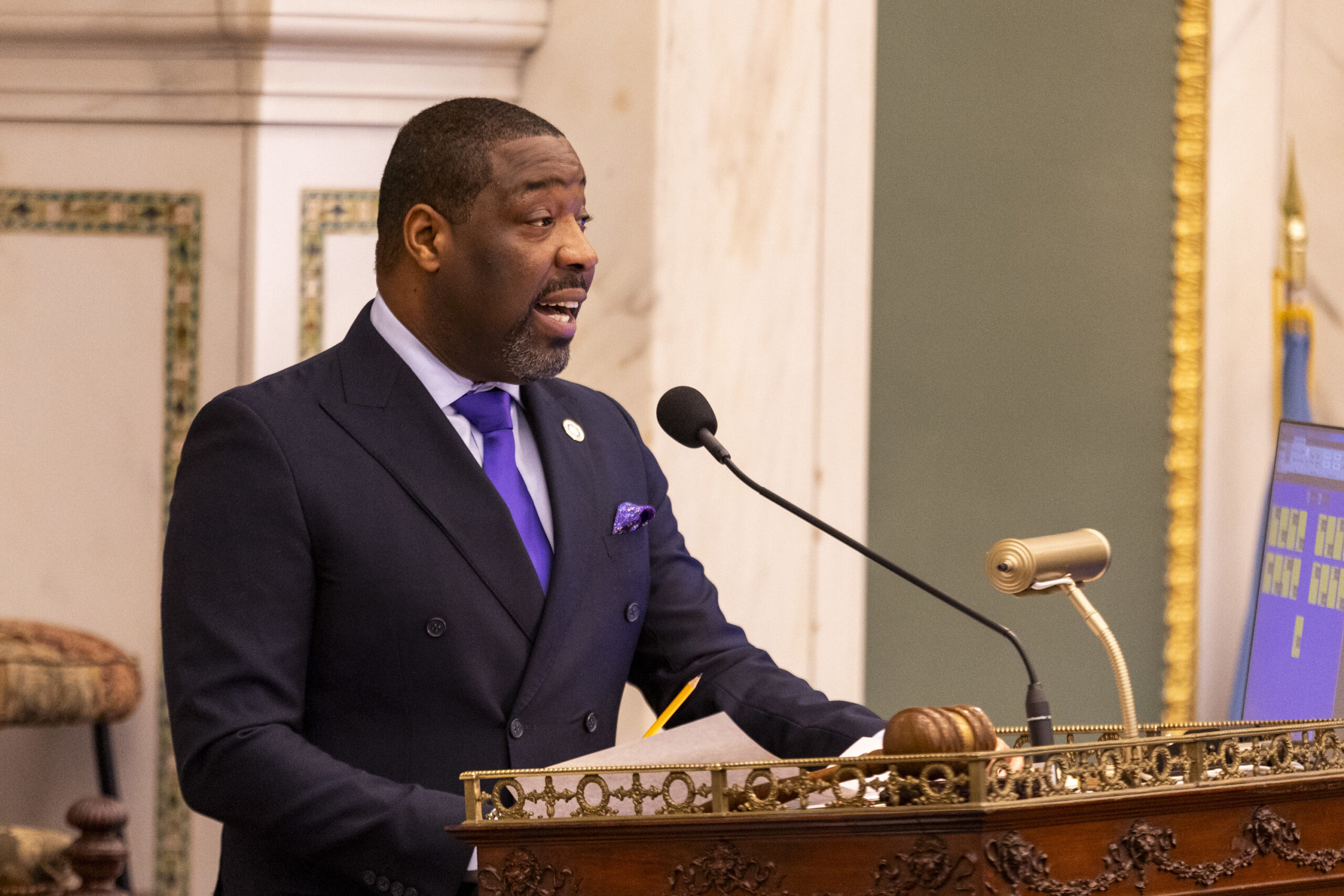
    City Council President Kenyatta Johnson speaking at the City Council’s first session of the year in Philadelphia, Pa., on Thursday, Jan. 22, 2026.

    But on Thursday, there was enough feel-good energy between the mayor and Council that it extended beyond Johnson to members who have more frequently clashed with the administration.

    Gauthier and Councilmember Isaiah Thomas, who questioned the mayor’s agenda last year over concerns that she was taking out too much debt for housing, also stood alongside the mayor at Thursday’s news conference.

    After the delays to her agenda at the end of last year, the mayor appears to be trying to regain control of the narrative this week. Thursday’s bill-signing ceremony marked Parker’s third major update related to H.O.M.E. in three days.

    On Tuesday, she announced that her administration was partnering with the city’s building trades unions and the Philadelphia Housing Authority to redevelop the Brith Sholom House, a notoriously dilapidated senior facility that closed in 2024, into affordable housing for seniors.

    And on Wednesday, she laid out a vision to build a modular housing manufacturing facility on the long-vacant Logan Triangle tract in North Philadelphia. The city issued a request for information from developers potentially interested in building such factories in the city, with a deadline in late March.

    Parker on Thursday only indirectly responded to a question about how many units could be built or repaired in the two years left in her term.

    But she said that her administration is working on a second package of zoning legislation to accelerate home construction in Philadelphia, and that she is working with Council to speed 1,000 properties through the land bank.

    She also expects Gov. Josh Shapiro, at his forthcoming budget address, to announce state-level housing reforms that would help “as it relates to streamlining state processes [to] run more efficiently.”

    Staff writer Anna Orso contributed to this article.
  • Educational play spaces were built at two North Philly affordable housing sites. Could they inspire similar projects nationwide?

    Educational play spaces were built at two North Philly affordable housing sites. Could they inspire similar projects nationwide?

    Regina Robinson isn’t used to being asked what she wants out of her home.

    But for about a year, architects and designers had detailed discussions with her and other tenants at the Susquehanna Square subsidized apartment community in North Philadelphia about how to transform the look and feel of the development.

    Robinson and her now 8-year-old daughter, Faith, went to every meeting. Residents talked about their love of graphic novels and the inspiration they found in superheroes — not just those who can fly, but real people they saw making a difference in their own families and communities.

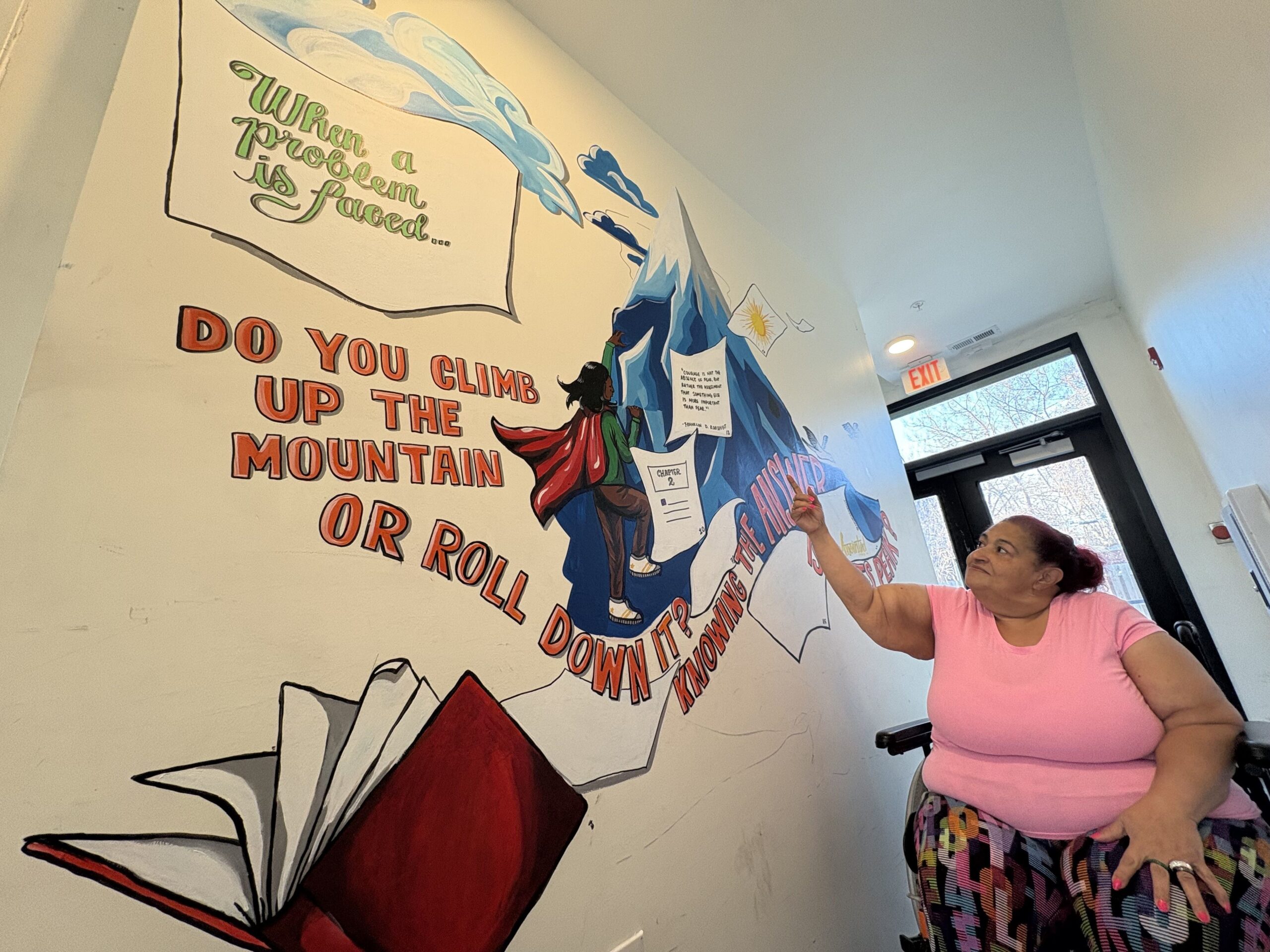
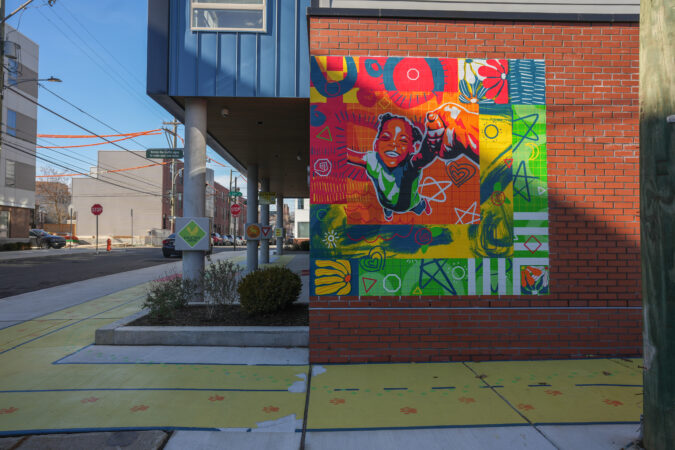
    Blank white walls in apartment hallways became canvases for colorful murals of people in capes meant to inspire children and adults to have self-confidence and set goals. A previously unused bike shed now stores bikes but is also a stage for acting out stories and a puzzle wall for spelling words. In courtyards, residents got new places to sit that double as little libraries. Prompts ask them to think about the books they read and create characters and stories of their own.

    “They really listened to us. … They were taking our ideas and they actually brought it to life,” Robinson, 52, said. “It really brought tears to my eyes.”

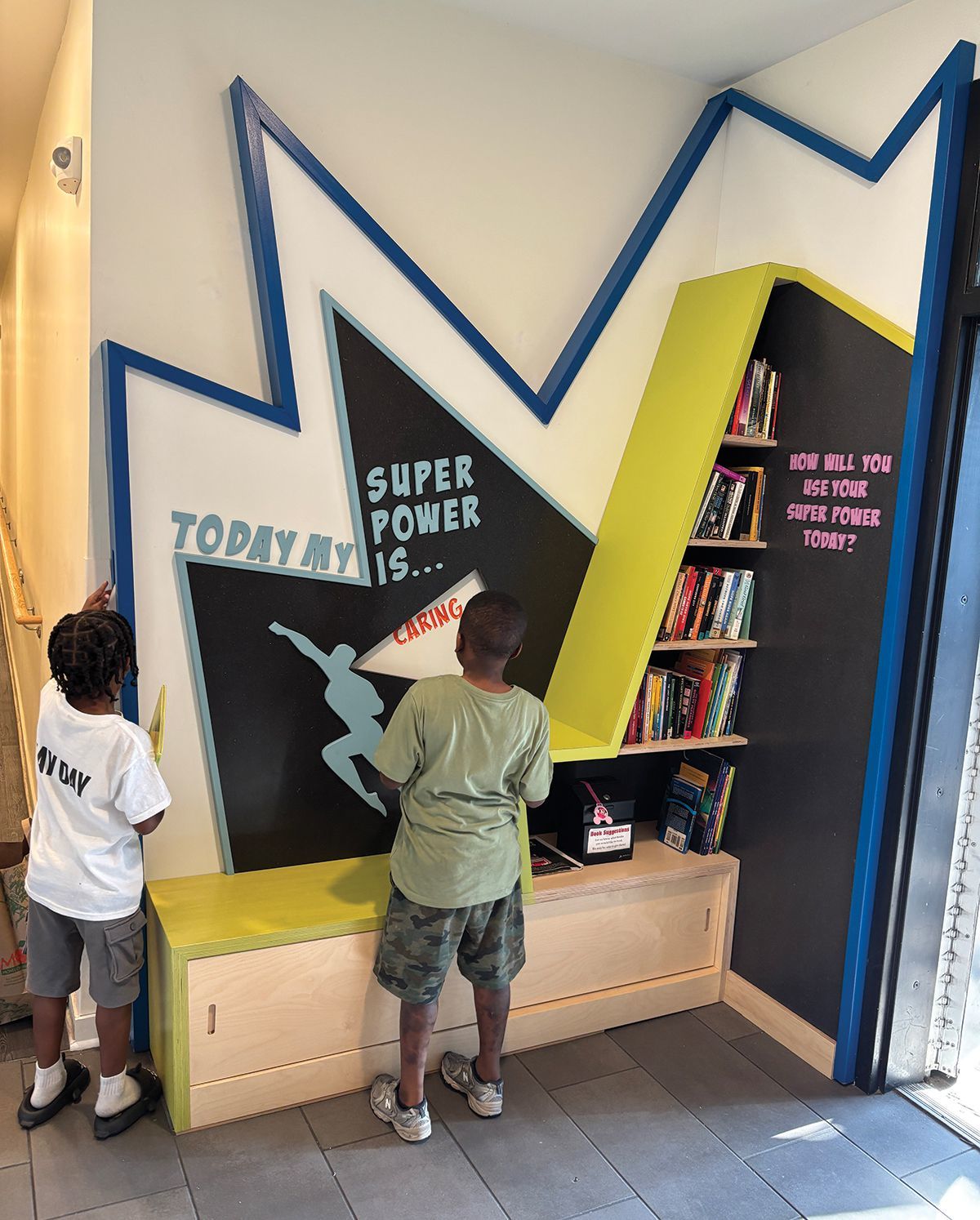
    A mural asks “What is your superpower?” in the hallway of an apartment building in the Susquehanna Square development in North Philadelphia.

    The project was an initiative of Playful Learning Landscapes, cofounded in Philadelphia in 2009 by Temple University professor Kathy Hirsh-Pasek and University of Delaware professor Roberta Michnick Golinkoff. The organization has brought the concept of playful learning — engaging children and their caregivers in skill-building lessons through play — to spaces such as laundromats, parks, grocery stores, sidewalks, and subway stops.

    But installations at two sites in North Philadelphia are the organization’s first that bring playful learning to subsidized housing. And the organization and its partners hope the Live and Learn pilot will lead to similar projects across the country that help vulnerable children catch up to peers who have access to more educational opportunities.

    The goal is to incorporate playful learning into all subsidized housing developments, said architect Heidi Segall Levy, project manager of the Live and Learn initiative and an associate at Watchdog, a Philadelphia-based real estate consulting firm.

    “We were really trying to increase educational equity,” she said. “And the way to do that is to really bring it into [people’s] homes.”

    Architect Heidi Segall Levy, manager of the Live and Learn project, shows a mural by Linda Fernandez and Martha O’Connell from Amber Art & Design, at one of the educational play spaces at 2000 Ridge Ave.

    About playful learning

    Adults might not immediately understand what playful learning is until they’re reminded of childhood games.

    Take Simon Says, for example. Children learn to retain information, evaluate the directions they’re given, and follow through. I Spy helps children learn how to describe their surroundings. Matching games strengthen memory and help kids recognize patterns.

    Playful Learning Landscapes wants to transform any space where children and caregivers spend time into somewhere they can engage with each other. The organization has dozens of installations in Philadelphia and projects in about 30 U.S. cities and about 10 countries.

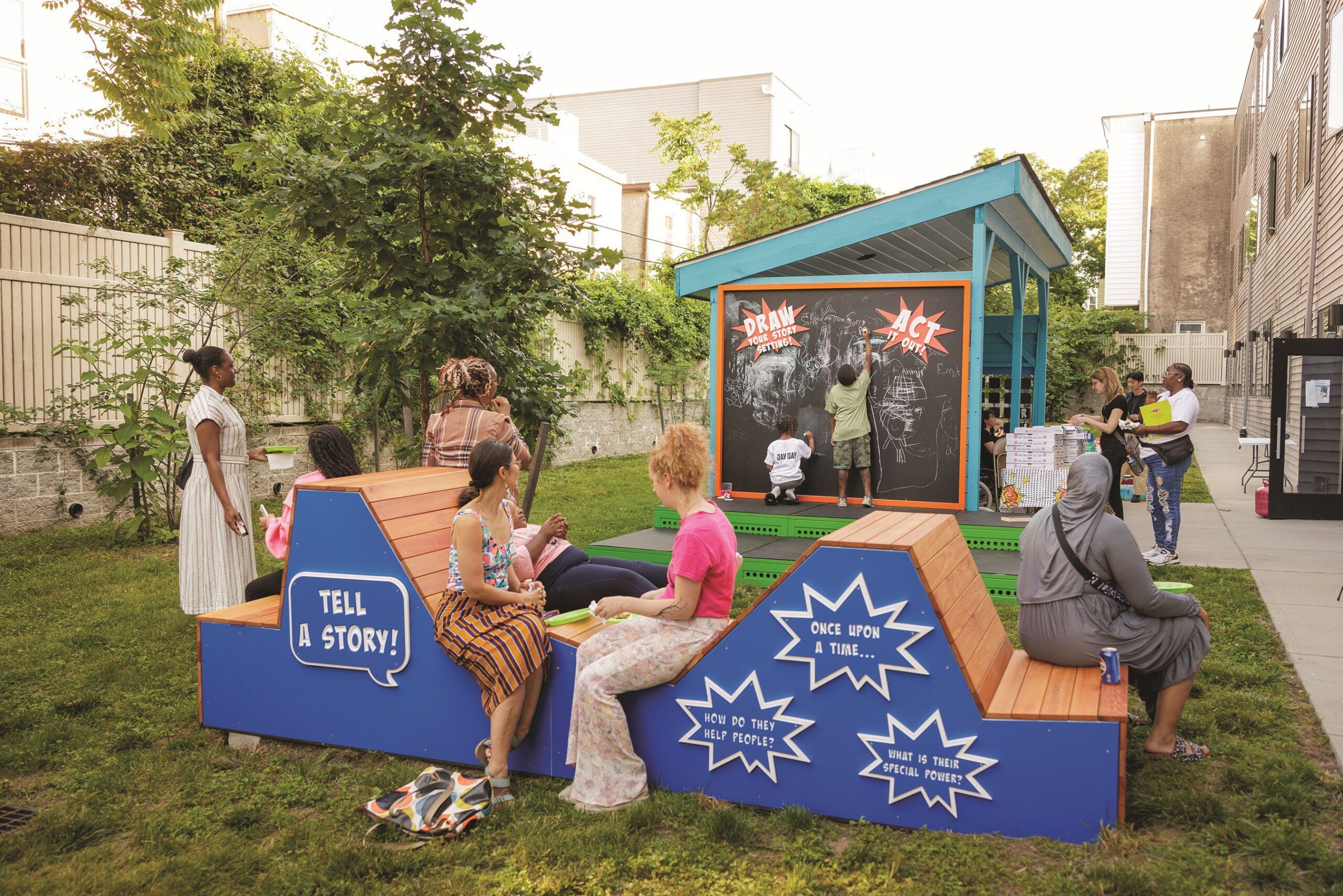
    Now an activity hub, this transformed bike shed invites children and caregivers to draw, act, and tell stories together. Interactive puzzles, a chalkboard, and a small stage surround a multi-seat bench that doubles as a learning prompt and bookshelf.

    One goal of the Live and Learn pilot was to train housing providers to continue the work.

    “Our hope in the future is that developers and designers will be thinking about how to build playful learning into the architecture,” Segall Levy said. And eventually, “playful learning will just be included in public space design.”

    Most of the pilot’s funding came from the William Penn Foundation, which contributed $647,250.

    The foundation has invested about $26 million in playful learning projects in Philadelphia over the last decade and wants to see playful learning elements become standard in recreation centers, parks, libraries, and other places, said executive director Shawn McCaney.

    “We believe every neighborhood should have access to high-quality public spaces” that can support community building, safety, and children’s development, McCaney said. “These kinds of spaces can become really important points of pride and engagement in communities.”

    Super at Susquehanna Square

    David La Fontaine, who recently retired as executive director of the nonprofit housing developer Community Ventures, was immediately interested when he was approached about adding playful learning to his Susquehanna Square apartment complex.

    “A program that helps young kids in school was really what made me most interested,” La Fontaine, the son of a public schoolteacher, said.

    Residents at Susquehanna Square spin the wheel to discover their superpower — a feature of the Book Nook. This custom Playful Learning installation is designed to create a sense of arrival while encouraging reading and social connection.

    Community members’ vision came to life with the help of KSS Architects.

    Susquehanna Square resident Merlyn DeJesus, 61, likes to sit in her building’s backyard and take in what the space has become. Young residents now have things to do when they go outside. They draw on a chalkboard, spin the letter tiles of a puzzle, and turn wheels to create their own superheroes.

    DeJesus and her 8-year-old granddaughter read books together from the little library, where community members can take and leave titles. Her granddaughter also helped paint superhero murals, which are on each of her building’s three floors.

    It all makes the space feel “more homey,” DeJesus said.

    “I feel proud inviting people to come to my home,” she said.

    Merlyn DeJesus, a resident of the Susquehanna Square subsidized housing development in North Philadelphia, points to one of the murals painted in her apartment building as part of the Live and Learn project.

    Transforming community spaces

    Playful Learning Landscapes focuses on tailoring projects for specific communities based on extensive outreach.

    For example, residents in the Sharswood area of North Philadelphia noted that nearby Ridge Avenue has lots of fast-moving traffic. So they said they wanted their children to learn about street safety in the Live and Learn project that was focused on subsidized homes developed by Pennrose in partnership with the Philadelphia Housing Authority.

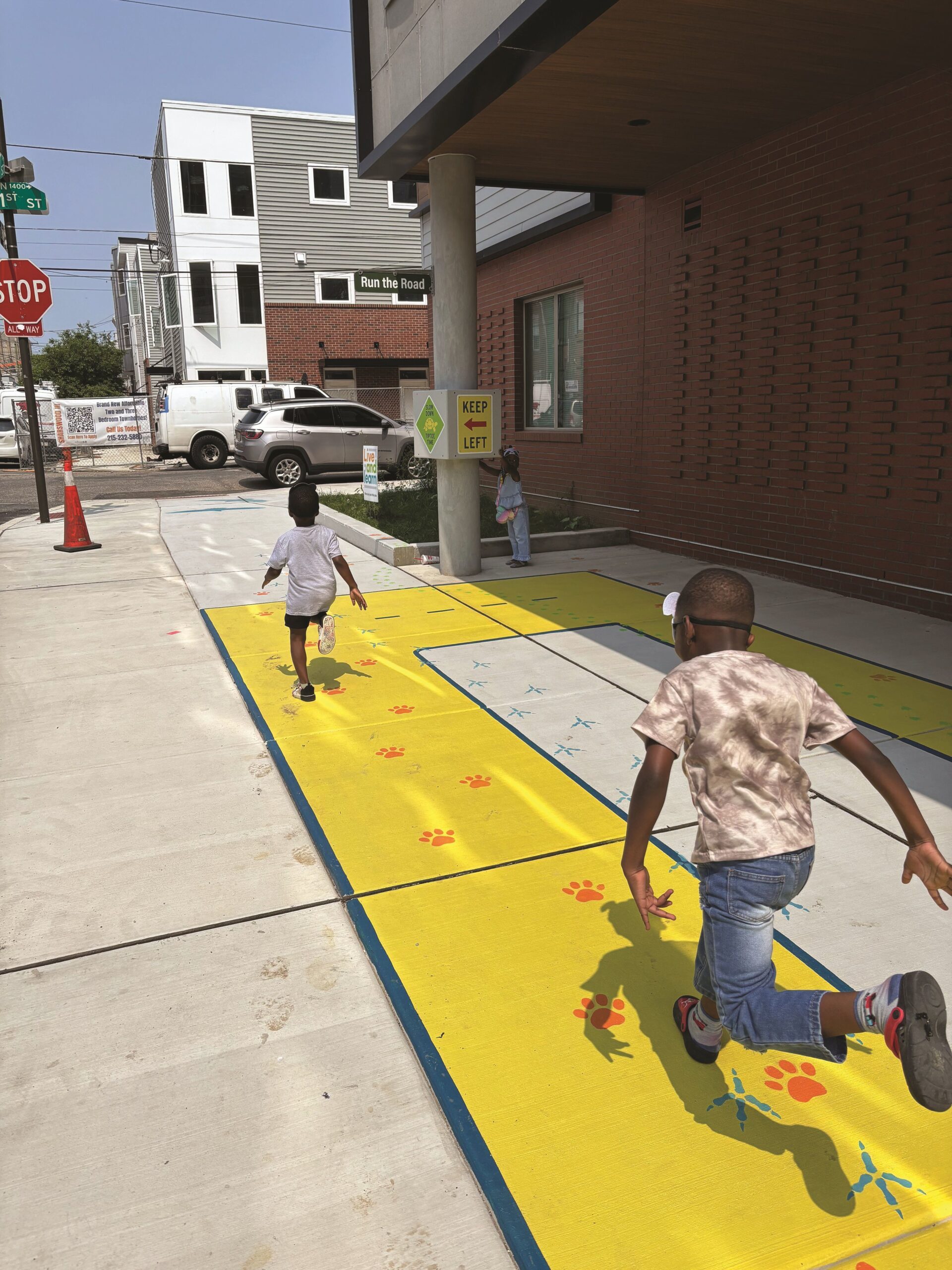
    Children in Sharswood “run the road” along a new Playful Learning track painted on the sidewalk of a Pennrose housing development.

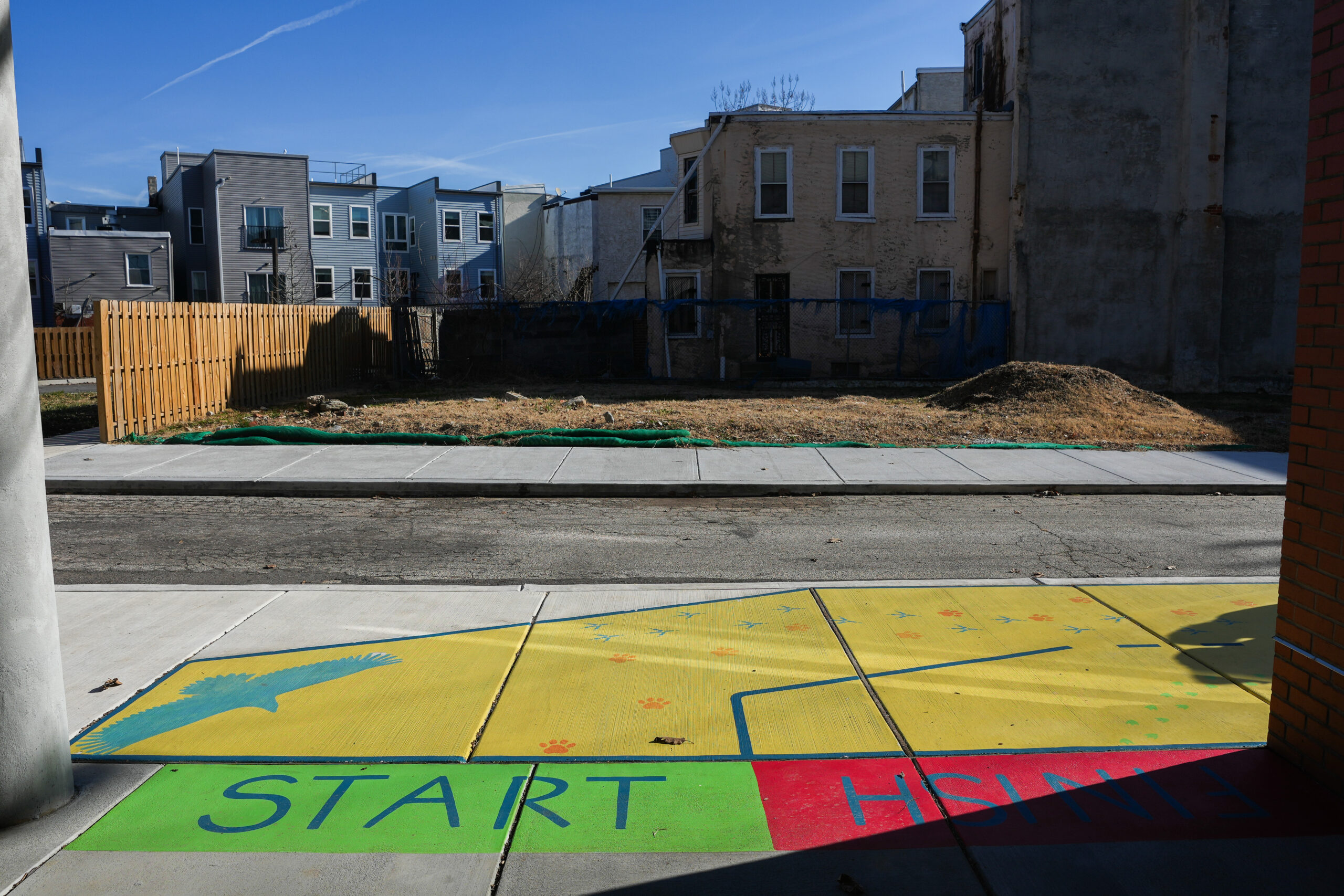
    At the “Run the Road” installation, a colorful street is painted on a sidewalk. Children can spin traffic signs and learn what “yield,” “keep right,” and “one way” mean. They learn about crosswalks. They can step on animal prints and walk like the creatures.

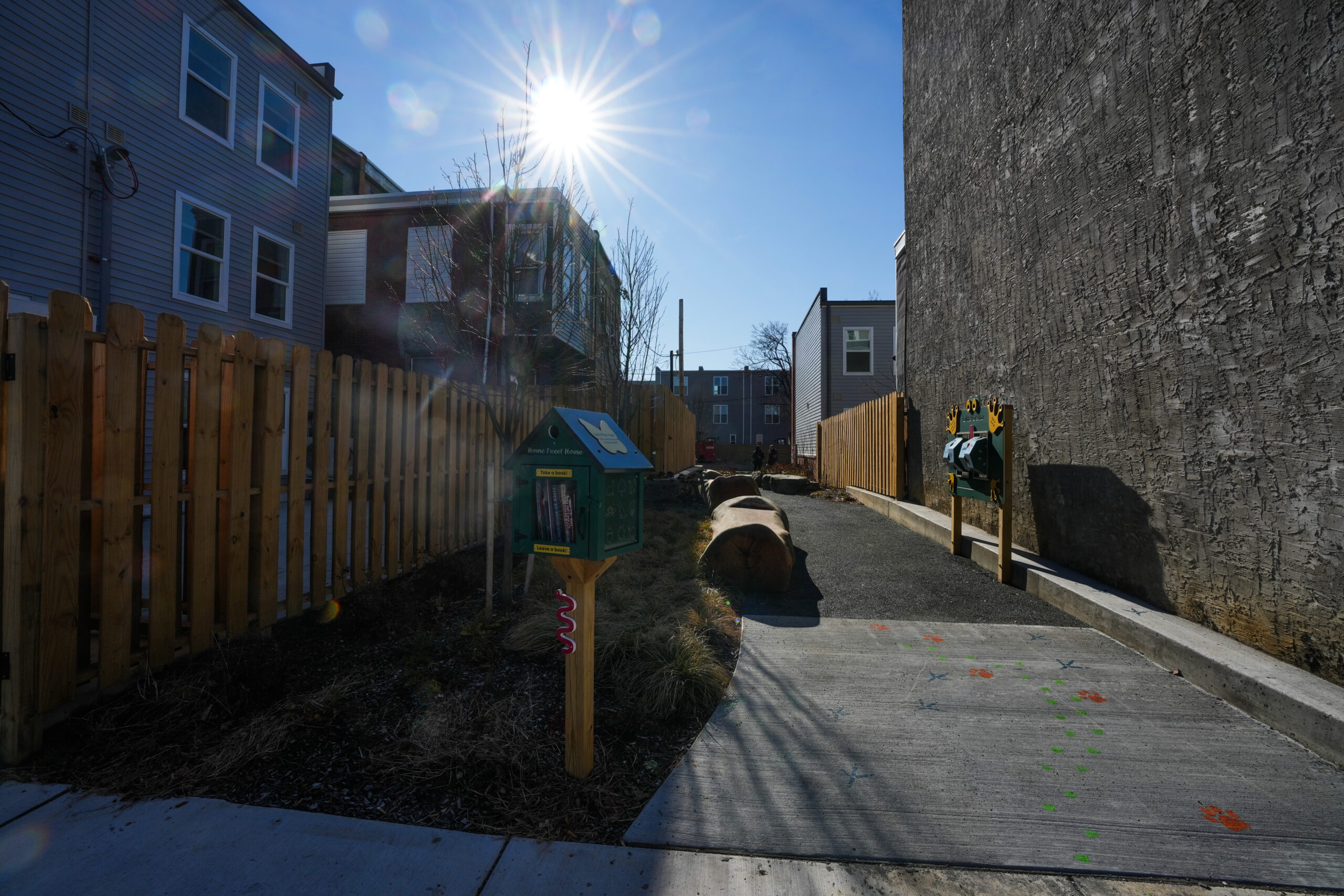
    Residents also said they didn’t have open space they could enjoy. So the Live and Learn project transformed a small strip of unused land into a pocket park. It has seating and a little library. There’s a puzzle and matching game and wheels children can turn to create their own animals and tell stories based on their creations.

    A pocket park is one of the educational play spaces that the Live and Learn initiative brought to a subsidized housing community in the Sharswood area of North Philadelphia.

    Darnetta Arce, executive director and founder of the Lower North Philadelphia Community Development Corp., said the space has become a safe, peaceful place for neighborhood residents.

    “Anytime you take blighted property and change it into a beautiful play and sitting area, I think that’s great,” she said. “There is no longer an eyesore in this community.”

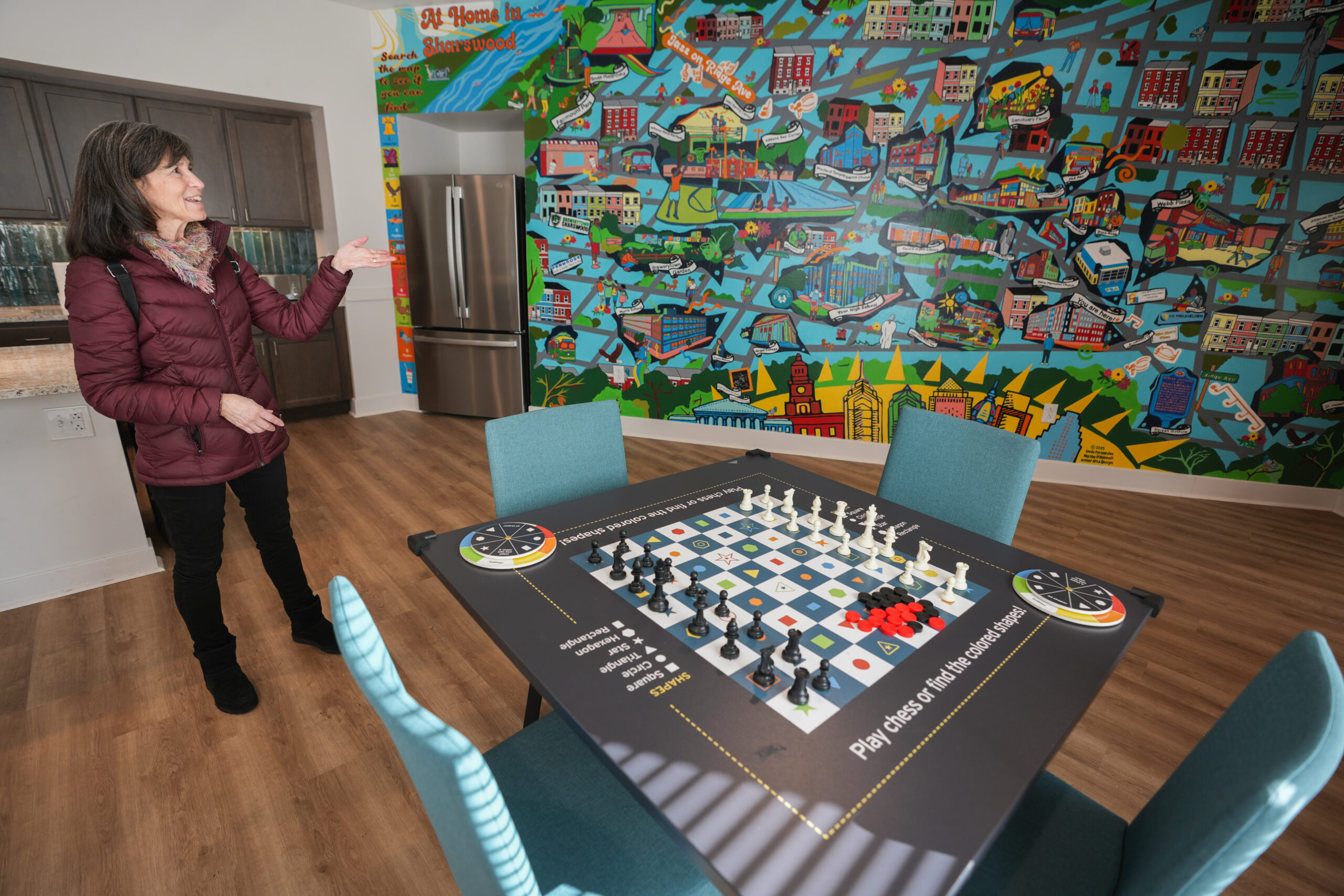
    Inside the community room of a new subsidized apartment building at 2000 Ridge Ave., what was originally going to be a blank white wall became a mural featuring a map of the neighborhood with cultural landmarks. The room also features tabletops with activities, such as chess, matching games, word games, and storytelling prompts.

    A young Sharswood resident explores a custom-designed Playful Learning chess table in the community room of a Pennrose housing development. The table is one of six navigation stations that help children build skills through play where they live.

    Architecture firm WRT worked on the installations. Associate Lizzie Rothwell has been an architect for more than 15 years and said she doesn’t usually get so much breathing room to collaborate with community members.

    “Within my professional career, it was a pretty unique opportunity,” Rothwell said. “It was one of the more rewarding experiences I’ve had working with a community on a design.”

    A forgotten strip of land wedged between housing developments on 22nd Street between Ingersoll and Master Streets in Sharswood is now “The Backyard,” designed with Playful Learning installations, including this Critter Creator, two nature-themed standing puzzles, and a little library with a built-in I Spy game.

    Looking ahead

    Now, Playful Learning Landscapes wants to pursue public policies that support the expansion of playful learning projects and provide incentives for developers and architects to incorporate this work into their plans, said Sarah Lytle, the organization’s executive director.

    Playful learning advocates briefed City Council members this fall about their work. In September, the city’s Department of Planning and Development issued a call for proposals to create or preserve affordable housing and encouraged developers to include art or design elements that foster children’s development.

    “We’re starting to see some traction,” Lytle said.

    More than seven months after the opening of the play spaces at Susquehanna Square, Robinson and her daughter now live in South Philadelphia, but they’ve come back to visit the murals they helped paint and the installations they helped develop.

    “To see it and to know it’s going to always be there,” Robinson said, “it brings a lot of joy to me.”

    The “Run the Road” installation on a sidewalk at 2045 Master St. teaches children in Sharswood about traffic rules.
  • Philadelphia building trades unions will loan $50M to help redevelop the dilapidated Brith Sholom House

    Philadelphia building trades unions will loan $50M to help redevelop the dilapidated Brith Sholom House

    A coalition of building trades unions will lend the Philadelphia Housing Authority $50 million out of its pension fund to help finance the redevelopment of Brith Sholom House, a dilapidated senior apartment complex in West Philadelphia.

    Mayor Cherelle L. Parker and her longtime political ally Ryan N. Boyer, the business manager of the Philadelphia Building and Construction Trades Council, announced the arrangement Tuesday and framed it as a first-of-its-kind approach to expanding the city’s affordable housing stock.

    Under the terms of the deal, PHA will repay the building trades over 15 years at a 4.5% interest rate. PHA President and CEO Kelvin Jeremiah called it a good deal for taxpayers as banks and traditional financing institutions are lending at higher rates.

    The city is guaranteeing the loan. Parker said the outcome will be 336 units of affordable housing for seniors on fixed incomes. Members of the building trades unions will perform the work at the site.

    “This isn’t an investment for the building trades,” Boyer said. “It’s a down payment on our city’s future.”

    Boyer, one of the most powerful nonelected political figures in the state, has been a longtime ally to Parker and much of City Council. The trades unions poured millions into Parker’s run for mayor in 2023 and have remained largely in lockstep with her. Boyer led the mayor’s transition team and has been a key voice on her signature housing plan, which stands to generate thousands of construction jobs.

    The trades’ $50 million investment comes in addition to the $99.6 million that the housing authority is spending on a gut rehabilitation of the Wynnefield apartment complex, bringing the total cost of the project to $150 million.

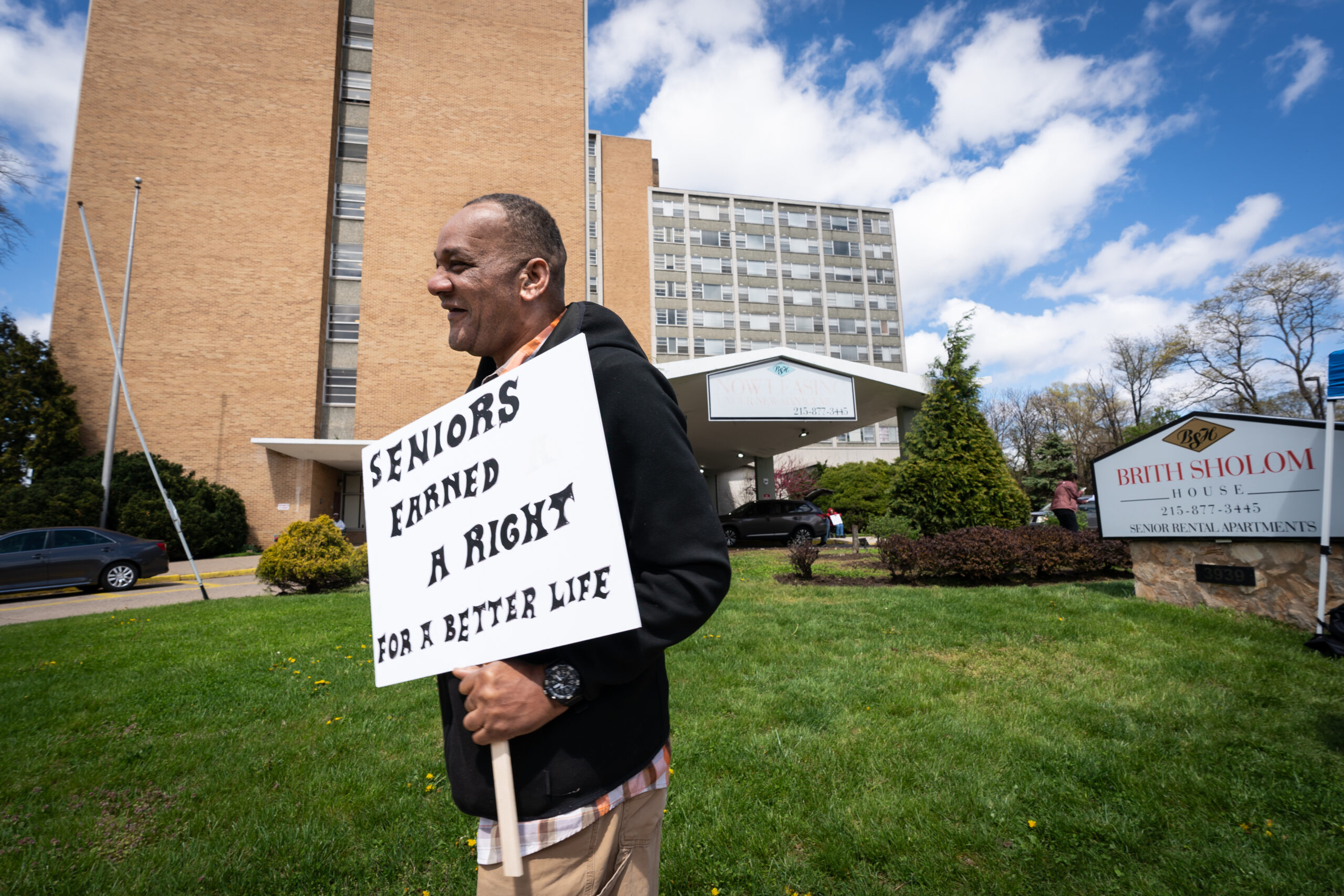
    A protestor carries a sign to protest the living conditions at Brith Sholom House apartments, in Philadelphia, on Friday, April 12, 2024.

    Jeremiah said he has been “shocked and dismayed” by the conditions at Brith Sholom, which was so neglected under its previous owners that tenants were forced to move out.

    Work will begin late this year and is expected to take about 20 months to complete, Jeremiah said, meaning tenants may not be able to move back in until 2028. He had previously estimated a timeline that would have allowed residents to return this year.

    Brith Sholom fell into disrepair under its previous owners, the New Jersey-based Puretz family. A 2024 Inquirer investigation found that members of the family became one of the nation’s largest affordable housing purveyors by buying up old buildings, saddling them with debt, and then defaulting on loans.

    At Brith Sholom, the Puretz family profited while defaulting on a $36 million mortgage and amassing dozens of code violations. Residents — who organized to save their homes — complained of deteriorating infrastructure, threats of utility shutoffs, squatters, and severe pest infestations.

    In a bid to preserve the building and reuse it in part as subsidized housing, PHA acquired Brith Sholom House in August 2024 for $24 million.

    In addition to the price of the acquisition, Jeremiah estimated in 2024 that the cost of rehabilitating the building would be an additional $30 million to $40 million. PHA said then that the remaining 111 elderly residents in the 360-unit building would be able to remain in place.

    Three months later, Jeremiah informed the tenants that Brith Sholom was in such ragged shape that they would have to be moved out to repair the building. Some units were so badly damaged that PHA could not fix them.

    Following the acquisition of Brith Sholom, PHA has embarked on an ambitious $6.3 billion, 10-year plan that includes the purchase of 4,000 other privately held apartments. In the face of a glut of market-rate multifamily properties, many developers have struggled to charge the rents they need to pay back their loans — and the housing authority has been able to purchase buildings from such companies across the city.

    City Council President Kenyatta Johnson speaks during a news conference about the plan to redevelop Brith Sholom. At right is Mayor Cherelle L. Parker.

    Parker also said the investment at Brith Sholom is part of her signature housing initiative, called Housing Opportunities Made Easy, or H.O.M.E. The mayor — who has promised to build, redevelop, and preserve more than 30,000 units of housing — is in the midst of continued negotiations with City Council over H.O.M.E.’s first-year budget.

    Council in December gave initial approval to changes to legislation related to Parker’s housing initiative, which set income eligibility thresholds for two housing programs funded by H.O.M.E.’s bond proceeds. Parker wanted a higher threshold so middle-class residents could access the programs, while Council’s version aims to prioritize poorer Philadelphians.

    Council could take a final vote on the related legislation as early as Thursday, when lawmakers return to session following their winter break.

    Throughout the contentious process, Parker has said her administration is committed to affordable housing for lower-income Philadelphians. The collaboration with PHA to remake Brith Sholom, she said, is part of that effort.

    “It’s not just for one particular constituency,” Parker said Tuesday about her overarching housing plan. “I’m personally on a mission to save Philly rowhomes. We’re trying to address our housing crisis and doing it for Philadelphians from all walks of life.”

    Parker was joined at the news conference Tuesday by Council President Kenyatta Johnson, despite the two being at odds over the H.O.M.E. legislation in recent months. Johnson praised the mayor’s leadership and said the financing arrangement for Brith Sholom is remedying a “miscarriage of justice.”

    “This is the type of work that helps those most in need,” Johnson said, “which is our seniors, who deserve to live out the twilight of their lives in dignity.”

  • After delays, Lehigh Avenue apartment project is ready to begin construction under a new owner

    After delays, Lehigh Avenue apartment project is ready to begin construction under a new owner

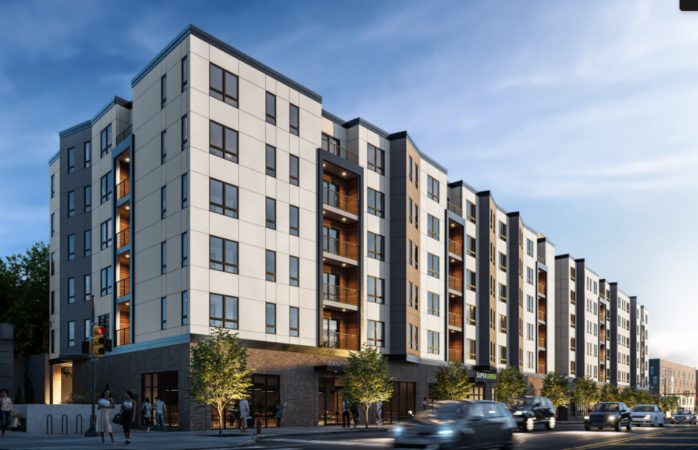
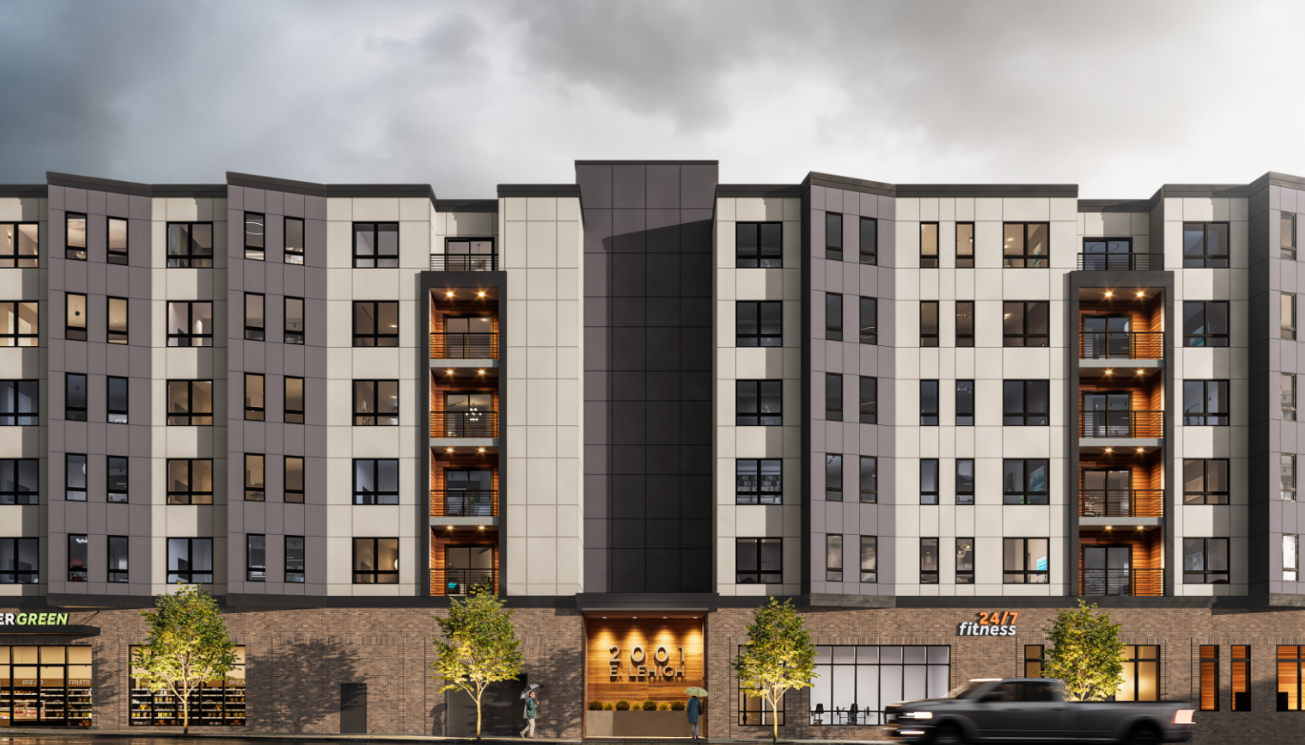
    A six-story apartment project at 2001 E. Lehigh Ave. is moving forward with a new owner after years of delay amid a difficult development environment.

    Five-lane Lehigh Avenue divides the southern portion of Kensington, which has experienced development more akin to the boom in Fishtown, from the parts of the neighborhood to the north that are at the heart of the city’s opioid crisis.

    But along the northern edge of the avenue, next to the Conrail tracks, a series of auto-oriented and light-industrial properties have been redeveloped as housing in recent years.

    “That whole corridor has continued developing. It’s even pushing over the tracks further up north, too,” said Brian Corcodilos, CEO of Designblendz, the architect for the project. “We’re confident that … this area continues to rent up.”

    The former owner of 2001 E. Lehigh, developer Isaac Singleton, secured zoning approvals for the project in 2023 and 2024. City records then show the property sold for $2.5 million in January 2025.

    A demolition permit for the property was issued this week to an address associated with developer Roman Ovrutsky — whose home The Inquirer profiled last year — and Corcodilos said their team expects construction to begin by early spring.

    Ovrutsky’s version of the project will feature 146 apartments, a slightly smaller number than Singleton proposed, and a little over 6,000 square feet of commercial space on the ground floor. The project will also have 54 underground parking spaces.

    Designblendz has updated the visual palette for the project by adding darker grays and slate-colored hues.

    Corcodilos said that changes in federal tax policy in President Donald Trump’s Big Beautiful Bill have enabled clients to begin building again. A lull in recent years was caused by heightened interest rates and an apartment glut that made it hard for developers to charge the rents necessary to pay back the loans on their projects.

    The former design for the building included greens and browns. The new vision features slate-colored hues.

    Corcodilos said developers have also found that more projects are making sense if they use either the city’s mixed-income housing zoning bonus — which allows taller or denser construction in exchange for an affordability component — or if they base their financing on catering to some tenants who use federal rent voucher subsidies.

    “That’s how a lot of these projects are getting done,” Corcodilos said.

    It’s illegal in Philadelphia to discriminate against renters using vouchers, but it’s common for landlords to discourage those tenants, and many buildings owners don’t proactively advertise to subsidized tenants.

    But in recent years, increasing numbers of landlords have seen the advantage of tapping into a large tenant base with almost guaranteed payments.

    Another property just north of Lehigh Avenue at 2200 E. Somerset St. was sold last year to the Philadelphia Housing Authority, after many of its tenants ended up being voucher holders.

    “A lot of these big buildings that are going up, the only way they’re penciling is if there’s some sort of an affordability component to it,” Corcodilos said.

    Beyond Kensington, Designblendz is seeing an increase in work this year due to developer-friendly changes in the federal tax code, opportunities in affordable housing provision, and an easing of the overall apartment glut, he said.

    “I’m not getting a sense at the moment that clients are worried about not filling their units,” Corcodilos said. “Obviously things slowed down a little bit over the last year and a half for the industry. But what we’re seeing right now, it’s busier than ever.”

  • Suburban Square now has apartments

    Suburban Square now has apartments

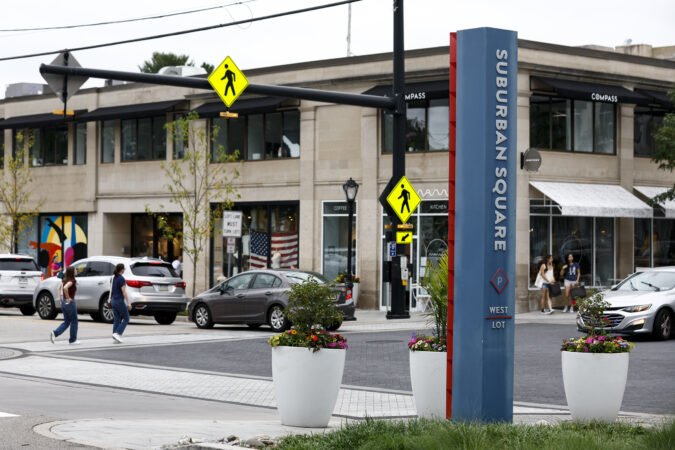
    Apartments have come to Suburban Square.

    This week, owner Kimco Realty and developer Bozzuto Development announced the opening of Coulter Place, the first apartment community in the Ardmore shopping destination.

    The five-story, mixed-use development includes 131 apartments with one to three bedrooms and about 20,000 square feet of ground-floor retail space. Amenities for residents include a fitness center, clubroom, game room, pool, coworking spaces, and pet-care spaces. It has two courtyards and garage parking with electric-vehicle charging stations.

    The promise of apartment residents helped attract new retailers to Suburban Square, including New Balance, Sugared + Bronzed, and the apparel brand Rhone on the ground floor of the apartment building.

    The complex is one of a few projects planned in recent years that have added or will add hundreds of apartments near Lancaster Avenue in Ardmore. One Ardmore, a 110-unit apartment complex, opened in 2019 after a yearslong campaign by residents to stop it. The long-awaited Piazza development is expected to add 270 apartments and almost 30,000 square feet of retail space when it opens in a couple of years.

    This rendering shows the outdoor pool at Coulter Place.

    Conor Flynn, CEO of Kimco Realty, said in a statement that Suburban Square is an “iconic, walkable destination” and that the addition of apartments creates “a more vibrant, connected experience for residents, retailers, and visitors alike.”

    “Coulter Place represents the next chapter in Suburban Square’s evolution and a clear example of how we’re unlocking long-term value through thoughtful mixed-use development,” Flynn said.

    The apartments are across from Trader Joe’s and the Ardmore Farmers Market and within walking distance to the Ardmore station for SEPTA and Amtrak trains.

    Apartments available for lease at Coulter Place range from one-bedroom, one-bathroom units for about $3,030 per month to a three-bedroom, two-bathroom unit for $7,035 per month.

    Philadelphia-based JKRP Architects designed the apartment building.

    Suburban Square was developed in 1928 and now has about 80 shops, restaurants, fitness spaces, and more. Businesses include Apple, SoulCycle, Warby Parker, Van Leeuwen Ice Cream, CAVA, and Di Bruno Bros.

    This rendering shows one of the courtyards for residents of Coulter Place.
  • Zillow says the Philly region will be one of the 10 hottest housing markets of 2026

    Zillow says the Philly region will be one of the 10 hottest housing markets of 2026

    Zillow predicts that the Philadelphia region will be one of the 10 hottest housing markets of 2026.

    This year is a big one for Philadelphia, which will host celebrations for the country’s 250th birthday, FIFA World Cup matches, and Major League Baseball’s All-Star Game. Both the Wall Street Journal and the New York Times have called the city the top travel destination in the world for 2026.

    But Zillow’s ranking of the country’s 50 most-populous metros is based on housing market fundamentals that have nothing to do with one-off events. The company examined markets’ home value growth and competitiveness.

    The Philadelphia metropolitan area ranked sixth-hottest for 2026.

    “Competition among buyers will be stiff, and sellers will have the upper hand in this year’s hottest markets,” Mischa Fisher, Zillow’s chief economist, said in a statement. “Shoppers will need to tap all the resources they can muster in these fast-moving markets, from their team of experts to tech aids to financial assistance, but successful buyers will quickly gain equity.”

    In the Philadelphia area, the number of homes for sale last year was about 40% lower than the average pre-pandemic. And demand is outpacing supply. That has made local housing markets more competitive.

    Two in five homes sold for more than the asking price from September 2024 to September 2025. And homes typically spent just 13 days on the market in the year ending in October 2025.

    During that same period, 22% of listings had a price cut on Zillow. Among the 50 most-populous metros, this share ranged from 13.5% to 33%.

    And Zillow estimates that Philadelphia-area home values grew by 3%. It forecasts that values will grow by another 1.7% over the next year.

    window.addEventListener(“message”,function(a){if(void 0!==a.data[“datawrapper-height”]){var e=document.querySelectorAll(“iframe”);for(var t in a.data[“datawrapper-height”])for(var r,i=0;r=e[i];i++)if(r.contentWindow===a.source){var d=a.data[“datawrapper-height”][t]+”px”;r.style.height=d}}});

    This is Zillow’s second recent recognition of the strength of local housing markets. Last month, the company revealed that Philadelphia was the only large city that made its list of the 20 most popular housing markets of 2025. That analysis included many more markets — not just the largest ones — and the list was dominated by midsize cities in the Midwest.

    On Zillow’s list of the predicted hottest major metros of 2026, Hartford, Conn., knocked Buffalo, N.Y., from the No. 1 spot. Zillow had ranked Buffalo as the hottest metro two years in a row.

    In Hartford, more than two-thirds of homes sold above the listing price on average between September 2024 and September 2025. That’s the largest share among major metros. The typical home for sale spent about a week on the market. And Zillow expects home values to grow by about 4% from October 2025 to October 2026.

    The New York metro area, which includes parts of New Jersey and Pennsylvania, ranked third-hottest for 2026. Among major metros, it had the lowest share of listings with a price cut: 13.5%.

  • These old Exton offices are becoming ‘hotel-apartments’

    These old Exton offices are becoming ‘hotel-apartments’

    While the battle rages over how much redevelopers should cram into the former Exton Mall site, investors on the ridge just to the north have turned one of Great Valley’s vacant office buildings into a suburban rarity: 24 studio and 8 single-bedroom apartments.

    They’re equipped with kitchens, bathrooms, and washer/dryers, and they’re being marketed as monthslong hotel accommodations for consultants and visitors to nearby employers.

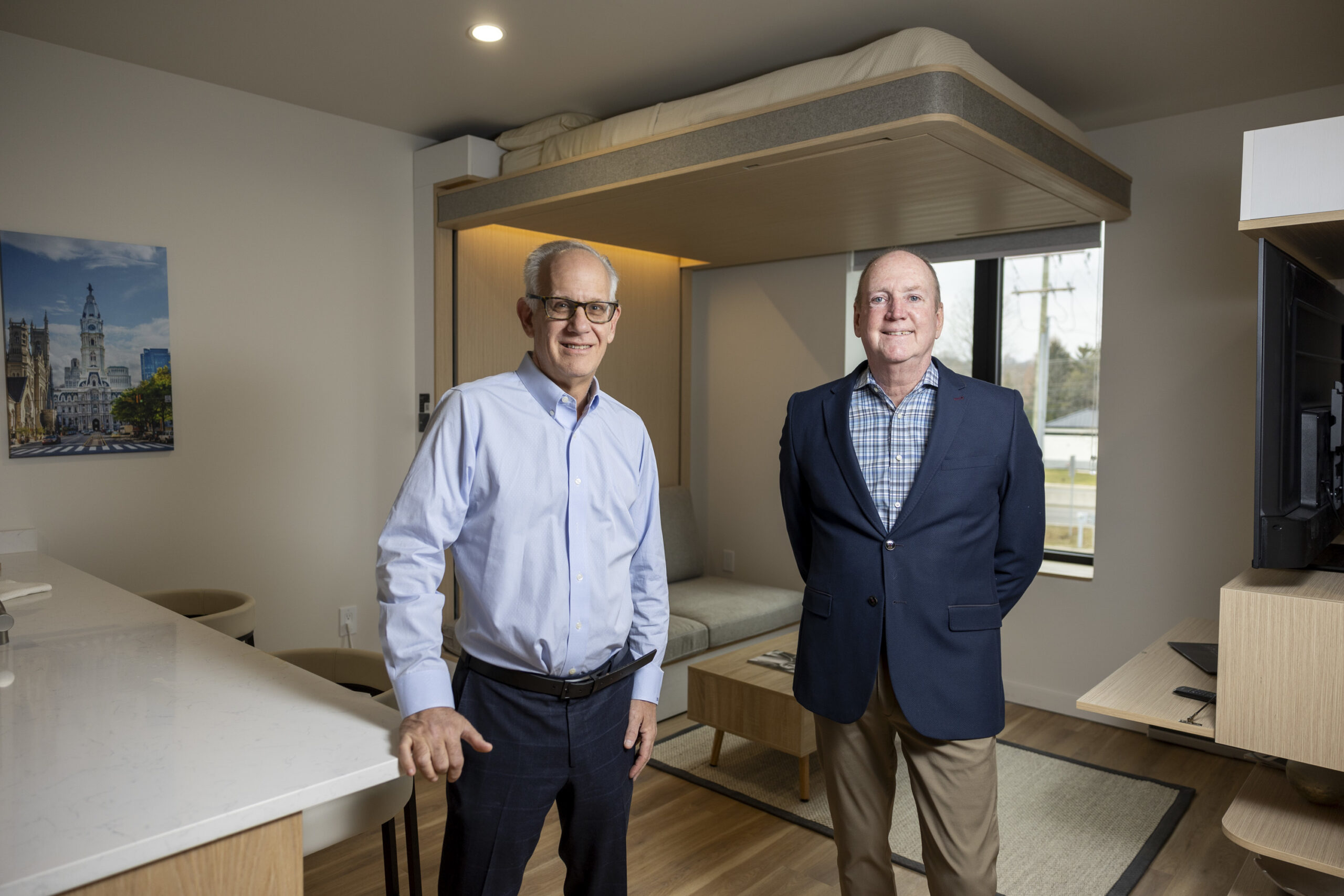
    The owners, a group led by Main Line real estate lawyer David McFadden, broker John McGee, and investment partner Chiu Bai, hope the building, which they’re calling the Flats on 100, will be a model for reusing orphan buildings that stud the Great Valley and other suburban office, industry, and retail zones.

    David McFadden of Chester Springs (left) and John McGee of Wayne are co-partners and owners of the Flats on 100 in Exton.

    The trio picked up the 53-year-old, 30,000-square-foot building and grounds at 319 N. Pottstown Pike (State Route 100) in 2023 for $1.5 million from family-owned Kelsch Disability Services.

    “Fifty bucks a [square] foot” seemed like a bargain, even though the partners didn’t have specific plans for it, McFadden said.

    “Office buildings are being given away these days. What do we do with them when there’s no demand for office space?” he said. “At the right discount, developers can afford to turn them into something sustainable that people want.”

    As offices, the building was broker-rated Class C, the least desirable. The partners paid cash, figuring they could borrow millions for capital improvements if they could show lenders a credible plan to turn it into something more profitable.

    “We got lucky with the zoning,” McFadden said. West Whiteland’s “town center” designation allows a wide range of uses.

    The partners chose what McFadden calls “hotel-apartments.” He compared it to projects built by Level Hotels & Furnished Suites, with locations in Chicago and the West Coast, and by family-owned, locally based Korman Communities’ AVE Living, with its furnished apartments at Philadelphia’s Navy Yard and other local sites.

    McFadden says the model offers “a place that feels like home, with the amenities of larger buildings but a boutique feel.” The units are fully furnished, including appliances, dishes, and linens, as well as cleaning and other services as requested.

    Lender Trupert Ortlieb from TruMark Financial, one of the area credit unions bulking up with business loans, arranged $5.7 million in financing for capital improvements.

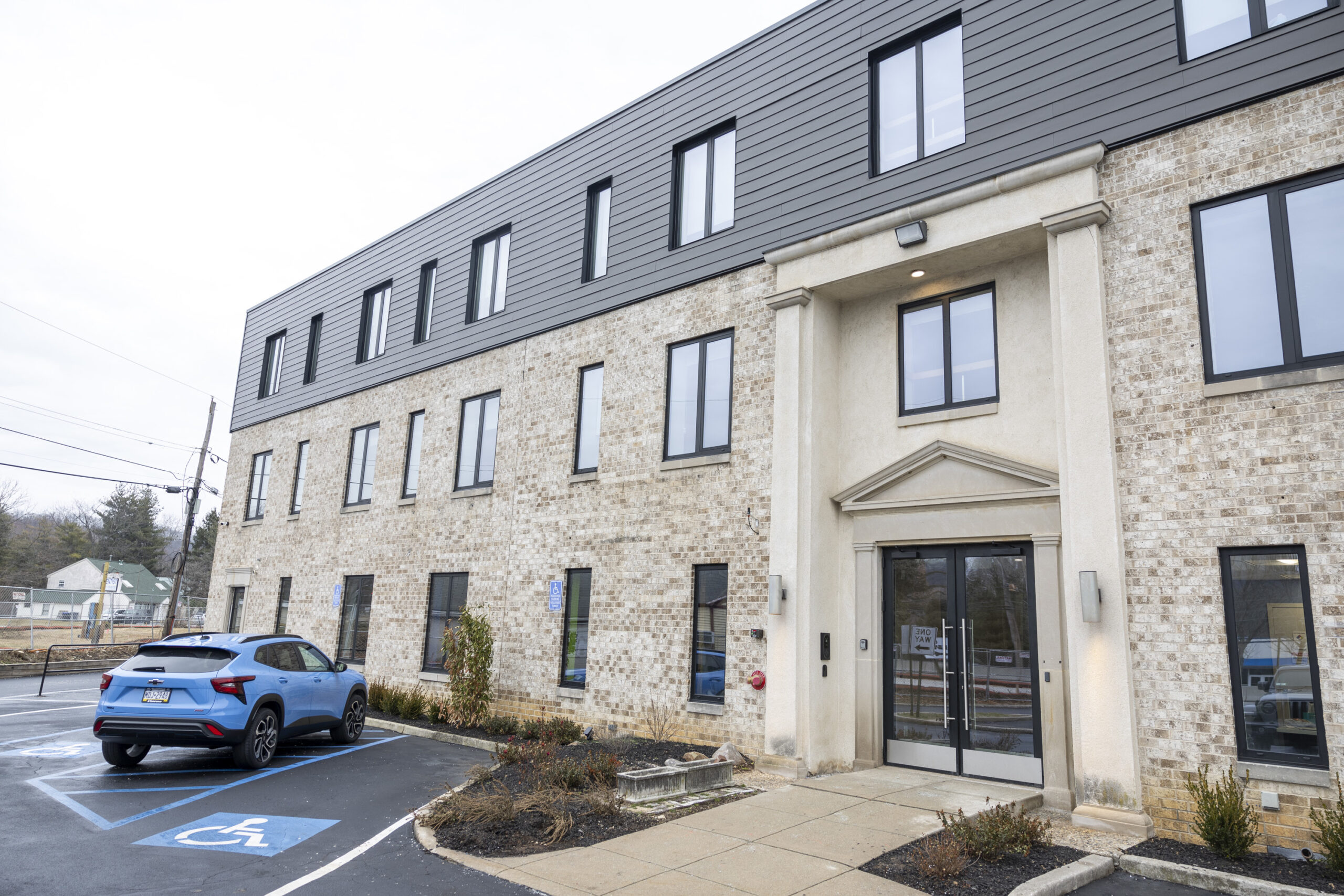
    The outside of the Flats on 100 apartments, a redevelopment of a commercial building.

    Contractors demolished and replaced interior walls; added sprinklers, triple-glazed windows, and insulation; and replaced heating and air-conditioning. The reclad of the interior with aluminum finished like pine was picked up by Chiu in China for $30,000 (half that for the materials, $4,000 for shipping, and $11,000 to cover tariffs).

    Because the project qualifies as a hotel, it could add a liquor license without the higher cost of a tavern license. A first-floor retail space has been leased to a dentist.

    The partners expect interest from nearby employers such as Vanguard Group, QVC, West Pharmaceutical Services, and Accenture.

    The Fairfield shopping center, with a Giant supermarket, fast-casual restaurants, and retail stores, is within walking distance. The Exton SEPTA Regional Rail station is two miles down Pottstown Pike.

    Seeking light in what had been gloomy space, the developers brought in architect Martin Kimmel from Blue Bell. He persuaded them to replace half “gun-slit” windows with 5-foot-wide glass sheets, which turned out to be more work than expected, trimming 12-inch blocks topped by 4-inch bricks.

    Other amenities include a barbecue pit, an outdoor dog walk, a pet-washing room, basement fitness center, conference room, bar, pool table, and walk-on services like massage and physical therapy.

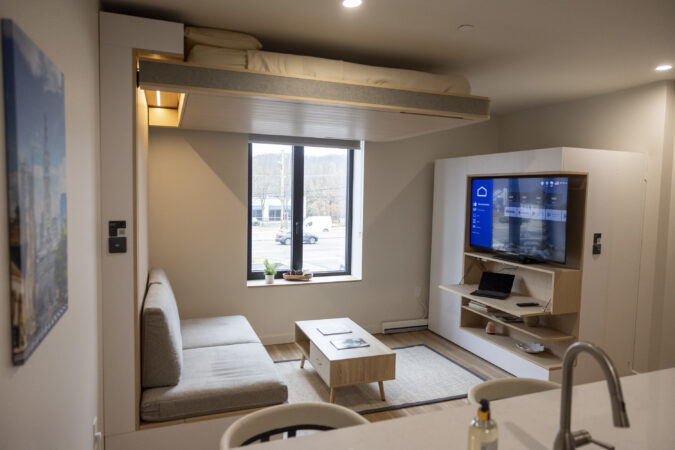
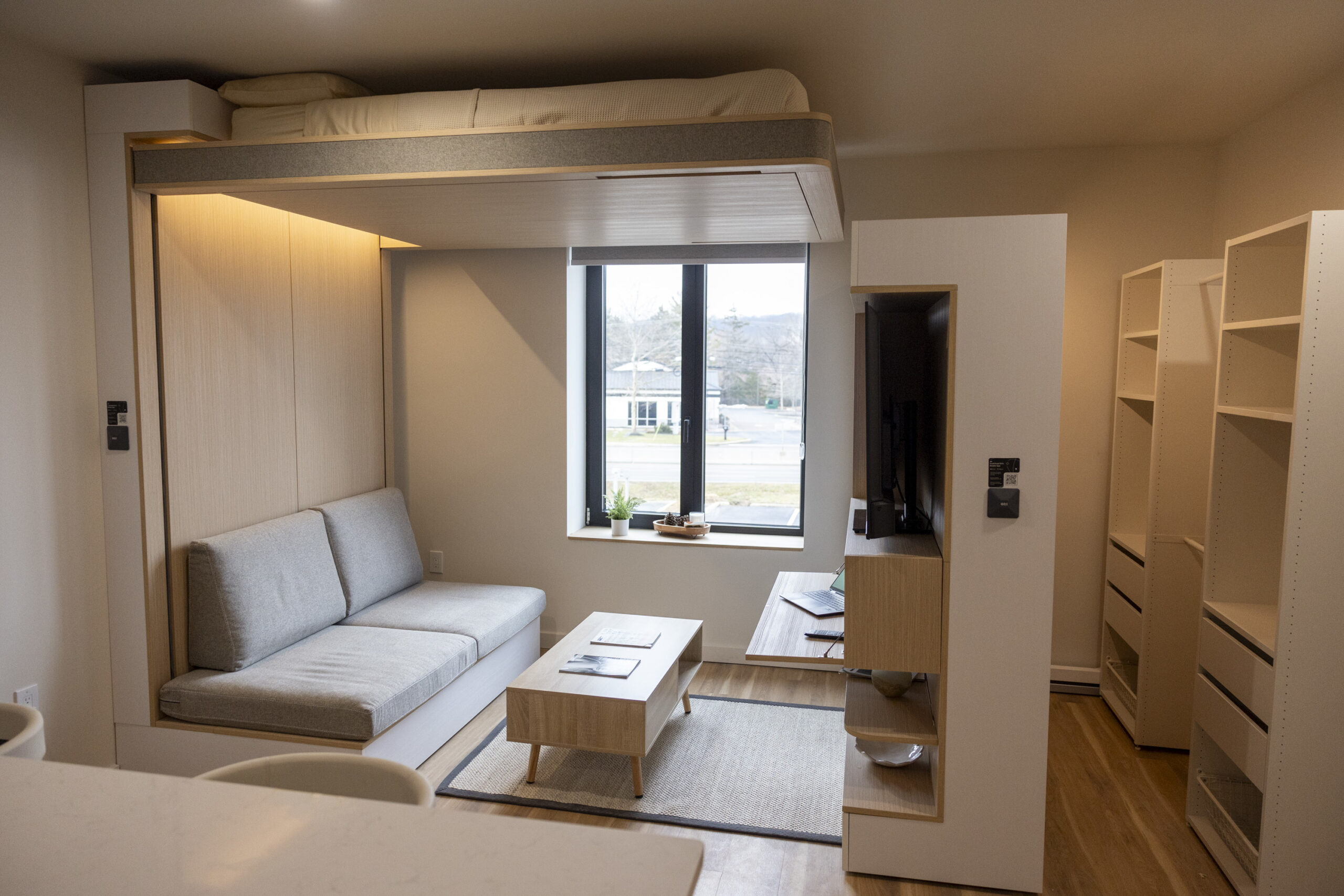
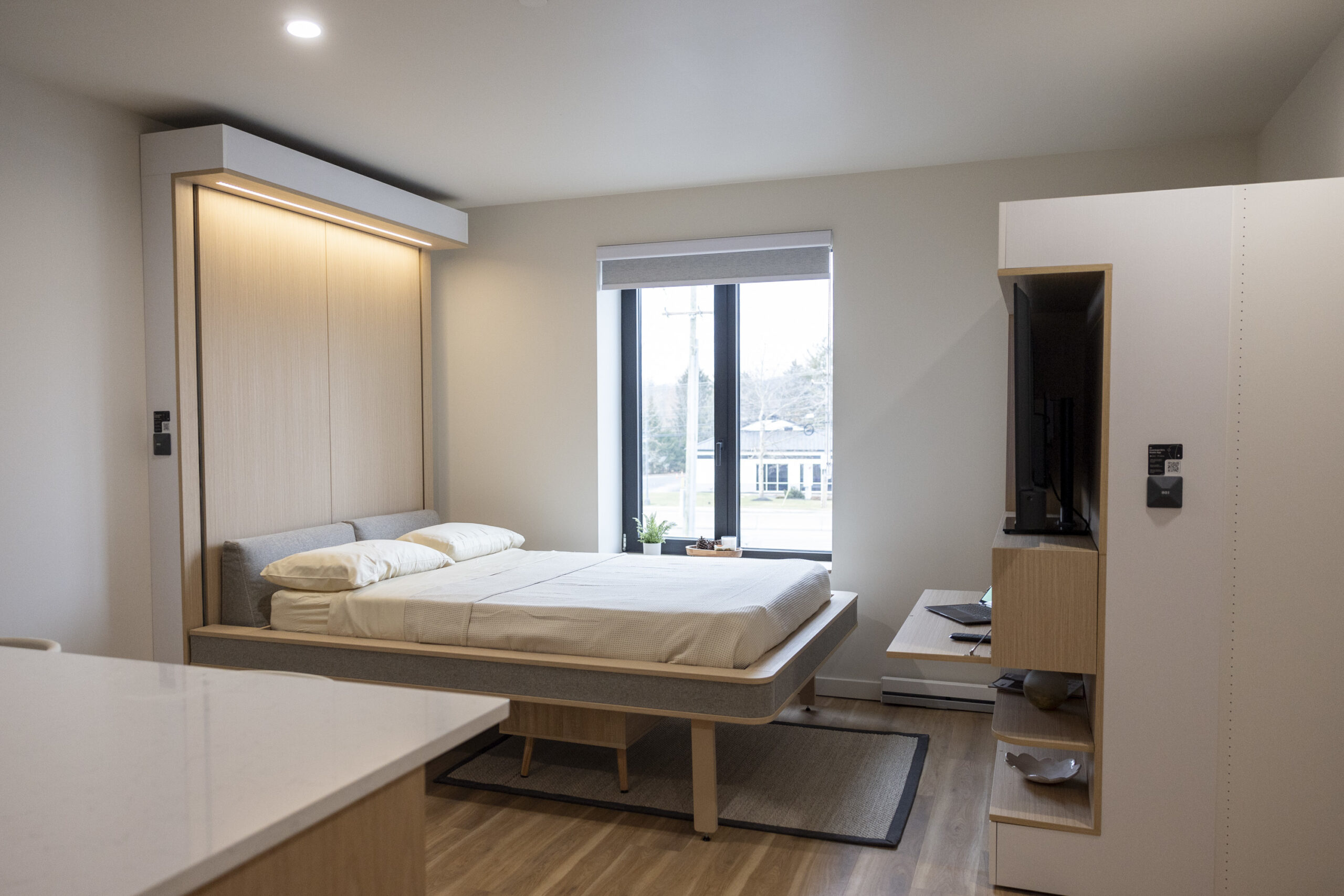
    This space in the studio apartment can be used as a sitting area or a bedroom.
    The Ori bed lowers from the ceiling for sleeping.

    Kimmel and the partners looked at New York apartment plans to see how many one-person units they could fit into the three stories. Beds could be stowed for work-at-home hours, but “we didn’t want those old fold-out Murphy beds,” McFadden said.

    They bought canopy beds from Hasier Larrea’s Ori flexible-furniture-systems firm. The beds lower from the ceiling onto couch bases, plus facing rows of shelves can open as a walk-in closet. The bed controls, like the digital room locks, are remote-accessible and have manual overrides in case of power failure.

    The narrow building admits more light for that suburban feel.

    “Not every office building converts well to apartments,” McGee said. “This was perfect — 65 feet deep, you have a central corridor with apartments. If it were 200 feet deep, you’d have very narrow apartments with one window at the end.”

  • Toll Brothers just named a new CEO. Here’s how much he’ll earn.

    Toll Brothers just named a new CEO. Here’s how much he’ll earn.

    Toll Brothers, the luxury homebuilder based in Fort Washington, will have a new CEO this spring.

    Karl K. Mistry, an executive vice president who has been with the company for 22 years, is set to be promoted to CEO effective March 30, Toll Brothers announced Wednesday. Mistry will succeed Douglas C. Yearley Jr., who will become executive chairman of the board.

    Yearley has served as CEO since 2010, when he was given the reins by company cofounder Robert Toll during the financial crisis.

    Mistry joined Toll Brothers in 2004 and went on to hold leadership positions in the Houston and Washington, D.C., markets. Since 2021, Mistry has managed the company’s homebuilding operations in 15 states in the Eastern U.S.

    “Karl has honed his skills in both strong markets and challenging ones. He has run numerous homebuilding divisions and has overseen our expansion into several major markets,” Yearley said in a statement. “With Karl at the helm partnering with our other seasoned leaders and operating teams, the company’s future is in excellent hands.”

    Mistry is set to receive a base salary of $1 million, with annual cash bonuses of around $2.25 million, according to the company’s recent filing with the U.S. Securities and Exchange Commission.

    Karl K. Mistry, an executive vice president at Toll Brothers, is set to become the company’s next CEO starting March 30.

    Yearley, who was named one of Barron’s top 25 CEOs in 2024, made an annual base salary of $1.2 million, as well as nearly $8 million in cash incentives, according to SEC filings.

    As executive board chair, Yearley’s base salary is set to remain at $1.2 million, according to the recent filing, and his total annual compensation is expected to be $6.6 million, including cash bonuses and long-term equity, starting in fiscal year 2027.

    Toll Brothers was founded in 1967 by brothers Bob and Bruce Toll, who grew up in Elkins Park and were the sons of a homebuilder. Their company has since expanded, now building in more than 60 markets nationwide.

    Douglas C. Yearley Jr., CEO of Toll Brothers, outside a model home in Newtown Square in this 2015 file photo.

    Toll Brothers recorded a record $10.8 billion in home sales revenue in fiscal year 2025, according to the company’s most recent earnings report. But the company was less profitable than in 2024, with net income at $1.35 billion, compared with $1.57 billion the prior year.

    Last year, Toll Brothers “executed well in a choppy environment” that saw “soft demand across many markets,” Yearley said in a statement accompanying the report.

    During that time, Toll Brothers sold more than 11,000 homes for $960,000 on average, according to the report. The company described its customer base in a recent news release as “first-time, move-up, active-adult, and second-home buyers.”

  • For $9.9 million, you can own this Lower Merion mansion and a bonus house next door

    For $9.9 million, you can own this Lower Merion mansion and a bonus house next door

    On Creighton Road in Lower Merion, it’s not unusual for residents to buy the house next door.

    The owners of the 3.85-acre property at 648 Creighton Rd. did just that when they purchased the home but wanted a pool. They decided to put one on the neighboring property.

    Now, the properties are being sold as a package deal.

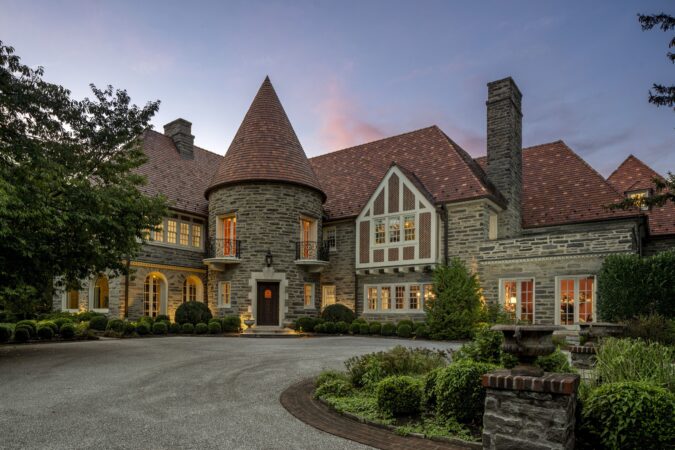
    The century-old main house with seven bedrooms, seven full bathrooms, and three half bathrooms is available for $7.9 million. And the one-bedroom, one-bathroom carriage house next door that was rebuilt in 2015 is on the market for $2 million.

    Creighton Road “has become the estate street,” said listing agent Lavinia Smerconish with Compass Real Estate.

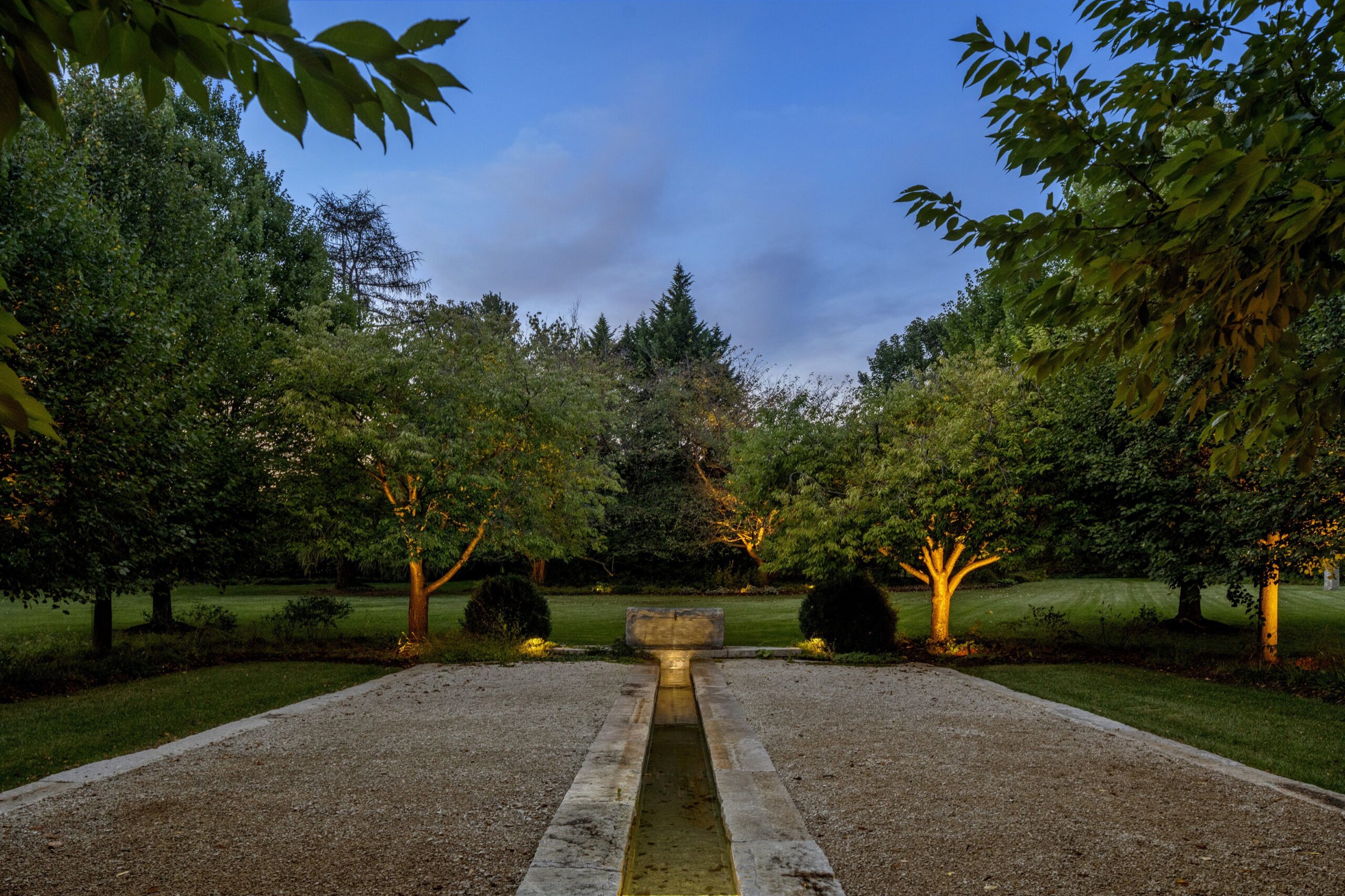
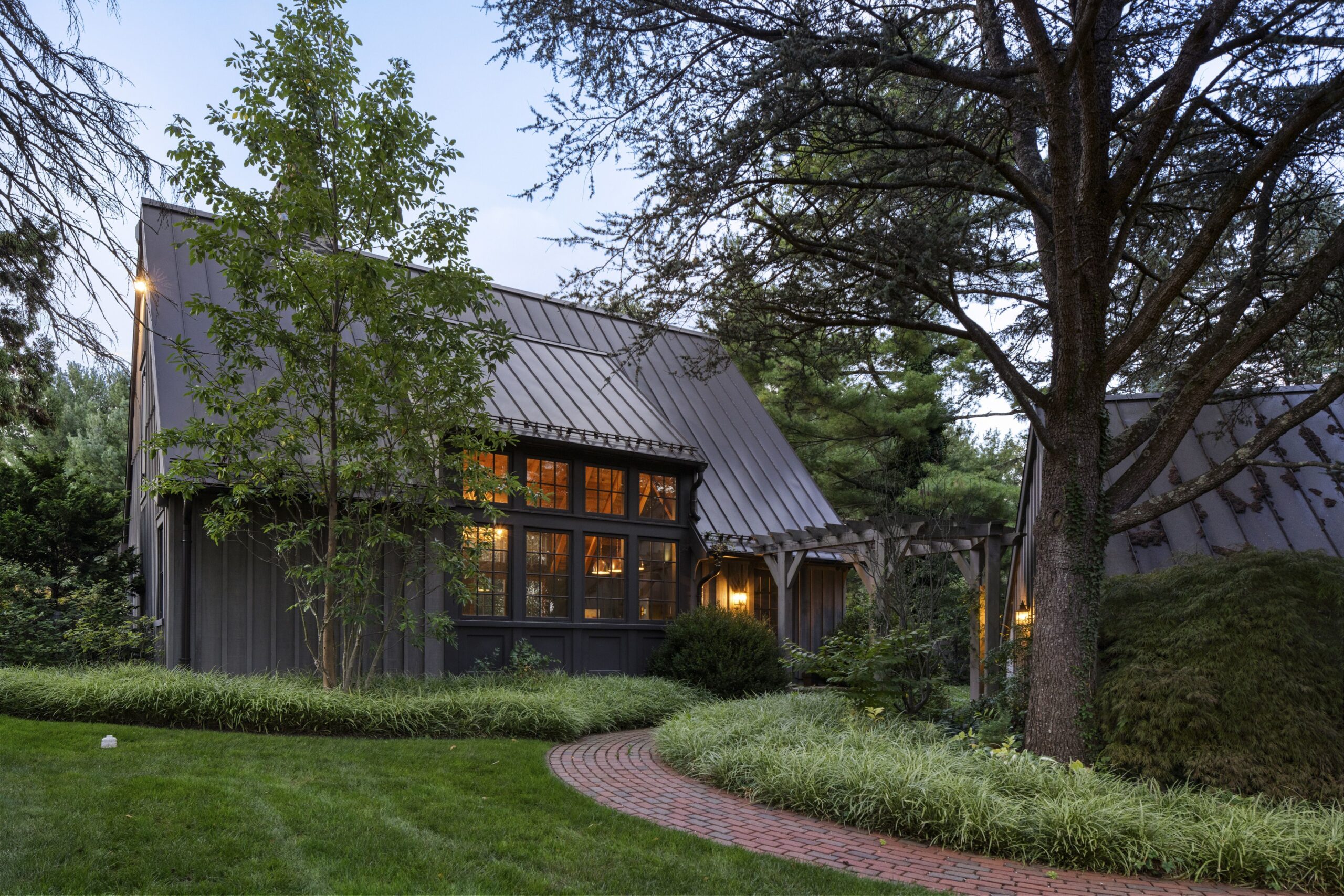
    The property is 3.85 acres and includes a sprawling yard.

    The owners are open to selling their properties separately, but they won’t sell the carriage house before the main one in case a buyer wants both.

    The fieldstone main house is 11,418 square feet. It used to have a series of small rooms for staff and a giant entrance that looked like a banquet hall that no one knew what to do with, Smerconish said. A previous owner reimagined the home with larger rooms, more natural light, and more functional space.

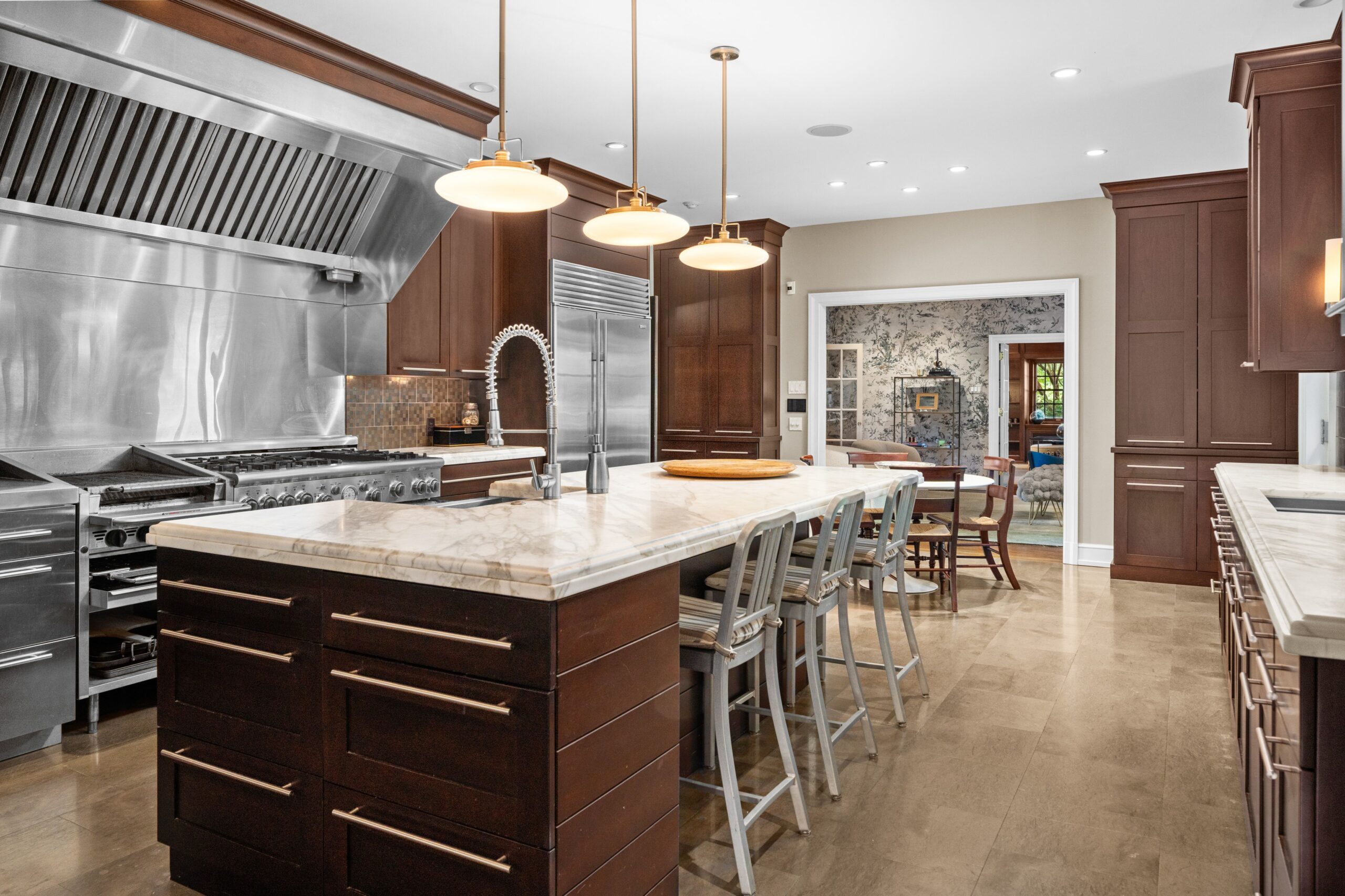
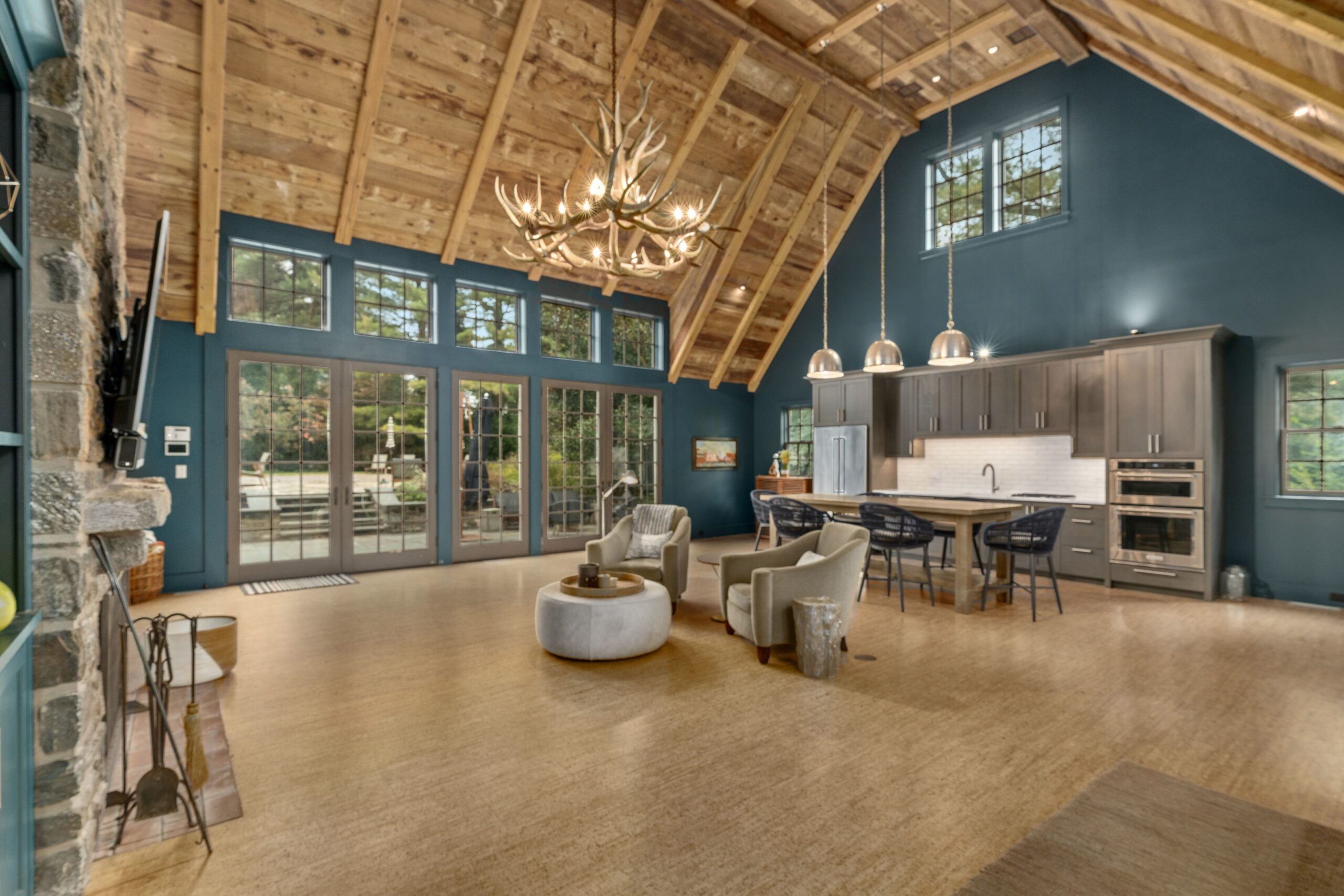
    The home has a commercial kitchen with a large island with seating.

    The front door opens to an entrance tower with a chandelier and winding staircase. Living and dining rooms branch off from the foyer with the family room straight ahead.

    The home has a commercial kitchen with an island with seating. The property includes an exercise room, solarium, four fireplaces, suite above the attached garage for guests or a nanny, sprawling yard lined with trees and hedges, terraces, and detached garage. The sitting room off the primary bedroom could be kept as is or turned into a huge closet, Smerconish said.

    “It’s just an extraordinary house,” she said.

    The finished basement alone spans 1,538 square feet. According to an annual report by the National Association of Realtors, the median size of homes purchased by first-time buyers in the United States is 1,600 square feet.

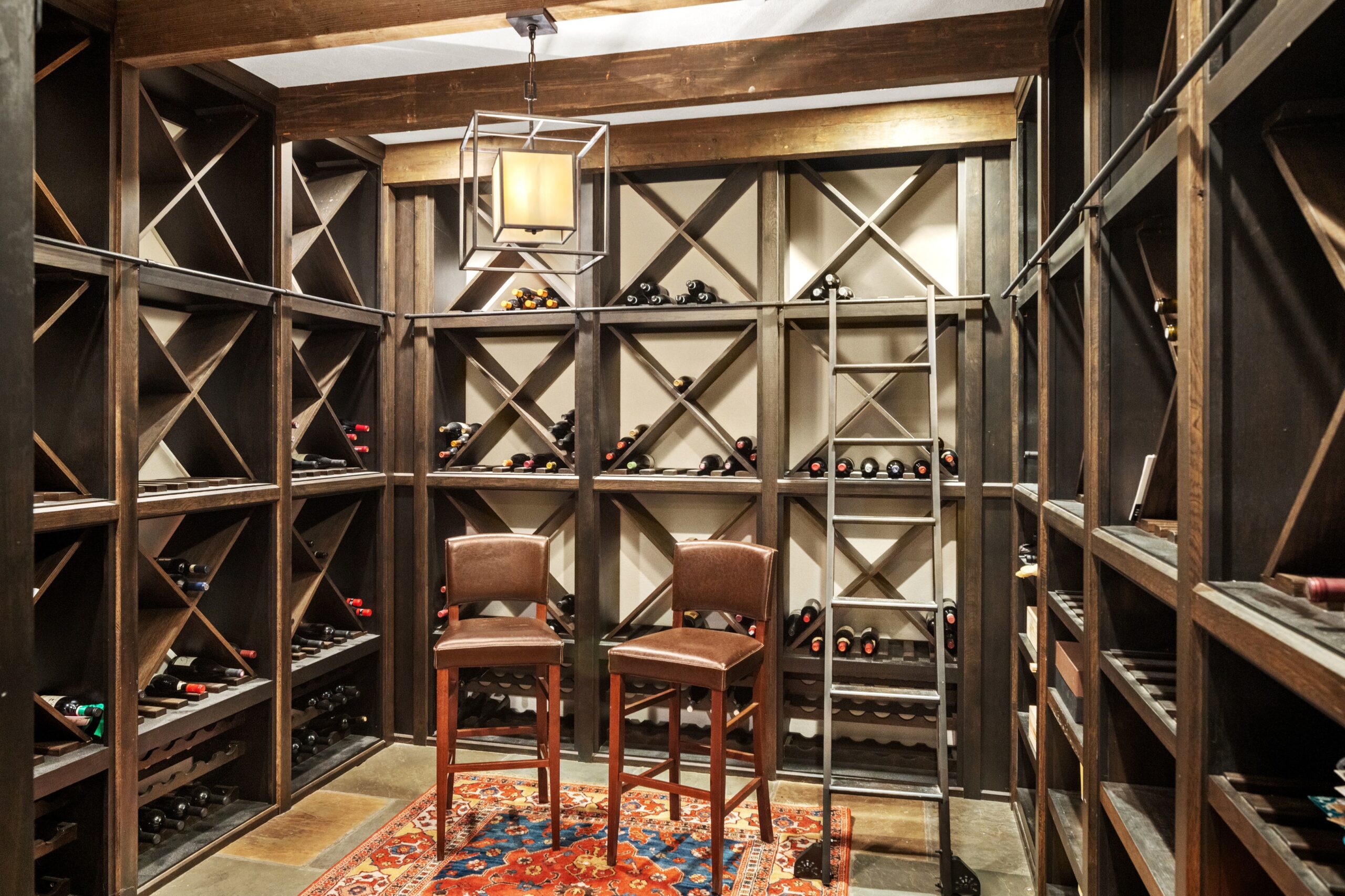
    The finished basement spans 1,538 square feet and includes a wine cellar.

    The basement includes a sports bar with TVs, wine cellar for up to 3,000 bottles, movie room, gym, and bathroom.

    The property “is both impressive and cozy at the same time,” Smerconish said.

    The carriage house on the market for $2 million on Creighton Road in Lower Merion is being sold as a package along with the $7.9 million house next door.

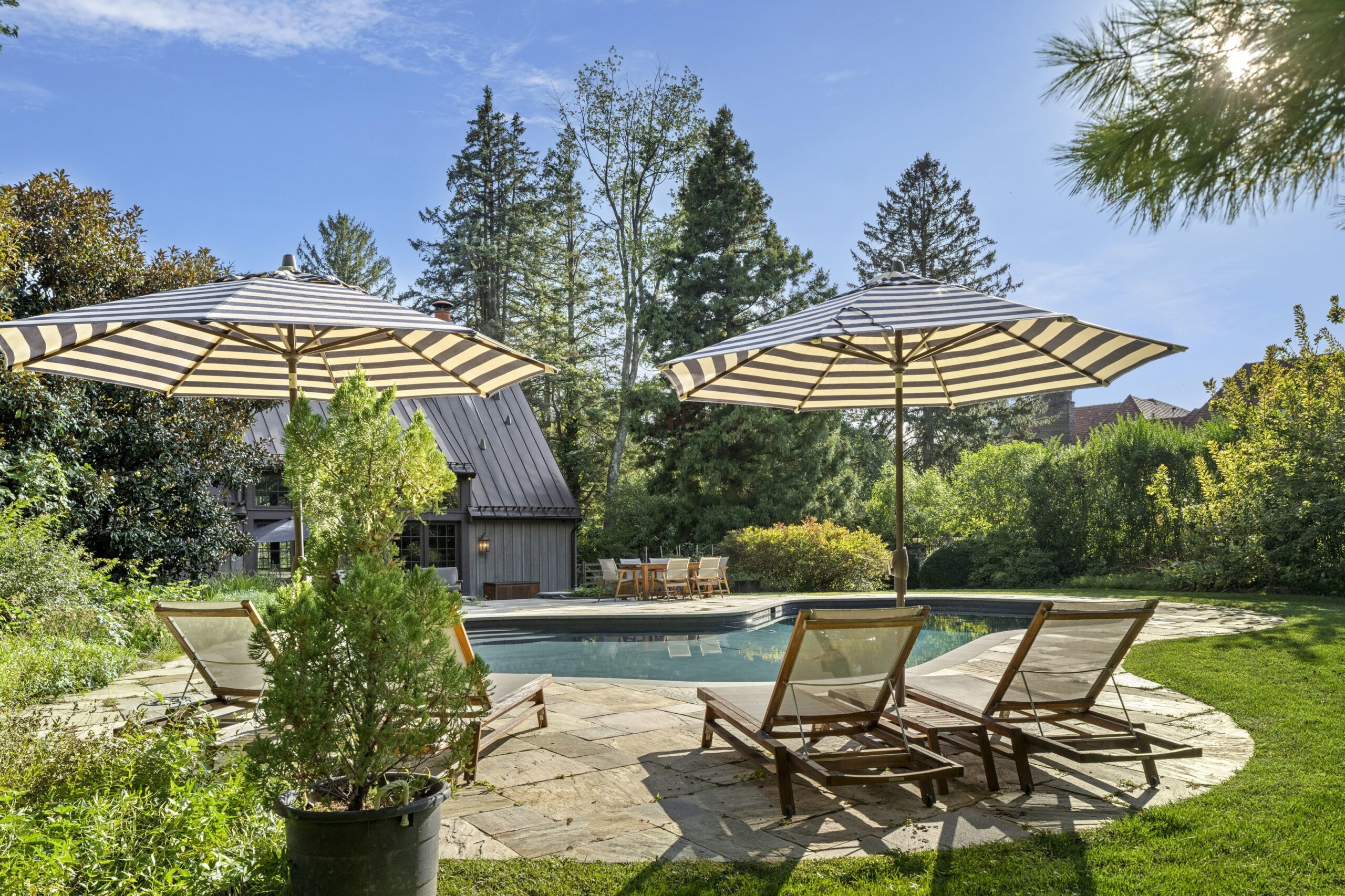
    The carriage house next door spans just over 1,000 square feet on an almost one-acre lot. It has a bedroom, bathroom, laundry room, eat-in kitchen, and living room. A flagstone patio leads to the heated saltwater pool.

    The properties are walking distance from the Appleford estate, which is an event venue, bird sanctuary, and arboretum with gardens and walking paths. They are minutes from Villanova University and Stoneleigh, a public garden of the nonprofit Natural Lands.

    And they’re also minutes from the Schuylkill Expressway and I-476.

    The carriage house includes a kitchen, bathroom, and bedroom.

    The properties were listed for sale on Dec. 5. Now that the holidays are over, Smerconish said, she will start accepting appointments to tour them. She said photos of the main house especially don’t do it justice.

    “You get more with a physical tour and experiencing it,” she said.

    Flagstone surrounds the carriage house’s heated saltwater pool.
  • N.J. will soon explicitly ban landlords from discriminating against people who use public assistance to pay for housing

    N.J. will soon explicitly ban landlords from discriminating against people who use public assistance to pay for housing

    New Jersey lawmakers passed a bill to prohibit households from being denied housing because they use public assistance.

    The legislation, which lawmakers passed on Dec. 18, makes explicit that the state’s anti-discrimination law includes protections for residents based on their source of income for housing payments, including government vouchers, child support payments, and assistance from nonprofits. And the bill affirms that protections apply both to people paying rent and those paying mortgages.

    State Sen. Angela V. McKnight (D., Hudson County), one of the bill’s sponsors, said the legislation will protect the rights of homeowners and tenants.

    “Access to stable housing should never hinge on the source of a person’s legal income, especially for vulnerable populations like single parents, veterans, or those living with disabilities who often rely on assistance to make ends meet,” she said in a statement.

    The legislation, which would take effect immediately after Gov. Phil Murphy signs it, is part of local and national efforts to prevent people from being denied housing because they use public assistance to pay for it. More than 2.3 million families use federal Housing Choice Vouchers, formerly known as Section 8 vouchers.

    In September, Democratic U.S. Sen. John Fetterman cosponsored a bill that would create federal protections for these tenants. The Fair Housing Improvement Act of 2025 would prohibit landlords from denying housing to tenants because they pay rent using Housing Choice Vouchers; Social Security benefits; payments from a trust; income from a court order, such as spousal or child support; or other legal sources of income.

    It also would expand protections in the Fair Housing Act of 1968 to prohibit discrimination based on source of income or military or veteran status.

    “It’s hard enough to find an affordable place to call home,” Fetterman said in a statement. “Every veteran and every family struggling to keep a roof over their head deserve dignity and our support, not discrimination based upon their service or if they use a voucher.”

    Chantelle Wilkinson, vice president of strategic partnerships and campaigns at the National Low Income Housing Coalition, said source of income discrimination “is far too often a main barrier for households seeking stable housing.”

    “When a landlord denies a voucher holder access to housing despite meeting all other qualifications, that ‘no’ is not just about a home: it’s denial of opportunity, equity, and stability,” she said in a statement.

    In Philadelphia, the city’s Fair Practices Ordinance bans rental property owners from discriminating against potential tenants based on the source of the income they will use to pay their rent. That includes housing vouchers and other public assistance.

    But housing denials based on voucher status still happen.

    In June 2024, City Council passed a bill to expand protections under the Fair Practices Ordinance. The legislation explicitly stated that housing providers renting or selling a property cannot advertise or communicate that they do not accept housing vouchers. It also explicitly says that Housing Choice Vouchers are an example of a protected income source.

    And it makes fighting this type of housing discrimination easier for renters.

    The Philadelphia Commission on Human Relations, the city’s official civil rights agency, began enforcing the protections last December.