Category: Climate

  • Researchers find Antarctic penguin breeding is heating up sooner, and that’s a problem

    Researchers find Antarctic penguin breeding is heating up sooner, and that’s a problem

    WASHINGTON — Warming temperatures are forcing Antarctic penguins to breed earlier and that’s a big problem for two of the cute tuxedoed species that face extinction by the end of the century, a study said.

    With temperatures in the breeding ground increasing 5.4 degrees Fahrenheit (3 degrees Celsius) from 2012 to 2022, three different penguin species are beginning their reproductive process about two weeks earlier than the decade before, according to a study in Tuesday’s Journal of Animal Ecology. And that sets up potential food problems for young chicks.

    “Penguins are changing the time at which they’re breeding at a record speed, faster than any other vertebrate,” said lead author Ignacio Juarez Martinez, a biologist at Oxford University in the United Kingdom. “And this is important because the time at which you breed needs to coincide with the time with most resources in the environment and this is mostly food for your chicks so they have enough to grow.’’

    For some perspective, scientists have studied changes in the life cycle of great tits, a European bird. They found a similar two-week change, but that took 75 years as opposed to just 10 years for these three penguin species, said study co-author Fiona Suttle, another Oxford biologist.

    Researchers used remote control cameras to photograph penguins breeding in dozens of colonies from 2011 to 2021. They say it was the fastest shift in timing of life cycles for any backboned animals that they have seen. The three species are all brush-tailed, so named because their tails drag on the ice: the cartoon-eye Adelie, the black-striped chinstrap and the fast-swimming gentoo.

    Warming creates penguin winners, losers

    Suttle said climate change is creating winners and losers among these three penguin species and it happens at a time in the penguin life cycle where food and the competition for it are critical in survival.

    The Adelie and chinstrap penguins are specialists, eating mainly krill. The gentoo have a more varied diet. They used to breed at different times, so there were no overlaps and no competition. But the gentoos’ breeding has moved earlier faster than the other two species and now there’s overlap. That’s a problem because gentoos, which don’t migrate as far as the other two species, are more aggressive in finding food and establishing nesting areas, Martinez and Suttle said.

    Suttle said she has gone back in October and November to the same colony areas where she used to see Adelies in previous years only to find their nests replaced by gentoos. And the data backs up the changes her eyes saw, she said.

    “Chinstraps are declining globally,” Martinez said. “Models show that they might get extinct before the end of the century at this rate. Adelies are doing very poorly in the Antarctic Peninsula and it’s very likely that they go extinct from the Antarctic Peninsula before the end of the century.”

    Early bird dining causes problems

    Martinez theorized that the warming western Antarctic — the second-fasting heating place on Earth behind only the Arctic North Atlantic — means less sea ice. Less sea ice means more spores coming out earlier in the Antarctic spring and then “you have this incredible bloom of phytoplankton,” which is the basis of the food chain that eventually leads to penguins, he said. And it’s happening earlier each year.

    Not only do the chinstraps and Adelies have more competition for food from gentoos because of the warming and changes in plankton and krill, but the changes have brought more commercial fishing that comes earlier and that further shortens the supply for the penguins, Suttle said.

    This shift in breeding timing “is an interesting signal of change and now it’s important to continuing observing these penguin populations to see if these changes have negative impacts on their populations,” said Michelle LaRue, a professor of Antarctic marine science at the University of Canterbury in New Zealand. She was not part of the Oxford study.

    People’s penguin love helps science

    With millions of photos — taken every hour by 77 cameras for 10 years — scientists enlisted everyday people to help tag breeding activity using the Penguin Watch website.

    “We’ve had over 9 million of our images annotated via Penguin Watch,” Suttle said. “A lot of that does come down to the fact that people just love penguins so much. They’re very cute. They’re on all the Christmas cards. People say, ‘Oh, they look like little waiters in tuxedos.’”

    “The Adelies, I think their personality goes along with it as well,” Suttle said, saying there’s “perhaps a kind of cheekiness about them — and this very cartoonlike eye that does look like it’s just been drawn on.”

  • It may feel like zero in Philly this week, and the ‘wind chill’ has Pennsylvania roots

    It may feel like zero in Philly this week, and the ‘wind chill’ has Pennsylvania roots

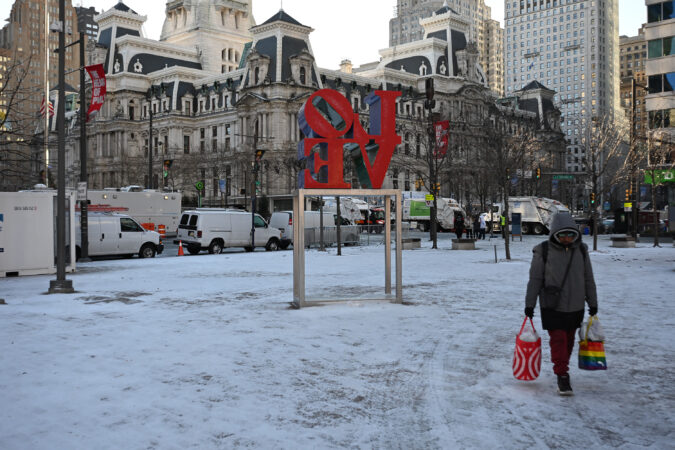
    The region evidently is about to migrate from the refrigerator to the freezer this week, with wind-chill levels possibly approaching zero as temperatures fall to the teens and a brisk west wind adds sting.

    “Wind chill” has been a staple of National Weather Service forecasts and media weather reports since 1973.

    (Commercial services, such as AccuWeather Inc., now have their own variants.)

    At different times it has been a subject of contention, confusion, derision, and revision; its popularity, however, endures.

    In terms of alerting the public to potential health hazards, “I think it’s useful,” said Michael DeAngelis, vice chair of emergency medicine at Temple University’s Lewis Katz School of Medicine.

    Said Harvey V. Lankford, a retired physician and writer who has done a deeper dive into wind chill than most humans: “It’s a yardstick.

    “The public loves it.”

    But where do those numbers come from, and do they tell us how we really feel?

    The birth of ‘wind chill’

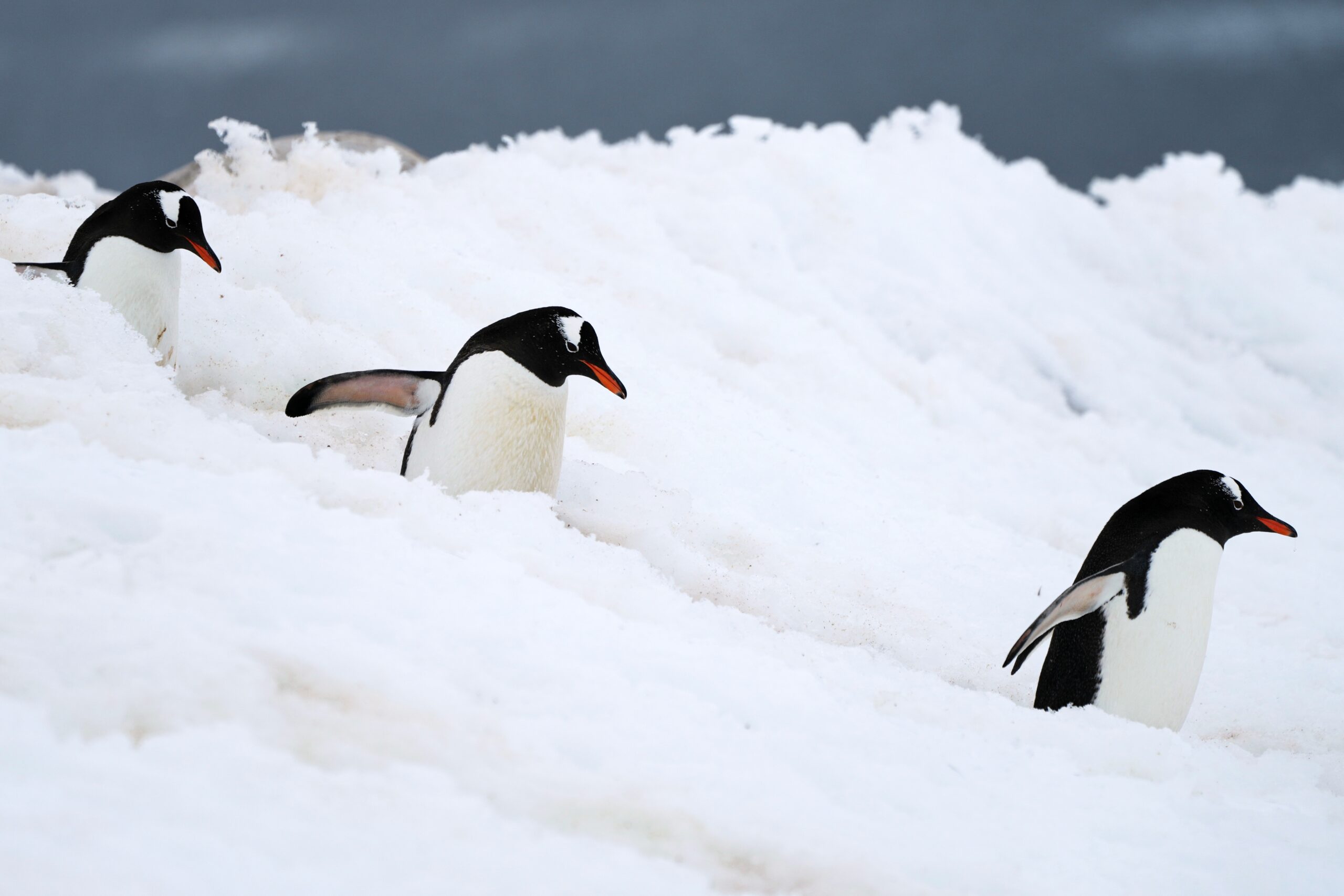
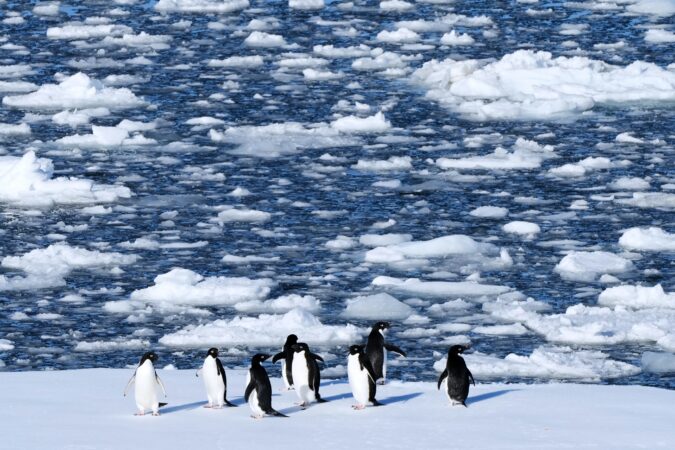
    Gentoo penguins walk at Neko Harbour in Antarctica, Saturday, Nov. 22, 2025. (AP Photo/Mark Baker)

    Wind chill is a measure of heat loss from the body from the combination of temperature and wind.

    What we know about its effects has a lot to do with former Eagle Scout Paul Siple, the pride of Erie’s Central High School.

    He pursued his quest while accompanying Admiral Richard Byrd on his legendary expeditions to that icy forbidden planet known as Antarctica, where the wind stings “like a knife drawn across the face,” as one of his associates put it. At age 19, Siple had won a highly publicized national competition to join Byrd.

    Siple minted the term wind chill in his 565-page unpublished doctoral dissertation, a copy of which Lankford obtained from Clark University, in Worcester, Mass.

    On a later expedition, Siple, assisted by geologist Charles Passel, conducted experiments measuring how long it took to freeze a container of water under a variety of temperature and wind conditions. Winds obviously accelerated the freezing process.

    Using that data they estimated heat loss from human skin, publishing their findings in a landmark 1945 paper.

    But Lankford said Siple got remarkable results in his more primitive earlier research, which included estimating frostbite thresholds, using a relatively simple formula involving wind speeds and temperatures.

    Siple’s work would become the basis for the wind chill factor that the weather service massaged and began sharing publicly in 1973.

    Frostbite and the wind chill revision

    The wind chill calculations underwent a significant revision a quarter century ago.

    U.S. and Canadian scientists during the 1990s used human subjects to upgrade the index, including establishing new frostbite thresholds.

    Twelve subjects, with sensors inside their cheeks and their faces bare, were subjected to temperatures ranging from 32 to 58 below at three different wind speeds.

    They were monitored for signs of “frostnip,” which precedes frostbite by about a minute.

    For the record, the researchers found that with wind chills of 40 below, frostnip occurs within 15 minutes.

    The weather service said the revised index profited from “advances in science, technology and computer modeling.”

    Yet Siple obviously had been on to something decades earlier, Lankford said.

    In a paper published in 2021 in the journal Wilderness and Environmental Medicine, Lankford and coauthor Leslie R. Fox wrote that some of the modern findings on frostbite thresholds were remarkably similar to what appeared in Siple’s dissertation.

    Lankford said they were not surprised by the similarities: “We were stunned.”

    Staying safe in the cold

    Aside from frostnip and frostbite potential, exposure to frigid temperatures and strong winds poses a variety of other health hazards, DeAngelis said.

    Those conditions can seriously exacerbate certain lung problems.

    For the healthy, he recommends proceeding with caution while exercising. Sweating in the cold — it does happen, just ask runners and hikers — can increase the risk of hypothermia.

    Plus, your brain, heart, kidneys, and other internal organs will be diverting blood flow from muscles and extremities, and that could slow recovery from exertion.

    Or you could just put off that run or bike workout until Thursday, when it may go up to 40 degrees.

  • Snow is expected during the weekend in Philly, but how much is up in the air

    Snow is expected during the weekend in Philly, but how much is up in the air

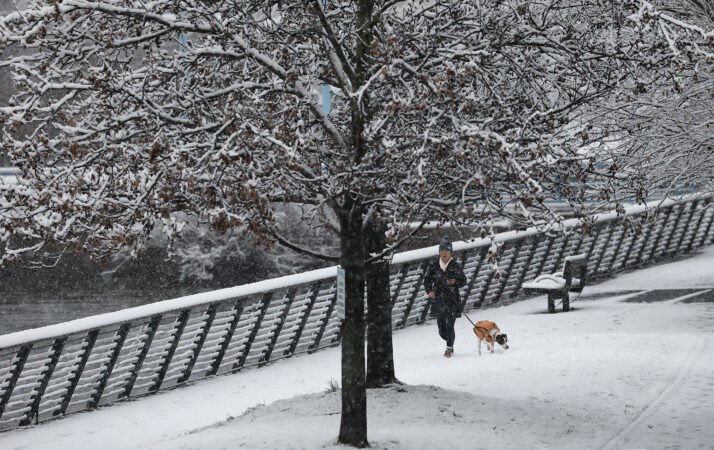
    Some snow is possible in the Philly region during the holiday weekend, but about the only thing certain is that schools will be closed until Tuesday.

    Snow — not a whole lot of it — is expected Saturday morning, and possibly again during the day Sunday.

    “Definitely something,” said Ray Martin, a lead meteorologist at the National Weather Service Office in Mount Holly, “maybe not a lot of something.”

    In short, he added, expect a “100% chance of forecast uncertainty.”

    How much for Philly?

    (function () {window.addEventListener(‘message’, function (e) { var message = e.data; var els = document.querySelectorAll(‘iframe[src*=”‘ + message.id + ‘”]’); els.forEach(function(el) { el.style.height = message.height + ‘px’; }); }, false); })();

    Some snow is expected in the early morning hours of Saturday, said Dan Pydynowski, senior meteorologist with AccuWeather Inc., and “sidewalks and streets could be slick for a time” in the Philly region.

    However, temperatures in the afternoon are expected to approach 40 degrees and that should melt any snow. If the precipitation lingers, it likely would turn to rain.

    That snow would be associated with a system from the west, and more significant amounts are expected well north and west of Philly.

    On Sunday when it will be colder, the source would be a coastal storm that has been befuddling computer models the last three days. On Wednesday, the U.S. model was seeing a significant snowstorm for the I-95 corridor. On Thursday, it said never mind and fell in line with other guidance that kept the storm offshore.

    On Friday, models were bringing the storm closer to the coast, but the model consensus was that it would be more of threat at the Shore and perhaps throw back a paltry amount to the immediate Philly region.

    “On the other hand, a slight shift … in the track could bring 1-2 inches into the urban corridor,” the weather service said in its afternoon discussion.

    Said Martin, “It’s always tricky with these offshore lows. It’s also possible that both systems pass us and we get basically nothing.”

    Far more certain is a rather big chill

    A Philadelphia firefighter spreads salt to control icing at a fire scene on Friday.

    That the region was about to experience its coldest weather of the season to date was all but certain.

    High temperatures on Monday, Martin Luther King Jr. Day, probably won’t get out of the 30s, and no higher than the mid 20s Tuesday and Wednesday, forecasters say.

    Overnight lows are due to tumble into the teens, with wind chills approaching zero early Wednesday.

    No more precipitation is forecast at least through Thursday, but with odds favoring continued below-normal temperatures through Jan. 29 and above-normal precipitation, it should be a robust period for virtual snow threats, if not actual snow.

    “Even if nothing really happens this weekend,” said Martin, “there’s always next weekend.”

    Pydynowski said that “some signs” point to a snowfall “late next week or next weekend.”

    But one uncertainty at a time.

  • Winter is about to return in Philly. Will snow join the party?

    Winter is about to return in Philly. Will snow join the party?

    As it approaches halftime, the meteorological winter around here so far has been about as inconsistent as the Philadelphia Eagles’ offense, but it is about to get decidedly colder, if not snowier.

    Temperatures on Thursday are due to hover around freezing with a brisk westerly wind gusting up to 30 mph (sympathies to all bikers and runners and those who are navigating those Center City wind tunnels), and then drop into the 20s after sunset with windchills in the teens.

    Then, after a modest warmup Friday and Saturday, the forecast turns decidedly colder and potentially more intriguing, as computer models have been going back and forth on snow potential for the Philly region.

    Philly’s coldest stretch of the winter so far to begin Sunday

    Readings are expected to warm into the 40s on Saturday, but then drop off dramatically during the holiday weekend and may not reach freezing again until Thursday.

    They may not get out of the 20s on Tuesday — when wind chills could fall to 0 in Philly — and Wednesday, with overnight lows in the teens.

    This is called January.

    Will the cold lock in a snow cover?

    A few alarm bells went off Wednesday afternoon when the main U.S. computer model suggested potential major snowstorms along the coast all the way to the I-95 corridor on Sunday.

    However, other computer guidance wasn’t buying it, nor were forecasters. The computer food fight continued Thursday.

    The U.S. model, said Paul Pastelok, longtime seasonal forecast specialist with AccuWeather Inc., “goes wacky all the time.” Maybe not all the time, but a subsequent run of the European model kept the storm offshore.

    “We’re kind of in a waiting game,” said Pastelok.

    Opined the National Weather Service Office in Mount Holly in its afternoon forecast discussion, the potential system has “high-end potential but also could end up being nothing.”

    In other words, situation normal.

    The winter so far in Philly and United States

    Oddly, the raw stats for the first half of the meteorological winter — that’s the Dec. 1-Feb. 28 period — are not too far from normal for snowfall and temperature.

    But that’s the result of quite a cold start to an eventful December, followed by a benign and uneventful January around here.

    December temperatures finished at 3.6 degrees below normal at Philadelphia International Airport. And in the first two weeks of 2026, they were 3.6 degrees above normal. Snowfall in December was about an inch above average, but with a paltry 0.3 inches so far this month, the 4.8 total is very close to where it should be.

    The early season coolness in Philly and much of the rest of the East was a surprise, said Owen Shieh, warning coordination meteorologist with NOAA’s Weather Prediction Center, in College Park, Md. The West, conversely, was quite warm.

    The contrasts were the result of “pattern persistence,” said Tony Fracasso, a weather center meteorologist.

    In the East, “This winter started quite strong,” he added, compared with recent winters. “It was not record cold,” but, “it sure felt cold for us.”

    What’s ahead the rest of the winter of 2025-26

    That likely will be the case early next week, and NOAA’s Climate Prediction Center has chances favoring below normal temperatures and above-normal precipitation in the Jan. 22-28 period.

    Pastelok said that upper-air patterns are aligning in such a way that favors importing cold air from northwestern Canada.

    The Climate Center’s Laura Ciasto said she does not see a major invasion of the polar vortex in the next few weeks. The vortex circles the Arctic, imprisoning the planet’s coldest air. But on occasion, the winds weaken, the freezer opens, and the contents spill southward.

    She said the vortex winds are slightly weaker than normal but are expected to strengthen.

    It is possible that lobes of the vortex may stretch on occasion, resulting in short-lived periods of cold in the Northeast, said Judah Cohen, research scientist with the Massachusetts Institute of Technology.

    A period to watch would be the first week in February, when a significant disruption of the vortex is possible, Pastelok said.

    A sudden stratospheric warming in the high atmosphere in the Arctic, which can lead to cold outbreaks in the contiguous United States “is not out of the question” late in the winter, Ciasto said.

    Philadelphia’s peak snow season typically occurs in late January through mid-February.

    Of the 10 biggest snowfalls in the city’s history, only three have occurred before Jan 22.

  • 30.7 inches of snow fell in Philly on this week in 1996. Don’t bet against an encore some winter soon.

    30.7 inches of snow fell in Philly on this week in 1996. Don’t bet against an encore some winter soon.

    The plows and shovels haven’t had a whole lot of action in the region in recent winters, and it looks like the rulers will be at rest at least for a while. It may even hit 60 degrees Friday.

    Perhaps the atmosphere over the I-95 corridor is still catching its breath and awaiting a second wind after an unprecedented sequence of megastorms that began 30 years ago.

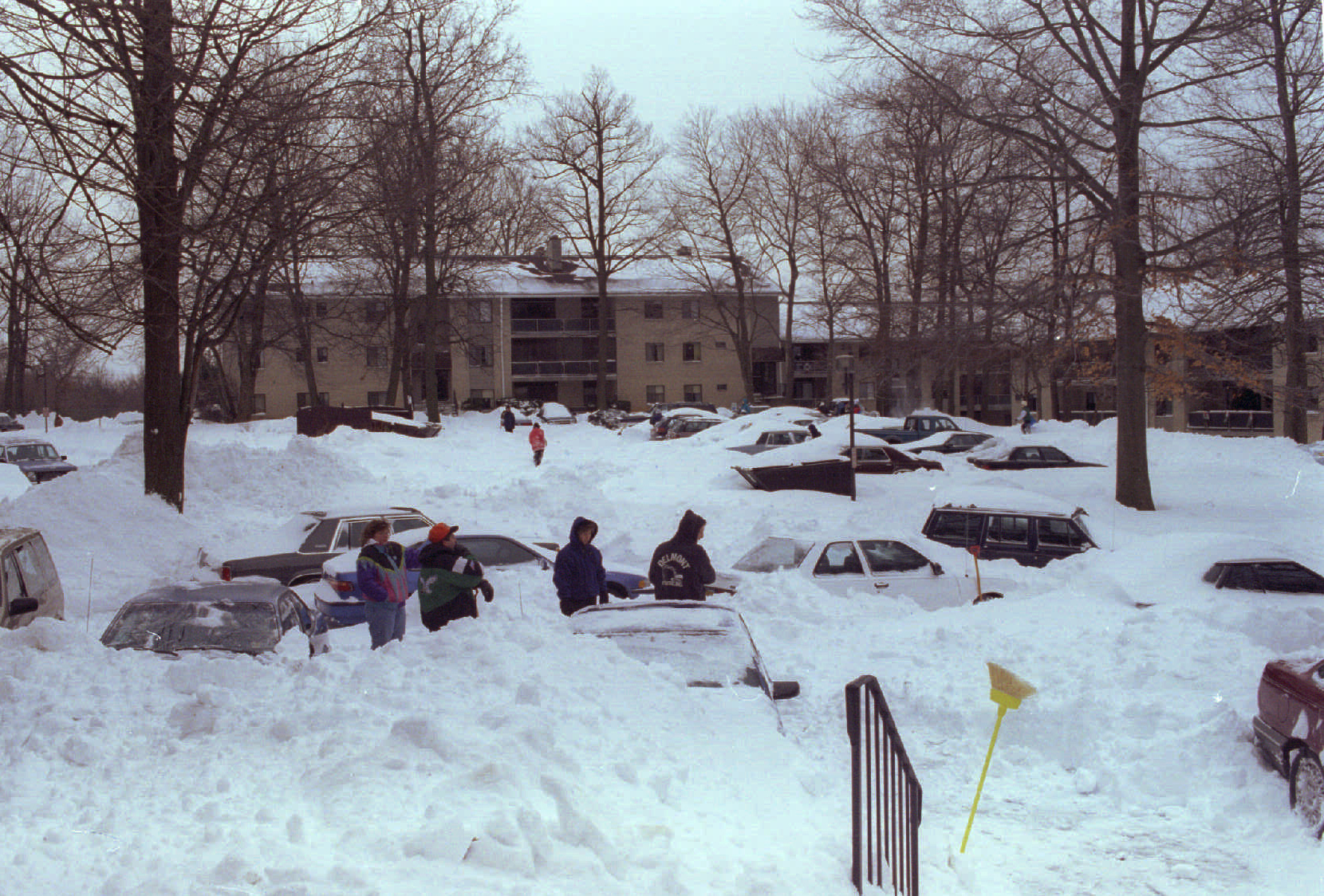
    It was on Jan. 7-8, 1996, that an unreal 30.7 inches of snow fell officially* (we’ll come back to that asterisk) at Philadelphia International Airport, the biggest snowfall on record, and a total so astounding it precipitated a federal investigation. The region wasn’t shut down so much as entombed in road-closing heaps of snow.

    Philly snow records date to the winter of 1884-85, and in the first 100 years, the city would experience a single snowfall of 20 inches or more only twice.

    In the 20-winter period that began in 1996, it happened four times. Three of those winters rank in the top three snowiest.

    This, during a time when planetary warming was picking up steam. Rather than paradox, some atmospheric scientists see symmetry.

    A view looking out over the snow covered parking lot in Malvern.

    How warming may be affecting snowstorms

    Warming has resulted in more evaporation, filling the air with more moisture, “and the potential for more extreme precipitation,” said Kyle Imhoff, a Pennsylvania State University professor who is the state climatologist.

    Said Louis Uccellini, former head of the National Weather Service and one of the nation’s most prominent storm experts, “if conditions are right … that would include the potential for more snowfall within an individual storm.”

    Proximity to bodies of water, primary sources of moisture, may be making a difference, said Imhoff. In Erie, in recent decades warming appears to be prolonging the lake-effect snow season as waters have been less prone to freezing.

    In recent decades, snowfall from coastal lows has “become more frequent,” he said. Philly’s biggest snows typically are generated by nor’easters that import moist air from the Atlantic, where sea-surface temperatures have been above normal consistently. That warmth may be giving a jolt to coastal storms, according to a paper published in July by a group of researchers, including the University of Pennsylvania’s Michael E. Mann.

    It ain’t necessarily snow

    That wouldn’t necessarily mean more snow. Ocean temperatures typically are several degrees above freezing in winter, and onshore winds often have turned snow to rain in Philly.

    “The trick is getting enough cold air for snowfall,” said Imhoff.

    Snowfalls of a foot or more require a highly unlikely alignment of circumstances, a meeting of opposites: Cold air that holds its ground near the surface, forcing warm moist air to rise and generate snowflakes.

    Philly’s normal seasonal snowfall is 23.1 inches, but a “normal” season is hardly the norm. The totals have varied from nothing (1972-73) to 78.7 (2009-10). The region has experienced decades of robust snow totals, and snow scarcity.

    Sarah Johnson, the warning coordination meteorologist in Mount Holly says she hasn’t yet seen the fingerprints of climate change on snowfall patterns.

    “My hypothesis: It’s probably just the luck of the draw,” she said.

    Tony Gigi, retired weather service meteorologist, said he wondered if some overarching pattern might explain the decadal variability of snowfall in the region.

    About the 1996 storm

    Gigi was working the overnight on the morning of Jan. 7, a Sunday, when the snow began. He somehow made it to his Mount Laurel home after work, only to be called back Monday to relieve stranded colleagues.

    Overall, the storm was a forecasting triumph, but Gigi said the European model well outperformed its U.S. counterpart. But no one was predicting 30 inches for Philly.

    It was an astounding total for a variety of reasons, including the fact that it predated the region’s peak snow season by about three weeks. Of the total, 27 inches fell on the 7th; the previous record for the date was 5 inches.

    The 30.7 total became a source of controversy. The reason: “The snow wasn’t measured,” said Gigi.

    The total was inferred from a formula using the melted liquid equivalent of the snow and the air temperatures, which were in the teens and 20s during the snowfall. “It was in the realm of possibility,” said Gigi.

    But that’s not quite the standard method, said Johnson. Ideally, she said, snow should be measured once with a ruler (or yardstick) at the point that the snow stops.

    In this case, the total was so suspect that it wasn’t entered into the climate record for four years. The weather service commissioned then-Franklin Institute meteorologist Jon Nese and New Jersey state climatologist Dave Robinson, an international snow expert, to conduct a forensic investigation. They concluded the total was legitimate, given similar nearby snow reports.

    It remains unclear whether it was truly an all-time record, since no official measurements are available before 1884. The late weather historian David Ludlum quoted a visiting Swedish author as having witnessed snow “a yard deep” in Philadelphia in March 1705. However, Ludlum pointed out that it was unclear whether that was the result of a single snowfall.

    The future of snow

    As of Wednesday, at 4.8 inches, Philly’s official seasonal snowfall total is exactly “normal.”

    Highs are expected to climb into the 50s through Saturday, perhaps reaching 60 on Friday before a cool-down early next week. Not a flake sighting is in the extended outlooks.

    One factor in the lack of snow in recent years has been consistently cool waters in the tropical Pacific that tend to affect west-to-east upper-air patterns that are unfavorable to East Coast storms.

    For the Philly region, “The pattern has not been kind to snow lovers,” he said.

    Of note, the 1995-96 winter came at the end one of the most snowless 10-year periods in Philly on record.

  • After a snowy Friday and an icy Saturday, Sunday could bring rain

    After a snowy Friday and an icy Saturday, Sunday could bring rain

    The last day of the weekend will see temperatures rise in the Philadelphia area. But don’t get too hopeful: A chance of rain on Sunday is forecast to lead into a somewhat soggy Monday before things grow cool and dry for the New Year’s holiday.

    With a high of 43 degrees and a low of 37, Sunday could bring showers, according to Ray Martin, a meteorologist in the National Weather Service’s Mount Holly office.

    Weather prediction is not exact, but the weather service expects a 30% chance of rain Sunday, particularly in the afternoon.

    “With temperatures set to be above freezing, we are not expecting additional icing or any significant impacts across Philadelphia tomorrow,” Martin said Saturday.

    The odds for rain, however, increase further into Sunday night and the wee hours of Monday.

    The chances of showers will hit 60% Sunday night, with temperatures rising overnight, according to the weather service. Worry not; less than a tenth of an inch of precipitation is expected to fall throughout the day on Monday.

    Total accumulation across the region varied as of Saturday afternoon, from 0.2 inches in Rittenhouse Square to 0.3 at Philadelphia International Airport, 0.4 in Mount Holly, and 1 inch in Skippack.

    <iframe title="How Much Snow Fell in the Philly Region?" aria-label="Symbol map" id="datawrapper-chart-lDDD4" src="https://datawrapper.dwcdn.net/lDDD4/3/" scrolling="no" frameborder="0" style="width: 0; min-width: 100% !important; border: none;" height="818" data-external="1"></iframe><script type="text/javascript">window.addEventListener("message",function(a){if(void 0!==a.data["datawrapper-height"]){var e=document.querySelectorAll("iframe");for(var t in a.data["datawrapper-height"])for(var r,i=0;r=e[i];i++)if(r.contentWindow===a.source){var d=a.data["datawrapper-height"][t]+"px";r.style.height=d}}});</script>

    Regardless of the rain, Monday’s temperatures are forecast to be the warmest in more than a month, with a high of 58 degrees, before dropping again that night, with a low of 27. The biggest concern? Gusts as strong as 35 mph.

    That is forecast to pass by the end of the night, opening the skies for a breezy Tuesday and a cold, but dry, farewell to the year.

    Thinking about starting 2026 outdoors? Be ready to bundle up, Martin said.

    Wednesday brings a partly sunny day, with a high of 37 and a nighttime low of 27, according to the National Weather Service. Temperatures are forecast to reach 35 on Jan. 1.

  • Twenty years into fracking, Pennsylvania has yet to reckon with its radioactive waste

    Twenty years into fracking, Pennsylvania has yet to reckon with its radioactive waste

    This article originally appeared on Inside Climate News, a nonprofit, nonpartisan news organization that covers climate, energy and the environment. Sign up for their newsletter here.

    When John Quigley became the secretary of the Pennsylvania Department of Environmental Protection (DEP) in 2015, he knew that he would be busy trying to keep up with the consequences of the state’s rapid increase in natural gas production. But when reports landed on his desk that trucks carrying oil and gas waste were tripping radioactivity alarms at landfills, he was especially concerned.

    “There was obviously a problem that the state was not dealing with,” Quigley said. “Which was the threat to not only public health, but to the folks driving the trucks and people handling the waste in the oil and gas industry. They were unnecessarily put at risk.”

    Ten years after the alarms first unsettled Quigley, fracking in Pennsylvania has continued to grow, generating huge volumes of oil and gas waste and wastewater in the process. Seventy-two percent of the solid waste ends up in landfills within state borders, and a truck carrying it sets off a radioactivity alarm every day on average, an Inside Climate News analysis found.

    Radioactive elements such as radium, uranium, and thorium in rocks deep underground come to the surface as a byproduct of oil and gas drilling. Experts have long worried about the potential health and environmental impacts of this waste. Radium exposure is linked to an increased risk for cancer, anemia, and cataracts.

    New research from the University of Pittsburgh suggests that the wastewater created by fracking the Marcellus formation, the ancient gas deposit beneath Pennsylvania, is far more radioactive than previously understood. And there is also evidence that some of it is getting into the environment: Researchers have found radioactive sediment downstream from some landfills’ and wastewater treatment plants’ outfalls.

    But the state has barely shifted its approach to regulating the waste. “Nothing material has been done,” said Quigley, who left in 2016. “Nothing has really changed.”

    In 2023, radioactivity alarms were triggered more than 550 times at Pennsylvania landfills because of oil and gas waste, according to an analysis of landfills’ annual operations reports conducted by Inside Climate News. The vast majority of this waste was disposed of on-site; landfills rejected the waste only 11 times. Radium-226 was the most common isotope cited as the reason for the alarm.

    DEP issued a new guidance document for solid waste facilities and well operators that handle radioactive materials in 2022, with some of the changes specifically aimed at the fracking industry. Landfills have been required to submit a Radiation Protection Action Plan to the state since 2001, covering protocols for worker safety, monitoring and detection, and records and reporting, and DEP may require sites to test regularly for the long-lasting radium-226 and radium-228 if they have received large volumes of radioactive oil and gas waste.

    But DEP has fallen behind on many other aspects of regulating this waste.

    In 2021, then-Gov. Tom Wolf said the state would require regular radium testing of landfills’ leachate, a liquid byproduct created when rainwater passes through waste, accumulating contamination. Wolf’s announcement came more than five years after DEP had recommended adding radium to leachate testing requirements. But leachate testing results from 2021 through 2024 acquired by Inside Climate News via a right-to-know request do not contain results for radium.

    In an email, DEP spokesperson Neil Shader said the agency does not currently require landfills to test for it. He did not explain why the policy has not yet been implemented.

    “DEP is still finalizing a policy around radiological material in leachate,” he said.

    Understanding the scope of the problem is difficult because Pennsylvania’s tracking of oil and gas waste and leachate remains disorganized and piecemeal, an Inside Climate News investigation found. Landfills are supposed to turn away waste that is too radioactive based on the total volume of waste they have already accepted that quarter. If the volume estimates are inaccurate or misreported, it could mean that some sites are exceeding the allowable amounts.

    Meanwhile, DEP’s last comprehensive study of radioactivity in oil and gas waste is more than nine years old, even though the agency said at the time that follow-up investigations were needed. DEP confirmed to Inside Climate News that it is studying the radioactivity of landfill leachate but offered no timeline for publication.

    The Marcellus Shale Coalition, an industry trade group, maintains that the solid waste and wastewater generated by fracking in Pennsylvania are well managed and pose no health risks to the public or workers. Landfill employees face less danger from oil and gas waste than someone getting a routine CT scan, the group argues, and landfill permits contain restrictions on how much oil and gas waste they can accept in any given year.

    In a statement to Inside Climate News, the coalition’s Patrick Henderson said there is “no greater priority” for the industry “than worker and community safety, which is delivered through recurrent trainings, development and sharing of best practices, and strict adherence to modern regulatory standards.”

    “Operators follow stringent protocols for handling, managing, and transporting waste — including radioactive screening, characterization, and reporting,” he said.

    The industry also frequently notes that DEP’s 2016 investigation into radioactivity in oil and gas waste concluded that there is “little or limited potential for radiation exposure to workers and the public” from natural gas development.

    Quigley called this study, the initial version of which was published just before he took office as DEP secretary, “the big mistake,” because in his view it falsely suggested that there was “nothing to worry about.”

    He thought that another study was warranted to investigate the true scope of the issue, but he said he was not able to push forward a new one before he left office.

    The study was limited in some ways by its size and distribution: Between 2013 and 2014, DEP sampled 38 well sites, only one in the northeast, which researchers now say is a radioactivity hot spot. Sixteen of the sampled sites were in the southwest.

    David Allard was the lead health physicist overseeing the study’s design and execution. He retired from DEP in 2022 after 23 years as the director of the Bureau of Radiation Protection, where he oversaw the management of radioactivity in the oil and gas industry. In 2001, he fought for the radiation protection plans and radioactivity monitoring at landfills that are required today.

    These rules and Pennsylvania’s rules for landfills in general are stricter than most other states’, he said. Ohio, for instance, stopped requiring landfills to report on the oil and gas waste they accept.

    Scientists learned about the radioactivity of oil and gas fields more than a century ago, not long after the discovery of radium in 1898. Waste predating the fracking era had been triggering radiation alarms in Pennsylvania landfills for years.

    But the waste created by fracking is different from conventional drilling wastes. In the 2010s, as fracking increased oil and gas waste volumes, Allard wanted to investigate how radioactive it was and what possible dangers it might pose to the public and the environment.

    The 2016 study concluded that the radioactivity levels found in the waste at the time posed little danger to truck drivers and workers. But it warned of potential radiological risks to the environment from spills, waste treatment facilities, and long-term disposal in landfills, a point that is often overlooked in summaries of the study’s contents. All of these things remain a problem today, Allard said.

    “I fought very hard to get this thing going,” he said of the study. “I will stand behind all of the science.” But he said that one of the reviewers, a political appointee, had argued for language in the synopsis that he felt obscured the nuances of the study’s conclusions: “little or limited potential for radiation exposure.”

    “It’s a true statement. But I think it did downplay the need for additional work,” he said. Variations of this phrase appear at the beginning of each bullet point in the summary. Each one is followed by caveats.

    DEP used computer modeling from Argonne National Laboratory to determine whether a closed landfill that had accepted this waste and other toxic material would still be dangerous to a farmer living on the site far into the future. Even 1,000 years from now, DEP found, a farmer digging a drinking well on top of such a site would not want to drink the water.

    “It’s not going to be pretty,” Allard said. “It’s not going to be very palatable.”

    Pennsylvania’s guidance for how much radioactive oil and gas waste a landfill can accept each year, updated a few years into the fracking boom in the 2010s, is supposed to prevent the hypothetical future farmer from being exposed to harmful levels of radiation. But this guidance is not codified into law, Allard said. It also relies on regular radioactivity monitoring and accurate tracking of waste quantities at landfills.

    Recent research from Pennsylvania State University and the University of Pittsburgh showing that radium is getting into the environment also concerned him. These radioactive discharges into waterways are unregulated, he said.

    “I think the EPA really needs to stand up,” he added. In 2020, Allard was part of a committee formed by the National Council on Radiation Protection and Measurements that highlighted the need for national, standardized regulations for oil and gas waste because the rules are so inconsistent among states.

    Road-spreading, the practice of using salty oil and gas wastewater as a dust suppressant, is another area where he says the study could have done more to figure out how much radioactivity was ending up in the environment as a result. Although the state has largely banned the practice, there is evidence that companies continue it.

    Landfills’ leachate also deserves more study, he said, and he sees testing it for radium and releasing the results to the public as an important step.

    “We tried to make it as comprehensive as possible,” Allard said of the study. “But I think it is timely to go back and visit some of these things.”

    Environmentalists have long clamored for an updated government study of radioactivity in oil and gas waste using more recent data. Pennsylvania’s fracking industry is much larger and more geographically dispersed now than it was when the information for the first study was collected.

    Forthcoming University of Pittsburgh research suggesting that oil and gas wastewater produced by fracking in Pennsylvania is more radioactive than previously thought involved samples from 561 well pads between 2012 and 2023. The wastewater contained much more radium than was found by studies early in the fracking boom.

    The median radium values were four times the level of those published by the U.S. Geological Survey in 2011 and twice that of DEP’s findings in 2016, said Daniel Bain, an associate professor of geology and environmental science at the University of Pittsburgh who was involved in the research.

    The maximum value that Bain found was above 41,000 picocuries per liter — a measure of radioactivity in a substance. For comparison, the EPA’s limit on total radium in drinking water is 5 picocuries per liter.

    Radium is a naturally occurring material, and surface and groundwater can contain between 0.01 and 25 picocuries per liter. Natural levels above 50 picocuries per liter are rare.

    “I think it necessitates a reevaluation of the kind of personal protection that specific jobs require. If you’re in contact with this waste every day, you need to be monitored,” Bain said. “They probably also have to rethink how they’re going to manage their waste streams.”

    Bain’s research also found that radioactivity was far higher in the Marcellus formation’s wastewater than in wastewater from drilling in other parts of the country, including Texas and North Dakota.

    He said that the finding echoes earlier industry realizations that the Marcellus is different from other natural gas formations. “One of the first hard lessons of the Marcellus was that it’s not like some of the Texas shales. They came up here and tried to use the methods they used in Texas, and they had issues,” he said. “They’re basically learning as they’re doing. It’s a big experiment, and sometimes you wish you could redo the experiment.”

    Marcellus wastewater has higher than expected levels of barium, strontium, and lithium, a discovery that spurred industry interest in 2024 because of lithium’s status as a critical mineral.

    Wells in the northeastern part of Pennsylvania contained much higher concentrations of radium than others, suggesting that earlier conclusions based on drilling in the state’s southwestern region might be misleading.

    Bain’s research did not focus on the radioactivity of solid oil and gas waste, the lion’s share of what Pennsylvania landfills take from the industry. But he did look at what kind of waste would be created if companies were to start treating Marcellus water with the goal of removing valuable components like lithium.

    His analysis found that this process could create a solid, highly radioactive byproduct that would exceed U.S. Department of Transportation transport limits for radium in sludge. Although questions remain about the financial viability of extracting lithium from fracking wastewater, at least one company in Pennsylvania has already tried to do so.

    In 2021, environmentalists were heartened when Wolf announced that landfills would be required to test their leachate for radium and report the results to the state quarterly. The new requirement would “improve public confidence that public drinking water and our precious natural resources are being appropriately protected,” Wolf said at the time.

    Josh Shapiro, now governor and then attorney general, commended Wolf’s announcement, which came after Shapiro’s office had “urged Gov. Wolf to direct DEP to prevent harmful radioactive materials from entering Pennsylvania waterways.”

    “The improved monitoring and promised analysis by DEP is a step in the right direction,” Shapiro said at the time. Other states with active fracking, including North Dakota, West Virginia, and Colorado, require this kind of leachate testing.

    John Stolz, a professor at Duquesne University who has studied oil and gas waste and fracking contamination for years, said he was “very disappointed” that DEP was still not requiring this testing or releasing it to the public.

    “We were told they were going to start monitoring for these additional parameters, and it just hasn’t happened,” he said.

    Stolz would like DEP to go beyond radium and require testing at landfills for other oil- and gas-related substances that could help scientists better trace fracking’s impact, such as lithium, strontium, and bromide. “They’re still only monitoring parameters that you would monitor if you were looking at a discharge from, say, a wastewater treatment facility,” he said.

    Bain, who has collaborated with Stolz on research, said he has tried without success to get DEP to rethink the issue of its testing requirements missing many key indicators for fracking.

    “If you don’t look, you don’t see,” he said. “This is really something that DEP should be doing.”

    The radium levels Stolz has discovered in testing landfill leachate are relatively low, but not when considering the millions of gallons of leachate produced every year. “That’s a lot of radium,” Stolz said. “It doesn’t seem like a lot [at first], but then you realize the volumes involved, right? It’s a huge amount of water going on for years and decades.”

    Radium’s tendency to be “sticky” and to accumulate — in stream sediment, for example — could create problems over the long term for the environment and for public health, Stolz said.

    Those most at risk from this radioactivity are the workers at landfills, wells, and treatment facilities that handle and transport large quantities of oil and gas waste. “The levels can be high,” said Sheldon Landsberger, a professor in nuclear and radiation engineering at the University of Texas at Austin who has studied the radioactivity of oil and gas waste. “I would not say that they are dangerous levels, to the tune of Chernobyl or Fukushima or anything like that. However, if you are a worker and you do work in the field, you need to be monitored.”

    Landsberger reviewed records from Pennsylvania landfills that showed radioactivity measurements for truckloads of oil and gas waste coming in and for workers exposed to those shipments. “They are definitely above background,” he said, though none of the measurements are above the legal limits for radiation exposure.

    Landsberger said it was hard to deduce much from the records about long-term impacts because there are too many unknowns about how the measurements were taken and what happened to the waste after it was disposed of in the landfill. This is why he advocates for workers wearing radiation dosimeters, which measure the radiation dose that a person receives.

    Jack Kruell lives a quarter-mile south of the Westmoreland Sanitary Landfill in Belle Vernon, a site in the southwestern part of the state that has taken hundreds of thousands of tons of oil and gas waste over the years. Stolz’s testing of the landfill’s leachate in 2019 showed that it was consistent with contamination from oil and gas operations and that it had elevated levels of radium-226, radium-228, and bromide, all likely linked to the landfill’s acceptance of that waste. (Westmoreland did not respond to requests for comment.)

    In 2012, when the fracking boom was well underway, Kruell noticed strange smells in the air. “The odors were so horrific, and it was constant. I did some work for one of the oil and gas exploration companies, and I was familiar with smells, and this was not a normal landfill smell,” he said.

    Over the next few years, he experienced medical symptoms he hadn’t before: fatigue, bone pain, respiratory reactions, mental fog. As the odors worsened, he avoided going outside. Later, when he got involved with advocating for changes at the landfill, Kruell learned about something that alarmed him even more: the radioactivity in the landfill’s liquid waste.

    “When you look at the half-life of radium-226, it’s 1,600 years,” Kruell said. “This is never going to go away.”

  • About that ‘White Christmas’ dream, and other snowy thoughts at the solstice

    About that ‘White Christmas’ dream, and other snowy thoughts at the solstice

    With a predictable precision that may forever elude meteorology, at 10:03 a.m. Philadelphia time Sunday, the sun will beam its most direct light of the year on the Tropic of Capricorn and the astronomical winter will begin in the Northern Hemisphere.

    Sunday indeed is going to be the shortest day of 2025, with just over nine hours and 23 minutes between sunrise and sunset.

    On the bright side for those who have about had their quotas of premature darkness, the day length would be a mere one second shorter than Saturday’s, and on Monday, we gain two more seconds. On the dark side, Sunday’s sunset is a full three minutes earlier than that of Dec. 12. (And don’t ask about sunrise.)

    Plus, in two weeks the night skies will become considerably brighter with the rising of the last of four consecutive “super moons,” which will peak on Jan. 3.

    Whether the brightness would be enhanced by snow cover is another matter: Meteorology has a long way to go to catch up to astronomy in terms of predictability.

    In the early going, Philly is more than halfway to last winter — with 4.2 inches of snow, vs. 8.1 for the entire winter of 2024-25.

    In the short term, this is a peak time for a perennial question.

    Is it going to be a white Christmas?

    “No” almost always is a safe answer in Philly, and all along the Northeast Corridor from Washington to Boston. And “no” it is this year, says Bob Larsen, senior meteorologist at AccuWeather Inc.

    With a white Christmas defined as an inch of snow on the ground at Philadelphia International Airport on Dec. 25, the National Oceanic and Atmospheric Administration officially posts about a 1-in-10 chance that it will happen in any given year in Philly.

    So why the fascination? Blame Irving Berlin, composer of “White Christmas,” and Bing Crosby, who crooned the most famous version, but probably a bigger impetus was the poem “A Visit from St. Nicholas,” published in 1823 and credited to Clement Moore.

    The poem cast Santa Claus as personally delivering gifts via his sleigh. This predated Amazon Prime. That pretty well cemented the Christmas/snow relationship.

    Philly gets most of its major bigger snowstorms from nor’easters, which tap the moisture of the Atlantic Ocean. The onshore winds can also import warm air from the ocean, and this time of year ocean temperatures still are well into the 40s. That’s why snow changes to rain so often around here early in the winter. It takes time for the ocean and the snow-making upper atmosphere to cool, and the snow season peaks in late January into February.

    That doesn’t mean a storm can’t pop before then.

    A very snowy anniversary

    It so happens that next month is the 30th anniversary of Philly’s record 30.7-inch snowfall of Jan. 7-8.

    It was so unbelievable that the record wasn’t verified officially until four years later, after NOAA commissioned a federal investigation. It turned out that the snow was not actually measured, but inferred from the liquid content of the melted snow and the air temperatures.

    The investigators — David Robinson, the Rutgers University professor who is the longtime New Jersey state climatologist and an international snow authority, and Jon Nese, who then was the Franklin Institute meteorologist — affirmed the total.

    They concluded that the snow reports in neighboring towns were close enough to support PHL’s.

    Snow is a weighty matter

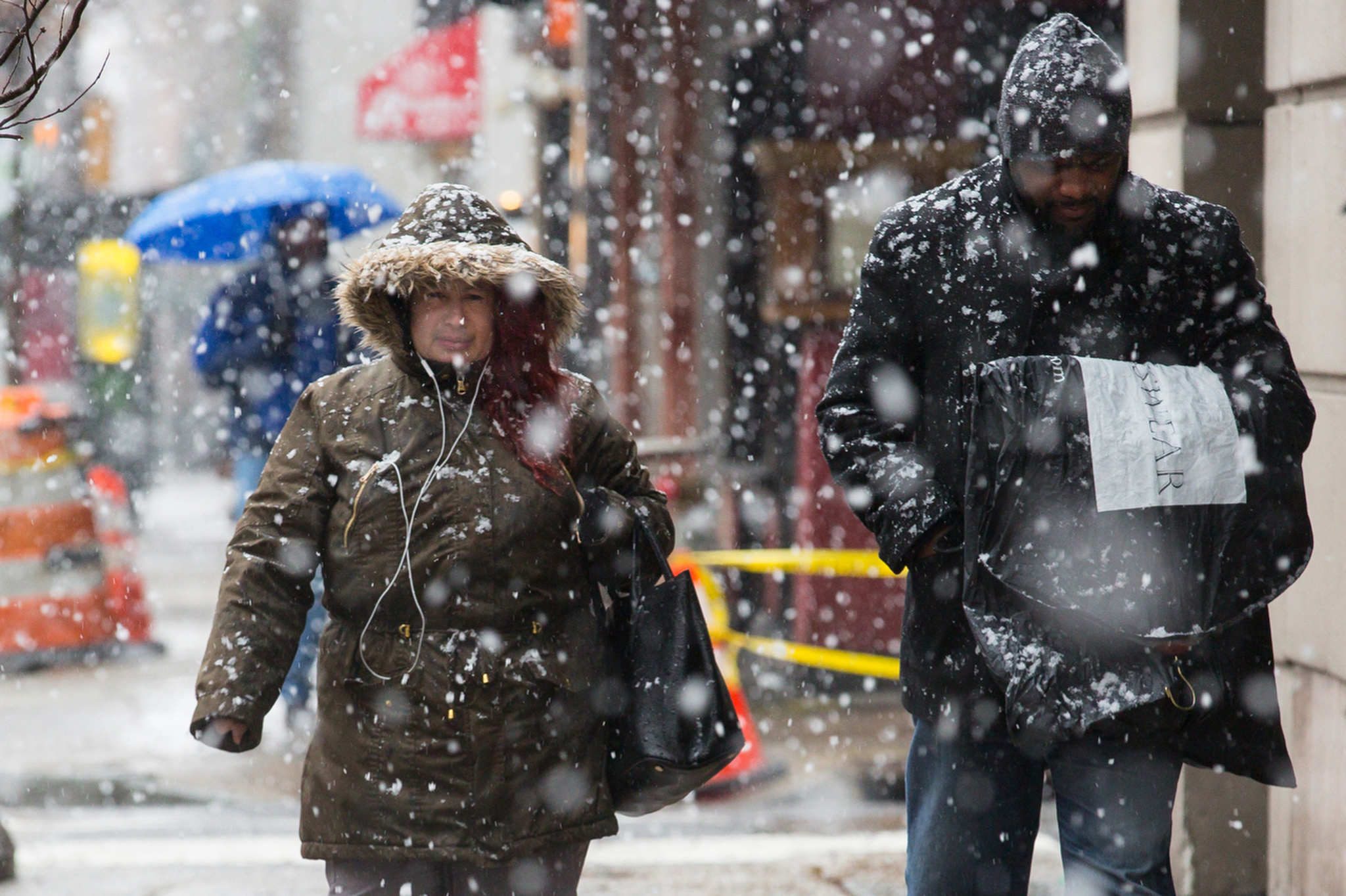
    Large snowflakes fall as pedestrians make their way in Center City. Flakes come various shapes and sizes … and weights.

    In the standard language used by the National Weather Service and commercial outfits, that certainly qualified as a “heavy” snowfall.

    But it was the antithesis of “heavy,” at least in terms of relative weight. Snow comes not only in different shapes, but also in very different weights, depending on the snow-to-liquid ratios. On average around here, an inch of liquid yields about a foot of snow, a 12-1 ratio.

    However, when temperatures are close to freezing as they were last Sunday, the snow has a higher liquid content and is thus heavier. On Sunday, 5 inches may have felt more like 8 to the average shovel. That’s heavy snow.

    When it’s cold, as it was on Jan. 7, 1996 — temperatures were in the teens during the day — the flakes are way drier. The ratio for the storm was closer to 20-1, and overall the flakes were a whole lot lighter.

    “Heavy” snow “applies to visibility ratios,” said Jim Eberwine, longtime meteorologist with the National Weather Service local offices, adding it might be time to reconsider the use of that adjective.

    “Some things should be updated,” he said.

    How about: Snowfall rates can be intense at times?

    Snow: It’s a Northern Hemisphere thing

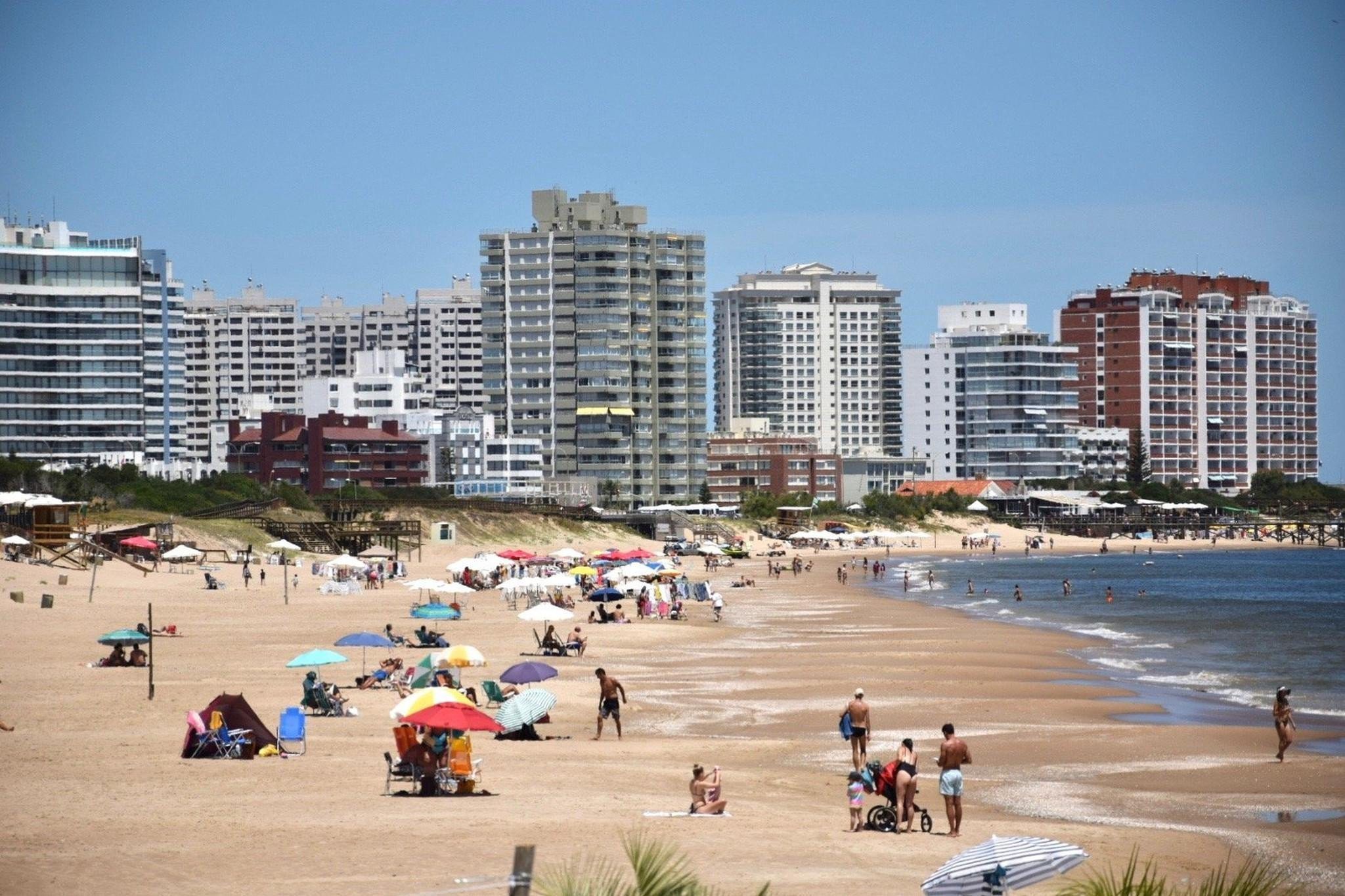
    It’s Janaury in the Miami of South America, Punta del Este, Uruguay. It doesn’t snow much there in their winter either.

    The solstice also marks the beginning of the astronomical summer in the Southern Hemisphere, so residents south of the equator probably won’t be using snowblowers for the next several months.

    In fact, they won’t be seeing a whole lot of snow there during the winter. It snows robustly in the Andes and other mountain regions, but not in major population centers, the AccuWeather people note.

    NOAA’s National Center for Environmental Information doesn’t bother to track snow cover in the Southern Hemisphere, for a couple of reasons, including that it’s 80% covered by climate-moderating water.

    Plus its major cities are located at latitudes where snow is scarce.

    How much for Philly this winter?

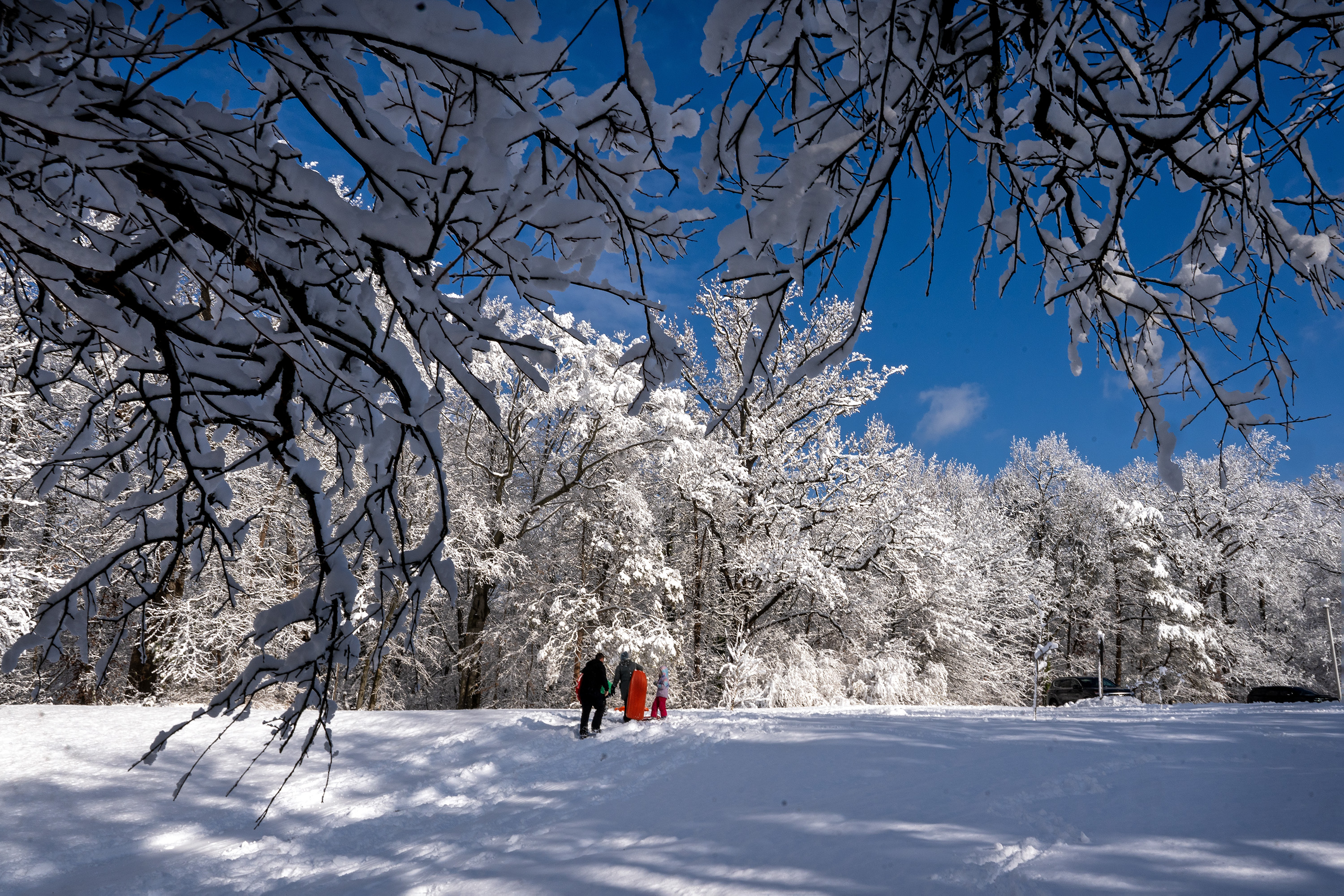
    The Butler family finds a (small) hill to sled on in Wallworth Park in Cherry Hill after last Sunday’s snowfall. The 4.2 inches meashred in Philly was more than half of what fell all last winter.

    By contrast, the Northern Hemisphere has a plentiful supply of metropolitan areas that experience ruler-worthy snowfalls, including Philadelphia.

    Making seasonal snow forecasts in this region isn’t quite like picking lottery numbers, but reasonably close. Seasonal totals have varied from 78.7 inches in 2009-10 to nothing in 1972-73. NOAA’s Climate Prediction Center doesn’t touch the stuff.

    The guesses for this year are in, and here is a partial list with what’s out there: The “normal” season total is 23.1 inches.

    Fox29 — 16 inches

    AccuWeather/6abc — 14 to 18 inches

    CBS3 — 18 to 24 inches

    Arcfield Weather — 22 to 26 inches

    WeatherBell Analytics — 22 inches

    One prediction they all have in common: The winter of 2025-26 will out-snow that of 2024-25.

    That won’t be hard.

  • Soaked ground and 60-mph wind gusts could cause outages and commuting woes around Philly

    Soaked ground and 60-mph wind gusts could cause outages and commuting woes around Philly

    What’s left of the season’s first snowfall is all but gone with the wind — and the heftiest rains since October. And having done its best to disrupt Friday’s morning commute, the weather evidently is executing an afternoon encore.

    After backing off for a few hours, the winds came back with a vengeance Friday afternoon. A thunderstorm gust of 62 mph was recorded at Philadelphia International Airport at 2:35 p.m.

    The weather service’s wind advisory for the entire region remains in effect until 1 a.m. Saturday, and conspiring with snow melt to saturate the soils, SEPTA is particularly concerned about the potential for uprooted trees along its Regional Rail lines, said media relations director Andrew Busch.

    “The recipe for problems is there,” he said. “We will have crews stationed across the system to respond quickly.”

    Peco heard the rumors, and while the utility is “not expecting impacts, we’re going to continue to monitor conditions,“ said Candice Womer, senior communications specialist.

    The deciduous trees are mostly bare, so winds can sail through branches that are not weighed down with leaves, but the weather service advises that “some power outages” are possible.

    About 16,500 outages were reported at midafternoon.

    An additional concern was the predicted wind shift during the day, from southerly in the morning to westerly in the afternoon, and how that might stress vulnerable trees, Womer said.

    The strongest winds will occur during the afternoon

    The gusts are likely to be “widespread” during the afternoon, said Paul Fitzsimmons, a lead meteorologist at the weather service’s Mount Holly office. That would be after the rain-producing front crosses through the region and winds become westerly, peaking in time for the afternoon commute. Gusts to 50 mph are possible.

    Rain totals in the Philly area are expected to be in the 1-to-1.5-inch range, Fitzsimmons said.

    No stream flooding is anticipated, however, as levels are quite low. Despite the snow and a decent soaking on Dec. 2, precipitation the last two months is only about 75% of normal throughout the region, according to the National Oceanic and Atmospheric Administration’s Middle Atlantic River Forecast Center.

    How dry we’ve been

    The gusts aside — not a trivial omission — this system should produce a “beneficial rain,” the weather service notes.

    A drought warning remains in effect for all of New Jersey.

    Water levels are so low that computer models show only about a 10% chance of streams reaching even the preflood “action” phase.

    In the interagency U.S. Drought Monitor map posted Thursday morning, most of Philadelphia, adjacent South Jersey, and Chester County were in the “severe drought” category, along with portions of Bucks, Delaware, and Montgomery Counties.

    Most of Pennsylvania and New Jersey were in at least “abnormally dry” conditions.

    The forecast for the weekend

    After the winds die down Friday evening, the region should be in for a dry but chilly weekend.

    Temperatures during the day Friday are forecast to dive from a high in the 50s in the morning to the 30s by nightfall, and they won’t get out of the 30s on Saturday.

    Sunday’s forecast high in the mid-40s would be close to normal for the date.

    Peeking ahead, the prospects of a white Christmas are not especially promising.

    The region may have to settle for a wet one. Rain is possible Christmas Day with highs in the 40s. That’s not quite what Irving Berlin had in mind.

  • Trump officials say they will dismantle ‘global mother ship’ of climate and weather forecasting

    Trump officials say they will dismantle ‘global mother ship’ of climate and weather forecasting

    The Trump administration said Tuesday it was breaking up one of the world’s preeminent earth and atmospheric research institutions, based in Colorado, over concerns about “climate alarmism” — a move that comes amid escalating attacks from the White House against the state’s Democratic lawmakers.

    “The National Science Foundation will be breaking up the National Center for Atmospheric Research (NCAR) in Boulder, Colorado,” wrote Russell Vought, the director of the White House Office of Management and Budget on X. “This facility is one of the largest sources of climate alarmism in the country.”

    The plan was first reported by USA Today.

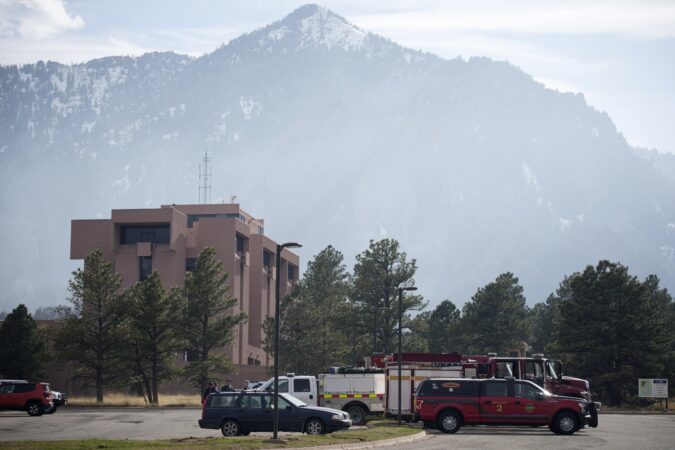
    The NCAR laboratory in Boulder was founded in 1960 at the base of the Rocky Mountains to conduct research and educate future scientists. Its resources include supercomputers, valuable datasets, and high-tech research planes.

    The announcement drew outrage and concern from scientists and local lawmakers, who said it could imperil the country’s weather and climate forecasting, and appeared to take officials and employees by surprise.

    NCAR’s dismantling would be a major loss for scientific research, said Kevin Trenberth, a distinguished scholar at NCAR and an honorary academic in physics at the University of Auckland in New Zealand.

    Trenberth, who joined NCAR in 1984 and officially retired in 2020, said the research center is key to advanced climate science discoveries as well as in informing the climate models that produce the weather forecasts we see on the nightly news.

    Colorado Gov. Jared Polis said in a statement that the state had not received information about the administration’s intentions to dismantle NCAR.

    “If true, public safety is at risk and science is being attacked,” said Polis. “Climate change is real, but the work of NCAR goes far beyond climate science. NCAR delivers data around severe weather events like fires and floods that help our country save lives and property, and prevent devastation for families.”

    The action comes as Republicans have escalated their attacks on Polis and others in the state for their handling of a case involving Tina Peters, a former county clerk in Colorado who was convicted in state court on felony charges related to efforts to overturn the 2020 presidential election. President Donald Trump announced last week that he is pardoning Peters, who is serving a nine-year sentence, but it is unclear whether Trump has that authority, because she was not convicted in federal court.

    In a joint statement, Colorado’s two Democratic senators, John Hickenlooper and Michael Bennet, and Rep. Joe Neguse (D., Colo.) slammed the move and vowed to fight back against it.

    In his social media post, Vought said that “any vital activities such as weather research will be moved to another entity or location” — but did not specify further.

    “The Colorado governor obviously isn’t willing to work with the president,” said a White House official, who spoke on the condition of anonymity because they were not authorized to discuss the matter publicly.

    The official declined to cite any specifics about how Polis is refusing to cooperate, from the administration’s perspective, but denied that the move was in response to the state’s refusal to release Peters from prison.

    The facility “is not in line with the president’s agenda,” the official added, noting that it had “been on the radar” of the administration “for a while.”

    The National Science Foundation, the federal science agency that funds the center, was blindsided by the announcement, according to a person familiar with NSF operations who spoke on the condition of anonymity to avoid retribution. But they said facilities managers at NSF will need to be involved in moving assets or capabilities. An NSF spokesman did not immediately respond to questions about the plan to dismantle NCAR.

    Antonio Busalacchi, the president of the University Corporation for Atmospheric Research, which oversees NCAR, said it was aware of reports to break up the center but did not have “additional information about any such plan.”

    “Any plans to dismantle NSF NCAR would set back our nation’s ability to predict, prepare for, and respond to severe weather and other natural disasters,” Busalacchi said.

    An internal email obtained by the Washington Post, sent Tuesday night, emphasized the critical work NCAR does for “community safety and resilience.”

    Busalacchi wrote that the news had come as a shock, and the institution had reached out to NSF for more information. “We understand that this situation is incredibly distressing, and we ask that you all continue doing what you have done so well all year — provide support for one another as we navigate this turbulent time,” Busalacchi wrote.

    The center is “quite literally our global mother ship,” Katharine Hayhoe, a Texas Tech University professor and chief scientist for the Nature Conservancy, wrote on X. “Dismantling NCAR is like taking a sledgehammer to the keystone holding up our scientific understanding of the planet.”

    NCAR plays a unique role in the scientific community by bringing together otherwise siloed specialists to collaborate on some of the biggest climate and weather questions of our time, Caspar Ammann, a former research scientist at the center, said in an email.

    “Without NCAR, a lot could not happen,” he said. “A lot of research at US Universities would immediately get hampered, industry would lose access to reliable base data.”

    Ammann added that around the world, weather and climate services use NCAR modeling and forecasting tools.

    The Colorado-based center draws scientists and lecturers from all over the world, and through its education programs has helped produce future scientists, Trenberth said.

    He said he feared not just for the discoveries and data that would be lost if the center were to close, but for the early careers that could also be affected or destroyed.

    “If this sort of thing happens, things will go on for a little while,” he said. “But the next generation of people who deal with weather and science in the United States will be lost.”