EAST RUTHERFORD, N.J. — Benjamin Klevge, a soccer fan from Pamiers, France, had the front-facing camera open on his phone and a wide smile on his face. He crouched down, struggling to fit the Statue of Liberty into the frame.
It wasn’t the actual Statue of Liberty, though. It was a 60-foot replica, encrusted with more than 1 million green jelly beans, towering above the entrance to a three-story candy store.
And Klevge wasn’t in New York. He wasn’t even outdoors. He was roaming the gaping halls of the American Dream, a three-million-square-foot megamall in East Rutherford, N.J. He took more pictures in front of an indoor water park a few steps away as a Backstreet Boys song from the previous century played over the loudspeakers.
“C’est magnifique,” he said, before switching to English. “It’s beautiful.”
Fans who attended the opening match of this World Cup this month in Mexico City could wander a warren of neighborhood streets alive with music and the smell of grilled meat on their way to the iconic Estadio Azteca.
Other citadels of soccer — whether Maracanã Stadium in Rio de Janeiro, which hosted the 1950 and 2014 finals, or Madrid’s Santiago Bernabéu, where the final was played in 1982 — are similarly embedded in dense, urban landscapes, helping to animate the heartbeats of their respective cities.
Then there’s MetLife Stadium — or “New York New Jersey Stadium,” as World Cup officials have poetically rebranded it for the summer — which will host eight matches in this tournament, including the final.
For fans accustomed to ballparks with more of the local flavor outside, it has become a punchline. They deride it as a remote island in a sea of asphalt, an inaccessible behemoth surrounded by swampland and a tangle of highway. And for the most part they’re right.
But there’s another island out there.
On Tuesday, before a match between France and Senegal, Klevge and thousands of others fans flooded the American Dream mall, which is connected to the stadium by an elevated footpath, and tried to make the best of an odd situation.
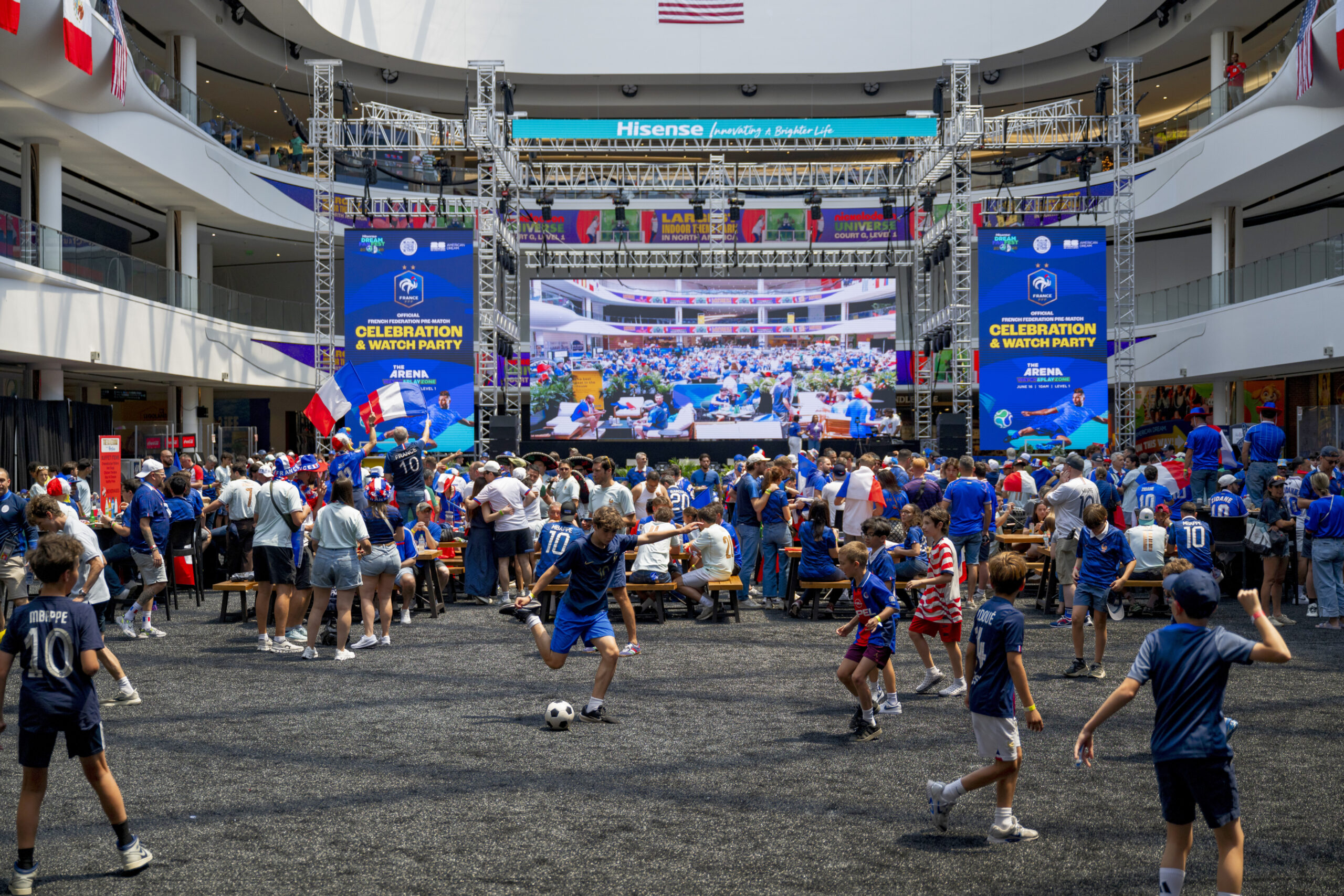
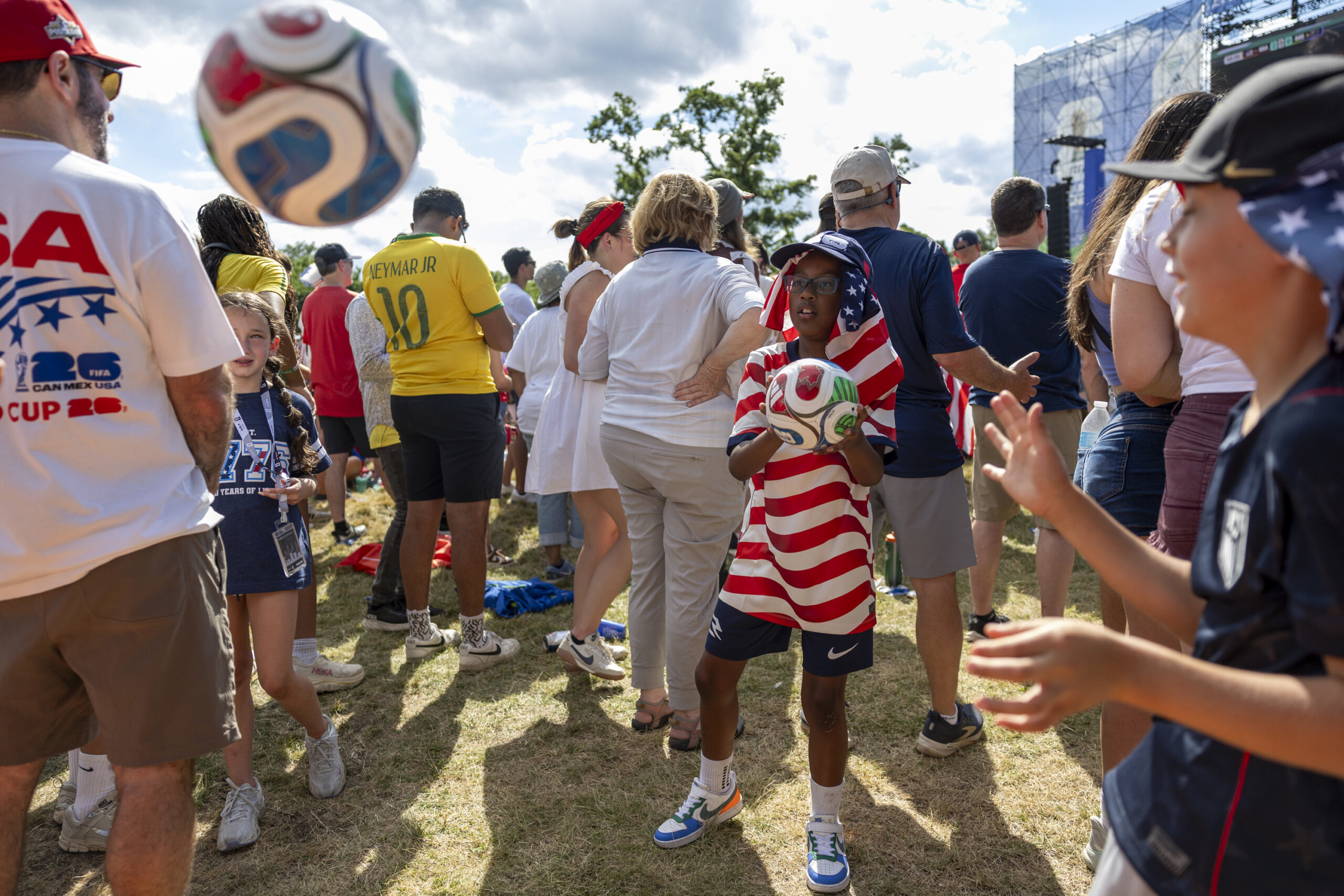
Children from France kick play during a World Cup watch party at American Dream earlier this month.
“Exit?” Klevge asked a reporter after taking his selfies and apologizing for his limited English. He tapped two fingers on his lips. “For smoking?”
Erected in 2021, the American Dream is the second-largest shopping mall in the country. It has hundreds of stores, several dozen eateries and a host of attractions not commonly found indoors: a go-kart track, a water park, a ski slope and five roller coasters.
This month, the air-conditioned cathedral to commerce represents the only public gathering space — besides the generic official “fan zones” immediately outside the stadium — accessible to the 82,500-capacity stadium by foot.
“It’s kind of confusing. We’re just in a mall,” said Dawda Daye, 30, a Senegalese fan from Houston, who arrived there by taxi with his wife. “But it’s convenient, and everyone seems to be enjoying it and having fun.”
Indeed, fans of both teams on Tuesday — just like the crowds supporting Brazil and Morocco over the weekend — seemed open to embracing the weirdness of the setting. The resulting rowdy energy was similar to the atmosphere at any major soccer match around the world — just entirely different.
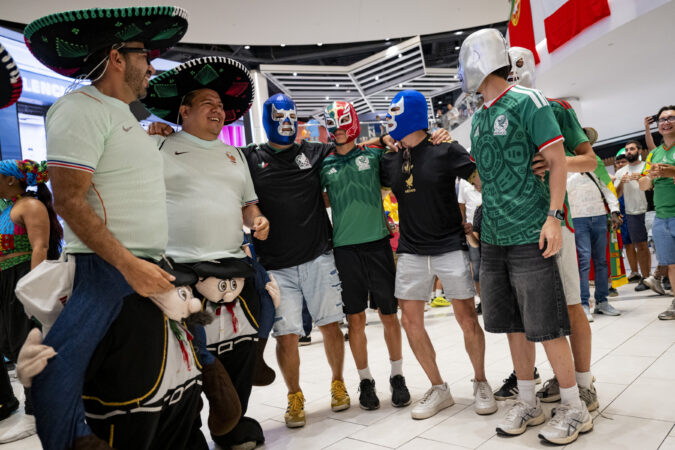
Three hours before kickoff, four men in French jerseys juggled a plush soccer ball, purchased moments earlier from an Ikea kiosk, outside a Verizon store.
A Senegalese drum troupe rapped out a mesmerizing beat for a swaying group of soccer fans marching near the cash register of a Mrs. Field’s cookie stand.
The sunlit space normally containing the mall’s NHL regulation-size ice rink had been converted into a sort of simulation of a beer garden, filled with picnic tables where scores of fans clapped and sang. Above them towered a screen roughly the size of the penalty area on a soccer field that displayed a video feed of the very same picnic zone they were in — meaning the fans were cheering real-time images of themselves cheering.
“In the U.S., everything is bigger,” said Benoit Berthier, 39, a Frenchman working in Montreal, who was eating a pastry at a cafe a few steps away. “But what they did inside is good. If you have one thing you know how to do in America, it’s entertain.”
In a food court connected to H Mart, the Korean American grocery chain, two men wearing the jersey of Rayan Cherki, a young French star, blew into vuvuzelas as they squeezed between groups munching on traditional Korean snacks.
On the third floor — there are five levels to the American Dream — a trio of Frenchman puzzled over a digital map of the shopping center, tapping on the screen to find a place to eat.
“This kind of mall is unusual for French people,” said Gérald Grégoire, 52, one of the fans. “What’s most surprising is the size of the parking lot.”
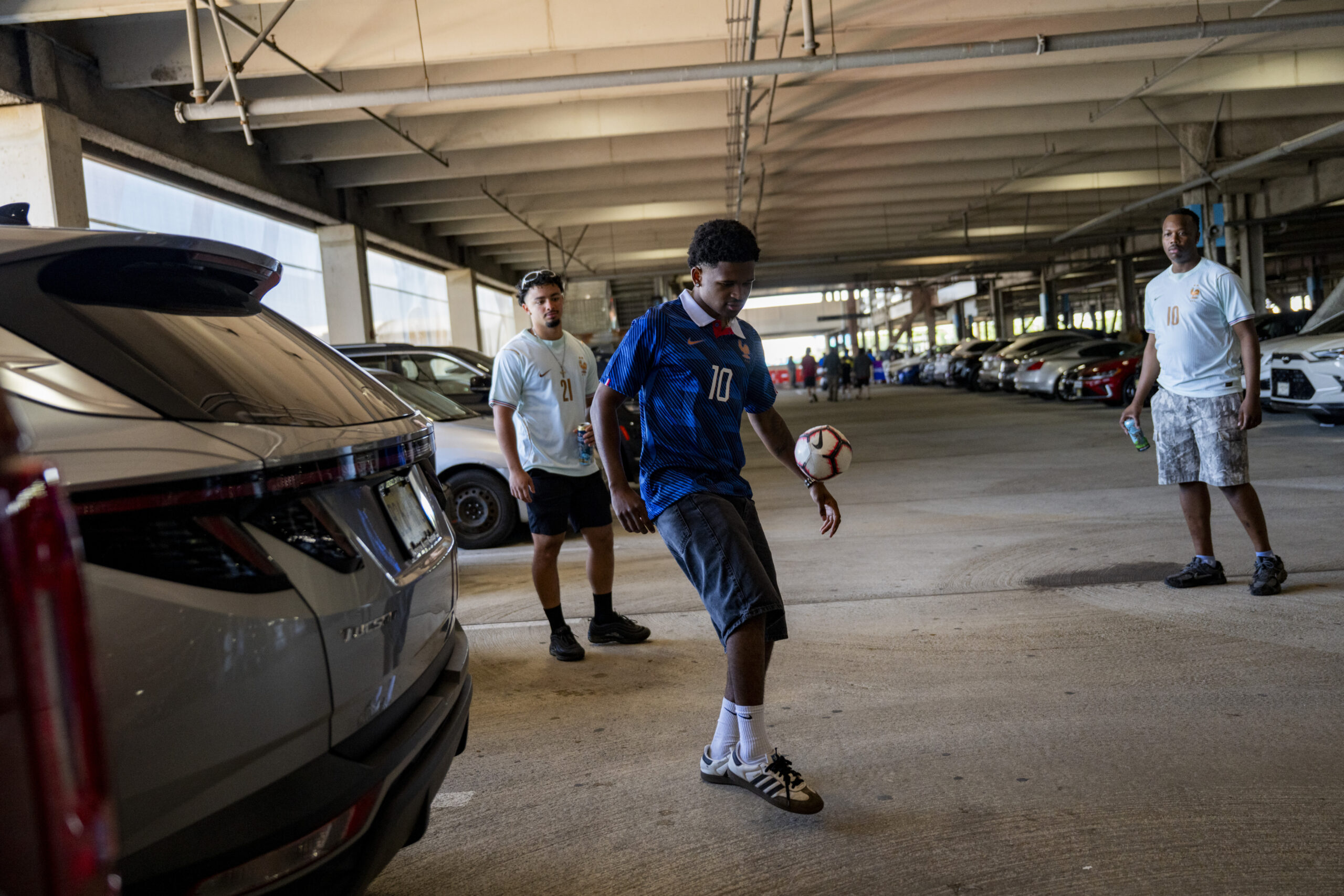
Three friends kick a small soccer ball in the American Dream parking garage.
During American football season, when the New York Jets and the New York Giants share MetLife Stadium, the parking lots there can hold close to 30,000 cars, a perfect setting for that quintessentially American sports tableau: tailgating.
A handful of World Cup stadiums — like Lincoln Financial Field, where opposing fans played drinking games together before a match — are allowing tailgating this summer. MetLife is not one of them.
“We heard there was no tailgating, so we said, ‘OK, we’re not going to the stadium, we’re going to the mall,’ ” said Carlos Orbe, 35, who was visiting from Tampa, Fla., with his fiancée, Julia Szenberg.
Undeterred, the two grabbed a case of hard seltzers, took a cab to the American Dream and found some space between a row of parked cards in the mall’s indoor parking complex.
They stood in a circle with a dozen or so other fans, sipping their drinks and periodically kicking a soccer ball that bounced their way. Asked about the people in the juggling circle, Szenberg, 36, who was born in Paris, shrugged.
“We don’t know them,” she said. “But now they’re our family. This is the real American dream, happening in the mall parking garage.”
By the time you read this, Philadelphia will have hosted two matches in the FIFA World Cup and will be steadfastly preparing for a third in quick succession come Monday.
France, a favorite by many to win the whole tournament, will take on Iraq in the second game of Group I, but if it’s anything like the previous two matches, the game itself will once again not be the story.
Because for the past two games, the attraction has been that of the fans, and the unbridled passion people have for not just a team and its players, but the nation so many have bought jerseys for, the emblem they proudly wear above their heart, or in the middle of their chest.
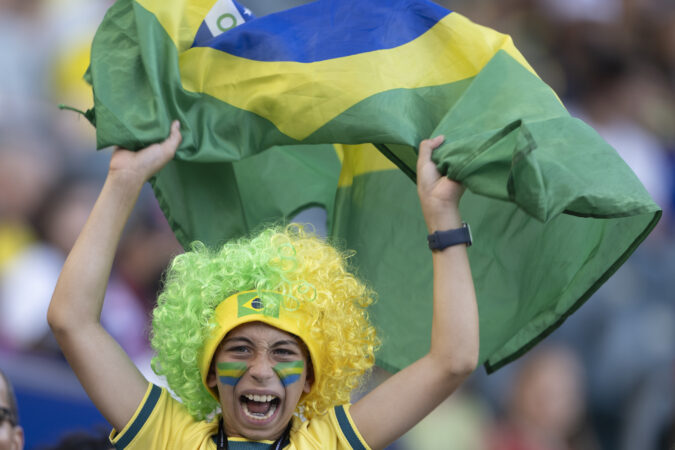
The heart of Brazil is in Philadelphia ahead of their match against Haiti
This spectacle of what will result in 104 matches of underdogs becoming story lines, a U.S. men’s national team exercising the type of dominance very few expected, has also seen Philly lead the way on the main stage, creating lasting memories for thousands of fans who have flocked to the city, all while becoming lore, in the process.
In the lead-up to the World Cup, the story lines circulated the unforeseen, the question marks that surrounded what the World Cup’s return to the United States would look like.
It came on the heels of perceived rampant greed from FIFA, which enacted dynamic pricing for the first time, sending ticket prices soaring to the highest they’ve ever been. They opened the door for broadcasters to run advertisements midgame, under the guise of hydrating tired players.
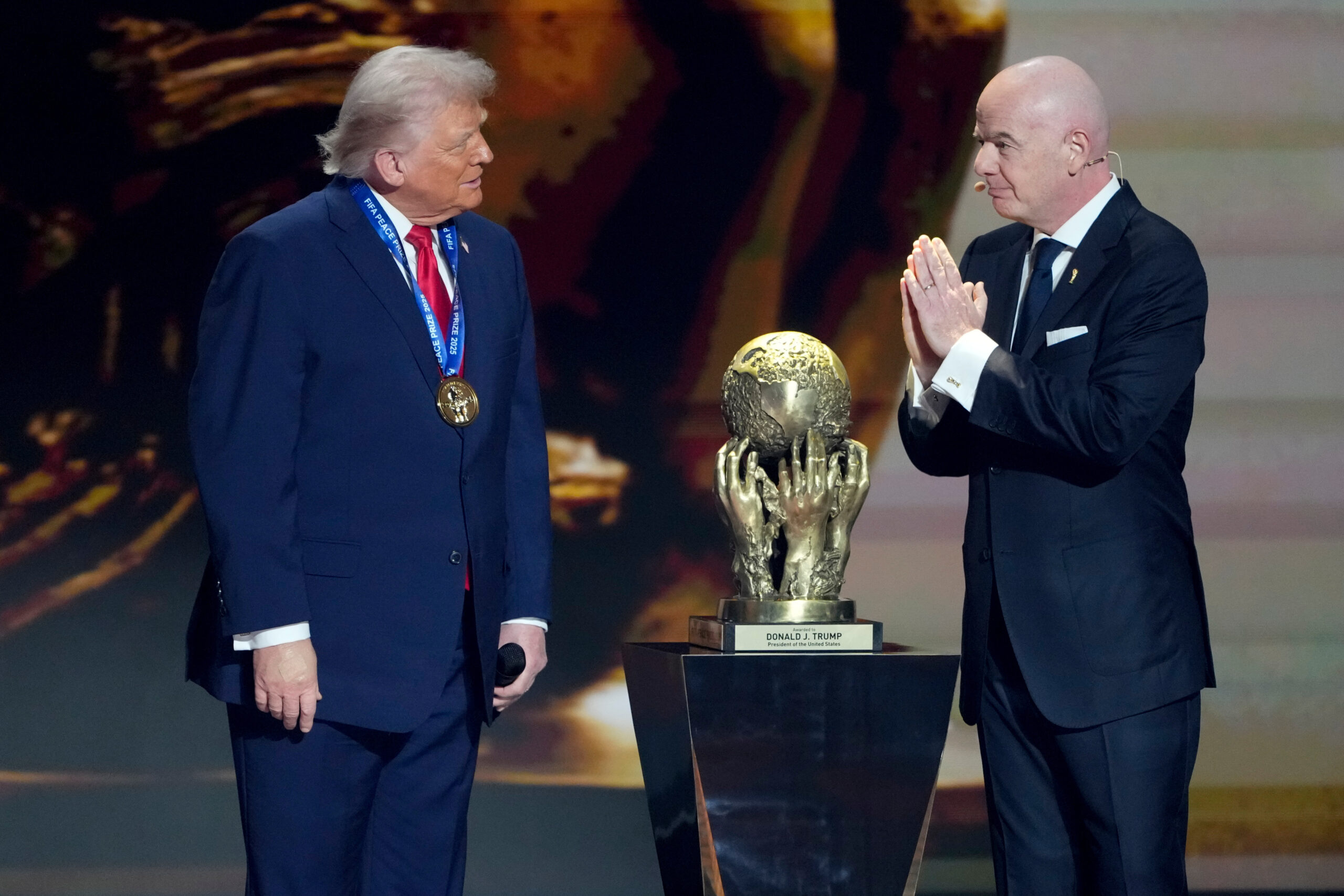
FIFA president Gianni Infantino (right) gives President Donald Trump the inaugural FIFA Peace Prize at the World Cup draw last December.
Let’s not forget the lobbying of the sitting U.S. president in the process, going as far as to create an inaugural peace prize for him while his administration destabilized governments and enabled a war in the Middle East.
But look at how quickly all of that has fallen into the backdrop.
Soccer in its purest form has provided an escape for a nation that desperately needed one. And what it’s also proved in the process is that people of different races, colors, and creeds don’t hate each other as much as their social media algorithms might suggest.
Proof was on display right here in Philly in the form of fans who packed the stands over the last two matches.
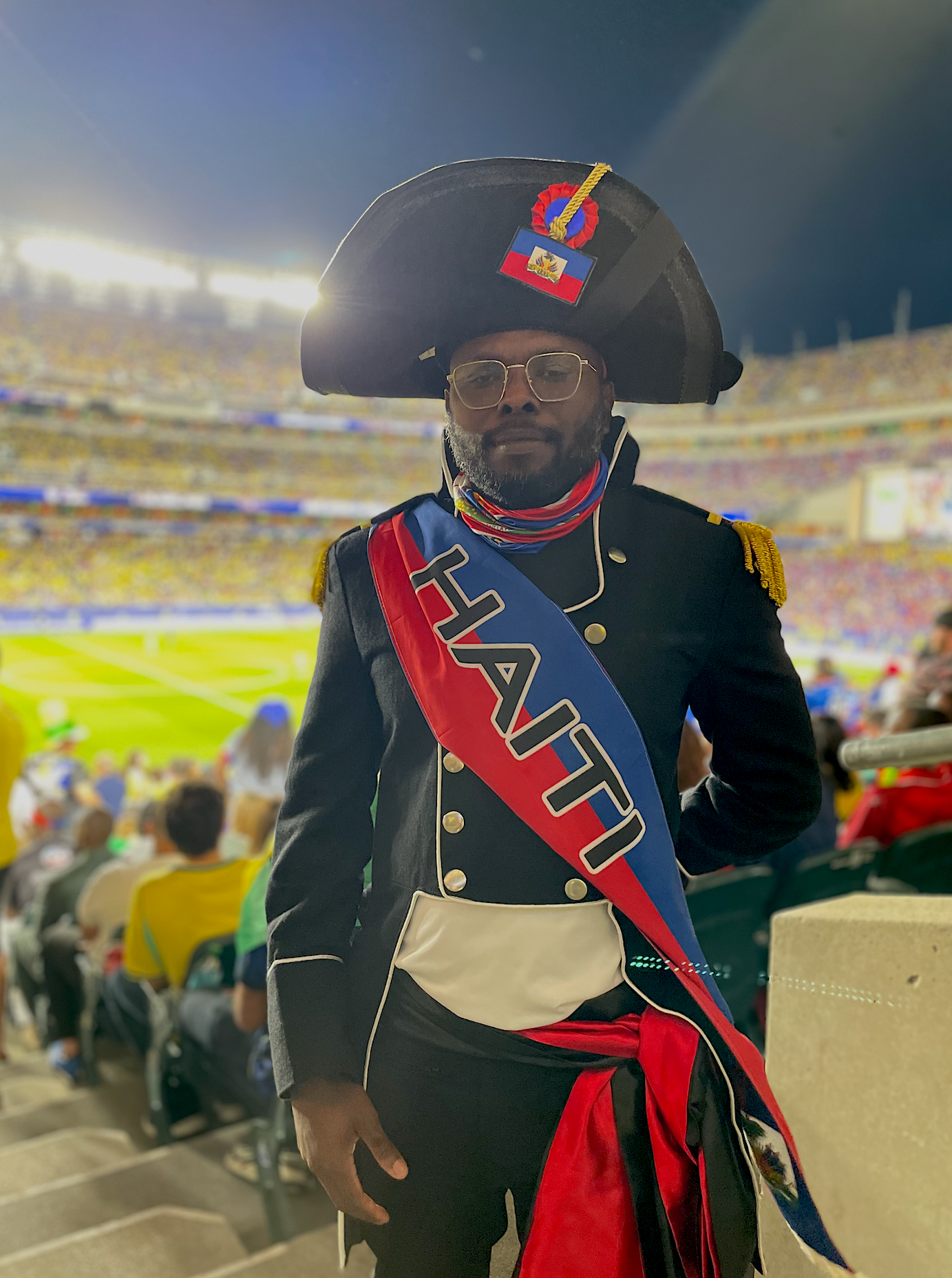
Fans like Maxence Jeanty, a 41-year-old Haitian native living in Chicago who traveled to Philly from the Windy City, dressed in a suit depicting liberator Jean-Jacques Dessalines, a key figure of the Haitian Revolution.
Maxence Jeanty, 41, a fan from Chicago arrived at the FIFA World Cup game between Brazil and Haiti, dressed as Jean-Jacques Dessalines, the leader of the Haitian revolution.
“When I was growing up in Haiti as a kid, I watched the World Cup, and I’ll never forget watching the 1994 World Cup,” Jeanty said. “It’s been so long that my people haven’t made it to the World Cup that the choice was to choose either Brazil or Argentina [as the nation to support]. But now, we’re stepping on the field as equals, and no matter what happens, we’re stepping on the field as equals. The pride that brings to me and to every Haitian fan here, man, that’s indescribable.”
We witnessed massive gatherings on the most iconic steps of our fair city from supporters who, like Jeanty, boarded planes just to be a part of the moment.
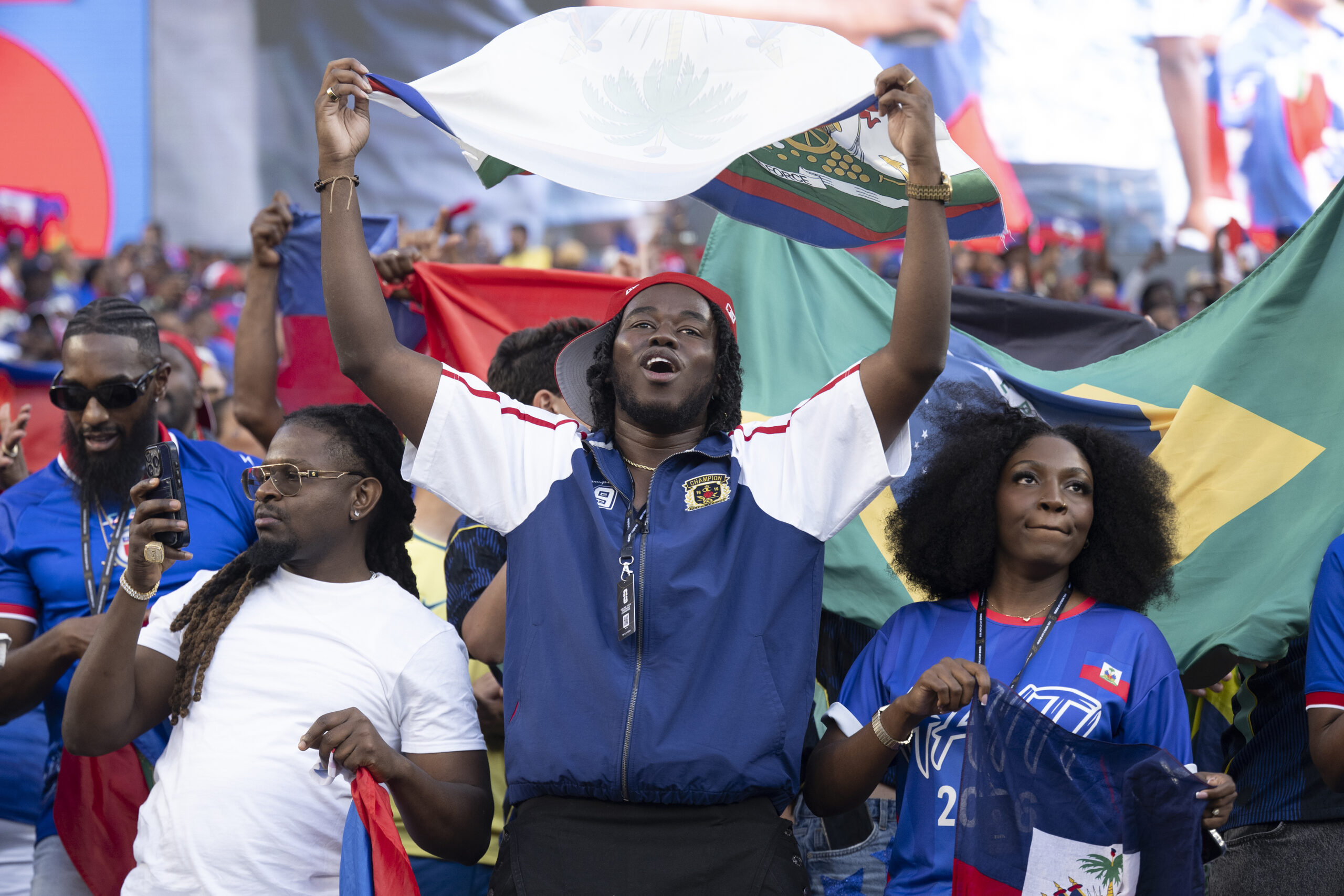
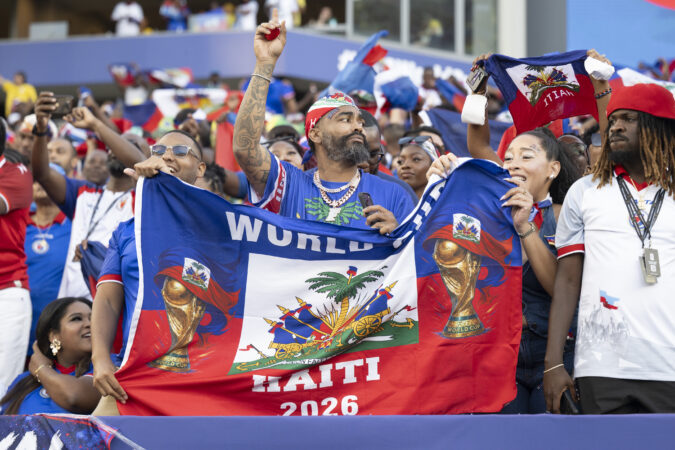
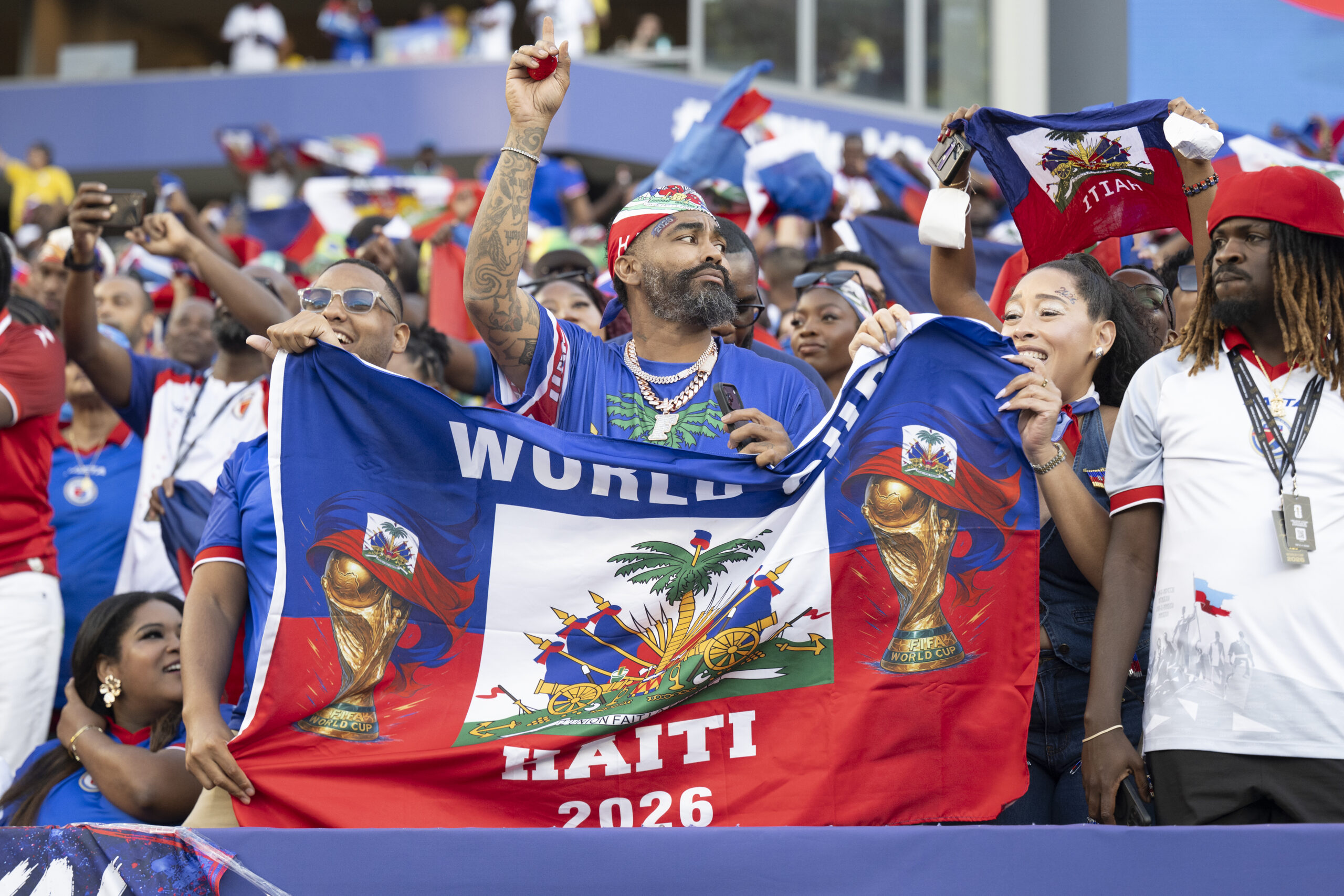
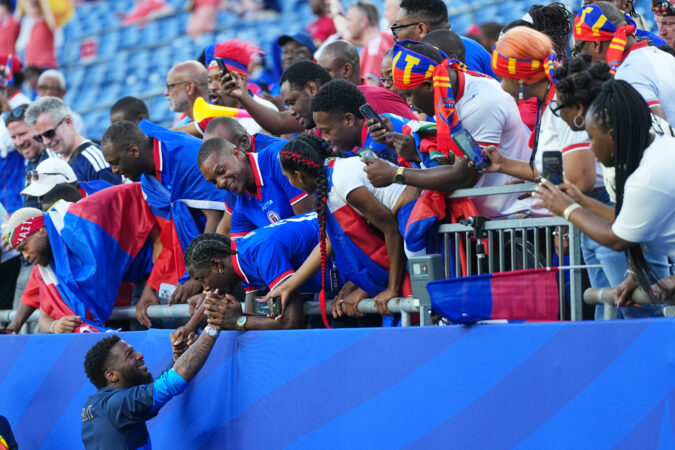
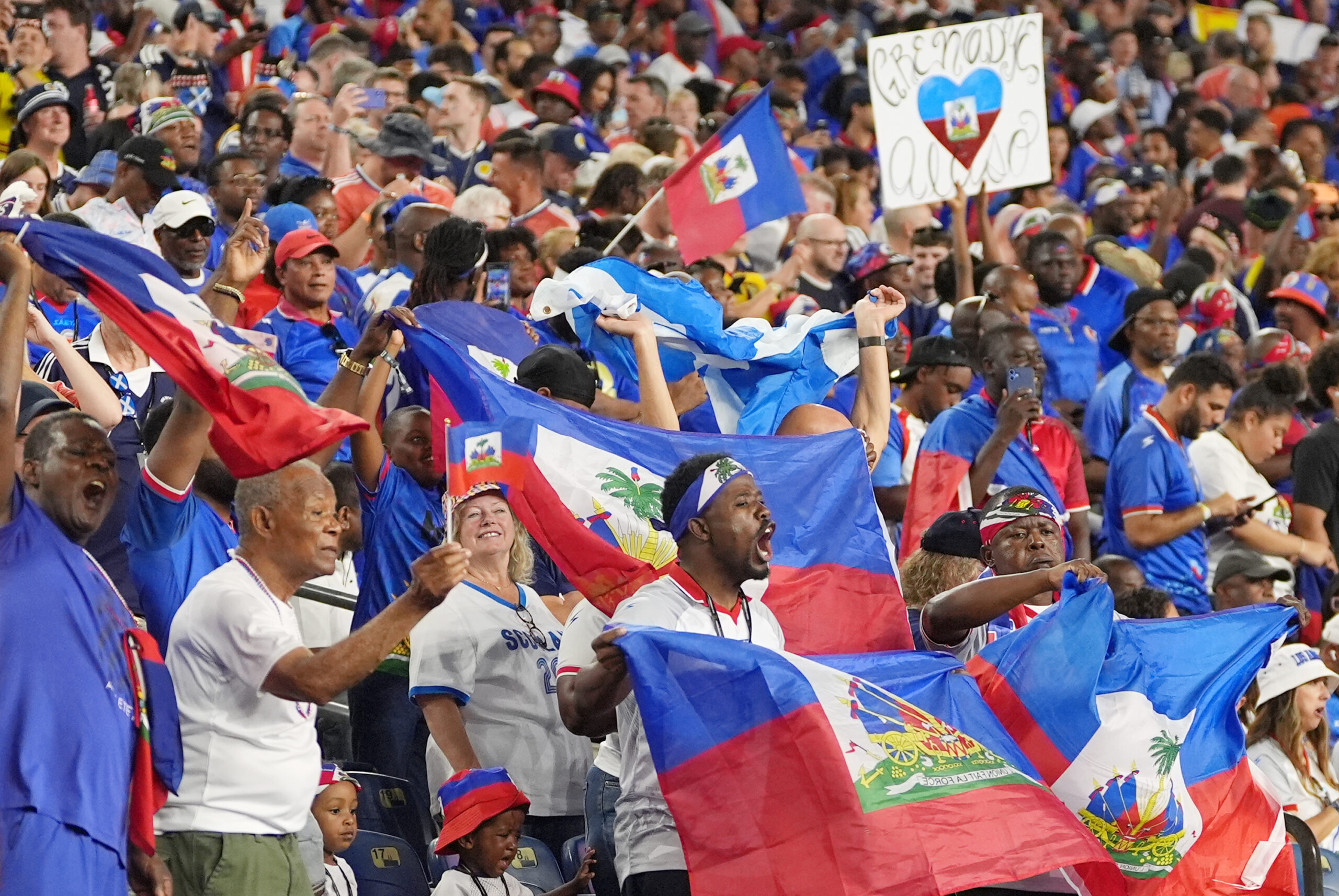
Haiti fans celebrate during Friday’s FIFA World Cup Group C soccer match against Brazil.
Only a week and a half in, the World Cup has become for so many a momentary cure for what ails, the escape we didn’t know we needed. Lifelong supporters hang onto every kick, and casual fans are amazed by the sights and sounds.
Along the way, we’ve met supporters of other nations who’ve never met and have become instant friends. We saw dance parties on subway cars, in parking lots, and in the middle of streets.
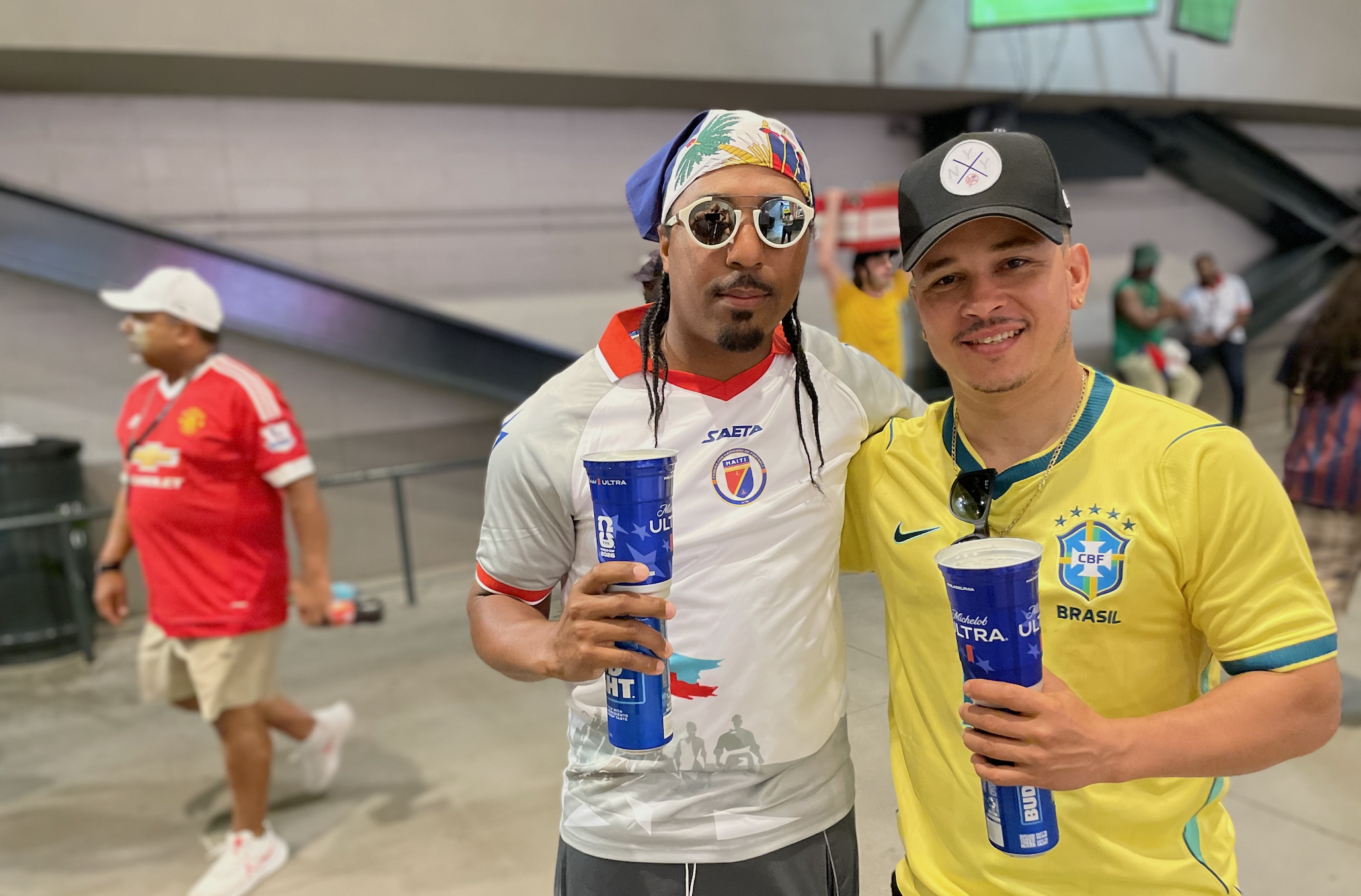
Lucas Maninhu, 31, who arrived from New York and was draped in Brazil’s jersey, wanted to introduce me to his “new best friend,” a Haitian man who only wanted to go by Greguity. The two met in the parking lot on the day of the Brazil-Haiti match, struck up a conversation, walked into the stadium, and watched most of the game together.
Brazil fan Lucas Maninhu (right) and Haitian fan Greguity met at the World Cup match in Philly between Brazil and Haiti. Both said they’ve become “best friends” in the process.
“We met tonight,” Maninhu said. “We are here for different teams, but it doesn’t matter, tonight this is my boy. We’re all here for the same reason.”
And look, FIFA knows this. It knows the unifying power this tournament has had on the masses since before the end of the Second World War.
It’s why, despite laying the claim of being “Football for All,” this edition of the World Cup, from a financial perspective, has felt like football for the few.
But those few continue to sell out arenas, flock to stadium stores to buy World Cup merchandise, and drink $7 purified water. Outside the stadium, games are setting broadcast records, and people are filling the bars and restaurants across North America. There’s money to be made all around.
Let’s not forget the FIFA Fan Festivals, the official watch party situated in Philly at Lemon Hill. It’s made that neighborhood a noisy one, but it’s a good noise.
Think about it. At its core, the first 10 days of the World Cup have allowed many Americans to take a sigh of relief, to have something to look forward to, or have on in the background while life is happening in real time.
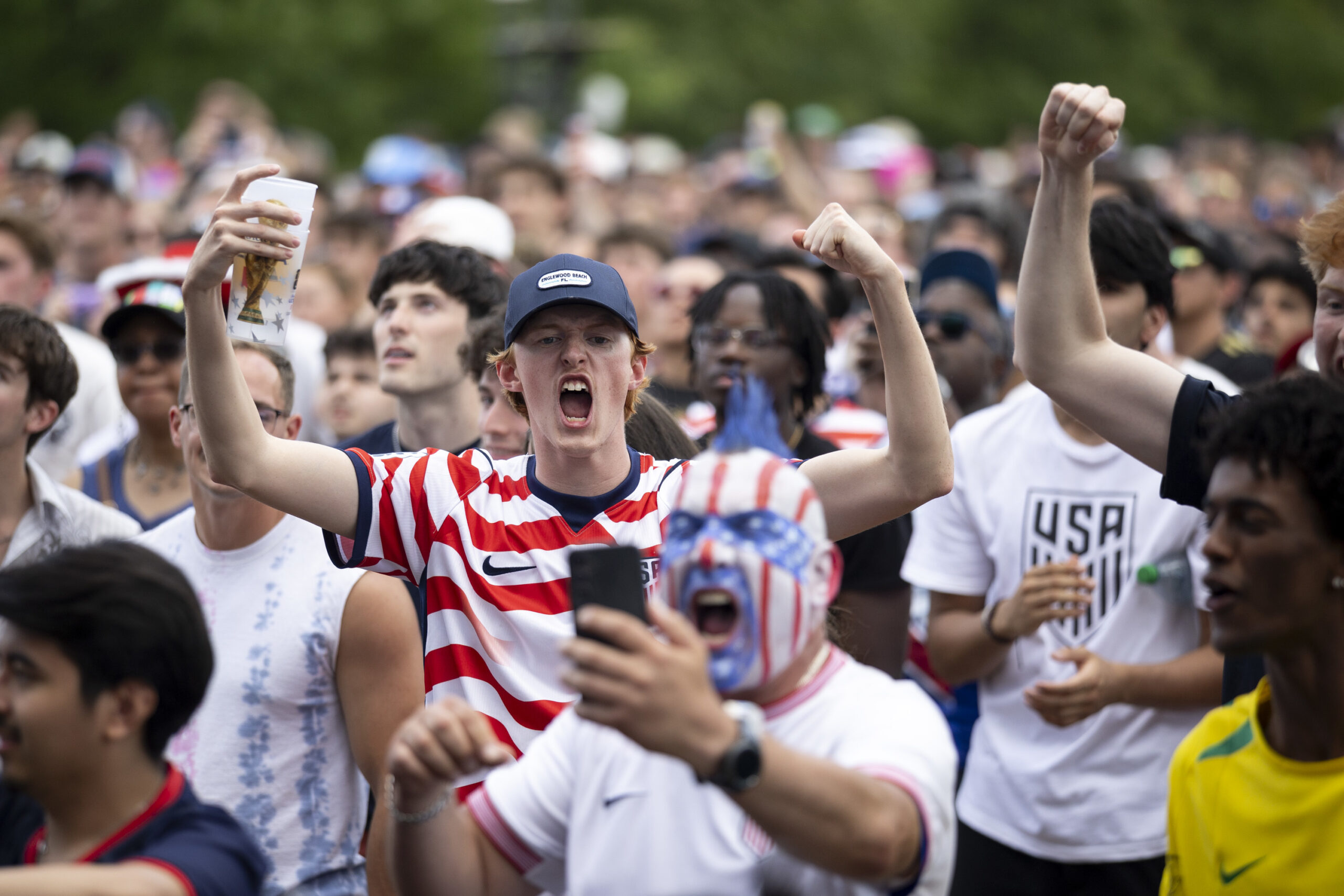
Cam Gorman, 23, of Gilbertsville, Pa., cheering with Philly Sports Guy Jamie Pagliei (front, center) at the FIFA Fan Festival in Lemon Hill as the U.S. beat Australia on Friday.
Here at home, you can try to equate the fervor to the Eagles winning it all in 2018, and then again in 2024, but it’s a different vibe, because this isn’t about wins or losses. To many fans, this is about the sheer joy that having the sport in their backyard has delivered.
It feels like the reprieve America needed, and Philly’s place in all of it has not gone unnoticed.
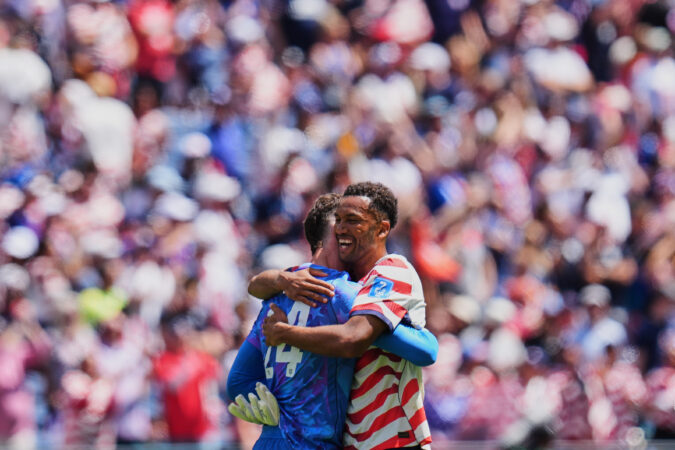
SEATTLE — At the final whistle of the U.S. men’s soccer team’s 2-0 win over Australia on Friday, Auston Trusty walked over to Matt Freese to offer a big hug.
They didn’t know that a photographer from the Associated Press was standing nearby to capture the moment. But soon enough, everyone found out.
“He came over to me and said, ‘Two Delco-heads just had a shutout in the World Cup together. That’s fate,’” the Wayne-born Freese said after his shutout in net. “And I laughed and I said, ‘Yeah, who would have thought?’”
Perhaps Jim Curtin, or other coaches across the Union ranks who worked with the duo over the years. But not too many people beyond Chester, or Wayne in those days, since that was YSC Academy’s first home.
“It’s obviously such a cool thing to have known him for so long, and I knew him outside of the soccer world too,” Freese said of Trusty. “We were just friends. So it’s incredible.”
That wasn’t the only karmic coincidence of the day. Trusty made his World Cup debut in front of not just his wife, daughter, in-laws and cousins, but also two of his first youth soccer coaches with the old Nether United club in Nether Providence, Delaware County: Tor Hotham and John Waraksa.
Like so many people around American soccer, they circled this day in this soccer-mad city and decided they had to be there. The reward was beyond measure.
“To have them fly here, not knowing if I’m going to play or not, to come here and be here for this game where I actually make my World Cup debut, it’s just all meant to be,” Trusty said.
The Media native beamed with pride again when he reflected on finally reaching this moment at age 27, 11 years after going to an under-17 World Cup with Christian Pulisic, Tyler Adams, Alejandro Zendejas, and Haji Wright.
“When you’re a little kid, dreaming about the stadiums you play in and the atmospheres and everything involved, to play in a home turf World Cup, get minutes, it’s a dream come true,” Trusty said.
Freese had his family in attendance too, plus his girlfriend’s family, and old friends from high school at Episcopal Academy. He shouted out one of the closest, Michael Hinkley, a soccer teammate back then who went on to play basketball at Dickinson.
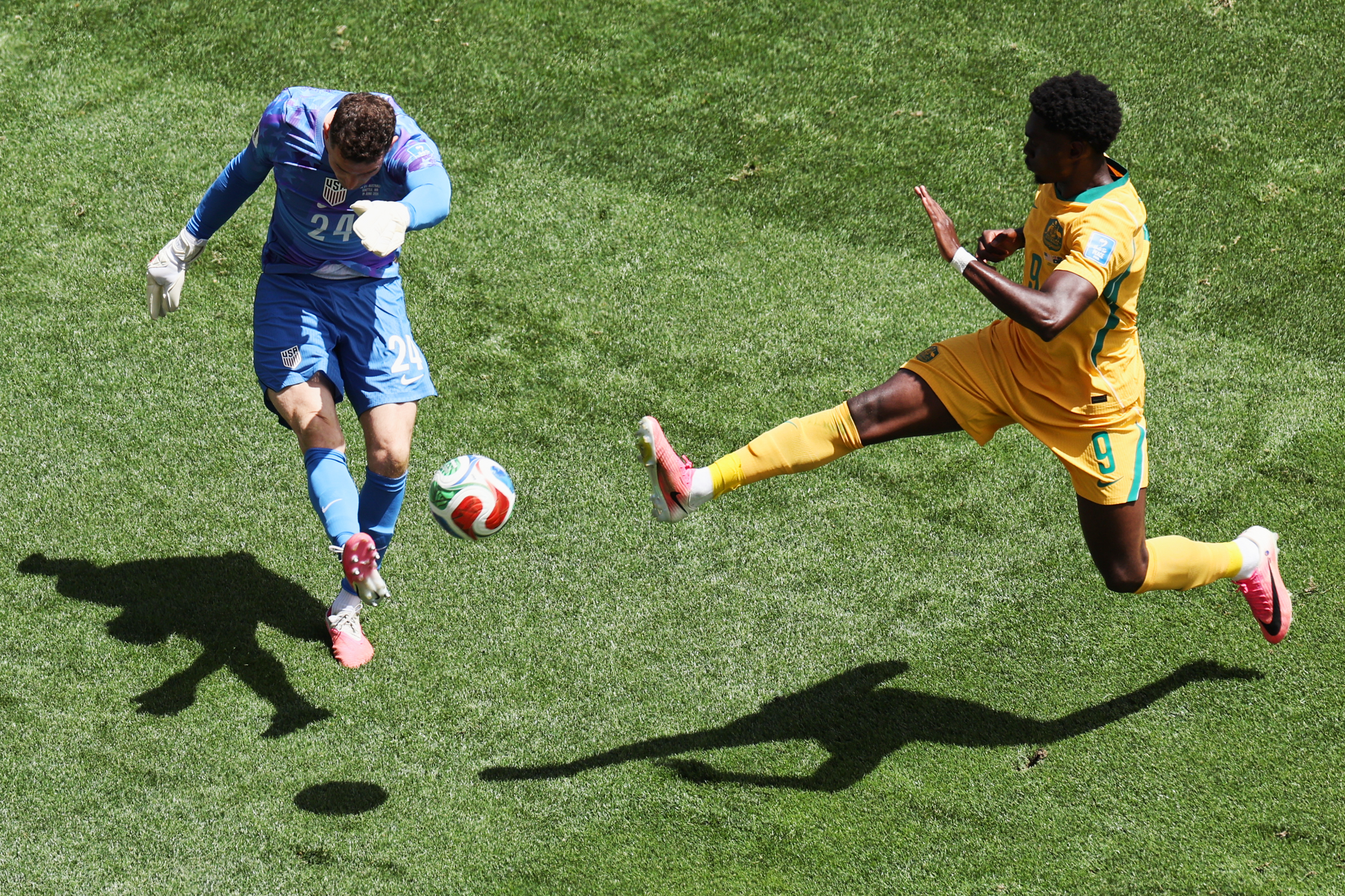
Matt Freese (left) clearing the ball in front ofAustralia’s Mo Touré during the first half.
“Obviously incredible support,” Freese said. “It means a lot to play in front of them, and play in front of everyone in this country.”
That support fueled the U.S. team all day, with the stands full and roaring well before kickoff. Trusty said the atmosphere “gives you chills,” especially when the crowd sang The Star-Spangled Banner over the orchestral rendition on the speakers.
“The atmosphere is one of those things you dream of,” Freese said. “I’ve heard ‘the 12th man’ is what they call the crowd here. It was definitely a 12th man for us — I think it was a 12th, 13th, 14th, 15th man for us today.”
But things were getting dicey when Trusty and Joe Scally entered the game in the 80th minute as defensive reinforcements. Australia was gaining momentum even though it hadn’t scored, and an already physical game was getting even more fractious.
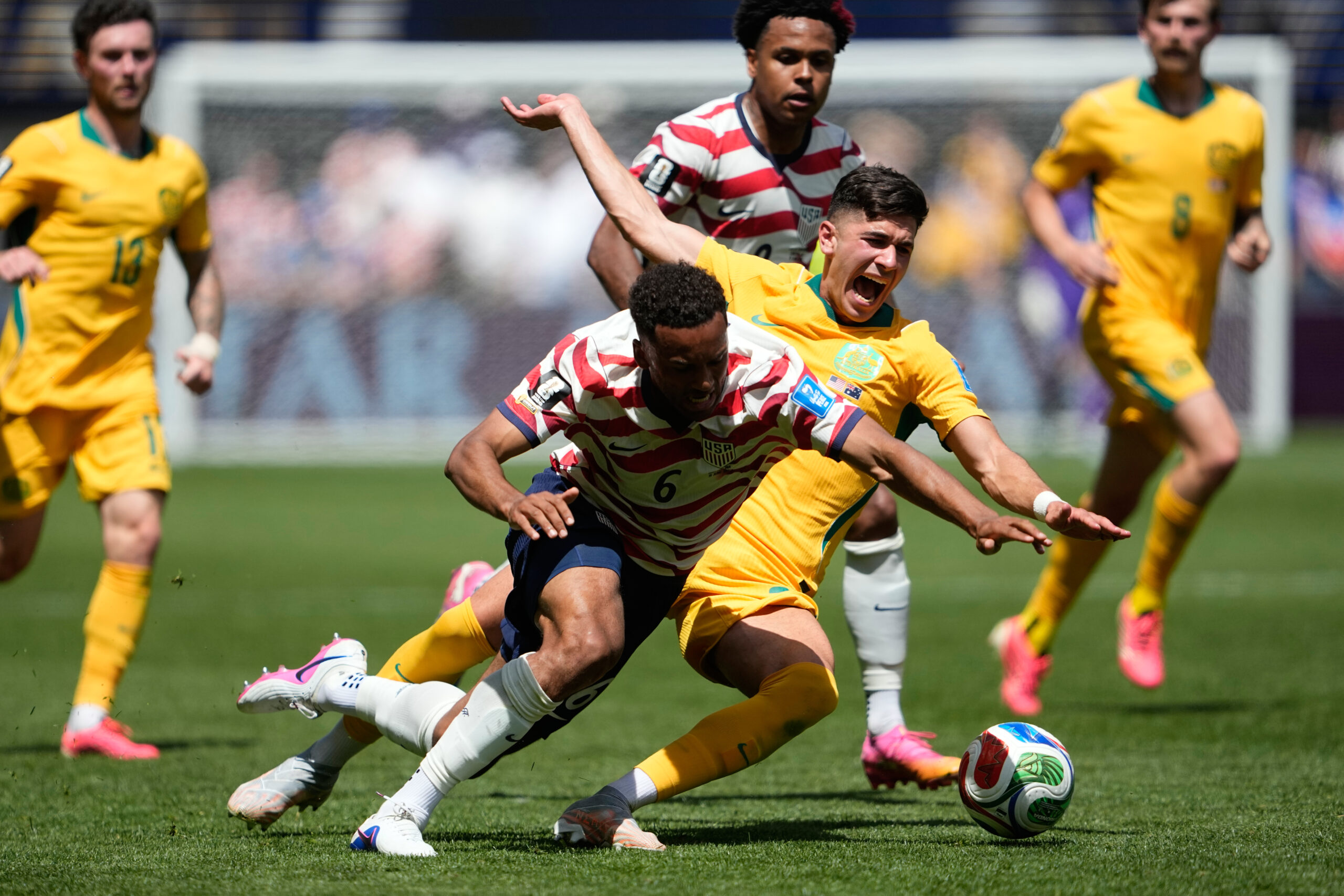
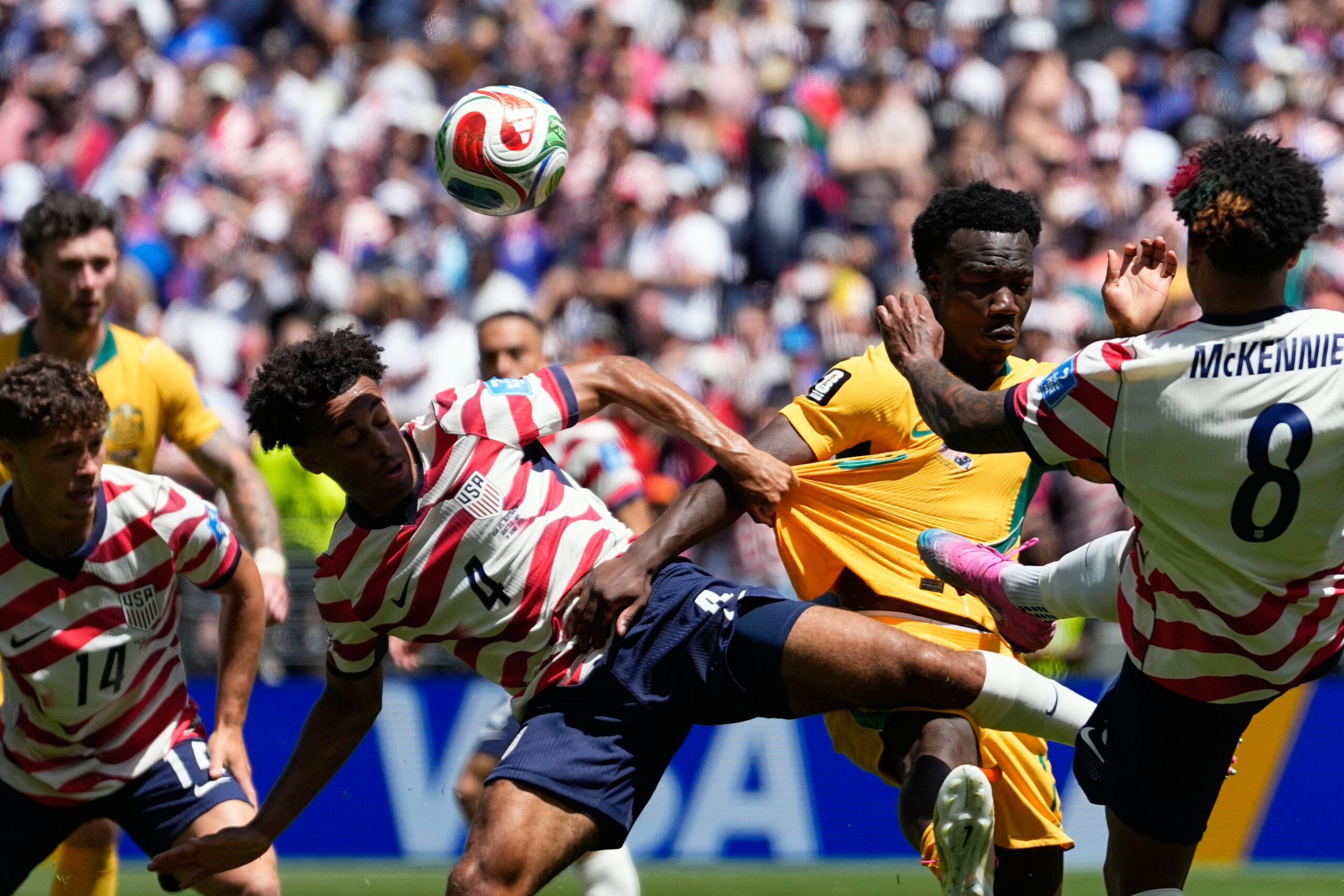
Auston Trusty (left) tussling with Australia’s Cristian Volpato.
It got especially chippy in the last few minutes, but those two and the rest of the Americans kept their heads and finished the job. They did so at both ends, ensuring Australia didn’t score while also keeping a foot on the gas pedal in attack.
“Just keep the pressure up,” Trusty said. “They weren’t really pressing too much, they kind of had like a halfway-block [formation], and obviously in a back five [defensively], they want pressure on them. So just continue the press that we had and the movement we had, and really just keep momentum.”
Mission accomplished on all counts. Not only did the U.S. men qualify for the knockout rounds before the group stage finale against Turkey, but the program has two wins in one World Cup group stage for the first time since the inaugural tournament in 1930. And thanks to Turkey’s loss at the end of the night, the U.S. clinched first place with a game to spare.
“We came into the tournament wanting to make a statement,” Freese said. “The first part of that’s done, but, you know, there’s a lot more statements we want to make.”
Luc Cherisson did not have to come as far and live as long and hard as so many who have been waiting to watch Haiti in the World Cup again. But he had his own way to make. The general manager of a rental-car business in Atlanta, an immigrant who left his homeland for America when he was just 20, Cherisson is 36 now, with a friendly face and an amiable disposition that suggest he is always happy to assist his customers with their SUV reservations. He flew into Philadelphia International Airport on Friday morning for his home country’s World Cup match against Brazil, and he would fly back to Atlanta on Saturday morning, a little hungover if a slight miracle materialized at Lincoln Financial Field.
“Even if we lose, it’s still a win for me,” he said a few hours before the match, as he lingered in a parking lot outside Xfinity Mobile Arena. “And if Haiti wins, it will be a party all night.”
There was no miracle. There was only an easy 3-0 victory for Brazil, though Cherisson and the thousands of Haitian natives and fans who attended the match may yet have caroused deep into the Philadelphia night, just for the sake of their home country’s presence here. This is Haiti’s first appearance in the World Cup since its only other one, in 1974. For Cherisson and those like him, for a nation long riven with poverty and corruption and violence, where roving gangs control the capital city of Port-au-Prince and practically govern the country, there is honor and glory merely in earning the right to be here.
“It’s amazing,” Cherisson said. “It’s the biggest sporting event in the world. Just being part of the World Cup is fantastic.”
It might sound silly and Pollyannish to regard just competing at the highest level and grandest stage of the world’s most popular sport as worthy of such pride. How much of FIFA’s multibillion-dollar budget goes toward orange slices and participation trophies? But one has to have just an inkling of the hold that soccer has in Haitian society to appreciate why Cherisson would pay a small fortune to travel to Boston to see Haiti’s 1-0 loss to Scotland last Saturday, to make that 24-hour trip into town for Friday night’s game, and to secure tickets for Haiti’s match against Morocco in Atlanta next Wednesday. Why no one at the Linc much cares that Haiti has now been outscored 18-2 in the five World Cup matches in its history. Why this all matters so much.
The author Madison Smartt Bell, for instance, who in 2014 completed a trilogy of rich and gorgeously written historical novels about Toussaint Louverture and the Haitian Revolution, still owns a patch of land in the northern part of the country, not far from the forests where the revolution was conceived in 1791. One day, Bell saw several children scurrying around on rough, spiny ground, playing soccer not with a ball or even an empty can of condensed milk, but with a rock.
On his next visit to Haiti, he brought them a regulation soccer ball. The children were ecstatic, but after 10 minutes, they paused their game for a moment. Something sharp had punctured and deflated the ball. So they went back to kicking and passing and shooting the stone.
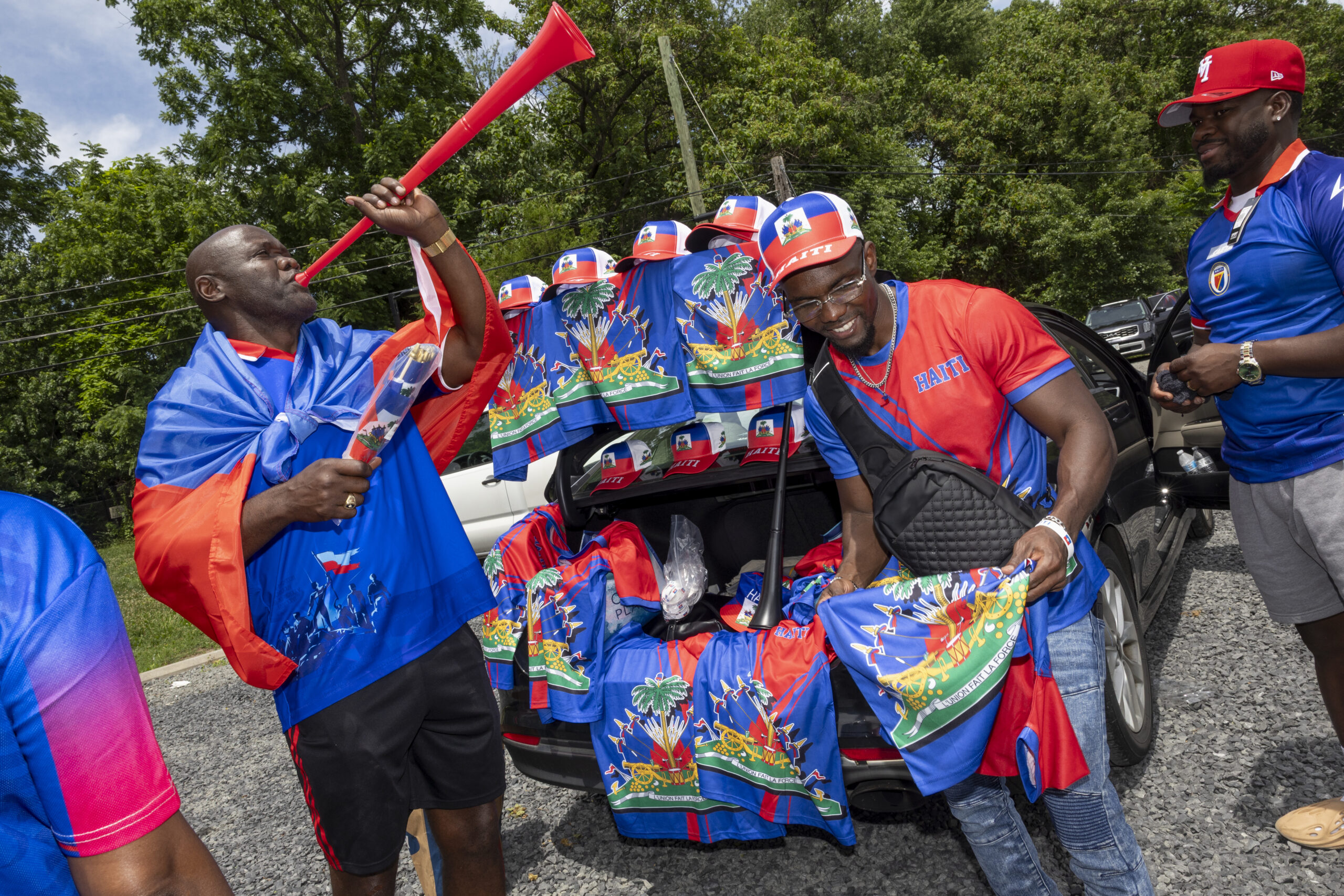
A Haiti soccer fan blows a plastic horn outside of the Discovery Center in Philadelphia earlier on Friday.
“I think that gives you some idea,” Bell said in an email, “of the importance of soccer in Haitian culture.”
If that doesn’t, this might: Before Haiti’s first match in the ‘74 World Cup, against Italy, “extraordinary legends spread all throughout the country,” said Terry Rey, a Temple University professor of Latin American studies who has written extensively about Haiti and even lived there for six years in the 1990s. Customarily, because their national team had not qualified for the World Cup yet, Haitians divided their loyalties when the event commenced every four years. The poor rooted for Brazil, the elites for Argentina.
But now Haiti, at last, was part of the spectacle. So peasants somehow found the funds to buy transistor radios and batteries so they could listen to the match. People painted and decorated tap taps, the vans and pickup trucks that are used as taxis in the country, with renditions of the team’s players. And when Haitian star Emmanuel Sanon scored the game’s first goal, “people will tell you there wasn’t a place in the entire nation where you didn’t hear someone screaming,” Rey said. Italy won the match, 3-1.
Are these unfavorable final scores irrelevant to the Haitian people? No. It’s just that the sport itself carries so much meaning there, offers so cleansing a respite from all that ails the country. The 1994 World Cup began in July with Haiti trapped amid a period of tumult and persecution, its people under the thumb of a junta regime run by Raoul Cédras, the former head of Haiti’s military, who had taken power in a coup three years earlier. From January to June that year, there was no electricity available anywhere. Then, just in time for the World Cup, the lights went on. There was electricity, and there was cable TV. Cédras had bought the rights to broadcast the tournament, and the opportunity to watch it would quell any widespread desire for a revolt against the regime.
“Haitians love soccer,” Rey said. “It’s just powerful.”
They loved it Friday night, despite the lopsided outcome, despite another loss for a nation waiting for a win that would mean everything. Late into the match, late into the night, having traveled so far and still waiting so long, they were chanting and singing in the parking lots and stomping their feet in the stands and standing to cheer, happy to have reason to be proud. Funny. In a city where there is a long and treasured tradition of telling outsiders and interlopers to go kick rocks, this celebration was still joyous enough.
The United States’ dream start to the FIFA World Cup continued with a 2-0 win over Australia in Seattle that secured the Americans’ place in the knockout round.
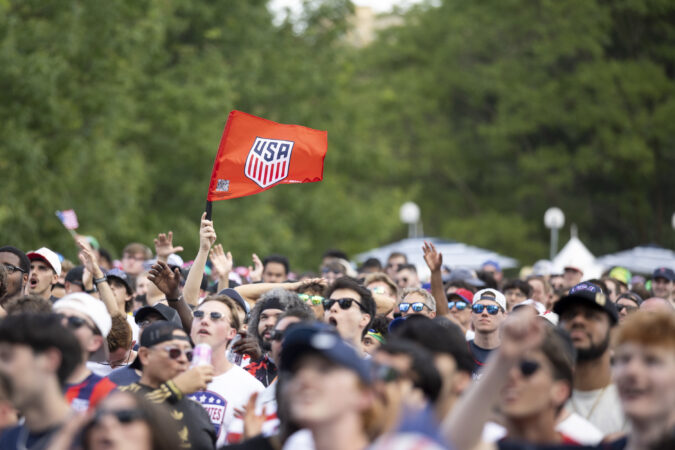
Fans in Philadelphia packed the FIFA Fan Festival in Lemon Hill on Friday to take in the match.
The crowd on hand for U.S.-Australia, the first World Cup match of the day on Friday, was in favor of the Stars and Stripes, but Haitian and Brazilian fans took in the spectacle before their squads’ scheduled meeting at Philadelphia Stadium (8:30 p.m., Fox29).
Mayor Cherelle L. Parker helped open the gates of the fan festival before the USMNT’s clash with Australia.
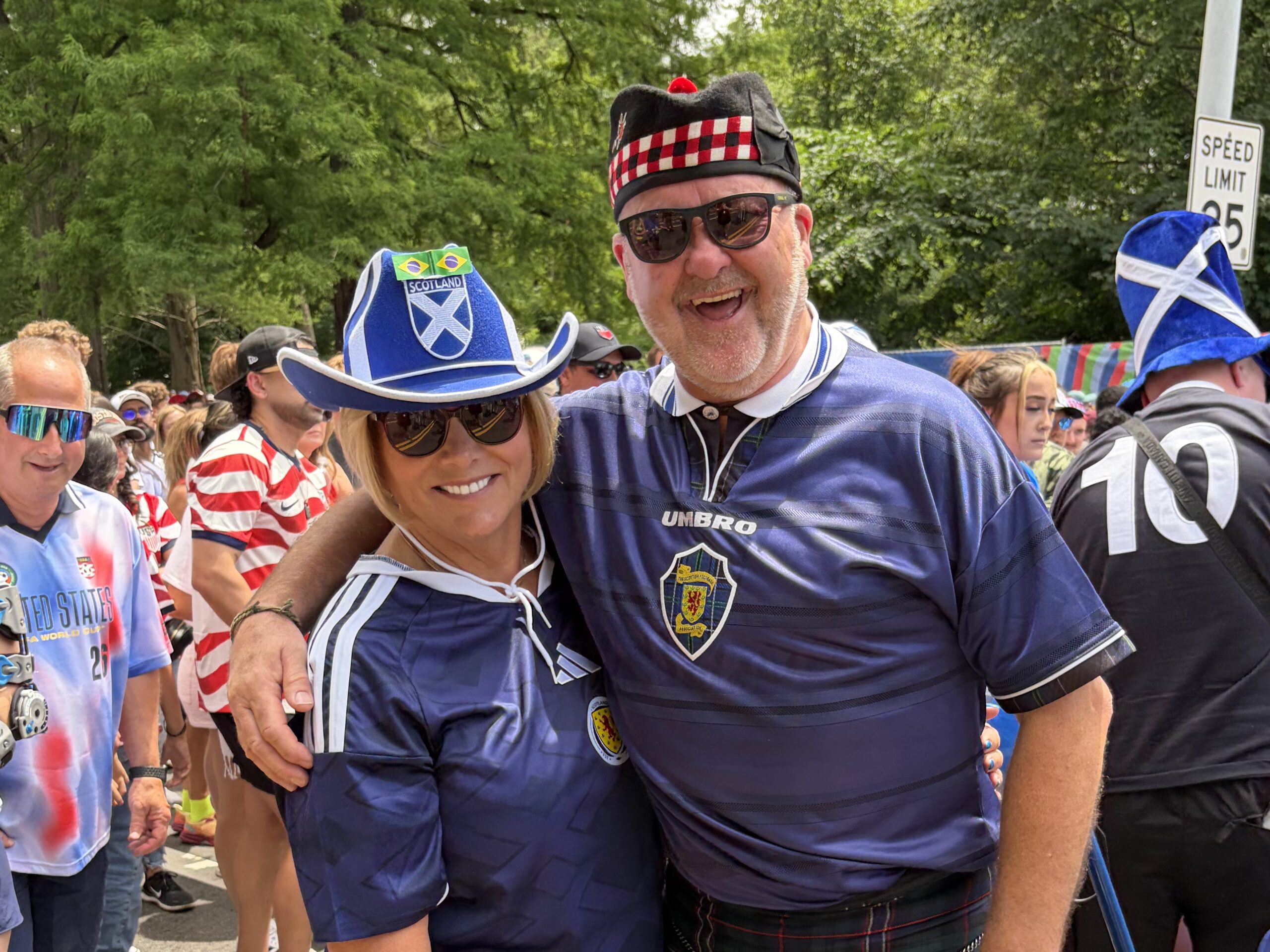
Parker walked into the crowd waiting at the festival’s main gate and posed for photos with fans waiting in line, including one with a group of traveling Scottish supporters.
Parker said she was appreciative that fans are showing up to the city and the festival “authentically, as themselves.”
“We are a global culture, and we are one people,” Parker said. “What makes America and the world so amazing, is that all of us, no matter the fabric, no matter the patchwork in our quilt, we make up a global humanity, and an American community that’s representative of everyone. I’m excited about it all.”
Philadelphia Mayor Cherelle L. Parker at the opening of the FIFA Fan Festival.
After greeting fans waiting to get into the festival on Sedgley Drive, Parker greeted a few vendors inside the festival. She stopped at the Bank of America tent to make a bracelet — she chose a black band with all the Philly-specific charms and a World Cup trophy charm — then stopped into the FIFA store on the festival grounds.
With the help of a few store associates, Parker picked out some kits and World Cup merchandise, including both Brazil jerseys, a sea foam France away jersey, a yellow Curaçao jersey, two World Cup logo shirts, and a stripes U.S. jersey.
Parker said she’s enjoyed seeing soccer fans out and about in the city.
“We were on the parkway, and Brazil was turning it out and up,” Parker said. “Everywhere we’ve been, they’re like, ‘Philadelphia is beautiful, the experience is great.’ You can be a visitor one time, but they’ll feel Philadelphia.
“You have to feel the energy here. We are not like any other city in the nation. There is something special about Philadelphia, and being able to share that Philly-ness with the world is something really exciting.”
Moses Bango, 8, (center), playing with his friends Rudy Townsend, 8, (right), and Quinn Medaglia, 9, (left), at the FIFA Fan Festival at Lemon Hill Park on Friday.
Early arrivals
A line to enter the festival had already formed an hour before it opened to spectators at 2 p.m.
Friday was the first time a U.S. match coincided with a match being played in Philadelphia, making the fan festival a watch party for American fans and a prematch hangout for Brazilian and Haitian fans.
The festival is free to the public with registration, but only 15,000 people can be on the festival grounds at once.
The festival did not reach full capacity during the U.S. match, but it got close. Festival organizers said attendance peaked at 14,000.
According to the festival, more than 100,000 people entered its grounds in its first three days of operation.
Gus Sanchez, who stood near the front of the line on Friday afternoon, said he and his family arrived around noon after biking over from Northeast Philly.
Sanchez said he wanted to watch the U.S. men’s team take on Australia with a crowd, leading him to come over to the festival.
“It’s something I can’t explain,” Sanchez, 53, said. “Seeing people from different countries getting together, having fun, enjoying the game.”
Most of the fans waiting to enter the festival were wearing U.S. garb, but fans of Haiti, Brazil, and even Scotland, which kicked off with Morocco at 6 p.m., were represented.
Alex Nelson said he traveled from Prestwick, Scotland, about 30 miles south of Glasgow, to the U.S. to experience the environment of the World Cup.
He arrived in Philadelphia from Boston, where the Scots played Haiti last Saturday, to take in Scotland-Morocco at the fan festival on Friday.
Nelson, sporting a tartan kilt, said he’s loved his time in Philly so far.
“Very clean city,” Nelson said. “Everybody has been so helpful. Everybody’s mixed in — the Brazilians, the Moroccans, USA, all mixed. That’s what it’s all about.”
Alex Nelson poses with his wife before entering the FIFA Fan Festival on Friday afternoon.
Match moments
The lively crowd had plenty to celebrate, as the U.S. went up, 1-0, after Cameron Burgess knocked in an Australian own goal in the 11th minute.
The crowd erupted as the States took the lead, with chants of “U-S-A” following a frenetic celebration.
The crowd at the Fan Festival goes wild as the U.S. goes up, 1-0, on an Australian own goal.
American fans celebrated again as Alex Freeman doubled the States’ lead with a goal in the 43rd minute.
Their celebration was placed on a temporary hold, as the goal was called offside on the field and disallowed, but after a Video Assistant Referee check confirmed Freeman’s goal counted, the crowd got another opportunity to cheer.
Double celebration for Alex Freeman’s goal to put the U.S. up 2-0 before the half — once before the VAR, and once after
Fans looked on nervously as Australia angled to get back into the match in its final 20 minutes, and they shouted when the game got chippy in its closing moments.
The U.S. is through to the knockouts, and the crowd at the Fan Festival is loving it:
SEATTLE — It turned out that the U.S. men’s soccer team didn’t need Christian Pulisic to beat Australia, and make history in doing so.
With the star playmaker unable to shake off a calf injury, the Americans used two first-half tallies and a raucous atmosphere in Seattle to earn a 2-0 win, before a packed-to-the-roof crowd of 66,925.
The win clinched qualification for the knockout rounds, and marked the first time since 1930 that the U.S. men’s program has won two games in a World Cup group stage.
U.S. manager Mauricio Pochettino started Ricardo Pepi in the open lineup spot, leading to a tactical change. The Americans rolled out a 3-5-2 formation, with Pepi and Folarin Balogun paired up top.
It didn’t take long for that to pay off. In the 11th minute, Antonee Robinson sprung Balogun down the left flank. He ran almost to the end line, then laid a pass into an onrushing crowd that included Pepi, Sergiño Dest, and three Australian defenders. The ball hit one of them, Cameron Burgess, and pinged into the net.
The statisticians at TruMedia noted this marked the first time in World Cup history that one team benefited from own goals in consecutive games, following the opening tally of the U.S.’ win over Paraguay.
During the rest of the first half, the action was as physical as expected. Each team committed eight fouls in the period, and German referee Felix Zwayer left more potential ones uncalled. There were two yellow cards, for Jordan Bos’ tackle on Tyler Adams in the 16th minute, and Alessandro Circati’s hard hit on Malik Tillman in the 32nd.
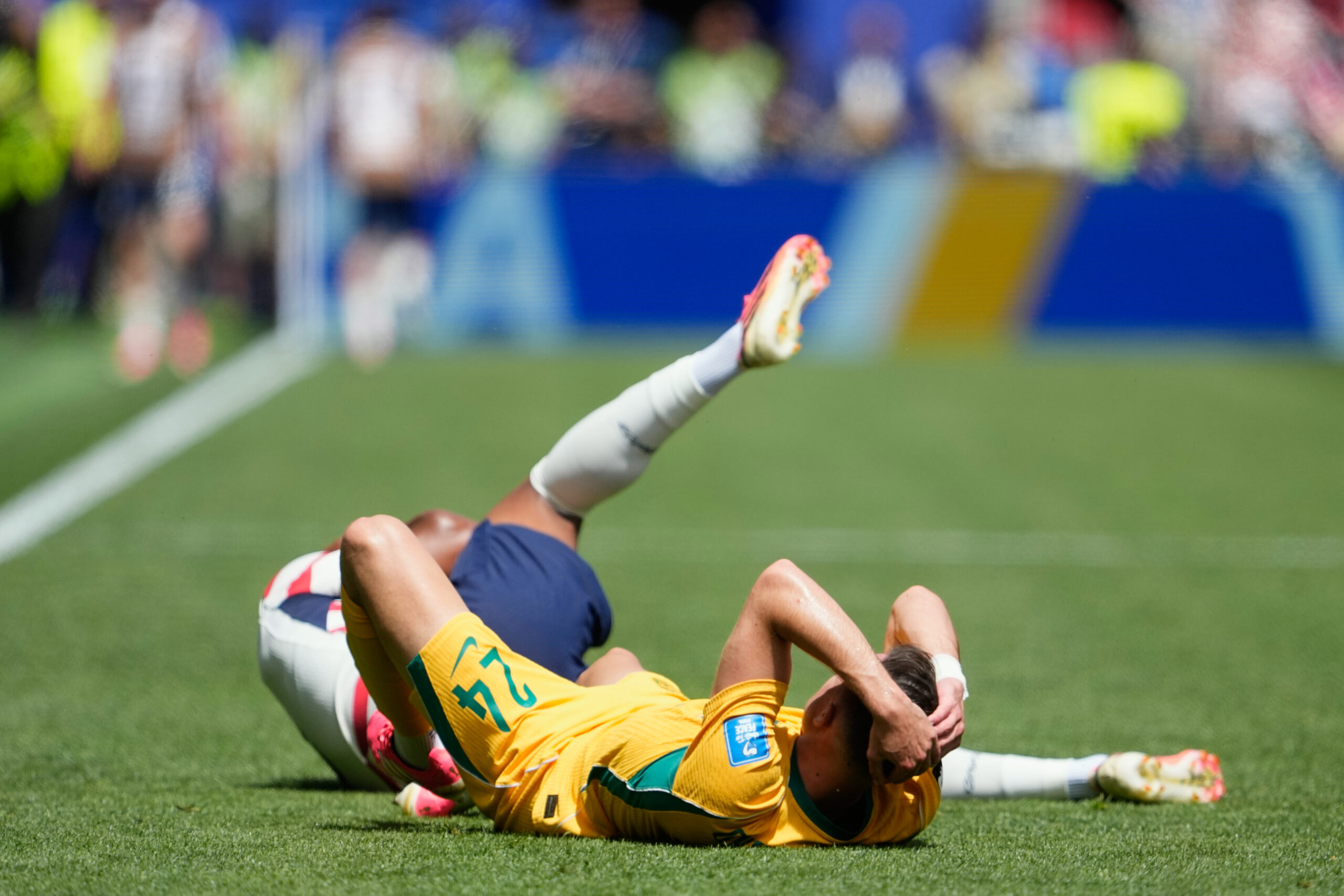
The mood came to a boil in the 38th when Alex Freeman collided head-to-head with Paul Okon-Engstler, and both players stayed down for a while. Fortunately, neither had to leave the game.
The Americans got their second in the 43rd, and in controversial fashion. After Dest and Tillman combined to draw a foul on the right wing, Robinson served the free kick wide to Dest at the top of the 18-yard box. He ripped a shot that hit the crowd, flew up in the air, and Freeman jumped to head it past Matt Beach.
The controversy was that the flag was up for offside, and it sure looked at first like there was good reason. Balogun and Weston McKennie were indeed off when Dest shot. But Freeman wasn’t, and since Balogun didn’t touch the ball, the video review officials called it a good goal.
Australia manager Tony Popovic admitted how deep a hole his team was in by making three substitutions at halftime, including taking out Burgess. Another, replacing striker Mohamed Touré with Nestory Irankunda, raised the question of why Irankunda surprisingly hadn’t started.
Popovic had another complaint in the 63rd when Adams, who was risking a suspension for yellow card accumulation, knocked Connor Metcalfe over in the box off the ball and it went uncalled.
This was the start of the Socceroos gaining momentum, and Wayne’s Matt Freese was forced into his first proper save of the day in the 65th. A few seconds later, Chris Richards shoved Irankunda outside the box as Freese was charging off his line toward them, Zwayer didn’t blow his whistle, and Popovic was angry again.
Pochettino finally made his first substitution in the 74th, sending in Sebastian Berhalter for Pepi and taking the U.S. back to a one-striker setup.
Tyler Adams (left) and Weston McKennie (right) battling with Australia’s Nestory Irankunda during the second half.
The crowd might have preferred hometown hero Cristian Roldan, and a lot of people wanted to see Adams taken off before picking up that feared second booking.
Instead, there were two other defensive substitutions in the 80th: Joe Scally for Dest and Media’s Auston Trusty for Robinson.
Tempers flared again in the 88th when Australia’s 6-foot-6 centerback Harry Souttar and Balogun got each other in mutual headlocks. There was a brief coming together of the teams, and both players were booked. Australia’s Jacob Italiano was also booked amid the scuffling.
As six minutes of stoppage time began, the crowd gave another hearty “USA!” chant. Then they had a brief laugh in the 93rd when Zwayer cramped up on the field, and needed some medical assistance. Players from both teams came over to lend a hand.
Pochettino then made two last substitutions, withdrawing Balogun for Haji Wright and McKennie for Gio Reyna.
Lincoln Financial Field has been renamed “Philadelphia Stadium” for the duration of the World Cup. In addition to five group stage games, the city will host a Round of 16 game on July 4.
// Timestamp 06/19/26 10:38pm
Haiti first team eliminated from World Cup after losing to Brazil
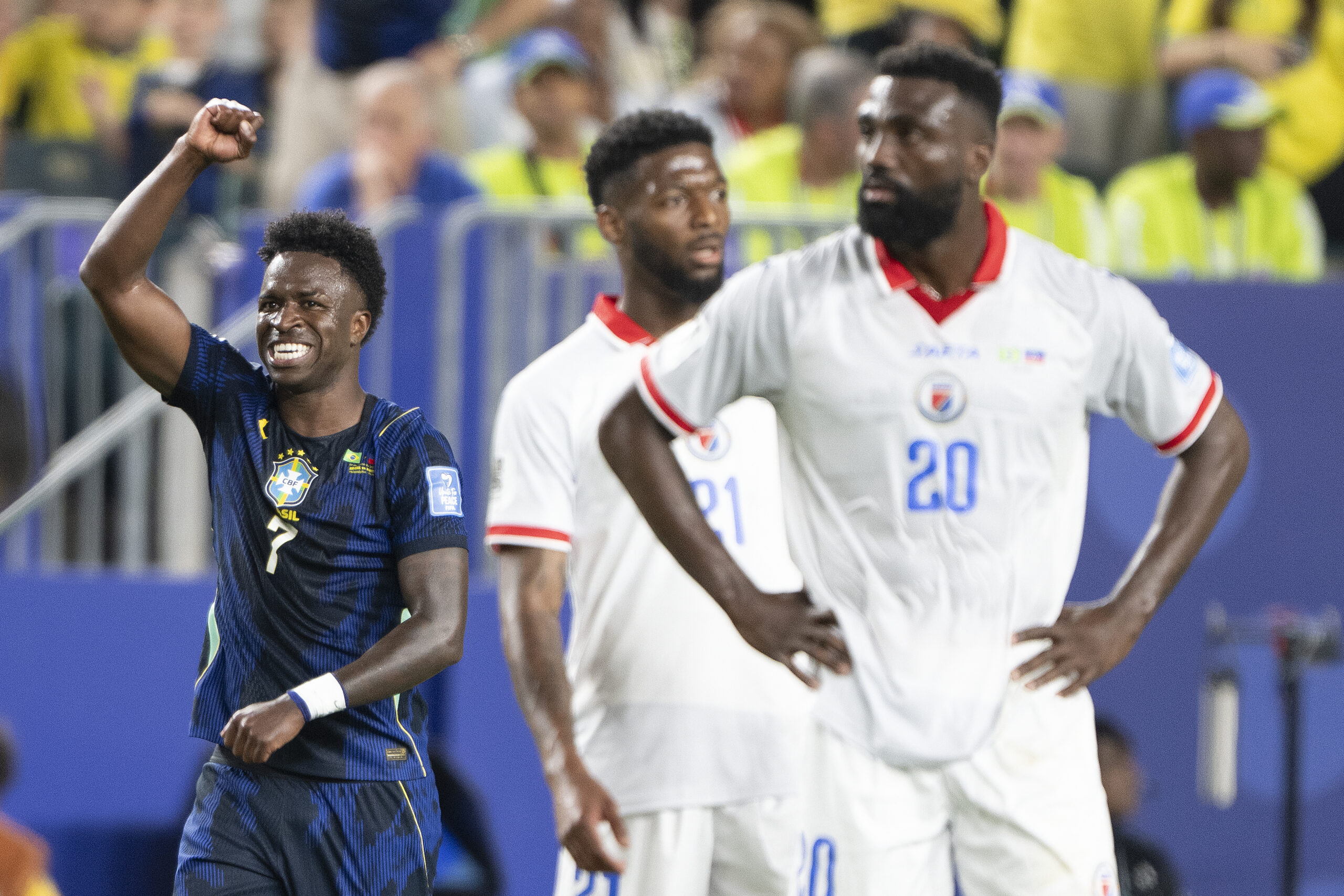
Brazil’s Vinícius Júnior celebrates after scoring the third goal against Haiti Friday night.
Vinícius Júnior scored and assisted on one of Matheus Cunha’s two goals as five-time champion Brazil eliminated Haiti from the World Cup with a 3-0 victory on Friday night.
Haiti, the Western Hemisphere’s poorest nation that qualified for the World Cup for the first time since 1974, became the first team guaranteed not to reach the knockout round. Meanwhile, the Seleção got the decisive performance they needed.
Cunha, the Manchester United standout, got the start and showed with every surf-and-slide goal celebration why he should have been in the starting lineup in Brazil’s listless 1-1 draw against Morocco. Brazil coach Carlo Ancelotti made the surprising decision in the opener to instead insert Cunha as a late substitute.
Cunha thrilled the Brazilian fans who made up the bulk of the 68,324 spectators at Lincoln Financial Field when he tapped in a rebound for his first career World Cup goal. He then sent a left-footed strike into the upper left corner for a 2-0 lead in the first half against the overmatched Haitians.
Brazil forward Raphinha, who was subbed out with an injury in the first half, had an early goal disallowed on an offside call that only temporarily muted the yellow-clad Seleção fans in an otherwise festive atmosphere at the home of the two-time Super Bowl champion Philadelphia Eagles — whose cheerleaders did their part to rally the crowd.
Cunha added to the frivolity in Philadelphia, home to nearly 6,000 Brazilian immigrants, when he flashed his familiar surfing celebration.
— Associated Press
// Timestamp 06/19/26 10:14pm
A full house in South Philly
It’s a full house at the Philly World Cup. We’re like the dang Tanner Family up in here.
Fans at the World Cup are riding the waves and doing the wave – three times around Philadelphia Stadium. My favorite part was the fan who kept yelling “It’s coming! It’s coming!”
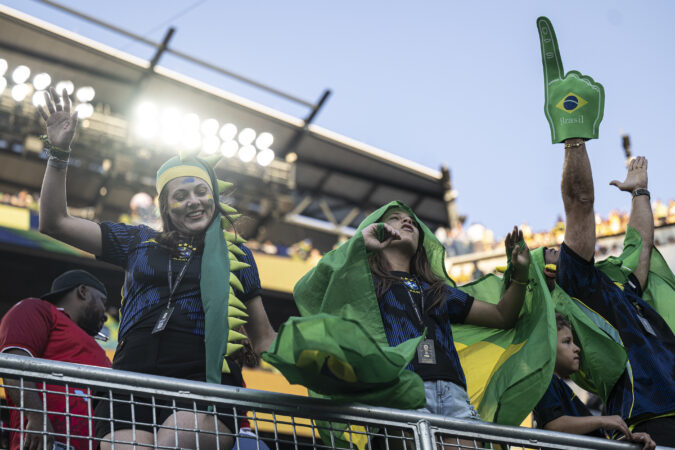
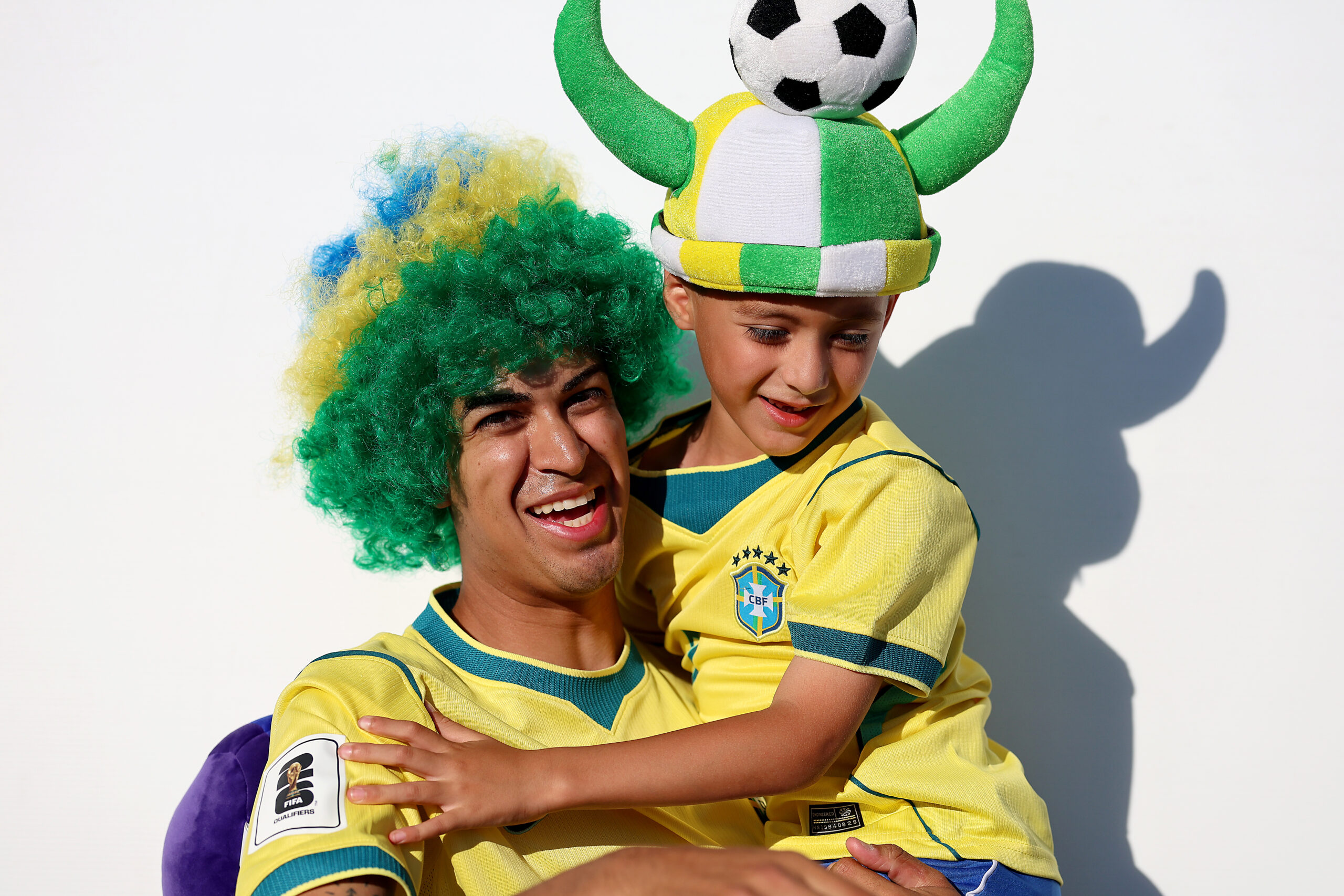
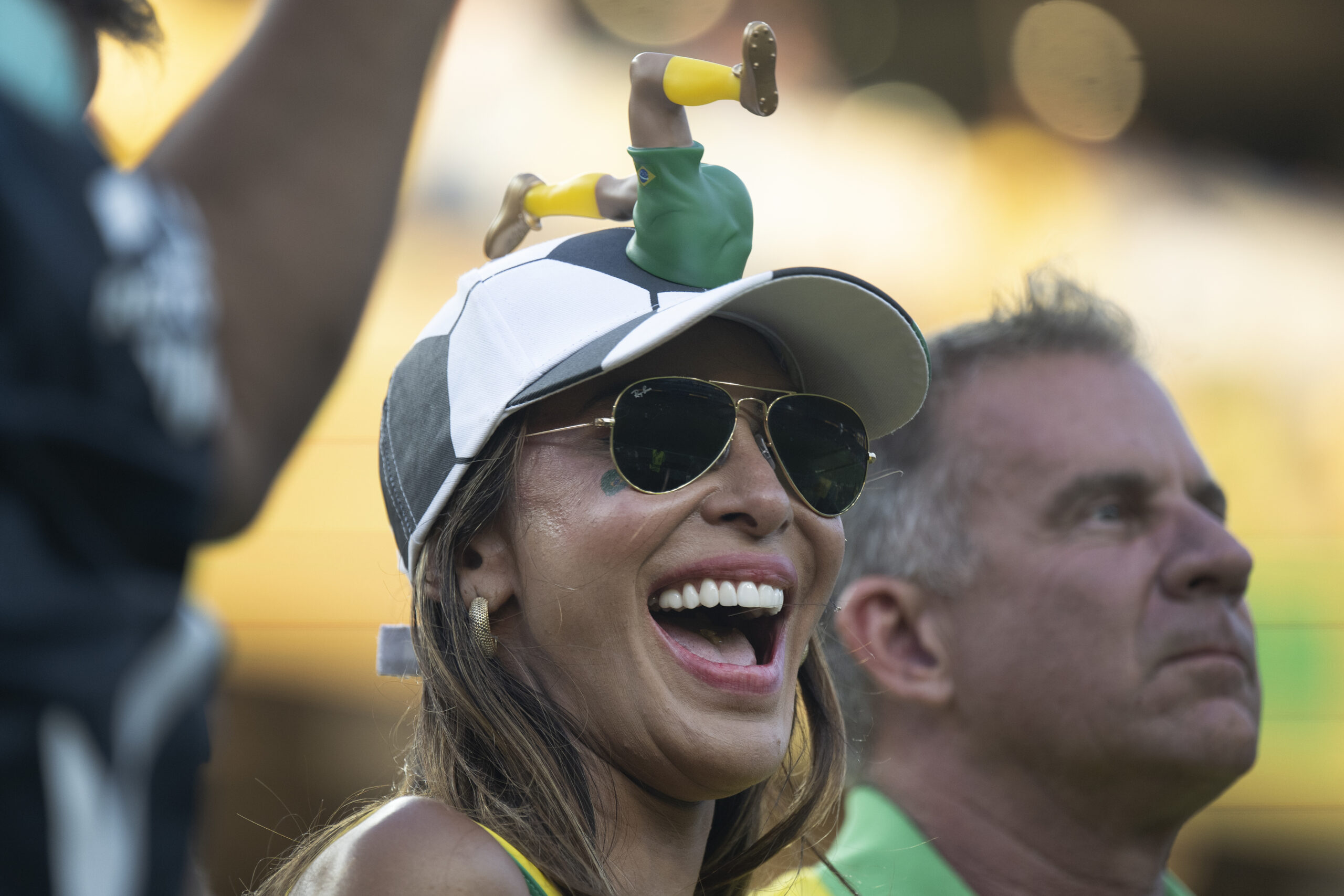
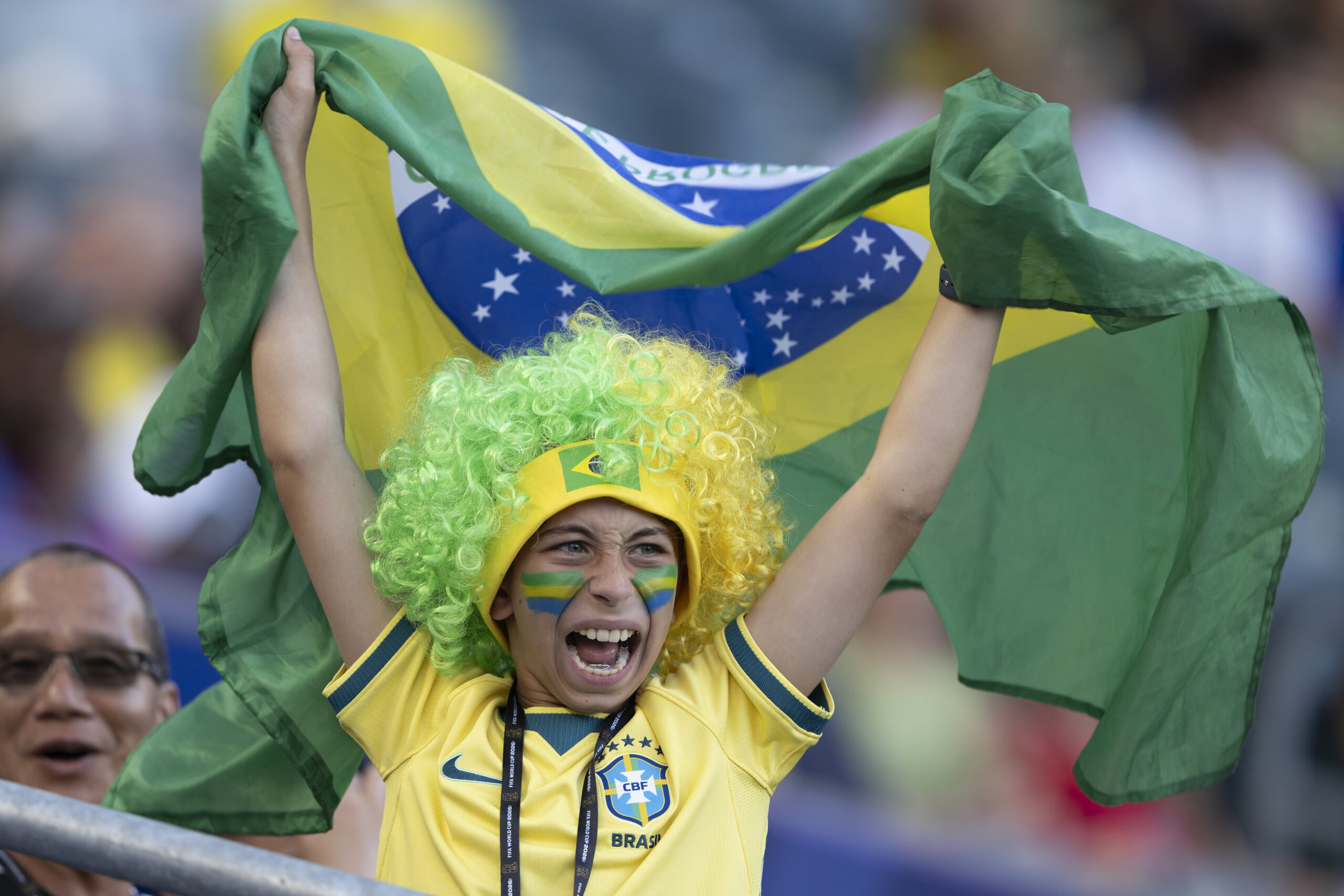
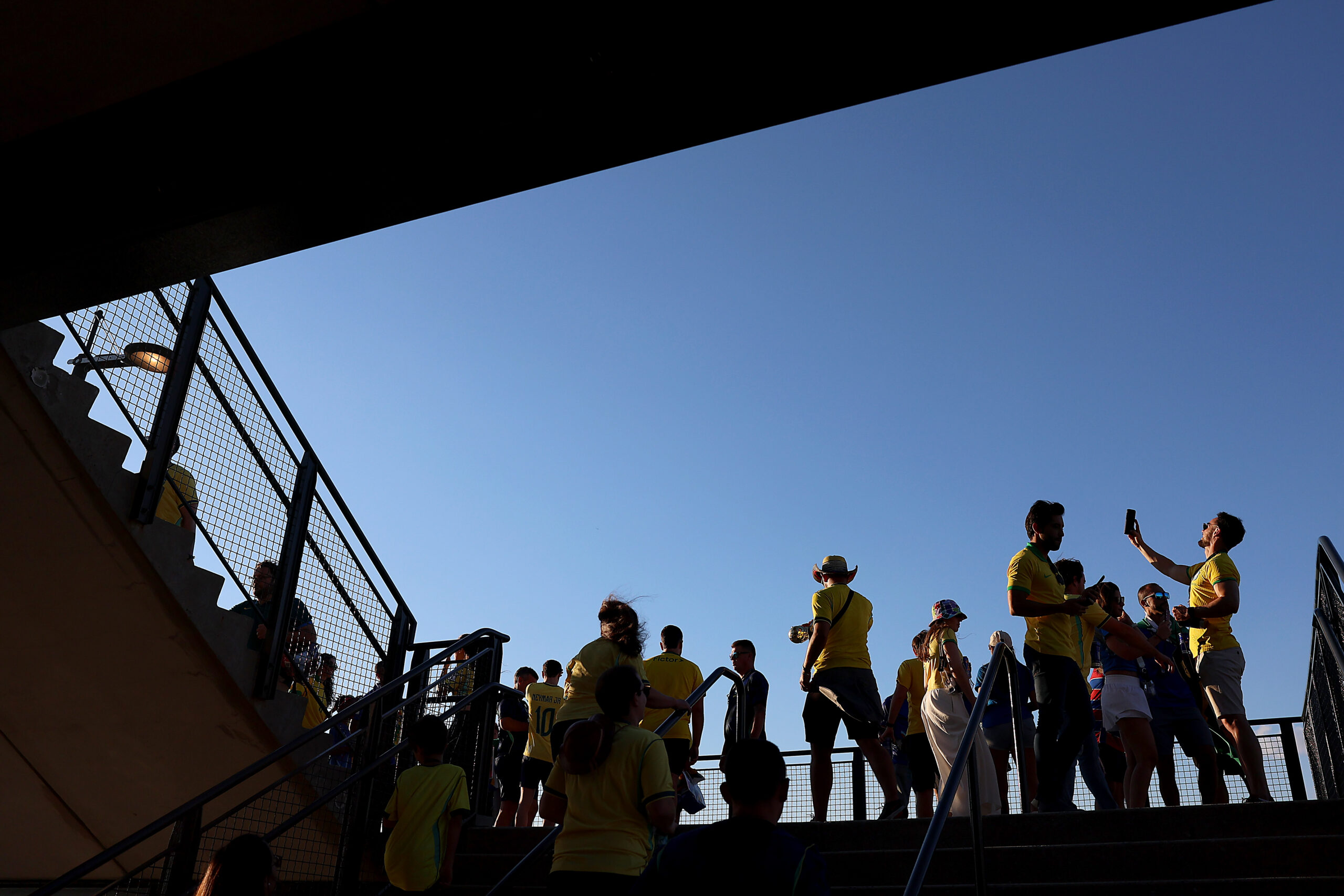
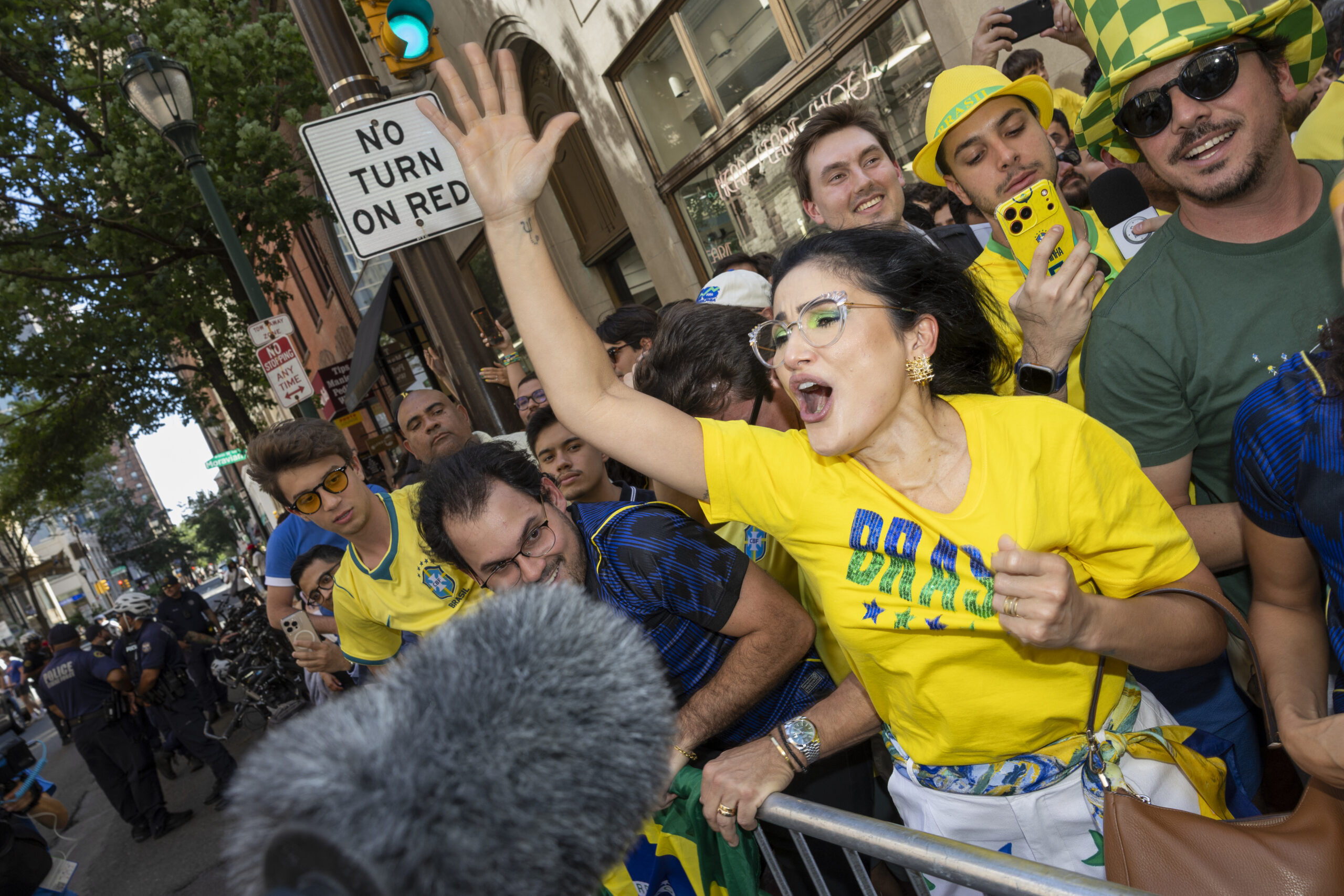
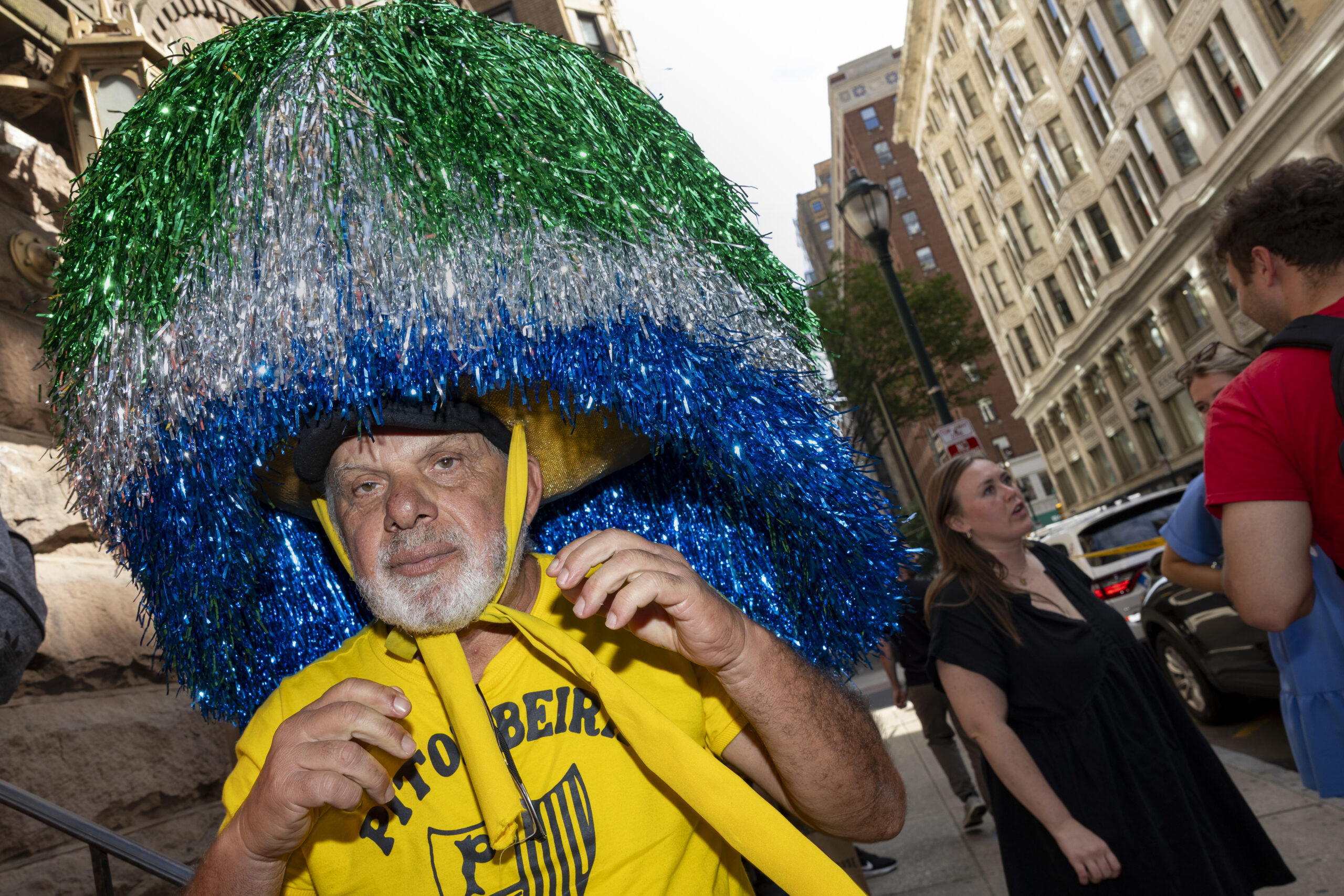
Brazil fans Miguel Sosa and his son, Enzo, of Nebraska, attend Friday’s match against Haiti at the Linc. A happy Brazilian fan with a unique hat watches Brazil’s dominance in South Philly. A Brazil fan waves his national flag during Brazil vs. Haiti. Fans navigate the stairs in the upper concourse of the Linc, which has been rebranded Philadelphia Stadium.
SEATTLE — It turned out that the U.S. men’s soccer team didn’t need Christian Pulisic to beat Australia, and make history in doing so.
With the star playmaker unable to shake off a calf injury, the Americans used two first-half tallies and a raucous atmosphere in Seattle to earn a 2-0 win, before a packed-to-the-roof crowd of 66,925.
The win clinched qualification for the knockout rounds, and marked the first time since 1930 that the U.S. men’s program has won two games in a World Cup group stage.
The statisticians at TruMedia noted this marked the first time in World Cup history that one team benefited from own goals in consecutive games, following the opening tally of the U.S.’ win over Paraguay.
SEATTLE — I’ve just left the stadium here, three hours after the U.S. game ended, and all the sports bars across the street on Occidental Avenue are still packed.
The sun is shining, the temperature is in the 70s, there’s a breeze off the water, and it looks like the citywide party will keep going for a good while.
You can bet they’ll be watching Brazil-Haiti on the TVs here. And they’ll be watching the Mariners too, since they have a home game against the Red Sox in two hours. T-Mobile Park is a block south of Lumen Field, so there’s a mix of soccer and baseball fans around.
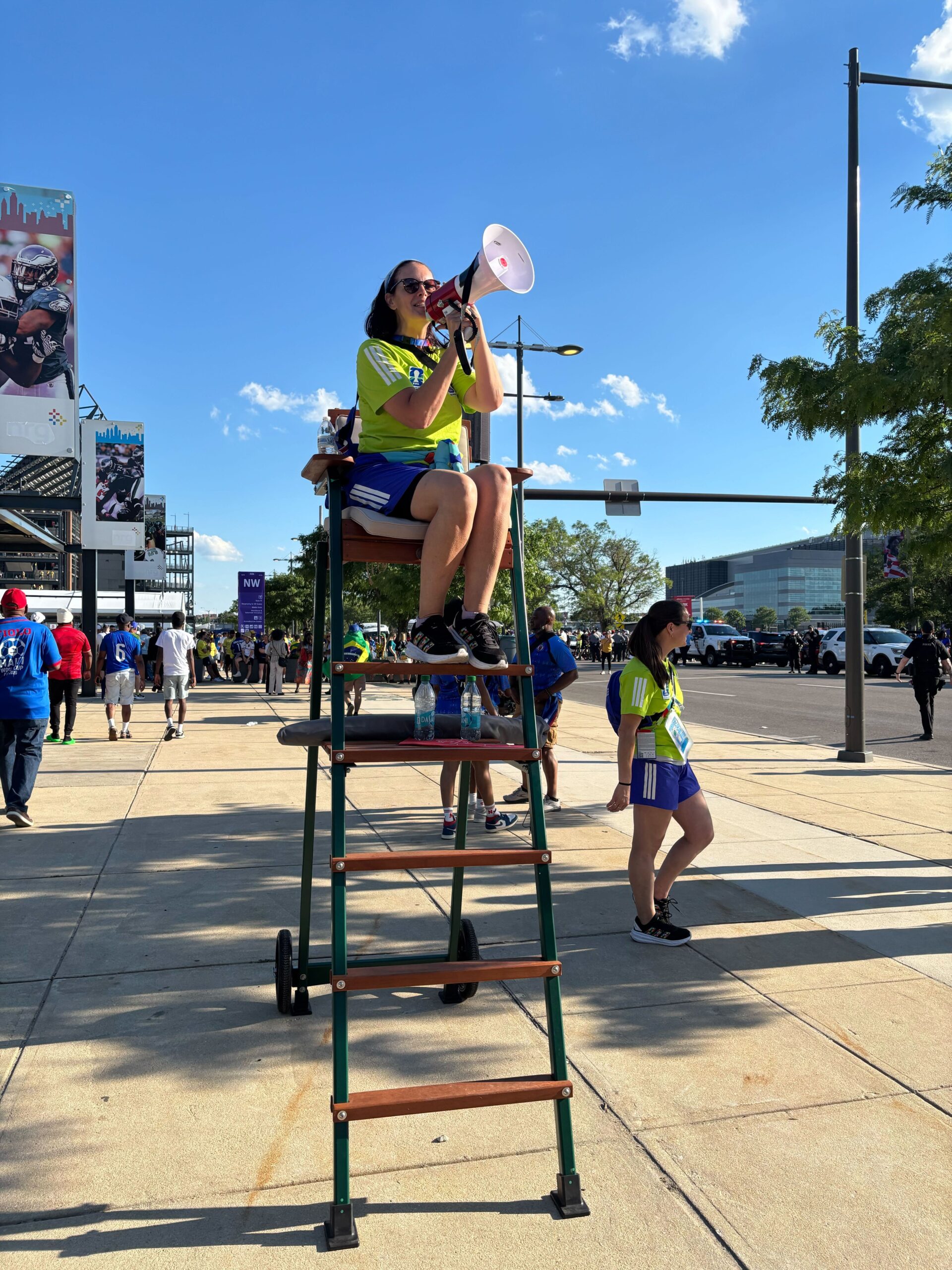
Emily Vanim of Pottstown welcomes fans to “FIFA-delphia” ahead of Friday night’s matchup betwen Brazil and Haiti.
Emily Vanim of Pottstown had one of the best FIFA volunteer jobs – sitting in a lifeguard chair with a megaphone welcoming fans to “FIFA-delphia” and answering all their questions.
“Never give a teacher a megaphone,” she said.
The sixth grade teacher said she’s met the best people as a FIFA volunteer.
“We’re friends for life and we’re having an awesome time,” she said. “It’s surreal and the fans are outstanding.”
Brazil fans tries to use Rocky curse against Argentina
🥊 🇦🇷 Nos Estados Unidos, é tradição entre torcedores rivais colocar bandeiras ou camisas na estátua de Rocky Balboa, em Filadélfia, para tentar dar azar ao adversário. Entrando na brincadeira, um torcedor brasileiro decidiu dar uma “forcinha” aos argentinos nesta Copa do Mundo.… pic.twitter.com/xvWKunH4It
Things got chippy towards the end of the U.S. men’s national team second group match against Australia, but it was forward Florian Balogun who kept composure in the face of a second yellow card.
Going in for a challenge in the 88th minute, Balogun and Australian defender Harry Souttar got tangled in the air and found Souttar with his arm wrapped around the neck of Balogun on the way down. Instead of reacting to the bait, Balogun who picked up a yellow card earlier in the match was smart to walk away.
It led commentator Stu Holden to say: “The Australians have come here to have a rugby match, but to have restraint in these moments, to not swing an arm and punch back. Souttar is trying to get under his skin.
It kicked off a string of chippy plays down the stretch, but in the end, the U.S. men picked up their second win in this World Cup, securing a berth into the knockout round of 32.
Depending on the result of tonight’s match between Turkey and Paraguay (11 p.m., FS1), should that game end in a draw, the U.S. will win Group D outright.
A lot of love in Philly as Brazil and Haiti fans get together
Bob Travers, 78, of Southhampton, was among tailgaters accepting high-fives at Lot L outside Philadelphia Stadium.
Travers wore a Brasil jersey and a hat that said “Dysfunctional Veteran.” This was his second World Cup, having gone to one in 1994. This one was better already though, he said, because he was accompanied by his sons and grandson.
“I love it,” he said “The atmosphere is fantastic!”
Perhaps the only time fans of opposing teams have gotten along while tailgating at the Linc, aka Philadelphia Stadium for the World Cup. The vibes are immaculate.
How bad was it for Australia? They made three subs at halftime.
Australia’s Paul Okon-Engstler reacts after a collision with a U.S. player.
SEATTLE – You know a first half went badly for a team when it makes three substitutions at halftime.
That’s what Australia did, with the biggest one being Nestory Irankunda replacing Mohamed Touré up front. Why Iranknunda didn’t start, as one of the Socceroos’ rising stars, was a big question among the Australian media before kickoff.
The other moves were Jason Geria replacing the yellow-carded Cameron Burgess on the back line, and Connor Metcalfe replacing Nishan Velupillay in midfield.
Alex Freeman doubled the U.S. lead in the 43rd minute off a free kick play. But it wasn’t surprising the offside flag was up initially, and by the rules it could have stayed that way.
When Sergiño Dest took the initial shot that deflected up in the air, Folarin Balogun and Weston McKennie were clearly offside, while Freeman was not. And when the ball came down, Balogun was right next to Freeman, in close range to the goalkeeper.
Though Balogun didn’t touch the ball, his presence there could be called interfering with the goalkeeper, and that’s grounds for keeping the flag up. But the video review crew decided that Balogun didn’t interfere enough, so they let the goal stand.
Double celebration for Alex Freeman’s goal to put the U.S. up 2-0 before the half — once before the VAR, and once after
‘It’s such a dream’: Brazil fans take over Stateside Live!
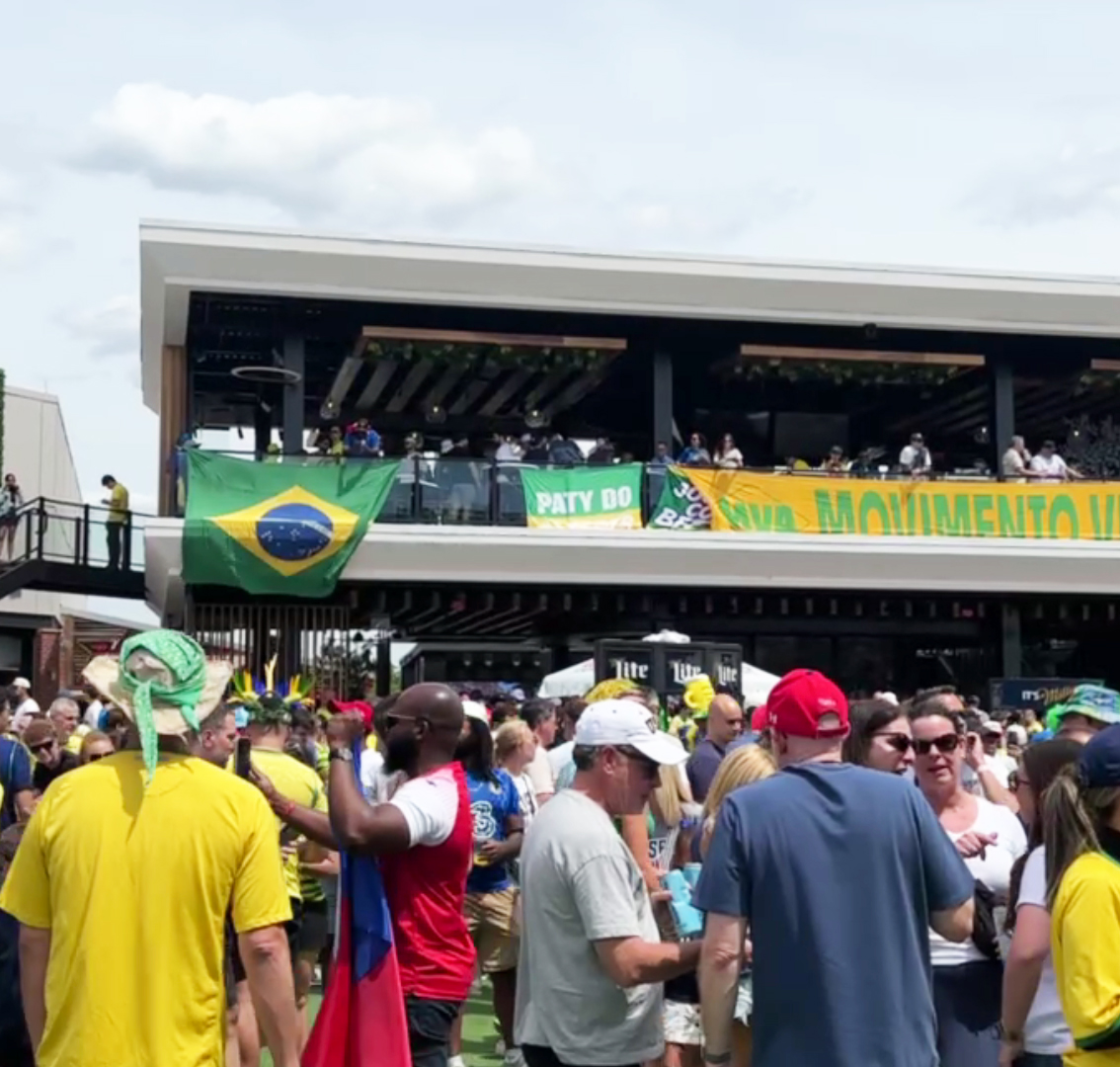
Brazil fans at Stateside Live! in Philadelphia hours before their country takes on Haiti.
Stateside Live! turned into Brasil Live! Friday as a sea of fans descended on the stadium bar complex prior to their team’s World Cup game against Haiti at nearby Philadelphia Stadium.
By 3 p.m., the entire complex was a sea of yellow-and-green, dotted with islands of Haiti fans (and a few team USA fans) in red, white, and blue.
Belange Pierre, 54, of Ottawa, Canada, waved a Haitian flag outside the gates. He drove to Philly with four friends to catch his team’s first World Cup game in 50 years. They were confident they’d be driving back to Canada with a win under their belts after the game.
“Allons-y!” the group shouted, which is French for “Let’s go!”
Andre Magalhaes and his wife, Kelly Bennett, traveled from Orlando to watch Friday’s Brazil-Haiti game.
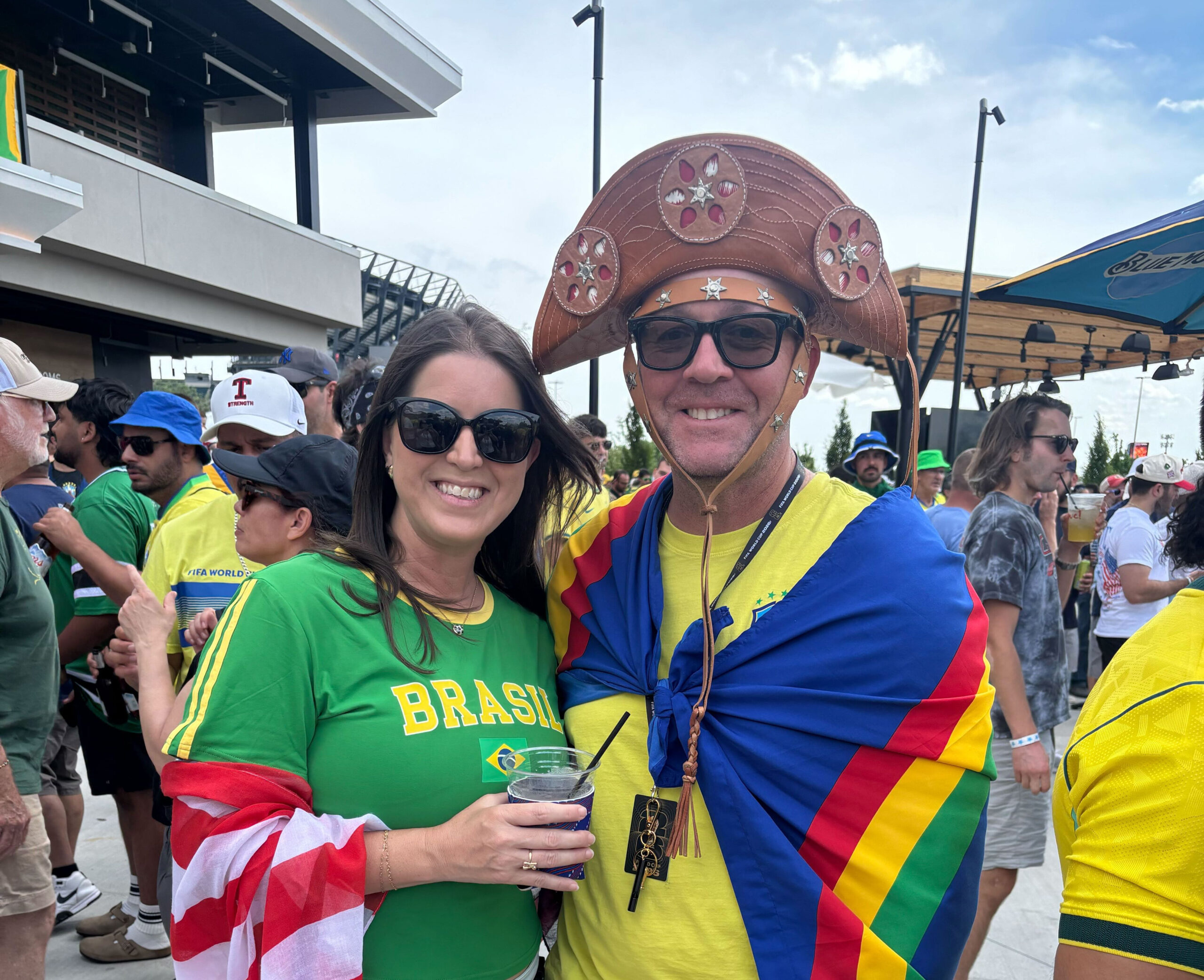
Andre Magalhaes, 47, a native of Brazil now living in Orlando, was counting down the hours until his first World Cup game at Stateside Live! Friday.
“It’s a child’s dream come true,” he said of attending his first World Cup match. “I’ve waited for this moment my entire life to be here.”
Magalhaes wore a leather cangaceiro, a traditional hat from Northeast Brazil. His wife, Kelly Bennett, 44, wore a team Brasil shirt a U.S. flag as a cape.
“We’re going to watch the game here then I’m going to fold up the flag and I’m going into the stadium and root for Brazil,” she said.
The couple, who are only in town for the three days, said they loved Philly’s sports complex.
“You have all three stadiums and public transit right here!” Bennett said. “It’s such a dream, especially coming from Orlando.”
SEATTLE – It didn’t take long for the United States’ shift to a two-striker front line to pay off.
Folarin Balogun’s hot form continued just 11 minutes in, as he forced an own goal off Cameron Burgess to put the Americans ahead. Antonee Robinson sprung Balogun down the left flank, and he sprinted almost all the way to the end line, then laid a pass into the middle for Ricardo Pepi and Sergiño Dest’s late runs.
But the ball hit Australian centerback Cameron Burgess near the six-yard box instead, and pinged right into the net.
The crowd was thrilled, and the hosts were off and running again.
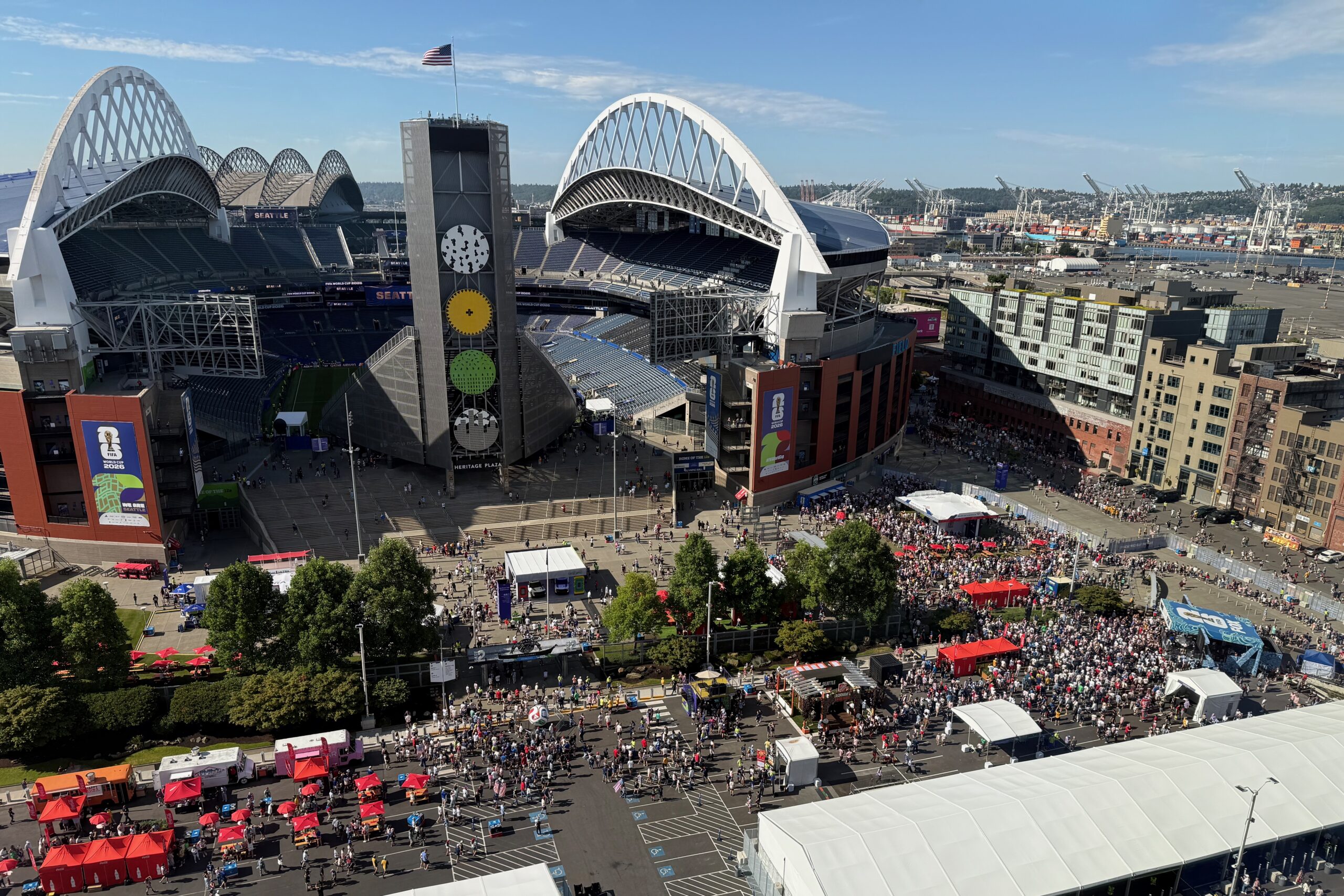
Lumen Field, known as Seattle Stadium during the World Cup, ahead of U.S. vs. Australia Friday.
SEATTLE – Like most NFL stadiums, Seattle’s press box is glass-enclosed, though it least it has some small windows that open to pick up a bit of the atmosphere.
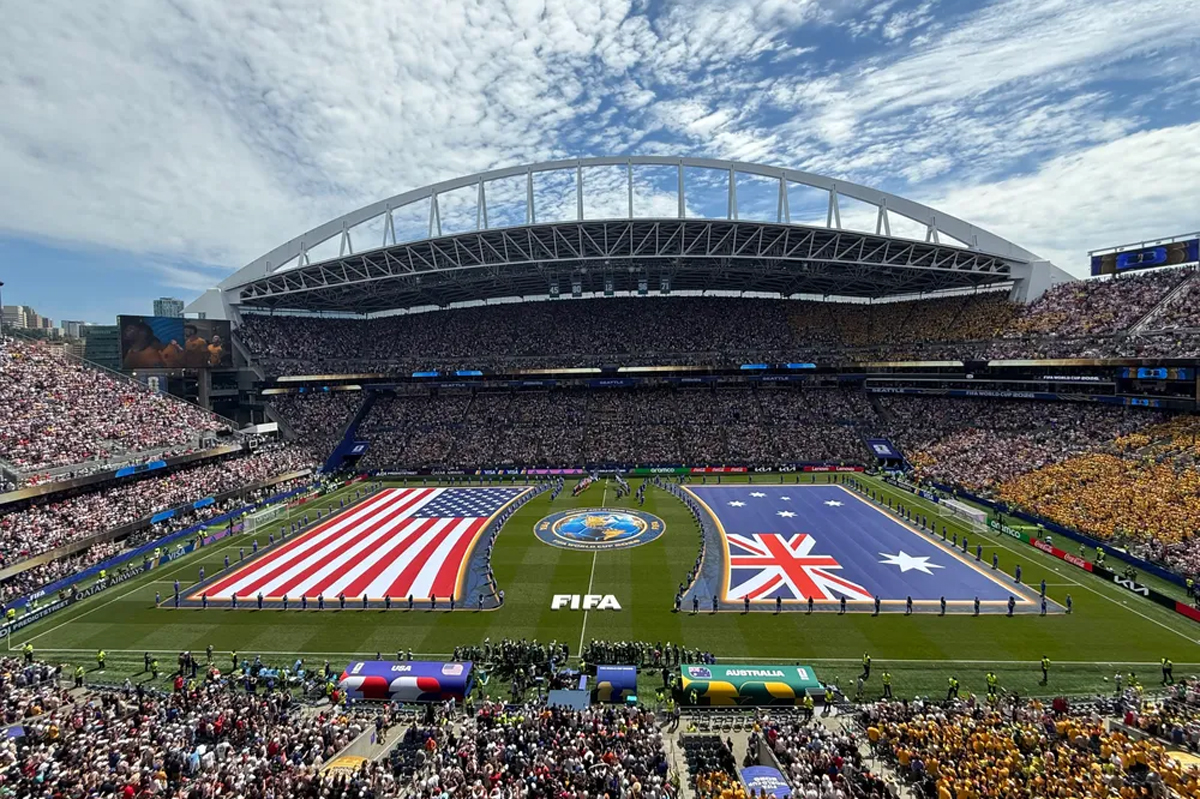
But I wanted the real thing for a moment. So I snuck outside to the seating bowl for the players’ walkout and the national anthems.
Both sets of fans belted out their national anthems, with the Star-Spangled Banner ringing around the entire stadium. You could probably hear it up the street at the ferry terminal.
Media aren’t allowed to take videos inside the stadium unless they’re rightsholders, a FIFA rule I’ve lived with at every World Cup I’ve covered. But we can take photos, so here’s mine of what it looked like.
At Fan Fest, Mayor Parker thrilled to share ‘Philly-ness with the world’
Philadelphia Mayor Cherelle L. Parker at the opening of the FIFA Fan Festival in Fairmount Park Friday.
Mayor Cherelle L. Parker helped open the gates of the FIFA Fan Festival ahead of the U.S.’s clash with Australia at 3 p.m.
Parker stepped out into the crowd waiting at the festival’s main gate and posed for photos with fans waiting in line, including one with a group of traveling Scottish supporters.
Before the gates opened, Parker said she was appreciative that fans are showing up to the city and the festival “authentically, as themselves.”
“We are a global culture, and we are one people,” Parker said. “What makes America and the world so amazing, is that all of us, no matter the fabric, no matter the patchwork in our quilt, we make up a global humanity, and an American community that’s representative of everyone. I’m excited about it all.”
After greeting the line of fans waiting to get into the festival on Sedgley Drive, Parker walked into the festival to greet a few vendors. She stopped at the Bank of America tent to make a bracelet – she chose a black band with all the Philly-specific charms and a World Cup trophy charm – then stopped into the FIFA store on the festival grounds.
With the help of a few store associates, Parker picked out some kits and World Cup merch, including both Brazil jerseys, a seafoam France away jersey, a yellow Curaçao jersey, two World Cup logo shirts and a stripes U.S. jersey.
Parker said she’s enjoyed seeing soccer fans out and about in the city – especially Brazilian fans, whose team will take the field against Haiti at Lincoln Financial Field at 8:30 p.m.
“We were on the parkway, and Brazil was turning it out and up,” Parker said. “Everywhere we’ve been, they’re like, ‘Philadelphia is beautiful, the experience is great.’ You can be a visitor one time, but they’ll feel Philadelphia.
“You have to feel the energy here. We are not like any other city in the nation. There is something special about Philadelphia, and being able to share that Philly-ness with the world is something really exciting.”
Check out The Inquirer’s all-new pop-up soccer show!
Ahead of today’s pivotal World Cup matches, get up to speed on all things soccer with the Inquirer’s Soccer Extra, our pop-up soccer show during the matches here in Philly, featuring writer Jonathan Tannenwald and host Lisa Carlin.
Catch the show Thursdays at 11 a.m., until the final match at Philadelphia Stadium (aka the Linc) through July 4. In their second episode, the duo take a look at this first week of World Cup action and look ahead to Philly’s upcoming matches in Brazil-Haiti tonight and France-Iraq on Monday.
— Inquirer sports staff
// Timestamp 06/19/26 2:35pm
Like Philly, Seattle putting the ‘city’ in ‘World Cup host city’
Seattle Stadium, usually called Lumen Field, as fans arrive for the World Cup match between the U.S. and Australia Friday.
SEATTLE – You might not think that Philadelphia and Seattle have much in common, thousands of miles apart and with different cultural vibes. But during this World Cup, it feels like they have a lot in common.
It’s not just that the U.S.-Australia and Brazil-Haiti games are on the same day, which has put the two cities at the top of the World Cup’s headlines. It’s that they’re true cities, the kind where you can feel the energy of a big event just by being there.
That’s how a World Cup is supposed to be, and has been at all the other ones I’ve been to. The sights and sounds of big fan gatherings are as important as the games themselves.
Philadelphia has seen that a few times now, from the Club World Cup last summer to the masses of Ecuador and Brazil fans in recent days. Soccer brings people together from all over the place like nothing else, even in a city where other sports are more important.
Another thing you can tell out here is how different things are from the first U.S. game in suburban Los Angeles. The stadium is exceptional and the atmosphere was great, but there just wasn’t the same kind of buzz beyond the game because L.A. isn’t the same kind of city.
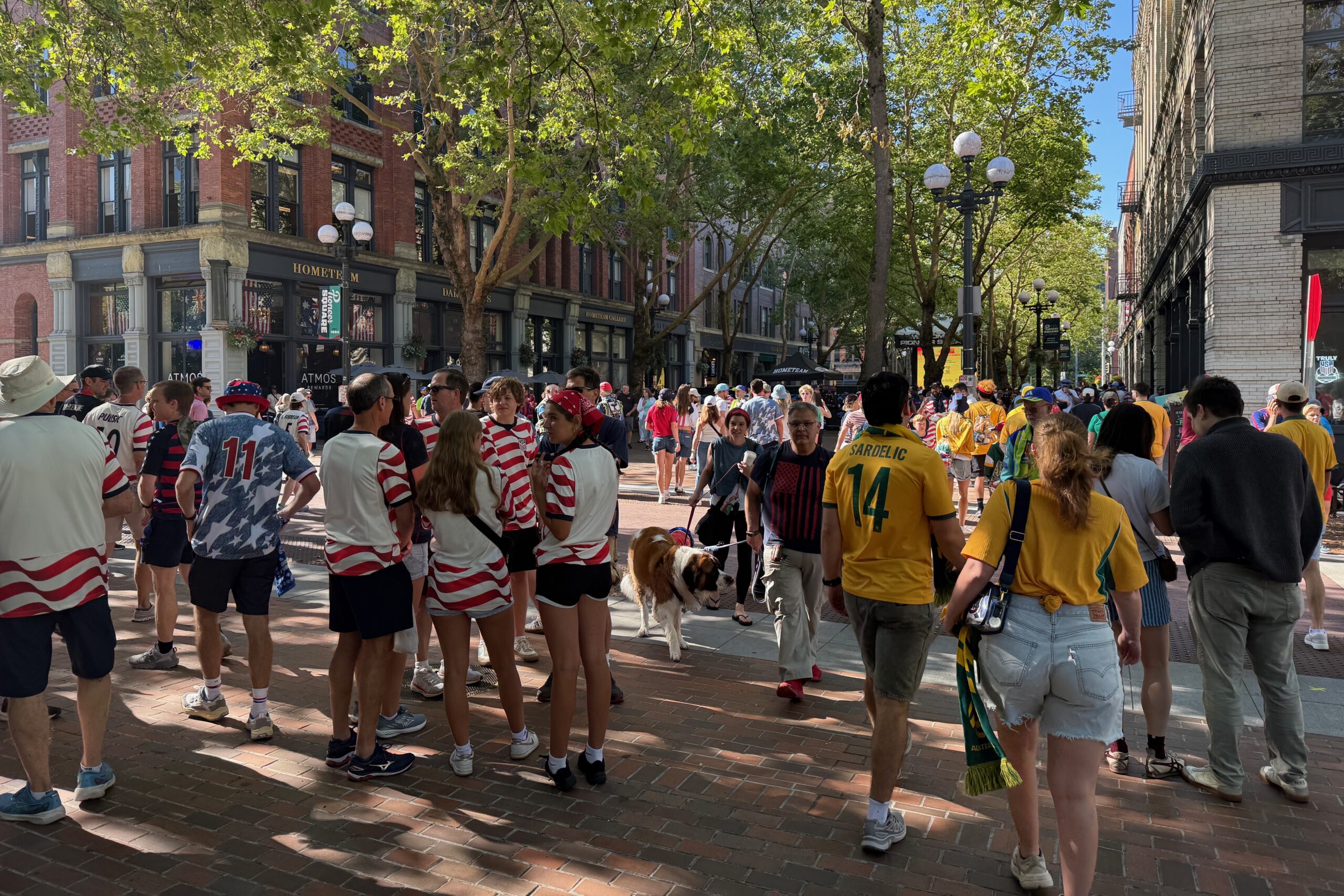
Fans at Pioneer Square in Seattle.
The downtown doesn’t matter as much, and everything else is way too sprawling – and that’s before getting to the U.S. camp being over an hour south in Orange County. You’re never going to have the same kind of buzz when everything around is highways and shopping centers.
In Philadelphia, you can walk anywhere in Center City, then take a quick subway ride to the game. Here, you can walk from the waterfront to the stadium, and there’s a light rail line across town too.
I made that walk this morning, and saw thousands of fans going in both directions. A “Men in Blazers” live show on one of the piers drew a huge crowd that filled the plaza and the sidewalks beyond it.
The big crowd here isn’t just wearing red, white, and blue. There are plenty of Australia backers too, all in their traditional green and gold. You’ll see them behind one end zone, behind the team’s bench, and in a few sections of the upper deck.
I unexpectedly walked through their fan march on the way to the stadium. Everyone was in good spirits, including the U.S. fans at bars nearby who responded with lighthearted boos and “USA!” chants.
One Socceroos fan carried the amusing sign you see above. A bunning snag is Australia’s similar culinary tradition, a grilled sausage in a folded piece of white bread topped with grilled onions, then ketchup and/or mustard.
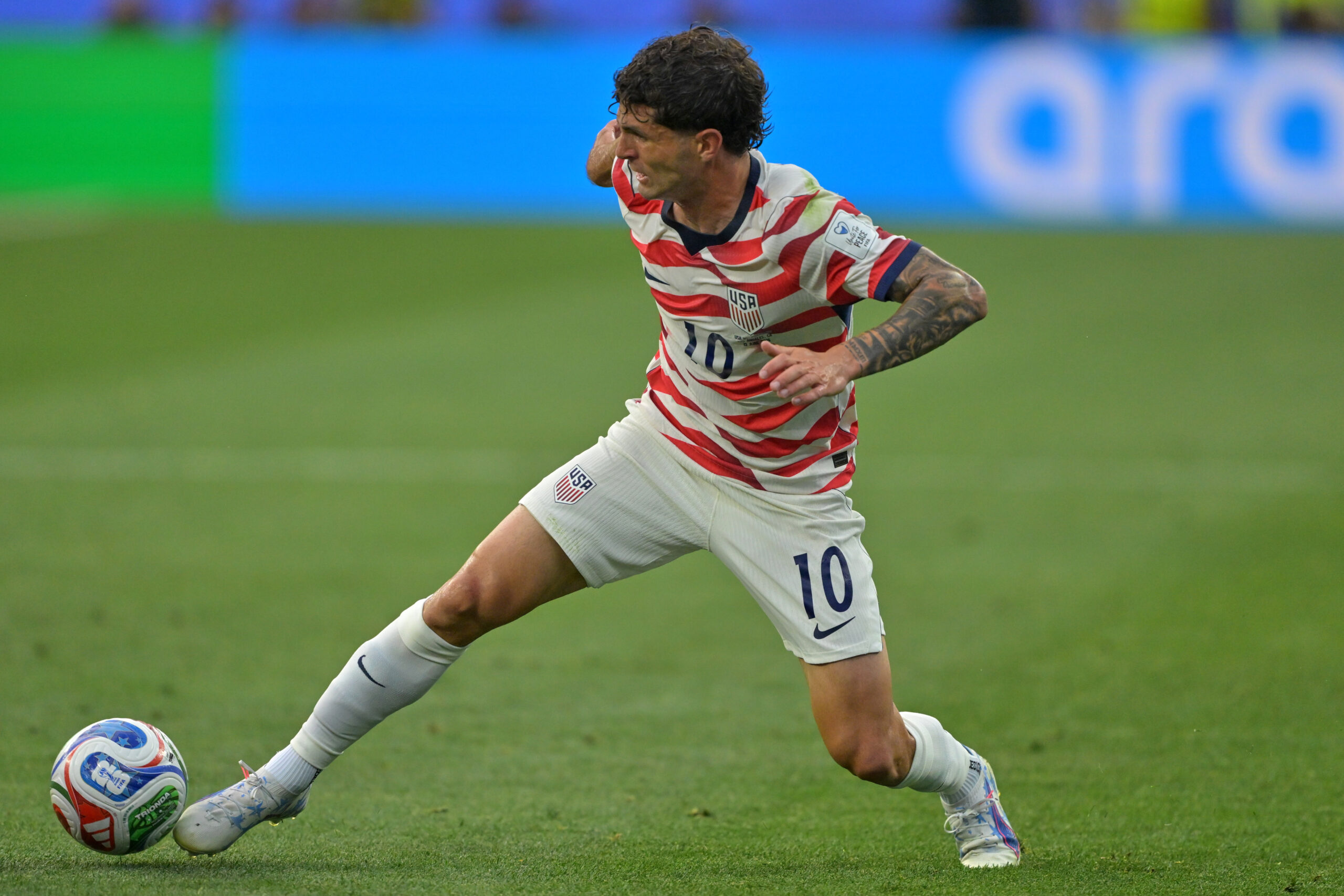
Christian Pulisic is still recovering from his calf injury.
SEATTLE – Christian Pulisic will not play in the U.S.-Australia game, as he hasn’t recovered enough from his calf injury to make the squad.
“Christian is not available,” U.S. manager Mauricio Pochettino told Fox Sports’ broadcast moments before FIFA published the teams’ starting lineups. “Let’s hope that as soon as possible he can be ready to be selected again, and to be part of the team. Now we need to be focused on our team, and the players that are going to play. We have ahead very important game – Australia is going to be really tough.”
Pochettino said Pulisic trained Friday morning and “the feelings are good” on the star playmaker’s overall recovery.
“A little bit sad,” Pochettino admitted. “He wanted to participate today. But it’s still [too] early.”
EXCLUSIVE: USA star Christian Pulisic is OUT today with a calf injury against Australia and Ricardo Pepi will get the start, USMNT manager Mauricio Pochettino tells FOX Sports’ @JennyTaft. pic.twitter.com/ZobSiOfjYx
Ricardo Pepi comes into the U.S. lineup, and that means a tactical shift with two strikers on the field. My guess is the Americans will line up in a 3-4-2-1 formation that looks like this:
Australia has all of its players healthy. The Socceroos’ starting lineup is headlined by rising star striker Nestory Irankunda and 6-foot-6 centerback Harry Souttar. There’s also a familiar face from MLS in New York City FC midfielder Aiden O’Neill.
The #USMNT starting lineup with Christian Pulisic out – Ricardo Pepi comes in to throw two strikers at Australia.
I am guessing it will look like this formation-wise…
Fans from all over gather for entrance into the FIFA Fan Festival
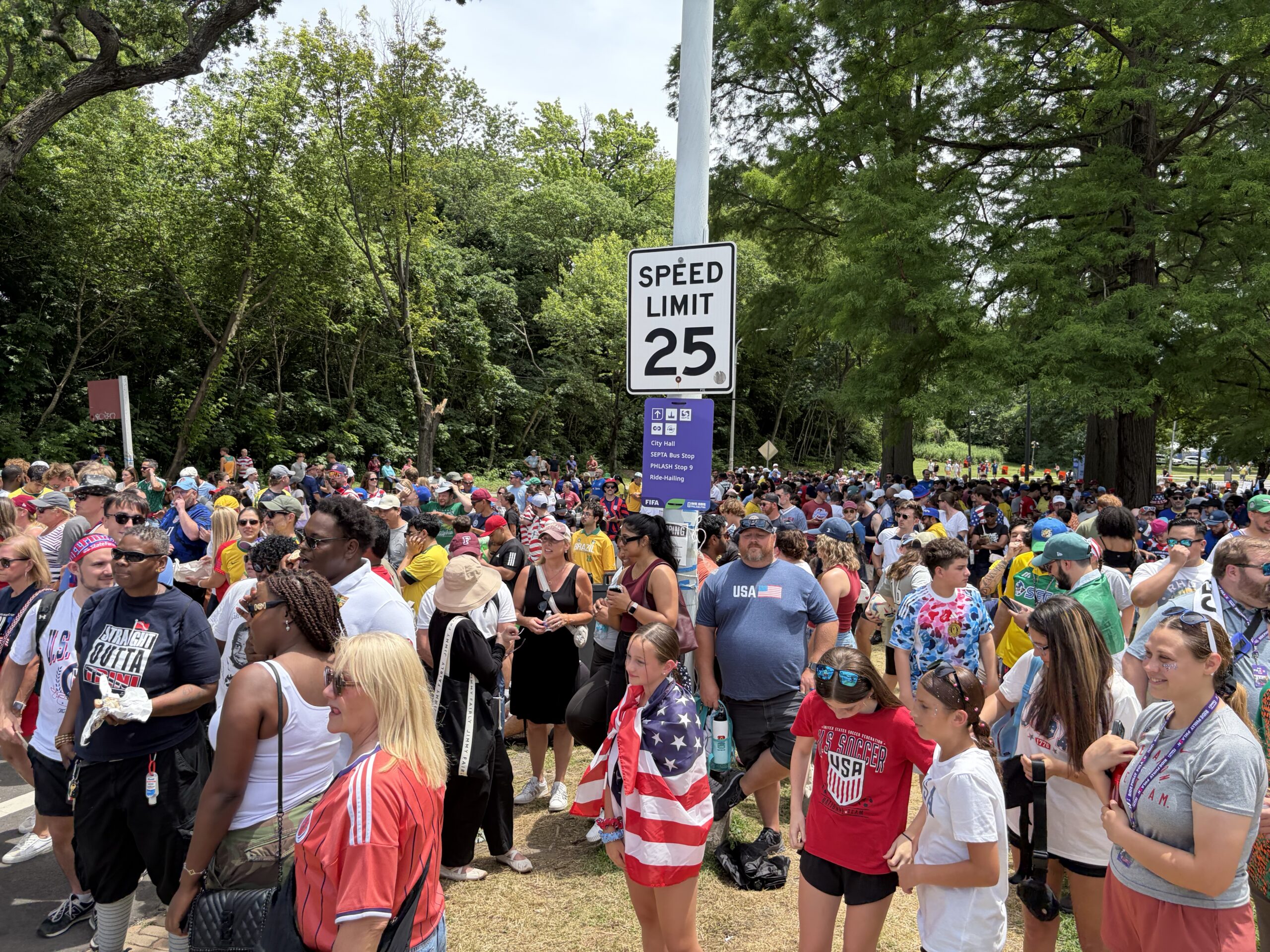
Fans wait to enter FIFA Fan Festival at Lemon Hill in East Fairmount Park Friday.
The gates of the FIFA Fan Festival don’t open to visitors until 2 p.m., but a line has already started to form at the main gate.
Gus Sanchez said he and his family had been in line since about noon after biking over from Northeast Philly.
Sanchez said he wanted to watch the U.S. men’s team take on Australia with a crowd, leading him to come over to the Fan Festival.
“It’s something I can’t explain,” Sanchez, 53, said. “Seeing people from different countries getting together, having fun, enjoying the game.”
The crowd is full of U.S. kits, but other nations are represented, too. Kits from Haiti and Brazil, which will face off tonight at Lincoln Financial Stadium, can be spotted in the line, as well as fans from Scotland.
Alex Nelson said he traveled from Prestwick to the U.S. to soak in the environment of the World Cup.
He traveled from Boston, where the Scots played Haiti on Saturday, to Philadelphia to take in Scotland-Morocco at the Fan Festival.
Nelson, sporting a tartan kilt, said he’s loved his time in Philly so far.
“Very clean city,” Nelson said. “Everybody has been so helpful. Everybody’s mixed in —the Brazilians, the Moroccans, U.S.A., all mixed. That’s what it’s all about.”
Brazil fans bring the party to Philly’s Rocky steps
// Timestamp 06/19/26 9:36am
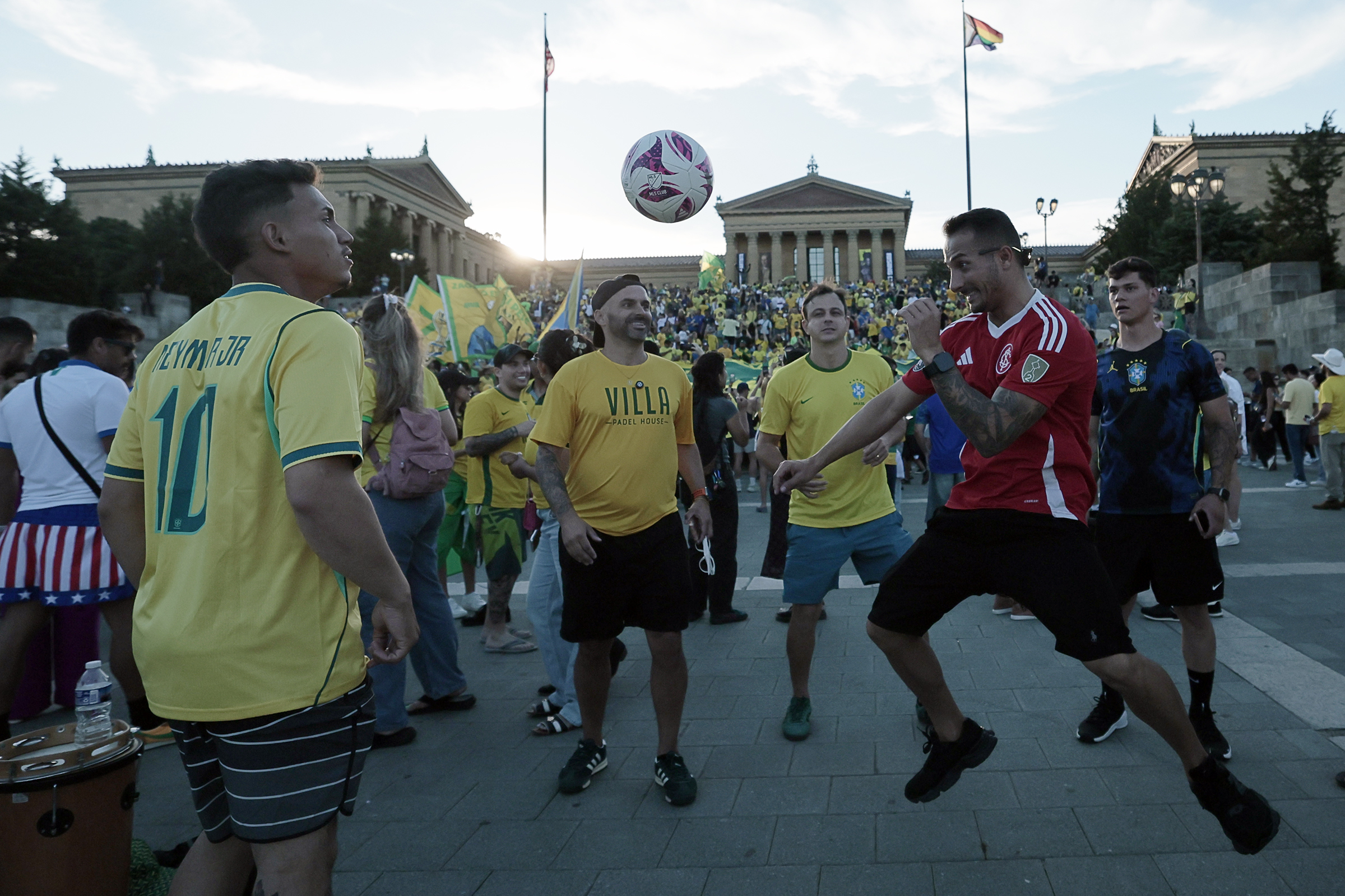
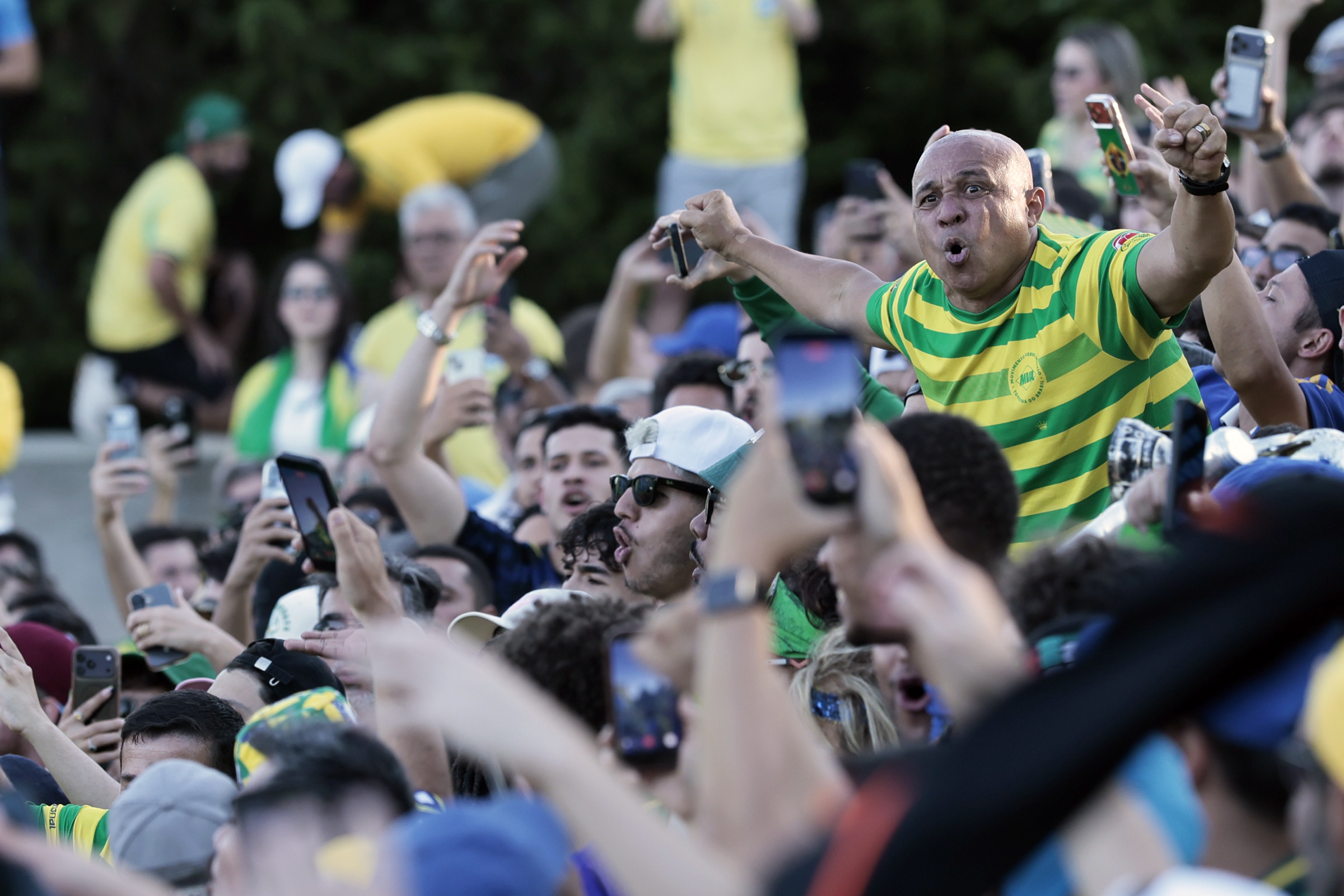
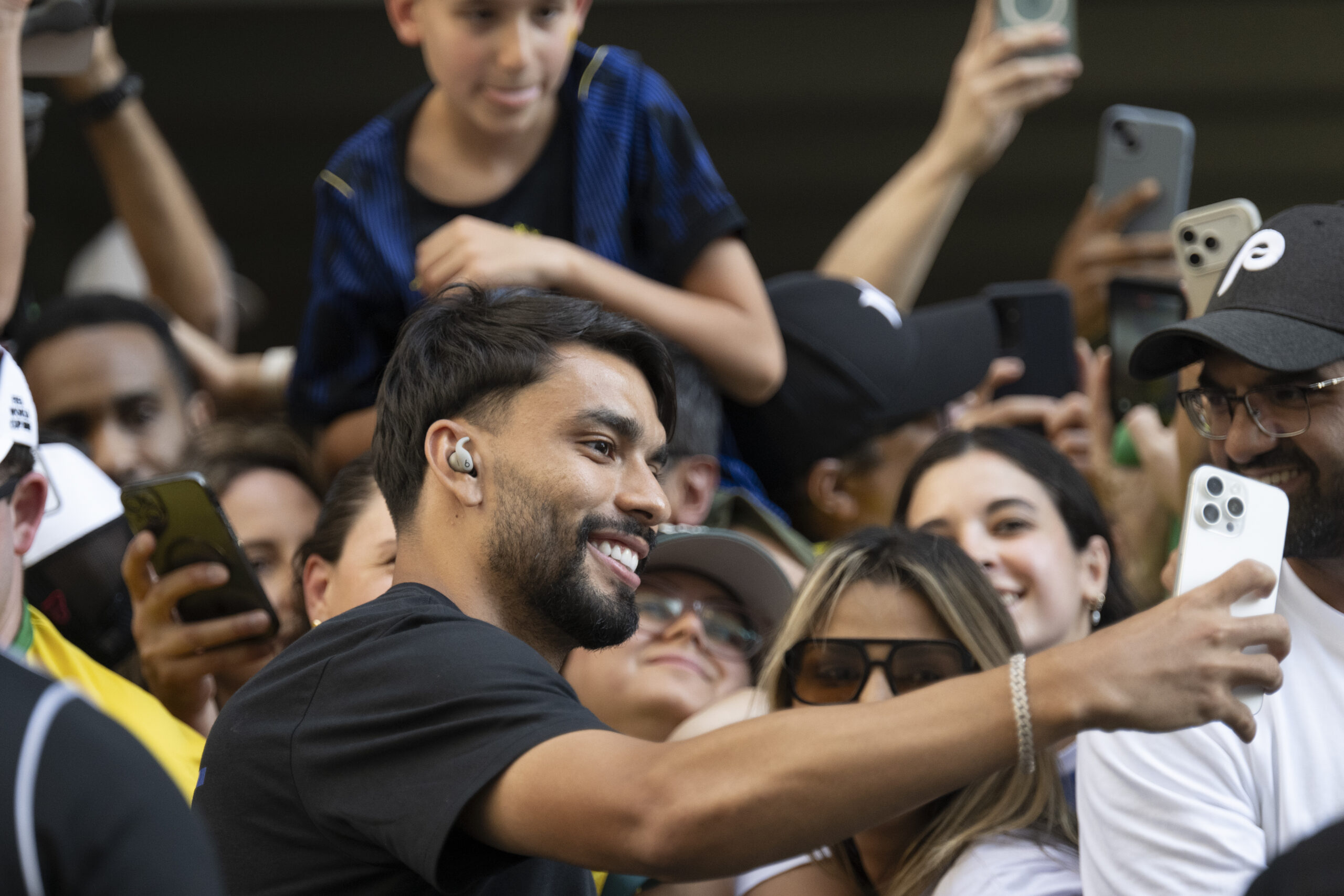
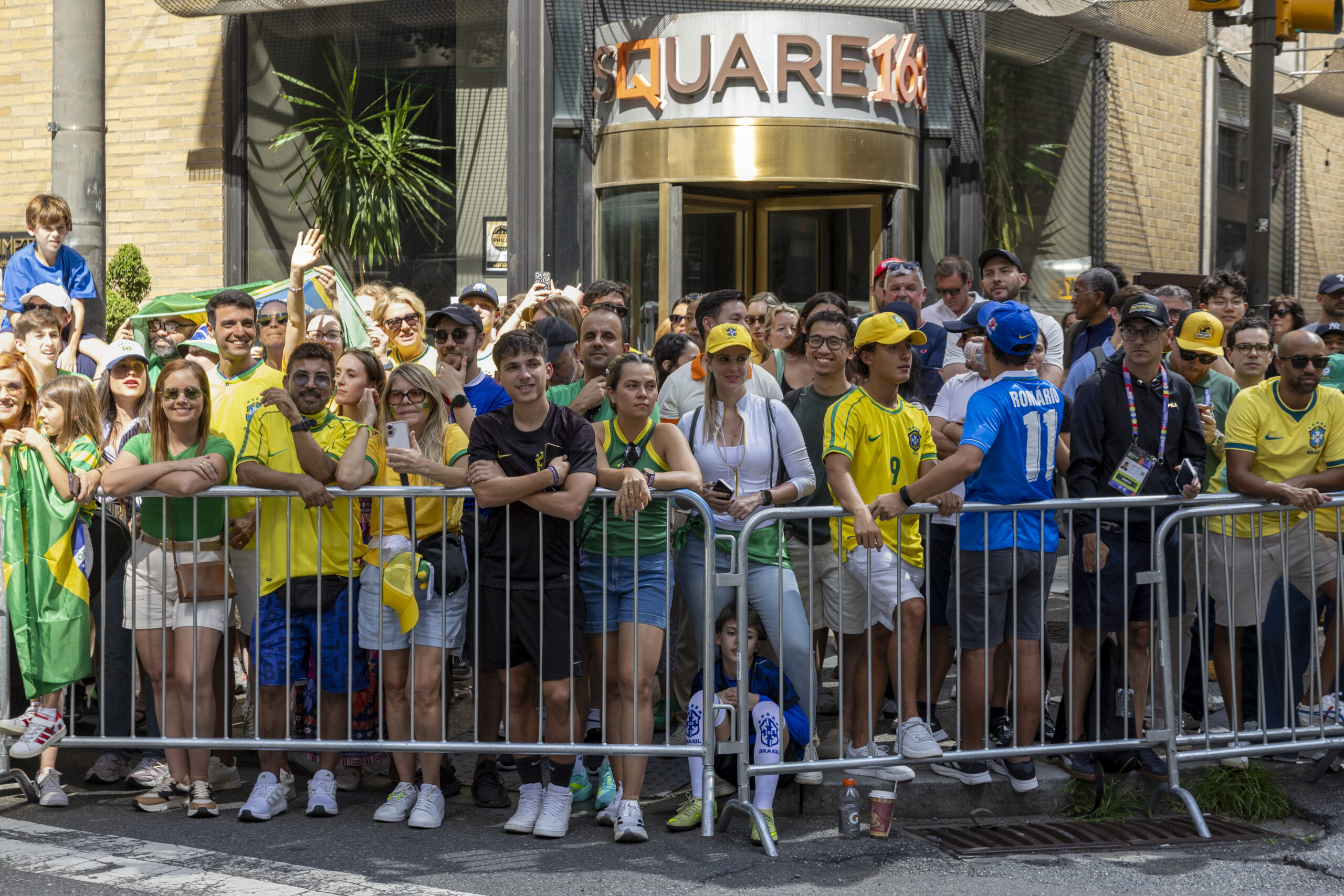
Photos: Brazil fans take over Philly
Brazil fans play a little soccer as they rally at the Philadelphia Museum of Art Thursday. Thousands of Brazil fans swarmed the streets ahead of their team’s matchup against Haiti in Philly. Brazil’s Lucas Paquetá poses for a photo with fans outside the Sofitel Philadelphia at Rittenhouse Square.Brazil soccer fans wait outside of the Sofitel Philadelphia at Rittenhouse Square to greet the players. A Brazil soccer fan cheers outside the Sofitel Philadelphia at Rittenhouse Square. Brazil fans are hoping for the team’s first 2026 World Cup win in Philly.
// Timestamp 06/19/26 8:09am
Everything you need to know about the World Cup in Philly
Philadelphia’s second World Cup game is Sunday night.
Brazil fans work to avoid Rocky curse again of Philly game
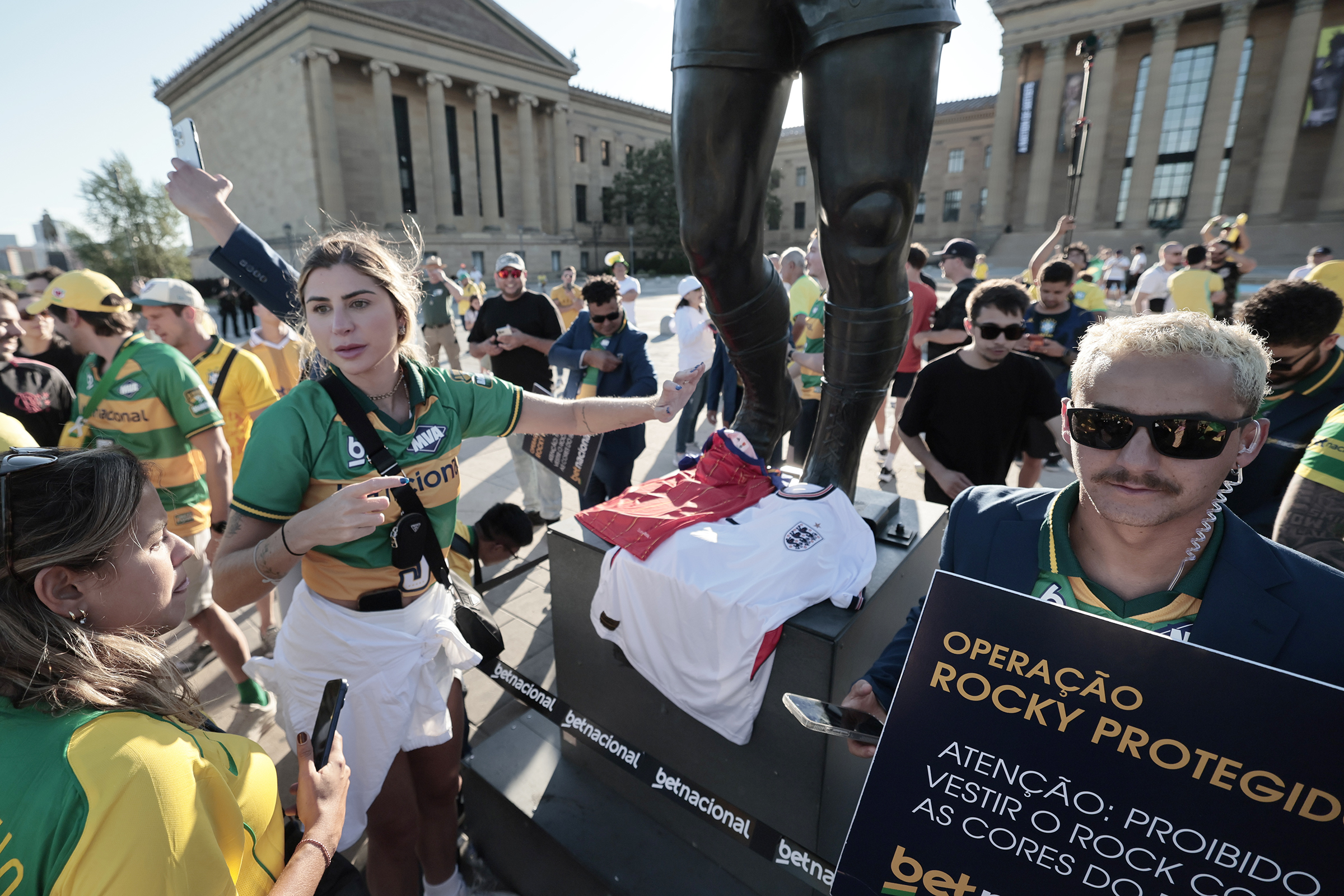
Brazil fans guard the Rocky statue at the Philadelphia Museum of Art to prevent being jinxed.
International soccer supporters, be warned — clothe the Rocky statue at your own risk.
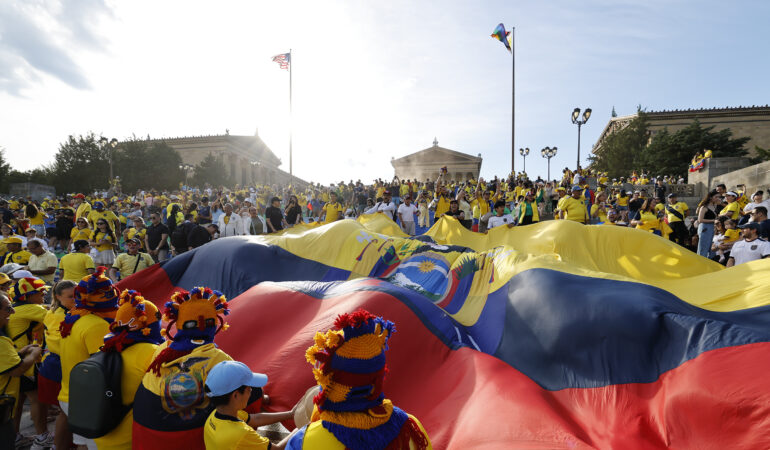
The fans of the Ecuadorian national team learned Sunday what many NFL fans already know about draping their colors over the statue of Rocky on the steps of the Philadelphia Art Museum.
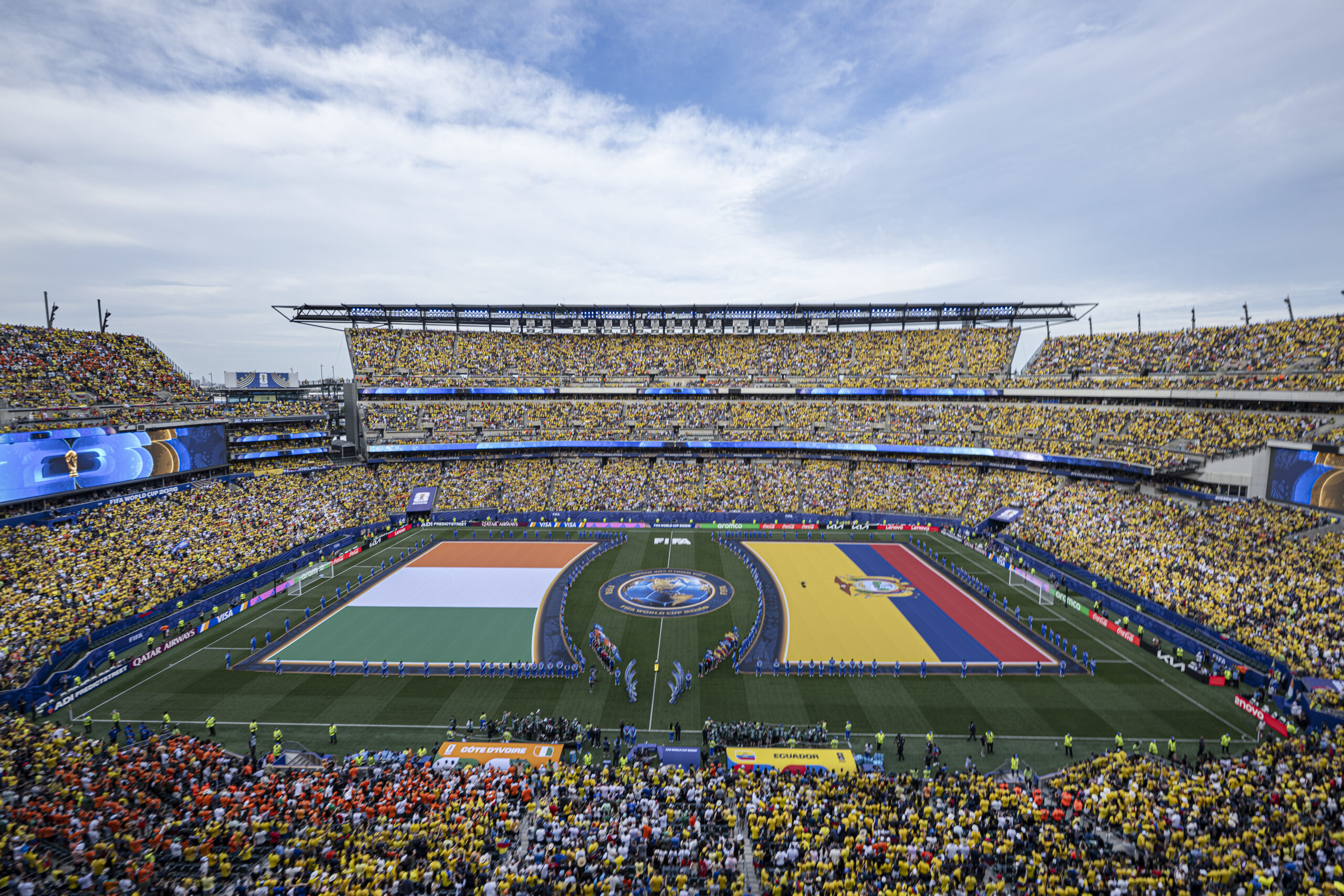
Ecuadorian supporters fitted Rocky with a yellow La Tri kit, then saw their team concede a 90th-minute winner in its FIFA World Cup group-stage opener against Ivory Coast on Sunday at Lincoln Financial Field (aka Philadelphia Stadium).
The effects of the “Rocky curse” are well-documented when it comes to football, but it was relatively untested on the beautiful game. Ecuador lost, 1-0, to the Ivorian side, which entered the tournament ranked 10 spots behind La Tri in the FIFA World Ranking.
With Brazil coming to Philly for a Group C match against Haiti on Friday (8:30 p.m., Fox29), Movimento Verde Amarelo, Brazil’s main supporters’ group, went to great lengths to ensure the yellow and green of the Canarinho stayed off the Rocky statue.
The Rocky statue was roped off with a four-post retractable nylon stanchion, with four members of MVA, sunglasses on and earpiece in, standing at attention at each corner as Brazilian fans gathered for a rally in front of the Art Museum.
The bodyguards discouraged fans from draping any Brazilian garb on the statue, holding signs that read:
“Operation Rocky Protectors — Attention: it is forbidden to put Brazilian colors on the statue.”
Matheus Henrique, 30, was one of the MVA members protecting the statue. Henrique, a native of Belém, Brazil, moved to Los Angeles a decade ago for college.
Henrique is friends with the person who helped organize Brazil’s takeover of the steps and responded when a call went out for volunteers to guard the statue.
“It’s a superstition, we heard,” Henrique said. “We’re enjoying the event as well.”
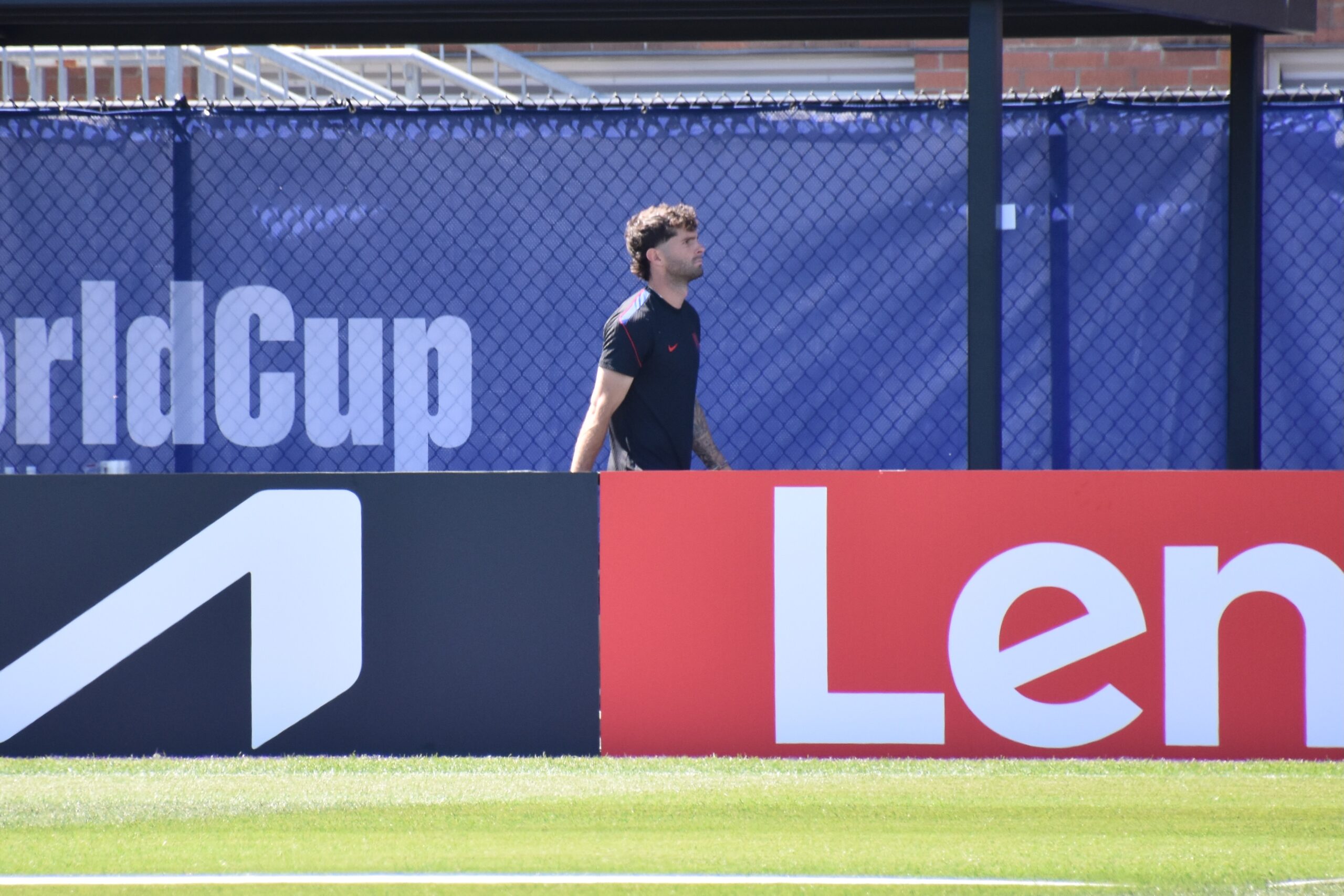
Christian Pulisic’s status a mystery ahead of USMNT-Australia
Christian Pulisic during a United States men’s national soccer team in Seattle Thursday.
There was no surprise news about Christian Pulisic from U.S. men’s soccer team manager Mauricio Pochettino in his news conference before Friday’s game against Australia (3 p.m., Fox29, Telemundo 62). Pochettino did not rule the star playmaker in or out, and that was not surprising.
“As you know, he was training in an individual way the whole week,” Pochettino said. “But like always, I think tonight, the day before the game, we have a meeting with our medical area, and we will assess the whole group, the players, and tomorrow we will communicate all the things that we can agree tonight.”
Pulisic was seen briefly at the start of Thursday’s practice, then headed off to work on his own. When he arrived, he wasn’t wearing the sleeve over his injured left calf that he sported on Wednesday. But after a few minutes, he sat down on a bench by the sideline and put it on.
“He is evolving, he is much better from [last] Friday,” Pochettino said. “I think at the moment we’ll see. … He’s doing a massive effort trying to be ready.”
The manager also praised Pulisic for being “strong and with a great mentality” as the Hershey native works to be ready for kickoff.
Asked who might play if Pulisic can’t go, Pochettino didn’t answer. This was no surprise either.
“I will tell tomorrow if that is the situation,” he said. “At the moment, we are evaluating all the possibilities just in case, and then we will decide when we have the confirmation in one or another direction tonight.”
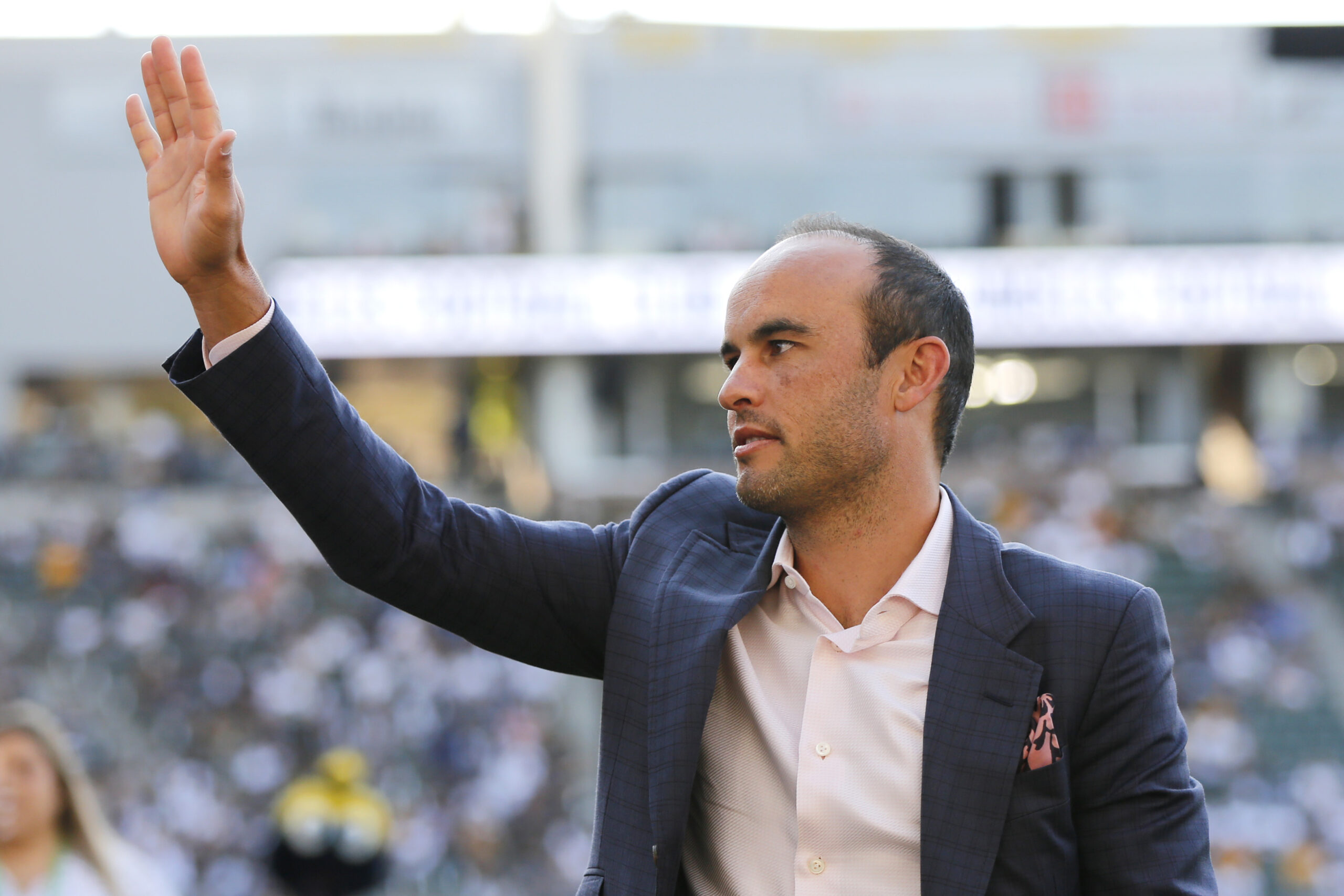
Former U.S. men’s star Landon Donovan will be on the call for Brazil vs. Haiti in Philly Friday night.
The second of six World Cup matches will take place Friday night in Philadelphia, with Brazil taking on Haiti (8:30 p.m., Fox) in Group C action.
Calling the game on Fox tonight will be veteran soccer announcer Ian Darke, joined by former U.S. men’s national great Landon Donovan. Natalie Gedra will handle reporting at Philadelphia Stadium, otherwise known as Lincoln Financial Field.
Brazil vs Haiti
Time: 8:30 p.m. Philly time
Location: Philadelphia Stadium (Lincoln Financial Field)
TV: Fox (Ian Darke, Landon Donovan)
Spanish: Telemundo (Luis Omar Tapia, Diego Balado)
Philly hosted its first-ever men’s World Cup match last week, with Ivory Coast topping Ecuador.
Philadelphia was the star during its first 2026 World Cup match, which featured an Ivory Coast upset in front of a re-branding Lincoln Financal Field filled with Ecuador fans.
Philadelphia Stadium, as it’s called during the tournament, will host five more World Cup games, including a Round of 16 matchup on July 4.
Haiti’s June 19 World Cup match against soccer’s most decorated nation, Brazil, held at Philadelphia’s Lincoln Financial Field, encapsulates the contradictions at the heart of FIFA’s flagship event this summer.
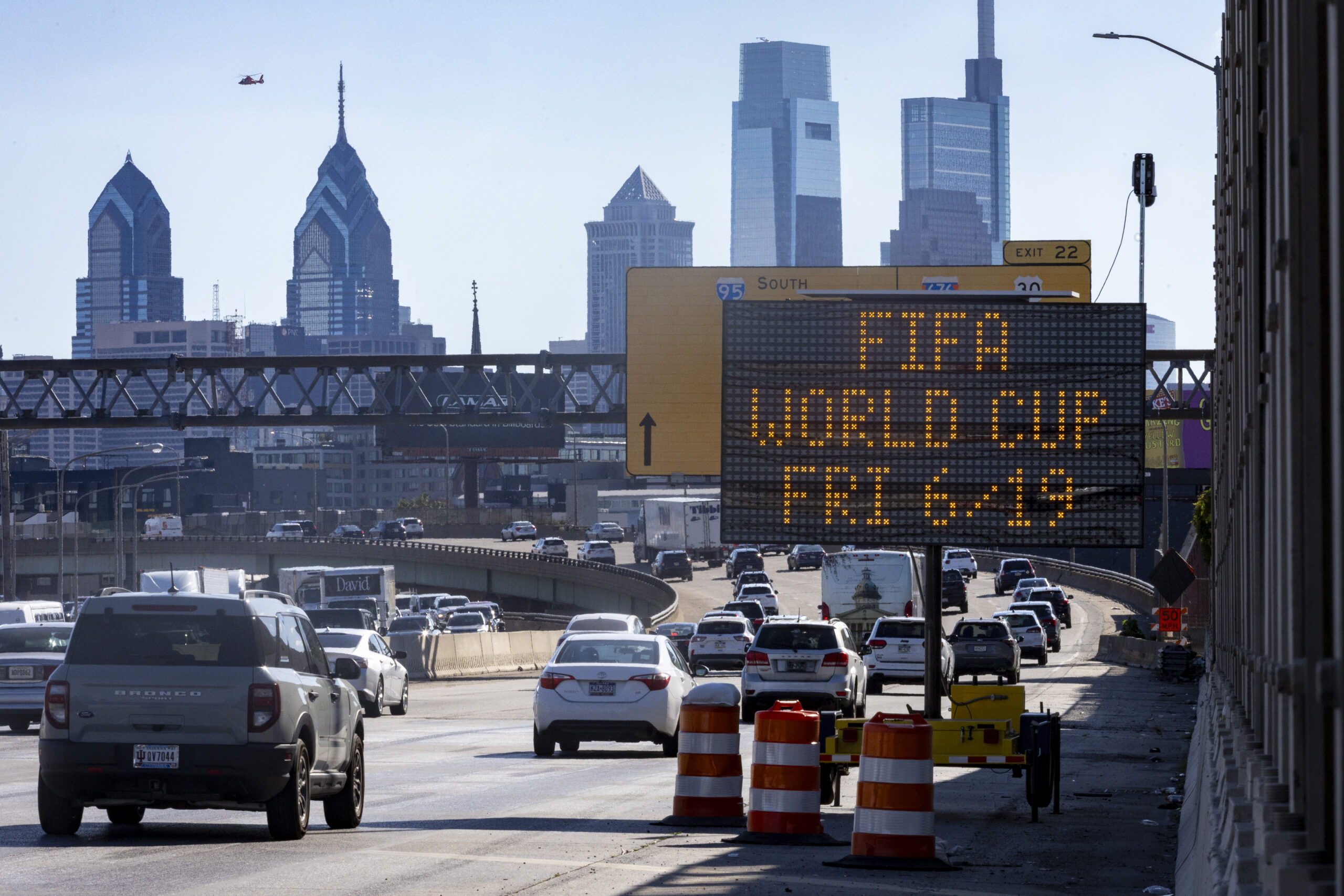
A traffic sign on I-95 informs drivers of expected traffic delays to occur because of the World Cup match — Brazil is set to face Haiti — on Friday at Lincoln Financial Field in Philadelphia.
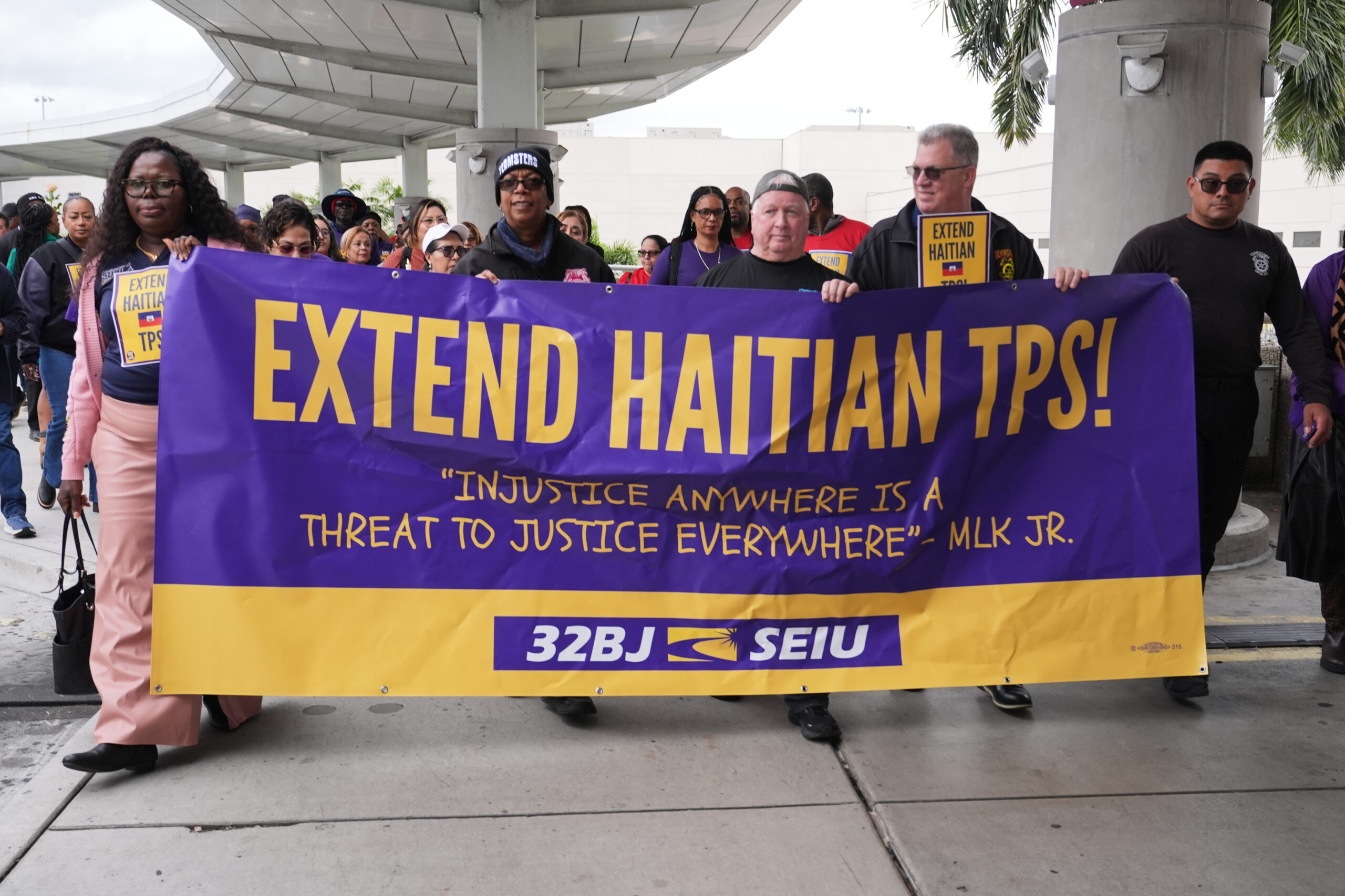
The World Cup — and Haiti’s first appearance in it since 1974 — is a welcome distraction from the humanitarian and security crisis at home. For many Haitians, however, the Trump administration’s cruel immigration policies, including its effort to terminate this Caribbean country’s temporary protected status (TPS) — a form of protection against deportation to dangerous situations — casts a shadow over the tournament.
Since a catastrophic 2010 earthquake, Haitians have dealt with one disaster after another, including a cholera epidemic, devastating hurricanes, increasing violence, and chronic political instability.
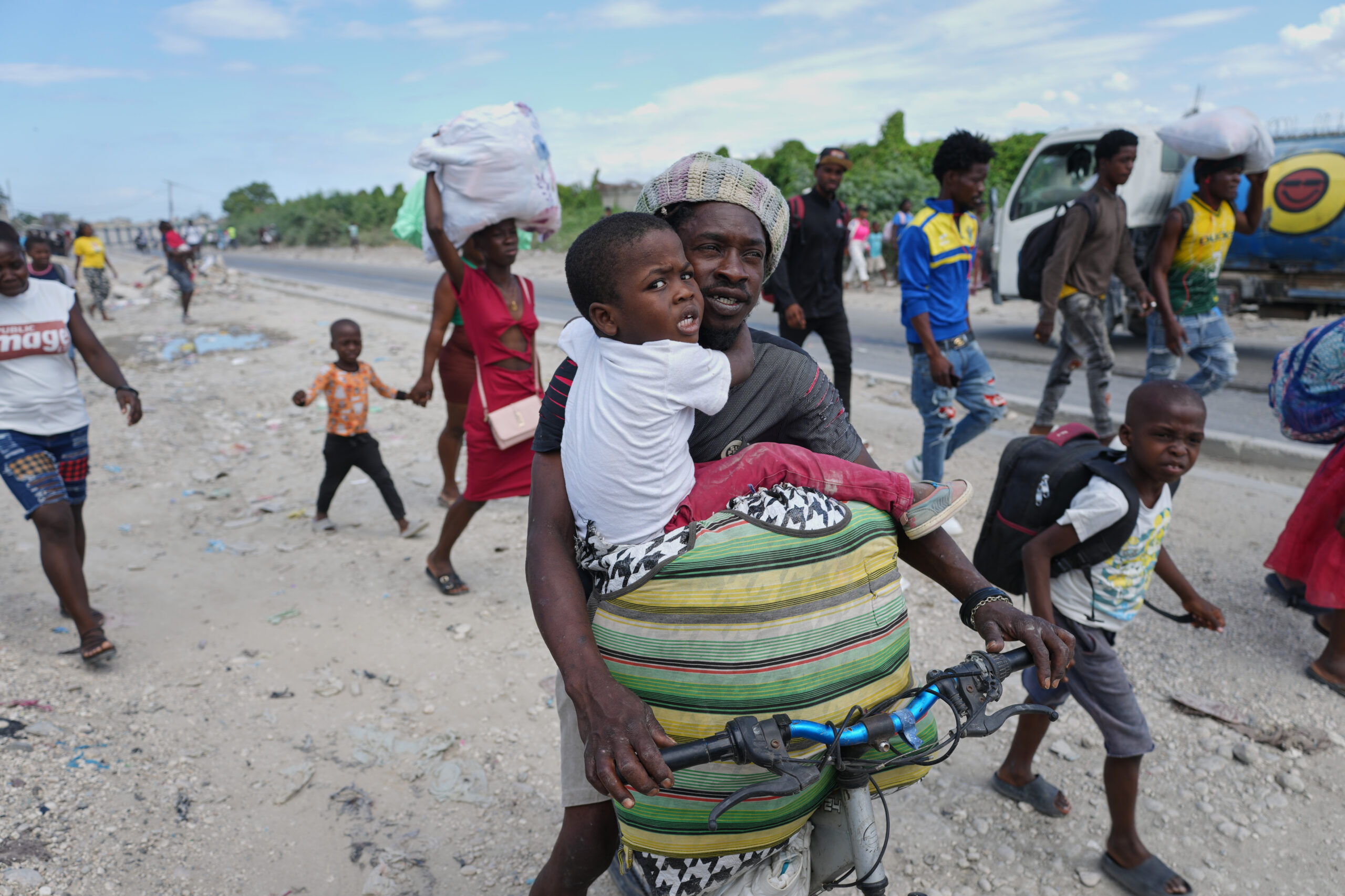
The current crisis, during which criminal groups have consolidated control over most of the capital, Port-au-Prince, and expanded to at least four more of Haiti’s 10 regions, has killed thousands, displaced more than 1.5 million people, and led to widespread sexual violence.
Even before the World Cup began, the odds were stacked against Haiti’s “Grenadiers” — a nickname that pays homage to the revolutionary soldiers who fought for Haiti’s independence in 1804. The squad managed to top their regional qualifying group for the tournament despite not being able to play a single game on home soil; their national stadium is in an area controlled by criminal groups. It was a remarkable feat — one that ended Haiti’s 52-year wait to participate in another World Cup, and became a source of immense pride for Haitian soccer fans around the world.
Haiti fans cheer during the World Cup Group C soccer match between Haiti and Scotland in Foxborough, Mass., near Boston, on June 13.
For the coming weeks, Haitians will be celebrated on the world stage and their players welcomed with open arms, but their fans may find their paths to the stadiums — or to the United States itself — inaccessible.
In Philadelphia, many by now will have already seen proud Haitian fans sporting their team’s blue and red jerseys. But while the World Cup inspires hope and pride for Haitians living in the U.S., the Trump administration’s immigration policies, including the possibility of U.S. Immigration and Customs Enforcement presence at or near World Cup venues, may elicit anxiety, fear, and exclusion.
Haiti is one of 39 countries affected by U.S. government travel restrictions that prevent fans from supporting their countries in person this summer. Although the ban includes an exception for athletes, Woodensky Pierre, the only Haitian player based in the country, missed a vital pre-tournament match after his U.S. visa wasn’t approved in time. He landed at Miami airport shortly after the game began and was later embraced by his teammates on the pitch at the final whistle.
It is the attempts to terminate Haitians’ temporary protected status, however, that pose the most serious human rights concerns for Haitians who are already in Philadelphia and other cities.
Under U.S. law, the Department of Homeland Security can designate a country for this status when conflict, environmental disasters, or other circumstances temporarily prevent its nationals from returning safely, or when the country cannot adequately handle their return.
TPS protects beneficiaries from removal, allows them to apply for work and travel authorization, and prevents Homeland Security officials from detaining them solely based on their immigration status.
Haiti first received this designation after the 2010 earthquake. Since then, and because conditions in Haiti itself have not improved, hundreds of thousands of Haitians in the U.S. have built lives, raised families, and become essential contributors to local communities, including in Philadelphia. Approximately 330,000 Haitians now have TPS in the United States.
Haitian TPS holders in the U.S. need stability, protection, and a durable path forward, writes Robbie Newton.
The Trump administration is now trying to strip Haitians of this protection.
Despite clear evidence that the human rights crisis in Haiti is worsening, the Department of Homeland Security insists that “country conditions have improved to the point where Haitians can return home safely.” A Supreme Court decision on the legality of ending this protection is expected this summer.
Residents flee their homes to escape clashes between armed gangs in Port-au-Prince, Haiti, in May.
Terminating the protection would have devastating consequences, exposing hundreds of thousands of Haitians to detention and possible return to the “cataclysmic” situation unfolding at home, where they would face serious risks of kidnapping, extortion, and other abuses by criminal groups.
For the 15,000 Haitians protected by TPS in the state of Pennsylvania, making it to the World Cup and cheering on their team represents a powerful symbol of hope and unity at a precarious time for the community.
Other soccer fans who root for the underdog will very likely cheer on Haiti as it makes its way through all of its Group C matches (and, hopefully, into the knockout stage). But support for Haiti should extend beyond the World Cup. The U.S. government should renew temporary protected status for Haitians.
Haiti’s Grenadiers deserve their place at the World Cup. For Haitian TPS holders in the U.S., the stakes go far beyond the tournament.
Robbie Newton is a senior coordinator and in the sport and human rights team at HumanRights Watch.
Each Friday, Inquirer photo editors pick the best sports images from the last seven days. This week, it should come as no surprise that you’ll find lots of World Cup photos — especially after Ecuadorian fans rallied on the steps of the Art Museum, and fell victim to the Rocky curse the next night against Ivory Coast. Brazil fans, whose team plays Friday night in South Philly, took precautions to avoid that fate.
Elsewhere, the Phillies took the field against some divisional foes, a state champion returned to the track, and dodgeball got serious. Here’s a look back at some of our favorite photos from the week:
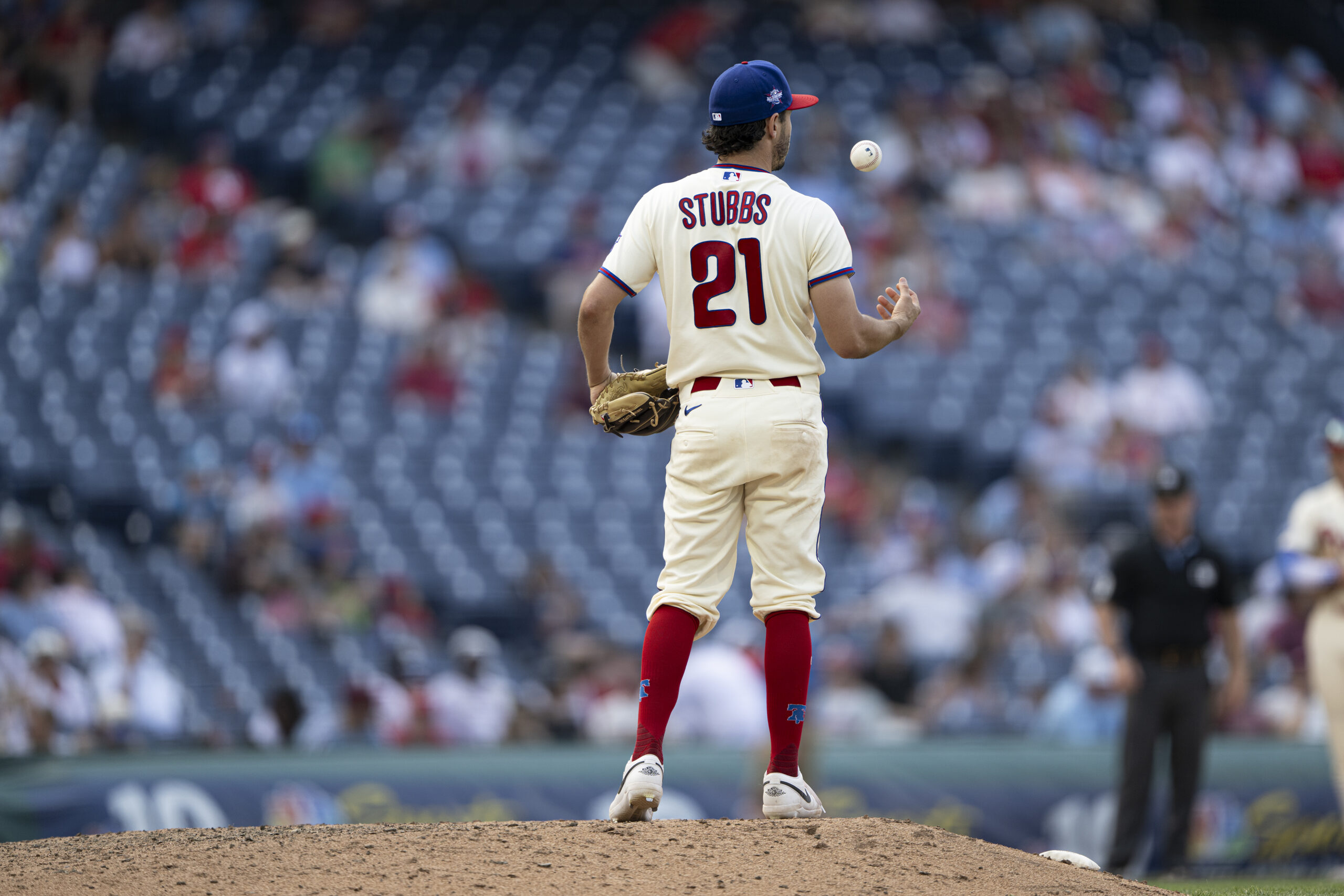
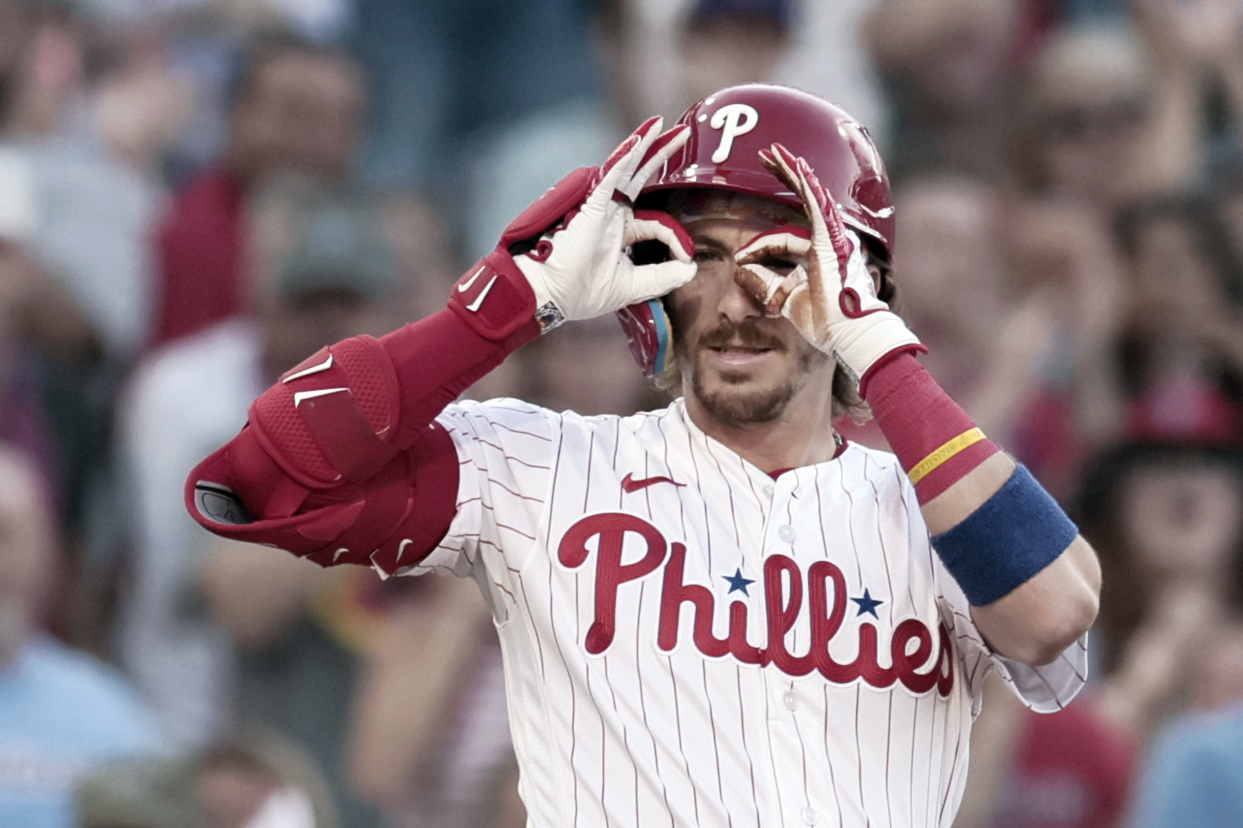
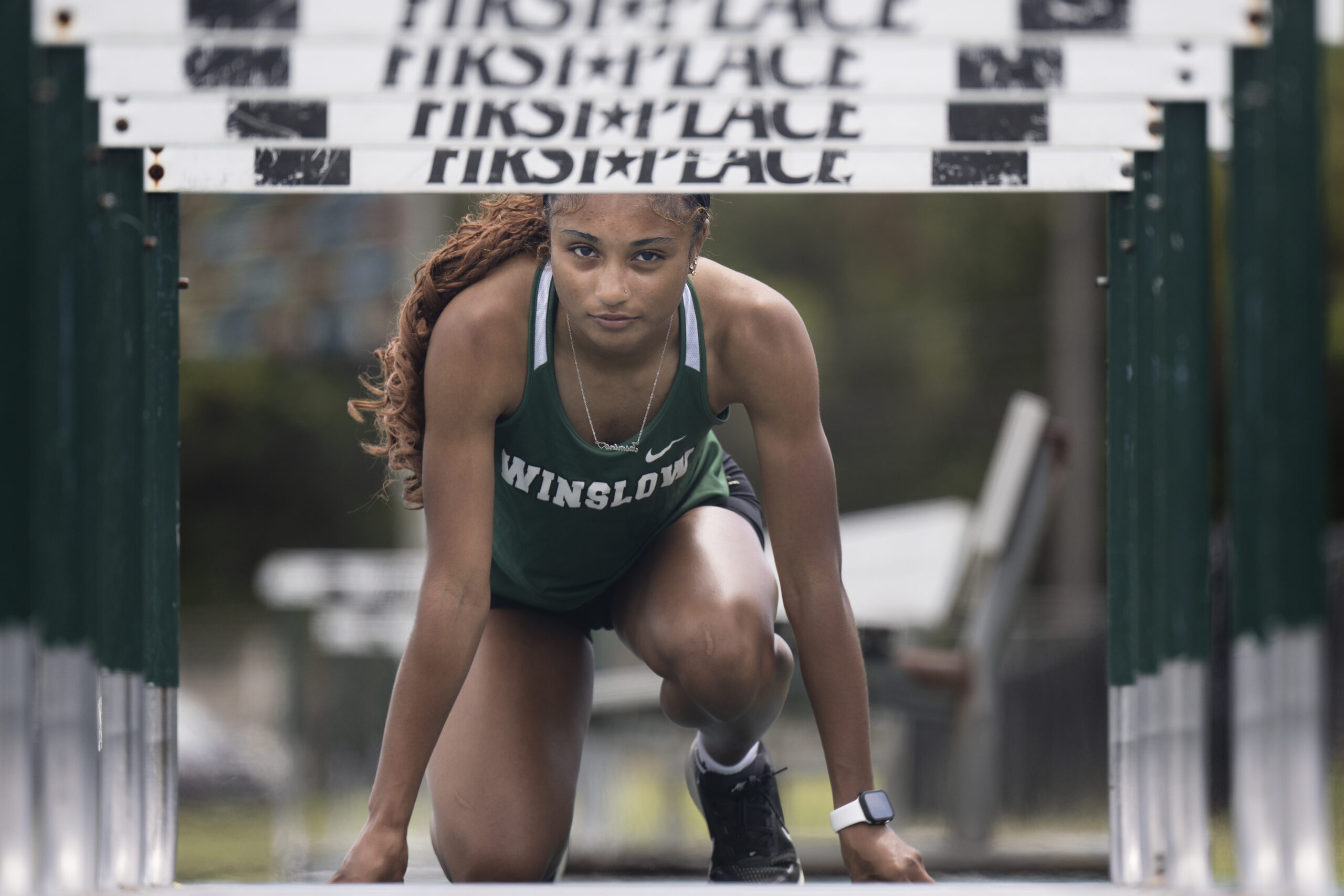
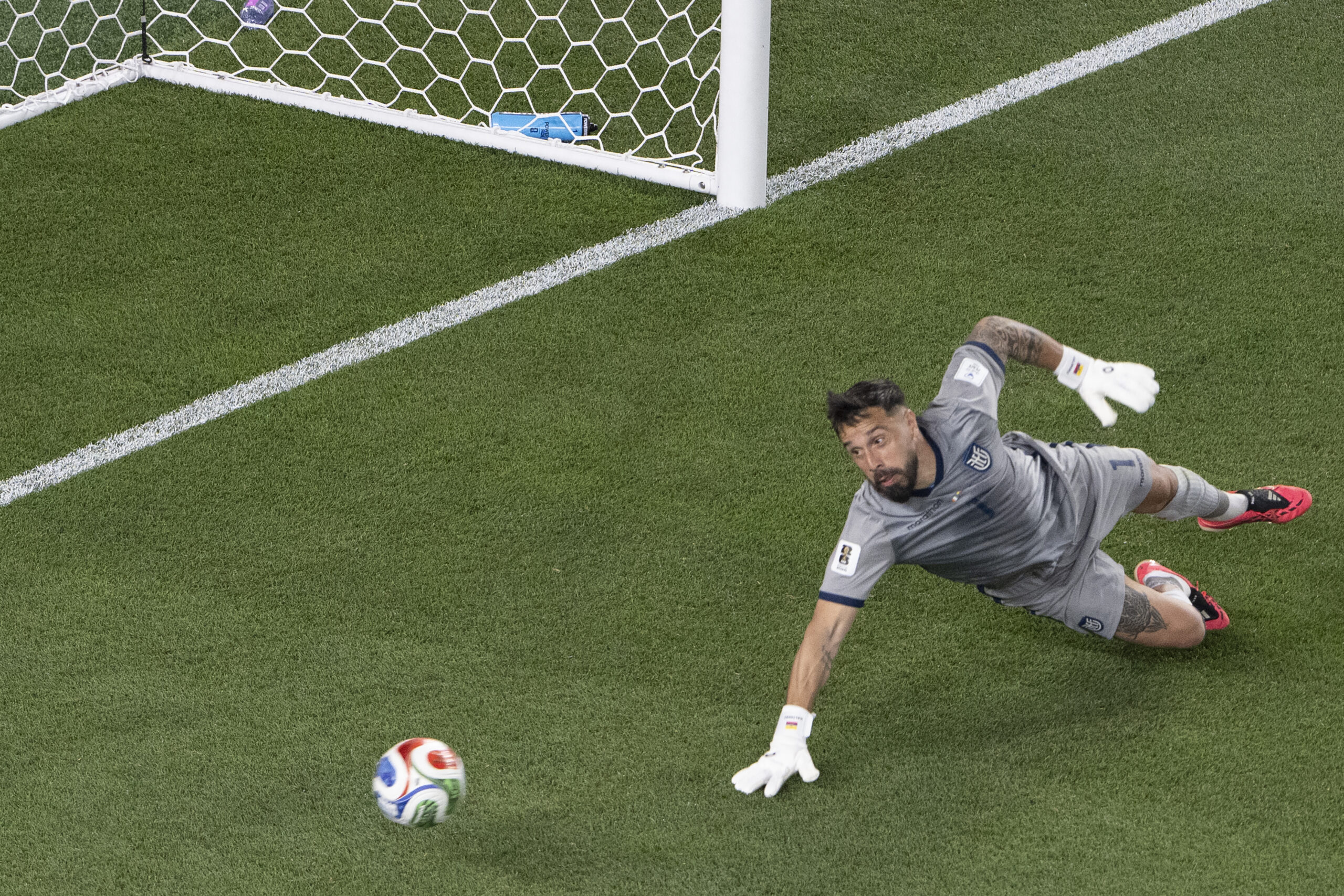
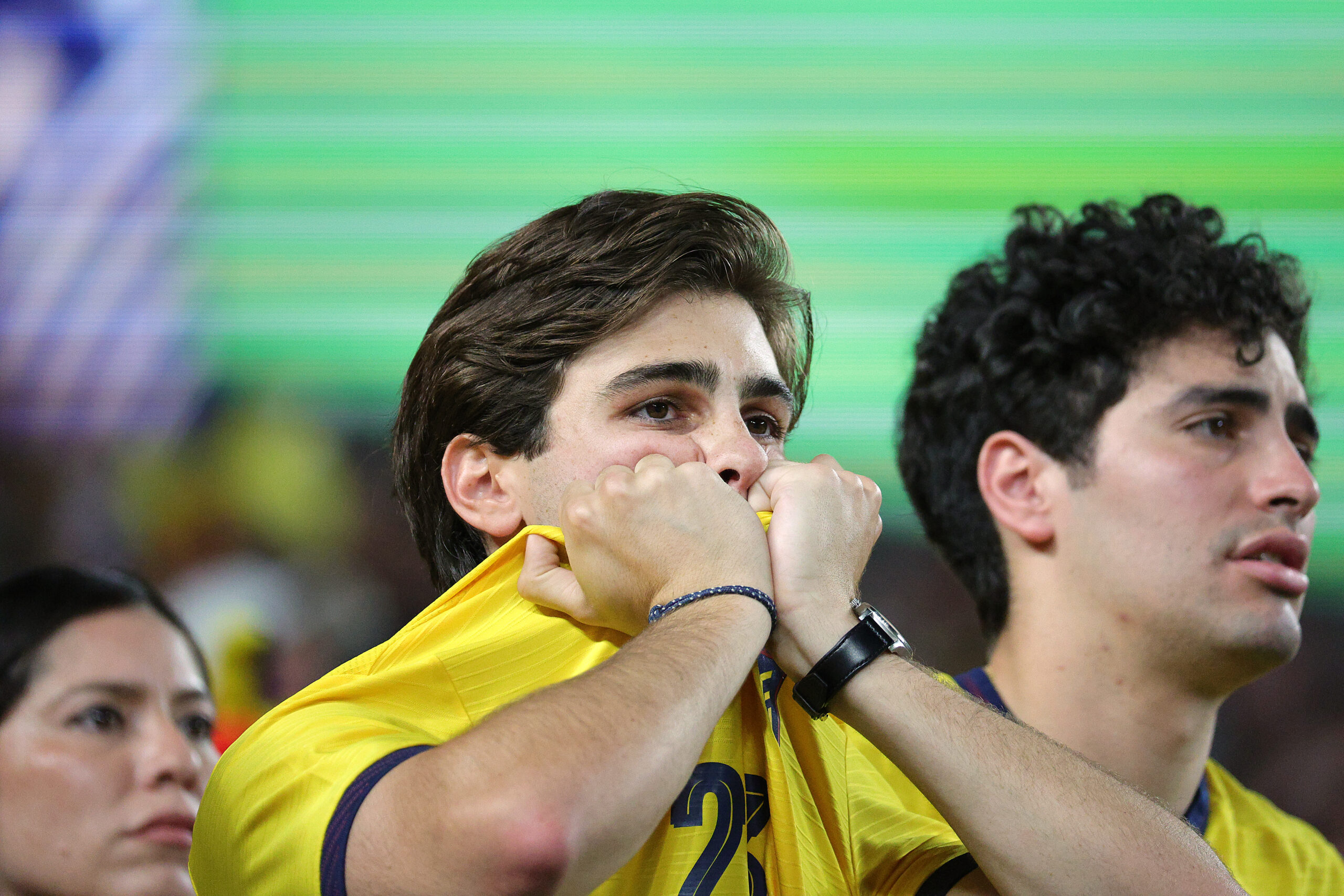
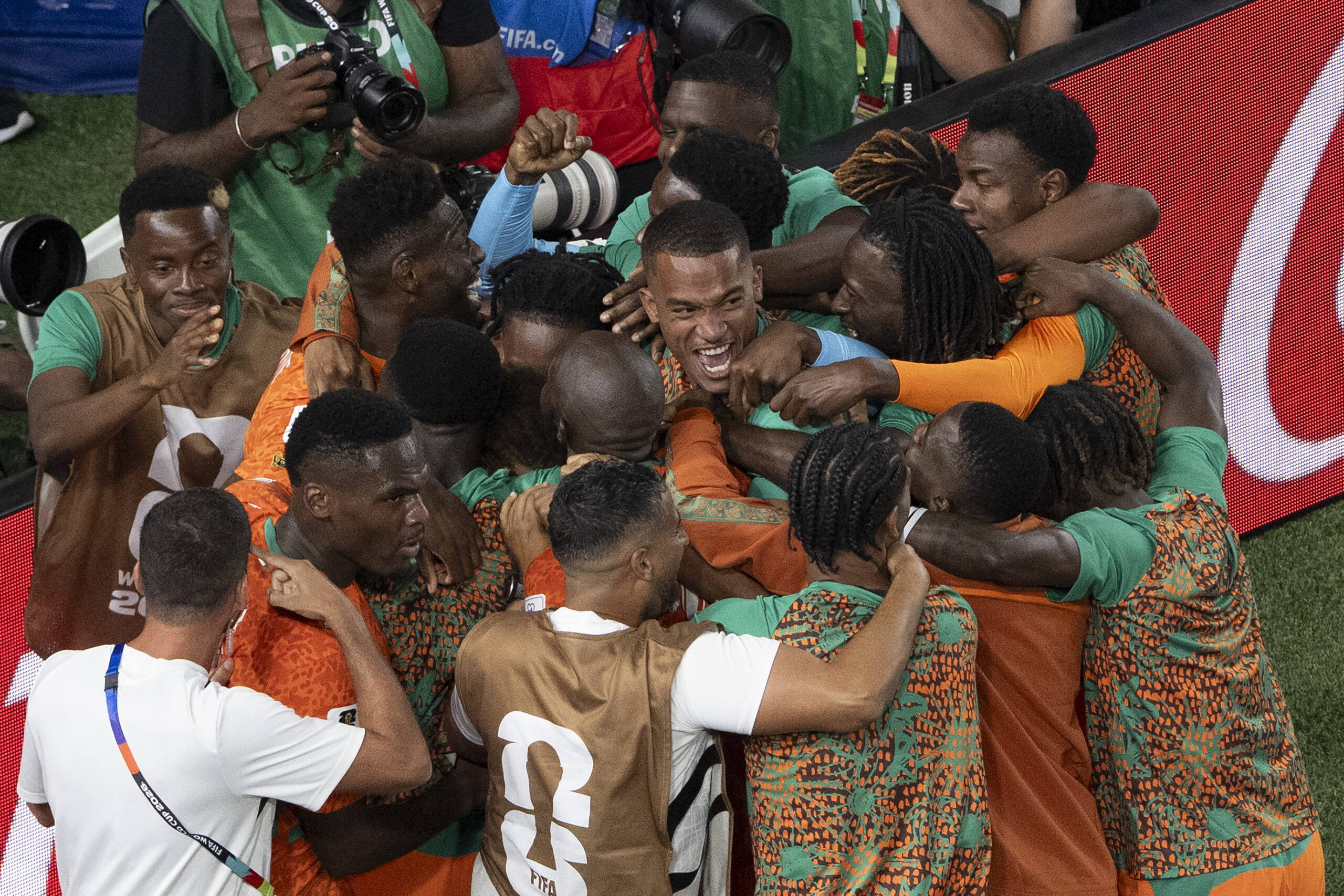
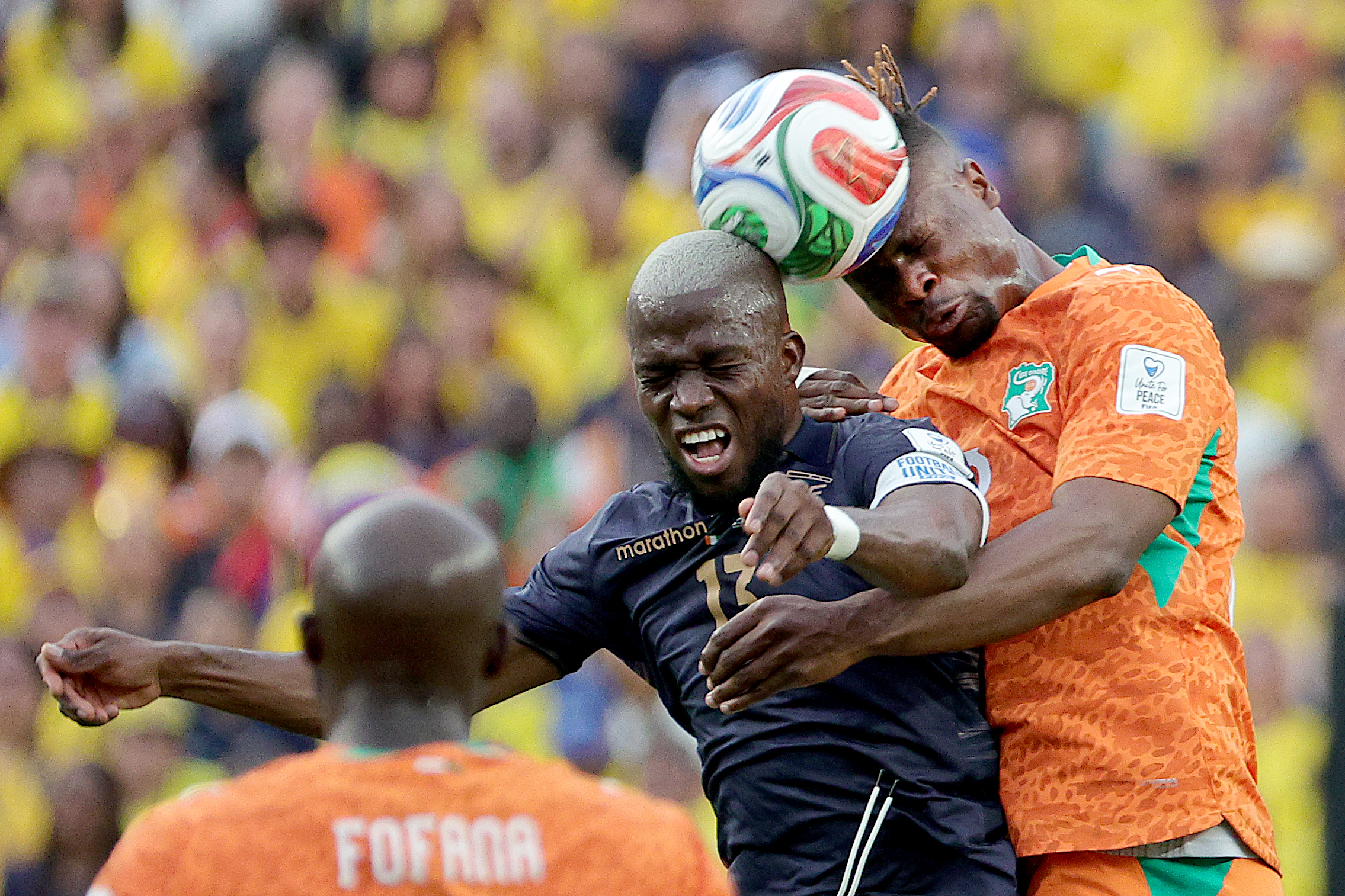
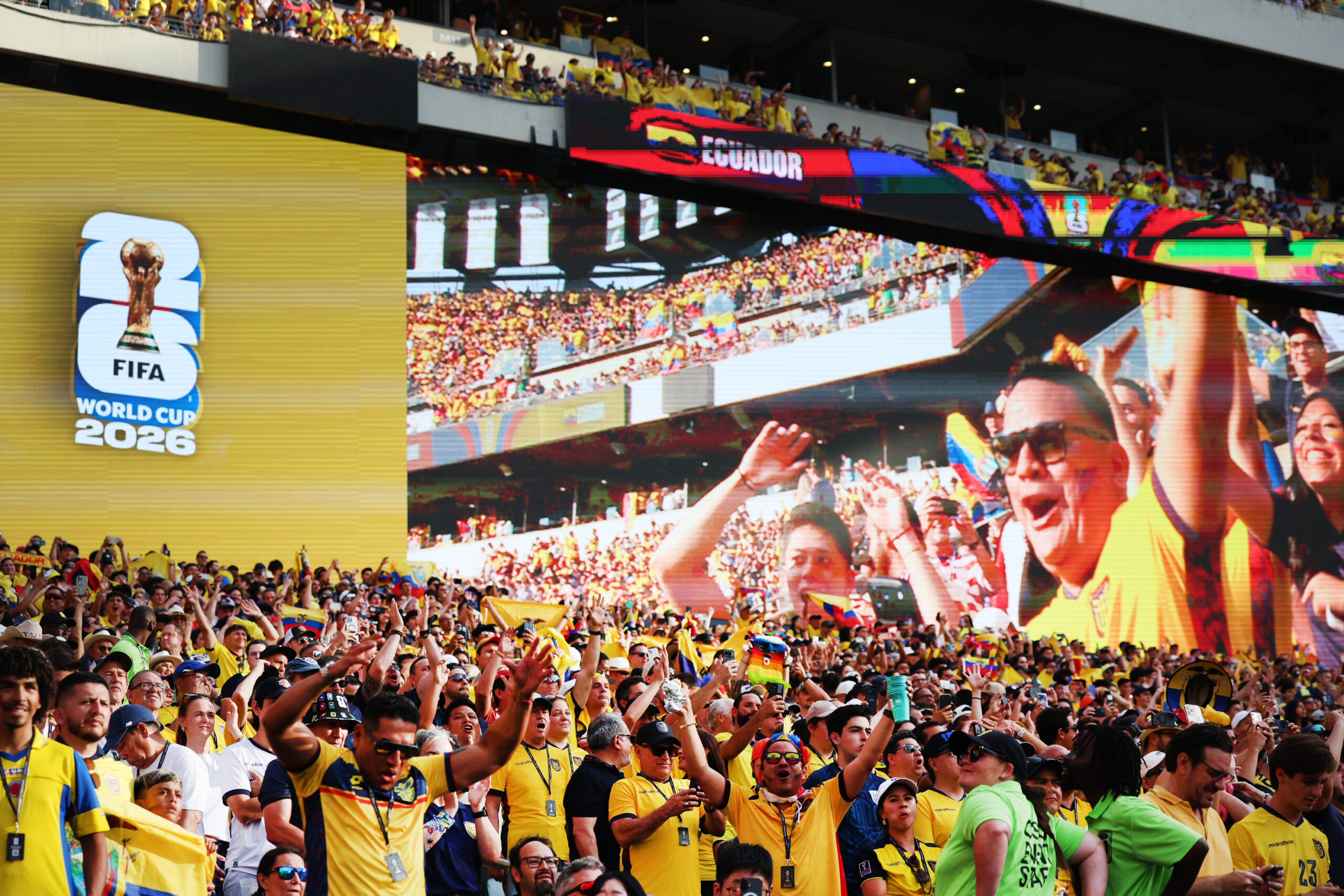
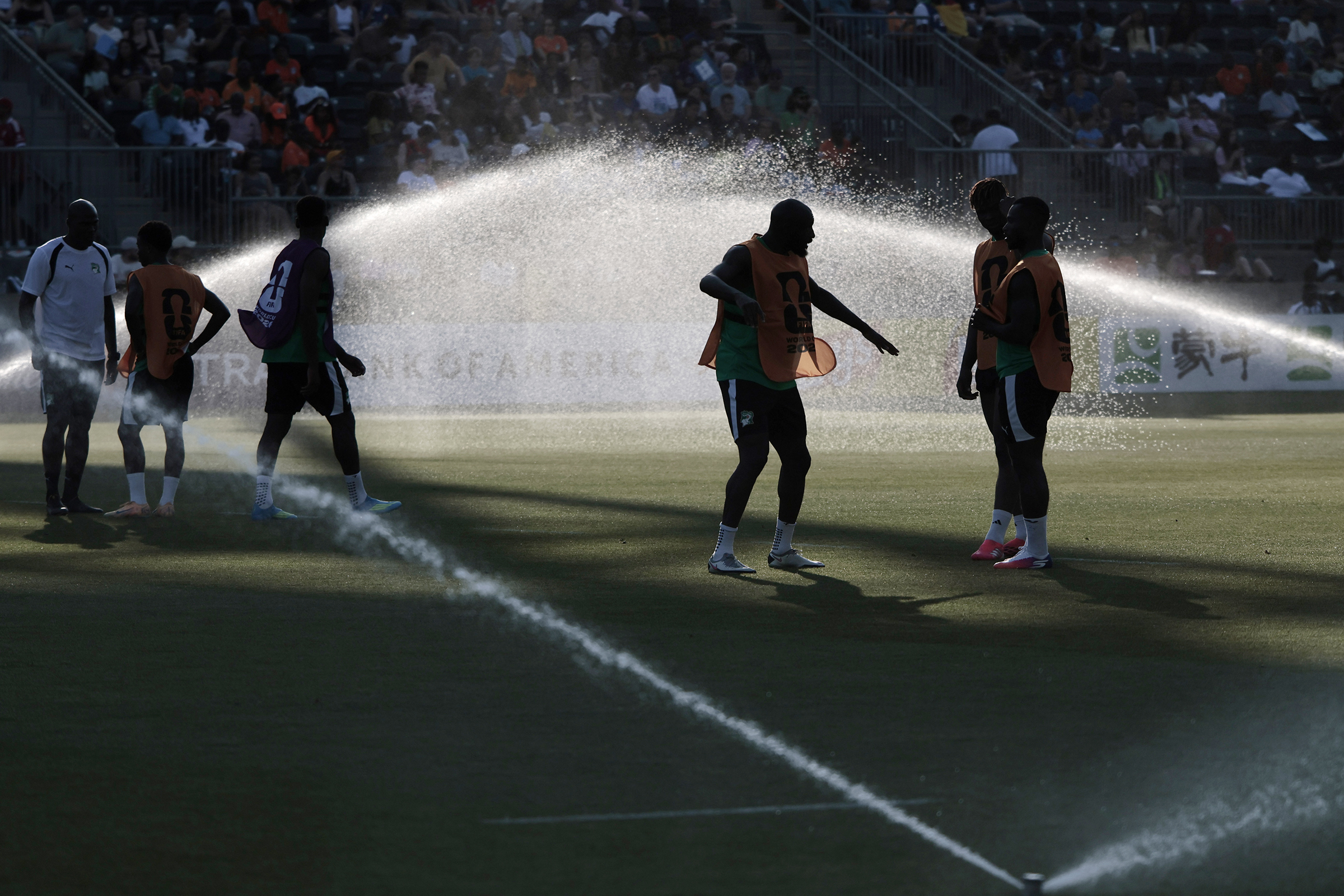
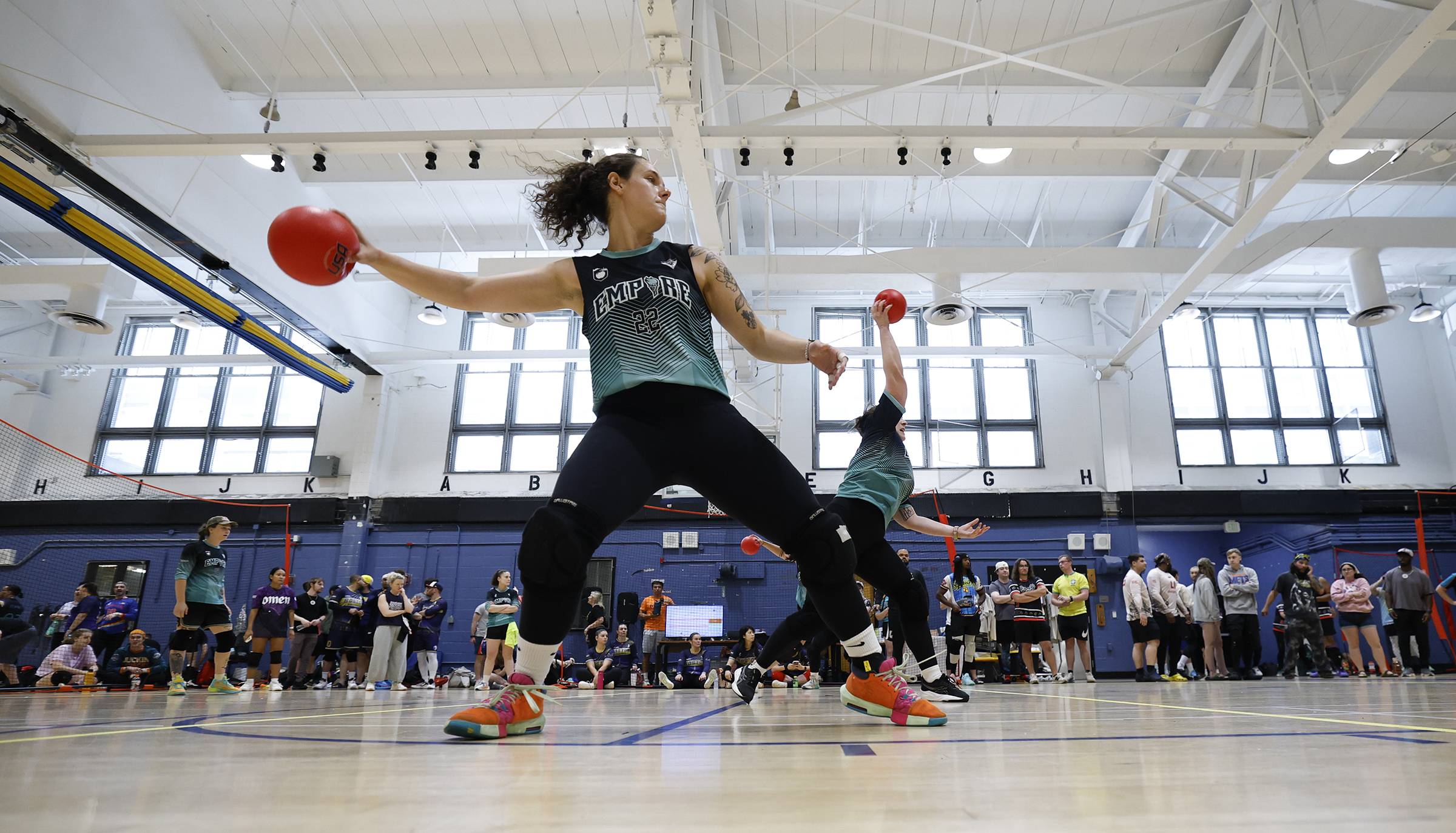
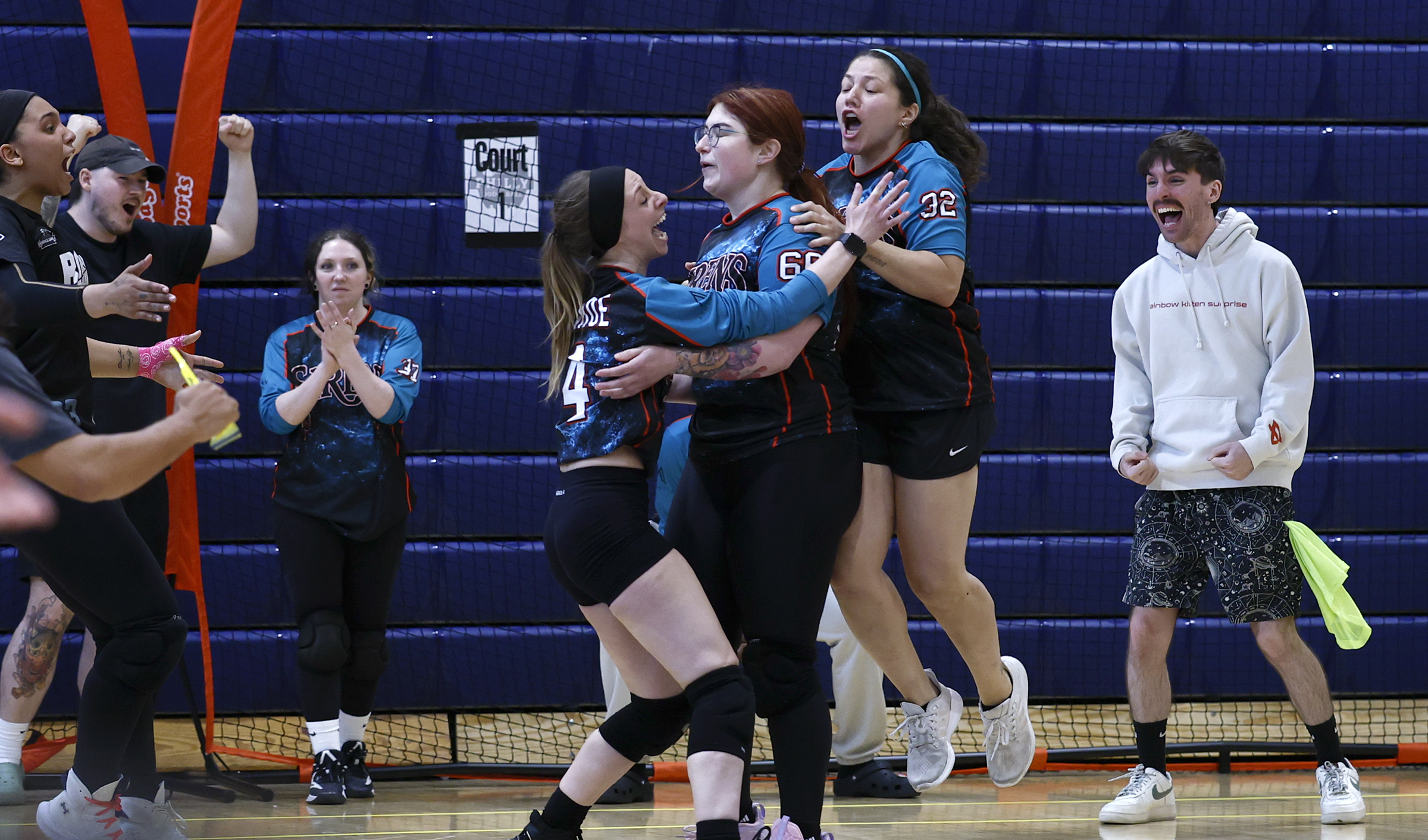
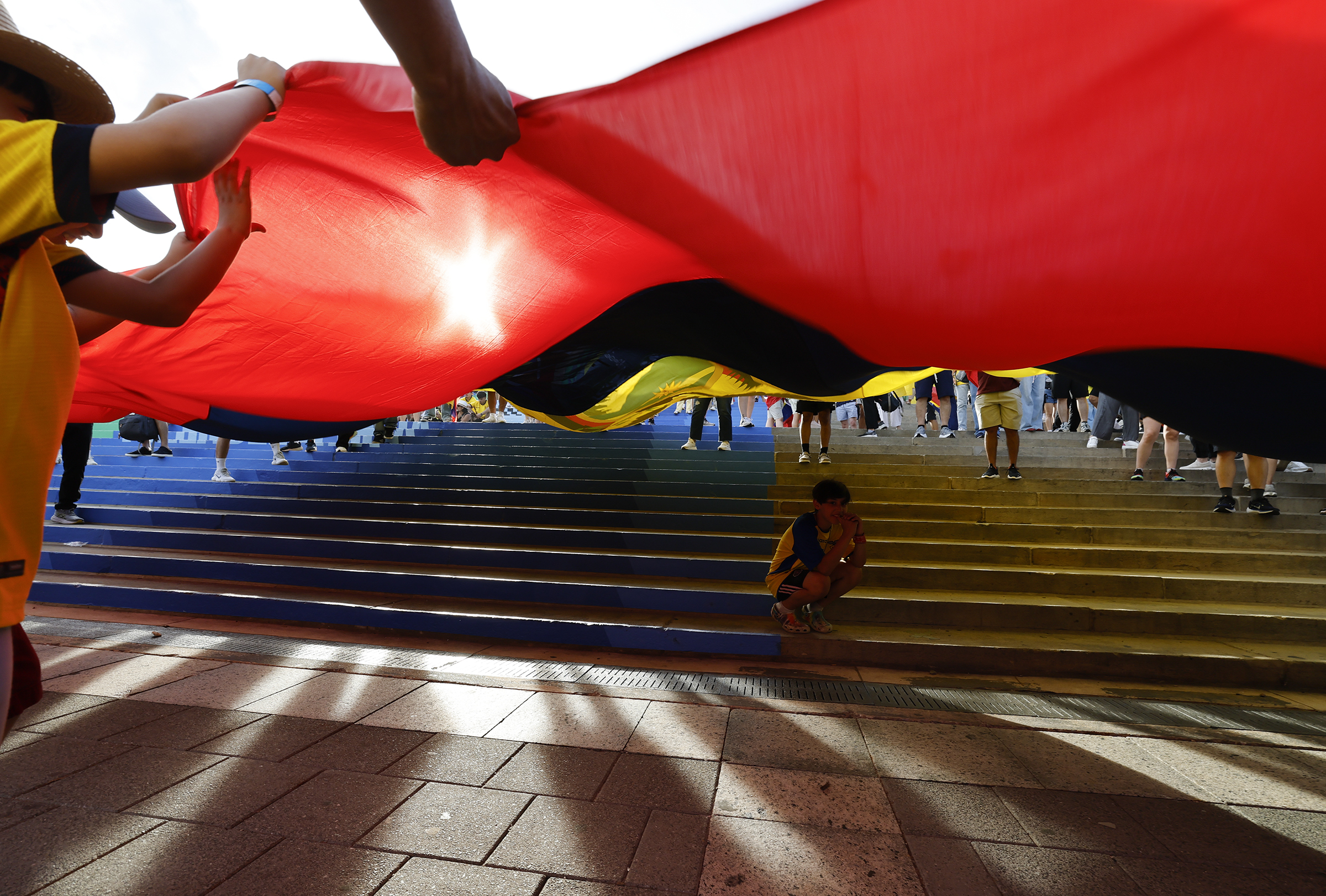
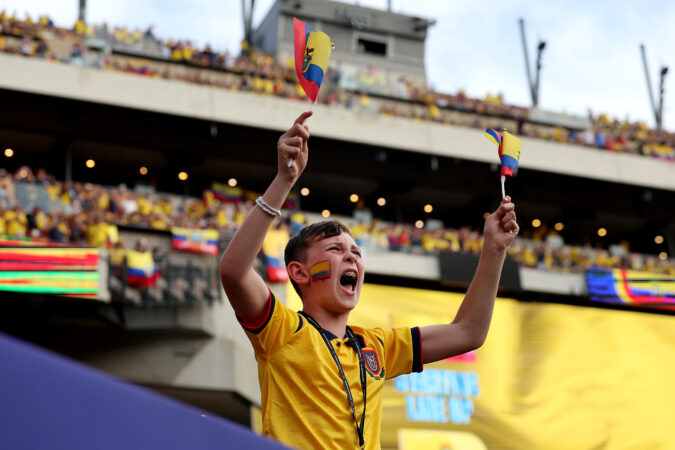
The Phillies used eight pitchers — technically seven and cathcer Garrett Stubbs — in Wednesday’s loss to the Marlins.Phillies second baseman Bryson Stott looks to the dugout after hitting a triple in the first inning of Tuesday’s 8-2 win over the Marlins.Winslow Township High School sophomore Jasmine Jackson recently won a state championship in the 100-meter hurdles and earned an invite to the Brooks PR Invitational.Ecuador goalkeeper Hernán Galíndez allowed the game-deciding goal by Ivory Coast’s Amad Diallo in the 90th minute of their World Cup Group E match on Sunday.Ecuador fans were shocked by their team’s World Cup loss to Ivory Coast on Sunday in Philadelphia.Ivory Coast’s Amad Diallo (center) is surrounded by his teammates after scoring the lone goal in a 1-0 victory over Ecuador in the World Cup on Sunday in Philadelphia.Ecuador forward Enner Valencia (center) and Ivory Coast defender Emmanuel Agbadou (right) battle for the ball during their World Cup match on Sunday in Philadelphia.Ecuadorian fans cheer during their World Cup match against Ivory Coast in Philadelphia.Ivory Coast’s soccer team practice as the sprinklers began operating last Friday at Subaru Park in Chester. They faced Ecuador in Philadelphia that Sunday.Members of the Empire, a women, trans, and nonbinary dodgeball team, prepare to throw while taking on team Sirens during the “Beast Coast” championship Saturday at Ben Franklin High School.Members of the Sirens celebrate after beating Empire in a WTNB dodgeball quarterfinal.A young Ecuadorian soccer fan sits under the Ecuadorian flag during a flag-waving event on Saturday at the Philadelphia Museum of Art steps, before the team faced Ivory Coast in the World Cup.
This year’s World Cup is the first since prediction markets such as Kalshi and Polymarket exploded to popularity as a new way to bet on sports.
Fans in the U.S. are free to collectively wager billions of dollars on the tournament, but a growing number of other countries are making it harder to access the platforms offering those bets. Whether fans can bet on how many goals Kylian Mbappé scores for France or who wins the tournament may depend on where they live. In some cases, fans may not be able to bet at all.
In just the last few weeks, Spain, Indonesia, and India have joined the growing list of countries — including most of the European Union and large parts of Asia — that have put in place temporary or permanent measures to cut off access to the Kalshi and Polymarket websites and apps.
Brazil shut down 27 prediction platforms in April, including Kalshi, whose co-founder, Luana Lopes Lara, is Brazilian, leaving the company scrambling shortly after it launched in the country.
Regulators have intensified their scrutiny of prediction markets as the companies have expanded rapidly around the world, offering a new kind of financial contract that straddles the line between gambling and financial speculation.
Some countries view the new types of financial contracts offered by the prediction markets as a form of gambling and subject them to betting laws. Others argue that they should fall under securities or derivatives rules. The start-ups have used the legal uncertainty around their new products to offer them to customers even as regulators struggle to catch up.
“Prediction markets are entering the same phase every novel financial primitive eventually enters: first hobbyist market, then mass attraction, then legitimacy fights,” said Dovey Wan, founding partner of Primitive Ventures, a backer of prediction market platform Opinion Labs. “The recent bans mean the category has become important enough to regulate.”
Prediction market operators argue their platforms provide valuable information by aggregating collective forecasts on everything from economic indicators to geopolitical events. Critics counter that the contracts can encourage excessive speculation, and also open new opportunities for insider trading, alongside the ethical issues created by making it possible to bet on the war and other matters of life and death.
“Betting isn’t new,” said Chris Holland, partner at Singaporean consulting firm HM Strategy. “What’s new is the structure.” Because prediction market contracts are typically classified as derivatives, they fall outside gambling licensing frameworks, he added. “That gap is an open invitation to insiders.”
Though Kalshi and Polymarket are by far the largest prediction companies, many more are expanding globally, including Opinion Labs, which is backed by Binance cofounder Changpeng Zhao’s family office YZi Labs, and Coinbase Ventures-backed Limitless.
A number of exchanges have cut marketing deals with soccer leagues and teams ahead of the World Cup to increase their visibility around the tournament.
The markets are big business, and growing. On Monday, Piper Sandl analyst Patrick Moley wrote that the World Cup was “like the Super Bowl every day,” and was driving record daily volumes on Kalshi.
Polymarket recorded around $2.8 billion in notional trading volume across its international and U.S. exchanges in the first week of June, according to user-compiled data on Dune Analytics, up from $2.1 billion a week earlier. Kalshi reported about $4.5 billion over the same period, up from $4.2 billion.
Creating a regulatory framework that restricts the sites is proving a challenge for country-specific regulators. The companies have been rapidly expanding around the world, unlike traditional gambling companies that are generally restricted to a specific jurisdiction. The use of virtual private-networks and cryptocurrencies make it easier to operate without going through local financial firms and regulators, and makes it difficult to completely shut the platforms down.
India’s government said users were able to access “illegal and blocked” prediction markets and said “Polymarket and a few other similar sites” were enabling the use of virtual private networks to circumvent the national ban, The government asked internet providers to cut off access to the platforms.
Polymarket and Kalshi’s terms of service already prohibit people from signing up in certain countries, including many that have recently taken steps to crack down on the sites. They’ve also strengthened safeguards against insider trading and market manipulation as prediction markets face growing scrutiny.
Polymarket is partnering with blockchain analytics firm Chainalysis Inc. to help police its platform related to suspicious trades.
“We welcome the opportunity to collaborate with Spain, Brazil, and other countries on a path forward that supports responsible innovation, transparency, and user protection in prediction markets,” a Polymarket spokesperson said in an email. The firm monitors for insider trading and other illegal activity, consistent with other markets, the spokesperson added.
Opinion Labs has restricted access for users from various jurisdictions and blocked any sanctioned addresses, said Alex Chan, chief investment officer, in an emailed response. “We are working closely with a number of local authorities toward launching compliant local platforms.”
Kalshi and Limitless didn’t respond to email seeking comments.
For now, prediction markets remain legal in a patchwork of jurisdictions, but the direction of travel is becoming clearer: Governments are increasingly unwilling to let platforms operate in a regulatory gray zone.
Emily Nicolle, Sidhartha Shukla, Alice French, Yian Lee, Betty Hou, Lulu Yilun Chen, and Amanda Wang contributed to this article.