Category: Soccer/Union

  • Mauricio Pochettino keeps Christian Pulisic’s status a mystery ahead of USMNT-Australia

    Mauricio Pochettino keeps Christian Pulisic’s status a mystery ahead of USMNT-Australia

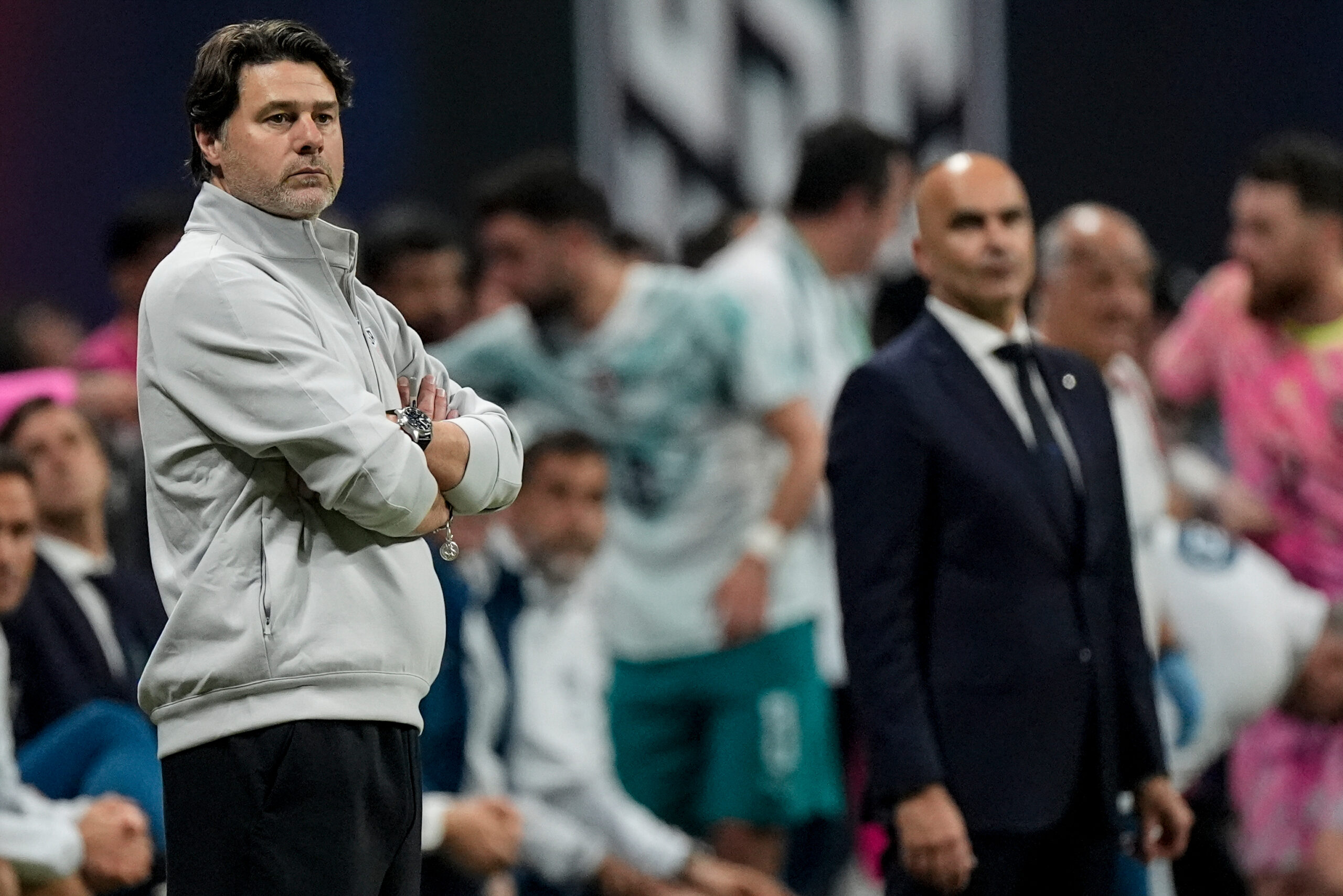
    SEATTLE — There was no surprise news about Christian Pulisic from U.S. men’s soccer team manager Mauricio Pochettino in his news conference before Friday’s game against Australia (3 p.m., Fox29, Telemundo 62). Pochettino did not rule the star playmaker in or out, and that was not surprising.

    “As you know, he was training in an individual way the whole week,” Pochettino said. “But like always, I think tonight, the day before the game, we have a meeting with our medical area, and we will assess the whole group, the players, and tomorrow we will communicate all the things that we can agree tonight.”

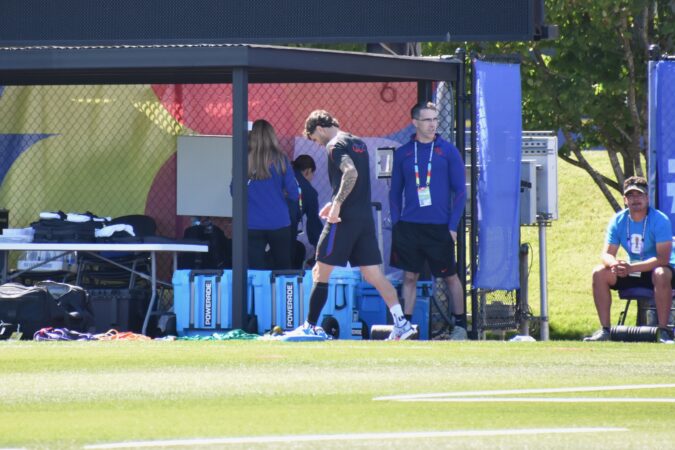
    Pulisic was seen briefly at the start of Thursday’s practice, then headed off to work on his own. When he arrived, he wasn’t wearing the sleeve over his injured left calf that he sported on Wednesday. But after a few minutes, he sat down on a bench by the sideline and put it on.

    “He is evolving, he is much better from [last] Friday,” Pochettino said. “I think at the moment we’ll see. … He’s doing a massive effort trying to be ready.”
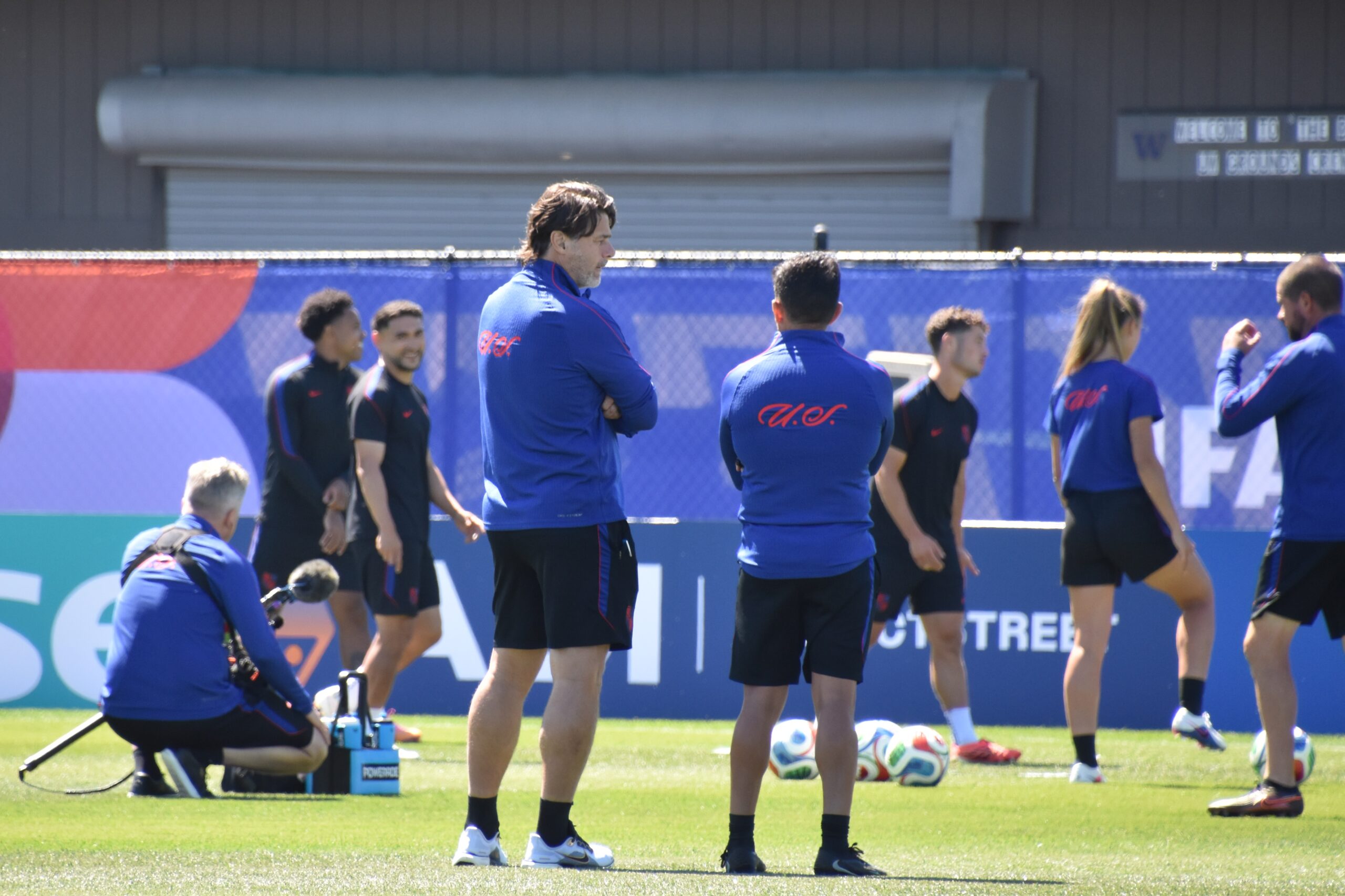
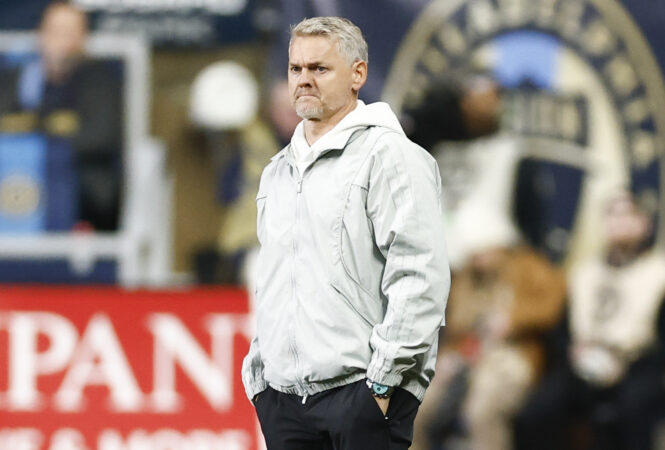
    Mauricio Pochettino (left) and his top assistant Jesús Pérez at Thursday’s practice.

    The manager also praised Pulisic for being “strong and with a great mentality” as the Hershey native works to be ready for kickoff.

    Asked who might play if Pulisic can’t go, Pochettino didn’t answer. This was no surprise either.

    “I will tell tomorrow if that is the situation,” he said. “At the moment, we are evaluating all the possibilities just in case, and then we will decide when we have the confirmation in one or another direction tonight.”

    What is no secret is that when these teams met in a friendly in suburban Denver in October, it was far from friendly on the field. Australia played a physical game, with a focus on Pulisic that forced him off the field injured in the 31st minute.
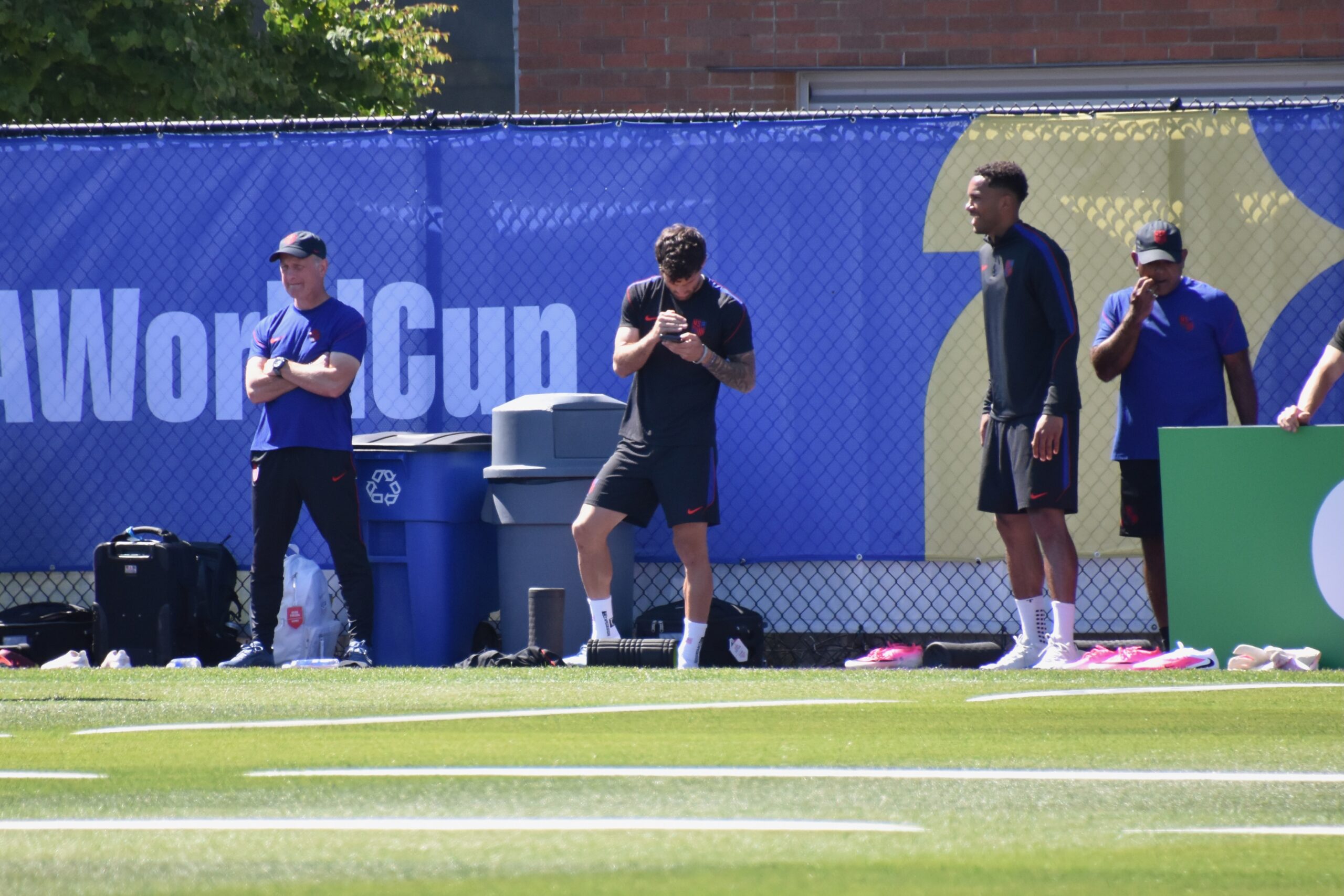
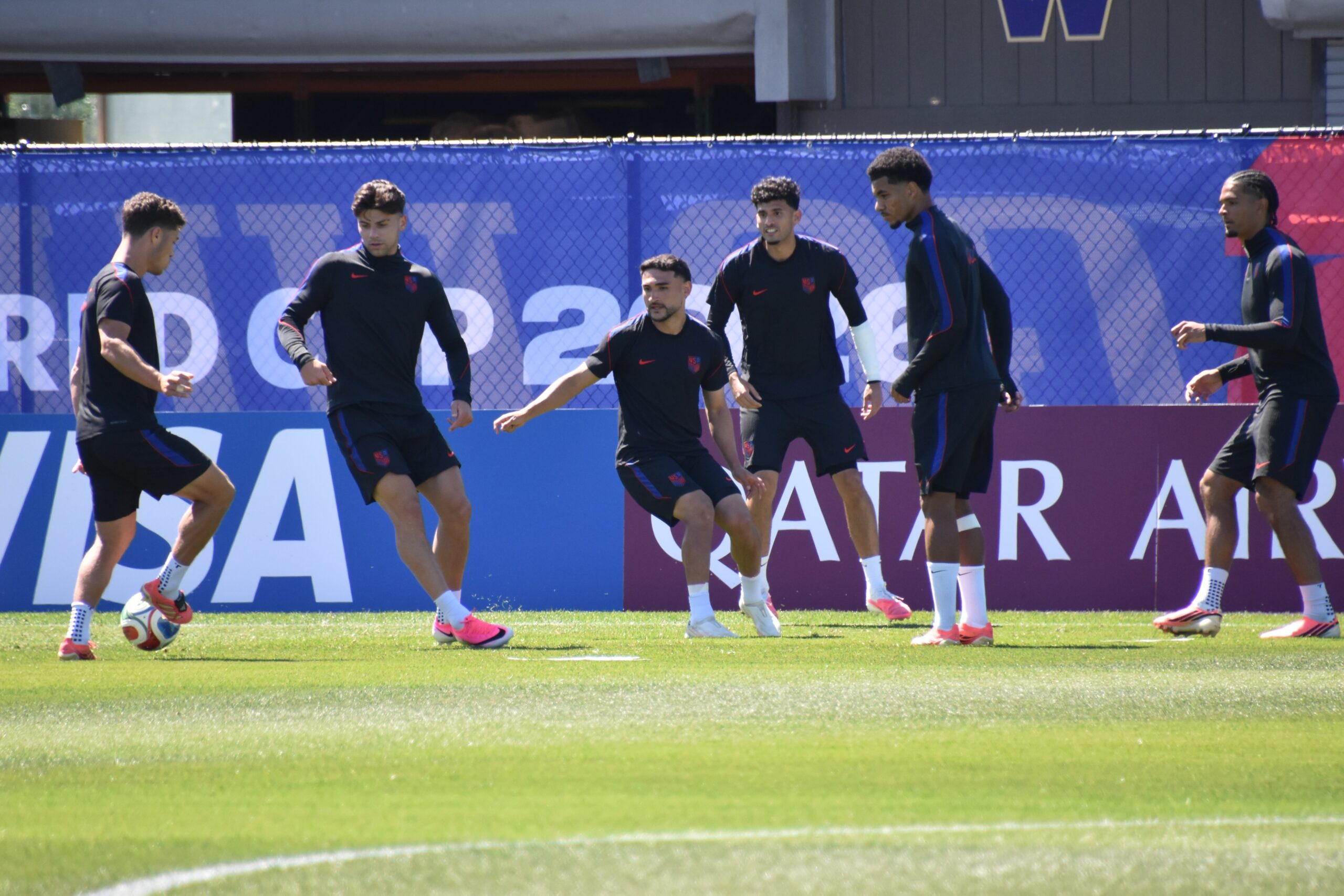
    When Christian Pulisic (center) first appeared Thursday, he wasn’t wearing the sleeve over his injured calf that he wore Wednesday. He put it on later.

    All of the U.S. players are ready for round two, and so is the manager.

    “I think we need to play on the edge of the line, not crossing the lines of the rules,” Pochettino said. “I think we are going to try, all, to be very close to this thin line. That allows us to take some advantage [with] the rules.”

    Later in the day, Australia manager Tony Popovic was asked if he expects this game to be similar to the last. He didn’t answer directly.

    “Since then we feel we’ve improved,” he said. “We’re a better team now than what we were in October and I’m sure the U.S. is as well.”

    Popovic also was asked if he expects Pulisic to play.

    “I’m sure he’ll play if he’s fit — he’s one of their best players, an outstanding footballer,” Popovic said. “We expect Christian to definitely play if he’s available, and if he’s not, we’ve looked at some of the players that have played when he hasn’t been there.”

    A soft spot for Argentina and Messi

    Pochettino grew up in Argentina, played 20 times for his country (including at the 2002 World Cup), and like many Argentines is fiercely proud of his roots. So of course he was thrilled to see the Albiceleste start its World Cup campaign by routing Algeria, 3-0, with a hat trick from Lionel Messi — whom Pochettino coached at Paris Saint-Germain in the 2021-22 season.

    “I am Argentino, and I really enjoyed the performance,” Pochettino said, quickly adding “but I’m going to give my life for the USA.”

    He didn’t have to worry about offending anyone this time.

    “I think it’s difficult to describe Messi,” Pochettino said. “Six World Cups, all that he achieved in his career in different clubs [in] collective and individual ways — woof. Is he the best? For sure, yes.”

    (Not that he was ever going to answer with Brazil’s Pelé, Argentina’s foil for decades; or Portugal’s Cristiano Ronaldo, Messi’s modern foil.)

    “Argentina is an amazing team,” Pochettino said of the reigning champions, noting his friendship with their manager Lionel Scaloni and some of his staff. “Lionel is, for me, the best coach today in this World Cup. … The fans — amazing.”
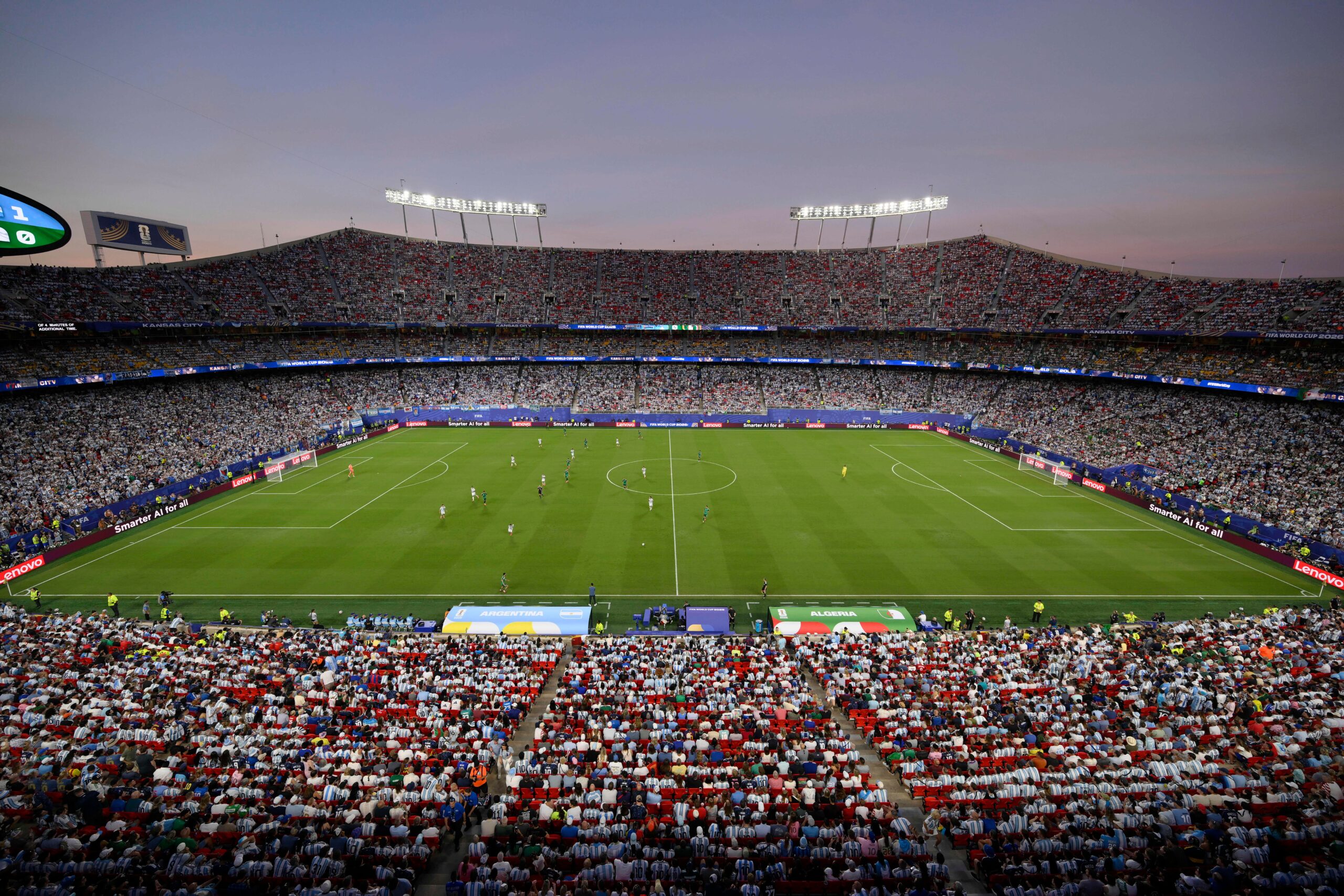
    The packed crowd of Argentina fans in Kansas City on Tuesday.

    He paused there to make a gesture showing the importance of Argentina’s legendary fan base, that has filled stadiums to the brim for decades. Kansas City’s Arrowhead Stadium was the latest to see the show, as a full house roared into the night.

    “And then the cherry [on top]? Messi,” Pochettino concluded.

    Big man on campus

    This isn’t Pochettino’s first trip to Seattle. In 2014, his first game with England’s Tottenham Hotspur was a friendly against the Sounders at the same stadium he’ll work Friday.

    “I saw the ambience and the atmosphere and the people, and I hear that they are very passionate people here,” he said. “I’m looking forward [to] tomorrow, to share all together a great night, I hope with a good result and good performance.”

    The vibrant scene in Seattle as Fox’s studio show goes on air:

    #USMNT

    [image or embed]

    — Jonathan Tannenwald (@jtannenwald.bsky.social) June 18, 2026 at 2:23 PM

    At one point during Thursday’s practice, Pochettino walked to the end of the field, then up a hill behind the net, took out his phone, and recorded a little video. What was that about?

    He joked in the news conference that it was “to see how everything looks without me,” mocking Argentines’ reputations for big egos. He also joked that he was watching for spies, though that line fell a little flat in a sport where spying actually happens.

    As it turned out, he was just taking a video for himself, with a view in front of him of Lake Washington and the facilities on a classically big-time American college campus. Though the U.S. team was only there for a short time, Pochettino appreciated the setting.

    “It was amazing, beautiful facilities,” he said. “We know that they were working for months, only for us to spend maybe an hour and a half, two hours. … Thank you to the people that made it possible to have, in perfect condition, the field and all the facilities.”
  • An all-time World Cup home field advantage awaits the USMNT in soccer-crazed Seattle

    An all-time World Cup home field advantage awaits the USMNT in soccer-crazed Seattle

    SEATTLE — Like any sport, soccer is a game of players, tactics, skills, and decisions. But when it comes to emotions, no sport is like the world’s most famous one.

    Not for nothing did soccer resist the long march of analytics far longer than increasingly-global basketball, baseball, ice hockey, gridiron football, and others. (Americans might not know cricket, for example, but that bat-and-ball game has its own volume of statistics.)

    So, yes, we can talk about player matchups in Friday’s U.S.-Australia showdown for first place in Group D (3 p.m., Fox29, Telemundo 62). We can talk about the Socceroos’ impressive striker Nestory Irankunda and 6-foot-6 centerback Harry Souttar. And we can certainly talk about whether Christian Pulisic will shake off his calf strain in time.

    But it’s impossible to avoid this moment’s romantic side. The Emerald City is rich with a half-century of soccer history, from the NASL’s Sounders to the MLS version, always drawing big and passionate crowds. In recent years, the NWSL’s Reign have joined them, with their own robust fan base watching stars of the women’s game.

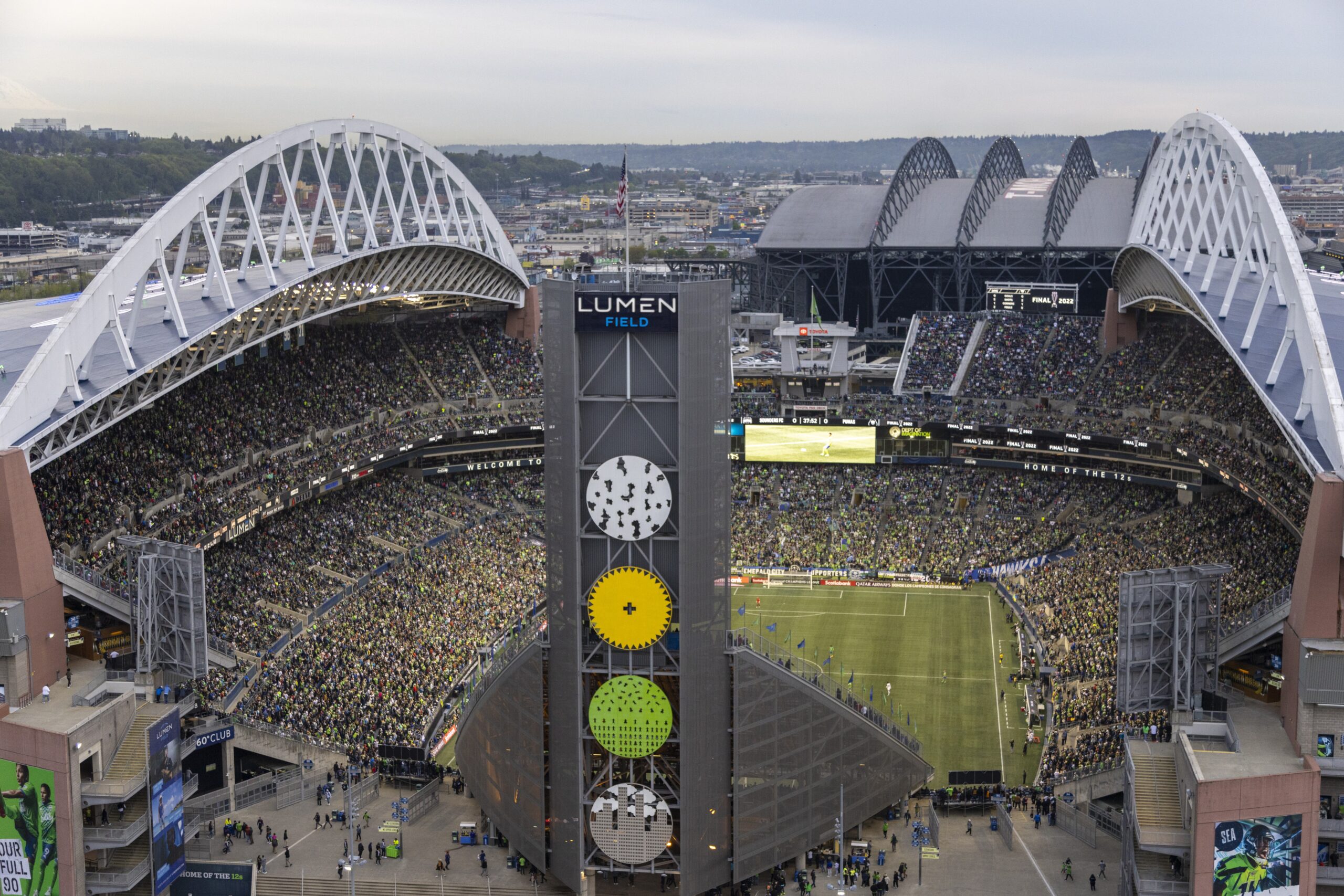
    Seattle fans show up in big numbers for soccer games at Lumen Field, the home of MLS’s Sounders and the NWSL’s Reign.

    For all that time — from hosting Pelé at the Kingdome to hosting Lionel Messi at Lumen Field, from Bobby Moore to Clint Dempsey, from Michelle Akers to Megan Rapinoe — Seattle’s soccer tapestry has missed one piece.

    Until this year, it had never hosted a World Cup.

    Now, at last, that hole is filled, and with style. Since the day in early 2024 when FIFA announced the U.S. would play a group game here, Seattle has been counting down to this moment, and so have fans across the country.

    A game in this city, with its stage towering over the south side of downtown, is a joy any time. But a World Cup game here is on American soccer’s bucket list. So it’s natural that U.S. and Sounders midfielder Cristian Roldan, in his 12th season with the only club of his career, has led the welcome committee for the squad.

    Cristian Roldan (center) at work on his old college field during Thursday’s practice.

    “I’ve told them that the city is ready, that the city is energized,” he said before Thursday’s practice at the University of Washington, his alma mater — with its own famed sports theaters in football’s Husky Stadium and basketball’s Palestra-like Hec Edmundson Pavilion.

    “We haven’t had a game here in a long time, and we’ve been desperate to host a World Cup game, a U.S. men’s national team game,” Roldan added. “So they’re going to feel the crowd, feel the energy, and it’s about feeding off it.”

    He felt it even more as he set foot on his old college field, with glittering Lake Washington a stone’s throw away and Mount Rainier towering beyond. On the same day that Penn product Duke Lacroix returned to his alma mater in Philadelphia ahead of Haiti’s clash with Brazil on Friday, a similar scene unfolded thousands of miles west.

    “I’m thankful to have this full circle moment,” Roldan said. “I don’t think people realize how special it is for me to be here and enjoying this experience with the men’s national team.”

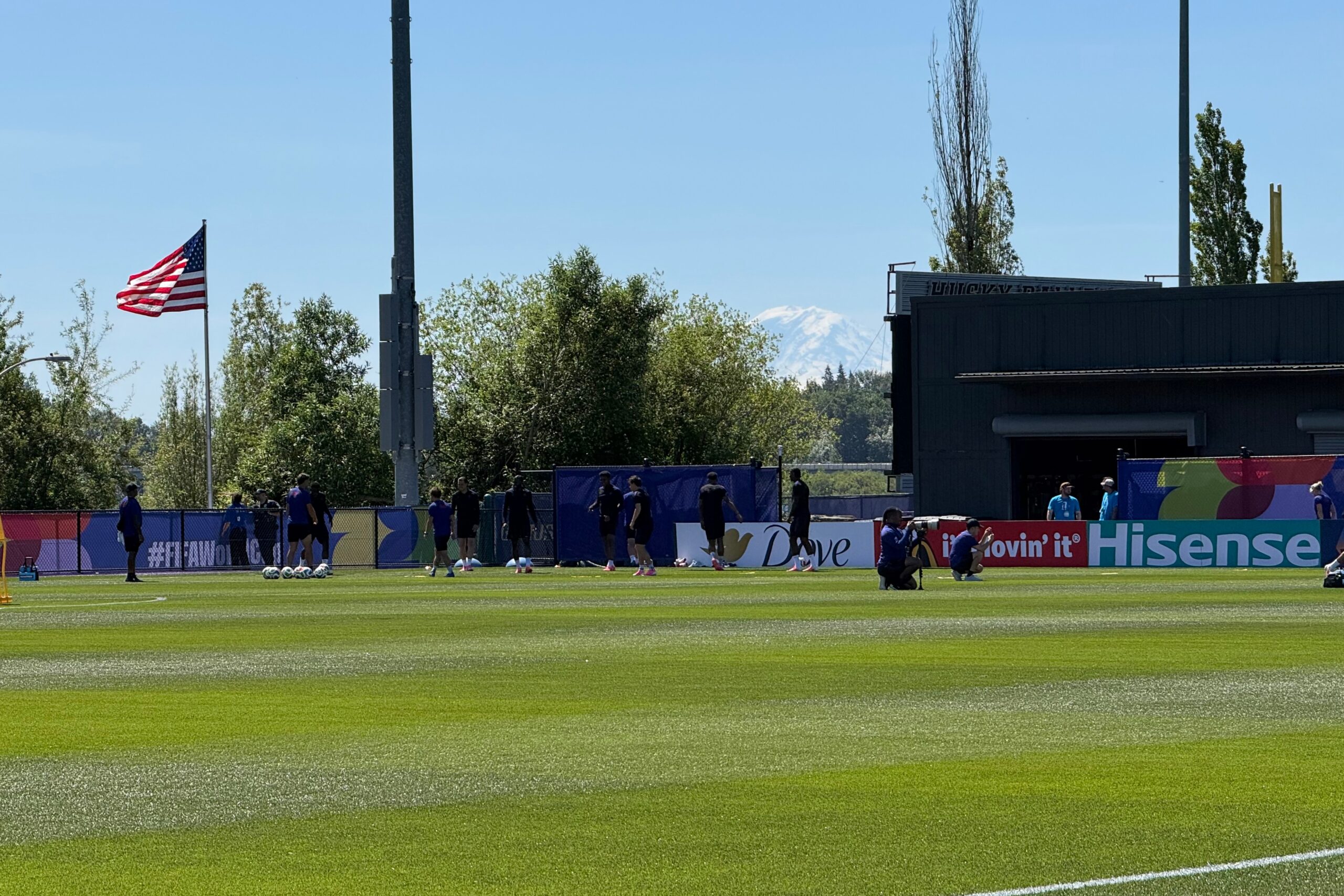
    Mount Rainier looming in the background over the scene at the U.S. team’s practice.

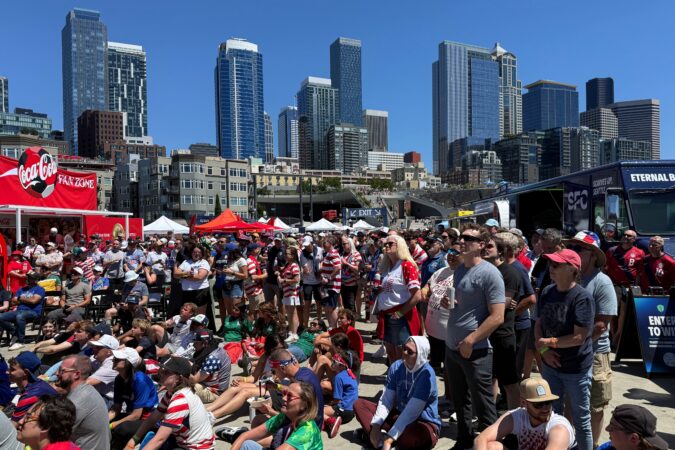
    Come lunchtime, a walk through downtown showed what awaits. Fans in U.S. jerseys were all over, from Pike Place Market (Seattle’s version of Reading Terminal) to the glistening waterfront.

    Fox’s studio show set up shop on one of the piers, with the ferries crossing Puget Sound as one backdrop and a boisterous crowd as another.

    It’s a different vibe from sprawling Los Angeles, and they’ll tell you that here as much as a visitor from out east naturally senses it.

    Everything will come together at noon local time on Friday, when a capacity crowd of just under 67,000 will roar the U.S. team onto the field.

    The vibrant scene in Seattle as Fox’s studio show goes on air:

    #USMNT

    [image or embed]

    — Jonathan Tannenwald (@jtannenwald.bsky.social) June 18, 2026 at 2:23 PM

    The players are excited to experience it, especially those who haven’t before. Because the stadium usually has artificial turf, the U.S. men haven’t been here since the 2016 Copa América Centenario, when grass was installed like it has been this summer. (The World Cup’s grass also helped bring the women’s team here in April, ending a nine-year drought.)

    “I’ve obviously spoken to ‘Roldy’ and other people who’ve said how much of a soccer culture Seattle has, and I’m really looking forward to experiencing that firsthand,” defender Antonee Robinson said. “The first game that was played in that stadium looked amazing. So I’m looking forward to being a part of it, too.”

    Roldan isn’t expected to start, and he knows it. But if he gets on the field as a substitute, the roar that rises will no doubt be as great as a U.S. goal.

    “I’m getting goosebumps just thinking about it,” he said. “This is a place that I call home, and I’ve called home for a while. … I’ve given my heart and soul to this club. To be able to see the field would be a dream come true, and I think it would be special not only for me, but I think for the city of Seattle as well.”

  • Rocky curse? Brazil supporters aren’t taking any chances ahead of World Cup clash with Haiti.

    Rocky curse? Brazil supporters aren’t taking any chances ahead of World Cup clash with Haiti.

    International soccer supporters, be warned — clothe the Rocky statue at your own risk.

    The fans of the Ecuadorian national team learned Sunday what many NFL fans already know about draping their colors over the statue of Rocky on the steps of the Philadelphia Art Museum.

    Ecuadorian supporters fitted Rocky with a yellow La Tri kit, then saw their team concede a 90th-minute winner in its FIFA World Cup group-stage opener against Ivory Coast on Sunday at Lincoln Financial Field (aka Philadelphia Stadium).

    The effects of the “Rocky curse” are well-documented when it comes to football, but it was relatively untested on the beautiful game. Ecuador lost, 1-0, to the Ivorian side, which entered the tournament ranked 10 spots behind La Tri in the FIFA World Ranking.

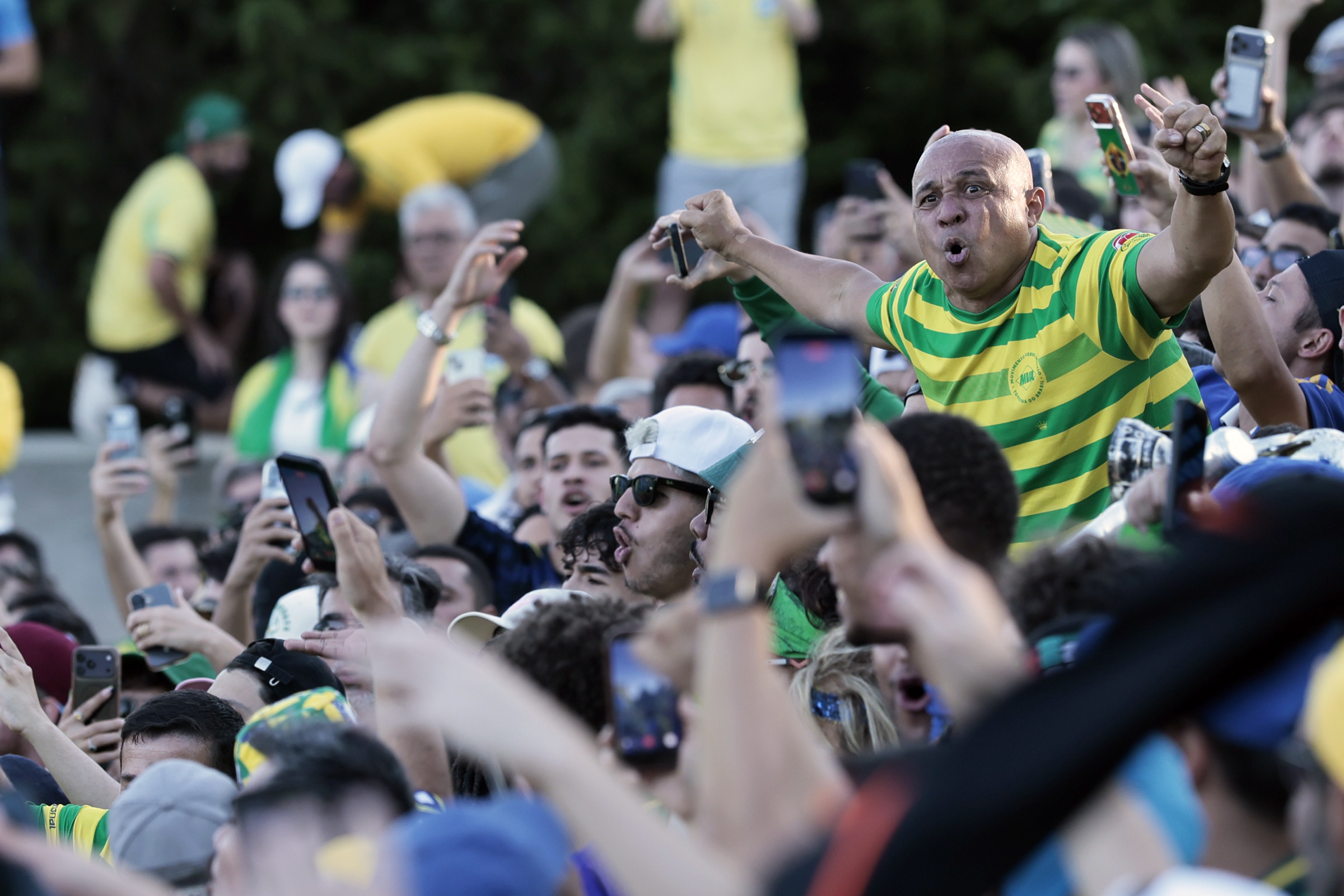
    With Brazil coming to Philly for a Group C match against Haiti on Friday (8:30 p.m., Fox29), Movimento Verde Amarelo, Brazil’s main supporters’ group, went to great lengths to ensure the yellow and green of the Canarinho stayed off the Rocky statue.

    The Rocky statue was roped off with a four-post retractable nylon stanchion, with four members of MVA, sunglasses on and earpiece in, standing at attention at each corner as Brazilian fans gathered for a rally in front of the Art Museum.

    The bodyguards discouraged fans from draping any Brazilian garb on the statue, holding signs that read:

    “Operation Rocky Protectors — Attention: it is forbidden to put Brazilian colors on the statue.”

    Matheus Henrique, 30, was one of the MVA members protecting the statue. Henrique, a native of Belém, Brazil, moved to Los Angeles a decade ago for college.

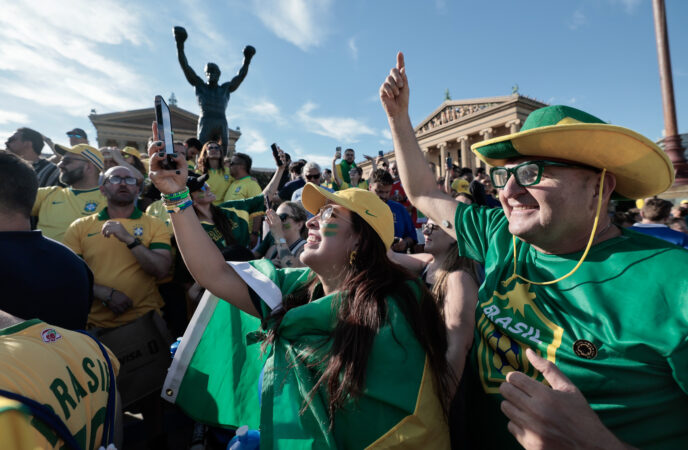
    On the eve of Friday’s FIFA World Cup Group C match between Brazil and Haiti, Brazil fans rally for their team on the Art Museum steps in Philadelphia on Thursday, June 18, 2026.

    Henrique is friends with the person who helped organize Brazil’s takeover of the steps and responded when a call went out for volunteers to guard the statue.

    “It’s a superstition, we heard,” Henrique said. “We’re enjoying the event as well.”

    There was plenty of enjoyment to go around for Brazilian supporters as they scaled the steps in front of the Rocky statue on Thursday evening. Fans danced, sang, set off smoke flares and drummed for hours, making The Oval feel more like Rio de Janeiro than Fairmount.

    And, thanks to the statue guards and forewarnings from MVA and Visit PA, Rocky remained shirtless throughout the evening.

    The MVA Instagram account posted a warning to its members to abstain from clothing the Rocky statue before Brazilian fans gathered at the steps on Thursday.

    “Attention Brazil Fans,” a translated version of the group’s post reads. “It is totally forbidden to put a Brazilian shirt on the Rocky Statue in Philly!!!!!”

    Meanwhile, Visit PA warned international fans about the Rocky curse.

    “Countless football teams (as in American Football, not Fútbol — same curse, different sport) have all dressed the Rocky Statue in their colors and gone on to lose,” its Instagram post read. “Ecuador dressed Rocky last weekend. Coincidence? Sadly, history says no.”

    Henrique was confident about Brazil’s match with Haiti, but he said the team needs all the luck it can get after starting the World Cup with a 1-1 draw against Morocco. Henrique said he had to chide a few people getting too close to the statue.

    “Some people don’t know,” Henrique said. “I didn’t know about the superstition until today. Let’s not play with luck. We need luck.”

    Henrique plans to watch Friday night’s match from the FIFA Fan Festival in Lemon Hill, but he feels as if he’s already done his part to help the Brazilians avoid an upset.

    Gonna Fly Now

    After successfully avoiding Rocky’s wrath, Brazil will enter Friday night’s match as favorites over Haiti, which dropped to No. 85 in the FIFA World Ranking after losing its opener to Scotland.

    Brazil, ranked No. 5 in the FIFA World Ranking, will be without national legend Neymar for the match. The 34-year-old winger, nursing a calf injury, was not among the group of players that arrived at the Sofitel in Center City on Thursday afternoon.

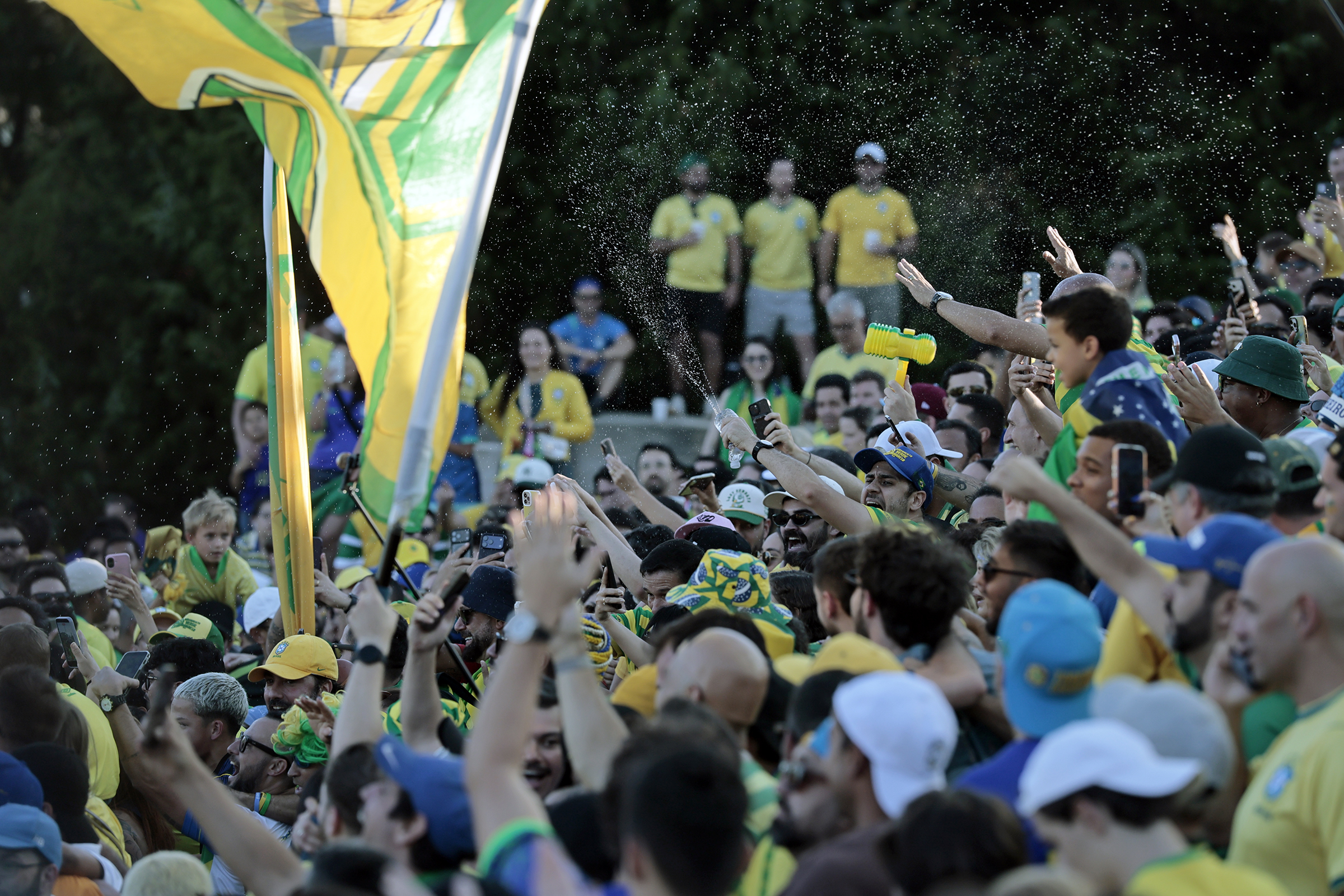
    On the eve of Friday’s World Cup match between Brazil and Haiti, Brazil fans rally for their team on the Art Museum steps in Philadelphia.

    Brazilian supporters welcomed players to the team’s hotel, creating a festive but crowded scene at 17th and Sansom around 4 p.m.

    Brazil’s team bus arrived to the hotel at 5:10 p.m., and a few Brazilian players, including Gabriel and Raphinha, greeted fans as they walked from the bus to the hotel.

    The Seleção will look to secure all three points against the Haitians at Philadelphia Stadium on Friday night. The team and its supporters can rest easy knowing it will not be the next victim of the Rocky curse.

  • Philadelphia is shrinking the rideshare virtual border around FIFA Fan Festival

    Philadelphia is shrinking the rideshare virtual border around FIFA Fan Festival

    The city is rolling back its geofence border around the FIFA Fan Festival to reduce the number of residential areas blocked from using rideshare.

    The Philadelphia Office of Transportation and Infrastructure Systems (OTIS) announced Thursday that it would shrink the geofence to exclude large residential buildings on Pennsylvania Avenue.

    The geofence, which blocks people within its borders from using rideshare services like Uber and Lyft, will now shrink to the south of Aspen Street, about half a block from its original border at 25th and Meredith Streets.

    “We’re continuing to work with the community, elected officials, and operational partners to improve the experience for everyone, including residents impacted by Lemon Hill festivities,” an OTIS spokesperson said.

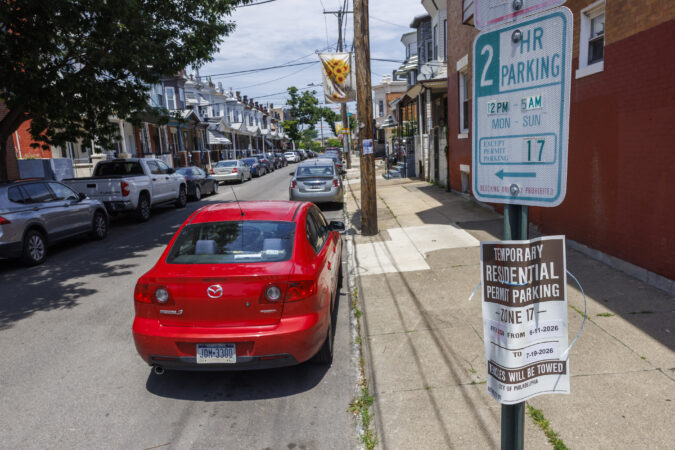
    Additionally, four blocks in Fairmount had been designated for rideshare pickups and drop-offs, but OTIS is reducing rideshare zones to two, allowing for more parking for permitted residents.

    The rideshare pickup/drop-off zones are now located only near Eastern State Penitentiary, at 23rd Street and Fairmount Avenue, and the 2200 block of Fairmount Avenue.

    This was well-received news for residents who live in the area and have been concerned about the geofence’s restriction on residents with mobility issues.

    Paul Stewart, an 86-year-old resident who lives in one of the large apartment buildings that initially had been geofenced, relies on Uber to visit his doctor at Thomas Jefferson University Hospital. But last week, when he planned to head to an appointment, he found he could not call a rideshare.

    “The geofence that includes my building and all the businesses in the immediate area will continue for 39 days,” Stewart said before the geofence rollback. “Many people take Uber to and from the restaurants and bars in this neighborhood so that they can have a few drinks and not worry about driving drunk.”

    Geofencing these large residential buildings and blocks was hindering everyday life, Stewart said. Now, he said, residents will be able to go about their business as they normally would.

    The geofence reduction is just one of the adjustments the city has been making as it manages the traffic and fans around the FIFA Fan Festival in Lemon Hill. Since at least May, residents have been requesting traffic-calming measures on residential blocks. The Philadelphia Parking Authority and OTIS installed additional barricades and signage last week.

  • Early mistakes force the Union to settle for a point once more, this time against the Columbus Crew

    Early mistakes force the Union to settle for a point once more, this time against the Columbus Crew

    Ten minutes.

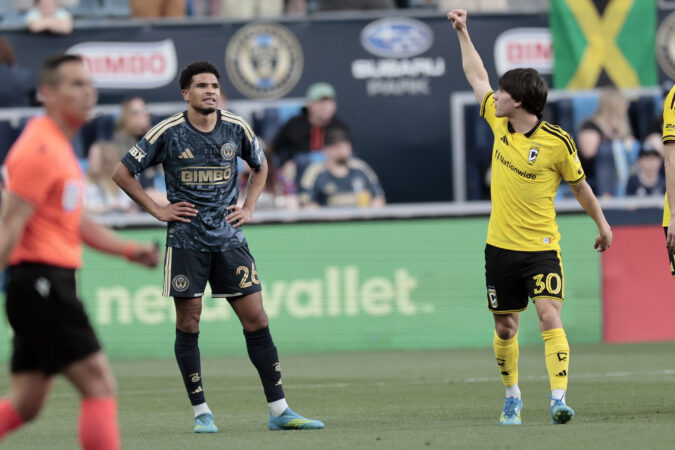
    That’s all it took for the Union to find itself on the back foot against the Columbus Crew at Subaru Park on Saturday night.

    The goal, a whipping in-swinging shot from Crew forward Hugo Picard, found the upper 90 past an outstretched Andre Blake.

    It was also completely avoidable.

    That’s a point for down the line. The larger point is that the Union were able to salvage a point after a 69th-minute goal from forward Milan Iloski. Iloski buried a tap-in following a nice run and cross into the box from second-half substitute Augustín Anello.

    It was a goal that helped to shroud an otherwise ineffective night for Iloski, whose efforts, by either poor decision making or attempted shots that were blocked in the final third, amounted to very little.

    Besides Iloski’s goal, repeated dazzling runs from midfielder Cavan Sullivan — and a halftime light show — were the only points of note on what was an otherwise familiar run of form from a Union team that hasn’t celebrated a win in MLS play since April 11 against Montréal.

    Speaking of Sulliva, the 16-year-old phenom was inches from becoming the hero with the last kick of the game. After lloski was fouled just outside of the box in stoppage time, Sullivan was given the free kick opportunity. He hit a rifle through Columbus’ wall but the shot was seen all the way from Crew goalkeeper — and U.S. national team World Cup hopeful — Patrick Schulte.

    Union 1, Crew 1.

    But back to the point from earlier about salvaging a point…

    On a free kick for Columbus, Picard stood alone at the far post unmarked. Closest to him was defender Nathan Harriel, but Harriel already had a mark at the edge of the 18. Just before the kick, midfielder Indiana Vassilev ran into the same space as Harriel and the Crew player he was marking.

    Ball comes in, finds a deflection off an attempted clearance, falls to an unmarked Picard, who doesn’t hesitate and, to his credit, hits a gem into Blake’s far post.

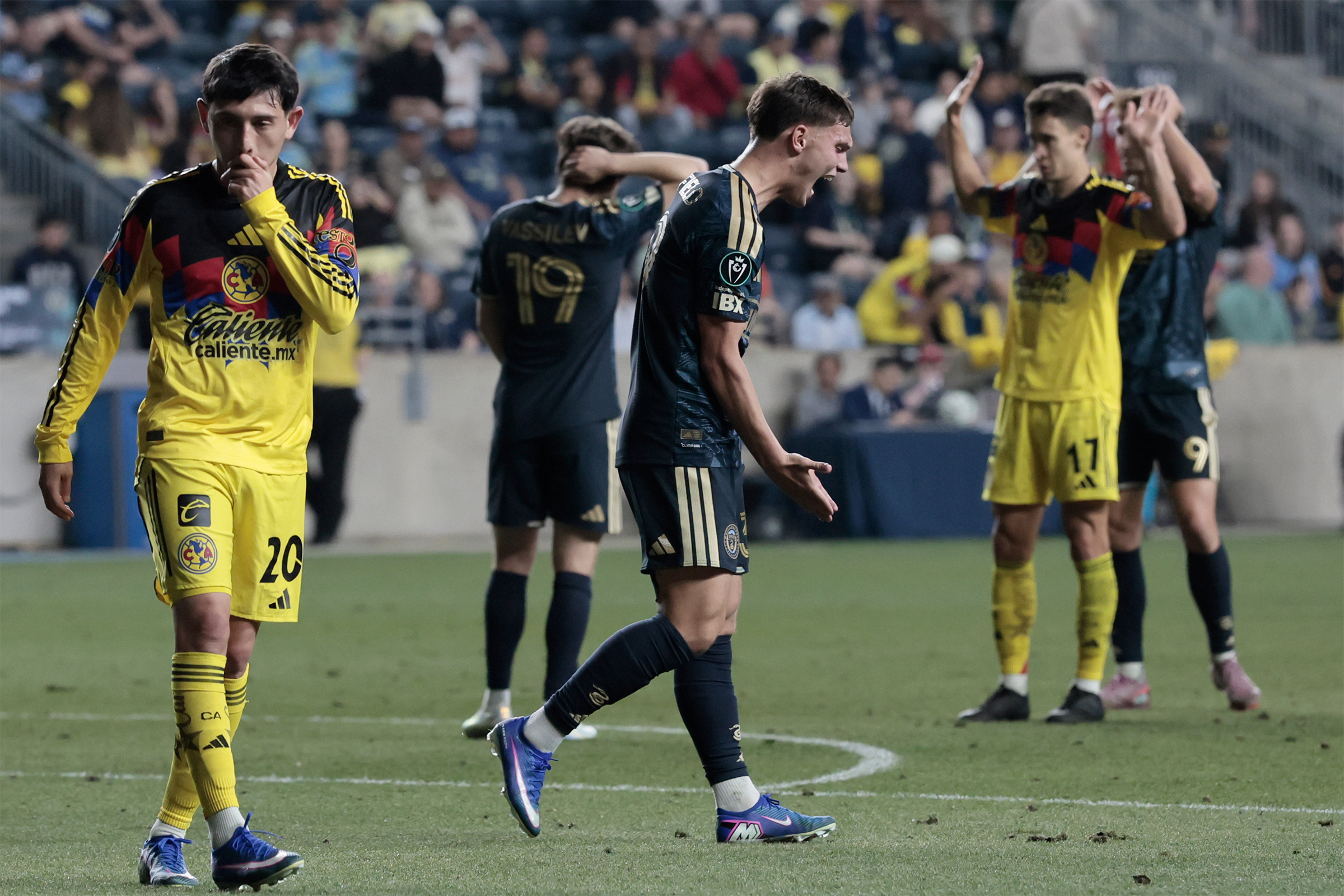
    The play seemed like a microcosm of the Union’s woes this season, where one unfortunate error, one mistimed run — or, in this case, a missed assignment — finds them chasing the game. It was a game that marked the final home match before a seven-week league wide respite for the FIFA World Cup, which begins on June 11, with June 14 being Philly’s first foray into the tournament.

    It was also the third match in the span of a week for the Union after a pair of one-goal losses to New England (3-2) last Saturday, and a late 4-3 loss to Orlando City on Wednesday. The club has only collected two points out of a possible 12 from matches in their May slate.

    One game remains and it’s perhaps the biggest in this first half of play for the Union, a road test against Lionel Messi and a surging Inter Miami team next Saturday (7:30 p.m., Apple TV). Miami, winners of their last two, have scored a combined 12 goals in their last three matches.

  • The USMNT loses to Portugal in what amounted to a final pre-World Cup audition

    The USMNT loses to Portugal in what amounted to a final pre-World Cup audition

    ATLANTA — If fans of the U.S. men’s soccer team wanted to see an A-level squad take on Portugal’s stars, they didn’t get it.

    But if U.S. manager Mauricio Pochettino wanted to see what would come of a slew of auditions for spots on his World Cup roster, he certainly got that.

    Pochettino tested 20 players across four formations over the course of 90 minutes in a 2-0 loss to Portugal on Wednesday night inside Mercedes-Benz Stadium.

    For a second straight game, Pochettino decided to try something new instead of working toward his best starting lineup. He deployed a 4-2-3-1 with no formal striker at the top, instead putting Christian Pulisic up there in front of Tim Weah, Weston McKennie, and Malik Tillman.

    USMNT head coach Mauricio Pochettino (left) continued to experiment with formations and personnel during their loss to Portugal.

    That freed Weah of the defensive responsibilities he had as a right back on Saturday, and Pochettino reinforced the role a little more by starting Alex Freeman there. The defense also included Media’s Auston Trusty at centerback and Wayne’s Matt Freese at goalkeeper, with the latter move seemingly cementing Freese as the No. 1 in net.

    The point of putting Pulisic up top was to get him closer to goal, and that genuinely happened in the first few minutes. The U.S. had some very nice attacking plays, and Portugal’s defense worked well to keep shots from going in.

    In the 22nd minute, Weah showed the virtue of playing him higher up the field with a burst down the right wing and cross for Pulisic. Alas, the Hershey native fluffed his chance, and the ball bounced past McKennie as it ran away.

    When Pulisic shot narrowly wide from 20 yards in the 36th, it seemed the U.S. was building more momentum. But Portugal then went right down the field and scored. Bruno Fernandes drove forward, then tore up the U.S. defense with a gorgeous backheel pass for Francisco Trincão to finish.

    Both teams decided the starters had done their work in the first half, and began a parade of substitutions as the second kicked off. Portugal made seven (of 11 allowed), and the U.S. made three: striker Patrick Agyemang for Pulisic, Tanner Tessmann for McKennie in midfield, and Max Arfsten for Antonee Robinson on the back line.

    Those moves restored the U.S. to the 3-4-2-1 formation that many observers had wanted to see. Alas, it did not stop Portugal from scoring a second goal in the 59th, though the tactical change wasn’t why.

    In fact, it was something worse — a corner kick play that completely fooled the Americans.

    With almost everyone from both teams lined up near the goal mouth, Fernandes swung a service to one two Portuguese players who stood unmarked atop the box, second half substitute, João Felix. He hit an inch-perfect smash through the crowd that Freese likely couldn’t see until too late.

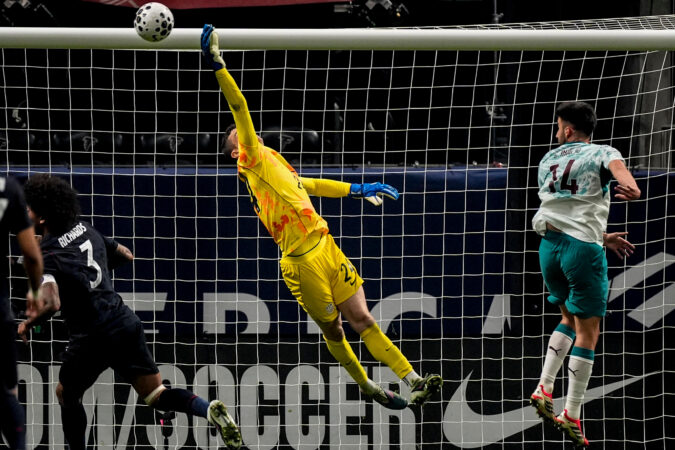
    Freese made up for it in the 64th with a nice diving save on a long-range hit from Ruben Neves. That was one of three stops he made on the night.

    Three minutes later, Pochettino sent in Folarin Balogun for Tillman and Joe Scally for Weah, putting the U.S. in a two-striker setup — effectively a 3-4-1-2 instead of a 3-4-2-1. The next subs, in the 79th, made it a 4-4-2: Brenden Aaronson and Gio Reyna entered for Freeman and Sebastian Berhalter.

    Trusty was the last U.S. player to exit, replaced by Mark McKenzie in second-half stoppage time after cramping up. It was a sour ending to what had been a very good game overall for Trusty, on his own and in tandem with Chris Richards.

    At the final whistle, it was pretty clear that the score didn’t matter to either team. But it will have to U.S. fans. Their hopes for a statement win in 2026 before the World Cup now rest with the tournament squad’s two warmup games, against Senegal and Germany in early June.

    "Yes, he felt frustrated, but that is what we want, and what we expect."

    Mauricio Pochettino analyzes Christian Pulisic's night as a striker:

    www.inquirer.com/soccer/usmnt…

    #USMNT

    [image or embed]

    — Jonathan Tannenwald (@jtannenwald.bsky.social) April 1, 2026 at 12:07 AM

  • The USMNT flunks a test against Belgium’s stars in a 5-2 blowout loss

    The USMNT flunks a test against Belgium’s stars in a 5-2 blowout loss

    ATLANTA — The U.S. men’s soccer team wanted to test itself against Europe’s best this month, and it got what it asked for on Saturday.

    It also failed that test in front of a pro-American crowd.

    Belgium rolled over the Americans, 5-2, playing just as well against the U.S. starters as against the many second-half substitutes.

    U.S. manager Mauricio Pochettino sprung some surprises with his starting lineup, the biggest being Matt Turner replacing Matt Freese at goalkeeper. Freese had played 12 straight games before Saturday, and seemed locked in as the World Cup starter.

    Matt Turner in the U.S. net on Saturday.

    There was also a surprise with the 10 players in front of Turner. Pochettino switched out of the three-centerback setup that was so successful in the fall, going with an attack-minded 4-2-3-1 instead.

    The starting group would have been remarkably attack-minded against any opponent, but especially one of Belgium’s quality. Tim Weah and Antonee Robinson were the outside backs, and Christian Pulisic, Malik Tillman, and Weston McKennie lined up in midfield behind striker Folarin Balogun.

    As risky as the setup felt, the U.S. took it to Belgium early. McKennie got the best in a series of looks, denied from 8 yards by a great save from goalkeeper Senne Lammens in the 17th minute.

    Belgium put the ball in the net first in the 37th, but Turner got lucky that a rebound hit Charles De Ketelaere’s arm before he stuck it in.

    The U.S. then went right down the field, earned a corner kick, and McKennie was shockingly open when Robinson’s service landed at the 6-yard line.

    Belgium equalized in the 45th with a mighty hit from Zeno Debast. Jérémy Doku started the play with a sprint in from the left flank, then shot hard, but Turner punched it out. Debast corralled the ball, no one pressed him, and the centerback fired through the crowd from some 30 yards.

    If Turner didn’t look great on the play, it might have been worse that no U.S. player pressed Debast before he let fly, even if him shooting was unexpected.

    Turner then finished the half with one more punch-out save, denying Alexis Saelemaekers’ bouncing shot off a corner from 18 yards.

    Pochettino’s first substitution was Cristian Roldan for Cardoso at halftime. But that didn’t stop Belgium from taking control of the game. Amid notable misses from Pulisic and Weah, Amadou Onana put the Red Devils up, 2-1, in the 53rd.

    Lots of U.S. players looked bad on the play. Mark McKenzie was caught one-on-one with the terrific Doku on the flank. Roldan came to help, but neither closed the play down, then a trio of Americans failed to stop Saelemaekers from passing the ball back to Onana. Tanner Tessmann was then late to close down Onana, and the shot followed from atop the box.

    Five minutes later, Tim Ream was called for a handball in the box, and Belgium had a penalty kick. There was a long video review to judge the contact, but referee Esteban Ostojich stuck with his call, and De Ketelaere converted from the spot.

    Mass subs started in the 63rd, when Pochettino sent in Max Arfsten, Alex Freeman, and Sebastian Berhalter for Robinson, Tessmann, and Weah.

    Dodi Lukébakio slammed in the fourth in the 68th, catching Arfsten twice along the way: in a two-on-one with Thomas Meunier on the right, then in a one-on-one as he cut in to shoot.

    Pochettino then made four more subs, and with it switched out of a four-back formation to three. Patrick Agyemang, Ricardo Pepi, Gio Reyna, and Joe Scally entered, with Scally taking up a right centerback post; and Balogun, McKennie, Pulisic, and Tillman exited.

    Lukébakio struck again in the 82nd, off a give-and-go with Timothy Castagne. Lots of U.S. players were guilty again here. Lukébakio almost walked past Ream, Berhalter, and Arfsten before his pass, then Scally and McKenzie stood to try to block the shot instead of pressuring the shooter.

    Agyemang got a consolation goal in the 87th, cashing in a loose ball after Pepi jumped on a poor backpass attempt by Youri Tielemans.

    That was a good sign of the Americans’ mentality in the midst of a rout. But the rest of the game was a sign of how far the U.S. remains behind the world’s elite.

  • FIFA announces April 1 as the date for its final World Cup ticket sales phase

    FIFA announces April 1 as the date for its final World Cup ticket sales phase

    Soccer fans looking to buy tickets for this summer’s FIFA World Cup at face value will have a final opportunity on April 1.

    In what FIFA is calling its Last-Minute Sales Phase, soccer’s governing body will sell remaining tickets via FIFA.com/tickets on a first-come, first-served basis, starting at 11 a.m. Philadelphia time. This will mark the final round of a four-part sales phase that began last September.

    Tickets will be subject to availability, but according to FIFA, once prospective buyers bypass the queue, they will be able to see the remaining matches still up for grabs. There are two ways to secure tickets: either by viewing the seat map to see the remaining options or by selecting the “Book the best seat” option in the selected venue.

    Brazil’s Vinicius Junior will be one of the main draws for fans at this summer’s World Cup group stage matches in Philadelphia when it takes on Haiti on June 19.

    FIFA also announced that on April 1, fans who secured seats in earlier phases will be able to see where their purchased seats were allocated within their category. In earlier sale phases, fans were only able to purchase tickets across the Category 1 (lower level, prime seating), Category 2 (mid-upper level), and Category 3 (upper level) options.

    After April 1, any remaining tickets will go onto secondary reseller markets, of which FIFA will manage its own via FIFA.com/tickets. It’s the first time the organization has opted to introduce its own secondary market, saying that purchasing on its secondary site is “the official and preferred source for FIFA World Cup 2026 tickets.”

    FIFA continues to face pushback from people who believe the organization is running a monopoly when it comes to its own tournament, one that comes at the expense of fans, considering this is the first time the organization has elected to adopt a dynamic pricing system.

    “This is what happens when one entity controls both supply and distribution,” said Ahmed Nimale, a former executive at Live Nation who now oversees a New York-based ticketing provider called KYD Labs. “Without competition, there is nothing to keep pricing or fees in check, and fans are left with no real alternatives. FIFA directly owns, controls and manages all ticketing for the World Cup, one of the most-watched sporting events on the planet, expected to draw as many as 5.5 million fans.“

    FIFA president Gianni Infantino claims that a large part of the revenue it generates goes back into supporting 211 member associations from around the world.

    On Wednesday, a release from FIFA reaffirmed its claim that over 500 million ticket requests have been submitted since the initial draw phase, with over 1 million tickets being sold since Feb. 27. The organization also held a secret phase for fans who it felt missed out on the opportunity for earlier phases.

    However, FIFA president Gianni Infantino has said previously that much of its revenue goes back into “growing the game,” adding Wednesday that the money it generates “fuels the growth of men’s, women’s and youth football throughout its 211 member associations.”

  • Union will try to ‘punch above our weight’ in second leg of Champions Cup match against Club América

    Union will try to ‘punch above our weight’ in second leg of Champions Cup match against Club América

    In the midst of a four-game losing streak, the Union have several problems to address. Bradley Carnell does not count Mexico City’s altitude among them.

    The Union arrived to Mexico City late Monday night for the second leg of their Concacaf Champions Cup round of 16 series with Liga MX’s Club América. The Union trail by a goal in the series’ aggregate score line after dropping the opening leg, 1-0, at Subaru Park last week.

    The Union will have a chance to upset América when the teams take the field at Estadio Ciudad de los Deportes on Wednesday (9 p.m., FS1).

    An América win or draw would send Mexico’s largest club into the Cup’s quarterfinal round, but a 1-0 Union win would take the series to extra time. Any result where the Union score more than one goal and win would send them to the quarterfinals.

    Wednesday’s game will not be hosted in América’s usual stadium. Estadio Azteca is closed for renovations before it hosts Mexico City’s FIFA World Cup games this summer. Estadio Ciudad de los Deportes is roughly 50,000 seats smaller than the 87,523-seat Azteca, which should dull América’s typical home-field advantage.

    Mexico City has an elevation of 7,349 feet, a vast difference from the Union’s home on the Delaware River banks. But Carnell is familiar with how elevation impacts an athlete’s body after competing in his native Johannesburg, South Africa, which is 5,751 feet above sea level. He said in a Tuesday night news conference that he doesn’t “make much of the altitude.”

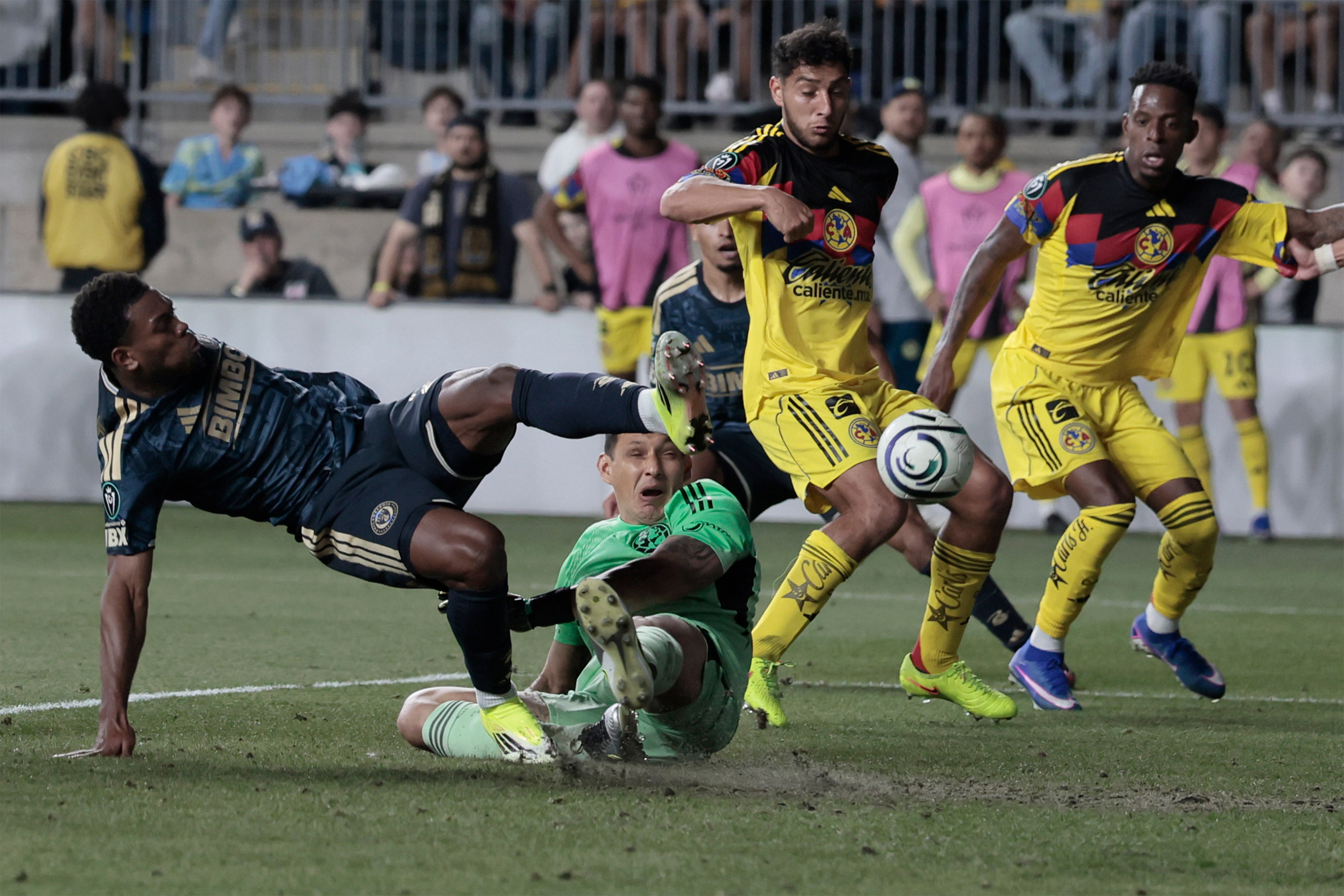
    The Union’s Frankie Westfield (center) reacts after a missed scoring opportunity in the second half of the Concacaf Champions Cup round of 16 match against Club América last week.

    “I grew up in altitude,” Carnell said. “I think in terms of the science, the later you get in, the less time your body has to adapt, which is a good thing. If you want to really adapt, you have to be here for many, many days.”

    Fitness could be an important factor for the Union on Wednesday, as the team plays its fourth game in 12 days. The Union are coming off a 3-1 loss at the Atlanta United on Saturday.

    “We just [got] in here [Monday] night,” Carnell said. “We arrived just before midnight, got the guys a good night of rest and then were able to just relax this morning and go through the treatment and everything. We’re still just recovering from the match in Atlanta. Every hour is vital.”

    Chasing América

    After their loss to América last Wednesday, Carnell repeated in his postgame news conference that the Union were close. At that point, the Union had played three straight games without scoring a goal from open play.

    Agustín Anello broke that spell after finding the back of the net in the 87th minute of the team’s loss to Atlanta. The goal didn’t alter the result, but the team hopes the late goal is a sign that more are coming.

    The Union took more shots and out-possessed América in their first matchup, but did not score.

    “I thought [in] the game that we played last week, the boys did an excellent job,” Carnell said. “We kept the score line very narrow, and I thought we had the better of the second half. We created lots of chances. This gives us hope and positivity to go up against a really big, big talented squad. We’re going to be brave, and we’re going to be committed to what we do.”

    The Union’s shaky start justifies their place as the underdog Wednesday night, but América has not looked the part of an invincible favorite. América is 3-3-0 in its last six Liga MX matches and 3-3-0 at home in league play since January, a fact Carnell pointed out.

    “We always try and punch above our weight,” Carnell said. “We’re a club that stands for development. We stand for commitment to what we do in the game model and the philosophy, and we’ve really enjoyed this role. But there’s by no means to say that the giant can also fall sometimes and stumble.”

    The Union’s Geiner Martínez (left) puts a shot on goal during last Wednesday’s match against Club América.

    América will also be without it’s top goalkeeper, Luis Malagón, on Wednesday. Malagón, who was Mexico’s starting keeper for the 2025 Concacaf Gold Cup and a likely inclusion in El Tri‘s World Cup squad, ruptured his Achilles tendon in América’s trip to Subaru Park.

    The winner of the series between the Union and América will face the winner of Lionel Messi’s Inter Miami and Nashville SC.

    “We have to have a positive mindset,” Carnell said. “We kept the [first] game really tight, and I think we have a very possible chance here … It’s a game where we can be excited. This is the game, for us, where we have nothing to lose and everything to gain.”

  • Meet Huntingdon Valley-bred Erica Dambach, who built Penn State’s pipeline to the USWNT

    Meet Huntingdon Valley-bred Erica Dambach, who built Penn State’s pipeline to the USWNT

    To casual followers of the U.S. women’s soccer team, Erica Dambach’s name might not be familiar. But to many years’ worth of players and coaches, it means a lot.

    Nineteen years into her tenure as Penn State’s head women’s soccer coach, Dambach hasn’t just built one of the nation’s top college programs. She has built a pipeline from State College to the sport’s biggest stages.

    If the first name you think of is Alyssa Naeher, you’re right. But the legendary goalkeeper is far from alone. Christine Nairn arrived in Naeher’s senior year, then overlapped with Raquel Rodríguez, who won a 2015 national championship and later a NWSL title.

    Rodríguez overlapped with Marissa Sheva, who went from Bucks County to Ireland’s first-ever World Cup team in 2023. Sheva then overlapped with Kerry Abello, Kate Wiesner, and Sam Coffey, who have played for Emma Hayes’ U.S. national team.

    Wiesner later welcomed Olivia Smith, who spent just one year on campus before rocketing to the pros. Her move from Liverpool to Arsenal last year was the first in women’s soccer to earn a transfer fee of over 1 million British pounds (around $1.4 million).

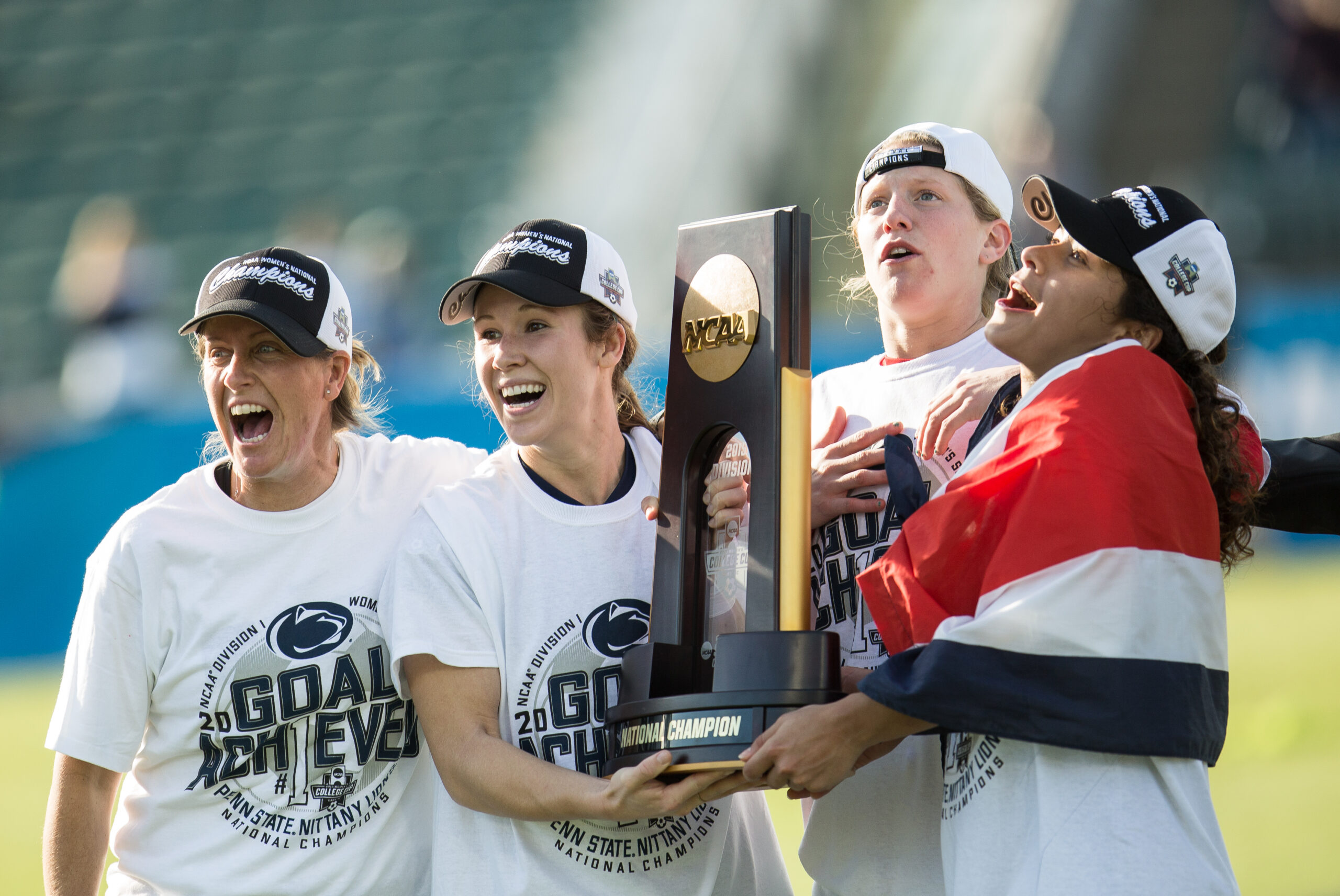
    Erica Dambach (left) with a trio of future pros who won Penn State’s 2015 national championship: Mallory Weber, Britt Eckerstrom, and Raquel Rodríguez.

    Along the way, Dambach has had her own turns with U.S. Soccer coaching staffs. She was an under-19 team assistant in 2004, the under-17 head coach from 2004 to 2007, and a senior team assistant from 2008 to 2012 and in 2020.

    It’s been quite a run for the 50-year-old, with room for plenty more to come.

    “There’s been opportunities to to look in different directions or to think about is the grass greener,” Dambach told The Inquirer. “And I think every time I’ve looked in a different direction, all it does is reaffirm that this is who I am, and this is what I enjoy.”

    But go back before all that, and you’re standing in the Philadelphia suburbs.

    ‘These women live out their dreams’

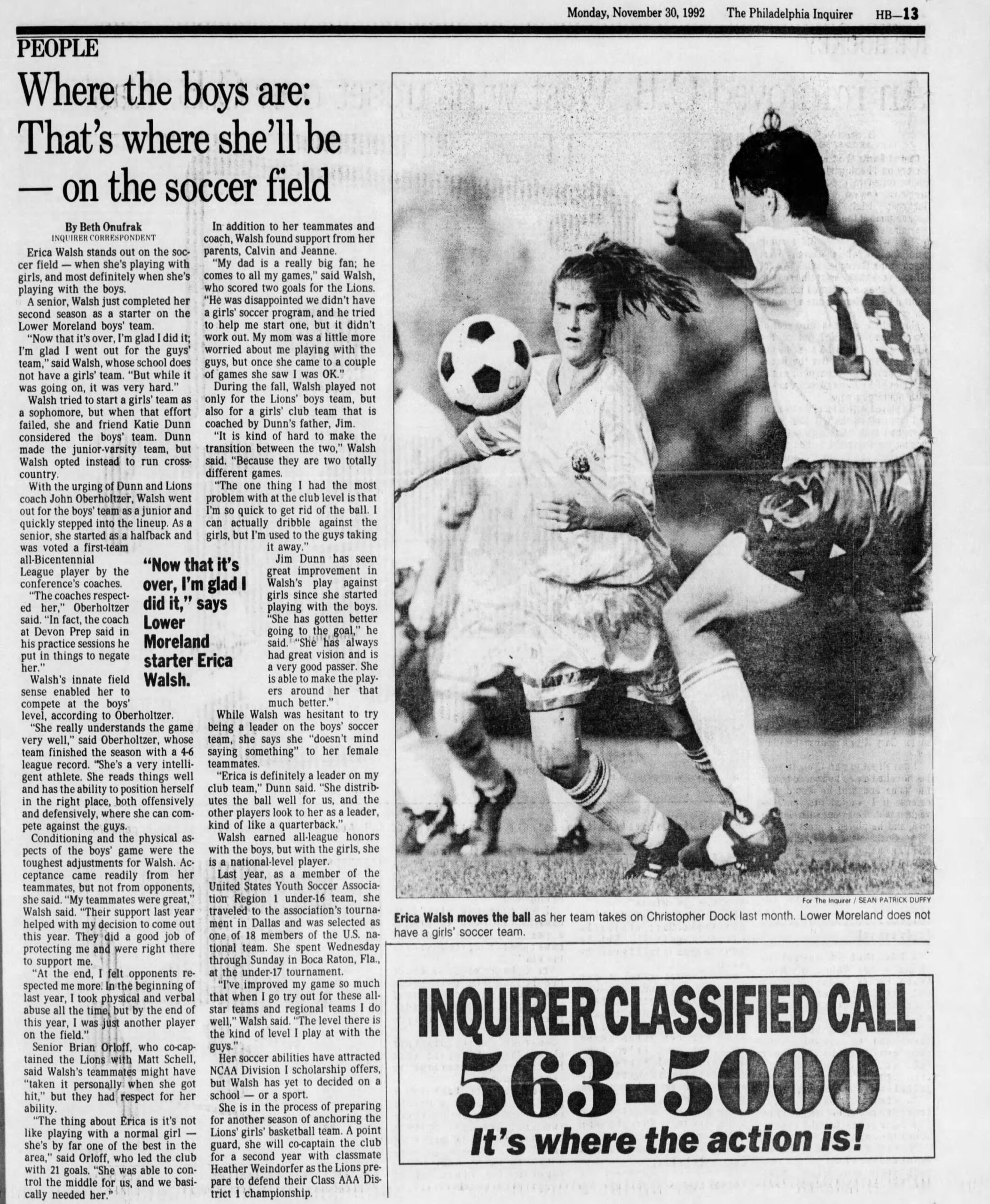
    Dambach was born in Bordentown, N.J., and moved across the Delaware River to Huntingdon Valley at a young age. She played high school soccer on the boys’ team at Lower Moreland, then was recruited to play college soccer at another historic program, William & Mary.

    A clipping from the Bucks County Neighbors High School Sports section of The Philadelphia Inquirer on November 30, 1992, featuring Erica Dambach (née Walsh) playing for Lower Moreland’s boys’ soccer team.

    Her coaching career began a year after she graduated in 1996. She started at Bucknell, then went to Dartmouth, Lehigh, Florida State, and Harvard before Penn State called in 2007.

    Now Dambach’s mantel includes 11 Big Ten regular season titles, five conference tournament crowns, that 2015 national championship, runner-up in 2012, and five more Elite Eights.

    And there have been so many players who’ve made it to the pros.

    “It’s a big reason why I’m in the college game for sure, to see these women live out their dreams,” Dambach said. “Obviously, when they sit in our office when they’re 14 years old, they talk about lifting a World Cup trophy. And now to see these players get an opportunity to wear the crest and to represent the country and watch their dreams come true, it’s certainly proud moments around here.”

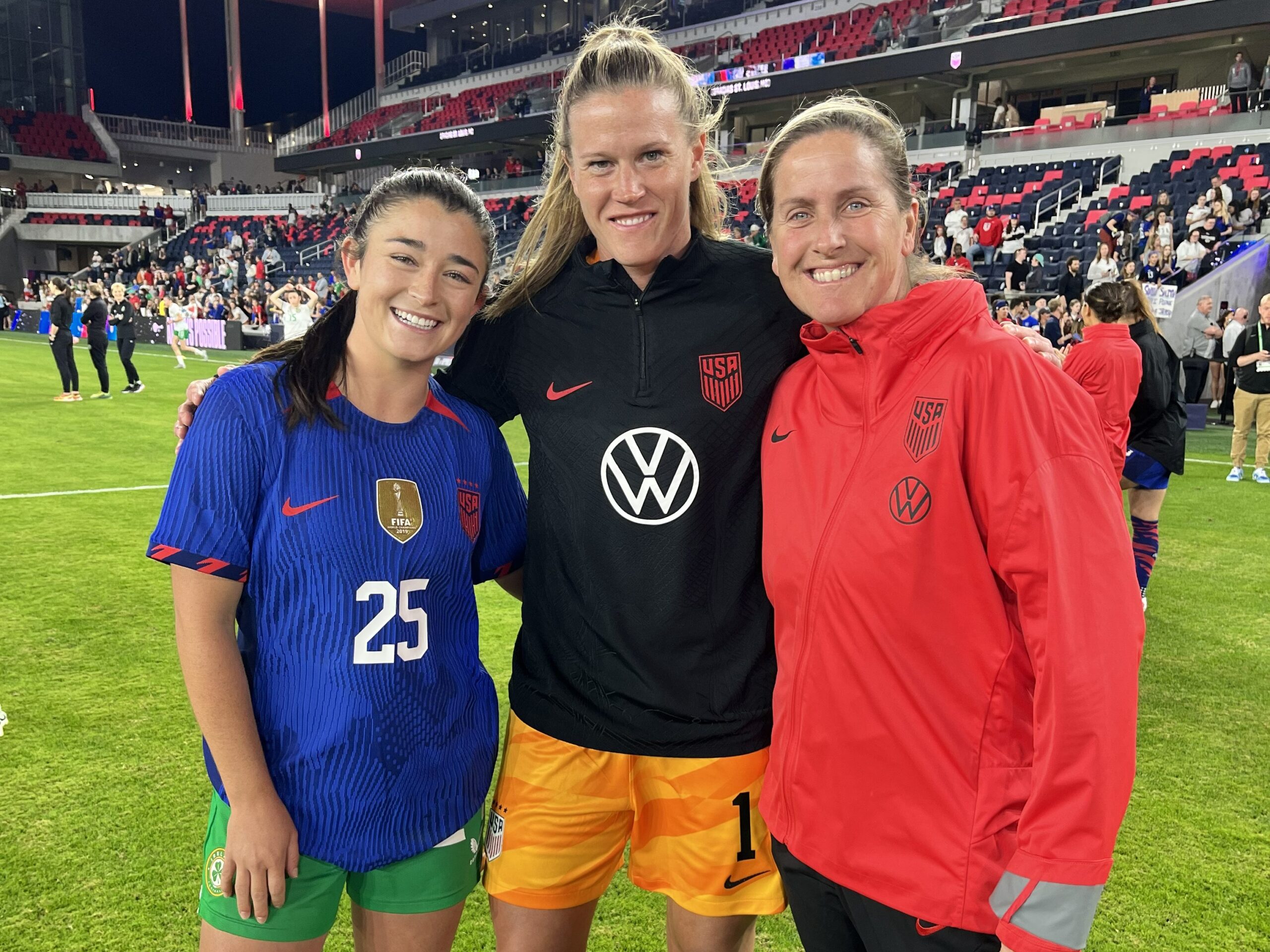
    Erica Dambach (right) with Marissa Sheva and Alyssa Naeher at the U.S.-Ireland game in April 2023, where Sheva and Naeher were on opposite sides.

    Dambach faces the same headwinds as other college coaches these days. No one bats an eye anymore when a talented teen turns pro without going to college.

    “What I’ve learned is that when a player and a family has their mindset on it when their daughter’s 16, you need to be careful because they’re going to find a way to get there [to the pros] very soon,” she said. “The generational talent of Claire Hutton? Yeah, good move.”

    But while Hutton already has 15 caps at age 20, there’s still plenty of room for college products. Dambach believes that can remain the case.

    “I would argue that our ability to help the 17-, 18-, 19-year-olds right now, that time is too valuable in their life and too precious in their life,” she said. “This is an environment where I do think that they can get to all the same points with having a little bit more guidance in their first time away from home. And having people that are educated and care about that side of the human and the player.”

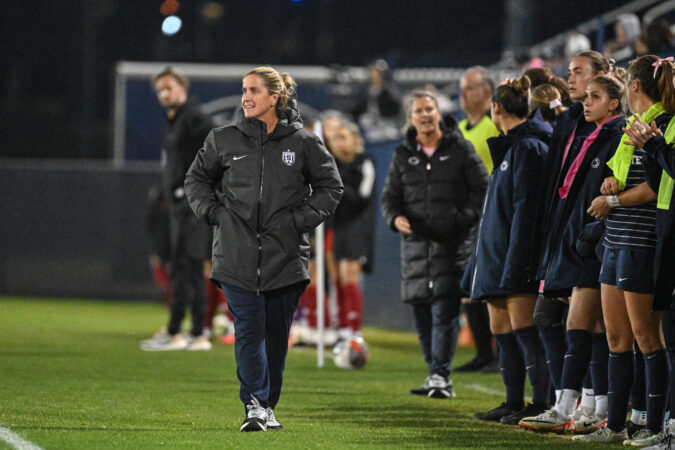
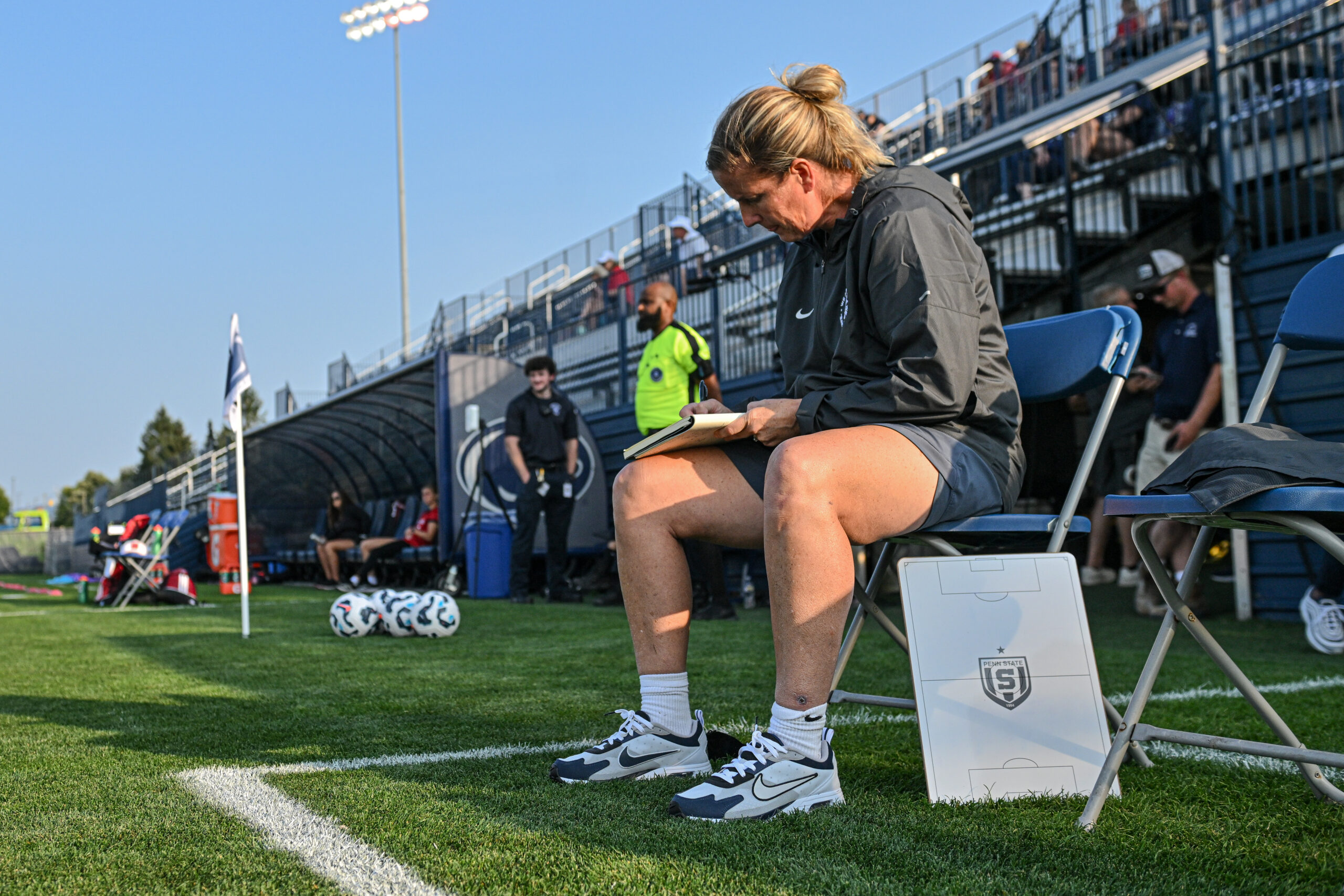
    Erica Dambach taking notes on the sideline during a Penn State game in 2024.

    Another is the fight every college coach has: to get NIL money and attract top players with it. Dambach is comfortable with where she is on that front.

    “There are 10 programs historically, five to 10 programs, that are competing for a national championship,” Dambach said. “You’ve got those teams that have seniors that bubble up and have a particularly good year. But when those programs go head to head for a player, you’re splitting hairs, and the dollars do matter.”

    It also helps that Penn State just opened a $21 million expansion of its soccer facilities a few days ago. And Dambach has the privilege of a veteran staff, including three assistants who’ve been there for 15 years or more. One of them, Ann Cook, was her roommate at William & Mary.

    “I think [players] walk in here and they know that they’re going to be coached by four head coaches, four coaches that have been sought after by so many different programs,” Dambach said, “and they look at it, and everywhere they turn it’s going to be a professional environment for them.”

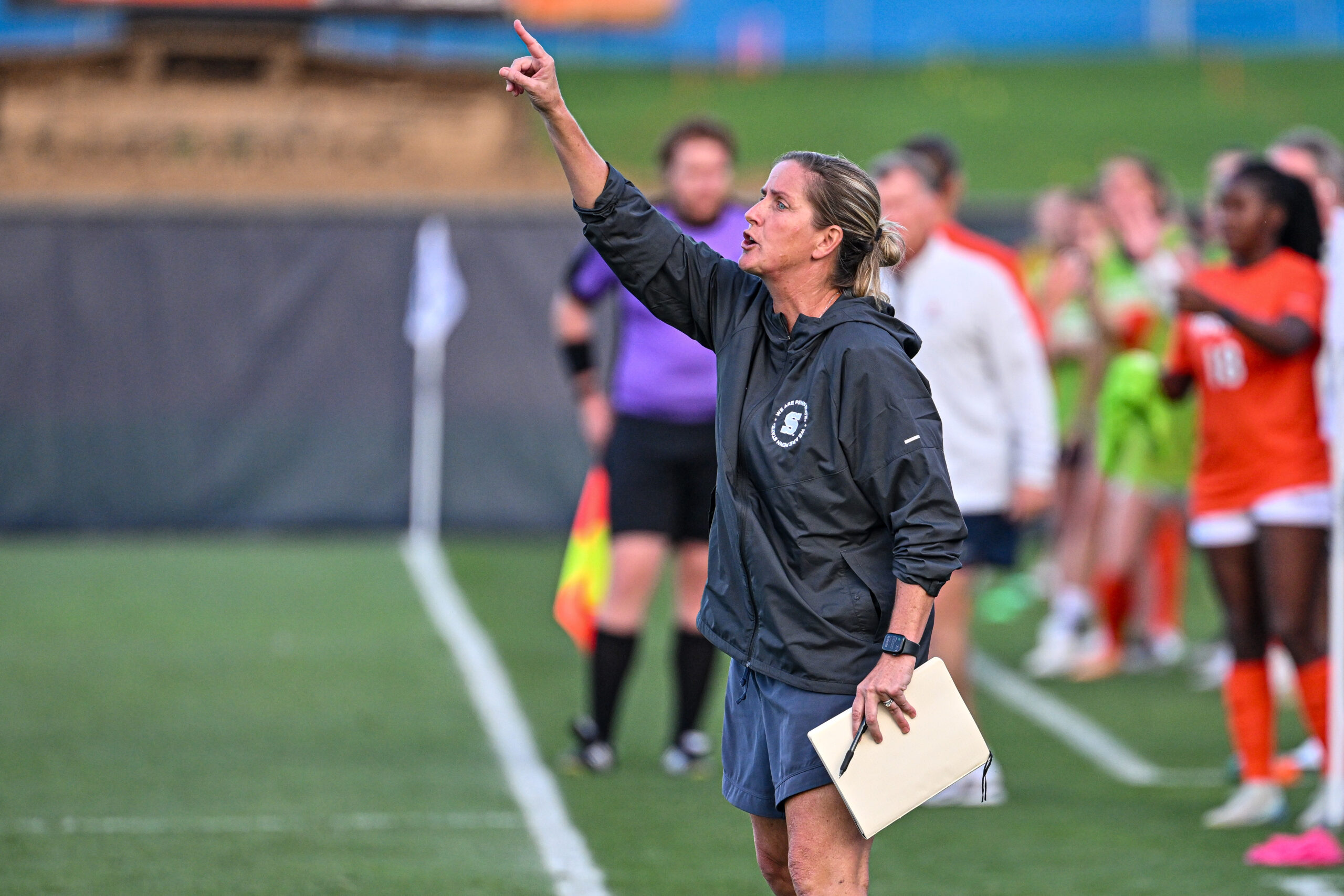
    Erica Dambach giving her players some instructions during a 2024 game.

    Tributes from the stars

    Dambach knows Hayes well and keeps in touch with Coffey and other former players. Ahead of the U.S.’s return to north Jersey for Saturday’s SheBelieves Cup against Colombia (3:30 p.m., TBS, Telemundo 62), that duo paid tributes to their friend.

    “I could, like, write a book on her just to give an answer,” said Coffey, who transferred from Boston College after her sophomore season (and could indeed write that book as a journalism major). She was an attacking midfielder at the time, and Dambach helped convert her to the ball hawk she is now.

    “I came from B.C. as a player that was so one-dimensional, and it might sound shocking, but I really had no interest in defending whatsoever,” Coffey said. “I just think that she developed me so much as a player and a person.”

    The latter still resonates.

    “She is so focused on us being this complete person,” Coffey said. “Especially when you’re at a college age, it can so easily be so much about just what you do on the field, but for her it’s all about who you are in all aspects of your life.”

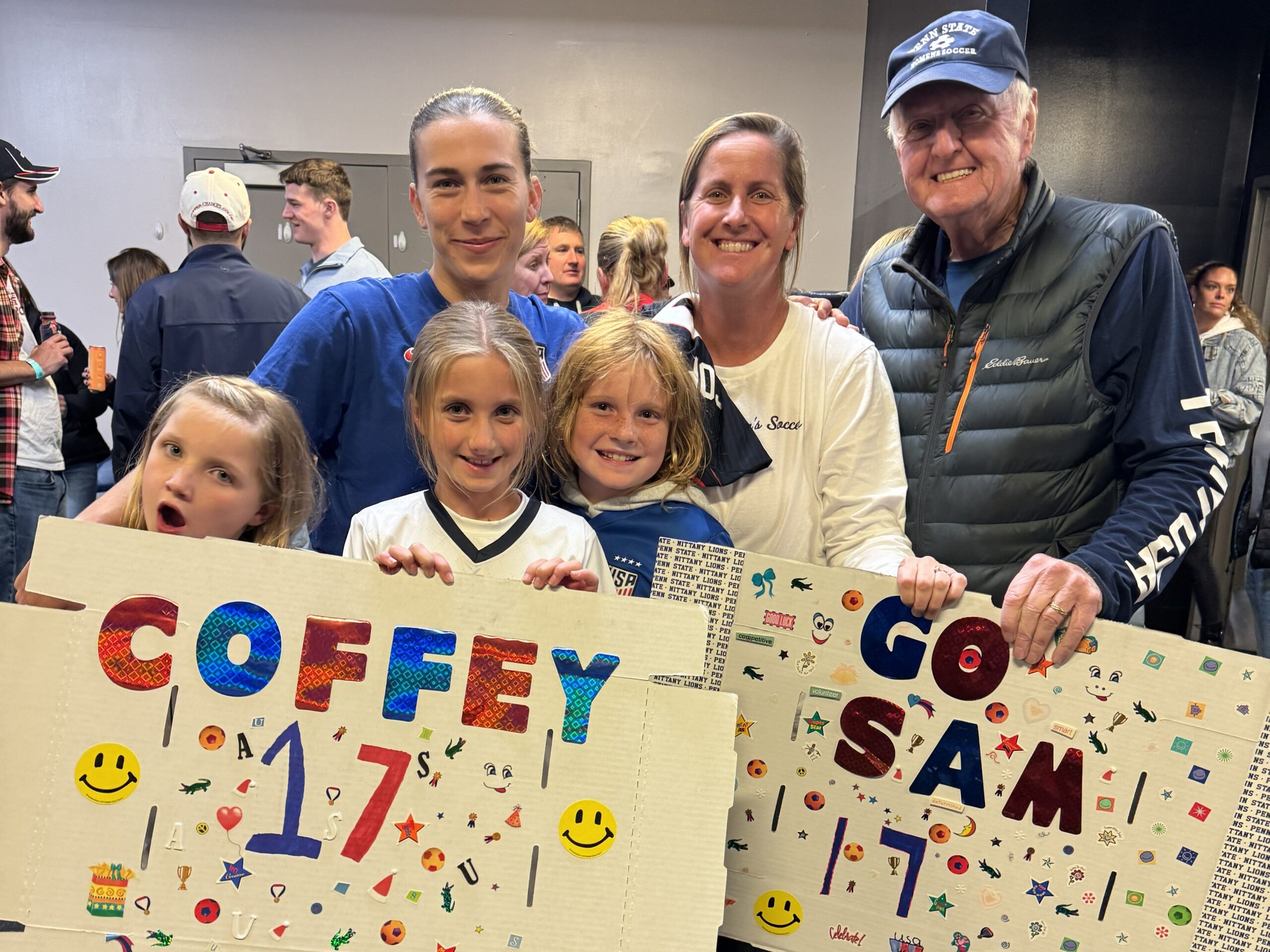
    Erica Dambach (second from right) and her family with Sam Coffey at the USWNT game vs. Portugal in October at Subaru Park.

    Hayes recalled that when she came to the U.S. from England to begin her coaching journey in the early 2000s, Dambach was “the first coach I looked at and that I was in close contact with. I thought she’s the best, and I think she’s quietly had an influence on my own career.”

    Now Hayes gets to take Dambach’s players on their next journeys. Coffey is a star, and Wiesner is a World Cup contender. (She was to be on this SheBelieves Cup squad until suffering a calf injury last month.)

    “It’s the way players speak about her, it’s the way other colleagues speak about her,” Hayes said of Dambach. “It’s a real testament to not just the quality she has, but the longevity to keep doing that, and to keep producing players whose characters you can clearly see have been well-shaped.”

    There even was praise from a U.S. player who played against Penn State back in the day and has worked with Dambach over the years since. Emily Sonnett was part of a 5-1 Virginia rout of the Nittany Lions in 2013, before earning well over 100 national team caps.

    Veteran U.S. national team defender Emily Sonnett (right) worked with Erica Dambach when Dambach was an assistant coach in the program.

    “When she was in [the national team], she led a lot of our small-group meetings in terms of defending and was] very detailed,” Sonnett said. “That short amount of time, the impact that she had on me, and the intentionality … I really enjoyed working with her, and when I see her, I remind her how much I enjoyed it.”

    Told of this, especially the players’ words, Dambach was moved.

    “Honestly, you know, that means a lot,” she said. “That’s never going to get old for me. … Those are two world-class players and world-class humans, and the fact we can play a small part in it is everything.”