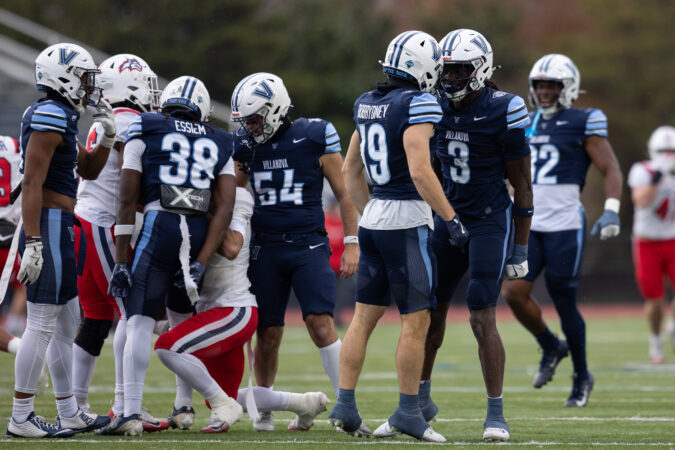
Villanova football is riding a 10-game winning streak — its longest since the 1997 season — and will travel to Stephenville, Texas to take on fourth-seeded Tarleton State in the quarterfinals of the FCS playoffs on Saturday (noon ET, ESPN).
Villanova (11-2), the No. 12 seed in the bracket, is coming off a 14-7 upset against then-undefeated Lehigh (the No. 5 seed) on the road. The Wildcats scored 14 points in the second half, including a 28-yard Braden Reed touchdown reception with just over three minutes remaining, to pull off the victory.
Pat McQuaide led Villanova’s passing attack, throwing for 208 yards and the game-winning touchdown. The touchdown pass was the 50th of McQuaide’s career and 23rd as a Wildcat, meaning he has thrown almost half of his career touchdowns in his single season in blue and white.
It was also his eighth game of the season with 200 or more passing yards. McQuaide isaveraging 211.1 yards per game, which is 29th in the FCS.
Tarelton (12-1) had a first-round bye and is coming off a dominant 31-13 win over North Dakota in the second round last weekend.
Who is Tarleton State?
Some schools in the FCS playoffs are not the most recognizable.
Tarleton State is located in Stephenville, about a two-hour drive from Dallas.
The Texans are part of the United Athletic Conference. They were formerly in the Western Athletic Conference since 2021, before it merged with the Atlantic Sun Conference in 2022.
It became an FCS football program in 2020, when the program switched from Division II to Division I.
YOUR TARLETON STATE TEXANS ARE CONFERENCE CHAMPIONS 🔥
Tarleton State has made it to the FCS playoffs in consecutive seasons, just five years after becoming a Division I program. Last season, the Texans won their first FCS playoff game against Drake, but fell to No. 4 South Dakota in the second round. Eagles rookie wide receiver Darius Cooper starred for Tarleton State from 2020-24.
Limit the turnovers
Villanova has prided itself on winning the turnover battle, and it has done so consistently this season. Its five total turnovers are currently an FCS low.
McQuaide has thrown just two interceptions, and only one in FCS play, this season. He has thrown 10 touchdowns and zero interceptions over his last five games.
Villanova has only lost three fumbles. Over the course of its 10-game win streak, Villanova has won the turnover battle, 16-2.
Defense needs to be near perfect
Villanova’s defense has shut down efficient offensive teams of late. The unit held Lehigh to one touchdown and its second-lowest offensive output this season (339 total yards).
The week before, the Wildcats held Harvard to a season-low 213 total yards.
Tarleton State is averaging an FCS-high 44.1 points. The Texans recorded a 61-0 blowout win against North Alabama on Nov. 15 and have scored 30 or more points in each win this season.
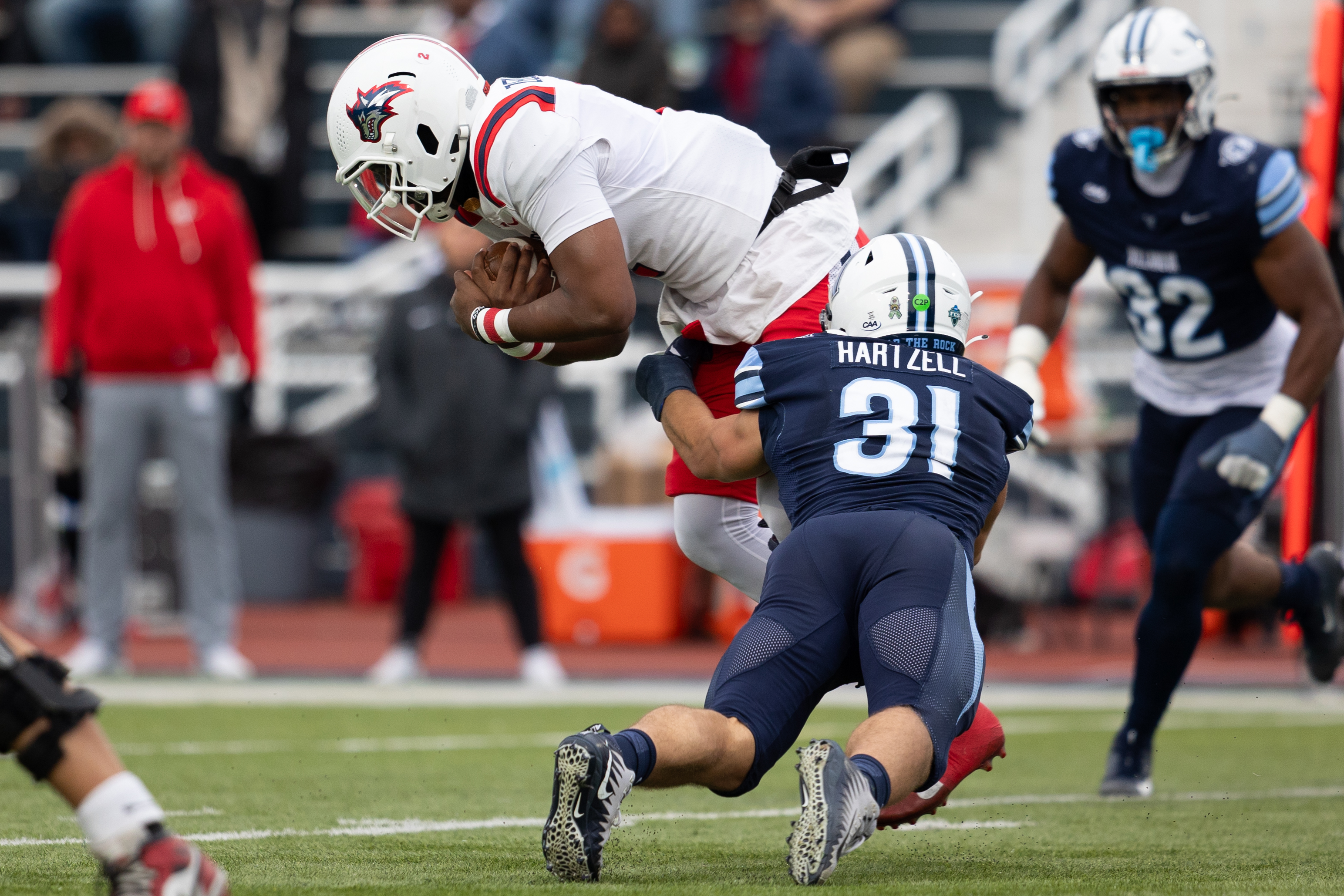
Wildcats linebacker Shane Hartzell has a team-high eight sacks for a loss of 49 yards this season.
The Texans scored a season-low 28 points in their only loss against then- No. 24 Abilene Christian in early November.
Villanova has held opponents to an average of eight points in its last three games.
Graduate linebacker Shane Hartzell leads the Wildcats’ defense by a wide margin, with 87 total tackles (50 solo). Hartzell scooped up his first fumble recovery of the season against Lehigh and recorded six total tackles (five solo). This season, Hartzell has a team-high eight sacks.
Villanova needs to run the football
Villanova has some of the best running back depth in the FCS. Even with standout David Avit missing the last four games, Ja’briel Mace and Isaiah Ragland have stepped up.
Mace and Ragland have rushed for career-high games during Avit’s absence due to a knee injury. Mace even broke Brian Westbrook’s 21-year-old single-game rushing record on Nov. 8 with 291 yards against Towson.
Tarelton currently allows 163.6 rushing yards per game, which ranks 69th in the FCS.
Villanova has leaned on its rushing game all season. It averages 177.8 rushing yards per contest, which is 32nd nationally. Despite rushing for a season-low 27 rushing yards last weekend, Villanova has averaged 194.4 rushing yards over the last three. Ragland rushed for a career-high 152 rushing yards against Harvard two weeks ago, when Villanova finished with a season-high 48 carries.
Following their third consecutive loss, the Eagles return home to face the Raiders on Sunday in what will be Philadelphia’s first 1 p.m. start since October 26th.
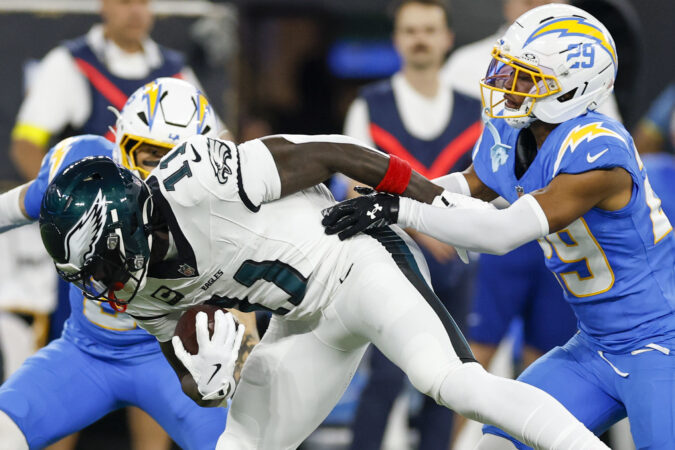
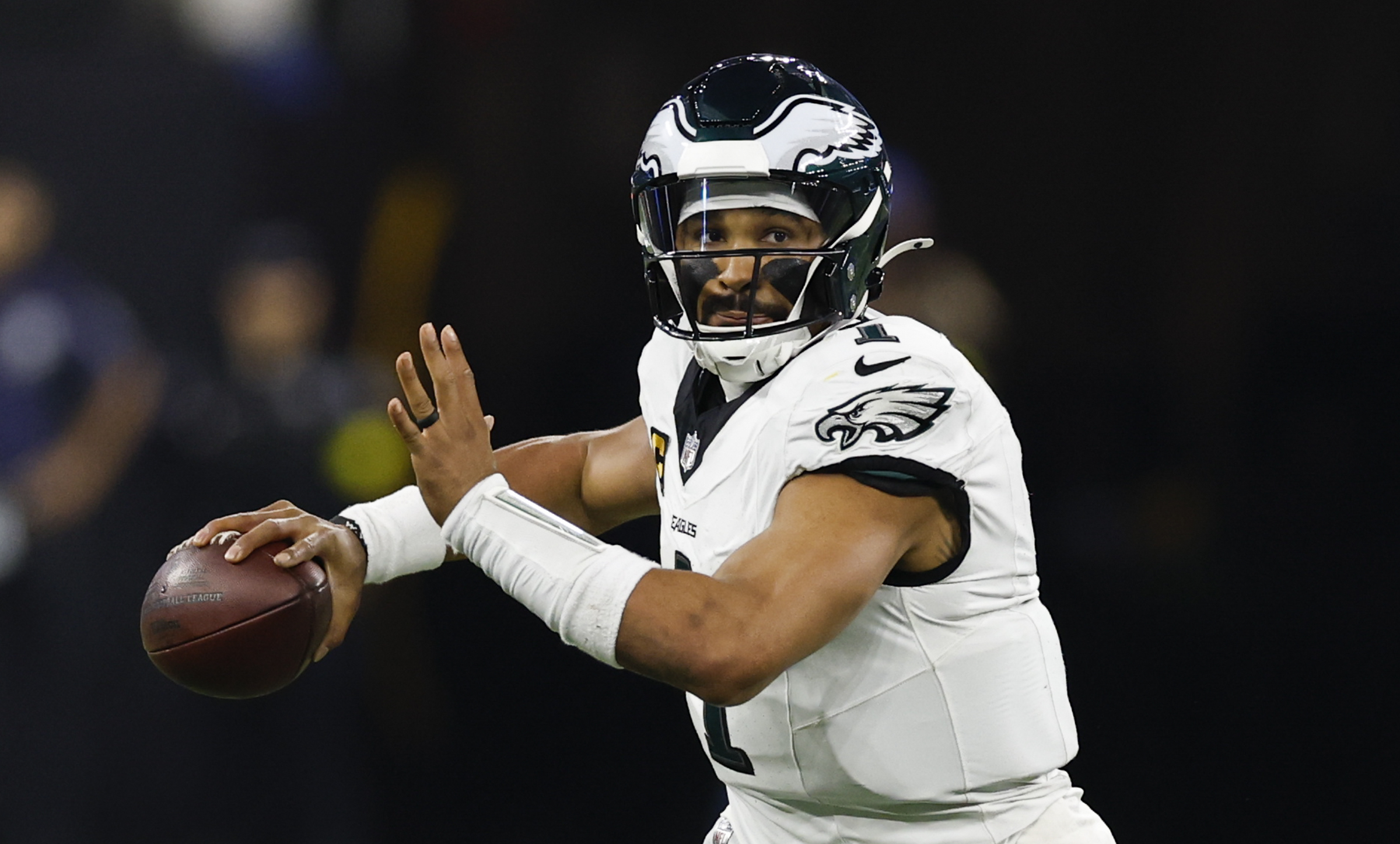
The Birds are looking for a bounceback performance from Jalen Hurts and the offense after Hurts threw four interceptions against the Los Angeles Chargers on Monday night. Over the last five games, the Eagles (8-5) have averaged just over 16 points, down from the 26 they averaged during the season’s first eight games. The Raiders (2-11) rank 24th in points allowed per game (25.5 points).
The Birds are a double-digit favorite in Sunday’s game, and will likely not have to face Raiders quarterback Geno Smith, who suffered a shoulder injury last week. If the 35 year old is unable to play, former Eagles backup Kenny Pickett would likely get the start.
Eagles quarterback Jalen Hurts has thrown for over 200 yards in each of his last three games.
Passing yards props
Hurts has thrown for over 200 yards in each of his last three games. The Birds quarterback’s passing line is set just above that number for Sunday’s game.
Pickett, on the other hand, has not yet started a game this season. Pickett’s last start was for the Eagles last year. In that game, the Eagles dominated the Cowboys 41-7, though Pickett only threw for 143 yards.
During the Eagles’ last five games, Hurts has only thrown four total touchdowns. Last season, Pickett threw a touchdown pass in each of the two games in which he played the majority.
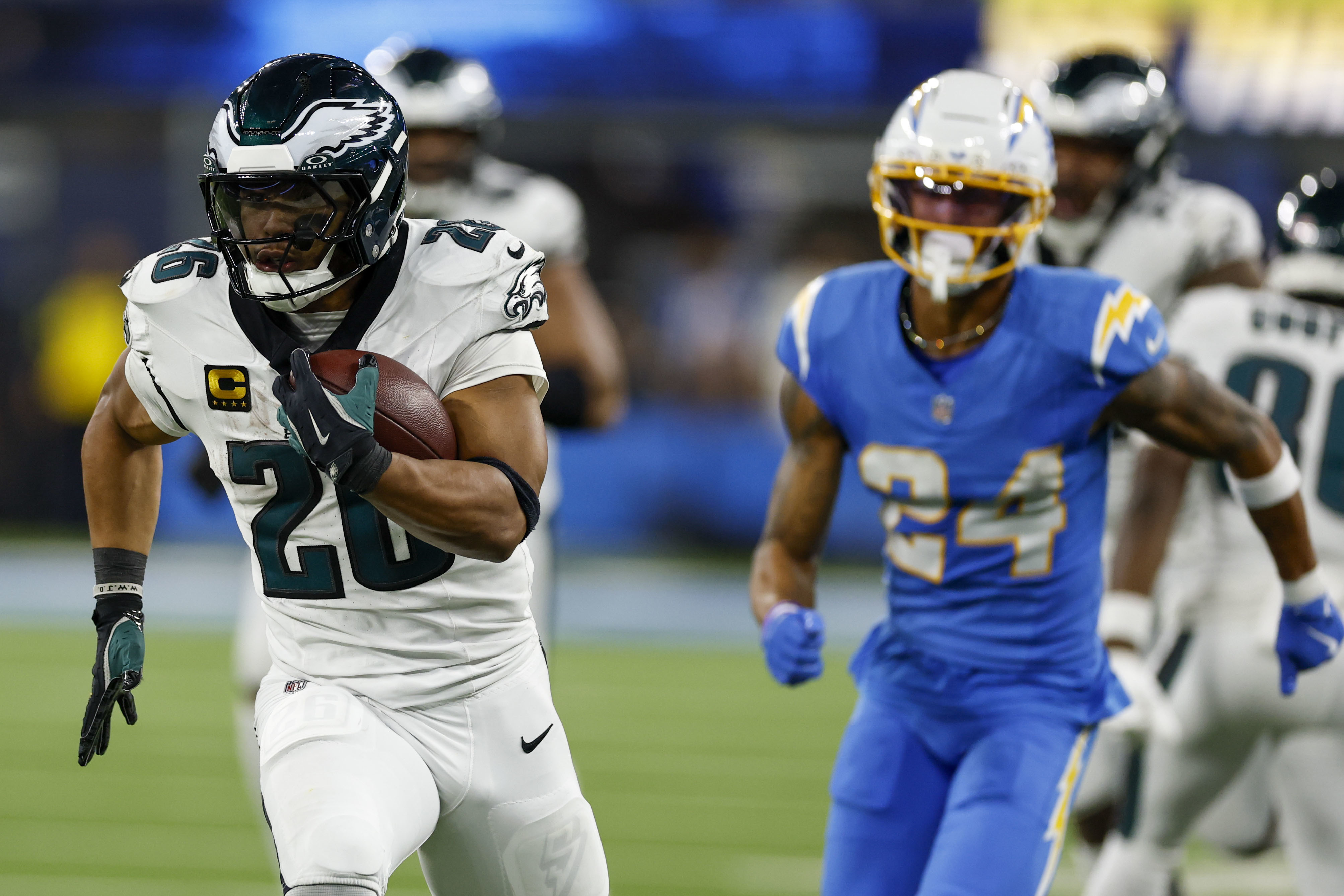
Running back Saquon Barkley turned a fake Tush Push into a 52-yard touchdown run against the Chargers.
Rushing yards
Saquon Barkley had one of his strongest games against the Chargers. He rushed for 122 yards, including a 52-yard score to put the Eagles ahead at the start of the fourth quarter. Barkley had averaged just 55 rushing yards in the Birds’ four previous games.
On the other side, Ashton Jeanty has struggled recently. The sixth overall pick in the 2025 draft ran for just 30 yards last week. Jeanty has averaged under 2.5 yards per carry over his last four games, and hasn’t scored a rushing touchdown since Nov. 6.
Only DraftKings has posted rushing props for the Eagles due to the Raiders’ uncertain quarterback status.
A.J. Brown recorded his third straight 100-yard game on Monday. Dallas Goedert also recorded eight catches for 78 yards, his most yards in a game since Oct. 26.
For the Raiders, tight end Brock Bowers has led the way with 619 receiving yards, despite missing three games.
Just like the rushing props, only DraftKings has receiving props listed for Eagles players.
Las Vegas Raiders tight end Brock Bowers has scored three touchdowns over his last two games.
Touchdown scorers
Barkley was the only Eagle to find the end zone against the Chargers on Monday. In the three weeks prior, Hurts and Brown were the only touchdown scorers.
For the Raiders, Bowers has caught three touchdowns in the last two games.
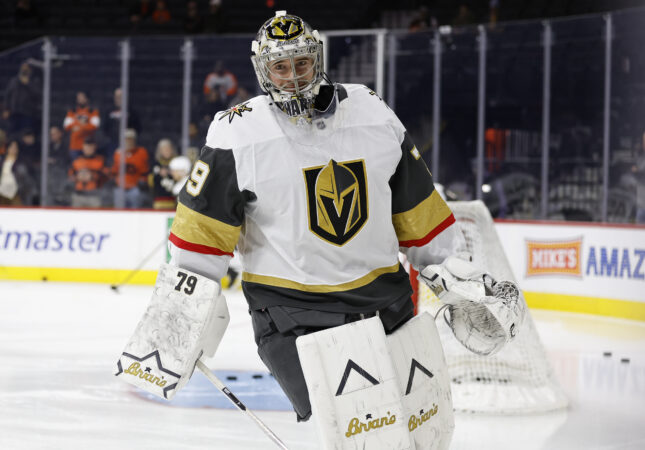
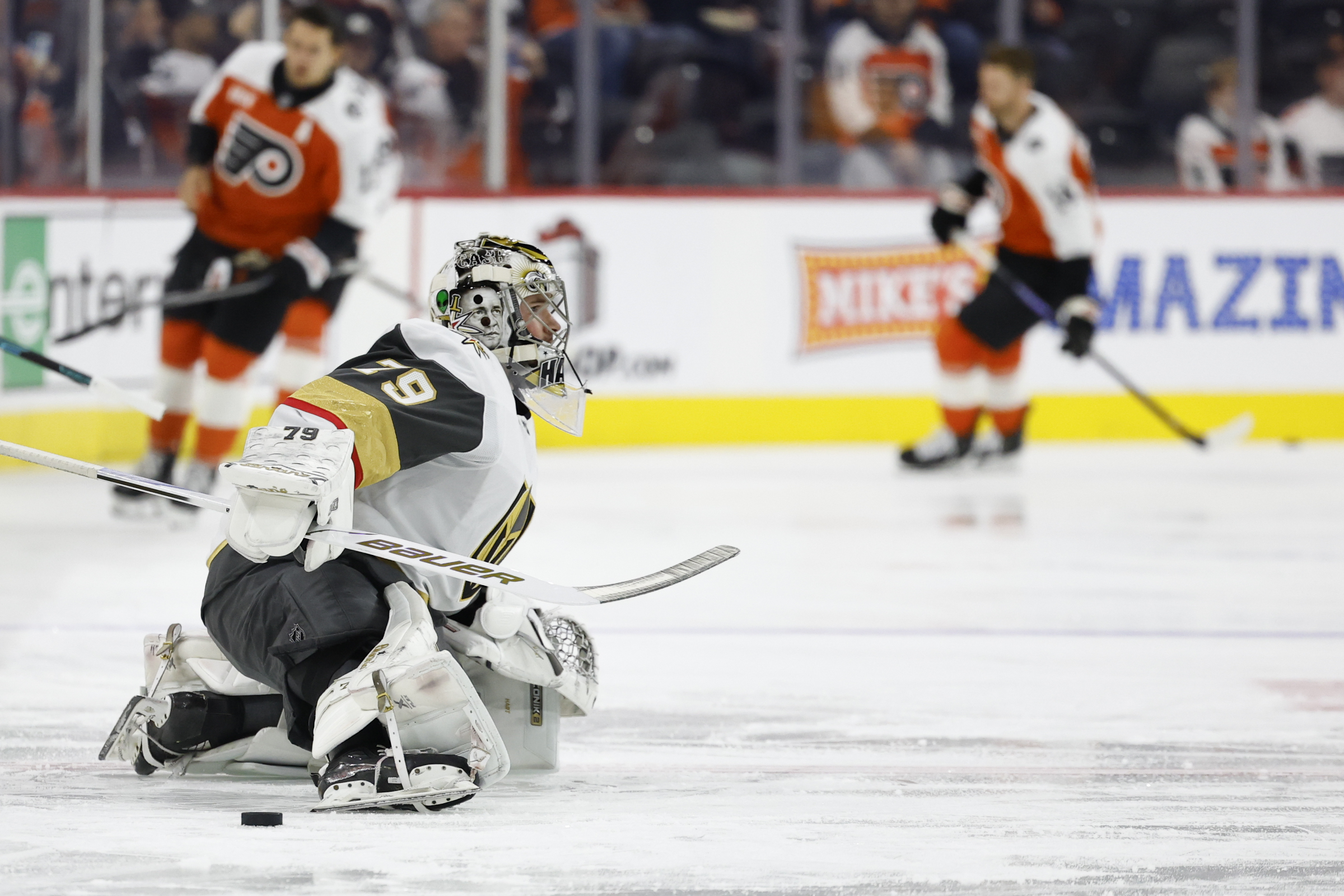
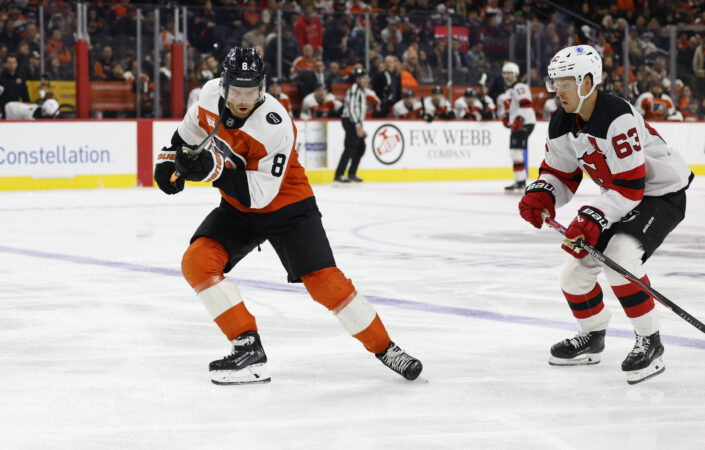
The Flyers host the Vegas Golden Knights on Thursday night at Xfinity Mobile Arena, and Carter Hart will not be in goal against his former team.
Instead, Akira Schmid, who was drafted by the New Jersey Devils in 2018 and shut them out on Dec. 5, will start. Despite being the backup on Thursday, Hart was not made available to speak to the media.
“No, Carter wants to play every game; that’s one thing, he’s a very competitive guy,” Vegas coach Bruce Cassidy said when asked if Hart not starting was because of the regular rotation or if they did not want him to play in Philadelphia.
“[Hart] had played two out of three this week, and coming out of the Ranger game, he wanted to get right back in the net. So that led to the decision on Long Island. We discussed it, obviously, with him, but that was more of us making the decision that Akira had to get back in pretty soon, coming off the shutout.
“So that’s how we landed on it.”
Hart and his 2018 Canadian World Junior teammates Dillon Dubé, Cal Foote, Alex Formenton, and Michael McLeod were acquitted on sexual assault charges in Canada this summer and were suspended through Dec. 1.
“The events that transpired after the 2018 Hockey Canada Foundation Gala in London, Ontario, prior to these players’ arrival in the NHL, were deeply troubling and unacceptable,” the NHL said in a September statement regarding the suspensions.
“The league expects everyone connected with the game to conduct themselves with the highest level of moral integrity. And, in this case, while found not to have been criminal, the conduct of the players involved certainly did not meet that standard.”
Hart, 27, joined the Golden Knights on Oct. 16, one day after the league-imposed start date for these five players to sign with an NHL team. He inked a two-year, $4 million contract 10 days later.
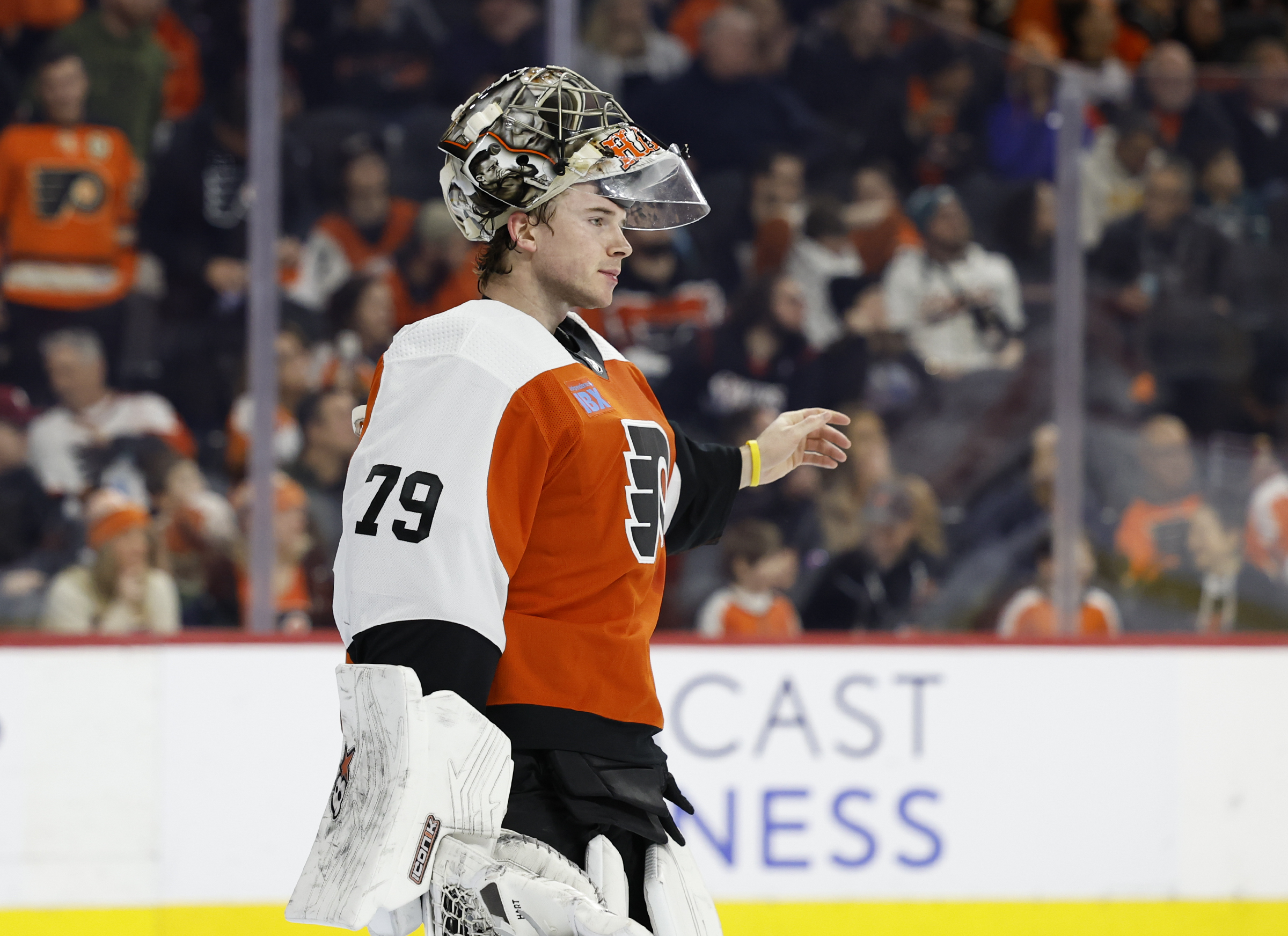
Carter Hart compiled a 96-93-29 record and .906 save percentage in six seasons with the Flyers.
“Following the reinstatement decision agreed on by the National Hockey League and the National Hockey League Players’ Association, goaltender Carter Hart will be joining the Vegas Golden Knights organization,” the team’s statement on Oct. 16 said.
“The Golden Knights are aligned with the process and assessment the NHL and NHLPA made in their decision. We remain committed to the core values that have defined our organization from its inception and expect that our players will continue to meet these standards moving forward.”
Hart added: “It’s been a long road to get back to this point, to get back to playing the game of hockey, a game that I love, and I’ve been out of the game for a year and a half now. I’ve learned a lot, I’ve grown a lot. I’m just excited to move forward.”
Hart is 2-0-1 with a 2.80 goals-against average and .889 save percentage with the Golden Knights. He returned to the NHL on Dec. 2, allowing three goals on 30 shots against the Chicago Blackhawks.
It was his first game since Jan. 20, 2024, three days before he took “an indefinite leave of absence citing personal reasons” from the Flyers.
The day after his announcement, the Globe and Mail in Toronto reported that the then-unnamed Hockey Canada players allegedly involved in a sexual assault in Ontario in June 2018 had been ordered to turn themselves in to police. A week later, Hart was charged, according to his lawyers. The defendants were acquitted in July.
A second-round draft pick in 2016, Hart was viewed as a cornerstone piece for the Flyers. He went 96-93-29 with a 2.94 goals-against average and .906 save percentage in 227 games across six seasons. In his last NHL season, the native of Sherwood Park, Alberta, was 12-9-3 with a .906 save percentage. Hart was the first of the five players who were acquitted in the London sexual assault case to return to NHL action.
Vegas Golden Knights goaltender Carter Hart last played in South Philly on Jan. 20, 2024.
Dubé, a forward who previously played for the Calgary Flames, signed a professional tryout agreement with the St. Louis Blues’ American Hockey League affiliate in Springfield on Wednesday. He played the 2024-25 season with Dinamo Minsk of the Kontinental Hockey League.
Foote, a defenseman and the son of Vancouver Canucks coach Adam Foote, signed an AHL deal with the Chicago Wolves on Dec. 1. Formenton has returned to HC Ambrì-Piotta of the Swiss National League, where the forward has played since 2022.
McLeod signed a three-year deal with the KHL’s Avangard Omsk in October. He played last season with the team after starting the season with Kazakhstan-based Barys Astana.
The Flyers may be getting a few presents for the holidays.
Defensemen Rasmus Ristolainen and Cam York, who have been practicing in regular jerseys, are inching closer and closer to returning.
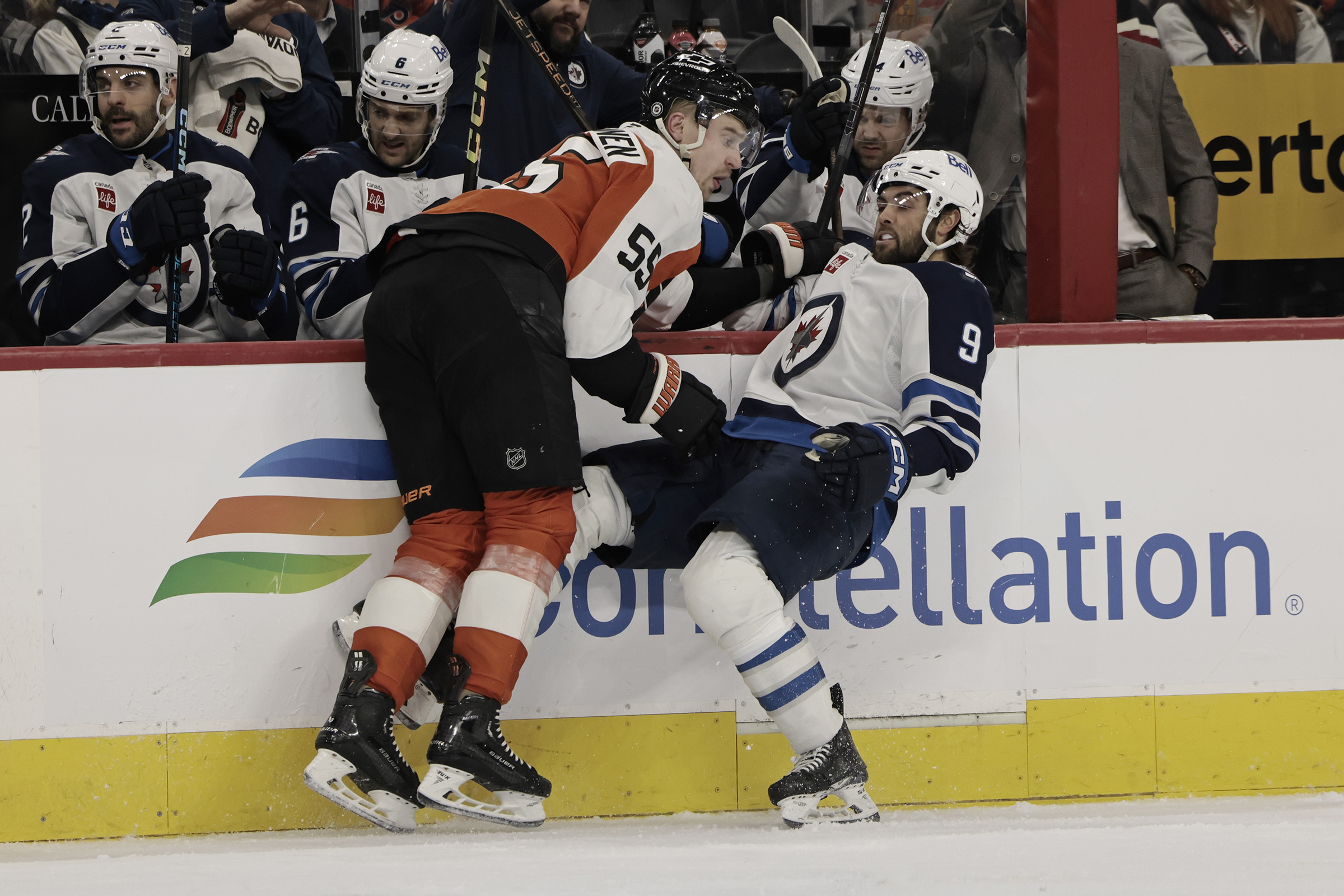
York has been out with an upper-body injury since Dec. 3 against the Buffalo Sabres. The exact moment when he suffered the injury is unknown, but he did not return after being involved in a scrum following Trevor Zegras being boarded by Sabres captain Rasmus Dahlin with 3 minutes, 10 seconds left in the second period.
It’s also possible that the high hit by Buffalo forward Jason Zucker behind the Flyers’ net with 13:50 left in the period is what coach Rick Tocchet referred to postgame. The hit was a little late as the blueliner skated back for the puck.
“He’s going to have a really hard practice today,” Tocchet said about York at Xfinity Mobile Arena on Thursday in advance of the Flyers’ game against the Vegas Golden Knights (7 p.m., ESPN). “Not hitting, but like a lot of pushing and shoving on the ice, and see how he reacts off it. I think this is the day we’ll know how close he is to playing.”
Ristolainen’s return is coming, but it may still be a little way away. On Oct. 27, Flyers general manager Danny Brière said that “in about a four-to-six-week range, hopefully he’s back with the team.”
Technically, he was with the team at around the six-week mark, but only for practice. Now the question is, when will he be game-ready?
Ristolainen underwent surgery on a right triceps tendon rupture on March 26. In 2024, Ristolainen underwent two surgeries, including a repair to a ruptured triceps tendon. Brière said last April that the injury was similar, although he wouldn’t confirm whether he tore the tendon again.
The Flyers are being cautious and are taking their time to ensure that he is 100%. Tocchet didn’t want to marry the blueliner’s return to a specific date, hinting that he needs to see Ristolaien stack heavy days together.
When pressed, he said, “I think I’d be shocked if he didn’t play before Christmas, to be honest. But I never say never.”
Rasmus Ristolainen has not played since March since undergoing triceps surgery.
York is not on injured reserve, so the Flyers do not have to make a move when he is ready to return to the lineup. When Ristolainen is good to go, they will have to make a transaction.
Currently, only four players are waiver-exempt — forwards Matvei Michkov and Nikita Grebenkin and defensemen Emil Andrae and Tyler Murchison — and it’s obvious here who is not getting sent down. Murchison looked impressive and steady in his NHL debut on Tuesday and will get a second game on the blue line on Thursday against Vegas.
Forward Carl Grundström is also someone who can be sent down without needing to clear waivers. He cleared waivers when the Flyers acquired him, and he has not hit the 30-day mark or 10 games played in the NHL.
The NHL also has a 10-day roster freeze beginning at 11:59 p.m. on Dec. 19 and running through 12:01 a.m. on Dec. 28. Players cannot be waived, traded, or loaned during that period.
The Flyers play Dec. 20 against the New York Rangers, Dec. 22 against Tocchet’s old team, the Vancouver Canucks, and Dec. 23 at the Chicago Blackhawks before the NHL’s three-day holiday break. They return to game action at the Seattle Kraken on Dec. 28.
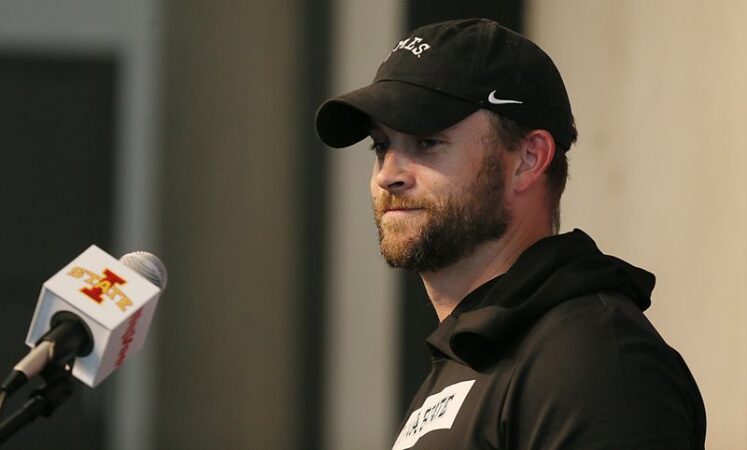
STATE COLLEGE, Pa. — Penn State introduced Matt Campbell on Monday as its head football coach, ending a 54-day search, and he has begun to build his staff, which includes several colleagues from Iowa State.
Campbell, 46, spent the last 10 seasons at Iowa State, where he built the Cyclones into a perennial Big 12 contender and left as the program’s winningest coach.
Here’s a look at who intends to join the Massillon, Ohio, native in Happy Valley.
Taylor Mouser, offensive coordinator
On Thursday, Mouser was added to the Penn State directory. He is listed as the offensive coordinator.
In 2015, Mouser joined Campbell’s staff at Toledo as a graduate assistant before following him to Iowa State, where he served on his staff for the last 10 years. The 34-year-old had served as the Cyclones’ offensive coordinator since 2024 and tight ends coach since 2021.
Under Mouser’s leadership, the Cyclones offense ranked No. 61 among Football Bowl Subdivision teams with 396.1 yards per game this season, 26 spots above the Nittany Lions’ 359.1.
Mouser’s listing as offensive coordinator in the university’s directory means Andy Kotelnicki, Penn State’s current offensive coordinator, will likely move on in the coming weeks.
Jon Heacock, defensive coordinator
According to On3.com, Heacock will join Campbell’s staff at Penn State, although it is unclear whether he will retain his defensive coordinator title.
Heacock brings 40 years of coaching experience to the Nittany Lions. He joined Campbell’s staff at Toledo as an assistant head coach and defensive coordinator in 2015 before following the head coach to Iowa State the following year.
The 65-year-old served as the Cyclones’ defensive coordinator for the entirety of Campbell’s 10-year run in Ames, Iowa. Heacock is a four-time nominee and one-time finalist for the Broyles Award, which is given to the nation’s top assistant coach.
In each of the last nine seasons under Heacock’s leadership, Iowa State has ranked in the top five in the Big 12 in scoring defense. In 2025, the Cyclones ranked No. 26 in scoring defense (20.17 points allowed per game).
Deon Broomfield, secondary defensive coordinator
Broomfield was added on Thursday to the Penn State directory. He is listed as secondary defensive coordinator.
The 34-year-old started 18 games at defensive back for Iowa State from 2010-13. He joined Campbell’s staff in 2021 and has served as the Cyclones’ safeties coach since. He added the role of the team’s passing game coordinator in 2023.
Under Broomfield’s leadership in 2024, three of Iowa State’s safeties earned Big 12 recognition, with Malik Verdon, who now plays for the Falcons, named an All-Big 12 second-team performer.
Ryan Clanton, offensive line
Clanton joined Broomfield and Mouser in Penn State’s directory. He is listed as the team’s offensive line coach.
Clanton, who played left tackle at Oregon from 2010-13, had served as Iowa State’s offensive line coach and run game coordinator since 2023. He coached Jalen Travis, who became the program’s first offensive lineman drafted into the NFL since 2013.
In 2025, the Cyclones ranked No. 51 in rushing yards per game (174.7), a 19-spot improvement from Clanton’s first season in 2024.
Sources: Florida is set to hire Penn State offensive line coach Phil Trautwein as the school’s new offensive line coach. Trautwein is a Florida graduate who has coached 39 all-conference selections the last eight years, including his two seasons at Boston College. pic.twitter.com/rkREx2nyuI
Clanton’s addition likely meant the departure of Phil Trautwein, Penn State’s longtime offensive line coach. Trautwein is intended to join Florida’s staff in the same position, according to ESPN.
Trautwein won two national championships with the Gators (2006 and 2008) during his four-year career as a left tackle from 2004-08.
Derek Hoodjer, general manager
Campbell confirmed Monday the addition of Hoodjer, who had served as Iowa State’s associate athletic director for football personnel since 2023. He is listed as general manager in the Penn State directory.
Hoodjer served as the Cyclones’ director of player personnel from 2018-22 before his promotion to associate AD for football personnel.
During Monday’s introductory news conference, Campbell called Hoodjer “an unbelievable general manager.” Now he will hold that same role in Happy Valley, where he will have a reported $30 million in name, image, and likeness funding, according to The Inside Zone, to build a championship roster.
Other additions
Reid Kagy, Iowa State’s director of football strength and conditioning, is following Campbell to Happy Valley. He is listed as head strength and conditioning coach in the Penn State directory.
Kagy spent six seasons on the Cyclones’ staff, his most recent stint beginning in 2023.
Penn State is expected to hire Cincinnati DPP Jack Griffith as Assistant General Manager, sources tell me @mzenitz and @ChadBrendel.
Jack Griffith was added Thursday to the Penn State directory as a recruiting assistant. He will serve as the program’s assistant general manager, according to CBS Sports.
Griffith spent the previous three years as Cincinnati’s director of player personnel.
Joel Embiid and Paul George are coping with injuries and poor shooting performances. Averaging a league-most 39.9 minutes, Tyrese Maxey could be on the verge of breaking down if not careful. Kelly Oubre Jr. and Trendon Watford aren’t healthy enough to practice.
And still, there is optimism.
The 76ers head into Friday night’s matchup against the Indiana Pacers at Xfinity Mobile Arena with a 13-10 record. They’re in sixth place in the Eastern Conference standings, 1 ½ games out of third place heading into Thursday night’s games.
“You look at the East, it’s kind of clumped,” George said. “No one’s really pulled away yet, so we do have the opportunity to kinda write our future out from this point forward.
“No pressure to the cause of it, but we do have an opportunity to kind of take advantage of the standings. We can look at every game as important if you want to make steps going forward, for sure.”
The Sixers are favored to pick up a victory against the Pacers (6-18), who are tied for the league’s third-worst record.
Afterward, their next five games are against the Atlanta Hawks, New York Knicks, Dallas Mavericks, Brooklyn Nets, and Chicago Bulls — teams with a combined record of 55-65.
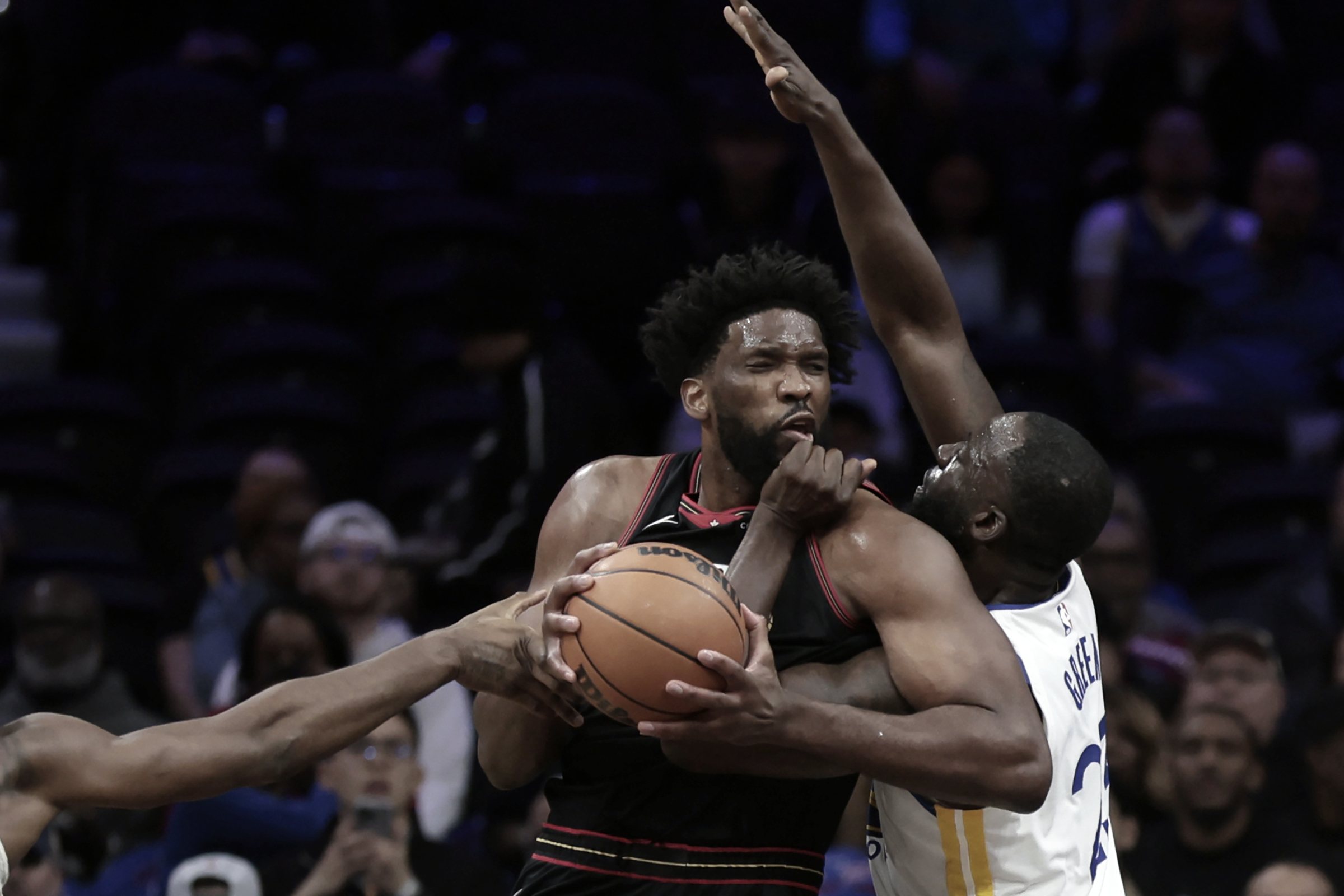
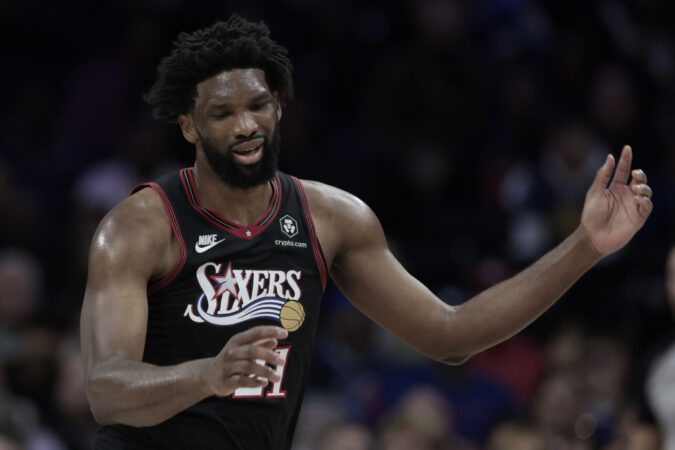
Sixers Joel Embiid is shooting career lows from the field (40.7%) and on three-pointers (21.4%), in addition to averaging a career-low 18.2 points in nine games this season.
The Sixers will face the Hawks (14-11) on Sunday at State Farm Arena. After four days off, they’ll face the Knicks (17-7) at Madison Square Garden on Dec. 19 before hosting the Mavericks (9-16) the next night. The Sixers will then entertain the Nets (6-17) on Dec. 23 and kick off a five-game road trip against the Bulls (9-14).
Facing just two teams with winning records will provide ample opportunity for the Sixers to ascend in the standings during their next six games.
A practice-heavy week with few practices, along with this upcoming stretch, could enable George and Embiid to get into rhythm while building on-court chemistry with teammates.
“I think we still have a number of guys, but, obviously, those two guys are at the top of the list that are still looking for rhythm and conditioning, but more probably rhythm,” coach Nick Nurse said. “You know it’s always a combination of those two things. And they had two good days [of practice].”
However, through eight games played this season, George’s field-goal percentage (41.8%) and three-point percentage (34.9%) are both the second lowest of his career. He’s also averaging the fourth-fewest points (14.1 points) of his career.
Meanwhile, Embiid is shooting career lows from the field (40.7%) and on three-pointers (21.4%), in addition to averaging a career-low 18.2 points in nine games this season.
The 2023 MVP and seven-time All-Star has missed 14 games this season due to left and right knee injury management. Meanwhile, George missed 14 games with left knee injury management and sat out another game with a sprained right ankle.
Their injuries and absences have put a heavy load on Maxey, who’s the league’s third-leading scorer at 31.5 points per game. He’s logging 39.9 minutes per game entering Thursday, with Los Angeles Lakers point guard Luka Dončić, who’s second in average minutes played, sitting 2.7 minutes behind him.
Maxey logged a season-high 52:18 during the 142-134 double-overtime home loss to the Hawks on Nov. 30. He’s logged at least 38:08 minutes in 17 of the Sixers’ 23 games. Nine of those games involved him playing at least 41:24. With 59 games remaining, whether Maxey can hold up all season is worth considering.
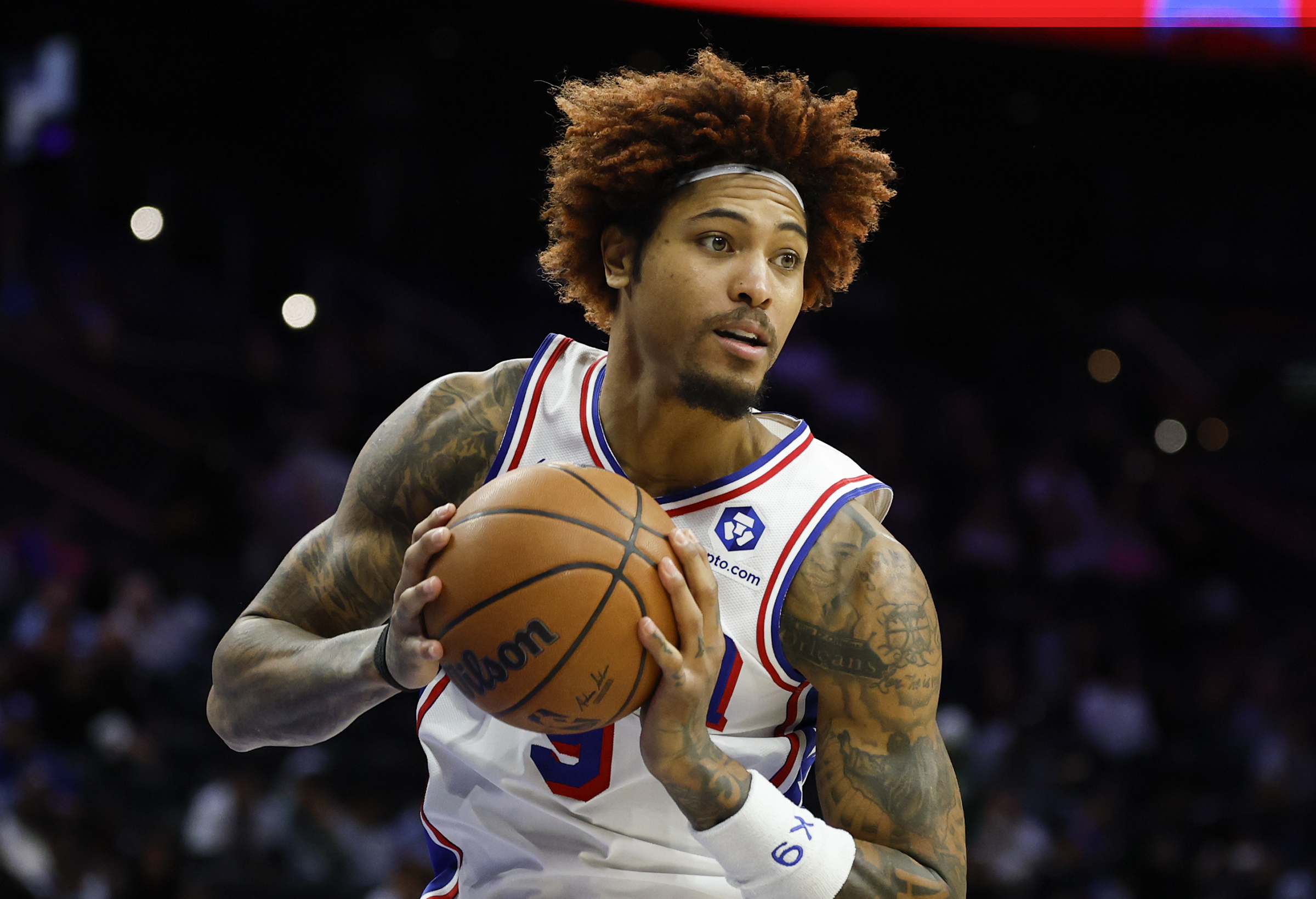
Sixers small forward Kelly Oubre Jr. has missed the past 11 games with a left-knee LCL sprain.
Meanwhile, Oubre has missed the past 11 games with a left-knee LCL sprain. The 6-foot-8 small forward has left an enormous void to fill. Prior to injury, Oubre was averaging 16.8 points and doing a solid job of guarding the opposing team’s best perimeter player.
The Sixers also miss Watford, who’s been a solid point forward. He finished with his lone career triple-double — 20 points, 17 rebounds, and 10 assists — in a 130-120 victory over the Toronto Raptors on Nov. 8. Watford, who’s averaging 8.9 points, 4.7 rebounds, and 3.6 assists, has missed the past six games with a left abductor strain.
“There on the court doing some individual stuff, but doing stuff with the team,” Nurse said of Oubre and Watford.
Despite injuries, the Sixers have been playing exciting basketball and given themselves a chance to win most games.
“We have been doing a lot of great things late in games,” Nurse said. “There’s a lot that’s encouraging. I feel like we’re going [upward], just by the way we are playing, and with [improved] health and participating and guys being available, and it feels like we are heading in the right direction.”
But the Sixers believe defensive improvement will help them ascend in the standings.
As of Thursday afternoon, they were ranked 14th in the league in defensive rating (113.5). The Sixers were also eighth in three-point percentage defense (.343), 11th in field-goal percentage defense (.464), and 15th in scoring defense (116.1 points per game). One bright spot is that they are first in blocked shots (6.1 per game).
“I think we’re a little ways away from where we need to be, but I think we’re getting there,” George said. “We’re making steps to be a better defensive team. Kelly, obviously, brings a lot. He’s still one of the best on-ball defenders. One of the best help-side defenders, and just that tenacity he plays with on the defensive end to get after it.
“We’re gonna get a lot once he comes back, and then it’ll allow us to be more versatile with myself, with KO, with [Dominick] Barlow, Quentin [Grimes], the four of us taking the bulk of the defensive matchups. We’ll be really good, but I like where we’re at. It’s a good thing to have areas to improve in when you are going in the right direction.”
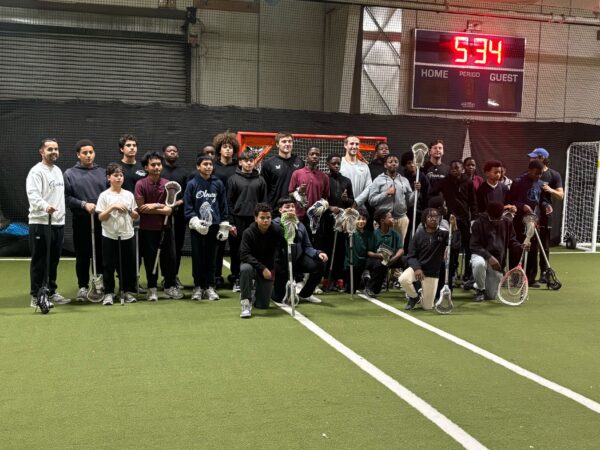
As Harlem Lacrosse Philadelphia wrapped up its clinic hosted by the Philadelphia Wings for middle school players on Wednesday, forward Eric Fannell wanted to end it on a high note. The session consisted of passing, fielding ground balls, and shooting drills led by Fannell and forward Brennan O’Neill.
To end the day at the Phield House on Spring Garden Street, Fannell and O’Neill had the attendees line up to take shots in the corner of the net. Each player took turns trying to perfectly place their shot. Some failed while others succeeded.
One middle schooler participating in the clinic made a shot that rang off the top left corner and echoed. The players swarmed their teammate as he yelled, “I’m the king.”
“It was amazing to see the kids smile,” Fannell said. “Amazing to see the teammates cheer for [each other]. At the end of the day, that’s what it’s about.”
Harlem Lacrosse, a nonprofit organization that helps under-resourced communities, began in Harlem, N.Y., in 2011. It has since grown to 39 programs for middle and high schoolers, and has visited cities including Boston, Philadelphia, and Baltimore. Philadelphia gained a chapter in 2017.
The Wings, Philly’s professional lacrosse team, partnered with Harlem Lacrosse three years ago. The partnership allows crossover clinics and gives Philly’s youth a chance to meet players at the pinnacle of the sport.
“You can start [participating in] the program beginning in sixth grade,” said Anita Roberson, Harlem Lacrosse Philadelphia’s executive director. “So we have some kids here who have participated in sixth, seventh, and eighth [grade], but we also have some kids where this is one of their first experiences and are a brand new lacrosse player, and to meet a professional, someone who gets paid to play the game at that level, I think it’s pretty exciting.”
Harlem Lacrosse middle schoolers were coached by two of the top players in the sport. Fannell and O’Neill also gave the players pointers. If a player did something well, they would congratulate him. If there was a mistake, they would correct it.
Fannell signed with the Wings in the offseason after three seasons with the Halifax Thunderbirds. The 31-year-old wanted to give back to the community, so when the Wings asked if he was on board for the clinic, the answer was simple: yes.
“The more they have fun, the more they’re going to pick their stick up at home,” Fannell said. “They’re going to go home and play wall ball, call their friends and play pass because they had fun.”
The Harlem Lacrosse coaches also participated in the fun. During drills, some coaches would join in, passing and catching with the middle schoolers.
The clinic was hosted ahead of the Wings’ home opener against the Colorado Mammoth at Xfinity Mobile Arena at 1 p.m. Saturday. Ahead of their matchup, the Wings will present Harlem Lacrosse with a $10,000 grant that will go toward the program. Philly’s Harlem Lacrosse program will be in attendance as Roberson and players accept the check on the field.
With the funds, Roberson plans to continue to grow a program that has been on the rise in recent years. Harlem Lacrosse has an initiative to introduce Black youngsters to lacrosse.
“I grew up in the Philadelphia area; I was one of a few Black students who was exposed to the sport,” Roberson said. “I went to school in a suburb that actually had it. Had I lived five minutes away across the street, I would not have ever had access to the sport. But the thing I think that was critical for me is that sports, in my own personal life, was a means of transformation.
“So I think for kids that come from backgrounds that may not be considered traditional or just kids in general, because there’s a lot of threats and things that kids have to deal with these days, a sport can be just such a viable mechanism for them to find safety, both emotional and physical safety.”
Adoree’ Jackson’s interception of Justin Herbert with 10 seconds remaining in the second quarter Monday night was gift-wrapped thanks to Jaelan Phillips getting a hand on Herbert as he released the ball. But there was another present: Kimani Vidal’s 15-yard personal foul.
It set the Eagles up on the Chargers’ 30-yard line. After a miserable half, they were in field goal range to at least cut Los Angeles’ 10-6 lead to 10-9. They had two timeouts to try to advance the ball and give Jake Elliott an even more manageable field goal.
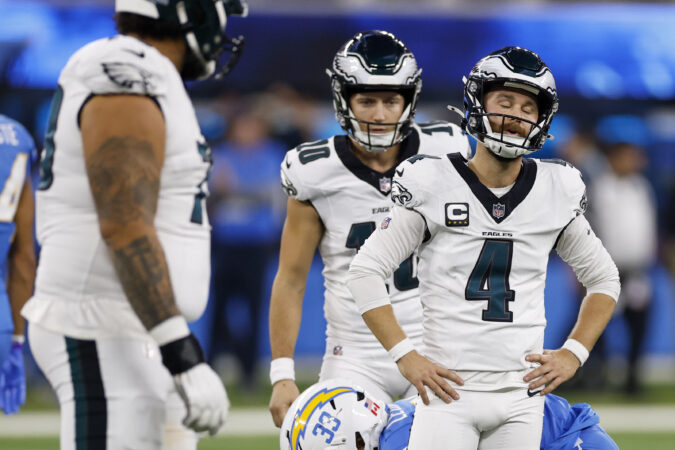
Instead, Jalen Hurts took a shotgun snap, looked only to his left, where three receivers were running routes near the sideline, and launched the ball intentionally out of bounds. Elliott trotted onto the field and missed from 48 yards out — just his second miss of the season on a field goal inside 50 yards, although he missed an extra point a week earlier.
Any analysis of what went wrong could theoretically stop right there. SoFi Stadium is indoors, and Elliott knows it’s a kick he needed to make.
“They need to stop,” Elliott said of his misses. “I feel like I’m striking the ball well. Last week, obviously, windy conditions. But no excuses here indoors. It’s frustrating.”
Elliott was rightly frustrated with himself, but he had reason to be frustrated with his team for not making the kick any easier on him. The Eagles had two timeouts, but the play they called looked more like a time-waster than one with a real chance at advancing the football.
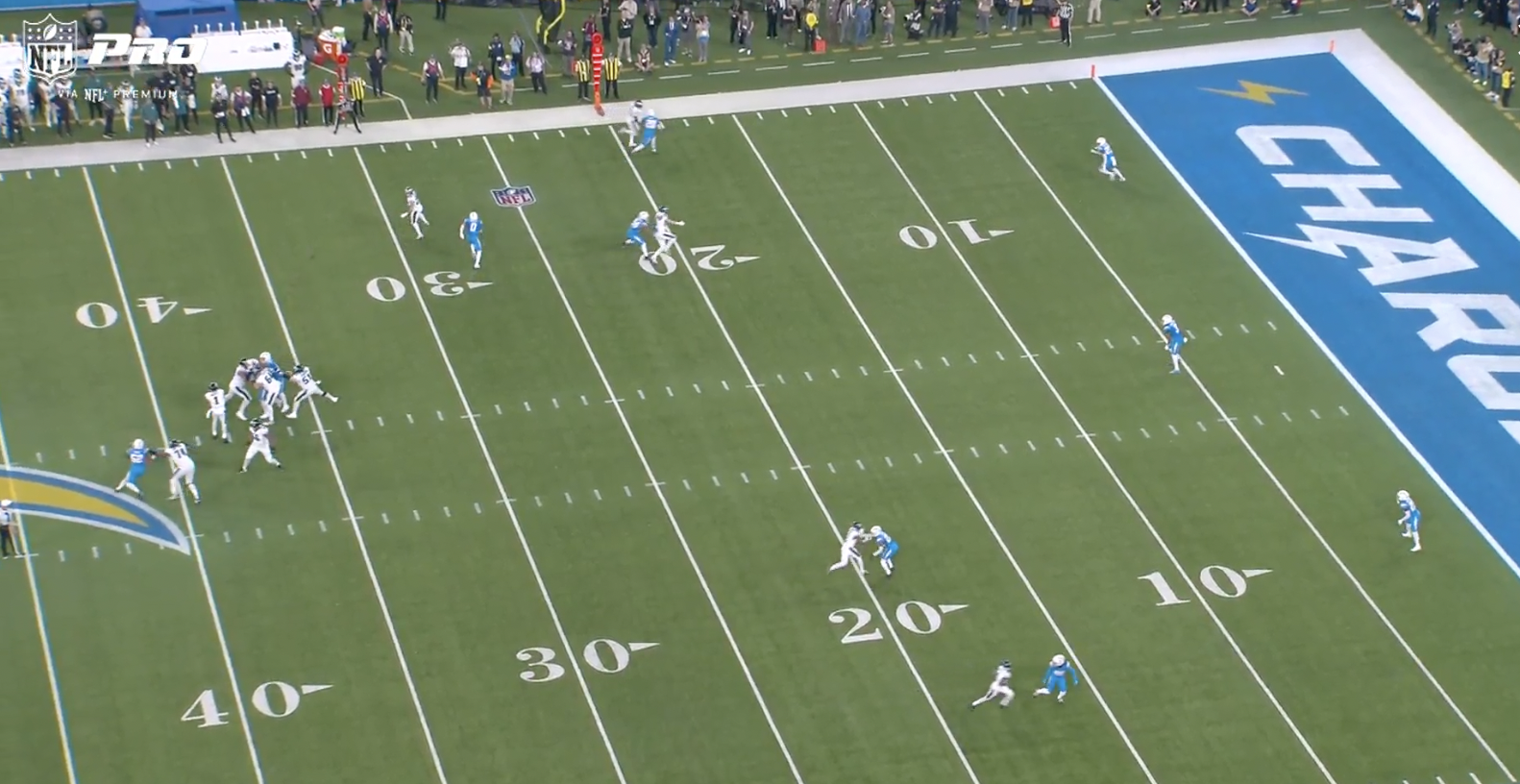
Four of the five route-runners were near the sideline. The fifth, Jahan Dotson, wasn’t even to his break before Hurts fired the ball out of bounds.
Here’s a screenshot of where the receivers were when Hurts released the ball:
The play the Eagles ran before attempting a field goal before halftime Monday night. (Screenshot from NFL Pro film review.)
It was a low-percentage play that the Chargers covered easily. Perhaps the Eagles were simply just comfortable with the distance for Elliott, who had already converted from 41 yards and 30 yards in the first half and entered Monday 9-for-10 on kicks inside 50 yards.
But why, with two timeouts, was there not any effort to use the middle of the field to try to make the attempt a little bit easier for Elliott?
“We’re trying to advance it,” Nick Sirianni said when he was asked Wednesday. “The way we tried to advance it was to the sideline, and it didn’t work. We have plays in our offense to be able to advance it, without getting too much [into it], in the middle, and then we have plays in our playbook that try to advance it on the sideline. We chose the one on the sideline and it didn’t work.”
The three points would have been critical, but it’s not the only reason the Eagles lost. Still, the inability to get points before halftime when they are available has been an ongoing theme for the Eagles.
On the year, the Eagles have started a possession inside 1 minute, 20 seconds on the clock before halftime eight times and have zero points to show for it from those scenarios. (They have started four possessions just before the two-minute warning and have come away with points on three.)
Eagles coach Nick Sirianni has been conservative this year in late-half situations.
Every situation and every game is different. The Eagles had two of them vs. Denver. The first possession came with 1:19 left and the ball on their own 11-yard line. They went three-and-out, but they forced a Broncos punt on the ensuing drive that gave them another possession starting at their own 5-yard line with only eight seconds left. Hurts took a knee. No harm, no foul there.
But it’s worth exploring a few of these late-clock examples in which points were possible. In Week 3 vs. the Los Angeles Rams, the Eagles had a woeful first half of offense. But they got the ball on their own 35-yard line, trailing 19-7, with 10 seconds left on the clock and three timeouts. They opted to have Hurts kneel and go to halftime. They eventually won the game, but only because of two blocked field goals. Three points may have been critical.
Against the Minnesota Vikings in Week 7, the Eagles got the ball back at their own 16-yard line with 59 seconds left and all three timeouts. To their credit, they came out firing. Hurts connected with DeVonta Smith on first down for 6 yards. Then, without huddling, the two hooked up again for a 16-yard gain to the Eagles’ 38-yard line. The Eagles took their first timeout with 34 seconds left.
Hurts threw incomplete on the next play and was sacked on second down to bring up a third-and-13 from the Eagles’ 35-yard line. There were 23 seconds on the clock when Hurts was tackled, but Sirianni decided to let the clock expire rather than calling a timeout to run another play. The Eagles hit halftime with a 14-6 lead and kicked off to Minnesota to start the second half.
“In that particular case, it was time to let that drive end and go to the locker room,” Sirianni said the next day, after the Eagles’ 28-22 victory. “Third-and-13 is not a guarantee. I believe in our team and believe in our guys at all costs, but you’ve also got to play smart.
“Third-and-13 in that situation where you’re not in a guaranteed, ‘Hey I’m getting points if I convert this third-and-13.’ I’m still going to have work to do once I do get this third-and-13.’ The risks kind of outweigh the potential benefits from it. At that point, you don’t get it and then you have to punt.
“Obviously, I wanted to go and get points, which is why you saw the drive go as it was, but once we did take the sack, we played that how I wanted to play that. I have no regrets there.”
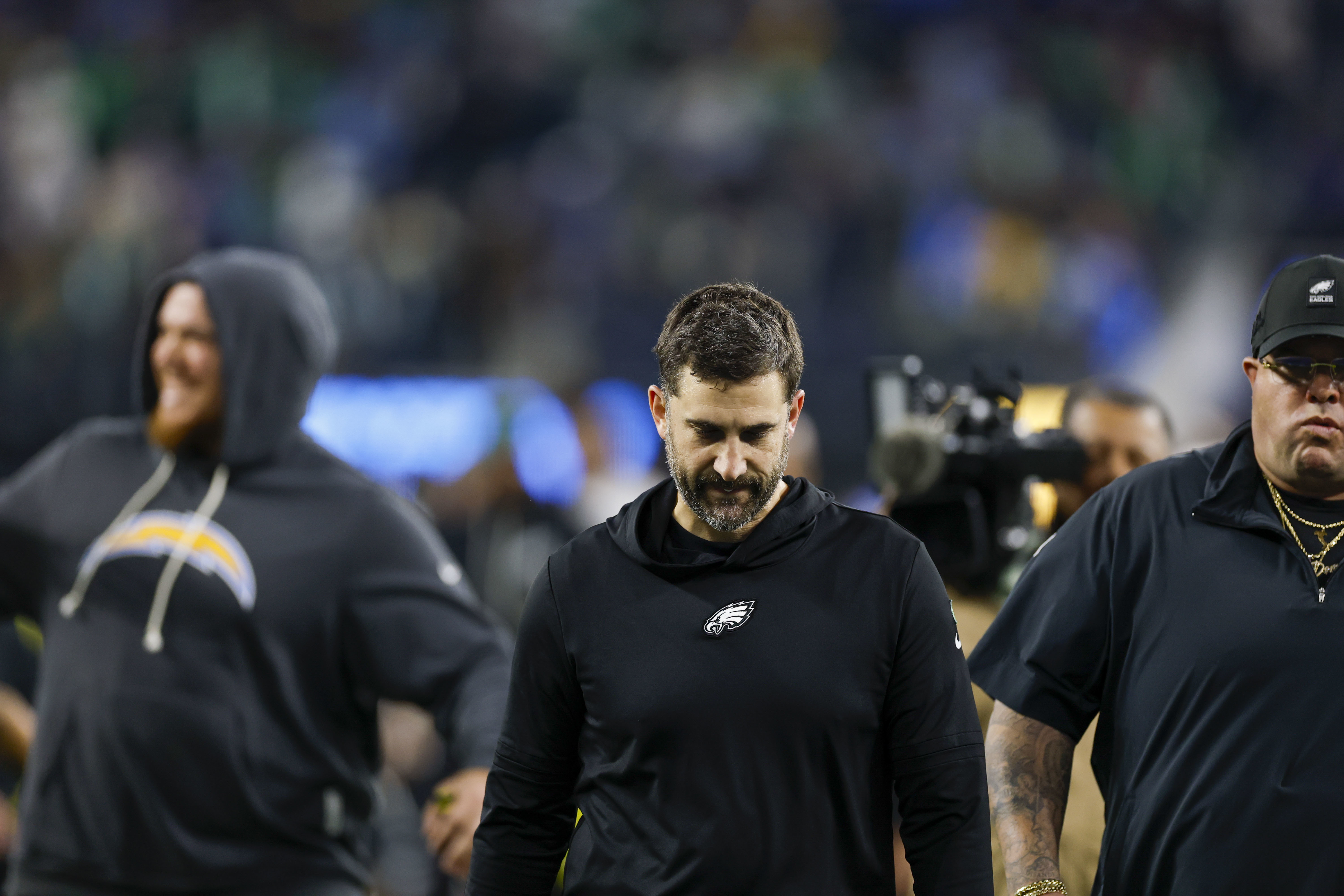
Coach Nick Sirianni walks off after the Eagles lost in overtime to the Los Angeles Chargers.
Sirianni is somewhat obsessed with situational football. He has studied end-of-half scenarios — not just his own, but other situations around the league. Each scenario in a given game has different context, including how the offense is playing at that time.
The Eagles have pushed the envelope in these spots in the past, but they have gone conservative at times this year.
Against Dallas in Week 12, the Eagles, leading 21-7, started a drive with two timeouts and 17 seconds left in the first half at their own 28-yard line. They called a handoff to Saquon Barkley that went for 1 yard and let the clock expire. Perhaps a chunk run would have resulted in a timeout and some aggression from the Eagles to try to score points, but how often have chunk runs been reliable? And if the point was to just get to halftime, why not just kneel?
Points weren’t guaranteed, but they were possible.
The Eagles, of course, lost that game by three. Just like they did Monday.
What has happened since Sunday’s College Football Playoff selection show could begin to shape the future of the sport this year and beyond.
Miami and Notre Dame, both 10-2 and ranked 12th and 10th, respectively, ahead of conference championship weekend, were essentially vying for one spot in a 12-team playoff that was mostly set with the top eight teams seeing little movement.
After No. 9 Alabama lost to third-ranked Georgia by three touchdowns and No. 11 Brigham Young lost by 27 to No. 4 Texas Tech and No. 17 Virginia dropped the ACC title game to Duke, the debate then shifted to whether the Crimson Tide deserved to be in the field.
In the end, though, BYU dropped out of the top 12, Alabama remained at No. 9, and Miami jumped two spots to knock Notre Dame out of the playoff field, creating a firestorm in the process with Tulane and James Madison getting the final two spots.
The committee pointed to Miami’s head-to-head victory over Notre Dame in Week 1 of the season as the ultimate deciding factor.
In response to getting left out of the playoff field, the Irish decided to turn down a potential bowl game matchup against BYU in the Pop-Tarts Bowl in Orlando, ending the season.
The outrage is all too familiar. An undefeated Florida State team in 2023, ranked No. 4 in a four-team playoff format at the time, was dropped because of an injury to star quarterback Jordan Travis in favor of No. 8 Alabama, which had defeated Georgia in the SEC title game that year.
That 2023 decision to leave the ACC champion out of the playoff has continued a negative trend for the selection committee:distrust. Distrust in the committee’s criteria. Distrust in what it values in playoff-caliber teams vs. what it does not. Distrust in how the panel measures the resumés of each team. Distrust in measuring programs by a different set of standards.
Notre Dame coach Marcus Freeman reacts on the sideline against Stanford on Nov. 29.
To be clear, every conference should have a fair shot at winning the national championship.
Tulane, which beat three Power Four schools, plays in the toughest Group of Six conference in the American, and its coach, Jon Sumrall, was hired to be Florida’s next head coach.
James Madison, although it lost its lone game against a Power Four opponent, had Bob Chesney poached to be UCLA’s next head coach. Both Sumrall and Chesney are sticking with their teams through the playoffs.
Notre Dame’s decision to sit out a bowl game could set a precedent. With Name, Image, and Likeness reshaping college sports, more programs built specifically with playoff aspirations may do the same if their seasons don’t go as planned.
Keeping Notre Dame out of the playoff is fine, but don’t have the school ranked ahead of Miami for five weeks only to flip it on Selection Sunday. What about keeping Alabama at No. 9 after losing by three touchdowns, but moving down BYU and Ohio State after their losses?
After this, the CFP committee ought to figure out a better way to determine the best 25 teams every week — because this current format is not working and could have long-term ramifications for the sport.
Villanova’s tall task
The star of Villanova’s two wins to open the Football Championship Subdivision playoffs has been its defense, which allowed just seven points in each win, the lowest among the remaining eight teams.
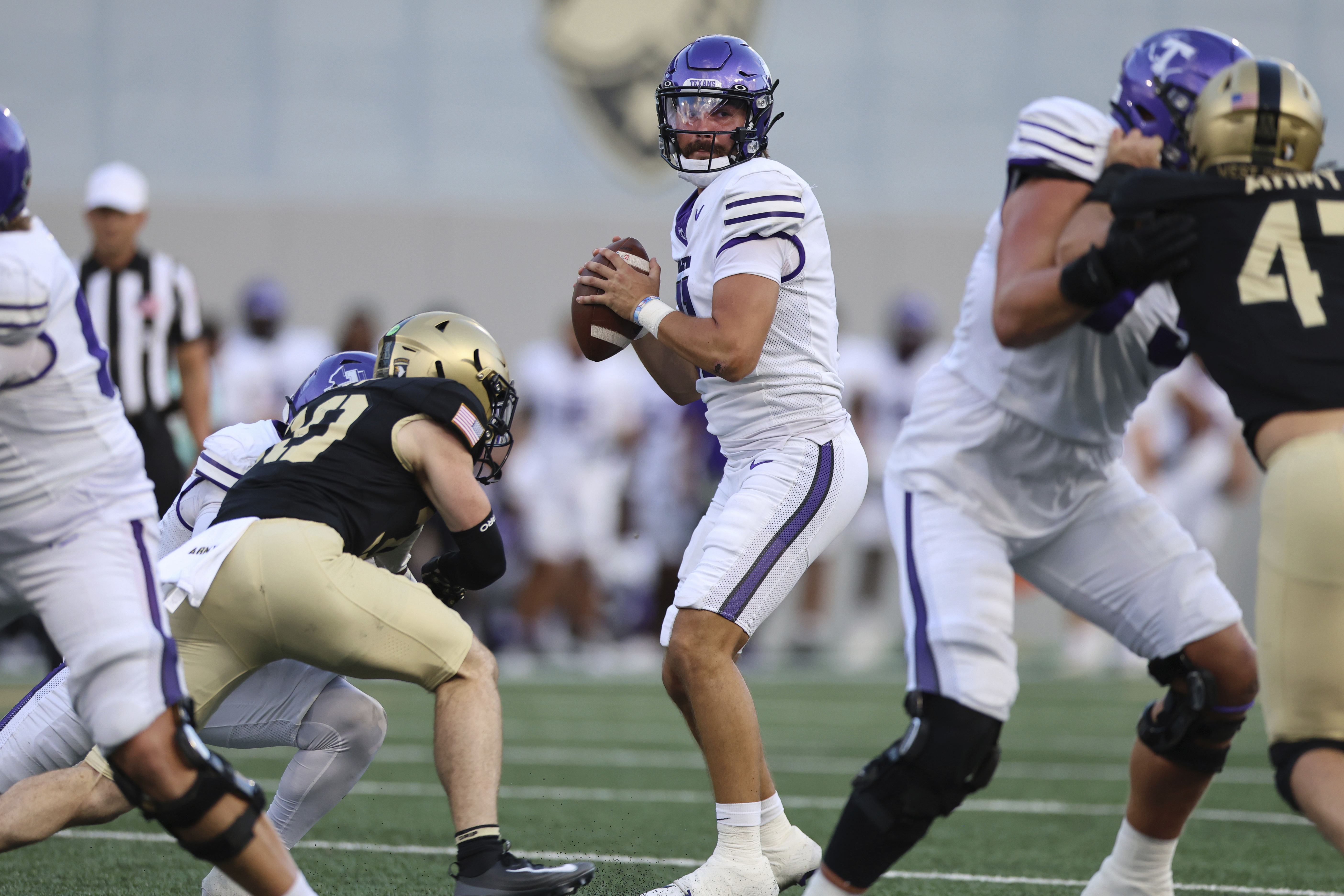
That defense will be put to the test Saturday against fourth-ranked Tarleton State (12-1) of Texas, which has one of the best scoring offenses in the FCS (44.1 points per game) and the No. 3 total offense (472.3 yards), led by Walter Payton Award finalist Victor Gabalis, the team’s quarterback.
The Texans also have wins over an FBS school, Army, and are a perfect 7-0 at their Memorial Stadium in Stephenville, Texas, while averaging 41.8 points.
Tarleton State, about 80 miles southwest of Fort Worth, also ranks in the top 10 in scoring defense (18 points) and passing yards allowed (160.5 yards) but has one glaring weakness: defending the run. On the season, Tarleton ranks 69th in rushing defense, giving up 163.6 yards per game, which should offer the Wildcats an opportunity to control the game in that aspect.
Tarleton State’s Victor Gabalis in action against Army on Aug. 29.
Saturday’s quarterfinal game (noon, ESPN) will ultimately come down to Villanova’s defense holding Tarleton State’s offense in check. Harvard and Lehigh each ranked inside the top 25 in total offense, but the Wildcats shut both teams down.
The only game Tarleton State lost this season came against Abilene Christian, the only time the Texans scored less than 30 points.
Villanova (11-2) will need big games from running backs Ja’briel Mace and Isaiah Ragland and the offensive line to clinch the program’s first semifinal appearance since 2010. The winner of this matchup will face the winner of UC Davis and Illinois State next Saturday.
Although Delaware State’s season came to an end with a loss to South Carolina State two weeks ago that determined the Mid-Eastern Atlantic Conference’s representative in the Celebration Bowl, coach DeSean Jackson, the former Eagles wideout, earned some recognition after his debut season.
On Monday, Jackson, after an 8-4 season was named the 2025 Boxtorow HBCU Coach of the Year for his efforts at Delaware State this season. The Hornets led the FCS in rushing yards per game (291.2 yards), and Jackson led his team to a win over Michael Vick’s Norfolk State on Oct. 30 at Lincoln Financial Field.
For the 126th time, Army and Navy will meet, this year at Baltimore’s M&T Bank Stadium, with the Commander-in-Chief’s Trophy on the line. Navy won last year’s matchup with a resounding 31-13 victory at Northwest Stadium in Landover, Md.
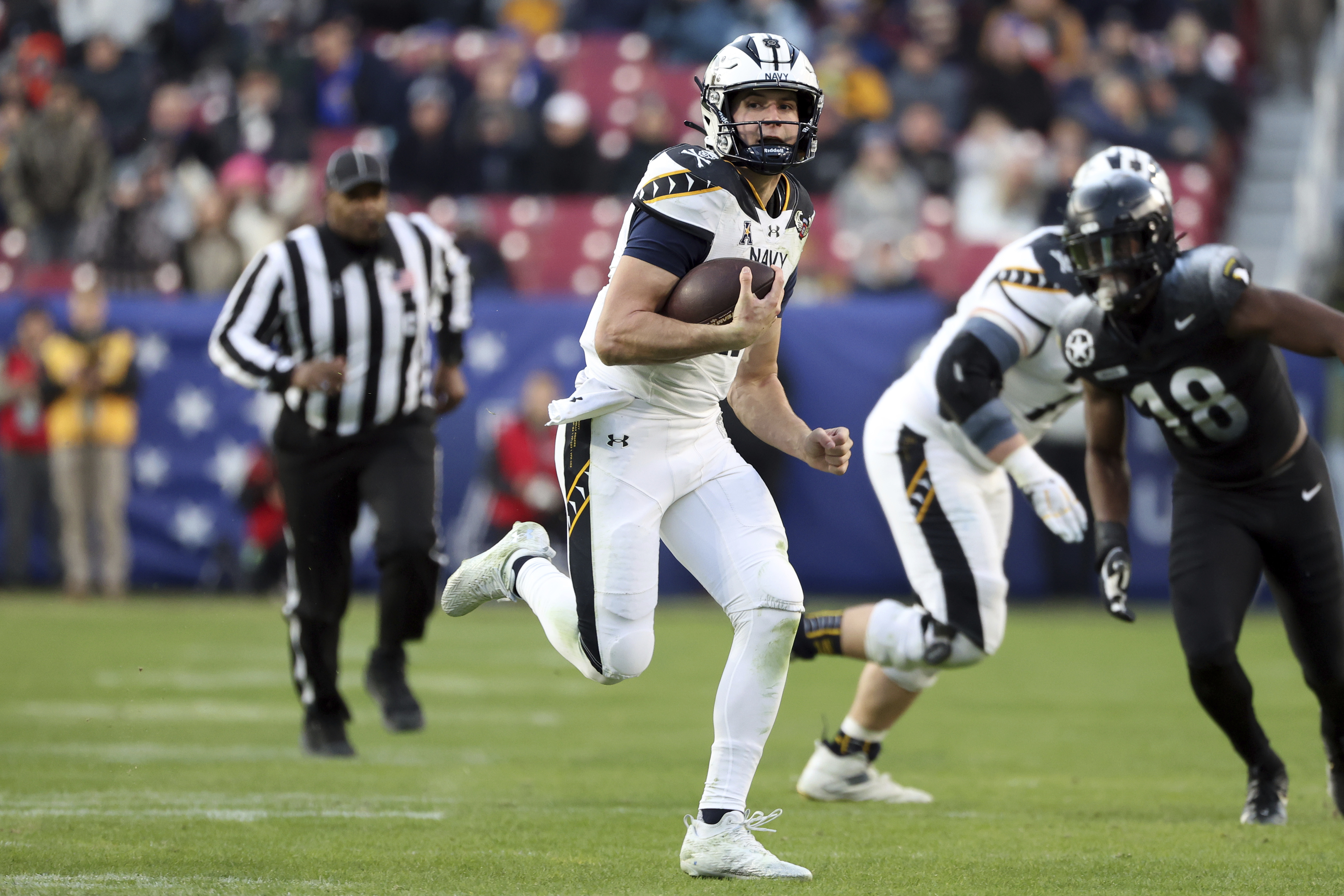
Navy leads the series, 63-55-7, but Army has won six of the last nine matchups. The Midshipmen, though, have the best player in quarterback Blake Horvath and the nation’s top rushing offense (298.4).
Navy quarterback Blake Horvath in last season’s game against Army.
LOS ANGELES – Golden State Warriors Coach Steve Kerr sparked a moment of introspection for the NBA last month when he said his team’s medical staff believed modern basketball’s fast pace and heavy mileage were contributing to a rash of injuries. After bemoaning the lack of practice and recovery time, Kerr demurred when asked whether he thought the league would consider shortening its 82-game schedule in an attempt to protect player health.
“The tricky part is all the constituents would have to agree to take less revenue,” Kerr said. “In 2025, in America, good luck in any industry. … That’s not happening.”
Kerr’s doubt was well founded, because the NBA’s business is booming: Commissioner Adam Silver recently struck new media rights deals worth $76 billion over 11 years, the league’s 30 teams combined to generate a record $12.25 billion in revenue last season, and a record 16 players will earn at least $50 million in salary this season.
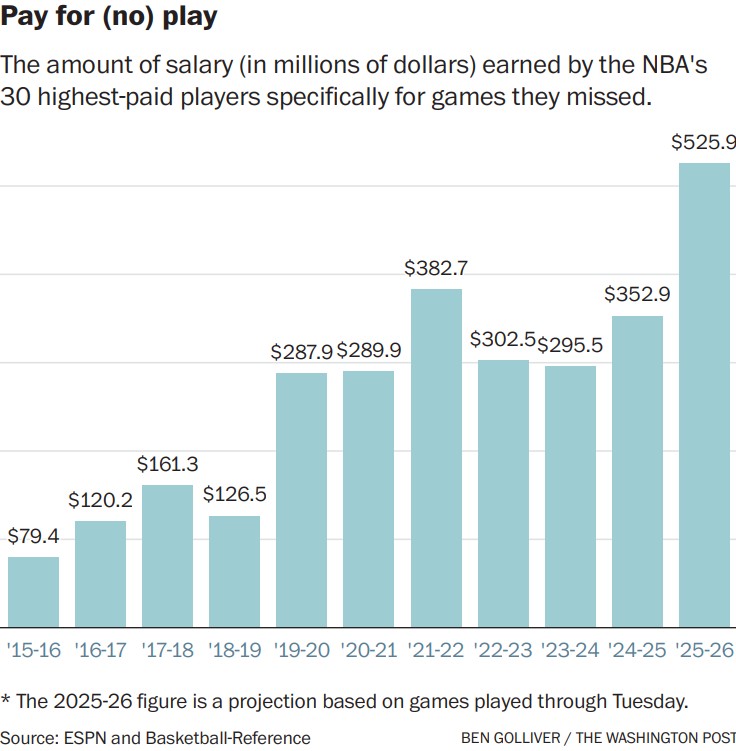
But as the NBA’s top-line financial metrics continue to increase, so, too, do the skyrocketing costs associated with lost productivity for injured stars. Remarkably, if early trends hold, the NBA’s 30 highest-paid players, according to salary data compiled by ESPN, could combine to cost their teams more than $525 million in empty salary associated with games they do not play this season.
Stephen Curry (who will earn $59.6 million) is sidelined with a quadriceps injury. Joel Embiid ($55.2 million) has missed more games than he has played because of recurring knee problems, Kawhi Leonard ($50 million) has already missed 10 games because of a foot injury, and Bradley Beal ($53.7 million including a contract buyout) played only six games before suffering a season-ending hip injury. LeBron James ($52.6 million) and Anthony Davis ($54.1 million) missed the first four weeks of the season because of injury, and Giannis Antetokounmpo ($54.1 million) and Ja Morant ($39.4 million) are out with muscle strains.
Jayson Tatum, Damian Lillard, Tyrese Haliburton and Kyrie Irving are on the books for $204.4 million combined but have yet to play because of major injuries suffered last season. During one recent loss, the New Orleans Pelicans took the court without their five highest-paid players, who will combine to earn more than $140 million.
Stephen Curry is currently sidelined with a quadriceps injury.
Many of those absences have directly led to trouble in the standings. Haliburton’s Indiana Pacers, who reached the NBA Finals in June, have dropped to 14th in the Eastern Conference. Antetokounmpo’s Milwaukee Bucks are at risk of missing the playoffs for the first time since 2015-16 and must pay Lillard $113 million over the next five seasons after waiving him using the league’s stretch provision. And the Los Angeles Clippers, wobbly with Leonard and Beal missing time, are on track for their first losing season since 2010-11.
“When you lose your best player and a top-10 player when he’s on the floor, it’s hard to make up for that,” Clippers Coach Tyronn Lue said last week. “I know a lot of people say ‘next man up,’ but if [Leonard] is making [$50] million and your next man up is making $400,000, it’s not really the same.”
In two notable cases, star injuries have already contributed to major personnel changes. Without Davis and Irving, the Dallas Mavericks struggled out of the gate and fired general manager Nico Harrison less than a month into the season. And well before Zion Williamson’s latest injury, a hip strain that will keep him out for weeks, the Pelicans had crashed into the Western Conference’s basement and fired Willie Green after he coached just 12 games.
“We have a lot of guys that are in street clothes,” Mavericks Coach Jason Kidd said shortly after Harrison’s firing. “We’ve got over, I think, $100 million sitting on the sideline.”
More injuries, more problems
The rise in star injuries goes well beyond this season’s most extreme examples of the Pacers, Clippers, Mavericks and Pelicans.
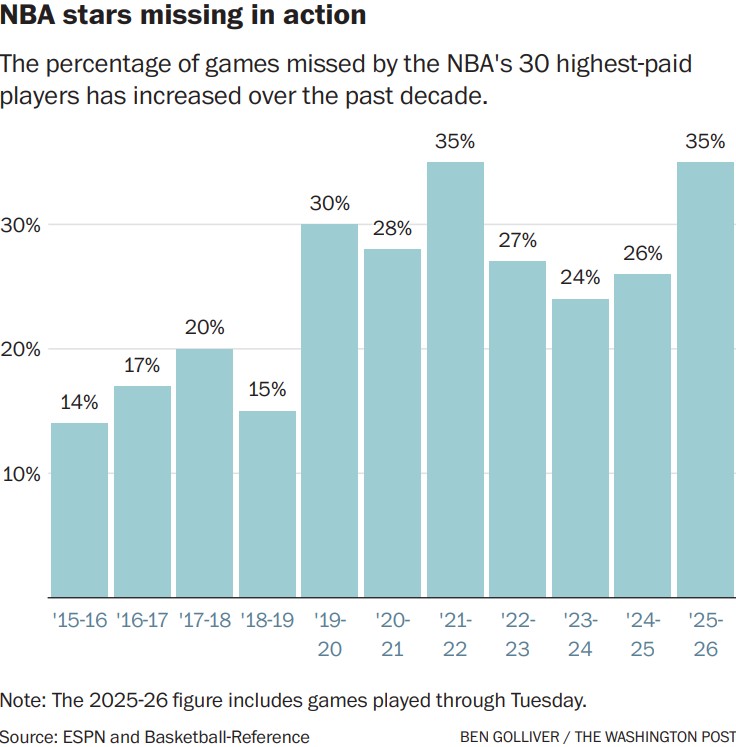
Flash back one decade: During the 2015-16 season, NBA teams averaged 102.7 points, 24.1 three-point attempts and 95.8 possessions per game. That year, the league’s 30 highest-paid players combined to miss just 14 percent of their teams’ games.
This season, teams entered Wednesday averaging 116.6 points, 36.9 three-point attempts and 100 possessions per game. The league’s highest-paid players have combined to miss 35 percent of their teams’ games. A faster, higher-scoring and more rigorous sport appears to be taxing players like never before.
John DiFiori, the NBA’s director of sports medicine, said the league views the 2019-20 season as an “inflection point” for star injuries. During the four seasons before that campaign, which was interrupted by the coronavirus pandemic, the NBA’s 30 highest-paid players missed between 14 and 20 percent of their teams’ games. Since 2019-20, that number has jumped, ranging from 24 percent to 35 percent. The missed games rate has remained elevated in the years after the NBA stopped requiring players to sit out if they tested positive for the coronavirus.
“Injury rates are going up,” DiFiori said. “When we look back at what we’ve been doing the last 10 or 12 years, it’s a moving target. The game doesn’t stay the same. We’re trying to reduce injuries, and the game is also changing. All these other factors, the pace of play and what players are doing in training, those are all moving targets. To wrap our arms around that is a challenge. It’s something we’re quite focused on. … [Teams are] spending a lot of time and money and bringing in a lot of expertise. Despite all of that, we’re seeing an increase in injuries. It’s not for teams’ lack of focus on it.”
The percentage of games missed by the NBA’s 30 highest-paid players has increased over the past decade.
The NBA instituted the Player Participation Policy (PPP) before the 2023-24 season to address what it calls “a statistically significant increase” in star absences and to curb “load management,” a strategy used by some teams to rest players throughout the season. With the NBA negotiating new media rights deals and debuting the NBA Cup in-season tournament to spark interest, then-league executive Joe Dumars met with all 30 teams to remind them that the NBA is an “82-game league.” To reinforce that message, the PPP mandated that players appear in at least 65 games to be eligible for end-of-season awards, and the league began fining teams if they rested healthy players for nationally televised games.
The PPP enjoyed some initial success: The 30 highest-paid players missed just 24 percent of games in 2023-24, the league’s best mark since the pandemic. That progress proved short-lived, however; the availability of the NBA’s highest-paid players has regressed noticeably over the past three seasons. During the 2025 playoffs, Tatum, Lillard and Haliburton all suffered season-ending Achilles tendon injuries during a span of less than two months.
Muscle strains have been another point of immediate concern. The Mavericks shocked the basketball world by trading franchise player Luka Doncic last season while he was recovering from a calf strain; Antetokounmpo, Davis, Morant and Victor Wembanyama are among the stars who have been sidelined by the same injury this season. Haliburton was still recovering from a calf strain when he tore his Achilles during Game 7 of the NBA Finals, but the NBA’s medical staff has yet to identify clear evidence that suggests a prior calf injury increases the risk of an Achilles tear.
“When you have a small prevalence of injury, it’s hard to scientifically study that,” DiFiori said. “Typically over the last 15 years, we average about two Achilles tendon injuries per year. Last year, we had seven. That’s a lot. One year prior, also with a high pace of play, we had zero. We’re taking it very seriously. We’re concerned about it, but I don’t think we have our finger on what’s the driver here or what factors may have led to last season’s unusually high number.”
More injuries, more money
Kerr is hardly the only voice in the basketball and medical communities raising the alarm about the increase in injuries. A range of theories abound.
The NBA cut its preseason to three weeks in 2017, reducing the amount of time players have to ramp up for game action to spread out the regular season more evenly and eliminate instances of four games in five nights. The league changed its shot clock reset to 14 seconds and emphasized greater freedom of movement for players to encourage faster and less restrictive play in 2018. The pandemic created calendar disruptions and shortened schedules in 2020-21 and 2021-22, and the NBA has tweaked its regular season schedule in each of the past three seasons to accommodate the NBA Cup in November and December.
Aside from those legislative moves and the possibility of unintended consequences, the use of analytics has swept through the league and transformed the sport into a perimeter-dominated endeavor. Playing at a fast pace and shooting a high volume of three-pointers are now generally viewed as optimal strategies for underdogs hoping to increase variance against more talented opponents.
The Pacers’ unexpected Finals run, driven by a breakneck offense and high-pressure defense, has spawned copycats. The results haven’t always been positive: The Portland Trail Blazers made waves by regularly deploying a full-court press to start the season, only to endure injuries to their guards in recent weeks.
It’s also worth noting that a cohort of superstars such as Curry and James has remained highly productive late into their lengthy careers. While these older players have remained among the league’s biggest earners, their durability has tended to decrease as they proceed through their late 30s.
On the flip side, a younger generation of high draft picks – such as Williamson, Morant, LaMelo Ball and Ben Simmons – has encountered recurring injuries before they reach their late 20s, which have typically been viewed as the prime years for basketball players. NBA executives have long expressed serious concerns that the modern generation of players is arriving to the NBA with preexisting injuries or risks that result from playing too many games at the youth level and specializing in only one sport.
The amount of salary (in millions of dollars) earned by the NBA’s 30 highest-paid players specifically for games they missed.
As the NBA and its fans continue to debate possible solutions, the injury epidemic has reached staggering heights when it comes to lost productivity. Back in 2015-16, the 30 highest-paid players combined to earn roughly $560 million. Because those players only combined to miss 14 percent of their teams’ games, their teams combined to pay roughly $79 million in empty salary.
Last year, the empty salary mark reached more than $352 million. This season, with the 30 highest-paid players combining to earn more than $1.49 billion and missing 35 percent of their teams’ games entering Wednesday, the number is on pace to exceed $525 million.
That would easily set a record for lost productivity. As Lue and Kidd might say, NBA teams could soon have a half-billion dollars sitting on the sideline.