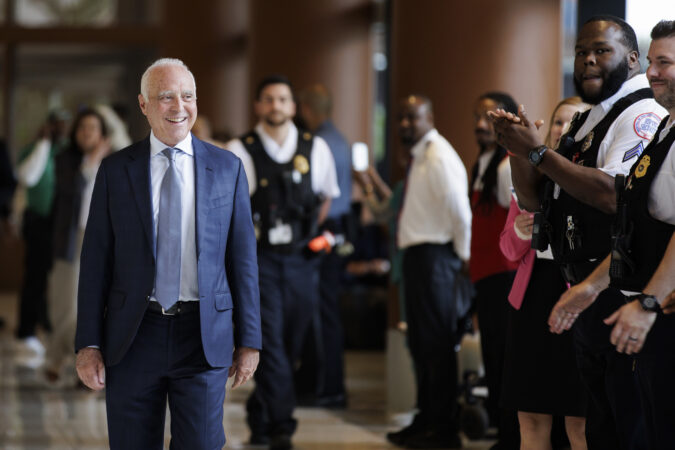
Eight years ago, at the inaugural Eagles Autism Challenge, team owner Jeffrey Lurie called the family-friendly bike ride that raised money for autism research and programs “a call to action” and “one giant step.”
The event had more than 3,000 participants and raised more than $2.5 million. Eight years later, the combined efforts of the Lurie Autism Institute — launched last year with a $50 million donation from the Lurie family — and the Eagles Autism Foundation have collectively contributed to more than $100 million toward research and clinical care programs around the world.
This year’s Eagles Autism Challenge raised more than $16 million through nearly 40,000 donations and more than 6,500 participants, according to the team.
Lurie, 74, bought the Eagles in 1994. He has lifted the Lombardi Trophy twice after two Super Bowl victories, but his efforts to support autism research and care may be the larger lasting legacy of his tenure.
On Tuesday, ESPN announced that Lurie will be honored with theStuart Scott ENSPIRE Award as part of this year’s Sports Humanitarian Awards during ESPYs award week. The award, named after the late SportsCenter anchor, is given to someone that uses the power of sports to help disadvantaged groups or people.
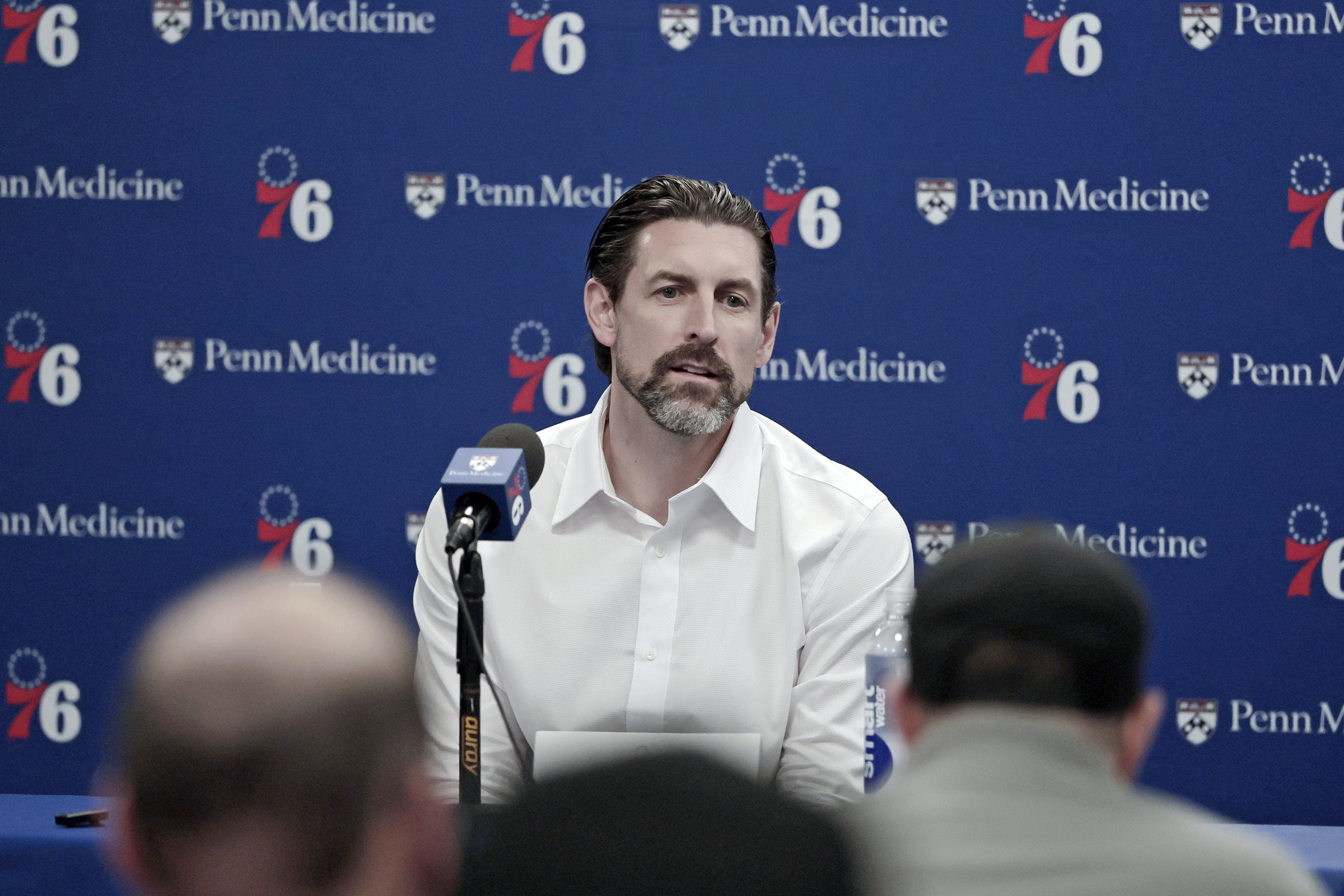
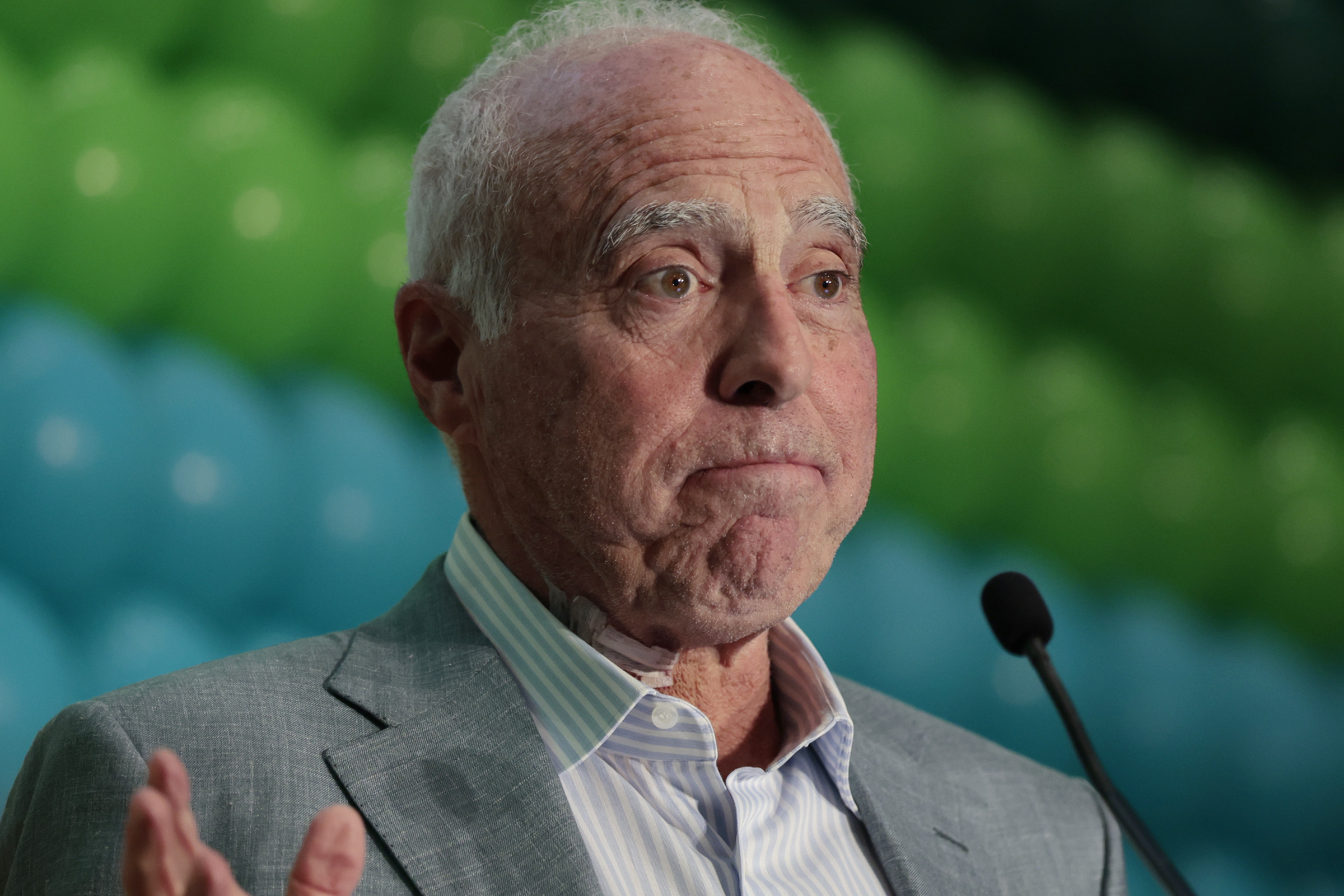
Eagles owner Jeffrey Lurie is one of the world’s leading fundraisers for autism research.
“This honor exemplifies the transformative power of sport and the life-changing impact it can have on people,” Lurie said in a press release. “Stuart was a trailblazer whose legacy was built on integrity, professionalism, and bravery. His authentic character and fearlessness in the face of adversity will live on forever through this distinguished award.
“I have always envisioned that the impact of owning a professional sports franchise could extend beyond the field and into the global health community. The Eagles Autism Foundation and Lurie Autism Institute have been created to support individuals with autism and their families by funding innovative and potentially groundbreaking research rooted in science and data, in addition to providing programming and services to those in need. Autism is a global condition that is not only underfunded and under-researched, but just in the United States alone affects one in 31 children.”
The Sports Humanitarian Awards will take place on Tuesday, July 14 in New York. The show will be featured during ESPN programming and during the ESPYS, which air July 15 at 8 p.m. on ABC.
Lurie is the lone representative of Philadelphia’s sports teams this year in both the humanitarian awards and the main ESPYs program. The full list of humanitarian award winners can be found here. Nominees for the ESPYs can be found here. South Jersey’s Hannah Hidalgo, a guard at Notre Dame, is nominated for best single-game performance for her record-breaking 16-steal game against Akron.
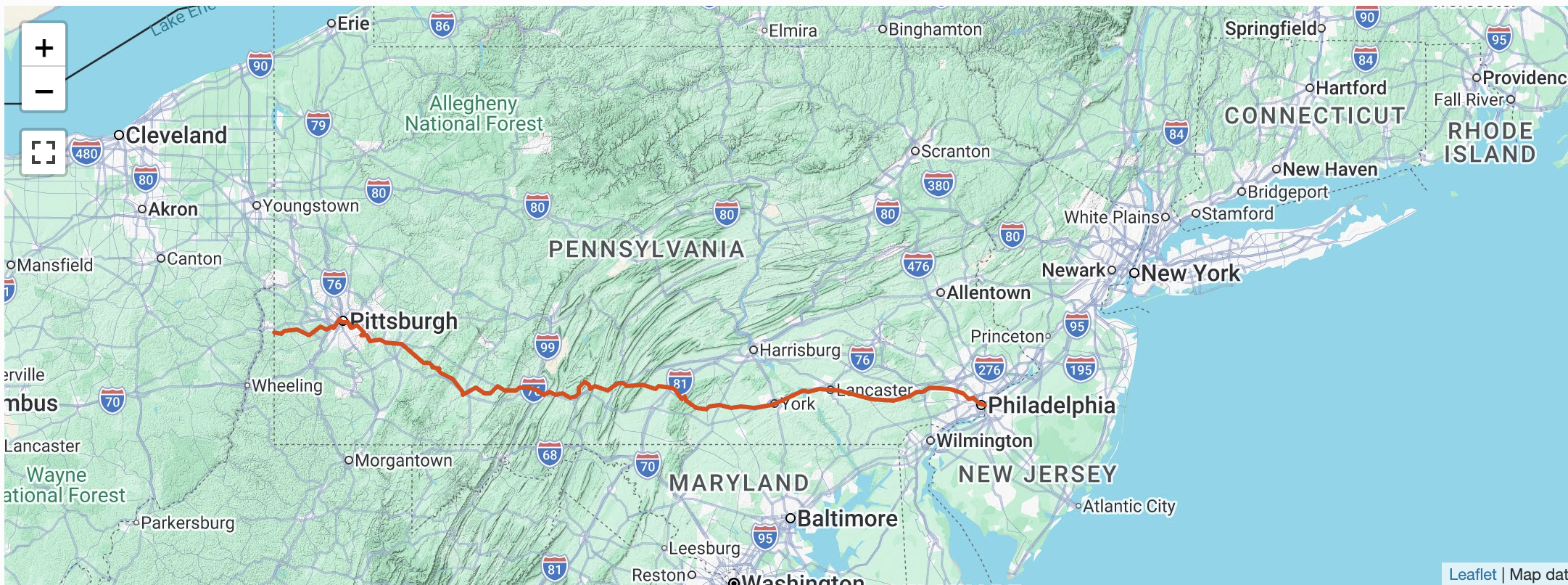
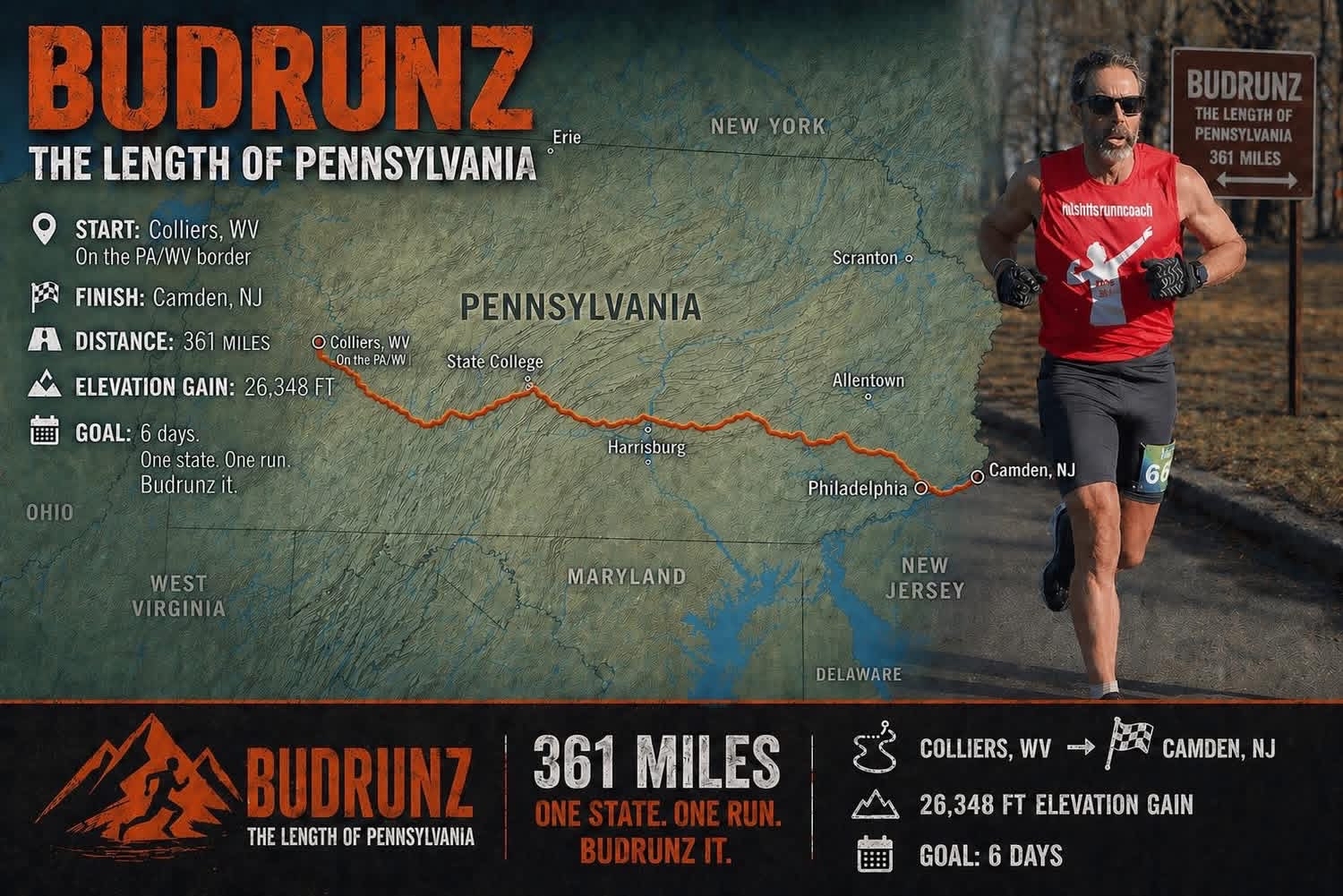
A record the size of Pennsylvania has been crushed. Philadelphian Bud Wilson, 58, finished a 361-mile run across the length of the state in just five days, 13 hours, 57 minutes and 50 seconds.
The time to beat was nine days, 23 hours, a record set in 2022 by Cain Leathers, who became the first to run the route from Colliers, West Virginia, to the middle of the Benjamin Franklin Bridge. Wilson began his journey in the early morning hours of Sunday, June 14, and was met by friends and family as he crossed the Ben Franklin on Friday evening, June 19.
A look at Bud Wilson’s route across PA.
Wilson is no stranger to the niche world of ultramarathons. He completed a first record-setting run across the length of New Jersey in 2025, a 196-mile run completed in two days, nine hours and 27 minutes. Even as he sped through the Garden State, he was thinking about his next big race, deciding on the cross-PA route weeks later.
“There are a lot of cool things that come out of doing something that’s really difficult,” Wilson said. “Plus, I grew as a runner and as a person. So after I finished it, I was like, wow, that was awesome. What’s next?”
“I came across [the Pennsylvania] route and I thought to myself, based on what I did for the length of New Jersey, I felt like I could do it in six days,” Wilson said.
To accomplish that goal, Wilson ran an average of 65 miles per day. That’s more than two marathons a day for six straight days.
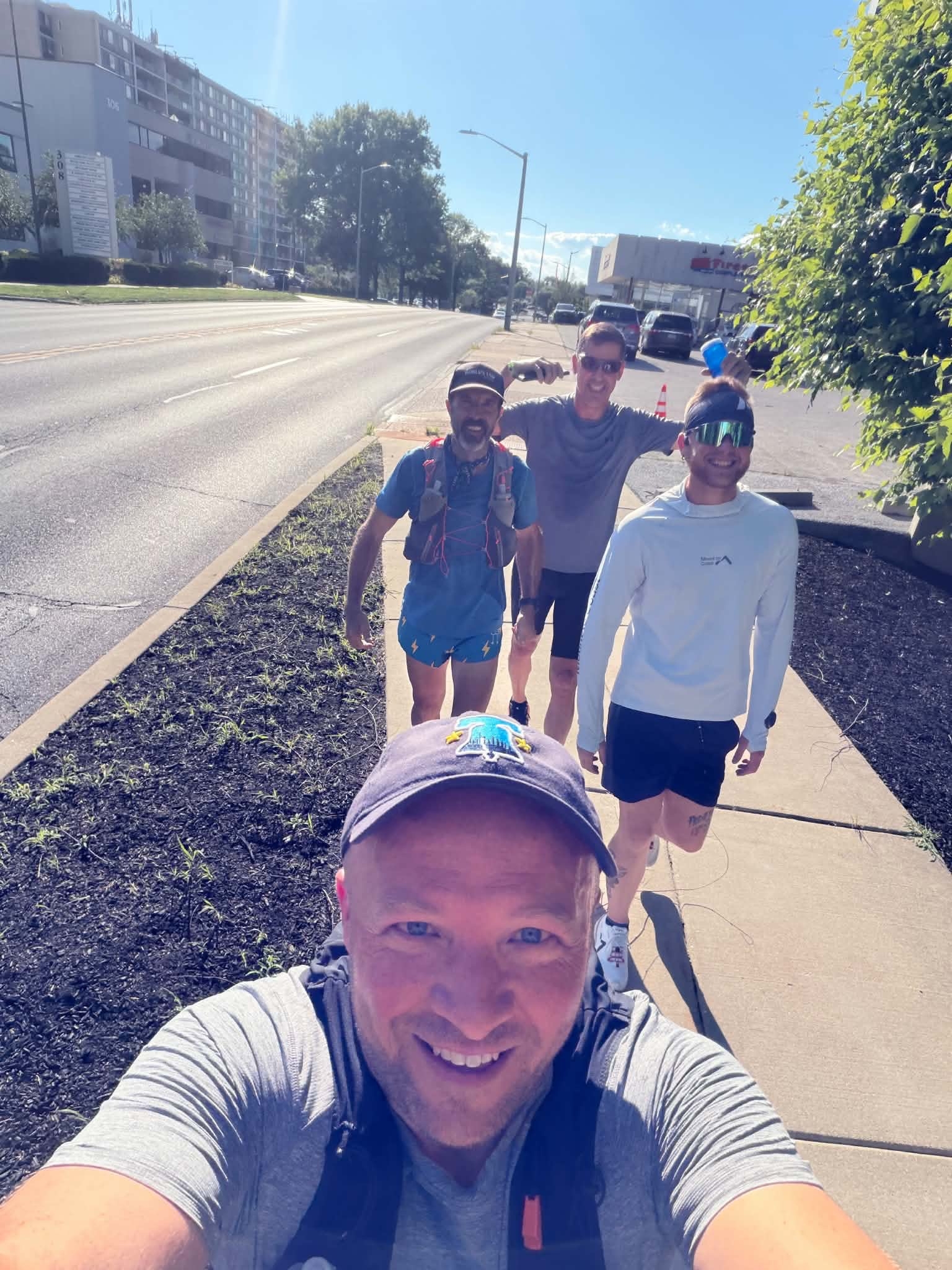
Bud Wilson’s team trailed him in a van throughout the journey across the state.
It took a team to help Wilson cross the finish line: people to replenish the thousands of calories Wilson was burning, runners in the community to pace him along the route, and trainers who would wake him up after a few coveted hours of sleep and bring him back to the point where he exited the trail.
“There was one time where I was getting so tired I couldn’t make it to the next checkpoint,” Wilson said. “I was looking at the grass on the side of the road, and it literally looked like a 12-inch memory foam mattress. I laid down on the ground, and before the guy who was pacing me could utter the words, ‘How long do you want to nap for?’ I was snoring already.”
For the ultramarathoner and personal trainer, the support of the community was one of the most rewarding parts of the experience. Another was the cause.
Wilson’s past two cross-state runs have also supported fundraising for St. Jude Children’s Research Hospital. He has raised $1,180 so far from this past endeavor and $2,500 from his run across New Jersey. As a father of three, the organization is an important motivator for Wilson as he runs.
“When I’m running, I’m thinking about why I’m doing it,” Wilson said. “I think that, more so than anything else in this world, kids really need support and need people to teach them how to grow into healthy, happy, productive members of society. So when I got ready to do New Jersey, I said to myself, this needs to be more than just about Bud Wilson running the length of New Jersey. … St. Jude’s was a cause that really, really resonated with me.”
Bud Wilson’s running path took him clear across Pennsylvania.
Wilson has not been taking it easy since the ultramarathon. With races on the horizon, including the notorious Barkley Fall Classic in September, Wilson is following a strict regimen of eating well, staying in the gym and cross training.
“I’m no spring chicken.” Wilson said. “ I didn’t start running marathons until I was 46 years old … so I listen to my body and know I’m capable of pushing it hard.
The training is necessary in part becasue he has his eye on an even bigger prize. The Pennsylvania route was, in part, an experiment to see if Wilson has what it takes to begin training for a transcontinental race across America.
“I thought to myself, well, if I can pick something this close to the equivalent of running the first seven days of a transcontinental run, at least that will give me some sort of feel of what that would be like,” Wilson said. “If I’m gonna run from one coast to the other coast, obviously I’m gonna take a stab at beating what the standing record is.”
The Supreme Court on Tuesday upheld bans in Idaho and West Virginia on transgender athletes playing on girls’ and women’s sports teams, the latest in a string of legal setbacks for the LGBTQ+ community before the high court.
In a decision led by the court’s six conservatives — but joined in parts by its three liberals — the justices found that states can separate teams based on “biological sex” without offending the Constitution’s guarantee of equal protection and Title IX, a landmark 1972 antidiscrimination law involving education.
“Separate sports teams for biological males and biological females are reasonable: Given the inherent physical differences between the sexes, allowing only biological females to play on women’s and girls’ teams can reduce the risk of physical injury and ensure fair competition,” Justice Brett M. Kavanaugh, who coached his daughter’s youth basketball team, wrote for the majority.
The court’s three liberals, led by Justice Sonia Sotomayor, agreed that West Virginia’s ban did not violate Title IX. But they disagreed with the majority on several fronts, especially the conclusion that the West Virginia law withstands scrutiny under the Constitution’s guarantee of equal protection for all.
Sotomayor wrote that a lower court should have the chance to sort out a question central to the case of the teenage plaintiff from West Virginia, Becky Pepper-Jackson: whether trans girls who have not undergone male puberty have physical advantages in sports.
“Because of the Court’s decision today, West Virginia, and any other state actor, can deny B.P.J. and others like her these experiences simply because it thinks they have an inherent athletic advantage, even if the facts show that they do not,” Sotomayor wrote.
The court did not address what is arguably the flip side of its ruling — whether schools and states can adopt policies allowing transgender athletes to compete on girls’ and women’s teams, as some liberal states and communities do.
“That question is currently the subject of litigation in some lower courts,” Kavanaugh wrote in a footnote. “Nothing in this opinion is intended to decide that question.”
The ruling is among several in recent terms that are consequential for the LGBTQ+ movement. The Supreme Court in March ruled a Colorado law banning “conversion therapy” for gay and transgender youths probably violated the free-speech rights of a religious counselor who wants to counsel such young people according to biblical teachings.
Earlier that month, the court sided with Christian parents in blocking, for now, California policies that discourage schools from informing parents of a student’s sexual orientation or gender identity without the student’s consent. Last year, the court upheld bans on gender transition treatment for minors.
Questions over whether transgender girls and women should play on girls’ and women’s sports teams has been a particular flash point in a broader conversation about transgender rights. Dozens of states have bans amid intense public debate about fairness at all levels of competition.
The debate over the allowance of transgender women in collegiate athletics gained national attention in 2022 after Penn swimmer Lia Thomas won the national title in the women’s 500-yard freestyle. Thomas, who is a transgender woman, competed for the Quakers men’s team during the 2018-19 season before medically transitioning.
In July 2025, Penn struck a deal with the Trump administration regarding Thomas’ participation. According to the deal, Penn agreed to ban transgender athletes, vacate Thomas’ records, release a statement in support of Title IX “as interpreted by the Department of Education,” and send personalized letters of apology to Thomas’ former women’s teammates. The deal came after the White House had paused $175 million in federal funding to Penn because of Thomas’ participation on the Quakers’ women’s team in 2021-22. The federal funding was restored following the agreement.
The issue came to the high court in a pair of cases, brought separately by Pepper-Jackson, a teen from West Virginia, and Lindsay Hecox, a Boise State University student in Idaho. Both argued that the bans in their states discriminated on basis of sex and violated the Constitution’s equal protection clause. In January, the justices appeared sympathetic to arguments for keeping the bans in place as the cases were argued back-to-back.
LGBTQ+ activists said the decision would be devastating for some young people.
“This is a heartbreaking ruling for our clients and transgender girls like them who’ve asked for nothing more than the same opportunities afforded to their peers,” said Joshua Block, senior counsel for the American Civil Liberties Union’s LGBTQ & HIV Rights Project, who argued the case for Pepper-Jackson.
Sasha Buchert, director of nonbinary and transgender rights at Lambda Legal, said the decision was upsetting but also narrow.
The ruling is “a serious loss — we’re not minimizing that,” she said. But noting that the court did not impose a national ban on transgender athletes in female sports, Buchert added, “This ruling says, sure, a state may discriminate, not that they must discriminate.”
Twenty-seven states have passed laws banning transgender student-athletes from competing on women’s or girls’ sports teams. Supporters of the bans say they are necessary to ensure fairness and safety because of inherent physical differences between males and females. Opponents say the laws discriminate against trans people and should be struck down.
President Donald Trump early last year signed an executive order aimed at keeping transgender women out of women’s sports. The administration has argued that there are only two sexes — male and female — and that they “are not changeable.”
Soon after the executive order on sports, the NCAA and the U.S. Olympic and Paralympic Committee updated their policies to bar trans women from playing on women’s sports teams. Since then, the administration has aggressively investigated schools that allow trans girls to participate in girls’ and women’s sports.
Education Secretary Linda McMahon welcomed the court’s decision Tuesday.
“For years, ideologues distorted Title IX to advance a radical transgender agenda, subjecting women to immeasurable harm,” she said in a statement.
Nicole Neily, founder and president of Defending Education, a conservative advocacy group, called the decision an “exercise in judicial humility” and noted that it may be disappointing to conservatives in liberal states that allow transgender athletes to participate.
“Although it’s certainly not as sweeping as parent activists would have liked, it means that the action shifts to the states and is now a persuasion game,” she said in a statement.
Views among Americans on transgender issues are nuanced. A Pew Research Center survey published in February 2025 showed 56% of adults support policies aimed at protecting transgender people from discrimination in jobs, housing, and public spaces.
But over the past few years, Americans also have become more supportive of restrictions for transgender people, according to the Pew survey. Fifty-six percent of Americans supported bans on providing gender transition care for minors, up 10 percentage points from 2022, the study found.
But athletics have always stood out.
The Pew survey found that 66% favored laws that require trans athletes to compete on teams that match their sex assigned at birth, up eight points from 2022. Even before the general shift in public opinion, a majority of Americans opposed allowing trans women to compete against other women at all levels of sports, according to a Washington Post-University of Maryland poll.
The science concerning biological advantages of transgender girls and women in sports is evolving and remains hotly debated. The case featured competing evidence about whether transgender girls are inherently better at sports. The transgender plaintiffs presented evidence that transitioning before puberty prevents them from building enough body mass to have an advantage in high school and college sports.
Lawyers for the states countered with studies that showed that nontransgender boys and men perform better at all ages. The study found that boys between the ages of 7 and 12 ran about 4% faster and jumped about 7% farther than girls in the same age group.
“The legislatures and the schools are better equipped — and under the Constitution, are the more appropriate entities — to assess the competing medical and scientific considerations and draw appropriate lines,” Kavanaugh wrote in the majority opinion. “Of course, no line that the States draw will satisfy everyone.”
While there’s no comprehensive tally of trans athletes nationally, an estimated 300,100 transgender youths between the ages of 13 and 17 live in the United States, according to the Williams Institute at the UCLA School of Law. The Human Rights Campaign, an LGBTQ+ advocacy group, has estimated that 14% of trans boys and 12% of trans girls play on a sports team.
Inquirer Staff Writer Conor Smith contributed to this article.
This summer has brought back the NBA’s offseason fireworks, with star players being traded all over the league in anticipation of free agency and a 2026-27 season that could be anybody’s for the taking.
The 76ers don’t look like a team that will participate in much of the action on the trade market or when free agency opens at 6 p.m. on Tuesday. They are pot committed to Joel Embiid, Paul George, and Tyrese Maxey, who will all play on max contracts into the foreseeable future.
So what could this summer look like for the Sixers? How will they improve on the margins in a league where teams are constantly jockeying for position? Let’s take a look at the biggest storylines facing the Sixers entering NBA free agency …
How can the Sixers improve this summer?
The contracts of Embiid, Maxey, and George continue to hamper the franchise. VJ Edgecombe emerged sooner than expected and remains on his rookie deal. So the Sixers will enter Tuesday’s free agency with only so much they can accomplish. They have no choice but to run it back with their three stars and hope for better health and better support on the margins.
They’ll also need better performances from their stars, who were superb against the Boston Celtics as they manufactured a three-games-to-one comeback in the first round of the playoffs but struggled in the quick turnaround to the Eastern Conference semifinals against the New York Knicks. Embiid missed Game 2 because of right hip soreness and a sprained right ankle, Maxey missed every shot he took from three in Game 1 (15.8% on 4.8 attempts per game for the series), and George missed the second half of multiple games after he failed to sustain hot starts. Those things can be changed in the summer only by rest, recovery, and returning to the drawing board.
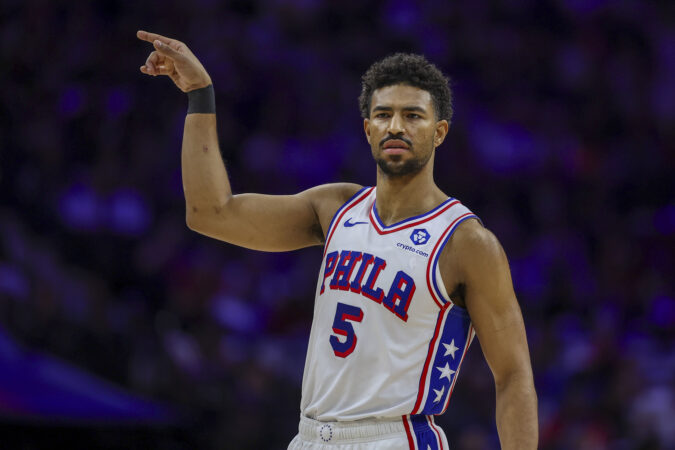
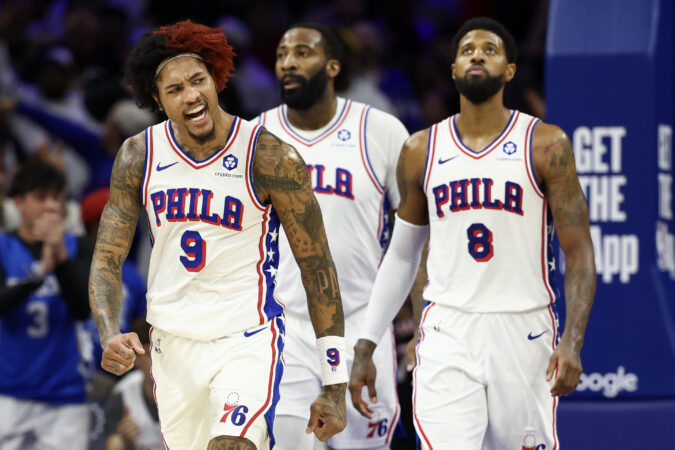
Sixers guards Kelly Oubre Jr., and Quentin Grimes are both set to hit free agency.
Will they be able to re-sign Kelly Oubre Jr., and Quentin Grimes?
This is the biggest question facing the Sixers this summer. They entered the summer $14.5 million below the tax and $22.5 million below the first apron. They’ve since declined the option of Trendon Watford. If they sign Oubre and Grimes, they’ll likely hit the first apron with the same team that finished seventh in the East last season.
Based on the Sixers’ history of avoiding the luxury tax — including last season when they traded Jared McCain despite Embiid’s public plea — that result is unlikely. For reference, Oubre signed a two-year, $16.3 million deal and Grimes signed the one-year, $8.7 qualifying offer after failing to come to a deal as a restricted free agent. Both players expect a raise.
Andre Drummond and Adem Bona juggled a tough situation last season. Neither player knew what to expect from night to night because of Embiid’s health issues and sudden shifts in their roles. When Embiid did not play, Bona started and Drummond served as the backup. But when he was available, Drummond stepped into the backup role and Bona often didn’t play at all.
That might not be the most tenable situation for Drummond, who will enter free agency this summer. It’s also not ideal for the Sixers, who are aware that the ideal backup will have the combined skills of Drummond and Bona.
Today, NBA free agency negotiating begins, and new president of basketball operations Mike Gansey will look to bolster the Sixers’ roster, but where?
Tyrese Maxey, Joel Embiid, and Paul George remain on max contracts accounting for nearly $155 million of the projected $165 million salary cap. So once again, the Sixers will hope for better health during the 2026-27 season.
Gansey has started to build the roster by drafting Alabama guard Labaron Philon Jr., while picking up the team options for Dominick Barlow and Dalen Terry.
But the Sixers still need to address positional needs at wing and in the frontcourt. Gina Mizell breaks down how they could attack those areas in the coming days.
And while you’re in the free agency spirit, the NHL’s signing period gets underway on Wednesday. The Flyers have pivoted in their so-far elusive quest to land both a No. 1 center and a bona fide power-play quarterback on the blue line.
They won’t be able to plug those holes on Day 1, but that doesn’t mean they can’t find creative solutions to upgrade their roster.
Kyle Schwarber’s MLB-leading 30 home runs have helped the Phillies erase their poor start to the season.
The Phillies entered Monday’s matchup against the Pirates a season-high 10 games above .500. They’ve all but erased their dismal start.
Despite their 11-7 loss to Pittsburgh in the series opener, the Phillies sit 3.5 games behind the Braves for the lead in the National League East. It’s a gap that was as wide as 10½ games in May. Suddenly, it’s a race again.
What we’re …
🥍 Discovering: Twin lacrosse stars Brinn and Ava Findora from Downingtown flipped their commitment from Virginia to Clemson. Why?
🏒 Seeing: It looks like national media experts weren’t too impressed with the Flyers’ NHL draft, as they didn’t give the team a grade higher than C+.
🤔 Wondering: What Ben Simmons said in his interview with Men’s Health, which mentioned his desire to make an NBA return — possibly even “back to Philly.”
🥊 Learning: The Joe Frazier statue moved to the Philadelphia Museum of Art after previously being in South Philly for more than 10 years.
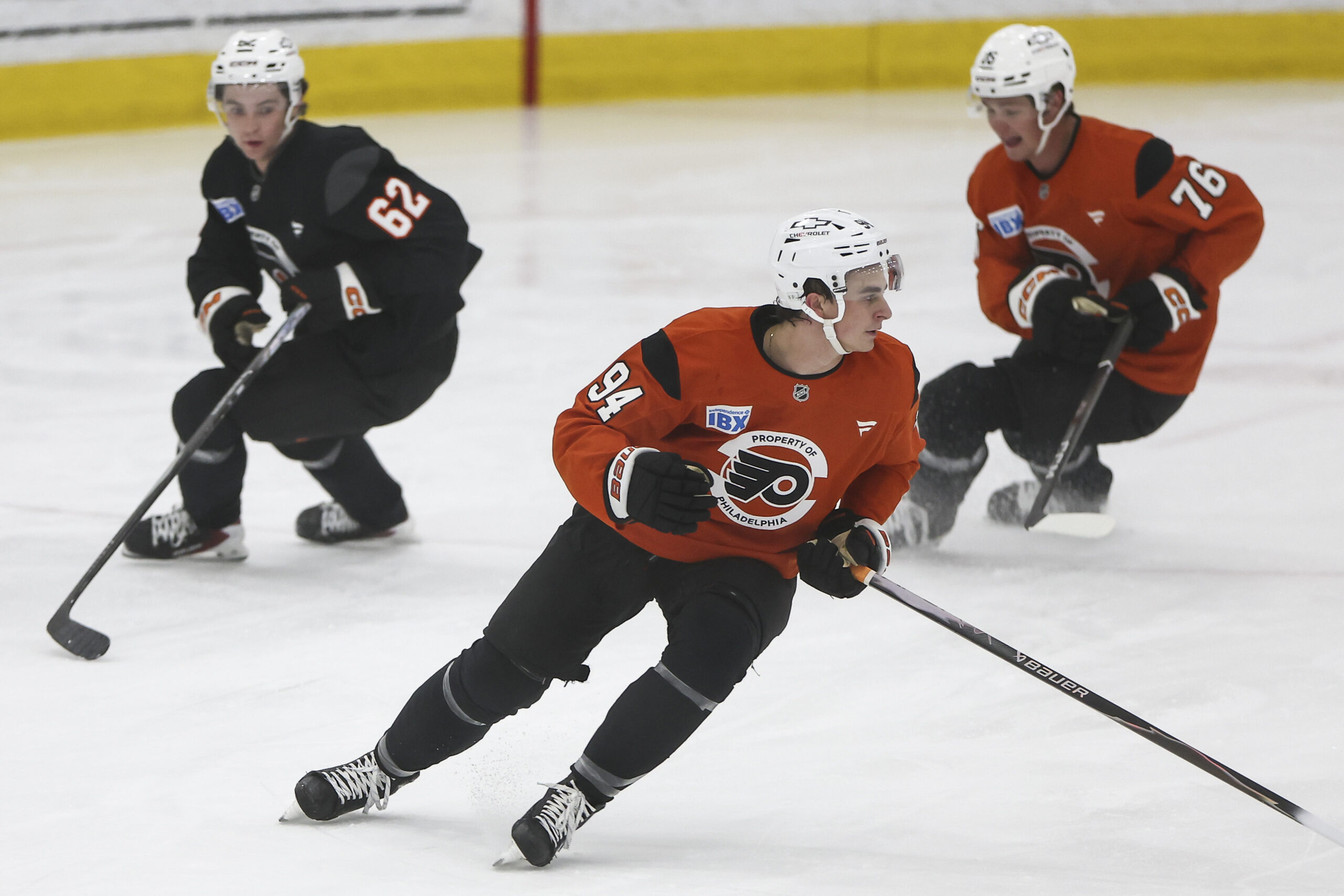
Porter Martone was on the ice Monday for his second development camp despite his playoff heroics last year with the Flyers.
At last year’s Flyers development camp, Porter Martone was freshly drafted and heading off to college, and Denver Barkey and Alex Bump were going into their first full pro seasons. Now, despite playing key roles in the Flyers’ run to the second round of the playoffs, all three are back at camp.
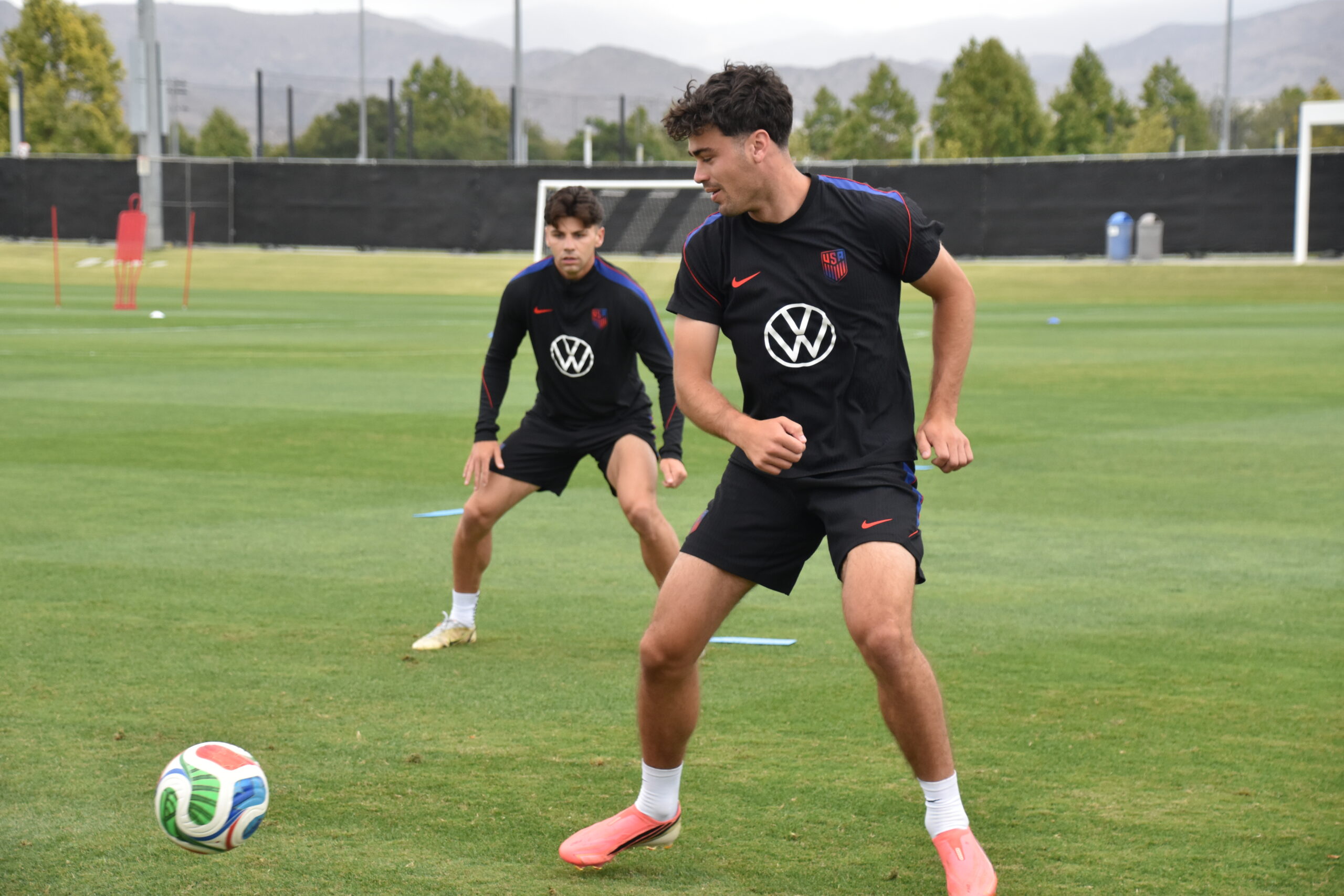
Gio Reyna (right) at work during Monday’s U.S. men’s soccer team practice.
The U.S. men have indeed been among the last 16 teams standing at five of the eight World Cups they played in from 1990-2022. With that said, this World Cup isn’t about being one of the best 32 or 16 national teams.
It’s about the mentality of knockout soccer on the sport’s biggest stage, and whether the U.S. players of this era can prove themselves in the way they’ve long told us they can.
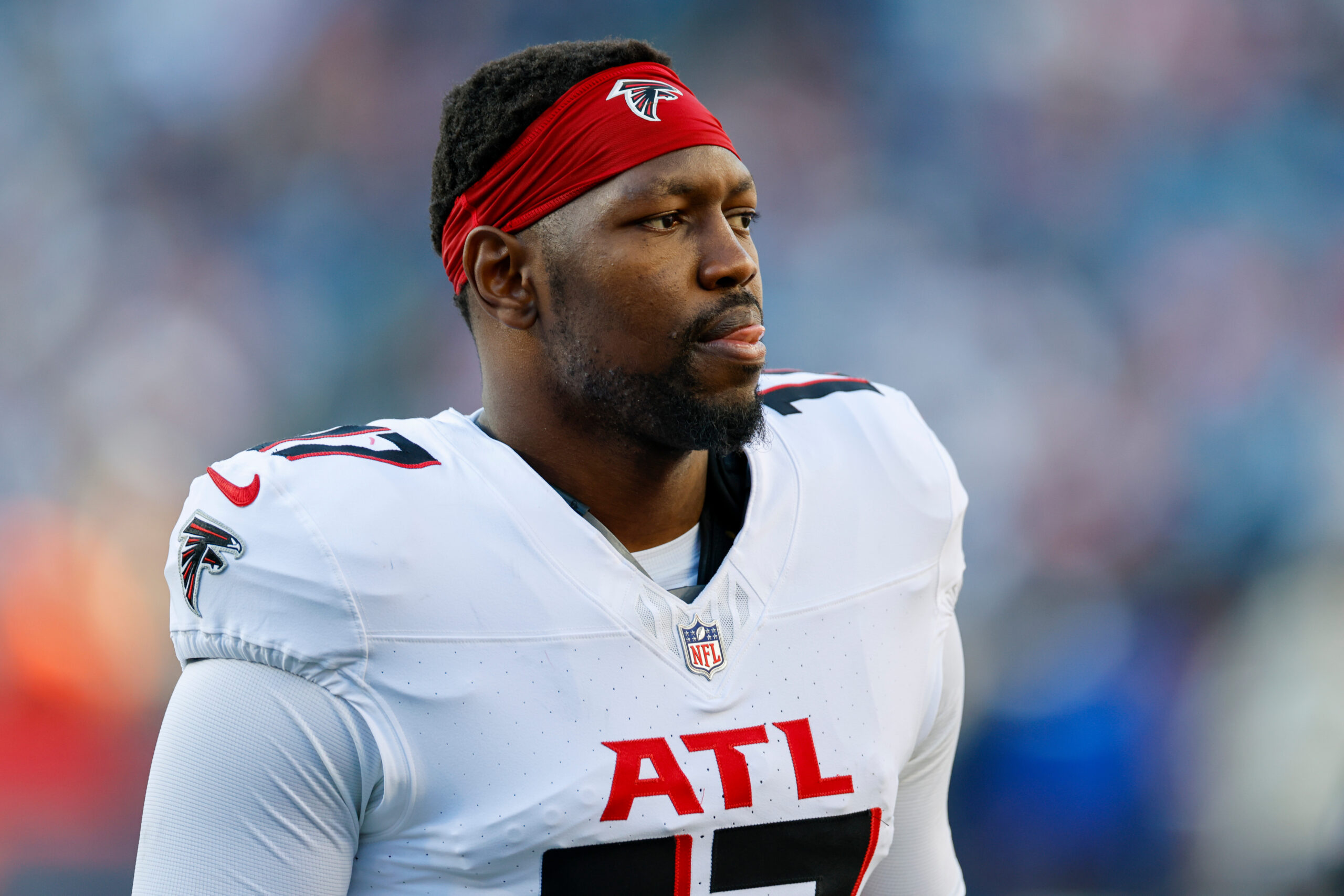
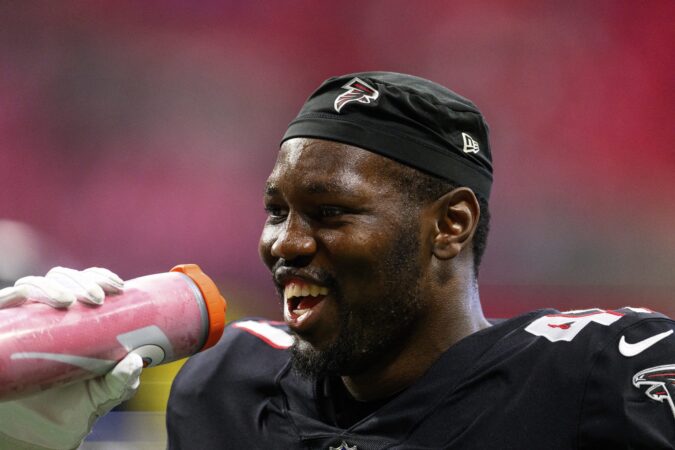
Arnold Ebiketie (47) was a productive pass rusher during his tenure in Atlanta.
While the news didn’t exactly dominate headlines, Arnold Ebiketie could be a sneaky good signing for the Birds. The linebacker has four years of NFL experience, and his football journey began at two local schools.
While the Eagles’ defensive front is loaded, Ebiketie should be a decent rotational piece. Also, undrafted rookie Jaedan Roberts is among those trying to crack a crowded rotation along the offensive line.
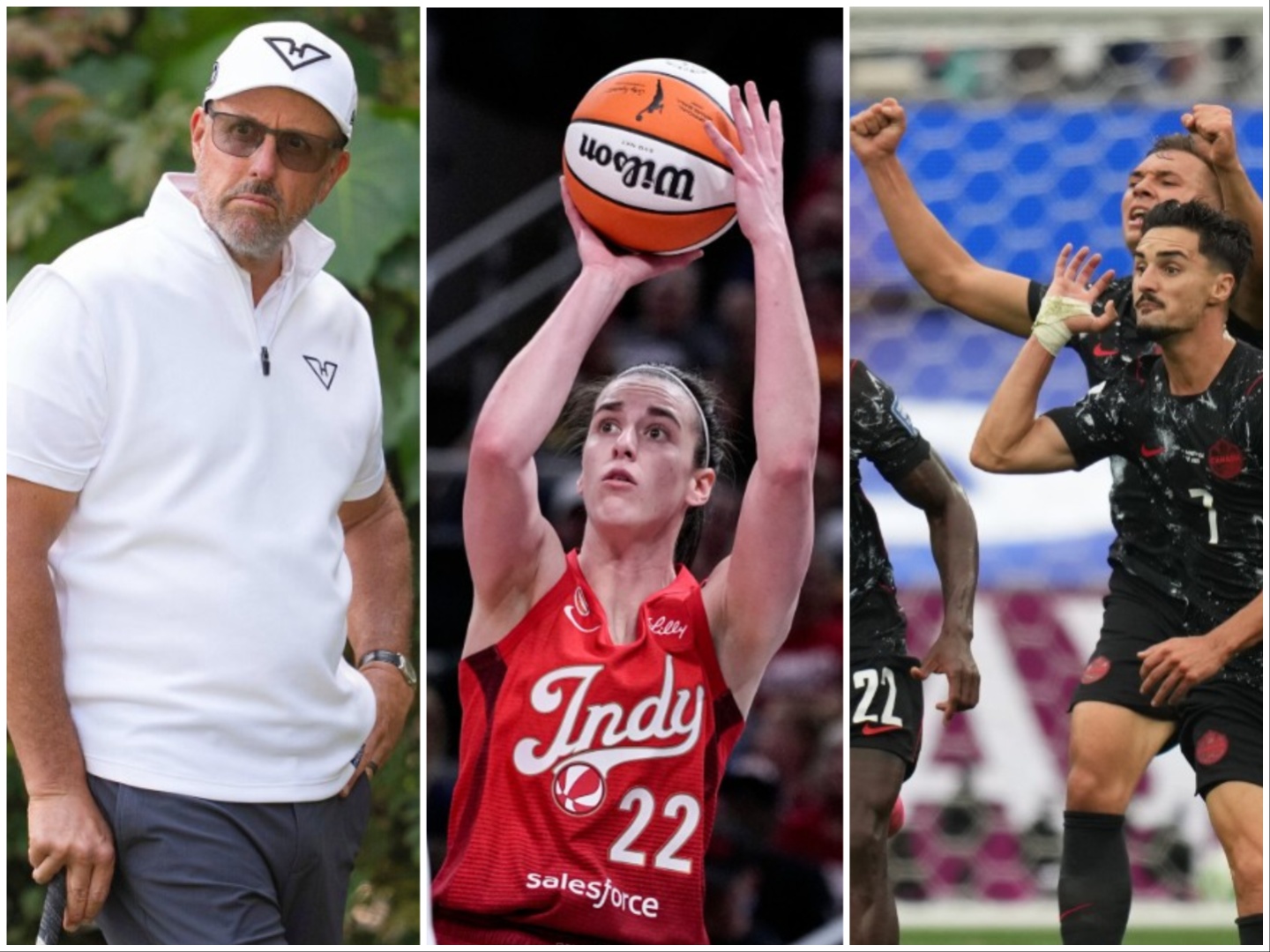
Athletes making news: Phil Mickelson (left) faces serious allegations, Caitlin Clark (center) has been taking her lumps in the WNBA, and the Canadian World Cup team is making its own history.
Indiana Fever superstar Caitlin Clark has been the victim of nine flagrant fouls since she joined the league in 2024, more than anyone else. There’s no doubt that she’s been a target of jealousy and resentment since her arrival.
She is, after all, the greatest asset in the history of women’s sports. The WNBA and its officials should do a better job of protecting her, writes columnist Marcus Hayes.
What you’re saying about high school sports
We asked: Should high school state playoffs be split between non-boundary and boundary schools? Among your responses:
YES! Archbishop Ryan had a basketball player who lived in Trenton, New Jersey. Enough said. — Reilly O.
Public schools have the athletes that live within their borders while private schools can recruit the best athletes from within a wide area. Very difficult for the public schools to compete against the major private power house schools such as those in California and Texas. — Everett S.
We compiled today’s newsletter using reporting from Marcus Hayes, Ryan Novozinsky, Jonathan Tannenwald, Nick Vadala, Gina Mizell, Jackie Spiegel, Lochlahn March, Ariel Simpson, Gustav Elvin, Gabriela Carroll, and Mia Messina.
By submitting your written, visual, and/or audio contributions, you agree to The Inquirer’s Terms of Use, including the grant of rights in Section 10.
That’s it for me this week. Stay cool these next few days. Maria will be in your inbox with Wednesday’s newsletter. — Bella
It’s unorthodox to begin a piece by denigrating a subject of sympathy, but in this case, it applies.
Indiana Fever superstar Caitlin Clark is smug, and she’s kind of a jerk, and plays a little bit dirty herself. Also, there’s little viable argument that if she were a bit less abrasive then perhaps she would be less of a target.
But there’s no doubt that she has been a target of jealousy and resentment since her arrival in the league, and there’s less doubt that the WNBA and its officials do a pathetic job of protecting her. She is, after all, the greatest asset not only in women’s basketball, nor in the history of women’s basketball, but in the history of women’s sports.
That’s with all due respect to Billie Jean King, Babe Didrikson Zaharias, Serena Williams, et al. Clark is the queen of a mainstream team sport in an era when mainstream team sports matter more than ever. She should be treated like royalty. Instead, she’s treated like crap.
She’s filled arenas, sparked expansion, and sold millions of jerseys, both her own and those of her peers. Her reward? She’s been the victim of nine flagrant fouls since she joined the league in 2024, more than anyone else.
The latest flagrant wasn’t even called in real time, if you can believe it. As a matter of fact, it wasn’t even called a foul.
On Wednesday, while pursuing a loose ball, Phoenix Mercury forward Alyssa Thomas kneed Clark in the thigh and jammed her fist into Clark’s throat as Clark lay on the ground.
This angel of Alyssa Thomas cheapshotting shows that not only did she punch Caitlin Clark in the throat; she kneed her in the groin too.
The league should look at this, assess a flagrant, & do everything they can to protect their most important player. pic.twitter.com/xDArcPTYiS
The league reviewed the incident, declared that Thomas had committed a Flagrant 2, and suspended her for Saturday’s game against Toronto. Thomas, a hard-nosed, Draymond Green-type of player, has a history of flagrancy; last season, she elbowed rookie Kiki Iriafan in the throat and threw Angel Reese to the ground.
In the same game Clark was undercut on two jump shots, neither judged flagrant in real time or upon review. She left the game having aggravated a back injury.
That’s right: The most important player in WNBA history entered the game with a back issue, was the recipient of three dangerous fouls, and left the game having been reinjured.
She missed the Fever’s game this past Saturday, and her status is unknown for this coming Sunday’s game in Las Vegas.
She missed most of her sophomore season in 2025 with various injuries.
Not all of Clark’s missed time has been a result of hard fouls, but that’s the point. She’s the draw. Any hard foul on here should be amplified.
She should be preserved like ancient parchment. She should be protected like religious relics. She is worth 10,000 times her weight in gold and should be treated accordingly.
You should get two technicals for brushing her cheek. You should get a Flagrant 1 for coughing on her.
Intentional foul on a fast break? Twenty years to life.
Is this fair? Of course not. Is this business? Yes, it is. Business is seldom fair. If you don’t think that’s true, you should study capital gains taxes, corporate tax breaks, and film of Larry Bird in the 1980s.
It doesn’t matter that Clark is not the best player in women’s basketball history (that’s Diana Taurasi), and it doesn’t even matter that she’s not the best player today (that’s A’ja Wilson). What matters is that Clark’s the most valuable female athlete, at a time when female athletics is finally experiencing its true value.
One financial projection valued women’s sports revenues to generate at least $3 billion this year, an increase of 340% since 2022. You know what else happened in 2022? Clark, a sophomore at Iowa, became the first player in women’s Division I history to lead the nation in both points and assists. She became a phenomenon.
A cocky phenomenon; a celebrating, taunting, in-your-face phenomenon — but a phenomenon nonetheless.
For the record, I don’t like it when Steph Curry or LeBron James flaunt their cellys either. But as much as they mean to their sport, neither touches the importance of Clark either in her chosen profession or in her demographic.
Protect her at all costs.
Phil’s just desserts
Seventeen years ago, the myth of Tiger Woods collapsed when the report of an affair, a car crash, and series of mistresses revealed the greatest golfer of all time, branded as a squeaky-clean, monomaniacal über-athlete to also be one of the greatest hypocrites of all time.
No one benefited more from Tiger’s downfall than Phil Mickelson, Tiger’s biggest rival. Even after his departure to LIV Golf that sparked a wider exodus and a bitter feud, and even as Mickelson bizarrely delves further into support of far-right policies on social media, there remained a core of Mickelson supporters who adored his magnificent talent, swashbuckling style, and his entertaining public pronouncements.
That’s all over. Phil’s done.
Two weeks ago, Golf Digest reported that Phil Mickelson, Woods’ biggest rival, was kicked off The Farms Golf Club near San Diego and had his membership rescinded in the middle of a round after club officials determined that he had made inappropriate advances and contact with a female staff member. Mickelson denied the accusation.
Two days ago, Skratch Golf correspondent Alan Shipnuck produced a scathing report that detailed several more inappropriate episodes with two other women. It also supplied evidence that Mickelson cheated with at least one woman on a regular basis, paying a pro shop kid $500 to drive around the course with Mickelson’s cell phone so that if his wife, Amy, wondered what he was doing, she would think he was playing golf.
In light of the transgressions by Woods, which include various addictions, it’s been astonishing to witness the leeway given Mickelson during his three decades in the limelight. He’s been connected with insider trading, he’s been cast as an inveterate gambler — he was accused of trying to bet on the 2012 Ryder Cup, which he and the rest of the U.S. team lost by 1 point (Mickelson went 3-1-0) — and created a legion of enemies on the PGA Tour and in its galleries when he defected to LIV.
Now, this.
Now, what?
Tiger has admitted his transgressions, has faced his demons, and has largely recovered his image.
Phil never will.
The biggest difference between Mickelson and Woods is that, whatever advances Tiger made in pursuit of his infidelities, as far as we know, they were at least consensual, if not welcomed or pursued.
Mickelson isn’t the only distasteful star in professional golf — Fred Couples admitted he cheated on his wife while she was fighting cancer — he’s just the smarmiest, the creepiest, and the phoniest. Golf writers and broadcasters protect their cash cows like baseball writers did in the 20th century: They shield flawed heroes from the glare of reality.
Phil was especially alluring, since, in contrast to surly, multi-ethnic Tiger Woods, he was a generally affable Great White Hope.
Regardless, both made their beds. There, they will lie.
Another ‘Golden Goal?’
I was there for Sidney Crosby’s overtime Golden Goal that beat the United States at the 2010 Winter Olympics in Vancouver. Wayne Gretzky, the Great One, and Donald Sutherland, perhaps the greatest Canadian actor, sat just above my right shoulder, and they erupted with joy when Sid the Kid potted the winner. It was only the second time since 1952 that Canada won Olympic gold in its national sport. Most Canadians who witnessed it know where they were that day.
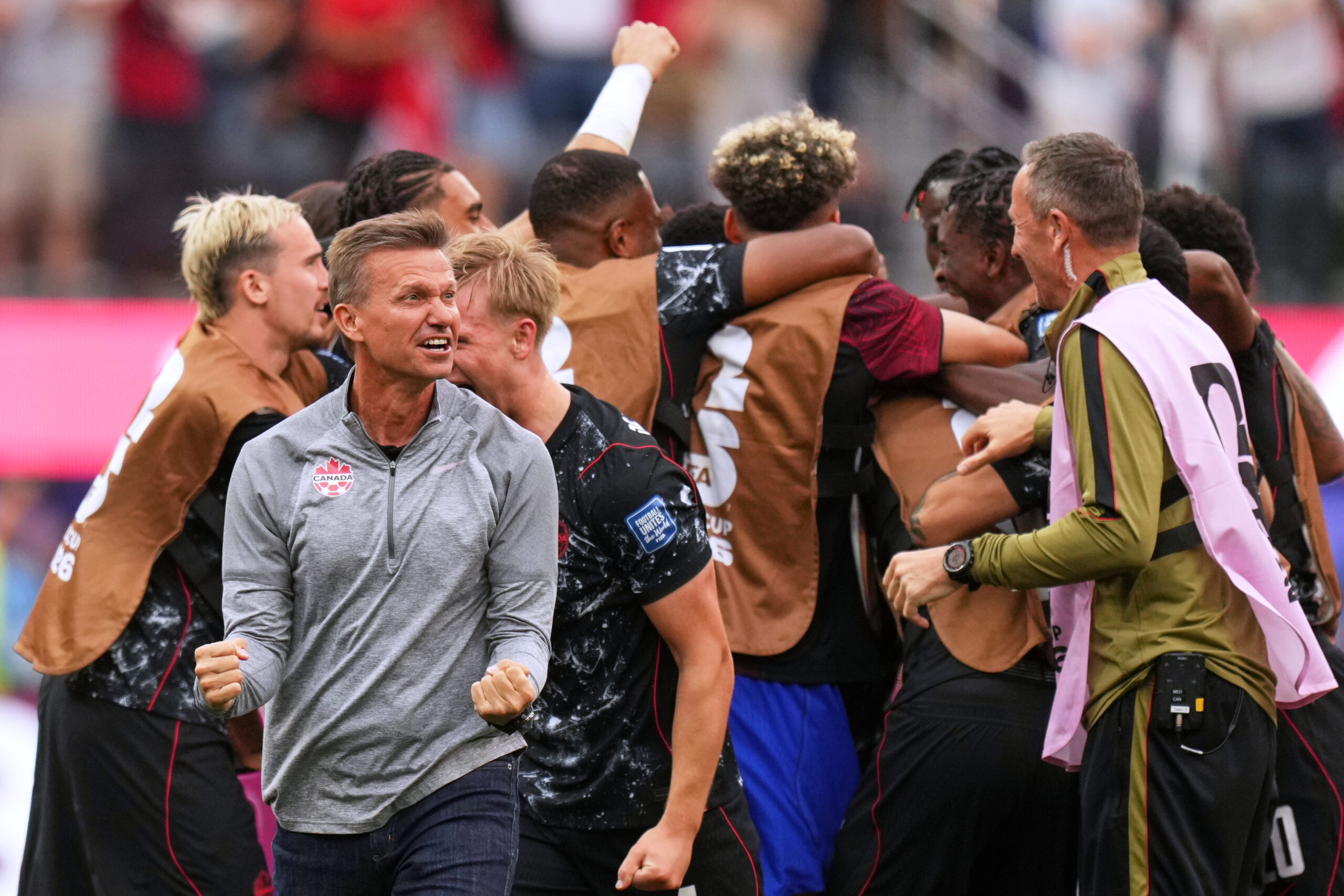
Canada head coach Jesse Marsch celebrates after Stephen Eustáquio scored their opening goal against South Africa during the World Cup round of 32 Sunday in Inglewood, Calif.
That was the sort of hyperbole coming from the Great White North when Canada beat South Africa in the World Cup’s Round of 32 knockout stage Sunday. More Canadians play soccer than hockey, and soccer ranks second in popularity with the 40 million Canadians.
“We really wanted to give this win to all the Canadians,” Stephen Eustáquio said in a television interview. He scored the winner in extra time. “When I shot, I felt everybody shot with me. Everybody put a bit of power on it and it went into the back of the net.”
It was the first time Canada reached a knockout round, though, even as one of the host nations, they didn’t host the game; they had to travel to Los Angeles because they did not win their group. The Maple Leaf flag will fly next in Houston on Sunday, when our northern neighbors, who entered the tournament ranked No. 30 in the world, will face the winner of No. 6 Morocco and No. 7 Netherlands.
Weeks before Giannis Antetokounmpo, LaMelo Ball, and Ja Morant were traded, Bob Myers understood the allure of a blockbuster move.
“Those are obviously things that look to appear to be the most meaningful,” said Myers, the president of Harris Blitzer Sports & Entertainment and former lead executive during the Golden State Warriors dynasty. “But it’s just one good decision at a time as far as change.”
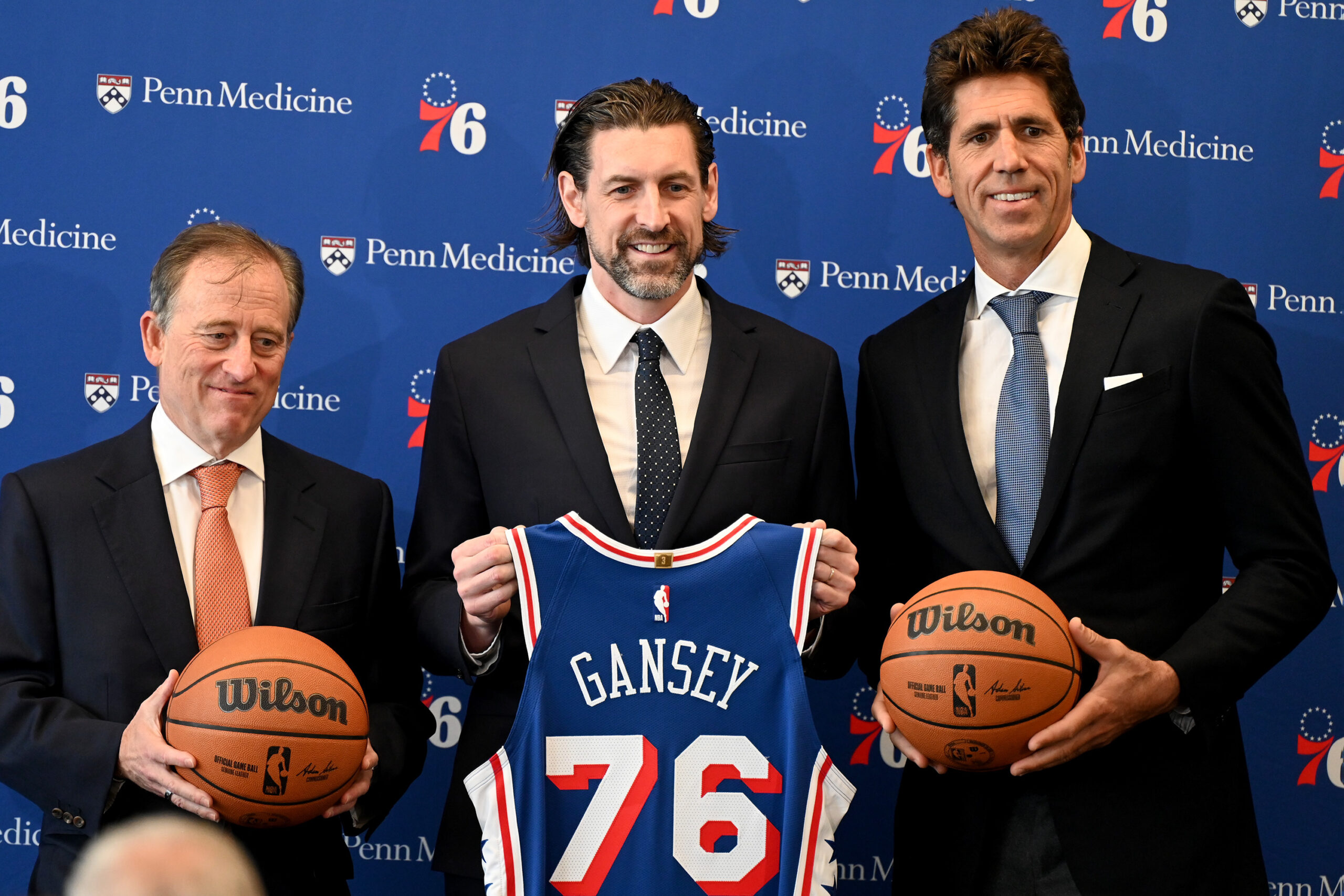
That is the reality facing new 76ers president of basketball operations Mike Gansey, whom Myers led the search to hire, and the remaining front office as NBA free agency begins at 6 p.m. Tuesday. All-NBA third-team guard Tyrese Maxey ($41 million), along with former perennial All-Stars Joel Embiid ($59.5 million) and Paul George ($54.1 million), remain on max contracts accounting for nearly $155 million of the projected $165 million salary cap. And the latter two players are considered difficult to trade because of their age and recent injury history.
So the Sixers must again hope for better health with that top-heavy roster during the 2026-27 season, which could turn that flash from the playoff upset of the Boston Celtics into more consistency. Yet that postseason run, which ended in being swept by the eventual NBA champion New York Knicks, also exposed that the Sixers must bolster their depth, requiring shrewd around-the-edges moves with limited financial flexibility.
The Sixers already have begun to build their roster by drafting Alabama guard Labaron Philon Jr., in a potential first-round steal, and picked up the team options for Dominick Barlow ($3.4 million) and Dalen Terry ($2.6 million, nonguaranteed until Jan. 10) on Monday. They will aim to address positional needs at wing and in the frontcourt, as well as with shooting and rebounding.
“You can make a great [draft] pick, [or] you can sign a minimum player that really moves things further,” Myers said. “ … You can have minimum players that really do a great job for your team. You can have a $4 million [player]. It doesn’t have to be the big-spending guys. You get 5%, 10% 15% better, it makes a big difference.”
How could the Sixers attack the coming days? Here is a primer on where they sit entering free agency.
Sixers free agents
Kelly Oubre Jr.
Oubre rebuilt his NBA career in three seasons with the Sixers. He was a starting forward who impacted both ends of the floor, while averaging 14.1 points, 5 rebounds, and 1.4 steals in 50 games in 2025-26. The 6-foot-8 wing used his athleticism in a more controlled way on offense, shot a career-best 36% from three-point range last season, and had the willingness to take on challenging perimeter defensive assignments.
Oubre’s salary was $8.3 million in 2025-26, the player option on a two-year deal signed in 2024. Though Oubre said “I love it here” in Philly during his end-of-season news conference last month, his length and positional archetype are typically valued leaguewide. Oubre also said he hopes he “did myself a good service” by putting a concerted effort into a more efficient playing style.
“I learned so much,” Oubre said of his time with the Sixers. “The game of basketball has reinvented itself to me through different lenses and different eyes throughout my tenure here, and I’m forever appreciative for the opportunity to play for this city.
“Obviously I don’t like how [the season] ended. I always say I like to finish what I start, and this is a bit sour for me. But at the end of the day, it’s already written.”
Yet the 30-year-old also has previous experience with the harsh realities of free agency. He reminded during his end-of-season news conference that, after averaging 20.3 points per game with the Charlotte Hornets in 2022-23, he “still found myself barely getting any contracts” until the Sixers signed him to a veteran’s minimum deal in September.
It will be interesting to see what this version of Oubre commands on the open market.
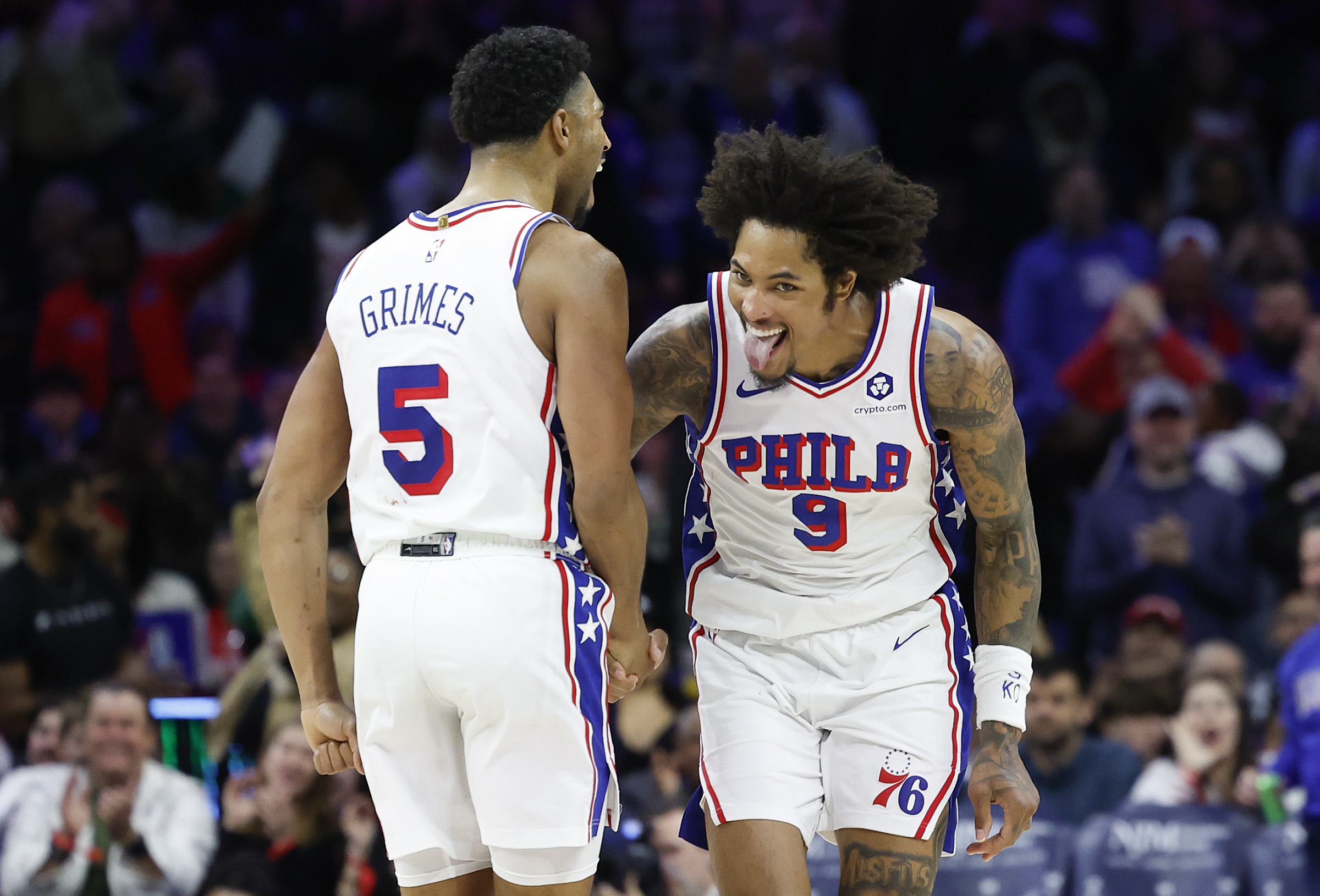
Sixers guard Kelly Oubre Jr., and teammate guard Quentin Grimes celebrate in a game against the Brooklyn Nets.
Quentin Grimes
Grimes was primarily the Sixers’ sixth man during a 2025-26 season he described multiple times as “solid.”
The 26-year-old was part of a terrific three-guard lineup, and reignited his aggressive scoring ability when Maxey missed three weeks in March with a finger injury. But Grimes shot a career-low 33.4% from three-point range, while also averaging 13.4 points, 3.6 rebounds, and 3.3 assists in 29.4 minutes in 75 games. And other than an excellent Game 5 performance on both ends in Boston, he was not good enough during the playoffs for a Sixers second unit that desperately needed scoring production.
When asked shortly after last month’s season-ending Game 4 loss to the Knicks about how he viewed his free agency and ideal basketball setup, Grimes was not exactly forthcoming.
“I haven’t even really thought about that, honestly,” he said. “… Talking to my agents and everything, we’ll kind of figure out what’s the best situation moving forward.”
After joining the Sixers at the 2025 trade deadline, Grimes became a go-to scorer for an injured team that had shifted to “tank” mode to increase odds of landing a high draft pick. He averaged 21.9 points, 5.2 rebounds, 4.5 assists, and 1.5 steals in 28 games with the Sixers in 2024-25, including a 46-point outburst at his hometown Houston Rockets.
Grimes then entered restricted free agency, which turned into a messy, monthslong saga. He eventually signed his one-year, $8.7 million qualifying offer to become an unrestricted free agent this summer. Grimes parted ways with agent David Bauman and is now represented by Creative Arts Agency.
Does any of that impact Grimes’ decision-making as he enters the open market? And does Philon’s arrival diminish the Sixers’ need (or desire) to retain Grimes?
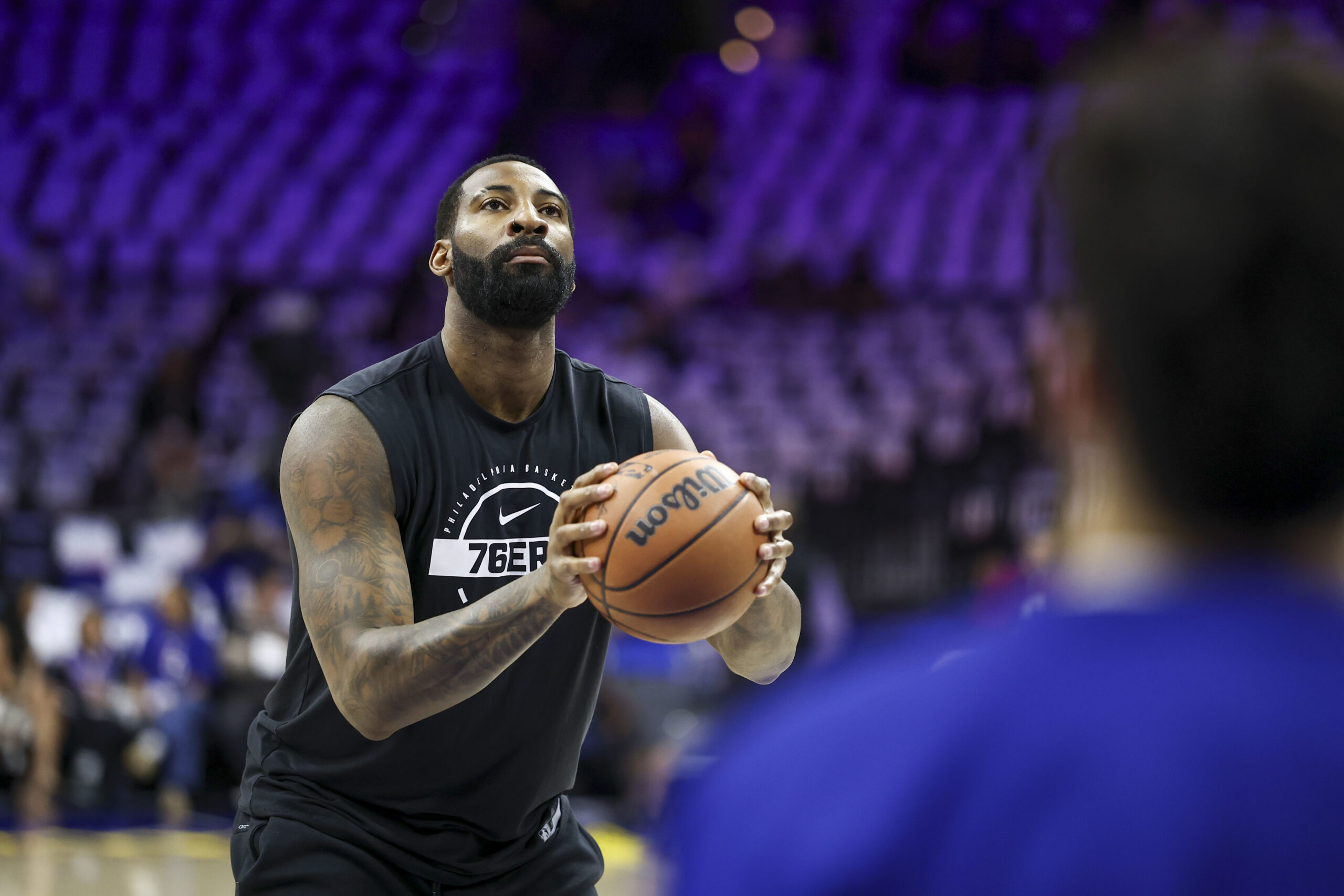
Andre Drummond is looking for more consistency next season.
Andre Drummond
The veteran center professionally handled a fluctuating role in 2025-26.
For the bulk of the season, Drummond was the starting center in the games Embiid did not play — and was out of the rotation when Embiid was available. During the playoffs, though, Drummond recaptured the role as Embiid’s backup while postseason first-timer Adem Bona struggled. Drummond averaged 6.4 points, 8.4 rebounds, and 1.3 assists in 63 regular-season games.
The 32-year-old Drummond is still a stout rebounder and big-bodied presence. His corner three-point shooting has elevated from fun novelty to legitimate offensive weapon. But he is not the most mobile, making him a liability on defense.
It is possible Drummond, whose salary was $5 million this season, desires a playing destination where his role is more defined and consistent.
Watford, a versatile forward who recorded a triple-double last season, averaged 6.5 points, 3.3 rebounds, and 2.5 assists in 53 games. Injuries, though, impacted his ability to stick in the Sixers’ rotation. Watford has been a close friend of Maxey since they were teenagers, and was a lively presence inside the Sixers’ locker room.
The Sixers declining that option does not eliminate Watford’s ability to return on a new deal.
Kyle Lowry
It is presumed that Lowry, who did not conduct an end-of-season media session, will retire. At the end of the 2024-25 season, the Philly native said he wanted to play one more season to reach 20 for his career, though he was more coy when asked about that plan in recent months.
Lowry, who played in 14 games last season, was almost exclusively a trusted and enthusiastic veteran on the bench and locker room, particularly for Maxey. His knowledge and respect are invaluable, but the Sixers also could have benefited from having another player on the roster who could contribute on the floor more than the 40-year-old version of Lowry.
(Note: Adem Bona’s $2.3 million salary for 2026-27 becomes guaranteed July 7.)
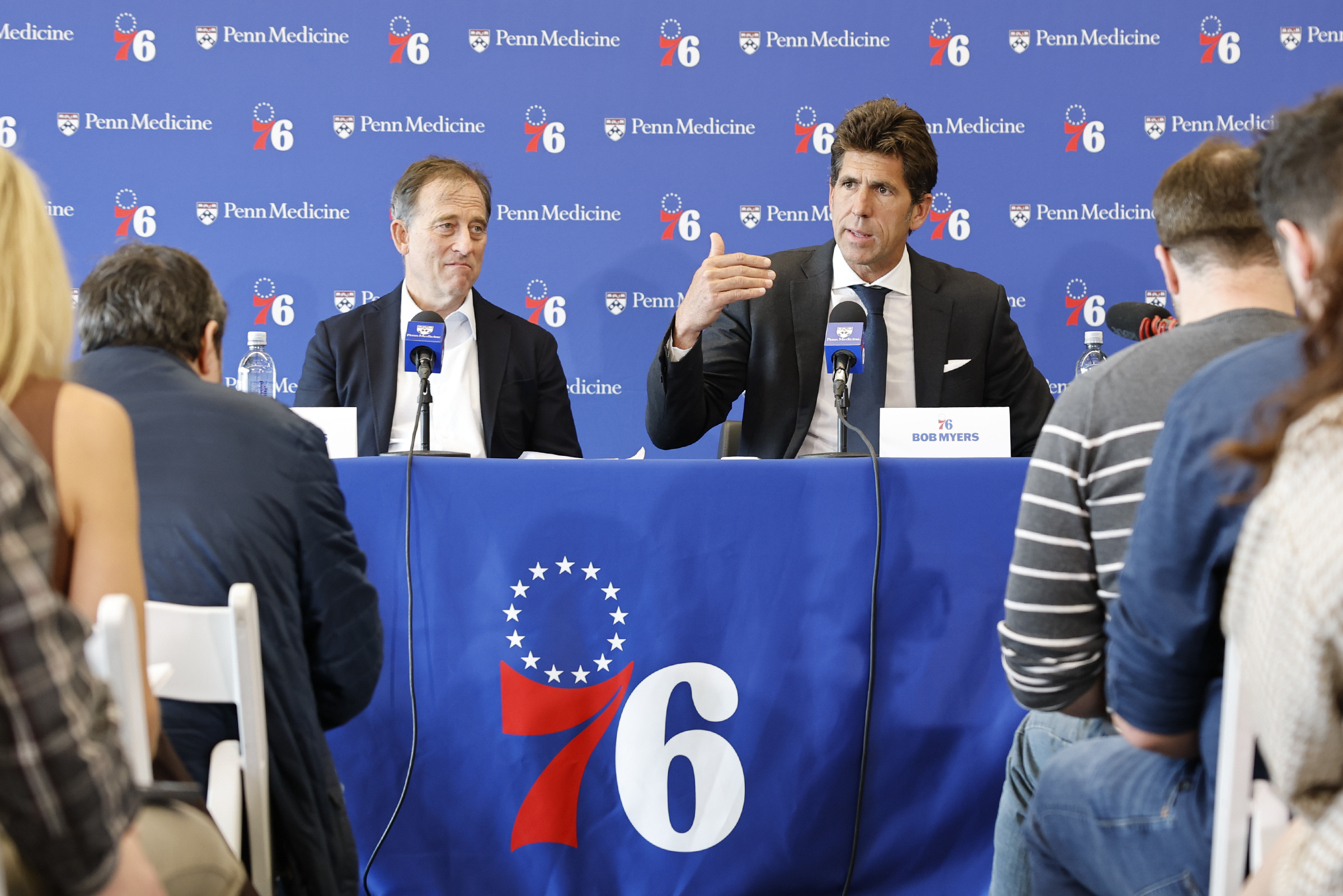
President of basketball operations Mike Gansey and Harris-Blitzer president Bob Myers (right) will lead the Sixers’ free-agent decisions.
Types of contracts available
This is tricky to determine right now, because it could be dependent on if Oubre and/or Grimes returns.
If both players depart, the Sixers are likely to have the non-taxpayer midlevel exception (approximately $15 million) and the biannual exception ($5.5 million). If they re-sign one or both players, they likely will only have the $6.1 taxpayer midlevel exception.
For what it’s worth, earlier this month Myers specifically referenced the non-taxpayer midlevel exception as a free-agency tool, suggesting the Sixers are using that as a starting point and will weigh the players they could sign on that deal vs. the return of Oubre or Grimes. And if the Sixers cross into the “apron” penalties, it will limit their ability to make in-season trades because of new collective bargaining agreement rules.
The Sixers will also have veteran minimum contracts to fill out their 15-man roster.
Potential free-agent targets
Frontcourt help
John Collins
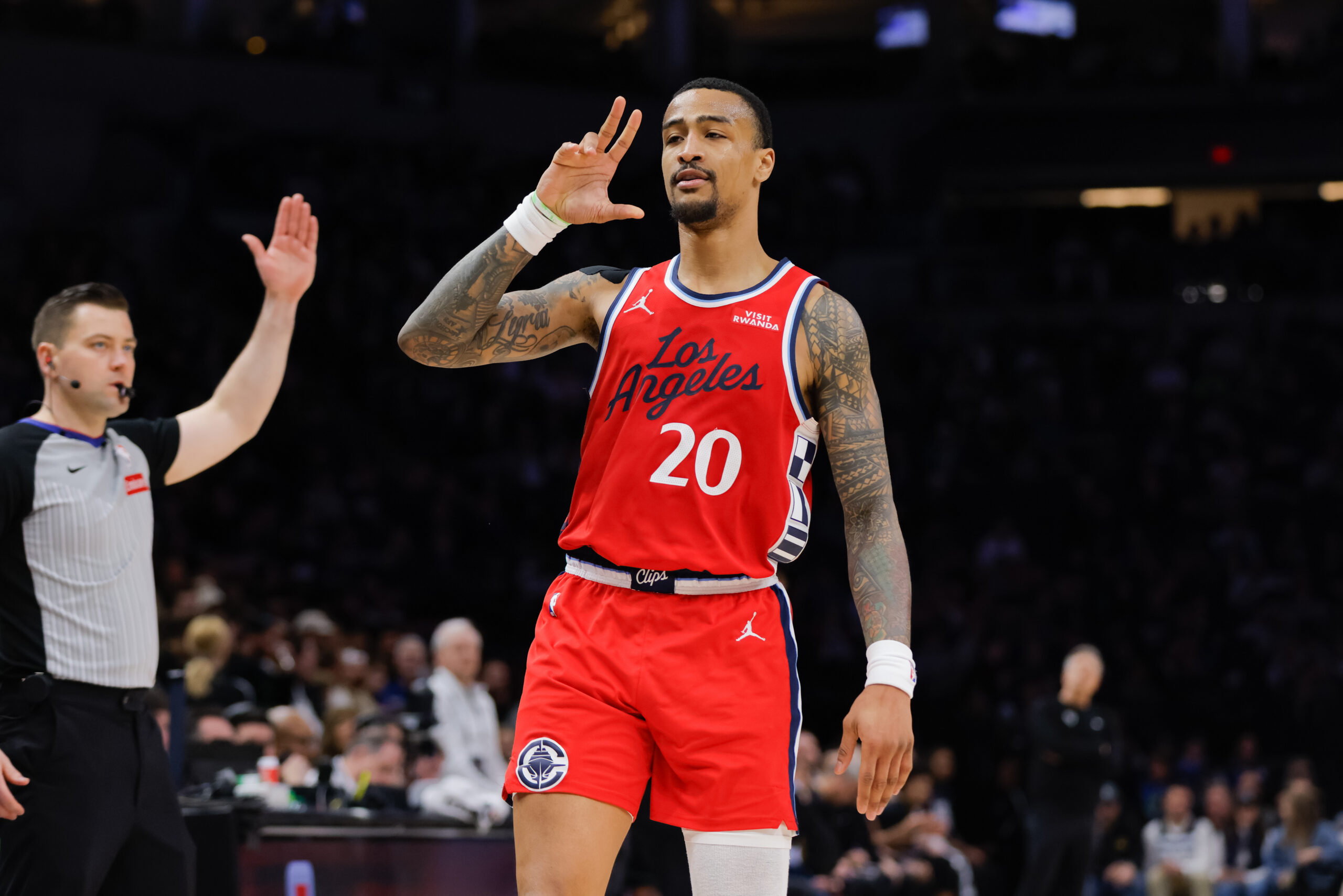
Collins could slide into a starting forward spot if Oubre leaves. The sensational athlete has become an improved shooter since getting off the perpetual trade block with the Atlanta Hawks, connecting on 40.6% of his three-point attempts last season with the Los Angeles Clippers.
Rui Hachimura
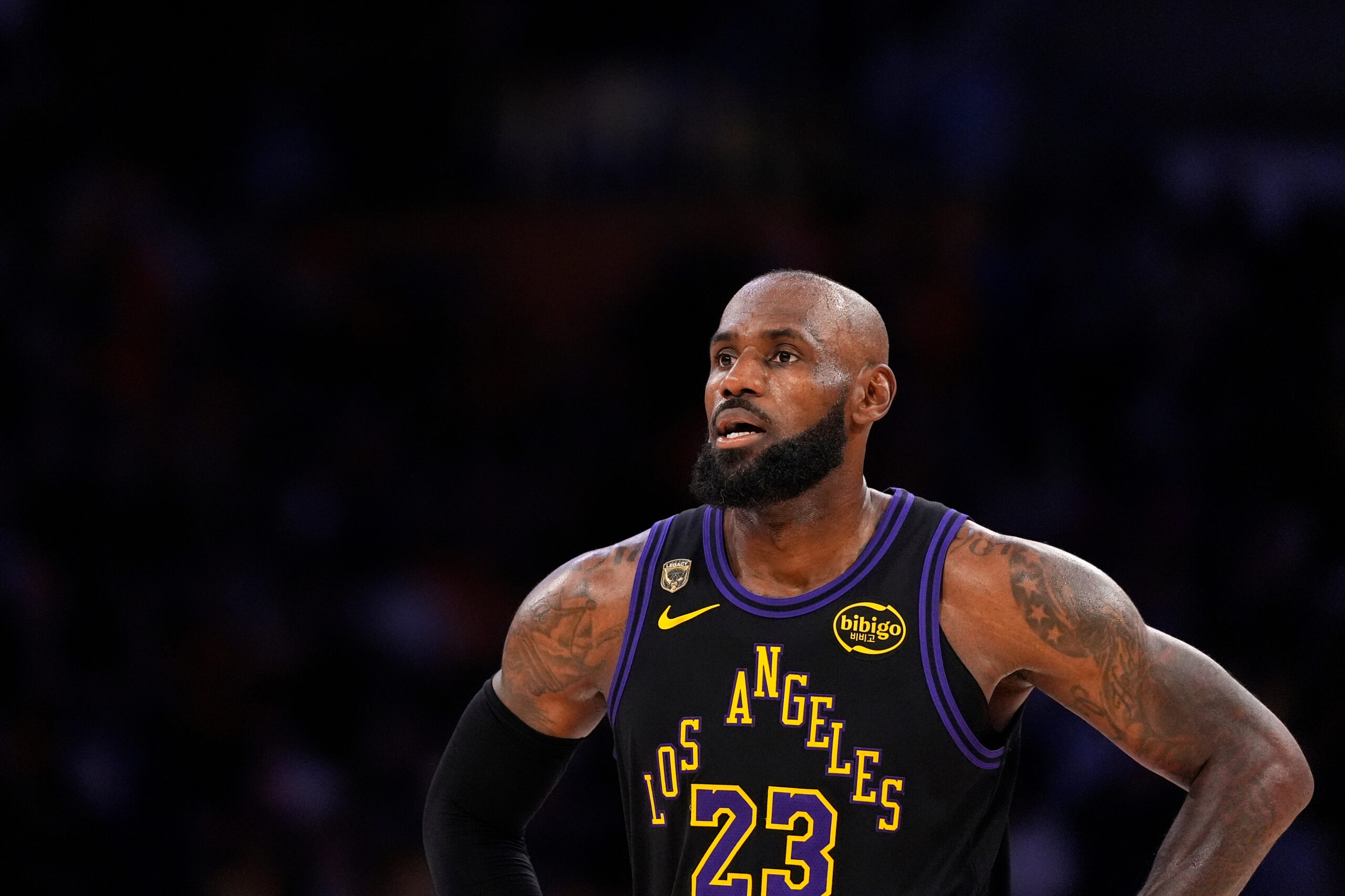
The 6-foot-8, 230-pound Hachimura boasts a more traditional power forward frame and versatile skill on both ends of the floor. He shot 44.3% on 3.9 long-range attempts per game last season with the Los Angeles Lakers, while averaging 11.5 points and 3.3 rebounds. The Lakers reportedly committed to signing Austin Reaves to a max contract, and must make a free-agency decision on all-time great LeBron James.
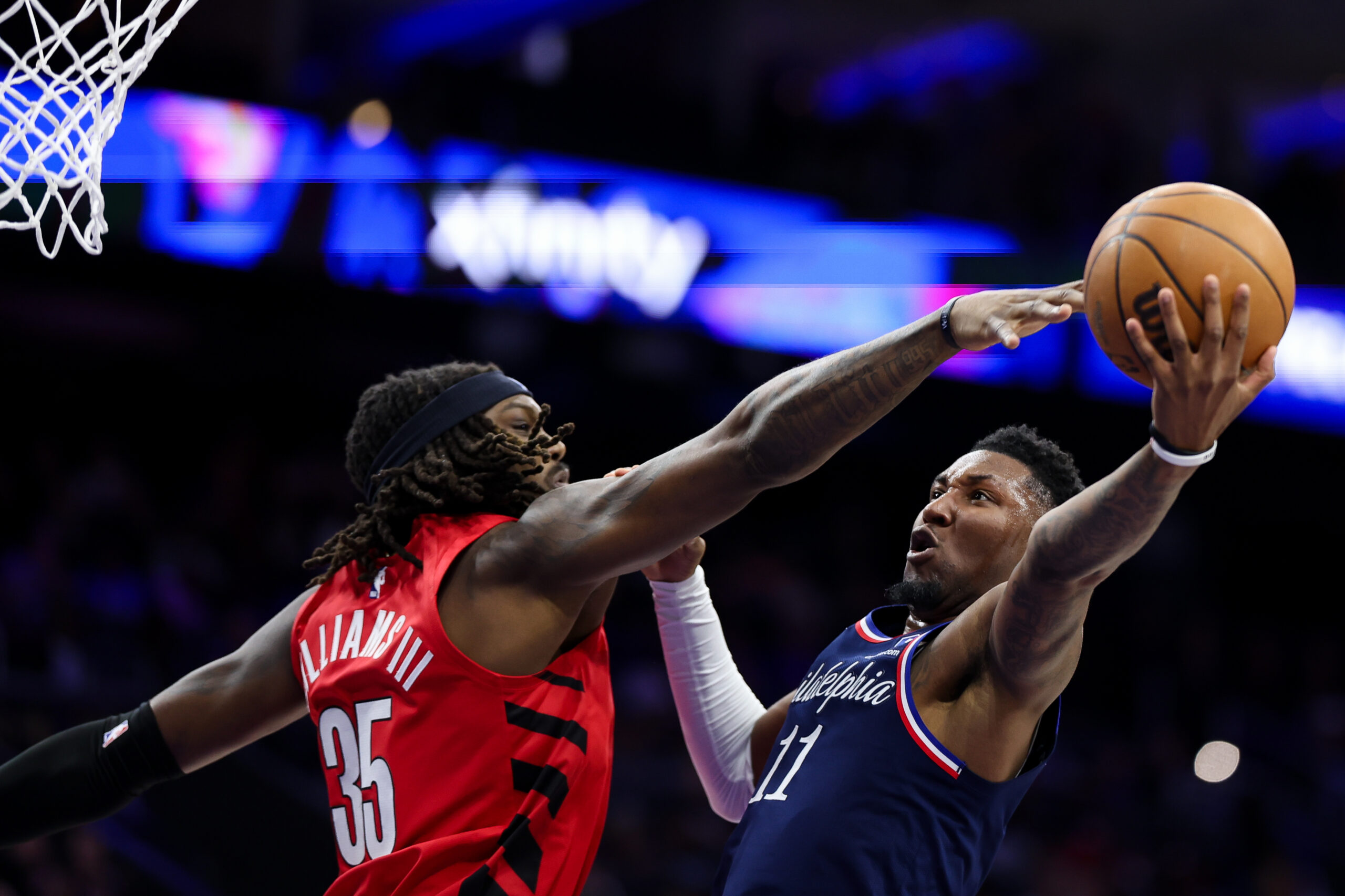
Portland Trail Blazers center Robert Williams III (left) defends Sixers forward Justin Edwards during a game earlier this year.
Robert Williams III
Another supreme athlete who can rebound (7 per game last season) and finish lobs. But the 28-year-old now has a lengthy injury history with the Celtics and Portland Trail Blazers, which might be a risky investment for a center to play behind Embiid. (Reportedly agreed to deal to return to Portland on Monday)
Marvin Bagley III
Bagley’s career has fallen far below original expectations as a former No. 2 overall draft pick. Yet he is coming off a productive season for the Washington Wizards and Dallas Mavericks, averaging 10.5 points per game. His career average of 6.5 rebounds — including 2.3 on the offensive end — in 22 minutes is also a sound number.
His brother, Marcus, played 10 games for the Sixers and also played for the G League’s Delaware Blue Coats during the 2024-25 season.
A floor-spacing big man with defensive versatility, Landale was an impactful trade-deadline pickup for the streaking Hawks until an ankle sprain prematurely ended his season. He averaged 5.7 rebounds in 22.1 minutes with the Memphis Grizzlies and Hawks last season. (Reportedly agreed to deal to return to Atlanta on Monday)
Mitchell Robinson
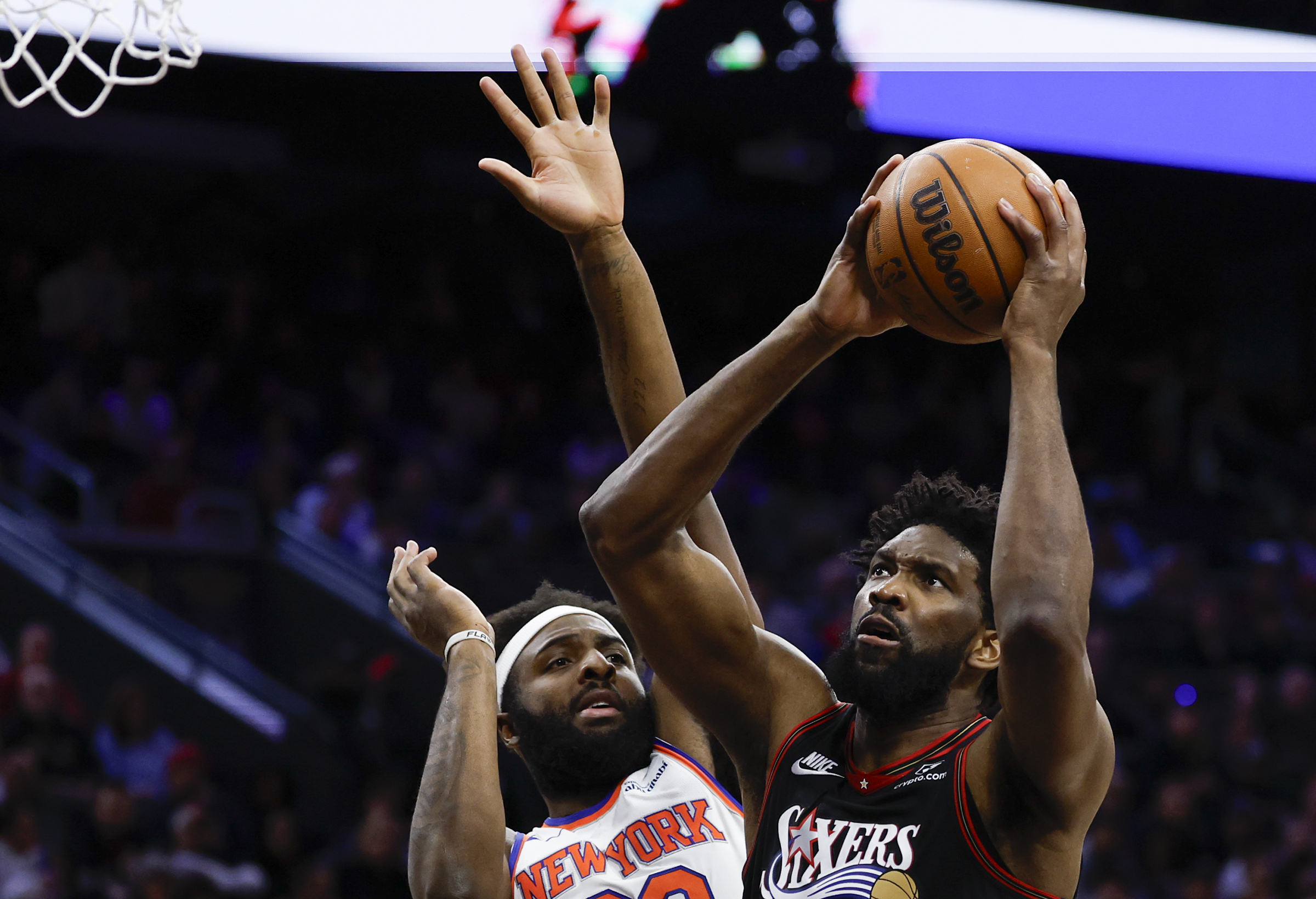
The competition could be steep for the newly crowned NBA champion — including from the Knicks. Robinson is a fantastic rim protector and rebounder, especially on the offensive end (4.2 per game last season). The knocks on him are his injury history and poor shooting, prompting the Hack-A-Mitch strategy for opposing teams.
Other options: Sandro Mamukelashvili, Nikola Vučević, Mo Wagner, Jaxson Hayes, Kelly Olynyk, Nick Richards
Denver Nuggets guard Tim Hardaway Jr. is an option for the Sixers.
Shooting
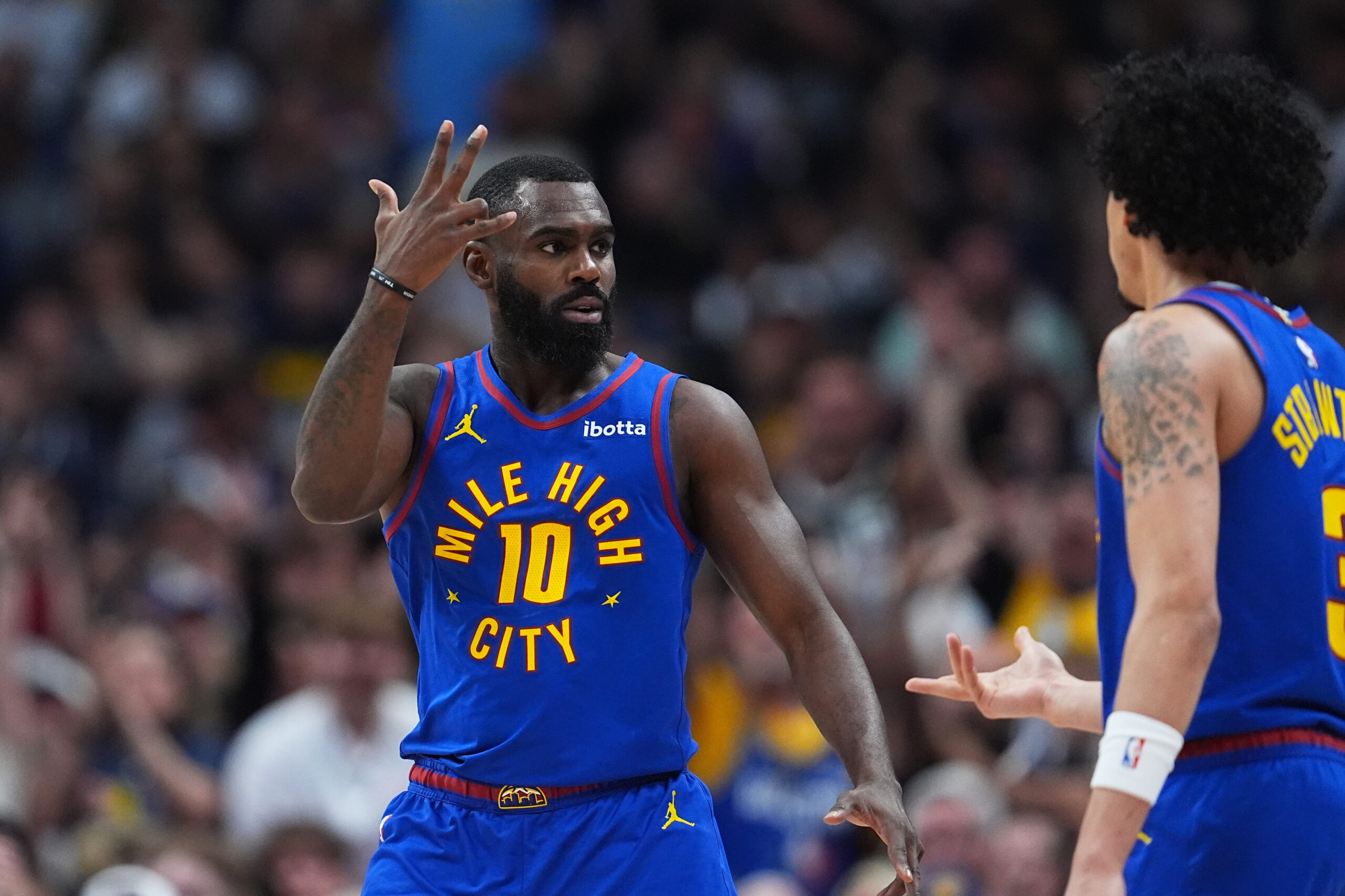
Tim Hardaway Jr.
Hardaway has been a top veteran role player on win-now teams in three consecutive seasons with the Mavericks, Detroit Pistons, and Denver Nuggets. He finished third in voting for the NBA’s Sixth Man of the Year, after shooting 40.7% on 6.9 three-point attempts per game and averaging 13.5 points for the Nuggets last season.
Luke Kennard
Kennard has been a deadly three-point shooter for years, connecting on 44.2% of his career attempts. He also has a more well-rounded offensive game than he gets credit for, and was a useful trade deadline pickup by the Lakers last season.
The Delaware native would give the Sixers another wiry guard. He underwent a bit of a career renaissance as a key bench player for the Minnesota Timberwolves, shooting 38.8% on 4.2 deep attempts last season.
Gary Trent Jr.
Trent is another knock-down shooter from beyond the arc (career 38.7% on 6.1 attempts per game) who can also create off the dribble. Nick Nurse previously coached Trent with the Toronto Raptors, though they may not have had the best rapport after Nurse publicly critiqued his defensive performance and Trent acknowledged a lack of regular communication during their time together.
Other options: Kenrich Williams, Keon Ellis, Javonte Green, Bogdan Bogdanović
Wade was one of Gansey’s success stories with the Cavaliers, evolving from undrafted player to rotation forward. His 6-9, 230-pound frame allows for defensive versatility, and he is a career 36.7% three-point shooter. Unsurprisingly, multiple reports surfaced over the weekend that the Sixers are among the teams interested in Wade.
Guerschon Yabusele
A rare feel-good story during the Sixers’ disastrous 2024-25 season, Yabusele parlayed his NBA comeback into a pay raise with the Knicks. To say things did not work out in New York is an understatement, and he was traded at the deadline to the Chicago Bulls. Could he successfully slide back into a complementary role with the Sixers? Or will his performance two seasons ago go down as a career anomaly on a bad team?
Achiuwa also played under Nurse in Toronto, and offers the defensive mobility to switch and block shots as a center or power forward. Though he averaged a career-best 10.1 points per game on a bad Sacramento Kings team last season, his offensive game is more limited.
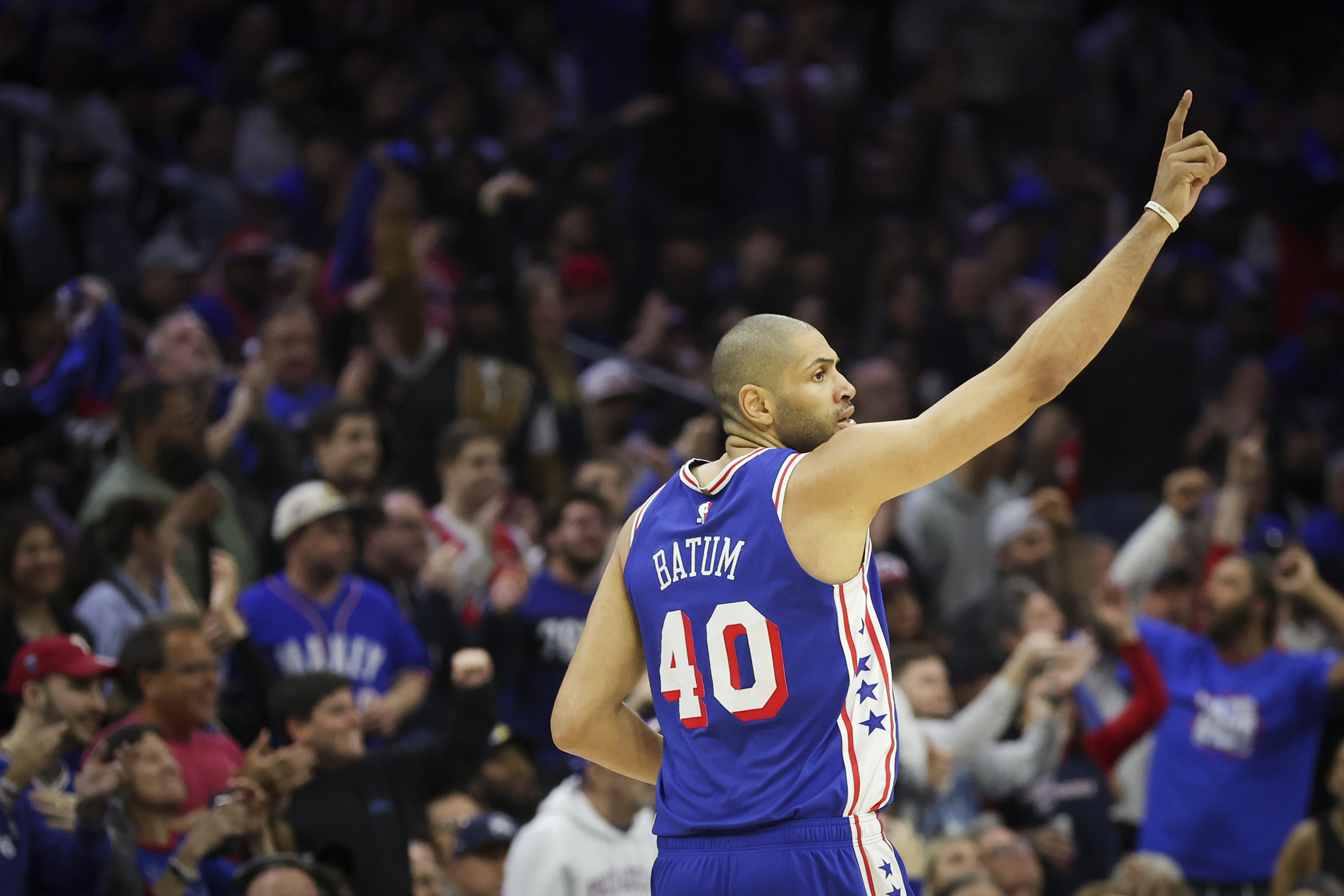
Nico Batum
The Clippers on Monday declined Batum’s $5.9 million player option, making him an unrestricted free agent. Nurse (and Embiid) had an affinity for Batum’s veteran savvy during his time with the Sixers during the 2023-24 season, when he swung the play-in game against the Miami Heat with his three-point shooting and even became the team’s designated inbounds passer. But he is 37 years old, and feels deep family connections to Los Angeles and the West Coast.
Other options: Matisse Thybulle, Kevon Looney, Gary Payton II
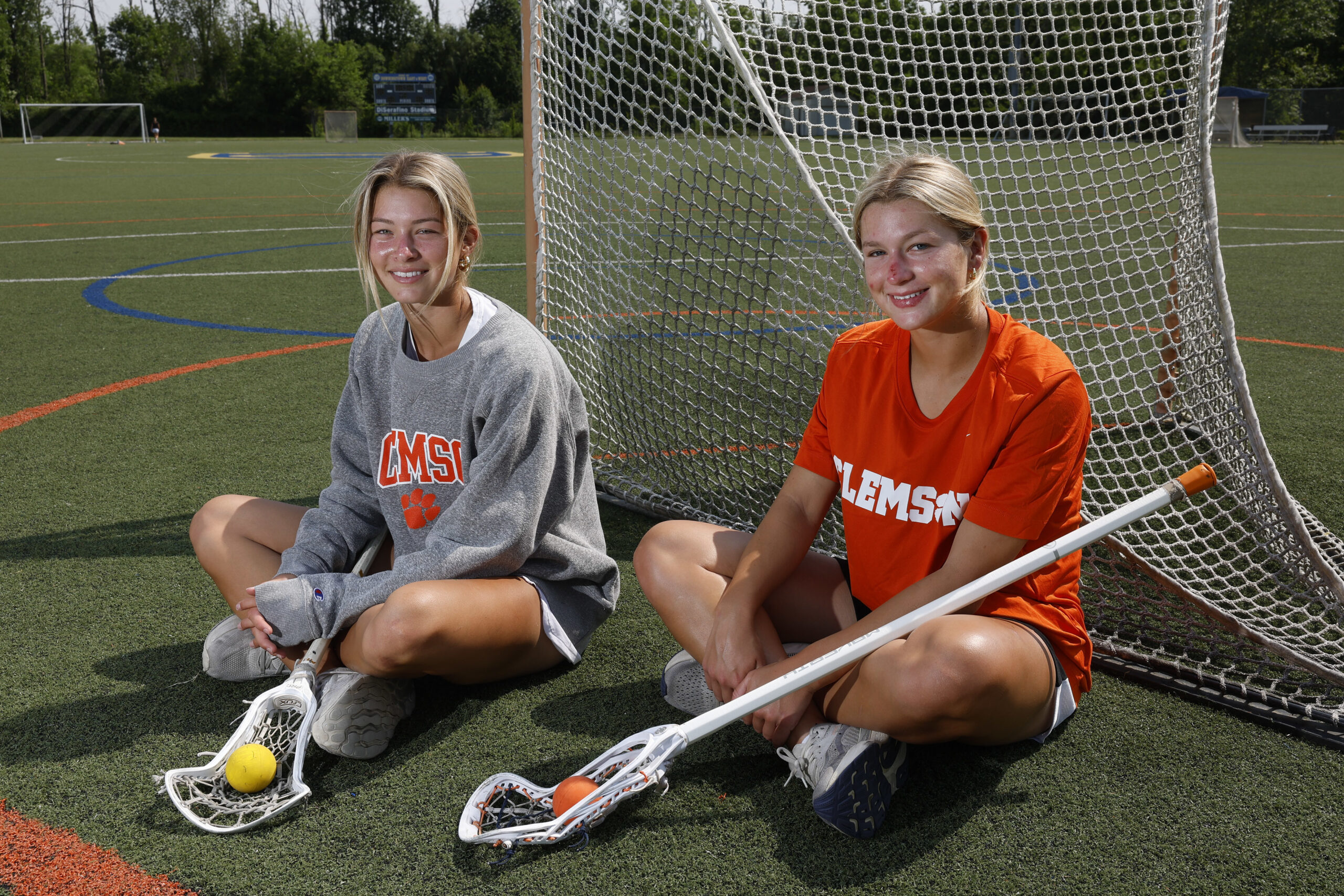
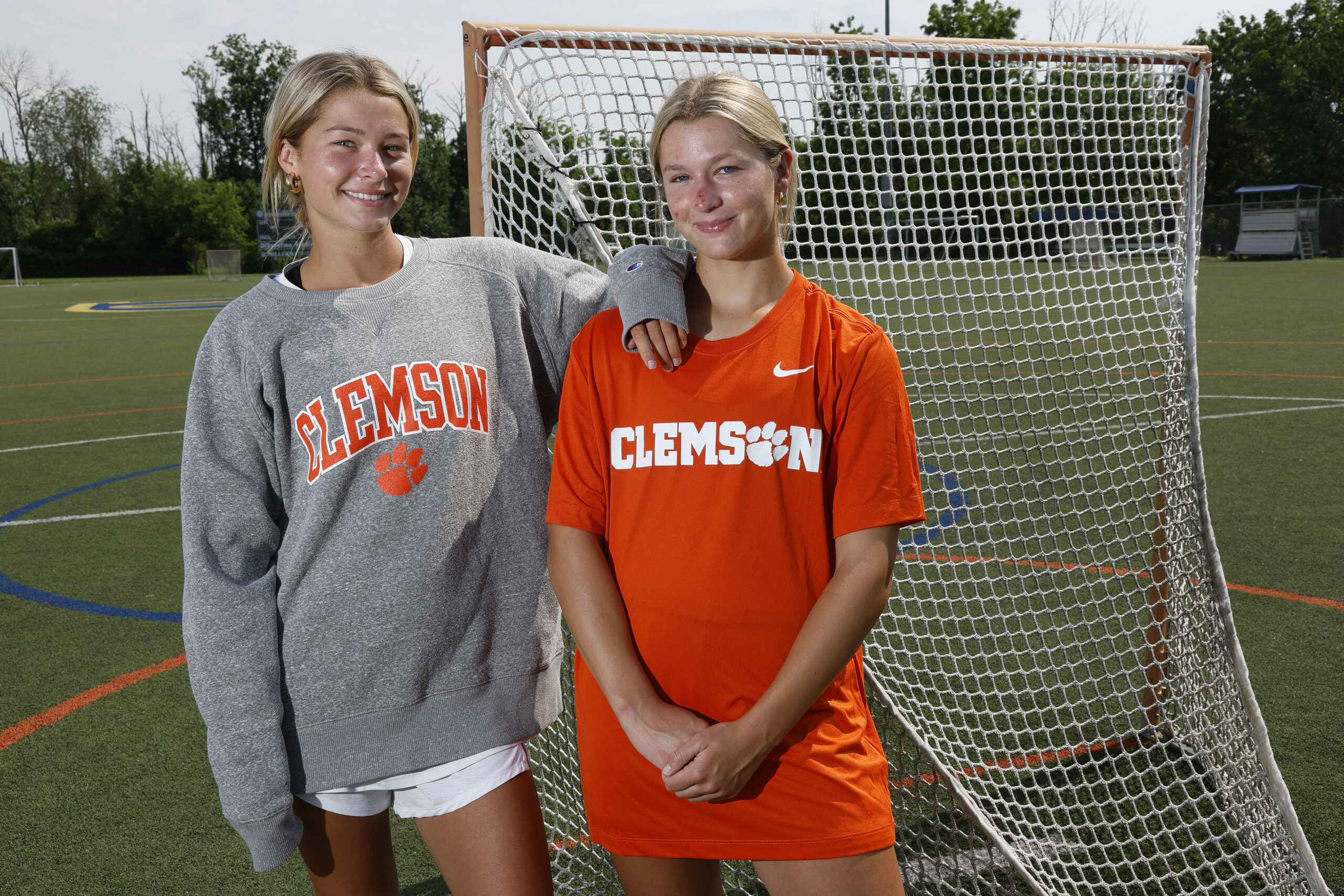
Twin lacrosse stars Brinn and Ava Findora are ready to don orange in the fall. It’s just going to be a different shade than they originally planned.
Brinn, the No. 8-ranked recruit in the class of 2026, and Ava, the No. 17-ranked recruit, according to InsideLacrosse, flipped their commitments from Virginia to Clemson on May 19.
“I chose Clemson because our original gut feeling loved Clemson,” Brinn said. “As we got closer to leaving, we felt we should go with our original connection and gut instinct, and make a change.”
They made the announcement following their senior high school season at Downingtown West, which ended in a 13-11 loss to Bishop Shanahan in the first round of District 1 playoffs.
With the Whippets, one of the top-ranked girls’ lacrosse programs in the state, Brinn was named first team all-Ches-Mont three times, while Ava received the same honor for all four years. Brinn also received a USA Lacrosse All-American nod in 2024 and 2025.
Brinn (left) was named first team all-Ches-Mont three times, while Ava received the same honor for all four years at Downingtown West.
The two grew up playing together: from their club team with NXT LC Girls, Downingtown West, and even for the 2024 USA U16 Selects Team. Playing together in college seemed like the natural next step.
Early in their recruitment process, Brinn and Ava discussed the possibility of a school recruiting one of them, but the hope was to go together.
The midfielders committed to Virginia in September 2024, early in their junior year. They were deciding among Virginia, Clemson, and then-reigning champions North Carolina.
“We were very obviously grateful for the opportunity we had [with Virginia], but we just were not feeling very good about it,” Ava said. “We just had a sense of uncomfortability with that, and then finally we made the decision very last minute to make that switch.”
Clemson qualified for this year’s NCAA Tournament for the second time in program history — with its first being last season — but fell to North Carolina in the second round.Virginia did not make the tournament for the first time since 1995.
Clemson beat Virginia, 12-10, when the two teams faced each other in March and finished the season ranked higher nationally than the Cavaliers.
During their initial decision, Ava and Brinn said the location of the school played a factor. Charlottesville, Va., is a about a four-hour drive from their home in Downingtown. Clemson is a plane ride or more than 10 hour drive.
Ava said that the comfort she feels in their decision to play for the Tigers makes the distance worth it. For Brinn, it brings new excitement.
Brinn and Ava will join a Clemson team that has made two NCAA Tournament appearances in program history.
“We have each other, so that’s so helpful,” Brinn said. “I feel like now is the time to go far and find what you love. Going that far and doing what we love is what we’re most excited for.”
Brinn said trusting their gut to make this change was the “best thing” they did, as they now prepare to leave home together. They will become the second set of twins on Clemson’s 2027 roster, joining rising seniors Regan and Blair Byrne.
While it took time to tune out, what Ava called, “outside factors,” and make the decision to change their commitment, she is sharing the same feelings as her sister.
“Leaving for school is obviously a difficult change, it’s a huge change in your life, but I’ve become really excited, and I can’t wait to get down to Clemson,” Ava said.
With Eagles training camp drawing nearer on the horizon, The Inquirer is taking a closer look at the more than three-dozen new faces who are expected to report along with the rest of the team on July 28. Whether a 2026 draft choice, a veteran addition, or a rookie free-agent hopeful, we’re telling you more about each player’s potential role this season. We’re rolling out two players per day in a mostly unscientific order that balances offense and defense, bigger names with mysteries, and locks with longer shots to be chosen for the 53-man roster.
Player: Arnold Ebiketie
Position: Linebacker
Age: 27
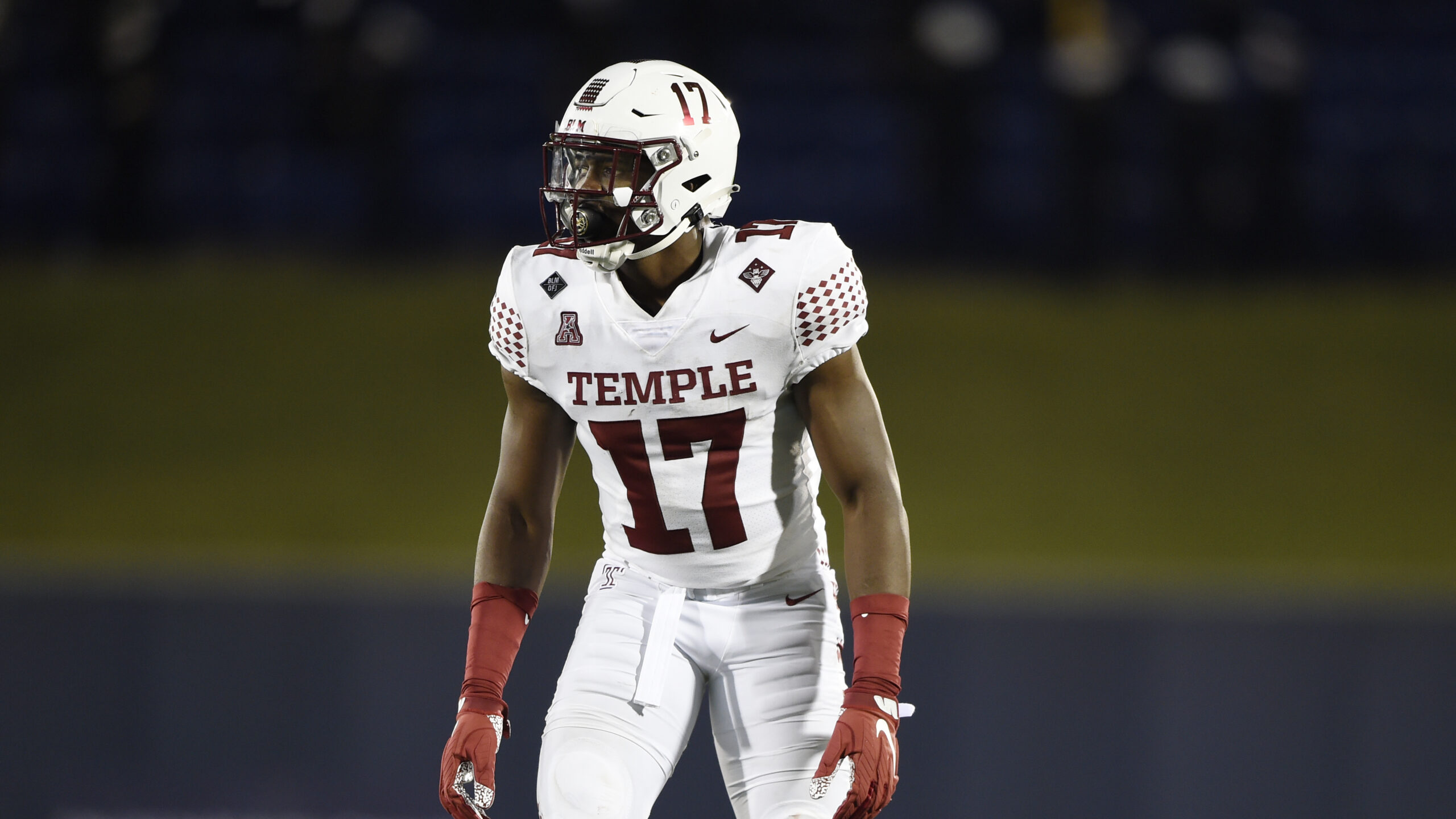
Previous experience: Ebiketie has four years of NFL experience, and his football journey began at two local schools. The native of Cameroon played linebacker at Temple from 2017 to 2020 before transferring to Penn State for his senior year. Ebiketie began his NFL career with the Atlanta Falcons, the team that selected him in the second round, 38th overall in the 2022 draft.
Ebiketie started 12 of 67 games played over four seasons with the Falcons. In total, he has 16.5 career sacks and 129 tackles. His best season came in 2022, when he logged 6.0 sacks, six tackles for loss and 38 tackles.
The Eagles signed him in March to a one-year, $7.3 million contract, including $4.3 million fully guaranteed.
Arnold Ebiketie first got onto the local radar as a player at Temple.
Path to a roster spot: While the news didn’t exactly dominate headlines, Ebiketie could be a sneaky good signing for the Birds. Yes, their defensive front is loaded, but Ebiketie projects to be a decent rotational piece/situational edge rusher who will generate pressure, especially under defensive coordinator Vic Fangio’s guidance.
Despite a limited role in Atlanta, Ebiketie still managed to post 24 solo tackles, which ranked 45th among 115 eligible edge rushers last season. If he takes advantage of every snap, he could be another diamond-in-the-rough signing by Howie Roseman.
Fun fact: The Cameroonian Ebiketie did not play organized football until high school. He initially focused on soccer and basketball when he emigrated to the United States at age 13, until his high school basketball coach challenged him to give football a try. “He made a joke like, ‘Are you scared?’ So, that got me,” Ebiketie said via the Eagles’ website. “I’m competitive. I wanted to prove him wrong. After that, I liked it.”
Quotable: “The fans in this city and the Eagles, it goes hand in hand. Everything is about the Eagles. I saw that at Temple. Everything matters to them. I’m here and I know it’s fast-paced and very, very important. This is a championship culture. That is the standard here. I embrace that. I want that and I know it’s going to help bring out the best in me.” — Ebiketie to the Eagles’ website.
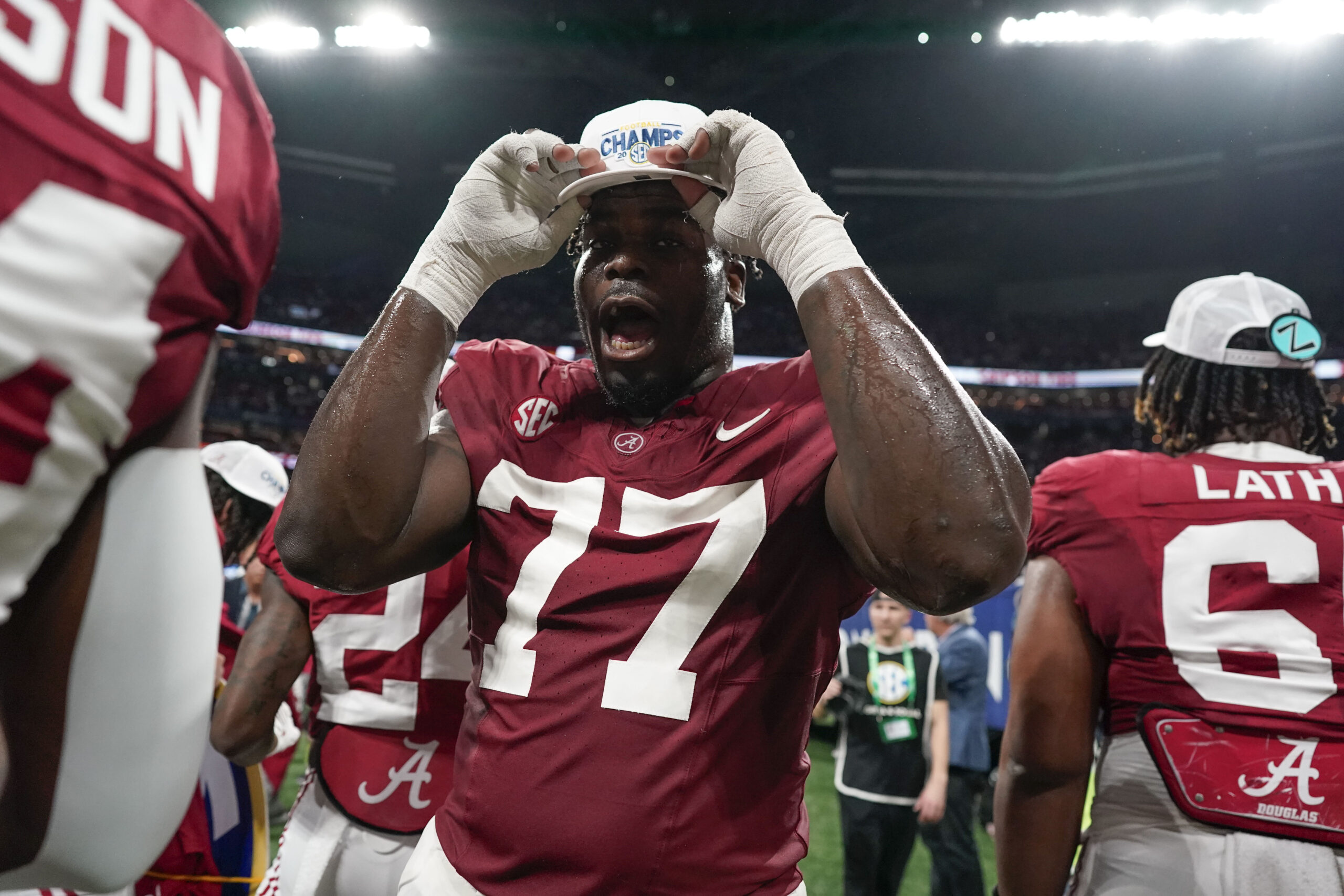
Jaeden Roberts celebrates after Alabama beat Georgia for the SEC Championship in 2023.
Player: Jaeden Roberts
Position: Guard
Age: 23
Previous experience: Roberts is an undrafted free agent who played college ball for Alabama. He started 12 games at right guard for the Crimson Tide in 2024 and was a projected star in 2025 before an August concussion turned him from guaranteed starter to rotational guard. He started just four games in his final season, playing in 10 overall.
Roberts was a preseason All-American and named to the Outland Trophy Watch List before the season.
Path to a roster spot: If he’s going to make the roster, Roberts will need to prove that last season was a fluke. He has tremendous strength and a massive frame, but he’ll need to combine that with sound technique if he wants to earn a spot after going undrafted.
The Eagles have plenty of fringe offensive linemen who are trying to carve out a role. Names like Tyler Steen, Michael Jordan, Micah Morris, Willie Lampkin, Drew Kendall, and Jake Majors will all enter camp motivated to win jobs. Roberts will need to somehow separate himself from that bunch.
Fun fact: Let’s talk about Roberts’ strength for a second. The 23-year-old earned a spot on The Athletic’s “Freaks List“ two years in a row thanks to some impressive weight room accomplishments. The 6-foot-5, 333-pound lineman can squat over 800 pounds and power clean 415 pounds. Not too shabby.
Quotable: “Just being consistent,” Roberts said when he was asked how he could get on the field more amid a position battle at Alabama last season, via AL.com. “I know I’ve been missing practice time, I have been talking to the coaches and just working on the details that I need to improve on, and consistency is one thing that I think I’ve really improved on.”
When Danny Brière, Keith Jones, and the Flyers’ “New Era of Orange” regime took over in 2023, they silently targeted the summer of 2026 as the potential turning point for the team’s rebuild.
They did so with an eye on a loaded free agent class headlined by MVP candidates like Connor McDavid, Jack Eichel, and Kirill Kaprizov — not to mention top-of-the-lineup players like Artemi Panarin, Adrian Kempe, Kyle Connor, and Martin Nečas. Fast forward three years, and each of those players has already come off the board via a contract extension or trade, forcing the Flyers to pivot in their so-far elusive quest to land both a No. 1 center and a bona fide power-play quarterback on the blue line.
While they won’t be able to plug those holes via unrestricted free agency once business formally opens on July 1, that doesn’t mean they can’t find creative solutions via trades or even the all-too-infrequent offer-sheet route. With that in mind, here a dozen players the Flyers, who currently have over $33 million available in cap space, could target as they look to build on their momentum from last season and make Philadelphia a destination once again.
1. Zach Werenski
LHD | Columbus | Trade candidate
The Flyers have stated they want to be in the mix when elite players become available, and reports say their interest in Werenski is high. Why wouldn’t it be for a player that just won the Norris Trophy as the league’s best defenseman and is coming off back-to-back 20-goal, 80-point seasons? Werenski, who turns 29 next month, is exactly the type of offensive defenseman and power-play quarterback the Flyers have long lacked, and is signed for two more seasons at a $9.5 million cap hit.
The two questions will be: 1) Would Werenski entertain a move to Philly over other cities that are closer to Stanley Cup contention? and 2) Do the Flyers have the pieces outside of Porter Martone to get him? The Flyers are definitely interested here, and you’d think every player on their roster, aside from Martone, would be available for a player of Werenski’s ilk.
Robertson’s name is out there and he’s looking to get paid after reportedly turning down a $15-million-a-year contract offer from Seattle. While the Flyers are well-stocked on the wing, Robertson, who is coming off a 45-goal, 96-point campaign in Dallas, would immediately jump to the top of the pile and is the type of player you move furniture around for. Dallas hasn’t closed the door on keeping Robertson, but he could also be a trade or offer-sheet candidate. The Flyers have the money to pay him and would be wise to look into a move for the highly skilled and well-rounded winger.
3. Dylan Larkin
C | Detroit | Trade candidate
The Flyers are clearly looking for a No. 1 center, and the speedy perennial 30-goal scorer certainly fits the bill. Larkin, who turns 30 next month and is signed for the next five years at an $8.7 million cap hit, has a full no-move clause and seems hell-bent on choosing his next destination. Detroit GM Steve Yzerman doesn’t seem nearly as inclined to trade Larkin to one of his three preferred destinations — Florida, Vegas, and Minnesota ― so Larkin has reportedly expanded his trade list. If the Flyers are on Larkin’s list, they’d likely be very interested.
Blue Jackets center Adam Fantilli is a restricted free agent. But could someone price out Columbus?
4. Adam Fantilli
C | Columbus | Restricted free agent
If the Flyers are willing to take a swing on an upper-tier offer sheet (more on others later), Fantilli would seem more attainable than Anaheim’s Leo Carlsson or Chicago’s Connor Bedard with a mammoth offer in the $15 million AAV range. Might Columbus still match? Sure, but if the Flyers are serious about finding a young No. 1 center, making a play for Fantilli would be a worthy gamble. Fantilli, who will only be 22 next season, already has a 30-goal season under his belt and possesses an enticing combination of size (6-foot-2, 200 pounds), speed (95th percentile in 22 mph speed bursts), and competitiveness.
Fantilli is almost certainly staying put, especially with Werenski and Kirill Marchenko wanting out of Columbus, but he’d be worth the offer-sheet compensation of four first-round picks over the next five years. The Flyers and Blue Jackets could also work out a deal in place of an offer sheet if that appealed to Columbus.
5. John Carlson
RHD | Carolina | Unrestricted free agent
The oldest player on this list at 36, the New Jersey native is reportedly a target for the Flyers as they try to fix their anemic power play. The idea behind signing Carlson would be paying him a high AAV (likely over $10 million) on a two-year deal to act as the team’s bridge power-play QB. The former Stanley Cup winner can still generate offense (60 points last season in Anaheim) and run a power play, but could the allure of another Cup chase trump the financial incentives Philly could offer? He might not even make it to free agency either, as Carolina acquired his negotiating rights on Saturday and now has a head start on the competition.
Dallas has the aforementioned decision to make with Robertson and is also circling when it comes to Werenski and Larkin. That could make Bourque a prime candidate for an offer sheet. Bourque, 24, has played mostly as a wing on a deep Dallas team but is a natural center who would fit a Flyers need as well as the team’s ideal age range. He’s a highly intelligent offensive player who topped 20 goals last season and has room to grow. A former AHL scoring champ and MVP, an offer sheet for Bourque over $5 million AAV would cost the Flyers first- and third-round picks in 2027. This might be the Flyers’ most realistic shot at a potential top-six center this offseason given Dallas’ cap pinch.
Ottawa Senators center Dylan Cozens would check a lot of boxes for the Flyers if he is available.
7. Dylan Cozens or Shane Pinto
C | Ottawa | Trade candidates
The Flyers have been linked before with Cozens and Pinto, both of whom are 25, and acquiring either would represent an upgrade down the middle. The Sens may not want to move another top forward after having to trade Brady Tkachuk against their will, but the Flyers do possess a player they are reportedly high on in defenseman Rasmus Ristolainen.
The 6-3, 205-pound Cozens, who scored 28 goals last season and is signed for five more years at a bargain $7.1 million, is probably the more attractive of the two given he’s faster (one of the NHL’s fastest per NHL Edge), more physical, and more of a point producer (59 to Pinto’s 46). Pinto, meanwhile, carries a $7.5 million cap hit for the next four years and is an elite defensive center coming off career highs in goals (23) and points (46). How far would Ristolainen and a first-round pick get you in conversations with Ottawa?
Nikishin is a name I didn’t expect to be on this list given he’s not eligible for an offer sheet and arrived in Carolina a year ago with so much hype after a prolific career in Russia’s Kontinental Hockey League. But reports over the weekend have indicated that Carolina is at least taking calls on the 6-4, 216-pound offensive blueliner. Nikishin, 24, figures to be expensive both in terms of trade compensation and his next contract, but he’s the prototype offensive defenseman the Flyers are looking for with his passing vision, skating ability, and booming shot from the point. There are some defensive warts, but the youngster’s upside is immense, not to mention he’s a former teammate and friend of Matvei Michkov’s. He had 11 goals and 33 points, including 10 on the power play, as a rookie.
9. Darnell Nurse
LHD | Edmonton | Trade candidate
Nurse, who is the nephew of former Eagles quarterback Donovan McNabb, might be the NHL’s poster boy for being judged by the numbers on your contract ($9.25 million AAV) and not your on-ice play. The 31-year-old is certainly not a $9 million defenseman, but he is still a solid second-pair guy who blocks shots, eats up minutes, and provides toughness. The Inquirer has reported there is mutual interest between Nurse and the Flyers, with the Flyers on the short list he sent to the Oilers. Sportsnet reports that Nurse has added Pittsburgh and Boston. Nurse only truly makes sense if the Flyers are moving Ristolainen AND Edmonton is willing to retain 25-30% of the rugged blueliner’s salary over the next four seasons.
Seattle Kraken center Shane Wright, a former top-five pick, could be a worthwhile reclamation project.
10. Shane Wright
C | Seattle | Trade candidate
The 2022 fourth-overall pick’s name has been out there in trade rumors, but his value seems to have taken a significant hit following a disappointing 2025-26 season that saw his point total drop from 44 to 27. The Inquirer has learned that Wright isn’t high on the Flyers’ list and that the team has some serious doubts about his ability to stick down the middle in the NHL. Regardless, Wright is still just 22, came up as a center, has draft pedigree, and a year ago had 19 goals and 44 points without top-of-the-lineup deployment.
Could the Flyers circle back to Wright with centers like Robert Thomas, Mason McTavish, and Connor McMichael off the board? They’ve had success with these types of reclamation projects in recent years, even if Wright doesn’t seem an ideal fit on paper. Matty Beniers would represent a more attractive center from a Flyers’ perspective.
11. Teddy Blueger
C | Vancouver | Unrestricted free agent
The Flyers’ fourth line could use some help, particularly after trading Garnet Hathaway last week. Blueger has experience playing under Rick Tocchet in Vancouver, won a Cup with Vegas, and is a solid left-shot defensive center who kills penalties and can provide some secondary scoring. The Flyers seem to be considering bringing back 37-year-old Luke Glendening, but if they don’t, Blueger and right-shots Colton Sissons, Kevin Stenlund, Oskar Sundqvist, and Noel Acciari would all make some sense as 4Cs who kill penalties.
12. Noel Acciari
C | Pittsburgh| Unrestricted free agent
The Flyers’ fourth line could use an infusion of energy, and Acciari brings that in spades. A right-shot center who is excellent in the dot (53.5% since 2022-23), kills penalties, and plays an in-your-face game, he also chipped in 13 goals last season (his fourth double-digit goal campaign). Acciari is older at 34, but he is still someone who empties the tank on every shift and relishes getting under opponents’ skin.