It may be sweltering outside, but there is ice in our future.
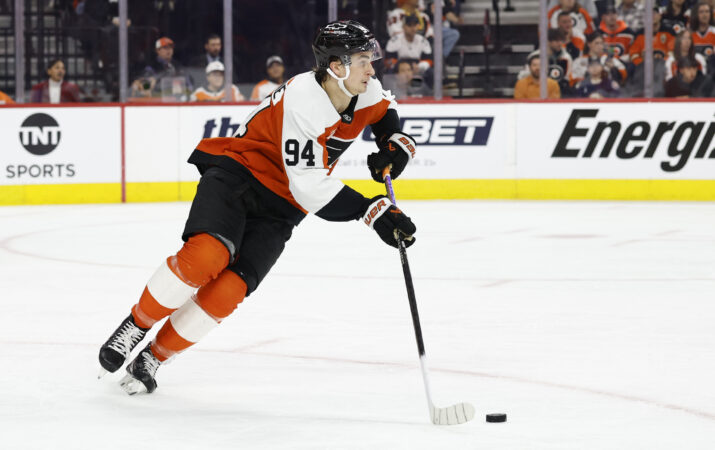
Fresh off drafting the next generation, the Flyers will be in action, beginning on Monday and wrapping up with a five-on-five scrimmage Thursday night and a three-on-three tournament Friday morning.
Here’s what you need to know about Flyers’ development camp.
What is the schedule for development camp?
All on-ice sessions are free and open to the public at the Flyers Training Center in Voorhees. There will not be any on-ice activities on July 1, the first day of free agency. Instead, fans can attend an autograph session at The Franklin Institute from 3:30 to 5:30 p.m. A museum ticket is required to attend.
On Tuesday, Team Jones and Team Brière will skate from 4-5 p.m. on the Phantoms and Flyers’ Rinks, respectively. Thursday at 6 p.m. on the Flyers Rink, the two teams will square off. On Friday, a three-on-three tournament will wrap up the week at 10 a.m. on the Class of ‘67 Arena rink.
Who will be attending?
Among the 41 players in attendance, fans will get a chance to see the entire 2026 draft class don Flyers gear for the first time at development camp. But while everyone will be clamoring to see 6-foot-7 defenseman Maksim Sokolovskii, the 27th pick on Friday, there are several familiar faces to get an up-close look at.
Fresh off their first tastes of the NHL — regular season and the playoffs — Porter Martone, Denver Barkey, Alex Bump, and Oliver Bonk will participate in camp.
Centers Jack Berglund and Jett Luchanko will be at camp, but will not participate in on-ice sessions. Berglund has played a lot of hockey this past year between regular season and playoffs for Färjestad BK of the SHL, Sweden’s top men’s league, and World Juniors and World Championships for Sweden.
Ilya Pautov, a member of the 2024 draft class who signed an entry-level contract this spring, will make his development camp debut. He is expected to be playing for Lehigh Valley of the American Hockey League this season.
Of the last five draft classes, the only players still with the organization not attending are Matvei Michkov (2023), Yegor Zavragin (2023), Austin Moline (2024), and Max Westergård (2025). Forward Karsen Dorwart, who was signed as an undrafted college player, will be a restricted free agent on July 1 and is expected to get a qualifying offer by June 29. Every member of the 2026 class will be at development camp.
Forwards: Denver Barkey, Samuel Beauchemin, Jack Berglund,Alex Bump,Alex Čiernik, Christopher Duclair, Grady Deering, Sawyer Dingman, Matthew Gard,Devin Kaplan, Jack Kernan, Cole Knuble, Jett Luchanko,Ryan MacPherson,Porter Martone,Jack Murtagh, Jack Nesbitt, Noah Powell,Nathan Quinn, Heikki Ruohonen, Ilya Pautov, KJ Sauer,Riley Thompson, Shane Vansaghi
Defense: Carter Amico, Oliver Bonk, Matthew Desiderio, Jackson Edward,Spencer Gill, Alonso Gosselin, Leo Gruba, Max Laatikainen, Brek Liske, Maksim Sokolovskii, Riley Steen,Luke Vlooswyk
Goalies: Carson Bjarnason, Mathis Langevin, Martin Psohlavec, Marek Sklenička, Shane Soderwall
Things to keep an eye on
The Flyers have invited 11 players to attend camp this season.
Samuel Beauchemin is a winger who just put up 66 points in 64 games for Rouyn-Noranda of the Quebec Maritimes Junior Hockey League. His father, François Beauchemin, played 903 NHL games, and Samuel played his youth hockey for the Anaheim Jr. Ducks.
Swift Current of the Western Hockey League winger Sawyer Dingman, who was eligible to be drafted this weekend, is the son of former NHLer Chris Dingman. Forward Christopher Duclair, the shortest player in camp at 5-8, is the younger brother of New York Islanders forward Anthony Duclair.
Defenseman Matthew Desiderio is from North Jersey, and his fellow blueliners, Alonso Gosselin, who is 17 and played for Chicoutimi of the QMJHL, and Riley Steen, who played with the Ruck Twins for Medicine Hat of the WHL, were eligible to have been selected in the 2026 draft.
Keeping with the theme of having a tall team, of the 46 players attending camp, only 10 players are under 6 feet tall. The tallest is camp invitee Jack Anderson, a defenseman who stands 6-6. He just wrapped his third season at Lindenwood University and is committed to Michigan Tech in the fall.
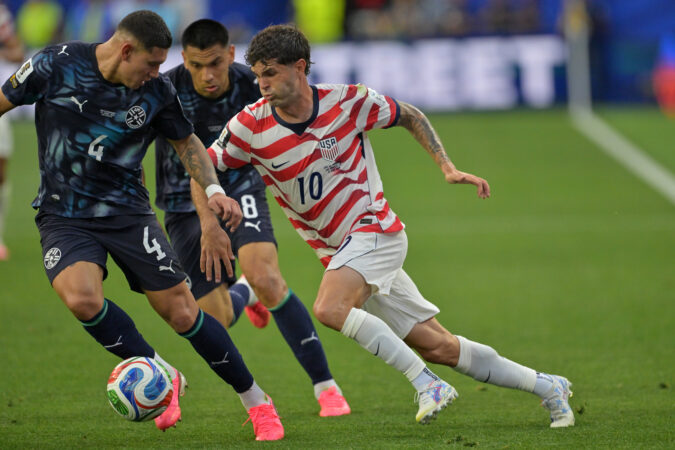
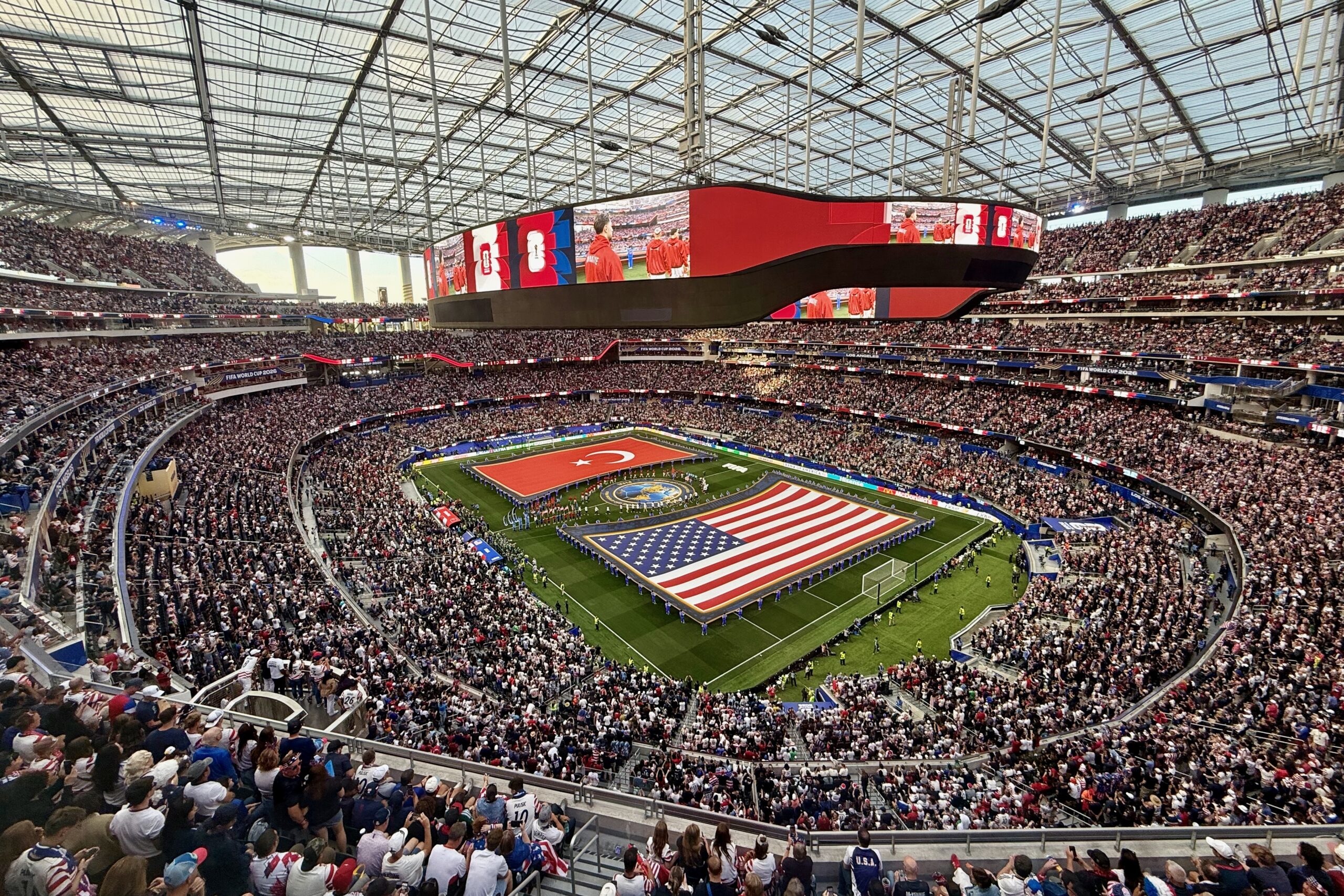
IRVINE, Calif. — Right now is a good time to remember that the U.S. men’s soccer team has won just one World Cup knockout game in its history.
In fact, every day for the rest of this tournament is a good time to remember that, especially leading up to Wednesday’s round of 32 contest with Bosnia & Herzegovina (8 p.m., Fox29, Telemundo 62).
This is the moment that the players have dreamed of, whether since growing up or since leaving Qatar four years ago. This is the moment Mauricio Pochettino was hired for, with U.S. Soccer bringing in hedge fund billionaires to help fund the famed manager’s salary.
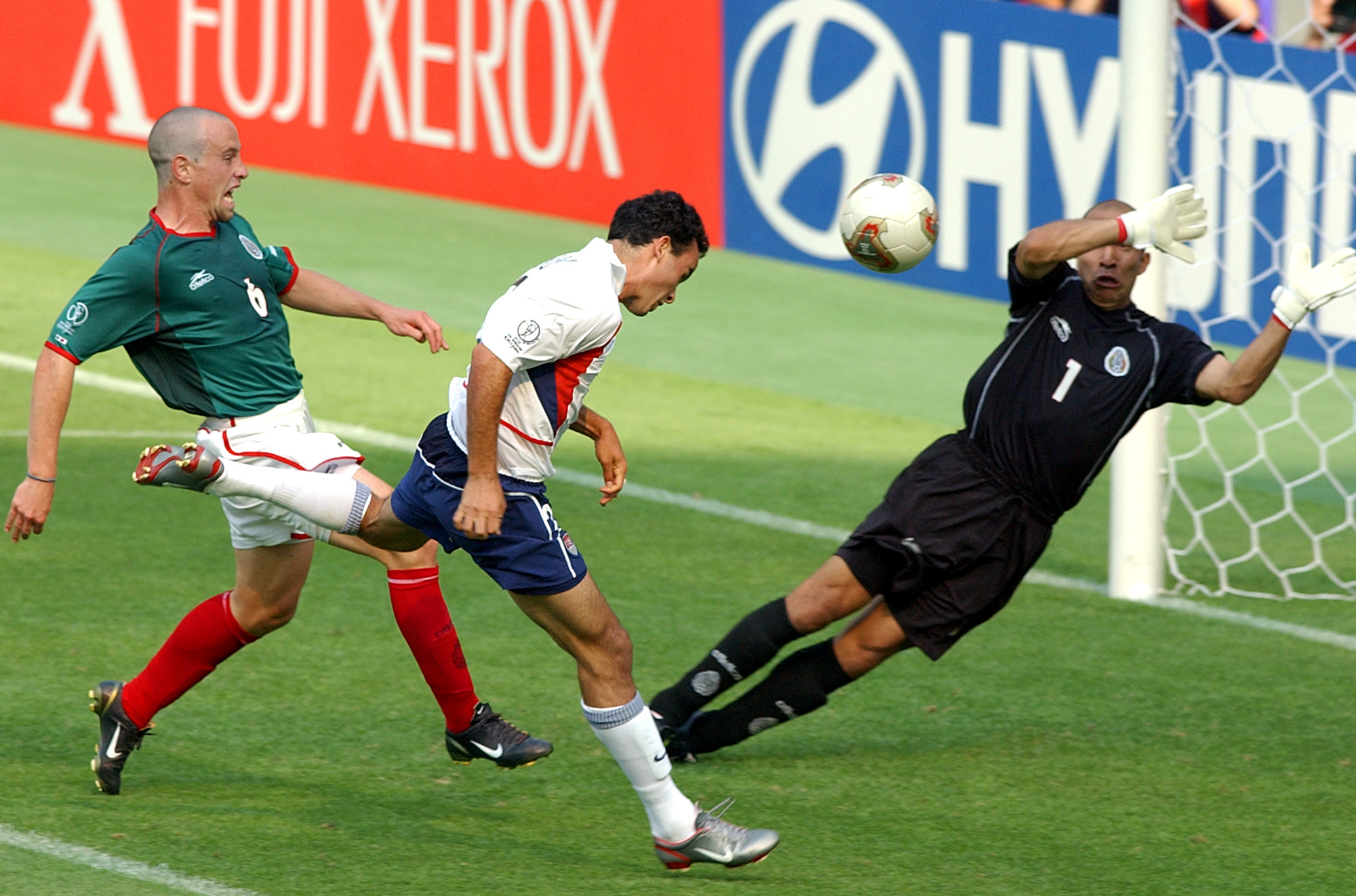
And this is the moment when history echoes. The U.S. men have played eight World Cup knockout games all-time, from their first in 1930 (a 6-1 loss to Argentina) to their latest in 2022 (a 3-1 loss to the Netherlands). Their lone victory came in 2002, 2-0 over Mexico.
Landon Donovan (center) heads in one of the U.S.’ goals in its win over Mexico in the 2002 World Cup round of 16.
Beyond that? 7-1 to Italy in 1934, 1-0 to Brazil in 1994 (more on that in a moment), 1-0 to Germany in the 2002 quarterfinals, 2-1 in extra time to Ghana in 2010, and 2-1 in extra time to Belgium in 2014.
If reading that opens some old wounds, apologies. But it’s necessary to explain why one of the most tense moments of any World Cup, the start of the knockout rounds, is especially tense for this program. There is no sterner test of a national team’s quality than whether it can win the do-or-die contests that live longest in the memory.
The last time the U.S. men played a World Cup knockout game on home soil was 1994 at the old Stanford Stadium — just down the road from the 49ers’ NFL palace in Santa Clara where Wednesday’s game will take place.
It was a stroke of coincidence, if not quite fortune, that the Americans landed in a July 4 matchup with Brazil after finishing third in their group. Finishing second would have sent them to Washington to play Spain, and finishing first would have had them at the Rose Bowl (where they already were) to play Argentina.
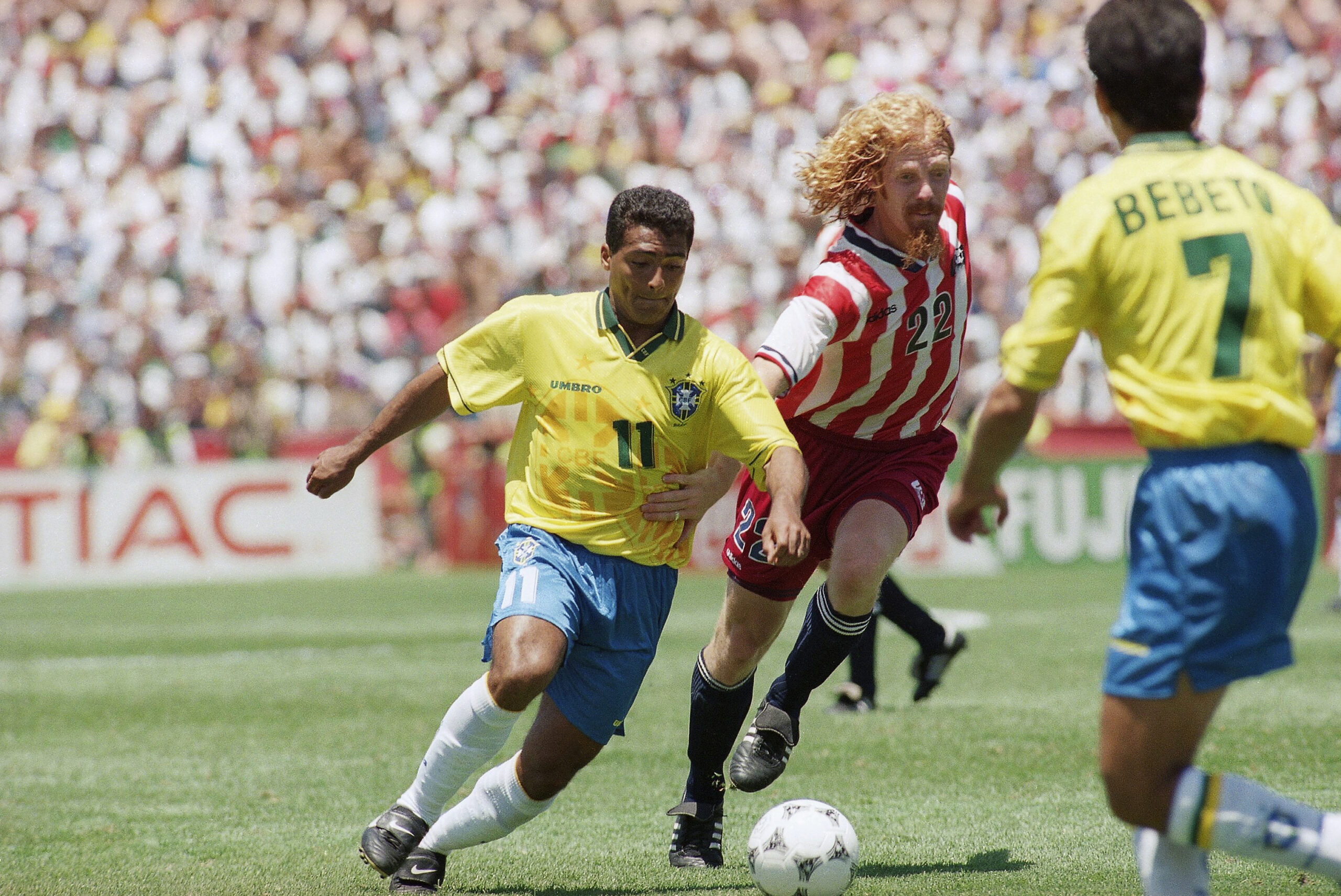
Brazilian superstar Romário (left) dribbling past Alexi Lalas in the 1994 U.S.-Brazil World Cup game.
Challenging the team that would go on to win the title was always going to be a mountain of a task. But the U.S. battled gamely, losing 1-0 to a Seleçao squad that saw defender Leonardo sent off in the first half for a nasty elbow to American star Tab Ramos.
This time, the U.S. is favored, and not just by the bookies. Bosnia & Herzegovina is No. 64 in FIFA’s global rankings, well below the U.S.’ No. 17.
The Dragons are also the lowest of the five third-place teams across the field that the U.S. could have faced, depending on which eight groups’ third-place finishers advanced. The opponent could have been from Group E, F, I, or J in other circumstances, and those teams turned out to be No. 23 Ecuador, No. 38 Sweden, No. 15 Senegal, and No. 28 Algeria.
On top of that, Bosnia is the second-lowest-ranked team of all eight. Only No. 73 Ghana is lower. (The others not named yet are No. 28 Paraguay and No. 46 Democratic Republic of the Congo.)
Bosnia & Herzegovina’s Esmir Bajraktarević was born in Appleton, Wisconsin, to parents who emigrated to the United States after escaping the Bosnian war of the 1990s.
Still, an American sports fan watching soccer in the summer needs only to think of any given March to know it’s never so easy.
The players know this, even someone like Balogun who has spent almost his entire life in Europe.
“I can feel the difference in the atmosphere,” he said. “So for me, there’s a change in my mindset and mentality as well. Not that I wasn’t taking it seriously before, but you can go to another gear. Because you want it more, and I don’t want the journey to end.”
Another point he made about himself might feel especially resonant to a U.S. fan base that has seen Balogun prove his worth as the striker the program long craved.
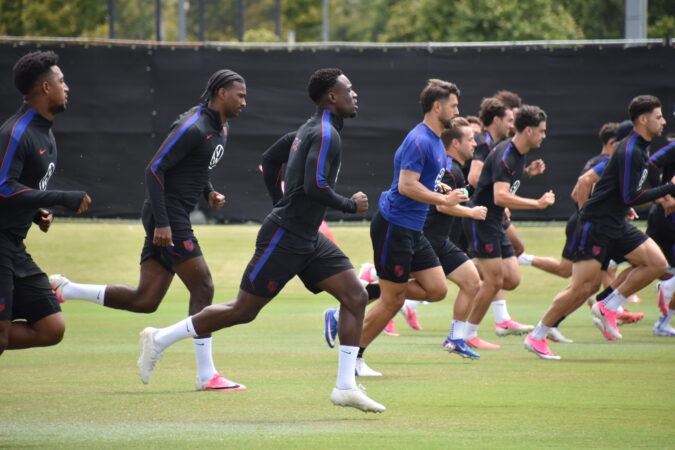
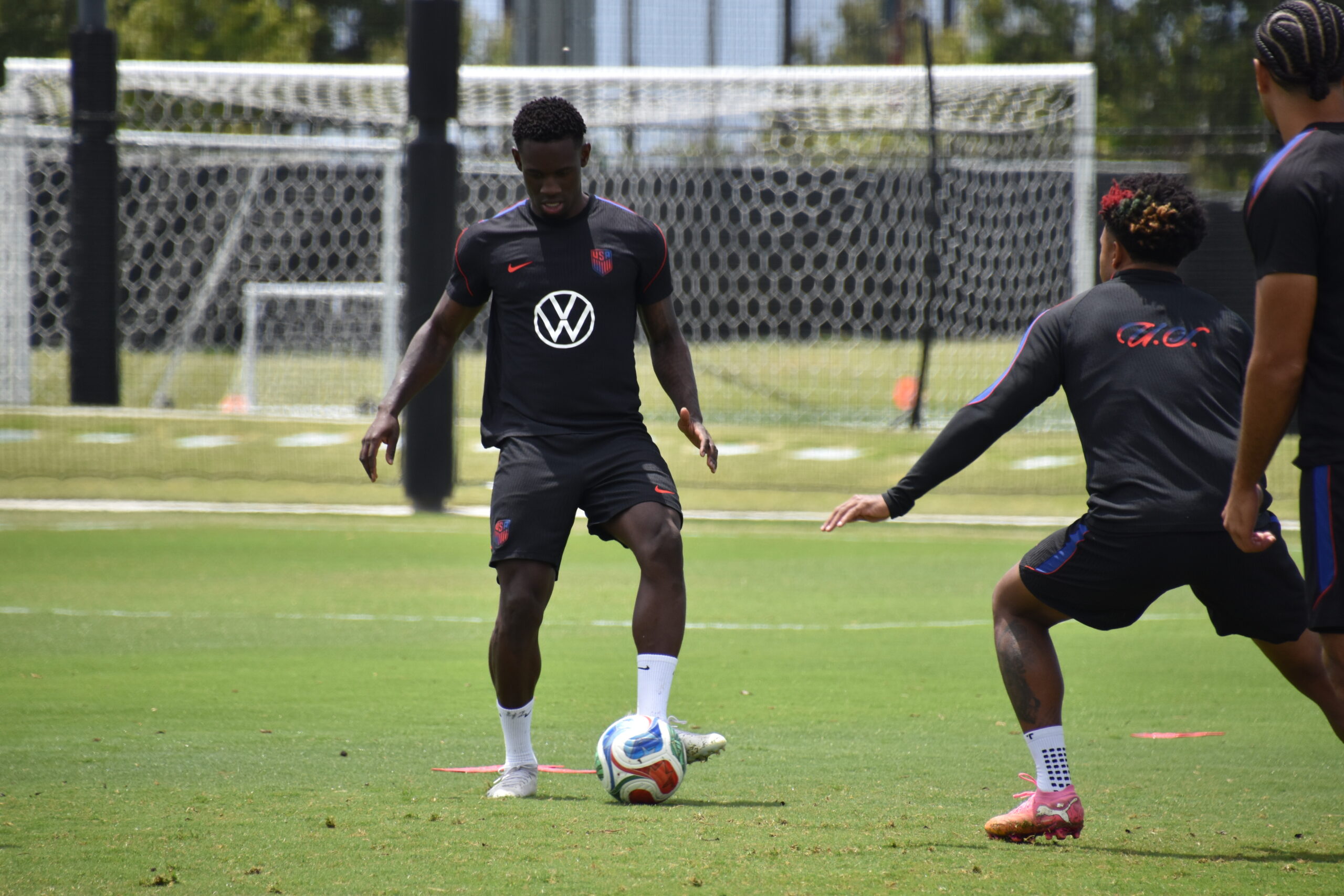
Folarin Balogun (left) during a United States men’s national soccer team practice at Great Park in Irvine, California on Sunday.
“This the business end,” he said, “and this is the stage where, in my opinion, the big players step forward and the big players carry the pressure and make things happen.”
The growing strength of the U.S. player pool is a project that has taken decades to fulfill, and could still take many more years to deliver a true World Cup contender. But a tournament on home soil is an opportunity unlike any other to make a statement, whether to the soccer world or to the non-soccer American public.
So while it may feel cliché to say this is one of the biggest moments in U.S. men’s program history, it’s also true.
“From my personal experience, the best way to break history is not to think about what hasn’t been done,” Balogun said. “It’s just to think about what you need to do and just to think about what needs to be done in order to progress. And as I said, that’s just to win on Wednesday.”
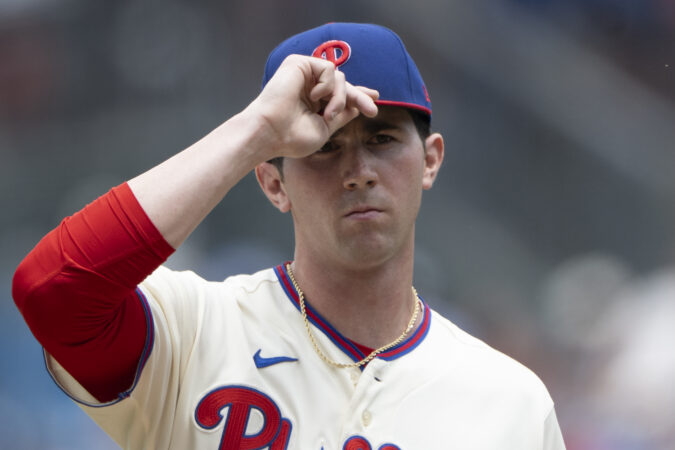
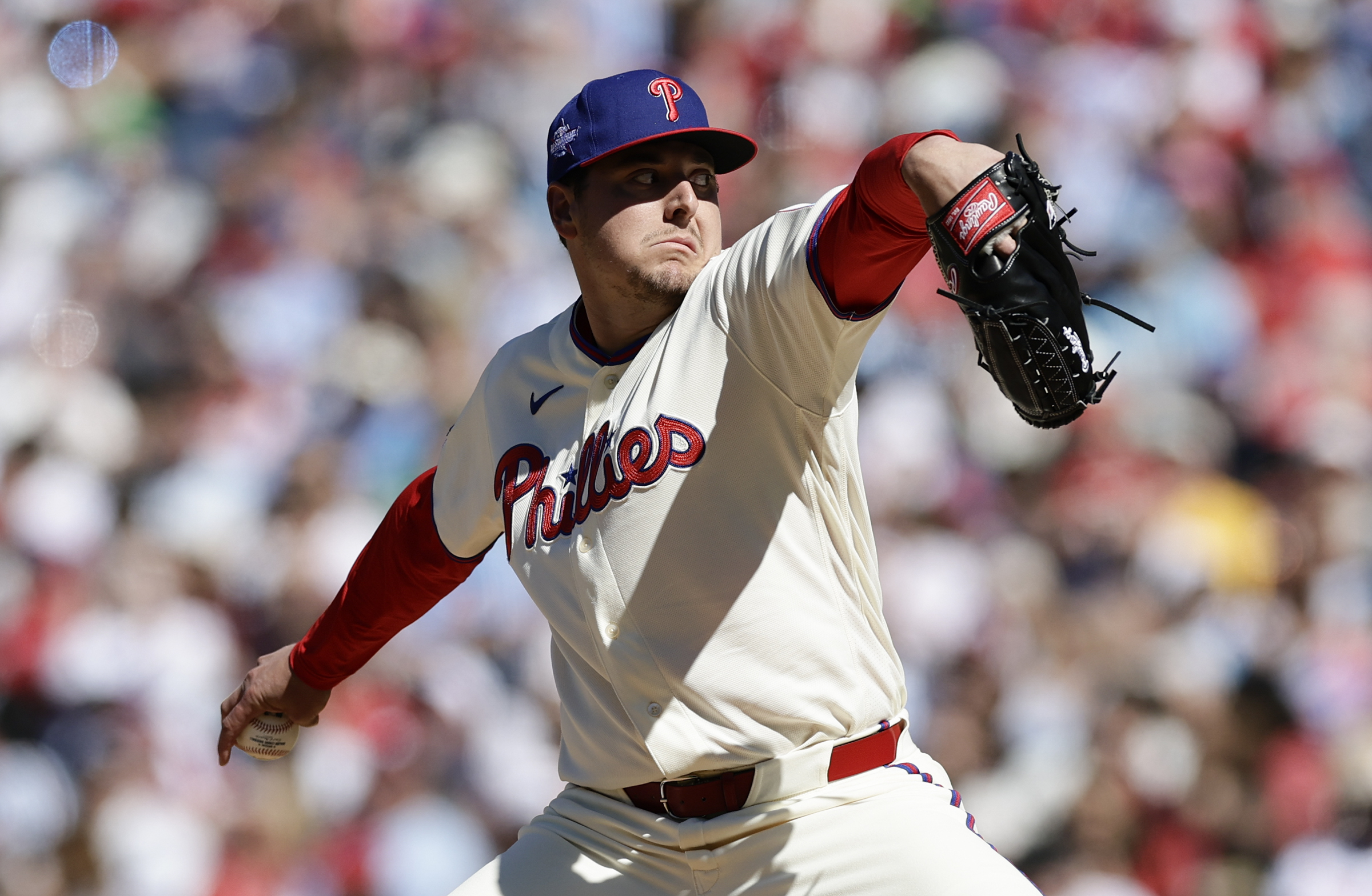
As the Phillies finished a series against the Mets here Sunday, Andrew Painter faced New York’s JV club in his first start for triple-A Lehigh Valley. The games were played only 109 miles apart along Interstate 78, and the Phillies hope Painter’s road back to the majors isn’t much longer.
That remains to be seen. But for starters, Painter got better results, especially with his fastball, in allowing one run in four innings against Syracuse.
When the Phillies demoted Painter 10 days earlier, the instructions were clear. They wanted him to focus on his fastball, which got hit hard in his first 14 major-league appearances. Opponents batted .404 and slugged .660 against it.
Painter threw 44 four-seam fastballs out of 80 pitches for Lehigh Valley, while sprinkling in 11 sliders, seven sinkers, six curveballs, six sweeping sliders, and five splitters. The hits came off his slider and sinker.
The Phillies haven’t outlined a timetable for Painter to return. It’s intentional. But with scant depth in the rotation, they are counting on the 23-year-old to get back.
But interim manager Don Mattingly also isn’t waiting breathlessly for daily updates on Painter’s progress.
“From my standpoint, he’s just down there working and getting himself [right],” Mattingly said. “It’s not like a rehab-type situation where you think, ‘Oh, he’s going to get one start and he’s coming back.’ I think it’s more like, ‘Hey, let’s get this guy on the right track and don’t put a timetable on it.’
“It’s really important moving forward, to the organization, that he becomes what he’s capable of. So, I just look at it more like he’s down there working, and then we’ll hear periodically how it’s going.”
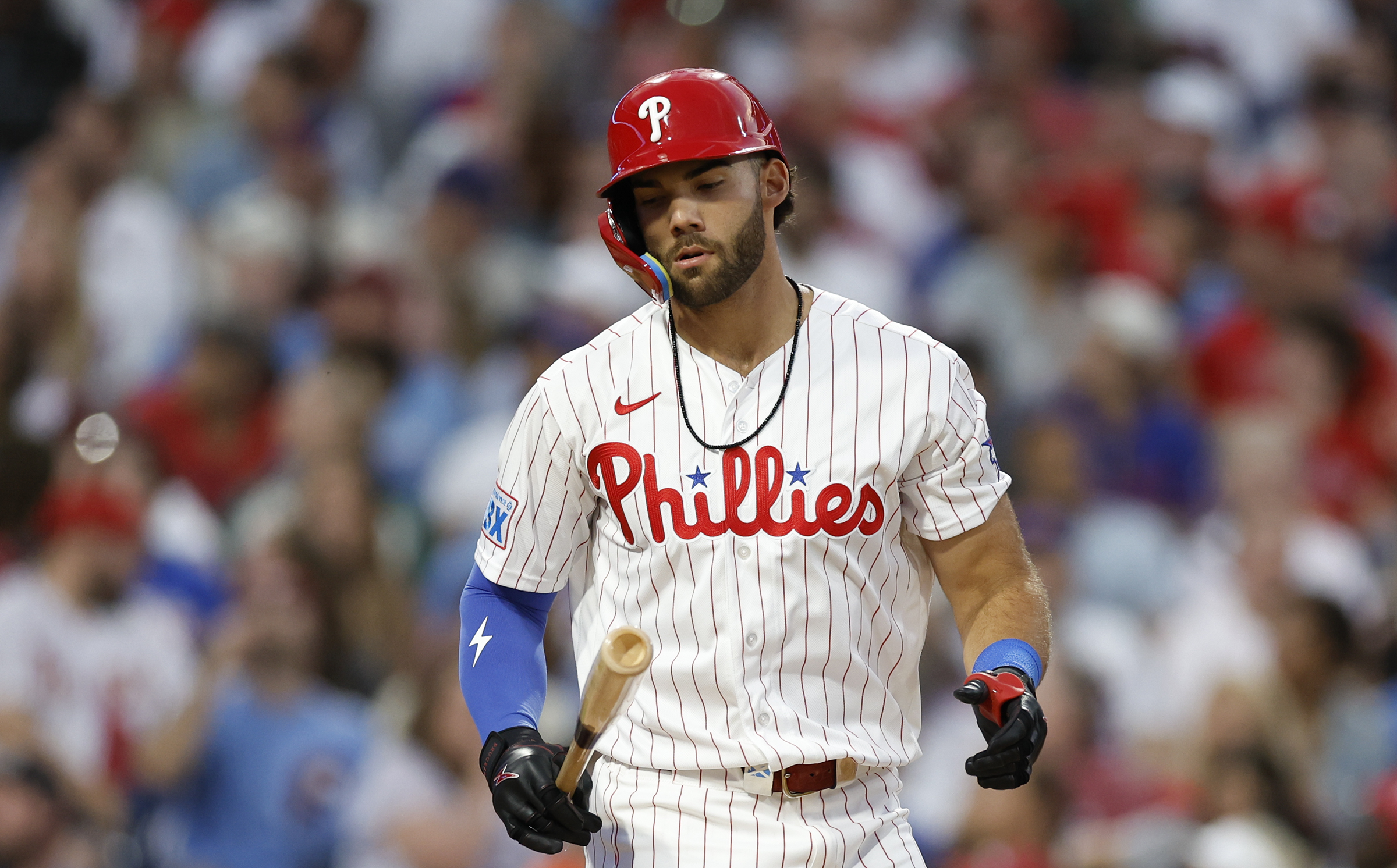
Phillies rookie outfielder Gabriel Rincones Jr. has struggled since getting called up from triple A.
Rincones sits
As the Phillies anticipated, the Mets brought in righties Tobias Myers and Kodai Senga behind lefty opener Cionel Pérez to cover the bulk of the innings Sunday.
But Gabriel Rincones Jr. wasn’t in the lineup.
Rincones, a left-handed hitter who plays against most righties, was in a 3-for-30 skid with seven strikeouts since hitting his first career homer June 15 in his first at-bat at Citizens Bank Park. Overall, he was 4-for-34 with nine strikeouts.
“I felt like Rinco needed a day to think about it just a little bit,” Mattingly said. “Sometimes I feel like, with young guys, you kind of pay attention to when the at-bats aren’t going good. What are they [like]? How are they dealing with that? So, [it’s] a day just to watch a game.”
Besides, righty-hitting Derek Hill was on an 8-for-19, two-homer roll. Hill started in right field in Rincones’ place.
The Phillies are scheduled to face four righty starters this week against the Pirates. It will be interesting to see how many games Rincones starts.
“In general, I’d just like him to stay aggressive and not really get where he’s thinking too much about the at-bats just one to the other,” Mattingly said. “I’d say it’s been spotty as far as feeling like he’s making quality contact a lot. It’s another thing that we’ll keep an eye on.”
Phillies reliever Brad Keller has been on the injured list since June 16 with right forearm tendinitis.
Extra bases
Reliever Brad Keller, sidelined since June 16 with right forearm tendintis, threw from the slope of a mound and is expected to progress to a bullpen session this week. After that, Mattingly said Keller may face hitters, then make a minor-league appearance before rejoining the Phillies’ bullpen. … Knicks playoff star OG Anunoby threw the ceremonial first pitch to former Mets shortstop José Reyes. … The Phillies will return home at 6:40 p.m. Monday to begin a four-game series with the Pirates. Aaron Nola (3-4, 5.58 ERA) is slated to start against Pittsburgh righty Braxton Ashcraft (7-3, 3.07).
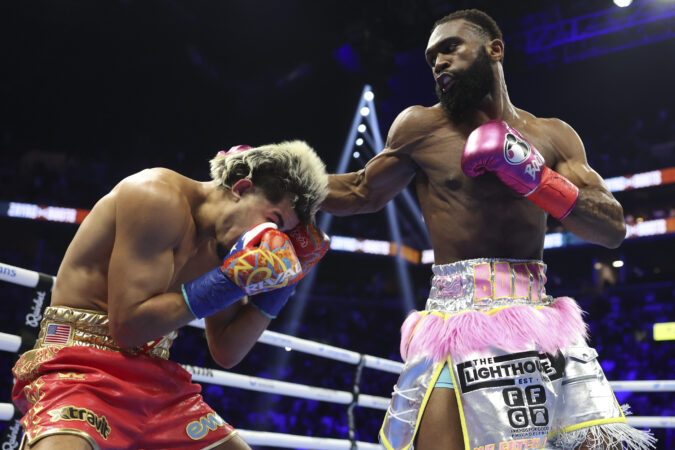
NEW YORK — Jaron Ennis’ head tilted back Saturday night and his feet wobbled after a right hand from Xander Zayas snuck through Ennis’ guard and rocked his face.
Ennis won his previous 35 fights but this — appearing hurt in a ring surrounded by a Brooklyn crowd roaring for him to be finished — was uncharted territory.
The fighter from Germantown has long been considered to be a future superstar of boxing. He had all the skills — defense, footwork, and power — to make it happen. And he never seemed to be in danger in the ring, often outclassing foes who could not match his talent.
Now, he was in the deep end. And everything — the career that started with a kid wanting to be like his older brothers who became a world champion under the tutelage of his dad — was on the line with more than 60 seconds left in the third round at the Barclays Center.
Ennis had to find a way to survive the bigger Zayas, who was pushing for a knockout. He did just that.
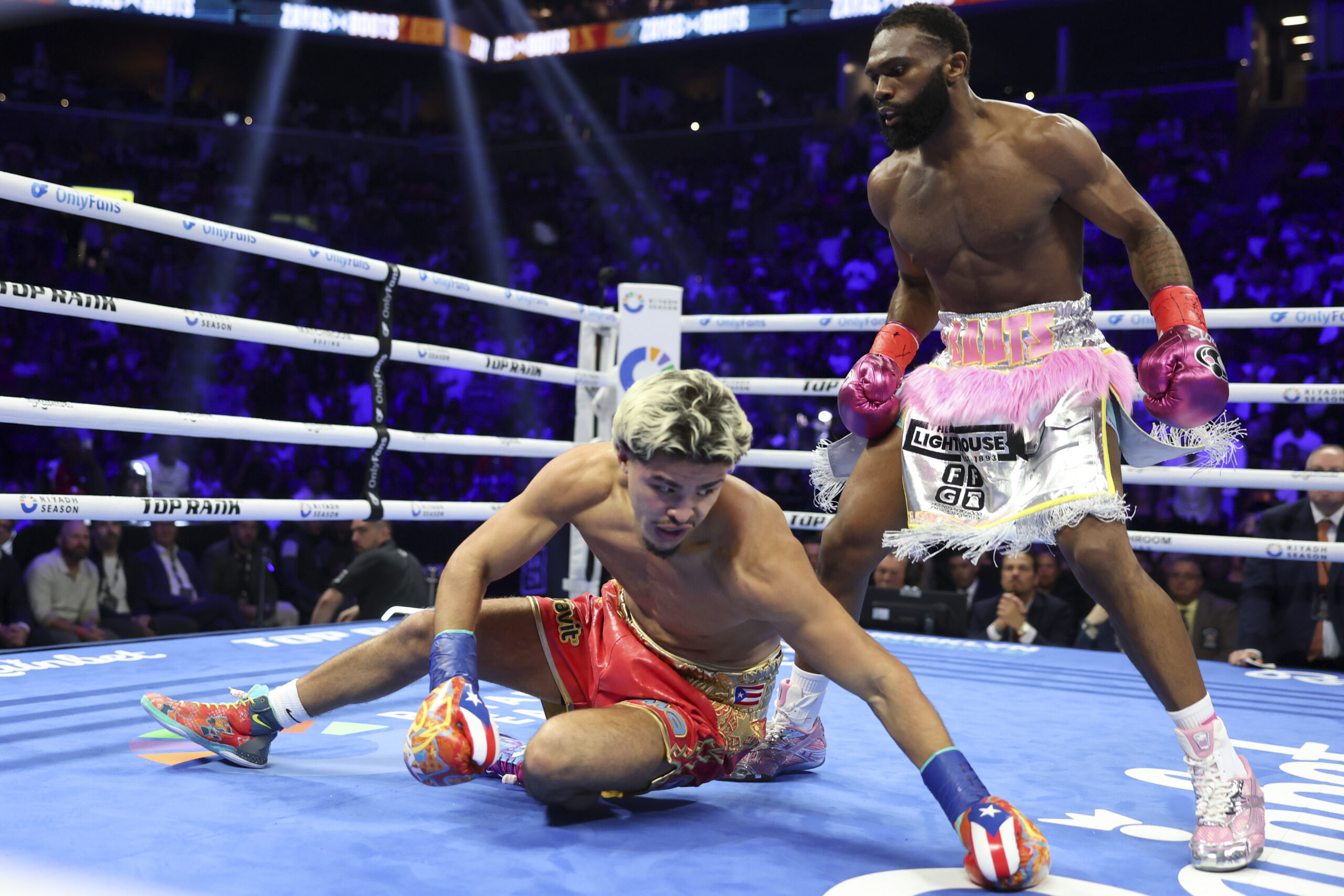
Ennis didn’t just escape the danger but rallied from that stomach-churning round to deliver an all-time Philly boxing performance. He regained control, knocked down Zayas in the fifth round, and then again in the seventh before the Puerto Rican’s corner stopped the fight as Ennis became the WBO and WBA junior middleweight champion.
“I think this is the one that takes it to the next level,” Ennis said. “We’re just getting started. I’m a pay-per-view superstar and the face of boxing.”
It was hard to doubt Ennis’ skills before Saturday night, which was the first time he headlined a pay-per-view event. But he had yet to enter a fight where the result seemed in question when the bell rang. This was the biggest test of his career, and it was his resilience — the ability to take a punch and keep moving — that was most impressive.
Ennis wants to be the “face of boxing.” Now it’s obvious that his face has the chin to make that happen.
“I came back to the corner and he was like ‘Yo man, stop playing,’” Ennis said, imitating his father and trainer Bozy. “I was chilling. I’m cool, calm, and collected. When there’s madness going on, I just get calm and be patient.”
“They might have thought I was hurt. But I was calm and relaxed. I was catching a lot of shots, too.”
Ennis was booed by the partisan crowd, who waved Puerto Rican flags for the island’s 23-year-old star. Ennis joked that they weren’t booing him but yelling “Boots.” He’s never been jeered before and didn’t mind being the foil, holding his hand to his ears when the boos drowned out the ring announcer when he was introduced.
“Give Boots credit, it changed quickly,” said Ennis’ father, Bozy, who trains his son. “But we don’t care about the boos. We just do our job.”
Ennis (36-0, 32 knockouts) came out throwing as he pushed the pace against Zayas (23-1, 13 KOs) and knocked him down with a right less than two minutes into the first round.
He controlled the ring in the second round before Zayas found his shot in the third round. The building rocked but Ennis dug deep. Thirty seconds after being dazed, he was already bobbing his head away from Zayas’ onslaught. It was as if he had been revived in the ring.
“Boots was dazed? He wasn’t dazed,” Bozy Ennis said. “He wasn’t dazed. How are you going to be dazed and come back like he came back? If you’re dazed, you’re going to be done. You know what I mean? That’s what dazed is.”
Undeterred, Ennis started the fourth-round by dragging Zayas into the center of the ring. The fighters exchanged phone-booth punches, giving the crowd the action they came to see.
Ennis was not hurt again after that third round. He used a perfectly placed hook to score another knockdown in the fifth and a left-right combination to drop Zayas to a knee in the seventh. The fighter looked to his corner, who decided Ennis had inflicted enough punishment and stopped the fight.
“I was being lazy on the inside,” Ennis said of the punch he took in the third round. “That’s on me. I have to sharpen that up. I’m going to sharpen that up. Don’t worry about that. It was a cool, little performance but I give myself a ‘C.’ I’m just getting started. I’m way better than that.”
Ennis, according to Compubox, landed 148 punches while Zayas landed just 90. Some questioned how Ennis would combat the bigger opponent as perhaps he would have to be crafty to win. The Philadelphian simply went right at him. Ennis was already a boxing star. But he left the ring as a superstar while Zayas was taken to the hospital as a precaution.
“I knew I would be too strong and I was the faster guy,” Ennis said. “He wouldn’t be able to see my shots.”
Ennis will likely return to the ring later this year against WBC champ Sebastian Fundora (24-1-1, 16 KOs) as the boxer wants to become the undisputed champ at 154 pounds. A fight with Vergil Ortiz Jr. (24-0, 22 KOs) was supposed to happen earlier this year before litigation between Ortiz and his promoter squashed the bout. That fight remains in play.
The next year could be career defining as Ennis will have the stage to prove himself as a pound-for-pound boxer and flag bearer of the sport. The journey to those fights started long ago in the gritty Philadelphia gyms his dad calls “dungeons.” He watched his older brothers train in a church basement with neighborhood kids in Germantown and dreamed of doing the same thing.
Jaron Ennis landed 148 punches while Xander Zayas landed just 90.
Ennis was there every afternoon, waiting for his dad to finish work so they could train in a gym without air conditioning. Boxing is all Ennis ever wanted to do since he was a boy in the “Brickyard” neighborhood.
And it was those dungeons that prepared Ennis for what happened on Saturday night when the walls appeared to be closing in. But everyone who knows where Ennis came from knew the Philadelphian was never in danger.
“He likes to fight,” Bozy Ennis said. “He can box. You can see he can box. You see what he’s doing with that jab. Pop. Pop. But then he likes to fight. I told everyone that Boots is going to stop him. They said Boots was the bully at 147 but he would be the bully at 154. I said ‘It doesn’t make a difference because he can knock heavyweights out.’”
IRVINE, Calif. — For Philadelphians new to seeing a World Cup in person, it might feel like the road to this point began when FIFA picked the city to host games in 2022.
For others, it might feel like the first steps were taken when the U.S.-Canada-Mexico joint hosting bid won the formal vote in 2018, or when the bid was filed the year before.
In fact, the process began much longer ago than that, in 2007. That’s when U.S. Soccer Federation officials started seriously thinking about bringing the men’s World Cup back to the United States for the first time since 1994.
Nineteen years is a long time in American sports, and especially American soccer, where so much changes from year to year, not just decade to decade. So as the 2026 spectacle unfolds, it’s worth taking a moment to step back and turn to the history books.
There aren’t too many Americans who’ve been on the entire ride. In fact, there’s barely anyone at U.S. Soccer who has been, in part because the presidency has changed hands twice since 2007.
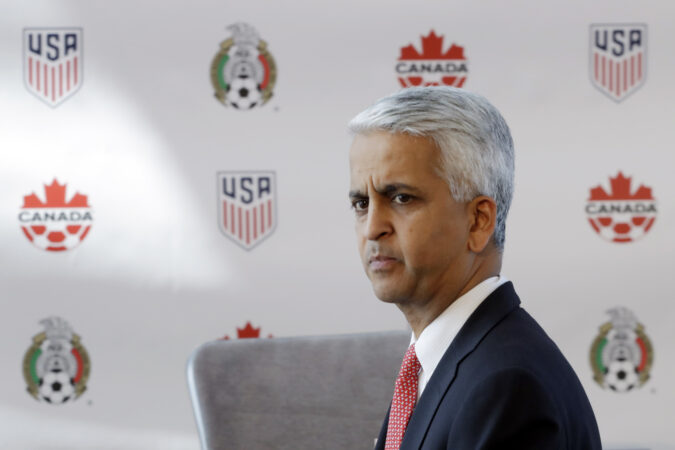
One who has and who knows Philadelphia well is Sunil Gulati. The longtime economics professor at Columbia University led U.S. Soccer from 2006-18 and has also served on the FIFA Council and the former FIFA Executive Committee.
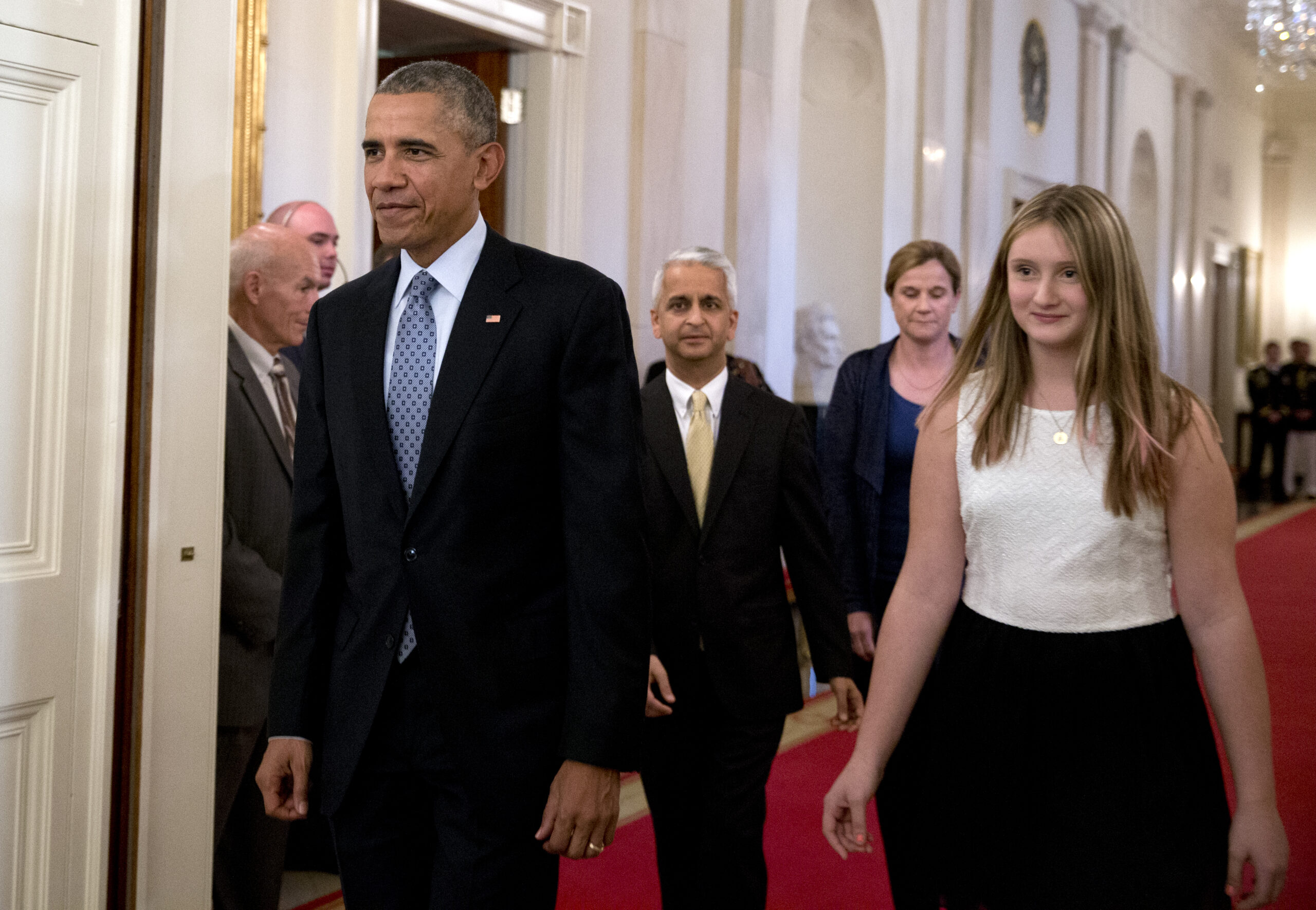
Sunil Gulati (center) walking behind Barack Obama in 2015 at a White House ceremony to honor the U.S. women’s soccer team’s World Cup win.
Few people have seen more of soccer’s growth in this country up close, not just in his years as president but in a variety of roles across Major League Soccer, FIFA, and recently as the chair of European soccer confederation UEFA’s Club Financial Control Body.
Gulati has a lot of stories to tell, and not all of them are allowed to see the light of day. But he was happy to share some with The Inquirer as he enjoys this tournament just like the rest of us.
‘The day after’
When U.S. Soccer took those first steps in 2007, Gulati had been president for less than a year, and it was only 13 years since the 1994 tournament — not too long in World Cup terms. But some flickers of the afterglow were still there, and he knew how long it would take to bring the fire back.
“The ’94 World Cup had been highly successful, and hosting an event like the World Cup generates a lot of positive benefits — and they’re not pure economic benefits, including this [2026] World Cup,” he said. “It was never about the financial returns to the federation, or federations, in this particular World Cup, and there are three of them.”
In his view, “it was always about trying to increase the demand for the game, [and] accelerate the growth of the game in the United States. It’s [wondering] what does the sport look like the day after?”
That acceleration included building the foundations of a soccer infrastructure in this country. Many future power brokers had launchpad moments in 1994: future U.S. Soccer CEO Dan Flynn, promoter and media personality Charlie Stillitano, broadcaster Derek Rae, and future women’s World Cup, Olympics, and NWSL executive Marla Messing.
Above all, that World Cup produced Major League Soccer, as FIFA required the U.S. to launch a top-level league as a condition of hosting.
“All the people that worked in senior positions or in entry-level positions that became part of the landscape in the sport … those people became important players in the growth of the game in different ways,” Gulati said. “And obviously, then if you talk about MLS, the development of the league leads to huge changes in infrastructure, the stadiums in particular, training facilities.”
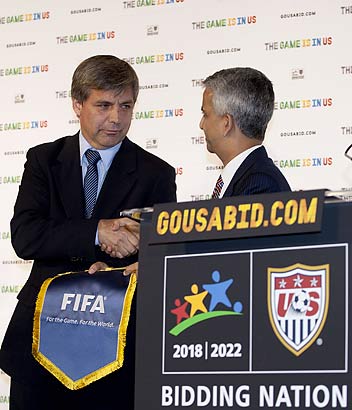
Harold Mayne-Nicholls (left), the head of the FIFA Inspection Delegation, exchanges a FIFA banner with then U.S. Soccer president Sunil Gulati at the conclusion of FIFA’s bid inspection for the 2018 and 2022 World Cups.
Gulati believed another World Cup could do even more. So the long road began, with U.S. Soccer going in on 2022 when it became clear 2018 was going to Europe.
For some time, it seemed like effort would pay off. But in December of 2010, a day came that will live in soccer’s infamy.
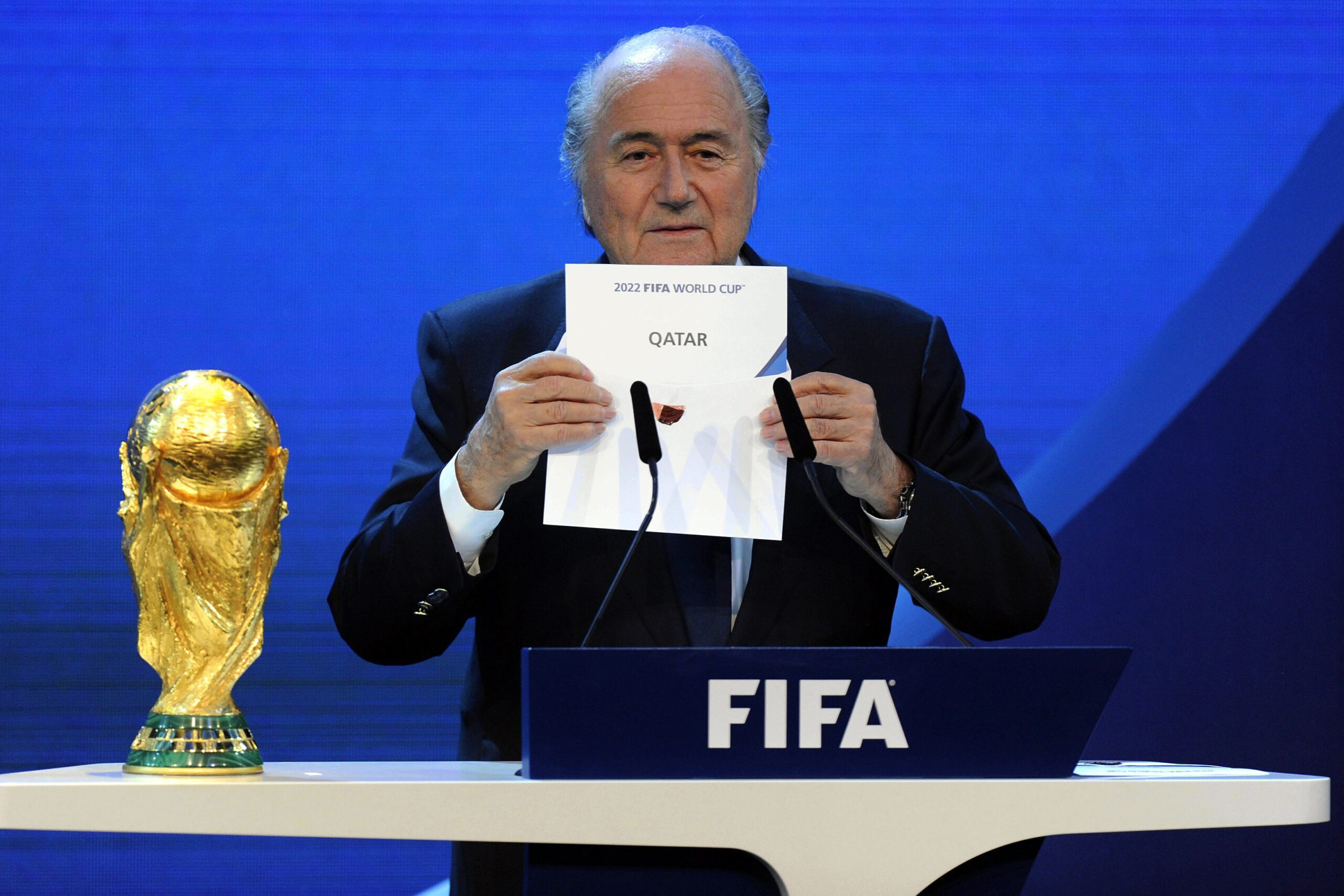
So many people around the sport remember where they were when then-FIFA president Sepp Blatter pulled Qatar’s name out of the envelope instead of the United States’. It hurt as much as any loss on the field, perhaps even more to some people.
But Gulati was ready for the gut punch because he sensed it might be coming.
Perhaps the most infamous day in FIFA’s modern history: when then-president Sepp Blatter announced on Dec. 2, 2010, that Qatar would host the 2022 men’s World Cup.
“I had a better inkling, I think, than members of my team that it was going to go the wrong way for us,” he said. “Because we had a pretty accurate vote count, and that vote count relied on three European votes. And I had a pretty good idea that we weren’t going to get those — the votes that the weeks earlier, I was quite confident that we were going to get.”
Had those three votes on FIFA’s executive committee gone the U.S.’ way in the final round of voting, it would have been an 11-11 tie, and Blatter would have broken it in America’s favor.
“It didn’t shock me, but I think it probably shocked some other members of the team who maybe weren’t quite as close to the vote count,” Gulati said. “And it was obviously a huge disappointment, but not a shock.”
“Right after the decision, I wasn’t sure if I ever wanted to go near this process again, or if I wanted to start right away,” he said, and he referred to an even stronger version of that line he gave to France’s Le Monde newspaper earlier this month.
“On the one hand, I wanted to immediately jump into our next bid,” that version went, “and on the other, I told myself that I never again wanted to have anything to do with that kind of thing, or with those people.”
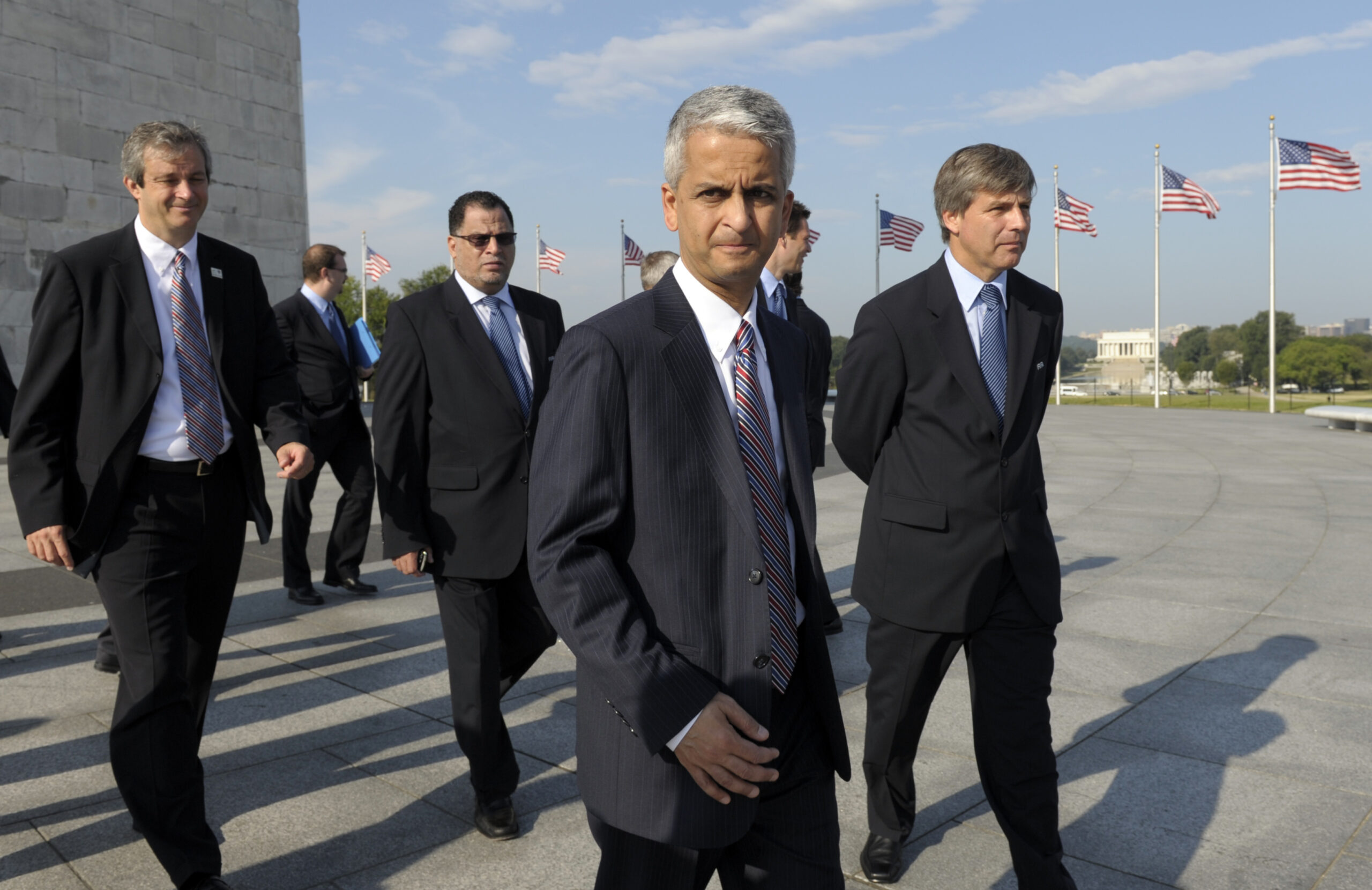
Sunil Gulati (center) with various international soccer officials at the Washington Monument in D.C. in 2019.
As allegations that Qatar bribed FIFA officials to win the bid piled up, it would be a few years before the winner of Gulati’s internal battle emerged. When it did, the soccer landscape had changed in an even more epic way.
On May 27, 2015, the U.S. Department of Justice raided the Baur au Lac hotel in Zurich, Switzerland, and arrested a slew of international soccer officials. A few hours later in Brooklyn, N.Y., the department formally announced the charges and the people charged.
That day would lead to Blatter’s resignation and a pile of other impacts, including reforms to the World Cup bidding process.
Since Gulati was on the FIFA Executive Committee at that point, he had a role in those reforms. He acknowledged to The Inquirer that he wanted “to try to influence what the rules of the competition, in terms of the bidding process, would be. And those changed, which then allowed us to be more comfortable bidding again.”
By the end of that year, the wheels were in motion, and in 2016, Gulati started pushing for a multicountry plan. It started with just the U.S. and Mexico, as Gulati worked with the then-chairman of the powerful TV network Televisa, Emilio Azcárraga Jean. Then Canada joined the fold.
“There were some cultural reasons, frankly, that I wanted to do it with Mexico, about Hispanic relations, Mexico-U.S. relations, and so forth,” Gulati said. “And then we’re having a parallel set of discussions with Victor Montagliani, who was the president of the Canadian federation, and it eventually came to the three of us doing it together.”
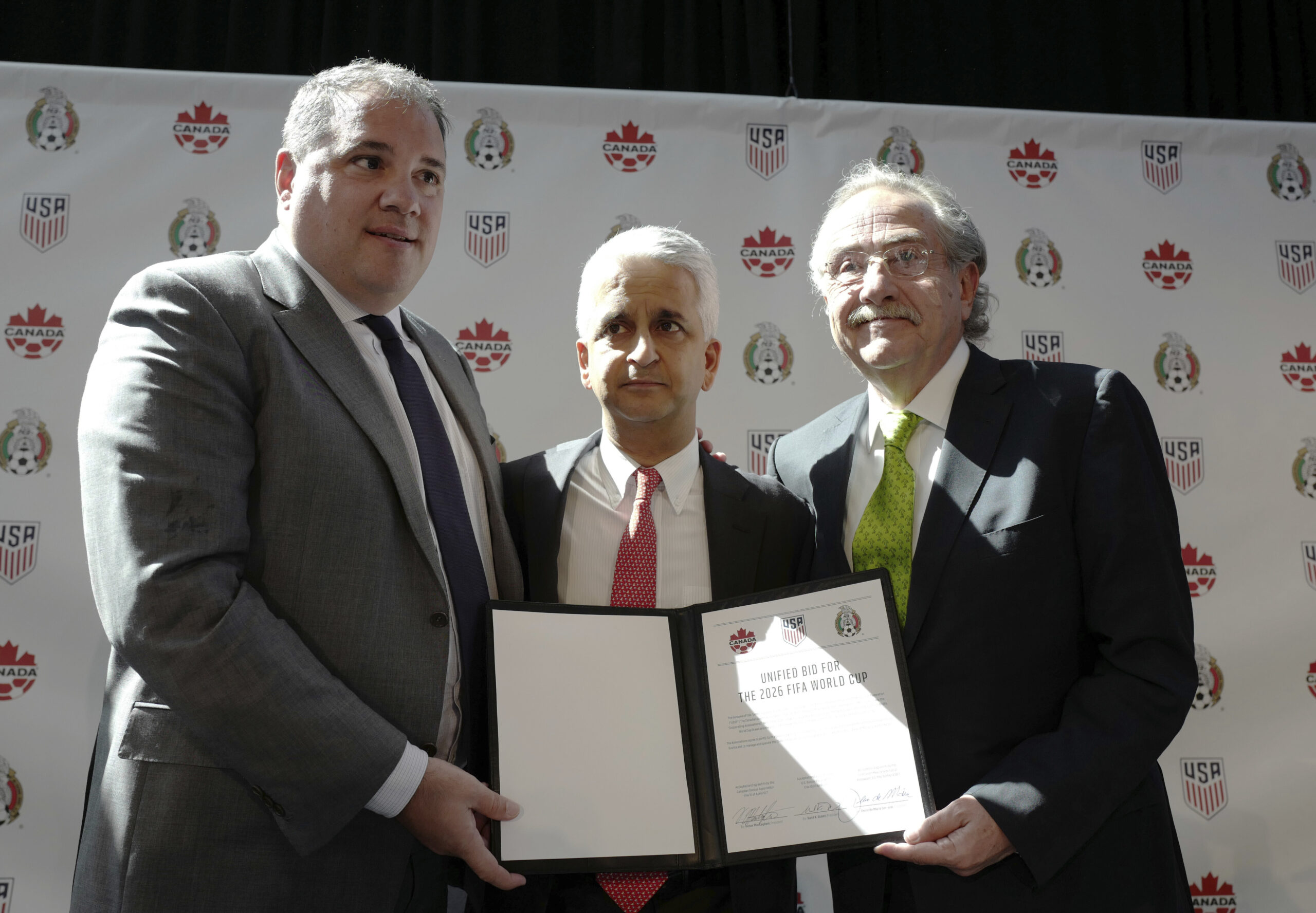
From left, Victor Montagliani Sunil Gulati, and then-Mexican soccer federation president Decio de Maria presenting their joint bid to host the 2026 men’s World Cup.
Gulati knew a multicountry bid would look better to FIFA, but it would take convincing U.S. Soccer’s board first.
“I preferred having a 90% chance of winning 75% of the World Cup games than a 75% chance of hosting it all,” he said.
He also preferred the new FIFA president. Gulati played a key role in getting Gianni Infantino elected. During the election vote at the 2016 FIFA Congress, Fox’s TV broadcast repeatedly showed him working the hall.
Another aspect doesn’t attract big headlines but has had a huge impact behind the scenes. This is the first men’s World Cup where FIFA hasn’t had a national-level local organizing committee, run by domestic staff in the host countries, that handles marketing, venue deals, political relationships, and so on.
Instead, FIFA has tried to do almost everything itself. And as even casual soccer fans have seen by now, it has not gone well — especially just north of here in New Jersey.
Gulati didn’t want to go too far down that road in public, but he opened the door enough to sense what was beyond it.
“Some of the key figures in this World Cup are people that work for FIFA, which is fine, but it’s different, certainly,” he said.
Asked if FIFA was told that they weren’t going to be able to unilaterally rule over North American governments, he said: “They understood that. And that’s obviously posed a bunch of challenges … Not just state, local, federal, but three countries in this case.”
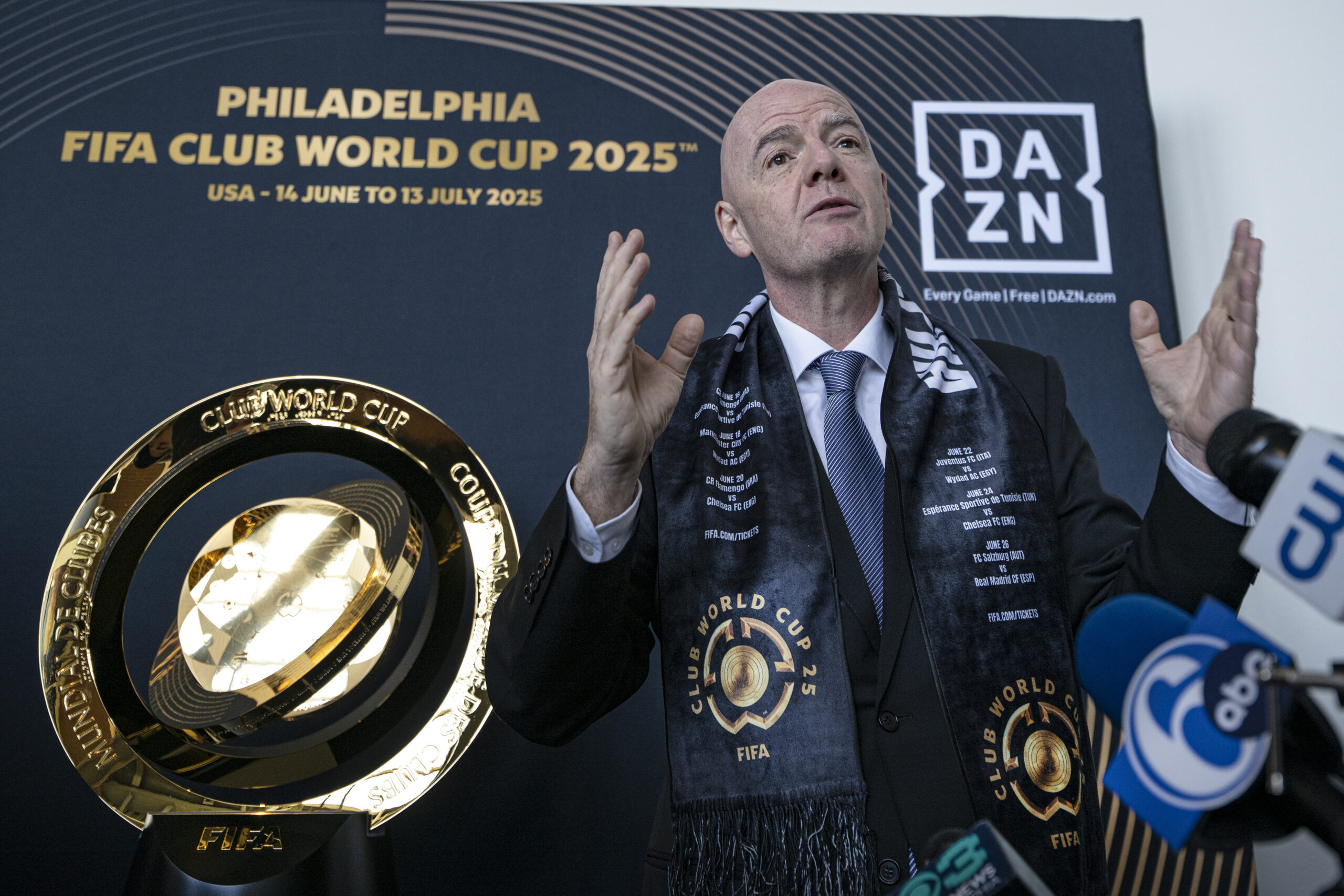
FIFA president Gianni Infantino (left) on a visit to Philadelphia last year to promote the Club World Cup.
And asked in particular about dealing with state and local governments that don’t exist in other countries, Gulati said: “That’s obviously come up, and I get it. But look, there’s always some issues that come up in these things, whether it’s immigration or taxes, or who’s going to pay for what, or exclusivity, all those things — those are kind of par for the course in World Cups.”
A moment later, he added: “Maybe it’s a little bit easier given the obvious differences in governance that exist in other countries.”
In the end, Gulati is an optimist about this World Cup’s long-term potential, including for Philadelphia specifically. He knows the city well, and knows the spotlight it’s in this summer.
“I think what it can do is bring greater attention to the sport and greater attention to the city if it becomes an important attraction, and games go well, and people feel at home, and it’s welcoming, and so on,” he said. “Philadelphia, it’s a great sports city, it’s got great venues. And hopefully, some of the teams that are playing there — and the fans more importantly — come, and they talk about it, and there’s more people that want to visit in the future.”
Philadelphia has a long-standing reputation as an underdog city, but when it comes to hosting the FIFA World Cup, Anne Ryan, Pennsylvania’s Deputy Secretary of Tourism, sees Philadelphia as a front-runner.
Ryan visited the FIFA Fan Festival as it hosted “PA Day” on Saturday, which included visits from a Ben Franklin impersonator, Philadelphia Union mascot Phang and Hersh the Hershey Bar.
“I’m a Philadelphian,” Ryan said. “I do love that underdog mentality, but are we underdogs anymore? We’re ranking [at the] top as one of the best host cities in the country, because of our Fan Fest and our experiences.”
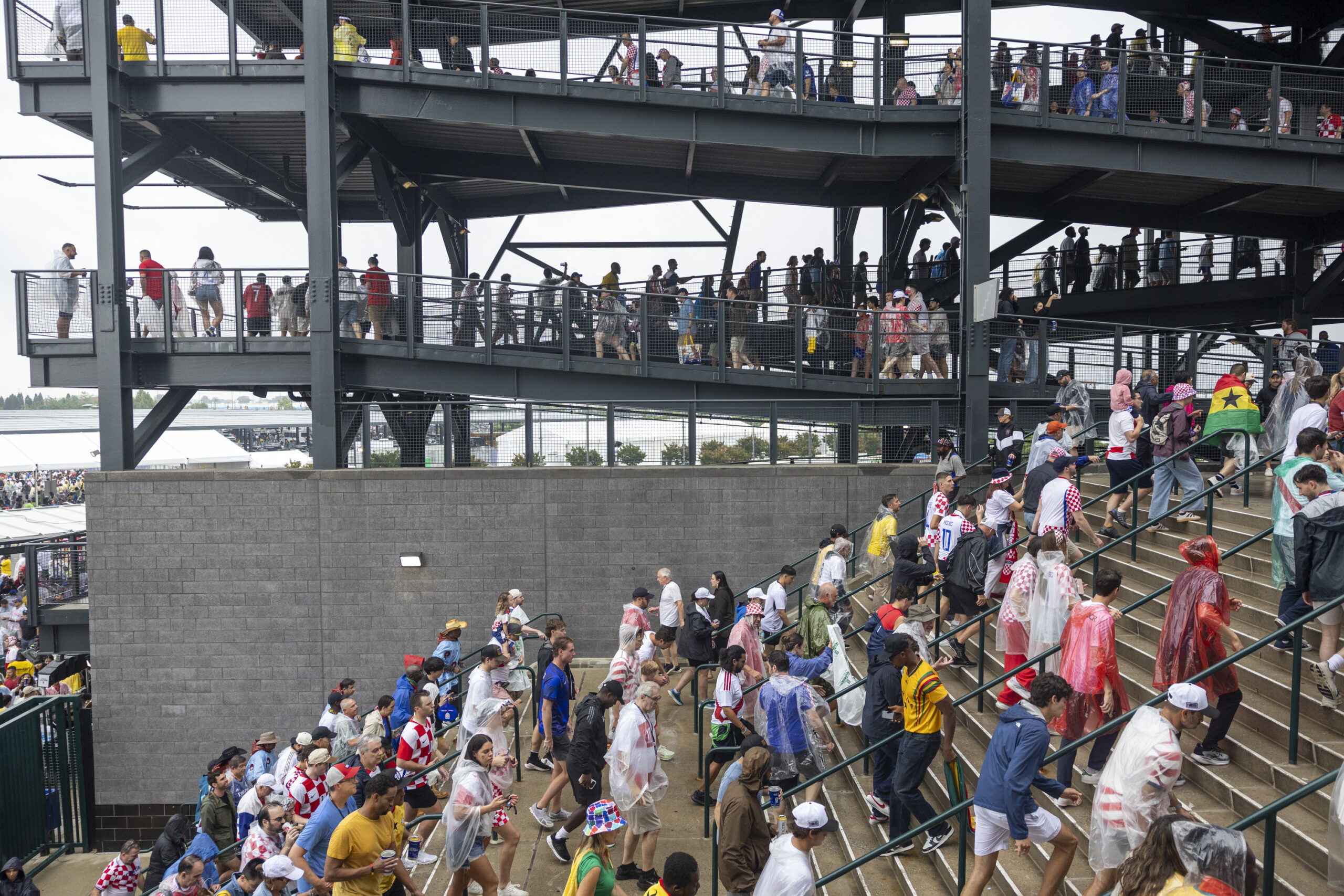
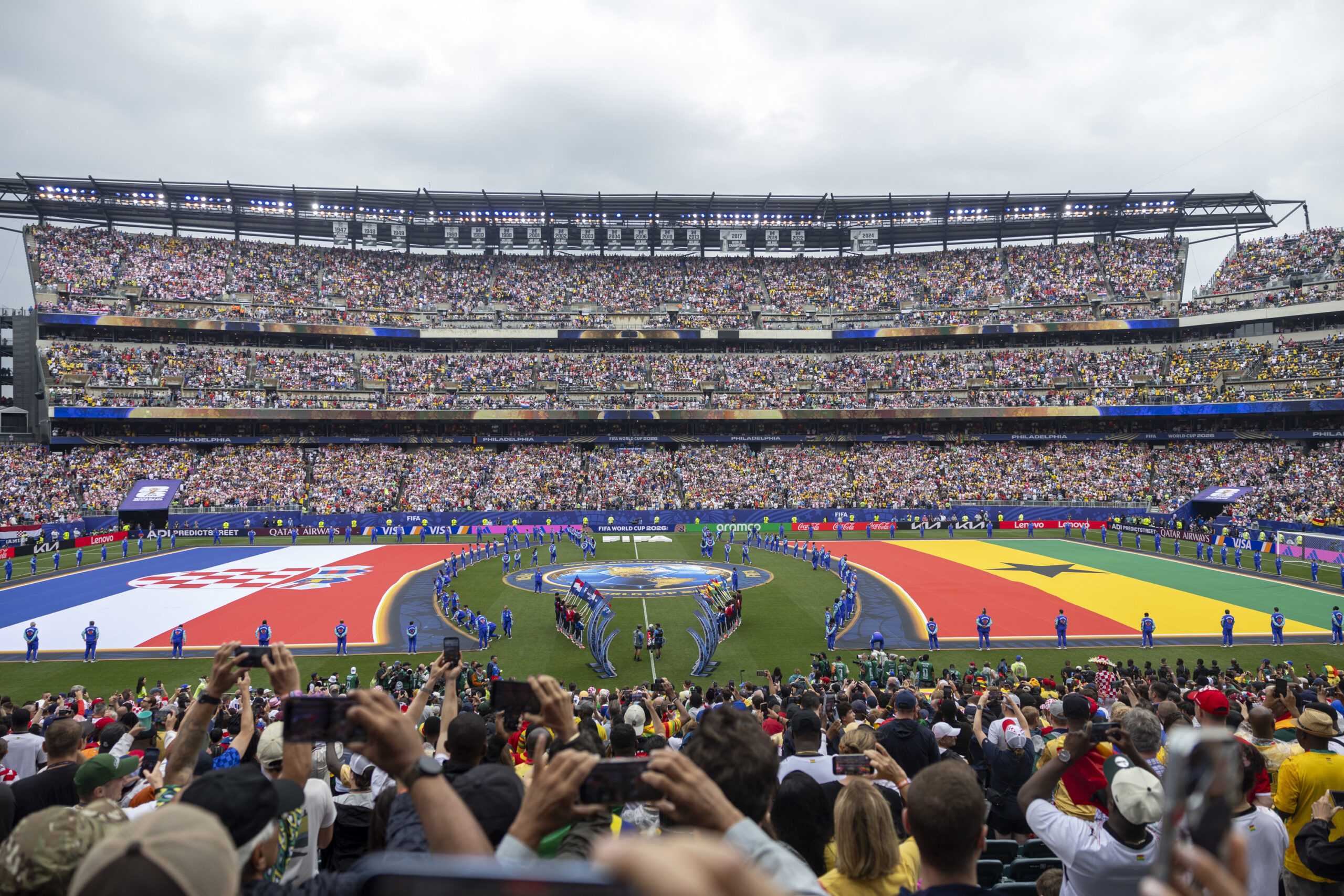
Despite cloudy and rainy conditions, crowds of fans entered the festival grounds again on Saturday for Croatia-Ghana, Philadelphia Stadium’s fifth and final group stage match.
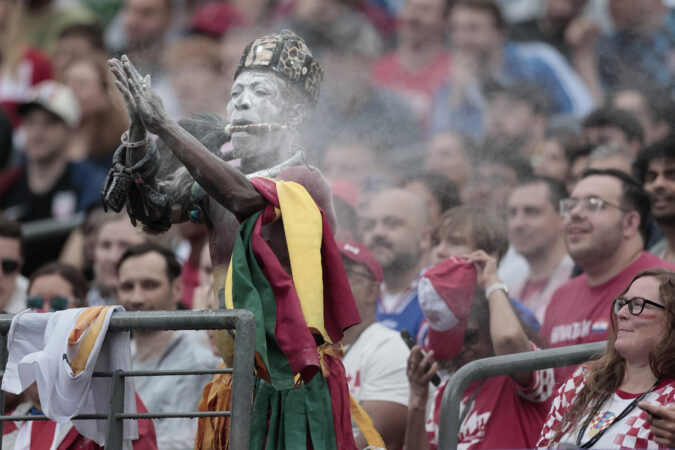
Croatians and Ghanaian supporters were well-represented in the crowd, and both went home happy, despite a 2-1 win for Croatia. Ghana, who advanced to the knockout round as one of the eight best third-place teams, had already secured a round of 32 spot entering Saturday’s match, and Croatia was able to get off the third-place cut line by surpassing Ghana for second.
English fans at the festival went home happy, too, as England finished atop Group L with a 2-0 win over Panama.
While the state office of tourism has not formally measured the economic impact driven by Philadelphia hosting the World Cup, Ryan said the success of the free Fan Festival in Lemon Hill — which has hosted 250,000 fans since opening on June 11 — is a good indicator of how many fans have visited Philadelphia during the tournament.
“The fact that we’ve already had 250,000 attendees here, it’s just insane,” Ryan said at the festival on Saturday. “Some of our original projections were 15,000 [visitors] a day. And then, to have close to 54,000 just last Friday alone, has been fantastic.”
Ryan said her office could see through flight data and bookings of Airbnbs and other rental properties that plenty of international fans were traveling to Philadelphia for the tournament.
According to Ryan, visitors on flights from France to Philadelphia International Airport are up 59%, year over year. Passengers from the Netherlands to PHL airport are up 48%, and up 25% from the United Kingdom.
The tourism office also considered the economic profile of the nations Philadelphia was hosting, and how people from those nations like to travel. The World Bank Group classifies three of the nations Philadelphia hosted in the group stage — Haiti, Ivory Coast and Ghana — as “lower middle income” nations as it relates to gross domestic product per capita.
If fans from those nations successfully navigate partial or full travel restrictions to follow their team, they’re more likely to pick a high-capacity rental than a traditional hotel.
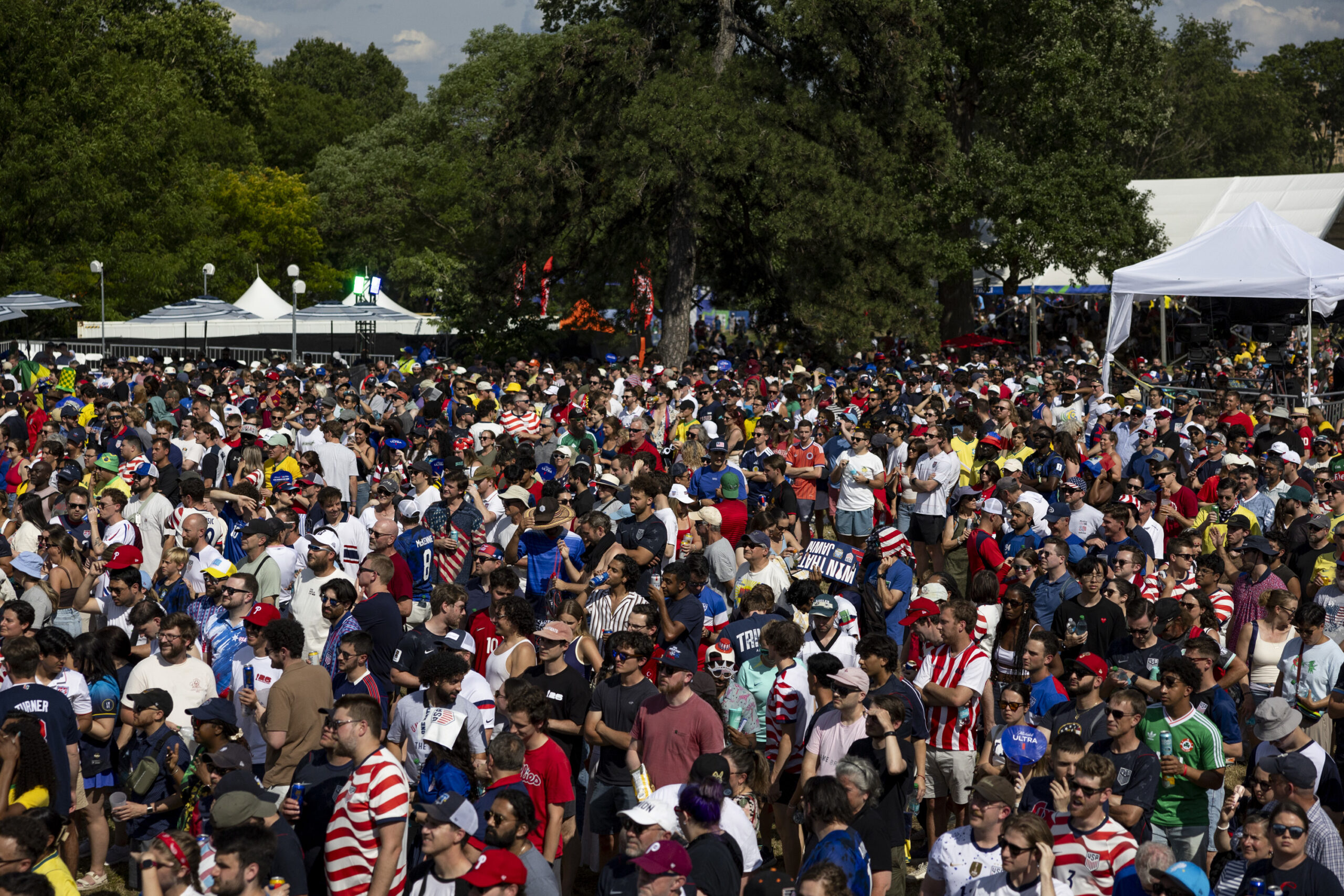
Over 250,000 people have already come through Philly’s FIFA Fan Festival during the World Cup.
“There was so much projection pertaining to the World Cup, like, ‘Is this going to be a flop, because all of our hotels aren’t sold out?,’” Ryan said. “But you have to look at the teams we’re hosting and how they travel. Ghana, Haiti, Curaçao, Brazil, Ecuador — they’re not staying in a boutique hotel in Center City. Our three bedroom-plus Airbnb bookings are up 53%, year over year, for June and July.”
Ryan said overall, in the five-county region surrounding Philadelphia, Airbnb bookings are up 48%.
“They came, and they’re riding,” Ryan said. “They’re taking SEPTA. And we’ve actually heard good feedback. We did some man-on-the-street interviews with visitors. People [are] really complimenting SEPTA and our buses, and the transit here.”
And despite high ticket costs, another sell-out crowd watched Croatia-Ghana at Philadelphia Stadium (aka Lincoln Financial Field). The World Cup broke its attendance record after Thursday’s slate of matches, with 3,605,357 fans attending matches across the continent entering Friday. After Saturday’s match, 341,620 fans have attended five World Cup matches at the Linc.
While it will take time for the city’s official accounting to come out on hosting the tournament, Ryan suggested the stats and indicators in key areas show the city is positioned to meet, and potentially exceed, its pre-tournament estimation of 500,000 visitors generating $770 million worth of economic impact.
The Ghana-Croatia game on Saturday had a sellout crowd of 68,324 people.
“I’m a betting girl, and I’m going to say for the World Cup, we’re probably going to net out close to 800,000 [visitors],” Ryan said. “And the $770 million in economic impact, I wouldn’t be surprised if that’s closer to $900 million, based off of that increase.”
More visitors are likely on the way to Philadelphia because of how the tournament’s group stage shook out. If Germany beats Paraguay on Monday, and France beats Sweden on Tuesday in the round of 32, it would set up a match between the Germans and the French, two star-studded European powers, on July 4 in a round of 16 match at Philadelphia Stadium.
“We’re still waiting to hear who we’re hosting on July 4,” Ryan said. “Let’s see what our hotels and Airbnbs look like after Tuesday.”
After 72 games over 17 days in the group stage, the first 48-team World Cup has officially reduced to the 32 that will contest the knockout rounds.
If that doesn’t feel like much of a reduction, you aren’t alone. The old adage that the World Cup is really two tournaments in one, the group stage and the knockouts, feels more true than ever this summer.
But now the drama kicks up another gear, as it’s win or go home for every team left standing. Here’s what to know about the 32 games remaining before the July 19 final in North Jersey.
All games are televised on Fox29 in English and Telemundo 62 in Spanish, except for two in the round of 32 on FS1: Belgium vs. Senegal on July 1 and Switzerland vs. Algeria on July 2. All times listed are local to Philadelphia.
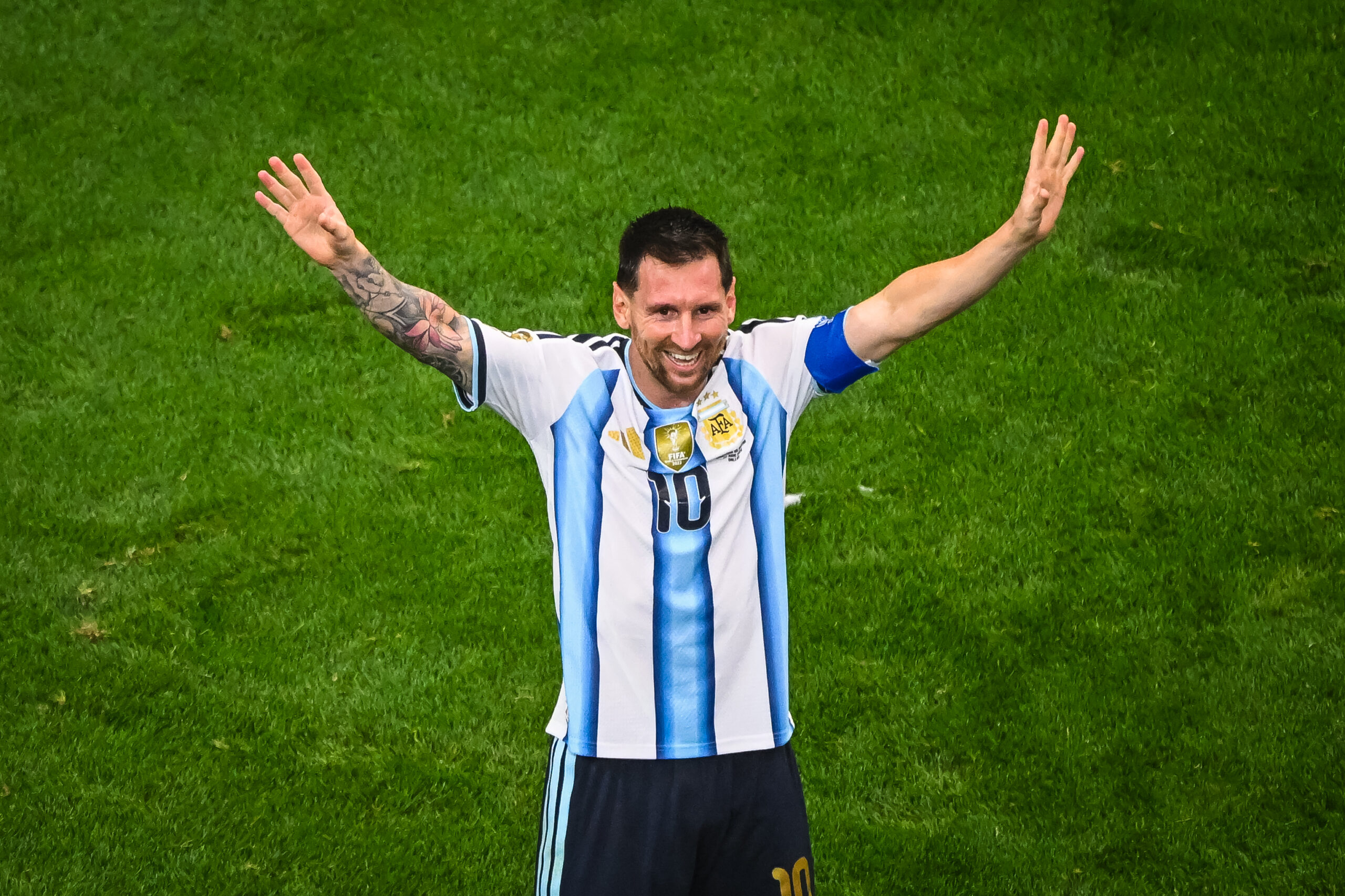
Lionel Messi hopes to help Argentina become the first back-to-back men’s World Cup champion since Brazil in 1958 and 1962.
Round of 32 schedule
The number and letter next to each country denotes where it placed in its group during group stage games.
Sunday
3 p.m.: 2A. South Africa vs. 2B. Canada in Inglewood, Calif.
Noon: Argentina or Cape Verde vs. Australia or Egypt in Atlanta
4 p.m.: Switzerland or Algeria vs. Colombia or Ghana in Vancouver, B.C.
If the U.S. can make the round of 16, it will hope for another big home-field advantage in Seattle.
Quarterfinals
July 9
4 p.m.: Germany, Paraguay, France, or Sweden vs. South Africa, Canada, Netherlands, or Morocco in Foxborough, Mass. (winner goes to semifinal 1)
July 10
3 p.m.: Portugal, Croatia, Spain, or Austria vs. United States, Bosnia & Herzegovina, Belgium, or Senegal in Inglewood, Calif. (winner goes to semifinal 1)
The Meadowlands will host a World Cup final for the first time, after the 1994 men’s and 1999 and 2003 women’s finals were played in the Los Angeles area.
Philly’s bundle of group stage matches ended Saturday night as Croatia battled to a 2-1 win against Ghana that saw them leapfrog the Black Stars to finish second in Group L, culminating a thrilling two and a half weeks of soccer.
Now, Philadelphia Stadium gets a week’s respite before the final game the city will house, one that could shape up to be the biggest soccer match in the history of the Lincoln Financial Field; which is saying a great deal considering the building opened with a massive match between European giants Barcelona and Manchester United in 2003, and has hosted other memorable club and national team games in the years since.
When Philly plays host to the round of 16 match on July 4, it will host the winners of two matches between Germany and Paraguay, who face off in the round of 32 on Monday (4:30 p.m., Fox29), and the winner of France and Sweden who play In the round of 32 on Tuesday (5 p.m., Fox29).
Both Germany and France, who won Group E and Group I, respectively, are the presumed favorites, which would make for a massive showdown in a push for the quarterfinal rounds beginning July 9-11.
“I won’t be here for it, but that would be a fantastic game if it were to work out that way, especially to have the chance to have France back here one more time,” said Susan Richman, 43, who grew up in Philly, but now lives in Chicago and has stayed with her “soccer-crazy” relatives all week. Saturday’s game was the second inside the stadium for Richman, who works in finance and was in the house for last Monday’s rain-delayed match between France and Iraq.
After storms caused a delay that lasted over two hours, it was France that put that match to bed, behind two goals from Kylian Mbappé and cherry on top from Ousmane Dembele for a 3-0 win.
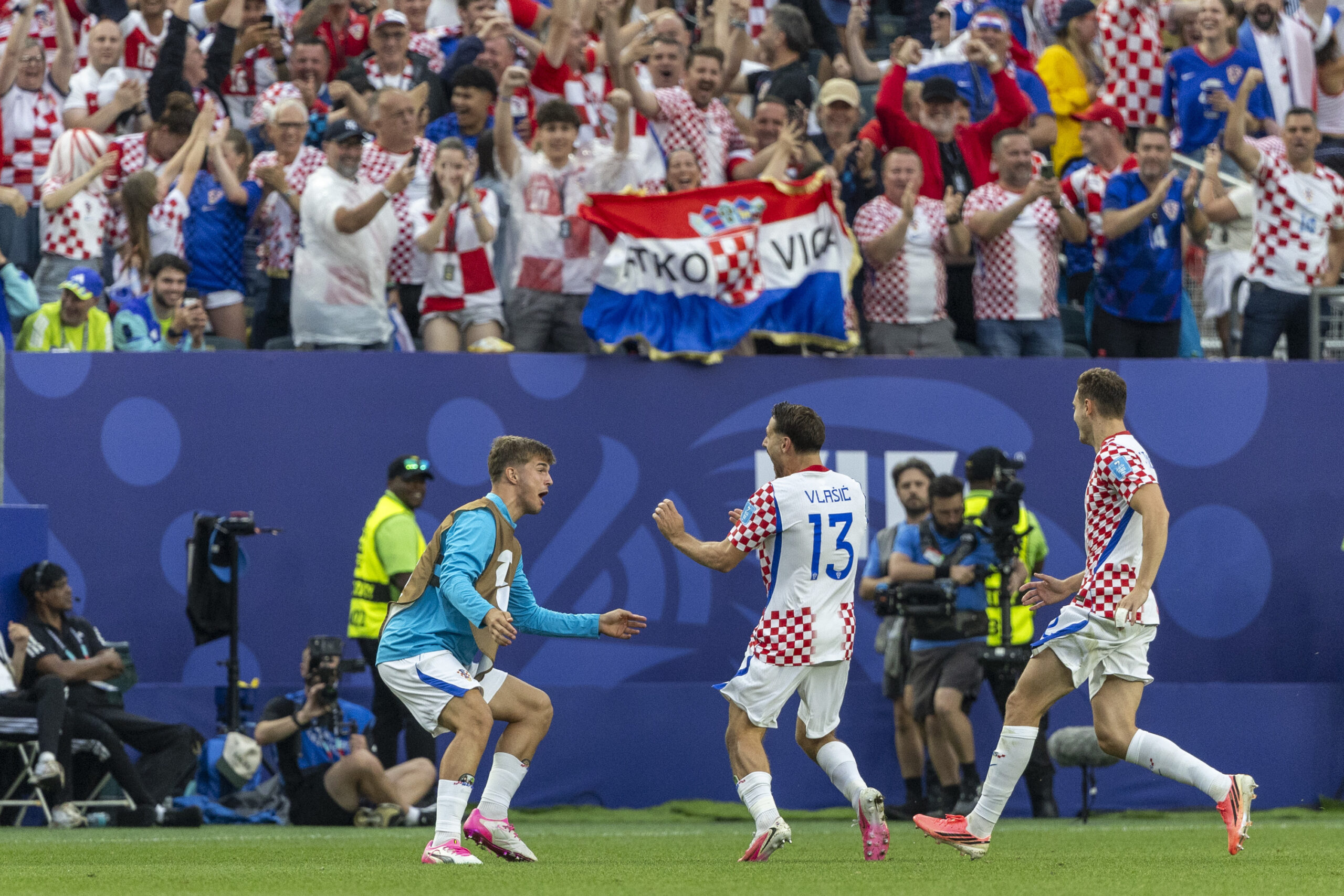
Nikola Vlasic (13), celebrates after scoring Croatia’s second goal against Ghana during the second half on Saturday at Philadelphia Stadium.
“It’s been an expensive summer,” laughed Richman, who was there on Saturday with her sister and their family. “I think all in all we’ve spent close to $15,000 [on tickets]? But for us to say that we’ve attended the World Cup in America is something that personally, I’ll always remember.”
Ticket prices on FIFA’s official marketplace have yet to go on sale, but on secondary markets like StubHub, cheap seats as of Saturday night began at $1,986. There’s been a bit of trepidation with secondary markets tickets as fans have purchased only to find out at the gate that their tickets won’t scan.
Did Croatian fans debunk the Rocky curse?
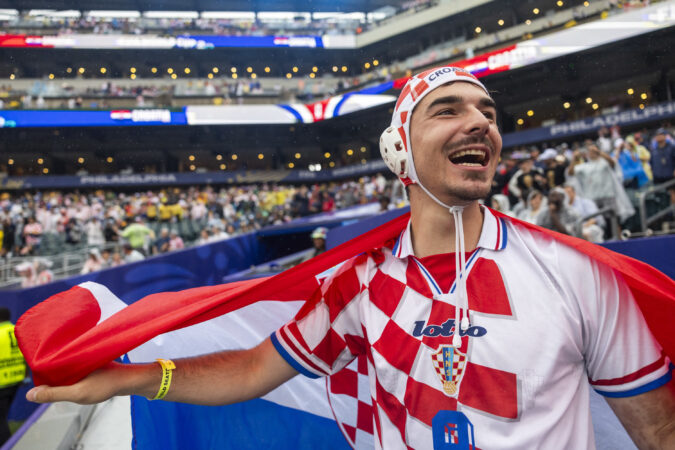
The red and white of Croatia’s colors spilled throughout Center City on Friday night as the biggest demonstration saw fans take over a large stretch of the Parkway, singing, dancing and even setting off a few smoke bombs.
However, following Croatia’s win, a supporters group called Mi Hrvati (We Croats), alongside the support of Arena Casino, held a secret gathering on the steps of the Art Museum and claimed to have placed a jersey on the statue of Rocky at the top of the steps on Friday evening in advance of the game.
A bold strategy, considering that it’s been widely reported that fans placing their team’s jersey onto Rocky historically hasn’t worked out in their team’s favor. Ecuador fans found that out before Philly’s opening match on June 14. The word was so widespread that in the match that followed, Brazilian fans brought their own partition and security detail to deter anyone who attempted to do the same before its match against Haiti.
However, Mi Hrvati claims its decision test the theory came “in secret” as they “did not want to create the story before the match,” a release supplied to The Inquirer claimed, adding, “We believed in Croatia and waited for the result. After the victory, we can say that the Rocky Curse has been broken. This is a fan story to remember.”
Croatia will face Portugal in its round of 32 match on July 2 in Toronto.
Another announced sellout crowd of 68,324 packed Philadelphia Stadium for Saturday’s Group L finale between Croatia and Ghana.
Croatia-Ghana brings the crowd
Saturday’s match boasted another sellout crowd of 68,324 at Philadelphia Stadium, the fourth announced sellout by FIFA in the five matches that have come through Philly. The game, a very pro-Croatian crowd, still had a sizable contingent of Ghana fans.
It was yet another match that would ensure FIFA sets a new all-time attendance record for the World Cup, a feat it announced Friday it had already surpassed by the time Thursday’s match in Philly between the Ivory Coast and Curaçao took place.
Saturday’s match result dropped Ghana into a third-place slot and it will face Group K winner Columbia on July 3 in the round of 32 in Kansas City.
That notion was an interesting potential matchup for Ghana fan Quinton Ayton, who attended Saturday’s match. Ayton, who sat in Ghana’s raucous supporters section between sections 110-111, said that he’s ecstatic that his team was headed into the knockout phase.
“Hey man, we’re here and win or lose it’s just great that this team is doing what they’re doing,” said Ayton, who lives in the Elmwood Park section of the city, said. “To get the opportunity to see my country play so close to home was a dream. An expensive dream, but a dream.”
When asked how much he spent on his tickets, Ayton said, laughing: “I can’t give a price, my wife will kill me, just know it was worth it to see them play in Philadelphia.”
Hey, it happens. Near the end of a weeklong road trip in which they’ve scored 34 runs in six games, after a 44-run outburst on a six-game homestand, the bats were bound to cool.
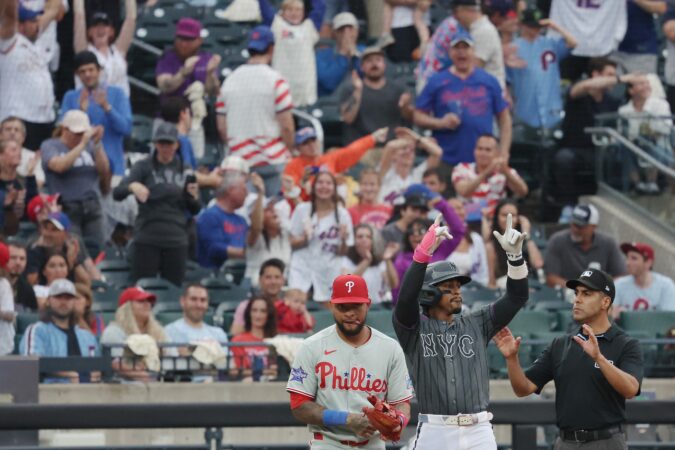
But if Harper’s glove was as quick in the sixth inning as his bat in the third, it may not have mattered. Instead, Francisco Lindor’s scorched liner went under Harper’s mitt as he dove to his left, the start of a Mets’ rally that doomed the Phillies to a 6-2 loss.
“I felt like he top-spun it and I thought it was going to bounce up, and it just got under my glove,” Harper said after the Phillies’ four-game winning streak ended. “I was pretty upset about that play. Obviously a play I think I should have made, but it didn’t happen.”
It wasn’t the only costly play, though. Two batters before Lindor’s game-tying two-run triple, Juan Soto singled on a fly ball that fell in front of right fielder Gabriel Rincones Jr.
Could Rincones have been more aggressive?
“I couldn’t really tell,” interim manager Don Mattingly said. “They’ll have the report out tomorrow, just [catch] probabilities and things like that. I haven’t really looked at it yet.”
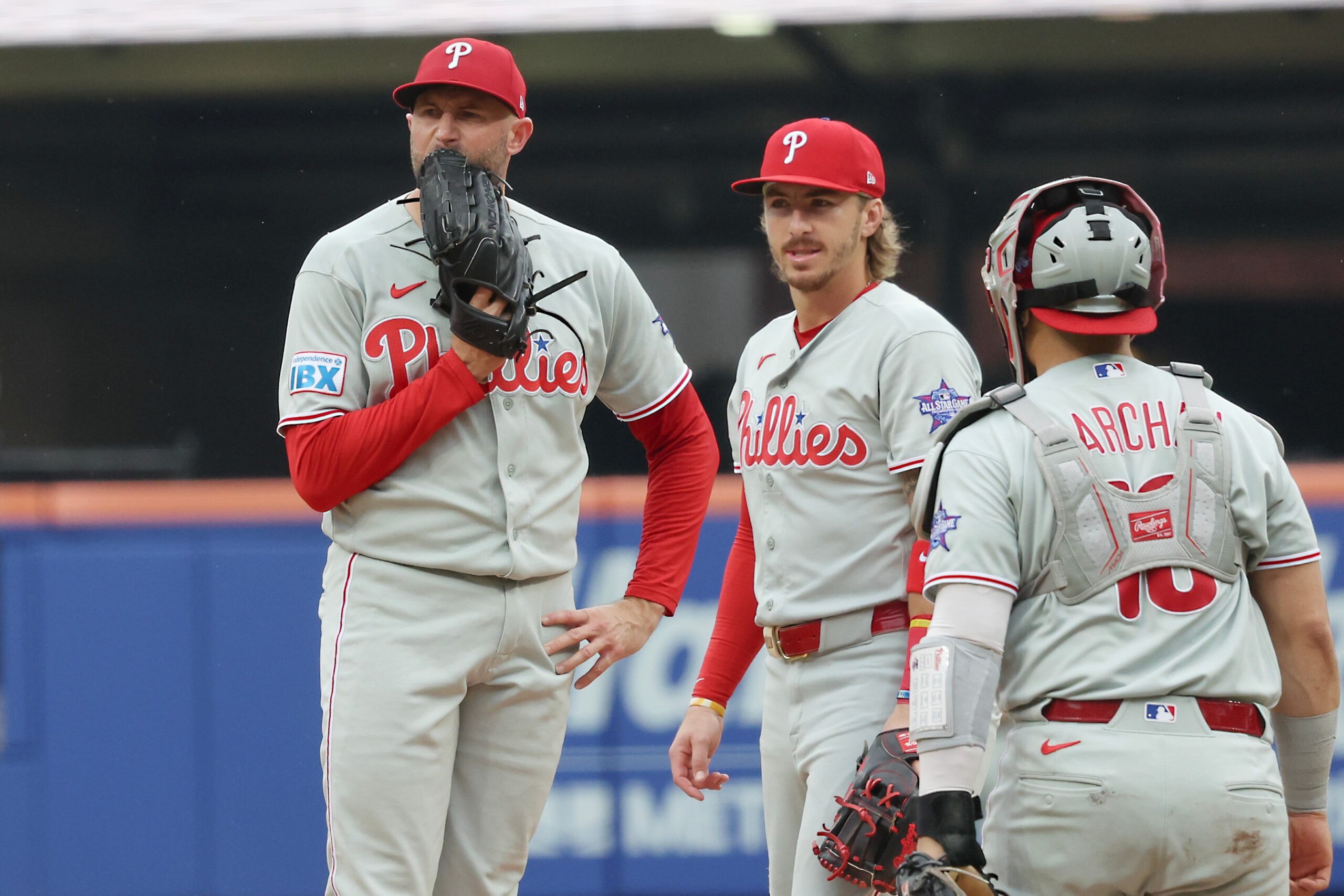
Phillies lefty reliever Tim Mayza (left) opened Saturday’s game before Alan Rangel entered in the second inning.
In any case, the two plays in the Mets’ four-run sixth inning amplified one Phillies weakness that hasn’t gotten better since Mattingly took over on April 28.
While the rotation is among the best in baseball, the bullpen has largely held up, and the offense is more productive despite lacking a big right-handed bat, the Phillies remain the second-worst defensive team in the sport, according to both defensive runs saved (minus-29) and outs above average (minus-20).
And it isn’t a nitpick. In close, low-scoring games — the kind that get played in October — even the slightest defensive shortcomings loom large.
For as well as the Phillies have played under Mattingly, he knows it’s an area they need to button up.
“There’s times I like it, and there’s times that I don’t feel as good about it,” Mattingly said of the overall team defense. “It’s kind of day-to-day. Some of the plays, you don’t know why. Like, I see certain plays that you feel like you can get to.
“In general, it’s been OK.”
Hardly a ringing endorsement.
Then there was another out on the bases by Harper. With the Phillies leading 2-0, he led off with a bloop between diving center fielder A.J. Ewing and Lindor. When Lindor fell down, Harper tried to reach second, but the shortstop recovered to throw him out.
“I didn’t think Lindor was going to go get it, and he did,” Harper said. “Not one that I’m trying to go to second on aggressively.”
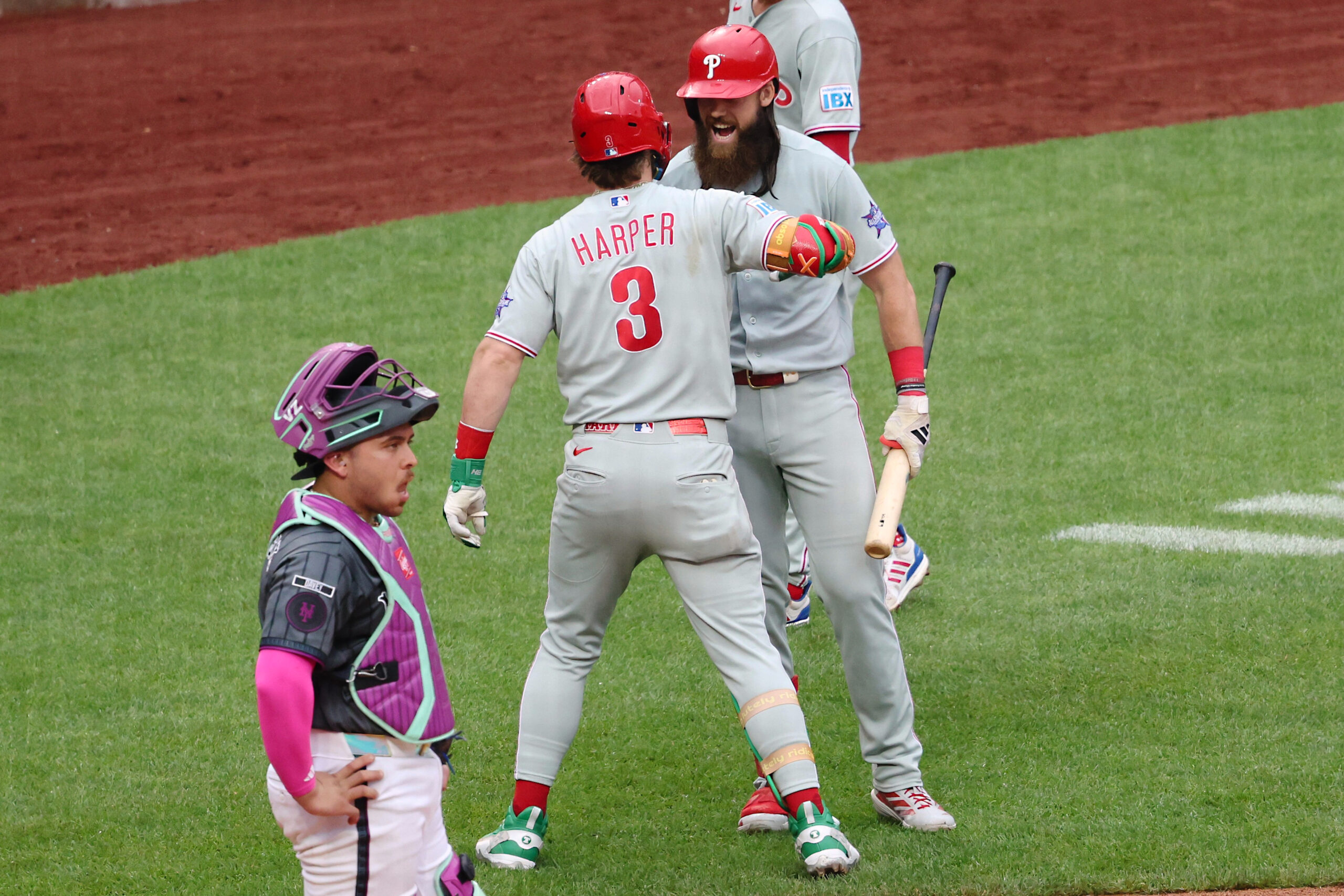
Bryce Harper (3) celebrates after his two-run home run with teammate Brandon Marsh in the third inning.
Mattingly liked the aggressiveness. And given the lack of hits from everyone else in the lineup (Harper had two of the Phillies’ five), it’s hardly a guarantee Harper would have scored.
Alan Rangel, meanwhile, continued to impress Mattingly in what amounts to an ongoing audition for the No. 5 starter spot. Once again, the 28-year-old righty came in after lefty opener Tim Mayza — after a 70-minute rain delay at the outset — and held the Mets to one infield hit before the sixth inning.
“I felt great today,” Rangel said through a team interpreter. “I felt great with commanding the strike zone, and I just felt great overall with my slider, my curveball. My changeup was good.”
Rangel has a higher-than-usual release point and three varieties of offspeed pitches (changeup, slider, and curveball). Harper said the changeup reminds him of reliever Tyler Clippard, his teammate with the Nationals.
“Just a really good pitch,” Harper said. “I think that just keeps guys off balance. The changeup is kind of a hidden gem in the game nowadays. Not many people throw it, but when they do, and they can throw it really well, you’re going to have success.”
After Lindor’s triple, Rangel walked Jared Young and was lifted for Jonathan Bowlan, who walked Mark Vientos to load the bases and gave up Ewing’s two-run single through a drawn-in infield.
But while the sixth inning spoiled Rangel’s outing, the Phillies are content to keep using him in the fifth-starter spot.
“I’d say right now we’re committed to him being in there,” Mattingly said. “He’s thrown the ball good both times, kept us in the game. We weren’t really putting runs on the board to give a little bit of a cushion where one inning doesn’t hurt you. But in general, Al’s been good.”
Unlike, say, the defense.
“I’d like to see us always continue to tighten everything up,” Mattingly said. “We can get better where, the outs we’re supposed to get, we want to get and not give those guys extra chances.”
NEW YORK — Jacob Misiorowski has The Heater (105.5 mph!), and Cristopher Sánchez had The Streak (50⅔ scoreless innings!), and Shohei Ohtani is, well, Shohei Ohtani!
But at the midpoint of the schedule, there’s another nominee for the best pitching story in baseball: The Comeback, by Zack Wheeler.
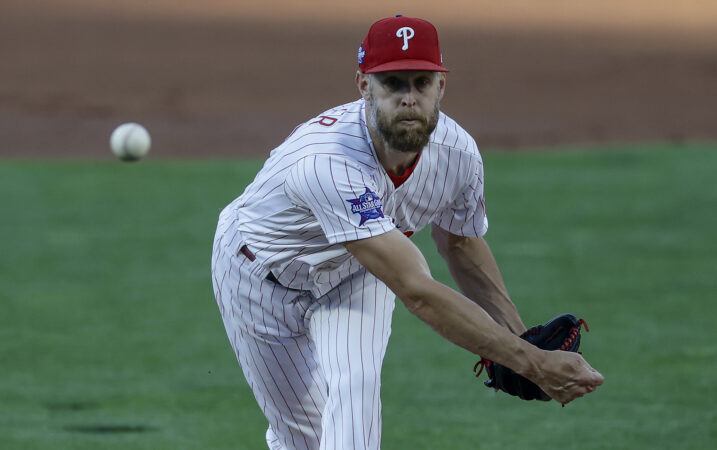
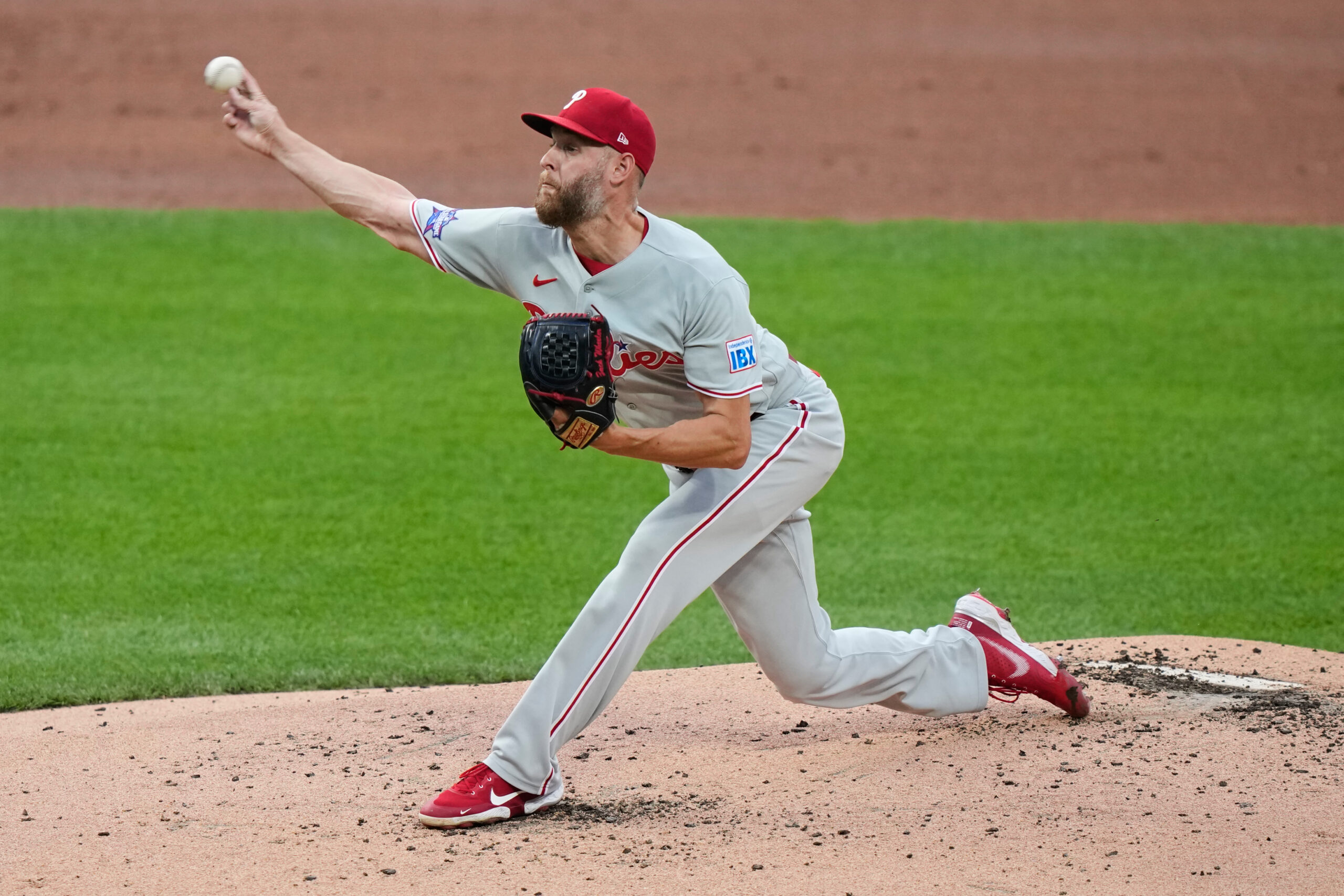
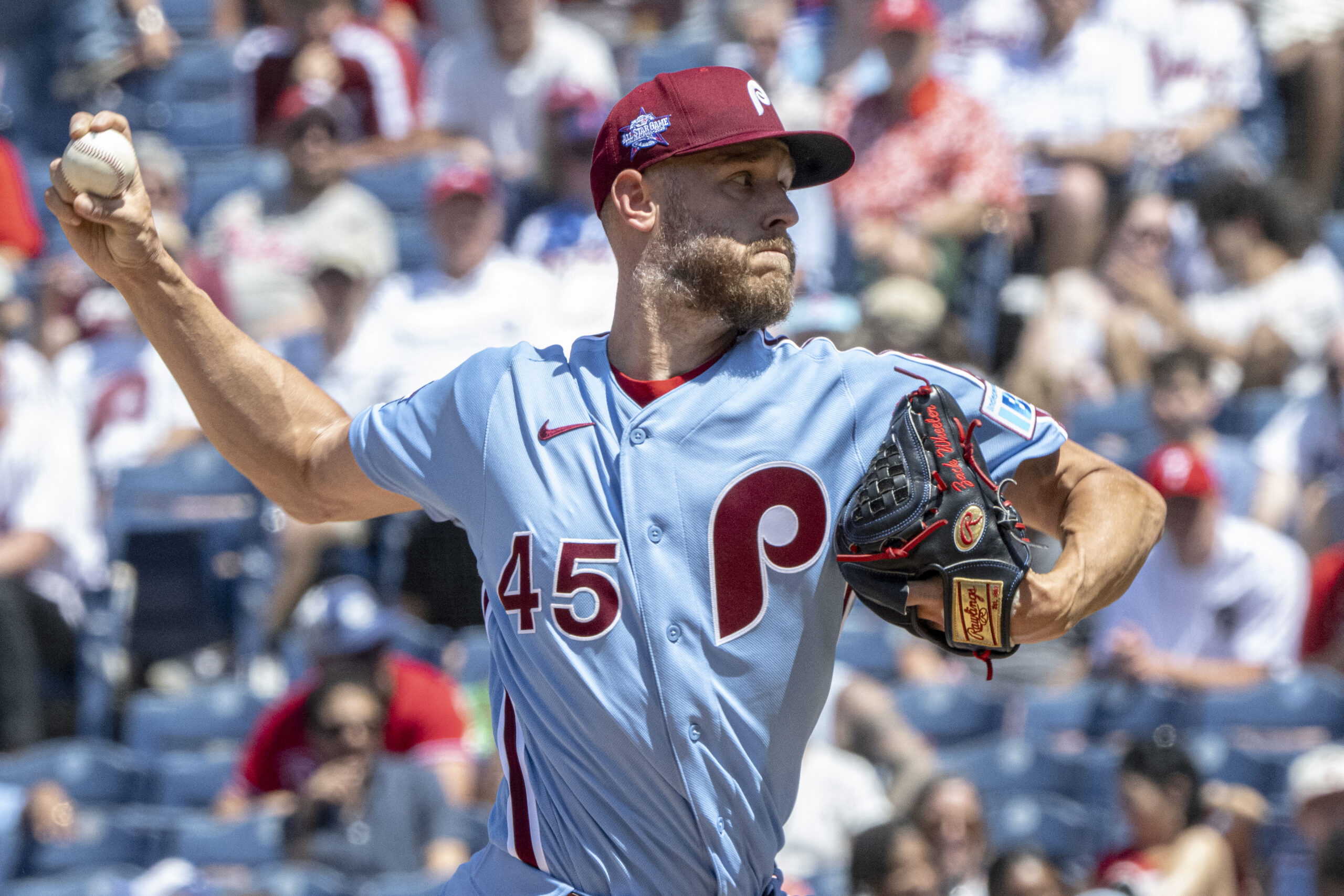
Wheeler gave up one run in seven innings here Friday night against the Mets. And although he got a major assist from center fielder Derek Hill, it still marked the eighth time in his last nine starts that he allowed less than three runs.
It’s almost like the 36-year-old righty didn’t have a rib removed nine months ago to relieve a compressed vein near his collarbone.
“Yeah,” interim manager Don Mattingly said, “it’s been pretty remarkable.”
Never mind that Wheeler had the less threatening form of thoracic outlet syndrome. It’s a condition that has derailed many pitching careers. Yet here he is, with a 2.03 ERA that ranks fifth among 100 pitchers with at least 70 innings entering play Saturday.
If you didn’t know what Wheeler went through last summer, beginning with the discovery of a blood clot near his right shoulder after an Aug. 15 start, well, you wouldn’t know.
Zack Wheeler’s 2.03 ERA ranked fifth among 100 pitchers with at least 70 innings.
His average fastball velocity is down a tick to 95.3 mph, but he can still dial up 97. (He scraped 97.7 mph Friday night against Mets star Juan Soto.) And he still changes speeds with a sweeper, splitter, and curveball.
Wheeler won’t admit that he’s surprised by any of this. Then again, he couldn’t allow himself to expect anything less.
“I mean, you almost have to, right?” he said. “You’ve got to have that mindset when you get hurt and you’re going to have surgery. You just build out your plan in your head — what it’s going to be like, and where you want to be at the end — and you kind of just tick those boxes off as you go.
“You’re always going to have your ups and downs. That’s going to happen with the human body. It doesn’t always go your way. But for the most part it went pretty smooth, and, yeah, I always envisioned myself coming back and hitting the ground running.”
Even as he was coming back from surgery and regaining strength after losing “a good bit” of weight, Wheeler said he set the same three goals: “win the Cy Young, win the World Series, and make the All-Star Game.” He could check off the latter next Saturday when the All-Star rosters are announced.
Wheeler was named to the National League team last year and in 2023 but didn’t attend the game either time. This year, with Philadelphia hosting the game, he won’t have to travel. But if the Phillies stay on rotation, he would start the final game before the break, leaving him unavailable to pitch in the All-Star Game.
In any case, Wheeler has never had a lower ERA through his first 12 starts of a season. Even in his runner-up Cy Young finishes in 2021 and 2024, his ERA through 12 starts was 2.51 and 2.32, respectively.
Zack Wheeler is making a strong case to be an All-Star for the third time in the last four years.
And yet, ever the perfectionist, Wheeler insists his command isn’t as sharp as it can be.
“Something’s still a tick off, and I hate saying that just because it was a good game,” Wheeler said. “But I’m so used to throwing eight or nine pitches out of 10 where I exactly want it. So, when that’s not happening, I feel like it’s just not there all the way.
“But I know things are going well. I’m feeling strong, so I’ll take that for sure.”
One day after grounding into three double plays, as part of a 1-for-19 funk, third baseman Alec Bohm wasn’t in the lineup Saturday against Mets righty Christian Scott.
“He just looked tired last night,” Mattingly said of Bohm. “I thought he was dragging a little bit. It’s just a day.”
Edmundo Sosa started in Bohm’s place.
Extra bases
Reliever Brad Keller (right forearm inflammation) has progressed to throwing a bullpen session within the next few days, Mattingly said. … Andrew Painter is slated to start Sunday for the first time since getting demoted to triple A on June 17. … Jesús Luzardo (6-4, 4.39 ERA) will start the series finale at 1:40 p.m. Sunday and Mets lefty opener Cionel Pérez (3-3, 4.99).