After finishing his call with new Toronto Maple Leafs general manager John Chayka on June 16, Simon Benoît reached out to Trevor Zegras.
Benoît and Zegras, along with Jamie Drysdale, played together for the Anaheim Ducks for several seasons, and the band is now back together. Benoît and goalie Joseph Woll were acquired June 16 from the Leafs for goalie Sam Ersson, defenseman Emil Andrae, and a third-round 2026 draft pick.
“I reached out to Zee right after I got the call from Chayka, and I told him, as a joke, keep your head up in practices, because I’m coming,” he said in a news conference held via Zoom on Wednesday. “I think he was laughing about that one. I know them, I spent a lot of time with them on the ice, outside the ice, so I was pretty happy that I knew two guys already on the team.”
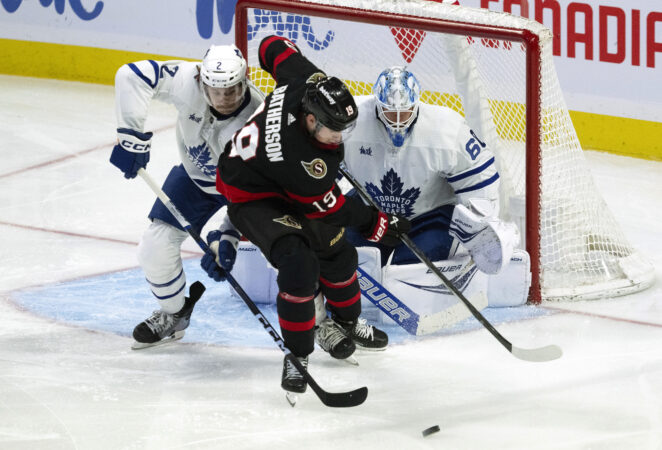
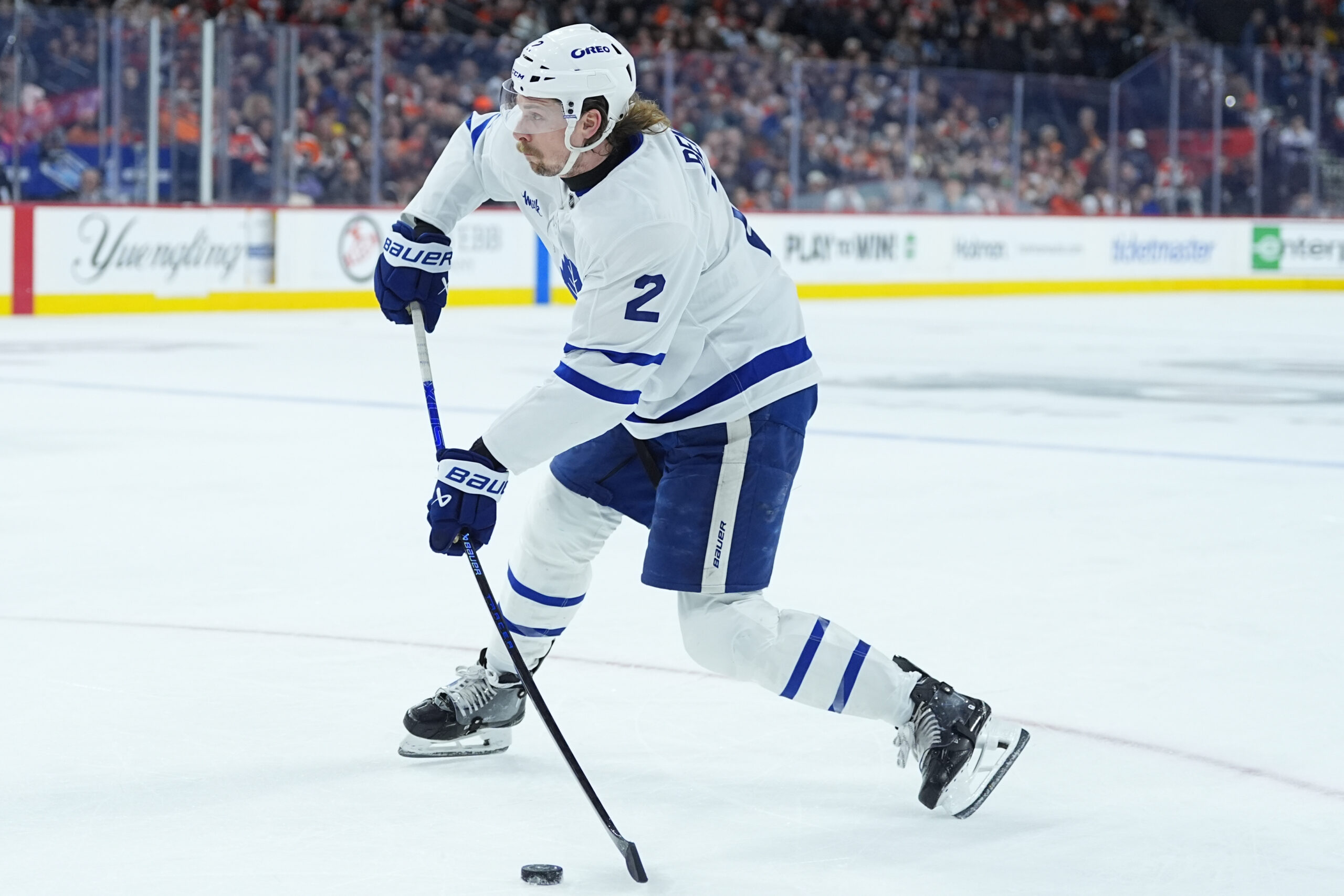
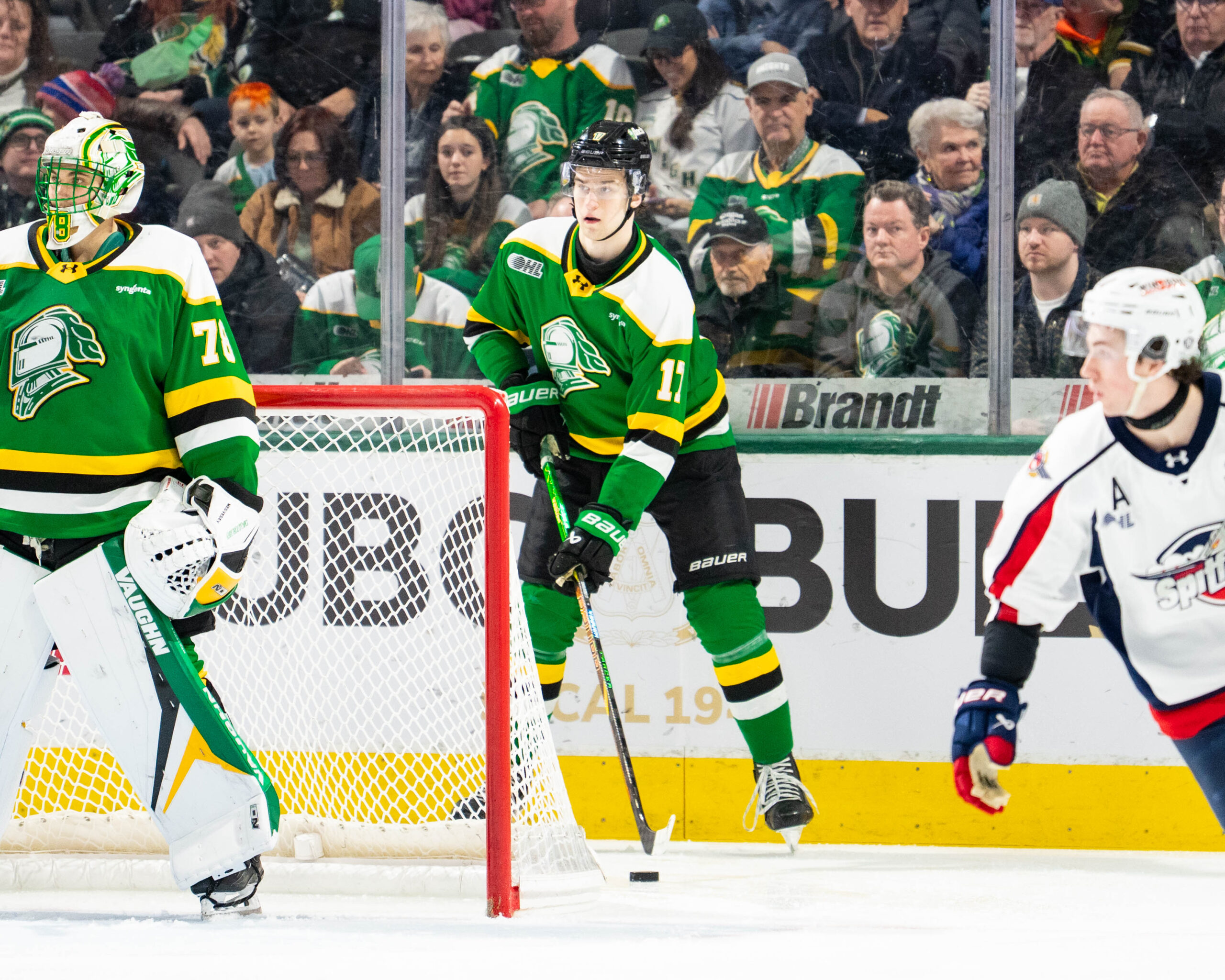
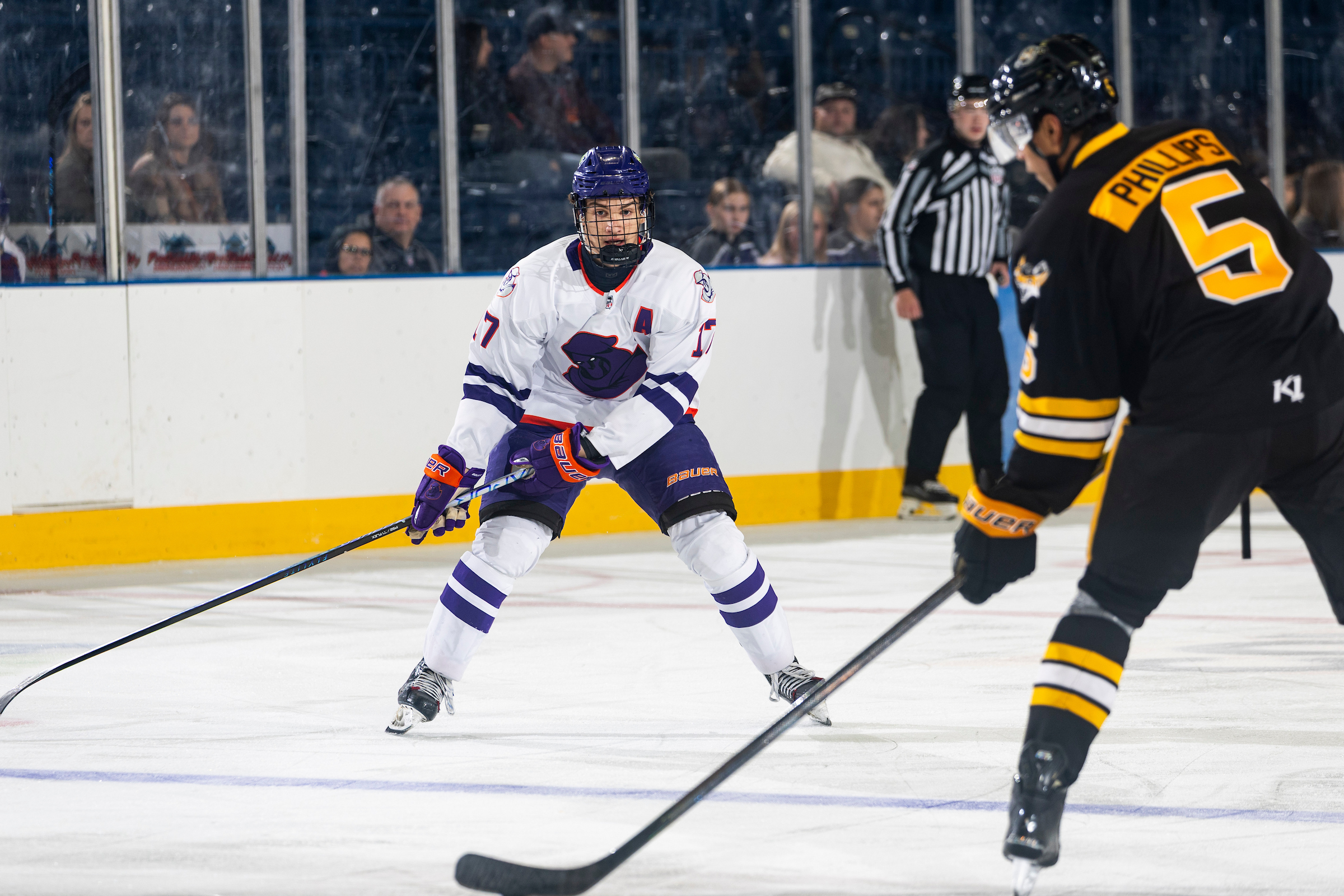
Simon Benoît is expected to bring a physical defensive presence to the Flyers.
Benoît was pretty busy on his phone because he also called Woll. The call came at a good time because the goalie, who found out about the deal while going through his hockey card collection — “I’m a big hockey card collector,” he said — and didn’t know he’d have company in Philly.
“I was pretty sad to hear the news right when it happened, and went for a walk and actually had my buddy, Mr. Benoît, [he] gave me a call,” said Woll, also via Zoom. “… At that point, I was thinking about leaving the Leafs, and Bennie called me, and just excitement in his voice, I think, really helped, for me, see how an unbelievable opportunity this was.”
Woll’s phone was also busy. He got a message from Dan Vladař, his new goalie partner, and his mom, Shelly, mentioned she is friends with the mom of Flyers prospect Shane Vansaghi, who is from the St. Louis area like Woll’s family. Woll has already spoken to Flyers GM Danny Brière and coach Rick Tocchet, as has Benoît, and has chatted with goaltending coach Kim Dillabaugh. He said that he and “Dilly” already see eye to eye on where his game can go.
“I would say one major focus is getting back to playing to my strengths as a goalie,” Woll said when asked what he wanted to work on this summer. “I think I have a very good technical base, and I think I’m an elite skater, and I have great athleticism.
“I think sometimes I don’t let that come out enough in situations, and so one of my major goals is to really get back to playing to my strengths and letting those shine.”
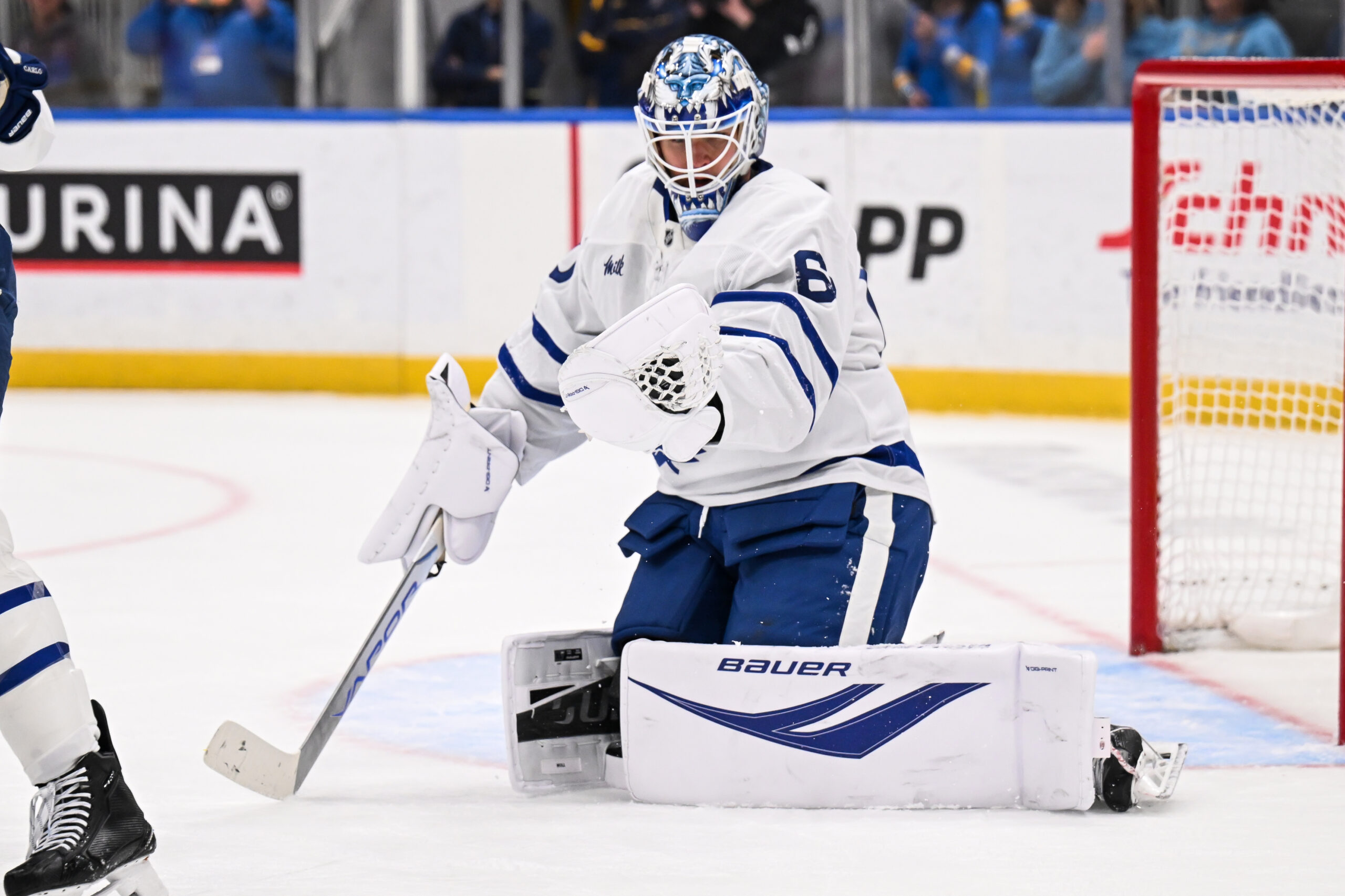
Joseph Woll is coming off a career-worst year but was positive about the evolution of his game.
Woll is coming off the worst year of his three-plus-year career with a 3.34 goals-against average and .899 save percentage for a team that finished last in the Atlantic Division and is picking No. 1 in Friday’s draft. But over the course of his career, his numbers are pretty impressive: a 63-43-9 record, 2.94 GAA, and .906 save percentage. He is using the bad — like his disastrous turn for USA Hockey at World Championships in May — and the good, which includes impressive numbers in the postseason.
“I think one of the biggest things about goaltending, and probably like anything else in life, it’s a constant process that you’re honing your game over years, and the big benefits I find in goaltending are experience,” he said.
“And sometimes experience leads you to have positive outcomes, negative outcomes, and I think where a lot of the growth lies is in the negative outcomes, because that’s all a learning process, and learning and honing your game is a continual thing.”
Benoît, who will turn 28 around the start of training camp, will be honing his game on the blue line for the Flyers. A defensive defenseman, he prides himself on eating pucks, helping to clear out the front of the net, killing penalties, and being hard to play against. Considered a team-first guy, he has 36 points across 352 NHL games and isn’t afraid to drop the gloves if needed.
As of Wednesday, the Flyers’ defense does look a little crowded with Travis Sanheim, Rasmus Ristolainen, Cam York, Drysdale, and Nick Seeler expected to be slotted in. Then there is the expectation that David Jiříček, Oliver Bonk, Ty Murchison, and Hunter McDonald will push for jobs; Jiříček will have to clear waivers if he gets sent down.
“My whole career has been a battle. It’s not something new for me. I’ve been battling since I came in the league,” Benoît said. “Those spots are never for granted. You have to fight every year to stay in the lineup, every game, every practice, to be able to play that game.
“It’s such an unbelievable game that for me, having a chance to still compete and fight for those spots and play every night and wear the jersey to play in the National [Hockey League] is just a great opportunity.”
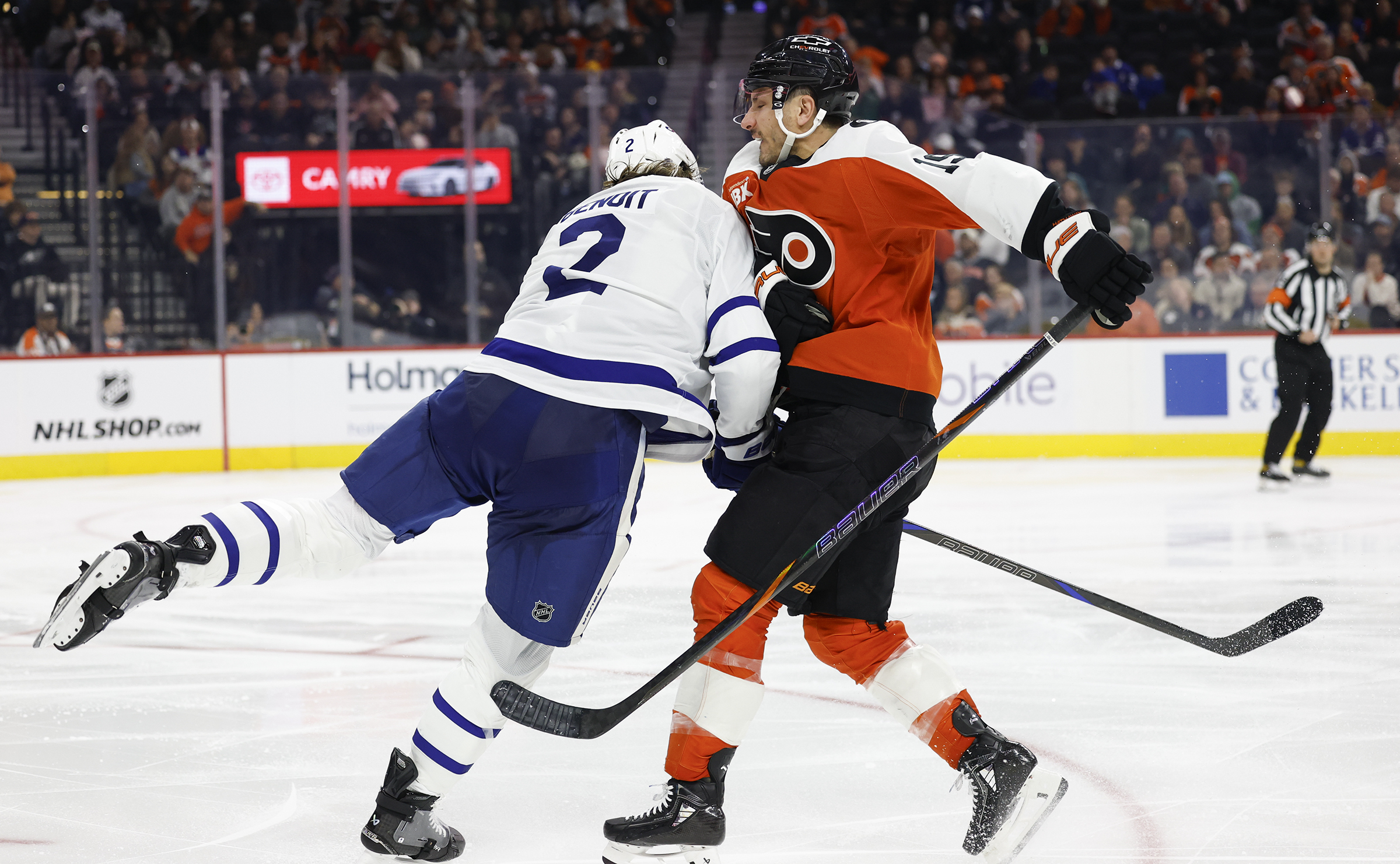
Simon Benoît’s style of play is well-known to the Flyers.
Where he plays in the lineup and if there is space is to be determined as the NHL’s officially in trade mode right now. Regardless, Benoît is excited to be in Philly — and on the same side as the fans here.
“I always felt playing in the barn where the fans are just crazy, it brings your emotion up, right? So having the chance to play for fans that are going to push this in the same direction as you, it’s just going to be magical,” he said.
“I feel like having that emotion from the stands is going to transfer to the ice for sure. Well, that’s how I feed. I feed on emotion. So for me, having the fans yelling every time [I] make a hit and stuff, it’s just better. It just feels like a playoff game every single game. So it’s fun.”
NEW YORK — Labaron Philon Jr., woke up before 7 a.m. Tuesday, and started playing music.
Up first on his early-morning playlist was hip-hop artist Lucki. Then rapper NoCap, who also hails from Philon’s hometown of Mobile, Ala.
“I was bouncing around,” Philon later recalled to The Inquirer. “ … I was just like, ‘Man, it’s really here.’”
The NBA draft had finally arrived. Philon, the crafty guard from Alabama, had already delayed this life-changing basketball accomplishment by a year, after declaring for the 2025 draft and then taking his feedback from teams back to a second college season. Then, Philon sat in front of Barclays Center’s massive stage for longer than expected Tuesday, as a projected lottery pick who slipped past that portion of the first round.
But though that final dose of anticipation created a “kind of long” draft day, landing with the Sixers with the 22nd overall pick was worth the wait.
“Being able to hear your name is everything,” Philon said late Tuesday from a back-of-house area of Barclays Center. “But the fun stuff around the building — the media and the circus and stuff like that — I feel like it’s really fun to just be able to experience that, especially having two years in college.”
Philon’s solo music session lasted for almost an hour, before an 8 a.m haircut. Then his family members — from parents, Alicia Robinson and Labaron Sr., to his siblings, to his grandmother and cousins and uncles whom Labaron had not seen much while traveling across NBA markets during the predraft process — joined him at that luxury Manhattan hotel for the draft prospects’ luncheon.
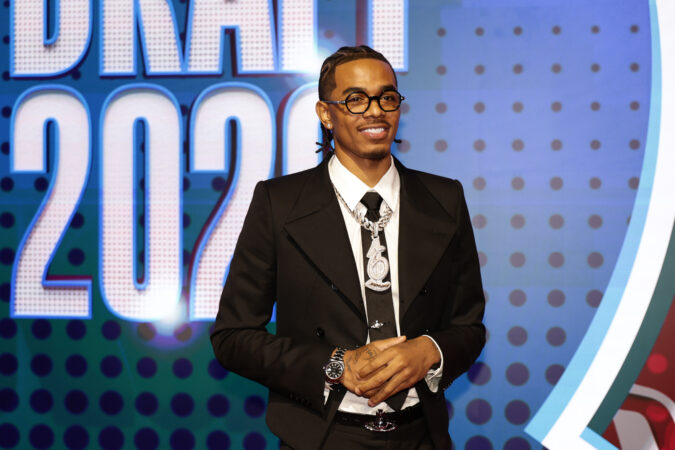
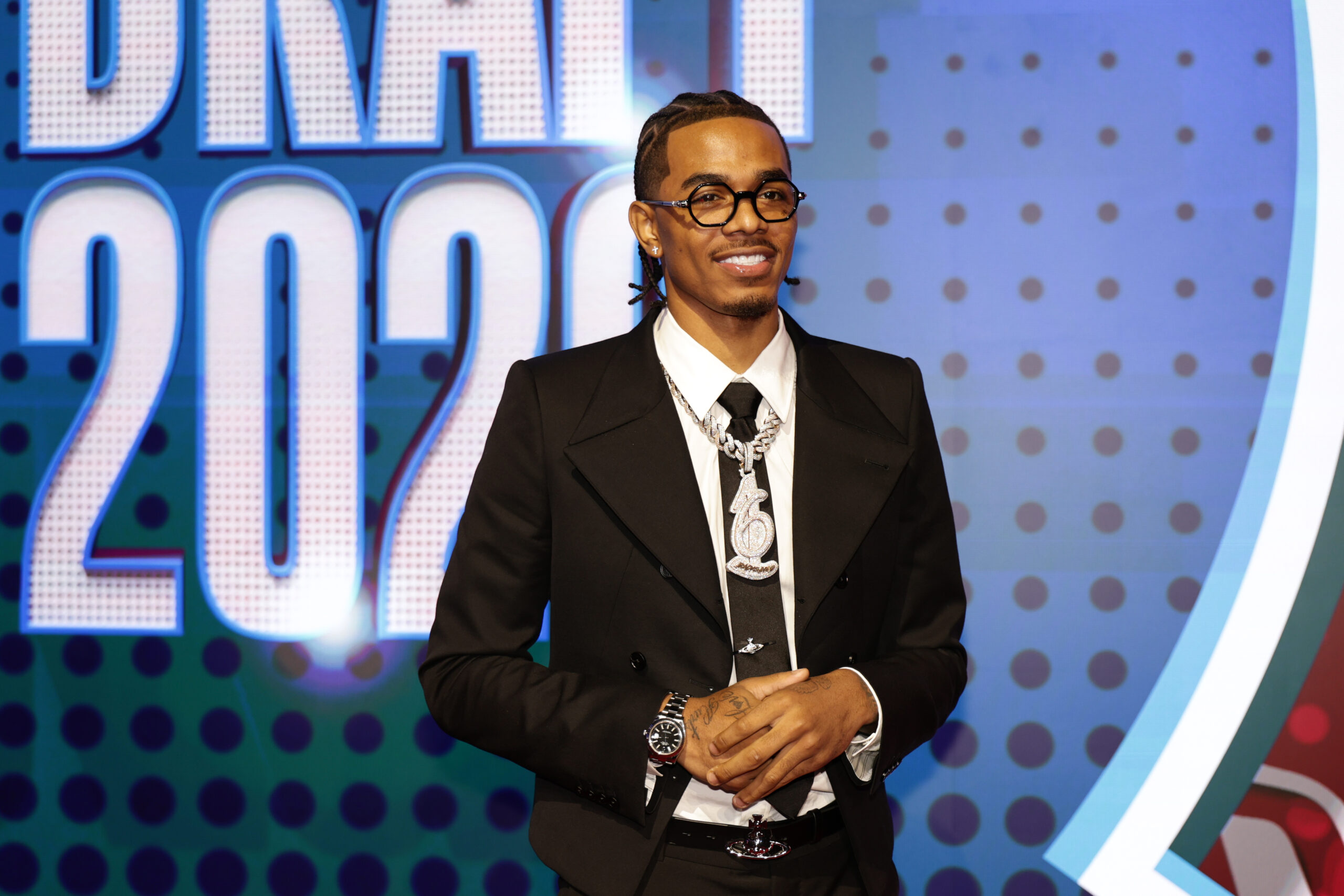
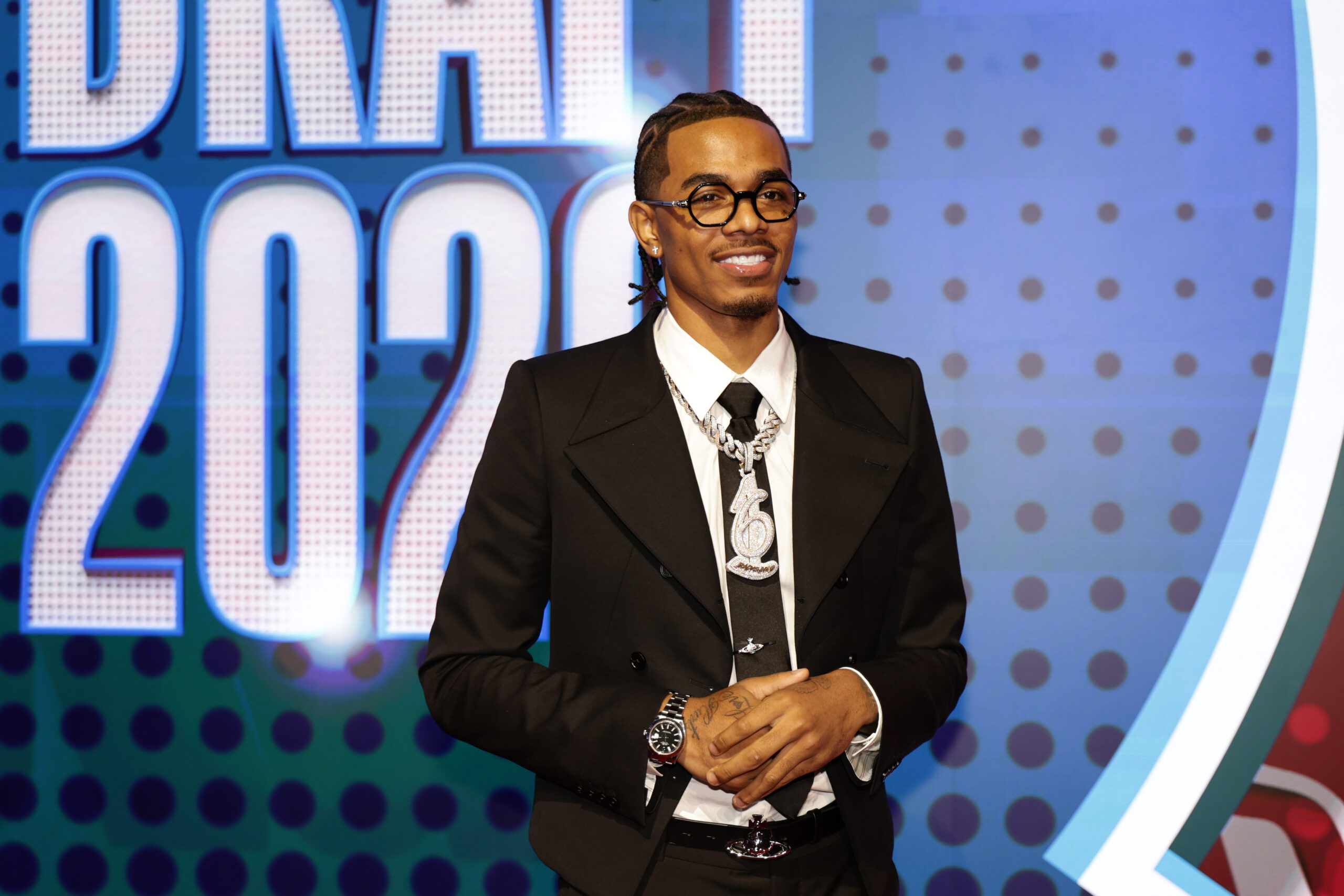
He eventually changed into a black suit and black-rimmed glasses, and slipped on a diamond-encrusted “16” chain that NoCap had loaned him a couple of weeks ago for his big night. Upon arriving at the Brooklyn Nets’ home arena, Philon took in his surroundings.
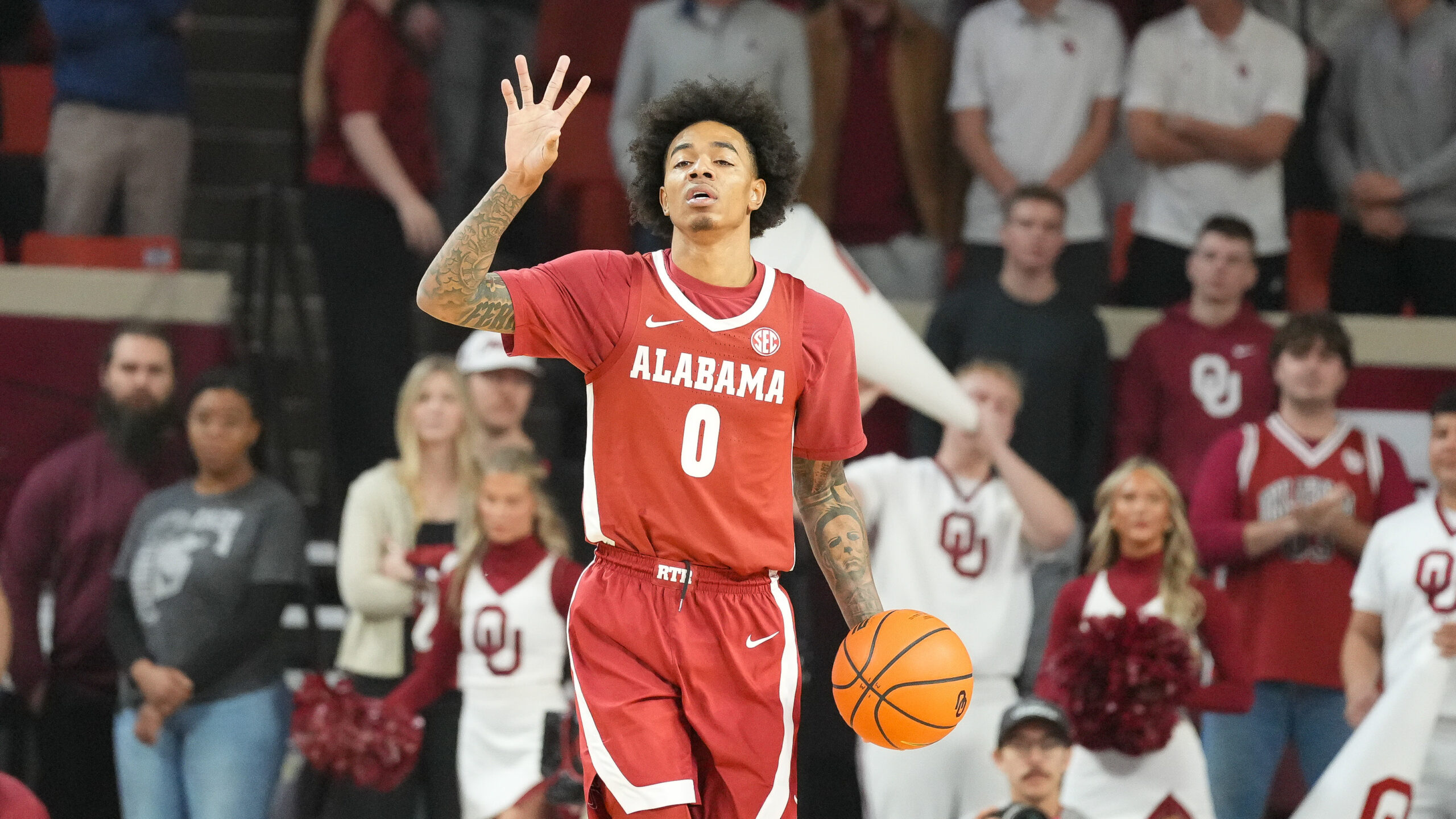
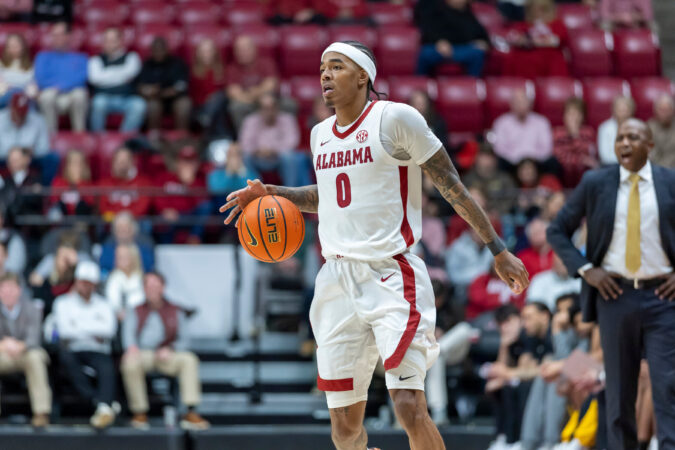
Alabama guard Labaron Philon Jr., left, took feedback from NBA executives and applied it to his sophomore season.
As he watched peers go off the board before him for more than two hours, Philon kept his focus on “the main thing”: that his name would be called at some point. A television camera caught Philon nodding when the Sixers were on the clock at 22, his mind “immediately” wrapping around the play style and fit with fellow electric guards Tyrese Maxey and VJ Edgecombe. Extra serendipitous: The Sixers were one of Labaron’s brother’s favorite teams while they were growing up, another detail that put Philon at ease.
“Really being confident in myself,” Philon said, “and being confident that they chose a great player.”
When NBA commissioner Adam Silver called Philon’s name, tears visibly formed in his eyes as he rose from his seat. The hug from Mom — “she was really excited,” he said — is a moment he will never forget.
He stepped up to the stage, grabbed a black Sixers hat, and shook Silver’s hand. Then he was whisked into a rapid-fire circuit of photos, interviews, and autograph signings. Maxey and Edgecombe FaceTimed in to say congratulations and welcome.
It was past midnight when Philon finished his formal news conference, with stops still to go.
He was looking forward to returning to the hotel, to celebrate with his fellow draftees and change into some comfortable clothes. Perhaps he would finally look at his phone, which had been constantly buzzing. Or just “lay down for a little bit.”
“Being able to breathe, really,” Philon said.
Tuesday had already become Wednesday. A long-yet-life-changing draft day, and night, and early morning, was reaching its end.
But it was all worth the wait.
“The whole week has been special for me and my family,” Philon said. “Being able to experience the beginnings of a new start.”
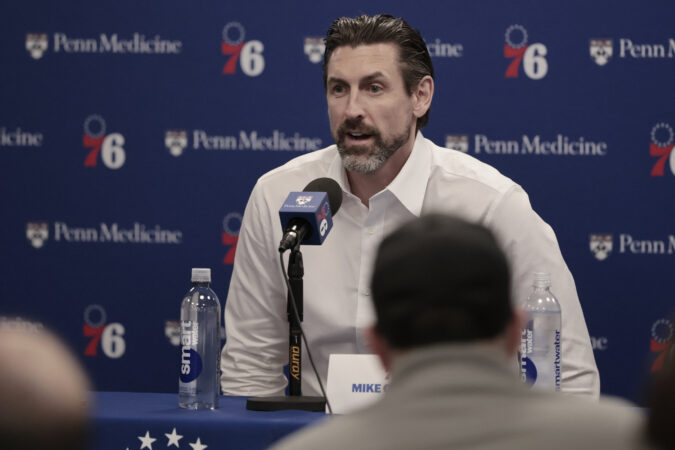
Tuesday night marked the true start of the Mike Gansey era for the Sixers.
After a season that saw the team’s playoff hopes end in a series sweep to the New York Knicks, the Sixers hired former Cleveland Cavaliers general manager Gansey as their new president of basketball operations. The NBA draft was Gansey’s first attempt to improve last year’s roster, and he used his team’s only scheduled pick — No. 22 overall — on Alabama guard Labaron Philon Jr.
From being called the steal of the first round to concerns on how Philon will fit with the team, here’s everything they’re saying about the 76ers latest addition …
Best pick of the night?
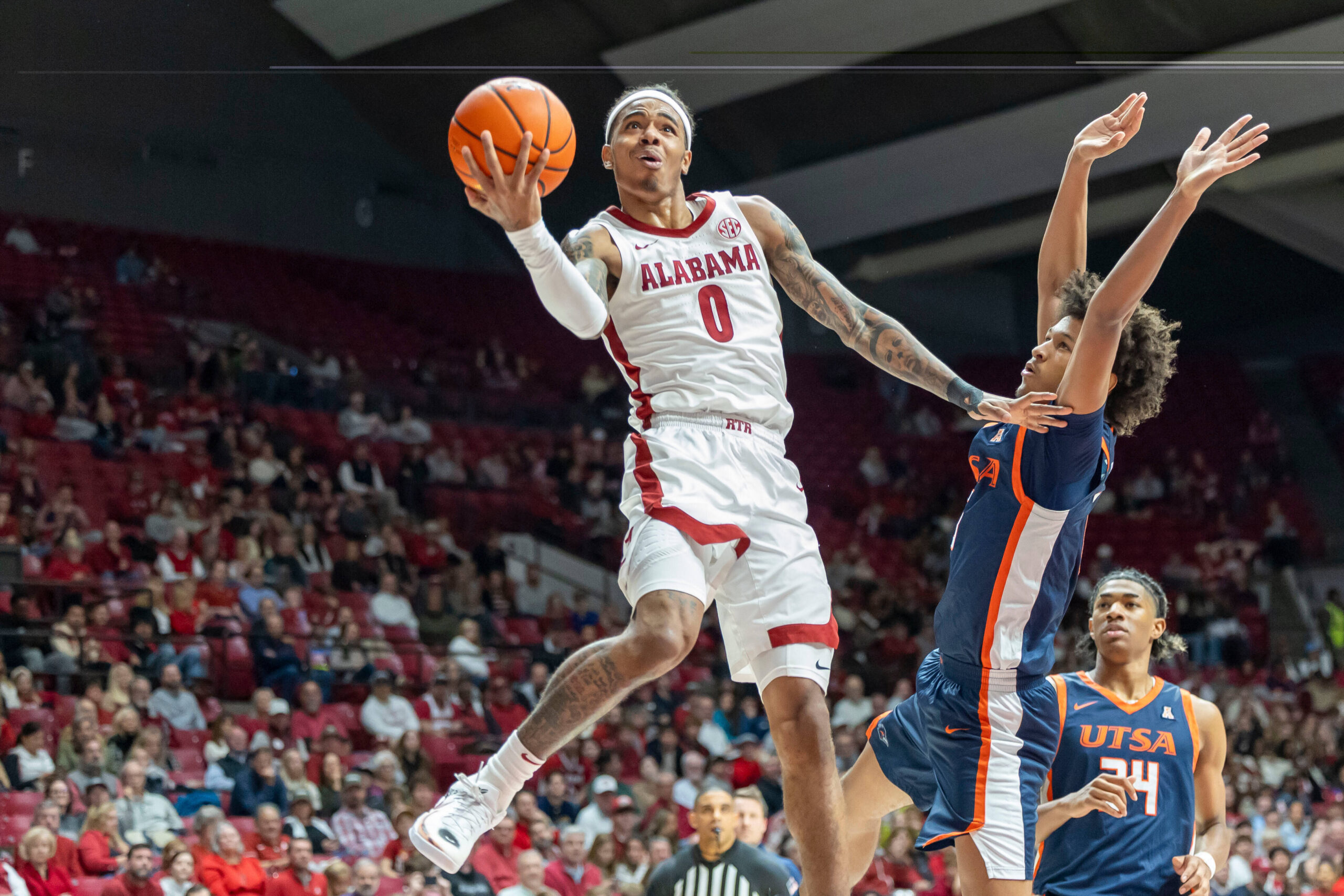
Philon played two years at Alabama, making appearances in the Elite Eight as a freshman and the Sweet 16 as a sophomore before losing to Duke and Michigan, respectively. During his sophomore year, he averaged 22 points, 5 assists, 3.5 rebounds, and 1.2 steals.
At ESPN, Bobby Marks listed Alabama’s former Mr. Basketball as the best pick of the night.
“I ranked the Alabama guard as the 13th-best prospect in the draft,” Marks wrote. “What stood out for me is how Philon took the constructive criticism from the 2025 draft combine and applied it this past season. He improved his 3-point shooting from 32% to 40%.
“The biggest takeaway is that NBA teams wanted to see Philon as a primary playmaker — he averaged 5.1 assists as a sophomore at Alabama. With the 76ers, Philon will join an explosive backcourt with Tyrese Maxey and VJ Edgecombe.”
Labaron Philon Jr. arrives for the first round of the NBA basketball draft Tuesday, June 23, 2026, in New York. (AP Photo/Adam Hunger)
‘The upside is tremendous’
As a freshman, Philon averaged 10.6 points, 3.8 assists, and 1.4 steals — earning SEC All-Freshman honors and becoming a three-time SEC Freshman of the Week. After his first year, he tested the NBA draft waters before ultimately deciding to return to school where he had a breakout sophomore season.
“His stock did take a knock here over the past month or so,” said CBS Sports reporter Matt Norlander. “So there was a time where I thought his camp probably believed they would be somewhere in the top 16 or so. Instead, they fall into a really good situation, honestly. I do like the fit here with Mike Gansey now running the show in Philadelphia and did extensive work on him.
“I’m of the opinion that if Philon puts it all together, I do think he’s going to be one of the 10-12 best players in this draft class when we check in five years from now. I’ve seen him in person plenty of times. He can be a blur with the ball. And knowing what his role is going to be, like, there’s some really established people there in Philadelphia. And being a wingman to Maxey amongst other players, I think it’s a really good value pick and I think the upside is tremendous.”
"I do think [Labaron Philon Jr.] is going to be one of the 10-12 best players in this draft class when we check in 5 years from now."@MattNorlanderpic.twitter.com/AROixyXAqa
Philon dropping to the No. 22 pick surprised plenty of people, including former NBA star DeMarcus Cousins.
“I think he dropped more than he should have, but I’m super excited for the kid,” Cousins said on Bleacher Report’s draft show. “He gets to learn behind Tyrese Maxey. They obviously pick up some more depth as far as guard play. I’m not mad at the pick. This is an exciting player. I think he’s going to be great in Philly. I think Philly will love him right away. He can fit next to a star or he could be a star, that’s the greatness that comes with Philon.”
When asked if it could be the steal of the draft, Cousins responded: “It could be, possibly.”
“Obviously, I don’t think you get to maximize him in his rookie year as much as you can because he plays behind a Tyrese Maxey and a VJ Edgecombe. So there’s not as much opportunity when you have those franchise guys in place. But, I think he could be a really, really good depth piece for this Philly team.”
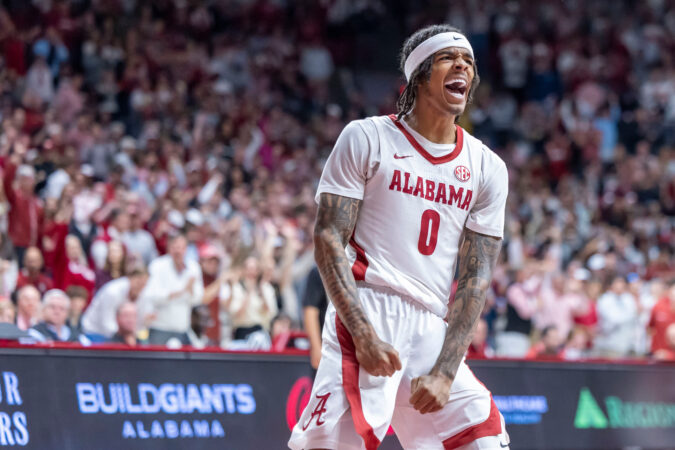
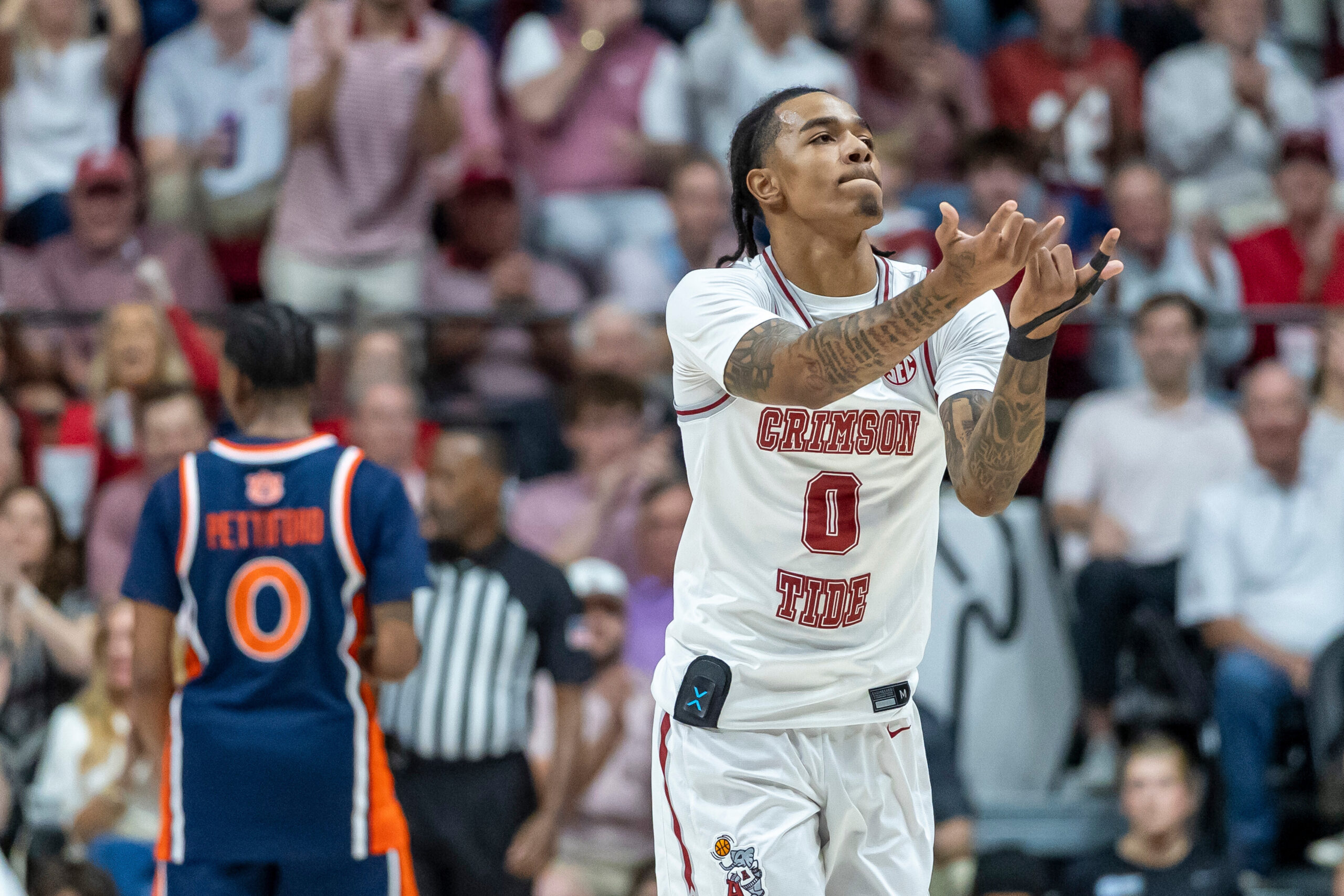
Alabama guard Labaron Philon Jr. (0) celebrates after a 3-point basket against Auburn last March.
‘A terrible fit for the Sixers’
However, other analysts don’t believe Philon is the best fit for a Sixers team that already has Edgecombe and Maxey in its starting lineup.
“I got two thoughts,” said Kevin O’Connor on Yahoo Sports! Draft Live show. “One, it is a good value pick for Philadelphia. Philon is a steal here from a pure player standpoint with his creation ability. He is a very good basketball player. But two, this is a terrible fit for the Sixers.
“I mean, they’re just too small in the backcourt. You drafted VJ Edgecombe last year, he should be like your two, not your three. And now you have Maxey and Philon. That’s too small to play competitive playoff basketball.
“So I think it raises the question for the Philadelphia 76ers, is this actually a team that cares about right now, competing today? Or is this purely a future-based move? Do they actually want to contend this year or not? … Are the Sixers actually serious about winning today with Philon? I think the answer very clearly is no.”
The move comes four months after the Sixers traded Jared McCain for a bevy of picks, including the pick the team used on Philon. But some are wondering why make that trade only to replace McCain with a player that has similar deficiencies.
“It’s not that [Philon]’s a bad pick, it’s just you can’t pass on a guy like Cameron Carr, who’s the perfect fit alongside Maxey and Edgecombe,” said 97.5 The Fanatic’s Sam Oshtry. “[Philon is] 6-foot-2. Nick Nurse couldn’t find minutes for Jared McCain because he was too small and couldn’t defend. You just added a 6-foot-2 guard to the rotation. Yeah, you needed guard depth. But this guy has no starting potential alongside Maxey and Edgecombe.”
In terms of overall grades for the first-round pick, most outlets are giving the Sixers a very positive review, including a trio of B+ rankings …
Bleacher Report (B+): “This is a tremendous value for the talent. That matters. It would just score a little higher if Philadelphia had more of an obvious opening for Philon.” — Zach Buckley
The Athletic (B+): “A scoring guard with a splendid array of finishes, Philon should add some juice to the non-Tyrese Maxey minutes in Philly once he gets his NBA sea legs. The Sixers have no viable backup point guard at the moment, so Philon could play right away. Philon also ends up being the last in the wave of eight point guards who projected to go between picks No. 5 and No. 25.” — John Hollinger
CBS Sports (B+):“Philon gives Philadelphia a dynamic scorer who attacks with pace, has worked his way into a shotmaker, and showed more defensive chops as a freshman. A gifted shot creator, Philon stuffed the stat sheet as the focal point of one of college basketball’s fastest offenses, and did it with 50/40/80 shooting splits. If he can tap back into some of the defensive tools he showed as a freshman, there could be real value here.” — Adam Finkelstein
BUFFALO, N.Y. — Sitting down with The Inquirer at the NHL scouting combine in Western New York earlier this month, assistant general manager Brent Flahr was asked what he thought was missing down the depth chart for the Flyers.
“We have some younger D on the team. But besides Spencer Gill and Ty Murchison and Hunter McDonald, Oliver Bonk, the next layer of younger defenseman we would probably use,” he responded.
Oh, so the Flyers need defensive depth. How about a blueliner who is under 6 feet but has eye-popping offensive skills?
“Being a small player, a small defenseman, it’s getting harder and harder to play,” he added. Oh. Um. OK. So, that’s a no?
But speaking last week alongside general manager Danny Brière at their annual predraft presser, he then added: “If you’re drafting a small defenseman, they need to be dynamic, and there are a couple who could go into mid-to-later first round this year, but they are in the mix.”
Although not a single defenseman under 6 feet was drafted last year, it is guaranteed not to happen this year. Here are the three under 6-foot defensemen “in the mix” plus one big man who keeps getting mentioned as an option for the Flyers at No. 21.
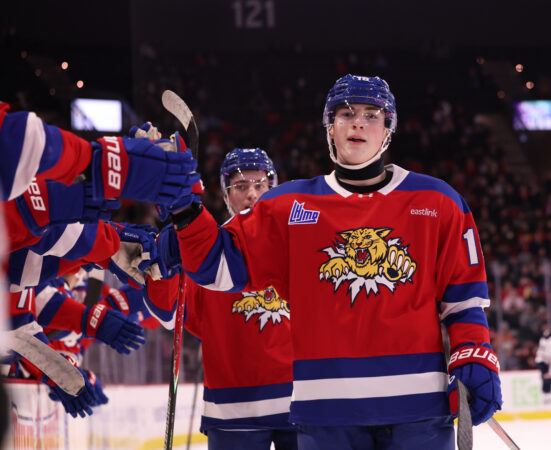
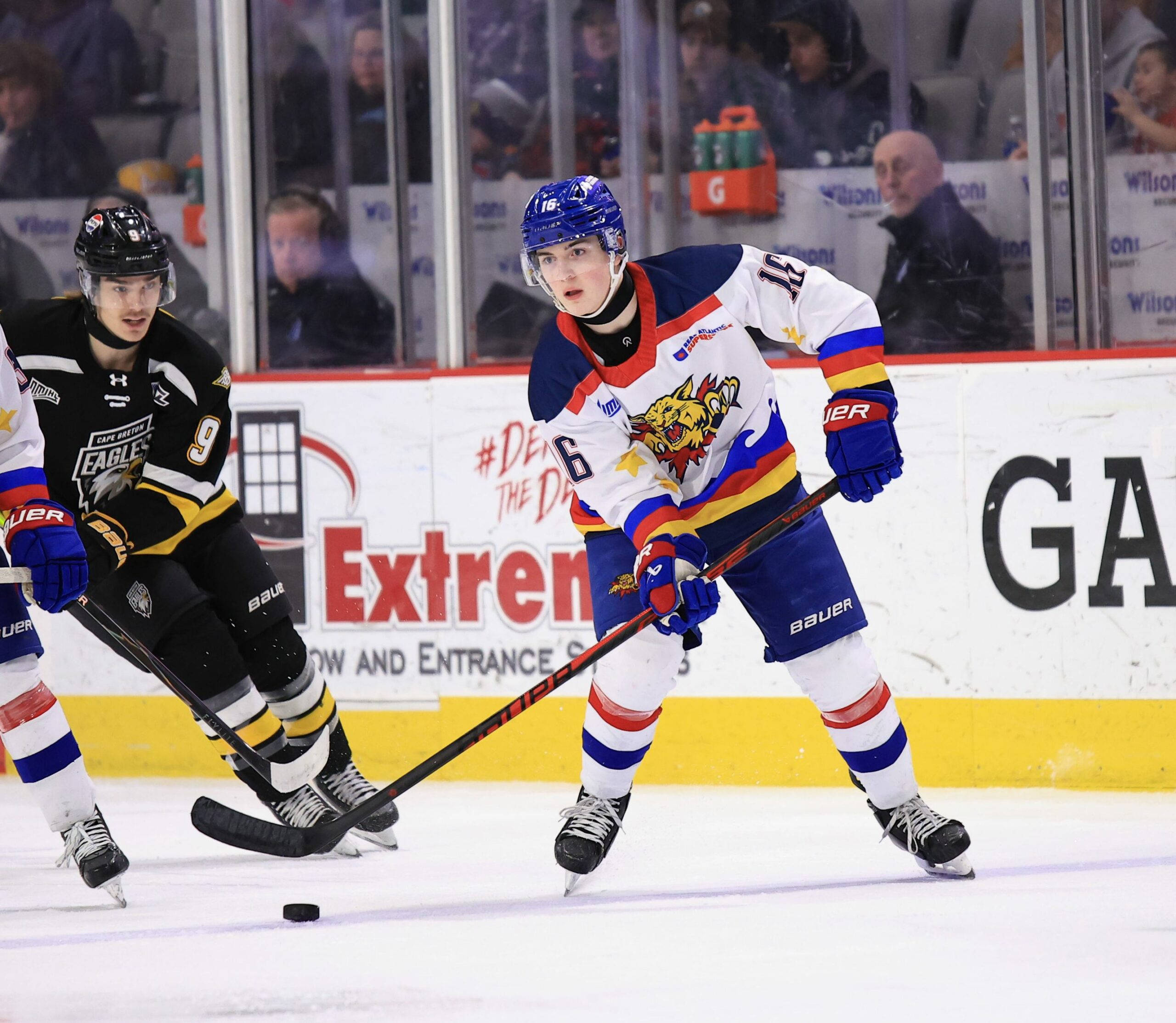
The projection for Tommy Bleyl is an offensive-defensive who will run a power play in the NHL.
Tommy Bleyl, RHD
Height and weight: 5-11¼, 170 pounds
Team: Moncton of the Quebec Maritimes Junior Hockey League for one more season and then off to Michigan State.
Stats: Broke a rookie points record that stood for 48 years in the QMJHL with 81 points — including 68 assists — across 63 regular-season games. Added another 28 points in 21 playoff games.
Labeled the player people aren’t talking about enough by FloHockey’s NHL draft and prospects analyst Chris Peters on Flyers Gameday Central’s draft preview show, the Upstate New York native was our pick for the Flyers at No. 21 in the first mock draft, and he is a strong option for Friday.
Aside from his scoring prowess — notably on the power play — what makes Bleyl an intriguing prospect is his skating. Peters called him the best skater in the draft class; he is not alone in his thinking.
“The skating is the defining quality; he’s just really, really, really smooth,” The Athletic’s NHL draft and prospects reporter Scott Wheeler told The Inquirer. “One of those guys who just glides across the ice [and is] an effortless skater.”
A rink rat since he was 9, the now 18-year-old has always had an elite level of skating. Bleyl said he is “not too overly physical but pretty feisty and competitive” in the offensive zone. He called himself a two-way defenseman with good feet and hockey IQ. Ryan Haggerty, who worked with him for years with the youth hockey program, Mid Fairfield — Trevor Zegras played there too — thinks it’s his edge work that makes him special.
“Tommy’s dynamic,” said Haggerty. “His skating ability is high-end; he’s a high-end skater, and it all translates to his offense. … His skating ability separates him.
“When he was 8, 9, 10 years old, his edges were always better than everybody else,” he added. “It helps him defend, to be honest with you, because he doesn’t get beat. His feet are so strong [so] he never gets beat.”
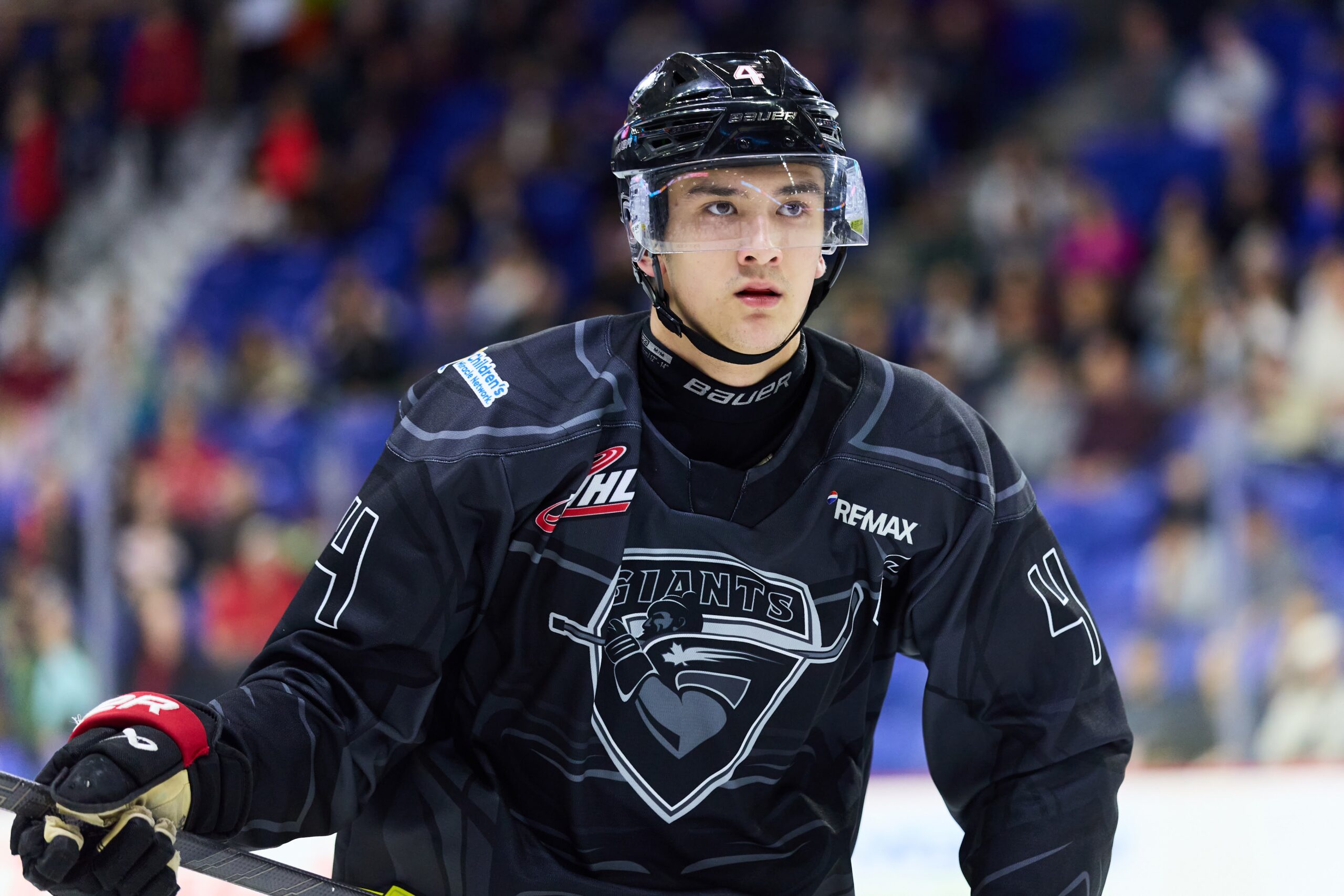
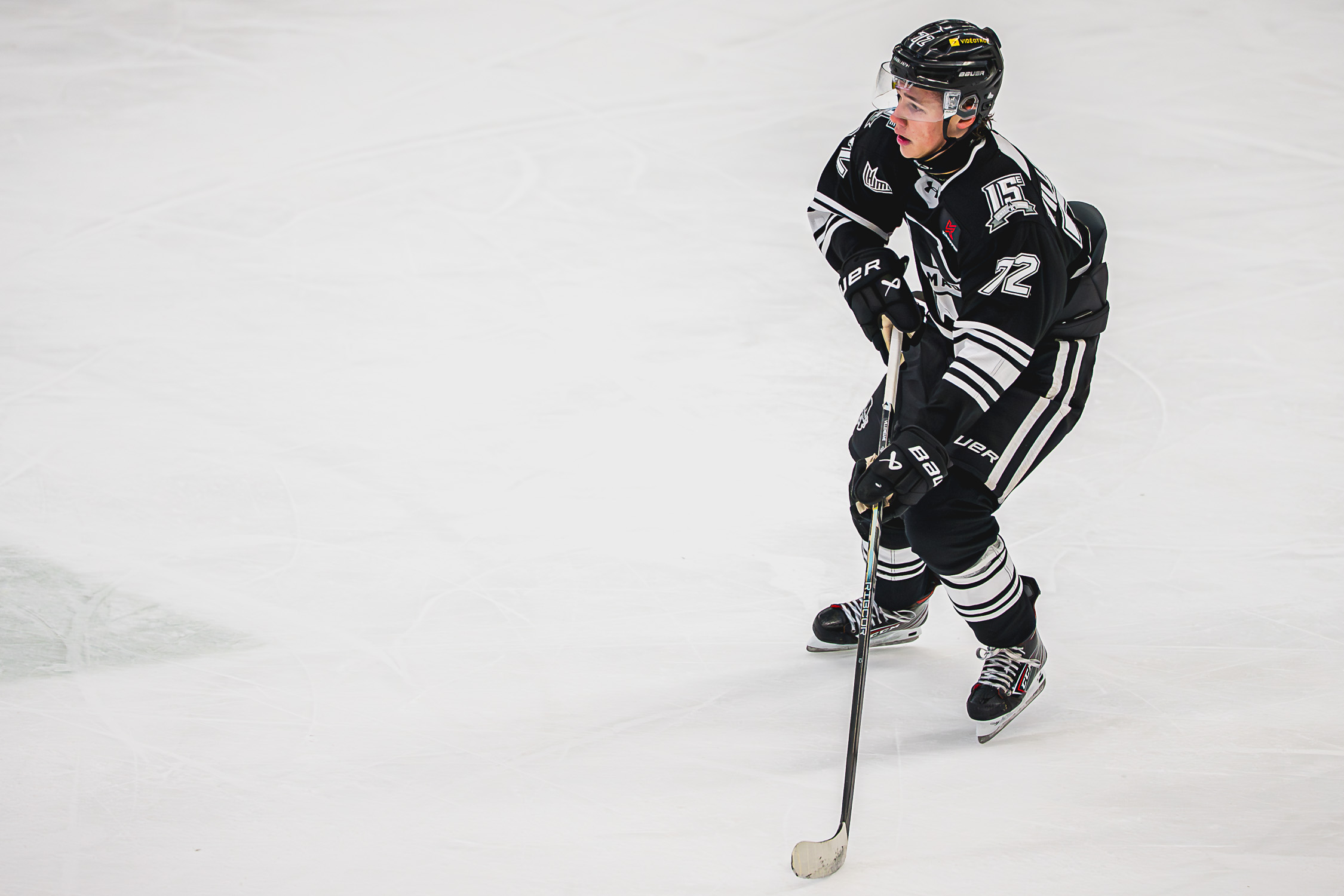
He may be under 6 feet tall, but Ryan Lin is considered by draft analysts to be one of the best defenders in the class.
Ryan Lin, RHD
Height and weight: 5-11¼, 180 pounds
Team: Suiting up for the University of Denver in September.
Stats: Led Vancouver of the Western Hockey League in points (57), assists (43), and power-play assists (21) despite missing time with a wrist injury, and added six points in five games at the U18 Men’s World Championship for Canada.
In all likelihood, Lin will be gone at pick No. 21, but if not, you’d have to think he’s the guy. Wheeler said that Lin is “the kid in the draft class that I’ve stuck my neck out on a little bit.” His assistant coach with the Giants, Wacey Rabbit, called him “a chameleon” who can adapt to his surroundings and is always improving. And Drew Bannister, who coached Lin and Canada at U18s this spring, told The Inquirer “he was our best defenseman, there’s no question about that.”
Lin, 18, models his game after Winnipeg Jets blueliner Josh Morrissey and is a creative, puck-moving, high-compete, physical, two-way right-shot defenseman who could help bolster the Flyers’ power play. Bannister doesn’t have any concerns about his size because he doesn’t think he plays an undersized game. You would have to think part of that is because Lin, a British Columbia native and son of educators, considers his vision and his mind two of his biggest strengths.
And there’s a good chance Jaroslav “Yogi” Svejkovský has put a bug in the ear of Flyers brass. The two worked together from learn-to-skate out west until Lin was 12 or 13 years old. He credits the Flyers assistant coach for helping shape his game as a skills coach.
“I couldn’t thank him enough for the foundation and base he gave me through hockey,” Lin told The Inquirer at the combine, adding that his father keeps in touch with his former coach.
So, is there one skill Svejkovský taught him that he still uses?
“I think probably my inside edge, he calls it a tiptoe finish,” Lin said.
“It’s kind of like fake one way, go the other type of thing,” he added. “It’s not like a huge fake, it’s just kind of something that I use every shift, like it’s kind of there.”
Called “the draft’s most purely dynamic defenseman” by Elite Prospects, Xavier Villeneuve draws comparisons to former Flyers blueliner Shayne Gostisbehere.
Xavier Villeneuve, LHD
Height and weight: 5-10¾, 164 pounds
Team: He will be joining Flyers prospects Jack Murtagh and Carter Amico at Boston University in 2026-27.
Stats: Dropped 38 points in an injury-plagued season for Blainville-Boisbriand of the QMJHL before finishing with 14 points in 17 playoff games.
Flahr did say last week that the Flyers could use some depth on the left side of the blue line, and according to Wheeler, there isn’t a more dynamic defenseman in the draft class than the lefty Villeneuve.
“From a pure puck-on-your-stick perspective, with the puck on his stick, he’s fun to watch. He’s got that Lane Hutson, kind of like head-fake shimmies, make guys miss, that’s his game, and he does it at a very, very, very high level,” he said.
Villeneuve compares his game to that of Hutson, who was also a Terrier before he leapt to the NHL with the Montreal Canadiens. BU coach Jay Pandolfo sees the comparison, not just in both being smaller defensemen but also in Villeneuve’s playmaking ability and competitiveness. He also sees him as a power-play quarterback, which the Flyers desperately need.
“He moves the puck really quickly,” Pandolfo told The Inquirer. “A lot of times, he knows where it’s going to go before he gets it, and that’s a lot of times the QB on the power play. They usually have that ability, where they know where the puck needs to go next. And he certainly has that; he’s shown that, and I think he’s going to continue to develop that area of his game.”
A teammate of Spencer Gill with the Armada, Villeneuve is small and thin. Critics are worried about his defensive game and his compete level against bigger guys who will bring way more speed than he’s seen if he makes it to the NHL. Sometimes in games, he was seen bailing out of battles when opponents came at him hard.
There is no denying he is a confident kid who is deceptive with his skating, and maybe carries a slight chip on his shoulder from the doubters. His coach in the QMJHL, Alexandre Jacques, saw this firsthand at the start of the season when some players from the American Hockey League skated with the team. He hopes this is the version everyone sees.
“Xavier sometimes was getting beat physically by one of them, or by speed, outside speed, and he was getting back in line and taking out his teammate to make sure he was going back against that same guy against whom he just struggled, or he got beat,” Jacques said. “So I really like that side of him, the competitiveness he had in him.
Maksim Sokolovskii (No. 17) tied forward Brooks Rogowski for the tallest players measured at this year’s combine.
Maksim Sokolovskii, LHD
Height and weight: 6-7¼, 240 pounds
Team: Committed to the University of Maine in 2027, Sokolovskii will head back to London of the Ontario Hockey League in a few months.
Stats: He had eight points (two goals, six assists) in 44 regular-season games and did not get a point in five playoff games.
On the complete opposite end of the spectrum is the biggest guy in the draft class among defensemen, Sokolovskii. The Flyers like big players, with seven of nine draft picks last season, and 31 of the 50 players Flahr has drafted since 2019 coming in over 6 feet. They also know London, with Denver Barkey and Bonk coming from there, and, like many draft picks, Sokolovskii won’t be 18 until after the draft, with his birthday coming July 12.
It all makes sense, then, why someone told this reporter that the Flyers were very high on him at the combine and why Wheeler had them taking him in his final mock draft.
“When you’re huge, and you can skate, that’s often all that you need for NHL scouts to sort of perk up and start to pay attention,” Wheeler said in Buffalo. “He was much better in the second half; you could see him figuring it out. … You want that [big] guy to be mean and punishing, and he’s got a little bit of that.
“But it’s the skating. If he couldn’t skate, it would be a major red flag at that size, but because he can skate, teams get excited about that.”
The skating has always been there for Sokolovskii, who first came to North America from Russia at 16, skating for Atlantic Coast Academy. Mike Taylor, the owner and one of Sokolovskii’s coaches, had a power skating coach come in. He recalled during a recent phone interview that they couldn’t believe how good his edge work was for his size. But Taylor also thinks the Kazakhstan-born Sokolovskii hasn’t fully shown off his offensive game.
“Obviously playing 16U Triple-A hockey is a lot different than playing in the OHL, but I would have him go on shootouts. He had offense to his game — I’m sure you can see that by his points that he put up,” he said, pointing to his 84 points in 65 games at the program. Taylor said part of that was because he put him at the net-front on the power play.
For now, many consider Sokolovskii to be a shutdown defender. He told The Inquirer that he likes to hit and has a high hockey IQ but wants to keep working on his foot speed and make his feet quicker.
There are question marks surrounding his game in regard to his decision-making and puck play. Wheeler acknowledged he’s quite raw, “but when you’re that big and can skate, the hope is that if his puck play can get to like an average level, you’ve got a very interesting NHL defenseman.”
But while the players could go to the locker rooms and the fans could go to the concourses, broadcasters calling the action couldn’t just go off air. Even worse, the TV and radio areas are in the upper-deck stands, part of extra media seating FIFA always builds at World Cups. So there was no cover overhead when it was only raining.
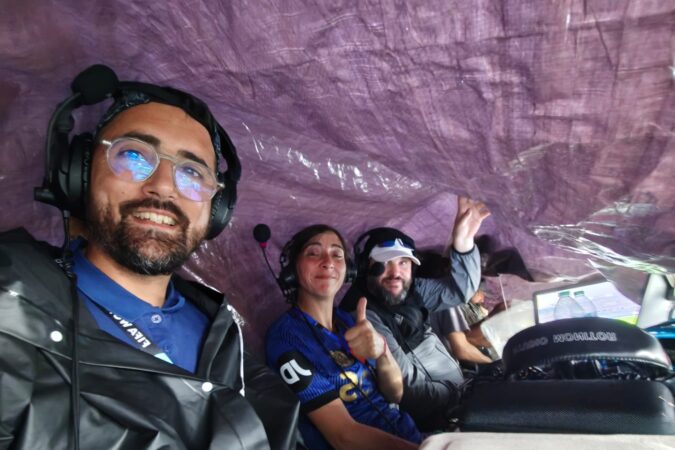
While FIFA put plastic covers on the tables, that wasn’t enough to protect all the expensive equipment and the people using it. So the team at France Info, one of the many French radio stations broadcasting the game, had to get creative.
Virginie Lorda, the crew’s technician, found a hardware store a few blocks from their hotel in Center City, and bought a tarpaulin and some ropes to tie it onto the table. Then when the rain started falling, the tarp came out.
Broadcaster Julien Froment documented it all on his social media feeds, adding to the spectacle of a night with a two-hour delay in the game. The next morning, he talked with The Inquirer about it as the crew headed back to France’s base camp in Boston.
“I have to give the credit to Virginie,” Froment said. “She had the idea to set this up, a little bit at the last minute, to protect us. … It was a mix of French and American expertise.”
Summers can get very hot in France — the country recorded its hottest day ever on Tuesday, and highs are expected to top 100 degrees multiple times this week. But the sky doesn’t explode like it does here, even if that feels normal to Americans.
“You all are used to this,” Froment said. “For us Europeans, to have to deal with a thunderstorm, it’s a bit new. This one was a grand premiere.”
It’s worth noting that when Philadelphia hosted the Club World Cup last year, the city got pretty lucky. There were big storms on nongame days, and multiple games in other cities got hit. But no action here got delayed or postponed.
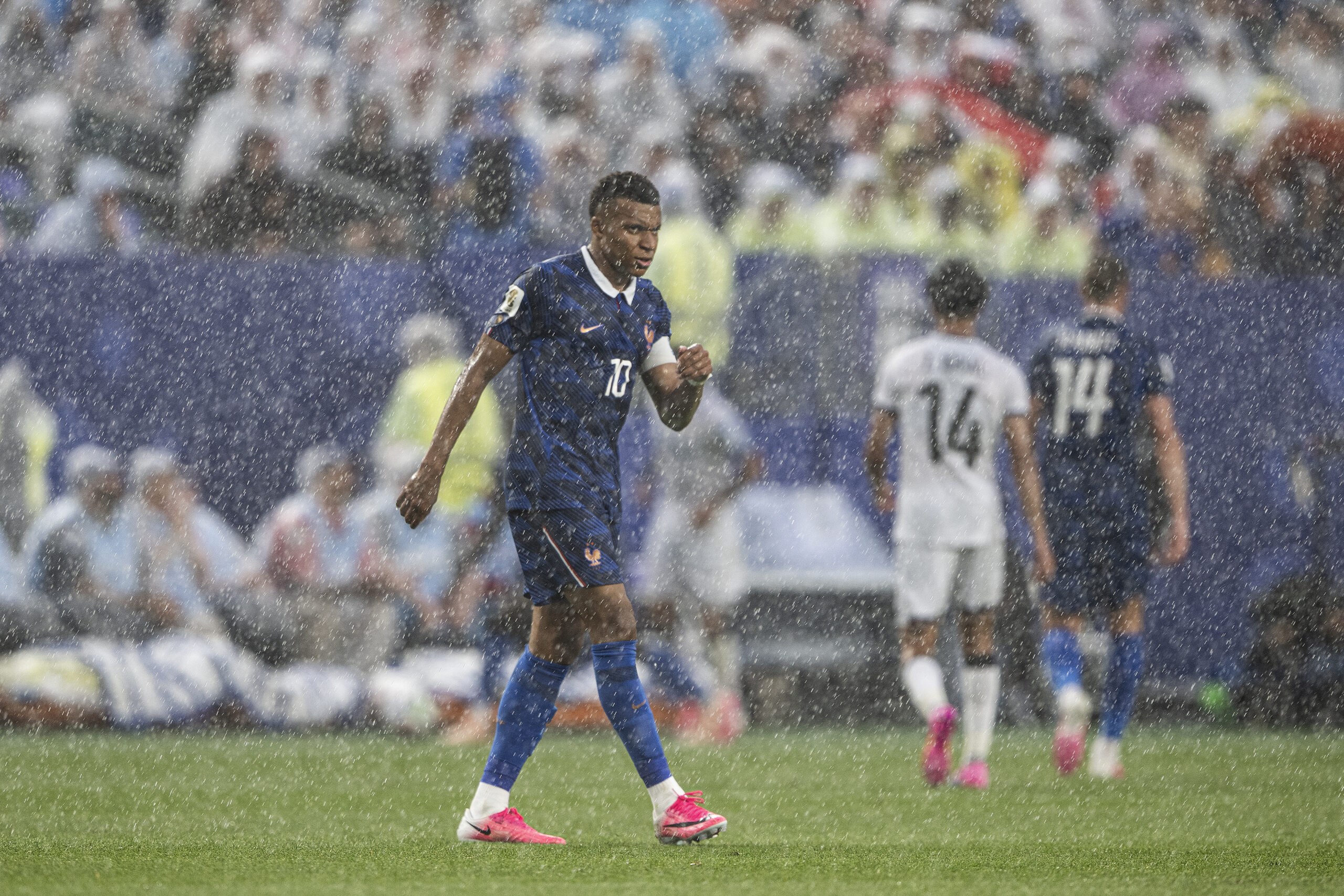
France superstar Kylian Mbappé getting drenched by the storm that arrived in South Philadelphia late in the first half of Monday’s game.
So maybe we were due, and unfortunately it happened during an especially star-studded game. France’s Kylian Mbappé scored two of Les Bleus’ goals in the 3-0 win, including a viral sensation of a hit for the opener, and reigning world player of the year Ousmane Dembélé capped things off with his first World Cup tally.
To the city’s credit, the stands were almost totally full when the game resumed. No one went home even with the long delay, wanting to make the most of a rare chance to see these players in person.
Though it’s unusual for American stadiums to have media seating in the middle of the stands, it’s the norm in Europe and elsewhere. There aren’t broadcast booths the way there are at American football, baseball, and soccer stadiums.
The locations of the “media tribune,” to use the world’s game’s phrase, can vary. At Chelsea’s famed Stamford Bridge in London, you can almost touch the team benches. At Lyon’s modern Groupama Stadium in France, which hosted the 2019 women’s World Cup final, you’re up in the heavens.
But no matter the distance from the field, there’s almost always a roof over the stands in some form.
“We’re in the open air to capture the atmosphere — it’s the tradition,” Froment said. “We’re used to being outside. But the big difference between European and American stadiums is we aren’t protected here. There’s no roof, there’s nothing to protect us from the elements.”
That is especially the case at the stadiums Froment’s crew has been to so far in New England and the Meadowlands. France isn’t playing at the indoor venues in Atlanta, Houston, or Dallas; or in Seattle or Los Angeles, where the stadiums are open-air but the stands are covered.
But Froment has enjoyed the experience overall, marveling at America’s modern stadiums that are palatial compared to European soccer cathedrals with decades of history but fewer amenities.
Les supporters donnent de la voix pour le retour des Bleus et des Irakiens ! Sous une pluie battante ! 20min d'échauffement puis début de la deuxième mi-temps à 01h50, si tout va bien 🤣 #FRAIRA@franceinfopic.twitter.com/0UztF6cH2J
“Here, you get the feeling that everything is almost at extremes,” he said. “The stadiums are huge, built specifically for the fans. I’m kind of shocked by how many snack bars and concession stands there are. … It really represents a different kind of consumerism — a different sports culture — compared to what we’re used to in Europe.”
They’re also a lot bigger than most stadiums in France. The biggest, the Stade de France in suburban Paris, seats 80,000; the second, Marseille’s Vélodrome, seats just over 67,000; and the venues in Lyon and Lille are the only others nationwide over 50,000.
Asked his opinion of Lincoln Financial Field, Froment called it “the best stadium I’ve been to at this World Cup,” helped by location, architecture, and the vibe of the broader Sports Complex.
“It’s a little different,” he said. “At MetLife Stadium [in North Jersey], it doesn’t have personality. It feels like it could be any stadium in the world. In Philadelphia, you feel like there’s a story there.”
(We couldn’t help responding that he’s far from alone in those opinions.)
A view of the stands at the start of the Ivory Coast-Ecuador game, which like all of Philadelphia’s World Cup games so far drew a full house.
He had some time to explore as well. There were a few trips to Reading Terminal Market, and walks to the Liberty Bell and the Rocky Steps — documenting France fans’ night-before pep rally at the latter.
It’s playing the hits, sure. But it’s also a reminder of how warm a welcome Philadelphia has put on for its international guests this summer, and that Center City being easy to walk around is another of its great assets.
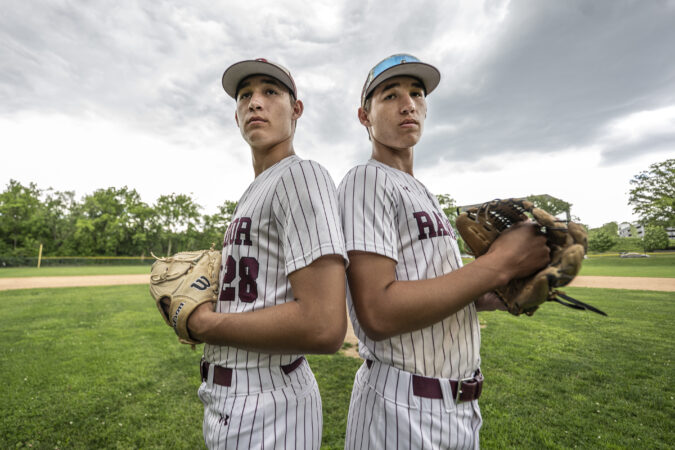
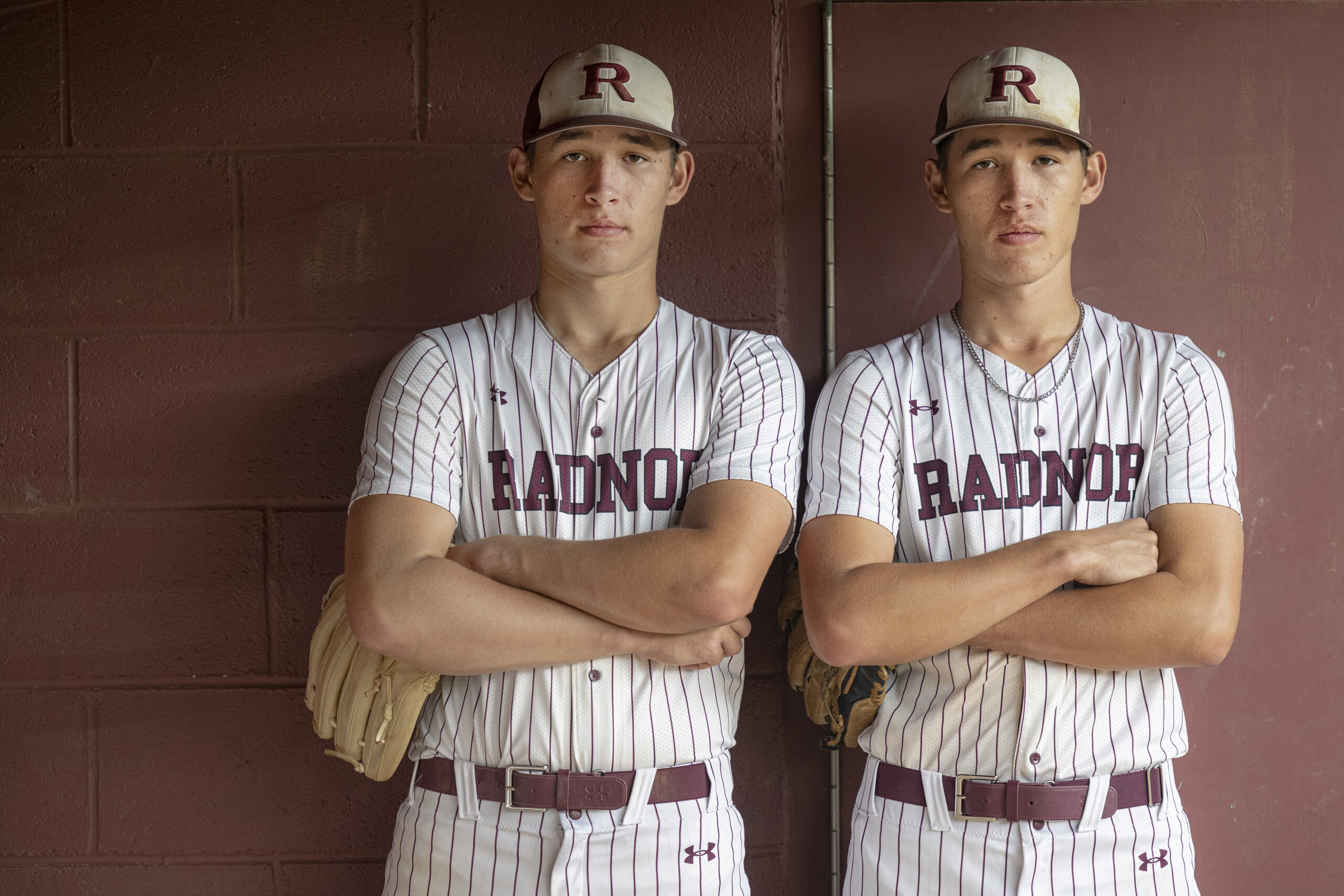
Twins Blake and Austin Havertine used to spill out of their father Gary’s car at a local park in Radnor and break out into a pitch-and-catch game. One would pitch and the other would catch, and then they would switch. For young teenagers, they threw the ball pretty hard, too.
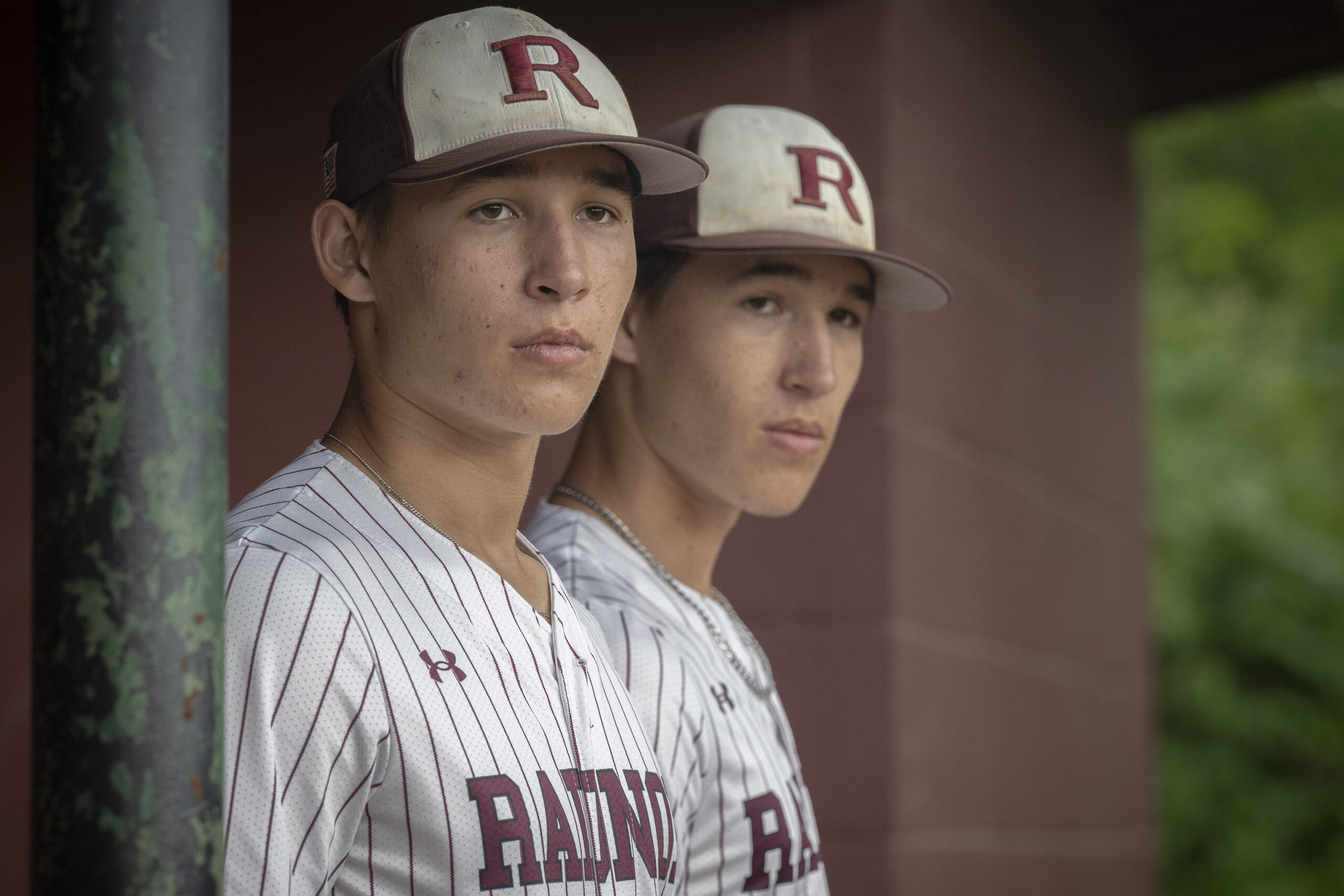
And sometimes umpires had to go by the color of their cleats to tell them apart. As they got a little older, their difference in height and width helped. Blake, younger by a minute, is slightly taller than his 6-foot-2, 210-pound older Austin, who was always thicker than his younger sibling.
Wherever they went, whatever they did, they did it together. Soccer, basketball, football, and baseball — when it came to sports, the Havertine twins were inseparable.
What they also did together was leave an indelible legacy for Radnor baseball that may never be surpassed by a pair of brother pitchers, winning a combined 30 games, throwing a combined 290 innings, and striking out a combined 402.
Austin carried the bulk of that load, winning a career school-record 22 games, striking out a career school-record 327, and throwing a career school-record 220 innings, while Blake over the last three years tossed 70 innings, won eight starts and struck out 75.
When Radnor captured the 2025 PIAA District 1 Class 5A championship, it was Austin who tossed the final pitch, a pop out that fell into Blake’s glove. Austin throws in the mid-90s, Blake in the high-80s to low-90s, with his special slurve ball, he calls it (a combination curveball and slider).
Now, for the first time in their lives, , they will be going their separate ways. Austin is heading to Lehigh on a baseball scholarship, and Blake will be going to Franklin & Marshall to play for the baseball team.
There are distinct differences between the brothers. For example, Blake says they are identical twins; Austin says they are fraternal (They’re fraternal). Though he’s only a minute older, Austin carries himself like he’s older by a few years, while Blake is more the needler of the two, teasing Austin if he spikes a pitch or makes a mistake.
Twin pitchers Austin and Blake Havertine helped Radnor to a 2025 PIAA District 1 Class 5A championship.
They are best friends. Austin carries a slightly serious tone about him, while Blake is more on the jovial side. They don’t usually argue, say their father, Gary, and Radnor coach Mark Jordan.
“I’ve coached a ton of brothers and sisters, and a few twins in my time, and they would go at it like cats and dogs,” said Jordan, who just finished the eighth year of his second stint as baseball coach at Radnor and his 14th season overall. “I never saw Austin and Blake fight. I mean really fight. I go way back to coaching them in seventh grade at Wayne Junior Legion. You could tell even then that Austin was special, and he was our ace as soon as he started his freshman year. And Blake keeps improving. His best baseball is still ahead of him.
“But in six years of coaching them, that’s legion and high school, they never were at odds with one another. They may bust on each other a little, and Austin always supported Blake. They were captains this year for us and simply in tune with each other. It is kind of weird as twins, they are best friends, and you rarely see that. They leave an amazing legacy at Radnor. I’m always going to miss their commitment to the area and to the school, and this is a time when kids are bouncing from school to school, at the high school level and at the college level. They enjoyed where they were. … These guys grew up in Radnor, stayed in Radnor, and pitched and won in Radnor.”
Jordan says Major League Baseball has called about Daniel Kellis, a 6-foot-5, 230-pound right-handed pitcher/outfielder who threw 10 innings this season and is committed to Wake Forest. Kellis is projected to go in the 14th or 15th round, and Austin may get drafted in the late teens, though he seems committed to Lehigh.
The twins still have two months together pitching against grown men for the Wayne club in the Delco League. They’re soaking it in before leaving for college.
“It is great having a twin,” Blake said. “We do push ourselves, we always have. Austin was our ace freshman year, but he always supported and encouraged me..
“I think what I will miss the most is not having someone by me all the time, which we have done our whole lives. We still have the summer in the Delco League together, and then we’re gone.”
There may be an hour’s distance between Lehigh and Franklin & Marshall. But the twins are a FaceTime call or a text away. Gary and Betsy Havertine come from large families, where each was one of five siblings.
Austin Havertine is heading to Lehigh, while Blake Havertine will attend Franklin & Marshall College.
“We have good friends of ours who asked us one time how our boys get along, because they had twins, and I remember telling them, ‘Great,’” Gary said. “They were curious because their twins constantly fought. I never saw them get into a fight, which is crazy for two boys. When they leave, it won’t be easy for them, and it won’t be easy for me and my wife. They’ve always been around the last 18 years. They were apart for a couple of tournaments, but for the most part, they were always together. [This] step in their lives will be good.”
Austin agreed. This will be Austin’s second year in the Delco League and Blake’s first. They will be tested, and it will certainly help prepare them for college hitters.
The Radnor season did not end the way the Havertine twins or the Raptors wanted. Radnor was knocked out in the second round of the PIAA District 1 Class 5A playoffs by eventual district runner-up West Chester Rustin. Jordan traditionally has his seniors address the team after their final game, sharing their experiences and gratitude.
It was the most emotional Jordan ever saw the usually stoic Austin. He referred to his teammates as his “brothers,” and talked about how memorable his four years at Radnor was.
“I always remember the bonds we created, and it’s the last time I ever played with Blake,” Austin said. “We’re going our different ways in August, but we do have the summer together. It won’t be easy saying goodbye to him, because we have always been together. I know there is a minute between us, but I look out for him. We bust on each other, and every time I pitch, if there is one small detail I do wrong, he’ll be the first one to tell me, ‘You suck at this!’ I may miss hearing that.”
At the broadest, most general philosophical level, Mike Gansey aced his first test as Sixers president on Tuesday night. He looked at his draft board, saw a player he’d graded as the best talent by a significant margin, and then he selected that player. The process was sound.
As insignificant as it may seem, plenty of front offices mess it up. They prioritize things like roster construction or positional fit and they allow motivated reasoning to cloud the reality that all of the perfect players are long gone by the 22nd pick in the NBA draft. You must defy the odds just to select a player who ends up deserving a spot in a playoff rotation, let alone one who can make a decisive impact at a position of need. In Labaron Philon Jr., a sophomore guard from Alabama, the Sixers saw a talent so obvious that they didn’t feel like there was a choice to make.
“He’s someone that fell into our lap, so to speak,” Gansey said.
Of course, the real test is whether they are right. Not just about Philon, a dynamic ballhandler and shooter who averaged 22 points per game last season and who some mock drafts had going in the top 15. Gansey and his front office must also be correct in their evaluations of the players they could have drafted instead of Philon. Zuby Ejiofor, Chris Cenac Jr., Joshua Jefferson, to name a few. Each of those three possesses the size that Philon lacks and that a roster like the Sixers’ will eventually need on the wing alongside Tyrese Maxey and VJ Edgecombe. Each went off the board in the six picks after Philon. Two of them went to Eastern Conference playoff hopefuls (Ejiofor to the Hawks at No. 23, Cenac to the Celtics at No. 27). History will be written by the teams that got it right.
All you need to know about how the Sixers feel about Philon can be derived by the fact that they saw fit to draft him despite the overlap in skill sets with Maxey and Edgecombe and also the player they traded away for the pick they used to draft the Alabama guard. When Daryl Morey dealt Jared McCain to the Thunder with ownership’s approval, the thought was that the 2024 first-round pick’s long-term utility would be capped by his inability to play alongside two other smallish guards. He and Philon are hardly carbon copies of each other. Philon is a little longer in terms of standing reach and wingspan, and he is a quicker, more dynamic playmaker with the ball in his hands. But they both exist in the same general bucket, with the same limitations with regard to Maxey and Edgecombe.
Sixers first-rounder Labaron Philon Jr. averaged 22 points in his final season at Alabama.
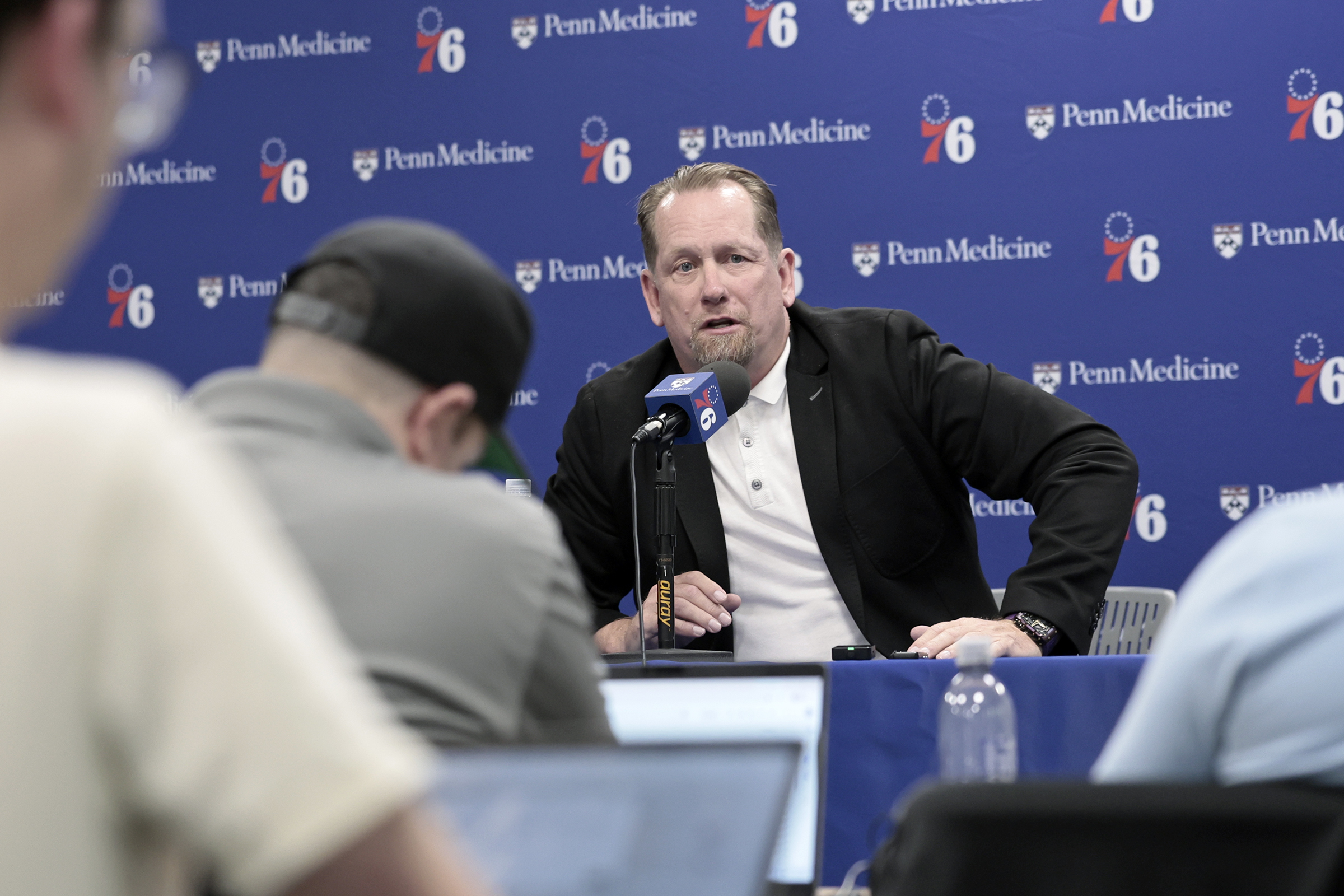
Speaking to reporters after the conclusion of Tuesday’s first round, Gansey and Sixers coach Nick Nurse both spent a lot of time talking about how similar Philon is to Maxey and Edgecombe.
“He’s another fast, kind of exciting guy that kind of plays a lot like Tyrese and VJ,” Nurse said. “It’s another guy with the speed, athleticism, quickness, deep range, some creativity with the ball. He’s a pretty good pick-and-roll player already, probably more advanced than a lot of guys coming out. I think he sees all the pieces of the pick-and-roll.”
Nurse and Gansey both hemmed and hawed when asked whether they envisioned using all three of their young guards on the court at the same time.
“I don’t see a lot of minutes, but maybe in certain situations we can,” Gansey said, while also deferring to Nurse.
“I think it’s a little early to answer that,” he said.
Both downplayed the significance of the question. Games are more than long enough to accommodate three guards playing starter minutes at staggered intervals. Maxey and Edgecombe both finished among the league leaders in playing time last season, perhaps counterproductively so. In a world where each averages 32 minutes per game, that would leave another 32 where one or the other is on the bench.
“My mindset is he’s talented,” Nurse said of Philon. “Let’s figure out how we’re going to get him on the floor.”
Nick Nurse and Mike Gansey saw a lot of similarities between new Sixer Labaron Philon Jr. (right) and VJ Edgecombe and Tyrese Maxey.
The Sixers will have a good problem on their hands if Philon ends up good enough to warrant more minutes than are available. It will mean the minutes he does play are valuable. The Knicks won an NBA championship with Jalen Brunson, Miles McBride, and Jose Alvarado. The Spurs had Dylan Harper playing starter minutes off the bench behind De’Aaron Fox and Stephon Castle. The Thunder had a slew of guards contribute, including the smallish McCain and Cason Wallace.
“You look at our roster, we need help at every position, one through five,” Gansey said. “Obviously, we have the big four, and I think he fits. He’s another guard so now we can kind of focus in other areas on the roster.”
However Philon turns out, the pick does offer us a little more evidence on what to expect out of Gansey and this Sixers roster. They didn’t use the No. 22 pick to select a player who might someday help alleviate the roster’s clearest current need (size on the wing). They didn’t trade it for a veteran who might’ve made them better in the short term. They didn’t use it to entice a team to take on Paul George’s contract. They did what a team in their position should be doing. They had an opportunity to draft a player they think will someday belong in a championship-caliber rotation, and they availed themselves of that opportunity. That is how it is going to need to be done: piece by piece.
It was pretty wild to see that last night’s NBA draft had Philly-area footprints all over it.
Look at Michigan forward and Pennsauken High School graduate Yaxel Lendeborg going at No. 11 to the Golden State Warriors. Or Darius Acuff Jr., who won the MVP award during the Allen Iverson Roundball Classic last summer and signed a shoe deal with Reebok, coming off the board as the No. 7 pick to the Kings.
It took a while, but at No. 22, the Sixers selected Alabama guard Labaron Philon. Inquirer writer Gina Mizell explains what he brings to the team.
We dry out across the region as sunny skies will make way to temperatures in the mid-80s today.
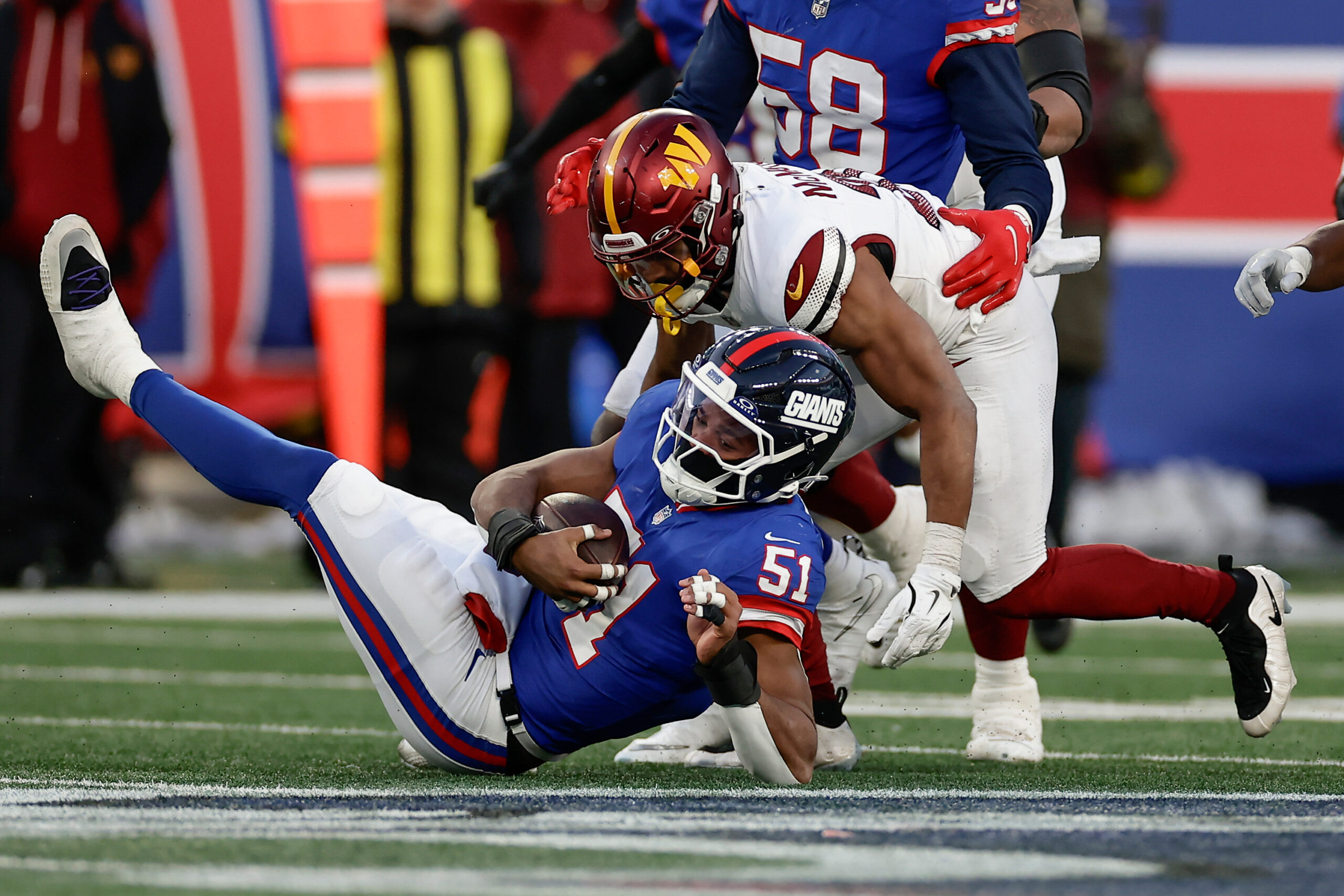
Abdul Carter (front, ground) and the New York Giants look formidable; the Commanders also pack a punch.
While the city would love to see the Eagles exude the kind of dominance that has made winning the NFC East division a lock, prevailing wisdom is that at some point, the crown will continue to get heavier.
Is there a team in the division capable of toppling the Birds’ reign at the top? Inquirer writer Ryan Novozinsky takes a look at the state of the division and which franchise could actually make it interesting.
⚽ Wondering: Who will U.S. men’s national team put on the field in Thursday’s Group D finale for the Americans against Turkey? The players themselves would like to know.
🏟️ Reading: This piece in The Atlantic, asking why the grass in the stadium plays such a controversial role in the success and even failures of some of the teams in the World Cup.
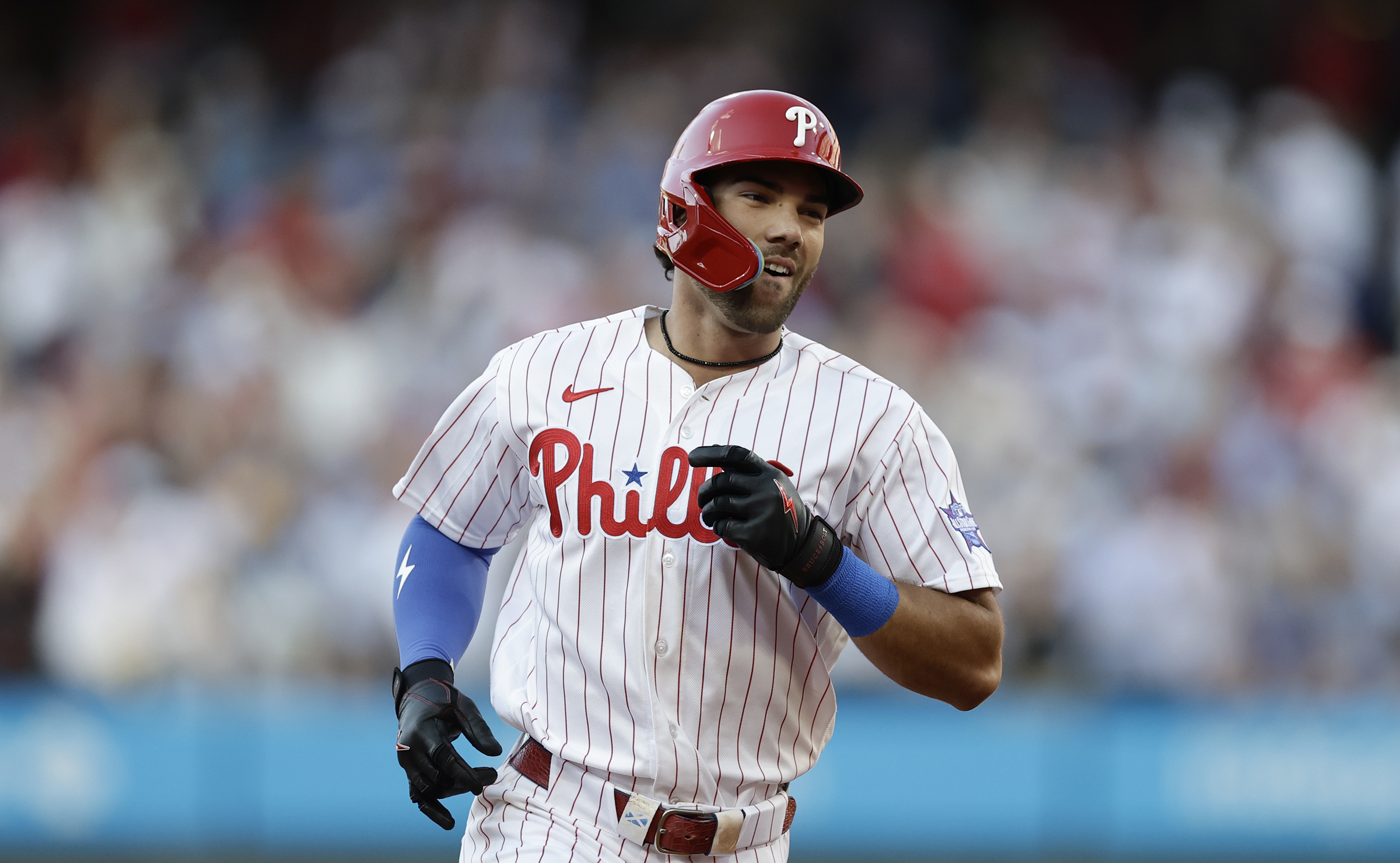
Phillies Gabriel Rincones Jr. is a Venezuelan-born Scotsman who says he’s happy to represent his home in the Big Leagues.
Phillies newcomer Gabriel Rincones Jr. has been a strong addition to the club, but his backstory might make him the most interesting man on the team at the moment. On Tuesday, the Venezuelan-born Rincones, who talks with a Scottish accent, revealed that he spent much of his formative years in the United Kingdom, and now revels representing Scotland in the Big Leagues.
Phillies writer Lochlahn March cooked up this fun read on Rincones and what he’s all about, both on and off the field.
Speaking of the Phillies, an eight-run ninth inning sparked a comeback win against the Nationals last night as they continue their dominant stretch.
Jack Hextall (center) has a very good chance of joining in his cousin Ron’s footsteps of being drafted by the Flyers.
In case you were tuning into the NHL draft on Friday and Saturday, and you hear the name “Jack Hextall,” yes, Jack Hextall is a distant cousin of former Flyers general manager and goalie Ron Hextall. No, says Jack, the two haven’t met.
But if the hockey gods have it their way, Jack could become the second person with HEXTALL emblazoned on the back of a Flyers jersey. Ahead of Friday’s first-round, Jackie Spiegel caught up with Jack to talk about how he’s handling the moment and having a famous last name.
Join Inquirer reporter Jonathan Tannenwald and host Lisa Carlin for Soccer Extra on Gameday Central.
In this World Cup, underdogs are stealing the spotlight, Team USA is rolling, Philadelphia is welcoming the world, and the Rocky Curse has become lore. Inquirer soccer reporter Jonathan Tannenwald and host Lisa Carlin discuss it all and more in the Inquirer’s pop-up streaming show, Soccer Extra. Watch here.
On this date
June 24, 2024: The highlight of a win over the Tigers on this date for the Phillies was that the team executed a 1-3-5 triple play, which hadn’t been done in the Big Leagues since 1929.
What you’re saying about the World Cup
We asked: With the group stage wrapping up, what are your thoughts on the World Cup — and any early predictions?
First off, I think the issue is that there are too many games each day to keep track of it all, but what I’ve seen has been very interesting. Prediction? Nah. — Steve Q.
Not going to lie, it’s been nice having something to watch every day. — Ron E.
We compiled today’s newsletter using reporting from DeAntae Prince, Lochlahn March, Isabella DiAmore, Gina Mizell, Jackie Spiegel, Jonathan Tannenwald, Lauren Jones, Lisa Carlin, Ryan Novozinsky, and Mia Messina.
By submitting your written, visual, and/or audio contributions, you agree to The Inquirer’s Terms of Use, including the grant of rights in Section 10.
Thanks for reading, Philly. I’ll catch up with you down the road. Enjoy the games. —Kerith
Mike Gansey made his first move as 76ers‘ president of basketball operations on Tuesday, selecting Alabama’s Labaron Philon Jr., with the No. 22 overall pick.
After his official introduction on June 11 as the team’s new leader, the draft was the first item on the docket. In his opening press conference, Gansey said explicitly that he viewed the 22nd overall pick as one of the critical tools to improve next year’s roster. He liked the range of players expected to be available for the Sixers at 22, but as the Alabama guard dropped down the board, he became the obvious choice.
“He was the highest guy on our board at 22,” Gansey said. “We had him higher than that. You look at our roster, we need help in every position, one through five. Obviously we have the big four, but we need guys outside of it. I think he fits. He’s another guard, so now we focus in other areas on the roster, but he’s someone that just fell in our lap.”
The guard played two seasons at Alabama, averaging 22 points, 5 assists, 3.5 rebounds, and 1.2 steals in his sophomore season.
Nick Nurse said he sees Philon as a player who “can play right away,” and the Sixers needed to add depth at every position. Tyrese Maxey averaged the most minutes per game in the NBA last season. VJ Edgecombe was 11th. Gansey said he doesn’t necessarily see Philon playing alongside those two in a three-guard lineup, but expects him to give both of those players more rest next season, and to get Maxey working off the ball more.
Sixers head coach Nick Nurse needed more guard depth last season as Tyrese Maxey and VJ Edgecombe played big minures.
Philon was also the right culture fit with his competitiveness and hunger, Gansey said. He emphasized that he’s looking for “fountains, not drains.” and wants players who want to be in Philadelphia and will help build a team culture that’s been missing the last few seasons.
“His mentality, I think fits the way I want guys, and especially with Coach Nurse,” Gansey said. “Nick wants guys who play the right way, play with some edge and toughness.”
No. 22 overall was the only pick the Sixers owned heading into draft night, but it might not be the only selection the Sixers make in this year’s draft. Gansey said the team will “be aggressive” in attempting to trade back up into the second round if a player they like is available.
If the Sixers bypass the second round, free agency will be the team’s next big opportunity to improve the roster ahead of opening night.
Picking Philon doesn’t necessarily mean that pending free agent Quentin Grimes is out the door, Gansey said, adding that the front office was engaged with both Grimes and Kelly Oubre Jr. as free agency approaches. But it does open up the opportunity for the Sixers to let Grimes walk and use that money to upgrade at other positions, if they so choose.
Labaron Philon Jr. arrives for the first round of the NBA basketball draft Tuesday, June 23, 2026, in New York. (AP Photo/Adam Hunger)
“It just takes a little pressure off Tyrese and VJ, when you have another ballhandler,” Gansey said. “We’re going to have to get another ball handler too. We can’t rely on a rookie point guard, but I just think he’s just too talented, too young, that where he was at the draft, we couldn’t pass up.”
NEW YORK — The 76ers entered the NBA draft fresh off a playoff series that exposed their roster shortcomings.
That decisive second-round sweep by the New York Knicks showed that the franchise needed to double down on what it received from cornerstones Tyrese Maxey, VJ Edgecombe, and Joel Embiid. They needed more speed, more scoring, more shooting, more rebounding, more everything.
The Sixers’ first attempt at improving came with the selection of Alabama guard Labaron Philon Jr. at No. 22 overall on Tuesday, christening the Mike Gansey era as president of basketball operations.
Let’s take a closer look at Philon’s career at Alabama, how he fits with the Sixers, and other areas of the Sixers’ roster that can still be addressed.
What Philon brings to Philly
Philon arrived at Alabama as a homegrown talent who proved to be a big-time scorer, earning Alabama’s Mr. Basketball high school honors.
Before leaving town for Link Academy in Missouri for his senior season, Philon played three seasons at Baker High School in Mobile, Ala., and averaged 35 points, 6.2 rebounds and 3.9 assists as a junior. That scoring ability didn’t immediately translate to college in his freshman season at Alabama, when he averaged 10.6 points, 3.3. rebounds, and 3.8 assists in 37 games.
Alabama’s Labaron Philon (right) averaged 10.6 points, 3.3. rebounds and 3.8 assists in 37 games as a freshman.
Philon realized that he didn’t put together a strong enough campaign to enter the NBA. He went through the process and returned to school for another year, where his tape was more undeniable. As a sophomore, Philon averaged 22 points, 3.5 rebounds, and 5 assists. That was good enough to get buzz as a lottery pick before dropping to the Sixers at No. 22.
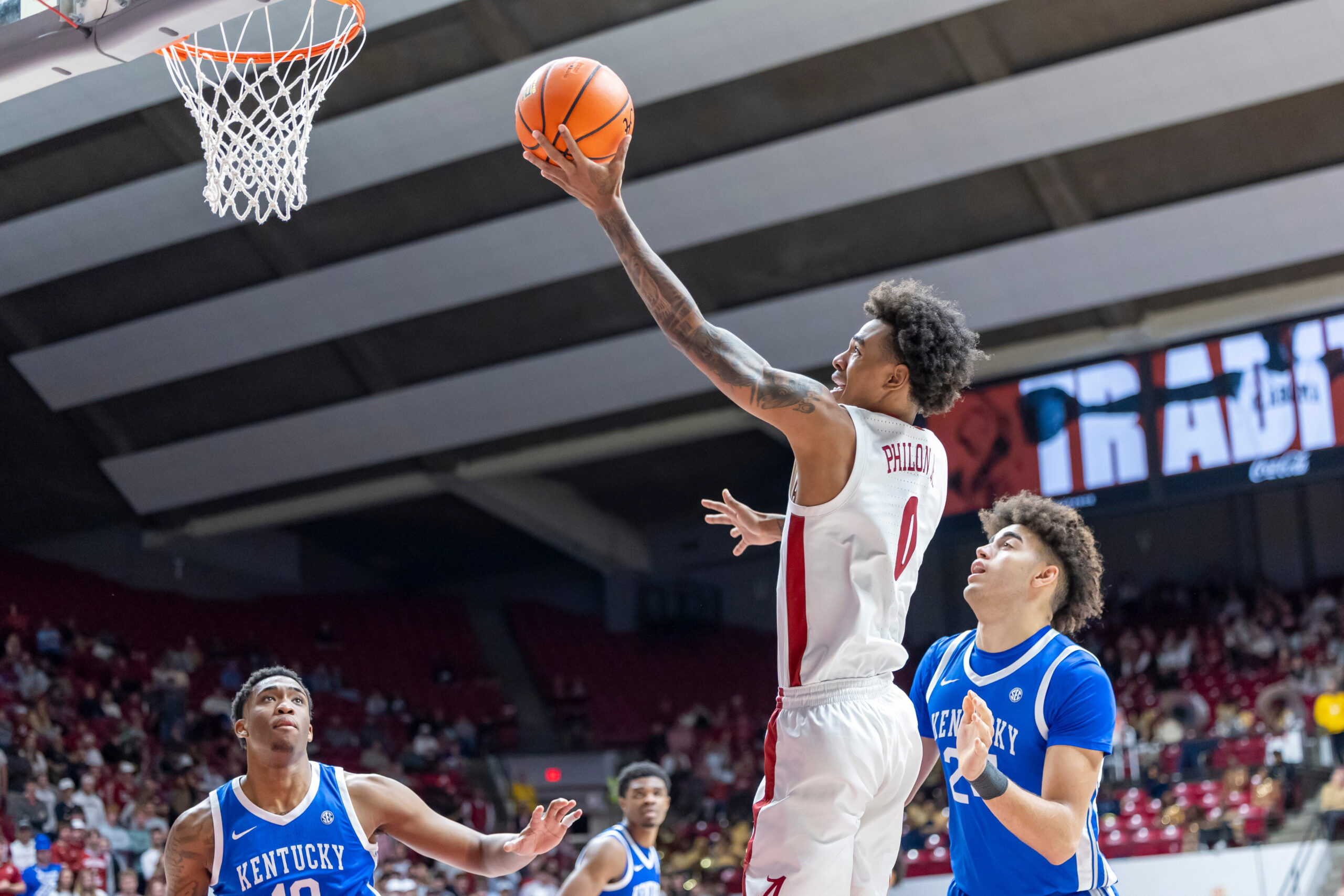
Philon’s skill set features a crafty handle, ability to finish at the rim, and shooting range from deep. He can function in the screen-and-roll and is creative in open space. He made 57.4% of his two-pointers and 39.9% of his three-pointers last season, and those numbers are made more impressive by the fact that Philon was often the center of attention for Alabama and created a large share of his own shots.
Most important, Philon’s numbers weren’t empty calories. His production contributed to winning in both seasons for the Crimson Tide, as he helped direct a team that made the Elite Eight as a freshman and the Sweet 16 this past season. Each time his team met a No. 1 seed, losing to Cooper Flagg’s Duke team in 2024-25 and eventual champion Michigan in 2025-26.
How Philon fits in Philly
The Sixers have too many holes to fill in one draft. They entered Tuesday with voids in the backcourt and frontcourt. The franchise hit on Maxey and Edgecombe in recent drafts, but those stellar guards were near the top of the league in minutes played. Paul George and Embiid played inspired basketball at times when available, but they were not healthy nearly enough. George played only 37 games because of injury and suspension and Embiid called his 38 games played a “successful season” after he managed 19 games the season before.
There were several players on the board who could have helped the Sixers when the 22nd pick rolled arrived. And several of them were names that slipped down the board as Arizona’s Koa Peat, Houston’s Chris Cenac Jr., and Philon were available. The Sixers appeared to take the best player available, as president of basketball operations Mike Gansey intimated that they would.
During the draft process, Iowa sharpshooter Bennet Stirtz, who was picked 16th and joined former Sixer Jared McCain with the Oklahoma City Thunder, made a poignant statement. He said every team can use more shooters and ballhandlers. That’s what Philon will bring to Philly, another player who can create and score when Maxey goes to the bench.
He’s adept at getting downhill and making buckets in the midrange and over bigger bodies, which will be needed on a Sixers team that received most of its scoring from four players. That he is a strong three-point shooter will be a bigger boon for the Sixers after trading McCain at the deadline in February and struggling to make shots from deep in the postseason.
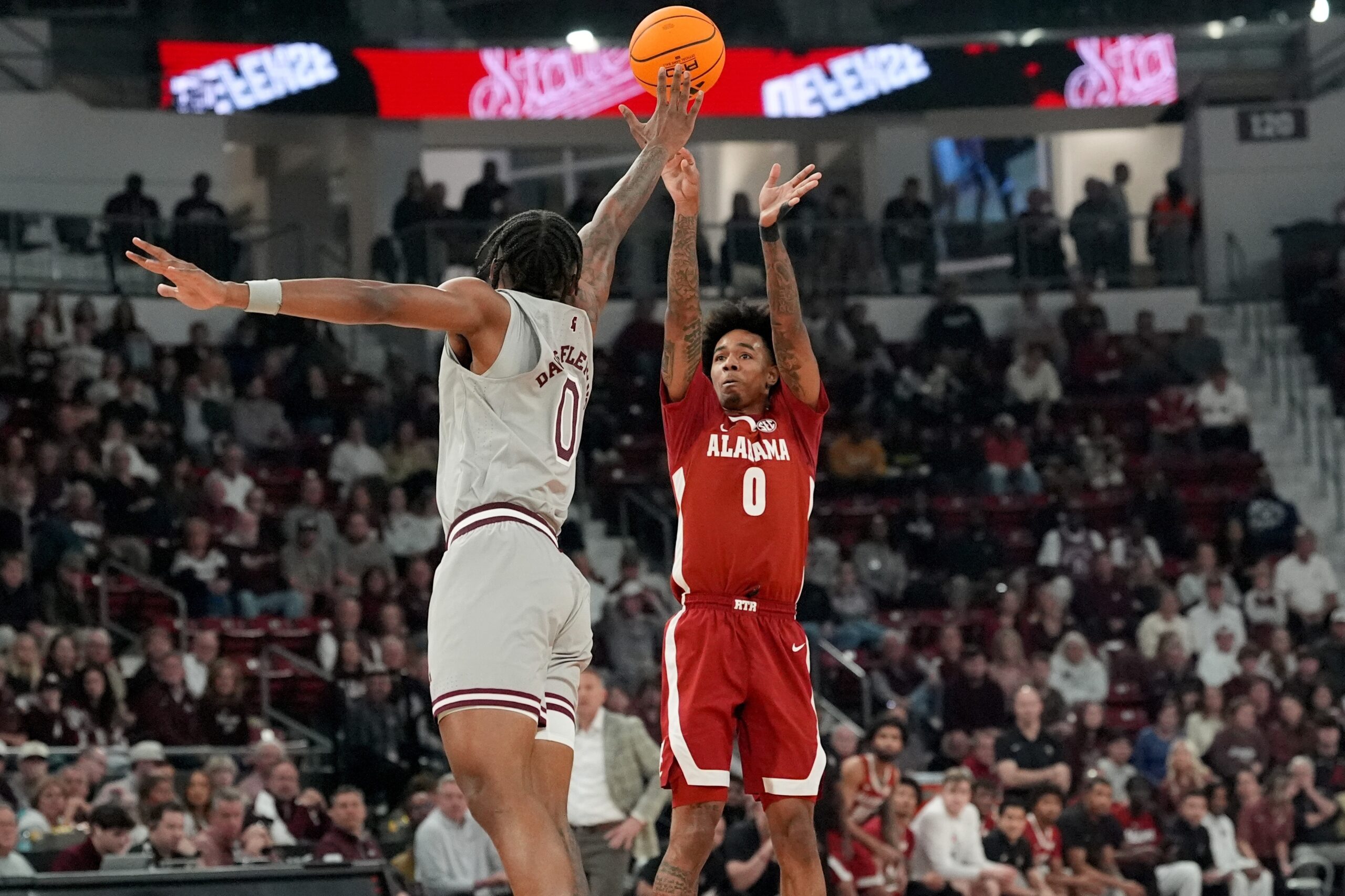
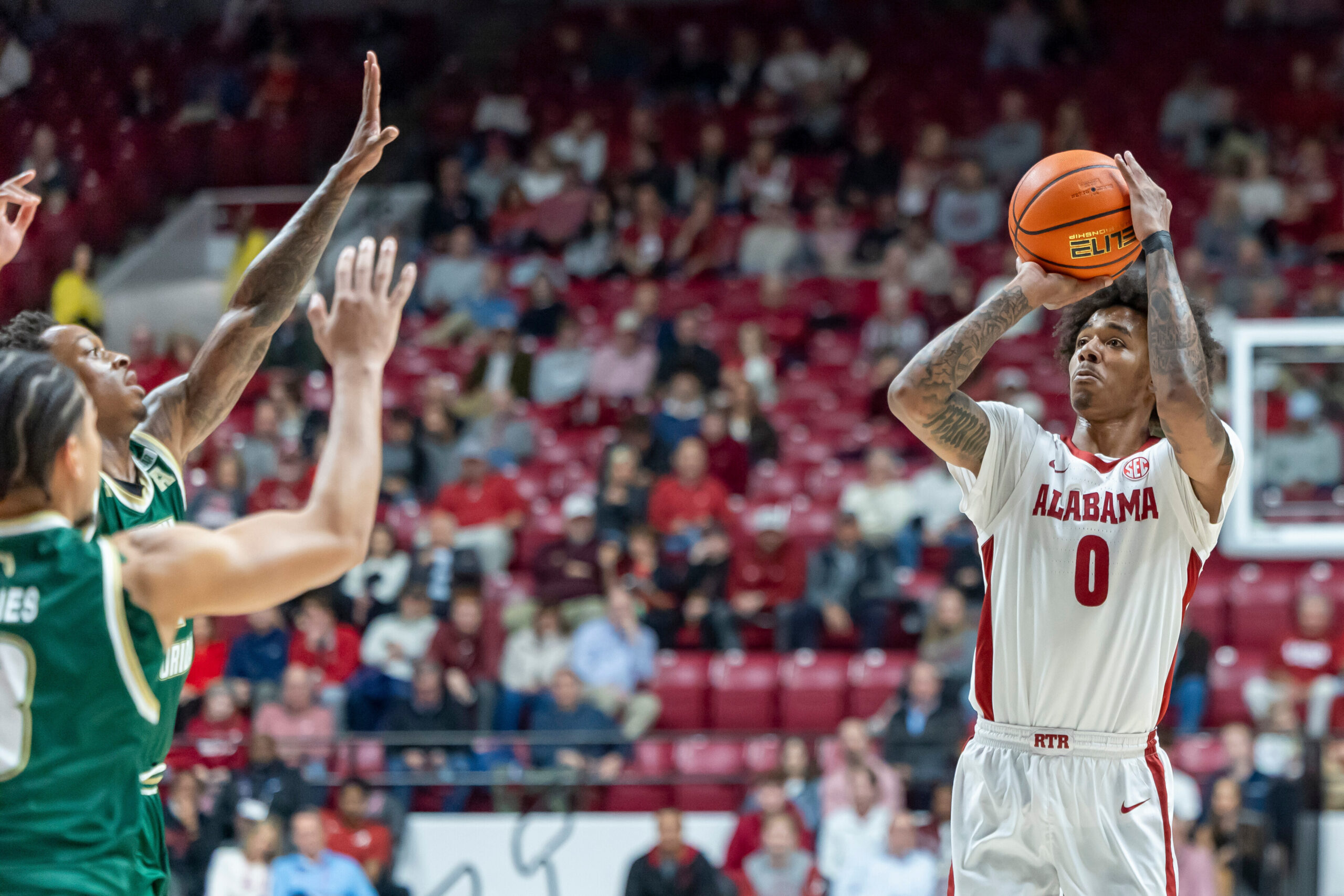
Alabama guard Labaron Philon (right) shot 39.9% from three as a sophomore.
The Sixers also trotted Edgecombe out as a secondary ballhandler often in his rookie season. But that typically amounted to him creating offense for himself or initiating and getting out of the way. There wasn’t much in between as he continues to improve his ballhandling. Philon can take some of that pressure off Edgecombe and do more to find Embiid and George, who have grown more dependent on their teammates to get them the ball at this time of their careers.
What the Sixers still need to address
Rebounding was a major issue for the Sixers last season. As was on-ball defense and communication. As were turnovers. Those things won’t all be addressed in the draft or free agency. The Sixers can add reinforcements at forward to lower the usage of a smaller lineup around Embiid. They can also retain Kelly Oubre Jr. or Quentin Grimes to keep depth and talent on the wings.
But because of their contract obligations, there are some things that can only be fixed from within. Maxey, George, and Embiid are all on max contracts, limiting who the Sixers can add to the roster. That means those players will have to do more. It’s hard to ask Maxey to be better than he was during the regular season, when he carried the franchise to the playoffs and earned All-Star and third-team All-NBA honors. That leaves George and Embiid, whose availability will remain the biggest factor in this team’s success.