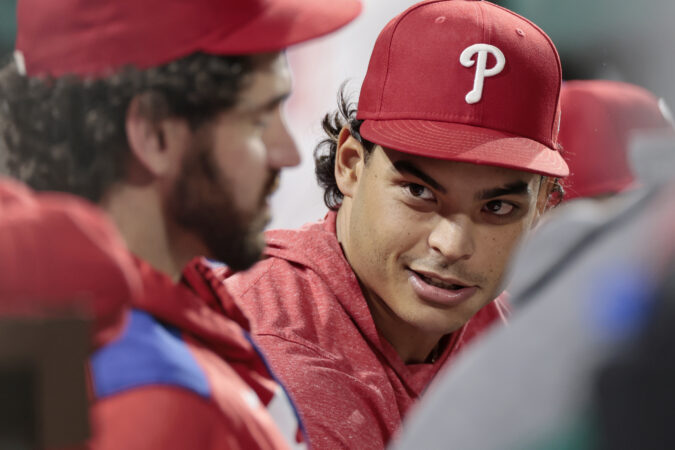
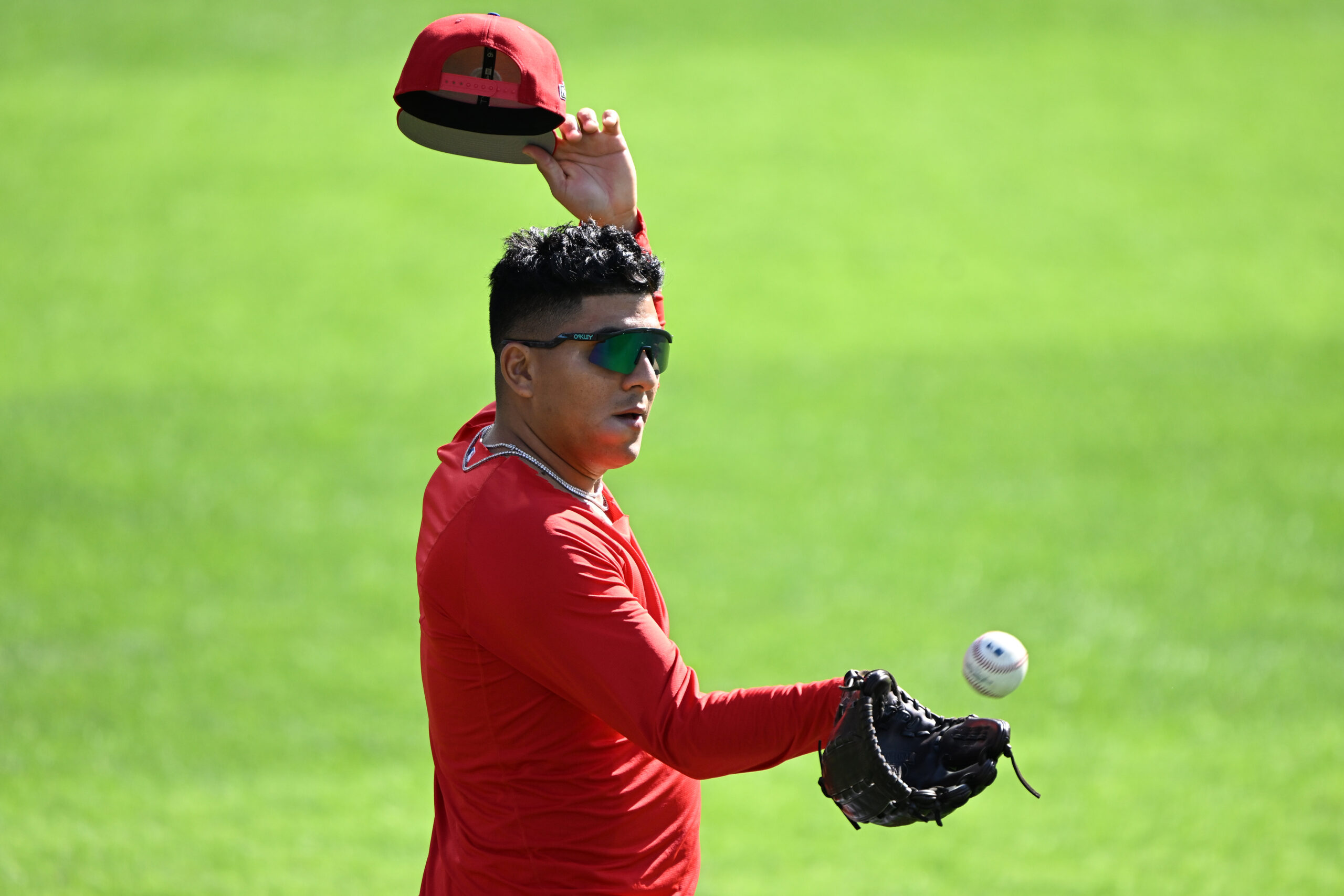
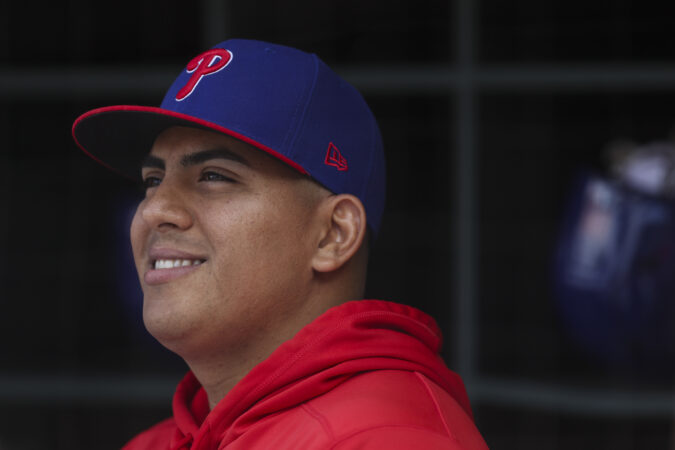
Jesús Luzardo trains in the offseason with dozens of major leaguers at a South Florida gym where the televisions are always tuned to MLB Network.
Even so, his father keeps him apprised of all baseball news.
“He makes sure to send me all the latest rumors,” Luzardo said in a guest appearance on Phillies Extra, The Inquirer’s baseball podcast. “I feel like I’m pretty connected.”
You can be sure, then, that Luzardo was paying attention last week when former Phillies teammate Ranger Suárez agreed to a five-year, $130 million contract with the Red Sox.
Because Luzardo could be in line for a similar deal a year from now — if not sooner.
Luzardo, a 28-year-old lefty, is eligible for free agency after this season. In a wide-ranging conversation on the podcast, he said he’s interested in discussing a contract extension with the Phillies during spring training. He also discussed his impressive first season with the team, J.T. Realmuto’s impact behind the plate, and more.
Watch the full interview below and subscribe to the Phillies Extra podcaston Spotify or Apple Podcasts.
Q: What was your takeaway from your first year with the Phillies?
A: I feel like I wasn’t sure what to expect, getting traded over to the Phillies, obviously coming to a new team, new organization, a little bit different from the places that I had been. I loved my time in Oakland and Miami. But obviously [the Phillies are] a little different organization. A lot more expectation, a lot more fans in the stands, the firepower in the clubhouse. But it was just great. The team was great, the organization was great, the fans are great. They obviously will let you know when you’re not doing well, [and] that’s not something that has ever bothered me. And I’ll let myself know before they let me know. So, I had a great time from top to bottom every day going to the field. I was looking forward to it.
I had a great time [with] the guys I worked with, the guys I spent time with. I had a great time going into the playoffs and making the run that we did, just building that camaraderie. And, yeah, I couldn’t have asked for a better first year in my eyes. Obviously, some up and down, obviously some tough moments throughout the year. But it’s a long season, and it’s a marathon, and you’re not going to be your best the whole time. So, I think it’s just a matter of weathering the storm. And I like to go by that saying of ‘bend, don’t break.’ So, I think I learned that about myself in the sense that, when times get tough, it’s just a matter of grinding through it and finding the way out, as opposed to kind of just withering away and being like, it’s over. So, I think that was something that I take away from this year.
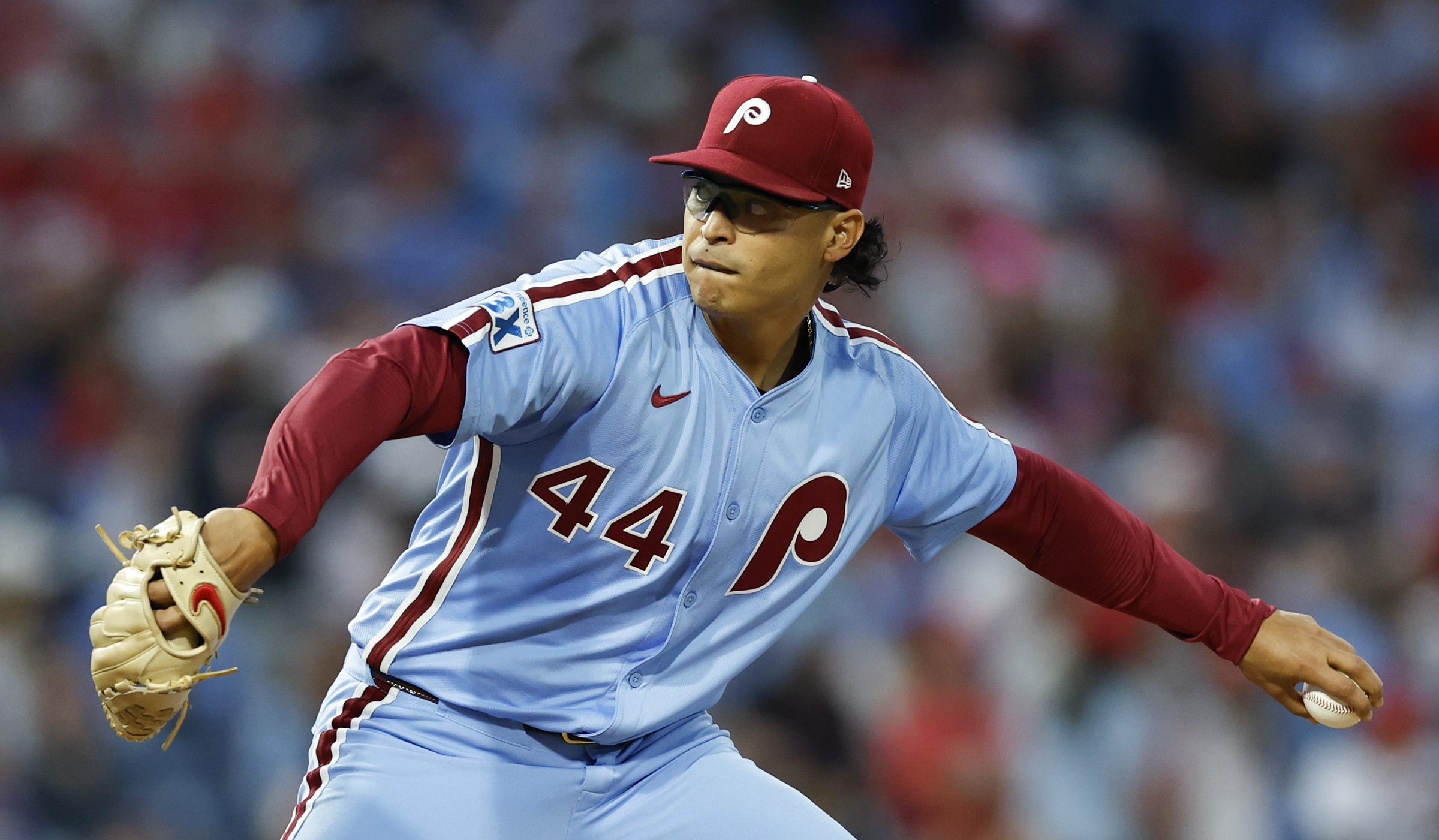
Jesus Luzardo had a 3.92 ERA in a career-high 183⅔ innings in his first season with the Phillies.
Q: Can you describe or give an example of how J.T. Realmuto has such a big impact on the pitching staff?
A: There’s really not one specific thing. I think it’s just J.T. as a whole. I really respect the way he goes about his business. He’s a no-B.S. guy. He’s a family man. He is a hard worker. You see him, works hard in the weight room, works hard on the field; always is like, the first one to be out there ready to go. He’s not one to take a day off. They kind of have to pull his teeth out to take the day off. And you show up to the field, he’s already there, doing homework, going over scouting reports, watching video. So, when he goes up back there [behind the plate] and he tells us, ‘This is the plan that we’re going to do throughout the game,’ you have confidence that he knows what he’s talking about and that it’s not he’s just winging it. He has a plan. He understands what his plan is.
And he takes very good care of his body. He’s very mentally aware of the situations, and he’s got a lot of baseball IQ. So, in that sense, I think he’s a full, full-bodied catcher in the sense that he has all his bases covered. And I think that’s something I really respect. And not only me, obviously the whole rotation, bullpen, all these guys. And when he’s hitting, it’s the same way. You could just see all the work he puts in and how smart he is at the plate. And that’s something that we all appreciate.
Q: Your parents live in South Florida, where you grew up, but they’re from Venezuela. Do you have family there? Does everyone know that everyone’s OK after everything that’s happened down there? And are you interested in pitching for Venezuela again in the World Baseball Classic, like you did in 2023?
A: I have family down there, and thankfully everyone’s OK so far. And yeah, it’s been a scary situation down there at times, but thankfully everyone’s all right. And in terms of pitching in the Classic, yeah, I threw in there three years ago. Last year talking to [Team Venezuela], I promised that I would go and pitch. And did get a call from the U.S., and got offered to pitch [for them] as well.
But just this year, I think it’s going to be tough for me, going into a free-agency year [and] made the decision that, unfortunately, [I’m] not going to be able to pitch in the Classic and want to take my time. Take a slow spring training, fully get ready with the team, make sure my body bounced back after a career-high innings. And [it’s] a tough decision for me and my family, because it’s very important for my family, for me, to represent Venezuela. But just in terms of intelligent decision-making and a hard decision after a long last year and looking forward to a long this year, going into the playoffs, hopefully again pitching into maybe November, I think the correct decision would be to take a slow spring training and make sure everything’s along the right line to be prepared for the year.
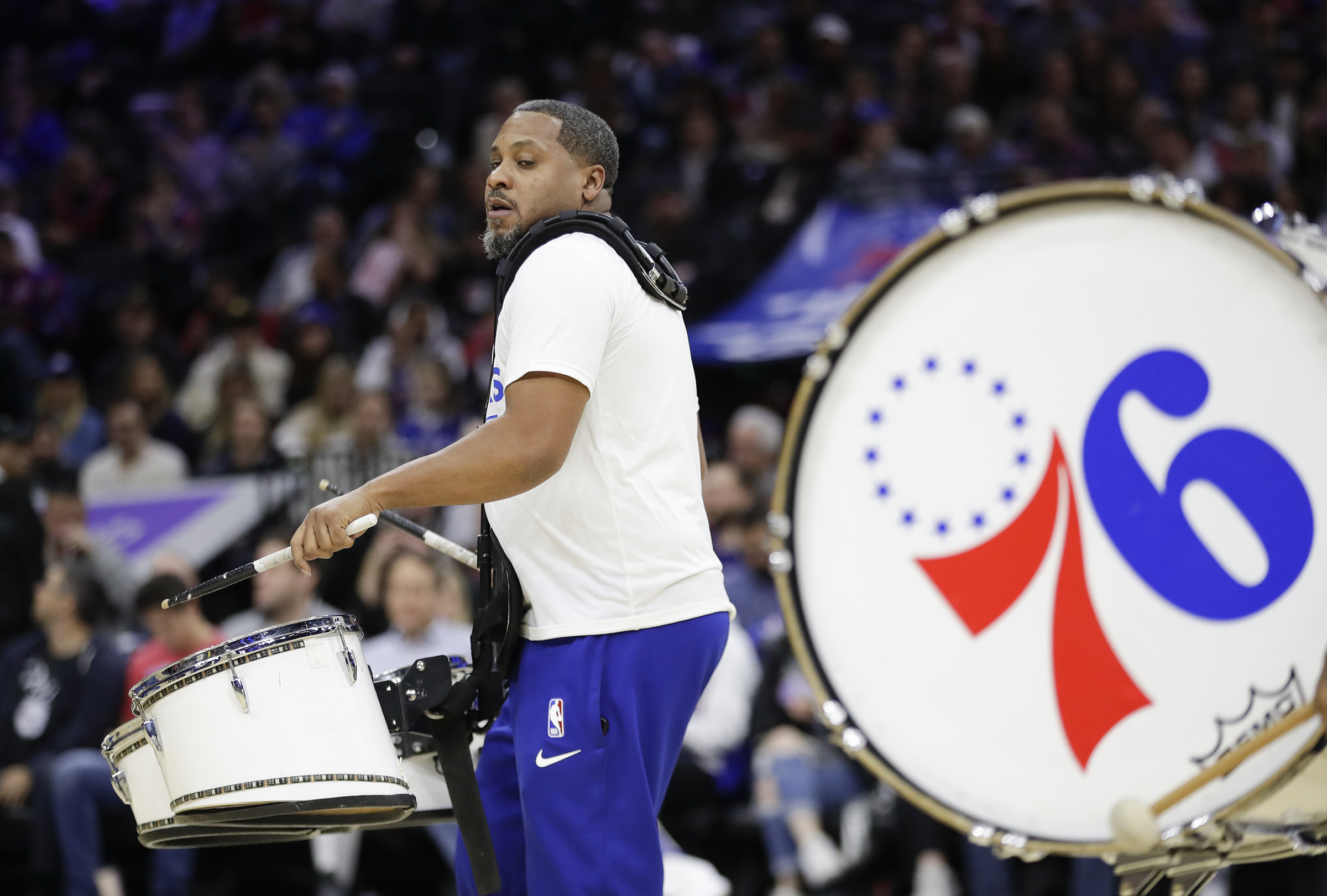
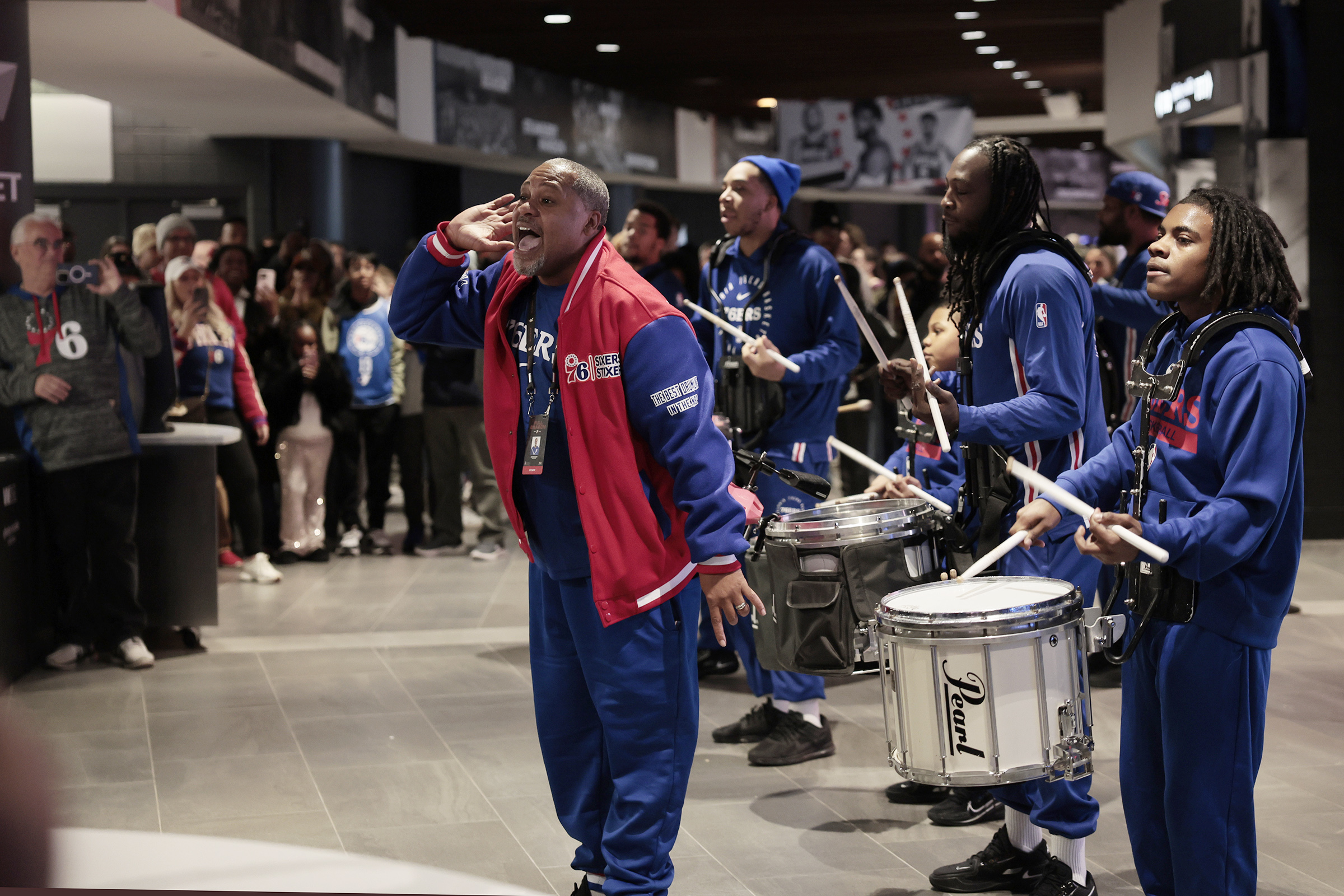
Walking through the main concourse of Xfinity Mobile Arena after a game, fans often hear the faint sounds of drums rattling in the distance. If one follows the high-pitched rhythm of the snare to the melody of the tenor and eventually to the deep pulse of the bass, they’ll find the Sixers Stixers.
The group has been the official drum line of the 76ers dating back to 2013. For over a decade, they’ve performed in perfect cohesion — relying on teamwork, discipline, and unity — building lifelong friendships deeply rooted in brotherhood, and providing life-changing opportunities for inner-city youth through the power of music.
“We have nothing else,” said 46-year-old Antoine Mapp Sr., the director of the Sixers Stixers. “Everyone don’t play sports, everyone don’t play basketball, everyone don’t play football, everyone don’t play baseball, everyone don’t bowl. However, music is universal. Music touches the soul.
“When you’re part of a team, you start feeling accepted. You start feeling like you belong to something, you start feeling important. All kids really need is love and affection. You don’t know what these kids go through at home. You don’t know what they go through in school, but when it comes to being a part of something like this, we all family, and we say before we leave, ‘I love you, bro,’ because I don’t know if he’s going to make it back tomorrow.”
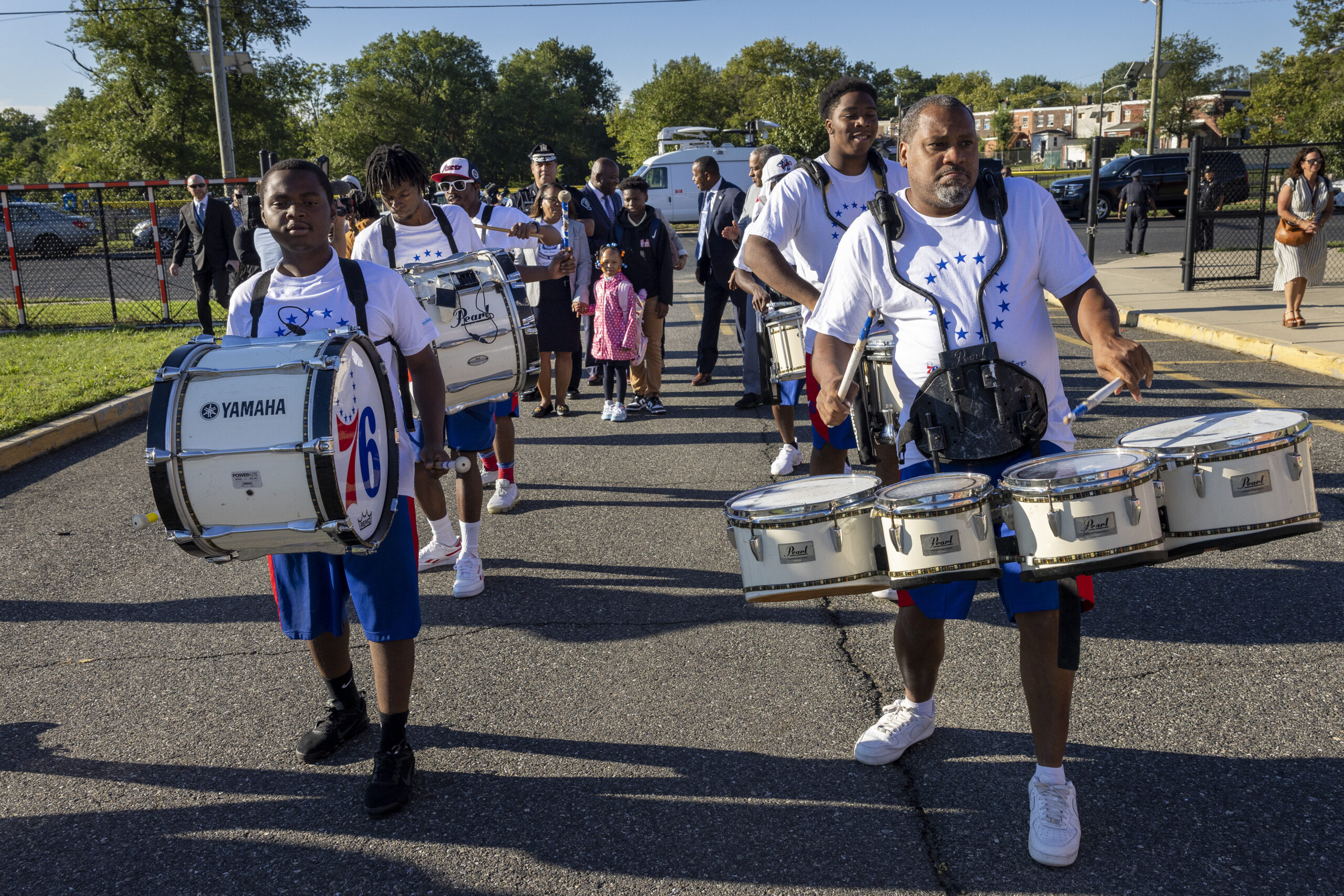
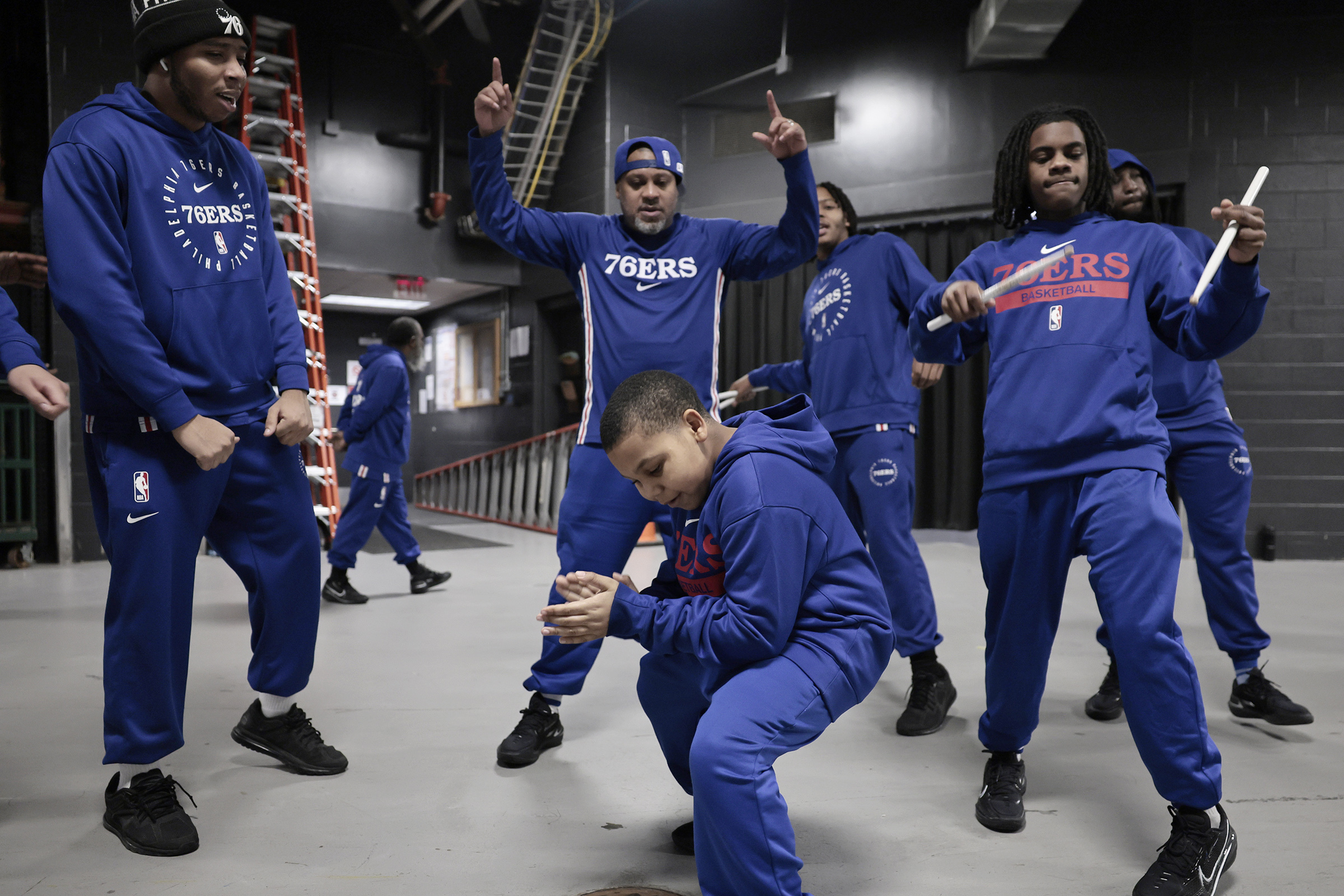
Antoine Mapp (front left) and the Sixers Stixers do more than just perform at games, like escorting Zyair Kendrick-Finney (back center), along with school and city officials, for his first day of 7th grade at Morgan Village Middle School in Camden in 2022.Mapp’s Stixers have been performing at Sixers games for over a decade.
‘Take these drum sticks, jail cell, or graveyard’
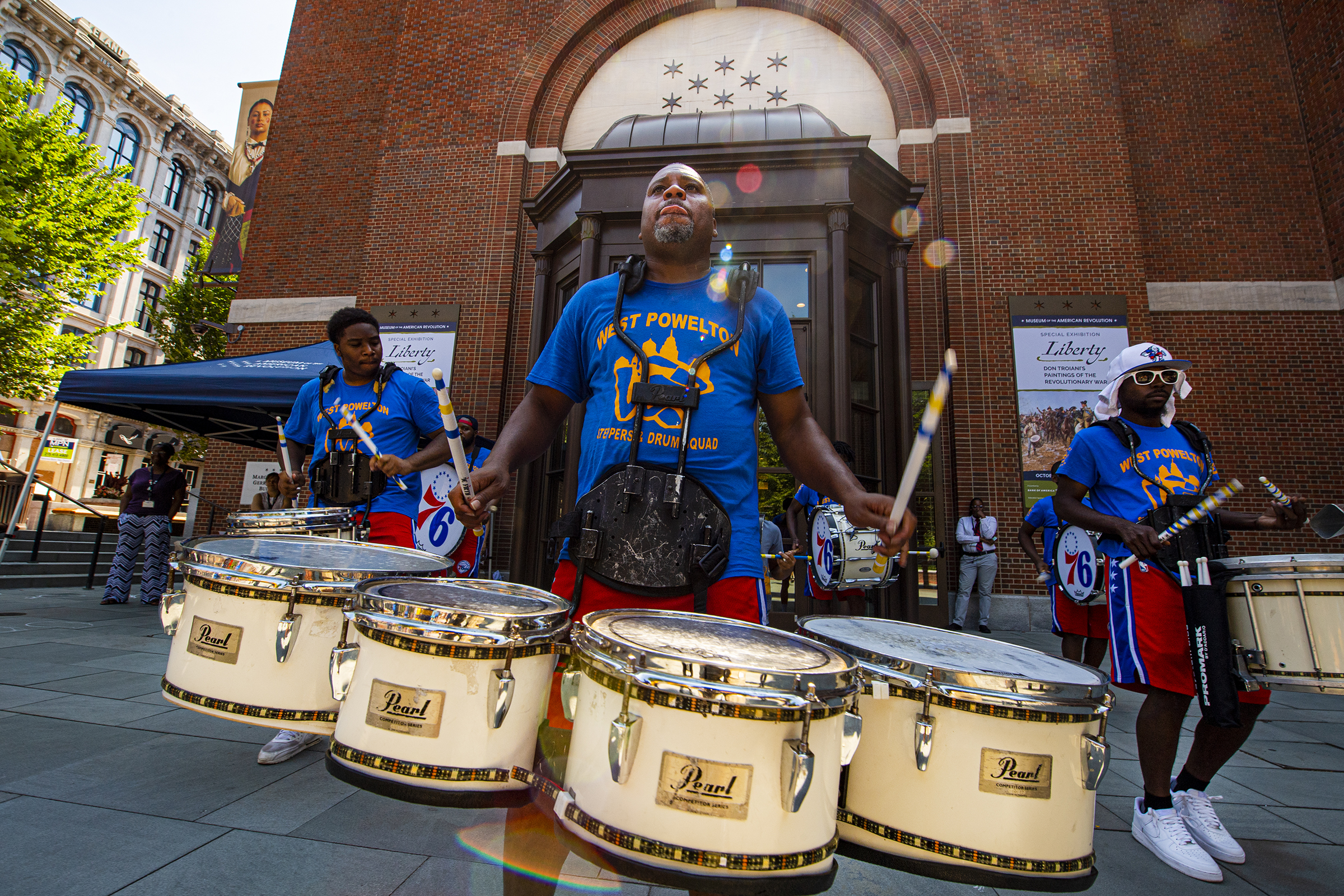
In 1991, Mapp was first introduced to drumming by his late grandmother, Elsie Wise. To keep young boys and girls out of trouble in the West Powelton neighborhood, Wise created a drum line and drill team known as the West Powelton Steppers and Drum Squad, which still practices today.
“My grandmom came to me and said, ‘Well, I’ll give you three options: take these drum sticks, jail cell, or graveyard,’” Mapp recalled. “I decided to pick the drumsticks. And I asked her what I’m supposed to do with these drumsticks. She said, ‘Figure it out.’”
At that time drum squads and drill teams weren’t as accepted. At 11 years old, Mapp remembers being called every name in the book.
“In the ’90s, drill team wasn’t accepted,” Mapp said. “They looked at us as being wimps, looked at us as being cowards, looked at us as being punks. They used to disrespect us, call us names, say vulgar things about our sexuality because they didn’t understand drumming, they didn’t understand the culture. They didn’t understand music and how it touches the soul and how it saves your life.”
However, that culture was on full display when Mapp attended Cheyney University, the nation’s first Historically Black College and University. He decided to attend Cheyney, on the border of Chester and Delaware Counties, to stay closer to home — giving him time to continue helping with the West Powelton Steppers and Drum Squad.
Antoine Mapp got his start with the West Powelton Steppers and Drum Squad, which helped turn into an opportunity with the Sixers.
In 2001, Mapp became the first person in his family to graduate college, with a major in accounting and minor in computer programming. And as he pursued his degree, he joined the Cheyney drum line.
“The band is the culture of the HBCU,” Mapp said. “The band is the heartbeat. The band is the lifeline. The band is what draws the attention. The sports team being good is a bonus when it comes to an HBCU.”
Not only was it the lifeline of the HBCU, but it was the lifeline for Mapp himself. The Philly native credits the drum line for saving his life.
“First of all, making it to 18 years old where I’m from, it’s like making it to 100,” Mapp said. “We used to make it to 18 and say, ‘OK, we have nothing to live for. We made it.’ That’s the mentality we used to have. Drumming saved my life. … The drill team and drum line raised me because the guys on the team became my brothers. The young ladies on the team became my sisters.”
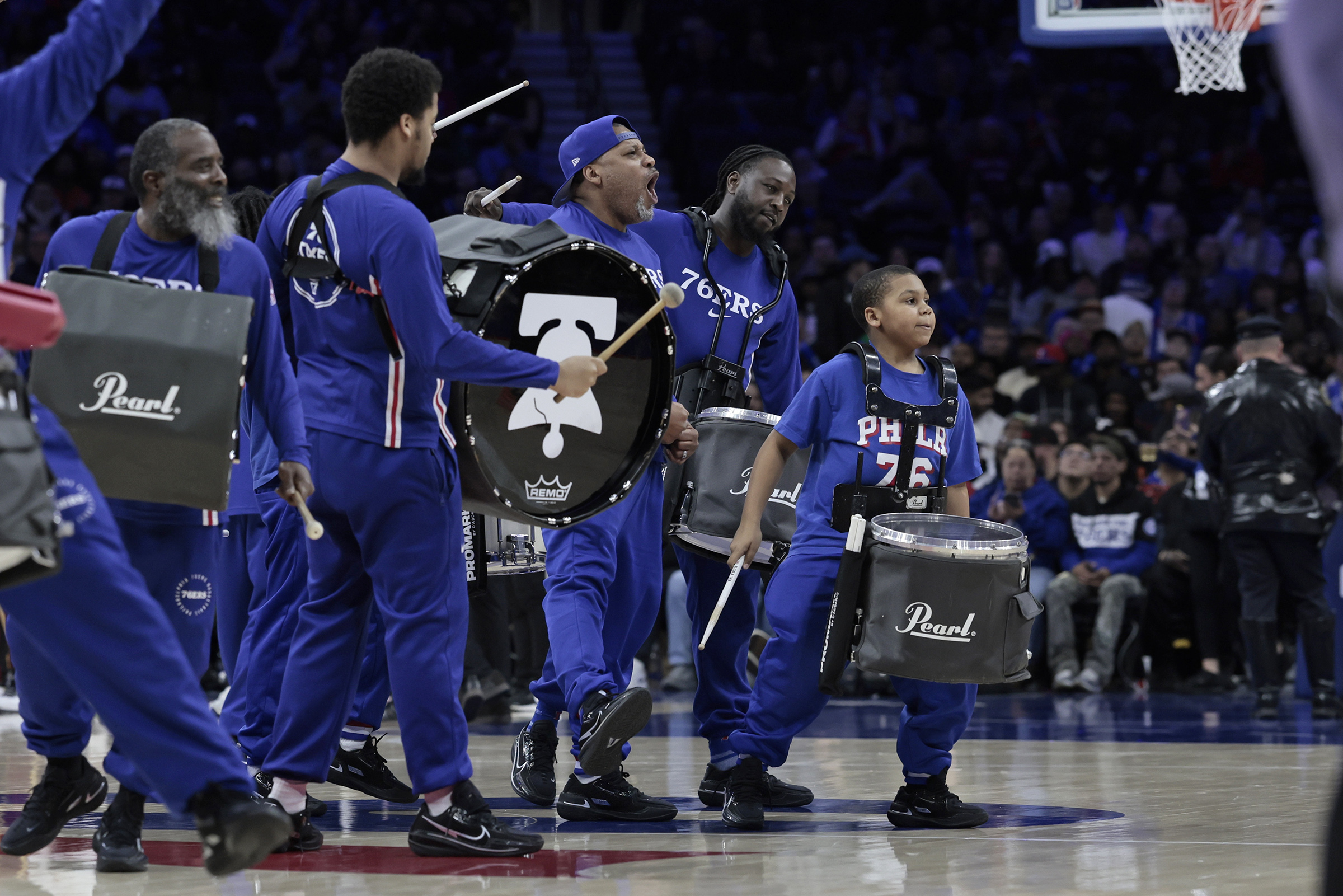
This year, Antoine Mapp Jr. (front) — the son of Sixers Stixers drumline director Antoine Mapp (center in hat) — has joined the team.
A family affair
“Break down!” Mapp yelled as the Stixers began to choreograph their routine for the halftime show of a recent game against the Wizards.
Listening to the order, the rest of the Stixers changed formation — closing in on one another as they drummed out the melody that was discussed on their ride to the stadium. Wearing matching Sixers gear, their black Nikes moved in perfect harmony — one pair looking rather smaller than the rest.
That pair belonged to 11-year-old Antoine Mapp Jr., the son of Mapp, who joined the Stixers at the start of the season. After their first performance together, Mapp sent out a message to another famous father-son NBA duo.
“When I seen LeBron [James], it was the best feeling in the world,” Mapp Sr. said. “I said to LeBron, ‘Hey Bron, you ain’t the only one on the court playing with your son. It was a beautiful moment. Just to be able to say that, I never thought in a million years that I would be on the Sixers floor in the NBA drumming alongside my son. It’s the best feeling in the world.”
If you would have told Mapp that he was going to be performing alongside his son on the Sixers court in 2014, he would have never believed it.
Antoine Mapp Jr. (far right), is the 11-year-old son of Sixers Stixers drumline director Antoine Mapp (wearing hat). The group performs throughout Sixers games and at other team functions.
“I just lost in 2014,” Mapp said. “I just lost my job. My son, Antoine, they told me to abort him. They told me that his stomach and his lungs were growing in his chest. They told me he wasn’t going to walk, talk, run, or do anything. My grandfather, the only father figure that I knew, was in the hospital passing away. I was losing my son and my grandfather.
“On Father’s Day, I lost my grandfather. My son was in the NICU for six months. He was the only baby that survived the NICU.”
Throughout all the struggles, drumming was one thing that helped him persevere. Mapp remembers sitting in the parking lot and praying for guidance.
“[The Lord] spoke to me,” Mapp said. “That same week, I got a phone call from [76ers director of game presentation] Derrick Hayes. When Derrick called me he said, ‘Well, we’re calling you about being a Sixers drum line.’ I said, ‘OK, I’ll do it for free.’ That’s what I’m used to with the after-school program. Drumming was my payment. My life being saved, that was payment enough.
“When he told me that he was going to pay me for doing the game, a light bulb went off in my head. What is one of the reasons why there’s so much crime in my neighborhood? Lack of funds. That’s one of the reasons. So, I said, ‘OK, if the Sixers are paying us, let me change my program to I pay you to save you.’”
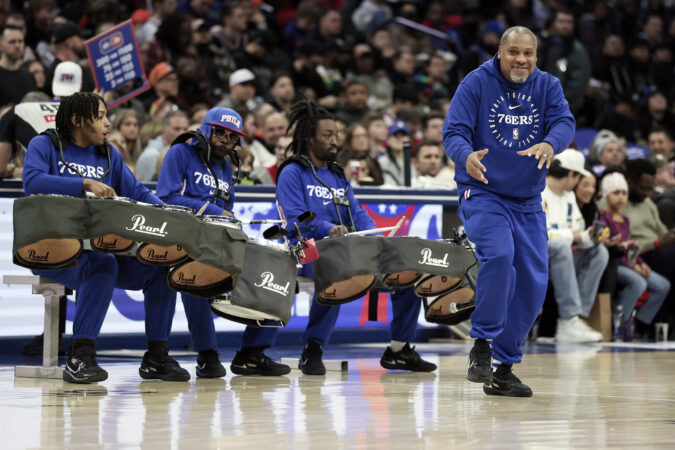
Mapp (left) leads the drumline as they entertain fans on the main concourse during a recent game against the Washington Wizards.
‘Don’t ever stop’
In 2020, Mapp’s 29th season helping with the West Powelton Steppers and Drum Squad, he had his last conversation with his grandmother.
“Before she took her last breath, I asked her, ‘Why am I still here?’” Mapp said. “She said, ‘Because you still love it.’ The last thing she said to me, she said, ‘Don’t ever stop,’ and took her last breath.
“That’s been ingrained in my brain ever since — and I haven’t stopped.”
Mapp has spent over three decades with the West Powelton Steppers and over a decade with the Sixers Stixers, performing alongside children as young as 4 years old to grown men in their 40s.
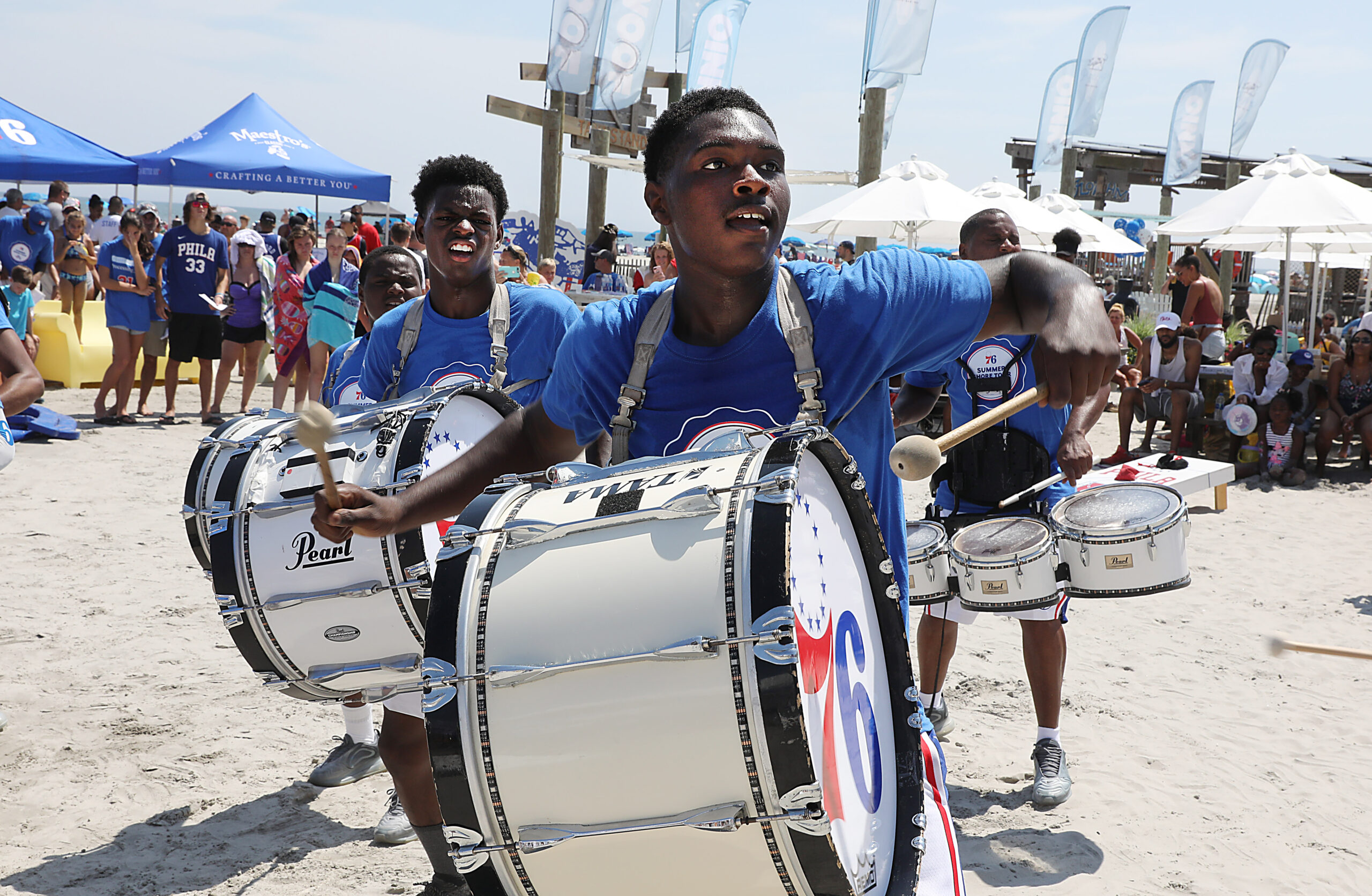
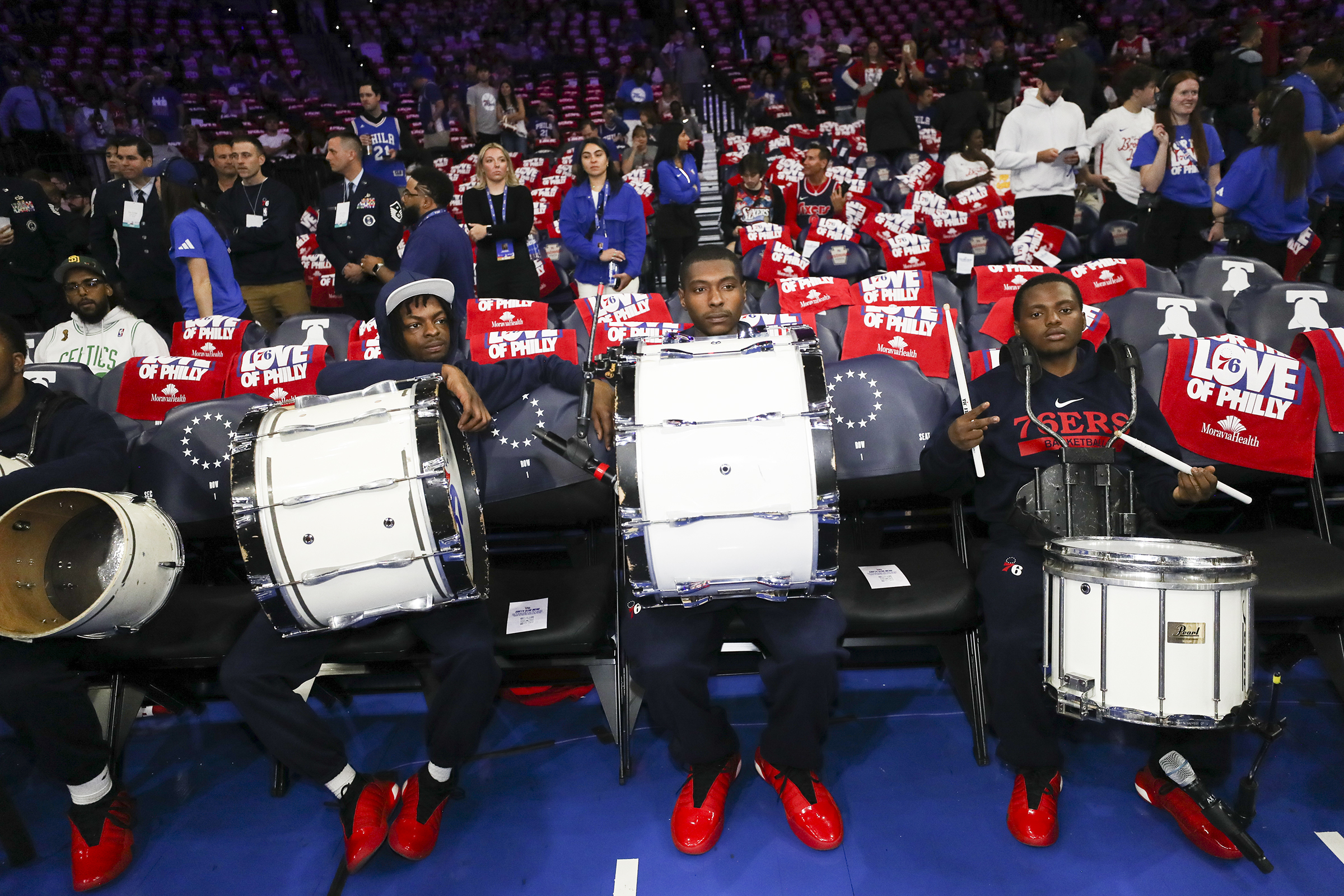
The Stixers take part in off-court events like the Annual 76ers Summer Shore Tour.And there’s no rest in the postseason, as the Sixers Stixers prepare for their performance during Game 6 against the Boston Celtics in 2023.
“We have no age limit,” Mapp said. “We don’t cap out. We’re in your life for the rest of your life. It’s our 35th year, and we have so many people that are still part of this group and have kids who are part of the group.
“I can’t wait to see what my son does with it 20 years down. I can’t wait to say we’ve been with the Sixers for 50 years, I’ll probably be like 96. But, I’ll still be here. And I’ll still be out there leading my guys. I’m so honored to be a West Powelton drummer and to be a Sixer Stixer.”
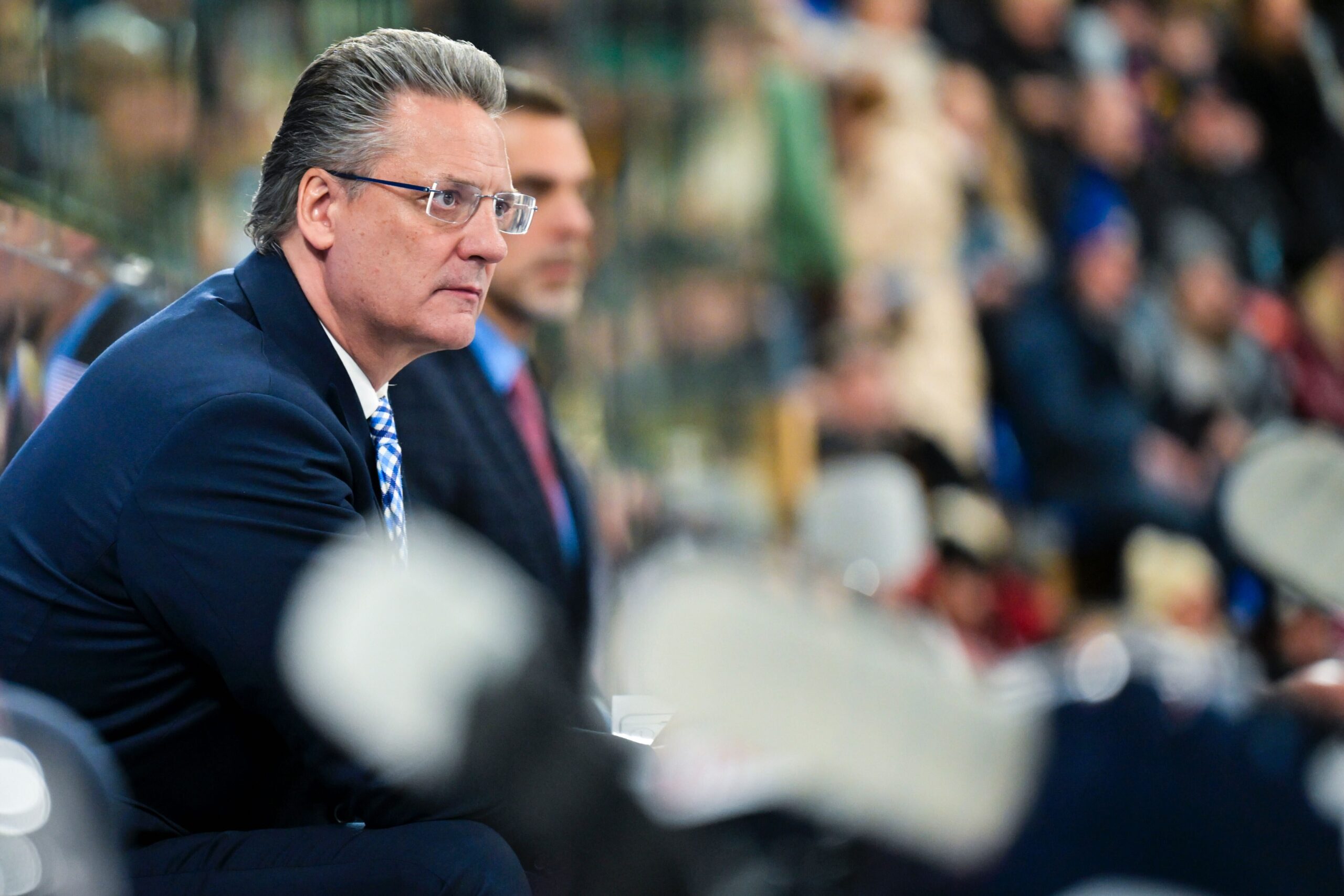
That was the task assigned to Penn State head coach Guy Gadowsky, who assumed the same position for the United States Collegiate Selects during their inaugural campaign at the 2025 Spengler Cup.
The Spengler Cup, which began in 1923 and is considered the world’s oldest invitational ice hockey tournament, features six club and national teams from around the world. It was played this year from Dec. 26-31 in Davos, Switzerland, and is annually hosted by local pro team HC Davos.
“The entire experience was tremendous,” Gadowsky said. “Everybody was curious about how we were going to do. Most [people] thought that we weren’t going to win a game. And the way the team played, the locals in Switzerland really got behind them, and you started to hear ‘USA’ chants when we walked down the street, went to a restaurant, walked into the arena.”
The coach wasn’t exaggerating. As the lone collegiate squad among four professional teams and a fifth composed of Canadian pros, the U.S. Selects were massive underdogs, expected to participate and nothing more.
After an opening-game 3-2 loss to Canada and Flyers farmhand Anthony Richard, those lowly expectations remained. That is, until the U.S. Selects stunned host HC Davos, 5-3, on Dec. 27 in a result that showcased college hockey’s growing talent. HC Davos, which leads Switzerland’s top league, featured several former NHLers, including Filip Zadina, Rasmus Asplund, and former Flyer Brendan Lemieux.
“What we learned is that college hockey is really good,” Gadowsky said. “You’re playing some of the best professional teams in Europe, with 1,000-plus NHL games on their roster. And our guys played with them tooth-and-nail.”
The coach wasn’t the only Penn Stater in Davos. Five Nittany Lions skaters — Aiden Fink, Charlie Cerrato, JJ Wiebusch, Matt DiMarsico, and Guy’s son, Mac Gadowsky — joined their coach at the Spengler Cup. The roster also had a local flair with Flyers prospect Cole Knuble (Notre Dame), Sewell’s Chris Pelosi (Quinipiac), and Philadelphia’s Vinny Borgesi (Northeastern) all making the team.
Fink and Mac Gadowsky received automatic invitations because they earned All-American honors last season. Guy Gadowsky said he selected the other three, labeled the “behind-the-back boys” for their skilled passing while playing on the same line at Penn State, because when rosters were due in November, they were three of the top six goal scorers in Division I.
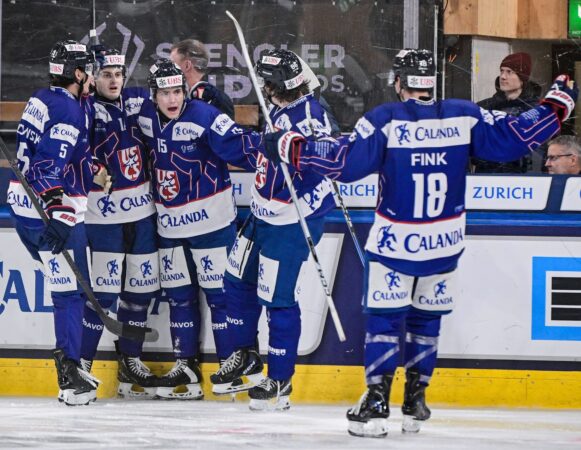
Penn State coach Guy Gadowsky led the U.S. Collegiate Selects to two wins over European pro teams last month in Switzerland.
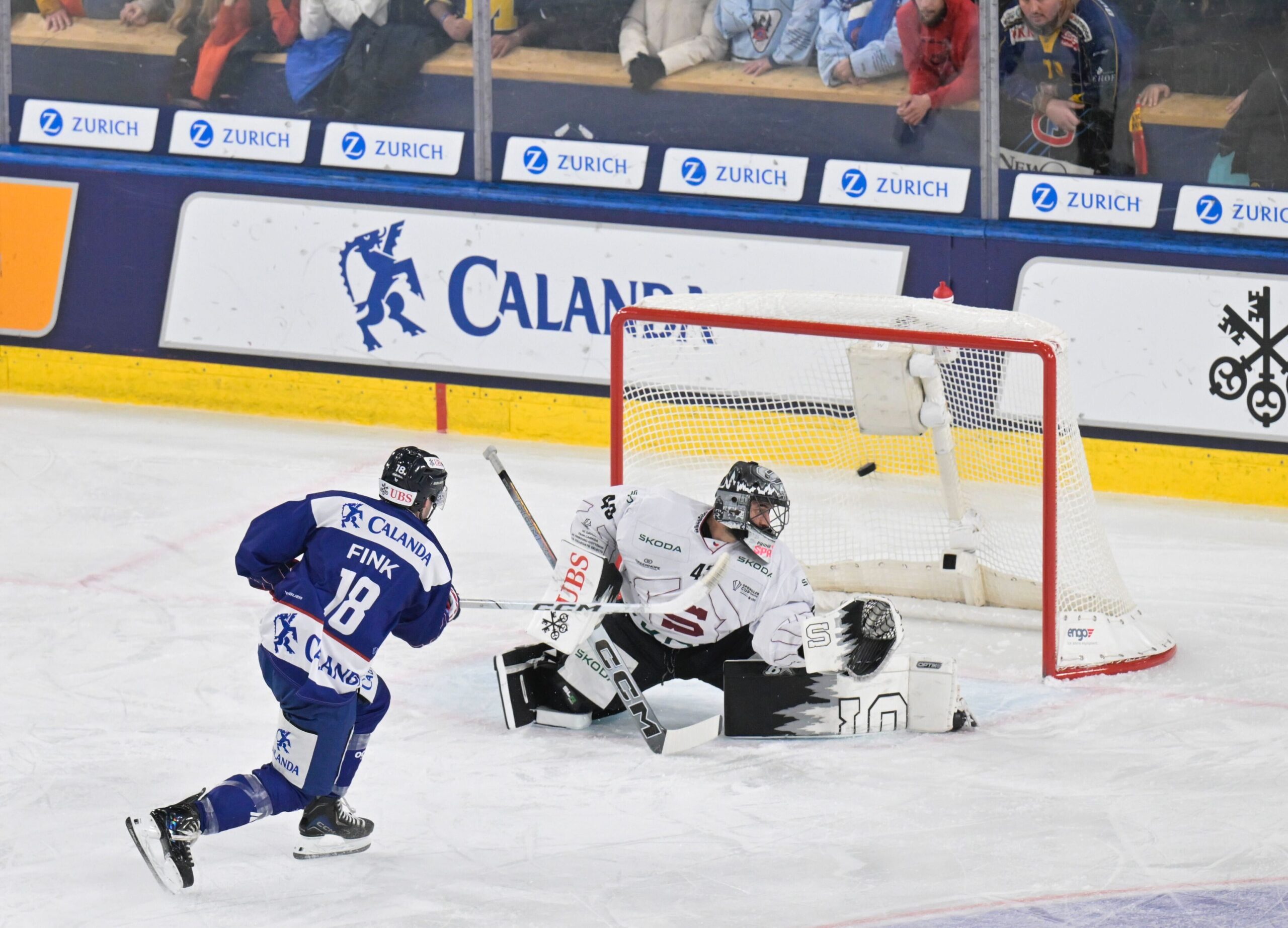
Fink, a Nashville Predators draft pick who recently became the fastest Nittany Lion to reach 100 career points, led the U.S. Selects with four goals in Switzerland. His eight points led the entire tournament and earned him recognition on the 97th Spengler Cup All-Star team.
“The experience I had [in Davos] was unforgettable,” said Fink, who tallied two points in the U.S. Selects’ victory over HC Davos. “It was my first experience [in Europe], and it was beautiful. The hockey was great.”
After dropping their first contest, the U.S. Selects rattled off consecutive wins over professional squads. Their second victory was a 5-3 win in the semifinals over HC Sparta Prague, a team in seventh place in the Czech Republic’s top professional league.
The underdogs had conquered two giants. And the Davos locals noticed and rallied behind the 25 college kids as they earned a spot in the tournament’s championship game.
“You’d be walking down the street, and every person would stop you to try to get pictures,” Fink said. “All our merchandise was sold out. [The Davos locals] were super nice to us. It was pretty cool seeing that.”
Knuble, who faced off against Fink last weekend when Notre Dame visited State College for a Big Ten series, skated alongside the Predators prospect with the U.S. Selects.
The 5-foot-10 forward lauded the local support and labeled the event “a hockey party,” one he said he will remember for the rest of his life.
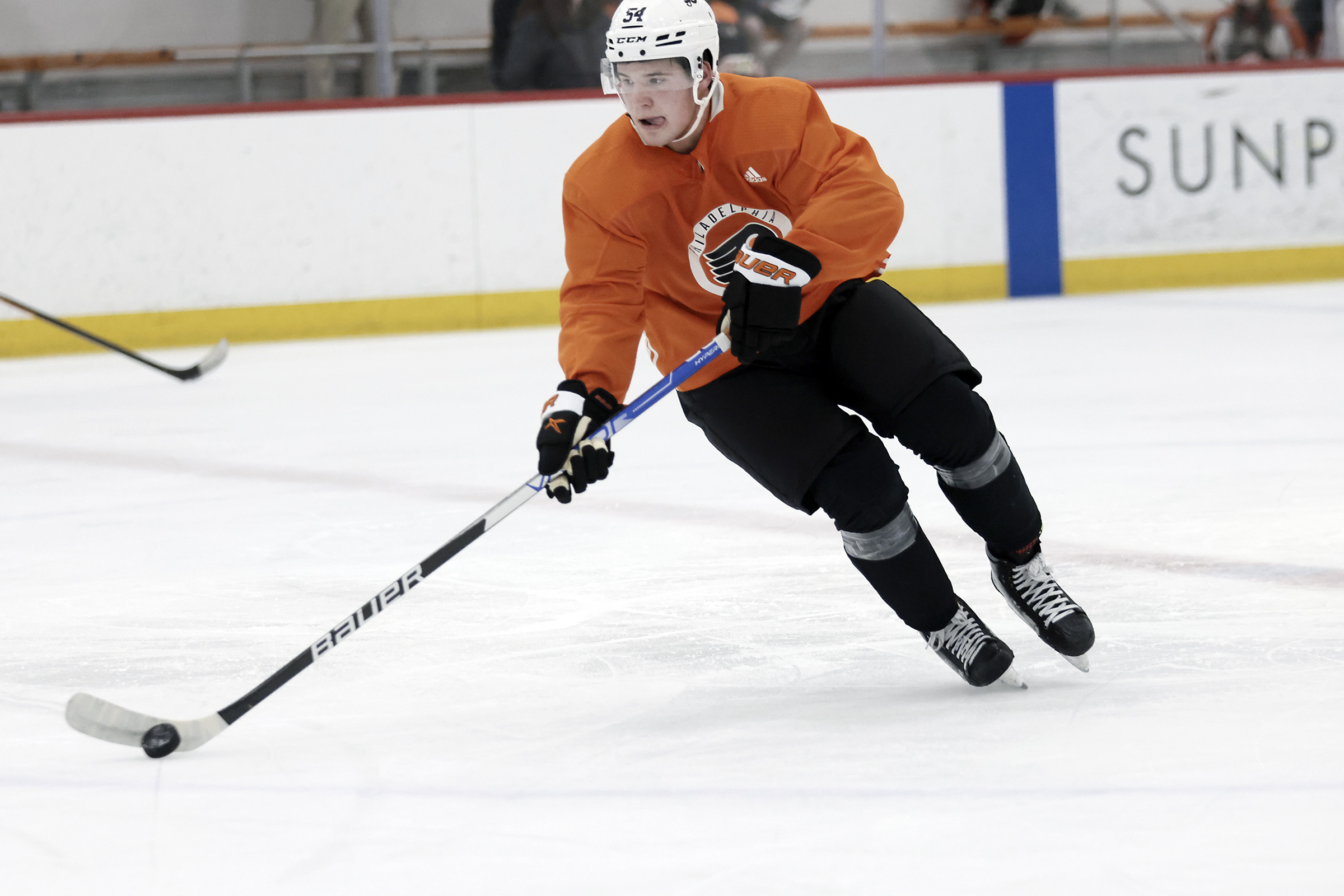
Flyers prospect Cole Knuble, the son of former Flyer Mike Knuble, is someone the organization is very high on.
“The excitement in the town for the tournament was insane,” Knuble said. “I don’t think [the locals] knew anything about college hockey and expected us to not be competitive. But everywhere we went, we were stopped, and people were really curious about where we were from and how we were enjoying our time.”
The Flyers selected Knuble in the fourth round of the 2023 NHL draft. He is the son of former Flyers winger Mike Knuble, who spent five productive seasons with the organization.
👏🥈 The @USCollegeSelect may have fallen just short in the final, but what a tournament they delivered. Courage, speed, heart – and a performance that earned admiration far beyond the result.
Knuble tallied his lone Spengler Cup point in the championship game — a net-front feed to Cornell’s Ryan Walsh to knot the score at 1. But the U.S. Selects lost that game, 6-3, after a third-period surge from HC Davos and fell just short of their ultimate goal.
While they didn’t return with a trophy, they had earned the respect of the hockey world. A team of inexperienced college kids had marched into Switzerland and proved it could hang with some of Europe’s best.
And for that, it was mission accomplished.
“We definitely felt a responsibility as the first college select team [to play in the Spengler Cup],” Knuble said. “Before the tournament, we talked about how we are making an impression on people about what college hockey is, and [we] wanted to prove that this team should be back.”
Penn State’s Aiden Fink led the U.S. Collegiate Selects with four goals and the entire tournament with eight points.
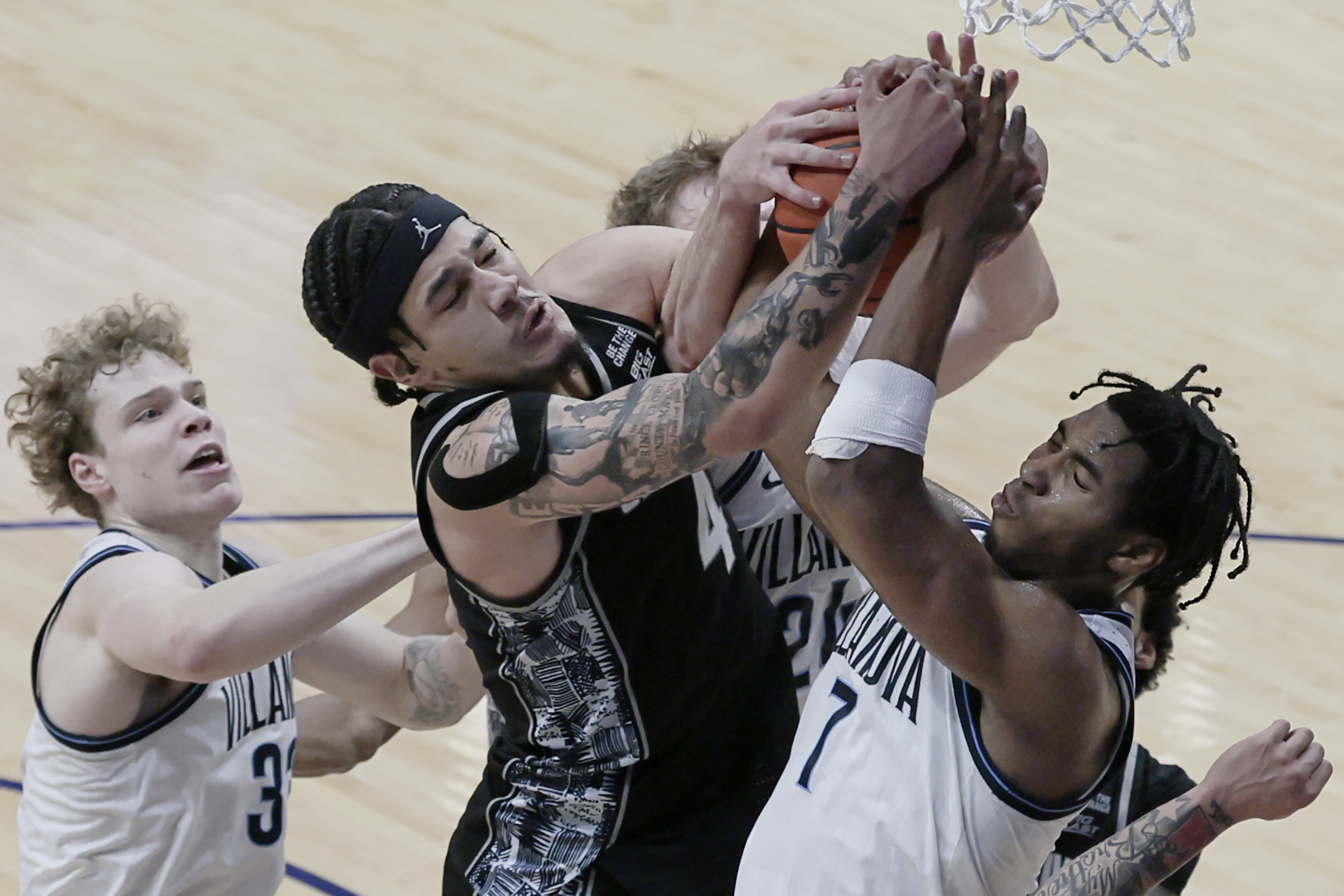
The difference isn’t in the adjustments as much as it is the inherent advantage of the location of each team’s bench during the first half, according to Villanova coach Kevin Willard.
Villanova runs its offense in the first half in front of Ed Cooley and Georgetown’s bench, and the Hoyas run their offense in front of Willard and his bench.
“I get to yell their plays out,“ Willard said after Villanova’s 66-51 victory over Georgetown on Wednesday. ”The coaches all know the plays. I’ve watched Georgetown play nine times now. You know when the center is out in the corner, they’re going to run a boomerang. You know when [Malik] Mack’s on the block, it’s going to be an iso.”
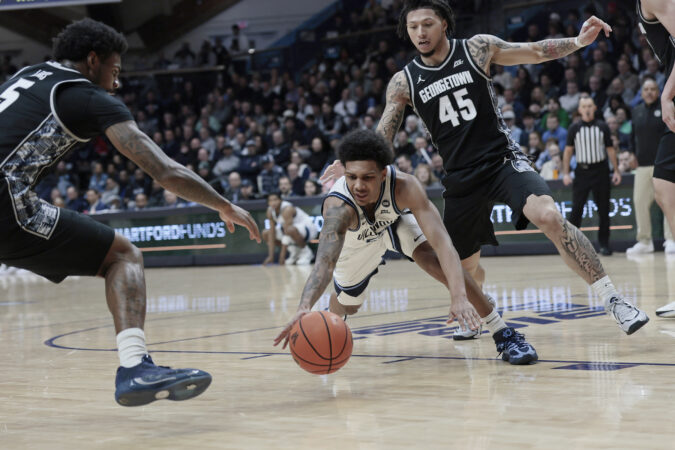
Villanova used a 16-1 surge in the first four minutes to blow open just a three-point halftime lead, and there has to be more to it than the orientation of the court. Save for a few games, Saturday’s loss to St. John’s being one of the outliers, Villanova has been a solid second-half team. It entered Wednesday night with a plus-4.1 margin over its opponents in the second half. That ranked 62nd nationally and fourth in the Big East. It is not amazing, but considering there are 365 Division I teams, it’s not nothing.
There is, of course, more to it than Willard’s initial explanation.
Villanova watches a lot of film at halftime. Willard watches the offense to figure out what he wants to call in the second half, but the rest of the staff and team focus on the defensive end. There was a lot to like on that end from the first 20 minutes. It was an ugly opening frame that ended with the teams combining to shoot 15-for-54 (27.8%). Villanova’s offense looked clunky, but the Wildcats forced nine first-half turnovers from a Georgetown team that entered Wednesday on a five-game losing skid but was 15th nationally in turnover percentage.
There was less tactical messaging during the break, too.
“It’s just getting a very young team to understand, it’s all I talked about at halftime, this is Big East play,” Willard said. “They’re a really good, physical defensive team. It’s not going to be easy. We have to rebound and get out. That’s usually all the message is and just cleaning up what we’re struggling with defensively.”
Villanova allowed a 20-4 St. John’s start to the second half Saturday at Xfinity Mobile Arena, but Wednesday, against a lesser opponent that dropped to 1-7 in conference play, was a much different story. Georgetown turned it over four times in the first four minutes of the second half and Villanova finally got out in transition and found cleaner shots.
“That first stretch won us the game,” said Tyler Perkins, who led Villanova with 16 points.
The 16-1 spurt stretched to 29-8 midway through the second half to give Villanova its largest lead, 55-31. The defense that kept Villanova in the game during the first half carried over. The Wildcats held Mack, who averages 13.8 points, to five points on 1-for-14 shooting. The 51 points the Hoyas scored were the fewest by a Villanova opponent this season.
“I think we all knew we’d be better on offense in the second half,” said freshman point guard Acaden Lewis, who had 15 points and a season-high seven rebounds. “That’s kind of what happened. We stayed solid defensively, and the offense came around late.”
Bryce Lindsay, who hit a three-pointer from the edge of the midcourt logo in the second half, and Duke Brennan joined Perkins and Lewis in double figures with 11 and 10 points, respectively. It was far from the cleanest offensive night from the Wildcats, who got just nine assists on their 24 makes, far below their season-long assist percentage of 53.7. But it was more than enough against a Georgetown team that Cooley said was “emotionally and physically frustrated” by Villanova in the second half.
“Villanova does what they do,” Cooley said. “They use a ball screen 118 times a game, and they took advantage of that and made some shots.
“This game is all about discipline. It’s all about connection. It’s all about emotional and mental toughness.”
One team had it Wednesday, the other didn’t. One team’s season is spiraling, the other’s continues Saturday afternoon in Hartford, Conn., where it gets another opportunity for a signature win.
Georgetown’s Caleb Williams is sandwiched between Villanova players on Wednesday.
The good part about this time of year, Willard said, is that he’s seen about all of his conference opponents on film. No. 2 UConn, he said, has a lot of veteran talent and he loves watching freshman Braylon Mullins, who attempts nearly six three-pointers per game in 26 minutes and is “always hunting.”
Villanova entered Thursday rated 24th at KenPom and 34th at Torvik, two of the primary college basketball metrics sites, and was 33rd in the NCAA’s NET rankings. The Wildcats are on a path to snapping their NCAA Tournament drought of three seasons. But what they don’t have yet is a marquee victory, due respect to Wisconsin and Seton Hall. Each major step up in competition has been met with much resistance.
“Every league game is important,” Lewis said when asked about Saturday. “It’s the same approach, same things we always do.”
If that’s not working early on, there’s always halftime.
Frank Seravalli was standing behind the players’ bench at Bucks County Ice Sports Center when his phone buzzed. He didn’t reach for it — which is not his usual instinct.
Seravalli, a former Daily News reporter, is one of only a handful of NHL insiders. His job is to talk to athletes and decision makers around the league. Missing a call or a text can mean missing a story, and in a competitive media environment, in which quick, accurate information comes at a premium, being “late” isn’t ideal.
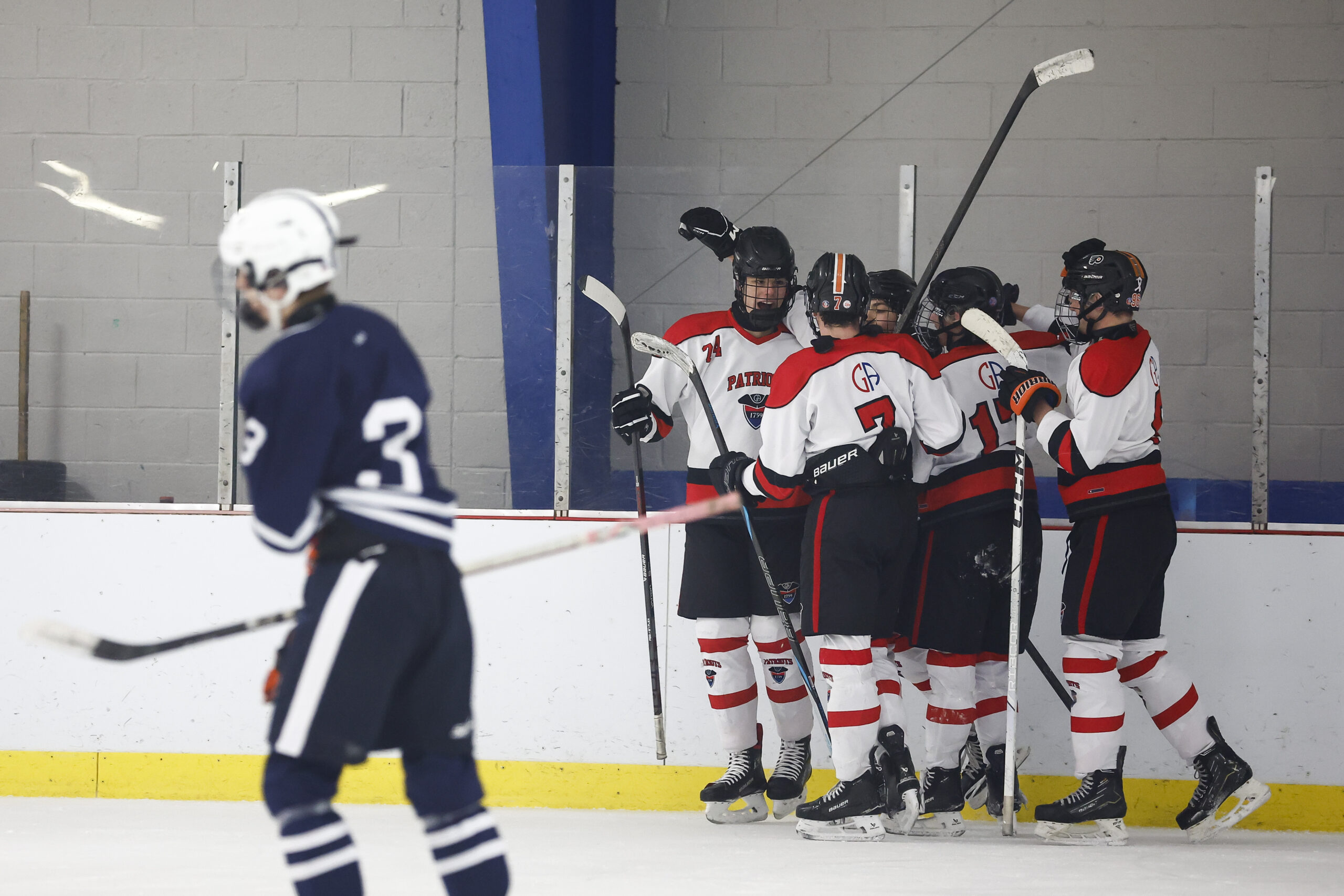
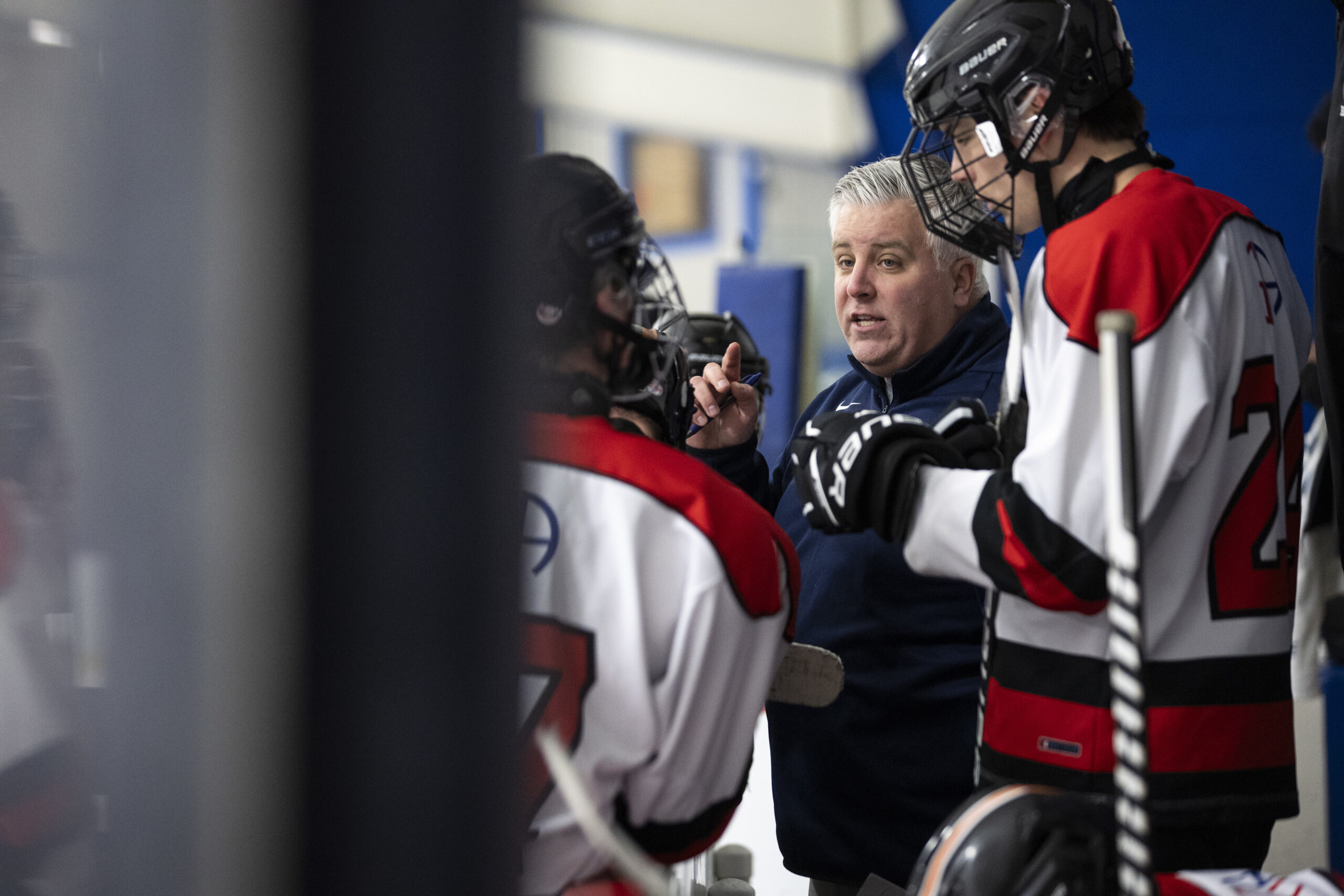
But on Jan. 12, in the midafternoon, Seravalli was busy. He was coaching Germantown Academy’s varsity hockey team. It was the third period and the Patriots were up, 6-2, in a rematch against Episcopal (5-2 on the aging scoreboard, which was missing a number).
Despite their lead, Seravalli’s players didn’t relent. With 35.6 seconds remaining, sophomore Mick Tronoski fired another shot into the net. A smattering of fans cheered.
After the two groups shook hands, Seravalli walked off the ice. He pulled his phone from his pocket, and read that the Columbus Blue Jackets had fired their head coach, Dean Evason.
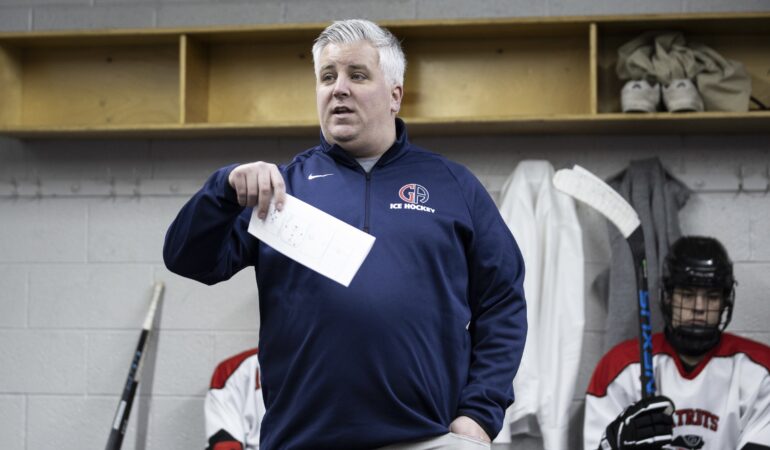
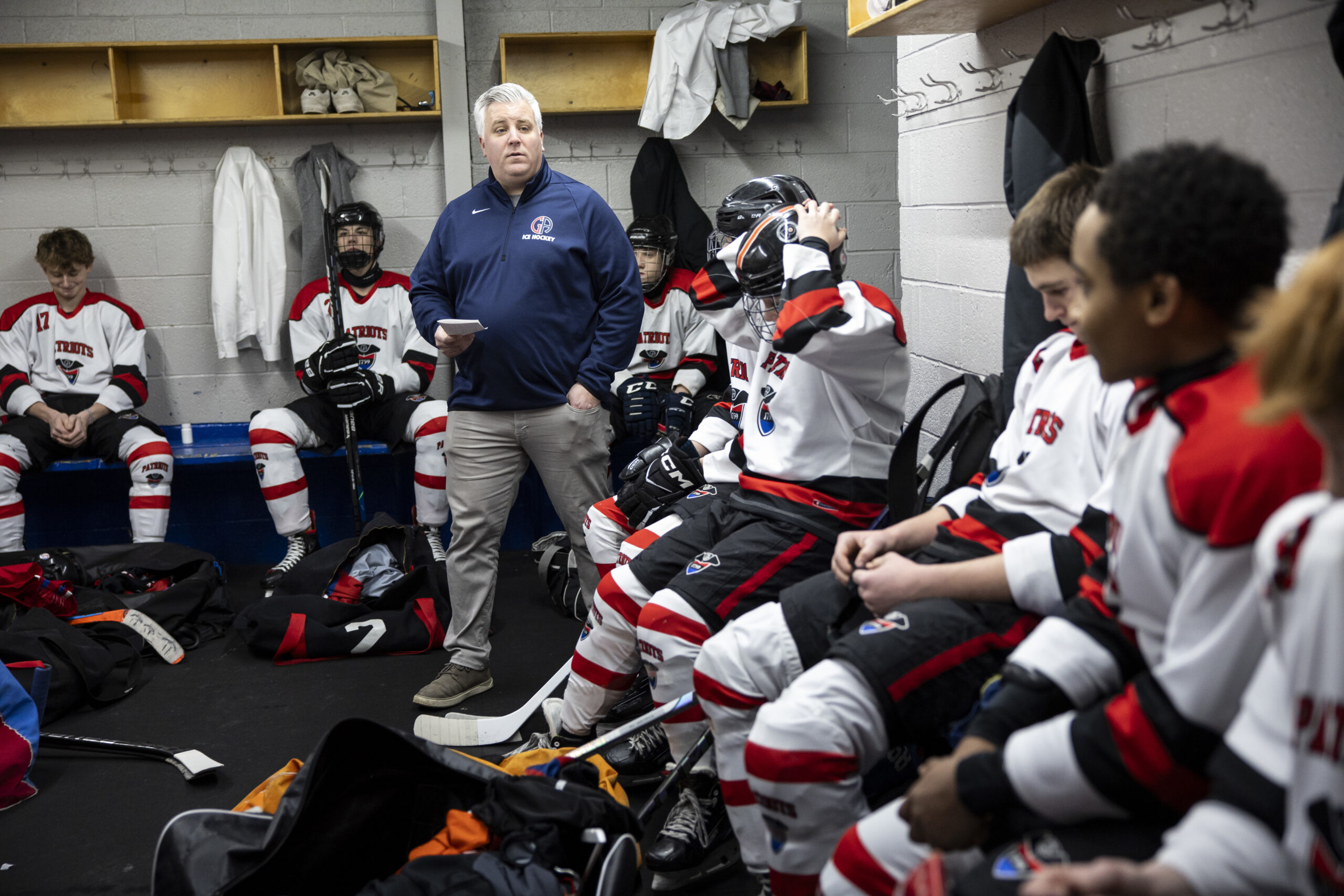
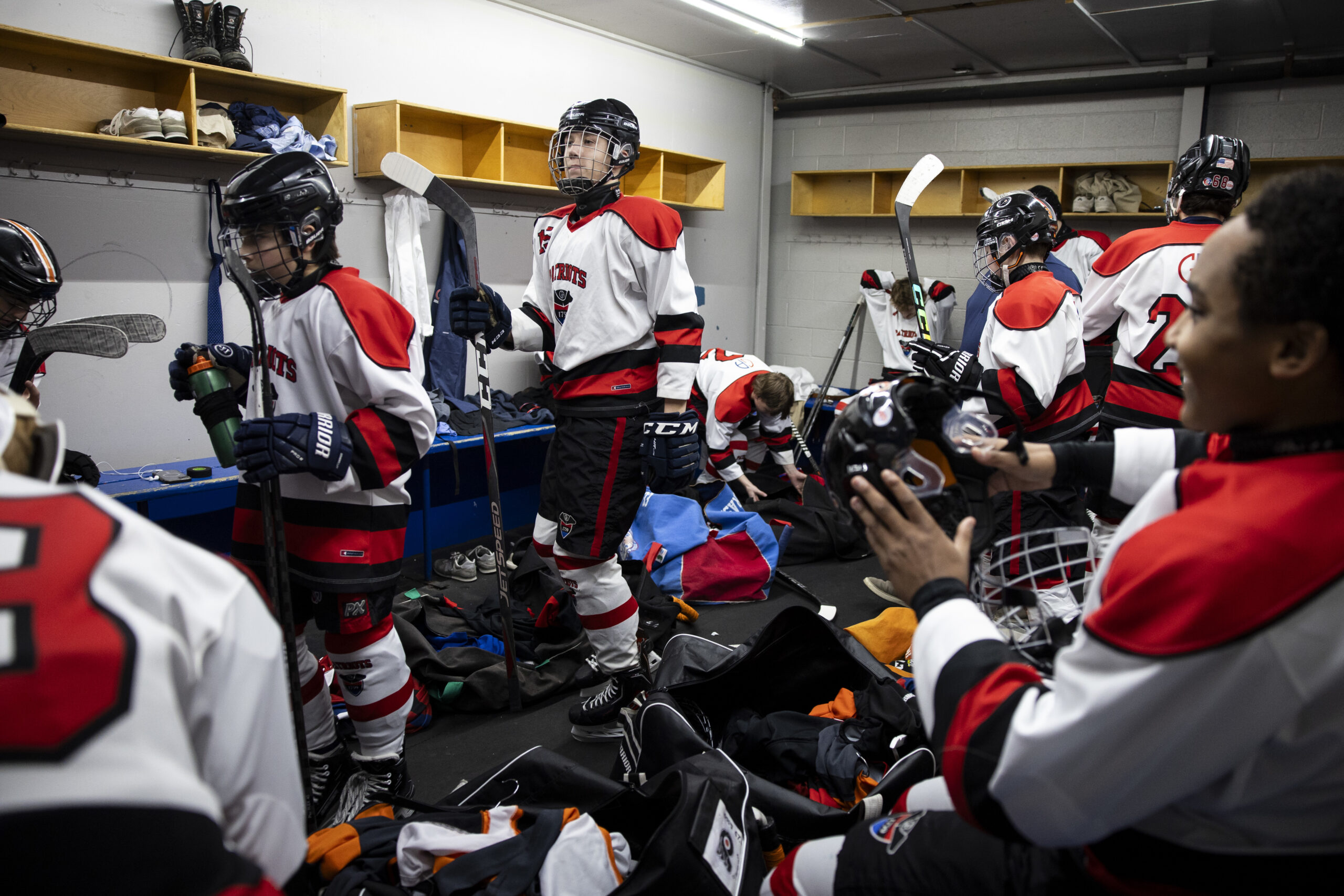
Coach Frank Seravalli talks with his Germantown Academy team in the locker room at the Bucks County Ice Sports Center on Jan. 12.
He retweeted a team statement, 27 minutes late. The NHL insider shrugged.
“I mean, it’s just life, right?” he said. “What are you going to do?”
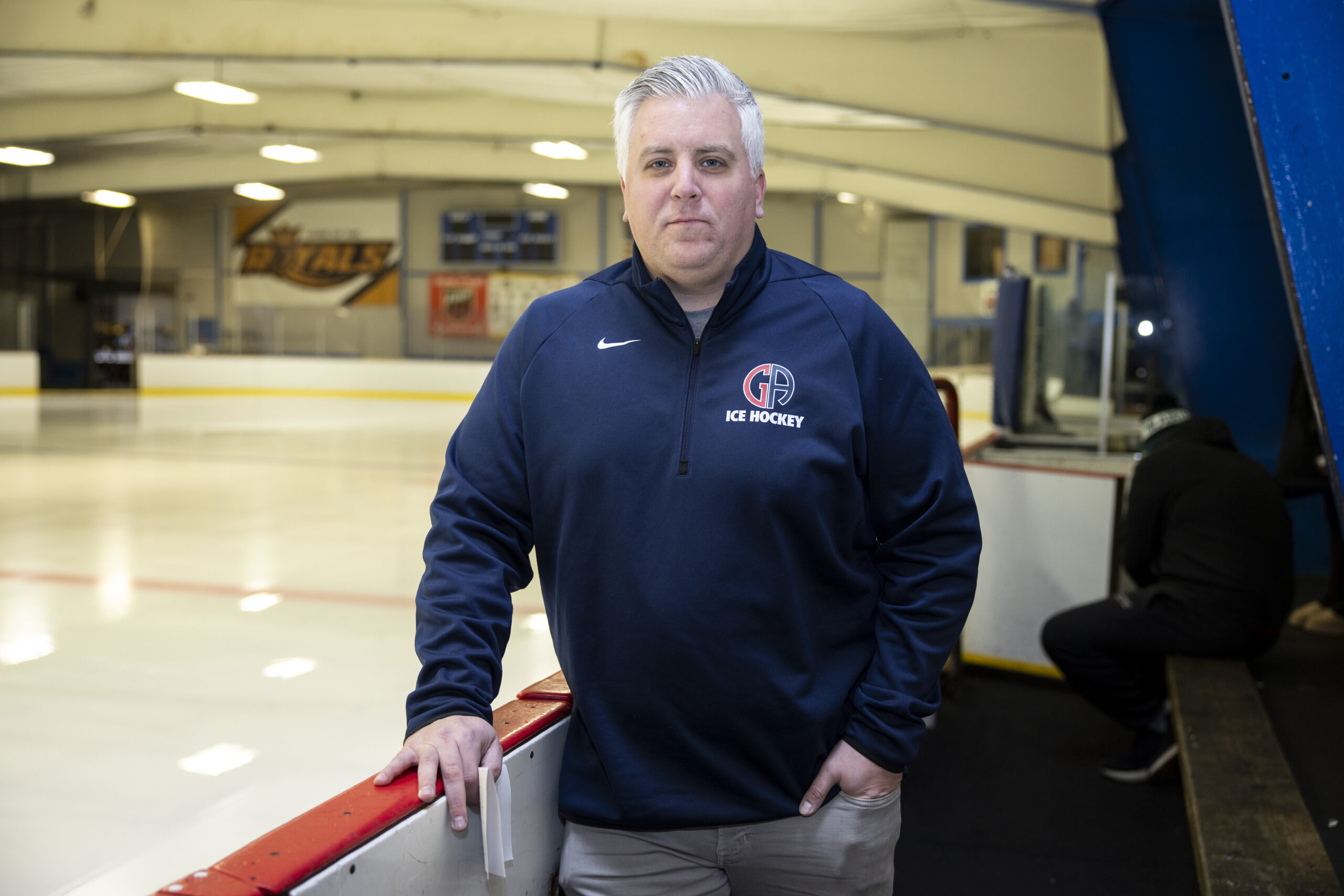
Since July, Seravalli, 37, has served as GA’s head hockey coach. It is a daily commitment, one that he takes as seriously as his podcast and TV hits for various outlets. Five times a week, Seravalli oversees hourlong practices, and coaches hour-and-a-half games, with some 7 a.m. morning lifts mixed in.
He is not above doing the grunt work, either, like ordering gear, setting the schedule, and keeping the team’s stats. He reviews film, plans workouts, and runs the middle school program, all while keeping an eye on promising players in the area.
NHL insiders do not have an abundance of free time, so when Seravalli first told his family that he’d be coaching high school hockey, they thought the idea was absurd. And maybe it is a little absurd. Seravalli is not an alumnus of Germantown Academy. He is not doing this for the small stipend he gets halfway through the year.
But he is doing it for a reason. Just over two years ago, Seravalli’s cousin, Anthony Seravalli, died unexpectedly. He was 41 and left behind a wife and three sons.
Frank always looked up to him. Anthony was mature for his age, even as a teenager. He was a team captain and a star defenseman at Germantown Academy in the late-1990s, back when the school was winning Flyers Cups and producing NHL-caliber talent.
GA hockey’s stature has diminished since then. New York Rangers goalie great Mike Richter once played for the Patriots, but for years, the program was essentially dormant. Local recruiting wasn’t a priority. It was unclear whether there would be enough players to field a team in 2025-26.
Until Seravalli arrived. He has told the school he’s willing to make a five-to-10-year commitment to restore the program to what it was. In his mind, this is the best way to honor his late cousin.
“I thought of him, and how big high school hockey was 25 to 30 years ago, and how I could help make that big again,” Seravalli said. “And I was like, ‘Maybe, this was supposed to happen.’”
A ‘fixture’ of GA hockey
Germantown Academy was an unlikely hockey powerhouse in the 1980s, ’90s, and 2000s. The coed school had an enrollment of only 1,200 students, from kindergarten through 12th grade. These numbers allowed the Patriots to fill only one varsity team most years.
It paled in comparison to some of the bigger programs in the area, like La Salle College High School, which was able to fill four teams (one varsity and three junior varsity).
Nevertheless, GA found success. Players took pride in its underdog identity, especially while playing local behemoths like Council Rock and Malvern Prep. Germantown Academy won two Flyers Cups — the hockey championship for eastern Pennsylvania high schools — in 1982 and again in 1983, and a state championship later that year.
The team won three more Flyers Cups in 1991, 1994, and 1995, and went 100-0-6 in regular-season league play for over five seasons in the mid- to late-1990s.
Anthony Seravalli was a key part of GA’s team. He joined thevarsityas a freshman in 1996, and quickly established himself as a leader. Dan McDonald, a defenseman who was two years older, would drive him to school every morning.
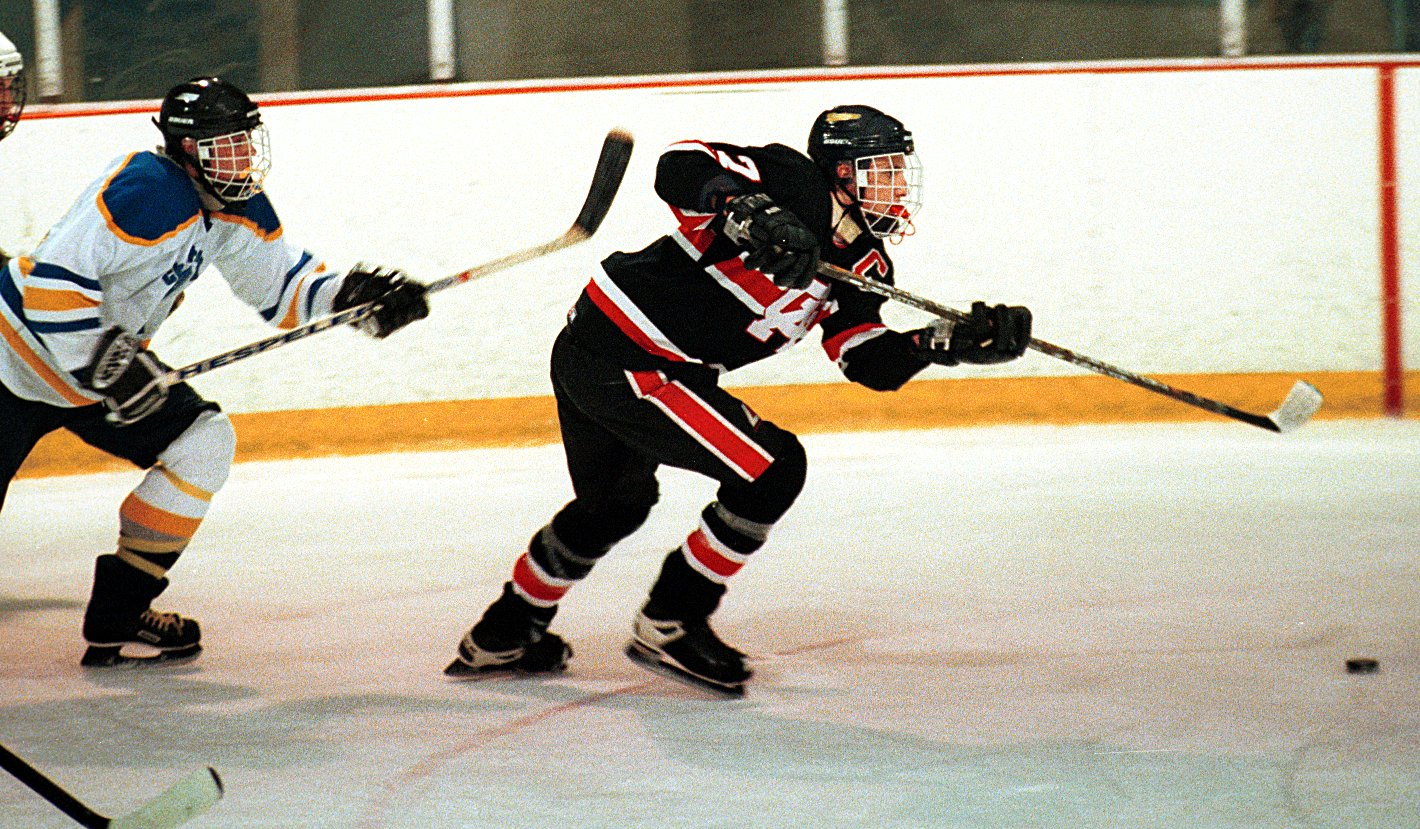
Anthony Seravalli (right) was a critical part of GA’s program in the late 1990s.
The underclassman would rarely — if ever — call out sick with an injury or illness. His teammates estimated that he’d be on the ice for about 70% of Germantown Academy’s games (a hefty workload for a young player). Seravalli was a physical presence, standing at 6-foot-2, with a big windup slap shot that was hard to miss.
He carried no ego, despite his abilities. Anthony was inclusive with all of his teammates, including those who spent more time on the bench. In 1999, a few players got injured, and Seth Gershenson, a self-described “bench guy,” was asked to play some shifts.
Before Gershenson took the ice, Seravalli pulled him aside to give a few words of encouragement.
“He respected my effort and willingness to go out there and get beat up a little bit,” Gershenson said.
Many local players also participated in club hockey. They saw it as a way to get noticed in eastern Pennsylvania, which was not exactly a hotbed for the sport. As a result, club teams often took precedence over high school teams.
But this was not the case for Seravalli. GA always came first. Gershenson referred to him as a “fixture.”
“He took being a captain really, really seriously,” Gershenson said, “and he took the success of GA really seriously. He took pride in our success much more than whatever his club team was doing.”
Frank Seravalli grew up in Richboro, Bucks County, just a few minutes from the Face Off Circle, where Germantown Academy played at the time. By age 6, he was attending games and practices to watch Anthony and another cousin, Jason Jobba.
The elementary school student would stand in the same spot, behind the net, with a fizzy Coke in hand, and his face pressed up close to the glass.
“Watching your cousins who are a bit older, those are your heroes,” Seravalli said. “And for me, that’s part of where my love for the game came from.”
The Seravallis were a big, tight-knit group. Almost everyone played hockey, and almost everyone went to work at the family construction business. This was the path Anthony took, but he also found time to give back to his alma mater.
Frank Seravalli fondly remembers watching his older cousins play hockey when he was a child.
In 2004, while Frank was playing at Holy Ghost Prep, Anthony returned to GA as an assistant coach. He had a knack for connecting with the players, most of whom were familiar with his high school career.
One example was Brian O’Neill, a GA alum and former U.S. Olympian who is now playing pro hockey in Sweden.
O’Neill was a talented skater, but he lacked defensive fundamentals. This was one of Anthony’s strengths, and when O’Neill was moved to defense in his sophomore year, he began to work with the assistant coach.
Seravalli constantly reminded him to keep “stick on puck.” It was a message that O’Neill had heard for years but never fully understood. That changed when the coach stepped in.
“It was easy for him to sell me on what he was trying to teach, because I had a lot of respect for him as a player and a person,” O’Neill said. “He didn’t really have to earn my trust. That was already there.”
The goal was to put pressure on his opponent, in a way that didn’t involve hitting or cross-checking. The coach ran drills in which O’Neill would hold a puck in his right hand, and the stick in his left, to focus on keeping the stick down.
“It’s amazing,” O’Neill said. “You would think, ‘OK, I can’t grip the stick with my other hand, so I pretty much am playing with one hand,’ and all you can do with that is pretty much stick on puck.
“You would think you would be way worse at defending, but it’s actually the opposite, because all you’re focused on is stick on puck. And you’re not focused on hitting.”
The concept finally clicked. O’Neill, who went on to play in the NHL, still uses it to this day.
“[Anthony] was the guy that gave me the most advice on defense,” he said, “and that definitely made a huge impact on my career.”
Germantown Academy players celebrate after a goal against Episcopal Academy at Bucks County Ice Sports Center.
‘Please help save our program’
When he was young, Frank Seravalli would visit his family’s construction business in Northeast Philadelphia. He’d often notice workers perusing thick copies of the Daily News over lunch, and dreamed about having a byline someday.
In 2009, that dream became a reality, when the paper hired Seravalli out of Columbia University’s journalism school to cover the Flyers. He stayed for six years, before leaving for the Canadian television network TSN, where he worked as a senior writer and NHL insider.
In 2021, Seravalli started his own business, the Daily Faceoff, which was sold to a media group in Denmark in 2024. He’s now building a hockey network at the streaming service Victory+.
A typical day includes a radio interview in the morning, a podcast taping at noon, and more radio and television hits at night. Interspersed are hours spent texting and calling sources throughout the league.
It is a frenetic lifestyle, one that requires Seravalli to be glued to his phone. Finding time to coach a high school hockey program seemed impractical, if not impossible. But Seravalli was drawn to the idea. So, when he saw the job opening last year, he decided to apply.
The school’s athletic director, Tim Ginter, could only laugh when he read the insider’s resumé. Among his references were two NHL general managers, an executive with the league, and a former NHL head coach.
“He’s like, ‘Call [former Anaheim Ducks head coach] Dallas Eakins,’” said Ginter. “And I’m like, ‘You’ve got to be kidding me.’”
Seravalli interviewed for the position in the spring. He talked to two of the team’s captains, J.P. McGill and Joey Lonergan, who explained that their program was in jeopardy.
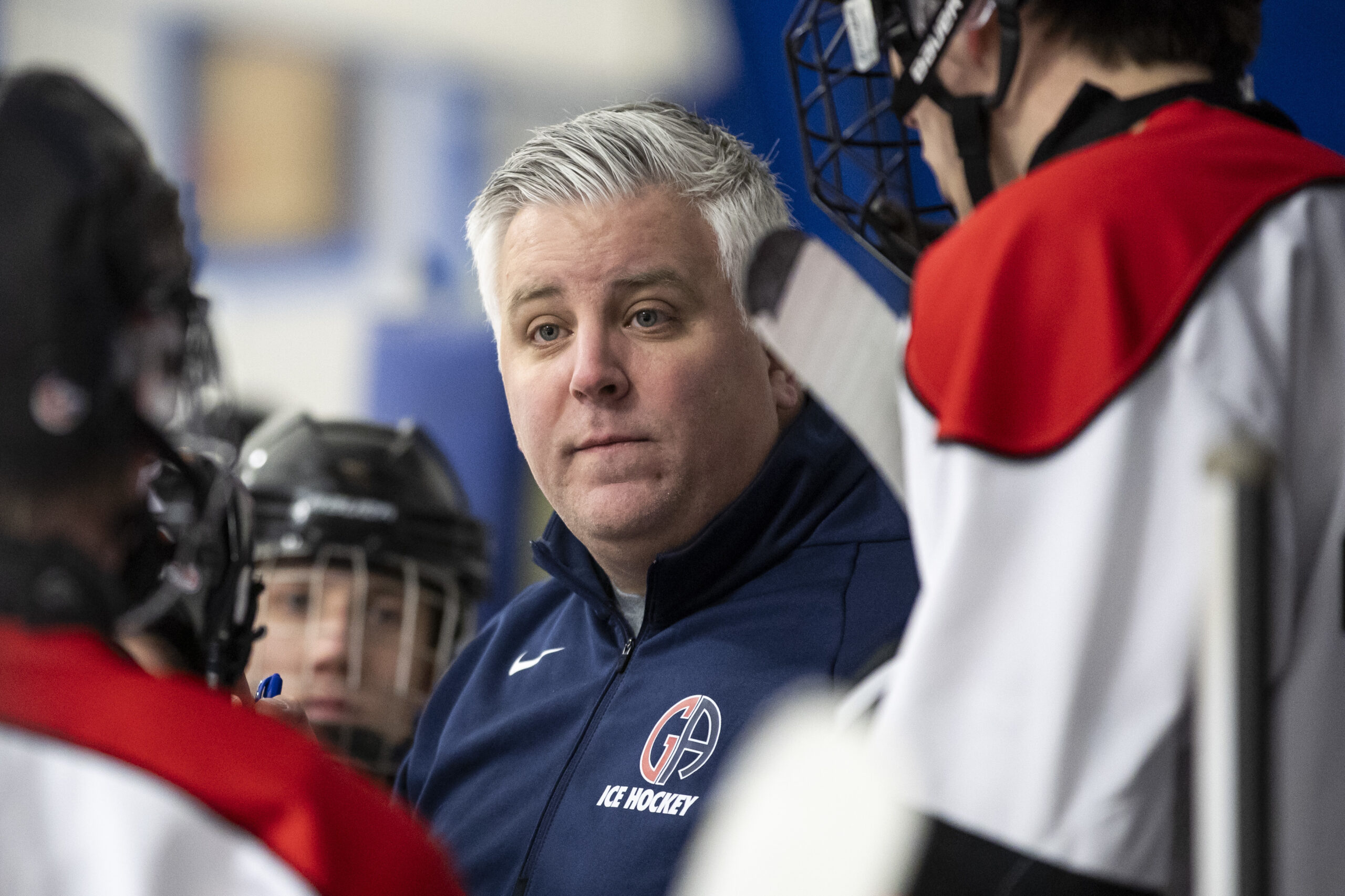
Coach Frank Seravalli talks with his team during the game against Episcopal Academy.
GA had lost five playersin 2025. School officials didn’t know how they were going to fill those spots. McGill and Lonergan had heard stories about the 1990s and 2000s teams, but returning to that level seemed like a long shot.
The Patriots hadn’t played in a Flyers Cup since 2009. After years of shrinking rosters and coaching changes, the team was moved for 2009-10 from the Suburban High School Hockey League to the lesser Independence Hockey League, which isn’t eligible for Flyers Cup entry.
“Essentially their plea was, ‘Please, help save our program,’” Seravalli said. “‘We’re not even sure we’re going to have a team next year.’
“I couldn’t say no at that point. I knew I was hooked.”
Seravalli met with Ginter shortly after. He made a succinct but powerful pitch.
“If you don’t have interest in changing your program, and really tearing it down and rebuilding it, I’m not your guy,” the insider told him. “But if you are interested, I’m willing to make a five-to-10-year commitment to build this the right way.”
He was hired in July. Seravalli rarely mentioned his full-time job, but it didn’t take long for the teenagers to figure it out. One day, while McGill was “doomscrolling” on the internet, he spotted his high school coach on Bleacher Report Open Ice.
His reaction: “Oh [expletive].”
“I texted some of my teammates,” McGill said. “I’m like, ‘He’s the Adam Schefter of the NHL!’”
Germantown Academy’s players were not aware at first that their new coach was an NHL insider.
Added junior defenseman Jack Stone: “He’s a reporter, so obviously he knows what he’s talking about.”
The insider started to use his connections behind the scenes. He’d ask current and former NHL head coaches for advice, among them Eakins, who now works for Adler Mannheim in Germany.
Eakins encouraged Seravalli to model the behavior he wanted to see in his team. He emphasized how important it was to show not only that he cared about the program, but about the players as people.
He also shared some mistakes he’d made in his own coaching career, with the hope that Seravalli could learn from them.
“Sometimes people [will] say, ‘OK, I’m a coach, now I have to take on a different persona,’” Eakins said. “And I told him, don’t do that. Don’t go in there and pretend to be [Florida Panthers head coach] Paul Maurice.
“You’ve got to go in there and be Frank Seravalli. Because as soon as you step outside of that, you’re cooked. You can only pretend to take on this other persona for so long.”
The tenor of the program changed almost immediately. Before Seravalli’s arrival, on-ice practices and team lifts were optional. Sometimes, as few as two or three players would show up. Now, they were mandatory, and everyone was expected to arrive on time.
The teenagers learned this the hard way. In October, during preseason workouts, Seravalli organized morning weightlifting. Two players — who will remain anonymous — slowly waltzed into the gym, 15 minutes late.
Coach Frank Seravalli brought a disciplined approach to the Germantown Academy hockey team.
Seravalli didn’t say anything in the moment. But after the workout, he brought the team down to the field house to run sprints. The two late arrivals were put on the sideline, so they could watch their peers suffer on their behalf.
“And I just said, ‘Look, we have a standard here,’” said Seravalli. “‘You have to make the commitment that everyone else is to show up on time and be ready.’
“And I’ll tell you what: Since then, no one’s been late.”
The players have embraced the newfound discipline. Stone said it’s something that they didn’t realize they needed, but they’re grateful to have. McGill agreed.
“He’s way more intense than what we’ve had in the past,” McGill said. “Which, to some people, can be intimidating. But if you want to play at a high level, that can’t be intimidating.
“There’s no getting away with anything around here anymore. Frank has done a great job of holding us accountable to what the new standard needs to be.”
A different type of connection
Not long after he was hired, Seravalli moved the team from the Hatfield Ice Arena to the Bucks County Ice Sports Center (formerly known as the Face Off Circle). The building looks just like it did when Anthony was in high school.
The white-and-blue paint is faded, but intact, and so is the thermostat, set to the coldest possible temperature. Five days a week, Seravalli walks past the spot where he stood as a child, watching his cousins with wide eyes, as they swept across the ice.
Anthony’s death was a shock to the entire family. He no longer roams the halls of the construction firm. He is no longer behind the bench at the Face Off Circle.
On Dec. 1, 1898, about 1,000 people gathered at a court in Textile Hall — today’s Kensington neighborhood. They were there to watch the Philadelphia Hancock Athletic Association play the New Jersey Trenton Nationals in America’s first professional basketball game.
According to an article in the following day’s Philadelphia Times, the game got a late start because referees were still ironing out the rules of the world’s newest professional sport.
But once the game got underway, it was fast and furious.
Hancock “started with a rush, scoring two field goals before the players had become warmed up to their work,” the story reads.
“Throughout the entire first half, the home team had the better of the argument, taking advantage of every opportunity finishing the half in the lead by a score of 11 to [0].”
In the end, Philadelphia lost by two points, a disappointment Philly sports fans know all too well, even in these modern times.
The final score: 21 to 19.
Daniel Lipschutz blended history into his love of the modern day sport for this sculpture.
That first game of the National Basketball League will be feted this Saturday at a Firstival at Xfinity Mobile Arena. Firstivals are the Philadelphia Historic District’s weekly day parties celebrating events that happened in Philadelphia before anywhere else in America, and often the world. They are part of a yearlong celebration of America’s 250th birthday.
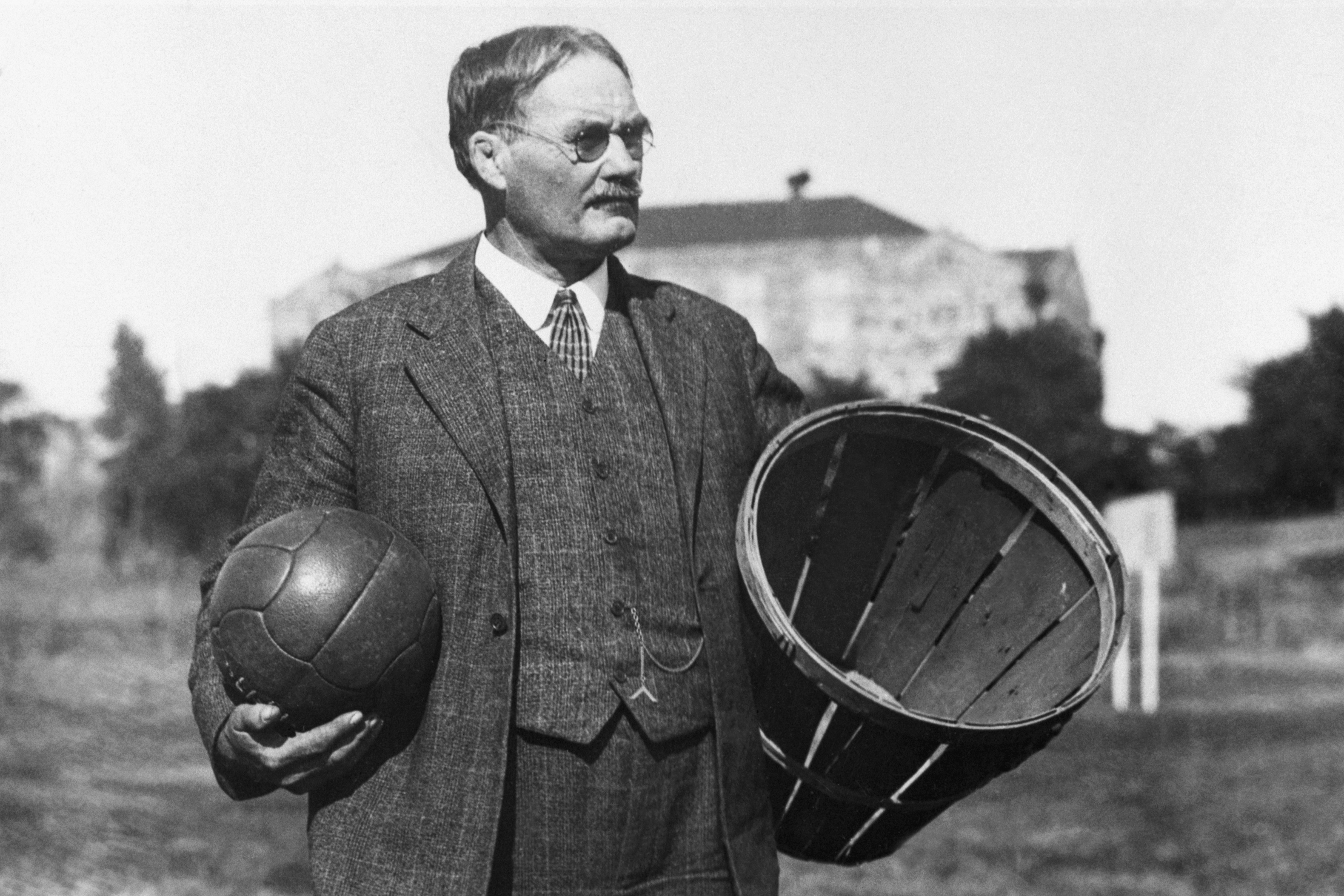
James Naismith, a YMCA coach in Springfield, Mass., invented basketball in 1891 to keep kids active during winter months. The sport incorporated elements of rugby, lacrosse, and soccer. Instead of throwing balls into a bottomless net to score, players threw balls into peach baskets.
(In other words, there was no such thing as a rebound.)
James Naismith, inventor of basketball, with a ball and a basket.
Basketball quickly became popular with college students and in 1898, Naismith was recruited to coach the University of Kansas basketball team.
That same year, Horace Fogel, sports editor of the Philadelphia Public Ledger, organized the first professional basketball league with three teams from Philadelphia and three from South Jersey.
A 12-foot chain-link cage separated players from the fans. Ropes replaced these iron cages in the 1920s.
Fogel’s National Basketball League lasted just five years, folding in 1904 because of quick player turnover eating into profits. A second league was formed in 1937 and was sponsored by Goodyear. In 1946, the Basketball Association of America was established.
And in 1949, the BAA and NBL merged to create today’s NBA.
“This really goes to show that Philadelphia is a sports city,” said Shavonnia Corbin Johnson, vice president of civic affairs for the 76ers. “When people talk about Philadelphia sports rooted in history, tradition, and passion, it’s true, but now we know that America’s true love of sports can trace its roots right back here.”
This week’s Firstival is Saturday, Jan. 24, 11 a.m. — 1 p.m., at Xfinity Mobile Arena, 3601 S. Broad St., Philadelphia, Pa. Premium Access Entrance on the Broad Street side, near Lot C. The Inquirer will highlight a “first” from Philadelphia Historic District’s 52 Weeks of Firsts program every week.
While we all wait with bated breath to see who Jalen Hurts’ seventh offensive coordinator in seven years will be (technically, 11th if you count his college years), we’re going to switch gears and talk a little Sixers — specifically the timeshare that has transpired at the center position.
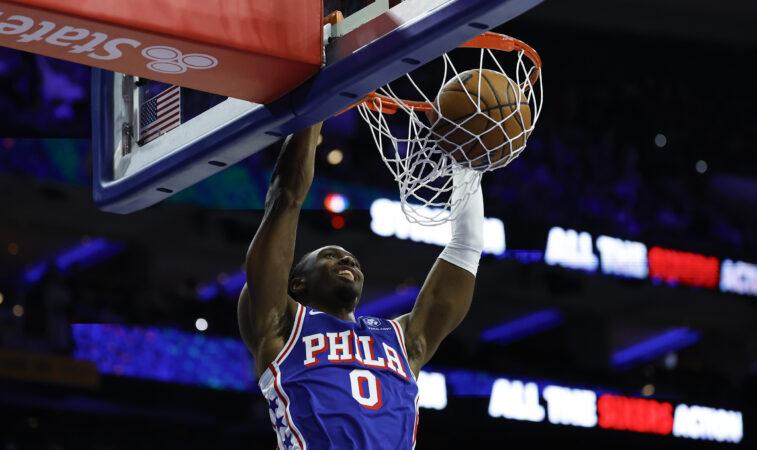
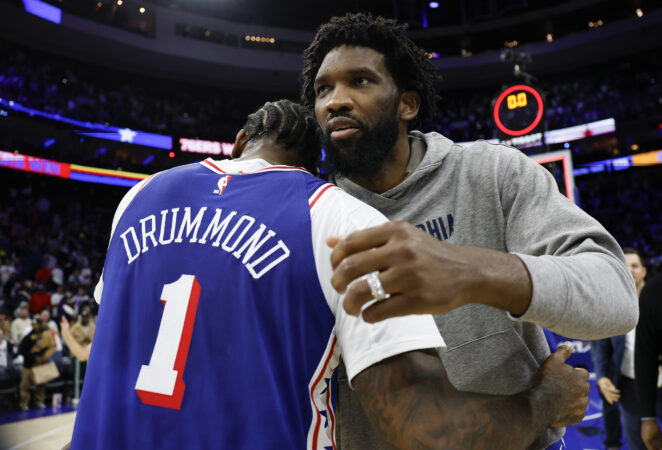
Both Andre Drummond and Adem Bona have been key contributors at the position, both under the backdrop of Joel Embiid, who, despite a litany of injuries, has been the constant at the position for the latter part of a decade.
So how do you compete with that? Well, according to both Drummond and Bona, you don’t; instead, you make the most of your minutes. Drummond, who has even been getting starting minutes recently, knows that “I probably won’t take my warmup pants off some games.”
And while you’d think it would be a battle of the big men trying to occupy minutes on the court, Drummond and Bona have become friends, reveling in each other’s moments, however fleeting or prosperous, night after night.
Inquirer writer Gina Mizell offers this rare look at selflessness on what’s shaping up to be a warmer day across the region, with highs expected to peak into the low 40s in many spots.
Ranger Suárez left the Phillies for a $130 million contract with the Red Sox.
Former Phillies pitcher Ranger Suárez took the podium in a Red Sox jersey for the first time Wednesday when he was officially introduced at Fenway Park.
The 30-year-old Suárez, who signed with the Phillies as a 16-year-old from Venezuela and developed into an All-Star and key rotation piece, departed in free agency this winter. His five-year, $130 million contract with Boston became official Wednesday.
When prompted by a reporter at his introductory news conference, Suárez clarified the traditional Spanish pronunciation of his first name.
In a wide-ranging conversation on Phillies Extra, The Inquirer’s baseball show, Jesus Luzardo said he’s interested in discussing a contract extension with the Phillies and talked about his impressive first season with the team, J.T. Realmuto’s impact behind the plate, and more.
🏈 Answering: Why were so many people from Indiana University of Pennsylvania so excited about Indiana’s national championship win, even though IUP has no ties to IU?
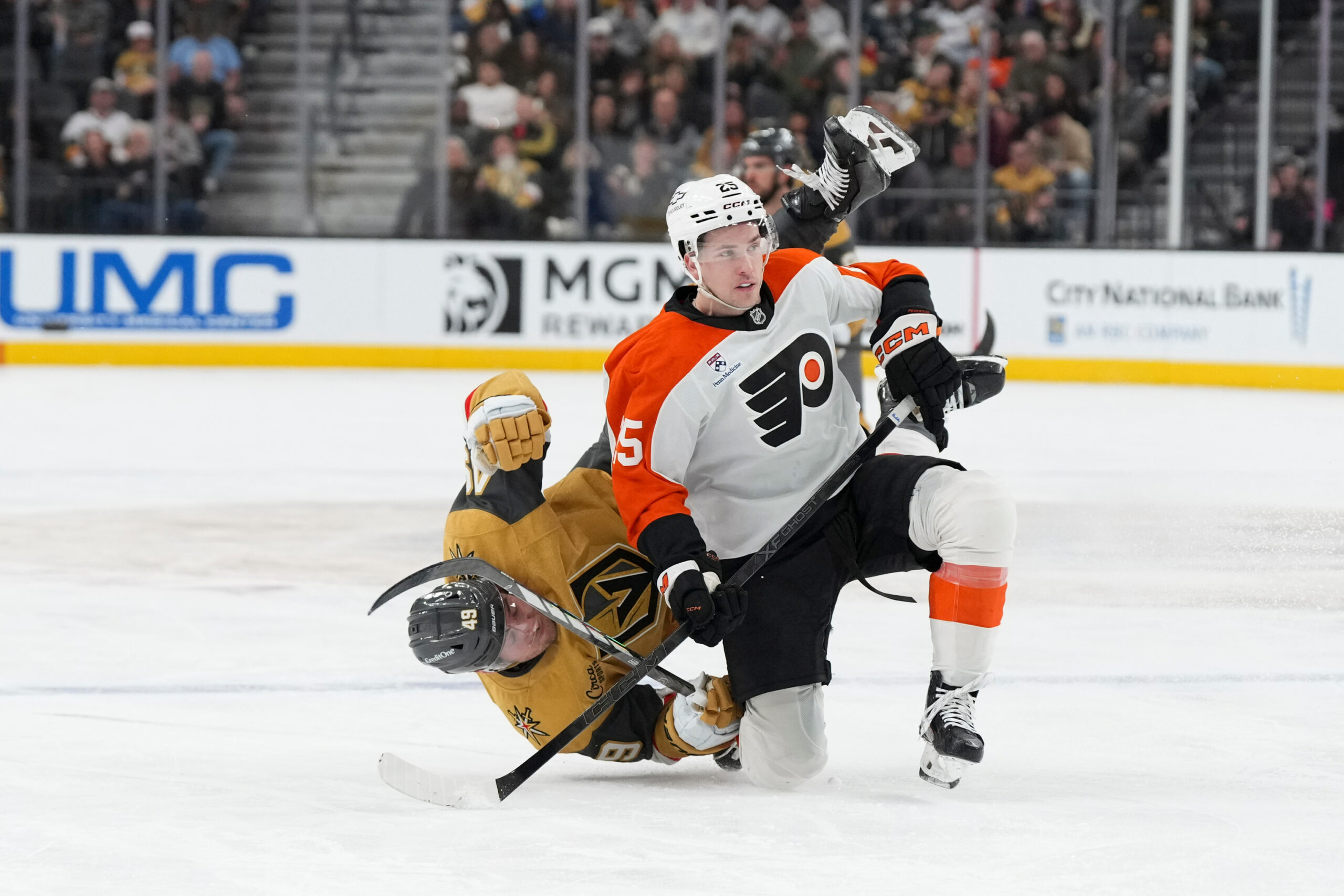
Lane Pederson made his Flyers debut on Monday against the Vegas Golden Knights. It was his first NHL game since March 2023.
Lane Pederson has ridden a lot of buses in the American Hockey League over the last few years in pursuit of his dream to one day play in the NHL again.
On Monday, that persistence and those long, late-night slogs must have all felt worth it, as Pederson played in his first NHL game in almost three years when he suited up for the Flyers in Las Vegas. The 28-year-old, who signed with the Flyers this summer, hoped he’d get one more chance to prove he belongs at the top level, and he’s got it after Rodrigo Ābols suffered a long-term injury on Saturday.
Can Pederson stick on the fourth line with a coach he knows well in Rick Tocchet? No offense to Allentown, but the centerman hopes he won’t be returning to Lehigh Valley any time soon.
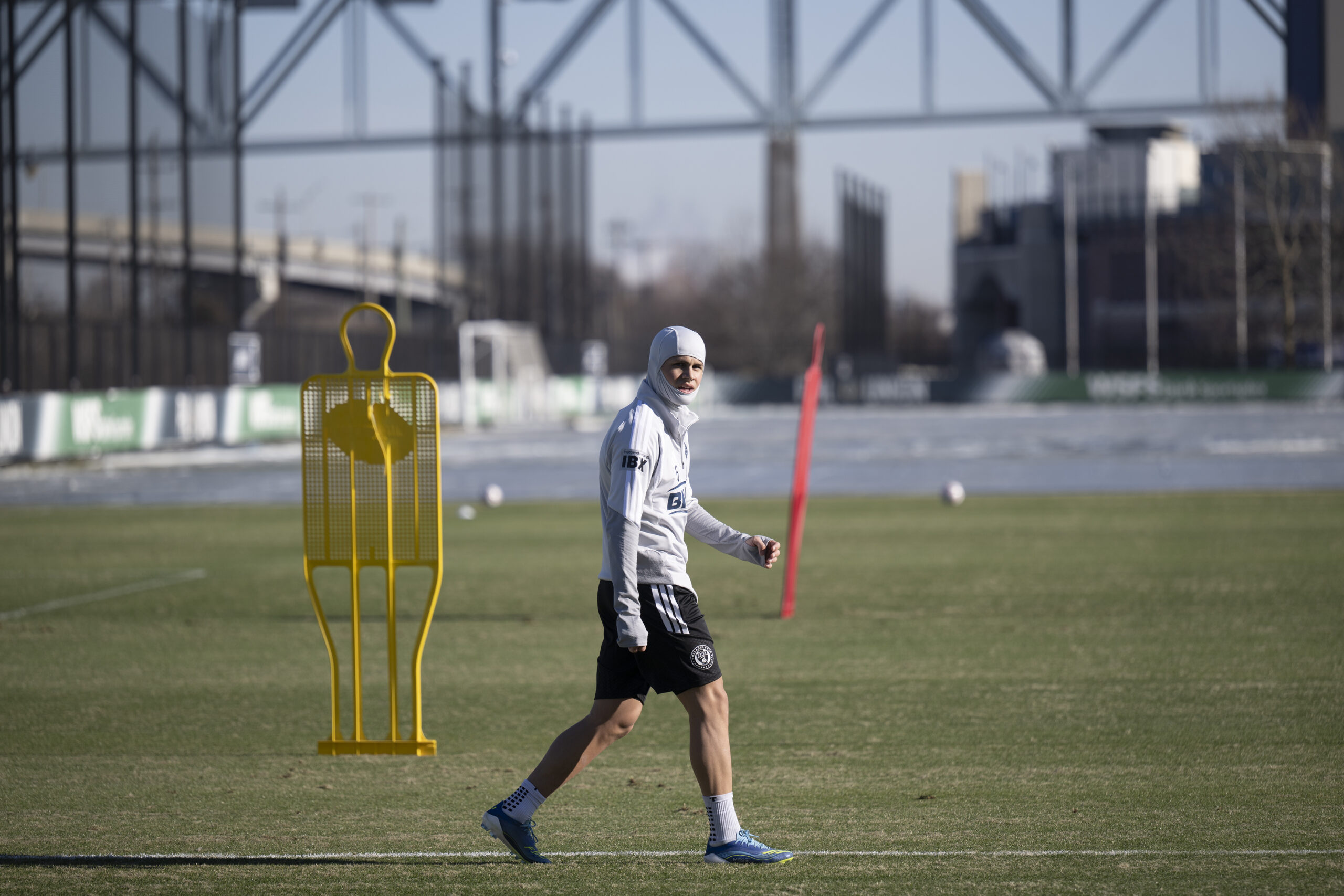
Cavan Sullivan is seen during a Union practice at Subaru Field in Chester. Tuesday, Jan 13, 2026.
There’s no need to remind Cavan Sullivan about all of the expectations placed on his now 16-year-old shoulders. He’s got plenty of reminders. It’s why this season, Sullivan says he’s focusing on the game and less on the pomp that comes with it.
The timing couldn’t be better as there’s a real chance he could see considerable minutes as an attacking midfield presence with the Union, a spot left vacant by his older brother Quinn, who suffered an ACL sprain last season.
Ahead of the team’s two-week trip to Spain, Cavan sat down with Tannenwald to talk about what could shape up to be a transformative season for the Union’s youngest pro talent.
On this date
Jan. 21, 2006: In Kobe Bryant’s legendary 81-point performance, he led the Los Angeles Lakers to a 122-105 win against Toronto. Bryant still holds the mark for the second-highest point total in a game behind Wilt Chamberlain’s 100-point game in 1962.
Standings, stats, and more
Want the full breakdown from last night’s Flyers game against the Mammoth? Here’s a place to access your favorite Philadelphia teams’ statistics, schedules, and standings in real time.
“[Howie] Roseman might be the best GM in the NFL over the last nine years, but that doesn’t mean he’s going to have the best roster in 2026. Any top OC candidate is looking at the Eagles job as a one-year stepping stone to the 2027 cycle of head-coaching vacancies. The 2026 Eagles are richly talented on paper, but they are saddled with far more questions than answers.” — The latest take from Hayes, who explores why the Eagles’ vacant offensive coordinator position doesn’t have a line around the block.
What you’re saying about the Phillies
We all know Bo Bichette isn’t headed to Philly. That seems to work out just fine for these Inquirer readers.
We asked: What are your thoughts on the Phillies missing out on Bo Bichette?
[I don’t care] about Bichette or anyone else while the flawed hero-culture core remains unchanged and unrepentant. Schwarber did a contract year showing, and we fell for it, as if his biggest night of last year didn’t follow that pathetic series shellacking by the Mets (who were not good). What’s more interesting is how much all the Philly teams have been whiffing on big new additions in recent years — most prominently right now, desirable OCs for the Eagles. The perpetual national media’s lambasting of our town and sports culture feels like it’s winning, and we’re at risk of becoming Pariahdelphia. — D.W. Stone
I believe it’s a great move on the Phillies to force them to start the process to go young. The fact that they did not make the run in September is due to the superstars not performing well. It’s now time to watch the development of the minor league players and analyze their improvement. You are not going to out-pay the Dodgers or Mets. Have fun watching new talent instead of Dave D trying to outspend our competitors. That has been Dave’s history on all his prior teams. — Dick F.
Losing Bichette is a Godsend. We win twice by not getting him. First, we can stop hearing about getting rid of Alec Bohm, whose performance is on par with Bichette, [and who] is young and still improving every year. And then they are able to pay and retain the best catcher in baseball, even though he is a ripe old 34 years old. This roster is much better overall. BTW, why has Bohm been on the trading block every single year? totally undeserved. — John W.
We compiled today’s newsletter using reporting from Rob Tornoe, David Murphy, Jeff McLane, Jeff Neiburg, Olivia Reiner, Gina Mizell, Scott Lauber, Ariel Simpson, Gabriela Carroll, Jonathan Tannenwald, Katie Lewis, Brooke Ackerman, and Jackie Spiegel.
By submitting your written, visual, and/or audio contributions, you agree to The Inquirer’s Terms of Use, including the grant of rights in Section 10.
That’s it for today. Enjoy your Thursday. Jim will be back tomorrow to get you set for the weekend ahead.— Kerith
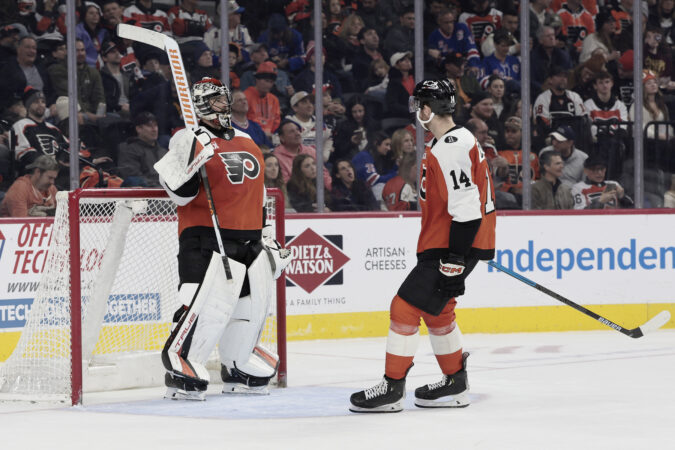
SALT LAKE CITY ― The Flyers were in control until they weren’t.
After ending a six-game losing streak on Monday, and snapping the Vegas Golden Knights’ seven-game winning streak in the process, they lost to the Utah Mammoth, 5-4, in overtime on Wednesday.
The Flyers had a 3-0 lead early in the second and led by two going into the final frame. It was only the fourth time after leading after two periods that they did not come out victorious.
Clayton Keller scored in overtime from the slot after he tied the game with 35 seconds left in regulation during a six-on-five situation.
The Utah captain tied the game when he knocked a bouncing puck away from Travis Sanheim. Keller skated around the defenseman, cut across the crease, and backhanded one over Sam Ersson. On the game-winner, Travis Konecny lost the puck deep in the Utah zone to Dylan Guenther, who carried it up the ice and eventually fed Keller for the shot.
Philly had chances to extend its lead several times, with Owen Tippett ringing one off the post after a sick dangle with 5 minutes, 55 seconds left, and Garnet Hathaway with the puck on his stick and skating in alone toward an empty net with just under 1:30 to play. But Hathaway didn’t pull the trigger fast enough and had his pocket picked by Nick Schmaltz.
It was a stinging loss as the Flyers led the game just 30 seconds in.
Defenseman Cam York slammed home the rebound on a turnaround shot by Sanheim. The goal came off sustained pressure by the defensive pair with the line of Christian Dvorak, Konecny, and Trevor Zegras, with the latter two using the boards before Konecny fed Sanheim.
The goal was York’s fourth of the season, tying his total from last year across 66 games.
Just over four minutes later, the Flyers were up 2-0 for the first time since Jan. 4 against the Edmonton Oilers. The Flyers broke out of their own end with Noah Juulsen sending an outlet pass up in the air to Konecny at center ice.
Konecny knocked the puck down and led Dvorak with the pass and he took off. The center skated between the defense, cut across the crease, and put the puck around the right pad of Karel Vejmelka.
The Flyers took a 3-0 lead with a power-play goal 58 seconds into the second period. After a clean zone entry, the unit of Zegras, Konecny, Jamie Drysdale, and Bobby Brink got to work.
Zegras and Drysdale played catch above the circles before Zegras put a shot on goal from inside the blue line. Brink had been in the bumper but then rotated into the left circle before dropping down and burying the rebound on Zegras’ shot.
The goal was Brink’s 12th of the season, tying his career high set last season.
Utah started to pick up its game after a hard and borderline high hit by Liam O’Brien on Tippett in the neutral zone. Initially, the referees called a major penalty, but after a video review, ruled that it did not warrant a penalty. Tippett left the game but returned to the bench later in the second period.
The Mammoth then scored two quick goals 36 seconds apart, the first by JJ Peterka and the second by Lawson Crouse.
On the goal by Peterka, there was a scramble at the side of the net, and he jammed in the loose puck. The Crouse goal came after Sean Durzi’s shot went off the stick of Brink, and Emil Andrae couldn’t handle the bobbling puck. Crouse knocked it away from the Flyers defenseman, and Schmaltz fed Crouse for the quick snapshot.
Flyers coach Rick Tocchet called a timeout to settle down his club, and it worked.
The Orange and Black had some chances, and then Dvorak added his second of the night with a power-play goal. He got the puck in the neutral zone, gained the zone, and fired a wrister from the right circle. Vejmelka couldn’t control the rebound, and Dvorak knocked the follow-up in.
With his second multigoal game of the season, Dvorak now has 12 goals, tying his total last season with the Montreal Canadiens. His career high is 18 set in 2019-20.
Utah cut it to a one-goal game with 7:13 left when Barrett Hayton deflected a Guenther shot from the left circle on a power play past Ersson. The Mammoth had the man advantage after Juulsen dropped the gloves with Jack McBain and got an extra two minutes for roughing. Juulsen went after McBain, who ran over Drysdale.
Breakaways
Making the start for the second straight game — the first time since Dec. 18-20 — Ersson stopped 22 of 27 shots. … Forward Carl Grundström was a healthy scratch for the first time since entering the lineup on Dec. 9. In that 21-game span, he had seven goals and nine points. … Defenseman Hunter McDonald and forward Nic Deslauriers were also healthy scratches. … The Flyers extended their point streak to two games.
Up next
The Flyers head to Denver to face the NHL’s best team, the Colorado Avalanche — who have only five losses in regulation on the season — on Friday (9 p.m., NBCSP).
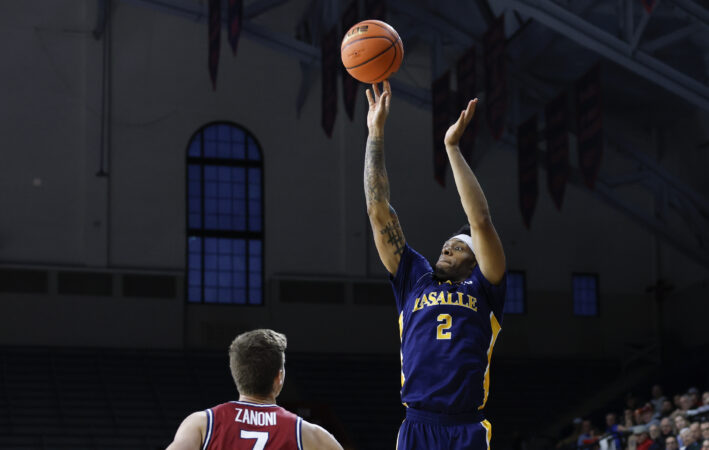
Jaeden Marshall’s 25 points off of the bench led La Salle to a 67-64 victory over Dayton on Wednesday.
Marshall shot 7 of 11 from the field, including 4-for-7 in three-pointers, and went 7-for-7 from the line for the Explorers (7-13, 3-4 Atlantic 10). Josiah Harris scored 10 points while shooting 4 of 7 from the field. Jerome Brewer Jr. had seven points, including two free throws with 21 seconds remaining.
Keonte Jones led the Flyers (14-5, 5-1) in scoring, finishing with 14 points, 10 rebounds, and two steals. Dayton also got 11 points and five assists from Javon Bennett. Bryce Heard also had 10 points. The loss ended a five-game winning streak for the Flyers.
Marshall scored 12 points in the first half for La Salle, which led 40-29 at the break. Marshall led La Salle with 13 points in the second.
Former Phillies pitcher Ranger Suárez took the podium in a Red Sox jersey for the first time Wednesday when he was officially introduced at Fenway Park.
The 30-year-old Suárez, who signed with the Phillies as a 16-year-old from Venezuela and developed into an All-Star and key rotation piece, departed in free agency this winter. His five-year, $130 million contract with the Red Sox became official Wednesday.
When prompted by a reporter at his introductory news conference, Suárez clarified the traditional Spanish pronunciation of his first name.
“My name is actually [Rahn-HER], but however you guys want to address me, [RAYN-jurr] is how most people do, so I’m comfortable with either,” he said through an interpreter.
Throughout his tenure with the Phillies, Suárez was typically referred to with an Anglicized pronunciation of his first name. His walk-out song, “Mr. Rager” by Kid Cudi, was even a nod to it.
The left-hander also expressed excitement about joining the Red Sox-Yankees rivalry. He said he rooted for Boston as a child in Venezuela.
“Since I was a little kid, when we would watch baseball on TV, what would be on was Red Sox-Yankees,” Suárez said. “And everyone was going for the Yankees and I asked, ‘Why is no one going for Boston?’ And that’s where the interest started.”