Category: Sports Columnists

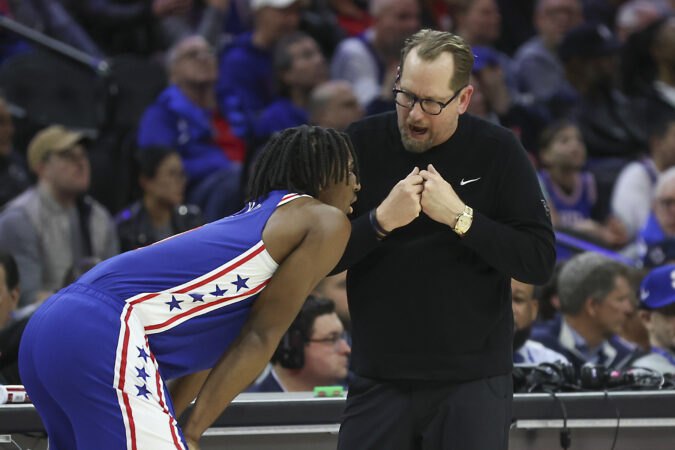
  • ‘No resistance.’ ‘Soft.’ Tyrese Maxey and Nick Nurse explain the Sixers’ record-breaking blowout losses

    ‘No resistance.’ ‘Soft.’ Tyrese Maxey and Nick Nurse explain the Sixers’ record-breaking blowout losses

    There’s no shame in losing a basketball game.

    This is doubly true when the two highest-paid players in the history of the franchise are either hurt (again), suspended (seriously?), or, when they are available, less than fully whole.

    Sometimes, there’s even no shame in losing by 40.

    However, there is great shame in losing by 40 because you don’t play hard. There is humiliation in being down by 49 with 12 minutes to play because, for the previous 36 minutes, you generally played matador, playground, YMCA defense, despite playing at home, after a day off.

    The Sixers lost by 40 to the Spurs on Tuesday night, but it could have been 70, except the Spurs sat their starters in the fourth quarter. They trailed by 49 after three en route to ignominy.

    It is their third home loss by at least 40 points. They are the first team in NBA history to lose three home games in the same season by at least 40, according to @basketball-reference.com.

    They’re the league’s worst third-quarter team, and the second worst in the last 30 years, but they gave up 46 points in the second quarter Tuesday. They are nothing if not equal-opportunity no-shows.

    They played without Joel Embiid, whose side hurts, and they played without Paul George, who served the 14th game of his 25-game drug suspension.

    They have won plenty without either of them, and both. Fueled by an MVP-caliber season from Tyrese Maxey, the Sixers entered Wednesday night’s game against the visiting Jazz at 33-28, which gave them sixth place in the Eastern Conference. If they play hard, they are a viable team every night.

    So, on a night without their two future Hall of Famers, and a night without bed-sick forward Kelly Oubre Jr., you would think the Sixers, to a man, would play hard. You’d think they would prioritize defense and rebounding.

    They did not.

    They were outrebounded by 16. They gave up 131 points.

    They played weak and they played dumb and they played like a team that was defeated before it took the court. They did so in a national TV prime-time game that embarrassed the franchise in front of the nation.

    No resistance

    “There just was no resistance, defensively,” coach Nick Nurse said.

    What he didn’t say was, again. He could have. For the Sixers, blowouts have become as common as bad draft picks.

    Blame Nurse if you like, or blame the players, or blame the bad luck and bad choices that have kept the stars in the trainer’s room, but the Sixers are conducting a clinic on how to chase fans to the parking lot before the fourth quarter is half over.

    This not only was the Sixers’ third loss by at least 40 points, it was their fourth loss by at least 37 points, and their seventh loss by at least 21 points. Despite it being a 40-point loss, it was still nine points shy of their worst loss of the year, a 49-point disgrace against the visiting Knicks on Feb. 11. Entering Wednesday night’s game against the Jazz, the Sixers had suffered three of the 17 worst losses in the NBA this season — a year in which about one-third of the league is tanking.

    All seven of the Sixers’ blowouts have come in their last 45 games, which means, lately, they’re getting destroyed more than 15% of the time.

    Is it road woes? No. Five of the seven blowouts came at home.

    Is it the competition? Not necessarily.

    The Spurs are a deep, well-coached team built around Victor Wembanyama, the game’s best two-way player. They’ve lost big to really good teams like San Antonio and Oklahoma City, but they’ve been dog-walked by three teams with worse records than their own: Orlando, Charlotte, and even woeful Washington.

    Maxey believes that when the Sixers don’t play hard and lack focus early, they have no chance late.

    “When we don’t start fast, defensively and aggressive in the right way — that’s when it happens,” Maxey said. “We start soft, and we’re not pressuring the ball, not getting to the ball, and we give up bad cuts, and stuff like that.”

    That’s occasionally true, but the Sixers have generally been able to match their oppositions’ output in the first quarter. However, they’ve had to come back to do so, and that sometimes leaves them exhausted when the second quarter comes around. They gave up 51 points to Orlando, 41 to Charlotte, and 46 to the Spurs in the second quarters of those blowouts.

    Forget the numbers. Forget the quarters. If you watched the games, you saw what Nurse saw:

    No resistance.

    C’mon, man

    You saw Maxey throw away a cross-court pass, then just watch the thief streak down the court.

    You saw Andre Drummond, a former defensive player of the year candidate and a four-time rebounding champion, foul Wembanyama twice in the first two minutes. Drummond, Embiid’s $5 million understudy, played just five minutes.

    Blowouts happen, especially when your roster fluctuates. Before their latest excuses for absence materialized, Embiid and George were only inconsistently available. This was due to age, injury management, and, frankly, a questionable desire to actually play in the games for which they are paid a combined $106 million this season.

    But their presence doesn’t ensure proficiency. Embiid and George both played in two of the blowouts. Embiid missed the other five, while George missed four of the five.

    Throw in a rookie like VJ Edgecombe, who, predictably, makes mistakes on defense, and add a dash of Maxey, who is congenitally defense-challenged, and you’re going to have the occasional train wreck.

    But it should only be occasional. It shouldn’t be more than 10% of the entire season.

    It might seem unfair to question players’ effort, especially that of Maxey and Edgecombe. Maxey leads the NBA in minutes played, and Edgecombe ranks eighth, and he leads all rookies, and the blowouts started about a month into the season.

    But Drummond, Edgecombe, and power forward Dominick Barlow, this season’s feel-good story of persistence and effort, earn their minutes from their defense.

    Embiid’s strained oblique will cost him at least one more game and probably more. George is out until March 25.

    Until they’re both back and both viable, the Sixers will have a talent void. They can best fill it with persistence and effort.

    But on nights when they offer “no resistance,” they will have no chance.
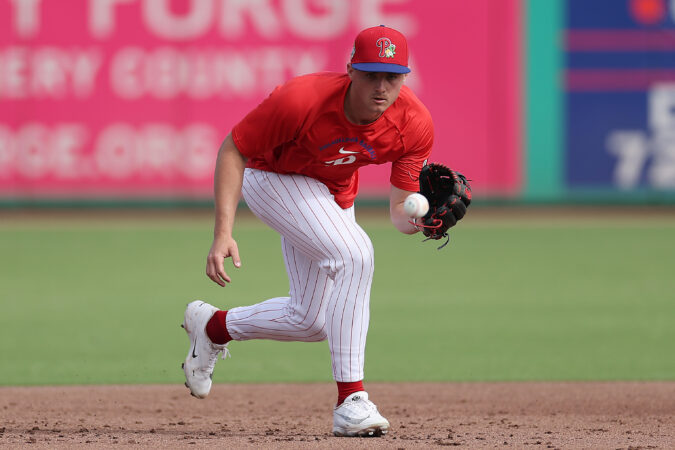
  • Johan Rojas’ potential PED suspension leaves Phillies no choice but to act (again)

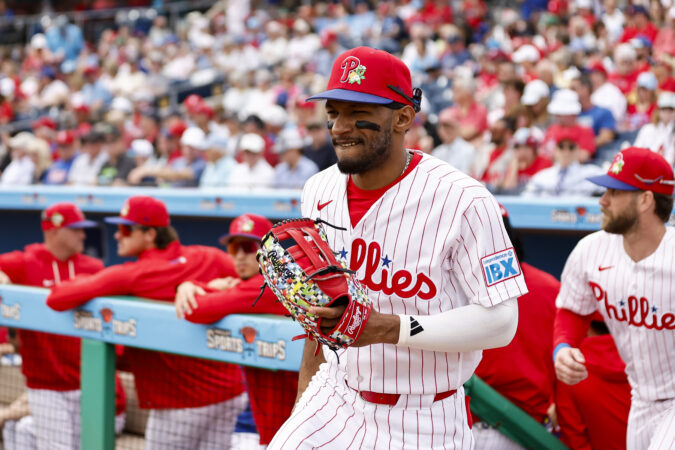
    Johan Rojas’ potential PED suspension leaves Phillies no choice but to act (again)

    The news that is coming down the pipe wouldn’t be a huge deal for some teams.

    The Phillies are not one of those teams.

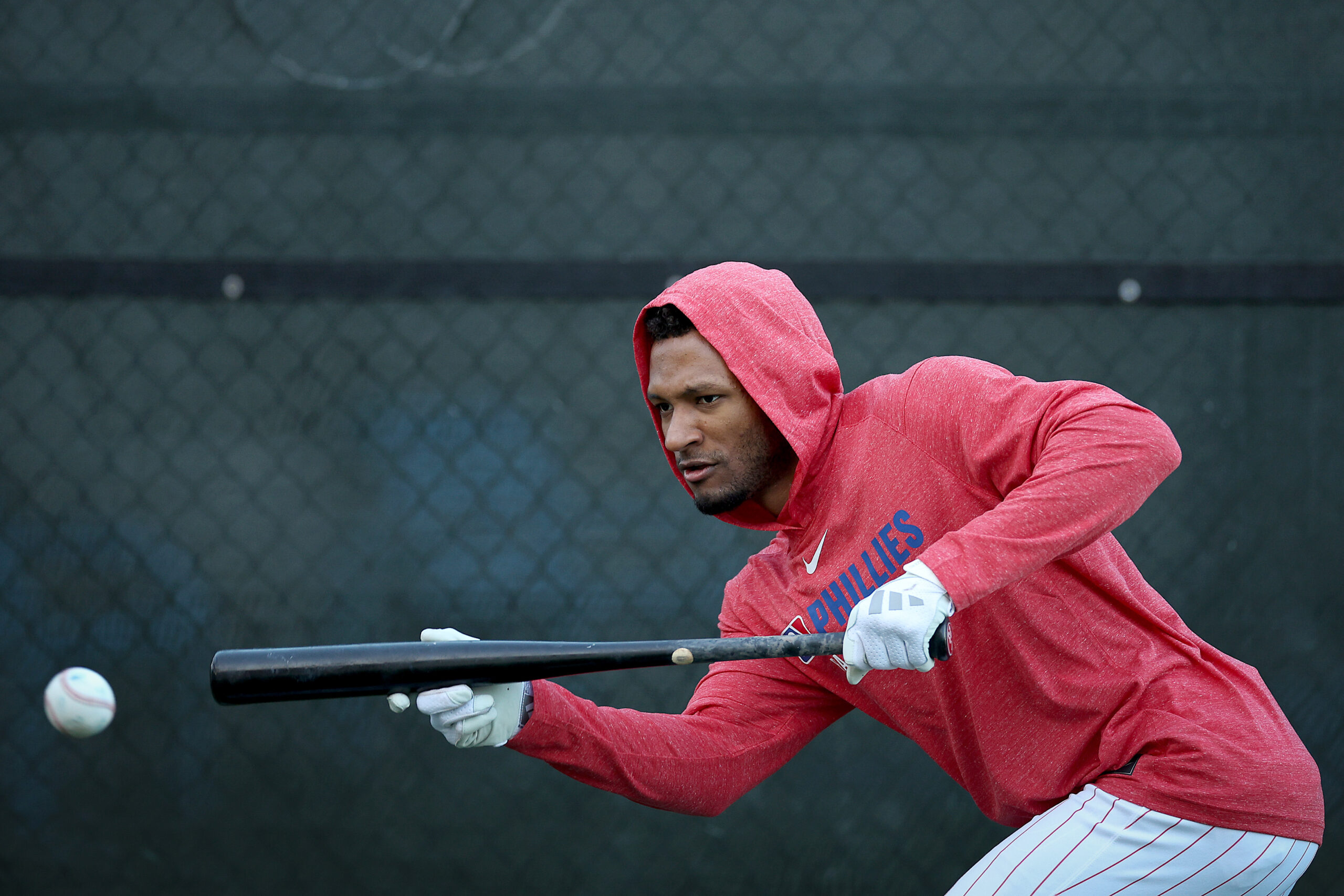
    Johan Rojas might be a third-string center fielder who forces you to play with an eight-man batting order, but he is a man without an obvious replacement right now. The Phillies are going to need to figure one out soon, assuming the formality of the 25-year-old’s pending appeal of an 80-game performance-enhancing drug suspension that an Inquirer source says he faces.

    Bryan De La Cruz? The 29-year-old nonroster invitee offers enough of a profile at the plate to suspend disbelief. But he hasn’t played center field in the big leagues since 2023, and even then, he did it in only seven games.

    Dylan Moore? He played a couple of innings in center field last season but has only 105 in a seven-year big league career as a utility man. The 33-year-old nonroster invitee would make some sense as the third option in any given game. But it’s a stretch to think he’d make sense as a long-term sub.

    Or, there is Pedro León, a 27-year-old who went 2-for-20 with 10 strikeouts in 2024 for the Astros. Houston waived him in November.

    There aren’t any other options on the spring training roster, unless you count Edmundo Sosa in an emergency.

    There is a reason the Phillies traded for Harrison Bader last July. It’s the same reason they were open to re-signing him early in an offseason that ended with him settling for a two-year, $20.5 million contract with the Giants. The Phillies are thin on center fielders and right-handed hitters, and even thinner on guys with both skill sets.

    It’s a shame the Bader situation played out as it did. The Phillies’ offseason would look a lot different if they’d been able to sign him to something like a two-year, $25 million extension before he exercised his end of a mutual opt-out. There would have been more than enough at-bats to go around between righties Bader and Adolis García and lefties Brandon Marsh and Justin Crawford, as well as a better combination of depth and platoon ability. And if Bader came at the price of García going elsewhere, no worries. You can get a right-handed-hitting corner outfielder easier than you can a right-handed-hitting center fielder, and a lot of them cost less than García’s $10 million for the same amount of cross-your-fingers-and-pray.

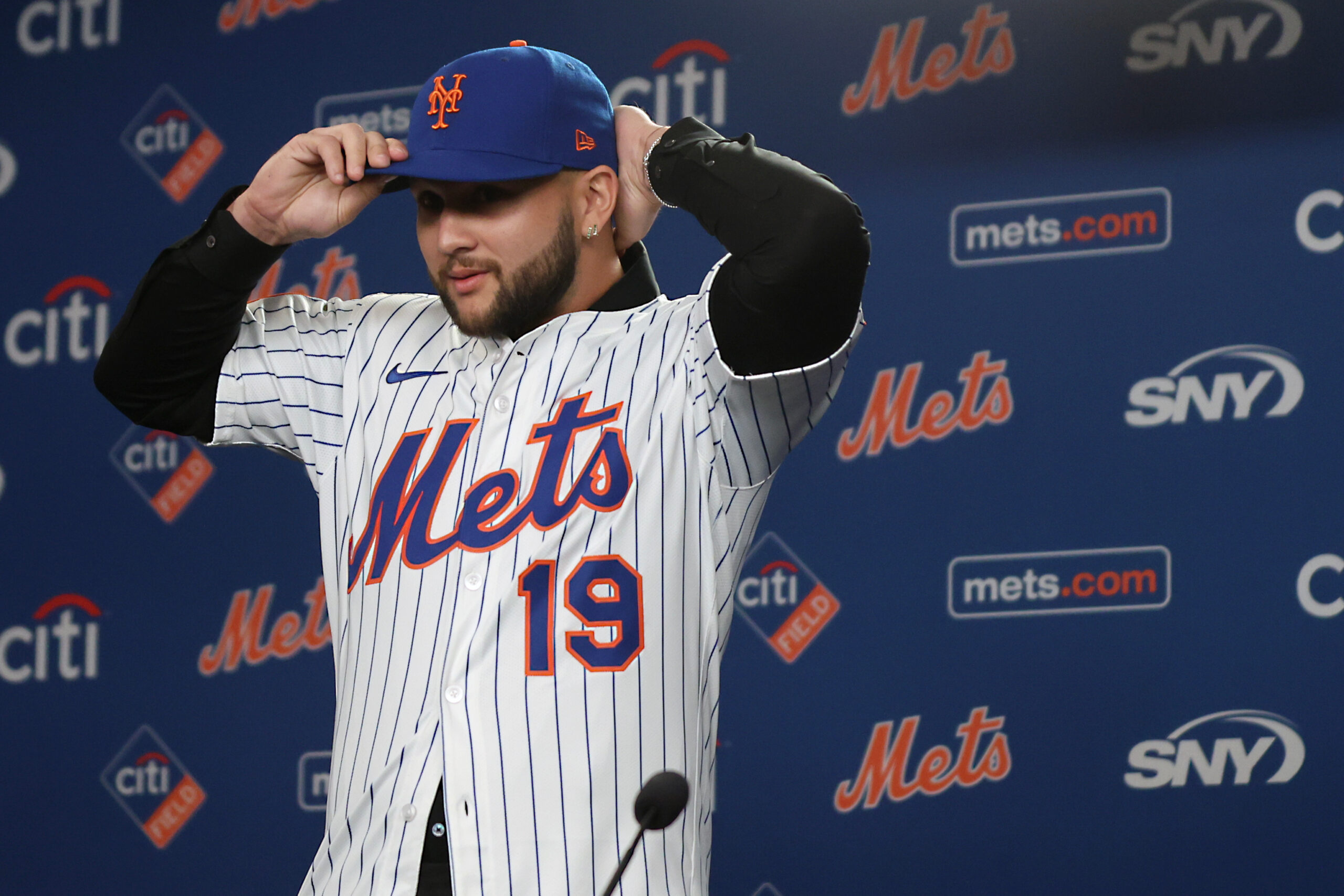
    Alas, here we are. It would betray a misunderstanding of the inner workings of the business of baseball to interpret Bader’s contract with the Giants as an unwillingness to match by the Phillies. They moved on and he moved on, and nobody would be thinking twice if the Mets didn’t offer an outlandish contract to Bo Bichette. None of that matters now.

    The Phillies don’t have a choice but to scour the earth for someone who at least looks like a center fielder when you squint. Marsh has never played in more than 135 games in a big league season, which is 135 more than Crawford has ever played. That’s not a comfortable situation. The only unsigned free agent of note is Manuel Margot, who would leave everyone pining for Rojas.

    Keep in mind, Rojas appeared in 71 games last season. At the start of that season, the organization’s depth chart looked pretty much as it does now. If you’d forgotten Rojas got that much playing time, it’s because he didn’t offer a lot to remember him by.

    Johan Rojas’ .569 OPS last season ranked among the bottom 10% of MLB hitters with at least 170 plate appearances.

    His .569 OPS ranked among the bottom 10% of MLB hitters with at least 170 plate appearances. He is one of only three center fielders out of 46 total to have an OPS lower than .600 while garnering at least 500 plate appearances over the last two seasons. His average exit velocity ranks second to last.

    That would lead to an obvious question, if we hadn’t already covered the answer. Why did Rojas get so many at-bats? Because the Phillies didn’t have any better options. Sure, some wishful thinking factored in, as did an overemphasis on center-field defense. The math is a little more complicated than subtracting the surplus doubles a better defender robs from the surplus doubles a better hitter would have given you at the plate. But the fundamental logic holds, and Rojas failed it. Reality is, the Phillies were a better team last season with Rojas on the bench and Marsh in center field, even against lefties.

    You can argue that they are no worse off for losing Rojas. It might be true, to a certain extent. Moore and De La Cruz could be as good as it gets unless someone shakes loose on cutdown day (local product Chas McCormick is in camp with the Cubs on a minor league contract). If finding a center fielder was easy, we wouldn’t be having this conversation.

  • Stop blaming Alec Bohm for the failures of Phillies cleanup busts Nick Castellanos and J.T. Realmuto

    Stop blaming Alec Bohm for the failures of Phillies cleanup busts Nick Castellanos and J.T. Realmuto

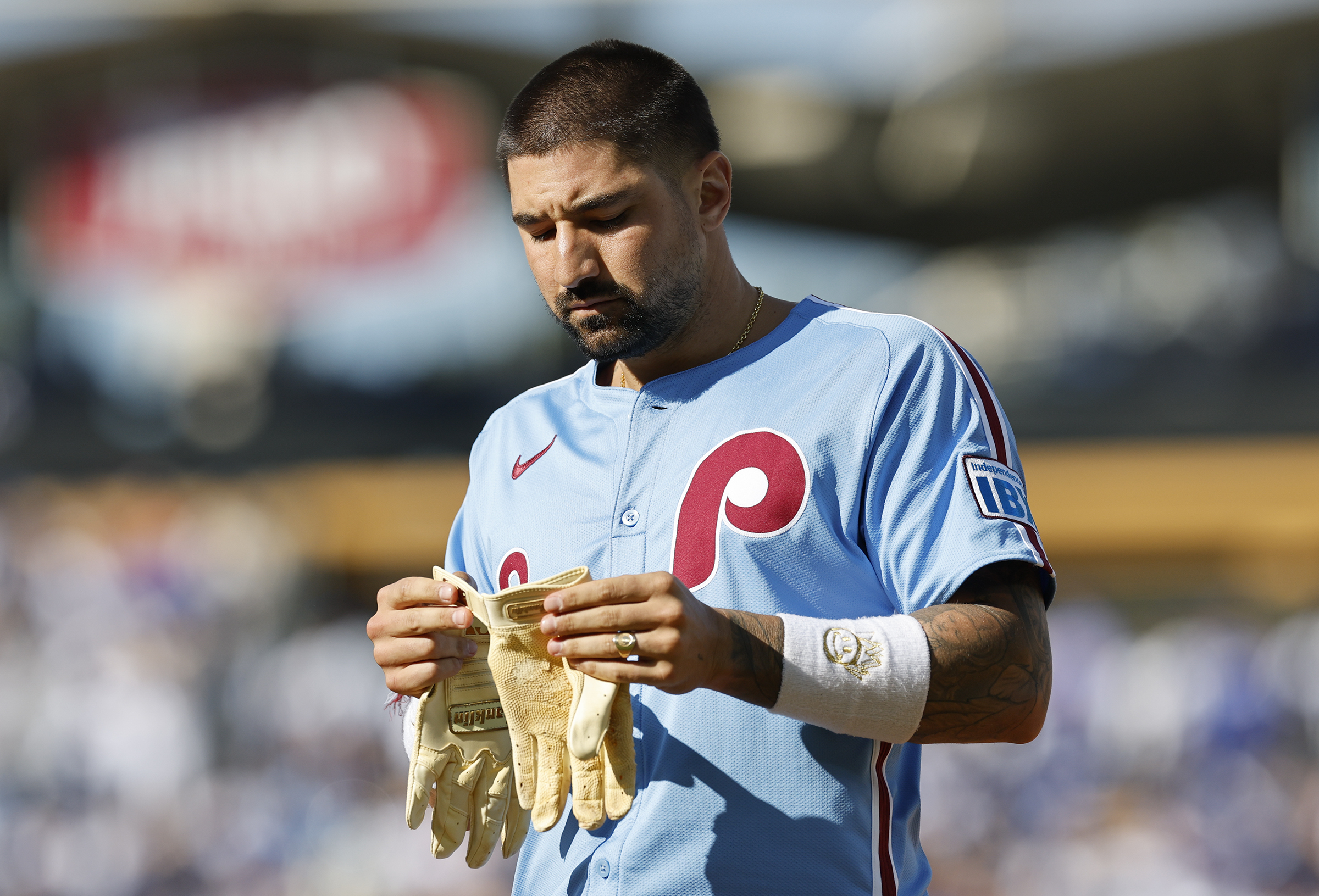
    The only person who takes more undeserved blame than manager Rob Thomson for the shortcomings of the Phillies quarter-billion-dollar lineup is Alec Bohm.

    Entering his sixth season, Bohm, the third overall pick in the 2018 draft, is largely considered a semi-bust, especially in the frustrated Philadelphia region. Optically, it makes sense: He’s 6-foot-5, sculpted and wide, and was expected to be a basher coming out of Wichita State who eventually would migrate from third base to first. That hasn’t happened, but he’s nowhere near a bust.

    With the exception of a sophomore slump in 2021, Bohm has been a competent major league third baseman. That’s something of a miracle in itself, since the Phillies rushed him to the majors for the COVID-shortened 2020 season with zero experience in triple A.

    Has Bohm been the homegrown stud hitter Phillies fans have craved since the days of Chase Utley, Jimmy Rollins, and Ryan Howard? No. But he hasn’t been Domonic Brown or Maikel Franco, either.

    He’s been a pretty good player on some very good teams surrounded by a bunch of star hitters who couldn’t get the job done. Bohm catches shrapnel for their shortcomings more so than his own, and some folks can’t wait to get rid of him. That was never more evident this winter.

    Phillies fans relished rumors that projected Bo Bichette’s arrival as a free agent, not the least because it would mean a corresponding departure by Bohm. He no longer would have a starting spot at third base with the arrival of Bichette, who would have switched from shortstop to third.

    Phillies fans thought signing Bo Bichette would force Alec Bohm out, but Bichette opted to sign with the Mets.

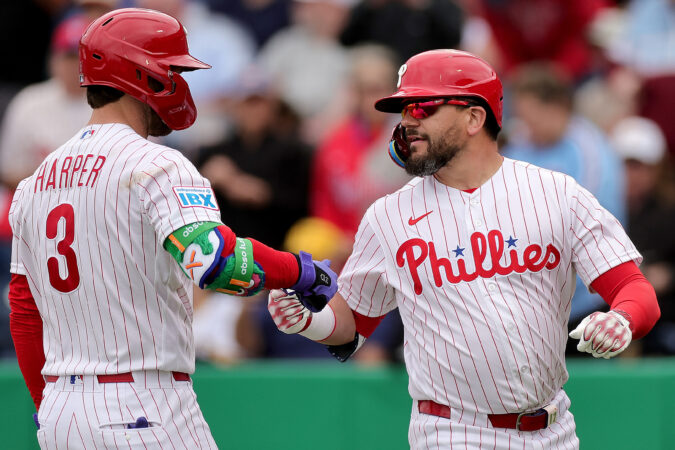
    But the Bichette deal fell through at the 11th hour. That left the Phillies with Bohm and free-agent gamble Adolis García as first options to bat in the No. 4 hole behind presumptive third hitter Bryce Harper.

    In Philly, all hope collapsed, because Bohm has proved himself unfit for that particular job … right?

    Well, maybe.

    But that’s not the point.

    The point is, the Phillies spent more than $200 million so that Bohm wouldn’t have to do the job at all.

    Wasted money

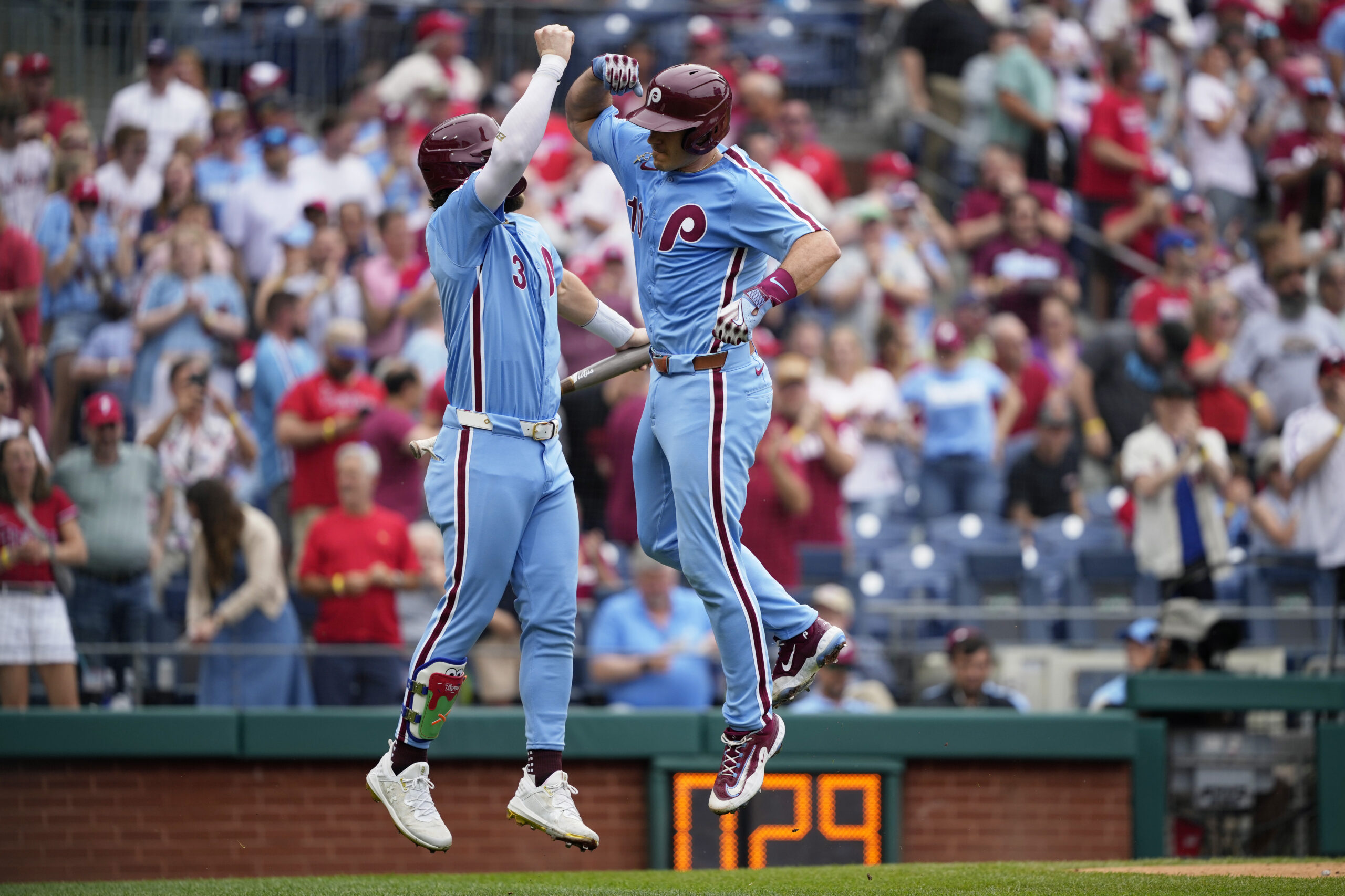
    As The Inquirer reported last week, no everyday player with an OPS over .800 last season scored fewer runs than Harper’s 72. Harper’s OPS of .844 last season was his lowest in nine years, in part because he saw fewer strikes than any other everyday player. Harper was largely unprotected, and, when he reported to spring training, he let everyone know he wasn’t happy about any of it.

    “I think it makes a huge impact,” he said. “I think whoever’s in that four spot is gonna have a big job to do, depending on who’s hitting three or who’s hitting two.”

    That big job was never supposed to be Bohm’s job, so to paint the situation as a failure by Bohm is wildly unfair, considering what any realistic expectations might have been for a player surrounded by a constellation of supposed stars.

    In 2022, in what would be Bohm’s second full season, the Phillies signed right-handed hitter Nick Castellanos, mainly to protect Harper. Castellanos utterly failed. His OPS from 2022-25 while batting fourth was .705, .853, .645, and .651. Castellanos didn’t hit behind Harper every time, but he hit behind him most of the time. He made $80 million.

    J.T. Realmuto (right) has largely struggled protecting Bryce Harper in the lineup over the past four seasons.

    When Castellanos didn’t hit fourth, Realmuto often did. He went .953 in 2022, had only 34 plate appearances in 2023 (.458)/, then went .635 in 2024 and .683 in 2025. He made $95.5 million in those four seasons.

    In 2023, it occasionally fell to Bohm to hit fourth. He produced .711, .769, and .571 OPS results in the past three years. He made $12.4 million.

    Despite Bohm’s poor numbers in 2025, Harper actually was his most productive when Bohm hit behind him, according to MLB.com.

    When the Phillies signed Castellanos to a five-year, $100 million contract in 2022, he was projected to be the cleanup hitter not only through 2022 but also through 2026. But the Phillies released Castellanos last month. He’d been insubordinate last season, but that wasn’t the main reason, because no sport endures insubordination like baseball. Castellanos’ real sin was that, for the better part of four seasons, he stole money.

    Casty’s Wins Above Replacement (WAR) since 2022 was 1.3. Bohm’s was 5.8.

    Who was the real disappointment?

    Nick Castellanos was supposed to be the right-handed bat in the cleanup spot to protect Bryce Harper. He was released last month by the Phillies.

    Peer pressure

    Not only does Bohm compare favorably to the $100 million man, he compares favorably with players of his approximate age.

    Among first-round hitters from 2018 with at least 1,000 plate appearances, Bohm’s 5.3 WAR ranks fourth. His .743 OPS ranks second, by just one-thousandth of a point, to Royals infielder Jonathan India. Bohm’s 70 homers rank third. His 719 games played ranks first.

    What about the 2017 draft? Among first-round hitters from both 2017 and 2018 combined, Bohm is sixth in WAR, fifth in OPS, sixth in homers, and still first in games played — and yes, we omitted Kyler Murray, drafted ninth overall by the A’s but opted to play in the NFL.

    Bohm was picked high in the draft, so how does he compare to those guys? Well, among the first 10 hitters selected in both drafts combined, Murray again omitted, Bohm’s 5.3 WAR ranks second.

    It’s true that 2017 is considered one of the worst drafts in recent memory, but Bohm can’t do anything about that. Simply, when compared with his peers, Bohm is outperforming almost all of them.

    Alec Bohm has worked hard to transform himself from utterly disastrous defensively at third base to perfectly acceptable in his last three seasons.

    Current crop

    How does Bohm compare with the rest of baseball over his career?

    Since Bohm debuted in 2020, his OPS of .743 ranks 150th among the 382 hitters with at least 1,000 plate appearances. He is far above average.

    We can’t make the argument that Bohm is a far above-average player. He’s not. But he’s certainly average at least, and that’s saying something. He’ll be a 30-year-old free agent after this season, and he’ll probably last at least four or five more seasons.

    Historically, fewer than 20% of first-rounders collect 1,000 hits. Bohm has 753. Similarly, fewer than 10% of all major league players play at least 10 seasons. Bohm is entering his sixth.

    He has been, by any measure, a good first-round pick.

    Is he everything folks thought he’d be when he was drafted — that is, a middle-of-the-lineup run-producer? Not really.

    Is he adequate protection for a slugger like Harper? Probably not.

    Is he the most emotionally stable player? No.

    In 2022, on a night when he’d struggled defensively, Bohm made a routine play. Phillies fans cheered sarcastically. TV cameras caught Bohm saying, “I [bleeping] hate this place.”

    In 2024, mired in a 2-for-31 slump that bled from the end of the season into the playoffs, Bohm, in full pout mode, was benched for Game 2 of the NLDS. (His replacement, Edmundo Sosa, did not reach base in two plate appearances, Bohm pinch-hit for him and did the same, and the Phillies won.)

    Bohm is not a fan favorite. Phillies fans despise a lack of mental toughness.

    But Bohm did manage 97 RBIs in both 2023 and 2024. He did hit 20 home runs in 2023, and he was an All-Star in 2024. He worked hard enough at third base to progress from utterly disastrous in his first two seasons to perfectly acceptable in his last three seasons.

    Will he hit well enough to protect Harper this year? Probably not. Will García? Probably not.

    His overall .675 OPS the past two seasons is far below Bohm’s .762. García was at .712 in the cleanup spot in 2024, .662 in 2025. He’s on a one-year, $10 million deal.

    Bohm is making $10.2 million. It’s the first time in his career that he’s outearning the guy who’s being paid to do a job Bohm never was meant to do … unless you count Realmuto, whom the Phillies just re-signed. He’ll make $15 million this season.

    For that kind of money, maybe every once in a while J.T. could help out at the four-spot.

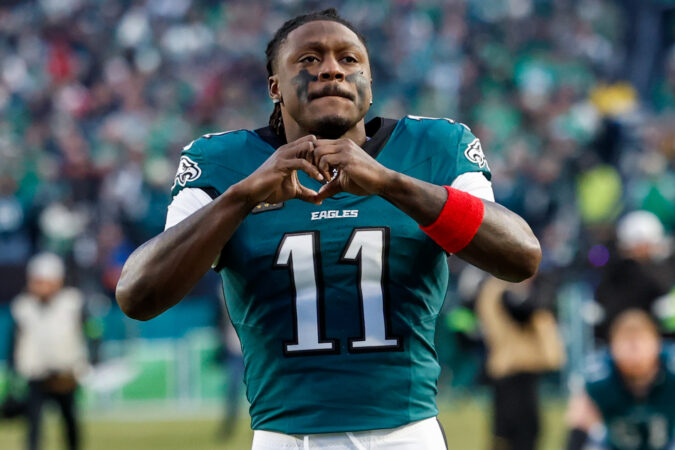
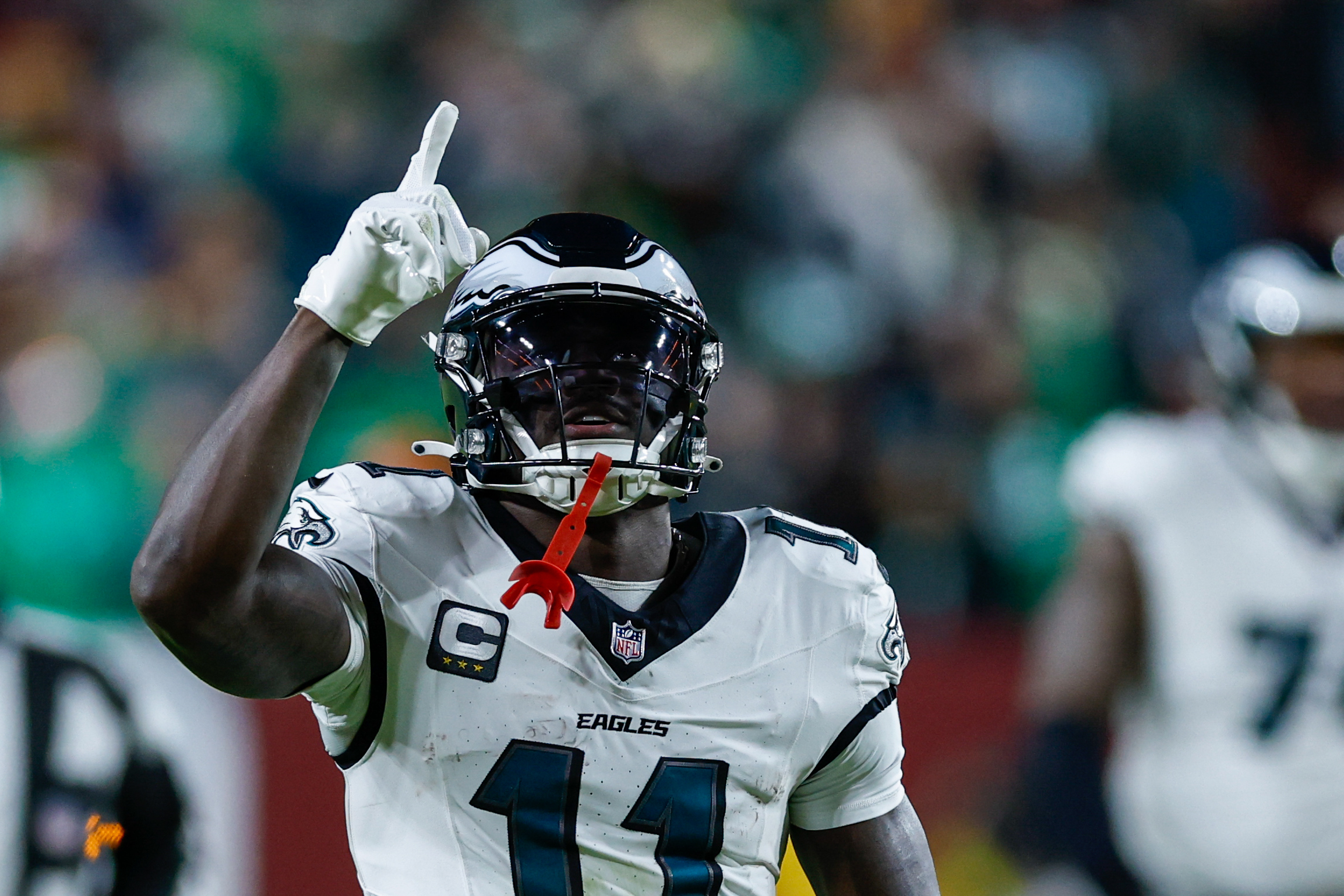
  • Why Eagles should target Kenyon Sadiq, KC Concepcion, and Germie Bernard — even if it means trading A.J. Brown

    Why Eagles should target Kenyon Sadiq, KC Concepcion, and Germie Bernard — even if it means trading A.J. Brown

    The next two months will be franchise-defining for Howie Roseman and the Eagles. That’s partly a function of how much they need to accomplish in order to get their offense on a sustainable footing. But it’s also a function of how much opportunity they have to do so. In fact, they have more of it than most teams in their situation can hope to have.

    The decision-making revolves around the draft, as it always does. The most honest thing anybody can say about the draft is that the best decisions are primarily a result of what’s available. Roseman deserves a ton of credit for projecting Quinyon Mitchell as an elite cornerback. But he gets credit for drafting him only because he lasted until the 22nd pick. Same goes for Cooper DeJean in the second round at No. 40. Who knows what this Eagles defense looks like if Mitchell and DeJean weren’t on the board.

    I see a lot of parallels between that 2024 draft and this year’s. The Eagles’ offense is at a similar juncture, particularly in the pass-catching department. DeVonta Smith is great. He’s also the only guy on the depth chart at wide receiver and tight end, if we’re assuming that A.J. Brown is potentially on the way out. The best way to get yourself into trouble when you are on the clock is to focus on immediate needs over expected future value. The Eagles’ opportunity is that this year’s draft looks like it aligns with their needs.

    If the mock drafts are to be trusted, the Eagles could have their choice of one of at least three potential difference-makers at No. 23 and perhaps a second if they can move up in the second round. Last year, I was beating the drum for Missouri receiver Luther Burden III, who ended up going No. 39 to the Bears. This year’s trio is even better.

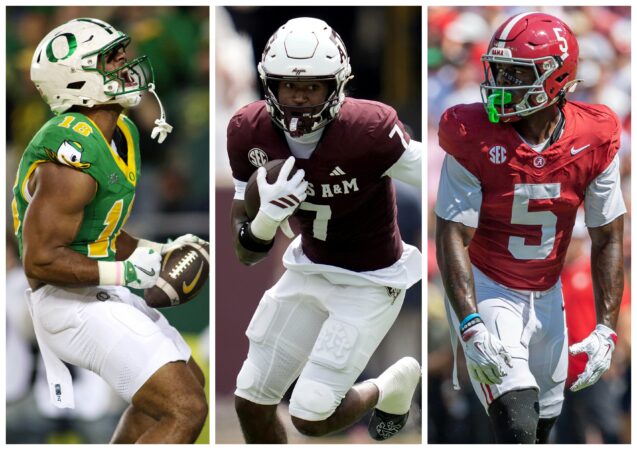
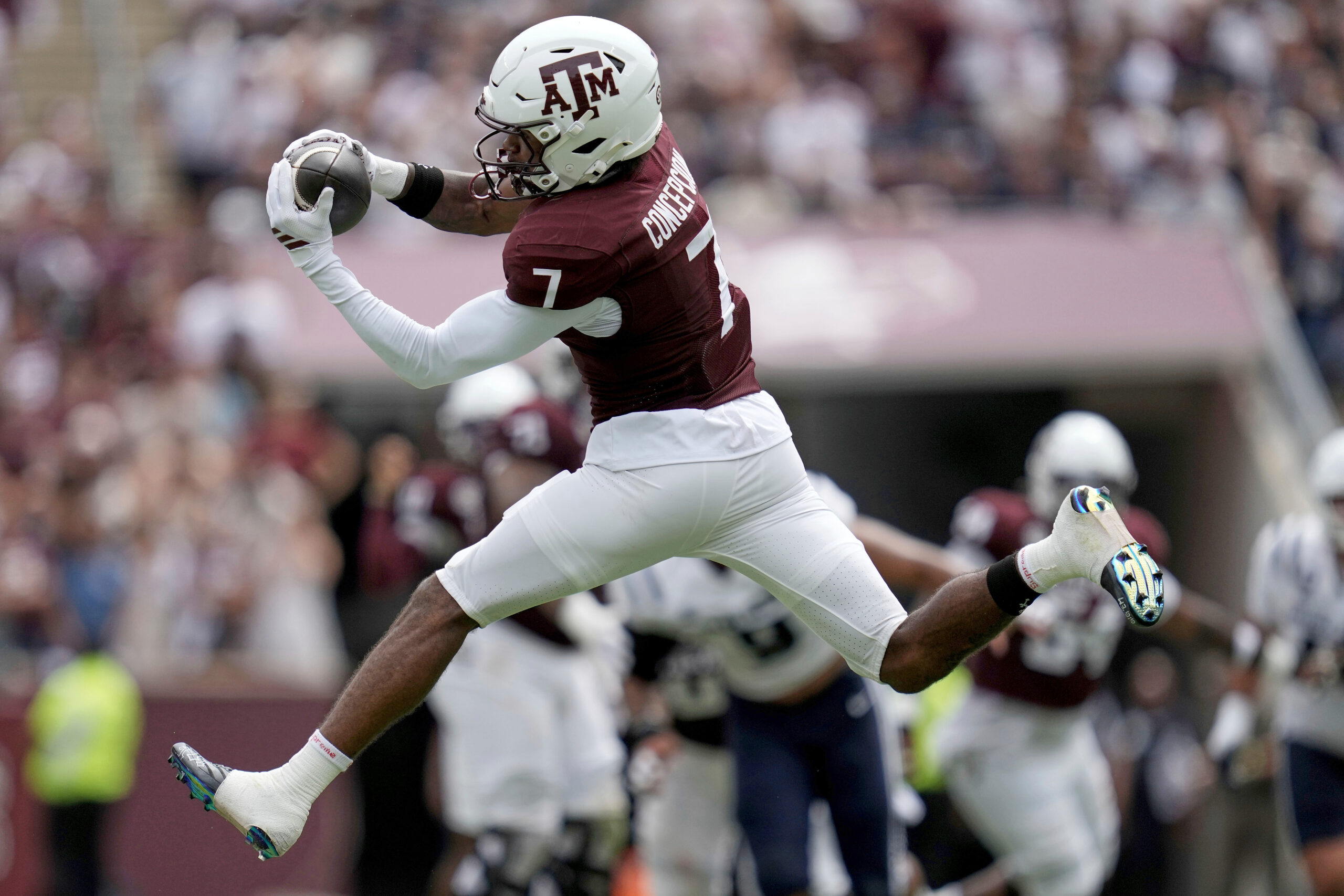
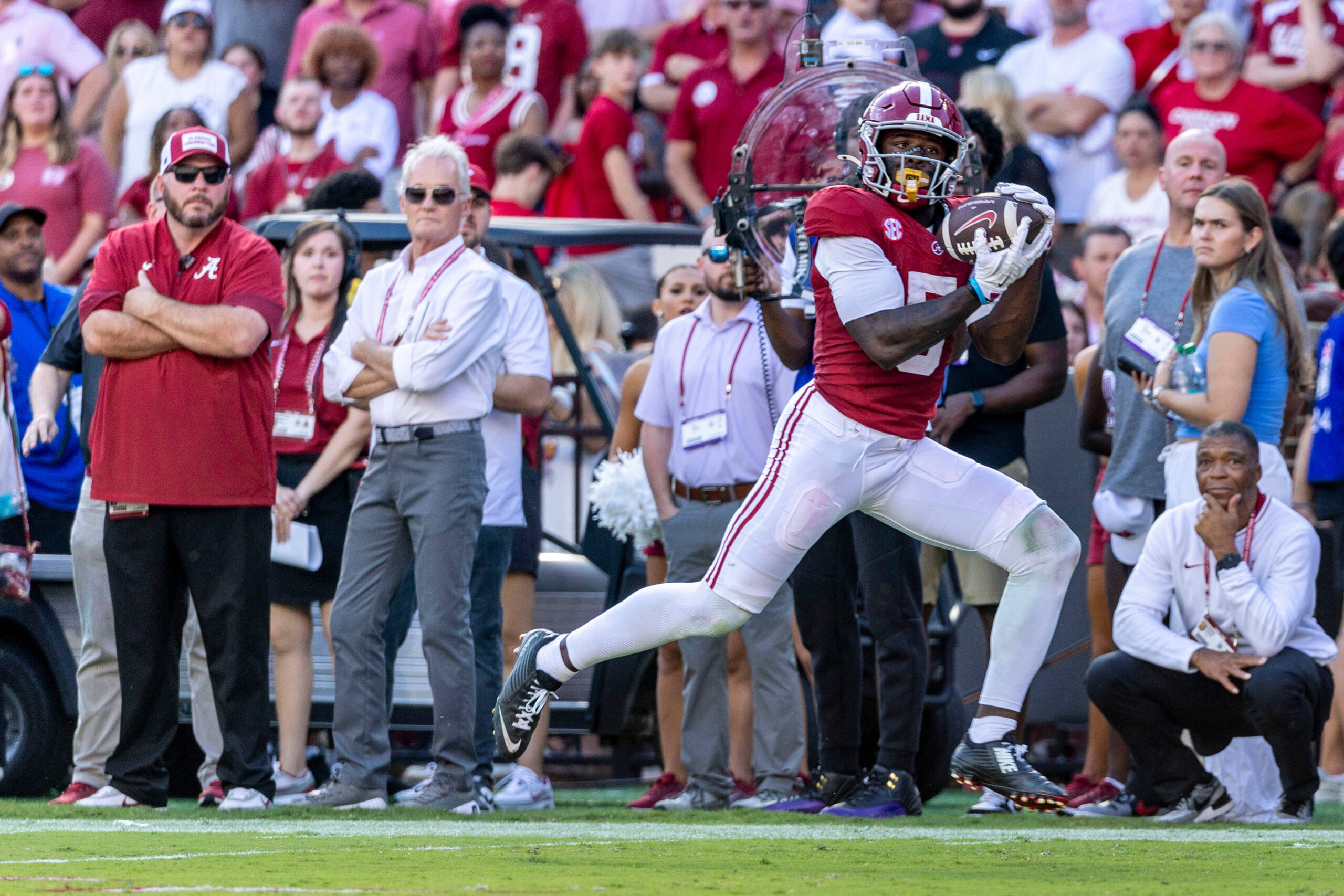
    Oregon tight end Kenyon Sadiq. Texas A&M wide receiver KC Concepcion. Alabama wide receiver/utility man Germie Bernard.

    The comps are Vernon Davis, Antonio Brown/Stefon Diggs, and Deebo Samuel.

    I’m not going to sit here and pretend I have an opinion on any of the linemen who could be on the board in the late first round. If the Eagles have a chance to draft one with a Lane Johnson or Jalen Carter grade, they should obviously do it. What I do know is that the pass-catchers should be a priority, and that there are three guys who could offer the value that Mitchell and DeJean did on the defensive side.

    This draft is better than people are giving it credit for, particularly in the range where things start to look realistic for the Eagles. The precombine consensus had Sadiq going No. 19, Concepcion going No. 27, and Bernard going No. 69. The Eagles have picks No. 23 and 54, but I’m skeptical that they’ll be in position to pick two of the three.

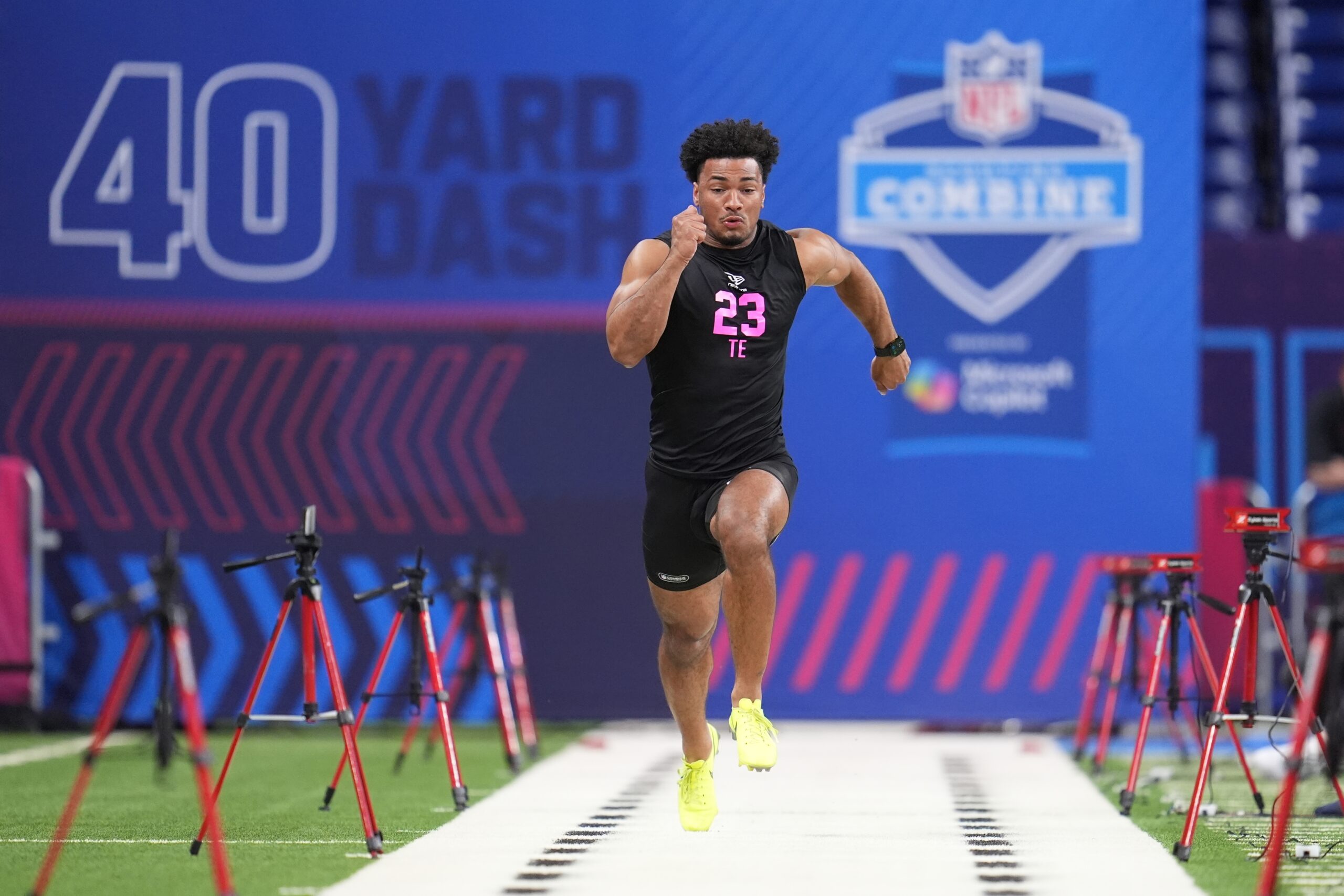
    The idea that Sadiq will last anywhere close to No. 23 always seemed detached from reality. That’s especially true after a combine performance unlike any we’ve seen at the tight end position in recent memory. Sadiq’s 40-yard dash time of 4.39 seconds was the fastest by a tight end since converted quarterback Matt Jones in 2003. His 1.54-second 10-yard split would have ranked him among the Top 12 wide receivers at this year’s combine. He also put up wideout-like numbers in the broad jump and vertical leap.

    It would be one thing if Sadiq’s measurements were at odds with his game tape. But they aren’t. The game speed and explosiveness are there. Most notable is the way they show up off the ball. His combination of acceleration and compact strength allowed Oregon to use him in all sorts of ways in their blocking schemes: out wide on wide receiver screens, across the formation on running plays, etc. It is impressive to watch. This isn’t Kyle Pitts. I have to imagine every cutting-edge play designer in the NFL would love to have Sadiq’s skill set at his disposal. Don’t listen to the folks who try to compare him to fellow workout warrior Eli Stowers. The Vanderbilt tight end is a worthy late-second-round gamble. But watch both of their cut tapes and you’ll quickly realize one of these things is not like the other.

    Kenyon Sadiq’s 40-yard dash time of 4.39 seconds was the fastest by a tight end since converted quarterback Matt Jones in 2003.

    To be clear, Sadiq’s isn’t a conventional skill set. He isn’t anything close to your classic tackle-adjacent receiver-lineman tweener tight end. Which might be one reason why the draft industry rates him where it does. At 6-foot-3 with 31½-inch arms, he is at the negative extreme in terms of length at the position. Of the 14 tight ends who had a 1,000-yard season since 2010, only one was listed at 6-3 or shorter, according to Pro-Football-Reference.com (Delanie Walker, 2015). Sadiq’s arm length measurement ranks in the bottom 10% of tight ends at the combine since 2010. Combined with his chiseled 246-pound frame, he looks more like an H-back than a prototypical pass-catching tight end. That’s only a problem for a scheme that lacks imagination.

    If anything, Sadiq’s overall pass-catching numbers are at odds with his game tape. His 892 career receiving yards in three years at Oregon would be the lowest for any tight end drafted with a top-28 pick since at least 2010. Every tight end drafted in the top 15 since 2010 had at least one season with 58-plus receiving yards per game. O.J. Howard at No. 19 in 2017 averaged 40.1 yards, which is about what Sadiq averaged this season (51 catches, 560 yards, 14 games).

    Thing is, Sadiq looks the part on film. The guy pops in all phases of the game. Look at his two touchdown catches against USC in October. On goal-to-go from the 8-yard line, he beat USC safety Christian Pierce on a perfect in-breaking route and then was in the process of running away from him when he made the catch in the back of the end zone. On the second, he got behind a late rotation on a seam route and then made a great catch in traffic in front of the deep man before being sandwiched. Sadiq finished the season as one of two major conference tight ends in the last five years to have five TD catches of 20-plus yards.

    Sizewise, I see Vernon Davis. The more intriguing comp is George Kittle. Sadiq may never be the blocker that Kittle is, i.e., one of the best ever at the position. But that’s not the point. The point is Kittle as a pass-catcher. In four years at Iowa, he had 48 catches for 737 yards, topping out at 22 catches for 314 yards as a senior. The 49ers drafted him in the fifth round. He would go higher in a redraft.

    No position in the NFL draft is less contingent on college production than tight end. Jimmy Graham played one year at Miami, caught 17 passes, and was drafted in the third round. Antonio Gates never played college football. When Travis Kelce turned 23 years old, he was a senior at Cincinnati who’d caught 19 passes for 247 yards in 25 career games. They are the exceptions, sure. But name another position where three such exceptions went on to become three of the greatest of all time (four if you count Kittle).

    Let’s reiterate our point here. It isn’t that Sadiq is the same type of prospect as the guys I just mentioned. He’s on a much higher level. It isn’t that he is going to become those guys. The point is that Sadiq’s relatively paltry receiving numbers shouldn’t make him fall in the draft. Chances are, they won’t.

    KC Concepcion had 61 catches for 919 yards and nine touchdowns as a junior at Texas A&M.

    Concepcion is more likely to be there at No. 23. He’s a bit slight at 6-foot, 196 pounds. He didn’t run the 40 or take part in any of the other athleticism tests at the combine. Silence in a court of law, etc. But none of that should matter when you see the film. The ability to create change-of-direction separation is elite. It shows up in the numbers. In addition to his 61 catches for 919 yards and nine touchdowns as a junior at Texas A&M, and his 70 carries for 431 yards and three touchdowns in three collegiate seasons, he is coming off a season where he averaged 18.2 yards with two touchdowns on 25 punt returns after returning just five in his first two seasons. Whatever the physical measurements, his is an NFL frame, and an NFL game.

    Bernard is the DeJean of this year’s draft. Midway through his rookie season everyone will look back and say, how did this guy fall as far as he did? Assuming the current projections are correct and he won’t be a first-round pick. Comps are usually fuzzy things. Man, does he look a lot like Deebo Samuel did during his peak with the 49ers. At 6-1, 206 pounds with a low center of gravity and ballcarrier instincts, Bernard could easily pass for a third-down back. But he is a wide receiver, one who averaged 57 catches for 828 yards over his last two seasons at Alabama. He has as high of a floor as anybody can have at his position. Too many GMs chase upside in a draft. The real test is projecting a player’s probability of achieving that upside. Bernard plays the game with a fluidity and instinct that will translate in some meaningful capacity. So much so that the Eagles shouldn’t hesitate to draft him at No. 23 rather than gambling he’ll still be there beyond.

    There is an elephant in the room here, one so large that he has already been mentioned. The Brown thing is simple. Even if he is here next year, he won’t be here much beyond that. Jalen Hurts isn’t one of the rare quarterbacks who makes the pass-catching talent around him better. The Eagles will fail and fail miserably if Smith is his only pass-catcher who is above replacement level. They would be wise to trade Brown if it lands them a draft pick that facilitates the acquisition of someone with the ability to help replace him.

    “If someone is going to give you something you didn’t anticipate and you won’t even have the conversation, I don’t think you’re necessarily doing your job or really servicing the team you’re with,” Roseman said at the combine last week. “You never know what someone is willing to do.”

    The perfect draft for the Eagles is Sadiq first and then one of Concepcion or Bernard second. Given the value that teams place on the trenches, it’s hard for me to believe in a worthwhile certainty/upside ratio with any lineman who would also be available.

    Germie Bernard had 64 catches for 862 yards and seven touchdowns at Alabama last season.

    I’m skeptical that Sadiq will last anywhere close to where the current mock drafts have him going. At this time last year, Daniel Jeremiah and Pro Football Focus both had Colston Loveland going in the 18-20 range. In 2024, PFF had Brock Bowers going 18th. Loveland ended up going 10th and Bowers 13th. Both were among the top nine non-quarterbacks off the board. So, I wouldn’t put too much stock into the current projections, which have Sadiq lasting into the 20s and potentially reaching the Eagles at No. 23. I also don’t think the Eagles can bet on Concepcion being there. Nor can they with Bernard at 54.

    The idea of trading Brown makes a lot more sense from that perspective. It’s only true if Roseman can somehow finagle something like the No. 31 overall pick from the Patriots. Maybe by swapping No. 54 and No. 68 for the Pats’ No. 63. So, the Eagles trade Brown in order to move up 23 spots from No. 54 to No. 31 while moving down nine spots from No. 54 to No. 63.

    There are at least three prospects who would make it worth it.

  • White House fakes comments by Trump supporter Brady Tkachuk as Team USA controversy lingers

    White House fakes comments by Trump supporter Brady Tkachuk as Team USA controversy lingers

    After a week or so of abusing the clueless 20-somethings for serving as Donald Trump’s latest dupes, it only seems fair to credit the few USA hockey lads for their reluctant mea culpas.

    Several of the players who were involved in the debauched postgame celebration with debased FBI director Kash Patel that devolved into a misogynistic phone call with President Trump have issued a range of regrets in the past few days.

    Good for them, I guess.

    Maybe they’ll think twice next time before laughing about women — in this instance, their Olympic gold-medal counterparts, and the best women’s team ever assembled — being treated as their inferiors.

    Maybe.

    In his congratulatory call after a golden goal win over Canada on Sunday (a call he did not make to the women’s team three days earlier), Trump invited the men to the White House, then said, “We’re going to have to bring the woman’s team. You do know that?” Otherwise, Trump said, “I do believe I probably would be impeached.”

    The men laughed.

    The public raged.

    Count me among the angry masses.

    I took my shots at Team USA midweek, when I noted that any random group of young, white, millionaire American males are more likely than not to agree with Trump, and might have even voted for him, and therefore they innately took little issue in serving as his pawns last Sunday morning and then again Tuesday, when 20 of the 25 players visited the White House and attended Trump’s unhinged State of the Union address. I noted, however, that they shouldn’t realistically be expected to act differently, and that their transgression was far less concerning than, say, Bryson DeChambeau, Trump’s golf mascot.

    It quickly got worse.

    Ever eager to distract from his administration’s endless corruption, he could not leave the boys alone. Not even if it meant cannibalizing one of their own.

    The White House used AI to generate a false statement from Trump supporter and Team USA star Brady Tkachuk in a postgame TikTok video:

    “They booed our national anthem, so I had to come out and teach those maple syrup eating (bleepers) a lesson.”

    The AI fake is part of a post that includes highlights from the game. The post indicates that AI was used in its construction, it does not specify which parts were fake.

    Tkachuk specified which parts were fake on Thursday.

    “Well, it’s clearly fake, because it’s not my voice, not my lips moving,” Tkachuk told reporters. “I know that those words would never come out of my mouth. So, I can’t do anything about it. … It’s not my voice. It’s not what I was saying. I would never say that. That’s not who I am, so I guess I don’t like that video because that would never come out of my mouth and never had that thought.”

    Maybe. Maybe not.

    Despite Tkachuk’s protestations, the White House has not deleted the post. He’s their weapon of the day.

    Tkachuk also denied hollering out that Trump should “close the northern border” during Trump’s phone call. Hard to disprove that one, especially since it took him four days to do so.

    It should be noted: Tkachuk not only plays for a Canadian team, the Ottawa Senators, he’s also their captain.

    This is delicious.

    It’s hard to feel anything other than Schadenfreude for Tkachuk, or for any of the other players who declined to issue public apologies until public opinion swung so heavily against them. It might have been a week of pure celebration of a historic win. It was the first men’s hockey gold since the Miracle on Ice in 1980, and it was sweet revenge for the 2010 gold-medal loss that, like Sunday’s, was decided on an overtime goal.

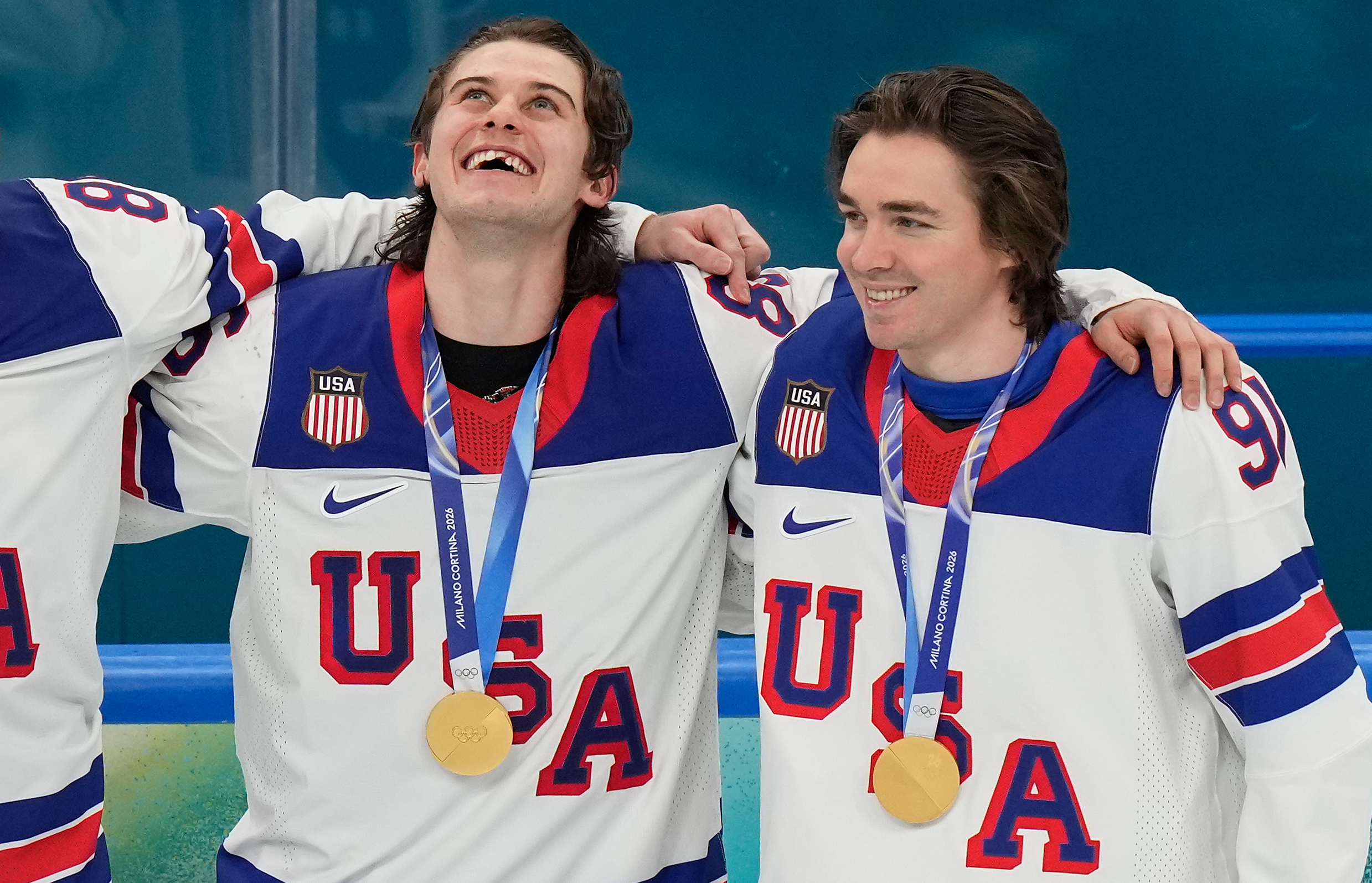
    That goal-scorer, Jack Hughes, who sacrificed his smile to a high stick in the game, almost gets it.

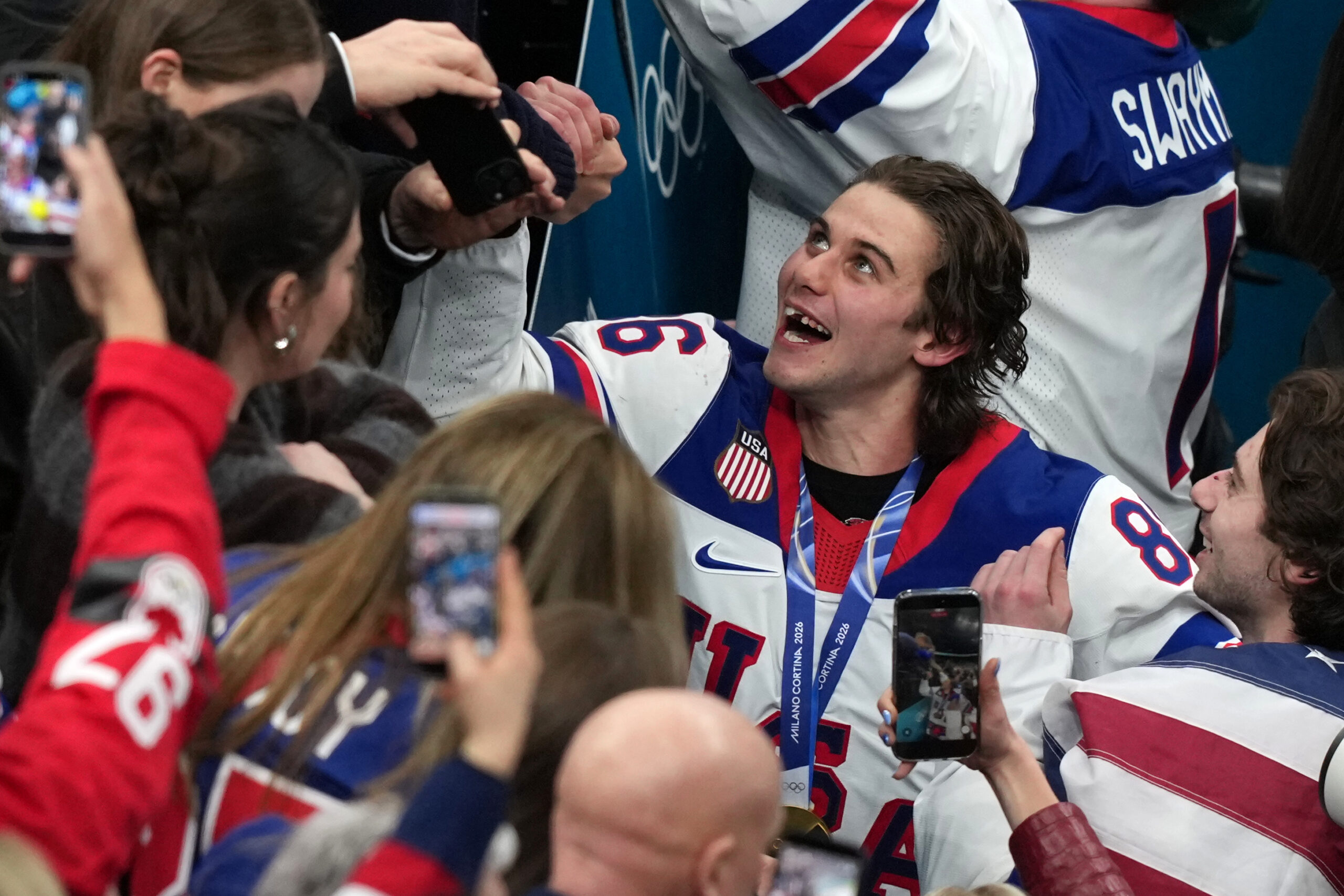
    Jack Hughes (86), who scored the Golden Goal for Team USA, celebrates with fans and teammates.

    He attested that the men’s and women’s teams commingle and support each other, which is true … and then, like the sheltered, self-unaware, entitled 24-year-old that he is, Hughes chastised critics of the men’s team thusly:

    “Everything is so political. We’re athletes.”

    Really, Jack? Just athletes, huh?

    Later that day, Hughes and four Team USA teammates posed for a picture with White House press secretary Karoline Leavitt.

    Hughes and two Team USA teammates wore MAGA hats.

    You know. Trump hats. Political hats.

    You can’t make it up.

    Asked this week by reporters if he agreed with some of his teammates’ recent apologies, Hughes replied, “Yeah,” then deflected with drivel.

    Fortunately, other players were more sincere.

    “Looking back at it now, I think it was a mistake,” Senators defenseman and Team USA teammate Jake Sanderson told reporters. “But I think things got blown out of proportion a little bit. You know, we have nothing but the utmost respect for the women. I think if we were to do it again, I think we wouldn’t do that, and we made a mistake. … We love the women.”

    Bruins goalie Jeremy Swayman told reporters, “We should have reacted differently.”

    Bruins defenseman Charlie McAvoy said he and many of his teammates were “certainly sorry for how we responded in that moment.”

    Significantly, none of them issued any apology unprovoked. None of them apologized on his own.

    Tkachuk was even less accountable:

    “Honestly, it was just a whirlwind of a moment. Can’t be in control of what somebody says. It just caught us off-guard a little bit, talking to the president.”

    No remorse detected.

    As for the women, they now have twice rejected invitations to visit Trump & Co., both for Tuesday’s circus and another invitation floated later in the week. Their statement:

    “Players are back competing with their professional and collegiate teams and are in the midst of their season. They’re honored and grateful to be invited and any opportunity to visit the White House as a team will be based on their schedules once their seasons conclude.”

    Hall of Fame goalie Dominik Hašek applauded the women’s refusal to be used as political props by a man who not only ignored them, and not only demeaned them, but has yet to apologize: “Your president is a big liar and a fraud who abuses his position to insult and bully his fellow citizens.”

    Eccentric rap star Flavor Flav even invited the women to come party with him in Las Vegas as long as a hotelier and an airline help with travel and accommodations.

    Hey, it’s more than Trump lapdog Kid Rock would ever do.

    As might be expected, the women are dealing with the snub with a measure of grace and resignation that neither Trump nor most of the men’s team would ever be able to muster.

    “With the phone call specifically, it’s not surprising, to be frank,” USA forward Kelly Pannek told reporters Wednesday. “So I don’t know why we expect differently.”

    It’s depressing to realize that the players on arguably the best team in the history of women’s hockey find themselves the victims of Trump’s narcissism, his administration’s piggishness, and much of the country’s indifference to both.

    “I think there’s a genuine level of support there and respect,” between the men’s and women’s teams, Hilary Knight, the women’s captain, told ESPN. “I think that’s being overshadowed by a quick lapse. I think the guys were in a tough spot.”

    It was a spot they did not create for themselves. It was a spot in which they failed the women, their country, and themselves.

    And it is a spot in which many of them have chosen to linger.

  • Kyle Schwarber is too good to bat cleanup. That, and other conclusions from last year’s lineups.

    Kyle Schwarber is too good to bat cleanup. That, and other conclusions from last year’s lineups.

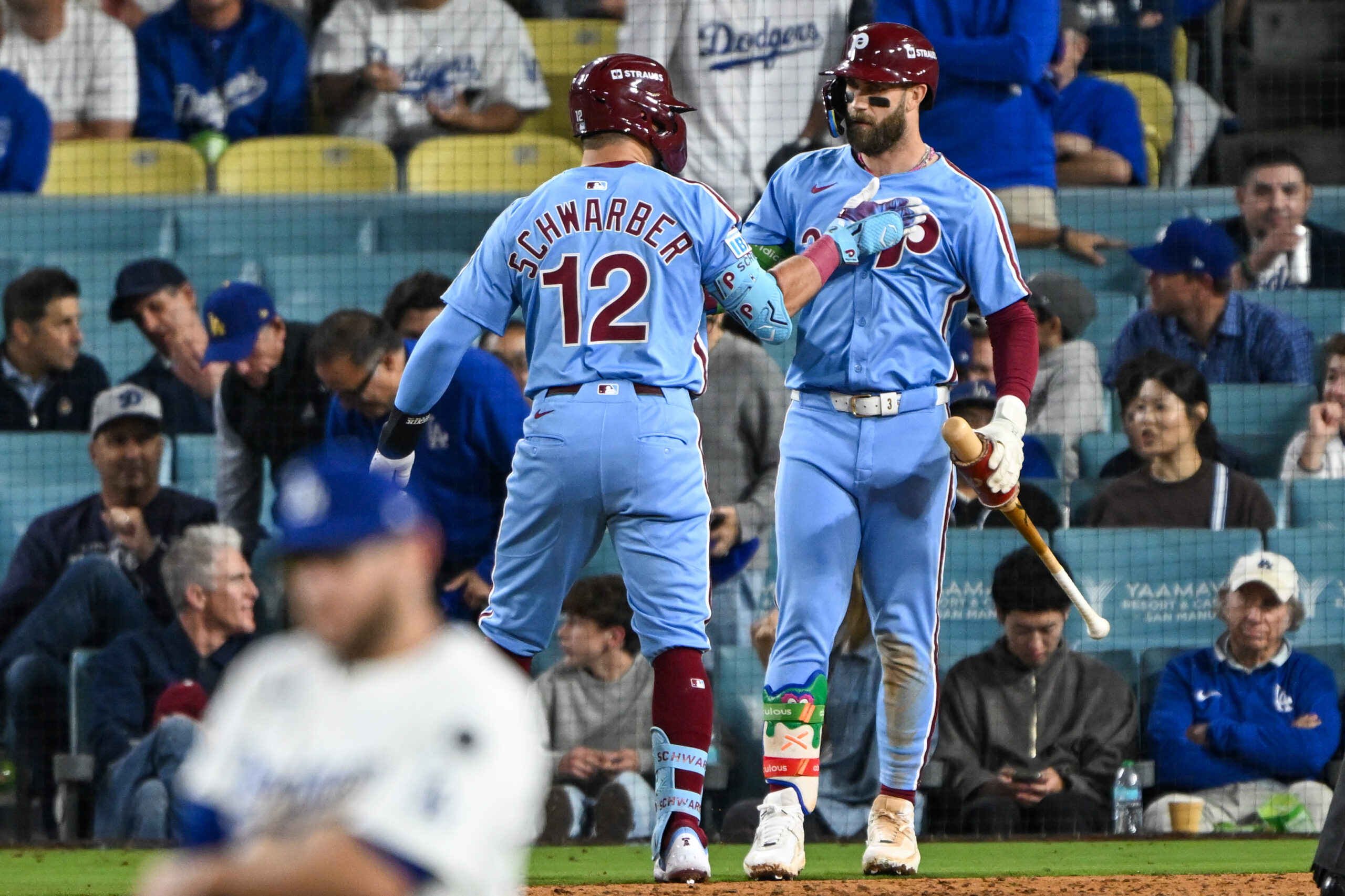
    What if I told you that Alec Bohm offered more protection to Bryce Harper than Kyle Schwarber?

    What if I told you the Phillies’ best batting order is the one they rode to the NL East title, and that Rob Thomson shouldn’t change a thing?

    I can’t say either of these things with any degree of certainty. All I can tell you is what the numbers added up to last season. If you don’t like numbers, what you are about to read probably isn’t for you. But a surprising number of people emailed me after Tuesday’s column and suggested that I compare Harper and Schwarber’s numbers when hitting back-to-back in the lineup.

    As a refresher, the topic du jour — or however you say the topic of that day in French — was Harper’s struggles to score runs after reaching base. It was a pertinent topic, given that it sat at the intersection of issues people rightfully have with the Phillies’ odd-fitting and top-heavy batting orders.

    But the ramifications of Dave Dombrowski’s roster construction are much broader than the infrequent sound of Harper’s cleats clacking on home plate. The weight is disproportionately borne by Thomson. The dam has more holes than he has fingers. Baseball would be a lot more fun if he could use Harper and Schwarber twice each time through the batting order. Until he can, the lineup will always leak somewhere.

    The question remains. What is the optimal (legal) combination? Specifically, at the top of the order, seeing that Thomson has used a number of different combinations of Harper, Schwarber, and Trea Turner, with or without another hitter mixed in.

    I used Retrosheet’s play-by-play data and borrowed Will Hunting’s chalkboard and did some figurin’. Harper behind Schwarber, Schwarber behind Harper, neither behind the other. The sample sizes are too small to render any definitive judgments, especially given other confounding variables in play.

    There were some surprises.

    How do you like these apples:

    Observation 1: Harper didn’t get any benefit from batting in front of Schwarber.

    In fact, he was his least productive self with Schwarber behind him in the order. The splits are pretty drastic. Harper’s OPS was nearly 100 points higher when batting in front of Bohm vs. Schwarber. And it wasn’t just because he walked more. His extra-base hit percentage was higher, thanks in part to five home runs in 126 plate appearances in front of Bohm compared with seven in 200 in front of Schwarber.

    The numbers, please.

    Harper in front of …

    • Schwarber: .796 OPS, .355 OBP, 18.0 K%, 12.5 BB%, 9.0 XBH%, 7 HR, 200 PA
    • J.T. Realmuto: .810 OPS, .332 OBP, 20.9 K%, 10.2 BB%, 8.6 XBH%, 11 HR, 187 PA
    • Bohm: .881 OPS, .381 OBP, 23.8 K%, 13.5 BB%, 11.1 XBH%, 5 HR, 126 PA

    Observation 2: Harper was at his best when hitting behind Schwarber.

    He also was pretty good when hitting behind Turner.

    The numbers:

    Harper, when hitting behind …

    • Schwarber: .858 OPS, .352 OBP, 22.0 K%, 11.1 BB%, 10.8 XBH%, 17 HR, 332 PA
    • Turner: .831 OPS, .373 OBP, 18.8 K%, 14.8 BB%, 9.4 XBH%, 9 HR, 244 PA

    Here’s the interesting part: Harper was much better hitting behind Turner when Schwarber wasn’t hitting directly behind him, specifically when Bohm split the lefties in the No. 3 spot, with Harper batting second and Schwarber fourth. In fact, Harper and Schwarber were both pretty darn good in those situations — again, in tiny sample sizes.

    Harper behind Turner, and nonconsecutively with Schwarber: 9-for-37, five extra-base hits, two home runs, 11 walks, .903 OPS.

    Schwarber in those situations: 9-for-38, six extra-base hits, four homers, eight walks, 1.014 OPS.

    All of Harper’s plate appearances in front of Schwarber came in the first three months of the season. The last time Thomson used a Harper-Schwarber lineup was those back-to-back losses in Toronto when the Blue Jays outscored them, 11-2.

    Phillies manager Rob Thomson has quite the number of decisions to make when it comes to where Bryce Harper and Kyle Schwarber end up in his batting order.

    After Harper returned from the injured list in late June, Thomson switched to the lineup that carried the Phillies through the rest of the season. Schwarber in the two-hole, followed by Harper. Only twice did he deviate from that batting order when both players were in the lineup. Understandably so. The Phillies averaged five runs per game in their last 79 games, putting together a team OPS of .789.

    There is a question of correlation vs. causation here. Were the Phillies better as a team because Harper’s numbers were better behind Schwarber? Or were Harper’s numbers better behind Schwarber because that’s where he was hitting when he and the rest of the team found its stride?

    All sorts of variables could be in play: the quality of pitching the Phillies faced in the last three months vs. the first three months, the weather, etc.

    That being said …

    The numbers show Kyle Schwarber should not bat in the cleanup spot behind Bryce Harper.

    Observation 3: Schwarber should not bat cleanup. The optimal lineup is either Turner-Schwarber-Harper or Schwarber-Turner-Harper.

    The Phillies were at their best when Schwarber and Harper were batting in the top three. This is obvious. Schwarber may look like the prototypical table-clearer until you see what happens when Bryson Stott and Turner are getting it set.

    No offense to either player. But the goal is to get your elite players the most at-bats. It doesn’t get more prototypical than Aaron Judge, and the Yankees bat him leadoff.

    It comes down to this, really: Down by one in the bottom of the ninth with the top of the order due up, you want a lineup that guarantees Harper and Schwarber a chance at tying the game. The data from last season doesn’t prove anything, but it is always smarter to err on the side of what the data suggests when what it suggests is the same as one’s intuition.

    We can argue about Bohm vs. Adolis García vs. Realmuto. Hopefully, we’ll end up arguing about Aidan Miller. But there isn’t much of an argument for batting Schwarber or Harper lower than third.

    Just ask any opposing pitcher what he would prefer.

  • The outrage over Team USA’s connection with Trump is dumb — and it’s what he wants

    The outrage over Team USA’s connection with Trump is dumb — and it’s what he wants

    I, for one, am astonished that several entitled young white millionaires were eager to capitalize on their brief moment of relevance by becoming pawns of a president for whom most of them probably voted, especially if they listened to the most popular podcasters — that is, if they even bothered to vote.

    Let’s unpack that sentence.

    The average age of Team USA men’s hockey players is 28.43 years, so the chance they voted is less than 50%, according to surveys conducted by CIRCLE, a research initiative based at Tufts University. Among white men between the ages of 18-29, 56% voted for President Donald Trump. If they had no college degree, as is the case with most NHL players, that number jumps to 67%. More than half the listeners of podcasts such as The Joe Rogan Experience are white men between the ages of 18-34, and, after Trump was elected, Dana White, the CEO of UFC and a staunch Trump ally, thanked those podcasters for getting Trump over the hump.

    Let’s throw in the fact that most professional athletes are, necessarily, narcissists. And there you have the reasons that so many members of Team USA have become the latest victims of moral political outrage.

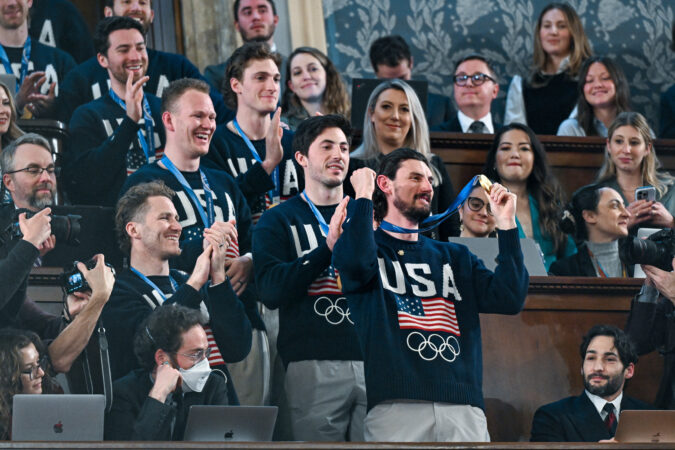
    They won Olympic gold in dramatic, heartwarming fashion Sunday, but our sitting president immediately spoiled the afterglow as they celebrated in Italy. Still, most of Team USA accepted an invitation to visit the White House. They met with Trump on Tuesday afternoon and attended the State of the Union address that night.

    Jack Hughes (left) and Clayton Keller react after receiving their gold medals after the U.S. defeated Canada in the gold medal game on Sunday at the Winter Olympics.

    All of this set social media and TV talk shows on fire: How dare they?

    Which is exactly what Trump wanted.

    Once again, his theater of the absurd drew fabulous ratings. Snowflakes on both sides melted, as scripted: The left, in anger; the right, in glee.

    Perhaps one day Trump’s opponents will understand that the only one who gains from this sort of performative outrage is Trump. Save your energy for the ICE attacks in Minnesota and the acts of war on Venezuela. You’re not converting anyone by attacking Connor Hellebuyck, the goalie in the crowd to whom Trump promised a Presidential Medal of Freedom on Tuesday night.

    Everything Trump does is transactional: They showed up for him, he gave one of them a medal.

    What, you want him to turn it down? Get real. That’s not who these players are.

    You expected a group of guys like this to decline the invitation to see and be seen with the most powerful man on the planet? What planet do you live on? In what world do these guys do the right thing?

    Consider Olympic hero Jack Hughes’ considered reaction Monday, after all the heat was on:

    “Everything is so political,” he told reporters. “People are so negative out there, and they are just trying to find a reason to put people down, and make something out of almost nothing.”

    It’s as if he was trying to define “self-unawareness.” Like most young men in his situation, he is not equipped for the moment.

    Nevertheless, as America’s current Olympic hero, Hughes, 24, is the unofficial spokesman for the group that some folks think should have told its FBI director to go home and find Nancy Guthrie. The group that some folks think should have told Trump that they weren’t coming to the White House unless the women’s team came, too, and that the women would have to sit in the front row.

    Dream on.

    There’s no way a bunch of partying, exhausted, exhilarated frat bros are going to not laugh at a dumb joke from a guy who reminds them of their grandfathers.

    Lighten up, folks.

    I’m not MAGA. For that matter, you’re going to be hard-pressed to find a sports writer more anti-MAGA than I’ve proven myself to be. When Trump dips his toe into sports, I generally try to stub it.

    However, on the Trump scale, Trump acted mildly here. He offhandedly insulted the women’s team — a team whose win I considered the apex of the Games, and wrote as much. He and his minions did far worse to Olympians who dared challenge him.

    And if you think the hockey lads are bad, check out Nick Bosa, Herschel Walker, and Georgia quarterback Gunner Stockton.

    This hockey team isn’t perfect, but it isn’t evil, either. It should not be remembered for being the victim of a controversy not of its own making.

    It should be remembered as a brilliantly built roster, masterfully coached, which played a spectacular tournament. Its No. 1 goalie gave up six goals total. The penalty kill snuffed all 18 power plays.

    The team was incredible.

    This outrage, at best, is futile. At worst, it is performative.

    Every lefty Twitter warrior knew Trump would politicize a men’s hockey win because Trump knew he and the men’s hockey team were generally of like mind. Most of Team USA appears to be Trump people, unbothered by the misogyny, racism, xenophobia, and corruption of his administrations, happy for every second in the spotlight.

    Certainly, it would have been nice if all 25 players had made a different choice. Five did. Twenty didn’t. Twenty percent of a group of clueless twentysomethings is better than nothing.

    This contrived controversy obscures how, for about an hour, this was a powerful Olympic tale.

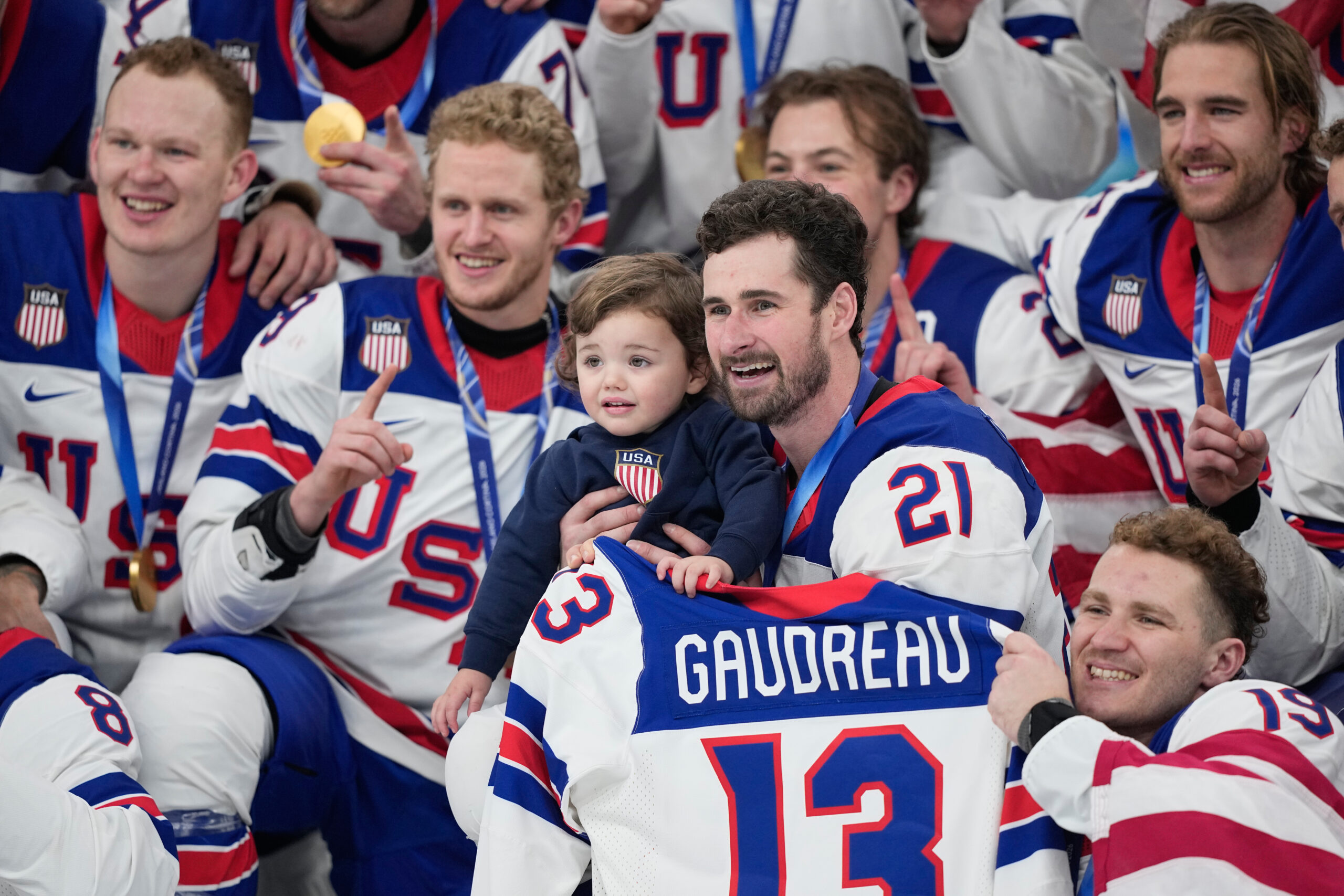
    The good feelings emanating from the team’s moving remembrance of Johnny Gaudreau were washed away by the Trump episode.

    The facts

    Hughes scored a golden goal against Canada in overtime, avenging an identical defeat handed to Team USA by Canadian hero Sidney Crosby in 2010. Afterward, with an American flag draped over his shoulders, Hughes skated around with his brother and teammate, Quinn, smiling through chipped and bloodied teeth he’d suffered during the game. Team members took victory laps carrying the jersey Johnny Gaudreau would have worn had G and his brother not been killed in August 2024. The team invited Gaudreau’s two small children onto the ice for a team photo.

    What’s more, social media hyped Hughes’ advocacy of Pride Night last season, which has become a controversial topic in the more reactionary corners of the NHL.

    Then, Trump intruded. And, as with most things, he ruined it. This was not just predictable. It was inevitable.

    First, FBI chief Kash Patel, who’d said he was in Italy on official business, joined the alcohol-drenched postgame celebration, a moment of indecorum that sent J. Edgar Hoover spinning in his grave. The players partied on. What were they supposed to do? Kick Patel out of the locker room?

    Then, Trump called the party and, offhandedly, demeaned the women’s team, which had won gold three days before. The players laughed. Some of them, clearly aware of Trump’s boorishness, laughed nervously. But they laughed.

    What were they supposed to do? Chastise the president during his locker-room call?

    Be realistic. This was the greatest achievement of their lives. None of them seems particularly woke. And, besides, they’d been partying.

    “There’s so many things happening,” winger Kyle Connor told The Athletic on Monday. “We just won the gold medal and things are going on so I don’t really remember what he said. It’s such a whirlwind, just celebrating.”

    The boys are getting more abuse than they deserve, especially in the cesspool of social media. Folks called the players morons. They told them they could stick their gold medals up their collective butts. Some said they’d carry the stain of this moment with them the rest of their lives.

    No, they won’t. Have we learned nothing from Trump and his associations with the golf world?

    American golfers at the Ryder Cup not only welcome Trump at the event, but some actually performed the ridiculous Trump dance. None has suffered.

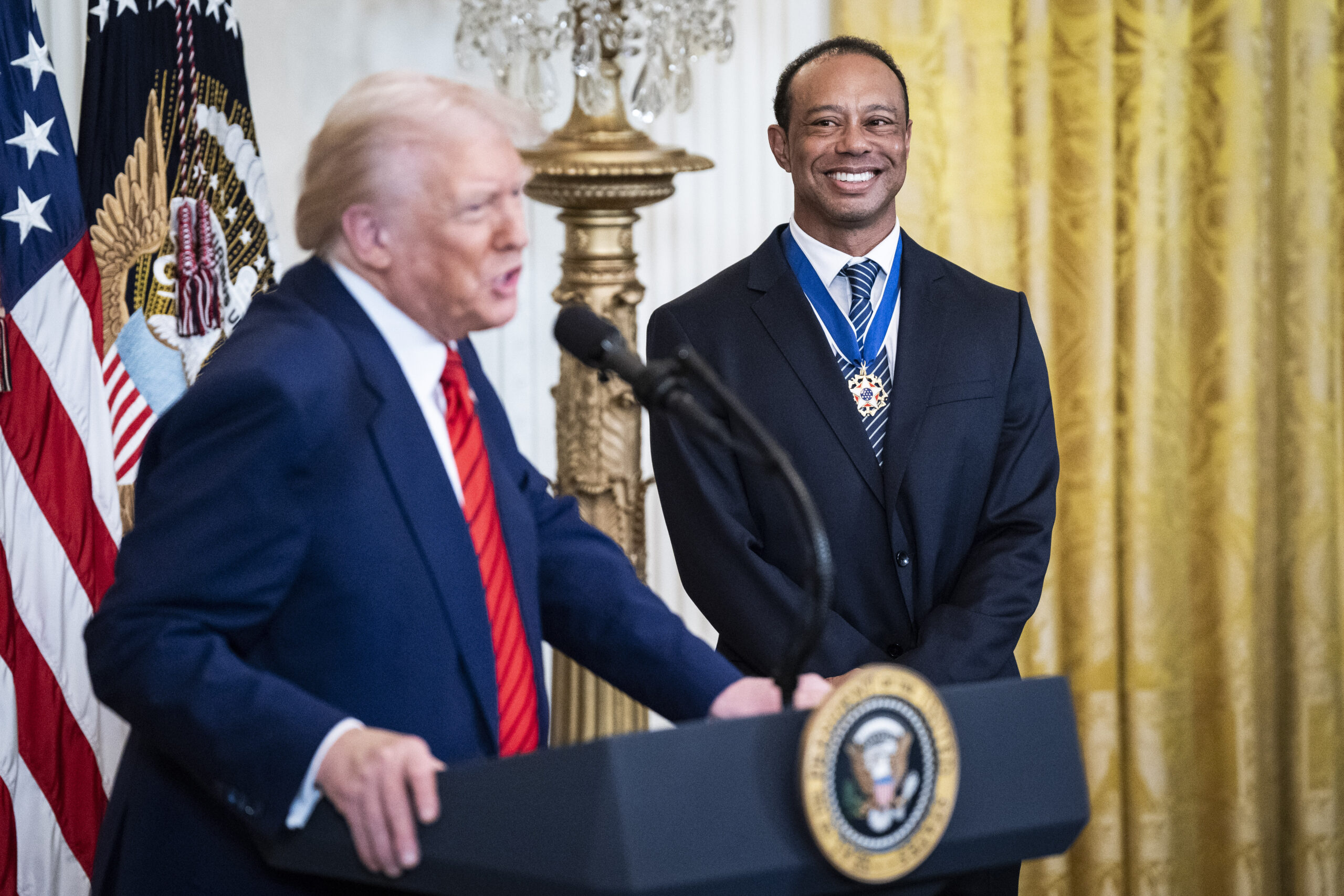
    Tiger Woods’ associations with the president do not appear to have damaged the golfer.

    The fallout

    You know who were the two most popular golfers before they golfed with Trump? Tiger Woods and Rory McIlroy. You know who the two most popular golfers are today? Tiger and Rory. In fact, Tiger’s dating Trump’s former daughter-in-law.

    The players on the women’s team, bless them, declined their invitation to the White House.

    Sure, I respect the five from Team USA who didn’t wallow in the Trump trough more than I respect the 20 who did. In that same vein, I respect the Eagles, such as Jalen Hurts, who refused to visit the White House last spring more than I respect Saquon Barkley, who not only visited the White House, but also went golfing and lunched with Trump the day before.

    The fallout: In September, Saquon received the ultimate honor of having a Wawa hoagie named after him.

    But there’s not going to be any real hangover effect from this. There never really is.

    This team doesn’t deserve it, anyway.

  • Bryce Harper and Scott Boras are right. Here’s a wild stat that makes their point.

    Bryce Harper and Scott Boras are right. Here’s a wild stat that makes their point.

    No man is an island. Unless that man is Bryce Harper and he has just reached base.

    Last season, there wasn’t a lonelier lot in life than to be a Phillies superstar standing on first, second, or third. Only four players in the majors reached base as many times as Harper did and scored fewer runs. The 72 runs he did score were the fewest of his career in a season with at least 500 plate appearances. Only one player in the majors last year failed to score more than 72 runs while posting an OPS of at least .800 in 580-plus plate appearances. It was Harper. In fact, he was the only player to do it since 2023. That’s not some hocus-pocus bit of cherry-picked math. Fifty-nine players meet our criteria (.800 OPS, 580 PAs). Harper’s 2025 campaign ranked dead last in runs scored.

    Not since E.T. have we seen someone with such otherworldly attributes struggle this hard to get home.

    We’ve heard a lot of chatter about lineup protection this offseason. Scott Boras broached the topic back in October. Harper himself weighed in last week. Their focus was on pitchers pitching around Harper in order without the threat of reprisal from those due up next.

    “I think the four spot has a huge impact,” Harper said when he arrived in Clearwater, Fla., for spring training. “I think the numbers in the four spot weren’t very good last year for our whole team. I think whoever’s in that four spot is going have a big job to do, depending on who’s hitting three or who’s hitting two.”

    Neither Harper nor his agent spoke much about the issue of him rotting on base like an unsold ham on Easter Monday. But it’s just as important, if not more so.

    Last season, Phillies hitters had 366 plate appearances when Harper was on base. That’s not including his home runs. We’re limiting ourselves to the plate appearances when Harper was physically standing on base, hoping for a teammate to drive him home. In those 366 plate appearances, the hitters behind Harper combined for a whopping .227 batting average, .290 on base percentage, and .342 slugging percentage. Of the 180 times he reached base without driving himself in (i.e., without hitting a home run), he ended up crossing home just 45 times.

    In 366 plate appearances (not including home runs), the hitters behind Bryce Harper combined for a whopping .227 batting average, .290 on base percentage, and .342 slugging percentage.

    That’s a remarkably low percentage. Three out of four times that Harper reached base, the inning ended with him jogging back to the dugout. That’s a remarkably low percentage compared to most other hitters of his ilk. Even more troublesome is the fact that Kyle Schwarber’s percentage wasn’t much better. But we’ll get to that in a second.

    First, let’s remind ourselves of the real-world situations that these numbers tabulate. Harper didn’t have a great NLDS against the Dodgers. But he did reach base six times. That was tied for second on the team behind Alec Bohm. Bohm reached base 10 times and scored three runs. J.T. Realmuto reached base six times and scored three runs. Harper reached base six times and scored one run.

    It’s an imperfect example. In the NLDS, Harper mostly expired on first base after arriving there with two outs. You could write it off to circumstance if not for the body of evidence. In the 2025 regular season, no player in the majors was stranded as often as Harper, once you account for where he hits in the order. His driven-in percentage (25%) ranked dead last among players who regularly hit in the top-third of the order (minimum 500 plate appearances).

    The table below shows the 34 players who had at least 500 plate appearances in an average batting order position between the two-hole (2.0) and three-hole (3.0). Their run percentage is the number of times they reached base and later scored.

    Just as concerning as Harper in dead last is Schwarber a mere two spots ahead of him. Of the 34 qualified hitters, Schwarber and Harper ranked 32nd and 34th in scoring percentage. Put another way, Schwarber and Harper’s teammates ranked dead last in their ability to drive them in.

    Between Schwarber and Harper is Cal Raleigh, whose Mariners advanced to last year’s ALCS and put up a sporting effort. Meanwhile, Toronto’s Bo Bichette scored at a below-average rate. The Blue Jays made the World Series. It isn’t completely unheard of for upper-middle-of-the-order hitters to drive in more runs than they score, given the drop-off in quality behind them. But the Phillies have two players at the bottom of the list. We’re talking about the upper two-thirds of their order. And they aren’t just below-average. They are virtual outliers. The only other team that has two players in the bottom half of this list is the Angels. Nobody wants to be mentioned in the same breath as the Angels. If you are comparable to the Angels in a certain regard, it’s a sure sign the regard needs fixing.

    If Harper sounds a little cranky this spring, think about how it feels to reach base and not score. And then think about the fact that the Phillies still don’t have a viable solution. Is it any wonder that Harper is acting like he woke up on the wrong side of the red-light therapy sleeping bag?

  • ‘Don’t take the easy way out.’ A.J. Brown’s plea to struggling NFL players reveals compassion, maturity.

    ‘Don’t take the easy way out.’ A.J. Brown’s plea to struggling NFL players reveals compassion, maturity.

    In the wake of the untimely deaths of three young players, A.J. Brown on Monday posted a 9-minute, 8-second testimonial on Instagram encouraging NFL athletes struggling with mental health issues to seek counseling and God rather than taking their own lives. It was poignant and it was beautiful.

    It was a revealing glimpse into how Brown deals with his own demons. It also was an example of how the exceptional culture in the Eagles’ locker room emboldens this sort of leadership in the most important of ways.

    “Don’t take the easy way out,” Brown said. “I once thought that was the way. I was 23 years old and I thought the same thing.”

    Brown spoke two days after Vikings receiver Rondale Moore, 25, was found in his garage dead of a suspected self-inflicted gunshot wound. Moore had seen his last two NFL seasons ruined by preseason injuries. It was the third such incident in just 10 months.

    In November, Cowboys defensive end Marshawn Kneeland, 24, also was suspected of taking his own life with a gun after a high-speed chase and crash.

    Similarly, in April, LSU receiver and NFL prospect Kyren Lacy, also 24, shot and killed himself after a high-speed chase two days before his criminal trial in an unrelated incident.

    Tragedy upon tragedy upon tragedy compelled Brown to speak out.

    “Don’t end it like that, bro,” he begged. “Don’t end it like that.”

    Advocacy

    This wasn’t the first time Brown has spoken about his own struggles, but it is the most intense and impassioned message he has delivered.

    He recorded Monday’s message on his phone while sitting in his parked car. Most of it centered on Brown’s reliance on his Christian faith, but Brown also stressed the role that counseling performs in people whose worlds seem to be closing in.

    “Go talk to [God], first and foremost, before you even go talk to a therapist. But go talk to a therapist,” Brown said. “Reach out to your loved ones. Go talk to somebody, bro. Get it off your chest. You’re not too tough to talk to someone.”

    Much has been made of Brown’s unconventional behavior in his four seasons with the Eagles. He often has been publicly critical of the Eagles offense both in media availabilities and on social media. He has sparred with head coach Nick Sirianni during games. He continually hints in public that he would like to be traded, and a report last month said he submitted a trade request three times during the 2025 season. Brown also has boycotted the media twice in the last two seasons.

    Suicide is suspected in the death of Vikings wide receiver Rondale Moore on Saturday.

    Among the reasons the Eagles are patient with Brown, and among the reasons the media squawks so little about his boycotts, are Brown’s mental health struggles. He is afforded a larger measure of grace from teammates, coaches, administrators, and the press than athletes who struggle less.

    This grace begins with Sirianni, whose inclusive, empathetic management style built on the foundation laid by Doug Pederson. One of the reasons Eagles owner Jeffrey Lurie hired Pederson in 2016 was Pederson’s “emotional intelligence,” which created an environment of understanding and acceptance unmatched by any locker room in the NFL. This environment, Lurie says, helped the Eagles reach three Super Bowls and win two.

    Evidence?

    In 2017, Pederson’s second season, Eagles guard Brandon Brooks opened up about treating his debilitating anxieties with therapy and medication, taboo subjects in the world’s most testosterone-charged league. The Eagles won their first Super Bowl after that season.

    In 2021, Sirianni’s first season, Eagles right tackle Lane Johnson, who’d helped Brooks deal with his issues, missed three games dealing with his own mental health issues. The Eagles went to the Super Bowl after the 2022 season and won it after the 2024 season.

    Johnson was, by far, the team’s best player in that span.

    Brown was not far behind. That’s because, in part, the Eagles accepted him for him.

    For instance, When Brown was caught on camera reading a self-help book on the sideline during a playoff game after the 2024 season, Sirianni told a local radio station, “Some guys pray in between, some guys meditate in between. A.J. reads in between.”

    Sirianni also said, “A.J. Brown, is a great, great, great person.”

    That’s generally the consensus in the Eagles’ organization: Brown might be a diva, and he occasionally might be insubordinate, but his heart is always in the right place.

    That was never more evident than in Monday’s post.

    His own experience

    The mission statement of the A.J. Brown Foundation reads, in part, “Our vision is to cultivate a generation of resilient and confident young individuals.”

    “I take pride in my mental health,” Brown said Monday. “Something I practice each and every day.”

    Brown then offered what might be a glimpse into his own struggle and the methods he uses to cope.

    “Stay in that fight,” Brown said. “Be strong. Do whatever you need to do. Get on your phone. Record videos of yourself talking to yourself. Say affirmations around the crib. Sticky notes. … Talk in third-person to yourself.”

    Don’t worry about it if people think you’re strange:

    “Let them call you crazy.”

    With so many voices eager for attention, and with so much non-credible disparagement targeted at you, just accept your failures and ignore the critics as best you can:

    “I want you to understand, in the NFL community, things aren’t always going to go your way. You may not get everything that you desire. Sometimes this game is not friendly. People are going to say nasty things about you. Call you this call you that. …

    “But none of those things, in that moment, define you. You just have to understand that this is just a short moment in your life that’s just going to go, just like that,” he said, and snapped his fingers to illustrate.

    Eagles wide receiver A.J. Brown celebrating a first-down catch against the Commanders on Dec. 20.

    Frustration is constant; satisfaction, unattainable:

    “I understand what it feels like when you’re trying to take care of your family. None of that stuff is fulfilling. The only thing that’s fulfilling in this world is our Lord and savior, Jesus Christ.”

    Even now, Brown clearly struggles with issues. He said he focuses on his family, especially his two young children, when the darkness begins to descend, and looks within.

    “Nobody cares about you, bro. Especially as a man. You have to do what makes you happy,” Brown said. “I don’t care what they call you. I don’t care whatever … whatever you think you failed at. … Whenever you have a negative thought, say 10 positive things about yourself.”

    Just hold on, get help, and have faith in something.

    God. Yourself. Anything.

    “That sun is gonna shine,” Brown said. “It ain’t gonna stay rainy forever, bro.”

  • The 2026 breakouts the Phillies need, starting with Aidan Miller

    The 2026 breakouts the Phillies need, starting with Aidan Miller

    Aidan Miller on the Phillies roster on opening day? Don’t count on it. But don’t completely rule it out. And don’t mark your calendar too far into the future. The April showers could bring a lot more than flowers this year.

    Two weeks into spring training, the Phillies aren’t going out of their way to disguise their hopes for their top prospect. The whole organization seems to understand that a certain degree of aggression is required in order to overtake the Dodgers in the National League and survive the Mets and Braves in the NL East. Bryce Harper made some news Sunday in an interview with Tom McCarthy and Ruben Amaro Jr. during the broadcast of the Phillies’ Grapefruit League game against the Pirates. Harper implied that Miller is battling an injury, jokingly saying that he wants to see the prospect “get off his butt and get in the game, that’d be nice. I need him to get healthy.”

    It was later revealed that Miller has been battling some back soreness. But the important part of Harper’s comment was his overarching point.

    “He could help us by the end, obviously,” the Phillies superstar said.

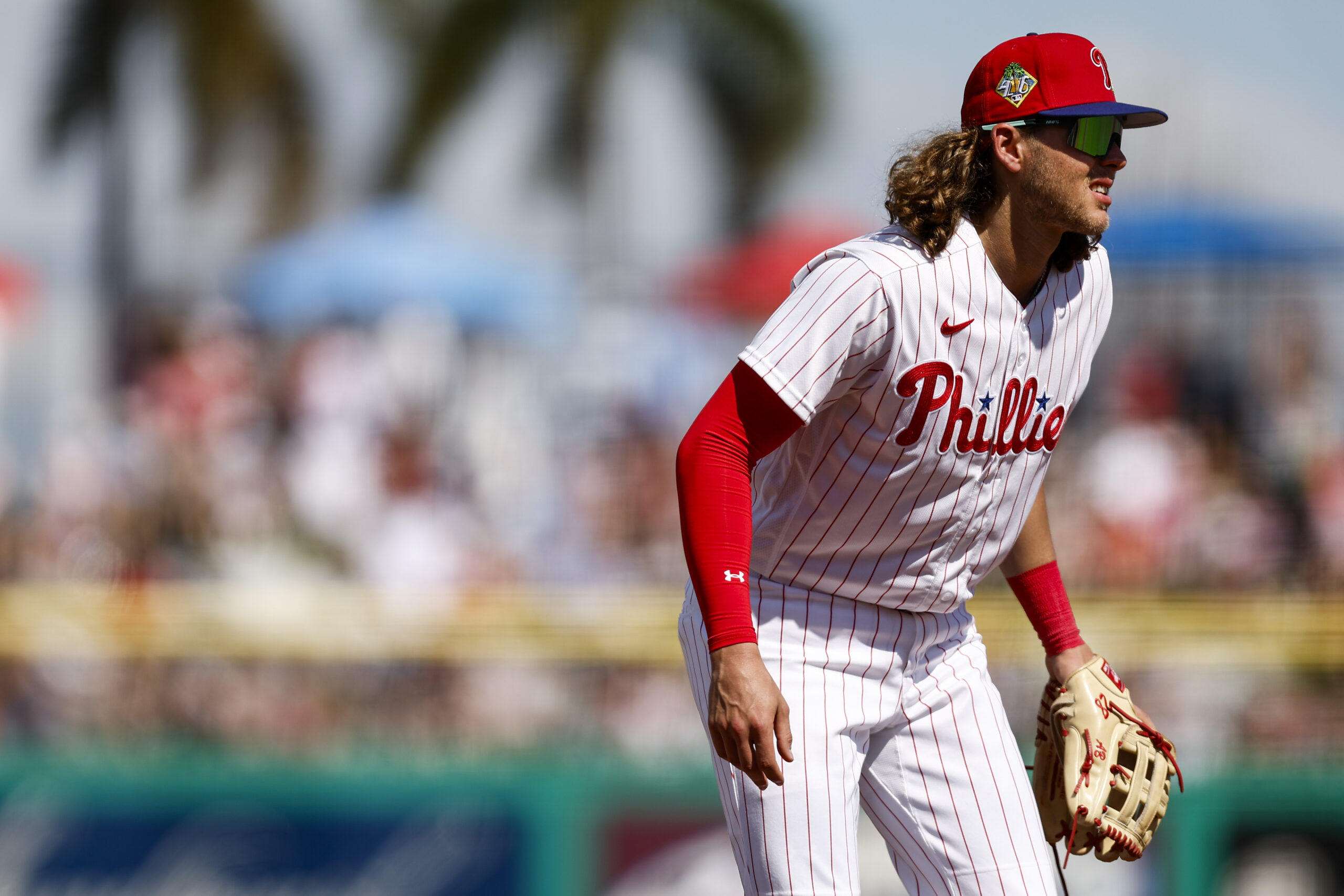
    The path of least resistance is the wisest path for now. Start Miller in the minors. Get him some time at second and third base in addition to shortstop. Evaluate the big league lineup over the first couple of months of the season, with a particularly keen eye paid toward Alec Bohm and Bryson Stott. Let the facts on the ground make the decisions for you.

    The important thing for the Phillies is not to fight those decisions should they become obvious. Miller is a special enough bat to warrant stepping outside your defensive comfort zones. He’ll be 22 years old by June 9. Over the last three seasons, 49 hitters have logged at least 200 plate appearances at the age of 22 or younger. That includes game-changers like Julio Rodríguez, Elly De La Cruz, James Wood, Corbin Carroll, and Gunnar Henderson.

    Miller is in the same class of prospects as those hitters. If he starts this season the way he finished 2025 — hitting .356 with 23 extra-base hits in his last 39 games — the Phillies will need to find a spot for him. Every day they wait will be a wasted one. They are at a point in their trajectory where they will need something unforeseen to happen in order for their lineup to produce at even 2022 levels. Miller is both the most likely candidate and the one who can move the bar the furthest north.

    Some others who still have some degree of upward mobility:

    Brandon Marsh

    Marsh is an interesting case. The gap between public perception and actual production is wider than for any player on the Phillies roster. In fact, it might be wider than for any athlete in the city. Look at Marsh’s final 2025 numbers compared with some randomly selected players:

    • Jackson Chourio: .270/.308/.463, 112 OPS+, 21 HRs, 589 PAs
    • Jackson Merrill: .264/.317/.457, 112 OPS+, 16 HRs, 483 PAs
    • Harrison Bader: .277/.347/.449, 117 OPS+, 17 HRs, 501 PAs
    • Steven Kwan: .272/.330/.374, 96 OPS+, 11 HRs, 693 PAs
    • Marsh: .280/.342/.443, 114 OPS+, 11 HRs, 425 PAs
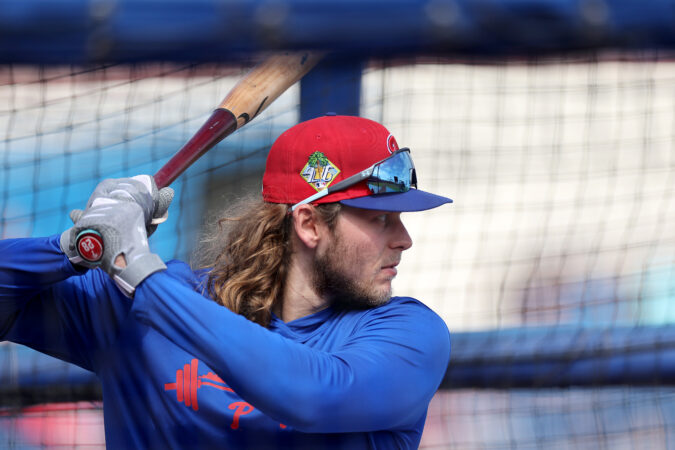
    Brandon Marsh figures to platoon in left field with the righty-hitting Otto Kemp.

    Most interesting is the side-by-side comparison to Kwan, who was a hot trade-deadline name connected to the Phillies last summer. Marsh outproduced the Guardians’ veteran in virtually every category. Yet people would feel a lot differently about the Phillies’ outfield outlook for 2026 if it was Kwan in there instead of Marsh.

    This isn’t a one-year phenomenon, either. In the three years since the Phillies acquired Marsh from the Angels, his 115 OPS+ ranks 28th out of 106 MLB outfielders with at least 800 plate appearances. That’s higher than Chourio and Kwan and also Jazz Chisholm, Jurickson Profar, and Taylor Ward, to name a few.

    The lack of enthusiasm for Marsh isn’t entirely irrational. In the last two postseasons, he has reached base three times in 28 plate appearances over eight games. His left-handed bat is an inconvenience when attempting to construct a batting order around Harper and Kyle Schwarber. He hasn’t been the plus defender in center field that many expected when the Phillies acquired him. With a middling 39 home runs in 1,373 plate appearances over the last three seasons, he doesn’t bring prototypical corner-outfield power. Long story short, he hasn’t been the player the Phillies are sorely missing: a right-handed power bat who can hit behind Harper and/or Schwarber.

    Marsh can’t do anything about the fact that he hits left-handed. But he does bring some positive uncertainty on the upper end of the range of outcomes. He made some noticeable improvements in his bat-to-ball game in 2025, raising his contact rate from 74.7% to 78.3%, according to FanGraphs. Much of that jump came out of the zone. He swung at more pitches out of the zone (30.5%, up from 26.1% in 2024) but also connected on more of those pitches (56.3%, up from 51.4%). The result was less power and fewer walks, but also fewer strikeouts and more base hits. All in all, the tradeoff was positive one vs. 2024. The question now is whether he can add on a little more power in the zone.

    Marsh finished last season on a serious upswing. After a brutal first six weeks of the season, he hit .299 with an .835 OPS over his last 107 games. His last two months were especially spicy, with a .325/.367/.584 batting line and eight home runs in 166 plate appearances from July 28 to the end of the regular season. During that stretch, he ranked seventh among outfielders in weighted on-base average (.401) and sixth in slugging percentage (.584) with a home run pace of about 25 per 162 games.

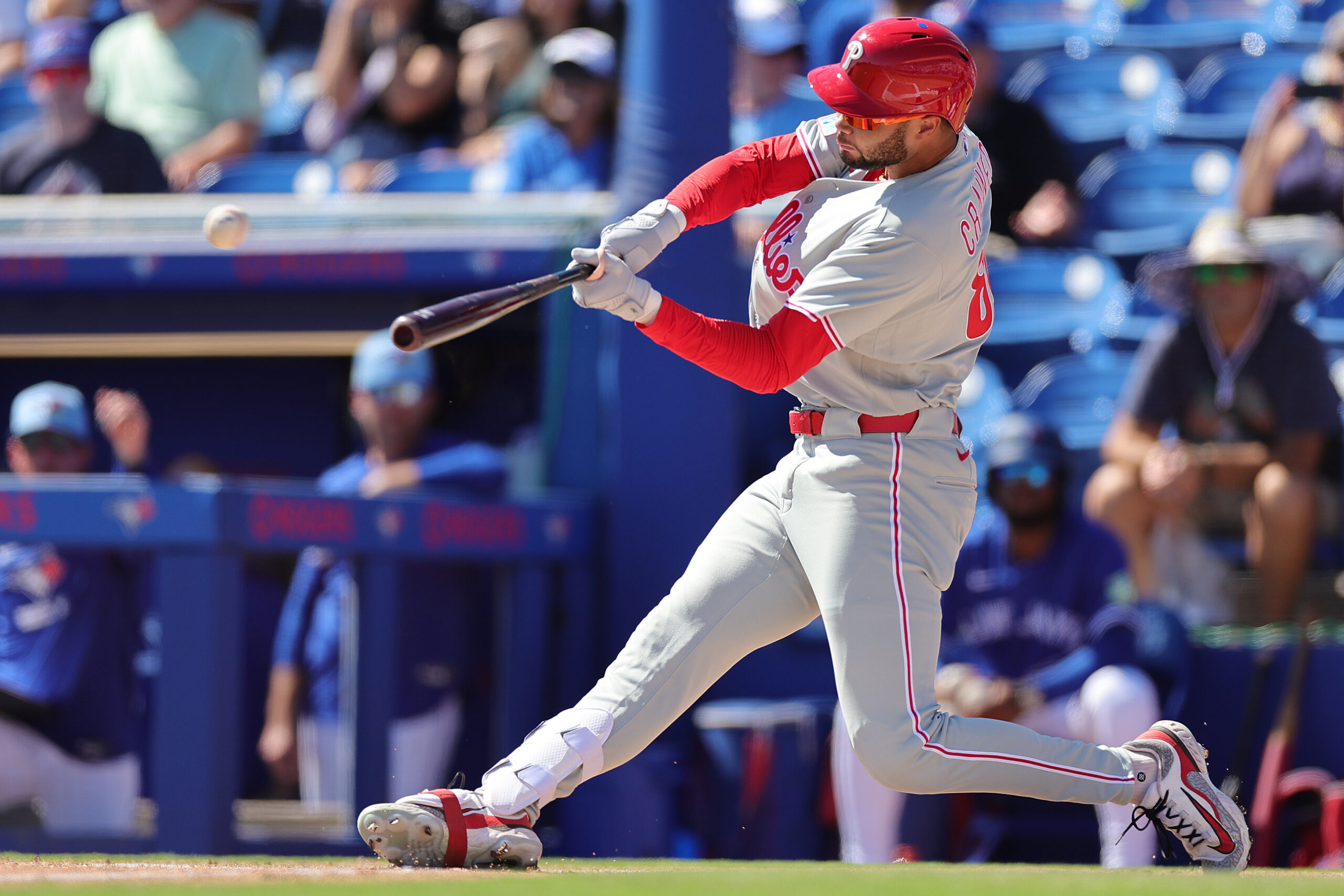
    Justin Crawford slashed .334/.411/.452 in triple A last season.

    Justin Crawford

    Obvious, yes, especially now that it seems he has a spot locked up on the opening day roster. It would be a huge boost if Crawford could somehow bring his .334/.411/.452 triple-A batting line to the majors without much drop-off. Hello, leadoff spot. We’ll worry about lefties later.

    But that’s not the real game-changer of a scenario. No, the one the Phillies can dream of is the one Crawford hinted at in his first at-bat of the spring, a double off the center-field wall off of big league lefty Eric Lauer. What if Crawford finally starts to develop the power suggested by his frame and his pedigree?

    It’s awfully hard for a big league hitter to swing his way on base as routinely as Crawford did in the minors. But the Phillies would gladly sacrifice some of that average for some of the pop that his papa had during his prime. Carl Crawford’s power started to come at the age of 22, in his third season in the majors. That was his first All-Star season for the Rays, when he led the majors with 19 triples and also hit 11 home runs for a .450 slugging percentage that would continue to improve throughout his early 20s.

    Justin has his dad’s frame. He has a similar swing. He finished last season with just 34 extra-base hits in 506 plate appearances. But the jump is going to come, as long as he can make big-league contact.

    The moral of the story: There is upside on this Phillies roster. It only means so much. We’ve seen that with Bohm and Stott over the last few seasons. But Miller and Crawford offer plenty of reason to hope. At the very least, the Phillies seem to understand that they could be necessities.