Category: Transportation

  • Other Pa. transit systems are dealing with the fiscal crunch that hit SEPTA last year

    Other Pa. transit systems are dealing with the fiscal crunch that hit SEPTA last year

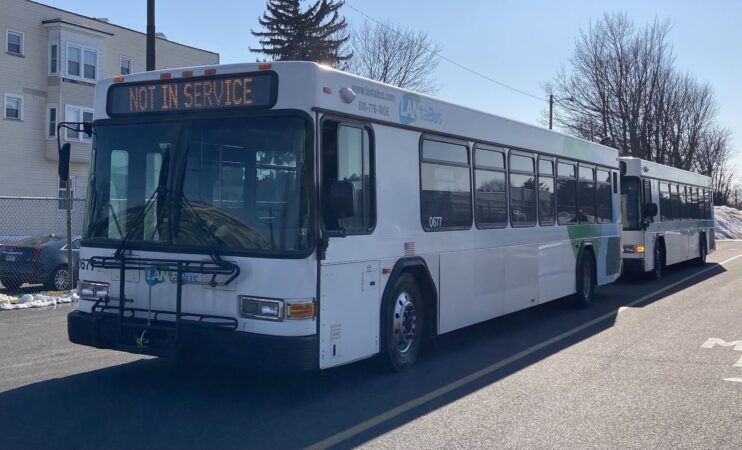
    The bus system serving 11,000 daily riders in Lehigh and Northampton Counties cut its service 5% last week, a result of the continuing uncertainty around state funding for mass transit.

    LANTA did not eliminate any routes but has reduced the number of trips on 13 bus lines.

    “If there’s no solution coming, we’ll have to make deeper cuts,” Owen O’Neil, executive director of LANTA, said in an interview.

    Gov. Josh Shapiro last fall used executive authority to flex long-term funding for capital projects to cover daily operations at SEPTA and Pittsburgh Regional Transit (PRT) for two years, following an impasse with lawmakers.

    Most of the state’s 33 smaller public transit systems did not get that big an assist and now are facing unpleasant belt-tightening choices amid rising costs and years of underfunding from Harrisburg.

    LANTA is planning to raise fares in March.

    But the agency was able to make smaller cuts than the 20% it had budgeted because the Pennsylvania Department of Transportation granted it $13 million to stabilize service over two years, O’Neil said.

    With federal COVID-19 relief funds, LANTA was able to expand service to 11 popular new worksites in the fast-growing Lehigh Valley. It’s the third-largest system in Pennsylvania.

    In the state budget unveiled Tuesday, Shapiro proposed increasing the share of sales tax revenue reserved for SEPTA and its fellow mass transit agencies, raising a projected $319 million a year.

    If the idea is enacted, however, new money would not begin flowing until July 1, 2027 — the start of the 2028 fiscal year. The tax rate itself would stay the same but transit would get 6.1% of the revenue, up from 4.4%.

    O’Neil said LANTA likely could wait that long if needed. But “we don’t have the stable source of funding,” he added. It would be difficult to continue to operate the expanded routes without one, O’Neil said.

    “Our governor is not meeting the moment,” said Connor Descheemaker, statewide campaign manager of Transit for All PA!, a nonprofit advocacy group.

    “Adjusting the sales tax allocation does not meet the structural deficit facing a single one of Pennsylvania’s public transportation systems,” they said.

    Postponing a change for 18 months gives lawmakers and the governor a longer runway to reach agreement on a stable, recurring source of money for transit — either via Shapiro’s proposal or through a new revenue stream.

    State funding for transit operations has declined steeply since the 2013 passage of Act 89, which used toll revenue from the Pennsylvania Turnpike to raise $450 million a year through 2022.

    SEPTA, which got $394 million from the state-sanctioned flex of capital dollars last year, has said it is not considering major service cuts or fare increases this year.

    Executives figure that SEPTA can provide current levels of service until summer 2027.

    The transit agency estimates that it would get $183 million in the first year if the governor’s Tuesday proposal is enacted, said Erik Johanson, SEPTA’s chief financial officer.

    With a local match of $27 million, “the difference between what the governor is proposing and how much we need is getting closer and closer to being sufficient,” Johanson said.

    Yet there has been no proposal to replace the capital money that the transit agency and PRT essentially borrowed against.

    “Those dollars are gone, and they have to be replenished,” he said.

    Descheemaker’s group estimates that seven smaller transit systems, including in the State College area, will have to cut service or raise fares if no solution is in the offing.

    “It’s disappointing that we continue to hear about transit as if it is something that only affects Philadelphia and a little bit of Pittsburgh,” Descheemaker said.
  • SEPTA ditches social media alerts notifying riders about potential cancellations and delays

    SEPTA ditches social media alerts notifying riders about potential cancellations and delays

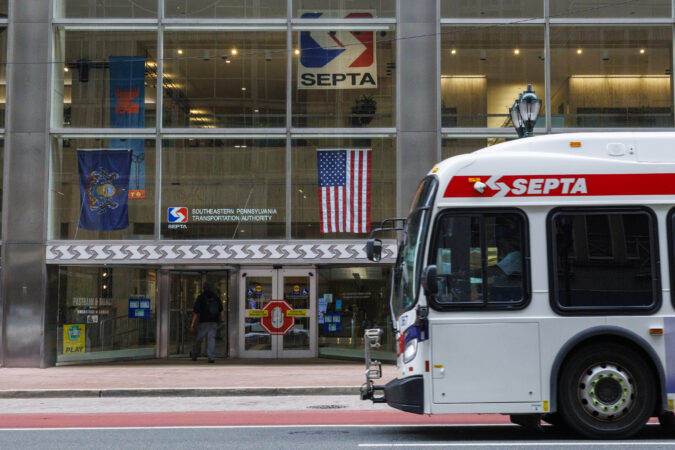
    Starting Monday, SEPTA will no longer post alerts about potential delays and cancellations due to bus and trolley driver shortages on social media, the service announced this week on its website.

    Alerts about delays due to weather and other issues will continue.

    Driver shortage alerts originated shortly after the COVID-19 pandemic hit, at a time when the service was operating with a significant deficit of drivers, SEPTA spokesperson Andrew Busch said. Now that the service has partly resolved the staffing issue and improved its notification systems, the generic alerts are no longer necessary, he said.

    “It was never very precise,” Busch said. Alerts were not “giving customers a good picture of what they should expect.”

    Since the pandemic, Busch said, the service has refined its tools, like its app and website, to offer customers a more accurate sense of what is happening with their route in real time, including how late a bus may be running and if it has been canceled.

    The service has also gotten a better handle on staffing. During 2022 and early 2023, SEPTA was operating with about 220 fewer bus and trolley operators than its budgeted headcount, Busch said. Now that gap has shrunk to about 100 operators, which makes it easier to adjust for staffing fluctuations.

    Between those two improvements, the generic delay and cancellation warnings became obsolete, Busch said.

    “It just seemed like it was the right time to move on from that and to try to push customers to where they’re going to get more accurate information,” he said.

    Riders who do not rely on the website, social media, or the app can get updates on their route by calling 215-580-7800.

    SEPTA was at one time a trailblazer in governmental use of social media. It first started posting on Twitter, now X, in 2008, long before many municipal transit agencies had adopted social media. In 2013, it expanded its presence on Twitter with @SEPTA_Social, which was staffed by SEPTA employees.

    Customers could post complaints and concerns and receive a personalized response from SEPTA staff, signed with the initials of the staff member. SEPTA shared best practices on social media interaction with transit officials in Chicago, New York, and Boston, Busch said.

    SEPTA does not plan on moving away from social media any time soon, he said, even as other large organizations move away from personalized customer service with artificial intelligence. The goal for SEPTA is more tailored support, Busch said, not less.

    “That’s been a very successful program and we’ll probably only grow that going forward,” he said.

  • SEPTA hopes Regional Rail cars rented from Maryland will alleviate overcrowding

    SEPTA hopes Regional Rail cars rented from Maryland will alleviate overcrowding

    As Train 9710 pulled out of the Trenton Transit Center at 7:25 a.m. Monday, something looked out of place.

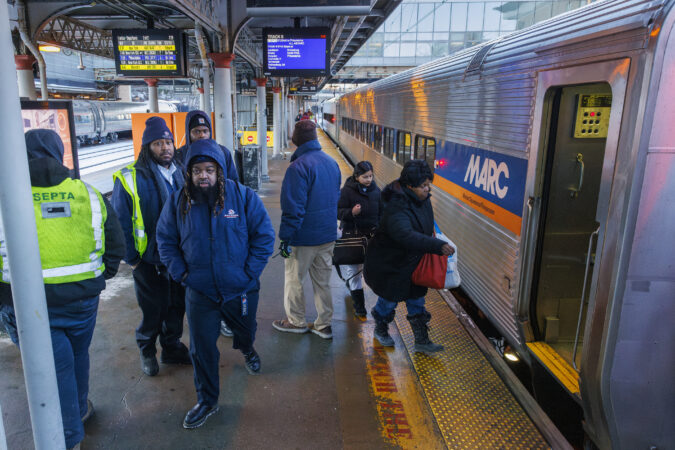
    Five passenger coaches in the Philadelphia-bound Regional Rail train bore foreign “MARC” logos and orange-and-blue markings, all pulled by a properly labeled SEPTA electric locomotive.

    It was the first day of service for 10 coaches rented from Maryland’s commuter railroad to add capacity to SEPTA’s service as it works through the fallout of last year’s Silverliner IV fires.

    The substitute cars initially will be running on the Trenton and West Trenton lines, where riders for months have endured packed trains due to a shortage of available 50-year-old Silverliner IVs.

    In October, the Federal Railroad Administration ordered SEPTA to inspect and repair all 223 of those cars after five of them caught fire earlier in the year.

    The transit agency is paying $2.6 million to lease the new coaches for a year.

    SEPTA’s records show it canceled at least 2,544 Regional Rail trips in the last three months of 2025. Delays and skipped stops also have plagued commuters for months.

    SEPTA is using its ACS-64 electric locomotives, which it bought in 2019, to pull the MARC coaches and its own fleet of 45 coaches.

    Silverliner cars do double duty; they carry passengers and have motors that provide their own locomotion through electricity drawn from overhead wires.

    The addition of new cars coincides with new Regional Rail schedules that went into effect Sunday.

    SEPTA said in a statement that the schedules will add trips on the Wilmington, Trenton, and Chestnut Hill East lines and increase the frequency of service from Wayne Junction directly to the Philadelphia International Airport on the Airport line.

  • Trump threatens Canada with 50% tariff on aircraft sold in U.S., expanding trade war

    Trump threatens Canada with 50% tariff on aircraft sold in U.S., expanding trade war

    WASHINGTON — President Donald Trump on Thursday threatened Canada with a 50% tariff on any aircraft sold in the U.S., the latest salvo in his trade war with America’s northern neighbor as his feud with Prime Minister Mark Carney expands.

    Trump’s threat posted on social media came after he threatened over the weekend to impose a 100% tariff on goods imported from Canada if it went forward with a planned trade deal with China. But Trump’s threat did not come with any details about when he would impose the import taxes, as Canada had already struck a deal.

    In Trump’s latest threat, the Republican president said he was retaliating against Canada for refusing to certify jets from Savannah, Ga.-based Gulfstream Aerospace.

    Trump said the U.S., in return, would decertify all Canadian aircraft, including planes from its largest aircraft maker, Bombardier. “If, for any reason, this situation is not immediately corrected, I am going to charge Canada a 50% Tariff on any and all Aircraft sold into the United States of America,” Trump said in his post.

    Spokespeople for Bombardier and Canada’s transport minister didn’t immediately respond to messages seeking comment Thursday evening.

    The U.S. Commerce Department previously put duties on a Bombardier commercial passenger jet in 2017 during the first Trump administration, charging that the Canadian company is selling the planes in America below cost. The U.S. said then that the Montreal-based Bombardier used unfair government subsidies to sell jets at artificially low prices.

    The U.S. International Trade Commission in Washington later ruled that Bombardier did not injure U.S. industry.

    Bombardier has since concentrated on the business and private jet market in recent years. If Trump cuts off the U.S. market it would be a major blow to the Quebec company.

    Treasury Secretary Scott Bessent warned Carney on Wednesday that his recent public comments against U.S. trade policy could backfire going into the formal review of the U.S.-Mexico-Canada Agreement, the trade deal that protects Canada from the heaviest impacts of Trump’s tariffs.

    Carney rejected Bessent’s contention that he had aggressively walked back his comments at the World Economic Forum during a phone call with Trump on Monday.

    Carney said he told Trump that he meant what he said in his speech at Davos, and told him Canada plans to diversify away from the United States with a dozen new trade deals.

    In Davos at the World Economic Forum last week, Carney condemned economic coercion by great powers on smaller countries without mentioning Trump’s name. The prime minister received widespread praise and attention for his remarks, upstaging Trump at the gathering.

  • How Malvern’s Pa. Turnpike ramp sparked billions in economic development

    How Malvern’s Pa. Turnpike ramp sparked billions in economic development

    Michael Chain Jr. once had to exit the Pennsylvania Turnpike at Downingtown and drive a zigzag pattern on State Routes 100, 113, 401, and 29 to reach his hotel.

    So did his customers.

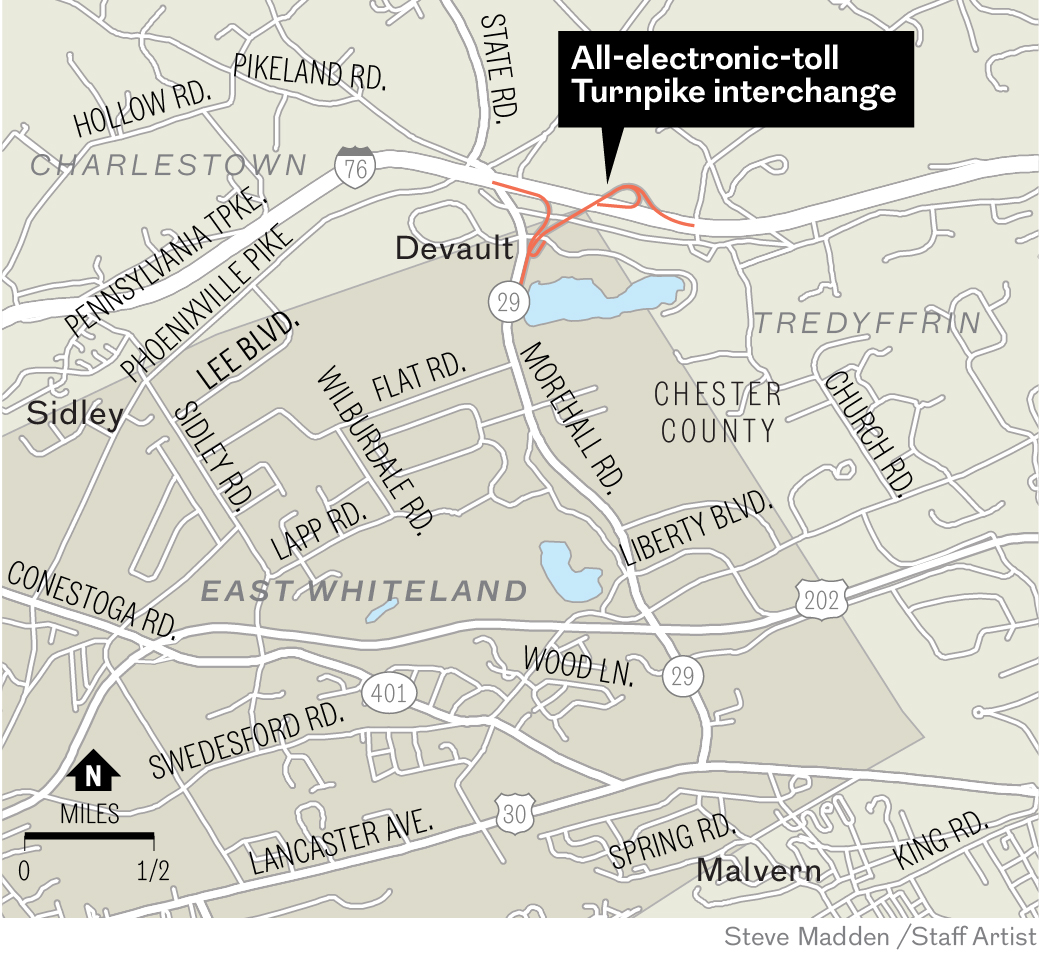
    But then the turnpike built Exit 320, an all E-ZPass interchange that connects to Route 29 and brings traffic right to the family-owned Hotel Desmond Malvern, a DoubleTree by Hilton.

    “It would easily take 20 minutes,” said Chain, general manager of the property. “Now you cut that in half, if not more.”

    When it opened in December 2012, the interchange helped spur billions in new commercial and residential development in Chester County’s Great Valley.

    Michael Chain, general manager at a hotel in Great Valley, says the Route 29 ramp has transformed his business.

    Corporate office parks expanded and new ones sprouted. Vanguard relentlessly expanded its campus for its 12,000 workers. Pharmaceutical and biotech companies moved there. Pfizer, Johnson & Johnson, Teva, and other pharmaceutical companies planted offices and research laboratories there.

    Thousands of people moved in to take advantage of the new jobs or a suddenly more convenient commute to Philadelphia and its inner-ring suburbs, Berks County, Lancaster, or even Harrisburg.

    More than 10 years later, the effects of the turnpike’s project are evident, but the real estate market is evolving to meet a lower post-pandemic demand for traditional office space and a higher demand for more housing.

    Through American history, transportation and development have been yoked. Towns and cities have grown around navigable rivers, post roads, national highways, railroads, interstates, turnpikes, and public transit.

    “This new interchange was explosive in terms of the economic impact in that particular region in a way I’m not even sure we had anticipated,” said Craig R. Shuey, chief operating officer of the Pennsylvania Turnpike.

    The key to success

    Experts caution it would be a mistake to attribute too much of the growth in the Great Valley solely to the turnpike exit.

    The area’s transition from agricultural and industrial to commercial mixed-use was already well underway when it opened. Real estate developers Rouse & Associates acquired land in 1974 and began building the Great Valley Corporate Center, a 700-acre business park.

    As the Pennsylvania 29 interchange was under construction, the U.S. 202 widening project occurred, helping ease the flow of traffic, although it still gets congested at peak hours.

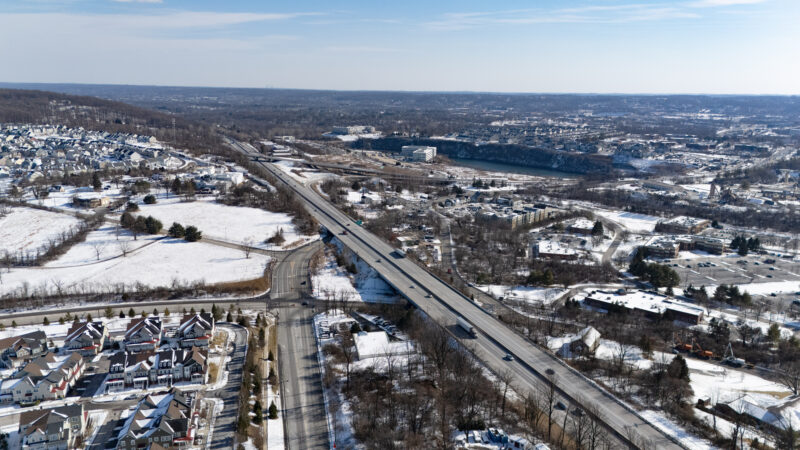
    The Route 29 electronic toll interchange.

    The exit “plays well with an improved Route 202,” said Tim Phelps, executive director of the Transportation Management Association of Chester County.

    It’s also served by SEPTA Regional Rail Service and Amtrak, and there’s a connection to the 18.6-mile Chester Valley trail for biking, running, and walking.

    “The key is all the multimodal access to the area from different points,” Phelps said. “You move goods and freight along corridors and people to jobs; transportation is economic development.”

    New rise in residences

    Growth hasn’t been linear.

    ”Since COVID the office market has been struggling everywhere, and a couple of years ago the funding for biotech became harder to get,“ said John McGee, a commercial real estate broker and developer. ”Both of these events had a negative impact on demand for [office] space in Great Valley.”

    He and partners have turned an empty Exton office building into the Flats on 100, 24 studio and eight one-bedroom apartments, marketed to consultants and visitors who need to stay awhile while working with local companies.

    Other signs of a softer market in commercial space:

    • Malvern Green, a 111-acre office park owned by Oracle, is up for sale, marketed as a redevelopment opportunity. It has 759,000 square feet in four buildings on Valley Stream Parkway, off Route 29.
    • A 10.3-acre office property on Swedesford Road is slated to be demolished and turned into a mixed-use campus, with 250 apartments and about 6,700 square feet of retail and dining.

    With the pandemic rewriting the rules of work beginning five years ago, residential development has picked up, driven by housing scarcity and lack of affordability.

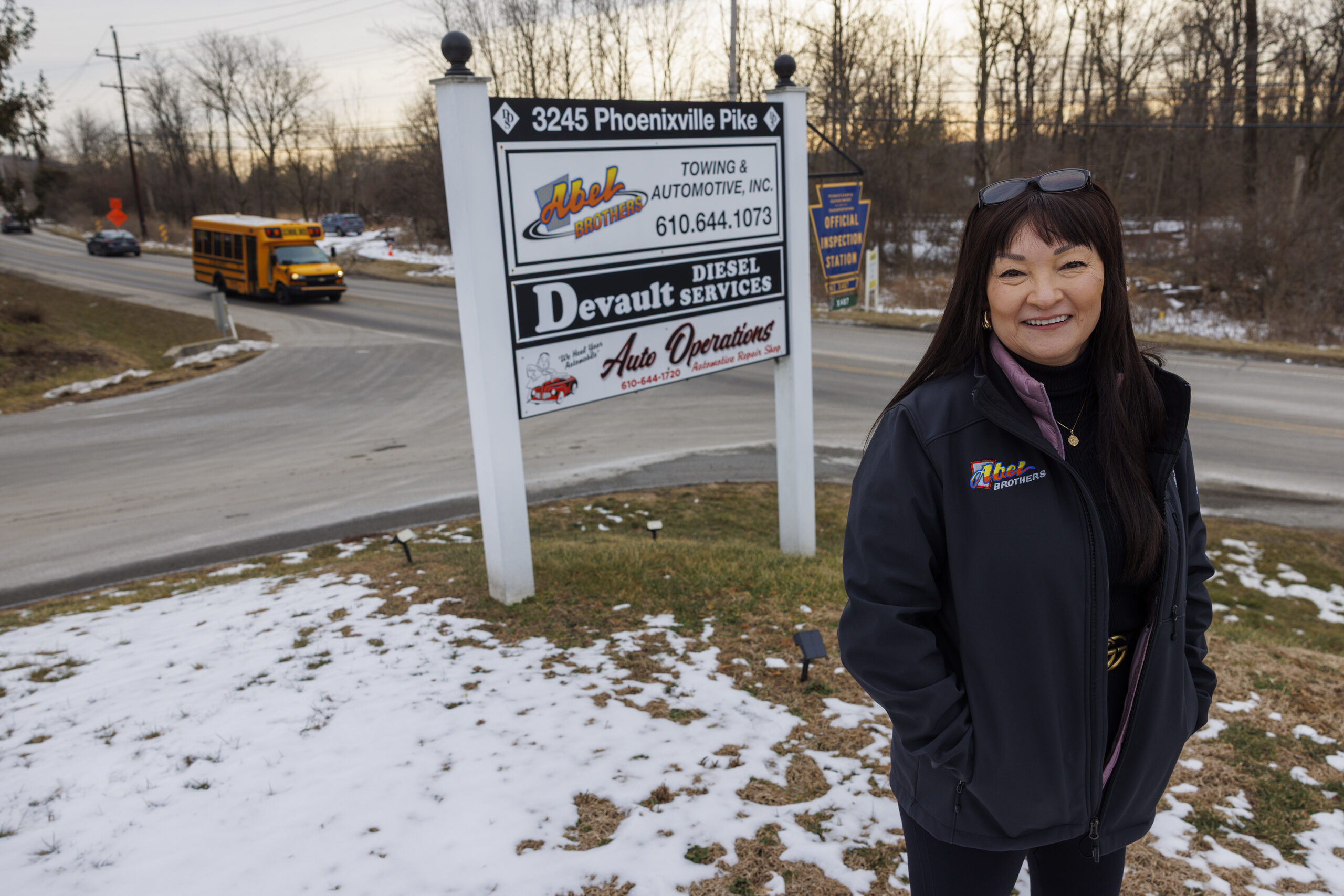
    Deb Abel, president of Abel Brothers Towing & Automotive, has seen the area evolve from her position as chair of the East Whiteland Planning Commission and as a member of the Chamber of Business & Industry.

    Deb Abel, chair of the East Whitefield Planning Commission, says workforce development is key to the area’s growth.

    “We talk all the time about workforce development,” Abel said. “People don’t want to come to work where they can’t afford to live.”

    More — and more affordable — housing is key both for current and future staffing needs. Workers shouldn’t have to commute from other areas with more housing options, Abel said.

    ‘A tangible asset’

    To Chain, the hotelier, travel time saved by the interchange is a tangible asset.

    “It improves the quality of life on a personal level, and [in business] I’m a beneficiary of people staying on the turnpike,” he said.

    As corporate travel budgets waxed and waned in the Great Recession and pandemic years, the Hotel Desmond beefed up other lines of business. An events space at the resort-like hotel now provides about half the revenues, Chain said.

    The interchange has helped him draw conference business from statewide associations, most of them in Harrisburg.

    And in recent years, youth sports travel teams from New York and New Jersey attending weekend tournaments in the region have filled rooms while using the interchange for easy access. Hockey teams are big.

    ‘A natural progression’

    A new multifamily project for Greystar Real Estate Partners is rising next to Route 29 on undeveloped land.

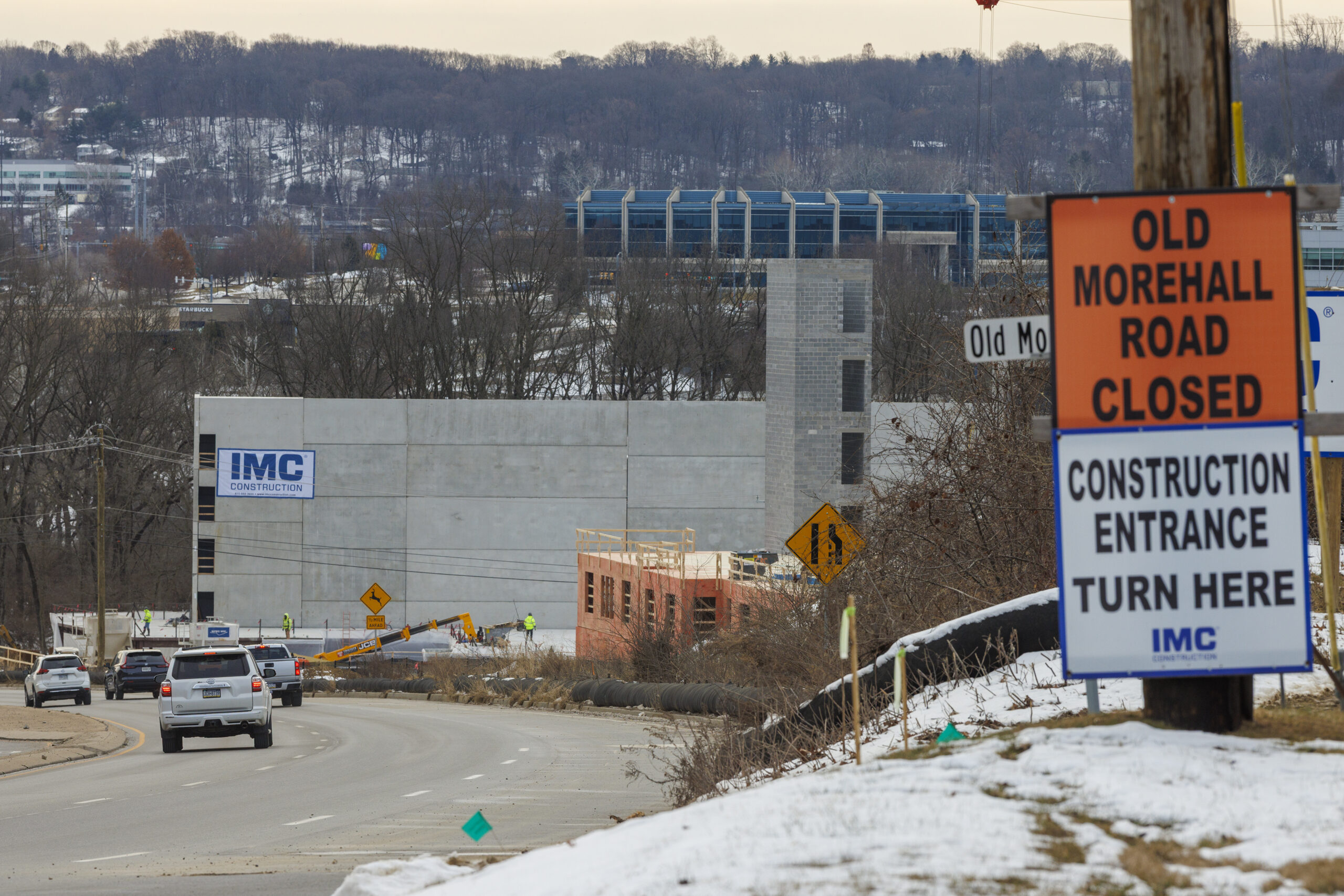
    IMC Construction is building a five-story, 267-unit apartment building featuring a rooftop lounge, fitness center, coworking space, pool courtyard, grilling stations, and more.

    IMC Construction signs and traffic markers along North Morehall Road in Malvern.

    A 133-unit “active adult” apartment building for people who are 55 and older is also under construction.

    Project manager Bob Liberato grew up in the area when Route 29 was a country road with one traffic light between Phoenixville and Route 30.

    It seems ironic now, but he remembers a petition circulating among fellow students at Great Valley High School to oppose the turnpike’s interchange proposal. Pretty much everybody signed.

    “We wanted to stop the turnpike because we liked our life,” Liberato said. “It was open, mostly fields and trees. Being able to go outside, have parties in the woods — all of that was great.”

    So what he’s doing now is, in a way, part of the circle of life.

    “We’re seeing a shift toward more residential projects, and there is a runway for more in the Great Valley,” said Liberato. With a scarcity of new development, ”it’s a natural progression in a lot of Philly suburbs.”

  • How N.J. ended up having some of the most restrictive e-bike regulations in the country

    How N.J. ended up having some of the most restrictive e-bike regulations in the country

    With a flick of his pen, outgoing Gov. Phil Murphy signed a bill Monday that makes New Jersey one of the most restrictive states for e-bikes, much to the dismay of cycling enthusiasts within and beyond the Garden State’s borders.

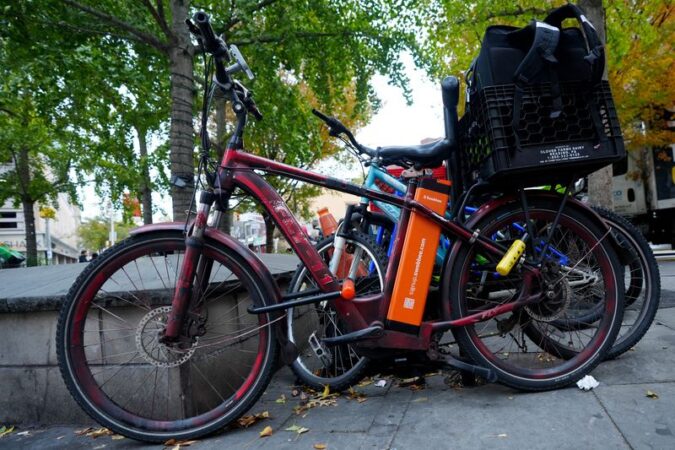
    Under the new regulations, all e-bikes must be registered and insured, whether they are low-speed e-bikes, which require pedaling and cannot exceed 20 mph, or high-speed bikes, called motorized bicycles or e-motos, that can go up to 28 mph.

    Riders will need to be at least 15 years old and they will need a motorized bicycle license to ride. People 17 and older can ride an e-bike using a driver’s license.

    The New Jersey law treats all e-bikes as the same, whereas most other states that regulate e-bikes tend to focus on e-motos when it comes to license and insurance requirements. The slower pedal-assist bikes face a patchwork of regulations across the country, with some restrictions on where they can go. By requiring insurance for the pedal-assist bikes people use for exercise and commuting, New Jersey now has some of the toughest regulations in the country for e-bikes, and cycling enthusiasts across the country fear their states might follow suit.

    The new regulations mark a dramatic shift in how New Jersey sees e-bikes. It was only in 2019 that state leaders, including Murphy, touted them as an alternative to cars with the potential to cut emissions and congestion in the state, allowing them to operate on streets, highways, and bicycle paths.

    Introduced in the legislature in November, the bill with e-bike restrictions traveled quickly across both chambers as lawmakers felt moved to action by fatalities in the state, including that of a Scotch Plains 13-year-old boy who collided with a landscaping truck while riding his e-bike in September and died.

    “It is clear that we are in an age of increasing e-bike use that requires us to take action and update regulations that help prevent tragedies from occurring,” Murphy said Monday.

    This is a point that even the most ardent critics of the new law have long agreed with. It had been six years since the last update to e-bike laws, and they agree that reckless riders abound.

    If New Jersey Facebook groups are any indicator, the law has plenty of supporters, sick of fast e-bikes taking up sidewalk space and e-motos zipping through residential neighborhoods.

    Ocean City Mayor Jay A. Gillian said in a statement Tuesday that the city had long called for the change.

    “Nobody likes more red tape, but the benefits of the new law far outweigh the inconvenience of the new registration requirements,” he wrote.

    Still, cycling advocates maintain the law is creating an unnecessary insurance requirement on a slew of people, such as tourists going down the Shore with their low-speed e-bikes, delivery drivers, and people who use pedal-assist bikes for exercise.

    Critics worry the law is not addressing some of the main issues plaguing the industry, such as misleading advertisements marketing e-motos as e-bikes and the sale of modification hardware that makes bikes go faster.

    State Sen. President Nicholas Scutari, a Democrat whose district includes Scotch Plains, introduced the bill in November, arguing that the increase in e-bikes created dangers for riders, motorists, and pedestrians.

    “Requiring registration and licensing will improve their safe use, and having them insured will protect those injured in accidents,” he said Monday.

    The 2019 e-bike laws did include insurance requirements for e-motos, which had to be registered and titled with the New Jersey Motor Vehicle Commission, but cycling advocates say these have never been enforced.

    Debra Kagan, executive director of the New Jersey Bike Walk Coalition, said she has asked for state data on e-moto registration and there does not seem to be any.

    The MVC did not immediately respond to a request asking for e-moto registration data.

    A fiscal analysis by the New Jersey Office of Legislative Services anticipated an increase in administrative costs for the MVC to update its technology systems, for communications, and to prepare an annual registration report for all e-bike classes. It did not give an estimate of how much that could cost the state. The law comes with no money attached.

    “Now this new legislation will require that all e-bikes, even the lowest speed e-bikes that don’t have throttles, would require licensing and registration, and there is no system and no funding to implement that across the state there,” Kagan said.

    The new law, critics add, will also carry a negative economic impact for the state, despite the expected fees the OLS says will be collected through registrations and eventual penalties for violations.

    While low-speed e-bikes can exceed $2,000, budget models can start at around $400, making them a suitable affordable transportation alternative.

    Patrick Cunnane, who sits on the board of directors of the trade organization People for Bikes and is an adviser to a bike shop in Gloucester County, worries that may no longer be the case for many with the new added costs of registration and insurance.

    Shore town boosters and small bike-rental businesses also feel threatened, Cunnane said. He said it was not out of the realm of possibility that the ability to travel on e-bikes could be what tips the scales between a stay in Ocean City, N.J., or one in Ocean City, Md., or at the Delaware beaches.

    “It’s just crazy for New Jersey to isolate themselves from an activity that’s really a lot of fun and safe,” he said.

    Niclas Elmer, owner of Tuckahoe Bike Shop, which has a handful of locations in Atlantic and Cape May Counties, said even as the threat of added regulation loomed, parents balked at buying their children low-speed e-bikes.

    “It was hard for us because we couldn’t give a straight answer [regarding regulations],” said Elmer, who has been in the retail business for more than 20 years.

    Further worrying Elmer is the status of bike rentals, a key part of his business model. He doesn’t know if these will be exempt from the new laws.

    To Elmer and others, cycling advocates say the fight over e-bike regulations is not over.

    Cunnane said People for Bikes has already been in touch with the administration of new Gov. Mikie Sherrill on the matter. The hope is that in the year the state has to set its new registration framework, advocates will be able to influence new legislation that walks back some of the restrictions.

    Cunnane was encouraged by the comments of the legislators who supported the law. They clearly want to tackle what they perceive to be a large problem, he said. Cycling advocates are not against all regulation; they simply want more targeted ways to address safety concerns.

    “We think we can really help make it better,” he said.

  • SEPTA Regional Rail delays this morning are due to a train pulling down overhead wires

    SEPTA Regional Rail delays this morning are due to a train pulling down overhead wires

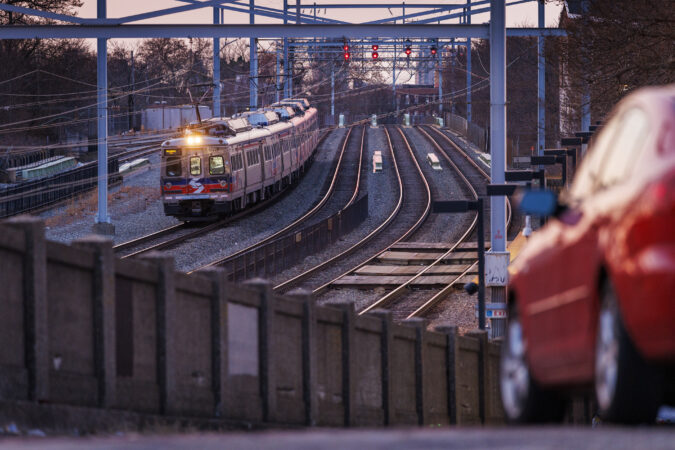
    SEPTA Regional Rail riders experienced significant delays — at times, 30 minutes to an hour — at the peak of morning rush hour on Tuesday morning, after a train pulled electrical wires down.

    A West Trenton Line train struck overhead electrical wires near Wayne Junction train station in the Nicetown section of Philadelphia at 7:45 a.m., said SEPTA officials.

    The train lost power and was tangled in the wires it had pulled down.

    Marie Pollock, 24, who was on board, felt the train start to gradually slow down before quickly and forcefully coming to a stop. Pollock could see wires hitting the train windows and noted that other passengers were startled during the collision.

    “We were keeping the doors closed because it was so cold,” Pollock said. “We were on kind of a hill, so there wasn’t any room for SEPTA to get a shuttle, and the power was out on both tracks, so we couldn’t get a typical rescue train to us.”

    Pollock, who had already been waiting a half-hour in 20-degree chill for her 6:17 a.m. West Trenton Line train before the ordeal, said passengers waited inside the stuck train for an hour and a half.

    SEPTA crews had to cut through the downed wires to free the train and then used a diesel-powered train to tow the disabled one to Wayne Junction, where passengers took other trains into Center City.

    Pollock’s four-hour journey didn’t end until 10 a.m. when she finally arrived at Jefferson Station.

    Since then, service interruptions have been occurring primarily on the Warminster, Lansdale/Doylestown, and West Trenton lines. However, delays cascade throughout the rail system, leading to 15 to 45-minute delays on other lines, said SEPTA spokesperson Andrew Busch.

    “Repairs are still continuing,” Busch said Tuesday afternoon, “but service has improved. Some minor delays, and we are advising passengers to plan for some extra time during rush hour, but we expect the evening commute to be better than this morning.”

    There is currently no timeline for completed repairs.

    SEPTA urges riders to use the SEPTA mobile app and septa.org for the latest updates.

    Today’s service interruptions follow a streak of solid performance by SEPTA after months of disruptions while SEPTA rushed to inspect and repair a fleet of 223 trains after five caught fire last year.

  • PennDot plans changes to U.S. 30 interchanges in Chester County

    PennDot plans changes to U.S. 30 interchanges in Chester County

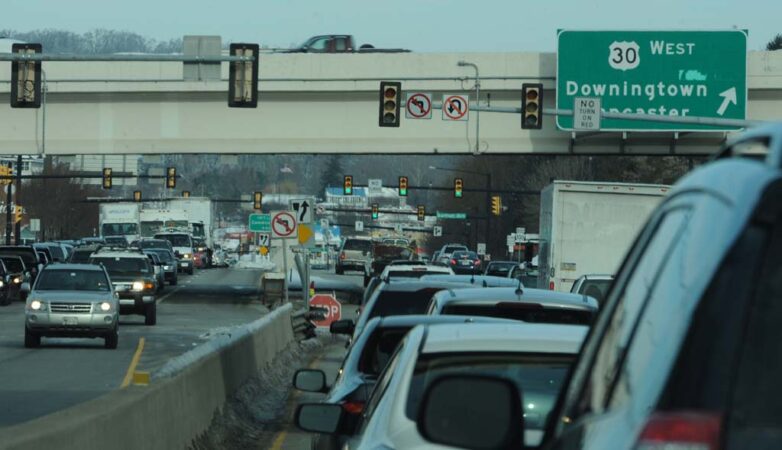
    Changes are coming to several interchanges in Chester County that could affect commuters in roughly a decade, under projects aimed at improving a 7.5-mile stretch of U.S. Route 30.

    Pennsylvania’s Department of Transportation is nearing the end of the conceptual design period for proposed changes to interchanges affecting Caln, East Brandywine, Easttown, West Brandywine, Uwchlan, and Downingtown in a project that seeks to reduce traffic congestion and collisions.

    PennDot presented the alternatives for the eastern section of the bypass during an online session last week. An in-person poster session is scheduled for Tuesday evening at Pope John Paul II Regional Catholic Elementary School in West Brandywine. But breaking ground remains years out: Construction is expected to start in spring 2034, costing roughly $874 million. The federal government is slated to pick up the bulk of the cost, with the state taking a sliver, officials said last week.

    “The purpose is to provide a safe and efficient transportation system by improving safety, reducing future congestion, accommodating planned growth, and improving deficiencies,” said Bruce Masi, consultant project manager with GFT, an engineering consulting firm.

    The eastern section of the Coatesville-Downingtown bypass corridor runs from just west of the Reeceville Road interchange, east to the Quarry Road interchange, where it becomes the Exton Bypass, heading toward U.S. Route 202.

    Changes to U.S. 30

    Under the plan, PennDot would widen the road by up to 35 feet. It would also introduce flexible-use lanes on the left sides to function as needed during high traffic volume.

    A regional transportation center, based in King of Prussia, would monitor the flexible lane through cameras along the route. The flexible lane would likely be used eastbound during the morning commutes, and westbound in the evenings. But it could also be used to facilitate traffic flow after crashes or incidents, Masi said.

    Heading west, the flexible lane would begin around the Quarry Road interchange and taper back to a median as you approach State Route 82. Heading east, it would return to a median around the Exton Bypass.

    Changes to access points

    When it comes to actually getting on U.S. 30, changes are coming at different junction points: Reeceville Road, Pennsylvania Routes 340, 322, and 133, and Norwood Road.

    Masi presented a slew of options for Norwood Road and Route 113’s interchange, which PennDot is accepting public comment on.

    One alternative would leave the existing location for westbound and eastbound on- and off-ramps, updated to meet current standards. It would also create two new “movements” that do not currently exist: Drivers headed west would exit onto a bridge that crosses over U.S. 30, and then tie back in with State Route 113; another ramp would run drivers eastbound. This model has the fewest predicted crashes, and wiggle room for cars to weave, but would potentially have a higher environmental impact.

    “What that does is creates a full interchange — all movements at 113, but in this alternative, we retain the Norwood Road ramps as well,” Masi said.

    Other alternatives would remove the existing ramps at Norwood Road for the public, and traffic using those ramps would redistribute through the region, Masi said.

    Removing the ramps on Norwood Road would also go against the wishes of the public, emergency services, and the municipalities. PennDot was looking to mitigate those effects, Masi said.

    In another alternative, Norwood House Road would be relocated north of an existing apartment complex, into the side of a hill.

    The last alternative would tweak the configuration of Norwood House Road to use it as a direct connection between Norwood Road and State Route 113.

    While PennDot awaits public review and input on Norwood Road, its selected alternatives would affect several other interchanges.

    Near Caln, at Reeceville Road, PennDot would replace the current structure and add traffic lights for westbound and eastbound drivers on Reeceville Road.

    Fisherville Road would be relocated north, to sit between the CVS and Wawa, but a remnant of the road would connect to the existing properties.

    On State Route 340 between Caln and Downingtown, PennDot would scale up the current interchange for longer ramps, and add a single-lane roundabout to eliminate the traffic signal at the U.S. 30 westbound intersection.

    West Bondsville Road would be moved north to maintain access to residences.

    Continuing east, State Route 322 around Downingtown would create a new traffic flow with traffic lights at either end of the interchange, to prevent left-turning cars from crossing paths with approaching vehicles. The change would affect drivers stopping for coffee or gas at the Royal Farms or heading to PennDot’s park-and-ride, however. It would become a right-turn-in and right-turn-out only traffic flow.

    Lloyd Avenue would also be relocated.

    What comes next

    Electronic comments are being taken through Feb. 6. Paper comment forms are available at Tuesday’s open house.

    Property impacts are not yet known, officials said. If a property is needed for the project, PennDot will reach out.

    Once PennDot closes out its conceptual design, it will start preliminary engineering and environmental evaluation. The public will be able to weigh in again between that period and the final design period, before the plans go out for construction bids.

    This suburban content is produced with support from the Leslie Miller and Richard Worley Foundation and The Lenfest Institute for Journalism. Editorial content is created independently of the project donors. Gifts to support The Inquirer’s high-impact journalism can be made at inquirer.com/donate. A list of Lenfest Institute donors can be found at lenfestinstitute.org/supporters.

  • A part that broke on a UPS plane that crashed in Kentucky failed 4 times on other planes years ago

    A part that broke on a UPS plane that crashed in Kentucky failed 4 times on other planes years ago

    Boeing warned plane owners in 2011 about a broken part that contributed to a UPS plane crash that killed 15 last year but at that point the plane manufacturer didn’t believe it threatened safety, the National Transportation Safety Board said Wednesday.

    The UPS plane crashed in November 2025 shortly after taking off in Louisville, Kentucky, when the left engine flew off the wing as the plane rolled down the runway. Three pilots on the plane that was headed for Hawaii were killed along with 12 more people on the ground near Louisville’s Muhammad Ali International Airport.

    The NTSB said Wednesday that Boeing had documented in 2011 there were four previous failures of a part that helps secure the MD-11’s engines to the wings on three different planes, but at that point the plane manufacturer “determined it would not result in a safety of flight condition.” These planes were actually built by McDonnell Douglas, which was later bought by Boeing.

    The NTSB previously said investigators found cracks in some of the parts that held the engine to the wing. Those cracks hadn’t been caught in regular maintenance done on the plane, which raised questions about the adequacy of the maintenance schedule. The last time those key engine mount parts were examined closely was in October 2021, and the plane wasn’t due for another detailed inspection for roughly 7,000 more takeoffs and landings.

    2015 crash brings up issues from 1979 crash

    It’s not clear when the cracks started to develop in the parts that helped hold the engine on the wing, but this crash is reminiscent of a 1979 crash in Chicago when the left engine flew off an American Airlines DC-10 during takeoff, killing 273 people. The DC-10 was the predecessor of the MD-11.

    That previous crash led to the worldwide grounding of 274 DC-10s. The airline workhorse was allowed to return to the skies because the NTSB determined that maintenance workers damaged the plane that crashed while improperly using a forklift to reattach the engine. That meant the crash wasn’t caused by a fatal design flaw even though there had already been a number of accidents involving DC-10s.

    But former FAA and NTSB crash investigator Jeff Guzzetti said that a service bulletin McDonnell Douglas issued in 1980 did identify failures of the spherical bearing race as a “safety of flight condition” so it’s surprising that Boeing didn’t call it that in 2011. He said that American had removed the engine of that plane so it could inspect that bearing.

    “I just think it raises questions regarding the adequacy of the severity of the 2011 service letter, and it also raises questions about how UPS incorporated that information and acted upon it,” Guzzetti said.

    Repairs weren’t required by FAA

    The service bulletin that Boeing issued didn’t require plane owners to make repairs like an FAA airworthiness directive would, and the agency didn’t issue such a directive.

    Former federal crash investigator Alan Diehl said the notice from Boeing recommended replacing the bearings with a redesigned part that was less likely to fail, but it still allowed operators to replace defective bearings with another older bearing that had demonstrated it was prone to failing.

    “As the investigation continues, the NTSB will have to address whether this service bulletin was an adequate solution to a known problem which could have had catastrophic results,” Diehl said. “The UPS crash highlights the need for increased maintenance measures on older airframes.”

    NTSB didn’t say whether there had been additional documented failures of the spherical bearing race since 2011. Investigators found that part broken into two pieces after the UPS crash, and the lugs that held that part were cracked.

    Photos released by the NTSB of the Nov. 4 crash show flames erupting as the rear of the engine starting to detach before it flew up and over the wing. Then the wing was engulfed by fire as the burning engine flew above it.

    Investigators search for reason why engine flew off

    The factual report released Wednesday doesn’t state what caused the engine to fly off, but it’s clear that investigators are focused on the failure of this bearing. The ultimate conclusion won’t come though until the NTSB’s final report, which usually doesn’t come until more than a year after a crash.

    But the report will undoubtedly be cited in the first lawsuit over the crash, filed last month, and subsequent ones. They will be investigating what Boeing knew at the time and what UPS did in response to this 2011 bulletin.

    “I think that this even further demonstrates that there was warning signs that predated the crash that any reasonable organization should have utilized to make sure that the Louisville crash didn’t happen,” said attorney Brad Cosgrove of the Clifford Law firm, which filed the first lawsuit.

    The report does make clear that neither of the plane’s two other engines were on fire before the crash. Some experts had previously speculated that debris from the left engine might have damaged the engine on the tail.

    Boeing, UPS and the Federal Aviation Administration are limited on what they can say while the NTSB investigation is ongoing, so they all declined to comment on Wednesday’s report. Boeing and UPS both expressed condolences to the families that lost loved ones in the crash.

    “We remain profoundly saddened by the Flight 2976 accident,” UPS spokesperson Jim Mayer said. “Our thoughts continue to be with the families and Louisville community who are grieving, and we remain focused on the recovery effort,” Mayer said.

    Plane involved in the crash was an older model

    The 34-year-old MD-11 plane only got 30 feet (9.1 meters) off the ground before crashing into several industrial buildings just past the runway and generating a massive fireball that could be seen for miles. Dramatic videos of the crash showed the plane on fire as it plowed into buildings and released a massive plume of smoke.

    Airlines quit flying this type of plane commercially years ago because it isn’t as efficient as newer models, but they had continued to fly for cargo carriers like UPS and FedEx and a few of these planes were also modified for use in firefighting. All the MD-11s that had been in use and 10 related DC-10s have been grounded since the crash.

    Cosgrove said he thinks it will eventually become clear that these MD-11s “probably should have been retired and that they had exceeded their shelf life.”

  • What happened before and after the fatal South Jersey helicopter crash, according to the NTSB

    What happened before and after the fatal South Jersey helicopter crash, according to the NTSB

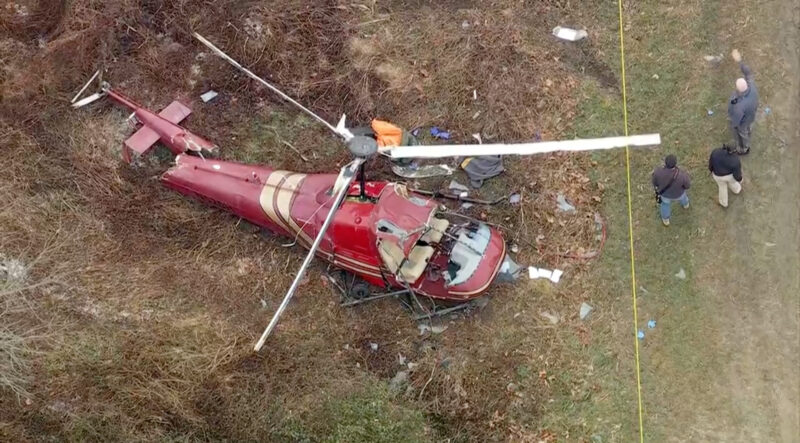
    Federal investigators pieced together a timeline for the deadly helicopter crash that killed two longtime friends in Hammonton, N.J., last month.

    The National Transportation Safety Board released a preliminary report on Wednesday detailing the helicopter crash that led to the deaths of pilots Kenneth Kirsch, 65, from Carneys Point, and Michael Greenberg, 71, of Sewell. Their aircrafts collided midair on Dec. 29. The two had been known to enjoy their flights together for years.

    According to preliminary data, Kirsch and Greenberg started their flight session at the Vineland-Downstown Airport, departing at 9:48 a.m. The pilots, in separate aircrafts, flew in parallel paths to Hammonton Municipal Airport, arriving 10 minutes later.

    Investigators are still trying to determine what happened next; there is no preliminary real-time GPS data on their subsequent flight out of Hammonton Municipal Airport.

    The preliminary report confirmed Kirsch and Greenberg flew out of the Hammonton airport and collided at 11:24 a.m., almost an hour-and-a-half after they arrived at the airport.

    During that time before their final flight, the two men stopped by Apron Cafe, a breakfast spot overlooking Hammonton Municipal Airport’s runway, the owner told The Inquirer. Minutes after they left, Apron Cafe patrons and staff could see one of the helicopters spiraling, engulfed in flames in the distance.

    “I looked up, and I could see in the distance the one spiraling down, and then I see the other one coming down,” said the cafe’s owner, Sal Silipino. “It was hard to believe that they were crashing.”

    While no data from the aircraft is available, surveillance video captured the fatal crash as it happened, according to the NTSB. The helicopters flew close together shortly before the accident.

    Slightly staggered from one another, and heading in the same direction in what investigators liken to a “formation flight,” the helicopters “converged until they contacted each other.”

    Investigators say one helicopter immediately began a tumbling descent to the ground, while the other pitched up sharply before leveling out. However, shortly after leveling off, the helicopter began spinning clockwise before descending rapidly to the terrain.

    Kirsch was flying an Enstrom F-28A helicopter, and Greenberg, an Enstrom 280C. Both were operating the aircraft for personal flights.

    The crash site was 1.5 miles southwest of Hammonton Municipal Airport and included a 1,211-foot debris path, with paint chips, main rotor blades, and the tail cone of one of the helicopters.

    Kirsch’s aircraft was found split in half with the tail cone only held together by one tail rotor control cable, according to the report. There were no signs of fire in Kirsch’s helicopter. Major sections of Greenberg’s aircraft were destroyed by a post-impact fire, with the tail cone relatively intact.

    The wreckage was recovered and retained for further examination by the NTSB. Investigators noted these were preliminary details, and the cause of the crash is yet to be determined.

    A typical NTSB investigation can last one to two years.