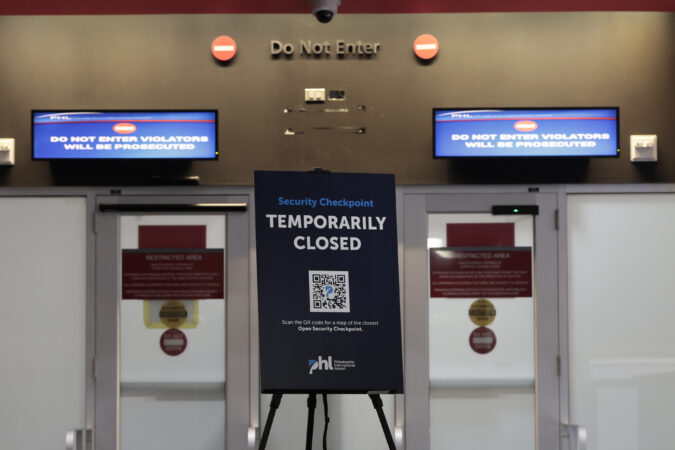
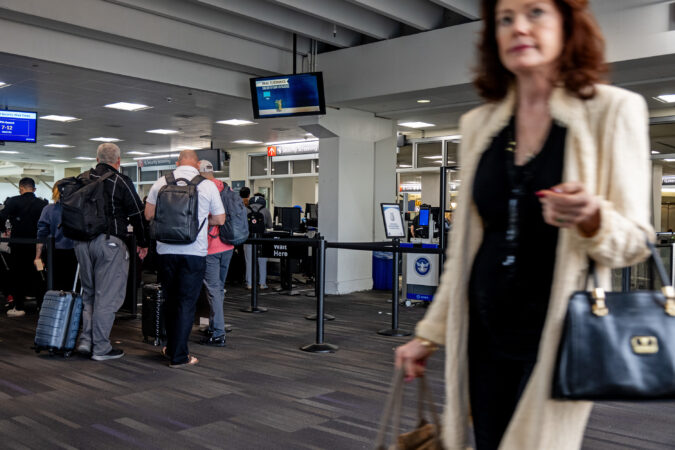
Philadelphia International Airport will reopen two U.S. Transportation Security Administration-run security checkpoints that were closed two weeks ago amid the government shutdown.
PHL’s Terminal A-West and Terminal F security checkpoints are slated to reopen Thursday, the airport announced via social media. Once opened, the checkpoints will operate on their regular schedules, with Terminal A-West running from 5 a.m. to 10:15 p.m., and Terminal F running from 4:30 a.m. to 9:30 p.m.
“We appreciate your patience as we collaborated with the TSA to maintain efficient security operations,” the airport said. “And thank you to our staff for supporting travelers throughout the closure.”
The airport closed those terminals on Nov. 5 at the request of the TSA, which was affected by the then-ongoing shutdown of the federal government. Amid the shutdown, which began Oct. 1, roughly 800 TSA officers continued screening luggage and staffing airport checkpoints without pay, and employees with the agency missed their first full paychecks on Oct. 24, The Inquirer reported.
The checkpoints’ closures, airport officials said, were temporary, though no date for their return was provided at the time they were shuttered. Checkpoints at Terminals A-East, B, C, and D/E remained operational.
The shutdown also brought a flight-reduction order from the Federal Aviation Administration, which required airlines to, in phases, eliminate 10% of their scheduled trips at 40 of the nation’s busiest airports — PHL included. Designed to ease pressure on air traffic controllers, who were experiencing staffing shortages, that order caused a number of flight delays and cancellations at PHL and other airports around the country.
The flight-reduction order was lifted Sunday, when the FAA retracted its mandate following the end of the shutdown last week. Federal legislators on Nov. 12 reached a deal to fund the government through at least Jan. 30, stopping the shutdown after 43 days — the longest stoppage in history.
Flight schedules at PHL were expected to return to normal quickly. That return to normal, as well as the reopening of the two formerly closed TSA checkpoints, comes just ahead of the holiday travel season, which the airport expects to bring about 1 million passengers through its gates between Friday and Dec. 2.
Marathon weekend can look chaotic — thousands of runners, crowds along the Parkway, and traffic everywhere — but it can also be one of the most fun, kid-friendly days in Philadelphia.
Between the Nemours Children’s Run, the Health and Fitness Expo, easy cheering spots, and plenty of stroller-friendly food stops, there’s a lot for families to enjoy without getting overwhelmed.
Here’s how to navigate the Philadelphia Marathon with kids in tow.
📍 Eakins Oval (22nd St. & Benjamin Franklin Parkway)
Kids run age-specific, short-distance dashes along the Parkway and get an event T-shirt, a finisher medal, and special goodies.
Nothing is timed, so the emphasis is fun. Children may only run in their age group, and each child is limited to one race. A parent or guardian must be present, but adults can’t run with the kids.
Come early. Before the races, kids can enjoy:
sports zone (football, baseball, basketball, soccer)
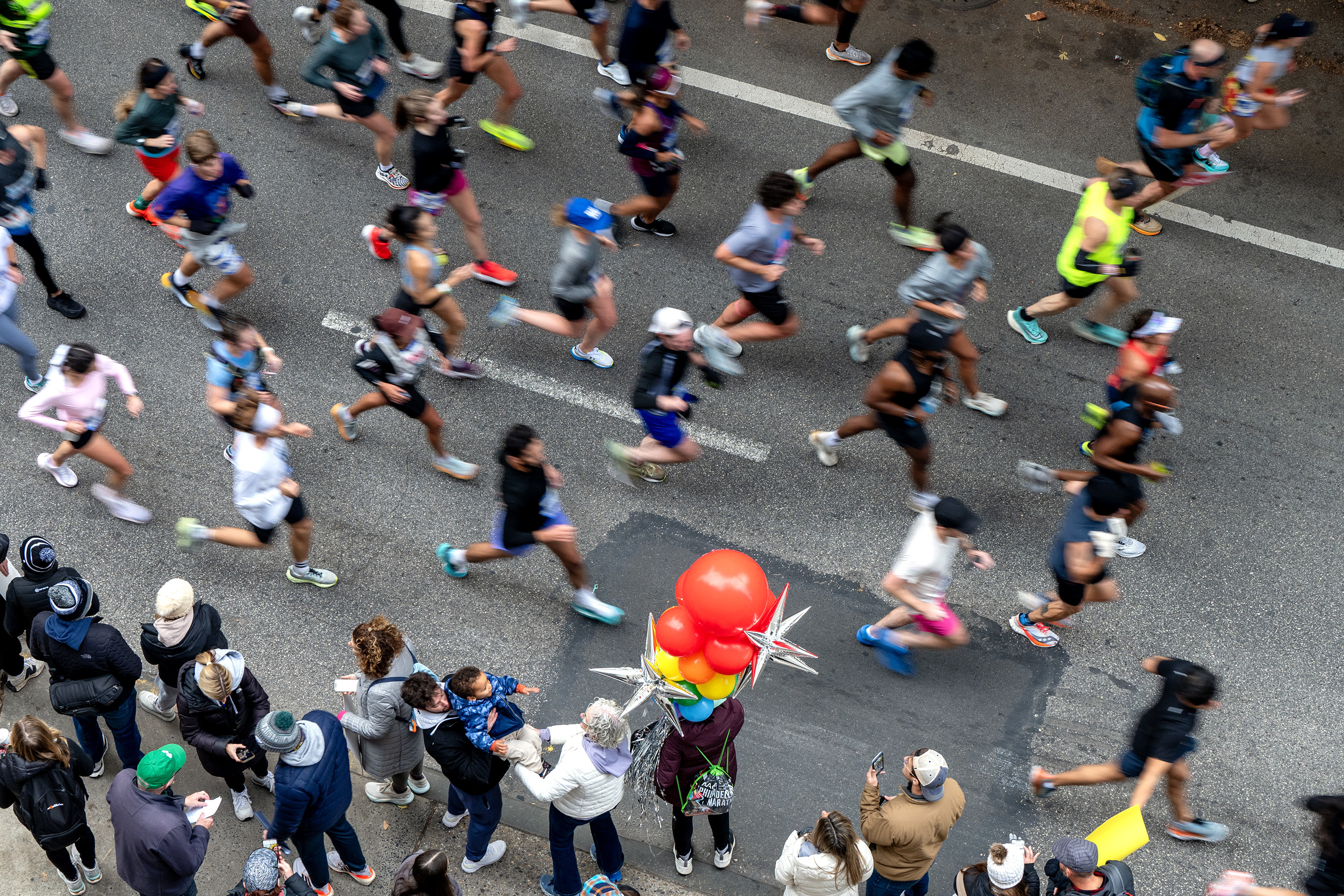
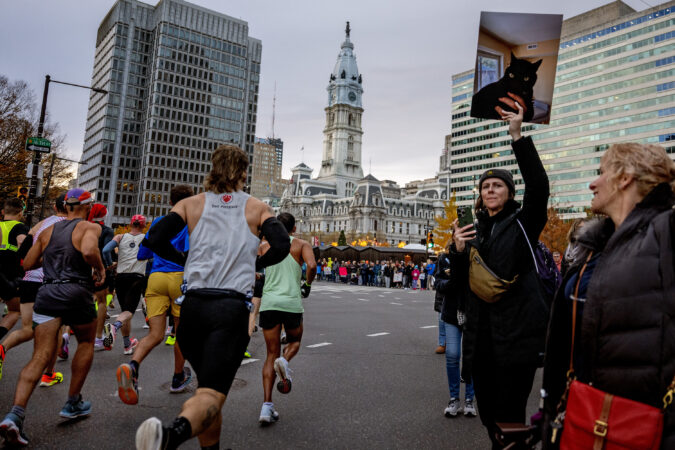
Runners on Walnut Street in Center City during the 2024 Philadelphia Marathon Sunday, Nov. 24, 2024.
Best viewing spots with kids
The marathon route stretches across Center City, Fairmount, and Manayunk. These spots are easiest for families:
Chestnut Street at Mile 1: High-energy, big crowds, and runners come through early — good for short attention spans. There’s room on side streets for stroller parking.
34th Street / University City (around Mile 5 and Mile 13): Wide sidewalks, walkable from the Parkway, and you can catch runners twice here if you hustle.
Manayunk’s Main Street (Miles 19–21): The loudest, most festive part of the race — think music, costumes, cowbells. Great for older kids; may feel crowded for toddlers.
Kelly Drive (Miles 22–24): Quieter stretch with room to spread out. Better for small kids and families who want to avoid packed sidewalks.
Cheering tip for kids: Have them call out runners’ names from their bibs — runners light up when a kid yells their name.
Getting Around: Transit, biking, and parking for families
Getting to the start/finish near the Art Museum is doable — especially with public transit.
SEPTA (big perk for parents)
Children 11 and under ride free with a fare-paying adult. Buses that usually stop near the Parkway (7, 32, 33, 38, 43, 48, 49) may be detoured. Check SEPTA’s System Status before you head out.
Regional Rail is helpful if you’re heading to Manayunk to cheer between Miles 19 and 21.
Driving & parking
Road closures are extensive, so expect detours and delays. If you plan to drive with kids, park early.
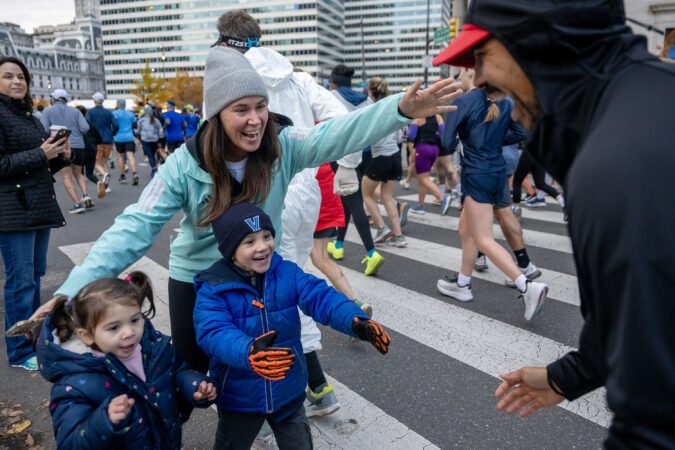
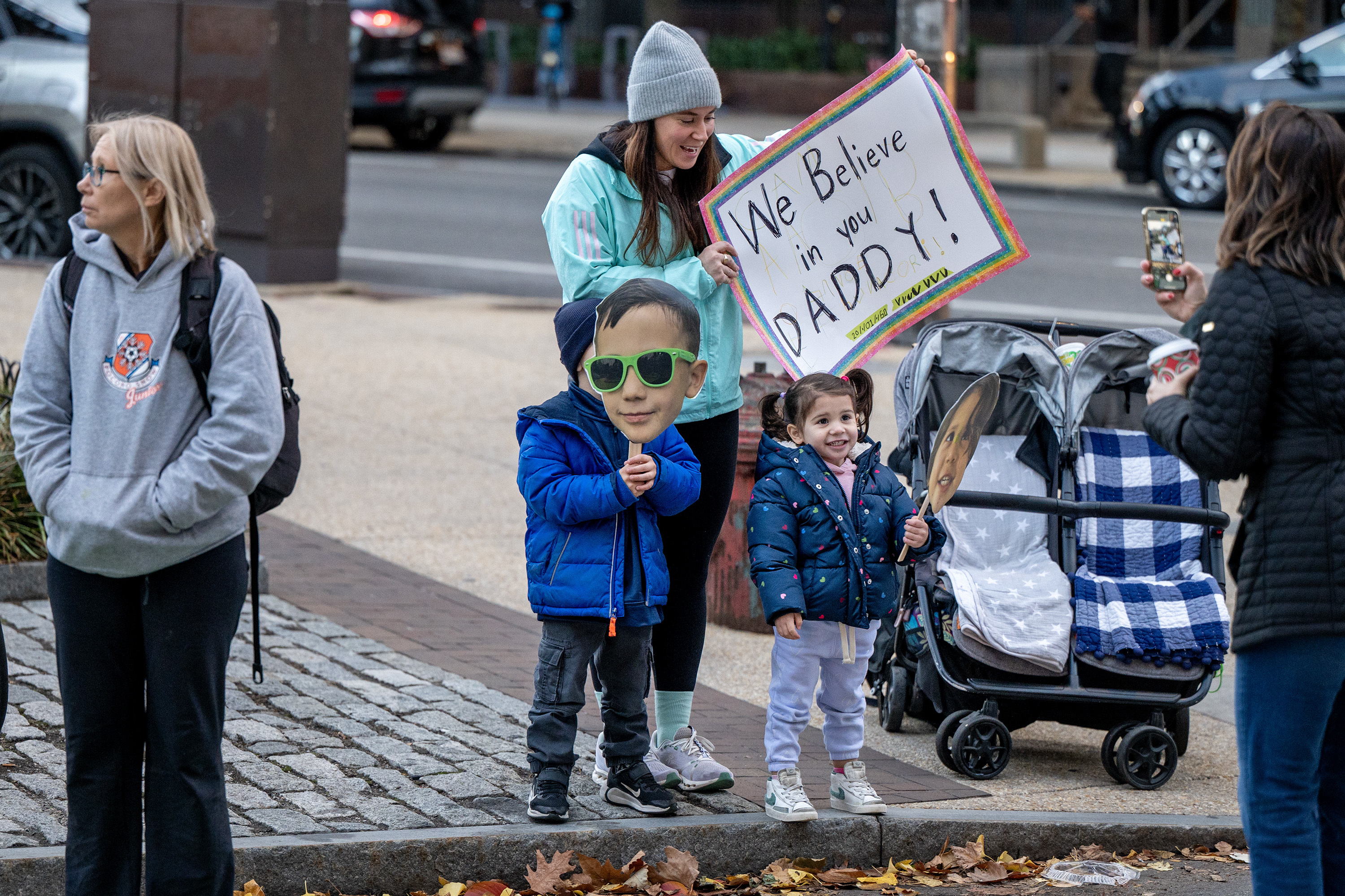
Amanda Carter and her children, Quinn, 3, and Cameron, 5, pose for a photo at 16th and Arch Streets at the start of the 2024 Philadelphia Marathon Sunday, Nov. 24, 2024. The kids had masks with dad Ron Carter’s face. They’re from New York City and this is Ron’s first marathon. Amanda who had done three, says “’m usually the one running.”
Kid-friendly sign ideas
If your kid needs inspiration, try:
You’re super fast! Like superhero fast!
Don’t stop! You’re almost at the snacks!
Run like you’re chasing the ice cream truck!
Go Birds! (And go YOU!)
My arms are tired from holding this sign!
My mom trained for months — I made this sign in five minutes!
Or have them tap through our Sign Generator for more options.
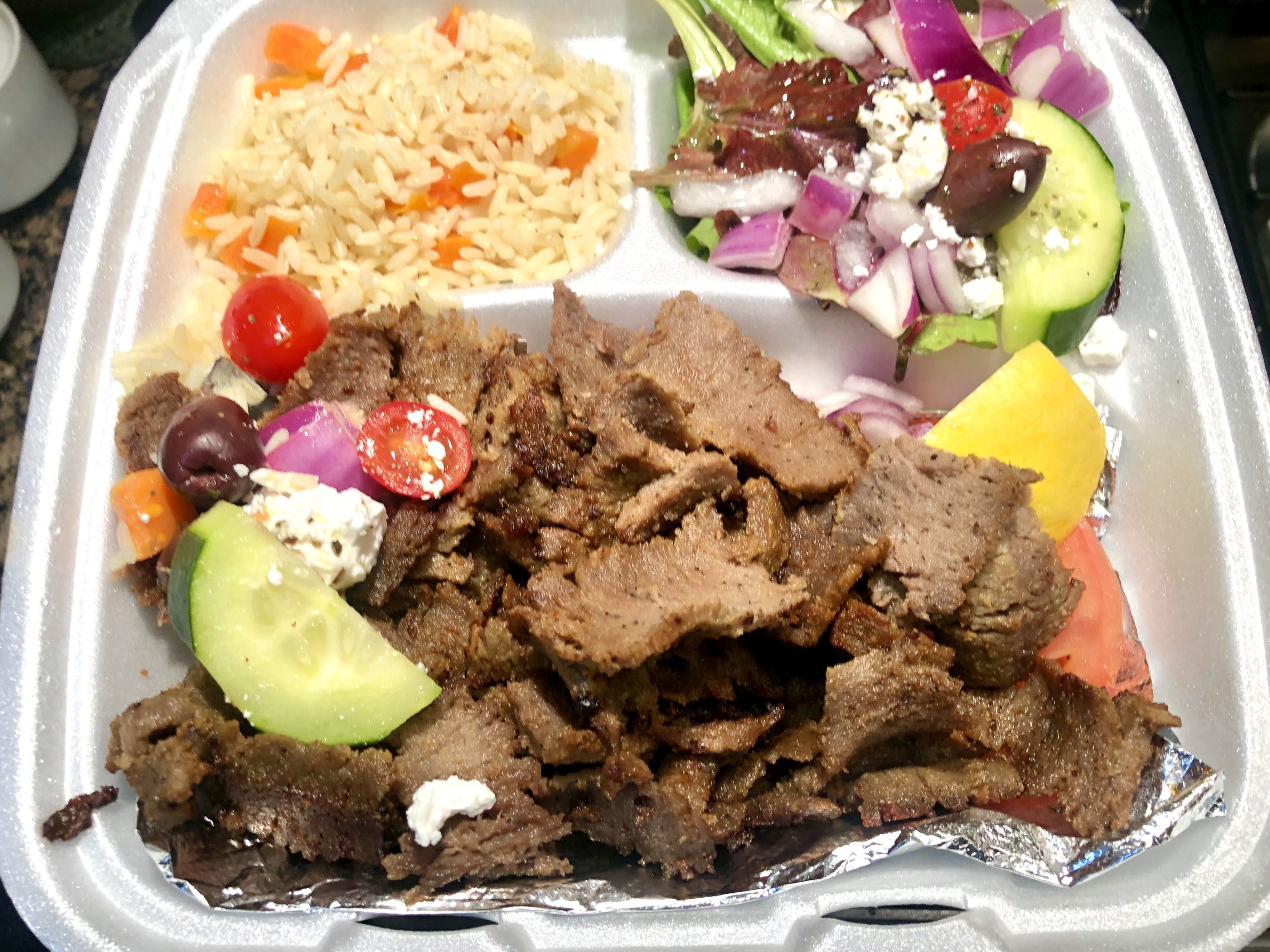
The gyros platter from Moustaki.
Where to eat with kids along the route
Whether you need a quick warm-up or a post-race reward, we rounded up 10 family-friendly places along (or just off) the course — from dumplings and giant slices to pancakes, burgers, and big dining rooms made for strollers.
Flight schedules should soon return to normal across major U.S. airports, including Philadelphia, after the FAA lifted government shutdown-related flight restrictions for airlines.
The Federal Aviation Administration retracted its order at more than 40 airports on Sunday night. Transportation Secretary Sean Duffy initially told airlines to eliminate 10% of their scheduled flights starting on Nov. 7 in response to “concerning data” that showed pressure on the national aviation system and on air traffic controllers who were experiencing staffing shortages amid the federal government shutdown.
“Today’s decision to rescind the order reflects the steady decline in staffing concerns across the National Airspace System and allows us to return to normal operations,” FAA Administrator Bryan Bedford said in a statement. “I am grateful for the hard work of the FAA safety and operations teams and for their focus on the safety of the traveling public.”
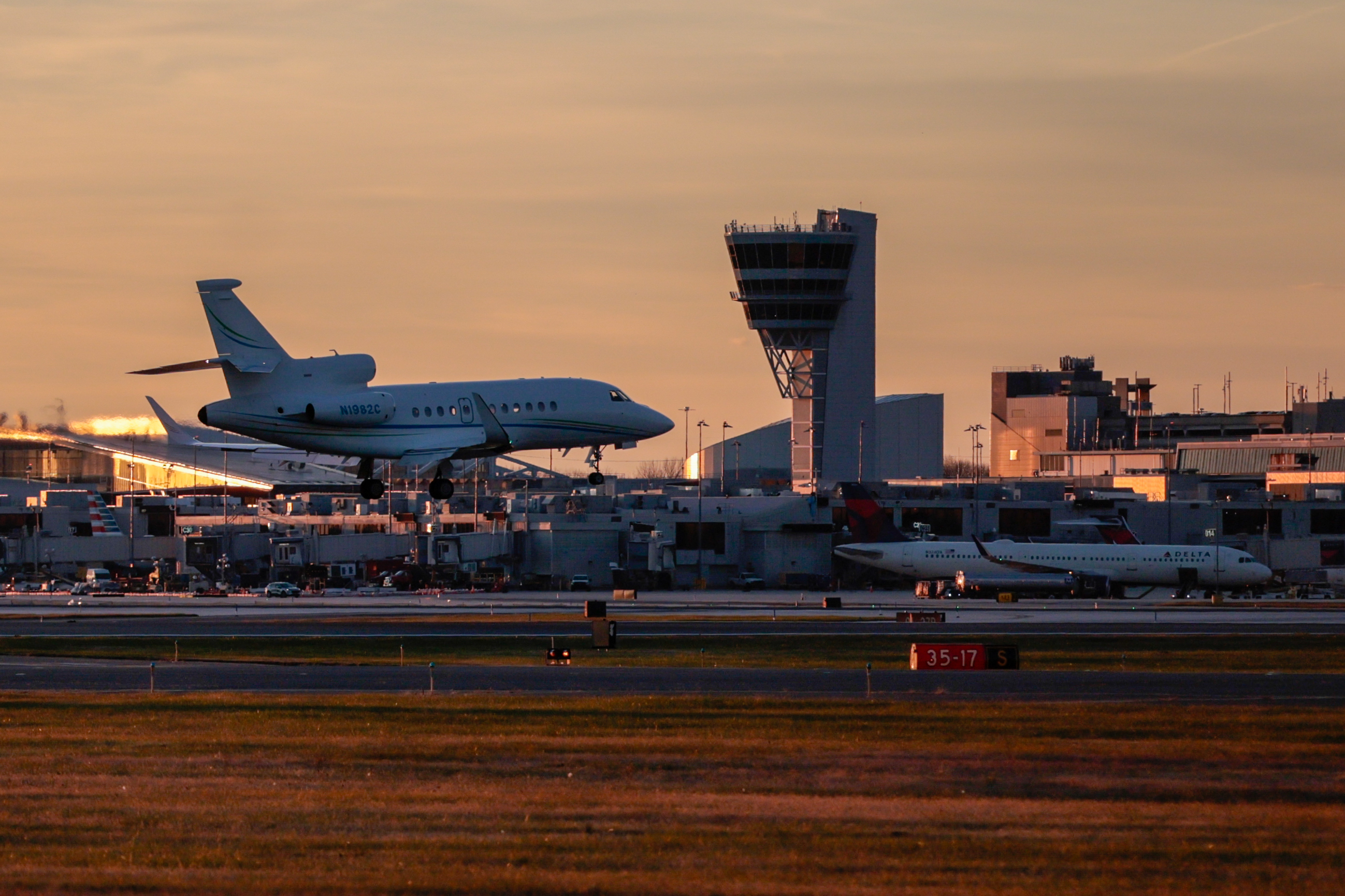
Air traffic at the Philadelphia International Airport on Nov. 6.
American Airlines, which operates 75% of the flights in and out of Philadelphia International Airport, is ready to bounce back swiftly after flight restrictions are lifted, a spokesperson said.
“American is ready for business, and we are serving customers with a full schedule in advance of the Thanksgiving and year-end holidays,” said Bri Harper, American Airlines’ spokesperson for the Northeast region.
Recovering from the FAA-ordered flight reductions won’t be a huge task, said Mike Taylor, J.D. Power’s practice lead for travel, and will likely be resolved in a matter of days.
“A matter of two or three days is generally all it takes,” Taylor said. “So I think they want to get that ball rolling well in advance of holiday travel so that there’s less hassle when holiday travel picks up in a week and a half from now.”
PHL’s major airlines, including American, United, and Delta, don’t expect any major hiccups associated with restoring flights after the FAA-ordered flight reductions.
United CEO Scott Kirby lauded employees during the chaotic period of cancellations in a LinkedIn post. While Nov. 8 and 9 set records in staffing shortage-driven cancellations and delays at the FAA, he wrote, Kirby said United customers gave the airline their fourth- and fifth-highest satisfaction scores of the year on those days.
Delta CEO Ed Bastian told CBS, “The system should return to normal by the weekend.”
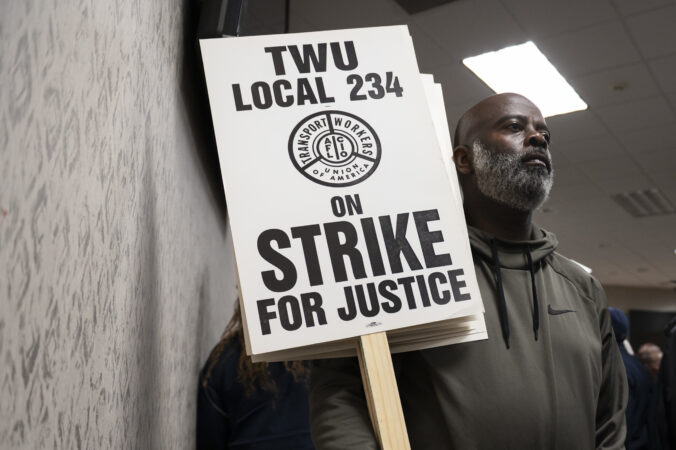
Members of the Transport Workers Union Local 234 on Sunday, Nov. 16 voted to authorize a strike if union and SEPTA negotiators can’t reach an agreement on a new contract.
Shortly before the current contract ran out at 11:59 p.m. on Nov. 7, TWU’s new president, Will Vera, urged union members to stay on the job. In an unusual move, he delayed a strike vote at the time of contract expiration, saying he had hope that a deal could be reached without the usual brinksmanship.
“We’re asking you to please continue to come to work and put money aside. We want you to be prepared in case we have to call a work stoppage,” he told members in a video at the time.
Local 234 leaders say they’re prioritizing a two-year deal with raises and changes to what the union views as onerous work rules, including the transit agency’s use of a third party that Vera said makes it hard for members to use their allotted sick time.
In a statement, SEPTA said it was aware of the authorization vote and is committed “to continue to engage in good-faith negotiations, with the goal of reaching a new agreement that is fair.”
2023 Fraternal Order of Transit Police Lodge 109 (three days)
SEPTA police officers walked off the job after bargaining with the transit agency for almost nine months, largely over the timing of a 13% pay raise for members. The agreement, partially brokered by Gov. Josh Shapiro, came amid heightened fears about safety on public transit and a funding crisis for SEPTA.
TWU Local 234 walked off the job for six days; the biggest issue was retirement benefits. SEPTA’s contributions toward union members’ pensions did not rise in tandem with wages when workers made more than $50,000. Managers’ pension benefits were not capped. The union also wanted to reduce out-of-pocket health-care costs and win longer breaks for bus, trolley, and subway operators between shifts and route changes.
SEPTA and the union reached an agreement Nov. 7, the day before the general election. Democrat Hillary Clinton’s presidential campaign was worried about voter turnout, and the city sought an injunction to end the strike. It proved unnecessary.
Talk about leverage. TWU was ready to strike just before the first home game of the World Series between the Phillies and the New York Yankees. Gov. Ed Rendell pushed the two sides to continue talking, and the transit workers waited to walk out until three hours after the end of Game 5, the last in the series played at Citizens Bank Park.
It was a bitter strike, coming just a year after the stock market’s meltdown started the Great Recession. TWULocal 234 President Willie Brown called himself “the most hated man” in Philadelphia. Mayor Michael Nutter was harshly critical. Brown called him “Little Caesar.”
The strike was settled Nov. 7 with a deal on a five-year contract. Transit workers got a $1,250 bonus, a 2.5% raise in the second year, a graduated increase in SEPTA pension contributions from 2% to 3.5%, and the maximum pension benefit was raised to $30,000 from $27,000.
2005: TWU Local 234 and United Transportation Union Local 1594 (seven days)
Negotiations collapsed mostly over SEPTA’s insistence that workers pay 5% of medical insurance premiums. At that point, the authority paid 100% of the workers’ premiums for family coverage.
In the end, it was solved by Gov. Rendell, a Democrat who had been Philadelphia mayor in the 1990s. He agreed to give promised state money to SEPTA early, so it could pay premiums in advance, reducing its costs.
In the resulting four-year deal, the unions had to pay for 1% of their medical premiums. They also received 3% yearly raises.
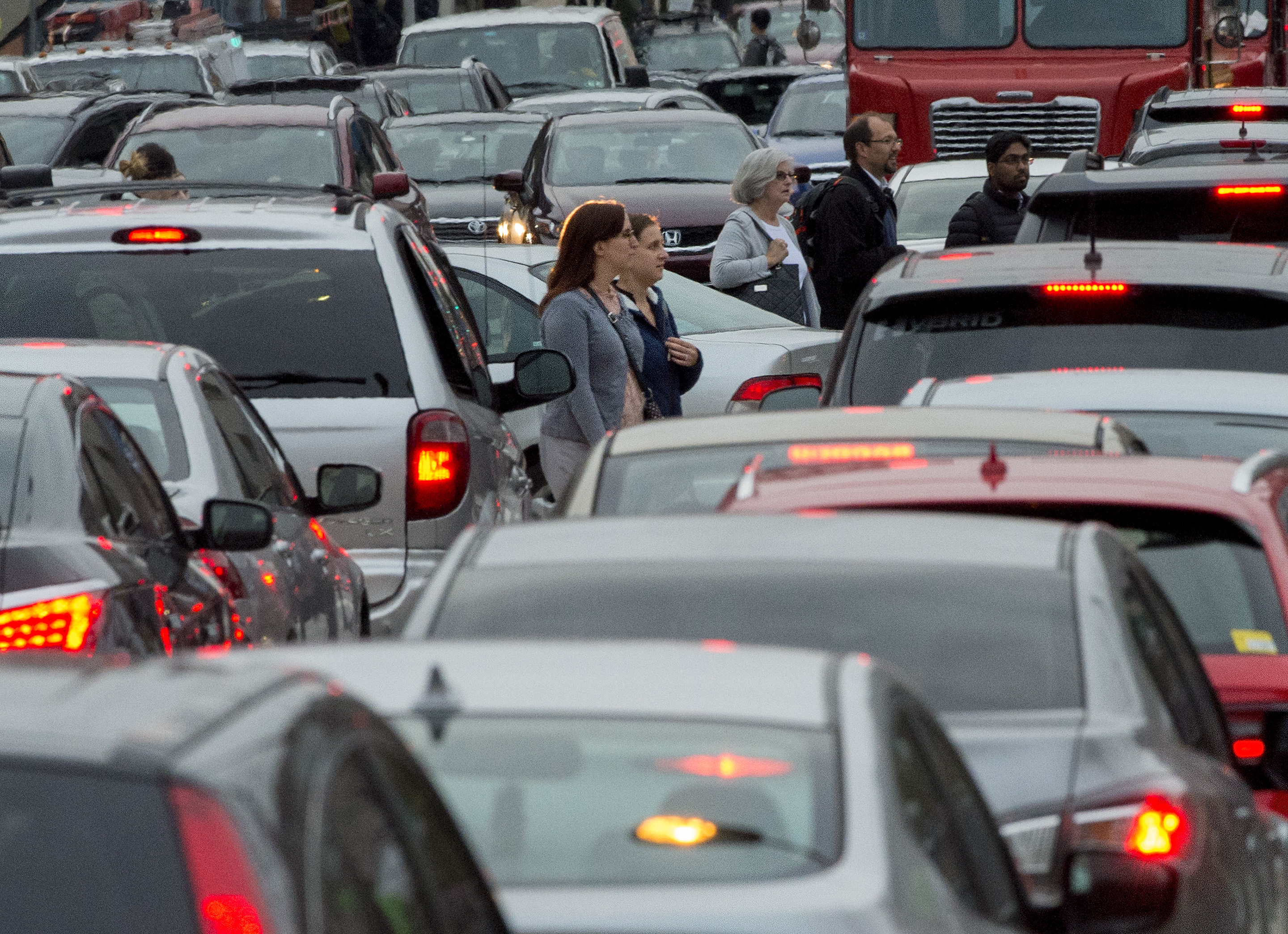
Pedestrians and cars in a chaotic dance at the intersection of Market and 30th Streets during the afternoon commute on the first day of the SEPTA city workers’ strike Nov. 1, 2016.
1998: TWU Local 234 (40 days)
City transit workers’ contract expired in March, but they did not strike until June — and then stayed out for 40 days. The two sides reached an agreement in July, but it fell apart. TWU members had returned to their jobs and kept working under an extension of their old contract. A final agreement was signed Oct. 23.
The union agreed to SEPTA’s demand that injured-on-duty benefits be limited. The old contract gave them full pay and benefits while on leave after a work injury. SEPTA wanted to hire an unlimited number of part-time workers. The union agreed to 100 part-timers to drive small buses.
SEPTA’s chief negotiator was David L. Cohen, famous for reining in unions representing city workers during Philadelphia’s bankruptcy in 1992, as Rendell’s mayoral chief of staff.
A two-week strike stilled city buses, trolleys and subways until an agreement was reached April 10. Transit workers would get 3% raises per year over the three-year span of the new contract, as well as increases in pension benefits and sick pay.
The union agreed to several cost-reduction measures, including a restructuring of SEPTA’s workers compensation policies.
Mayor Ed Rendell, a villain to many in labor for winning givebacks from city unions in 1992, pushed SEPTA to offer more generous terms to TWU than it had initially. Cohen, who was his chief of staff, crunched the numbers to make it work. Three years later, out of the city administration and working as a lawyer, he was hired as SEPTA’s chief negotiator.
1986: TWU Local 234 (four days) and UTU Local 1594 (61 days)
When TWU struck the city transit division in March 1986 over a variety of economic issues and work rules, some bus drivers pulled over mid-route and told passengers to dismount, The Inquirer reported.
Members were particularly incensed at what they considered SEPTA’s draconian disciplinary procedures. Union leaders said the issue was a basic lack of respect. The strike was settled in four days.
Drivers for 23 suburban bus routes, two trolley lines in Delaware County and the Norristown High-Speed Line — all members of the United Transportation Union — struck for just over two months, affecting about 30,000 passengers a day.
Employees in what was then known as SEPTA’s Red Arrow Division — after the private transit company that used to own the routes and lines — made considerably less than their city counterparts and had weaker pension benefits. They won raises and pension changes that brought them closer to parity.
1983: Regional Rail (108 days)
Thirteen separate unions walked off the job on the commuter rail lines that SEPTA had taken over at the beginning of the year from Conrail, successor to the bankrupt Pennsylvania and Reading Railroads.
In addition to wages, a key issue was SEPTA’s demand that union train conductors accept pay cuts. The authority had already cut the number of those workers by more than half.
Eventually SEPTA reached deals with a dozen of the unions. The 13th local, which represented 44 railroad signalmen, held out longer. Main issue: Whether SEPTA had the right to contract with outside firms for some types of signal work.
The Regional Rail strike remains SEPTA’s longest work stoppage since 1975.
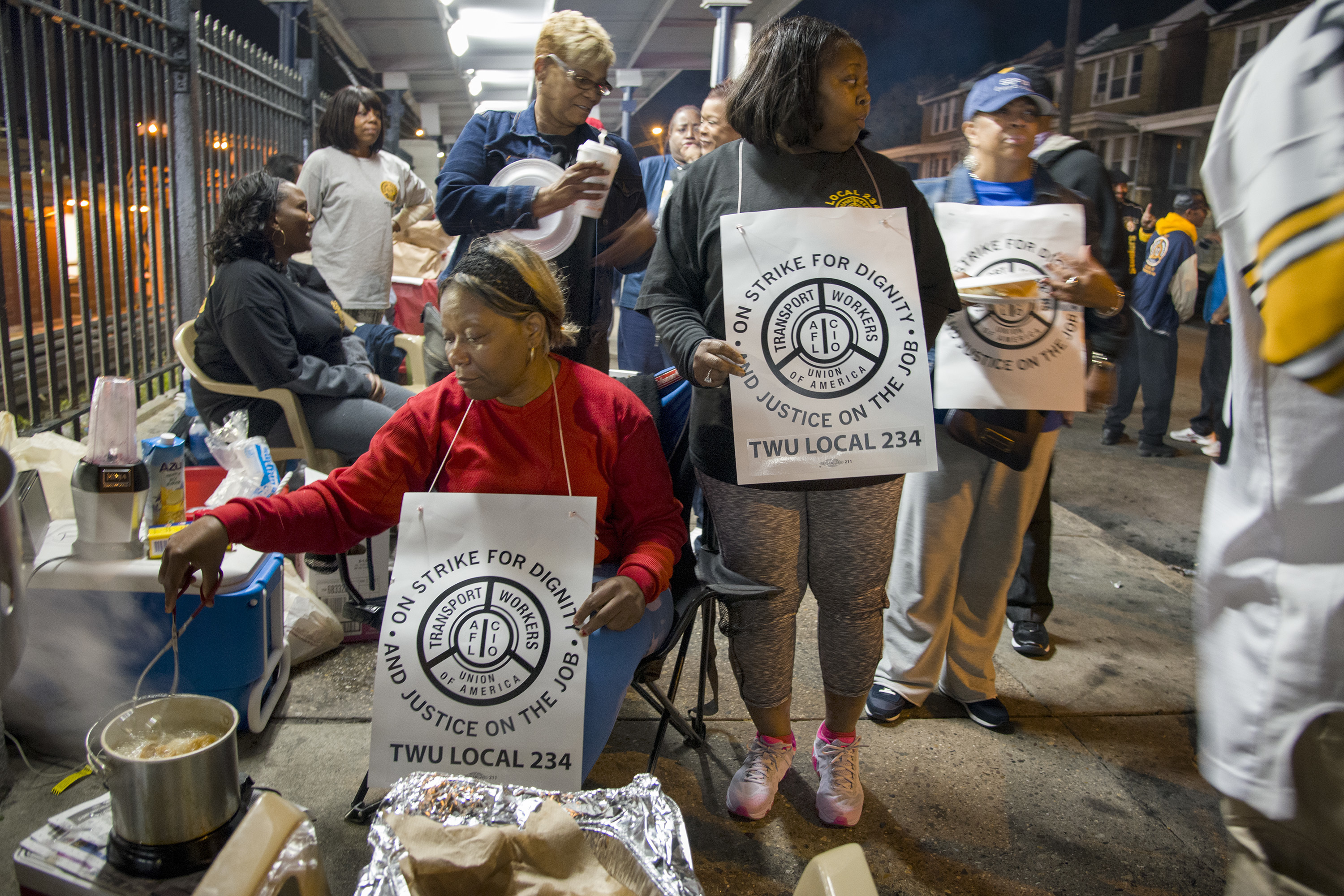
Joyce Woodford (center), a 25-year veteran cashier on SEPTA’s Broad Street Line, serves up fried fish for her fellow striking cashiers outside the Fern Rock Transportation Center during dinnertime on the third day of the SEPTA strike in 2016.
1982: TWU Local 234 (34 days)
About 36 suburban bus drivers and mechanics operating routes primarily in Montgomery County, and some routes in Bucks, won an 8.5% wage increase over three years.
The bus routes were the descendants of the Schuylkill Valley Lines and the Trenton-Philadelphia Coach Lines, which SEPTA acquired in 1976 and 1983, respectively. Service has grown, and the collection of bus routes is known as the Frontier Division today.
1981: TWU Local 234 (19 days) and UTU Local 1594 (46 days)
Transit workers shut down buses, trolleys and subways in the city on March 15, seeking job security in the form of a no-layoff clause, wage increases and a bar on SEPTA hiring part-time workers.
And the Red Arrow division went out for 46 days seeking higher wages and better medical benefits. SEPTA also backed down a demand for permission to hire private contractors for some work on the suburban buses, trolleys, and the Norristown High Speed Line.
1977: TWU Local 234 (44 days)
After a bitter strike, union members who run the city transit division got higher wages and more benefits, after rejecting an arbitrator’s proposed contract that was portrayed in news reports as generous.
A furious Mayor Frank Rizzo told reporters the strike “can last 10 years for all I care.” He said of the union’s rejection of the earlier offer: “It is outrageous, and I hope the people won’t forget it.”
1975: TWU Local 234 (11 days)
Transit workers, concerned about the ravages of inflation, wanted a clause giving them cost-of-living increases and enhancements to health-care benefits. Those were granted after Rizzo agreed to add $7.5 million to the city’s annual SEPTA contribution. Perhaps that’s one reason the mayor was so annoyed two years later.
Staff writer Erica Palan contributed to this article.
Philadelphia will host its largest marathon yet this year, as about 15,000 runners take on the 26.2-mile race through the city’s scenic and historic neighborhoods.
The Philadelphia Marathon Weekend runs Nov. 21-23 and includes a half marathon (13.1 miles) and an 8K race. The first marathon was held in 1994 with just 1,500 participants; this year, organizers expect roughly 30,000 athletes across all races.
With that many runners and spectators, expect road closures, parking restrictions, and heavy traffic.
“We want to make sure people give themselves ample time to get there,” said race director Kathleen Titus. “We have new security screenings that will speed things up, but if you’re waiting until 15 minutes before the race, you might be standing in a line for about an hour.”
Runners on Walnut Street in Center City during the 2024 Philadelphia Marathon on Sunday, Nov. 24, 2024.
Titus said the marathon has a new website and updated app. The app allows runners to schedule packet-pickup times at the expo to cut down on lines, track live race results, and receive weather and safety alerts.
Race start times and locations for the Philadelphia Marathon
All races follow the same course layout as in previous years and — except for the Nemours Children’s Run — start at 22nd Street and Benjamin Franklin Parkway, near the Philadelphia Museum of Art. The Nemours Children’s Run begins at Von Colln Memorial Field, 2276 Pennsylvania Ave., adjacent to Eakins Oval.
Each race follows a unique route, with the marathon and half-marathon winding through Center City, Chinatown, Old City, Queen Village, Rittenhouse, and University City, with significant portions covering Fairmount Park, Kelly Drive, and the Benjamin Franklin Parkway.
The Expo is filled with vendors showcasing apparel, shoes, gear, free product samples, and educational booths on health and fitness. Friday and Saturday bring a speaker series to the Expo and meet-and-greets with some of the country’s top runners. On Friday evening, there will be activities for children.
For spectators of the Philadelphia Marathon
Spectators are welcome to line the race routes to cheer on runners but will be restricted from the starting lines and in secure running areas until after 8 a.m. on Saturday and Sunday to ensure smooth race starts.
Large umbrellas, coolers, and animals (except ADA service dogs) are not allowed. The marathon also discourages bringing large blankets, backpacks, or cameras.
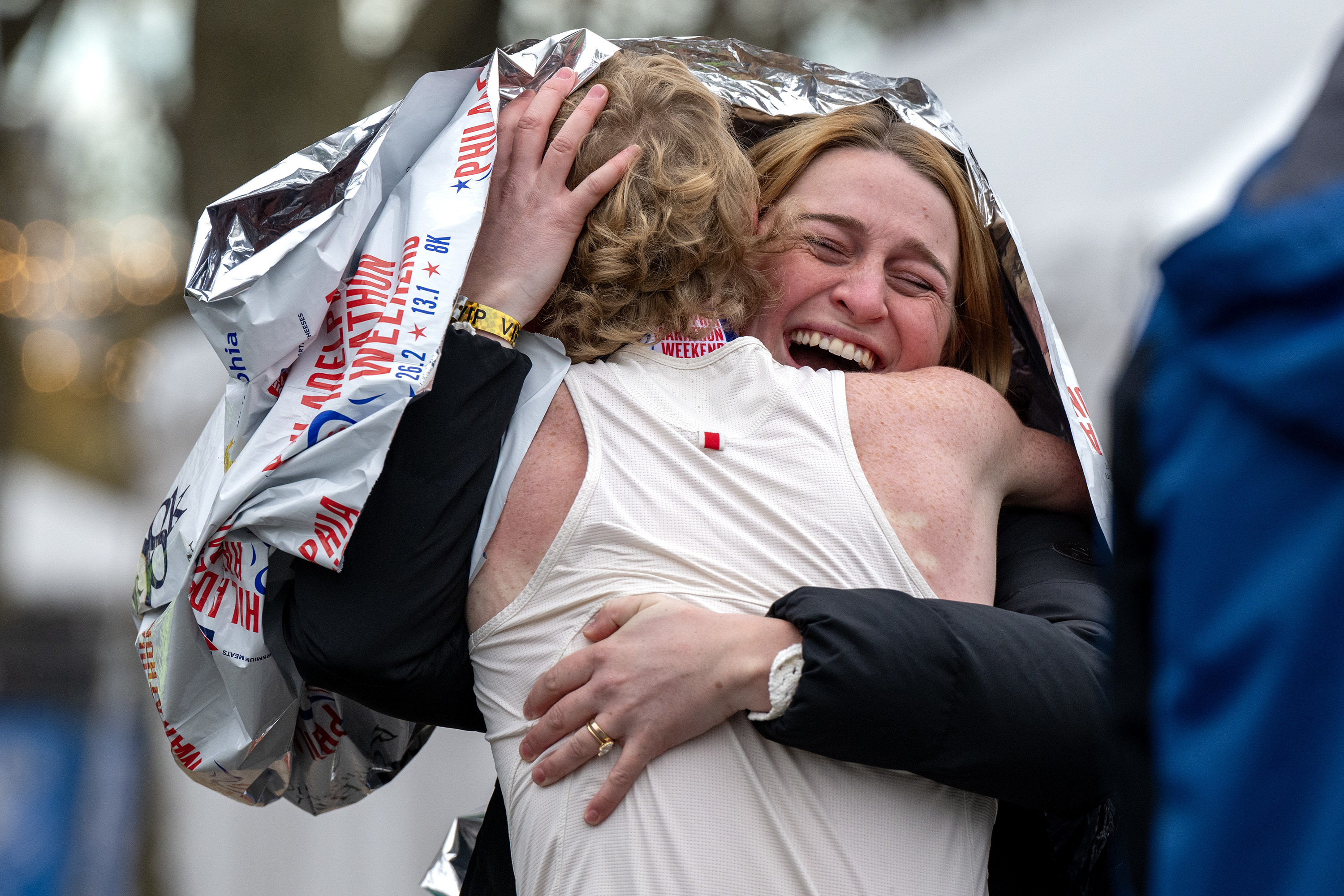
William Loevner of Pittsburgh is embraced by his wife, Emma Loevner, after finishing first in the mens in the 2024 Philadelphia Marathon on Sunday, Nov. 24, 2024.
Road closures
All-weekend closures
Saturday, Nov. 22, through 5 p.m. Sunday, Nov. 23
Benjamin Franklin Parkway (all lanes) between 22nd Street and Eakins Oval
Kelly Drive (inbound) closed at 25th Street, with local traffic permitted to Anne d’Harnoncourt Drive
Spring Garden Street Bridge and MLK Drive (inbound) traffic detoured onto 24th Street
Spring Garden Street
Saturday, Nov. 22
2 a.m. closures
2000—2400 Benjamin Franklin Parkway (inner and setup areas as posted)
Spring Garden Street, from Pennsylvania Avenue to Benjamin Franklin Parkway
23rd Street, from Pennsylvania Avenue to Benjamin Franklin Parkway
22nd Street, from Winter Street to Park Towne Place (local access to Park Towne Place maintained)
21st Street, from Pennsylvania Avenue to Winter Street
4 a.m. closures
Interstate 676 off-ramp at 22nd Street (westbound)
Interstate 76 off-ramp at Spring Garden Street (eastbound)
6 a.m. closures
17th Street, from Arch Street to Vine Street
18th Street, from Arch Street to Callowhill Street
19th Street, from Arch Street to Callowhill Street
20th Street, from Arch Street to Callowhill Street
21st Street, from Arch Street to Spring Garden Street
22nd Street, from Arch Street to Spring Garden Street
Benjamin Franklin Parkway, from 16th Street to 20th Street
Market Street, from Sixth Street to 16th Street
Chestnut Street, from Fifth Street to Eighth Street
Sixth Street, from Market Street to Chestnut Street
Fifth Street, from Chestnut Street to Race Street
South Penn Square
Juniper Street, from Chestnut Street to Market Street
John F. Kennedy Boulevard, from Juniper Street to 17th Street
15th Street, from Race Street to Chestnut Street
16th Street, from Chestnut Street to Race Street
Race Street, from Sixth Street to Columbus Boulevard
Columbus Boulevard (southbound lanes), from Vine Street to Washington Avenue
Interstate 95 southbound off-ramp at Washington Avenue
Washington Avenue, from Columbus Boulevard to Front Street
Front Street, from Washington Avenue to South Street
South Street, from Front Street to Seventh Street
Sixth Street, from Bainbridge Street to Locust Street
Lombard Street, from Fifth Street to Broad Street
13th Street, from Bainbridge Street to Chestnut Street
Walnut Street, from 12th Street to 34th Street
34th Street, from Chestnut Street to Girard Avenue
Spring Garden Street, from 32nd Street to 34th Street
Girard Avenue, from 33rd Street to 38th Street
33rd Street, from Girard Avenue to Cecil B. Moore Avenue
Reservoir Drive, from 33rd Street to Diamond Drive
Mt. Pleasant Drive
Fountain Green Drive
Kelly Drive
Access and reopening
Local access for residents and businesses will be maintained at police-controlled points.
Access to the Philadelphia Museum of Art will be available via Spring Garden Street (Bridge and Tunnel) to Anne d’Harnoncourt Drive.
Police will allow traffic through intersections when possible, depending on runner flow.
All streets (except Eakins Oval and the Parkway) are scheduled to reopen by 2 p.m. Saturday; many Center City roads will reopen earlier as they are cleared and serviced.
Sunday, Nov. 23
As part of enhanced security for the AACR Philadelphia Marathon, “No Parking” regulations will be strictly enforced. Vehicles on the race route will be relocated beginning at 1 a.m. Sunday.
2 a.m. closures
2000—2400 Benjamin Franklin Parkway
Spring Garden Street, from Pennsylvania Avenue to Benjamin Franklin Parkway
23rd Street, from Pennsylvania Avenue to Benjamin Franklin Parkway
22nd Street, from Winter Street to Park Towne Place (local access maintained)
21st Street, from Pennsylvania Avenue to Winter Street
4 a.m. closures
Interstate 676 off-ramp at 22nd Street (westbound)
Interstate 76 off-ramp at Spring Garden Street (eastbound)
6 a.m. closures
17th Street, from Arch Street to Vine Street
18th Street, from Arch Street to Callowhill Street
19th Street, from Arch Street to Callowhill Street
20th Street, from Arch Street to Callowhill Street
21st Street, from Arch Street to Spring Garden Street
22nd Street, from Arch Street to Spring Garden Street
Benjamin Franklin Parkway, from 16th Street to 20th Street
Arch Street, from Third Street to 16th Street
Fourth Street, from Arch Street to Vine Street
Race Street, from Sixth Street to Columbus Boulevard
Columbus Boulevard (southbound lanes), from Vine Street to Washington Avenue
Interstate 95 southbound off-ramp at Washington Avenue
Washington Avenue, from Columbus Boulevard to Front Street
Front Street, from Washington Avenue to South Street
South Street, from Front Street to Seventh Street
Sixth Street, from Bainbridge Street to Market Street
Chestnut Street, from Sixth Street to 15th Street
15th Street, from Chestnut Street to Walnut Street
Walnut Street, from Broad Street to 34th Street
34th Street, from Chestnut Street to Girard Avenue
Lansdowne Drive, from Girard Avenue to South Concourse Drive
South Concourse Drive, from Lansdowne Drive to West Memorial Hall Drive
East Memorial Hall Drive, from South Concourse Drive to Avenue of the Republic
Avenue of the Republic, from East Memorial Hall Drive to Catholic Fountain
Belmont Avenue, from Montgomery Drive to Parkside Avenue
States Drive, from Lansdowne Drive to Girard Avenue
Girard Avenue Bridge, from Lansdowne Drive to 33rd Street
33rd Street, from Girard Avenue to Reservoir Drive
Reservoir Drive, from 33rd Street to Edgley Drive
Edgley Drive, from Reservoir Drive to Fountain Green Drive
Fountain Green Drive, from Edgley Drive to Kelly Drive
Kelly Drive
Falls Bridge
Ridge Avenue, from Schoolhouse Lane to Manayunk Avenue
Main Street (Manayunk), from Ridge Avenue to Conarroe Street
Access and reopening
Local access for residents and businesses will be maintained at police-controlled points.
Access to the Philadelphia Museum of Art will be available via Spring Garden Street (Bridge and Tunnel) to Anne d’Harnoncourt Drive.
Expect delays at crossings along the course; police will allow traffic through when possible.
All streets (except Eakins Oval and the Parkway) are scheduled to reopen by 3 p.m. Sunday; many Center City roads will reopen earlier as they are cleared and serviced.
Transportation to the races
🚌 Bus
Lines 7, 32, 38, 43, 48, and 49 drop riders within a two-minute walk from the Art Museum. But, due to the race, there will most likely be detours. Check SEPTA’s system status for the latest schedules.
The race’s starting line is within a 10-minute ride from the City Hall area and subway stop and other locations. Check the map of Indego bike share stations to rent bikes and return them at a station near the Art Museum.
16th & Race St. (Sheraton Hotel), Standard Parking, (215) 196-0293
1815 JFK Boulevard, Central Parking System, (215) 568-8030 (Entrance on 1850 Cuthbert St.)
1901 JFK Boulevard, Central Parking System, (215) 557-3821 (Entrance on 19th Street)
1700 Benjamin Franklin Parkway, the Windsor Suites, (215) 569-0899
36 S. 19th St., Central Parking System, (215) 561-1187
Where does the money go?
Revenue earned and money raised from the Philadelphia Marathon goes to various charities and nonprofits, including local ones like B Inspired Philadelphia and the Mazzoni Center.
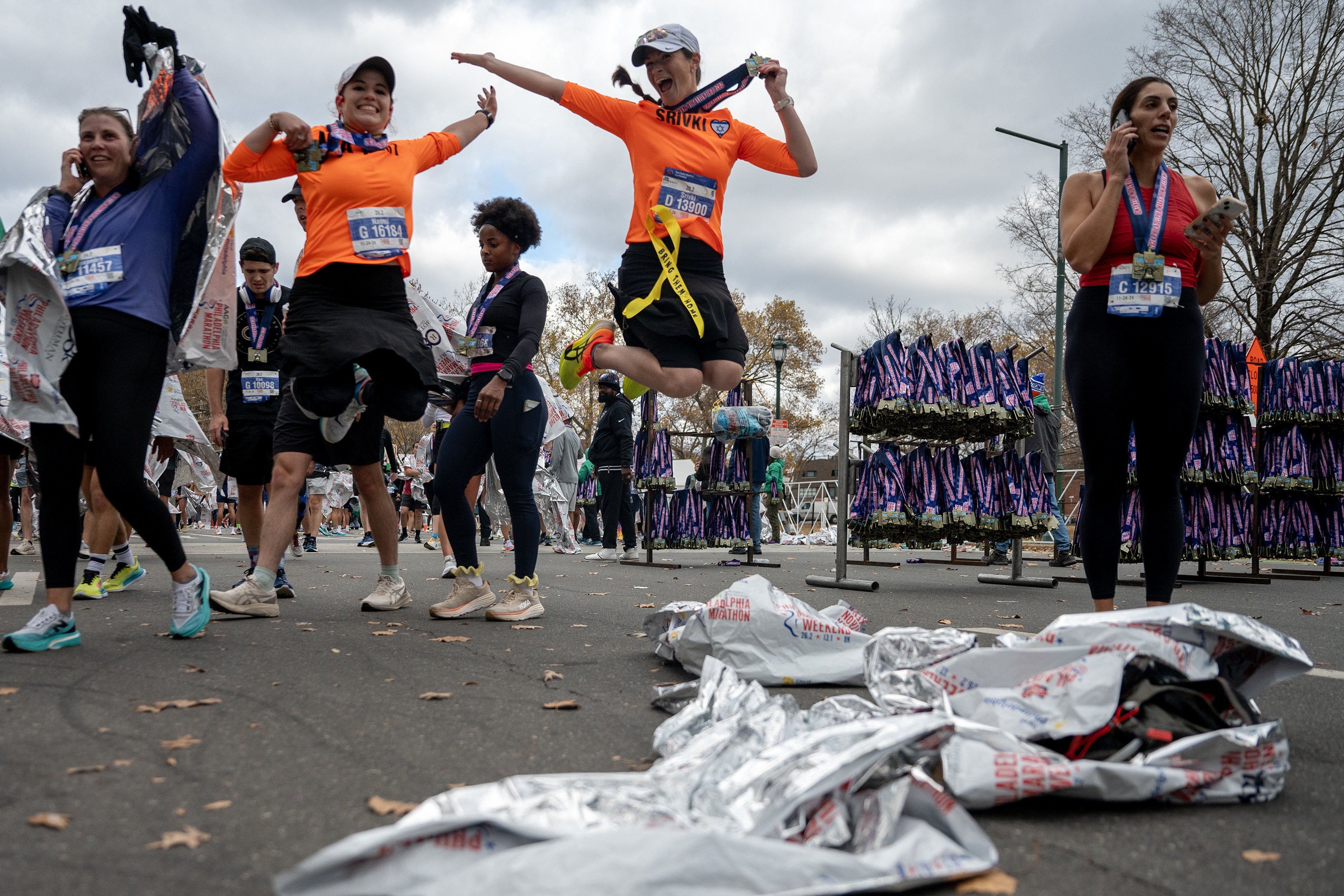
Naomi Peker (left) and Srivki Weisberg (right) jump to celebrate their finish in the 2024 Philadelphia Marathon on Sunday, Nov. 24, 2024. They run with a club in Suffern, N.Y., and this was Peker’s first marathon.
Awards & prize money
Monetary prizes range from $225 to $10,000 depending on the race, with the Philadelphia Marathon’s Elite Division being the most competitive.
The transit agency has until Oct. 31 to complete the inspections, which were recommended after the National Transportation Safety Board released a report investigating five fires that occurred on the Silverliner IVs this year.
As of Oct. 9, SEPTA said that crews can handle about six Silverliner IV cars a day, with a goal of ramping up inspections to handle 12 cars a day with five-person crews per car.
Although SEPTA is rotating cars in and out of service for the inspections — instead of yanking all 225 from service at once — riders have experienced significant delays and some trains have been outright canceled. Without a full fleet, SEPTA says it is unable to respond as easily to typical delay-causing events, such as power outages and bad weather.
Riders should check the SEPTA app for real-time updates on how trains are running.
As the deadline approaches and delays persist, The Inquirer is tracking SEPTA’s inspection progress.
Mon., Oct. 27, 2025
95 inspections complete
Days until deadline: 4
Fri., Oct. 24, 2025
88 inspections complete
Days until deadline: 7
Wed., Oct. 22, 2025
78 inspections complete
Days until deadline: 9
Mon., Oct. 20, 2025
66 inspections complete
Days until deadline: 11
Fri., Oct. 17, 2025
58 inspections complete
Days until deadline: 14
story continues after advertisement
Wed., Oct. 15, 2025
46 inspections complete
Days until deadline: 16
Thurs., Oct. 9, 2025
12 inspections completed
Days until deadline: 22
Mon., Oct. 6, 2025
Inspections begin
Cars began undergoing inspections in SEPTA’s four regional maintenance facilities.
Greg Buzby, manager of Regional Rail vehicle engineering, shows some of the work being done for the safety inspections at the SEPTA Overbrook Maintenance Facility.Tyger Williams / Staff Photographer
“We’re looking for any signs of overheating or damage to any of the circuits, physical damage, making sure the bolted connections are tight,” said Greg Buzby, manager of Regional Rail engineering. “There’s also electrical testing that we have to do to make sure the insulation has its integrity.”
Inspections remaining: 225
Days until deadline: 25
Wed., Oct. 1, 2025
NTSB releases report
Noting that the Silverliner IV cars’ “outdated design … represents an immediate and unacceptable safety risk,” the National Transportation Safety Board urged SEPTA to sideline all the Silverliner cars immediately and to retrofit or replace them as soon as possible. The Silverliner IVs went into service between 1974 and 1976, with technology that was designed even before that time.
The NTSB’s findings are advisory.
More than 300 passengers were safely evacuated after a SEPTA Regional Rail train caught fire in February in Delaware County.Charles Fox / Staff Photographer
The Federal Railroad Administration, which regulates freight and passenger railroads, ordered SEPTA to undertake the inspections, concluding “that SEPTA’s maintenance and operation of its passenger rail equipment requires additional oversight and corrective action.”
Inspections remaining: 225
Days until deadline: 30
story continues after advertisement
Talk to our transportation team.
Do you have questions about what’s happening on Regional Rail? Ask here or share how your rides on Regional Rail have been impacted in October.
Staff Contributors
Reporting: Thomas Fitzgerald and Erica Palan
Graphics: John Duchneskie
Editing: Lizzy McLellan Ravitch
Digital Editing: Erica Palan
Subscribe to The Philadelphia Inquirer
Our reporting is directly supported by reader subscriptions. If you want more journalism like this story, please subscribe today
The federal shutdown messaging war was in full swing at Philadelphia International Airport Friday, where U.S. Transportation Secretary Sean Duffy blamed airline travel disruptions on Democrats, as air traffic controllers are slated to miss their first full paycheck next week.
“If you’re seeing an increase in shutdowns right now, or delays, or cancellations, it’s because the Democrats won’t open the government back up,” said Duffy.
Travel disruptions fueled by air traffic controller absences played a major role in pressuring politicians to relent and reopen government during the last government shutdown, which started in December 2018 and bled into the new year for a total of 35 days. As that shutdown dragged on, air traffic controllers who were working without pay began calling out sick, sparking major delays across the country.
Though a PHL spokesperson said the airport has not experienced disruptions as a result of the shutdown to date, other hubs, including Newark Liberty International Airport, have. Duffy said while about 5% of delays are typically due to staffing shortages, that number has been as high as 53% since the shutdown began Oct. 1.
Joining Duffy, Nick Daniels, president of the National Air Traffic Controllers Association, described how members report taking on side gigs delivering food or driving rideshares.
Air traffic controllers were able to receive about 90% of their pay in their last check because most of theirbiweekly pay period fell before the shutdown.
As more families feel the impact of the shutdown, Daniels said air traffic controllers would feel the stress at work and “instead of focusing on the safety of the American flying public, they’re now focusing on what they can’t afford to pay.”
The visit to Philadelphia International Airport comes amid a back-and-forth between President Donald Trump‘s administration and Democrats. The White House’s official website has a “Government Shutdown Clock,” which tells visitors, “Democrats have shut down the government.” Other federalgovernment sites blame the “Radical Left” or call the shutdown “Democrat-led.”
Airports have not been immune to the shutdown messaging wars, with Homeland Security Secretary Kristi Noem blaming Democrats in a video sent to the travel hubs to play — the Transportation Security Administration is part of Noem’s department and TSA workers are not being paid during the shutdown. PHL and several other airports have refused to play the video, citing federal limits on political messaging they can display.
Just last week, Pennsylvania Gov. Josh Shapiro‘s administration pushed back with its own messaging on the state Department of Human Services website.
“Because Republicans in Washington D.C., failed to pass a federal budget, causing the federal government shutdown, November 2025 [Supplemental Nutrition Assistance Program] benefits cannot be paid,“ reads a banner on the website.
For airports and travelers, the possibility of a prolonged shutdown brings the potential for disruptions during one of the most popular times to travel.
What’s more, it could affect those in the Federal Aviation Administration’s training academy, hoping to become air traffic controllers. Those students continued to receive modest pay amid the shutdown — their instructors have not — but Duffy said money is slated to run out in as little as a week ortwo. The transportation secretary said fears of future funding issues have caused some students to drop out at a time the department is short some 3,000 air traffic controllers.
TSA employees at PHL, meanwhile, are also suffering.
Joe Shuker, Region 7 vice president for AFGE Council 100, which represents TSA employees there, said workers are being required to bring doctor’s notes if they call out, adding the cost of a copay to legitimately sick staff. Shuker, like Daniels, said employees were being encouraged to keep working.
“However, at some point running out of money will be an issue,” he said as workers struggle to pay for gas, childcare, and mortgages.
Duffy on SEPTA
Ahead of his visit to PHL, Duffy wrote a blistering letter to Shapiro, blaming the Democrat for SEPTA’s financial woes and, in particular, for five Regional Rail train fires this year involving 50-year-old Silverliner IV cars.
“Thankfully, no fatalities resulted, but the department will not stand by waiting for tragedy to strike,” Duffy told Shapiro. “If changes are not made immediately, it is only a matter of time before SEPTA’s crumbling commuter rail system erupts in flames and kills someone.”
The governor clapped back. A spokesperson noted that Shapiro has fought for new, stable state funding for SEPTA and other transit agencies in the last two budgets — only to have Senate Republicans, who hold the majority in the chamber, kill the proposals.
“Instead of issuing a press release, if Secretary Duffy actually wants to be helpful, he should call his fellow Republicans and get them to fund the governor’s mass transit funding package for SEPTA,” said Rosie Lapowsky, Shapiro’s press secretary. “We would be happy to provide their phone numbers.”
The mass-transit agency has been pulling the 225 cars off the line for extensive safety inspections and repairs, acting on an Oct. 1 order from the Federal Railroad Administration, which regulates commuter rail. SEPTA also is installing a modern thermal detection system on the Silverliner IVs, which were built in the mid 1970s.
The FRA order imposed a deadline of Oct. 31 and Duffy warned unrepaired rail cars could be ordered out of service if it is not met.
“I want a great system for Philadelphia, that’s what I want,” Duffy said when asked about the letter at PHL. “If I can be helpful, I will, if I get resistance, we can we can be great friends, or we can be really bad enemies. I think we should be in the friend business and serve in this community.”
Pennsylvania and New Jersey turnpike officials have settled on two alternative plans for replacing the Delaware River Bridge that has linked their toll roads for 70 years.
Traffic has mushroomed since the interchange with I-95 opened in 2018, and the four-lane span is often congested, along with highways and roads in Bucks and Burlington Counties.
“We have a lot more traffic here … and it will keep growing,” said engineer John Boyer, the Pennsylvania Turnpike Commission’s project manager. “We need additional capacity.”
Before the I-95 connection was finished, about 42,000 vehicles a day crossed the Delaware River Bridge. Now, that’s up to around 67,000. Average daily traffic is projected to be 90,000 vehicles by 2050.
What are the two ‘finalist’ options for a new bridge?
In one scenario, the new bridge would be constructed at once about 75 feet north of the existing span over four years. Pennsylvania- and New Jersey-bound lanes (six in all) would be built 15 feet apart. When finished, all traffic would be moved to the new bridge. The existing bridge would be removed.
The other option: constructing the new bridge in stages, about 40 feet north of the existing bridge — over eight years. Initially, the first half of the new span would go up. Then four lanes of traffic would be diverted to the new half while the old bridge is demolished, after which the second half of the new bridge would be built. When complete, there would be six traffic lanes.
What are the next steps?
Turnpike officials are preparing a new environmental impact statement, required for federal approval and funding. The 2003 version is outdated.
The plan is to unveil the site decision in the spring. Then would come final design and the rest of the bureaucratic steps in building transportation infrastructure.
Construction could start in 2031.
The final cost of the project has not yet been estimated, officials said, but it won’t be cheap.
What’s the history of the project?
Talk of fixing the crossing started more than 30 years ago, and by 2003, after exhaustive environmental impact and engineering studies, authorities proposed building a modern bridge alongside the old one, which would be refurbished.
Federal highway officials signed off, but it never came together.
In 2010, the Pennsylvania Turnpike Commission formally deferred the project “due to funding constraints,” spokesperson Marissa Orbanek said.
A crack in a steel truss supporting the bridge closed the span for six weeks in 2017 and rekindled the idea. Engineers combed through nine possible sites north and south of the bridge and decided to replace rather than refurbish the span, as first planned.
The Pennsylvania Turnpike Commission and New Jersey Turnpike Authority are working together on the project.
In addition, the turnpike prioritized the connection to I-95 and widening the roadway to accommodate the additional traffic, as well as other projects — including removal of toll booths and switching to gantries that charge drivers by reading an EZ-Pass or snapping a picture of a vehicle’s license plate.
Act 44 was a workaround for a state constitutional prohibition on the use of the gas tax for public transit and legislators’ reluctance to hike that tax for highways and bridges.
The turnpike would contribute $750 million a year to the Pennsylvania Department of Transportation, split evenly between transit and roads.
That formula was tweaked in 2013 with Act 89, which raised the gas tax to finance roads and bridges and cut the turnpike’s annual payment to $450 million — with all of it going to transit — through 2022.
The toll road’s obligation to PennDot then dropped to $22 million a year.
Will the Pa. Turnpike need to acquire properties? Where?
It’s too early to say. Officials working on the project said they would have a better idea after the final proposal is chosen, expected in spring 2026. The two northern options are seen as likely to have fewer impacts than other alternatives considered.
What about a shared-use path for bikers and walkers?
Pennsylvania Turnpike officials have ruled that out, citing regulations barring pedestrians or nonmotorized vehicles on turnpikes and interstates — the connector is part of I-95 — as well as future maintenance costs. Advocates still want access.
John Boyle, a staffer for the Bicycle Coalition of Greater Philadelphia, pointed to several toll bridges with free paths that accommodate cyclists and pedestrians.
The Great Egg Harbor Bridge on the tolled Garden State Parkway, for instance, has bike and pedestrian lanes.
And the Gordie Howe International Bridge, a toll facility between Detroit and Windsor, Ontario, nearing completion, will have separate shared-use lanes.
What considerations guide the choice?
Boyer said they boiled itdown to picking a site that would have the lowest negative impact on the built and natural environments.
“We’re looking at it from a 10,000-foot view in the entire corridor: commercial impacts, industrial impacts, residential impacts, and potential impacts to billboards or cell towers in the area,” Boyer said.
Three large stand-alone parking garages have been proposed in Philadelphia this year, unusual projectsin a city where parking operators have long complained that high taxation makes it difficult to run a business.
The latest is a 372-unit garage near Fishtown and Northern Liberties at 53-67 E. Laurel St. near the Fillmore concert hall and the Rivers Casino.
“There’s been about 2,500 units that have come online within a 5- to 10-minute walk” of the planned garage, said Aris Kufasimes, director of operations with developer Bridge One Management. “When you’re building those on 7-1 [apartments to parking spaces] ratios, that leaves a massive hole. Where is everybody going to put their vehicles?”
Despite central Philadelphia’s walkability and high levels of transit access, two other developers have made similar calculations this year.
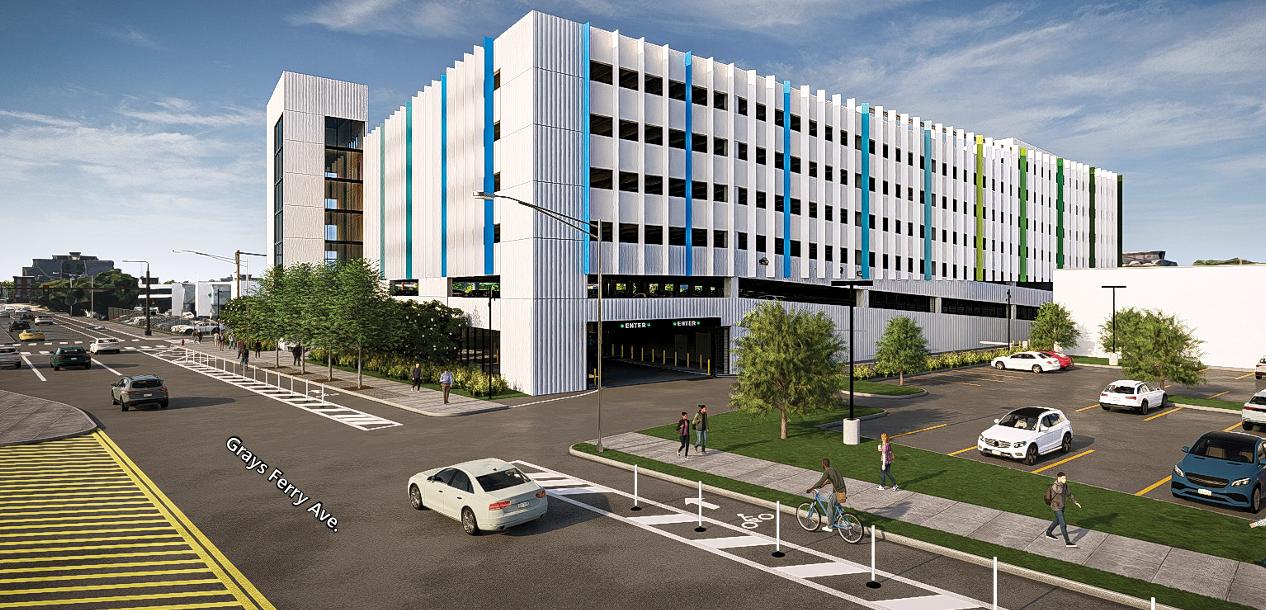
In the spring, Children’s Hospital of Philadelphia (CHOP) revealed plans for a 1,005-space parking garage in Grays Ferry along with a shuttle service to spirit employees to the main campus a mile away.
In August, University Place Associates unveiled plans for a 495-unit garage. About a fourth of it will be reserved for the use of the city’s new forensic lab, but the rest will be open to the public.
All three projects have baffled environmentalists and urbanists, who thought Philadelphia was moving away from car-centric patterns of late 20th-century development.
It’s also surprised parking operators in the city, who say national construction cost trends and high local taxation make it difficult to turn a profit.
Legacy parking companies in Philadelphia like E-Z Park and Parkway Corp. have been selling garages and surface lots for redevelopment as anything other than parking. They say the city has lost 10,000 publicly available spaces in the last 15 years, bringing the total to about 40,000 in Center City.
“I don’t think I’ll ever build another stand-alone parking facility,” said Robert Zuritsky, president of Parkway Corp. and board chair of the National Parking Association. “It doesn’t make any sense.”
Zuritsky and other parking companies have long noted that operators in Philadelphia, who often have unionized workforces, get hit with parking, wage, property, and the Use and Occupancy Tax.
When combined with the soaring cost of building new spaces across the nation, it’s difficult to turn a profit in Philadelphia.
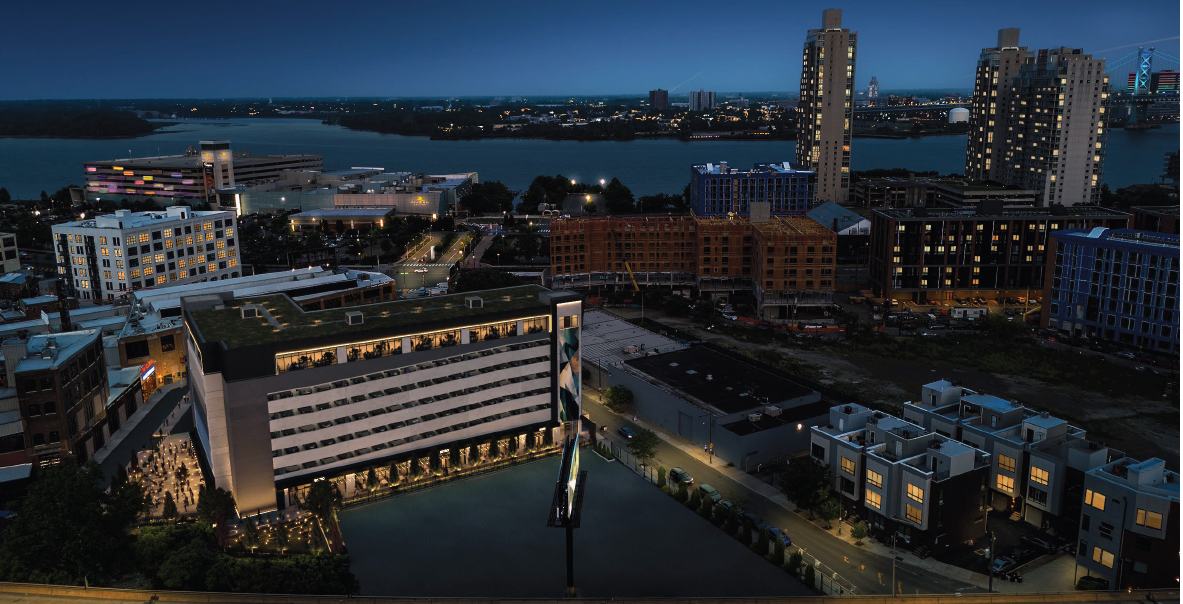
A rendering of the Fishtown garage, looking towards the Delaware River.
Zuritsky says it costs $60,000-$70,000 a space to build an aboveground lot in today’s environment and $100,000 to $150,000 below ground.
“It’s like building a house for a car,” he said.
Depending on hyperlocal peculiarities, Zuritsky says that taxation in Center City can eat up to 60% of the money they bring in and that to profit from new construction, an operator would have to charge $3,000 per space a month.
“I wish people luck, the ones that are moving in,” said Harvey Spear, president of E-Z Park. “Between taxes, insurance, and labor, it comes to, like, 70-some percent of what we take in. We have more equipment now that does away with a lot of labor; we’re trying to compensate with that.”
Urbanist and environmental advocates, meanwhile, have condemned the new garage projects, arguing that they will add to carbon emissions, air pollution, and traffic congestion.
“A massive parking garage less than half a mile from the El [in Fishtown] is the wrong direction for any city that claims to take climate action seriously,” said Ashlei Tracy, deputy executive director with the Pennsylvania Bipartisan Climate Initiative. “SEPTA is already working to get more people out of cars and onto transit, but projects like this one and the one from CHOP only make that harder.”
Here are the parking projects in the pipeline.
Fishtown: 372 spaces
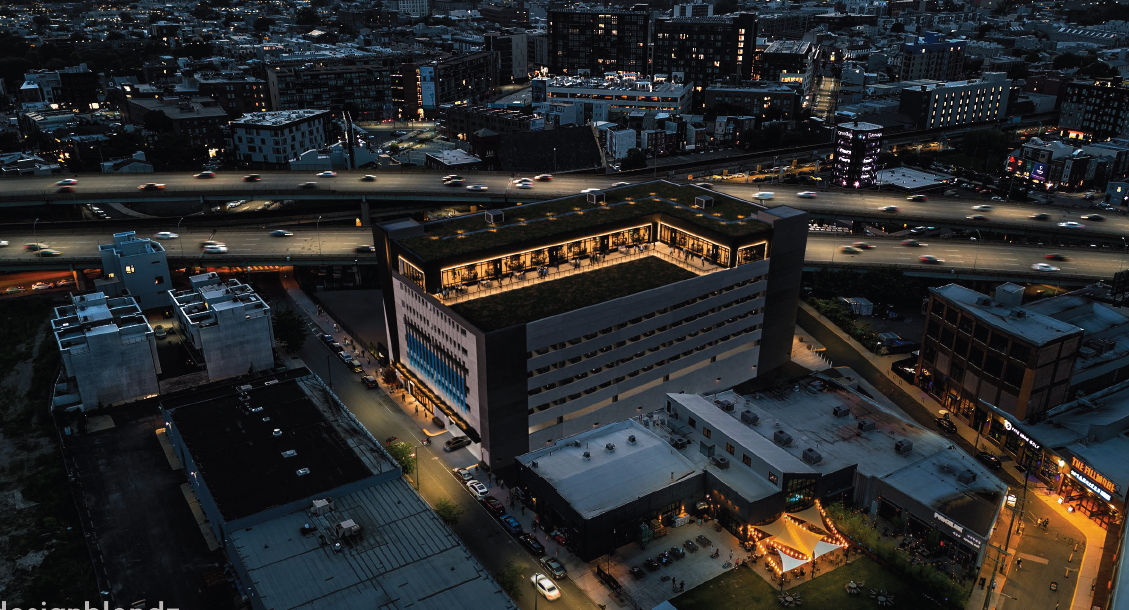
The garage, with architecture by Philadelphia-based Designblendz, doesn’t just contain parking. It includes close to 14,000 square feet of commercial space on the first floor, which the developer hopes to rent to a restaurant — or two — on the edges of one of Philadelphia’s hottest culinary scenes.
Another over 16,000-square-foot restaurant space is planned for the top floor, with views of the skyline and river. Both the top and bottom floors also could be used as event spaces.
Kufasimes says that this aspect of the project could partly offset the kinds of costs that parking veterans warn of.
“Our due diligence team went through those numbers and vetted them pretty thoroughly: The returns are what they needed to be,” Kufasimes said. “It’s got a multifunction of income streams, so we think that that really will help play a larger role.”
Kufasimes also said a parking garage made sense in an area that’s seen more development than almost any other corner of Philadelphia. When investors purchased the land at 53-67 E. Laurel St. and approached his company for ideas, they met with other stakeholders in the neighborhood and determined parking would be appreciated.
“It wasn’t necessarily all about the profit,” Kufasimes said. “A lot of people this day and age, that is their number-one goal. If this is a slightly lower return in the long run but can be better accepted by the community as a whole, we think that actually raises the value of the asset.”
An overhead-perspective rendering of the Fishtown garage.
At an October meeting of the Fishtown Neighbors Association, that argumentappeared to pay off. Unlike most community meetings where a large new development is proposed, there were no adamant opponents of the project. The project also includes a 20,000-square-foot outdoor space, a green roof, and a to-be-decided public art component. All of that helped, too.
“It’s nice seeing a parking garage, of all things, be as pedestrian-friendly and thoughtful as this,” one speaker said during the Zoom meeting.
Dubbed University Place 5.0, it largely exists because of a major expansion of the municipal bureaucracy west of the Schuylkill.
For years the city has sought a new location for its criminal forensics laboratory. The debate became heated in City Hall, with numerous Council members making the case for locations within their districts.
Councilmember Jamie Gauthier pushed for its location in University City Place 3.0, a newly built, state-of-the-art life sciences building that was coming online just as its intended industry was slowing down in the face of higher interest rates.
To get the crime lab, Mayor Cherelle L. Parker’s administration said the police department would need ample parking. That’s where the new garage comes in.
In June, Gauthier passed a zoning overlay that cleared away the regulatory hurdles to the project. Six weeks later, the developers revealed University City Place 5.0, which has 29 parking spaces on the ground floor reserved for official use by forensics vehicles and 100 spaces reserved for city employees.
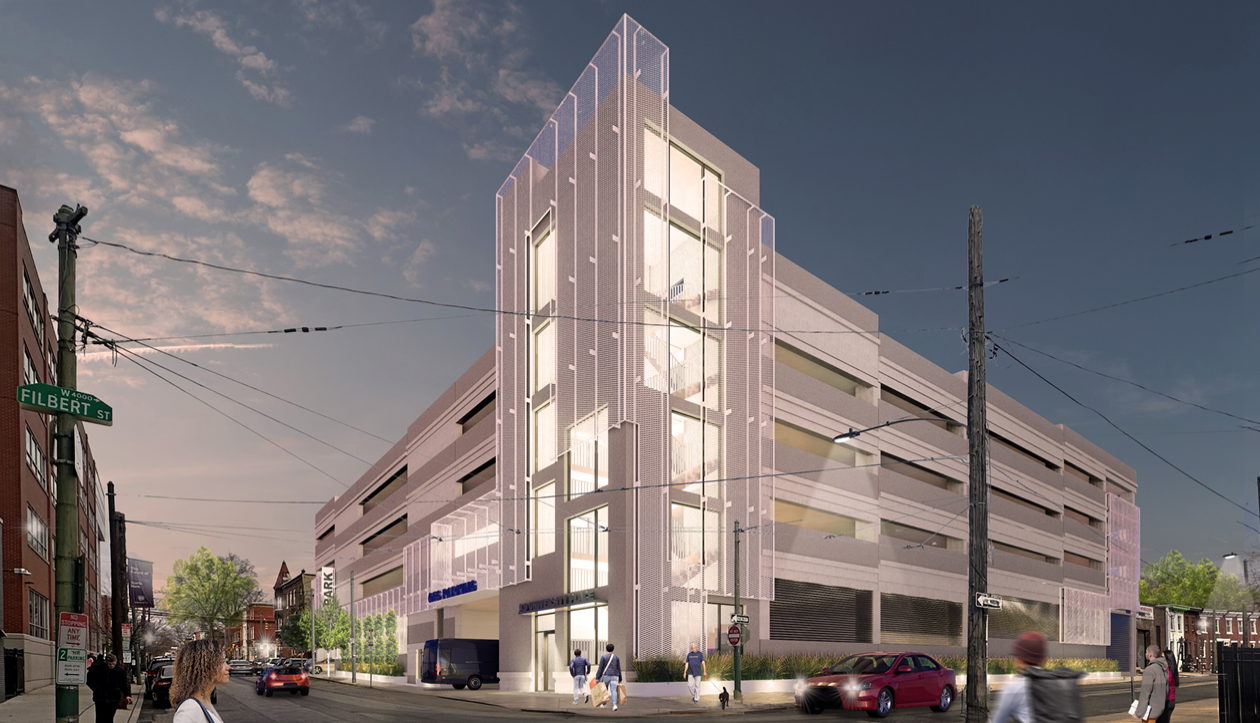
A rendering of the proposed University City parking garage as seen from 42nd and Filbert Streets.
Designed by Philadelphia-based ISA Architects, the garage is also meant to serve University Place Associate’s other large developments in the area. Akin to the Fishtown garage, they have also sought to make the development pedestrian friendly, with a dog park, green space, and public art.
The local community group, West Powelton Saunders Park RCO, also embraced the proposal.
“The community met regarding this project back in August, and … they were all in support of this project,” Pamela Andrews, president of the West Powelton Saunders Park RCO, said at the city’s September Civic Design Review meeting. “We have a tremendous problem with parking, and the community members felt this was a much needed and welcome addition.”
Grays Ferry: 1,005 parking spaces
CHOP’s thousand-car parking garage by far has been the most controversial of the proposals. But it also makes the most economic sense for the owner. Unlike the other garages — or those owned by Parkway and E-Z Park — it will be owned by a nonprofit and exempted from many of the taxes that make it so expensive to own parking in Philadelphia.
A rendering of the new parking garage CHOP plans for Grays Ferry.
The hospital purchased the property at 3000 Grays Ferry Ave., next to the Donald Finnegan Playground, for almost $25 million last year.
The seven-story development, which, plans show, would have far fewer amenities than its University City and Fishtown counterparts, is meant to serve CHOP’s new research facilities in Fitler Square and the new patient tower set to open in 2028.
“We recently secured permits and have begun construction on the new parking garage at 3000 Grays Ferry Ave.,” a CHOP spokesperson said. “The full construction is expected to go through the fall of 2026. CHOP continues to engage with the community by providing support, timely updates and addressing feedback during construction.”
At the time of its unveiling, CHOP argued that the massive garage was needed as SEPTA threatened to become unreliable due to a political funding crisis in Harrisburg. But detractors appeared almost immediately to denounce the hospital for worsening air quality in a lower-income neighborhood that is already a hot spot for asthma.
There are no regulatory hurdles to the development, but changes in the political or economic landscape could make it difficult to embark on a large capital project. Notably, the University of Pennsylvania proposed an 858-space garage in 2023 for the nearby Pennovation Center and has never broken ground.