Category: Wires

  • China, Russia and Others Seek to Inflame Debate Over AI Data Centers

    China, Russia and Others Seek to Inflame Debate Over AI Data Centers

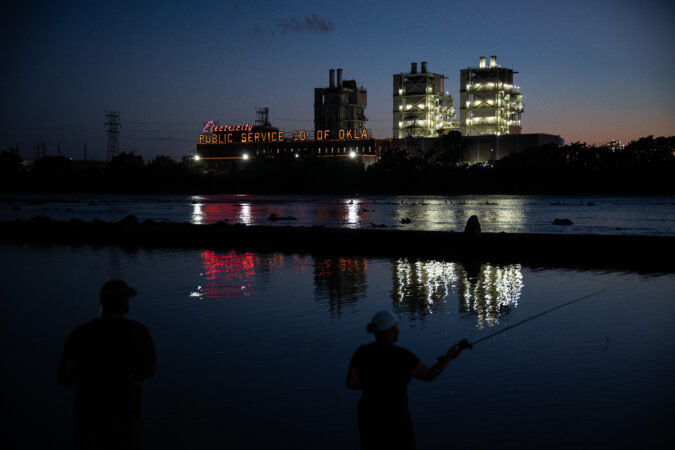
    A state-owned newspaper in China recently published a satellite image of a data center in Gainesville, Virginia, writing in English that the development of artificial intelligence posed a threat to Americans’ physical and financial well-being.

    A comic strip made to look as if it had been published by a Maryland news outlet — created with OpenAI’s ChatGPT by people in China, the tech company said — circulated on social platform X this year, blaming data centers for soaring electricity bills. It showed a tycoon smoking a cigar and clutching bags of cash.

    A video shared on X by a known covert Russian influence operation questioned the viability of a data center that an American company, Firebird, is constructing in Armenia, the small Caucasus nation that has been a focus of Kremlin pressure. “The country’s electrical grid instability may render it useless,” the video’s narrator says.

    All are examples of a push by foreign adversaries to seize on what polls have shown is deep ambivalence — verging at times on hostility — about the spread of the data centers needed to power AI in the United States and elsewhere.

    China, Russia and, to a lesser extent, Iran have sought to use state media outlets to turn the controversy over data centers in the United States into “a domestic fracture point,” according to a new analysis by Alethea, a threat intelligence company, which identified scores of articles and posts on social media this year.

    These campaigns, whose impact on public opinion remains to be seen, have raised alarms in Washington, where AI is seen as a top issue heading into this year’s midterm elections.

    The foreign efforts appear intended to stoke the debate over data centers that has united political figures across the political spectrum — from Sen. Bernie Sanders (I., Vt.), a progressive, to Steve Bannon, the erstwhile adviser to President Donald Trump.

    “Foreign actors aren’t manufacturing American debates over the future of AI, they are exploiting them,” said Jessica Brandt, a former official with the Office of the Director of National Intelligence who tracked foreign influence efforts during the Biden administration.

    The goal, she added, is to “deepen our divisions in order to dent our appeal and weaken us from within.”

    Republicans and business lobbying groups have seized on the role of China, in particular, claiming that the country’s Communist Party wants to undercut U.S. leadership in a field that the Chinese, too, hope to dominate. They argue that China’s propaganda is an effort to slow down America’s development.

    “We can’t allow any effort by foreign adversaries to extort these fears and undermine our technological development,” Sen. Tom Cotton (R., Ark.) wrote to the acting attorney general, Todd Blanche, referring to genuine public concerns.

    The Trump administration, which after taking office dismantled many of the government teams that tracked foreign influence operations, has begun to recognize the political threat of the rising sentiment against AI.

    A Gallup poll in May found that 71% of Americans were somewhat or strongly opposed to having a data center built near them, almost 20 percentage points higher than those who opposed construction of a nearby nuclear power plant. Many have broad concerns about the effects of AI on jobs and the climate, while people who live near data centers complain that they are eyesores and emit annoying sounds. Some cities and counties have enacted temporary or permanent moratoriums on new construction.

    In a recent interview on Fox Business, Interior Secretary Doug Burgum suggested that the outside influence campaigns had succeeded in building opposition to data centers. “I think some of this propaganda is being effective,” he said.

    The foreign campaigns follow a familiar playbook that dates back at least a decade. They often try to leverage official news organizations and social media to fuel domestic discord around hot-button issues like guns, race and vaccines, or even natural disasters like the wildfires in and around Los Angeles last year.

    Between January and June, state media in China, Russia and Iran mentioned data centers roughly 700 times, according to Alethea’s analysis. That was an average of nearly four times a day, though it remained a fraction of overall published content about AI development.

    The outlets have featured articles and posts aimed at an American audience, as well as content highlighting criticism of data centers by prominent Americans, including Tucker Carlson, a conservative commentator. In Iran, state media has also highlighted links between American AI companies and Israel and criticized the race to develop the technology as reckless.

    Covert Russian information operations, previously identified by government officials and researchers, have recently begun to focus on data centers as a wedge issue on social media, but so far their Chinese counterparts have not done so in the same way, according to Alethea.

    OpenAI did disclose last month that a small number of operatives working in China used the company’s ChatGPT platform to generate covert social media campaigns on X, including the comic strip.

    Other posts by the operatives promoted claims that data centers were spiking electricity costs and criticized Trump’s tariffs as a blunt tool used to win the technology race.

    OpenAI, though, found “little to no authentic engagement” with the campaigns, and the accounts at issue were ultimately removed from X. OpenAI did not respond to requests for comment about Chinese or other foreign efforts.

    (The New York Times has sued OpenAI and its partner, Microsoft, accusing them of copyright infringement of news content related to AI systems. They have denied those claims.)

    Lobbyists have also weighed in to insinuate that U.S. opposition has been fomented with support from abroad.

    Power the Future, an energy industry group, argued recently that domestic opposition to data centers was manufactured by environmental groups financed in part by foreign donors such as Hansjörg Wyss, a Swiss philanthropist and conservationist whose foundation is well known for supporting environmental issues.

    In a statement, the Wyss Foundation said it did not provide grants to oppose data centers. “These reports are false, misleading and an attempt by special interests to manipulate the public into accepting data centers,” the statement said.

    A pair of reports by the Bitcoin Policy Institute, a cryptocurrency advocacy group in Washington, detailed what the group’s researchers called an “extensive, multiyear influence campaign” by China to sway the AI race.

    As evidence, the reports cited an invitation by Sanders for two Chinese-government-linked academics to attend a conference on Capitol Hill in April. They also criticized political donations to liberal organizations from Neville Roy Singham, an American tech entrepreneur who is based in Shanghai and has long been a subject of criticism for supporting Chinese propaganda campaigns.

    “There is an organic opposition to data centers,” said the author of the reports, Sam Lyman. “What we are calling for is simply transparency, though, because we’ve been able to document an inorganic element that runs parallel to this specific opposition movement.”

    Sanders and Singham did not respond to a request for comment.

    The Chinese government, through its embassy in Washington, disputed accusations that it was trying to stoke protests in the United States — something it has accused the United States of doing inside China.

    “The allegations are completely unfounded and constitute smears and defamation,” a spokesperson, Liu Chang, said in response to questions, noting that the United States and China needed “to work together to promote the development and improve the governance of AI to make sure it will better contribute to social progress.”

    Not all of the anti-AI content online has an overtly political purpose. Other actors appear to be exploiting the issue simply to build engagement.

    Alethea tracked a network of inauthentic accounts on Facebook that has been posting images appearing to highlight Americans’ opposition to data centers. They include images generated by artificial intelligence showing, for example, a field of crops carved into a massive obscene hand gesture, each tailored to users in different American states. “This is what Oklahoma thinks of data centers,” one says.

    The network has digital traces linking it geographically to Bangladesh, Alethea found. It includes dozens of groups or accounts on Facebook and Instagram that feature names like “Life in Texas” or “I Love Minnesota.” Amid a steady stream of AI “slop” are posts opposing data centers.

    McKenzie Sadeghi, a principal analyst at Alethea, called the posts “rural rage bait.”

    “Data centers are likely the ideal topic for engagement-maximizing operators,” she said. “It is locally salient in all 50 states, fresh, and it maps onto preexisting anti-China, anti-tax, ‘selling America’ grievance.”
  • Palm Beach Airport now bears Trump’s name

    Palm Beach Airport now bears Trump’s name

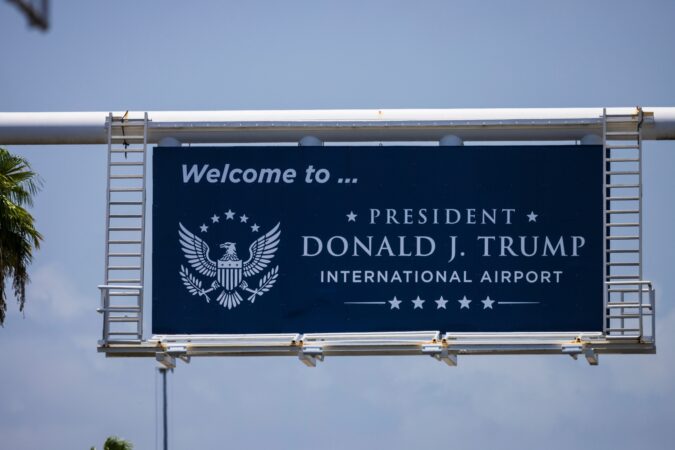
    Palm Beach International Airport in Florida is now President Donald J. Trump International Airport.

    The name change became official Thursday morning, the Federal Aviation Administration announced. Eric Trump, Trump’s son and the executive vice president of the Trump Organization, shared a video on social media in which an air traffic controller is heard announcing the name change to the pilots of the president’s private Boeing 757 as it approached the airport for a landing just after 5 a.m.

    “As a son, and someone who flies out of this airport nearly every day, I will forever be proud to see the initials ‘DJT’ on my boarding pass,” Eric Trump wrote in a separate post.

    The airport’s three-letter code will not change to DJT from PBI until Aug. 18, according to airport officials.

    Travelers will see the airport’s previous branding and new signage during a transition period that will last several weeks, airport officials said. The rollout of the new name would not disrupt airport operations, they said.

    “We’re working behind the scenes to update our physical signage, terminal spaces, and digital channels to our new name: President Donald J. Trump International Airport,” the airport said on social media.

    The airport sits a few miles from Mar-a-Lago, Trump’s private club and residence in Palm Beach, which has served as a hub for his political operations.

    Florida Gov. Ron DeSantis, a Republican, signed a bill in March clearing the path for the airport to be renamed. Democratic state lawmakers opposed the measure, which the Legislature approved in February, arguing that it would cost about $5 million to update signs, maps and other airport materials to reflect the name change.

    The New York Times reported in February that Trump’s family business had filed trademark applications for potential airport names with the U.S. Patent and Trademark Office. The applications staked a claim to three names: President Donald J. Trump International Airport, Donald J. Trump International Airport and the airport code DJT.

    The applications also sought the right to use the name in connection with a variety of airport-themed merchandise, including luggage, animal carriers and “shoes for protection of airline passengers’ feet during airport security screening.”

    Renaming the airport for Trump attaches his name to a gateway that is used by millions of visitors each year.

    Trump has a long history of putting his name on the things he has built, owns or promotes, a list that includes Trump Tower and his golf resorts and hotels. As president, he has reached beyond his private businesses. For nearly six months starting in December, Trump’s name was added to facade of the John F. Kennedy Center for the Performing Arts in Washington until a judge ordered its removal in May. His signature is expected to appear on U.S. dollars later this year.

  • Federal agents at scene of ICE shooting in Houston didn’t have body cameras, DHS says

    Federal agents at scene of ICE shooting in Houston didn’t have body cameras, DHS says

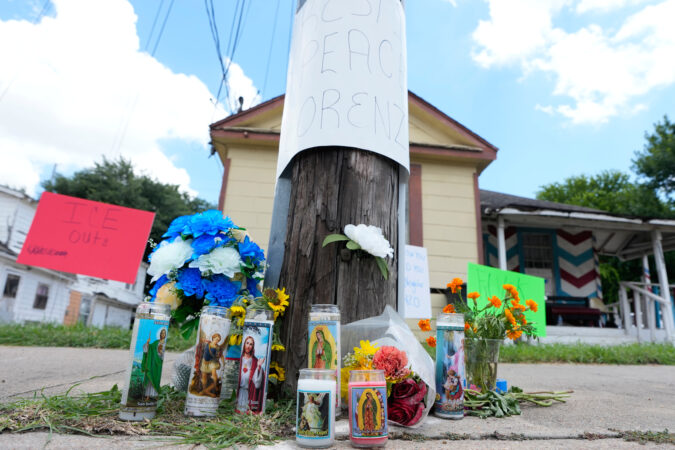
    Federal agents did not have body-worn cameras when a U.S. Immigration and Customs Enforcement officer fatally shot a Mexican homebuilder who was driving a work van they tried pulling over in Houston, the Department of Homeland Security said Thursday.

    Separately, prosecutors in Houston said they are investigating the death of Lorenzo Salgado Araujo, whose family has joined Democrats in calling for an independent probe over Tuesday’s early morning shooting in one of the city’s heavily Hispanic neighborhoods.

    Few photos or videos surrounding the shooting have emerged publicly in the days since the encounter between Salgado Araujo and ICE agents, unlike other deaths involving federal immigration officers. The family of Salgado Araujo, who had lived in the U.S. for more than 35 years, has questioned ICE’s account and called on the agency to release evidence.

    In a statement, DHS said the agents at the scene in Houston had not yet been issued body cameras, which it blamed on Democrats and a record government shutdown that was fueled by President Donald Trump’s immigration crackdown.

    DHS, which oversees ICE, has said federal officers were conducting a targeted operation to arrest a person in the country without legal status when they attempted to stop a vehicle driven by Salgado Araujo. The agency has said Salgado Araujo rammed an ICE vehicle and that a federal officer fired a weapon in self-defense.

    Asked whether ICE agents had been specifically targeting Salgado Araujo, DHS said Thursday that officers had been surveilling a property where they had previously observed two white vans.

    “On July 7, officers were almost at the target’s address when they observed a white van with an individual who resembled the target. Officers then initiated the vehicle stop,” the department said.

    Salgado Araujo had no criminal record and was close to obtaining a work permit after living in the U.S. for more than three decades without legal status, his family has said.

    The Harris County District Attorney’s office said it would conduct an investigation into the shooting. The office is consulting with local prosecutors in Minneapolis, where federal agents fatally shot two U.S. citizens, to learn how they have navigated investigations into federal immigration agents, spokesperson Rafael Lemaitre said.

    “Although access to key evidence remains under federal control, we are pursuing investigative avenues available to us and will conduct a review of any information we collect within our reach,” Lemaitre said in an emailed statement.

    Three men, including Salgado Araujo’s brother, were detained by ICE during the fatal traffic stop, according to Juan Proaño, CEO of the League of United Latin American Citizens, who has been communicating with their families.

    LULAC has yet to obtain video footage that clearly shows what happened during the moments of the shooting and has offered a reward of $5,000 for information from witnesses, Proaño told The Associated Press. The position of Salgado Araujo’s van and ICE vehicles has obstructed security camera footage LULAC has reviewed, he added.

    “It’s going to make it even more difficult to find the truth in all this,” he said.

    DHS said the ICE agents involved in the incident were expected to receive body-worn cameras in the next 60 days.

    In the aftermath of the fatal Minneapolis shootings of Renee Good and Alex Pretti, Democrats had refused to fund ICE and the Border Patrol without changes to those operations designed to increase accountability and transparency. Republicans in Congress eventually passed legislation funding just ICE and CBP for three years.

  • Suspect in Charlie Kirk killing said ‘he wishes he hadn’t done it,’ roommate says in police video

    Suspect in Charlie Kirk killing said ‘he wishes he hadn’t done it,’ roommate says in police video

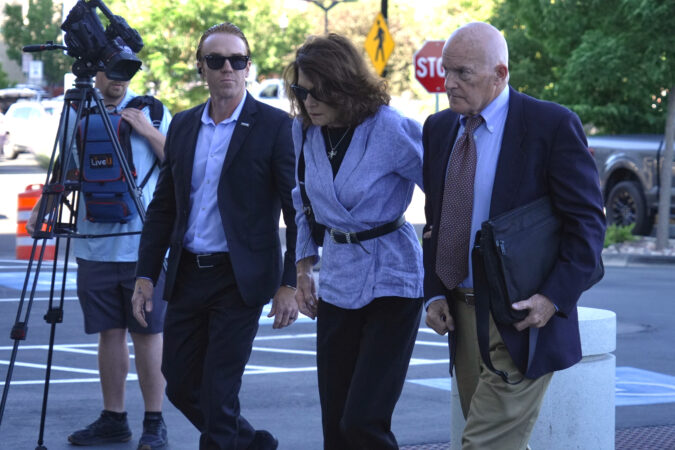
    PROVO, Utah — The defendant in Charlie Kirk’s killing told his roommate “he wishes he hadn’t done it” the day after Kirk was shot in the neck while speaking to a crowd at Utah Valley University, according to a recording played in a Utah court Thursday.

    Lance Twiggs, who was also defendant Tyler Robinson’s romantic partner, described the interaction with Robinson during a recorded interview with a prosecutor on April 20.

    Defense attorneys had fought against the public release of the statements from Twiggs, saying prosecutors would characterize the statements as a confession, undermining Robinson’s right to a fair trial if the statements are broadcast by the media.

    Robinson is charged with aggravated murder and has not entered a plea. He turned himself in a day after the fatal shooting of Kirk, a close ally of President Donald Trump credited with helping galvanize young voters for the Republican in the 2024 election.

    Prosecutors allege Robinson confessed in a note left for Twiggs that read: “I had the opportunity to take out Charlie Kirk and I’m going to take it.” Robinson also allegedly sent a text to Twiggs saying he targeted Kirk because he “had enough of his hatred.”

    Twiggs spoke to authorities on Sept. 12 — two days after Kirk was assassinated while speaking to a crowd of thousands at Utah Valley University — and again on April 20. He was given immunity for the statements, meaning what Twiggs said cannot be used against him in a potential criminal case.

    State District Judge Tony Graf will decide at the conclusion of this week’s preliminary hearing if prosecutors have enough evidence to bring Robinson to trial.

    Robinson’s attorneys have not commented on his guilt or innocence but have sought to get the death penalty taken off the table, so far unsuccessfully.

    Attorneys for the media and for Kirk’s widow, Erika, who has attended this week’s hearing, had urged the judge to make Twiggs’ statements and other evidence public.

    “To not be transparent, to not be open and let the world see what happened will create doubt and distrust in the judicial system,” Kirk family lawyer Jeffrey Neiman told Graf Wednesday.

    Neiman filed a request late Wednesday for all evidence against Robinson to be displayed openly and in real time during this week’s hearing. Neiman wrote that Erika Kirk and Kirk’s parents had waited 10 months for the hearing but at times have been denied the chance “to meaningfully observe” it.

    The judge said in response that not all evidence would be openly displayed and he needs to protect the rights of both victims and the defendant.

    Investigators say Robinson went to a rooftop near where Kirk was speaking and shot him once through the neck as the activist was taking questions from a crowd of several thousand people. Kirk was pronounced dead after being taken to a hospital.

    Investigators found the suspected murder weapon — a bolt-action rifle with one spent round — wrapped in a towel in a wooded area near where Kirk was shot.

    Robinson has sat quietly through the hearing. On Thursday, he was dressed in a jacket and tie with one arm shackled to his waist. He appeared to be taking notes with his free hand.

    Robinson’s parents and two of his brothers sat behind him, in the front row of the courtroom gallery. Charlie’s Kirk parents and Erika Kirk sat a few rows back. Sen. Mike Lee, a Utah Republican, also was in attendance.

    Robinson’s lawyers earlier this week questioned the reliability of DNA testing used to link the defendant to the towel and gun.

    A member of Tyler Robinson’s defense team interrogated a DNA analyst from the FBI about the techniques she used to connect Robinson to the evidence. Defense lawyer Michael Burt cast doubt on the analyst’s conclusions.

    “She can’t match Mr. Robinson to the questioned samples,” Burt argued.

    But forensics expert Lawrence Quarino said law enforcement agencies use “extremely reliable” tests to determine the probability that a person matches with DNA found at a crime scene.

    DNA testing “is the gold standard in forensic science,” said Quarino, a professor and director of the forensic science program at Cedar Crest College in Pennsylvania.

  • Former Olympian pleads not guilty in Reflecting Pool damage case after Trump alleged vandalism

    Former Olympian pleads not guilty in Reflecting Pool damage case after Trump alleged vandalism

    WASHINGTON — A former Olympic canoe racer pleaded not guilty on Thursday to deliberately damaging the recently renovated Lincoln Memorial Reflecting Pool, a politically charged case that his defense attorneys and other Trump administration critics have derided as an abuse of prosecutorial power.

    David Hearn, who competed in three Summer Olympics, entered the plea through one of his attorneys during his initial appearance in D.C. Superior Court. Hearn, 67, of Bethesda, Md., was indicted last Thursday on a single felony count of property destruction.

    Before the country’s 250th independence celebrations, President Donald Trump launched a multimillion-dollar renovation project for the Reflecting Pool, which was plagued by problems, including damage to its new coating. Trump, without providing evidence, has alleged the damage was caused by vandals.

    Hearn has said he reached inside the pool to examine the peeled sealant and let go of a chunk when he was told to by a park worker. He is accused of causing more than $1,000 in damage.

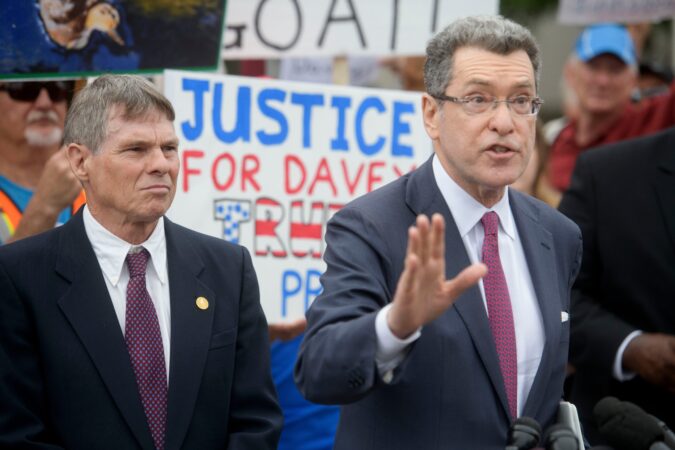
    “Every American should be alarmed about this prosecution,” defense attorney Norm Eisen said after the hearing. “It is not a crime to touch the Reflecting Pool.”

    U.S. Attorney Jeanine Pirro, the top federal prosecutor for the District of Columbia, said vandalizing the nation’s monuments and public spaces is “an affront to our shared history.”

    “The law applies equally to everyone, and when it is broken, there are consequences,” she said in a statement on Thursday.

    Defense says ‘evidence is ‘weak’

    In front of a packed courtroom, D.C. Superior Court Judge Carmen McLean did not require Hearn to be supervised by the court while he is free awaiting a trial. A status hearing was scheduled for Aug. 5.

    A prosecutor, Kevin Reddington, said the government wasn’t seeking any court supervision for Hearn, but just a “stay-away order” without specifying in court where it wanted to keep Hearn away from.

    Mary Dohrmann, one of Hearn’s attorneys, urged the judge not to impose any conditions of court supervision, calling Hearn an “upstanding citizen and member of the community.”

    “The government’s evidence is weak,” she added.

    Supporters cheered after the hearing

    Dozens of supporters, many carrying homemade signs, gathered outside the courthouse and chanted “Davey!” as Hearn left after the hearing. Hearn joined his attorneys in front of a bank of cameras and smiled to supporters but did not speak. He raised his right hand and pumped his fist as he left.

    Adam Van Grack, who chaired the U.S. Olympic national governing body for canoe and kayak sports, joined the throng of supporters who cheered for Hearn after the hearing. Van Grack said Hearn has spent decades voluntarily maintaining National Park Service property that the canoeists used as a training course along the Potomac River.

    “This is a person who has devoted his life to representing the United States on an international stage, caring for the community and protecting and caring for National Park Service property,” Van Grack said. “So the idea that he is a malicious destroyer of federal property shocks the conscience and makes no sense to anybody who’s ever known Davey Hearn.”

    Hearn previously told The Associated Press that he was detained by National Guard troops and U.S. Park Police for five hours after stopping by the pool during a 64-mile bike ride on June 19. He said he reached in to examine newly peeled coating and briefly touched a chunk attached to the side of the pool, but obeyed a park worker who told him to let go of it.

    Pool project has been plagued by problems

    The pool’s renovation has been riddled with problems. Workers have used devices called nanobubblers to curtail an algae bloom. The devices infuse ozone into the water to kill algae and bacteria. Officials have said the pool most likely would need to be drained again for liner repairs after chunks of blue coating were seen floating at the surface.

    Trump has claimed without substantiation that vandals dumped fertilizer into the pool and slashed the coating with a box cutter. Pirro, a former Fox News host who was appointed by Trump, said last week that six other people were arrested on misdemeanor charges related to the $16 million pool project.

    Pirro accused Hearn of causing more than $1,000 in damage by ripping up recently installed sealant from the pool and acting belligerently toward an employee who told him to stop.

    Hearn’s attorneys have said the charges against him are based on a “concocted narrative” and “should be alarming to every American.”

    “This indictment reflects the administration’s effort to shift blame for their own failures,” the lawyers said in a statement. “The justice system exists to determine facts, not to provide political cover.”

  • Trump’s plan for a triumphal arch in the nation’s capital is getting another review

    Trump’s plan for a triumphal arch in the nation’s capital is getting another review

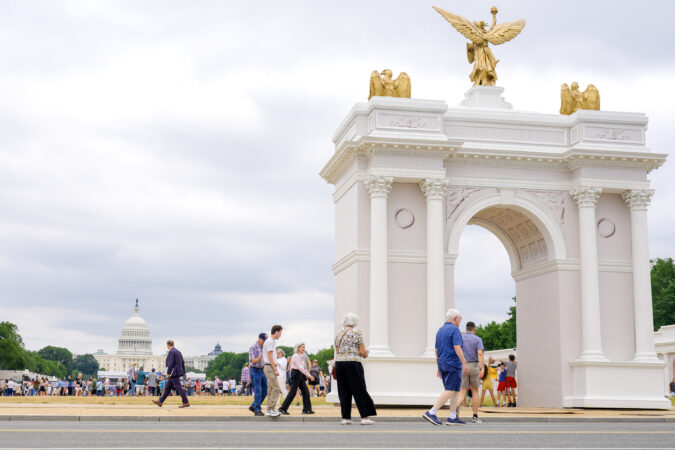
    WASHINGTON — President Donald Trump’s plans to build a skyline-altering arch in the nation’s capital is getting another review from the federal commission whose approval he needs, but the agency’s staff says the project should be revised before it gets the go-ahead.

    The National Capital Planning Commission is meeting Thursday to give further consideration to the Republican president’s proposed 250-foot arch.

    In a report, the agency’s staff recommends that the commission approve the preliminary site and building plans for the arch. But the staff also recommends that the design be tweaked to comply with a federal law that limits building heights in downtown Washington to preserve the city’s famous skyline. The planning commission applies the law during its approval process.

    “Staff suggests the Commission request the applicant revise the project design to comply with the Height of Buildings Act and return to NCPC for final approval,” the 185-page report says.

    Applying the law “would require design revisions to redistribute the height between the main structure, habitable roof structure and statuary,” the report said. But even with the recommended revisions, the arch, a public observation deck and three gilded topper statues would still reach Trump’s desired 250-foot height, the report said.

    The staff is also recommending that commissioners seek additional information about vehicular traffic around the arch, the proposed granite exterior and other aspects of the project before the Interior Department, which oversees the park service, returns for final approval. Trump wants to build the arch on a traffic circle on the Virginia side of the Memorial Bridge from the District of Columbia.

    Commissioners heard a summary of the staff report and its recommendations and were hearing from about 40 people who signed up to testify about the project. Many cited the proposed location near the hallowed burial ground of Arlington National Cemetery in their opposition.

    The U.S. Commission of Fine Arts, a separate federal agency, approved the design for the arch in May. The National Capital Planning Commission oversees construction on federal land in the city and began reviewing the arch plan in June.

    Opponents of the project argue that the arch is too big for the skyline and would disrupt carefully designed views between the Lincoln Memorial and Arlington National Cemetery that were meant to symbolize the reunification of the North and the South after the Civil War.

    But the opposition has done little to influence the members of either commission, both of which include some of Trump’s closest allies. Trump appointed Will Scharf, a top White House aide, to lead the planning commission.

    A group of veterans and a historian have sued the Trump administration in federal court to block the arch construction over concerns about disruptions to the sightline.

    The arch would be more than twice as tall as the Lincoln Memorial, which is 99 feet tall, and close to half the height of the Washington Monument, at about 555 feet tall.

    Trump had said last year that the arch could be paid for with unused funds from the hundreds of millions of dollars he said he has raised from corporations, donors and other wealthy people to pay to build a new $400 million ballroom at the White House.

    But, as it turns out, some public money will be used for the ballroom project, as well as the arch. The White House has not released a cost estimate for the arch.

  • Rubio tries to enlist other nations in antifa fight, but some allies recoil

    Rubio tries to enlist other nations in antifa fight, but some allies recoil

    Secretary of State Marco Rubio has invited senior ministers from more than 60 countries to a meeting next week about what the Trump administration views as a major peril: the “resurgence of transnational far-left terrorism,” according to documents reviewed by The Washington Post.

    The meeting has prompted consternation among career and political U.S. officials, some European allies, and independent analysts who do not see the threat in the same terms. Some U.S. officials told The Post that they worry it is part of a Trump administration effort to use powerful counterterrorism tools to crack down on U.S. activists they view as left-wing extremists.

    The administration’s counterterrorism czar, Sebastian Gorka, has had discussions with colleagues about using foreign terrorism labels for antifa to justify going after Americans with links to the movement, a loosely knit association of far-left activists who militantly oppose fascism and right-wing ideologies, three current and former U.S. officials said.

    A linkage to foreign terrorist groups “can unlock certain investigative tools,” such as surveillance, said one U.S. counterterrorism official, who like several other officials interviewed for this article spoke on the condition of anonymity to describe internal discussions and to avoid retribution.

    Gorka did not respond to a request for comment.

    State Department spokesman Tommy Pigott said the event was organized because far-left terrorism is “an old threat re-emerging with strong transnational links and new convergences.”

    “Because this threat has not been adequately addressed in the past, each engagement, designation, or security assistance program creates a compounding effect supporting countermeasures at home and abroad,” Pigott said in a statement.

    Some Trump administration officials fear that a future Democratic administration could use the tactic against conservative activists, one administration official said.

    “The idea is you’re setting a precedent for a future Gavin Newsom administration to turn these authorities on conservatives,” the official said, referring to the California governor who is widely expected to make a 2028 White House run.

    The use of these tactics has raised concerns among career and political officials inside the Justice Department and the White House Counsel’s Office, the administration official said, adding that some U.S. officials have decided not to attend the July 16 event at the State Department.

    Asked for comment, a White House official said that the characterization of such concerns does “not represent the prevailing feeling in the White House” and accused Democrats of having weaponized national security tools against their conservative political opponents.

    The White House official pointed to a passage in the Trump administration’s counterterrorism strategy‚ released in May, which states: “We will not permit the weaponization of America’s unparalleled CT capabilities for partisan purposes.”

    That document also states that “our counterterrorism powers will not be used to target our fellow Americans who simply disagree with us.”

    Like Gorka, White House Deputy Chief of Staff Stephen Miller is among those who have shown enthusiasm for taking a hard-line approach to left-wing extremists in the United States. During a White House roundtable last fall, he expressed support for designating antifa a foreign terrorist organization.

    “It’s true,” Miller said when the president asked for his opinion, “there are extensive foreign ties. I think that would be a very valid step to take.”

    But achieving that status for antifa would be a stretch, experts say.

    U.S. law requires a group be foreign to be designated. “If it has any significant domestic presence, it cannot be designated,” said Jason Blazakis, who ran the State Department’s designation process for 10 years before leaving in 2018.

    Elsewhere in the government, discomfort with the administration’s direction is such that at meetings of national security officials from various agencies, some intelligence analysts have declined to brief on antifa because they do not regard antifa as a serious counterterrorism threat, according to one person familiar with the matter.

    Officials from some foreign governments, speaking on the condition of anonymity to avoid being seen as criticizing the administration, expressed dismay about the Rubio invitation, citing what they call its vague aims and the short notice. The invitation, a copy of which was shown to The Post, was issued last week with RSVPs due this Friday, they said. Several told The Post that their country’s foreign minister or interior minister was unlikely to attend, citing the busy diplomatic schedule over summer, which includes an annual security conference next week in Aspen, Colo.

    Some said, too, they were unsure why they had been invited. “We don’t have antifa,” said one European diplomat.

    “I don’t think we can find any reason why we would be interested in attending such an event,” said another.

    “Our law enforcement authorities have not focused on left-wing terrorism because this is not considered a high priority threat in our country,” said a third.

    The invitation list, reviewed by The Post, included most European nations, larger Latin American countries and several Asian states, including India, Indonesia, and Singapore. The State Department did not respond to a request seeking to understand how the list of invitees was drawn up.

    President Donald Trump has made no secret of his disdain for antifa, going so far as to issue an executive order in the fall branding it a “domestic terrorist organization,” a rhetorical label that experts say carries no legal weight.

    Trump issued the order after the killing of conservative activist Charlie Kirk, whose mobilization of the youth vote helped propel Trump back to the White House. Legal proceedings began this week in the case of Kirk’s alleged killer.

    The order was followed by the issuance of National Security Presidential Memorandum 7, which directed the Justice Department to “investigate and disrupt networks, entities and organizations that foment political violence.” The document states that Kirk’s alleged killer engraved the bullets used in the killing with “so-called ‘anti-fascist’ rhetoric.”

    That led to a criminal investigation that culminated last month in lengthy prison sentences given to several members of what prosecutors called an “antifa cell” — one defendant received 100 years — for their roles last summer in a protest outside an Immigration and Customs Enforcement facility in Texas during which a police officer was shot. The person sentenced to 100 years was convicted of attempted murder. The others received prison terms of 30 to 70 years on charges such as rioting, providing support to terrorists and conspiracy to use and carry explosives.

    Defense attorneys called the prosecution politically motivated.

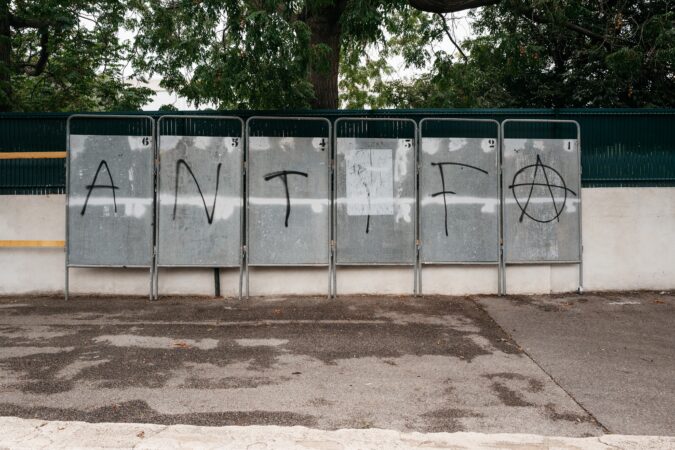
    Antifa, short for “anti-fascist,” is a decentralized movement without a clear command structure or leader, reflecting a range of ideologies mostly on the political left, from anarchism to communism and everything in between. Unlike left-wing extremist groups of the 1960s and 1970s, such as Weather Underground, antifa does not issue manifestos or claim responsibility for actions.

    Analysts say it can be difficult to categorize left-wing violence. (Is the killing of a healthcare executive over perceived corporate greed — as the suspect Luigi Mangione is alleged to have done — a “left wing” act?) And though there is some upswing of political violence in the United States, “to date left-wing violent extremism has typically been less lethal than other forms of terrorism,” said Bruce Hoffman, senior fellow for counterterrorism at the Council on Foreign Relations.

    A “concept note” sent to invitees and U.S. diplomats this week and reviewed by The Post characterizes next week’s event as a ministerial on the “resurgence of political terrorism.” But it makes clear that the focus is on “far-left terrorists” who, the note says, are “increasingly turning to organized, deadly violence to advance their political objectives.”

    The ministerial is an opportunity to strengthen cooperation in intelligence-sharing and law enforcement, the note says.

    But terrorism experts said that such framing inflates the threat posed by left-wing extremists and underestimates the true scope of the challenge in combating terrorism broadly.

    “This is the politicization of intelligence, and it’s dangerous because what they’re doing is basically playing partisan politics with counterterrorism, and only looking at a sliver of the overall threat,” said Colin P. Clarke, executive director of the Soufan Center, who has testified before Congress on numerous occasions as an expert witness on terrorism issues.

    Several current and former counterterrorism officials across Republican and Democratic administrations, as well as Europeans themselves, say the Trump administration’s emphasis is misapplied.

    “The Europeans were much more concerned about right-wing terrorism than left-wing terrorism” in the first Trump administration and the Biden administration, said one former official who worked in both.

    That is still where most Europeans are, according to U.S. and European officials.

    In late May, the State Department held a meeting in The Hague on antifa and left-wing terrorism, convening law enforcement and counterterrorism officials from mostly European countries, according to two people familiar with the event. The Dutch declined to co-host, so it took place at the U.S. Embassy there, one person said.

    The event, according to these people, fell flat. Many of the invitees’ view was “we don’t see it quite the way you do,” said one of the people.

    That was followed in early June by a gathering at the U.S. Institute of Peace to try to convince State Department personnel that “far-left political terrorists” were a growing threat to the country, but that event apparently was also a “dud,” according to Puck News. About an hour into the event, organizers sent out an email blast telling people they could still join, if they wanted, Puck reported.

    Undeterred, the State Department in mid-June sent a cable to more than 20 U.S. embassies — from Argentina and Mexico to Italy and Albania — seeking information on far-left extremist groups, according to two people familiar with the matter. Several have responded, but none has indicated they concur with the administration’s assessment of the threat, one person said.

    In November, the State Department announced the designations of four European groups as foreign terrorist organizations, including a militant group in Germany that calls itself antifa Ost. Two more were in Greece and one in Italy.

    Designation, which is done by the secretary of state, is based on criteria that include the assessment that the group poses a direct threat to U.S. national security interests.

    The designations of the four groups were met with skepticism among experts.

    “They’re very peculiar,” said Blazakis, who is now a professor at Middlebury Institute and teaches about violent extremism. “Those groups have carried out acts of vandalism. They’ve harmed individuals. But they don’t have a casualty to their name.”

    Authorities in Germany also did not see a significant threat. “The security authorities’ assessment is that the potential threat posed by the group has recently decreased significantly,” an Interior Ministry spokesperson told reporters in November, noting that antifa Ost leaders and particularly violent members were either in custody or already convicted.

    European governments have largely declined to label antifa as a terrorism organization, despite pressure from far-right parties. In the Netherlands, the center-right government rejected a parliamentary motion to designate antifa, with the country’s justice minister telling parliament in May that it did not meet the legal threshold because there was no evidence it was an organization rather than an amorphous movement.

    That month, a State Department official told reporters that the agency had taken “unprecedented steps to dismantle transnational far-left and anarchist terrorism, including antifa-aligned groups,” asserting that the number of incidents involving these groups had increased “sharply” over the past decade in the United States and Europe.

    The official, who spoke on the condition of anonymity under rules set by the department, said the administration had heard from foreign partners that they were seeing “different groups starting to converge.”

    The administration’s rhetoric is consistent with the language of its counterterrorism strategy, which calls for the “rapid identification and neutralization of violent secular political groups whose ideology is anti-American, radically pro-transgender, and anarchist.”

    The strategy directs the use of all tools “constitutionally available to us to map them at home, identify their membership, map their ties to international organizations like Antifa, and use law enforcement tools to cripple them operationally before they can maim or kill the innocent.”

    It does not, as did the 2018 counterterrorism strategy issued in Trump’s first term, mention nationalist neo-Nazi groups with “anti-Western views” that have attacked Muslims and left-wing groups.

    “We have to be objective about identifying threats, not politically selective,” Hoffman said.

    “If I were to rack and stack priorities, left-wing terrorists wouldn’t be in my top three,” Clarke said.

    Razzan Nakhlawi contributed to this article.

  • Ukrainian drones batter Russian oil facilities and set more oil tankers ablaze

    Ukrainian drones batter Russian oil facilities and set more oil tankers ablaze

    KYIV, Ukraine — Ukrainian drones hit more Russian oil facilities and set two oil tankers ablaze in the Sea of Azov on Thursday, a day after President Donald Trump pledged to grant Kyiv a license to manufacture the Patriot air defense systems to protect its cities.

    A top Ukrainian official, meanwhile, cautioned that it could take a year or more for the country to produce Patriot interceptor missiles.

    The Kremlin said the license deal reflected what it called Washington’s “ambivalence” but noted it appreciated Trump’s efforts to help broker a peace deal to end the war, which Russia launched over four years ago.

    Ukraine’s drone strikes on oil refineries and other infrastructure across Russia have triggered a widespread fuel crisis with gasoline shortages and rationing in multiple regions and motorists waiting for hours to fill their tanks. Moscow has responded by intensifying its bombardment on Kyiv and other cities, exposing Ukraine’s vulnerability to ballistic missile strikes.

    Ukrainian President Volodymyr Zelensky described the latest strikes on Russia’s infrastructure as part of Kyiv’s campaign of “long-range sanctions” carried out in response to Moscow’s refusal to halt the fighting.

    “We have long proposed that Russia end this war, and every day of delay should bring the feeling of war to where it all began — to Russia,” Zelensky said.

    Ukraine hits oil depots in western Russia and tankers at sea

    A Ukrainian drone strike triggered a fire at an oil depot in the western Russian city of Tver, according to acting Gov. Vitaly Korolyov.

    Oil reservoirs also were set ablaze by drones in Vyazniki, in the southern Stavropol region, said Gov. Vladimir Vladimirov, forcing the evacuation of several apartment buildings near the facility.

    In the Sea of Azov, Ukrainian drones set two oil tankers on fire, according to Rostov Gov. Yuri Slusar, who said one of the ships was still burning and its crew evacuated.

    The attack was the latest in a series of strikes on oil tankers in the area in recent days, part of Ukraine efforts to cut fuel supplies to the Crimean Peninsula, which Russia illegally annexed in 2014.

    In addition to strikes on oil facilities in Stavropol and Tver, Zelensky said Ukrainian forces hit fuel infrastructure deep inside Russia, including one in Ufa, as well as an oil-loading terminal in the Rostov region closer to Ukraine.

    Russia’s Defense Ministry said its defenses downed 73 Ukrainian drones from late Wednesday into early Thursday.

    Ukraine’s air force said Russia fired 94 long-range strike drones and two ballistic missiles. While 72 drones were jammed or intercepted, 19 drones and both missiles damaged 13 locations, it said.

    Ukraine says Patriot production will take months

    During Wednesday’s meeting with Zelensky on the sidelines of the NATO summit in Turkey, Trump said the U.S. will meet a longstanding request from Ukraine and give it a license to make the Patriot air defense systems. He also praised Zelenskyy for doing “an amazing job” — a sharp change in tone from past criticisms of the Ukrainian leader.

    But setting up domestic production of the mobile, surface-to-air systems will take many months, said Serhii Beskrestnov, an adviser to Ukraine’s defense minister.

    A production license would typically come with technical process documentation, training for specialists, supplier contacts and foreign consultants to help launch manufacturing, Beskrestnov wrote on his Telegram messaging app.

    The main obstacle would be time, rather than Ukraine’s technical or organizational capacity, he added.

    Recent media reports pointed to two likely bottlenecks: the long production cycle for some subcontracted components, which could take 12 to 24 months, and limited global output of key parts, including components supplied by Boeing and L3Harris, Beskrestnov added.

    The Pentagon had signed contracts to expand production capacity, he said, but added that the timeline for those contracts to translate into increased output remained unclear.

    Germany also has a license to produce Patriot systems, and in 2022, Raytheon and MBDA Deutschland announced they planned to manufacture Patriot GEM-T missiles in the country, according to a news release at the time. The goal was to produce them in a German facility and ultimately provide them to other European allies.

    The facility is expected to open in September with its first missiles scheduled to be delivered next year, with Ukraine as the first recipient, according to Defense Express, an online Ukrainian military-oriented publication.

    Kremlin: Ukrainian strikes won’t hasten peace

    Commenting on Trump’s statement about the Patriot missile licenses, Kremlin spokesman Dmitry Peskov offered a vague response, saying Moscow is aware of the U.S. military support for Ukraine but appreciates Washington’s declared commitment to help achieve peace.

    “The U.S. position is somewhat ambivalent,” Peskov said in a call with reporters. “Still, unlike the Europeans, the United States maintains a desire to facilitate a move toward a peace process. They may be misguided or mistaken at times, but we see that desire as sincere. We welcome it, and we hope that once the Americans manage to resolve the situation regarding Iran despite the significant complications involved their efforts on the Ukrainian track will resume.”

    Asked about Trump’s comment that Ukrainian attacks deep inside Russia could hasten a peace settlement, Peskov reaffirmed that the more strikes Kyiv launches, the broader “security zone” Moscow will seek to carve out in Ukraine via what the Kremlin calls its “special military operation.”

    “It’s a mistake to think that escalation and military pressure could pave the way to a peaceful settlement,” Peskov said. “Further escalation may prolong the special military operation, we can’t say precisely to what extent, but it will force us to create a larger security zone, a larger buffer zone. Therefore, inciting tensions and taking escalatory action will in no way contribute to the peace process.”

    Ukraine has urged the U.S. and other allies to provide binding security guarantees as part of any prospective peace deal, including the deployment of NATO forces. Russia has strongly warned against the presence of any NATO troops in Ukraine, saying it would view them as legitimate targets.

    Asked Wednesday if he would be ready to enact a no-fly zone over Ukraine as part of security guarantees, Trump responded by saying “if it’s necessary, yeah,” but he argued that it might not be needed if a peace deal is reached.

    “When we have a deal, we’re going to have a deal, security guarantee or no security guarantee,” Trump said as he sat next to Zelensky.

    Commenting on the issue, Peskov warned that an attempt to establish a no-fly zone would amount to “NATO military forces being active on the territory of Ukraine — exactly what the special military operation is being waged against.”

    Peskov said President Vladimir Putin is “open to dialogue” and ready for another phone call with Trump.

  • Fire at a shoe factory kills 28 in one of China’s deadliest blazes in recent years

    Fire at a shoe factory kills 28 in one of China’s deadliest blazes in recent years

    BEIJING — A fire broke out at a shoe factory in the eastern Chinese province of Fujian on Thursday, killing 28 people, the official Xinhua News Agency said.

    Chinese President Xi Jinping on Thursday demanded “an all-out search and rescue effort.” He urged swift investigation of the incident and to “strictly hold those responsible accountable.”

    The blaze started at a factory by the Huiteng shoe company in the city of Jinjiang, also known as China’s shoe capital, the city’s fire department said in a statement. The cause of the fire was not immediately known, and it was unclear whether more people were injured in one of the deadliest fires in China in recent years. Local media reports said people had been trapped on the rooftop.

    Xinhua said the factory’s owner and others in charge have been taken into custody and the company’s accounts have been frozen.

    Video by the state broadcaster CCTV shows the facade of a building of several floors charred black and covered in white smoke. Earlier footage shows fires were burning on multiple floors and the building shrouded in thick, black smoke.

  • Platner’s exit sets off scramble for new senate candidate in Maine

    Platner’s exit sets off scramble for new senate candidate in Maine

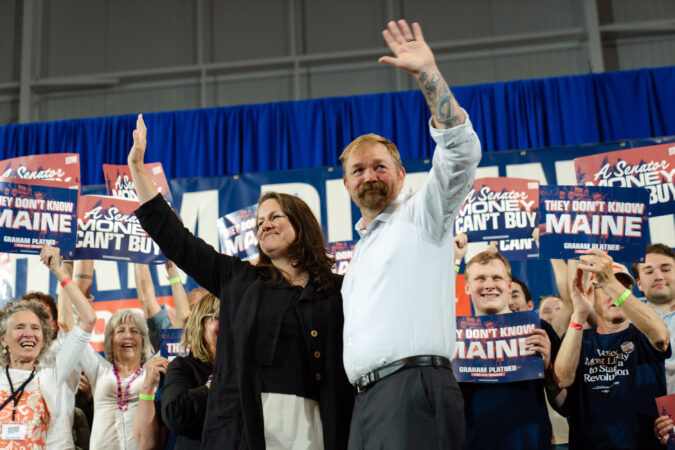
    BAR HARBOR, Maine — Graham Platner’s announcement late Wednesday that he was suspending his Senate run in Maine plunged Democrats into a foggy, fast-paced search for a replacement — with a growing group of contenders already jostling to become the party’s new nominee.

    On Thursday morning, Dr. Nirav Shah, a public health researcher who led Maine’s response to the coronavirus pandemic and finished second in the primary for governor, became the latest Democrat to officially enter the contest, joining a fast-growing field.

    In early June, Platner won the Senate nomination after more than 150,000 Democratic primary voters cast ballots for him. Now, with Platner having dropped out of the race after a rape allegation he denies, the state’s Democratic Party has been left to find a new candidate with a process it is creating on the fly.

    To formally remove himself from the ballot, Platner must submit a signed request to the Maine Secretary of State’s Office by a July 13 deadline. As of Thursday morning, he had not submitted one, said Jana Spaulding, the deputy secretary of state for communications.

    The party has said it will pick a new candidate through a nominating convention before a July 27 deadline set by state law. The timing and specifics of the convention had not been set as of early Thursday. But there was talk of allowing hundreds of Maine Democrats to vote on the nominee.

    The Democrat who emerges from the process will carry the party’s hopes of unseating Sen. Susan Collins, a Republican incumbent, in a race that Democrats see as key to their chances of taking back the Senate in November.

    After Platner, a progressive, populist oysterman, departed the race Wednesday, a small group of ambitious Democrats quickly moved to join the contest to replace him.

    Troy Jackson, a former president of the Maine Senate favored by some progressives, said he was running. He came up short in the Democratic primary for governor in Maine last month.

    “There is a powerful movement of working-class people in the state of Maine, and millions more across America who are ready to send a progressive fighter to the Senate,” Jackson, a fifth-generation logger from Allagash in northern Maine, said in a statement. He added, “I’m in.”

    Hours before he entered, he secured the endorsement of Rep. Ro Khanna, a California progressive who was once one of Platner’s most vocal supporters.

    Jordan Wood, another progressive, also said he was entering the race. A former congressional staff member, Wood narrowly lost in the House primary in northern Maine’s swing congressional district last month.

    “I’m running for U.S. Senate because to beat Susan Collins, Democrats need a candidate who can provide a true contrast and run an unapologetically progressive campaign,” he said in a text message late Wednesday. He had briefly entered the Democratic Senate primary in Maine last year before pivoting to the congressional race.

    Earlier Wednesday, Dan Kleban, a founder of a brewery, said he was joining the contest, writing on Substack that Maine voters “deserve a Senator who will fight for us, not one who enables Trump at every turn.” He also had a short-lived bid for the Senate last year.

    Shah, in his Thursday announcement, wrote on social media that “establishment politicians have failed us” and that “to defeat Susan Collins, we need an outsider.”

    It was not immediately clear how the candidates might distinguish themselves from one another. And they might soon have more company.

    Also weighing a candidacy was Shenna Bellows, the Maine secretary of state and a former state lawmaker. Like Shah and Jackson, Bellows ran for governor of Maine this year and fell short. Others may also join the contest.

    The Maine Democratic Party voted Wednesday to approve the convention in a meeting with more than 100 state party members. Leaders in the state party were expected to meet again Thursday to move toward finalizing the process.

    “We are going to have a nominating convention,” Charles F. Dingman, chair of the Maine Democratic Party, said Wednesday night. “And it is going to be representative.”

    Another question was how involved Platner might be. On Tuesday, he received pushback from the state party, which accused him of trying to intervene in the effort to replace him before he had even exited the campaign.

    “We have repeatedly reiterated to Graham Platner’s team that they have no role in determining our U.S. Senate nominee,” Devon Murphy-Anderson, the party’s executive director, said in a video on social media.

    In a statement made by hand-held video that he issued Wednesday, announcing that he was suspending his candidacy, Platner said he was “not trying to dictate to anyone” who his replacement should be. But he argued that the process should reflect “the will and the values of the people that built” his political movement.

    Many of his supporters said they felt defeated by the turn in the race. “I am hugely disappointed,” said Kat Higgins, 64, a retired nurse. “I really, really liked what he said. I think everything has to change.”

    Platner spent the final hours before his exit holed up with campaign advisers in his faded blue Greek Revival farmhouse in the wooded, seaside hills of Sullivan, Maine. His campaign released his video statement as the sun was setting over the Atlantic coast.

    A half dozen journalists were gathered on the street outside the home, but Platner did not emerge to address them. A single light illuminated a mudroom on the first floor.