Category: Wires

  • Your sleep tracker might be giving you insomnia

    Your sleep tracker might be giving you insomnia

    You wake up to your 7 a.m. alarm feeling relatively refreshed and ready to tackle the day ahead. But when you check your smartwatch, you’re surprised to see a low sleep score staring back at you.

    You start trying to remember the night before. Did you toss and turn more than you thought? Why is your watch telling you that you’re exhausted when you feel fine? When your head hits the pillow that night, you lie wide awake worrying about getting a good night’s sleep until the wee hours of the morning.

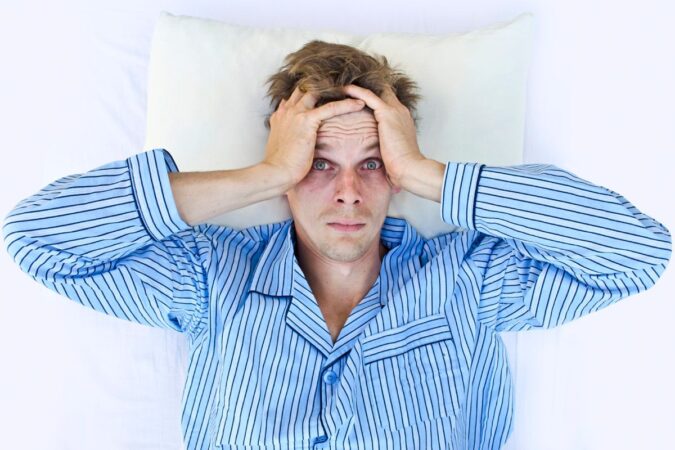
    If this scenario feels familiar, you may have orthosomnia, a fixation on achieving “perfect” sleep, often fueled by sleep trackers, that tends to result in worse sleep.

    “Orthosomnia is, at its core, a form of insomnia triggered by obsessive tracking of sleep data and the use of sleep wearables,” said Andrew Spector, a sleep medicine specialist at Duke Health in North Carolina. “It’s essentially trouble falling asleep for artificial reasons.”

    Many people rely on technology to fix their problems, but as it turns out, in this situation, these gadgets may backfire. Read on to learn more about orthosomnia and what to do if you think you might have it.

    What causes orthosomnia?

    At the root of orthosomnia is the popularity and ubiquity of sleep trackers. And while they can be useful tools at times — for example, some can screen for signs of sleep apnea, such as breathing disturbances — they can interfere with your ability to listen to your body, according to Amy Morin, a Florida-based psychotherapist and author of The Mental Strength Playbook.

    “Instead of thinking about how well rested you feel, you might look at an app or device to tell you if you’re getting enough sleep,” Morin said. Over time, this can undermine your trust in how you feel after a night of sleep and lead you to put too much weight on what a tracker says. “This can cause increased anxiety about sleep and can lead to more sleep problems,” she said.

    For instance, you may start to depend on tech to tell you how you feel, as opposed to listening to your own body’s cues, according to Morin. People are impressionable, and if your wearable is telling you that you didn’t get enough sleep, you might start to convince yourself that you’re more tired than you actually are.

    “You may start to feel sluggish. Then, you’ll act sluggish. Consequently, you’ll become sluggish,” Morin said. This may lead you to pass up an opportunity to do something later on in the day because you’ve allowed your tech to convince you that you’re too tired, she said.

    Additionally, someone who wakes up feeling well rested but sees their sleep tracker telling them they woke up often during the night may spend all morning thinking about how they’re going to feel exhausted later, Morin said. They then may be so worried about getting adequate rest that, ironically, they can’t sleep when they try to wind down for the day, Morin explained.

    Keep in mind that sleep trackers aren’t always accurate. These devices base their metrics on imperfect factors such as how much you moved during the night, Morin said. “That doesn’t always correlate to actual sleep time or sleep stages,” she said. “It’s important to know that these devices are just estimating how much sleep you got, and they’re not pinpointing your stages of sleep accurately.”

    People with anxiety or perfectionism may be especially susceptible to orthosomnia, according to Morin. “They may want perfect sleep, and a tracking app may create stress that shows them not every night is going to be perfect,” Morin said.

    How do you know if you have orthosomnia?

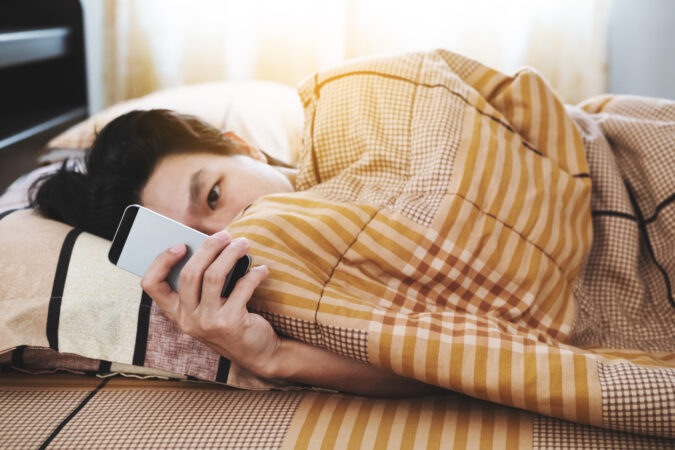
    According to Spector, a telltale sign of orthosomnia is checking your sleep tracker immediately after you wake up and analyzing all the data.

    “Your sleep tracker will give you a summary of your night. If you look at the summary and move on with your day, that’s fine,” Spector said. “But are you going minute by minute through the night and analyzing the little details of the report? That’s a red flag to me.”

    Another indication of orthosomnia is not being able to get to sleep because you’re worried you won’t get a good sleep score that night, Spector said.

    You may also start thinking about getting a good sleep score as your reason for wanting to sleep well as opposed to the actual benefits that come with adequate shut-eye — including improved mood, better focus, and reduced risk of health conditions such as heart disease, stroke, diabetes, and high blood pressure.

    Tips to manage orthosomnia

    There are a few ways to manage — and overcome — orthosomnia, according to experts:

    • Establish good sleep hygiene habits, like avoiding screen time before bed, creating a bedtime routine that helps you wind down and ensuring your room is dark and quiet, said Morin.
    • Focus on tuning into your body and recognizing when you need more rest and adjust your bedtime accordingly, according to Morin.
    • Recognize that your beliefs about sleep will greatly impact your performance, Morin said. If you assume a difficult night’s sleep will make it nearly impossible to function, you’ll have trouble functioning, she said. If, however, you believe you can still function just fine after a rough night, you’ll probably do much better.
    • Consider therapy if sleep becomes a source of anxiety that you can’t manage on your own, Spector said.

    If you find yourself obsessing over your sleep data, try ditching your tracker for a month, Morin suggested. During that time, focus on good sleep hygiene and pay attention to how your body feels.

    Once you can more confidently trust your body, you might decide to reintroduce wearable tech. Or, maybe you’ll realize you don’t really need it after all.

    “Wearable tech is helpful if it gives you information you need to make the best health decisions. But it becomes a problem when it interferes with your ability to read your body’s cues,” Morin said. It’s unrealistic to expect perfect sleep every night, and accepting that might put your mind at ease just enough for you to drift off easily.

  • Low birth rate risks creating U.S. housing glut over coming decade

    Low birth rate risks creating U.S. housing glut over coming decade

    For the past decade, scarcity was the U.S. housing industry’s most powerful marketing tool. The less there was to buy, the greater the urgency to keep bidding, even as prices hit record highs.

    Demand was supercharged by record-low pandemic-era mortgage rates that sparked bidding wars and sent prices soaring, crushing affordability. Recent estimates of the national housing shortage have ranged from 1.5 million to 7.3 million units.

    But a new era may be dawning, in which a shortage of buyers, not homes, is the defining feature, according to a new white paper from the Mortgage Bankers Association. Starting in 2030, deaths in the U.S. are projected to outnumber births, meaning that without immigration — now being throttled by the Trump administration’s crackdown — the population would begin to shrink, according to the Congressional Budget Office.

    “The next decade is likely to be quite different,” said Mike Fratantoni, the MBA’s chief economist and a coauthor of the paper. “We’re moving from a time of rapid household formation to one where there’s a slowdown.”

    That outlook is far from certain given all the variables such as a future administration that could decide to expand immigration and a stronger labor market that could boost household incomes.

    For now, affordability remains the market’s biggest constraint. Many young adults don’t have the money to buy a home and, in some cities, struggle to rent without roommates or financial help from family.

    Affordability has become a rallying cry so loud that it has bridged the political divide. Last month, Republicans and Democrats worked together to pass a bipartisan housing bill designed to address the shortage in affordable housing and lower costs for buyers and renters. The bill’s fate is uncertain after President Donald Trump abruptly canceled its signing.

    Still, the forces that fueled the housing market frenzy are now reversing. Mortgage rates, in the mid-6% range, aren’t likely to return anytime soon to the sub-3% levels of late 2020. The country’s fertility rate has fallen to a record low. Baby boomers, the oldest of whom are 80, are poised to start adding to supply as they downsize or die. In addition, immigration is severely restricted and deportations have cut net international migration by half in 2025 and likely even more this year.

    Many builders currently have too much inventory, especially in Sun Belt states such as Texas, Arizona, and Florida, where they’ve been most active. Multifamily completions hit a 38-year high in 2024, flooding the market just as demand is cooling. The rental vacancy rate rose to 7.3% in 2025 from 5.6% in 2022, according to the MBA report.

    Fratantoni and his coauthors warn that a shrinking population will upend conventional thinking about “housing supply adequacy” and raise doubts that “the supply shortage that defined the post-2010 housing narrative will remain the right framework for the decade ahead.”

    National house prices are starting to adjust. After rising 55% from 2020 to 2025, a shrinking pool of potential buyers has the MBA projecting growth of only 1% in 2026 and flat home prices over the next two years.

    Even if it’s not a recipe for a broad market crash, continued construction could cause values to drop in some places. For the mortgage industry, oversupply and falling prices would mean fewer loans for new purchases and less demand for refinancing.

    Other analysts are seeing similar evidence of changing demand for housing. An assessment released last month by Harvard University’s Joint Center for Housing Studies found that household growth fell to 1.1 million in 2025 from 2 million in 2021, the third straight year of decline as young people double up with roommates or live with family rather than go out on their own.

    “The demand slowdown is coming,” said Alexander Hermann, senior research associate at the Joint Center. “That’s a real thing.”

    But a weaker appetite for homes overall doesn’t mean everyone can find one. According to the National Low Income Housing Coalition, 11 million extremely low-income renter households are competing for just 3.8 million homes within their reach.

    There remains a severe shortage of units for households in the lower- and middle-income brackets, Hermann said. “I don’t think we’ve made any progress on that,” he said. “If anything, that circumstance has only worsened.”

    A few months ago, Ali Wolf, chief economist at homebuilding consultancy Zonda, spoke before a gathering of clients and laid out a sobering picture: The country was still adding jobs, but at a slower pace, and the population was still growing, but at one of the slowest rates on record.

    A builder asked a question that caught her attention.

    “He said, ‘If job growth is slow and if population growth is slow, how do we grow our business?’” Wolf said.

    Since then, she’s been marshaling resources to answer it, building an index that ranks nearly 100 metropolitan areas on expectations for long-term demand. Her team is meeting with builders to explain what it means for their regions.

    When the immigration crackdown began, builders braced for the obvious blow: the loss of the workers who frame their houses and pour their foundations. But a drop in apartment construction since then has eased that pressure.

    “We thought we were going to get hit by labor supply,” Wolf said. “And actually, our biggest concern has been housing demand.”

  • I’m a sleep doctor. These are the signs you have a real sleep problem. | Expert Opinion

    I’m a sleep doctor. These are the signs you have a real sleep problem. | Expert Opinion

    Q: I’m always tired. I try to prioritize sleep but always end up exhausted despite my best efforts. Why don’t I ever feel well rested?

    A: For millions of people, poor sleep has become so normalized that they no longer recognize it as a potential medical issue. Feeling tired all the time gets blamed on stress. Freight train snoring becomes a family joke at the dinner table. Trying not to doze off during that weekly meeting means your job is boring.

    These signs all point to a possible sleep disorder. Yet, most people push through and ignore them.

    The Centers for Disease Control and Prevention and sleep researchers estimate that between 50 million and 70 million Americans have an active sleep disorder, and most people don’t know they do.

    As a sleep specialist who primarily treats people with chronic insomnia, I can say with confidence that even common sleep disorders remain underrecognized, underdiagnosed, and undertreated.

    Sleep disorders deserve medical attention — and often are highly treatable. Here are the most common (there are more than 80 clinical sleep disorders, by the way), and the signs you might have one.

    Insomnia

    Insomnia disorder is defined as difficulty falling asleep, staying asleep, or waking up too early at least three nights per week for at least three months. It causes real impairment in daily life.

    Sleep onset insomnia is the inability to fall asleep within a reasonable time frame (30 minutes) after getting into bed, while sleep maintenance insomnia involves waking up during the night and having trouble returning to sleep (for 30 minutes or more) or waking up much earlier than desired.

    Insomnia can be acute, lasting days to weeks, usually triggered by an identifiable stressor and often resolving on its own, or chronic, persisting three months or longer and typically requiring intervention.

    Decades of epidemiological research suggests that 10 to 15% of the general population meets the criteria for chronic insomnia disorder, with higher rates among women, older adults, and people with co-occurring mental health conditions.

    Additional signs of insomnia disorder:

    • Feeling exhausted, even after a full night of sleep
    • Regularly experiencing irritability, low mood, mood changes, difficulty concentrating or paying attention, or memory problems
    • Dread or anxiety as bedtime approaches
    • Feeling exhausted getting into bed, but the moment your head hits the pillow, you’re wide-awake (“tired but wired”).

    The gold standard treatment is cognitive behavior therapy for insomnia, also known as CBT-I, though other forms of sleep therapy as well as certain medications may also be appropriate.

    Obstructive sleep apnea

    Obstructive sleep apnea is a medical condition in which the muscles in the throat relax during sleep, causing the airway to narrow or close entirely — which often manifests as snoring, though you don’t have to snore to have OSA. As the airway collapses, breathing stops — sometimes for a few seconds, sometimes longer — until the brain partially wakes the body to restore airflow. This cycle can repeat hundreds of times a night, fragmenting sleep so often that most people wake up exhausted.

    OSA is estimated to affect more than 30 million Americans. Yet, according to multiple analyses, 80 to 90% of OSA cases in the United States go undiagnosed every year. Women are overwhelmingly underdiagnosed because their symptoms often present differently — fatigue, mood changes, insomnia, morning headaches — compared with men, who are more likely to snore loudly or gasp/choke.

    I hear this all the time from women in my practice. They didn’t fit the typical OSA stereotype, and instead their symptoms were attributed to depression, thyroid problems, stress or another sleep disorder.

    Additional signs of OSA:

    • Waking up with a dry mouth, sore throat, or headaches
    • Excessive daytime sleepiness
    • Waking frequently to use the bathroom during the night (known as nocturia; this happens when apneas strain the heart and the body releases more of a hormone that increases urination)
    • Difficulty concentrating, memory problems, or cognitive slowing
    • Increased irritability, mood changes, anxiety, or depression that don’t fully resolve with treatment
    • A history of chronic insomnia, particularly difficulty staying asleep
    • High blood pressure or cardiac issues that are difficult to control.

    Sleep apnea is often treated with continuous positive airway pressure therapy, which involves wearing a breathing machine that keeps airways open while sleeping, though other therapies and even surgery may be helpful for some. Lifestyle changes, such as weight loss and avoiding alcohol use, could also help.

    Restless legs syndrome

    Restless legs syndrome, also known as Willis-Ekbom disease, is characterized by an irresistible urge to move the legs (and/or arms), usually accompanied by uncomfortable sensations: crawling, tingling, pulling, aching, burning, itching, or an indescribable inner restlessness.

    Symptoms emerge or worsen at rest, and moving around, stretching, or walking usually brings temporary relief. It is deeply uncomfortable in a way that makes staying still feel impossible and falling asleep extraordinarily challenging.

    Research published in the Journal of Global Health estimates that RLS affects between 7.2% and 11.5% of the general population, though data suggests it’s largely undiagnosed or not diagnosed until years after symptom onset.

    Because RLS cannot be visually detected on standard tests, and the sensation is difficult to explain, it was long dismissed as psychological or simply as “growing pains.”

    Additional signs of RLS:

    • Your bed partner complains that you kick or jerk your legs (and/or arms) repeatedly during sleep.
    • Excessive daytime sleepiness, mood changes, cognitive slowing, and increased anxiety or depression.

    Antiseizure medications and prescription-strength iron supplements may help, as can treating other health conditions and lifestyle interventions such as regular exercise, eating well, avoiding stimulants, massage, compression wear, hot/cold packs, and magnesium supplementation.

    Circadian rhythm sleep-wake disorders

    Circadian rhythm sleep-wake disorders, or CRSWDs, occur when a person’s internal biological clock — which governs the timing of sleep, hormone release, body temperature, and dozens of other physiological functions — is misaligned with the external environment or the person’s desired sleep schedule. These are not disorders of sleep quality per se but of sleep timing.

    This can result in a sleep-wake schedule that’s much different from typical social norms, whether that means you can’t fall asleep until extremely late at night no matter how early you try, or you get sleepy in the early evening and wake up very early in the morning.

    A research review published in the Journal of Clinical Neurophysiology found that up to 3% of the adult population has a CRSWD, with rates reaching 7 to 16% among adolescents and young adults. The review also noted that CRSWDs are commonly misdiagnosed as other sleep disorders.

    Additional signs of circadian rhythm disorders:

    • You identify as an “extreme night owl” or “extreme early bird.”
    • When allowed to sleep freely on vacation or nonwork days, you shift to a dramatically different schedule.
    • You work rotating shifts and struggle to sleep when you have the opportunity, despite feeling exhausted.
    • You have been told you have insomnia, but sleep medications or standard sleep hygiene advice have not helped.
    • Your “insomnia” or “fatigue” has never fully responded to treatment.

    The best “treatment” is to adapt your lifestyle so you can sleep in your natural, biological sleep-wake window. When that’s not possible, circadian rhythm management (e.g., microdosing melatonin, bright light therapy) or behavioral strategies, such as CBT-I, may be appropriate.

    What to do if you suspect a sleep disorder

    If any of the signs described above sound familiar, and especially if they’ve been going on for more than a few weeks, the first step is to talk to your doctor and specifically ask about sleep disorders.

    Don’t just say you’re tired or can’t sleep. Be specific: Describe when the problems occur, how long they’ve lasted, how they affect your daytime functioning and whether your bed partner has noticed anything unusual.

    From there, your doctor may refer you to a sleep specialist (or you may need to ask directly for a referral), who can conduct a thorough sleep evaluation and, when appropriate, a sleep study. The list above is not exhaustive; other sleep disorders, such as narcolepsy and idiopathic hypersomnia, are less common but can also cause excessive daytime sleepiness despite your having logged plenty of hours in bed, and require proper diagnosis and treatment.

    If you’ve been exhausted for months or years, and standard sleep hygiene advice hasn’t helped improve your sleep, you are not failing at sleep. Your sleep problems are probably not “just stress” or “just how you are,” and your exhaustion is not a badge of honor. Your sleep struggles deserve more attention.

    Sarah Silverman, PsyD, is a sleep psychologist and behavioral sleep medicine specialist in private practice specializing in women’s sleep health and insomnia.

  • Democrat Graham Platner says he plans to withdraw from Maine Senate race after sexual assault claim

    Democrat Graham Platner says he plans to withdraw from Maine Senate race after sexual assault claim

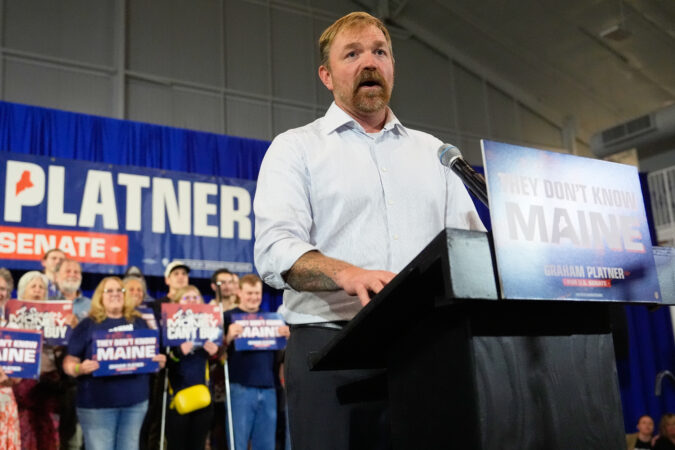
    Graham Platner said Wednesday that he plans to withdraw from the U.S. Senate race in Maine after facing an allegation of sexual assault, shuttering an insurgent campaign that had withstood months of controversy only to implode and imperil Democrats’ attempt to regain power in Washington.

    Platner’s exit could exacerbate divisions between the party’s moderate and progressive factions, as Democrats debate who should replace him on the ballot and struggle to unify ahead of this year’s midterm elections.

    Maine is considered a key state for control of the narrowly divided Senate, and Democrats were desperate for a candidate capable of defeating Republican Sen. Susan Collins while President Donald Trump is broadly unpopular.

    In an 11-minute video posted to social media, Platner said the process to replace him needs to be “open, transparent and democratic” and to reflect the will and values of people who supported him. He also lashed out at Democratic leaders in Washington, D.C.

    “People in D.C. need to stay in D.C.,” Platner said. “Decisions should not be made by people in places of political power.”

    At times scratching his beard and looking off camera as he spoke, Platner seemed to become emotional as he announced his plans, seated on what appeared to be a wooden deck as the noise of nearby traffic whizzed by. He also stressed that his decision was not an admission of guilt.

    Although Platner had never before held elected office, progressive leaders promoted him over Gov. Janet Mills, who was favored by the Democratic establishment. Mills dropped out of the race in late April as Platner, a military veteran and oyster farmer, consolidated support from primary voters who were eager for a more combative candidate and were willing to overlook his checkered past, which included a tattoo recognized as a Nazi symbol and online postings dismissive of sexual assault.

    Shortly before Platner clinched the Democratic nomination in the June 9 primary, there were reports that he had exchanged sexually explicit messages with other women while married and that he had become physical with a previous girlfriend during an argument.

    But Platner’s support didn’t crater until Monday, when Politico reported that a woman said he drunkenly forced her to have sex after she told him to stop.

    Jenny Racicot, who lives in Maine, told Politico she had been in an on-and-off relationship with Platner but cut off contact with him after that night in 2021 and told him the encounter wasn’t consensual. In a CNN interview, she said she had been raped “by definition.”

    After the story was published, Platner in a video released on social media denied the allegation as “categorically false” but said he would be “taking the time to reflect on the best path forward” for his campaign. High-level backers pulled their support, including Vermont Sen. Bernie Sanders, who said the next day that he spoke with Platner and that “in light of these very serious allegations, I have recommended that he step aside.”

    State law includes a provision for Democrats to replace Platner before the general election. The state Democratic Party held an emergency meeting Wednesday, where more than 100 state committee members signed off on holding a nominating convention, in the event of Platner’s withdrawal.

    Platner announced he would do just that less than an hour later.

    According to the statute, party officials may select a new nominee if a candidate who won the primary withdraws by 5 p.m. on July 13. The replacement candidate must be named by July 27.

    Democrats must net four Senate seats to gain control of the 100-member chamber, and party leaders viewed Maine as a critical piece of the puzzle, along with Alaska, Ohio and North Carolina.

    Nazi tattoo, Reddit posts and more had already been challenges for Platner

    Platner has faced difficult questions almost from the moment he started his campaign last year. News outlets uncovered years-old comments on Reddit that appeared to endorse political violence, dismiss rape in the military, criticize rural Americans and use anti-gay slurs.

    There was another controversy over the skull-and-crossbones tattoo, which is widely recognized as a Nazi symbol, on his chest. He said he was unaware of the history and chose the tattoo while drunk and on leave with fellow Marines in Croatia. He covered the tattoo after becoming a candidate, and he said in an Oct. 21 interview with the Pod Save America political podcast that he was “not a secret Nazi.”

    “Skulls and crossbones are a pretty standard military thing,” Platner added.

    However, a former girlfriend told The New York Times that Platner joked about the tattoo being a Nazi symbol and called it “my Totenkopf.”

    The revelations about the tattoo and the online comments stirred concern among Democrats that Platner had been poorly vetted as a political candidate and demonstrated questionable judgment. Some party leaders despaired over Platner’s chances to win even before allegations about previous relationships began to surface.

    Platner drew progressive buzz and support

    Before Politico’s story was published, Platner canceled some town halls planned around the state. Such events were a calling card for his campaign, which prided itself on a willingness to go anywhere to rally voters. Volunteers hosted happy hours and trivia nights that helped generate enthusiasm for a generational shift from Collins, 73, to Platner, 41.

    At a time when Democrats have grown dissatisfied with the party establishment, Platner seemed like an appealing alternative. His deep voice could command a room, and voters were drawn to his gruff populism and focus on economic inequality.

    They were also willing to look past controversies as Platner portrayed himself as a regular person who had made mistakes and was striving to better himself and his community. Sometimes he talked about his struggles with post-traumatic stress disorder, and he focused on the power of redemption.

    Before the sexual assault allegation became public, some voters said they also wouldn’t want to be judged on their worst moments, such as drunken behavior or crude comments.

    Platner was backed by progressives including Rep. Ro Khanna of California, but that support quickly eroded after Racicot’s allegations.

    “I’ve been very clear that sexual assault or violence against women is a red line,” Khanna said Monday. “These allegations are very serious and credible. Graham Platner should drop out from the race. I am withdrawing my endorsement.”

    Sonja Birthisel, a Democrat and data analyst in Orono, Maine, voted for Platner in the primary. But she said he did the right thing by dropping out.

    “My hope for the future of our democracy is that we can hold all of our elected officials to higher standards,” she said.

    But the 38-year-old said she rejects the idea that the race is a proxy battle between moderate and progressive forces nationwide.

    “Maine is a big small town,” she said. “I’d really love to see out-of-state influence and out-of-state money keep out of our beeswax as much as possible.”

  • Second person in 4 days is fatally shot in Memphis by federal task force member

    Second person in 4 days is fatally shot in Memphis by federal task force member

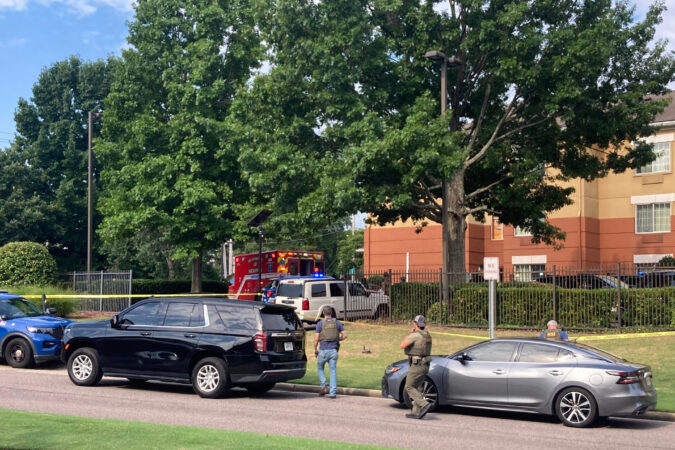
    NASHVILLE — A member of a federal crime-fighting task force in Memphis shot and killed a person there on Wednesday, the second fatal shooting by a task force member in four days, and the fourth death involving the unit since it started in September.

    The shooting occurred while U.S. Drug Enforcement Administration agents were serving a drug warrant at a hotel room, U.S. Marshals Service spokesman Brady McCarron said. When the suspect refused to open the door for agents, they knocked the door down, McCarron said.

    A news release from the Marshals Service sent out earlier in the day said the man was killed after pointing a handgun at task force members. A later news release from the Tennessee Bureau of Investigation, which is probing the circumstances of the shooting, is less specific. It says only that, “For reasons still under investigation, the situation escalated, resulting in a DEA agent firing into a room, striking a man and killing him.”

    The Memphis Safe Task Force created by President Donald Trump was part of an effort to place National Guard troops and federal agents in Democratic-run cities he described as crime-ridden. Although plans to send troops to some other cities were blocked by the courts, Tennessee National Guard troops have been serving in Memphis as part of the task force since last fall.

    Tennessee’s Republican Gov. Bill Lee has embraced federal intervention while Democratic Memphis Mayor Paul Young took a pragmatic approach, saying they were coming regardless of his opinion so he wanted to find ways to use them effectively.

    Wednesday’s shooting follows another one early Sunday by two members of the Tennessee National Guard assigned to the task force. Authorities said 20-year-old Tyrin Johnson was killed after he turned toward them with a gun during a downtown pursuit. Johnson’s family is calling for the release of video evidence that would show what happened.

    Data from the Tennessee Bureau of Investigation shows that at least four people have died in encounters with officers tied to the federal task force, including at least one other fatal shooting by a DEA agent.

    In mid-May, when task force members were serving an arrest warrant, the agent shot and killed 41-year-old Darrin Pigram, who had allegedly reached for a gun in his waistband, the TBI said in a preliminary statement.

    Later that same month, a Homeland Security special agent fired her weapon when task force members “responded to a report of a man armed with a gun, threatening to harm himself.” Jonah Neal, 25, was pronounced dead at the scene, but TBI said at the time it was not “immediately clear whether Neal died as a result of the agent firing upon him or if it was self-inflicted stab wounds.”

    In a fifth shooting in December, a Tennessee Highway Patrol trooper assigned to the task force opened fire at a vehicle and struck one person, after the car didn’t pull over in a traffic stop. The person was taken to the hospital in stable condition, according to information released by TBI at the time.

    All five shootings are being investigated by the Tennessee Bureau of Investigation.

  • Does leisure make us happy? Often the answer is no.

    Does leisure make us happy? Often the answer is no.

    You might think spending more time relaxing would make you happier.

    But recent research suggests that having more leisure time doesn’t necessarily make people more likely to rate their day as happy. The research, using data from the U.S. Census Bureau’s American Time Use Survey, shows that people were most satisfied with their days when they included an hour or two of socializing, physical exercise, and — surprisingly — up to six hours of work (though more work than this was linked to less happiness).

    “It doesn’t mean leisure time is bad. It just means that we probably need to use it a little bit differently,” said Laurie Santos, a psychology professor at Yale University who wasn’t involved in the study, which was published earlier this year and analyzed how 15,000 Americans used their time across two nonconsecutive years.

    In the survey, respondents reported “watching television and movies” was about 70% of their relaxation and leisure time.

    Santos said that working — whether at a day job, or doing another effortful activity, especially if it involves connecting with other people — often makes us happier than being idle. In particular, she said, scrolling on our phones or binge-watching TV might be a recipe for loneliness.

    Yet given the choice, people often choose the easier route, one of the many ways people tend to be misguided when predicting what will make them happy, she said.

    Santos teaches the course “Psychology and the Good Life,” which became the most popular class on Yale’s campus when she first offered it in 2018. Nearly 1 in 4 students now enroll, which she said is a sign of how many young people are searching for research-backed strategies to help them feel better.

    The paradox of happiness

    One of the pitfalls of searching for happiness is that focusing on it too much can make contentment even more elusive.

    Santos cited research from Iris Mauss at the University of California at Berkeley, which found that it’s hard to enjoy a happy moment if you’re too fixated on how happy you are.

    “You know, I’m on vacation in this perfect spot and I’m asking, ‘Could this be better? Was this worth the money?’ And of course that doesn’t make the vacation feel all that great,” Santos said. “We tend to be kind of anxious about whether we’re feeling happy and that doesn’t feel good.

    The second problem is that we think that the perfect job or relationship or achievement will make us happier.

    “Happiness is really less about our circumstances and more about our behaviors and our mindsets,” Santos said.

    For people who are struggling with essentials like housing or food, changing their circumstances will make them happier, she said, but once basic needs are met, there are diminishing returns.

    The problem with ‘good vibes only’

    Being a happy person does not mean being happy all the time.

    “A good flourishing life is going to involve some negative emotion,” Santos said.

    Often it’s our reactions to our emotions that cause problems. For example, if you get an email that stresses you out and let that spill into your next interaction, you might snap at someone, then feel guilty.

    Santos recommends recognizing what you’re feeling without adding too much meaning to it — or shaming yourself for feeling badly — what Santos calls “meta-emotions.”

    On a vacation, for example, if a rainy day forces a change of plans and you find yourself getting frustrated, that can bring on meta-emotions. You might feel ashamed that you’re annoyed on vacation — Shouldn’t I just be enjoying it? Feeling grateful?

    “It’s often those meta-emotions that are worse than the primary emotions that we initially feel,” Santos said. “It takes some work, but those meta-emotions are under your control.”

    What actually makes people happier

    There is a lot of research about what does make people feel better. In the scientific literature and in Santos’s own experience, these little tweaks work by subtly rewiring the brain.

    A little bit of effort or challenge is better than pure ease. We tend to enjoy things more when they require a bit of work. If you have a free afternoon, you’re more likely to take pleasure in a hike outside rather than scrolling or watching TV alone.

    Pretty much everything is better with a friend. Even if you’re just running errands, invite a friend, and look for opportunities for small moments of connection, like chatting with a clerk in a store rather than ordering things online.

    Try a reframe. You’ve probably heard the advice to keep a gratitude journal, but if you can’t stick to writing things down every day, you can still do a quick reframe in a tough moment by asking yourself some questions.

    “What’s one thing that I’m really grateful for in this moment? What’s one thing that I’m going to look back on tonight and think was good?” Santos asked. “Just that little change in our attention can be really powerful.”

  • Judge orders E. Jean Carroll be paid $5.8M in Trump sex abuse and defamation case; Trump appeals

    Judge orders E. Jean Carroll be paid $5.8M in Trump sex abuse and defamation case; Trump appeals

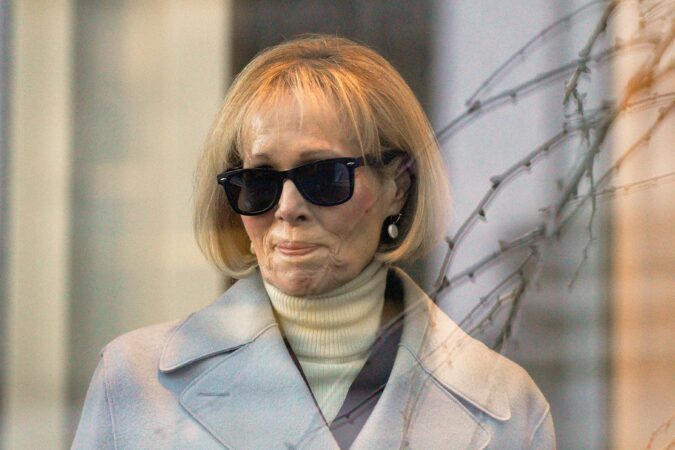
    NEW YORK — Writer E. Jean Carroll can collect $5.8 million held in escrow since a jury found that President Donald Trump sexually abused and defamed her, a federal judge ruled Wednesday. Trump’s lawyers immediately appealed to stop the payment.

    The president has already deposited the money in an account. The U.S. Supreme Court recently let the 2023 civil verdict stand, clearing the way for Judge Lewis A. Kaplan to release the money. The initial $5 million award has grown with interest.

    The jury found Trump attacked Carroll in 1996 in the dressing room of a luxury Manhattan department store, and defamed her after she described it publicly in a 2019 memoir, during his first term as president. Trump called her allegations false and said “she’s not my type” in an interview.

    Trump’s attorneys said Wednesday they would continue to appeal, and accused his political opponents of using the legal system against him. They asked the 2nd U.S. Circuit Court of Appeals to stop the payment. Carroll’s lawyers did not immediately respond to requests for comment.

    The jury had reached its verdict — in a trial that Trump did not attend — after Carroll testified that their flirtatious and friendly chance encounter at the department store turned violent. Trump insisted he never knew Carroll, now 82, a former advice columnist. He accused her of trying to sell books at his expense and of having political motives.

    Carroll sued Trump after New York changed its laws to give sexual abuse survivors a fresh chance to sue over attacks that happened in the distant past.

    Trump is also appealing $83 million in defamation compensation granted to Carroll by a separate Manhattan jury after a 2024 trial where Trump briefly testified.

    At that trial, Kaplan required the jury to accept the findings of the previous jury and only determine how much money, if any, Trump owed Carroll for comments he made about her while he was president.

    Trump’s lawyers complained that the judge, in setting rules for the damages trial, had barred Trump and his defense team from telling the jury that the encounter with Carroll never happened.

    When the 2nd Circuit declined to let all of its judges rehear an appeal of the $83 million award, Circuit Judge Denny Chin wrote that Trump had said multiple times over many years that Carroll lied for political and financial gain and had suggested she was too unattractive for Trump to have sexually assaulted her.

    “As a result of Trump’s statements, Carroll was harassed and humiliated, subjected to death threats, and feared for her physical safety for years,” Chin said. “And Trump showed no remorse, continuing his attacks against Carroll during and after two federal trials, and even proclaiming two days into the Carroll I trial that he would continue to defame her ‘a thousand times.’”

  • Prosecutors play video in court of suspect in Charlie Kirk’s shooting after he turned himself in

    Prosecutors play video in court of suspect in Charlie Kirk’s shooting after he turned himself in

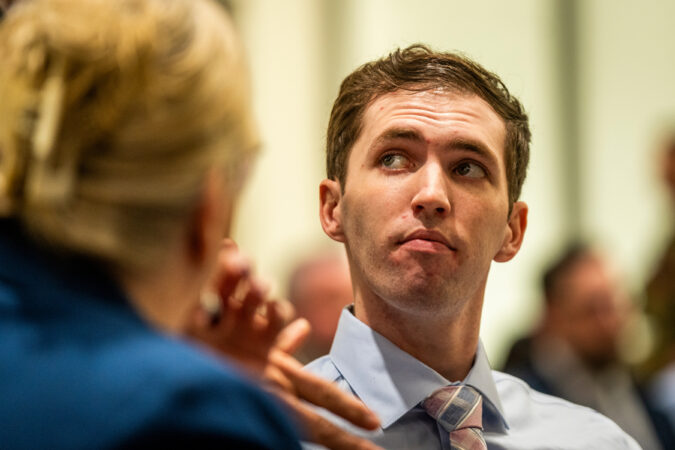
    PROVO, Utah — Prosecutors played a video clip in court Wednesday of suspect Tyler Robinson after he had turned himself in to Utah authorities a day after the shooting of conservative activist Charlie Kirk.

    The video showed Robinson standing in a room at the Washington County Sheriff’s Office wearing a T-shirt and baseball cap. There was no audio and it was unclear if he was interviewed by investigators while at the sheriff’s office.

    State District Judge Tony Graf will decide at the conclusion of this week’s hearing if prosecutors have enough evidence to bring Robinson to trial on an aggravated murder charge in Kirk’s fatal shooting on the campus of Utah Valley University in September.

    Robinson’s roommate, Lance Twiggs, was interviewed twice as part of the investigation, State Bureau of Investigation Agent Brian Davis testified Wednesday. Twiggs was given immunity for the statements, meaning what he said cannot be used against him in a potential criminal case, Davis said.

    Robinson’s defense team objected to showing recordings of those interviews in open court.

    His lawyers have said repeatedly this week that they are concerned about his right to a fair trial if evidence in the case is made public. Graf did not immediately rule on the request.

    Prosecutors allege Robinson sent a text to Twiggs saying he targeted Kirk because he “had enough of his hatred.”

    On Tuesday, Robinson’s lawyers questioned the reliability of DNA testing used to link the defendant to the suspected murder weapon.

    A member of Tyler Robinson’s defense team interrogated a DNA analyst from the FBI about the techniques she used to connect Robinson to a towel wrapped around a rifle found at the college campus, where Kirk was shot while speaking to a large crowd.

    Defense lawyer Michael Burt cast doubt on the analyst’s conclusions.

    “She can’t match Mr. Robinson to the questioned samples,” Burt argued.

    Robinson has not yet entered a plea and his attorneys have not commented on his guilt or innocence. They have, however, sought to get the death penalty taken off the table, so far unsuccessfully.

    Prosecutors must show they have enough evidence for a trial

    Forensics expert Lawrence Quarino said law enforcement agencies use “extremely reliable” tests to determine the probability that a person matches with DNA found at a crime scene.

    DNA testing “is the gold standard in forensic science,” said Quarino, a professor and director of the forensic science program at Cedar Crest College in Pennsylvania.

    FBI analyst Amanda Bakker said that after Twiggs provided a DNA sample for comparison, she was able to rerun her tests and attribute all of the DNA to two people.

    Investigators found the towel and suspected murder weapon — a bolt-action rifle with one spent round — in a wooded area near where Kirk was shot.

    DNA on the towel matched to two people, Jennifer Faumuina with the State Bureau of Investigation testified. One was Robinson’s roommate and the other was very likely Robinson, she said. Twiggs, a key figure in the prosecution’s case, will not testify in person this week, but prosecutors have said they plan to introduce a recorded statement.

    Prosecutors allege Robinson confessed in a note left for Twiggs, who was also his romantic partner, that read: “I had the opportunity to take out Charlie Kirk and I’m going to take it.”

    Investigators say Robinson went to a rooftop near where Kirk was speaking and shot him once through the neck as the activist was taking questions from a crowd of several thousand people. Kirk was declared dead after being taken to a hospital.

    The defense team pushes back

    Prosecutors contend the shooting endangered others at Kirk’s campus event — an aggravating circumstance that could make the crime punishable by death under Utah law. Robinson also faces possible sentence enhancements based on the prosecution’s claim that he targeted Kirk because of his political views.

    During one of several appearances on campus on Sept. 10, the defendant went to the amphitheater where Kirk was later shot, State Bureau of Investigation Agent David Hull testified Tuesday. Hull said Robinson made contact with representatives of Turning Point USA, a group co-founded by Kirk that galvanized the conservative youth vote to help Trump win a second term.

    The investigator did not detail what occurred during that interaction or if members of Kirk’s security team were present.

    Robinson’s defense team pushed back Tuesday on the idea that he was hostile to Kirk’s politics. Defense attorney Richard Novak sought to block prosecutors from introducing a statement describing the traditional Christian values of Turning Point USA.

    “This doesn’t say anything about Mr. Robinson’s state of mind,” Novak said about the statement from Turning Point USA board member David Engelhardt. “I don’t think that this court should be deciding — based on the record before it — where, if at all, politics and religion intersect.”

    The judge ruled that the Turning Point statement was relevant and would be “provisionally admitted,” with a final decision later on.

  • Funeral processions held in holy Iraqi cities for Iran’s late Supreme Leader Ayatollah Ali Khamenei

    Funeral processions held in holy Iraqi cities for Iran’s late Supreme Leader Ayatollah Ali Khamenei

    NAJAF, Iraq — Thousands of mourners attended funeral processions for Iran’s Ayatollah Ali Khamenei on Wednesday in the holy Iraqi cities of Najaf and Karbala as part of dayslong funeral ceremonies for the Islamic Republic’s late supreme leader.

    The ceremonies began on Saturday, with authorities shutting down streets, airspace, and daily life in Tehran, Iran’s capital, as throngs commemorated the life of the man who led Iran for decades with an iron fist while confronting the West. His body was later taken from Najaf to Karbala before it is to be returned to Iran.

    Khamenei was killed in late February in wide-scale U.S. and Israeli strikes on Iran that started the war. The 86-year-old supreme leader was among several senior Iranian leaders killed in strikes during the war.

    Talks on ending the war between the United States and Iran appear to be on hold until after the burial.

    However, strikes from both sides in the Persian Gulf on Tuesday and into Wednesday raised risks that the interim agreement to end the monthslong conflict that engulfed the Middle East could completely break down.

    The U.S. military attacked Iran Wednesday and again early Thursday after it said Tehran struck three ships in the Strait of Hormuz. Iran then launched retaliatory strikes on Kuwait and Bahrain.

    Khamenei’s body arrived on Tuesday in Najaf, considered one of the holiest of cities for millions of Shiite Muslims worldwide. Mourners holding portraits of Khamenei welcomed the body and senior officials escorting it, including Iranian President Masoud Pezeshkian and Foreign Minister Abbas Araghchi.

    The body was placed in a casket draped in the Islamic Republic’s flag and encased in glass.

    Some supporters performed self-flagellation on the streets, while others waved Iranian as well as red and black flags symbolizing mourning and revenge.

    Muhammad Taqi al-Hakim, a senior scholar at the Najaf seminary, led the funeral prayers at the Shrine of Imam Ali, the Prophet Muhammad’s cousin and son-in-law.

    As the coffin was carried into the shrine, large crowds pushed and shoved their way to get close to it. Some threw themselves onto the casket, as attendants struggled to control the crowd, urging the pallbearers to carry it closer to the ground for fear it might fall.

    “We, the people of Iraq, will remain a thorn in the eyes of the enemies,” said Jaafar Jawad, a funeral attendee. “(His body arriving here) is the greatest possible honor, and God willing, we will be loyal and repay a little of his debt in the holy city of Najaf.”

    The body later arrived in Karbala, also a holy city for Shiites, where Imam Hussein, the grandson of the prophet, was killed in 680 AD. Thousands of supporters gathered in the desert heat in and around the shrine while Abdul Mahdi al-Karbalaei, a representative of Iraq’s top Shiite religious authority, led the prayers there.

    Iran’s new supreme leader, Ayatollah Mojtaba Khamenei, has yet to make an appearance at the funeral ceremonies, which are unfolding over several days. He is believed to be in hiding after reportedly being wounded in the airstrike that killed his father.

  • Family demands an independent probe after ICE officer fatally shoots a man in Houston

    Family demands an independent probe after ICE officer fatally shoots a man in Houston

    HOUSTON — A Mexican national fatally shot by an Immigration and Customs Enforcement officer in Houston had no criminal convictions during his decades living in the U.S. and was driving a crew to a homebuilding site when he was killed, his family and a Texas congresswoman said Wednesday.

    Lorenzo Salgado Araujo was working toward securing legal status in the U.S. and knew what to do if stopped by ICE, his son said.

    Ronaldo Salgado said his father may have been scared that the people in unmarked vehicles were coming to steal the tools he used for 35 years to build homes, from sunrise to sunset, so he could send his three American sons to college.

    “He did not deserve to die. He did not deserve to be reduced to a headline of Mexican man shot and killed by ICE. He deserved to live a quiet life as Lorenzo Salgado Araujo, a husband, a father and a job creator for dozens of men who also wanted the American dream,” Salgado said during a news conference.

    The shooting happened Tuesday in Magnolia Park, a neighborhood that has been a hub for Houston’s Mexican American community for a century.

    Federal officials claim vehicle was rammed

    Salgado Araujo was shot after he ignored commands and attempted to ram an officer who fired his weapon in self-defense, the Department of Homeland Security said Tuesday in a statement. ICE officers were targeting him because he was living in the country without legal permission, according to the department, which oversees ICE. The man’s car struck an ICE vehicle, the department added.

    Democratic U.S. Rep. Sylvia Garcia said Salgado Araujo had no criminal convictions.

    Houston firefighters said he was shot in the abdomen. He died at a hospital.

    Three other men appeared to be detained as Salgado Araujo lay moaning on the ground, according to his son, who said one of them was his uncle and that no one has heard from any of them since.

    Federal officials have not released video or images of the shooting or the alleged damage to the vehicles. Salgado on Tuesday joined civil rights groups and Democratic officials in urging federal authorities to release all the footage and other information it has on the shooting.

    In several other shootings involving federal officers, initial descriptions by immigration officials have sometimes been contradicted later by video evidence.

    A video shot by bystander Juliet Martinez shows a black vehicle angled towards a white van, their doors wide open. A bleeding and handcuffed man groans loudly on the ground and his leg shakes. Other federal officers stand over at least three other handcuffed men.

    Civil rights groups say ICE can’t be trusted with the investigation

    The federal crackdown has created a country where it is “open season on Latinos” by officers who think they can “shoot and explain later,” League of United Latin American Citizens President Roman Palomares said during the news conference.

    The way ICE has handled previous investigations shows they have not earned the trust of taking their statements as facts without evidence like video to back it up, he said.

    “Your pattern has been one of inaccuracies of prejudicial leaks before the facts are known, of twisting the narrative to fit your version of events,” Palomares said.

    The league offered a $5,000 reward for information and videos from witnesses. Ronaldo Salgado and several civil rights organizations called for an independent investigation. Some of them begged anyone with videos to not turn them over to ICE, which they said could destroy them.

    Harris County District Attorney Sean Teare said Salgado Araujo’s family and the community deserve the truth but federal authorities are exclusively handling the investigation at this time.

    Uptick in arrests in recent weeks

    Representatives of ICE and DHS have not responded to repeated requests for comment Wednesday.

    Homeland Security Secretary Markwayne Mullin took over the department in March with the aim of keeping it away from the controversies that had marked the tenure of his predecessor, Kristi Noem.

    In the months after two fatal shootings in Minnesota sparked a fierce backlash, the number of immigration arrests across the country fell and ICE appeared to recalibrate its tactics. But in late June, arrests around the country surged to 10,000 over a five-day period, fueled in part by massive Congressional funding.

    The shooting was at least the eighth death resulting from an encounter with federal immigration officers since the start of the Trump administration’s immigration crackdown.

    Son says his father worked hard for decades

    Ronaldo Salgado said his mother was told something bad had happened to his dad around 7 a.m. Tuesday. After frantically looking for him at his job site and finding his empty van, he saw a video.

    “I recognized him, not from his appearance but from his voice crying for help as he lay on the street,” Salgado said.

    Salgado Araujo met his wife as a teenager in Mexico. They came to America and built their own home in Houston with help from friends and family who worked on his crew. His wife made his lunch before he left for the day and had a hearty meal ready when he came home. He would listen to music and pet his dog on his porch, Salgado said.

    “After nearly 35 years of working to give us the American dream, he made the choice to begin the process of obtaining his American dream through a work permit,” Salgado said. “We dotted every I, crossed every T, filled every document, attended every appointment. He was close to obtaining his legal status.”

    Salgado Araujo had biometric scan and fingerprints done earlier this year, his son said, and had carefully studied what to do if ICE pulled him over. If he was speeding away, it was probably because he feared having his tools stolen, his son said.

    “Had my father seen an emblem of ICE or an emblem that says anything about a law enforcement agency, my father would have complied,” his son said.

    Mexico’s president criticizes the killing

    Mexico is “preparing legal measures” over the killing of Salgado Araujo because “we cannot allow the mistreatment of our brothers and sisters in the United States,” Mexico’s President Claudia Sheinbaum said Wednesday.

    In April, Sheinbaum expressed concern about the deaths of Mexican nationals in U.S. immigration detention, saying her government would support lawsuits filed by detainees over poor conditions or by the families of those who died. She raised the detainees’ deaths to the Inter-American Commission on Human Rights and said she was considering an appeal to the United Nations.

    Texas’ largest city has experienced heightened enforcement operations since the crackdown began last year, and not without public backlash. The Houston City Council voted to pass an ordinance limiting ICE cooperation but reversed course after Gov. Greg Abbott, a Republican, threatened to cut more than $100 million in state funding for public safety.