Category: Associated Press

  • Pope Leo XIV shares his thoughts on the conclave, reflects on spirituality and future travels

    Pope Leo XIV shares his thoughts on the conclave, reflects on spirituality and future travels

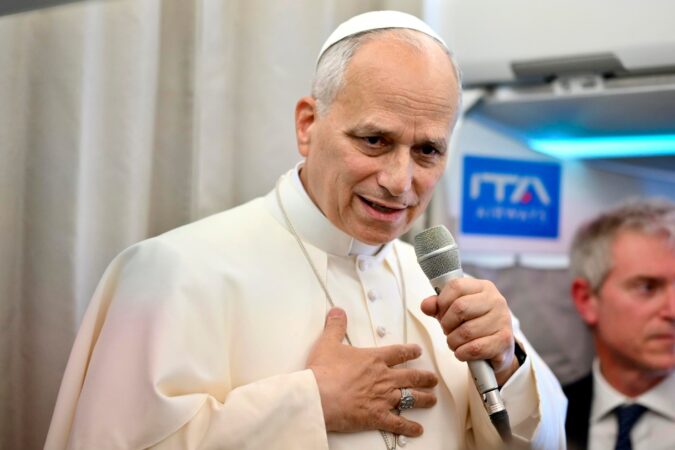
    ABOARD THE PAPAL PLANE — Pope Leo XIV on Tuesday shared for the first time what he was thinking when the votes started going his way during the conclave that elected him, saying he resigned himself to the inevitable and put the rest in God’s hands.

    “I took a deep breath. I said ‘Here we go Lord. You’re in charge and you lead the way,’” Leo told reporters during a wide-ranging airborne news conference coming home from his inaugural trip to Turkey and Lebanon.

    Leo fielded questions for a half-hour, responding easily in English, Spanish, and Italian about a variety of church and international news. He hinted at behind-the-scenes discussions about Hezbollah and Israel in Lebanon, urged dialogue rather than U.S. military threats on Venezuela and discussed his hoped-for future travels in Africa and South America, among other topics.

    But it was his remarks about the conclave and his papal learning curve that shed new light on Leo the man and what makes him tick. His responses, after seeming timid with the media early in his pontificate, showed he is much more comfortable now, is paying close attention to what is being reported about him, and that he has a good sense of humor about it.

    Leo was asked what he was thinking when he saw a huge crowd of people at one of his events in Lebanon, where it seemed as if the size had taken him by surprise. Leo suggested that wasn’t necessarily the case.

    “My face is very expressive but I’m oftentimes amused by how the journalists interpret my face,” he said. “It’s interesting. Sometimes I get really great ideas from all of you because you think you can read my mind or my face.”

    “You’re not always correct,” he added, to laughs.

    A spirituality that leaves everything up to God

    More instructive to understanding what he’s thinking, Leo said, would be to read up about his spirituality. Beyond St. Augustine, the fifth-century theologian who inspired his religious order and is Leo’s most-frequently cited church father, Leo recommended a book The Practice of the Presence of God, by a 17th-century Carmelite friar, Brother Lawrence.

    “It describes, if you will, a type of prayer and spirituality where one simply gives his life to the Lord and allows the Lord to lead. If you want to know something about me, that’s been my spirituality for many years,” he said.

    “In midst of great challenges — living in Peru during years of terrorism, being called to service in places where I never thought I’d be called to serve — I trust in God,” he said.

    That held true in the May conclave, he said, when the former Cardinal Robert Prevost was elected in a remarkably fast four ballots on the second day of voting. According to cardinals who participated, it was clear already by the third ballot that morning that the votes were going his way and that Prevost would be elected history’s first American pope.

    “I resigned myself to the fact when I saw how things were going and I said ‘This could be a reality,’” Leo said.

    Speaking to a reporter who is about to retire, Leo said he had had different plans for his future.

    “Just a year or two ago, I too thought about retiring some day,” he said. “You’ve received that gift apparently. Some of us will continue to work.”

    In Lebanon, Leo had a taste of what it’s like to be a pope on the road, and he said the enthusiasm of young Catholics was “awe-inspiring.”

    “I think to myself, ‘These people are here because they want to see the pope.’ But I say to myself, ‘They’re here because they want to see Jesus Christ and they want to see a messenger of peace,’” he said. “Just to listen to their enthusiasm and to hear their response to that message is something that I think is — that enthusiasm — is awe-inspiring.”

    “I just hope I never get tired of appreciating everything that all these young people are showing,” he said.

    On pressing international issues

    • Leo urged the United States to pursue dialogue and even exert economic pressure on Venezuela’s leaders to achieve its goals, rather than threats of military action. “The voices coming from the United States change, with a certain frequency at times,” he said. “I believe it’s better to look for ways of dialogue, perhaps pressure — including economic pressure — but looking for other ways to change, if that’s what the United States wants to do.”
    • Leo said he hopes to make his second trip as pope to Africa next year, visiting several countries but especially Algeria because of its important role in Christian-Muslim relations and its significance to St. Augustine, who inspired his religious order.
    • Leo also said he hoped to visit three countries in Latin America in either 2026 or 2027: Argentina, Uruguay and Peru, where he lived for two decades as a missionary. Argentina especially has been waiting for a papal visit after Pope Francis never went home after his 2013 election.
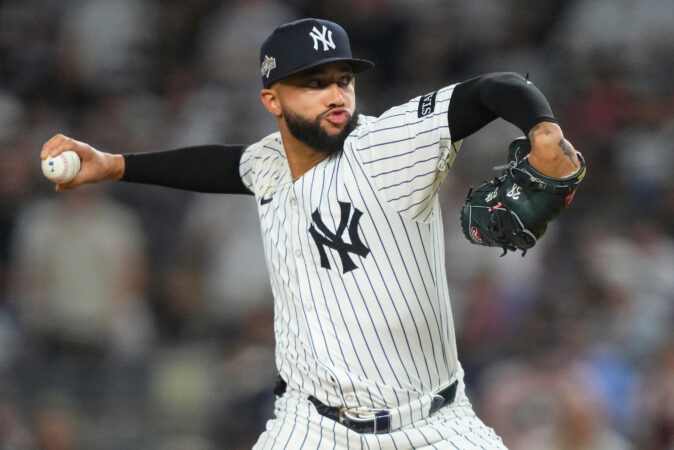
  • Source: Mets agree to contract with free agent reliever Devin Williams

    Source: Mets agree to contract with free agent reliever Devin Williams

    NEW YORK — Free agent reliever Devin Williams has agreed to a contract with the New York Mets, a person familiar with the negotiations told The Associated Press on Monday night.

    The person spoke to the AP on condition of anonymity because the deal was pending a physical and had not been announced.

    Multiple media reports indicated the sides agreed to a three-year contract.

    Williams spent last season across town with the New York Yankees, going 4-6 with a career-worst 4.79 ERA and 18 saves in 22 chances. He lost the closer’s job, regained it and then lost it again before finishing the year with four scoreless outings during the American League playoffs.

    The 31-year-old right-hander is a two-time All-Star who twice won the Trevor Hoffman NL Reliever of the Year Award with the Milwaukee Brewers while Mets president of baseball operations David Stearns was running that team. Williams also was voted the 2020 NL Rookie of the Year.

    Milwaukee traded Williams to the Yankees for pitcher Nestor Cortes and infielder Caleb Durbin last December.

    With the Mets, Williams could replace free agent closer Edwin Díaz or complement him in a rebuilt bullpen.

    Williams was pitching for the Brewers when he gave up a go-ahead homer to Mets slugger Pete Alonso in the deciding Game 3 of their 2024 NL wild-card series. The three-run shot put New York ahead in the ninth inning, and the Mets won the series.

    Known for a changeup so deceptive it’s called The Airbender, Williams struck out 90 batters and walked 25 in 62 innings over 67 appearances during his lone season in pinstripes. He made $8.6 million in 2025.

    After the Yankees were eliminated from the postseason, Williams said he was open to re-signing with the team.

    “At first it was a challenge, but I’ve grown to love being here,” the reliever said in October following a 5-2 loss to Toronto in Game 4 of their AL Division Series. “I love this city. I love taking the train to the field every day. Yeah, I really enjoyed my experience here.”

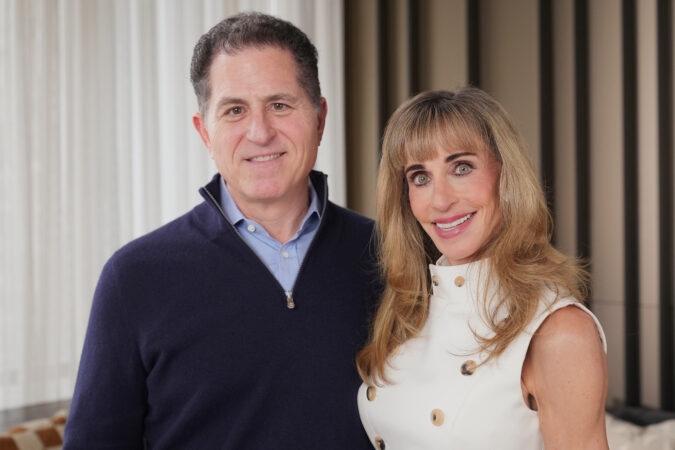
  • Michael and Susan Dell donate $6.25 billion to encourage families to claim ‘Trump Accounts’

    Michael and Susan Dell donate $6.25 billion to encourage families to claim ‘Trump Accounts’

    NEW YORK — Billionaires Michael and Susan Dell pledged $6.25 billion Tuesday to provide 25 million American children 10 and under an incentive to claim the new investment accounts for children created as part of President Donald Trump’s tax and spending legislation.

    The historic gift has little precedent, with few single charitable commitments in the last 25 years exceeding $1 billion. Announced on GivingTuesday, the Dells believe it’s the largest single private commitment made to U.S. children.

    Its structure is also unusual. Essentially, it builds on the “Trump Accounts” program, where the U.S. Department of the Treasury will deposit $1,000 into investment accounts it sets up for American children born between Jan. 1, 2025, and Dec. 31, 2028. The Dells’ gift will use the “Trump Accounts” infrastructure to give $250 to each qualified child under 11.

    “We believe that if every child can see a future worth saving for, this program will build something far greater than an account. It will build hope and opportunity and prosperity for generations to come,” said Michael Dell, the founder and CEO of Dell Technologies whose estimated net worth is $148 billion, according to Forbes.

    Though the “Trump Accounts” became law as part of the president’s signature legislation in July, the Dells say the accounts will not launch until July 4, 2026. Michael Dell said they wanted to mark the 250th anniversary of U.S. independence.

    “We want these kids to know that not only do their families care, but their communities care, their government, their country cares about them,” Susan Dell told the Associated Press.

    Under the new law, “Trump Accounts” are available to any American child under 18 with a Social Security number. Account contributions must be invested in an index fund that tracks the overall stock market. When the children turn 18, they can withdraw the funds to put toward their education, to buy a home or to start a business.

    The Dells will put money into the accounts of children 10 and younger who live in zip codes with a median family income of $150,000 or less and who won’t get the $1,000 seed money from the Treasury. Because federal law allows outside donors to target gifts by geography, the Dells said using zip codes was “was the clearest way to ensure the contribution reaches the greatest number of children who would benefit most.”

    The Dells hope their gift will encourage families to claim the accounts and deposit more money into it, even small amounts, so it will grow over time along with the stock market.

    There is a political benefit for Trump and fellow Republicans. The accounts will become available in the midst of a midterm election, providing money to millions of voters — and a campaign talking point to GOP candidates — at a critical time politically. The $1,000 deposits are slated to end just after the 2028 presidential election.

    At the White House on Tuesday, Trump praised the Dells saying their gift was, “truly one of the most generous acts in the history of our country.”

    Trump said many companies and many of his friends would also be donating, adding “I’ll be doing it, too.”

    Brad Gerstner, a venture capitalist, who championed this legislation, said the accounts will give all children renewed hope in the American dream.

    “It’s hard to give effective dollars away at scale, particularly to the country’s neediest kids in a way that you have confidence that those dollars are going to compound with the upside of the U.S. economy,” said Gerstner, who is also the founder of Invest America Charitable Foundation, which is supporting the Treasury in launching the accounts.

    “Fundamentally, we need to include everybody in the upside of the American experiment. Otherwise, it won’t last. And so, at its core, we think it can re-energize people’s belief in free market, capitalist democracy,”″ Gerstner said of the accounts.

    About 58% of U.S. households held stocks or bonds in 2022, according to the U.S. Securities and Exchange Commission, though the wealthiest 1% owned almost half the value of stocks in that same year and the bottom 50% owned about 1% of stocks.

    In 2024, about 13% of children and young people in the U.S. lived in poverty, according to the Annie E. Casey Foundation, and experts link the high child poverty rates to the lack of social supports for new parents, like paid parental leave.

    While the funds in the Trump Accounts may help young adults whose families or employers can contribute to them over time, they won’t immediately help to diminish childhood poverty. Cuts to Medicaid, food stamps and childchildcare were also included in the spending package are likely to reduce the support children from low-income families receive.

    Ray Boshara, senior policy adviser with both the Aspen Institute and Washington University in St. Louis, said he is excited about the idea that the Trump Accounts will be able to receive contributions from the business, philanthropic and governmental sectors.

    “We would like to see this idea continue and get better over time, just like any big policy,’ said Boshara, who co-edited the book The Future of Building Wealth. “The ACA, Social Security — they start off fairly flawed, but get much better and more progressive and inclusive over time. And that’s how we think about Trump Accounts. It’s a down payment on a big idea that deserves to be improved and there’s bipartisan interest in improving them.”

    Through the Michael & Susan Dell Foundation, the Dell’s have reported giving $2.9 billion since 1999, with a large focus on education.

    Michael Dell said they had not initially envisioned committing so much to boost the child investment accounts, but Susan Dell said that changed over time.

    “We’re thrilled to be spearheading this in the philanthropy sector and are so excited because we know that more people are going to jump on board because really, we can’t think of a better idea and better way to help America’s children,” she said.

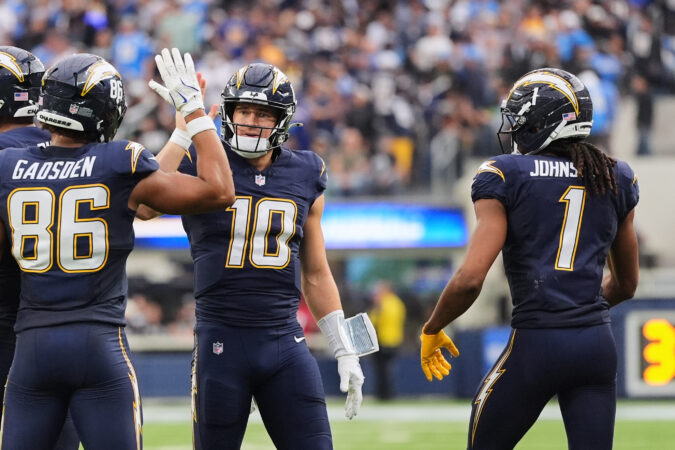
  • Chargers QB Justin Herbert has hand surgery; status for Eagles game to be determined

    Chargers QB Justin Herbert has hand surgery; status for Eagles game to be determined

    EL SEGUNDO, Calif. — Los Angeles Chargers quarterback Justin Herbert’s availability to play against the Eagles will be determined later this week after he had surgery Monday on his non-throwing hand.

    Herbert is day to day, the team said in a statement, after he broke a bone in his left hand in the first quarter of a 31-14 win against the Las Vegas Raiders on Sunday, playing the last three quarters in a cast and wearing a glove. He was 15 of 20 for 151 yards with two touchdowns and one interception.

    Herbert has completed 66.9% of his passes for 2,842 yards and 21 touchdowns against 10 interceptions, and he is second on the team with 353 yards rushing. He has also taken the third-most sacks in the NFL (38) and is on pace to absorb the most hits in his six seasons with the Chargers.

    Coach Jim Harbaugh said earlier Monday afternoon that backup Trey Lance would receive more snaps in practice to prepare for situations when the offense operates under center, such as at the goal line and in short yardage. The Chargers had to work exclusively out of the shotgun and pistol after Herbert was hurt, though he did take a handful of snaps from under center on the sideline before returning to the game.

    “Justin, he’s one of those quarterbacks that takes all the reps. He’s a machine like that, and we’ve got to make sure that Trey’s getting more of those goal-line reps, those situations under center,” Harbaugh said.

    The Chargers (8-4), who host the Eagles on Monday night, hold the first wild-card spot in the AFC and are two games behind the Denver Broncos for first in the AFC West. The Chargers defeated the Broncos, 23-20, on Sept. 21 and will travel to Denver to close out the regular season on Jan. 4.

  • Why Cyber Monday could break spending records despite economic uncertainty

    Why Cyber Monday could break spending records despite economic uncertainty

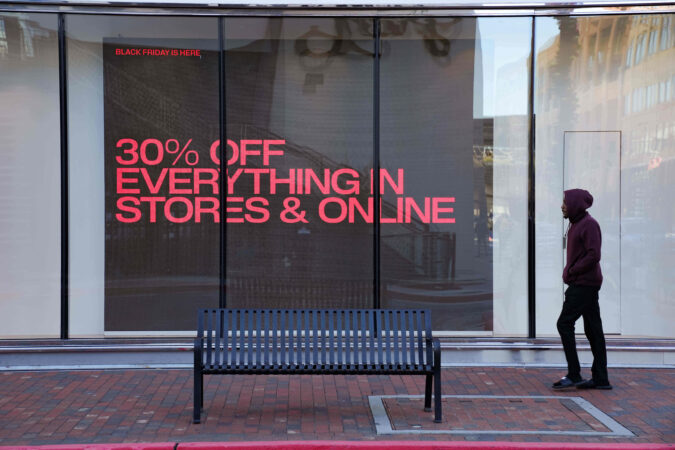
    NEW YORK — After four days of deal-fueled spending sprees that kicked off on Thanksgiving, shoppers shifted their focus on Cyber Monday, which is again expected to be the biggest sales day of the year for online retailers.

    Walmart was promoting up to 50% off on fashion on its website among some of the deals, while online juggernaut Amazon was hoping to ply customers with discounts of up to 55%.

    It’s no secret that buying things online is now a staple of many people’s everyday routines. And year after year, those purchases mount during the gift-giving holiday rush. Experts expect consumers to drive record Cyber Monday spending this year, despite wider economic uncertainty.

    Adobe Analytics estimated that U.S. shoppers will spend $14.2 billion online Monday, or 6.3% more than in 2024. Spending was expected to peak between the hours of 8 and 10 p.m. local time, when Adobe expected $16 million to pass through online shopping carts every minute nationwide.

    U.S. consumers already spent $11.8 billion online for Black Friday, $6.4 billion on Thanksgiving Day, and another $11.8 billion over the weekend — exceeding Adobe’s forecasts. Purchases made across Cyber Week — the five major shopping days between Thanksgiving and Cyber Monday — provides a strong indication of how much shoppers are willing to spend for the holidays.

    “Cyber Week is off to a strong start,” Vivek Pandya, lead analyst at Adobe Digital Insights, said. “Discounts are set to remain elevated through Cyber Monday, which we expect will remain the biggest online shopping day of the season and year.”

    Pandya said he will be analyzing Adobe data capturing Cyber Monday sales to see if some of the spending momentum dissipated after a strong weekend.

    Deals on electronics and apparel were expected to peak Monday at 30% and 26% off average listed prices, per Adobe’s latest estimates. But other categories will still continue to see deep discounts — including toys, which Adobe expects to reach 27% off listed prices.

    Meanwhile, software company Salesforce — which tracks digital spending from a range of retailers, including grocers — estimated Cyber Monday’s online sales will total $13.4 billion in the U.S. and $53.7 billion globally.

    While the amount of money going into online shopping carts was expected to reach new heights Monday, rising retail prices also may contribute to any record sales figures that materialize. Consumers may be buying fewer total items. Experts say tighter budgets are causing many to shop with more precision than in years past — such as focusing on a few “big ticket” purchases, for example, and spreading out what they buy over days of promotions in hopes of getting the most bang for their buck.

    Businesses and households have watched anxiously for financial impacts from U.S. President Donald Trump’s tariffs on foreign imports. Workers in both the public and private sectors are also struggling with anxieties over job security amid both corporate layoffs and the aftereffects of the 43-day government shutdown.

    For the November-December holiday season overall, the National Retail Federation estimates that U.S. shoppers will spend more than $1 trillion for the first time this year. But the rate of growth is slowing — with an anticipated increase of 3.7% to 4.2% year over year, compared with 4.3% during last year’s holiday season.

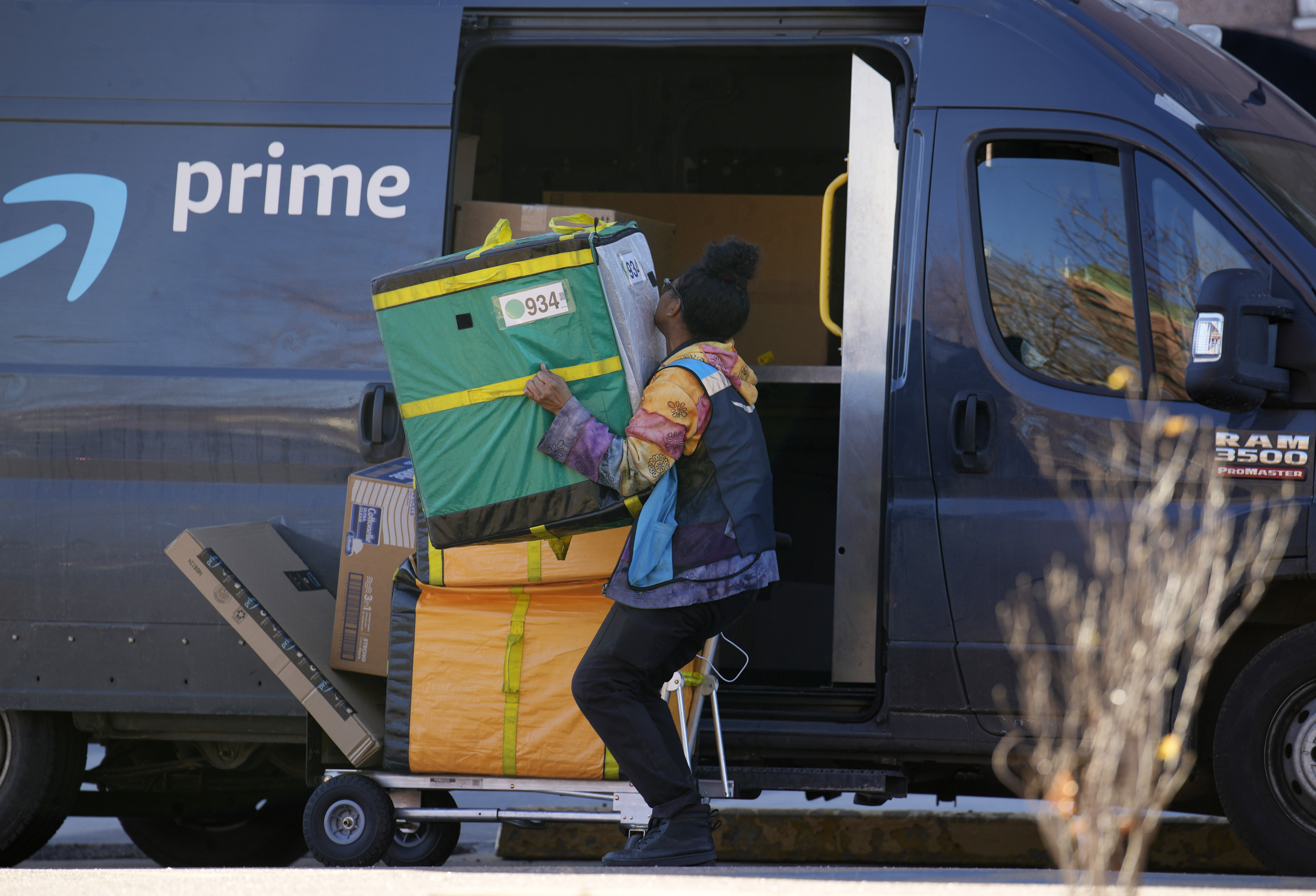
    An Amazon Prime delivery person lifts packages while making a stop on Nov. 28, 2023, in Denver.

    At the same time, credit card debt and delinquencies on other short-term loans have been rising. More and more shoppers are turning to “buy now, pay later” plans, which allow them to delay payments on holiday decor, gifts, and other items.

    Buy now, pay later loans are expected to drive $20.2 billion in online spending this holiday season, according to Adobe, up 11% from last year. The firm predicted that buy now, pay later loans would pass a new $1 billion milestone on Cyber Monday, the vast majority involving purchases made on mobile devices.

    Overall, mobile devices have become the dominant shopping platform consumers are turning to for the holidays. Adobe expects smartphones, wearable tech, and other handheld electronics to account for 58% of online spending this season.

    Five years ago, a majority of online purchases were made on desktops.

    Shopping services powered by artificial intelligence are also expected to play a role in what consumers choose to buy. For Black Friday, Salesforce estimated that AI assistants and digital agents contributed to $14.2 billion of the total $79 billion it said was spent online worldwide.

    Across the holiday season, “hot sellers” will include gaming consoles such as the Nintendo Switch 2 and toys-turned-fashion statements like Labubu Dolls, Adobe said. The analytics company anticipates the newest editions of popular consumer electronics — including the iPhone 17, Google Pixel 10, and Samsung Galaxy S25 — will also see high demand.

    To many, Cyber Monday is billed as the “last call” to take advantage of the deepest discounts in the days following Thanksgiving. But its reach has grown over the years.

    Cyber Monday is two decades old now, dating back to when the National Retail Federation first coined the term in 2005. Today, sales continue to bubble up throughout the week — riding on the hype that the industry has built to fuel consumer spending.

  • Starbucks to pay about $35M to NYC workers to settle claims it violated labor law

    Starbucks to pay about $35M to NYC workers to settle claims it violated labor law

    NEW YORK — Starbucks will pay about $35 million to more than 15,000 New York City workers to settle claims it denied them stable schedules and arbitrarily cut their hours, city officials announced Monday.

    The company will also pay $3.4 million in civil penalties under the agreement with the city’s Department of Consumer and Worker Protection. It also agrees to comply with the city’s Fair Workweek law going forward.

    A company spokesperson said Starbucks is committed to operating responsibly and in compliance with all applicable local laws and regulations in every market where it does business, but also noted the complexities of the city’s law.

    “This [law] is notoriously challenging to manage and this isn’t just a Starbucks issue, nearly every retailer in the city faces these roadblocks,” spokesperson Jaci Anderson said.

    Most of the affected employees who held hourly positions will receive $50 for each week worked from July 2021 through July 2024, the department said. Workers who experienced a violation after that may be eligible for compensation by filing a complaint with the department.

    The settlement also guarantees employees laid off during recent store closings in the city will get the chance for reinstatement at other company locations.

    The city began investigating in 2022 after receiving dozens of worker complaints against several Starbucks locations, and eventually expanded its investigation to the hundreds of stores in the city. The probe found most Starbucks employees never got regular schedules and the company routinely reduced employees’ hours by more than 15%, making it difficult for staffers to know their regular weekly earnings and plan other commitments, such as childcare, education, or other jobs.

    The company also routinely denied workers the chance to pick up extra shifts, leaving them involuntarily in part-time status, according to the city.

    The agreement with New York comes as Starbucks’ union continues a nationwide strike at dozens of locations that began last month, including at some Philadelphia stores. The number of affected stores and the strike’s impact remain in dispute by the two sides.

  • Gangs launch large-scale attack in Haiti’s central region as hundreds flee gunfire, burning homes

    Gangs launch large-scale attack in Haiti’s central region as hundreds flee gunfire, burning homes

    SAINT-MARC, Haiti — Heavily armed gangs attacked Haiti’s central region over the weekend, killing men, women, and children as they set fire to homes and forced survivors to flee into the darkness.

    Police made emergency calls for backup, asserting that 50% of the Artibonite region had fallen under gang control after the large-scale attacks targeting towns including Bercy and Pont-Sondé.

    “The population cannot live, cannot work, cannot move,” one of Haiti’s police unions, SPNH-17, said Sunday on X. “Losing the country’s 2 largest departments — West and Artibonite — is the greatest security failure in modern Haitian history.”

    The bulk of Haiti’s police force and the Kenyan officers leading a U.N.-backed mission to help repel gangs are in the capital, Port-au-Prince, which itself is largely held by gangs.

    Guerby Simeus, a Pont-Sondé official, told the Associated Press by phone on Monday that he had confirmed nearly a dozen deaths, including a mother and her child and a local government employee.

    “The gangs are still in Pont-Sondé,” he said, noting that no additional police had arrived.

    A run for the coast

    Many survivors fled to the coastal town of Saint-Marc, where hundreds of angry people on Monday demanded that the government take action against gangs who have repeatedly attacked Haiti’s central region.

    “Give me the guns! I’m going to fight the gangs!” said Réné Charles, who survived the attack. “We’ve got to stand up and fight!”

    The crowd tried to break into the mayor’s office, with one unidentified man telling the AP that they weren’t going to rely on the government any longer: “We’re going to take justice into our own hands!”

    Charlesma Jean Marcos, a political activist, said the gang announced last week that they were going to invade the area, and that they alerted authorities to no avail.

    “For now, the only people really fighting (the gang) is the self-defense group,” he said. “A country cannot run like this.”

    Marcos urged all the survivors sleeping on the street and in public parks to instead sleep inside police stations and government offices until the government can take back Artibonite.

    “A lot of people are going to be hungry,” he warned. “We can support you today, we can support you tomorrow, but we won’t be able to support you forever.”

    More than half of Haiti’s population is already experiencing crisis levels of hunger or worse, with gangs blocking main roads and the ongoing violence displacing a record 1.4 million people.

    A region overrun with gangs

    The attacks in central Haiti began late Friday and late Saturday, with gang members broadcasting them live on social media.

    The attacks were blamed on the Gran Grif gang, which operates in the area and was responsible for an attack on Pont-Sondé in October 2024 that killed at least 100 people, one of the biggest massacres in Haiti’s recent history.

    “I heard heavy shooting, so much shooting,” one unidentified man recalled to the Associated Press and criticized the lack of police, saying he was stuck inside his house all weekend until Monday morning. “Why don’t they send any drones to Artibonite? They just use the drones in Port-au-Prince. I feel this gang is special. They don’t want to destroy this gang.”

    A spokesperson for Haiti’s National Police did not immediately return a message seeking comment.

    Gran Grif is considered one of Haiti’s cruelest gangs. Its leader, Luckson Elan, recently was sanctioned by the U.N. Security Council and the U.S. government. Also sanctioned was Prophane Victor, a former legislator whom the U.N. accused of arming young men in the Artibonite region.

    The U.N. has said killings have risen dramatically in Haiti’s Artibonite and Centre departments this year, with 1,303 victims reported from January to August, compared with 419 during the same period in 2024.

    “These assaults underscore the capacity of gangs to consolidate control across a corridor from the Centre to the Artibonite amid limited law enforcement presence and logistical constraints,” a recent U.N. report stated.

    Fritz Alphonse Jean, a member of Haiti’s transitional presidential council who was sanctioned by the U.S. last month and is seeking to oust the current prime minister, condemned the latest attacks.

    “Blood continues to flow, lives and property continues to be lost in front of a government incapable of addressing the population’s problems for more than a year,” he wrote on X, adding: “Stability???!”

  • New York backs 3 new casinos, including at Mets stadium and a golf course Trump once ran

    New York backs 3 new casinos, including at Mets stadium and a golf course Trump once ran

    NEW YORK — New York City is poised to get its first Vegas-style casinos, including one next to the home stadium of baseball’s New York Mets and another that could see a windfall for President Donald Trump.

    They were among three casino proposals approved for lucrative gambling licenses on Monday by a key state panel. No casinos will end up coming to Manhattan, however, as several other competing proposals were already scrapped, including one in the heart of Times Square.

    The state Gaming Commission is expected to formally issue the licenses before the end of the year, as the gambling revenues are already factored into the state budget. Democratic Gov. Kathy Hochul said the casinos promise to unlock billions of dollars in funding for the state’s transit system and create jobs; however, opponents have repeatedly warned that easy access to casinos will lead to increased gambling addiction.

    Bally’s plan to spend $4 billion building a casino at the Ferry Point golf course in the Bronx could mean millions of dollars for Trump. When the company purchased the city-owned golf course’s operating rights from the Trump Organization in 2023, it promised to pony up another $115 million if it won a casino license. Spokespersons for the Trump Organization did not immediately respond to an email seeking comment.

    In nearby Queens, billionaire New York Mets owner Steve Cohen has proposed building an $8.1 billion Hard Rock casino on a parking lot of Citi Field. The complex would include a performance venue, a hotel, and retail and shopping space.

    Resorts World, meanwhile, has proposed investing more than $5 billion to expand an existing slots parlor into a full casino at the Aqueduct Race Track, which is also in Queens near John F. Kennedy International Airport. It too would add hotel, dining, and entertainment options.

    Vicki Been, chairperson of New York Gaming Facility Location Board, said the panel believed New York City was “plenty strong” enough to sustain the three planned casinos, despite their close proximity. The region’s dense and relatively affluent population, combined with high tourism, makes it one of the country’s most robust gaming markets, the board said, adding that nearby residents are expected to form the core of repeat visitors, bolstered by travelers from the U.S. and abroad.

    Using conservative assumptions, the board’s consultants estimated the casinos would bring $7 billion in gambling revenues for the state from 2027 to 2036, plus $1.5 billion in licensing fees and nearly $6 billion in related local taxes. The plans include public safety investments and upgrades to public transit and roadways.

    However, the board cautioned that the casinos have “ambitious” timelines for opening. The expansion at Aqueduct Race Track aims to open some facilities by March, while the Citi Field and golf course sites plan for a 2030 opening.

    Anti-casino protesters, meanwhile, chanted “Shame on you! Shame on you!” as they were escorted out of the meeting in midtown Manhattan.

    Jack Hu, one of the group’s organizers, said casino operators view older adults and workers as merely “cash cows to milk for money.” He said the proposals will have a disproportionately negative impact in the city’s Asian American communities, which are largely concentrated in Queens.

    “They bus our seniors to casinos, and they give them meal and gambling vouchers in the hopes that they’ll stay long enough to lose their entire Social Security check,” Hu said after the meeting.

    The commission is authorized to license up to three casinos in the New York City area after voters approved a referendum back in 2013 opening the door to casino gambling statewide.

    Since then, four full casinos with table games have opened in New York, but all of them are located upstate, miles away from Manhattan. The state also has nine gambling halls offering slot machines and other electronic gambling machines, but no live table games.

    The closely watched competition for a New York City license began with a crowded field, with some eight proposals in the running as recently as September.

    But four of the high-profile plans failed to get the stamp of approval from local advisory boards, automatically knocking them out of contention.

    Among the most notable was a Jay-Z-backed plan to build a Caesars Palace in Times Square, as well as two other resorts proposed in central Manhattan.

    Then in October, MGM abruptly pulled out of the license sweepstakes, saying the “competitive and economic assumptions underpinning” their plans had changed. The Las Vegas casino giant had planned a major expansion of the Empire City Casino, a slots parlor located at the Yonkers Raceway north of Manhattan.

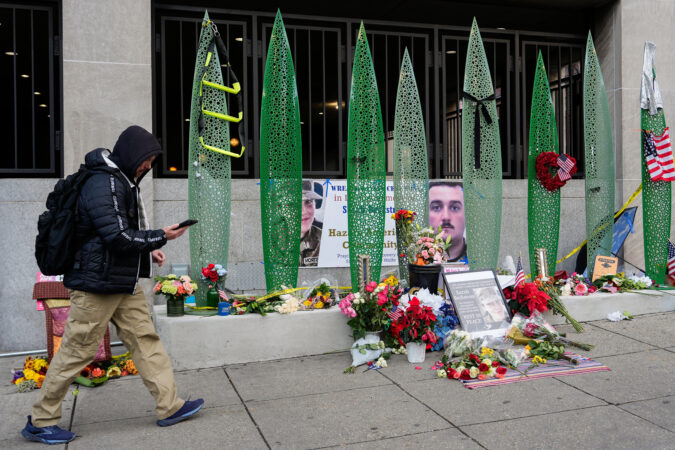
  • National Guard member shot in D.C. has shown positive signs, W. Va. governor says

    National Guard member shot in D.C. has shown positive signs, W. Va. governor says

    CHARLESTON, W.Va. — A West Virginia National Guard member who was shot last week in a brazen daytime attack in Washington, D.C., remains in serious condition but showed positive signs by giving a thumbs-up that he could hear a nurse’s question and wiggling his toes, Gov. Patrick Morrisey said Monday.

    Morrisey said the family of 24-year-old U.S. Air Force Staff Sgt. Andrew Wolfe has asked the public to pray for him. Another member of the West Virginia National Guard, U.S. Army Spc. Sarah Beckstrom, 20, died after the shooting.

    “Andrew is still fighting for his life,” Morrisey said. “Andrew needs prayers.”

    Morrisey said he could not yet share details of any funeral arrangements for Beckstrom and wants to respect her family’s wishes.

    Beckstrom and Wolfe were shot Wednesday just blocks from the White House while deployed as part of President Donald Trump’s crime-fighting plan that federalized D.C. police.

    Investigators are working to determine a motive. Rahmanullah Lakanwal, a 29-year-old Afghan national, is charged with one count of first-degree murder and two counts of assault in the shooting.

    Authorities said Lakanwal, who was shot in the confrontation, remained hospitalized and a court appearance has not yet been scheduled.

    The shooting prompted the Trump administration to halt all asylum decisions and pause issuing visas for people traveling on Afghan passports.

    After the shooting, Defense Secretary Pete Hegseth said Trump asked him to send 500 more National Guard members to Washington. Morrisey said he has not been asked to deploy additional troops from West Virginia.

    Overall, nearly 2,200 troops currently are assigned to the joint task force operating in the city, according to the government’s latest update. More than 300 West Virginia National Guard members were deployed in August. In mid-November, up to 170 of them volunteered to extend their deployment until the end of the year while the others returned to West Virginia.

    “Our sole focus right now is looking after the well-being of the 170 service members who are on the ground, focusing on the family, assuring that prayers are going out,” Morrisey said.

  • White House says admiral ordered follow-on strike on alleged drug boat, insists attack was lawful

    White House says admiral ordered follow-on strike on alleged drug boat, insists attack was lawful

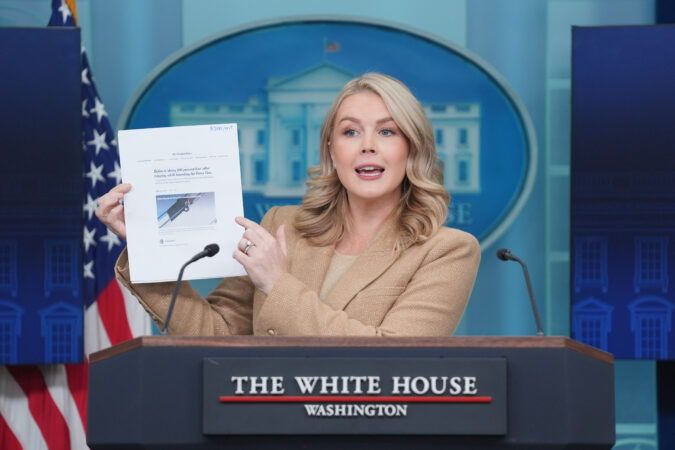
    WASHINGTON — The White House said Monday that a Navy admiral ordered a second strike on an alleged drug boat in the Caribbean Sea and insists that a September attack that has come under bipartisan scrutiny was lawful.

    White House press secretary Karoline Leavitt offered a justification for the Sept. 2 strike after lawmakers from both parties on Sunday announced support for congressional reviews of U.S. military strikes against vessels suspected of smuggling drugs in the Caribbean Sea and eastern Pacific Ocean, citing a published report that Defense Secretary Pete Hegseth issued a verbal order for a second strike that killed survivors on the boat in that incident.

    Leavitt in her comments to reporters on Monday did not dispute a Washington Post report that there were survivors after the initial strike in the incident. Her explanation came after President Donald Trump a day earlier said that he “wouldn’t have wanted that — not a second strike” when asked about the incident.

    “Secretary Hegseth authorized Admiral Bradley to conduct these kinetic strikes,” said Leavitt, referring to U.S. Navy Vice Admiral Frank Bradley, who at the time was the commander of Joint Special Operations Command. “Admiral Bradley worked well within his authority and the law, directing the engagement to ensure the boat was destroyed and the threat to the United States of America was eliminated.”

    The lawmakers said they did not know whether last week’s Post report was true, and some Republicans were skeptical. Still, they said the reports of attacking survivors of an initial missile strike posed serious legal concerns and merited further scrutiny.

    “This rises to the level of a war crime if it’s true,” said Sen. Tim Kaine (D., Va.).

    Rep. Mike Turner (R-Ohio), when asked about a follow-up strike aimed at people no longer able to fight, said Congress does not have information that happened. He noted that leaders of the Armed Services Committee in both the House and Senate have opened investigations.

    “Obviously, if that occurred, that would be very serious and I agree that that would be an illegal act,” Turner said.

    Trump on Sunday vigorously defended Hegseth.

    “Pete said he did not order the death of those two men,” Trump said. He added, “And I believe him.”

    Leavitt said Hegseth has spoken with members of Congress who may have expressed some concerns about the reports over the weekend.

    After the Post’s report, Hegseth said Friday on X that “fake news is delivering more fabricated, inflammatory, and derogatory reporting to discredit our incredible warriors fighting to protect the homeland.”

    “Our current operations in the Caribbean are lawful under both U.S. and international law, with all actions in compliance with the law of armed conflict—and approved by the best military and civilian lawyers, up and down the chain of command,” Hegseth wrote.

    Leavitt also confirmed that Trump later on Monday would be holding a meeting with his national security team to discuss the ongoing operations in the Caribbean Sea and potential next steps against Venezuela.

    The U.S. administration says the strikes in the Caribbean are aimed at drug cartels, some of which it claims are controlled by Venezuelan President Nicolás Maduro. Trump also is weighing whether to carry out strikes on the Venezuelan mainland.

    Trump on Sunday confirmed that he had recently spoken by phone with Maduro but declined to detail the conversation.

    The September strike was one in a series carried out by the U.S. military in the Caribbean Sea and eastern Pacific Ocean as Trump has ordered the buildup a fleet of warships near Venezuela, including the largest U.S. aircraft carrier.

    More than 80 people have been killed the strikes on small boats that the Trump administration alleges smuggle narcotics for drug cartels.