Category: Associated Press

  • Trump administration pauses five offshore wind projects on the East Coast

    Trump administration pauses five offshore wind projects on the East Coast

    WASHINGTON — The Trump administration said Monday it is pausing leases for five large-scale offshore wind projects under construction in the East Coast due to unspecified national security risks identified by the Pentagon.

    The pause is effective immediately and will give the Interior Department, which oversees offshore wind, time to work with the Defense Department and other agencies to assess the possible ways to mitigate any security risks posed by the projects, the administration said.

    “The prime duty of the United States government is to protect the American people,” Interior Secretary Doug Burgum said in a statement. “Today’s action addresses emerging national security risks, including the rapid evolution of the relevant adversary technologies, and the vulnerabilities created by large-scale offshore wind projects with proximity near our east coast population centers.”

    The administration said leases are paused for the Vineyard Wind project under construction in Massachusetts, Revolution Wind in Rhode Island and Connecticut, Coastal Virginia Offshore Wind, and two projects in New York: Sunrise Wind and Empire Wind.

    The Interior Department said unclassified reports from the U.S. government have long found that the movement of massive turbine blades and the highly reflective towers create radar interference called “clutter.” The clutter caused by offshore wind projects obscures legitimate moving targets and generates false targets in the vicinity of wind projects, the Interior Department said.

    The action comes two weeks after a federal judge struck down President Donald Trump’s executive order blocking wind energy projects, saying the effort to halt virtually all leasing of wind farms on federal lands and waters was “arbitrary and capricious” and violates U.S. law.

    Judge Patti Saris of the U.S. District Court for the District of Massachusetts vacated Trump’s Jan. 20 executive order blocking wind energy projects and declared it unlawful.

    Saris ruled in favor of a coalition of state attorneys general from 17 states and Washington, D.C., led by New York Attorney General Letitia James, that challenged Trump’s Day One order that paused leasing and permitting for wind energy projects.

    Trump has been hostile to renewable energy, particularly offshore wind, and prioritizes fossil fuels to produce electricity.

  • ‘60 Minutes’ pulled a story about Trump deportations from its lineup

    ‘60 Minutes’ pulled a story about Trump deportations from its lineup

    An internal CBS News battle over a “60 Minutes” story critical of the Trump administration has exploded publicly, with a correspondent charging it was kept off the air for political reasons and news chief Bari Weiss saying Monday the story did not “advance the ball.”

    Two hours before airtime Sunday, CBS announced that the story where correspondent Sharyn Alfonsi spoke to deportees who had been sent to El Salvador’s notorious CECOT prison, would not be a part of the show. Weiss, the Free Press founder named CBS News editor-in-chief in October, said it was her decision.

    The dispute puts one of journalism’s most respected brands — and a frequent target of President Donald Trump — back in the spotlight and amplifies questions about whether Weiss’ appointment was a signal that CBS News was headed in a more Trump-friendly direction.

    Alfonsi, in an email sent to fellow “60 Minutes” correspondents said the story was factually correct and had been cleared by CBS lawyers and its standards division. But the Trump administration had refused to comment for the story, and Weiss wanted a greater effort made to get their point of view.

    “In my view, pulling it now after every rigorous internal check has been met is not an editorial decision, it is a political one,” Alfonsi wrote in the email. She did not immediately respond to requests for comment from The Associated Press.

    Alfonsi said in the email that interviews were sought with or questions directed to — sometimes both — the White House, State Department and Department of Homeland Security.

    “Government silence is a statement, not a VETO,” Alfonsi wrote. “Their refusal to be interviewed is a tactical maneuver designed to kill the story. If the administration’s refusal to participate becomes a valid reason to spike a story, we have effectively handed them a ‘kill switch’ for any reporting they find inconvenient.”

    “Spike” is a journalist’s term for killing a story. But Weiss, in a statement, said that she looked forward to airing Alfonsi’s piece “when it’s ready.”

    Speaking Monday at the daily CBS News internal editorial call, Weiss was clearly angered by Alfonsi’s memo. A transcript of Weiss’ message was provided by CBS News.

    “The only newsroom I’m interested in running is one in which we are able to have contentious disagreements about the thorniest editorial matters with respect and, crucially, where we assume the best intent of our colleagues,” Weiss said. “Anything else is completely unacceptable.”

    She said that while Alfonsi’s story presented powerful testimony about torture at the CECOT prison, The New York Times and other outlets had already done similar work. “To run a story on this subject two months later, we need to do more,” she said. “And this is ‘60 Minutes.’ We need to be able to get the principals on the record and on camera.”

    It wasn’t clear whether Weiss’ involvement in seeking administration comment was sought. She reportedly helped the newscast arrange interviews with Jared Kushner and Steve Witkoff this past fall to discuss Trump’s Middle East peace efforts. Trump himself was interviewed by Norah O’Donnell on a “60 Minutes” telecast that aired on Nov. 2.

    Trump has been sharply critical of “60 Minutes.” He refused to grant the show an interview prior to last fall’s election, then sued the network over how it handled an interview with election opponent Kamala Harris. CBS’ parent Paramount Global agreed to settle the lawsuit by paying Trump $16 million this past summer. More recently, Trump angrily reacted to correspondent Lesley Stahl’s interview with Trump former ally turned critic Marjorie Taylor Greene.

    “60 Minutes” was notably tough on Trump during the first months of his second term, particularly in stories done by correspondent Scott Pelley. In accepting an award from USC Annenberg earlier this month for his journalism, Pelley noted that the stories were aired last spring “with an absolute minimum of interference.”

    Pelley said that people at “60 Minutes” were concerned about what new ownership installed at Paramount this summer would mean for the broadcast. “It’s early yet, but what I can tell you is we are doing the same kinds of stories with the same kind of rigor, and we have experienced no corporate interference of any kind,” Pelley said then, according to deadline.com.

  • Turning Point showcases discord that Republicans like Vance will need to navigate

    Turning Point showcases discord that Republicans like Vance will need to navigate

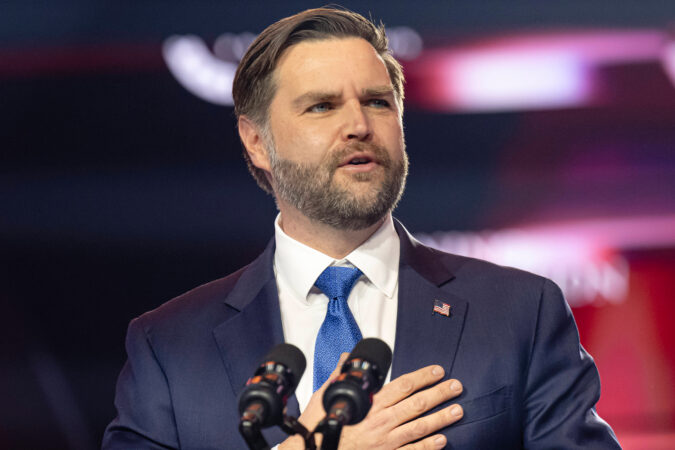
    PHOENIX — Vice President JD Vance said Sunday the conservative movement should be open to everyone as long as they “love America,” declining to condemn a streak of antisemitism that has divided the Republican Party and roiled the opening days of Turning Point USA’s annual convention.

    After a long weekend of debates about whether the movement should exclude figures such as bigoted podcaster Nick Fuentes, Vance came down firmly against “purity tests.”

    “I didn’t bring a list of conservatives to denounce or to deplatform,” Vance said during the convention’s closing speech.

    Turning Point leader Erika Kirk, who took the helm after the assassination of her husband, Charlie Kirk, has endorsed Vance as a potential successor to President Donald Trump, a helpful nod from an influential group with an army of volunteers.

    But the tension on display at the four-day gathering foreshadowed the treacherous political waters that Vance, or anyone else who seeks the next Republican presidential nomination, will need to navigate in the coming years. Top voices in the “Make America Great Again” movement are jockeying for influence as Republicans begin considering a future without Trump, and there is no clear path to holding his coalition together.

    Defining a post-Trump GOP

    The Republican Party’s identity has been intertwined with Trump’s for a decade, but he’s constitutionally ineligible to run for reelection despite his musings about serving a third term. Tucker Carlson said people are wondering, “Who gets the machinery when the president exits the scene?”

    So far, it looks like settling that question will come with a lot of fighting among conservatives. The Turning Point conference featured arguments about antisemitism, Israel, and environmental regulations, not to mention rivalries between leading commentators.

    Ben Shapiro, co-founder of the conservative media outlet Daily Wire, used his speech on the conference’s opening night to denounce “charlatans who claim to speak in the name of principle but actually traffic in conspiracism and dishonesty.”

    “These people are frauds and they are grifters and they do not deserve your time,” Shapiro said. He specifically called out Carlson for hosting Fuentes for a friendly interview on his podcast.

    Carlson brushed off the criticism when he took the stage barely an hour later, and he said the idea of a Republican “civil war” was “totally fake.”

    “There are people who are mad at JD Vance, and they’re stirring up a lot of this in order to make sure he doesn’t get the nomination,” he said. Carlson described Vance as “the one person” who subscribes to the “core idea of the Trump coalition,” which Carlson said was “America first.”

    Turning Point spokesperson Andrew Kolvet framed the discord as a healthy debate about the future of the movement, an uncomfortable but necessary process of finding consensus.

    “We’re not hive-minded commies,” he wrote on social media. “Let it play out.”

    If you love America, you’re welcome, Vance says

    Vance acknowledged the controversies that dominated the Turning Point conference, but he did not define any boundaries for the conservative movement besides patriotism.

    “We don’t care if you’re white or black, rich or poor, young or old, rural or urban, controversial or a little bit boring, or somewhere in between,” he said.

    Vance didn’t name anyone, but his comments came in the midst of an increasingly contentious debate over whether the right should give a platform to commentators espousing antisemitic views, particularly Fuentes, whose followers see themselves as working to preserve America’s white, Christian identity. Fuentes has a growing audience, as does top-rated podcaster Candace Owens, who routinely shares antisemitic conspiracy theories.

    “We have far more important work to do than canceling each other,” he said.

    Vance ticked off what he said were the accomplishments of the administration as it approaches the one-year mark, noting its efforts at the border and on the economy. He emphasized efforts to end diversity, equity, and inclusion policies, drawing applause by saying they had been relegated to the “dustbin of history.”

    “In the United States of America, you don’t have to apologize for being white anymore,” he said.

    Vance also said the U.S. “always will be a Christian nation,” adding that “Christianity is America’s creed, the shared moral language from the Revolution to the Civil War and beyond.”

    Those comments resonated with Isaiah White-Diller, an 18 year-old from Yuma, Ariz., who said he would support Vance if he runs for president.

    “I have my right to be Christian here, I have my right to say whatever I want,” White-Diller said.

    Turning Point backs Vance for president

    Vance hasn’t disclosed his future plans, but Erika Kirk said Thursday that Turning Point wanted Vance “elected for 48 in the most resounding way possible.” The next president will be the 48th in U.S. history.

    Turning Point is a major force on the right, with a nationwide volunteer network that can be especially helpful in early primary states, when candidates rely on grassroots energy to build momentum. In a surprise appearance, rapper Nicki Minaj spoke effusively about Trump and Vance.

    Vance was close to Charlie Kirk, and they supported each other over the years. After Kirk’s assassination on a college campus in Utah, the vice president flew out on Air Force Two to collect Kirk’s remains and bring them home to Arizona. The vice president helped uniformed service members carry the casket to the plane.

    Emily Meck, 18, from Pine City, N.Y., said she appreciated Vance making space for a wide variety of views.

    “We are freethinkers, we’re going to have these disagreements, we’re going to have our own thoughts,” Meck said.

    Trump has spoken highly of both Vance and Secretary of State Marco Rubio as potential successors, even suggesting they could form a future Republican ticket. Rubio has said he would support Vance.

    Asked in August whether Vance was the “heir apparent,” Trump said “most likely.”

    “It’s too early, obviously, to talk about it, but certainly he’s doing a great job, and he would be probably favorite at this point,” he said.

  • Power restored to most in San Francisco after massive outage

    Power restored to most in San Francisco after massive outage

    Power was restored Sunday morning to the bulk of the 130,000 homes and businesses in San Francisco impacted by a massive outage a day earlier that caused major disruptions in the city.

    The Pacific Gas and Electric Co.’s outage map showed more than 16,000 customers remained without power as of 12 p.m. PST. PG&E said earlier its crews were working Sunday to restore electricity in several neighborhoods and small areas of downtown San Francisco following Saturday’s outage.

    PG&E said it could not provide a precise timeframe for when the power would be fully restored.

    “The damage from the fire in our substation was significant and extensive, and the repairs and safe restoration will be complex,” the utility said, referring to the substation at 8th and Mission streets. That fire has been blamed for some of the blackouts. The outage remains under investigation.

    PG&E said it has mobilized additional engineers and electricians to help with restoration efforts.

    “This is a very complex work plan and will require the highest amount of safety focus to ensure safe work actions,” PG&E said. No injuries have been reported.

    The outage, which occurred shortly after 1 p.m. on Saturday, left a large swath of the northern part of the city without power that began to grow in size. At its peak, the outage represented roughly one-third of the utility company’s customers in the city.

    At about 4 p.m. on Saturday, PG&E posted on X that it had stabilized the grid and no further outages were expected.

    Social media posts and local media reported mass closures of restaurants and shops and darkened street lights and Christmas decorations on Saturday, one of the busiest shopping days of the year.

    The San Francisco Department of Emergency Management said on X there were “significant transit disruptions” happening citywide and urged residents to avoid nonessential travel and treat down traffic signals as four-way stops. Waymo, the operator of driverless ride-hailing vehicles, suspended its services. At least one video posted on social media appeared to show a Waymo vehicle stopped in the middle of an intersection.

  • Norman Podhoretz, 95, contentious and influential neo-conservative

    Norman Podhoretz, 95, contentious and influential neo-conservative

    NEW YORK — Norman Podhoretz, the boastful, hard-line editor and author whose books, essays, and stewardship of Commentary magazine marked a political and deeply personal break from the left and made him a leader of the neoconservative movement, has died. He was 95.

    Mr. Podhoretz died “peacefully and without pain” on Dec. 16, his son John Podhoretz confirmed in a statement on Commentary’s website. His cause of death was not immediately released.

    “He was a man of great wit and a man of deep wisdom and he lived an astonishing and uniquely American life,” John Podhoretz said.

    Norman Podhoretz was among the last of the so-called “New York intellectuals” of the mid-20th century, a famously contentious circle that at various times included Norman Mailer, Hannah Arendt, Susan Sontag, and Lionel Trilling. As a young man, Mr. Podhoretz longed to join them. In middle age, he departed. Like Irving Kristol, Gertrude Himmelfarb, and other founding neoconservatives, Podhoretz began turning from the liberal politics he shared with so many peers and helped reshape the national dialogue in the 1960s and after.

    The son of Jewish immigrants, Mr. Podhoretz was 30 when he was named editor-in-chief of Commentary in 1960, and years later transformed the once-liberal magazine into an essential forum for conservatives. Two future U.S. ambassadors to the United Nations, Daniel Patrick Moynihan and Jeane Kirkpatrick, received their appointments in part because of essays they published in Commentary that called for a more assertive foreign policy.

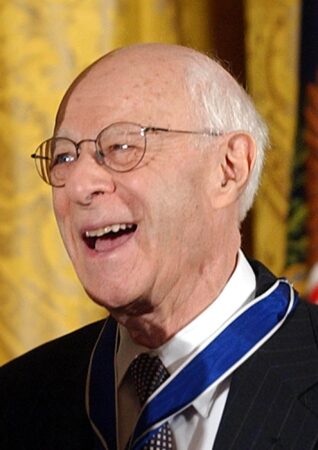
    Despised by former allies, Mr. Podhoretz found new friends all the way to the White House, from President Ronald Reagan, a reader of Commentary; to President George W. Bush, who in 2004 awarded Mr. Podhoretz the Presidential Medal of Freedom, the nation’s highest civilian honor, and praised him as a “man of “fierce intellect” who never “tailored his opinion to please others.”

    Mr. Podhoretz, who stepped down as editor-in-chief in 1995, had long welcomed argument. The titles of his books were often direct and provocative: Making It, The Present Danger, World War IV, Ex-Friends: Falling Out with Allen Ginsberg, Lionel and Diana Trilling, Lillian Hellman, Hannah Arendt, and Norman Mailer. He pressed for confrontation everywhere from El Salvador to Iran, and even disparaged Reagan for talking to Soviet leaders, calling such actions “the Reagan road to detente.” For decades, he rejected criticism of Israel, once writing that “hostility toward Israel” is not only rooted in antisemitism but a betrayal of “the virtues and values of Western civilization.”

    Meanwhile, Mr. Podhoretz became a choice target for disparagement and creative license. New York Times reviewer Michiko Kakutani called World War IV an “illogical screed based on cherry-picked facts and blustering assertions.” Ginsberg, once a fellow student at Columbia University, would mock the heavy-set editor for having “a great ridiculous fat-bellied mind which he pats too often.” Joseph Heller used Mr. Podhoretz as the model for the crass Maxwell Lieberman in his novel Good as Gold. Woody Allen cited Podhoretz’s magazine in Annie Hall, joking that Commentary and the leftist Dissent had merged and renamed themselves Dysentery.

    Born to succeed

    Mr. Podhoretz never doubted he would be famous. Born and raised in a working-class neighborhood in Brooklyn, he would credit the adoration of his family with giving him a sense of destiny. By his own account, Mr. Podhoretz was “the smartest kid in the class,” brash and competitive, a natural striver who believed that “one of the longest journeys in the world is the journey from Brooklyn to Manhattan.”

    He would indeed arrive in the great borough, and beyond, thriving as an English major at Columbia University, from which he graduated in 1950, and receiving a master’s degree in England from Cambridge University. By his mid-20s, he was publishing reviews in all the best magazines, from the New Yorker to Partisan Review, and socializing with Mailer, Hellman, and others.

    He was named associate editor of Commentary in 1956, and given the top job four years later. Around the same time, he married the writer and editor Midge Decter, another future neoconservative, and remained with her until her death in 2022.

    In childhood, Norman Podhoretz’s world was so liberal that he later claimed he never met a Republican until high school. When Mr. Podhoretz took over Commentary, founded in 1945 by the American Jewish Committee, the magazine was a small, anti-Communist publication. Mr. Podhoretz’s initial goal was to move it to the left — he serialized Paul Goodman’s Growing Up Absurd, published articles advocating unilateral disarmament — and make it more intellectual, with James Baldwin, Alfred Kazin, and Irving Howe among the contributors. Subscriptions increased dramatically.

    But signs of the conservative future also appeared, and of his own confusion over a world in transition. He was a prominent critic of Ginsberg, Jack Kerouac, and other Beat writers, dismissing the upstart movement in 1958 as a “revolt of the spiritually underprivileged” and branding Kerouac a “know-nothing.” In a 1963 essay, Mr. Podhoretz admitted to being terrified of Black people as a child, agonized over “his own twisted feelings,” wondered whether he, or anyone, could change and concluded that “the wholesale merging of the two races is the most desirable alternative for everyone concerned.”

    Liberal no more

    Making It, released in 1967, was a final turning point. A blunt embrace of status seeking, the book was shunned and mocked by the audience Mr. Podhoretz cared about most: New York intellectuals. Mr. Podhoretz would look back on his early years and conclude that to advance in the world one had to make a “brutal bargain” with the upper classes, in part by acknowledging they were the upper classes. Friends urged him not to publish Making It, his agent wanted nothing to do with it and his original publisher, Farrar, Straus & Giroux, refused to promote it (Mr. Podhoretz gave back his advance and switched to Random House). Even worse, he was no longer welcome at literary parties, a deep wound for an author who had confessed that “at the precocious age of 35 I experienced an astonishing revelation: It is better to be a success than a failure.”

    By the end of the decade, Mr. Podhoretz was sympathizing less with the young leftists of the 1960s than with the way of life they were opposing. Like other neoconservatives, he remained supportive of Democrats into the 1970s, but allied himself with more traditional politicians such as Edmund Muskie rather than the anti-Vietnam War candidate George McGovern. He would accuse the left of hostility to Israel and tolerance of antisemitism at home, with Gore Vidal (who called Mr. Podhoretz a “publicist for Israel”) a prime target. Echoing the opinions of Decter, he also rejected the feminist and gay rights movements as symptoms of a “plague” among “the kind of women who do not wish to be women and among those men who do not wish to be men.”

    “Tact is unknown to the Podhoretzes,” Vidal wrote of Mr. Podhoretz and Decter in 1986. “Joyously they revel in the politics of hate.”

    Mr. Podhoretz was close to Moynihan, and he worked on the New York Democrat’s successful Senate run in 1976, when in the primary Moynihan narrowly defeated the more liberal Bella Abzug. From 1981 to 1987, during the Reagan administration, Mr. Podhoretz served as an adviser to the United States Information Agency and helped write Kirkpatrick’s widely quoted 1984 convention speech that chastised those who “blame America first.” He was a foreign policy adviser for Republican Rudolph Giuliani’s brief presidential run in 2008 and, late in life, broke again with onetime allies when he differed with other conservatives and backed Donald Trump.

    “I began to be bothered by the hatred against Trump that was building up from my soon to be new set of ex-friends,” he told the Claremont Review of Books in 2019. “You could think he was unfit for office — I could understand that — but my ex-friends’ revulsion was always accompanied by attacks on the people who supported him. They called them dishonorable, or opportunists or cowards — and this was done by people like Bret Stephens, Bill Kristol, various others.

    “And I took offense at that. So that inclined me to what I then became: anti-anti-Trump.”

  • Gil Gerard, 82, TV’s ‘Buck Rogers’ star

    Gil Gerard, 82, TV’s ‘Buck Rogers’ star

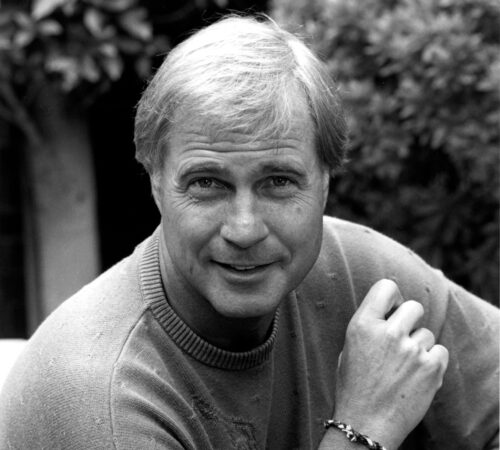
    Gil Gerard, who played television’s hunky sci-fi hero William “Buck” Rogers soon after the Star Wars franchise took hold in the late 1970s, has died. He was 82.

    Mr. Gerard died Tuesday in hospice as a result of a rare, aggressive form of cancer, said his manager, Tina Presley Borek. His wife, Janet Gerard, posted a posthumous Facebook message he left behind for fans that read in part:

    “Don’t waste your time on anything that doesn’t thrill you or bring you love. See you out somewhere in the cosmos.”

    Mr. Gerard starred in NBC’s campy Buck Rogers in the 25th Century, which ran for two seasons from 1979 to 1981. A theatrical film based on the series also delighted youngsters and their parents alike. It was Buck Rogers’ second turn on TV after a show in the 1950s, a radio series, and a 1939 film serial.

    The story was based on Philip Francis Nowlan’s serialized 1928 pulp novella Armageddon 2419 A.D. Nowlan’s character was named Anthony Rogers. The name was changed when the story began running in newspapers as a comic strip.

    “My life has been an amazing journey,” Mr. Gerard wrote in his social media post. “The opportunities I’ve had, the people I’ve met and the love I have given and received have made my 82 years on the planet deeply satisfying.”

    As the TV story goes, Rogers was a 20th century NASA pilot who was placed in frozen animation when his ship was hit by a meteor storm. He pops awake 500 years later in the year 2491. He gazes upon a futuristic, domed Earth with all its threats, including aliens, space pilots, and the evil Draconians.

    He had helpers: the robot sidekick Twiki and a beautiful space pilot, Wilma Deering, played by Erin Gray.

    A native of Little Rock, Arkansas, Mr. Gerard worked steadily in TV commercials. He was featured in a number of other TV shows and movies, including starring roles in the 1982 TV movie Hear No Evil as Dragon and the short-lived Sidekicks in 1986.

    In 1992, he hosted the reality series Code 3, following firefighters responding to emergency calls around the U.S. There were many guest appearances in the 1990s, including on Days of Our Lives.

    Mr. Gerard and Gray were together again in 2007 for the TV film Nuclear Hurricane. They also returned to the Buck Rogers universe as Rogers’ parents in the pilot episode of James Cawley’s Buck Rogers Begins internet video series in 2009.

    Mr. Gerard spoke openly about addictions to drugs, alcohol, and compulsive overeating. He was the subject of a one-hour documentary, Action Hero Makeover, in 2007 after his weight ballooned to 350 pounds.

    Done by Adrienne Crow, then a longtime companion, for the Discovery Health Channel, the film documented his progress after gastric bypass surgery.

    Mr. Gerard was married and divorced four times before Janet. He had a son, actor Gilbert Vincent Gerard, with model and actor Connie Sellecca. Their divorce included a bitter custody battle for “Gib,” who was born in 1981. Sellecca was granted main custody.

    “My journey has taken me from Arkansas to New York to Los Angeles, and finally, to my home in North Georgia with my amazing wife, Janet, of 18 years,” Mr. Gerard wrote in the post put on Facebook after his death.

    “It’s been a great ride, but inevitably one that comes to a close as mine has.”

  • White Sox add Japanese slugger Munetaka Murakami on two-year, $34 million contract

    White Sox add Japanese slugger Munetaka Murakami on two-year, $34 million contract

    CHICAGO — The rebuilding Chicago White Sox added Munetaka Murakami to their lineup on Sunday, agreeing to a $34 million, two-year contract with the Japanese slugger.

    Murakami, who turns 26 on Feb. 2, joins a promising group of young hitters that also includes Colson Montgomery, Kyle Teel and Chase Meidroth. The White Sox finished last in the AL Central this year with a 60-102 record, a 19-game improvement from the previous season.

    Murakami gets a $1 million signing bonus payable within 30 days and salaries of $16 million next year and $17 million in 2027.

    His 2027 salary can escalate based on awards earned in 2026: $1 million for winning an MVP award, $500,000 for finishing second or third in the voting, $250,000 for fourth through 10th and $250,000 for Rookie of the Year.

    He can’t be assigned to the minor leagues without his consent and will be a free agent at the end of the contract. He also gets a team-provided interpreter and flight reimbursement between Japan and the U.S.

    Chicago owes a posting fee of $6,575,000 to Yakult, Murakami’s Central League team. The Swallows also would receive a supplemental fee of 15% of any triggered escalators.

    Murakami would become the fourth Japanese-born player to play for the White Sox, joining Shingo Takatsu (2004-05), second baseman Tadahito Iguchi (2005-07), and outfielder Kosuke Fukudome (2012). Takatsu managed Murakami in Japan.

    Murakami, who bats from the left side, is slated to be formally introduced at a news conference on Monday.

    He was Central League MVP in 2021 and ’22. The corner infielder was limited to 56 games this season because of an oblique injury. He struck out 64 times, but he batted .273 with 22 homers and 47 RBIs.

    Murakami hit 56 homers in 2022 to break Sadaharu Oh’s record for a Japanese-born player in Nippon Professional Baseball while becoming the youngest player to earn Japan’s Triple Crown. He topped 30 homers in four straight years before an injury-interrupted season in 2023.

    He has a .270 career average with 246 homers, 647 RBIs, and 977 strikeouts in 892 games over eight Central League seasons, all with the Swallows.

    After playing primarily at first base in 2019 and 2020, he has spent most of his time since at third.

    At the 2023 World Baseball Classic, Murakami hit a game-ending double off Giovanny Gallegos that drove in Shohei Ohtani and Masataka Yoshida for a 6-5 semifinal win over Mexico. The following day in the championship game, Murakami hit a tying home run off Merrill Kelly in the second inning and Japan went on to beat the United States, 3-2.

    Under the agreement between MLB and NPB, the posting fee is 20% of the first $25 million of a major league contract, including earned bonuses and options. The percentage drops to 17.5% of the next $25 million and 15% of any amount over $50 million.

  • Ira ‘Ike’ Schab, 105, one of last remaining Pearl Harbor survivors

    Ira ‘Ike’ Schab, 105, one of last remaining Pearl Harbor survivors

    World War II Navy veteran Ira “Ike” Schab, one of the dwindling number of survivors of the 1941 Japanese bombing of Pearl Harbor, has died. He was 105.

    Daughter Kimberlee Heinrichs told the Associated Press that Mr. Schab died at home early Saturday in the presence of her and her husband.

    With his passing, there remain only about a dozen survivors of the surprise attack, which killed just over 2,400 troops and propelled the United States into the war.

    Mr. Schab was a sailor of just 21 at the time of the attack, and for decades he rarely spoke about the experience.

    But in recent years, aware that the corps of survivors was dwindling, the centenarian made a point of traveling from his home in Beaverton, Ore., to the annual observance at the Hawaii military base.

    “To pay honor to the guys that didn’t make it,” he said in 2023.

    For last year’s commemoration, Mr. Schab spent weeks building up the strength to be able to stand and salute.

    But this year he did not feel well enough to attend, and less than three weeks later, he passed away.

    Born on Independence Day in 1920 in Chicago, Mr. Schab was the eldest of three brothers.

    He joined the Navy at 18, following in the footsteps of his father, he said in a February interview for Pacific Historic Parks.

    On what began as a peaceful Sunday, Dec. 7, 1941, Mr. Schab, who played the tuba in the USS Dobbin’s band, was expecting a visit from his brother, a fellow service member assigned to a nearby naval radio station. Mr. Schab had just showered and donned a clean uniform when he heard a call for fire rescue.

    He went topside and saw another ship, the USS Utah, capsizing. Japanese planes roared through the air.

    “We were pretty startled. Startled and scared to death,” Mr. Schab recalled in 2023. “We didn’t know what to expect, and we knew that if anything happened to us, that would be it.”

    He scurried back below deck to grab boxes of ammunition and joined a daisy chain of sailors feeding shells to an anti-aircraft gun above.

    His ship lost three sailors, according to Navy records. One was killed in action, and two died later of fragment wounds from a bomb that struck the stern. All had been manning an anti-aircraft gun.

    Mr. Schab spent most of the war with the Navy in the Pacific, going to the New Hebrides, now known as Vanuatu, and then the Mariana Islands and Okinawa, Japan.

    After the war he studied aerospace engineering and worked on the Apollo spaceflight program as an electrical engineer for General Dynamics, helping send astronauts to the moon.

    Mr. Schab’s son also joined the Navy and is a retired commander.

    Speaking at a 2022 ceremony, Mr. Schab asked people to honor those who served at Pearl Harbor.

    “Remember what they’re here for. Remember and honor those that are left. They did a hell of a job,” he said. “Those who are still here, dead or alive.”

  • U.S. envoy says talks with Russia ’productive and constructive’

    U.S. envoy says talks with Russia ’productive and constructive’

    A White House envoy said Sunday he held “productive and constructive” talks in Florida with Ukrainian and European representatives to end the nearly four-year war between Russia and Ukraine.

    Posting on social media, Steve Witkoff said the talks aimed at aligning on a shared strategic approach among Ukraine, the United States, and Europe.

    “Our shared priority is to stop the killing, ensure guaranteed security, and create conditions for Ukraine’s recovery, stability, and long-term prosperity. Peace must be not only a cessation of hostilities, but also a dignified foundation for a stable future,” U.S. President Donald Trump’s envoy said.

    The talks are part of the Trump administration’s monthslong push for peace. Trump has unleashed an extensive diplomatic push to end the war, but his efforts have run into sharply conflicting demands by Moscow and Kyiv. Putin has recently signaled he is digging in on his maximalist demands on Ukraine, as Moscow’s troops inch forward on the battlefield despite huge losses.

    Florida talks press on

    “The discussions are proceeding constructively. They began earlier and will continue today, and will also continue tomorrow,” Kirill Dmitriev told reporters in Miami on Saturday.

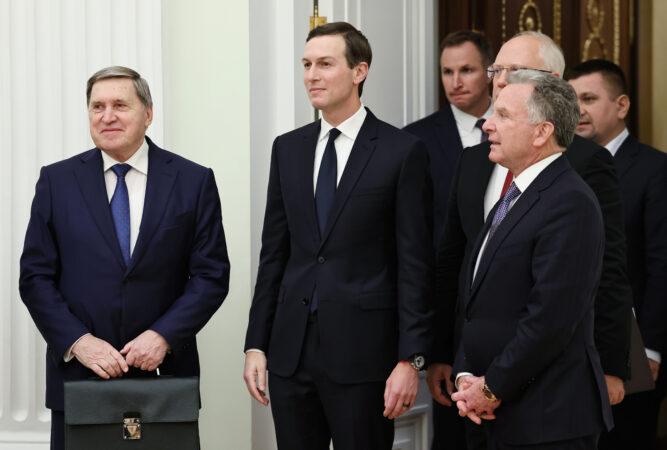
    Dmitriev met with U.S. President Donald Trump’s envoy Steve Witkoff and Trump’s son-in-law Jared Kushner, Russian state news agency RIA Novosti reported.

    Ukrainian President Volodymyr Zelensky wrote on Telegram Sunday that diplomatic efforts were “moving forward quite quickly, and our team in Florida has been working with the American side.” This came after Ukraine’s chief negotiator said Friday his delegation had completed separate meetings in the United States with American and European partners.

    The Kremlin denied Sunday that trilateral talks involving Ukraine, Russia, and the U.S. were under discussion, after Zelensky said Saturday that Washington had proposed the idea of three-way discussions.

    “At present, no one has seriously discussed this initiative, and to my knowledge it is not being prepared,” Russian President Vladimir Putin’s foreign affairs adviser Yuri Ushakov said, according to Russian state news agencies.

    Trump has unleashed an extensive diplomatic push to end the war, but his efforts have run into sharply conflicting demands by Moscow and Kyiv. Putin has recently signaled he is digging in on his maximalist demands on Ukraine, as Moscow’s troops inch forward on the battlefield despite huge losses.

    On Friday, Putin expressed confidence that the Kremlin would achieve its military goals if Kyiv didn’t agree to Russia’s conditions in peace talks.

    Possible French-Russian talks

    The French presidency on Sunday welcomed Putin’s willingness to speak with President Emmanuel Macron, saying it would decide how to proceed “in the coming days.”

    “As soon as the prospect of a ceasefire and peace negotiations becomes clearer, it becomes useful again to speak with Putin,” Macron’s office said in a statement. “It is welcome that the Kremlin publicly agrees to this approach.”

    The statement came after reports that Putin was open to holding talks with the French president if there was mutual political will.

    Macron’s office said any dialogue would aim “to contribute to a solid and lasting peace for Ukraine and Europe, in full transparency with President Zelensky and our European partners.”

    European Union leaders agreed on Friday to provide 90 billion euros ($106 billion) to Ukraine to meet its military and economic needs for the next two years, although they failed to bridge differences with Belgium that would have allowed them to use frozen Russian assets to raise the funds. Instead, they were borrowed from capital markets.

    Ukrainian civilians moved to Russia

    In Ukraine, the country’s human rights ombudsman, Dmytro Lubinets, on Sunday accused Russian forces of forcibly removing about 50 Ukrainian civilians from the Ukrainian Sumy border region to Russian territory.

    Writing on Telegram, he said that Russian forces illegally detained the residents in the village of Hrabovske on Thursday, before moving them to Russia on Saturday.

    Lubinets said he contacted Russia’s human rights commissioner, requesting information on the civilians’ whereabouts and conditions, and demanding their immediate return to Ukraine.

  • Israel’s cabinet approves 19 new Jewish settlements in the occupied West Bank

    Israel’s cabinet approves 19 new Jewish settlements in the occupied West Bank

    TEL AVIV, Israel — Israel’s cabinet has approved a proposal for 19 new Jewish settlements in the occupied West Bank, the far-right finance minister said Sunday, as the government pushes ahead with a construction binge in the territory that further threatens the possibility of a Palestinian state.

    That brings the total number of new settlements over the past few years to 69, a new record, according to Finance Minister Bezalel Smotrich, who has pushed a settlement expansion agenda in the West Bank. The latest ones include two that were previously evacuated during a 2005 disengagement plan.

    The approval increases the number of settlements in the West Bank by nearly 50% during the current far-right government’s tenure. In 2022, there were 141 settlements across the West Bank. After the latest approval, there are 210, according to Peace Now, an anti-settlement watchdog group.

    Settlements are widely considered illegal under international law. Smotrich’s office said the cabinet approval came on Dec. 11 and that the development had been classified until now.

    Settlements are latest blow to Palestinian state

    The approval comes as the U.S. pushes Israel and Hamas to move ahead with the second phase of the Gaza ceasefire, which took effect Oct. 10. The U.S.-brokered plan calls for a possible “pathway” to a Palestinian state, something the settlements are aimed at preventing.

    The cabinet decision included a retroactive legalization of some previously established settlement outposts or neighborhoods of existing settlements, and the creation of settlements on land where Palestinians were evacuated, the Finance Ministry said. Settlements can range in size from a single dwelling to a collection of high-rises.

    The ministry said two of the settlements legalized in the latest approval are Kadim and Ganim, which were two of the four West Bank settlements dismantled in 2005, as part of Israel’s withdrawal from the Gaza Strip. There have been multiple attempts to resettle them after Israel’s government in March 2023 repealed a 2005 act that evacuated the four outposts and barred Israelis from reentering the areas.

    Israel captured the West Bank, east Jerusalem, and Gaza — areas claimed by the Palestinians for a future state — in the 1967 war. It has settled over 500,000 Jews in the West Bank, in addition to over 200,000 in contested east Jerusalem.

    Israel’s government is dominated by far-right proponents of the settler movement, including Smotrich and cabinet minister Itamar Ben-Gvir, who oversees the nation’s police force.

    Settler expansion has been compounded by a surge of attacks against Palestinians in the West Bank in recent months.

    During October’s olive harvest, settlers across the territory launched an average of eight attacks daily, the most since the United Nations humanitarian office began collecting data in 2006. The attacks continued in November, with the U.N. recording at least 136 more by Nov. 24.

    Settlers burned cars, desecrated mosques, ransacked industrial plants, and destroyed cropland. Israeli authorities have done little beyond issuing occasional condemnations of the violence.

    2 Palestinians killed in West Bank clashes, ministry says

    The Palestinian Health Ministry in Ramallah said two Palestinians, including a 16-year-old, were killed in clashes with Israel’s military on Saturday night in the northern part of the West Bank.

    Israel’s military said a militant was shot and killed after he threw a block at troops in Qabatiya, and another militant was killed after he hurled explosives at troops operating in the town of Silat al-Harithiya.

    The Palestinian Health Ministry identified the Palestinian killed in Qabatiya as 16-year-old Rayan Abu Muallah. Palestinian media aired brief security footage of the incident, where the youth appears to emerge from an alley and is shot by troops as he approaches them without throwing anything. Israel’s military said the incident is under review.

    The Health Ministry identified the second man as Ahmad Ziyoud, 22.

    Israel’s military has scaled up military operations in the West Bank since the Oct. 7, 2023, Hamas-led attack that triggered the war in Gaza.

    Cardinal celebrates Christmas Mass in Gaza City

    The top Catholic leader in the Holy Land visited Gaza’s only Catholic church and celebrated a pre-Christmas Mass on Sunday that included the baptism of a baby. Dozens of Palestinians gathered in the Holy Family Parish.

    Cardinal Pierbattista Pizzaballa is on his fourth visit to Gaza since the war began, and said the Christian community aims to be a “stable, solid reference point in this sea of destruction” as rebuilding slowly begins.

    “It is different this time,” Pizzaballa said. “I saw the new desire for a new life.”

    The Holy Family compound was hit by fragments from an Israeli shell in July, killing three people in what Israel called an accident and expressed regret over. The parish has served as a refuge for Christians and Muslims, sheltering hundreds of displaced people.

    There was a mix of gratitude and grief as people at the church marked Christmas away from home. “They welcomed us with great love and respect,” said Nazih Lam’e Habashi, 78, who stays there with his family. “This is the third holiday we are marking since the war.”

    “God willing, life will improve,” added 67-year-old Najla Saba.