Category: Associated Press

  • Top Trump official defends partial release of Epstein files as Democrats cry foul

    Top Trump official defends partial release of Epstein files as Democrats cry foul

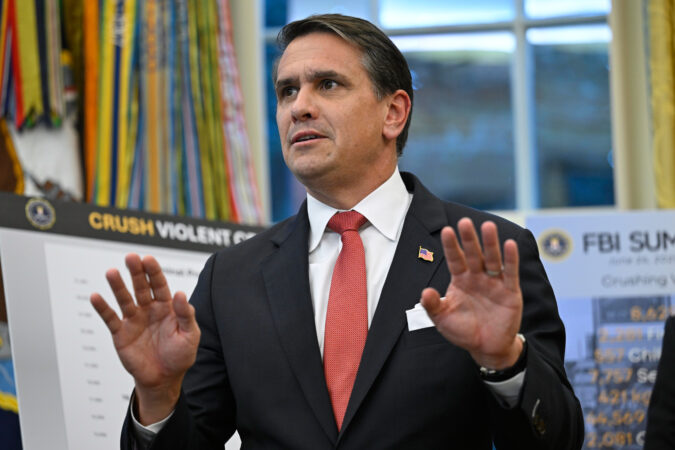
    WEST PALM BEACH, Fla. — Deputy Attorney General Todd Blanche on Sunday defended the Justice Department’s decision to release just a fraction of the Jeffrey Epstein files by the congressionally mandated deadline as necessary to protect survivors of sexual abuse by the disgraced financier.

    Blanche pledged that the Trump administration eventually would meet its obligation required by law. But he stressed that the department was obligated to act with caution as it goes about making public thousands of documents that can include sensitive information.

    Friday’s partial release of the Epstein files has led to a new crush of criticism from Democrats who have accused the Republican administration of trying to hide information.

    Blanche called that pushback disingenuous as President Donald Trump’s administration continues to struggle with calls for greater transparency, including from members of his political base, about the government’s investigations into Epstein, who once counted Trump as well as several political leaders and business titans among his peers.

    “The reason why we are still reviewing documents and still continuing our process is simply that to protect victims,” Blanche told NBC’s Meet the Press. “So the same individuals that are out there complaining about the lack of documents that were produced on Friday are the same individuals who apparently don’t want us to protect victims.”

    Blanche’s comments were the most extensive by the administration since the file dump, which included photographs, interview transcripts, call logs, court records, and other documents. But some of the most consequential records expected about Epstein were nowhere to be found, such as FBI interviews with survivors and internal Justice Department memos examining charging decisions. Those records could help explain how investigators viewed the case and why Epstein was allowed in 2008 to plead guilty to a relatively minor state-level prostitution charge.

    Trump, who was friends with Epstein for years before the two had a falling out, tried for months to keep the records sealed. Though Trump has not been accused of wrongdoing in connection with Epstein, he has argued there is nothing to see in the files and that the public should focus on other issues.

    Federal prosecutors in New York brought sex trafficking charges against Epstein in 2019, but he killed himself in jail after his arrest.

    Democrats see a cover-up, not an effort to protect victims

    But Democratic lawmakers on Sunday hammered Trump and the Justice Department for a partial release.

    Rep. Jamie Raskin (D., Md.) argued that the Justice Department is obstructing the implementation of the law mandating the release of the documents not because it wants to protect the Epstein victims.

    “It’s all about covering up things that, for whatever reason, Donald Trump doesn’t want to go public, either about himself, other members of his family, friends, Jeffrey Epstein, or just the social, business, cultural network that he was involved in for at least a decade, if not longer,” he said on CNN’s State of the Union.

    Blanche also defended the department’s decision to remove several files related to the case from its public webpage, including a photograph showing Trump, less than a day after they were posted.

    The missing files, which were available Friday but no longer accessible by Saturday, included images of paintings depicting nude women, and one showed a series of photographs along a credenza and in drawers. In that image, inside a drawer among other photos, was a photograph of Trump alongside Epstein, Melania Trump, and Epstein’s longtime associate, Ghislaine Maxwell.

    Blanche said the documents were removed because they also showed victims of Epstein. Blanche said that the Trump photo and the other documents will be reposted once redactions are made to protect survivors.

    “It has nothing to do with President Trump,” Blanche said. “There are dozens of photos of President Trump already released to the public seeing him with Mr. Epstein.”

    The thousands of Epstein-related records posted publicly offer the most detailed look yet at nearly two decades worth of government scrutiny of Epstein’s sexual abuse of young women and underage girls. Yet Friday’s release, replete with redactions, has not dulled the clamor for information given how many records had yet to be released and because some of the materials had already been made public.

    Blanche says DOJ has just learned of more potential victims

    Blanche said that the department continues to review the trove of documents and has learned the names of additional potential victims in recent days.

    The deputy attorney general also defended the decision by the federal Bureau of Prisons, which Blanche oversees, to transfer Maxwell to a less restrictive, minimum-security federal prison earlier this year soon after he interviewed her about Epstein. Blanche said that the transfer was made because of concerns about her safety.

    Maxwell, Epstein’s onetime girlfriend, is serving a 20-year federal prison sentence for her 2021 conviction for sex trafficking crimes.

    “She was suffering numerous and numerous threats against her life,” Blanche said. “So the BOP is not only responsible for putting people in jail and making sure they stay in jail, but also for their safety.”

    Meanwhile, Reps. Ro Khanna (D., Calif.) and Thomas Massie (R., Ky.) have indicated they could draft articles of impeachment against Attorney General Pam Bondi for what they see as the gross failure of the department to comply with the Epstein Files Transparency Act.

    “It’s not about the timeline, it’s about the selective concealment,” Khanna said on CBS’ Face the Nation, adding that the redactions in the released files are excessive. He said he believes there will be “bipartisan support in holding her accountable, and a committee of Congress should determine whether these redactions are justified or not.”

    House Democratic leader Hakeem Jeffries of New York said on ABC’s This Week that there needs “to be a full and complete explanation and then a full and complete investigation as to why the document production has fallen short of what the law clearly required,” but he stopped short of backing impeachment.

    Blanche dismissed the impeachment talk.

    “Bring it on,” Blanche said. “We are doing everything we’re supposed to be doing to comply with this statute.”
  • Trump’s return brought stiff headwinds for clean energy. So why are advocates optimistic in 2026?

    Trump’s return brought stiff headwinds for clean energy. So why are advocates optimistic in 2026?

    There were some highs amid a lot of lows in a roller coaster year for clean energy as President Donald Trump worked to boost polluting fuels while blocking wind and solar, according to dozens of energy developers, experts, and politicians.

    Surveyed by the Associated Press, many described 2025 as turbulent and challenging for clean energy, though there was progress as projects connected to the electric grid. They said clean energy must continue to grow to meet skyrocketing demand for electricity to power data centers and to lower Americans’ utility bills.

    Solar builder and operator Jorge Vargas said it has been “a very tough year for clean energy” as Trump often made headlines criticizing renewable energy and Republicans muscled a tax and spending cut bill through Congress in July that dramatically rolled back tax breaks for clean energy.

    “There was a cooldown effect this year,” said Vargas, cofounder and CEO of Aspen Power. “Having said that, we are a resilient industry.”

    Plug Power president Jose Luis Crespo said the developments — both policy recalibration and technological progress — will shape clean energy’s trajectory for years to come.

    Energy policy whiplash in 2025

    Much of clean energy’s fate in 2025 was driven by booster Joe Biden’s exit from the White House.

    The year began with ample federal subsidies for clean energy technologies, a growing number of U.S.-based companies making parts and materials for projects, and a lot of demand from states and corporations, said Tom Harper, partner at global consultant Baringa.

    It ends with subsidies stripped back, a weakened supply chain, higher costs from tariffs, and some customers questioning their commitment to clean energy, Harper said. He described the year as “paradigm shifting.”

    Trump called wind and solar power “the scam of the century” and vowed not to approve new projects. The federal government canceled grants for hundreds of projects.

    The Republicans’ tax bill reversed or steeply curtailed clean energy programs established through the Democrats’ flagship climate and healthcare bill in 2022. Wayne Winegarden, at the Pacific Research Institute think tank, said the time has come for alternative energy to demonstrate viability without subsidies. ( Fossil fuels also receive subsidies.)

    Many energy executives said this was the most consequential policy shift. The bill reshaped the economics of clean energy projects, drove a rush to start construction before incentives expire, and forced developers to reassess their strategies for acquiring parts and materials, Lennart Hinrichs said. He leads the expansion of TWAICE in the Americas, providing analytics software for battery energy storage systems.

    Companies can’t make billion-dollar investments with so much policy uncertainty, said American Clean Power Association CEO Jason Grumet.

    Consequently, greenhouse gas emissions will fall at a much lower rate than previously projected in the U.S., said Brian Murray, director of the Nicholas Institute for Energy, Environment, and Sustainability at Duke University.

    Still, solar and battery storage are booming

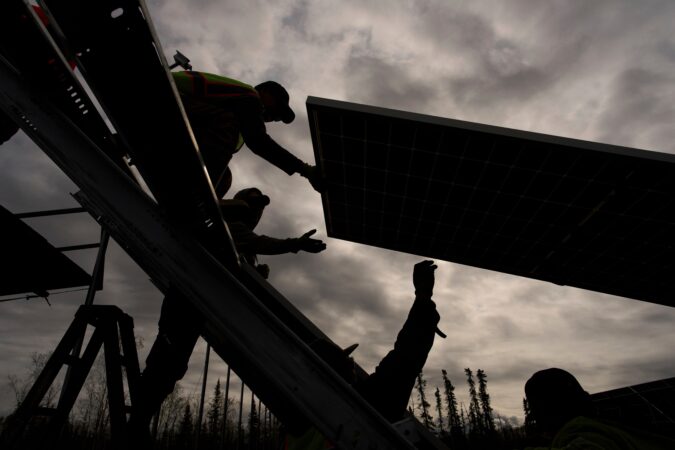
    Solar and storage accounted for 85% of the new power added to the grid in the first nine months of the Trump administration, according to Wood Mackenzie research.

    That’s because the economics remain strong, demand is high, and the technologies can be deployed quickly, said Mike Hall, CEO of Anza Renewables.

    Solar energy company Sol Systems said it had a record year as it brought its largest utility-scale project online and grew its business. The energy storage systems company CMBlu Energy said storage clearly stands out as a winner this year too, moving from optional to essential.

    “Trump’s effort to manipulate government regulation to harm clean energy just isn’t enough to offset the natural advantages that clean energy has,” Democratic U.S. Sen. Sheldon Whitehouse said. “The direction is still all good.”

    The Solar Energy Industries Association said that no matter the policies in Washington, solar and storage will grow as the backbone of the nation’s energy future.

    Nuclear, geothermal had a good year, too

    Democrats and Republicans have supported investing to keep nuclear reactors online, restart previously closed reactors, and deploy new, advanced reactor designs. Nuclear power is a carbon-free source of electricity, though not typically labeled as green energy like other renewables.

    “Who had ‘restart Three Mile Island’ on their 2025 Bingo card?” questioned Baringa partner David Shepheard. The Pennsylvania plant was the site of the nation’s worst commercial nuclear power accident, in 1979. The Energy Department is loaning $1 billion to help finance a restart.

    Everyone loves nuclear, said Darrin Kayser, executive vice president at Edelman. It helps that the technology for small, modular reactors is starting to come to fruition, Kayser added.

    Benton Arnett, a senior director at the Nuclear Energy Institute, said that as the need for clean, reliable power intensifies, “we will look back on the actions being taken now as laying the foundation.”

    The Trump administration also supports geothermal energy, and the tax bill largely preserved geothermal tax credits. The Geothermal Rising association said technologies continue to mature and produce, making 2025 a breakthrough year.

    Offshore wind had a terrible year

    Momentum for offshore wind in the United States came to a grinding halt just as the industry was starting to gain traction, said Joey Lange, a senior managing director at Trio, a global sustainability and energy advisory company.

    The Trump administration stopped construction on major offshore wind farms, revoked wind energy permits and paused permitting, canceled plans to use large areas of federal waters for new offshore wind development, and stopped federal funding for offshore wind projects.

    That has decimated the projects, developers, and tech innovators, and no one in wind is raising or spending capital, said Eric Fischgrund, founder and CEO at FischTank PR. Still, Fischgrund said he remains optimistic because the world is transitioning to cleaner energy.

    More clean energy needed in 2026

    An energy strategy with a diverse mix of sources is the only way forward as demand grows from data centers and other sources, and as people demand affordable, reliable electricity, said former Democratic Sen. Mary Landrieu. Landrieu, now with Natural Allies for a Clean Energy Future, said promoting or punishing specific energy technologies on ideological grounds is unsustainable.

    Experts expect solar and battery storage to continue growing in 2026 to add a lot of power to the grid quickly and cheaply. The market will continue to ensure that most new electricity is renewable, said Amanda Levin, policy analysis director at the Natural Resources Defense Council.

    Hillary Bright, executive director of Turn Forward, thinks offshore wind will still play an important role too. It is both ready and needed to help address the demand for electricity in the new year, which will become increasingly clear “to all audiences,” she said. Turn Forward advocates for offshore wind.

    That skyrocketing demand “is shaking up the political calculus that drove the administration’s early policy decisions around renewables,” she said.

    BlueWave CEO Sean Finnerty thinks that states, feeling the pressure to deliver affordable, reliable electricity, will increasingly drive clean energy momentum in 2026 by streamlining permitting and the process of connecting to the grid, and by reducing costs for things like permits and fees.

    Ed Gunn, Lunar Energy’s vice president for revenue, said the industry has weathered tough years before.

    “The fundamentals are unchanged,” Gunn said, ”there is massive value in clean energy.”

  • At least 16 files have disappeared from the DOJ webpage for documents related to Jeffrey Epstein

    At least 16 files have disappeared from the DOJ webpage for documents related to Jeffrey Epstein

    NEW YORK — At least 16 files disappeared from the Justice Department’s public webpage for documents related to Jeffrey Epstein — including a photograph showing President Donald Trump — less than a day after they were posted, with no explanation from the government and no notice to the public.

    The missing files, which were available Friday and no longer accessible by Saturday, included images of paintings depicting nude women, and one showing a series of photographs along a credenza and in drawers. In that image, inside a drawer among other photos, was a photograph of Trump, alongside Epstein, Melania Trump, and Epstein’s longtime associate Ghislaine Maxwell.

    The Justice Department did not say why the files were removed or whether their disappearance was intentional. A spokesperson for the department did not immediately respond to a request for comment.

    Online, the unexplained missing files fueled speculation about what was taken down and why the public was not notified, compounding long-standing intrigue about Epstein and the powerful figures who surrounded him. Democrats on the House Oversight Committee pointed to the missing image featuring a Trump photo in a post on X, writing: “What else is being covered up? We need transparency for the American public.”

    The episode deepened concerns that had already emerged from the Justice Department’s much-anticipated document release. The tens of thousands of pages made public offered little new insight into Epstein’s crimes or the prosecutorial decisions that allowed him to avoid serious federal charges for years, while omitting some of the most closely watched materials, including FBI interviews with victims and internal Justice Department memos on charging decisions.

    Scant new insight in initial disclosures

    Some of the most consequential records expected about Epstein are nowhere to be found in the Justice Department’s initial disclosures, which span tens of thousands of pages.

    Missing are FBI interviews with survivors and internal Justice Department memos examining charging decisions — records that could have helped explain how investigators viewed the case and why Epstein was allowed in 2008 to plead guilty to a relatively minor state-level prostitution charge.

    The gaps go further.

    The records, required to be released under a recent law passed by Congress, hardly reference several powerful figures long associated with Epstein, including Britain’s former Prince Andrew, renewing questions about who was scrutinized, who was not, and how much the disclosures truly advance public accountability

    Among the fresh nuggets: insight into the Justice Department’s decision to abandon an investigation into Epstein in the 2000s, which enabled him to plead guilty to that state-level charge, and a previously unseen 1996 complaint accusing Epstein of stealing photographs of children.

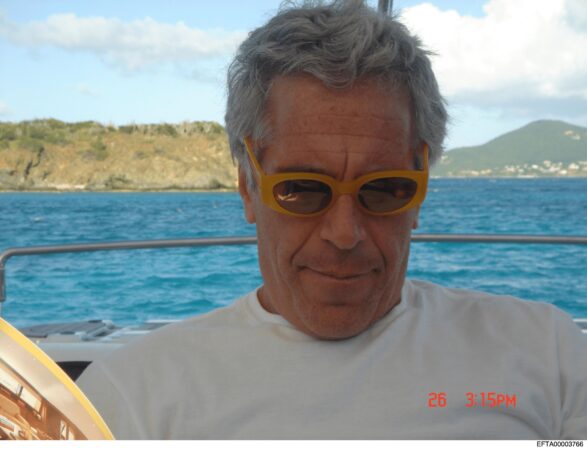
    The releases so far have been heavy on images of Epstein’s homes in New York City and the U.S. Virgin Islands, with some photos of celebrities and politicians.

    There was a series of never-before-seen photos of former President Bill Clinton but fleetingly few of Trump. Both have been associated with Epstein, but both have since disowned those friendships. Neither has been accused of any wrongdoing in connection with Epstein and there was no indication the photos played a role in the criminal cases brought against him.

    Despite a Friday deadline set by Congress to make everything public, the Justice Department said it plans to release records on a rolling basis. It blamed the delay on the time-consuming process of obscuring survivors’ names and other identifying information. The department has not given any notice of when more records might arrive.

    That approach angered some Epstein accusers and members of Congress who fought to pass the law that forced the department to act. Instead of marking the end of a yearslong battle for transparency, the document release Friday was merely the beginning of an indefinite wait for a complete picture of Epstein’s crimes and the steps taken to investigate them.

    “I feel like again the DOJ, the justice system is failing us,” said Marina Lacerda, who alleges Epstein started sexually abusing her at his New York City mansion when she was 14.

    Many records were redacted or lacked context

    Federal prosecutors in New York brought sex trafficking charges against Epstein in 2019, but he killed himself in jail after his arrest.

    The documents just made public were a sliver of potentially millions of pages of records in the department’s possession. In one example, Deputy Attorney General Todd Blanche said Manhattan federal prosecutors had more than 3.6 million records from sex trafficking investigations into Epstein and Maxwell, though many duplicated material already turned over by the FBI.

    Many of the records released so far had been made public in court filings, congressional releases, or freedom of information requests, though, for the first time, they were all in one place and available for the public to search for free.

    Records that were new were often lacking necessary context or heavily blacked out. A 119-page document marked “Grand Jury-NY,” likely from one of the federal sex trafficking investigations that led to the charges against Epstein in 2019 or Maxwell in 2021, was entirely blacked out.

    Trump’s Republican allies seized on the Clinton images, including photos of the Democrat with singers Michael Jackson and Diana Ross. There were also photos of Epstein with actors Chris Tucker and Kevin Spacey, and even Epstein with TV newscaster Walter Cronkite. But none of the photos had captions and no explanation was given for why any of them were together.

    The meatiest records released so far showed that federal prosecutors had what appeared to be a strong case against Epstein in 2007 yet never charged him.

    Transcripts of grand jury proceedings, released publicly for the first time, included testimony from FBI agents who described interviews they had with several girls and young women who described being paid to perform sex acts for Epstein. The youngest was 14 and in ninth grade.

    One had told investigators about being sexually assaulted by Epstein when she initially resisted his advances during a massage.

    Another, then 21, testified before the grand jury about how Epstein had hired her when she was 16 to perform a sexual massage and how she had gone on to recruit other girls to do the same.

    “For every girl that I brought to the table he would give me $200,” she said. They were mostly people she knew from high school, she said. “I also told them that if they are under age, just lie about it and tell him that you are 18.”

    The documents also contain a transcript of an interview Justice Department lawyers did more than a decade later with the U.S. attorney who oversaw the case, Alexander Acosta, about his ultimate decision not to bring federal charges.

    Acosta, who was labor secretary during Trump’s first term, cited concerns about whether a jury would believe Epstein’s accusers.

    He also said the Justice Department might have been more reluctant to make a federal prosecution out of a case that straddled the legal border between sex trafficking and soliciting prostitution, something more commonly handled by state prosecutors.

    “I’m not saying it was the right view,” Acosta added. He also said that the public today would likely view the survivors differently.

    “There’s been a lot of changes in victim shaming,” Acosta said.

  • U.S. forces stop second merchant vessel off the coast of Venezuela, American officials say

    U.S. forces stop second merchant vessel off the coast of Venezuela, American officials say

    WASHINGTON — U.S. forces on Saturday stopped a vessel off the coast of Venezuela for the second time in less than two weeks as President Donald Trump continues to ramp up pressure on Venezuelan President Nicolás Maduro.

    The move, which was confirmed by two U.S. officials familiar with matter, comes days after Trump announced a “blockade” of all sanctioned oil tankers coming in and out of the South American country and follows the Dec. 10 seizure by American forces of an oil tanker off Venezuela’s coast.

    Homeland Security Secretary Kristi Noem confirmed that the U.S. Coast Guard with help from the Defense Department stopped the oil tanker that was last docked in Venezuela. She also posted on social media an unclassified video of a U.S helicopter landing personnel on a vessel called Centuries.

    A crude oil tanker flying under the flag of Panama operates under the name and was recently spotted near the Venezuelan coast, according to MarineTraffic, a project that tracks the movement of vessels around the globe using publicly available data. It was not immediately clear if the vessel was under U.S. sanctions.

    “The United States will continue to pursue the illicit movement of sanctioned oil that is used to fund narco terrorism in the region,” Noem wrote on X. “We will find you, and we will stop you.”

    The action was described as a “consented boarding,” with the tanker stopping voluntarily and allowing U.S. forces to board it, one official said.

    The Pentagon and White House officials did not immediately respond to requests for comment.

    Trump earlier this month announced that the Coast Guard had seized an oil tanker in the Caribbean Sea and vowed that the U.S. would carry out a blockade of Venezuela. It all comes as Trump has ratcheted up his rhetoric toward Maduro and warned that the longtime Venezuelan leader’s days in power are numbered.

    Trump this week demanded that Venezuela return assets that it seized from U.S. oil companies years ago, justifying anew his announcement of a “blockade” against oil tankers traveling to or from the South American country that face American sanctions.

    Trump cited the lost U.S. investments in Venezuela when asked about his newest tactic in a pressure campaign against Maduro, suggesting the Republican administration’s moves are at least somewhat motivated by disputes over oil investments, along with accusations of drug trafficking. Some sanctioned tankers already are diverting away from Venezuela.

    “We’re not going to be letting anybody going through who shouldn’t be going through,” Trump told reporters. “You remember they took all of our energy rights. They took all of our oil not that long ago. And we want it back. They took it — they illegally took it.”

    U.S. oil companies dominated Venezuela’s petroleum industry until the country’s leaders moved to nationalize the sector, first in the 1970s and again in the 21st century under Maduro and his predecessor, Hugo Chávez. Compensation offered by Venezuela was deemed insufficient, and in 2014 an international arbitration panel ordered the country’s socialist government to pay $1.6 billion to ExxonMobil.

    The targeting of tankers comes as Trump has ordered the Defense Department to carry out a series of attacks on vessels in the Caribbean and eastern Pacific Ocean that his administration alleges are smuggling fentanyl and other illegal drugs into the United States and beyond.

    At least 104 people have been killed in 28 known strikes since early September.

    The strikes have faced scrutiny from U.S. lawmakers and human rights activists, who say the administration has offered scant evidence that its targets are indeed drug smugglers and that the fatal strikes amount to extrajudicial killings.

    The Coast Guard, sometimes with help from the Navy, had typically interdicted boats suspected of smuggling drugs in the Caribbean Sea, searched for illicit cargo, and arrested the people aboard for prosecution.

    The administration has justified the strikes as necessary, asserting it is in “armed conflict” with drug cartels aimed at halting the flow of narcotics into the United States. Maduro faces federal charges of narcoterrorism in the U.S.

    The U.S. in recent months has sent a fleet of warships to the region, the largest buildup of forces in generations, and Trump has stated repeatedly that land attacks are coming soon.

    Maduro has insisted the real purpose of the U.S. military operations is to force him from power.

    White House chief of staff Susie Wiles said in an interview with Vanity Fair published this week that Trump “wants to keep on blowing boats up until Maduro cries uncle.”

  • Jordan says its air force joined U.S. strikes on Islamic State in Syria

    Jordan says its air force joined U.S. strikes on Islamic State in Syria

    DAMASCUS, Syria — Jordan confirmed Saturday that its air force took part in strikes launched by the United States on Islamic State group targets in Syria in retaliation for the killing of three U.S. citizens earlier this month.

    The U.S. launched military strikes Friday on multiple sites in Syria to “eliminate” Islamic State group fighters and weapons in retaliation for an attack by a Syrian gunman that killed two U.S. troops and an American civilian interpreter almost a week earlier.

    The Jordanian military said in a statement that its air force “participated in precise airstrikes … targeting several ISIS positions in southern Syria,” using a different abbreviation for the Islamic State group. Jordan is one of 90 countries making up the global coalition against IS, which Syria recently joined.

    The U.S. military did not say how many had been killed in Friday’s strikes. The Syrian Observatory for Human Rights, a U.K.-based war monitor, reported that at least five people were killed, including the leader and members of an IS cell.

    The Jordanian statement said the operation aimed “to prevent extremist groups from exploiting these areas as launching pads to threaten the security of Syria’s neighbors and the wider region, especially after ISIS regrouped and rebuilt its capabilities in southern Syria.”

    U.S. Central Command, which oversees the region, said in a statement that its forces “struck more than 70 targets at multiple locations across central Syria with fighter jets, attack helicopters, and artillery,” with the Jordanian air force supporting with fighter aircraft.

    It said that since the Dec. 13 attack in Syria, “U.S. and partner forces conducted 10 operations in Syria and Iraq resulting in the deaths or detention of 23 terrorist operatives,” adding that the U.S. and partners have conducted more than 80 counterterrorism operations in Syria in the past six months.

    President Donald Trump had pledged “very serious retaliation” after the shooting in the Syrian desert, for which he blamed IS. Those killed were among hundreds of U.S. troops deployed in eastern Syria as part of a coalition fighting the militant group. On Friday Trump reiterated his backing for Syrian interim President Ahmad al-Sharaa, who Trump said was “fully in support” of the U.S. strikes against IS.

    IS has not taken responsibility for the attack on the U.S. service members, but the group has claimed two attacks on Syrian security forces since, one of which killed four Syrian soldiers in Idlib province. The group in its statements described al-Sharaa’s government and army as “apostates.” While al-Sharaa once led a group affiliated with al-Qaida, he has had a long-running enmity with IS.

    As well as killing three U.S. citizens, the shooting near Palmyra also wounded three other U.S. troops as well as members of Syria’s security forces, and the gunman was killed.

    The assailant had joined Syria’s internal security forces as a base security guard two months ago and recently was reassigned while he was under investigation on suspicions that he might be affiliated with IS, Syrian officials have said.

    The man stormed a meeting between U.S. and Syrian security officials who were having lunch together and opened fire after clashing with Syrian guards.

  • Sony buys a majority stake in the ‘Peanuts’ comic for $457 million from Canada’s WildBrain

    Sony buys a majority stake in the ‘Peanuts’ comic for $457 million from Canada’s WildBrain

    Happiness is taking control of a beloved comic strip.

    Sony is buying a 41% stake in the Charles M. Schulz comic Peanuts and its characters including Snoopy and Charlie Brown from Canada’s WildBrain in a $457 million deal, the two companies said Friday.

    The deal adds to Sony’s existing 39% stake, bringing its shareholding to 80%, according to a joint statement. The Schulz family will continue to own the remaining 20%.

    “With this additional ownership stake, we are thrilled to be able to further elevate the value of the Peanuts brand by drawing on the Sony Groupʼs extensive global network and collective expertise,” Sony Music Entertainment President Shunsuke Muramatsu said.

    Peanuts made its debut Oct. 2, 1950, in seven newspapers. The travails of the “little round-headed kid” Charlie Brown and pals including Linus, Lucy, Peppermint Patty, and his pet beagle Snoopy eventually expanded to more than 2,600 newspapers, reaching millions of readers in 75 countries.

    The strip offers enduring images of kites stuck in trees, Charlie Brown trying to kick a football, tart-tongued Lucy handing out advice for a nickel, and Snoopy taking the occasional flight of fancy to the skies. Phrases such as “security blanket,” “good grief” and “happiness is a warm puppy” are a part of the global vernacular. Schulz died in 2000.

    Sony acquired its first stake in Peanuts Holdings LLC in 2018 from Toronto-based WildBrain Ltd. In Friday’s transaction, Sony’s music and movie arms signed a “definitive agreement” with WildBrain to buy its remaining stake for $630 million Canadian dollars ($457 million).

    Rights to the Peanuts brand and management of its business are handled by a wholly-owned subsidiary of Peanuts Holdings.

    WildBrain also owns other kids’ entertainment franchises including Strawberry Shortcake and Teletubbies.

  • Maxey, Edgecombe help the 76ers hand the Knicks their second home loss of the season

    Maxey, Edgecombe help the 76ers hand the Knicks their second home loss of the season

    NEW YORK — Tyrese Maxey scored 30 points, VJ Edgecombe had 23 and the 76ers became just the second visiting team to win at Madison Square Garden this season, beating the New York Knicks 116-107 on Friday night.

    Andre Drummond, starting with Joel Embiid out because of an illness and right knee injury management, had 19 points and 13 rebounds. The center was 3 for 4 from 3-point range.

    The 76ers snapped the Knicks’ six-game winning streak by outscoring them 28-20 in the fourth quarter, when Maxey scored 11 points and Jalen Brunson missed all five of his shots and was scoreless.

    Brunson finished with 22 points, nine assists and six rebounds, but shot 7 for 22 a night after making the go-ahead 3-pointer with 4.4 seconds left in a victory at Indiana. Karl-Anthony Towns also scored 22 points and grabbed 11 rebounds.

    In their first home game since winning the NBA Cup on Tuesday, the Knicks fell to 13-2 at home. They had been off to their best start at MSG since 1992-93.

    They celebrated the Cup title before the game, though they have chosen not to hang a banner to commemorate it, as previous champions the Lakers and Bucks did.

    The Knicks wasted Mitchell Robinson’s best game of the season. The center had season highs of 21 points and 16 rebounds and was a stunning 7 for 8 at the free-throw line after he came into the game 6 for 27 (22.2%) for the season.

    Mikal Bridges also scored 21 points.

    Maxey and Edgecombe combined for 18 points in the fourth quarter after the 76ers led by one going into the period. The Knicks were 1 for 8 on 3s in the quarter.

  • U.S. military launches strikes in Syria against Islamic State fighters after American deaths

    U.S. military launches strikes in Syria against Islamic State fighters after American deaths

    WASHINGTON — The Trump administration launched military strikes Friday in Syria to “eliminate” Islamic State group fighters and weapons sites in retaliation for an ambush attack that killed two U.S. troops and an American interpreter almost a week ago.

    A U.S. official described it as “a large-scale” strike that hit 70 targets in areas across central Syria that had IS infrastructure and weapons. Another U.S. official, who also spoke on condition of anonymity to discuss sensitive operations, said more strikes should be expected.

    The attack was conducted using F-15 Eagle jets, A-10 Thunderbolt ground attack aircraft, and AH-64 Apache helicopters, the officials said. F-16 fighter jets from Jordan and HIMARS rocket artillery also were used, one official said.

    “This is not the beginning of a war — it is a declaration of vengeance. The United States of America, under President Trump’s leadership, will never hesitate and never relent to defend our people,” Defense Secretary Pete Hegseth said on social media.

    President Donald Trump had pledged “very serious retaliation” after the shooting in the Syrian desert, for which he blamed IS. The troops were among hundreds of U.S. troops deployed in eastern Syria as part of a coalition fighting the terrorist group.

    Trump in a social media post said the strikes were targeting IS “strongholds.” He reiterated his support for Syrian President Ahmad Al-Sharaa, who he said was “fully in support” of the U.S. effort to target the militant group.

    Trump also offered an all-caps threat, warning the group against attacking U.S. personnel again.

    “All terrorists who are evil enough to attack Americans are hereby warned — YOU WILL BE HIT HARDER THAN YOU HAVE EVER BEEN HIT BEFORE IF YOU, IN ANY WAY, ATTACK OR THREATEN THE U.S.A.,” the president added.

    The attack was a major test for the warming ties between the United States and Syria since the ouster of autocratic leader Bashar Assad a year ago. Trump has stressed that Syria was fighting alongside U.S. troops and said al-Sharaa was “extremely angry and disturbed by this attack,” which came as the U.S. military is expanding its cooperation with Syrian security forces.

    Syria’s foreign ministry in a statement on X following the launch of U.S. strikes said that last week’s attack “underscores the urgent necessity of strengthening international cooperation to combat terrorism in all its forms” and that Syria is committed “to fighting ISIS and ensuring that it has no safe havens on Syrian territory and will continue to intensify military operations against it wherever it poses a threat.”

    IS has not claimed responsibility for the attack on the U.S. service members, but the group has claimed responsibility for two attacks on Syrian security forces since, one of which killed four Syrian soldiers in Idlib province. The group in its statements described al-Sharaa’s government and army as “apostates.” While al-Sharaa once led a group affiliated with al-Qaida, he has had a long-running enmity with IS.

    Syrian state television reported that the U.S. strikes hit targets in rural areas of Deir ez-Zor and Raqqa provinces and in the Jabal al-Amour area near Palmyra. It said they targeted “weapons storage sites and headquarters used by ISIS as launching points for its operations in the region.”

    Trump this week met privately with the families of the slain Americans at Dover Air Force Base in Delaware before he joined top military officials and other dignitaries on the tarmac for the dignified transfer, a solemn and largely silent ritual honoring U.S. service members killed in action.

    The guardsmen killed in Syria last Saturday were Sgt. Edgar Brian Torres-Tovar, 25, of Des Moines, and Sgt. William Nathaniel Howard, 29, of Marshalltown, according to the U.S. Army. Ayad Mansoor Sakat, of Macomb, Mich., a U.S. civilian working as an interpreter, was also killed.

    The shooting nearly a week ago near the historic city of Palmyra also wounded three other U.S. troops as well as members of Syria’s security forces, and the gunman was killed. The assailant had joined Syria’s internal security forces as a base security guard two months ago and recently was reassigned because of suspicions that he might be affiliated with IS, Interior Ministry spokesperson Nour al-Din al-Baba has said.

    The man stormed a meeting between U.S. and Syrian security officials who were having lunch together and opened fire after clashing with Syrian guards.

    When asked for further information, the Pentagon referred AP to Hegseth’s social media post.

  • Rep. Elise Stefanik says she’s suspending her campaign for New York governor, won’t seek reelection

    Rep. Elise Stefanik says she’s suspending her campaign for New York governor, won’t seek reelection

    ALBANY, N.Y. — Rep. Elise Stefanik announced Friday that she is suspending her campaign for New York governor and will not seek reelection to Congress, bowing out of the race in a surprise statement that said “it is not an effective use of our time” to stay in what was expected to be a bruising Republican primary.

    Stefanik, a Republican ally of President Donald Trump, said in a post on X that she was confident of her chances in the primary against Bruce Blakeman, a Republican county official in New York City’s suburbs. But she said she wanted to spend more time with her young son and family.

    “I have thought deeply about this and I know that as a mother, I will feel profound regret if I don’t further focus on my young son’s safety, growth, and happiness — particularly at his tender age,” she said.

    Stefanik has been an intense critic of incumbent Democratic Gov. Kathy Hochul, who is also seeking reelection but faces a primary challenge from her own lieutenant governor, Antonio Delgado.

    The announcement marks an abrupt end, at least for now, for a once-promising career for Stefanik. She was the youngest woman ever elected to Congress when she won her first campaign in 2014 at just 30 years old, representing a new generation of Republicans making inroads in Washington. She ultimately rose to her party’s leadership in the House when she became the chair of the House Republican Conference in 2021.

    First viewed as a moderate when she came to Washington, Stefanik became far more conservative as Trump began to dominate the party. Once someone who refused to say Trump’s name, she became one of his top defenders during his first impeachment inquiry. She would go on to vote against certifying the 2020 election results, even after a violent mob stormed the Capitol on Jan. 6.

    Stefanik was expected to have a bitter Republican primary against Blakeman, who also counts himself as an ally of Trump. The president had so far seemed keen on avoiding picking a side in the race, telling reporters recently: “He’s great, and she’s great. They’re both great people.”

    Stefanik’s decision follows a clash with Speaker Mike Johnson, whom she accused of lying before embarking on a series of media interviews criticizing him. In one with The Wall Street Journal, she called Johnson a “political novice” and said he wouldn’t be reelected speaker if the vote were held today.

    The tumultuous early December episode appeared to cool when Johnson said he and Stefanik had a “great talk.”

    “I called her and I said, ‘Why wouldn’t you just come to me, you know?’” Johnson said. “So we had some intense fellowship about that.”

    Still, Stefanik, the chairwoman of the House Republican leadership, has not fully walked back her criticisms. A Dec. 2 social media post remains online in which, after a provision she championed was omitted from a defense authorization bill, Stefanik accused Johnson of falsely claiming he was unaware of it, calling it “more lies from the Speaker.”

    State Republican Chairman Ed Cox said the party respected Stefanik’s decision and thanked her for her efforts.

    “Bruce Blakeman has my endorsement and I urge our State Committee and party leaders to join me,” Cox said in a prepared statement. “Bruce is a fighter who has proven he knows how to win in difficult political terrain.”

  • Justice Department releases limited set of files tied to Epstein sex trafficking investigation

    Justice Department releases limited set of files tied to Epstein sex trafficking investigation

    WASHINGTON — The Justice Department released thousands of files Friday about convicted sex offender Jeffrey Epstein but the incomplete document dump did not break significant ground about the long-running criminal investigations of the financier or his ties to wealthy and powerful individuals.

    The files included a small number of photos of President Donald Trump, sparing the White House for now from having to confront fresh revelations about an Epstein relationship that the administration for months has tried in vain to push past.

    It did, however, feature a series of never-before-seen photos of Bill Clinton from a trip that the former president appears to have take with Epstein decades ago.

    Reaction to the disclosures broke along mostly partisan lines. Democrats and some Republicans seized on the limited release to accuse the Justice Department of failing to meet a congressionally set deadline to produce the Epstein files. White House officials on social media gleefully promoted a photo of Clinton in a hot tub with a person with a blacked-out face. The Trump administration touted the release as a show of its commitment to transparency, ignoring the fact that the Justice Department just months ago said no more files would be released. Congress then passed a law mandating it.

    The records, consisting largely of pictures but also including call logs, grand jury testimony, interview transcripts, and other documents, arrived amid extraordinary anticipation that they might offer the most detailed look yet at nearly two decades worth of government scrutiny of Epstein’s sexual abuse of young women and underage girls. Their release has long been demanded by a public hungry to learn whether any of Epstein’s associates knew about or participated in the abuse. Epstein’s accusers have also sought answers about why federal authorities shut down their initial investigation into the allegations in 2008.

    Yet the release, replete with redactions. seemed unlikely to satisfy the public clamor for information given how many investigative records the department indicated it was continuing to withhold.

    In a letter to Congress obtained by The Associated Press, Deputy Attorney General Todd Blanche wrote that the Justice Department was continuing to review files in its possession and expected additional disclosures by the end of the year. The department also said it was withholding some documents under exemptions allowed in the law and was redacting names of victims. The department expects to complete its document production by the end of the year, Blanche said.

    Bowing to political pressure from fellow Republicans, Trump on Nov. 19 signed a bill giving the Justice Department 30 days to release most of its files and communications related to Epstein, including information about the investigation into his death in a federal jail. The law’s passage, which set a deadline for Friday, was a remarkable display of bipartisanship that overcame months of opposition from Trump and Republican leadership.

    Limited details about Trump

    The released files include a small number of photos of Trump, which appear to have been known for decades, including two in which Trump and Epstein are posing with now-first lady Melania Trump in February 2000 at an event at Trump’s Palm Beach club, Mar-a-Lago, before the pair’s friendship ruptured.

    Trump was friends with Epstein for years before the two had a falling-out. Neither he nor Clinton has ever been accused of wrongdoing in connection with Epstein, and the mere inclusion of someone’s name in files from the investigation does not imply otherwise.

    Attorney General Pam Bondi said last month that she had ordered a top federal prosecutor to investigate Epstein’s ties to Trump’s political foes, including Clinton. Bondi acted after Trump pressed for such an inquiry, though he did not explain what supposed crimes he wanted the Justice Department to investigate.

    In July, Trump dismissed some of his own supporters as “weaklings” for falling for “the Jeffrey Epstein hoax.” But both Trump and House Speaker Mike Johnson (R., La.) failed to prevent the legislation from coming to a vote.

    Trump did a U-turn on the files once it became clear that congressional action was inevitable. He insisted that the Epstein matter had become a distraction to the Republican agenda and that releasing the records was the best way to move on.

    After nearly two decades of court action and prying by reporters, a voluminous number of records related to Epstein had already been public well before Froday, including flight logs, address books, email correspondence, police reports, grand jury records, courtroom testimony, and transcripts of depositions of his accusers, his staffers and others.

    New photos of Clinton

    Senior Trump White House aides took to X to promote photos in the Epstein files that show Clinton with women whose faces are redacted.

    Karoline Leavitt, the White House press secretary, wrote “Oh my!” and added a shocked face emoji in response to a photo of Clinton in a hot tub with a woman whose face was redacted.

    “They can release as many grainy 20-plus-year-old photos as they want, but this isn’t about Bill Clinton,” Clinton spokesman Angel Ureña said in a statement.

    “There are two types of people here,” he said. “The first group knew nothing and cut Epstein off before his crimes came to light. The second group continued relationships after that. We’re in the first. No amount of stalling by people in the second group will change that.”

    The Epstein investigations

    Police in Palm Beach, Fla., began investigating Epstein in 2005 after the family of a 14-year-old girl reported she had been molested at his mansion. The FBI joined the investigation, and authorities gathered testimony from multiple underage girls who said they had been hired to give Epstein sexual massages.

    Ultimately, though, prosecutors gave Epstein a deal that allowed him to avoid federal prosecution. He pleaded guilty to state prostitution charges involving someone under age 18 and was sentenced to 18 months in jail.

    Epstein’s accusers then spent years in civil litigation trying to get that plea deal set aside. One of those women, Virginia Giuffre, accused Epstein of arranging for her to have sexual encounters, starting at age 17, with numerous other men, including billionaires, famous academics, U.S. politicians, and Andrew Mountbatten-Windsor, then known as Britain’s Prince Andrew. Mountbatten-Windsor denied ever having sex with Giuffre, but King Charles III stripped him of his royal titles this year after Giuffre’s memoir was published after she died.

    Prosecutors never brought charges in connection with Giuffre’s claims, but her account fueled conspiracy theories about supposed government plots to protect the powerful. Giuffre died by suicide at her farm in Western Australia in April at age 41.

    Federal prosecutors in New York brought new sex trafficking charges against Epstein in 2019, but he killed himself in jail a month after his arrest. Prosecutors then charged Epstein’s longtime confidant, British socialite Ghislaine Maxwell, with recruiting underage girls for Epstein to abuse.

    Maxwell was convicted in late 2021 and is serving a 20-year prison sentence, though she was moved from a low-security federal prison in Florida to a minimum-security prison camp in Texas after she was interviewed over the summer by Blanche. Her lawyers argued that she never should have been tried or convicted.

    The Justice Department in July said it had not found any information that could support prosecuting anyone else.