Category: Associated Press

  • Syria welcomes the permanent repeal of sweeping U.S. sanctions

    Syria welcomes the permanent repeal of sweeping U.S. sanctions

    DAMASCUS, Syria — Syria’s government and its allies on Friday welcomed the final lifting of the most draconian sanctions imposed on the country in recent decades.

    The U.S. Congress imposed the so-called Caesar Act sanctions on Syria’s government and financial system in 2019 to punish then-President Bashar Assad for human rights abuses during the country’s nearly 14-year Civil War that began in 2011.

    After Assad was ousted in a lightning rebel offensive in December 2024, advocates — including some who had previously lobbied for the imposition of the sanctions — pushed to have the penalties removed. They argued that the sanctions were preventing international investors from launching Reconstruction projects and blocking Syria from rebuilding its battered economy and infrastructure.

    U.S. President Donald Trump, who had previously lifted the penalties temporarily by executive order, signed off on the final repeal late Thursday after Congress passed it as part of the country’s annual defense spending bill.

    Some lawmakers had pushed for making the repeal conditional on steps by the new Sunni Islamist-dominated Syrian government to protect religious minorities, among other measures. In the end, the sanctions were repealed without conditions but with a requirement for periodic reports to Congress on Syria’s progress on issues including minority rights and counterterrorism measures.

    Syria’s foreign ministry in a statement Friday thanked the U.S. for the move and said it will “contribute to alleviating the burdens on the Syrian people and open the way for a new phase of recovery and stability.”

    It called for Syrian businesspeople and foreign investors to “explore investment opportunities and participate in Reconstruction,” the cost of which the World Bank has estimated at $216 billion.

    Central Bank Governor Abdulkader Husrieh said in a statement that the Caesar Act repeal will facilitate the country’s reintegration in the international financial system by allowing it to seek a sovereign credit rating.

    “Syria will likely start with a low rating, which is normal for countries emerging from conflict,” he said. “The real value lies in the benchmark set by the rating and the road map it provides for improvement.”

    Turkey, Saudi Arabia and Qatar, regional allies of the new Syrian government led by interim President Ahmad al-Sharaa, also welcomed the move.

    “We hope that this step will contribute to strengthening stability, security, and prosperity in Syria by further promoting international cooperation toward the country’s Reconstruction and development,” Turkish Foreign Ministry spokesman Oncu Keceli said in a statement.

    The Saudi foreign ministry commended “the significant and positive role played by U.S. President Donald Trump” in lifting the sanctions.

    Trump previously said that he had moved to remove the penalties at the urging of Crown Prince Mohammed bin Salman, the Saudi de facto ruler, and Turkish President Recep Tayyip Erdogan.

    Also Friday, the United Kingdom — which had previously removed its own broad sanctions against the Syrian government and financial institutions — imposed new sanctions on organizations and individuals it said were “involved in violence against civilians” in Syria.

    They include four people affiliated with Assad’s government in either a military or financial role as well as two people and three armed groups affiliated with the military of the new Syrian government who were allegedly responsible for attacks on civilians during sectarian violence on Syria’s coast earlier this year.

    Clashes erupted in March after a group of Assad loyalists attacked security forces. They spiraled into revenge killings as militants from Syria’s Sunni majority — some of them officially affiliated with the new government’s security forces — targeted members of the Alawites sect to which Assad belongs, regardless of whether they were involved in the insurgency. Hundreds of civilians were killed.

  • Head of workplace rights agency urges white men to report discrimination

    Head of workplace rights agency urges white men to report discrimination

    The head of the U.S. agency for enforcing workplace civil rights posted a social media call-out urging white men to come forward if they have experienced race or sex discrimination at work.

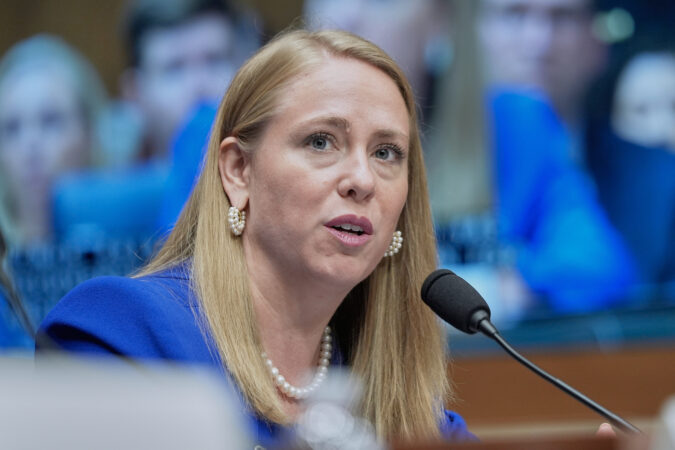
    “Are you a white male who has experienced discrimination at work based on your race or sex? You may have a claim to recover money under federal civil rights laws,” U.S. Equal Employment Opportunity Commission Chair Andrea Lucas, a vocal critic of diversity, equity and inclusion, wrote in an X post Wednesday evening with a video of herself. The post urged eligible workers to reach out to the agency “as soon as possible” and referred users to the agency’s fact sheet on “DEI-related discrimination” for more information.

    Lucas’ post, viewed millions of times, was shared about two hours after Vice President JD Vance posted an article he said “describes the evil of DEI and its consequences,” which also received millions of views. Lucas responded to Vance’s post saying: “Absolutely right @JDVance. And precisely because this widespread, systemic, unlawful discrimination primarily harmed white men, elites didn’t just turn a blind eye; they celebrated it. Absolutely unacceptable; unlawful; immoral.”

    She added that the EEOC “won’t rest until this discrimination is eliminated.”

    A representative for Vance did not respond to a request for comment. Lucas said Thursday evening that “the gaslighting surrounding what DEI initiatives have entailed in practice ends now. We can’t attack and remedy a problem if we refuse to call it out for what it is — race or sex discrimination — or acknowledge who is harmed.”

    She added that “the EEOC’s doors are open to all,” and Title VII of the Civil Rights Act of 1964 “protects everyone, including white men.”

    Since being elevated to acting chair of the EEOC in January, Lucas has been shifting the agency’s focus to prioritize “rooting out unlawful DEI-motivated race and sex discrimination,” aligning with President Donald Trump’s own anti-DEI executive orders. Trump named Lucas as the agency’s chair in November.

    Earlier this year, the EEOC along with the Department of Justice issued two “technical assistance” documents attempting to clarify what might constitute “DEI-related Discrimination at Work” and providing guidance on how workers can file complaints over such concerns. The documents took broad aim at practices such as training, employee resource groups and fellowship programs, warning such programs — depending on how they’re constructed — could run afoul of Title VII of the Civil Rights Act, which prohibits employment discrimination based on race and gender.

    Those documents have been criticized by former agency commissioners as misleading for portraying DEI initiatives as legally fraught.

    David Glasgow, executive director of the Meltzer Center for Diversity, Inclusion, and Belonging at the NYU School of Law, said Lucas’s latest social media posts demonstrate a “fundamental misunderstanding of what DEI is.”

    “It’s really much more about creating a culture in which you get the most out of everyone who you’re bringing on board, where everyone experiences fairness and equal opportunity, including white men and members of other groups,” Glasgow said.

    The Meltzer Center tracks lawsuits that are likely to affect workplace DEI practices, including 57 cases of workplace discrimination. Although there are instances in which it occurs on a case-by-case basis, Glasgow said he has not seen “any kind of systematic evidence that white men are being discriminated against.”

    He pointed out that Fortune 500 CEOs are overwhelmingly white men, and that relative to their share of the population, the demographic is overrepresented in corporate senior leadership, Congress, and beyond.

    “If DEI has been this engine of discrimination against white men, I have to say it hasn’t really been doing a very good job at achieving that,” Glasgow said.

    Jenny Yang, a former EEOC chair and now a partner at law firm Outten & Golden, said it is “unusual” and “problematic” for the head of the agency to single out a particular demographic group for civil rights enforcement.

    “It suggests some sort of priority treatment,” Yang said. “That’s not something that sounds to me like equal opportunity for all.”

    On the other hand, the agency has done the opposite for transgender workers, whose discrimination complaints have been deprioritized or dropped completely, Yang said.

    The EEOC has limited resources, and must accordingly prioritize which cases to pursue. But treating charges differently based on workers’ identities goes against the mission of the agency, she said.

    “It worries me that a message is being sent that the EEOC only cares about some workers and not others,” Yang said.

  • Turning Point USA’s Erika Kirk backs Vice President JD Vance’s potential 2028 presidential bid

    Turning Point USA’s Erika Kirk backs Vice President JD Vance’s potential 2028 presidential bid

    PHOENIX — Erika Kirk, widow of Turning Point USA founder Charlie Kirk and the organization’s new leader, endorsed a potential presidential bid by Vice President JD Vance on the opening night of the conservative youth group’s annual conference.

    After telling the cheering crowd that Turning Point would help keep Congress in Republican hands next year, she said, “We are going to get my husband’s friend JD Vance elected for 48 in the most resounding way possible.”

    Vance would be the 48th president if he takes office after President Donald Trump.

    Kirk’s statement on Thursday is the most explicit backing of Vance’s possible candidacy by a woman who has been positioned as a steward to her late husband’s legacy. Charlie Kirk had become a powerbroker and bridge builder within the conservative movement before he was assassinated in September.

    Vance was close with Charlie Kirk, whose backing helped enable his rapid political rise. After the assassination, Vance and his wife joined Erika Kirk in Utah to fly her husband’s remains home to Arizona aboard Air Force Two.

    Vance is set to speak to Turning Point on Sunday, the conference’s last day. The convention has featured the usual spectacle and energy that have characterized the organization’s events, but the proceedings have also been marred by intense infighting among conservative commentators and estranged allies who have turned on each other in the wake of Kirk’s death.

    As Trump’s vice president, Vance is well-positioned to inherit the movement that remade the Republican Party and twice sent Trump to the White House. But it would be no small task for him to hold together the Trump coalition, which is built around personal loyalty to him more than shared political goals.

    Various wings of the conservative movement already are positioning to steer the party after Trump’s presidency, a skirmish that’s becoming increasingly public and pointed.

    Turning Point, with its thousands of young volunteers, would provide a major boost for Vance in a fractious primary. Now 41, Vance would be the first Millennial president if elected, a natural fit for the organization built around mobilizing youth.

    Trump has repeatedly mused about running for a third term despite a constitutional prohibition. However, he’s also speculated about a 2028 ticket featuring Vance and Secretary of State Marco Rubio.

    Although Rubio previously ran for president in 2016, he has said he would support Vance as Trump’s successor.

  • Motive still unknown after suspect in the Brown attack and MIT professor’s killing is found dead

    Motive still unknown after suspect in the Brown attack and MIT professor’s killing is found dead

    A frantic search for the suspect in last weekend’s mass shooting at Brown University ended at a New Hampshire storage facility where authorities discovered the man dead inside and then revealed he also was suspected of killing a Massachusetts Institute of Technology professor.

    Claudio Neves Valente, 48, a former Brown student and Portuguese national, was found dead Thursday night from a self-inflicted gunshot wound, said Col. Oscar Perez, the Providence police chief.

    Investigators believe he is responsible for fatally shooting two students and wounding nine other people in a Brown lecture hall last Saturday, then killing MIT professor Nuno F.G. Loureiro two days later at his home in the Boston suburbs, nearly 50 miles (80 kilometers) from Providence. Perez said as far as investigators know, Neves Valente acted alone.

    Portugal’s top diplomat said Friday that the government was taken aback by revelations that a Portuguese man is the main suspect in the mass shooting at Brown and the killing of an MIT professor who was of the same nationality. Police said they were contacted by U.S. authorities Thursday once Neves Valente was named.

    Foreign Minister Paulo Rangel said Portugal has provided “very broad cooperation” in the case. He said in comments to the national news agency Lusa that “the investigation is far from over.”

    Brown University President Christina Paxson said Neves Valente was enrolled there as a graduate student studying physics from the fall of 2000 to the spring of 2001.

    “He has no current affiliation with the university,” she said.

    Neves Valente and Loureiro attended the same academic program at a university in Portugal between 1995 and 2000, U.S. attorney for Massachusetts Leah B. Foley said. Loureiro graduated from the physics program at Instituto Superior Técnico, Portugal’s premier engineering school, in 2000, according to his MIT faculty page. The same year, Neves Valente was let go from his temporary student support and faculty liaison position at the Lisbon university, according to an archive of a termination notice from the school’s then-president in February 2000.

    Neves Valente, who was born in Torres Novas, Portugal, about 75 miles (121 kilometers) north of Lisbon, had come to Brown on a student visa. He eventually obtained legal permanent resident status in September 2017, Foley said. It wasn’t immediately clear where he was between taking a leave of absence from the school in 2001 and getting the visa in 2017. His last known residence was in Miami.

    After officials revealed the suspect’s identity, President Donald Trump suspended the green card lottery program that allowed Neves Valente to stay in the United States.

    There are still “a lot of unknowns” in regard to motive, Rhode Island Attorney General Peter Neronha said. “We don’t know why now, why Brown, why these students and why this classroom,” he said.

    Tip helps investigators connect the dots

    The FBI previously said it knew of no links between the Rhode Island and Massachusetts shootings.

    Police credited a person who had several encounters with Neves Valente for providing a crucial tip that led authorities to him.

    After police shared security video of a person of interest, the witness — known only as “John” in a Providence police affidavit — recognized him and posted his suspicions on the social media forum Reddit. Reddit users urged him to tell the FBI, and John said he did.

    John said he encountered Neves Valente about two hours before the attack in a bathroom in the engineering building, which was where the shooting occurred, and noticed he was wearing inappropriate clothing for the weather, according to the affidavit. Still before the attack, he again bumped into Neves Valente a couple blocks away and saw him suddenly turn away from a Nissan sedan when he saw John.

    “When you do crack it, you crack it. And that person led us to the car, which led us to the name,” Neronha said.

    His tip pointed investigators to a Nissan Sentra with Florida plates. That enabled Providence police to tap into a network of more than 70 street cameras operated around the city by surveillance company Flock Safety. Those cameras track license plates and other vehicle details.

    After leaving Rhode Island, Providence officials said Neves Valente stuck a Maine license plate over his rental car’s plate to help conceal his identity.

    Investigators found footage of Neves Valente entering an apartment building near Loureiro’s in a Boston suburb. About an hour later, Neves Valente was seen entering the Salem, New Hampshire, storage facility where he was found dead, Foley said. He had with him a satchel and two firearms, Neronha said.

    Victims include renowned physicist, political organizer and aspiring doctor

    Loureiro, a 47-year-old physicist and fusion scientist, joined MIT in 2016 and was named last year to lead the school’s Plasma Science and Fusion Center, one of its largest laboratories. The scientist from Viseu, Portugal, had been working to explain the physics behind astronomical phenomena such as solar flares.

    In Lisbon, he was remembered as a highly regarded researcher and instructor for “all the contributions he gave and what he could still have given, all the equations left unwritten,” said Professor Bruno Gonçalves, head of the Institute for Plasmas and Nuclear Fusion at Instituto Superior Técnico.

    Gonçalves added, “It is difficult to imagine in what context someone would want to harm someone that works in this field.”

    The two Brown students killed during a study session for final exams were 19-year-old sophomore Ella Cook and 18-year-old freshman MukhammadAziz Umurzokov. Cook was active in her Alabama church and served as vice president of the Brown College Republicans. Umurzokov’s family immigrated to the U.S. from Uzbekistan when he was a child, and he aspired to be a doctor.

    As for the wounded, three had been discharged and six were in stable condition Thursday, officials said.

    Although Brown officials say there are 1,200 cameras on campus, the attack happened in an older part of the engineering building that has few, if any, cameras. And investigators believe the shooter entered and left through a door that faces a residential street bordering campus, which might explain why the cameras Brown does have didn’t capture footage of the person.

    ___

    Associated Press reporters Barry Hatton and Helena Alves in Lisbon, Portugal, Mark Scolforo in Harrisburg, Pennsylvania, Audrey McAvoy in Honolulu, Hallie Golden in Seattle and Matt O’Brien in Providence contributed.

  • The spread of famine in the Gaza Strip has been averted but Palestinians there still face starvation, experts say

    The spread of famine in the Gaza Strip has been averted but Palestinians there still face starvation, experts say

    TEL AVIV, Israel — The spread of famine has been averted in the Gaza Strip, but the situation remains critical with the entire Palestinian territory still facing starvation, the world’s leading authority on food crises said Friday.

    The new report by The Integrated Food Security Phase Classification, or IPC, comes months after the group said famine was occurring in Gaza City and likely to spread across the territory without a ceasefire and an end to humanitarian aid restrictions.

    There were “notable improvements” in food security and nutrition following an October ceasefire and no famine has been detected, the report said. Still, the IPC warned that the situation remains “highly fragile” and the entire Gaza Strip is in danger of starvation with nearly 2,000 people facing catastrophic levels of hunger through April.

    In the worst-case scenario, including renewed conflict and a halt of aid, the whole Gaza Strip is at risk of famine. Needs remain immense, and sustained, expanded and unhindered aid is required, the IPC said.

    Palestinians wait to receive donated food at a community kitchen in Gaza City on Thursday, Oct. 23.

    The Israeli military agency in charge of coordinating aid to Gaza, known as COGAT, said Friday that it strongly rejected the findings.

    The agency adheres to the ceasefire and allows the agreed amount of aid to reach the strip, COGAT said, noting the aid quantities “significantly exceed the nutritional requirements of the population” in Gaza according to accepted international methodologies, including the United Nations.

    The Israeli Foreign Ministry said Friday that it also rejects the findings, saying the IPC’s report doesn’t reflect reality in Gaza and more than the required amount of aid was reaching the territory. The ministry said the IPC ignores the vast volume of aid entering Gaza, because the group relies primarily on data related to U.N. trucks, which account for only 20% of all aid trucks.

    The IPC said that the report totals include commercial and U.N. trucks and its information is based on U.N. and COGAT data.

    Israel’s government has rejected the IPC’s past findings, with Israeli Prime Minister Benjamin Netanyahu calling the previous report an “outright lie.”

    Palestinians grab sacks of flour from a moving truck carrying World Food Programme aid as it drives through Deir al-Balah in central Gaza on Nov. 15.

    Ceasefire offsets famine

    The report’s findings come as the shaky U.S.-brokered ceasefire between Israel and Hamas reaches a pivotal point as Phase 1 nears completion, with the remains of one hostage still in Gaza. The more challenging second phase has yet to be implemented and both sides have accused the other of violating the truce.

    The IPC in August confirmed the grim milestone of famine for the first time in the Middle East and warned it could spread south to Deir al-Balah and Khan Younis. More than 500,000 people in Gaza, about a quarter of its population, faced catastrophic levels of hunger, with many at risk of dying from malnutrition-related causes, the August report said.

    Friday’s report said that the spread of famine had been offset by a significant reduction in conflict, a proposed peace plan and improved access for humanitarian and commercial food deliveries.

    There is more food on the ground and people now have two meals daily, up from one meal each day in July. That situation “is clearly a reversal of what had been one of the most dire situations where we were during the summer,” Antoine Renard, the World Food Program’s director for the Palestinian territories, told U.N. reporters in a video briefing from Gaza City Thursday.

    Food access has “significantly improved,” he said, warning that the greatest challenge now is adequate shelter for Palestinians, many of whom are soaked and living in water-logged tents. Aid groups say nearly 1.3 million Palestinians need emergency shelter as winter sets in.

    Aid is still not enough

    Displacement is one of the key drivers behind the food insecurity, with more than 70% of Gaza’s population living in makeshift shelters and relying on assistance. Other factors such as poor hygiene and sanitation as well as restricted access to food are also exacerbating the hunger crisis, the IPC said.

    While humanitarian access has improved compared with previous analysis periods, that access fluctuates daily and is limited and uneven across the Gaza Strip, the IPC said.

    To prevent further loss of life, expanded humanitarian assistance including food, fuel, shelter and health care is urgently needed, according to the group’s experts, who warned that over the next 12 months, more than 100,000 children between the ages of 6 months and 5 years are expected to suffer from acute malnutrition and require treatment.

    Figures recently released by Israel’s military suggest that it hasn’t met the ceasefire stipulation of allowing 600 trucks of aid into Gaza each day, though Israel disputes that finding. American officials with the U.S.-led center coordinating aid shipments into Gaza also say deliveries have reached the agreed upon levels.

    Aid groups say despite an increase of assistance, aid still isn’t reaching everyone in need after suffering two years of war.

    “This is not a debate about truck numbers or calories on paper. It’s about whether people can actually access food, clean water, shelter and health care safely and consistently. Right now, they cannot,” said Bushra Khalidi, Oxfam’s policy lead for Israel and the occupied Palestinian territory.

    People must be able to rebuild their homes, grow food and recover and the conditions for that are still being denied, she said.

    Even with more products in the markets, Palestinians say they can’t afford it. “There is food and meat, but no one has money,” said Hany al-Shamali, who was displaced from Gaza City.

    “How can we live?”

  • Feds pave the way for Big Tech to plug data centers right into power plants in scramble for energy

    Feds pave the way for Big Tech to plug data centers right into power plants in scramble for energy

    HARRISBURG, Pa. — Federal regulators will allow tech companies to effectively plug massive data centers directly into power plants, issuing a long-awaited order Thursday, as the Trump administration urged the Federal Energy Regulatory Commission to help the U.S. lead the world in artificial intelligence and revive domestic manufacturing.

    The commission’s unanimous order is designed to clear up pressing issues around so-called “colocation” agreements in the nation’s largest grid territory, which stretches across Mid-Atlantic states to parts of Illinois and Indiana.

    But it could become a blueprint for how FERC handles an October request from Trump’s energy secretary, Chris Wright, to ensure that data centers and large manufacturers get the power they need as quickly as possible.

    It also comes amid concerns that the Mid-Atlantic territory covering some 65 million people will face electricity shortages in the coming years, as the build-out of data centers outpaces the speed of new power sources coming online.

    Laura Swett, FERC’s chair, told Thursday’s meeting that clearing the way for massive energy users — like data centers — to get electricity straight from power plants was a “critical step to give investors and consumers more certainty on how FERC believes we can solve the problem of meeting historic surging demand and realize our greatest potential as a country.”

    It would, she said, also protect regular ratepayers, even as evidence mounts in various states that regular ratepayers are bearing the cost of new power plants and transmission lines to feed energy-hungry data centers.

    Power plant owners applauded the step, as their share prices rose steeply in Thursday’s trading. Advanced Energy United, whose members provide solar and wind power, said the FERC order should help clarify how big power users can set up their own power sources.

    The Edison Electric Institute, which represents for-profit utilities, said only that it would “continue to work” to support rapid data center connection, protect ratepayers from cost-shifts and strengthen the grid for everyone.

    Jeff Dennis, executive director of the Electricity Customer Alliance, said the order showed that FERC is trying to address looming issues around fast-growing power demand and underscored the urgency to reform grid policy.

    Thursday’s order grew out of a dispute between power plant owners and electric utilities over a proposed colocation deal between Amazon’s cloud-computing subsidiary and the owner of the Susquehanna nuclear power plant in Luzerne County, Pa.

    For tech giants, such arrangements represent a quick fix to get power while avoiding a potentially longer and more expensive process of hooking into a fraying electric grid that serves everyone else.

    But utilities protested that it allows big power users to avoid paying them to maintain the grid. Some consumer advocates maintained that diverting energy from existing power plants to data centers could drive up energy prices without an answer for how rising power demand will be met for regular ratepayers.

    FERC’s Thursday order sets up a couple new regulatory tracks.

    It requires the operator of the Mid-Atlantic grid, PJM Interconnection, to develop rates and conditions for different colocation scenarios involving new power plants or sources.

    That could mean allowing a big power user to pay for only the transmission services they use, considerably less than they might otherwise pay to connect to the grid through a utility.

    The order also could require a big power user that colocates with an existing power plant to pay the cost to replace the energy that it diverts away from the broader electric grid.

  • Man suspected in Brown University shooting and MIT professor’s killing is found dead, officials say

    Man suspected in Brown University shooting and MIT professor’s killing is found dead, officials say

    A frantic search for the suspect in last weekend’s mass shooting at Brown University ended Thursday at a New Hampshire storage facility where authorities discovered the man dead inside and then revealed he also was suspected of killing a Massachusetts Institute of Technology professor.

    Claudio Neves Valente, 48, a former Brown student and Portuguese national, was found dead Thursday evening from a self-inflicted gunshot wound, said Col. Oscar Perez, the Providence police chief.

    Investigators believe he is responsible for fatally shooting two students and wounding nine other people in a Brown University lecture hall last Saturday, then killing Portuguese MIT professor Nuno F.G. Loureiro two days later at his Brookline home, nearly 50 miles (80 kilometers) from Providence. Perez said as far as investigators know, Neves Valente acted alone.

    Brown University President Christina Paxson said Neves Valente was enrolled there as a graduate student studying physics from the fall of 2000 to the spring of 2001.

    “He has no current affiliation with the university,” she said.

    Neves Valente and Loureiro previously attended the same academic program at a university in Portugal between 1995 and 2000, U.S. attorney for Massachusetts Leah B. Foley said. Loureiro graduated from the physics program at Instituto Superior Técnico, Portugal’s premier engineering school, in 2000, according to his MIT faculty page. The same year, Neves Valente was let go from a position at the Lisbon university, according to an archive of a termination notice from the school’s then-president in February 2000.

    Neves Valente had studied at Brown on a student visa. He eventually obtained legal permanent residence status in September 2017, Foley said. It was not immediately clear where he was between taking a leave of absence from the school in 2001 and getting the visa in 2017. His last known residence was in Miami.

    After officials revealed the suspect’s identity, President Donald Trump suspended the green card lottery program that allowed Neves Valente to stay in the United States.

    There are still “a lot of unknowns” in regard to motive, Rhode Island Attorney General Peter Neronha said. “We don’t know why now, why Brown, why these students and why this classroom,” he said.

    How the investigation has unfolded

    Police credited a person who had several encounters with Neves Valente as providing the crucial tip that led to the shooter.

    “When you do crack it, you crack it. And that person led us to the car, which led us to the name,” Neronha said.

    After police posted images of a person of interest, the witness recognized him and posted his suspicions on the social media forum Reddit.

    But it took days before police say they interviewed him and only after publicizing a video where Neves Valente appeared to run away from the other man. The Reddit commenter didn’t respond to questions from The Associated Press earlier week but returned to the forum on Wednesday night to say that he was just interviewed by investigators.

    His tip gave investigators a key detail: a Nissan sedan with Florida plates. That enabled Providence police officers to tap into a network of more than 70 street cameras operated around the city by surveillance company Flock Safety. Those cameras track license plates and other vehicle details.

    After leaving Rhode Island, Providence officials said Neves Valente stuck a Maine license plate over the rental car’s plate to help conceal his identity.

    Video footage showed Neves Valente entering an apartment building near Loureiro’s in a Boston suburb. About an hour later, Neves Valente was seen entering the Salem, New Hampshire, storage facility where he was found dead, Foley said. He had with him a satchel and two firearms, Neronha said.

    Loureiro joined MIT in 2016 and was named last year to lead the school’s Plasma Science and Fusion Center, one of its largest laboratories. He had been working to explain the physics behind astronomical phenomena such as solar flares.

    The FBI previously said it knew of no links between the two shootings.

    Although Brown officials say there are 1,200 cameras on campus, the attack happened in an older part of the engineering building that has few, if any, cameras. And investigators believe the shooter entered and left through a door that faces a residential street bordering campus, which might explain why the cameras Brown does have didn’t capture footage of the person.

    What happened in past investigations?

    In such targeted and highly public attacks, the shooters typically kill themselves or are killed or arrested by police, said Katherine Schweit, a retired FBI agent and expert on mass shootings. When they do get away, searches can take time.

    In the 2013 Boston Marathon bombing, it took investigators four days to catch up to the two brothers who carried it out. In a 2023 case, Army reservist Robert Card was found dead of an apparent suicide two days after he killed 18 people and wounded 13 others in Lewiston, Maine.

    The man accused of killing conservative political figure Charlie Kirk in September turned himself in about a day and a half after the attack on Utah Valley University’s campus. And Luigi Mangione, who has pleaded not guilty to murder charges in the killing of UnitedHealthcare CEO Brian Thompson in Manhattan last year, was arrested five days later at a McDonald’s in Pennsylvania.

  • TikTok signs deal to sell U.S. unit to American investors, including Oracle, Silver Lake

    TikTok signs deal to sell U.S. unit to American investors, including Oracle, Silver Lake

    SAN FRANCISCO — TikTok has signed agreements with three major investors — Oracle, Silver Lake, and MGX — to form a new TikTok U.S. joint venture, ensuring the popular social video platform can continue operating in the United States.

    The deal is expected to close on Jan. 22, according to an internal memo seen by the Associated Press. In the communication, CEO Shou Zi Chew confirmed to employees that ByteDance and TikTok signed the binding agreements with the consortium.

    “I want to take this opportunity to thank you for your continued dedication and tireless work. Your efforts keep us operating at the highest level and will ensure that TikTok continues to grow and thrive in the U.S. and around the world,” Chew wrote in the memo to employees. “With these agreements in place, our focus must stay where it’s always been — firmly on delivering for our users, creators, businesses and the global TikTok community.”

    Half of the new TikTok U.S. joint venture will be owned by a group of investors — among them Oracle, Silver Lake, and the Emirati investment firm MGX, who will each hold a 15% share. 19.9% of the new app will be held by ByteDance itself, and another 30.1% will be held by affiliates of existing ByteDance investors, according to the memo. The memo did not say who the other investors are and both TikTok and the White House declined to comment.

    The U.S. venture will have a new, seven-member majority-American board of directors, the memo said. It will also be subject to terms that “protect Americans’ data and U.S. national security.”

    U.S. user data will be stored locally in a system run by Oracle.

    TikTok’s algorithm — the secret sauce that powers its addictive video feed — will be retrained on U.S. user data to “ensure the content feed is free from outside manipulation,” the memo said. The U.S. venture will also oversee content moderation and policies within the country.

    American officials have previously warned that ByteDance’s algorithm is vulnerable to manipulation by Chinese authorities, who can use it to shape content on the platform in a way that’s difficult to detect.

    The algorithm has been a central issue in the security debate over TikTok. China previously maintained the algorithm must remain under Chinese control by law. But the U.S. regulation passed with bipartisan support said any divestment of TikTok must mean the platform cuts ties — specifically the algorithm — with ByteDance.

    The deal marks the end of years of uncertainty about the fate of the popular video-sharing platform in the United States. After wide bipartisan majorities in Congress passed — and President Joe Biden signed — a law that would ban TikTok in the U.S. if it did not find a new owner in the place of China’s ByteDance, the platform was set to go dark on the law’s January 2025 deadline. For a several hours, it did. But on his first day in office, President Donald Trump signed an executive order to keep it running while his administration tries to reach an agreement for the sale of the company.

    Three more executive orders followed, as Trump, without a clear legal basis, continued to extend the deadline for a TikTok deal. The second was in April, when White House officials believed they were nearing a deal to spin off TikTok into a new company with U.S. ownership that fell apart after China backed out following Trump’s tariff announcement. The third came in June, then another in September, which Trump said would allow TikTok to continue operating in the United States in a way that meets national security concerns.

    TikTok has more than 170 million users in the U.S. About 43% of U.S. adults under the age of 30 say they regularly get news from TikTok, higher than any other social media app including YouTube, Facebook and Instagram, according to a Pew Research Center report published this fall.

  • WNBA players union authorizes negotiators to call a strike if needed during CBA talks

    WNBA players union authorizes negotiators to call a strike if needed during CBA talks

    NEW YORK — WNBA players have authorized their union’s executive council to call a strike if necessary, the union announced Thursday as it continues to negotiate a collective bargaining agreement with the league.

    The WNBPA and league have been negotiating a new agreement for the past few months, extending the deadline a couple of times with the latest one set to expire Jan. 9. The move gives union negotiators another tool to use in talks.

    “The players’ decision is an unavoidable response to the state of negotiations with the WNBA and its teams,” the union said in a statement. “Time and again, the players’ thoughtful and reasonable approach has been met by the WNBA and its teams with a resistance to change and a recommitment to the draconian provisions that have unfairly restricted players for nearly three decades.”

    The union said there was overwhelming support in the vote to allow the executive council to call for a strike when it sees fit. With 93% of players voting, 98% voted yes to authorize a strike if needed.

    “The players’ vote is neither a call for an immediate strike nor an intention to pursue one. Rather, it is an emphatic affirmation of the players’ confidence in their leadership,” the statement said.

    A strike could delay the WNBA expansion draft and the beginning of free agency, which usually starts in late January. The season itself isn’t expected to begin until late April or early May. The Portland Fire and Toronto Tempo will begin play in 2026, with teams in Cleveland (2028), Detroit (2029), and Philadelphia (2030) to follow.

    Players and owners have been meeting regularly to negotiate. Increased salaries and revenue sharing are two big areas that the sides aren’t close on.

    The league offered a max salary that would have guaranteed a $1 million base, with projected revenue sharing pushing total earnings for max players to more than $1.2 million in 2026, a person familiar with the negotiations told the Associated Press. The person spoke to the AP on condition of anonymity Nov. 30 because of the sensitivity of the negotiations.

    “The league remains steadfast in its commitment to reaching an agreement as soon as possible and delivering a 30th season for the players, fans, teams, and partners,” the WNBA said in its own statement later Thursday afternoon. “We have negotiated in good faith and with urgency, and remain focused on finalizing a new collective bargaining agreement that not only meaningfully enhances player pay, benefits, and experience, but also does so in a way that ensures the long-term growth of the game and the league’s capacity to serve the next generation of WNBA players.”

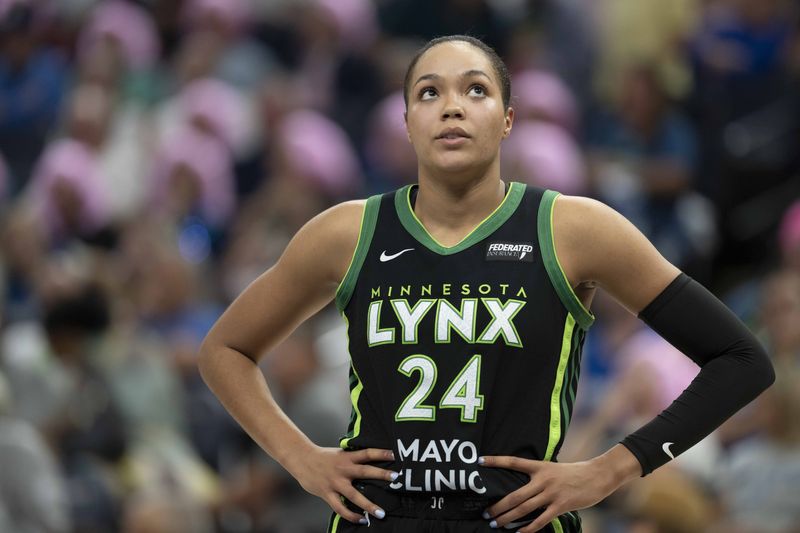
    Minnesota Lynx forward Napheesa Collier is on the executive board of the WNBA players’ union.

    Napheesa Collier, who is on the executive council, said in a Zoom earlier this week that players are also fighting for childcare and retirement benefits. She acknowledged that revenue sharing remains the main issue, which is why other topics haven’t been talked about as much.

    “I don’t think there’s fatigue,” Collier said. “Obviously, there’s frustration in that both sides are trying to get what they want, but we still have that fire within us that we’re willing to do what it takes. We’re going to do whatever it takes to get what we think we deserve.”

    Indiana Fever star Caitlin Clark said at USA Basketball camp last week that this was the “biggest moment in the history” of the league.

    “It’s not something that can be messed up,” Clark said.

    “We’re going to fight for everything we deserve, but at the same time we need to play basketball. That’s what our fans crave. You want the product on the floor. In the end of the day that’s how you’re marketable, that’s what the fans want to show up for.”

  • Trump’s handpicked board votes to rename Washington performing arts center the Trump Kennedy Center

    Trump’s handpicked board votes to rename Washington performing arts center the Trump Kennedy Center

    WASHINGTON — President Donald Trump’s handpicked board voted Thursday to rename Washington’s leading performing arts center as the Trump Kennedy Center, the White House said, in a move that made Democrats fume, saying the board had overstepped its legal authority.

    Congress named the center after President John F. Kennedy in 1964, after his assassination. Donald A. Ritchie, who served as Senate historian from 2009-2015, said that because Congress had first named the center it would be up to Congress to “amend the law.”

    Ritchie said that while Trump and others can “informally” refer to the center by a different name, they couldn’t do it in a way “that would [legally] stick.”

    But the board did not wait for that debate to play out, immediately changing the branding on its website to reflect the new name.

    House Democratic leader Hakeem Jeffries told reporters that legislative action was needed, “and we’re going to make that clear.” The New York Democrat is an ex officio member of the board because of his position in Congress.

    Trump has teased the name change for some time

    “The Kennedy Center Board of Trustees voted unanimously today to name the institution The Donald J. Trump and The John F. Kennedy Memorial Center for the Performing Arts,” said Roma Daravi, the institution’s vice president for public relations.

    She said the vote recognized that Trump saved the center from “financial ruin and physical destruction,” a pair of claims denied by the venue’s ousted leadership.

    “The new Trump Kennedy Center reflects the unequivocal bipartisan support for America’s cultural center for generations to come,” Daravi said.

    Press secretary Karoline Leavitt announced the vote on social media, attributing it to the “unbelievable work President Trump has done over the last year in saving the building. Not only from the standpoint of its reconstruction, but also financially, and its reputation.”

    Trump, a Republican who’s chairman of the board, said at the White House that he was “surprised” and “honored” by the vote.

    “The board is a very distinguished board, most distinguished people in the country and I was surprised by it and I was honored by it,” he said.

    Trump had already been referring to the center as the “Trump Kennedy Center.” Asked Dec. 7 as he walked the red carpet for the Kennedy Center Honors program whether he would rename the venue after himself, Trump said such a decision would be up to the board.

    Earlier this month, Trump talked about a “big event” happening at the “Trump Kennedy Center” before saying, “excuse me, at the Kennedy Center,” as his audience laughed. He was referring to the FIFA World Cup soccer draw for 2026, in which he participated.

    A name change won’t sit well with some Kennedy family members.

    Maria Shriver, a niece of John F. Kennedy, referred to the legislation introduced in Congress to rebrand the Kennedy Center as the Donald J. Trump Center for the Performing Arts as “insane” in a social media post in July.

    “It makes my blood boil. It’s so ridiculous, so petty, so small minded,” she wrote. “Truly, what is this about? It’s always about something. ‘Let’s get rid of the Rose Garden. Let’s rename the Kennedy Center.’ What’s next?”

    Trump earlier this year turned the Kennedy-era Rose Garden at the White House into a patio by removing the lawn and laying down paving stones.

    Another Kennedy family member, Robert F. Kennedy Jr., serves in Trump’s cabinet as secretary of the Department of Health and Human Services.

    Trump showed scant interest in the Kennedy Center during his first term as president, but since returning to office in January he has replaced board members appointed by Democratic presidents with some of his most ardent supporters, who then elected him as board chairman.

    He also has criticized the center’s programming and its physical appearance and has vowed to overhaul both.

    Trump secured more than $250 million from the Republican-controlled Congress for renovations of the building.

    He attended opening night of the musical Les Misérables, and last week he served as host of the Kennedy Center Honors program after not attending the show during his first term as president. The awards program is scheduled to be broadcast by CBS and Paramount+ on Dec. 23.

    Sales of subscription packages are said to have declined since Trump’s takeover of the center, and several touring productions, including Hamilton, have canceled planned runs there. Rows upon rows of empty seats have been seen in the Concert Hall during performances by the National Symphony Orchestra.

    Some performers, including actor Issa Rae and musician Rhiannon Giddens, have scrapped scheduled appearances, and Kennedy Center consultants including musician Ben Folds and singer Renée Fleming have resigned.