Category: Associated Press

  • What’s next now that Trump has signed bill releasing the Epstein files

    What’s next now that Trump has signed bill releasing the Epstein files

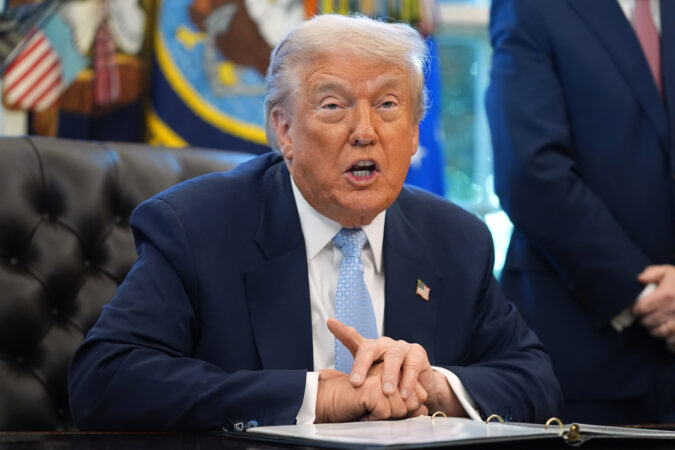
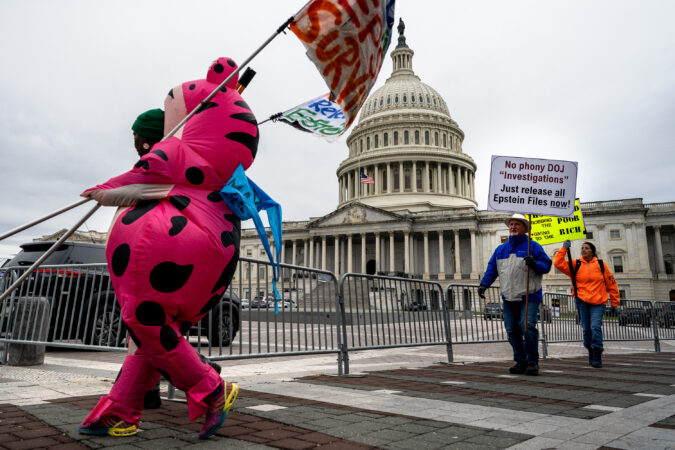
    WASHINGTON — President Donald Trump has signed a bill to compel the Justice Department to make public its case files on the convicted sex offender Jeffrey Epstein, a potentially far-reaching development in a yearslong push by survivors of Epstein’s abuse for a public reckoning.

    Both the House and Senate passed the bill this week with overwhelming margins after Trump reversed course on his monthslong opposition to the bill and indicated he would sign it. Now that the bill has been signed by the president, there’s a 30-day countdown for the Justice Department to produce what’s commonly known as the Epstein files.

    “This bill is a command for the president to be fully transparent, to come fully clean, and to provide full honesty to the American people,” Senate Democratic Leader Chuck Schumer of New York said Wednesday.

    Schumer added that Democrats were ready to push back if they perceive that the president is doing anything but adhering to “full transparency.”

    In a social media post Wednesday as he announced he had signed the bill, Trump wrote, “Democrats have used the ‘Epstein’ issue, which affects them far more than the Republican Party, in order to try and distract from our AMAZING Victories.”

    The swift, bipartisan work in Congress this week was a response to the growing public demand that the Epstein files be released, especially as attention focuses on his connections to global leaders including Trump, former President Bill Clinton, Andrew Mountbatten Windsor, who has already been stripped of his royal title as Prince Andrew over the matter, and many others.

    There is plenty of public anticipation about what more the files could reveal. Yet the bill will most likely trigger a rarely seen baring of a sprawling federal investigation, also creating the potential for unintended consequences.

    What does the bill do?

    The bill compels Attorney General Pam Bondi to release essentially everything the Justice Department has collected over multiple federal investigations into Epstein, as well as his longtime confidante and girlfriend Ghislaine Maxwell, who is serving a 20-year prison sentence for luring teenage girls for the disgraced financier. Those records total around 100,000 pages, according to a federal judge who has reviewed the case.

    It will also compel the Justice Department to produce all its internal communications on Epstein and his associates and his 2019 death in a Manhattan jail cell as he awaited charges for sexually abusing and trafficking dozens of teenage girls.

    The legislation, however, exempts some parts of the case files. The bill’s authors made sure to include that the Justice Department could withhold personally identifiable information of victims, child sexual abuse materials and information deemed by the administration to be classified for national defense or foreign policy.

    “We will continue to follow the law with maximum transparency while protecting victims,” Bondi told a news conference Wednesday when asked about releasing the files.

    The bill also allows the Justice Department to withhold information that would jeopardize active investigations or prosecutions. That’s created some worry among the bill’s proponents that the department would open active investigations into people named in the Epstein files in order to shield that material from public view.

    Rep. Marjorie Taylor Greene, a longtime Trump loyalist who has had a prominent split with Trump over the bill, said Tuesday that she saw the administration’s compliance with the bill as its “real test.”

    “Will the Department of Justice release the files, or will it all remain tied up in investigations?” she asked.

    In July, the FBI said in a memo regarding the Epstein investigation that, “we did not uncover evidence that could predicate an investigation against uncharged third parties.” But Bondi last week complied with Trump’s demands and ordered a federal prosecutor to investigate Epstein’s ties to the president’s political foes, including Clinton.

    Still, Rep. Thomas Massie, a Kentucky Republican who sponsored the bill, said “there’s no way they can have enough investigations to cover” all of the people he believes are implicated in Epstein’s abuse.

    “And if they do, then good,” he added.

    The bill also requires the Justice Department to produce reports on what materials it withheld, as well as redactions made, within 15 days of the release of the files. It stipulates that officials can’t withhold or redact anything “on the basis of embarrassment, reputational harm, or political sensitivity, including to any government official, public figure, or foreign dignitary.”

    Who could be named?

    There’s a widely held expectation that many people could be named in case files for investigations that spanned over a decade — and some concern that just because someone is named, that person would be assumed guilty or complicit.

    Epstein was a luminary who kept company with heads of state, influential political figures, academics and billionaires. The release of his emails and messages by a House Oversight Committee investigation last week has already shown his connections with — and private conversations about — Trump and many other high-powered figures.

    Yet federal prosecutors follow carefully constructed guidelines about what information they produce publicly and at trial, both to protect victims and to uphold the fairness of the legal system. House Speaker Mike Johnson raised objections to the bill on those grounds this week, arguing that it could reveal unwanted information on victims as well as others who were in contact with investigators.

    Still, Johnson did not actually try to make changes to the bill and voted for it on the House floor.

    For the bill’s proponents, a public reckoning over the investigation is precisely the point. Some of the survivors of trafficking from Epstein and Maxwell have sought ways to name people they accuse of being complicit or involved, but fear they will face lawsuits from the men they accuse.

    Massie said that he wants the FBI to release the reports from its interviews with the victims.

    Those reports typically contain unvetted information, but Massie said he is determined to name those who are accused. He and Greene have offered to read the names of those accused on the House floor, which would shield their speech from legal consequences.

    “We need names,” Massie said.

  • Energy Department loans $1B to help finance the restart of nuclear reactor on Three Mile Island

    Energy Department loans $1B to help finance the restart of nuclear reactor on Three Mile Island

    HARRISBURG — The U.S. Department of Energy said Tuesday that it will loan $1 billion to help finance the restart of the nuclear power plant on Pennsylvania’s Three Mile Island that is under contract to supply power to data centers for tech giant Microsoft.

    The loan is in line with the priorities of President Donald Trump’s administration, including bolstering nuclear power and artificial intelligence.

    For Constellation Energy, which owns Three Mile Island’s lone functioning nuclear power reactor, the federal loan will lower its financing cost to get the mothballed plant up and running again. The 835-megawatt reactor can power the equivalent of approximately 800,000 homes, the Department of Energy said.

    The reactor had been out of operation for five years when Constellation Energy announced last year that it would spend $1.6 billion to restart it under a 20-year agreement with Microsoft to buy the power for its data centers.

    Constellation Energy renamed the functioning unit the Crane Clean Energy Center as it works to restore equipment, including the turbine, generator, main power transformer, and cooling and control systems. It hopes to bring the plant back online in 2027.

    The loan is being issued under an existing $250 billion energy infrastructure program initially authorized by Congress in 2022. Neither the department nor Constellation released terms of the loan.

    The plant, on an island in the Susquehanna River just outside Harrisburg, was the site of the nation’s worst commercial nuclear power accident, in 1979. The accident destroyed one reactor, Unit 2, and left the plant with one functioning reactor, Unit 1.

    In 2019, Constellation Energy’s then-parent company Exelon shut down the functioning reactor, saying it was losing money and Pennsylvania lawmakers had refused to subsidize it to keep it running.

    The plan to restart the reactor comes amid something of a renaissance for nuclear power, as policymakers are increasingly looking to it to shore up the nation’s power supply, help avoid the worst effects of climate change, and meet rising power demand driven by data centers.

  • Sixers can’t overcome Raptors’ third quarter surge in 121-112 loss

    Sixers can’t overcome Raptors’ third quarter surge in 121-112 loss

    Brandon Ingram and RJ Barrett each scored 22 points and the Toronto Raptors won their fifth straight game, surging in the third quarter to beat the 76ers 121-112 on Wednesday night.

    Jakob Poeltl scored 19 points, and Immanuel Quickley had 18 — hitting two three-pointers in the final two minutes — to help the Raptors (10-5) win for the ninth time in 10 games. Scottie Barnes added 16 points, nine rebounds, and five assists.

    Tyrese Maxey led the Sixers (8-6) with 24 points. VJ Edgecombe and Quentin Grimes had 21 points each.

    The 76ers led 56-53 at halftime behind 15 points from Maxey. Toronto took the lead with an 18-7 run to start the third quarter, powered by seven points from Ingram. The Raptors outscored the Sixers 44-28 in the period.

    Toronto shot 2-for-15 from three-point range in the first half, then went 5 for 6 from deep in the third quarter. Toronto is 7-3 on the road and 9-2 against Eastern Conference teams.

    Sixers center Joel Embiid (right knee injury management) missed a fourth straight game and his ninth out of 14 this season. Paul George, who made his season debut Monday, was held out as part of management of his left knee injury. The Sixers announced before the game that Kelly Oubre Jr. will miss at least two weeks with a sprained LCL in his left knee.

    Sixers’ Dominick Barlow (left) is defended by Toronto Raptors’ Scottie Barnes during the first half of Wednesday’s game.

    Raptors rookie forward Collin Murray-Boyles missed the game because of right knee soreness.

    Up next

    The Sixers will make the trip to Milwaukee to face the Bucks on the second night of a back-to-back on Thursday (8 p.m., NBCSP).

  • Trump signs bill to release Jeffrey Epstein case files after fighting it for months

    Trump signs bill to release Jeffrey Epstein case files after fighting it for months

    WASHINGTON — President Donald Trump signed legislation Wednesday that compels his administration to release files on convicted sex offender Jeffrey Epstein, bowing to political pressure from his own party after initially resisting those efforts.

    Trump could have chosen to release many of the files on his own months ago.

    “Democrats have used the ‘Epstein’ issue, which affects them far more than the Republican Party, in order to try and distract from our AMAZING Victories,” Trump said in a social media post as he announced he had signed the bill.

    Now, the bill requires the Justice Department to release all files and communications related to Epstein, as well as any information about the investigation into his death in a federal prison in 2019, within 30 days. It allows for redactions about Epstein’s victims for ongoing federal investigations, but DOJ cannot withhold information due to “embarrassment, reputational harm, or political sensitivity.”

    It was a remarkable turn of events for what was once a farfetched effort to force the disclosure of case files from an odd congressional coalition of Democrats, one GOP antagonist of the president, and a handful of erstwhile Trump loyalists. As recently as last week, the Trump administration even summoned one Republican proponent of releasing the files, Rep. Lauren Boebert of Colorado, to the Situation Room to discuss the matter, although she did not change her mind.

    But over the weekend, Trump did a sharp U-turn on the files once it became clear that congressional action was inevitable. He insisted the Epstein matter had become a distraction to the GOP agenda and indicated he wanted to move on.

    “I just don’t want Republicans to take their eyes off all of the Victories that we’ve had,” Trump said in a social media post Tuesday afternoon, explaining the rationale for his abrupt about-face.

    The House passed the legislation on a 427-1 vote, with Rep. Clay Higgins, R-La., being the sole dissenter. He argued that the bill’s language could lead to the release of information on innocent people mentioned in the federal investigation. The Senate later approved it unanimously, skipping a formal vote.

    It’s long been established that Trump had been friends with Epstein, the disgraced financier who was close to the world’s elite. But the president has consistently said he did not know of Epstein’s crimes and had cut ties with him long ago.

    Before Trump returned to the White House for a second term, some of his closest political allies helped fuel conspiracy theories about the government’s handling of the Epstein case, asserting a cover-up of potentially incriminating information in those files.

  • Larry Summers takes leave from teaching at Harvard after release of Epstein emails

    Larry Summers takes leave from teaching at Harvard after release of Epstein emails

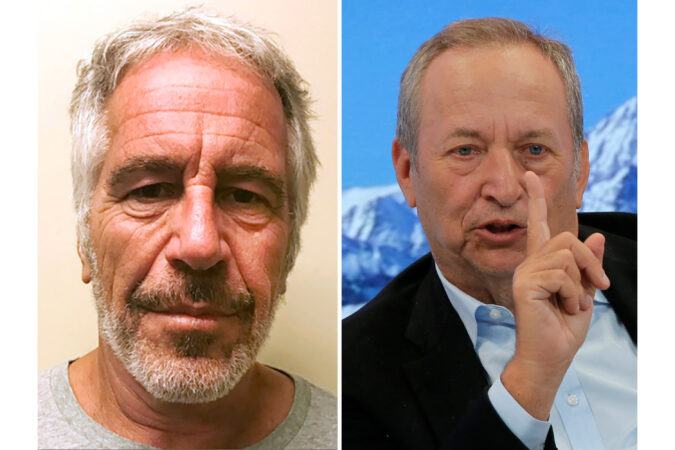
    Former U.S. Treasury Secretary Larry Summers abruptly went on leave Wednesday from teaching at Harvard University, where he once served as president, over recently released emails showing he maintained a friendly relationship with Jeffrey Epstein, Summers’ spokesperson said.

    Summers had canceled his public commitments amid the fallout of the emails being made public and earlier Wednesday severed ties with OpenAI, the maker of ChatGPT. Harvard had reopened an investigation into connections between him and Epstein, but Summers had said he would continue teaching economics classes at the school.

    That changed Wednesday evening with the news that he will step away from teaching classes as well as his position as director of the Mossavar-Rahmani Center for Business and Government with the Harvard Kennedy School.

    “Mr. Summers has decided it’s in the best interest of the Center for him to go on leave from his role as Director as Harvard undertakes its review,” Summers spokesperson Steven Goldberg said, adding that his co-teachers would finish the classes.

    Summers has not been scheduled to teach next semester, according to Goldberg.

    A Harvard spokesperson confirmed to The Associated Press that Summers had let the university know about his decision. Summers decision to go on leave was first reported by The Harvard Crimson.

    Harvard did not mention Summers by name in its decision to restart an investigation, but the move follows the release of emails showing that he was friendly with Epstein long after the financier pleaded guilty to soliciting prostitution from an underage girl in 2008.

    By Wednesday, the once highly regarded economics expert had been facing increased scrutiny over choosing to stay in the teaching role. Some students even filmed his appearance in shock as he appeared before a class of undergraduates on Tuesday while stressing he thought it was important to continue teaching.

    Massachusetts Sen. Elizabeth Warren, a Democrat, said in a social media post on Wednesday night that Summers “cozied up to the rich and powerful — including a convicted sex offender. He cannot be trusted in positions of influence.”

    Messages appear to seek advice about romantic relationship

    The emails include messages in which Summers appeared to be getting advice from Epstein about pursuing a romantic relationship with someone who viewed him as an “economic mentor.”

    “im a pretty good wing man , no?” Epstein wrote on Nov. 30, 2018.

    The next day, Summers told Epstein he had texted the woman, telling her he “had something brief to say to her.”

    “Am I thanking her or being sorry re my being married. I think the former,” he wrote.

    Summers’ wife, Elisa New, also emailed Epstein multiple times, including a 2015 message in which she thanked him for arranging financial support for a poetry project she directs. The gift he arranged “changed everything for me,” she wrote.

    “It really means a lot to me, all financial help aside, Jeffrey, that you are rooting for me and thinking about me,” she wrote.

    New, an English professor emerita at Harvard, did not respond to an email seeking comment Wednesday.

    An earlier review completed in 2020 found that Epstein visited Harvard’s campus more than 40 times after his 2008 sex-crimes conviction and was given his own office and unfettered access to a research center he helped establish. The professor who provided the office was later barred from starting new research or advising students for at least two years.

    Summers appears before Harvard class

    On Tuesday, Summers appeared before his class at Harvard, where he teaches “The Political Economy of Globalization” to undergraduates with Robert Lawrence, a professor with the Harvard Kennedy School.

    “Some of you will have seen my statement of regret expressing my shame with respect to what I did in communication with Mr. Epstein and that I’ve said that I’m going to step back from public activities for a while. But I think it’s very important to fulfill my teaching obligations,” he said.

    Summers’ remarks were captured on video by several students, but no one appeared to publicly respond to his comments.

    Epstein, who authorities said died by suicide in 2019, was a convicted sex offender infamous for his connections to wealthy and powerful people, making him a fixture of outrage and conspiracy theories about wrongdoing among American elites.

    Summers served as treasury secretary from 1999 to 2001 under President Bill Clinton. He was Harvard’s president for five years from 2001 to 2006. When asked about the emails last week, Summers issued a statement saying he has “great regrets in my life” and that his association with Epstein was a “major error in judgement.”

    Other organizations that confirmed the end of their affiliations with Summers included the Center for American Progress, the Center for Global Development and the Budget Lab at Yale University. Bloomberg TV said Summers’ withdrawal from public commitments included his role as a paid contributor, and the New York Times said it will not renew his contract as a contributing opinion writer.

  • Netflix gets Phillies’ Field of Dreams game as part of new MLB media deal

    Netflix gets Phillies’ Field of Dreams game as part of new MLB media deal

    ESPN and Major League Baseball appeared headed for an ugly separation after the network opted out of its rights deal in February.

    Nine months later, it appears to be the best thing to happen to both parties.

    ESPN has a reworked deal that includes out-of-market streaming rights while NBC and Netflix will televise games as part of a new three-year media rights agreement announced Wednesday by MLB.

    Commissioner Rob Manfred also was able to maximize rights for the Home Run Derby and wild-card series.

    NBC/Peacock will become the new home of Sunday Night Baseball and the wild-card round while Netflix will have the Home Run Derby and two additional games.

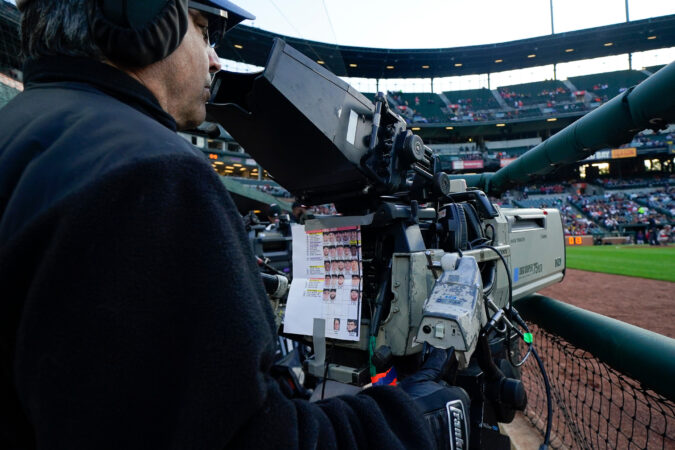
    Netflix will have MLB at Field of Dreams in Dyersville, Iowa, on Aug. 13 when the Phillies face the Minnesota Twins. It will be the first time the game has been played in Dyersville since 2022.

    Netflix also has the first game of the season on March 25 when the New York Yankees visit the San Francisco Giants. It also has the Home Run Derby and will stream an MLB special event game each year.

    The three deals will average nearly $800 million per year. ESPN will still pay $550 million while the NBC deal is worth $200 million and Netflix $50 million.

    How ESPN benefits

    ESPN, which has carried baseball since 1990, loses postseason games and the Home Run Derby but gains something more valuable for its bottom line by becoming the rights holder for MLB.TV, which will be available on the ESPN app.

    ESPN also gets the in-market streaming rights for the six teams whose games are produced by MLB — San Diego, Colorado, Arizona, Cleveland, Minnesota, and Seattle.

    Even though ESPN no longer has Sunday Night Baseball, it will have 30 games, primarily on weeknights and in the summer months.

    Baseball is the second league that has its out-of-market digital package available in the U.S. on ESPN’s platform. The NHL moved its package to ESPN in 2021.

    Welcome back, NBC

    NBC, which celebrates its 100th anniversary next year, has a long history with baseball, albeit not much recently. The network carried games from 1939 through 1989. It was part of the short-lived Baseball Network with ABC in 1994 and ’95 and then aired playoff games from 1996 through 2000.

    Its first game will be on March 26 when the defending two-time champion Los Angeles Dodgers host the Arizona Diamondbacks.

    The 25 Sunday night games will air mostly on NBC with the rest on the new NBC Sports Network. All will stream on Peacock.

    The first Sunday Night Baseball game on NBC will be April 12 with the next one in May after the NBA playoffs.

    The addition of baseball games gives NBC a year-around night of sports on Sundays. It has had NFL games on Sunday night since 2006 and will debut an NBA Sunday night slate in February.

    NBC will also have a prime-time game on Labor Day night.

    The Sunday early-afternoon games also return to Peacock, which had them in 2022 and ’23. The early-afternoon games will lead into a studio whip-around show before the Sunday night game.

    NBC/Peacock will also do the Major League Futures game during All-Star week and coverage of the first round of the MLB amateur draft.

    Don’t forget the others

    The negotiations around the other deals were complicated due to the fact that MLB was also trying not to slight two of its other rights holders. MLB receives an average of $729 million from Fox and $470 million from Turner Sports per year under deals that expire after the 2028 season.

    Fox’s Saturday nights have been mainly sports the past couple of years with a mix of baseball, college football, college basketball, and motorsports.

    Apple TV has had Friday Night Baseball since 2022.

    The deals also set up Manfred for future negotiations. He would like to see MLB take a more national approach to its rights instead of a large percentage of its games being on regional sports networks.

  • Roblox steps up age checks and groups younger users into age-based chats

    Roblox steps up age checks and groups younger users into age-based chats

    Roblox is stepping up its age-verification system for users who want to chat with other players and implementing age-based chats so kids, teens, and adults will only be able to communicate with people around their own age.

    The moves come as the popular gaming platform continues to face criticism and lawsuits over child safety and a growing number of states and countries are implementing age-verification laws.

    The company had previously announced the age-estimation tool, which is provided by a company called Persona, in July. It requires players to take a video selfie that will be used to estimate their age. Roblox says the videos are deleted after the age check is processed. Users are not required to submit a face scan to use the platform, only if they want to chat with other users.

    Roblox doesn’t allow kids under 13 to chat with other users outside of games unless they have explicit parental permission — and unlike different platforms, it does not encrypt private chat conversations, so it can monitor and moderate them.

    While some experts have expressed caution about the reliability of facial age-estimation tools, Matt Kaufman, chief safety officer at Roblox, said that between the ages of about 5 to 25, the system can accurately estimate a person’s age within one or two years.

    “But of course, there’s always people who may be well outside of a traditional bell curve. And in those cases, if you disagree with the estimate that comes back, then you can provide an ID or use parental consent in order to correct that,” he said.

    After users go through the age checks, they will be assigned to age groups ranging from under 9, 9 to 12, 13 to 15, 16 to 17, 18 to 20, and over 21. Users will then be able to chat with their age group or similar age groups, depending on their age and the type of chat.

    Roblox said it will start enforcing age checks in Australia, New Zealand, and the Netherlands in the first week of December and the rest of the world in early January.

    A growing number of tech companies are implementing verification systems to comply with regulations or ward off criticism that they are not protecting children. This includes Google, which recently started testing a new age-verification system for YouTube that relies on AI to differentiate between adults and minors based on their watch histories. Instagram is testing an AI system to determine if kids are lying about their ages.

    “While we welcome the new age ID measures as a step forward, it remains to be seen how effective it will be and whether Roblox will stay the course on a voluntary measure once public scrutiny fades,” said Shelby Knox, director of online safety campaigns at the advocacy group ParentsTogether. “We have to remember this comes from a platform that has historically been slow to address systemic predatory behavior despite being marketed to and used by very young children.”

  • Trump dismisses U.S. intelligence that Saudi prince was likely aware of 2018 killing of journalist Jamal Khashoggi

    Trump dismisses U.S. intelligence that Saudi prince was likely aware of 2018 killing of journalist Jamal Khashoggi

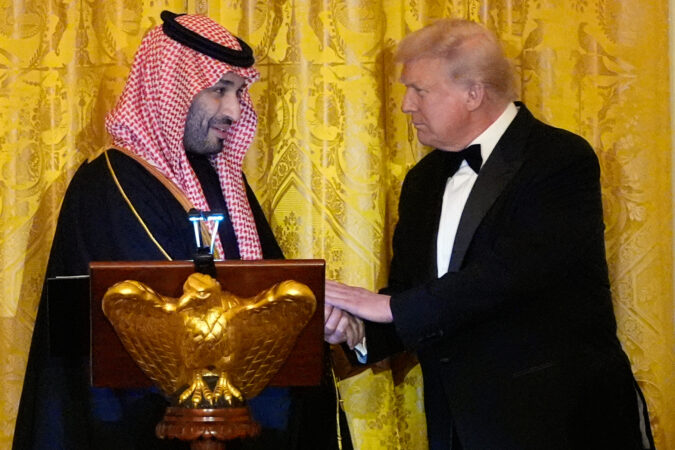
    WASHINGTON — President Donald Trump on Tuesday dismissed U.S. intelligence findings that Crown Prince Mohammed bin Salman likely had some culpability in the 2018 killing of Washington Post journalist Jamal Khashoggi as Trump warmly welcomed the de facto ruler of Saudi Arabia on his first White House visit in seven years.

    The U.S.-Saudi relationship had, for a time, been sent into a tailspin by the operation targeting Khashoggi, a fierce critic of the kingdom.

    But seven years later, the dark clouds over the relationship have been cleared away. And Trump is tightening his embrace of the 40-year-old crown prince, who he said is an indispensable player in shaping the Middle East in the decades to come.

    Trump in his defense of the crown prince derided Khashoggi as “extremely controversial” and said “a lot of people didn’t like that gentleman.” Prince Mohammed denies involvement in the killing of Khashoggi, who was a Saudi citizen and Virginia resident.

    “Whether you like him or didn’t like him, things happen,” Trump said when asked about the killing by a reporter during an Oval Office appearance with Prince Mohammed. “But (Prince Mohammed) knew nothing about it. And we can leave it at that. You don’t have to embarrass our guest by asking a question like that.”

    But U.S. intelligence officials determined that the Saudi crown prince likely approved the killing by Saudi agents of U.S.-based journalist inside the Saudi consulate in Istanbul, according to U.S. findings declassified in 2021 at the start of the Biden administration. Trump officials, during his first administration, refused to release the report.

    Prince Mohammed said Saudi Arabia “did all the right steps” to investigate Khashoggi’s death.

    “It’s painful and it’s a huge mistake,” he said.

    Trump, who said the two leaders have become “good friends,” even commended the Saudi leader for strides made by the kingdom on human rights without providing any specific detail.

    New investment from Saudis

    The crown prince for his part announced Saudi Arabia was increasing its planned investments in the U.S. to $1 trillion, up from $600 billion that the Saudis announced they would pour into the United States when Trump visited the kingdom in May.

    Echoing rhetoric that Trump likes to use, the crown prince called the U.S. the “hottest country on the planet” for foreign investment.

    “What you’re creating is not about an opportunity today. It’s also about long-term opportunity,” Prince Mohammed said.

    Trump’s family has a strong personal interest in the kingdom. In September, London real estate developer Dar Global announced that it plans to launch Trump Plaza in the Red Sea city of Jeddah.

    It’s Dar Global’s second collaboration with the Trump Organization, the collection of companies controlled by the U.S. president’s children, in Saudi Arabia.

    Trump pushed back on suggestions that there could be a conflict of interest in his family’s dealings with the Saudis.

    “I have nothing to do with the family business,” Trump said.

    Trump’s comments about Khashoggi’s killing and defense of his family’s business in Saudi Arabia were blasted by human rights and government oversight activists.

    Human rights groups say Saudi authorities continue to harshly repress dissent, including by arresting human rights defenders, journalists and political dissidents for criticism against the kingdom. They also note a surge in executions in Saudi Arabia that they connect to an effort to suppress internal dissent.

    “President Trump has Jamal Khashoggi’s blood on his hands,” said Raed Jarrar, advocacy director for DAWN, a U.S.-based group advocating for democracy and human rights in the Arab world that was founded by Khashoggi.

    Rolling out the red carpet

    Trump warmly received Prince Mohammed when he arrived at the White House Tuesday morning for a pomp-filled arrival ceremony that included a military flyover and a thundering greeting from the U.S. Marine band.

    Technically, it wasn’t a state visit, because the crown prince is not the head of state. But Prince Mohammed has taken charge of the day-to-day governing for his father, King Salman, 89, who has endured health problems in recent years.

    Later, Trump and first lady Melania Trump welcomed the crown prince for a black-tie dinner in the White House East Room. The boldface names who attended included Nvidia CEO Jensen Huang, tech entrepreneur Elon Musk and soccer star Cristiano Ronaldo.

    Trump at the dinner announced he was designating Saudi Arabia as a major non-NATO ally. The designation, while largely symbolic, provides foreign partners with certain benefits in the areas of defense, trade and security cooperation.

    The president also announced that the two leaders had signed a new defense agreement, but the White House did not immediately release details of the pact. Ahead of the visit, the Saudis had signaled they were looking for formal assurances from Trump defining the scope of the U.S. military protection for the kingdom.

    “A stronger and more capable alliance will advance the interests of both countries,” Trump said. “And it will serve the highest interest of peace.”

    Fighter jets and business deals

    On the eve of Prince Mohammed’s arrival, Trump announced he had agreed to sell the Saudis F-35 fighter jets despite some concerns within the administration that the sale could lead to China gaining access to the U.S. technology behind the advanced weapon system. The White House announced the two leaders formalized the F-35 agreement Tuesday as well as a deal for the Saudis to purchase nearly 300 tanks from the U.S.

    They also signed agreements signifying closer cooperation on capital markets and critical minerals markets, as well as efforts against money laundering and terrorist financing.

    Trump’s announcement on the fighter jets was surprising because some in the Republican administration have been wary about upsetting Israel’s qualitative military edge over its neighbors, especially at a time when Trump is depending on Israeli support for the success of his Gaza peace plan.

    Abraham Accord talks

    The visit comes at a moment when Trump is trying to nudge the Saudis toward normalizing relations with Israel.

    The president in his first term had helped forge commercial and diplomatic ties between Israel and Bahrain, Morocco and the United Arab Emirates through an effort dubbed the Abraham Accords.

    Trump sees expansion of the accords as essential to his broader efforts to build stability in the Middle East after the two-year Israel-Hamas war in Gaza. Getting Saudi Arabia — the largest Arab economy and the birthplace of Islam — to sign on would spur a domino effect, he argues.

    But the Saudis have maintained that a path toward Palestinian statehood must first be established before normalizing relations with Israel can be considered. The Israelis remain steadfastly opposed to the creation of a Palestinian state.

    “We want to be part of the Abraham Accords, but we want also to be sure that we secure a clear path of a two-state solution,” Prince Mohammed said.

  • Congress acts swiftly to force release of Epstein files, and Trump agrees to sign bill

    Congress acts swiftly to force release of Epstein files, and Trump agrees to sign bill

    WASHINGTON — Both the House and Senate acted decisively Tuesday to pass a bill to force the Justice Department to publicly release its files on the convicted sex offender Jeffrey Epstein, a remarkable display of approval for an effort that had struggled for months to overcome opposition from President Donald Trump and Republican leadership.

    When a small, bipartisan group of House lawmakers introduced a petition in July to maneuver around Speaker Mike Johnson’s control of the House floor, it appeared a longshot effort — especially as Trump urged his supporters to dismiss the matter as a “hoax.”

    But both Trump and Johnson failed to prevent the vote. The president in recent days bowed to political reality, saying he would sign the bill. And just hours after the House vote, senators agreed to approve it unanimously, skipping a formal roll call.

    The decisive, bipartisan work in Congress Tuesday further showed the pressure mounting on lawmakers and the Trump administration to meet long-held demands that the Justice Department release its case files on Epstein, a well-connected financier who killed himself in a Manhattan jail while awaiting trial in 2019 on charges he sexually abused and trafficked underage girls.

    For survivors of Epstein’s abuse, passage of the bill was a watershed moment in a years-long quest for accountability.

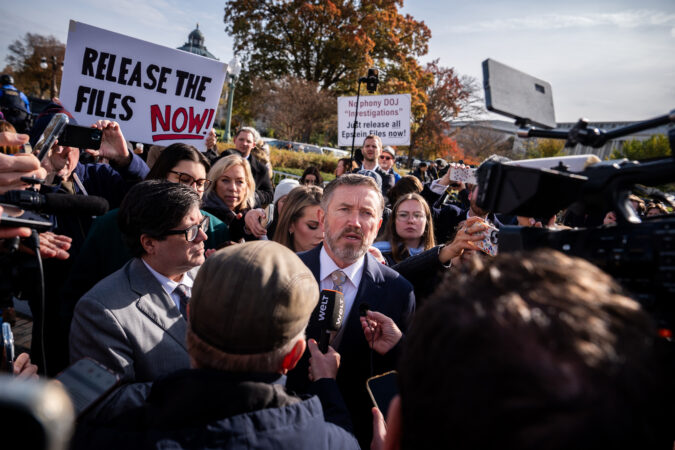
    “These women have fought the most horrific fight that no woman should have to fight. And they did it by banding together and never giving up,” said Rep. Marjorie Taylor Greene as she stood with some of the abuse survivors outside the Capitol Tuesday morning.

    “That’s what we did by fighting so hard against the most powerful people in the world, even the president of the United States, in order to make this vote happen today,” added Greene, a Georgia Republican.

    In the end, only one lawmaker in Congress opposed the bill. Rep. Clay Higgins, a Louisiana Republican who is a fervent supporter of Trump, was the only “nay” vote in the House’s 427-1 tally. He said he worried the legislation could lead to the release of information on innocent people mentioned in the federal investigation.

    The bill forces the release within 30 days of all files and communications related to Epstein, as well as any information about the investigation into his death in federal prison. It would allow the Justice Department to redact information about Epstein’s victims or continuing federal investigations, but not information due to “embarrassment, reputational harm, or political sensitivity.”

    Even before the bill’s passage Tuesday, thousands of pages of emails and other documents from Epstein’s estate have been released from an investigation by the House Oversight Committee.

    Those documents show Epstein’s connections to global leaders, Wall Street powerbrokers, influential political figures and Trump himself. In the United Kingdom, King Charles III stripped his disgraced brother Prince Andrew of his remaining titles and evicted him from his royal residence after pressure to act over his relationship with Epstein.

    Trump’s reversal on the Epstein files

    Trump has said he cut ties with Epstein years ago, but tried for months to move past the demands for disclosure.

    Still, many in the Republican base continued to demand the release of the files. Adding to that pressure, survivors of Epstein’s abuse rallied outside the Capitol Tuesday morning. Bundled in jackets against the November chill and holding photos of themselves as teenagers, they recounted their stories of abuse.

    “We are exhausted from surviving the trauma and then surviving the politics that swirl around it,” said one of the survivors.

    Another, Jena-Lisa Jones, said she had voted for Trump and had a message for the president: “I beg you Donald Trump, please stop making this political.”

    The group of women also met with Johnson and rallied outside the Capitol in September, but have had to wait months for the vote.

    That’s because Johnson kept the House closed for legislative business for nearly two months and refused to swear-in Democratic Rep. Adelita Grijalva of Arizona during the government shutdown. After winning a special election on Sept. 23, Grijalva had pledged to provide the crucial 218th vote to the petition for the Epstein files bill. But only after she was sworn into office last week could she sign her name to the discharge petition to give it majority support in the 435-member House.

    It quickly became obvious the bill would pass, and both Johnson and Trump began to fold. Trump on Sunday said Republicans should vote for the bill.

    Yet Greene told reporters that Trump’s decision to fight the bill had betrayed his Make America Great Again political movement.

    “Watching this turn into a fight has ripped MAGA apart,” she said.

    How Johnson handled the bill

    Rather than waiting until next week for the discharge position to officially take effect, Johnson held the vote under a procedure that requires a two-thirds majority.

    But Johnson also spent a morning news conference listing off problems that he sees with the legislation. He argued that the bill could have unintended consequences by disclosing parts of federal investigations that are usually kept private, including information on victims.

    “This is a raw and obvious political exercise,” Johnson said.

    Still, he voted for the bill. “None of us want to go on record and in any way be accused of not being for maximum transparency,” he explained.

    Meanwhile, the bipartisan pair who sponsored the bill, Reps. Thomas Massie, R-Ky., and Ro Khanna, D-Calif., warned senators against doing anything that would “muck it up,” saying they would face the same public uproar that forced both Trump and Johnson to back down.

    “We’ve needlessly dragged this out for four months,” Massie said, adding that those raising problems with the bill “are afraid that people will be embarrassed. Well, that’s the whole point here.”

    Senate acts quickly

    Even as the bill cleared his chamber, Johnson pressed for the Senate to amend it to protect the information of “victims and whistleblowers.” But Senate Majority Leader John Thune quickly shut down that notion.

    As senators gathered in the chamber Tuesday evening for the first votes of the week, it became clear no one would object to passing the bill as written.

    Just before Senate Democratic leader Chuck Schumer called to pass the bill by unanimous consent, Oklahoma Sen. Markwayne Mullin, a Republican who is close to Trump, walked in the chamber and gave Schumer a thumbs-up. He then walked over to Schumer and shook his hand.

    “This is about giving the American people the transparency they’ve been crying for,” said Schumer, D-N.Y. “This is about holding accountable all the people in Jeffrey Epstein’s circle who raped, groom, targeted and enabled the abuse of hundreds of girls for years and years.”

  • Court settlement calls for NPR to get $36 million in government funds to operate U.S. public radio system

    Court settlement calls for NPR to get $36 million in government funds to operate U.S. public radio system

    WASHINGTON — National Public Radio will receive approximately $36 million in grant money to operate the nation’s public radio interconnection system under the terms of a court settlement with the federal government’s steward of funding for public broadcasting stations.

    The settlement, announced late Monday, partially resolves a legal dispute in which NPR accused the Corporation for Public Broadcasting of bowing to pressure from President Donald Trump to cut off its funding.

    On March 25, Trump said at a news conference that he would “love to” defund NPR and PBS because he believes they are biased in favor of Democrats.

    NPR accused the CPB of violating its First Amendment free speech rights when it moved to cut off its access to grant money appropriated by Congress. NPR also claims Trump, a Republican, wants to punish it for the content of its journalism.

    On April 2, the CPB’s board initially approved a three-year, roughly $36 million extension of a grant for NPR to operate the “interconnection” satellite system for public radio. NPR has been operating and managing the Public Radio Satellite System since 1985.

    But corporation officials reversed course and announced that the federal funds would go to a entity called Public Media Infrastructure. NPR claimed the CPB was under mounting pressure from the Trump administration when the agency redirected the money to PMI, a media coalition that didn’t exist and wasn’t statutorily authorized to receive the funds.

    CPB attorneys denied that the agency retaliated against NPR to appease Trump. They had argued that NPR’s claims are factually and legally meritless.

    On May 1, Trump issued an executive order that called for federal agencies to stop funding for NPR and PBS. The settlement doesn’t end a lawsuit in which NPR seeks to block any implementation or enforcement of Trump’s executive order. U.S. District Judge Randolph Moss is scheduled to preside over another hearing for the case on Dec. 4.

    The settlement says NPR and CPB agree that the executive order is unconstitutional and that CPB won’t enforce it unless a court orders it to do so.

    NPR, meanwhile, agreed to drop its request for a court order blocking CPB from disbursing funds to PMI under a separate grant agreement.

    Katherine Maher, NPR’s president and CEO, said the settlement is “a victory for editorial independence and a step toward upholding the First Amendment rights of NPR and the public media system.”

    Patricia Harrison, the corporation’s CEO, said CPB is pleased that the litigation is over “and that our investment in the future through PMI marks an exciting new era for public media.”

    On Aug. 1, CPB announced it would take steps toward closing itself down after being defunded by Congress.